On April 18, 1942, the USS Hornet CV-8 launched sixteen B-25 Mitchell bombers off her flight deck in one of the boldest strikes of World War II. The Doolittle Raid electrified the American public and cemented the Hornet as one of the most famous ships in naval history. That single moment turned a Yorktown-class carrier into a legend, and modelers have been recreating her ever since.
Finding the best USS Hornet carrier model kits means navigating a spread of scales, brands, and materials. Some kits offer museum-level detail with over a thousand parts. Others keep things simple for a weekend build. I have spent hours comparing the top options across every price point and skill level so you can pick the right kit for your workbench.
This guide covers seven USS Hornet model kits currently available, ranging from an ultra-detailed 1:200 flagship build down to a pocket-sized 1:2400 display piece. Whether you are an experienced modeler chasing photo-etch-level accuracy or a newcomer who wants something manageable, there is a kit here for you.
Table of Contents
Top 3 Picks for USS Hornet Carrier Model Kits

7 Best USS Hornet Carrier Model Kits in 2026
| Product | Specifications | Action |
|---|---|---|
 Merit 1/200 USS Hornet CV-8 Merit 1/200 USS Hornet CV-8 |
|
Check Latest Price |
| Tamiya 1/700 USS Hornet |
|
Check Latest Price |
| Trumpeter 1/700 USS Hornet CV-8 |
|
Check Latest Price |
 MRY-SFW 1/350 USS Hornet CV-8 Full Hull MRY-SFW 1/350 USS Hornet CV-8 Full Hull |
|
Check Latest Price |
 MRY-SFW 1/1250 USS Hornet CV-8 MRY-SFW 1/1250 USS Hornet CV-8 |
|
Check Latest Price |
 MRY-SFW 1/1200 USS Hornet CV-8 Waterline MRY-SFW 1/1200 USS Hornet CV-8 Waterline |
|
Check Latest Price |
 MRY-SFW 1/2400 USS Hornet CV-8 Waterline MRY-SFW 1/2400 USS Hornet CV-8 Waterline |
|
Check Latest Price |
1. Merit International 1/200 USS Hornet CV-8 – Museum-Scale Flagship
Mil-Com Merit 1/200 USS Hornet CV-8 # 62001 by
1:200 scale
1290 pieces
Plastic
51.97 x 16.54 x 5.12 inches
Pros
- Highest rating at 4.8 stars
- Massive 1:200 scale for stunning display
- 1290 pieces deliver extreme detail
- Compatible with MK.1 detail upgrade sets
Cons
- Premium price point
- 2-3 week shipping time
- Requires advanced building skills
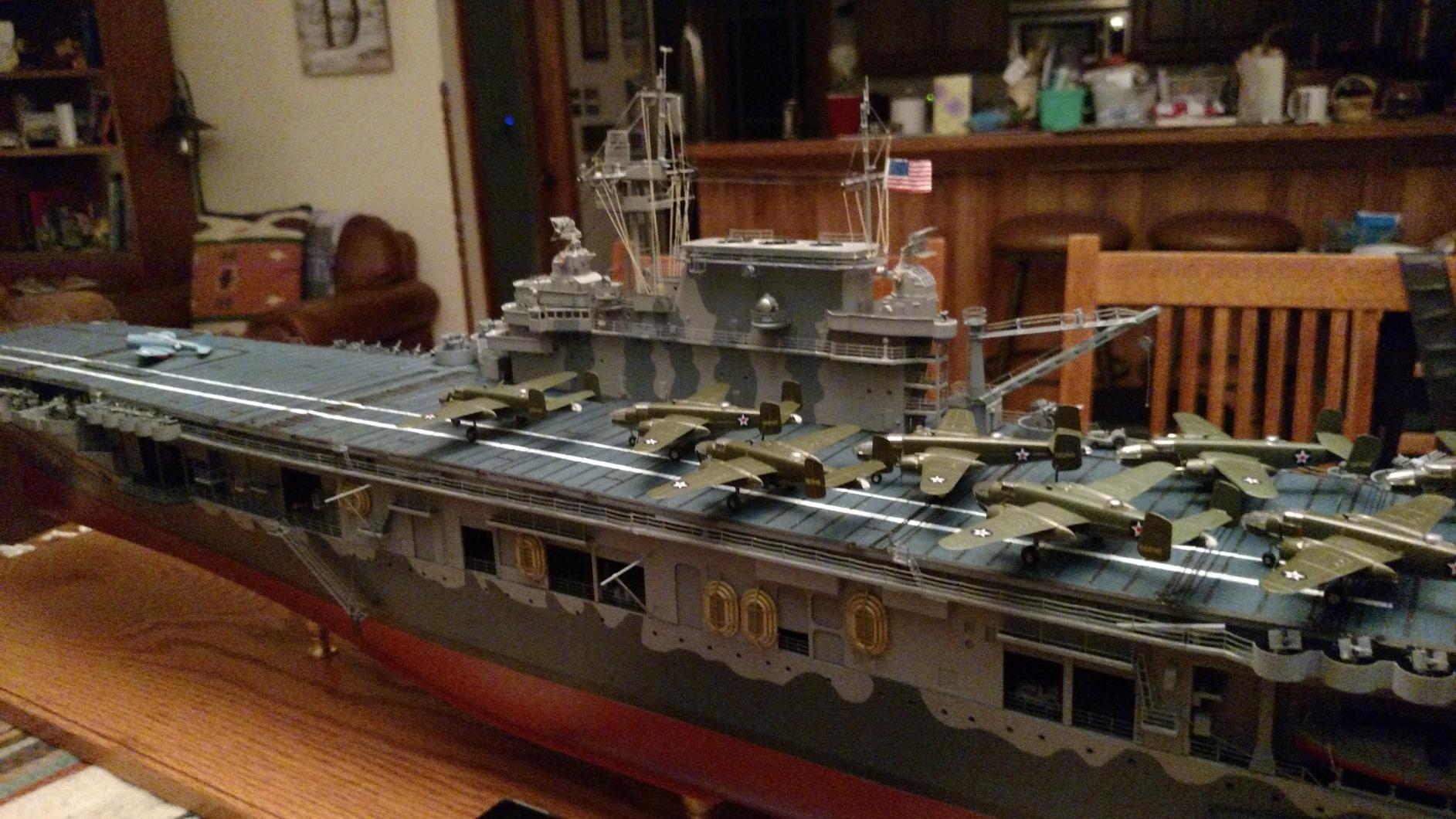
Building the Merit International 1/200 USS Hornet CV-8 is less of a weekend project and more of a campaign. I have seen builders log several months on this kit, and the results speak for themselves. At roughly 52 inches long when finished, this model commands attention on any shelf or display case. The sheer presence of a 1:200 scale aircraft carrier is hard to overstate.
The 1290 parts count tells you this kit means business. Every gun tub, every catwalk, every antenna platform is represented. The molding quality holds up well under close inspection, with sharp panel lines and consistent detail across the flight deck and island superstructure. Trumpeter manufactured this under the Merit International branding, so you get the engineering pedigree of one of the biggest names in ship modeling.
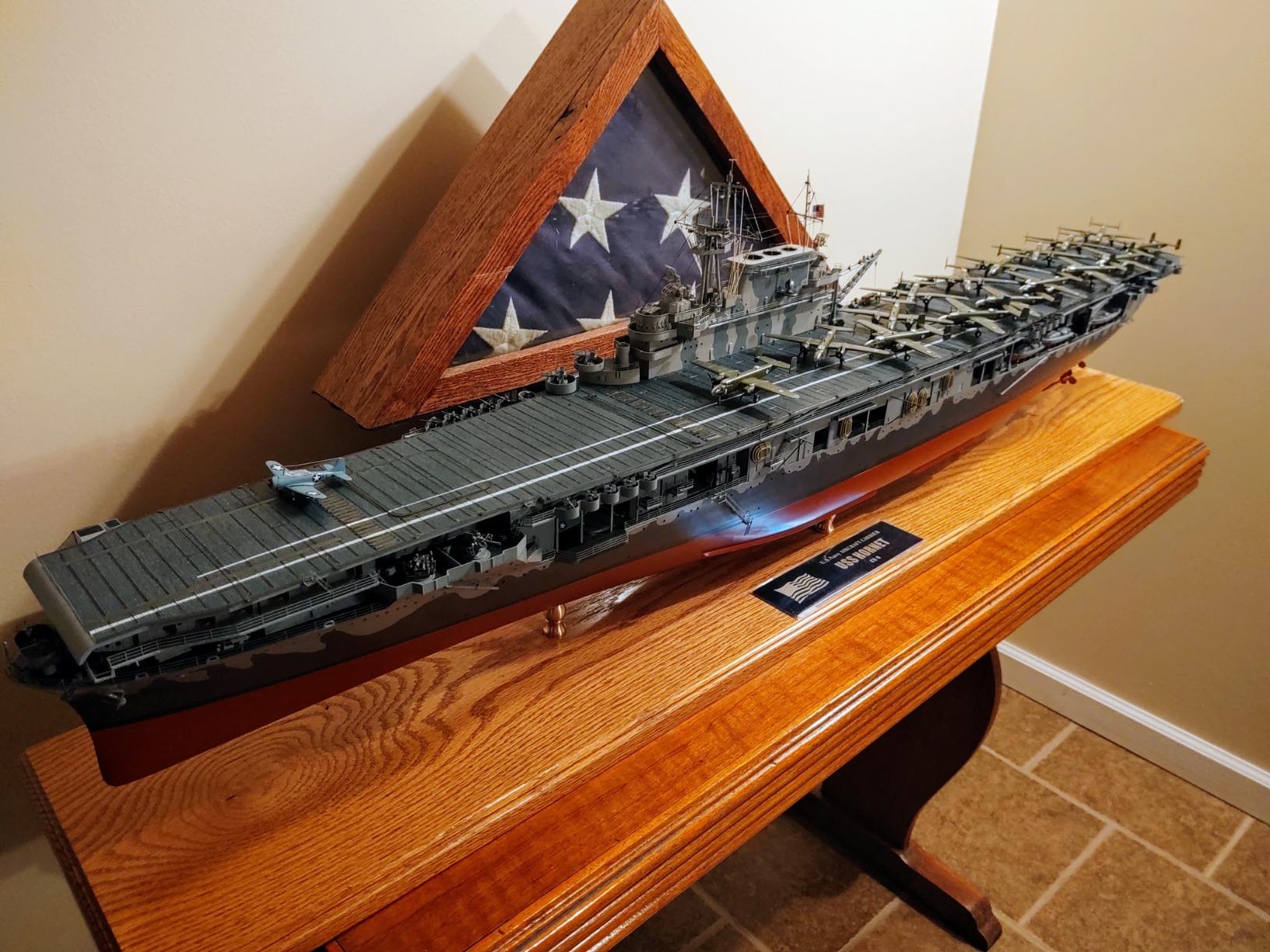
Where this kit really opens up is with aftermarket accessories. The MK.1 detail set and wood deck overlay are popular upgrades that push the realism further. Several builders on model forums have combined this base kit with photo-etch railings and turned it into a show-quality piece. If you are the kind of modeler who enjoys adding that extra layer of finesse, this platform gives you plenty of room to work.
On the flip side, this is not a kit for someone new to ship modeling. The part count and complexity demand patience and experience. I would put this firmly in the advanced category. Also be prepared for a longer wait on shipping, typically two to three weeks. But if you have the skills and the display space, nothing else in this lineup matches the visual impact of a completed 1:200 Hornet.
Who Should Build This Kit
Experienced modelers who want the ultimate USS Hornet display piece should look here first. If you have built large-scale ship models before and are comfortable working with hundreds of parts over weeks or months, this kit rewards that investment. It is also a strong choice for collectors who plan to add aftermarket detail sets and want the best possible base to build on.
Those new to ship modeling or working with limited display space should consider starting with a smaller scale option in this guide. The 1:200 Hornet demands a dedicated shelf or table area and a builder who is not afraid of a long-term project.
Display and Storage Considerations
At 52 inches long and over 16 inches wide, a completed 1:200 Hornet needs serious real estate. Plan for a sturdy shelf or dedicated display table with enough depth to show off the full beam of the carrier. A glass display case is ideal for keeping dust off the hundreds of small details and delicate antennas.
Transporting a finished model of this size requires care. If you attend model shows or plan to move the completed kit, build a custom crate or reinforced box to protect the overhanging flight deck edges and fragile mast assemblies.
2. Tamiya 1/700 USS Hornet – The Trusted Classic
1/700 U.S. Aircraft Carrier Hornet by Tamiya
1:700 waterline
Plastic
15.35 x 5.12 inches
Includes B-25 bombers
Pros
- 82% five-star reviews
- Includes Doolittle Raid B-25 Mitchell bombers
- Classic Tamiya fit and mold quality
- Counterweight for water display
Cons
- Very small parts need tweezers
- No number 8 deck decal
- Cement and paint sold separately
When I think of a reliable, no-surprises build, Tamiya is the brand that comes to mind. The 1/700 USS Hornet from Tamiya has been around for years, and with 127 customer reviews backing a 4.5-star average, it has earned its reputation. This is the kit I would hand to someone who wants solid results without fighting fit issues or questionable molding.
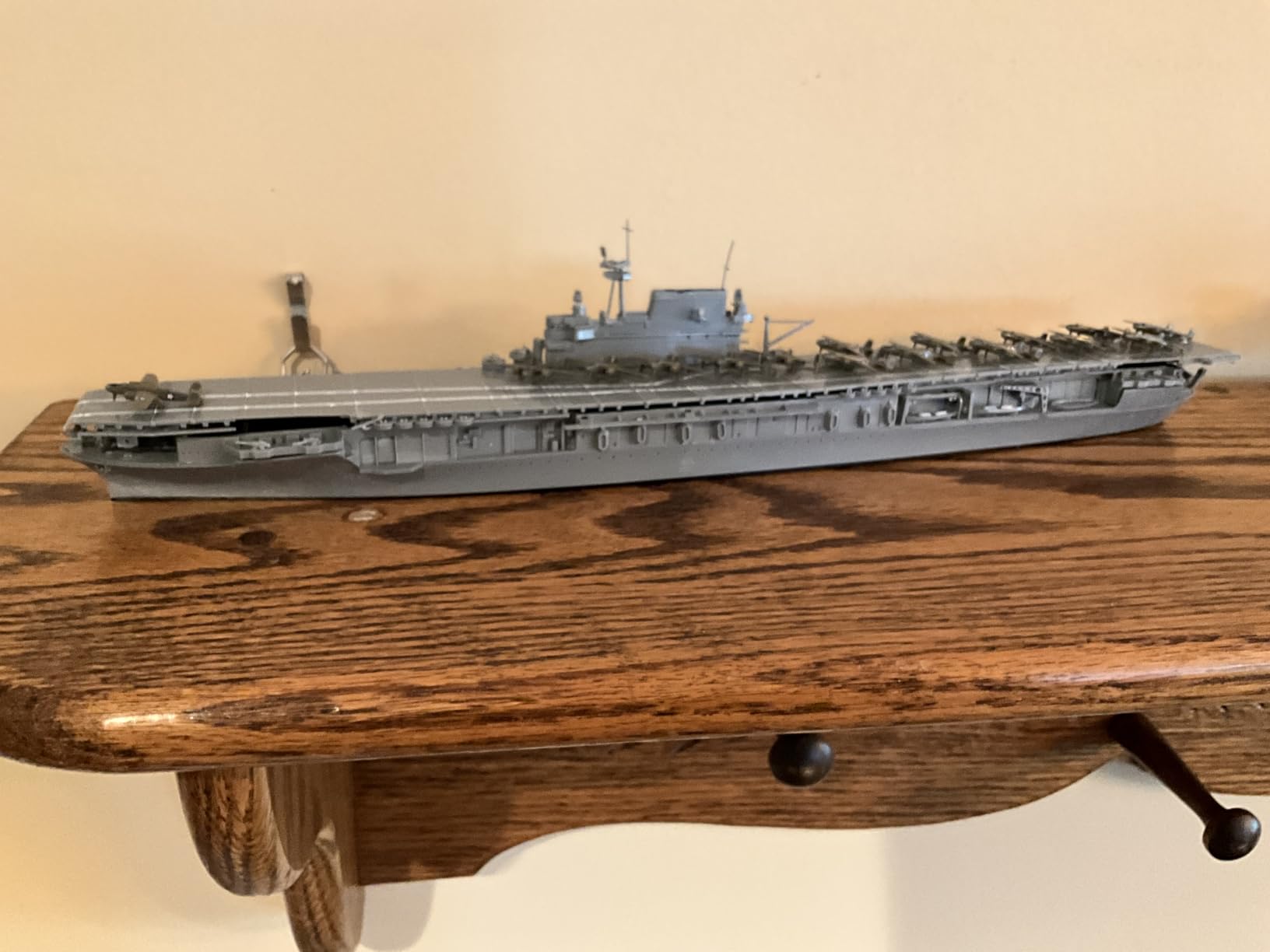
One of the standout features is the inclusion of B-25 Mitchell bombers, representing the aircraft from the famous Doolittle Raid. That historical nod matters to a lot of builders. The kit also includes a counterweight so you can display the finished model floating in water, which is a nice touch for diorama builders. The waterline hull design means you can set this model on a flat blue surface and it looks like the ship is sitting in the ocean.
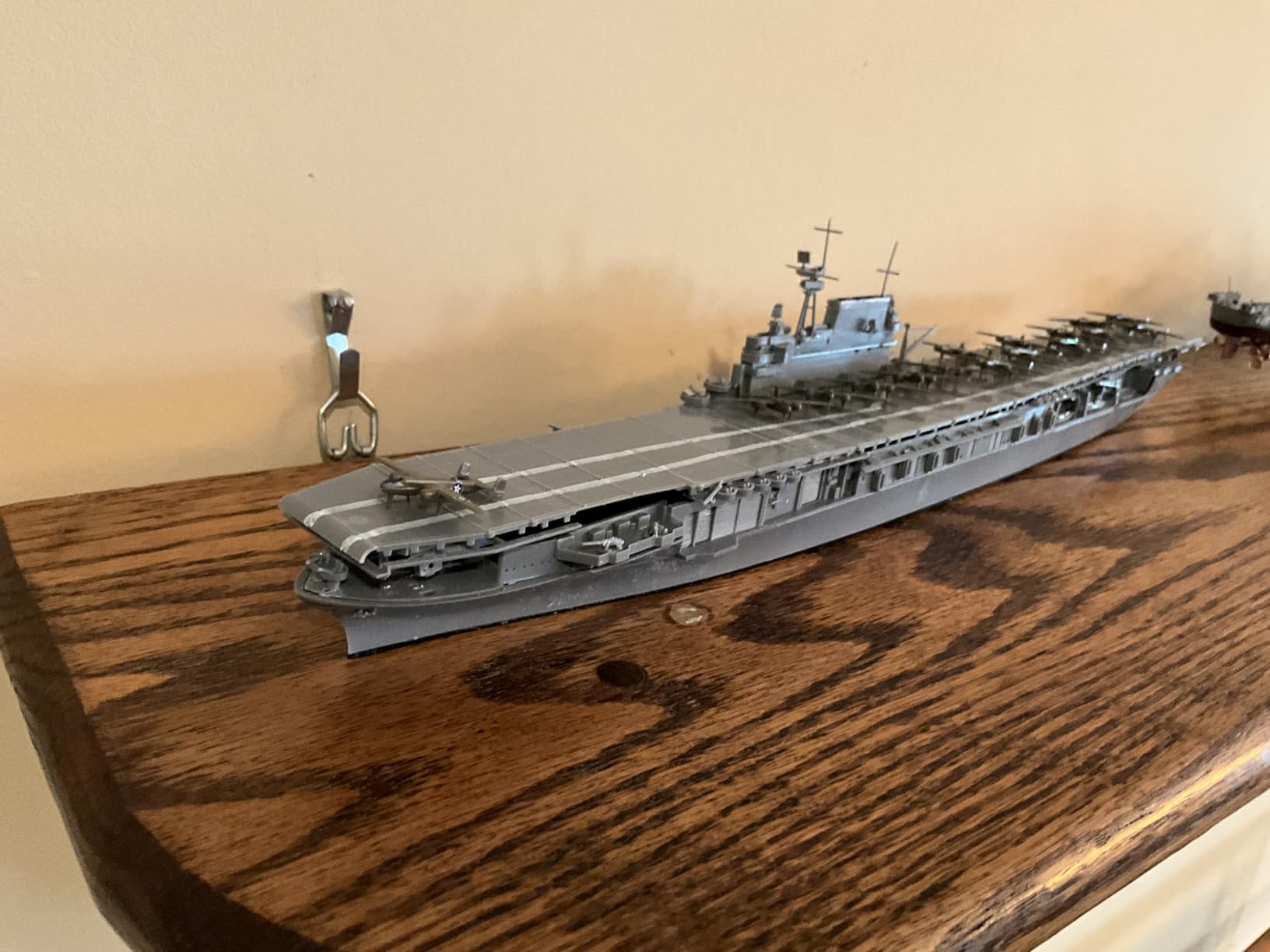
Fit and finish are where Tamiya consistently delivers. Parts go together cleanly with minimal filler needed. Panel lines are crisp, and the instruction sheet is clear enough that intermediate builders can follow along without confusion. The molding quality has held up well over the production life of this kit, which is something you cannot say about every older tooling.
The main downsides are familiar ones for 1:700 waterline kits. The parts are very small, so a good pair of tweezers and a magnifying lamp will save you frustration. Several builders have noted that the deck lacks a number 8 decal, which is a notable omission for a Hornet-specific kit. You will need to supply your own cement, paint, and brushes since nothing beyond the plastic parts and decals is included.
Skill Level and Build Time
I rate this as an intermediate kit. It is approachable for builders who have completed a few plastic model kits before, but the small parts and painting requirements mean it is not ideal for a first build. Plan on roughly 20 to 40 hours depending on how much detail painting you want to do on the aircraft and deck markings.
The waterline format actually simplifies things since you do not have to worry about the hull underside. That makes painting and finishing faster, which is one reason this kit is popular among modelers who want a satisfying build without committing to a multi-month project.
Tools You Will Need
For this Tamiya kit, gather plastic cement, a sharp sprue cutter, fine tweezers, a detail brush set, and acrylic paints in navy blue, deck gray, and hull red. A pair of side cutters for removing parts from the sprues will also help. Tamiya sells their own paint line that matches the recommended color callouts in the instructions.
If you want to push the detail further, photo-etch railing sets are available from aftermarket companies. Several builders on Reddit recommend adding brass railings to give the finished model a more refined appearance without much extra effort.
3. Trumpeter 05727 1/700 USS Hornet CV-8 – Detail Champion at Scale
Trumpeter 05727 1/700 U.S.S. Hornet CV-8 US Aircraft Carrier
1:700 scale
465 pieces on 22 sprues
Waterline or full-hull
16.6 x 7.2 x 2.1 inches
Pros
- Highest rated at 4.6 stars
- 465 pieces with waterline or full-hull option
- More detailed than competing 1:700 kits
- Includes B-25 bombers and aircraft complement
Cons
- Small parts difficult to assemble
- Aircraft assembly is over-complex
- Not for beginners
- Takes significant time
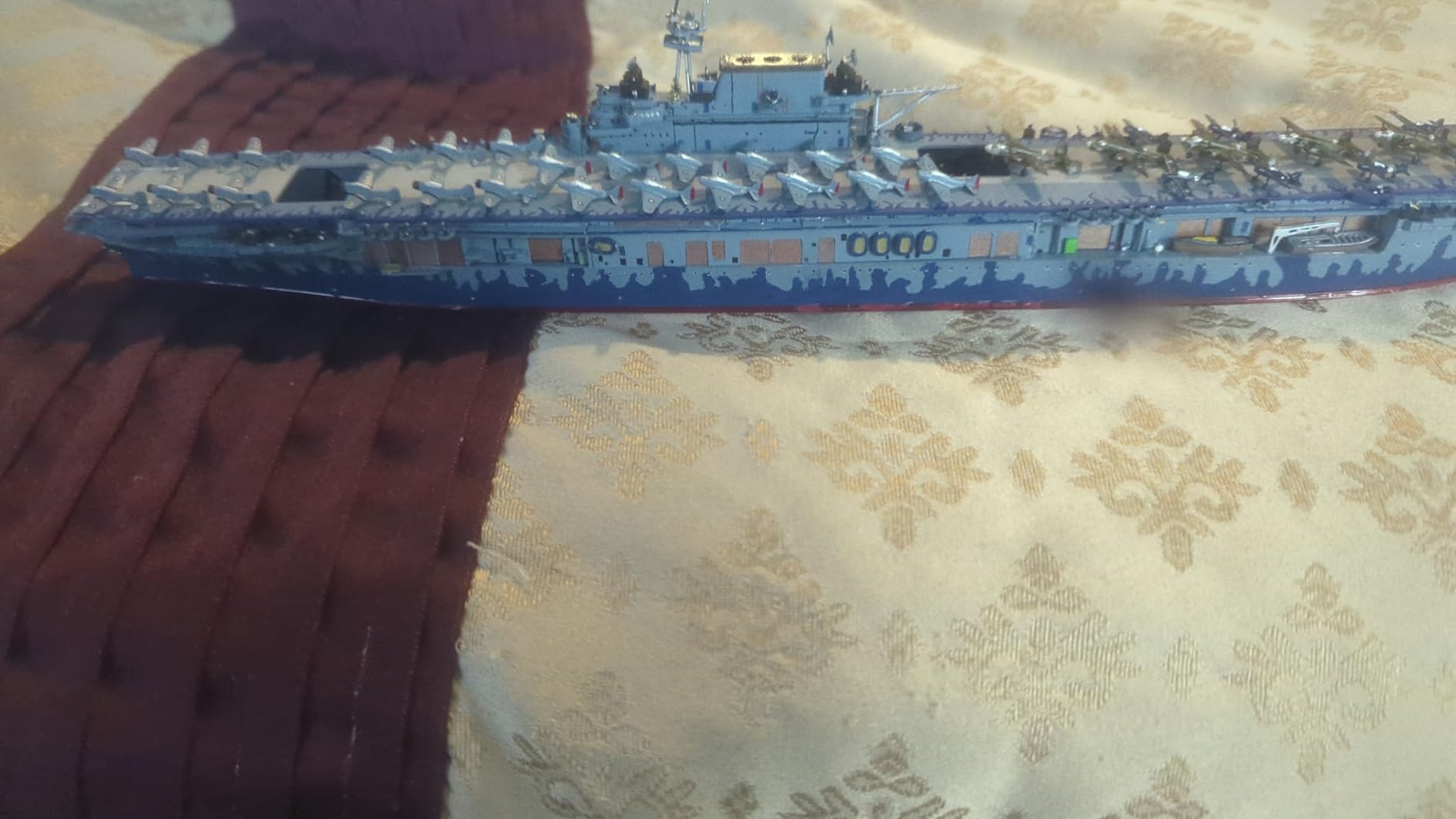
The Trumpeter 05727 occupies an interesting space in the USS Hornet model kit lineup. It sits at the same 1:700 scale as the Tamiya option but packs 465 parts across 22 sprues, nearly doubling the detail density. Forum discussions on FineScale and Reddit consistently rank this as the most detailed 1:700 Hornet available.
What makes this kit stand out is the dual build option. You can construct it as a waterline model for flat display or go full-hull if you want to show the entire ship. The 1942 configuration means it represents the Hornet as she appeared during her active WWII service, which is the period most modelers want to replicate. Optional open hangar doors add another layer of visual depth to the finished piece.
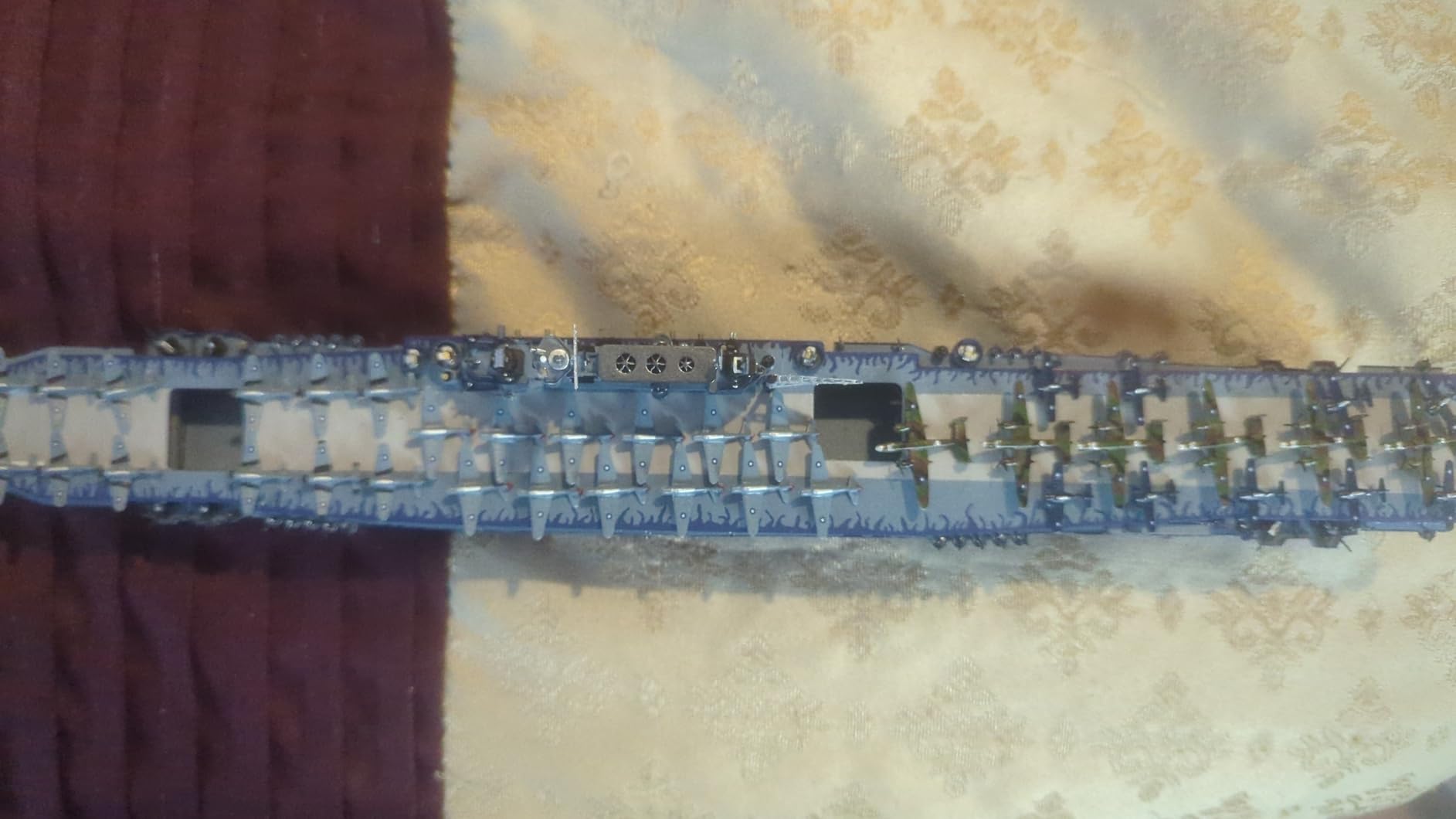
The parts quality is good overall. Panel lines are engraved and consistent, and the anti-aircraft weapons are well-represented for this scale. Thin splinter shields around the gun positions are a nice touch that cheaper kits often overlook. The included B-25 bombers and additional aircraft give you a proper air group to populate the flight deck.
Where this kit tests your patience is the aircraft assembly. Each plane requires separate wheels, propellers, and multiple tiny pieces. Several Amazon reviewers called this process needlessly complex for 1:700 scale aircraft that end up barely visible on the finished model. If you enjoy that kind of fiddly work, you will appreciate the detail. If not, you might find yourself simplifying the aircraft assembly.
How It Compares to the Tamiya 1/700
The question I see most often in forums is whether to choose this Trumpeter kit or the Tamiya 1/700 Hornet. The Trumpeter wins on parts count and detail, with nearly three times the number of pieces. It also offers the full-hull option that the Tamiya waterline kit does not. If detail and accuracy are your priorities, the Trumpeter is the better choice.
The Tamiya wins on ease of assembly and fit quality. Its parts go together more cleanly, and the instruction clarity is a step above. For builders who value a smooth build experience over maximum detail, the Tamiya is the safer pick. Both are excellent kits that serve different priorities within the same scale.
Full-Hull vs Waterline Decision
This is the only 1:700 Hornet kit in our lineup that gives you both options in one box. Full-hull builds are better if you plan to display the model on a stand showing the complete ship from keel to mast. Waterline builds work better for dioramas and flat-surface display since the model appears to float on the ocean surface.
Consider your display plans before starting. Switching mid-build is not practical, so decide early. Many experienced modelers recommend the full-hull version for this kit since it shows off the underwater hull detailing that Trumpeter included.
4. MRY-SFW 1/350 USS Hornet CV-8 Full Hull – Large-Scale Resin Build
MRY-SFW LFC350750S 1/350 Military Model Kit USS Hornet CV-8 Aircraft Carrier Full Hull
1:350 scale
Resin material
Full hull design
Requires advanced techniques
Pros
- 1:350 scale for large display
- Full hull construction
- Resin allows fine surface detail
- Popular scale for ship modelers
Cons
- No customer reviews yet
- 4-5 week shipping time
- Resin requires different skills than plastic
- Quality may vary
The MRY-SFW 1/350 USS Hornet CV-8 targets builders who want the visual impact of a large-scale carrier but prefer a resin kit over traditional plastic. At 1:350 scale, the finished model will be substantial enough to show off fine surface textures and structural details that smaller scales simply cannot capture. This is the scale that most serious ship modelers consider the sweet spot between size and shelf practicality.
Resin as a material has both advantages and trade-offs. On the plus side, resin captures very fine detail and produces crisp surface features. The casting process allows for shapes and undercuts that injection-molded plastic struggles with. On the downside, resin kits require different preparation techniques. You need to wash parts to remove mold release agents, use CA glue instead of plastic cement, and handle dust carefully during sanding.
Since this is a newer offering with no customer reviews yet, I recommend it for builders who already have experience with resin model kits. The four to five week shipping window also requires planning ahead. If you are comfortable working with resin and want a 1:350 Hornet, this kit offers an interesting alternative to the more established plastic options.
Resin Kit Building Tips
If you are moving from plastic to resin for the first time, there are a few key differences to know. Always wash resin parts in warm soapy water before assembly to remove mold release residue. Use super glue or epoxy instead of plastic cement, since resin does not chemically bond the way polystyrene does. A dust mask is essential when sanding resin parts.
Check all parts against the instructions before starting. Resin kits occasionally have casting defects or bubbles that need to be filled with putty. Having a selection of fine-grade sandpaper and a small tube of modeling putty on hand will save you a trip to the hobby shop mid-build.
Who Is This Kit For
Advanced builders with resin experience who want a large-scale full-hull display model will get the most from this kit. The 1:350 scale is ideal for showing off the Hornet’s distinctive island structure and flight deck layout. Collectors who already have a display case large enough for a ship at this scale should find this an appealing option.
Beginners and intermediate builders should start with one of the plastic kits earlier in this guide. Resin building techniques add complexity that can frustrate modelers still learning the basics of assembly and finishing.
5. MRY-SFW 1/1250 USS Hornet CV-8 Full Hull – Compact Collector Piece
MRY-SFW 1/1250 USS Hornet CV-8 Aircraft Carrier Full Hull Model Kit
1:1250 scale
Resin full hull
Compact 5.91 inch display
Eco-friendly resin
Pros
- Budget-friendly entry point
- Compact size for small spaces
- Full hull construction
- Eco-friendly resin material
Cons
- No customer reviews yet
- Not Prime eligible
- Limited detail at this scale
- Requires resin building skills
The MRY-SFW 1/1250 USS Hornet CV-8 is built for collectors who want a recognizable carrier silhouette without dedicating shelf space to a large model. At roughly six inches long, this resin kit fits on a desk, a bookshelf, or inside a small display cabinet. It is one of the most affordable ways to add a USS Hornet to your collection.
The 1:1250 scale is a recognized standard in the ship modeling world, often used for fleet-scale displays where multiple ships are shown together. If you have ever wanted to build a collection of WWII Pacific Fleet ships at a consistent scale, this Hornet fits neatly into that concept. The full hull construction means you can display it on a stand showing the complete ship profile.
Since this is a resin kit with no customer feedback yet, the experience factor is worth noting. The small scale limits the amount of fine detail you can add, but the trade-off is a quick build that does not demand hours of painting and assembly. For the price, it is a low-risk way to try a resin kit or add a Hornet to an existing ship collection.
Display Options for Small-Scale Models
Small-scale ship models like this 1:1250 Hornet work well in group displays. Consider pairing it with other WWII-era carriers or creating a miniature fleet scene. A simple blue felt or painted base creates an instant ocean backdrop. Clear acrylic display cases in small sizes are inexpensive and protect the finished model from dust.
If you are building multiple ships at 1:1250 scale, a long shelf with a painted ocean background can create a striking fleet display. The Hornet paired with the Enterprise and Yorktown at the same scale makes for a compelling Battle of Midway diorama setup.
What to Expect From the Build
The part count is minimal, making this a relatively quick assembly. Most of your time will go into painting, since the kit arrives unpainted and unassembled. The compact dimensions mean painting is straightforward with a few fine brushes and some patience. Plan for an afternoon of work rather than weeks.
Because there are no customer reviews to reference, I recommend checking the product images carefully and managing expectations around detail level. At 1:1250, the detail is suggestive rather than precise, which is normal for this scale.
6. MRY-SFW 1/1200 USS Hornet CV-8 Waterline – Desktop Display Model
MRY-SFW 1/1200 Military Model Kit USS Hornet CV-8 Aircraft Carrier Water Line
1:1200 waterline
3D painted resin
3.15 x 1.97 inches
Gray finish
Pros
- Compact desktop display size
- 3D painted resin construction
- Waterline format for flat display
- Six-month warranty
Cons
- No customer reviews yet
- Very small scale limits detail
- Requires painting and assembly
- Non-Prime shipping
The MRY-SFW 1/1200 waterline model sits in a middle ground between the 1:1250 and the ultra-small 1:2400 options. At roughly three inches long and two inches tall, it is sized for a desk or a small shelf. The waterline format means the model sits flat on any surface and looks like the ship is floating on water, which makes display simple without needing a stand.
This kit uses 3D painted resin, which gives the surface a bit more visual texture than bare resin. The gray color provides a decent base coat if you want to display it with minimal additional painting. For modelers who enjoy adding their own color and weathering, this creates a reasonable starting point. The military theme is captured well enough that the Hornet profile is recognizable at arm’s length.
As with the other MRY-SFW kits, there are no customer reviews to draw from yet. The two to three week shipping window is shorter than the 1:350 resin option but still requires some patience. A six-month warranty is included, which offers some peace of mind for a product without an established track record.
Waterline vs Full Hull at Small Scales
At 1:1200 and similar small scales, the waterline versus full-hull decision comes down to display preference. Waterline models look natural on flat surfaces and are easier to incorporate into dioramas with sea bases. Full-hull models show more of the ship but require a stand or cradle for display. For desk display, waterline is generally the more practical choice.
If you want to compare both styles, the 1:1250 MRY-SFW kit in this guide is a full-hull version at a very similar scale. Building both gives you a direct comparison of the two display approaches.
Who Should Consider This Kit
Collectors who want a small, unobtrusive Hornet for their desk or a grouping of model ships will find this kit fits the bill. The waterline format and compact size make it one of the easiest display options in this guide. It is also a reasonable choice for someone curious about resin kits who wants a low-cost starting point.
Modelers focused on high detail and accuracy should look at the larger scale options. At 1:1200, this kit captures the general profile and feel of the Hornet but cannot match the deck-level detail that 1:700 or 1:350 scales provide.
7. MRY-SFW 1/2400 USS Hornet CV-8 Waterline – Ultra-Compact Option
MRY-SFW LFC2400750 1/2400 Military Model Kit USS Hornet CV-8 Aircraft Carrier Water Line
1:2400 waterline
3D resin
Ultra-compact
Wargaming or micro display
Pros
- Lowest price point in the lineup
- Ultra-compact for tiny spaces
- Ideal for wargaming fleets
- Quick assembly
Cons
- No customer reviews yet
- Extremely limited detail
- Requires resin skills
- Very small size
The MRY-SFW 1/2400 USS Hornet CV-8 is the smallest kit in this lineup and carries the lowest price. At 1:2400 scale, the completed model is tiny, small enough to fit in the palm of your hand. That size makes it a niche product with two specific audiences: wargamers who need fleet-scale miniatures and collectors who want a Hornet representation in the smallest possible form factor.
For wargaming purposes, this scale works well. Multiple ships at 1:2400 can share a standard gaming table, and the Hornet can take her place alongside other Pacific Fleet carriers for scenario-based play. The 3D resin construction holds enough shape to be identifiable as an aircraft carrier on the table. The waterline format keeps the model stable on flat game surfaces.
As a display model, the 1:2400 scale is about capturing a silhouette rather than showcasing detail. You will recognize the Hornet’s distinctive island and flight deck outline, but individual guns, aircraft, and deck markings are beyond what this scale can represent. Think of it as an impressionistic take on the ship rather than a detailed portrait.
Best Uses for 1:2400 Scale
Wargaming is where this scale truly shines. If you play naval wargames set in WWII, having accurate ship profiles at 1:2400 allows for large fleet actions on a standard table. The Hornet paired with other carriers and escorts creates a visually compelling battle group. Multiple kits at this scale are affordable enough to build out a complete task force.
Collectors who enjoy micro-displays, perhaps a row of ships inside a small shadow box or on a narrow shelf, will also find this scale appealing. The tiny footprint means you can display dozens of ships in the space that a single 1:350 model would occupy.
Build Expectations
Assembly is fast at this scale. There are very few parts, and most of the work involves cleaning up the resin casting and applying a basic paint job. A quick wash with gray primer, a deck color, and some dry-brushing is enough to make this model table-ready. Total build time is likely under two hours for an experienced modeler.
The resin material means you should follow standard resin safety practices: wear a mask when sanding, wash parts before painting, and use super glue for assembly. At this price, the risk is low and the build is straightforward enough to serve as a first resin kit project.
Buying Guide: How to Choose a USS Hornet Model Kits?
Understanding Scale Options
Scale is the single most important decision when choosing a USS Hornet model kit. A 1:350 scale model means one inch on the model equals 350 inches (about 29 feet) on the real ship. Larger scales like 1:200 and 1:350 produce bigger models with more room for detail, but they demand more time, skill, and display space. Smaller scales like 1:700 and 1:1250 are more manageable for beginners and easier to store.
For beginners, I recommend starting at 1:700. This scale offers a good balance between visible detail and manageable build complexity. The Tamiya and Trumpeter 1:700 Hornet kits in this guide are both solid choices at this scale. For experienced modelers with display space, 1:350 or 1:200 delivers the detail and visual presence that justifies the extra investment of time and money.
Brand Comparison: Who Makes the Best USS Hornet Kits
Tamiya and Trumpeter are the two dominant brands for USS Hornet model kits. Tamiya is known for excellent fit, clear instructions, and consistent molding quality. Their kits tend to be slightly simpler but go together more smoothly. Trumpeter offers higher parts counts and more detail at the same scale, though the build experience can be more demanding.
Merit International offers the premium 1:200 scale Hornet, which is manufactured by Trumpeter under the Merit branding. MRY-SFW produces the resin kits in this guide, which cater to collectors seeking alternative materials or specific scales. For established quality and community support, Tamiya and Trumpeter remain the most trusted names in aircraft carrier model kits.
Skill Level Guide
Match your kit to your experience level. Beginners should look at 1:700 waterline kits or the smaller resin options. These have fewer parts and simpler assembly sequences. Intermediate builders can tackle the Trumpeter 1:700 or the Tamiya 1:700 with aftermarket accessories. Advanced modelers will find satisfying challenges in the 1:200 Merit kit or the 1:350 resin build.
Forum consensus from Reddit modelmakers and FineScale Modeler forums puts the Tamiya 1:700 Hornet at an intermediate difficulty and the Trumpeter 1:700 slightly higher due to the extra parts count. The 1:200 Merit kit is firmly advanced. Most Reddit users report 200 or more hours for large-scale carrier builds, so plan your time commitment accordingly.
Full-Hull vs Waterline Models
This decision affects both your build process and your final display. Full-hull models show the entire ship from keel to mast, which is impressive on a stand but requires more painting and display space. Waterline models cut off at the waterline, making them ideal for flat-surface display and ocean dioramas.
The Trumpeter 05727 in this guide gives you both options in one kit, which is a rare advantage. For the other kits, the choice is made for you based on the specific product. If you plan to build a naval diorama with multiple ships on a painted sea base, waterline models are the way to go. If you want a single showpiece on a display stand, full-hull delivers more visual impact.
Display Considerations by Scale
Before you start building, think about where the finished model will live. A 1:200 carrier at 52 inches needs a dedicated shelf or table. A 1:350 model at roughly 29 inches fits on a standard bookshelf. 1:700 models around 14 inches are the most display-friendly, fitting on most shelves without crowding. The smallest scales work on desks, inside display cases, or as part of larger collections.
Lighting matters too. A well-lit display with a neutral background lets the detail work you put into the model actually show. Glass cases protect from dust, which is particularly important for models with photo-etch railings and delicate antenna assemblies.
FAQ
How many USS Hornet carriers were there?
There were two USS Hornet aircraft carriers in US Navy service. The first was USS Hornet CV-8, a Yorktown-class carrier that launched the Doolittle Raid in April 1942 and was sunk at the Battle of Santa Cruz in October 1942. The second was USS Hornet CVS-12, originally CV-12, an Essex-class carrier commissioned in 1943 that served in WWII, the Korean War, and the Vietnam War, and later recovered the Apollo 11 and Apollo 12 astronauts. Most model kits represent the CV-8.
What happened to the carrier USS Hornet CV-8?
The USS Hornet CV-8 was severely damaged by Japanese aircraft during the Battle of the Santa Cruz Islands on October 26, 1942. After being abandoned by her crew, she was scuttled by American destroyers. Japanese destroyers later sank her with torpedoes. She rests at the bottom of the Pacific Ocean near the Solomon Islands. The wreck was discovered in 2019 by the research vessel RV Petrel at a depth of approximately 17,500 feet.
What scale is best for aircraft carrier model kits?
The best scale depends on your goals. 1:700 is the most popular scale for aircraft carrier models because it balances detail with manageable size and reasonable build time. 1:350 is preferred by advanced modelers seeking maximum detail and display presence. 1:200 is for premium collectors wanting museum-quality builds. 1:1200 and 1:1250 work well for fleet-scale collections and wargaming. For most builders, 1:700 is the recommended starting point.
Who makes the best quality model kits for aircraft carriers?
Tamiya and Trumpeter are widely regarded as the top manufacturers of aircraft carrier model kits. Tamiya is known for superior fit and ease of assembly, making their kits popular with intermediate builders. Trumpeter offers higher parts counts and finer detail at competitive prices, favored by advanced modelers. Both brands produce USS Hornet kits at multiple scales. Dragon and Hasegawa also produce quality carrier kits, though their Hornet selections are more limited.
How long does it take to build a USS Hornet model kit?
Build time varies significantly by scale and experience level. A 1:700 waterline kit like the Tamiya Hornet typically takes 20 to 40 hours for an intermediate builder. A detailed 1:700 kit like the Trumpeter 05727 with 465 pieces can take 40 to 80 hours. Large-scale builds at 1:350 and 1:200 often require 200 or more hours, with some builders spending several months on a single model. Adding aftermarket detail sets and weathering extends the timeline further.
Conclusion
The best USS Hornet carrier model kits cover a wide range of scales, materials, and build experiences. For most modelers, the Tamiya 1/700 Hornet delivers the best combination of quality, historical accuracy, and value. Experienced builders seeking maximum detail should consider the Trumpeter 1/700 with its 465-piece build or step up to the Merit 1/200 flagship for a true showpiece.
Choosing the right kit comes down to matching scale and complexity to your skill level, budget, and available display space. The seven kits in this guide span from ultra-compact 1:2400 resin models to a museum-scale 1:200 premium build, so there is a Hornet here for every type of modeler. Pick the one that fits your workbench, set aside the time, and enjoy recreating one of the most storied carriers in naval history.