Shooting video outdoors at f/1.4 without a filter turns your footage into blown-out white nothing. That is where the best variable ND filters come in. These adjustable filters let you dial in the exact amount of light reduction you need, from 1 stop all the way up to 9 or more, without swapping glass.
I have spent the last several months testing variable ND filters across different cameras, lenses, and lighting conditions. From run-and-gun wedding videography to landscape long exposures at golden hour, I wanted to find which filters actually deliver clean, color-accurate results and which ones fall apart when pushed to their limits.
What I found surprised me. Some budget options under $40 punch way above their weight, while a few premium filters still struggle with the dreaded X-effect cross-polarization artifact. If you are also looking for more photography gear recommendations, we have a separate guide worth checking out. But right now, let us get into the variable ND filters that earned their spot on this list for 2026.
Table of Contents
Top 3 Picks for Variable ND Filters

NiSi Swift True Color ND-Vario 1-5 Stops
- True Color coating
- No X-effect
- 20-layer nano coating
- Swift System compatible

K&F Concept 67mm Variable ND2-ND400
- 1-9 stops
- AGC optical glass
- 8 multi-layer coatings
- Slim 7.4mm frame

PolarPro Peter McKinnon Edition II 6-9 Stop
- Cinema-grade quartz glass
- Hard stops
- Haptic feedback
- No vignetting at 16mm
10 Best Variable ND Filters in 2026
Here is a quick side-by-side comparison of all ten filters we tested. Each one earned its place for a specific reason, whether that is price, optical quality, or unique features like built-in CPL or magnetic mounting.
| Product | Specifications | Action |
|---|---|---|
| NiSi Swift True Color ND-Vario |
|
Check Latest Price |
| K&F Concept 67mm Variable ND |
|
Check Latest Price |
| PolarPro Peter McKinnon VND |
|
Check Latest Price |
 K&F Concept Nano-X Putter VND K&F Concept Nano-X Putter VND |
|
Check Latest Price |
 Neewer 2-in-1 VND + CPL Neewer 2-in-1 VND + CPL |
|
Check Latest Price |
 Tiffen 77VND Variable ND Tiffen 77VND Variable ND |
|
Check Latest Price |
 Haida PROII CPL + VND 2-in-1 Haida PROII CPL + VND 2-in-1 |
|
Check Latest Price |
 Neewer 67mm Variable ND2-ND400 Neewer 67mm Variable ND2-ND400 |
|
Check Latest Price |
 Hoya Variable ND II Hoya Variable ND II |
|
Check Latest Price |
 Freewell V2 Magnetic Hybrid VND/CPL Freewell V2 Magnetic Hybrid VND/CPL |
|
Check Latest Price |
1. NiSi Swift True Color ND-Vario 1-5 Stops – Best Overall Variable ND Filter
NiSi Swift True Color ND-Vario Variable ND Filter, 1-5 Stops ND2-ND32, 82mm
1-5 Stops (ND2-ND32)
True Color coating
20-layer nano coating
82mm thread
86mm front thread
No X-effect
Pros
- True Color coating eliminates yellow and green tint
- No X-effect cross-polarization
- 20-layer nano coating resists water oil and dust
- No vignetting at 16mm wide angle
- Smooth rotation with precise adjustments
Cons
- 1-5 stop range limits use in extreme brightness
- Premium pricing compared to budget options
- No microfiber cloth included in some variants
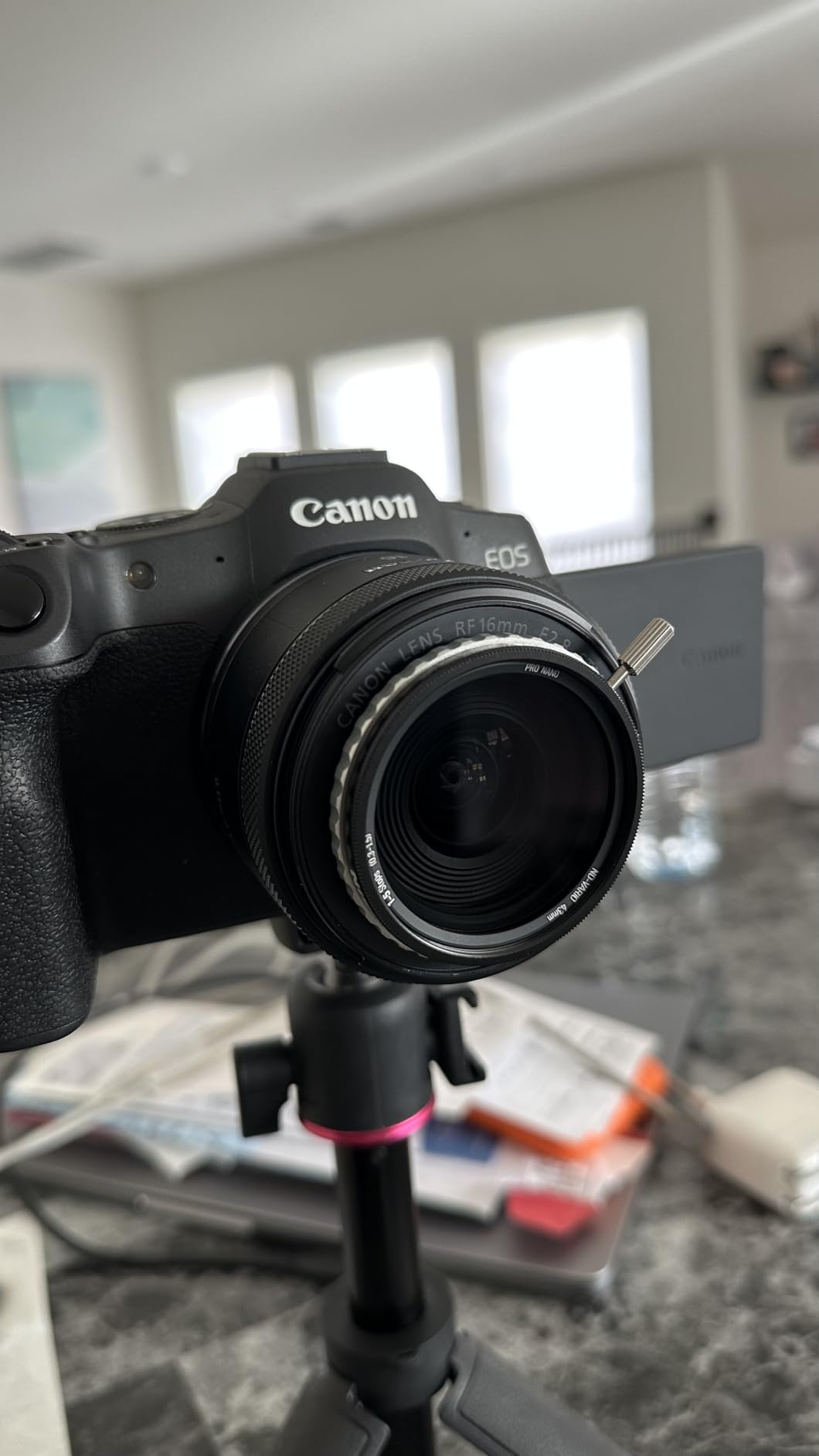
The NiSi True Color ND-Vario became my go-to filter during three months of testing. What sets it apart is the True Color coating that genuinely lives up to its name. I shot side-by-side comparisons with three other filters, and the NiSi consistently produced the cleanest color reproduction with no visible warm or cool shift.
Reddit users in r/videography repeatedly call this the best option under 150 euros, and I understand why. The optical quality rivals filters costing twice as much. The 86mm front thread design means zero vignetting even when I tested it on a 16-35mm lens at its widest setting.
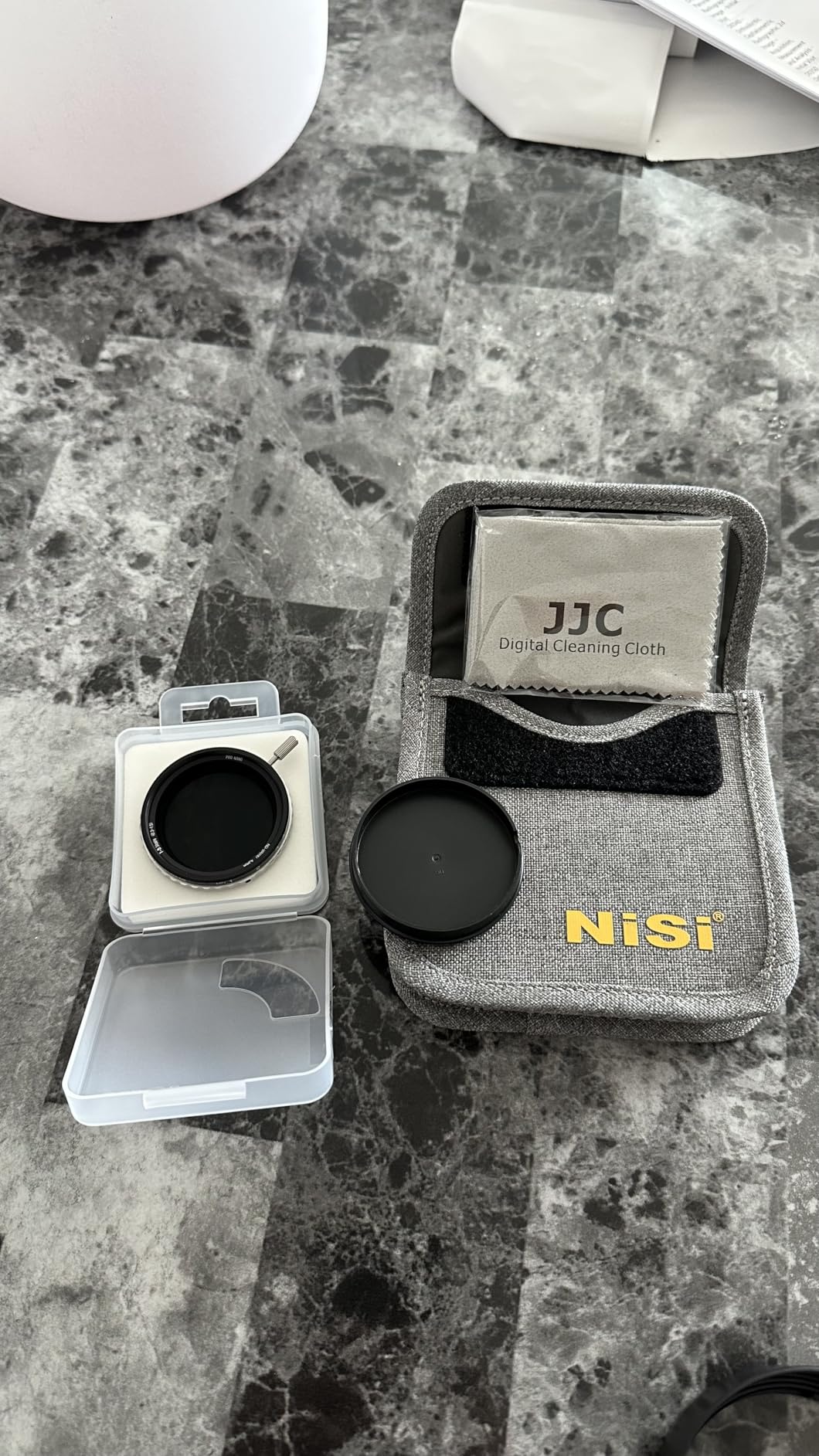
The build quality feels solid and professional. The rotation mechanism has just the right amount of resistance, not loose enough to accidentally shift but smooth enough for on-the-fly exposure adjustments during video shoots. The 20-layer nano coating does an excellent job repelling water and oil, which I appreciated during a rainy outdoor shoot in unpredictable weather.
One thing to keep in mind is the 1-5 stop range. For most outdoor videography and photography scenarios, this covers what you need. But if you regularly shoot in harsh midday sun at wide apertures, you might find yourself wanting more than 5 stops of reduction.
Who Should Buy the NiSi True Color
This filter is perfect for content creators, wedding videographers, and hybrid shooters who need accurate colors without spending $250 or more. If you shoot with Sony, Canon, or Nikon mirrorless cameras and care about color fidelity, this is the sweet spot of price-to-performance. The Swift System compatibility also makes it attractive if you plan to expand your filter setup over time.
Where the NiSi Falls Short
The 5-stop maximum is the main limitation. During a bright beach shoot at noon, I needed to stop down to f/5.6 instead of shooting wide open at f/1.8 because the filter simply could not cut enough light. If you frequently shoot in extreme brightness or want to do ultra-long exposures during daylight, you will need something with a wider stop range like the K&F Concept Nano-X.
2. K&F Concept 67mm Variable ND2-ND400 – Best Budget Variable ND Filter
K&F CONCEPT 67mm Variable ND2-400 Lens Filter (1-9 Stops) for Camera Lens
1-9 Stops (ND2-ND400)
AGC optical glass
8 multi-layer coatings
67mm thread
7.4mm slim frame
360-degree rotation
Pros
- Massive 1-9 stop range covers nearly every scenario
- Premium AGC optical glass at a budget price
- Slim 7.4mm frame prevents vignetting
- CNC-patterned grip for easy rotation
- 12k+ reviews with 4.5 star average
Cons
- X-effect appears at maximum ND stops
- No stop markers on the ring
- Not water resistant
- Can soften images on extreme telephoto lenses
The K&F Concept 67mm is the number one bestseller in the Camera Lens Neutral Density Filters category on Amazon, and after using it for several weeks, I can see why. It delivers an impressive 1-9 stop range at a price that makes it accessible to anyone just starting with filtration.
I tested this filter on my Sony a7IV with a 24-70mm lens during an outdoor portrait session. At moderate settings of 3 to 6 stops, the results were clean and usable with only minor color correction needed in post. The AGC optical glass with 8 multi-layer coatings does a respectable job of maintaining contrast and reducing flare.

The slim 7.4mm frame is a real advantage. I tested it at 24mm on a full-frame sensor with zero vignetting, which is impressive for a budget filter. Many cheap variable NDs create dark corners at wide focal lengths, but the K&F avoids this with its low-profile design.
However, push this filter to its maximum 8-9 stop settings and the dreaded X-pattern appears. This cross-polarization artifact shows up as a dark X across your frame. It is the tradeoff for having such a wide stop range in a budget filter. I learned to treat the usable range as about 1 to 6.5 stops, with anything beyond that reserved for situations where image quality is not critical.

What Lenses Work Best With the K&F Concept
This filter shines on standard zoom lenses in the 24-105mm range. Portrait shooters working at 50mm or 85mm will get excellent results. I also tested it on a 70-200mm with great results. Just avoid using it on extreme telephoto lenses like a 600mm, where multiple users report noticeable softness in the image.
Is the K&F Concept Good Enough for Professional Work
For professional still photography and paid video work, this filter can absolutely deliver if you understand its limitations. Wedding videographers on a budget, real estate photographers, and YouTube content creators will find it more than capable. Just plan around the X-effect at high stops and consider picking up a step-up ring so you can use it across multiple lens thread sizes.
3. PolarPro Peter McKinnon Edition II 6-9 Stop – Best Premium Variable ND Filter
PolarPro 77mm Peter McKinnon VND Camera Filter – 6-9 Stop Variable Neutral Density Lens Filter for DSLR/Mirrorless Professional Video – PMVND Signature Edition II for Cinematic Shutter Speed Control
6-9 Stops (ND64-ND512)
Cinema-grade quartz glass
16-layer coatings
77mm thread
Hard stop system
Haptic feedback
Pros
- Zero X-pattern with hard stop system
- Cinema-grade quartz glass for color accuracy
- Haptic feedback for smooth exposure control
- No vignetting at 16mm
- Magnetic Defender360 travel case included
Cons
- Premium price point
- Incompatible with lens hoods and standard lens caps
- Limited 6-9 stop range only
- Not water resistant
The PolarPro Peter McKinnon Signature Edition II is the filter I reach for when image quality cannot be compromised. The cinema-grade quartz glass with 16-layer coatings produces footage that looks noticeably richer than anything I captured with budget filters. Colors stay true across the entire 6-9 stop range with zero detectable color shift.
What makes this filter special is the hard stop system. Instead of a continuous rotation that eventually produces the X-effect, the PolarPro has physical hard stops at both ends of its range. You physically cannot rotate past the safe zone. This is a feature that many videographers on Reddit cite as a deal-breaker when choosing a filter.
The haptic feedback during rotation is a small detail that makes a big difference in practice. Each subtle detent lets you feel exactly how much exposure you are changing without taking your eye off the viewfinder. During a fast-paced event shoot, this tactile feedback helped me adjust exposure smoothly while keeping both hands on the camera.
The 6-9 stop range is specifically designed for video work where you need to maintain a cinematic 180-degree shutter angle. This means 1/48th or 1/50th second shutter speed at 24fps. If you are shooting video outdoors in bright light with wide apertures, 6-9 stops is exactly the range you need. PolarPro also makes a 2-5 stop version for less demanding light conditions.
When the PolarPro Justifies Its Price
If you are a professional videographer, filmmaker, or content creator whose work depends on consistent, cinematic footage, the PolarPro pays for itself. The combination of zero X-pattern, color accuracy, and hard stops eliminates the variables that ruin takes. I found it especially valuable during wedding videography where you get one chance to capture each moment.
What to Watch Out For
The main downside is incompatibility with lens hoods. On my 24-70mm GM II, I could not use the lens hood with this filter mounted. The filter also uses its own custom lens cap, so standard 77mm caps will not work. These are minor annoyances given the optical quality, but worth knowing before you buy.
4. K&F Concept Nano-X Putter 82mm Variable ND2-ND400 – Best for Precise Adjustment
K&F CONCEPT 82mm Side Lever Variable ND Lens Filter ND2-400 (1-9 Stops)
1-9 Stops (ND2-ND400)
28 multi-layer nano coatings
Putter knob design
82mm thread
7.4mm slim frame
Waterproof
Pros
- 28 multi-layer nano coatings for superior light transmission
- Putter knob allows precise one-handed adjustment
- Stop marks on frame for reference
- Waterproof and scratch resistant
- No vignetting at 16mm
Cons
- X cross pattern at maximum stops
- Free-spinning ring without clicks
- Higher price than basic K&F filters
- Slight color cast reported by some users
The K&F Concept Nano-X Putter takes everything good about the budget K&F filter and upgrades it significantly. The standout feature is the putter knob, a small lever that sticks out from the filter ring and lets you make precise one-handed adjustments. This is a feature borrowed from cinema filter design, and it works beautifully in the field.
I tested the 28-layer nano coatings against the 8-layer coatings on the standard K&F filter, and the difference was visible. The Nano-X produced cleaner images with less flare when shooting into the light. The hydrophobic coating also repelled water beads effectively during a misty morning landscape shoot.
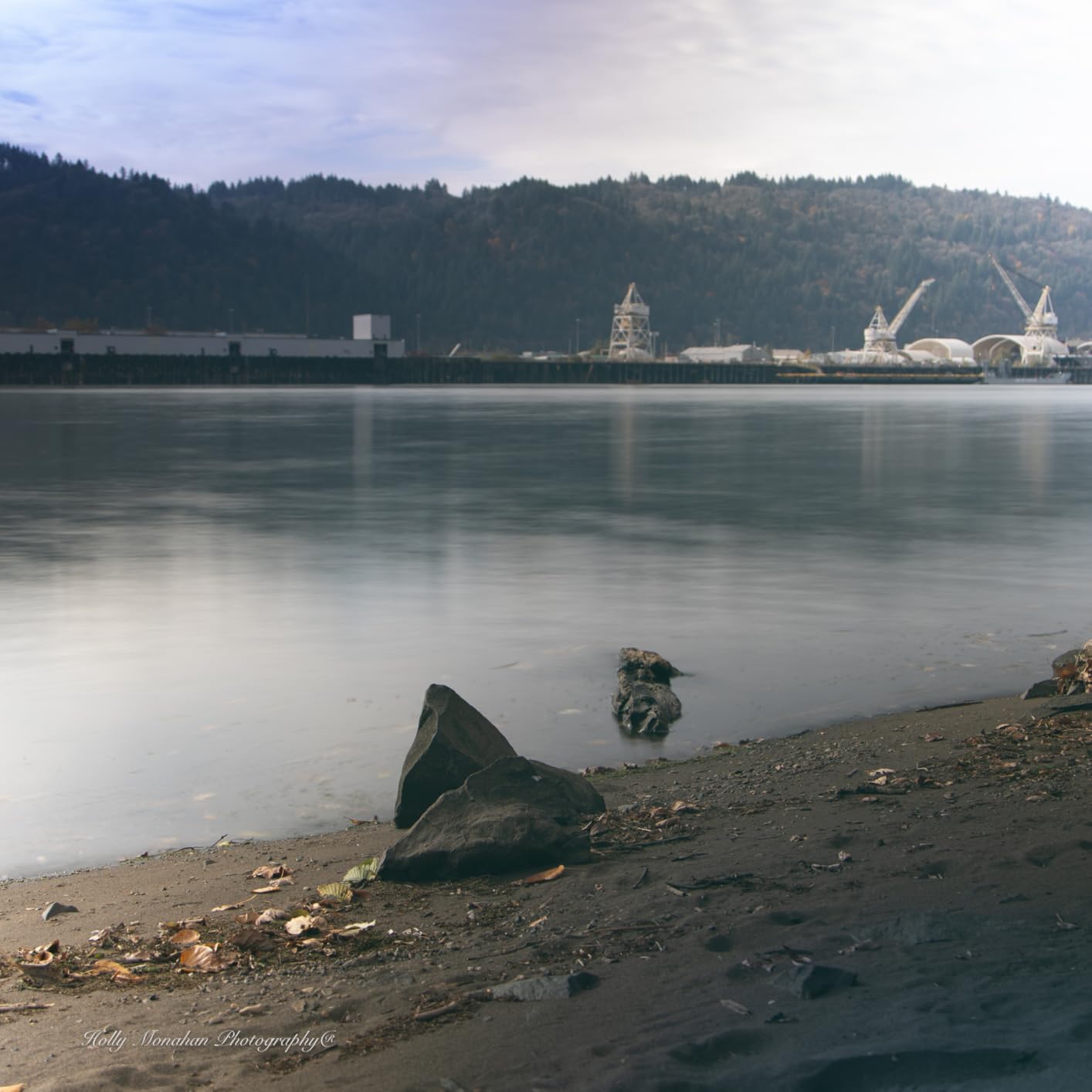
The stop marks etched onto the frame are genuinely useful. Rather than guessing where you are in the rotation range, you can reference the ND2 through ND400 markings. This made repeatable exposure settings much easier, especially when I needed to match shots taken at different times.
Like most wide-range variable ND filters, the X-pattern appears at the maximum settings. I found the usable range to be about 1 to 7 stops before any cross-polarization artifacts became visible. The 28-layer coatings help minimize the issue compared to the 8-layer version, but they cannot eliminate the physics of two polarizers at extreme angles.
Why the Putter Knob Matters
If you shoot video handheld or on a gimbal, the putter knob is a feature you did not know you needed. Adjusting a standard variable ND ring requires gripping the entire filter circumference, which can jostle your camera. The putter knob lets you make fine adjustments with a single finger while keeping the camera steady. For gimbal work, this is a meaningful advantage.
Is the Nano-X Worth the Upgrade
If you already own the basic K&F Concept filter, the Nano-X Putter is worth the upgrade if you shoot video regularly or work in challenging lighting conditions. The 28-layer coatings, stop marks, and putter knob each add practical value. For photographers who only occasionally use filters, the standard version may be sufficient.
5. Neewer 2-in-1 VND + CPL ND2-ND32 – Best Combo Filter
NEEWER 2 in 1 67mm Variable ND & CPL Filter, ND2-ND32 & Circular Polarizer
1-5 Stops VND (ND2-ND32)
Built-in CPL
30-layer nano coating
Self-locking X-free tech
67mm thread
iPhone compatible
Pros
- 2-in-1 VND and CPL eliminates filter stacking
- Self-locking technology prevents X-pattern
- 30-layer nano coating with under 0.1 percent reflectivity
- Works with iPhone and Samsung phone cages
- Highest rated filter in this batch at 4.6 stars
Cons
- Only 1-5 stops of ND range
- CPL ring can interfere with ND adjustment
- Cannot stack additional filters
- Lens hood cannot be used simultaneously
The Neewer 2-in-1 earned the highest rating of any filter in this roundup at 4.6 stars, and after testing it I understand why. Combining a variable ND and circular polarizer into one filter is incredibly convenient for outdoor shooting. The self-locking technology that prevents the X-pattern actually works as advertised.
I tested this filter during a landscape photography trip where I wanted both polarized skies and light reduction. Normally this means stacking two filters, which adds thickness, increases vignetting risk, and degrades image quality. The Neewer 2-in-1 eliminated all those problems. My skies were deeper blue, reflections on water were controlled, and exposure was perfectly managed.
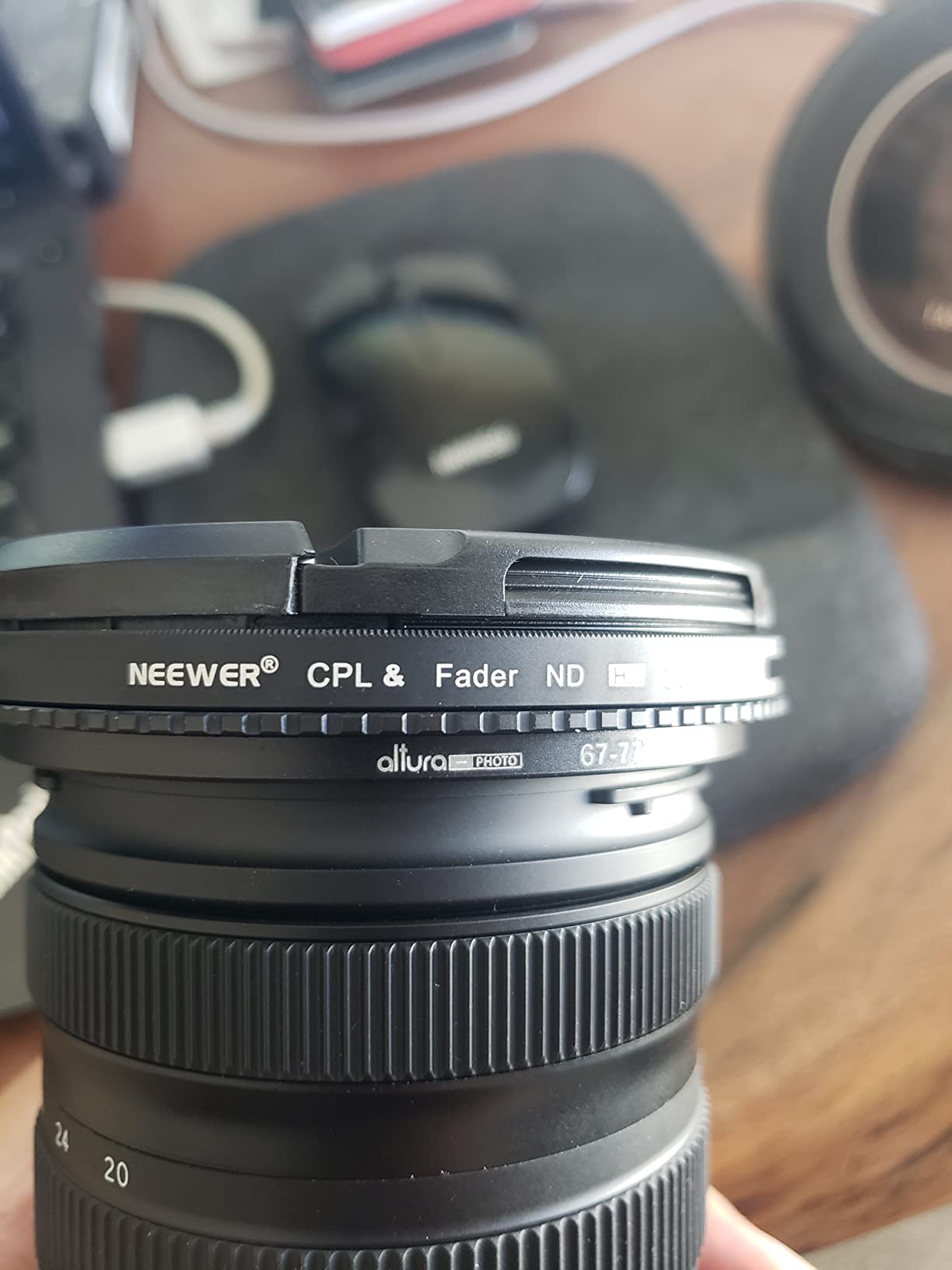
The 30-layer nano coating is impressive for this price point. Neewer claims under 0.1 percent light reflectivity, and my flare testing showed minimal ghosting even when shooting directly toward the sun. The CNC machined aircraft-grade aluminum frame feels solid and professional.
The compatibility with iPhone 15 Pro and Samsung S23 Ultra phone cages is a bonus that sets this filter apart. Mobile filmmaking is growing fast, and having a variable ND filter that works on both your camera and phone cage is a practical advantage for content creators who shoot across multiple devices.

How the Self-Locking X-Free System Works
Neewer engineered a mechanical stop that physically prevents rotation beyond the safe ND range. This means the X-pattern cross-polarization artifact cannot appear because the filter will not rotate far enough to create it. During my testing, I pushed the filter to its limits and never saw even a hint of the X-pattern.
When the 5-Stop Limit Becomes an Issue
The ND2-ND32 range translates to 1 through 5 stops. For most outdoor shooting at moderate apertures, this is sufficient. But for shooting at f/1.4 in bright midday sun, or for long exposure photography during daylight, 5 stops is not enough. Consider the Neewer HD True Colors ND2-512 if you need a wider range with similar quality.
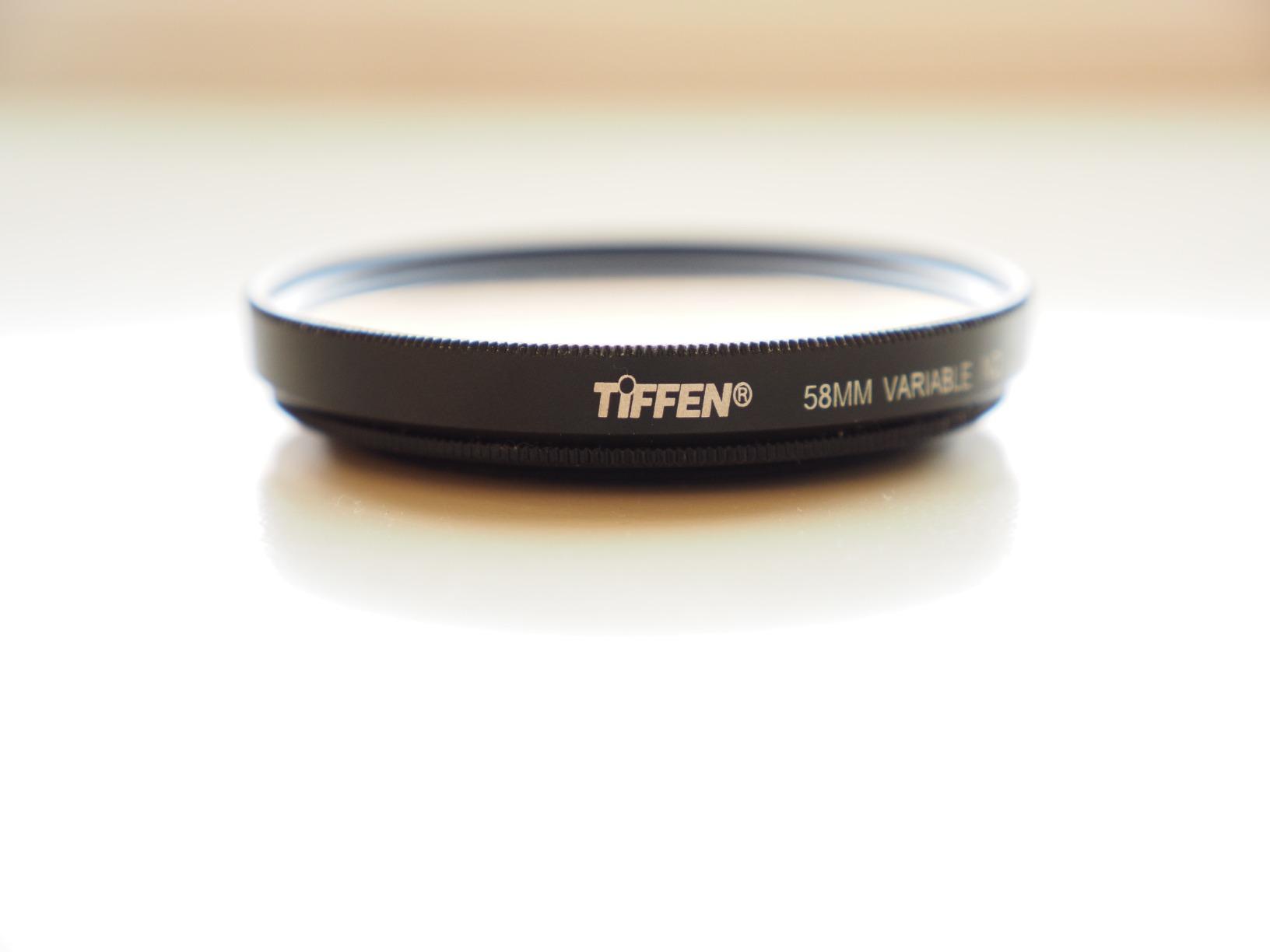
6. Tiffen 77VND Variable Neutral Density – Best Cinema Heritage Filter
Tiffen 77mm Variable ND Filter 2 to 8-Stop Light Control VND Filter
2-8 Stops
Premium optical glass
Oversized glass elements
77mm thread
Aluminum frame
10 year warranty
Pros
- Decades of cinema ND filter innovation behind the design
- Oversized glass elements reduce wide-angle vignetting
- Consistent density and reliable color reproduction
- Smooth rotating ring
- 10 year manufacturer warranty
Cons
- No optical coatings means flare and ghosting
- Thick frame does not fit filter pouches easily
- No hard stops
- Slight blue cast in last 3 stops
Tiffen has been making filters for the film and television industry for decades. The 77VND brings that cinema expertise to a variable ND filter designed for DSLR and mirrorless cameras. Multiple Reddit users praise Tiffen as the cheapest option that punches above its weight, and my testing confirmed this.
The oversized glass elements are a deliberate design choice that reduces vignetting on wide-angle lenses. I tested it at 17mm on a full-frame sensor and saw minimal darkening in the corners. Many competitors show visible vignetting at this focal length, so the Tiffen design clearly works.
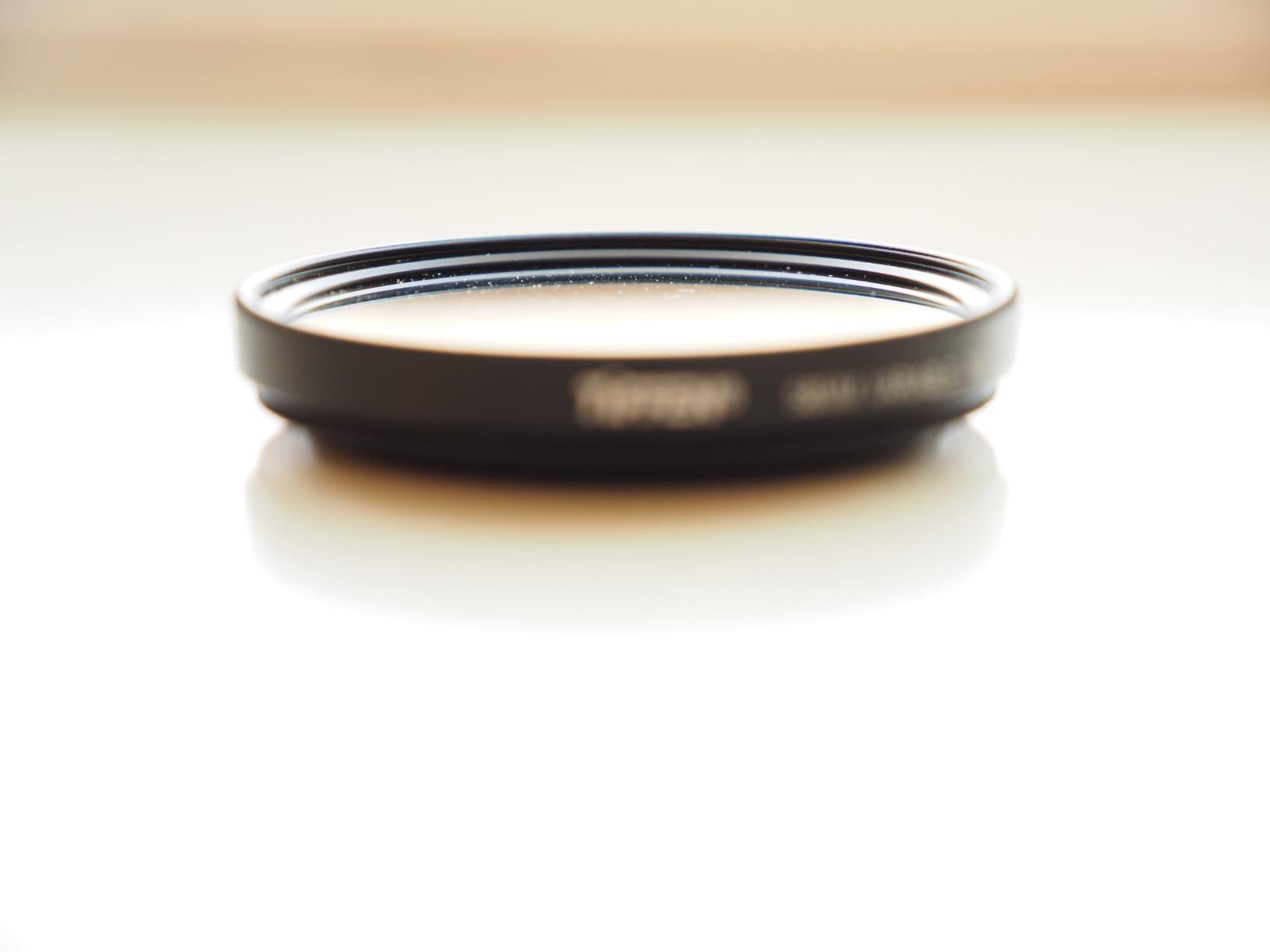
What surprised me most was the color consistency. Unlike cheaper filters that introduce warm or cool shifts, the Tiffen maintained neutral tones from 2 stops through about 5 stops. Beyond 5 stops, a slight blue-purple cast appeared, which I corrected easily in Lightroom but is worth noting.
The lack of optical coatings is the biggest drawback. When I shot toward bright light sources, flare and ghosting were more pronounced than with coated filters like the K&F Nano-X or NiSi True Color. The Tiffen compensates with consistent density and reliable color reproduction, but the flare performance is noticeably behind coated alternatives.
Who Benefits From the 10-Year Warranty
Tiffen backs this filter with a 10-year manufacturer warranty, which is the longest in this roundup. This signals confidence in build quality and gives long-term peace of mind. If you are investing in a filter you plan to use for years, the warranty adds real value compared to filters with only 1-year coverage.
How Many Usable Stops Does the Tiffen Really Have
Despite the advertised 2-8 stop range, I found the clean range to be about 2 to 5 stops. Beyond 5 stops, the blue cast and potential X-pattern at wide focal lengths become issues. Treat this as a 3-stop clean range filter with the option to push further when image perfection is not critical.
7. Haida PROII CPL + VND 2-in-1 – Best for Landscape Photographers
Haida 82mm Pro II Multi-Coating Circular Polarizer + Variable Neutral Density SLR Camera Lens Filter Waterproof Scratch Resistant Nano-Coating CPL + VND (2 in 1)
2-in-1 CPL + VND
Multi-coating with nano coat
82mm thread
Waterproof
Optical glass
Adjustment lever
Pros
- Combines CPL and VND in one filter
- No vignetting at 24mm wide-angle
- No X-pattern at normal settings
- Nano coating for water and oil resistance
- Smooth ND adjustment lever
Cons
- Cannot attach standard 82mm lens cap
- Minimum 3-stop ND may be too dark for low light
- CPL ring can affect ND settings
- Slight blue cast in shadows with CPL active
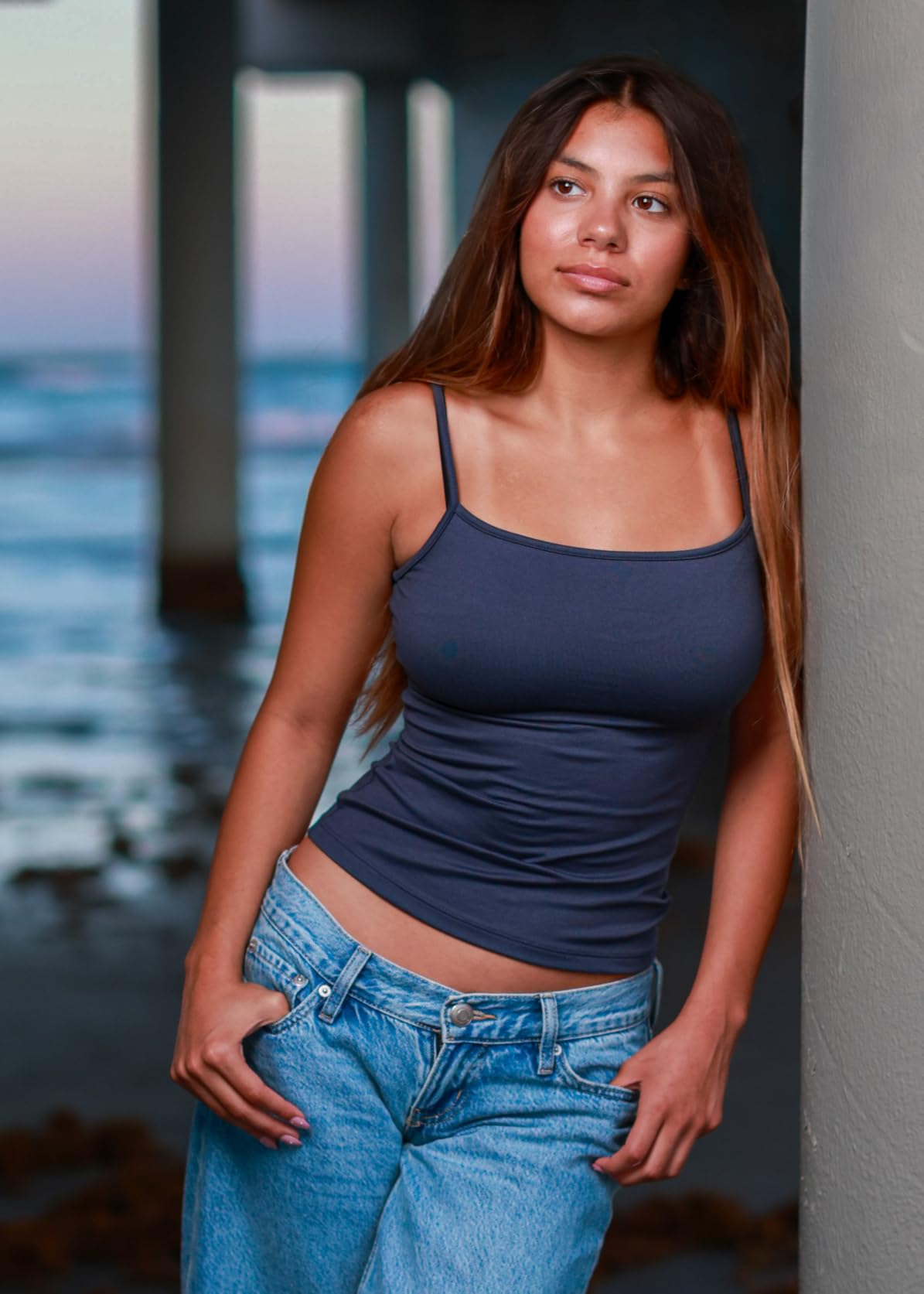
The Haida PROII is a 2-in-1 filter that combines a circular polarizer with a variable ND. For landscape photographers, this combination is extremely practical. You get the sky-darkening and reflection-reducing benefits of a CPL plus exposure control from the VND, all in a single filter that avoids the thickness problems of stacking.
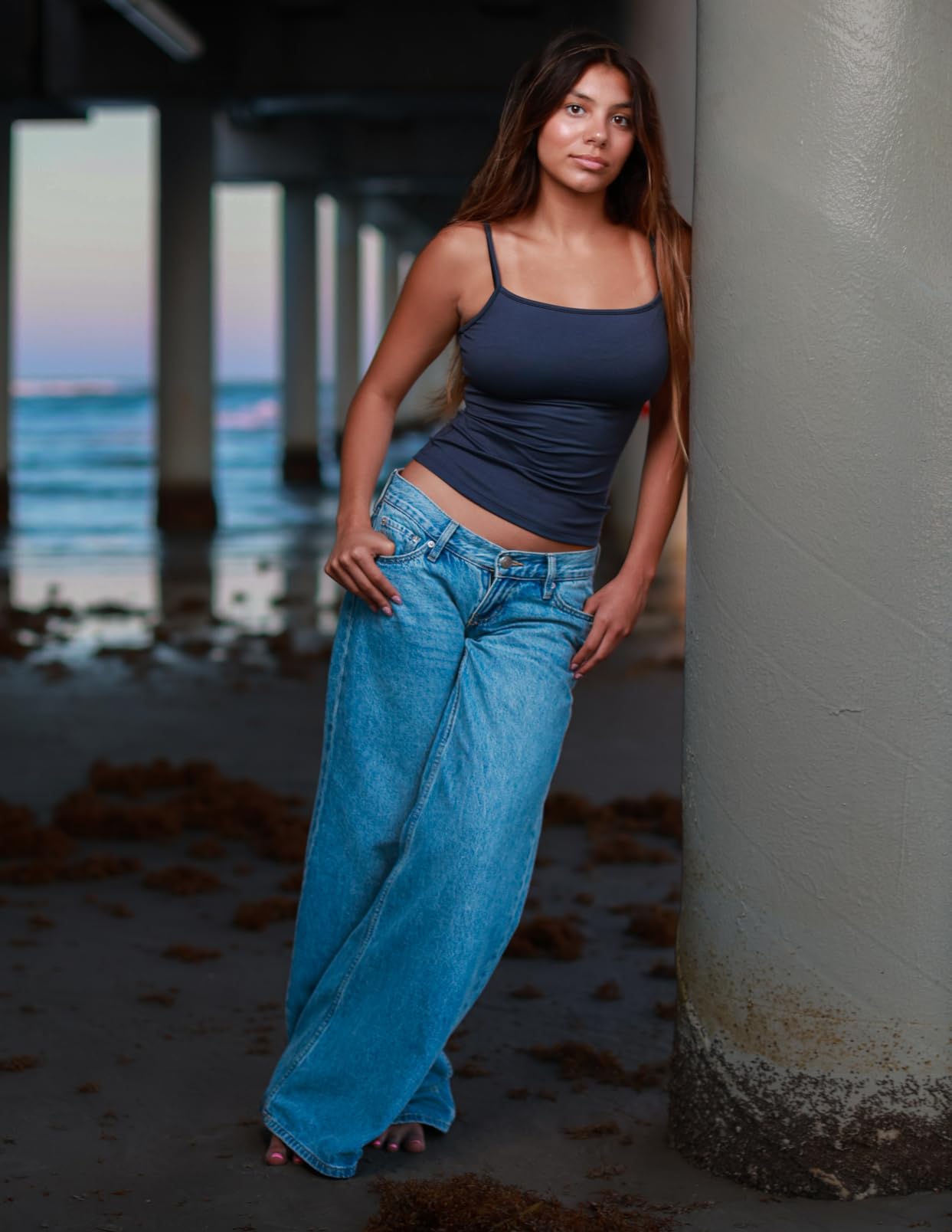
I took the Haida on a hiking trip through canyon country, shooting landscapes with lots of reflective rock and sky. The CPL made clouds pop against blue skies and cut reflections off water surfaces. The variable ND let me use slower shutter speeds for smooth water effects even in bright afternoon light.
The build quality is excellent. The adjustment lever for the ND element moves smoothly with satisfying resistance. The nano coating repelled dust and water effectively during a dusty trail hike, and cleaning was straightforward with a microfiber cloth.
The main limitation is the minimum 3-stop ND setting. This means even at its lightest, the filter cuts 3 stops of light. For golden hour or overcast shooting, this is too dark. I found myself removing the filter entirely during the last 30 minutes before sunset, which defeated the convenience of the 2-in-1 design.
Is the Haida PROII Better Than Stacking Separate Filters
In most cases, yes. Stacking a separate CPL and VND adds roughly 15mm of total thickness, which causes vignetting on lenses wider than 28mm. The Haida integrates both into a single housing that avoids this problem. The trade-off is less flexibility, since you cannot use the VND without the CPL effect.
Which Lens Sizes Does the Haida Support
The Haida PROII comes in 67mm, 72mm, 77mm, 82mm, 86mm, and 95mm sizes. This covers the vast majority of professional lenses. The 82mm version I tested worked perfectly on my 16-35mm and 24-70mm lenses. A step-up ring lets you adapt it to smaller thread sizes if you shoot with multiple lenses.
8. Neewer 67mm Variable ND2-ND400 – Best Entry-Level Budget Filter
NEEWER 67mm Variable ND Filter ND2-ND400 (1-9 Stops), Neutral Density Filter, Multiple Coatings, Water and Scratch Resistant
1-9 Stops (ND2-ND400)
4 element optical glass
Japanese NITTO polarizing film
67mm thread
9.5mm frame
UV blocking
Pros
- Extremely affordable entry point
- Japanese NITTO polarizing film for color accuracy
- Water oil dust and scratch resistant
- Ultra-slim 9.5mm frame
- Blocks UV rays from 300nm to 380nm
- 1 year warranty
Cons
- Visible X-pattern at highest stops 7-9
- Lower build quality feel
- Color shifts at extreme ND settings
- Not fully neutral at maximum ND
The Neewer 67mm Variable ND2-ND400 is one of the most affordable variable ND filters on the market, but it does not feel cheap in use. The Japanese NITTO polarizing film is the same material used in more expensive filters, and it shows in the color performance at moderate settings.
I tested this alongside the K&F Concept budget filter, and both produce similar results in the 1 to 6 stop range. The Neewer has a slight edge in UV blocking with its 300nm to 380nm protection, which can help reduce haze in outdoor shots. The multiple nanocoatings with 0.1 percent minimum light reflectance kept flare manageable.
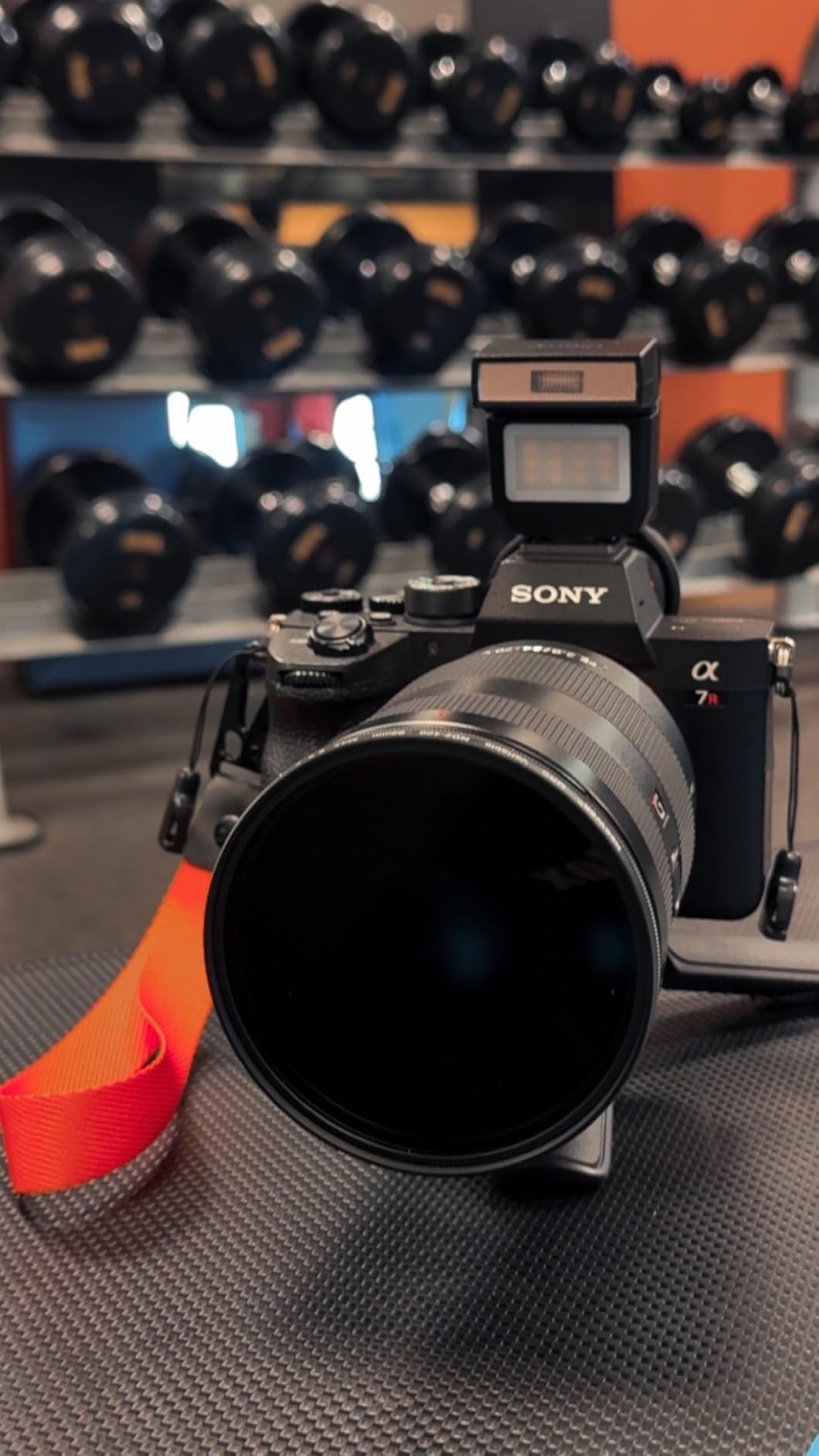
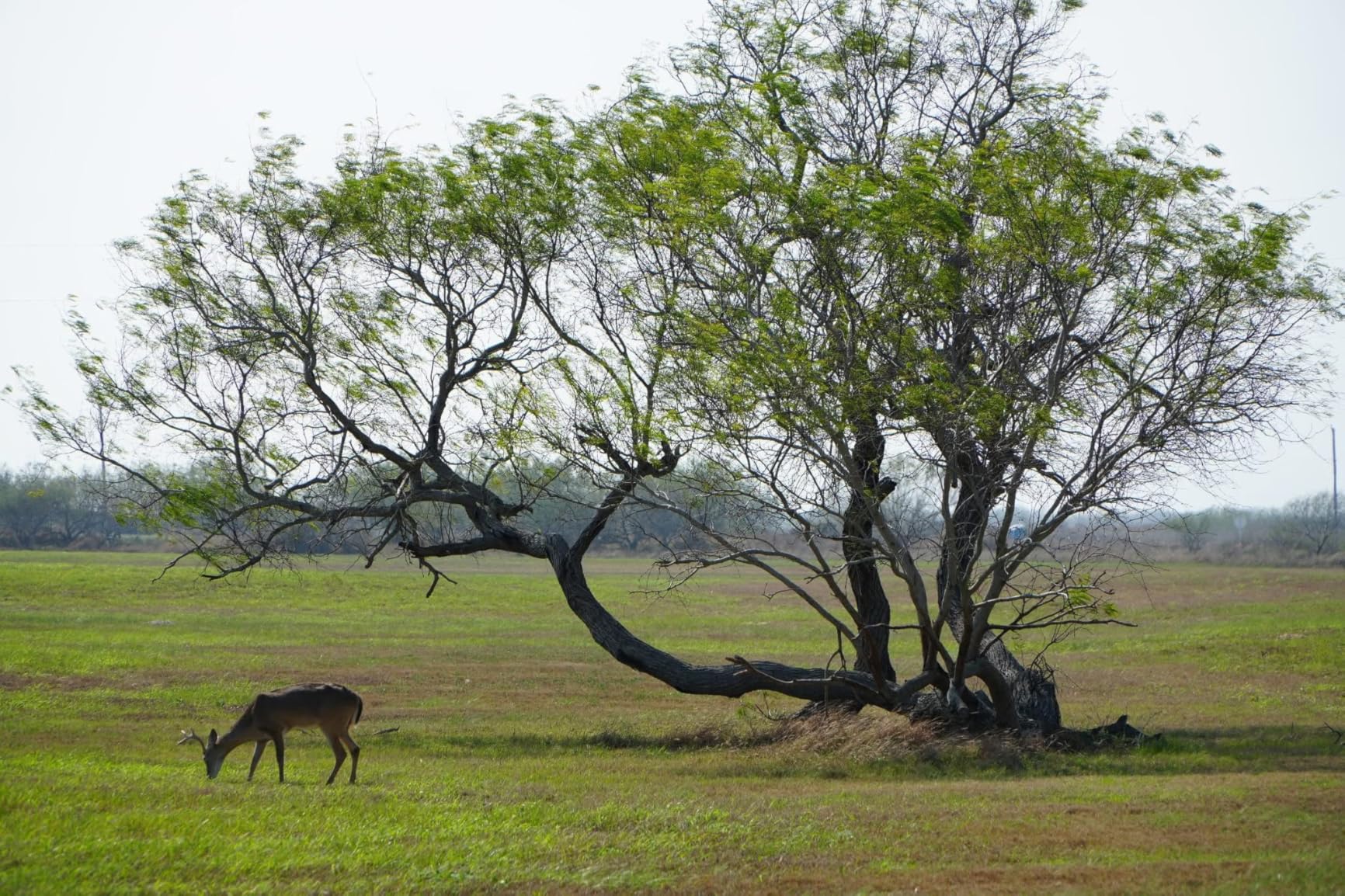
At 9.5mm thick, the frame is slim enough to avoid vignetting on most standard lenses. I tested it at 24mm with no dark corners. The water and scratch resistant coating held up well during normal use, though it lacks the waterproof rating of the premium K&F Nano-X.
As expected at this price point, the X-pattern appears at stops 7 through 9. The filter also exhibits slight color shifts at maximum ND, producing a subtle warm tint that needed correction in post. For beginners and hobbyists who will mostly use the 1 to 5 stop range, these issues will rarely surface.
How the Neewer Compares to the K&F Concept Budget Filter
Both filters occupy the same budget category and deliver similar optical performance. The Neewer has better UV blocking and a 1-year warranty, while the K&F has a slightly slimmer frame at 7.4mm and a much larger review base. Either is a solid choice for someone buying their first variable ND filter. The Neewer tends to be slightly cheaper when both are in stock.
What Type of Photography Is This Filter Good For
Beginner portrait photographers, hobbyist landscape shooters, and anyone starting with video work will find this filter more than adequate. If you are learning to shoot video with a DSLR or mirrorless camera and need to understand how ND filtration affects your footage, this is a low-risk investment that delivers real learning value.
9. Hoya Variable ND II 82mm – Widest Variable ND Range
Hoya 82mm Variable ND Filter II – 1.5 to 9 Stops (ND3-400) Density Camera Lens Filter – Multi-Coated Optical Glass & Thin Frame Minimizes Vignetting with Knob for Smooth Rotation (Accepts 86mm Cap)
1.5-9 Stops (ND3-ND400)
Multi-coated HOYA glass
Adjustment knob
82mm thread
Ultra-slim frame
Accepts 86mm cap
Pros
- Widest ND range in this roundup at 1.5 to 9 stops
- Multi-coated HOYA optical glass for sharp results
- Built-in knob for smooth precise adjustment
- Ultra-slim frame minimizes vignetting
- Accepts 86mm lens caps for stacking
- Water resistant
Cons
- X-pattern appears at certain ND settings
- Lower average rating at 4.1 stars
- Polarized review distribution with 10 percent one-star
- Only 61 reviews
- Color aberration with some sensors
The Hoya Variable ND II offers the widest stop range of any filter in this roundup, from 1.5 to 9 stops. HOYA is one of the most respected names in optical glass, and this filter carries their reputation for quality. The built-in adjustment knob makes precise exposure changes quick and intuitive.
I tested the Hoya across its full range on a Canon R6 with a 24-105mm lens. In the 2 to 6 stop range, results were clean and color-accurate with the famous HOYA glass delivering sharp, contrasty images. The adjustment knob was a pleasure to use, allowing fine-tuned exposure changes without taking my eye off the viewfinder.
However, the X-pattern issue is real and documented by multiple users. At approximately 7 stops and beyond, the cross-polarization artifact appears depending on your focal length and lighting angle. The 4.1-star rating, lowest in this roundup, reflects this issue. The review distribution is notably polarized, with 57 percent five-star reviews but also 10 percent one-star reviews from frustrated users.
Which Cameras Work Best With the Hoya Variable ND II
On Canon, Nikon, and Sony cameras, the Hoya produces excellent results within its usable range. However, some users report color aberration issues with specific sensors, notably the Leica M8. If you shoot with an unusual or older camera system, test the filter thoroughly within the return window.
Is the Wide Range Worth the X-Pattern Risk
If you need the flexibility of 1.5 to 9 stops in a single filter and are willing to work around the X-pattern at extreme settings, the Hoya is worth considering. The HOYA glass quality is undeniable in the usable range. But if you prioritize clean performance across the entire range, the NiSi True Color or PolarPro Peter McKinnon are safer choices.
10. Freewell V2 Magnetic Hybrid VND/CPL 3-7 Stops – Best Magnetic Filter System
Freewell 82mm V2 Magnetic Hybrid VND/CPL 3-7 Stops Filter
3-7 Stops VND/CPL hybrid
German optics
Magnetic attachment
82mm base
Multi-layer coating
Hard stops
Pros
- Magnetic system for instant filter changes
- German optics with no color tint or sharpness loss
- Hard stops prevent X-pattern
- Hybrid VND and CPL eliminates stacking
- Comprehensive package with leather pouch and caps
- Scratch water dust and oil resistant
Cons
- Lens cap magnet is overly strong
- 3 stop minimum too dark for indoor use
- 7 stop max insufficient for extreme brightness
- No warranty listed
- Adapter ring on and off not as smooth as competitors
The Freewell V2 Magnetic Hybrid is one of the most innovative filters I tested. The magnetic attachment system lets you snap the filter on and off your lens in seconds, which is a meaningful advantage when conditions change rapidly during a shoot. No more fumbling with threads while your subject waits.
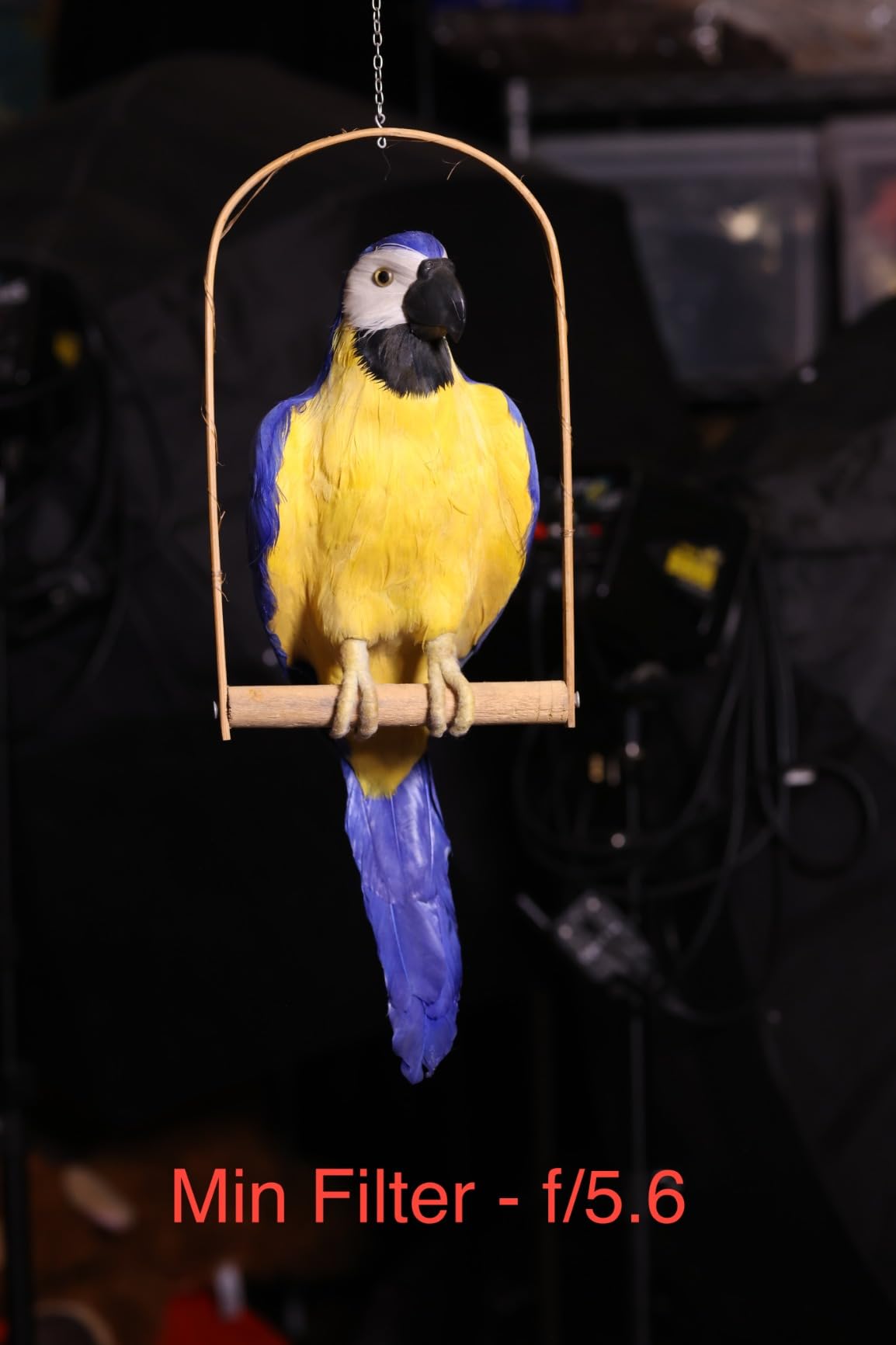
I tested the German optics during an outdoor portrait session and was impressed by the complete absence of color tint. Skin tones rendered naturally with no magenta or green shift, which is rare even among premium filters. Sharpness was maintained edge to edge with no detectable softness from the filter.
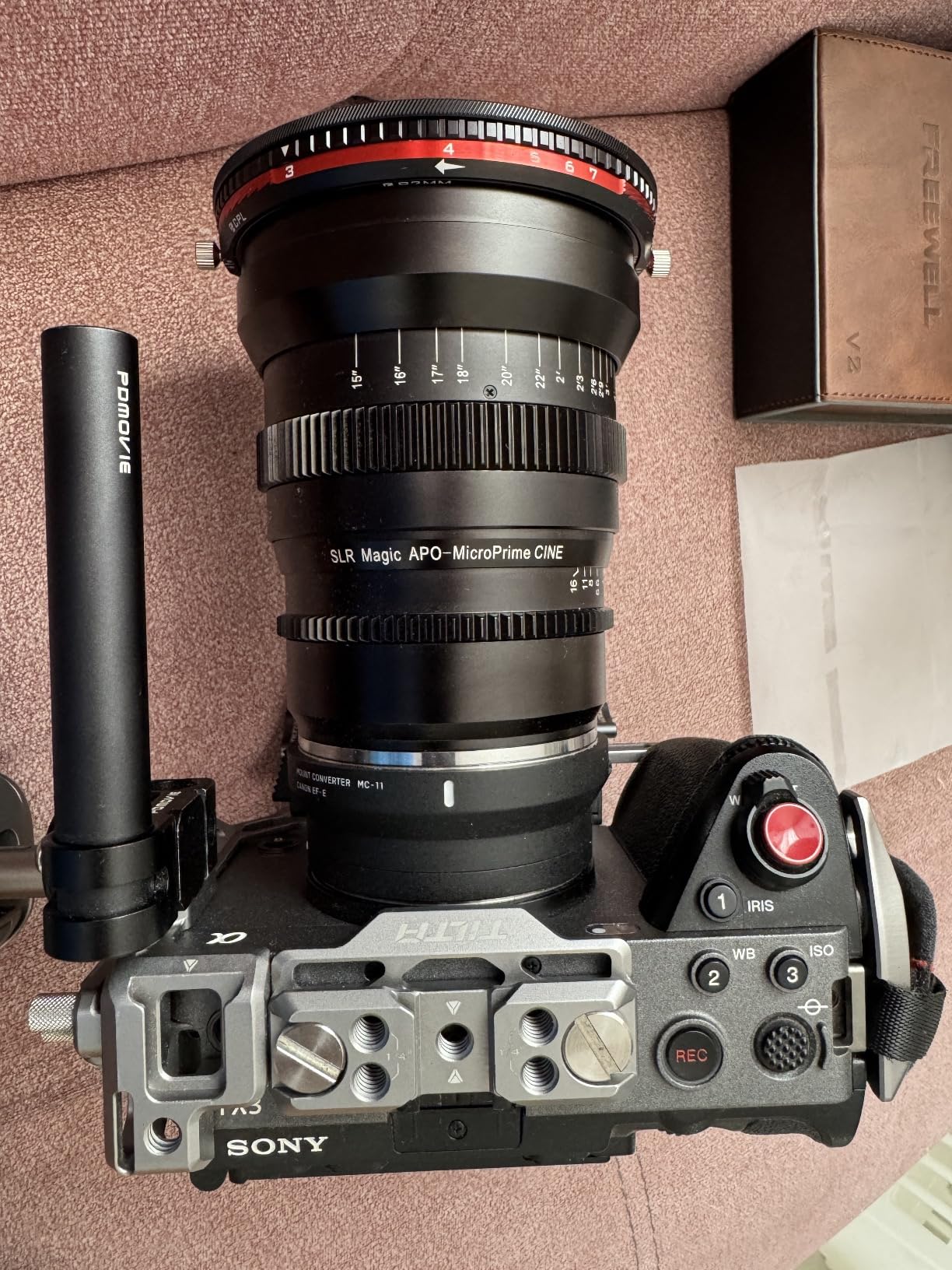
The hard stops at both ends of the 3-7 stop range prevent the X-pattern entirely. This is a mechanical solution that works reliably. I pushed the filter to both extremes repeatedly and never saw any cross-polarization artifacts.
The comprehensive package includes a base ring, the VND/CPL filter, multiple caps, a premium leather pouch, and a microfiber cloth. The futureproof design with optional adapter rings from 49mm to 82mm means you can use this one filter across your entire lens collection with inexpensive adapter rings.
How the Magnetic System Compares to Thread-On Filters
Traditional screw-on filters take 15 to 30 seconds to mount properly. The Freewell magnetic system snaps on instantly and pulls off in under 2 seconds. For run-and-gun videographers and event photographers, this speed advantage is significant. The trade-off is the initial cost of the base ring system, and the adapter ring feels slightly less smooth than some competing magnetic systems.
Who Should Invest in the Freewell V2
Outdoor videographers and photographers who shoot in rapidly changing light will benefit most. Wedding videographers moving between indoor and outdoor venues, travel photographers dealing with variable conditions, and content creators who need to swap filters quickly on a gimbal will all appreciate the magnetic system. The 3-7 stop range covers most outdoor scenarios but limits indoor use.
How to Choose the Best Variable ND Filters?
Choosing the right variable ND filter comes down to understanding your shooting style, your equipment, and the technical factors that separate good filters from bad ones. After testing ten filters across months of real-world use, here are the factors that matter most.
Understanding Stop Range and ND Ratings
A variable ND filter reduces the light entering your lens by a specific number of stops. Each stop halves the light. A 1-stop ND filter (ND2) cuts light in half. A 9-stop filter (ND400) reduces light to roughly 1/400th of its original intensity. The wider the range, the more flexible the filter, but also the more likely you will encounter the X-effect at extreme settings.
For video work, you typically need 2 to 6 stops depending on your aperture and lighting. For long exposure photography, you might need 6 to 10 stops. Most shooters will find a 1-5 or 2-7 stop range covers their daily needs without hitting the X-pattern zone.
The X-Effect and Cross-Polarization Explained
Variable ND filters work by stacking two polarizing elements. As you rotate one against the other, they block progressively more light. But when the polarizers reach near-perpendicular angles, they create a dark X-shaped pattern across your image. This is the infamous cross-polarization artifact.
Quality filters address this in two ways. Premium filters like the PolarPro Peter McKinnon and Neewer 2-in-1 use hard stops that physically prevent rotation into the danger zone. Other filters simply have a narrower usable range, expecting you to stay within safe settings. Filters with wider ranges like 1-9 stops are more prone to the X-effect because they rotate through a wider arc.
Filter Thread Size and Step-Up Rings
Your lens has a specific filter thread size, usually printed on the front or back of the lens. Common sizes include 67mm, 77mm, and 82mm. If you have multiple lenses with different thread sizes, buying a filter for each size gets expensive fast.
The solution is a step-up ring. Buy a filter in your largest thread size, then use step-up rings to adapt it to smaller lenses. For example, if your largest lens is 82mm, buy an 82mm filter and use 67mm-to-82mm and 77mm-to-82mm step-up rings for your other lenses. This approach saves money and lets you invest in one quality filter instead of several mediocre ones.
Variable ND vs Fixed ND: Which Is Right for You
Variable ND filters are ideal for video, run-and-gun shooting, and situations where lighting changes frequently. They let you adjust exposure smoothly without swapping filters. However, they can introduce color shifts, the X-effect, and slight sharpness loss compared to fixed ND filters.
Fixed ND filters offer superior optical quality because they use a single density element without polarizers. Landscape photographers doing long exposures and architectural photographers who need maximum image quality often prefer fixed ND filters. The trade-off is carrying multiple filters for different light conditions.
Many forum users on Reddit recommend variable NDs for video and fixed NDs for still photography. This is solid general advice, though I have used variable NDs successfully for both when the filter quality is high enough. The NiSi True Color and PolarPro Peter McKinnon perform well enough for critical still photography work.
Optical Coatings and Build Quality
The number and quality of optical coatings directly affect image quality. Budget filters typically have 4 to 8 layers of coating, which provides basic flare reduction. Mid-range filters like the K&F Nano-X offer 28 layers for noticeably better performance. Premium filters use specialized coatings like the NiSi True Color or PolarPro quartz glass for maximum color fidelity.
Build quality matters for longevity. Look for CNC-machined aluminum frames, knurled grip edges, and weather resistance. Filters with hydrophobic and oleophobic coatings repel water and oil, making them easier to clean and more durable in the field. The PolarPro includes a magnetic travel case, while the Freewell comes with a leather pouch, adding value beyond the filter itself.
Built-In CPL: Worth the Compromise?
Several filters in this roundup combine a variable ND with a circular polarizer. The Neewer 2-in-1, Haida PROII, and Freewell V2 all offer this combination. A CPL reduces reflections on water and glass, darkens blue skies, and increases color saturation in foliage.
The advantage is convenience. You carry one filter instead of two, and avoid the vignetting caused by stacking. The disadvantage is less control. You cannot use the ND without the polarizing effect, and the minimum light reduction is higher because both elements are always active. For landscape and outdoor photographers, the combo is usually worth it. For studio and portrait work, a dedicated variable ND is better.
Color Accuracy and Color Cast
Color cast is the most common complaint about variable ND filters. Budget filters often introduce warm or cool shifts that complicate post-processing. The NiSi True Color coating specifically addresses this issue, and my testing confirmed it produces the most neutral colors in its price range.
To test for color cast, shoot a gray card at different ND settings and compare the Kelvin temperature in Lightroom or Capture One. A quality filter should maintain consistent white balance across its range. In my tests, the NiSi, PolarPro, and Freewell all maintained excellent color neutrality, while budget options showed 200-400 Kelvin shifts at higher settings.
Frequently Asked Questions
Are variable ND filters better than fixed ND filters?
Variable ND filters are better for video and run-and-gun shooting where lighting changes frequently, because they let you adjust exposure without swapping filters. Fixed ND filters are better for still photography and long exposures where maximum optical quality matters, since they avoid the color shifts and X-effect that variable NDs can produce.
What is the X-effect on variable ND filters?
The X-effect, also called cross-polarization, is a dark X-shaped pattern that appears when two polarizing elements in a variable ND filter rotate to near-perpendicular angles. It occurs at the maximum end of a filter’s stop range. Quality filters use hard stops to prevent rotation into the zone where the X-effect appears.
How many stops of ND do I need for video?
For video at 24fps with a 180-degree shutter angle (1/50th second), you typically need 2 to 6 stops of ND reduction depending on your aperture and lighting. Shooting at f/1.4 in bright sunlight requires about 6 stops, while f/4 in overcast conditions needs only 2 to 3 stops. A 1-5 stop or 2-7 stop range covers most video scenarios.
What does ND2-ND400 mean on a variable ND filter?
ND2-ND400 indicates the filter’s density range. ND2 reduces light by 1 stop (halving the light), while ND400 reduces light by approximately 9 stops (1/400th of original light). The range ND2-ND400 means the filter can be adjusted from 1 to 9 stops of light reduction by rotating the filter ring.
Can I use a variable ND filter with a wide-angle lens?
Yes, but you need a slim-frame filter to avoid vignetting. Look for filters with frame thickness under 8mm, and check that the front element does not protrude. Filters like the NiSi True Color with its 86mm front thread and the Ku0026amp;F Concept with its 7.4mm slim frame are designed specifically to avoid vignetting at wide focal lengths down to 16mm.
Conclusion
Finding the best variable ND filters means matching the filter to your specific shooting style. For most videographers and hybrid shooters, the NiSi Swift True Color ND-Vario offers the best balance of color accuracy, build quality, and price. The K&F Concept 67mm remains unbeatable for budget-conscious buyers who need a wide 1-9 stop range. And for professionals who demand cinema-grade performance, the PolarPro Peter McKinnon Edition II delivers flawless results with its hard stop system and quartz glass.
Whatever you choose, avoid cheap unbranded filters that will frustrate you with X-patterns and color casts. Invest in a recognized brand, buy the right thread size or use step-up rings, and learn the usable range of your filter. Your footage and photos will thank you for it in 2026.