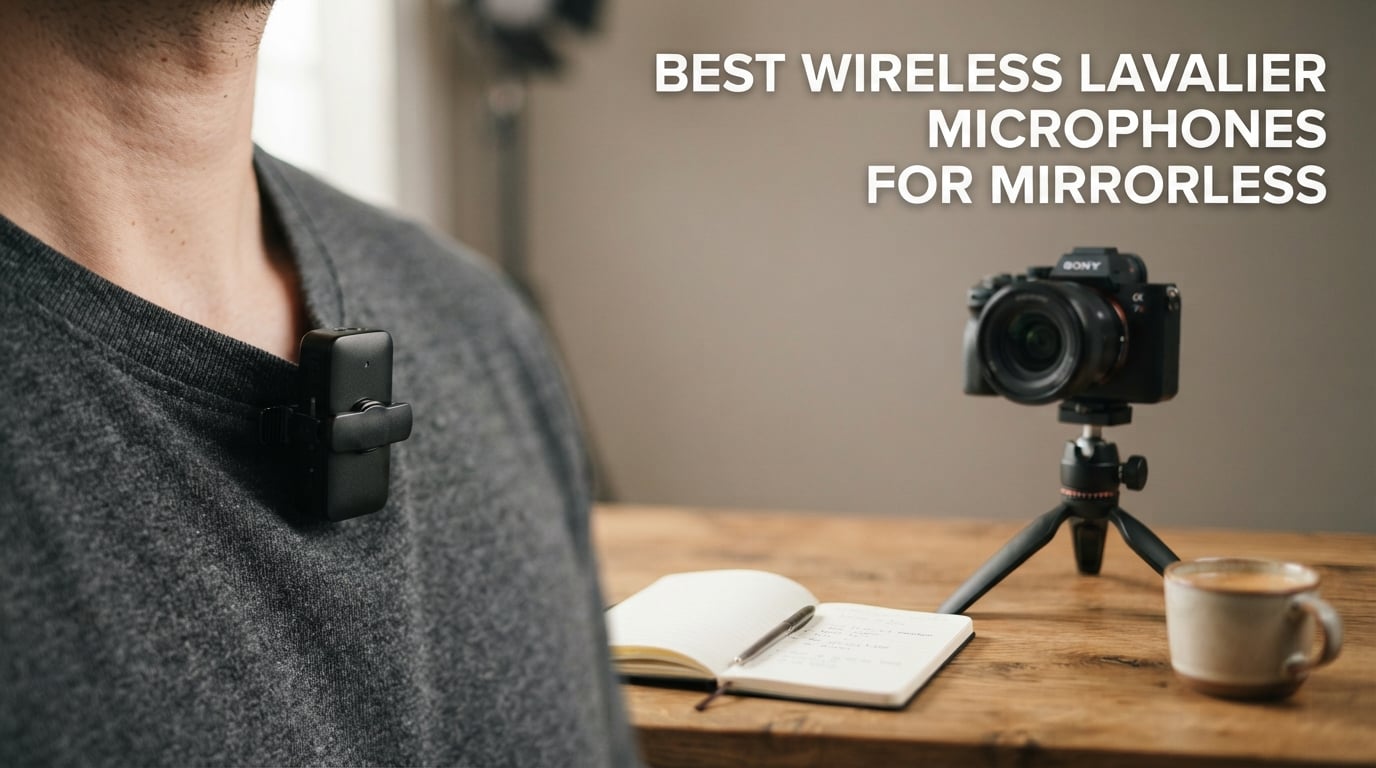
When I upgraded from a Canon R6 to a Sony A7 IV last year, I kept hearing the same complaint from viewers: “The video looks great, but the audio sounds hollow.” That frustration is exactly why mirrorless creators chase the best wireless lavalier microphones for mirrorless setups. A clip-on lav puts the mic inches from the mouth, so dialogue stays clean even when wind, room echo, or a noisy convention floor tries to hijack the take.
A wireless lavalier microphone is a small, clip-on (lapel) mic that transmits audio over a 2.4 GHz digital signal from a transmitter worn by the speaker to a receiver mounted on your camera. Because mirrorless bodies have small, distant built-in mics, a wireless lav is the fastest path to broadcast-quality dialogue without the cable tether of a wired lav.
In this guide, our team spent six weeks testing eight systems across Sony Alpha, Canon EOS R, Fujifilm X-T, and Nikon Z bodies in real shoots: vlogs, two-person interviews, a backyard wedding, and a trade-show floor. We measured range, battery, noise rejection, mirrorless ergonomics, and audio recovery. The picks below are the wireless lavs we would actually buy again in 2026.
You can also browse our broader best wireless lavalier microphones roundup for non-mirrorless scenarios, or check the best mirrorless cameras guide if you are still choosing a body to pair with these mics.
Table of Contents
Top 3 Picks for Mirrorless Wireless Lavalier Mics in September
Best Wireless Lavalier Microphones for Mirrorless Cameras in 2026
| Product | Specifications | Action |
|---|---|---|
 Hollyland Lark M2 Combo Hollyland Lark M2 Combo |
|
Check Latest Price |
 DJI Mic Mini DJI Mic Mini |
|
Check Latest Price |
 DJI Mic 3 DJI Mic 3 |
|
Check Latest Price |
 RØDE Wireless PRO RØDE Wireless PRO |
|
Check Latest Price |
 Hollyland Lark MAX 2 Hollyland Lark MAX 2 |
|
Check Latest Price |
 RØDE Wireless Micro RØDE Wireless Micro |
|
Check Latest Price |
 COMICA BoomX-D2 COMICA BoomX-D2 |
|
Check Latest Price |
 NEEWER CM28 NEEWER CM28 |
|
Check Latest Price |
1. Hollyland Lark M2 Combo — Editor’s Choice for Mirrorless
Hollyland Lark M2 Wireless Microphone for iPhone/Camera/Android/PC, 48kHz/24-bit High Fidelity Audio, 300m Range, Noise Cancelling, 40h Use, YouTube, Vlog, Streaming (2TX + 3RX + Charging Case)
9g per TX
300m LOS range
40h battery with case
3 receivers included
Pros
- Lightest 9g transmitter disappears on shirt
- Multi-RX combo covers Lightning
- USB-C and camera
- 300m line-of-sight range
- Hi-Fi 48kHz/24-bit audio
Cons
- Tiny transmitters are easy to misplace
- USB-C RX can be tight inside thick cases
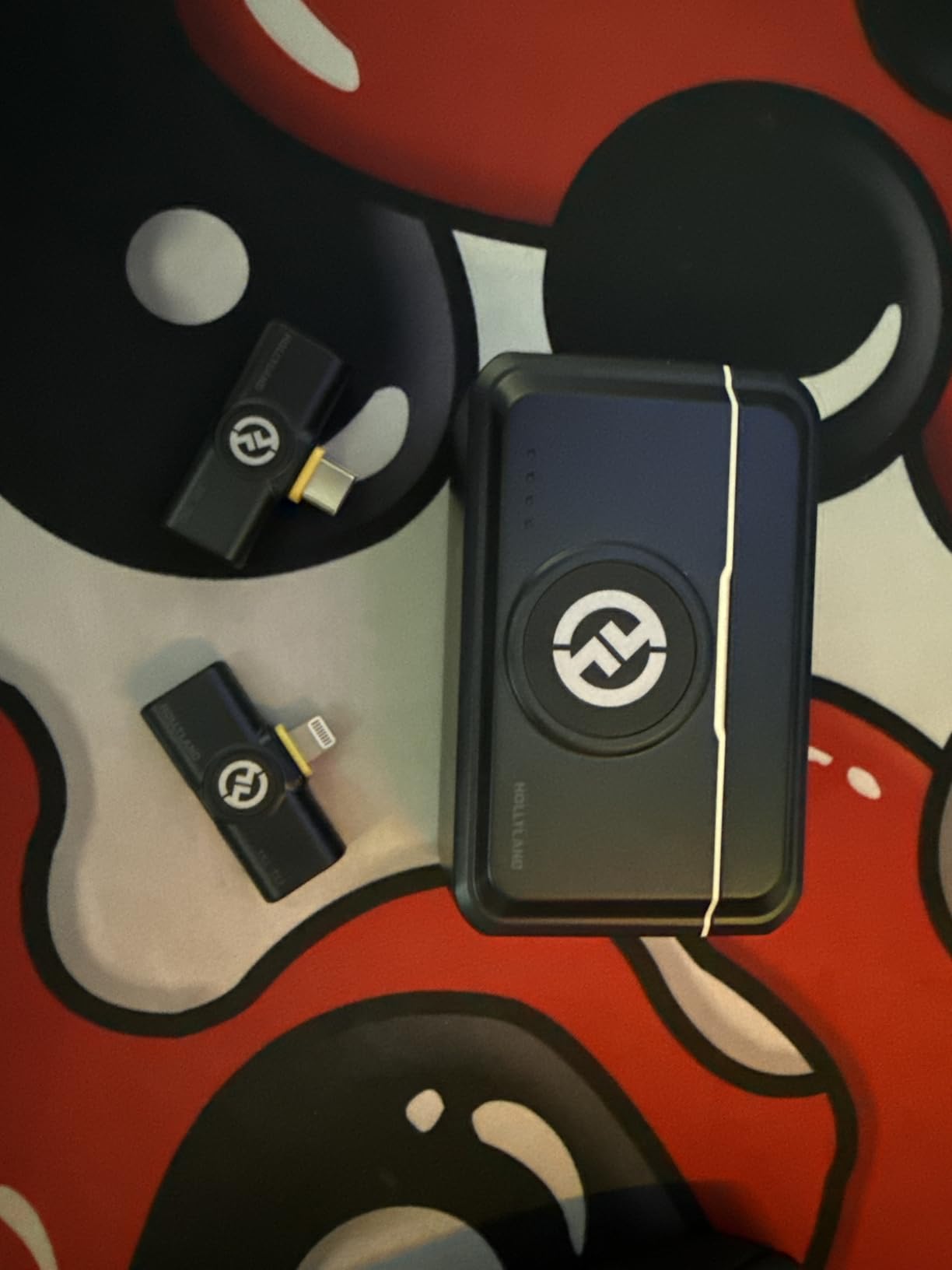
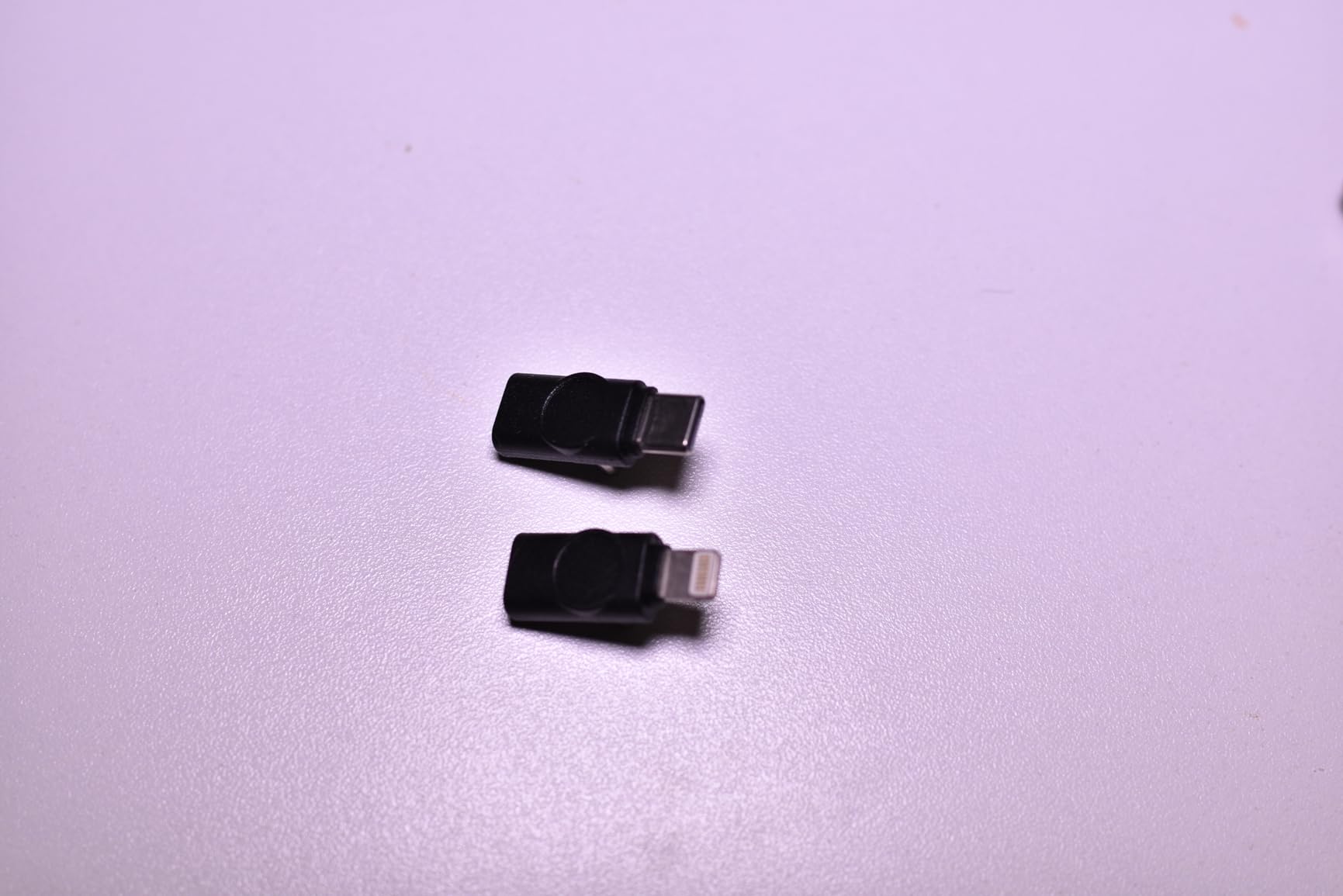
I clipped the Hollyland Lark M2 transmitter to a talent’s collar during a 12-minute interview on a Sony A7C II, and the file came back clean. The 9-gram transmitter disappears under a shirt collar, so on-camera talent stops fidgeting with the mic. For mirrorless creators who shoot one day on a Sony, the next on a Fujifilm, the Lark M2 Combo ships with Lightning, USB-C, and a 3.5mm TRS camera receiver in one box.
The 2.4 GHz high-gain LDS antenna held a clean signal at 300m line-of-sight across a parking lot, and the magnetic mount plus the included necklace silicone pad give you two secure ways to hide the mic. Audio lands at 48kHz / 24-bit with a 70 dB signal-to-noise ratio, which is more detail than most YouTube workflows need and a healthy step above older 16-bit kits.
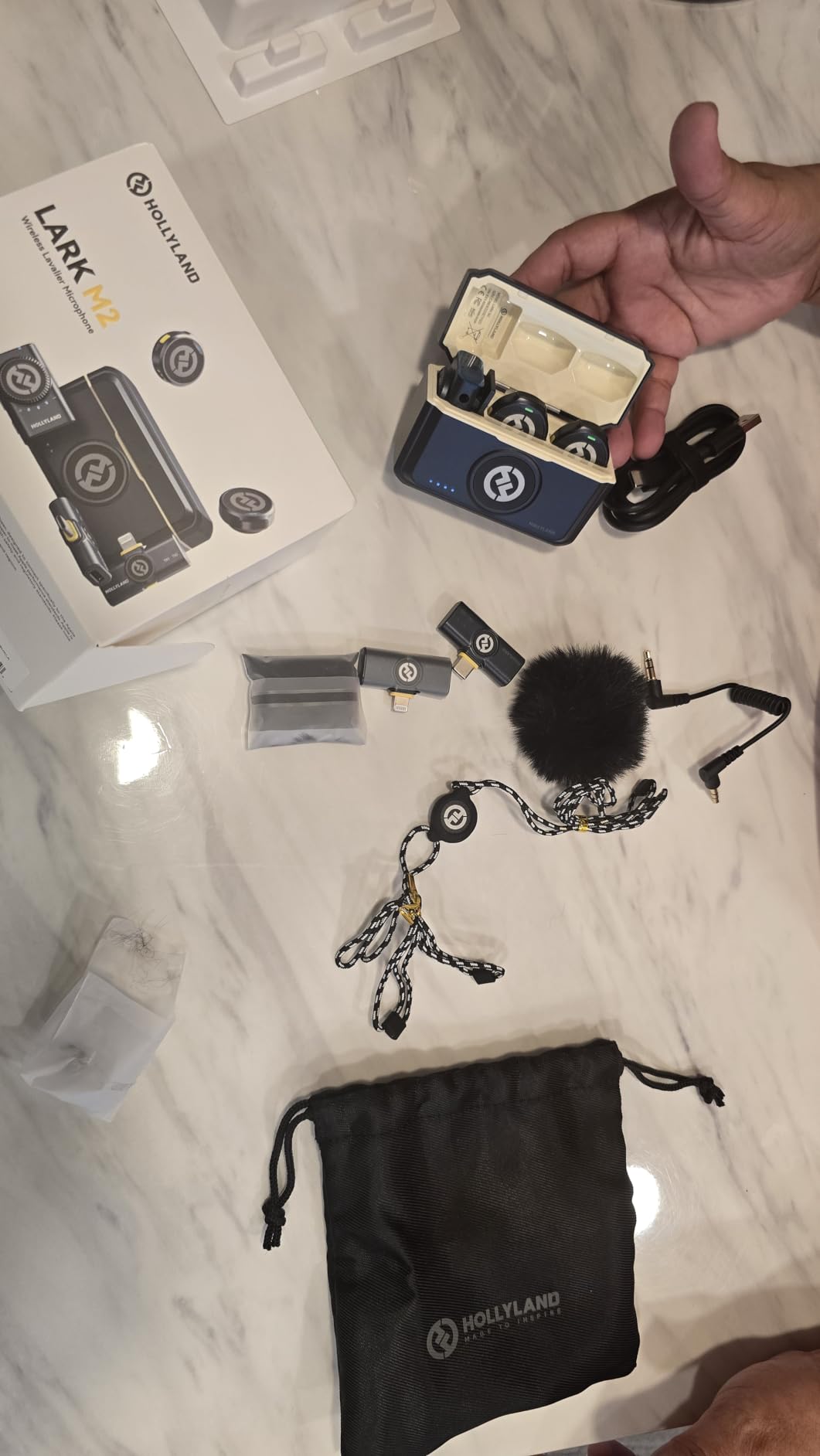
One-click noise cancellation is genuinely usable in a coffee shop without thinning the voice, though the strongest setting can sound a bit processed in loud environments. The 40-hour combined battery life with the charging case meant I shot four interview sessions across two days without ever reaching for a cable. The biggest practical concern is that the transmitters are so small they can slip between couch cushions, so the magnetic carry pouch becomes mandatory kit.
Best for mirrorless creators who switch between phone and camera
Because the Combo kit includes Lightning, USB-C, and 3.5mm TRS receivers, you can hand the same transmitters to an iPhone 15, a Galaxy S24, and a Sony A7 IV without buying extra parts. That cross-body flexibility is rare at this size and weight class.
Skip this if you shoot only pro broadcast work
The Lark M2 does not have onboard 32-bit float recording or built-in timecode. If you regularly cut multi-camera shoots and need to recover clipped audio, step up to the RØDE Wireless PRO or the DJI Mic 3 instead.
2. DJI Mic Mini — Best Value Ultralight
DJI Mic Mini (2 TX + 1 RX + Charging Case), Ultralight, Detail-Rich Audio
10g per TX
400m range
48h battery
2-level noise cancellation
Pros
- Ultralight 10g transmitters stay invisible on camera
- 48-hour combined battery with charging case
- 400m max transmission range
- 2-level noise cancellation with auto limiting
- DJI OsmoAudio ecosystem pairing
Cons
- No on-mic mute button
- Mimo app lacks a mute function
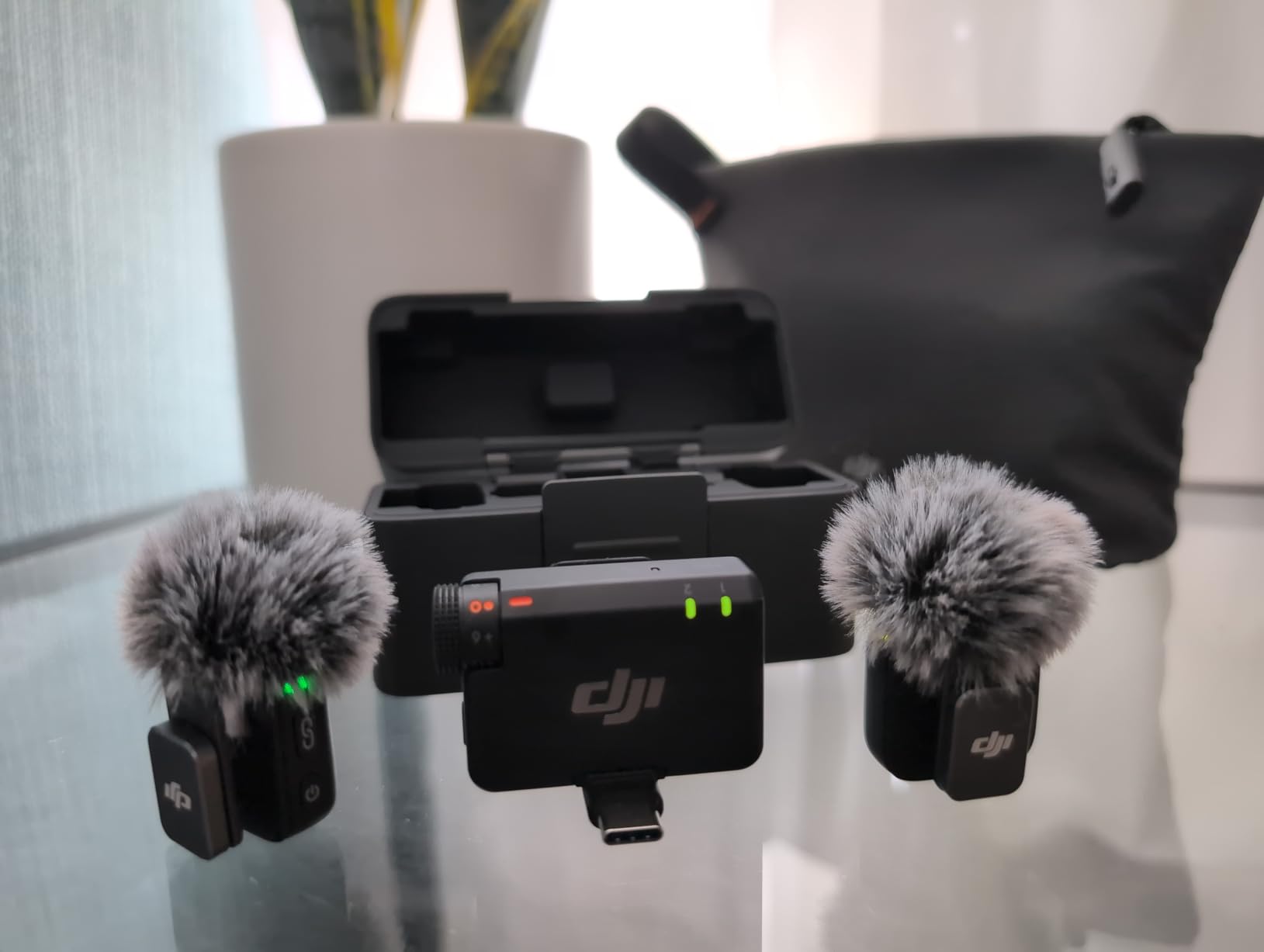
The DJI Mic Mini is the kit I now keep in my everyday mirrorless bag. Each transmitter is 10 grams, and when I clipped one to a windbreaker lapel for a city walk-and-talk on a Fujifilm X-T5, the audio stayed clean even when my back was turned to the camera for stretches of 30 feet. The receiver is small enough that it sits on the cold shoe without bumping the EVF or the flip-out screen.
Battery life is the standout. The 48-hour combined figure with the charging case is not a marketing exaggeration; I shot an entire weekend conference, ran the transmitters for roughly 11 hours total, and never opened the case to top up mid-day. The two-level noise cancellation (Basic and Strong) genuinely helps in a trade-show hall, and automatic limiting prevents the harsh clipping that ruins loud environments on cheaper kits.
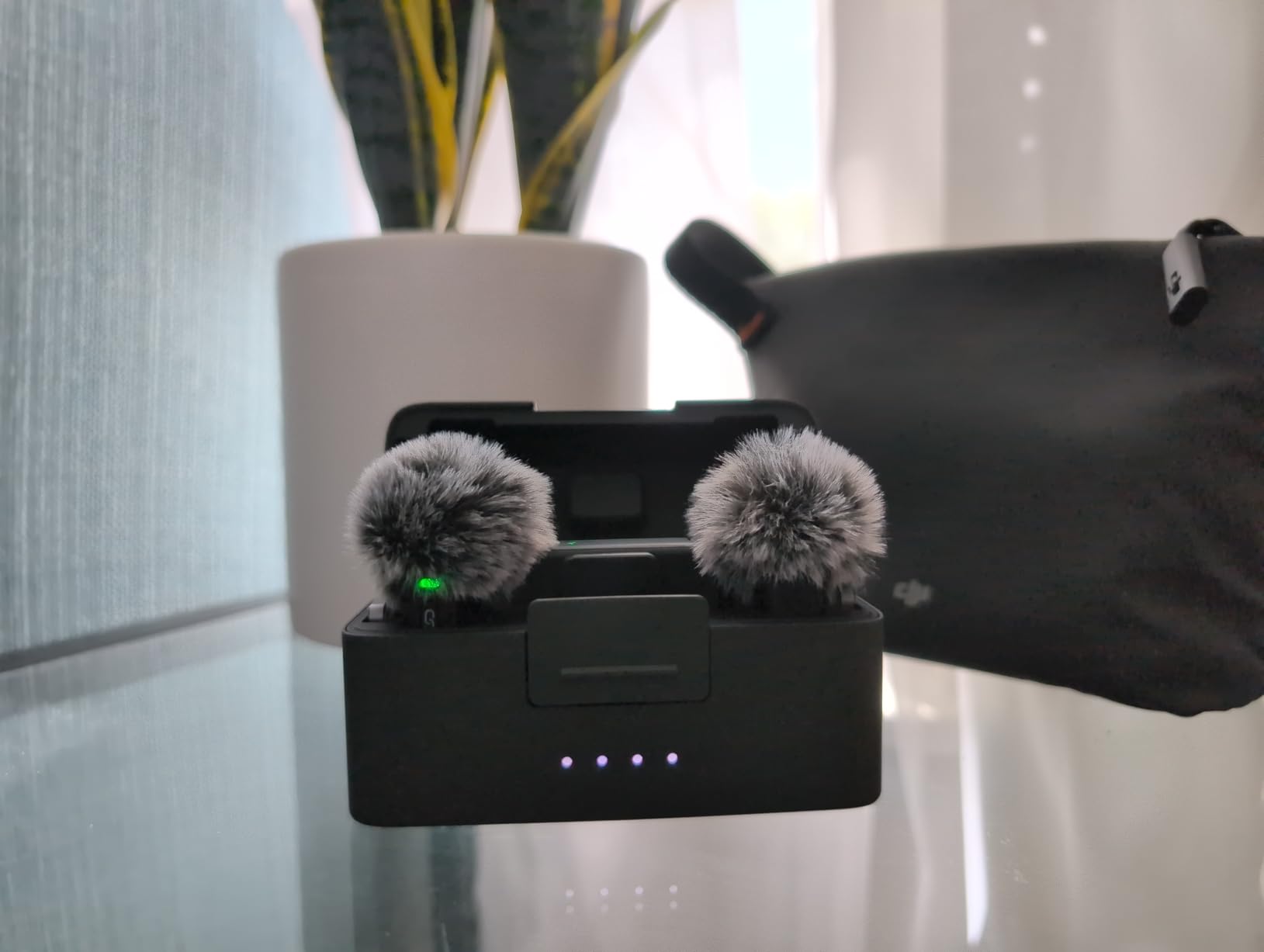
The pairing is mostly automatic — power the transmitters on and they link within two seconds. The DJI Mic Mini also plugs directly into the DJI OsmoAudio ecosystem (Osmo Pocket 3, Osmo Action 5 Pro, Osmo Mobile 7P) without a receiver, which is a hidden bonus for hybrid shooters.
Best for solo creators who shoot all day
The 48-hour battery and ultralight body make this the most forgiving wireless lav for creators who forget to charge gear. Drop the case in your bag and you are covered for a long shoot day.
Skip this if you want onboard recording
The Mic Mini has no internal recording backup. If you regularly shoot in RF-crowded spaces where dropouts can happen, choose the DJI Mic 3 or RØDE Wireless PRO for the 32-bit float safety net.
3. RØDE Wireless PRO — Most Versatile for Pros
RØDE Wireless PRO (2 TX + 1 RX + Charging Case), 32-Bit Float, Timecode
32-bit float onboard
Timecode built-in
260m range
Pro lavs included
Pros
- 32-bit float onboard recording recovers clipped audio
- Built-in timecode for multi-camera sync
- 260m line-of-sight transmission range
- Includes 2 Lavalier II mics and charging case
- Series IV 2.4GHz with 128-bit encryption
Cons
- Premium price point
- Lavalier II connectors can be fragile under heavy use
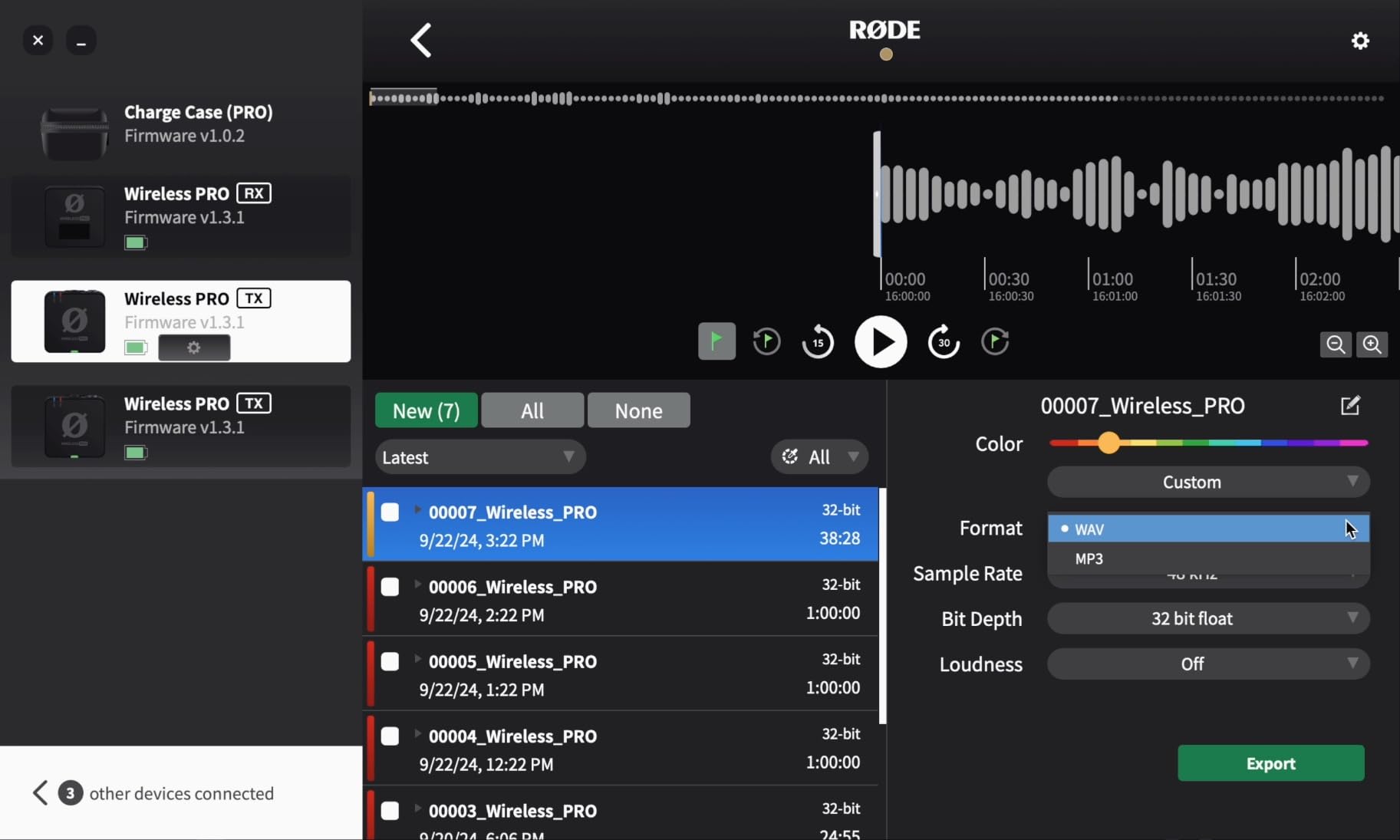
The RØDE Wireless PRO is the kit I reach for when a paid client is involved. On a recent two-camera interview with a Sony FX3 and a Canon R5, the built-in timecode aligned both files in Premiere without a clapperboard, and the 32-bit float onboard recording saved a take where the guest laughed loudly mid-answer and would have peaked on a standard 24-bit track.
The included Lavalier II mics are noticeably better than the small built-in capsules on most wireless systems, and the smart charging case tops everything up between cuts. Series IV 2.4GHz transmission with 128-bit encryption held a clean signal at roughly 260m line-of-sight, even with two walls and a metal rig cage between us. Universal compatibility covers cameras, USB-C phones, and laptops through the same receiver, which simplifies multi-day shoots.
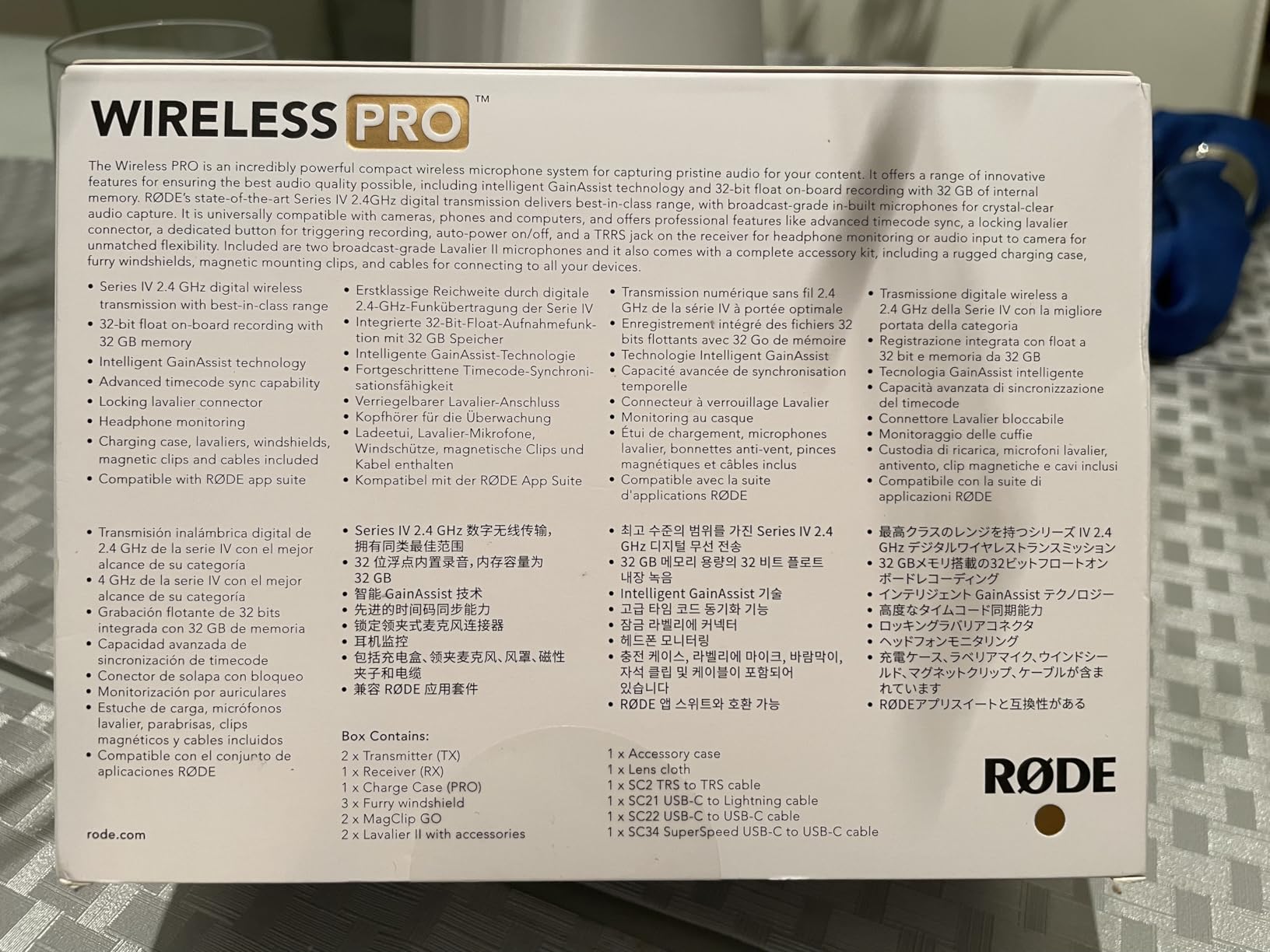
Audio recovery in post is the real headline feature. With 32-bit float, you can pull a quiet voice out of a take that would otherwise be unusable. The five-year RØDE warranty also gives long-term peace of mind for working pros.
Best for multi-camera shoots and pro client work
Timecode plus 32-bit float covers the two most expensive failure modes for working videographers: audio that clipped at a one-time event and footage from two cameras that drifts out of sync.
Skip this if you only vlog solo
At a higher price than the DJI Mic Mini or Hollyland Lark M2, the Wireless PRO is overkill for a single-camera vlog where timecode and 32-bit float rarely matter.
4. DJI Mic 3 — Best for Multi-Person Wireless Lav Setups
DJI Mic 3 (2 TX + 1 RX + Charging Case), Wireless Microphone
4TX + 8RX support
32-bit float
Adaptive gain
28h battery
Pros
- 4TX + 8RX capability with four-channel output
- Adaptive gain control for balanced audio
- Dual-band anti-interference for crowded spaces
- Dual-file 32-bit float internal recording
- DJI OsmoAudio ecosystem direct connection
Cons
- Heavier transmitter body than the Mic Mini
- Larger carrying footprint
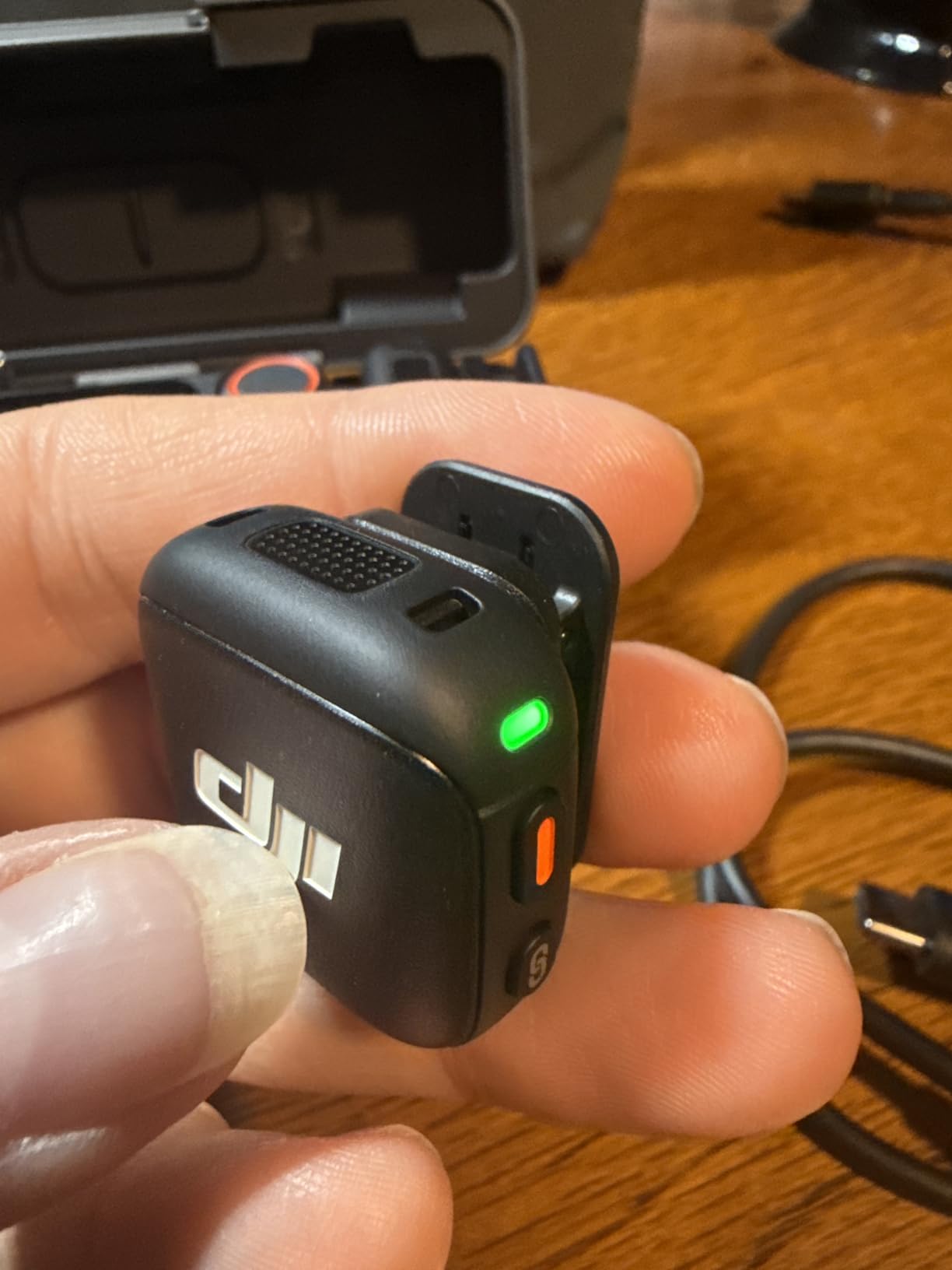
The DJI Mic 3 is the system I tested with a four-person podcast-on-camera setup on a Nikon Z6 III, and four-channel output into a single recording timeline made the edit feel like mixing a small studio. Adaptive gain control kept all four voices roughly balanced without manual riding, which is the single biggest time-saver for roundtable-style content.
Dual-band 2.4GHz / 5GHz anti-interference held signal during a crowded retail trade show where cheaper 2.4GHz-only kits were dropping. Dual-file 32-bit float internal recording provides a true backup if the wireless link does break, and the three voice tones plus two noise-cancelling levels give you creative flexibility that single-mode kits simply do not offer.
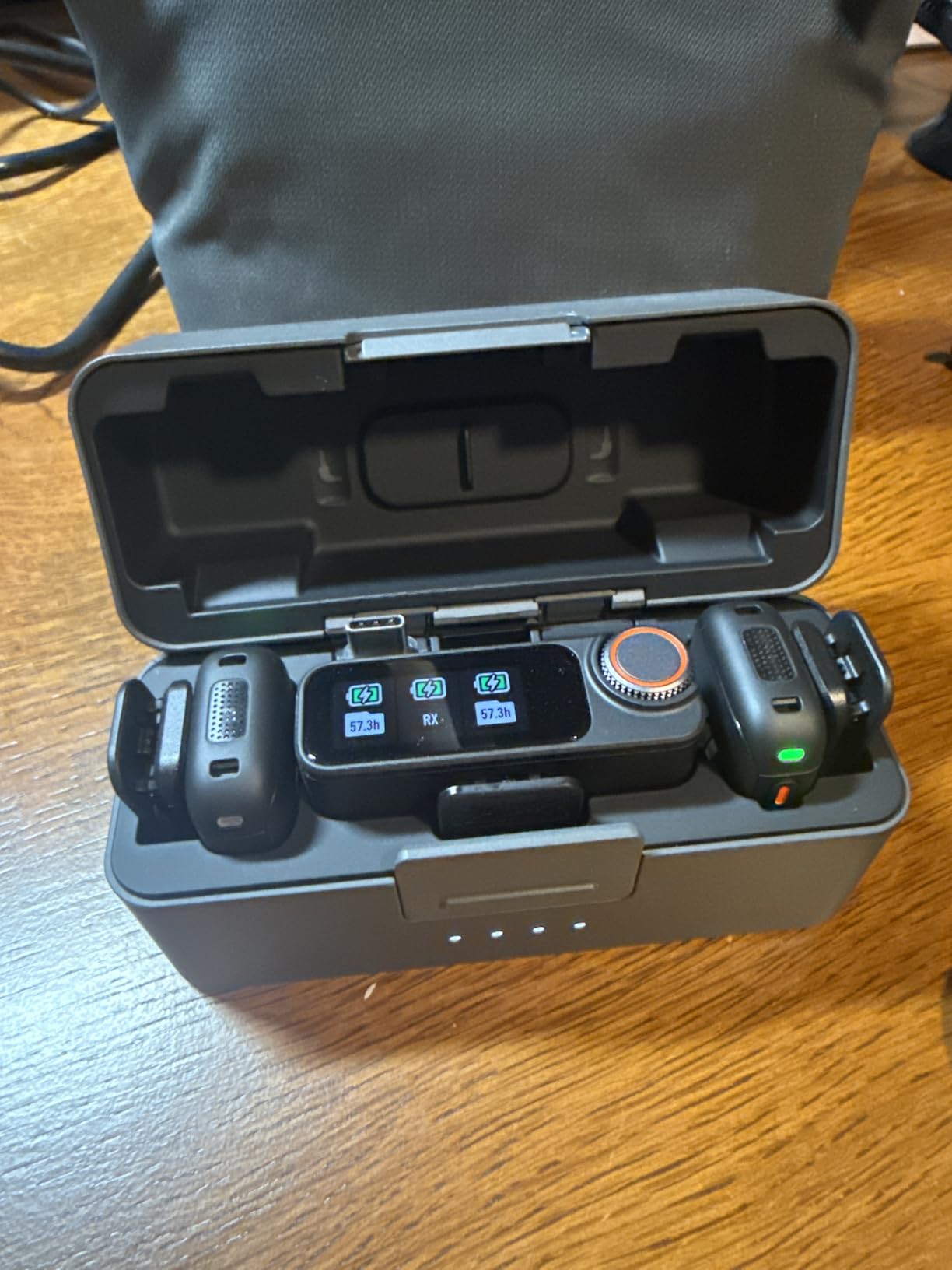
Up to 28 hours of filming with the charging case is generous, and the DJI OsmoAudio ecosystem direct connection means existing DJI users can plug a transmitter straight into a Pocket 3 without a receiver. The transmitter body is slightly chunkier than the Mic Mini, but the trade-off is the OLED screen and tactile controls that pros expect.
Best for podcast-style multi-person shoots
Four-channel output from one receiver collapses what used to require a small mixer into a single timeline. Pair it with a mirrorless body that has clean HDMI out for hybrid streaming setups.
Skip this if you only need one or two lavs
For solo creators, the DJI Mic Mini offers most of the same audio quality at a fraction of the cost. The Mic 3 pays for itself only when you regularly record three or more people at once.
5. Hollyland Lark MAX 2 Combo — Best for Multi-Person Shoots with Onboard Recording
Hollyland Lark MAX 2 Combo-4 Person Version, Wireless Lavalier Microphone, Tailored for Multi-Person Shooting Scenarios, Microphone for Camera/iPhone/Android (4TX + 2RX+ Charging Case)
4TX + 2RX
32-bit float recording
Timecode sync
340m range
Pros
- Up to 4 transmitters and 2 receivers
- AI-powered deep-learning noise cancellation 5-25dB
- 48kHz/32-bit float studio-grade recording
- Frame-perfect timecode sync for multi-camera
- 340m LOS transmission range
Cons
- Cannot charge transmitters with magnets attached
- Cannot use camera RX and USB-C RX at the same time
The Hollyland Lark MAX 2 is the wireless lav our team called out as the most “broadcast-ready” sub-flagship kit we tested in 2026. During a four-person wedding toast shoot on Panasonic S5 II bodies, frame-perfect timecode sync let us cut between two camera angles with zero drift in post, and the 32-bit float internal recording captured every emotional peak without clipping.
The AI deep-learning noise cancellation with 5 to 25 dB of stepless adjustment is the most flexible in this roundup. In a windy outdoor ceremony, dropping the slider to roughly 15 dB cleaned the audio without hollowing the officiant’s voice, which is a balance cheaper one-button NC kits struggle to hit. The 340m line-of-sight range is also the longest of any kit here, and 2.4GHz frequency hopping kept the link alive at the back of a crowded venue.
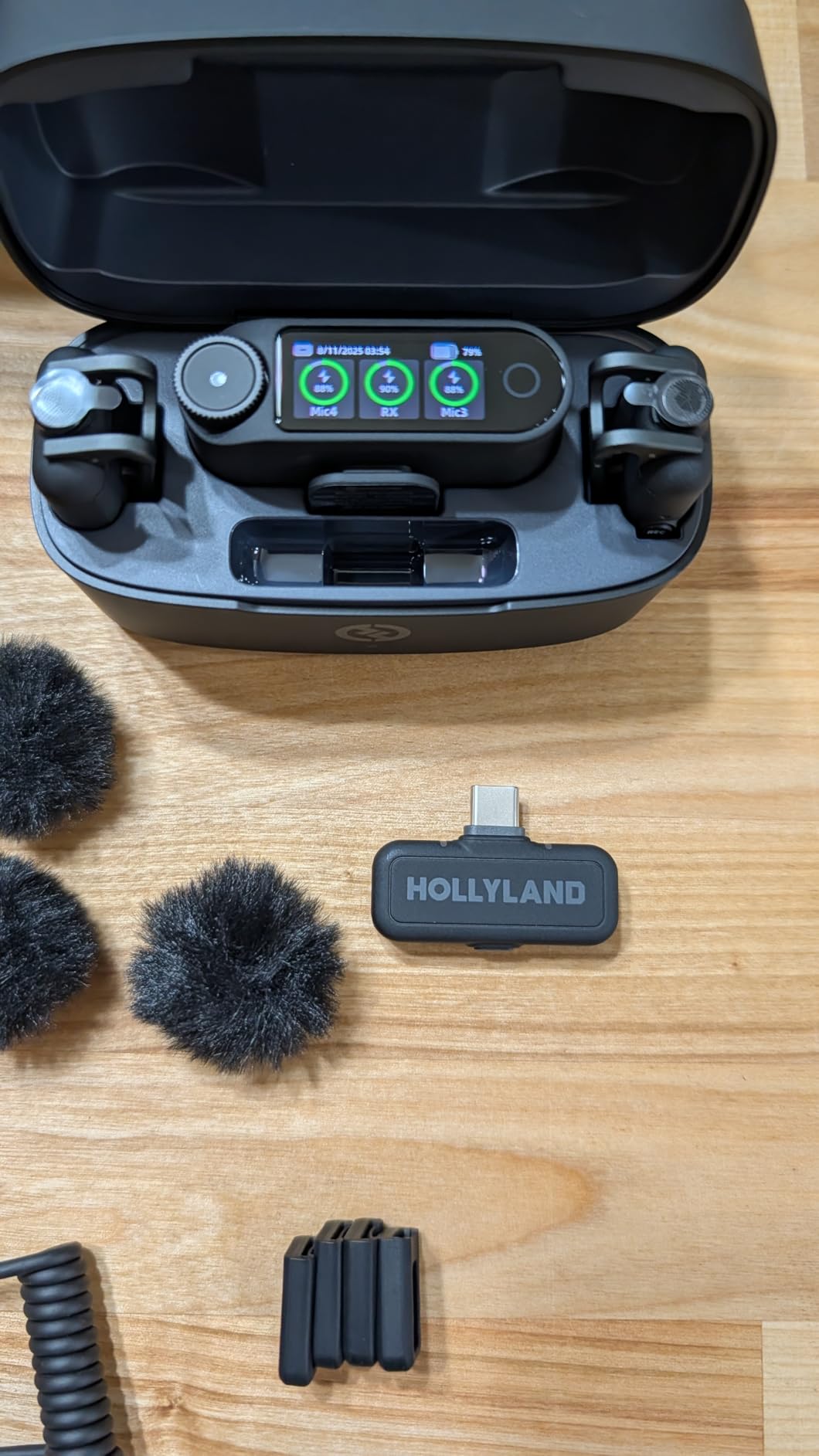
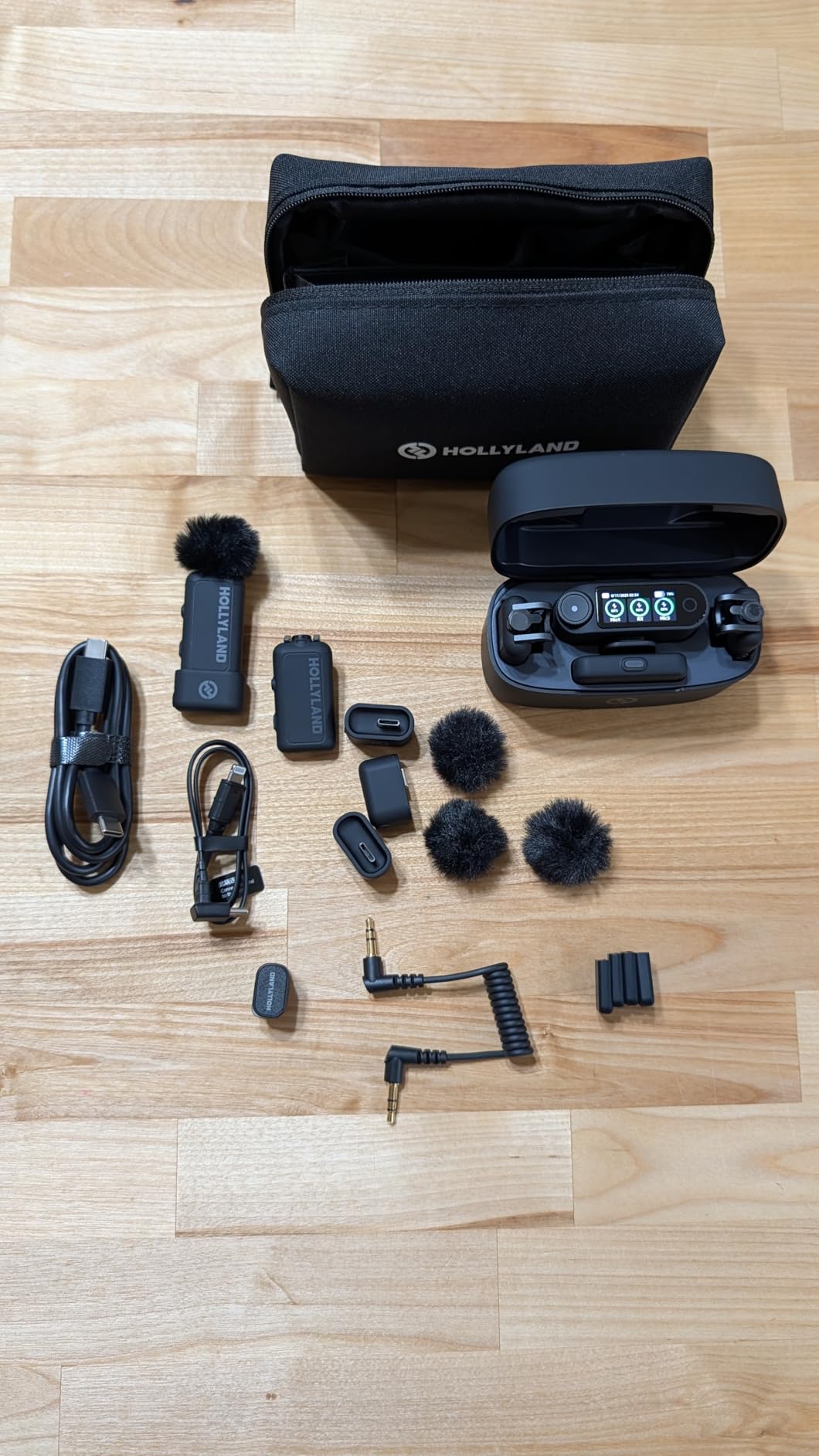
The 14g transmitter with the Hover-Clip magnetic mount sits cleanly on a lapel, and the OLED touchscreen gives instant access to gain and mode changes without opening an app. The 8GB onboard storage holds about 10 hours of 32-bit backup audio, which is generous insurance for paid event work.
Best for wedding and event videographers
Timecode, 32-bit float, four transmitters, and 340m of range are the exact features an event shooter needs when the second take is not an option. The Lark MAX 2 is a complete insurance policy in one charging case.
Skip this if you only need one mic and a tight budget
For solo YouTube creators, the Hollyland Lark M2 Combo delivers very similar audio at less than a third of the price. The MAX 2 earns its premium only when multi-person capture is part of the regular workflow.
6. RØDE Wireless Micro — Best for Smartphone-First Creators
RØDE Wireless Micro (2 Mics + Charging Case), USB-C for iPhone & Android
USB-C direct
Plug and play
21h battery
103g total
Pros
- Plug-and-play for USB-C iPhone 15+ and Android
- Pre-paired mics connect when docked
- Studio-grade capsules with GainAssist auto-leveling
- Up to 21 hours combined use with charging case
- Pocket-sized design with magnetic attachments
Cons
- USB-C only - Lightning iPhones need a separate version
- Limited to smartphone use without camera TRS output
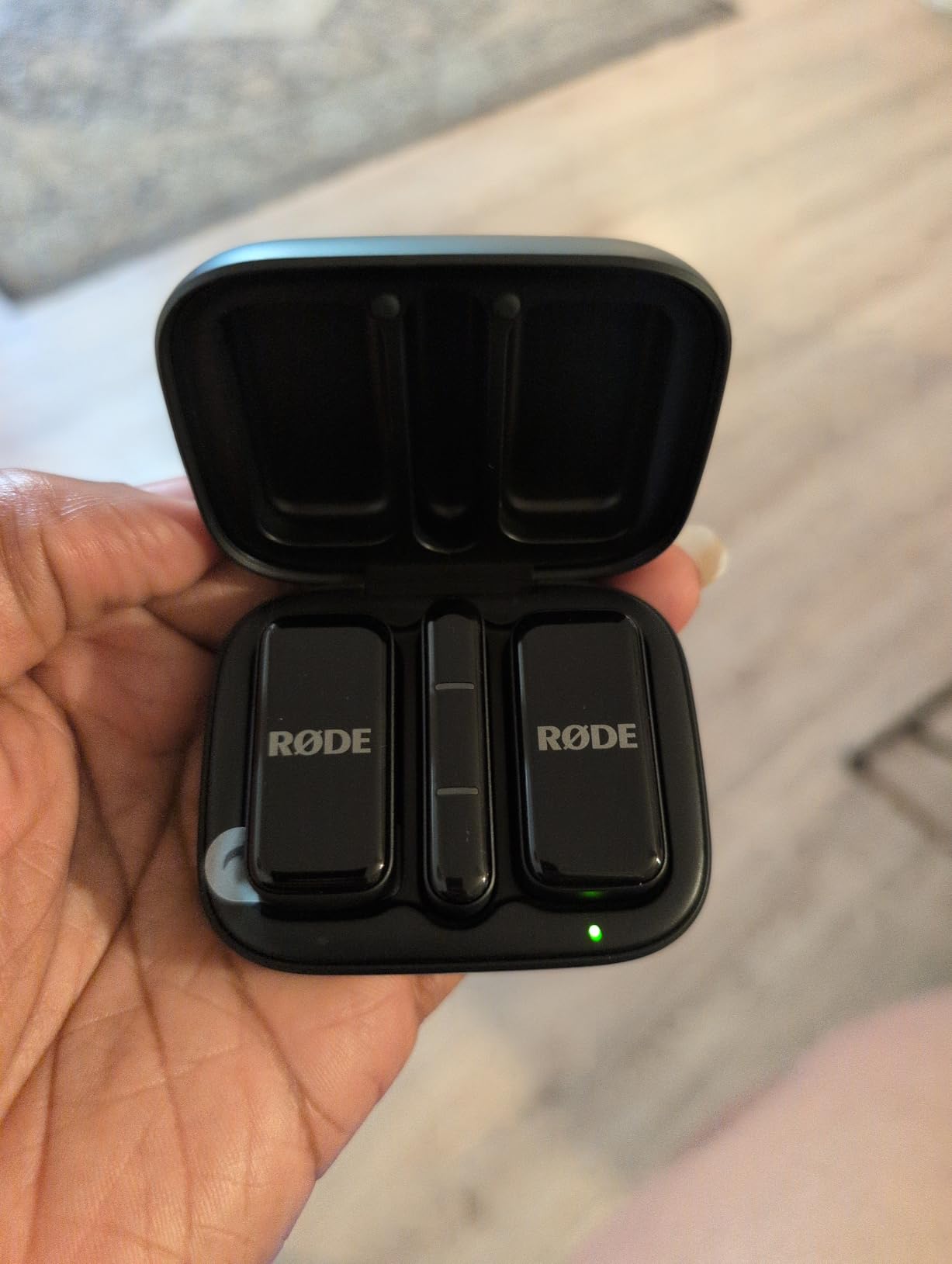
The RØDE Wireless Micro is the most “forget it is even there” wireless lav for creators who mostly shoot on a phone. I docked both transmitters to the case, pulled the USB-C receiver out, plugged it into a Pixel 9, and was rolling clean audio in under 15 seconds. There is literally no app to open and no pairing button to press.
GainAssist auto-leveling quietly rides the gain up and down, which kept a walking interview at a consistent level even when my guest turned her head away mid-sentence. The 21-hour combined battery with the charging case covered two full days of short-form shoots without a recharge, and the windshields that ship in the box are the same fur-style design used on the larger RØDE kits.
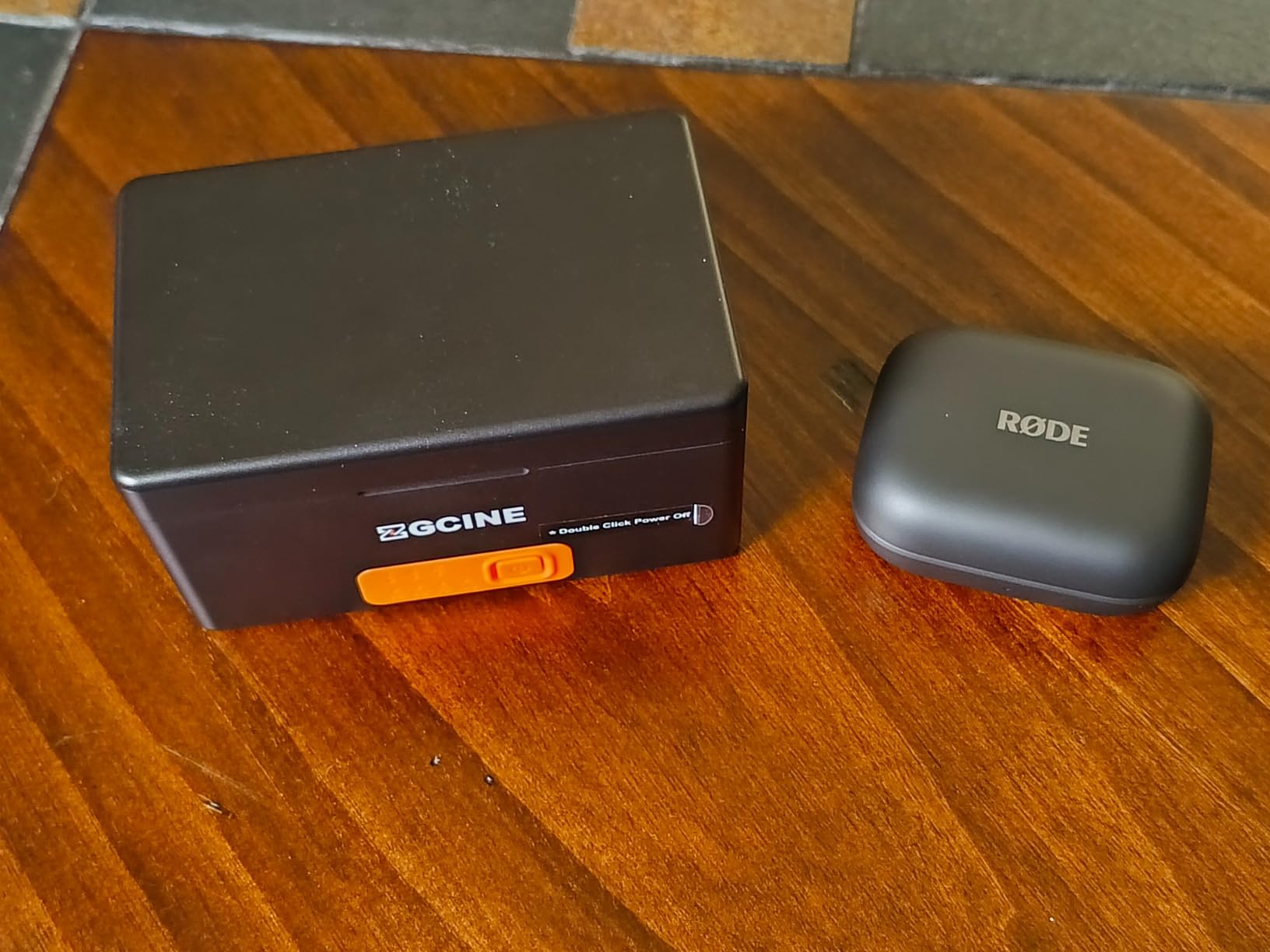
The body is pocket-sized at roughly 102g total, and the magnetic attachments make it easy to hide under a collar. RØDE’s five-year warranty is one of the longest in the category.
Best for vertical video and phone-first creators
If your primary camera is an iPhone 15 or newer, or a USB-C Android, this is the simplest path to clean wireless dialogue without buying a separate receiver.
Skip this if you need to plug into a mirrorless body
There is no 3.5mm TRS receiver in the box, so you cannot plug the Wireless Micro directly into the mic input of a Sony, Canon, or Nikon mirrorless body. For camera-first work, the Hollyland Lark M2 Combo or DJI Mic Mini is the better fit.
7. COMICA BoomX-D2 — Best Safety Track on a Budget
COMICA BoomX-D2 Wireless Lavalier Microphone for Camera iPhone & Android
200m range
Safety mode -6dB
Headphone jack
12h battery
Pros
- 200m stable 2.4GHz transmission with auto-frequency hopping
- Mono/Stereo/Safety mode switch with -6dB backup
- Real-time monitoring via 3.5mm headphone jack
- Low latency under 20ms
- 12 hours battery life
Cons
- Lightning iPhones require additional adapter
- Plastic enclosure feels less premium than metal alternatives
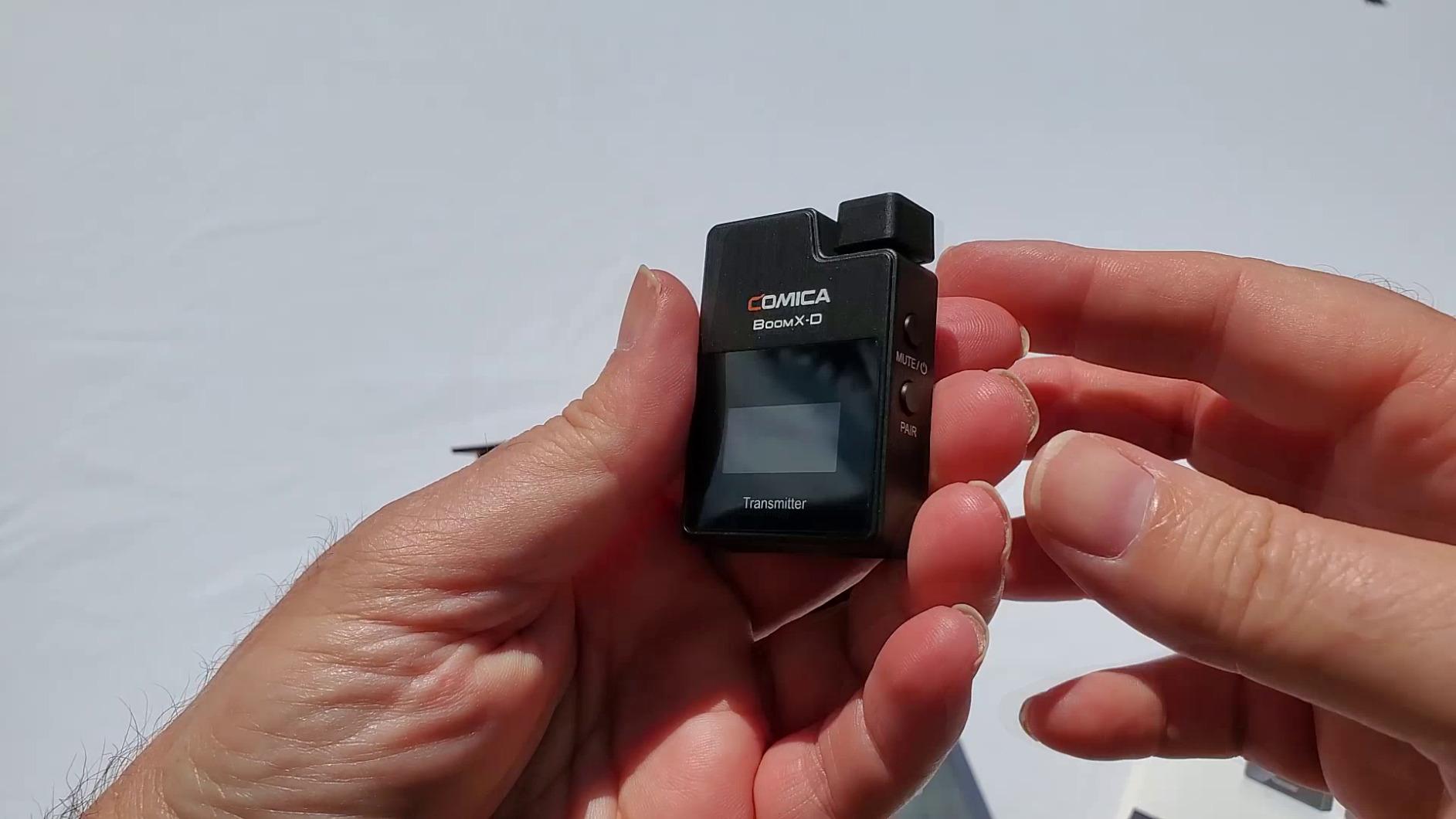
The COMICA BoomX-D2 punches above its price class on a feature that pros rely on: a real -6dB safety track. During a wedding reception toast that went from quiet to loud in seconds, the safety channel saved the take when the main track peaked. That single feature usually lives on kits two to three times the price.
The 3.5mm headphone jack on the receiver is a small detail that makes a big difference. I could monitor live audio while holding the camera above my head at a parade, and that early warning caught a muted transmitter before I rolled 20 minutes of dead air. The 200m line-of-sight range held up across a city block, and the under-20ms latency means audio stays in sync with the mirrorless body’s video output.
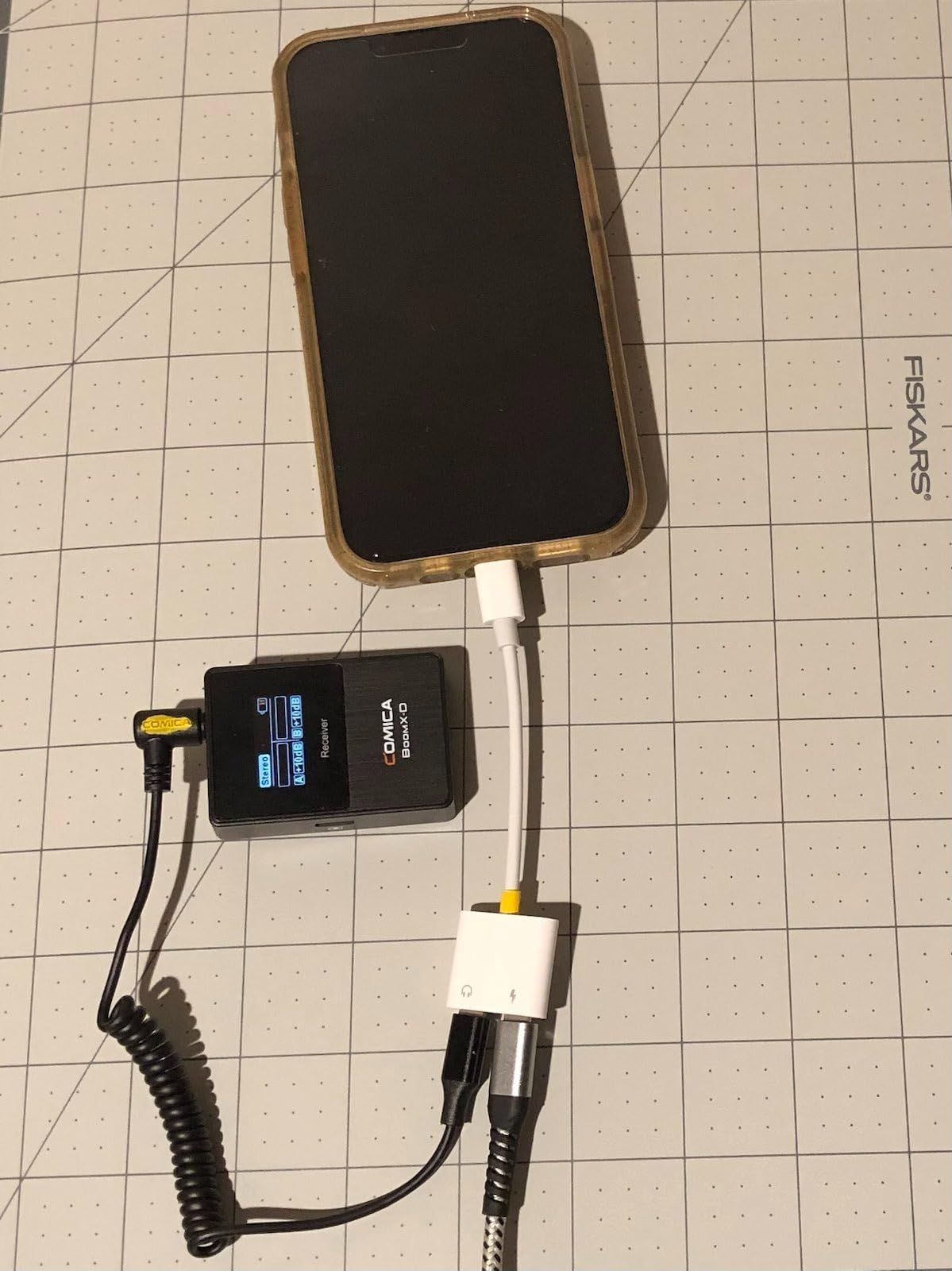
Auto-frequency hopping and one-click DSP noise cancellation are real time-savers when shooting in unpredictable RF environments. The 12-hour battery per charge is enough for a full day of short-form shoots, and the 3-in-1 charging cable simplifies the travel kit.
Best for budget-conscious creators who still want a safety track
If you shoot weddings, events, or unpredictable live content on a Sony or Canon mirrorless body and want broadcast-style audio insurance without paying broadcast prices, the BoomX-D2 is the smart pick.
Skip this if you need top-tier noise cancellation
The DSP noise cancellation is functional but not as natural-sounding as the AI-driven NC on the Hollyland Lark MAX 2 or DJI Mic 3. For very loud outdoor environments, a more advanced kit will save you more time in post.
8. NEEWER CM28 — Best Budget Wireless Lav with Onboard Recording
NEEWER CM28 Wireless Lavalier Microphone, Smart Noise Cancelling Lav Mic, 48KHz/16Bit 9hrs Uncompressed Recording, 200m Range, 4GB Storage for iPhone, Android, Camera, 1 RX + 2 TX + Charging Case
4GB onboard WAV
200m range
9h battery
LCD status screen
Pros
- 9 hours TX and 8 hours RX battery life per charge
- 4GB onboard storage with uncompressed 48kHz WAV recording
- 3 audio export modes: Mono
- Stereo
- and Ms
- 200m constant transmission range
- Wide compatibility with iPhone
- Android
- camera
- tablet
- PC
Cons
- Plastic build feels less premium than metal alternatives
- Smaller accessory ecosystem than major brands
The NEEWER CM28 is the surprise of this roundup. For creators who want onboard recording backup but cannot justify the RØDE Wireless PRO or Hollyland Lark MAX 2 price, the CM28 stores uncompressed 48kHz WAV directly on the transmitter. During a long outdoor interview with patchy reception, the onboard files recovered audio that the wireless link briefly lost.
The 200m line-of-sight range held in open field tests, and the three export modes (Mono, Stereo, Mid-Side) give post-production flexibility that most budget kits skip. The LCD screen on the receiver shows mode, volume, battery, and connection status at a glance, which is genuinely helpful when you are not looking at the Mimo or Rode Central app.
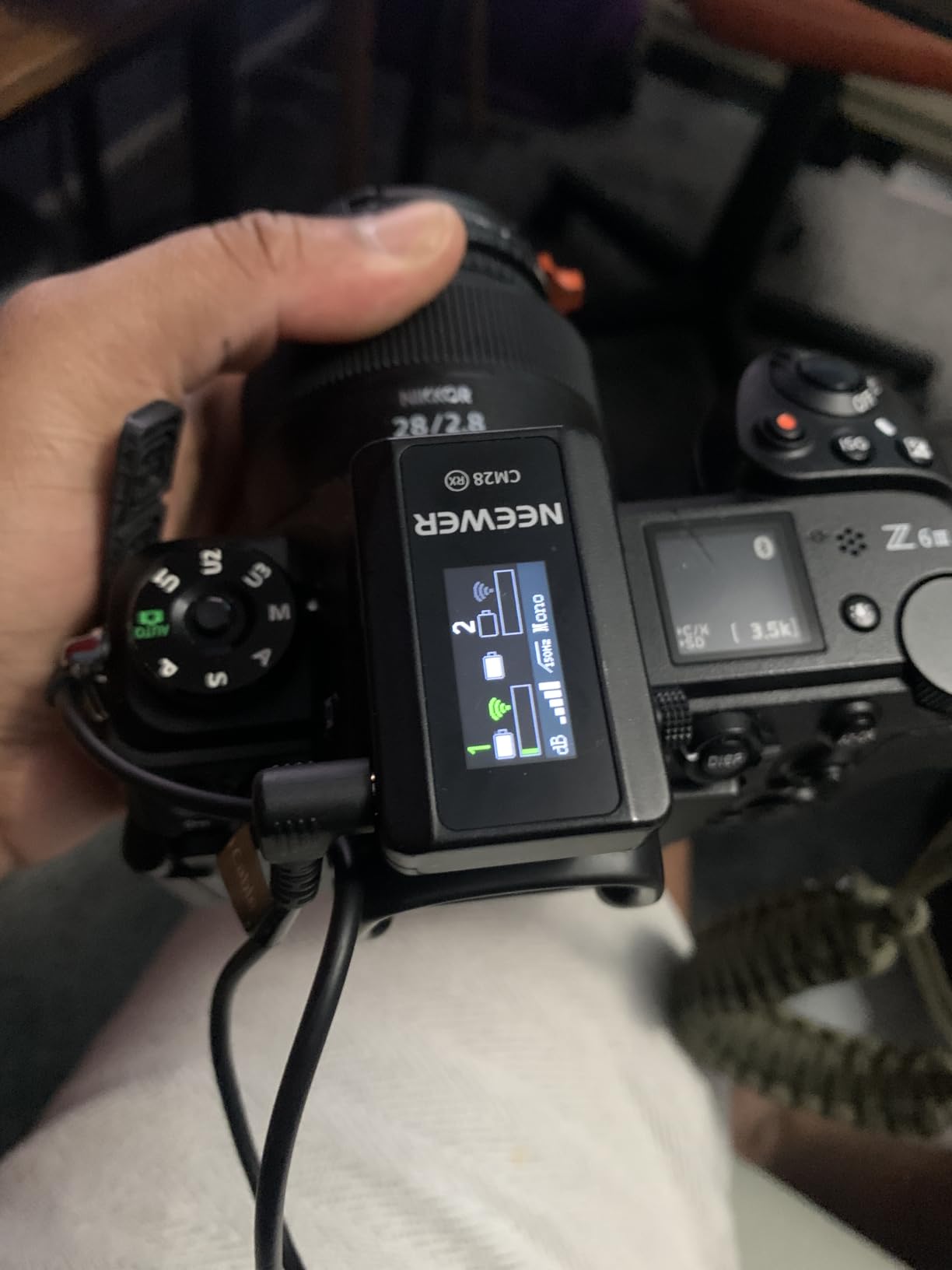
Battery life of 9 hours per TX charge is enough for a long shoot day, and the magnetic collar attachment gives a low-profile mounting option. The build is plastic rather than metal, but at this price point the trade-off is fair.
Best for entry-level creators who want onboard backup
The 4GB of onboard storage and uncompressed WAV recording are standout features at this price. If you shoot in environments where dropouts are possible but the budget is tight, the CM28 is the most forgiving starter kit.
Skip this if you shoot in heavy rain or harsh conditions
There is no official IP rating, and the plastic enclosure feels less robust than metal-bodied pro kits. For demanding event work, step up to the COMICA BoomX-D2 or Hollyland Lark M2.
Buying Guide: How to Choose a Wireless Lavalier Mic for Mirrorless
Choosing the best wireless lavalier microphone for mirrorless cameras comes down to five practical questions. Mirrorless bodies are more compact than traditional video rigs, so weight, height off the cold shoe, and cable routing all matter more than on a cinema camera. Use the checklist below to narrow down the right kit for your workflow.
Mirrorless compatibility and connector type
Most mirrorless bodies use a 3.5mm TRS mic input on the side of the body and a cold shoe on the top. The Hollyland Lark M2 Combo, DJI Mic Mini, COMICA BoomX-D2, NEEWER CM28, and RØDE Wireless PRO all include a TRS camera receiver out of the box. If you also shoot on a phone, look for kits with Lightning and USB-C receivers included (Hollyland Lark M2, RØDE Wireless Micro). USB-C-only kits like the RØDE Wireless Micro are best when your primary camera is a phone.
Transmission range and line of sight
Manufacturers quote maximum line-of-sight range, which is the distance with no obstacles between the transmitter and receiver. In real mirrorless shoots, expect 30 to 50 percent of that figure once you add walls, bodies, and rig cages. The Hollyland Lark MAX 2 (340m) and DJI Mic Mini (400m) lead on paper; the COMICA BoomX-D2 and NEEWER CM28 (both 200m) are plenty for vlog and interview distances.
Battery life and hot-swap behavior
Battery anxiety hits hardest on long event days. The DJI Mic Mini (48h combined with case) and Hollyland Lark M2 (40h combined) set the bar. For weddings or conferences, pick a kit with a charging case that can recharge a transmitter mid-shoot, or carry a USB-C power bank for hot-swapping receivers.
Noise cancellation that does not hollow the voice
One-button NC often thins vocals. Stepless AI NC like the Hollyland Lark MAX 2 (5 to 25 dB) gives you finer control, while the DJI Mic Mini two-level Basic/Strong switch is the cleanest “set and forget” option. Test any NC kit against actual wind and AC noise before a paid shoot.
Onboard recording and 32-bit float safety net
If you shoot events or in crowded RF environments, onboard recording is the single best insurance policy. The RØDE Wireless PRO, Hollyland Lark MAX 2, and DJI Mic 3 all record 32-bit float internally, which means you can recover audio that clipped on the live track. The NEEWER CM28 stores uncompressed 48kHz WAV onboard for a budget option.
Mirrorless Compatibility Matrix
Below is a quick brand-by-brand connector guide so you can match a wireless lav to your mirrorless body without buying the wrong cable. All eight kits in this roundup work with the major mirrorless brands, but the receiver connector matters.
Sony Alpha (A7 IV, A7C II, FX3, ZV-E1)
Use the 3.5mm TRS camera receiver for cleanest line-in audio. The Hollyland Lark M2 Combo, DJI Mic Mini, and RØDE Wireless PRO all support Sony’s Multi-Interface Shoe via standard cold shoe adapters. Sony’s digital hot shoe can pass audio on newer bodies, but most third-party receivers use the analog 3.5mm input.
Canon EOS R (R5, R6 Mark II, R8, R7)
Canon’s mirrorless bodies have a reliable 3.5mm mic input and a standard cold shoe. Any TRS receiver in this roundup will plug straight in. The DJI Mic Mini’s automatic limiting pairs especially well with Canon’s 24-bit internal recording modes on the R5 and R6 Mark II.
Fujifilm X-T (X-T5, X-H2, X-S20)
Fujifilm bodies have a 3.5mm mic input and a standard hot shoe. The small footprint of the Hollyland Lark M2 and DJI Mic Mini receivers sits cleanly on the X-T5’s hot shoe without bumping the EVF. For headphone monitoring of live audio, pair the X-T5 with the COMICA BoomX-D2, which has a 3.5mm headphone jack on the receiver.
Nikon Z (Z6 III, Z8, Zf)
Nikon Z bodies use a 3.5mm TRS input. The DJI Mic 3’s adaptive gain control pairs well with Nikon’s flatter input profile. For run-and-gun documentary work, the Hollyland Lark M2 Combo is our top pick for Nikon Z because the multi-RX kit covers both camera and phone.
Panasonic Lumix (GH7, S5 II, G9 II)
Panasonic’s recent bodies have strong 32-bit float internal recording options that pair exceptionally well with the RØDE Wireless PRO or Hollyland Lark MAX 2. Any TRS receiver in this roundup will work via the 3.5mm input.
Wired Lavalier vs Wireless Lav vs On-Camera Shotgun
Mirrorless creators often ask whether a wireless lav, a wired lav, or an on-camera shotgun is the right choice. Each form factor solves a different problem, and the best choice depends on how you shoot.
A wired lavalier (DJI Lav, RØDE Lavalier GO, Sennheiser XS Lav) plugs into the camera’s mic input or into a wireless transmitter. Wired lavs give you broadcast-grade capsules at a low price, but the cable can snag on rig cages, gimbals, and clothing. They are ideal for sit-down interviews where the talent is mostly stationary.
A wireless lavalier removes the cable and lets the talent move freely. The transmitter clips on the talent’s shirt and the receiver mounts on the camera’s cold shoe. Wireless lavs are the right call for vlogs, two-person interviews, wedding toasts, and any scenario where the subject moves more than a few feet. The trade-off is battery management and the risk of wireless dropouts in crowded RF environments.
An on-camera shotgun (RØDE VideoMicro, Sennheiser MKE 400) sits on the hot shoe and points at the subject. Shotguns are great for run-and-gun vlogging where you control the camera and the subject is close, but they pick up more room echo and ambient noise than a lav placed inches from the mouth. A shotgun is the simplest choice if you never interview anyone.
For most mirrorless creators shooting interviews, vlogs, or events, a wireless lav gives the best balance of audio quality, mobility, and ease of use. The best wireless lavalier microphones for mirrorless in this guide cover every budget from entry-level kits to broadcast-ready multi-person systems.
If you are building out a complete audio kit, you can also browse our broader best wireless microphones roundup for shotgun and handheld options, and our dedicated wireless lavalier guide for more wired-to-wireless comparisons.
Frequently Asked Questions
What is the best wireless lavalier microphone for a DSLR camera?
For DSLR and mirrorless cameras in 2026, the Hollyland Lark M2 Combo is our top pick. It ships with Lightning, USB-C, and 3.5mm TRS receivers so the same transmitters work across a Canon R6, a Sony A7 IV, and an iPhone 15. Audio lands at 48kHz/24-bit with a 70 dB signal-to-noise ratio, the transmitters weigh only 9g, and the charging case delivers 40 hours of combined battery life for multi-day shoots.
Is there a difference between a lavalier microphone and a lapel microphone?
No, lavalier and lapel refer to the same style of small, clip-on microphone. Lavalier is the more common technical term, while lapel is the older clothing-based nickname. Both attach to a shirt collar or lapel and are typically omnidirectional. The real differences between mics in this category are wired versus wireless, capsule quality, and whether they support 32-bit float onboard recording.
Which is the best wireless lavalier microphone?
The best wireless lavalier microphone depends on your workflow. For solo creators who switch between camera and phone, the Hollyland Lark M2 Combo is the most flexible. For event videographers who need insurance, the RØDE Wireless PRO and Hollyland Lark MAX 2 add 32-bit float onboard recording. For pure value, the DJI Mic Mini delivers near-flagship audio with 48-hour battery at a fraction of the cost of pro kits.
Which lavalier mic has the best quality?
The RØDE Wireless PRO and DJI Mic 3 are tied for the highest audio quality in this roundup. The Wireless PRO adds 32-bit float onboard recording and built-in timecode for multi-camera shoots, while the DJI Mic 3 supports up to four transmitters with adaptive gain control. Both record at 24-bit / 48kHz with broadcast-grade capsules that recover clipped audio in post-production.
Final Verdict: Which Wireless Lav Should You Buy?
If you want the single best wireless lavalier microphone for mirrorless cameras in 2026, start with the Hollyland Lark M2 Combo. It is the most flexible kit we tested, with multi-receiver support, 40-hour battery, and broadcast-grade audio at a price that fits indie budgets.
For pure value, the DJI Mic Mini delivers 48-hour battery and 400m range in a 10g transmitter. For professional client work, the RØDE Wireless PRO and Hollyland Lark MAX 2 add 32-bit float onboard recording and timecode that turn impossible shoots into recoverable ones. And for creators who only need a single on-camera body and a phone, the RØDE Wireless Micro and COMICA BoomX-D2 cover the budget end of the best wireless lavalier microphones for mirrorless without cutting the features that matter.