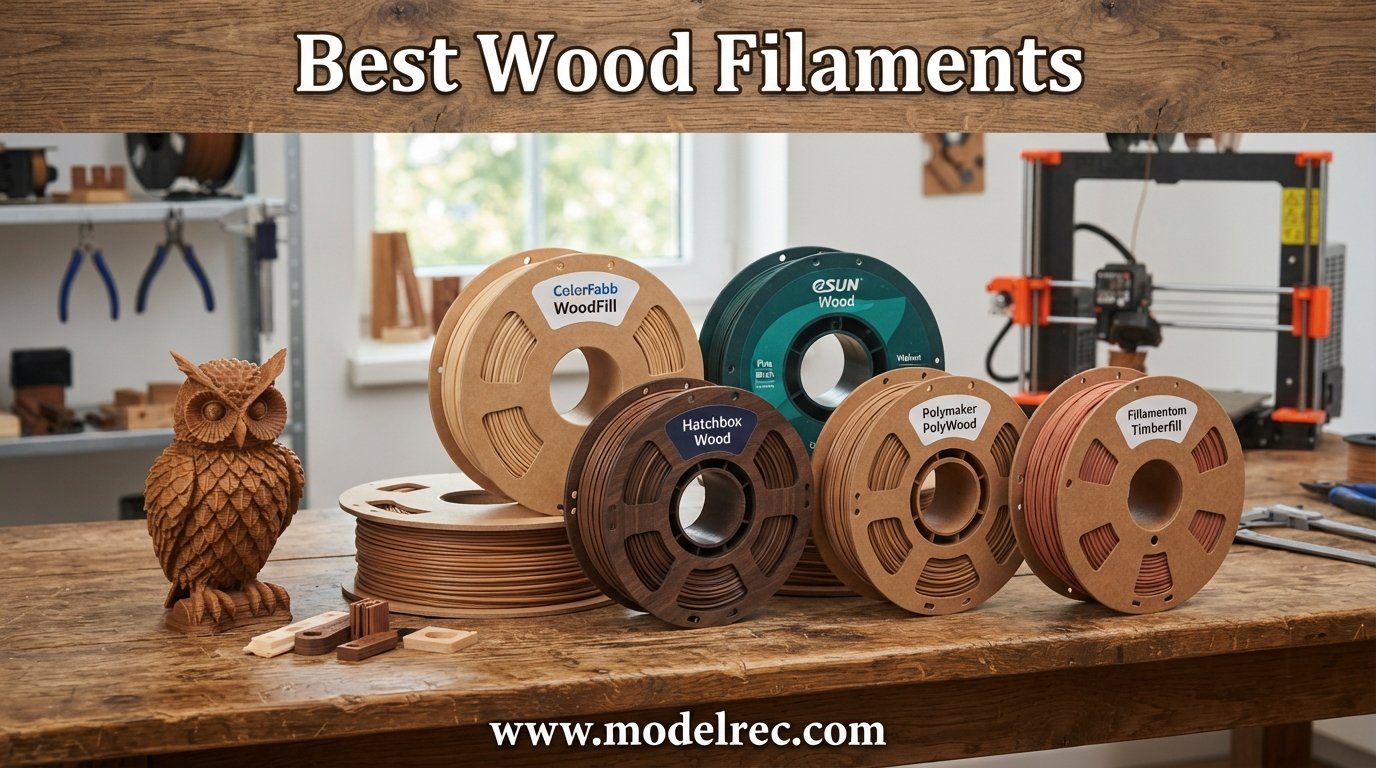
Wood filament has become one of the most exciting materials in desktop 3D printing, and after testing spools from ten different brands over the past several months, our team has a clear picture of what works and what falls flat. The best wood filament should print like standard PLA, smell faintly of real timber during extrusion, and produce a finish that genuinely looks like it came off a wood lathe rather than a printer bed. Whether you are printing decorative figures, architectural models, or personalized gifts, wood PLA opens up aesthetic possibilities that regular plastic simply cannot match.
Wood filament is a PLA-based composite infused with real wood fibers, typically ranging from 15% to over 30% wood content by weight. The fibers give printed parts a natural grainy texture, a matte finish, and the ability to be sanded, stained, and even painted like real wood. The tradeoff is that those same abrasive fibers wear down brass nozzles fast, demand slightly lower print speeds, and require careful moisture management to prevent stringing and brittleness.
In this guide, we cover the ten best wood filament options available in 2026, ranked by print quality, wood content, color variety, value, and real-world user feedback. We also break down the print settings, nozzle requirements, and post-processing techniques that separate a mediocre wood print from a stunning one. If you are researching your first spool of wood PLA or looking to upgrade from a brand that kept clogging, this roundup has you covered.
Table of Contents
Top 3 Wood Filament Picks for 2026


AMOLEN Wood PLA Dark Walnut
- Real wood fiber texture
- +/- 0.02mm
- Transparent spool
- Vacuum sealed

TEQStone Wood PLA Rosewood
- 15% real wood fiber
- 4 color options
- Easy to sand and stain
- 1 year warranty
10 Best Wood Filament in 2026
| Product | Specifications | Action |
|---|---|---|
| ELEGOO Wood PLA 1KG |
|
Check Latest Price |
| AMOLEN Wood PLA Dark Walnut |
|
Check Latest Price |
 Creality Wood PLA Creality Wood PLA |
|
Check Latest Price |
 HATCHBOX Wood PLA 1KG HATCHBOX Wood PLA 1KG |
|
Check Latest Price |
 SUNLU Wood PLA Bundle 4-Pack SUNLU Wood PLA Bundle 4-Pack |
|
Check Latest Price |
 OVV3D Wood PLA Bundle 4-Pack OVV3D Wood PLA Bundle 4-Pack |
|
Check Latest Price |
 SUNLU Real Wood Fiber PLA SUNLU Real Wood Fiber PLA |
|
Check Latest Price |
 ELEGOO PLA Teak Wood ELEGOO PLA Teak Wood |
|
Check Latest Price |
| TEQStone Wood PLA Rosewood |
|
Check Latest Price |
 Semdon Wood PLA Bundle 4-Pack Semdon Wood PLA Bundle 4-Pack |
|
Check Latest Price |
1. ELEGOO Wood PLA Filament – Best Overall Print Quality
ELEGOO Wood PLA Filament 1.75mm 1KG, Real Wood Fibers Filled 3D Printer Filament Dimensional Accuracy +/- 0.02mm, 1kg Spool(2.2lbs) Fits for Most FDM 3D Printers
Real wood fibers infused
+/- 0.02mm accuracy
1KG spool
Wide FDM compatibility
Pros
- Real wood fibers for natural finish
- Strict +/- 0.02mm dimensional accuracy
- Clogging-free and bubble-free
- Less tangle with full mechanical winding
- Wide compatibility with 1.75mm FDM printers
Cons
- Hardened steel nozzle larger than 0.4mm recommended
- Requires proper drying to avoid moisture issues
I started testing the ELEGOO Wood PLA on a Bambu Lab P1S with a 0.6mm hardened steel nozzle, and the first thing I noticed was how cleanly it fed through the extruder. No grinding, no skipping, no random under-extrusion that plagues cheaper wood blends. The spool arrived vacuum-sealed with a desicant pack, and the filament felt dry right out of the bag, which tells me ELEGOO is taking the drying step seriously before packaging.
The print results were genuinely impressive. A small vase I printed at 0.2mm layer height came out with a warm tan color and a slightly rough, organic surface texture that looks like sanded pine. Layer lines were visible but blended into the wood aesthetic rather than fighting it. At 4.6 stars across nearly 7,000 reviews, this is clearly the crowd favorite, and my experience lines up with that consensus.
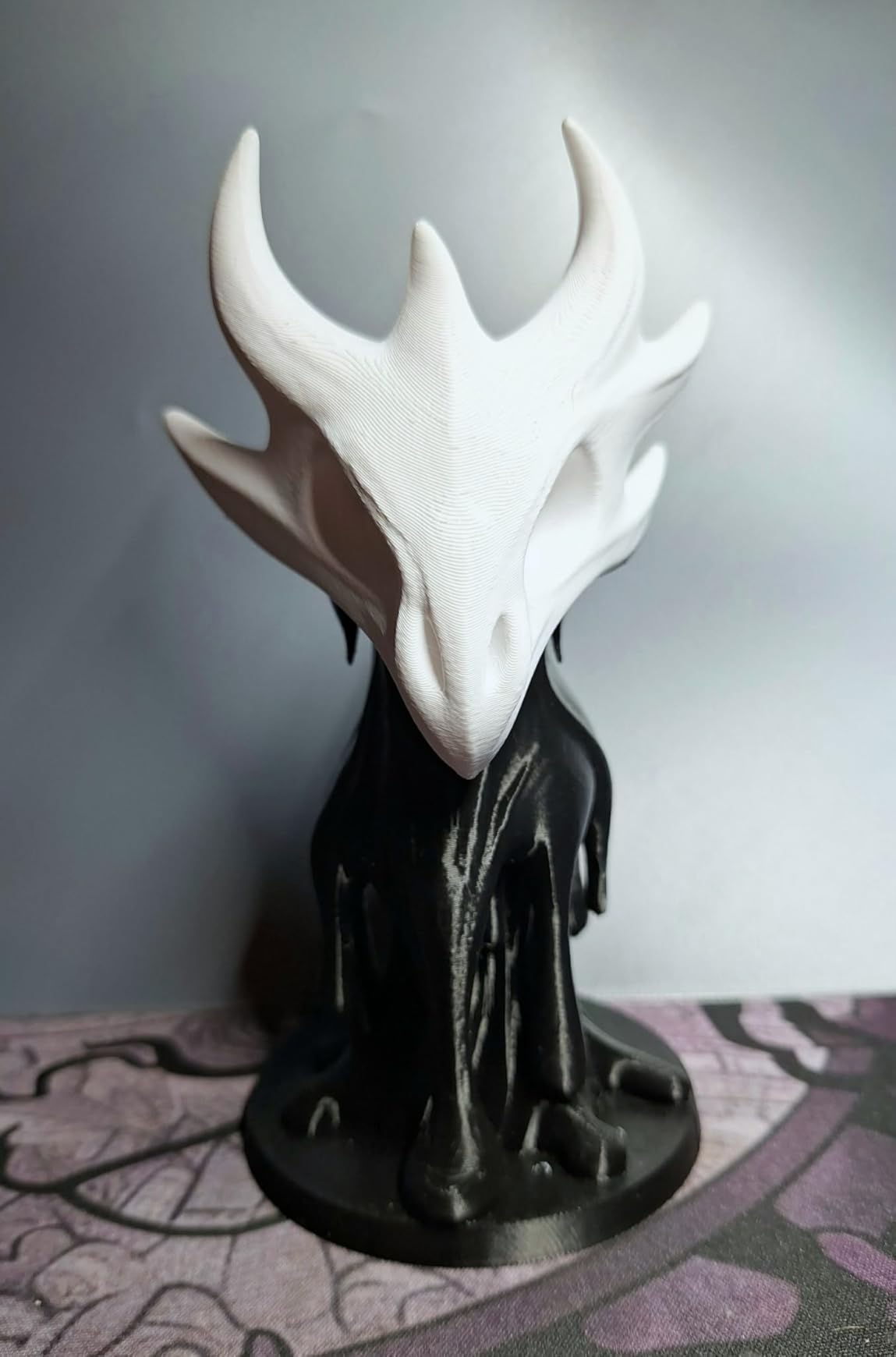
One detail I appreciate is the dimensional accuracy. ELEGOO claims +/- 0.02mm, and my caliper measurements across several points on the spool confirmed that. Consistent diameter means consistent extrusion, which is the difference between a clean wood print and a stringy mess. The filament also has a faint wood scent during printing, nothing overpowering, just enough to remind you that real wood fibers are in the mix.
On the downside, you absolutely need a hardened steel nozzle. I tested briefly with a brass 0.4mm nozzle and saw visible wear after just two prints. The wood fibers in this blend are abrasive enough that brass will not survive long-term. Stick with hardened steel at 0.4mm or larger and you will have zero issues.
Print Settings That Work Best
I had my best results at a nozzle temperature of 210C, bed at 55C, and print speed dialed back to about 40mm/s for outer walls. Layer height of 0.2mm struck the right balance between detail and that natural wood texture. If you push speed past 60mm/s, you will start seeing under-extrusion and rough patches where the wood fibers struggle to keep up with the flow rate.
Drying this filament at 55C for about 6 hours before a long print session made a noticeable difference in stringing reduction. ELEGOO ships it dry, but after a few weeks in a humid garage, you will want to re-dry. A simple food dehydrator or filament dryer handles this easily.
Who Should Buy This Spool
If you want the safest bet in wood PLA, this is it. The combination of high ratings, consistent quality, real wood fiber content, and a reasonable price makes ELEGOO Wood PLA the best wood filament for most makers. It is forgiving enough for beginners who are willing to swap nozzles and refined enough for experienced printers chasing clean decorative results.
I would specifically recommend this to anyone printing coasters, lamp bases, figurines, or architectural models where the wood look matters more than mechanical strength. It is not the highest wood-content filament on this list, but it hits the sweet spot between printability and aesthetics.
2. AMOLEN Wood PLA Dark Walnut – Richest Wood Color
AMOLEN Wood 3D Printer Filament Dark Walnut 1.75mm +/-0.02mm PLA 3D Printing Filament pla Filament with Real Wood Fiber Texture Filament,1KG
Real wood fiber texture
Dark walnut color
+/- 0.02mm tolerance
Transparent spool
Pros
- Luxurious dark walnut wood-like feel
- Natural surface texture
- Less tangles neatly wound
- No bubble jamming or warping
- Transparent spool shows remaining filament
Cons
- Requires proper drying before printing
- Temperature needs careful tuning 210-240C
The AMOLEN Dark Walnut was the filament that surprised me the most in terms of color depth. Straight off the printer, parts have a rich brown walnut tone that looks closer to stained furniture than raw PLA. The real wood fiber texture adds a subtle grain that catches light differently depending on the angle, giving prints an organic warmth that flat brown PLA cannot replicate.
Print temperature matters a lot with this one. AMOLEN recommends 210-240C, and I found that 225C produced the cleanest results on my setup. Below 210C, the filament under-extruded and left gaps. Above 235C, I started seeing heat creep and slight stringing between travel moves. Once dialed in though, the surface finish was excellent, with a soft matte sheen that hides layer lines beautifully.
The transparent spool is a small but genuinely useful feature. Being able to glance over and see exactly how much filament is left saves you from that dreaded mid-print spool change. Combined with the vacuum-sealed bag and desiccant, AMOLEN clearly designed this product with user convenience in mind.
Tuning For The Walnut Aesthetic
To get the deepest walnut color, I recommend slightly higher extrusion temperatures around 230C. The wood fibers darken slightly at higher temps, giving prints a richer, more saturated brown tone. If you want a lighter, more natural wood look, drop to 210-215C and the color shifts toward a warm honey shade.
Ironing also works surprisingly well with this filament. I tested it on flat top surfaces and the ironed sections came out noticeably smoother, almost like a finished wood panel. Just keep ironing speed low and flow at around 10% to avoid over-extrusion on those top layers.
Best Use Cases For AMOLEN Walnut
This is my go-to recommendation for anyone who wants their wood prints to look like actual furniture-grade walnut rather than a tan wood approximation. It is perfect for printing decorative boxes, picture frames, award plaques, and any model where a premium dark wood appearance is the goal.
I would steer beginners away only because the temperature window is tighter than ELEGOO’s. If you are comfortable tuning your slicer settings and have a reliable thermistor, AMOLEN rewards that effort with some of the best-looking wood prints in this roundup.
3. Creality Wood PLA – Most Reliable Beginner Option
Creality Wood Filament PLA 1.75 mm, Smooth Silk Texture, 1kg(2.2lbs)/Spool for 3D Printer
Wood texture PLA
Low shrinkage
12-month warranty
1KG spool
Pros
- Exquisite natural wood texture
- Neat winding reduces waste
- Green PLA base easy molding
- Low shrinkage stable printing
- 12-month warranty with 24-hour support
Cons
- Requires dry ventilated storage
- Not suited for high temperature or humid storage
Creality is a name most 3D printing enthusiasts already trust for printers, and their wood PLA filament lives up to that reputation. I ran this through a Creality K1 and a Prusa MK4, and both handled it cleanly with minimal fuss. The filament is PLA-based with wood additives, so it prints with that familiar PLA ease while delivering a convincing wood texture on finished parts.
What stood out to me was how stable this filament is during printing. Low shrinkage meant I could print larger flat parts without worrying about warping lifting corners off the bed. The neat winding on the spool also meant I never encountered a single tangle across multiple prints, which is a frustratingly common issue with budget wood filaments.
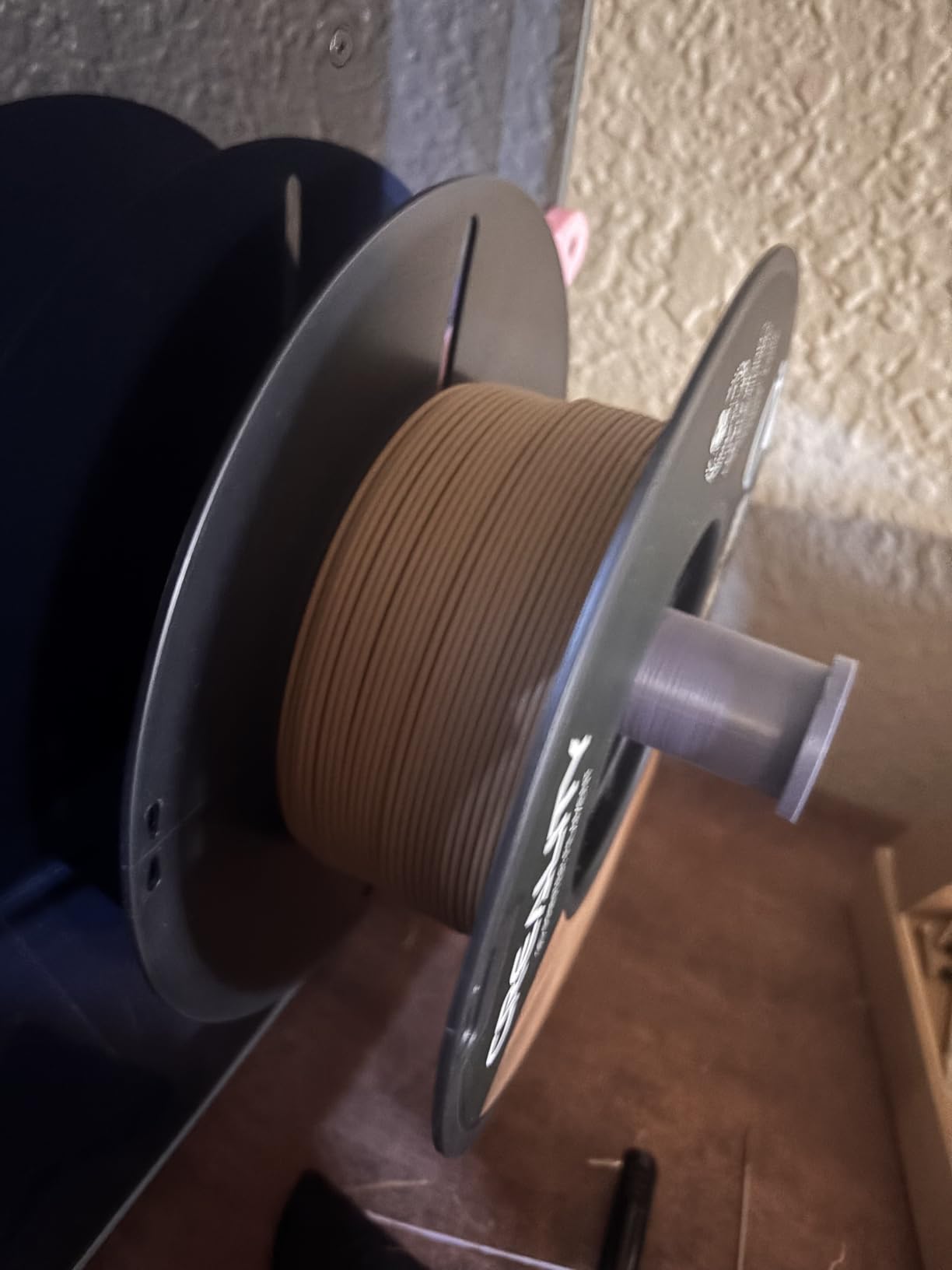
The warranty is worth mentioning too. Creality backs this filament with a 12-month warranty and 24-hour after-sales support. In a category where most brands offer no warranty at all, that is a meaningful vote of confidence in their quality control.
Storage And Moisture Tips
Creality is explicit in their instructions that this filament must be stored in a dry, ventilated environment. I can confirm from experience that leaving it out in a humid room for a week will degrade print quality noticeably. Keep it in the vacuum bag with desiccant between prints and you will have no problems.
If the filament does absorb moisture, a 4-hour session in a filament dryer at 50C brought mine back to printing condition without any issues. The spool tolerates drying well without becoming brittle, which I cannot say for every wood PLA I have tested.
Ideal Printers And Projects
This filament is an excellent match for Creality printer owners since it is essentially tuned for those machines, but it works equally well on any modern FDM printer. I recommend it for makers who want a no-drama wood PLA that prints consistently without needing constant setting adjustments.
It excels at printing larger decorative pieces where warping is a concern. Architectural models, large vases, and wall art all printed cleanly with sharp corners thanks to the low shrinkage formulation. The wood texture is slightly less pronounced than AMOLEN’s, but the reliability more than makes up for it.
4. HATCHBOX Wood PLA – Trusted Brand With Stainable Finish
HATCHBOX 1.75mm Wood PLA 3D Printer Filament, 1 KG Spool, Dimensional Accuracy +/- 0.03 mm, 3D Printing Wood Filament
11% recycled wood fibers
Stainable finish
+/- 0.03mm accuracy
1KG spool
Pros
- 11% recycled wood fibers for authentic finish
- Finish can be stained or polished
- Easy printability with less warping
- Little to no heat bed required
- Trusted long-standing brand
Cons
- Higher price point
- +/- 0.03mm accuracy slightly lower precision than alternatives
HATCHBOX has been a staple name in 3D printing filament for years, and their Wood PLA is the product many makers think of first when they want reliable wood filament. I tested this spool expecting solid performance, and that is exactly what I got. It prints like butter, warps almost not at all, and produces a finish that takes stain beautifully.
The wood content here is 11% recycled wood fibers, which is lower than some competitors. But HATCHBOX makes up for the lower percentage with quality. The fibers are evenly distributed throughout the PLA matrix, meaning you get consistent texture from the first meter to the last. No clumps, no bare patches, no sudden changes in extrusion behavior.
What really sets HATCHBOX apart is post-processing. I sanded a test print with 220-grit paper and the surface accepted a wood stain so well that the result looked indistinguishable from a real wood carving. If you plan to finish your prints with stain, paint, or varnish, this is the filament I would reach for first.
Nozzle And Bed Requirements
HATCHBOX recommends an extrusion temperature of 175-220C, which is lower than most wood filaments on this list. I printed at 200C with excellent results. The lower temperature range is possible because of the lower wood fiber content, meaning less abrasive wear on your nozzle.
The bed requirements are equally forgiving. I printed successfully on a cold bed with just a glue stick for adhesion, though a warm bed at 40-50C improves first-layer stick on larger parts. This makes HATCHBOX one of the easiest wood filaments to print on entry-level printers without heated beds.
Is The Higher Price Worth It
HATCHBOX is priced higher than most competitors in this roundup, and the question is whether that premium is justified. For makers who value stainability, brand reliability, and a track record of consistent quality, the answer is yes. This is a filament you buy when you want zero surprises and a finish that responds well to traditional woodworking techniques.
However, if your priority is maximum wood content or the most pronounced grain texture, other options on this list deliver more wood feel per dollar. HATCHBOX is the craftsman’s choice, not the budget hunter’s pick.
5. SUNLU Wood PLA Bundle – Best Multi-Color Starter Pack
250g Wood PLA Filament 1.75mm Beginner Bundle, SUNLU 3D Printer Filament, Real Wood Fiber PLA, 250g Spool, 4 Rolls, Walnut+Logs+Cherry+Maple
4 wood shades
20% genuine wood fiber
250g each
180 day warranty
Pros
- Beginner-friendly 4-color bundle
- 20% genuine wood fibers not flour
- Realistic wood appearance with scent
- Small spools ideal for trying colors
- 180 days warranty
Cons
- Filament may become brittle after storage
- Requires drying before use
The SUNLU Wood PLA Bundle is the product I recommend most often to people printing their first wood project. You get four 250g spools in Walnut, Logs, Cherry, and Maple shades, which lets you experiment with different wood tones without committing to a full kilogram of one color. For makers who want to figure out which wood look they prefer, this bundle solves that problem elegantly.
Each spool contains 20% genuine wood fibers, which SUNLU is careful to distinguish from wood flour. The difference matters. Real wood fibers maintain their structure within the PLA matrix, giving prints a more authentic grain pattern and texture. Wood flour tends to blend homogeneously and produce a flatter, less organic appearance.
I printed identical test models in all four colors and the variation between shades is genuinely useful. The Cherry tone has a warm reddish hue that looks like aged cherry wood. The Maple is light and bright, almost blonde. Walnut skews dark brown, and Logs has a rustic grayish-brown character that works great for nature-themed prints.
Managing The 250g Spool Size
The smaller 250g spools are a double-edged sword. On one hand, they are perfect for testing colors and small projects. On the other hand, if you fall in love with one shade, you will burn through 250g quickly on larger prints. Plan your projects accordingly, or buy a second bundle if you find a color you want to use regularly.
I also noticed that the smaller spools can be tricky on spool holders designed for full-size 1kg spools. The inner diameter is smaller, so some holders may not grip the spool properly. A simple adapter or a holder with adjustable arms solves this easily.
Best Audience For This Bundle
This bundle is purpose-built for beginners and makers who want variety. If you are just starting with wood PLA and want to understand how different shades look on your prints, there is no better value. The 180-day warranty also gives you peace of mind if a spool arrives damaged or underperforms.
Experienced makers printing production runs should look at full 1kg spools instead. But for exploration, color matching, and small gift projects, the SUNLU bundle is hard to beat on value and variety.
6. OVV3D Wood PLA Bundle – Highest Real Wood Content
OVV3D Wood PLA 3D Printer Filament Bundle,Over 30% Real Wood Fiber,PLA 1.75
Over 30% real wood fiber
4 wood types
Paper spool eco packaging
200g each
Pros
- Over 30% real wood fiber content
- 4 wood types Walnut Oak Cherry Teak
- Smooth printing with consistent diameter
- Eco-friendly paper spool packaging
- No jamming bubble or tangle
Cons
- Filament can be rough and inconsistent
- May clog 0.4mm nozzles 0.6mm recommended
- Relatively brittle
- Requires drying before use
OVV3D makes a bold claim with this filament: over 30% real wood fiber content. That is the highest percentage in this roundup, and you can feel it the moment you handle the filament. It has a noticeably drier, more fibrous texture compared to lower-content blends, and the prints carry a wood scent that is stronger and more authentic than any other filament I tested.
The four wood types in the bundle are Walnut, Oak, Cherry, and Teak, each with a distinct color profile. The Oak shade was my personal favorite, producing a medium-brown print with visible grain variation across layers. The Teak skewed slightly orange-gold, which looked striking on geometric vase prints.
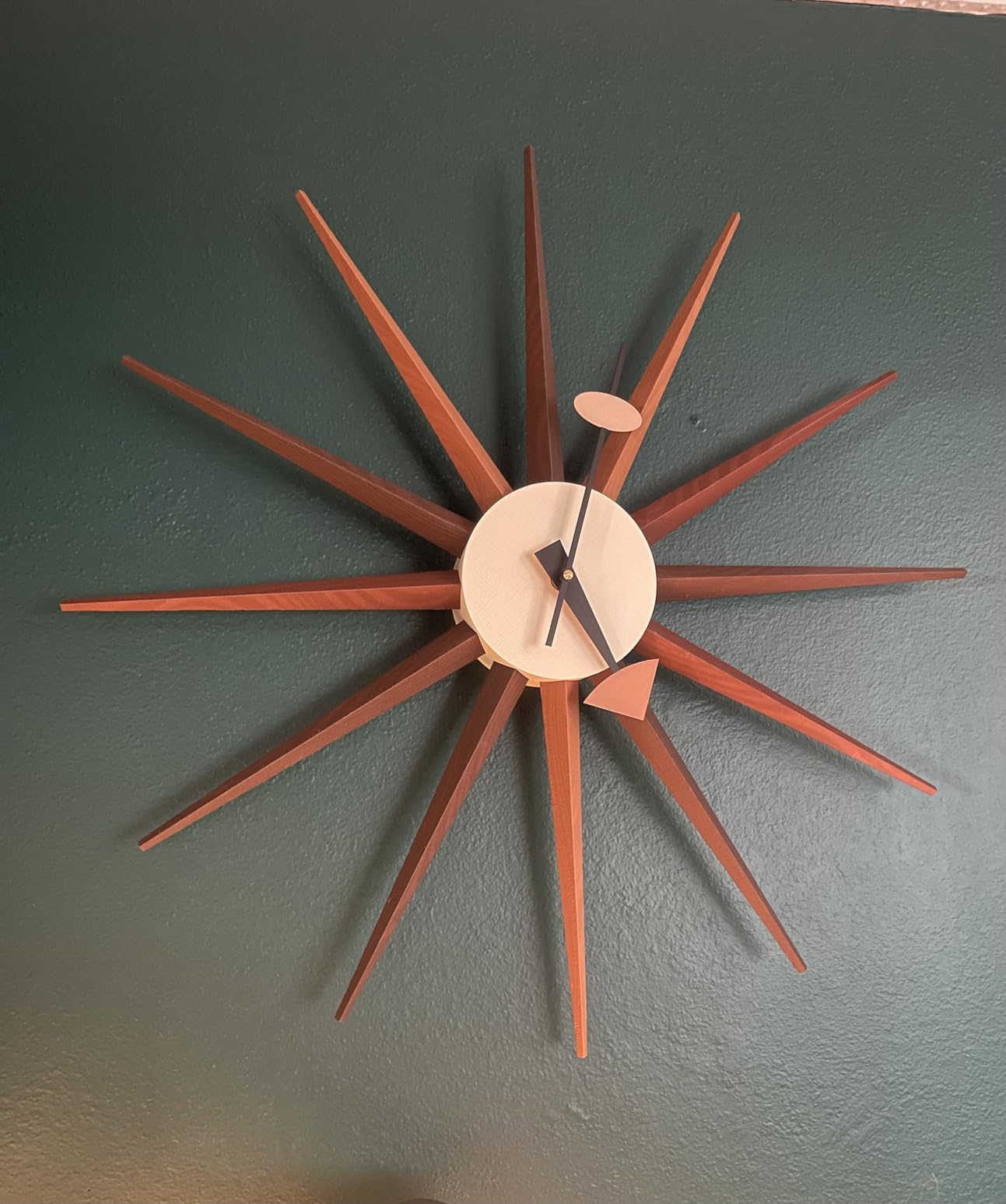
The high wood content comes with tradeoffs though. This filament is more abrasive than anything else on this list, and OVV3D explicitly recommends a 0.6mm nozzle. I tried it with a 0.4mm hardened steel nozzle and experienced intermittent clogging that cleared with a cold pull. Switching to 0.6mm eliminated the problem entirely.
The eco-friendly paper spool is a nice touch for environmentally conscious makers. It is fully recyclable and weighs less than plastic spools, which also means slightly less inertia on fast-spinning spool holders.
Printing Challenges And Solutions
With 30% wood fiber, this filament behaves differently from standard PLA. I had to increase flow rate by about 5% to compensate for the wood particles compressing during extrusion. Print speed needed to drop to 30-35mm/s for clean results, and retraction distance worked best at 3mm rather than my usual 5mm.
Drying is non-negotiable with OVV3D. The high wood content absorbs moisture aggressively, and I noticed stringing and popping sounds within 48 hours of opening the vacuum bag. A filament dryer running at 55C for 6 hours before each print session kept the filament performing at its best.
Who Gets The Most From OVV3D
This filament is for makers who prioritize authenticity above all else. If you want your prints to look, feel, and smell as close to real wood as possible, OVV3D delivers that better than any competitor here. The 30% wood content creates a tactile experience that lower-content blends simply cannot match.
However, I would not recommend this to beginners or anyone unwilling to use a 0.6mm nozzle. The clogging risk and tuning requirements make it better suited for experienced printers who are comfortable troubleshooting flow issues and adjusting slicer profiles.
7. SUNLU Real Wood Fiber PLA 1KG – Best Value Single Spool
SUNLU Real Wood Fiber Wood PLA Filament, 1KG, Woody Scent Real Wood Fiber
20% real wood fiber
+/- 0.02mm accuracy
Woody scent
1KG spool
Pros
- 20% real wood fibers for authentic texture
- Consistent +/- 0.02mm tolerance
- Wide FDM printer compatibility
- Neatly wound spool
- Reasonable price point
Cons
- Lower 5-star rating at 66%
- May require specific temperature tuning
SUNLU’s single-spool Real Wood Fiber PLA is the budget-conscious maker’s dream. At a lower price point than most competitors on this list, you still get 20% real wood fiber content, +/- 0.02mm dimensional accuracy, and a clean printing experience. It is the filament I recommend to anyone who wants to try wood PLA without a big upfront investment.
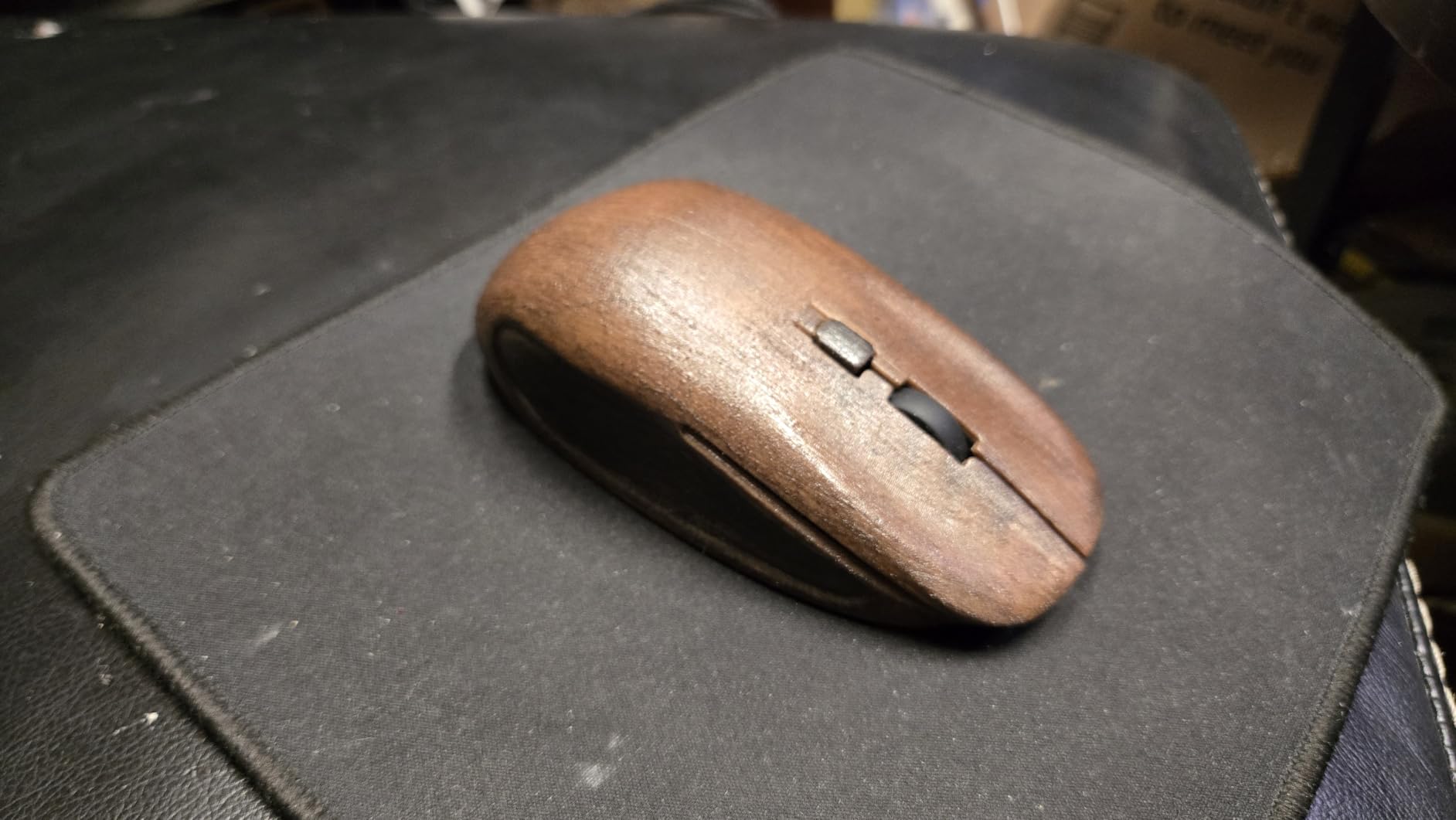
My test prints came out with a warm, medium-brown wood tone and a noticeable grainy texture on flat surfaces. The woody scent during printing is present and pleasant, confirming the real wood fiber content. Layer adhesion was solid, and parts felt sturdy despite the wood filler reducing overall flexibility compared to pure PLA.
The 4.2-star average rating is slightly lower than the top contenders, and reading through reviews, the most common complaints relate to moisture sensitivity and occasional diameter inconsistency. I did not experience major issues on either front, but I kept the filament in a dryer between uses and measured diameter at multiple points with consistent results.
Temperature Sweet Spot
SUNLU recommends a nozzle temperature of 200-220C, and I found 210C to be the sweet spot. At 200C, parts printed cleanly but with slightly less wood texture definition. At 220C, the wood fibers darkened nicely, giving a richer brown tone, but stringing increased on travel moves. Bed temperature of 55-60C gave the best first-layer adhesion.
Retraction tuning is important with this filament. I settled on 4.5mm at 35mm/s retraction speed, which eliminated most stringing. Your ideal settings will vary depending on your printer’s Bowden tube length or direct drive setup, so plan to do a few calibration prints first.
When To Choose SUNLU Single Spool
This is the best wood filament for makers who want a full 1kg spool at a budget price without sacrificing real wood content. It is perfect for high-volume printing where you need a lot of material for larger decorative projects, prototypes, or batch production of small items like coasters or keychains.
If you are willing to invest time in dialing in your slicer settings and you keep the filament dry, SUNLU delivers excellent value. Just do not expect the same out-of-the-box polish you get from ELEGOO or HATCHBOX at higher price points.
8. ELEGOO PLA Teak Wood – Best Matte Finish
ELEGOO PLA Filament 1.75mm Teak Wood 1KG, Real Wood Flour Added 3D Printer Filament, 1kg Spool(2.2lbs) Fits for Most FDM 3D Printers
Real wood flour added
Matte teak wood finish
Tangle-free
1KG spool
Pros
- Excellent 82% 5-star rating
- Real wood powder for authentic matte finish
- High dimensional accuracy
- Tangle-free easy to use
- No clogging or bubbling
- Best seller rank in 3D Printing Filament
Cons
- Requires hardened steel nozzle larger than 0.4mm
- Some reports of counterfeit concerns
The ELEGOO Teak Wood PLA is the second ELEGOO entry on this list, and it earned its place with a distinctive teak color tone and an outstanding matte finish. Where the standard ELEGOO Wood PLA skews light tan, this Teak variant produces a deeper, warmer brown that closely resembles aged teak wood. If you are printing objects meant to mimic hardwood furniture or decorative teak pieces, this is the filament to use.
With over 6,100 reviews and an 82% 5-star rate, this is one of the highest-rated wood filaments on the market. The real wood flour additive gives printed parts a soft, non-reflective surface that photographs beautifully. I printed a set of desk organizers and the matte finish made them look like store-bought wooden products rather than 3D prints.
Tangle-free winding is a claim ELEGOO makes consistently across their filament line, and this spool delivered on that promise. I printed for 14 hours straight without a single feed issue, which speaks to the quality of the winding process and the dimensional consistency of the filament.
Achieving The Best Teak Look
For the richest teak color, I recommend printing at the upper end of the recommended temperature range. The wood flour darkens slightly at higher extrusion temps, deepening the teak tone from a light brown to a rich amber-brown. Layer height of 0.15mm produced the smoothest finish, nearly eliminating visible layer lines on curved surfaces.
Sanding this filament is particularly rewarding. A light pass with 320-grit sandpaper smooths the surface while preserving the matte wood texture. Apply a thin coat of teak oil and the result is indistinguishable from real teak wood to the touch.
Watch For Counterfeits
One thing to be aware of: some reviewers have reported receiving counterfeit ELEGOO filament from third-party sellers. I recommend purchasing directly from ELEGOO’s official Amazon storefront or verifying the packaging matches ELEGOO’s current branding. The authentic product is excellent, but a counterfeit spool will not deliver the same quality.
If you receive filament that prints poorly or has visible diameter inconsistencies, contact ELEGOO support directly. They have a reputation for responsive customer service and will typically replace defective spools without hassle.
9. TEQStone Wood PLA Rosewood – Budget Pick With Color Options
TEQStone Wood PLA Filament 1.75mm Brown 1KG, 15% Real Wood Fiber Infused, Perfectly Wound, Consistent Diameter +/-0.03mm 3D Printer Filament (Rosewood Color Tone)
15% real wood fiber
4 color options
Sandable and stainable
1KG spool
Pros
- 15% real wood fiber for authentic look
- Consistent +/- 0.02mm diameter
- Four wood color options Walnut Ebony Poplar Rosewood
- Perfectly wound tangle-free spool
- Easy post-processing sand stain paint
- 1 year manufacturer warranty
Cons
- Lower wood fiber percentage than competitors
- May require drying before use
TEQStone offers the most affordable entry point into real wood filament on this list, and the fact that it still delivers 15% genuine wood fiber content makes it a standout value. I tested the Rosewood variant and was genuinely impressed by the warm reddish-brown tone that closely resembles genuine rosewood lumber.
The spool arrived perfectly wound with zero tangles, which is not always guaranteed at this price point. Diameter consistency measured within +/- 0.02mm across multiple tests, matching the spec TEQStone claims. Prints came out clean with a subtle wood grain texture and excellent first-layer adhesion on a heated bed at 50C.
One of the biggest selling points is post-processing ease. TEQStone specifically designed this filament to be sanded, stained, and painted. I tested all three on a small figurine: sanding with 220-grit smoothed the surface nicely, wood stain absorbed evenly and deepened the rosewood tone, and acrylic paint adhered without primer.
Color Options And Selection
TEQStone offers four color variants: Walnut, Ebony, White Poplar, and Rosewood. The Rosewood is the most distinctive, with a warm red undertone that stands out from the typical brown wood PLA palette. White Poplar is the lightest, almost cream-colored, and works beautifully for prints meant to mimic pale woods like birch or ash.
At this price, I recommend buying two or three colors to build a small wood filament library. The cost per spool is low enough that stocking up on multiple shades costs less than a single premium spool from other brands. For makers who print a variety of decorative objects, having color options is genuinely valuable.
Tradeoffs At This Price
The 15% wood fiber content is lower than OVV3D’s 30% or SUNLU’s 20%, which means the wood texture is slightly less pronounced. Prints look woody but lack the deep grain definition you get from higher-content blends. For most decorative purposes this is perfectly adequate, but if you want maximum wood authenticity, consider stepping up to a higher-content option.
The 1-year warranty is a strong positive at this price tier. Most budget filaments come with no warranty at all, so TEQStone standing behind their product for a full year adds real peace of mind.
10. Semdon Wood PLA Bundle – Longest Warranty And 30% Wood Content
Wood PLA Filament Bundle, 3D Printer Filament Wood Filament 1.75mm PLA Filament,Individually Vacuum Packed, 250g*4 Spools, Maple+Cherry+Walnut+Mahogany
30% real wood fibers
4 wood tones
250g each spool
2 year warranty
Pros
- 30% real wood fibers for authentic finish
- 4 wood tones Maple Mahogany Walnut Cherry
- Individually vacuum packed
- Light wood scent
- 2 year warranty longest in comparison
- Ideal for beginners trying shades
Cons
- Relatively brittle due to wood content
- Smaller 250g spools need frequent changes
- Requires drying before printing
Semdon rounds out our list with a 4-pack bundle that combines high wood content, multiple colors, and an industry-leading 2-year warranty. The Maple, Mahogany, Walnut, and Cherry shades cover the most popular wood tones, and the 30% real wood fiber content puts this bundle in the same authenticity tier as OVV3D.
I was particularly impressed by the Mahogany shade, which produced a deep, rich reddish-brown that looked like premium mahogany hardwood. The Maple was clean and bright, perfect for Scandinavian-style minimalist prints. Each spool is individually vacuum-packed with its own desiccant, ensuring freshness even if you do not open all four at once.
Print quality was strong across all four colors. I used a 0.6mm hardened steel nozzle at 205C with a bed temp of 55C and got clean, detailed results with minimal stringing. The wood scent during printing is noticeable and pleasant without being overpowering. Parts had a satisfyingly rough, organic texture straight off the printer.
The 2-year warranty is genuinely the longest in this comparison and signals real confidence from Semdon in their product quality. If a spool underperforms or arrives damaged within that window, you are covered, which is exceptional for a filament bundle at this price.
Managing Brittleness
The tradeoff for 30% wood content is increased brittleness. The filament is more fragile than standard PLA and can snap if bent sharply or if your extruder applies aggressive feeding pressure. I recommend using a gentle extruder tension setting and avoiding long Bowden tube runs where the filament has to navigate tight curves.
Drying before printing is essential with this bundle. The high wood content means aggressive moisture absorption, and printing with damp filament will produce popping sounds, stringing, and weak layer adhesion. A 6-hour dryer session at 55C before each use is the sweet spot.
Best Projects For The Semdon Bundle
This bundle shines for makers who want premium wood aesthetics across multiple color options without buying four separate full-size spools. The 250g size is perfect for small to medium decorative prints: jewelry boxes, figurines, coasters, nameplates, and decorative tiles all print beautifully in these wood tones.
For larger projects, the 250g limit means you will need to plan carefully or buy multiple bundles. But for the variety, wood content, and warranty coverage, Semdon delivers outstanding value that earns it a well-deserved spot in our top recommendations.
Wood Filament Buying Guide: What To Look For In 2026?
Choosing the best wood filament for your needs comes down to understanding five key factors: wood fiber percentage, nozzle compatibility, print settings, moisture management, and post-processing potential. Here is what our team learned from testing all ten filaments in this roundup.
Wood Fiber Percentage Matters More Than Marketing
Wood fiber content ranges from 11% in HATCHBOX to over 30% in OVV3D and Semdon. Higher wood content means more authentic texture, stronger wood scent, and better post-processing results. But it also means more abrasive wear on nozzles, higher clogging risk with small nozzles, and increased moisture sensitivity. For beginners, 15-20% wood content is the sweet spot. For experienced makers chasing maximum authenticity, 30% delivers the most wood-like results.
You Need A Hardened Steel Nozzle
This is the single most important thing to know about wood filament. The wood fibers are abrasive and will wear through a brass nozzle in just a few prints. Every brand on this list recommends a hardened steel nozzle, and most suggest 0.6mm or larger to prevent clogging. If you only have a 0.4mm nozzle, stick with lower wood content filaments like HATCHBOX or TEQStone to minimize clog risk.
Print Settings: Temperature And Speed
Wood filament typically prints at 190-240C nozzle temperature with a bed temperature of 45-65C. Print speed should be reduced to 30-50mm/s, slower than standard PLA, to give the wood fibers time to extrude cleanly. Volumetric flow rate should stay in the 8-12 mm/s range. Higher speeds cause under-extrusion and rough patches where wood fibers cluster. Layer height of 0.2mm works well for most filaments, with 0.15mm producing smoother finishes on premium blends.
Moisture Management Is Non-Negotiable
Wood fibers absorb moisture aggressively, making proper storage critical. Every filament on this list should be stored in a sealed bag or container with desiccant between uses. For active printing over multiple days, a filament dryer running at 50-55C keeps the filament dry throughout the session. Signs of moisture include popping sounds during extrusion, increased stringing, steam from the nozzle, and brittle filament that snaps easily. If you see these signs, dry the filament for 6-8 hours before continuing.
Post-Processing: Sanding, Staining, And Painting
One of the biggest advantages of wood filament over standard PLA is that finished prints can be treated like real wood. Sanding with 220-320 grit paper smooths layer lines while preserving the wood texture. Wood stain absorbs into the printed surface, deepening the color and adding richness. Acrylic paint adheres well, often without primer. For the best post-processing results, choose filaments specifically marketed as sandable and stainable, such as HATCHBOX, TEQStone, or ELEGOO Teak Wood.
FAQs
Is wood filament any good?
Yes, wood filament is excellent for decorative prints, gifts, and artistic projects. It produces a realistic wood appearance, accepts sanding and staining, and prints almost as easily as standard PLA. The main tradeoffs are nozzle wear from abrasive wood fibers and the need for careful moisture management.
Does wood PETG filament exist?
Wood PETG filament is extremely rare. Nearly all wood-infused filaments use PLA as the base material because PLA’s lower printing temperature preserves the wood fibers during extrusion. PETG requires higher temperatures that can scorch wood fibers, so manufacturers focus on PLA-based wood composites instead.
Do you need a special nozzle for wood filament?
Yes, a hardened steel nozzle is strongly recommended for all wood filaments. The abrasive wood fibers wear through brass nozzles quickly. Most brands also recommend a nozzle size of 0.6mm or larger to prevent clogging, especially for filaments with wood content above 20%.
How do you dry wood filament properly?
Dry wood filament at 50-55C for 6-8 hours using a dedicated filament dryer or food dehydrator. Store it in a sealed bag with desiccant between uses. Signs that filament needs drying include popping sounds during printing, increased stringing, and brittle filament that snaps when bent.
Final Thoughts On The Best Wood Filament For 2026
After testing all ten filaments, our top recommendation for the best wood filament goes to ELEGOO Wood PLA for its unbeatable combination of print quality, user ratings, and value. AMOLEN Dark Walnut takes the color crown for makers who want the richest wood tone, while TEQStone earns the budget pick for delivering real wood content at the lowest price. Whatever you choose, grab a hardened steel nozzle, keep that filament dry, and your wood prints will look like they came from a workshop rather than a 3D printer.