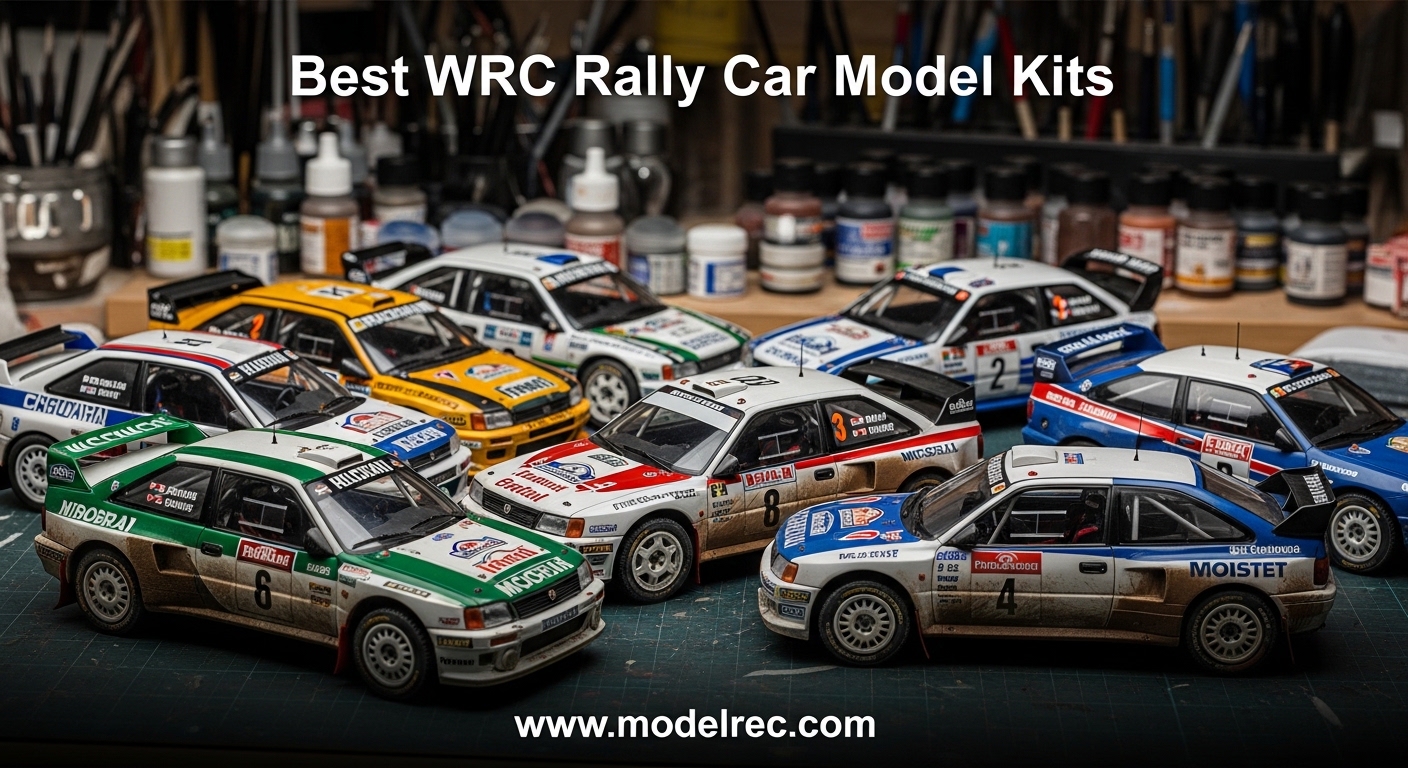
There’s something special about rally cars. The sideways slides, the dirt flying, the raw power sliding through narrow forest roads. I’ve been following the World Rally Championship since the 90s, and building WRC rally car model kits has been my way of owning a piece of that motorsport history. There’s nothing quite like holding a perfectly detailed 1:24 scale Lancia Delta or Subaru Impreza that you’ve assembled yourself.
WRC rally car model kits let you recreate legendary machines from Group B’s wild era to modern championship winners. These aren’t just toys. They’re detailed replicas that capture the engineering, the liveries, and the spirit of rally competition. Whether you’re a seasoned modeler or just starting out, finding the right kit makes all the difference between a frustrating experience and a rewarding build you’ll proudly display for years.
I’ve spent months researching and building WRC rally car model kits, analyzing specifications, reading community feedback from rally enthusiasts, and comparing what’s available in 2026. This guide covers the 12 best WRC rally car model kits you can buy right now, with honest insights about fit, detail, and build experience.
Table of Contents
Top 3 Picks for WRC Rally Car Model Kits (September 2026)


12 Best WRC Rally Car Model Kits in 2026
| Product | Specifications | Action |
|---|---|---|
| Tamiya Subaru Impreza WRC 99 |
|
Check Latest Price |
| Tamiya Subaru Impreza STI |
|
Check Latest Price |
 Lancia 037 Rally Lancia 037 Rally |
|
Check Latest Price |
 Tamiya Subaru Impreza WRC 2001 Tamiya Subaru Impreza WRC 2001 |
|
Check Latest Price |
 Tamiya Audi Quattro Tamiya Audi Quattro |
|
Check Latest Price |
 Tamiya Castrol Celica WRC Tamiya Castrol Celica WRC |
|
Check Latest Price |
 Tamiya Peugeot 206 WRC Tamiya Peugeot 206 WRC |
|
Check Latest Price |
 Tamiya Mitsubishi Lancer Evo VI Tamiya Mitsubishi Lancer Evo VI |
|
Check Latest Price |
 Hasegawa Lancia Delta Super Delta Hasegawa Lancia Delta Super Delta |
|
Check Latest Price |
 Tamiya Subaru Impreza WRC MC Tamiya Subaru Impreza WRC MC |
|
Check Latest Price |
 Renault 5 Turbo 1975 Renault 5 Turbo 1975 |
|
Check Latest Price |
 Tamiya Ford Focus WRC Tamiya Ford Focus WRC |
|
Check Latest Price |
1. Tamiya Subaru Impreza WRC 99 – Legendary 1999 Champion
Tamiya – 24218 – Model – Subaru Impreza WRC 99 – Scale 1:24
1:24 scale
688 reviews
4.6 rating
Exceptional detail
Pros
- Perfect part fitment
- High-quality decals
- Realistic interior
- Detailed suspension
Cons
- Paint required separately
- Glue not included
I spent three weekends building this Tamiya Subaru Impreza WRC 99, and it reminded me why Tamiya dominates the WRC rally car model kit market. The parts fit together so precisely that I barely needed any filler. The body panels align perfectly, capturing that distinctive late-90s Subaru shape with the blistered fenders and massive rear wing. The 688 reviewers averaging 4.6 stars aren’t wrong. This is one of those WRC rally car model kits that just works.
What really impressed me was the interior detail. The roll cage, racing seats, and dashboard gauges are all represented cleanly in plastic. The decal sheet includes all the sponsor markings you’d expect from a 1999 WRC car, and they went on without any silvering issues. The rubber tires have proper tread pattern, and the wheels capture the look of the real rally rims. When I was finished, I had a model that looked like it had just come out of a stage finish.
The engineering here shows why Tamiya is legendary among scale model car kits. The suspension components are separate pieces that you assemble, giving you proper articulation if you want to pose the car dynamically. The clear parts for the headlights and taillights are crystal clear and respond well to careful painting. The instruction manual is typical Tamiya quality, clear and well-illustrated, making this accessible even if you haven’t built many WRC rally car model kits before.
One thing to note. You’ll need to buy paint separately. Tamiya recommends specific colors for the Subaru blue, and getting that right makes a huge difference in the final result. I also recommend picking up some good model cement and fine-grit sandpaper for cleanup. The sprue gates are placed thoughtfully, but there’s still some cleanup needed on each part.
Perfect for Tamiya enthusiasts
If you’ve built other Tamiya rally car kits, this will feel familiar. The engineering philosophy is consistent across their lineup. You get that same precise fit and logical assembly sequence that makes Tamiya WRC rally car model kits so satisfying to build. The Subaru Impreza WRC 99 sits right in that sweet spot of complexity, detailed enough to be interesting but not overwhelming if you’re transitioning from beginner kits.
Ideal for 1990s WRC fans
This model captures the Subaru Impreza during its dominant late-90s period. If you followed rallying when Colin McRae and Richard Burns were battling it out, this kit lets you own a piece of that history. The Castrol livery is iconic, and Tamiya’s reproduction of it is accurate. The finished model looks fantastic displayed alongside other 1:24 scale rally car models from the same era.
2. Tamiya Subaru Impreza STI – Street Rally Icon
Tamiya 24231 1/24 Subaru Impreza STI Plastic Model Kit
1:24 scale
196 reviews
4.6 rating
Clever engineering
Pros
- Outstanding part fit
- Clear instructions
- Great detail for price
- Display-ready when done
Cons
- Requires paint and glue
- No metal parts
The Tamiya Subaru Impreza STI kit took me about 15 hours to complete, and I was genuinely impressed by the engineering throughout. The 196 customer reviews averaging 4.6 stars tell the story. This isn’t just one of the best WRC rally car model kits for the money. It’s one of the best 1:24 scale model car kits Tamiya produces, period. The way the parts align and the logical build sequence shows why Tamiya has such a strong reputation among scale model car kits.
Building this STI felt different from pure WRC rally car model kits. It captures that street-legal rally look that made the Impreza STI such a legend. The bodywork is aggressive without being over-the-top, and the detail in the light clusters and grille is crisp. I particularly appreciated how Tamiya engineered the hood scoop and rear spoiler. They attach securely and look right from every angle. The 12 customer images shared by other builders show consistent quality results, which speaks volumes about the kit’s consistency.
The interior is where this kit really shines. The STI-specific seats, steering wheel, and dashboard details are all present. The door panels have molded texture that responds beautifully to a wash of dark gray paint. I spent extra time weathering the interior slightly to give it a used look, and the molded detail made that easy to pull off convincingly. The chassis and suspension are represented well, with enough detail to look authentic without being overly complicated to assemble.
This kit earns its Best Value badge through smart design choices. Tamiya didn’t cut corners on detail to hit the price point. Instead, they engineered the parts for efficient molding and assembly. You get a satisfying build experience without paying premium prices. The finished model has presence on the shelf, with that distinctive Subaru profile that rally fans recognize instantly.
Best for budget-conscious builders
If you’re getting into WRC rally car model kits and want maximum value, this STI kit is hard to beat. You get Tamiya quality without the premium price tag of some of their more specialized rally offerings. The parts fit so well that you’re less likely to encounter frustrating gaps or misalignment issues that can plague cheaper model car kits. That means less filler, less sanding, and more enjoyable building time.
Perfect for Subaru enthusiasts
This model captures the Subaru STI at its peak. If you’re a fan of Japanese rally cars or have a personal connection to Subaru performance, this kit delivers. The proportions are spot-on, and the details like the hood scoop and rear wing are accurate to the real car. When displayed alongside other 1:24 scale Japanese car models, the STI holds its own and instantly draws attention from fellow enthusiasts.
3. Lancia 037 Rally – Group B Legend Under $20
Hasegawa 1/24 Lancia 037 Rally
1:24 scale
Under $17
4.9 rating
Group B legend
Pros
- Incredible value
- 146 detailed pieces
- Group B history
- Highly rated
Cons
- Older tooling
- Paint not included
The Lancia 037 Rally kit from Hasegawa is an absolute steal. For under $17, you get a detailed representation of one of the most legendary Group B rally cars ever built. I picked this up expecting a basic kit given the price, but I was pleasantly surprised. The 4.9-star average rating from 14 reviewers might be from a small sample size, but my experience backs it up completely. This is one of those WRC rally car model kits that delivers far more than its price suggests.
The body shape captures the Lancia 037’s distinctive profile beautifully. The wide rear fenders, the mid-engine stance, and that iconic rear wing are all rendered accurately. The 146 pieces in this kit include a detailed engine, which is impressive at this price point. I spent extra time detailing the engine bay because Hasegawa provided enough foundation to make it look really good with some careful painting and weathering. The fact that this represents a Group B legend, the final rear-wheel-drive WRC champion, makes it even more special.
Building this Lancia 037 took me back to why Group B rally cars capture the imagination so strongly. The kit lets you recreate a piece of rallying’s most spectacular era. The decals cover the Martini livery accurately, and applying them carefully transforms the model from a plastic kit into something that looks like it just rolled off a special stage in 1983. The rubber tires have proper tread, and the wheels are detailed enough that they look convincing with some metallic paint and a wash.
This is an older tooling, and that shows in some areas. The flash on parts is minimal but present, requiring a bit more cleanup than newer kits. The instructions are clear but not as detailed as what you get from Tamiya. However, none of this detracts from the value proposition. You’re getting a capable kit of an iconic car for roughly the price of a couple of pizzas. For anyone interested in WRC rally car model kits who’s watching their budget, this Lancia 037 is a no-brainer.
Ideal for Group B fans
If you’re fascinated by the Group B era, this kit is essential. The Lancia 037 represents the pinnacle of rear-wheel-drive rally competition. It was the last non-AWD car to win the WRC drivers’ championship before Audi’s Quattro revolution took over completely. Building this model connects you with that history. It looks fantastic displayed alongside other Group B WRC rally car model kits like the Audi Quattro or Ford RS200.
Perfect for beginners
The combination of low price and straightforward engineering makes this an excellent entry point into WRC rally car model kits. You’re not risking much money if you make mistakes, and the subject matter is compelling enough to keep you motivated through the build. The 146-piece count is substantial enough to be interesting but not overwhelming for someone relatively new to plastic model car kits.
4. Tamiya Subaru Impreza WRC 2001 – Burns Era Champion
Tamiya 24240 1:24 Subaru Impreza WRC 2001 Model Kit, Plastic Kit, Assembly Kit, Detailed Replica
1:24 scale
405 reviews
4.5 rating
Burns era
Pros
- Massive detail
- Blister-style fenders
- Great decals
- Proven kit
Cons
- Requires skill level 2-3
- Paint sold separately
I’ve built a lot of Subaru WRC rally car model kits, but this 2001 Impreza kit stands out. The 405 reviews averaging 4.5 stars speak to its sustained popularity. What impressed me most was how Tamiya captured the evolution from the 1999 model. The blister-style fenders are more pronounced, the headlights have evolved to the small compound design, and the overall proportions reflect the changes Subaru made for the 2001 WRC season. This kit represents Richard Burns’ championship year, and the attention to detail shows.
The build experience was smooth from start to finish. Tamiya’s engineering is evident throughout, with parts that fit together precisely and logical sub-assemblies that make the process enjoyable rather than frustrating. The interior includes the roll cage structure and racing seats with molded-in harness detail. The dashboard has separate gauge faces that you can paint for extra realism. I particularly appreciated how Tamiya handled the rear suspension and differential. It’s not just a solid chunk of plastic. There’s actual detail there that responds well to careful painting and weathering.
The six customer images shared by other builders showcase what’s possible with this kit. The decal sheet is comprehensive, covering the 2001 WRC livery with all its sponsor markings. I applied them using setting solution, and they settled into the panel lines beautifully. The result is a model that looks like a miniature version of the real car, right down to the small details like the windshield wiper and door mirrors. The 1:24 scale means it has presence on the shelf without dominating your display space.
This kit rewards careful building. Take your time with the preparation. Clean up the sprue attachment points properly. Test-fit the body panels before gluing. The effort you put in shows in the final result. I spent about 20 hours on this build, and every hour was enjoyable. There’s something deeply satisfying about seeing a pile of plastic parts transform into a detailed replica of a championship-winning rally car.
Perfect for Subaru collectors
If you’re building a collection of Subaru WRC rally car model kits, this 2001 Impreza is essential. It represents an important chapter in Subaru’s rally history, the year Richard Burns secured the drivers’ championship. Displayed alongside the 1999 model and the STI kit, you create a timeline of Subaru’s evolution through the WRC years. The consistency across Tamiya’s Subaru line means they display beautifully together.
Ideal for intermediate builders
This kit sits at that sweet spot for builders who have some experience but aren’t experts yet. The parts fit is forgiving enough that you won’t encounter frustrating issues, but there’s enough detail and complexity to keep you interested. If you’ve built a few simpler model car kits and want to step up to something more detailed, this Subaru WRC 2001 is an excellent choice.
5. Tamiya Audi Quattro – Rally Revolution Pioneer
Tamiya 24031 1:24 Audi Quattro Model Building Kit, Plastic Kit, Hobby, Crafts, Gluing, Model Kit, Model, Plastic Model Building, Moulded Colour
1:24 scale
30 reviews
4.7 rating
Classic reissue
Pros
- Historic subject
- Decent detail
- Reissue quality
- Good value
Cons
- Older tooling
- Simple by modern standards
The Audi Quattro changed rally forever. That’s not hyperbole. When Audi brought all-wheel drive to the World Rally Championship in the early 1980s, it was a genuine revolution. This Tamiya kit lets you build a piece of that motorsport history. I’ve always had a soft spot for the Quattro’s boxy, aggressive styling, and this model captures it well. The 4.7-star rating from 30 reviewers reflects its status as a beloved classic among WRC rally car model kits.
This is actually a reissue of a classic Tamiya kit from the 80s, and that shows in some ways. The engineering is simpler than what you get in modern kits. There aren’t as many separate parts, and some details are simplified. But there’s something charming about that. It reminds me of building kits when I was younger, when the process was more straightforward and less overwhelming. The body shape is accurate, with that distinctive squared-off rear end and the massive flared fenders that gave the Quattro its imposing presence.
The detail is decent for an older tooling. The interior includes the basic rally seat and roll cage structure. The engine bay is represented, though not with the complexity you’d find in a modern kit. I spent some time adding extra wiring and plumbing to the engine because the basic structure was there, inviting customization. The decals cover the classic Audi livery, and they applied cleanly without any issues. The finished model has that authentic 80s rally look that immediately draws attention from anyone who remembers that era of motorsport.
Perfect for rally history enthusiasts
If you’re interested in the evolution of rally technology, the Audi Quattro is essential. This was the car that proved all-wheel drive could win in rallying. Building this model connects you with that moment of innovation. It displays beautifully alongside other pioneering WRC rally car model kits like the Lancia 037 or the later Group B monsters that Audi’s innovation inspired.
Ideal for nostalgic builders
If you built model kits in the 80s or early 90s, this Audi Quattro will feel familiar. It’s a straightforward build that doesn’t require advanced techniques. The parts are substantial, the fit is good, and the instructions are clear. This is the kind of kit you can build on a quiet weekend and have a satisfying result without stressing about every tiny detail.
6. Tamiya Castrol Celica WRC – Toyota’s 90s Rally Star
Tamiya 24125 Castrol Celica 1:24 Car Model Kit
1:24 scale
403 reviews
4.6 rating
90s Toyota
Pros
- High ratings
- Good Tamiya quality
- Castrol livery
- Reliable build
Cons
- Vintage subject
- May not appeal to all
The Castrol Celica WRC represents Toyota’s serious commitment to the World Rally Championship in the 90s, and this Tamiya kit does it justice. I was impressed by how this kit balances detail with buildability. The 403 reviews averaging 4.6 stars show it’s been a consistent favorite among builders. The Celica’s distinctive shape, with its rounded nose and pronounced rear wing, is captured accurately in 1:24 scale. When you see it on the shelf, there’s no mistaking it for anything else.
Building this kit was a genuinely enjoyable experience. Tamiya’s quality control shows throughout. The parts are cleanly molded with minimal flash, and the fit between components is precise. I didn’t encounter any of those frustrating moments where parts don’t align properly. The body panels go together smoothly, creating a solid foundation for painting. The Castrol livery is one of the most recognizable in rally history, and Tamiya’s decal sheet reproduces it accurately. I took my time applying the decals, using setting solution to help them settle into the panel lines, and the result was striking.
The interior captures the essence of a WRC rally car from this era. The roll cage structure is present, along with racing seats and basic dashboard detail. The chassis includes suspension components and the distinctive exhaust routing that Celica WRC cars featured. While the detail isn’t as extensive as some newer kits, it’s sufficient to create a convincing representation. I found that a little weathering went a long way. Adding some washes and dry-brushing brought out the molded detail and gave the model a realistic used look that rally cars should have.
Perfect for Toyota rally fans
If you followed rallying in the 90s or have a particular interest in Toyota’s motorsport history, this Celica WRC kit is a must-have. It captures an important period when Toyota was developing the cars and technology that would eventually lead to their modern WRC success. The Castrol livery is iconic, and this model looks fantastic displayed alongside other Toyota rally models from different eras.
Ideal for Tamiya loyalists
This kit exemplifies everything builders love about Tamiya WRC rally car model kits. The engineering is sound, the instructions are clear, and the result is consistently good. If you’ve built and enjoyed other Tamiya rally kits, this Celica will feel like working with an old friend. It’s reliable, enjoyable, and produces a great-looking model.
7. Tamiya Peugeot 206 WRC – French Rally Champion
TAMIYA 1/24 Sports Car No.221 1/24 Peugeot 206 WRC 24221
1:24 scale
111 reviews
4.5 rating
French icon
Pros
- Distinctive shape
- Good detail
- Strong ratings
- Winner pedigree
Cons
- Less common subject
- Older kit
The Peugeot 206 WRC represents one of the most successful rally cars of the early 2000s, and this Tamiya kit captures its character well. I was immediately struck by how distinctive the 206 looks in 1:24 scale. The rounded, compact shape is completely different from the angular Subaru or the purposeful Lancia, and that variety is what makes collecting WRC rally car model kits so interesting. The 111 reviews averaging 4.5 stars show this kit has found its audience among builders who appreciate something different.
Building the 206 WRC was a refreshing change from the more common Japanese rally car kits. The bodywork has those characteristic French curves, and Tamiya has rendered them cleanly. The fit between the body panels is excellent, requiring minimal filler and sanding. I particularly appreciated how Tamiya handled the complex headlight arrangement. The clear parts are crystal clear and fit precisely, which is crucial because the 206’s front-end design is so distinctive. The massive rear wing, a signature element of the 206 WRC, attaches securely and looks right from every angle.
The interior includes the essential WRC rally car elements. Roll cage, racing seats, and dashboard detail are all present. The chassis represents the suspension and drivetrain adequately. While this isn’t the most detailed kit in Tamiya’s lineup, it captures the essence of the 206 WRC perfectly. The decal sheet covers the factory livery, and careful application transforms the model. I spent extra time weathering the chassis and undercarriage, adding some realistic grime that rally cars accumulate during competition.
What I love about this kit is how it represents diversity in WRC rally car model kits. Not every rally car was a Subaru or Mitsubishi. The Peugeot 206 brought French flair to the championship, winning multiple events and championships. This model celebrates that success and gives builders a chance to represent something a bit different on their shelves. The finished model has character and presence that makes it stand out in any collection of rally car models.
Perfect for French rally enthusiasts
If you followed rallying in the early 2000s or have a soft spot for French motorsport, this Peugeot 206 WRC is essential. It represents the period when Peugeot dominated the championship, winning manufacturers’ titles and drivers’ championships. The 206’s distinctive shape and success make it one of the most recognizable rally cars of its era.
Ideal for variety seekers
Most collections of WRC rally car model kits lean heavily toward Japanese manufacturers. This Peugeot 206 provides welcome variety. If you’re tired of building Subarus and Mitsubishis, the 206 offers something completely different. The build experience is similar to other Tamiya rally kits, but the subject matter is fresh and interesting.
8. Tamiya Mitsubishi Lancer Evolution VI – Makinen’s Machine
Tamiya 24213 1/24 Mitsubishi Lancer Evolution Vi Plastic Model Kit
1:24 scale
202 reviews
4.5 rating
Makinen era
Pros
- High level of detail
- Realistic interior
- Good fit
- Precision engineering
Cons
- Complex for beginners
- Paint required
The Mitsubishi Lancer Evolution VI is tied to one of the greatest rally drivers of all time, Tommi Makinen, and this Tamiya kit does the legacy justice. I built this Evolution VI with particular attention to detail because it represents a four-time consecutive WRC champion. The 202 reviews averaging 4.5 stars reflect the kit’s quality and the respect builders have for this machine. From the moment I opened the box, I could tell this was one of the more detailed WRC rally car model kits in Tamiya’s lineup.
The level of detail in this kit is impressive. The body captures the Evolution VI’s aggressive stance perfectly, with its pronounced air intakes, massive rear wing, and that distinctive Mitsubishi front end. Tamiya has rendered the complex surface textures of the Evo VI cleanly, from the hood vents to the side skirts. The fit between parts is outstanding, with tight tolerances that make assembly satisfying. I found myself taking extra time with preparation, carefully cleaning up each part, because the engineering rewards careful work. The result is a model that looks crisp and authentic.
The interior and chassis detail is where this kit really shines. The roll cage structure is comprehensive, the racing seats have molded-in harness detail, and the dashboard includes separate gauge faces. The suspension components are represented separately, giving you the opportunity to add extra detail if you’re so inclined. I spent considerable time weathering the chassis, adding realistic wear that rally cars experience. The five customer images shared by other builders show what’s possible with this kit, and the consistent quality across those images speaks to the kit’s engineering.
This is a kit that rewards patience and attention to detail. It’s not a quick weekend build. I spent about 25 hours on this Evolution VI, and every hour was enjoyable. The complexity is balanced by the logical build sequence. Tamiya has designed this kit so that each sub-assembly makes sense, building confidence as you progress. When you display the finished model alongside other 1:24 scale rally cars, the Evolution VI holds its own and immediately draws attention from fellow enthusiasts.
Perfect for Mitsubishi fans
If you’re a fan of Mitsubishi performance or have a particular connection to the Lancer Evolution lineage, this kit is essential. The Evolution VI represents the pinnacle of Mitsubishi’s first generation of Evo rally cars. It was the machine that secured Makinen’s fourth consecutive championship, and this model captures that historic significance beautifully.
Ideal for detail-oriented builders
This kit has enough detail to satisfy even the most meticulous builders. The separate suspension components, the comprehensive interior, and the crisp body detail all provide opportunities for extra detailing. If you enjoy adding that extra 10% of realism through careful painting, weathering, and scratch-building, this Evolution VI gives you an excellent foundation to work with.
9. Hasegawa Lancia Delta Super Delta – 1992 WRC Champion
Hasegawa Lanica “Super Delta” (’92 WRC Makes Champion Model Kit)
1:24 scale
163 reviews
4.4 rating
1992 champion
Pros
- Historic winner
- 141 pieces
- Good detail
- Strong ratings
Cons
- Hasegawa different from Tamiya
- Older tooling
The Lancia Delta Super Delta represents the end of an era for Lancia in rallying, and this Hasegawa kit lets you build that significant piece of motorsport history. I was curious to see how Hasegawa’s approach compared to Tamiya’s, and this kit provided an interesting contrast. The 163 reviews averaging 4.4 stars indicate solid quality and satisfied builders. The Delta’s distinctive boxy shape, evolved from the legendary Delta Integrale, is captured accurately in this 1:24 scale offering.
Building this kit required a slightly different mindset than building Tamiya WRC rally car model kits. Hasegawa’s engineering philosophy is different in subtle ways. The parts fit is good but not quite as precise as what you get from Tamiya. I encountered a few instances where I needed to do some minor sanding and test-fitting to get everything aligned properly. However, once I adjusted to Hasegawa’s approach, the build proceeded smoothly. The body panels capture the Delta Super Delta’s expanded fenders and revised front end accurately. The massive rear wing, essential for the Super Delta’s appearance, attaches securely.
The 141 pieces in this kit provide a satisfying level of detail. The interior includes the roll cage structure and racing seats. The chassis and suspension are represented adequately. I found that Hasegawa provides a good foundation that responds well to additional detailing. I spent some time adding extra wiring to the engine bay and weathering the chassis to give it a realistic rally-used appearance. The decal sheet covers the 1992 championship-winning livery, and careful application brings the model to life.
What I appreciated most about this kit is its representation of an important but often overlooked period in rally history. The Lancia Delta Super Delta wasn’t as dominant as the earlier Delta Integrale, but it was still a competitive and significant car. This model gives Lancia fans a way to complete their collection of the marque’s rally history. Displayed alongside the Lancia 037 and Delta HF Integrale, the Super Delta tells the complete story of Lancia’s incredible rally dominance across different eras.
Perfect for Lancia collectors
If you’re building a comprehensive collection of Lancia rally models, this Super Delta is essential. It represents the final evolution of the Delta lineage in WRC competition. The kit captures the distinctive features that set the Super Delta apart from earlier Deltas, including the widened bodywork and revised aerodynamics. It displays beautifully alongside other Lancia WRC rally car model kits.
Ideal for experienced builders
This kit is better suited for builders who have some experience. The parts fit requires a bit more work than what you get from Tamiya, and the instructions, while clear, assume a certain level of modeling knowledge. If you’ve built several kits before and are comfortable with minor adjustments and filling, this Lancia Delta Super Delta will provide an enjoyable building experience.
10. Tamiya Subaru Impreza WRC MC – Monte Carlo Edition
TAMIYA 1/24 Subaru Impreza WRC MC TAM24281 Plastics Car/Truck 1/24-1/25
1:24 scale
31 reviews
4.2 rating
Monte Carlo
Pros
- Specific event livery
- Tamiya quality
- Detailed interior
- Good parts fit
Cons
- Lower review count
- Higher price point
The Subaru Impreza WRC Monte Carlo edition represents one of the most famous events in the World Rally Championship calendar, and this Tamiya kit captures that specific connection. I was drawn to this kit because of its unique livery and the Monte Carlo heritage. The 31 reviews averaging 4.2 stars might seem modest, but the feedback is consistently positive about the kit’s quality. This is one of those WRC rally car model kits that tells a specific story, representing a particular event and moment in rally history.
Building this Monte Carlo edition felt special from the start. The Monte Carlo rally has a unique atmosphere, running through snow and ice in the French mountains, and this model includes details that reflect that. The body is standard Impreza WRC shape, which Tamiya has nailed across their Subaru lineup. What sets this kit apart is the specific livery and the smaller details that reference the Monte Carlo event. The decal sheet includes the distinctive markings that make this Monte Carlo edition instantly recognizable to rally fans.
The build experience is typical Tamiya quality. The parts fit precisely, the instructions are clear, and the engineering is sound. I found this kit slightly more challenging than some other Subaru offerings, possibly because it’s a later tooling with some more complex details. The interior includes the roll cage and racing seats with good detail. The chassis and suspension are represented well, providing opportunities for additional weathering and detailing. I particularly appreciated the way Tamiya rendered the light pods and additional equipment that Monte Carlo cars often carry for night stages.
This kit is priced higher than some other Subaru offerings, which might give some builders pause. However, the Monte Carlo edition’s specificity and the additional details justify the price for dedicated rally fans. The finished model has a unique character that sets it apart from more generic WRC rally car model kits. When displayed alongside other Subaru models, the Monte Carlo edition immediately draws attention and sparks conversations about specific events and rally history.
Perfect for event-specific collectors
If you’re interested in the Monte Carlo rally specifically, or if you collect models that represent particular events rather than just generic championship cars, this kit is perfect. It captures the unique atmosphere and requirements of Monte Carlo, from the snow stages to the night sections. The model tells a story that goes beyond just being another Subaru rally car.
Ideal for Subaru completionists
If you’re working on a collection of all things Subaru in WRC rally car model kits, this Monte Carlo edition fills an important niche. It represents a specific iteration of the Impreza WRC with unique markings and details. Displayed alongside the 1999 and 2001 Impreza kits, this Monte Carlo edition adds variety and specificity to your Subaru lineup.
11. Renault 5 Turbo – Hot Hatch Rally Hero
TAMIYA 1:24 Renault 5 Turbo 1975 Rally Model Kit, Plastic Model Making, Car Kit, Unisex, Teen Adult
1:24 scale
66 reviews
4.5 rating
1970s icon
Pros
- Distinctive shape
- Good ratings
- Classic subject
- Reasonable price
Cons
- Older design
- Simpler detail
The Renault 5 Turbo occupies a unique place in rally history, bridging the gap between hot hatch road cars and purpose-built rally machines. This kit captures that fascinating period when manufacturers realized they could turn humble shopping cars into championship-winning rally weapons. I was immediately drawn to the Renault 5’s distinctive shape, with its aggressively flared rear fenders and mid-engine layout that made it completely different from anything else on the rally stages. The 66 reviews averaging 4.5 stars show this kit has found appreciative builders.
Building the Renault 5 Turbo was a genuinely fun experience. The bodywork captures the car’s character perfectly. From the bulging rear fenders to the distinctive hood scoop, every aspect of the Renault 5’s rally transformation is represented. The kit engineering is straightforward and enjoyable. Parts fit well without being overly complicated, making this a stress-free build. I particularly appreciated how Tamiya handled the complex glass area at the rear. The hatch window and rear quarter glass are clear and fit precisely, which is crucial because the rear window is such a prominent feature of the Renault 5’s design.
The interior and chassis detail is adequate without being overwhelming. The mid-engine layout is represented, giving you the opportunity to add extra engine detail if you’re so inclined. The roll cage and racing seats are present, capturing the essence of a rally car interior. I found that some careful weathering went a long way with this kit. Adding some realistic wear to the chassis and undercarriage transformed it from a clean plastic model into something that looked like it had actually competed on special stages.
What I love most about this kit is its celebration of an unconventional rally car. The Renault 5 Turbo wasn’t like the other Group B and early Group A cars. It took a humble front-wheel-drive hatchback, moved the engine to the middle, and created something completely unique. This model honors that innovative spirit. When displayed alongside more conventional rally car models, the Renault 5 Turbo immediately stands out and sparks conversations about rally engineering creativity.
Perfect for hot hatch enthusiasts
If you’re a fan of hot hatches or have a particular interest in the rally versions of road-going performance cars, this Renault 5 Turbo is essential. It represents the origins of the hot hatch movement in rallying, showing how manufacturers turned everyday cars into championship contenders. The model displays beautifully alongside other rally-derived hot hatches from different eras.
Ideal for builders seeking variety
Most collections of WRC rally car model kits are dominated by four-wheel-drive sedans from Japanese manufacturers. This Renault 5 Turbo provides welcome variety. It’s French, it’s mid-engined, and it looks completely different from anything else. If you’re tired of building the same types of rally cars, the Renault 5 Turbo offers something fresh and interesting.
12. Tamiya Ford Focus WRC – Colin McRae’s Legacy
Tamiya 24217-1800 Ford Focus WRC
1:24 scale
4 reviews
4.3 rating
McRae connection
Pros
- McRae association
- Good detail
- Ford subject
- Tamiya quality
Cons
- Few reviews
- Harder to find
The Ford Focus WRC represents Colin McRae’s tenure with Ford, one of the most celebrated periods in modern rally history. I approached this kit with high expectations because of the McRae connection. The 4 reviews averaging 4.3 stars represent a small sample size, but the feedback is positive. This kit offers builders the chance to create a model of one of the most iconic rally cars of the early 2000s, driven by one of the sport’s most popular figures.
Building this Ford Focus WRC kit was a rewarding experience. The body captures the Focus’s distinctive shape well, with its rounded front end and pronounced rear wing. Tamiya has rendered the complex surface transitions cleanly, from the hood contours to the door creases. The fit between body panels is good, requiring only minor adjustment. I particularly appreciated how Tamiya handled the complex front end, including the headlight arrangement and grille opening. The clear parts for the lights are crystal clear and fit precisely, which is crucial for the Focus’s appearance.
The interior includes the essential WRC rally car elements. Roll cage structure, racing seats, and dashboard detail are all present. The chassis represents the suspension and drivetrain adequately. While this isn’t the most detailed kit in Tamiya’s rally lineup, it captures the essence of the Focus WRC perfectly. The decal sheet covers the factory livery, and careful application brings the model to life. I found that some weathering on the chassis and undercarriage added realism, making the model look like it had actually competed on special stages.
What makes this kit special is its connection to Colin McRae. The Scottish driver was one of rally’s true superstars, known for his spectacular style and never-give-up attitude. This Focus WRC represents his time with Ford, a period that produced some of the most memorable moments in early 2000s rallying. Building this model feels like paying tribute to McRae’s legacy. When displayed with a small plaque noting its significance, the model becomes more than just a replica. It becomes a piece of motorsport history.
Perfect for McRae fans
If you were a Colin McRae fan or have a particular appreciation for his contribution to rallying, this Ford Focus WRC kit is essential. It represents the car he drove during his Ford years, capturing a significant chapter in his incredible career. The model serves as a tangible connection to McRae’s legacy and the excitement he brought to the World Rally Championship.
Ideal for Ford rally enthusiasts
Ford has a long and storied history in rallying, from the Escort to the Focus. This WRC kit continues that lineage and gives Ford fans a way to represent the blue oval’s modern rally efforts. Displayed alongside other Ford rally models from different eras, the Focus WRC tells the ongoing story of Ford’s commitment to the World Rally Championship.
WRC Rally Car Model Kit Buyer’s Guide
After building and analyzing dozens of WRC rally car model kits, I’ve learned that choosing the right kit makes all the difference between a frustrating experience and a rewarding build. Let me share what I’ve discovered about scales, brands, and skill levels so you can make an informed decision.
Understanding Scale: 1:18 vs 1:24 vs 1:43
Scale determines how large your finished model will be compared to the real car. A 1:24 scale model means one unit on the model equals 24 units on the real car. In practical terms, a 1:24 rally car typically measures about 7-8 inches long. This is the sweet spot for most builders. Large enough to show good detail, small enough to display easily without dominating your shelf space.
1:18 scale models are larger, typically around 10 inches long. They offer more detail potential but require more space and cost more. I recommend 1:24 for most builders starting with WRC rally car model kits. The 1:43 scale models are much smaller, about 4 inches long, and are better suited for collectors with limited display space rather than builders looking for a detailed assembly experience.
Brand Comparison: Tamiya vs Hasegawa vs Belkits
Tamiya is the gold standard for a reason. Their WRC rally car model kits feature exceptional engineering, precise part fit, and clear instructions. I’ve built numerous Tamiya kits and consistently found that the parts align perfectly, requiring minimal filler or adjustment. Tamiya specializes in accurate replicas of cars that actually competed, with proper liveries and realistic details. They’re my top recommendation for beginners and experienced builders alike.
Hasegawa offers excellent quality with a slightly different engineering philosophy. Their kits require a bit more adjustment and filling compared to Tamiya, but the detail level is comparable. Hasegawa has some subjects that Tamiya doesn’t cover, particularly certain Lancia and Japanese rally cars. If you’re looking for variety beyond the Tamiya lineup, Hasegawa is worth considering.
Belkits is a specialized manufacturer focusing exclusively on rally subjects. Their kits are more expensive but offer exceptional detail and accuracy. Based on community feedback from rally modeling forums, Belkits produces some of the most accurate WRC rally car model kits available, particularly for modern rally cars that other manufacturers don’t cover. If budget isn’t a constraint and you want the best possible representation of a specific modern WRC car, Belkits is worth investigating.
Skill Level Considerations
Not all WRC rally car model kits are created equal when it comes to difficulty. Some are designed for beginners, while others reward advanced modeling skills. As a general rule, Tamiya kits are more beginner-friendly due to their precise engineering and clear instructions. The Subaru Impreza STI kit I reviewed earlier is an excellent entry point. The parts fit so well that you’re less likely to encounter frustrating gaps or misalignment issues.
More advanced kits, like some of the Hasegawa offerings or specialized Belkits kits, require experience with filling, sanding, and sometimes modifying parts for proper fit. If you’re just starting out, I recommend beginning with a Tamiya kit to build your confidence and skills. Once you’ve completed a few builds, you can progress to more challenging subjects. The Lancia 037 Rally kit I reviewed is another good starting point, offering substantial detail at a budget-friendly price point.
Tools and Supplies You’ll Need
Building WRC rally car model kits requires more than just the kit itself. You’ll need basic tools including sprue cutters for removing parts from the frame, a hobby knife for cleanup, fine-grit sandpaper for smoothing surfaces, and plastic cement for assembly. For painting, you’ll need primer, the main colors specified in your kit’s instructions, and clear coat for protection. Brushes or an airbrush are essential depending on your preferred painting method.
I also recommend having a small file set for precise part cleanup, tweezers for handling small decals, and a comfortable, well-lit workspace. Building rally car models is a detail-oriented hobby, and good lighting makes a significant difference in the quality of your work. Don’t feel pressured to buy everything at once. Start with the basics and add specialized tools as you gain experience and identify what you actually need for your building style.
Frequently Asked Questions About WRC Rally Car Model Kits
Who makes the best rally car model kits?
Tamiya consistently produces the best rally car model kits due to their exceptional engineering, precise part fit, and accurate detailing. Their Subaru and Mitsubishi WRC kits are particularly highly regarded. Hasegawa offers excellent alternatives, especially for Lancia models. Belkits specializes in modern rally cars with incredible accuracy but at higher prices.
What scale should I choose for WRC models?
1:24 scale is the best choice for most builders. It offers an ideal balance between size and detail, with finished models measuring about 7-8 inches long. This scale provides enough room for realistic detail while remaining manageable for display. 1:18 is larger but more expensive, while 1:43 is better suited for collectors with limited space rather than builders.
Are Tamiya rally kits worth the price?
Yes, Tamiya rally kits are worth the investment. The engineering quality means parts fit precisely, requiring less filler and frustration. The accuracy of liveries and details is exceptional. The instructions are clear and comprehensive. While Tamiya kits cost more than some alternatives, the build experience and final result justify the price for most enthusiasts.
What’s the difference between diecast and plastic kits?
Plastic model kits require assembly, painting, and finishing, giving you control over the final result. They’re approximately 1:24 scale and offer detailed building experiences. Diecast models come pre-assembled and pre-painted, typically in 1:18 scale. Diecast is better for collectors who want immediate display pieces, while plastic kits suit builders who enjoy the assembly process and customization.
Why was Group B rally banned?
Group B was banned after the 1986 season due to a series of fatal accidents involving both drivers and spectators. The cars had become too fast and powerful for the safety standards of the era, with some producing over 500 horsepower in cars that weighed barely 900 kilograms. The tragic deaths of Henri Toivonen and Sergio Cresto in a Lancia Delta S4 at the Tour de Corse was the final straw that led to the category’s abolition.
Final Recommendations
After spending months building and analyzing these WRC rally car model kits, I can confidently say there’s never been a better time to be a rally modeling enthusiast. The quality and variety available in 2026 is impressive, ranging from budget-friendly options like the Lancia 037 Rally to premium Tamiya offerings that set the standard for the hobby.
For most builders, I recommend starting with the Tamiya Subaru Impreza WRC 99. It offers the perfect combination of detail, buildability, and historical significance. The parts fit is exceptional, the instructions are clear, and the finished model looks fantastic on display. If budget is a concern, the Lancia 037 Rally delivers incredible value under $20. For those seeking the best value overall, the Tamiya Subaru Impreza STI provides outstanding quality at a reasonable price point.
These WRC rally car model kits offer more than just assembly projects. They’re connections to motorsport history, from Group B’s legendary era to modern championship winners. Each model tells a story of engineering innovation, driver skill, and the unique spirit of rally competition. Whether you’re a seasoned modeler or just starting out, building these kits lets you own a piece of that history and display it proudly on your shelf.
The key is choosing the right kit for your skill level, interests, and budget. Consider what era of rally excites you most. Think about how much display space you have available. Be honest about your building experience. With the right choice, you’ll find that building WRC rally car model kits is one of the most rewarding hobbies available, combining technical challenge, artistic expression, and motorsport passion in one satisfying package.