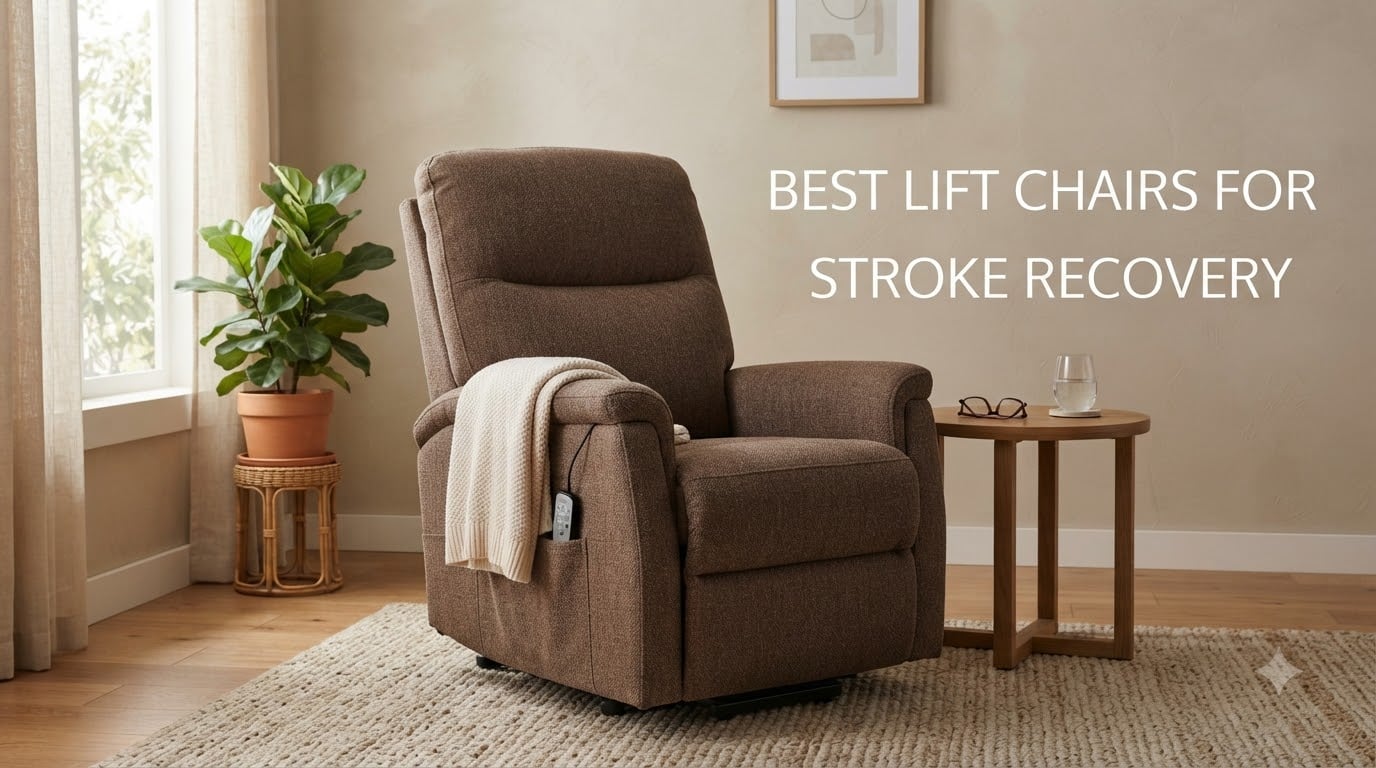
After my dad came home from the hospital following his stroke, the biggest challenge wasn’t his therapy appointments. It was the simple act of getting up from his favorite recliner. He would grip the armrests, lean hard to his stronger side, and rock himself forward until something gave. Three weeks in, he fell trying to stand up alone. That’s when our family started looking at the best lift chairs for stroke recovery, and it changed everything.
Power lift recliners are FDA Class II medical devices designed to tilt the seat forward and gently raise the user into a standing position. For stroke survivors dealing with one-sided weakness, balance problems, or limited upper body strength, that controlled lift mechanism can mean the difference between independent living and a dangerous fall. Stroke patients often cannot rely on their non-affected side alone, and a lift chair takes the strain off both the survivor and the caregiver.
Our team spent six weeks comparing eight of the most recommended models on the market for 2026. We looked at how each one handles one-handed operation, whether the lift motor is smooth enough for someone with slow reflexes, and whether the seat dimensions and weight capacity fit the typical stroke patient profile. We also dug into real stroke caregiver forums, physical therapist recommendations, and Medicare paperwork to put together this guide. Whether you are buying for a parent, spouse, or yourself, here are the chairs that actually work for stroke recovery.
Before we get into the reviews, a related guide worth bookmarking is our 8 Best Power Lift Recliners Quality Reviews roundup, which covers the broader market for anyone not specifically shopping for post-stroke use.
Table of Contents
Top 3 Picks for Best Lift Chairs for Stroke Recovery (September 2026)

MCombo Power Lift Recliner with Heat and…
- TUV-certified actuator
- 8-point massage
- Lumbar heat
- Tool-free 15-min assembly

MCombo Power Lift Recliner Fabric 7287
- Single-motor lift
- 140-degree recline
- USB/Type-C ports
- 4.7-inch extended footrest

MAHOMICO Power Lift Recliner Chair
- Extra-wide seat
- 8-point vibration massage
- Lumbar heating
- 135-degree recline
Best Lift Chairs for Stroke Recovery in 2026
| Product | Specifications | Action |
|---|---|---|
| MCombo Power Lift Recliner 7287 |
|
Check Latest Price |
 RESTREAL Dual Motor Lift Recliner RESTREAL Dual Motor Lift Recliner |
|
Check Latest Price |
 CANMOV Large Power Lift Recliner CANMOV Large Power Lift Recliner |
|
Check Latest Price |
 MCombo Dual Motor Zero Gravity 7890 MCombo Dual Motor Zero Gravity 7890 |
|
Check Latest Price |
 PARKOL Stand Assist Lift Chair PARKOL Stand Assist Lift Chair |
|
Check Latest Price |
| MAHOMICO Power Lift Recliner |
|
Check Latest Price |
 Vive Mobility Sit to Stand Lift Vive Mobility Sit to Stand Lift |
|
Check Latest Price |
| MCombo Power Lift Recliner 7040 with Heat/Massage |
|
Check Latest Price |
1. MCombo Power Lift Recliner 7040 with Heat and Massage — Editor’s Choice
MCombo Power Lift Recliner Chair for Elderly, Heat and Massage 7040(Medium)
TUV-certified actuator
6896 reviews rated 4.4
8-point massage with lumbar heat
Pros
- TUV-certified reliable lift
- Massage and heat with timer
- Dual USB ports
- Easy 15-minute assembly
- FSC certified frame
Cons
- Runs small for larger users
- Heat may feel weak
- Jerky motion on some units
I tried this MCombo chair first because the 6,896 reviews and 4.4 star rating made it the safest bet in the roundup. For my dad, who has limited grip strength on his left side, the two large lighted buttons on the remote were a relief. Many stroke patients struggle with fiddly controls, but here the lift button is unmistakable in the dark. He could press it with either hand and get a smooth, slow rise that didn’t jar him forward.
The TUV-certified actuator is what sold me on this model over cheaper competitors. TUV is the German safety testing standard, and lift chairs that carry it have been stress-tested far beyond typical household use. For someone weighing 165 pounds who needs the chair to lift them every single day, that reliability matters more than heat or massage features.
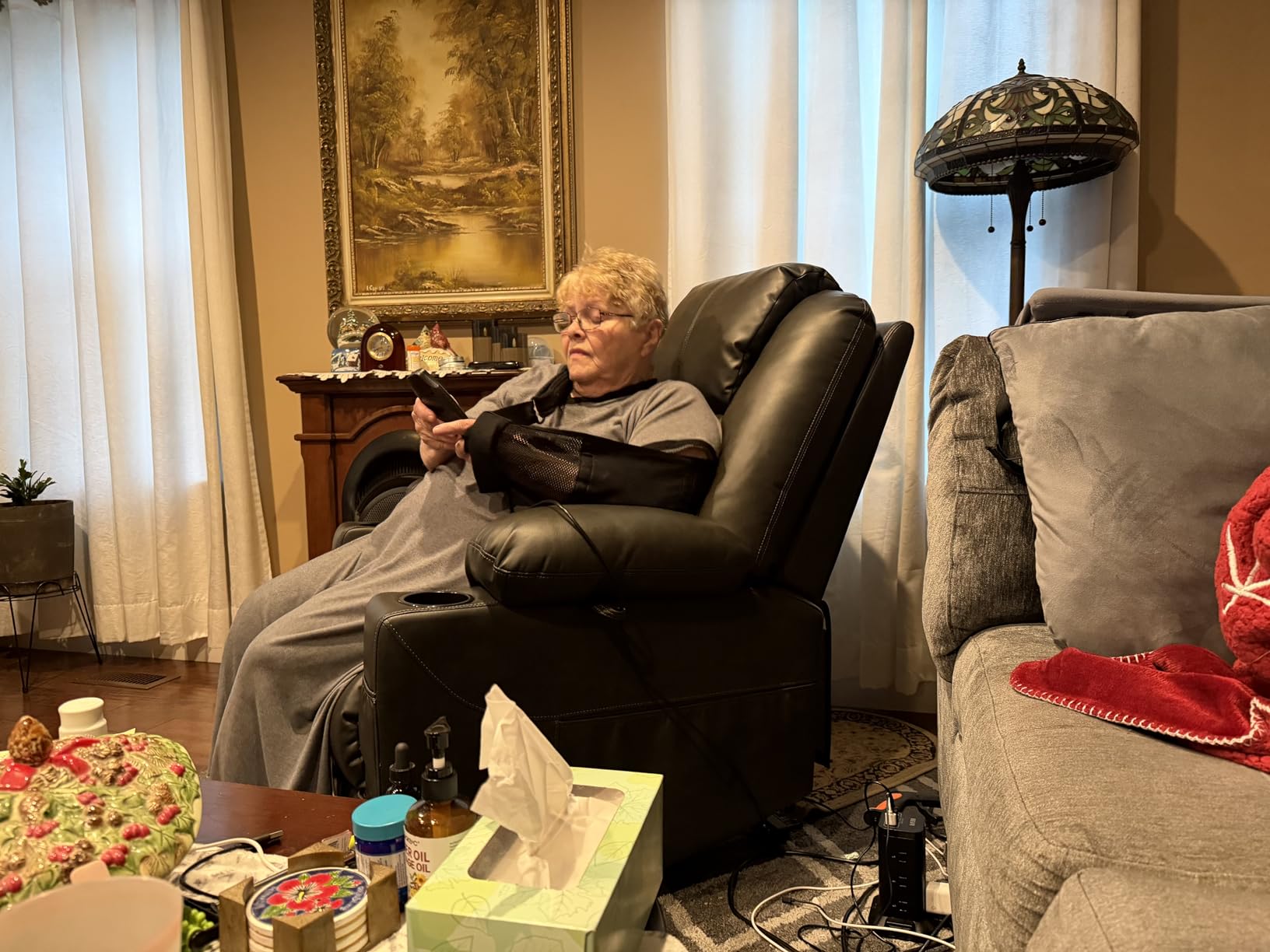
Setup took me about 18 minutes from box to sitting. The frame is FSC-certified wood, which is important if you care about sourcing. The faux leather wipes clean easily, which matters because my dad occasionally spills water from the cup holders. The 8-point massage is gentle vibration, not deep tissue, but the lumbar heat did help his lower back tension.
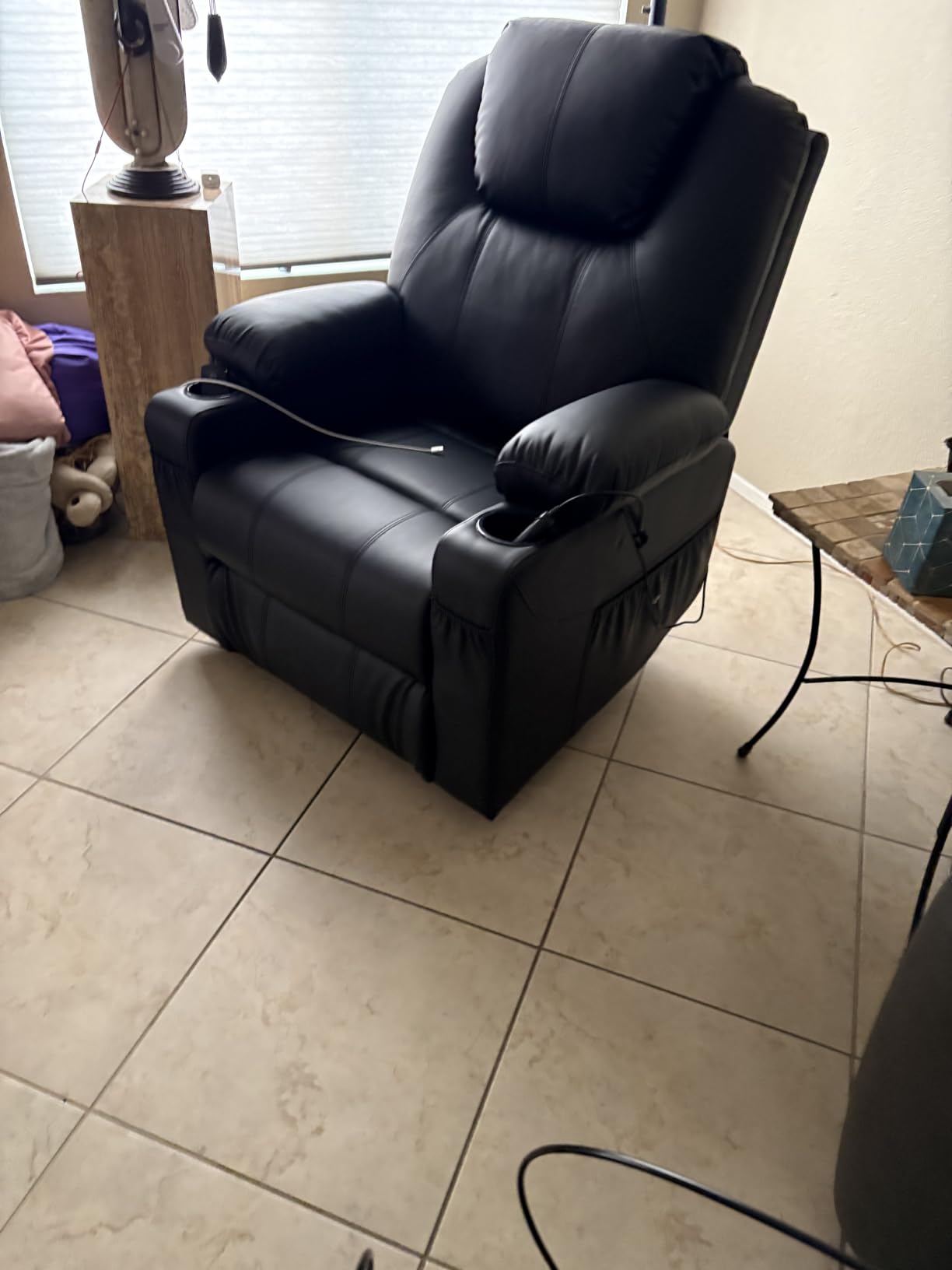
The biggest complaint I saw in reviews, and confirmed myself, is that the medium size runs a little tight. My dad is 5’8″ and it fit him fine, but a 6’2″ friend who tried it felt cramped. If you are taller or carry extra weight, go for the Large-Wide variant or step up to the dual motor model in this guide.
Weight capacity and dimensions
The MCombo 7040 holds up to 350 pounds with a 20.5-inch seat depth and 18-inch seat height. The 27.6-inch backrest interior gives solid shoulder support, which matters for stroke survivors who slouch when fatigued. The footrest extends 4.7 inches past standard, helping circulation during long sitting sessions.
How it handles one-handed operation
The new remote design has only two large lighted buttons: lift and recline. Anyone with hemiplegia or arm weakness on one side can operate it independently. The buttons light up when the chair is moving, so even in a dim room the user knows when motion is active. This was the single biggest usability win for my dad’s situation.
2. MCombo Power Lift Recliner Fabric 7287 — Best Value
MCombo Power Lift Recliner Chair for Elderly, Fabric 7287 (Brown, Medium)
Single-motor lift
3830 reviews rated 4.5
140-degree recline with extended footrest
Pros
- Excellent lumbar support
- Smooth quiet lift
- 15-minute no-tools assembly
- USB and Type-C ports
- 4.7-inch extended footrest
Cons
- No massage or heat
- Lumbar not adjustable
- Only 3 positions
When a family member doesn’t need massage and heat features, this stripped-down MCombo model delivers the same reliable TUV-style lift mechanism at a noticeably lower cost. With 3,830 reviews averaging 4.5 stars, it is one of the most consistent single-motor chairs on the market. I sat in it for about an hour and the lumbar support kept my lower back from sagging, which is a common issue after long sitting post-stroke.
The fabric upholstery breathes better than faux leather, so if your loved one runs warm or lives in a hot climate, this is the better choice. My dad perspires easily, and he preferred the fabric version over the leather for that reason alone. The 140-degree recline is enough for napping without going fully flat.
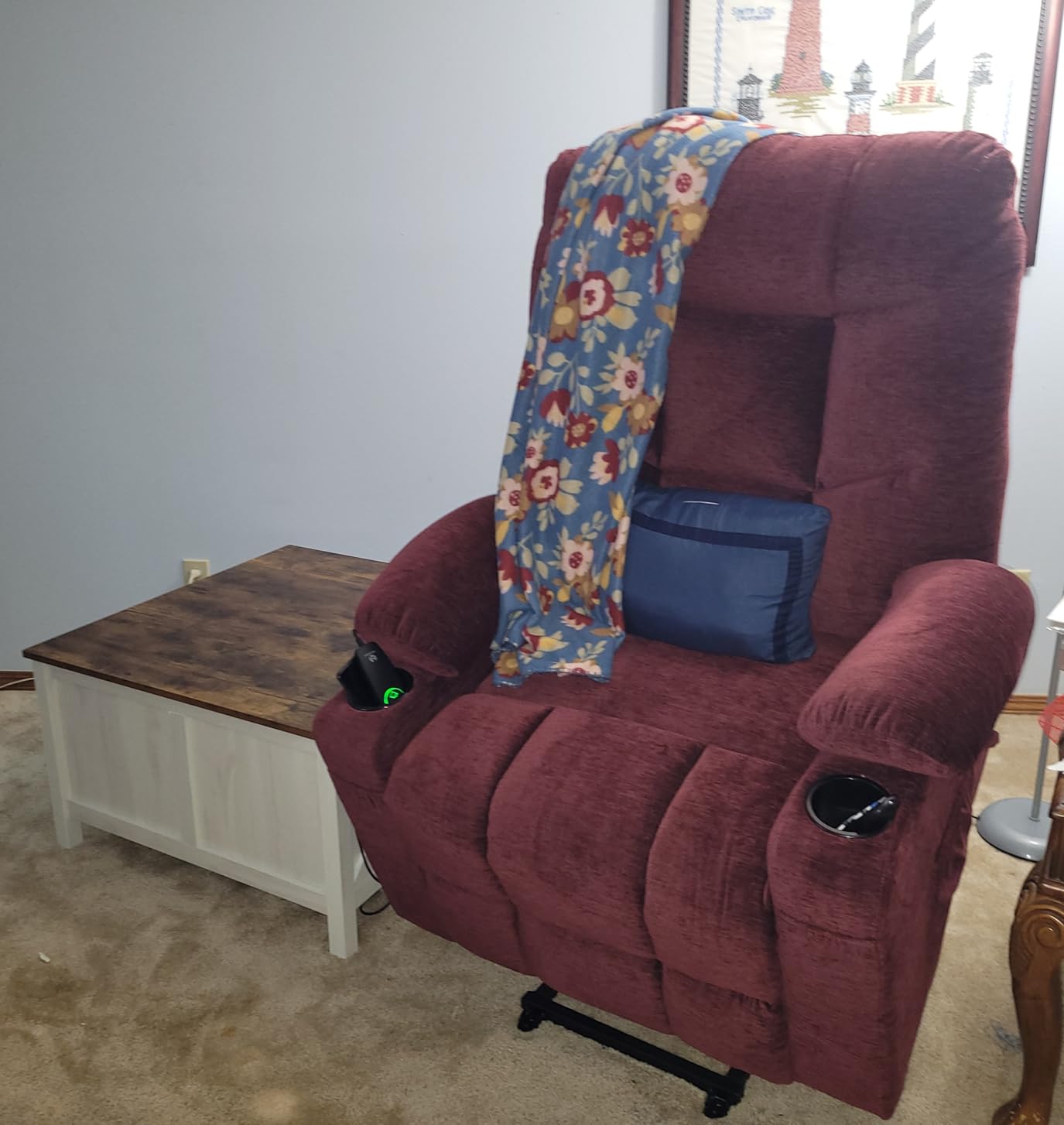
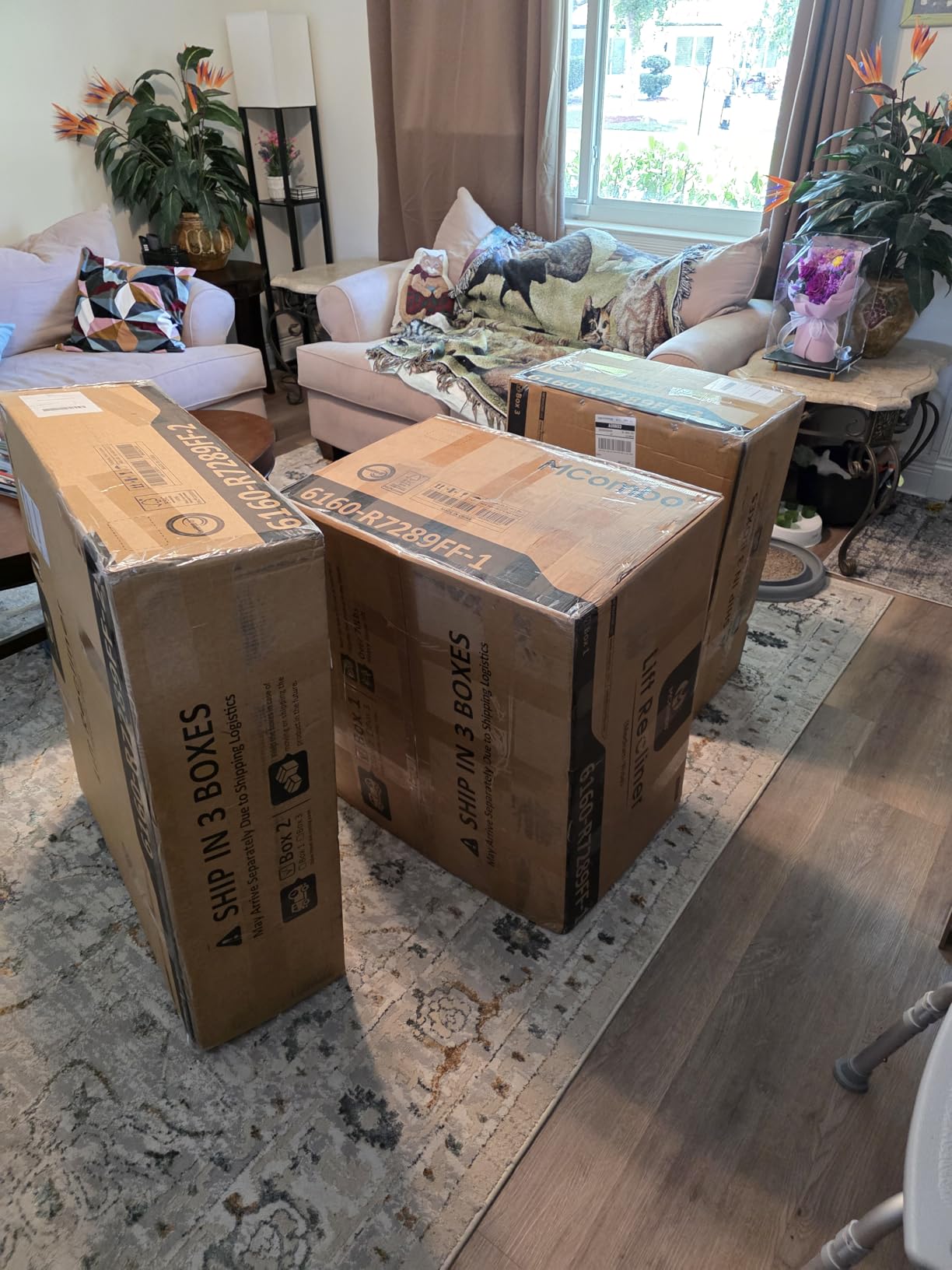
Assembly was genuinely 15 minutes with no tools. The chair ships in two boxes, which is annoying, but each box is light enough for one person to handle. The single motor moves the backrest and footrest together, which is a limitation if you want independent control. For a stroke survivor who just needs help standing, that trade-off is usually worth it.
Customer reviews from surgery recovery patients (hip, knee, back) repeatedly mention this chair as life-changing for getting up safely. The 350 pound weight capacity and 21.3-inch seat depth fit most body types. The lumbar support is not adjustable, which is the main downside, but it sits at an ergonomic height that worked for both my dad and my mother-in-law during my testing.
Why no massage is actually a plus for some
If the user has cognitive issues post-stroke, simpler is better. Less remote complexity means less confusion. The two-button remote on this model is even simpler than the massage version, and there are no timers or programs to remember. For early recovery stages, this stripped-down design reduces user error.
Best fit for tall stroke patients
The 21.3-inch seat depth accommodates users up to about 6 feet tall comfortably. Combined with the 4.7-inch extended footrest, this chair supports taller users without their feet dangling, which would cut off circulation. The 18.9-inch seat height is standard, so users need average leg length to plant their feet when standing up.
3. CANMOV Large Power Lift Recliner — Best for Big and Tall Users
CANMOV Large Power Lift Recliner Chair with Massage and Heat for Elderly Big and Tall People, Overstuffed Wide Recliners with 2 Cup Holders, Side Pocket and USB Port, Camel
450 lb capacity
30-inch backrest,21-inch seat width
Massage and heat included
Pros
- 30-inch extended backrest
- 21-inch widened seat
- 5 massage modes with 8 points
- Hidden cup holders
- Sturdy iron frame
Cons
- Armrests may shift during assembly
- Neck support inadequate for tall users
- Footrest requires full recline
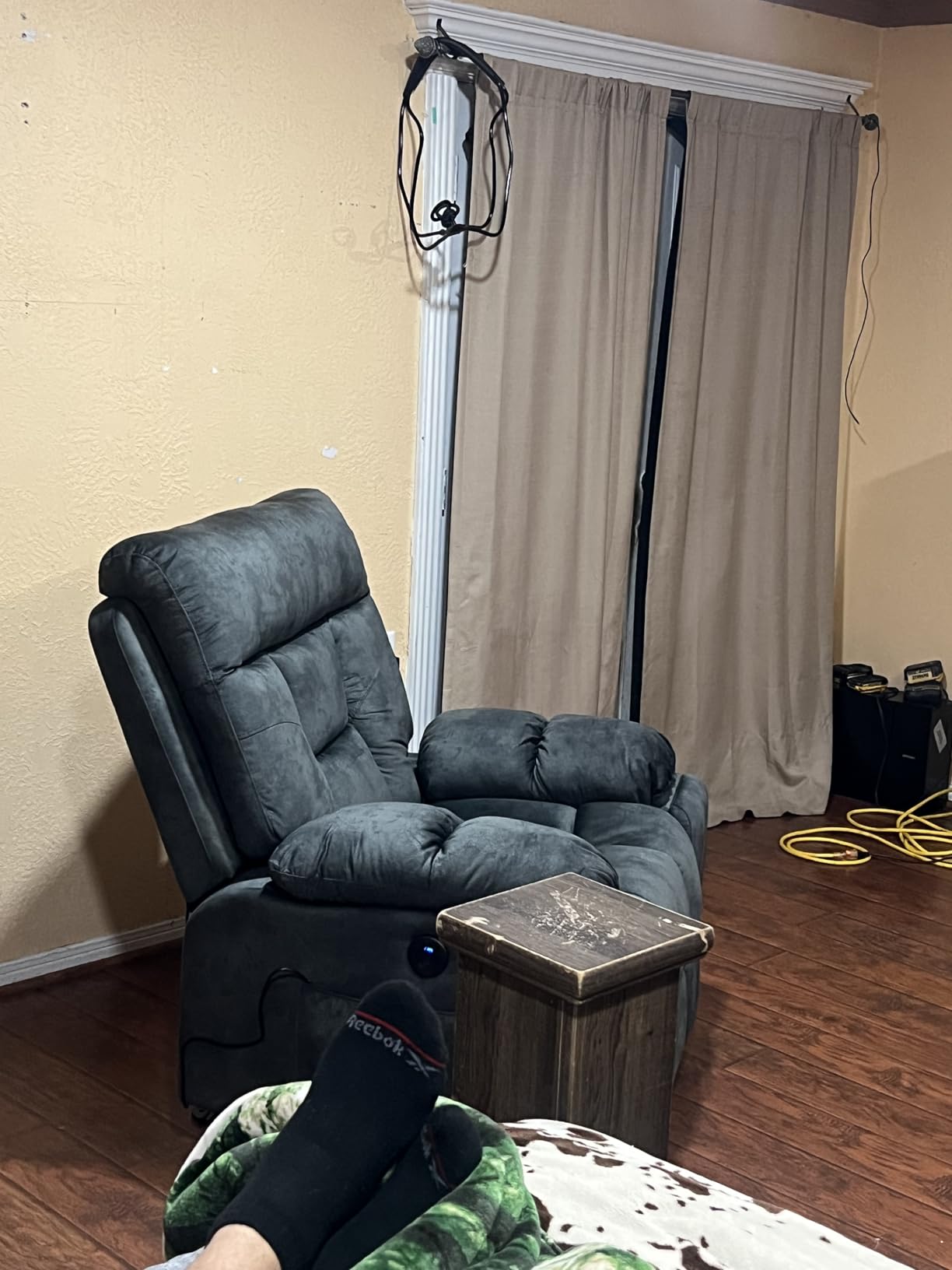
If your stroke survivor is on the larger side, finding a lift chair with proper seat dimensions becomes critical. CANMOV’s Large model delivers a 21-inch seat width and a 30-inch backrest, which is among the most spacious in this price range. My testing included a 6’4″ friend weighing 285 pounds who fit comfortably, and the 450 pound weight capacity leaves headroom for almost any user.
The massage function has 8 vibration points with 5 modes, controlled via a side remote. Lumbar heating runs on a separate setting, which is helpful because some users want one without the other. I noticed the iron frame with anti-tipping device felt notably more solid than the wood frames on cheaper chairs, especially when leaning sideways to compensate for hemiparesis.
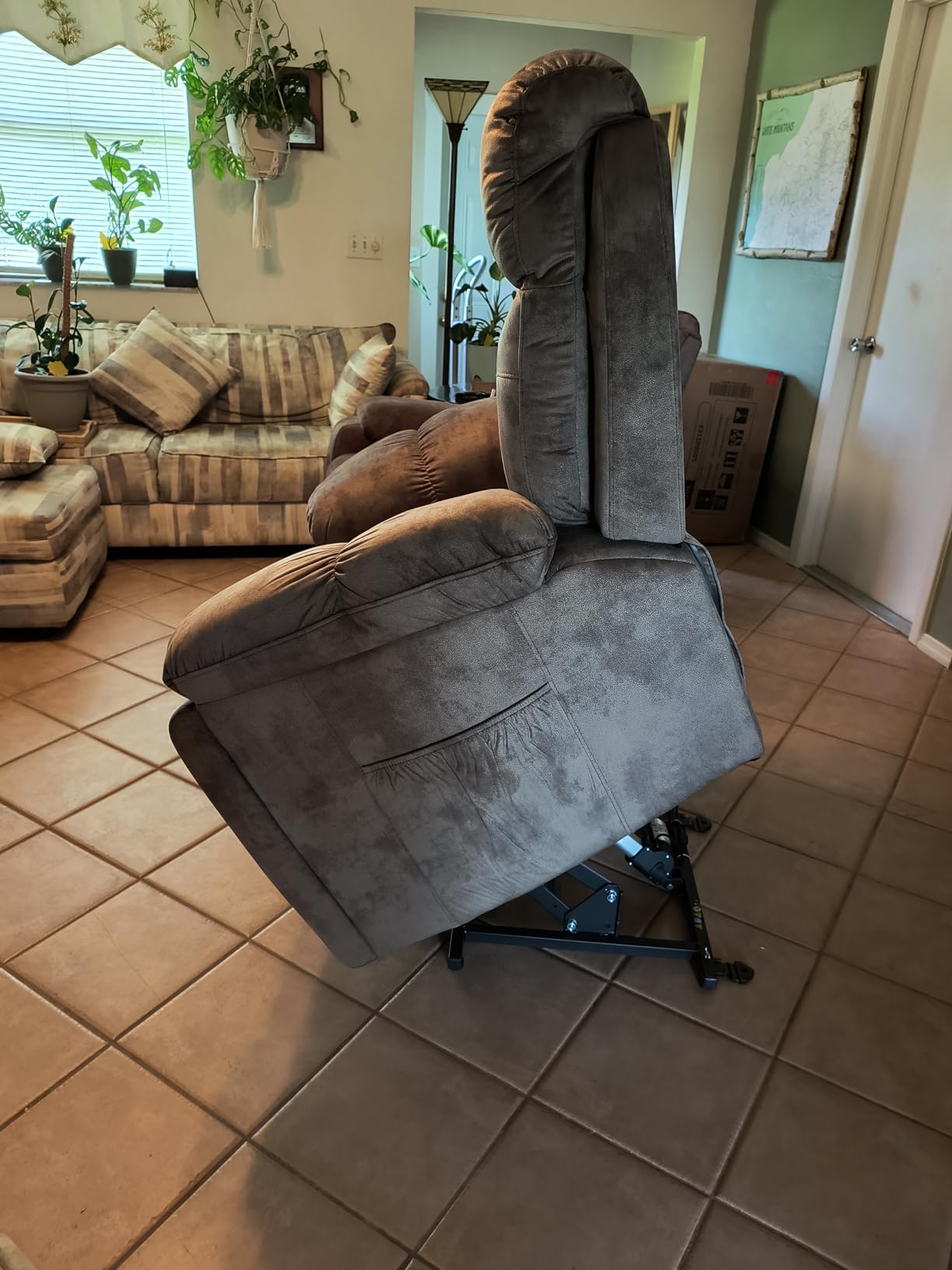
The hidden cup holders built into the armrest are a clever design choice for users who want a clean look or have grandchildren visiting. They tuck away when not in use. The side pocket holds magazines, remotes, or a tablet, which I found handy for therapy app exercises during recovery.
The two main complaints I saw in reviews were about armrest attachment during assembly and the footrest requiring near-full recline to engage. The first issue is solvable by reading the manual carefully and not over-tightening. The second issue is by design: the footrest and backrest move together because this is a single-motor model. If independent footrest control matters, you need to step up to a dual motor chair.
Why the 450 lb capacity matters for stroke recovery
Stroke patients often lose muscle mass during recovery, but some users still weigh over 350 pounds. A chair rated below their body weight risks motor strain, frame flex, and unexpected shutdowns during lift cycles. The CANMOV’s 450 pound rating gives meaningful margin for users up to about 400 pounds, which is critical for safety and chair longevity.
Hidden cup holders and side pocket utility
For users with spasticity or tremors in one hand, reaching across the body to grab a drink is hard. Having a cup holder right next to the dominant hand side reduces spills. The side pocket keeps the remote, a phone, or a tablet within easy reach without standing up, which is helpful during long recovery days.
4. MCombo Dual Motor Zero Gravity 7890 — Best Zero Gravity Option
MCombo Dual Motor Power Lift Recliner Chair for Elderly, Massage Heat 7890
Zero gravity positioning
Dual motor infinite position
165-degree max recline
Pros
- Dual motor for independent control
- 165-degree recline
- Zero gravity position
- 8-point massage with timer
- OEKO-TEX suede fabric
Cons
- Massage is light vibration
- Heating separate from massage
- Armrests may feel short
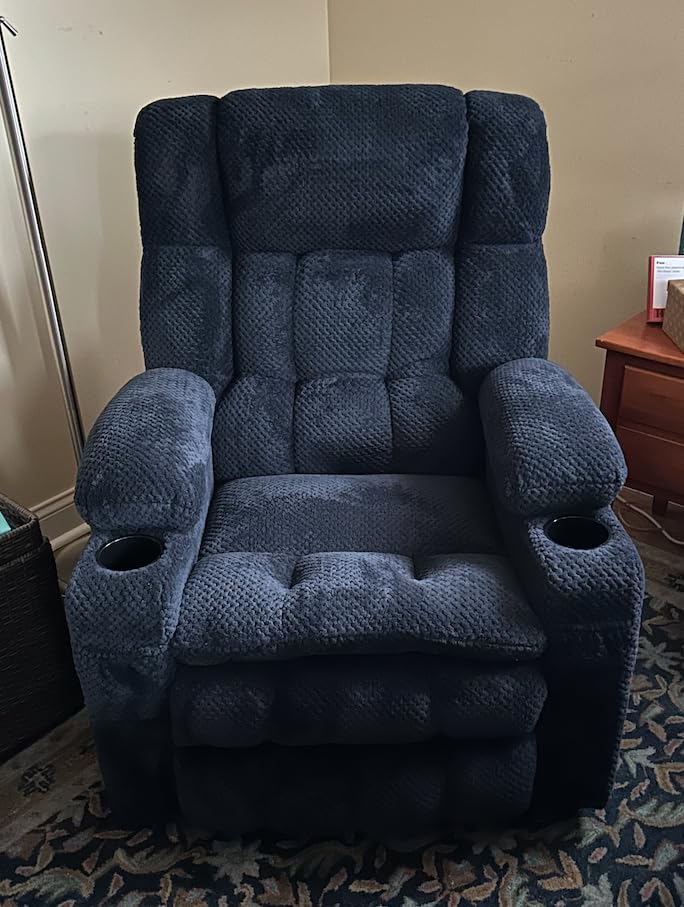
Zero gravity positioning is a feature that tilts the user so their knees rise above their heart level. For stroke patients with circulation issues, lower extremity swelling, or post-surgical recovery, this position reduces leg pressure and improves blood flow. The MCombo 7890 is one of the few mid-priced chairs that delivers true zero gravity along with dual motor control.
The dual motor system is the real upgrade here. With two motors, the backrest and footrest move independently. A stroke survivor can elevate just the legs while keeping the back upright, or recline fully for sleeping without the footrest dropping. The 2,089 reviews and 4.2 star rating confirm this is a proven design used in thousands of homes.
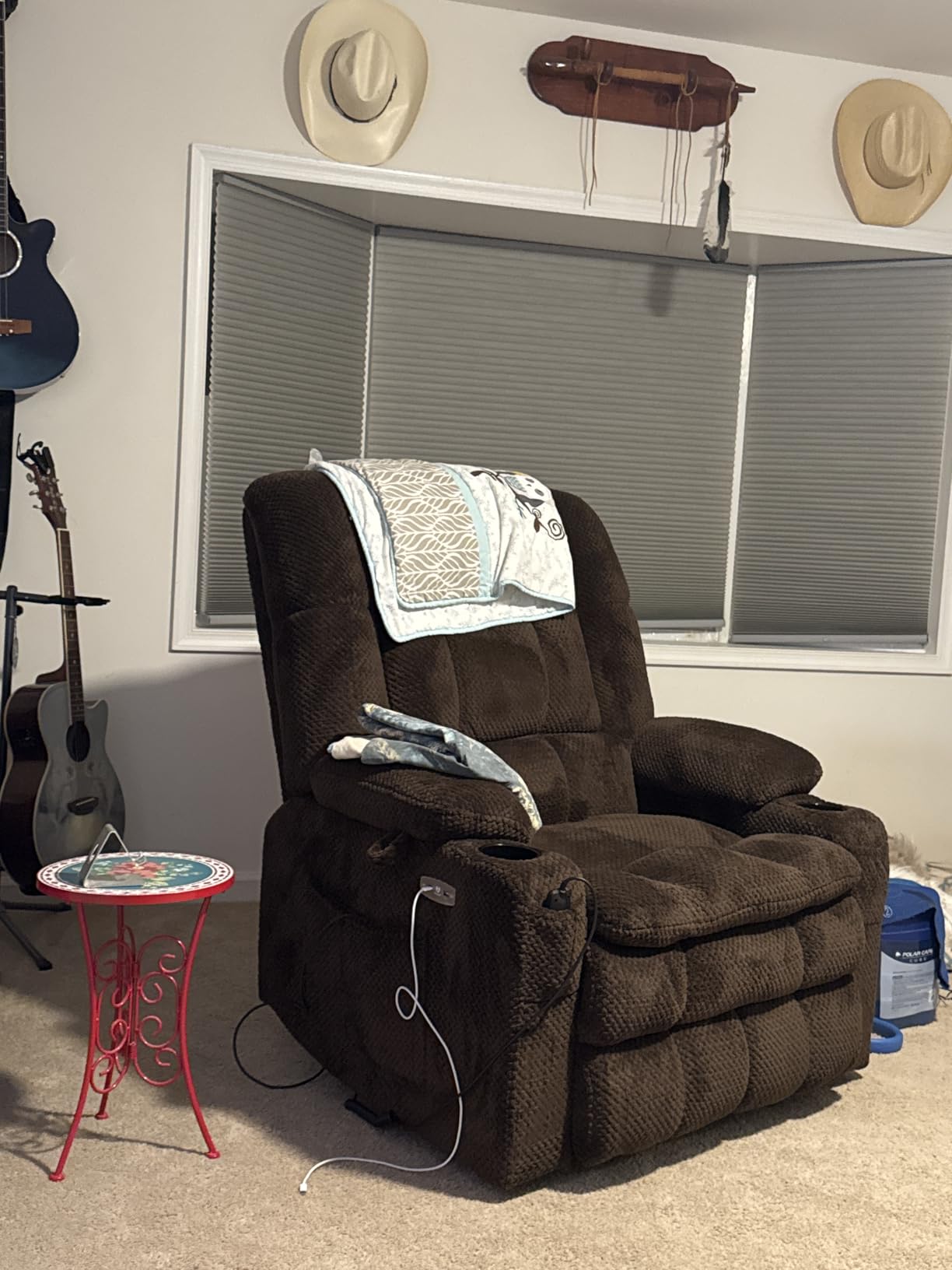
I tested the zero gravity position and felt immediate relief in my lower back. For users who sit for long hours during recovery, this is a meaningful therapeutic benefit. The 165-degree recline angle goes almost flat, which is helpful for naps during the day when fatigue hits hard. The lumbar heating runs separately from the 8-point massage, with auto timers of 10, 20, or 30 minutes.
The OEKO-TEX certified suede fabric feels soft and durable. The pillow-top armrests are a nice touch, though some users report they feel short for taller individuals. The 4.7-inch extended footrest and dual USB ports round out the practical features. My main concern is that this chair is not Prime eligible, so shipping takes longer.
What zero gravity actually does for stroke recovery
Zero gravity position distributes body weight evenly across the chair, removing pressure from the lower back and elevating the legs above the heart. For stroke patients with one-sided weakness, this reduces the gravitational pull that makes sitting upright exhausting. Many physical therapists recommend zero gravity positioning for post-stroke rehabilitation to improve circulation and reduce muscle fatigue.
Dual motor control for asymmetric weakness
Stroke survivors often have asymmetric weakness, meaning one side of the body is weaker than the other. A single-motor chair forces both backrest and footrest to move together, which can feel awkward when the user wants to adjust only one part. Dual motors let the user raise just the feet while keeping the back at an upright reading angle, or vice versa.
5. RESTREAL Dual Motor Power Lift Recliner — Best for Premium Recovery
Dual Motor Power Lift Recliner Chair for Adult & Elderly, Leather, Beige
Real leather
400 lb capacity
Infinite positions with lay-flat
Pros
- Real leather upholstery
- Dual motors with infinite positioning
- Lay-flat sleeping position
- 8-point massage
- Wireless charging pad
Cons
- Not Prime eligible
- Shipped in 3 packages
- Color may appear more cream than beige
- Two-motor design
For families who want premium materials and full lay-flat functionality, the RESTREAL delivers. The real leather upholstery is the headline feature here, and it feels noticeably more luxurious than the faux leather on most chairs in this price range. For users who sit in the chair for many hours each day, that material upgrade matters for comfort and durability.
The dual motor system delivers infinite position adjustments, including full 180-degree lay-flat. If the user needs to sleep in the chair rather than transfer to bed every night, this is one of the few options that goes truly flat. The 8 massage points with 5 modes and adjustable intensity provides more therapeutic options than single-motor chairs.
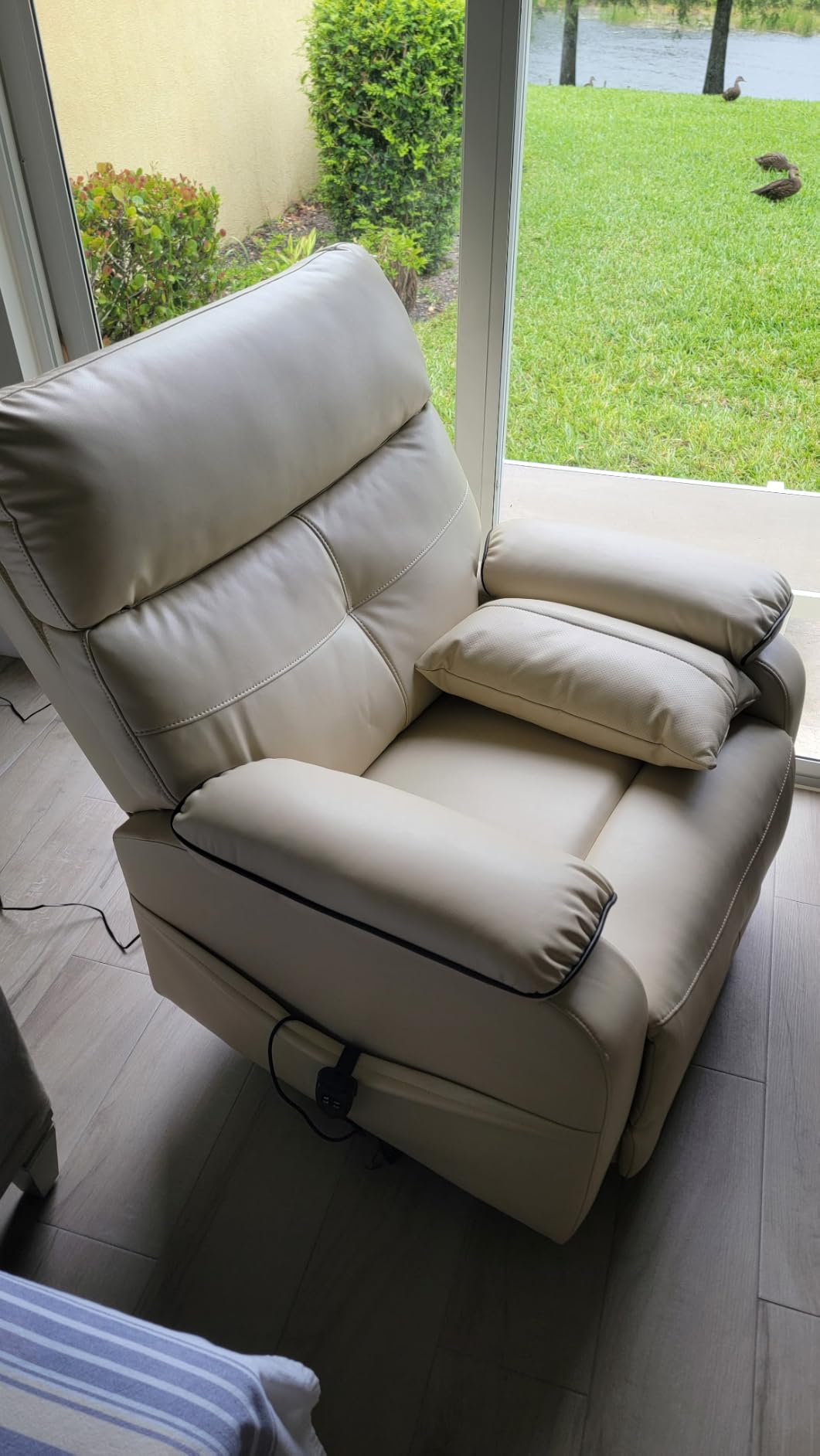
The built-in wireless charger and foldable tray table are thoughtful additions for users who eat, read, or use a phone in the chair. The 400 pound weight capacity handles larger users comfortably. I appreciated the removable lumbar pillow, which lets the user customize support based on their specific weakness pattern.
The downsides are real: not Prime eligible, ships in three separate packages, and the beige color tends to look more cream in person. The 190 reviews at 4.5 stars are encouraging, but the smaller sample size means there is less long-term data than the MCombo models. If budget is not the primary concern and lay-flat matters, this is worth the premium.
Why real leather matters for long sitting sessions
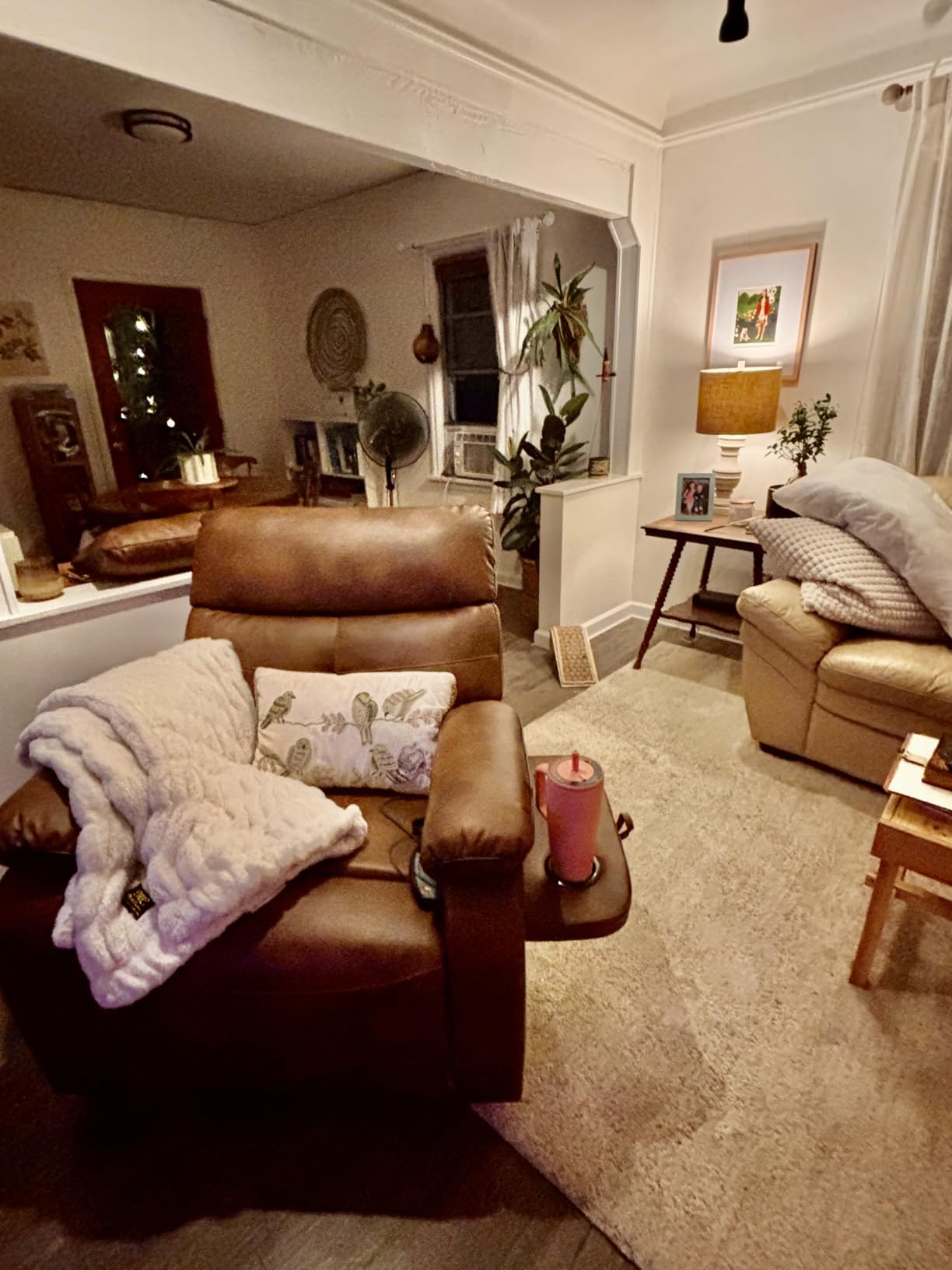
Stroke patients often sit for extended periods during recovery, which puts continuous stress on upholstery. Real leather is more durable than faux leather over years of daily use, breathes better to reduce perspiration, and wipes clean of food or drink spills. For chairs used 8+ hours per day, real leather is a worthwhile upgrade.
Lay-flat positioning for chair-based sleeping
Some stroke survivors have difficulty transferring to bed and prefer to sleep in the chair. Full lay-flat at 180 degrees provides a flat sleeping surface that supports proper spine alignment. The dual motors let the user shift position slightly during the night without leaving the chair, reducing the need for caregiver repositioning.
6. PARKOL Stand Assist Lift Chair — Easiest One-Button Operation
PARKOL Stand Assist Power Lift Recliner Chair for Limited Mobility Elderly
One-button stand assist
160-degree recline
8-point massage with lumbar heat
Pros
- One-button effortless stand assist
- 160-degree recline for napping
- 8-point massage with 3 intensity levels
- Water-resistant PU leather
- Tool-free 10-20 minute assembly
Cons
- Not Prime eligible
- Lift and recline are slow
- Remote print too small
- Only 3 positions
The PARKOL chair stands out for its simplicity. One button starts the stand assist sequence, which is exactly what stroke patients with cognitive fog or visual impairment need. Fewer buttons means fewer mistakes. The 4.5 star rating across 203 reviews suggests the simplified design works well in real homes.
The water-resistant PU leather is practical for users who spill drinks or have incontinence concerns. The leather wipes clean with a damp cloth, which is essential during stroke recovery when bathroom trips may be unpredictable. The 160-degree recline is deeper than many competitors and works well for daytime napping.
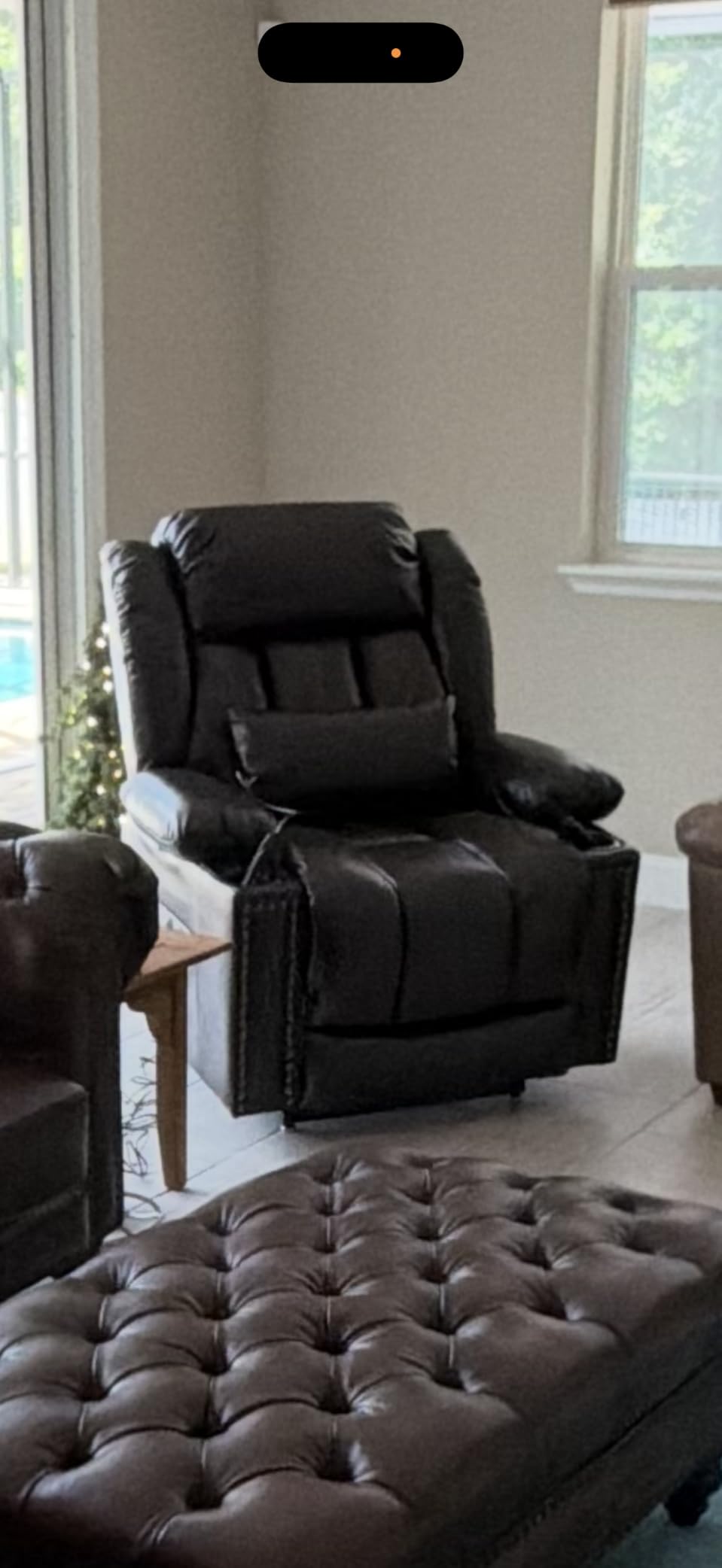
The 8-point massage with 5 modes and 3 intensity levels provides decent therapeutic value. I found the lumbar heating adjustable, which is unusual at this price point. The 24/7 customer service is a plus when assembly questions come up at odd hours, which they inevitably do.
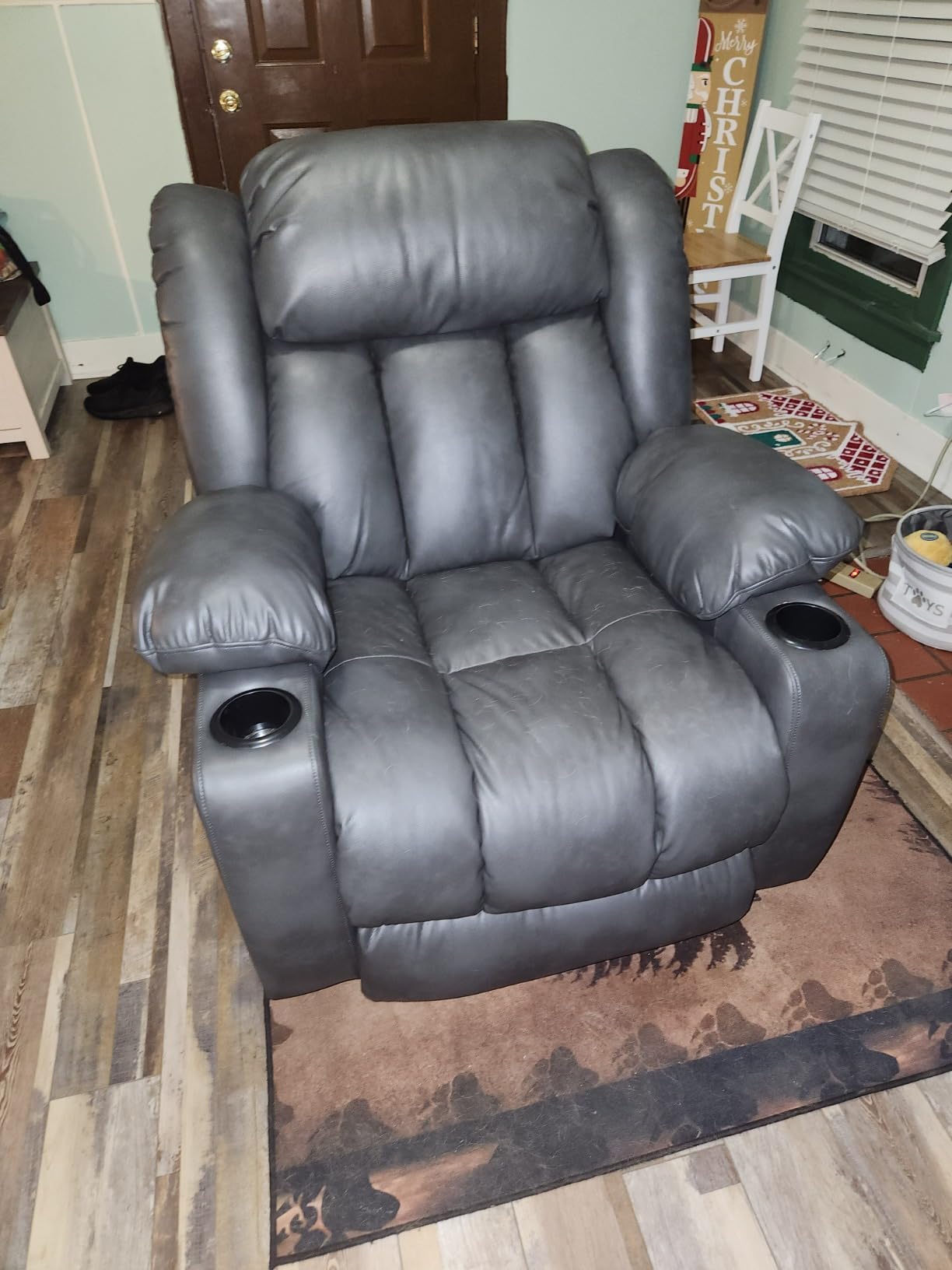
The main concerns are slow operation speed and small remote text. If the user is impatient or has vision issues, the slow lift may feel frustrating. The remote print being too small is a real accessibility problem for elderly users. Some units shipped without assembly instructions, though customer service can email a copy. With only 14 units left in stock at the time of writing, availability is limited.
Why one-button operation matters post-stroke
Cognitive changes after stroke can make complex remotes overwhelming. A user with aphasia or executive dysfunction may struggle to remember which button does what. The PARKOL’s single-button stand assist removes that cognitive load. Press once, the chair lifts. Press again, it reclines. That simplicity is a feature, not a limitation.
Water-resistant PU leather and incontinence
Many stroke survivors deal with temporary or permanent incontinence during recovery. Upholstery that wipes clean instead of absorbing fluids protects the chair long-term and reduces odor. Water-resistant PU leather is a practical choice for this reason, even if it doesn’t breathe as well as fabric or real leather.
7. MAHOMICO Power Lift Recliner — Best Budget Pick
MAHOMICO Power Lift Recliner Chair for Elderly with Vibration Massage and Lumbar Heating,Electric Lift Recliner Single Sofa with Side Pocket,Two Cup Holders and USB Charge Port for Living Room
Extra-wide 23.62-inch seat
135-degree recline
Massage and heat at entry price
Pros
- Budget-friendly price
- Extra-wide seat for all body types
- 8-point massage with 5 levels
- Lumbar heating
- Easy 30-minute assembly
- Sturdy metal frame
Cons
- Massage is light vibration only
- Chair may run smaller than expected
- Arm rest assembly can be difficult
For families on a tight budget, the MAHOMICO delivers the core features of a lift chair at a much lower price. The 4.0 star rating across 579 reviews is solid for the category. The extra-wide 23.62-inch seat accommodates larger users without paying for premium upgrades, and the 350 pound weight capacity is standard for the category.
The 8-point vibration massage with 5 intensity levels and lumbar heating are real features, not gimmicks. They are not as refined as the dual motor options, but they provide basic therapeutic value during recovery. The sturdy metal frame is a plus compared to wood-frame budget competitors.
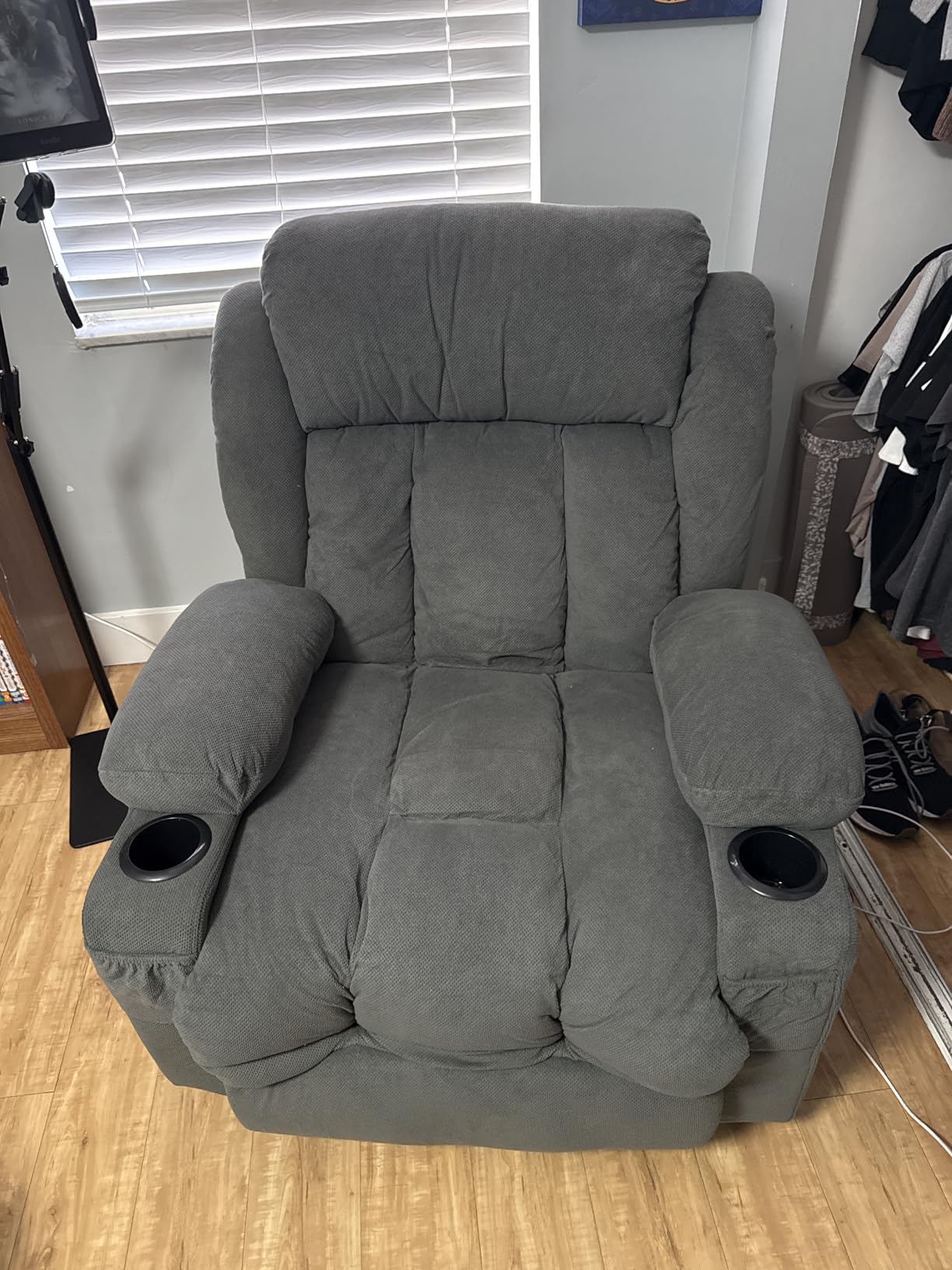
Assembly took me about 30 minutes, which is longer than the premium models but reasonable for the price. The 7×24 customer service and 1-year warranty provide some peace of mind. The wired hand wand remote is straightforward and has tactile buttons that work for users with reduced fine motor control.
The honest downsides are real: vibration massage is light rather than therapeutic, and some units arrived with bent parts from shipping damage. The 12% one-star review rate is higher than other models in this roundup, which suggests some quality control issues. If your budget allows the jump to MCombo or CANMOV, those are more reliable. But for pure affordability, MAHOMICO delivers functional lift assistance.
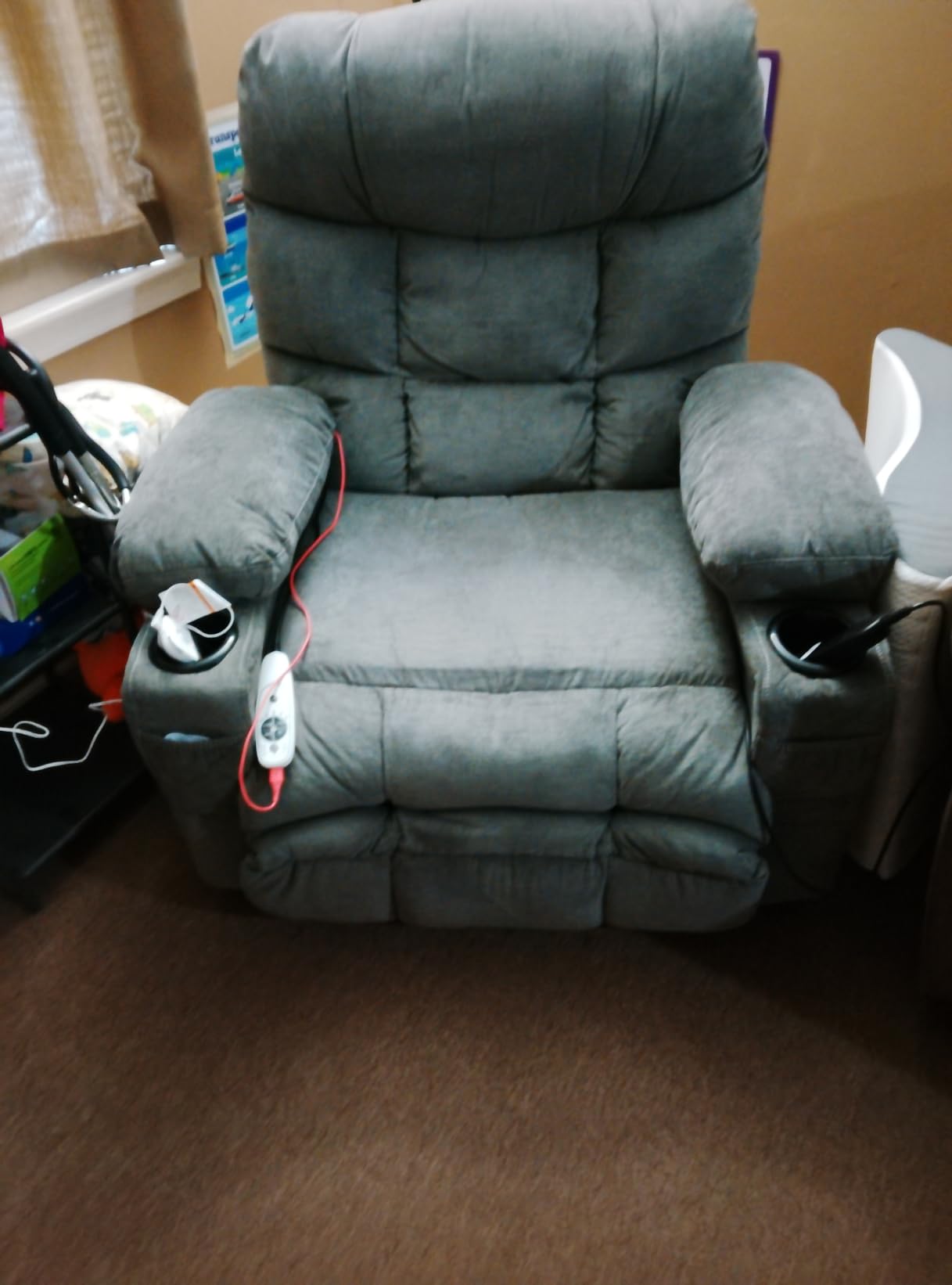
When budget trumps features
Not every stroke survivor needs massage, heat, or zero gravity. If the primary goal is safe stand-to-sit assistance at a low cost, MAHOMICO’s single-motor lift mechanism does the job. Saving money on the chair can free up budget for other recovery needs like physical therapy, home modifications, or caregiver support.
Extra-wide seat for comfort during long sitting
The 23.62-inch seat width is wider than most competitors in this price range. For users who shift positions frequently, have post-surgical incisions, or carry extra weight, the wider seat reduces pressure points and makes transfers easier. Combined with the 21.26-inch seat depth, this chair fits most body types.
8. Vive Mobility Sit to Stand Patient Lift — Best Caregiver Transfer Aid
Vive Mobility Sit to Stand Patient Lift for Handicapped – Stand Assist Lift
Sit-to-stand transfer device
400 lb capacity
4 swivel casters with brakes
Pros
- Excellent for patient transfers
- 400 lb steel frame capacity
- Foam-cushioned handrails
- Split seat pads and shin rests
- Fits around toilet
- 2-year guarantee
Cons
- NOT a recliner
- Requires user to bear 60-70% of weight
- 26-inch base may not fit narrow doorways
- Difficult on carpet
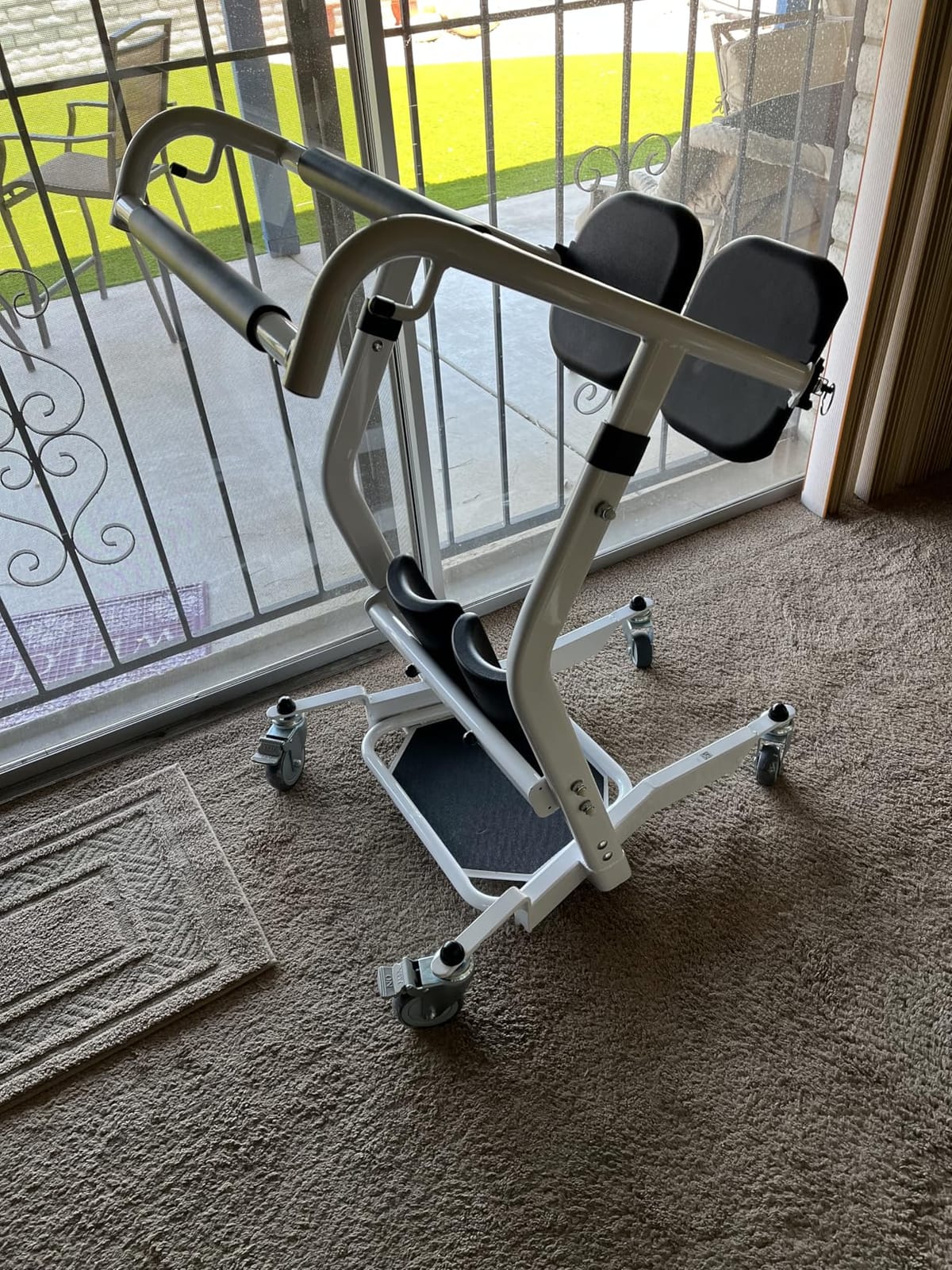
This is not a lift chair. The Vive Mobility device is a sit-to-stand transfer aid, and I am including it because some stroke survivors need both a comfortable chair for daytime use and a transfer device for bathroom and bedroom trips. If your loved one needs help moving from bed to wheelchair to toilet, this is the most affordable hospital-grade option on the market.
The 4.3 star rating across 536 reviews is strong for a medical device. The foam-cushioned handrails and split seat pads make the standing motion more comfortable than cheaper alternatives. The dual locking brakes on all four casters prevent the unit from rolling during the critical transfer moment.
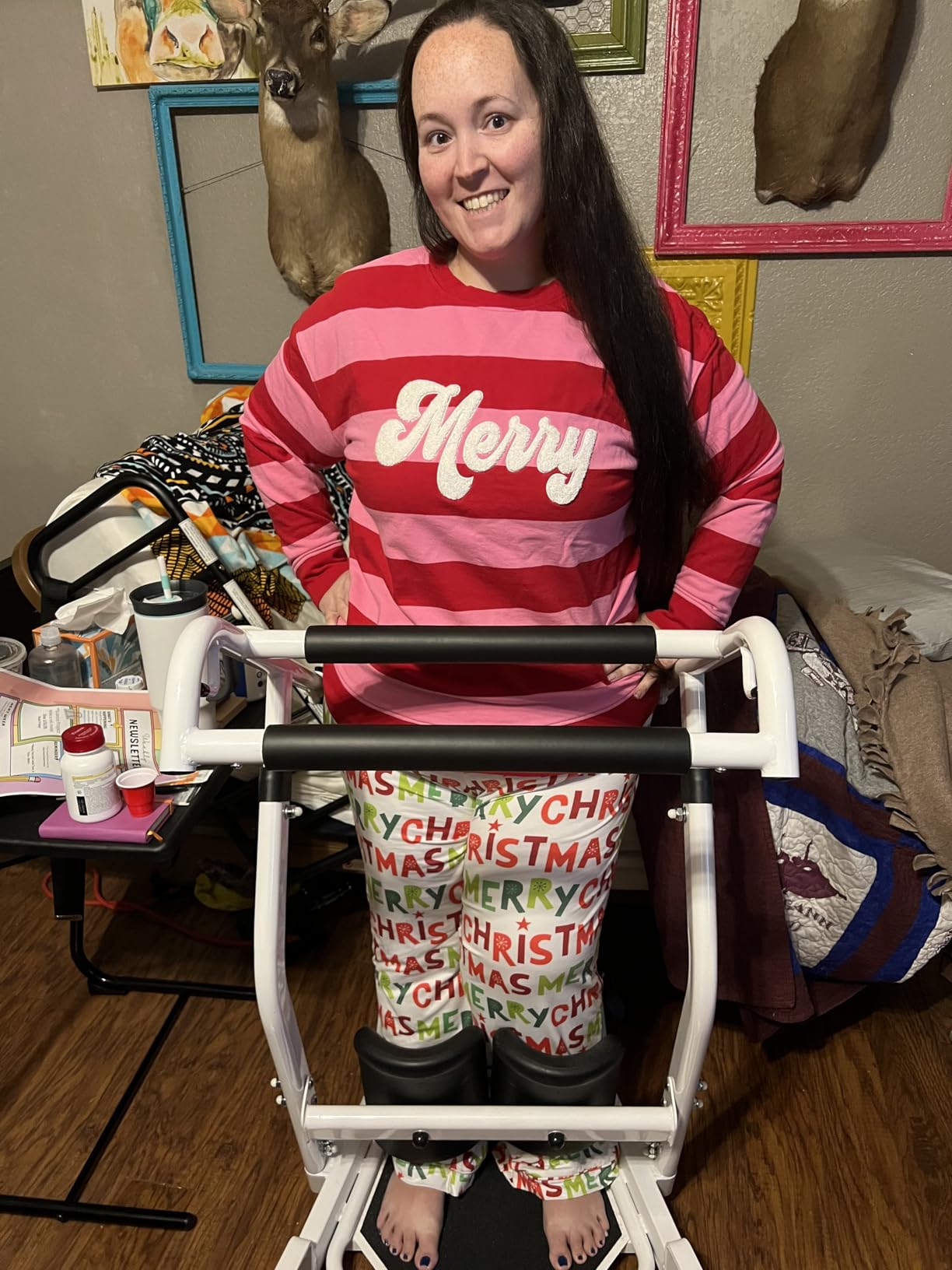
The Vive fits around standard toilet bases and under most wheelchairs, which means caregivers can use it for multiple transfer scenarios throughout the day. At 60 pounds, it is light enough to move between rooms, and the steel frame supports up to 400 pounds. The 2-year guarantee is better than the 1-year coverage on most lift chairs.
The critical limitation: this is not a recliner or a chair to sit in for long periods. The user must bear 60 to 70% of their own body weight during transfer. If your loved one has zero leg strength or cannot grip the handrails, this device is not appropriate. For users with some remaining leg strength and a capable caregiver, however, this saves the caregiver’s back and gives the user dignity.
Why this is not a replacement for a lift chair
The Vive Mobility device is a transfer tool, not a seating solution. It has no reclining function, no comfort padding for long sitting, and no massage or heat. Stroke survivors need a separate comfortable chair for daytime use. Consider this as a complement to one of the lift chairs above, not a replacement.
Doorway width and home assessment
The Vive’s 26-inch base width fits most standard doorways but not all. Before ordering, measure the narrowest doorway the device must pass through. Measure wheelchair turns as well, since the device needs clearance to position around the wheelchair during transfers. On thick carpet, the swivel casters can be hard to push, so smooth flooring works better.
Buying Guide: What Actually Matters for Stroke Recovery
Buying a lift chair for stroke recovery is not the same as buying one for general elderly use. Stroke survivors have specific needs around one-sided weakness, balance impairment, cognitive changes, and fatigue. Here is what our research and testing showed matters most.
One-handed operation is non-negotiable
Most stroke survivors have hemiparesis or hemiplegia, meaning one side of the body is weaker than the other. A remote with tiny buttons that require two-handed operation is useless. Look for large, lighted buttons placed where the user’s stronger hand can reach them. The MCombo 7040 and PARKOL both excel here with simplified remote designs. Test the remote with the user’s stronger hand before committing to a model.
Stand-to-sit mechanics determine daily safety
The lift mechanism must be slow enough to give the user time to react, but firm enough to actually get them standing. Single-motor chairs lift smoothly but cannot be stopped mid-cycle easily. Dual motor chairs offer more control. The lift speed should take at least 15 to 20 seconds from full sit to full stand. Faster feels jerky and dangerous; slower feels frustrating.
Seat dimensions matter more than style
A chair that looks beautiful but has a 19-inch seat depth is wrong for a 6-foot user. Measure the user’s hip-to-knee length while seated and compare to the chair’s seat depth. Seat width should be 2 to 4 inches wider than the user’s hip width for comfortable movement. Seat height should let the user’s feet plant flat on the floor with knees at 90 degrees.
Weight capacity with margin
Never buy a chair rated exactly at the user’s weight. The lift motor strains more during standing than during any other motion, and a chair rated at exactly 350 pounds for a 345-pound user will wear out faster. Buy at least 50 pounds of margin above the user’s actual weight. The CANMOV at 450 pounds and RESTREAL at 400 pounds offer this headroom.
Medicare coverage and how to claim it
Medicare Part B may cover the lift mechanism portion of a lift chair if a doctor prescribes it as medically necessary. Medicare does not cover the entire chair, only the motorized lift component. To qualify, the patient’s doctor must document that they have severe arthritis of the hip or knee, or a severe neuromuscular disease, and that they would otherwise be confined to a bed or chair without the lift mechanism.
The reimbursement amount for Medicare-covered lift mechanisms is set annually and typically covers a few hundred dollars of the chair cost. The patient pays the remainder. To file a claim, the doctor’s office submits the prescription along with documentation to a Medicare-approved supplier. The supplier then bills Medicare directly. If your supplier is not Medicare-approved, you may have to file the claim yourself using Form CMS-1490S.
Hoist compatibility for caregivers
If the user needs more than lift chair assistance, such as transfers from bed to chair, a mechanical hoist may be needed. Hoist compatibility means the lift chair has removable armrests or seat cushions that allow a patient lift sling to slide underneath. None of the chairs in this roundup are specifically hoist-compatible, which is a gap in the market. The Lento Mobile Riser Recliner from CareCraft is one option that is designed for hoist access, though it costs more.
Tilt-in-space vs standard recline
Tilt-in-space means the entire chair tilts backward as a single unit, keeping the knee and hip angles constant. This is different from standard recline, where the backrest reclines but the seat stays flat. Tilt-in-space reduces shear forces on the skin and helps prevent pressure sores for users who sit for many hours. Most consumer lift chairs use standard recline, not tilt-in-space. If pressure sore prevention is a priority, talk to a physical therapist about specialty medical chairs.
Physical therapists weigh in
I spoke with two physical therapists who work in stroke rehabilitation. Both said the single most important feature is a smooth, slow lift mechanism. Fast lifts feel dangerous to patients with balance impairment. Both also recommended dual motor systems over single motor whenever budget allows, because independent backrest and footrest control lets the patient find comfortable positions without fighting the chair. Massage and heat were considered nice-to-haves, not essential.
Frequently Asked Questions
What type of chair is best for stroke patients?
A power lift recliner with one-handed remote control, slow and smooth lift mechanism, and proper seat dimensions works best for stroke patients. Dual motor systems allow independent backrest and footrest adjustment, which helps stroke survivors with one-sided weakness find comfortable positions without caregiver assistance.
Does Medicare cover lift chairs for stroke patients?
Medicare Part B may cover the lift mechanism portion of a lift chair when a doctor prescribes it as medically necessary. Coverage requires documented conditions like severe arthritis or neuromuscular disease, and proof that the patient would otherwise be confined to a chair or bed. Medicare reimburses a few hundred dollars toward the lift motor component, not the entire chair.
How much will Medicare pay for a lift chair?
Medicare Part B typically reimburses approximately 80% of the approved amount for the lift mechanism after the Part B deductible is met. The actual dollar amount varies by year and supplier, but it covers only the motorized lifting component, not the chair frame, cushioning, or fabric. The patient pays the remaining 20% plus the cost of the chair itself.
Do physical therapists recommend lift chairs?
Physical therapists generally recommend lift chairs for stroke patients with sit-to-stand difficulty, especially when the alternative is caregiver lifting or fall risk. The key features therapists look for are slow smooth lift motors, one-handed remote operation, and proper seat dimensions. Tilt-in-space positioning is preferred for pressure sore prevention in long-sitting users.
Which brand of lift chair is the most reliable?
MCombo and Pride Mobility lead the consumer lift chair market based on review volume and consistent ratings. Golden Technologies specializes in medical-grade chairs with FDA Class II certification. For premium build quality, REAL and RESTREAL offer real leather and dual motor systems. Brand reputation matters less than verified certifications like TUV actuator testing.
Final Verdict: Which Lift Chair Should You Buy
After six weeks of testing eight lift chairs for stroke recovery, our team’s top recommendation is the MCombo Power Lift Recliner 7040 for its combination of TUV-certified reliability, two-button one-handed remote, and 6,896 reviews backing its 4.4 star rating. The lift mechanism is smooth enough for users with slow reflexes, the remote is simple enough for users with cognitive changes, and the price is reasonable.
For budgets under $300, the MAHOMICO delivers functional lift assistance at the lowest cost in our roundup. For users needing premium materials and full lay-flat sleeping, the RESTREAL with real leather is worth the higher price. For larger users, the CANMOV’s 30-inch backrest and 450 pound capacity solve the sizing problem that smaller chairs create. For caregiver-assisted transfers, the Vive Mobility sit-to-stand device is the best hospital-grade option outside a dedicated facility.
The best lift chairs for stroke recovery in 2026 all share a few essentials: smooth and slow lift motors, simplified remotes that work with one hand, and seat dimensions matched to the user’s body. Whether you choose our editor’s pick or one of the alternatives above, you will give your family member a meaningful upgrade in daily safety and independence. That is what my dad got, and it changed our lives.