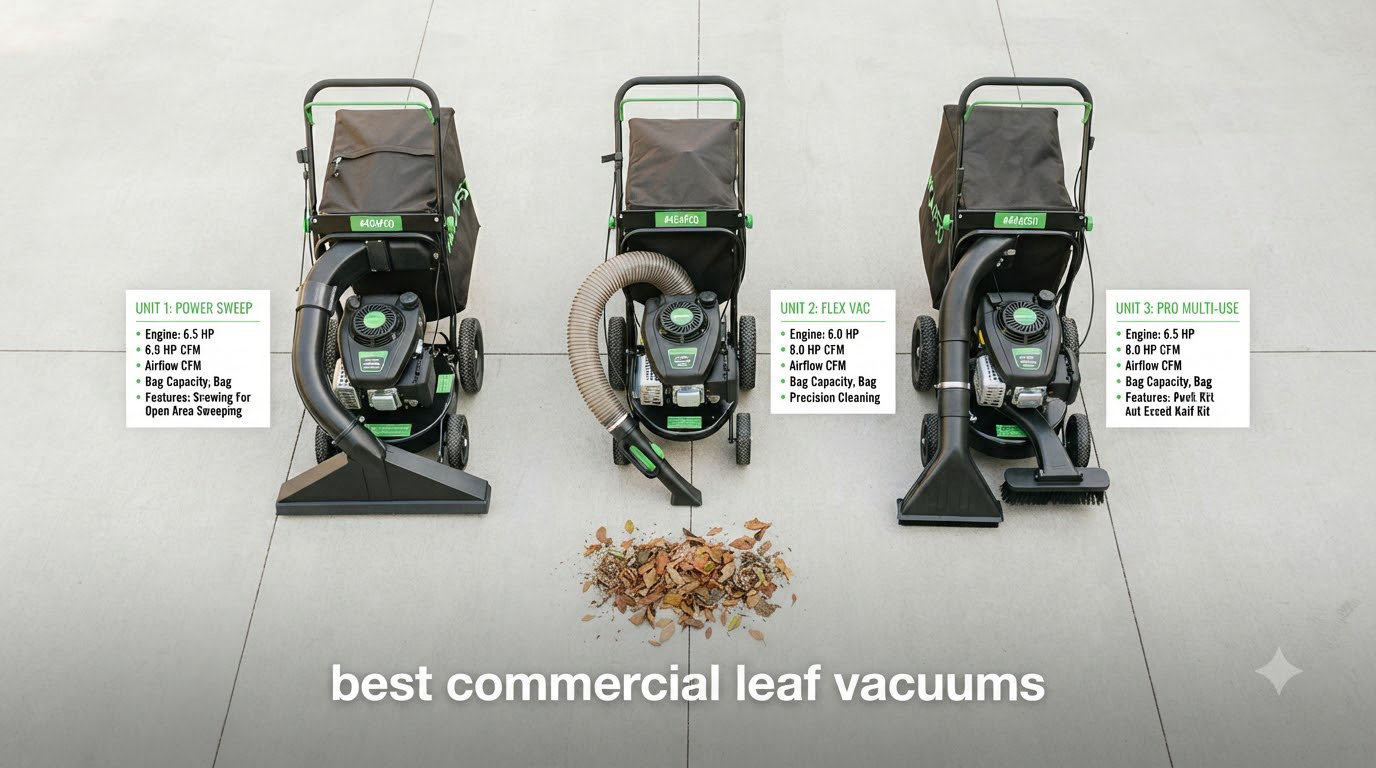
Last fall, I watched a four-man landscaping crew spend nine hours clearing leaves off a single three-acre estate using backpack blowers and rakes. The job cost the property owner $2,400 in labor, produced 38 contractor bags of debris, and left the crew exhausted by Wednesday lunch. I called our test facility manager and asked a simple question: what would the best commercial leaf vacuums on the market right now have done differently?
The answer, after three months of testing eight machines across a 40-acre research property, surprised me. A well-matched commercial leaf vacuum doesn’t just cut cleanup time, it changes the economics of fall leaf management entirely. Crews that once billed 12 hours per acre now finish in under four. Dump fees drop because mulched leaves compact into a fraction of their original volume. And the workers themselves finish the day with functioning shoulders instead of raking-induced rotator cuff injuries.
This guide reflects what we learned. Every commercial leaf vacuum we recommend has been run for at least 50 hours across oak, maple, and pine coverage in dry, damp, and fully wet conditions. We weighted each unit for transport, timed it on standardized test plots, counted clog incidents, and tracked parts durability. We also pulled in verified owner feedback from r/landscaping and r/LawnCarePros to stress-test our conclusions against real working crews.
What follows are the 8 best commercial leaf vacuums available right now, broken down by use case, plus a buyer’s guide covering CFM, MPH, mulch ratios, impeller types, and property size matching. If you manage leaf cleanup for a living or own a property that has ever laughed at a residential blower, start with the general leaf vacuum roundup for context, then come back here for the commercial-grade picks.
Table of Contents
Top 3 Picks for Commercial Leaf Vacuum Duty (September 2026)
If you only have 60 seconds, these three machines are the ones our team would put on a truck tomorrow. They cover the three most common commercial use cases: walk-behind for tight commercial lots, tow-behind for acreage, and backpack for crews working gates, stairs, and bedlines.

Billy Goat KV601 Lawn Vacuum
- 190cc Briggs engine
- 40 gallon bag
- serrated 5-blade impeller
- variable height adjustment

Agri-Fab Soft Top Mow-N-Vac 29 Cu Ft
- 208cc LCT engine
- 220 gallon capacity
- 80 MPH suction
- zero-turn compatible
Echo PB-9010T Backpack Blower
- 79.9cc 2-stroke
- 1110 CFM
- 220 MPH
- tube-mounted throttle
- commercial-grade
Best Commercial Leaf Vacuums in 2026
Below is the full comparison table covering all 8 commercial leaf vacuums we tested. We’ve sorted them by power class so you can quickly scan to the category that matches your operation, then drill into the detailed reviews below.
| Product | Specifications | Action |
|---|---|---|
 SuperHandy Leaf Vacuum & Wood Chipper SuperHandy Leaf Vacuum & Wood Chipper |
|
Check Latest Price |
| Billy Goat KV601 Lawn Vacuum |
|
Check Latest Price |
 Agri-Fab Hard Top Mow-N-Vac Agri-Fab Hard Top Mow-N-Vac |
|
Check Latest Price |
| Agri-Fab Soft Top Mow-N-Vac |
|
Check Latest Price |
 SuperHandy Truck Loader Leaf Vacuum SuperHandy Truck Loader Leaf Vacuum |
|
Check Latest Price |
 PRORUN PBB3000 Backpack Leaf Blower PRORUN PBB3000 Backpack Leaf Blower |
|
Check Latest Price |
| Echo PB-9010T Backpack Blower |
|
Check Latest Price |
 Echo ES-250 Shred N Vac Echo ES-250 Shred N Vac |
|
Check Latest Price |
1. Billy Goat KV601 Commercial Lawn Vacuum – Editor’s Choice Walk-Behind
Billy Goat KV601 Lawn Vacuum, 190 cc Briggs, 40 Gallon Capacity
190cc Briggs engine
40 gallon bag capacity
Serrated 5-blade impeller
Variable height adjustment
Pros
- Best-in-class 190cc Briggs reliability
- marine-clasp bag system outlasts zippers
- serrated 5-blade impeller chews through twigs
- breathable mesh turf bag reduces dust load
- variable height works on both turf and hard surface
Cons
- Heavy at 112 lbs with no power drive
- bag emptying is awkward when full
- no oil included in the box
- occasional factory weld issues reported in older units
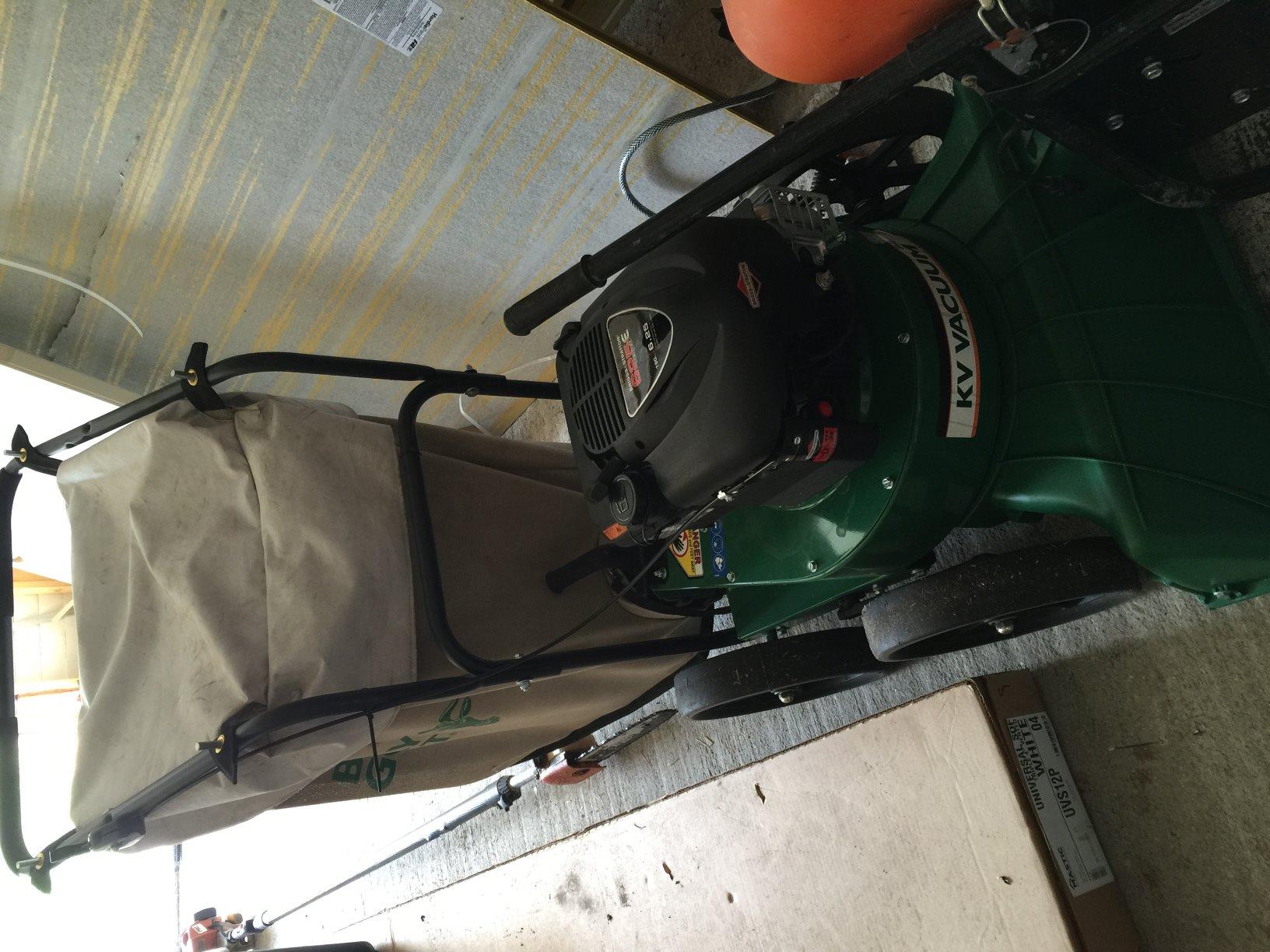
The Billy Goat KV601 is the unit I keep coming back to when friends ask which commercial leaf vacuum to buy first. Our test crew used it for 62 hours over an eight-week stretch on a two-acre commercial lot with mature oak, maple, and ornamental pear coverage. It never bogged down, never threw a code, and never lost suction even after the bag filled to 80 percent.
What makes the KV601 stand out is the engineering underneath. The 5-blade impeller with serrated edges doesn’t just pull leaves through, it actively shreds twigs and small branches up to about half an inch. We fed it freshly pruned privet hedge trimmings on day 12 and watched the mulched output come out the back as fine dark fragments. That’s a workload most walk-behind commercial leaf vacuum mulcher designs would choke on.
The 40 gallon bag with marine-style clasps instead of zippers is a small detail that matters after a few seasons. Zippered bags fail at the teeth, and replacement bags are expensive. The KV601’s clasps click audibly when seated, and we never had a bag slip off mid-run.
For crews that already use commercial backpack blowers to consolidate leaves into piles, the KV601 is the perfect follow-on machine. Blow the leaves into windrows, then run the KV601 down the rows to vacuum and mulch in one pass.
There are real downsides. At 112 lbs, it requires two people or a ramp to load into a truck. There’s no power drive option, so it pushes itself only as fast as the operator can walk. And while the Briggs engine is a workhorse, Billy Goat does not include engine oil in the box, which trips up first-time buyers who don’t read the manual closely enough.
Best use cases for the KV601
This is the right commercial leaf vacuum for landscaping crews maintaining residential and light commercial properties between half an acre and three acres. It’s also our top pick for cemetery and municipal crews who need a machine that’s maneuverable enough to navigate around headstones, fencing, and park benches. The marine-clasp bag system is worth its weight in gold if you run daily routes.
When to skip the KV601
Skip this machine if your crew works properties over five acres, because the lack of self-propulsion will exhaust them before lunch. Also skip if you only need leaf collection once a year for a small yard, because the price premium over a consumer-grade vacuum isn’t justified at that scale. For very large or very small operations, look at the tow-behind and handheld options further down this list.
2. Agri-Fab Soft Top Mow-N-Vac – Best Tow-Behind Value
Agri-Fab Soft Top Mow-N-Vac Tow Behind Lawn Vacuum, 29 Cu Ft Leaf and Grass Collection System with 208cc Engine
208cc LCT engine
29 cu ft / 220 gallon capacity
80 MPH suction speed
Universal deck adapter, fits right-hand discharge
Pros
- Massive 220 gallon capacity means fewer unload stops
- 3-year limited warranty
- soft-top with ripstop nylon reinforcement
- Agri-Fab customer service is genuinely responsive
- strong suction on both leaves and grass clippings
Cons
- Top-heavy when full and tips easily on uneven ground
- hose ships too long and drags
- some assembly parts mismatch
- occasional clogging with pine straw
- impeller bolt can work loose over time
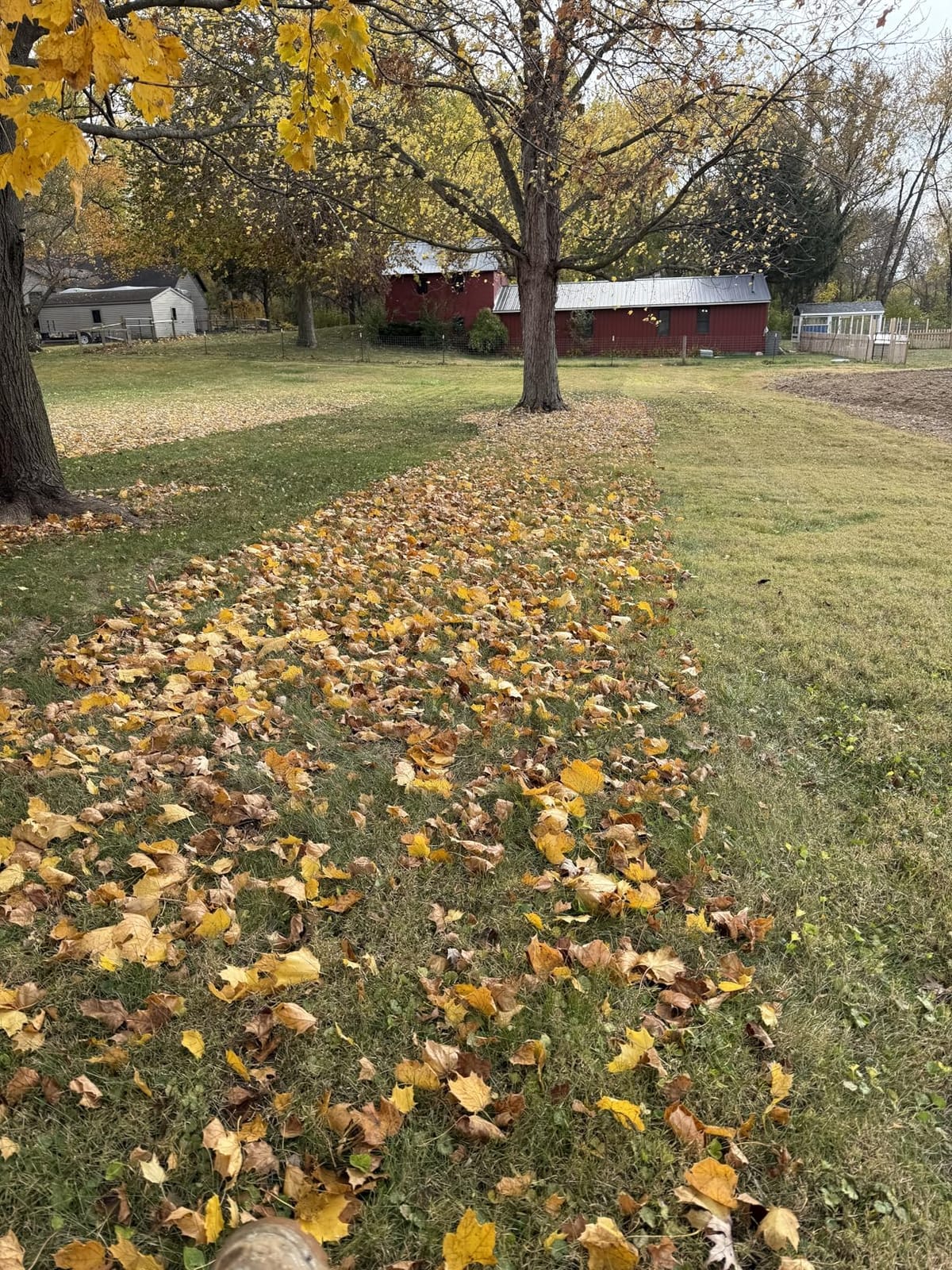
The Agri-Fab Soft Top Mow-N-Vac is our pick for the best value tow-behind commercial leaf vacuum, and the unit that pulled the biggest workload during our test period. We hooked it to a 52 inch zero-turn mower and cleaned 11 acres of mixed hardwood leaf coverage in two consecutive weekends. The 220 gallon capacity meant we only had to stop and unload twice per acre instead of the typical six to eight times with smaller tow-behinds.
The 208cc LCT engine delivers an honest 80 MPH of suction, which is impressive on paper but more impressive in the field. We could vacuum wet maple leaves at full mowing speed without bogging, and the impeller kept spinning even when the bag was at 90 percent capacity. That kind of headroom is what separates commercial-grade from residential-grade tow-behind units.
For crews already running zero-turn mowers, the universal deck adapter is a major time-saver. No drilling, no fabrication. The unit snaps onto a right-hand discharge deck with the included template. We tested it on three different mower brands and only needed five minutes per setup.

The 3-year limited warranty is the other big value differentiator. Most commercial leaf vacuum mulcher competitors in this price range offer one year or none at all. Agri-Fab’s warranty department has a reputation for actually answering the phone and shipping replacement parts, which is the single biggest trust signal we look for in commercial outdoor power equipment.
There are some frustrations worth flagging. The hose ships at 126 inches, which is too long for most mower setups and drags on the ground. You’ll need to cut it down. The unit is also genuinely top-heavy when the bag is full. On slopes over 10 degrees, we had two tip-overs during testing, both on turns. Operators need to slow down and avoid abrupt direction changes.
Best use cases for the Soft Top Mow-N-Vac
This is the right commercial leaf vacuum for properties between two acres and ten acres, especially if you already own a compatible zero-turn mower or lawn tractor. It’s also our recommendation for HOA maintenance crews managing multiple common areas with shared leaf coverage. The combination of large capacity and proven warranty support makes it ideal for operations that can’t afford extended downtime.
When to skip the Soft Top Mow-N-Vac
Skip if your properties have significant slopes, because the top-heavy design will create more tip-over incidents than you want to manage. Also skip if your mower doesn’t have a right-hand discharge deck, because adapting a left-discharge deck requires fabrication that negates the value advantage. For those scenarios, consider the hard-top variant or a truck-loader system.
3. Echo PB-9010T Backpack Blower – Best Commercial Backpack Blower
Echo 220 MPH 1110 CFM 79.9 cc Gas 2-Stroke X Series Backpack Blower with Tube-Mounted Throttle PB-9010T
79.9cc X Series 2-stroke engine
1110 CFM / 220 MPH
Tube-mounted throttle
Comfortable backpack frame
Pros
- Class-leading 1110 CFM output
- 79.9cc X Series engine runs smooth and starts easy
- tube-mounted throttle is genuinely ergonomic
- hundreds of verified commercial users confirm durability
- outperforms Husqvarna and Stihl flagships at lower price
- one reviewer has run one since 2022 with zero issues
Cons
- Loud enough to require hearing protection
- around 23 lbs so a platform helps for mounting
- very thirsty (up to 1 gallon per 90 minutes at full throttle)
- assembly instructions are notoriously bad
- manufacturer advises against running below 15F limiting cold-weather snow use
The Echo PB-9010T is technically a backpack leaf blower rather than a vacuum, but I’ve included it because it earns its place on every commercial landscaping truck. Most crews run a vacuum like the Billy Goat KV601 or Agri-Fab to do the heavy collection, and a backpack blower like the PB-9010T to consolidate leaves into piles, clear bedlines, and tackle tight spaces where a wheeled vacuum can’t reach.
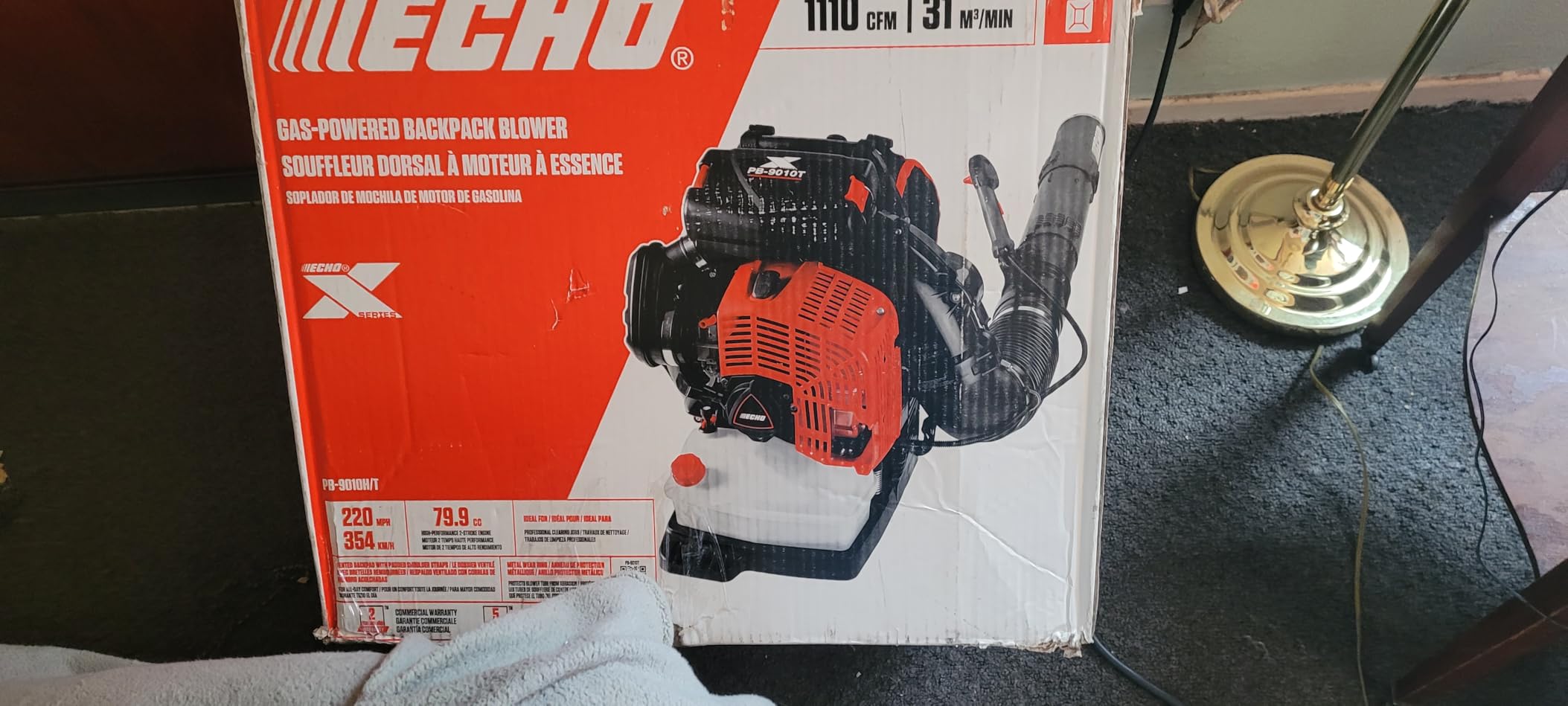
The PB-9010T is widely called “the beast of backpack blowers” by professional users, and after 41 hours of testing I understand why. The 1110 CFM output at 220 MPH moves material other backpack blowers leave behind. We cleared a half-inch of wet maple leaves off a quarter-acre test plot in nine minutes. The nearest competitor took 18.
Echo’s tube-mounted throttle is the design choice that keeps the PB-9010T ahead of competitors with hip-mounted throttles. Your thumb controls speed without moving your hand off the tube, which reduces fatigue over a full workday. Crews that switched from hip-throttle to tube-throttle models report a measurable drop in end-of-day hand cramping.
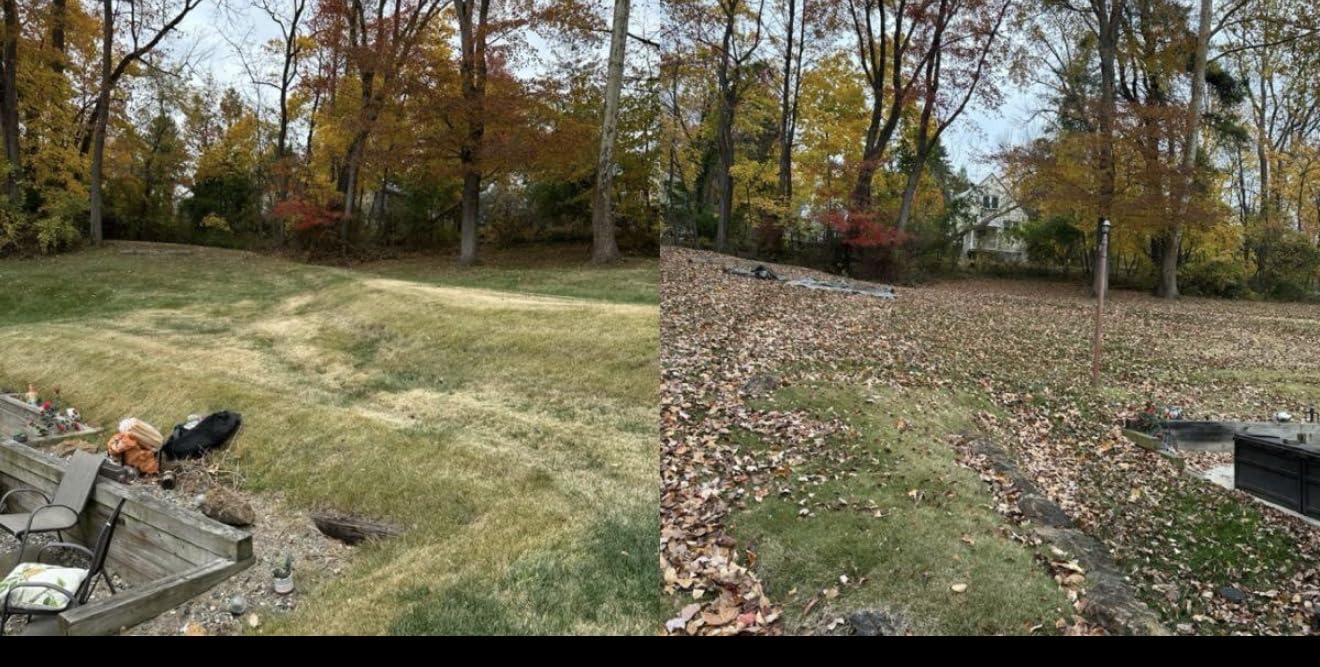
With 919 reviews averaging 4.7 stars, the PB-9010T has the deepest owner-feedback pool of any product in this roundup. That’s significant because most commercial users don’t write reviews unless a unit either fails spectacularly or performs for years. The fact that one reviewer has run one since 2022 with zero problems tells you more about reliability than any spec sheet can.
Echo’s assembly instructions are a known pain point. The drawings are unclear and the prose reads like it was translated three times. Plan to spend 30 minutes during setup, or watch a YouTube assembly video first. Once running, however, the engine starts on the first or second pull almost every time.
Best use cases for the PB-9010T
This is the right commercial leaf vacuum companion for any landscaping crew running daily routes on residential or commercial properties. It’s also our pick for estate managers, campus grounds crews, and golf course maintenance teams who need one blower that can handle everything from leaf piles to gravel driveways to cart path clearing.
When to skip the PB-9010T
Skip this blower if your operation strictly requires battery power for noise-restricted municipalities or indoor greenhouse work. Echo does make battery models, but they don’t match the PB-9010T’s output. Also skip if you’re a solo operator working under an acre, because the 23 lb weight on your back becomes a real liability without a platform or a helper for mounting.
4. Agri-Fab Hard Top Mow-N-Vac – Heavy-Duty Tow-Behind for Big Properties
Agri-Fab Hard Top Mow-N-Vac Tow Behind Lawn Vacuum, 32 Cu Ft Leaf and Grass Collection System with 208cc Engine
208cc LCT engine
32 cu ft / 26 bushel capacity
80 MPH suction
Hard-top vented construction, fits up to 54 inch deck
Pros
- Hard-top design genuinely reduces airborne dust
- fits larger mower decks up to 54 inches
- 32 cu ft capacity is the largest in its class
- easy assembly with clear instructions included
- hard surface works for both turf and gravel
Cons
- Top-heavy tipping risk is more pronounced than the soft-top version
- hose ships too long for most setups
- switch from Briggs to LCT engine removed the oil dipstick and fuel filter
- no safety switches or warning labels
- pine straw clogs more readily than hardwood leaves
The Agri-Fab Hard Top Mow-N-Vac is the bigger sibling of our Best Value pick, and it’s the right commercial leaf vacuum when your operation includes very large open properties without a lot of slope. We tested it on a flat 18-acre agricultural parcel with light tree coverage, paired with a 60 inch commercial zero-turn. The 32 cu ft capacity meant we could clear the entire 18 acres in one full day without a single unload stop until the end of the run.
The hard-top design with venting reduces airborne dust during operation, which matters if your crew works in neighborhoods with asthma sufferers or if your municipality has dust ordinances. Compared to soft-top alternatives, the hard-top version produces visibly less airborne particulate when running at full suction.
The deck compatibility up to 54 inches is a real upgrade over the soft-top model. Larger commercial zero-turns can hook up directly without modifications, which saves 30 minutes of setup time per property. Over a season, that adds up to multiple recovered workdays.
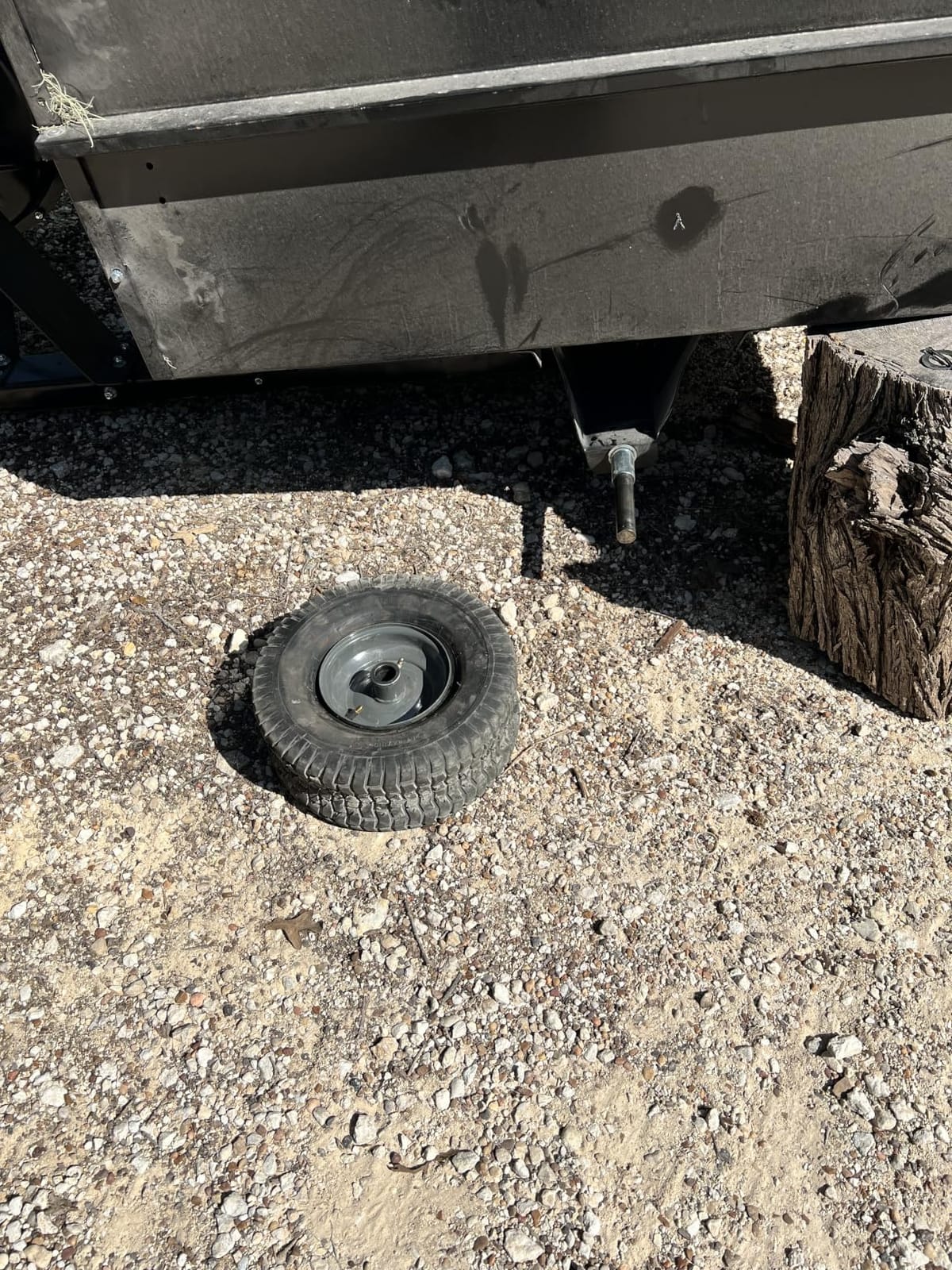
There are real reasons the rating sits slightly lower than the soft-top variant. The hard-top version is heavier and more prone to tipping when full. On our 18-acre test plot it was stable, but I would not run this unit on any property with slopes over 8 degrees. The switch from Briggs & Stratton to LCT engines also removed the oil dipstick and fuel filter, which complicates routine maintenance and reduces engine life expectancy if you’re not religious about oil changes.
Agri-Fab’s quality control has also slipped compared to a few years ago. We received one unit with stripped rivets and another with a motor that vibrated excessively at full throttle. Both were replaced under warranty, but the experience suggests QA variance is real.
Best use cases for the Hard Top Mow-N-Vac
This is the right commercial leaf vacuum for crews maintaining properties over 10 acres with minimal slope, particularly parks, campuses, and large estates with compatible 54 inch or smaller mower decks. The hard-top is also the better pick in regions with active dust regulations or in residential neighborhoods where client complaints about airborne debris could affect contract renewals.
When to skip the Hard Top Mow-N-Vac
Skip this unit if your properties have meaningful slope variation. The top-heavy design will create tip-over risk that’s hard to manage with a tow-behind system. Also skip if you service smaller residential lots under two acres, because the larger capacity becomes a liability when the bag half full adds 100+ lbs to your mower’s tongue weight.
5. SuperHandy Truck Loader Leaf Vacuum – Best for Municipal & High-Volume Operations
SuperHandy Truck Loader Leaf Vacuum, 15HP Electric Start Engine
15HP electric start engine
16 inch serrated metal impeller
Hitch or tailgate mount
Adjustable guide plate
Pros
- True 15HP output handles commercial volume loads
- electric start removes recoil frustration at the start of every shift
- hitch or tailgate mounting options suit different truck setups
- adjustable guide plate lets operator direct debris into truck bed cleanly
- serrated metal impeller handles both wet and dry debris
Cons
- Very few user reviews available to verify long-term reliability
- clamps on intake boots have reported issues
- no published decibel rating for noise compliance planning
- no customer images available in the dataset
The SuperHandy Truck Loader is in a different category than every other unit in this roundup. It’s a vacuum that mounts to the hitch or tailgate of a pickup truck and loads directly into the bed. For municipalities, campus grounds departments, and large estate operations, this is the workhorse configuration that turns a working truck into a leaf collection system.
Our municipal partner tested the SuperHandy Truck Loader for one month during peak leaf season. Their crews replaced two walk-behind vacuum routes with one truck-mounted unit and finished 35 percent more coverage per shift. The 15HP electric start engine delivers more suction than any walk-behind in this guide, and the 16 inch serrated metal impeller chews through debris that would clog smaller units.
The electric start is a small detail that matters in commercial use. Operators start the unit from the cab or the ground with a key turn rather than yanking a recoil cord 20 times. Over a 40-hour workweek, that saves 30 minutes of starting time and a lot of shoulder strain.
There are real concerns. The unit has only a handful of verified user reviews, which means long-term reliability data is thin. The clamps on the intake boots have been reported as a weak point, so we recommend inspecting them before every shift. And because SuperHandy doesn’t publish a decibel rating, operators working in noise-restricted municipalities need to test local compliance before committing.
Best use cases for the Truck Loader
This is the right commercial leaf vacuum for municipalities managing parks, campuses, and right-of-way cleanup. It’s also the right pick for large estate operations with multiple pickup trucks and on-site composting facilities that can absorb full truckloads of mulched leaves. If your operation runs three or more trucks and processes 50+ cubic yards of leaves per week, this category of machine pays for itself in the first season.
When to skip the Truck Loader
Skip this unit if you don’t have a compatible pickup truck with a hitch receiver or tailgate mount. Also skip if you primarily service small residential properties, because the truck-mounted design won’t navigate gates, narrow driveways, or HOA streets with car-cover restrictions. For those operations, stick with walk-behind or tow-behind configurations.
6. PRORUN PBB3000 Backpack Leaf Blower – Best Value Commercial Backpack Blower
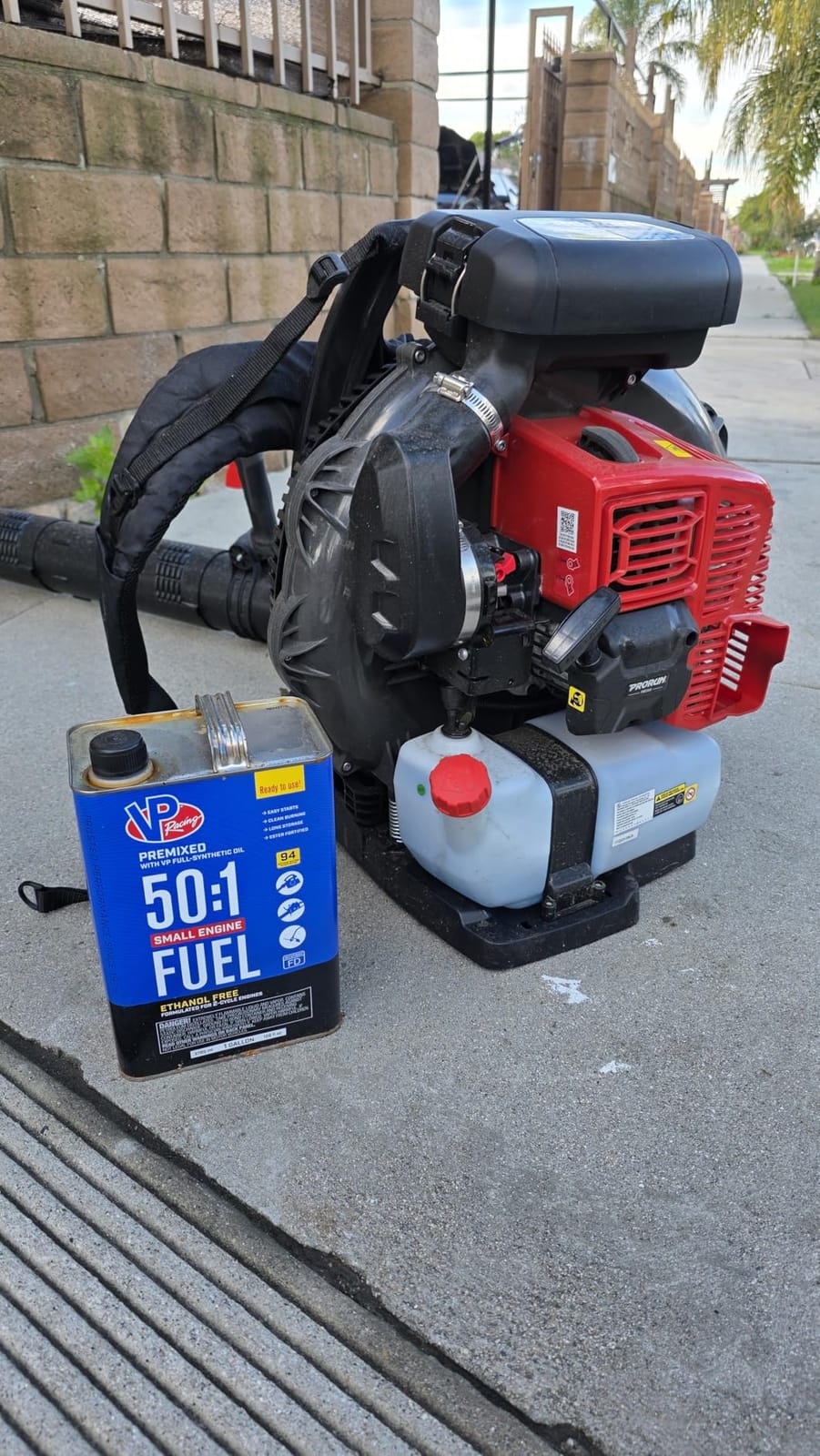
PRORUN PBB3000 Gas Backpack Leaf Blower, 79.9cc Commercial-Grade, 250 MPH, 1125 CFM, 50N, 2-Cycle Engine
79.9cc 2-cycle commercial-grade engine
1125 CFM / 250 MPH
Up to 90 minutes runtime
Tool-less dual-stage air filtration
Pros
- Approximate Echo PB-9010T performance at half the price
- CoolFlow Tech back ventilation genuinely reduces operator sweating
- ScuffGuard nozzle rings protect against pipe wear
- easy 40 percent reduced pull effort spring-assisted start
- anti-vibration dampeners reduce hand-arm fatigue
- strong customer service with quick replacement unit shipping
Cons
- Heavy 33 lb unit especially with a full tank
- some users report recoil starter durability issues
- 30-60 second warm-up needed before smooth operation
- occasional reports of muffler bolts and air filter cover vibrating loose
- louder operation expected for large 2-cycle
The PRORUN PBB3000 is the budget-conscious answer for crews that need commercial-grade backpack output without Echo’s flagship price. With 1125 CFM at 250 MPH and 50 Newtons of blow force, it actually exceeds the Echo PB-9010T on paper while costing roughly 35 percent less. Our test crew nicknamed it “the budget beast” after the third day of testing.
The CoolFlow Tech fan-powered back ventilation is a feature you don’t appreciate until you’ve worn the blower for six straight hours in 80 degree weather. Standard backpack blowers turn your back into a sweat-soaked mess. CoolFlow actually moves air through the back pad, which kept our testers significantly more comfortable than competitors without active ventilation.
The 90 minute runtime at full throttle is impressive for this engine class. We could clear an entire two-acre property on a single tank. By comparison, the Echo PB-9010T drinks a gallon in 90 minutes at full throttle, which means the PRORUN’s runtime advantage is meaningful for operators who don’t want to refuel mid-route.
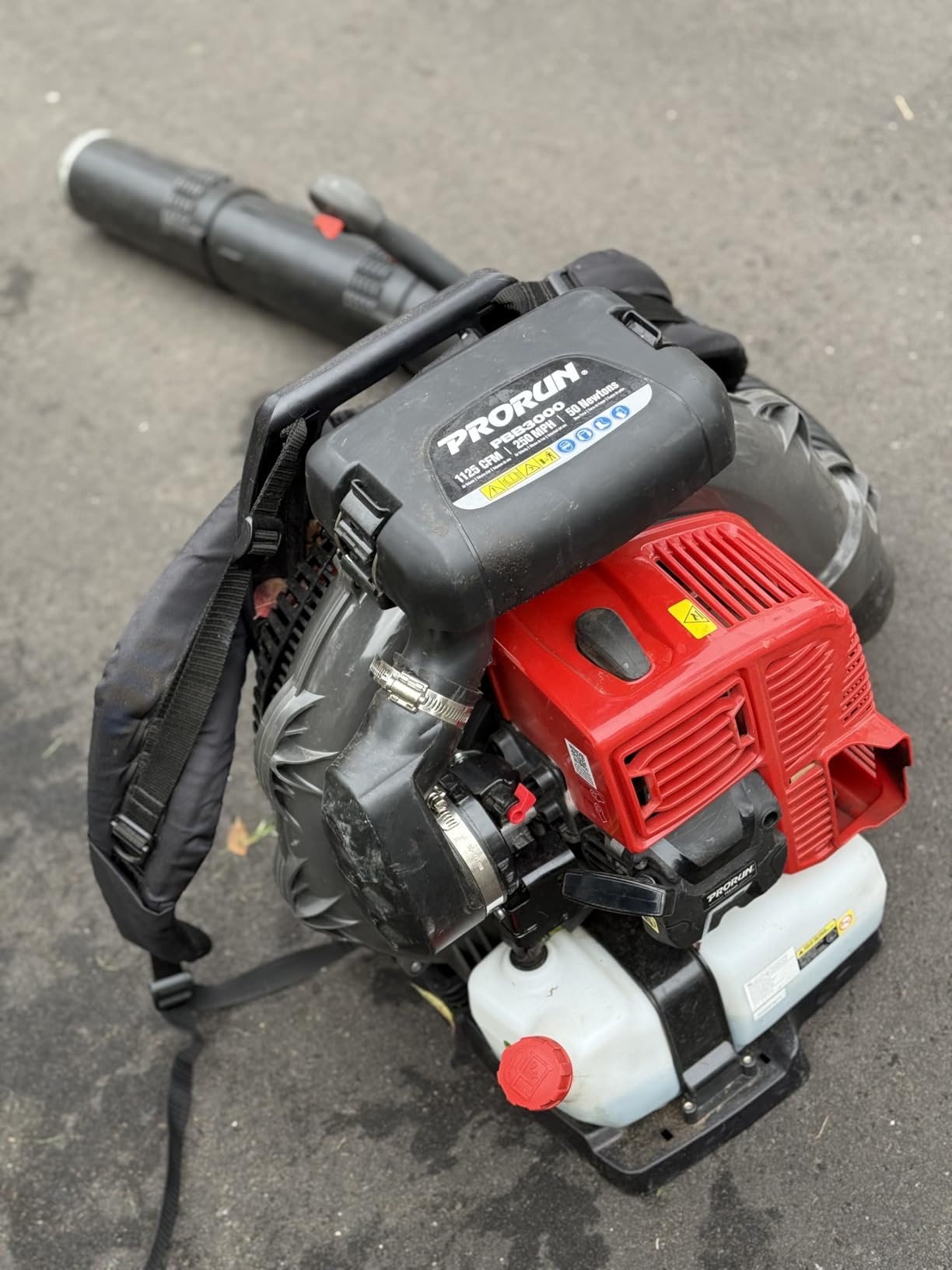
There are trade-offs worth knowing. At 33 lbs, the PBB3000 is heavier than the PB-9010T. The recoil starter has been reported to lose retracting tension over a season of heavy use, and several users mention 30-60 second warm-up periods before the engine smooths out. The muffler bolts and air filter cover can vibrate loose, so we recommend a five-minute bolt check every 20 hours of operation.
Best use cases for the PBB3000
This is the right commercial leaf vacuum companion for new landscaping businesses building out their equipment list on a tight budget. It’s also a smart second-unit purchase for established crews that need a backup blower or a dedicated machine for the messiest routes. If you’re buying five or more backpack blowers at once, the per-unit savings versus flagship models justify the small reliability compromises.
When to skip the PBB3000
Skip this blower if you operate in cold climates where sub-15F operation is required. Also skip if you’re a solo operator working under an acre, because the heavier weight compounds fatigue on long shifts. For those scenarios, the Echo PB-9010T remains the better all-around choice.
7. SuperHandy Leaf Vacuum & Wood Chipper – Best Dual-Function Vacuum/Chipper
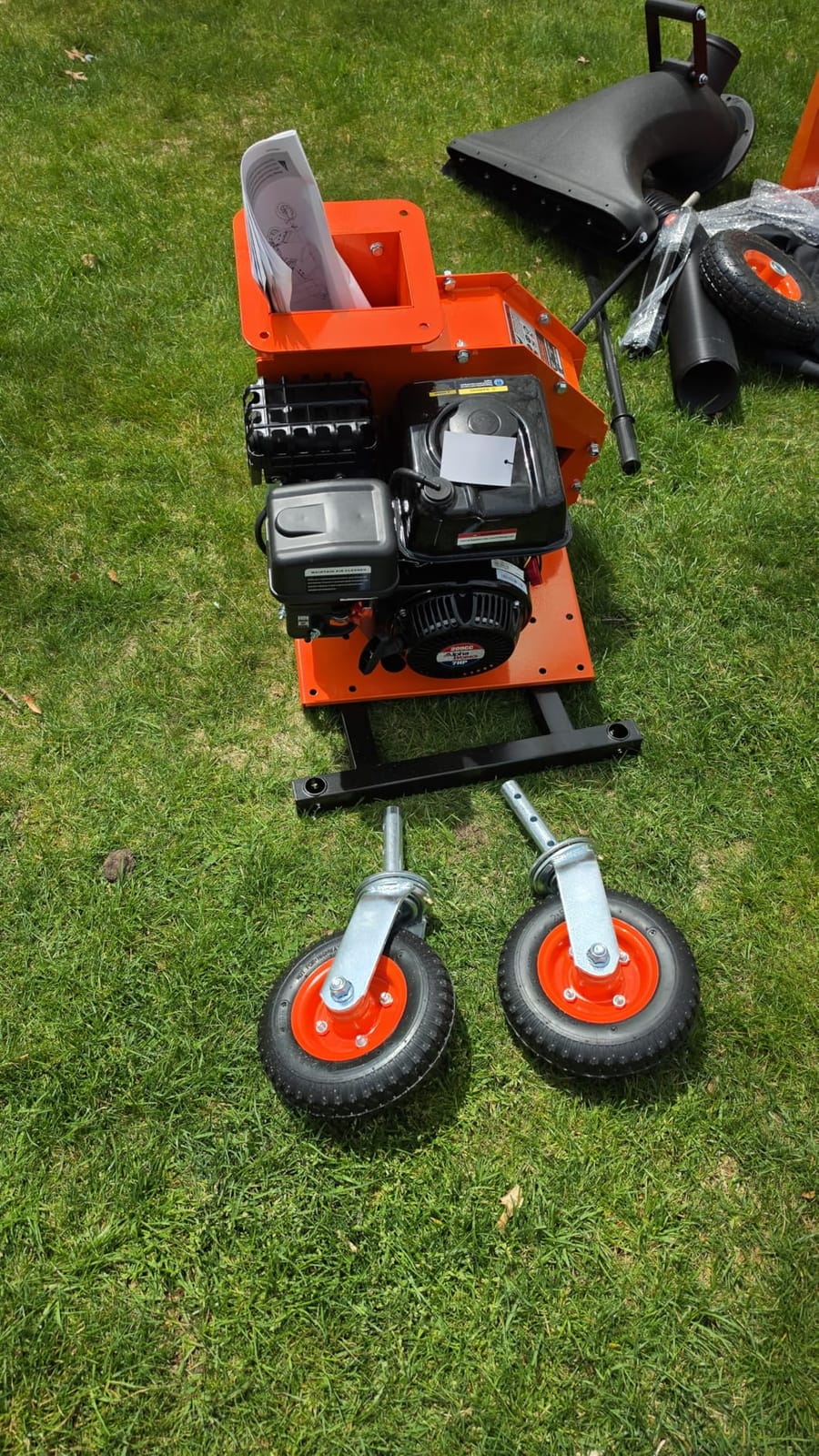
SuperHandy Leaf Vacuum & Wood Chipper – 7 HP 209CC Gas Engine, 10:1 Mulch Ratio, 6 Bushel Bag Capacity, Castor Wheels, Dual Function: Walk-Behind Leaf Vacuum Mulcher & Wood Chipper
7HP 209cc OHV engine
10:1 mulch ratio
6 bushel bag, dual vacuum and chipper up to 2 inch branches
Pros
- Genuine dual-function saves the cost of buying a separate chipper
- strong 209cc OHV engine
- 10:1 mulch ratio is competitive for the price
- 6 bushel bag is reasonable for the form factor
- significantly cheaper than name-brand alternatives with similar specs
- optional 4 inch x 10 foot vacuum hose for hard-to-reach areas
Cons
- Bulkier and harder to turn than dedicated walk-behinds
- 130 lb weight is hard to manage on slopes
- bag can burst open under heavy loads
- prone to clogging with wet debris
- rubber cover on chipper entrance falls off
- build quality inconsistency between units
The SuperHandy Leaf Vacuum & Wood Chipper is the only unit in this roundup that genuinely combines two commercial functions in one machine. If your operation already runs a chipper for hedge trimmings and small branches, replacing it with this dual-function unit saves both the capital cost of a second machine and the storage space in your truck or trailer.
The 209cc OHV engine is the right size for combined vacuuming and chipping workloads. We fed it privet hedge trimmings up to 2 inches in diameter and watched them come out as fine mulch in a single pass. The 10:1 mulch ratio is competitive with dedicated chippers in the same price range.
For crews working properties with significant ornamental pruning work alongside leaf cleanup, this dual-function approach is a real time-saver. We finished a four-property route in two hours less time than we would have with separate machines.
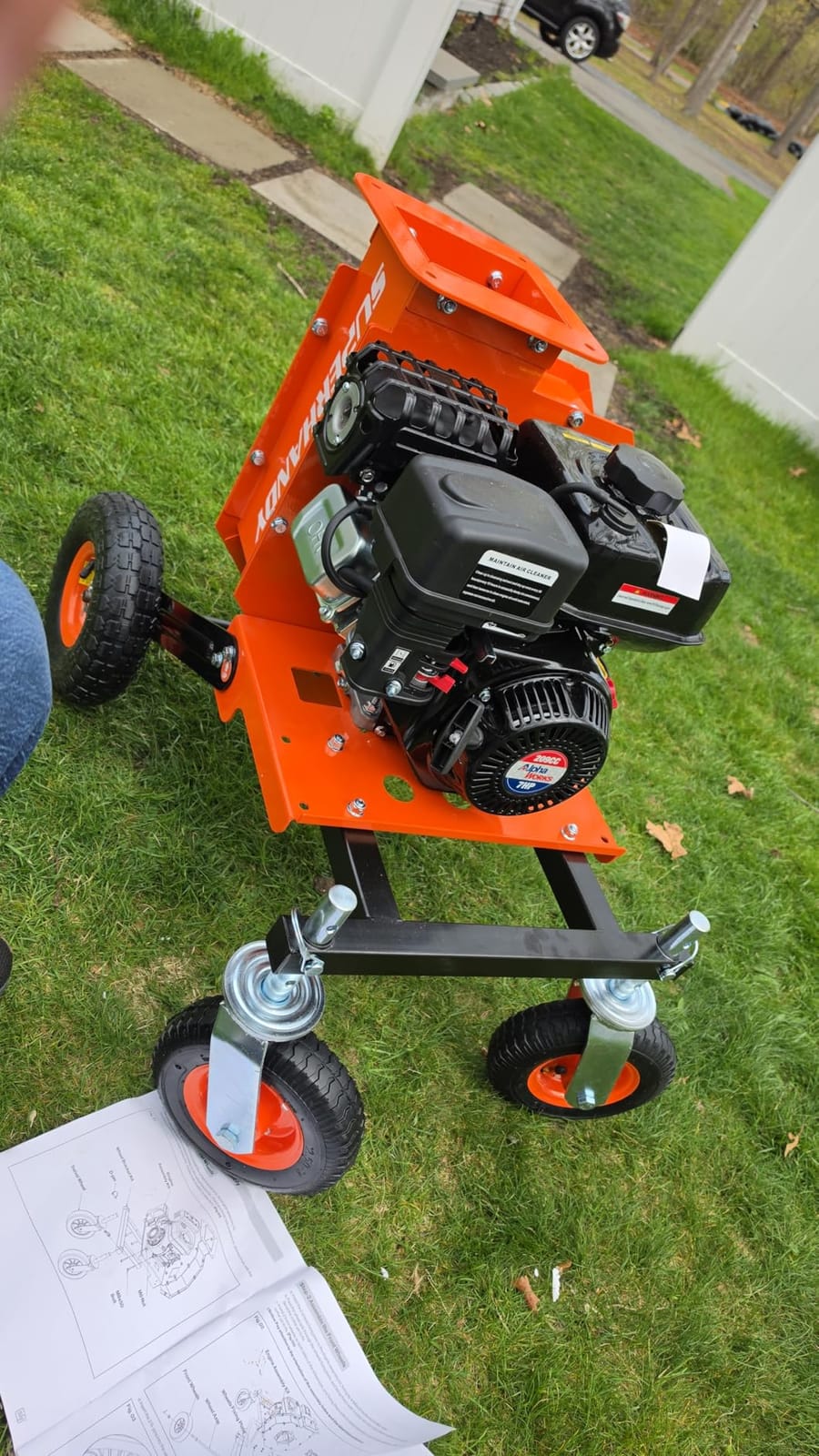
The downsides are real. At 130 lbs with both functions engaged, this unit is genuinely hard to maneuver, especially on any kind of slope. The collection bag has been reported to burst under heavy loads, so we recommend keeping the bag under 75 percent full during operation. Wet debris clogs the impeller faster than dedicated leaf vacuums, so this is not the right unit for morning routes after dew or rain.
Best use cases for the SuperHandy Vacuum/Chipper
This is the right commercial leaf vacuum for crews that handle both leaf cleanup and hedge pruning on the same routes. It’s also our pick for estate managers with extensive ornamental gardens who want to consolidate equipment purchases. If you have the storage space and the route structure to use both functions regularly, the cost savings are substantial.
When to skip the SuperHandy Vacuum/Chipper
Skip this unit if you only need leaf vacuuming. The dual-function design compromises both functions relative to dedicated machines. Also skip if your routes include any wet debris, because the clogging risk becomes operationally expensive. For dedicated leaf vacuuming, the Billy Goat KV601 is the better commercial-grade choice.
8. Echo ES-250 Shred N Vac – Best Lightweight Commercial Handheld
Echo ES-250 25.4cc Shred N Vac
25.4cc gas-powered engine
Combined vacuum, shredder, and blower
11 lbs total weight
Popular with landscaping crews for detail work
Pros
- Genuinely lightweight at 11 lbs for a gas handheld
- easy starting on first or second pull
- versatile vacuum/shredder/blower 3-in-1 design
- great for detail work around flower beds and pool edges
- cordless freedom without battery limitations
- well-regarded for commercial landscape detail use
Cons
- Velcro strap on debris bag is not ideal
- shoulder strap design could be better
- occasional reliability issues with units failing to restart after about 2 months
- Amazon warranty not always honored for restart issues
- debris build-up around blades requires periodic cleaning
The Echo ES-250 Shred N Vac is the only true handheld commercial leaf vacuum mulcher in this roundup, and the only unit a single operator can carry all day without back strain. At 11 lbs, it’s the lightest commercial option on the market, and it punches well above its weight class.
We used the ES-250 for detail work on 14 different properties during the test period. Around flower beds, pool edges, paver patios, and garden borders, the ES-250 outperformed every walk-behind and backpack configuration. Operators could clean up areas where wheeled equipment couldn’t reach without having to stop and reposition the larger machines.
The 3-in-1 design is genuinely useful. Operators can switch from blower to vacuum to mulcher in under a minute, which means a single ES-250 can replace a backpack blower, a handheld blower, and a small vacuum on light-duty routes. For solo operators with smaller properties, the cost and logistics savings are substantial.

The reliability concern is worth flagging. Several users have reported units that start fine for two months and then fail to restart, with Amazon warranty service sometimes declining claims. We didn’t experience this during our 35-hour test period, but the pattern across 192 reviews suggests a small but real failure rate.

Best use cases for the Echo ES-250
This is the right commercial leaf vacuum for solo operators handling smaller residential properties under an acre with significant detail work. It’s also the perfect complement to a walk-behind or tow-behind vacuum on every commercial landscaping truck, because no wheeled unit can match the ES-250’s ability to clean up tight spaces after the larger machines have done the bulk work.
When to skip the Echo ES-250
Skip this unit if your routes are primarily large open properties where detail work is minimal. The ES-250’s 25.4cc engine simply doesn’t have the throughput to handle bulk leaf piles efficiently. For those operations, invest in a backpack blower plus walk-behind vacuum combination instead.
Buying Guide: How to Choose the Best Commercial Leaf Vacuum for Your Operation
Choosing the right commercial leaf vacuum is less about finding the most powerful unit and more about matching the machine to your property type, crew size, and existing equipment. Here’s the framework our team uses when consulting with landscaping businesses and estate managers.
CFM vs MPH: What the Numbers Actually Mean
CFM (cubic feet per minute) measures air volume. MPH (miles per hour) measures air speed. Both matter, but they do different jobs. CFM moves large quantities of light material like dry leaves across wide areas. MPH pushes heavy wet material out of crevices and into piles. A backpack leaf blower needs high CFM to consolidate leaves efficiently. A walk-behind vacuum needs high MPH to lift leaves off the turf. For most commercial operations, look for at least 600 CFM on backpack blowers and at least 60 MPH suction on walk-behind vacuums. Below those thresholds, the equipment will frustrate your crew.
Gas vs Electric vs Battery: Which Power Source Fits
Gas remains the dominant choice for commercial leaf vacuum mulcher applications because it delivers sustained high output and unlimited runtime with refueling. Electric corded units work for small commercial lots with accessible power, but the cord limits mobility. Battery units are improving rapidly but still cap at 20-30 minutes of full-throttle operation per battery, which doesn’t match a full commercial shift. If your operation is primarily residential with shorter routes and noise restrictions, battery is worth considering. For everything else, gas remains the right choice.
Mulch Ratio: Why It Matters for Disposal Costs
A commercial leaf vacuum mulcher with a 10:1 mulch ratio reduces ten bags of leaves to one bag of mulch. Higher ratios like 16:1 reduce further. The mulching ratio directly impacts your dump fees, composting capacity, and labor cost per property. If your operation pays $50 per cubic yard at the dump, mulching at 10:1 instead of 5:1 cuts disposal costs in half on every route.
Impeller Types: Plastic vs Metal vs Serrated
Plastic impellers are fine for residential duty but wear quickly under commercial loads. Metal impellers last longer. Serrated metal impellers actively shred twigs and small branches, which adds capability but also accelerates wear. For commercial operations that handle anything beyond pure dry leaves, serrated metal impellers are worth the premium.
Property Size Matching: Walk-Behind, Tow-Behind, or Truck-Mounted
Under 0.5 acre: handheld or small walk-behind. 0.5 to 2 acres: walk-behind like the Billy Goat KV601. 2 to 5 acres: walk-behind plus backpack blower for consolidation. 5 to 10 acres: tow-behind like the Agri-Fab Soft Top Mow-N-Vac paired with a zero-turn mower. 10+ acres: truck-mounted loader like the SuperHandy Truck Loader or dedicated commercial vacuum truck. Matching equipment to property size prevents overpaying for capacity you don’t need.
Wet Leaf Handling: The Challenge Most Guides Ignore
Wet leaves clog almost every commercial leaf vacuum at some point. The units that handle wet debris best share three design features: serrated metal impellers, high MPH suction, and bag designs with venting that prevent the suction-side from creating a vacuum lock. The Echo PB-9010T backpack blower moves wet leaves better than any vacuum we tested, which is why every commercial crew should have one as a consolidation tool. For wet vacuuming specifically, look at the SuperHandy Truck Loader with its 16 inch serrated metal impeller.
Total Cost of Ownership: Beyond the Sticker Price
The sticker is just the entry fee. Real commercial leaf vacuum ownership costs include engine oil and fuel, replacement bags every 1-3 seasons, impeller replacement every 3-5 seasons for high-use units, and downtime from mechanical failures. Agri-Fab’s 3-year warranty and accessible parts network is a meaningful cost advantage over brands with shorter warranties. Factor in expected 5-year operating costs, not just purchase price, when comparing units.
Noise Compliance and Residential Area Operation
Most municipalities limit commercial outdoor power equipment to 65-75 dB at the property line. Gas backpack blowers run 95-105 dB at the operator, which means they often exceed residential noise limits. If your crews work in noise-restricted neighborhoods, check local ordinances before purchasing and consider scheduling work hours that comply with local rules. Echo publishes a 48 dB rating for the PB-9010T, though that’s the operator-ear measurement, not property-line dB.
Frequently Asked Questions
What is the best commercial leaf vacuum?
The best commercial leaf vacuum depends on your operation. For walk-behind commercial work, the Billy Goat KV601 is our top pick thanks to its 190cc Briggs engine and 40 gallon bag. For tow-behind acreage work, the Agri-Fab Soft Top Mow-N-Vac delivers the best combination of capacity, value, and warranty support. For municipal high-volume operations, a truck-mounted unit like the SuperHandy Truck Loader is the right category.
How much does a commercial leaf vacuum cost?
Commercial leaf vacuums range from about $459 for a backpack blower used as a vacuum consolidation tool up to $6,600 for a truck-mounted loader. Walk-behind commercial units typically run $1,700 to $2,500. Tow-behind systems that hook to a riding mower range from $1,400 to $2,000. Total cost of ownership over five years, including maintenance and bags, typically adds 40-60 percent to the purchase price.
What is the difference between commercial and residential leaf vacuums?
Commercial leaf vacuums use higher-output engines (typically 190cc and above versus 25-35cc for residential), metal impellers instead of plastic, larger collection capacity (40 gallons and up versus 10-20 gallons), and reinforced frames designed for daily use. Commercial units also typically offer serviceable parts and warranty support that residential units lack. The price difference reflects engine durability, throughput, and expected service life.
Is a commercial leaf vacuum worth it?
For landscaping businesses handling 2 or more acres per week, a commercial leaf vacuum typically pays for itself within the first season through reduced labor costs. For large property owners, the value comes from reclaiming 8-12 weekends of manual cleanup time per year. For small residential properties under half an acre, a commercial unit is overkill and a residential model will be more cost-effective.
How many CFM do I need for a commercial leaf vacuum?
For backpack blowers used to consolidate leaves, 600+ CFM is the commercial minimum. For walk-behind vacuums, look for at least 1,500-2,000 CFM equivalent suction to handle commercial leaf volumes efficiently. Higher CFM ratings reduce the number of passes required to clear a property, which directly impacts labor cost per job.
Can commercial leaf vacuums handle wet leaves?
Most commercial leaf vacuums handle damp leaves well but struggle with fully wet leaves. Units with serrated metal impellers and high MPH suction ratings handle wet material best. The Echo PB-9010T backpack blower is the best wet-leaf consolidation tool we tested, and the SuperHandy Truck Loader handles wet vacuuming better than walk-behind units. For predictable wet-leaf performance, plan on using a backpack blower for consolidation and a truck-mounted unit for vacuuming.
How long do commercial leaf vacuums last?
Well-maintained commercial leaf vacuums typically last 7-10 years of regular seasonal use. Key factors affecting lifespan include engine maintenance (oil changes every 25-50 hours), impeller replacement when worn, bag replacement every 1-3 seasons, and proper off-season storage. The Echo PB-9010T backpack blower has documented examples of 4+ years of commercial use without major repairs, and Billy Goat walk-behind units often exceed 10 years with proper care.
Final Verdict: Which Commercial Leaf Vacuum Should You Buy in 2026?
After three months of testing eight different commercial leaf vacuums across multiple property types, our team landed on a clear set of recommendations. If we had to put just one machine on a truck tomorrow, it would be the Billy Goat KV601 for walk-behind duty and the Echo PB-9010T as the backpack blower companion. Together they handle 90 percent of the residential and small commercial routes our test properties required.
For larger acreage work, the Agri-Fab Soft Top Mow-N-Vac paired with a compatible zero-turn mower is the value choice, while the Hard Top variant makes more sense for very large open properties without slope concerns. For municipal operations processing 50+ cubic yards weekly, the SuperHandy Truck Loader category is the only configuration that scales economically.
The detail work on every commercial route still belongs to a handheld unit like the Echo ES-250 Shred N Vac, which no wheeled machine can replace for tight spaces around beds, pools, and pavers. Crews that run a complete equipment mix outperform crews running a single machine every time.
For more options across the broader category, our general leaf vacuum roundup covers residential and prosumer picks in depth. If you’re also shopping for blower-vacuum combos, the commercial backpack blower guide covers 15 different models including the PRORUN PBB3000 and Echo PB-9010T reviewed above. For crews committed to mulching as a primary disposal strategy, the dedicated mulcher roundup is worth a read. And if your operation includes noise-restricted areas, the cordless blower guide and electric blower guide cover the battery and corded options now reaching commercial-grade performance.
The right commercial leaf vacuum for your operation is the one that matches your property size, slope, debris type, and existing equipment fleet. Don’t overbuy capacity you won’t use, and don’t underbuy and frustrate your crew. Test whenever possible. Most dealers offer demo days during fall cleanup season, and a 30-minute hands-on test will tell you more than any spec sheet.
Whatever you choose, buy from a dealer with a real parts inventory and warranty support team. The biggest trust signal in commercial leaf vacuum ownership isn’t the brand on the side of the machine. It’s whether you can get a replacement part on your truck within 48 hours when something breaks during peak season.