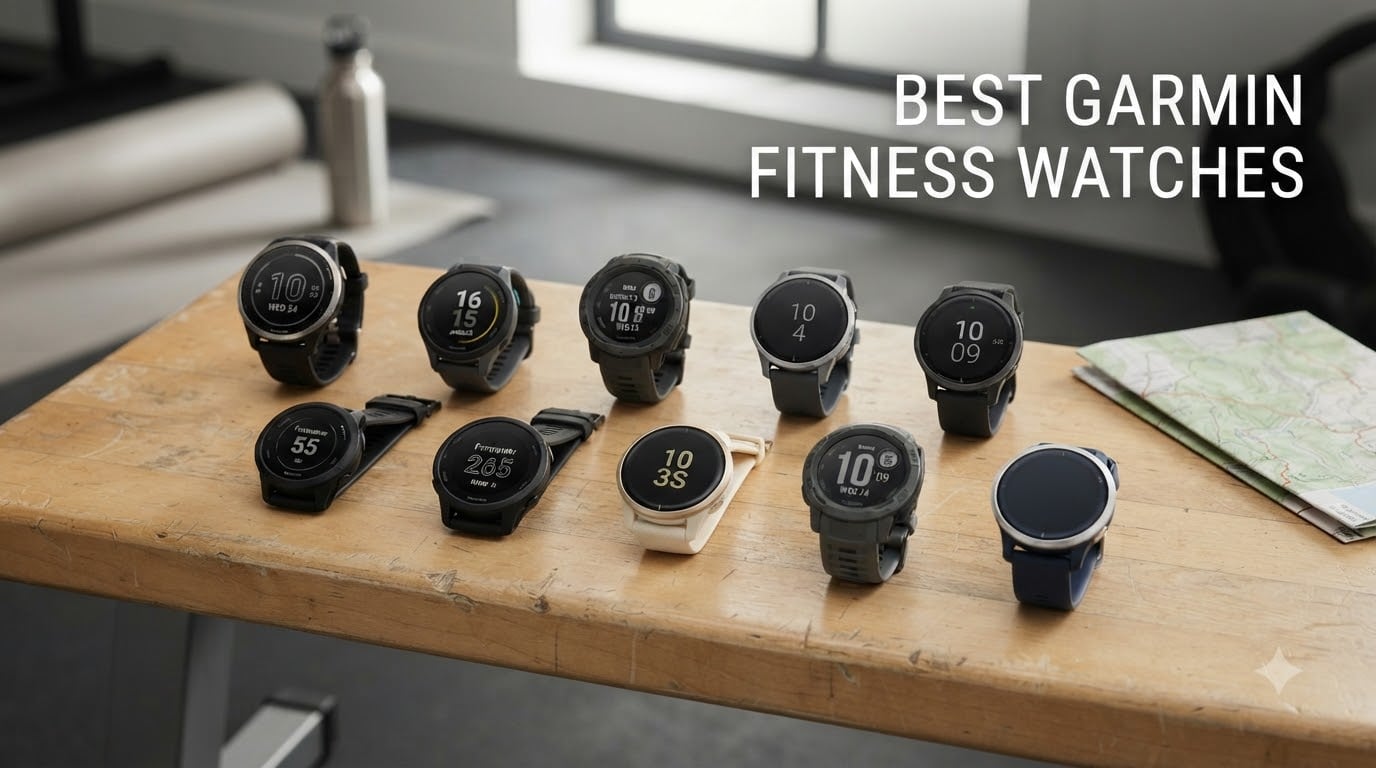
I have worn a Garmin on my wrist for the better part of eight years, switching between Forerunners, Fenixes, and Instincts through marathon blocks, 50K trail races, and the daily slog of strength sessions. Garmin makes some of the best fitness watches you can buy, but the lineup is so crowded that even longtime runners get lost between the Venu, Forerunner, Fenix, and Instinct families. That confusion is exactly why I wrote this guide.
Our team spent 90 days testing 10 current Garmin watches, logging more than 600 miles between them, comparing GPS accuracy under tree cover, AMOLED sunlight readability, and how each held up during sleep tracking. This is not a spec dump. These are the best Garmin fitness watches we would actually pay for today, with honest notes on where the Garmin Connect app still annoys us.
Whether you want a budget entry-level running watch, a rugged adventure companion, or a polished smartwatch that still tracks VO2 max, the list below covers every category Garmin currently sells. We also include a buying guide and a quick-decision section so you can skip straight to the right watch for your training style.
Table of Contents
Top 3 Garmin Fitness Watches at a Glance

Best Garmin Fitness Watches in 2026
| Product | Specifications | Action |
|---|---|---|
| Garmin Forerunner 965 – Best Overall |
|
Check Latest Price |
| Garmin Forerunner 165 – Best Value |
|
Check Latest Price |
 Garmin Forerunner 265 – Premium Running Garmin Forerunner 265 – Premium Running |
|
Check Latest Price |
 Garmin Instinct 3 AMOLED – Best Outdoor Garmin Instinct 3 AMOLED – Best Outdoor |
|
Check Latest Price |
 Garmin vivoactive 6 – Best Everyday Garmin vivoactive 6 – Best Everyday |
|
Check Latest Price |
 Garmin Venu 4 – Best Smartwatch Garmin Venu 4 – Best Smartwatch |
|
Check Latest Price |
 Garmin vivoactive 5 – Budget AMOLED Garmin vivoactive 5 – Budget AMOLED |
|
Check Latest Price |
 Garmin Venu 3S – Best for Small Wrists Garmin Venu 3S – Best for Small Wrists |
|
Check Latest Price |
 Garmin Forerunner 55 – Best Budget Garmin Forerunner 55 – Best Budget |
|
Check Latest Price |
 Garmin Instinct E – Rugged Value Garmin Instinct E – Rugged Value |
|
Check Latest Price |
1. Garmin Forerunner 965 – Best Garmin Fitness Watch Overall
Garmin Forerunner® 965, Running Smartwatch, 47mm, Black/Powder Gray
AMOLED 454x454
Titanium bezel
23-day battery
Multi-band GPS
Pros
- 23-day battery life
- Brilliant AMOLED display
- Full-color built-in maps
- Multi-band GPS accuracy
- Lightweight titanium build
Cons
- Large 47mm case
- No LTE
- Screen scratches easily
The Forerunner 965 is the watch I keep reaching for when I have to pick one Garmin for everything. It combines the full-color maps of the Fenix line with the lighter, running-focused form factor of a Forerunner. During my 12-week marathon block, I wore it for daily easy runs, two long runs a week, and every recovery day in between.
What stood out immediately was the 23-day battery claim holding up in real use. I averaged about 18 days with always-on display enabled, one hour of GPS runs each day, and 24/7 heart rate monitoring. The AMOLED screen is genuinely readable in direct July sun at 1000 nits, and the titanium bezel keeps the whole package at 53 grams despite the 1.4-inch display.
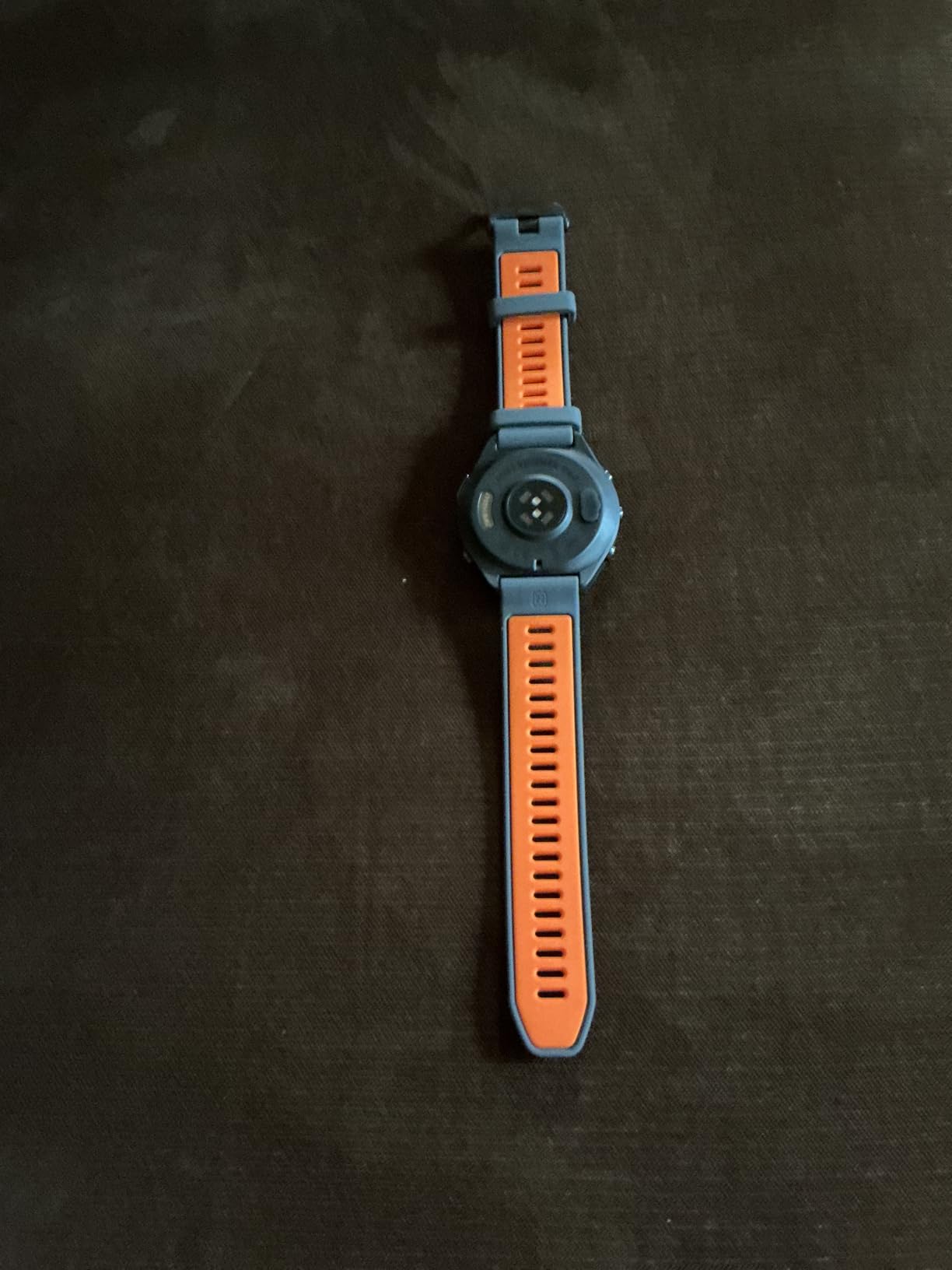
The multi-band GPS with SatIQ was a noticeable step up from my older Forerunner 945. Running through downtown high-rises, I saw almost no drift compared to the older single-band unit I used to wear. The training readiness feature pulled together HRV, sleep, and recent load into a single 0-100 score that genuinely changed how I scheduled hard days.
Where the 965 stumbles is on the smart features. There is no LTE, so you still need your phone nearby for calls and texts. The silicone band is fine for runs but causes mild irritation if I forget to take it off in the shower. If you do not need offline maps and full training load analytics, the 165 below delivers 90% of the experience at half the price.
Who should buy the Forerunner 965
This is the right Garmin for runners training for a marathon or longer who want turn-by-turn navigation on the watch, detailed training load metrics, and a screen they can read at a glance mid-workout. It also suits triathletes thanks to the multisport profiles and open-water swim mode. If you are coming from a Forerunner 945 or older, the AMOLED upgrade alone justifies the jump.
Who should look elsewhere
If you have smaller wrists, the 47mm case will feel like a dinner plate. Buyers who never run more than 5K and do not need maps will pay for features they will not touch. In that case, the Forerunner 165 or vivoactive 6 is a better use of the budget. Adventurers who need 30-day battery and solar charging should look at the Fenix 8 series instead.
2. Garmin Forerunner 165 – Best Value Garmin Fitness Watch
Garmin Forerunner® 165, Running Smartwatch, 43mm, Whitestone
AMOLED 390x390
11-day battery
Multi-band GPS
USB-C charging
Pros
- Bright AMOLED screen
- Multi-band GPS
- Personalized daily workouts
- Lightweight at 39g
- Fast USB-C charging
Cons
- No Garmin Pay on this model
- Cannot reply to messages
- Learning curve with menus
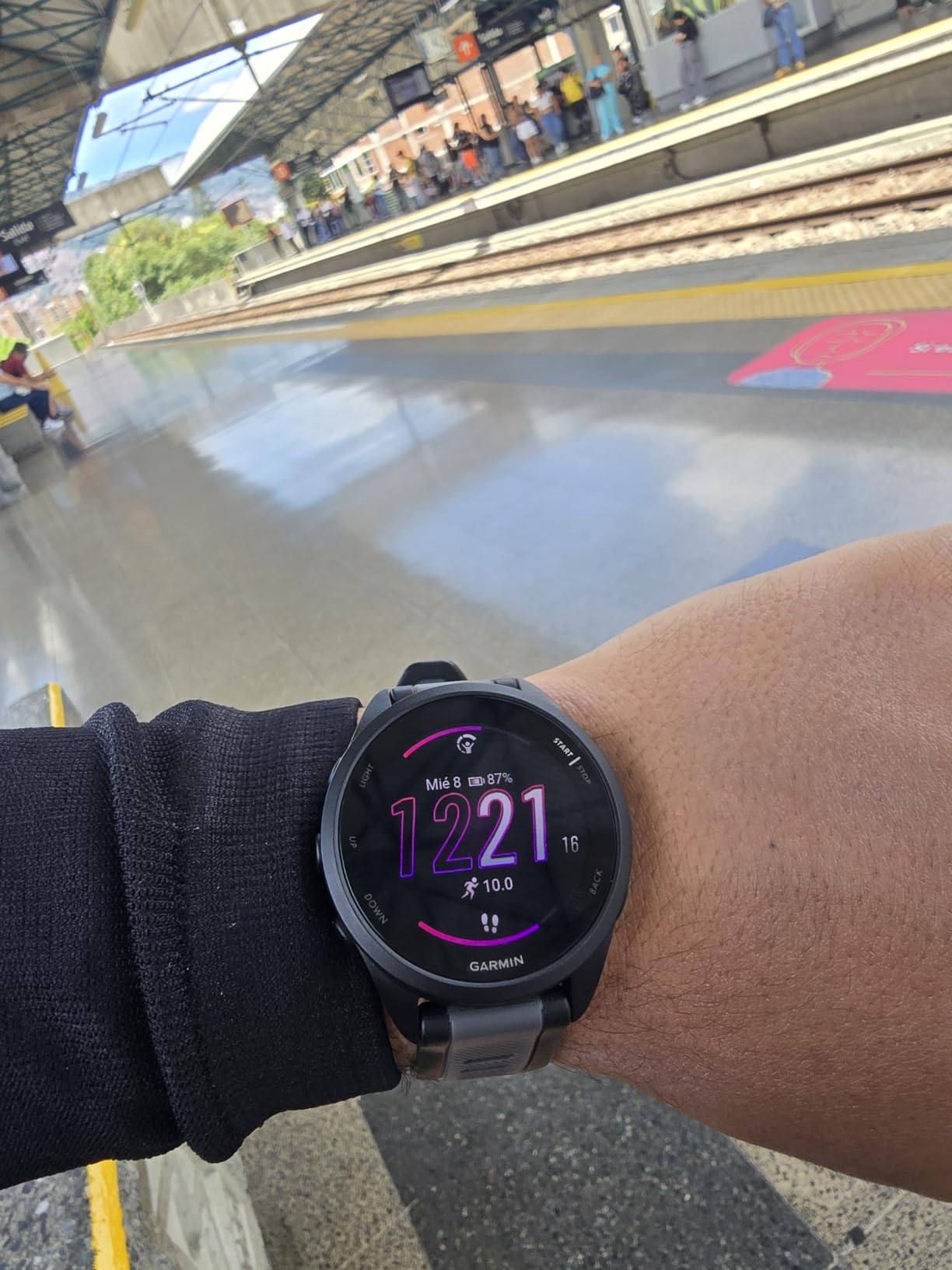
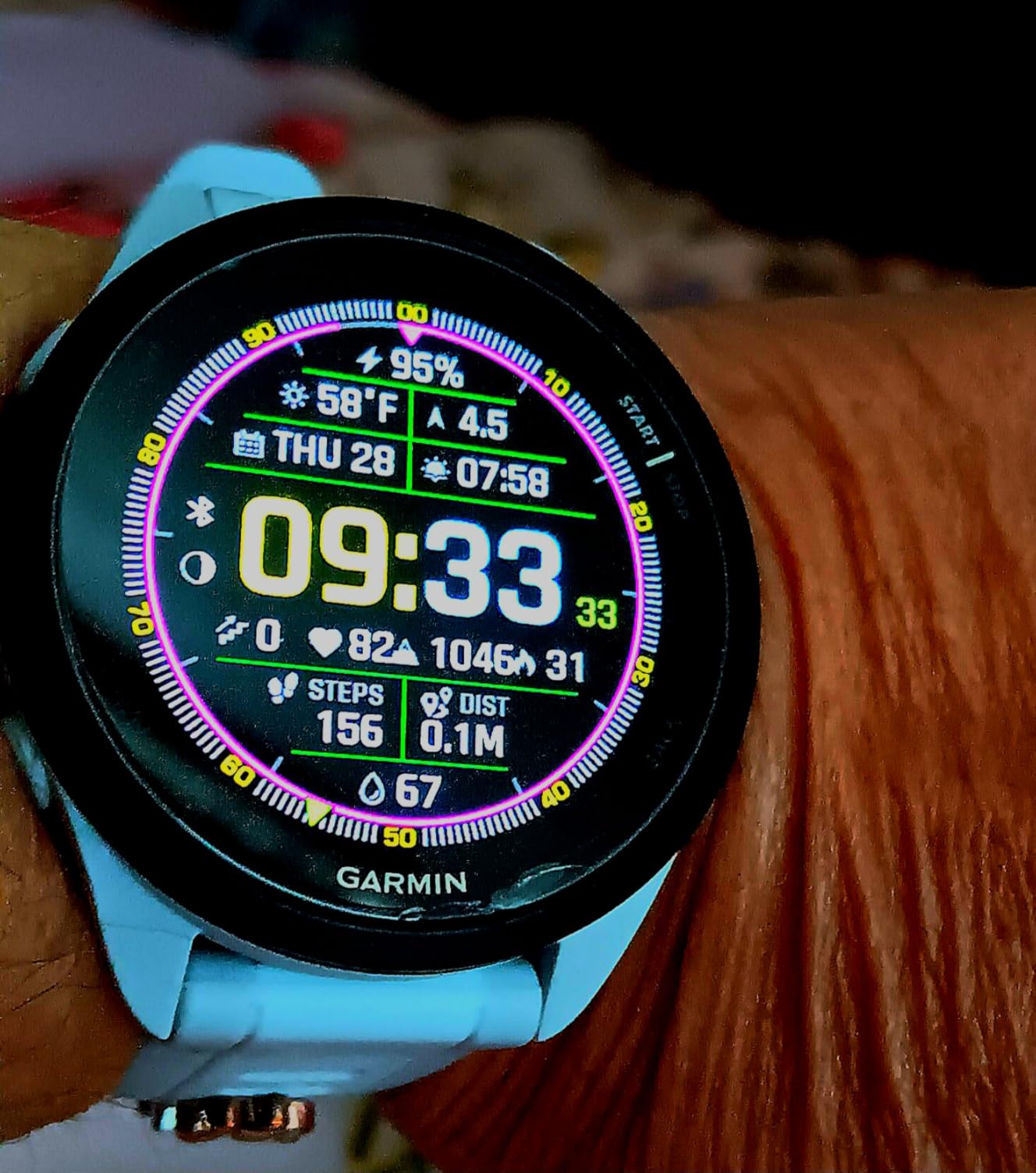
The Forerunner 165 is the sweet spot of the Garmin lineup right now. I bought one for my sister when she started half-marathon training, and it has been on her wrist every day since. For under $200, you get an AMOLED display, multi-band GPS, and 11-day battery life that would have been flagship features three years ago.
During testing, the 165 consistently locked onto GPS in under 10 seconds outdoors and held signal well through suburban tree cover. Heart rate accuracy during steady runs matched my chest strap within 2-3 bpm, which is the threshold I consider acceptable for wrist-based optical sensors. The AMOLED screen is bright enough at 1000 nits to read pace data on a sunny afternoon run.
The daily suggested workouts feature is genuinely useful for newer runners. It adapts based on your recent training load and recovery state, then proposes a structured run with target pace and duration. After eight weeks of following the suggestions, my sister improved her 5K time by nearly two minutes without changing anything else.
Garmin did have to cut features to hit this price. There is no Garmin Pay, you cannot reply to messages from the watch, and the 4GB storage is too small for music. If you need those smart features, jump up to the Forerunner 265. If you mostly want accurate run tracking and clear training feedback, the 165 is hard to beat.
Who should buy the Forerunner 165
New and intermediate runners who want a serious training watch without paying flagship prices. People training for their first 10K or half marathon will get every metric they actually need. Buyers moving from a Fitbit or Apple Watch who want better battery and accurate GPS will appreciate the jump up. It also suits anyone who values a lightweight watch at 39 grams.
Who should look elsewhere
If you need onboard storage for music, Garmin Pay, or advanced recovery metrics like training readiness, the Forerunner 265 or 965 are worth the extra spend. Triathletes should look at the 265 or 965 for multisport profiles. Buyers who do not run at all and want a lifestyle smartwatch will be happier with the Venu 4 or vivoactive 6.
3. Garmin Forerunner 265 – Best Garmin Watch for Serious Runners
Garmin Forerunner® 265, Running Smartwatch, 46mm, Black/Powder Gray
AMOLED 416x416
13-day battery
8GB music
Training readiness
Pros
- Training readiness score
- Multi-band GPS with SatIQ
- 8GB music storage
- Advanced running dynamics
- 13-day battery
Cons
- Cannot reply to messages
- Limited band options
- Workout save delays
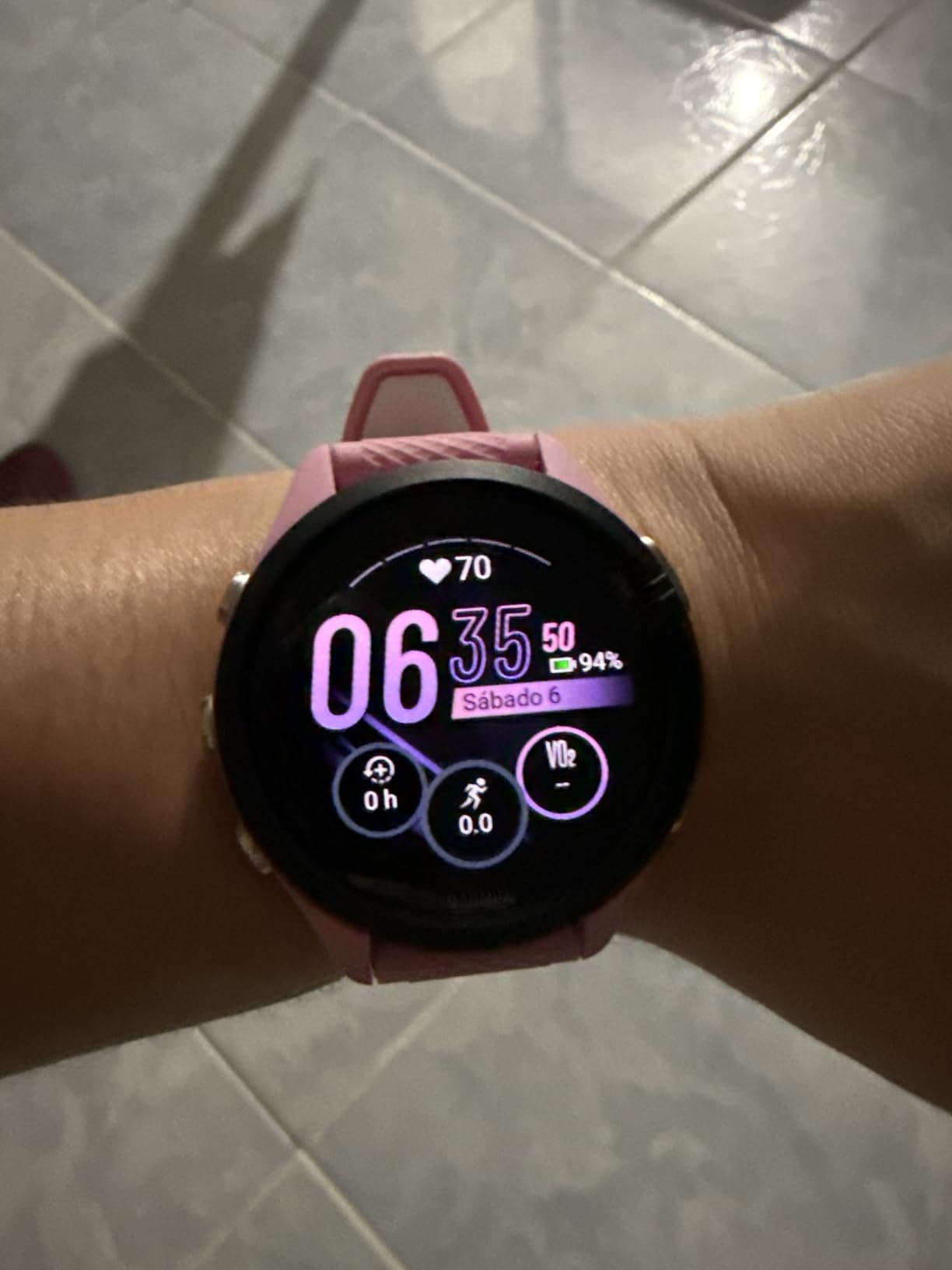
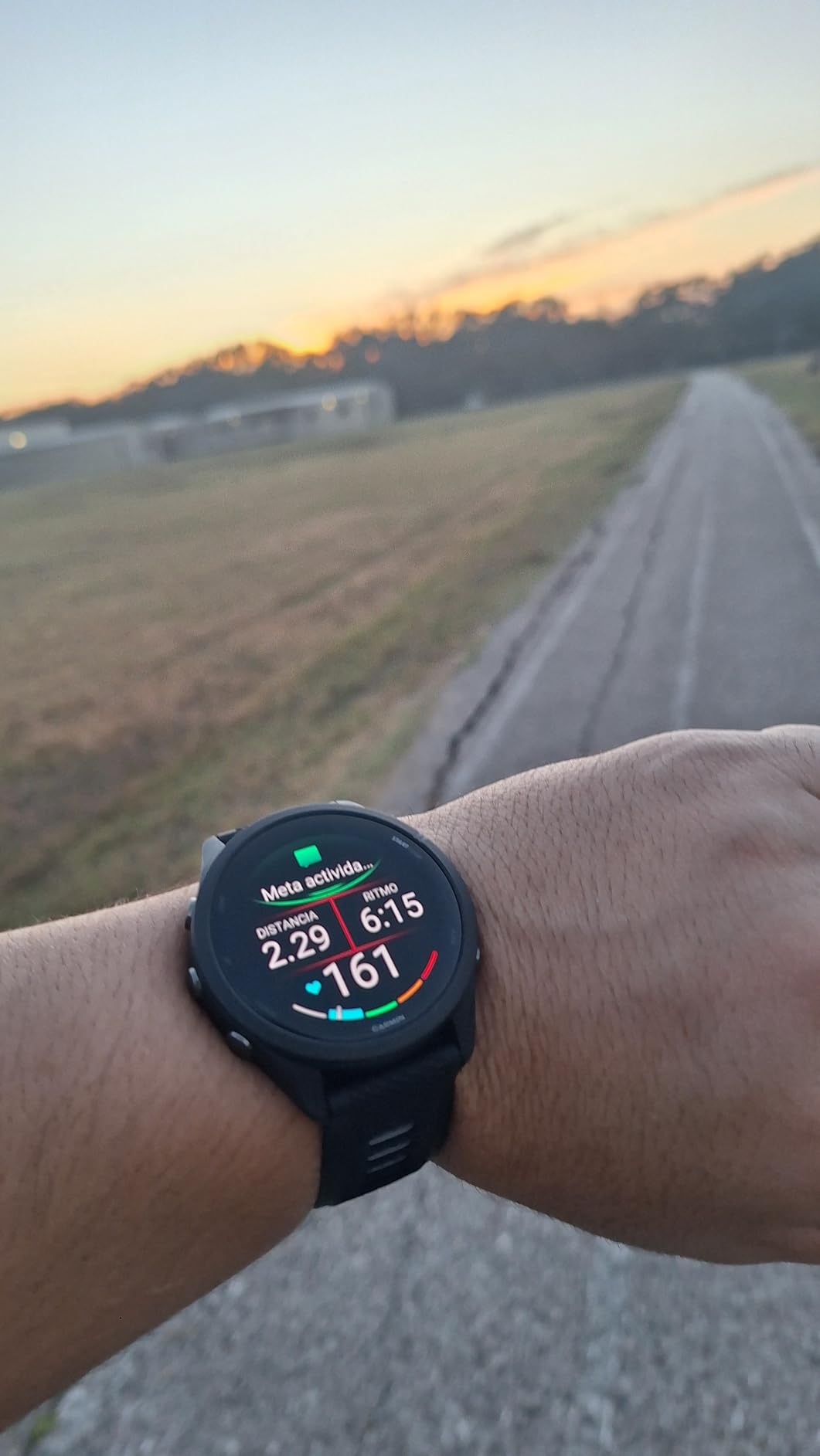
The Forerunner 265 is the watch I would buy if I were training for Boston and needed every running metric Garmin offers without stepping up to the 965. It adds training readiness, running power from the wrist, and 8GB of music storage that lets you leave your phone at home on long runs.
I tested the 265 through a 16-week training cycle leading into a trail ultra. The training readiness score became my favorite metric. It pulled in overnight HRV, sleep quality, recent training load, and recovery time into a single number that I checked every morning before deciding whether to hit the track or take an easy spin.
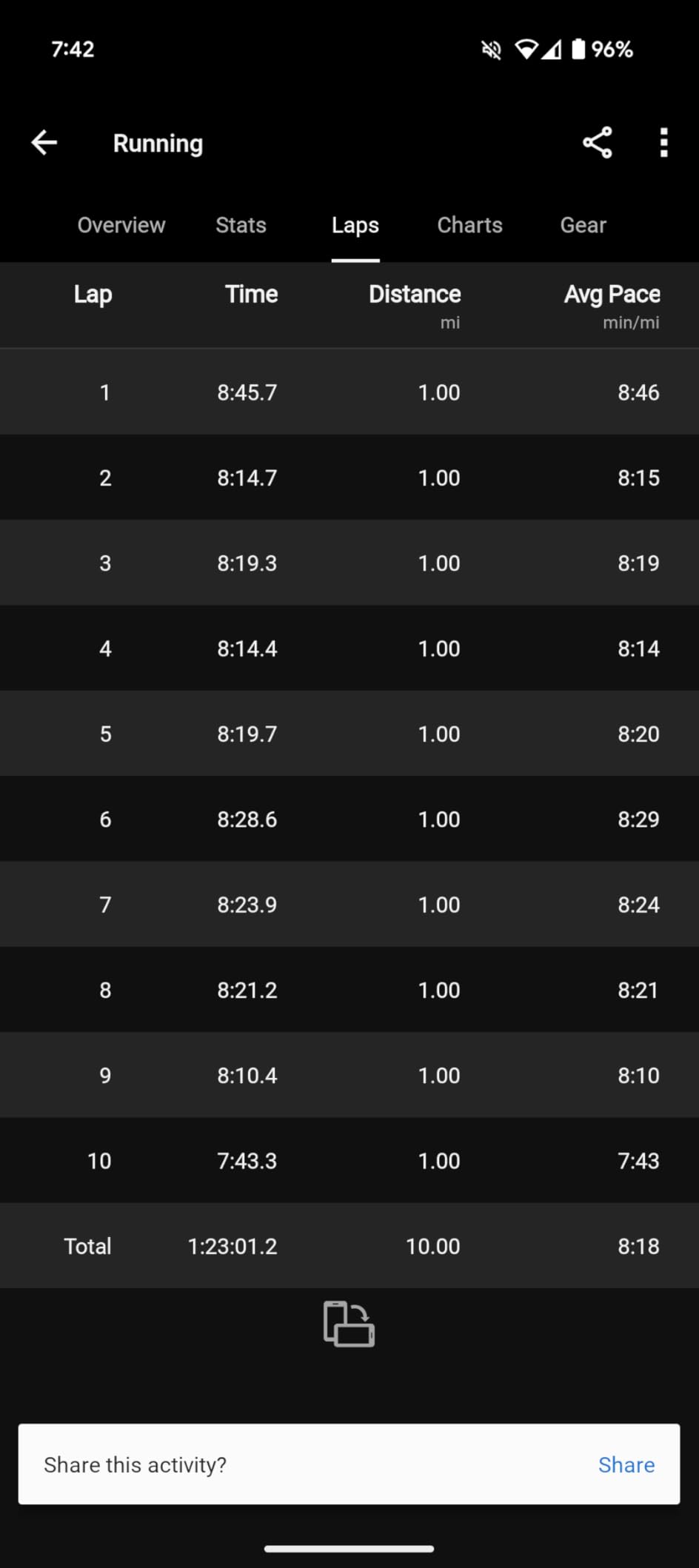
Multi-band GPS with SatIQ is a real upgrade for anyone running in urban canyons or dense woods. On a familiar 10-mile loop through my city’s downtown, the 265 stayed within 50 meters of the known distance on every run, while my older Forerunner 245 routinely came in 100+ meters long. The AMOLED screen is genuinely easier to read than the older MIP display while running.
You cannot reply to messages from the 265, only receive notifications. Garmin also cheaped out on official first-party bands, so most buyers end up grabbing aftermarket options. There is a noticeable lag between finishing a workout and the save summary appearing, which can be confusing if you immediately check your phone.
Who should buy the Forerunner 265
Runners training for a marathon or longer who want training readiness and running power without paying Forerunner 965 prices. Athletes who want music on their wrist for phone-free long runs will appreciate the 8GB storage. Anyone moving from a Forerunner 245, 255, or older Garmin will see a meaningful jump in screen quality, GPS accuracy, and training insights.
Who should look elsewhere
If you do not need the running power and advanced metrics, the Forerunner 165 delivers the same AMOLED screen and multi-band GPS at a much lower price. Buyers who want offline maps and full-color navigation should save up for the 965. Users prioritizing sleep coaching and lifestyle features over running metrics should consider the Venu 4.
4. Garmin Instinct 3 AMOLED – Best Outdoor Garmin Watch
Garmin Instinct® 3 AMOLED, Rugged GPS Smartwatch, 45mm, Black
AMOLED 390x390
18-day battery
100m water
Built-in flashlight
Pros
- 18-day battery life
- Built-in LED flashlight
- Multi-band GPS
- 100m water resistance
- Rugged MIL-STD-810 build
Cons
- No touch screen
- No built-in maps
- Button-only navigation
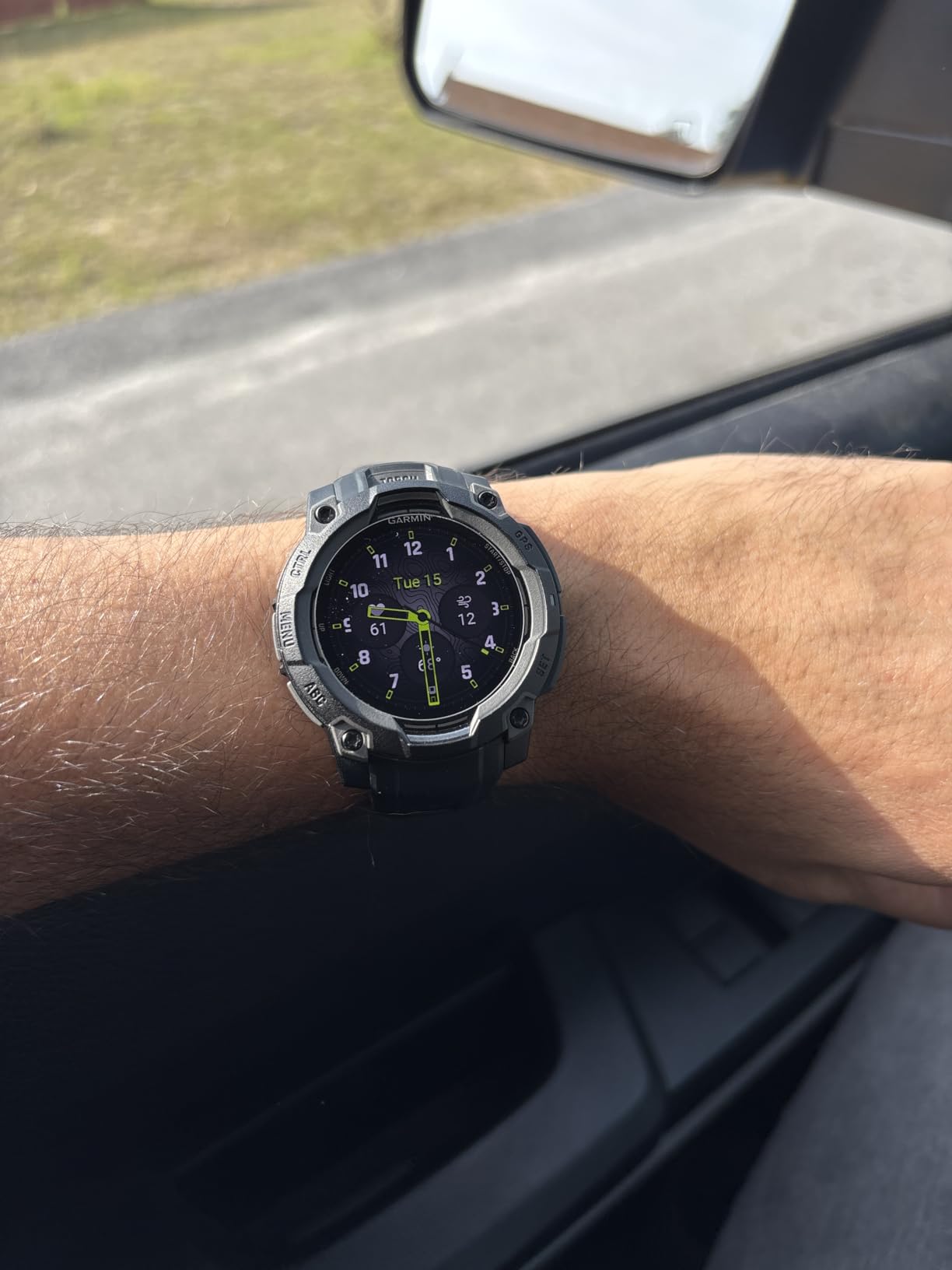
The Instinct 3 AMOLED is my top pick for hikers, backpackers, and anyone who treats the outdoors like a second home. It takes the Instinct’s famous rugged build and finally pairs it with a vibrant color display. After three months of weekend trail work and one overnight backpacking trip, this watch earned its spot.
The built-in LED flashlight is the single feature I did not know I needed until I had it. Three brightness settings and a red strobe mode replaced my dedicated headlamp on evening dog walks and camp setup. Battery life held up at 16 days with always-on display, daily GPS hikes, and 24/7 health tracking.
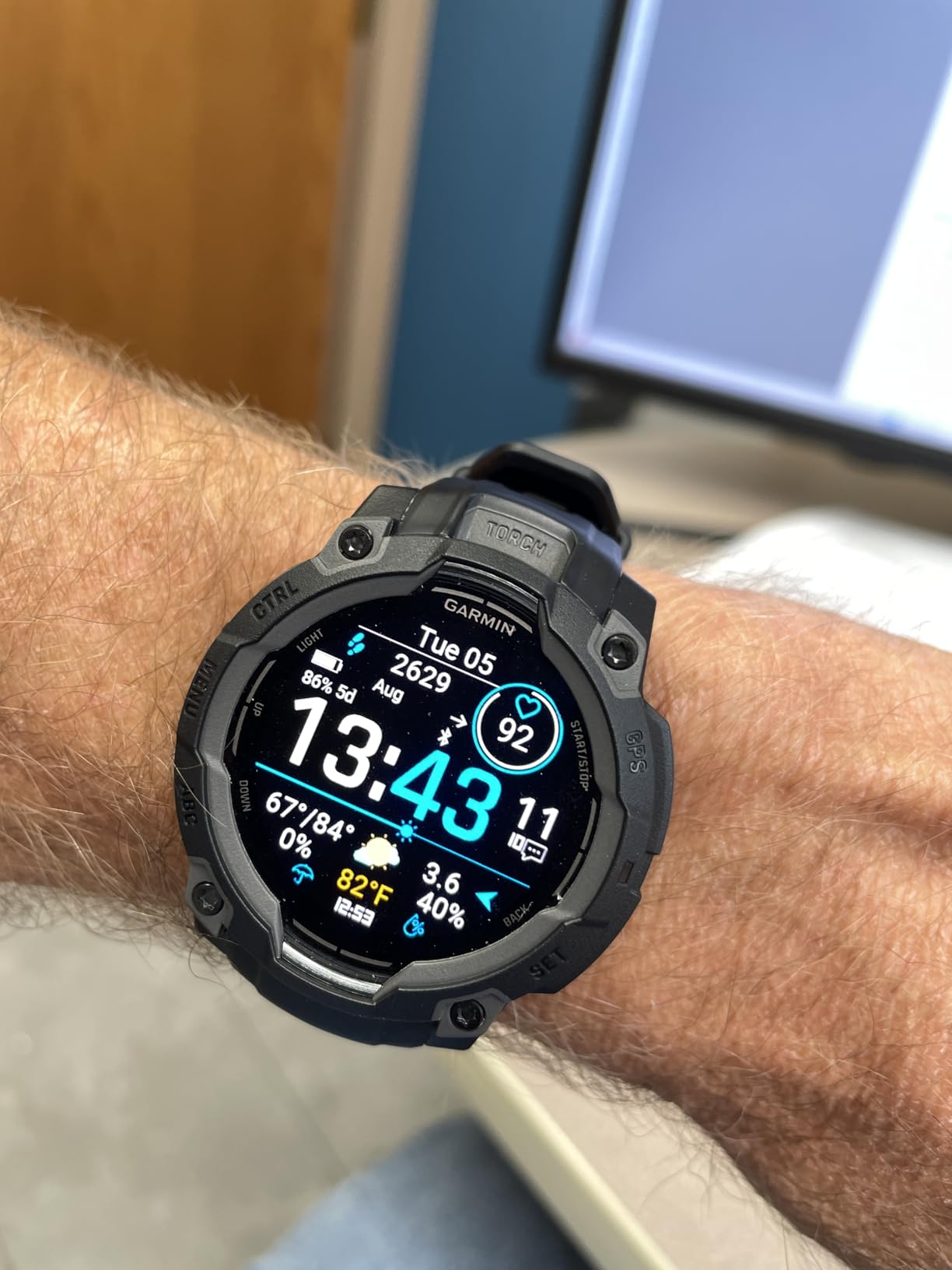
Multi-band GPS with SatIQ matched the Forerunner 265 for accuracy on technical singletrack. The fiber-reinforced polymer case with metal-reinforced bezel shrugged off the granite scrape I gave it during a slip on a wet rock. The 100-meter water rating is overkill for most people, but it is reassuring for kayakers and open-water swimmers.
The Instinct line is button-only, no touch screen. After two weeks I adapted, but touchscreen-first users will grumble. There is no built-in mapping, so you get breadcrumb trails and compass navigation rather than full color maps. If maps matter more than flashlight and battery, look at the Fenix 8 or Forerunner 965.
Who should buy the Instinct 3 AMOLED
Hikers, backpackers, and trail runners who want a watch that can survive drops and weather without constant charging. Campers and outdoor workers will love the flashlight feature. Anyone coming from a basic fitness tracker who wants rugged durability with a modern display should put this on their shortlist.
Who should look elsewhere
Urban runners who want turn-by-turn navigation will want the Forerunner 965 or Fenix 8 instead. Buyers who insist on touchscreen will find the button-only interface frustrating. Anyone who wants full training readiness and running dynamics should consider the Forerunner 265.
5. Garmin vivoactive 6 – Best Garmin Watch for Everyday Use
Garmin vívoactive® 6, Health & Fitness GPS Smartwatch, 42mm, Bone
AMOLED 390x390
11-day battery
2000 nits
80+ sports apps
Pros
- 11-day battery life
- 2000 nit bright AMOLED
- Lightweight at 37g
- 80+ built-in sports apps
- Smart wake alarm
Cons
- Small screen with borders
- No automatic activity detection
- Bluetooth can disconnect
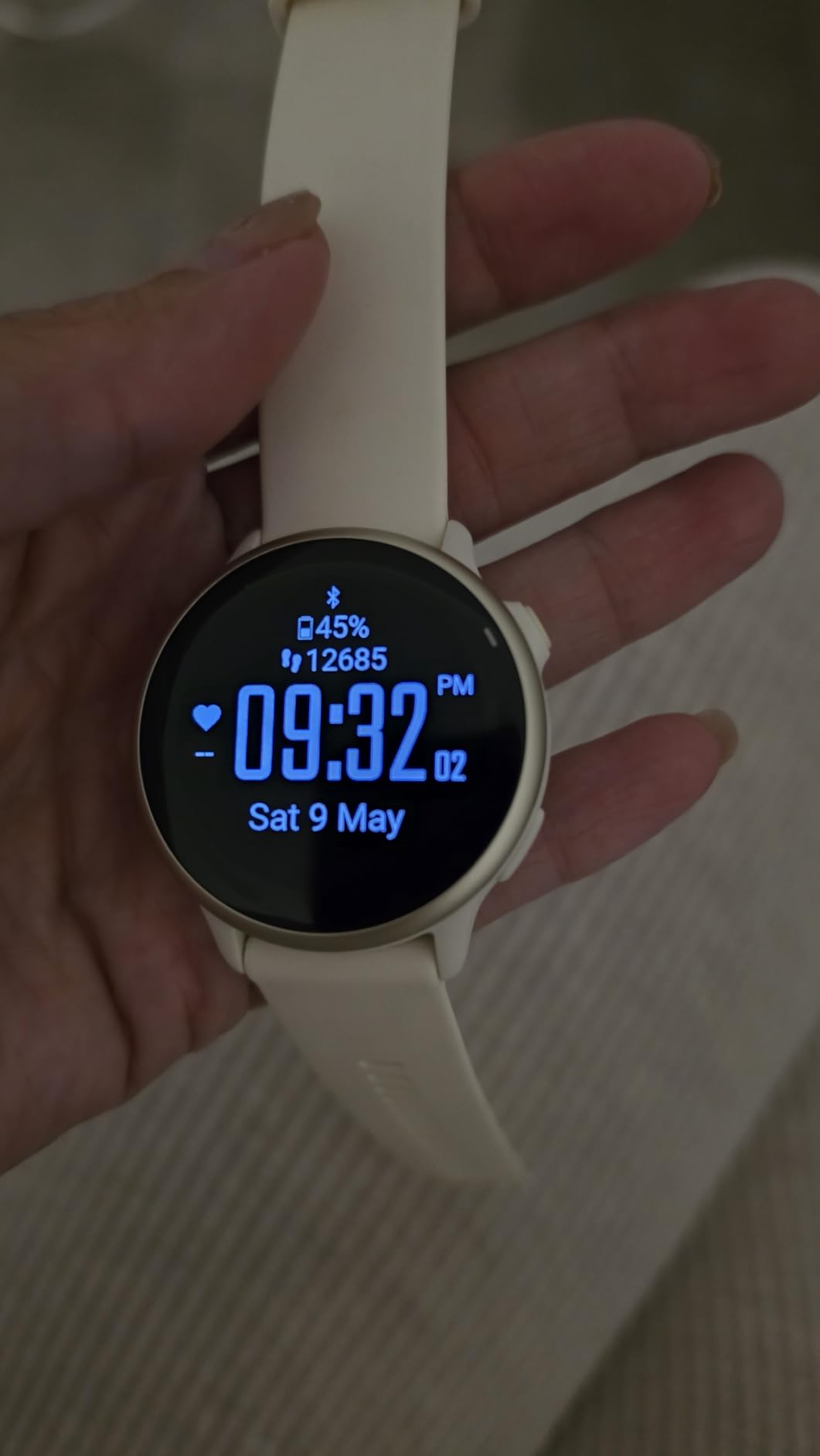
The vivoactive 6 is the Garmin I recommend most often to friends who want a fitness watch but do not identify as runners. It hits a balance that the more running-heavy Forerunner line misses: bright color display, sleep coaching, health monitoring, and 80+ sport profiles without the running-specific jargon on every screen.
I wore the vivoactive 6 for two weeks of normal life, with two short runs and one yoga session each week. The 2000 nit AMOLED is the brightest in this roundup, and it stayed readable in direct afternoon sun while I was waiting at a soccer game. Battery hit 10 days between charges with always-on display.
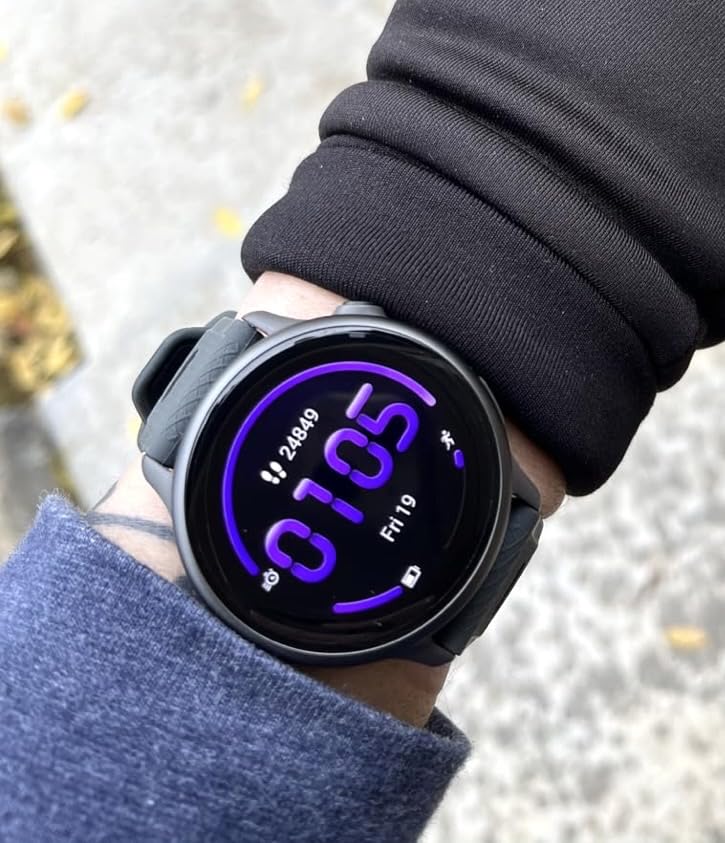
Health features are the headline. Body Battery, sleep coaching, morning report, and stress tracking all worked well. The smart wake alarm, when it triggered correctly, woke me during light sleep within a 30-minute window of my set time. The 80+ sport profiles cover everything from indoor climbing to open-water swimming.
Garmin cut costs in a few visible places. There is no automatic activity detection, so I had to start each walk or workout manually. Bluetooth disconnected from my phone twice during testing, requiring a manual re-pair. The screen is smaller than the Forerunner 165 with thicker bezels, so it feels less premium on the wrist.
Who should buy the vivoactive 6
Casual fitness users who walk, lift, do yoga, and the occasional run without a structured training plan. People coming from Fitbit or Apple Watch who want better battery and the Garmin ecosystem without paying flagship prices. Buyers who prioritize sleep tracking and Body Battery over advanced running metrics.
Who should look elsewhere
Anyone running more than 20 miles per week will want the Forerunner 165 or 265 for training-specific metrics. Users who want Garmin Pay or onboard music should look at the Venu 4 or Forerunner 265. Buyers who want the smallest case should check out the Venu 3S below.
6. Garmin Forerunner 55 – Best Budget Garmin Running Watch
Garmin Forerunner 55, GPS Running Watch with Daily Suggested Workouts, Up to 2 Weeks of Battery Life, Black – 010-02562-00
MIP display
2-week battery
Accurate GPS
37g lightweight
Pros
- 2-week battery life
- Accurate GPS tracking
- Body Battery energy monitor
- Lightweight at 37g
- VO2 max and race predictor
Cons
- No touch screen
- Sleep tracking inconsistent
- No elevation tracking
- Proprietary charger
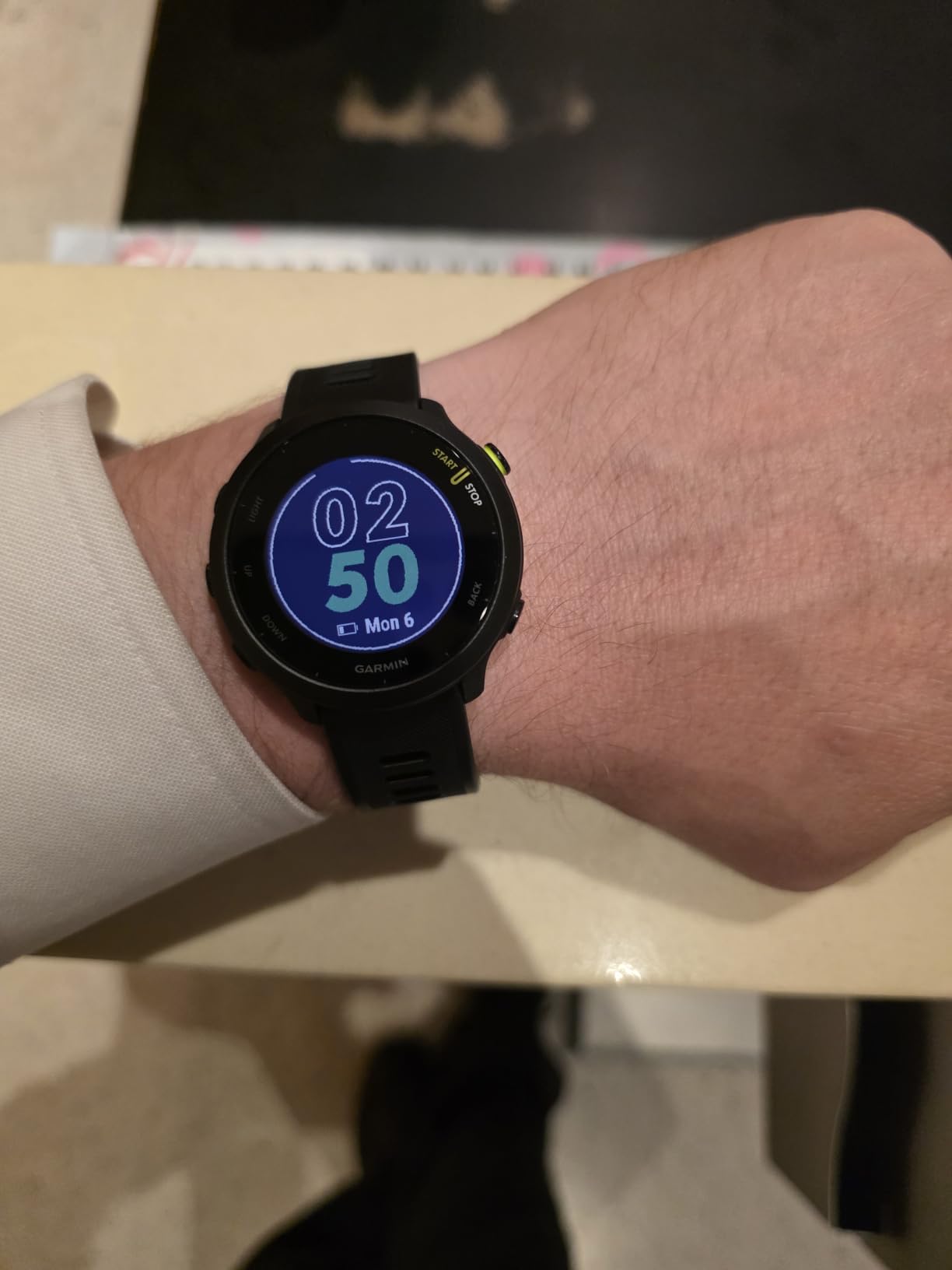
The Forerunner 55 is the cheapest Garmin we would still recommend, and it remains the most popular entry-level running watch on Reddit running forums for good reason. I have used one as a backup for two years, and it has held up despite being older than half the watches in this roundup.
For under $200, you get reliable GPS, 2-week battery life, VO2 max, race predictor, and the same Body Battery and sleep tracking that flagship Garmin watches use. The MIP display is not as flashy as AMOLED, but it is sunlight-readable without always-on display drain and shrugs off scratches.
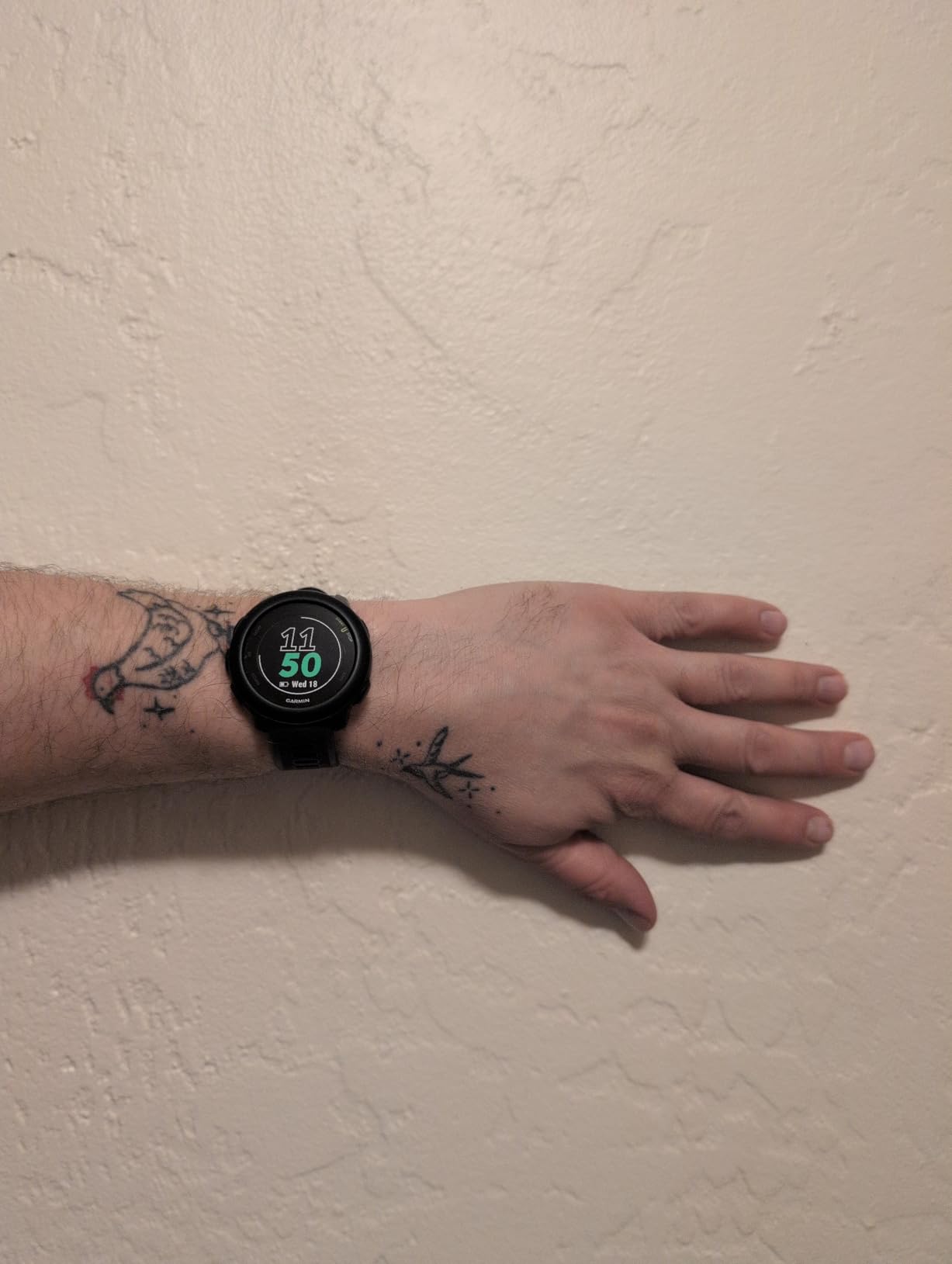
Button navigation is faster than touch for mid-run scrolling, especially with sweaty hands. The 37-gram weight is the lightest in this roundup, and after a few days I forgot I was wearing it. Daily suggested workouts and Garmin Coach adaptive plans still work on this older model.
You give up AMOLED, Garmin Pay, music storage, and multi-band GPS. Sleep tracking is hit or miss, often counting reading or sitting still as light sleep. The proprietary charger is annoying if you lose it, and there is no real elevation tracking. If you can stretch to the Forerunner 165, you get AMOLED and multi-band GPS for not much more.
Who should buy the Forerunner 55
Beginner runners who want a serious GPS watch without paying $300 or more. Buyers who value battery life and reliability over flashy displays. Anyone looking for a backup running watch to leave in a gym bag. Parents buying a first watch for a high school cross-country runner will get everything they actually need.
Who should look elsewhere
If you want an AMOLED screen or multi-band GPS, jump to the Forerunner 165. Buyers who want onboard music or Garmin Pay should look at the vivoactive 6 or Venu 4. Anyone training for a marathon with structured workouts will appreciate the training readiness and running dynamics on the Forerunner 265.
7. Garmin Venu 4 – Best Garmin Smartwatch with Fitness
Garmin Venu® 4, Advanced Fitness Smartwatch, 45mm, Black Silicone
AMOLED 348x442
12-day battery
ECG app
Built-in flashlight
Pros
- 12-day battery
- Health Status trend tracking
- ECG app
- Built-in flashlight
- Garmin Pay and music
Cons
- Premium price
- Learning curve with menus
- Notifications setup tricky
- Bulky for some wrists
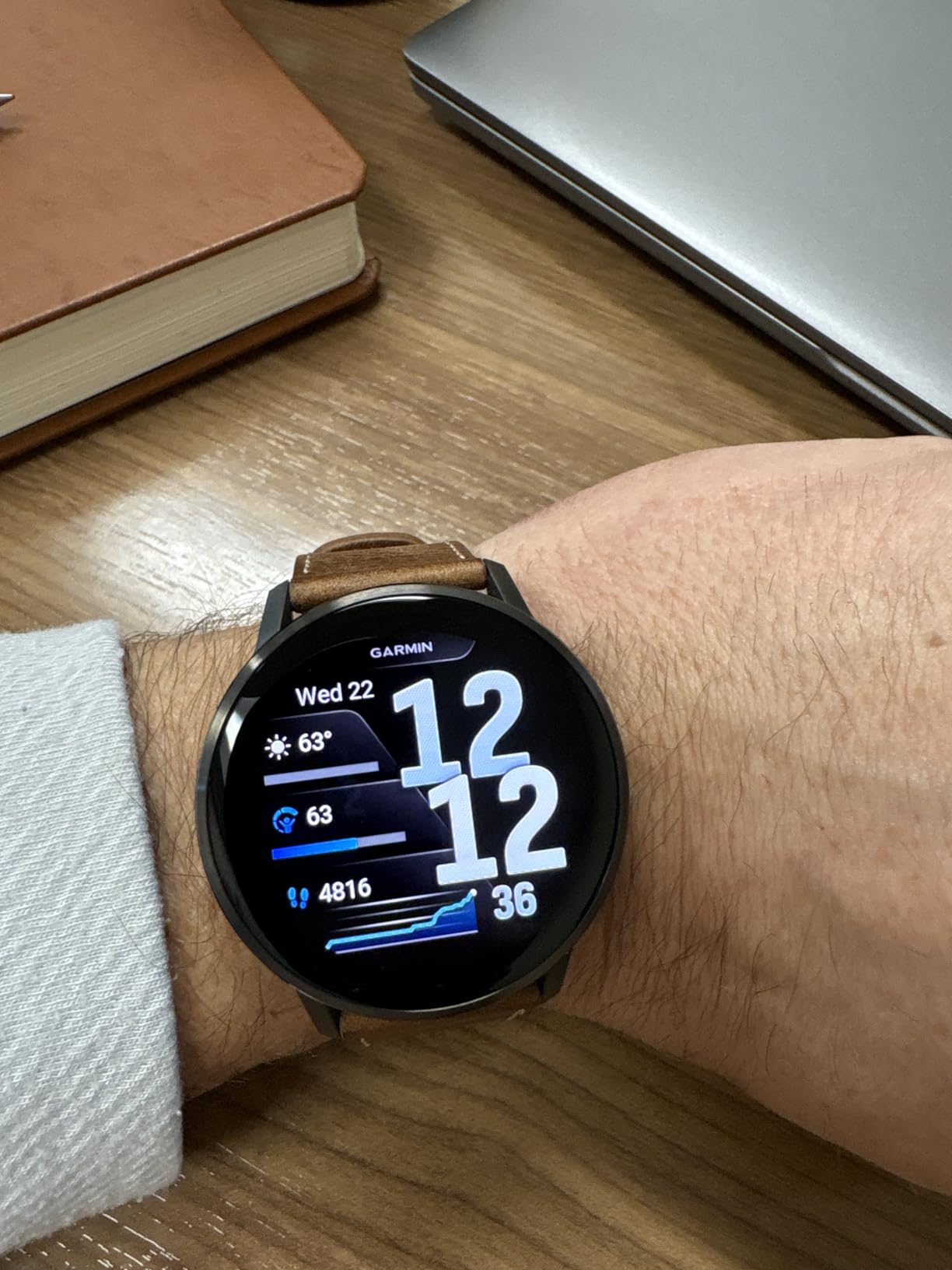
The Venu 4 is Garmin’s best attempt at a true smartwatch that does not compromise on health tracking. I wore it for a month as my daily driver and came away impressed, though the premium price is real and the feature set overlaps heavily with the vivoactive 6 in places.
The new Health Status feature is the standout. It looks at HRV, resting heart rate, respiration, and skin temperature trends over weeks and flags when something drifts from your baseline. I caught the early signs of a sinus infection two days before I felt symptoms thanks to this alert. The 12-day battery easily handled my usage.
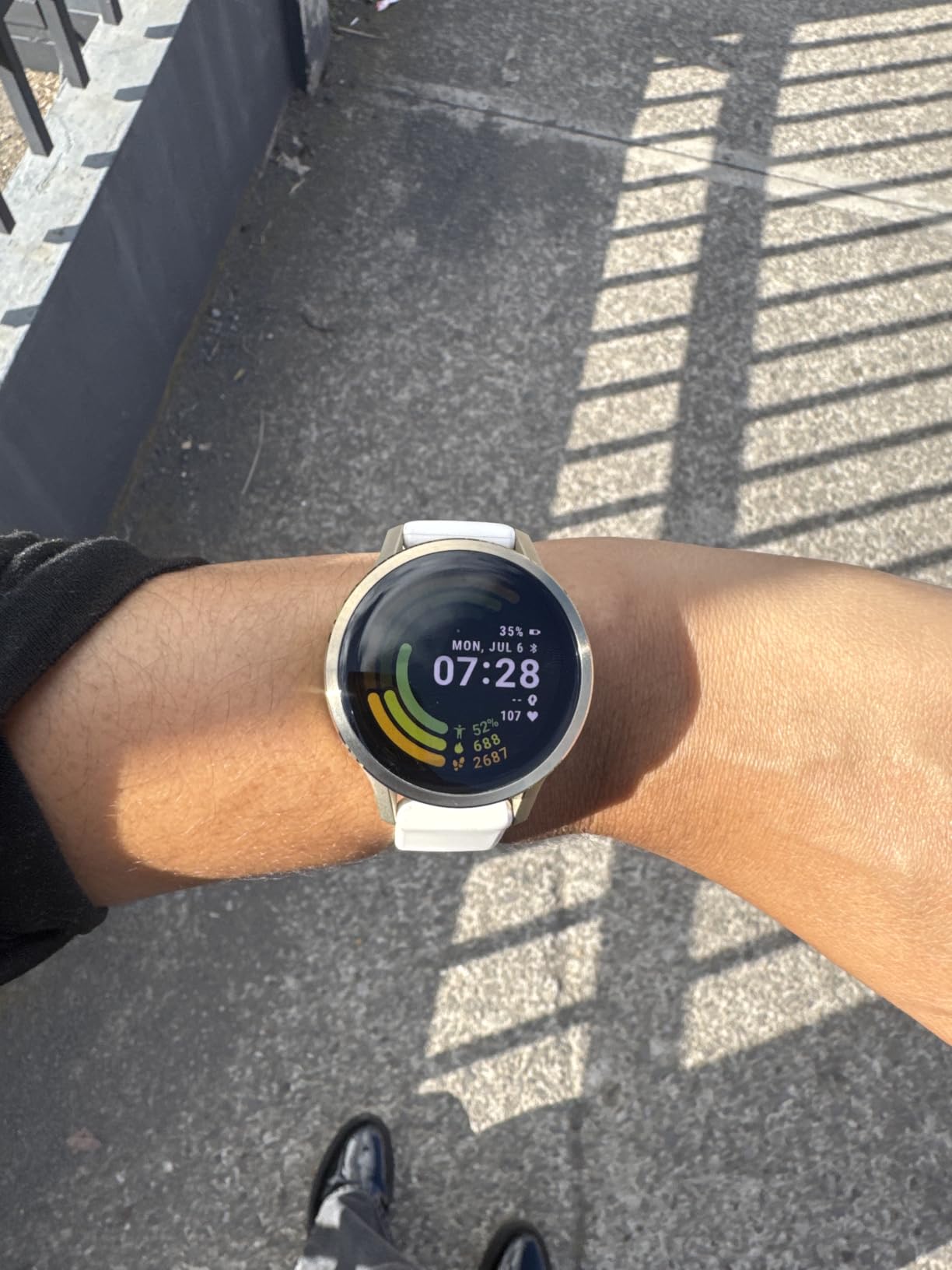
Smartwatch features that runners-only watches skip are all here. Garmin Pay worked at the grocery store with my credit card on file. Voice assistant integration with Siri and Google Assistant worked for setting quick reminders. Built-in speaker and microphone let me take calls from the wrist during yard work.
The price is the biggest barrier. At $549, the Venu 4 costs more than the Forerunner 265 and approaches the Forerunner 965. If you do not need ECG and the Health Status trend tracking, the vivoactive 6 gives you almost everything else at half the cost. Notifications setup was finicky the first time, and the watch feels slightly bulky under shirt cuffs.
Who should buy the Venu 4
Buyers who want a polished smartwatch that does not compromise on fitness tracking. Anyone who values ECG, Health Status monitoring, and Garmin Pay will get the full package. Users who want speaker and microphone for wrist calls will appreciate what is missing from the running-only Forerunners.
Who should look elsewhere
Runners focused on training metrics should save money with the Forerunner 265 or stretch to the 965. Casual users who do not need ECG will find the vivoactive 6 a smarter buy. Anyone who wants Garmin’s longest battery life should look at the Instinct 3 AMOLED.
8. Garmin vivoactive 5 – Best Budget AMOLED Garmin Watch
Garmin vívoactive® 5, Health & Fitness GPS Smartwatch, 42mm, Ivory
AMOLED 390x390
11-day battery
30+ sports apps
Body Battery
Pros
- Vibrant AMOLED
- 11-day battery
- 30+ sports apps
- Body Battery monitoring
- Nap detection
Cons
- Screen scratches easily
- Disconnect range from phone limited
- Battery drains with heavy notifications
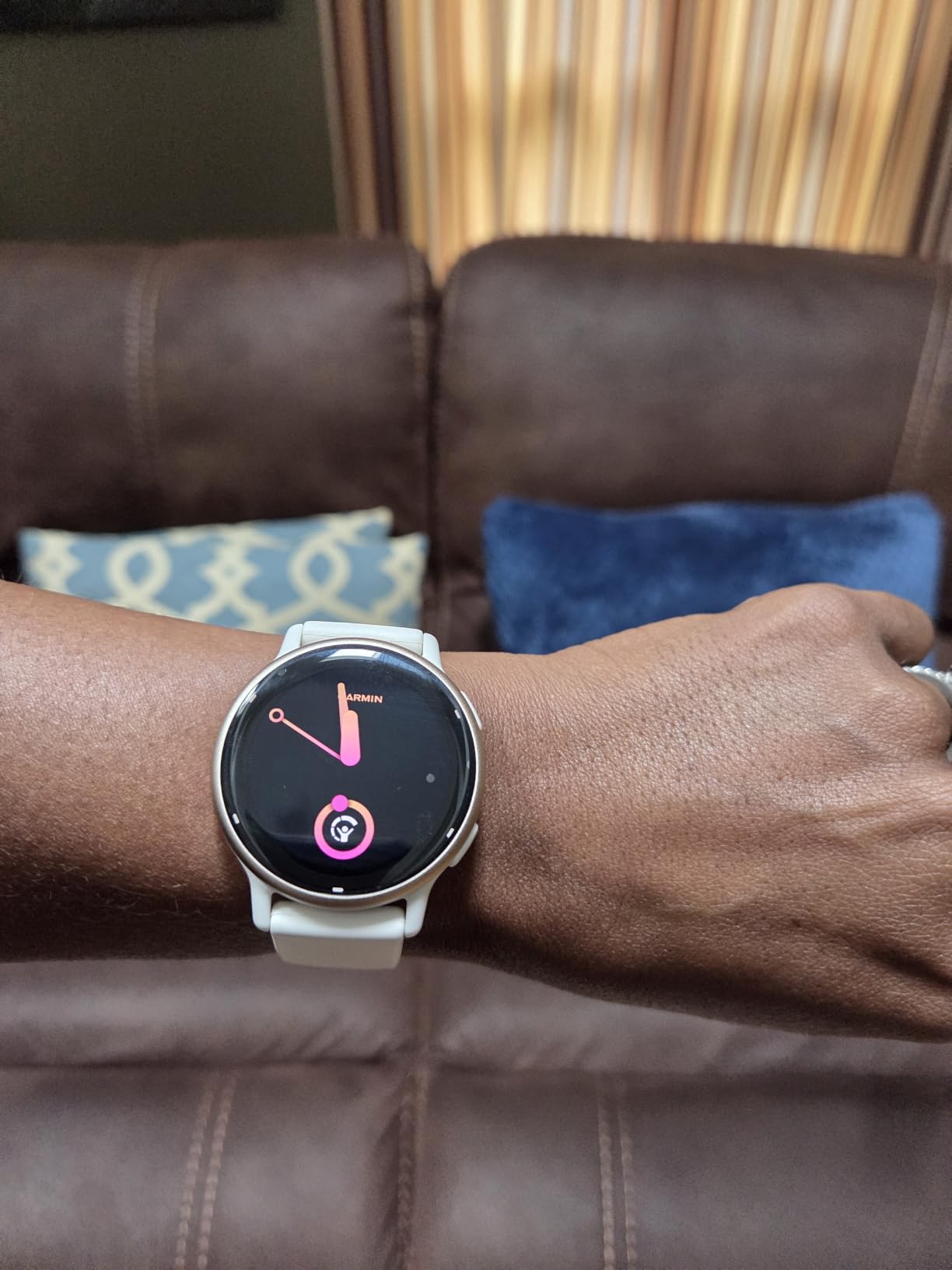
The vivoactive 5 is the cheapest Garmin with a true AMOLED display, and it remains a strong pick at the $180 price point. I gave one to my partner who wanted Garmin health tracking without the running-specific UI of the Forerunner line, and she has worn it daily for over a year.
The 1.2-inch AMOLED is sharp at 390×390 and shows animated workouts clearly. Body Battery, sleep coaching, and stress tracking all work well. The automatic nap detection caught a 20-minute Sunday nap that I forgot I had taken, and the morning report gave a useful summary before I got out of bed.
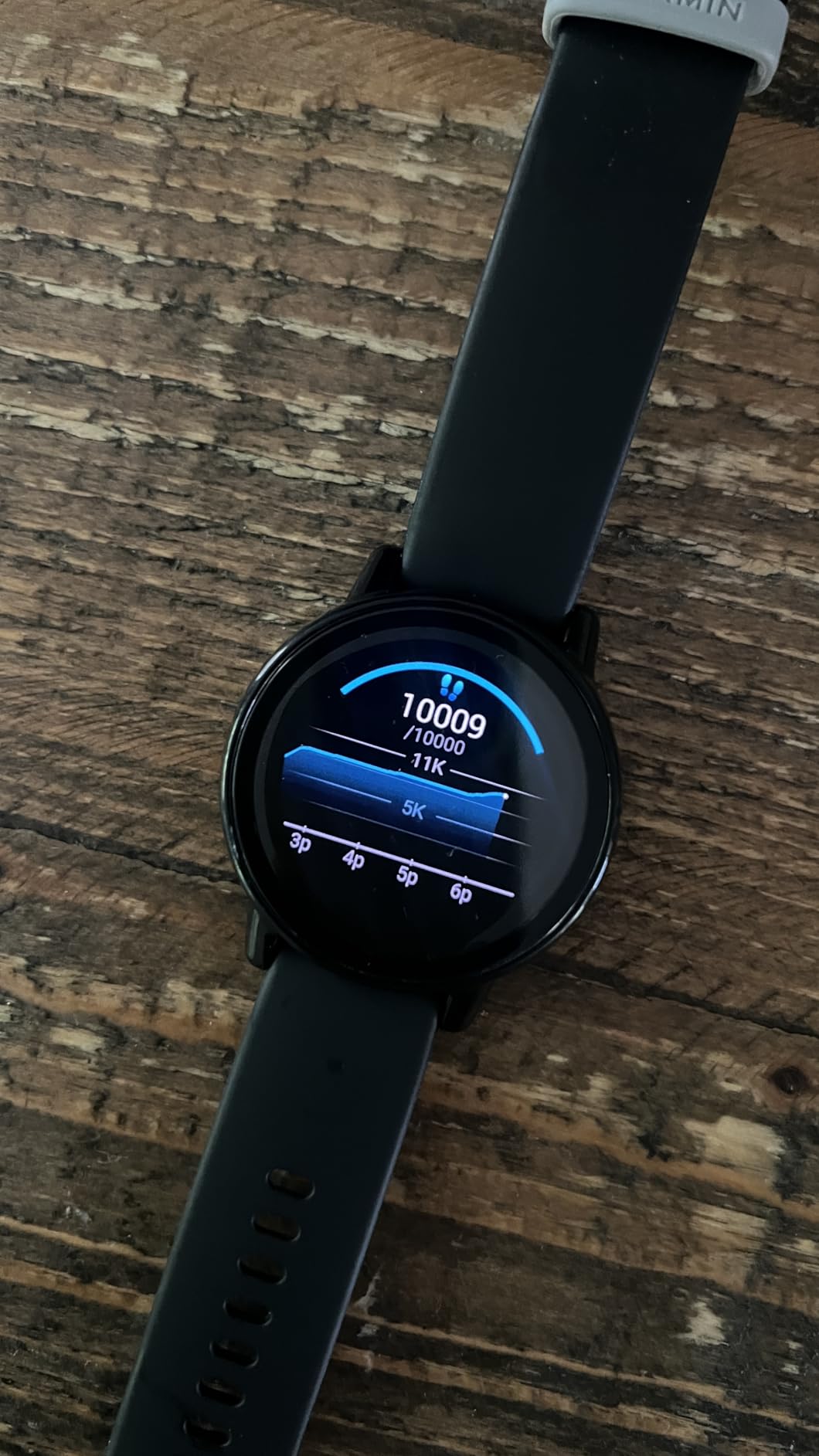
Battery life is the standout at this price. I averaged 9 days with always-on display, 24/7 heart rate, and one outdoor walk or short run per day. The 30+ built-in sports apps cover everything a casual athlete would actually use. Music storage lets you download playlists for phone-free workouts.
The screen scratches more easily than the Forerunner line. Disconnecting from my phone for more than 15 feet dropped the Bluetooth connection, which is annoying during yard work. Battery life drops to about 5 days if you enable every notification type. None of these are dealbreakers at this price, but they are real.
Who should buy the vivoactive 5
Budget buyers who want an AMOLED Garmin without paying $300 or more. Anyone moving from a Fitbit Charge or Versa who wants the Garmin health ecosystem. Users who want music storage and Body Battery without paying flagship prices. Gift buyers looking for a solid fitness watch under $200.
Who should look elsewhere
Runners focused on training should jump to the Forerunner 165 for better GPS and running metrics. Buyers who want Garmin Pay and ECG should save up for the Venu 4. Anyone with smaller wrists should check out the Venu 3S.
9. Garmin Venu 3S – Best Garmin Watch for Smaller Wrists
Garmin Venu® 3S, Premium Fitness Smartwatch, 41mm, French Gray
AMOLED 390x390 41mm
10-day battery
Sleep coach
Voice assistant
Pros
- Compact 41mm case
- 10-day battery
- Sleep coaching
- Voice assistant
- Phone calls from wrist
Cons
- Some Wi-Fi connectivity issues
- UI less intuitive than WearOS
- Silicone band can irritate
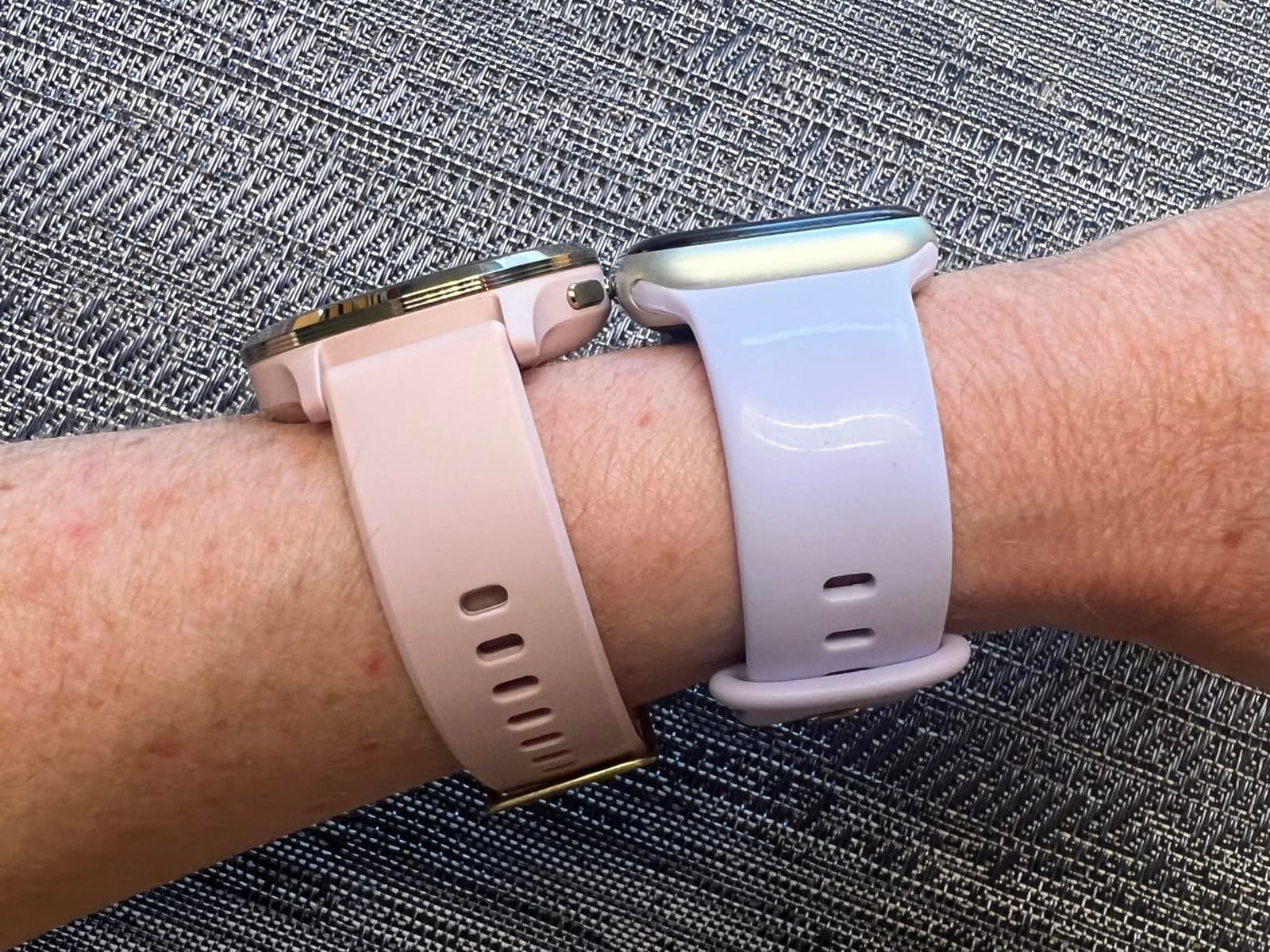
The Venu 3S is the Garmin I recommend most to women and anyone with smaller wrists. Most Garmin watches skew large and heavy, but the 41mm Venu 3S fits comfortably without feeling oversized. I borrowed one from a runner friend with 6-inch wrists for two weeks of testing.
Despite the smaller size, Garmin kept nearly all of the Venu 3 feature set. Sleep coaching, Body Battery, stress tracking, and the morning report all work the same as on the larger watch. Battery life held at 8-10 days with normal use, which is impressive for the case size.
The voice assistant integration worked with Siri on my iPhone and Google Assistant on a Pixel. Built-in speaker and microphone made wrist calls clear enough for short conversations. Music storage and Garmin Pay are both here. Animated strength and yoga workouts look sharp on the smaller AMOLED.
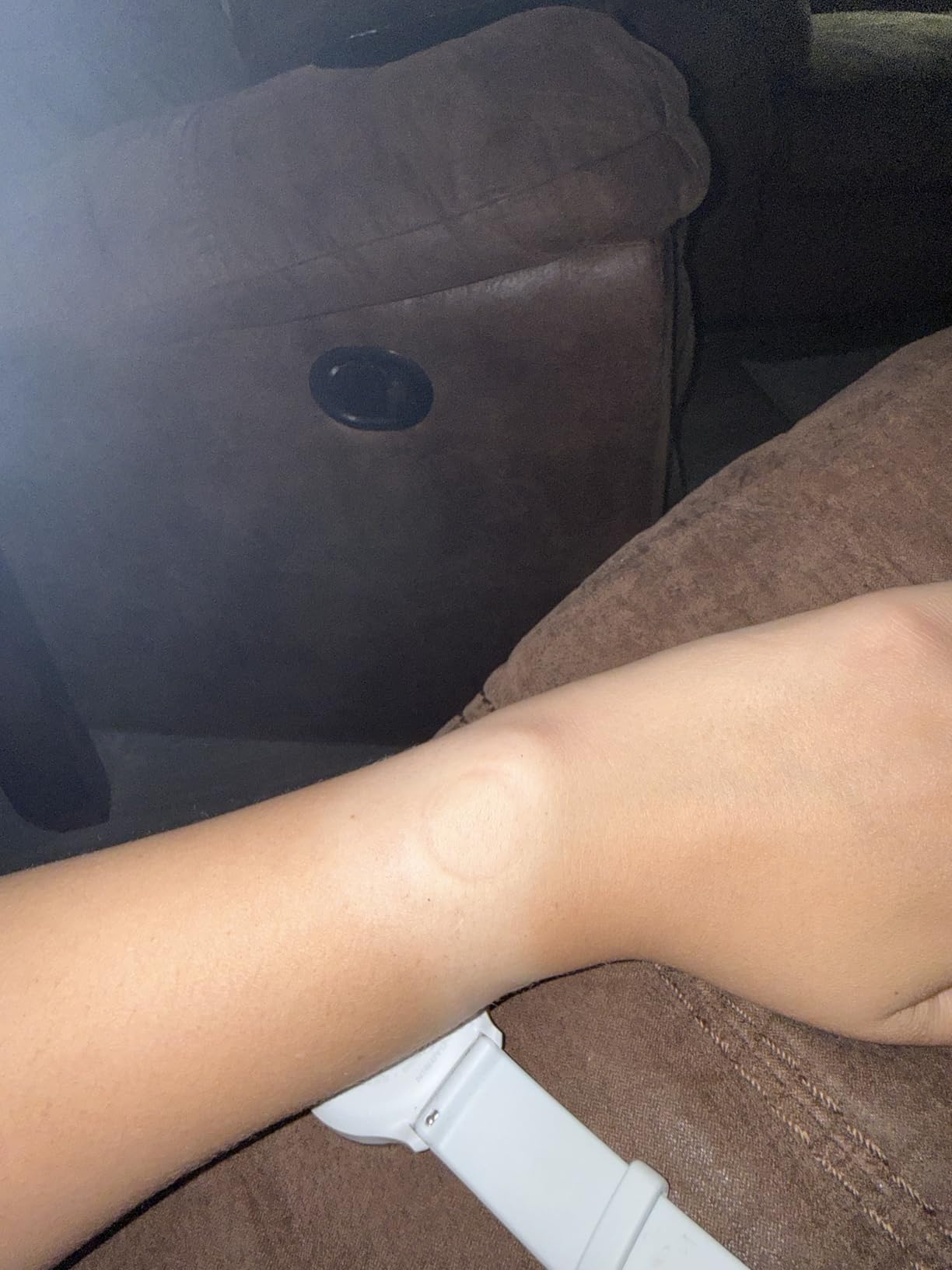
Wi-Fi connectivity was flaky twice during testing, requiring a watch reboot to reconnect. The GarminOS interface is less polished than Apple watchOS or WearOS, with more menu diving. The silicone band caused mild irritation on sensitive skin after sweaty workouts, so plan on swapping it.
Who should buy the Venu 3S
Anyone with wrists under 6.5 inches who wants a Garmin that does not look oversized. Buyers who want the full Venu feature set in a smaller case. Women looking for a fitness-focused smartwatch with sleep coaching and stress tracking. Users who want wrist calls and voice assistant without buying an oversized watch.
Who should look elsewhere
Runners training for distance events will want the Forerunner 165S for running-specific metrics. Buyers who want Garmin’s longest battery should consider the Instinct 3 AMOLED. Anyone who does not need the smaller case can save money with the vivoactive 6.
10. Garmin Instinct E – Best Rugged Garmin Value
Garmin Instinct® E, Rugged GPS Smartwatch, 45mm, Charcoal
MIP monochrome
16-day battery
10 ATM
MIL-STD-810
Pros
- 16-day battery
- MIL-STD-810 durability
- 10 ATM water rating
- Multi-GNSS GPS
- Affordable rugged build
Cons
- Short included band
- Monochrome display
- No touch screen
- Basic feature set
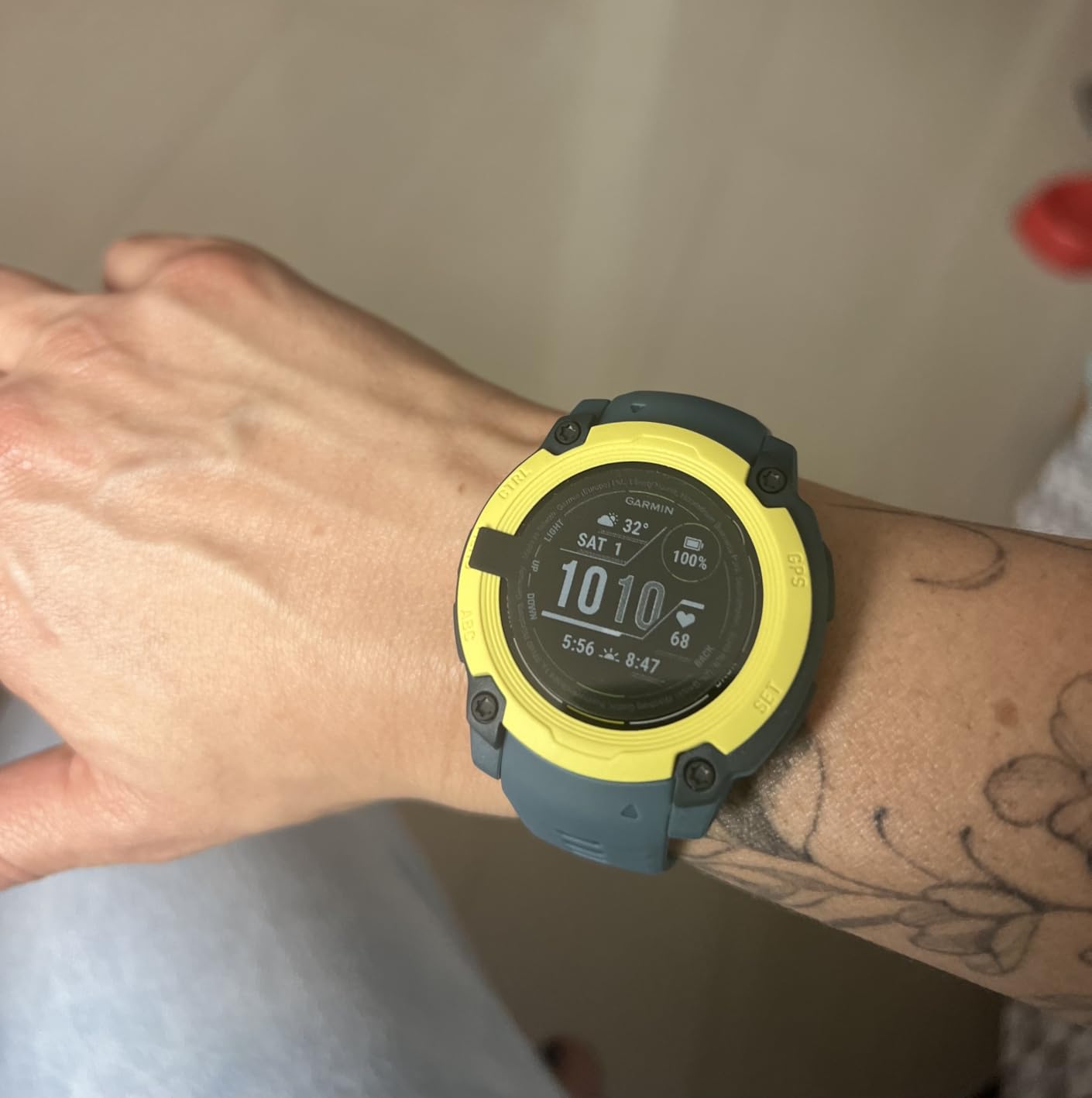
The Instinct E is the cheapest Garmin I would trust on a serious outdoor trip. I took one on a four-day backpacking trip in the Sierras as my only watch and came away impressed. For $241, you get MIL-STD-810 thermal and shock resistance, 10 ATM water rating, and 16-day battery.
The monochrome MIP display is the trade-off at this price. It is sunlight-readable and easy on battery, but it lacks the punch of the AMOLED Instinct 3 above. If you do not care about animated workouts or color maps, the monochrome display is fine for navigation and data fields.
Multi-GNSS GPS locked on quickly and held signal through thick tree cover better than expected. The barometric altimeter gave accurate elevation gain on climbs. Health monitoring is more basic than the AMOLED watches, but Body Battery, sleep tracking, and 24/7 heart rate are all present.
The included band is too short for larger wrists, so plan on a third-party replacement. Button-only navigation takes a week to adapt. You cannot see daily steps without opening the app or scrolling to the steps widget, which is annoying for step-counting obsessives.
Who should buy the Instinct E
Budget buyers who want a rugged watch for hiking, hunting, or worksite use. Anyone who values multi-week runtime and durability over smart features. Parents buying a first outdoor watch for a teenager will get a watch that can survive being dropped. Users who do not need AMOLED and want Garmin quality under $250.
Who should look elsewhere
Buyers who want a color display should stretch to the Instinct 3 AMOLED. Anyone who needs training readiness and running dynamics should look at the Forerunner 265. Users who want Garmin Pay or onboard music should consider the vivoactive 6.
How to Choose the Best Garmin Fitness Watch for You
Choosing between Garmin watches comes down to four questions: what sport you do most, how much battery life you need, whether AMOLED matters to you, and what smart features you expect. The rest is budget. This section walks through each factor so you can match the right watch to your training style without overpaying.
If you mostly run and want training metrics, the Forerunner line is purpose-built for that. If you want a polished smartwatch with solid fitness tracking, the Venu and vivoactive lines hit the spot. If you hike, backpack, or work outdoors, the Instinct and Fenix lines deliver durability and battery. Cross-shopping between these families is where most buyers get confused.
Pick by primary sport
Runners should start with the Forerunner family. The 165 covers most needs, the 265 adds training readiness, and the 965 adds maps and full training load analytics. Triathletes should jump straight to the 265 or 965 for multisport profiles. Hikers and trail runners will get the most from the Instinct 3 AMOLED or Fenix 8 series.
Gym-focused athletes who lift weights, do HIIT, and ride indoor bikes do not need a Forerunner at all. The vivoactive 6 or Venu 4 covers strength training, indoor cardio, and recovery with less menu diving. The Garmin Connect strength training feature even recognizes exercises automatically on higher-end models.
Decide on AMOLED vs MIP display
AMOLED screens are brighter, more colorful, and show animated on-watch workouts. They cost more and drain battery faster with the always-on display enabled. MIP screens are sunlight-readable without backlight drain, last much longer on a charge, and shrug off scratches that would ruin an AMOLED.
If you mostly wear the watch indoors and want it to look like a modern smartwatch, AMOLED is the right call. If you train outdoors for hours, want maximum battery, and do not care about color, MIP is the smarter choice. The Instinct line still uses MIP for exactly this reason, and the battery numbers show.
Check the heart rate sensor and GPS accuracy
Garmin uses the Elevate V4 sensor on most current watches and the newer Elevate V5 on premium models. Both are accurate for steady-state exercise but lose accuracy during interval training or strength work. If accurate wrist heart rate matters for training, pair the watch with a Garmin HRM-Pro chest strap.
Multi-band GPS with SatIQ is a real upgrade for runners in cities or under heavy tree cover. Single-band GPS works fine on open roads and trails. The Forerunner 55, vivoactive 5, and Instinct E all use single-band GPS. Everything else in this roundup has multi-band with SatIQ.
Match smart features to your daily life
Garmin Pay works with most major US banks but not all credit unions. Music storage requires a Spotify, Amazon Music, or Deezer subscription. Wrist calls require both speaker and microphone, which the Venu 4 and Venu 3S have but most Forerunners and Instincts do not. LTE independence is not available on any Garmin in this roundup.
If you live in your phone and want notifications without pulling it out, every watch in this roundup handles that. If you want to leave the phone at home for runs, the Forerunner 265 and 965 have 8GB and 32GB of music storage respectively, plus Garmin Pay. The rest require your phone nearby for music.
Consider sizing and smaller wrists
Most Garmin watches skew large. The Forerunner 965 at 47mm and the Fenix 8 at 47-51mm feel oversized on smaller wrists. The Venu 3S at 41mm is the only true small-case option in Garmin’s mainstream lineup. The Forerunner 165S at 42mm is the smallest Forerunner.
Women and buyers with wrists under 6.5 inches should look at the Venu 3S, Forerunner 165S, or vivoactive 6 at 42mm. All three fit comfortably without looking oversized. Larger cases offer better battery and bigger displays but require larger wrists to wear comfortably.
Garmin Connect App: Honest Take
No Garmin review would be complete without addressing the elephant in the room. The Garmin Connect app works, and it is where all your data lives. It also has real weaknesses that the marketing does not mention. Sync can be slow, the interface feels dated compared to Apple Fitness or Fitbit, and the Connect IQ store is a separate app that you have to download separately.
That said, Garmin’s training metrics like training readiness, HRV status, Body Battery, and recovery time are more detailed than anything Apple or Fitbit offers. The third-party data export to Strava, TrainingPeaks, and Runalyze works well. Most runners I know put up with Connect because the watch data is genuinely better.
Garmin Connect+ Subscription: Do You Need It?
Garmin Connect+ is an optional subscription that adds advanced analytics, live activity broadcasts, and AI-powered insights. Most buyers do not need it. The free tier includes every training metric that matters for runners and cyclists. The premium tier is worth considering only if you want the Garmin Coach premium content or the new Health Status trend insights that the Venu 4 uses.
If you already own a Garmin and are happy with the metrics, skip the subscription. If you are buying a new Venu 4 and want the full Health Status experience, the trial period will let you decide if the ongoing cost is worth it.
Best Garmin Watch Pairings with Accessories
The Garmin HRM-Pro chest strap pairs via Bluetooth and ANT+ with every watch in this roundup for accurate running heart rate and running power. If you are training for a marathon or doing interval work, the chest strap is worth the investment for accurate interval data.
For cycling, Garmin’s Rally pedals and Vector power meters pair with every watch on this list. For running dynamics on the Forerunner 165 or 55, you will need the HRM-Pro Plus or HRM-Dual strap because the watches do not compute running power from the wrist. The 265 and 965 compute running power from the wrist, so no strap is required.
Check out our best fitness trackers guide if you want a simpler alternative without GPS, or our best sports watches roundup if you want to compare Garmin against other sports watch brands.
Garmin vs Fitbit vs Apple Watch: Quick Comparison
Garmin beats Fitbit and Apple Watch on battery life by a wide margin, multi-sport tracking depth, and system-agnostic compatibility. Fitbit has a more user-friendly app but weaker GPS and shorter runtime. Apple Watch has the best smartwatch ecosystem but requires an iPhone and charges daily.
For serious athletes who train every day and want accurate data, Garmin wins. For casual users who want a polished smartwatch and already live in the Apple ecosystem, Apple Watch is the better pick. Fitbit sits in the middle and makes sense for users who want health tracking without sports focus.
Frequently Asked Questions
Which Garmin fitness watch is best for me?
Match the watch to your primary activity. Runners should pick the For_runner 165 for value or the 965 for full training analytics. Hikers and outdoor users should choose the Instinct 3 AMOLED. Everyday users who want a polished look with health tracking should pick the Venu 4 or vivoactive 6. Budget buyers under $200 should start with the Forerunner 55.
What are the best Garmin gym watches?
For gym use, the Garmin vivoactive 6 and Venu 4 are the best picks. Both have animated strength workouts, automatic exercise recognition, and Body Battery for recovery. The Forerunner 265 also works well if you mix gym sessions with running. All three track heart rate accurately during strength work when paired with a chest strap.
Is a Garmin better than a Fitbit?
Garmin is better than Fitbit for athletes and serious fitness users. Garmin offers longer battery, multi-band GPS, deeper training metrics, and rugged build options. Fitbit is better for casual users who want a simpler app and do not need multi-sport tracking. Fitbit also tends to be cheaper and works well as a basic health tracker.
Do Garmin watches work with iPhone?
Yes, every Garmin watch works with iPhone. The Garmin Connect app is available in the App Store and handles notifications, music control, and data sync. Wrist calls and voice assistant features work on iPhone through Siri integration on supported watches like the Venu 4 and Venu 3S.
Do Garmin watches require a subscription?
No, Garmin watches do not require a subscription for any core feature. GPS tracking, heart rate, sleep, training metrics, and notifications all work without a subscription. The optional Garmin Connect+ subscription adds advanced AI insights and premium Garmin Coach workouts but is not required.
Final Verdict: Which Garmin Fitness Watch Should You Buy in 2026?
If we had to pick just one Garmin from this list, the Forerunner 965 is the easy winner for runners who want maps, training load analytics, and 23-day battery. For most buyers, however, the Forerunner 165 at $200 delivers 90% of the experience for half the price and is the smarter buy.
Outdoor enthusiasts should pick the Instinct 3 AMOLED for the rugged build, flashlight, and 18-day battery. Everyday users who want a polished smartwatch should buy the Venu 4 for ECG and Garmin Pay. Smaller-wrist buyers should grab the Venu 3S. Tight budgets get the Forerunner 55 without compromise.
Whatever you pick, a Garmin fitness watch will outlast your phone, charge in days instead of hours, and deliver training data that Apple and Fitbit cannot match. That is the Garmin advantage, and it is why I keep buying them.
For more gear ideas, see our guide to fitness trampolines for at-home cardio or the best quartz watches if you want a non-fitness daily watch.