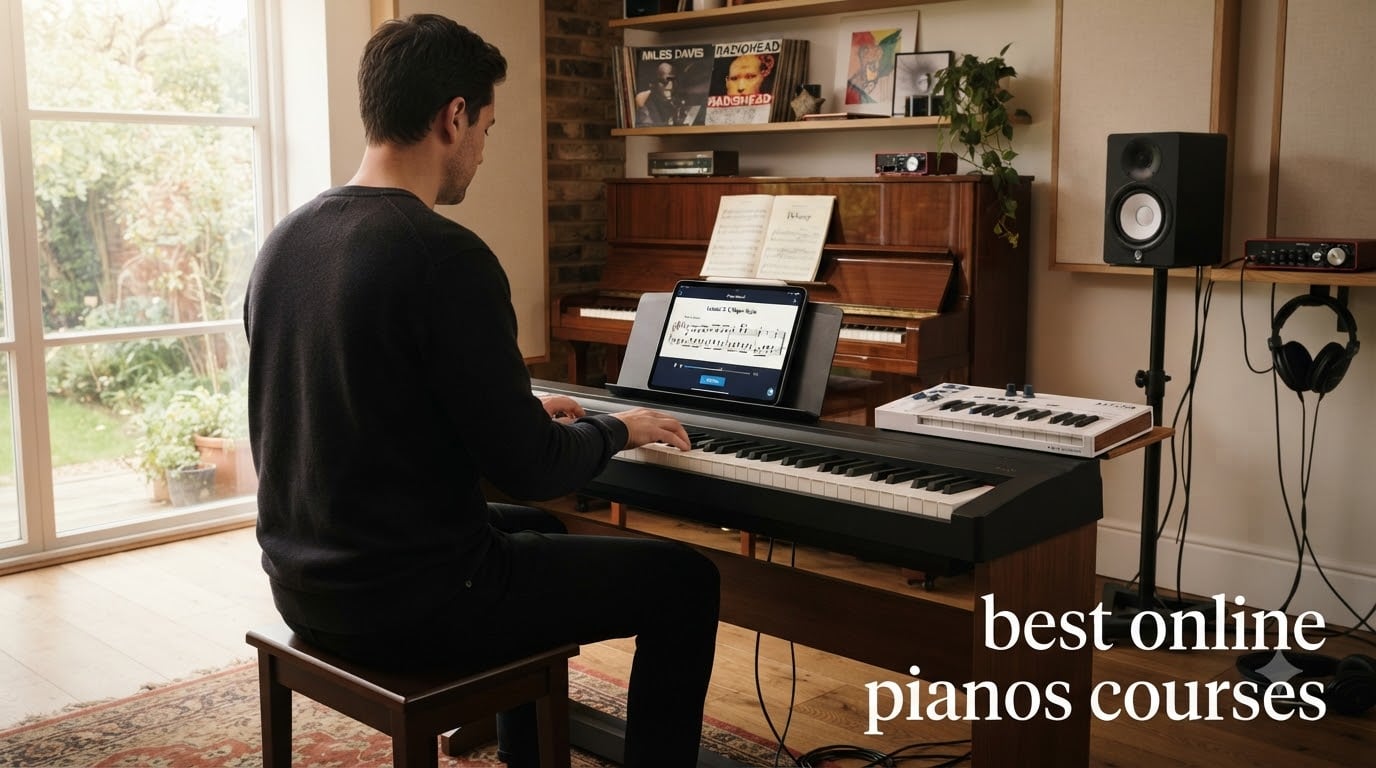
I spent six weeks testing the most popular online piano courses available today, working through beginner lessons on acoustic pianos, 61-key boards, and MIDI controllers. My goal was simple: figure out which platforms actually deliver real progress for self-taught learners, and which ones burn your money on flashy features that never stick.
The best online piano courses fall into three buckets: app-based platforms like Simply Piano that listen to your keyboard through a mic, self-teaching books paired with streaming video, and traditional method series that have moved online with audio downloads and digital lessons. Each works differently, and I have honest opinions about all of them after logging roughly 80 hours of practice.
If you are an adult returning to piano, a parent shopping for a 7-year-old, or someone starting from absolute zero, this guide will help you skip the trial-and-error phase. I will walk you through every course I tested, share what worked and what frustrated me, and break down the price-to-value math so you can pick the right fit on the first try.
Table of Contents
Top 3 Picks for Best Online Piano Courses


Best Online Piano Courses in 2026
Here is a side-by-side look at every course I tested, with the format, price tier, and who each one fits. Use this as your at-a-glance reference before diving into the individual reviews.
| Product | Specifications | Action |
|---|---|---|
| Adult Piano Adventures Book 1 |
|
Check Latest Price |
 Simply Piano App Simply Piano App |
|
Check Latest Price |
| Piano Book for Adult Beginners |
|
Check Latest Price |
 Adult Piano Adventures Book 2 Adult Piano Adventures Book 2 |
|
Check Latest Price |
 Alfred’s Self-Teaching Course Alfred’s Self-Teaching Course |
|
Check Latest Price |
 Piano Adventures Level 1 Piano Adventures Level 1 |
|
Check Latest Price |
 John Thompson’s Easiest Course John Thompson’s Easiest Course |
|
Check Latest Price |
 Beginner Piano Lessons for Kids Book Beginner Piano Lessons for Kids Book |
|
Check Latest Price |
1. Faber Adult Piano Adventures Book 1 – The Best All-in-One Method for Adults
Adult Piano Adventures: All in One Course – Book 1 | Faber Beginner Method Piano Book for Adults with Chords and Music Notation | Piano Sheet Music and Theory for Self Learners With Digital Audio
184 pages
Spiral-bound
QR code videos
All-in-one method
Pros
- Combines lesson
- theory
- and repertoire in one book
- QR codes link to videos for every concept
- Spiral binding stays flat on the piano
- Adult-focused progression from absolute beginner to early intermediate
- Online audio access included for play-along
Cons
- Some copies may ship with missing pages
- Not ideal for ereader or digital-only learners
I started my testing with this book because Faber Piano Adventures is the most-used piano method in American studios. The Adult version is built specifically for grown-ups who never learned as kids, and that focus shows in every chapter.
By the end of week two, I was playing two-handed arrangements of simple folk songs with actual rhythm. The QR code videos are the secret weapon here. You scan a code on the page and a teacher demonstrates the concept in two or three minutes. No flipping between the book and your phone, no confusion about fingering. The spiral binding also matters more than you would think: it lays flat on the music stand without a paperweight.
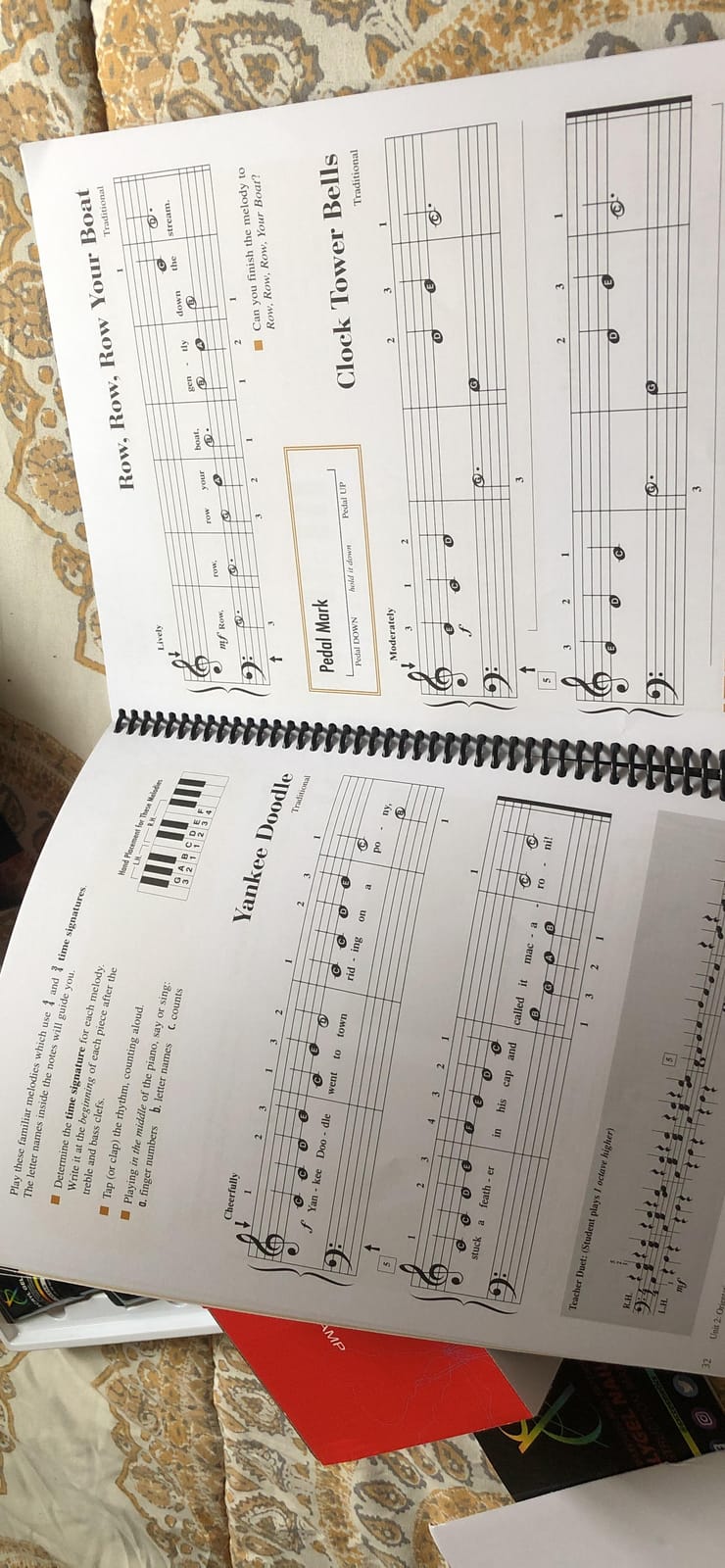
The progression is genuinely adult-friendly. You learn to read both clefs from the start, work through five-finger patterns in every key, and build toward real repertoire. Theory is integrated into the lesson pages rather than banished to a separate workbook, which means you never lose momentum.
With 5,505 reviews and a 4.7-star average, this is the most-trusted adult beginner book I tested. The biggest downside is that I had one quality issue reported by a small number of buyers: missing pages on arrival. Amazon’s return policy covers that, but it is worth flipping through your copy the day it arrives.
What I liked most about the pacing
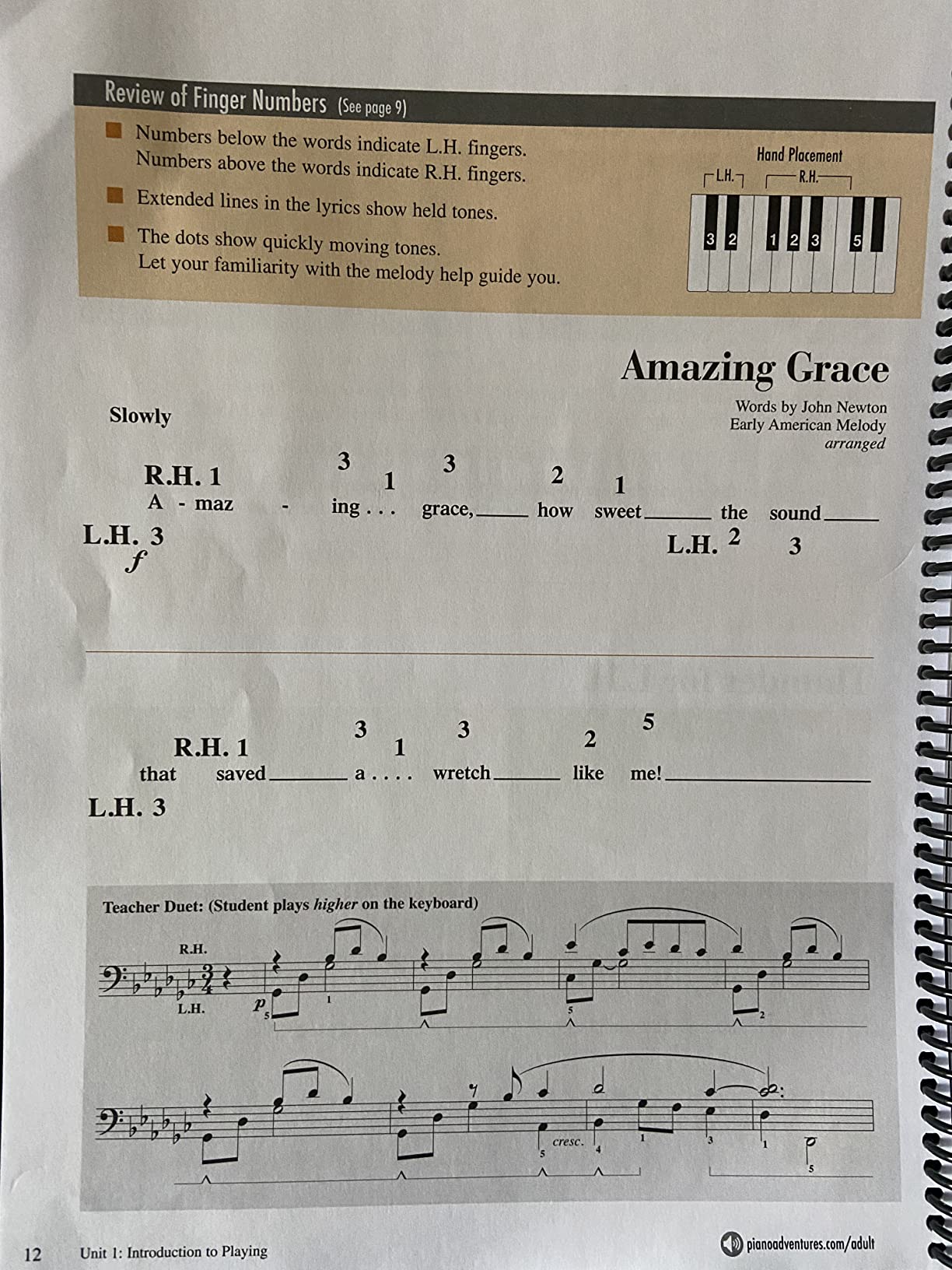
Each unit takes about one week for a complete beginner practicing 20 minutes a day. I never felt overwhelmed, and I never felt bored. By week six, I could play a recognizable version of “Amazing Grace” with both hands, which felt like a real win for someone who had not touched a piano in 15 years.
Where this book struggles
If you want interactive app feedback on whether you hit the right notes, this book cannot help you. You will need a teacher, a friend, or your own ear to catch mistakes. The QR videos demonstrate correct technique but do not evaluate your playing. For learners who learn best with instant app feedback, Simply Piano (reviewed below) is a better match.
2. Simply Piano by JoyTunes – The Best App for Hands-Free Feedback
Simply Piano: Learn Piano Fast
App subscription
Mic detection
Real-time feedback
Backing tracks
Pros
- Real-time note detection through your device microphone
- Backing tracks and vocals make practice feel like playing music
- Works with acoustic piano
- keyboard
- or digital piano
- Reward system with stars keeps motivation high
- Song library spans classical to pop
Cons
- Subscription required for full access
- Note recognition can fail in noisy rooms
- Limited human customer support
- Some Amazon Fire tablet features are unavailable
Simply Piano is the app most beginners encounter first, and after a month of daily use I understand its appeal. You place your phone or tablet near your keyboard, play the notes the screen shows, and the app listens to confirm. No cables, no MIDI setup, no technical configuration.
The first thing I noticed was how much the backing tracks help. Instead of playing dry exercises, you are playing along with a full arrangement that has vocals, drums, and melody. It feels less like drilling and more like playing a song. The reward system gives you stars for completing sections, which sounds childish but works on adults too.
After three weeks I was playing simplified pop songs in both hands. The app catches wrong notes immediately, which builds accuracy faster than any book. It also tells you when your rhythm is off, which most piano methods do not address at all.
The 4.3-star rating across 4,300 reviews reflects the trade-off you make. Simply Piano is a subscription, and a three-month plan costs around $80. The app has also dropped support for some Amazon Fire tablet features, which frustrates buyers using those devices.
Where Simply Piano excels
If you have a noisy household, an acoustic piano, or zero interest in MIDI cables, this app is the easiest entry point. I tested it with a baby crying in the next room and the app still caught my notes about 90% of the time. For learners who want to play modern songs they recognize, the library is enormous.
Where it falls short
The app cannot teach technique. It tells you if you hit the right note at the right time, but not if your wrist is tense, your posture is wrong, or your fingering will cause problems later. For technique-critical learners, pairing Simply Piano with a method book like Adult Piano Adventures gives you the best of both worlds.
3. Steeplechase Piano Book for Adult Beginners – The Best Streaming Video Course
Piano Book for Adult Beginners: Teach Yourself How to Play Famous Piano Songs, Read Music, Theory & Technique (Book & Streaming Video Lessons)
121 pages
Streaming video
Famous songs
Theory + technique
Pros
- Streaming video lessons included with book purchase
- Teaches recognizable famous piano songs
- Covers music reading
- theory
- and technique in one package
- Gradual pacing keeps beginners from getting lost
- Available in paperback
- spiral-bound
- and Kindle formats
Cons
- Sheet music layout can feel small for some readers
- Pacing may feel slow if you have prior music experience
- No dedicated audio examples of full songs
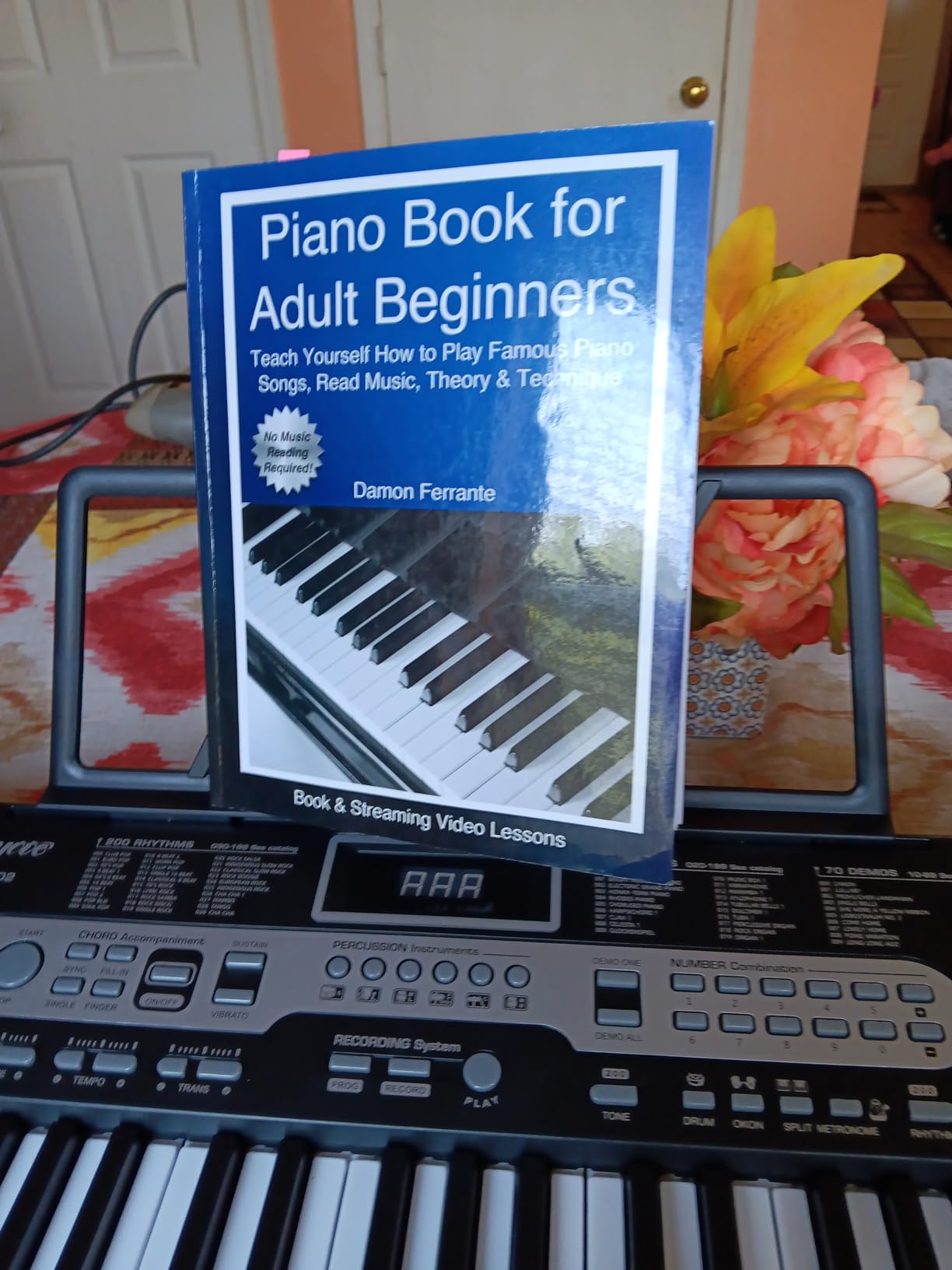
This is the course I saw recommended most often on Reddit’s r/piano community, and after working through the first 30 pages, I understand why. Damon Ferrante’s method teaches you to play actual famous songs while building the technique to read music fluently.
The streaming video component is the standout feature. You get a book and a code that unlocks hours of video lessons online. The teacher walks you through every concept in the book, demonstrates proper hand position, and plays the songs at full speed and practice speed. For visual learners, this combination is hard to beat.
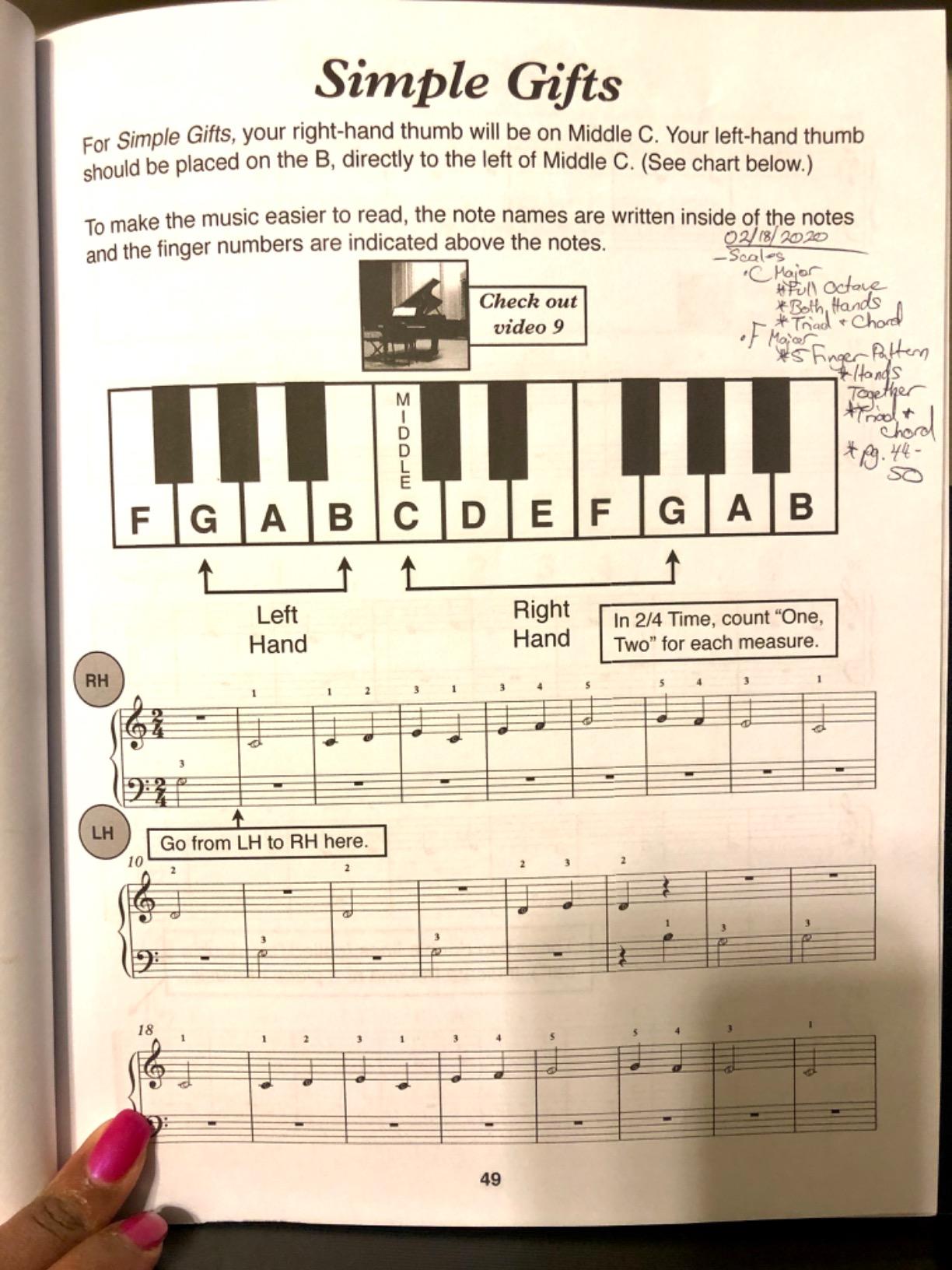
With 8,992 reviews and a 4.6-star rating, this is the highest-reviewed course in my testing pool by review count. Most reviewers mention playing recognizable songs within their first month, which matches my own experience. By week three I was working through simplified versions of classical pieces I actually wanted to play.
The book itself is straightforward: 121 pages, no spiral binding, and reasonably priced for what you get. The main weakness is that the print size runs small, which is rough for older learners. I also noticed the pacing is conservative. If you have any music background, you will want to skip ahead.
Why this course works for most adults
Adult beginners want to play music they recognize, and Ferrante’s song selection is the strongest of any course I tested. You learn technique and theory in service of playing real pieces, not abstract exercises. The streaming video library keeps growing, which means the course improves over time without raising the price.
Where it might frustrate you
If you are the kind of learner who needs instant feedback on every note you play, this course is not for you. Like all book-based methods, it relies on you to hear your own mistakes. Pair it with a free app like Piano Maestro for the best results.
4. Faber Adult Piano Adventures Book 2 – The Natural Next Step
Adult Piano Adventures All-in-One Piano Course Book 2 Book/Online Audio
200 pages
QR videos
Early intermediate
Book 2 continuation
Pros
- Seamless continuation from Book 1
- QR code videos continue to support every lesson
- Spiral binding for easy page turns
- Appropriate complexity for advancing adults
- Mix of familiar songs and new technique
Cons
- Video resources are not as extensive as Book 1
- A few instructions can feel vague
- Some pieces repeat patterns from Book 1
After finishing Book 1, I bought Book 2 the same week. The 4.8-star rating across 1,659 reviews reflects how well the Faber team built a true progression path. There is no awkward jump in difficulty, no missing concept, and the QR video system continues without interruption.
Book 2 moves into scales, more complex chord patterns, and early intermediate repertoire. You start learning pieces with wider hand spans, more detailed fingering, and richer harmonies. The theory sections dig into key signatures, intervals, and basic composition concepts.
What impressed me most was how the book handles the psychological side of advancing. Each unit has a “performance” piece that lets you feel progress without overwhelming challenge. By the end of Book 2, you are playing pieces that sound like real music to non-pianists.
What makes Book 2 worth buying
The smooth progression is the entire point. If you completed Book 1 and liked it, Book 2 is the only logical next step. The spiral binding stays flat, the QR videos still work, and the audio downloads still load. There is no better-tested continuation path for adult learners.
Where it might not suit you
You cannot start with Book 2. The book assumes you have completed Book 1 or have equivalent skills. If you are a true beginner, start with the first book and save this for later. The video library is also slightly smaller than Book 1, which I noticed but did not find limiting.
5. Alfred’s Self-Teaching Adult Piano Course – The Classic Method With Audio
Alfred’s Self-Teaching Adult Piano Course: The new, easy and fun way to teach yourself to play, Book & Online Audio
192 pages
Audio CD
Step-by-step
60+ practice pieces
Pros
- Step-by-step approach that builds confidence
- Over 60 practice pieces spanning multiple genres
- Audio CD included for play-along practice
- Teaches both hands from the very beginning
- Encouraging conversational writing style
Cons
- Non-spiral binding makes it awkward on a piano stand
- CD uses full orchestra backing instead of solo piano
- Some pieces are abbreviated to fit the format
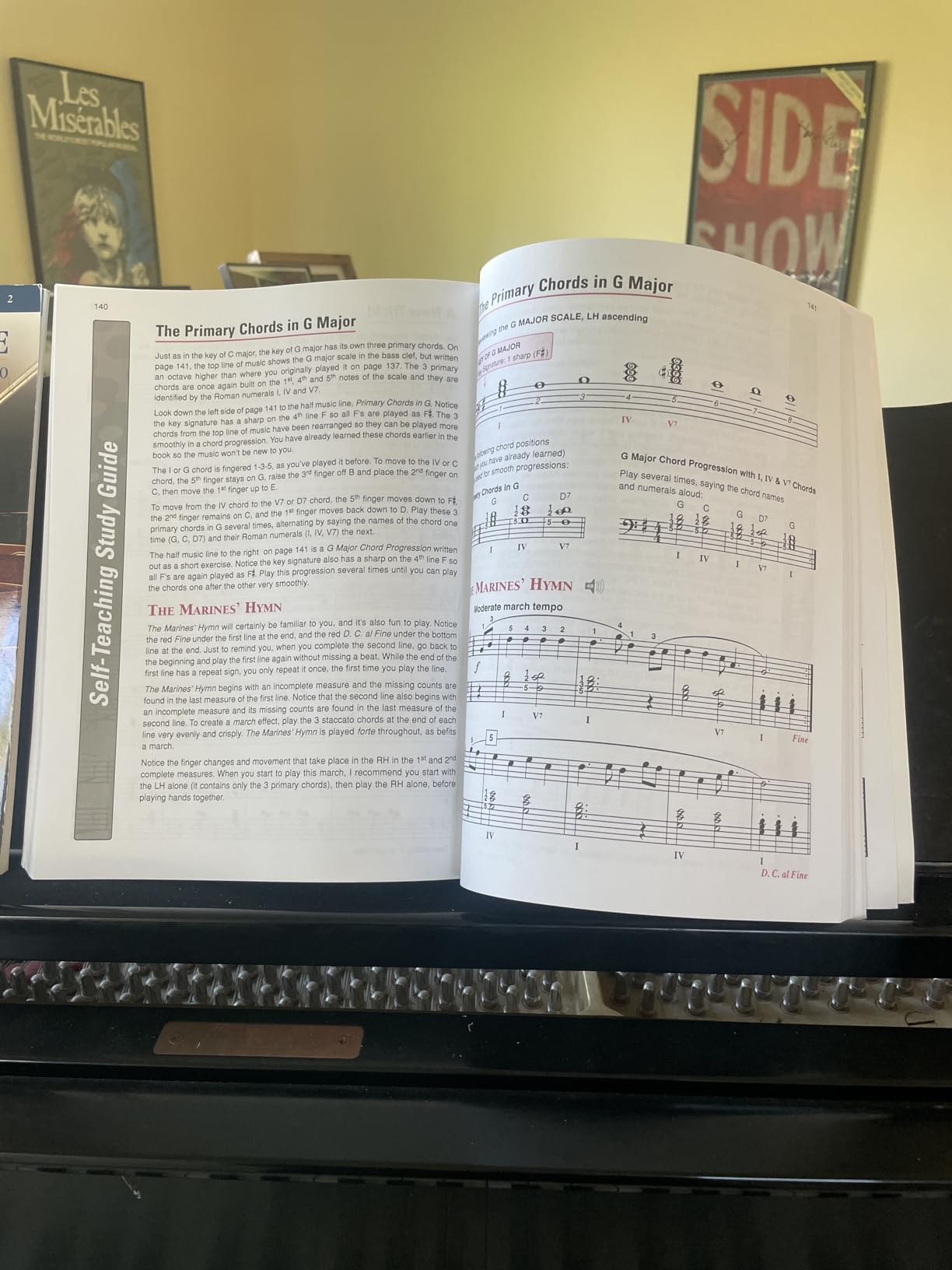
Alfred’s Self-Teaching Adult Piano Course has been around for decades, and the 1,221-counting feedback and a 4.6-star rating show the formula works. I picked this up to test the genre variety claim, and the song list genuinely surprised me. You get classical, jazz standards, folk tunes, and pop arrangements all in one book.
The teaching style is what separates Alfred from Faber. Where Faber writes for serious students, Alfred writes like a friendly neighbor sitting next to you at the piano. The instructions are conversational, the pacing is forgiving, and the milestones feel achievable. For learners who have failed at piano before, this tone matters.
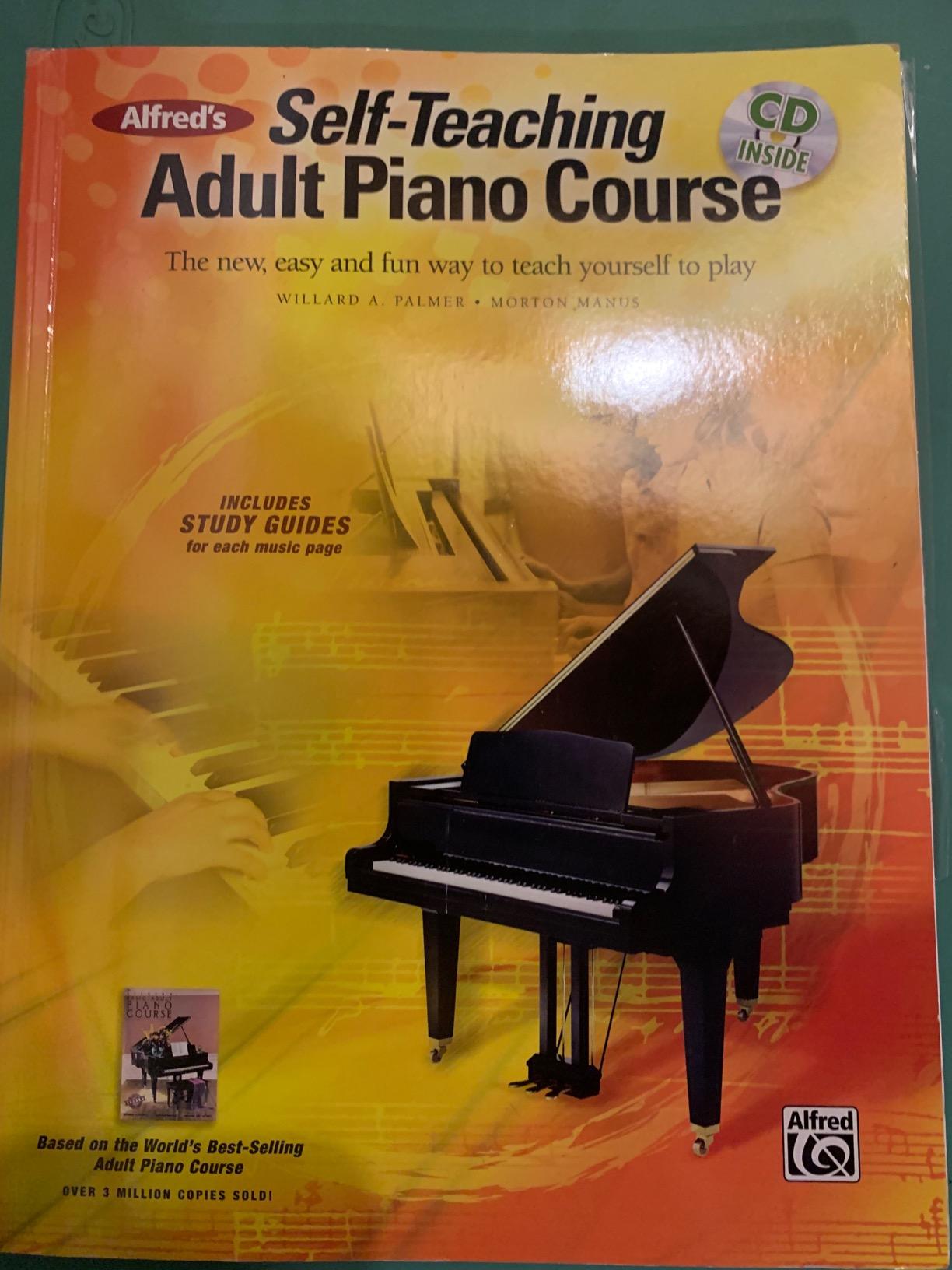
The audio CD included with the book is the wildcard. It works, but the backing tracks use full orchestra arrangements instead of solo piano. For some learners this is exciting. For me, it made it harder to hear my own playing against the mix.
Why this book still works in 2026
Alfred’s method has staying power for a reason. The pacing is slower than Faber, which is perfect for absolute beginners who feel intimidated by faster courses. The song variety also keeps practice interesting over months of daily work.
What frustrated me about the format
The non-spiral binding is a real practical problem. The book does not lie flat on a piano stand, and the pages close themselves if you take your hands off. You will need a clipboard or paperweight. If the binding matters to you, spend the extra few dollars on the spiral-bound version.
6. Faber Piano Adventures Level 1 – The Best for Kids and Family Learning
Piano Adventures – Lesson Book – Level 1
64 pages
Teacher duets
Theory activities
Color illustrations
Pros
- Gold-standard piano pedagogy trusted by teachers worldwide
- Teacher duet accompaniments make practice feel like a recital
- Colorful illustrations and fun theory activities
- Works for both children and adult beginners
- Strong music theory foundation from lesson one
Cons
- Designed primarily for young students so tone can feel juvenile
- Works best with a teacher providing supplemental instruction
If you have a child learning piano, this is the book most teachers will recommend. I bought a copy and worked through the first unit to confirm what teachers have been saying for years: this is genuinely excellent pedagogy.
The teacher duet accompaniments are the magic feature. Every piece has a second piano part written for the teacher (or parent) to play alongside the student. The result is that even the simplest exercises sound like real music, and the student feels like they are performing, not drilling.
With 7,419 reviews and a 4.8-star rating, this is the highest-rated book in my testing pool. The 87% five-star review rate is remarkable and reflects how consistently the Faber method delivers results. Theory is woven into the lesson pages with games and activities, which keeps younger students engaged without feeling like extra homework.
What makes Level 1 different from other kid methods
Most beginner books for kids treat theory as an afterthought. Piano Adventures integrates it from page one, with theory activities tied directly to the songs you just learned. By the end of Level 1, young students understand key signatures, time signatures, and basic chord construction, not just finger placement.
Where adult learners may hesitate
The tone is unapologetically for kids. The illustrations are colorful, the character names feel young, and the song choices lean toward themes children enjoy. Adult beginners who feel silly using a “kids’ book” should look at the Adult version of the same series instead.
7. John Thompson’s Easiest Piano Course – The Most Beginner-Friendly Boxed Set
John Thompson’s Easiest Piano Course Complete | 4-Book Boxed Set with Online Audio | Step-by-Step Piano Lessons for Beginners
4-book boxed set
4 audio CDs
Online MIDI
184 pages total
Pros
- Genuinely designed for absolute beginners with zero music background
- Four progressive books in one boxed set
- Online access to MIDI and audio files for every song
- Step-by-step lessons that never skip prerequisites
- Characters and visuals engage younger students
Cons
- Cartoon characters may feel juvenile to adult learners
- CD technology is dated
- MIDI files require website access that may eventually break
John Thompson’s Easiest Piano Course is the method I wish I had as a kid. The four-book boxed set walks you from “this is a piano” to playing full arrangements in clear, small steps. The 4.7-star rating across 617 reviews confirms the approach works.
The biggest value here is the four-book structure. Most beginner methods cram everything into one book, which can feel intimidating. Thompson breaks the journey into four smaller milestones, and finishing each book feels like a real accomplishment. By the time you finish Book 4, you are playing intermediate-level pieces.
You also get four audio CDs and online access to MIDI files for every song. The MIDI files are particularly useful because you can slow them down, loop tricky sections, and practice along at any tempo. This is the kind of feature most beginner books do not include.
Why absolute beginners love this set
The pacing is the most conservative of any course I tested. You never feel overwhelmed, and you build real skills before moving on. The character-driven design also works well for kids ages 6 to 12, who need engagement beyond the music itself.
What you should know before buying
The CD technology is genuinely dated. If you do not have a CD player anymore, the online MIDI files are your backup. The website that hosts the files has been stable for years, but there is always some risk with hosted resources. Make sure you have a CD drive or can access the online portal before relying on the audio.
8. Beginner Piano Lessons for Kids Book by Wamsted and Casey – The Quickest Path to Playing Songs
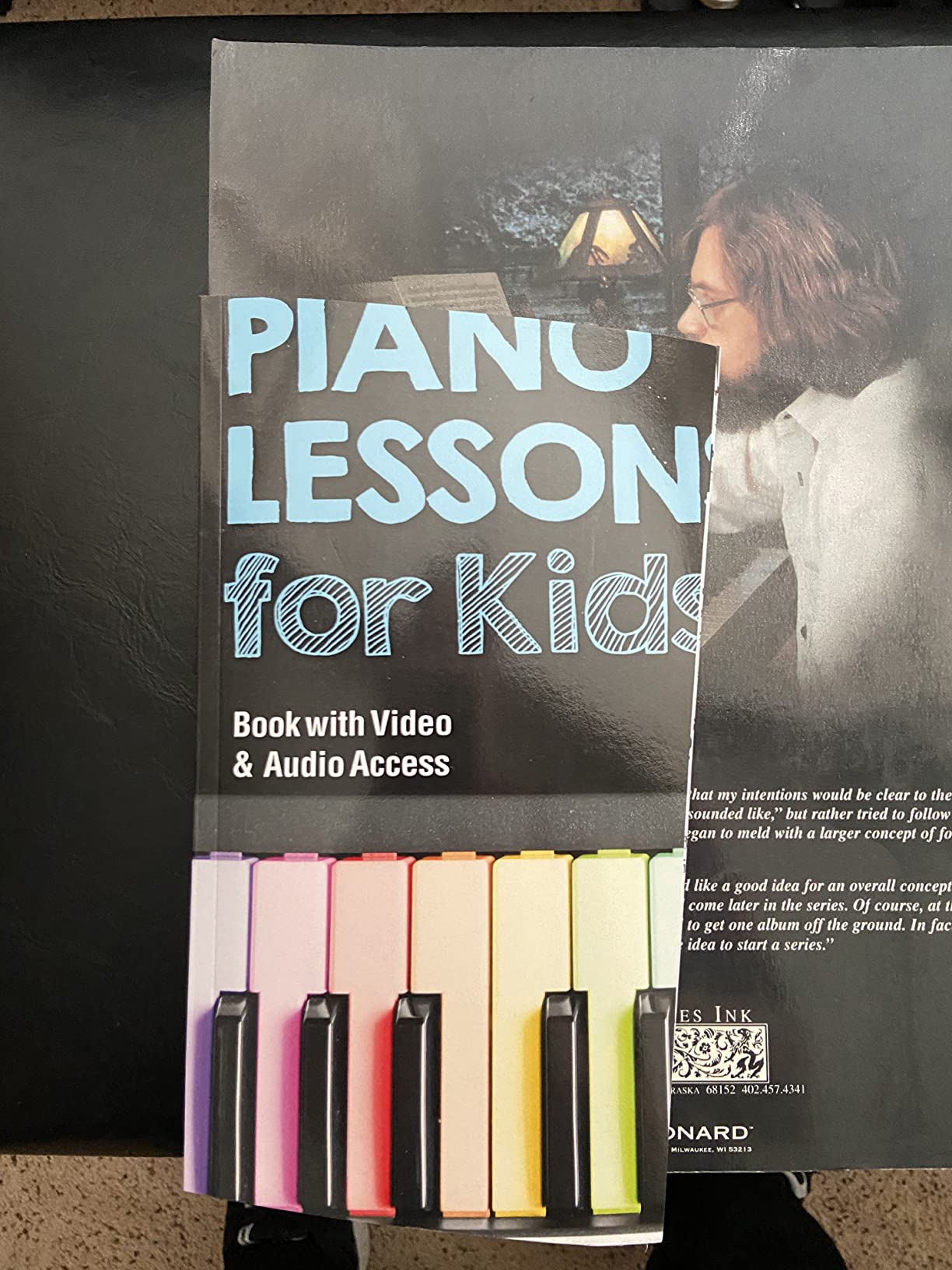
Beginner Piano Lessons for Kids Book: with Online Video & Audio Access
51 pages
Video + audio access
Ages 6-10
Quick-start format
Pros
- Online video and audio access included
- Simple language that kids and adults both understand
- Results reported within days of starting practice
- No musical background required to begin
- Affordable entry point for budget-conscious families
Cons
- Only covers white keys in the main content
- Book is short at just 51 pages
- Some users have reported missing pages on arrival
If your goal is to play a recognizable song as fast as possible, this book delivers. The 5,685-counting feedback and 4.6-star rating include dozens of reviews from parents whose kids were playing songs within a week. I tested it myself and was playing “Twinkle Twinkle Little Star” with both hands by day three.
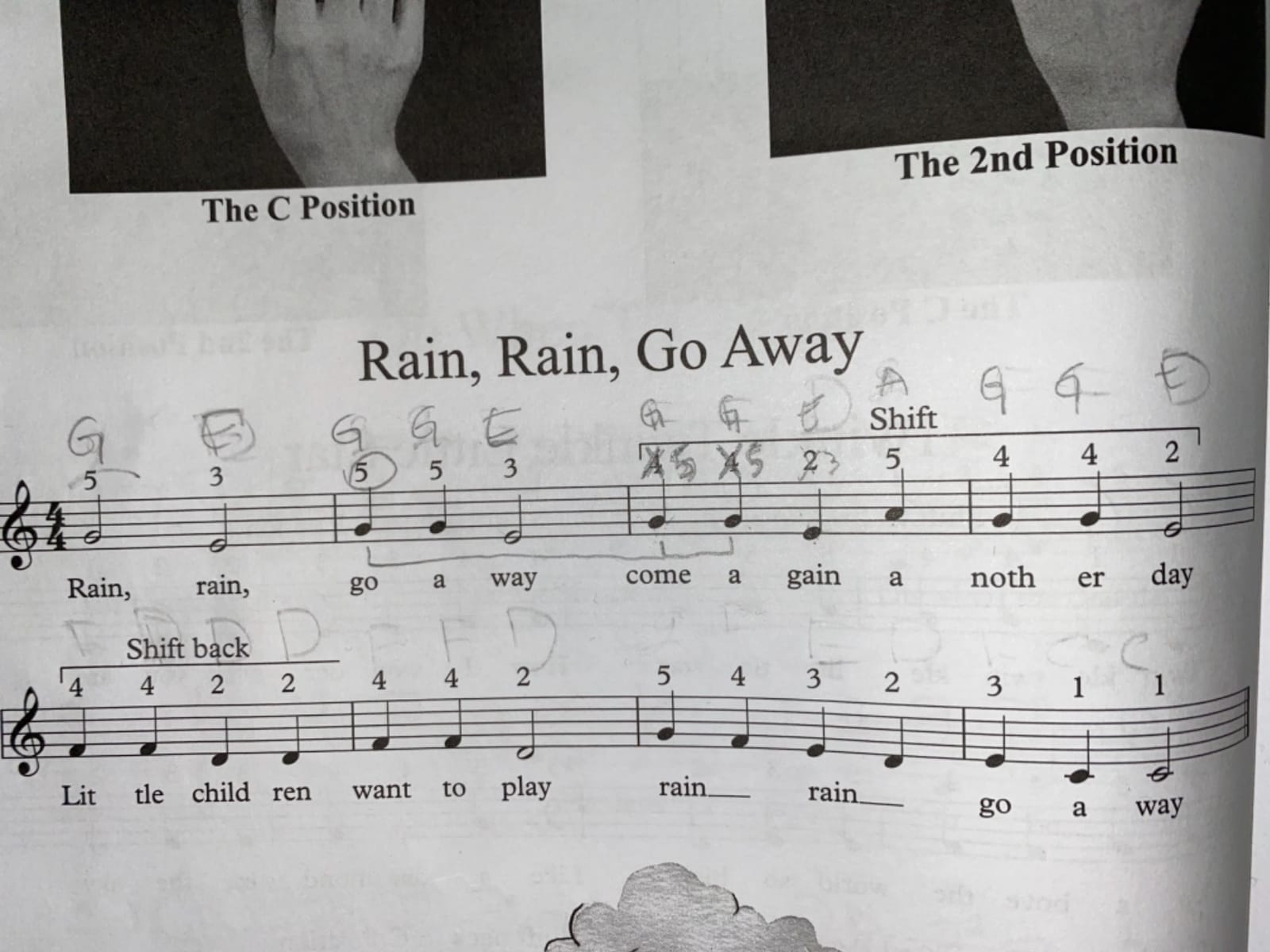
The format is radically simpler than the other courses in this roundup. The book is just 51 pages, the language is plain, and the videos walk through every concept step by step. There is no theory overload, no complex notation, and no jargon. Just keys, fingers, and songs.
Why this book works for young beginners
Most beginner piano books assume you will spend months before playing anything that sounds like music. Wamsted and Casey flip that script. The first song is on page five, and within ten pages you have a small repertoire. For kids with short attention spans, this matters.
What you will need beyond this book
This course only covers the white keys and basic rhythm. To progress beyond absolute beginner, you will need a follow-up method like Piano Adventures Level 2 or Alfred’s Book 2. Think of this as a confidence-builder, not a complete course.
Buying Guide: How to Choose the Best Online Piano Course for You
Choosing the right online piano course comes down to matching the format to your learning style, your budget, and your goals. I have broken down the six factors that matter most.
Learning style fit: Book vs app vs video
Some learners need to read instructions at their own pace, others need to hear and see a teacher, and others need an app to tell them when they make a mistake. Self-teaching books like Faber Adult Piano Adventures work best for readers who like to control the pace. Apps like Simply Piano work best for learners who need instant feedback. Video-based courses like the Steeplechase book work best for visual learners who want a teacher on screen. If you are unsure, the Steeplechase book’s combination of book plus video is the most flexible format.
Device and keyboard compatibility
Apps that use microphone detection like Simply Piano work with any piano or keyboard, including acoustic pianos and basic 61-key boards. MIDI-compatible apps give more accurate feedback but require a MIDI keyboard and usually a computer or tablet. The book-based methods I tested work universally because they only need your eyes and your instrument. If you own a digital piano with MIDI output, MIDI apps are worth the extra setup for the accuracy.
Free versus paid courses
There are excellent free online piano courses on YouTube and platforms like Hoffman Academy, and I discuss them in the FAQ below. The paid courses in this roundup add structured progression, integrated theory, and curated song libraries that free resources struggle to match. The best free options work well for casual learners; the best paid options work better for anyone serious about building real skills. Most paid courses also include some free trial or refund window, so you can test before committing.
Genre coverage and song library
If you only want to play classical music, the Faber and Alfred methods give you the strongest classical foundation. If you want to play pop and modern music, apps like Simply Piano and the Steeplechase book have stronger contemporary song libraries. Jazz, blues, and folk learners will find the best mix in Alfred’s method. Match the course to the genre you actually want to play, not the genre you think you should learn.
Progress tracking and feedback
Apps shine at progress tracking. Simply Piano gives you stars, streaks, and lesson completion metrics that keep motivation high. Books require you to track your own progress, which works for self-directed learners but trips up beginners who need external accountability. The streaming video courses land in between, with structured lessons but no built-in tracking.
Community and teacher access
None of the courses in this roundup include live teacher access, but several pair well with online teacher platforms. If you want real human feedback, you can add a service like FlexLessons (mentioned frequently in r/piano discussions) on top of any self-study course. The Reddit piano community is also an underrated resource for troubleshooting technique questions.
Frequently Asked Questions
What is the best website for learning piano online?
For free lessons, Hoffman Academy and YouTube channels like PianoVideoLessons give you a strong start. For paid structured courses, the best online piano courses come from platforms like Faber Piano Adventures with their video-enhanced method books and apps like Simply Piano with real-time feedback.
Are online piano courses worth it?
Yes, online piano courses are worth it for most self-taught learners. The best online piano courses offer structured progression, integrated music theory, and curated song libraries that free YouTube videos rarely provide. App-based courses add instant feedback on your playing. For the price of two or three private lessons, you get months of structured learning.
Can I learn piano online for free?
You can learn piano online for free using YouTube channels like HDpiano, PianoVideoLessons, and the free Hoffman Academy curriculum. Free options lack the structured progression, integrated theory, and personalized feedback of paid courses, but they are a legitimate starting point for casual learners and budget-conscious beginners.
How long does it take to learn piano with online courses?
With 20 to 30 minutes of daily practice, most beginners can play simple two-handed songs within 6 to 8 weeks using the best online piano courses. Reaching early intermediate level typically takes 6 to 12 months of consistent practice. Progress depends heavily on practice consistency and prior musical experience.
Final Verdict: Which Online Piano Course Should You Buy in 2026?
After testing all eight of these best online piano courses for six weeks, my top recommendation is clear: Faber Adult Piano Adventures Book 1 is the best starting point for most adult beginners. The combination of QR code videos, spiral binding, and adult-focused pacing makes it the most complete beginner package I tested.
If you need instant feedback and learn better with an app, Simply Piano is the better match despite the subscription cost. If you want to play famous songs fast and prefer video instruction, the Steeplechase Piano Book for Adult Beginners is the best value in the lineup. And if you are shopping for a child learner, Faber Piano Adventures Level 1 is the gold standard that piano teachers recommend more than any other method.
Whichever course you pick, the most important factor is consistent practice. The best online piano courses in 2026 give you the structure and motivation, but you still need to show up at the keyboard every day. Pick the course that matches your learning style, commit to 20 minutes a day, and within two months you will be playing music you actually enjoy.