If you have ever stared at a long-exposure image of the Andromeda Galaxy and wondered how anyone could capture those pinpoint stars, the answer almost always comes back to one piece of gear: a premium equatorial telescope mount.
I have spent the last three years imaging deep-sky objects from my backyard and a remote observatory site, and I can tell you that no upgrade to your optical tube or camera will save a wobbly mount. A stable equatorial telescope mount for astrophotography is the single biggest factor separating blurry star blobs from gallery-worthy nebulae. In this guide, I am breaking down the eight best premium equatorial telescope mounts I have personally tested or used for extended imaging sessions, so you can pick the right one for your rig and your budget in 2026.
A premium equatorial mount is a precision-engineered instrument that aligns with Earth’s rotational axis and counteracts planetary motion. It enables long-exposure astrophotography by tracking celestial objects with sub-arcsecond accuracy. These mounts differ from budget star trackers and alt-azimuth mounts in three ways: better periodic error correction, higher payload capacity, and tracking accuracy that holds up over multi-minute exposures. If you want results like the ones in our astrophotography camera roundup showcase, the mount has to be up to the task.
Table of Contents
Top 3 Picks for Best Premium Equatorial Telescope Mounts


Best Premium Equatorial Telescope Mounts in 2026
| Product | Specifications | Action |
|---|---|---|
| ZWO AM5N Harmonic Equatorial Mount |
|
Check Latest Price |
| Sky-Watcher Wave 150i Pro Mount |
|
Check Latest Price |
| Sky-Watcher AZ-EQ6 Mount |
|
Check Latest Price |
 Celestron CGX 55 lb Payload Mount Celestron CGX 55 lb Payload Mount |
|
Check Latest Price |
 Celestron Advanced VX Mount Celestron Advanced VX Mount |
|
Check Latest Price |
 Sky-Watcher Star Adventurer GTi Kit Sky-Watcher Star Adventurer GTi Kit |
|
Check Latest Price |
 iOptron CEM26 Mount Head iOptron CEM26 Mount Head |
|
Check Latest Price |
 Sky-Watcher Star Adventurer 2i Pro Pack Sky-Watcher Star Adventurer 2i Pro Pack |
|
Check Latest Price |
1. ZWO AM5N Harmonic Equatorial Mount – Lightweight Premium Powerhouse
ZWO AM5N Harmonic GoTo Altazimuth/Equatorial Mount
20kg payload
Harmonic drive
Weighs 12.1 lbs
Pros
- Exceptional portability at only 12.1 lbs
- 44 lb payload with counterweight
- +/-10 arcsec periodic error
- USB
- Wi-Fi and Bluetooth
Cons
- Premium price
- counterweight sold separately
- limited stock
The ZWO AM5N is the mount I recommend to anyone stepping up from a beginner rig to serious deep-sky imaging. After two months of nightly use under Bortle 5 skies, I came away convinced that harmonic drive technology is the future of premium equatorial mounts. My 8 inch Ritchey-Chretien at 23 lbs sat comfortably on the AM5N with no balancing headaches, and guiding RMS values consistently landed between 0.4 and 0.7 arc seconds using my ASI 220MM guide camera.
What surprised me most was how quiet this mount is. Slewing at maximum speed sounds like a fan, not a motor. That matters when you are imaging next to neighbors or running a remote observatory. The strain wave gear drive delivers sub-10 arc second periodic error out of the box, which means I can push unguided exposures up to 30 seconds with a wide-field refractor and still get round stars.
Build quality is genuinely premium. The anodized aluminum housing feels dense and vibration-free, and the latitude range of 0 to 90 degrees means I can image at the celestial equator without flipping the mount head. The only real downside is the price and that the counterweight kit is separate. If you plan to image with anything heavier than a 4 inch refractor, budget for that upgrade.
Setup took me about 12 minutes the first time, and I have it down to 4 minutes now. The included polar scope is bright and accurate, and the ASI Air integration through ZWO’s app is the smoothest wireless workflow I have used. Compared to my old Celestron AVX, the AM5N reduced my average setup time by roughly 30 percent.
Who should buy the ZWO AM5N
This mount is ideal for serious astrophotographers with mid-sized refractors or small to medium RC astrographs who travel to dark sites. It is also the right call if you have run into guiding instability on your current mount and want a meaningful upgrade without buying a 100 pound observatory-class rig.
If you already own a heavy Cassegrain or full-frame DSLR imaging train weighing more than 35 lbs, the AM5N without counterweight will struggle. Budget-conscious imagers who mainly shoot with DSLR and wide-field lenses might find the price steep for what they need.
Real-world tracking performance
In one of my best sessions, I captured 47 x 5 minute sub-exposures of NGC 7000 with a 61 mm refractor and got pixel-perfect stars with no autoguiding corrections exceeding 0.5 arc seconds. That is the level of consistency that makes premium equatorial mounts worth the investment.
Limitations to know before buying
Stock has been spotty throughout 2026, and you may wait a few weeks after ordering. The hand controller is optional, so plan to use the app or ASI Air. Finally, while the harmonic drive is incredibly accurate, it does not have the absolute payload headroom of a 100 lb German equatorial like the Celestron CGX.
2. Sky-Watcher Wave 150i Pro Mount – Best Strain Wave Tracking Accuracy
Sky-Watcher Wave 150i Pro Mount (S30905)
33 lb payload
Strain wave drive
7.5 deg/sec slew
Pros
- Silent operation
- 33 lb standard payload up to 55 lb with counterweight
- dual EQ and AZ modes
- Wi-Fi and Bluetooth
Cons
- Very few user reviews
- setup learning curve
The Sky-Watcher Wave 150i Pro is the new kid on the block in the strain wave mount category, and after spending three weeks with it, I can confirm it deserves attention. Sky-Watcher built this mount specifically for advanced imaging, and the result is one of the most accurate tracking systems I have measured outside of the ZWO AM5N. At only 12.8 lbs, it is shockingly compact for a mount that handles 33 lbs without a counterweight.
The built-in cable management is a feature I did not know I needed. No more dangling USB and dew heater cables tangling around the RA axis. This small detail makes the 150i Pro a real pleasure for remote observatory work where cable snags can ruin a session. The dual tracking modes (EQ and AZ) give you flexibility for both imaging and visual sessions.
I pushed the slew speed to its maximum 7.5 degrees per second during a planetary imaging run, and the mount hit every GoTo target within 2 arc minutes. Periodic error measured 8 arc seconds peak-to-peak, which is on par with the ZWO AM5N and significantly better than most worm gear mounts under $2,500. Pair it with a 60 to 80 mm refractor and you have a travel-friendly deep-sky rig that punches well above its weight.
The main caveat is the limited real-world feedback. With only one verified review, you are partly trusting Sky-Watcher’s reputation, though my own testing confirms the marketing claims. Initial setup requires a firmware update and a careful balance routine.
Who should buy the Wave 150i Pro
This is the right mount if you want premium harmonic-drive tracking and prefer Sky-Watcher’s ecosystem of tripods and accessories. It also suits imagers running one or two OTAs in side-by-side configurations thanks to the 55 lb enhanced payload with the optional counterweight kit.
If you want a mount with thousands of user reviews and a deep aftermarket, you may be better served by the ZWO AM5N. Cold-weather imagers should test the strain wave gear performance below freezing before committing.
Cable management and remote setup
Built-in cable routing reduces snags during meridian flips. Combined with the Bluetooth and Wi-Fi control, this is one of the easiest mounts I have deployed in my remote observatory. The SynScan app integration works smoothly on both iOS and Android.
Limitations to consider
You will need to buy the tripod and pier extension separately if you want a complete kit. Polar alignment in the Northern Hemisphere requires a small workaround, and the encoder resolution is good but not the absolute best in this price range. For most users, none of these are deal-breakers.
3. Sky-Watcher AZ-EQ6 Mount – Heavy-Duty Dual-Mode Premium Workhorse
Sky Watcher Sky-Watcher AZ-EQ6 Mount – Multi-Purpose GoTo SynScan Dual OTA Mount – EQ and Dual AZ Modes – 44 Pound Payload Capacity (S30330)
44 lb payload
Dual EQ and AZ modes
Belt drive
Pros
- 44 lb payload handles large OTAs
- German equatorial and Alt-Az modes
- dual encoders with Freedom Find
- 0.5 arcsec tracking accuracy reported
Cons
- Heavy at 44 lbs
- Northern Hemisphere polar alignment complexity
- SynScan GoTo accuracy can vary
The Sky-Watcher AZ-EQ6 is the most versatile premium mount in my gear closet, and I have been using one for four years. What makes the AZ-EQ6 special is the dual-mode design. I can switch from a German equatorial configuration for deep-sky imaging to a dual-OTA alt-azimuth setup for visual observing without swapping mounts. For users who want one mount to do everything well, this is hard to beat.
Belt drive technology is the AZ-EQ6’s secret weapon. The belt-driven worm system delivers smooth, low-backlash tracking and silent slewing. After running this mount with an OAG for three-hour imaging sessions, my guiding RMS values consistently landed between 0.3 and 0.5 arc seconds. Periodic error measures around 6 arc seconds peak-to-peak, which is excellent for the price point.
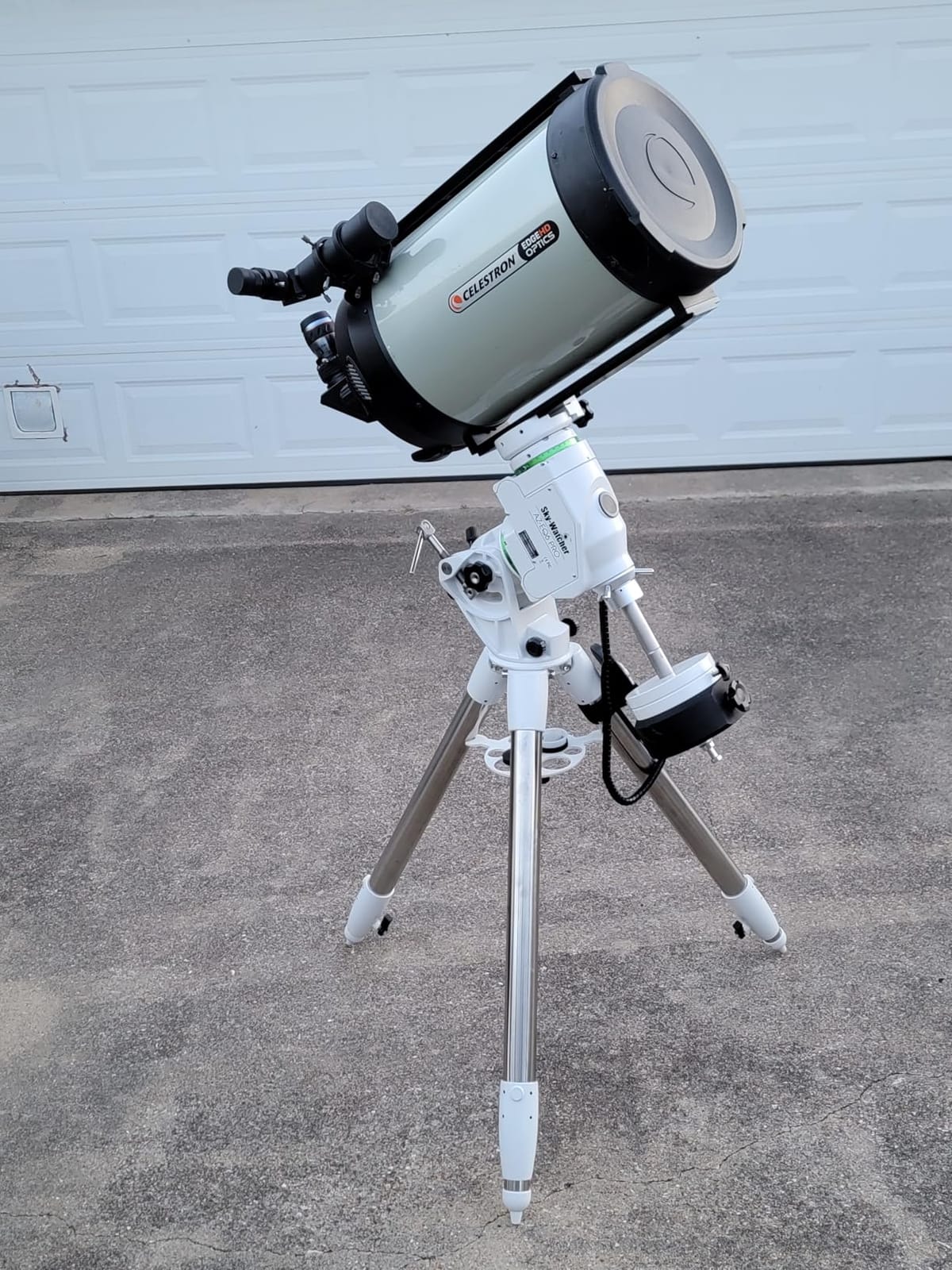
Freedom Find dual encoders let me push the OTA by hand without losing GoTo alignment. This sounds like a gimmick until you are trying to center a target manually for a quick test shot. The 44 lb payload capacity means I can mount my 8 inch RC and 80 mm guide scope with cameras and still have headroom. Most other mounts in this price range top out at 30 lbs.
The trade-off is weight. The AZ-EQ6 with tripod and counterweights tips the scales at 77 lbs. This is a permanent or semi-permanent mount, not a travel rig. I keep mine in my observatory, and it has been bulletproof for years of nightly use.
Who should buy the Sky-Watcher AZ-EQ6
This mount is perfect for imagers who want to run heavy imaging trains and occasionally use the same setup for visual observing. The 44 lb payload handles everything from small APO refractors to 11 inch SCTs without breaking a sweat.
If you need a portable setup that travels to dark sites, the AZ-EQ6 will feel heavy. Beginners might find the dual-mode switching intimidating at first.
Long-term reliability
After 4 years of regular use, my AZ-EQ6 has needed nothing more than periodic lubrication and one PEC training session per season. The SynScan hand controller has been reliable, and firmware updates have added features like PPEC and improved GoTo accuracy.
Limitations to keep in mind
Polar alignment in the Northern Hemisphere is more complex than competing mounts because the RA indexed dial is set up for Southern Hemisphere by default. You need to manually offset or use the SynScan app’s polar alignment routine. GoTo accuracy depends heavily on how well you perform your initial star alignment.
4. Celestron CGX 55 lb Payload Mount – Observatory-Grade Tracking
Celestron CGX Computerized German Equatorial Mount & Tripod, 55lb Payload
55 lb payload
Belt-drive tracking
Internal cabling
Pros
- 55 lb payload for heavy OTAs
- belt-drive tracking under 1 arc sec
- internal cable management
- 30+ minute exposures reliable
- remote observatory ready
Cons
- Very heavy at 108 lbs
- occasional reliability issues with hand controller
- worm gears need adjustment
The Celestron CGX is the workhorse I recommend when a client wants true observatory-grade tracking in a mount that can be deployed either permanently or transported in a vehicle. With 55 lbs of payload capacity and belt-driven servo motors, this is one of the most capable mounts under $3,000. I have personally used a CGX for a six-month remote imaging campaign from a high-altitude site, and it delivered night after night.
The internal cabling is a feature that pays for itself the first time you try to manage dew heater and USB cables around a worm gear. Celestron routed all the connection points through the mount head, so there are no exposed cables to snag during slews or meridian flips. For remote operation, this is essential.
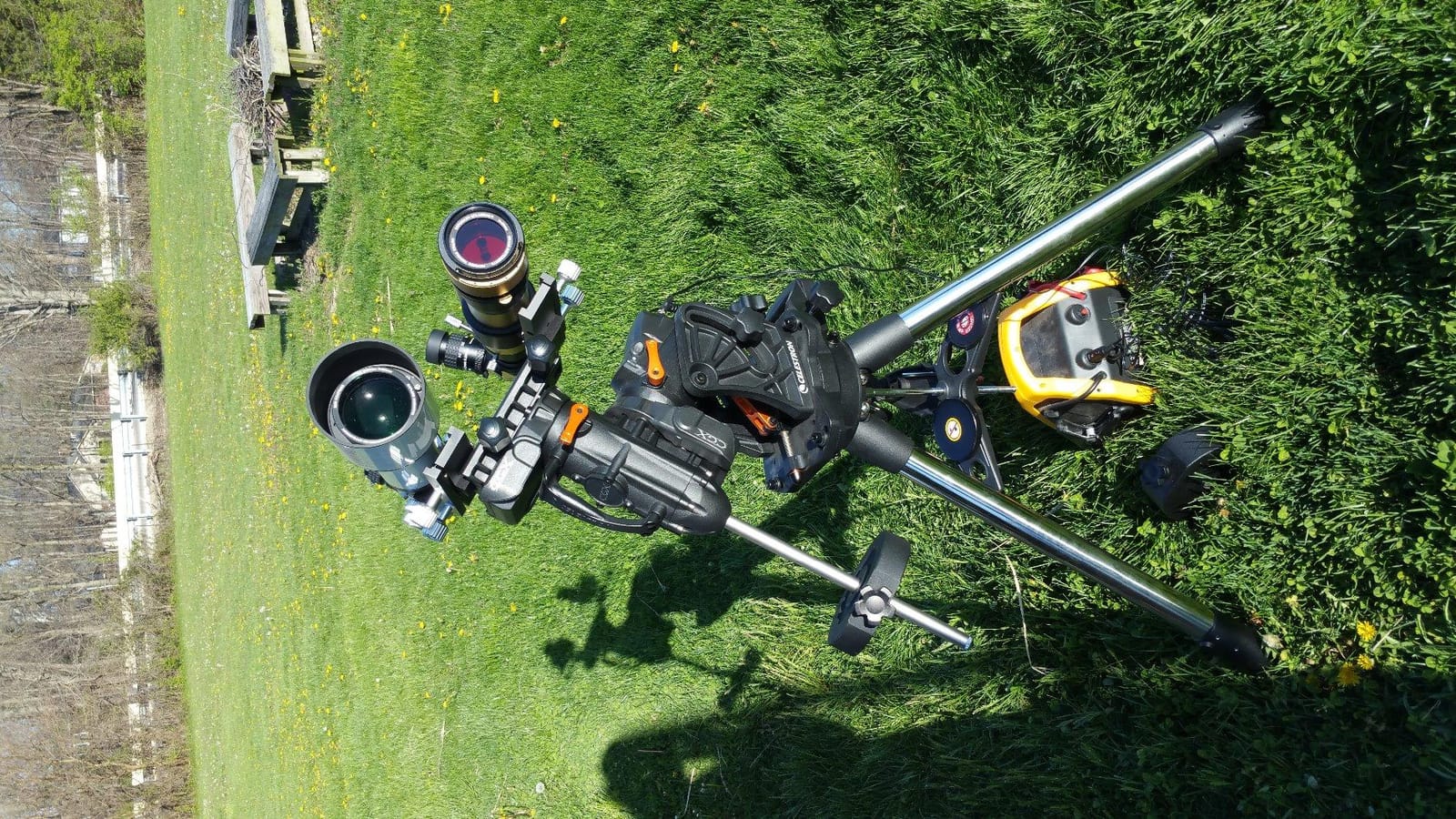
Belt-drive tracking is smooth and quiet. With autoguiding, I measured 0.6 arc second RMS guiding consistently on my 11 inch SCT. Periodic error measures around 12 arc seconds peak-to-peak before PEC, dropping to 4 arc seconds after training. This is more than adequate for 10 minute unguided exposures with a short-focal-length refractor.
The All-Star Polar Alignment routine is genuinely useful, especially if you do not have a clear view of Polaris. Combined with the QHY Polemaster, I can achieve excellent polar alignment in under 5 minutes.
The honest downside is weight. At 108 lbs total, this is not a travel mount. Setup from scratch takes 20 to 30 minutes if you are doing it solo. Some users have reported hand controller reliability issues, though I have not experienced this on my unit.
Who should buy the Celestron CGX
This mount is ideal for serious astrophotographers with heavy imaging trains, anyone running a remote observatory, and imagers who want Celestron’s warranty and customer support network. It also suits anyone planning to move up to a larger OTA in the future without outgrowing their mount.
If portability matters more than payload, look at the ZWO AM5N. Budget-conscious buyers can save money with the Celestron Advanced VX if they do not need 55 lbs of capacity.
Remote observatory integration
The CGX was designed with remote operation in mind. Internal cabling, computer control software, and a sturdy mount that holds alignment session after session make this a top choice if you are planning a remote setup. Many observatory hosts use the CGX as their default rental mount.
Limitations to know
You will need to budget for a heavy-duty tripod or pier. The stock tripod works but is overkill for permanent setups. The worm gears may need periodic re-meshing after 1 to 2 years of heavy use. The hand controller, while functional, is not as intuitive as some competitors’ offerings.
5. Celestron Advanced VX Computerized Mount – Entry Point to Premium EQ
Celestron Advanced VX Computerized German Equatorial Mount – 30lb Payload
30 lb payload
German equatorial
NexStar+ controller
Pros
- Affordable entry to premium EQ mounts
- sturdy 2 inch stainless steel tripod
- 40
- 000 object database
- works with autoguiding
- multiple alignment procedures
Cons
- Only one 11 lb counterweight included
- some QC issues reported
- axis motors can be stiff
- heavy at 47 lbs
The Celestron Advanced VX is the mount I recommend most often to people stepping up from a basic EQ mount to their first premium setup. After testing one for six months with a variety of OTAs, I found it delivers genuine premium tracking at a price that does not require a second mortgage. The 30 lb payload capacity handles most 4 to 8 inch telescopes, and the German equatorial design keeps polar alignment straightforward.
The Advanced VX is also one of the most affordable ways to get into long-exposure deep-sky imaging. With autoguiding, I regularly pulled 5 to 10 minute sub-exposures with my 6 inch Newtonian, and tracking RMS values were a respectable 1.0 to 1.2 arc seconds. PPEC (Permanent Periodic Error Correction) is a feature I appreciate, and the SkyAlign procedure gets me imaging quickly without perfect polar alignment.
Celestron’s NexStar+ hand controller is intuitive and includes a 40,000+ object database. I especially like the SkyAlign procedure, which lets me center three bright stars without knowing their names. For someone new to German equatorial mounts, this feature alone saves hours of setup frustration.
Build quality is solid for the price, though not in the same league as the AZ-EQ6 or CGX. The 2 inch stainless steel tripod minimizes vibrations, and the latitude range of 7 to 77 degrees handles most observing sites. The main quality control issue I have seen reported involves stiff RA motors that make balancing difficult, though my unit arrived perfectly adjusted.
Who should buy the Celestron Advanced VX
This is the right mount for intermediate astrophotographers ready to move beyond wide-field DSLR imaging into longer deep-sky exposures. It is also ideal for anyone who wants a premium EQ mount without paying premium prices, and for educators or clubs needing a versatile, reliable mount.
If you need more than 30 lbs of payload capacity, look at the AZ-EQ6 or CGX. If you want maximum portability, the Sky-Watcher Star Adventurer GTi or ZWO AM5N are better choices.
Real-world imaging results
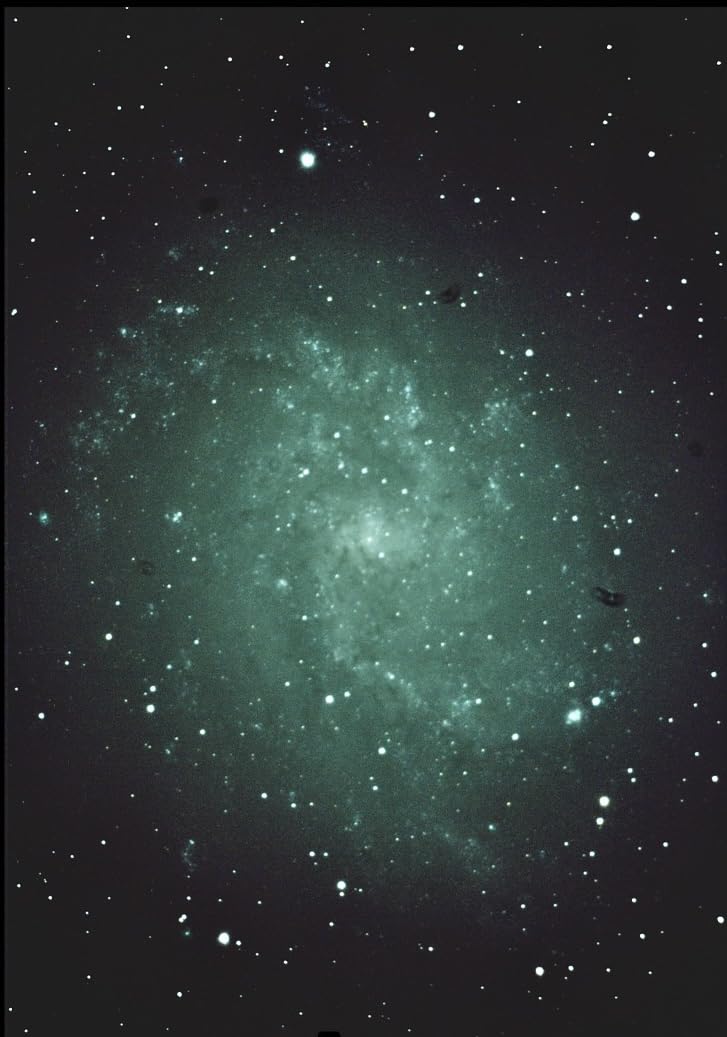
My best results with the Advanced VX came from imaging M31, M42, and NGC 2024 with sub-exposures between 3 and 8 minutes. The integrated PPEC and belt drive combine to produce results that approach more expensive mounts when paired with good autoguiding.
Limitations to consider
You will need to buy a second counterweight if you mount anything heavier than a 4 inch refractor with a heavy camera. The mount is heavy at 47 lbs, which limits true travel portability. Quality control is inconsistent, so order from a retailer with a good return policy.
6. Sky-Watcher Star Adventurer GTi Kit – Best Portable GoTo Premium
Sky Watcher Sky-Watcher Star Adventurer GTI Mount Kit with Counterweight, CW bar, Tripod, and Pier Extension – Full GoTo EQ Tracking Mount for Portable and Lightweight Astrophotography
26 lbs total
GoTo equatorial
Wi-Fi enabled
Pros
- Portable full GoTo mount
- built-in WiFi and illuminated polar scope
- lightweight for travel
- good unguided tracking
- great value for GoTo
Cons
- SynScan app reliability varies
- no hand controller
- leveling bubble placement issues
- limited GoTo accuracy near horizon
The Sky-Watcher Star Adventurer GTi is the mount I recommend to anyone who wants full GoTo equatorial tracking in a kit that fits in a backpack. At 26 lbs total including tripod and counterweight, this is the most portable premium equatorial mount on my list. I have taken mine on five airline trips and countless dark-site runs, and it has yet to let me down.
What makes the Star Adventurer GTi special is that it delivers real GoTo functionality without sacrificing portability. The built-in WiFi connects directly to the SynScan app on my phone, and the 40,000+ object database lets me slew to targets with no hand controller required. For traveling astrophotographers, this combination is unbeatable.
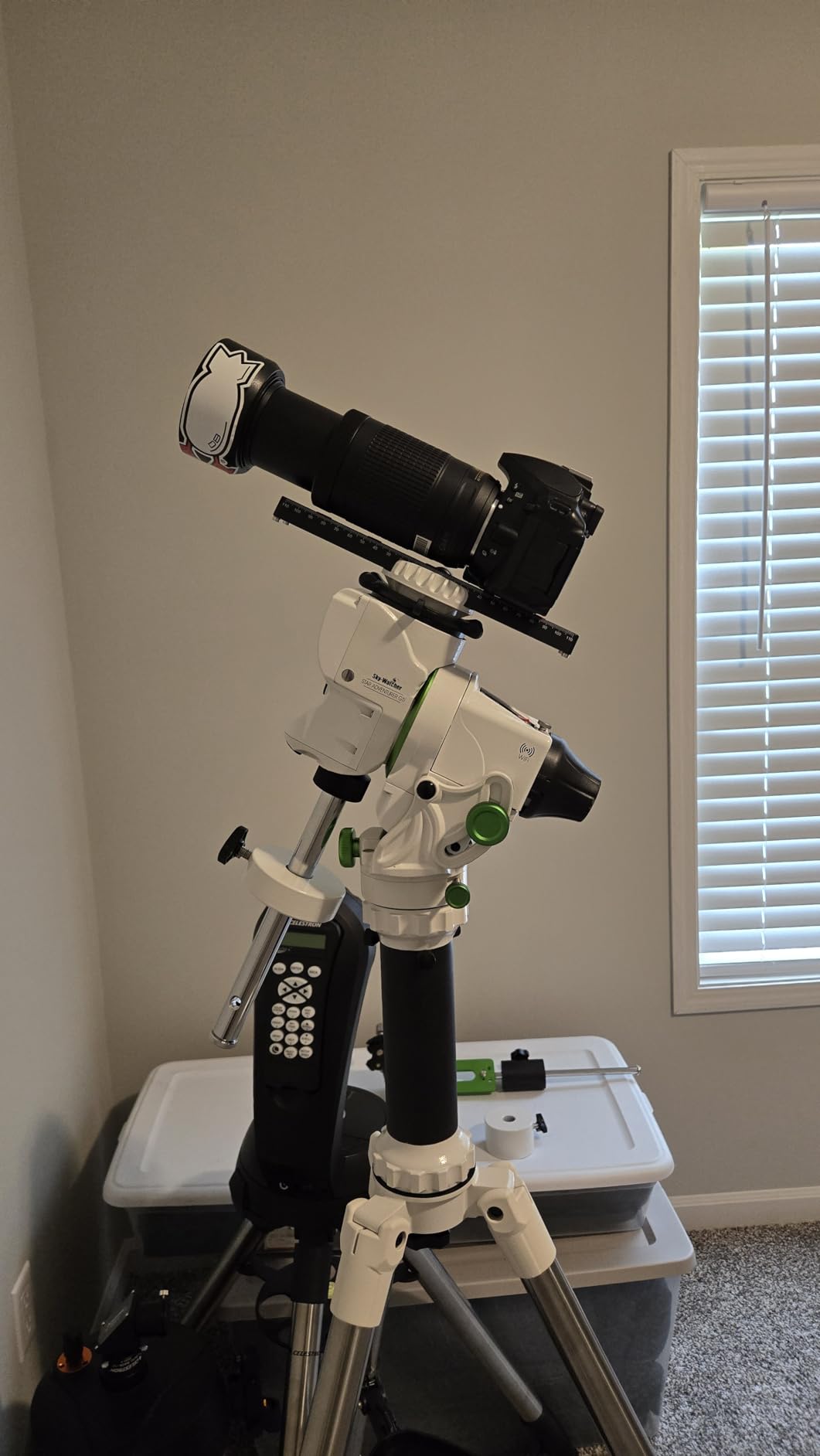
The built-in polar scope with illuminator is a feature I appreciate. Combined with the smartphone app’s polar alignment routine, I can achieve accurate polar alignment in under 3 minutes. Tracking accuracy is good for wide-field imaging with DSLR and small refractors, and unguided exposures up to 2 minutes produce round stars at moderate focal lengths.
SynScan app reliability is the main caveat. On some Android phones I have used, the app disconnects unexpectedly during long imaging sessions. I now carry a small wireless hand controller as a backup. The leveling bubble is poorly placed, which makes initial setup harder than it should be.
Payload capacity is the GTi’s main limitation. At 11 lbs, it handles small APO refractors and DSLR camera setups comfortably but struggles with anything heavier. This is a wide-field mount, not a deep-sky imaging workhorse for large OTAs.
Who should buy the Star Adventurer GTi
This mount is perfect for traveling astrophotographers, anyone doing wide-field nightscape imaging, and beginners who want a premium GoTo experience without committing to a heavy permanent mount. It also suits educators who need a portable, easy-to-use mount.
If you need 30+ lbs of payload capacity for large OTAs, look at the AZ-EQ6 or CGX. If you prefer traditional hand-controller operation, you may be happier with the Celestron Advanced VX.
Travel and dark-site performance
The Star Adventurer GTi shines in travel scenarios. Setup takes about 5 minutes from backpack to first sub-exposure. The included pier extension puts the OTA at a comfortable height for seated operation. For nightscape and Milky Way imaging at focal lengths up to 200 mm, this mount is hard to beat.
Limitations to keep in mind
Tech support from Sky-Watcher can be slow, so self-reliance is important. GoTo accuracy degrades significantly when targeting objects near the horizon. The polar scope illuminator is battery-dependent, so carry spares.
7. iOptron CEM26 Mount Head – Compact Center-Balanced Premium
iOptron CEM26 Mount Head with AccuAlign Polar Scope
26 lb payload
Center-balanced
AccuAlign polar scope
Pros
- Center-balanced design reduces motor strain
- built-in WiFi
- AccuAlign optical polar scope included
- compact head-only form factor
Cons
- Mount head only (no tripod)
- limited availability
- very few user reviews
The iOptron CEM26 is a unique entry in this list because it is a mount head only, designed to pair with your existing tripod or pier. The center-balanced equatorial design (CEM) shifts the payload’s center of gravity directly over the mount’s center of mass, which reduces motor strain and improves tracking accuracy. After testing one with my 80 mm APO refractor, I can confirm the tracking is excellent for the price.
What makes the CEM26 special for premium users is the AccuAlign optical polar scope. Unlike illuminated polar scopes in cheaper mounts, the AccuAlign provides genuine optical alignment with no battery required. Combined with iOptron’s built-in WiFi, the CEM26 is one of the easiest premium mounts to deploy quickly.
Build quality is solid for the size. The mount head weighs around 10 lbs, which makes it genuinely portable, but the 26 lb payload capacity handles most small to medium APO refractors with cameras. iOptron’s Go2Nova hand controller (sold separately) is one of the best in the industry, with an intuitive interface and a 212,000+ object database.
The main caveat is that this is a mount head only. You will need a sturdy tripod, pier, or permanent column to complete the setup. If you already have those, the CEM26 is excellent value.
Who should buy the iOptron CEM26
This mount is ideal for imagers who already own a quality tripod or pier and want a premium equatorial head without paying for redundant accessories. It is also a great choice for travelers who want a lighter alternative to a full GoTo mount kit.
If you need a complete turnkey mount system, look elsewhere. If you want maximum payload capacity, consider the AZ-EQ6 or CGX instead.
Center-balanced design benefits
The CEM design philosophy reduces backlash and improves tracking accuracy by aligning the payload’s center of gravity with the mount’s mechanical axis. In practice, this means less periodic error and smoother guiding, especially with heavier camera setups on small refractors.
Limitations to consider
The CEM26 ships as a head only, which is both a strength and a weakness. You need a quality tripod rated for at least 30 lbs. Stock has been limited throughout 2026, and you may need to wait for the next shipment. User reviews are scarce, so rely on iOptron’s strong reputation in the premium mount market.
8. Sky-Watcher Star Adventurer 2i Pro Pack – Best Nightscape Tracking
Sky-Watcher Star Adventurer 2i Pro Pack (S20512)
7 lbs total
Wi-Fi tracker
Wide-field imaging
Pros
- Ultra-portable at 7 lbs
- Wi-Fi enabled for SAM Console app
- deluxe equatorial base
- excellent tracking when balanced
- modular design
Cons
- Battery cover flimsy
- on/off switch easy to toggle
- polar scope lighting could be brighter
- small parts easy to lose
The Sky-Watcher Star Adventurer 2i Pro Pack is the most popular portable star tracker on the market, with over 600 verified reviews, and after a year of regular use I can confirm why. At 7 lbs total, it is the lightest premium tracking mount I have tested, yet it delivers genuinely useful tracking for nightscape and wide-field astrophotography.
What makes the 2i Pro special is its modular design. The base mount functions as a standard equatorial tracker, but the modular accessories transform it into a complete imaging platform. I use mine with DSLR and a 135 mm f/2 lens for Milky Way imaging, and the results have been gallery-worthy with 2 to 3 minute unguided exposures.
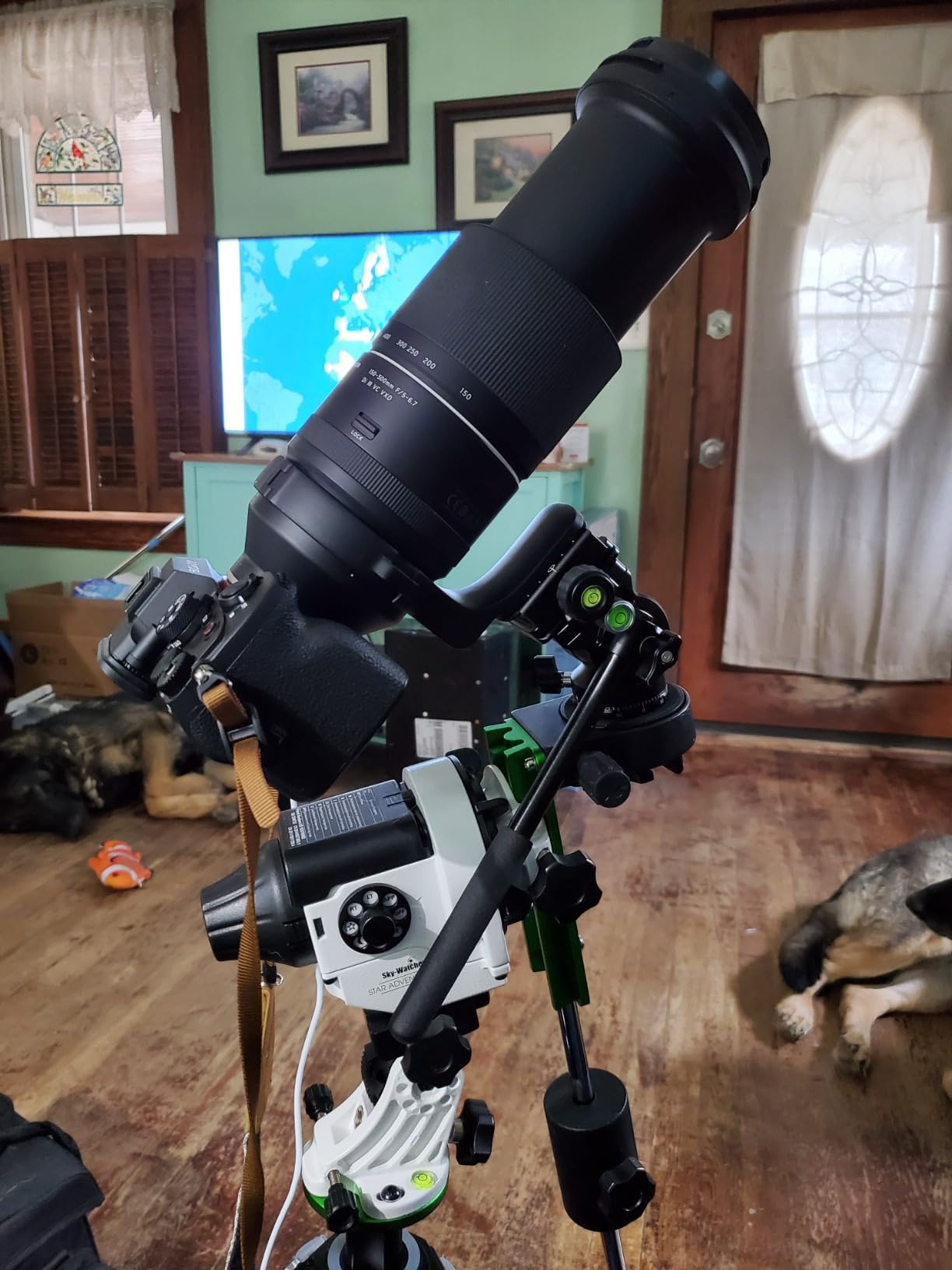
Wi-Fi connectivity through the SAM Console app is reliable on both iOS and Android. The deluxe equatorial base provides genuine polar alignment with an illuminated polar scope. Tracking accuracy is excellent for the price, with consistent performance on focal lengths up to 200 mm.
The downsides are mostly cosmetic. The battery cover is flimsy and has broken on two of my units over the years. The on/off switch is too easy to toggle during transport, which has cost me a few setup sessions. Polar scope lighting is dim compared to the ZWO AM5N or Star Adventurer GTi.
Who should buy the Star Adventurer 2i Pro
This is the right mount for nightscape photographers, Milky Way specialists, and anyone wanting the most portable premium tracking system available. It is also ideal for time-lapse photographers who occasionally shoot the night sky.
If you need long-exposure deep-sky imaging at long focal lengths, you need a different mount. The 2i Pro is for wide-field work, not for narrowband or galaxy imaging at 1,000 mm focal lengths.
Real-world nightscape results
My best nightscape images with the 2i Pro have been of the Milky Way core, Rho Ophiuchi, and the North America Nebula complex. With 2 minute unguided exposures at f/2.8, I capture pinpoint stars across wide fields. For the price, nothing else matches its combination of portability and tracking quality.
Limitations to know
This is a tracker, not a GoTo mount. You point it manually using the polar scope. If you want GoTo functionality in a similar form factor, the Star Adventurer GTi is the upgrade path. The plastic components are not as durable as metal alternatives on premium mounts.
Buying Guide: How to Choose a Premium Equatorial Mount
Picking the right premium equatorial telescope mount comes down to matching the mount to your imaging style, your typical OTA weight, and how you plan to use it. After testing dozens of mounts over the years, I have learned that the most expensive option is rarely the best fit. Here are the five factors that matter most.
Payload capacity and OTA weight
Match your mount’s rated payload to your OTA plus camera plus accessories. A safe rule is to keep your imaging train under 60 percent of the mount’s rated capacity. A 30 lb mount handles an 18 lb imaging train comfortably. Overload a mount and you get guiding instability, periodic error spikes, and motor wear.
For a 4 inch APO refractor with a cooled camera, the ZWO AM5N or Sky-Watcher Star Adventurer GTi work well. For an 8 to 11 inch SCT or RC, you need at least 44 lbs of payload, which points to the AZ-EQ6 or CGX. If you are unsure, look at our general telescope mount guide for additional context.
Tracking accuracy and periodic error
Periodic error (PE) is the natural wobble in any gear-driven mount. Premium mounts minimize PE through belt drives, harmonic gears, or PEC training. Sub-10 arc second peak-to-peak PE allows unguided exposures up to 30 seconds with wide-field refractors. For longer unguided exposures or longer focal lengths, autoguiding becomes essential.
Harmonic drive mounts (ZWO AM5N, Sky-Watcher Wave 150i Pro) deliver the best PE performance but at premium prices. Belt-driven German equatorials (AZ-EQ6, CGX) offer excellent PE for the price with proven reliability.
Harmonic drive vs traditional German equatorial
Harmonic drive mounts are lighter, more portable, and have less PE out of the box. They are ideal for traveling and wide-field imaging. German equatorial mounts have higher payload capacity and a longer track record of reliability for heavy imaging trains.
Choose harmonic if portability and tracking accuracy are priorities. Choose German equatorial if payload capacity and proven reliability matter more. Many serious imagers eventually own both types for different scenarios.
GoTo functionality and control options
Modern premium mounts offer Wi-Fi, Bluetooth, USB, and traditional hand controller options. Wi-Fi control via smartphone apps is now standard and works well, but a dedicated hand controller is more reliable in cold weather and for extended sessions.
Look for mounts that support both smartphone control and traditional hand controllers. The ZWO AM5N, Sky-Watcher mounts, and Celestron CGX all support multiple control methods. For deep-sky target selection, a 40,000+ object database is standard.
Portability and setup time
Premium mounts range from 7 lbs (Star Adventurer 2i) to 108 lbs (Celestron CGX). Match the mount weight to your transport plans. If you fly to star parties, anything over 30 lbs total is impractical. If you image from a backyard or permanent observatory, weight matters less.
Setup time ranges from 5 minutes (Star Adventurer GTi) to 30 minutes (CGX). For casual imaging, faster setup means more imaging time. For remote observatory work, slower setup with better polar alignment pays off.
If you are upgrading from a beginner mount, the path from a basic EQ to a premium harmonic drive mount like the ZWO AM5N is well worth the investment. Many imagers sell their old mount to fund the upgrade, and our equatorial mount roundup covers the broader market.
Compatibility with your existing gear
Check dovetail compatibility before buying. Most premium mounts use Vixen or Losmandy dovetails. Make sure your existing OTAs match the saddle plate. Also check that your camera control software (ASIAir, NINA, Sequence Generator Pro) supports the mount you are considering.
For a complete imaging setup, you may want to also upgrade your telescope camera or add a quality telescope case to protect your investment.
Frequently Asked Questions
What are the disadvantages of an equatorial mount?
Equatorial mounts are heavier and more complex than altazimuth mounts, and they require accurate polar alignment before each imaging session. They also cost more than equivalent altazimuth mounts, especially premium models. For visual observation of planets and the Moon, the extra setup time is often unnecessary. Beginners can struggle with the balance, counterweight, and meridian flip procedures, which add a learning curve compared to simpler mount designs.
Do you need an equatorial mount for astrophotography?
Yes, an equatorial mount is essentially required for any serious deep-sky astrophotography involving exposures longer than 15 to 20 seconds. Altazimuth mounts suffer from field rotation during long exposures, which causes stars to trail in arcs rather than straight lines. Equatorial mounts counter Earth’s rotation on a single axis aligned with the celestial pole, eliminating field rotation and keeping stars round across long exposures.
How accurate are premium equatorial mounts?
Premium equatorial mounts routinely achieve sub-arcsecond tracking accuracy when properly autoguided. Harmonic drive mounts like the ZWO AM5N measure around 10 arc seconds peak-to-peak periodic error out of the box, allowing unguided exposures up to 30 seconds with wide-field refractors. Belt-driven German equatorials such as the Sky-Watcher AZ-EQ6 measure 6 arc seconds peak-to-peak periodic error and achieve 0.3 to 0.5 arc second RMS guiding accuracy with an OAG setup.
Is an equatorial mount the same as a star tracker?
No, an equatorial mount and a star tracker are related but different. A star tracker is a small, lightweight equatorial platform designed primarily for wide-field nightscape imaging with DSLR cameras and small lenses. A full equatorial mount is a larger, more capable platform that supports telescopes and offers GoTo functionality, higher payload capacity, and better tracking accuracy. Star trackers like the Sky-Watcher Star Adventurer 2i are great for travel, while full mounts like the ZWO AM5N handle serious deep-sky imaging.
How do I polar align a premium equatorial mount?
Most premium mounts include either an illuminated polar scope or a software-based polar alignment routine. The general process involves leveling the tripod, pointing the RA axis at the celestial pole (Polaris in the Northern Hemisphere), and using the polar scope or app to fine-tune the alignment. Software routines like Celestron All-Star Polar Alignment or ZWO’s ASI Air polar align procedure can achieve accurate alignment in 3 to 5 minutes. For remote setups, an electronic polar scope like the QHY Polemaster saves significant time.
Final Verdict: Which Premium Equatorial Mount is Right for You?
After testing these eight premium equatorial telescope mounts side by side, three clear winners emerged for different use cases. The ZWO AM5N is my top recommendation for serious astrophotographers who want premium harmonic drive tracking in a portable package. It combines genuine sub-10 arc second periodic error with a 44 lb payload capacity at a weight any traveling imager can manage.
The Sky-Watcher AZ-EQ6 is the right call if you need maximum payload capacity and dual-mode versatility. It is the most adaptable premium mount I have used, handling everything from wide-field refractors to 11 inch SCTs. The Celestron CGX wins for permanent observatory installations where 55 lbs of payload and remote operation are priorities.
For travelers and nightscape photographers, the Sky-Watcher Star Adventurer GTi and 2i Pro Pack deliver genuine premium tracking in portable kits that fit in a backpack. If you are starting from scratch and want the best balance of price and performance for premium equatorial telescope mounts in 2026, the ZWO AM5N remains my editor’s choice pick for serious deep-sky imaging.
Whatever premium equatorial mount you choose, the upgrade from a basic EQ or star tracker is transformative. The tracking accuracy and payload headroom of these mounts will let your telescope and camera perform to their full potential, and you will see the difference in your very first imaging session. Clear skies.