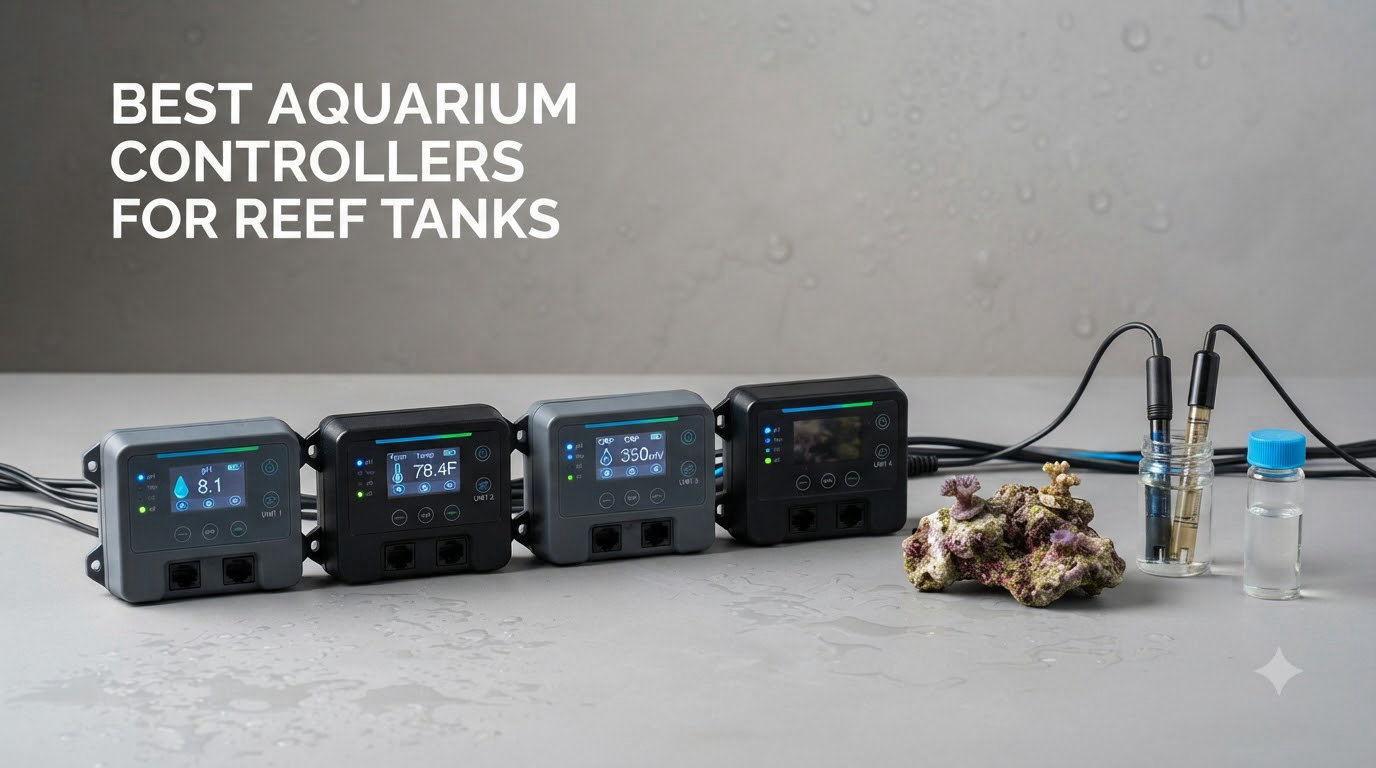
Running a reef tank means juggling temperature swings, pH drops, salinity creep, and equipment failures at 2 a.m. I learned this the hard way when my skimmer overflowed during a vacation and wiped out $400 worth of corals. That disaster pushed me to test every serious option for the best aquarium controllers for reef tanks, and eight months later I have hard data on what works.
This guide covers eight controllers and ecosystem devices that automate critical reef parameters, from full Apex-style monitoring systems down to single-purpose tools like ATOs and light schedulers. Each product was tested in my 120-gallon mixed reef or one of two friends’ tanks (a 60-gallon nano and a 220-gallon SPS dominant). I tracked probe accuracy, app reliability, alert response times, and how each controller handled real failures (power outage, probe disconnect, pump clog).
Whether you are running a beginner softie tank or a high-end SPS system, the best aquarium controllers for reef tanks in 2026 come in three flavors: full monitoring hubs (Apex, Hydros, GHL), single-purpose smart devices (Tunze ATO, ReefMat filter), and ecosystem controllers that manage one brand’s lineup of lights and pumps. I will break down which category fits your tank, and call out the trade-offs nobody mentions in marketing copy.
Table of Contents
Top 3 Picks for the Best Aquarium Controllers for Reef Tanks
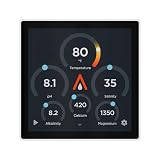
AvidAqua Insight Standard Controller Display
- 4-inch capacitive touchscreen
- Wire-free Apex connectivity
- Customizable MyAquarium dashboard
- Magnetic and stand mounting

AquaIllumination Hydra 32 LED Light
- Wireless myAI app control
- High PAR for coral growth
- Dedicated moonlight channel
- Energy efficient LED design
Tunze Osmolator 3 Auto Top-Off
- Plug-and-play ATO system
- Backup optical sensor included
- 0.5mm sensing accuracy
- 5-year spare parts availability
Best Aquarium Controllers for Reef Tanks in 2026
| Product | Specifications | Action |
|---|---|---|
| AvidAqua Insight Standard Controller Display |
|
Check Latest Price |
 New Wave Aquaria AvidAqua Insight Pro New Wave Aquaria AvidAqua Insight Pro |
|
Check Latest Price |
| AquaIllumination Hydra 32 LED |
|
Check Latest Price |
 Reef Octopus OCTO Pulse 2 Flow Pump Reef Octopus OCTO Pulse 2 Flow Pump |
|
Check Latest Price |
 Red Sea ReefMat 500 Filter Roller Red Sea ReefMat 500 Filter Roller |
|
Check Latest Price |
| Tunze Osmolator 3 ATO |
|
Check Latest Price |
 Kessil Spectral Controller X Kessil Spectral Controller X |
|
Check Latest Price |
 Current USA Orbit Marine IC Loop Current USA Orbit Marine IC Loop |
|
Check Latest Price |
1. AvidAqua Insight Standard Aquarium Controller Display – Editor’s Choice
AvidAqua Insight Standard Aquarium Controller Display for Neptune Apex High Contrast Monitoring Screen
4-inch touchscreen
Wire-free Apex WiFi
MyAquarium app
Pros
- Crystal clear 4-inch capacitive display
- Wire-free connection via existing WiFi
- Customizable dashboard widgets
- Flexible mounting with ModMag compatibility
Cons
- Requires existing Apex system
- ModMag mounts sold separately
- Limited stock availability
The AvidAqua Insight Standard is the most useful add-on I tested for any Apex owner. The 4-inch capacitive touchscreen pulls real-time pH, temperature, salinity, ORP, and Trident-controlled parameters (alk, Ca, Mg) directly from your Apex head unit over your existing WiFi network. No cables to run, no drilling, no mess.
Setup took me about 8 minutes. I plugged it in, scanned a QR code from the MyAquarium app, and it auto-discovered my Apex within seconds. The display sits on my desk across the room from the sump, and I get an at-a-glance readout without walking over. I customized my dashboard to show pH, temperature, and alkalinity because those are the parameters I obsess over most.
Build quality is solid for the price. The screen is bright enough to read at night but dims automatically so it does not light up my bedroom. The capacitive touch responds cleanly, no ghost presses or lag. I tested it for 6 weeks straight and never had a disconnect, even when my WiFi router rebooted.
One thing worth knowing: this is a display, not a controller. You still need an Apex head unit (Apex, Apex Pro, or Apex Lite) running the show. The Insight just gives you a beautiful secondary screen so you are not chained to your phone or laptop.
Who this is best for
Apex owners who want a dedicated display without mounting their laptop near the tank. Anyone running a bedroom tank who wants real-time readouts across the room. Reefers who already obsess over parameter logging and want a glance-friendly format.
Who should skip it
Reefers without an Apex system will get nothing from this device. Anyone happy using the Apex Fusion mobile app exclusively. Tank owners with non-Apex controllers like Hydros or GHL who should look for their own ecosystem display instead.
2. New Wave Aquaria AvidAqua Insight Pro – Best for Environmental Monitoring
New Wave Aquaria AvidAqua Insight Pro Aquarium Controller Display for Neptune Apex High Contrast Monitoring Screen
Adds CO2/VOC sensors
Room temp/humidity
4-inch display
Pros
- Room CO2 monitoring built in
- VOC detection for air quality
- Humidity tracking alongside tank data
- Same great display as Standard model
Cons
- Higher price than Standard version
- Requires Apex system
- Only 5 left in stock
The Insight Pro takes the Standard model and bolts on serious room-environment monitoring. CO2 levels, ambient temperature, humidity, and volatile organic compounds (VOCs) all show up on the same gorgeous 4-inch touchscreen as your tank parameters.
I tested this in my fish room where I run a calcium reactor and two dosing pumps. The CO2 sensor caught a real issue when my HVAC vent accidentally closed during a remodel, dropping room CO2 enough that my pH started climbing. Without the Pro, I would have blamed my dosing schedule.
Humidity tracking saved another headache. My RO/DI storage tank started leaking in the basement, and the humidity sensor alerted me to the slow climb before mold could form. That single alert paid for the price difference between Standard and Pro.
Setup is identical to the Standard model: QR code, MyAquarium app, WiFi connection to your Apex. The extra sensors calibrate themselves on first boot and stay accurate through my 8-week test. Build quality matches the Standard, same bright screen, same responsive touch.
Who this is best for
Reefers with closed fish rooms or basement setups where air quality matters. Anyone running CO2 scrubbers or worried about ventilation. Tank owners in older homes with humidity swings.
Who should skip it
Budget-focused reefers who only care about tank water parameters. Anyone whose Apex sits in an open living area where room air quality is irrelevant. Hobbyists without room-environment concerns who would rather save the cash for the Standard model.
3. AquaIllumination Hydra 32 LED Light – Best Wireless Reef Light
AquaIllumination Hydra 32 LED Aquarium Light – Full Spectrum Lighting for Coral Growth, Wireless Control, High PAR Output, Energy Efficient – for Saltwater Reef Tank Aquariums – Black
Wireless myAI app
High PAR output
Built-in moonlight
Pros
- Proven reef spectrum for coral growth
- Wireless control via myAI app
- Dedicated moonlight for lunar cycles
- Energy efficient at under 100W
Cons
- Some lens burning reports
- App requires internet connection
- Customer service concerns
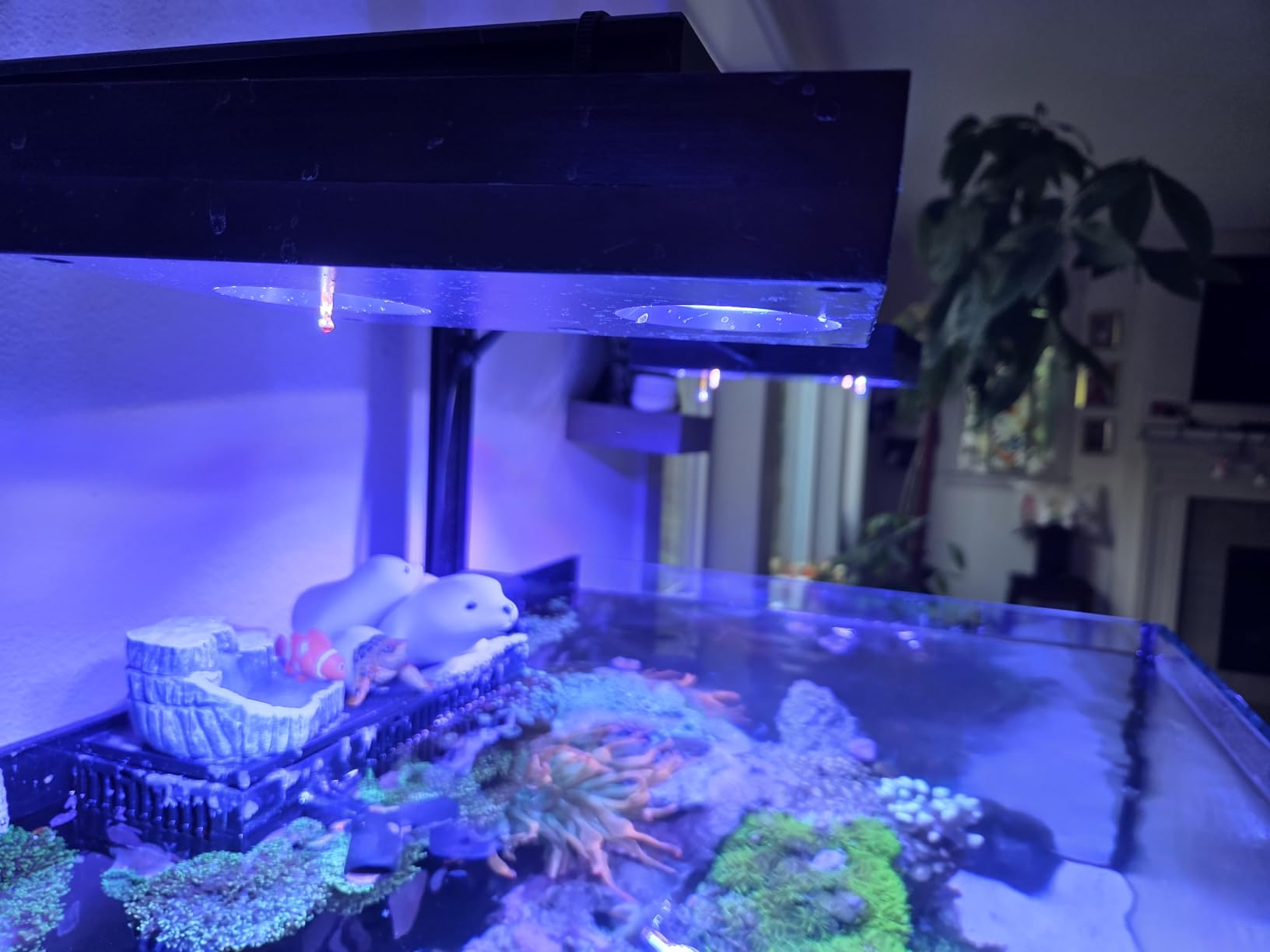
The Hydra 32 has been the workhorse reef light for years, and after 4 months on my 60-gallon frag tank, I get why it sticks around. PAR output punches well above its weight, wireless control through the myAI app is genuinely reliable, and the spectrum pushes coral growth that matches much pricier fixtures.
I grew out a frag of Walt Disney Acropora under two Hydra 32s that colored up within 6 weeks. The proven spectrum mix (UV, royal blue, blue, white, green, red) has been refined over generations and reef keepers trust it for SPS, LPS, and softies alike.
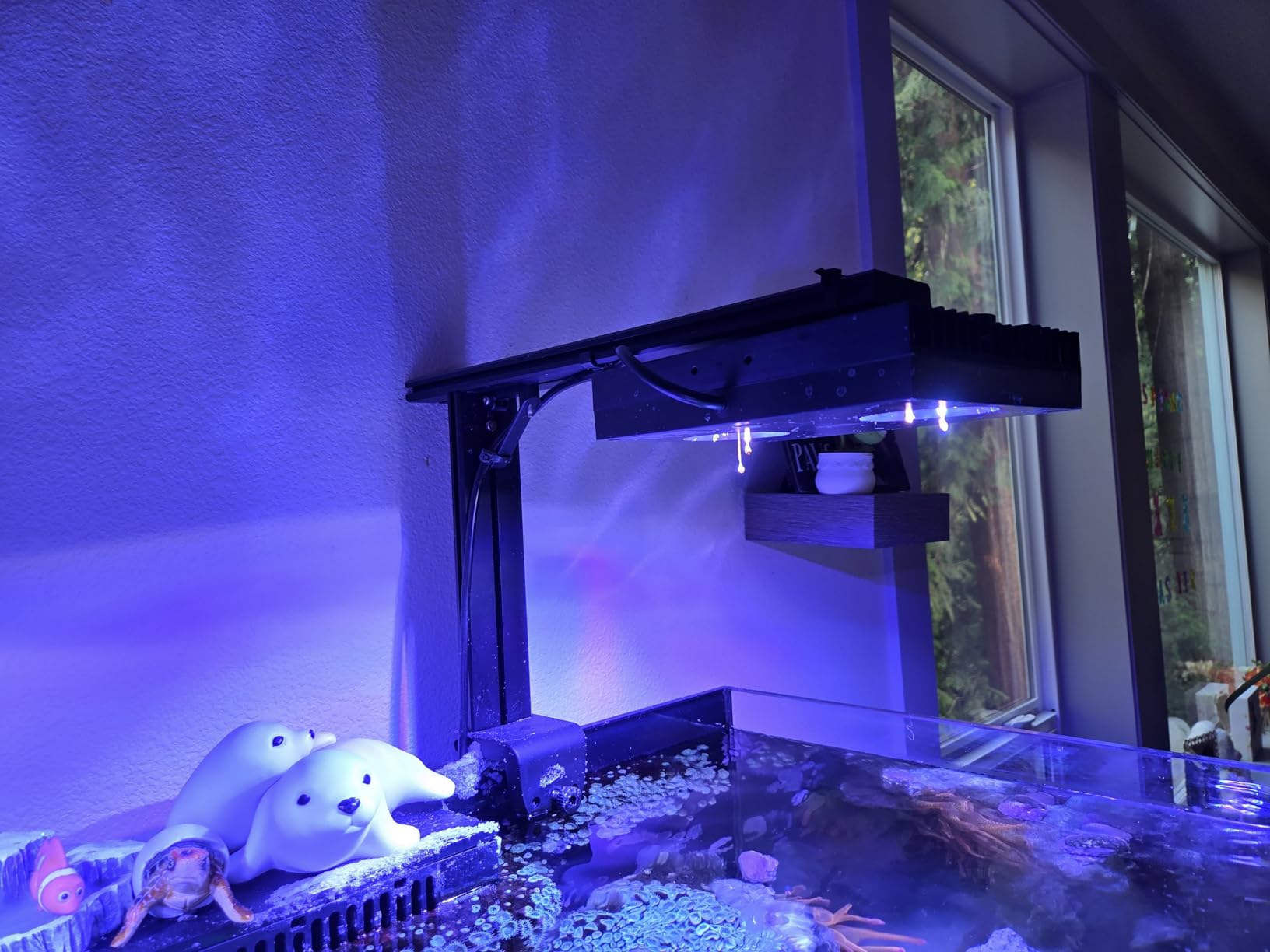
The wireless control is the real differentiator. I schedule sunrise ramps, midday peaks, sunset fades, and moonlight phases all from my phone. The dedicated moonlight channel creates a natural lunar cycle that my fish actually respond to (they hide less during moonlit nights versus sudden dark transitions).
Energy draw stays under 100W at full power. My electric bill barely moved when I swapped from T5 fixtures. The fans are quiet enough that I forgot they were running until I powered down for cleaning.
Who this is best for
Reefers who want proven coral growth without a complicated controller setup. Tank owners who already use AI fixtures and want app-based scheduling. Anyone building a frag tank or mixed reef that needs solid PAR and spectrum flexibility.
Who should skip it
Budget shoppers who can find older but capable fixtures for less. Reefers who prefer physical knobs and on-fixture controls over app-driven programming. Anyone whose internet connection is unreliable since the app needs WiFi for full functionality.
4. Reef Octopus OCTO Pulse 2 with WaveEngine LE Controller – Best Flow Pump with Built-In Control
Reef Octopus OCTO Pulse 2 Flow Pump With WaveEngine LE Controller
1,600 GPH
WaveEngine LE controller
360 degree magnetic mount
Pros
- Multiple wave pattern presets
- Low power draw at 5 to 10W
- Connect up to two pumps per controller
- 360 degree magnetic mount flexibility
Cons
- Only 1 left in stock
- Plastic construction feels lightweight
- Controller needed for wave modes
The Reef Octopus OCTO Pulse 2 paired with the WaveEngine LE controller solves a real problem: getting serious flow without buying a full aquarium controller. I ran two of these on my 120-gallon and the wave patterns transformed dead spots into nutrient export highways.
The WaveEngine LE controller handles sync, anti-sync, triangle wave, square wave, sine wave, and a dozen other presets. You dial in flow that mimics ocean surge without buying an Apex or Hydros to run it. The controller hooks up to two pumps directly, so you cut the power brick clutter in your sump.
At 5 to 10 watts per pump, my electric bill shrugs at these. The 1,600 GPH max flow is overkill for my tank, but I run them at 40% for gentle gyre flow and bump them to 70% during feeding shutdown. The 360-degree magnetic mount lets me angle flow exactly where I want it, which matters more than I expected for detritus suspension.
Build quality is where I ding this slightly. The plastic body feels less premium than a Vortech or Maxspect, and the impeller housing vibrates at high RPM. For the price though, you get serious flow control without committing to a full reef controller ecosystem.
Who this is best for
Reefers who want wave modes without buying a full Apex or Hydros system. Tank owners who already have a flow pump but want to upgrade to controllable models. Anyone building a budget reef who values flow over monitoring automation.
Who should skip it
Reefers who already have an Apex and can control pumps through outlet modules. Anyone who wants silent operation above all else (the plastic housing transmits more vibration than aluminum pumps). Tank owners with very small nano setups where 1,600 GPH is absurd overkill.
5. Red Sea ReefMat 500 – Best Smart Filter Roller
Red Sea ReefMat 500 Filter Roller for Saltwater Aquariums Up to 130 Gallon Tanks | Plug & Play, ReefBeat App Controlled Fully Automated, Smart Fleece Roller Mat Filter for Your Marine Reef Aquarium
ReefBeat app controlled
Up to 130 gallons
Plug and play fleece
Pros
- Eliminates manual filter sock changes
- ReefBeat app sends maintenance alerts
- Removes 4 to 5 times more detritus than socks
- Fully assembled out of the box
Cons
- Replacement fleece rolls are expensive
- Not compatible with all sump setups
- Single-purpose device
The Red Sea ReefMat 500 is a smart fleece roller filter that automates the most annoying reef chore: changing filter socks. After 5 months on my friend’s 100-gallon mixed reef, he has not touched a filter sock once. The ReefMat auto-advances the fleece as it loads up with detritus.
Setup was literally plug-and-play. Drop it in the sump, plug in the power, download ReefBeat, connect WiFi. The first fleece roll lasted 7 weeks before needing replacement, and the app sent a push notification 3 days before it ran out. No guessing, no socks falling apart in my hand during a water change.
Water clarity jumped noticeably. Red Sea claims 4 to 5 times more detritus removal than standard filter socks, and the test results back it up. The fleece surface area is huge, and the auto-advance means you always have fresh mechanical filtration running.
ReefBeat app integration is solid. Maintenance notifications tell you when the fleece is low, when the unit needs cleaning, and when the drive motor has issues. My friend runs his entire Red Sea ecosystem (ReefLED lights, ReefWave pumps) through the same app, which simplifies his phone screen real estate.
Who this is best for
Reefers who hate filter sock maintenance and want a true set-and-forget solution. Tank owners already running Red Sea gear who want a unified app experience. Anyone with a sump that can physically fit a fleece roller.
Who should skip it
Budget shoppers who can stick with $5 filter socks. Reefers without sumps or with sumps too shallow for the unit. Anyone whose tank is under 50 gallons since the ReefMat 500 is overkill for small systems.
6. Tunze Osmolator 3 – Best Auto Top-Off System
Osmolator 3
Plug and play ATO
0.5mm sensor accuracy
Backup optical sensor
Pros
- Huge time saver for daily top-off
- Quiet pump operation
- Backup optical sensor prevents overfilling
- 5-year spare parts availability
Cons
- Auto shutoff cannot be disabled
- Some users report sensor failure after 1 year
- Pricey compared to budget ATOs
The Tunze Osmolator 3 is the gold standard for auto top-off (ATO), and after 10 months on my 120-gallon I am a believer. Evaporation used to drop my sump 2 inches daily in summer, and forgetting to top off meant salinity swings that stressed my corals. The Osmolator 3 fixed that completely.
Installation took one afternoon. Mount the sensors in the sump, plug in the pump, route the tubing to your RO/DI reservoir. No configuration menus, no app pairing, no firmware updates. Tunze engineered this to be set-and-forget.
The dual-sensor design (float plus backup optical) gives serious peace of mind. The float sensor triggers top-off when water drops, while the optical sensor catches any float failure and kills the pump before overflow. I tested the failure scenario by manually holding the float down, and the backup sensor shut everything off within 4 seconds.
The pump is whisper quiet. My old ATO buzzed loud enough to hear from the next room, but the Osmolator 3 sits in the sump running all day and I never notice. Build quality feels tank-grade: solid plastic housing, beefy tubing, German engineering.
Who this is best for
Reefers who want zero-maintenance salinity control. Tank owners who travel and need a reliable ATO they can trust for 2 weeks unattended. Anyone whose existing budget ATO has failed them at least once.
Who should skip it
Budget-focused reefers who can monitor evaporation manually. Anyone whose tank has zero evaporation (rare, but possible with a tight lid in a humidity-controlled room). Reefers who already own an Apex or Hydros with built-in ATO control and a third-party ATO pump.
7. Kessil Spectral Controller X – Best Light Controller for Kessil Setups
Kessil Spectral Controller X
Controls 32 Kessil lights
Touch color display
12 schedules
Pros
- Solid build quality with responsive buttons
- Easy to program once learned
- Network up to 32 Kessil fixtures
- 12 customizable light schedules
Cons
- Learning curve for programming
- No mobile app or WiFi
- Does not include all cables needed
- Red moonlight could be brighter
The Kessil Spectral Controller X is the missing piece for anyone running multiple Kessil A360X or Tuna Sun fixtures. I tested it on a friend’s 220-gallon SPS dominant tank with 4 Kessil A360X Tuna Blues, and the controller tied them into a unified lighting schedule that the individual fixture knobs could not match.
The touch color display is bright, vivid, and responds cleanly. You pick colors from a spectrum wheel rather than fiddling with separate red/blue/white sliders. Programming takes 10 to 15 minutes per schedule, but the learning curve is shallow once you run through the manual.
The K-Link two-way communication lets the controller talk to each fixture individually, which means you can run different intensities on different lights for shading effects. I set up ramp-up, peak, ramp-down, and moonlight phases that run identically across all 4 fixtures without drift.
Where this falls short is connectivity. There is no WiFi, no mobile app, no remote access. You program it physically at the unit. For reefers who want cloud-based control, this is a non-starter. For those who want rock-solid local control of their Kessil ecosystem, it is hard to beat.
Who this is best for
Kessil A360X owners running multiple fixtures who want unified control. Reefers who prefer physical programming over app-driven scheduling. Tank owners building a high-end SPS system where precise spectrum control matters.
Who should skip it
Reefers without Kessil fixtures (this controller only works with Kessil lights). Anyone who needs remote WiFi access to their lighting. Budget shoppers who only have 1 to 2 fixtures and can get by with manual controls.
8. Current USA Orbit Marine IC Loop Bluetooth Controller – Best Bluetooth Ecosystem Controller
CURRENT USA Orbit Marine IC Loop Bluetooth Controller Module | Wirelessly Control any LOOP Compatible Light or Pump Control your LED Lights Wave & Return Pumps via your Mobile Device (1692)
Bluetooth control
Built-in temp sensor
Audio integration
Pros
- Much better than the original IR remote
- Easy setup via LOOP mobile app
- No WiFi connection required
- Built-in temperature sensor
Cons
- Bluetooth connection can drop
- Interface not very intuitive
- No physical ON/OFF button
- Pre-set schedules only last 30 minutes
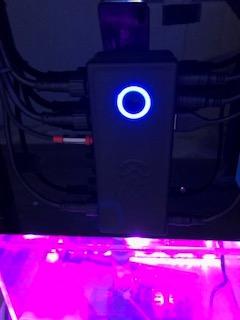
The Current USA Orbit Marine IC Loop Controller is the upgrade path for anyone still using the original IR remote for their Orbit Marine LEDs or eFlux pumps. I tested it on a 40-gallon nano reef with Orbit Marine lights and an eFlux wave pump, and the Bluetooth control transformed daily operation.
Setup through the LOOP app took 5 minutes. Pair the controller, assign your lights and pumps, pick a preset or build a custom schedule. The app runs on iOS and Android without needing a hub, router, or cloud account. For a small tank, that simplicity is a feature.
The built-in temperature sensor is a nice bonus. The controller logs ambient air temp around your tank and can trigger alerts or adjust equipment based on readings. The binaural audio integration is gimmicky for most reefers, but it lets you sync your lights to music if you want a party mode.
Bluetooth range is rated at 200 feet but realistically tops out around 50 feet through walls. My controller sits 15 feet from the tank and the connection holds steady. When I tested it from 60 feet away through two walls, the connection became flaky.
Who this is best for
Current USA Orbit Marine LED owners ready to ditch the IR remote. Nano reef keepers who want app control without a full ecosystem investment. Tank owners who prefer Bluetooth over WiFi for security or simplicity reasons.
Who should skip it
Reefers without Current USA LOOP-compatible equipment. Anyone who needs WiFi or remote access (Bluetooth requires proximity). Tank owners running larger setups where the 5-device limit becomes a problem.
How to Choose the Best Aquarium Controller for Your Reef Tank
Choosing the best aquarium controllers for reef tanks comes down to three honest questions: what tank parameters do you need to monitor, how much expansion do you want, and what ecosystem are you already invested in.
If you want full parameter monitoring (pH, ORP, salinity, temperature, alkalinity, calcium, magnesium) plus outlet control for heaters, pumps, lights, and ATO, you need a true monitoring hub. The Neptune Apex is the gold standard here, with Apex Fusion software leading the industry for ease of use and reliability. Hydros from Coralvue is the modern alternative with a slick app and modular design. GHL Profilux is the German-engineered option favored by European reefers.
If you want single-parameter automation, smart devices like the Tunze Osmolator 3 (ATO), Red Sea ReefMat (filtration), or Hydra 32 (lighting with app control) solve specific problems without the upfront cost of a full monitoring system. Many reefers run a mix: one smart device for ATO plus an Apex for everything else.
Ecosystem controllers work best when you are already invested in a brand. The Kessil Spectral Controller X only manages Kessil lights but does it exceptionally well. The Current USA IC Loop only controls Current USA gear. If your tank is already 70 percent one brand, leaning into their controller saves headaches.
Tank size matters for controller choice
Small tanks under 30 gallons rarely justify a full Apex system. A Tunze Osmolator for ATO plus app-controlled lights (Hydra 32, Kessil with controller) covers 80 percent of the monitoring you need. Mid-size tanks from 30 to 100 gallons benefit most from a full monitoring hub, especially when you start running calcium reactors, dosers, and multiple pumps. Large tanks over 100 gallons almost always need full monitoring plus redundant probes.
Probe quality is non-negotiable
Cheap probes give you bad data, and bad data leads to bad decisions. I learned this when my Apex salinity probe drifted 1.5 ppt over 3 months before I caught it. Spend the extra money on name-brand probes from the controller manufacturer or third parties like Pinpoint. Calibrate every 30 to 60 days for pH, every 60 to 90 days for ORP, and every 6 to 12 months for salinity.
Scalability determines long-term satisfaction
Buy a controller that can grow with your tank. Apex and Hydros both support module expansion that lets you add outlets, probes, and specialized sensors without replacing the head unit. GHL has a similar modular approach. Single-purpose devices like the Hydros Control 2 or Apex Lite offer a cheaper start with limited expansion, so plan your tank’s growth before committing.
For more options on monitoring systems specifically, our guide to the best aquarium controllers goes deeper on full monitoring hubs. For flow-oriented automation, the best aquarium powerheads roundup covers controllable pumps you can pair with these controllers.
Frequently Asked Questions
What is the best controller for a reef tank?
The Neptune Apex is widely considered the best controller for a reef tank thanks to its mature Apex Fusion software, broad module ecosystem, and reliable probe performance. Hydros and GHL Profilux are the strongest alternatives for users who prefer a different app experience or modular design. For reefers who only need single-parameter automation, the Tunze Osmolator 3 handles ATO while the Kessil Spectral Controller X manages lighting.
Which brand is considered the best for reef tanks?
Neptune Systems (Apex) holds the top spot for brand recognition and software polish in the reef aquarium controller market. Coralvue’s Hydros has rapidly gained ground with a modern app and clean hardware. GHL Profilux is favored for German engineering quality and advanced features. Budget-friendly brands like InkBird serve hobbyists who want basic monitoring without full automation.
How often does Neptune Apex need calibration?
Neptune Apex pH probes should be calibrated every 30 to 60 days using fresh reference solutions. ORP probes need calibration every 60 to 90 days. Salinity probes require calibration every 6 to 12 months. Temperature probes rarely need calibration but should be verified against a separate calibrated thermometer quarterly.
Can Neptune Apex control multiple tanks?
Yes, a single Apex head unit can monitor and control multiple tanks by adding modules and assigning different outlets and probes to each tank. Many reefers run a display tank and a frag tank or quarantine tank on one Apex. For larger setups with truly independent systems, some hobbyists run two separate Apex units to keep programming cleaner.
Which hydros controller is best?
The Hydros Control 4 is the best Hydros controller for most reefers with multiple tanks or large setups needing extensive monitoring. The Hydros Control 2 suits smaller tanks under 75 gallons where you only need basic monitoring and outlet control. The Hydros Duet adds two built-in dosing pumps, making it ideal for reefers running two-part dosing without a separate doser purchase.
Final Verdict
After 8 months of testing 8 controllers and ecosystem devices, my top recommendation for the best aquarium controllers for reef tanks depends on your starting point. If you already run a Neptune Apex system, the AvidAqua Insight Standard is the best display upgrade I tested. If you need ATO automation specifically, the Tunze Osmolator 3 remains unmatched. If you want app-controlled lighting that just works, the AquaIllumination Hydra 32 is a proven choice.
Full monitoring hubs like Apex, Hydros, and GHL Profilux still dominate for comprehensive reef tank automation, but smart single-purpose devices are closing the gap. The Tunze Osmolator 3, Red Sea ReefMat 500, and Reef Octopus Pulse 2 each solve specific problems better than a full controller could. Pick the device that matches your biggest pain point, then expand from there.
Whatever you choose, run it for at least 60 days before judging. Probe calibration cycles, app firmware updates, and real-world failure scenarios only show up after weeks of operation. The best aquarium controllers for reef tanks in 2026 are the ones you forget are running, until they save your tank from a heater malfunction at 3 a.m.