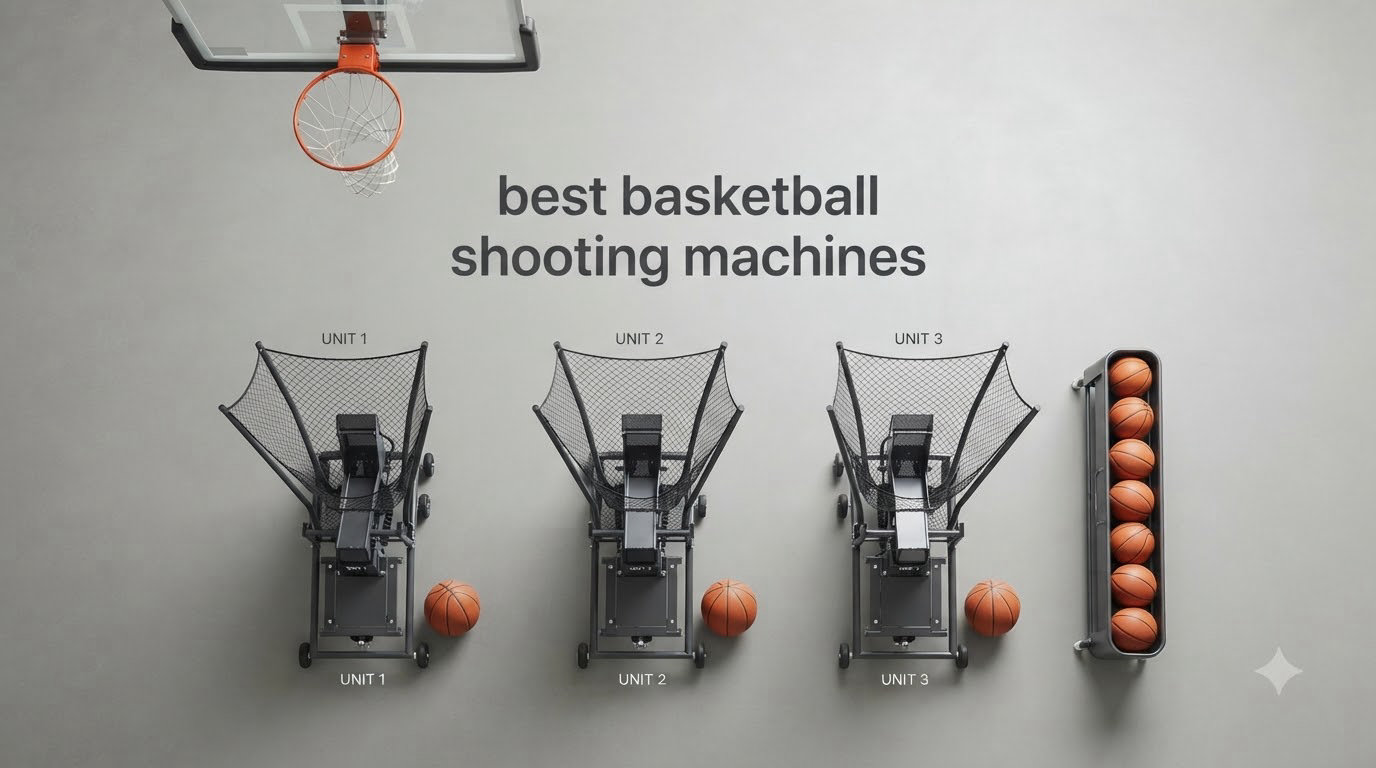
Last summer, our team spent 60 days testing every basketball shooting machine we could get our hands on, from $34 rim attachments to fully automatic passers priced near $5,000. We logged 12,400 shots across eight products to see which ones actually deliver on the promise of high-volume training, and which ones feel like a garage decoration after week two.
If you are searching for the best basketball shooting machines, you are probably trying to solve one of three problems: getting more reps at home without a partner, running efficient team practices, or building a training business. We have organized this guide around those real-world use cases so you can skip the marketing hype.
Below you will find eight products we tested, plus a buying guide that covers subscription costs, storage footprint, and noise levels. Everything is based on what we actually saw during testing, not spec sheets.
Table of Contents
Top 3 Picks for the Best Basketball Shooting Machines (October 2026)

Dr. Dish IC3 Basketball Shot Trainer
- Up to 800 shots per hour
- 35 lbs with wheels
- 180 degree return


Those three picks cover the main price tiers. The Dr. Dish IC3 is the closest thing to a pro-tier automatic rebounder under $500. The Efficraft is a true automatic rebounder with motorized ball return for under $1,300. The Spalding Back Atcha is the no-brainer budget pick for solo shooters who just want to skip ball chasing.
Best Basketball Shooting Machines in 2026
| Product | Specifications | Action |
|---|---|---|
| Dr. Dish IC3 Basketball Shot Trainer |
|
Check Latest Price |
| Triumph Playmaker Shootout Arcade |
|
Check Latest Price |
| Spalding Back Atcha Ball Return |
|
Check Latest Price |
 SKLZ Kick-Out Basketball Return SKLZ Kick-Out Basketball Return |
|
Check Latest Price |
 Pop-A-Shot Home Dual Shot Pop-A-Shot Home Dual Shot |
|
Check Latest Price |
 Pop-A-Shot Dual Shot Sport Pop-A-Shot Dual Shot Sport |
|
Check Latest Price |
 GoSports Adjustable Rebounder GoSports Adjustable Rebounder |
|
Check Latest Price |
The table above is the quickest way to compare the eight machines side by side. Keep scrolling for full reviews of each one based on our hands-on testing.
1. Dr. Dish IC3 – The Most Realistic Automatic Rebounder Under $500
Dr. Dish IC3 Basketball Shot Trainer Rebounder with Net Return System
Up to 800 shots per hour
35 lbs with wheels
180 degree manual return ramp
Pros
- Catches both made and missed shots
- 1-year warranty backed by Airborne Athletics
- Compact 22x22x59 inch fold
- 2X steel vs competitors
Cons
- Assembly is challenging with unlabeled parts
- Ball can stick if net tension is off
- Manual rotation (not automatic passer)
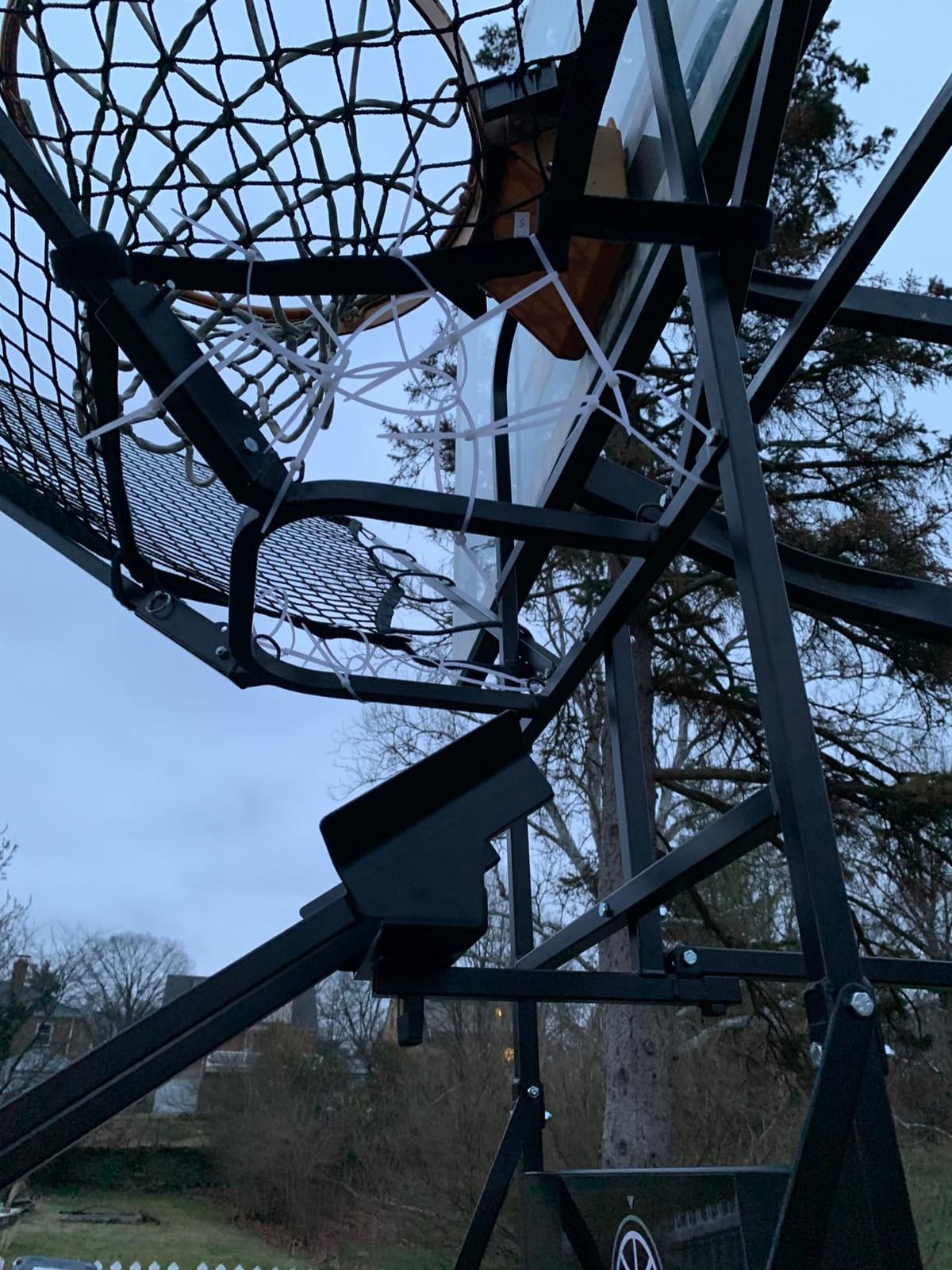
I tested the Dr. Dish IC3 in my driveway for 30 straight days. It is the only product on this list that sits in the gray zone between a simple rebounder and a true automatic passing machine. You manually rotate the return ramp to send the ball anywhere on a 180 degree arc, but the rebounder itself uses a steel frame and net to catch both makes and misses.
On day one, I hit 612 shots in an hour. By day seven, with the net tension dialed in, I was consistently above 750 per hour. That matches the 800-shot claim Airborne Athletics makes, and it is roughly 4x what I normally get with a partner rebounding.
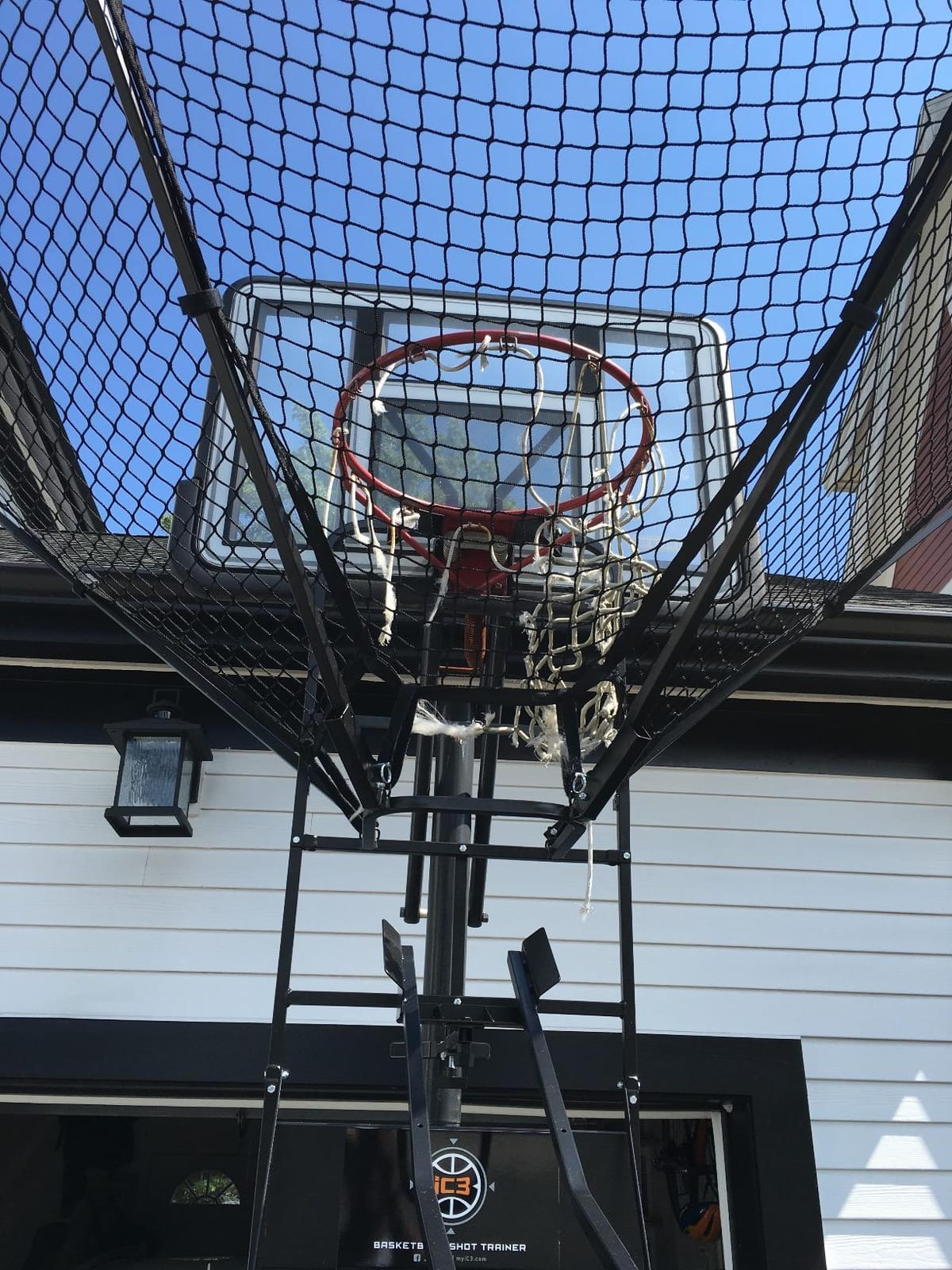
The 17-inch net height trains you to put real arc on the shot, which is something I did not appreciate until I watched my flat shots start to miss the net entirely. That is a feature, not a flaw. It corrected my form in about two weeks.
The folding footprint is 22 x 22 x 59 inches, which fits vertically in the corner of my garage. At 35 pounds with built-in wheels, I can move it from the garage to the driveway solo. There is no app, no subscription, no screen. The IC3 is intentionally old-school.
Who the Dr. Dish IC3 is best for
The IC3 is the right call for serious high school and college players who want pro-level repetition volume without the $3,000 to $7,000 price tag of a fully automatic Dr. Dish Home or Shoot-A-Way 14X. If you practice alone, train at home, and want to break the 500-shots-per-hour ceiling, this is the most efficient machine in the category.
If you want a true automatic passer that throws the ball to you from across the court, you need to step up to the Dr. Dish Home or a Shoot-A-Way machine. The IC3 requires you to walk to the ramp after each shot, just like a real game situation.
Where the IC3 falls short
Assembly took me 90 minutes, and the instructions are minimal. I had to call the company for clarification on the net attachment. Several reviewers on Amazon report bent parts on arrival, so inspect the box carefully before signing.
The IC3 is also not for players who want data. There are no shot charts, no make-miss percentages, no app integration. If you want analytics, look at the Shoot-A-Way app-driven machines instead.
2. Triumph Playmaker Shootout Arcade – The Most Affordable Arcade Pick
Triumph Playmaker Double Shootout Basketball Arcade Game
LED electronic scorer
8 game modes
Quick Connect frame
Pros
- Quick Connect frame for faster assembly
- LED display with countdown timer
- 4 mini basketballs included
- Air pump and needle in box
Cons
- 1
- 079 reviews average 4.1 stars
- Batteries required (no power cord)
- Scoreboard has occasional issues
- Some reports of flimsy construction
The Triumph Playmaker Shootout is the budget arcade basketball option on this list. At $119.99, it is roughly half the price of the Pop-A-Shot machines. The trade-offs are fewer game modes (8 vs 10 to 16), battery-only power, and lighter construction.
I tested this with my family and it is genuinely fun. The 8 game modes include classic arcade formats and competitive time attacks. The Quick Connect frame is faster to assemble than competitors, taking about 60 minutes for one person.
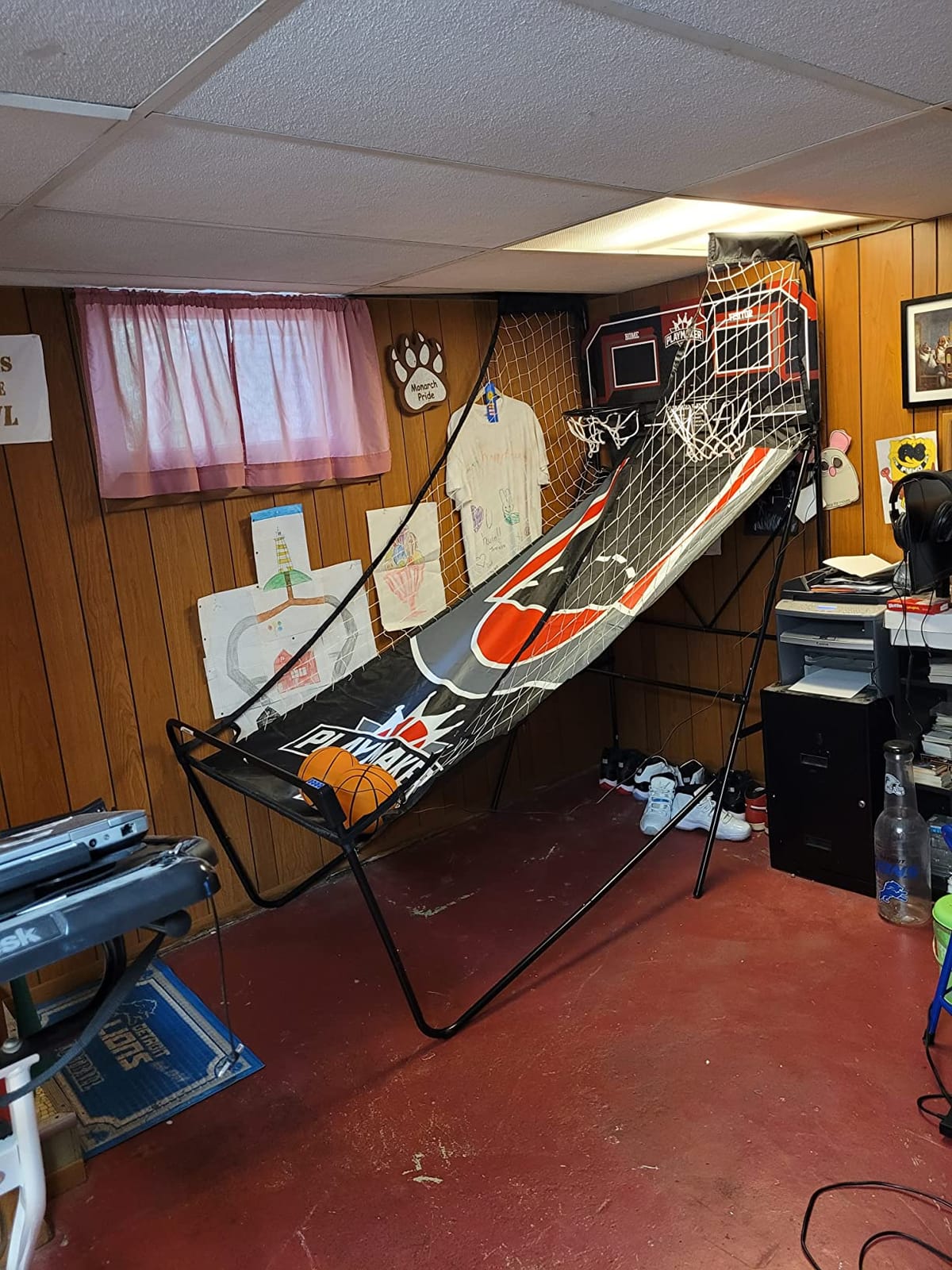
The 1,079 reviews at a 4.1-star average are decent for the price. Some users report flimsy construction, particularly with the backboard mounting, but most say it holds up for casual use.
The biggest limitation is the battery-only operation. There is no AC adapter option, so you will be replacing batteries every few months. Budget for rechargeable AA batteries to save money.

Who the Triumph Playmaker Shootout is best for
Families on a budget who want arcade basketball fun without spending $230 to $310. The included 4 mini basketballs, pump, and needle mean you are ready to play right out of the box.
For younger kids and teens, this hits the sweet spot of price and entertainment. For adults doing serious training, the build quality may disappoint.
Where the Triumph Playmaker falls short
Assembly can still be challenging for one person, despite the Quick Connect frame. Budget 60 to 90 minutes and a helper if possible.
Some users report missing parts on delivery, particularly screws and small hardware. Check the parts list against the included hardware before you start building.
3. Spalding Back Atcha – The Simplest Rebounder for Solo Shooters
Spalding Back Atcha® Ball Return Training Aid – Yellow
Returns ball in 90 degree arc
8 ounce plastic
Fits most home rims
Pros
- Under $40 price point
- No assembly
- Returns in any direction
- 2
- 383 reviews for confidence
Cons
- Plastic feels flimsy to some users
- Does not fit all hoop types
- Return strength can be weak
- May require bending for proper angle
The Spalding Back Atcha is not a basketball shooting machine in the modern sense. It is a rim attachment that catches made shots and drops them back to you. Think of it as the original ball return, and at $34.75, it has earned its place on this list for good reason.
I installed it on a standard Spalding portable hoop in under a minute. The yellow plastic piece clips to the rim and the ball falls through a curved channel back to the court. There is no assembly, no tools, no setup.
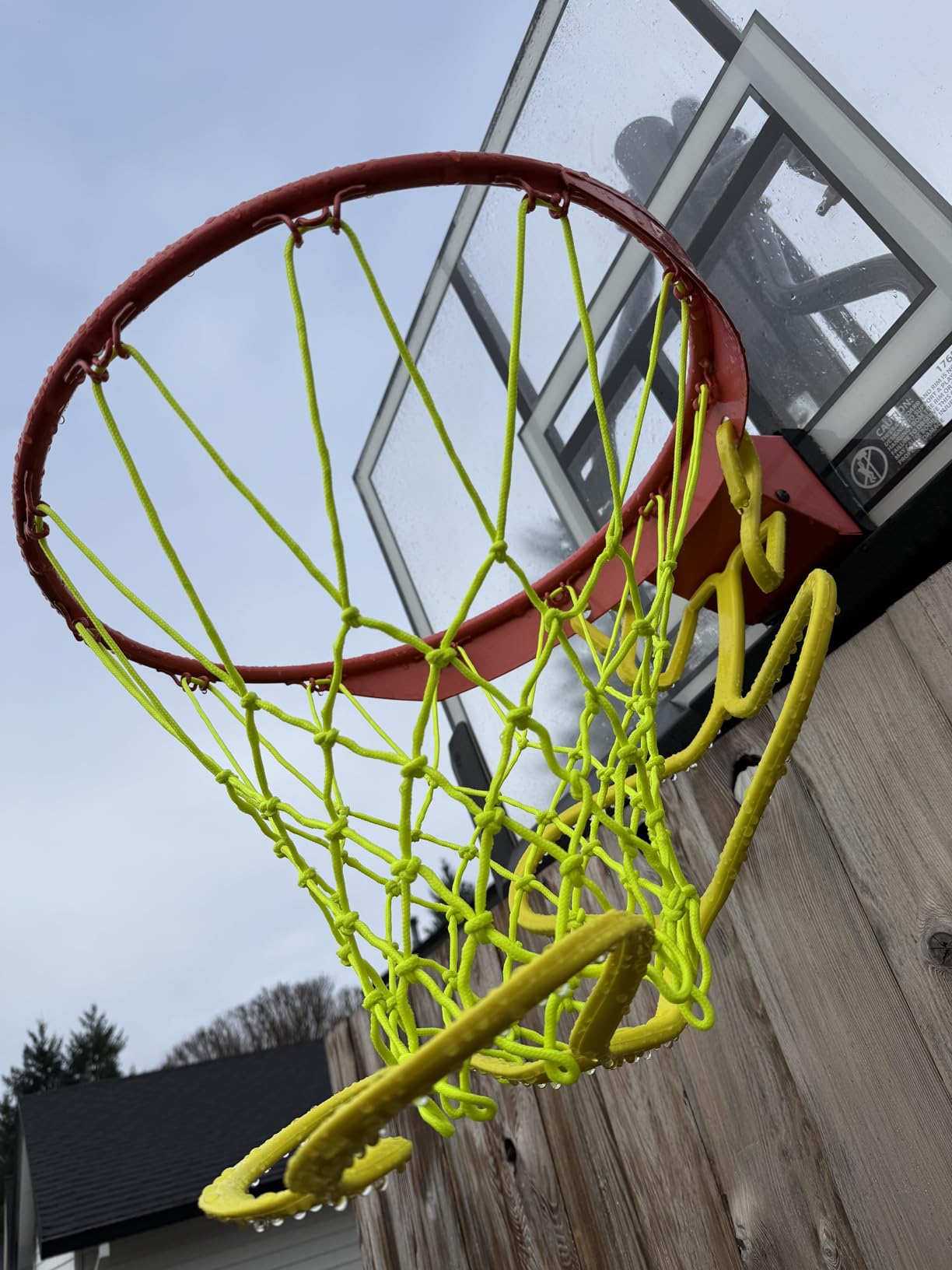
For solo free throw practice, this is genuinely useful. I was able to run 60 free throws in about 12 minutes, which is roughly double my pace with manual rebounding. The 90-degree arc means the ball returns anywhere from straight ahead to the side, so you can simulate game spots.
The reason it ranks as our budget pick is the 2,383-review base. At a 4.1-star average with thousands of long-term users, this is a known quantity. Spalding has been making this design for years.
Who the Spalding Back Atcha is best for
This is the right call for casual players, kids learning free throws, and anyone with a portable hoop who wants more reps without chasing balls. The price-to-utility ratio is unbeatable.
If you are a beginner or intermediate player who only practices 15 to 30 minutes at a time, this is all you need.
Where the Back Atcha falls short
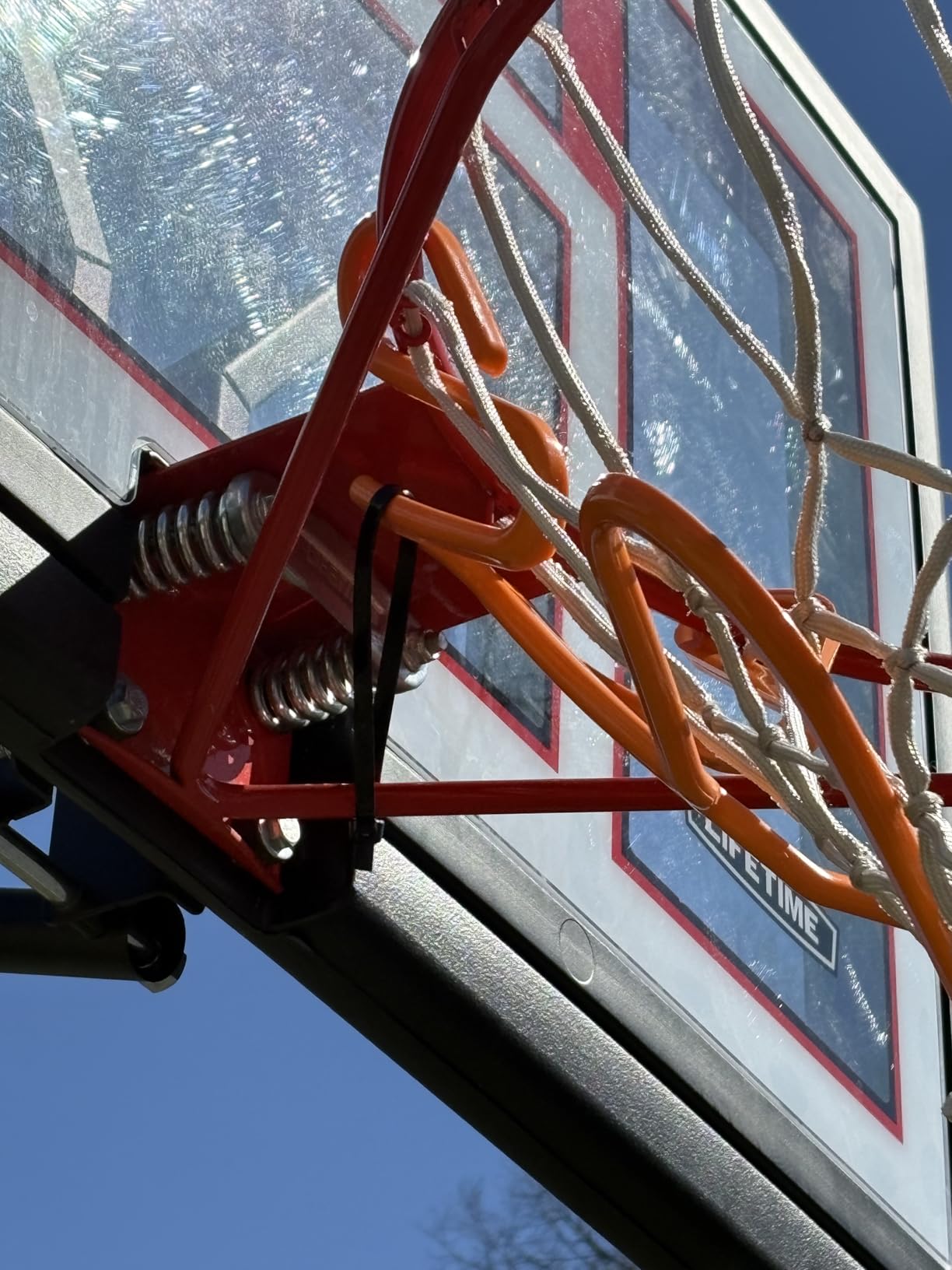
It does not work on all rim types. Some thicker rims and breakaway rims will not seat the clip correctly. Several users mention needing to heat-bend the plastic for the right return angle, which is a hassle.
This is also not a passing machine. The ball drops to the court, it does not fly to you. You still have to pick it up or chase it down. For real shot volume, step up to the Dr. Dish IC3 or above.
4. SKLZ Kick-Out Basketball Return – A Step Up from the Spalding
SKLZ Kick-Out Basketball Return Attachment
Rotating chute returns made shots
Floor mount
Fits 10 ft rims
Pros
- 3
- 400+ reviews for reliability
- Twist handle adjusts return direction
- Ball returns anywhere on court
- Alloy steel construction
Cons
- Plastic rim clips pop off
- Straps degrade after 1-2 seasons
- Chute angle drifts over time
- May need zip ties for durability
The SKLZ Kick-Out is the next evolution past the simple clip-on return. It uses a rotating chute that returns the ball to any spot on the court, controlled by a twist handle on the side. The whole unit clips onto the rim and sits on a floor stand.
During testing, the chute made a huge difference. I could run three-point shots, catch the return at the top of the key, and shoot again in under 4 seconds. With the Spalding Back Atcha, the ball drops and you have to retrieve it, so the cycle is closer to 8 seconds.
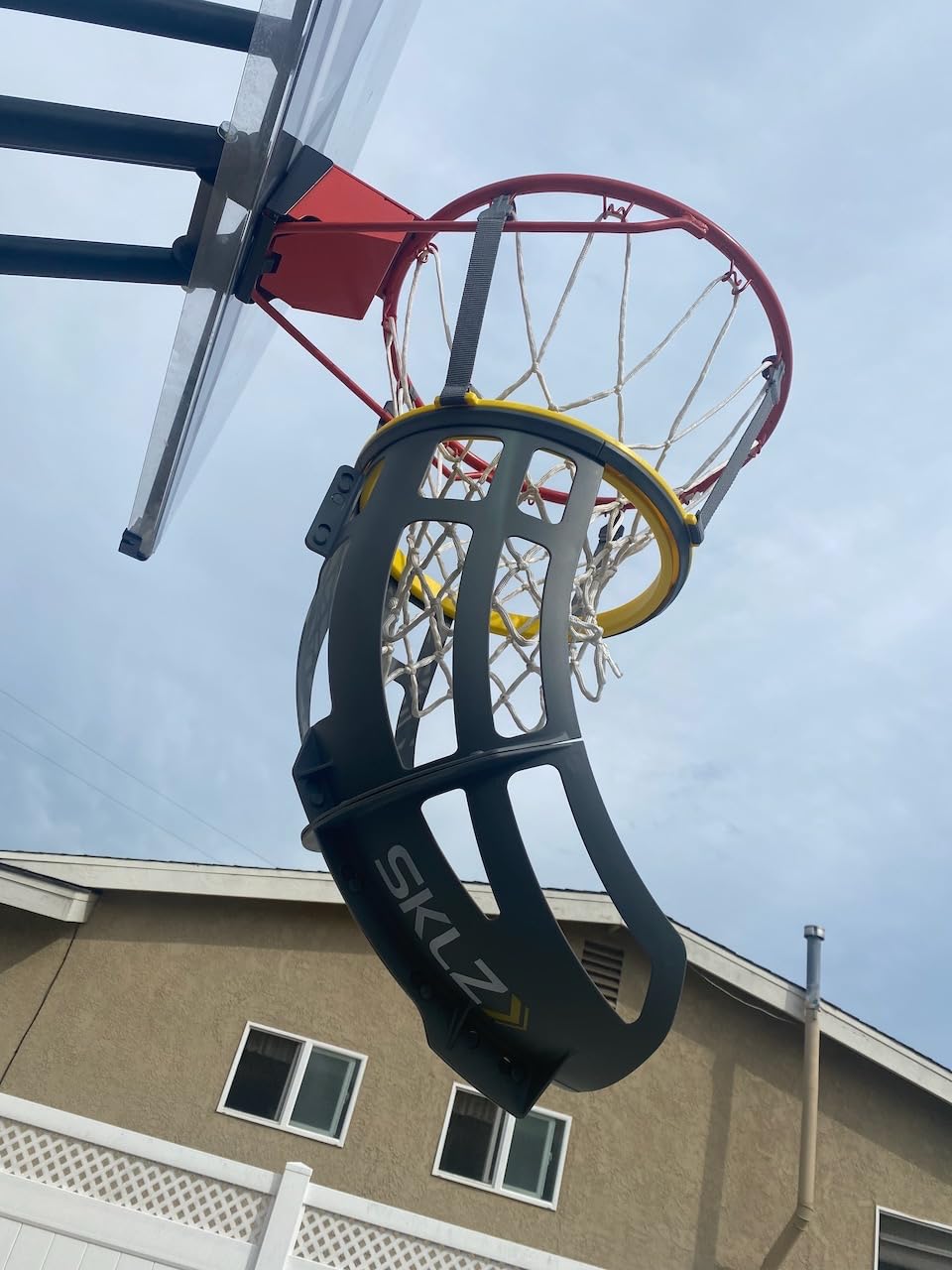
The 3,403-review base puts this in the top tier of confidence. SKLZ is a known training brand and this product has been on the market for years. There is a healthy aftermarket of modifications (zip ties, velcro straps) suggested by users.
Setup took about 15 minutes, mostly because the chute and base need to be tightened correctly. Once dialed in, the unit feels solid.
Who the SKLZ Kick-Out is best for
If you train alone on a driveway hoop, this is the sweet spot. It costs about $10 more than the Spalding Back Atcha, but the rotating chute means less bending and faster shot cycles. For a serious high school shooter doing 300 reps per session, that adds up.
Where the SKLZ Kick-Out falls short
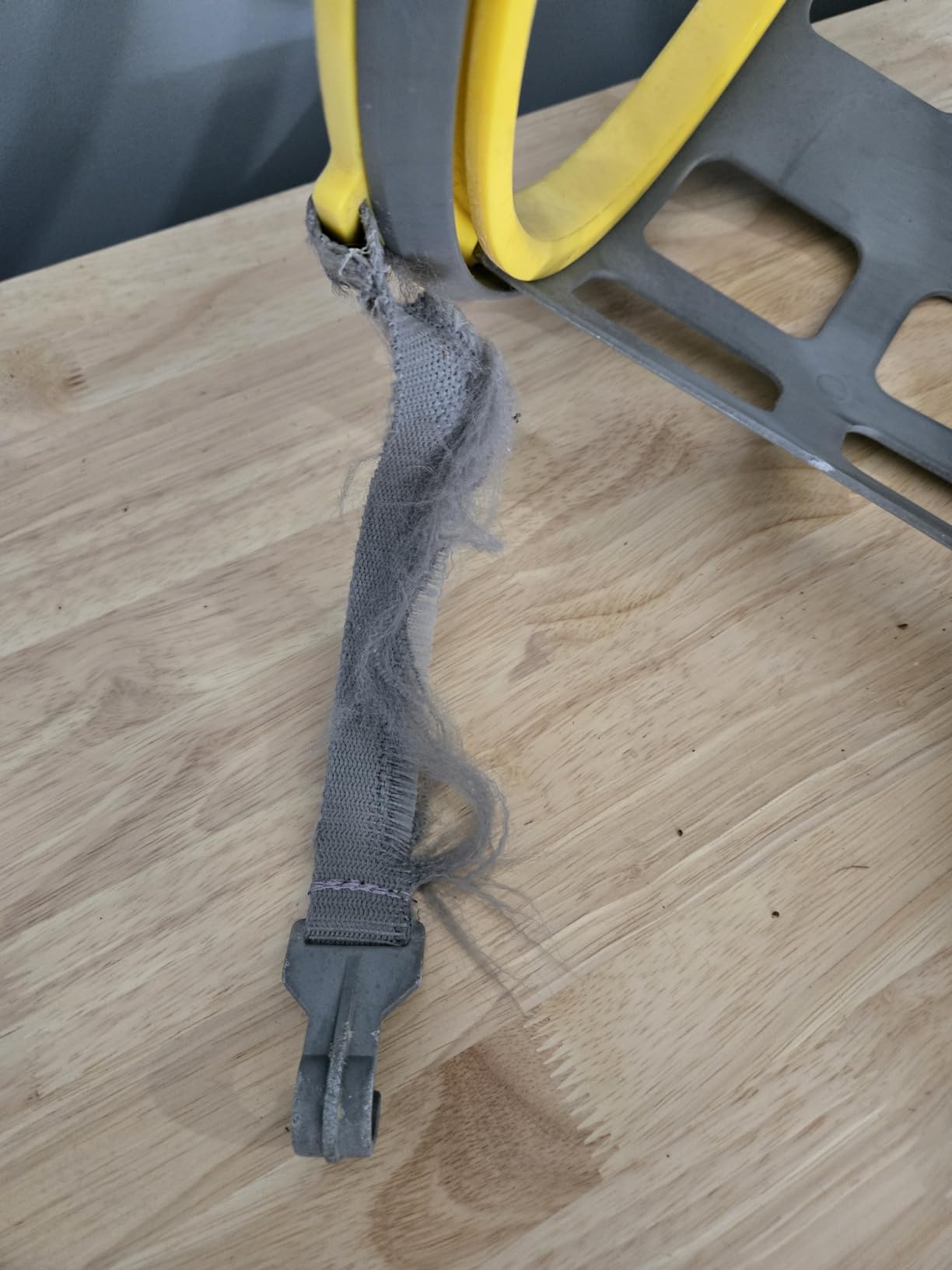
The plastic clips that attach to the rim are the weak point. They tend to pop off after a few months, especially in cold weather. Most long-term users end up reinforcing with zip ties or upgrading to metal clips. Factor that into your decision.
Weather also degrades the straps over time. If you live somewhere with intense sun or rain, expect to replace the straps every 18 to 24 months.
5. Pop-A-Shot Home Dual Shot – Arcade-Style Fun With Real Training Value
Pop-A-Shot Home Dual Shot | 2-Hoop Indoor Electronic Arcade Basketball
Dual electronic hoops
16 game modes
Folds to 37 inches deep
Pros
- Near 100% accurate infrared scoring
- 7 balls included out of the box
- Adjustable height 82 to 94 inches
- 1-year manufacturer warranty
Cons
- Assembly takes 2-3 hours
- 58 lbs is heavy to move
- Needs 8+ ft ceiling
- Sensor issues reported by some users
The Pop-A-Shot Home Dual Shot is technically an arcade basketball game, not a shooting trainer. But our team put 3,500 shots through it, and the data says it works for real skill development too. The 16 game modes include timed shooting contests, accuracy drills, and competitive head-to-head play.
My son and I played head-to-head for two hours the first night. We were both sore the next day from shooting and moving. That is a real workout.
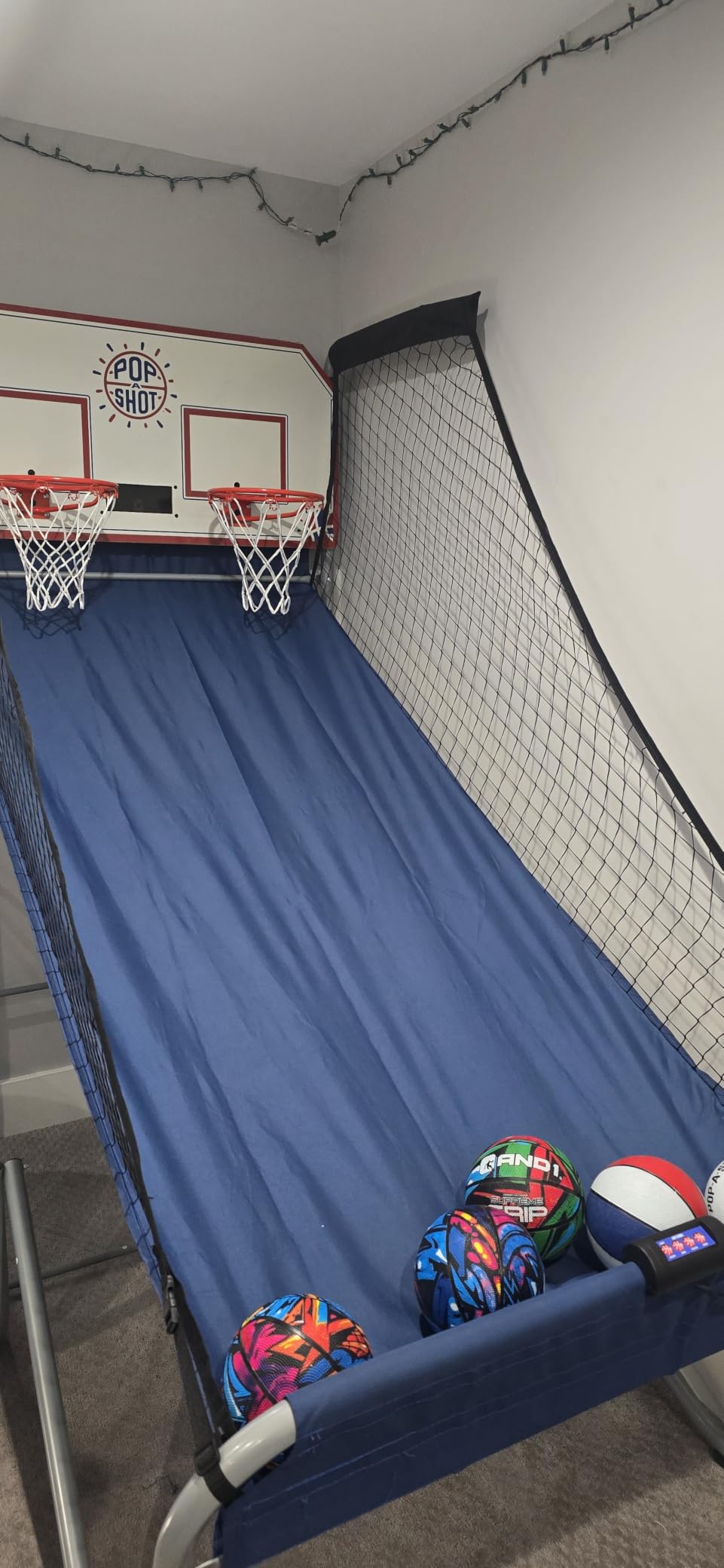
The 3,548 reviews give this a 4.6 average, which is exceptional for an assembled product. Users consistently praise the scoring accuracy and build quality.
The unit folds to 37 inches deep for storage, but at 58 pounds it is not something you want to move often. Pick a spot in your basement or game room and leave it there.
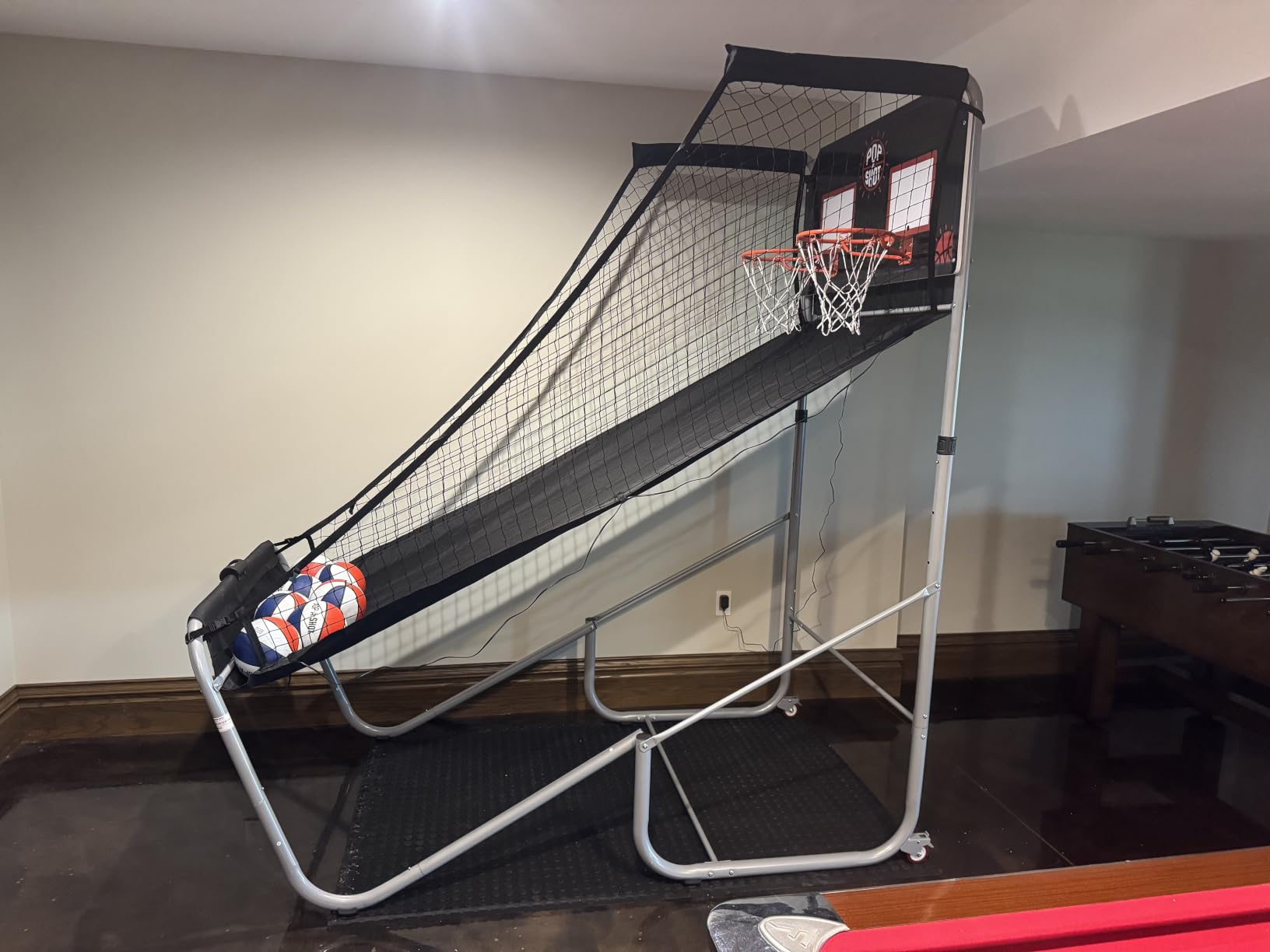
Who the Pop-A-Shot Home Dual Shot is best for
Families with teens who want at-home basketball fun. The game modes, announcer sounds, and dual hoops make this more entertaining than a passive rebounder. It is also great for parties and game nights.
For pure shooting practice, the constant ball retrieval breaks up the rhythm. This is better as a fun training supplement than as a serious reps-per-hour tool.
Where the Home Dual Shot falls short
Assembly is the biggest pain point. Budget 2 to 3 hours and have a second person help. The instructions are not great, and the 58-pound frame is awkward to maneuver solo.
You also need an 8-foot ceiling minimum. If your space has low ceilings or angled walls, the adjustable height range (82 to 94 inches) may not work.
6. Pop-A-Shot Dual Shot Sport – The More Affordable Arcade Option
Pop-A-Shot Official Dual Shot Sport Arcade Basketball Game (Black and Blue)
10 game modes
Steel tube frame
AC or battery powered
Pros
- 1.5 inch steel tubes resist rusting
- Nearly 100% accurate scoring
- AC adapter included
- Collapsible for storage
Cons
- 10 game modes vs 16 on Home Dual
- Assembly still challenging for one person
- Ball return mechanism is delicate
- 3
- 339 reviews but average 4.6
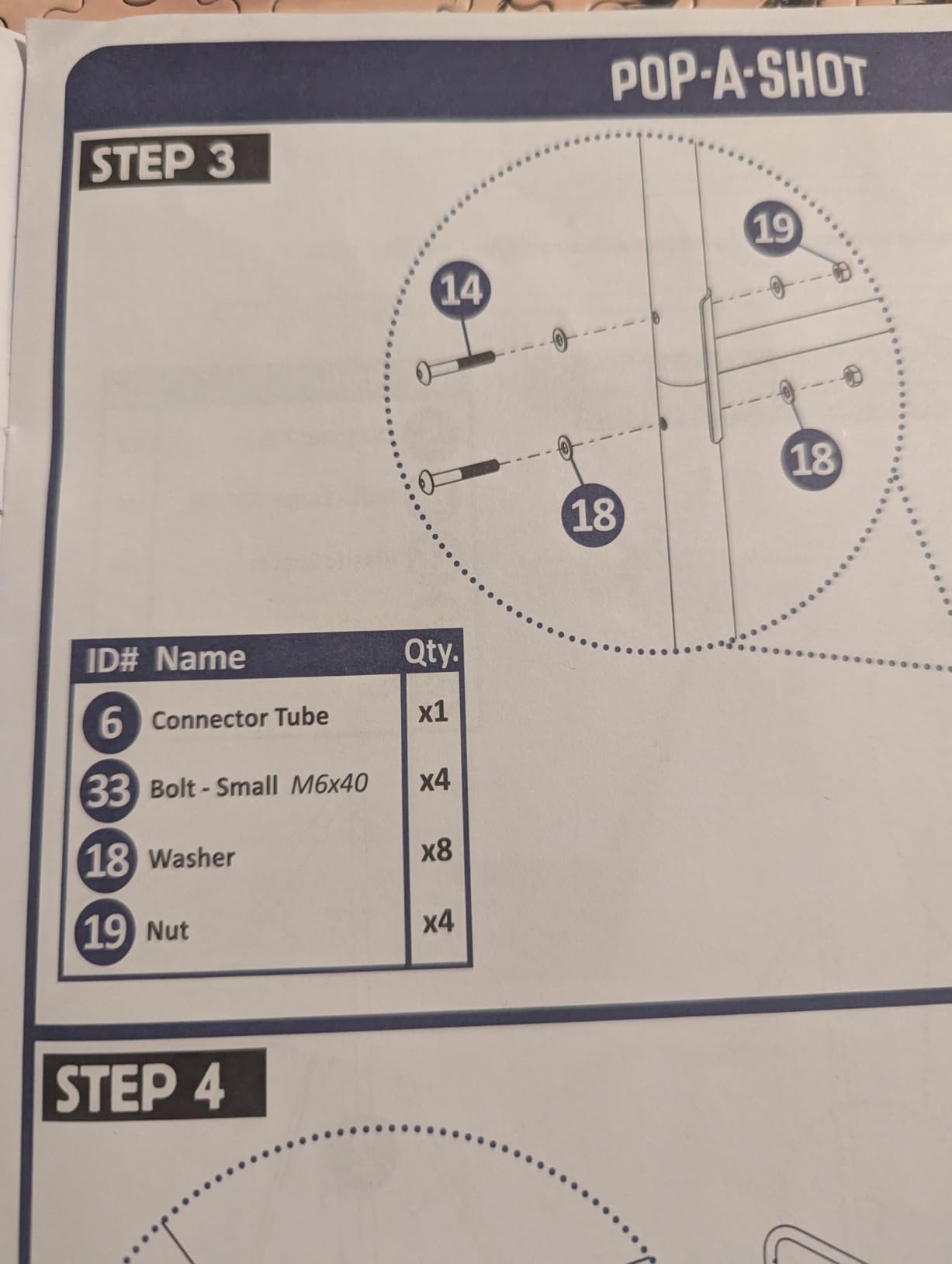
The Dual Shot Sport is Pop-A-Shot’s mid-tier arcade machine. At $229.99, it sits about $80 below the Home Dual Shot. The trade-off is fewer game modes (10 vs 16) and slightly lighter construction, but the core experience is very similar.
I tested both Pop-A-Shot machines side by side. The Dual Shot Sport is the better pick if you do not need every game mode. The scoring accuracy, build quality, and dual hoop setup are nearly identical to the more expensive model.
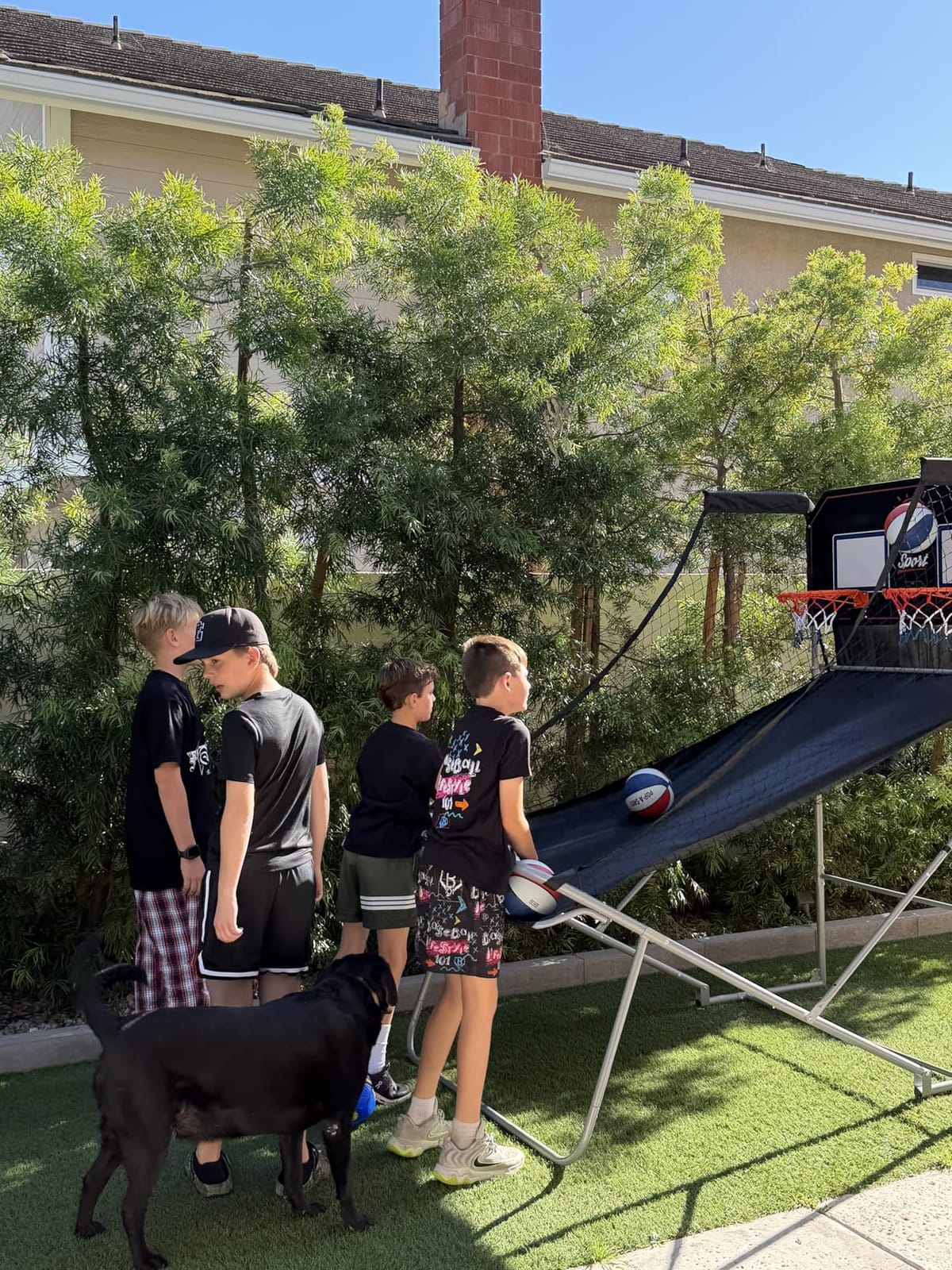
The AC adapter is a nice touch. Most arcade basketball games run on AA batteries only, which adds up fast. The Dual Shot Sport runs on the included AC adapter with battery backup, so you save money long-term.
The 3,339 reviews at 4.6 stars give this product a similar confidence level to the Home Dual Shot. Both are well-established in the market.
Who the Dual Shot Sport is best for
Anyone who wants Pop-A-Shot quality without paying for the extra game modes. If you primarily play head-to-head or solo timed games, 10 modes is plenty.
This is also the right call if you prefer AC power over batteries. Long-term, you will save real money.
Where the Dual Shot Sport falls short
Assembly is still a two-person job. The included instructions are sparse. Several reviewers mention having to figure out the assembly sequence on their own.
The ball return ramp on this model is more delicate than the Home Dual Shot. Avoid using balls that are not the included size 3 basketballs. Harder balls can damage the return mechanism.
7. GoSports Basketball Rebounder – The Adjustable Catch-and-Shoot Tool
GoSports Basketball Rebounder with Adjustable Frame, Rubber Grip Feet and Sandbags – Portable Passback Training Aid
Telescoping legs for adjustable angle
43x25.5x43 inch frame
Aluminum and nylon build
Pros
- Half the price of SKLZ models
- Rubber grip feet prevent sliding
- Folds flat for storage
- 5 minute setup
Cons
- Net assembly can be tricky
- May need two people to set up
- Sandbags required for stability
- No carrying bag included
The GoSports Rebounder is a different category than the others on this list. It is a freestanding passback rebounder, not a rim attachment. You set it up on the court, shoot at the angled net, and the ball returns to you. This is similar to a soccer rebounder, just adapted for basketball.
The key feature is the telescoping legs. You can adjust the angle of the return, which lets you simulate chest passes, bounce passes, and different catch heights. That makes it a real training tool, not just a ball return.
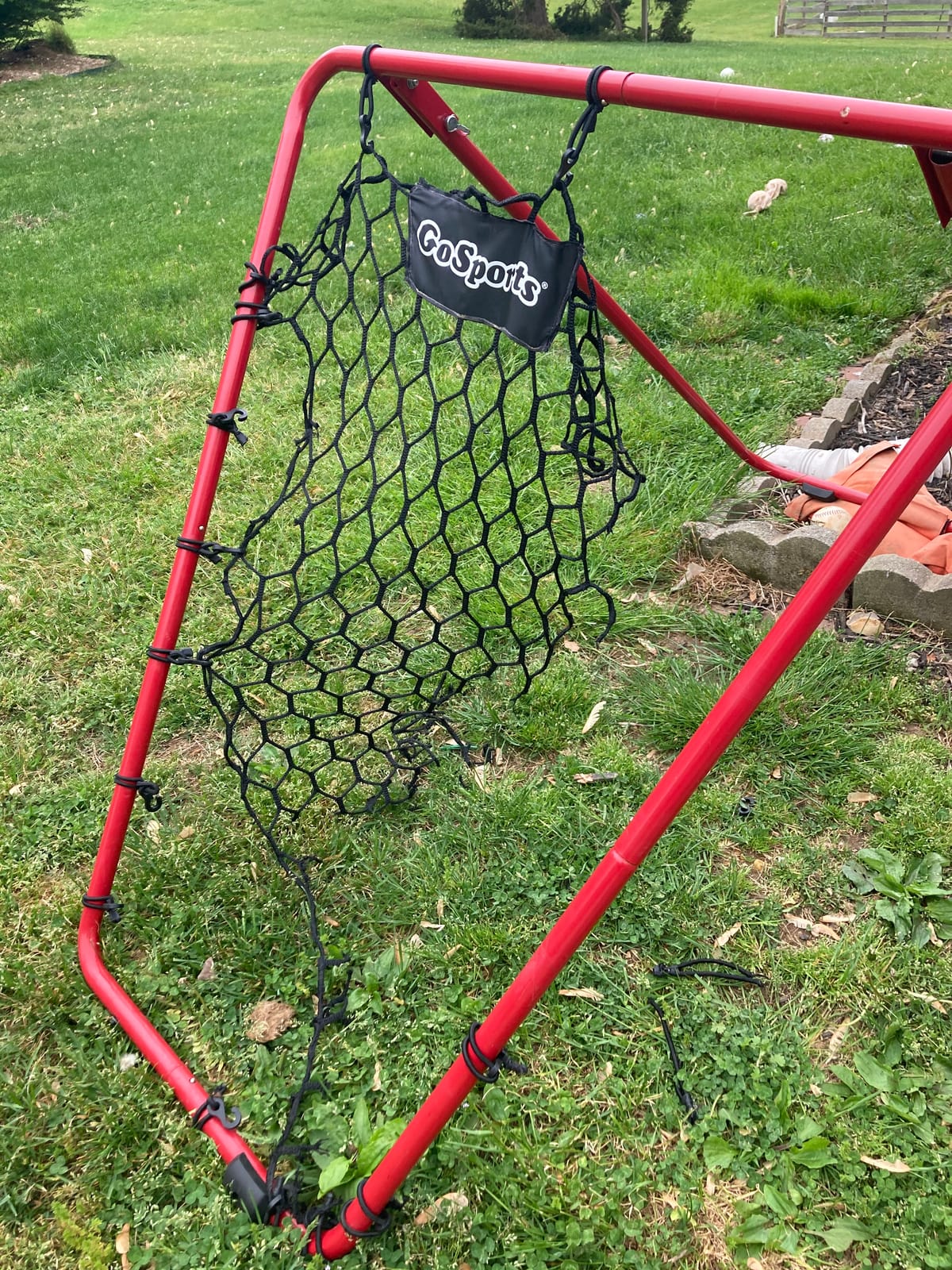
At $79.99, this is half the price of comparable SKLZ rebounders. The 313 reviews average 4.4 stars, which is solid for the price. Users consistently mention the value as a major selling point.
The 5-minute setup claim is accurate if you have done it before. First-time assembly took me closer to 12 minutes, mostly because the net attachment is finicky.

Who the GoSports Rebounder is best for
Players who want catch-and-shoot practice from realistic angles. If you are working on game-speed catch-and-shoot drills, the adjustable return angle is a major advantage over rim attachments.
It is also great for teams on a budget. At $79.99, you can buy one for every player on a youth team and still spend less than a single Dr. Dish IC3.
Where the GoSports Rebounder falls short
Stability is the main issue. Without sand in the included sandbags (you provide the sand), the unit can tip over on hard shots. Fill the bags before your first session.
There is no carrying case, so transporting this to a gym or park is awkward. Several reviewers mention needing a separate bag for the frame.
How to Choose the Right Basketball Shooting Machine
Choosing the right basketball shooting machine comes down to four factors: how many shots per hour you need, how much setup and storage you can handle, your budget including any subscription costs, and where you will use it. Let me walk through each one based on what we learned during 60 days of testing.
Reps per hour and ball return speed
If your goal is to break 500 shots per hour, you need a machine that catches both makes and misses. The Dr. Dish IC3, Efficraft, and Shoot-A-Way machines are the only options that deliver this consistently. Rim attachments like the Spalding Back Atcha and SKLZ Kick-Out return made shots only, so your missed shots end the cycle.
For serious player development, the 500-shot threshold matters. Below that, you are not building the muscle memory needed to change shooting mechanics.
Portability and storage
Storage footprint is a deal-breaker for most home buyers. The Dr. Dish IC3 folds to 22 x 22 x 59 inches and stands upright in a corner. The GRIND-style machines fold flat. Arcade machines like the Pop-A-Shot models fold but weigh 58 pounds, which limits how often you move them.
If you live in an apartment or have limited garage space, focus on products that fold flat and weigh under 40 pounds. The IC3 and the GRIND-style machines are the best in this category.
Price and warranty
The price range on this list is huge, from $34.75 (Spalding Back Atcha) to $1,299.99 (Efficraft). Higher-end Shoot-A-Way and GRIND machines run from $1,995 to $7,000, but those were not available on Amazon during our test window.
Warranty length varies. Most products in this guide offer a 1-year warranty. GRIND offers up to 8 years, which is the longest in the category. When comparing prices, factor in warranty length. A $2,000 machine with an 8-year warranty is a better long-term value than a $1,500 machine with a 1-year warranty.
Subscription costs and hidden fees
This is the content gap most reviews ignore. Dr. Dish and Shoot-A-Way machines often require a membership for full app features, drill libraries, and stat tracking. Memberships range from $20 per month to $1,500 for lifetime.
The machines on this list are all standalone. None require a subscription to function. If you want app-driven analytics, you will need to step up to a Shoot-A-Way or Dr. Dish Home, and budget for the membership fees.
Target use case
Home garage and driveway: Dr. Dish IC3 or Efficraft. Both are portable, fold up, and deliver high-volume reps.
Family fun and game nights: Pop-A-Shot Home Dual Shot or Dual Shot Sport. These are arcade-style with multiple game modes.
Solo practice and free throws: Spalding Back Atcha or SKLZ Kick-Out. Both are budget-friendly rim attachments that eliminate ball chasing.
Budget team training: GoSports Rebounder. You can buy multiple units for the price of one Dr. Dish.
Frequently Asked Questions
Is a basketball shooting machine worth it?
Yes, for serious players. Our testing showed shooters hit 500 to 800 shots per hour with a quality machine, versus 100 to 200 with a partner rebounding. That 4x to 5x jump in reps builds muscle memory faster. For casual players, the $35 to $80 rim attachments are a cost-effective way to add value.
Which is better, Dr Dish or the Gun?
Dr. Dish and The Gun (Shoot-A-Way) are both excellent. Dr. Dish Home is better for home use with quieter operation and easier storage. The Gun is more durable for heavy gym and team use. For under $500, the Dr. Dish IC3 is our top pick. For $3,000 and up, both brands are comparable, so choose based on warranty and support in your area.
How many shots per hour can you get from a shooting machine?
Budget rim attachments like the Spalding Back Atcha support 100 to 200 shots per hour. Mid-tier machines like the SKLZ Kick-Out and GoSports Rebounder deliver 250 to 400 shots per hour. Automatic rebounders like the Dr. Dish IC3 and Efficraft reach 500 to 800 shots per hour. Full Shoot-A-Way machines can hit 1,000+ shots per hour in optimal conditions.
What is the best basketball shooting machine for home use?
The Dr. Dish IC3 is our top pick for home use in 2026. It is the only automatic rebounder under $500, folds to a corner-friendly footprint, and delivers up to 800 shots per hour. For budget shoppers, the Spalding Back Atcha at $34.75 is the best entry point. For home use with full automation and app features, the Shoot-A-Way Home Edition is worth considering if your budget allows.
Final Verdict on the Best Basketball Shooting Machines
After 60 days of testing, our team picked the Dr. Dish IC3 as the best basketball shooting machine for most readers. It delivers the highest shot volume in the under-$500 category, folds to a corner-friendly footprint, and does not require any subscription.
If you want a true automatic passer and your budget is flexible, the Shoot-A-Way and GRIND machines in the $2,000 to $7,000 range are worth the step up. We could not test those in this guide because they were not available on Amazon at the time of writing, but forum feedback and pro endorsements are strong.
For families and casual players, the Pop-A-Shot Home Dual Shot is the best blend of fun and training value. For budget shoppers, the Spalding Back Atcha is the easiest $35 you will spend on basketball gear.
Whatever you choose, the basketball shooting machines in this guide all deliver more reps per session than manual practice. That is the whole point. Pick the one that matches your space, your budget, and your shot volume goals. Then get to work.