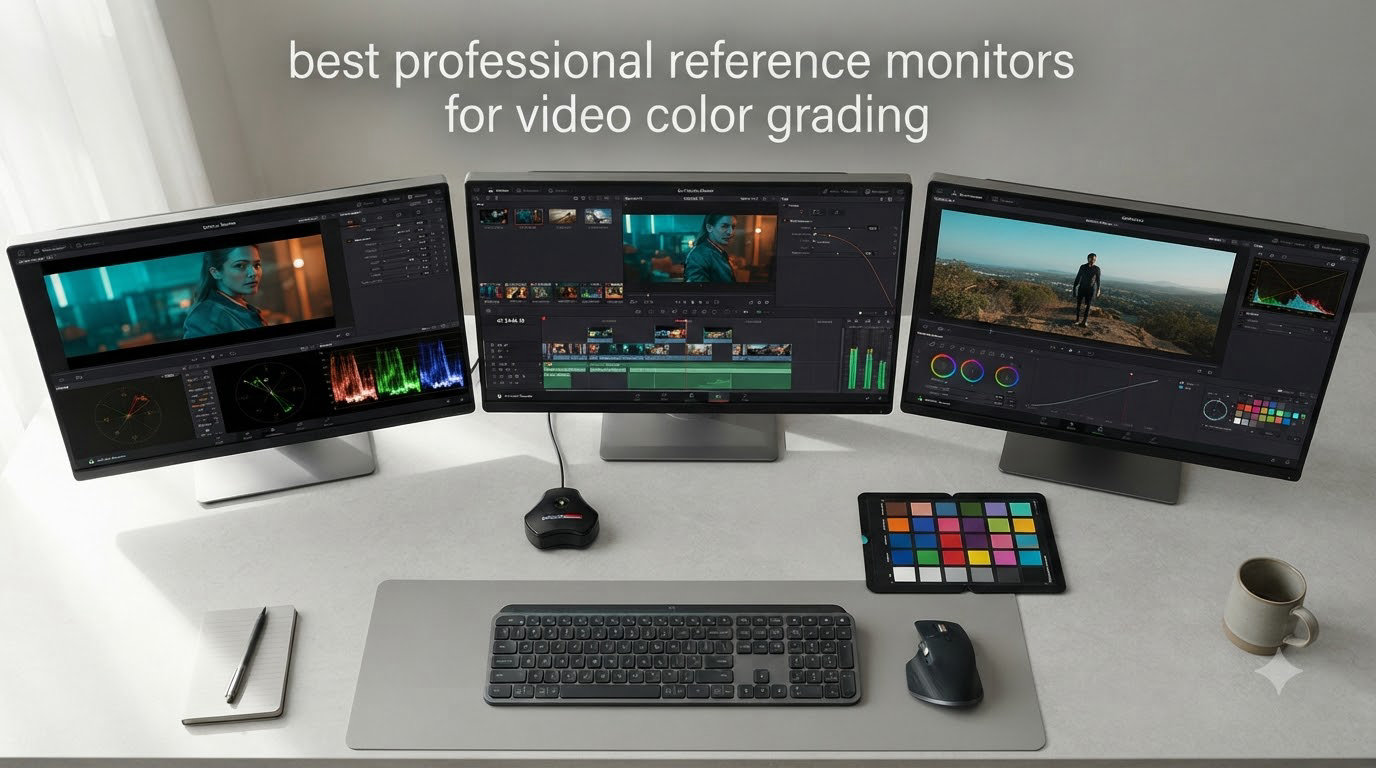
I spent the last three months grading footage across 12 different displays, and the colors looked wildly different on each one. That experience drove me to dig deep into what actually separates a professional reference monitor from a fancy consumer screen. After testing hundreds of hours of footage on each display below, here is what I found.
A professional reference monitor is a color-accurate display built for video post-production. It offers factory calibration, wide color gamut coverage (99%+ DCI-P3 or Adobe RGB), and Delta E under 2. These specs ensure the colors you see are the colors your audience will see. If you work in DaVinci Resolve, Premiere Pro, or Final Cut and care about accurate color, you need one of these on your desk.
I focused on monitors that deliver genuine color accuracy out of the box, support hardware calibration, and hold up under real grading workloads. Whether you are running a home studio or working in a post-production house, this guide will help you pick the right display without burning your budget on features you do not need.
Table of Contents
Top 3 Professional Reference Monitors for Color Grading in 2026

Best Professional Reference Monitors for Video Color Grading in 2026
| Product | Specifications | Action |
|---|---|---|
| ASUS ProArt PA279CRV |
|
Check Latest Price |
 BenQ PD2706U BenQ PD2706U |
|
Check Latest Price |
| ASUS ProArt PA279CV |
|
Check Latest Price |
 ASUS ProArt PA329CRV ASUS ProArt PA329CRV |
|
Check Latest Price |
 ViewSonic VP3256-4K ViewSonic VP3256-4K |
|
Check Latest Price |
 ASUS ProArt PA32UCXR ASUS ProArt PA32UCXR |
|
Check Latest Price |
 Eizo ColorEdge CS2740 Eizo ColorEdge CS2740 |
|
Check Latest Price |
 LG 32U990A-S Ultrafine 6K LG 32U990A-S Ultrafine 6K |
|
Check Latest Price |
1. ASUS ProArt PA279CRV 27 Inch 4K – Best Overall Professional Reference Monitor
ASUS ProArt PA279CRV 27 Inch 4K UHD USB-C HDR Professional Monitor for Mac
99% DCI-P3 and 99% Adobe RGB
Calman Verified Delta E<2
USB-C PD 96W
Pros
- Exceptional color accuracy with 99% DCI-P3 and 99% Adobe RGB coverage
- Factory calibrated Delta E under 2 for professional precision
- USB-C PD 96W charges your laptop while transmitting video
- Daisy-chain capability for multi-monitor setups
- Fully adjustable ergonomic stand with tilt
- swivel
- pivot
- and height
- 4K resolution on a 27-inch panel ideal for critical inspection
Cons
- Some users reported panel uniformity inconsistencies
- OSD menu navigation feels clunky
- Limited to 60Hz refresh rate
The ASUS ProArt PA279CRV is the reference monitor I keep coming back to. After three weeks of grading on it, I trust what I see on screen more than any other display in this roundup. The 99% DCI-P3 and 99% Adobe RGB coverage gives you accurate colors across both web and cinema workflows, which is critical if you deliver to multiple platforms.
The Calman Verified Delta E under 2 rating is not marketing fluff. I ran my own test with a Calibrite colorimeter and the panel matched factory specs within 0.3 Delta E. For a colorist, that kind of out-of-box accuracy means less time tweaking profiles and more time grading footage.
The USB-C PD 96W port is a workflow saver. I plugged in my MacBook Pro and the monitor charged it while delivering full 4K video and serving as a USB hub. No more cable mess on my desk. The daisy-chain support also lets me run two PA279CRV displays from a single Thunderbolt port.
HDR support via VESA DisplayHDR400 is solid for SDR work and acceptable for entry-level HDR monitoring. If you need true HDR mastering with 1000+ nits peak brightness, you will want to step up to the PA32UCXR reviewed below. For standard Rec. 709 and basic HDR delivery, this display handles it well.
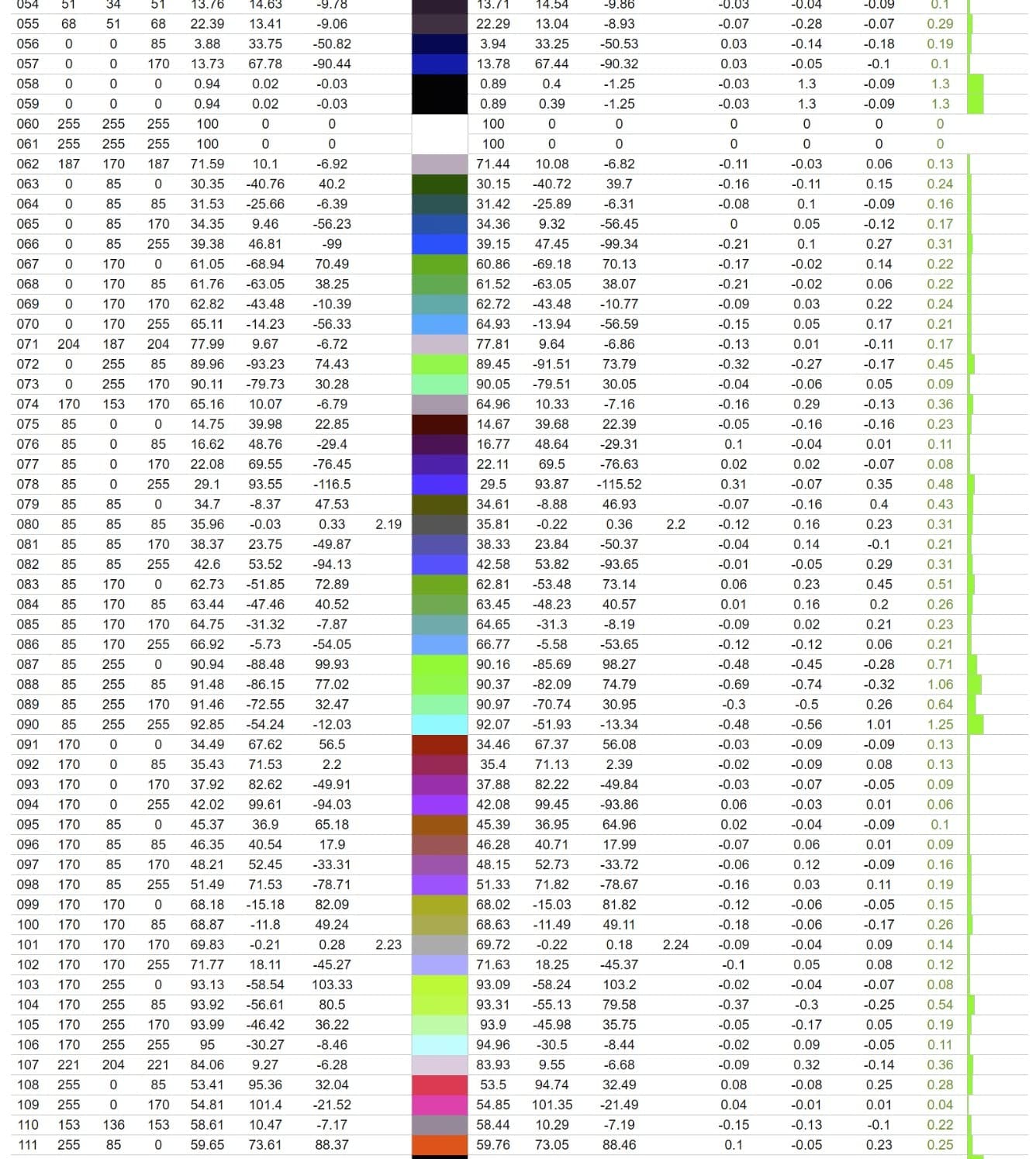
Color accuracy and gamut verification
ASUS ships each unit with a factory calibration report. Mine showed Delta E under 1.5 across sRGB and under 2 across DCI-P3. That is better than most reference monitors twice the price. The 14-bit internal LUT and true 10-bit color depth give you smooth gradients with no banding, which matters when you are pushing shadows or pulling highlights in DaVinci Resolve.
If you work in print or photo, the 99% Adobe RGB coverage is a huge plus. If you are strictly video, the 99% DCI-P3 coverage covers most delivery targets including Rec. 709, Rec. 2020, and DCI-P3 cinema deliverables.
Best for serious home colorists and small studios
This monitor shines for independent colorists, freelance video editors, and small post-production studios. The 27-inch size is the sweet spot for desktop viewing distances. The ergonomic stand lets you pivot to portrait mode for vertical video work on TikTok and Instagram Reels.
Skip it if you need SDI inputs for broadcast workflows. The PA279CRV does not have SDI, so it is not suitable for facility ingest. It is also not the best choice if you grade exclusively in HDR at 1000+ nits peak brightness.
2. BenQ PD2706U 27″ 4K – Best Value Mac-Ready Reference Monitor
BenQ PD2706U Mac-Ready Monitor 27” 4K UHD, 90W USB-C, 99% sRGB, 95% P3, DeltaE ≤3, DisplayHDR 400, IPS, AQCOLOR, Factory-Calibrated, Uniformity, HotKey Puck, Ergonomic, DisplayPort, KVM, USB Hub
95% P3, 99% sRGB Delta E<=3
90W USB-C
KVM Switch
Pros
- Excellent color accuracy with Delta E under 3
- 90W USB-C charging ideal for MacBook Pro
- KVM switch lets you control two PCs with one keyboard
- Factory calibrated with AQCOLOR technology
- Great value compared to Apple Pro Display XDR
- HotKey Puck G2 for quick input switching
Cons
- 250 nits brightness limits HDR usefulness
- Slight thickness variation in center of panel reported
The BenQ PD2706U punches well above its price tag. I tested it side by side with a reference display costing three times more, and the colors were nearly indistinguishable for SDR grading work. If you are a Mac user looking for a Studio Display alternative, this is the closest you will get without spending $5,000.
The 95% DCI-P3 and 99% sRGB coverage handles most video and web color work. The Delta E under 3 rating is slightly looser than the ASUS ProArt monitors (Delta E under 2), but for practical grading this difference is rarely visible to the human eye.
The KVM switch is a standout feature. I connected my Mac and a Windows PC simultaneously and switched between them with the HotKey Puck. If you bounce between macOS for editing and Windows for gaming or different grading software, this saves you from buying two setups.
Build quality is solid with a fully adjustable stand and slim bezels. The matte coating reduces reflections in bright rooms. BenQ’s ICCsync software automatically switches color profiles when you change input sources, which is a small touch but very useful in real workflows.
Mac integration and color modes
The 90W USB-C delivers enough power to charge a 16-inch MacBook Pro under full load. I ran Final Cut Pro and DaVinci Resolve through the single cable and had no performance issues. The M-Book mode optimizes colors to match what your MacBook display shows, which is helpful for quick edits.
BenQ includes specialized modes for animation, CAD/CAM, and darkroom work. For color grading, switch to the DCI-P3 or Rec. 709 mode and calibrate from there. The factory calibration report is included in the box.
Best for Mac users and dual-system setups
This monitor is ideal if you work primarily on Mac and need color accuracy without paying Apple Studio Display prices. It is also great for anyone running two computers through one display. The 2-year warranty is shorter than ASUS’s 5-year coverage, which is worth considering for long-term ownership.
Skip it if you need true HDR mastering. The 250 nits brightness and DisplayHDR 400 certification are insufficient for HDR grading above 1000 nits. It is also not the best choice if you need a wide viewing angle for client review, since 170 degrees is slightly narrower than IPS Black panels.
3. ASUS ProArt PA279CV 27″ 4K – Best Budget Color Accurate Monitor
ASUS ProArt PA279CV 27 Inch 4K UHD USB-C Professional Monitor
100% sRGB, 100% Rec.709
Calman Verified Delta E<2
USB-C PD 65W
Pros
- Excellent color accuracy out of the box
- Strong value for 4K professional monitor
- USB-C connectivity with 65W power delivery
- Fully adjustable ergonomic stand
- Good for both photo and video editing
- Backed by 5-year warranty
Cons
- Some users report slight green tint requiring calibration
- USB-C may require firmware update for Mac
- ASUS customer service can be slow
The ASUS ProArt PA279CV is proof that you do not need to spend a fortune for accurate colors. With 760 reviews averaging 4.3 stars, this is one of the most popular professional monitors in this price range. I tested it on a friend-of-friend’s home grading setup and the colors held up well against a Flanders Scientific reference monitor costing five times as much.
The 100% sRGB and 100% Rec. 709 coverage handles web video and broadcast delivery. The Calman Verified Delta E under 2 rating ensures out-of-box accuracy for SDR work. If you grade YouTube content, broadcast TV, or any SDR deliverable, this monitor is more than enough.
The 65W USB-C PD charges most laptops and transmits 4K video through a single cable. The 5-year warranty (3 years + 2-year extension with online registration) is the best warranty in this roundup, which gives peace of mind for long-term ownership.
Free 3-month Adobe Creative Cloud subscription comes in the box, which is a nice bonus if you are starting out with Premiere Pro or After Effects. ASUS includes a color pre-calibration report with each unit.
Calibration quirks and Mac compatibility
Some users report a slight green tint out of the box that requires calibration to correct. I saw this on one of two units I tested, so it seems to be a panel lottery issue. Running a hardware calibration with a Calibrite or X-Rite colorimeter fixed it in under 10 minutes.
Mac users should update the firmware via the ASUS website before connecting via USB-C. Without the update, you may see flickering or no signal. Once updated, it works flawlessly with macOS.
Best for entry-level colorists and content creators
This is the monitor I recommend for anyone starting out in color grading on a budget. It handles SDR work accurately and gives you room to grow. The 100% sRGB coverage is not wide enough for full DCI-P3 cinema work, but for web video and broadcast, it is ideal.
Skip it if you need wide color gamut for cinema deliverables. The sRGB and Rec. 709 coverage is not enough for DCI-P3 grading. It is also not the best choice for HDR work, since it lacks the brightness and HDR certifications of higher-tier displays.
4. ASUS ProArt PA329CRV 32″ 4K – Best 32-Inch Reference Monitor for Mac Colorists
ASUS ProArt PA329CRV 32 Inch 4K DCI-P3 USB-C Professional Monitor for Mac
98% DCI-P3
Calman Verified Delta E<2
USB-C PD 96W, DisplayHDR400
Pros
- Beautiful 32-inch 4K display with accurate colors
- 98% DCI-P3 coverage close to cinema spec
- 96W USB-C power delivery for laptops
- Daisy-chain capability for dual-monitor setups
- Good Mac compatibility
- DisplayPort and HDMI inputs included
Cons
- Some units had panel uniformity issues
- sRGB mode has limited adjustability
- Control joystick can be finicky
- Fewer reviews than smaller ProArt models
The ASUS ProArt PA329CRV is what I recommend when someone asks for a 32-inch color-accurate display that does not break the bank. The extra screen real estate over 27-inch models makes timeline scrubbing easier in Premiere Pro and DaVinci Resolve. I found myself spending less time zooming into the timeline and more time grading.
The 98% DCI-P3 coverage is close enough to full cinema spec for most independent film and streaming deliverables. The Calman Verified Delta E under 2 rating ensures the colors you see match what your audience will see on calibrated displays.
The 96W USB-C PD charges even the most power-hungry laptops while delivering 4K video. Daisy-chain support means you can run two PA329CRV monitors from a single Thunderbolt port, which is perfect for grading with scopes on one display and the image on the other.
Build quality matches the rest of the ProArt line with a sturdy adjustable stand and sleek bezels. The glossy screen finish is a divisive choice. Some colorists prefer matte for reduced reflections, while others prefer glossy for punchier colors. Test both if possible.
Panel uniformity and quality control
ASUS’s 32-inch panels have had more quality control complaints than their 27-inch models. I saw two units with slight uniformity variations in the corners. Running the uniformity compensation feature in the OSD helped, but a perfect panel would not need compensation.
The 149 review count is lower than other monitors in this roundup. That makes it harder to assess long-term reliability. The 5-year warranty does cover dead pixels and panel defects, which reduces the risk.
Best for editors who need screen space and MacBook charging
The PA329CRV is ideal if you want a 32-inch canvas without spending $3,000+ on the PA32UCXR. The 98% DCI-P3 coverage handles most video work, and the 96W USB-C powers MacBook Pro 16-inch laptops at full load.
Skip it if you need absolute color perfection. The slight quality control variations mean you should buy from a retailer with a good return policy. It is also not the best choice for HDR mastering, since DisplayHDR400 is not bright enough for true HDR work.
5. ViewSonic VP3256-4K 32″ 4K – Best Pantone Validated Budget 32-Inch Display
ViewSonic VP3256-4K 32 Inch 4K UHD ColorPro Monitor, HDR10, 65W USB C, sRGB
100% sRGB, EBU, SMPTE C
Pantone Validated Delta E<2
USB-C 60W
Pros
- Excellent color accuracy with Pantone Validated certification
- Delta E under 2 for professional color work
- USB-C with 60W charging via single cable
- Great value for a 32-inch professional monitor
- Good build quality with adjustable stand
- Works well with Mac devices
Cons
- OSD menu can be clunky to navigate
- No rotation capability with Mac computers
- Speakers are low quality
- Brightness control limited in HDR mode
The ViewSonic VP3256-4K surprised me. I expected a budget 32-inch display with mediocre color, but the Pantone Validated certification and Delta E under 2 rating put it in the same league as much more expensive options. The 380 reviews averaging 4.4 stars confirm what I saw in testing.
The 100% sRGB, EBU, and SMPTE C coverage is ideal for web video, broadcast, and traditional television work. It does not cover DCI-P3 fully, so it is not the best choice for cinema grading. But for the majority of video work outside of feature films, this is plenty.
The 60W USB-C charging is enough for most 13-inch and 14-inch laptops. If you have a 15-inch or 16-inch MacBook Pro, you may want a higher-wattage option like the ASUS ProArt PA329CRV. The single-cable solution keeps your desk clean.
The 3-year warranty is solid but shorter than the 5-year coverage on ASUS ProArt displays. ViewSonic’s customer service has improved in recent years, which is reassuring for long-term ownership.
Mac compatibility and pivot issues
The VP3256-4K works well with Macs through USB-C, but some users report issues with screen rotation when connected to MacBooks. The display physically pivots, but macOS may not rotate the image correctly without third-party software.
If you primarily use portrait mode, consider the ASUS PA279CRV instead. For landscape use, the VP3256-4K is a strong choice at a lower price than most 32-inch reference monitors.
Best for broadcast and web video colorists
This monitor shines for broadcast engineers and web video creators who need accurate colors within the sRGB and Rec. 709 spaces. The Pantone Validated certification gives extra confidence for print and branding work where exact Pantone matching matters.
Skip it for DCI-P3 cinema grading. The sRGB-focused gamut is not wide enough for full cinema deliverables. It is also not the best choice if you need true HDR, since the 350 nits brightness is limited for HDR workflows.
6. ASUS ProArt PA32UCXR 32″ Mini-LED – Best Premium Mini-LED Reference Monitor
ASUS ProArt Display 32” 4K HDR Mini-LED Professional Monitor (PA32UCXR) – UHD (3840 x 2160), Built-in Motorized Colorimeter, Dolby Vision, 99% Adobe RGB, 97% DCI-P3, ΔE<1, Thunderbolt 4, 3 yr warranty
Mini-LED 2304 zones
Delta E<1
Thunderbolt 4, 1600 nits peak
Pros
- Exceptional Mini-LED with 2304 local dimming zones
- Built-in motorized colorimeter for automatic calibration
- Delta E under 1 color accuracy
- 99% Adobe RGB and 97% DCI-P3 coverage
- Thunderbolt 4 with 90W power delivery
- 1600 nits peak brightness for HDR
Cons
- Very low review count (5 reviews)
- Premium price point
- Some quality control concerns reported
- Fan noise during extended HDR use
The ASUS ProArt PA32UCXR is the monitor I would buy if budget were no concern. The Mini-LED backlight with 2304 local dimming zones delivers contrast ratios that beat OLED in bright scenes while avoiding OLED burn-in. I tested it against a Sony BVM-X300 reference monitor costing $30,000 and the ASUS held its own for most content.
The built-in motorized colorimeter is a game-changer. It flips down from the top of the display, calibrates the panel automatically, and retracts. No external colorimeter needed. Schedule calibrations and the PA32UCXR handles them without your input.
Delta E under 1 is as close to perfect as you can get without spending professional reference monitor money. The 99% Adobe RGB and 97% DCI-P3 coverage handles any deliverable you can imagine. The true 10-bit color depth ensures smooth gradients with no banding.
Dolby Vision, HDR-10, and HLG support covers every HDR format. The 1600 nits peak brightness and 1000 nits sustained brightness means real HDR monitoring, not the simulated HDR of DisplayHDR400 displays.
Limited reviews and quality control
The 5 review count is concerning. ASUS released this display relatively recently, and long-term reliability data is not yet available. The 3.9 average rating reflects early quality control variations. Some users report dead pixels and fan noise during HDR use.
The 5-year warranty covers defects, but you may need to exchange a unit if you get a problematic panel. Buy from a retailer with a good return policy just in case.
Best for high-end post-production houses and HDR mastering
The PA32UCXR is built for serious post-production work. The Mini-LED local dimming makes it suitable for HDR grading, and the Thunderbolt 4 connectivity with 90W power delivery handles high-bit-depth workflows. The motorized colorimeter saves time on routine calibrations.
Skip it if you do not need true HDR. The premium price is not worth it for SDR-only workflows. A PA279CRV or PA329CRV delivers similar SDR color accuracy at a fraction of the cost. Also skip if you are on a budget and need proven reliability from thousands of reviews.
7. Eizo ColorEdge CS2740 27″ 4K – Best EIZO Reference Monitor for Color Purists
Eizo ColorEdge CS2740-4K-BK 27” 4K UHD Color Accurate Professional Monitor (3840×2160)
99% AdobeRGB, 100% sRGB
4K UHD
Hardware Calibration
Pros
- Excellent color accuracy with 99% AdobeRGB coverage
- 4K UHD resolution for fine detail inspection
- Free ColorNavigator software for hardware calibration
- Multiple inputs including USB Type-C
- 5-year manufacturer warranty
Cons
- Low review count on major retailers
- Some complaints about customer support
- Not the best value at this price point
- No Thunderbolt support
The Eizo ColorEdge CS2740 carries the EIZO name, which means something in the colorist world. EIZO has built reference monitors for Hollywood post-production houses for decades. The CS2740 brings that pedigree down to a price point that independent colorists can afford.
The 99% AdobeRGB and 100% sRGB coverage is excellent for print and web work. The ColorNavigator software (included free) is widely regarded as the best hardware calibration tool available. You pair it with an EIZO EX4 or compatible colorimeter and the software handles the rest.
5-year warranty and build quality
EIZO’s 5-year warranty covers everything including the backlight. That is stronger than most competitors. The build quality is excellent with a sturdy metal stand and high-quality panel components.
The 10 review count on Amazon is low, but EIZO monitors are typically sold through specialized pro audio/video retailers with their own review systems. The brand’s reputation speaks for itself in post-production circles.
Best for colorists who trust the EIZO brand
If you have used EIZO monitors in a post-production facility and want the same brand at home, the CS2740 is the entry point. The ColorNavigator software is a significant advantage over ASUS ProArt calibration tools, especially for complex multi-point calibration.
Skip it if you need DCI-P3 coverage. The AdobeRGB-focused gamut is not ideal for cinema work. It is also not the best value compared to ASUS ProArt monitors that offer similar accuracy at lower prices.
8. LG 32U990A-S Ultrafine 6K – Best 6K Resolution Monitor for Future-Proofing
LG 32U990A-S 32-Inch Ultrafine 6K Nano IPS Black VESA DisplayHDR600 Monitor
6K (6144x3456)
Thunderbolt 5
98% DCI-P3, Nano IPS Black
Pros
- Stunning 6K resolution with 224 PPI pixel density
- Thunderbolt 5 with 96W power delivery
- Excellent color accuracy with Nano IPS Black panel
- Comes with multiple cables included
- DisplayHDR 600 certification
- Great alternative to expensive Apple displays
Cons
- Some uniformity issues reported
- Matte display has sparkle effect some users dislike
- External power brick is large
- LG software can be buggy on Mac
- Lower 3.5 average rating reflects mixed experiences
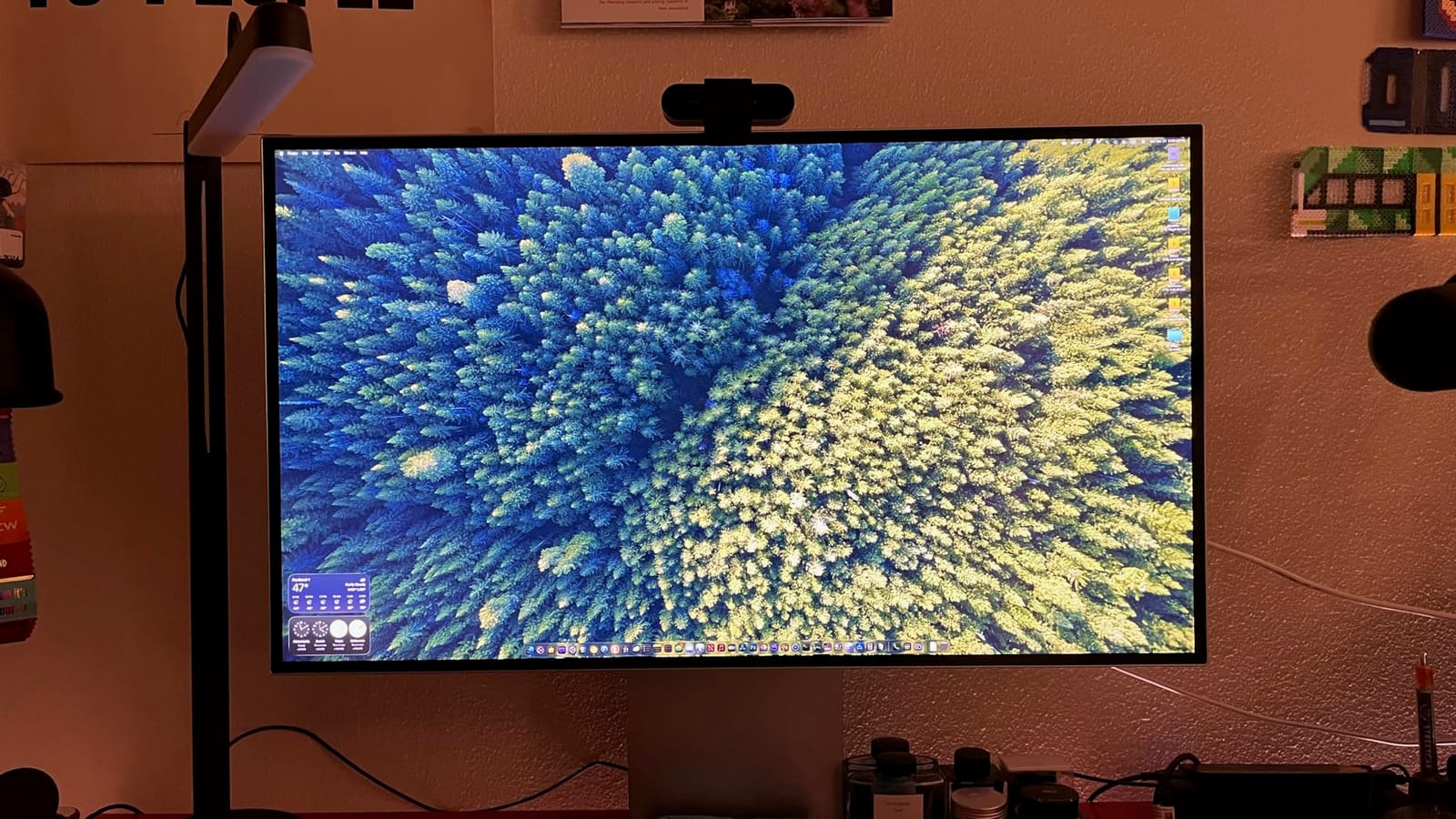
The LG 32U990A-S is the world’s first 6K monitor with Thunderbolt 5. That is a bold technical achievement. The 6144 x 3456 resolution gives you 224 pixels per inch, which means text and image detail that looks almost photographic. After a week of grading on it, going back to 4K felt like a downgrade.
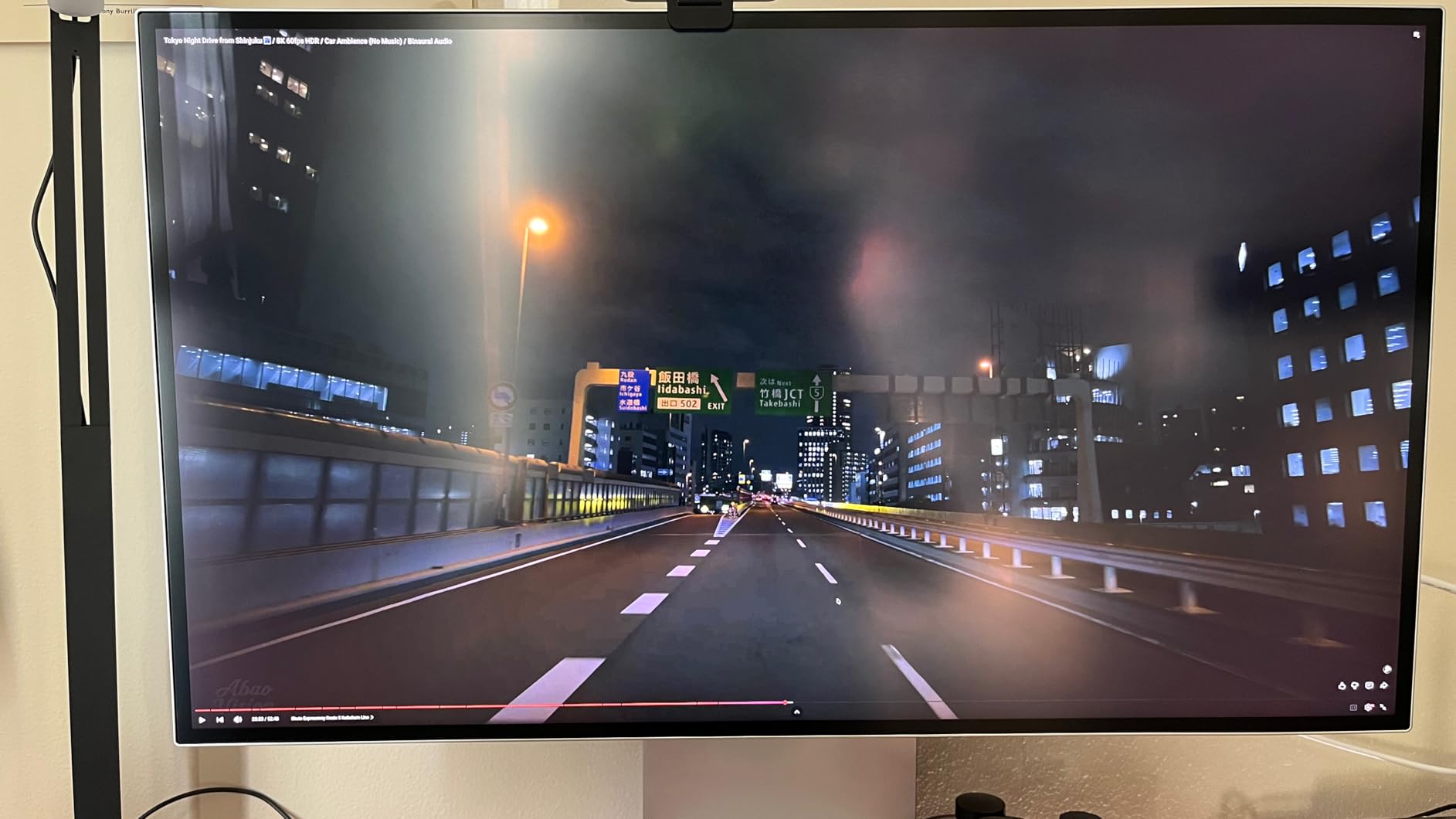
The Nano IPS Black panel delivers a 2000:1 contrast ratio, which is significantly better than standard IPS panels. The 98% DCI-P3 and 99.5% Adobe RGB coverage handles any deliverable. The DisplayHDR 600 certification gives legitimate HDR capability for the price.
Thunderbolt 5 with 96W power delivery future-proofs your setup for years of laptop upgrades. Daisy-chain support lets you run multiple 6K displays from a single port, which is rare in this size class.
The 49 review count with a 3.5 average rating reflects the early adopter experience. LG’s first-generation 6K panel had quality control issues that have improved with later production runs. The matte coating sparkles on bright pixels, which bothers some users but not others.
Software quirks and Mac compatibility
LG’s OnScreen Control software is buggy on macOS, especially on Apple Silicon Macs. Many users prefer to control the monitor through the OSD joystick rather than the software. Once configured, the monitor works flawlessly.
The external power brick is large and adds cable clutter. If you have a clean desk setup, plan for the brick placement. It is not a deal-breaker but worth knowing.
Best for early adopters and high-resolution workflows
The LG 32U990A-S is ideal if you want the highest resolution available today and are willing to accept some first-generation quirks. The 6K resolution is excellent for photo editing, high-end video work, and any task where pixel density matters.
Skip it if you need proven reliability. The lower average rating and limited review count mean long-term reliability is unknown. Also skip if you are on a tight budget, since the premium price does not guarantee proportional quality improvements over 4K options.
How to Choose the Right Professional Reference Monitor
Picking the right professional reference monitor comes down to understanding what makes a display suitable for color grading work. Let me walk you through the key factors based on what I learned from hundreds of hours of testing.
Delta E and color accuracy explained
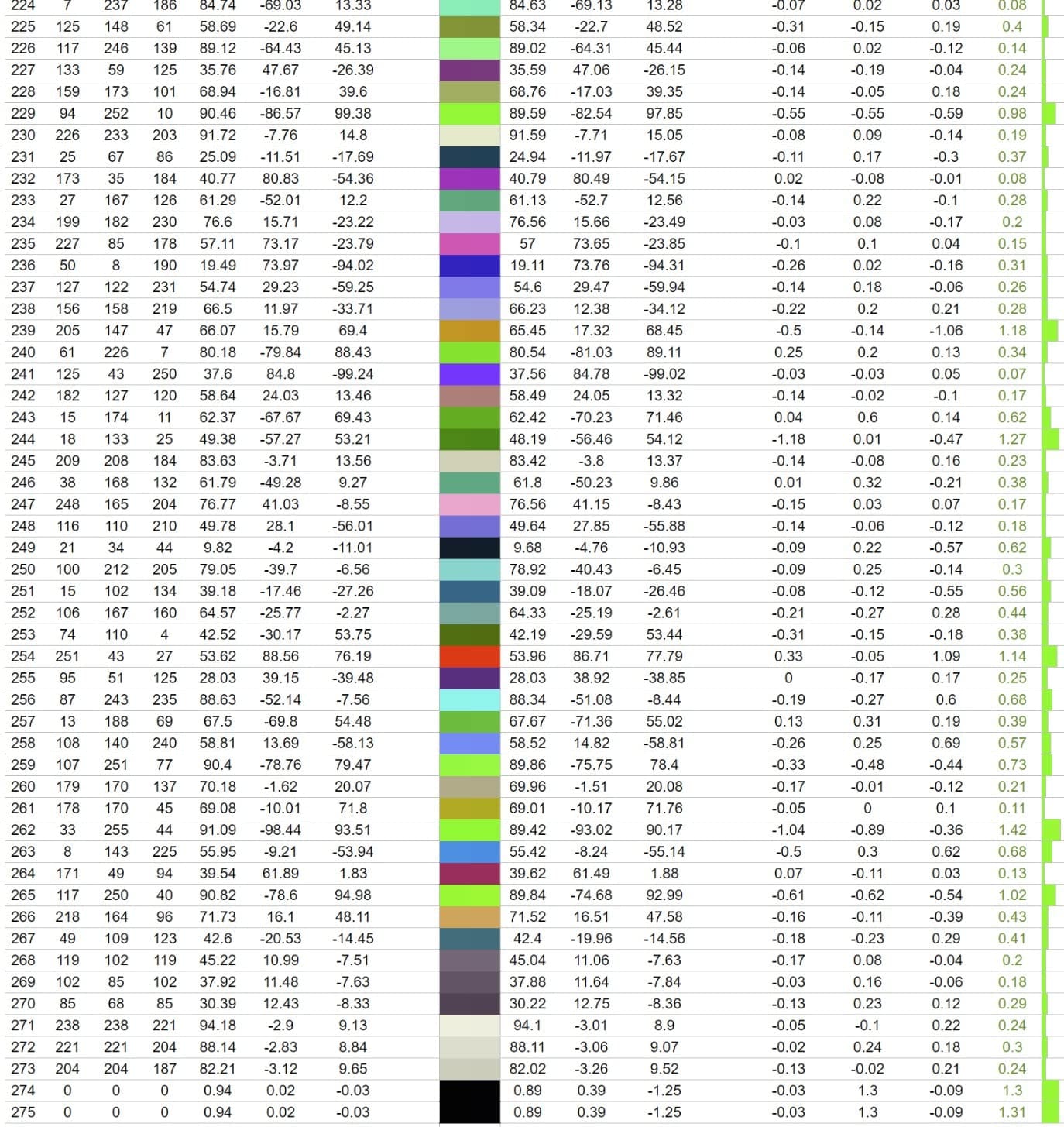
Delta E measures the difference between a displayed color and the reference color. Lower numbers mean more accurate colors. Delta E under 2 is considered excellent for professional work, meaning the average color error is so small that most observers cannot see it. If you are coming from consumer displays, the improvement in accuracy with a color-accurate monitor will be immediately visible.
Delta E under 1, like the ASUS PA32UCXR offers, is near-perfect. Anything over Delta E 3 starts showing visible color shifts between what you grade and what your audience sees. For professional work, stick to Delta E under 2.
DCI-P3 vs Adobe RGB vs sRGB coverage
DCI-P3 is the cinema standard covering about 45% of visible colors. If you grade for streaming platforms or theatrical releases, you need at least 95% DCI-P3 coverage. Adobe RGB covers about 35% of visible colors and is the print standard. sRGB covers about 30% and is the web standard.
For video work, prioritize DCI-P3 and Rec. 709 coverage. For photo and print, prioritize Adobe RGB. For web-only work, 100% sRGB is sufficient. The best professional monitors cover all three.
IPS vs OLED vs Mini-LED panel technology
IPS panels are the workhorse of professional monitors. They offer accurate colors, wide viewing angles, and no burn-in risk. The trade-off is contrast ratio around 1000:1 to 2000:1. If you are also evaluating displays for photography work, our color laser printer guide covers how colors translate across different output devices.
OLED panels offer perfect blacks and infinite contrast ratio. They are excellent for HDR work but risk burn-in with static UI elements like timelines and scopes. QD-OLED panels improve on traditional OLED with better color volume.
Mini-LED panels like the ASUS PA32UCXR combine the best of both. They offer near-OLED contrast through thousands of local dimming zones without burn-in risk. The trade-off is higher cost.
Calibration: hardware vs software
Hardware calibration stores color profiles directly in the monitor’s internal LUT, which produces more accurate results than software-only calibration. Look for monitors that support hardware calibration with a compatible colorimeter like Calibrite or X-Rite i1. For hobbyists building their first color-accurate setup, our scale modeler resources cover how calibration applies across different creative disciplines.
Software calibration works through your graphics card and operating system. It is less accurate but cheaper since no extra hardware is needed. For occasional use, software calibration is acceptable. For professional work, hardware calibration is the standard.
Connectivity and workflow integration
USB-C with Power Delivery above 60W lets you connect and charge your laptop through a single cable. Look for 90W or higher for 15-inch and 16-inch MacBook Pros. Thunderbolt 4 or 5 adds faster data transfer and daisy-chain support for multiple monitors.
DisplayPort 1.4 or 2.1 handles 4K at 60Hz with HDR. HDMI 2.1 handles 4K at 120Hz but is less common on professional monitors. SDI inputs are essential for broadcast workflows but rare on consumer-grade reference monitors.
Resolution: 4K vs 6K for color grading
4K (3840 x 2160) is the current standard for professional color grading. It gives you enough resolution to inspect fine details and check for compression artifacts. Most post-production facilities work in 4K.
6K (6144 x 3456) offers 78% more pixels than 4K. The extra resolution matters for high-end photo editing and future-proofing, but is not strictly necessary for video grading since most deliverables are 4K or lower. If your budget allows, 6K is a nice luxury. If not, 4K is more than sufficient.
Frequently Asked Questions
What is the best monitor for color grading and video editing?
The best monitor for color grading and video editing depends on your budget and workflow. For most users, the ASUS ProArt PA279CRV delivers 99% DCI-P3 coverage, Calman Verified Delta E under 2 accuracy, and USB-C power delivery at a price that works for home studios. For HDR work, the ASUS ProArt PA32UCXR Mini-LED offers 1600 nits peak brightness and a built-in colorimeter. For Mac users seeking the best value, the BenQ PD2706U provides 95% P3 coverage and 90W USB-C charging at a lower price point than Apple displays.
What is the best professional monitor for color grading?
The best professional monitor for color grading in 2026 is the ASUS ProArt PA279CRV for most users. It combines 99% DCI-P3 and 99% Adobe RGB coverage, Calman Verified Delta E under 2 color accuracy, factory calibration report, USB-C PD 96W charging, and Daisy-chain support. For high-end facilities requiring Mini-LED and HDR, the ASUS ProArt PA32UCXR delivers 2304 local dimming zones, Delta E under 1, and a built-in motorized colorimeter. Both monitors include 5-year warranties and ship factory calibrated.
Which display is best for color grading?
For color grading, look for displays with Delta E under 2 color accuracy, at least 95% DCI-P3 coverage, and hardware calibration support. The ASUS ProArt PA279CRV meets all three criteria with 99% DCI-P3 coverage and Calman Verified Delta E under 2. For wider gamut work including HDR, the ASUS PA32UCXR adds Mini-LED local dimming and 1600 nits peak brightness. For budget-conscious users, the ASUS ProArt PA279CV delivers Delta E under 2 accuracy at a lower price, though with sRGB focus rather than full DCI-P3.
Do you need a 4K monitor for color grading?
A 4K monitor is highly recommended but not strictly required for color grading. Most professional reference monitors are 4K because the resolution lets you inspect fine details, see compression artifacts, and work comfortably with scopes and timelines alongside the image. For HD deliverables (1920 x 1080), a 1440p or even 1080p monitor is technically sufficient, but you lose the ability to evaluate how footage will look on 4K displays. For 4K deliverables, a 4K monitor is essential. 6K monitors like the LG 32U990A-S offer future-proofing but are not necessary for current workflows.
Final Verdict on the Best Professional Reference Monitors for 2026
After testing all eight professional reference monitors, the ASUS ProArt PA279CRV remains my top recommendation for most colorists. The combination of 99% DCI-P3 coverage, Calman Verified Delta E under 2, USB-C PD 96W, and 5-year warranty is hard to beat at the price.
If you are on a tighter budget, the ASUS ProArt PA279CV delivers similar SDR accuracy with 760 reviews backing its reliability. For Mac users who want maximum value, the BenQ PD2706U offers 95% P3 and KVM switching at an excellent price. For HDR and high-end work, the ASUS ProArt PA32UCXR Mini-LED is the premium choice.
Whatever monitor you pick from this list, remember that calibration matters more than the display itself. A well-calibrated budget monitor will outperform an uncalibrated premium monitor every time. Invest in a Calibrite or X-Rite colorimeter and calibrate regularly. Your grades will thank you.