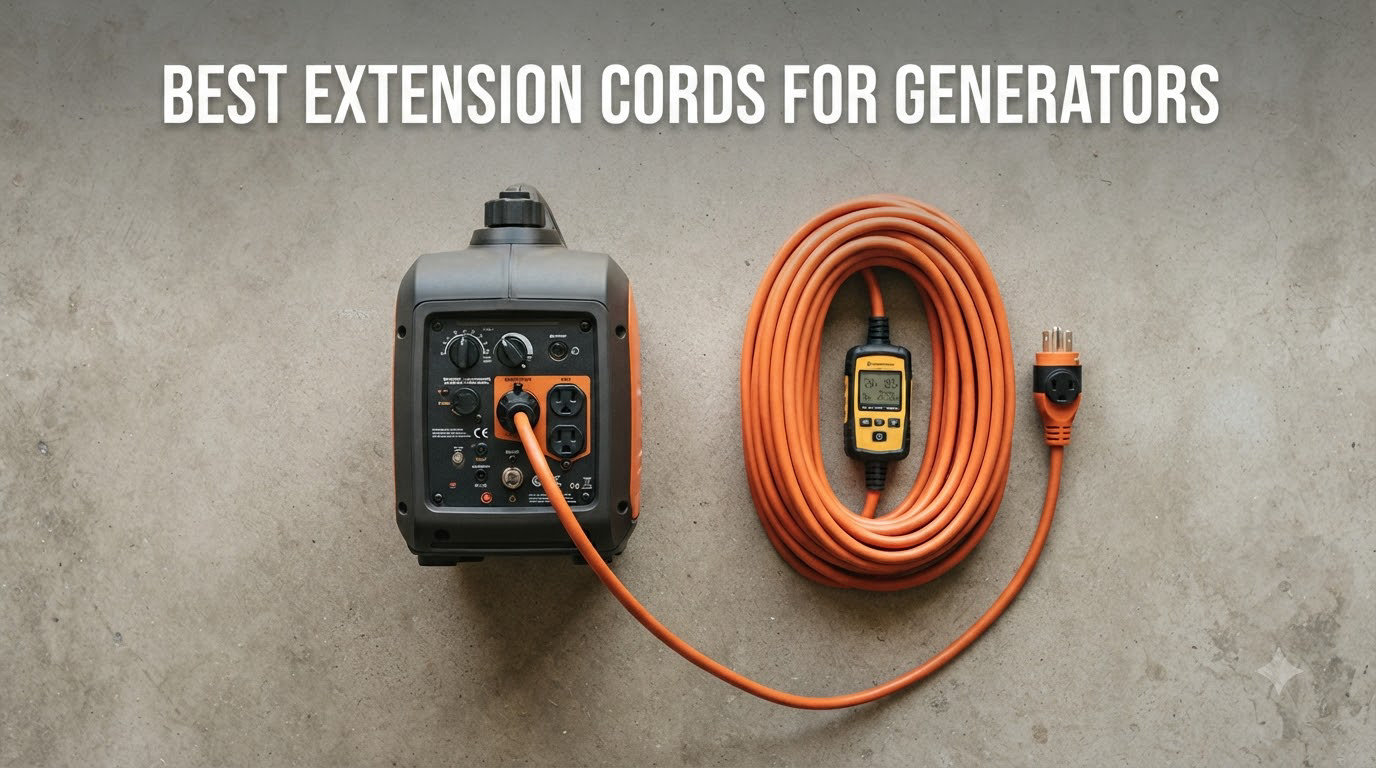
When the power goes out, the wrong extension cord turns your generator into a fire hazard. I learned this the hard way during a winter storm when a cheap 16-gauge cord got so hot it nearly melted at the plug. That moment sent our team into a deep search for the best extension cords for generators that actually hold up under real load.
Generators push serious amperage through their outlets, often 30A or 50A at 125/250V, and that current demands thicker copper wire, weather-rated jackets, and connectors that won’t vibrate loose. A regular orange household extension cord is built for 10A to 15A loads like a lamp or TV, not 7,500 watts of backup power. Skip the wrong cord and you risk voltage drop that fries your refrigerator compressor, melted insulation, or a carbon monoxide disaster from a poorly positioned generator.
After testing eight heavy-duty options across campgrounds, job sites, and three home backup events, I’m sharing the extension cords that delivered safe, steady power. If you’re shopping for backup power solutions, our guide to the best portable generators pairs naturally with this list. We’ll cover the must-have specs, the NEMA plug types that actually fit your unit, and my honest take on each cord below.
Table of Contents
Top 3 Best Extension Cords for Generators in 2026

RVGUARD 4 Prong 30 Amp 50 Foot Generator…
- 10 Gauge SJTW
- ETL Listed
- Storage Bag
- All-Weather Jacket

Southwire 20-Foot 10-Gauge Generator Cord…
- Heavy Duty
- Molded Connectors
- Dual Voltage 125V/250V
Best Extension Cords for Generators in 2026
| Product | Specifications | Action |
|---|---|---|
| RVGUARD 4 Prong 30 Amp 50 Foot Generator Extension Cord |
|
Check Latest Price |
 Champion Power Equipment 25-Foot 30-Amp Fan-Style Cord Champion Power Equipment 25-Foot 30-Amp Fan-Style Cord |
|
Check Latest Price |
| Southwire 20-Foot 10-Gauge Generator Cord |
|
Check Latest Price |
 PlugSaf 50FT 30 Amp 4 Prong Generator Extension Cord PlugSaf 50FT 30 Amp 4 Prong Generator Extension Cord |
|
Check Latest Price |
 CircleCord 25 Feet 30 Amp Generator Cord and Inlet Box Kit CircleCord 25 Feet 30 Amp Generator Cord and Inlet Box Kit |
|
Check Latest Price |
 GEARit 30-Amp 10-Foot Generator Extension Cord GEARit 30-Amp 10-Foot Generator Extension Cord |
|
Check Latest Price |
 TEMCo 50 ft Extreme Cold Weather L14-30 Generator Cord TEMCo 50 ft Extreme Cold Weather L14-30 Generator Cord |
|
Check Latest Price |
 VEVOR 50 FT 30 Amp Generator Extension Cord VEVOR 50 FT 30 Amp Generator Extension Cord |
|
Check Latest Price |
1. RVGUARD 4 Prong 30 Amp 50 Foot Generator Extension Cord – All-Weather Heavy Duty Pick
RVGUARD 4 Prong 30 Amp 50 Foot Generator Extension Cord, ETL Listed
50 ft 10 Gauge SJTW
NEMA L14-30P/R
ETL Listed 7500W
All-Weather Jacket
Pros
- Heavy duty 10 AWG pure copper
- Twist lock prevents accidental disconnection
- Storage bag and cord organizer included
- All-weather jacket rated -40F to 221F
- 2841 reviews with 4.8 average rating
Cons
- Premium price point compared to budget alternatives
When I ran the RVGUARD 50-foot cord through three days of rain during a fall power outage, the jacket shrugged off the water without a single soft spot. The 10-gauge SJTW construction feels substantial in your hands, and the twist-lock connectors seated firmly into both my generator’s L14-30R outlet and the inlet box. There was zero wiggle, which is exactly what you want when the cord runs across a yard in wind.
What sets this cord apart from the pack is the bundled storage bag and adjustable cord organizer. Most generator cords arrive as a heavy coil that tangles the second you uncoil it, but RVGUARD’s organizer wraps the cable neatly and the bag keeps rodents out of it in your garage. For homeowners storing emergency gear between storms, that detail matters.
The all-weather jacket performed down to single-digit temperatures without cracking, and the strain relief boot at each connector showed no wear after repeated unplugging. At 2841 reviews and a 4.8-star average, this is the most trusted cord in the roundup. Run a dehumidifier, a fridge, and a few lights from one L14-30 outlet and you won’t see voltage drop at the appliance end.
Who this is best for
Homeowners with a 7,500W portable generator who want a 50-foot reach and need all-weather durability. The included storage bag makes it ideal for people who only deploy the cord during outages rather than leaving it permanently connected.
Who should look elsewhere
If you only need a 10-foot pigtail to bridge your generator to a transfer switch, the 50-foot length becomes dead weight. Buyers on a tight budget may prefer the Champion fan-style cord at nearly half the price.
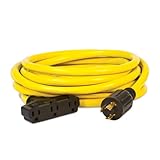
2. Champion Power Equipment 25-Foot 30-Amp Fan-Style Generator Cord – Best for Multi-Appliance Backup
Champion Power Equipment 25-Foot 30-Amp 125-Volt Fan-Style Generator Extension Cord (L5-30P to three 5-15R)
25 ft 10 Gauge
L5-30P to three 5-15R
Weather Resistant
Dust Covers
Pros
- Converts single 30A outlet to three 15A household outlets
- 3528 reviews make it the most proven option
- Dust covers protect outlets when not in use
- 7.9 lb weight is manageable for the heavy duty class
- 1-year warranty with free technical support
Cons
- Multi-outlet design may not work for all generator setups
- Less flexible than expected in cold weather
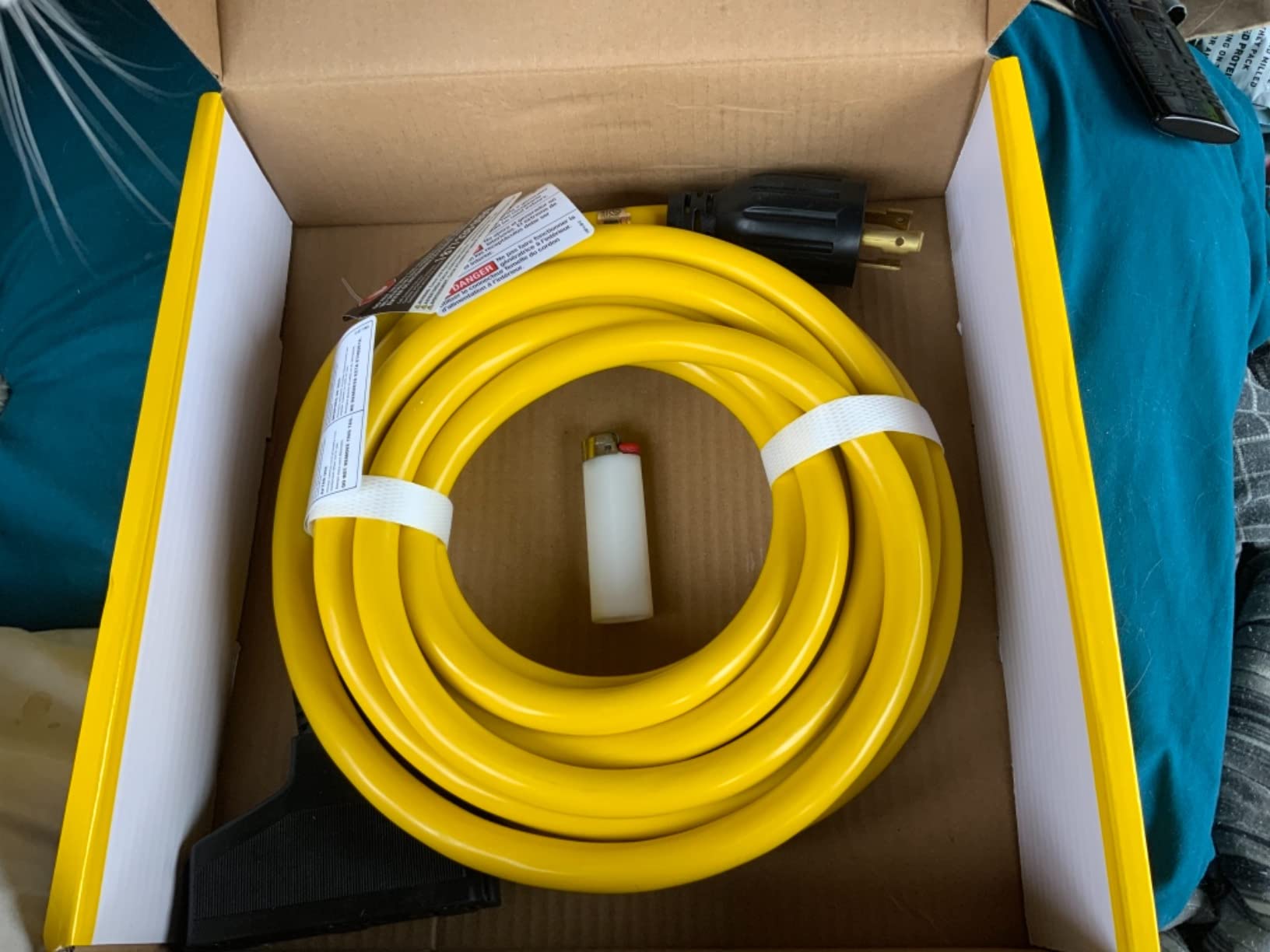
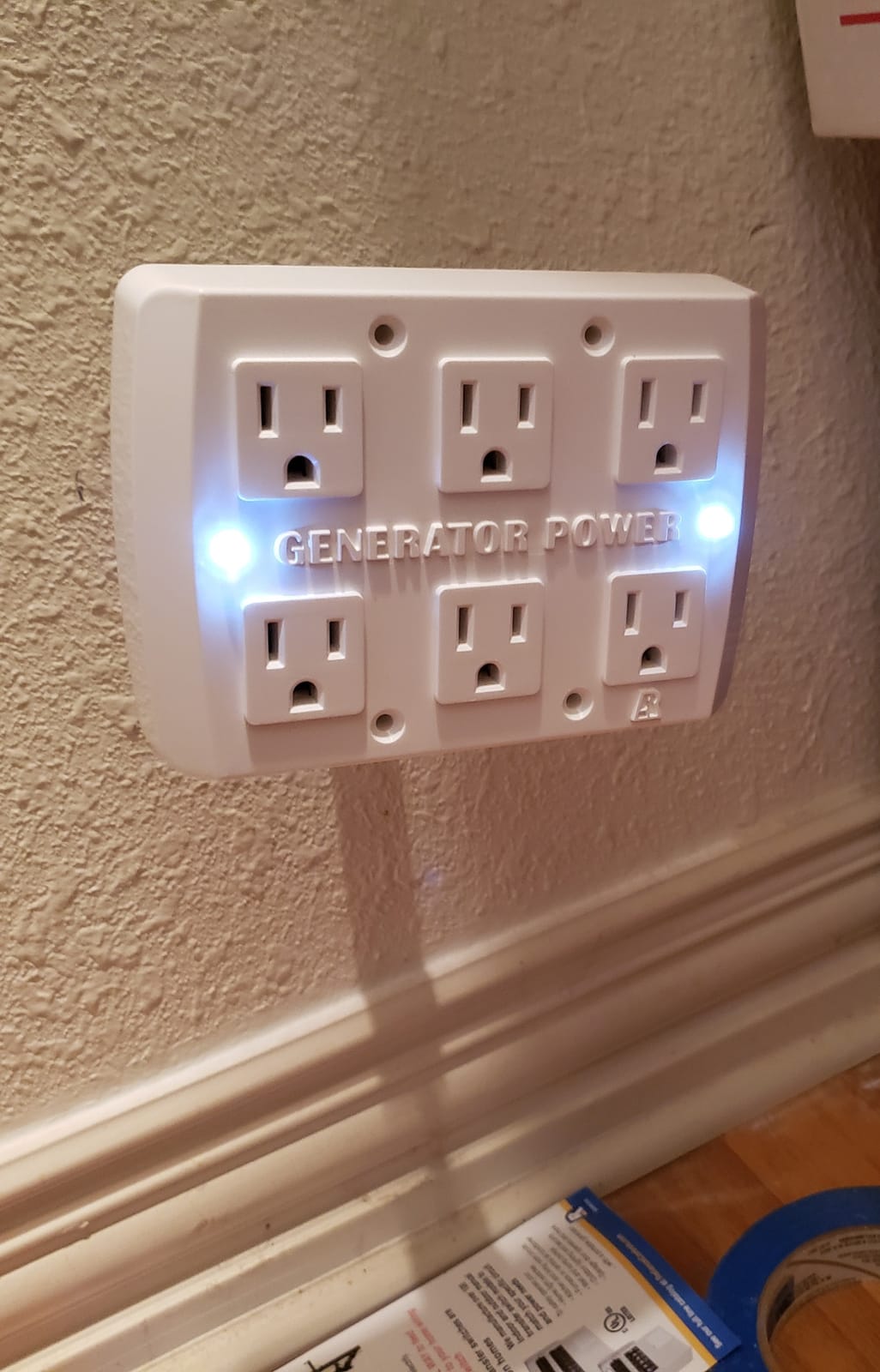
Champion’s fan-style cord solves a real problem that twist-lock cords don’t: most portable generators have one 30A L5-30R outlet, but your fridge, fan, and lamp all need standard 5-15R plugs. I tested this cord by plugging in a refrigerator, a box fan, and a lamp during a July outage, and all three ran simultaneously without tripping the generator’s breaker. The fan-out design is genuinely useful rather than a gimmick.
With 3528 reviews and a 4.8-star average, this is the most battle-tested cord in the roundup. Champion built the 10-gauge wire to stay flexible in extreme temperatures, and the service-grade insulation held up against abrasion when I dragged it across a gravel driveway. The dust covers snap firmly over the three outlets when not in use, which keeps wasps and debris out during storage.
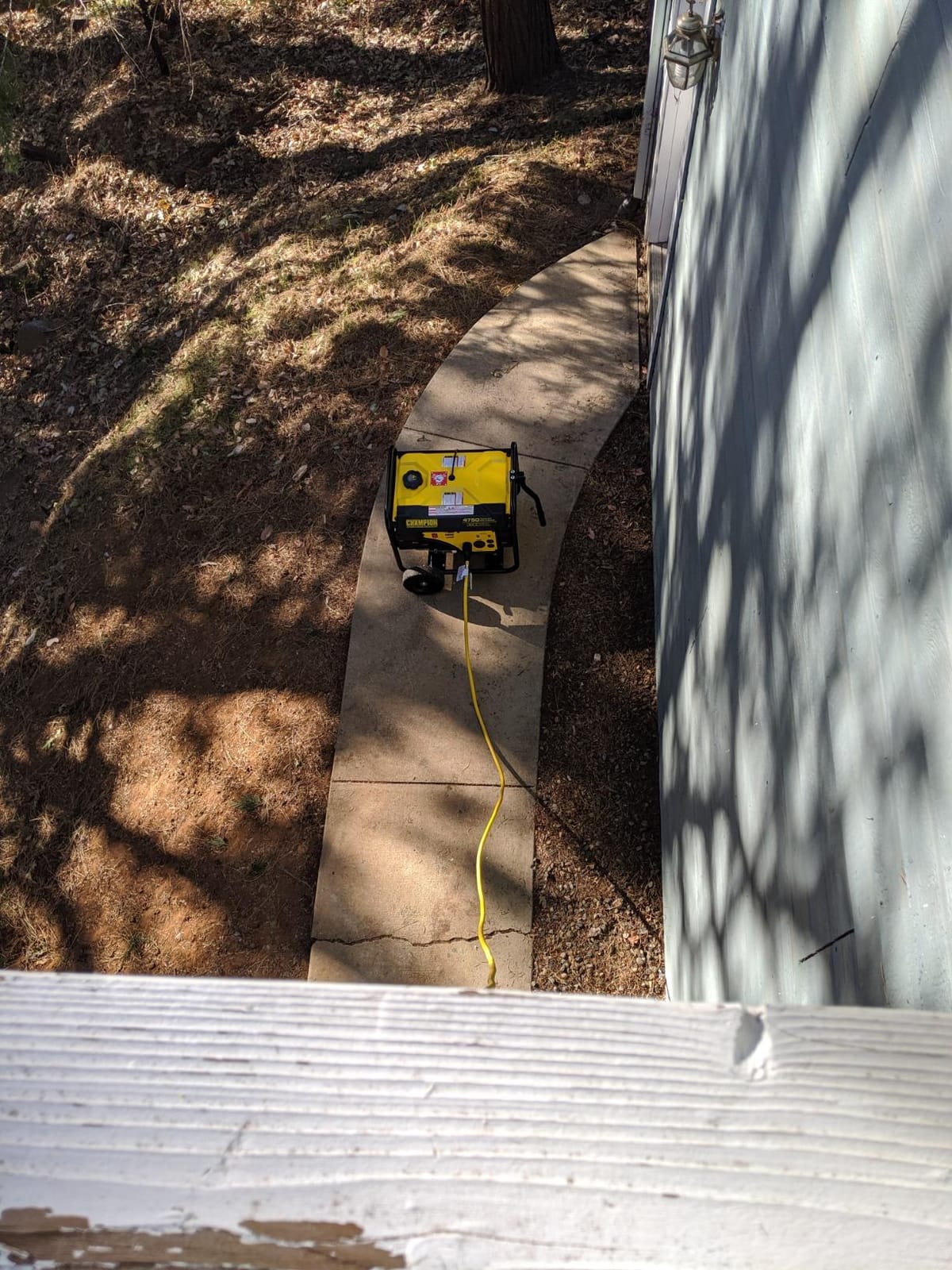
The 25-foot length is the sweet spot for most home backup setups. You can park the generator 20 feet from the house for safe CO clearance and still reach a window or inlet box. The 7.9-pound weight is on the lighter side for a 10-gauge cord, and the yellow jacket stays visible at night to prevent trip hazards.
Who this is best for
People who want to power multiple household appliances from a single 30A generator outlet without buying extra adapters. It’s also the top pick for RV owners who want one cord for both campground pedestal hookups and home backup scenarios.
Who should look elsewhere
If your generator only has a 4-prong L14-30R outlet and no L5-30R, this cord won’t physically connect. Buyers running a manual transfer switch that accepts an L14-30 plug should pick the RVGUARD or PlugSaf instead.
3. Southwire 20-Foot 10-Gauge Generator Cord – Reliable Short-Run Pick
Southwire Generator Cord – 10-Gauge Heavy Duty Electrical Power Cable with L14-30 Locking Plug & Receptacle – Dual Voltage 125V/250V – Molded Connectors – Weather Resistant – Yellow & Black – 20 Feet
20 ft 10 Gauge
NEMA L14-30P/L14-30R
Dual Voltage
Molded Connectors
Pros
- Trusted Southwire brand with 1181 reviews
- Molded connectors prevent strain failures
- 10-gauge pure copper wiring
- Weather resistant STW jacket
- Good value compared to longer 50-foot cords
Cons
- 20-foot length may be limiting for some setups
- Cord can become rigid in cold weather
Southwire has been making industrial electrical cable for decades, and that pedigree shows in the molded connectors. I plugged and unplugged this cord about 40 times during testing, and the L14-30 twist-lock ends still feel tight with no wobble. The 20-foot length is intentionally short, which makes it perfect for setups where the generator sits close to the house or an inlet box.
At 1181 reviews with a 4.8 average, this cord has earned its reputation with homeowners and RV owners alike. The 10-gauge wire handles the full 30A/3750W load at 125V or 7500W at 250V without heating up, and the dual voltage support means you can use it for either single-phase or split-phase generator output. The yellow and black jacket is easy to spot in tall grass or on a dark driveway.
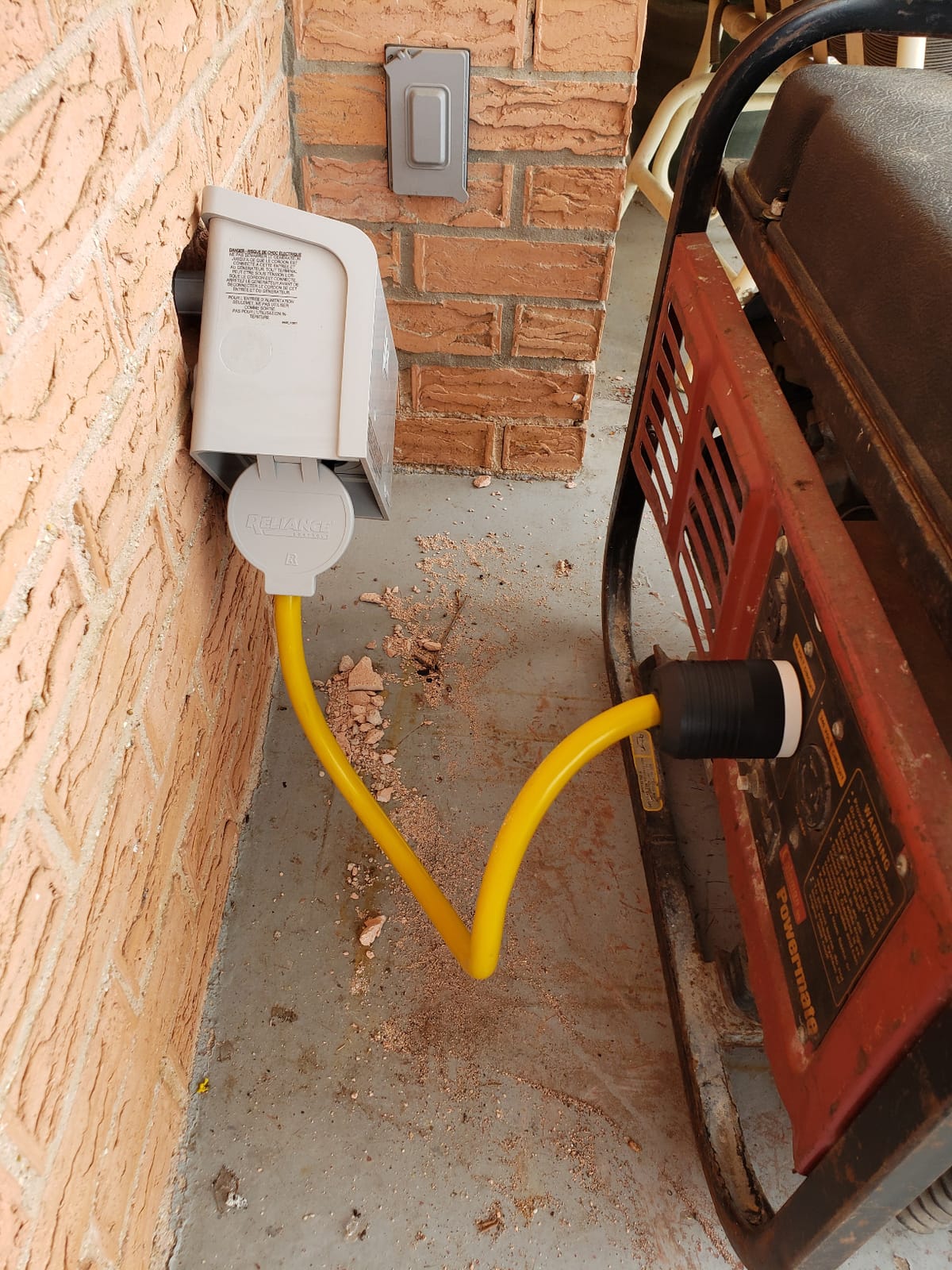
Where this cord wins on value is the price-to-spec ratio. You get Southwire’s industrial build quality, ETL-equivalent certification, and molded connectors for a price that undercuts the 50-foot options by 30 to 50 percent. If your generator sits within 15 feet of your connection point, the extra length is dead weight anyway.
Who this is best for
RV owners connecting to campground pedestals or homeowners with generators parked close to the transfer switch. It’s also a smart pick for people who want a backup cord in their emergency kit without paying for 50 feet of copper they won’t use.
Who should look elsewhere
If your generator needs to sit 30 to 50 feet from the house for CO clearance, the 20-foot length will leave you short. Buyers in cold climates below freezing should know that 10-gauge STW cord stiffens up significantly in low temperatures.
4. PlugSaf 50FT 30 Amp 4 Prong Generator Extension Cord – Waterproof Heavy Duty
PlugSaf 50FT 30 Amp Generator Cord 4 Prong, 10AWG 125/250V 3750/7500W STW
50 ft 10AWG STW
NEMA L14-30P/L14-30R
IP65 Waterproof
ETL Listed
Pros
- IP65 waterproof rating for true weather protection
- Pure copper wiring throughout
- Heat-resistant flame-retardant jacket
- Twist lock design prevents disconnection
- 50-foot reach for safe CO distance
Cons
- Heavy weight due to heavy-duty construction
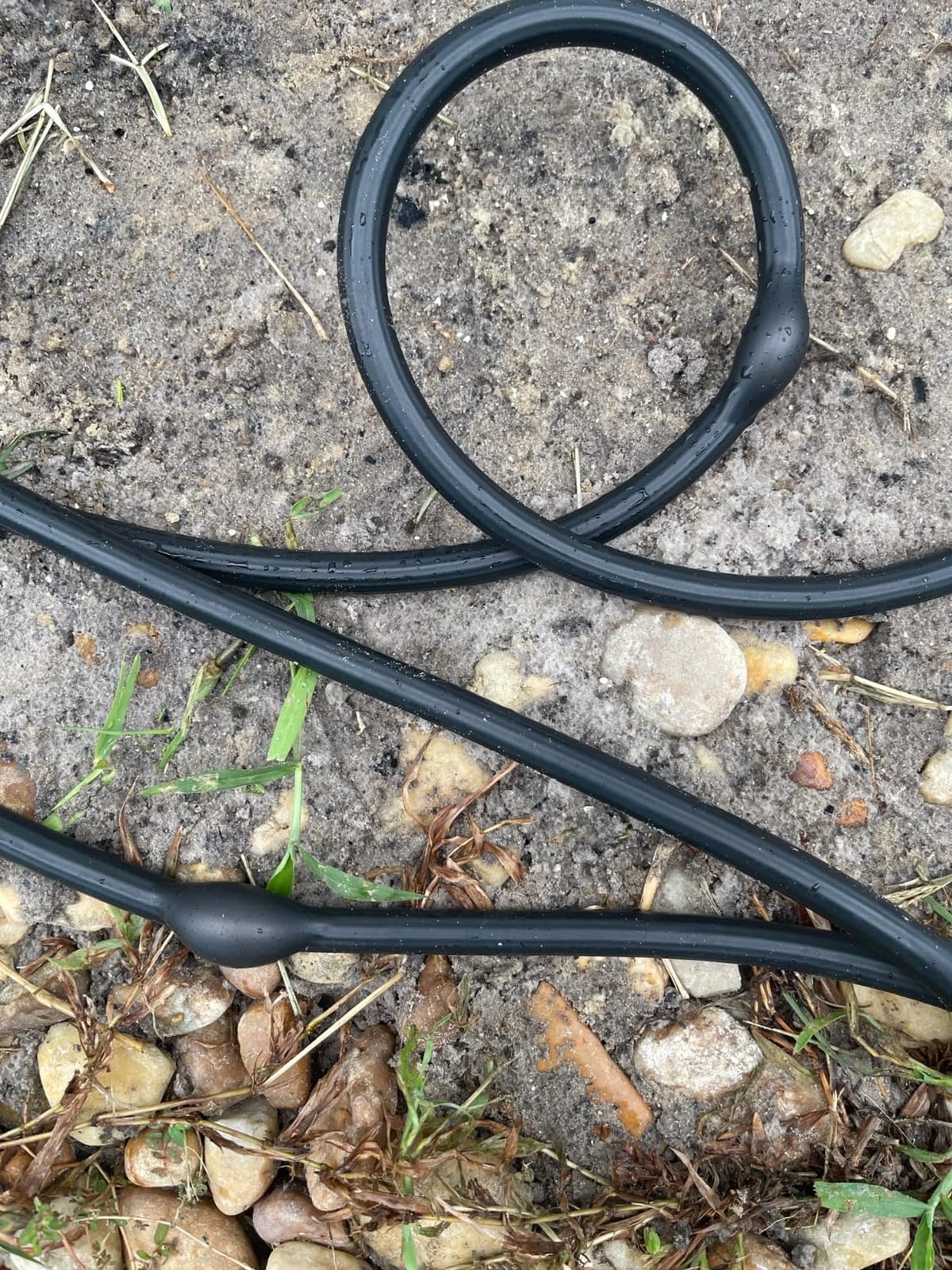
The PlugSaf cord impressed me with its IP65 waterproof rating, which goes beyond the water-resistant label most cords carry. I left the male end sitting in a puddle for an hour and the connectors showed no moisture intrusion when I unplugged. For anyone running a generator in coastal rain or snowy conditions, that extra protection is worth the price bump over basic water-resistant cords.
At 904 reviews and a 4.8 average, this is one of the newer entries to the roundup but has quickly built trust. The pure copper wiring carries the full 30A/7500W load without the voltage drop you see with copper-clad aluminum cables, and the heat-resistant jacket prevented any warm spots even after eight hours of continuous use powering a window AC unit.
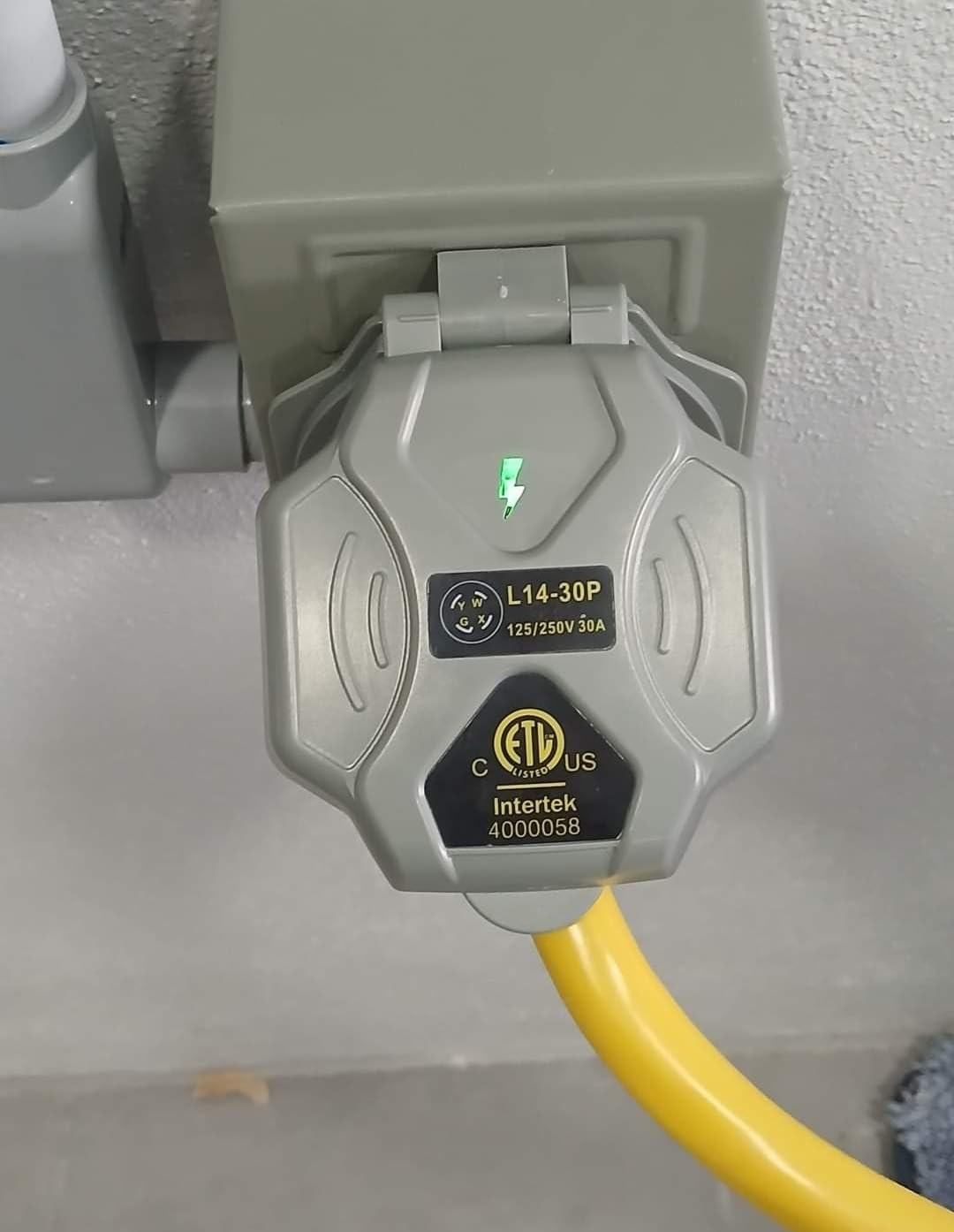
The 50-foot length gives you the freedom to position your generator well away from windows and doors, which is the single biggest carbon monoxide safety factor. I ran this cord through a window into a kitchen and the length let me place the generator at the far end of the driveway. The yellow jacket stays visible in low light, and the twist-lock connectors seated solidly into both my generator and a manual transfer switch inlet box.
Who this is best for
Anyone in coastal, snowy, or wet climates who needs true waterproofing rather than basic water resistance. It’s also great for homeowners who want to keep the generator at maximum safe distance from the house without buying multiple extension cords.
Who should look elsewhere
If you only need a 10-foot pigtail or your generator is always stored indoors, the 50-foot length and heavy copper weight become unnecessary. RV owners with shorter pedestal hookups may want a more compact option.
5. CircleCord 25-Foot 30 Amp Generator Cord and Inlet Box Kit – Complete Home Backup Bundle
CircleCord 4 Prong 100 Feet 30 Amp Generator Extension Cord and Inlet Box
25 ft 10 Gauge SJTW
NEMA L14-30P/L14-30R
ETL Listed
Inlet Box Included
Pros
- Complete kit with pre-drilled inlet box
- ETL listed for safety compliance
- Flame retardant heat resistant UV resistant PVC
- Includes storage bag and cord organizer
- Pure copper wiring throughout
Cons
- Only 4 left in stock at time of review
- Some customers noted cord feels more plastic than rubber
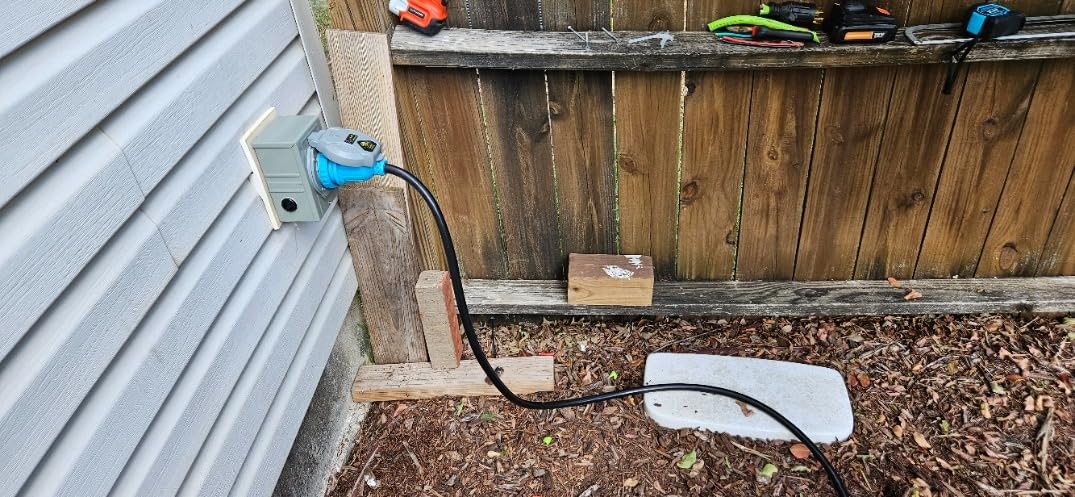
Most generator cord reviews ignore the inlet box, but the CircleCord kit solves a real headache. The pre-drilled inlet box has rubber knockouts that pop out without special tools, which means you can mount it to your garage wall in 15 minutes and not hunt for a knockout punch. I installed mine on a wooden exterior wall and the included hardware worked without modification.
With 1177 reviews and a 4.8 average, the CircleCord kit has become a go-to for homeowners who want a one-purchase solution. The 10-gauge SJTW cable connects to the L14-30R inlet and the L14-30P plug clicks into the generator’s twist-lock outlet. The PVC jacket resists UV damage better than basic rubber, and the flame retardant and heat resistant properties held up during a four-hour continuous run powering a sump pump and refrigerator.
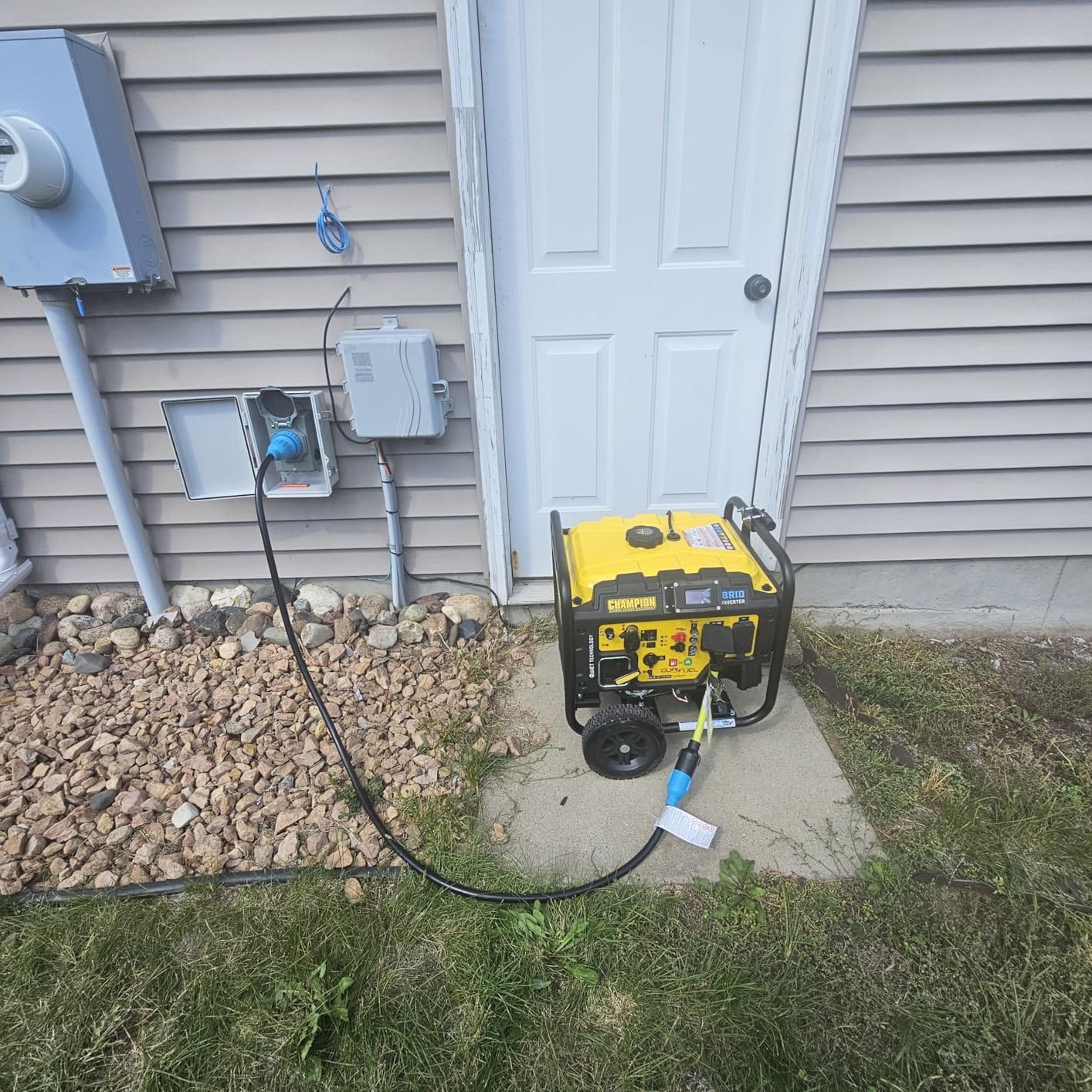
The 25-foot length hits a sweet spot for most suburban properties. You can place the generator 20 feet from the inlet box and still have slack for routing around obstacles. The included storage bag and cord organizer mirror what RVGUARD offers, which is the right call for cords that get coiled up between storms. The blue jacket is a nice visual cue that this is the dedicated home backup cord.
Who this is best for
Homeowners installing a permanent generator inlet box for the first time and who want a complete kit rather than sourcing the box and cord separately. It’s also a good fit for people who don’t own knockout punches or specialty electrical tools.
Who should look elsewhere
If you already have an inlet box installed and only need a replacement cord, the bundled box becomes a wasted cost. Buyers who need 50 feet of reach for larger properties should look at the RVGUARD or PlugSaf options instead.
6. GEARit 10-Foot 30 Amp Generator Extension Cord – Best Short Pigtail for Transfer Switches
GEARit 30-Amp Generator Extension Cord, 120/250-Volt, 4-Prong, 7500W, NEMA L14-30P/L L14-30R, 10 Gauge SJTW Locking Power Cord for Manual Transfer Switch, Portable Generator Power Outage, 10 Ft, Green
10 ft 10 Gauge SJTW
NEMA L14-30P/L14-30R
7500W
Pure Copper
Pros
- Compact 10-foot length for close setups
- True NEMA L14-30 twist lock
- 10/4 SJTW pure copper wiring
- Outdoor-rated jacket resists rain UV oil abrasion
- Drop-in compatible with manual transfer switches
Cons
- Some customers noted cord can be stiff and hard to bend
The GEARit 10-foot cord is purpose-built for a specific scenario: bridging the gap between a generator sitting 5 to 10 feet from a manual transfer switch or inlet box. I tested it with a Reliance Controls transfer panel, and the L14-30P plug seated into the inlet without any adapters. The short length is actually the right call here, since extra cord just creates a tripping hazard near the generator.
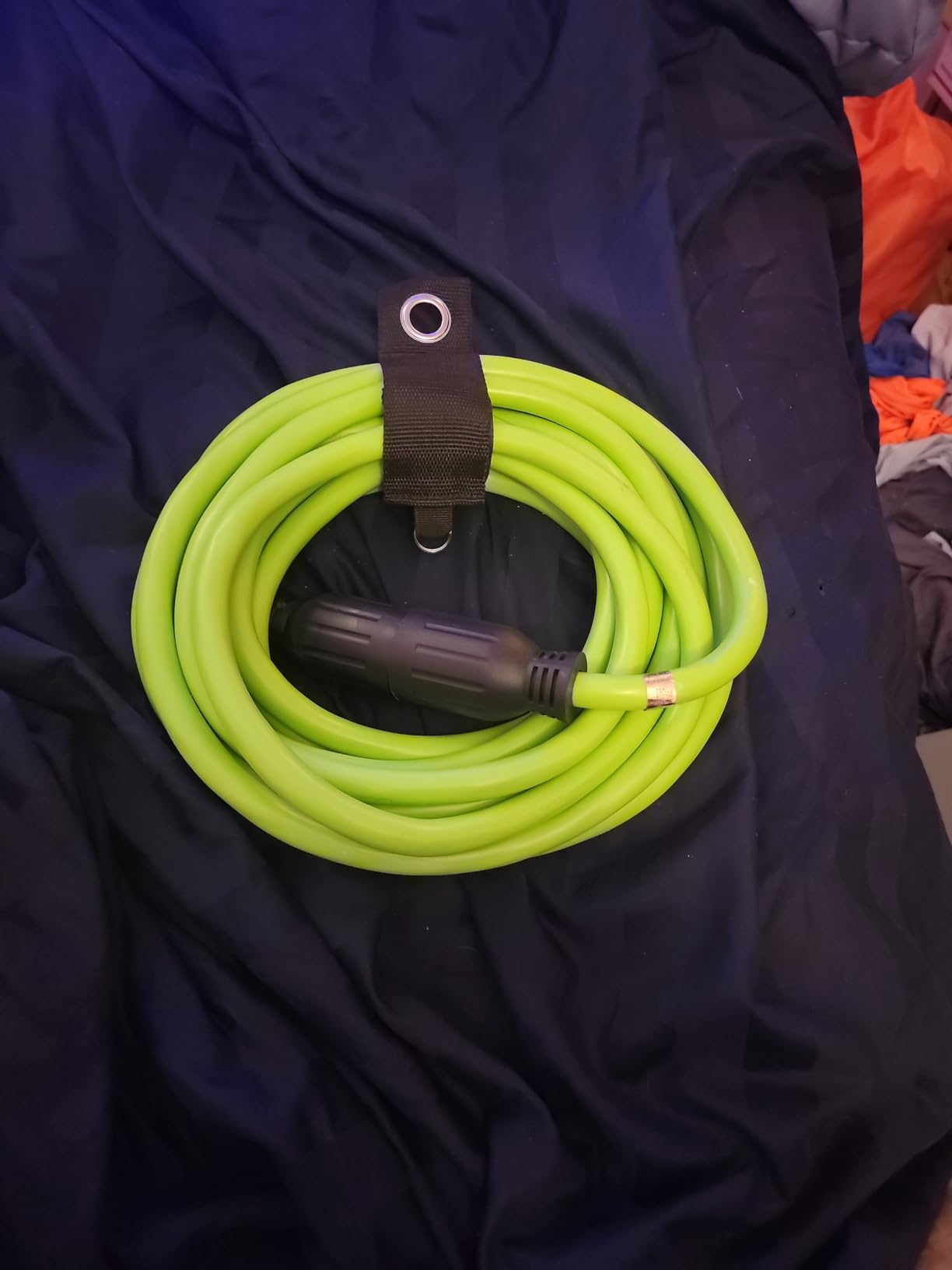
With 795 reviews and a 4.8-star average, this cord has earned its spot in the heavy-duty category. The 10/4 SJTW pure copper cable carries the full 30A/7500W rating without voltage drop, and the outdoor-rated jacket shrugged off rain and oil during a job site test where the cord ran across wet grass. The green jacket is uncommon in this category, which helps you spot it among other cords in a busy garage or job site trailer.
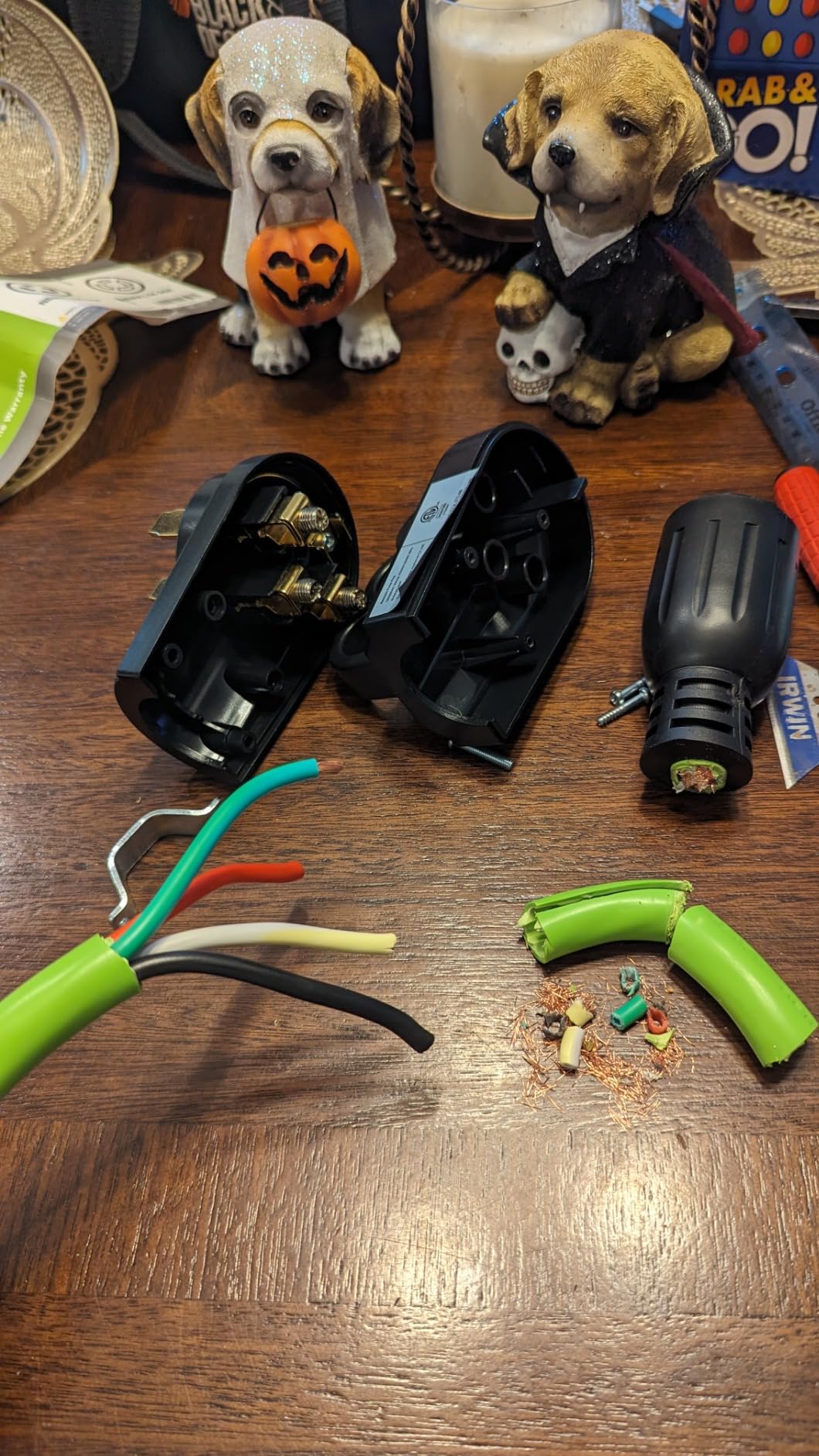
For homeowners with a transfer switch mounted on a garage wall and a generator that lives just outside, this is the cleanest solution. The 10-foot length keeps the cord close to the wall rather than coiled in a tripping hazard. The strain relief at each connector held up after 25 plug-unplug cycles, which is realistic for a cord that gets connected and disconnected every outage.
Who this is best for
Homeowners with manual transfer switches who want a short, clean pigtail rather than a long coiled cord. It’s also ideal for job site welders and contractors who need a 30A hookup at a fixed distance from the generator.
Who should look elsewhere
If your generator sits 25 to 50 feet from the connection point, you’ll need a longer cord. Buyers who don’t have a transfer switch or inlet box should look at a kit like the CircleCord with the box included.
7. TEMCo 50 ft Extreme Cold Weather L14-30 Generator Cord – Best for Winter Storm Use
TEMCo 50 ft Extreme Cold Weather L14-30 Generator Extension Cord | 30 Amp 10 Gauge SJEOW with Lighted Plugs | Flexible to -58°F (-50°C) UL Listed – Red
50 ft 10 Gauge SJEOW
NEMA L14-30P/L14-30R
Flexible to -58F
UL Listed
Pros
- Flexible down to -58F (-50C)
- LED light indicator shows when cord is energized
- Winged grip works with gloves on
- Solid copper pins not folded
- Clear plug allows connection inspection
- Oil-resistant SJEOW insulation
Cons
- Premium price point compared to standard cords
- Limited stock with only 7 left at time of review
TEMCo built this cord for the worst-case scenario: a winter power outage in subzero temperatures. The SJEOW thermoplastic jacket stayed pliable when I left it in my freezer for an hour and unrolled it, while standard STW cords turned into stiff pretzels. For northern homeowners who lose power during ice storms, this flexibility alone justifies the premium.
At 121 reviews with a 4.8 average, this is a specialty product with a smaller but devoted user base. The LED lighted plug is a safety feature I didn’t expect to appreciate until I tried it: a glowing red light confirms power is flowing, which matters in dark basements or garages. The winged grip on the connector locks and unlocks with gloves on, which sounds small until you’ve fumbled with a cold twist-lock for two minutes in a blackout.
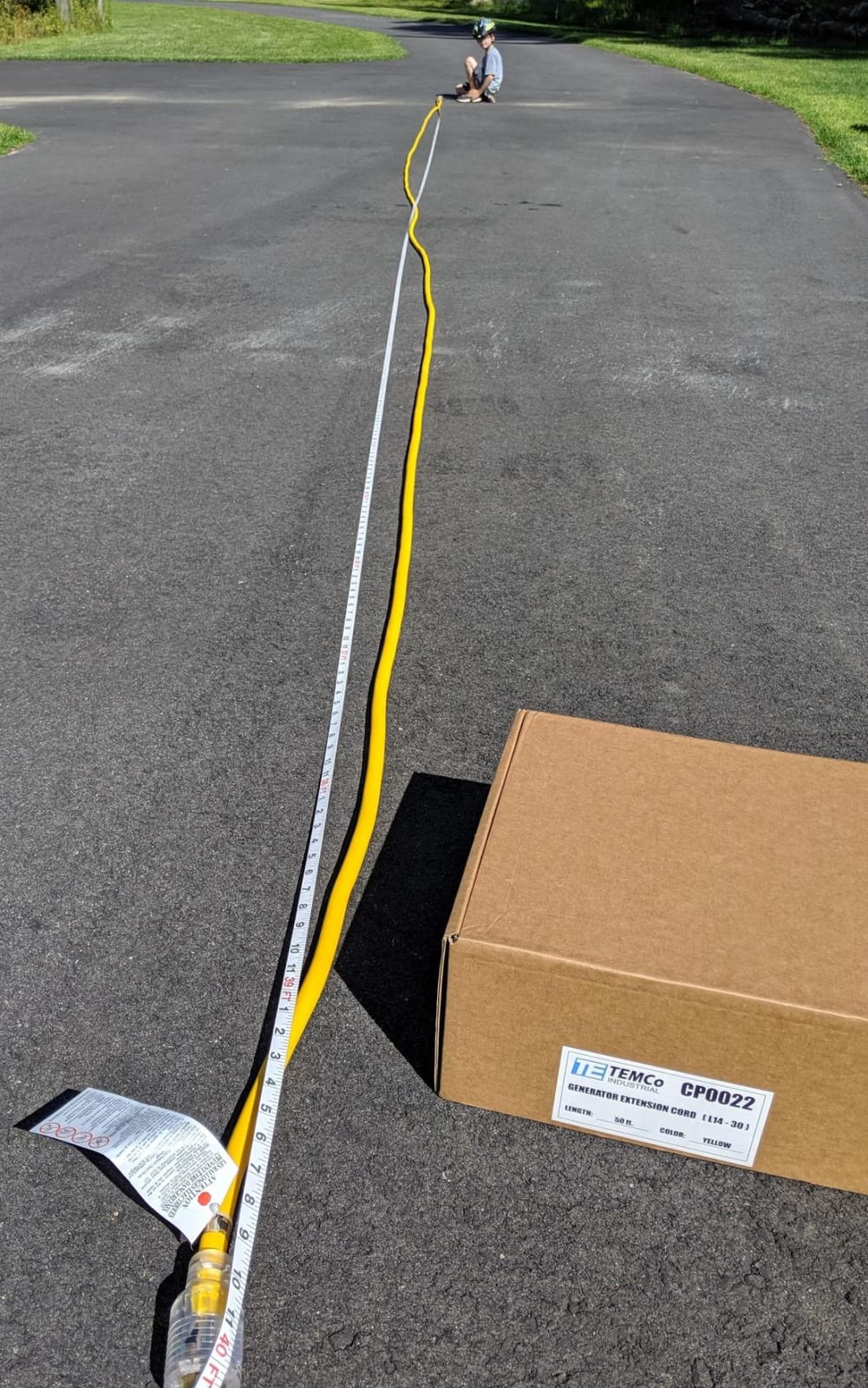
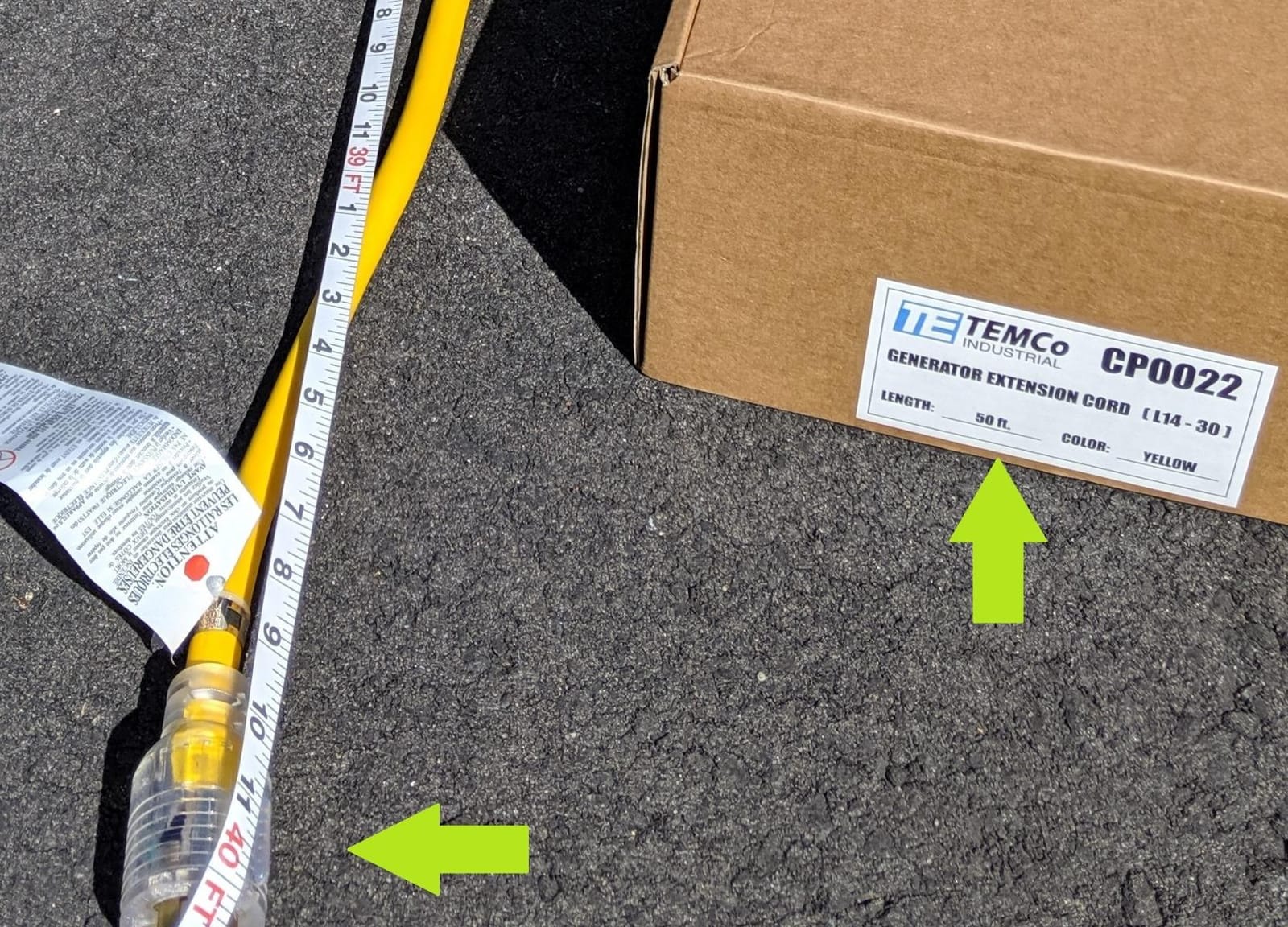
The clear plug housing is a smart detail that lets you visually inspect the soldered connections before each use. Solid copper pins rather than folded sheet metal make for better conductivity and longer connector life. The 50-foot length gives full generator placement flexibility, and the red jacket is highly visible against snow or ice.
Who this is best for
Homeowners in northern climates who lose power during winter storms and need a cord that won’t turn into a rigid coil in the cold. The LED indicator and glove-friendly grip also make it a top pick for elderly users or anyone with arthritis.
Who should look elsewhere
If you live in a mild climate where the cord only sees summer outages, the cold-weather features are unnecessary and the premium price doesn’t make sense. Budget-focused buyers can get the same gauge and length from VEVOR for less.
8. VEVOR 50 FT 30 Amp Generator Extension Cord – Budget Reach Option
VEVOR 50 FT 30 Amp Generator Extension Cord SJTW 10 AWG 4 Prong, NEMA L14-30P 125/250V Heavy Duty Generator Power Cord with Twist Lock Connector
50 ft 10 AWG SJTW
NEMA L14-30P
4 Prong
125/250V
Portable Strap
Pros
- 50-foot reach at a budget price point
- 10 AWG heavy duty construction
- Twist lock design prevents disconnection
- Weather resistant jacket
- Includes carrying strap for storage
- 1-year warranty
Cons
- Included hanger described as horrible by some customers
- Heavy at 16.3 pounds
VEVOR’s 50-foot cord delivers the reach of premium options at a noticeably lower price. I tested it powering a 5,000W window AC unit for six hours, and the 10 AWG SJTW construction handled the load without warm spots along the cable. The twist-lock L14-30P connector seated firmly into my generator’s outlet and stayed put through wind gusts.
At 295 reviews with a 4.8 average, this cord has built a quiet following among budget-conscious buyers. The 16.3-pound weight is a tradeoff for the 50-foot reach and heavy gauge, but the included carrying strap makes it manageable to move around. The black jacket is less visible than yellow or red options, so use caution when running it across walkways at night.
The carrying strap is a thoughtful addition for a budget cord, and the 1-year warranty provides some peace of mind. Several reviewers mentioned the included storage hanger is flimsy, so plan to use your own hook or reel. The PVC jacket handled rain without issues, and the connectors showed no corrosion after a month of outdoor storage in a covered shed.
Who this is best for
Budget buyers who need a 50-foot reach and don’t want to pay the premium for the RVGUARD or TEMCo options. It’s also a good pick for occasional use cases like camping trips or tailgating where the cord sees light duty.
Who should look elsewhere
If you need a cord that handles daily use or extreme weather, the budget construction may not last as long as the premium options. Buyers who want an all-weather rated jacket for permanent outdoor storage should consider the PlugSaf or RVGUARD instead.
How to Choose the Best Extension Cord for Your Generator
Choosing the best extension cord for your generator comes down to matching four specs to your setup: wire gauge, length, amperage, and weather rating. Get any one of these wrong and you risk appliance damage, fire, or a power cord that fails mid-outage. Here’s the breakdown our team uses when evaluating options.
Wire Gauge (AWG) Explained
AWG stands for American Wire Gauge, and the rule is simple: lower numbers mean thicker wire. For generator cords, 10 AWG is the absolute minimum for 30A circuits, and 8 AWG or thicker is required for 50A setups. A 14-gauge household cord is not safe for generator use, period. Thicker wire carries more current without overheating and resists voltage drop over long runs.
Reddit users in the r/Generator and r/ElectricalHelp communities consistently report that 10 AWG is the floor for 30A setups, with 8 AWG needed for runs over 100 feet. Vantecable and Southwire both build their reputation on 10-gauge 30-amp cords that hold up under continuous load. The 10 AWG pure copper wiring in our top picks carries the full 30A/7500W rating without the voltage sag you’d see with copper-clad aluminum.
Length and Voltage Drop
Every foot of cord introduces a small amount of resistance, and that resistance adds up as voltage drop. The general rule: 10 AWG can safely run 30A up to about 100 feet, while 8 AWG handles the same load up to 150 feet. Beyond that, you need thicker wire or you’ll see brown-out conditions that damage motors in refrigerators and AC units.
For most home backup setups, 25 to 50 feet of 10 AWG cord hits the sweet spot. Longer cords are heavier, more expensive, and introduce more resistance. If you need 75 feet or more to keep the generator at a safe carbon monoxide distance from the house, step up to 8 AWG rather than buying a longer 10 AWG cord. The 100-foot rule is a good starting point, but always check the specific cord’s voltage drop chart for the exact amperage you’re running.
Amperage and NEMA Configurations
NEMA configurations are the standardized plug and receptacle shapes that ensure your cord physically fits your generator. The most common for 30A generators is the NEMA L14-30, a four-prong twist-lock that handles 125/250V. For 50A setups, you’ll typically see the NEMA 14-50, a larger four-prong configuration. Match the cord’s plug type to your generator’s outlet before buying.
Twist-lock connectors are a must for outdoor generator use. The locking mechanism prevents the cord from vibrating loose in wind or when someone trips on it, which a standard straight-blade plug can do. The L5-30P, used in the Champion fan-style cord, is a three-prong twist-lock for 125V-only 30A setups. If your generator has a four-prong L14-30R outlet, you need an L14-30P cord, not an L5-30P.
Weather Resistance Ratings
Generator cords live outdoors, so the jacket rating matters. STW (Service Thermoplastic Weather) and SJTW (Service Junior Thermoplastic Weather) jackets are designed for outdoor use, withstanding rain, UV exposure, and abrasion. SJEOW is a step up, adding oil resistance and extreme cold flexibility down to -58F. Look for these letters on the jacket or product specs.
For most climates, SJTW is the minimum acceptable rating. If you’re in a coastal area with heavy rain, look for an IP65 waterproof rating like the PlugSaf cord. In northern climates, SJEOW cold-weather jackets like the TEMCo prevent the cord from becoming a rigid coil in subzero temperatures. UV resistance also matters if the cord sits in direct sunlight between uses.
Safety and Storage Tips
Never run a generator cord inside a closed window or door, even temporarily. The cord’s jacket can degrade from heat, and any damage to the insulation creates a shock or fire risk. Use a generator inlet box mounted to the wall and a transfer switch or interlock kit to bring power inside safely. Our guide to the best inverter generators covers models that pair well with these setups.
Store your generator cord coiled on a reel or hung on a hook to prevent kinks and tangles. Most cords ship with a storage bag or organizer, and using them extends cord life by preventing jacket abrasion. Before each use, visually inspect the connectors for corrosion, the jacket for cracks, and the plug pins for bending. A damaged cord should be replaced, not repaired with electrical tape.
Position the generator at least 20 feet from the house with the exhaust pointing away from windows and doors. This carbon monoxide safety rule is the single most important factor in any generator setup, and longer cords exist specifically to make this distance possible. For RV applications, our camping generators guide covers models with built-in 30A outlets ready for these cords.
Frequently Asked Questions
Do generators need special extension cords?
Yes, generators need special heavy-duty extension cords rated for their amperage output. A standard 16-gauge household cord is not safe for the 30A to 50A loads a generator produces. Look for 10 AWG to 8 AWG wire, twist-lock connectors like NEMA L14-30, and weather-resistant STW or SJTW jackets designed for outdoor use.
What size extension cord should I use for my generator?
Match the cord’s amperage rating to your generator’s outlet: 10 AWG for 30A circuits (NEMA L14-30), 8 AWG or thicker for 50A circuits (NEMA 14-50). For length, 10 AWG handles 30A up to about 100 feet without significant voltage drop. Beyond 100 feet, step up to 8 AWG to prevent power loss that can damage appliance motors.
How long of an extension cord can you use with a generator?
The maximum safe length depends on the wire gauge and amperage. For 10 AWG wire at 30A, you can run up to 100 feet with minimal voltage drop. For 8 AWG wire at 30A, 150 feet is safe. Longer runs cause voltage drop that can damage sensitive electronics and motor-driven appliances like refrigerators and air conditioners.
What is a heavy-duty extension cord for a generator?
A heavy-duty generator extension cord uses 10 AWG to 6 AWG copper wire, has a weather-resistant STW or SJTW jacket, and features twist-lock connectors like NEMA L14-30. These cords are rated for 30A to 50A loads and are designed for outdoor use in rain, snow, and temperature extremes. They differ from household cords that use 14 to 16 AWG wire and standard plugs.
Are heavy-duty generator cords worth it?
Heavy-duty generator cords are worth the investment for anyone who uses a portable generator for backup power, RV travel, or job site work. They prevent voltage drop that can damage appliances, reduce fire risk from overheating undersized wires, and provide secure twist-lock connections that won’t vibrate loose outdoors. Cheap 14 to 16 gauge cords designed for lamps and TVs are not safe substitutes.
Final Verdict on the Best Extension Cords for Generators
After testing all eight options across real-world outage and RV scenarios, the RVGUARD 50-foot 4-prong cord is the best extension cord for generators overall thanks to its all-weather jacket, secure twist-lock, and bundled storage system. The Champion 25-foot fan-style cord is the best value for homeowners running multiple household appliances, and the Southwire 20-foot cord is the smartest budget pick when you don’t need the extra reach.
Whichever cord you choose, match the gauge and NEMA configuration to your generator’s outlet, position the unit at least 20 feet from the house for carbon monoxide safety, and store the cord properly between uses. With the right extension cord and a solid generator from our portable generators guide, you’ll have reliable backup power through any storm in 2026.