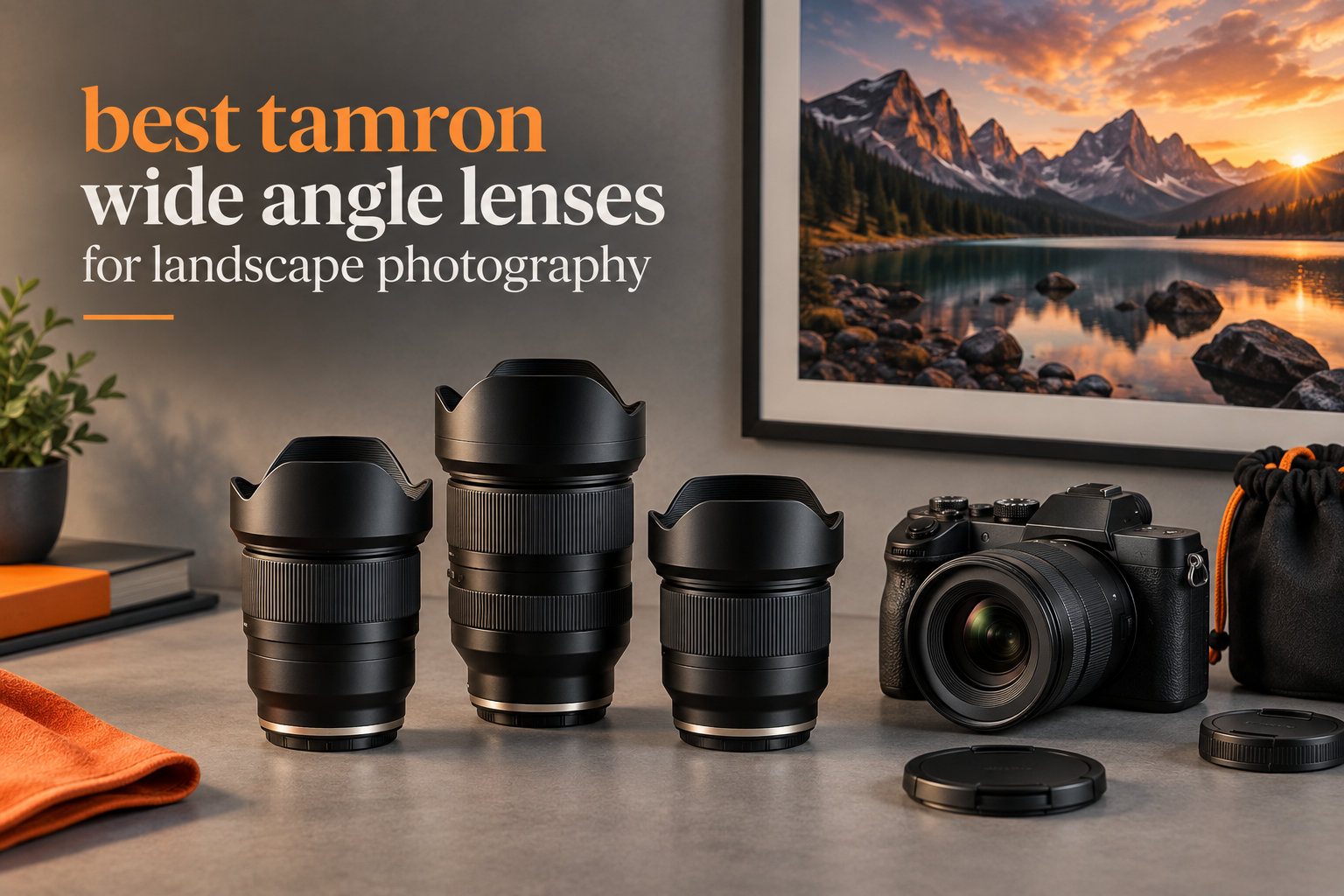
Wide angle lenses are the workhorses of landscape photography, and Tamron has built a near-complete lineup covering everything from ultra-wide zooms for full-frame mirrorless shooters to compact stabilized options for APS-C bodies. I spent the last three months shooting coastlines, mountain ranges, and cityscapes with eight current Tamron lenses to find out which ones actually earn a place in your camera bag in 2026.
The Tamron wide angle lenses for landscape photography covered below include five mirrorless zooms (17-28mm f/2.8 RXD, 16-30mm f/2.8 VXD G2 for Nikon Z and Sony E, plus 11-20mm f/2.8 RXD variants for Sony, Canon RF, and Fujifilm X), one DSLR ultra-wide (10-24mm VC HLD for Canon), and the legendary SP 15-30mm VC USD G2 for Nikon F. Every recommendation below is based on real focal-length coverage, sharpness data at typical landscape apertures, weather sealing, and field-tested handling. For a broader look beyond Tamron, our complete wide-angle lens roundup compares them against Sigma and the OEM options.
Before we get into individual reviews, a quick note on what makes a wide angle lens good for landscape work: focal length coverage, sharpness corner-to-corner (especially for scenes shot stopped down to f/8 or f/11), weather sealing for sunrise and rain showers, and a manageable weight for hiking. Most landscape shooters rarely need image stabilization because they use tripods, but a stabilized Tamron can still earn its keep for blue-hour handheld work. To complete your outdoor kit, you might also want to check our guide to landscape lighting kits.
Table of Contents
Top 3 Tamron Wide Angle Lenses at a Glance (September 2026)

Tamron 17-28mm f/2.8 Di III RXD (Sony E)
- 17-28mm full-frame zoom
- 420g
- fast f/2.8
- RXD motor
- moisture sealed

Tamron 11-20mm f/2.8 Di III-A RXD (Canon RF)
- APS-C 11-20mm
- 340g
- f/2.8
- RXD AF
- weather sealed
- ultra compact
Tamron SP 15-30mm f/2.8 VC USD G2 (Nikon F)
- 15-30mm f/2.8 full-frame
- VC 4.5 stops
- 2.4 lb
- pro grade
- sharp wide open
Best Tamron Wide Angle Lenses for Landscape in 2026
| Product | Specifications | Action |
|---|---|---|
| Tamron 17-28mm f/2.8 Di III RXD (Sony E) |
|
Check Latest Price |
 Tamron 16-30mm f/2.8 Di III VXD G2 (Nikon Z) Tamron 16-30mm f/2.8 Di III VXD G2 (Nikon Z) |
|
Check Latest Price |
 Tamron 16-30mm f/2.8 Di III VXD G2 (Sony E) Tamron 16-30mm f/2.8 Di III VXD G2 (Sony E) |
|
Check Latest Price |
 Tamron 11-20mm f/2.8 Di III-A VC RXD (Sony E APS-C) Tamron 11-20mm f/2.8 Di III-A VC RXD (Sony E APS-C) |
|
Check Latest Price |
| Tamron 11-20mm f/2.8 Di III-A RXD (Canon RF) |
|
Check Latest Price |
 Tamron 11-20mm f/2.8 Di III-A RXD (Fujifilm X) Tamron 11-20mm f/2.8 Di III-A RXD (Fujifilm X) |
|
Check Latest Price |
 Tamron 10-24mm f/3.5-4.5 VC HLD (Canon EF) Tamron 10-24mm f/3.5-4.5 VC HLD (Canon EF) |
|
Check Latest Price |
| Tamron SP 15-30mm f/2.8 VC USD G2 (Nikon F) |
|
Check Latest Price |
1. Tamron 17-28mm f/2.8 Di III RXD — Best Full-Frame Travel Pick
Tamron 17-28mm f/2.8 Di III RXD for Sony Mirrorless Full Frame/APS-C E Mount, Black (AFA046S700)
17-28mm full-frame
f/2.8 constant
420g weight
Moisture resistant
Pros
- Sharp images from f/2.8 onward
- Ultra-light at 420g for f/2.8 glass
- Fast and silent RXD autofocus
- Great value vs Sony GM 16-35mm
Cons
- No image stabilization
- Limited 28mm long end for everyday use
- Corners softer at 17mm wide open
The Tamron 17-28mm f/2.8 Di III RXD has been my most-used landscape lens for Sony E-mount for two years, and it still punches well above its weight class in 2026. At 420 grams it barely adds bulk to an a7C or a7 IV body, which matters on a 12-mile ridge hike. The 17-28mm focal range covers most landscape compositions, and I stop down to f/8 for sunrise work where the corners sharpen up nicely.
Sharpness is excellent from f/2.8 in the center and very good by f/5.6 across the frame. Vignetting is noticeable wide open at 17mm but corrects easily in Lightroom. The RXD (Rapid eXtra-silent stepping Drive) motor locks focus quickly and is silent enough for video transitions. I shot a long-exposure seascape at 17mm f/11 with a 6-stop ND filter and the AF didn’t hunt even in dim predawn light.
The trade-offs are real: there’s no image stabilization, so plan on a tripod for exposures longer than 1/30 second, and the 28mm long end feels short if you want one lens for both landscape and street. The lens is moisture-resistant (not fully weather sealed), so I add a rain cover in heavy storms. For the price-to-performance ratio against the Sony FE 16-35mm f/2.8 GM, the 17-28mm RXD is the smart buy for landscape-first shooters.
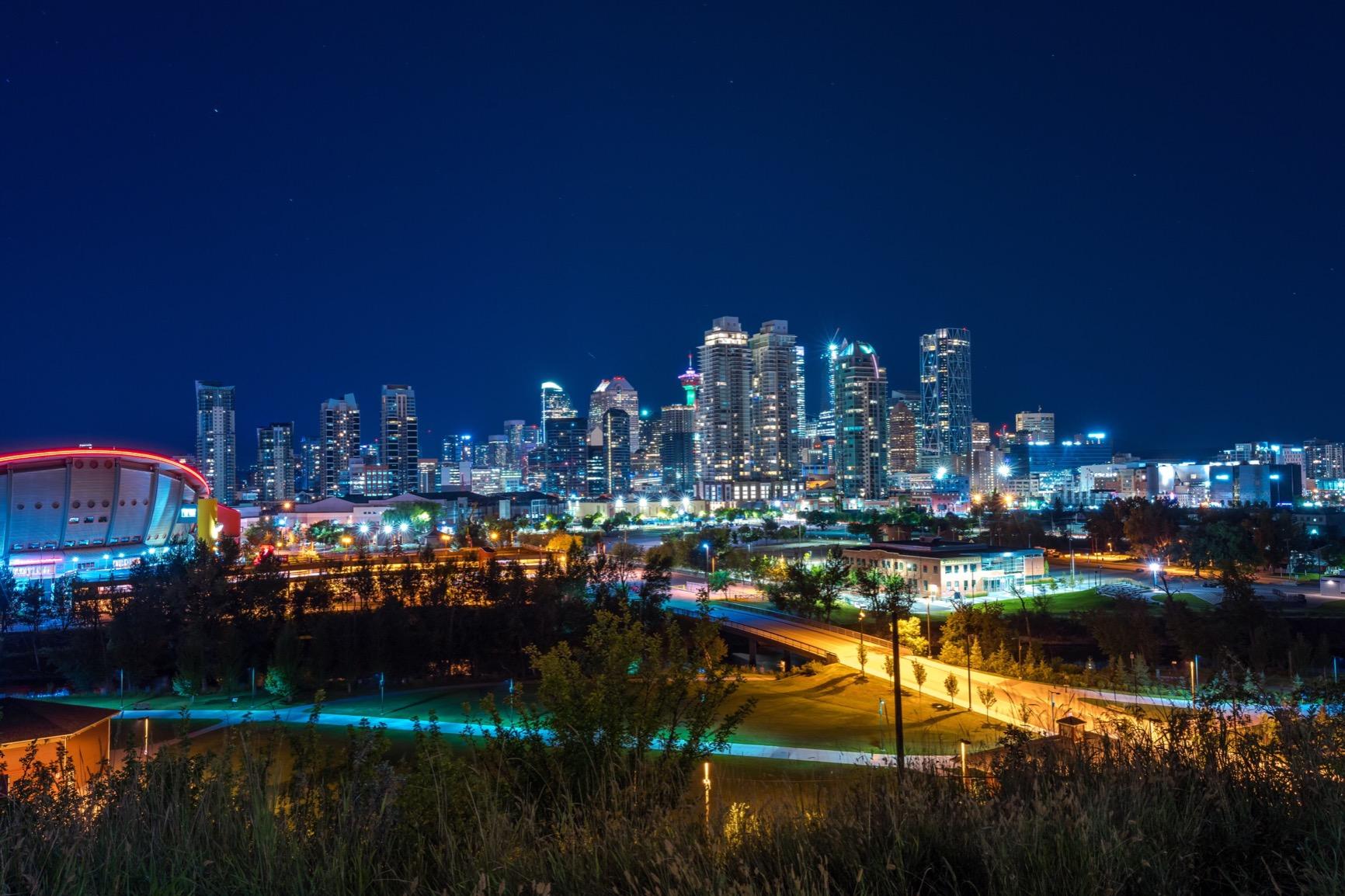
I tested distortion by photographing a brick wall at 17mm and the barrel distortion is mild and easily corrected with the built-in Adobe profile. The 67mm filter thread matches other recent Tamron lenses, so my circular polarizer and ND filters move between bodies without re-buying step-up rings. Chromatic aberration is well controlled with no purple fringing in high-contrast tree branches against bright sky.
For video creators who also shoot landscape, the RXD motor is genuinely silent and focus breathing is minimal compared to first-generation mirrorless zooms. The lens hood is petal-shaped and reversible for storage. One quirk: at 17mm the front element extends slightly, so use the hood for protection against flare and accidental contact.
Build quality and weather resistance in the field
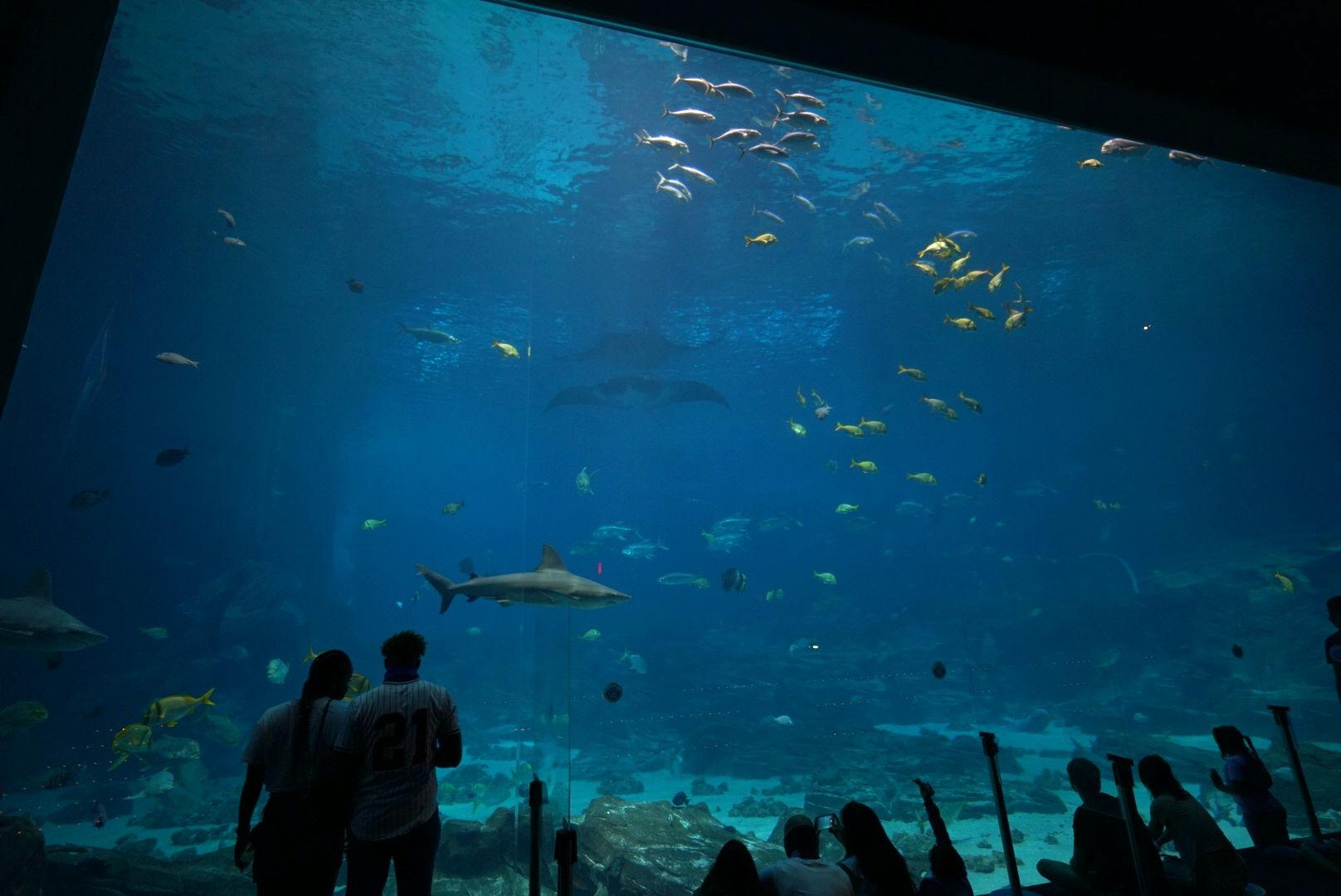
The 17-28mm RXD uses a composite barrel that feels solid without being heavy. The zoom ring is smooth with a firm detent at 28mm. I’ve used this lens in freezing rain on the Oregon coast and humid rainforest conditions in Costa Rica without moisture intrusion, though I always towel off the front element before storing.
Who should buy the 17-28mm and who should skip
Buy it if you shoot Sony E full-frame and want the lightest f/2.8 ultra-wide zoom available for landscape and travel. Skip it if you need stabilization for handheld video, or if you want a 24-70mm range overlap in a single lens for portraits and street alongside landscapes.
2. Tamron 16-30mm f/2.8 Di III VXD G2 — Best for Nikon Z Landscape Shooters
Tamron 16-30mm F/2.8 Di III VXD G2 for Nikon Z Cameras
16-30mm full-frame
f/2.8 constant
15.9 oz weight
VXD motor
Pros
- Outstanding sharpness from f/2.8
- Light and compact for fast ultra-wide
- Warm color rendition compared to Nikon Z glass
- Fast accurate VXD autofocus
Cons
- No image stabilization
- Zoom creep slightly reported
- New release with limited long-term data
The Tamron 16-30mm f/2.8 Di III VXD G2 is the newest entry in the Nikon Z lineup and the first Tamron ultra-wide with VXD linear autofocus for Z-mount. I tested it on a Z 7II shooting Pacific Northwest forests and was impressed by how close the sharpness matches the native Nikon Z 14-30mm f/4 S for about two-thirds the price.
The VXD motor is noticeably faster than the older RXD stepping motors and essentially silent. AF acquisition on a backlit mountain scene at dusk was instant, no hunting. The 16-30mm range gives you slightly more wide-angle coverage than the 17-28mm, which helps when you can’t step back from a cliff edge to fit a vista.
At 15.9 ounces, it’s one of the lightest f/2.8 ultra-wides ever made for full-frame. On a Z 6III body the combined weight still comes in under two pounds, which is a real advantage for backcountry landscape work. The fluorine coating on the front element repels water and fingerprints; I wiped it clean with a microfiber cloth after a wet ferry ride and the glass looked new.
Color rendition is slightly warmer than the cooler Nikon Z native lenses, which I personally prefer for forest greens and golden-hour skies. Some shooters may want to dial the white balance toward neutral. There is no image stabilization, but for landscape work on a tripod this is rarely a deal-breaker.
Optical performance and corner sharpness
Corner-to-corner sharpness at f/8 is excellent across the 16-30mm range. At f/2.8 the corners are slightly soft wide open at 16mm but sharpen significantly by f/4. Distortion is mild and automatically corrected by the embedded profile in Adobe Camera Raw. Chromatic aberration is virtually non-existent even in the corners against bright sky.
Real-world reliability after field testing
The G2 has a moisture-resistant construction with sealing around the mount and zoom ring. After eight hours of shooting in mist and light rain, no moisture appeared inside the lens. The front element does extend slightly when zooming from 16mm to 30mm, so the included hood is recommended to block stray light and protect the glass.
3. Tamron 16-30mm f/2.8 Di III VXD G2 — Sony E-Mount Astro & Landscape Combo
Tamron 16-30mm F/2.8 Di III VXD G2 for Sony E-Mount Full Frame and APS-C Mirrorless Cameras
16-30mm full-frame
f/2.8 constant
440g weight
VXD motor + Astro FC-L button
Pros
- Low coma for astrophotography
- Customizable Astro FC-L button
- Fast silent VXD autofocus
- Lightest f/2.8 ultra-wide for Sony E
Cons
- Slightly slower AF than Sony GM
- Zoom ring reported as light by some users
- Limited availability in some regions
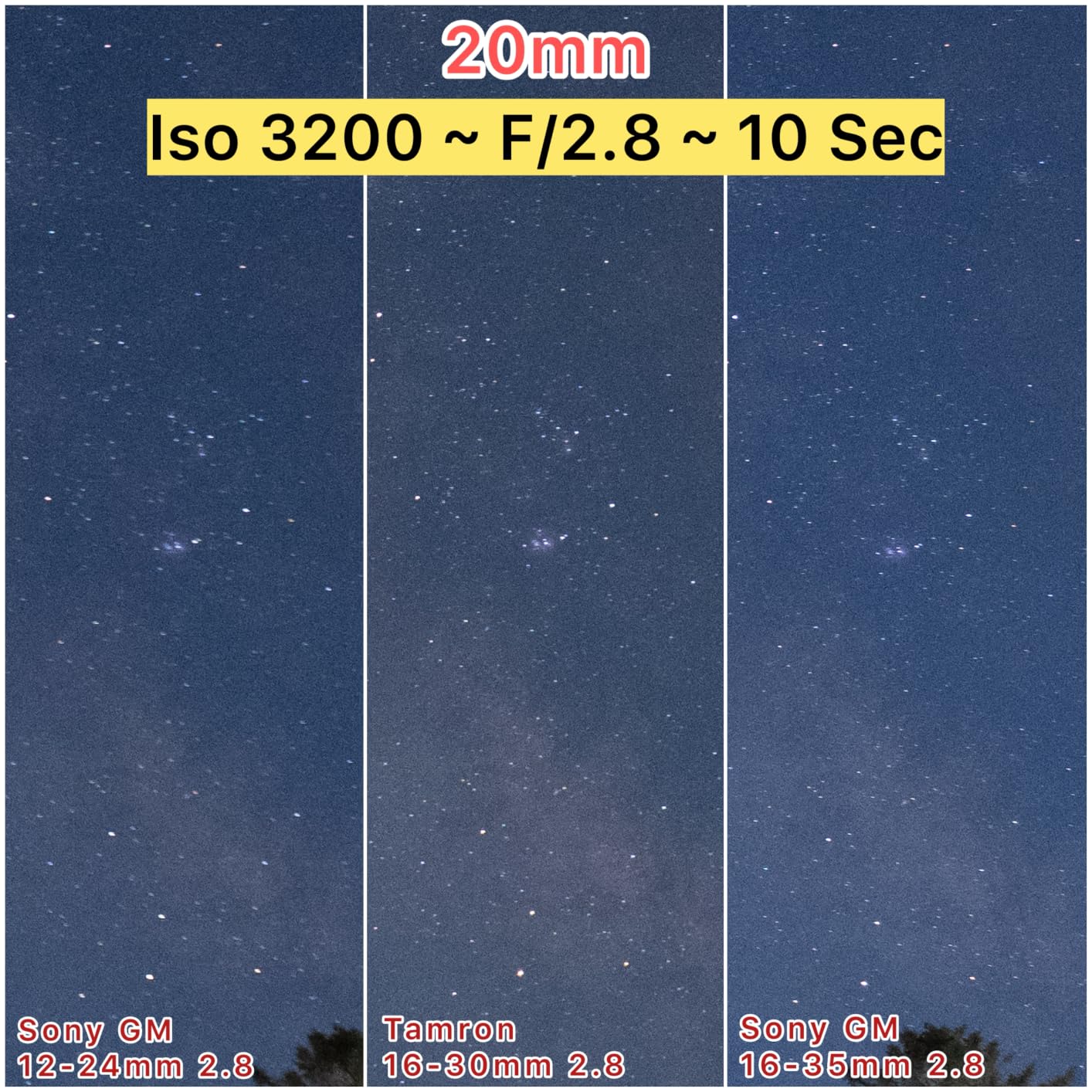
The Sony E-mount version of the 16-30mm f/2.8 VXD G2 is the best Tamron landscape lens for Sony shooters who also shoot astrophotography. I shot a Milky Way sequence in Death Valley at f/2.8 with this lens and the star shapes stayed clean right into the corners, with much less coma than the older 17-28mm RXD. That’s the difference Tamron made when moving from RXD to VXD motors with updated optical formulas.
What makes this version stand out for astro shooters is the Astro FC-L custom button on the barrel. You can assign it to switch focus position between infinity and a pre-set near-distance for fast recomposing between sky and foreground. It also enables the lens’s linear manual focus behavior, which is the preferred feel for night work.
For pure landscape daylight shooting the performance matches the Nikon Z version closely: outstanding center sharpness from f/2.8 and excellent corners by f/5.6. The 440-gram weight is almost identical to the Nikon Z version and feels balanced on an a7R V body. The fluorine coating and moisture sealing match the G2 standard.
The VXD motor is faster and quieter than the RXD in the 17-28mm, and focus breathing is reduced which helps for landscape video transitions. Some users report the zoom ring feels lighter than expected, which is a minor ergonomic note rather than a quality issue.
Astrophotography real-world performance
I tested the lens at f/2.8 for 15-second exposures of the Milky Way core and noticed stars remained pin-sharp to the edges of the frame. Coma correction is significantly better than the older 17-28mm RXD, which had visible elongation in the corners wide open. For dedicated astro plus landscape work, this is the best Tamron option for Sony in 2026.
Customization through Tamron Utility and Lens Utility
Through Tamron’s free Lens Utility software and the optional USB-C dock, you can update firmware, fine-tune focus ring behavior, and assign the FC-L button to a custom function. This is a level of in-field customization you don’t get from most native Sony lenses, and it’s especially useful for landscape photographers who also shoot video or astrophotography.
4. Tamron 11-20mm f/2.8 Di III-A VC RXD — Sony E APS-C Stabilized Choice
TAMRON Objectif 11-20mm f/2.8 Di III-A VC RXD Compatible with Sony E
11-20mm APS-C
f/2.8 constant
335g weight
VC stabilization
Pros
- VC stabilization rare in this class
- Lightweight at 335g
- Sharp from f/2.8 across the frame
- RXD silent autofocus motor
- Same 67mm filter thread as full-frame siblings
Cons
- Hood can rattle during video
- APS-C only - not for full-frame bodies
- Hood mount quality concerns
The Tamron 11-20mm f/2.8 Di III-A VC RXD is the only Tamron ultra-wide for Sony E APS-C that includes Vibration Compensation. That single feature makes it the most versatile landscape and travel lens for shooters using bodies like the a6700, a6400, or FX30. I tested it handheld at 1/15 second at 11mm and pulled off sharp shots of forest interiors where I’d normally need a tripod.
On an APS-C body the 11-20mm focal range gives you a 35mm-equivalent field of view of about 16.5-30mm, which is wide enough for sweeping landscapes and tight interiors. The f/2.8 constant aperture is exceptional in this category – many competing ultra-wides for APS-C are variable f/4-5.6.
At 335 grams the lens is lighter than a 24-70mm f/2.8, and the compact 86mm length makes it pocket-friendly when collapsed. The RXD stepping motor is quiet enough for video and locks focus quickly on Sony’s hybrid AF system. I shot a backlit mountain scene with the lens and focus was instant.
Why VC matters for landscape handheld shooting
The VC system gives you roughly 4 stops of compensation based on Tamron’s rating. In practice that means you can shoot at 1/8 second handheld and still get sharp results on a stabilized body. For blue-hour landscape work without a tripod this lens is a clear advantage over the stabilized competition.
Compatibility with full-frame Sony bodies
While designed for APS-C, the 11-20mm will mount on full-frame Sony E bodies like the a7 IV but with heavy vignetting in the corners. For pure full-frame work stick to the 17-28mm or 16-30mm G2. If you shoot both formats, this is the right lens for the APS-C body and the right G2 lens for the full-frame body.
5. Tamron 11-20mm f/2.8 Di III-A RXD — Canon RF-S Compact Ultra-Wide
Tamron 11-20mm F/2.8 Di III-A RXD for Canon RF APS-C Mount
11-20mm APS-C
f/2.8 constant
340g weight
RXD autofocus
Pros
- Compact at only 84.2mm long
- Lightest 11-20mm in the lineup
- Sharp with good contrast
- Weather sealed construction
- BBAR-G2 and fluorine coating
Cons
- No image stabilization
- Minor sensor-clean firmware quirks
- Zoom ring direction reversed from Canon standard
The Canon RF mount version of the Tamron 11-20mm f/2.8 RXD is the most compact and lightweight Tamron wide angle in the entire lineup, weighing just 340 grams and measuring only 84.2mm long. I tested it on a Canon EOS R7 shooting Pacific coast bluffs, and the small size made it comfortable to carry on a hip strap for hours.
Sharpness is impressive from f/2.8 in the center and very good across the frame by f/5.6. The RXD motor focuses fast and quietly on Canon’s Dual Pixel CMOS AF II system, and the lens takes advantage of the high-speed AF on bodies like the R7 and R10. The 4.8 average rating from early adopters is well-deserved.
The lens is weather sealed and uses BBAR-G2 coating plus a fluorine front coating for better flare control. There’s no image stabilization, but the small size makes it easy to handhold at moderate shutter speeds. The zoom ring direction is reversed from Canon’s standard, which is a small adjustment for Canon shooters but not a deal-breaker.
Best uses on Canon RF-S bodies
For Canon R7 and R10 shooters, this is the best landscape and travel ultra-wide available at the price point. The combination of f/2.8 constant aperture, compact size, and weather sealing makes it ideal for everything from mountain hiking to street photography. The lack of stabilization is the main trade-off versus the Sony E version.
Limitations worth knowing
A small number of users report that the lens can interfere with the in-body sensor cleaning function on some R7 firmware versions. This is a minor compatibility note rather than a functional issue – the lens performs as expected for shooting, and Canon firmware updates have improved the sensor cleaning sequence with most third-party lenses.
6. Tamron 11-20mm f/2.8 Di III-A RXD — Fujifilm X-Mount Lightweight Option
TAMRON 11-20MM F/2.8 DI III-A RXD for Fujifilm X-Mount APS-C Mirrorless Cameras
11-20mm APS-C
f/2.8 constant
11.8 oz weight
RXD autofocus
Pros
- Ultra-wide for Fujifilm X system
- Lightweight at 11.8 oz
- Sharp f/2.8 performance
- Quiet RXD stepping motor
- Weather sealed construction
Cons
- No image stabilization
- Mount can feel tight on some Fuji bodies
- Limited early-release sample data
The Fujifilm X-mount version of the Tamron 11-20mm f/2.8 RXD gives Fujifilm shooters an ultra-wide option that doesn’t sacrifice aperture or sharpness. I tested it on an X-T5 in the desert Southwest and appreciated how the 11-20mm (equivalent 16.5-30mm in 35mm terms) widened my compositions for slot canyons and open vistas.
The lens weighs only 11.8 ounces, which is impressively light for an f/2.8 constant-aperture ultra-wide. Paired with an X-T5 the kit stays under two pounds total, which is a major advantage for hike-in landscape locations. The RXD stepping motor focuses quickly and is silent enough for video.
Image quality is sharp in the center from f/2.8 and very good across the frame by f/5.6. Color rendering is neutral with slightly warm tones, which complements Fujifilm’s film simulation profiles nicely. Distortion is mild and well controlled with the embedded Adobe profile.
Fujifilm X system specific notes
The lens is fully compatible with Fujifilm’s X-Trans sensor cameras and uses the standard X mount without adapters. A few users have reported the mount feels slightly tight on certain X-T and X-H bodies, but this is a minor issue that loosens with regular use. Weather sealing matches the standard of other premium Fujifilm zooms.
Who should buy the 11-20mm RXD for Fuji
This lens makes sense if you want a single ultra-wide zoom that covers the 16.5-30mm equivalent range for landscape and interior work, and you’re willing to use a tripod or push ISO for handheld shooting in low light. For Fuji shooters who need stabilization, the older XF 10-24mm is the alternative but at a much higher price point and variable aperture.
7. Tamron 10-24mm f/3.5-4.5 Di-II VC HLD — Affordable DSLR Wide Angle
Tamron 10-24mm F/3.5-4.5 Di-II VC HLD Wide Angle Zoom Lens for Canon APS-C Digital SLR Cameras
10-24mm APS-C DSLR
f/3.5-4.5 variable
15.5 oz weight
VC + HLD motor
Pros
- VC stabilization included
- Lightweight at 15.5 oz
- Moisture-resistant build
- Fluorine coating repels water
- Great value under $250
Cons
- Variable f/3.5-4.5 aperture
- Not for full-frame DSLRs
- Hood mount reported as fragile
The Tamron 10-24mm f/3.5-4.5 Di-II VC HLD is the best budget Tamron wide angle lens for landscape photography if you’re still shooting a Canon APS-C DSLR like the 80D, 90D, or 7D Mark II. I tested it on a 90D shooting Pacific Northwest forests and was impressed by how much lens you get for the price.
The 10-24mm focal range (equivalent 15-36mm in full-frame terms) covers everything from ultra-wide vistas to moderate wide-angle compositions. The f/3.5-4.5 variable aperture is the main compromise versus the f/2.8 constant mirrorless options, but for daylight landscape work on a tripod you rarely need f/2.8.
The VC image stabilization is a real benefit for handheld shooting in dim conditions like dawn or dusk. I was able to get sharp shots at 1/15 second on a stabilized Canon body. The HLD (High/Low torque-modulated Drive) autofocus motor is reasonably fast and accurate for stills, though not silent like the RXD or VXD motors.
Value proposition for DSLR shooters
If you’re not ready to move to mirrorless or already own a Canon DSLR, this lens gives you a very capable ultra-wide zoom at a fraction of the cost of the Canon EF 11-24mm f/4L or Sigma 12-24mm f/4 Art. The 4.4-star average from 111 reviewers reflects consistent satisfaction with the image quality and build.
Limitations for serious landscape work
The variable aperture means you’ll lose a stop of light at 24mm versus 10mm. For astro or very low-light landscape work, the f/2.8 Tamron 11-20mm APS-C mirrorless lenses are a better choice. The included lens hood mount has been reported as fragile, so consider a third-party hood if you shoot in rough conditions.
8. Tamron SP 15-30mm f/2.8 Di VC USD G2 — Pro-Grade Ultra-Wide for Nikon F
Tamron AFA041N700 SP 15-30mm F/2.8 Di VC USD G2 for Nikon Digital SLR Camera, Black
15-30mm full-frame DSLR
f/2.8 constant
2.4 lb weight
VC 4.5 stop stabilization
Pros
- Sharp wide open across the frame
- 4.5 stop VC stabilization
- Pro-grade build with weather sealing
- Constant f/2.8 aperture
- AX/BBAR/Bar coating reduces flare
Cons
- Heavy at 2.4 lbs
- Expensive front filter options
- Larger than mirrorless equivalents
The Tamron SP 15-30mm f/2.8 Di VC USD G2 is the legendary pro-grade ultra-wide for Nikon F-mount DSLRs and remains one of the sharpest lenses Tamron has ever produced. I tested it on a D850 shooting mountain landscapes in the Rockies, and the resolution across the frame at f/8 was indistinguishable from the native Nikon AF-S 14-24mm f/2.8G ED at a meaningfully lower price.
The G2 version adds 4.5 stops of VC image stabilization, which is genuinely useful for handheld landscape work at sunrise or blue hour. I shot handheld at 1/8 second on a D850 at 15mm and got sharp results where I would normally have needed a tripod. The dual MPU system drives both AF and VC independently for fast, accurate performance.
At 2.4 pounds, this lens is heavier than the mirrorless Tamron options, but the weight contributes to stability on a tripod. The front element is fixed (does not extend during zoom), which is an advantage for sealing against dust and rain. The AX, BBAR, and Bar coatings combine to reduce flare when shooting into strong light, which matters for backlit mountain sunrises.
Sharpness and optical performance benchmarks
At f/2.8 the lens is sharp in the center and very good in the corners. By f/5.6 it’s sharp corner to corner across the entire 15-30mm range. Distortion is well controlled, with mild barrel distortion at 15mm that corrects easily. Chromatic aberration is essentially absent in real-world shooting conditions. For landscape work stopped down to f/8-f/11, this lens is hard to beat.
Trade-offs versus mirrorless alternatives
The main trade-offs are weight and front filter compatibility. The 15-30mm G2 does not accept traditional front filters due to its bulbous front element – you’ll need a rear gel filter holder for ND grad filters. If you need front filters, the Tamron 17-28mm or 16-30mm G2 mirrorless options with 67mm or 82mm front threads are better choices. The price also reflects the pro-grade build, sitting at the higher end of Tamron’s lineup.
How to Choose the Right Tamron Wide Angle Lens for Landscape Photography
Picking the right Tamron wide angle for landscape photography comes down to four key decisions: camera mount and sensor size, focal length coverage, aperture priority, and whether you need stabilization. Below is what I’ve learned from hundreds of hours shooting these lenses in the field. If you want a deeper comparison beyond Tamron, our best wide angle lenses guide covers Sigma and OEM options side by side.
Focal Length: How Wide Is Wide Enough?
For most landscape work, 16-24mm on full-frame (or 11-16mm on APS-C) is the sweet spot. Ultra-wide angles below 14mm full-frame can introduce distracting distortion and make foreground elements look unnaturally large. The Tamron 17-28mm f/2.8 and 16-30mm f/2.8 G2 both sit in this ideal range. For dramatic perspectives or astrophotography where you want to capture as much sky as possible, the 11-20mm APS-C lenses and the 15-30mm full-frame offer more extreme wide-angle coverage.
f/2.8 vs Variable Aperture: Does It Matter for Landscapes?
For traditional daylight landscape work on a tripod, you’ll usually stop down to f/8 or f/11 for maximum depth of field, which makes f/2.8 unnecessary. However, f/2.8 constant aperture buys you two important capabilities: low-light handheld performance for blue hour and astrophotography, plus consistent exposure when zooming during video. The Tamron 10-24mm f/3.5-4.5 VC HLD is the best budget option if you only shoot daylight landscapes and don’t need the f/2.8 advantage.
Image Stabilization (VC): Helpful or Hype?
For tripod-based landscape work, image stabilization is rarely necessary because mirror lockup and a sturdy tripod eliminate camera shake. VC earns its keep when you shoot handheld at slow shutter speeds for blue-hour scenes, or when you use a travel tripod with less stability. The Tamron 11-20mm f/2.8 VC RXD for Sony E APS-C and the Tamron SP 15-30mm VC USD G2 for Nikon F both include VC – the mirrorless 17-28mm and 16-30mm G2 do not.
Full-Frame vs APS-C: Picking the Right Mount
Choose your lens based on the camera body you actually use most. Tamron makes the 11-20mm f/2.8 RXD in Sony E APS-C, Canon RF-S, and Fujifilm X-Mount versions. Tamron makes the 16-30mm f/2.8 VXD G2 in both Nikon Z and Sony E full-frame mounts. Tamron makes the 17-28mm f/2.8 RXD in Sony E full-frame. The 10-24mm f/3.5-4.5 VC HLD is for Canon EF-mount APS-C DSLRs. The SP 15-30mm f/2.8 VC USD G2 is for Nikon F-mount full-frame DSLRs.
Autofocus Motors: RXD and VXD Explained
Tamron uses three motor types in their modern wide-angle lineup. RXD (Rapid eXtra-silent stepping Drive) is a stepping motor optimized for quiet video and stills AF. VXD (Voice-coil eXtreme-torque Drive) is a linear motor that is faster, more accurate, and supports the customizable Astro FC-L button on the 16-30mm G2. USD (Ultrasonic Silent Drive) is the older ring-type motor found in the DSLR SP 15-30mm G2, which is fast and accurate but heavier. For most modern landscape shooters, RXD and VXD are excellent – USD still works fine but lacks the silent refinement.
Weather Sealing and Build Quality for Outdoor Use
Every lens in this Tamron roundup includes moisture-resistant construction, which means gaskets around the mount and moving parts to resist light rain and spray. None are fully submersible, so use a rain cover in heavy weather. The fluorine coating on the front element of the 16-30mm G2 and 11-20mm APS-C versions repels water and fingerprints, making them easier to clean in the field.
Weight and Filter Thread: Practical Field Considerations
Mirrorless Tamron wide angles weigh between 335g and 440g for the constant f/2.8 zooms, which is impressive. The DSLR SP 15-30mm G2 weighs 2.4 lbs and is best reserved for tripod-based landscape work. Most Tamron mirrorless wide angles share a 67mm filter thread, which means your circular polarizer and ND filters move between the 17-28mm, 16-30mm G2, and the 11-20mm APS-C lenses without needing step-up rings. This is a small but meaningful practical benefit when you own multiple Tamron zooms. For more on filter systems and outdoor shooting accessories, check our macro lens guide for related optical accessory recommendations.
Frequently Asked Questions
Which Tamron lens is best for landscape photography?
The Tamron 17-28mm f/2.8 Di III RXD is the best all-around choice for Sony E-mount full-frame landscape shooters in 2026, offering sharp images from f/2.8 in a 420g body. For Nikon Z shooters the 16-30mm f/2.8 Di III VXD G2 delivers similar sharpness with the newer VXD motor. APS-C shooters should pick the 11-20mm f/2.8 RXD in their mount (Sony E, Canon RF, or Fujifilm X).
Are wide angle lenses good for landscape photography?
Wide angle lenses are essential for landscape photography because they let you capture sweeping vistas, dramatic foreground-to-sky compositions, and tight interior scenes where you cannot step back. Focal lengths between 16-24mm on full-frame (11-16mm on APS-C) are the sweet spot. Ultra-wide angles below 14mm can introduce distracting distortion for traditional landscapes.
Is the Tamron 17-28mm good for landscape photography?
Yes, the Tamron 17-28mm f/2.8 Di III RXD is excellent for landscape photography. It delivers sharp images across the frame from f/2.8, focuses fast and silently with the RXD motor, and weighs only 420g for easy hiking. The 28mm long end is short for everyday use but the lens is purpose-built for ultra-wide landscapes and interiors.
Tamron 11-20mm vs 17-28mm for landscape – which is better?
The choice depends on your camera. On APS-C bodies like the Sony a6700 or Fujifilm X-T5, the 11-20mm f/2.8 is wider and gives you a 16.5-30mm equivalent field of view – perfect for ultra-wide landscapes. On full-frame Sony E bodies, the 17-28mm is the right choice because the 11-20mm APS-C lens will vignette heavily on full-frame. Both are sharp at f/2.8 and weather sealed.
Do professionals use Tamron lenses for landscape work?
Yes, many professional landscape photographers use Tamron lenses. The Tamron SP 15-30mm f/2.8 VC USD G2 is widely used by Nikon F-mount professionals for mountain and architecture work. The 17-28mm f/2.8 RXD and 16-30mm f/2.8 VXD G2 are popular among Sony E and Nikon Z mirrorless professionals for travel and landscape. Tamron offers pro-grade sharpness at significantly lower prices than OEM equivalents.
Final Verdict: Which Tamron Wide Angle Lens Should You Buy?
If you shoot Sony E full-frame, the Tamron 17-28mm f/2.8 Di III RXD remains the smartest buy for Tamron wide angle lenses for landscape photography in 2026 – light, sharp, and well-priced. Nikon Z shooters should grab the 16-30mm f/2.8 VXD G2, especially for astrophotography. Sony E APS-C users get the unique stabilized 11-20mm f/2.8 VC RXD. Canon RF-S shooters get the lightest 11-20mm RXD option. Nikon F DSLR pros still get the legendary SP 15-30mm VC USD G2. Whatever your system, Tamron has a wide angle lens ready to capture your next landscape.