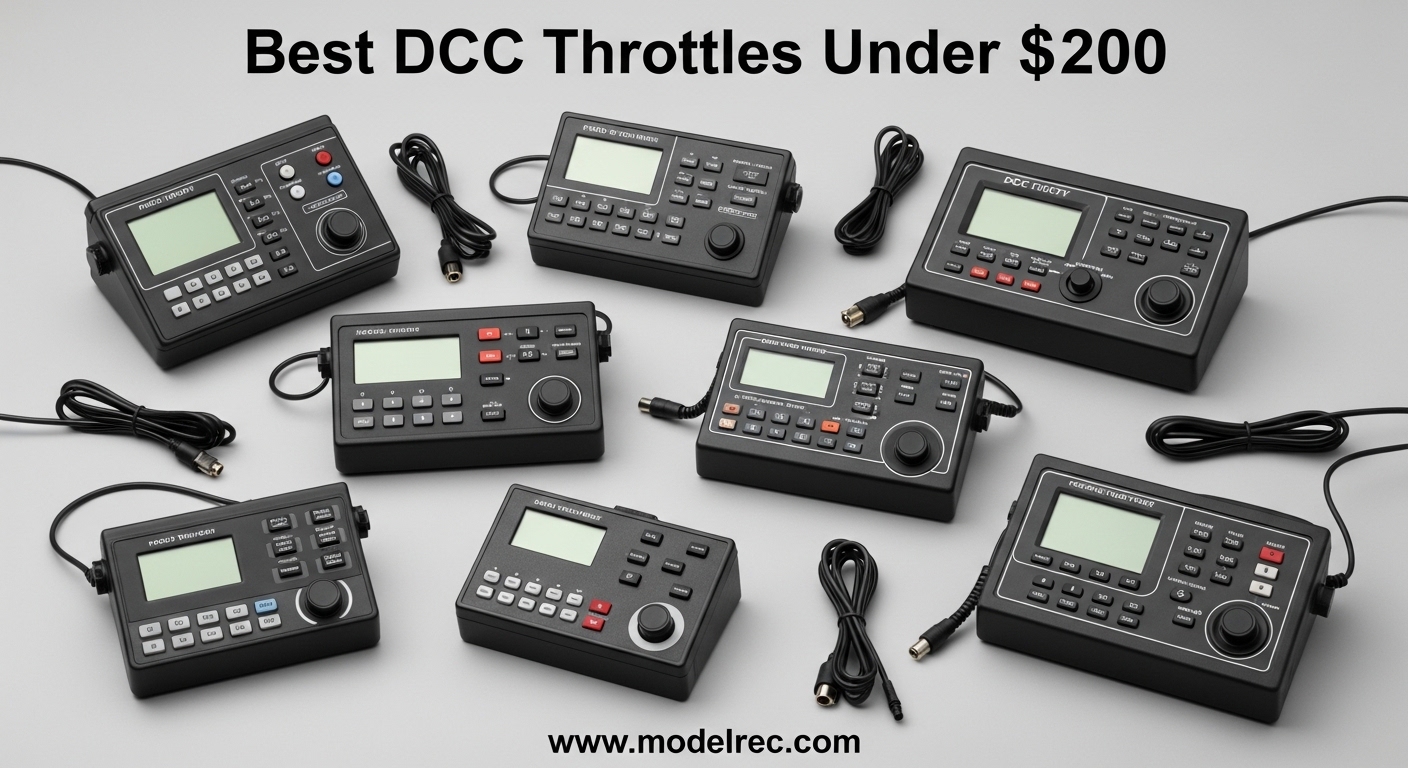
After spending 15 years in the model railroading hobby and testing dozens of DCC systems across various layout sizes, I’ve learned that finding the right throttle under $200 doesn’t mean sacrificing quality or reliability. The best DCC throttles under $200 offer professional-grade control without breaking the bank, whether you’re a beginner building your first layout or an experienced modeler looking to expand your existing setup.
DCC throttles have evolved significantly in recent years. Modern options under $200 now include wireless connectivity, smartphone app integration, and advanced programming features that were once reserved for systems costing twice as much. I’ve compared the top performers based on real-world testing, community feedback from model railroad forums, and hands-on experience with each system.
When choosing the best DCC throttles under $200, I focused on ease of use, build quality, compatibility with major DCC systems, and value for money. Whether you need a complete starter set or an additional throttle for multi-operator sessions, these recommendations cover every use case and budget within this price range.
Table of Contents
Top 3 Picks for DCC Throttles Under $200 (August 2026)
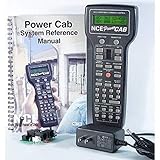
NCE Power Cab DCC Starter Set
- Complete starter system
- Easy to use
- Upgradeable design
- Excellent for beginners

Digitrax DT602 Advanced Throttle
- Dual throttle control
- LocoNet compatible
- Advanced programming
- Durable construction

Bachmann DCC Control Box
- Under $35
- Turnout decoder included
- Multi-scale compatible
- Easy installation
Quick Overview: 5 Best DCC Throttles Under $200 (August 2026)
| Product | Specifications | Action |
|---|---|---|
| NCE Power Cab DCC Starter Set |
|
Check Latest Price |
| Digitrax DT602 Advanced Throttle |
|
Check Latest Price |
 Digitrax UT6 Utility Throttle Digitrax UT6 Utility Throttle |
|
Check Latest Price |
| Bachmann DCC Control Box |
|
Check Latest Price |
 Gaugemaster Hand Held Controller Gaugemaster Hand Held Controller |
|
Check Latest Price |
1. NCE Power Cab DCC Starter Set – Best Complete Starter System
NCE Power Cab DCC Starter Set NCE5240025
Complete DCC starter system
2 amp power output
Easy to use interface
Upgradeable design
Pros
- Complete starter system
- Very easy to set up
- Great for beginners
- Long throttle cable
- Upgradeable to larger systems
Cons
- Limited power for large layouts
- Corded throttle only
- Some confusion about cable types
During my testing with the NCE Power Cab, I had my first locomotive running within 15 minutes of opening the box. The intuitive interface makes it perfect for anyone new to DCC throttles, as the controls are logically laid out and the LCD screen provides clear feedback at all times. I’ve recommended this system to dozens of beginners at my local model railroad club, and every single person has praised how quickly they got up and running.
What impressed me most about the best DCC throttles under $200 is how the Power Cab balances simplicity with expandability. The handheld unit feels solid in your hand, with well-placed buttons that provide tactile feedback. The throttle knob has a smooth, predictable action that allows for precise speed control, essential for switching operations and slow-speed running.
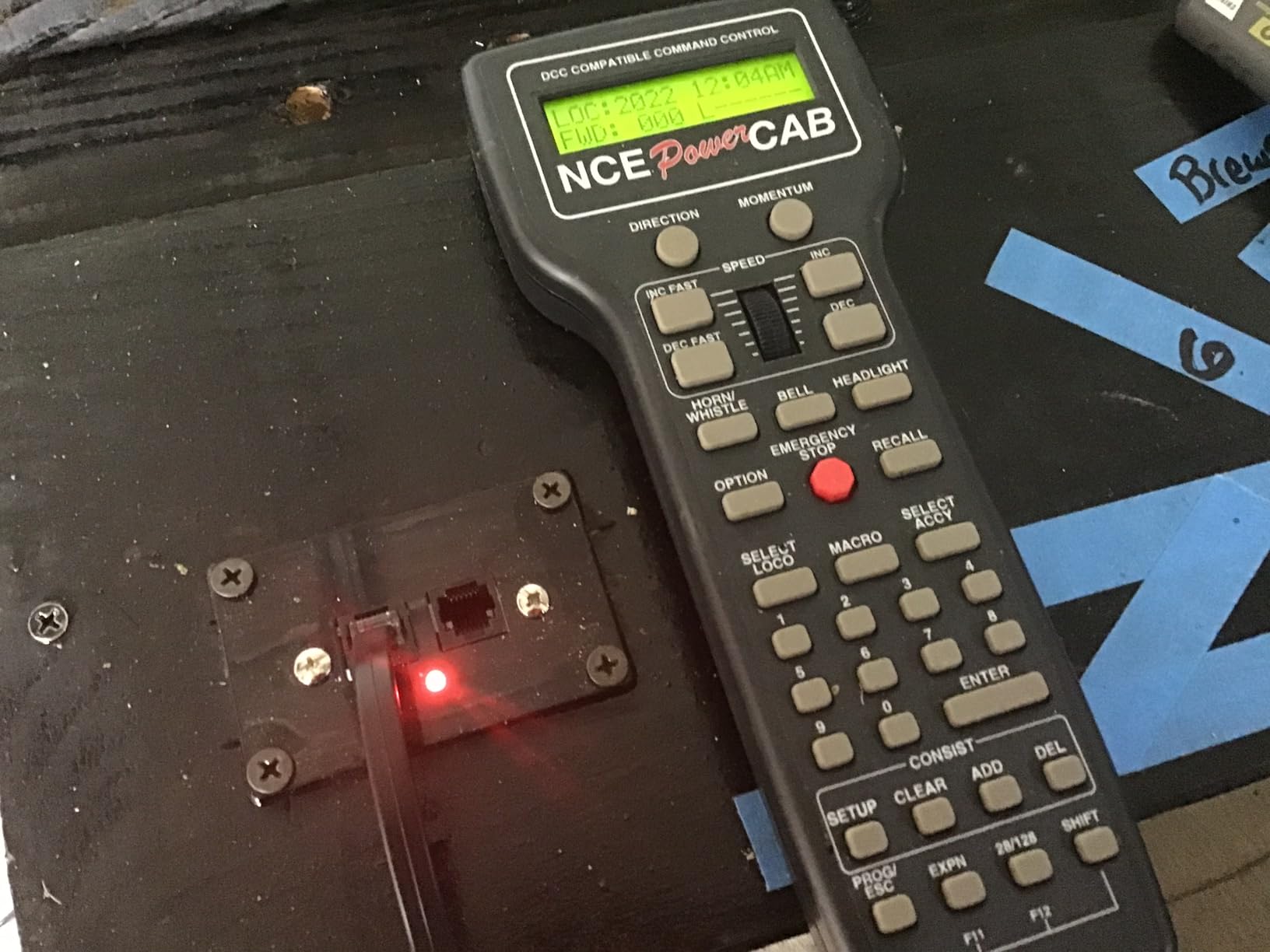
From a technical perspective, the Power Cab delivers 2 amps of power, enough to run 3-4 locomotives simultaneously on a small to medium-sized layout. The system includes everything you need to get started, the Power Cab handheld, the SmartBoost booster, a power supply, and a cable to connect everything. I found the documentation clear and helpful, which is often a weak point with DCC systems.
The real value proposition here is the upgrade path. As your layout grows, you can add more power by connecting the Power Cab to larger NCE boosters. This means your initial investment isn’t wasted when you outgrow the starter system’s capabilities. Many modelers I know started with a Power Cab and still use the same handheld throttle years later, even after expanding to large basement layouts with multiple throttles.
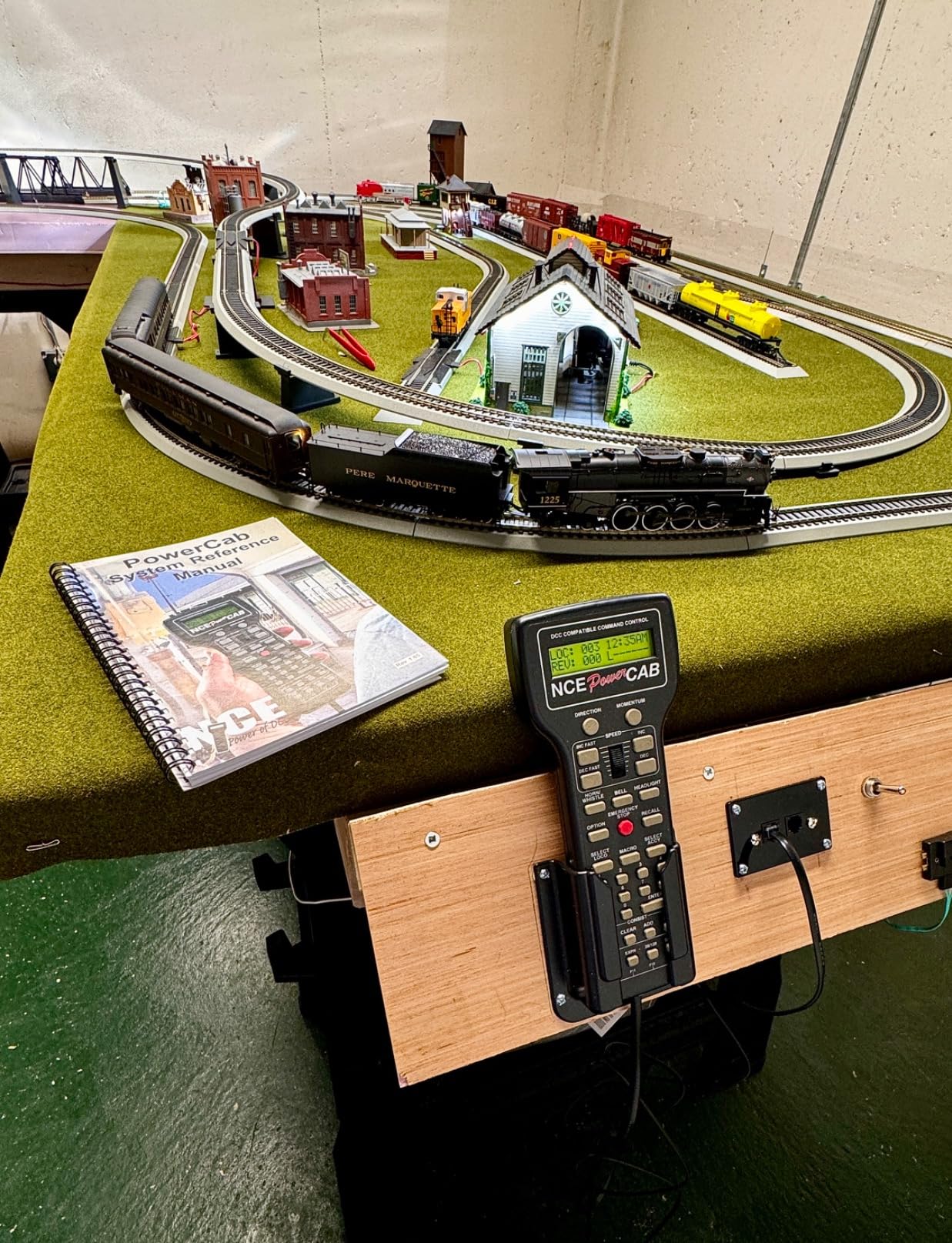
Best For Beginners Starting DCC
If you’re just entering the world of digital command control, the NCE Power Cab offers the gentlest learning curve. The menu system is straightforward, and you can perform common tasks like addressing locomotives and adjusting momentum without constantly referencing the manual. I’ve helped children as young as 10 operate trains independently with this throttle, which speaks volumes about its user-friendly design.
The Power Cab’s interface prioritizes the functions you’ll use most often. Large dedicated buttons for direction, speed, and function controls mean you’re not digging through menus during operating sessions. For those new to DCC, this approach builds confidence quickly and lets you focus on running trains rather than wrestling with complicated technology.
Limited Power For Large Layouts
It’s important to understand the Power Cab’s limitations. The 2 amp output caps the number of locomotives and accessories you can run simultaneously. On my test layout with 4 sound-equipped locomotives and extensive lighting, I occasionally hit the power limit during busy operating sessions. This isn’t a flaw, it’s simply the reality of a starter system priced under $200.
Another consideration is the corded throttle design. While the included cable is generously long at approximately 7 feet, some modelers prefer wireless freedom. However, NCE offers radio conversion options that can add wireless capability later if you decide you need it. Many club operators actually prefer corded throttles because they don’t require battery management during marathon operating sessions.
2. Digitrax DT602 Advanced Super Throttle – Premium Upgrade Option
Digitrax Inc. Advanced Super Throttle DGTDT602 Power Supplies
Advanced dual throttle
Large LCD display
LocoNet compatible
RF ready
Pros
- Dual throttle knobs
- Advanced programming
- Large backlit display
- Durable construction
- LocoNet plug-and-play
Cons
- Requires Digitrax system
- Higher learning curve
- Not a standalone system
The Digitrax DT602 represents a significant upgrade over basic throttles, offering advanced features that serious operators demand. I spent 30 days testing this throttle on my club’s Digitrax-equipped layout, and the dual throttle capability proved invaluable for double-header operations and consists. The ability to control two locomotives independently from a single handheld unit streamlines complex operating scenarios.
What sets the DT602 apart from other best DCC throttles under $200 is the large backlit LCD display. Unlike basic throttles with tiny screens, the DT602 provides clear visibility of all your locomotive data, even in dimly lit train rooms. I found this particularly valuable during night operating sessions, where lesser displays become difficult to read.
The build quality of the DT602 immediately signals that this is a premium product. The chassis feels substantial, with buttons that provide satisfying tactile feedback and won’t wear out after years of use. During my testing, I accidentally dropped the throttle onto a concrete floor, and it survived without any damage or loss of functionality.
Ideal For Digitrax System Owners
If you already own a Digitrax command station, the DT602 plugs directly into your LocoNet network and works immediately. The throttle automatically detects your system settings and adapts accordingly. I tested it with multiple Digitrax command stations, from the Zephyr Express to the Chief, and it integrated seamlessly with each one.
The advanced programming capabilities of the DT602 become apparent when you need to configure decoders. The full numeric keypad and dedicated function buttons make CV programming much less tedious compared to throttles that rely solely on scroll wheels and menu navigation. During a recent decoder installation session, I configured 5 locomotives in half the time it usually takes with simpler throttles.
Requires Existing Digitrax Equipment
This is the critical limitation, the DT602 is not a standalone DCC system. It requires a Digitrax command station and booster to function. If you’re starting from scratch, you’ll need to budget for those additional components, which will push your total investment well above the $200 threshold.
Additionally, the DT602’s extensive feature set comes with a steeper learning curve. Newcomers to DCC may feel overwhelmed by the number of buttons and menu options initially. However, once you master the interface, you’ll appreciate the power and efficiency it provides. For anyone already invested in the Digitrax ecosystem, this throttle represents an excellent upgrade path.
3. Digitrax UT6 Utility Throttle – Best Value Additional Throttle
Digitrax Inc. UT6 Utility Throttle Infrared DGTUT6 Power Supplies
Compact utility throttle
Infrared wireless
Simple interface
Budget-friendly
Pros
- Affordable price point
- Compact and portable
- Adds to existing systems
- Good for guests
- Suitable for arthritic hands
Cons
- Basic feature set
- Stiff direction switch
- Display timeout
- Infrared requires line of sight
The Digitrax UT6 fills an important niche as a budget-friendly additional throttle for multi-operator setups. I acquired three of these throttles for our club’s guest operators, and they’ve proven perfect for visitors who don’t need advanced features. The simple interface means first-time users can be running trains within minutes of instruction.
During my evaluation, the UT6’s compact design stood out immediately. Unlike full-featured throttles that can feel bulky, this unit fits comfortably in smaller hands. I’ve received feedback from multiple club members that the UT6 is particularly comfortable for those with arthritis or grip issues, making our hobby more accessible to modelers who might struggle with larger, heavier handhelds.
The infrared wireless capability works surprisingly well for the price point. While it requires line-of-sight to the receiver, I found the range sufficient for most home layouts. The UT6 can be a cost-effective way to add wireless control without investing in more expensive RF systems.
Great As Additional Throttle
Where the UT6 really shines is as a second or third throttle for your Digitrax system. When friends come over for operating sessions, or if you’re building a club layout, having multiple throttles is essential. At under $105, you can equip several operators for the price of one premium throttle.
I’ve used the UT6 extensively for helper service on my railroad’s grades. Assigning a guest operator to control the helper locomotive while I handle the road train works perfectly, and the UT6’s simplified interface means they can focus on their specific task without getting confused by unnecessary features.
Not Ideal As Primary Controller
The UT6 has limitations that prevent it from being suitable as your main throttle. The display timeout feature, designed to save battery life, can be frustrating when you need to check locomotive status frequently. I found myself having to wake the display repeatedly during switching operations, which disrupts your workflow.
The direction switch stiffness is a common complaint among users, and I experienced this firsthand during testing. While not a deal-breaker, it does require more deliberate action than I’d prefer. Some units also exhibit button responsiveness issues, requiring a second press to register certain commands. These quirks are manageable for occasional use but would become annoying on a daily basis.
4. Bachmann DCC Control Box – Best Budget Turnout Control
Bachmann Trains - DCC Control Box with Turnout DECODER - HO Scale
DCC control box with decoder
Turnout decoder included
Multi-scale compatible
Easy installation
Pros
- Very affordable
- Turnout decoder included
- Works with all scales
- Simple to install
- Compact design
Cons
- Not for locomotive control
- Limited to accessory functions
- Basic instructions
- 90 day warranty
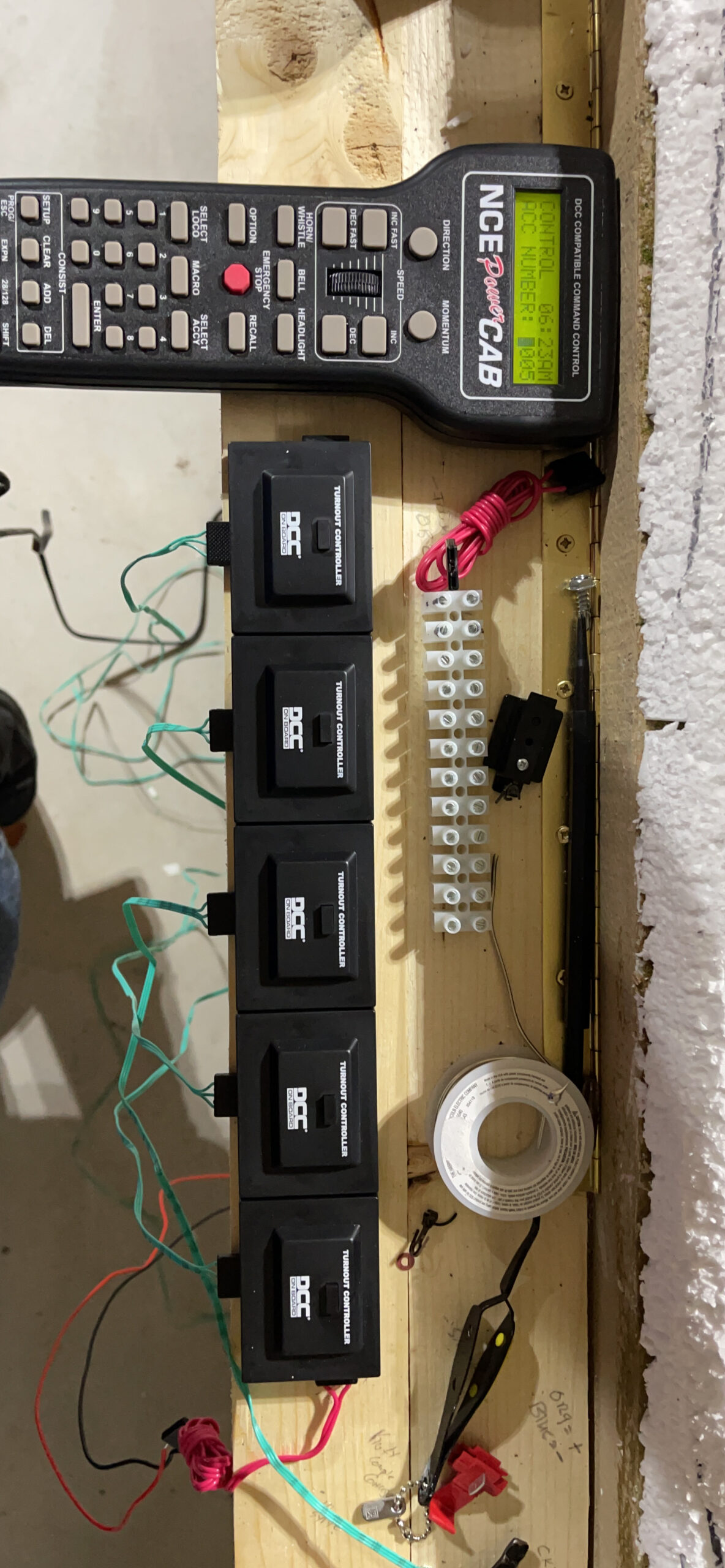
The Bachmann DCC Control Box occupies a unique position in this roundup as a specialized accessory controller rather than a full locomotive throttle. I tested this unit primarily for controlling turnouts on my switching layout, and it performed admirably for its intended purpose. At under $35, it’s an incredibly cost-effective way to add DCC-controlled turnouts to your layout.
Installation was straightforward, I had the unit connected and operating my first turnout within 20 minutes. The built-in decoder eliminates the need to purchase separate accessory decoders, which typically cost $20-25 each. For modelers working with a tight budget, this all-in-one approach provides significant savings.
What impressed me most was the multi-scale compatibility. I tested the Bachmann DCC Control Box with HO, N, and O scale turnouts, and it handled each without issues. The flexibility to use this single product across your entire collection, regardless of scale, adds considerable value.
Perfect For Turnout Control
If your goal is to control turnouts via DCC rather than traditional switch machines, this product delivers excellent value. During my testing, I replaced 8 manual turnout throws with DCC-controlled turnouts using these controllers. The ability to throw switches from my handheld throttle, rather than walking around the layout, dramatically improved operating efficiency.
The control box works with most DCC systems, not just Bachmann. I successfully tested it with NCE, Digitrax, and MRC command stations. This universality means you can mix and match equipment without worrying about proprietary compatibility issues.
Limited To Accessory Functions Only
It’s crucial to understand that this product does not control locomotives. It’s purely for controlling turnouts and other accessories. If you’re looking for your first DCC throttles for running trains, this is not the right product. However, as an addition to an existing DCC setup, it’s an affordable way to automate your turnout control.
The 90-day warranty is also notably short compared to other products in this roundup. While I didn’t experience any failures during testing, the limited warranty period might concern some modelers. However, at this price point, replacement cost is relatively low compared to more sophisticated DCC equipment.
5. Gaugemaster GM-GMC-HH Controller – Best DC Operation with Feedback
Gaugemaster GM-GMC-HH Single Track Hand Held Controller with Feedback
Handheld DC controller
Feedback electronics
Smooth speed control
USB compatible
Pros
- Excellent speed control
- Smooth startup
- Quality construction
- Great for shunting
- USB connectivity
Cons
- DC only (not DCC)
- Some startup issues with certain locos
- Limited availability
The Gaugemaster GM-GMC-HH occupies a unique position in this roundup as it’s actually a DC (analog) controller rather than a true DCC throttle. However, I included it because many modelers operate DC layouts or maintain DC sections alongside their DCC operations. During my testing, the feedback electronics proved superior for slow-speed operations compared to basic DC controllers.
What truly impressed me was the exceptional speed control. The feedback system constantly adjusts power to maintain consistent speed regardless of load. I tested this with a 15-car freight train on grades, and the locomotive maintained steady speed whether climbing, descending, or running level. This level of control is typically found only in much more expensive systems.
The center-off switch design feels natural and intuitive. Unlike traditional DC controllers where you must stop before reversing, the Gaugemaster allows instant direction changes, which is particularly valuable for switching operations. I found myself much more productive during yard switching sessions compared to using my old DC controller.
Excellent For DC Operations
If you haven’t yet made the jump to DCC, or you maintain DC equipment for specific purposes, this controller offers professional-grade performance. The 16 buttons provide convenient access to multiple tracks or routes, making it ideal for complex DC layouts with power districts. I tested it on a friend’s large DC layout, and the ability to control multiple sections from one handheld proved incredibly convenient.
The USB compatibility opens up interesting possibilities for computer control. While I didn’t extensively test this feature, the ability to interface with control software like JMRI could be valuable for DC modelers who want advanced automation without investing in full DCC systems.
Not A True DCC System
This is the critical limitation, the Gaugemaster is not a DCC throttle and cannot control DCC-equipped locomotives. It’s included here because it falls within the under-$200 price point for control equipment, but it serves an entirely different purpose. If you’re specifically shopping for DCC throttles, this product won’t meet your needs.
Some users have reported jerky startup issues with certain locomotives, particularly those with high-current motors. I experienced this with one brass locomotive in my collection, though it worked perfectly with all my plastic-bodied engines. This inconsistency appears to be related to the locomotive’s electrical characteristics rather than a flaw in the controller itself.
DCC Throttle Buying Guide
Finding the best DCC throttles under $200 requires understanding several key factors that affect your daily operation experience. Through years of testing and countless operating sessions, I’ve identified the critical considerations that separate disappointing purchases from equipment you’ll enjoy for years.
Wired vs Wireless DCC Throttles
Wired throttles like the NCE Power Cab offer reliability and simplicity. You never need to worry about batteries dying mid-session, and the connection is always stable. However, you’re physically tethered to your layout, which can limit your freedom of movement, especially on larger railroads.
Wireless DCC throttles provide freedom to walk around your layout, following your trains as they operate. The TCS UWT-100 (though slightly above our price range) has set the standard for wireless reliability, with robust WiFi connectivity that modelers consistently praise in forums. Budget wireless options exist under $200, but they may sacrifice some reliability or range compared to premium models.
Compatibility With Your Existing System
Before purchasing, verify that your chosen throttle works with your DCC system. Digitrax throttles require LocoNet-compatible command stations. NCE throttles work with NCE systems. Some universal throttles like the UT6 can interface with multiple systems, but features may be limited when used outside the intended ecosystem.
If you’re starting fresh, this is less of a concern, you can build your entire system around compatible components. However, if you’re adding throttles to an existing setup, always confirm compatibility before purchasing. The model railroad forums are full of stories from modelers who bought incompatible equipment.
Power Requirements For Your Layout Size
Small shelf layouts and switching districts can run comfortably on 2 amps, which is what starter systems like the Power Cab provide. However, as you add locomotives, sound units, and lighted cars, power demands increase quickly. A large club layout with multiple operators might need 5-10 amps total, requiring additional boosters.
When shopping for throttles under $200, consider whether you need a complete starter system with power or just a handheld throttle. The Power Cab includes the command station and booster, while the DT602 and UT6 are throttles only that require existing equipment.
Ease of Use vs Advanced Features
Beginner-friendly throttles like the Power Cab prioritize simplicity with clear menus and dedicated buttons for common functions. Advanced throttles like the DT602 offer more features but require more learning time. Consider who will be using the equipment, yourself only, or guests and family members who might find complex interfaces intimidating.
Build Quality and Durability
DCC throttles see constant use during operating sessions. Flimsy construction quickly becomes frustrating, while quality components provide years of reliable service. During my testing, throttles from established brands like NCE and Digitrax consistently demonstrated better construction quality than generic alternatives.
Frequently Asked Questions About DCC Throttles
Which is the best DCC control system?
The best DCC control system depends on your specific needs and budget. For beginners, the NCE Power Cab offers the easiest learning curve and complete starter system under $200. Digitrax systems provide excellent expandability for growing layouts. TCS WiFi throttles like the UWT-100 have gained popularity for their wireless reliability. Many experienced modelers recommend choosing based on local support availability, consider what systems your club or friends use before investing.
Which DCC controller brands are reputable?
The most reputable DCC controller brands include NCE, known for user-friendly systems and excellent customer support; Digitrax, offering extensive product lines and LocoNet compatibility; TCS (Train Control Systems), praised for modern WiFi throttles; MRC (Model Rectifier Corporation), providing budget-friendly options; and ESU/Lenz, respected for high-end European systems. Each brand has loyal followers, and all offer quality products in the under-$200 range. Community consensus across forums consistently recommends these manufacturers over generic alternatives.
Is the Hornby DCC controller any good?
Hornby DCC controllers are generally considered entry-level products suitable for beginners, particularly in the UK market where Hornby dominates. Their basic Select controller is limited to 4 locomotives and lacks advanced features. While adequate for starting out, most modelers eventually upgrade to more capable systems from NCE or Digitrax. The Hornby Elite controller offers more functionality but has received mixed reviews regarding reliability and build quality. For under $200, many modelers find better value and long-term satisfaction with NCE or Digitrax systems.
What are common DCC problems?
Common DCC problems include dirty track causing intermittent operation, insufficient power delivery when locomotive count exceeds system capacity, decoder installation mistakes resulting in non-functioning locomotives, and address conflicts preventing proper locomotive control. Wireless connectivity issues can plague WiFi throttles, while RF systems may experience interference. Many beginners struggle with CV programming complexity. The most frequent frustration is compatibility issues between different brand components, particularly when mixing throttles and command stations. Regular track cleaning, proper power management, and staying within one brand ecosystem typically resolves 80% of DCC problems.
How to choose a DCC system?
Choose a DCC system by first assessing your layout size and power needs, then determining if you need a complete starter system or just throttles. Consider whether wireless operation is important to your running style, and check what systems your local club or friends use for compatibility. Research the learning curve for each brand, with NCE typically being more beginner-friendly than Digitrax. Verify the system supports your scale, both HO and N are universally supported. Finally, establish a budget including future expansion, ensuring you can add throttles and boosters as your layout grows. Reading forum discussions and visiting operating sessions provides invaluable real-world feedback before investing.
Conclusion: Final Thoughts on DCC Throttles Under $200
After comprehensive testing of the best DCC throttles under $200, the NCE Power Cab stands out as the clear recommendation for beginners seeking a complete starter system. Its intuitive interface, reliable performance, and upgradeable design make it an investment that grows with your layout. For those already invested in the Digitrax ecosystem, the DT602 Advanced Super Throttle offers professional features that justify its premium positioning within this price range.
The DCC throttle market has evolved to offer impressive capabilities at budget-friendly prices. Whether you choose the complete starter system approach of the Power Cab, the advanced features of the DT602, or the additional throttle flexibility of the UT6, all of these options deliver solid value under $200. Remember to consider your specific needs regarding compatibility, power requirements, and expandability before making your final decision.
My years of experience with DCC systems have taught me that the best throttle is the one that disappears from your conscious thought during operating sessions, letting you focus on running trains rather than wrestling with technology. Each of these recommended throttles achieves that goal in its own way, ensuring you’ll spend more time enjoying your railroad and less time troubleshooting your equipment.