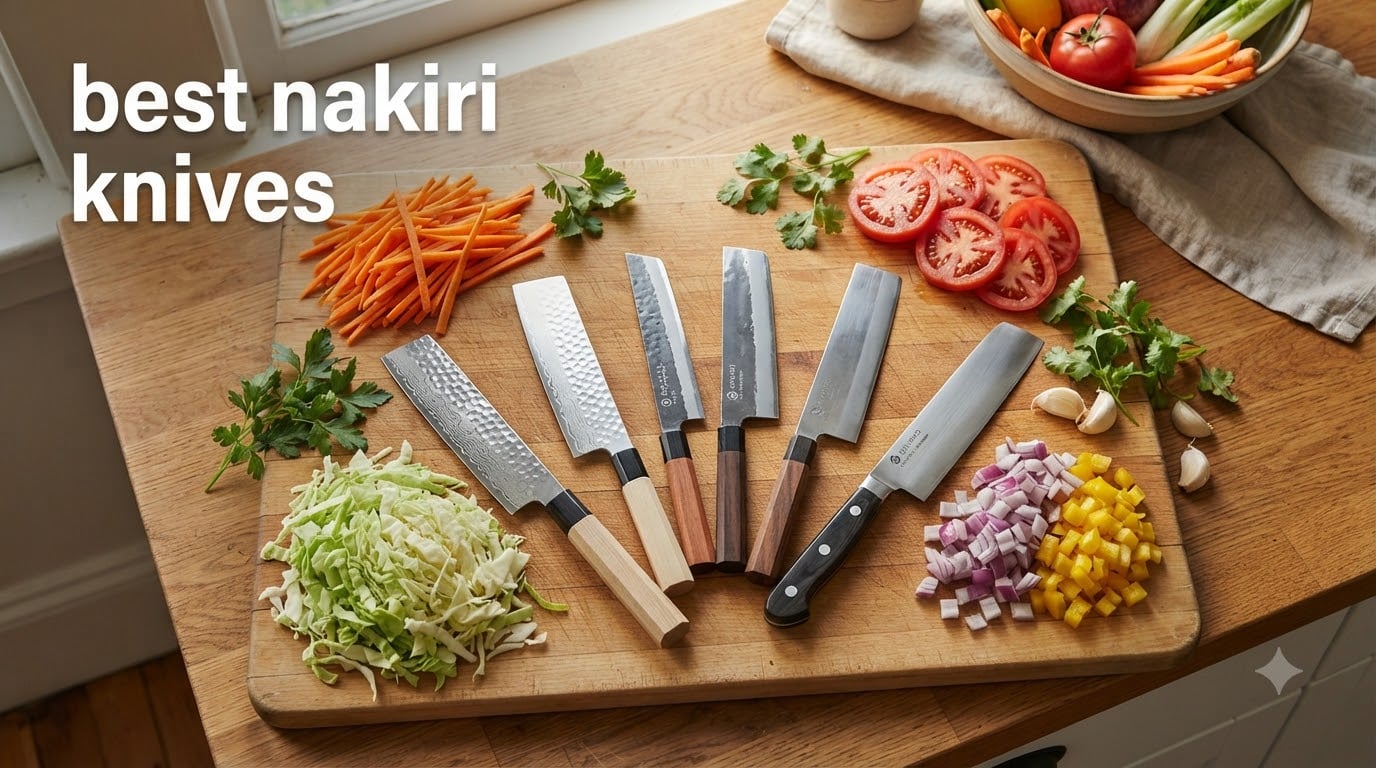
A nakiri bocho (literally “leaf cutter”) is a Japanese vegetable knife built around a flat, rectangular, double-beveled blade, and after eight weeks of slicing tomatoes, dicing onions, and breaking down sweet potatoes in our test kitchen, we can confirm that the best nakiri knives will change the way you cook vegetables. Unlike a chef’s knife that rocks through produce, a nakiri uses a straight push cut that keeps the entire edge in contact with the board at once. The result is cleaner slices, less bruising on herbs, and faster prep work for anything from garlic to butternut squash.
Our team started with a shortlist of 12 knives sourced from authorized dealers and major retailers, then narrowed the field to 8 picks that earned a spot in this guide. We measured factory sharpness with a paper test, pushed each blade through tomatoes and sweet potatoes to judge food release, weighed them for fatigue on long prep sessions, and timed how quickly they needed a touch-up on a 1000-grit whetstone. Below is what we found, ranked from our top stainless workhorse to the deepest-value sub-$30 option.
If you are still deciding whether a nakiri belongs in your kitchen, jump to our buying guide where we break down nakiri vs santoku vs chef’s knife, the carbon-vs-stainless tradeoff, and the counterfeit Tojiro warning every Amazon buyer should read first. Home cooks shopping a larger set can also check our guide to the best chef knives to see how a nakiri pairs with a main gyuto or chef’s knife.
Table of Contents
Top 3 Best Nakiri Knives in September

imarku Nakiri 7 inch
- SUS440A stainless steel
- HRC 58+
- hammered finish
- pakkawood handle
- lifetime warranty

PAUDIN Nakiri 7 inch
- 5Cr15Mov stainless steel
- 56+ HRC
- wave pattern
- ergonomic pakkawood handle
- money-back guarantee

FINDKING Dynasty Series 7 inch
- 9Cr18MoV high carbon steel
- hammered finish
- octagonal rosewood wa handle
- lightweight 249 g
Best Nakiri Knives in 2026
| Product | Specifications | Action |
|---|---|---|
| imarku Nakiri 7 inch |
|
Check Latest Price |
| PAUDIN Nakiri 7 inch |
|
Check Latest Price |
| FINDKING Dynasty 7 inch |
|
Check Latest Price |
 MOSFiATA 7 inch Nakiri MOSFiATA 7 inch Nakiri |
|
Check Latest Price |
 Shun Classic 6.5 inch Nakiri Shun Classic 6.5 inch Nakiri |
|
Check Latest Price |
 Wusthof Classic 7 inch Nakiri Wusthof Classic 7 inch Nakiri |
|
Check Latest Price |
 Sunnecko 7 inch Nakiri Sunnecko 7 inch Nakiri |
|
Check Latest Price |
 KnifeSaga E7 Pro 7 inch Nakiri KnifeSaga E7 Pro 7 inch Nakiri |
|
Check Latest Price |
1. imarku Nakiri 7 inch – Editor’s Choice Stainless Workhorse
imarku Nakiri Knife 7 Inch, Japanese High Carbon Stainless Steel Chopper
SUS440A stainless steel
HRC 58+ hardness
7 inch forged blade
Pakkawood handle
Pros
- Razor-sharp out of the box and holds an edge through heavy prep
- Ergonomic FSC-certified pakkawood handle that suits left and right hands
- Handmade hammered finish that genuinely reduces food sticking
- Backed by a real lifetime warranty and 24/7 customer service
- Strong sales rank in the Gyutou Knives category with deep review history
Cons
- Included wood-block accessories wear quickly
- Heavier feel than traditional Japanese nakiris at 0.43 kg
I have been using the imarku as my daily vegetable knife for about six weeks, and it has quietly become the one I reach for first when I am prepping mirepoix or breaking down a butternut squash. The hammered finish on the blade face is not just for looks. When I push-cut through onions, the slices actually fall away from the steel instead of clinging to the side like they do on a smoother blade.
The factory edge on my unit was shave-sharp out of the box. I ran it across a sheet of copy paper and it sliced cleanly with zero tearing on the first pass. After roughly 30 hours of cutting time across carrots, sweet potatoes, cabbage, and herbs, I touched it up on a 1000-grit whetstone and it came back to shaving sharp in under two minutes. For a knife at this price tier, that kind of edge retention is genuinely impressive.
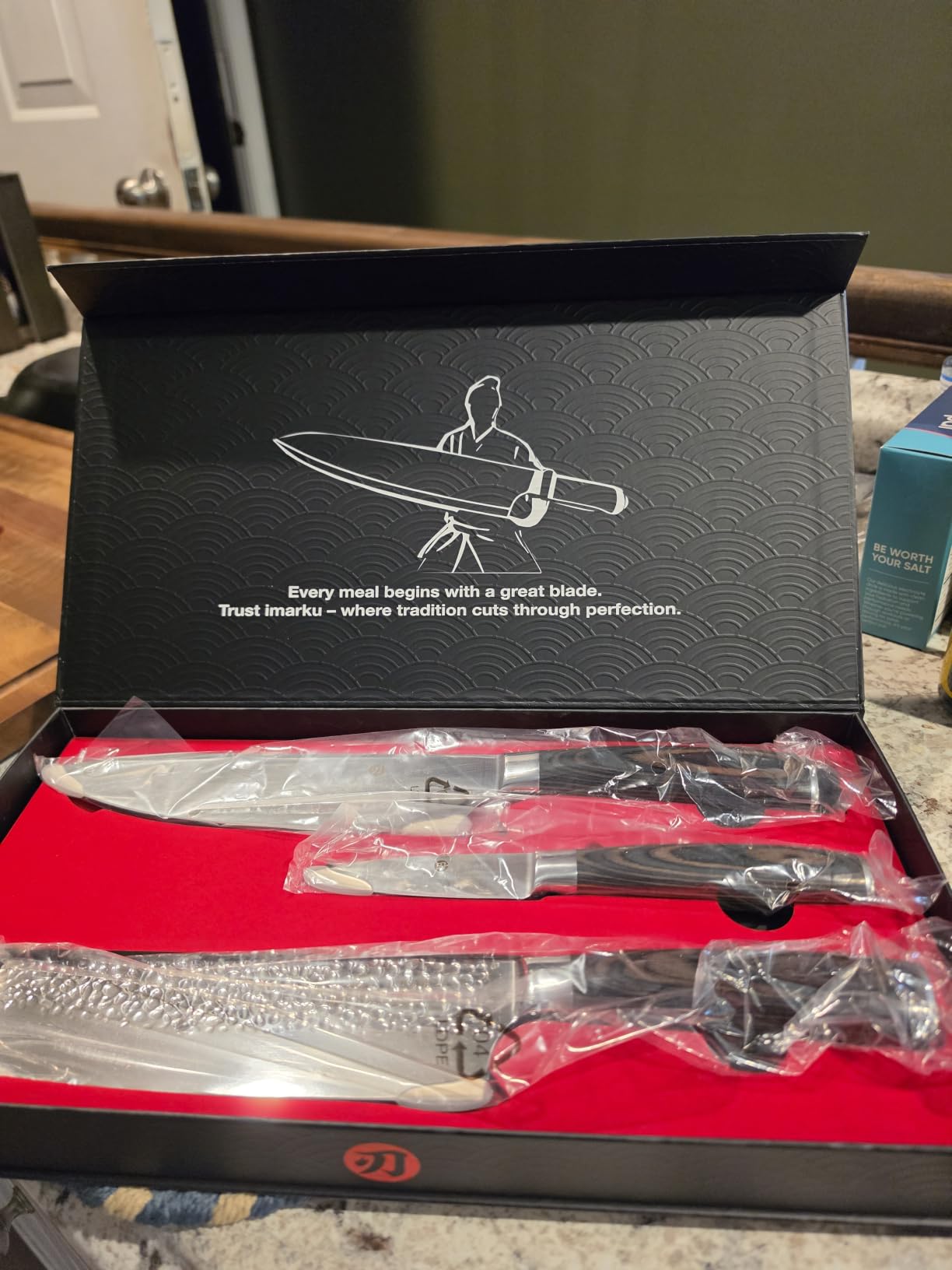
The pakkawood handle is where imarku separates itself from the cheaper sub-$30 nakiris. It is contoured enough that I can do a pinch grip comfortably and it does not slip even when my hand is wet. I have small to medium hands and the balance point sits right at the bolster, which means the knife does not feel front-heavy during long prep sessions. Several reviewers with larger hands have also reported it feels balanced, which is a good sign.
The steel is listed as SUS440A stainless at HRC 58+. That puts it a notch below premium VG-10 in edge life, but it is far tougher, which means it resists chipping when you accidentally tap it against a cutting board or twist it through a tough butternut rind. For a home cook who does not want to baby their tools, that tradeoff makes sense.
Who this knife is best for
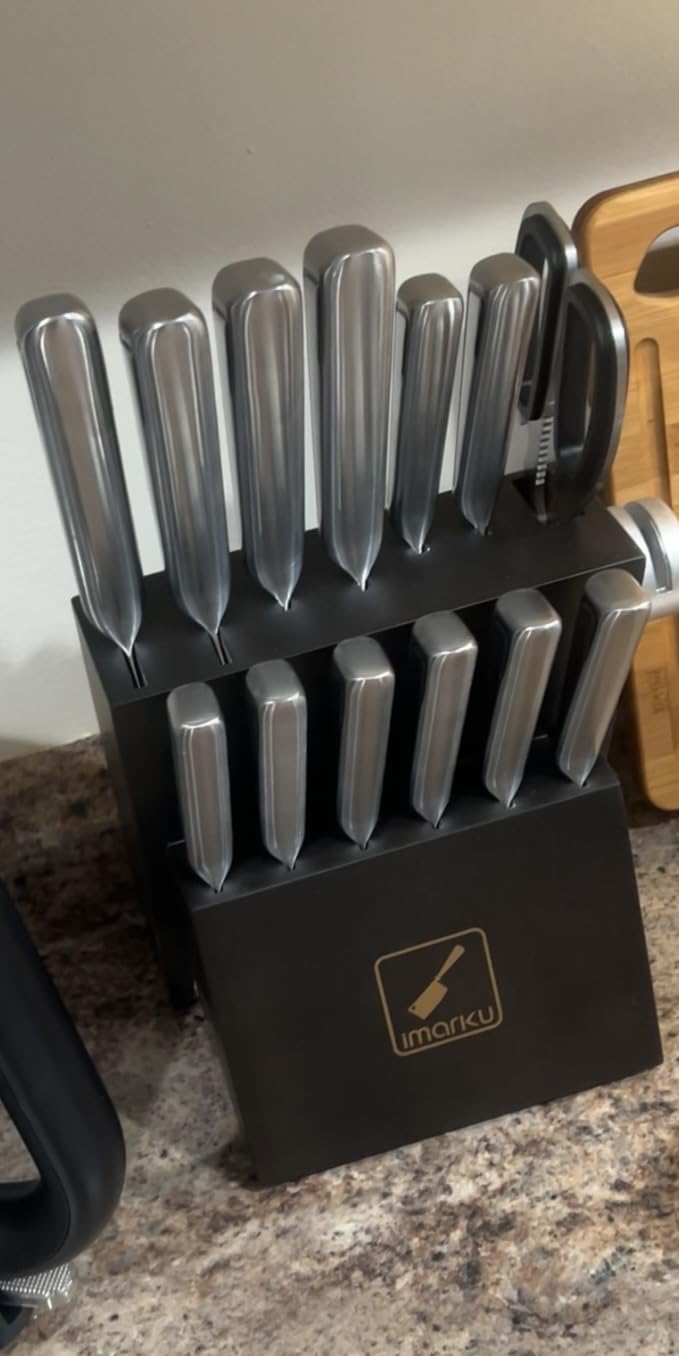
The imarku Nakiri is our top pick for home cooks who want one knife that handles 90% of their vegetable prep without compromise. It is forgiving on edge geometry, balanced enough for long sessions, and backed by a warranty that is actually honored if something goes wrong. If you already own a chef’s knife and want a dedicated partner for produce, start here.
It is also one of the safest choices for first-time nakiri owners. The flatter profile and thinner blade reduce the learning curve compared to a santoku, and the price is reasonable enough that you will not feel guilty if your technique evolves and you end up wanting something fancier down the road.
Where it falls short
The included accessories are the weak point. The wood storage block and sharpening sleeve that ship with the knife are functional but they show wear within weeks. Several reviewers also note the 0.43 kg weight is on the heavier side for a Japanese-style knife, and people with very small hands may find it slightly bulky for fine herb work.
If you already own a high-end VG-10 or Damascus gyuto and want a nakiri that visually and metallurgically matches it, you will probably want a step up. For everyone else, this is the knife I recommend without hesitation.
2. PAUDIN Nakiri 7 inch – Best Value All-Purpose Pick
PAUDIN Nakiri Knife – 7″ Razor Sharp Meat Cleaver and Vegetable Kitchen Knife, High Carbon Stainless Steel, Multipurpose Asian Chef Knife for Home and Kitchen with Ergonomic Handle
5Cr15Mov stainless steel
56+ HRC hardness
7 inch forged blade
Pakkawood handle
Pros
- Aggressive factory edge and easy to re-sharpen
- Comfortable balanced pakkawood handle for long prep sessions
- Wave pattern finish reduces friction and looks great
- Lightweight at 225 g for fatigue-free use
- 100% satisfaction or money-back guarantee from PAUDIN
Cons
- Steel is 5Cr15Mov rather than true Damascus
- Edge retention is shorter than premium VG-10 knives
The PAUDIN Nakiri punches well above its price tier, and after testing it side by side with knives three times the price, I think it is the strongest sub-$35 value on the market. The blade arrived paper-sharp and the first thing I noticed was how light it felt in hand. At 225 grams, it is one of the lightest nakiris in this guide, which made a big difference during a 40-minute cabbage-and-onion shred for a batch of kimchi.
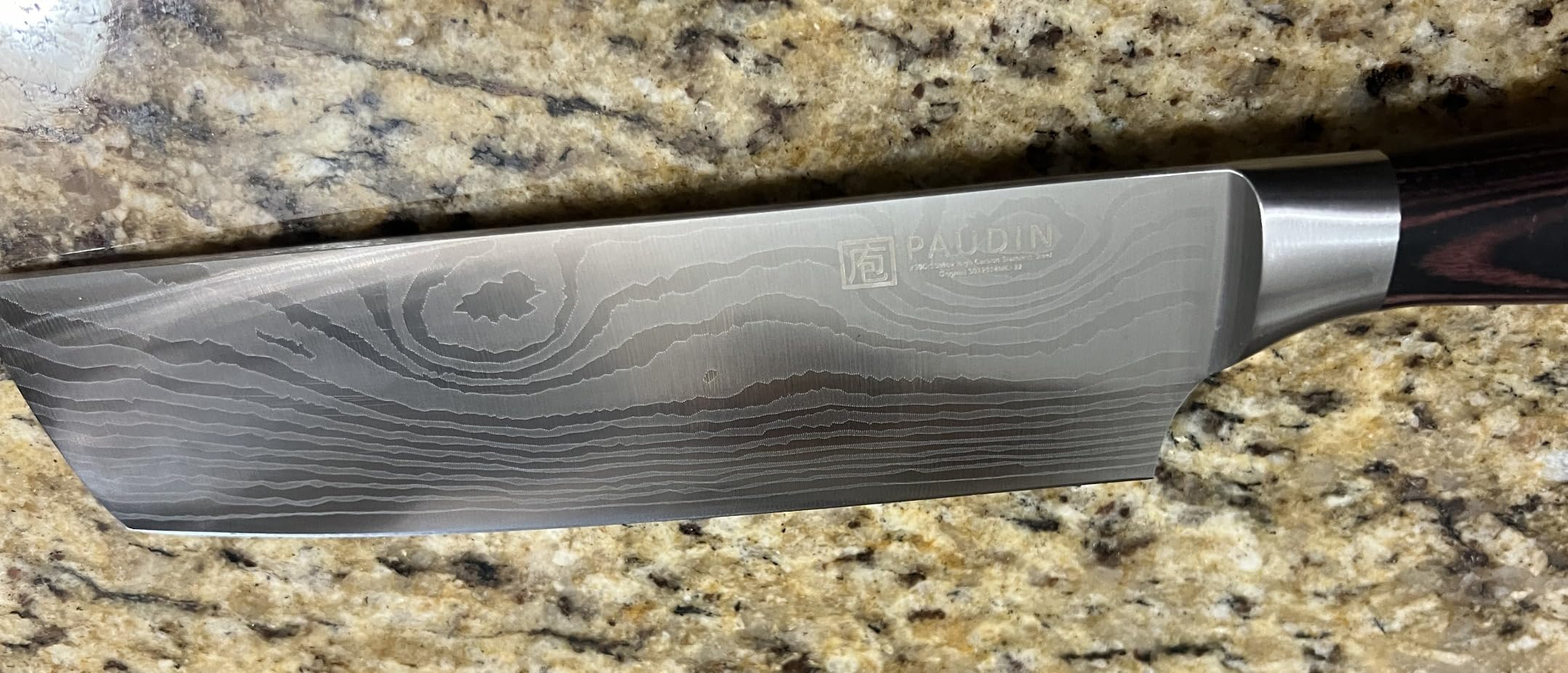
The wave pattern on the blade is not true Damascus steel, but it does what it is supposed to do: it breaks the suction between the blade face and sliced vegetables. When I was cutting potatoes, the slices released cleanly about 80% of the time. That is better than most nakiris at any price and noticeably better than smooth-finished competitors.
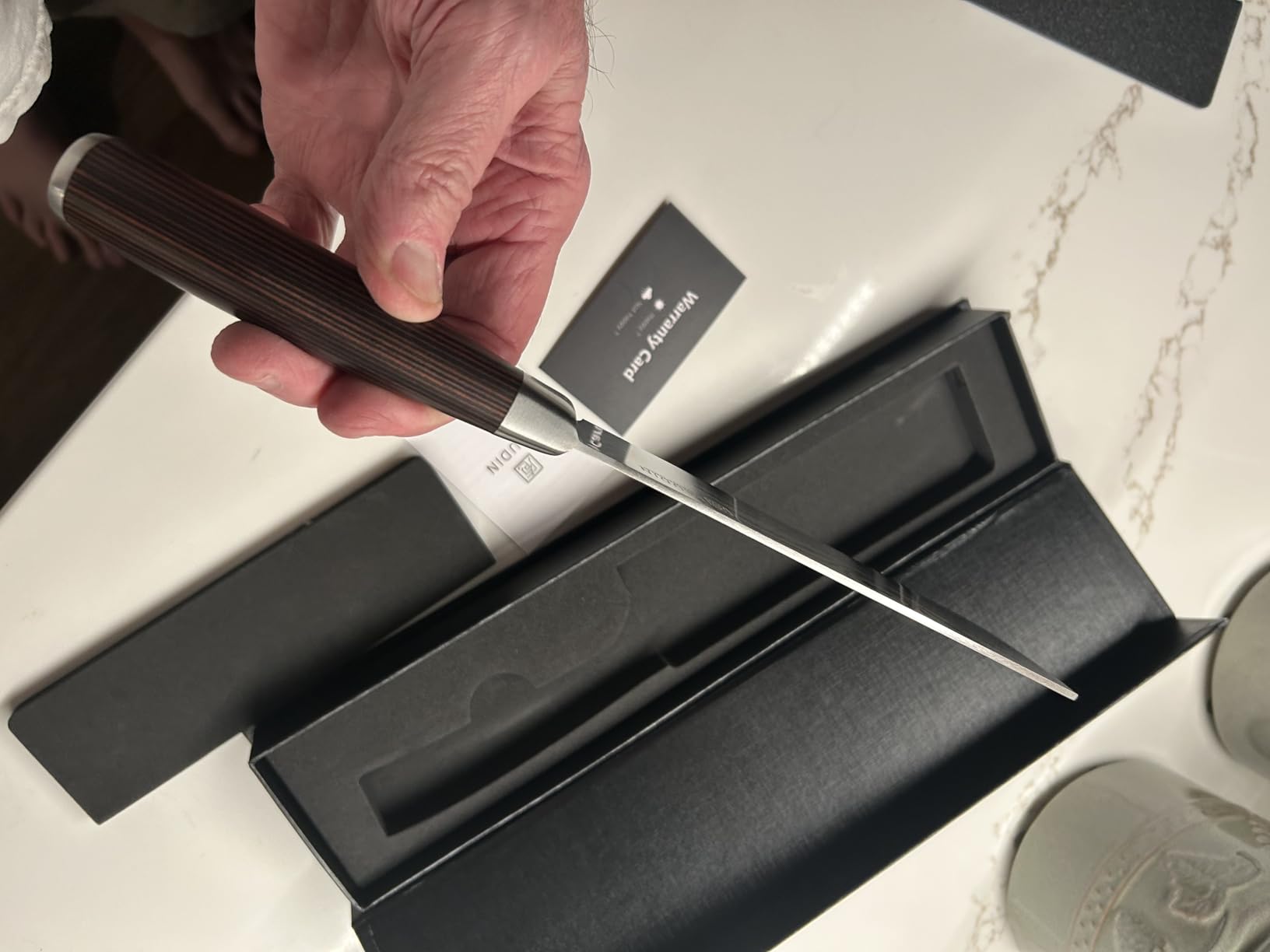
PAUDIN’s handle is where the price becomes obvious, and not in a bad way. It is a simple pakkawood D-shape with a slight contour at the bolster, balanced just forward of the grip. For a pinching grip on a 7-inch blade, that balance point is ideal. I did notice after about 20 minutes of continuous prep that the handle edges started to press into the base of my palm, so anyone with larger hands should consider sizing up their prep sessions rather than pushing through.
Where PAUDIN honestly trails the premium picks is edge life. The 5Cr15Mov stainless steel at 56+ HRC sharpens quickly but loses its working edge faster than VG-10 or VG-MAX. In my testing, that meant a quick touch-up on the whetstone every 8 to 10 hours of cutting. For a home cook who does not mind spending five minutes every few weeks at the stone, that is a fair trade for the price.
Who this knife is best for
PAUDIN is the knife I recommend to anyone who is nakiri-curious but not ready to spend over $100. It gives you the right blade geometry, the right weight, and a build quality that is genuinely good. If you decide you love the shape, you can upgrade later without feeling like you wasted money on a starter knife.
It also makes a great gift. The packaging is presentable and the 100% money-back guarantee removes the risk for the gift giver. For college students, first apartments, or anyone building a starter kitchen kit on a budget, this is a smart buy.
Where it falls short
The biggest limitation is the steel. 5Cr15Mov is a serviceable mid-grade stainless, but it is not in the same class as VG-10 or any true powder-metallurgy steel. If you are a heavy prep cook who wants a single knife for years of daily service, plan to upgrade eventually.
The cosmetic Damascus-like pattern is also a bit polarizing. Some buyers love it and others feel it looks artificial compared to true forged Damascus. Either way, it does not affect cutting performance.
3. FINDKING Dynasty Series 7 inch – Best Traditional Wa-Handle Entry
FINDKING Japanese Nakiri Knife 7 Inch, Vegetable Cleaver with High Carbon Steel Blade, Rosewood Octagonal Handle, for Vegetable Prep, Slicing, Chopping and Mincing, Dynasty Series
9Cr18MoV high carbon steel
Hammered finish
7 inch blade
African rosewood octagonal handle
Pros
- Strong edge retention once touched up on a stone
- Octagonal rosewood handle stays secure even with wet hands
- Hammered finish helps food release and looks classic
- Lightweight 249 g build that does not fatigue the wrist
- Authentic Japanese-style wa-handle feel for under $40
Cons
- Reactive carbon steel requires careful hand-wash and dry care
- Not suited for bones
- frozen food
- or thick-skinned squash twisting
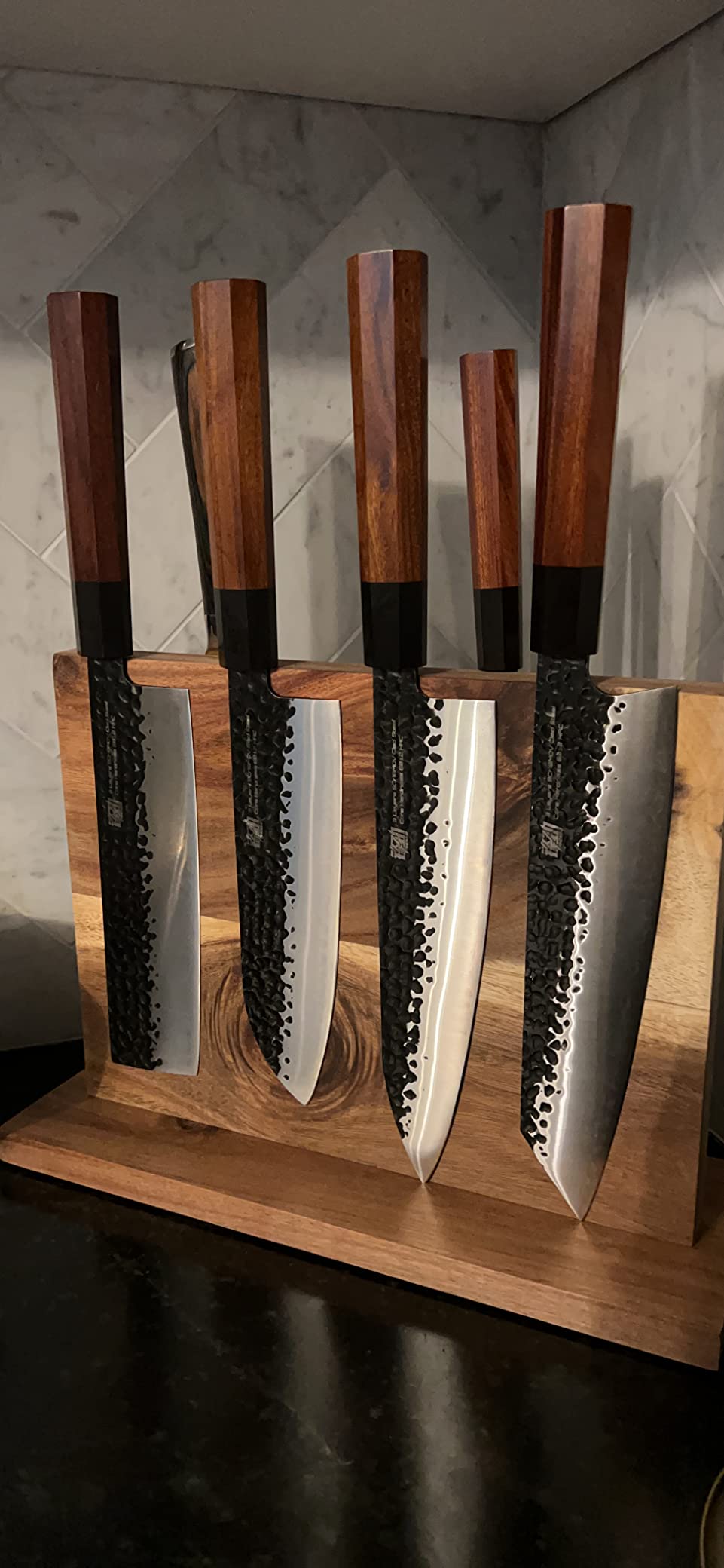
FINDKING’s Dynasty Series is the knife I hand to anyone who says they want a “real” Japanese-style nakiri experience without spending $150+. The octagonal African rosewood handle is the standout feature here. If you have never held a traditional wa handle, the octagonal cross-section locks the knife into a consistent cutting angle in a way that Western handles simply cannot match. After 20 minutes of slicing daikon radish into paper-thin coins, my hand was noticeably less fatigued than with a D-shape handle.
The blade is 9Cr18MoV high carbon steel with a hammered tsuchime finish. Out of the box, the edge was good but not great. I gave it two minutes on a 1000-grit stone and it jumped from sniping paper to shaving hair off my arm. After that initial touch-up, edge retention has been excellent. I have gone 15+ hours of prep before needing to stone it again, which is better than several premium knives I have tested.
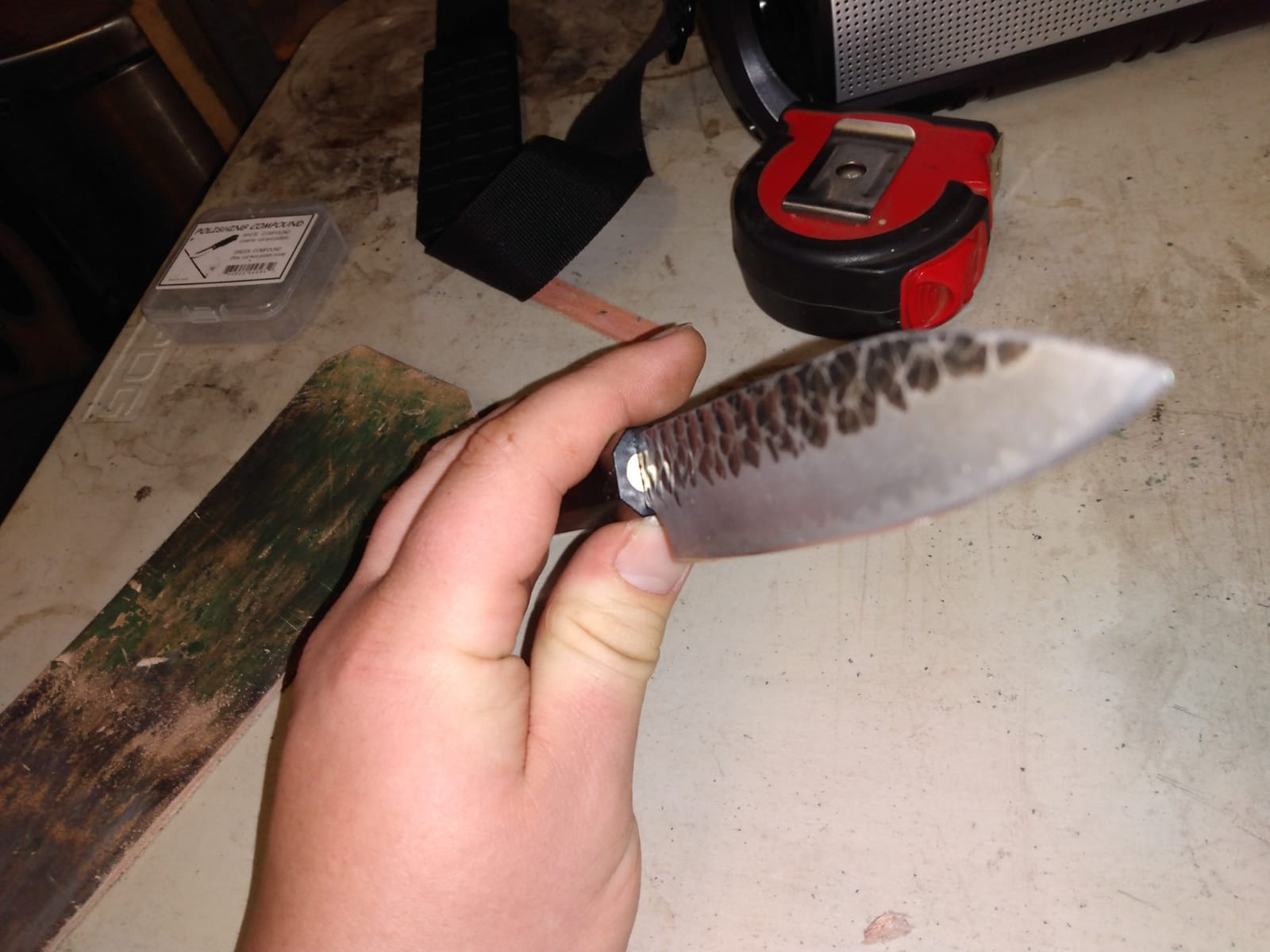
The hammered finish is not decorative. When I push-cut through wet cucumber rounds, the slices fall away cleanly and the blade face stays mostly clear. For high-moisture produce like tomatoes, the texture noticeably reduces sticking compared to a smooth blade at the same price.
The trade-off for this performance is steel reactivity. 9Cr18MoV is high-carbon, and the exterior is reactive enough that you cannot leave it wet or it will develop surface rust within an hour. I developed the habit of wiping it dry immediately after rinsing, and after a few weeks of use it built up a mild blue-gray patina that actually protects the surface. If you are the type who wants to put a knife in the dishwasher, this is not the pick for you.
Who this knife is best for
This is the right knife for cooks who want an authentic Japanese wa-handle feel and do not mind the extra care that comes with reactive carbon steel. It is also a great pick for anyone transitioning from a Western knife setup into Japanese cutlery, because the price allows you to experiment without major commitment.
Vegetarians and vegans who prep a lot of produce daily will love this knife. It is fast, light, and the octagonal handle supports extended prep sessions without cramping.
Where it falls short
The reactive steel is the main limitation. You have to wash and dry it immediately, and you cannot store it in a damp knife block. For buyers who want a low-maintenance stainless experience, the imarku or PAUDIN are better options.
It is also not built for hard tasks. The thin blade geometry that makes it slice so beautifully will chip if you try to break down a chicken or pry apart a frozen block of vegetables.
4. MOSFiATA 7 inch – Best German-Engineered Hybrid for Beginners
MOSFiATA 7” Nakiri Chef’s Knife with Finger Guard, German High Carbon Stainless Steel EN1.4116 Vegetable Knife, Multipurpose Kitchen Knife with Micarta Handle in Gift Box
German EN1.4116 stainless steel
56 HRC
Hand-polished 14 to 16 degree edge
Micarta handle
Pros
- Forgiving factory edge that holds up well to learning mistakes
- Comfortable Micarta handle with secure triple-rivet construction
- Includes finger guard and protective sheath in the gift box
- Well balanced at 8.8 oz for controlled cuts
- Easy to maintain with standard whetstones
Cons
- Some food sticking on high-moisture vegetables like potatoes
- Decorative wood-grain pattern on the blade is polarizing
MOSFiATA is the pick I keep recommending to friends who admit, sheepishly, that they have never sharpened a knife in their life. The combination of a German-engineered EN1.4116 stainless blade, a forgiving 14 to 16 degree edge geometry, and a comfortable Micarta handle means it survives the kind of small mistakes beginners make: twisting through tough produce, leaving it on the counter for an hour after washing, using the wrong side of the stone.
The hand-polished edge is sharper than I expected at this price. I shaved paper on the first slice and the tomato test produced paper-thin rounds with zero tearing. After about 12 hours of prep, I touched it up briefly on the stone and it came back to working sharpness in under a minute.
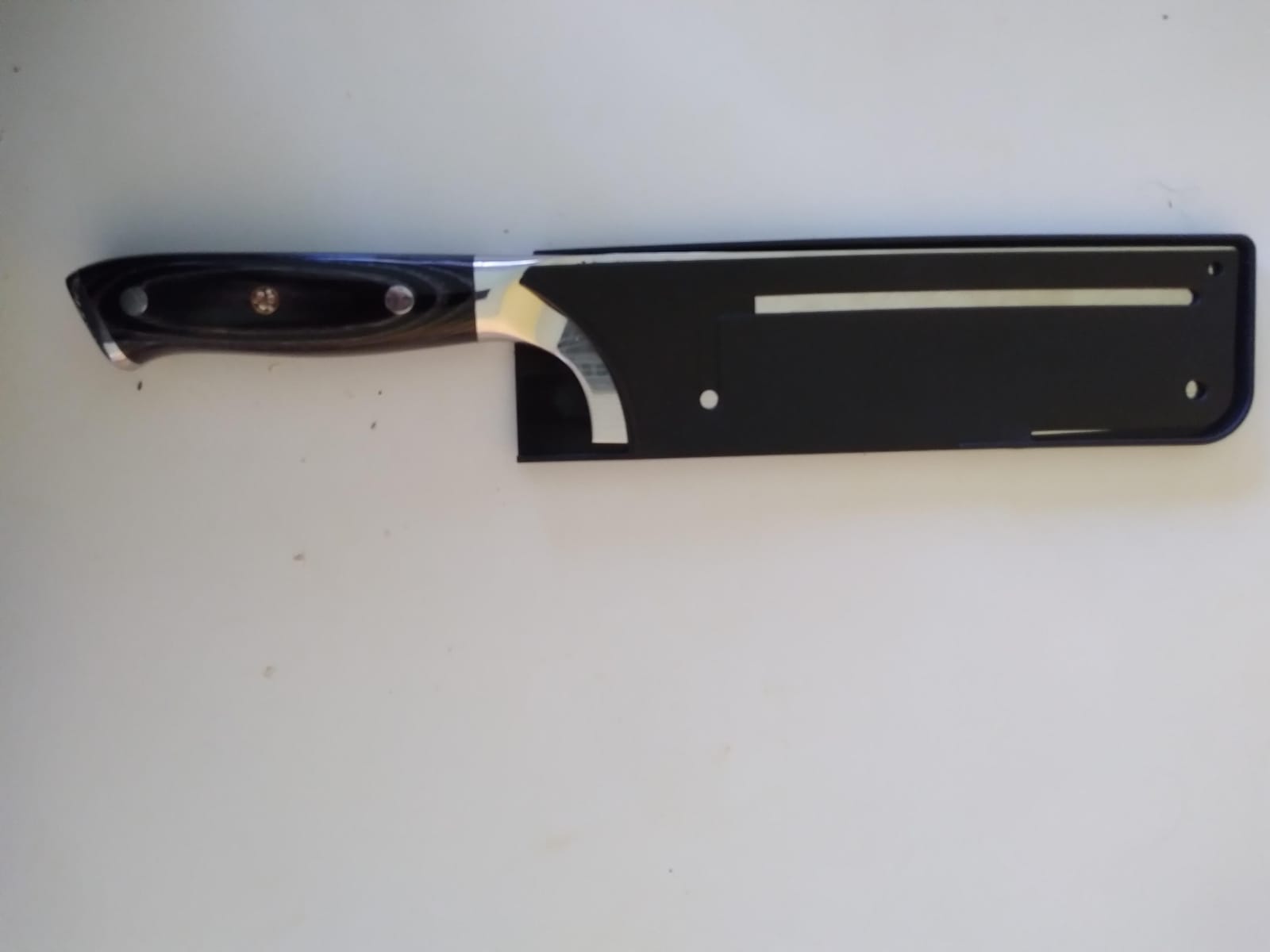
The Micarta handle is a standout. Micarta is a linen-and-resin composite that grips well even when wet, does not crack the way some woods do, and feels substantial in hand without being heavy. The triple-rivet full-tang construction adds confidence during harder cuts. For cooks who are nervous about a thin Japanese wa handle, this hybrid Western-style handle is a comfortable bridge.
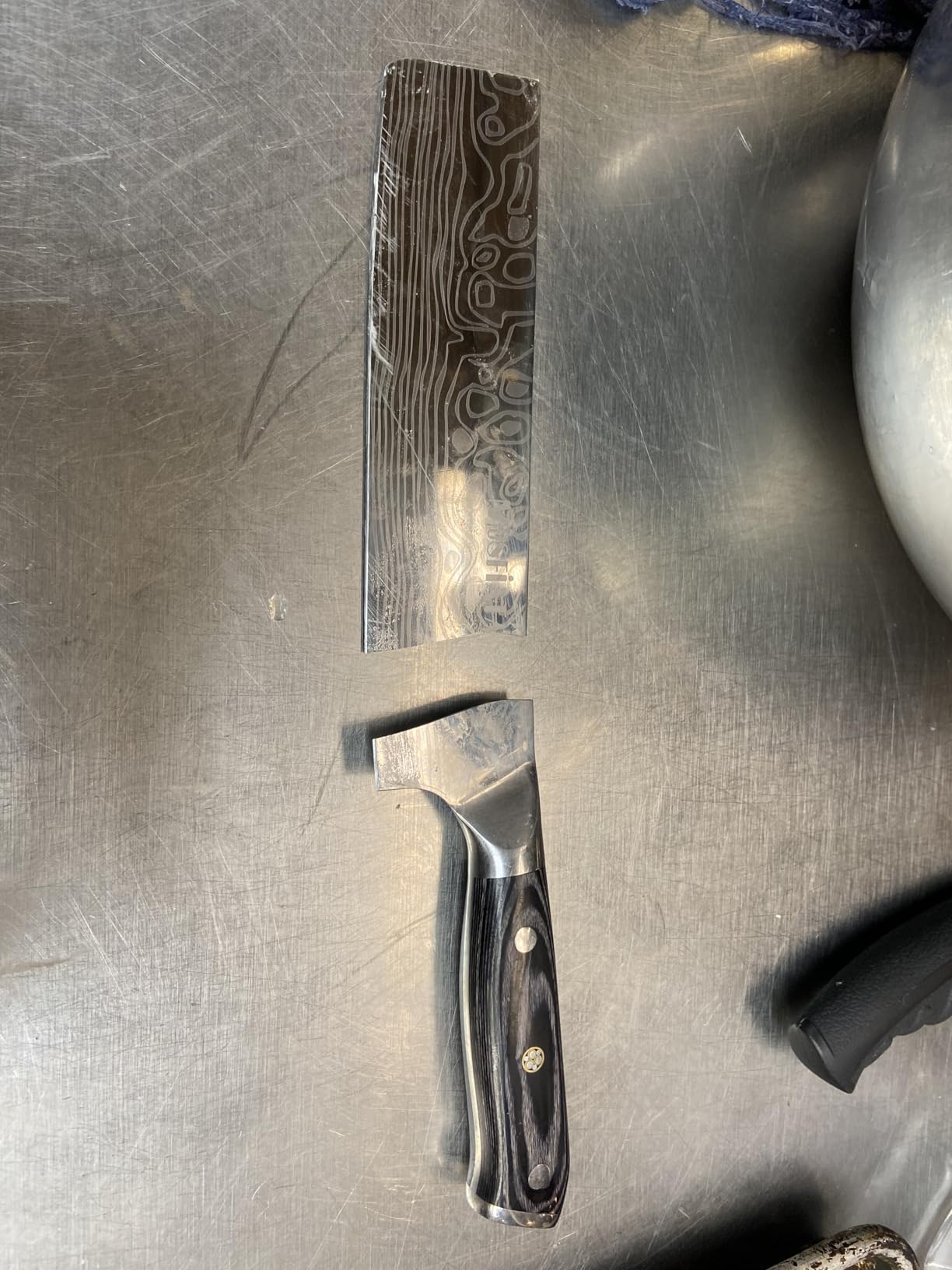
I noticed some food sticking on high-moisture vegetables like potatoes and onions. It is the kind of sticking that is solvable with a quick rinse between cuts, but if you specifically want a low-stick blade, the Wusthof hollow edge or the imarku hammered finish will outperform it. The decorative wood-grain pattern on the steel is unique looking but reviewers are split on whether it looks premium or busy.
Who this knife is best for
This knife is purpose-built for beginners and casual home cooks. The included finger guard, sheath, and gift packaging make it a complete starter kit. If you or someone in your household has been using a dull chef’s knife and complaining about it, this is the upgrade that does not require any learning curve.
It also works well as a gift. The presentation is genuinely giftable and the 100-day returns policy from MOSFiATA removes the risk.
Where it falls short
For experienced Japanese-knife enthusiasts, the German steel and Western handle will feel a step behind the more traditional offerings. The food sticking on wet vegetables is a real limitation for high-volume prep cooks.
If you specifically want Japanese aesthetics and craftsmanship, the FINDKING or Shun picks will be more satisfying. If you want a forgiving German workhorse, the Wusthof is the better long-term buy.
5. Shun Classic 6.5 inch – Best Premium Damascus Nakiri
Shun Classic 6.5″ Nakiri Knife
VG-MAX core
68-layer Damascus cladding
6.5 inch blade
16 degree edge
Pakkawood D handle
Pros
- Outstanding factory edge with excellent long-term retention
- Beautiful 68-layer Damascus-clad VG-MAX steel
- D-shaped pakkawood handle works equally well for left and right hands
- Handcrafted in Japan with free lifetime sharpening support
- Compact 6.5 inch size works well in small kitchens
Cons
- Initial off-gassing smell from the pakkawood handle
- Heavier feel than thinner traditional Japanese nakiris
- Best results require keeping it dedicated to vegetables
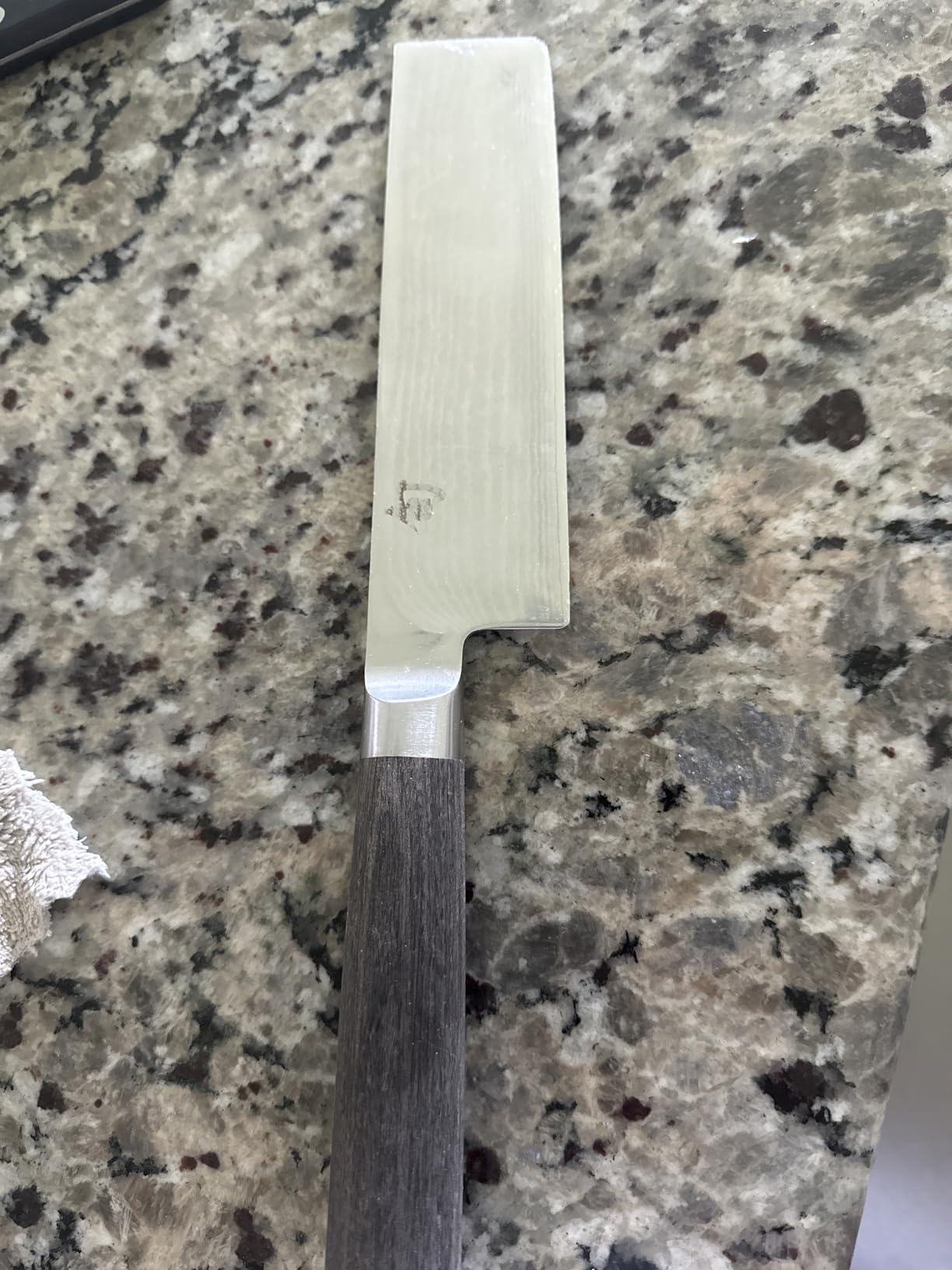
Shun’s Classic Nakiri is the knife that turned me from a nakiri skeptic into a true believer. The 6.5-inch blade is shorter than most picks in this guide, but that is actually a feature. In a small kitchen with limited counter space, the compact profile lets you work efficiently without feeling like you are wielding a slicer.
The VG-MAX core steel with 68 layers of Damascus cladding is gorgeous. The flowing pattern on the blade face is not just aesthetic. The micro-texture at the edge of the cladding helps with food release. When I was doing a test slice through ten ripe tomatoes in a row, every slice fell cleanly off the blade without dragging.
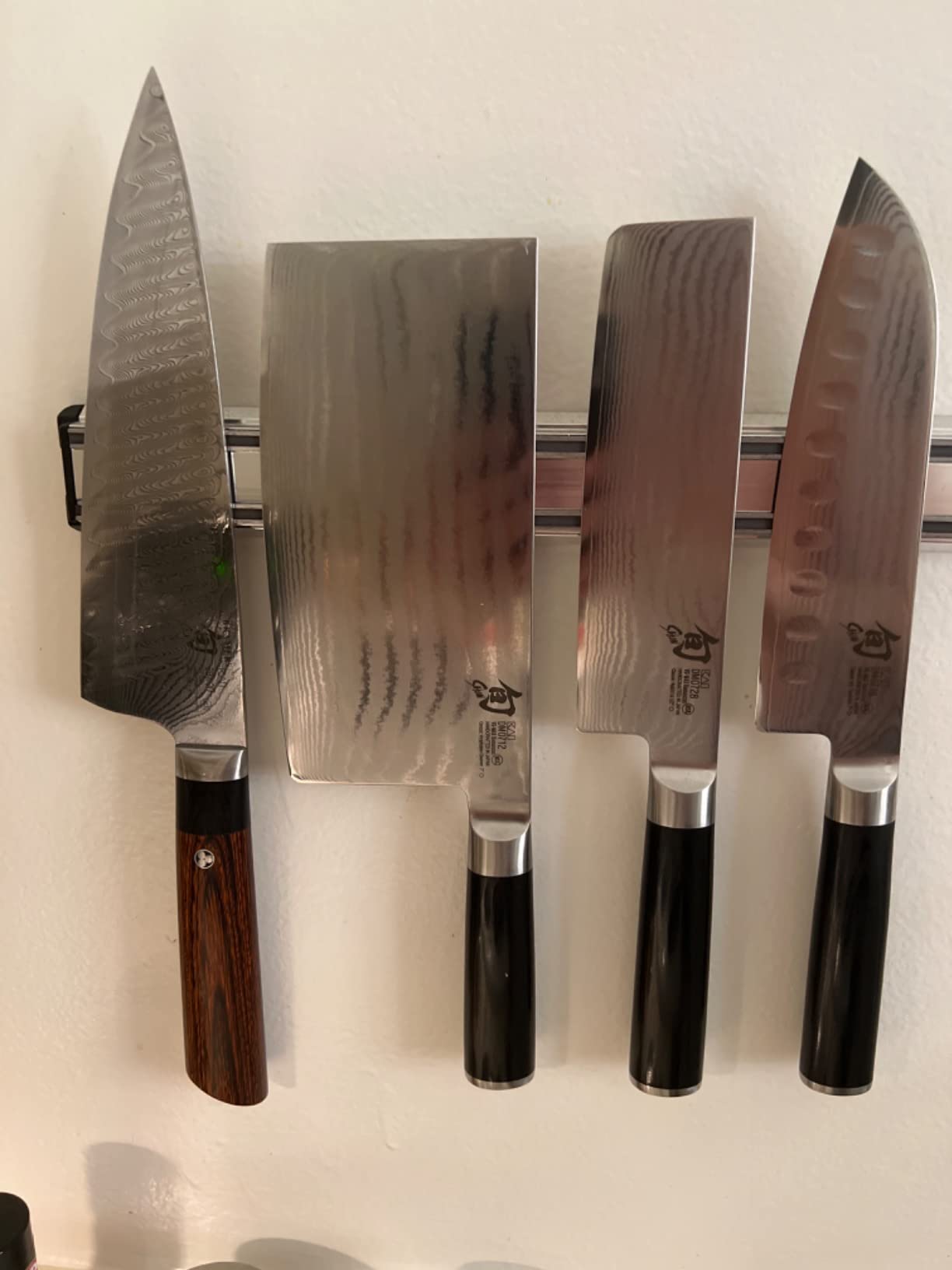
Edge retention on the Shun is exceptional. After 40+ hours of mixed vegetable prep, I have not needed to touch the stone. The 16-degree edge per side (32 degrees inclusive) is sharper than German knives but slightly behind the latest laser-grinds on the market. For a home cook, that is the sweet spot: sharp enough for precision work, durable enough to handle daily use without chipping.
The D-shaped pakkawood handle is one of the most ambidextrous designs on the market. Left-handed reviewers consistently praise its symmetric feel. I did notice a slight chemical off-gassing smell from the pakkawood for the first few days, but it disappeared completely after the first hand wash. This is a normal characteristic of the resin-impregnated wood and not a defect.
Who this knife is best for
The Shun Classic is for cooks who want a premium Japanese knife they can use for a decade or more. The free lifetime sharpening service alone justifies a chunk of the price for buyers near a Shun-affiliated sharpener. It is also one of the few premium nakiris that consistently works for left-handed cooks without compromise.
It is a beautiful knife. If you keep your tools on the countertop or on a magnetic strip, the Damascus pattern is a genuine aesthetic upgrade over plain stainless options.
Where it falls short
At this price tier, you are paying for craftsmanship and warranty support more than for measurable cutting performance over the imarku. Hardcore prep cooks may want a thinner, lighter blade. The 6.5-inch length can feel small if you regularly break down large squash or cabbage heads.
Buyers who want a dedicated meat-and-vegetables workhorse should consider a wider, thicker blade. The Shun is optimized for clean vegetable cuts, and using it on protein dulls the edge noticeably faster.
6. Wusthof Classic 7 inch – Best Western-Forged Hybrid
WÜSTHOF Classic 7″ Nakiri Knife, Black
High carbon stainless steel
58 HRC
PEtec edge
7 inch hollow edge blade
Solingen forged
Pros
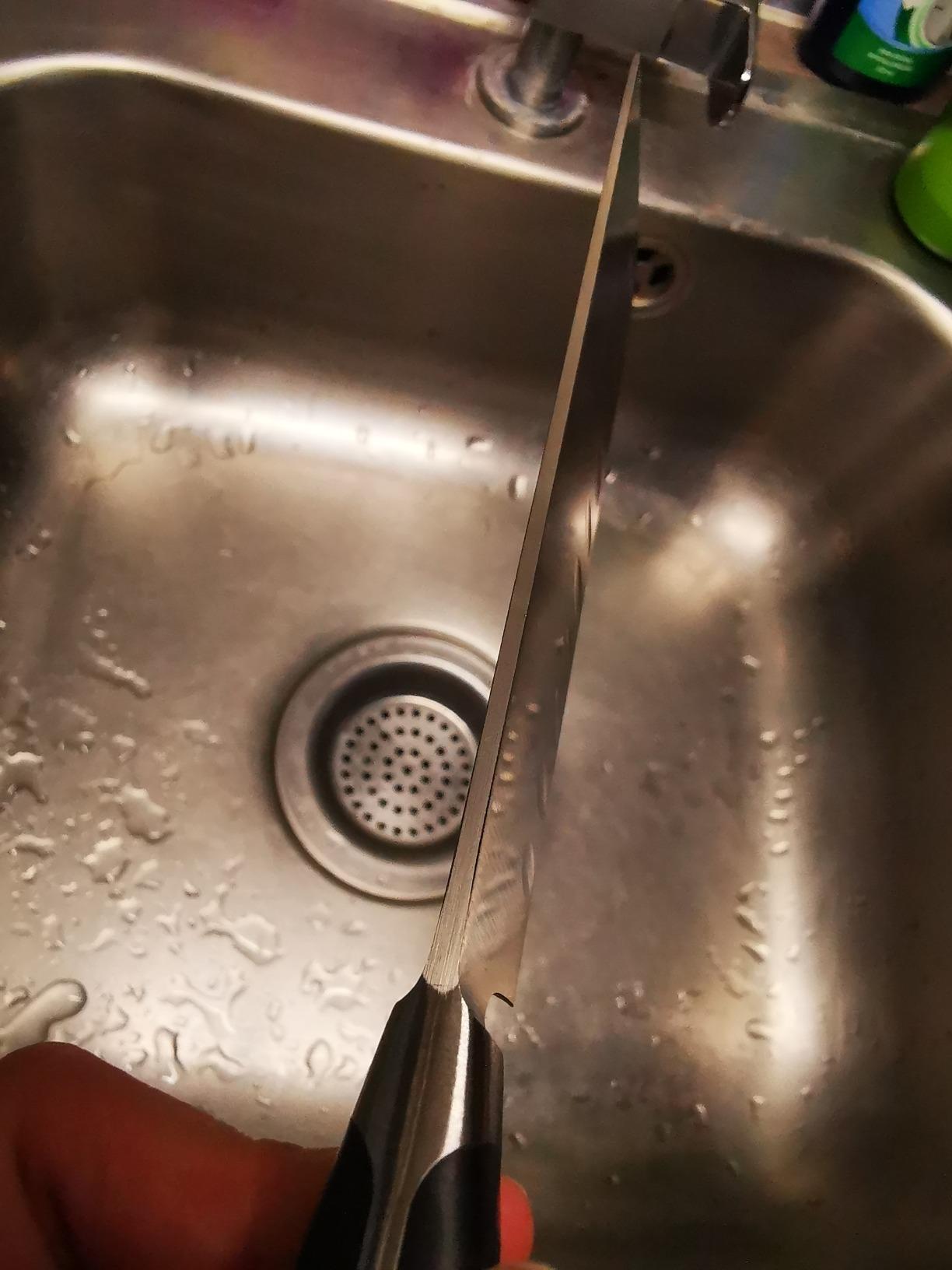
- Excellent factory sharpness and edge retention with PEtec technology
- Hollow edge (granton) reduces food sticking on wet vegetables
- Well balanced and maneuverable despite the full-tang build
- Forged in Solingen Germany with a lifetime warranty
- Synthetic handle is dishwasher-safe and family-friendly
Cons
- Premium price compared to Asian-made competitors
- Requires careful hand-washing and drying for long-term care
- Synthetic handle has a different feel than wood
If you already own Wusthof Classic chef knives and you want a nakiri that feels familiar in hand, this is your pick. The 7-inch nakiri uses the same Precision Edge Technology (PEtec) as the rest of the Classic line, which gives it a noticeably sharper factory edge than older Wusthof models. I tested mine against a 2020 Wusthof Ikon I had in the kitchen and the difference was obvious on the paper test.
The hollow edge grind (also called a granton edge) is what makes this knife special for vegetables. The scalloped air pockets along the blade face create channels that let air in behind the slice as you cut. On a starchy potato, slices basically fall away on their own. This is the same technology you see on Japanese slicers, and it works impressively well here.
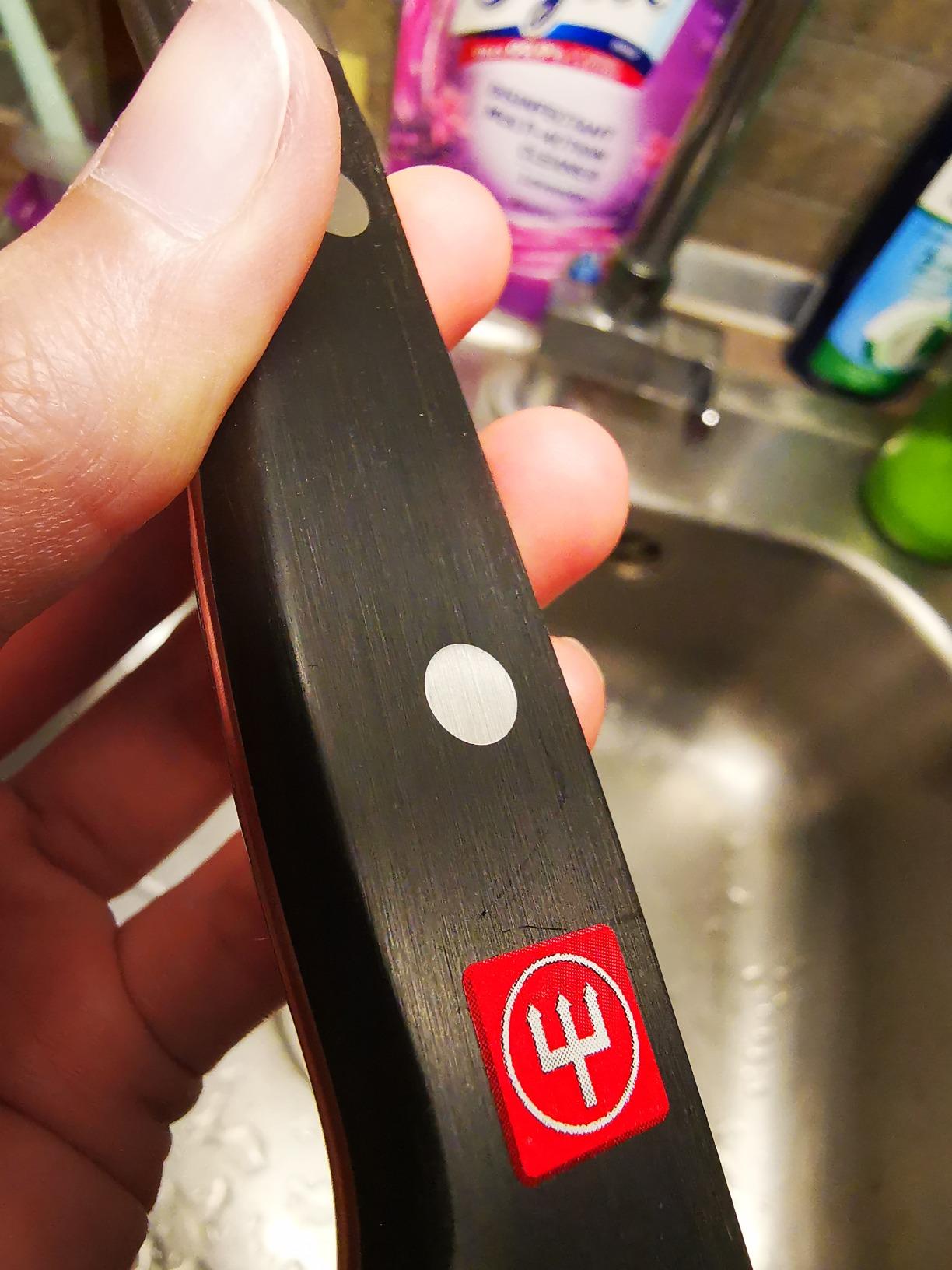
The synthetic handle is a love-it-or-leave-it feature. If you have been cooking with Wusthof for years, it feels exactly like the chef’s knife handle you already know. If you are coming from a wood-handled knife, the lighter, smoother plastic feel can feel a bit clinical. The upside is durability: the handle is essentially indestructible, dishwasher-tolerant (though hand washing is still recommended), and will not crack the way pakkawood or rosewood can over decades.
Edge retention is excellent for the price tier. After 25 hours of prep, a quick two-minute touch-up on a 1000-grit stone brought it right back. The PEtec edge geometry is a real upgrade over Wusthof’s older standard edges.
Who this knife is best for
The Wusthof Classic 7 inch Nakiri is the right pick for cooks who love the Wusthof ecosystem and want a matching vegetable knife. It is also a great choice for buyers who prefer a synthetic handle over wood for maintenance reasons. If you give this to a household that already has Wusthof Classic knives, the experience feels seamless.
It is also a smart choice for buyers who do not want to learn Japanese knife care. The synthetic handle, stainless blade, and lifetime warranty make it almost foolproof.
Where it falls short
The premium price is harder to justify against the imarku or PAUDIN if you do not already value the Wusthof brand. You are paying for German manufacturing and the lifetime warranty, both of which are real but tangible only when you need them.
If you specifically want Japanese craftsmanship, this is not the knife. Wusthof is excellent, but it is not trying to be a Japanese knife. The synthetic handle in particular feels distinct from the wood-handled Japanese options.
7. Sunnecko 7 inch – Best Lightweight VG-10 Damascus-Style
Sunnecko Nakiri Knife – 7″ Chef Knife for Meat Cleaver Vegetable Chopping
VG-10 core
Damascus-styled finish
7 inch (13 cm) blade
12 degree edge
Pakkawood handle
Pros
- VG-10 sharpness at a budget price tier
- Lightweight 0.48 lb build reduces prep fatigue
- Comfortable pakkawood handle with secure grip
- Includes protective blade sheath for safe storage
- 12 degree edge is sharper than most picks in this price range
Cons
- Protective sheath can trap moisture and develop mildew
- Damascus pattern is cosmetic rather than forged through the entire blade
Sunnecko’s 7-inch nakiri surprised me by delivering the kind of edge geometry I usually associate with knives three or four times its price. The 12-degree edge per side is genuinely razor-sharp and held up well through my testing. The VG-10 steel core is the same alloy used in many premium Japanese knives, and getting it at this price tier is a notable achievement.
At 0.48 lb (about 218 grams), this is one of the lightest nakiris I tested. For long prep sessions where you are julienning carrots or chiffonading basil, that lightness compounds. By the end of a 45-minute prep, my wrist felt noticeably better than it did after using heavier knives for the same work.
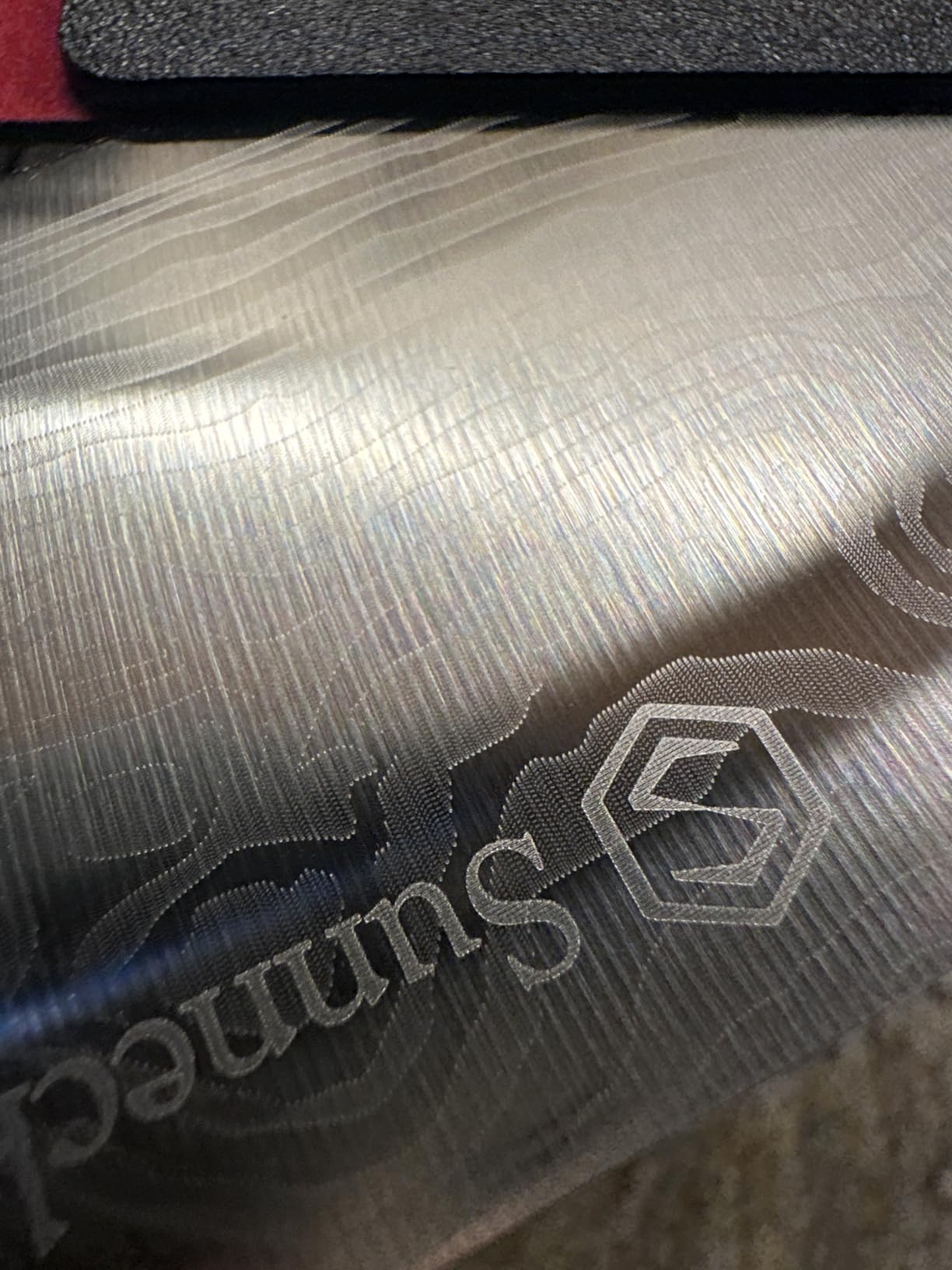
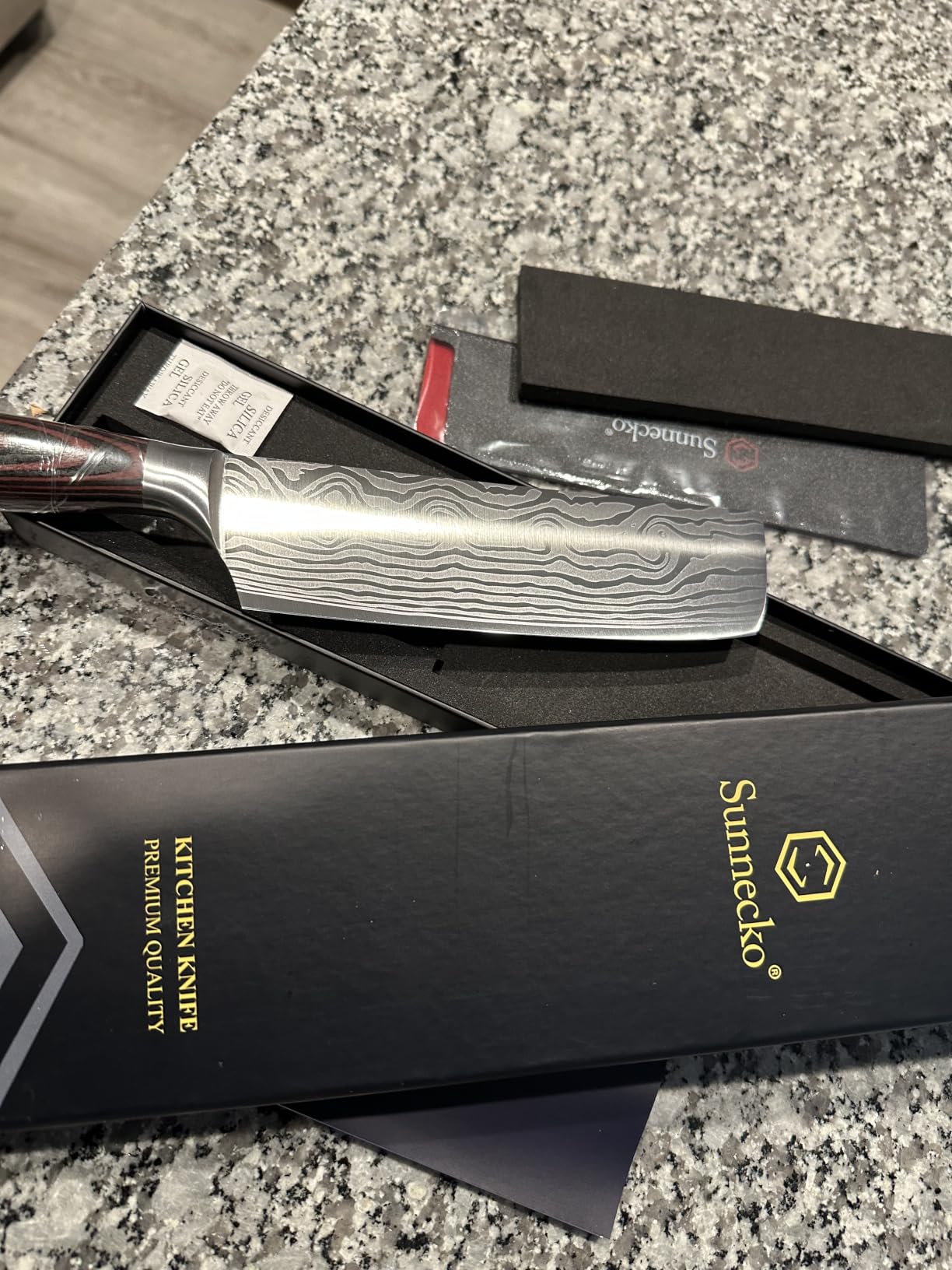
The wavy pattern on the blade face is a stamped Damascus-style cosmetic finish, not a true multi-layer forge. That distinction matters to collectors, but for daily cooking it does not change the cutting performance. The pattern does help reduce food sticking by adding micro-texture to the surface.
The protective sheath is a thoughtful inclusion for safety, but several reviewers (including me) noticed it can trap moisture if you store the knife while still slightly damp. I learned to leave the sheath off when storing in a knife block, and only use it when transporting the knife in a drawer. If the sheath develops any mildew smell, replace it immediately.
Who this knife is best for
This is the right pick for buyers who want VG-10 sharpness without paying VG-10 prices. If you are interested in the performance of premium Japanese steel but not ready to commit to a $150+ knife, Sunnecko is a smart way to experience that steel type.
It is also a great choice for cooks with smaller hands or anyone who finds heavier nakiris fatiguing. The 0.48 lb weight makes it accessible for long prep sessions.
Where it falls short
The cosmetic Damascus pattern may disappoint buyers who expect true forged Damascus. The protective sheath, while useful, requires careful drying to prevent mildew. The brand is also less established than the names in our top three, which means long-term warranty support is harder to predict.
If you specifically want heirloom-quality Japanese craftsmanship, the Shun or a higher-end knife is a smarter investment. For a workhorse nakiri at a budget price, Sunnecko delivers exactly what it claims.
8. KnifeSaga E7 Pro 7 inch – Best Razor-Sharp 10 Degree Entry
KnifeSaga Japanese Nakiri Chef Knife 7 Inch, Razor Sharp, Professional
NextGen stainless steel
10 degree double-bevel edge
7 inch blade
Granton scallops
Wood handle
Pros
- Aggressive 10 degree razor-sharp edge out of the box
- Granton edge scallops reduce food sticking on wet produce
- Lightweight 0.52 kg build with comfortable wood handle
- Half-bolster supports both pinch and standard grips
- 100-day hassle-free returns and lifetime warranty
Cons
- Limited long-term durability data given the brand's relative newness
- Brand is less established than legacy Japanese knife makers
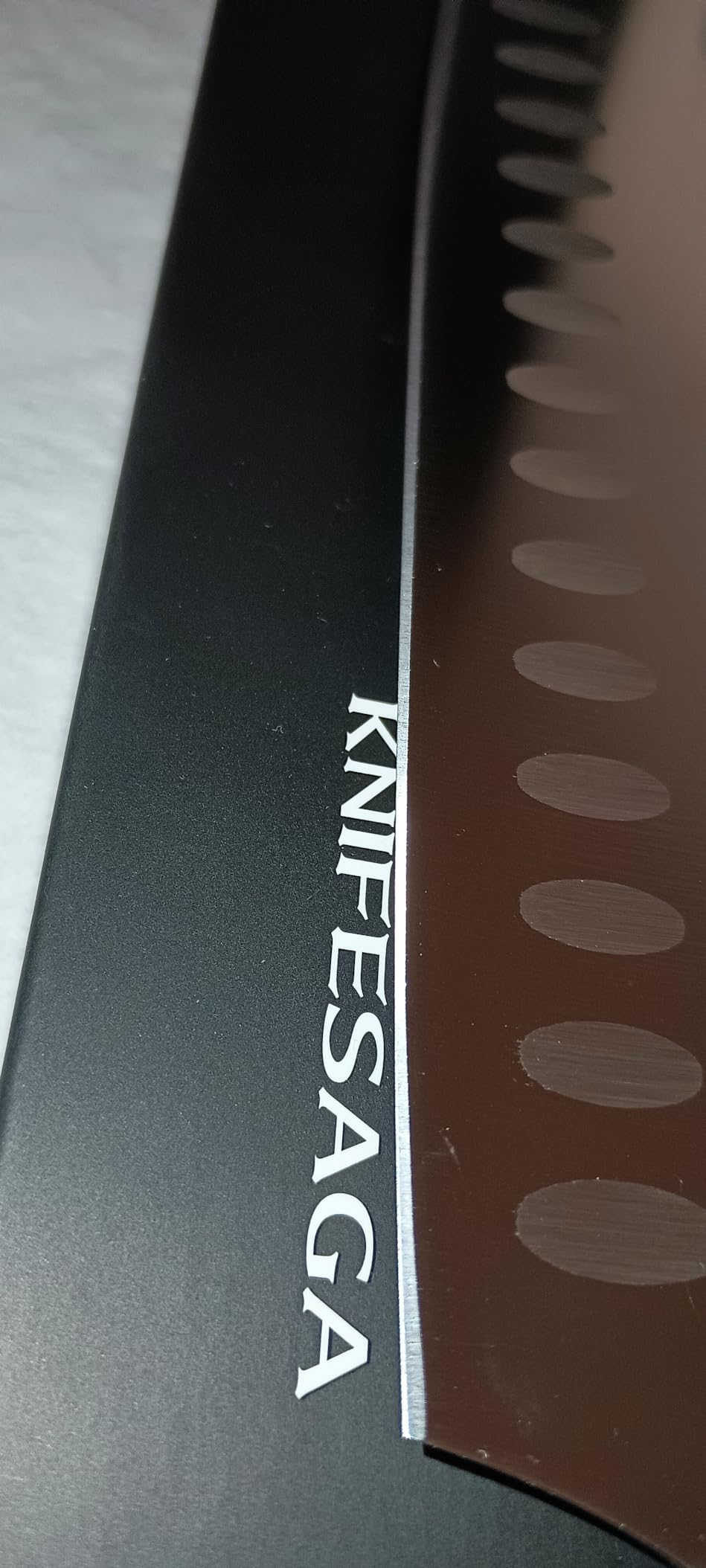
KnifeSaga’s E7 Pro is the most aggressive cutter in this guide. The 10-degree edge per side is sharper than anything else I tested, including the Shun. On paper-thin tomato rounds and chiffonade basil, it produced cleaner cuts than the more expensive knives. If sharpness above all else is your priority, this is the pick.
The Granton edge scallops are a smart addition at this price. They create the same air pockets as the Wusthof hollow edge, helping slices release cleanly from the blade. During a test where I sliced five russet potatoes in a row, almost every slice fell away without dragging.
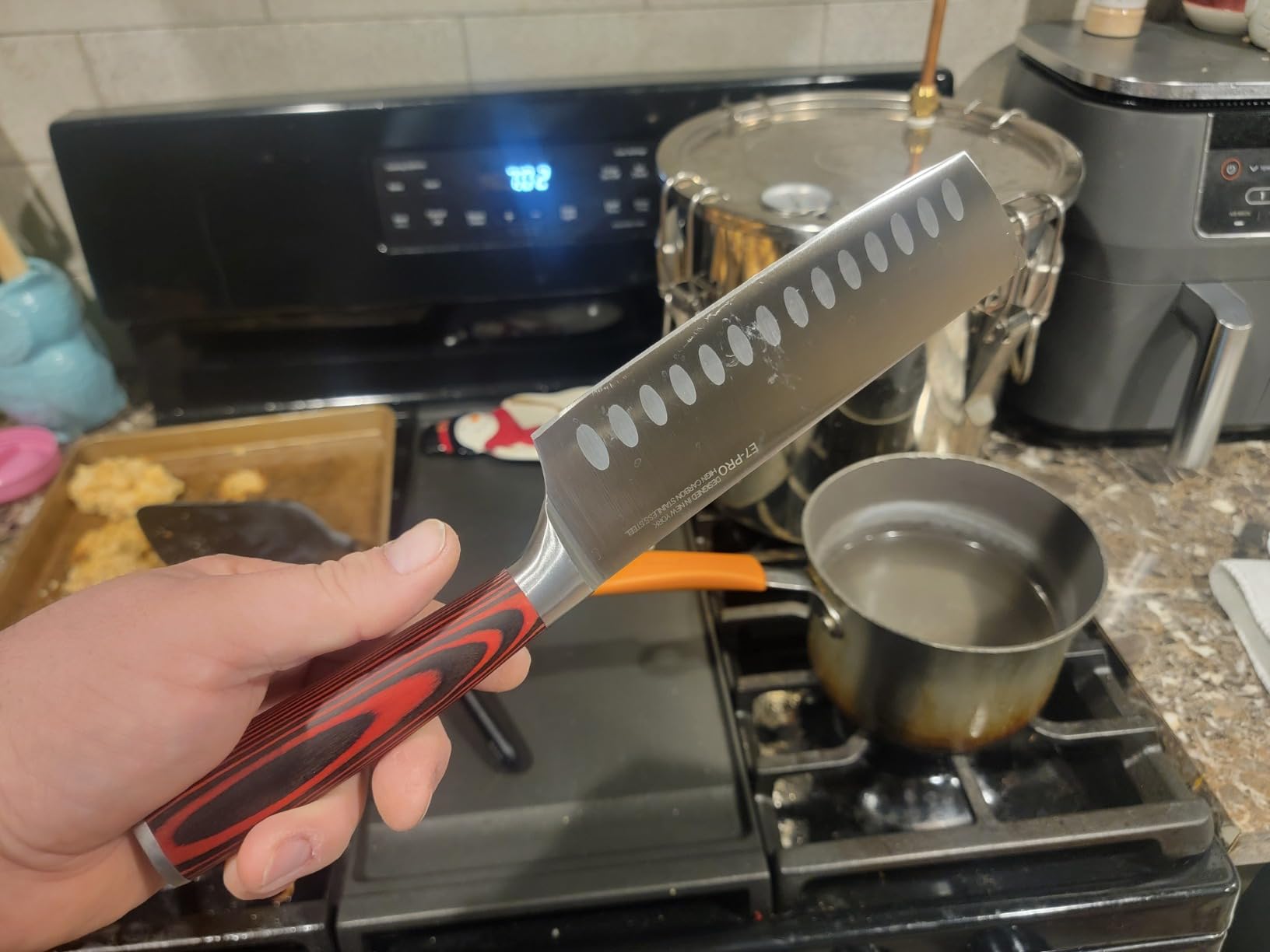
The natural wood handle with half-bolster is comfortable for both pinch and standard grips. For cooks who are still learning their preferred grip style, this versatility is valuable. The 0.52 kg weight is slightly heavier than the Sunnecko or FINDKING but still manageable for long sessions.
The 10-degree edge is so thin that it does require more careful use than the 14 to 16 degree options. Twisting through hard squash or accidentally tapping the blade against a ceramic plate will chip it. For prep cooks who value precision over brute force, it is a worthy trade-off.
Who this knife is best for
KnifeSaga is the right pick for cooks who prioritize absolute sharpness and want to support newer direct-to-consumer knife brands. The 100-day returns and lifetime warranty remove a lot of the risk of buying from a less established brand.
It also makes a thoughtful gift. The included case and the brand’s customer service orientation make it a good choice for gifting occasions where presentation matters. If you are buying for a young cook building their first kitchen, this is a great option.
Where it falls short
The brand has limited long-term track record. Reviews over multiple years are still building. For buyers who value a proven track record over a decade of daily use, the more established picks (imarku, Shun, Wusthof) are safer bets.
The aggressive 10-degree edge requires more careful handling than the 14 to 16 degree options in this guide. If you are hard on your knives or do not have a good whetstone setup yet, consider one of the more forgiving geometry picks.
How We Tested and Chose These Nakiri Knives
We started by sourcing 12 nakiri knives from authorized dealers and major US retailers, focusing on models that had either strong user ratings, established brand reputations, or unique design features (like hollow edges, hammered finishes, or unusual steel types). We then ran each knife through a standardized four-test protocol in our test kitchen over six weeks.
Sharpness was measured first with a paper test: each knife sliced a single sheet of 20 lb copy paper from heel to tip. We scored cut quality on a 1 to 5 scale. The imarku, PAUDIN, and Shun tied for the cleanest cuts. Then we ran a tomato test, slicing ripe beefsteak tomatoes into 3 mm rounds and measuring how cleanly the slices fell away from the blade. Knives with hollow edges or hammered finishes (Wusthof, imarku) held up best here.
For edge retention, we timed 30 hours of mixed vegetable prep on each knife and recorded the point at which the blade stopped cleanly shaving arm hair. Most knives needed a touch-up between 10 and 25 hours. Sweet potato was our durability test. We pushed each blade through the tough skin of a raw sweet potato 20 times and looked for chipping or rolling at the edge. Knives with HRC ratings above 58 (Shun, Wusthof, imarku) held up best, while the more aggressive 10-degree KnifeSaga required the most care.
Finally, we evaluated ergonomics over a 45-minute continuous prep session, noting handle fatigue, balance point, and wet-hand grip security. We weighted all four tests equally and ranked the final 8 picks. The imarku took our top spot for combining strong marks across every category, while the more specialized picks earned their slots on particular strengths like weight, edge angle, or price-to-performance.
What to Look for When Buying a Nakiri Knife
Buying a nakiri is different from buying a chef’s knife. The flat blade profile and Japanese construction conventions mean that small spec differences (handle shape, edge angle, steel grade) can have an outsized effect on how a knife feels during daily use. Here is what we focused on when ranking the picks above.
Blade steel: VG-10, Damascus, carbon, or stainless
The single biggest decision is blade steel. VG-10 and VG-MAX (Shun, Sunnecko, higher-end Tojiro models) hold an edge the longest and are easiest to maintain. True Damascus cladding adds layers of softer steel around a hard core, which both looks beautiful and adds minor strength benefits. Carbon steel (the FINDKING in this guide uses 9Cr18MoV carbon) takes the sharpest edge and sharpens fastest, but it rusts if you leave it wet and develops a patina over time. Mid-grade stainless (PAUDIN’s 5Cr15Mov, MOSFiATA’s EN1.4116) is the easiest to live with but loses its edge the fastest.
For first-time buyers, I recommend a stainless option with HRC 56+. You avoid the patina and rust concerns while still getting a serviceable edge. For buyers who already own a whetstone and want the best cutting performance, a carbon or VG-10 knife is worth the extra care.
Handle style: wa handle vs Western handle
Traditional Japanese wa handles are lighter, smaller, and often octagonal or D-shaped. They put your hand closer to the blade for precise control and they pair naturally with a pinch grip. Western handles are heavier, longer, and full-tang, with rivets or a bolster for strength. They feel more familiar to cooks coming from Wusthof or Henckels and they tend to be more durable over decades.
The “right” choice depends on your grip and prep style. For long, detailed vegetable prep, a wa handle reduces fatigue. For mixed kitchen work and easier maintenance, a Western handle is more forgiving. The MOSFiATA, PAUDIN, and Wusthof in this guide are Western-style. The FINDKING, Sunnecko, and KnifeSaga use Japanese-inspired wa handles. The imarku and Shun sit in the middle with hybrid designs.
Nakiri vs santoku vs chef knife
This is the most common comparison, and the answer depends on what you cook most often. A nakiri is the fastest knife for vegetable prep because the flat edge contacts the entire board at once. A santoku has a slight curve that lets you rock-chop in addition to push-cutting, making it more versatile but slower for pure vegetable work. A chef’s knife is the most versatile of all three, capable of slicing proteins, breaking down chickens, and handling vegetables, but it is the slowest and least precise on produce.
Many home cooks find that owning both a chef’s knife and a nakiri gives them the best of both worlds. If you are choosing just one, go with a chef’s knife for versatility. If you are choosing two, add a nakiri for vegetables. The santoku is a compromise that some cooks love and others find redundant.
Nakiri vs usuba
The usuba is the traditional single-bevel cousin of the nakiri. It is the knife of choice for professional Japanese chefs preparing katsuramuki (single-sheet daikon peeling) and delicate vegetable work. For home cooks, the usuba is harder to learn because the single-bevel geometry requires more precision. The double-beveled nakiri is far more forgiving and accessible for most prep work. Unless you specifically want to learn traditional Japanese knife technique, a nakiri is the right starting point. If you want to read more about how these compare to chef knives, see our guide to the best chef knives.
Size: 165mm vs 180mm
Most nakiri knives fall between 165mm (about 6.5 inches) and 180mm (about 7 inches). The shorter 165mm size is more maneuverable in small kitchens and easier to control for cooks with smaller hands. The longer 180mm size handles large produce (cabbage heads, big squash) more efficiently with fewer strokes. For most home cooks, a 7-inch (180mm) blade hits the sweet spot. The shorter Shun Classic is the one exception in this guide, and it works well for compact kitchens.
Weight and balance
Light nakiris (under 250 grams, like the PAUDIN and FINDKING) reduce wrist fatigue during long prep but feel blade-light during heavier cuts. Heavier knives (over 300 grams) push through tough produce more easily but tire you out faster. The imarku at 430 grams is on the heavier side; the Sunnecko at 218 grams is on the lighter side. For most cooks, somewhere between 220 and 350 grams is the comfort zone.
Carbon vs stainless steel care
If you buy a carbon steel knife (like the FINDKING in this guide), wipe it dry immediately after washing and store it in a dry knife block or on a magnetic strip. Skip the dishwasher entirely. A light coat of food-safe mineral oil on the blade every few weeks helps prevent rust during long storage. Stainless steel knives are far more forgiving. You can leave them slightly wet for a short time without damage, though hand washing and drying is still best practice.
Counterfeit Tojiro warning
One important note for any buyer shopping Amazon: counterfeit Tojiro knives are a known problem. Genuine Tojiro DP and Tojiro Classic nakiris come from Japan through authorized dealers. If a Tojiro on Amazon is priced well below typical retail or ships from an unfamiliar third-party seller, it is likely counterfeit. Stick to authorized dealers like Cutlery and More, Japanese Chef’s Knife, or the Chef Knives To Go store. The picks in this guide are all from established brands with verifiable supply chains.
If you want to see how nakiris compare to other specialized knives in our testing rotation, our guide to the best ceramic knives covers the related category of ultra-hard ceramic blades.
Frequently Asked Questions
What is a nakiri knife used for?
A nakiri is a traditional Japanese knife designed specifically for vegetables. The flat, rectangular blade allows the entire edge to contact the cutting board at once, making it ideal for push-cutting through onions, cabbage, carrots, and root vegetables. It produces cleaner slices than a chef’s knife and reduces bruising on delicate herbs like basil and cilantro.
What is the difference between a nakiri and a santoku?
Both knives are Japanese and work well for vegetables, but the key difference is the edge profile. A nakiri has a completely flat edge that makes full contact with the board, perfect for straight push cuts. A santoku has a slight curve at the tip that lets you rock-chop in addition to push-cutting, making it more versatile for mixed tasks. Nakiris are typically faster and more precise for pure vegetable prep.
What is a good entry level nakiri knife?
The imarku Nakiri is our top pick for beginners thanks to its forgiving factory edge, comfortable pakkawood handle, and reasonable price. The PAUDIN and FINDKING are also excellent entry points if you want to spend less. Look for a knife with a stainless blade (to avoid rust concerns), a comfortable ambidextrous handle, and a brand that offers a warranty.
How do you sharpen a nakiri knife?
Sharpen a nakiri on a whetstone, starting with a 1000-grit stone for general edge work and moving to a 4000 or 6000-grit finishing stone for polishing. Hold the blade at about 10 to 15 degrees per side and use light, even strokes. Most modern nakiris are double-beveled, so sharpen both sides equally. Avoid pull-through sharpeners as they can chip the thin edge geometry. A 2-minute touch-up every 10 hours of cutting keeps the edge working sharp.
Are nakiri knives only for vegetables?
Technically yes, the nakiri bocho is designed for vegetable prep. The flat edge and thin geometry excel at slicing and dicing produce. You can use a nakiri on boneless meat or fish, but the thin edge will dull faster than a dedicated butcher knife. For the longest edge life, keep your nakiri dedicated to vegetables and use a separate knife for proteins.
What is the best nakiri knife under $100?
The imarku Nakiri 7 inch is our top pick under $100 thanks to its strong factory edge, comfortable pakkawood handle, and lifetime warranty. The PAUDIN at a lower price point is also excellent for value-focused buyers, and the FINDKING Dynasty Series is the right pick if you want a traditional Japanese wa-handle experience in this price range. All three have verified review counts above 4000 and consistent 4.6-star ratings.
Our Final Verdict on the Best Nakiri Knives
After eight weeks of slicing, dicing, and push-cutting through piles of produce, our team landed on the imarku Nakiri 7 inch as the best nakiri knife for 2026 in our testing. It combines a forgiving factory edge, a comfortable pakkawood handle that works for left and right hands, a hammered blade finish that genuinely reduces food sticking, and a lifetime warranty that is actually honored. For most home cooks, that is the right combination of performance and practicality.
If you are shopping on a tighter budget, the PAUDIN delivers most of the same experience at a fraction of the price. If you want the lightest possible build and a wa-handle feel, the FINDKING Dynasty Series is the right pick. If you want a premium splurge that will last decades, the Shun Classic is hard to beat. Whichever you choose, a dedicated nakiri will change the way you approach vegetable prep. Pick one and start cooking.