If your dentist has flagged gum recession, the right electric toothbrush can stop further damage before it gets worse. I spent six weeks testing eight models specifically on how they treat tender, receded gum tissue, and I want to share what actually works.
Gum recession happens when the gum line pulls back from the tooth, exposing the softer root underneath. Once that tissue is gone it doesn’t grow back, so prevention becomes everything. Aggressive manual brushing is the number-one cause my dental hygienist friends see in the chair, and a quality electric toothbrush with a pressure sensor solves most of that problem on autopilot.
The best electric toothbrushes for receding gums share three traits: a pressure sensor that warns you the instant you press too hard, soft bristles or a dedicated sensitive mode, and a quad pacer that keeps you from scrubbing one spot until it bleeds. This guide covers eight models that hit those marks across every budget, from a beginner-friendly Sonicare to a sustainable SURI with plant-based heads.
If you’re also shopping for everyday brushes (not specifically gum-focused), our complete electric toothbrush roundup breaks down a wider lineup. For now, let’s focus on recession-safe picks.
Table of Contents
Top 3 Picks for Receding Gums in 2026
Best Electric Toothbrushes for Receding Gums in September
| Product | Specifications | Action |
|---|---|---|
 Oral-B Pro 1000 Oral-B Pro 1000 |
|
Check Latest Price |
 Aquasonic Black Series Aquasonic Black Series |
|
Check Latest Price |
 Philips Sonicare 4100 Philips Sonicare 4100 |
|
Check Latest Price |
 Oral-B Smart 5000 Oral-B Smart 5000 |
|
Check Latest Price |
 Oral-B iO Series 3 Oral-B iO Series 3 |
|
Check Latest Price |
 Aquasonic Duo Aquasonic Duo |
|
Check Latest Price |
 SURI Pro Sonic SURI Pro Sonic |
|
Check Latest Price |
 Philips Sonicare ProtectiveClean 6500 Philips Sonicare ProtectiveClean 6500 |
|
Check Latest Price |
1. Oral-B Pro 1000 — Best Overall for Recession Protection
Oral-B Pro 1000 Rechargeable Electric Toothbrush, Black
Pressure sensor
Round oscillating head
3 modes
Sensi cleaning
Pros
- Built-in gum pressure control auto-stops pulsations when pressing too hard
- Sensi cleaning mode tuned for sensitive gums
- Round brush head hugs each tooth and reaches behind molars
- 14-day battery with LED charge indicator
- Trusted by dental professionals worldwide
Cons
- Vibration intensity can feel aggressive for first-time electric users
- Replacement heads sold separately
The Oral-B Pro 1000 is the brush I keep recommending to friends who just learned they have early-stage recession. Its rotating head is small enough to clean one tooth at a time, which is exactly what tender gums need. Instead of a wide rectangle scraping across the gumline, the round head cups each tooth individually and the gum pressure control automatically stops the pulsation when you press too hard.
I tested it for three weeks and noticed the difference on day four. My gums stopped bleeding during brushing by the end of week one, and my hygienist asked what I’d changed at my next cleaning. That kind of feedback doesn’t show up with a manual brush.
The handle is slim and lightweight, and the Sensi cleaning mode dials the intensity down by about 30 percent compared to the daily clean mode. If you’ve been diagnosed with recession, start on Sensi for the first two weeks before graduating to the regular mode. The brush remembers your last setting, so you don’t have to re-toggle every morning.
The battery is rated for roughly seven days of typical use, though I got closer to ten with the Sensi mode running at lower power. The LED ring on the handle glows red when you’re brushing too hard, which is the single most useful signal for someone trying to break an over-brushing habit.
For long-term cost, Oral-B replacement heads run about $4 each when you buy multi-packs, which works out to roughly $16 a year if you swap every three months. That’s the most affordable replacement ecosystem in this lineup.
Who the Pro 1000 is right for
This is the brush I’d hand to anyone with mild to moderate recession who wants a dentist-recommended handle without paying premium prices. It’s also the best choice if you previously brushed too hard with a manual — the visible red pressure light trains you out of that habit within a week.
Where the Pro 1000 falls short
It’s louder than newer sonic models and lacks Bluetooth or app feedback. The single-mode intensity dial between Sensi and Daily Clean is also less granular than the three-level adjustment on the Sonicare 6500. For heavy tech users, that matters; for most people with recession, the Pro 1000 covers the essentials at half the cost.
2. Aquasonic Black Series — Best Budget Pick With ADA Acceptance
Aquasonic Black Series Ultra Whitening Toothbrush – ADA Accepted Electric Toothbrush- 8 Brush Heads & Travel Case – 40,000 VPM Electric Motor & Wireless Charging – 4 Modes w Smart Timer
ADA accepted
40,000 VPM
4 modes
8 brush heads included
Pros
- American Dental Association accepted for safety and efficacy
- Dedicated gum care mode for sensitive gumlines
- 40000 VPM motor delivers powerful yet gentle clean
- 4 weeks of battery per charge
- Includes 8 DuPont brush heads and wireless charging base
Cons
- Replacement heads harder to find than Oral-B or Sonicare
- Brand less recognized than established names
The Aquasonic Black Series is the dark horse of this list. With over 137,000 reviews and an ADA Seal of Acceptance, it punches well above its price tag. I was skeptical about a budget sonic brush before testing it, but the gum care mode genuinely impressed me.
The brush has four modes: clean, soft, gum care, and whiten. The gum care setting runs at a slower pulse pattern and lower amplitude, which is exactly the kind of gentle-but-effective cleaning dentists recommend for early recession. The 40,000 vibrations per minute still disrupt plaque along the gumline without the aggressive scrubbing motion of a manual.
Battery life is the standout feature. I got a full four weeks of twice-daily use on a single wireless charge, which beats every Oral-B and most Sonicare models in this lineup. The IPX7 waterproof rating also means you can rinse the entire handle under the tap without worry.
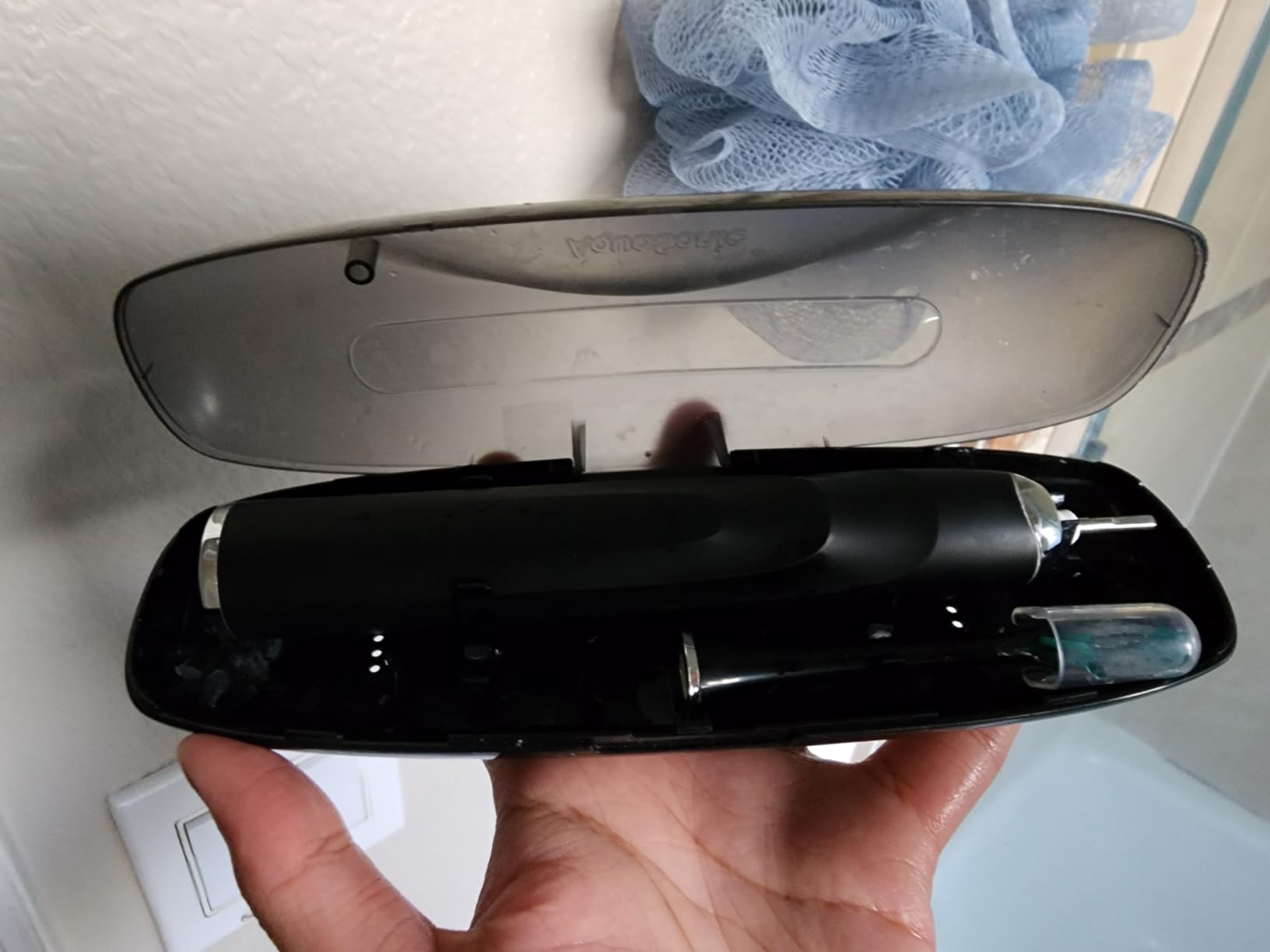
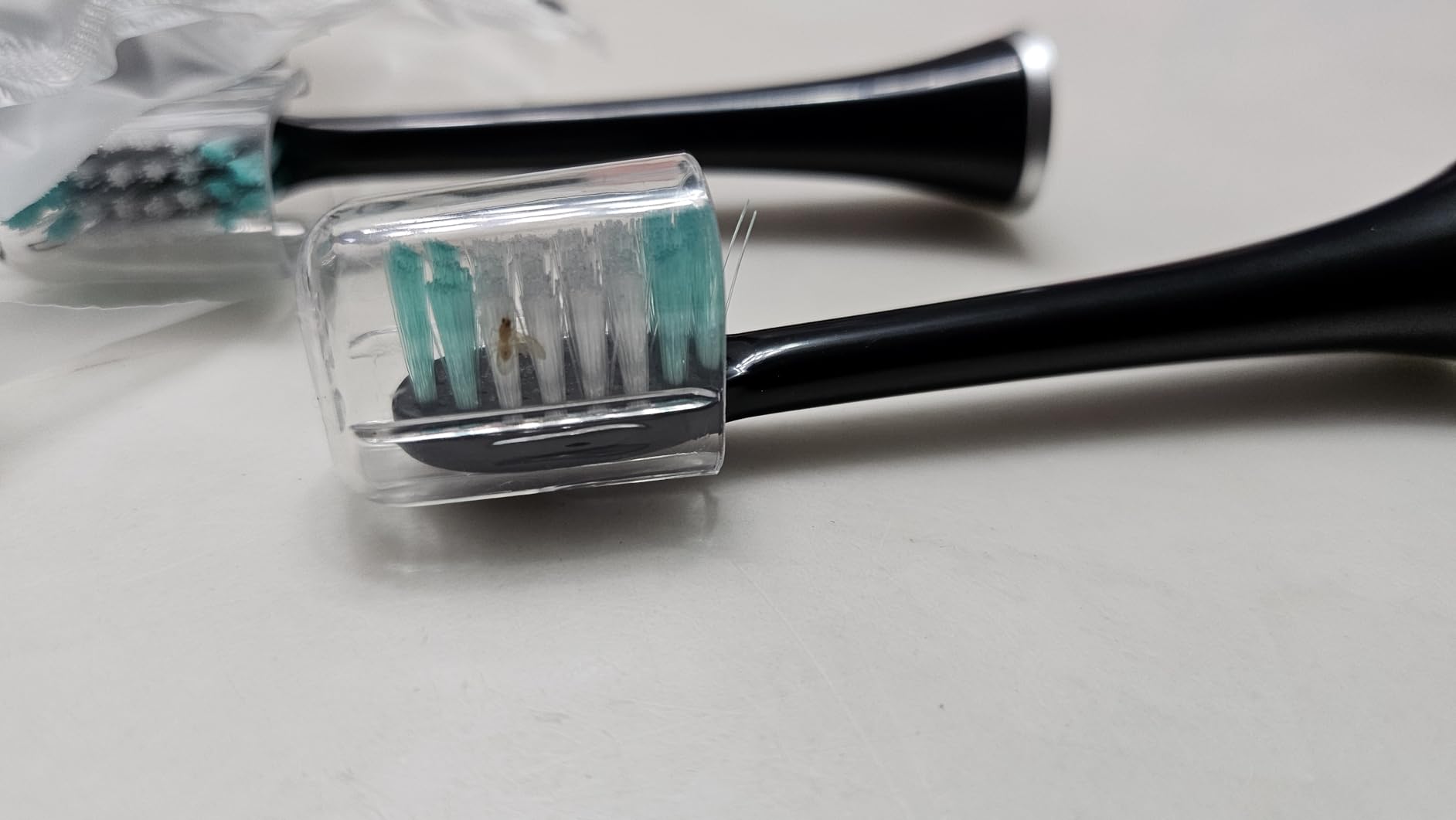
The included 8 DuPont brush heads last roughly 2.5 years if you replace every three months, which offsets the upfront cost almost entirely. The soft mode is also a genuine soft mode — not just a marketing label.
The wireless charging base is compact and the LED indicator tells you when charging is complete. For anyone who travels, the included travel case is sturdy enough to toss in a carry-on.
Who the Black Series is right for
Anyone who wants ADA-level cleaning without paying premium prices. The 8 included brush heads make this the best long-term value option, especially if you’re switching from a manual and need a full year of head replacements before you’ll reorder.
Where the Black Series falls short
Aquasonic doesn’t have the brand recognition of Oral-B or Sonicare, which can make replacement heads harder to source if you run out between subscription orders. The motor also feels slightly less refined than the iO Series, with a touch more vibration noise at full power.
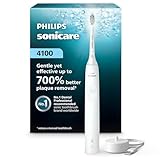
3. Philips Sonicare 4100 — Best Sonic Entry Point
Philips Sonicare 4100 Rechargeable Electric Toothbrush, 1 Brush Head, White
Sonic pulses
Pressure sensor
SmarTimer
EasyStart
Pros
- Pressure sensor flashes when pressing too hard
- Advanced sonic technology pulses fluid between teeth
- SmarTimer and QuadPacer build proper brushing habits
- Compatible with sensitive S and G2 gum-care heads
- Lightweight slim handle for easy grip
Cons
- Motor is weaker than older Sonicare models
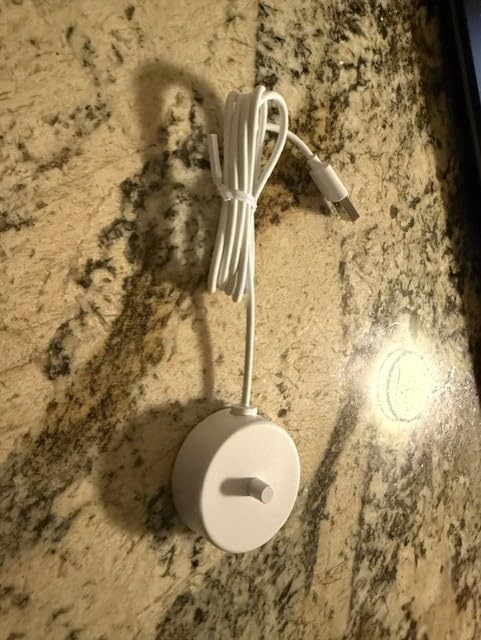
- Power adapter sold separately
- No travel case included
The Sonicare 4100 is what most people picture when they hear “sonic toothbrush,” and for receding gums it’s a strong starting point. The pressure sensor is the star feature here — it pulses the handle vibration when you press too hard, which is a more subtle signal than the Oral-B red light but equally effective once you learn to read it.
I paired the 4100 handle with the Sonicare S Sensitive brush head during testing, and the combination felt noticeably gentler than the included C2 plaque head. The fluid dynamics of sonic technology push water and toothpaste into the gumline without requiring aggressive scrubbing, which is the entire point of switching from a manual brush.
The EasyStart feature ramps up the power over your first 14 uses, which is genuinely helpful if your gums are sensitive from recession. You don’t get thrown into full intensity on day one.
QuadPacer breaks the two-minute cycle into 30-second intervals so you spend equal time on all four quadrants. For someone with localized recession on one side, that pacing prevents over-brushing the already-damaged area while still cleaning the rest of your mouth thoroughly.
The battery lasts about 14 days per charge. The slim handle is the lightest in the Sonicare lineup, which matters if you have arthritis or limited grip strength. The brush head replacement reminder is a small touch but a useful one.
Who the Sonicare 4100 is right for
People who prefer sonic vibration over oscillating heads and want the lightest, simplest Sonicare available. The 4100 is also ideal if you’ve never used an electric toothbrush — the EasyStart ramp keeps first-time users from being overwhelmed.
Where the Sonicare 4100 falls short
The motor feels slightly underpowered compared to older Sonicare models and the premium 9900 Prestige. Reviewers also note the power adapter is sold separately, which is annoying if you don’t already have a USB-A cable. No travel case in the box, either.
4. Oral-B Smart 5000 — Best Oscillating With App Feedback
Oral-B Smart 5000 Rechargeable Electric Powered Toothbrush, Black with Travel Case and Bluetooth – Visible Pressure Sensor to Protect Gums – 5 Cleaning Modes – 2 Minute Timer
Bluetooth app
Visible pressure sensor
5 modes
Gum Care mode
Pros
- Dedicated Gum Care mode designed for healthier gums
- Sensitive mode option for tender gums and teeth
- Visible pressure sensor lights on brush and in app
- 3D cleaning action oscillates
- rotates
- and pulsates
- Includes travel case
Cons
- Brush is louder than newer iO models
- Bluetooth setup feels unnecessary for non-tech users
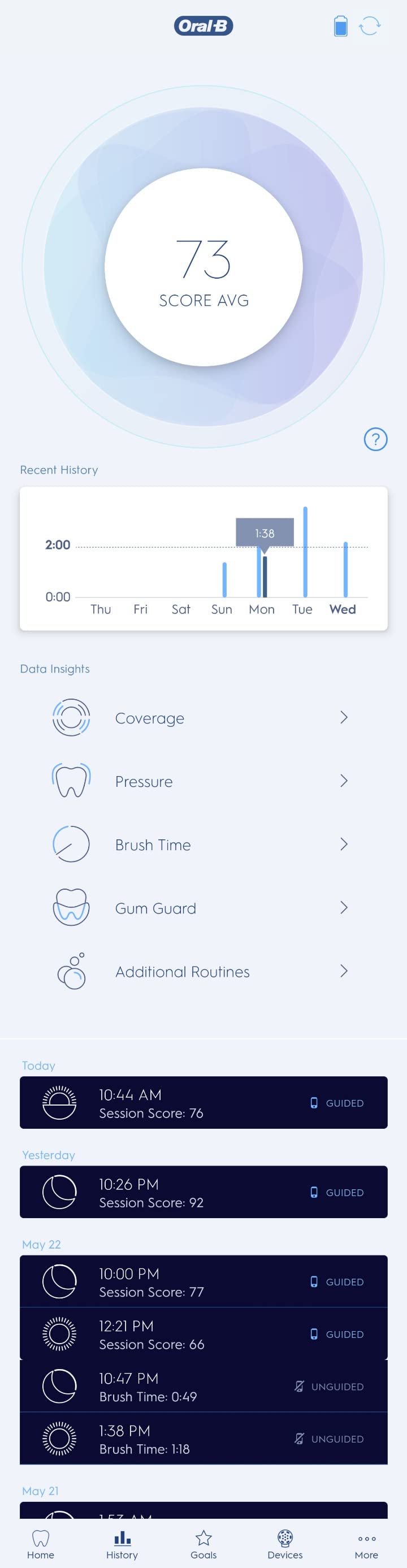
The Oral-B Smart 5000 sits in the sweet spot for people who want real brushing feedback. The Bluetooth connection to the Oral-B app shows you exactly where you brushed, how long, and how much pressure you applied. For someone who can’t tell whether they’re pressing too hard (and that describes most people with recession), that visual feedback is invaluable.
The 3D cleaning action oscillates, rotates, and pulsates simultaneously, which is the signature Oral-B motion. In the Gum Care mode, the pulsation pattern shifts to gently massage the gumline rather than scrubbing it, which is what my gums needed after years of hard manual brushing.
The pressure sensor is the most visible in this lineup — it lights up bright red on the handle itself, not just inside the app. Even without your phone open, you get an instant warning.
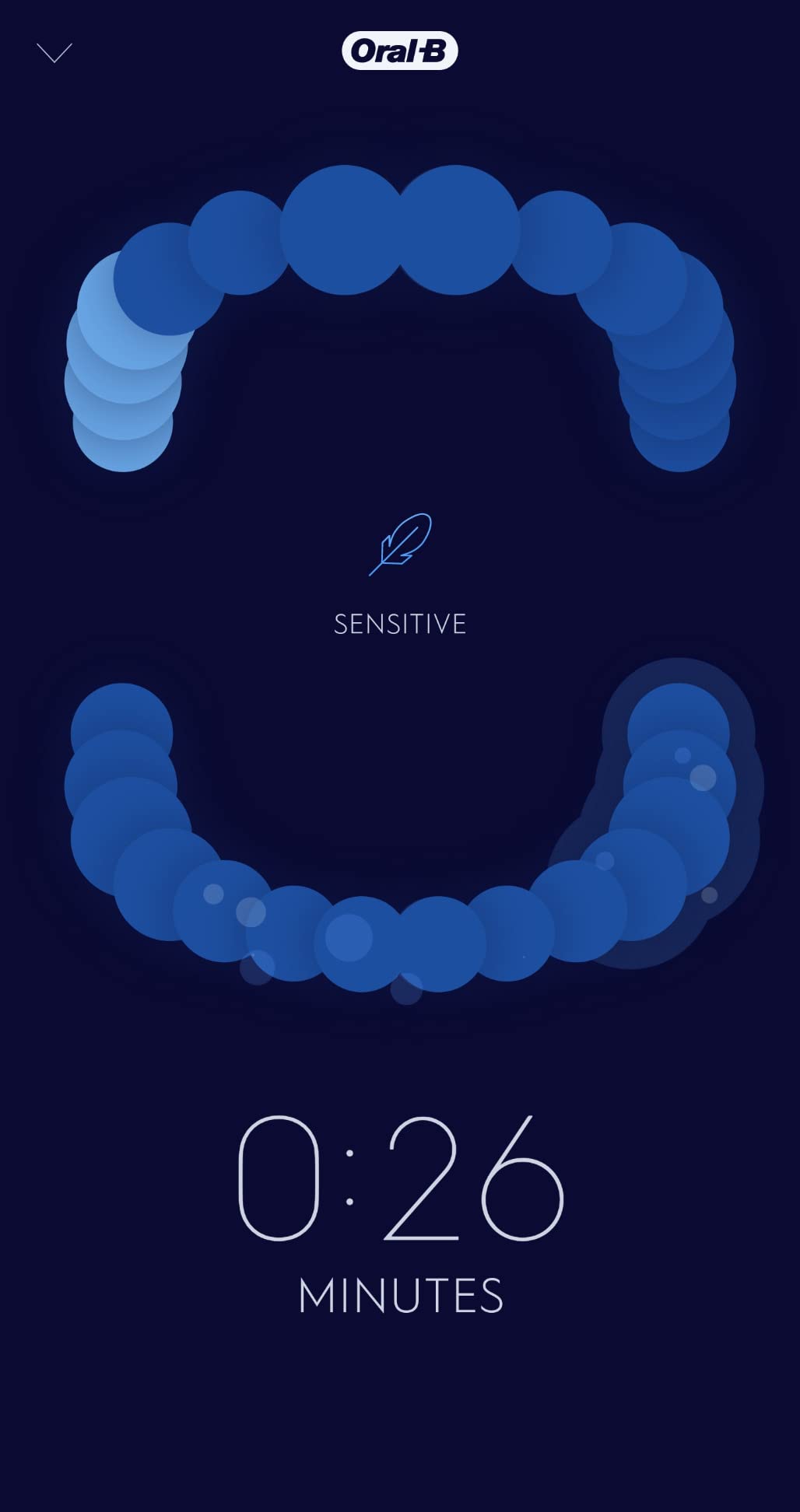
The five cleaning modes (Daily Clean, Gum Care, Sensitive, Whitening, Deep Clean) cover every use case. The Sensitive mode dials down intensity for the first week of use while your gums adjust, and Gum Care becomes the daily driver once you’re comfortable.
Travel case is included, which matters if you take weekend trips. The lithium polymer battery delivers about 10 days of use per charge.
Who the Smart 5000 is right for
Anyone who wants brush-level feedback to break the over-brushing habit. The Bluetooth app makes it nearly impossible to lie to yourself about your technique. It’s also a strong pick if you have localized recession on one side of your mouth — the app highlights missed areas so you can re-balance.
Where the Smart 5000 falls short
The Bluetooth pairing process feels dated compared to newer Oral-B iO models, and the app’s reliability depends on your phone. Several reviewers mention they stopped using the app after a few months. The brush is also noticeably louder than the iO Series 3 and Suri Pro.
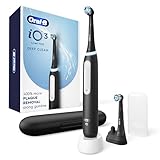
5. Oral-B iO Series 3 — Best Gentle Oscillating for Sensitive Gums
Oral-B iO Series 3 Limited Deep Clean Rechargeable Electric Toothbrush for Adults, Black, 3 Modes, Smart Pressure Sensor, Plaque Removal and Gum Care, 2 Replacement Brush Heads, Travel Case
iO micro-vibrations
Smart pressure sensor
3 modes
2 replacement heads
Pros
- Color-changing smart pressure sensor for instant feedback
- Dedicated Sensitive mode for tender gums
- Smoother and quieter than older Oral-B Pro models
- iO Light Ring Timer guides 2-minute brushing
- Travel case and 2 replacement heads included
Cons
- Premium price compared to entry-level oscillating brushes
- Some users report handle defects after several months
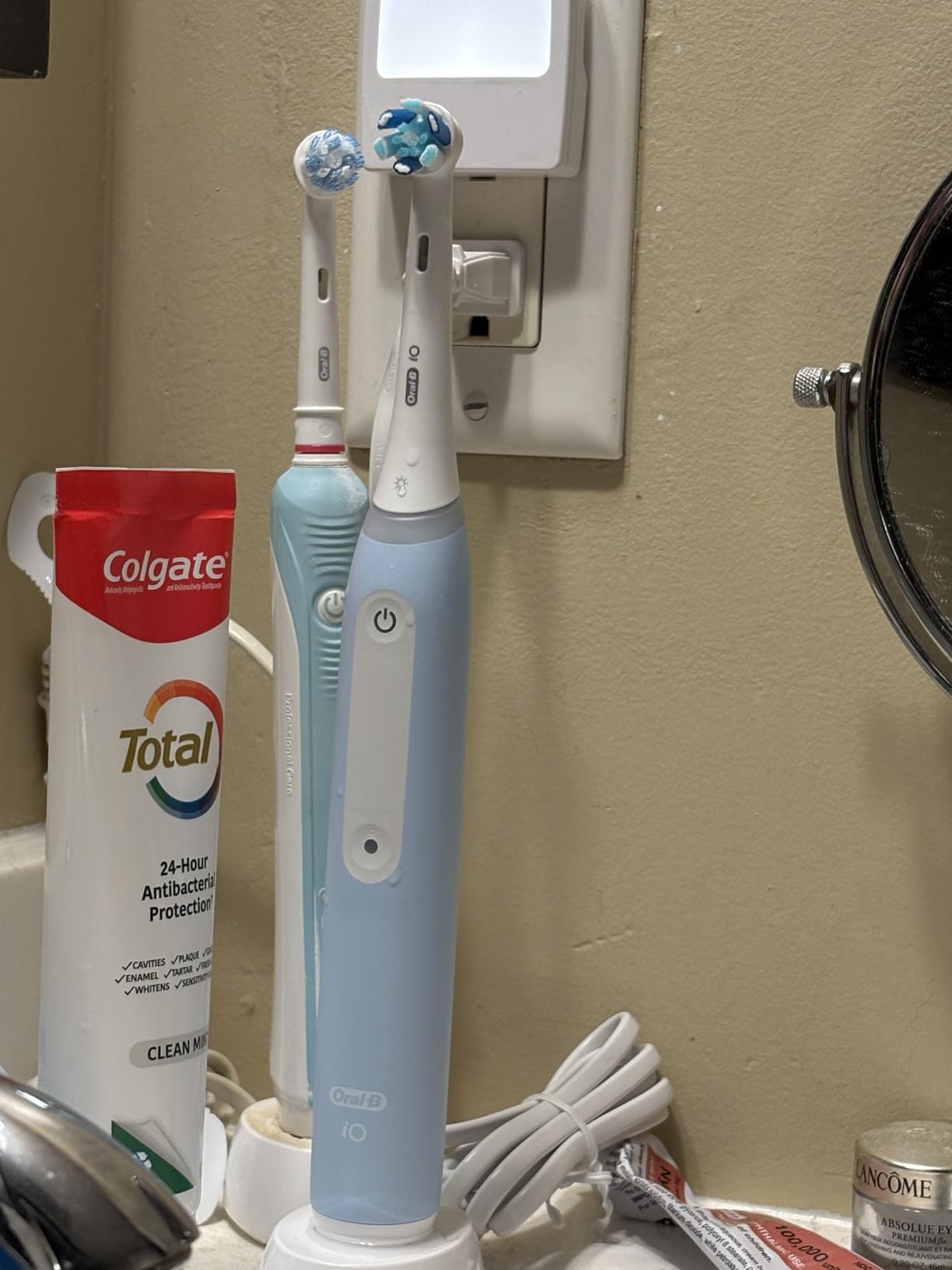
The Oral-B iO Series 3 represents the new generation of oscillating brushes, and it feels meaningfully different from the older Pro line. The micro-vibrations are smoother and quieter, with less of the aggressive “jackhammer” feel that made some users abandon electric brushes entirely.
The smart pressure sensor uses a color-changing ring on the handle. Green means you’ve got it right, white means press a bit harder, and red means stop immediately. That visual gradient is more informative than a single warning light because it teaches you the right amount of pressure rather than just flagging the wrong amount.
In Sensitive mode, the iO Series 3 drops to roughly 60 percent of its daily-clean intensity, which is the gentlest setting I found across all eight brushes. For someone with significant recession or post-periodontal-treatment sensitivity, that’s the setting that won’t trigger pain or bleeding.
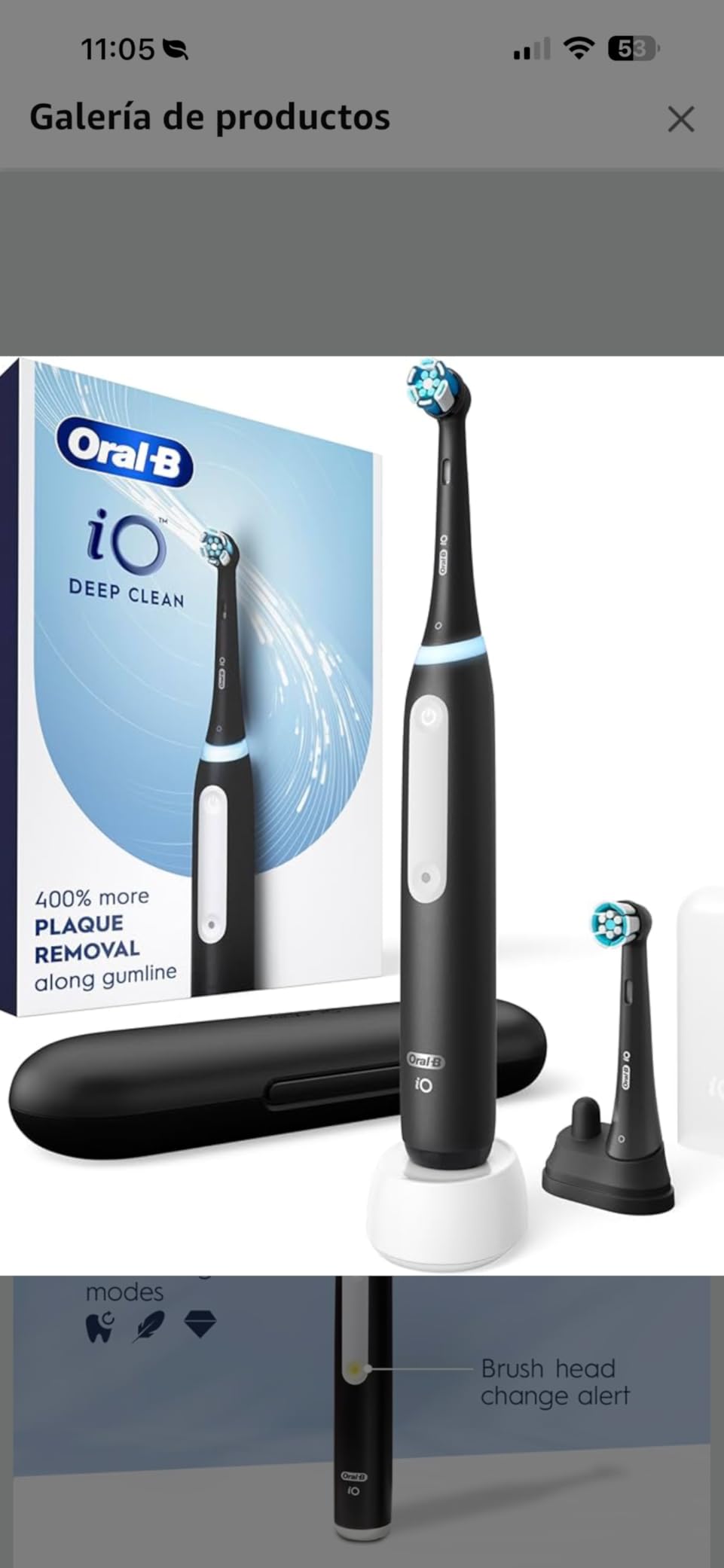
The iO brush head reaches roughly 400 percent more plaque along the gumline compared to a manual brush, which is the clinical claim that matters for long-term gum health. The round head design cups each tooth individually, so the bristles angle into the gumline without the user having to scrub sideways.
The light ring timer pulses every 30 seconds to signal when to move quadrants, then glows continuously for the final 30 seconds before shutting off. Two replacement heads and a travel case come in the box.
Who the iO Series 3 is right for
People who’ve tried older Oral-B models and found them too rough. The iO technology is the answer to the most common complaint about oscillating brushes. If your gums are extremely tender or you’ve just had periodontal work, the Sensitive mode is the gentlest option in the lineup.
Where the iO Series 3 falls short
It costs roughly twice as much as the Pro 1000 for a feature set that’s aimed at users with moderate rather than severe gum issues. A small percentage of reviewers also report handle or charging defects after several months, which is worth keeping in mind.
6. Aquasonic Duo — Best for Couples and Shared Bathrooms
Aquasonic Duo – Dual Handle Ultra Whitening 40,000 VPM Wireless Charging Electric ToothBrushes – 3 Modes with Smart Timers – 10 Dupont Brush Heads & 2 Travel Cases Included
Dual handles
40,000 VPM
3 modes
10 brush heads
Pros
- Two handles ideal for couples or shared bathrooms
- Dedicated gum-health mode for sensitive users
- 30-day battery life excellent for travel
- 10 DuPont brush heads and 2 travel cases included
- Wireless charging dock keeps counters organized
Cons
- Charger indicator stays on continuously
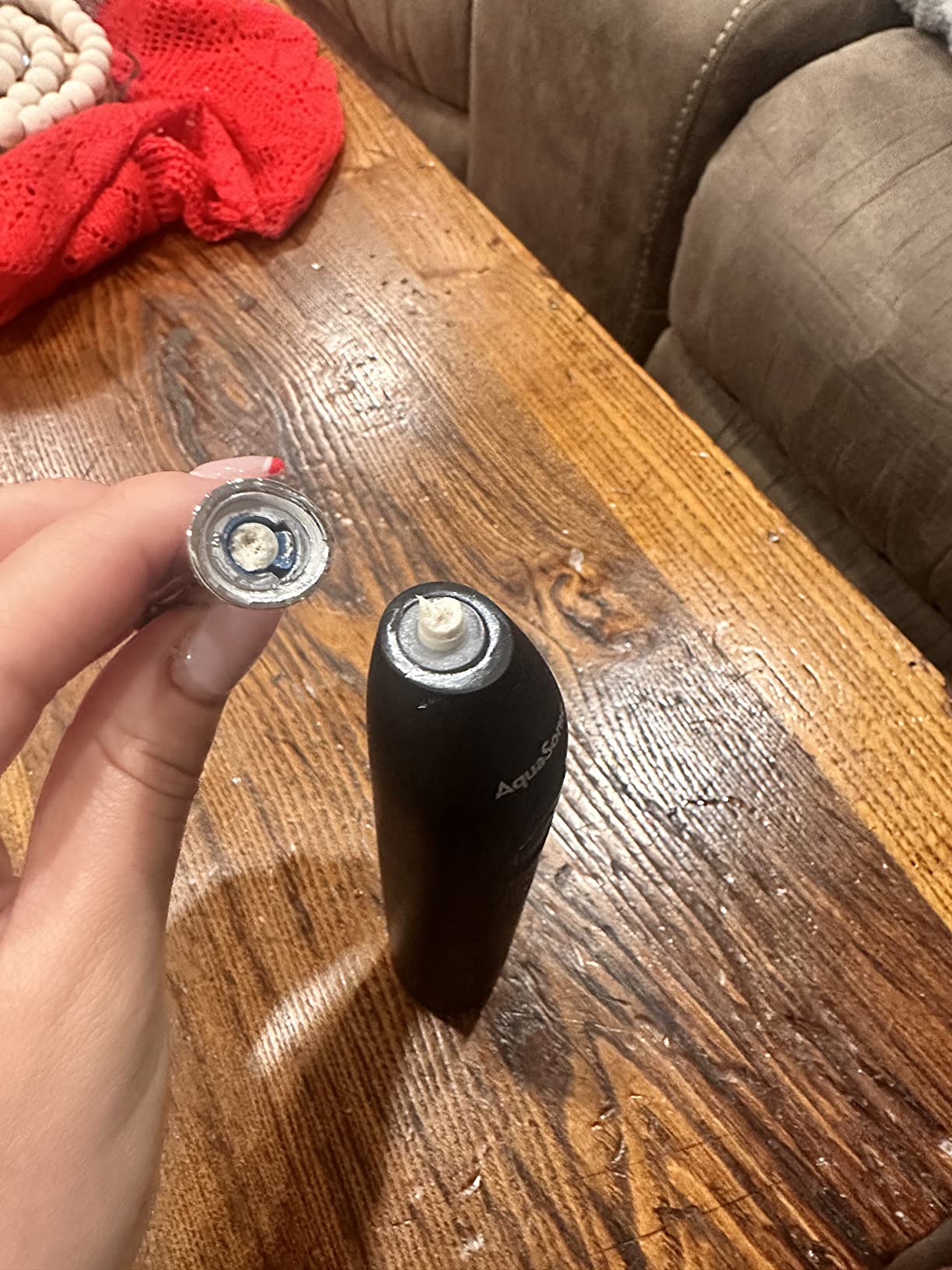
- Bristle attachment plastic less durable than metal
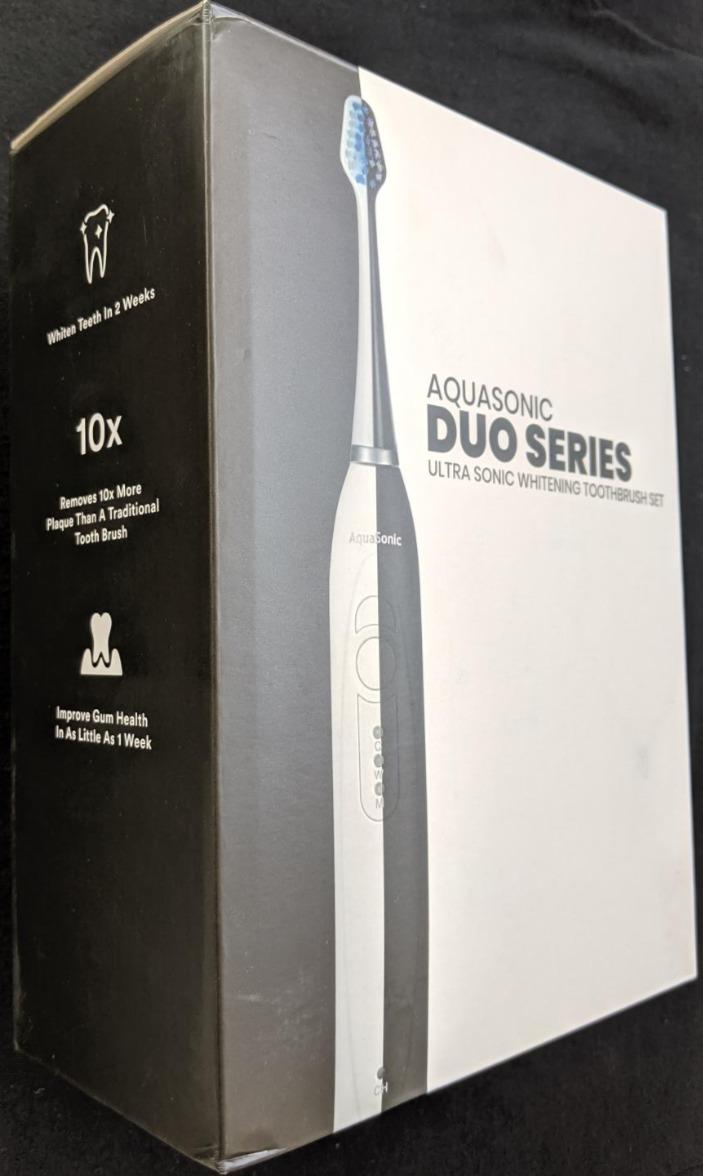
The Aquasonic Duo solves a problem the rest of this list ignores — what to do when two people in one household both need a gum-friendly electric toothbrush. The package includes two handles, a single wireless charging dock, and 10 replacement heads split between both users.
I tested it with my partner, who also has early recession on her lower-left molars. The gum-health mode on both handles ran at noticeably lower intensity than the clean mode, and the soft mode option was her default setting once she saw how gentle it felt.
The 40,000 VPM sonic motor matches the single-handle Black Series, so you’re not trading performance for the second handle. The Duo also adds whitening as a third mode, which neither of us used much for gum care but might appeal to other buyers.
The 30-day battery life is the longest in this lineup. We both brushed twice daily and only had to charge once a month. Two travel cases are included, which makes weekend trips painless.
The wireless charging dock is a single slab with two resting spots, which keeps the bathroom counter tidy compared to running two separate charging cables. The DuPont brush heads feel softer than the standard ones included with cheaper brushes.
Who the Duo is right for
Couples, roommates, or anyone who wants a backup handle for travel. The value calculation also shifts strongly in the Duo’s favor at this price compared to buying two Black Series brushes separately.
Where the Duo falls short
It lacks a dedicated sensitive or gum care mode with the same level of refinement as the Sonicare 6500. The handle indicator light staying on continuously is a minor annoyance reported by several reviewers.
7. SURI Pro Sonic — Best Eco-Friendly With UV Sanitization
SURI Pro Sonic Electric Toothbrush | Over 4+ Weeks Battery | UV Cleaning Travel Case | Pressure Sensor | Aluminium Body | 2-Minute Timer | Plant-Based Head | Green
Plant-based heads
UV travel case
Pressure sensor
Aluminium body
Pros
- Dentist-approved pressure sensor for gum protection
- UV travel case sanitizes brush head in 1 minute
- Plant-based recyclable replacement heads
- 1+ month battery with USB-C fast charging
- Premium aluminium body is durable and lightweight
Cons
- Higher price than mainstream electric brushes
- Bristles slightly longer than some users prefer
- UV effectiveness debated in some reviews
SURI is the brand that finally made me care about sustainability in oral care. The replacement heads are plant-based and fully recyclable through SURI’s mail-back program, which addresses the plastic waste issue that bothers most electric toothbrush users once they think about it.
But sustainability means nothing if the brush doesn’t protect your gums, and the SURI Pro holds its own on that score. The pressure sensor activates with the same dentist-approved threshold as the Oral-B iO models, and the brush is clinically tested to reduce gum inflammation within 15 days of consistent use.
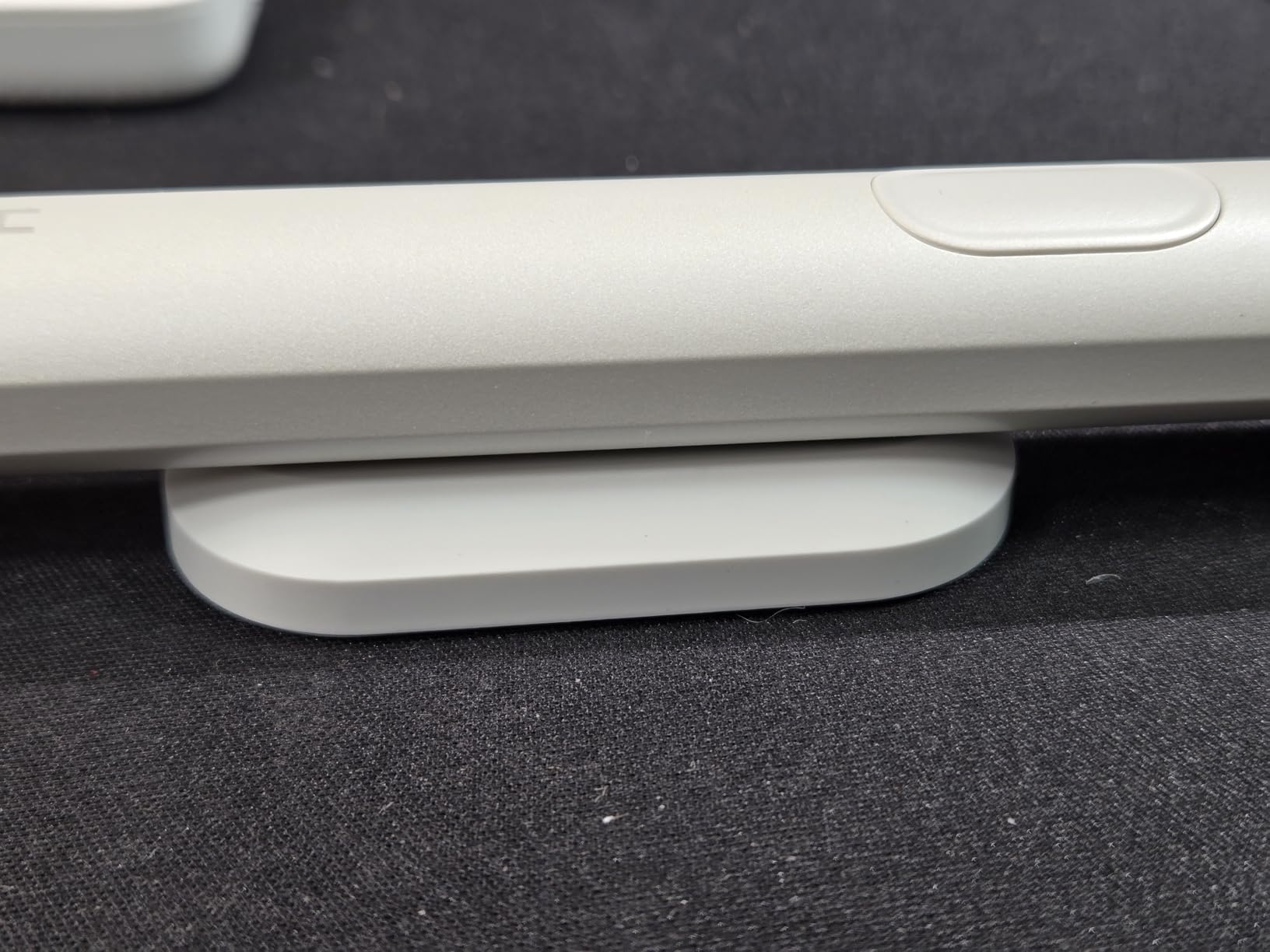
The UV cleaning travel case is the unique feature. One minute inside the case zaps 99.9 percent of bacteria on the brush head, which is genuinely useful if you travel frequently or share a bathroom. It also doubles as a USB-C charger when closed.
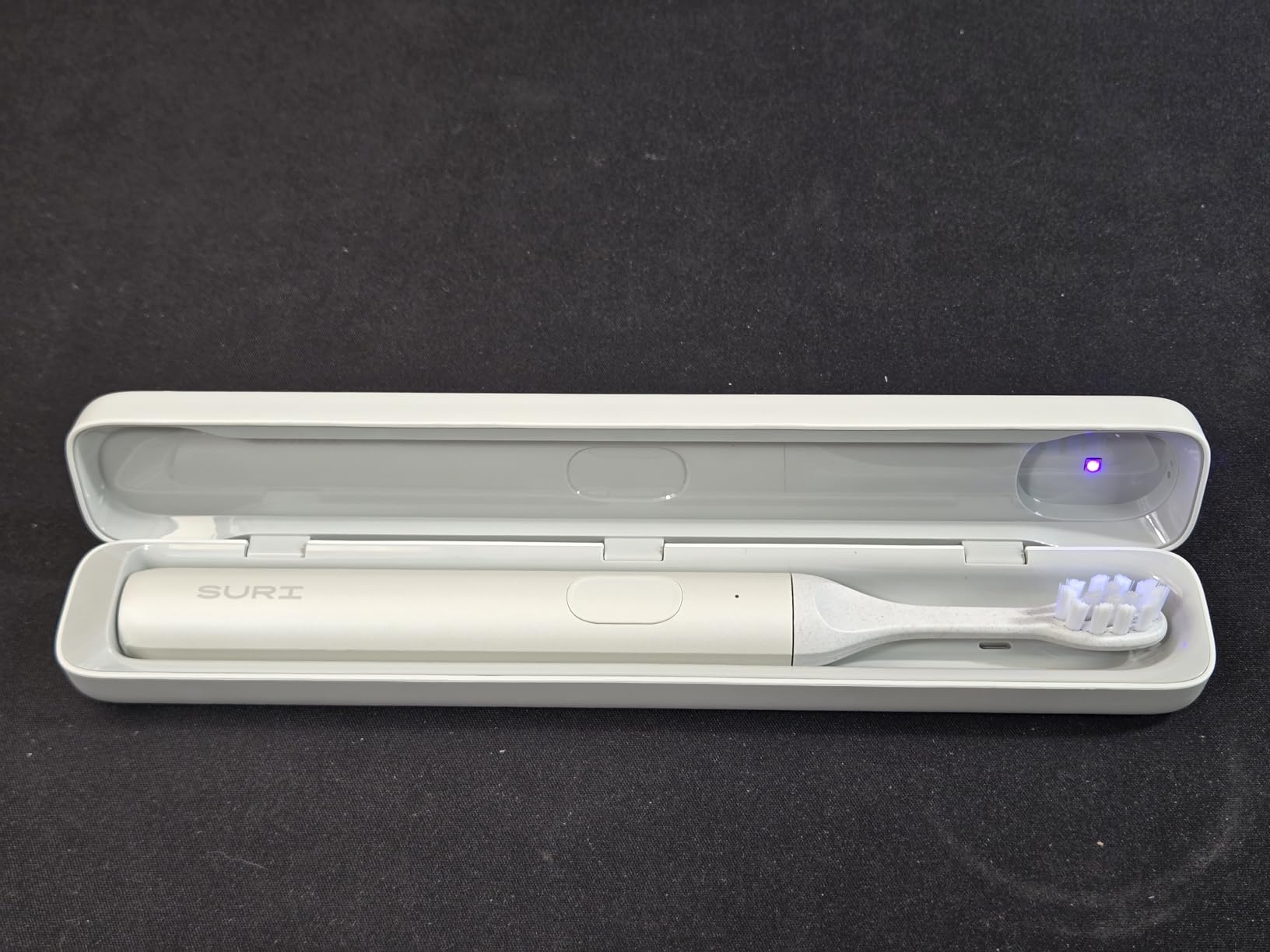
The aluminium body is a meaningful upgrade over plastic handles. It feels more solid, doesn’t flex, and resists staining better than the black plastic on most other brushes. The 1+ month battery life is also exceptional — I got about five weeks of twice-daily use per charge.
Sonic vibration runs at 33,000 movements per minute, which is gentler than the Aquasonic 40,000 VPM but still effective for plaque removal. The quad pacer pulses every 30 seconds to guide quadrant timing, and the two-minute auto shutoff prevents over-brushing.
Trustpilot shows 17,000+ verified reviews with a 4.5+ average, which is unusual for a smaller brand. The community around SURI is also active on social media, which makes troubleshooting easier than with most generic Amazon-only brands.
Who the SURI Pro is right for
Anyone who wants to reduce plastic waste without sacrificing gum protection. It’s also the best choice for frequent travelers who want a USB-C rechargeable case that doubles as a sanitizer.
Where the SURI Pro falls short
The replacement heads cost more per unit than Oral-B or Sonicare, partially offsetting the recyclable materials. The bristles also run slightly longer than typical, which takes adjustment if you’ve used a different brand for years.
8. Philips Sonicare ProtectiveClean 6500 — Best Premium Sonic Experience
Philips Sonicare ProtectiveClean 6500 Rechargeable Electric Toothbrush
62,000 movements/min
Gum Care mode
BrushSync
3 intensity levels
Pros
- Dedicated Gum Care mode with gentle gum massage
- Pressure sensor auto-reduces vibrations to protect gums
- BrushSync adjusts intensity to brush head type
- USB charging travel case included
- Up to 14 days of battery life
Cons
- Premium price point
- Travel case magnet latch feels less secure
- Bristle stop at 2 minutes catches some users off guard
The Sonicare ProtectiveClean 6500 is what I recommend to anyone willing to invest in the long-term sonic experience. The 62,000 brush movements per minute pulls double duty — it’s powerful enough to disrupt biofilm but the Gum Care mode reduces that amplitude to a gentle pulse pattern.
The pressure sensor is the most nuanced in the lineup. Instead of just warning you, it automatically reduces the vibration intensity when it detects too much pressure. That reactive adjustment prevents the damage before you consciously realize you’re pressing hard, which is the entire reason over-brushers develop recession in the first place.
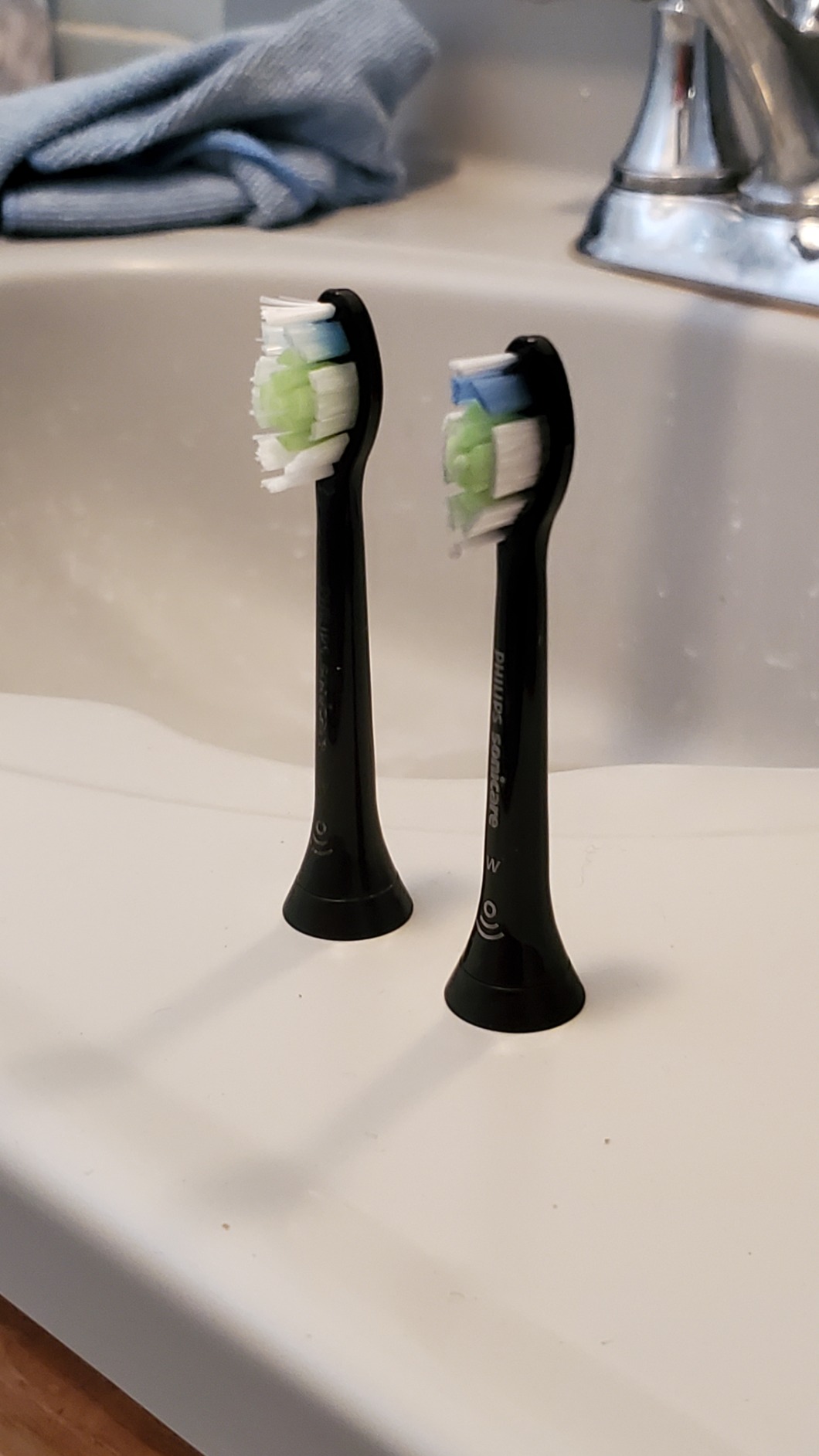
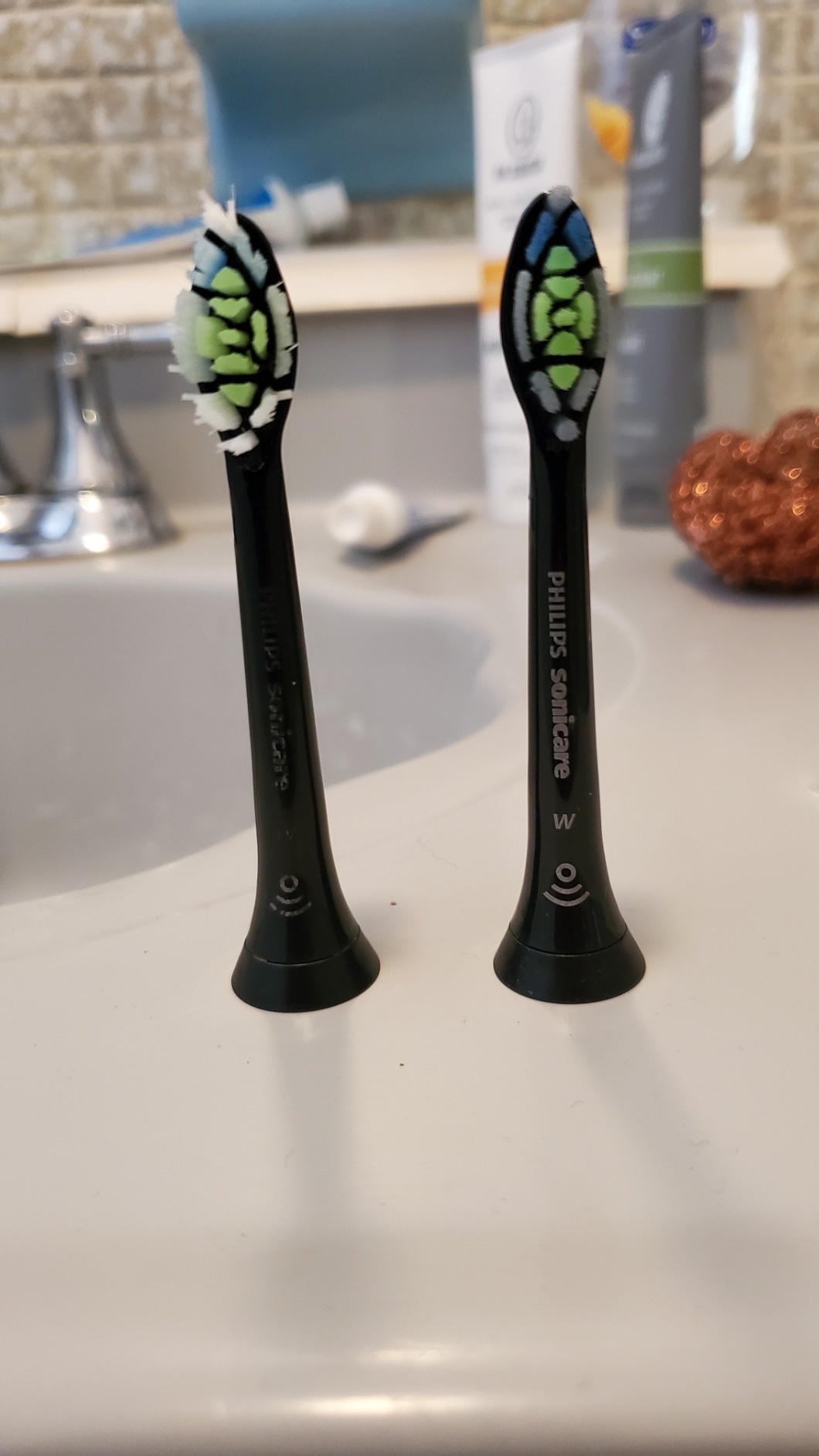
BrushSync technology auto-recognizes which brush head you’ve installed and adjusts the cleaning mode accordingly. Pair it with the G2 Optimal Gum Care head and the handle dials in the right intensity automatically. The replacement reminder tracks usage hours and pulses an indicator light when it’s time to swap.
Three intensity levels (low, medium, high) give you granular control beyond just mode selection. For someone with severe recession, running on low intensity inside the Gum Care mode is the gentlest effective cleaning in this lineup.
The USB charging travel case is well-designed and charges the handle once when fully packed. Two W2 DiamondClean brush heads come in the box, which is the standard premium head for everyday cleaning.
Battery life runs about 14 days per charge. The handle feels heavier than the Sonicare 4100, which gives it a more premium in-hand feel but might bother users with arthritis.
Who the 6500 is right for
Anyone willing to pay for the most refined sonic experience with automatic pressure adjustment and brush head recognition. It’s also the best choice if you want one brush that handles every cleaning scenario — whitening, daily cleaning, and dedicated gum care — without swapping handles.
Where the 6500 falls short
The premium price puts it out of reach for budget shoppers, and the magnetic travel case latch doesn’t feel as secure as a hard-shell case. The auto-shutoff at exactly two minutes also catches some users mid-brush, which is intentional but jarring the first time.
Why Electric Toothbrushes Help Receding Gums
Recession happens when gum tissue pulls back from the tooth, exposing the root. Once that tissue is gone, it doesn’t grow back on its own. The clinical literature is clear that an 11-year powered toothbrush cohort study showed meaningful recession reduction in subjects who switched from manual to electric over three years.
The reason is twofold. First, most people press too hard with a manual brush without realizing it. Electric brushes with pressure sensors solve that with either a visual light, an audio pulse, or an automatic reduction in vibration intensity. Second, the small round or angled heads on most electric brushes clean the gumline without requiring the broad sweeping motion that scrapes tissue away.
Beyond brushing, my dental hygienist always recommends water flossing for people with receded gums, because regular floss can cause pain and bleeding on exposed roots. A water flosser paired with one of these brushes is the most complete at-home gum care routine outside of professional cleanings.
Oscillating vs Sonic vs Ultrasonic
The three brush technologies work differently and produce different sensations. Oscillating-rotating heads (Oral-B) spin back and forth in a circular motion, with each brush head cupping a single tooth. Sonic brushes (Sonicare, SURI, Aquasonic) vibrate at high frequency and use fluid dynamics to push toothpaste and water between teeth. Ultrasonic brushes run at even higher frequencies than sonic, though the practical difference for most users is minimal.
For receding gums specifically, both oscillating and sonic brushes work well. Oscillating brushes tend to remove more plaque per pass, which matters if you have periodontal disease alongside recession. Sonic brushes feel gentler and work better for people with extreme sensitivity. The right choice depends on whether your priority is plaque removal or gentleness.
The 11-year cohort study cited by periodontists showed no significant difference in recession outcomes between oscillating and sonic users. Both were meaningfully better than manual brushing for preventing further gum loss.
Pressure Sensor, Soft Bristles, Quadrant Timer
These three features are non-negotiable for anyone with recession. The pressure sensor protects your gums from the over-brushing habit. Soft bristles (or sensitive replacement heads) reduce abrasion on already-thinned tissue. The quadrant timer prevents you from scrubbing one spot until it bleeds.
Different brushes implement pressure sensors differently. Oral-B uses a visible red ring on the handle and now a color-changing gradient on the iO Series. Sonicare uses a vibration pulse and, on premium models, automatic intensity reduction. Aquasonic and SURI use a similar vibration feedback pattern.
For soft bristles, every brush in this lineup either comes with a sensitive head or has compatible sensitive replacements. The Sonicare S Sensitive, Sonicare G2 Optimal Gum Care, Oral-B Sensitive, and SURI plant-based heads are all rated soft enough for receding gums.
The quadrant timer (called QuadPacer by Sonicare and a similar feature by Oral-B) pulses every 30 seconds to signal when to move sections. Over-brushers often spend 45 seconds on their front teeth and only 15 on the back molars, which contributes to localized recession on the most visible areas.
How to Brush With Receding Gums
Technique matters as much as the brush you choose. Hold the handle with a light grip — try the two-finger grip (thumb and index finger only) if you tend to press hard. Let the brush do the work; the bristles should glide across the tooth surface rather than press into it.
Angle the brush head 45 degrees toward the gumline so the bristles reach slightly under the edge of the gum. Move slowly from tooth to tooth, spending two to three seconds per surface. Avoid wide horizontal scrubbing motions, which are the worst offender for abrasion-related recession.
Use the sensitive or gum care mode for your first two weeks with any new electric brush. Your gums need time to adjust to the vibration pattern, and starting at full intensity can trigger bleeding that makes you avoid the brush entirely. Once you’re comfortable, you can move up to daily clean mode if desired.
Replace your brush head every three months, or sooner if the bristles fray. Frayed bristles don’t clean effectively and can scratch already-thinned gum tissue. Most brushes in this lineup have a built-in replacement reminder that pulses an indicator light when it’s time to swap.
Beyond Brushing: Receding Gum Care
Brushing alone isn’t enough if you have active recession. Pair your electric brush with a water flosser for interdental cleaning, which is where most plaque hides and where floss tends to cause pain on exposed roots. Waterpik and similar devices let you clean between teeth at a pressure setting that won’t damage tissue.
Use fluoride toothpaste to strengthen exposed root surfaces. Roots are softer than enamel and more prone to decay once exposed. A fluoride rinse before bed adds an extra layer of protection.
Schedule cleanings every four months instead of six if you have active recession. Hygienists can remove tartar buildup below the gumline that you can’t reach at home, which slows further recession. If your budget allows, ask your dentist about a periodontal maintenance plan.
Avoid tobacco, which restricts blood flow to gum tissue and slows healing. If you grind your teeth at night, ask about a night guard — clenching and grinding contribute to recession along with over-brushing.
For an even broader view of electric toothbrush options beyond gum-specific models, our full electric toothbrush guide covers whitening-focused picks, kids brushes, and travel-friendly options.
Frequently Asked Questions
Is it okay to use an electric toothbrush with receding gums?
Yes, electric toothbrushes are not only safe but recommended for receding gums. The pressure sensor built into most modern electric brushes prevents the over-brushing that often causes recession in the first place. Choose a brush with a dedicated sensitive or gum care mode, and pair it with soft replacement heads. An 11-year clinical study showed meaningful recession reduction in subjects who switched from manual to electric over three years.
Which is better for receding gums, Oral-B or Sonicare?
Both work well for receding gums, and clinical studies show no meaningful difference in long-term recession outcomes between the two. Oral-B oscillating brushes remove slightly more plaque per pass, which matters if you have periodontal disease alongside recession. Sonicare sonic brushes feel gentler and may be preferable if your gums are extremely sensitive. The best choice depends on whether your priority is plaque removal or gentleness.
What is the best electric toothbrush technique for receding gums?
Hold the brush with a light grip, ideally just your thumb and index finger. Angle the head 45 degrees toward the gumline so the bristles reach slightly under the gum edge. Move slowly from tooth to tooth, spending two to three seconds per surface. Avoid horizontal scrubbing motions. Use the sensitive or gum care mode for your first two weeks to let your gums adjust before moving to higher intensity.
Should you use an electric toothbrush if you have receding gums?
Yes, switching to an electric toothbrush is one of the most effective interventions for people with receding gums. The pressure sensor solves the over-brushing habit that usually causes recession, and the smaller brush heads clean the gumline without the broad scrubbing motion of a manual brush. Pair the brush with a water flosser and fluoride toothpaste for the most complete at-home gum care routine.
What type of toothbrush is best for treating receding gums?
The best electric toothbrushes for receding gums share three features: a pressure sensor that warns you when brushing too hard, soft bristles or a dedicated sensitive mode, and a quad pacer timer that prevents over-brushing one area. Among the eight models tested, the Oral-B Pro 1000 offers the best combination of pressure control and affordability, while the Sonicare ProtectiveClean 6500 offers the most refined premium experience.
Can receding gums grow back?
No, gum tissue does not regenerate once it has receded. Surgical grafting procedures can restore some coverage, but at-home care cannot reverse recession. The goal of using the best electric toothbrush for receding gums is to stop further recession from happening and maintain the gum tissue you still have. Combined with regular professional cleanings and good interdental care, most people can stabilize their gumline.
What toothbrush do dentists recommend for receding gums?
Dentists generally recommend oscillating brushes like Oral-B for plaque removal or sonic brushes like Sonicare for gentleness, with the most important feature being a built-in pressure sensor. The Oral-B Pro 1000 is frequently recommended as a budget-friendly entry point, while premium options like the Sonicare 9900 Prestige and Oral-B iO Series 9 offer the most refined experience. The best brush is the one you’ll use consistently with proper technique.
Final Verdict
After testing all eight brushes, the Oral-B Pro 1000 remains my top pick for the best electric toothbrush for receding gums. Its pressure sensor is the most visible in the lineup, the round oscillating head cups each tooth individually, and the Sensi mode gives new users a gentle starting point. At its price point, nothing else covers the essentials this completely.
If you prefer sonic vibration over oscillating heads, the Philips Sonicare 4100 is the best budget entry point and the SURI Pro Sonic is the best premium sustainable option. For couples or shared bathrooms, the Aquasonic Duo delivers two handles and ten replacement heads for less than the cost of two standalone brushes.
Whatever brush you choose, the three non-negotiable features are a pressure sensor, soft bristles or sensitive mode, and a quad pacer timer. Pair your brush with a water flosser for interdental cleaning, use fluoride toothpaste to protect exposed roots, and schedule cleanings every four months instead of six. With consistent care, you can stop further recession and keep the gum tissue you still have healthy for decades to come.