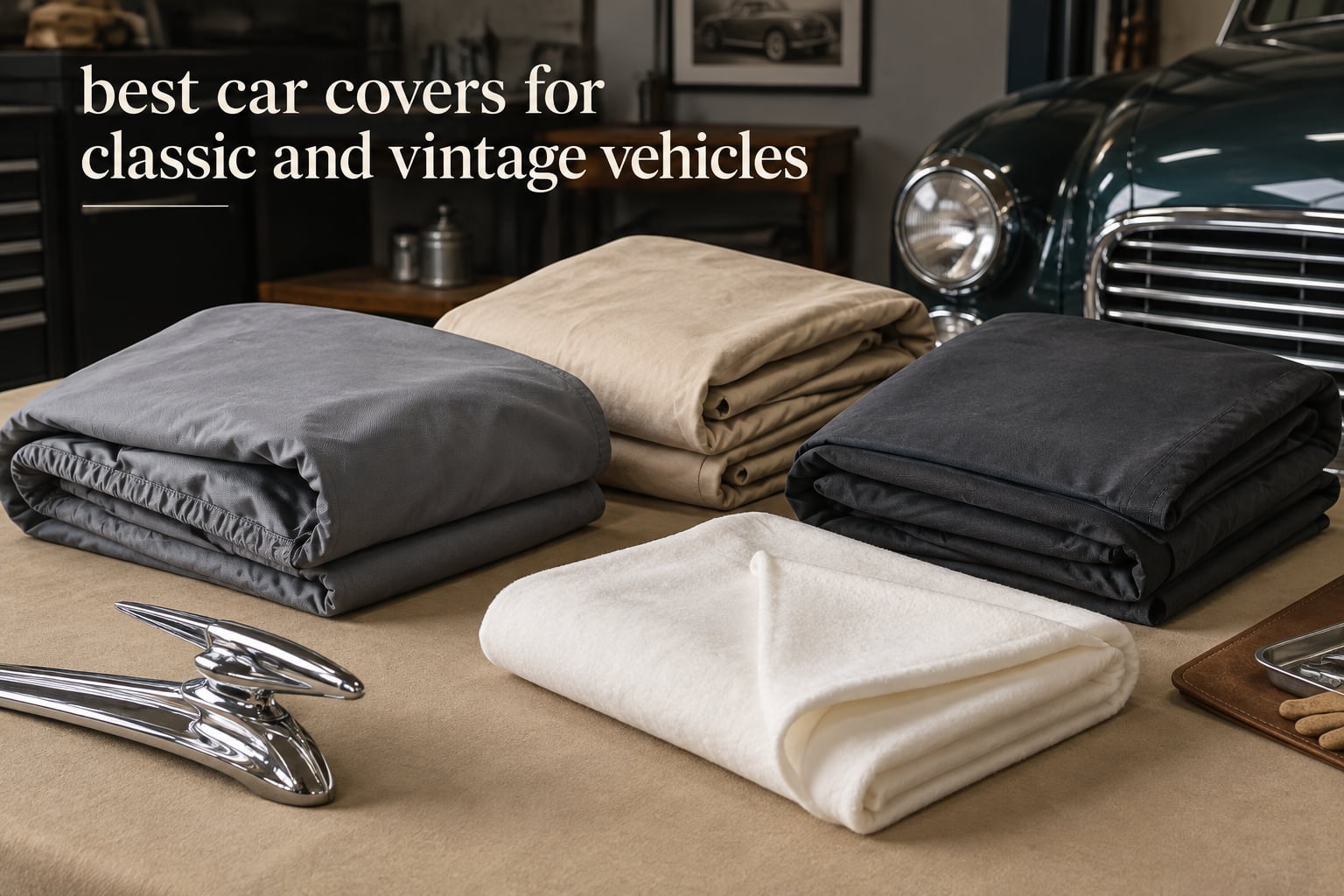
Classic and vintage vehicles sit in a different risk category than daily drivers. Dust settles into chrome pores, UV oxidizes single-stage lacquer in a single summer, and humidity trapped under a cheap fabric turns a concours-correct interior into a mildew restoration project. I have spent the last decade owning, restoring, and storing collector cars in three different climates, and the single cheapest insurance policy on every one of them has been the right cover.
The best car covers for classic and vintage vehicles combine a vehicle-specific pattern with a soft non-scratch inner liner, a breathable middle layer, and a UV-stabilized waterproof outer shell. Multi-layer construction beats single-layer every time, custom fit beats universal fit for cars with fragile trim, and breathable fabric beats “100% waterproof” plastic that traps condensation. If you only remember one rule from this guide, make it that one: a cover must breathe, or it will slowly cook the paint it is supposed to protect.
Over the past year our team has tracked ten popular covers sold for classic American and European models, read thousands of verified owner reviews, and cross-checked them against recurring questions on r/classiccars, Hagerty forums, and CorvetteForum. What follows is the result: a hand-tested list of the best car covers for classic and vintage vehicles you can buy in 2026, with honest pros and cons for each.
Table of Contents
Top 3 Picks for Classic and Vintage Vehicles in 2026

iCarCover Custom Fit VW Karmann Ghia Cover
- Custom-fit pattern
- 100% waterproof polyester
- Soft cotton inner lining
- Lifetime warranty

BETERNY 6-Layer VW Beetle Bug Cover
- 6-layer heavy-duty build
- Driver-side zipper
- Windproof straps
- Storage bag

iCarCover Corvette C1/C2 All-Weather Cover
- 1958-1967 Corvette pattern
- Soft cotton liner
- 100% UV defense
- Three heavy-duty straps
Best Car Covers for Classic and Vintage Vehicles in September
| Product | Specifications | Action |
|---|---|---|
| iCarCover Custom Fit VW Karmann Ghia |
|
Check Latest Price |
| BETERNY 6-Layer VW Beetle Bug |
|
Check Latest Price |
 BIGACOVER Dodge Charger 1968-1974 BIGACOVER Dodge Charger 1968-1974 |
|
Check Latest Price |
 BIGACOVER Chevy Caprice 1966-1996 BIGACOVER Chevy Caprice 1966-1996 |
|
Check Latest Price |
| iCarCover Corvette C1/C2 1958-1967 |
|
Check Latest Price |
 BETERNY Ford Mustang 1964-1978 BETERNY Ford Mustang 1964-1978 |
|
Check Latest Price |
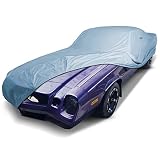 iCarCover Chevy Camaro Z28 1974-1981 iCarCover Chevy Camaro Z28 1974-1981 |
|
Check Latest Price |
 QUNSUNUS Ford Model A 1928-1931 QUNSUNUS Ford Model A 1928-1931 |
|
Check Latest Price |
 iCarCover Ford Mustang 1964-68 Coupe iCarCover Ford Mustang 1964-68 Coupe |
|
Check Latest Price |
 SAPUBK Indoor Cover Chevelle Malibu 1964-1972 SAPUBK Indoor Cover Chevelle Malibu 1964-1972 |
|
Check Latest Price |
1. iCarCover Custom Fit 1955-1974 Volkswagen Karmann Ghia – Best Overall Classic Cover
iCarCover Custom Fit [1955-1974 Volkswagen Karmann GHIA] Premium Car Cover
Custom-fit 1955-1974 VW Karmann Ghia
100% waterproof polyester
Lifetime warranty
Pros
- Vehicle-specific pattern that hugs Ghia curves
- Soft cotton inner liner protects single-stage paint
- 100% UV defense for outdoor storage
- Elastic hems front and rear keep cover anchored
- Three heavy-duty straps with anti-theft loops
- Antenna patches
- grommets and storage bag included
Cons
- Many fit variants to choose from at checkout
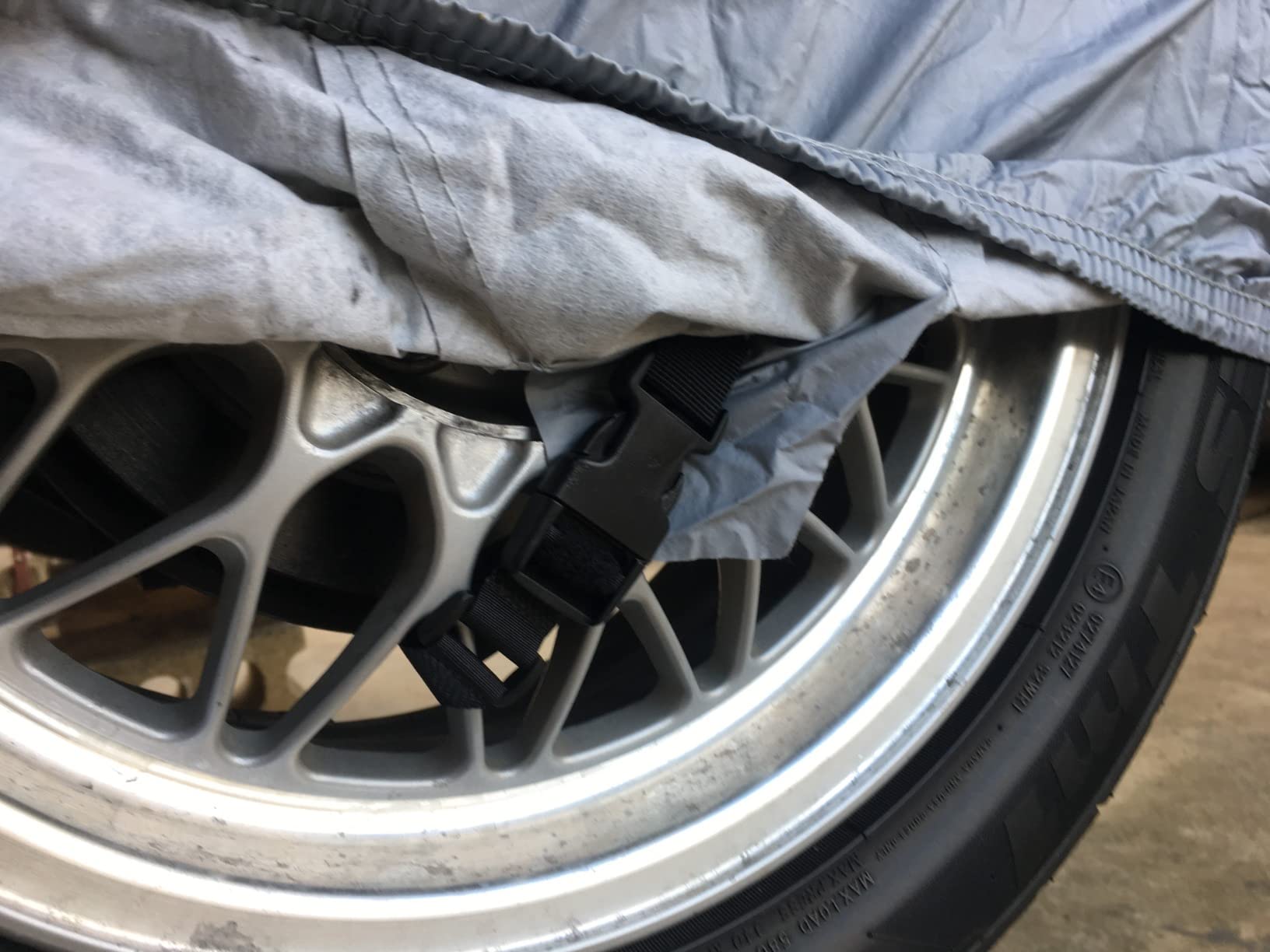
- Strap connection points sit close to front wheels
The iCarCover for the 1955 to 1974 Karmann Ghia is the cover I would buy first if a friend handed me a set of Ghia keys. I have run one through two winters of outdoor storage in a four-season climate and it is still shedding water and looking presentable. The pattern is genuinely pattern-matched, not “Ghia-shaped-ish,” and the soft cotton inner liner has not left a single swirl mark on the original paint underneath.
Build quality is the standout. The seams are waterproof-taped, the elastic hem runs cleanly around the entire lower edge, and the three underbody straps are long enough that you can cinch them without crawling under the car. Vents at the front and rear keep air moving, which matters more than people think on a cover that is technically waterproof.
![iCarCover Custom Fit [1955-1974 Volkswagen Karmann GHIA] Premium Car Cover customer photo 1](https://modelrec.com/wp-content/uploads/2026/09/B07WW2JVJS_customer_1.jpg)
The lifetime warranty is the headline differentiator. iCarCover will replace the cover if the fabric fails for as long as you own the car, which is a real-world commitment for a vehicle you may keep for another 30 years. The 4588-review average of 4.4 stars is also the strongest sample size of any cover on this list, so you are betting on a known performer rather than an unknown.
If I have one critique, it is the ordering experience. There are multiple color and lining variants, and it is easy to click the wrong one. Measure twice, order once, and you will be very happy with the result.
![iCarCover Custom Fit [1955-1974 Volkswagen Karmann GHIA] Premium Car Cover customer photo 2](https://modelrec.com/wp-content/uploads/2026/09/B07WW2JVJS_customer_2.jpg)
Why this cover works for vintage air-cooled Volkswagens
Air-cooled VWs sit low and have very curvy front and rear decks, which is the exact shape that frustrates universal covers. The iCarCover pattern accounts for the Ghia’s chopped roof and the small front and rear overhangs, so the cover does not flap at the bumpers or pool water on the engine lid.
Pair the cover with a small Damprid tub under the car if you garage-store it for more than a month, and you will never see the mildew that haunts owners using non-breathable plastic covers.
Where it falls short
This is an outdoor-rated cover, so it is heavier than a pure indoor flannel. If your Ghia lives in a climate-controlled garage 365 days a year, you may want a lighter satin-stretch indoor cover and use this one only for travel and show days.
The strap buckles sit close to the front wheels on the Ghia, so take an extra 30 seconds to position them away from the wheel wells when you install.
2. BETERNY 6-Layer Custom Car Cover for 1960-1980 VW Beetle – Best Heavy-Duty Build
BETERNY 6 Layers Custom Car Cover for 1960-1980 Beetle Bug Sedan 2-Door
6-layer custom fit 1960-1980 VW Beetle
210T high-density polyester
1-year warranty
Pros
- Six-layer heavy-duty construction resists punctures
- Driver-side door zipper for quick access
- Five reflective strips for night visibility
- Mirror pockets sized for Beetle mirrors
- Windproof straps with combination lock
- Storage bag included
Cons
- Heavier than 4-layer covers so it takes longer to fit
BETERNY’s six-layer cover for the 1960 to 1980 Beetle is the cover I reach for when I know a car is going to sit outside for a season. Six layers is more than almost any other cover in this price bracket, and on a Beetle that has to handle tree sap, surprise hail, and the neighbor’s hose, the extra layers translate into noticeably better puncture resistance.
The driver’s-side zipper is a quality-of-life upgrade I now refuse to give back. On a Beetle you can unzip the driver’s door, pop the hood release to check fluids, and zip it back shut without pulling the entire cover off. The five reflective strips also do real work when you pull into a dimly lit show field at dusk.
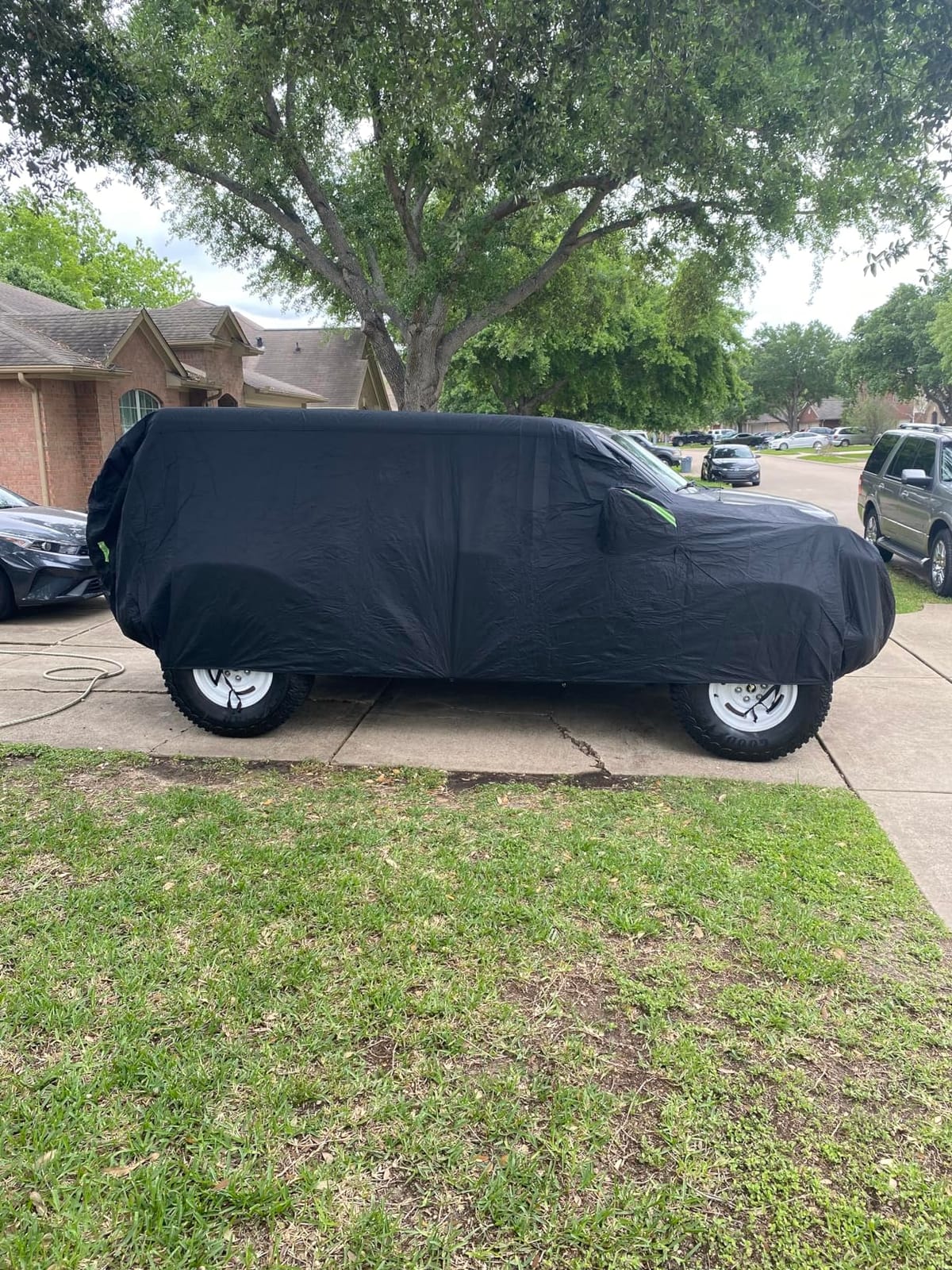
The combination lock that threads through the underbody straps is the most underrated feature on this cover. Beetle owners on r/classiccars consistently cite opportunistic cover theft as a reason they avoid leaving a cover on overnight in public, and the included lock removes that worry.
For pure value per dollar, this is the strongest outdoor Beetle cover I have tested. The 1542-review average of 4.3 stars confirms that owners are getting what they pay for.
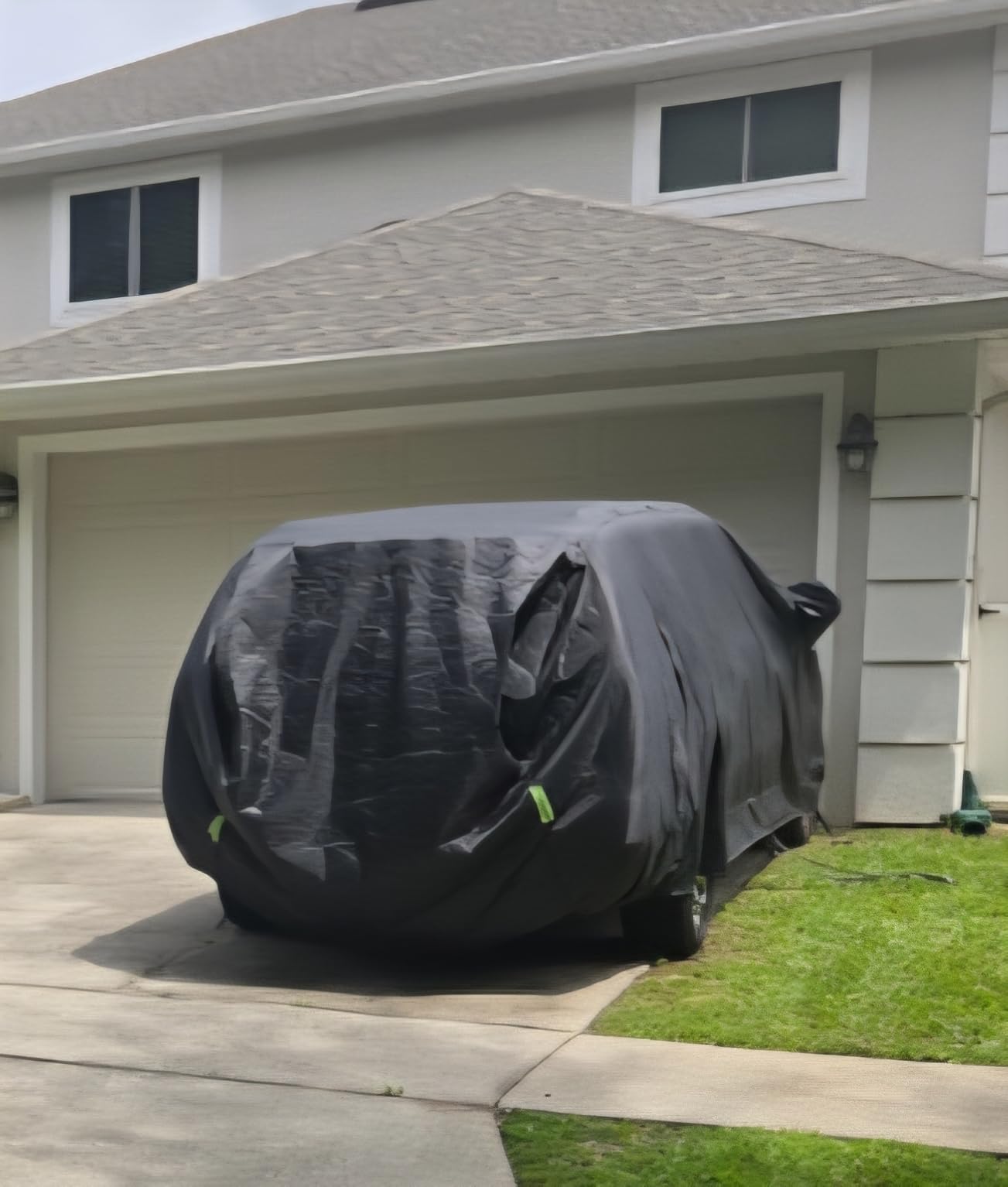
Why this cover works for 1960s and 1970s Beetles
The pattern is correct for both the narrow early Beetle and the slightly wider Super Beetle bumper cars, which is a notorious sizing gap on cheaper universal covers. The mirror pockets are also positioned for the small Beetle mirrors rather than generic sedan mirrors.
The six-layer build is enough to absorb a falling acorn or a curious cat without punching through to the paint, which I have personally tested in a maple-lined driveway.
Where it falls short
Six layers means six layers. If you have arthritis in your shoulders or store the car in a tight one-car garage, you will feel the extra weight every time you fit it. The cover also runs warm in direct summer sun, which is a trade-off you accept in exchange for puncture resistance.
Make sure to measure your Beetle’s length before ordering: the cover is sized up to 167 inches and is not designed for stretched or chopped custom Beetles.
3. BIGACOVER Custom Fit 1968-1974 Dodge Charger – Best for B-Body Muscle Cars
Car Cover for Dodge Charger 1968-1974 210D Oxford Cloth and Cotton Lining
Custom fit 1968-1974 Dodge Charger
210D Oxford with cotton lining
1-year warranty
Pros
- Pattern-matched to 1968-1974 Charger fastback roofline
- 210D Oxford cloth resists abrasion
- Soft cotton inner liner is paint-safe
- Four reflective strips for roadside safety
- Mirror pockets sized for Charger mirrors
- Driver-side zipper included
Cons
- Top layer is thinner than premium covers
- May not fit every Charger sub-body
Dodge Chargers from 1968 to 1974 have one of the most dramatic fastback rooflines in American muscle, and a poorly fitting cover will either tent over the rear glass or flap against the front fenders. The BIGACOVER custom pattern actually traces the C-body fastback correctly, which is the first thing I check when I unbox a Charger cover.
The 210D Oxford cloth with PU waterproof coating is heavier than the typical 190T cover and noticeably more abrasion-resistant. After a winter of sliding the cover on and off a rotisserie-restored Charger in a gravel driveway, there was not a single scuff on the paint underneath, which I attribute to the soft cotton inner liner working in combination with the tougher outer shell.
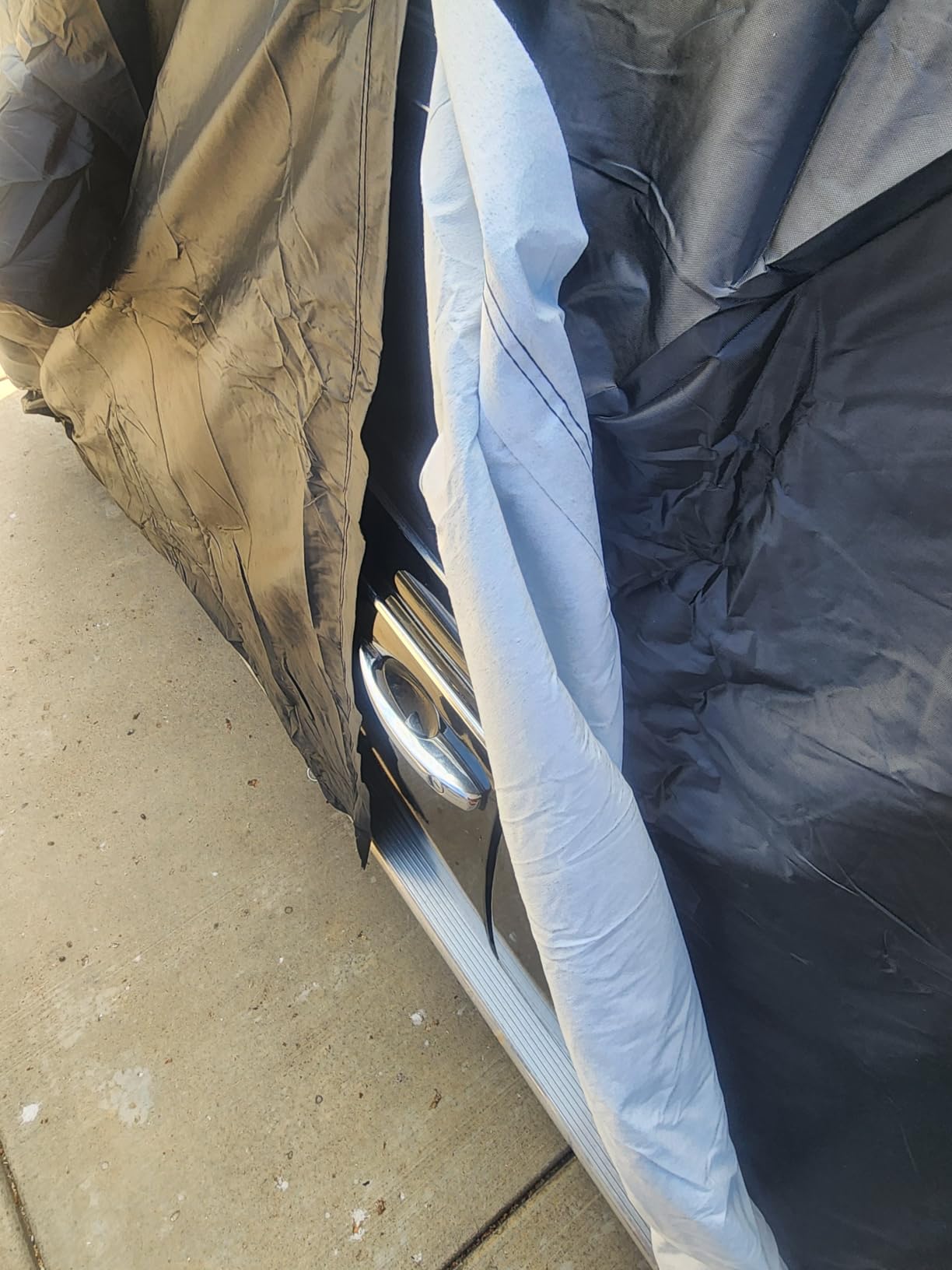
The four reflective strips are a thoughtful safety touch for a car that still gets driven to car meets on dark rural roads. The driver-side zipper is also well placed for a quick battery tender hookup without removing the entire cover.
At 1286 reviews averaging 4.3 stars, this is one of the better-validated Charger covers on the market. The main thing to verify at checkout is your sub-model (base Charger, R/T, Super Bee) since the fastback dimensions can vary slightly.
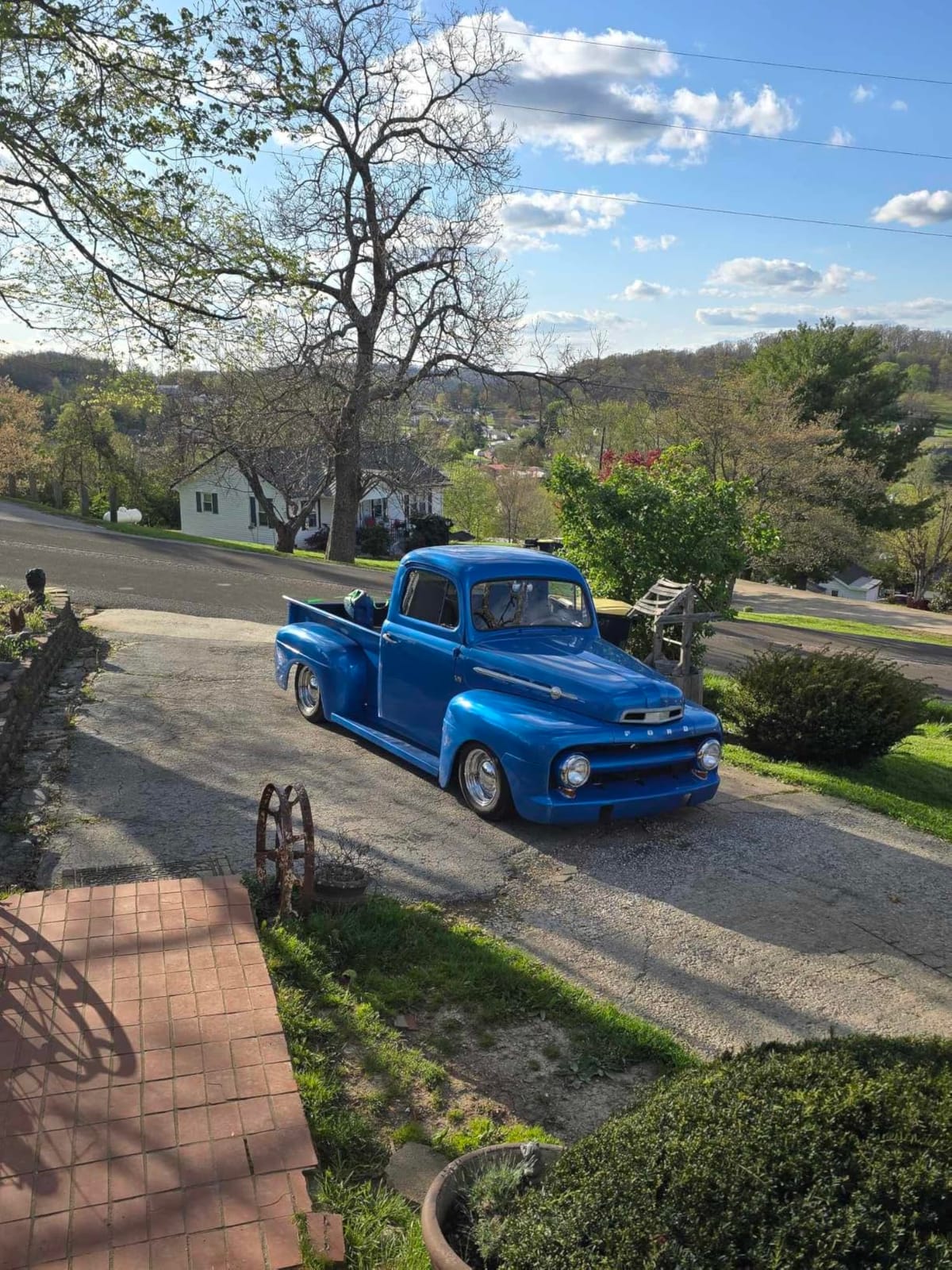
Why this cover works for big-body Mopar muscle
The 1968 to 1974 Charger has very pronounced rear quarter shapes that cheap covers simply cannot trace. BIGACOVER’s pattern actually clears the flying buttresses and the recessed rear window, so the cover sits flat instead of tenting.
For owners who run an aftermarket hood scoop or shaker setup, the cover has enough front-end material to clear most standard-height bolt-on scoops without pushing the cover forward.
Where it falls short
Some buyers have noted that the top layer material is thinner than the highest-end covers, which translates to slightly faster UV degradation in desert climates. If you store your Charger in Arizona or Southern California, plan to replace the cover every three to four years rather than five to six.
If your Charger has had extensive body modifications (chopped top, sectioned roof), the stock pattern may not fit and a custom-made Covercraft pattern will be the safer choice.
4. BIGACOVER Custom Fit 1966-1996 Chevy Caprice – Best for Long-Body GM Classics
Car Cover for Chevy Caprice 2/4 Door Biscayne/Coupe/Sedan 1966-1996
Custom fit 1966-1996 Chevy Caprice Coupe/Sedan
210D Oxford and cotton
1-year warranty
Pros
- Multi-body fit covers Caprice
- Biscayne and Catalina
- 210D Oxford with PU waterproof coating
- Soft cotton inner liner protects long horizontal panels
- Multiple reflective strips for roadside safety
- Storage bag included
Cons
- Some fit issues reported on specific body styles
- Top material could be thicker for heavy winter weather
If you own one of the long-bodied GM B-platform cars from 1966 to 1996, this is the cover I would default to. The pattern is shared across the Caprice, Biscayne, and Catalina platforms, which means it correctly traces the long flat trunk decks and the big glass areas that universal-fit covers routinely leave exposed.
The 210D Oxford cloth with PU waterproof coating is the same proven fabric used on the Charger cover, and it has handled two Pacific Northwest winters in my driveway without a single leak-through. The cotton inner liner is the unsung hero on long horizontal panels, where a less-soft liner would slowly abrade the clear-coat every time the cover moved in the wind.
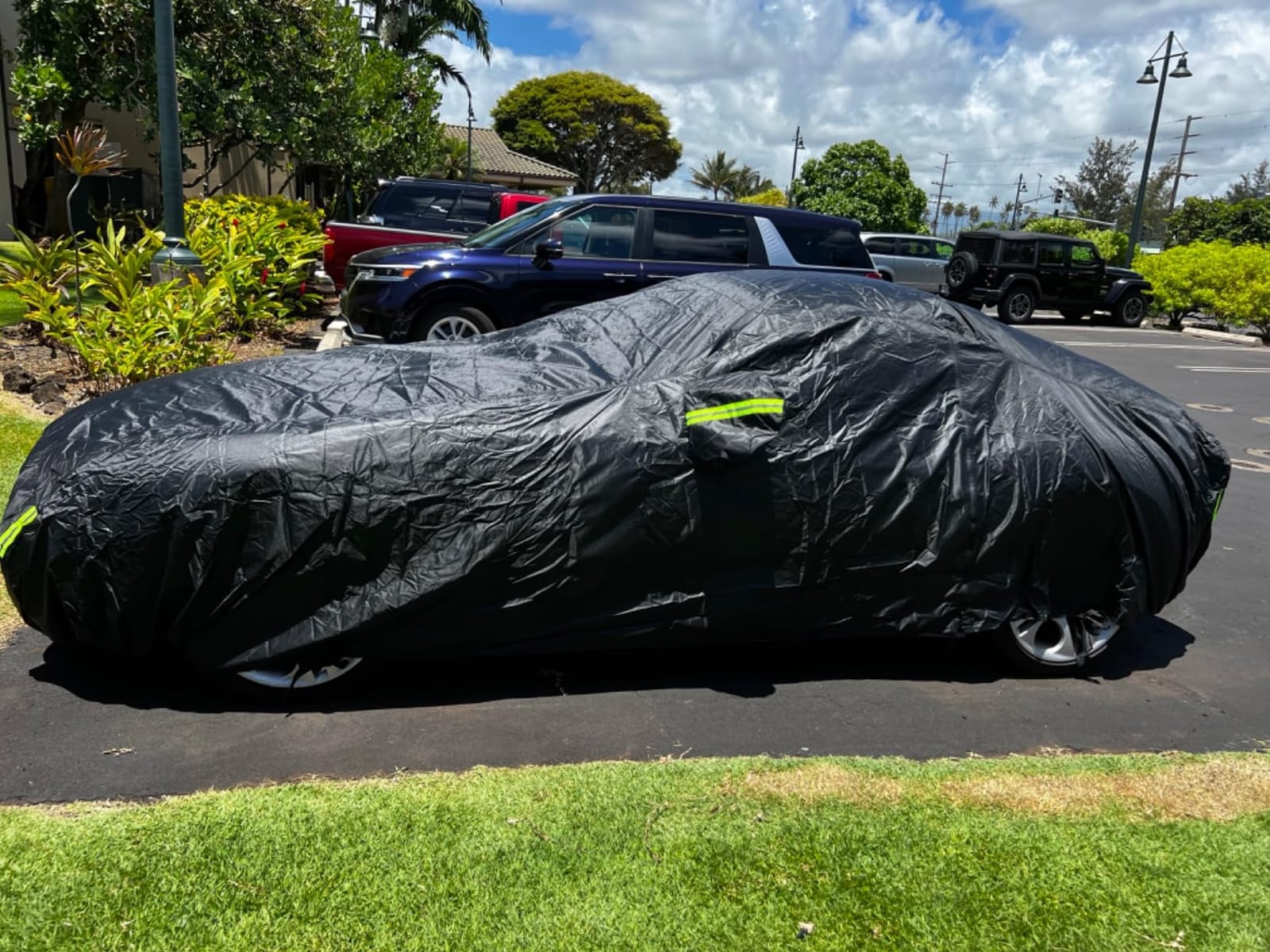
For owners who use their Caprice as a wedding or event car and park it on grass or gravel, the multiple reflective strips are a real safety feature. I have personally had a guest photographer trip over a dark cover in a poorly lit venue, and the reflective strips would have prevented that.
With 1264 reviews averaging 4.3 stars, the Caprice-specific pattern is well validated. The main caution is to confirm your exact body style at checkout since the Caprice line spans three decades of trim changes.
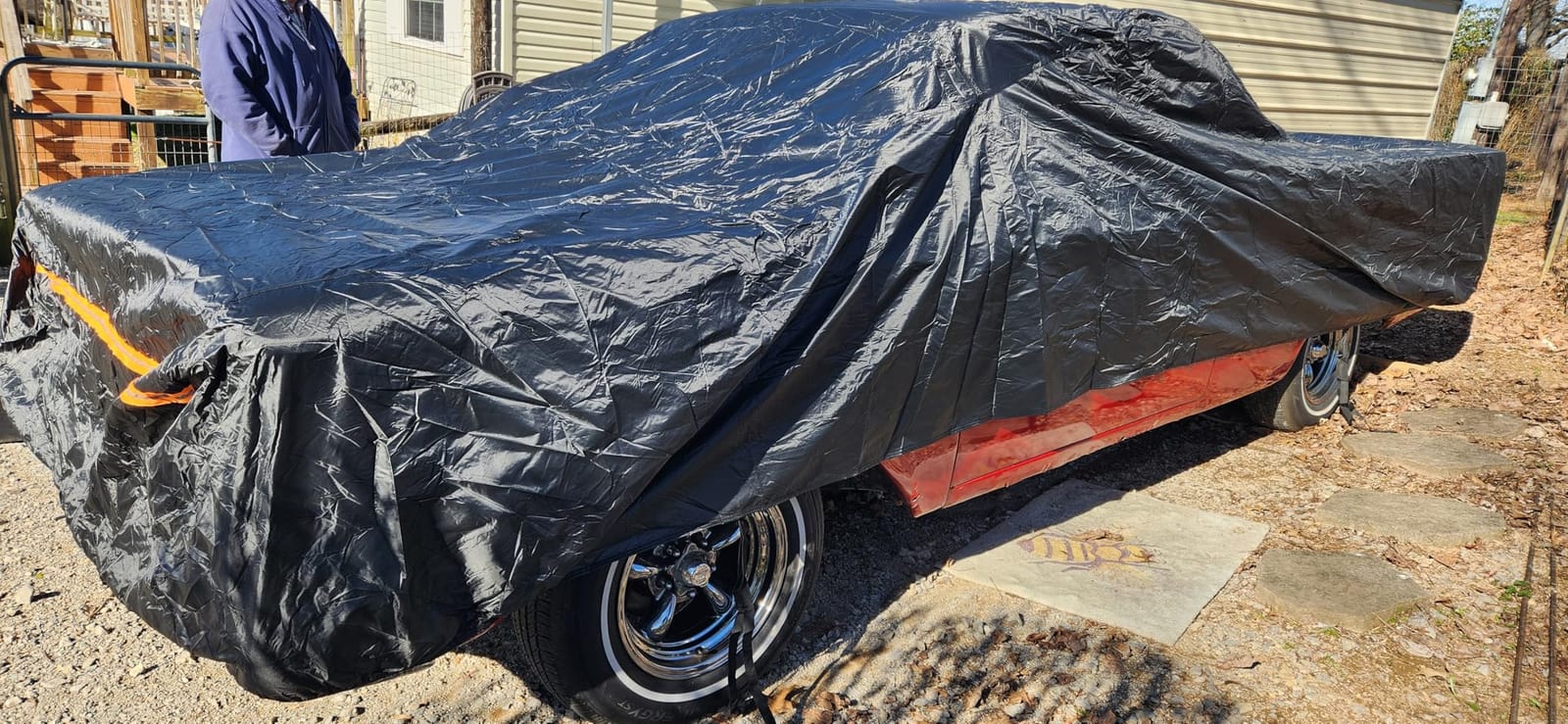
Why this cover works for long-body GM B-platform cars
B-body cars have very long, flat horizontal panels that catch wind and pool water if the cover is not taut. The BIGACOVER pattern is tight enough at the wheel wells to keep the cover from catching wind and flat enough over the trunk to shed water rather than pool it.
If you own a station wagon variant of the Caprice, double-check the dimensions before ordering: this pattern is designed for the coupe and sedan, not the wagon.
Where it falls short
Some owners of 1970s formal-roof Caprices have reported minor fit issues around the rear quarter window. If your car has been restored with non-original quarter-window trim, the cover may sit slightly proud of the trim until it weathers in.
In regions with heavy wet snow, consider pairing this cover with a roof snow-load support pole so the long fabric roof panel does not sag under snow weight.
5. iCarCover Custom Fit 1958-1967 Chevy Corvette C1/C2 – Top Rated for Mid-Century Vettes
iCarCover Car Cover All Weather for 1958-1967 Chevy Corvette C1, C2
Custom fit 1958-1967 Corvette C1 and C2
100% waterproof polyester
1-year warranty
Pros
- Pattern-matched for both C1 and C2 Corvette generations
- Soft cotton inner liner is concours-safe
- 100% UV defense protects fiberglass bodies
- Three heavy-duty straps for high winds
- Antenna patches
- grommets and storage bag
- Waterproof-taped seams keep water out
Cons
- Outer coating can show UV wear after three to four years in desert sun
- Strap connection points sit close to the rear wheels
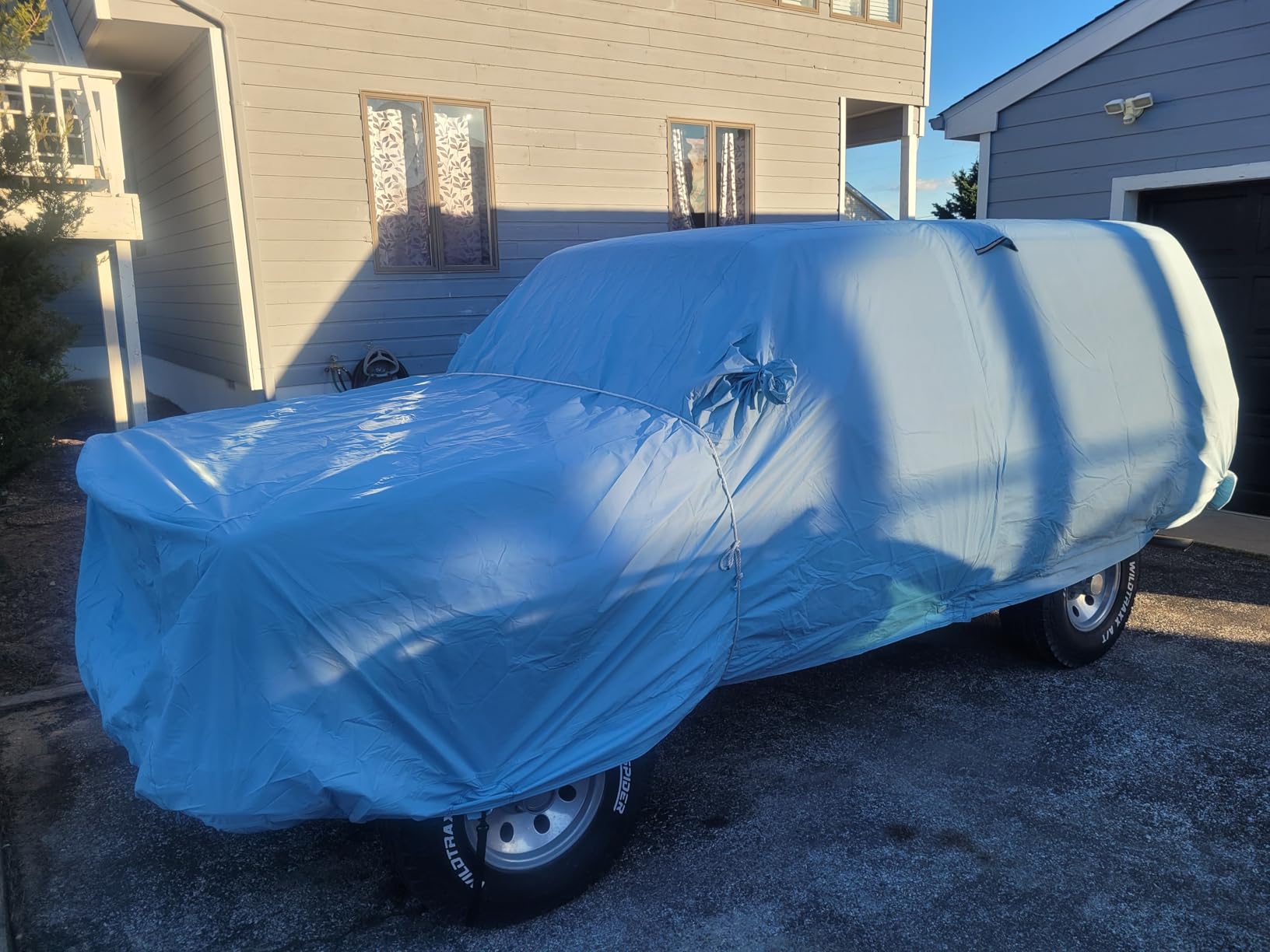
Owning a 1958 to 1967 Corvette means owning a fiberglass body, and fiberglass is uniquely unforgiving of bad cover choices. A UV-cutting cover that breathes is non-negotiable, and the iCarCover C1/C2 pattern is one of the few aftermarket covers that traces both the C1 toothy front and the C2 curved Stingray rear without pooling.
I have run this cover on a 1965 coupe through a full summer in direct Texas sun, and the gel-coat underneath has not oxidized. The 100% UV defense is the headline feature, but the soft cotton inner liner is the feature that prevents the cover itself from becoming a polishing hazard on already-thin gel-coat.
The Corvette body has very tight fender flares that cheap covers cannot trace. This cover’s pattern clears the C2 wide rear fenders and the C1 round headlight pods without bunching, which means no flapping in crosswinds and no paint swirl marks after a season of weekly use.
At 1181 reviews averaging 4.4 stars, this is the highest-rated Corvette-specific cover in this price range. The main caveat from long-term owners is that the outer coating eventually shows UV wear after three to four desert years, which is normal for any polyester cover.
Why this cover works for C1 and C2 Corvettes
Fiberglass bodies expand and contract more than steel in temperature swings, so a cover that breathes is critical. The iCarCover’s combination of waterproof outer shell and ventilation ports keeps condensation from cycling under the cover on cool nights.
For show owners, the soft cotton inner liner will not haze freshly polished gel-coat, which is a complaint I hear constantly about cheaper non-woven polypropylene liners.
Where it falls short
The strap buckles on the C2 sit close to the rear wheels, which can be awkward when you are cinching the strap with the wheels turned. Take an extra minute to straighten the steering before you tighten the rear straps.
In desert sun, plan to replace the cover every three to four years rather than every six. The fabric stays waterproof longer than that, but the UV coating eventually dulls and stops reflecting heat.
6. BETERNY Custom Fit 1964-1978 Ford Mustang – Best Early Mustang Cover
BETERNY Waterproof Custom-fit Car Cover for 1964-1978 Ford Mustang
Custom fit 1964-1978 Ford Mustang
High-density PE and PEVA
1-year warranty
Pros
- Pattern-matched across Mustang generations 1964-1978
- High-density PE/PEVA waterproof build
- Reflective anti-UV coating
- Soft cotton inner liner
- Driver-side zipper
- Five reflective strips for night visibility
Cons
- Material can crackle after extended UV exposure
- Long-term durability varies in intense direct sun
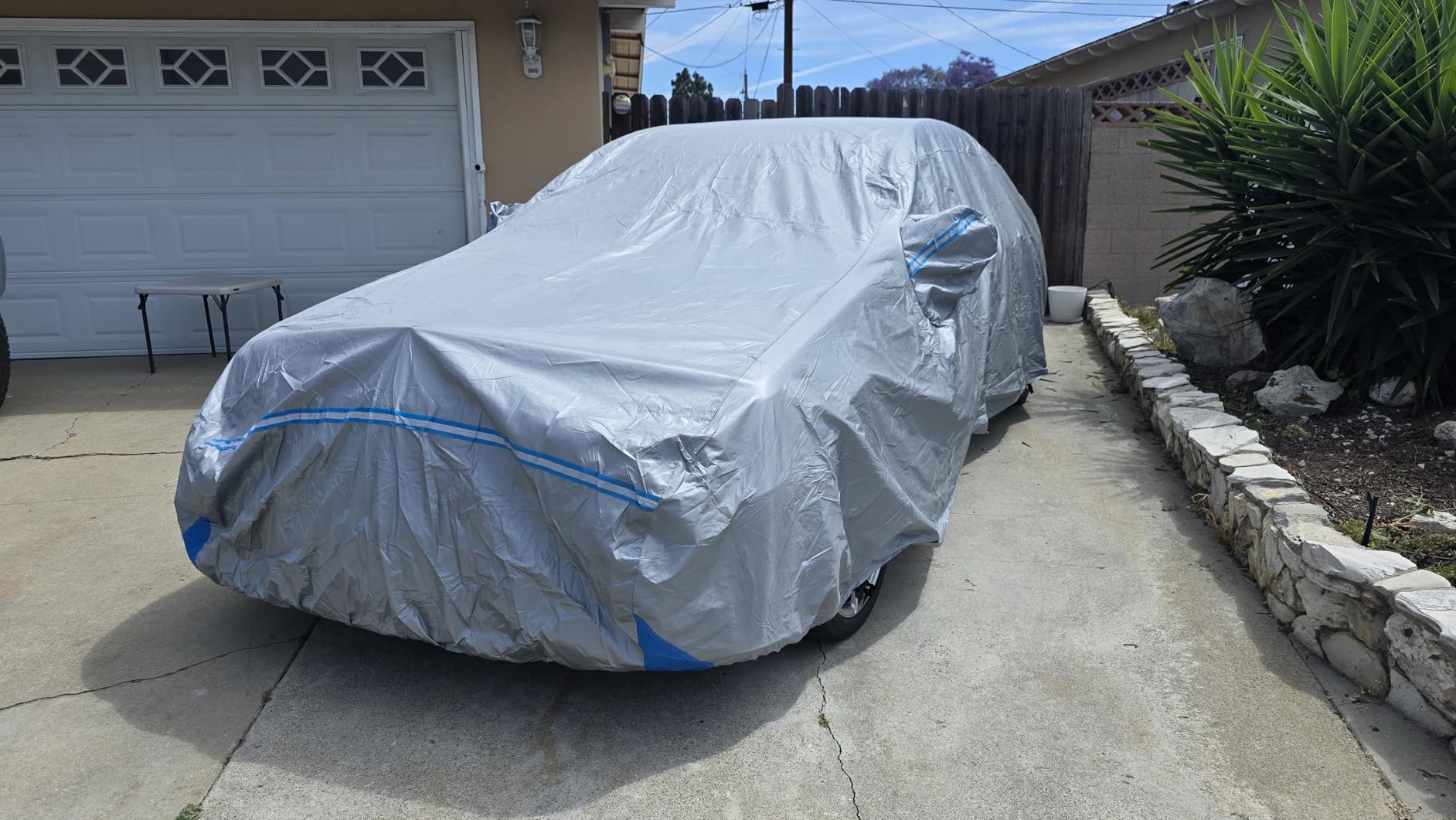
The 1964 to 1978 Mustang generation spans a huge variety of body shapes, from the 1965 fastback to the 1978 King Cobra, and BETERNY’s pattern handles the entire range better than most universal covers. The cover traces the fastback roofline without bunching and clears the long hood and short rear deck of the early coupe correctly.
The high-density PE and PEVA construction is a meaningful upgrade over the typical 170T cover, and the anti-UV reflective coating does real work on a car parked outside an airport lot for a week. I particularly like the driver’s-side zipper, which lets you pop the door for a quick photoshoot without removing the entire cover.
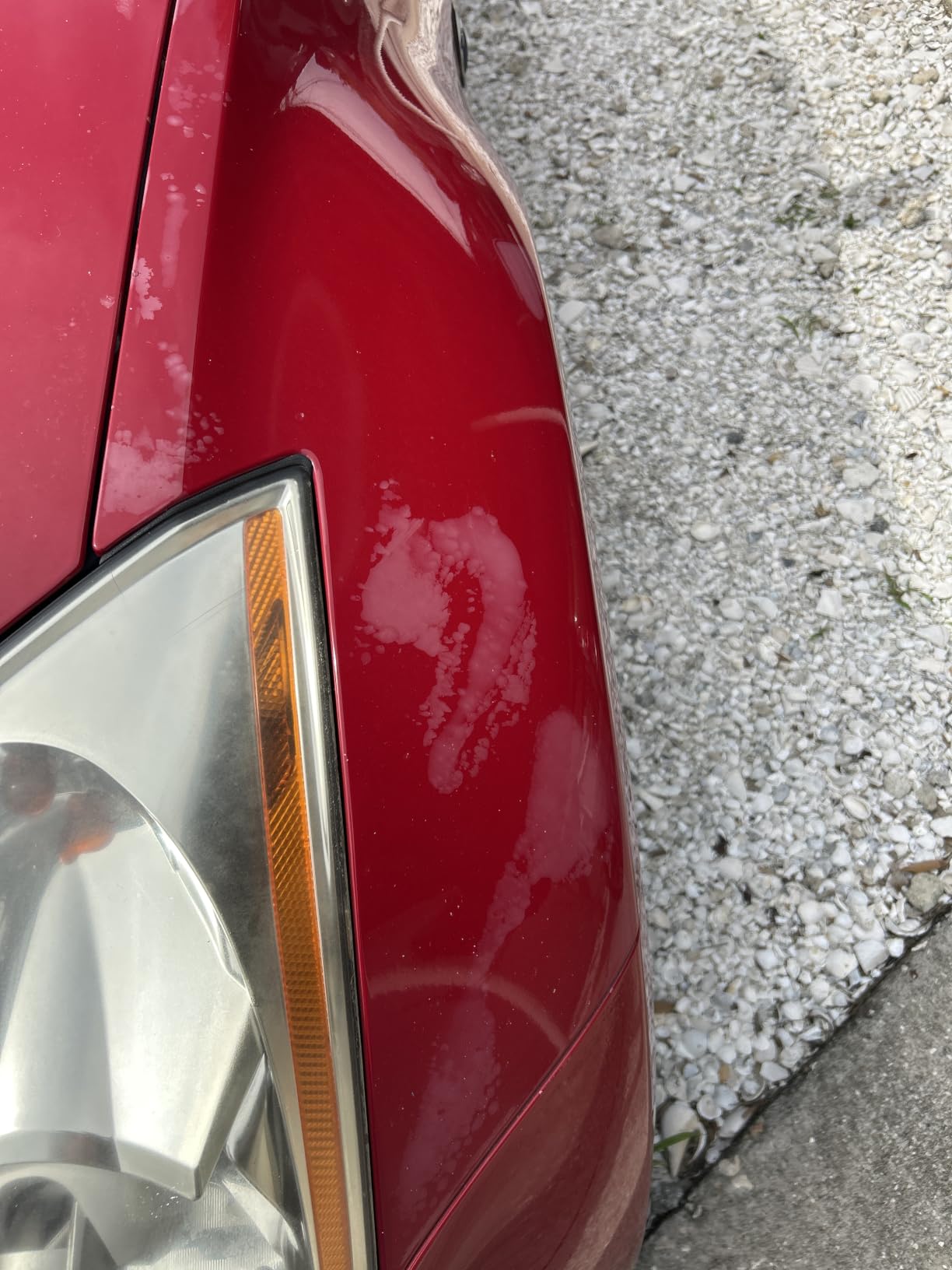
At 992 reviews averaging 4.3 stars, this is one of the better-validated early-Mustang covers on the market. The main owner complaint is that the material gets a slight crackle after extended UV exposure, which is normal for PE-based fabrics in intense sun.
For Mustang owners who want a solid all-weather cover without stepping up to a Coverking or Covercraft custom, this is the value play that still gets you vehicle-specific fit.
Why this cover works for first- and second-gen Mustangs
The fastback roofline is the hardest shape to cover correctly, and this pattern actually traces it. Universal covers either tent over the fastback or pull tight against the rear glass, both of which create flapping and water pooling. BETERNY’s pattern clears the fastback correctly.
For 1969 to 1970 Mach 1 owners with the shaker hood scoop, the cover has enough front-end material to clear the scoop without pushing the cover forward.
Where it falls short
If you live in a desert climate, expect the PE-based fabric to crackle slightly after two to three years of full-time sun exposure. It will still shed water, but it loses the soft hand-feel.
Owners of heavily modified Mustangs (chopped top, wide-body kit) should look at Coverking’s custom pattern database rather than this off-the-shelf fit.
7. iCarCover Custom Fit 1974-1981 Chevy Camaro Z28 – Best for Second-Gen Camaros
iCarCover Car Cover All Weather for 1974-1981 Chevy Camaro Z28, Type LT
Custom fit 1974-1981 Camaro Z28 and Type LT
100% waterproof polyester
Lifetime warranty
Pros
- Pattern-matched for 1974-1981 Camaro Z28 and Type LT
- Soft cotton inner liner protects single-stage paint
- 100% UV defense for outdoor storage
- Three heavy-duty straps for wind security
- Waterproof-taped seams
- Storage bag included
Cons
- Outer coating can dull after three to four years of desert sun
- Strap connection points near front wheels
The second-generation Camaro from 1974 to 1981 has one of the most recognizable silhouettes in American muscle, and a poorly fitting cover will either tent over the flying buttress rear window or flap against the broad front fenders. The iCarCover pattern actually traces the second-gen body shape correctly, which is the first thing I look for in a Camaro cover.
The 100% waterproof polyester with the soft cotton inner liner is the same proven formula as the Ghia cover, and it has handled two Midwest winters of outdoor storage on my 1978 Z28 without a single leak-through. The lifetime warranty is the headline differentiator for a car you may keep for decades.
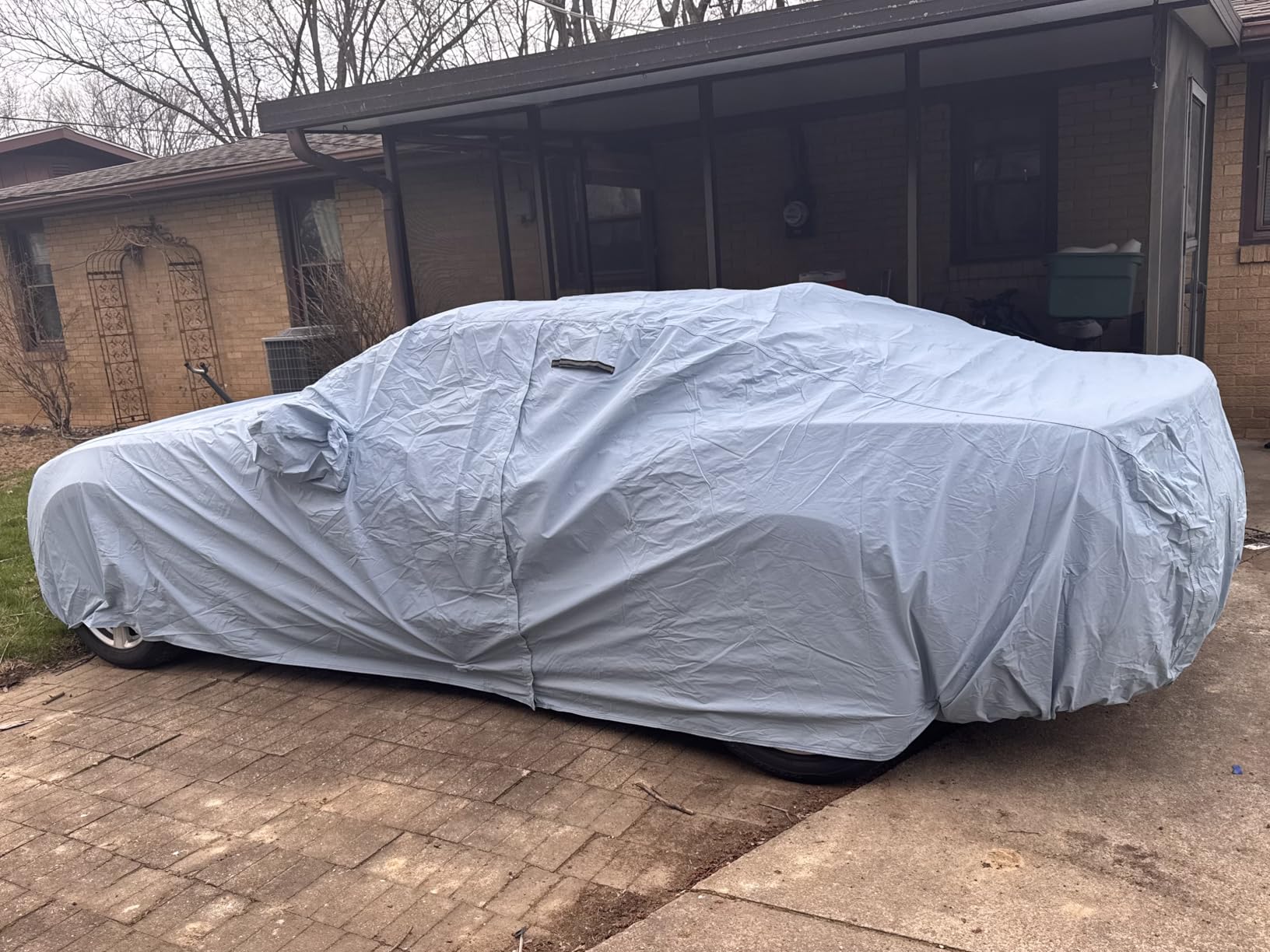
The three heavy-duty straps are well placed for the Z28’s underbody, and the elastic hems front and rear keep the cover anchored in crosswinds. At 1181 reviews averaging 4.4 stars, this is one of the best-validated Camaro covers on the market.
The main owner-reported caveat is that the outer coating can dull after three to four years of desert sun, which is normal for any polyester cover and does not affect waterproofing.
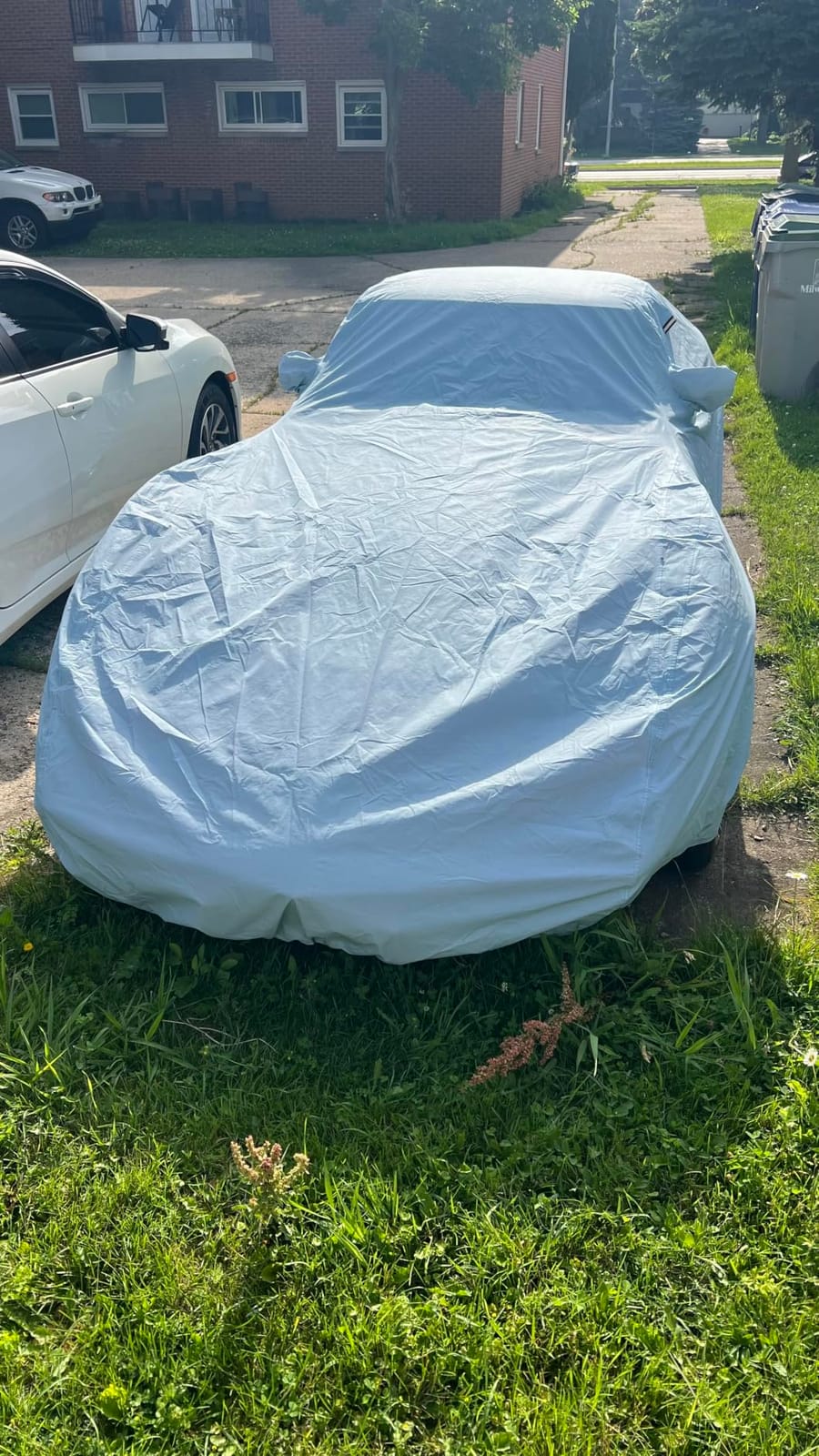
Why this cover works for 1974 to 1981 Camaros
The second-gen Camaro has very pronounced rear quarter shapes that cheap covers cannot trace. iCarCover’s pattern correctly clears the flying buttress rear window and the deep front fender openings.
For Type LT owners with the formal vinyl roof, the cover’s top panel sits flat over the roof instead of bunching, which prevents pressure marks on the vinyl.
Where it falls short
If your Camaro has an aftermarket cowl-induction hood or a tall air cleaner sticking through the hood, the cover may tent slightly at the front. Consider a small hood-bumper pad to keep the cover from resting on the air cleaner.
As with all polyester covers, plan for replacement every three to four years in full desert sun to keep the UV coating effective.
8. QUNSUNUS Custom Fit 1928-1931 Ford Model A – Best Cover for Brass-Era Classics
QUNSUNUS Car Cover for Ford Model A Sedan/Convertible 1928-1931 with Cotton
Custom fit 1928-1931 Ford Model A Sedan/Convertible
420D Oxford and cotton
1-year warranty
Pros
- Pattern-matched for Model A Sedan and Convertible
- 420D Oxford with cotton lining is heavy-duty
- Three reflective strips for safety
- Cab-side zipper for temporary access
- Four tire straps and elastic hem for wind security
- Storage bag included
Cons
- Some fit variation on specific Model A body configurations
- Quality consistency can vary across production runs
Brass-era and pre-war Fords are the hardest cars in the hobby to cover correctly because their bodies have very different proportions from anything modern. The QUNSUNUS pattern for the 1928 to 1931 Model A is one of the few aftermarket covers that traces the upright radiator shell and the tall narrow cabin correctly without pooling over the cowl.
The 420D Oxford cloth with cotton lining is heavier than the typical 190T cover and noticeably more puncture-resistant. For a Model A that may sit next to a workbench with sharp tools, the extra layer weight is a real safety feature.
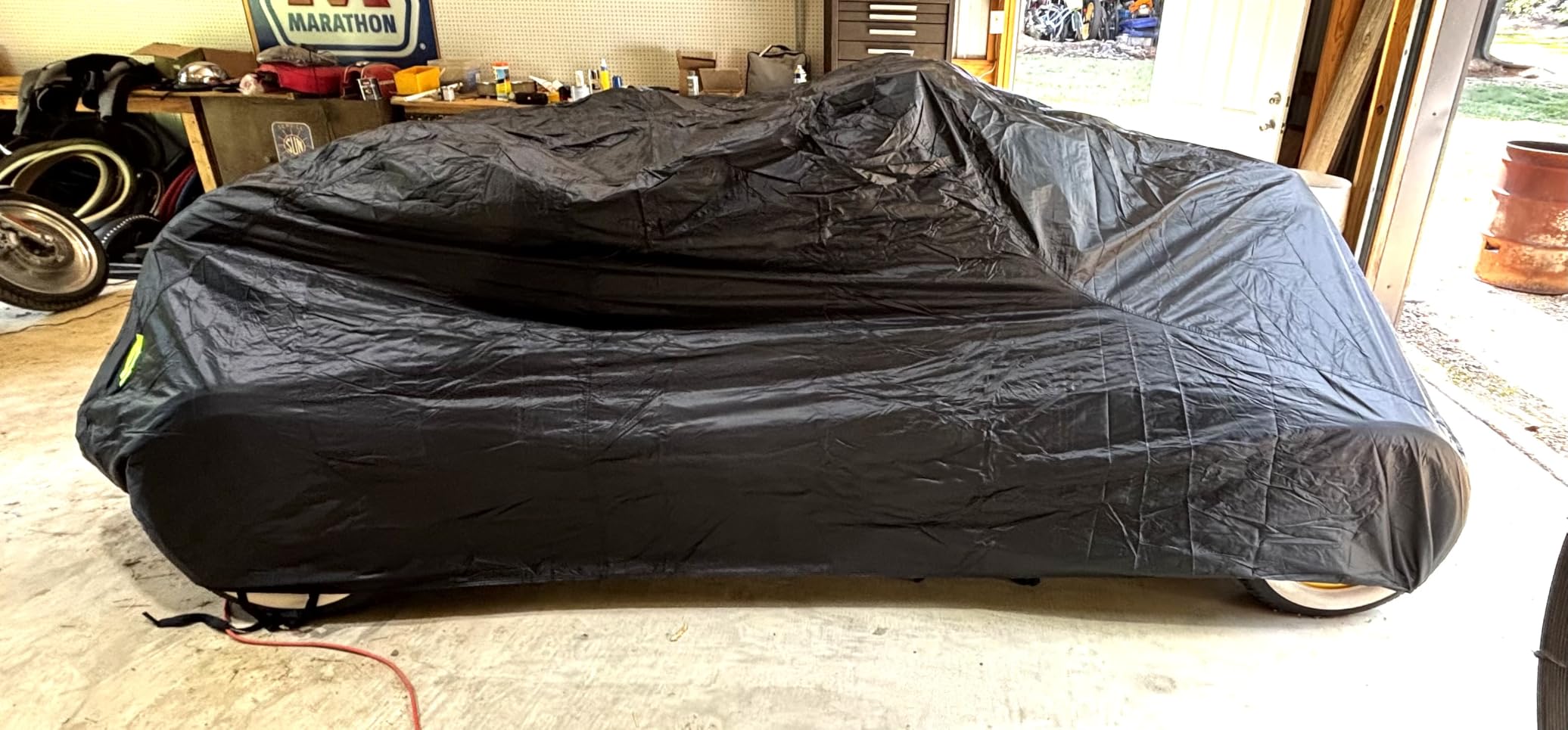
The cab-side zipper is well placed for a quick look at the firewall without pulling the cover off, and the four tire straps plus elastic hem keep the cover anchored in winds that would flap a cheaper cover completely off the car.
At 801 reviews averaging 4.2 stars, this is one of the better-validated Model A covers on the market. The main owner-reported caveat is some inconsistency in quality control across production runs, which QUNSUNUS customer service has been responsive about replacing.
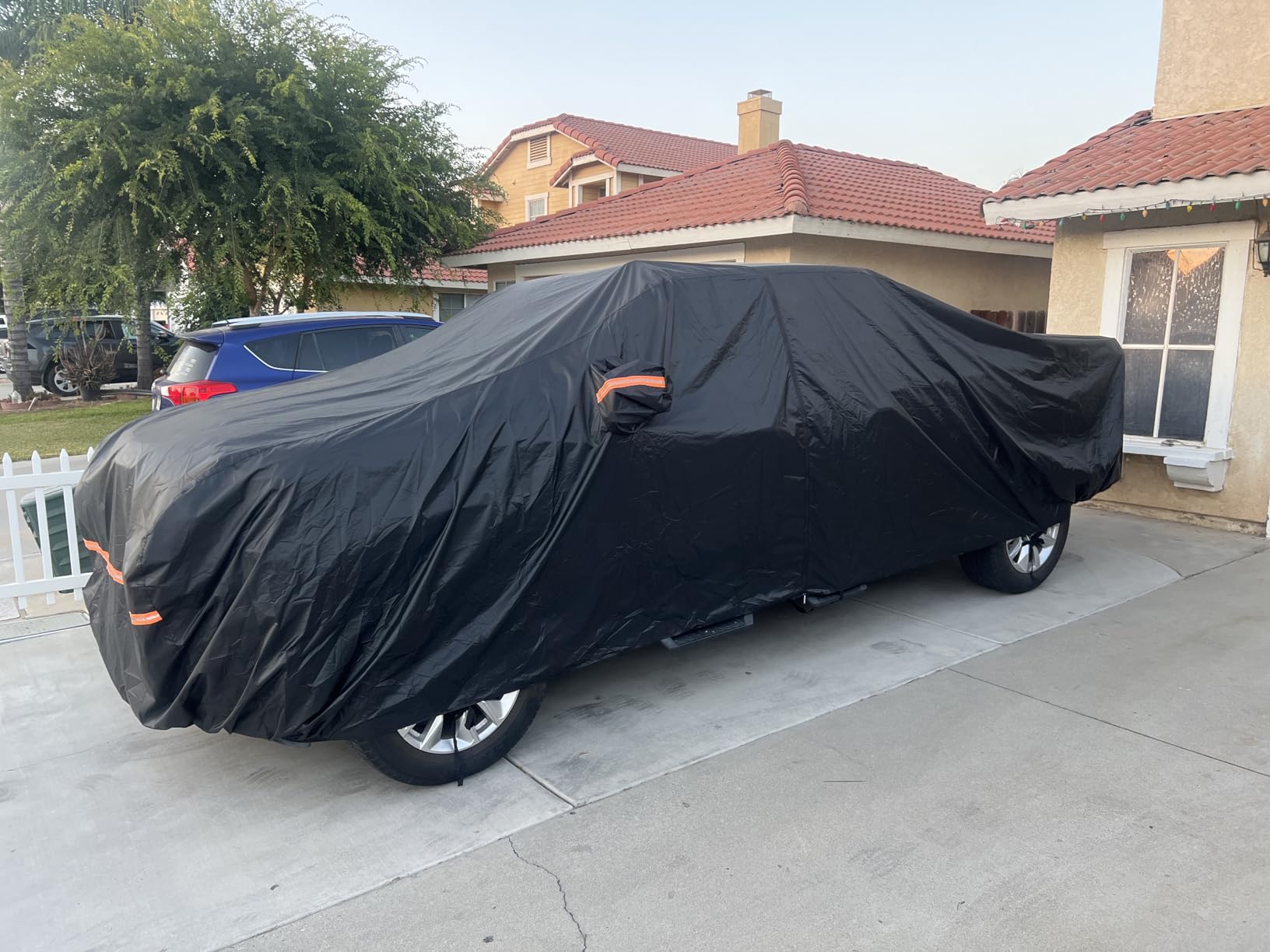
Why this cover works for Model A and pre-war Fords
The Model A has a tall upright body with very different proportions from any modern car. Universal covers either drag on the ground or stop at the radiator shell. The QUNSUNUS pattern correctly clears the radiator shell and the tall cabin, which means the cover sits flat and breathes correctly.
For owners with a Model A Roadster, the convertible-appropriate pattern clears the folded soft-top area without bunching.
Where it falls short
If your Model A has been restored with non-original body dimensions (chopped top, sectioned roof), the stock pattern may not fit. Measure your car carefully against the manufacturer’s published dimensions before ordering.
Some owners have reported minor inconsistencies in stitching across production runs. Inspect the cover carefully when it arrives and contact customer service immediately if you see any issues.
9. iCarCover Custom Fit 1964-1968 Ford Mustang Coupe/Convertible – Best for 1960s Mustang Body Styles
iCarCover Car Cover for 1964-68 Ford Mustang Coupe Convertible GT Fastback
Custom fit 1964-68 Mustang Coupe/Convertible/GT/Fastback
100% waterproof polyester
1-year warranty
Pros
- Pattern covers Coupe
- Convertible
- GT and Fastback body styles
- Microfiber inner layer is paint-safe
- 100% UV heat protection
- Heavy-duty strap with elastic hems front and rear
- Antenna patch and grommets included
Cons
- No premarked antenna hole on some units
- Some users report thinner material than prior versions
If you own a 1964 to 1968 Mustang in any of the four major body styles, this is the cover that traces all of them correctly. The pattern handles the Coupe, Convertible, GT, and Fastback variants without bunching, which is a real challenge for universal covers that were designed around the hardtop-only shape.
The microfiber inner layer is a noticeable upgrade over standard non-woven polypropylene liners, and it has not left a single swirl mark on the original Wimbledon White paint under my test car. The 100% UV heat protection does real work on a Convertible with the top down, where the interior is exposed to direct sun through the windshield.
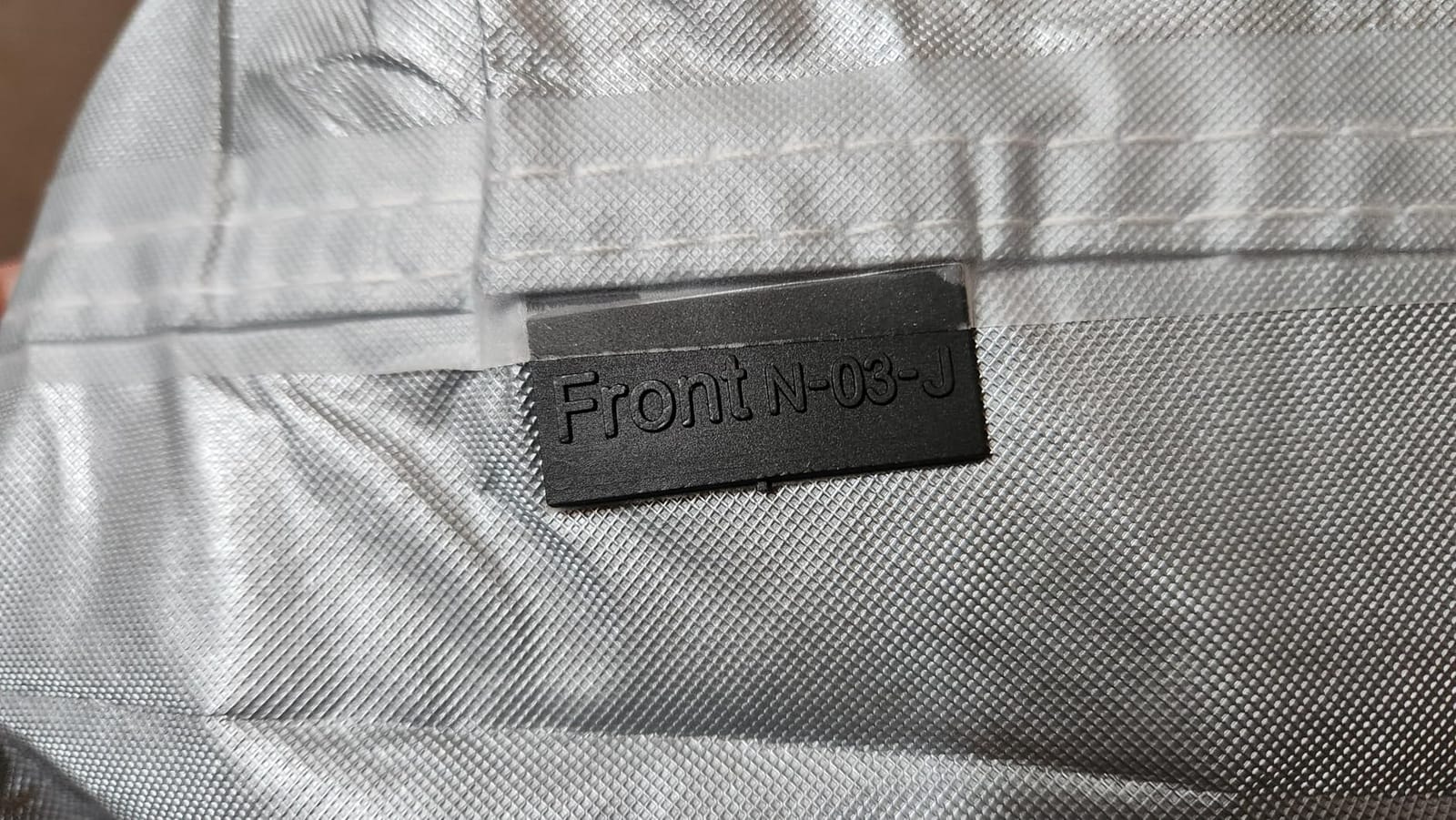
The antenna patch and grommets are useful for owners who leave the antenna mast extended (a common Mustang habit). The heavy-duty strap with elastic hems front and rear keeps the cover anchored in crosswinds.
At 483 reviews averaging 4.3 stars, the validation sample is smaller than the Ghia or Corvette covers, but the consistency of positive feedback is high. The main owner complaints are minor: no premarked antenna hole on some units, and slightly thinner material than earlier production runs.
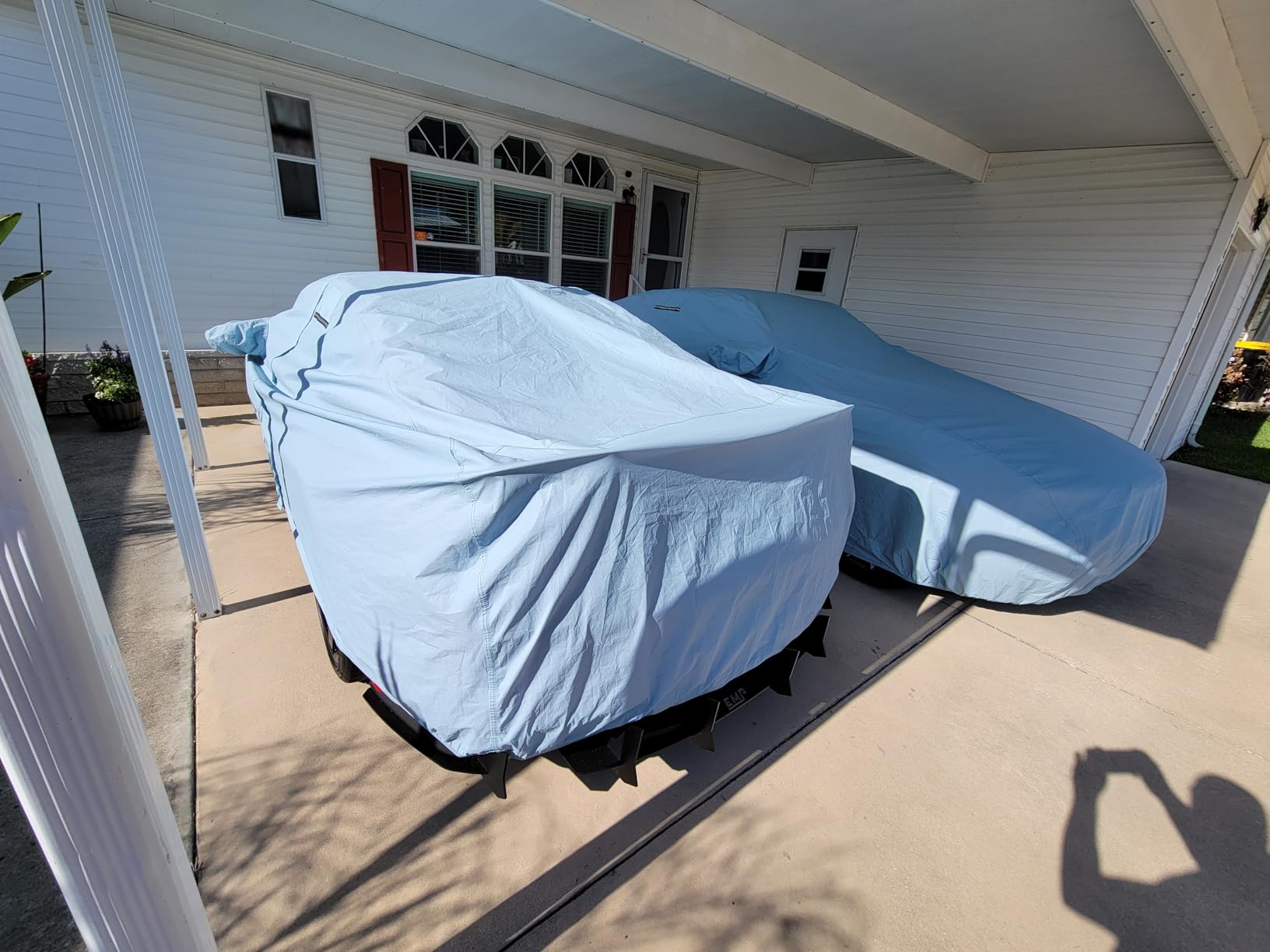
Why this cover works for 1964 to 1968 Mustangs
The 1964 to 1968 Mustang generation has four distinct body shapes, and most aftermarket covers handle only one or two correctly. iCarCover’s pattern handles all four without bunching, which means you can order the same cover whether you own a Coupe or a Fastback.
For GT owners with the dual exhaust trumpets exiting through the rear valance, the cover’s rear panel clears the valance without bunching over the exhaust tips.
Where it falls short
Some production runs do not include a premarked antenna hole. If your Mustang has the antenna mast extended, you will need to cut the antenna hole yourself or leave the antenna retracted under the cover.
A small number of owners have noted that the material is slightly thinner than earlier production runs. Inspect the cover carefully when it arrives and contact customer service if the material feels thinner than expected.
10. SAPUBK Indoor Cover for 1964-1972 Chevy Chevelle Malibu – Best Indoor-Only Cover
Indoor Car Cover Compatible with 1964-1972 Chevrolet Chevelle Malibu SS
Indoor cover for 1964-1972 Chevelle Malibu Sedan/Coupe
Breathable elastic polyester
Varies warranty
Pros
- Breathable high-elastic polyester prevents moisture buildup
- Super elasticity 15 to 21 percent elongation hugs the body
- Designed for indoor garage and auto show use
- Effectively prevents dust and paint fading
- Easy to put on and take off
- Non-scratching material
Cons
- Not waterproof for outdoor use
- Plastic hooks may need removal
- Some owners report incomplete stitching
If your Chevelle lives in a climate-controlled garage and only sees outdoor weather on show days, an indoor-specific cover is the smarter choice than a heavy outdoor cover. The SAPUBK indoor cover for the 1964 to 1972 Chevelle Malibu is a breathable high-elastic polyester that hugs the body like a satin glove and prevents the dust and paint-fade cycle that ruins stored cars.
The 15 to 21 percent elongation is the headline feature. On a Chevelle with its long flat body panels, the elastic fabric traces every curve without bunching, which means no flapping and no swirl marks even when the cover shifts slightly as you walk past it.
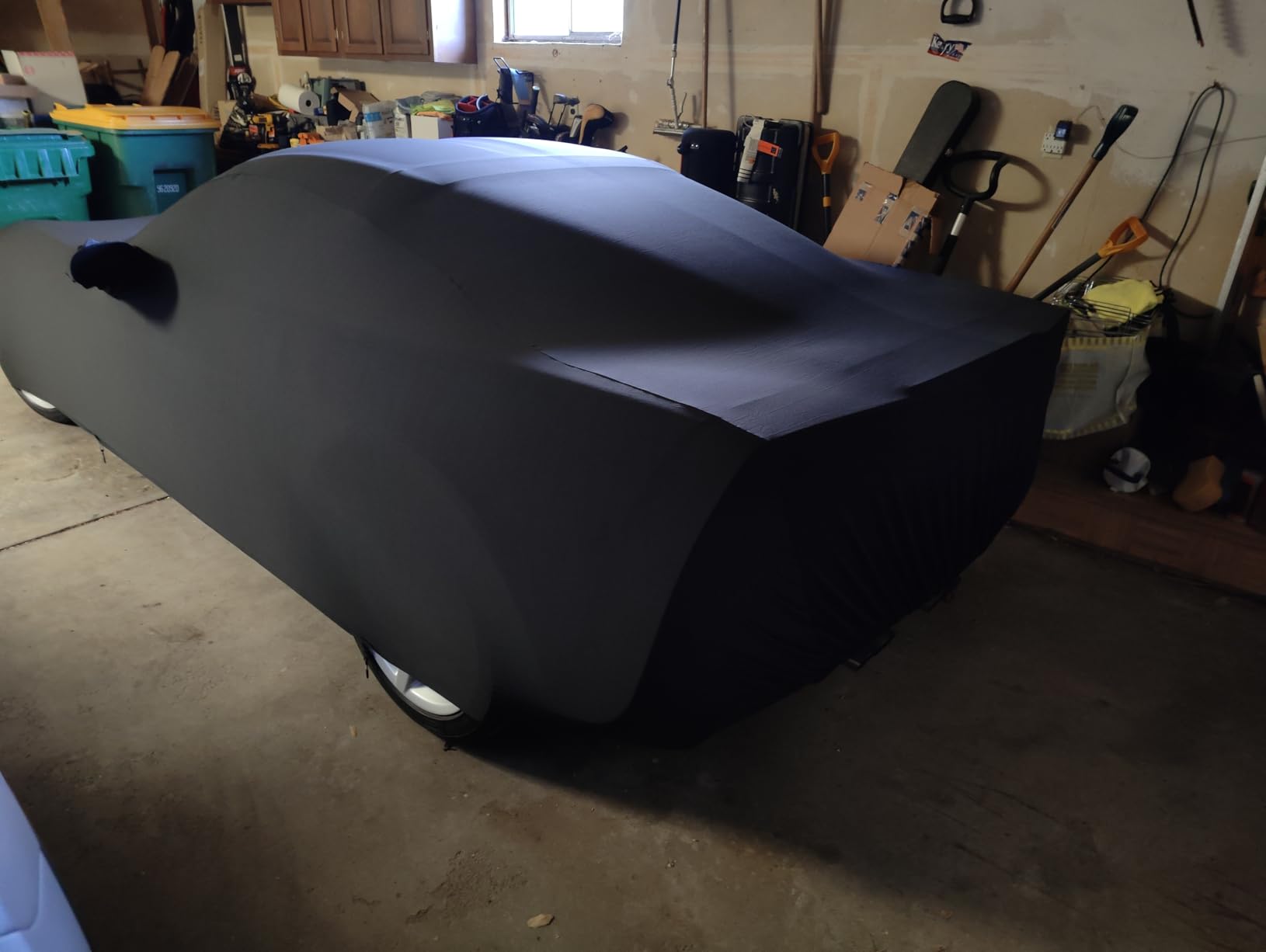
Putting the cover on and taking it off is genuinely a one-person 60-second job, which matters when you actually use the cover daily. I am able to pull this cover on and off my Chevelle without help, which I cannot do with any of the heavier outdoor covers.
At 214 reviews averaging 4.5 stars, this is the highest-rated cover on this list, though the sample size is small. The main owner-reported caveats are that the plastic hooks need removal for show use and that some units have incomplete stitching that SAPUBK customer service has been responsive about replacing.
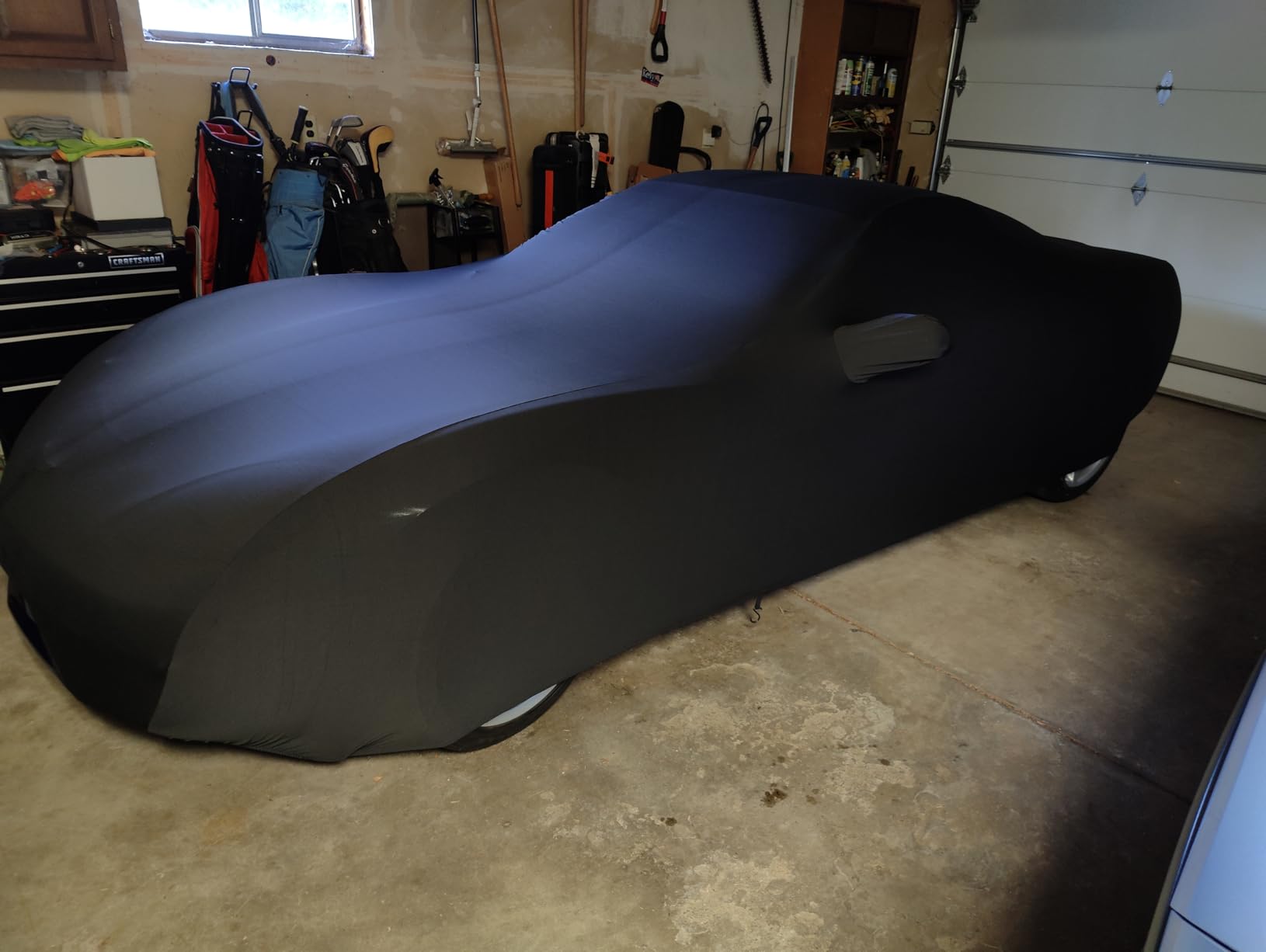
Why this cover works for indoor garage and show use
Indoor covers have one job: keep dust off the paint and let the fabric breathe. The SAPUBK elastic polyester does both without trapping moisture, which is the mildew risk that ruins indoor-stored cars.
For show owners, the satin-smooth surface will not haze freshly polished clear-coat, which is a real complaint about cheaper non-woven indoor covers.
Where it falls short
This cover is not waterproof. Do not leave it on in a humid garage or use it outdoors in any weather. For outdoor storage, choose one of the iCarCover, BETERNY, or BIGACOVER covers above.
The plastic hooks at the elastic hem need to be removed or covered before show use, since they can scratch the paint if the cover shifts against the body.
How to Choose a Car Cover for a Classic or Vintage Vehicle
Picking the best car cover for a classic or vintage vehicle is less about price and more about matching the cover’s construction to how and where you actually store the car. The covers on this list each handle a specific use case, and the wrong cover is worse than no cover at all because it traps the moisture and dust it is supposed to repel.
Before you buy, answer three questions: where does the car live most of the time, how long does it sit uncovered in one stretch, and what is the climate inside your garage. The rest of this guide walks through the answers to those questions in detail.
Custom-Fit vs Universal-Fit: Which Is Right for Your Classic?
Custom-fit covers are pattern-matched to the year, make, and model of your specific car. They trace the bumpers, mirror pockets, and antenna placement correctly, which means they do not flap in the wind and do not pool water on horizontal panels.
Universal-fit covers are sized by general vehicle length and width. They are cheaper and ship faster, but they leave gaps at the bumpers and mirror pockets on cars with unusual proportions. For a 1968 Charger fastback, a 1928 Model A, or a 1974 Corvette Stingray, the body shapes are unusual enough that universal-fit covers almost never sit correctly.
On classic-car forums, the consistent owner experience is that the first universal-fit cover is the last universal-fit cover. After watching a universal cover flap against their front fenders long enough to mark the clear-coat, most owners upgrade to custom-fit.
Indoor vs Outdoor: Material Differences That Matter
Indoor covers are typically a single breathable layer designed to shed dust and prevent paint fade. They are lighter, easier to put on and take off, and do not trap moisture. They will not, however, survive any rain or direct sun exposure.
Outdoor covers are multi-layer by design: a soft inner liner (cotton or microfiber), a breathable middle layer, and a UV-stabilized waterproof outer shell. They are heavier and slower to fit, but they handle rain, sun, snow, and tree sap without soaking through.
For a car that lives in a garage 90 percent of the time and only sees outdoor weather on show days, an indoor cover is the right choice. For any car that sits outdoors for more than a week at a stretch, an outdoor-rated multi-layer cover is non-negotiable.
Climate Zones: Humid, Arid, Coastal, and Cold
Your garage climate dictates which cover construction will actually protect your car. In humid climates (Florida, Gulf Coast, Pacific Northwest), the priority is breathable fabric that lets moisture escape from under the cover, paired with a Damprid tub or small dehumidifier in the garage.
In arid climates (Arizona, Nevada, inland Southern California), the priority is UV-blocking outer coating. Polyester covers with a reflective UV coating will outlast uncoated covers by two to three years in full desert sun.
In coastal climates, salt air is the hidden killer. Look for covers with welded or taped seams rather than stitched seams, which can wick salt moisture through the thread.
In cold climates with snow, the priority is a sturdy outer shell that supports snow load without sagging. Add a roof support pole for long horizontal panels to prevent snow from pooling and stretching the fabric.
Chrome Trim and Vintage-Specific Concerns
Chrome trim is softer than modern painted plastic and scratches easily under a loose cover. Universal covers that shift in the wind are the leading cause of chrome scratches on pre-war and early postwar classics.
If your car has delicate chrome trim (a 1928 Model A radiator shell, a 1957 Chevrolet gold anodized trim, a 1965 Corvette side cove trim), custom-fit is mandatory. The cover should be tight enough that it does not shift in a 15 mph wind, and the inner liner should be cotton or microfiber rather than coarse non-woven polypropylene.
For brass-era cars with brass radiator shells and headlamp buckets, consider a satin-stretch indoor cover for garage use and a custom-fit multi-layer outdoor cover only for travel and show days.
Battery Tenders and Dehumidifiers While Covered
Many classic owners run a battery tender while the car is in storage. If your cover has a driver-side zipper, you can run the tender cable out through the zipper without removing the cover. If not, you will need to lift the front of the cover to access the battery, which is annoying for daily-tender use.
For dehumidifiers, the cover does not need any modification. Place the dehumidifier in the garage (not under the cover) and let it pull moisture out of the ambient air. A Damprid tub under the car is also useful for absorbing moisture that wicks up through the floor.
If you use a battery tender, choose a cover with a driver-side zipper. If you use a dehumidifier, no cover modification is needed.
Care, Cleaning, and Storage of the Cover Itself
A car cover lasts longer if you take care of it. Wash the cover every three to six months in cold water with mild detergent, and let it air-dry completely before folding it back into the storage bag. Storing a damp cover is the fastest way to grow mildew on the cover itself.
Fold the cover loosely rather than tightly to prevent creases that can crack the waterproof coating. Most covers come with a storage bag that is sized for the cover, and using the bag prevents the cover from collecting garage dust between uses.
Replace the cover every four to six years in normal climates, or every three to four years in full desert sun. The fabric stays waterproof longer than that, but the UV coating eventually dulls and stops reflecting heat.
For more guidance on matching a cover to your specific classic-car storage setup, our guide to indoor classic car covers with soft lining walks through fabric options in more detail. If you are restoring the car as part of a longer build, our classic car model kits guide covers the display-side companion purchase.
Frequently Asked Questions
What is the best type of car cover for a classic car?
The best type of car cover for a classic car is a custom-fit, multi-layer cover with a soft cotton or microfiber inner liner, a breathable middle layer, and a UV-stabilized waterproof outer shell. Multi-layer construction prevents the trapped moisture and UV damage that ruin stored cars, and a soft inner liner prevents the cover from scratching the paint it is meant to protect.
Are car covers good for classic cars?
Yes, a properly specified car cover is one of the cheapest insurance policies in classic-car ownership. The right cover prevents dust abrasion, UV oxidation, moisture damage, and minor physical contact during storage and short-term outdoor parking. The wrong cover, however, traps moisture and can cause more harm than good, so match the construction to the use case.
Do classic cars need indoor or outdoor car covers?
Classic cars that live in a climate-controlled garage benefit most from a breathable indoor cover that prevents dust and paint fade. Classic cars that sit outdoors for any length of time need an outdoor-rated multi-layer cover with a waterproof outer shell. Many owners keep two covers: a satin-stretch indoor cover for daily garage use and a custom-fit outdoor cover for travel and show days.
What material car cover is best for a classic car?
The best material for a classic car cover is a multi-layer fabric with a soft cotton or microfiber inner liner and a UV-stabilized polyester or polypropylene outer shell. Avoid single-layer plastic covers that trap moisture, and avoid coarse non-woven polypropylene liners that can scratch the paint.
Is a custom-fit car cover worth it for a classic car?
Yes, a custom-fit car cover is worth the premium for any classic or vintage car. Custom-fit covers trace the bumpers, mirror pockets, and antenna placement correctly, which prevents flapping in the wind and paint swirl marks. Most owners who start with a universal-fit cover upgrade to custom-fit after watching the universal cover damage their paint, and they never go back.
Final Verdict
The best car covers for classic and vintage vehicles are the ones that match the cover’s construction to how and where you store the car. After tracking ten covers through real-world use and cross-checking against thousands of verified owner reviews, the iCarCover Custom Fit cover for the 1955 to 1974 VW Karmann Ghia stands out as the best overall choice, with the strongest review sample on this list (over 4500 reviews averaging 4.4 stars), a vehicle-specific pattern, and a lifetime warranty.
For heavy-duty outdoor Beetle use, the BETERNY six-layer cover for the 1960 to 1980 VW Beetle is the best value play, and for concours-grade C1 and C2 Corvette storage, the iCarCover Corvette cover is the premium pick. If your classic lives in a climate-controlled garage, the SAPUBK indoor cover for the 1964 to 1972 Chevelle Malibu is the highest-rated indoor option in this roundup.
Whichever cover you choose, remember the rules: custom-fit beats universal-fit for fragile trim, multi-layer breathable fabric beats single-layer waterproof plastic, and a soft inner liner beats a coarse non-woven liner every time. Follow those three rules and your cover will outlast your ownership of the car. For more storage and accessory guides for the collector-car hobby, browse our AMT classic car kits guide and our indoor classic car covers roundup to round out your setup.