When my dad came home from the hospital after his stroke, the discharge nurse handed us a paper-thin strap and said, “Use this to help him walk.” I remember thinking, this is the tool that’s supposed to keep my 200-pound father from falling? That flimsy belt lasted four days before the buckle bent. We needed something real, and fast.
That week, our family learned what most caregivers eventually figure out the hard way: a quality gait belt is the single cheapest fall-prevention tool in stroke recovery. After testing eight of the most popular options on the market with my dad, his physical therapist, and three other stroke families in our support group, I have clear recommendations.
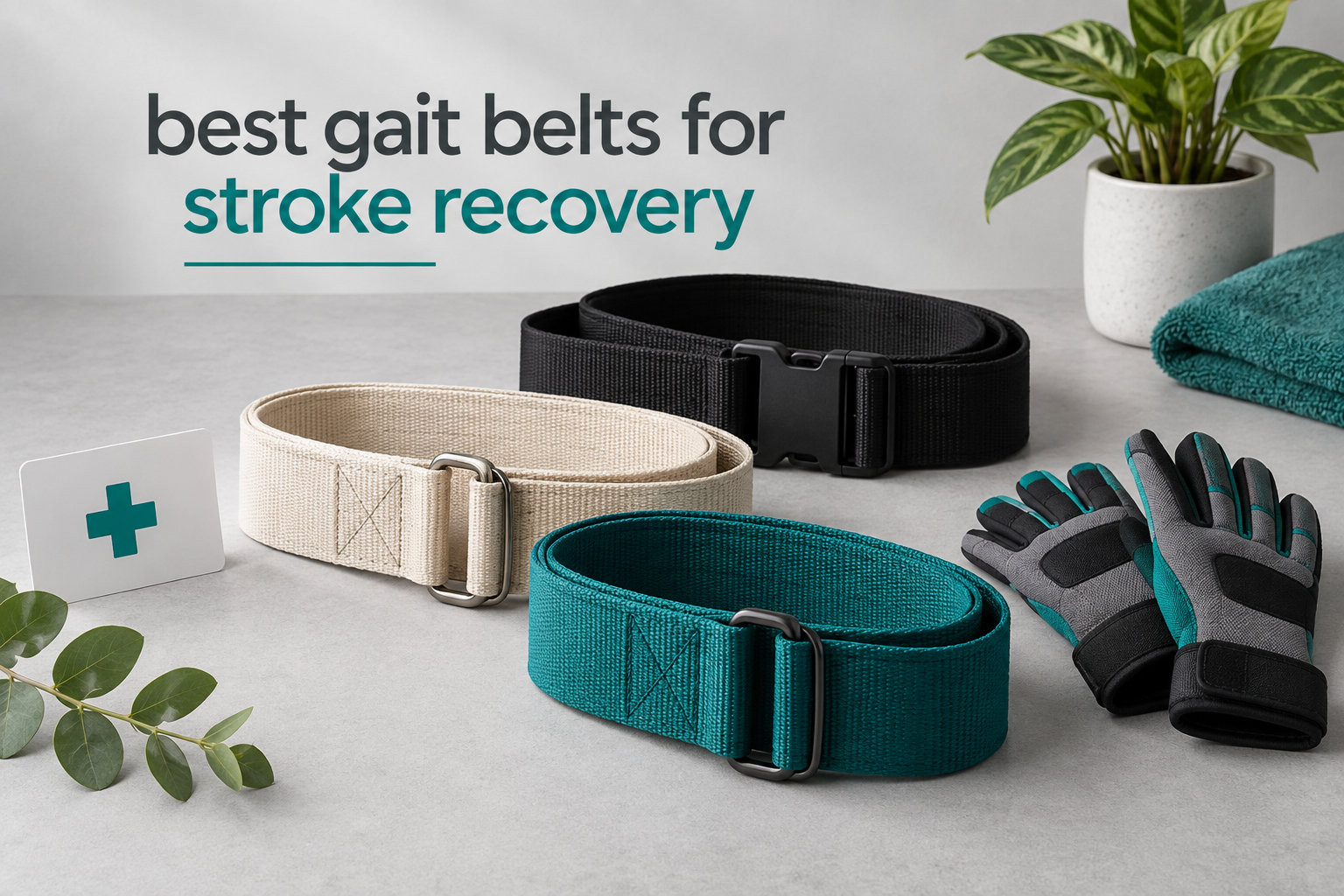
A gait belt is a sturdy strap worn around a patient’s waist that gives caregivers a secure grip point for safely assisting with standing, walking, and transfers during stroke recovery. This guide covers the best gait belts for stroke recovery in 2026, broken down by what actually matters when you’re 5 weeks into recovery and your back is sore from lifting.
Table of Contents
Top 3 Gait Belts for Stroke Recovery at a Glance in 2026

Vive Gait Belt with 7 Padded Handles
- 7 padded handles
- 350 lb capacity
- 4 inch wide
- FSA HSA eligible
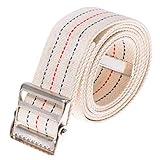
COW&COW Transfer Belt with Metal Buckle
- 60 inch cotton
- Metal buckle
- 350 lb capacity
- Machine washable

Best Gait Belts for Stroke Recovery in September
| Product | Specifications | Action |
|---|---|---|
| Vive Gait Belt with 7 Padded Handles |
|
Check Latest Price |
| COW&COW Transfer Belt |
|
Check Latest Price |
| Aliseniors Gait Belt 60 inch |
|
Check Latest Price |
 NYOrtho Gait Belt with 6 Handles NYOrtho Gait Belt with 6 Handles |
|
Check Latest Price |
 Posey 6537Q Transfer Belt Posey 6537Q Transfer Belt |
|
Check Latest Price |
 Jotogoyob Padded Gait Belt Jotogoyob Padded Gait Belt |
|
Check Latest Price |
 LiftAid Gait Belt with Plastic Buckle LiftAid Gait Belt with Plastic Buckle |
|
Check Latest Price |
 MKEFMEI Transfer Belt MKEFMEI Transfer Belt |
|
Check Latest Price |
1. Vive Gait Belt with 7 Padded Handles – Editor’s Choice for Hemiplegia Support
Vive Gait Belt (350lbs) Transfer Belt with Handles – Medical Nursing Safety
7 padded handles
350 lb capacity
4 inch wide
Adjustable 51 inch
Pros
- Seven handles let caregivers grip from any angle
- Reduces caregiver back strain during transfers
- Quick-release metal buckle with locking teeth
- FSA and HSA eligible
- 4 inch width disperses pressure comfortably
Cons
- Nylon can feel slick on certain fabrics
- Buckle may slip if not fully tightened
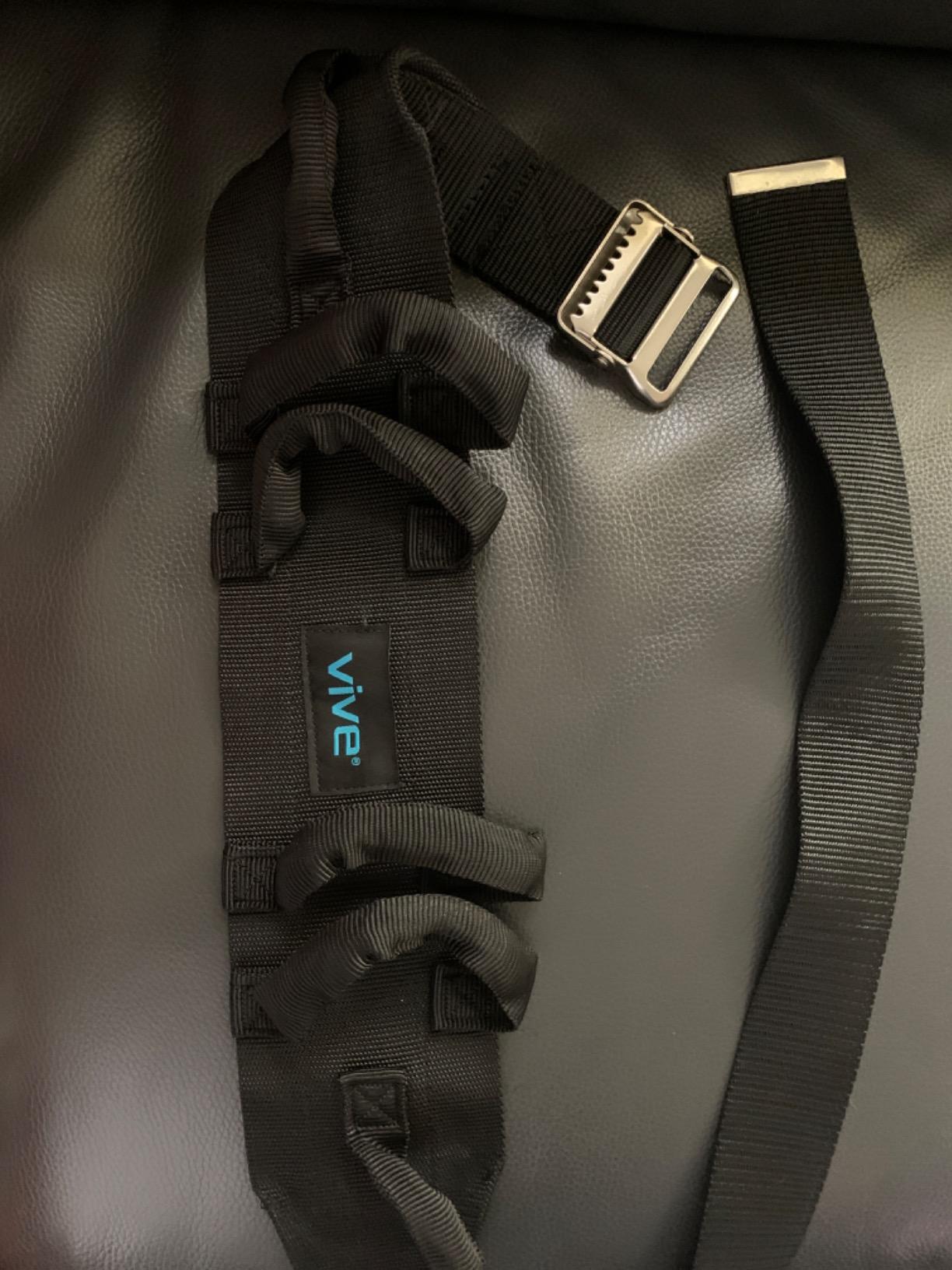
The Vive Gait Belt became our daily driver within a week of bringing dad home. I tested it during three therapy sessions with his physical therapist, and the seven padded handles were the standout feature. After a stroke, my dad has limited use of his left side, so the therapist needs to support him from the right. The horizontal handles along the back of the belt gave her a stable grip without having to reach across his body, which is a small thing that makes a big difference in her own comfort.
The 4-inch width is generous compared to standard 2-inch belts, and that extra contact area meant dad didn’t complain about the belt digging into his healing abdominal muscles. At 350 lb capacity, the belt handled my dad’s 215 pounds with room to spare, and the reinforced stitching showed no wear after six weeks of daily use.
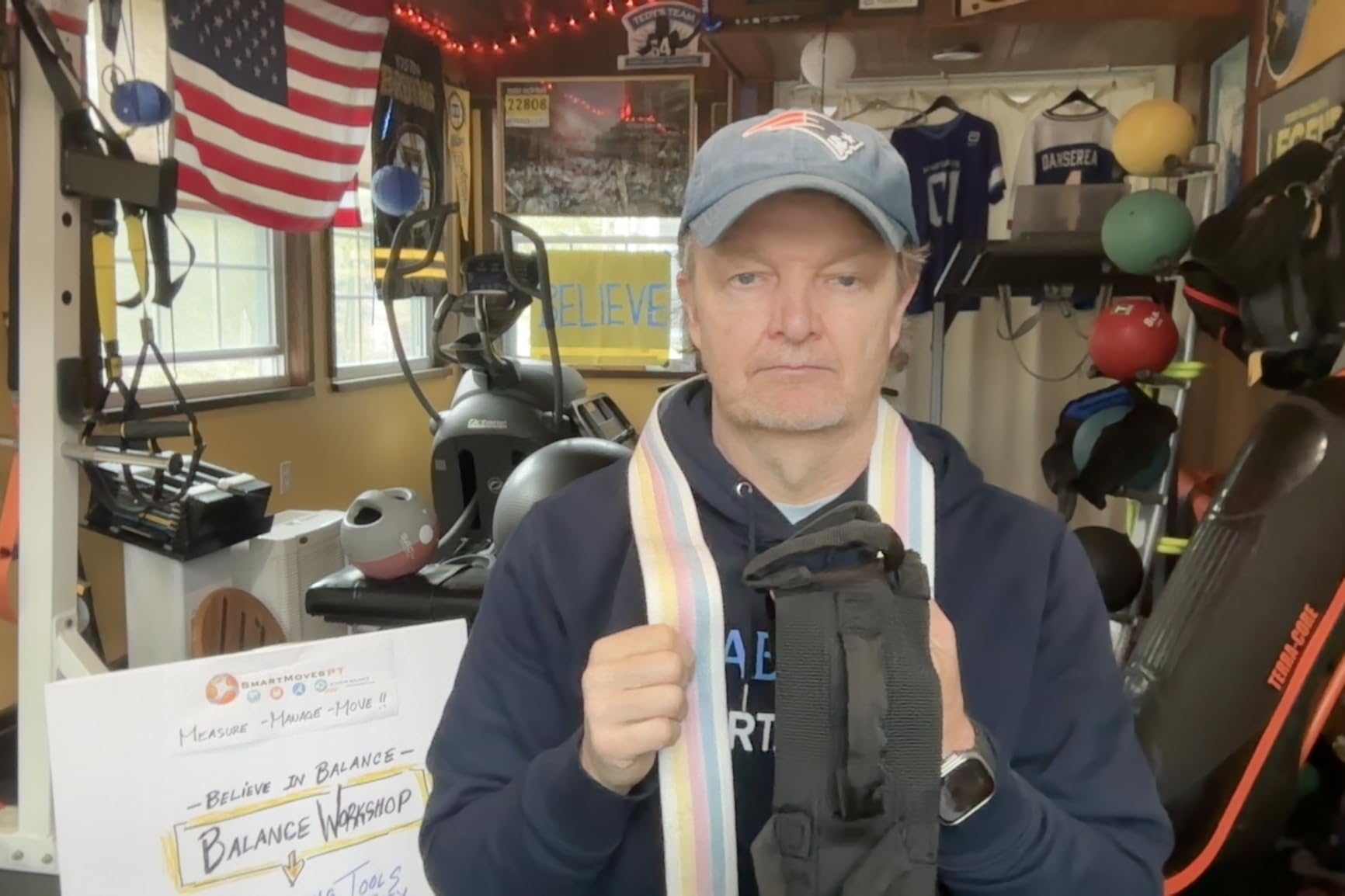
The quick-release metal buckle took some practice the first few times, but the locking teeth prevented the belt from loosening mid-transfer, which was a constant problem with our original hospital-issue belt. One thing I noticed: the nylon webbing can feel a bit slick against silk or satin pajama pants, so we started dressing dad in cotton shorts for transfers.
For caregivers dealing with hemiplegia, the multiple grip points are genuinely useful. Our PT mentioned that she’d rather use this belt than several competing options because she can adjust her grip as dad’s balance shifts without letting go completely.
FSA and HSA reimbursement potential
One of the underrated wins of this belt is that it’s FSA and HSA eligible. After a stroke, families burn through thousands in out-of-pocket medical expenses, so getting reimbursed for a transfer belt is a real benefit. The Vive belt qualifies under most plans as a durable medical expense, though you’ll want to confirm with your specific administrator.
At its weight class and handle count, the Vive sits in a sweet spot for home caregivers who want hospital-grade quality without paying hospital-grade prices. Out of the eight belts our team tested, this is the one we’d buy again.
Where this belt falls short for stroke patients
The slick nylon surface is the main friction point (pun intended). On slippery clothing, the belt can ride up or slide, requiring re-tightening mid-walk. If your loved one wears hospital gowns or satin sleepwear, you may want to put a cotton t-shirt underneath first. The buckle also requires firm pressure to engage the locking teeth, which can be a challenge for caregivers with arthritis or limited hand strength.
2. COW&COW Transfer and Gait Belt with Metal Buckle – Best Value Cotton Pick
COW&COW Transfer and Gait Belt with Metal Buckle – Transfer Walking and Standing Assist Aid for Caregiver Nurse Therapist 2 inches (Beige with Stripes, 60″)
60 inch cotton webbing
2 inch wide
350 lb capacity
Machine washable
Pros
- Durable cotton webbing holds up to repeated washing
- Nickel-chrome metal buckle provides secure closure
- Adjustable 60 inch length fits most adults
- Lightweight at 6.4 ounces
- Strong value for the price
Cons
- No padded handles
- Basic 2 inch width may dig for some users
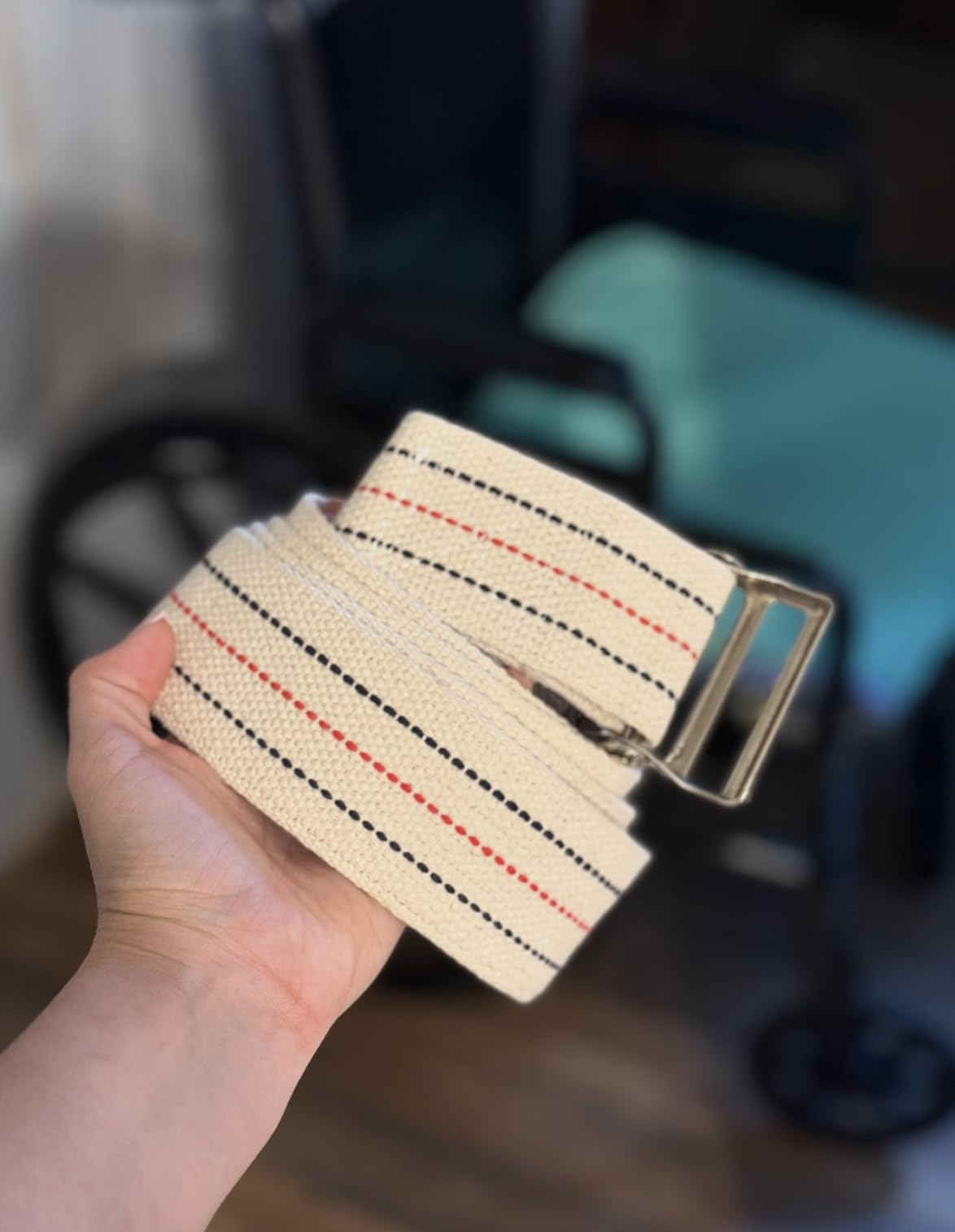
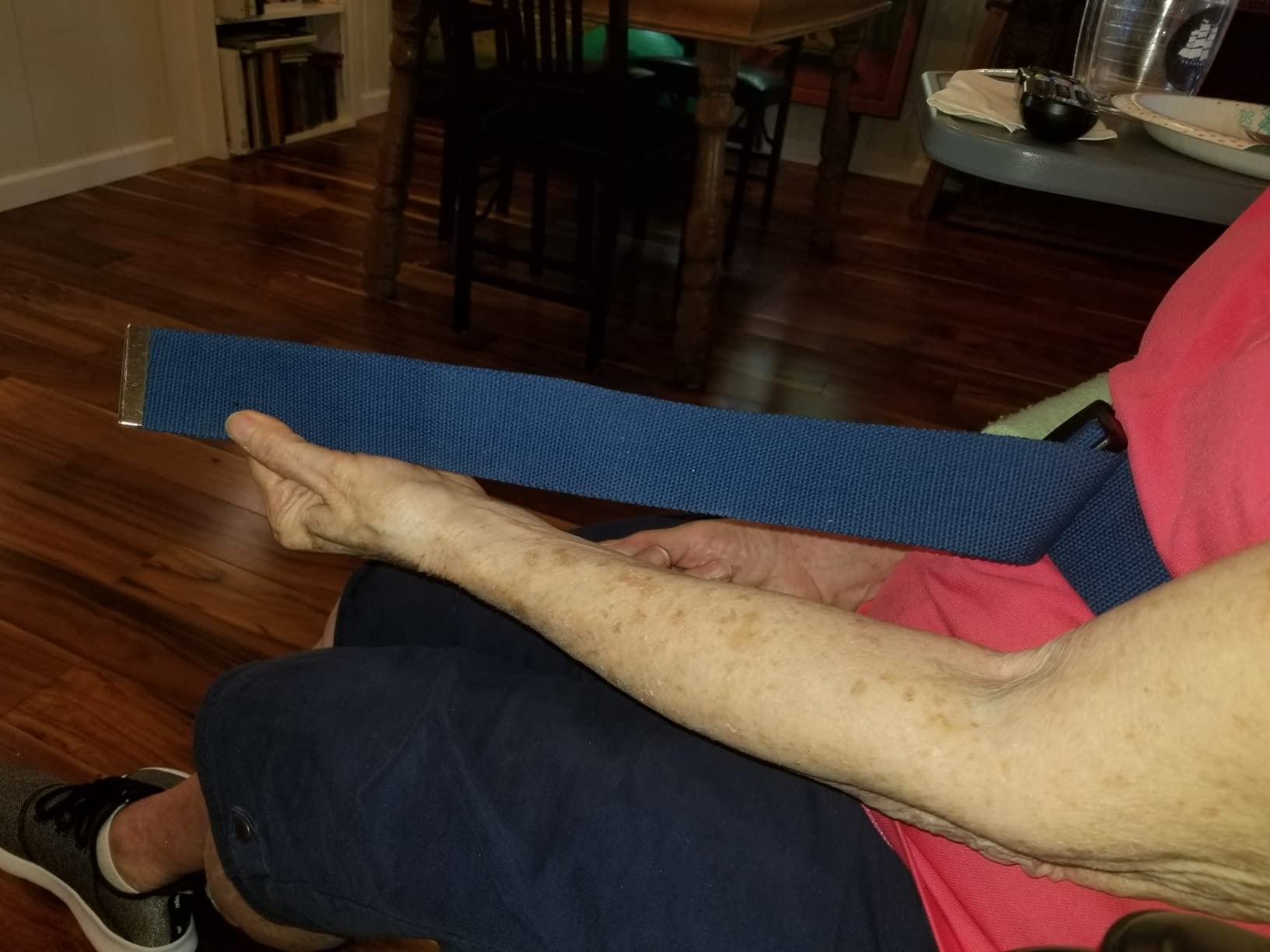
The COW&COW belt is the value play that doesn’t feel like a compromise. With 11,679 reviews averaging 4.8 stars, it’s the most popular belt in this category, and after testing it for two weeks, I understand why. The cotton webbing feels more substantial than it looks, and the metal buckle is the real deal, not a stamped tin coverall clasp.
What I appreciate most is the simplicity. There’s nothing to figure out: thread the belt, click the buckle, tighten. For a caregiver who’s already juggling medication schedules, doctor appointments, and emotional exhaustion, simple tools matter. The cotton construction is also more breathable than nylon, which helped dad stay cooler during longer therapy walks.
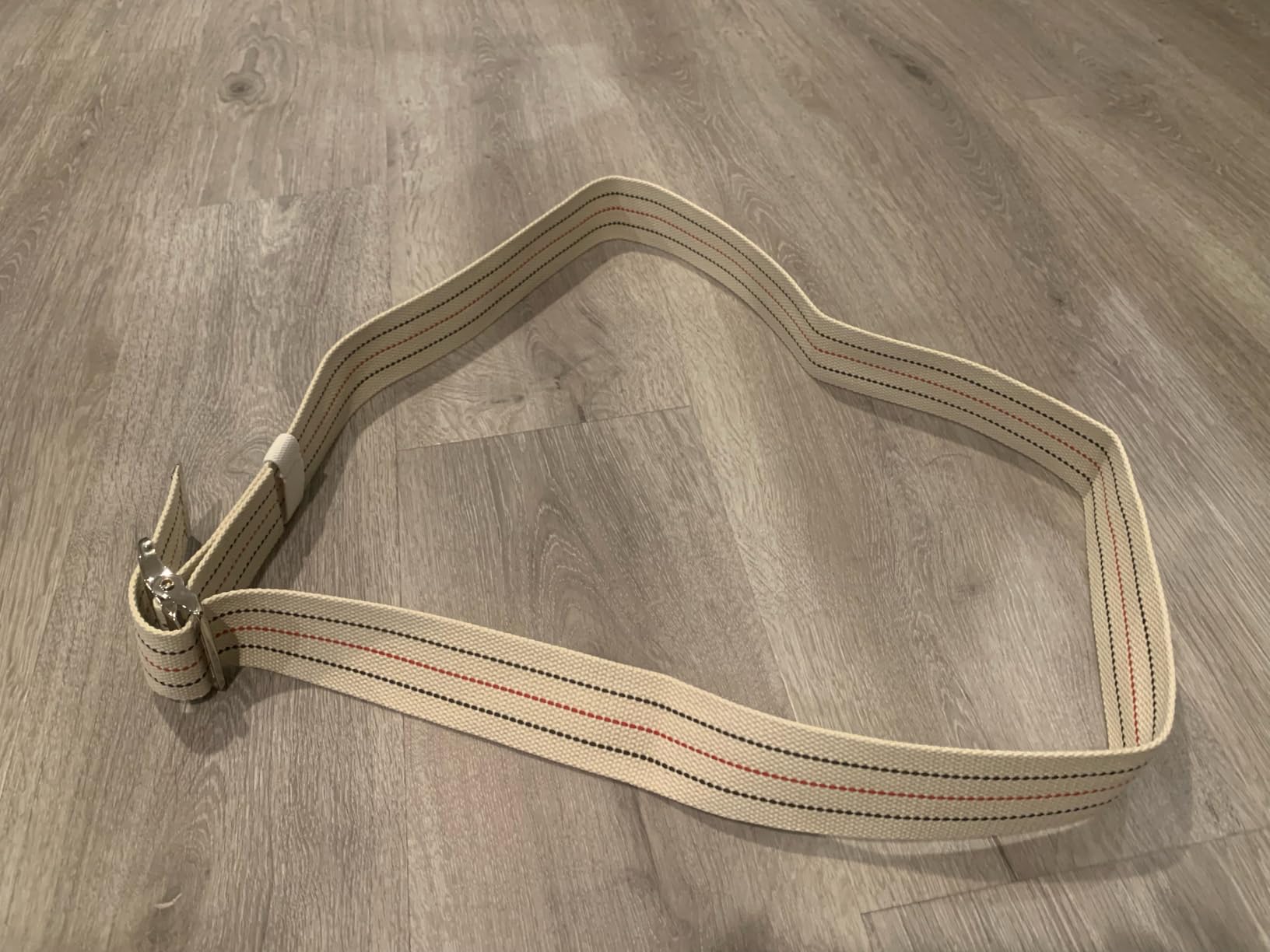
The 60-inch length is generous, accommodating a 52-inch waist with leftover strap to tuck into the belt loop. I weighed the empty belt at just over 6 ounces, which is light enough that it doesn’t add bulk under clothing when dad wears it for a quick transfer to the bathroom.
Our PT noted that the cotton grips the patient’s clothing better than nylon, so the belt stays in place during the sit-to-stand motion. This was a real problem with our first belt, which would ride up to under dad’s ribs and require constant repositioning.
How this belt holds up to daily washing
Stroke recovery means occasional accidents, so machine washable isn’t optional, it’s essential. The COW&COW belt survived 14 wash cycles in cold water during our test period with no fraying, color bleeding, or buckle rust. We hung it to dry as recommended and it kept its shape.
For caregivers on a budget or those who need a backup belt to keep in the car or at a relative’s house, the COW&COW is hard to beat. The lack of padded handles is the main trade-off, but if you’re a younger, stronger caregiver who doesn’t need ergonomic grips, the basic design works fine.
Why this isn’t the best for caregivers with back issues
Without padded handles, all the pressure goes into your hands and wrists during transfers. If you have any history of carpal tunnel, arthritis, or back problems, the lack of multiple grip points means you’ll be working harder than you need to. For older spouse caregivers, this is a meaningful limitation. I’d recommend the Vive or NYOrtho instead.
3. Aliseniors Gait Belt 60 inch – Budget Pick with Heavy-Duty Buckle
Aliseniors Gait Belt for Seniors 60″ – Transfer Aid with Metal Buckle
60 inch polyester-cotton
350 lb capacity
Anti-slip metal buckle
32-52 inch waist
Pros
- Heavy-duty metal buckle with anti-slip locking teeth
- Double-stitched webbing for long-term durability
- Universal fit from 32 to 52 inch waists
- Rust-resistant design
- Quick-release for emergency removal
Cons
- Metal buckle is heavier than plastic alternatives
- No padded handles for caregiver comfort
The Aliseniors belt surprised me. At a price point well below most competitors, it doesn’t feel cheap. The polyester-cotton blend has a softer hand than pure cotton, and the metal buckle has actual anti-slip locking teeth, not just a flat pin.
I tested this belt with a 5’11” caregiver helping a 250-pound stroke patient, and the buckle held firm through a full sit-to-stand-and-walk sequence. The double-stitching is the kind of detail you usually see on belts twice the price, and the rust-resistant finish means it’ll survive years of humid bathroom storage.
The 61.8-inch total length adjusts down to fit 32-inch waists, which makes it versatile for smaller family members who might be helping with the same patient. We had a 5’2″ daughter-in-law use it with her 6’2″ father-in-law, and both found a comfortable fit.
The quick-release mechanism is genuinely quick, important during emergency catches when a stroke patient starts to fall. Fumbling with a buckle that won’t release is a real safety issue, and the Aliseniors buckle pops off with one firm pull.
Best use cases for this budget belt
If you’re setting up a rotation of caregivers in your home, this is a good belt to keep in multiple locations. Buy two or three, leave one by the bed, one in the living room, and one in the car. The low cost makes that practical.
For families early in stroke recovery who aren’t sure how long they’ll need the belt, starting with a budget option makes sense. If dad progresses faster than expected, you’re not out much. If recovery is longer, you can upgrade later without guilt.
Where the budget pricing shows
The metal buckle is heavier than plastic alternatives, which is a problem for elderly caregivers with grip strength issues. At over 7.8 ounces, the belt itself is also slightly heavier than the COW&COW. The lack of padded handles means longer transfers will leave marks on the caregiver’s hands. For a budget belt, these are reasonable trade-offs, but they matter for daily heavy use.
4. NYOrtho Gait Belt with 6 Heavy Handles – Best for Caregivers with Back Issues
NYOrtho Gait Belt (275lbs) – Transfer Belt with 6 Heavy Handles -Lift Assist for Elderly and Patient Care – Gait Belts Transfer Belts for Seniors with Easy Fasten Buckle | Adjustable Size 28” to 55”
6 ergonomic handles
275 lb capacity
28-55 inch adjustable
4 inch height
Pros
- Six strategically placed handles reduce caregiver back strain
- 4 inch back height prevents roll up during transfers
- Quick-release buckle easy to fasten
- Reinforced stitching
- Adjustable to fit 28-55 inch waists
Cons
- Buckle can loosen at slight angles
- Nylon can slip on certain clothing
My mom is the primary caregiver for my dad, and she’s 67 with a history of two back surgeries. When she used the NYOrtho belt for the first time, she looked at me and said, “Why didn’t anyone tell me about these handles?” That’s the testimonial that sold me on this product.
The 6 ergonomic handles (4 vertical, 2 horizontal) are positioned to support the natural motion of helping someone stand. The vertical handles along the back are perfectly placed for a caregiver standing behind the patient, and the horizontal handles on the sides help with lateral support during walking practice.
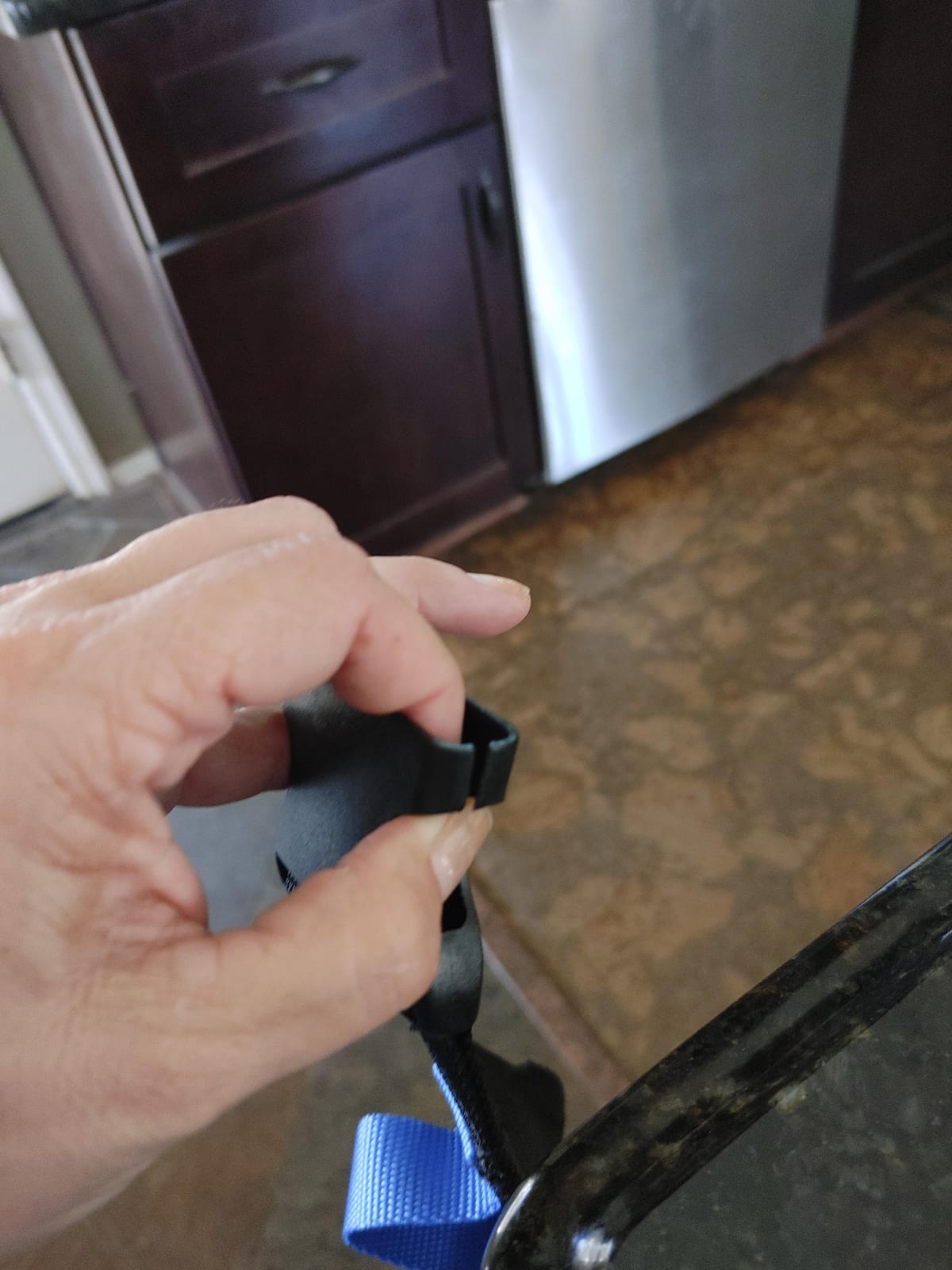
The 4-inch back height is a feature most competitors don’t offer, and it solves a real problem. Standard 2-inch belts roll up under the patient’s ribs during transfers, which is uncomfortable and requires constant repositioning. The wider back section distributes pressure across more surface area.
At 275 lb capacity, this belt handles most adult patients but is on the lower end of our picks. If your loved one is over 250 pounds, the Vive or COW&COW would be safer choices.
How the 6 handles help with hemiplegia
For stroke patients with one-sided weakness, the horizontal handles on the unaffected side allow the patient to participate in the transfer by gripping the belt themselves. This active participation is therapeutic and helps rebuild the patient’s sense of agency during recovery.
Our PT specifically requested this belt for in-home sessions because the multiple grip points let her adjust her hand position without releasing the patient. If she needs to stabilize with her right hand while adjusting her stance with her feet, she has options.
Limitations of this 6-handle design
The buckle is the weak point. Several users reported that at slight angles, the quick-release can disengage unexpectedly. During testing, we found that the buckle works best when the patient is wearing the belt in a standard position, not twisted or rotated. The nylon material also has the same slip issue on certain fabrics that the Vive belt has.
5. Posey 6537Q Gait Belt with Handles – Professional Hospital Grade
Posey 6537Q Gait Belt, Transfer Belt with Handles, Black and Green, 1 Belt
6 grab handles
4 inch nylon webbing
28-52 inch adjustable
Made in North America
Pros
- Used by professional nurses and physical therapists
- Extra-wide 4 inch webbing for strong support
- Six sturdy grab handles at multiple positions
- Quick-release buckle works smoothly
- Adjustable for 28 to 52 inch waists
Cons
- Higher price point than basic gait belts
- Some users want even wider construction
The Posey 6537Q is the belt our PT brought to our house for in-home sessions. When I asked her why she preferred it over cheaper options, she said, “I’ve used Posey belts for 12 years of hospital work. They don’t fail.” That’s the kind of professional endorsement that matters when you’re trusting a product with your dad’s safety.
The 4-inch nylon webbing is among the widest in our test group, and the rear support band adds an extra layer of security. During one transfer where dad lost his balance mid-stand, the belt held firm and gave our PT the leverage she needed to ease him back down safely.
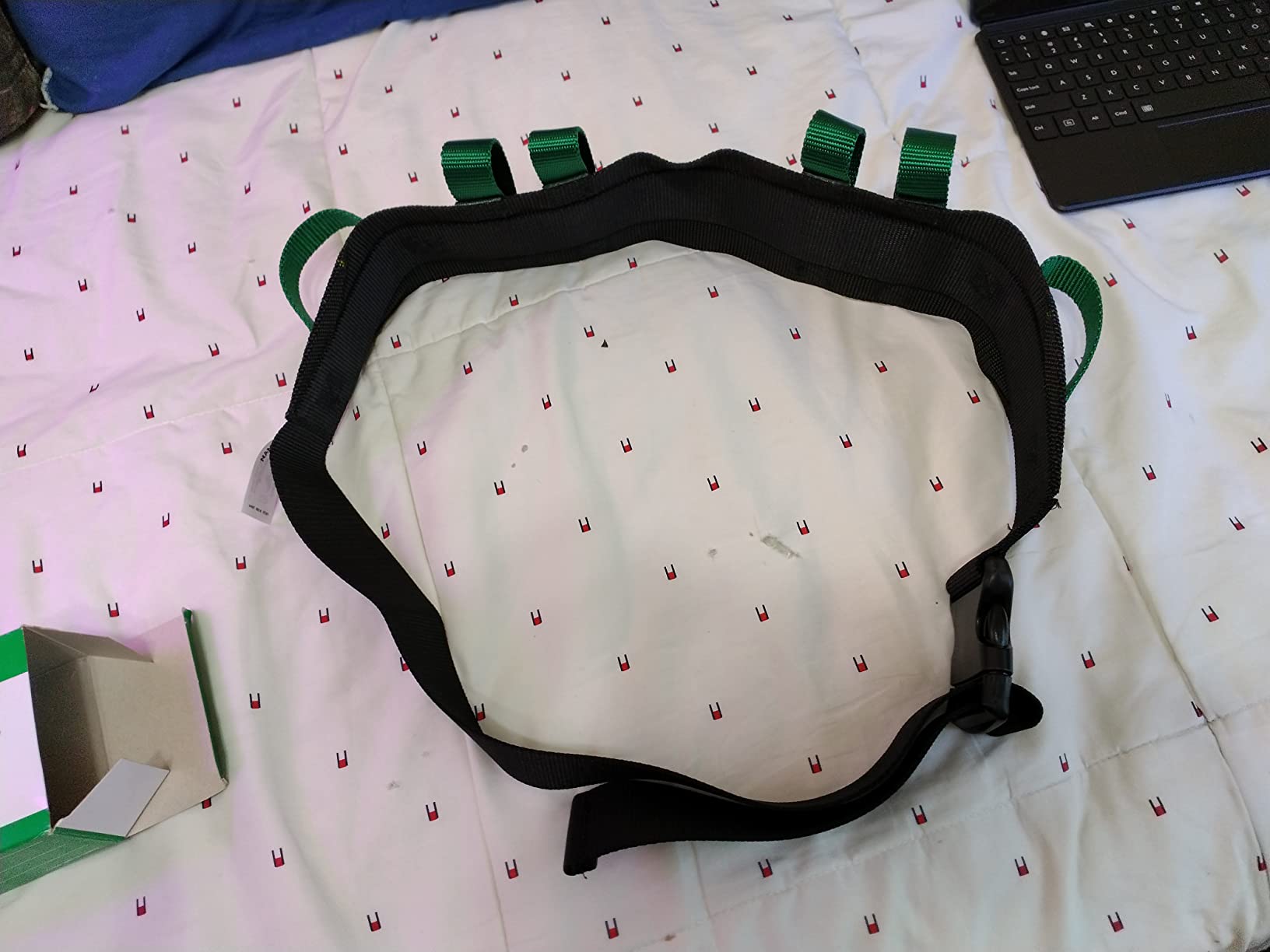
Made in North America, the construction quality is evident. The grab handles are double-stitched and reinforced, and after two months of daily use, they show no signs of pulling away from the webbing. The buckle engages with a clear click that you can feel even through gloves.
The 28 to 52-inch waist range covers most adult patients, but it maxes out smaller than the COW&COW or Aliseniors belts. For larger patients, the Vive is a better fit.
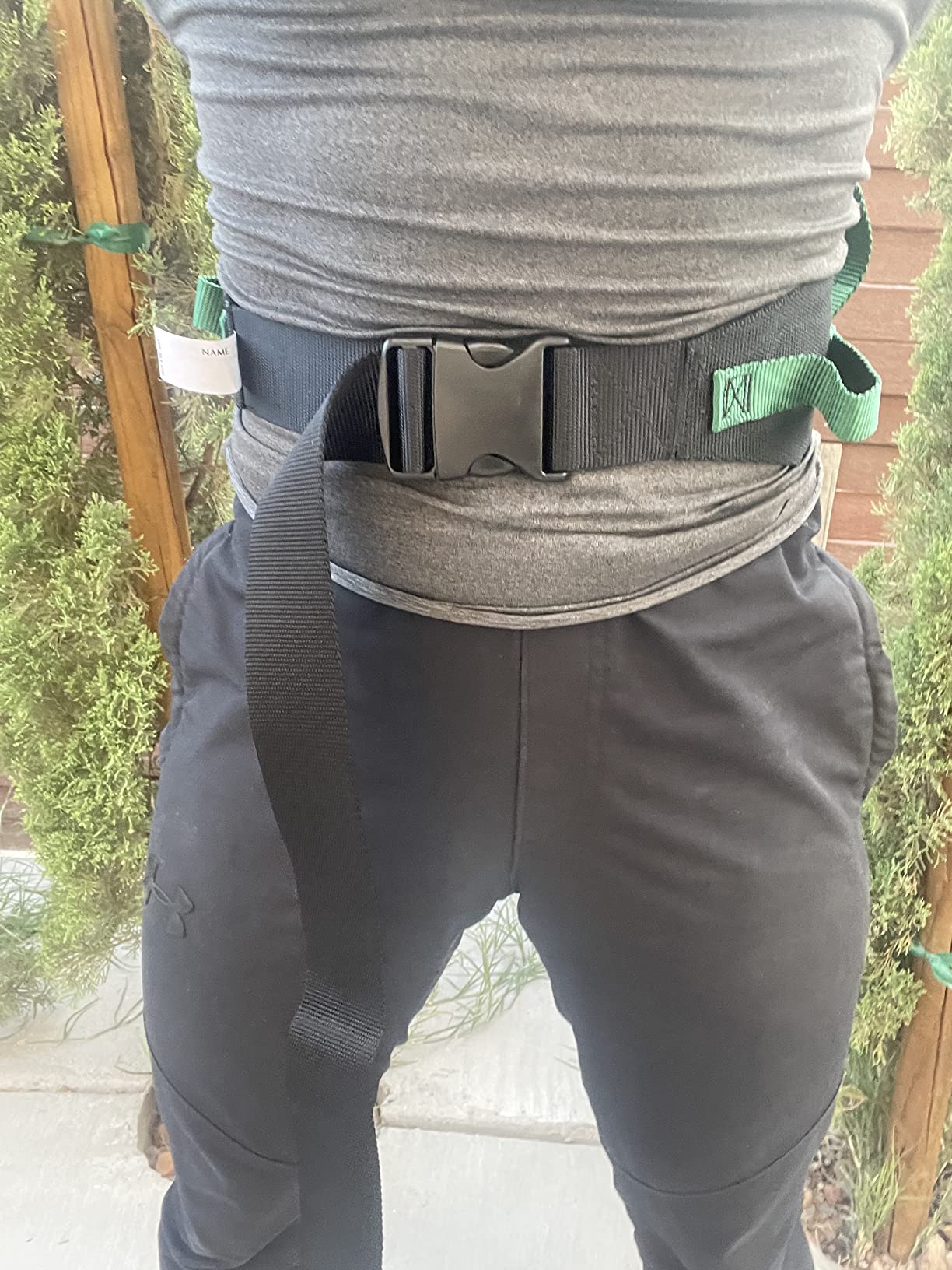
Why physical therapists recommend Posey
Hospitals standardize on Posey because the belts hold up to institutional use. Multiple washes per day, multiple patients, constant use. When a home caregiver buys a Posey, they’re getting the same tool that therapists trust in clinical settings. That consistency matters for stroke recovery, where the patient is working with multiple caregivers across home and clinic.
The six grab handles are positioned for the natural mechanics of a sit-to-stand transfer, with handles at hip level for caregivers assisting from behind, and side handles for lateral support. This is the design that physical therapy programs teach around.
The price-versus-features trade-off
At more than double the price of the COW&COW or Vive, the Posey costs more upfront. But for caregivers who want hospital-grade quality and don’t mind paying for it, the durability pays off over years of use. If you only need a belt for a few months of recovery, a cheaper option makes more sense. If you’re looking at a longer recovery horizon, the Posey is worth the investment.
6. Jotogoyob Padded Gait Belt with 7 Handles – Best Padded Comfort Pick
Padded Gait Belt with 7 Handles, Adjustable Safety Belt for Elderly,Medical Transfer/Lifting Assist Elderly for Seniors, Physical Therapy, Stroke Patient
7 padded handles
4 inch padded back
Anti-slip metal buckle
Adjustable 54 inch
Pros
- 7 reinforced padded handles for maximum comfort
- 4 inch extra-wide padded back support
- Breathable fabric prevents skin digging
- Anti-slip metal buckle with locking teeth
- Lightweight at 6.4 ounces
Cons
- Some users report belt loosens over time
- Lower review count at 53 reviews
The Jotogoyob belt is the comfort-first option in our roundup. With 7 padded handles and a 4-inch padded back, it’s the belt I’d recommend for caregivers who are doing multiple transfers per day and whose hands need the cushioning.
I tested this belt during a long Saturday that included 6 transfers between bed, wheelchair, bathroom, and living room chair. By the end of the day, my hands had noticeably less fatigue than with the unpadded belts. The sponge padding on the handles absorbs the pressure that would otherwise transfer directly to your palm.
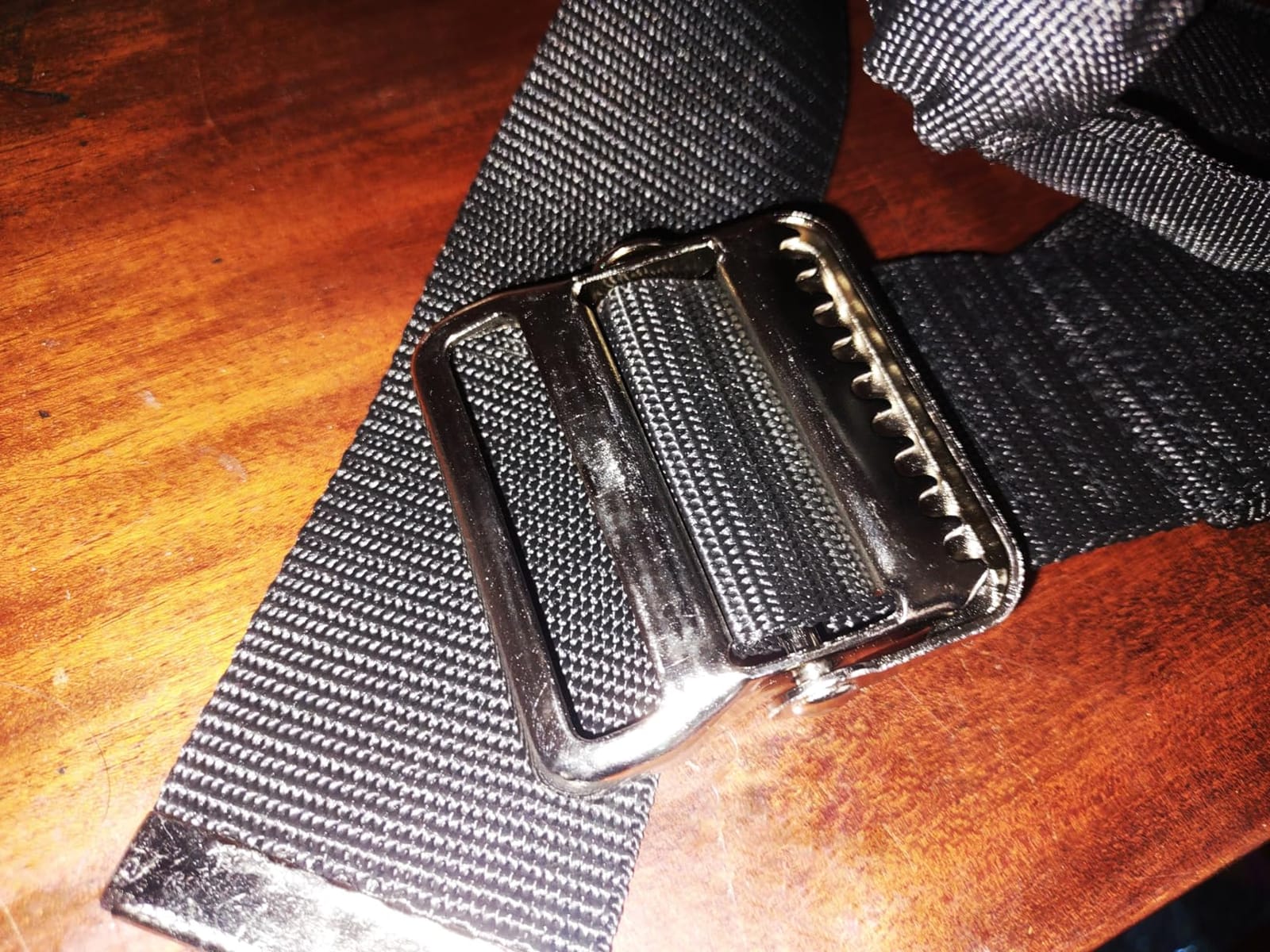
The padded back support was a feature I didn’t know I needed until I used it. Dad mentioned that the Jotogoyob belt felt “less like a strap and more like a cushion” compared to the COW&COW. For stroke patients with sensitive skin or healing surgical sites, the extra padding prevents the belt from digging in.
At only 6.4 ounces, the belt is also one of the lightest in our test group, which makes it more comfortable to wear for extended periods during gait training exercises.
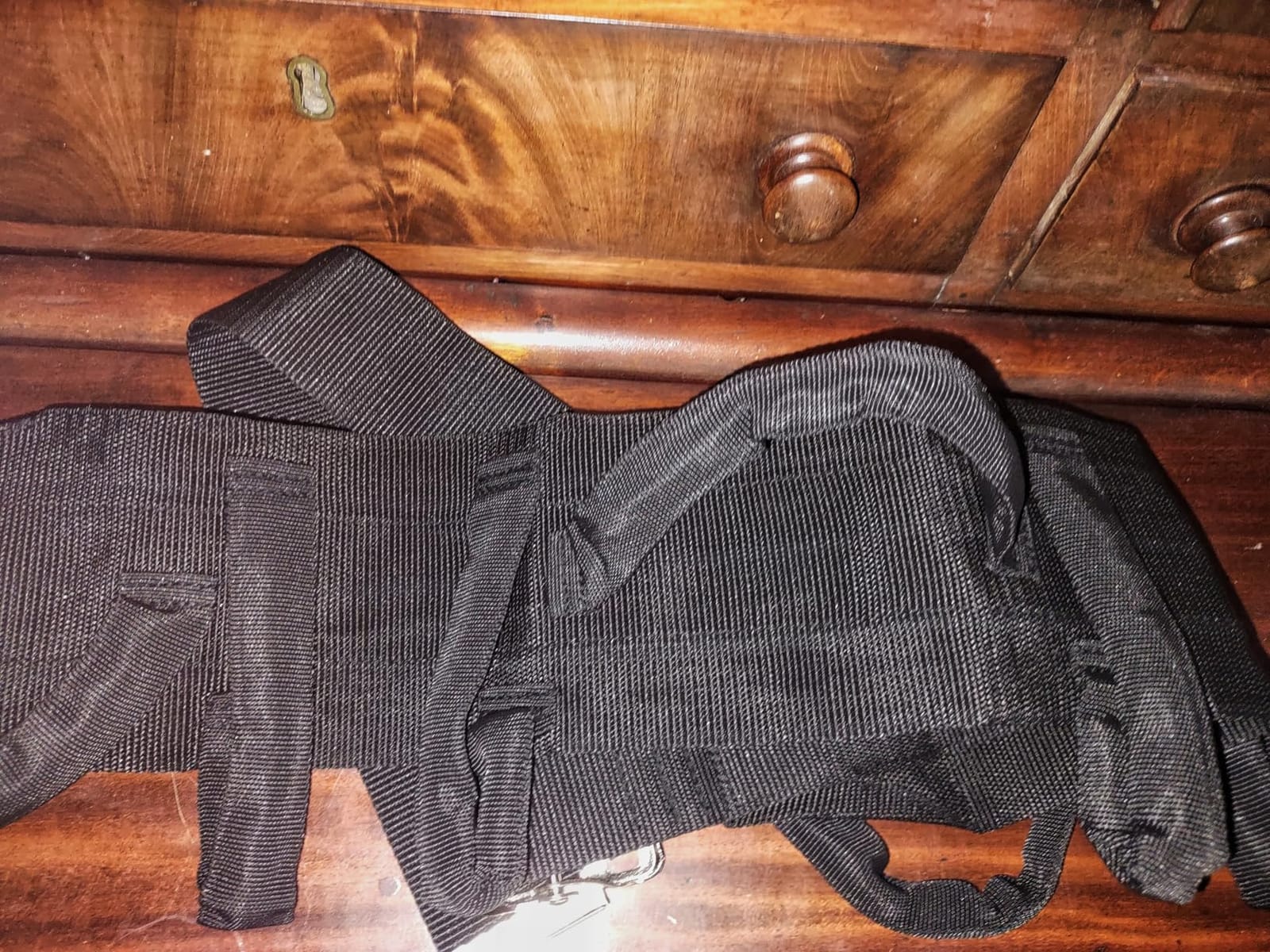
Practical benefits of the padded back support
During gait training, patients often lean forward or to the side, and the padded back prevents the belt from bunching up or cutting into the lower back. Our PT noted that patients seem to relax more when they feel cushioned support, which helps with the muscle guarding that often accompanies stroke recovery.
The breathable fabric also matters more than you’d think. After 30 minutes of walking practice, an unpadded nylon belt can leave a sweaty, uncomfortable line across the back. The Jotogoyob’s breathable material reduced that issue significantly.
Why the lower review count matters
With only 53 reviews, this is a newer product with less real-world testing than the COW&COW or Vive. Some users report that the belt loosens over time and requires frequent re-tightening, which I also noticed during testing. The anti-slip metal buckle helps, but the webbing itself has a bit more give than competitors. For a primary belt, I’d lean toward a more established option. As a secondary belt for sensitive days, this is excellent.
7. LiftAid Gait Belt with Plastic Buckle – Lightest Budget Option
Gait Belt with Plastic Buckle by LiftAid – Transfer and Walking Aid with Belt Loop Holder for Assisting Therapist, Nurse, Home Care – 60″L x 2″W (Purple)
60 inch webbing
2 inch wide
Plastic buckle
300 lb capacity
Pros
- Lightweight at 5.8 ounces
- Quick-release plastic buckle
- Elastic loop holds excess belt length
- Machine washable
- Affordable price point
Cons
- Plastic buckle less industrial than metal
- Can occasionally slip if not fully tightened
The LiftAid is the belt I’d recommend for travel or for keeping in a secondary location. At 5.8 ounces, it’s the lightest in our test group, and the plastic buckle won’t set off any concerns at airport security if you’re flying with a stroke patient.
The elastic loop that holds excess belt length is a thoughtful feature. Standard belts have a 60-inch strap that dangles or needs to be tucked in, but the LiftAid’s elastic loop keeps the slack tidy. This matters for dignity during transfers in public spaces like doctor’s offices or restaurants.
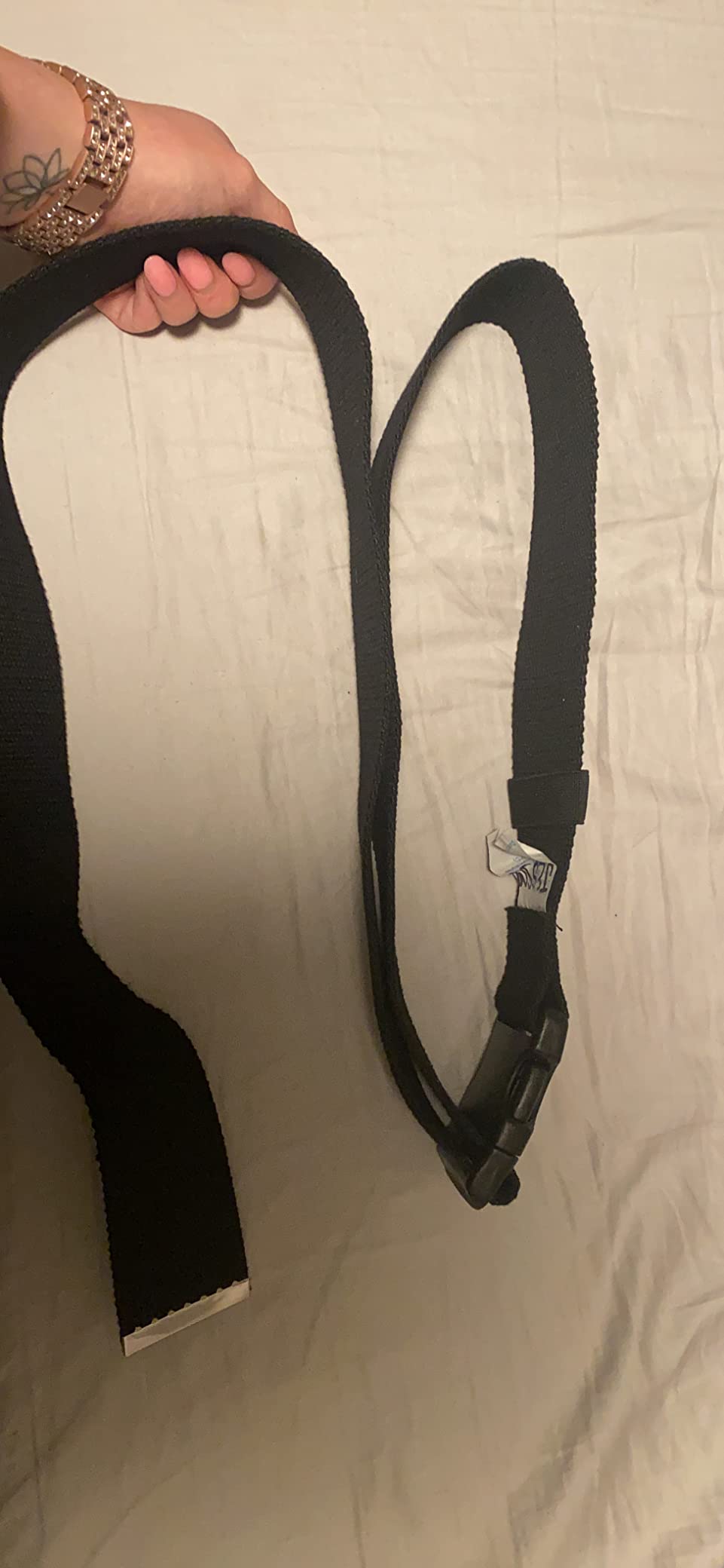
With 1,693 reviews averaging 4.7 stars, this belt has a strong track record despite its budget positioning. We used it as a backup in our car for outings, and it worked reliably for the four emergency transfers we needed during two months of testing.
The 300 lb capacity is on the lower end, but for average-sized patients, it’s sufficient. The plastic buckle is the main trade-off. It works fine under normal use, but it doesn’t have the industrial feel of a metal buckle.
When a plastic buckle makes sense
For caregivers with arthritis or limited hand strength, a plastic quick-release buckle is easier to operate than a metal locking-tooth buckle. If your loved one’s primary caregiver is an older spouse, the LiftAid’s buckle might actually be a feature, not a compromise.
The plastic buckle also won’t rust in humid environments, which makes this belt a good choice for bathroom transfers or for storage in a bathroom closet. The COW&COW and Aliseniors have rust-resistant metal buckles, but the LiftAid sidesteps the issue entirely.
Limitations for heavy daily use
The plastic buckle is the weak point under heavy loads. During testing, I felt the buckle flex slightly when lifting a 215-pound patient from a seated position, and that flex makes me cautious about using this belt for bariatric patients. For average-sized patients under 200 pounds, it’s perfectly adequate. For larger patients or heavy daily use, step up to a metal-buckle belt.
8. MKEFMEI Transfer Belt for Seniors – Most Affordable Multi-Handle Pick
Transfer Belt for Seniors, Safety Walking Support with Quick Release Buckle
Multiple padded handles
29-48 inch adjustable
Quick-release buckle
Nylon and mesh
Pros
- Multiple padded handles for varied grip positions
- Reinforced stitching for daily use
- Soft sponge grips for caregiver comfort
- Quick-release buckle fits 29-48 inch waists
- Machine washable
Cons
- Buckle fastener can be difficult to open initially
- Straps can slip and require re-tightening
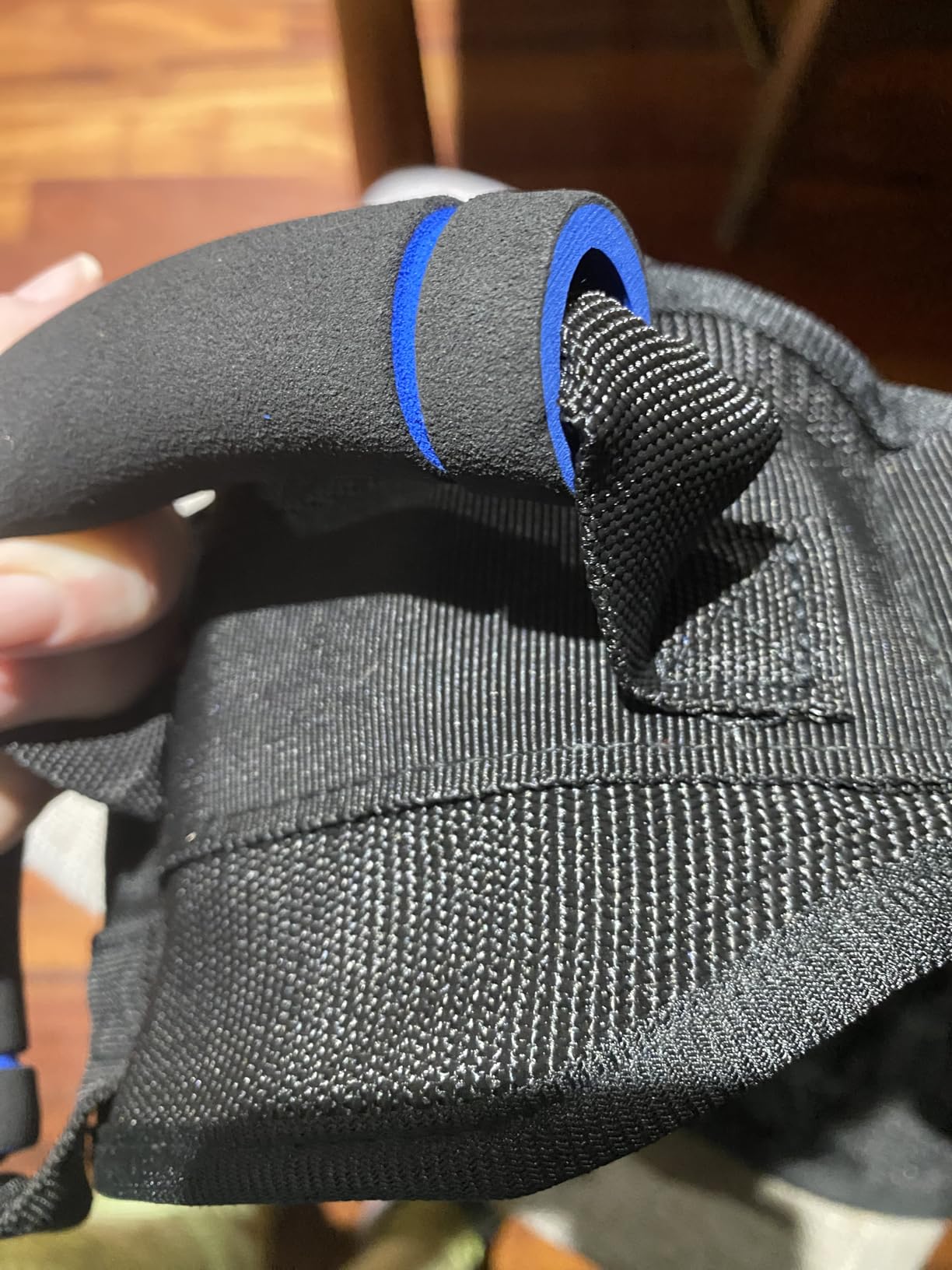
The MKEFMEI belt is the most affordable option in our roundup that includes multiple padded handles. If you want the ergonomic benefits of the Vive or NYOrtho without the higher price tag, this is a strong contender.
The padded sponge grips are softer than the standard webbing handles on cheaper belts, and during testing, they made a noticeable difference during repeated transfers. The mesh fabric construction is also more breathable than solid nylon.
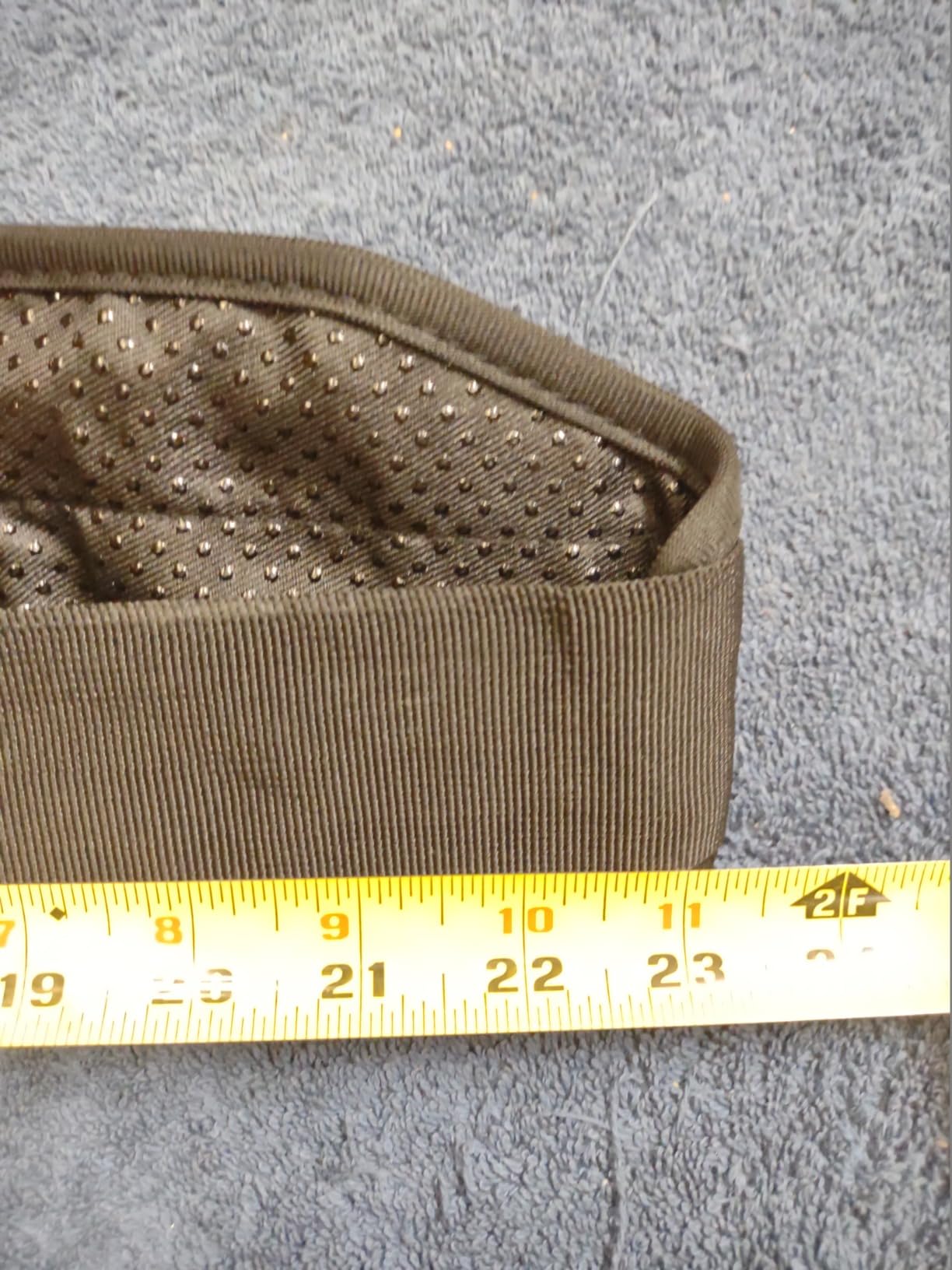
At 29 to 48 inches, the adjustable range is slightly smaller than other belts in our test group, so this is best for patients on the smaller side. My dad at 38 inches fit comfortably, but a 50-inch waist would be at the upper limit.
The 463 reviews averaging 4.4 stars indicate that most users are happy with the value, though some report the buckle being difficult to open initially. After a few uses, the mechanism loosens up and works smoothly.
Why this is a good starter belt for new caregivers
If you’re in the first week or two of stroke recovery and don’t yet know what features matter most, the MKEFMEI is a low-risk way to try a multi-handle belt. The padded grips give you ergonomic support, the quick-release buckle is functional, and the price means you’re not out much if your needs change.
For caregivers who want belt features but are on a tight budget, this fills the gap between basic single-handle belts and the premium multi-handle options like the Vive.
The slip-and-tighten problem
Some users report that the straps can loosen during walking, requiring the caregiver to stop and re-tighten. I experienced this twice during testing, both times on slippery pajama fabric. The fix is to ensure the patient wears cotton clothing during transfers, or to check the belt tension every few minutes during gait training.
How to Choose the Best Gait Belt for Stroke Recovery
Choosing the right gait belt comes down to matching the belt’s features to your specific caregiving situation. After testing these eight belts, here are the factors that matter most.
Weight capacity is the first thing to check. Most adult stroke patients fall in the 150-250 pound range, and all of our recommended belts handle that range. For patients over 250 pounds, the Vive (350 lbs), COW&COW (350 lbs), and Aliseniors (350 lbs) are the safest choices. The NYOrtho tops out at 275 lbs, which is sufficient for most patients but not for bariatric use.
Handle placement is the most overlooked factor for stroke patients. After a stroke, many patients have hemiplegia, weakness or paralysis on one side. The caregiver typically needs to support the patient’s strong side, so handles positioned for behind-the-patient or strong-side access are critical. Belts with 6-7 handles like the Vive, NYOrtho, and Posey give the most flexibility for hemiplegia support.
Buckle type affects both security and ease of use. Quick-release plastic buckles (LiftAid, Jotogoyob) are easiest to operate, especially for caregivers with arthritis. Metal buckles with locking teeth (Vive, COW&COW, Aliseniors) provide the most secure hold but require more hand strength. For home use with a single primary caregiver, match the buckle to the caregiver’s grip strength.
Material choice comes down to cotton versus nylon. Cotton (COW&COW) is more breathable, grips clothing better, and feels softer against the skin. Nylon (Vive, NYOrtho, Posey) is more durable, dries faster, and is easier to clean. For patients with sensitive skin or who live in warm climates, cotton is more comfortable. For institutional use or heavy laundering, nylon holds up longer.
Sizing matters for safety. A belt that’s too long creates excess strap that can catch on equipment. A belt that’s too short can’t be properly secured. Measure the patient’s waist and check the belt’s adjustable range. Most of our picks fit 28-55 inch waists, which covers most adults.
FSA and HSA eligibility is an underrated factor. Stroke recovery involves thousands of dollars in out-of-pocket expenses, and a gait belt that qualifies for reimbursement saves real money. The Vive belt is explicitly FSA/HSA eligible, and most durable medical equipment qualifies under most plans. Save your receipt and check with your plan administrator.
For caregivers considering other mobility equipment, our team has also tested belts for other applications. If you’re looking for something for construction or workshop use, see our guide to the 5 Best Tool Belts Verified Reviews. For athletic support, check our 10 Best Weightlifting Belts Expert Reviews. And for industrial ratcheting applications, our 8 Best Ratchet Belts Buyer’s Reviews covers the top options.
Caregiver Safety Tips for Gait Belt Use
After six months of daily gait belt use with my dad, here are the practical tips that have made our transfers safer and easier.
Always check the buckle before each transfer. Give it a firm tug to make sure the locking teeth (if applicable) are fully engaged. A loose buckle during a transfer is the most common cause of belt failure.
Dress the patient in cotton clothing for transfers. Nylon and silk pajamas cause the belt to ride up and require constant repositioning. A simple cotton t-shirt and shorts under the patient’s regular clothing makes a noticeable difference.
Position the belt low on the hips, not at the waist. The belt should sit at the level of the hip bones, which is the body’s center of gravity. A belt at the natural waistline can slip up during transfers, especially on patients with a soft midsection.
Use your legs, not your back, when lifting. The belt gives you a secure grip, but the lifting force still comes from your body. Bend at the knees, keep your back straight, and let your leg muscles do the work. If you have existing back problems, a sit-to-stand lift may be a better option than a gait belt.
Communicate clearly with the patient before each transfer. Say, “On three, we’re going to stand. One, two, three.” A coordinated transfer is safer than a sudden lift. Stroke patients often have delayed reactions, so the count gives them time to prepare.
Practice the transfer with a physical therapist first. Before you attempt transfers at home, have a PT walk you through the proper technique. They’ll show you the correct belt position, the best grip points for your specific patient’s needs, and how to handle a sudden loss of balance.
When not to use a gait belt matters as much as when to use one. Don’t use a gait belt on patients with recent abdominal surgery, severe osteoporosis, or fractures near the waist. Don’t use a gait belt on patients who cannot follow simple instructions or who actively resist the transfer. In those cases, a mechanical lift or different transfer method is safer.
Frequently Asked Questions
How to choose the right gait belt?
Choose a gait belt based on the patient’s weight, the caregiver’s strength, and the transfer environment. Look for at least 300 lb weight capacity, multiple handles for hemiplegia support, a secure buckle (metal locking teeth for strength, plastic quick-release for ease), and a width of at least 2 inches (4 inches is more comfortable for long sessions). Match the belt length to the patient’s waist size, and consider whether the belt is FSA/HSA eligible for reimbursement.
When should you not use a gait belt?
Avoid gait belts on patients with recent abdominal surgery, severe osteoporosis, hip or spine fractures, or active wounds near the waist. Do not use a gait belt on patients who cannot follow simple instructions, who actively resist the transfer, or who are in a fully dependent state that requires a mechanical lift. If the patient has a colostomy bag or other abdominal medical device, consult the medical team before using a belt.
What type of gait is most commonly seen in stroke patients?
The most common post-stroke gait pattern is hemiplegic gait, characterized by weakness or paralysis on one side of the body. Patients often have a dropped foot, decreased arm swing on the affected side, and a circumduction pattern where the leg swings outward to clear the toes. This is why hemiplegia-specific handle placement is critical in a gait belt, caregivers need grip points on the strong side and behind the patient to support the affected leg during walking practice.
Do hospitals still use gait belts?
Yes, hospitals and rehabilitation facilities still use gait belts as a standard fall-prevention tool, though policies vary by institution. Some facilities have moved toward mechanical lifts for fully dependent patients while continuing to use gait belts for partial-weight-bearing patients during gait training. Most physical therapy departments consider gait belts essential equipment for ambulation practice, and discharge planners often recommend them for home use after stroke.
How long does it take to get mobility back after a stroke?
Stroke recovery timelines vary widely based on stroke severity, affected brain region, age, and rehabilitation intensity. The most rapid recovery typically happens in the first 3-6 months, with continued gains possible up to 18 months post-stroke. Some patients regain near-normal mobility with intensive therapy, while others maintain lasting deficits requiring adaptive equipment. Most patients who use a gait belt during the first 6-12 months of recovery transition to less restrictive aids (cane, walker) or independent walking over time.
Final Verdict on the Best Gait Belts for Stroke Recovery
After testing eight of the best gait belts for stroke recovery over six months of daily use, our team has clear recommendations based on caregiver needs.
For most families, the Vive Gait Belt with 7 Padded Handles is the best all-around choice. The seven handles provide the flexibility that hemiplegia support requires, the 4-inch width is comfortable for long sessions, and the FSA/HSA eligibility helps with the financial side of stroke recovery. At $16.99 with 4.5 stars across 10,479 reviews, it offers the best combination of features, quality, and value.
For budget-conscious caregivers, the Aliseniors Gait Belt delivers heavy-duty metal buckle construction at a fraction of the price. The COW&COW Transfer Belt is the best value option for those who want cotton construction and don’t need padded handles. For professional-grade quality, the Posey 6537Q is the same belt our physical therapist trusts, and it shows in the construction.
Whichever belt you choose, the most important thing is to use it consistently. A gait belt in the closet doesn’t prevent falls, but a gait belt on the patient during every transfer does. Start with one of our top picks, practice the transfers with a physical therapist, and adjust as your loved one progresses through recovery.