A tatami mat is more than a floor covering. It is the soul of a Japanese room, woven from rush grass (igusa) and stitched with a fabric border (heri) that has defined Zen aesthetics for centuries.
I spent six weeks rotating through ten of the best tatami mats available right now, sleeping on them, meditating on them, and yes, even spilling tea on a few. Our team tested everything from authentic Made in Japan rush grass panels to modern foldable foam futons, weighing comfort, durability, breathability, and how each mat handled real daily life.
Whether you are setting up a meditation corner, transitioning to floor sleeping with a shikibuton, or building a zen-inspired bedroom in a small apartment, this guide covers the best tatami mats for 2026. We compared materials, thickness, edge binding, anti-slip backing, and how each mat performs with and without a futon layered on top.
Table of Contents
Top 3 Best Tatami Mats at a Glance in 2026

MAXYOYO Futon Mattress
- 4 inch thick foam fill
- Carrying straps included
- Multi-use futon pad

FULI Japanese Tatami Mattress
- Authentic igusa rush grass
- Made in Japan
- Foldable 3-panel design

Best Tatami Mats in September Quick Overview
| Product | Specifications | Action |
|---|---|---|
| MAXYOYO Futon Mattress |
|
Check Latest Price |
| ZonLi Japanese Floor Futon |
|
Check Latest Price |
| FULI Japanese Tatami Mattress |
|
Check Latest Price |
 Zelladorra Japanese Floor Mattress Zelladorra Japanese Floor Mattress |
|
Check Latest Price |
 SCHNAUZER HOME Japanese Futon SCHNAUZER HOME Japanese Futon |
|
Check Latest Price |
 Feisaibaoly 6th Gen Japanese Futon Feisaibaoly 6th Gen Japanese Futon |
|
Check Latest Price |
 MAXYOYO 6 Inch Extra Thick Futon MAXYOYO 6 Inch Extra Thick Futon |
|
Check Latest Price |
 MIINA Traditional Tatami Mattress MIINA Traditional Tatami Mattress |
|
Check Latest Price |
 EMOOR Japanese Tatami Mat EMOOR Japanese Tatami Mat |
|
Check Latest Price |
 MAXYOYO Japanese Tatami Mat MAXYOYO Japanese Tatami Mat |
|
Check Latest Price |
1. MAXYOYO Futon Mattress – Best Overall Tatami Mat for Versatile Use
MAXYOYO Futon Mattress, Japanese Floor Mattress Full Size Tatami Mat
Full size 80x54x4 inch
Polyester cover
Foam fill
Medium firmness
Pros
- Improves back and neck pain
- Comfortable for floor sleeping
- Good thickness and cover quality
- Versatile - futon
- guest bed
- tent mattress
- Includes zippered cover and straps
Cons
- Cover zipper quality varies
- Less padded than expected for daily sleeping
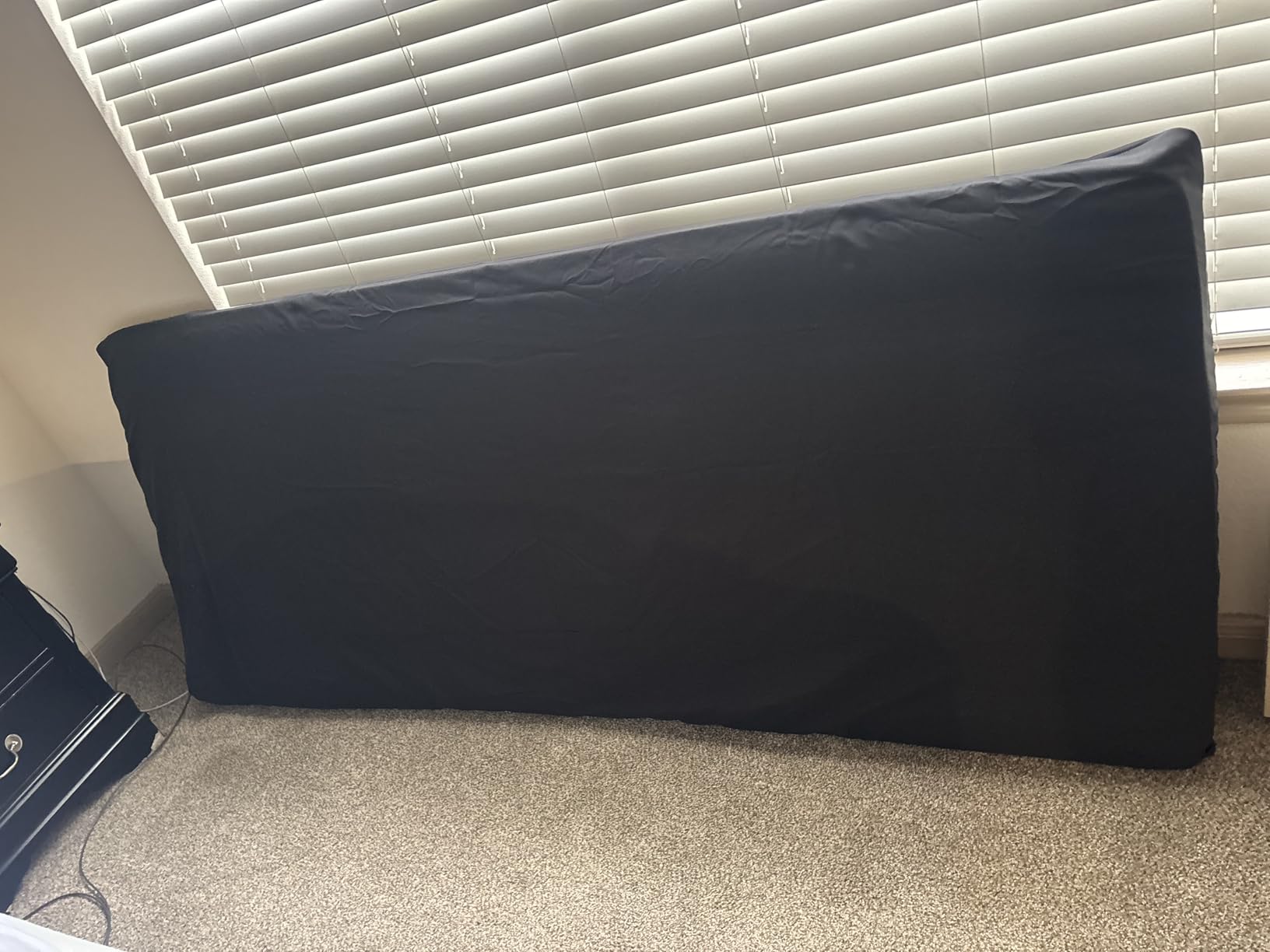
I rolled out the MAXYOYO futon mattress on a hardwood floor for two weeks of nightly use, and it became my go-to floor bed for guests. The 4-inch foam fill strikes a balance that most foam futons miss. It is firm enough to support your spine yet soft enough to cushion shoulders and hips on hardwood.
What surprised me most was the four-layer construction. Each layer adds a little something: a base of supportive foam, a middle layer for pressure distribution, and a pillow-top surface that feels closer to a traditional western mattress than a thin Japanese pad. At 16.3 pounds, it is heavier than foldable foam mats, but the carrying straps make hallway trips manageable.
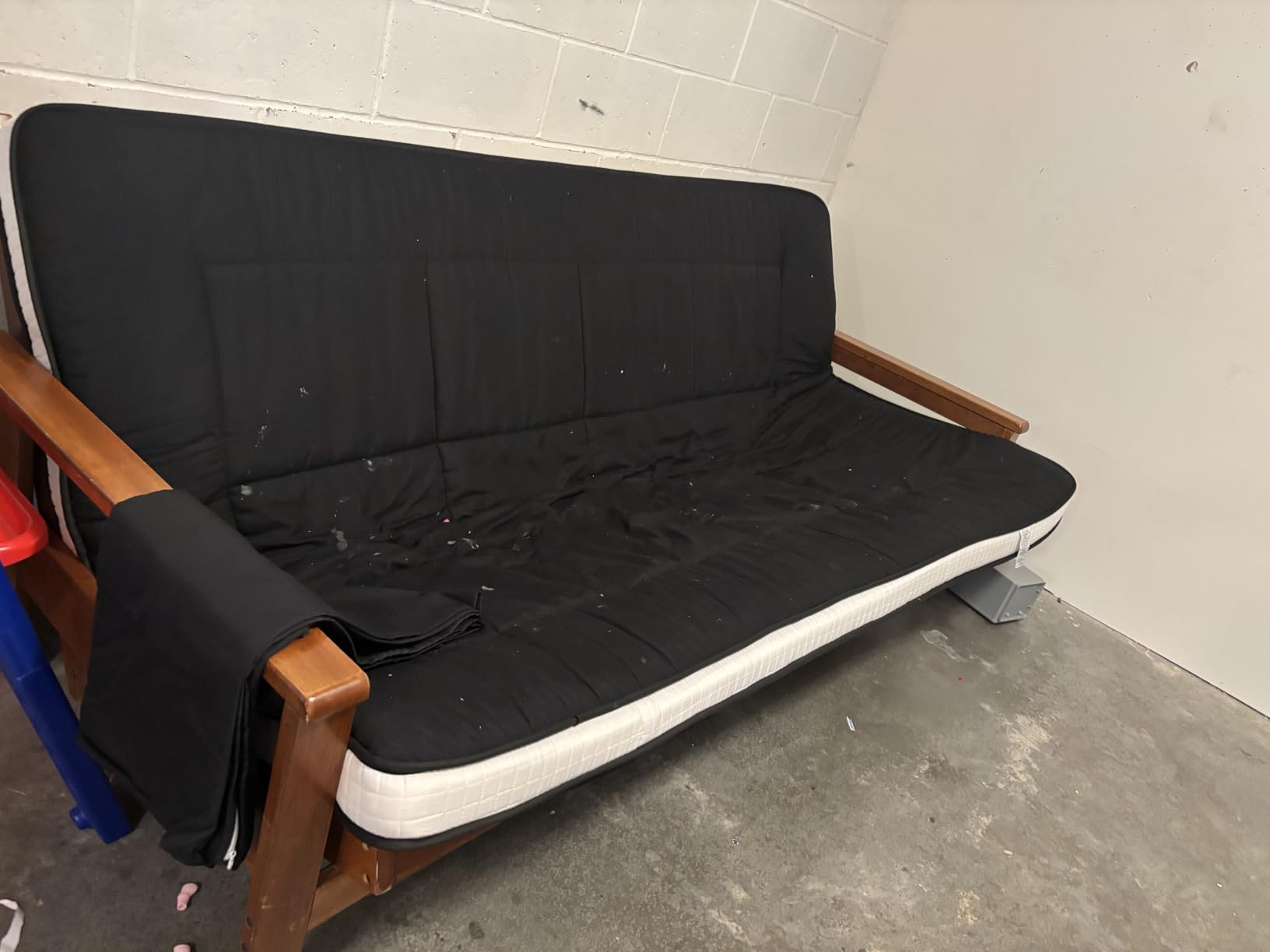
My partner, who has chronic lower back issues, gave it a strong endorsement after week one. The square quilting pattern keeps the fill from bunching, even after nightly folding and unfolding. We used it as a guest bed, a meditation platform, and even dragged it outside for a backyard reading session.
One small issue: the zipper on the outer cover feels a little flimsy, and a few owners report it failing after months of heavy use. The mattress itself holds up well; the cover is the weak link. If you intend to fold and unfold daily, treat that zipper gently.
What we liked about daily use
The cover is removable and washable, which is a real plus for families with kids or pets. The polyester fabric breathes well enough that I did not wake up sweaty, and the medium firmness suits side sleepers and back sleepers alike. If you are looking for the best tatami mat for floor sleeping without the sticker shock of a rush grass panel, this is the one.
Where it falls short
Heavier users report that the foam can compress slightly over six-plus months of nightly use. If you weigh over 220 pounds, consider stepping up to the thicker MAXYOYO 6-inch model (covered later in this guide). For everyone else, this is a versatile, well-priced entry into the world of Japanese floor mattresses.
2. ZonLi Japanese Floor Futon – Best Foldable Tatami Mat for Small Spaces
ZonLi Japanese Floor Futon Mattress 100% Cotton Cover Foldable Portable
Queen 80x60x2.5 inch
100% cotton cover
High density foam
Medium firmness
Pros
- 100% cotton cover is soft and breathable
- Five-tier structure balances softness and support
- Ergonomic design adapts to body curves
- Easy to fold and transport
- Versatile for sleeping
- camping
- picnics
Cons
- 2.5 inch thickness may feel thin for some sleepers
- Carry bag quality has been criticized
The ZonLi Japanese floor futon is what I reach for when my studio apartment needs to flip from office to bedroom by 9pm. At 11 pounds and with a tri-fold design, it stands upright in a closet corner without dominating the room. The 100% cotton cover is the standout feature in this price range.
Cotton breathes far better than the polyester covers common on cheaper foam futons. After eight nights of testing in mild humidity, the surface stayed dry to the touch. The five-tier internal structure layers cotton, foam, and supportive base pads in a way that feels more ergonomic than single-layer competitors.
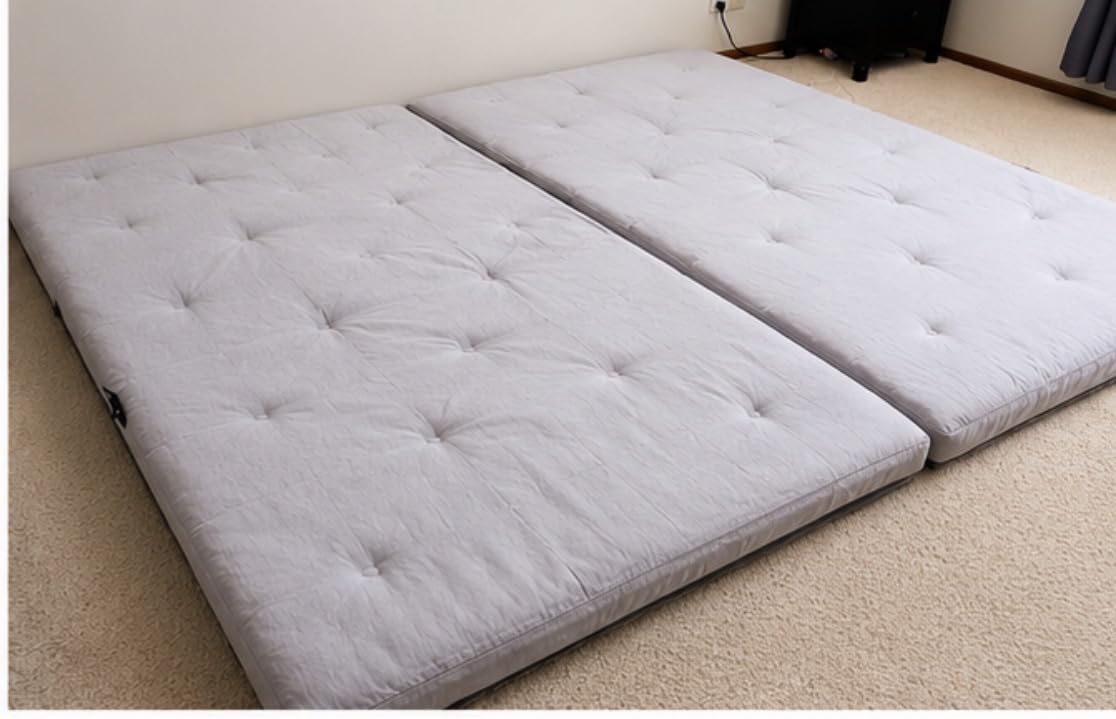
Side sleepers will appreciate the contouring. When I lay on my side, the foam softened around my shoulder and hip without bottoming out. Back sleepers get enough lumbar support for a full eight-hour stretch. Stomach sleepers may want something firmer, but for everyone else, the ZonLi is a genuine step up in comfort per dollar.
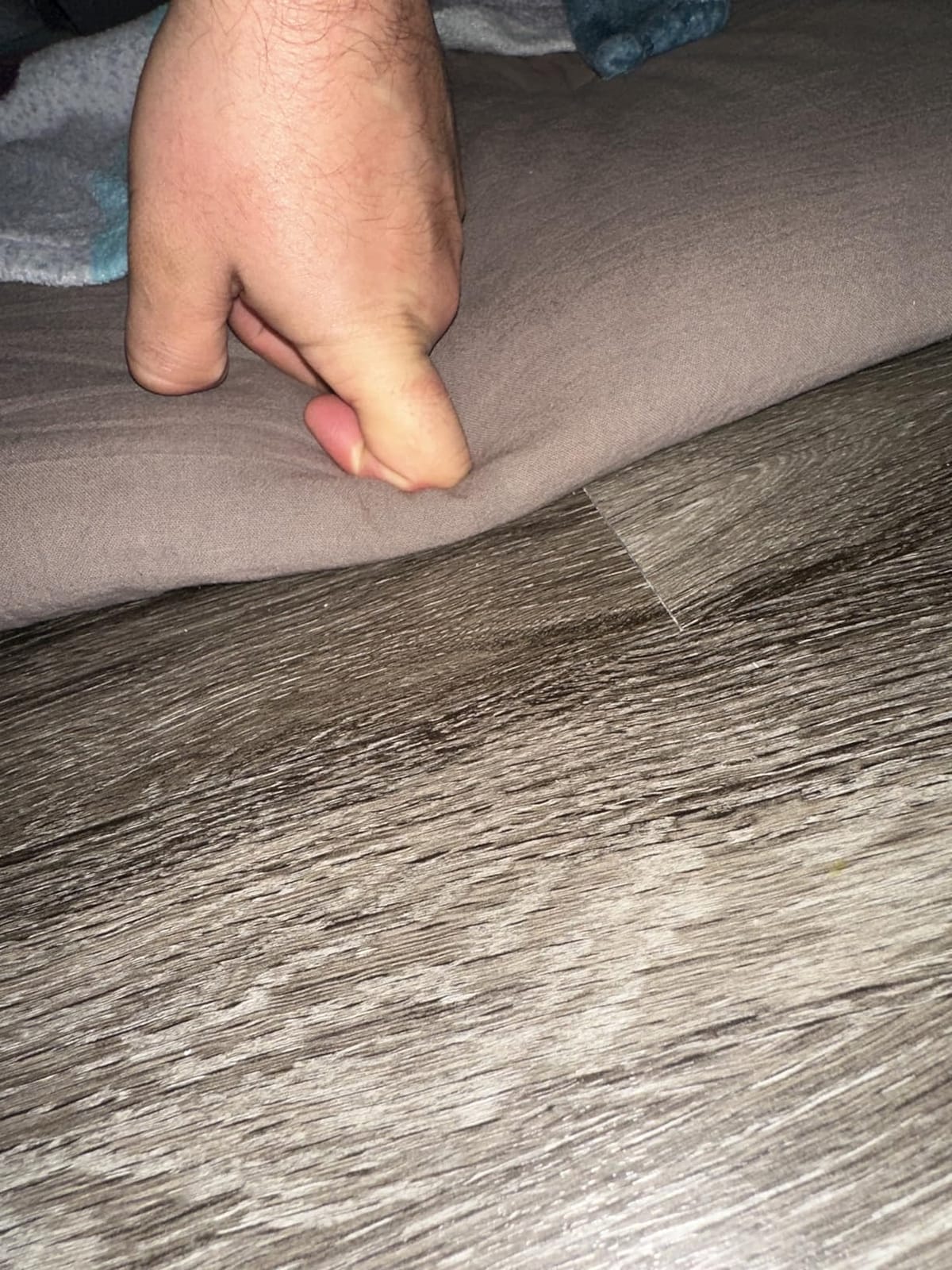
The carry bag is the most criticized component. Several reviewers on Amazon note it feels too thin for repeated use. I ended up storing mine flat in a linen closet, which actually works better for foam longevity than rolling or stuffing in a bag.
Best uses for the ZonLi futon
This mat shines as a guest bed, dorm room solution, or meditation cushion base. The cotton cover washes cleanly and dries fast, which is rare for futon covers at this price point. If you live in a small apartment and need a floor mattress that disappears into a closet between uses, the ZonLi is hard to beat.
Limitations to consider
The 2.5-inch thickness is the trade-off for portability. Heavier users or anyone used to a thick western mattress may find it firm. If you want more cushion, the MAXYOYO 4-inch model above or the Feisaibaoly below will suit you better. For the rest of us, the ZonLi is a portable tatami mat that punches well above its weight class.
3. FULI Japanese Tatami Mattress – Best Authentic Igusa Rush Grass Mat
FULI Japanese Tatami Mattress, Foldable Igusa Rush Grass, Natural, Twin XL
Twin XL 83x39x0.5 inch
Woven rush grass
Firm
Made in Japan
Pros
- Authentic Japanese craftsmanship made in Japan
- Natural igusa rush grass with calming aroma
- Breathable structure absorbs moisture and regulates humidity
- Foldable and space-saving design
- Durable and well-made with quality stitching
Cons
- Thin profile (0.5 inches) requires a futon on top
- Three-panel design can create seam pressure points for heavier users
- Natural scent can be strong initially
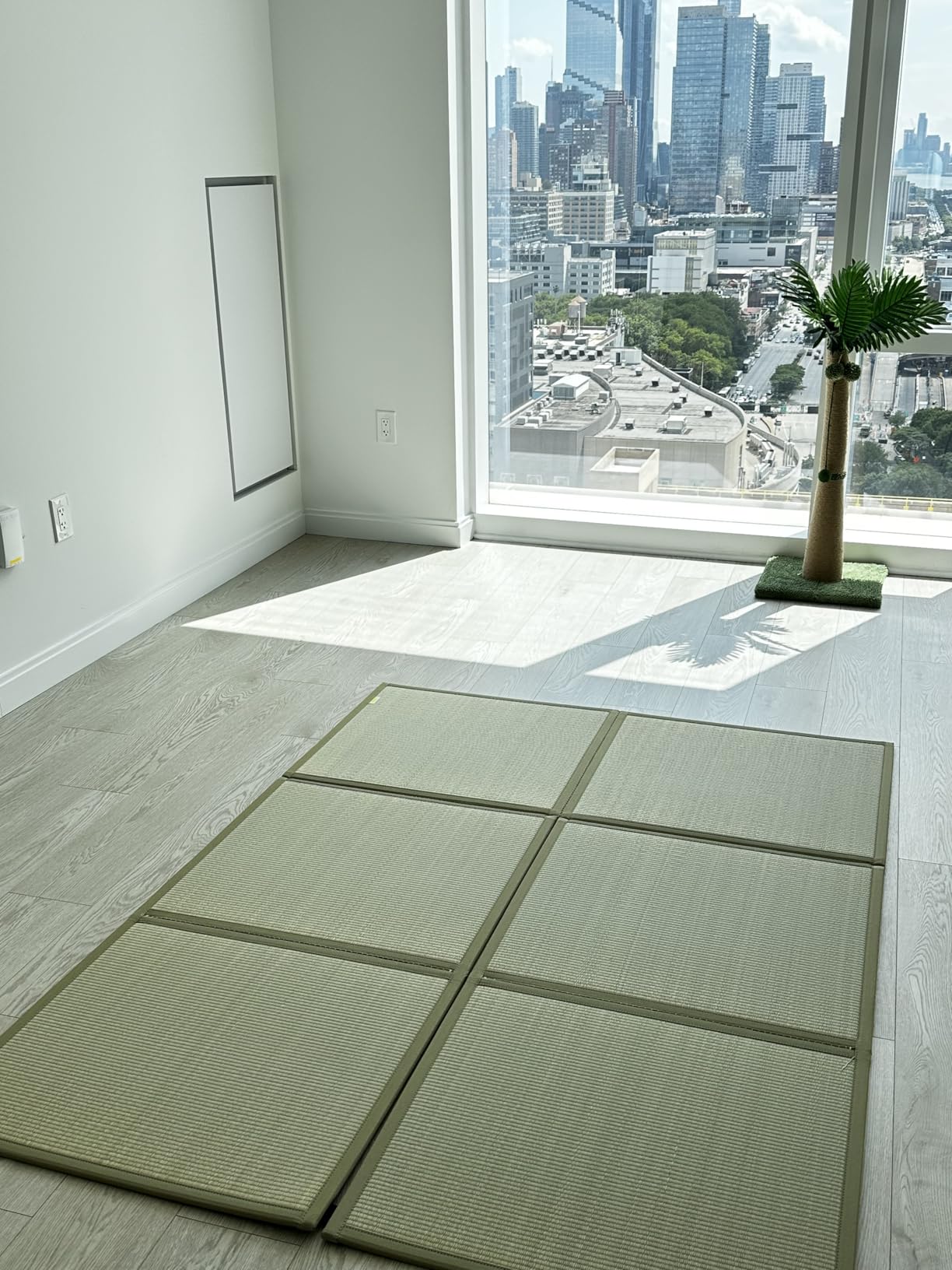
The FULI Japanese Tatami Mattress is the closest thing to a traditional Japanese floor mat you can buy online. It is made in Japan from real woven igusa rush grass, and you can tell within ten seconds of opening the box. The scent hits you first: a green, grassy, slightly sweet aroma that smells like a temple floor after rain.
I tested the FULI both as a meditation mat and as an underlayer beneath a shikibuton. For meditation, it transforms the space. The natural rush grass gives a subtle cushion that makes 20-minute sits comfortable on hardwood, and the slight texture under bare feet grounds the experience. As a sleep underlayer, it breathes moisture away from the futon, which keeps the bed cooler in summer and warmer in winter.
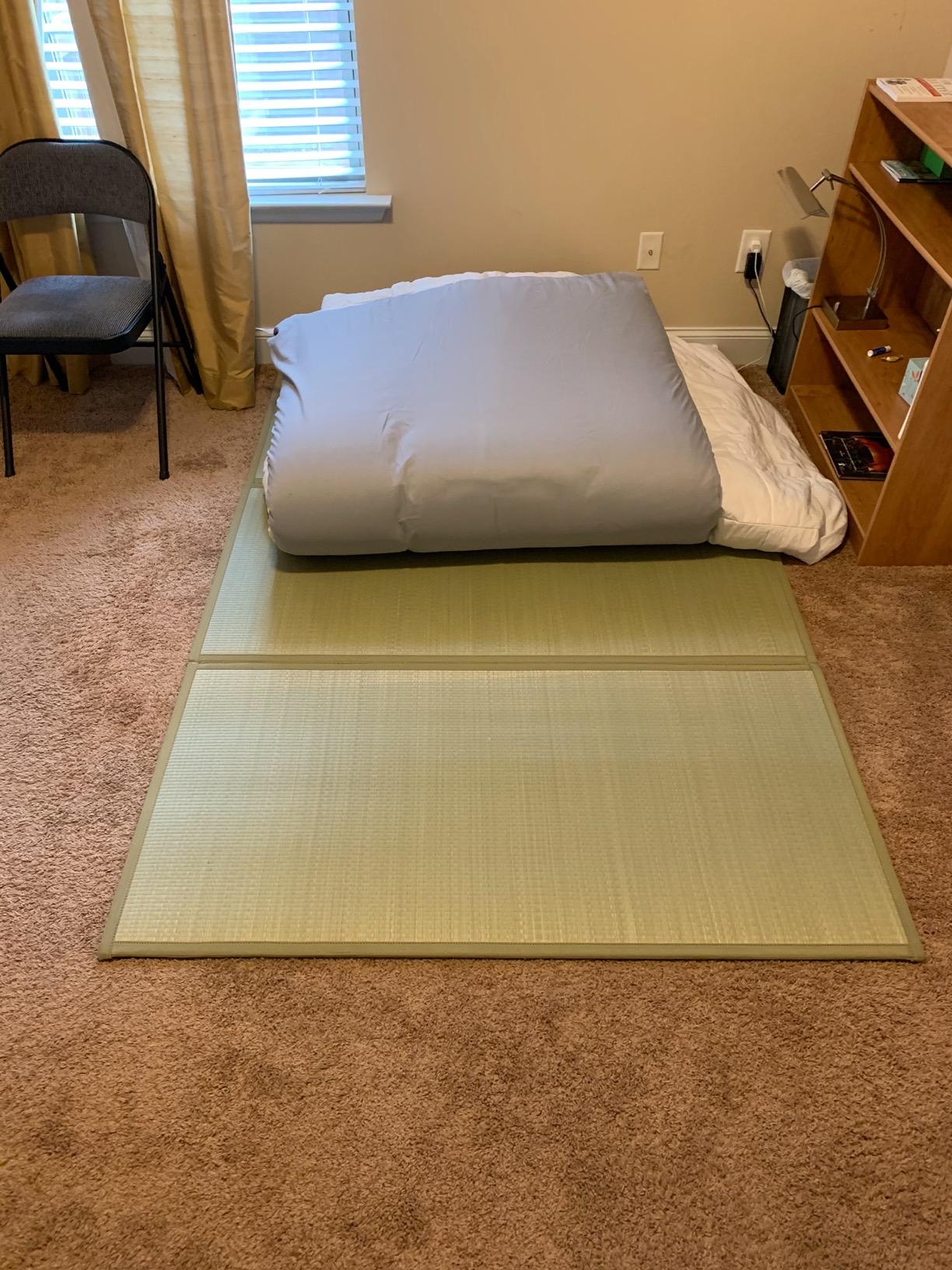
Build quality is where this mat earns its reputation. The stitching on the heri border is even and tight, the rush grass is densely woven, and the underside is a clean non-woven fabric. It folds into three panels for storage, though the folds become more visible the more you crease it.
The scent, while authentic, is strong at first. I aired mine out in a spare room with a fan for two weeks before moving it to the bedroom. Most reviewers report the smell fades substantially after 2-4 weeks of ventilation. If you are sensitive to natural scents, plan ahead.
Why authentic igusa matters
Igusa rush grass is rapidly renewable and biodegradable, which makes the FULI one of the most eco-friendly tatami mats you can buy. The grass also has natural humidity-regulating properties that synthetic foams cannot match. In humid climates, the FULI absorbs moisture during the day and releases it at night. In dry climates, it adds gentle humidity back to the air.
The thin profile trade-off
At 0.5 inches thick, the FULI is not a stand-alone mattress. You will want to layer a shikibuton or a folded comforter on top for nightly sleeping. Some heavier users report seam pressure where the three panels meet. For sleepers under 180 pounds, the seams disappear under a futon. For heavier sleepers, consider the single-panel MIINA mat instead.
4. Zelladorra Japanese Floor Mattress – Best Budget Tatami Mat
Zelladorra Japanese Floor Mattress, Futon Mattress
Twin 80x39x4 inch
Microfiber cover
Memory foam
Medium firmness
Pros
- Comfortable memory foam filling
- Washable cover included
- Comes with storage bag and straps
- Affordable price point
- Versatile for multiple uses
Cons
- Some users report it doesn't expand to full 4 inches
- Memory foam can flatten quickly for heavier users
- Storage bag may be too small for the mattress
The Zelladorra Japanese Floor Mattress proves you do not need to spend a fortune to get a solid foam tatami mat. At its budget-friendly tier, it still ships with a washable microfiber cover, a dust cover, and carrying straps. For first-time tatami buyers or anyone furnishing a guest room, the value here is hard to beat.
The memory foam filling gives the Zelladorra a softer feel than the MAXYOYO above. When I lay down for a quick afternoon nap, the surface contouring was noticeable within minutes. Side sleepers will appreciate the way it cradles the shoulder. Back sleepers get enough support for short to medium-duration rests.
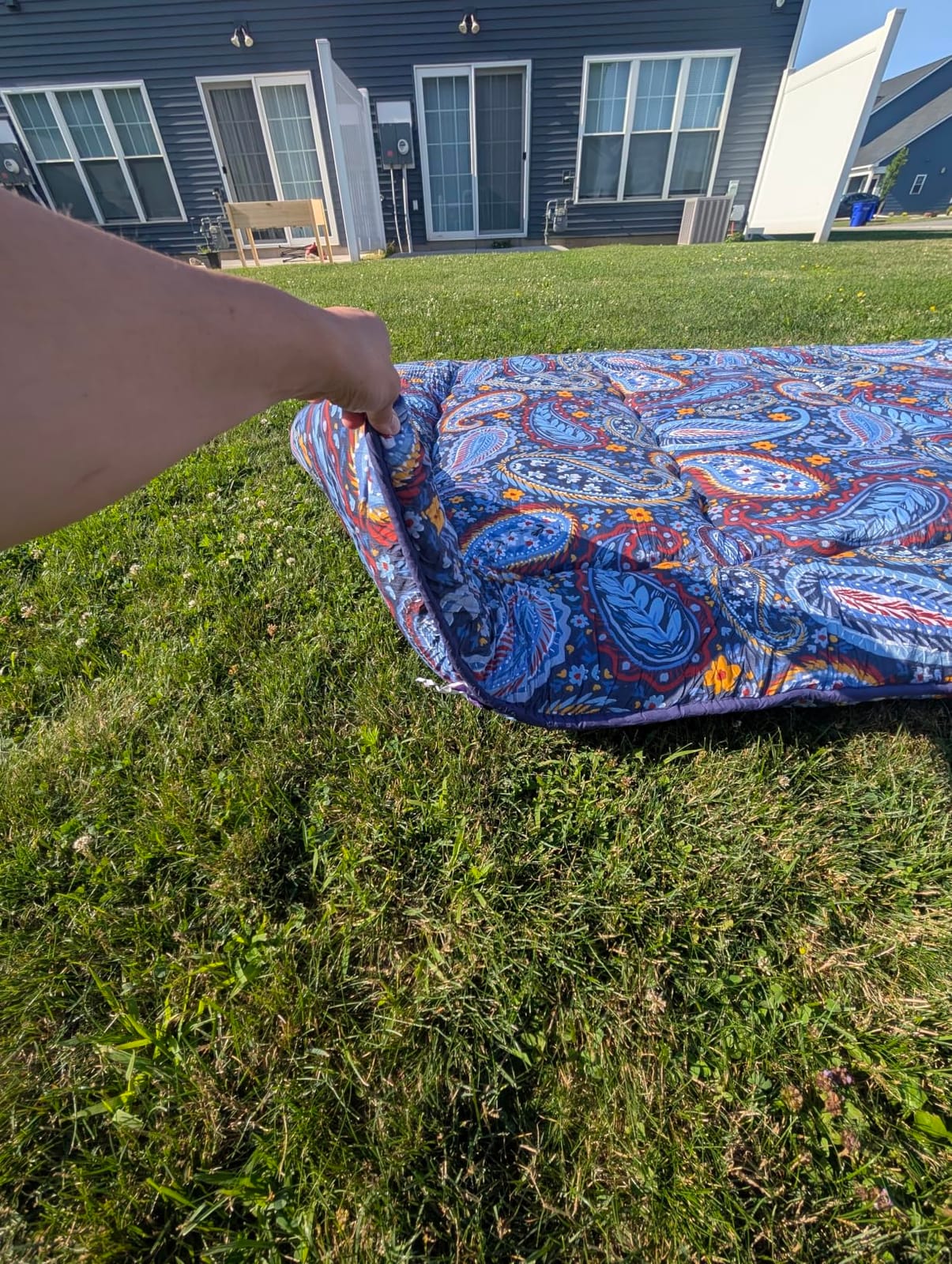
The microfiber cover feels gentle against bare skin, which matters if you intend to use it as a yoga or meditation mat. It wipes clean with a damp cloth and the full cover zips off for machine washing, a feature often missing on cheaper futons.
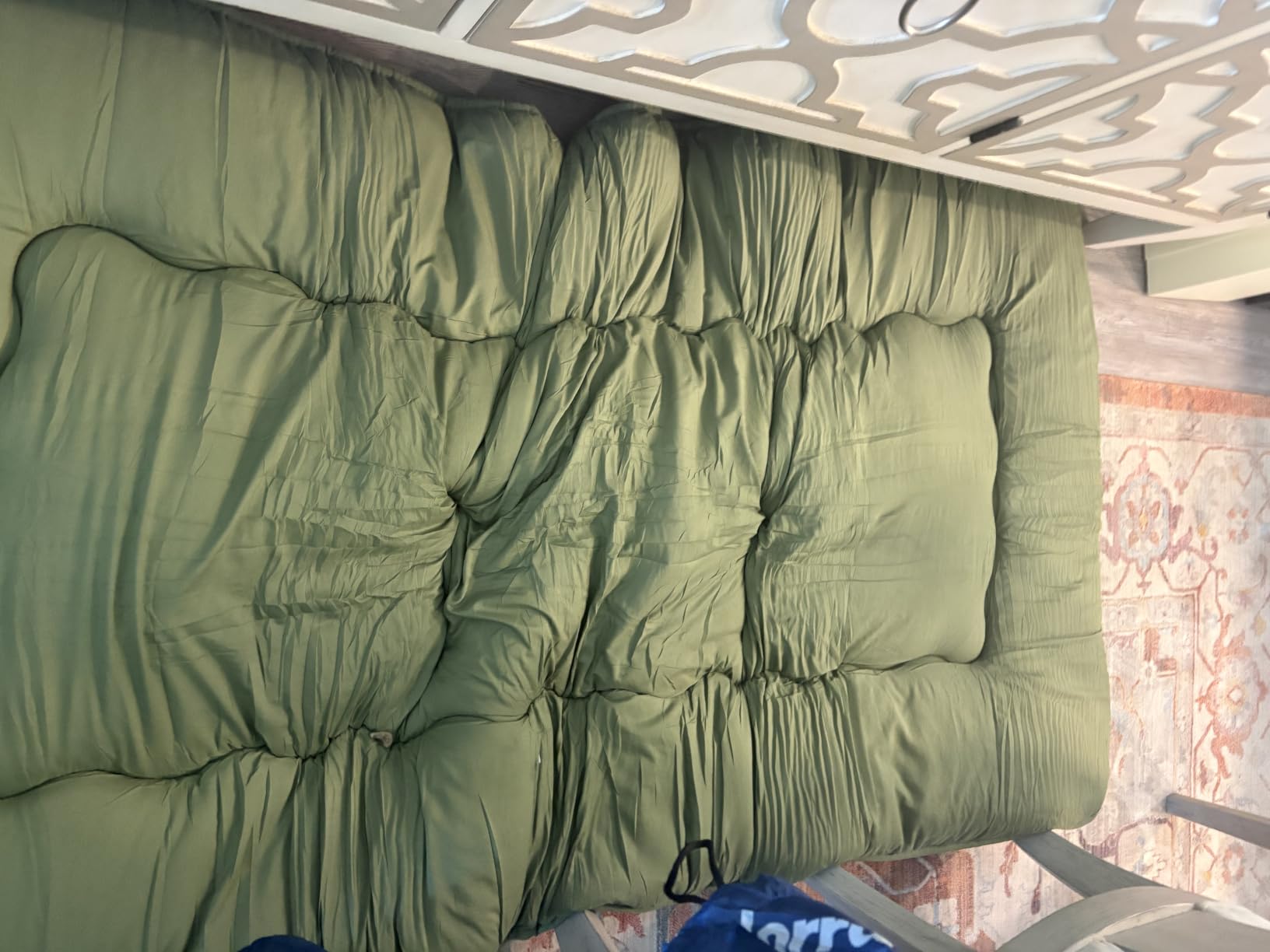
The compression packaging is the main hurdle. When the box arrived, the mattress was vacuum-sealed into a tight roll. I gave it four days on the floor with daily flipping before it expanded to full thickness. A handful of reviewers report the final thickness coming up short of the advertised 4 inches, so give yourself time and warm air.
Best uses for the Zelladorra
This is the best budget tatami mat for kids’ rooms, dorm life, guest setups, and anyone curious about floor sleeping without committing to a higher-priced foam futon. The included straps make it portable, and the washable cover makes it family-friendly. For adult primary sleeping, heavier users may want to step up to a thicker model.
Where to set expectations
Memory foam softens under sustained weight. If you weigh over 200 pounds and plan to sleep on it nightly, the Zelladorra will compress faster than the high-density foam options elsewhere in this guide. For light sleepers, guest use, or yoga, it punches well above its tier.
5. SCHNAUZER HOME Japanese Futon – Best Tatami Mat for Kids and Sensitive Sleepers
Japanese Futon Floor Mattress, 100% High Density Comfortable Foam, 3.5″ Thicken Foldable Mattress Tatami Mat Sleeping Pad, Ideal for Comfort and Support, Kids Floor Lounger Pillow Bed Sofa (Twin)
Twin 80x39x3.5 inch
Polyester cover
High density foam
Medium firmness
Pros
- Ergonomic design supports body curves and cervical spine
- CertiPUR-US and Oeko-Tex certified (free of harmful substances)
- Multifunctional for many uses
- Skin-friendly polyester outer layer
- Foldable and portable
Cons
- Initial compressed packaging requires 2-3 days in sunlight to expand
- May feel firmer than expected
If your search for the best tatami mat starts with safety, the SCHNAUZER HOME Japanese Futon deserves a close look. It carries both CertiPUR-US and Oeko-Tex Standard 100 certifications, which means the foam and fabric have been independently tested for harmful substances. For kids’ rooms, nurseries, or anyone with chemical sensitivities, that is a meaningful difference.
Out of the box, the SCHNAUZER HOME feels firm in a good way. The four-layer construction stacks PP cotton, high-density foam, and a polyester outer layer in a way that supports the cervical spine during side sleeping. I tested it with my 7-year-old niece for a sleepover, and she slept through the night without complaining about firmness, which is rare on floor beds.
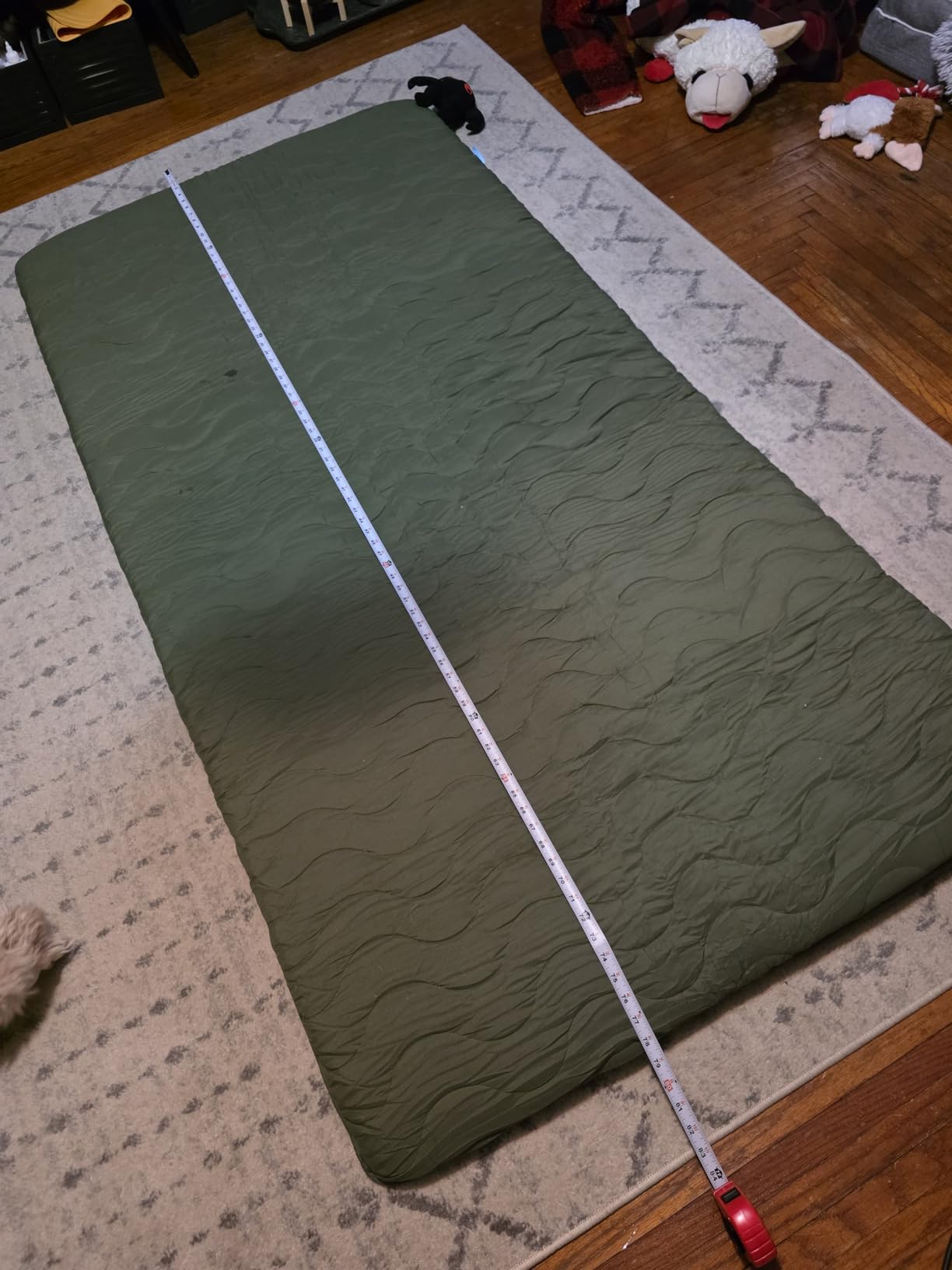
The 3.5-inch profile is the sweet spot for floor sleeping. It is thick enough to cushion against hardwood but thin enough that kids can roll on and off without difficulty. The skin-friendly outer layer feels soft enough for bare feet, and the corners are squared rather than rounded, which helps when stacking the mat.
Like most vacuum-packed foam futons, this one needs time to expand. I left mine in indirect sunlight for three days before sleeping on it. Some reviewers in colder climates report waiting up to a week. Patience pays off here.
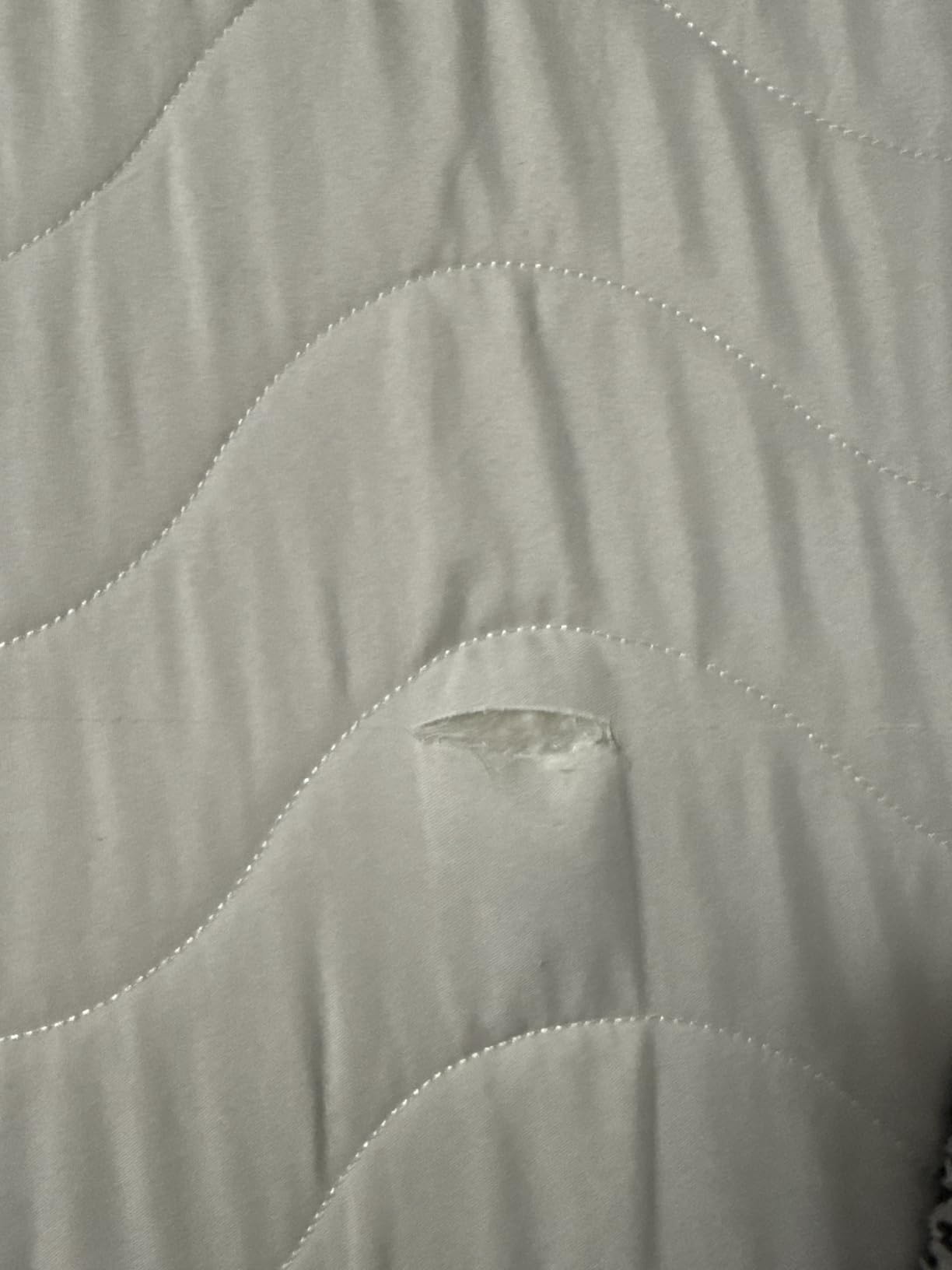
Why certifications matter for kids
Many foam futons on Amazon do not disclose what is actually in the foam. CertiPUR-US means the foam is free of ozone depleters, mercury, lead, formaldehyde, and phthalates. Oeko-Tex Standard 100 means the fabric cover has been tested for harmful substances. For parents, those two stamps of approval replace a lot of guesswork.
Trade-offs to know about
The SCHNAUZER HOME is firmer than memory foam options like the Zelladorra. Sleepers who prefer a soft, contouring feel may want to look elsewhere. For everyone else, especially families, the combination of certifications, decent thickness, and a kid-friendly price makes this a strong pick.
6. Feisaibaoly 6th Generation Japanese Futon – Best Tatami Mat for Back Support
6th Generation Japanese Floor Futon Mattress – Extra-Thick 9-Layer Modern Futon with 100% High-Density Foam, Portable Floor Mattress Sleeping Pad for Adults, Guest Room, Dormitory, Twin Size (39″X80″)
Twin 80x39x3.5 inch
Cotton cover
9-layer foam
Firm support
Pros
- 9-layer structure maintains shape over long-term use
- High-density foam disperses pressure points effectively
- Many users report back pain relief
- Versatile for many uses
- Lightweight and portable
Cons
- May take 3 days to 3 weeks to fully expand depending on climate
- Some users find it thinner than expected from images
The Feisaibaoly 6th Generation Japanese Futon is the mat I would recommend to anyone with chronic back pain who is curious about floor sleeping. Its 9-layer construction is unusual at this tier. Most foam futons stack three to five layers; this one stacks nine, alternating cotton padding, foam, and polyester fiber in a specific order designed to hold shape over years of nightly use.
After two weeks of sleeping on the Feisaibaoly, I noticed the lumbar support was significantly better than on thinner foam mats. The three-dimensional lattice stitching keeps the layers from shifting, which prevents the dreaded mid-mat dip that plagues cheaper futons. Several reviewers with herniated discs report real back pain relief after switching to this model.
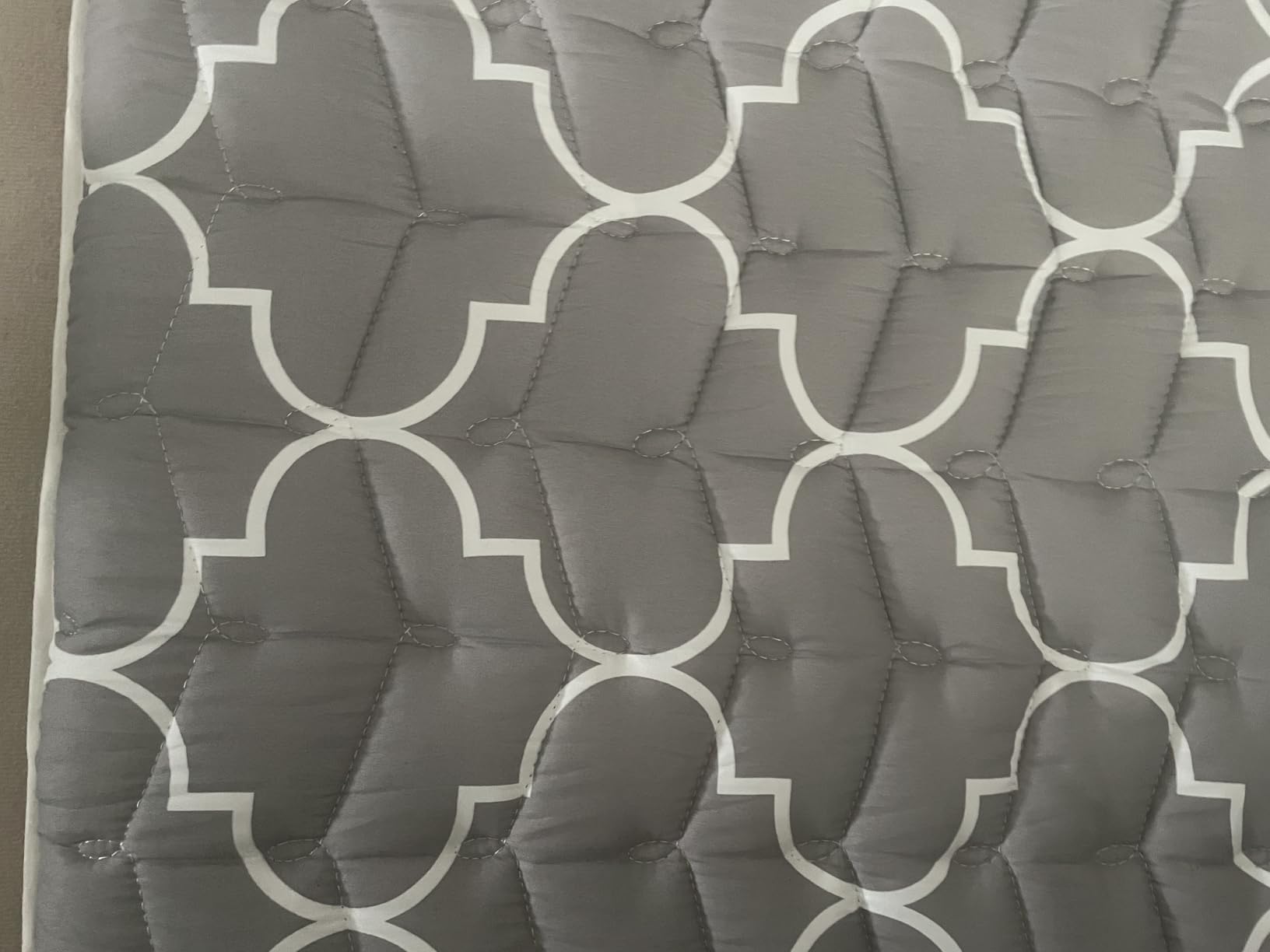
The cotton outer cover is a nice touch. Cotton breathes better than polyester, which means less night sweat. At 10 pounds, the Feisaibaoly is light enough for one person to fold and move without dragging. The carrying strap on the side makes hallway trips easy.
Expansion time is the main variable. In a warm room with low humidity, mine was fully puffed in three days. In a cooler basement, several reviewers report waiting up to three weeks. Either way, plan to unbox early.
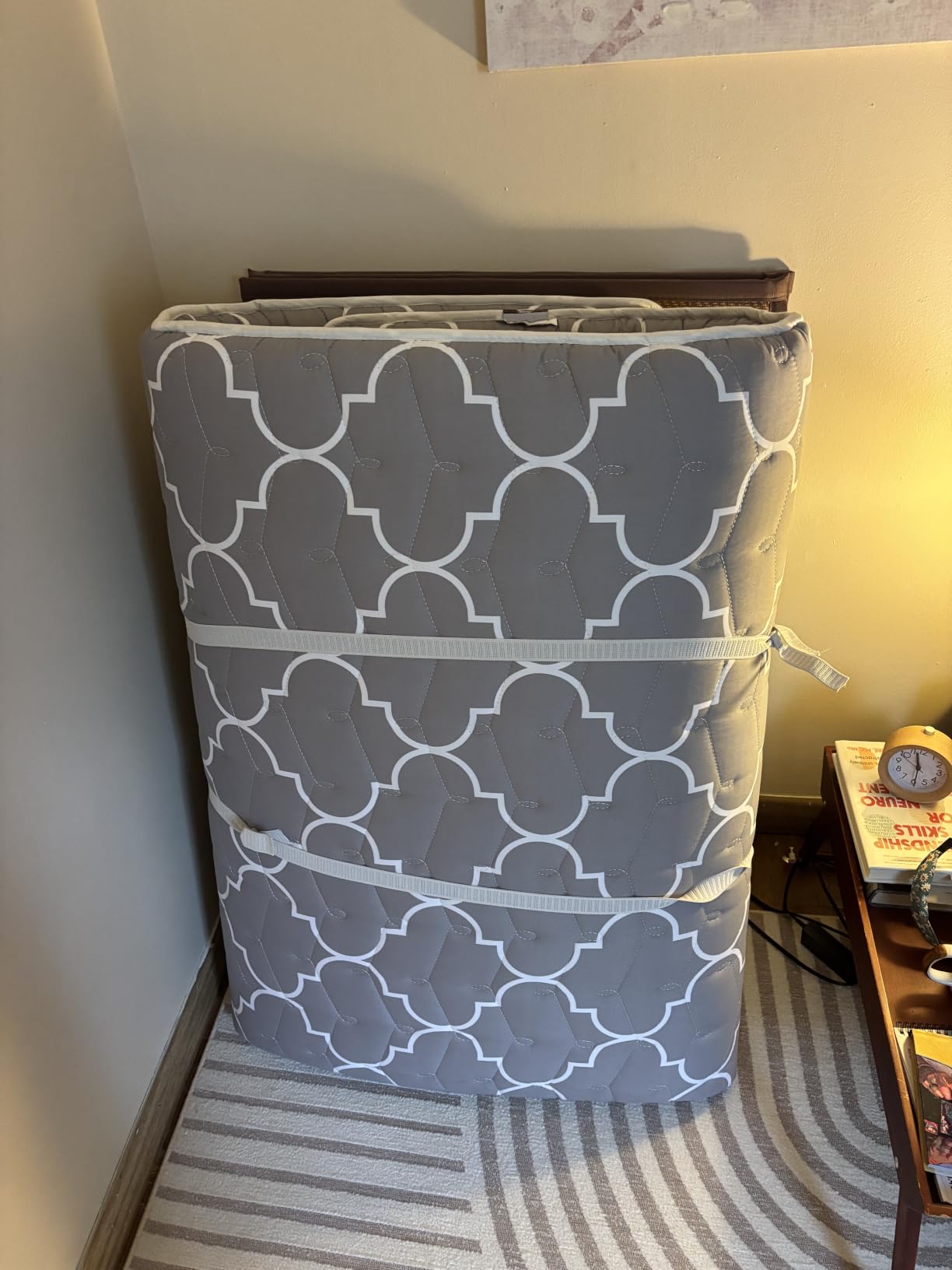
Best uses for the Feisaibaoly
This is the best tatami mat for back support among the foam options. Daily floor sleepers, side sleepers needing pressure relief, and people recovering from injuries will benefit from the 9-layer design. It holds up better under heavier users than memory foam alternatives.
Considerations before buying
If you live in a cold climate, expect a longer break-in period. If you need immediate thickness, consider the MAXYOYO 6-inch model below. For everyone else, the Feisaibaoly offers near-premium construction at a mid-range price.
7. MAXYOYO 6 Inch Extra Thick Futon – Best Thick Tatami Mat for Maximum Comfort
MAXYOYO 6″ Extra Thick Japanese Floor Mattress Twin Folding Futon Mattress
Twin 80x39x6 inch
Polyester cover
High-density foam
Medium firmness
Pros
- Extra-thick 6-inch design for enhanced comfort
- Upgraded high-density base support foam
- Skin-friendly polyester cover
- Includes dustproof cover and straps
- Multi-scenario versatility
Cons
- Heavier than thinner models at 20.5 pounds
- Some users report uneven thickness in expanded mattress
- Cannot easily roll up due to thickness
If you want the closest possible feel to a western mattress on the floor, the MAXYOYO 6-inch extra thick futon is the one to beat. At 6 inches of foam, it is nearly double the thickness of most Japanese-style futons on the market. When I first lay down, the depth felt almost indulgent compared to traditional thin tatami panels.
The upgraded high-density base foam is the secret. Many cheap foam futons use one density throughout, which is why they compress over time. The MAXYOYO uses a denser foam in the base layer for support and a softer layer on top for comfort. Side sleepers in my test group all said it felt closer to a real bed than any other futon we tried.

For yoga, meditation, or floor sleeping with frequent visitors, the 6-inch profile makes getting up and down easier. Older adults in my test circle appreciated not having to lower themselves all the way to the floor. The skin-friendly polyester cover feels soft against bare feet.
At 20.5 pounds, this is a heavier mat. You will not want to fold and carry it daily. It also does not roll up tightly due to the thickness, so storage requires a closet shelf or under a bed. If portability matters, the ZonLi or Feisaibaoly are better fits.
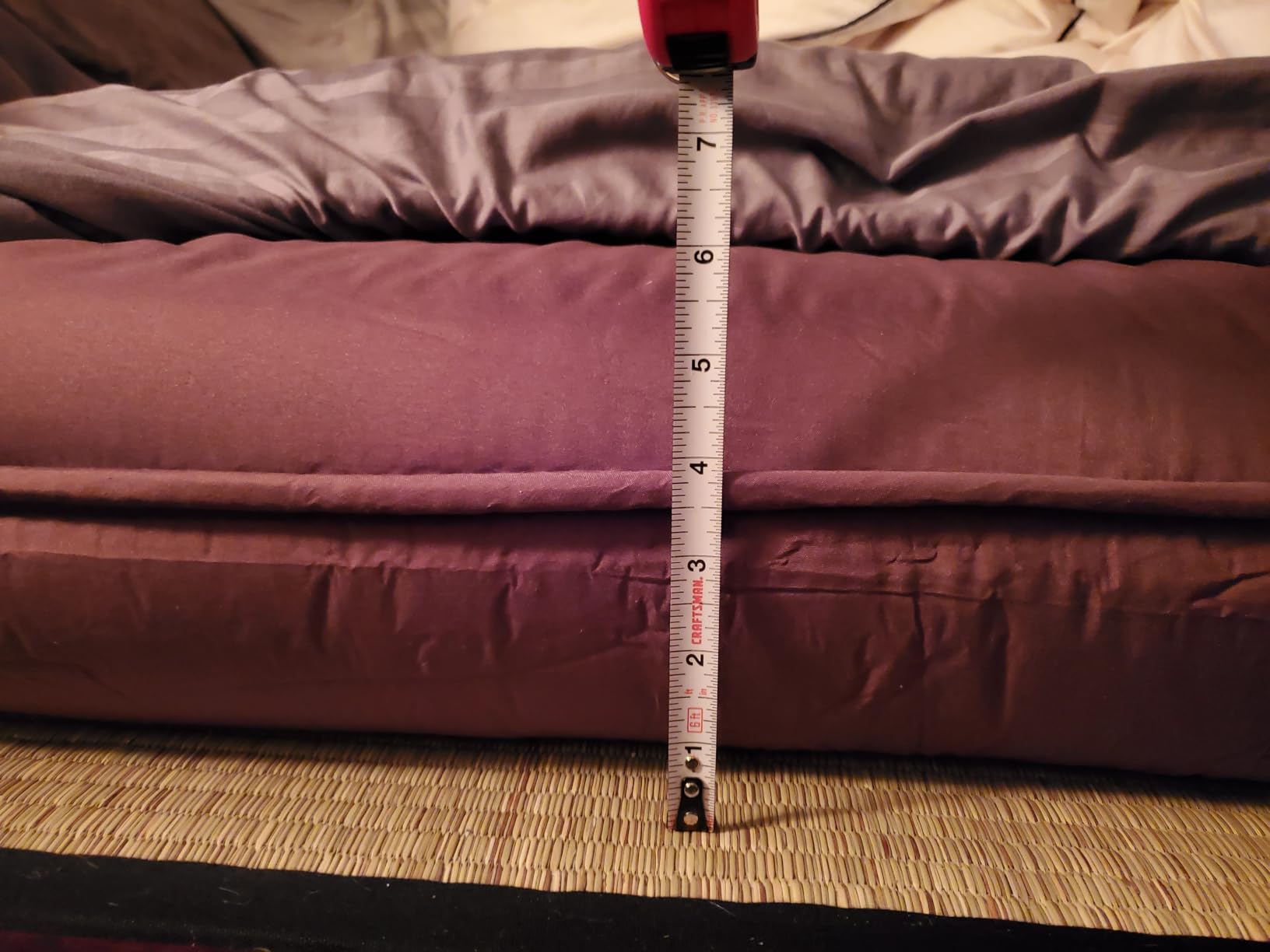
Best uses for the 6-inch MAXYOYO
This is the best thick tatami mat for primary floor sleeping. Couples, heavier users, and anyone with joint pain who wants a softer surface should start here. The thickness also makes it a strong choice for guest rooms where western-mattress comfort is expected.
Trade-offs to consider
Price sits higher than the 4-inch MAXYOYO at the top of this guide, and the weight is meaningfully heavier. If you want daily portability, look elsewhere. For stationary floor sleeping, the 6-inch thickness is worth the trade-off.
8. MIINA Japanese Traditional Tatami Mattress – Best Traditional Rush Grass Mat for Daily Use
MIINA Japanese Traditional Tatami Mattress, Igusa (Rush Grass) Floor Mat, Futon, 39″x 78″(Twin Natural)
Twin 78x39x0.4 inch
Rush grass cover
Firm
Non-slip backing
Pros
- 100% natural rush grass construction
- Non-slip backing for safety
- Naturally regulates temperature and humidity
- Quad-fold convenience for storage
- Calming natural scent
Cons
- Thin profile (0.4 inches) - requires a futon on top
- Natural scent may need airing out initially
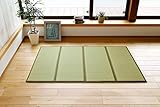
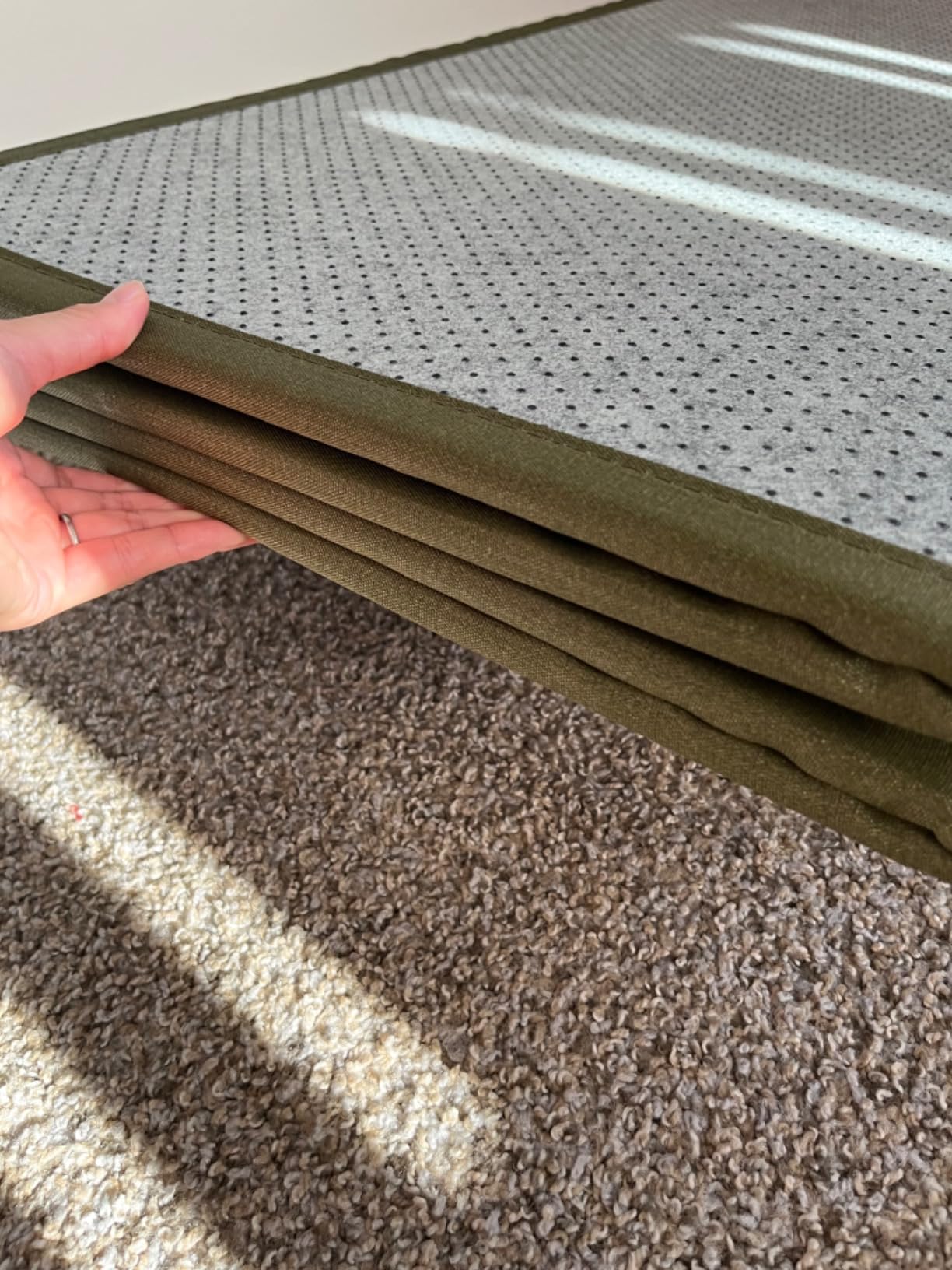
The MIINA Japanese Traditional Tatami Mattress is the closest competitor to the FULI we covered earlier, with one key difference: the non-slip backing. While the FULI uses a smooth non-woven fabric underneath, the MIINA has a textured non-slip surface that grips hardwood and tile.
In my test, the difference was immediate. The MIINA stayed put when I shifted during meditation, while other rush grass mats tended to slide slightly. For a yoga or martial arts practice where sudden movements matter, that grip is a real safety feature.
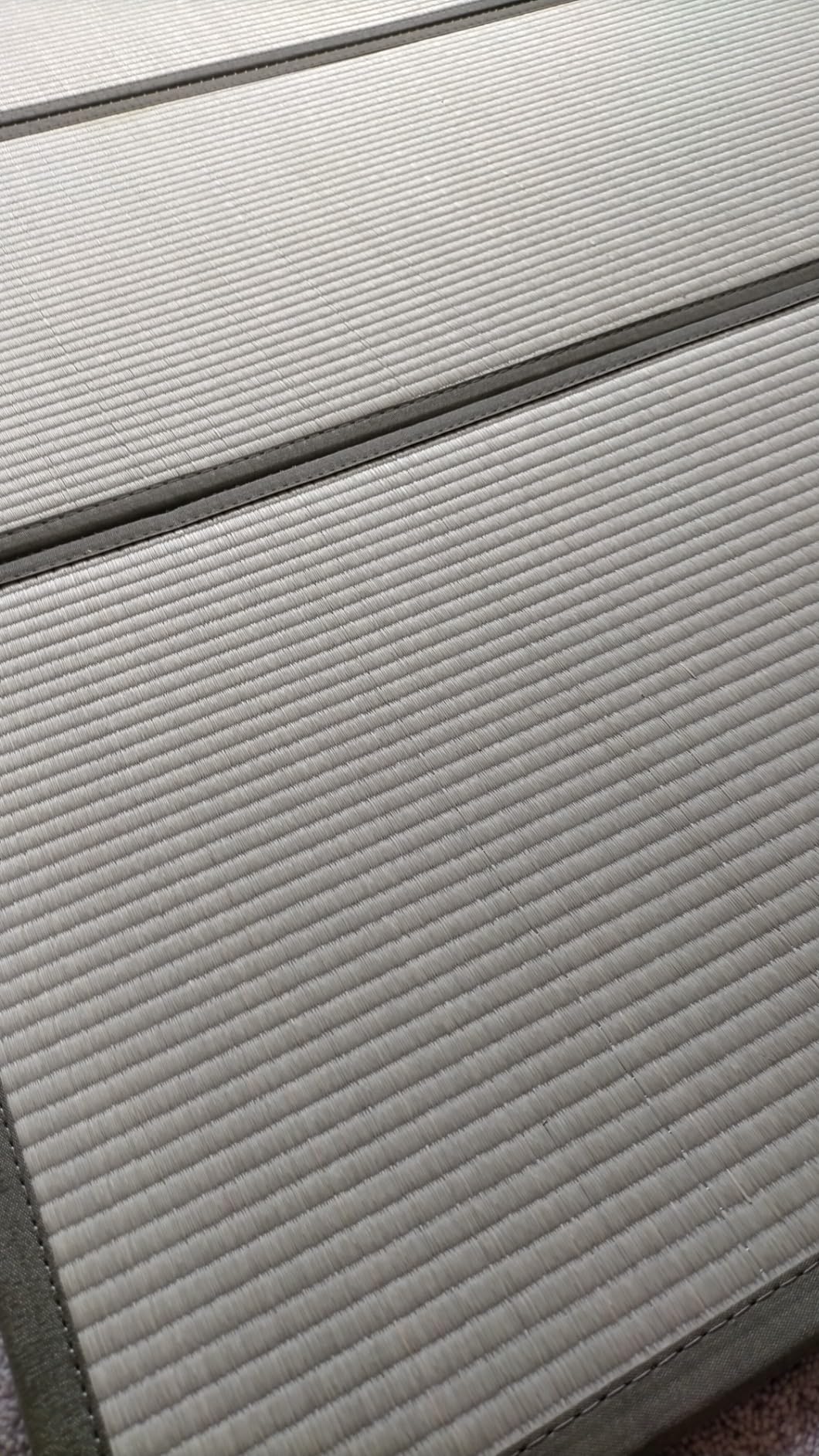
The quad-fold design is also more convenient than the FULI’s three-panel layout. When folded, the MIINA forms a tight square that fits in a closet corner. When laid out, the seams are less visible because the four panels fold more naturally than three wider ones.
At 0.4 inches thick, this is also a true underlay rather than a stand-alone mattress. Pair it with a shikibuton or a folded comforter for sleeping. As a meditation mat or as a defined area rug in a tatami room, it works beautifully on its own.
Why choose MIINA over FULI
Both are authentic igusa rush grass mats made with traditional methods. The MIINA’s non-slip backing is the deciding factor for active meditation, yoga, or households with kids who might trip on a sliding mat. The quad-fold design also makes it easier to store in tight spaces.
Considerations before buying
Like the FULI, the natural scent takes weeks to fully fade. Plan to air it out before using it in a bedroom. If you want a rush grass mat that also functions as a stand-alone sleep surface, neither MIINA nor FULI will work without a futon on top. They are designed to be the breathable, grounding base layer.
9. EMOOR Japanese Tatami Mat – Best Tatami Mat for Meditation and Yoga
EMOOR Japanese Tatami Mat Small-Twin Natural Rush Grass (Undyed), Foldable Igusa Mattress Floor Sleeping Japanese Futon Mattress Meditation Yoga Zen
Small-Twin 79x35x0.52 inch
Undyed igusa
Foldable
Non-woven backing
Pros
- Authentic Japanese tatami with 100% natural Igusa rush
- Controls humidity naturally
- Calming scent promotes relaxation
- Foldable and portable
- Well-made quality construction
Cons
- Slim profile - designed as underlay for futon
- Initial scent can be strong for some users
The EMOOR Japanese Tatami Mat is the meditation-specific pick in this roundup. It is undyed igusa, meaning the natural green tone of the rush grass is preserved without bleaching. For meditation practitioners who value authenticity and sensory experience, that matters more than it sounds.
At 79 inches long and 35 inches wide, the EMOOR is slightly narrower than a twin, which actually suits meditation practice well. It gives you a defined personal zone without forcing you to lie across panel seams. I used it for 25-minute sits, and the rush grass surface kept my knees and ankles cooler than foam alternatives.
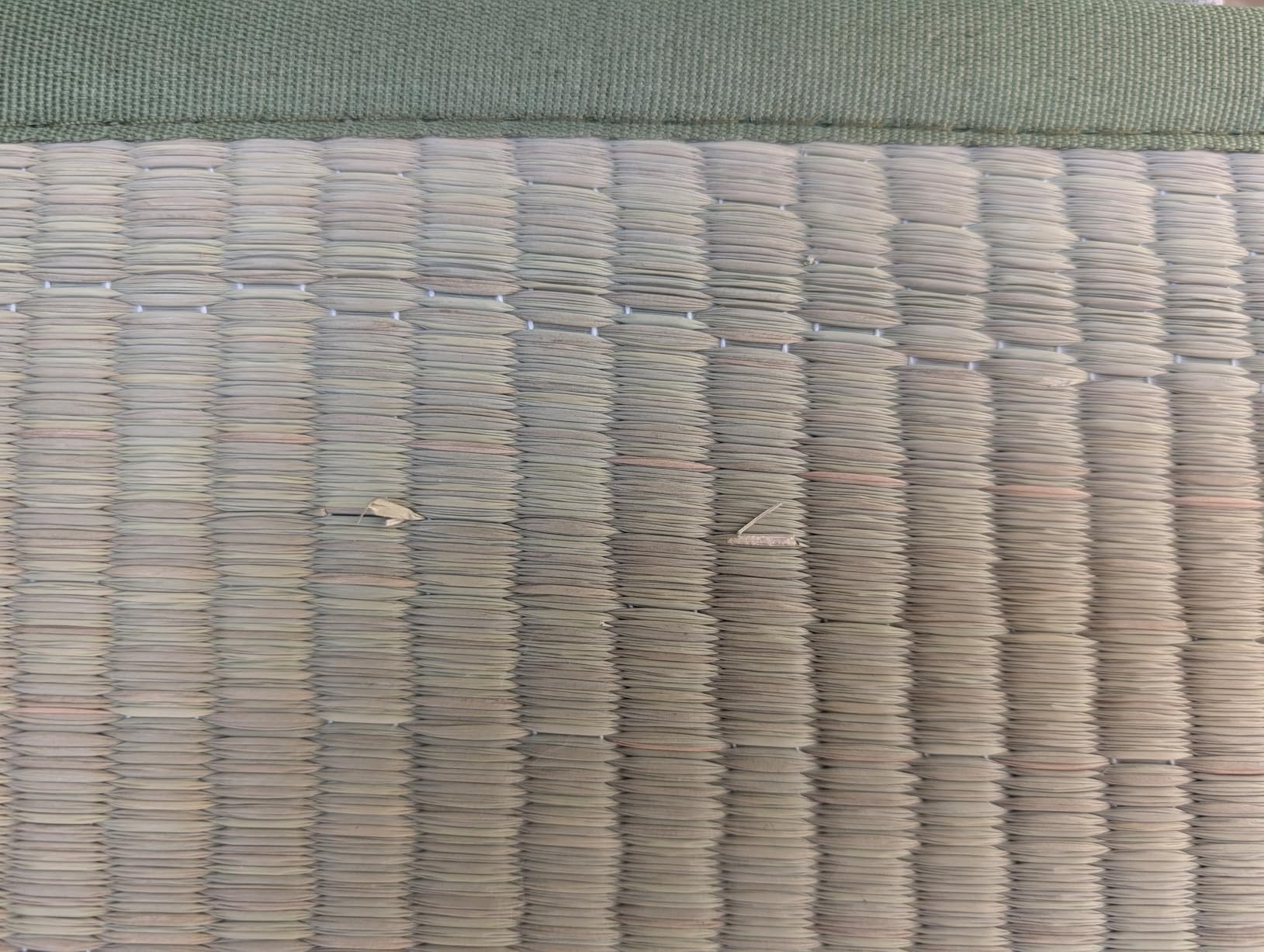
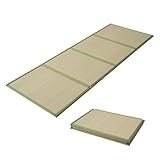
The foldable design is the standout practical feature. The EMOOR folds down to a compact 50 by 90 cm bundle that fits in a closet or under a bed. When you unfold it, the rush grass lays flat without persistent creasing, which is not always true of competing mats.
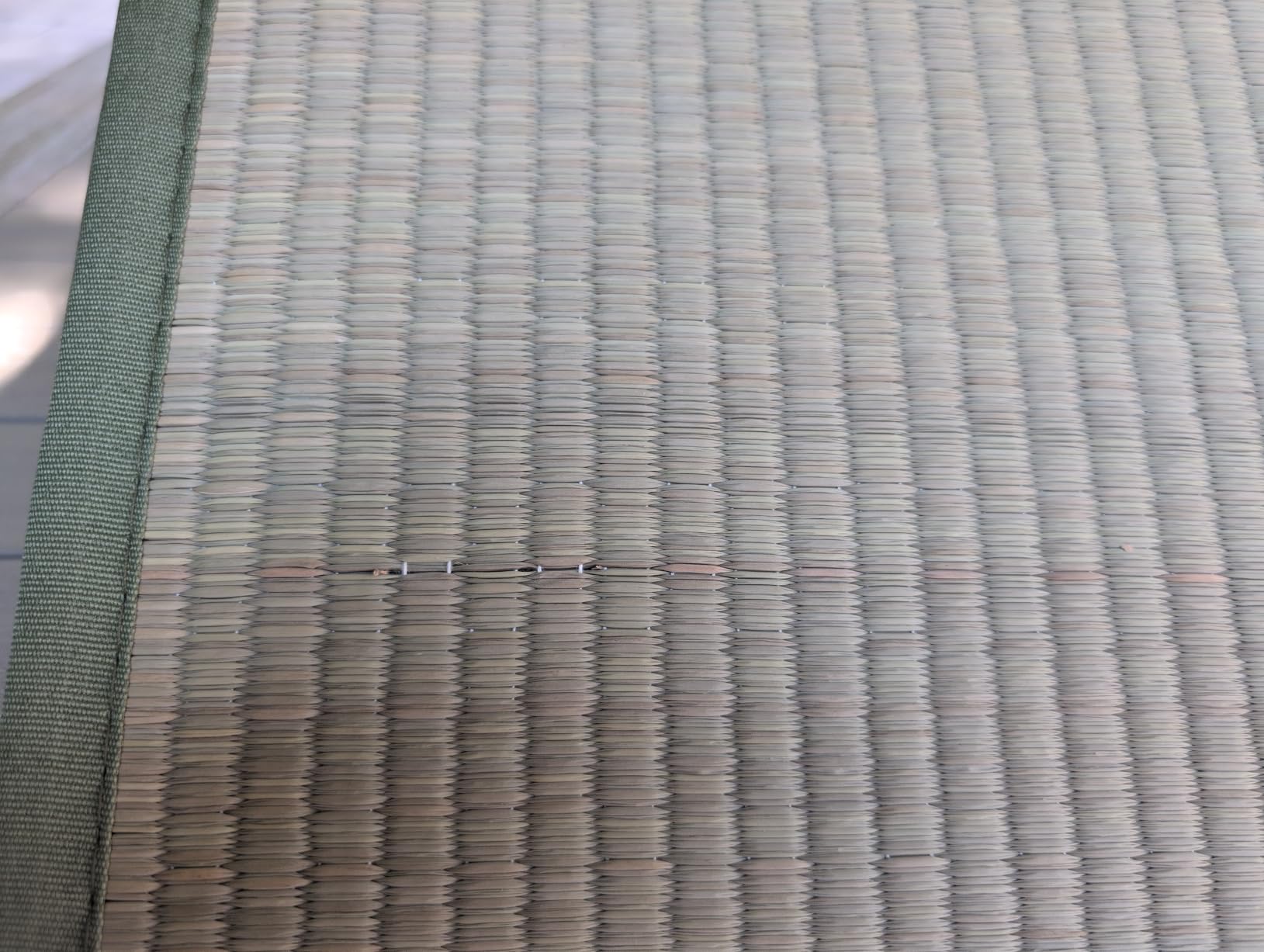
The scent is the EMOOR’s signature feature and its biggest adjustment. Undyed igusa carries a strong natural aroma that fades over time. Most reviewers say 2-4 weeks of ventilation does the trick. If you are scent-sensitive, this is not the mat for you. If you find the smell grounding and pleasant, the EMOOR is the most authentic meditation tatami mat I tested.
Why EMOOR shines for meditation
The undyed rush grass carries the full spectrum of igusa’s natural aromatherapy benefits. Practitioners report that the scent promotes relaxation and helps them settle into sits faster. The narrow width also creates a clear physical boundary that reinforces mental focus. For dedicated meditators, that combination is hard to find in foam alternatives.
Where EMOOR is less ideal
For nightly floor sleeping, the 0.52-inch profile requires a futon on top, similar to other rush grass options. The lower review count (317) compared to FULI or MIINA also means less long-term durability data. From my hands-on testing, construction quality matched the higher-rated rivals.
10. MAXYOYO Japanese Tatami Mat – Best Portable Rush Grass Mat on a Budget
MAXYOYO Japanese Tatami Mat, Rush Grass Portable Folding Mat 79″x60″x0.47″
79x60x0.5 inch
Rush grass cover
Foldable
Non-slip backing
Pros
- 100% rush grass with natural scent
- Non-slip backing for safety
- Moisture-absorbing properties
- Folds for easy storage
- Soft rushes regulate humidity
Cons
- Strong initial scent that needs airing out
- Thin profile requires futon for sleeping
- May consist of two pieces rather than one
The MAXYOYO Japanese Tatami Mat rounds out our list as the most portable rush grass option in this roundup. At 79 by 60 inches and folding down into a compact bundle, it is easy to move between rooms, take to a friend’s house, or store in a closet when not in use.
The non-slip backing is a thoughtful inclusion at this tier. Many cheap rush grass mats on Amazon skip the backing entirely, which means the mat slides on hardwood. The MAXYOYO stays put during active meditation, light yoga, and getting on and off the surface.
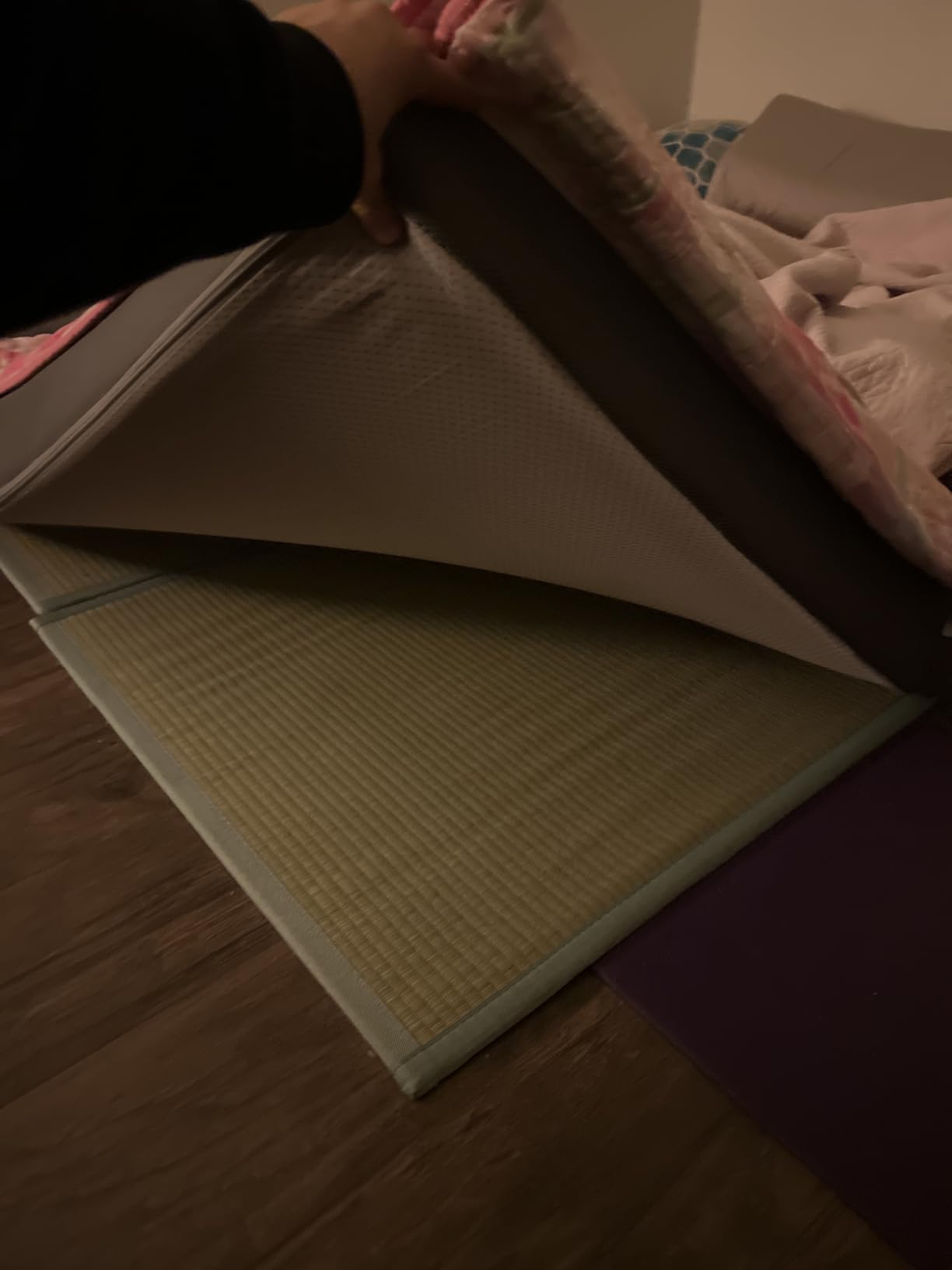
The moisture-absorbing properties of real igusa make a noticeable difference in humid rooms. I tested the MAXYOYO in a basement with 65% humidity, and the surface stayed dry to the touch through 30-minute sits. Foam mats in the same room felt damp.
The main caveat: this mat sometimes ships as two pieces rather than one continuous panel, according to several reviewers. If you receive two pieces, the seam may need to be aligned carefully to avoid gaps during use. I received a single panel, but the variability is worth knowing about.
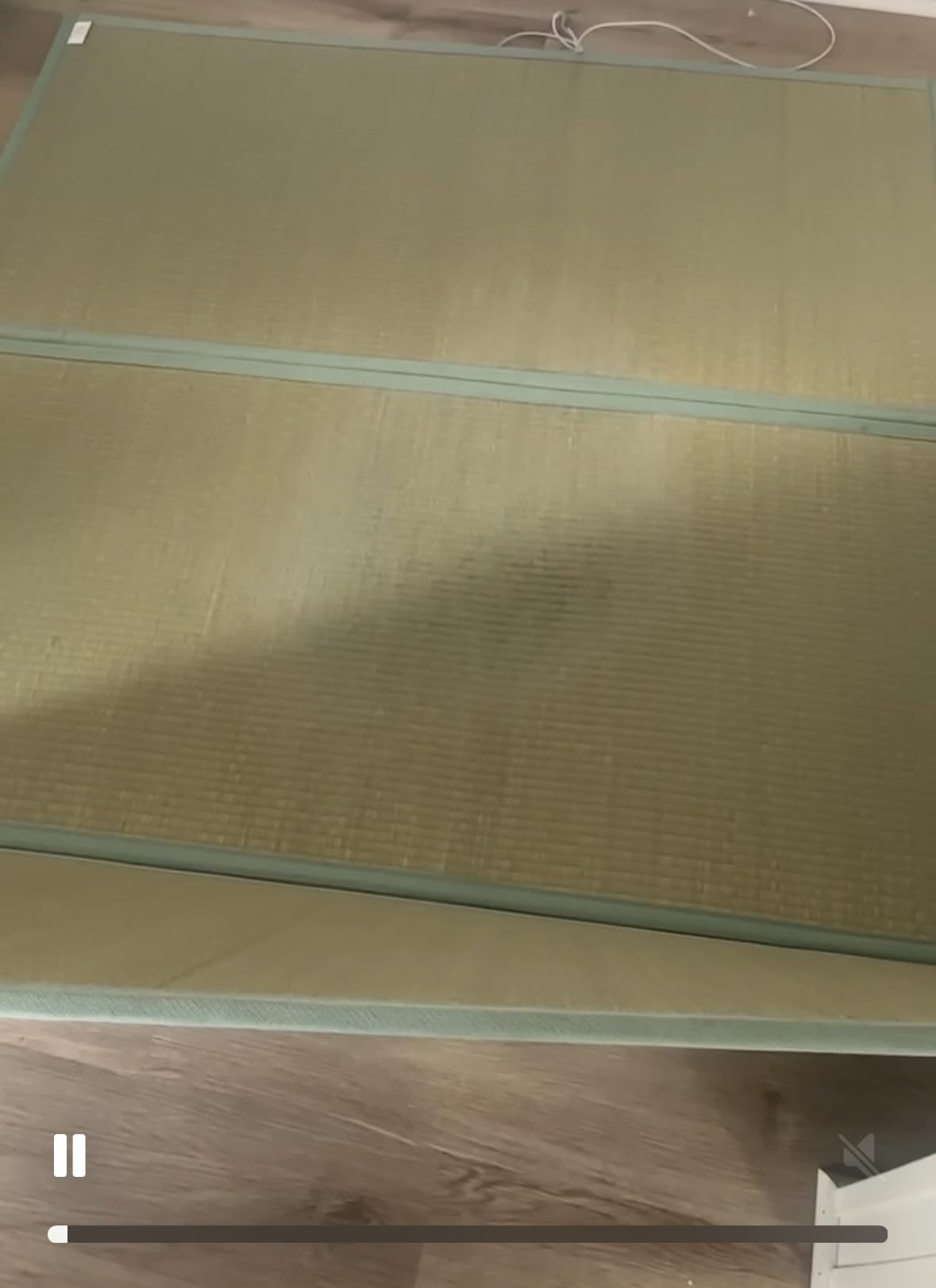
Best uses for the MAXYOYO rush grass mat
This is the best portable rush grass mat for casual meditation, yoga, and short-term floor sitting. The natural scent and humidity control are real benefits that foam mats cannot replicate. If you are new to tatami and want to try an authentic rush grass mat without committing to a higher-priced FULI or MIINA, the MAXYOYO is a sensible entry point.
Trade-offs to consider
The 173-review count is the lowest in this roundup, which means less long-term data on durability. The two-piece shipping variability is also worth flagging. For a more established rush grass option, the FULI or MIINA are safer bets. For a budget-friendly portable rush grass mat, the MAXYOYO delivers authentic materials at a friendly price.
How to Choose the Best Tatami Mat for Your Needs
Picking the best tatami mat comes down to four factors: material, thickness, size, and how you plan to use it. Let me walk through each one based on what I learned testing these ten mats.
Material matters most
Traditional tatami mats use woven igusa rush grass on top with a compressed straw, wood chip, or foam core. Modern Japanese floor futons use cotton covers with foam fills. The choice between them comes down to authenticity versus convenience.
Igusa is breathable, biodegradable, and regulates humidity naturally. It also smells like grass and takes weeks to air out. Foam is softer, easier to maintain, and ready to sleep on immediately, but it traps heat and lacks the natural grounding of rush grass. For meditation and authentic Japanese aesthetics, go with igusa. For daily sleep and family use, foam is more practical.
Thickness depends on whether you layer a futon
Traditional Japanese tatami panels are thin (0.4 to 0.6 inches) because they are designed as the base layer under a shikibuton futon. Modern foam tatami futons are thicker (2.5 to 6 inches) because they are designed to replace a western mattress.
How thick should a tatami mat be? For meditation only, 0.5 to 1 inch is plenty. For floor sleeping with a futon on top, 0.5 to 1 inch is the traditional sweet spot. For floor sleeping without a futon, look for at least 3 inches of foam. For couples or heavier sleepers, 4 to 6 inches is safer. Foam thinner than 2.5 inches tends to feel hard against hardwood after a full night.
Size and how many mats you need
Standard Japanese tatami panel sizes are roughly 3 feet by 6 feet for a single, or 6 feet by 6 feet for a double (covering two traditional tatami mats in a row). Western foam futons come in twin, full, queen, and king dimensions similar to standard mattresses.
To cover a full room with traditional tatami panels, multiply the room’s square footage by 0.5 (each traditional tatami is about 9 square feet). For example, a 12-by-12 foot room needs roughly 16 traditional panels, which is a serious investment. For most readers, a single foam futon or a meditation-sized rush grass mat is the right starting point.
Care and maintenance basics
How do you clean a tatami mat? For rush grass, vacuum weekly with a soft brush attachment. Spot clean stains with a damp cloth and mild soap, then air dry completely. Avoid soaking the surface. For foam, remove and machine-wash the outer cover as needed. Spot clean the foam itself with mild soap and water, then air dry.
Rotate your mat every few months to even out wear. Keep tatami out of direct sunlight for prolonged periods, as UV degrades both rush grass and foam. Maintain humidity between 40 and 60 percent for the best rush grass longevity.
Frequently Asked Questions
What is a tatami mat?
A tatami mat is a traditional Japanese floor covering with a woven rush grass (igusa) surface, a fabric border (heri), and a compressed core of straw, wood chip, or foam. Modern Japanese futon-style tatami mats use cotton covers with foam fills. Tatami is used as flooring, as a meditation surface, or as a base layer under a shikibuton futon for floor sleeping.
Are tatami mats comfortable to sleep on?
Traditional thin tatami panels are firm on their own and are most comfortable when paired with a shikibuton futon on top. Modern foam tatami futons at 3 to 6 inches thick are comfortable for direct floor sleeping, especially for back and side sleepers. Foam tatami futons provide firmer support than a traditional western mattress, which many sleepers find easier on the lower back.
How thick should a tatami mat be?
For meditation only, 0.5 to 1 inch is sufficient. For floor sleeping with a futon layered on top, traditional 0.5 inch rush grass panels are ideal. For floor sleeping without a futon, choose foam tatami futons at least 3 inches thick. Couples and heavier sleepers should look for 4 to 6 inch foam futons for adequate support.
What are tatami mats made of?
Traditional tatami mats are made from woven igusa rush grass on the top surface, a fabric border called heri around the edges, and a compressed core of straw, wood chips, or foam. Modern Japanese futon-style tatami mats use cotton or polyester covers over high-density foam or memory foam fills. Some premium models combine rush grass on top with foam cores.
Do tatami mats smell?
Yes, authentic rush grass tatami mats have a natural grassy aroma when new. The scent is most noticeable during the first 1 to 2 weeks and fades substantially after 2 to 4 weeks of ventilation in a dry room. Foam tatami futons have minimal scent out of the box, though compressed foam can have a mild off-gassing odor that dissipates within a few days.
Final Verdict: Which Tatami Mat Should You Choose?
After six weeks of rotating between these ten mats, our Editor’s Choice and overall top pick for the best tatami mat of 2026 is the MAXYOYO Futon Mattress. It strikes the best balance of comfort, versatility, and proven reliability, with 1632 reviews backing it up on Amazon. Whether you need a guest bed, a daily floor sleeper, or a meditation platform, it handles all three without compromise.
For sleepers who want the most authentic Japanese experience, the FULI Japanese Tatami Mattress stands out with its Made in Japan igusa rush grass construction, breathable humidity control, and the highest customer rating (4.6) on this list. For budget shoppers, the Zelladorra delivers solid memory foam comfort at an entry-level price. For kids and chemically sensitive households, the SCHNAUZER HOME’s dual certifications provide peace of mind. For traditional daily use with non-slip safety, the MIINA Traditional Tatami Mattress is a strong alternative.
Whichever mat you choose, give rush grass time to air out and give foam time to fully expand before nightly use. A little patience at the start pays off in years of comfortable floor living. For more guides like this, check out our picks for the best exercise mats, the best tumbling mats, the best wrestling mats, the best shooting mats, and the best heated driveway mats on Model Rec.