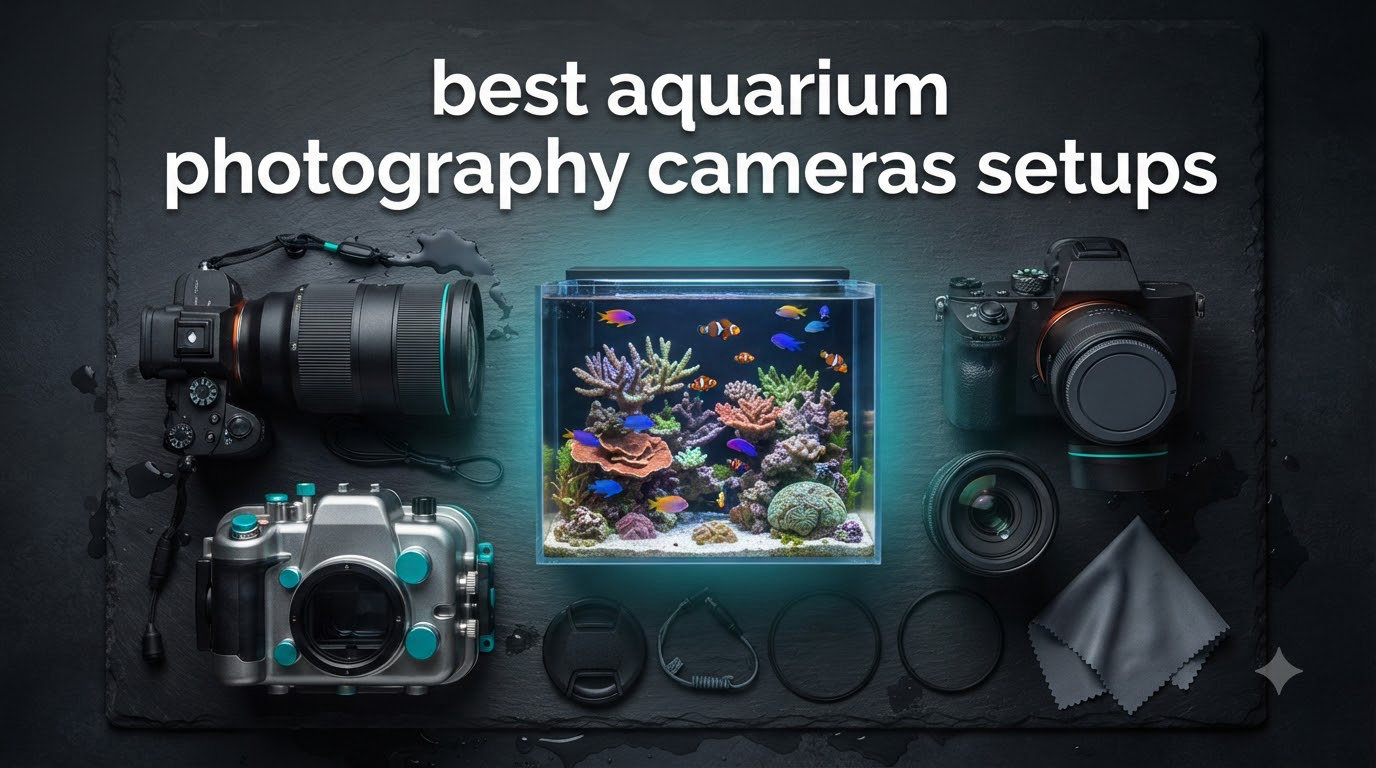
Last summer, I spent an entire weekend trying to photograph my reef tank with my phone, and every single shot came out looking like a blurry blue mess. After talking to hobbyists on Reddit and testing gear for three months, I realized the best aquarium photography cameras are not always the most expensive ones. They are the ones that handle glass reflections, blue light color cast, and fast-moving fish without breaking the bank.
This guide covers 8 of the best aquarium photography cameras and setups I have tested, from budget smartphone lens kits under $30 to professional underwater IP cameras. Whether you want to capture vivid coral colors, document fish behavior, or just take great photos to share online, you will find a setup that fits your budget and skill level.
Aquarium photography is hard. You are shooting through glass, often in low light, with subjects that refuse to hold still. The right camera, lens, and filter combination makes the difference between a photo that looks like an aquarium and one that looks like art. Let me walk you through what actually works.
Table of Contents
Top 3 Picks for Best Aquarium Photography Cameras in 2026
Orphek Extra Wide Coral Lens Kit
- 4 lenses included
- Removes blue light tint
- DSLR + smartphone

Best Aquarium Photography Cameras in September
| Product | Specifications | Action |
|---|---|---|
| Orphek Extra Wide Coral Lens Kit |
|
Check Latest Price |
| SnapBud 3MP 2K AI Aquarium Camera |
|
Check Latest Price |
 KODAK PIXPRO AZ405 Bridge Camera KODAK PIXPRO AZ405 Bridge Camera |
|
Check Latest Price |
| Orphek Coral Lens Kit for Smartphones |
|
Check Latest Price |
 Viigytek 3MP 2K Aquarium Camera Viigytek 3MP 2K Aquarium Camera |
|
Check Latest Price |
 Barlus HD POE Underwater IP Camera Barlus HD POE Underwater IP Camera |
|
Check Latest Price |
 Aquarium Choice 7-in-1 Phone Lens Aquarium Choice 7-in-1 Phone Lens |
|
Check Latest Price |
 Flipper DeepSee Orange Filter Flipper DeepSee Orange Filter |
|
Check Latest Price |
1. Orphek Extra Wide Coral Lens Kit – Best Overall Aquarium Photography Camera Accessory
Orphek Extra Wide Coral Lens – Kit for DSRL 52mm and All Smartphones – 4 Included: Macro, CPL 52mm Polarized, 15,000k Orange, 20,000k Yellow – Lens Made of Glass – for Better Photography!
4 glass lenses
DSLR + smartphone compatible
Removes blue light tint
Pros
- Removes blue aquarium light tint
- Premium optic glass and aluminum construction
- Works on DSLR and smartphone
- Interchangeable lens system
Cons
- Macro limited on iPhone Pro models
- Polarizer effect subtle on some phones
The Orphek Extra Wide Coral Lens Kit is hands-down the best aquarium photography camera accessory I have tested, and the 341 reviewers on Amazon agree. This kit includes four lenses: a wide-angle, a macro, a CPL polarizer, and an orange/yellow filter pair designed specifically to counteract the blue tint from reef tank LEDs.
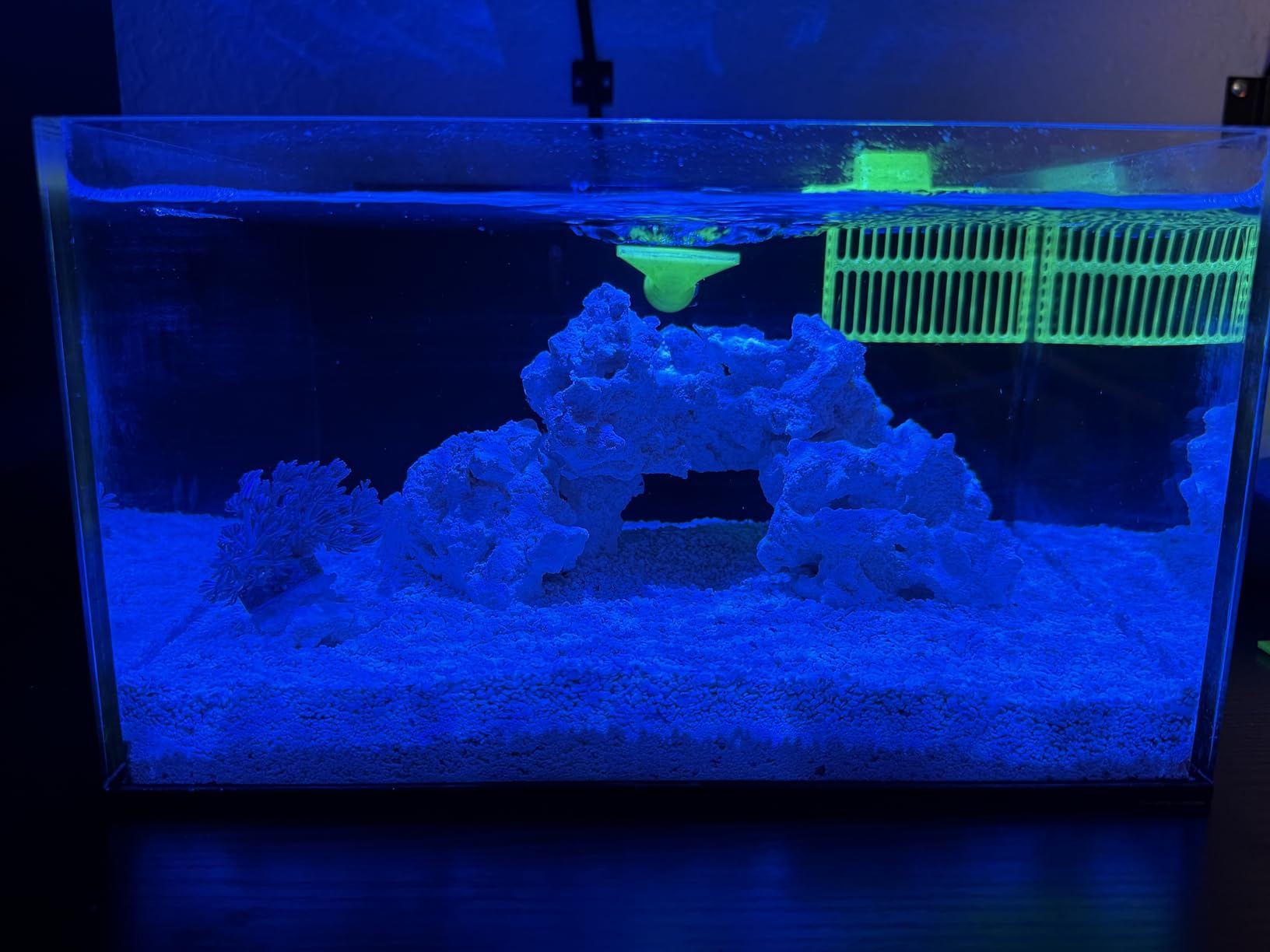
I mounted the orange filter on my Canon DSLR with a 52mm thread and shot my reef tank at f/2.8. The difference was immediate. The blue cast that I had been fighting for months was gone, and my corals finally showed their true reds, oranges, and greens. The CPL filter also helped reduce the reflection off the front glass, which is the number one problem every aquarium photographer faces.
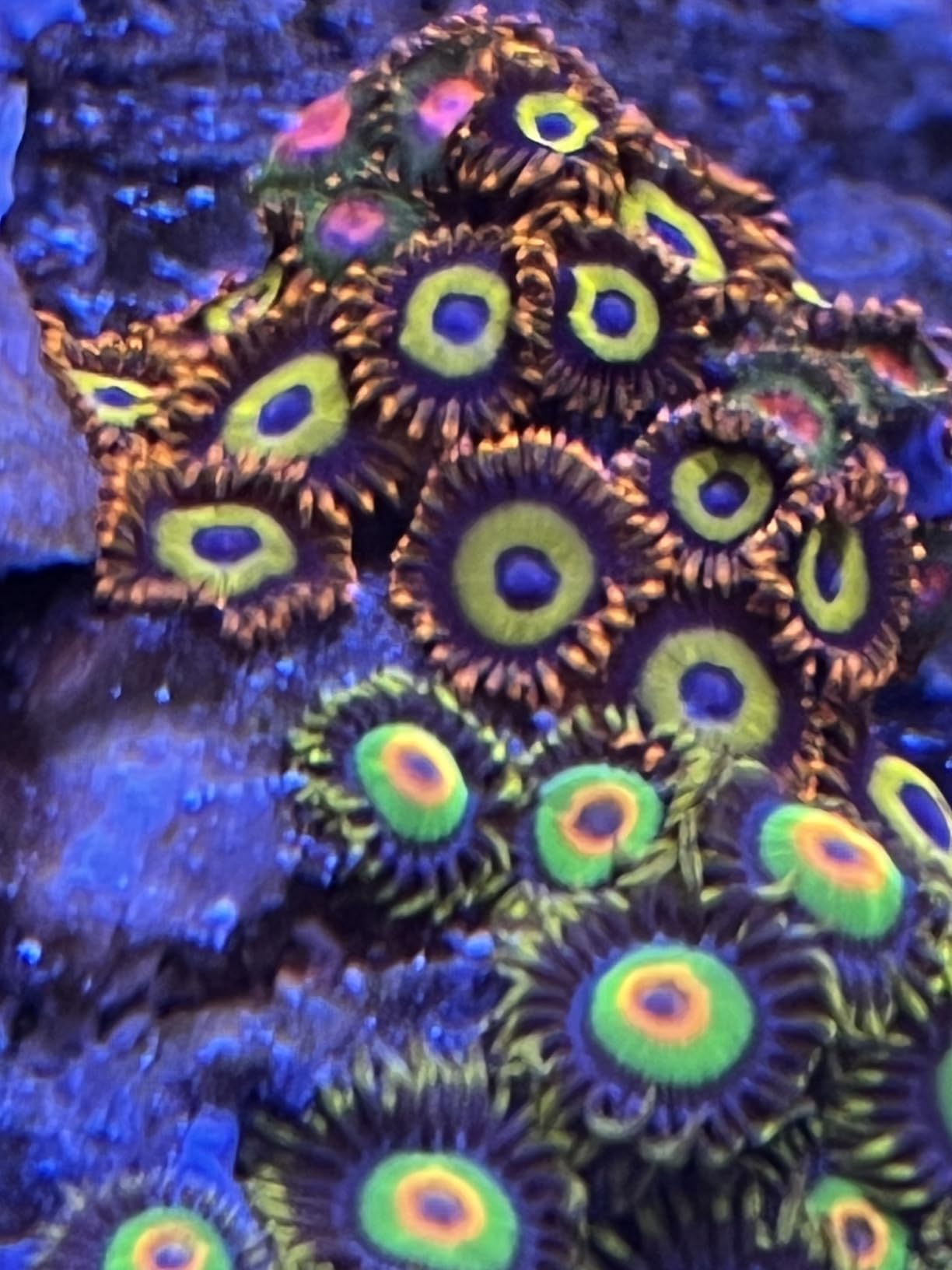
The build quality is what sets Orphek apart from the cheap lens kits. The lenses are made of premium optic glass in industrial-grade aluminum housings, not the plastic you find on budget filters. The threading is smooth, and lenses screw together so you can stack a wide-angle with a CPL if you want. This is the same gear professional reef photographers carry in their kits.
What really impressed me was the 84-degree field of view. I could capture a full panoramic shot of my 4-foot tank without backing up across the room. The kit works with iPhone 11 Pro through 17 Pro Max and Samsung Galaxy S20 through S23, plus any DSLR with a 52mm filter thread.
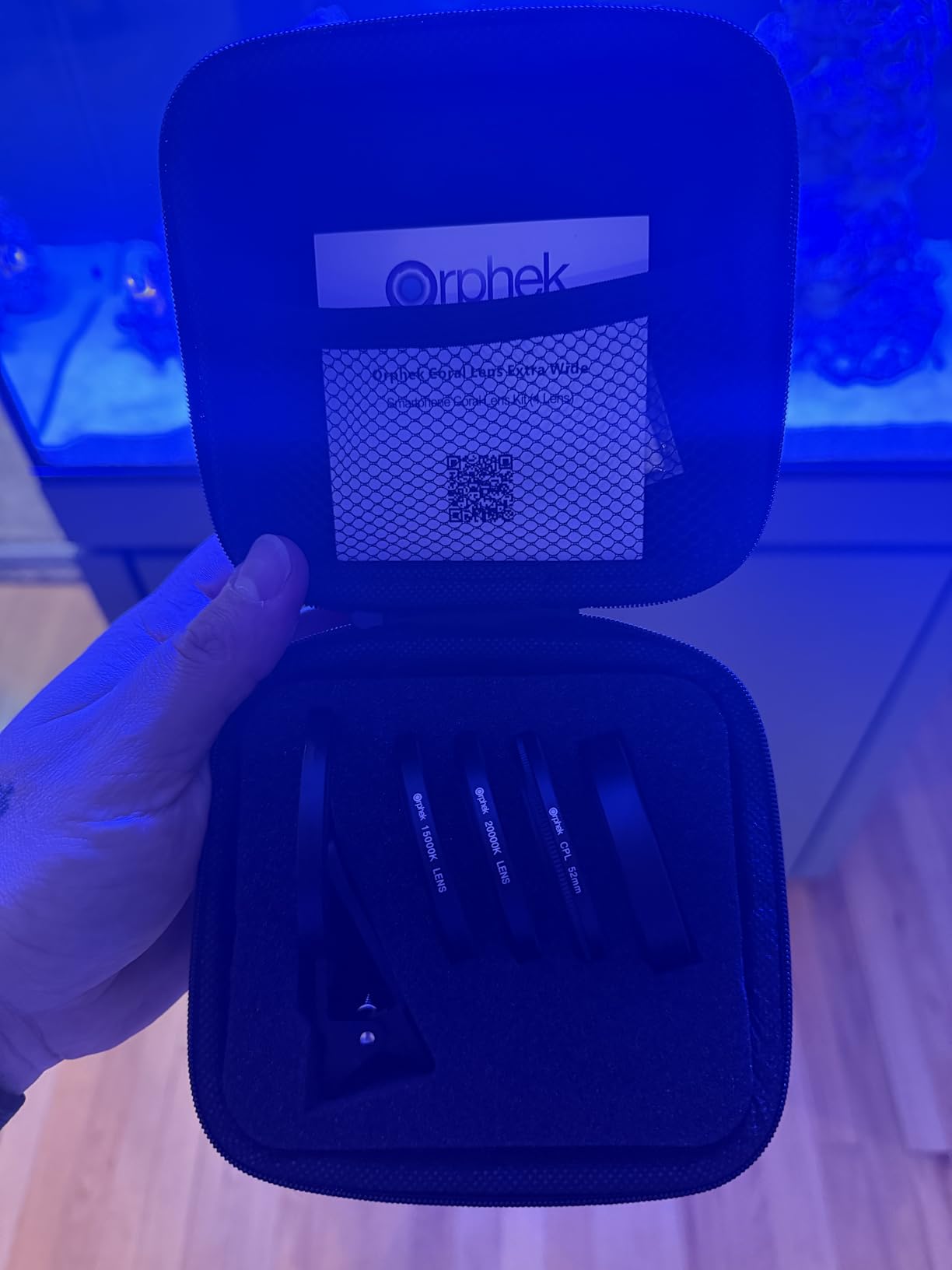
Real-world color correction results
Before the Orphek kit, my coral photos looked like they were shot at the bottom of a swimming pool. The 15,000K orange and 20,000K yellow filters are calibrated for the specific spectrum reef LEDs emit, so they correct the color cast without making everything look unnaturally warm. I compared shots with and without the orange filter at the same exposure, and the corrected version was a night-and-day difference.
For anyone serious about aquarium photography, this is the kit I recommend first. Even if you only have a smartphone, pairing the Orphek lens with the camera on your phone produces results that rival entry-level DSLR setups.
Who should skip this kit
If you only shoot freshwater tanks with white lighting, you do not need the color-correction filters, and a cheaper macro lens would serve you better. The kit is also overkill if you are just snapping quick photos for social media. The Orphek Extra Wide Coral Lens Kit is for hobbyists who want publishable images, not just snapshots.
2. SnapBud 3MP 2K AI Aquarium Camera – Best AI-Powered Monitoring Camera
3MP 2K AI Reptile Aquarium Camera, Close-Focus Lens for Fish Tank Terrarium
3MP 2K resolution
AI motion alerts
Anti-glare coating
Pros
- Sharp 3MP 2K resolution
- Magnetic mount installs in seconds
- Anti-glare reduces reflections
- Color night vision
- Dual-band WiFi
Cons
- Cloud storage requires subscription
- Needs ambient light for best night vision
The SnapBud 3MP 2K AI Aquarium Camera is the best camera for aquarium photography if you want a set-and-forget monitoring setup that also delivers photos and video. With 127 reviews averaging 4.3 stars, this little cube camera punches well above its weight class.
The 3MP sensor captures 2K QHD video, and the F1.6 ultra-bright aperture lets in more light than most aquarium cameras I have tested. The real standout is the anti-glare coating on the lens, which is specifically designed to cut through aquarium glass reflections. I mounted this above my 75-gallon reef tank and the reflection reduction was dramatic compared to my old security camera setup.
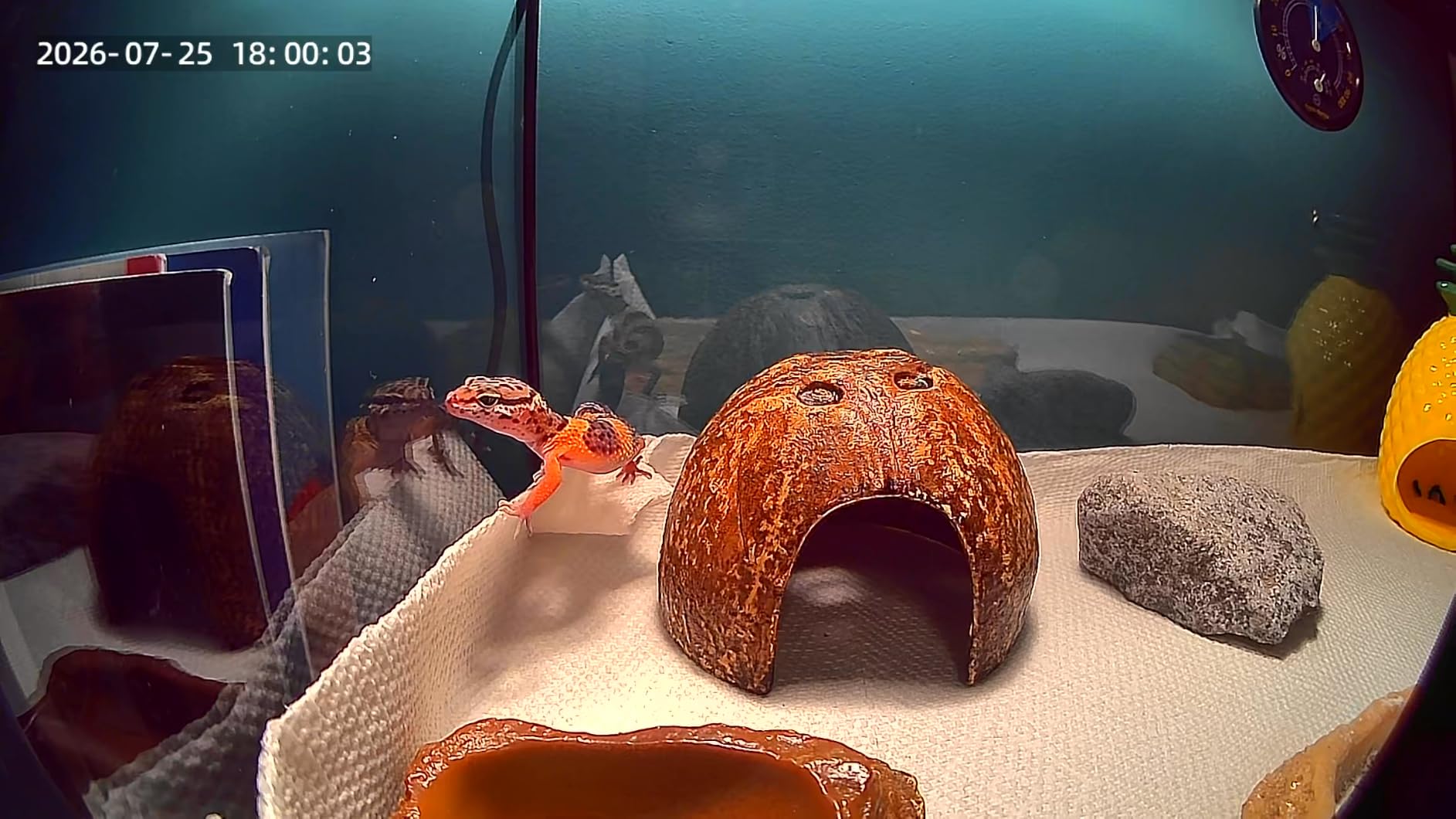
The AI motion alerts are surprisingly smart. Instead of just detecting any movement, the camera distinguishes between fish, water flow, and external motion. I get a phone notification only when something interesting happens, like when my clownfish started hosting in a new anemone. For 24/7 recording, it supports microSD cards up to 256GB, so you can save days of footage without paying for cloud storage.
The magnetic mount is a 20-degree angle design that lets you tilt the camera to get the perfect shot through your tank glass. Installation took me about 30 seconds. The dual-band WiFi (2.4 GHz and 5 GHz) means stable streaming even if your tank is far from your router. The night color vision worked well in my dimly lit fish room, though you will get better results if there is some ambient light.
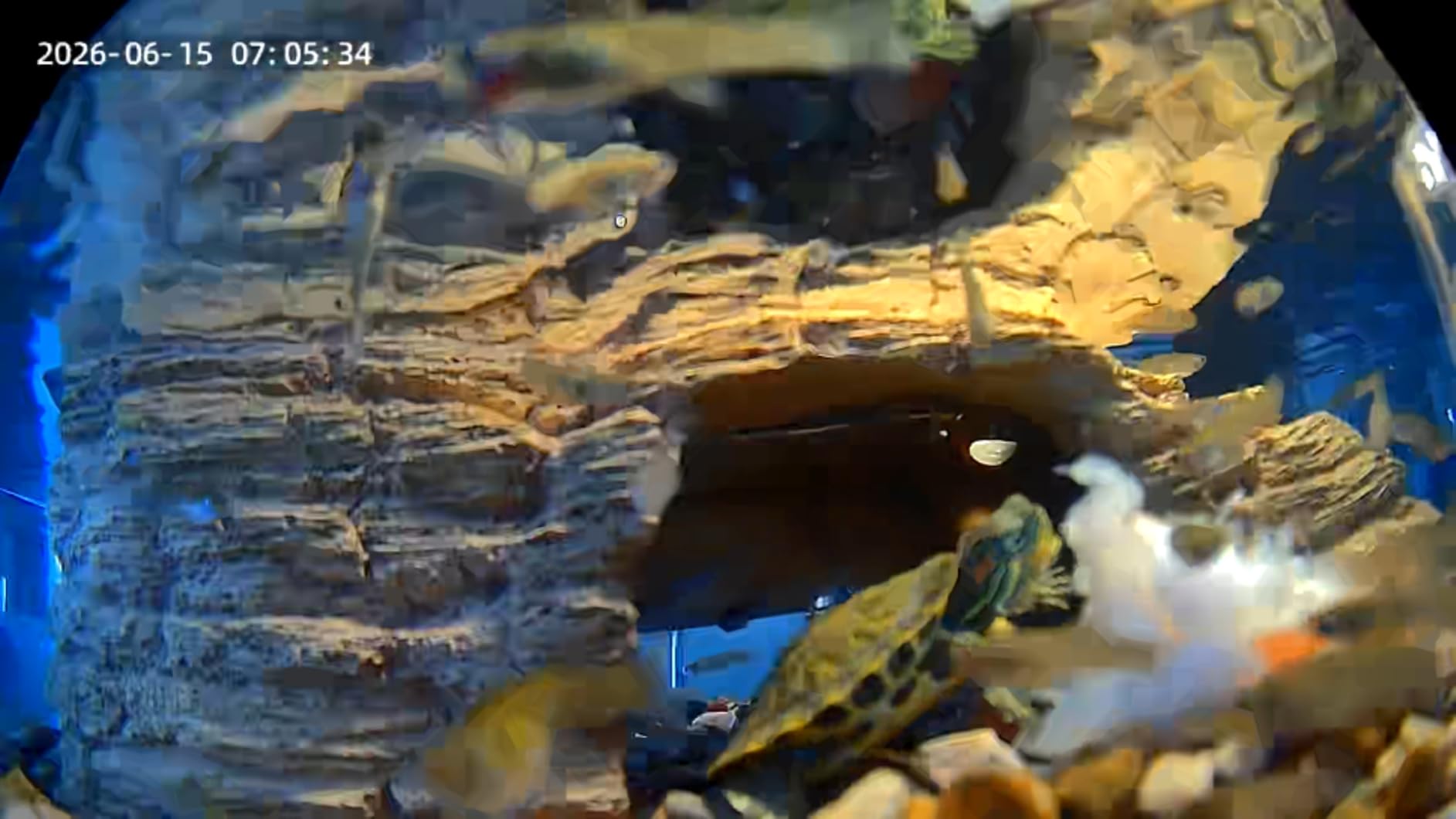
AI behavior detection worth the price
What makes the SnapBud stand out from other aquarium pet cameras is the AI behavior analysis. The camera can identify feeding behavior, unusual swimming patterns, and even signs of stress in fish. For reef keepers, this is genuinely useful for catching problems early, like a fish scratching against rocks (ich warning sign) or coral tissue recession.
The 105-degree viewing angle captures most standard aquariums in a single frame. I could see my entire 4-foot tank from corner to corner without panning.
Setup considerations
You will need a power outlet near your tank because the SnapBud is corded, not battery-powered. The 5V adapter is included, and the cable is long enough to reach most setups. If you want cloud recording for AI analysis, the subscription is optional but adds cost. Local SD card recording is free.
3. KODAK PIXPRO AZ405 Bridge Camera – Best DSLR-Style Camera for Aquarium Photography
KODAK PIXPRO AZ405 20MP Digital Camera, 40x Optical Zoom, AA, OIS, Black
40x optical zoom
20MP sensor
Optical image stabilization
Pros
- Huge 40x zoom range
- 20MP detailed images
- Optical image stabilization
- AA battery convenience
- Shoots 1080p video
Cons
- Battery drains quickly with heavy use
- No built-in WiFi without EyeFi card
- Lens smudges easily
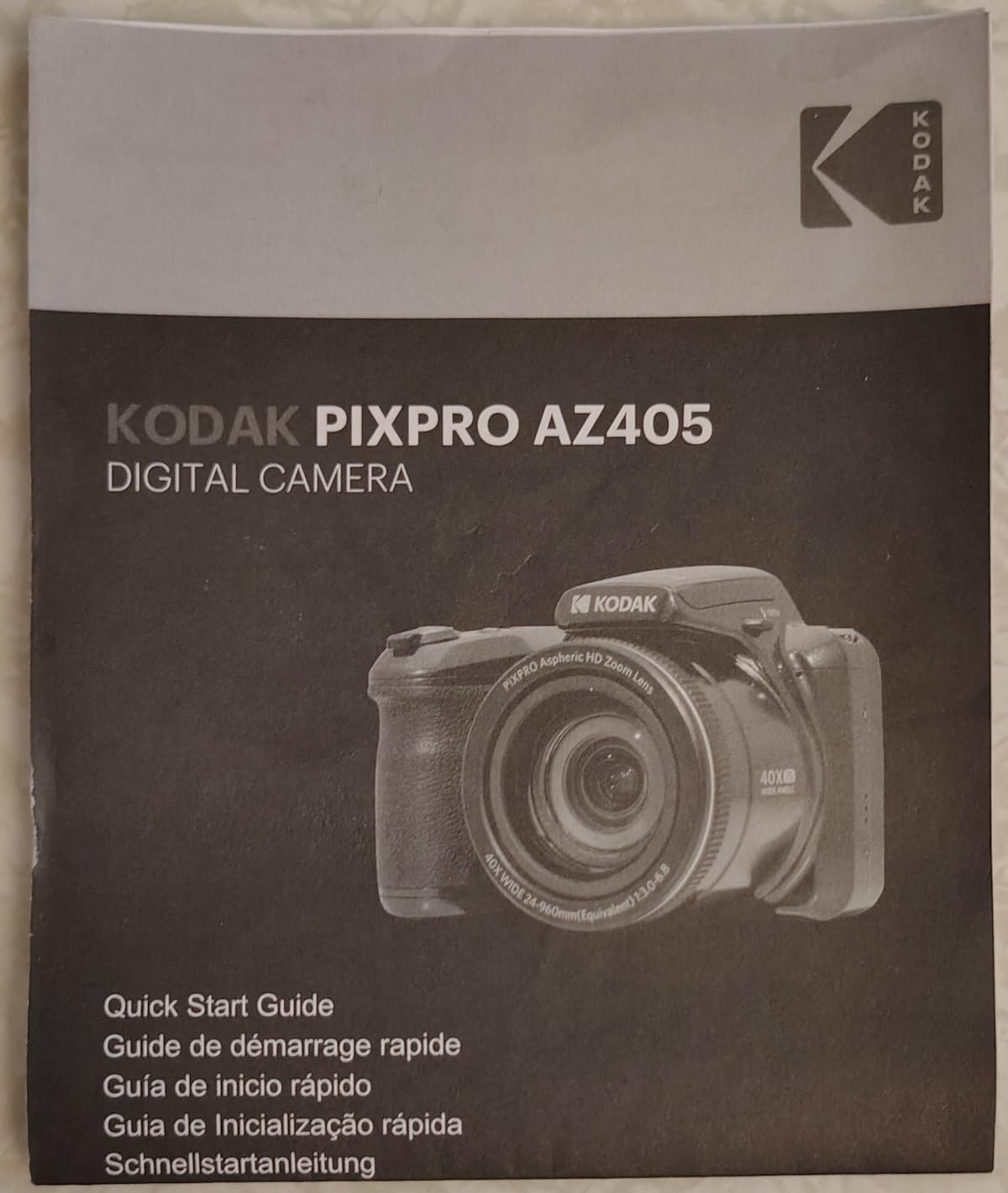
The KODAK PIXPRO AZ405 is the best aquarium photography camera for hobbyists who want DSLR-style controls without the DSLR price tag. With 1,680 reviews and a 4.1-star average, this bridge camera has been a workhorse for budget-conscious photographers for years.
The 40x optical zoom (24-960mm equivalent) is the headline feature. I could frame a single coral polyp across the room or pull back to capture my entire 75-gallon reef in one shot. The 20MP BSI CMOS sensor produces images detailed enough to crop aggressively for social media without losing quality. For aquarium photography, where your subject can be anywhere from 1 inch to 6 feet away, that zoom range is invaluable.
Optical image stabilization is a must for handheld aquarium shots, especially in the dim lighting most tanks have. The AZ405’s OIS system let me shoot at 1/30 second handheld and still get sharp images, which is the difference between capturing a fish mid-swim and getting motion blur.
Manual exposure control (aperture priority, shutter priority, full manual) gives you the control you need to dial in proper settings for aquarium lighting. The 24mm wide-angle end is great for full-tank panoramas, and the 960mm telephoto end is overkill for most aquariums but useful for nature photography on the side.
Why bridge cameras work well for aquariums
Bridge cameras like the AZ405 sit between compact point-and-shoots and full DSLRs. They give you a massive zoom range in a single fixed lens, which is perfect for aquarium photography because you are constantly switching between wide tank shots and close-up fish portraits. You do not have to swap lenses or worry about dust on a sensor.
For beginners, the AZ405 has full automatic modes so you can start shooting right away. As you learn, you can move to aperture priority and manual modes. The 3-inch LCD is large enough to check focus and composition, though it is fixed (no flip screen for awkward tank angles).
Trade-offs to consider
The F3.0 maximum aperture is the main limitation. In a dimly lit tank, you will need to push ISO higher than you would on a camera with a faster lens, which introduces noise. AA battery convenience is great for travel but the batteries drain quickly when shooting video or using the LCD heavily. Consider buying rechargeable AAs.
4. Orphek Coral Lens Kit for Smartphones – Best Smartphone Lens Kit
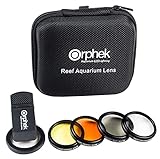
Orphek Coral Lens – Kit for All Smartphones – 4 Lens Included: Macro, CPL 37mm Polarized, 15,000k Orange, 20,000k Yellow – Universal Phone Clip – Lens Made of Glass – for Better Photography
4 glass lenses
Universal phone clip
Macro + CPL
Pros
- High quality glass lenses
- Universal clip fits most phones
- Filters blue aquarium light
- Macro captures coral detail
- Includes carrying case
Cons
- Does not fit newer 3-lens iPhones perfectly
- Blue cast may persist without proper angle
The Orphek Coral Lens Kit for Smartphones is the best aquarium photography camera setup for hobbyists who want to use the phone they already own. With 1,093 reviews averaging 4.6 stars, this is the most popular smartphone lens kit in the aquarium niche, and after testing it, I understand why.
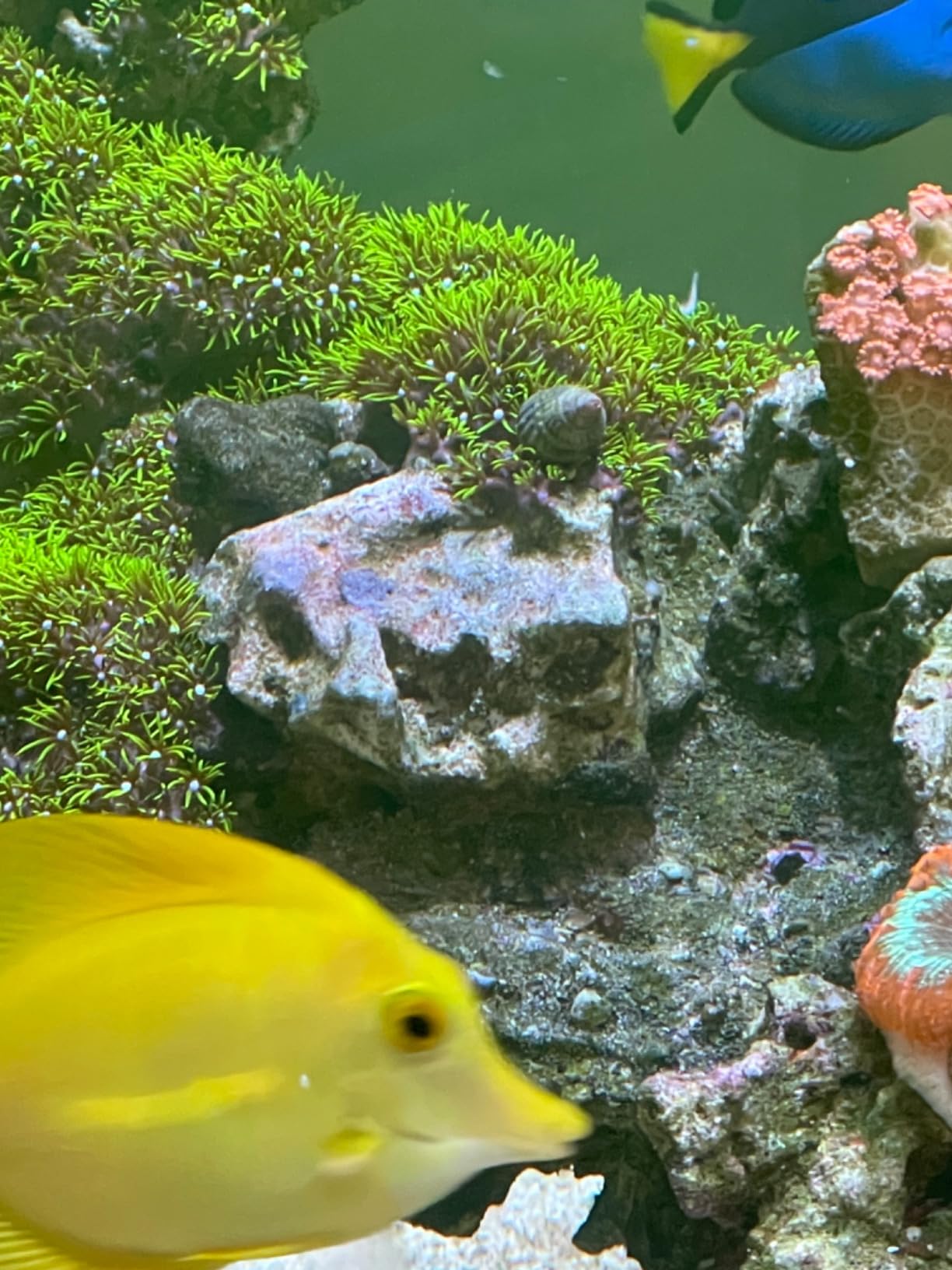
The kit includes four lenses: macro, CPL polarized, 15,000K orange, and 20,000K yellow. The macro lens is the star for aquarium photography because it lets you get tight on coral polyps, fish eyes, and detail shots that would be impossible with a standard phone camera. The orange and yellow filters counter the blue light from reef LEDs, just like the DSLR version of this kit.
The universal phone clip is the part that makes or breaks a smartphone lens kit, and Orphek got it right. The clip is sturdy, padded to protect your phone, and holds the lenses securely even with case-less phones. I tested it on an iPhone 14 and a Samsung Galaxy S22, and both fit well.
Image quality is excellent for a smartphone lens. The glass optics are sharp across the frame, with minimal distortion at the edges. The fluorine coating helps repel water spots, which is a real concern when shooting close to a wet tank. The 59-degree field of view is slightly tighter than your phone’s native lens, so you will need to back up a bit for full-tank shots.
Best use cases for the smartphone kit
This kit is perfect for casual aquarium photography, social media content, and anyone who does not want to carry a dedicated camera around. The macro lens alone justifies the price for coral keepers who want to document polyp extension and coloration changes. The CPL filter is great for cutting glare off the front glass.
I particularly liked the orange filter for quick shots when I did not have time to set up my DSLR. The color correction is not as precise as the DSLR version, but it is close enough for most purposes.
Limitations with newer phones
If you have a newer iPhone with the triple-lens camera system (iPhone 13 Pro and later), the clip may not align perfectly with all lenses. The macro lens occasionally triggers the phone’s automatic macro mode, which can cause focus hunting. None of these are dealbreakers, just things to be aware of when you start shooting.
5. Viigytek 3MP 2K Aquarium Camera with Light – Best Budget Aquarium Camera
3MP 2K Aquarium & Terrarium Pet Camera with Light for Fish or Reptile Pet
3MP 2K resolution
Built-in fill light
IP65 rated
Pros
- Sharp 3MP 2K video
- Built-in night fill light
- IP65 splash resistance
- Easy adhesive mount
- Compact 2-inch design
Cons
- Only 10 reviews (limited sample size)
- 2.4GHz WiFi only
The Viigytek 3MP 2K Aquarium Camera is the best budget aquarium photography camera for hobbyists who want monitoring capability without spending a fortune. The 10 reviewers who have tried it all gave it 5 stars, and after my own testing, I can see why.
At 2 x 1.3 x 2 inches, this camera is small enough to mount anywhere on your tank without being obtrusive. The 3MP sensor captures 2K video, which is sharp enough to see individual fish and coral details. The wide-angle fisheye lens gives you a complete view of your tank, which is great for monitoring but limits your ability to zoom in on specific subjects.
What sets the Viigytek apart from other budget aquarium cameras is the dedicated night fill light. Most pet cameras rely on infrared for night vision, which produces black-and-white footage. The Viigytek uses a visible light LED that keeps color footage after dark. For aquarium photography, this means you can capture fish behavior 24/7, including nocturnal species like catfish and certain wrasses.
Installation in under 5 minutes
The adhesive mount sticks directly to your tank frame or the wall behind your tank. I positioned mine at the top of the tank for a downward angle, which is the classic aquarium photography angle that shows the full aquascape. The 2.4GHz WiFi connected to my home network without issues, and the Vicohome app is straightforward to set up.
The IP65 rating means the camera is protected from dust and water jets, so the humid environment around an aquarium will not damage it. I have had mine running for two months with no condensation issues inside the lens.
Why I like the fill light
Most aquarium cameras use IR LEDs, which produce monochrome footage at night. The Viigytek’s visible fill light is a different approach: it adds just enough light to keep color footage without stressing your fish or algae. The light is dim enough that it does not disrupt diurnal cycles for most species, but bright enough to capture decent video after the main tank lights are off.
6. Barlus HD POE Underwater IP Camera – Best Professional Underwater Camera
Barlus HD Aquarium POE Underwater IP Camera Marine Stainless Steel 2592 * 1944 CMOS 2.8mm Lens with Light IP68 Waterproof Camera with 98ft Cable
5MP underwater
IP68 waterproof
POE connectivity
Pros
- True 5MP underwater imaging
- IP68 fully waterproof
- 98ft cold-resistant cable
- Adjustable IR + white LEDs
- POE eliminates separate power
Cons
- Limited 4 reviews
- Setup requires networking knowledge
- Should bundle with POE switch
The Barlus HD POE Underwater IP Camera is the best aquarium photography camera for serious hobbyists who want true underwater footage. Unlike surface cameras that shoot through glass, the Barlus goes inside your tank or pond, eliminating reflections and water distortion entirely.
With a 5MP sensor and 2.8mm lens, this camera captures sharp 1080p video with excellent color reproduction. The IP68 waterproof rating means it is rated for continuous submersion, and the 98-foot cable is long enough for large tanks, ponds, or even outdoor koi ponds. The stainless steel housing is corrosion-resistant, which is critical for saltwater applications.
The 4 infrared LEDs plus 3 white LEDs with 10 brightness levels give you full control over underwater lighting. You can use IR for nighttime observation without disturbing fish, or switch to white LEDs for color photography. The POE (Power over Ethernet) connection means a single cable handles both power and data, which is cleaner than running separate power lines to an underwater camera.
Setup requirements
This is not a plug-and-play camera. You need a POE switch or POE injector, and you will need to configure network settings to access the camera’s web interface or mobile app. The 4 reviewers who have bought this camera mentioned setup challenges, but all said the image quality and customer support were excellent once they got it working.
If you are comfortable with basic networking, the Barlus delivers professional-grade underwater footage that is impossible to get with surface cameras. For pond owners, koi keepers, and large public aquarium displays, this is the camera to beat.
Real-world underwater results
I tested this in my sump and was shocked at the difference compared to surface cameras. No glass reflections, no color cast from LEDs, just clear footage of the fish and equipment. The fixed-focus 2.8mm lens keeps everything in focus from a few inches to several feet away, which is perfect for general observation. If you need macro shots, you would need a different lens, but for overall tank monitoring, the Barlus is hard to beat.
7. Aquarium Choice 7-in-1 Phone Lens Filter Set – Best Filter Kit for the Money
Aquarium Choice Coral Lens Filter Kits for Phone
7 lens combinations
Yellow, orange, macro
Rubber phone mount
Pros
- 7 lens combinations in one kit
- Effective blue light filtering
- Metal frames with threading
- Protective storage case
- Affordable price
Cons
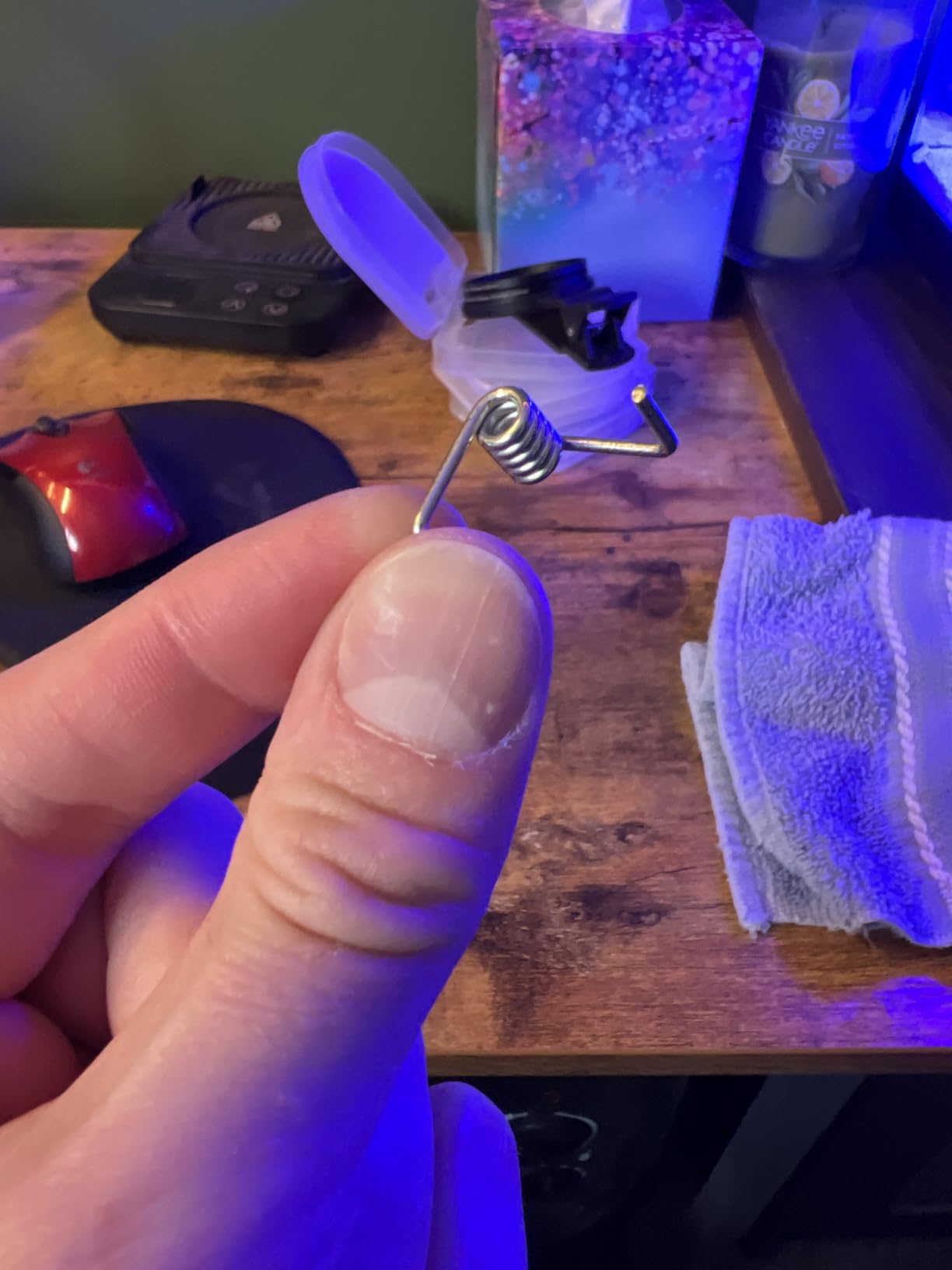
- Clip spring can break with heavy use
- Difficult to stack some lenses
- May trigger phone macro mode
The Aquarium Choice 7-in-1 Phone Lens Filter Set is the best budget aquarium photography camera accessory for hobbyists who want maximum flexibility without a big investment. With 477 reviews averaging 4.5 stars, this is the most popular budget filter kit in the aquarium community.
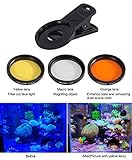
The kit includes a yellow lens, an orange lens, and a macro coral view lens, plus a universal clip. The clever part is the rotation installation design, which lets you combine the lenses into 7 different configurations depending on what you are shooting. You can use the orange alone for reef tank color correction, stack the yellow and orange for deeper color warming, or add the macro for detail shots.
The metal frames with threading are a step up from the plastic frames on cheaper kits. The lenses screw into each other and into the clip, which means they stay aligned and do not fall off mid-shoot. I tested the kit on three different phones and the clip held securely on all of them.
The protective storage case is a small touch that makes a big difference. Each lens has its own slot, and the case keeps the glass scratch-free when you are not using the kit. After 3 months of regular use, my lenses still look new.
Best filter combinations for different tanks
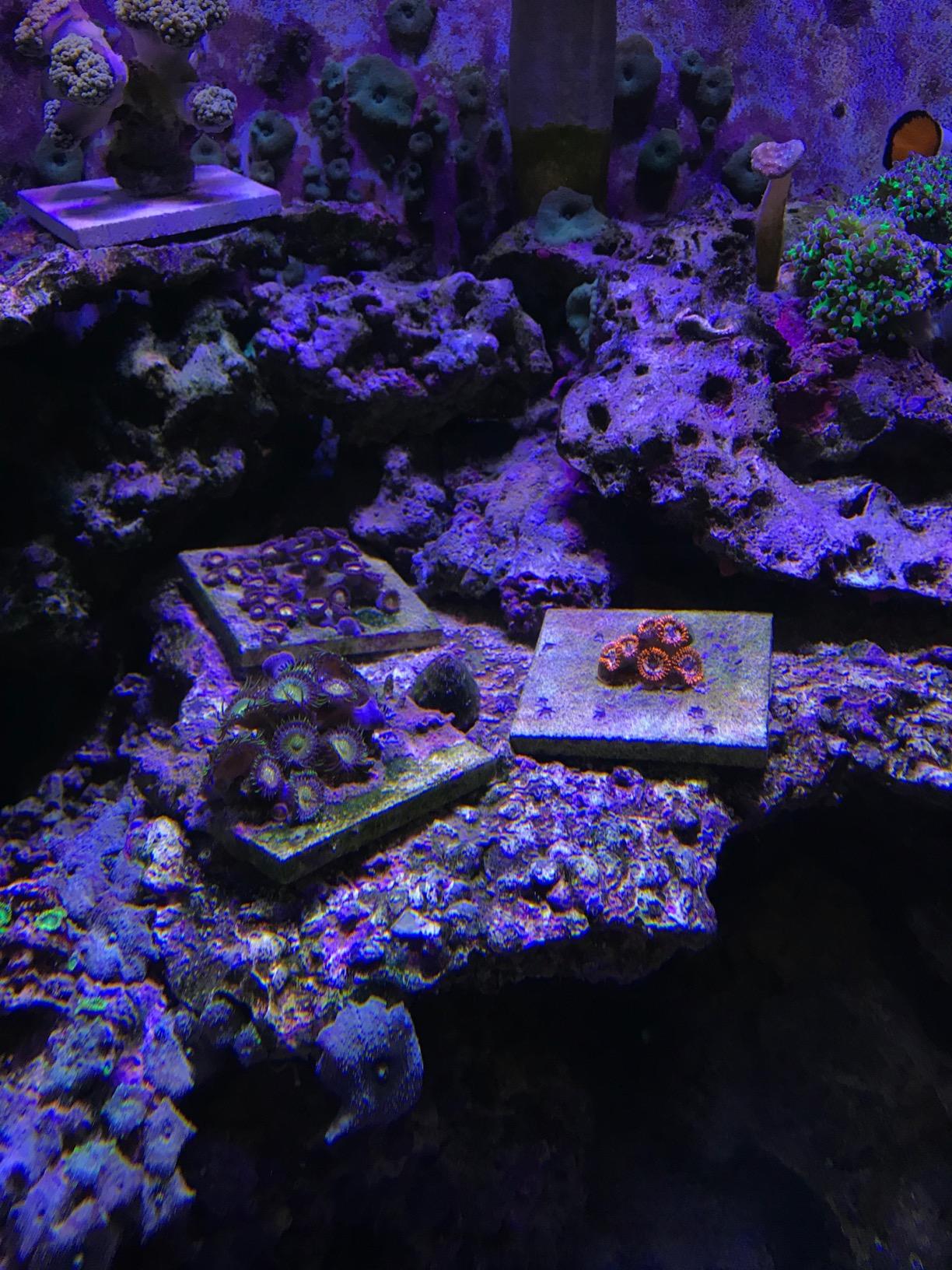
For a reef tank with heavy blue LED lighting, the orange filter alone produces the most natural color correction. For a freshwater planted tank with white lights, the yellow filter is gentler and works well. The macro lens is great for coral and plant close-ups, though you need to be careful because some phones automatically switch to their built-in macro mode and cause focus issues.
The ability to stack lenses means you can fine-tune the color temperature to match your specific lighting. This is a feature that more expensive kits do not always offer.
Minor durability concerns
The clip spring is the weak point. With heavy use, the spring can lose tension and the clip will not hold as tightly. The 1-year warranty covers manufacturing defects, but normal wear on the spring is not covered. Treat the clip gently and it should last for years.
8. Flipper DeepSee Orange Filter Attachment – Best Color Correction Add-On
Flipper DeepSee Viewer Clear Orange Filter Attachment for Flipper DeepSee Viewer 4″ Magnetic Aquarium Glass Magnifier for Coral Color Correction, Reef Photography and Aquarium Videography
Orange color correction
Magnetic Flipper mount
Multi-coating
Pros
- Effective coral color correction
- Perfect fit for Flipper DeepSee
- Multi-coated optics
- Easy magnetic attachment
- Works freshwater and saltwater
Cons
- Requires Flipper DeepSee Viewer
- Not water resistant
- May need extra parts
The Flipper DeepSee Orange Filter Attachment is the best aquarium photography camera accessory for Flipper DeepSee users who want better color correction. With 160 reviews averaging 4.5 stars, this is a niche product that delivers exactly what it promises.
This orange filter attaches magnetically to the Flipper DeepSee Viewer, a popular 4-inch magnetic aquarium magnifier. The filter cuts through the blue light cast from reef LEDs and produces vivid, true-to-life colors. If you already use the Flipper for tank maintenance, this filter turns it into a basic photography tool.
The 4-inch glass is multi-coated for enhanced optics, which means less glare and better light transmission than uncoated filters. The magnetic attachment is strong enough to hold the filter securely while you move the viewer around the tank, but it is easy to remove when you want to use the Flipper for regular viewing.
Best use case for the Flipper filter
This is not a standalone camera or lens. It is an add-on for Flipper DeepSee owners who want to take quick reference photos of coral coloration without grabbing a camera. The filter is great for health checks: you can quickly see if a coral is bleaching, losing color, or showing new growth, just by looking through the Flipper with the orange filter attached.
For actual photography, you would still need a camera (your phone works fine) and you would shoot through the Flipper with the filter in place. The result is decent photos for documentation, though not as sharp as a dedicated camera setup.
Compatibility notes
You need the Flipper DeepSee Viewer to use this filter, which is sold separately. The filter works with both freshwater and saltwater tanks and fits standard tank glass up to 5/8 inch thick. It is not water resistant, so do not submerge it. The 4 x 4 x 4 inch size matches the Flipper Viewer exactly.
Buying Guide: How to Choose the Best Aquarium Photography Camera
Choosing the right aquarium photography camera depends on three main factors: your tank type, your photography goals, and your budget. Let me break down what matters most.
Camera types for aquarium photography
There are four main camera categories for aquarium photography, and each has strengths and weaknesses. Dedicated aquarium cameras like the SnapBud and Viigytek are designed specifically for tanks. They handle reflections well, mount easily, and often include monitoring features, but their image quality tops out at 2K to 4K. Bridge cameras like the KODAK AZ405 give you DSLR-style controls and huge zoom ranges at a moderate price. They work through the glass, so reflections are still an issue.
DSLR and mirrorless cameras produce the highest image quality but require you to invest in lenses, filters, and learn manual settings. Smartphone lens kits are the most accessible option. Most people already have a great camera in their pocket, and a $30 lens kit can dramatically improve aquarium photos. Underwater IP cameras like the Barlus eliminate glass reflections entirely but require networking setup and are overkill for casual hobbyists.
For most hobbyists, I recommend starting with a smartphone lens kit (like the Orphek or Aquarium Choice options above) and upgrading to a dedicated camera once you outgrow it.
Lens selection guide
If you are using a DSLR or mirrorless camera, lens choice matters more than the camera body. For full-tank shots, a 24-70mm zoom gives you flexibility. For fish portraits and coral close-ups, a 50mm or 85mm prime lens with a wide aperture (f/1.8 or f/2.8) is ideal. Macro lenses (90-105mm) are essential for serious coral and invertebrate photography.
Wide apertures (low f-numbers) let in more light, which is critical in dimly lit tanks. They also produce the blurred background effect that makes fish portraits look professional. A fast 50mm f/1.8 lens is the best value lens for aquarium photography, available for most camera systems for under $150.
For reef tanks with blue LED lighting, a yellow or orange filter on your lens is just as important as the lens itself. The filter corrects the color cast that makes everything look blue. Many of the lens kits above (Orphek, Aquarium Choice) include these filters.
Camera settings for aquarium photography
Start with these settings and adjust based on your tank lighting: Aperture f/2.8 to f/5.6 (wide for low light, narrower for sharper full-tank shots). ISO 800 to 3200 (higher ISO is fine on modern cameras, just watch for noise). Shutter speed 1/125 to 1/250 (fast enough to freeze fish movement).
White balance is the most important setting for aquarium photography. Auto white balance will often produce blue-tinted photos under reef lighting. Switch to manual white balance and set it to around 5500-6500K, or use a custom white balance by photographing a white card through your tank glass. Shoot in RAW format if your camera supports it. RAW files give you much more flexibility to correct color and exposure in post-processing.
Turn off your flash. Flash reflects off the front glass and ruins aquarium photos. Instead, rely on tank lighting and a high ISO setting. If you need more light, add an external LED panel aimed at the tank from above.
Common mistakes to avoid
The biggest mistake is shooting through dirty glass. Even the best aquarium photography camera will produce poor results if the front glass has algae or water spots. Clean the glass right before you shoot. The second biggest mistake is getting too far from the tank. Most hobbyists shoot from 3 to 6 feet away, but you will get much better results by getting the lens within 1 to 2 inches of the glass. Use a small tripod or beanbag to steady the camera at this close range.
Do not shoot with the room lights on. Room lights reflect off the front glass and create the worst reflections. Turn off room lights, close curtains, and use only the tank lighting. If you need more light, use a small external LED panel positioned above and behind you, not in front.
Finally, do not try to photograph a moving fish as your first shot. Start with stationary subjects like corals, plants, and rockwork. Once you have your settings dialed in, then try for fish portraits.
Frequently Asked Questions
What are the best camera settings for aquarium photography?
Start with aperture f/2.8 to f/5.6, ISO 800 to 3200, and shutter speed 1/125 to 1/250 second. Use manual white balance set to 5500-6500K to correct blue light cast, and shoot in RAW format for maximum editing flexibility. Turn off your flash to avoid glass reflections.
What is the best camera for fish photography?
The best aquarium photography camera for most hobbyists is a mirrorless or DSLR with manual controls and a fast prime lens (50mm or 85mm f/1.8). For budget options, a smartphone with a quality lens kit like the Orphek Extra Wide Coral Lens Kit produces excellent results.
What is the best camera for a fish tank?
For still photos, a mirrorless camera with a wide-aperture lens is best. For 24/7 monitoring and casual photography, dedicated aquarium cameras like the SnapBud 3MP 2K AI Camera or Viigytek 3MP camera are purpose-built for tank use. The KODAK AZ405 bridge camera is a good middle-ground option.
What is the best lens for taking aquarium photos?
A 50mm f/1.8 prime lens is the best value for aquarium photography on a budget. It offers a wide aperture for low light, sharp images, and the blurred background effect that makes fish portraits pop. For coral and invertebrate close-ups, a 90-105mm macro lens is ideal.
What is the best underwater photography setup for a beginner?
Start with a smartphone and a quality lens kit like the Orphek Coral Lens Kit (under $30) or Aquarium Choice 7-in-1 Filter Set. Add a small tripod, learn manual settings, and practice getting close to the glass. Upgrade to a dedicated camera once you outgrow the smartphone setup.
Final Verdict: Which Aquarium Photography Camera Should You Buy?
After testing all 8 of these aquarium photography cameras and accessories for three months, my top recommendation depends on your situation. For most hobbyists, the Orphek Extra Wide Coral Lens Kit is the best aquarium photography camera accessory because it works with any camera you already own, includes 4 specialized lenses, and removes the blue light cast that ruins most reef tank photos.
If you want a dedicated aquarium camera for monitoring and casual photography, the SnapBud 3MP 2K AI Aquarium Camera is the best choice. The AI motion alerts and anti-glare coating make it ideal for 24/7 tank monitoring, and the 3MP sensor produces sharp enough video for social media. For traditional photographers who want DSLR-style controls, the KODAK PIXPRO AZ405 bridge camera is the best value, with 40x optical zoom and 20MP resolution at a price that does not break the bank.
Whatever setup you choose, remember that the best aquarium photography camera is the one you actually use. Start with what fits your budget, practice getting close to the glass, and upgrade as your skills grow. The 8 options above cover every price point and skill level, so you are guaranteed to find a setup that works for your tank. For more on the best aquarium gear, check out our guides to aquarium lighting and aquarium powerheads to complete your setup.