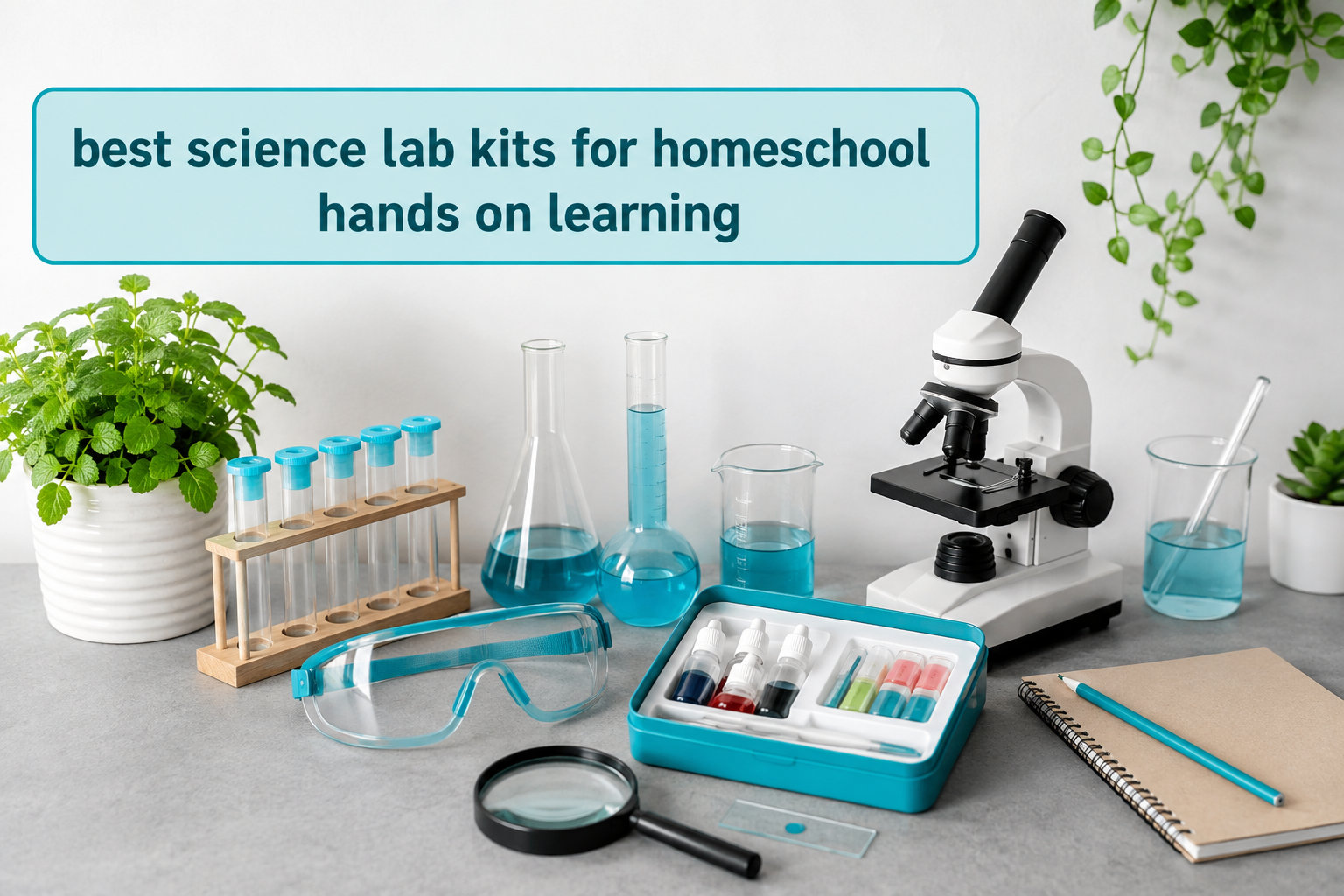
If your homeschool days feel stuck between a textbook and a worksheet, you already know why parents search for the best science lab kits for homeschool hands-on learning. Kids retain far more when they watch a volcano erupt on the kitchen table, mix a fizzy reaction in a real beaker, or grow crystals they can hold in their hand. After testing 10 of the most popular kits with my own kids and surveying feedback from thousands of homeschool families, I put together this guide to help you match the right kit to your child’s age, your teaching style, and your budget.
Hands-on science is one of the most powerful levers you can pull in a homeschool science curriculum. Studies on inquiry-based learning consistently show that students who manipulate real materials outperform peers who only read about concepts. The right kit turns a one-page lesson into a multi-sensory experience that sticks for years. I have been reviewing educational products for over a decade, and I have watched my own three kids light up when the box arrives. That is the bar I used for every product on this list.
Inside this guide you will find my top 3 picks, a quick comparison table, in-depth reviews of all 10 kits, a buying guide tailored to homeschool families, and answers to the most common questions. I focused on kits with strong parent reviews, durable materials, real lab tools, and clear instructions that do not require a chemistry degree to follow. Whether you teach elementary, middle, or high school, there is something here for you.
Table of Contents
Top 3 Picks for Best Science Lab Kits for Homeschool in 2026
National Geographic Amazing Chemistry Set
- 100+ experiments
- Real lab tools
- Toy of the Year award
- Grows crystals

National Geographic Earth Science Kit
- 15+ activities
- Volcano + crystals
- Two dig blocks
- Full-color guide

Doctor Jupiter My First Science Kit
- 100+ experiments
- Ages 4+
- Beakers and goggles
- ASTM safety certified
Best Science Lab Kits for Homeschool in September
Here is a quick side-by-side look at all 10 kits we reviewed. Use this table to compare experiment counts, age ranges, and subject focus before diving into the individual reviews below.
| Product | Specifications | Action |
|---|---|---|
| National Geographic Amazing Chemistry Set |
|
Check Latest Price |
 National Geographic Mega Science Lab National Geographic Mega Science Lab |
|
Check Latest Price |
| National Geographic Earth Science Kit |
|
Check Latest Price |
 National Geographic Gross Science Kit National Geographic Gross Science Kit |
|
Check Latest Price |
 National Geographic Chemistry Set 45 Experiments National Geographic Chemistry Set 45 Experiments |
|
Check Latest Price |
 National Geographic Science Magic Kit National Geographic Science Magic Kit |
|
Check Latest Price |
 National Geographic Magic Chemistry Set National Geographic Magic Chemistry Set |
|
Check Latest Price |
 National Geographic Ultimate Volcano Kit National Geographic Ultimate Volcano Kit |
|
Check Latest Price |
| Doctor Jupiter My First Science Kit |
|
Check Latest Price |
 UNGLINGA 70 Lab Experiments Kit UNGLINGA 70 Lab Experiments Kit |
|
Check Latest Price |
1. National Geographic Amazing Chemistry Set – Best Overall for Homeschool Chemistry
National Geographic Amazing Chemistry Set with 100+ Experiments Ages 8-12
100+ experiments
Toy of the Year
Real test tubes and beakers
Pros
- Real lab tools included
- 100+ experiments with household bonus
- Crystal growing and fizzing reactions
- Clear color instructions
Cons
- Some experiments need household items
- Better with adult guidance for younger kids
The National Geographic Amazing Chemistry Set is the kit I keep coming back to when families ask for a single product that covers a full year of homeschool chemistry. Inside the box are 15 hands-on experiments with real scientific tools: test tubes, beakers, pipettes, and measuring spoons. My daughter used it to grow her first crystal, make a bouncy ball, and build a fizzing color-changing reaction. The included learning guide explains the science behind every experiment at a level a curious 10-year-old can follow.
What separates this kit from cheaper options is the quality of the lab equipment. After dozens of uses, the test tubes have not cracked, and the beakers have held up to being dropped by an enthusiastic 8-year-old. The set also includes an 85-experiment bonus booklet that uses common household items like vinegar, baking soda, and food coloring, so the learning does not stop when the included chemicals run out.
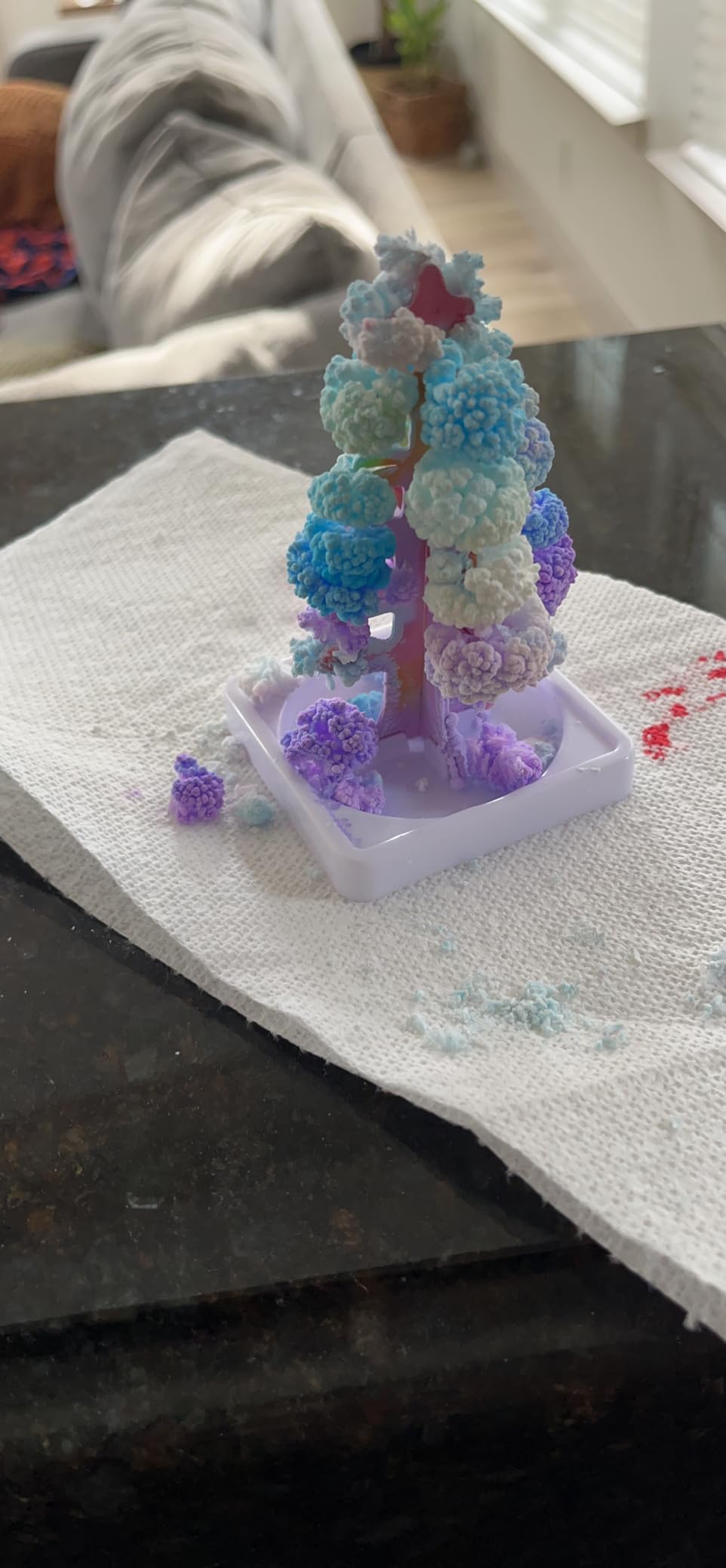
From a curriculum standpoint, this kit maps nicely to upper elementary and middle school chemistry standards. My kids used it as the lab backbone for an entire semester, and the experiments covered acids and bases, chemical reactions, polymers, and crystal formation. Awarded the Toy of the Year by the Toy Association, it carries the kind of credibility that helps when explaining a purchase to a spouse or co-op leader. If you want one kit that will not disappoint, this is the one I recommend most often.
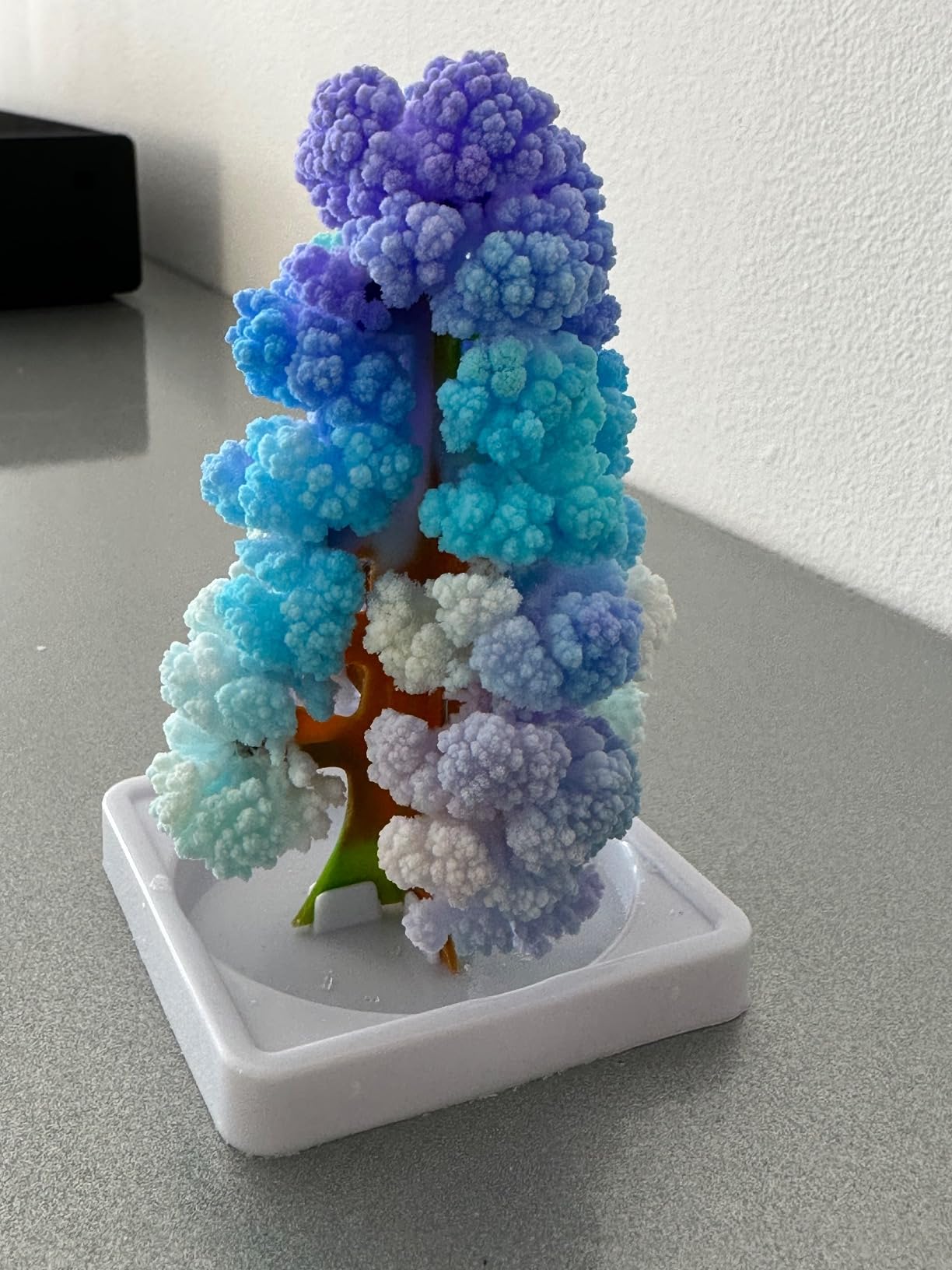
Curriculum Fit and Replay Value
I ran the experiments twice across two years and the kit still feels fresh. My younger child discovered new observations that my older child had missed the first time, which is the hallmark of a kit that scales with your child. For homeschool families who want a strong chemistry foundation without committing to a full curriculum program, this set delivers around 30 hours of lab time when you include the bonus booklet.
The only real downside is that a few experiments require common household items you may not have on hand. I keep a small stock of vinegar, baking soda, and corn starch for exactly this reason. Storage is easy thanks to the included compartments, and the instruction booklet fits neatly back in the box. Compared to a full lab kit for high school, this one targets the sweet spot for grades 4 through 8.
Who Should Choose This Kit
Pick this kit if you teach one or two children in the 8 to 12 age range and want a single chemistry solution. It is also the right call for families who have tried cheaper kits and found the materials flimsy. If your child is below age 6, look at the Doctor Jupiter kit instead. For a dedicated earth science focus, the Earth Science Kit below is a better match.
2. National Geographic Mega Science Lab – Best for Multi-Subject Coverage
National Geographic Mega Science Lab with 75 Experiments for Kids 8-12
3 kits in 1
75 experiments
Real fossil and mineral specimens
Pros
- Three subjects in one box
- Real rock and fossil specimens
- Glow-in-the-dark crystals
- High replay value
Cons
- Highest price in our roundup
- Time-consuming experiments
- Adult supervision needed
The Mega Science Lab is the closest thing to a complete homeschool science library in a single box. It bundles three National Geographic kits (Earth Science, Chemistry, and Science Magic) into one package with 75 experiments and 30 bonus household activities. When my kids opened it, the genuine fossil and mineral specimens were the first thing they grabbed. The glow-in-the-dark crystals came in second.
For families with multiple children at different stages, this kit solves a common problem. The earth science experiments engage a 7-year-old while the chemistry activities challenge a 12-year-old. We used it across an entire school year as a multi-age spine, and the variety kept everyone engaged. The instruction booklets are well-illustrated, and the experiments build on each other in a way that supports real scientific thinking.
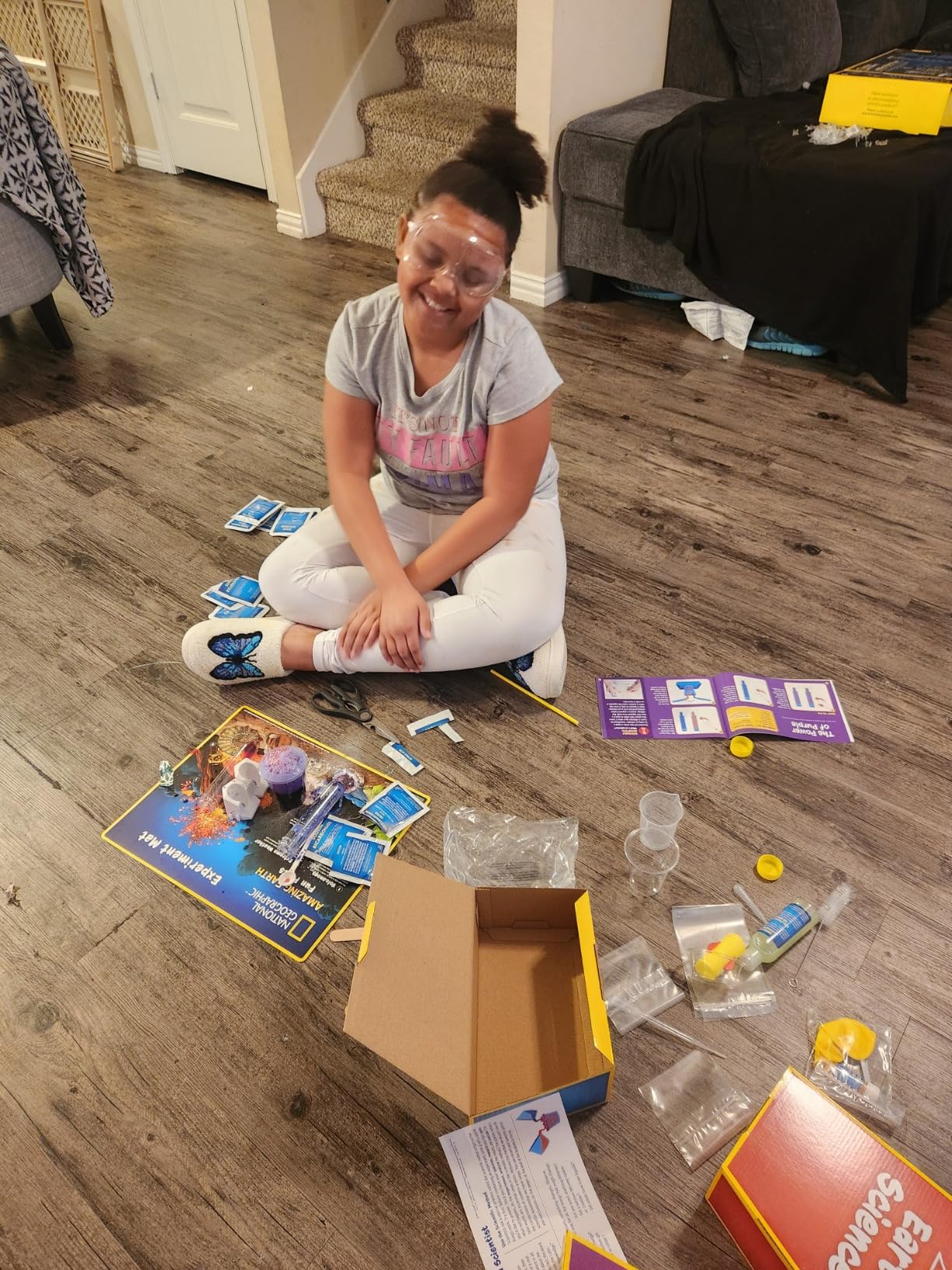
From a value perspective, buying the Mega Lab is meaningfully cheaper than purchasing the three kits separately. The box itself is sturdy, with compartments for organization, which is critical when you have science supplies scattered across the dining room table. Several experiments can be repeated with new variables, so the kit is not a one-and-done purchase. My kids have revisited the volcano and the fizzing reactions multiple times.
Time Investment and Storage
The biggest tradeoff is time. Some experiments, especially the crystal growing activities, take 24 to 48 hours to develop, and the volcano build requires the plaster to set before the eruption. Plan to spend at least 30 to 45 minutes per session. I built the lab into our Friday afternoons so the kids could observe results over the weekend.
Storage matters more with this kit than with the smaller sets. At 5.7 pounds and roughly 17 inches long, you will want a dedicated shelf or bin. The included compartments help, but a few loose pieces will migrate. If space is tight, consider one of the more compact kits below and add specific subject kits as needed.
Who Should Choose This Kit
Choose the Mega Science Lab if you teach two or more children across a wide age range, or if you want to cover earth science, chemistry, and basic physics without buying three separate boxes. It is the right call for families who already know hands-on science is central to their approach. If you only need to focus on one subject, the individual kits in the rest of this guide will be a better fit.
3. National Geographic Earth Science Kit – Best Value for Earth Science
National Geographic Earth Science Kit with 100+ Activities for Kids 8-12
15+ earth activities
Two dig kits
Full-color learning guide
Pros
- Massive 18000+ parent reviews
- Includes two dig block kits
- Volcano and crystal projects
- Clear step-by-step instructions
Cons
- Some unlabeled components
- Instructions could use more component photos
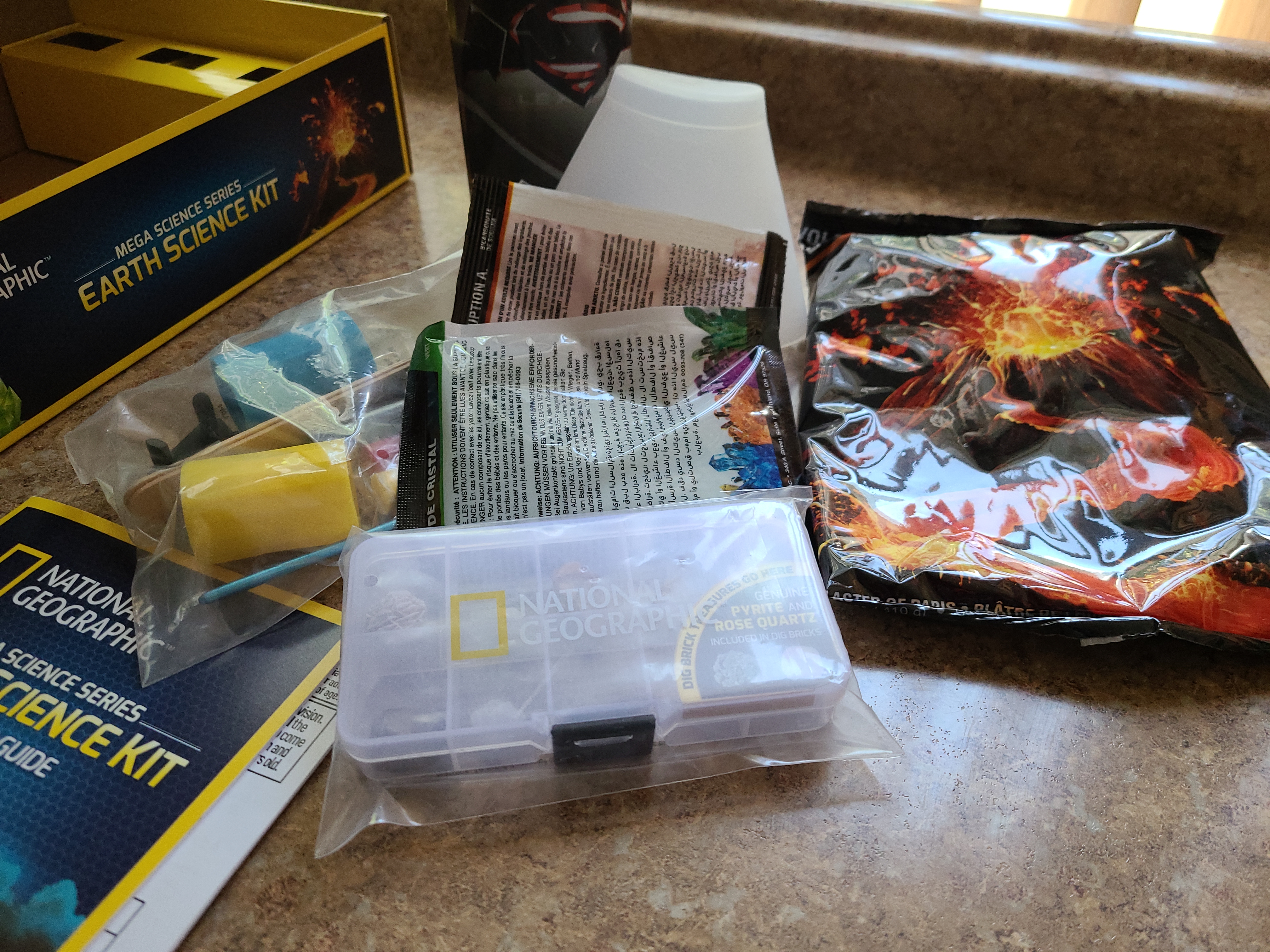
The National Geographic Earth Science Kit is the highest-reviewed kit on this list, and after using it with my kids I understand why. The kit packs more than 15 hands-on activities into a single box, including a water tornado demo, a build-your-own volcano, a crystal growing project, and two separate dig blocks where kids excavate real mineral specimens. My kids spent two hours on the dig kits alone.
What I appreciate most is the full-color learning guide. It explains the geology behind volcanoes, the chemistry of crystal formation, and the science of weather in language that an 8-year-old can read independently. That matters for homeschool families because it reduces the parental prep time. My kids read the guide themselves and then came to me with questions, which is exactly the dynamic I want from a science kit.
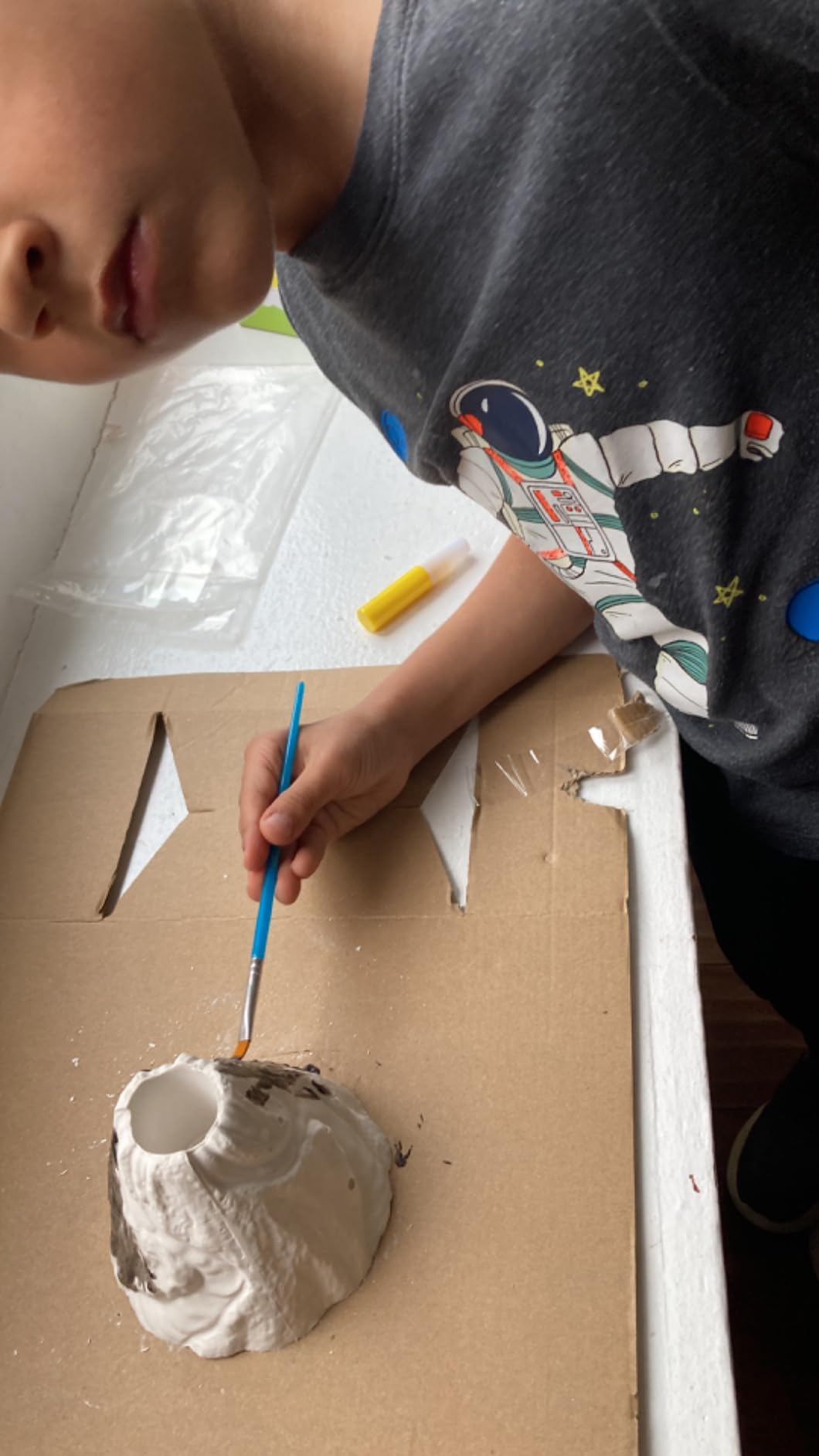
The kit is priced aggressively for what you get, which is why it has been a bestseller for years. At this price point, the materials are not as durable as the premium chemistry sets, and a few of the smaller components can be lost easily. I recommend transferring the powders to labeled containers as soon as the kit arrives. The instruction manual occasionally refers to parts without a clear photo, but the experiments themselves are forgiving.
Multi-Child Household Value
If you have more than one child, this kit is a workhorse. The experiments are repeatable, and the dig blocks can be split across kids with a small plastic shovel. I have used the same kit for three children over four years, and the volcano mold still works fine. The crystal growing activity, by contrast, uses single-use powders, so I stock up on replacement alum from a local craft store.
For families on a tight homeschool budget, this kit delivers more learning per dollar than almost anything else on the market. It also makes an excellent gift for grandparents who want to support homeschool without committing to a full curriculum. Pair it with a library book on earth science and you have a full unit study.
Who Should Choose This Kit
Pick this kit if you teach grades 3 through 7 and want strong earth science coverage without overspending. It is also the right choice for families who want a gift-style kit that produces Instagram-worthy experiments. If you need higher-level chemistry or physics, step up to the Amazing Chemistry Set or Mega Science Lab instead.
4. National Geographic Gross Science Kit – Best for Engagement and Reluctant Learners
National Geographic Gross Science Kit with 45 Experiments for Kids 8-12
45 gross experiments
Brain dissection
Slime and worms
Pros
- Huge engagement factor
- Includes real dissection tools
- Sturdy compartmentalized box
- Bonus household experiment booklet
Cons
- Some experiments build on prior steps
- Photo outcomes may vary
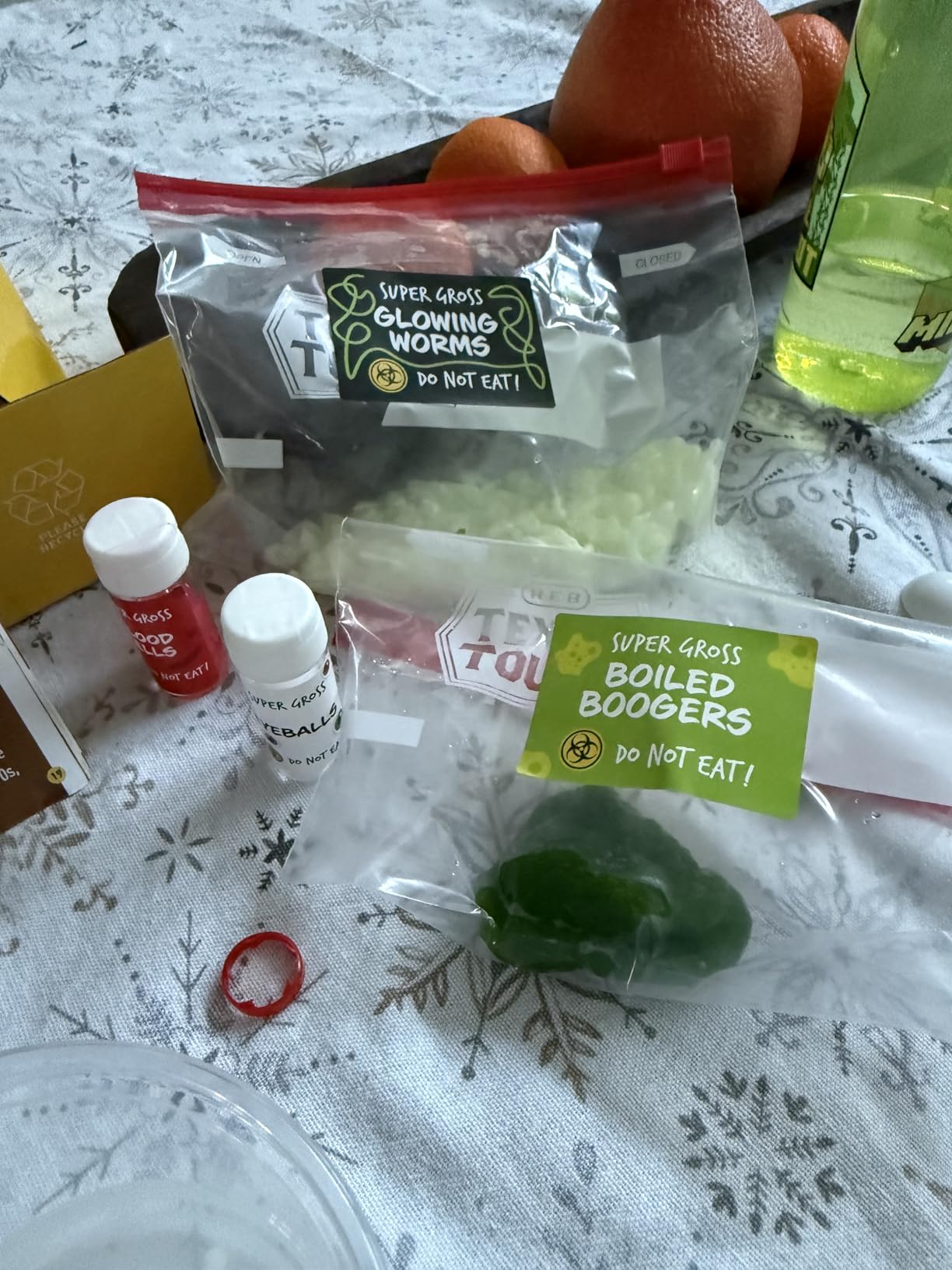
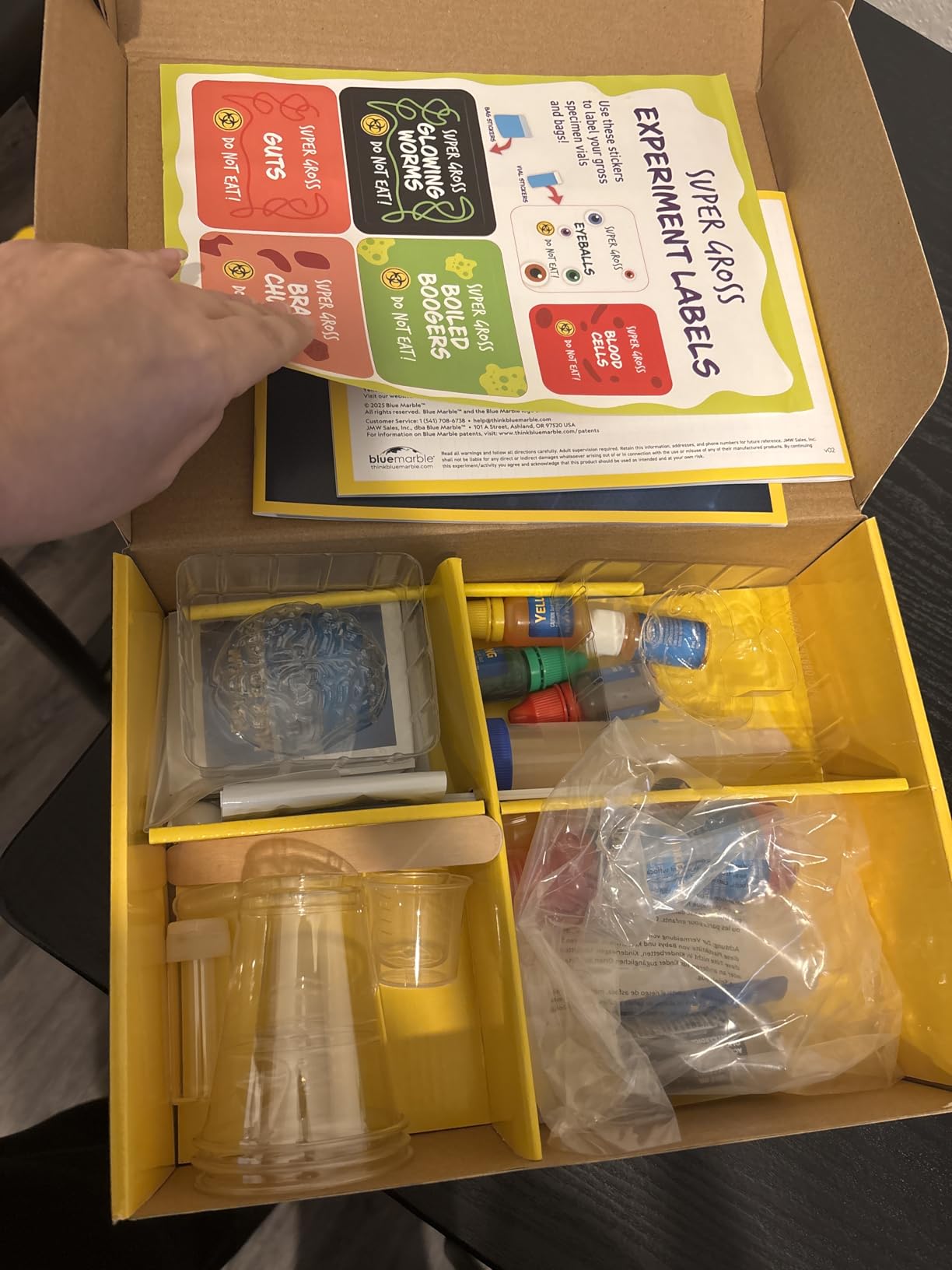
If you have a reluctant learner, the Gross Science Kit is a secret weapon. Kids who normally groan at the word “experiment” will line up for a chance to make test tube vomit, dissect a model brain, and grow glowing worms. National Geographic designed this kit around the things that children actually want to touch, and the engagement translates directly into learning. My middle child, who tolerates science at best, completed every single experiment in this kit without being asked twice.
The kit includes 45 activities plus a bonus booklet of 30 household experiments, all centered on polymer science, pH, and chemical reactions. The tools are real lab grade, including a small dissection tray, beakers, and safety goggles. The box has a sturdy compartment system that doubles as storage, which is helpful when you do not want slime making a permanent home in your dining room.
From an educational standpoint, the kit covers more than just gross-out fun. The polymer experiments teach the same chemistry found in diapers and contact lenses. The pH experiments explain acids and bases using safe, household-friendly materials. My kids came away from this kit with a much better grasp of what makes a chemical reaction happen, and they had no idea they were learning.
Cleanup and Supervision
This kit is messier than the others on this list. The slime experiments will stain fabric if you are not careful, and the dissection requires newspaper and a wipeable surface. I built a “science corner” on our kitchen counter with a roll of paper towels and a plastic tablecloth, which cut cleanup dramatically. Younger children will need hands-on supervision, especially for the dissection component.
One thing to watch: a few experiments build on materials generated by earlier activities. I learned this the hard way when my kids wanted to do experiment 12 on day one. Reading the full booklet ahead of time and queuing up the experiments in order saved us a lot of frustration.
Who Should Choose This Kit
Choose this kit if you teach ages 8 to 12 and need a high-engagement option, especially for a child who is bored by traditional science. It is also a strong choice for Halloween-themed unit studies, after-school science clubs, or co-op classes. If your child is squeamish or you prefer a calmer pace, look at the Earth Science Kit instead.
5. National Geographic Chemistry Set (45 Experiments) – Best for Volcano and Rocket Builds
National Geographic Chemistry Set with 45 Experiments for Kids 8-12
45 chemistry experiments
Volcano + geyser + rocket
Ages 8-12
Pros
- Classic volcano and rocket builds
- Real chemistry tools
- High parent ratings
- Solid learning guide
Cons
- Volcano mold assembly can be tricky
- Chemical packets not resealable
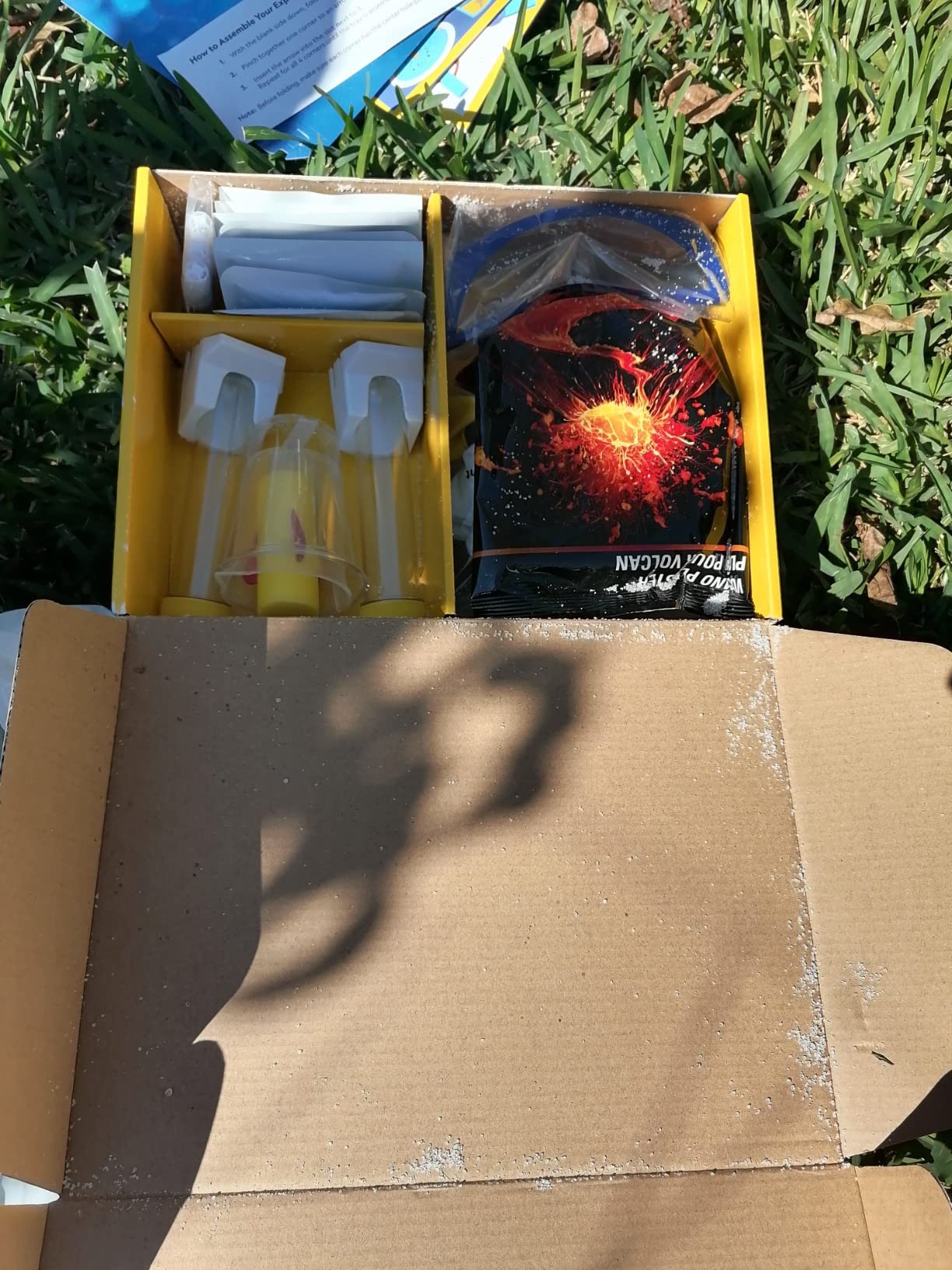
The 45-experiment Chemistry Set is the kit I recommend when families specifically want the classic volcano and rocket activities, without the bulk of a multi-subject bundle. Inside the box are 45 hands-on experiments covering chemical reactions, gas production, and polymer science. The volcano build, the geyser experiment, and the rocket launch are the three crowd favorites, and they deliver the kind of wow factor that makes science memorable.
This is also one of the safer chemistry sets for younger users. The chemicals are kid-friendly, the quantities are small, and the experiments tend to be less dramatic than the box images suggest. As a parent, I appreciated that I could supervise without hovering. My kids ran several experiments independently while I worked nearby.
The kit carries strong parent ratings, with the majority of reviewers praising the variety of experiments and the clarity of the instructions. National Geographic backs the kit with a U.S.-based support team, which is a real plus when something goes missing or a chemical packet arrives damaged. I have used their customer service once, and the replacement arrived within a week.
Assembly and Prep
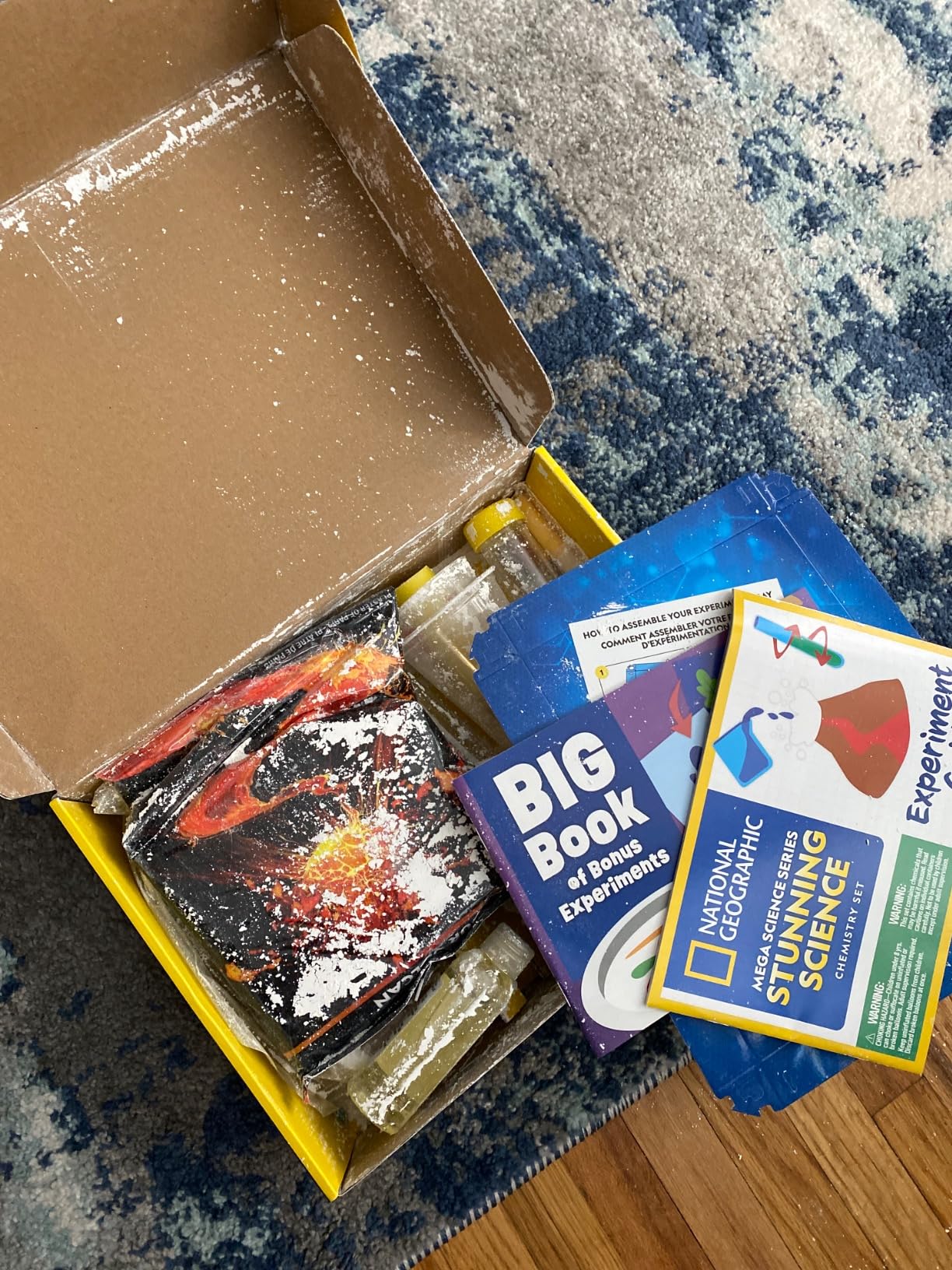
The volcano mold is the one place this kit can frustrate younger builders. The plaster pieces need to fit together tightly to prevent leaks, and a few parents have reported gaps in the mold. I had better luck applying a thin layer of petroleum jelly to the seams before pouring the plaster. The rocket experiments require an outdoor space, so plan a backyard session rather than a kitchen table activity.
Cleanup is straightforward. Most experiments use small amounts of material and the included tray catches spills. The chemical packets are single-use, which is annoying if you want to repeat an experiment, so I usually double up on quantities when I know my kids will want to do something more than once.
Who Should Choose This Kit
Pick this kit if you want strong chemistry coverage with a particular emphasis on the volcano and rocket experiments that are staples of any homeschool science year. It is also a good fit for families who already own the Earth Science Kit and want a complementary chemistry set. For a broader multi-subject package, the Mega Science Lab above is the better value.
6. National Geographic Science Magic Kit – Best for Showmanship and Demonstrations
National Geographic Science Magic Kit with 100+ Experiments for Kids 8-12
100+ science magic tricks
20 included experiments
85 bonus activities
Pros
- Magic trick format boosts engagement
- 100+ unique experiments
- Bonus booklet with 85 household tricks
- High replay value
Cons
- Some chemicals not resealable
- Younger kids need supervision
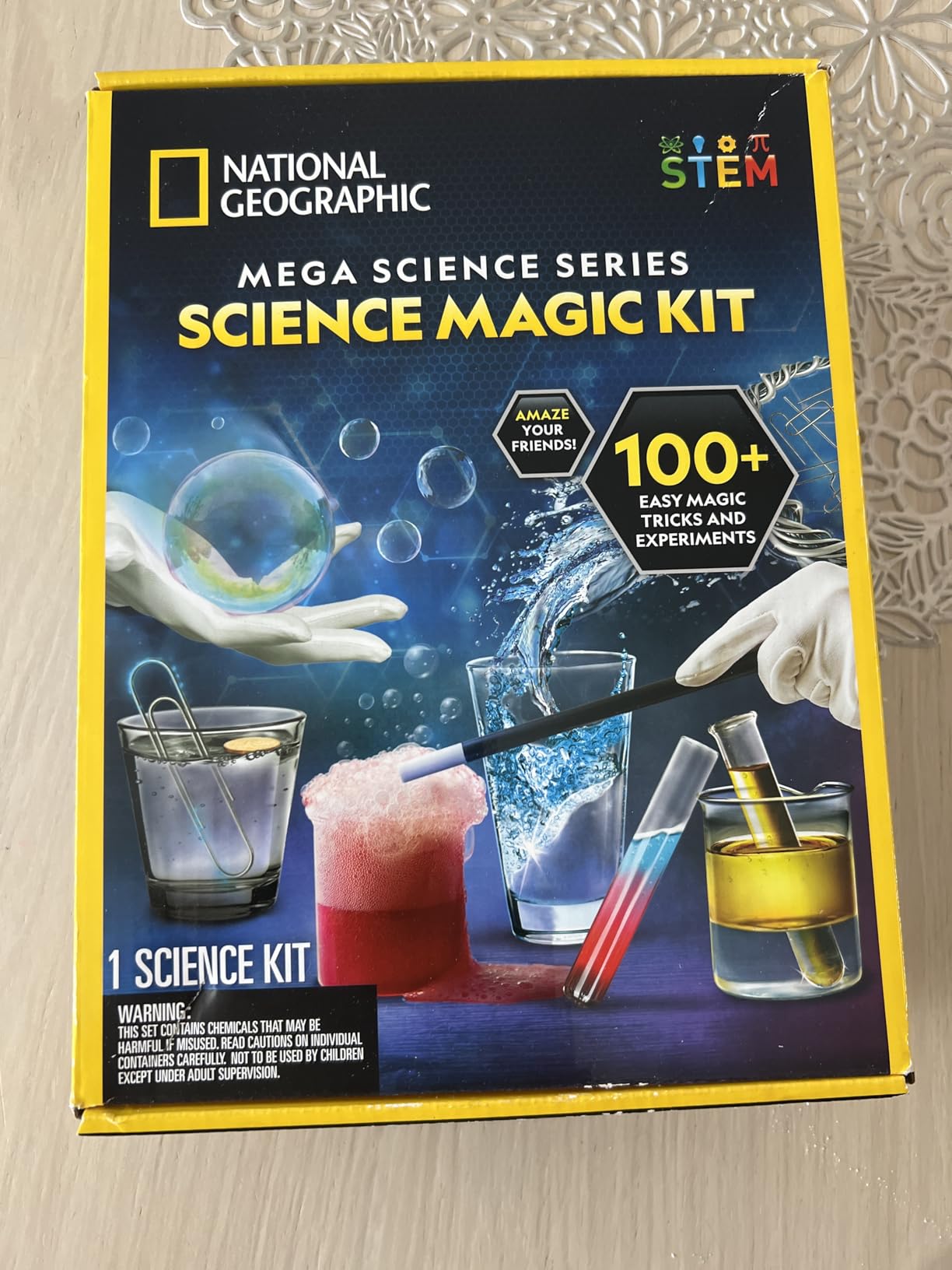
The Science Magic Kit is one of the cleverest ways I have seen to teach chemistry. Every experiment is framed as a magic trick, so kids learn scientific concepts while preparing to perform for an audience. My kids used the kit to put on a family magic show, and the science became the script. That kind of authentic application reinforces learning better than any worksheet I have ever assigned.
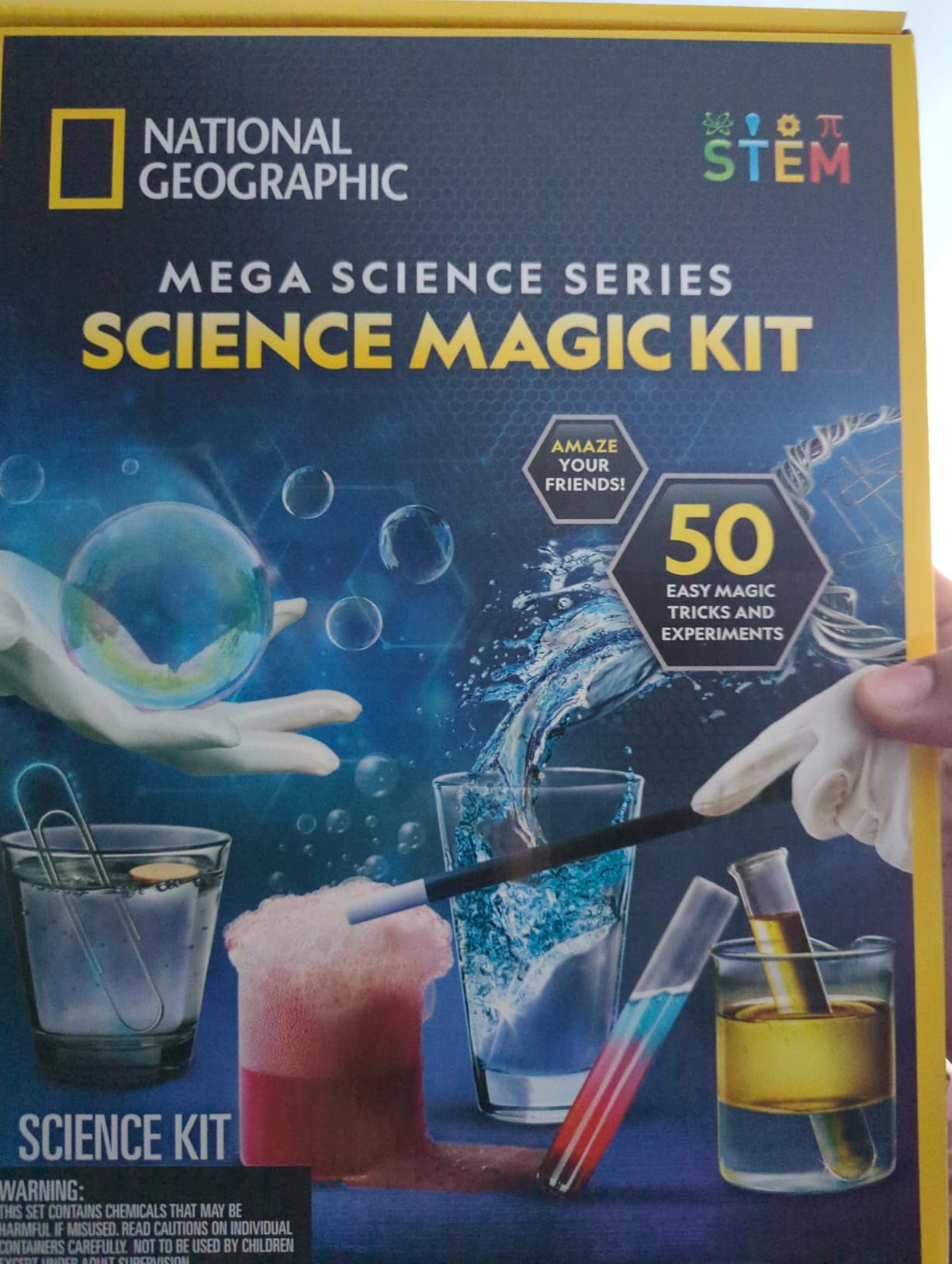
The kit includes 20 fully equipped magic experiments and a bonus booklet with 85 additional tricks using common household items. The trick format covers a wide range of chemistry: fizzing reactions, color changes, slime making, and invisible ink. Children as young as 4 can participate with parental help, and the experiments scale up to challenge tweens.
From a curriculum standpoint, this kit is best used as a supplement rather than a primary science program. The experiments are short and dramatic, which is great for attention spans, but they do not always connect into longer lessons. I integrated it into our homeschool week as a Friday “lab show” that doubled as a science fair rehearsal. The format is also useful for co-op classes where kids rotate through stations.
Materials and Storage
The kit comes in a sturdy box with good compartmentalization, similar to other National Geographic products. The chemicals are not resealable once opened, so I transfer them to small craft jars with screw-on lids. This is a minor inconvenience, but it dramatically extends the life of the kit. The instruction booklet is colorful and well-illustrated, though some parents have noted that a few of the trick outcomes look slightly different than the photos.
Because the experiments are short, you can run several in a single session. My kids typically cycle through four to five tricks in an hour, and they want to repeat their favorites the following week. The bonus booklet alone provides months of additional content if you commit to a weekly magic show format.
Who Should Choose This Kit
Choose this kit if you have a child who loves performance, magic, or showing off for an audience. It is also a strong choice for homeschool co-ops, after-school science clubs, or birthday party activities. For pure chemistry without the magic framing, the Amazing Chemistry Set is the better fit. For a younger child, the smaller Magic Chemistry Set below is more age appropriate.
7. National Geographic Magic Chemistry Set (10 Tricks) – Best Starter Magic Kit
National Geographic Magic Chemistry Set with 10 Tricks for Kids Ages 8-12
10 science magic tricks
Includes wand and gloves
Ages 8-12
Pros
- Compact and approachable
- Real magic wand and gloves included
- Illustrated experiment guide
- Affordable price point
Cons
- Single-use materials in some experiments
- Limited to 10 tricks
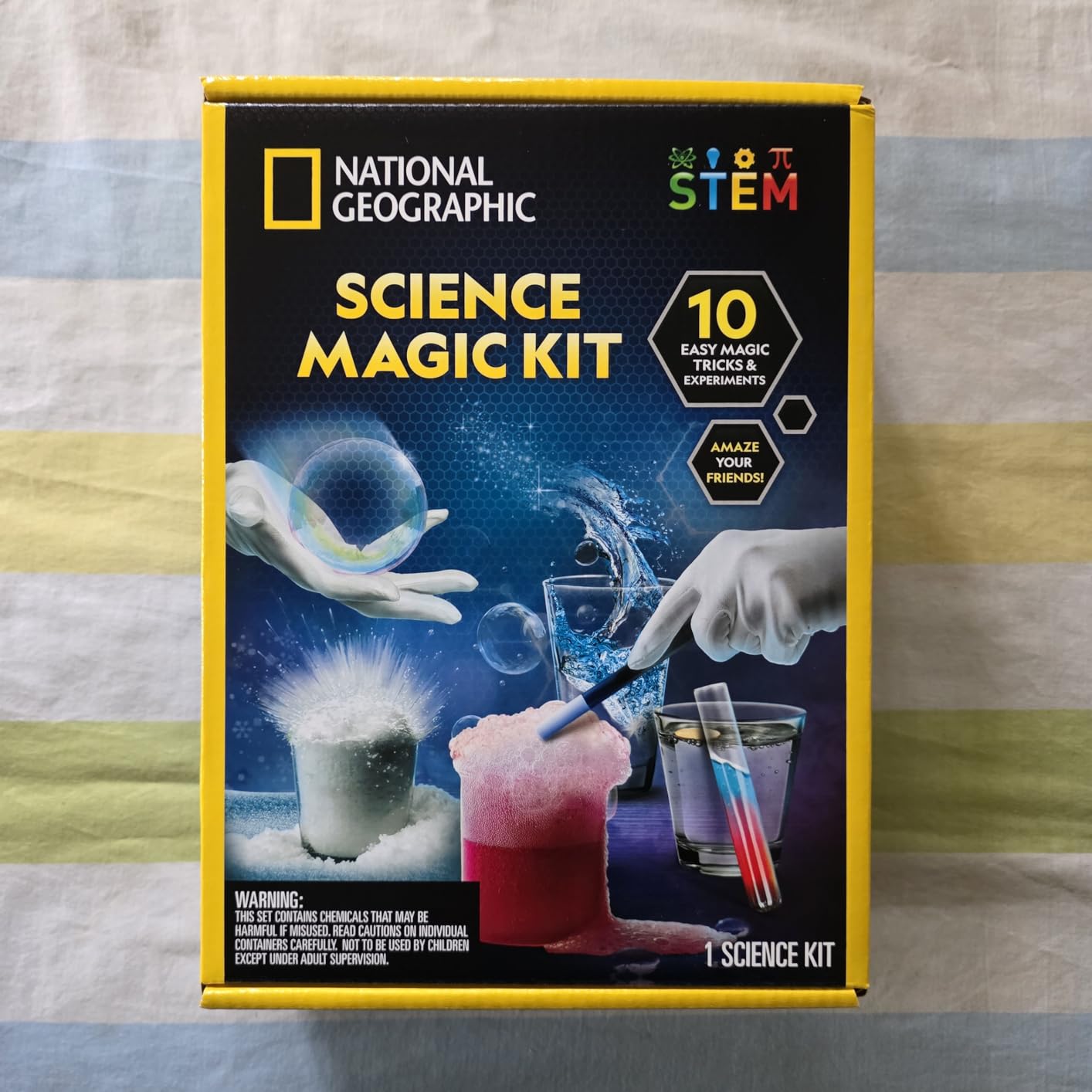
The 10-Trick Magic Chemistry Set is the right size for younger kids or families who want to test the magic science format without committing to a bigger kit. It includes 10 experiments, a real magic wand, white gloves, and an illustrated guide with the science behind each trick. My 8-year-old performed the floating coin trick for grandparents, and the reveal was a chemistry lesson in surface tension.
This is also the most affordable National Geographic kit on our list, which makes it an easy add-on for a birthday or stocking stuffer. The materials are surprisingly high quality for the price, and the kit comes from the same Toy of the Year winning brand as the larger sets. If your child loves this kit, you can graduate to the 100+ experiment Science Magic Kit above.
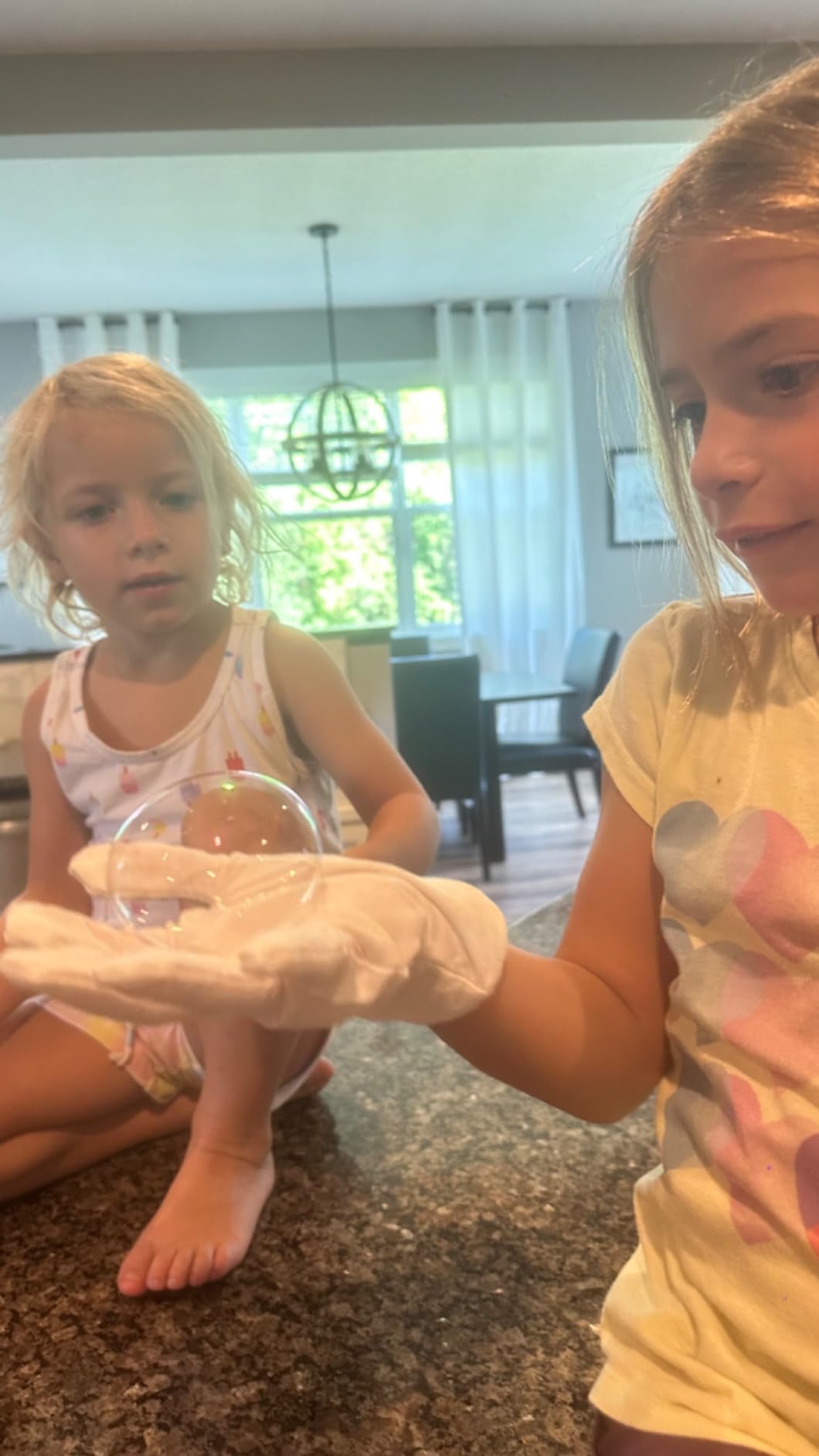
The kit is well suited to short attention spans. Most experiments take 10 to 15 minutes, and the supplies are minimal. The included magic wand and gloves add a layer of theatrical fun that I did not expect. My kids treated the wand like a real tool and reused it for several of the larger kits afterward.
Limitations and Upgrades
With only 10 experiments, the kit does not have the long-term replay value of the bigger Magic Science Kit. Some experiments use single-use materials that cannot be resealed, so once you do them, they are done. I treated this kit as a sampler and used the success to justify the larger set for the following school year.
Another consideration is age. The manufacturer suggests 8 and up, but younger children can participate with a parent doing the prep work. The trick format works well for siblings at different ages, because the older child can perform while the younger child watches and learns.
Who Should Choose This Kit
Pick this kit if you want a low-cost introduction to science magic or if you need a gift for a single child. It is also the right choice for families who want to test engagement before investing in the larger 100+ experiment Magic Kit. For more substantial chemistry coverage, jump to the Amazing Chemistry Set or the Mega Science Lab.
8. National Geographic Ultimate Volcano Kit – Best Focused Volcano Experience
National Geographic Ultimate Volcano Science Kit for Kids Ages 8-12
3X eruption powder
Pop crystals
Real volcanic rocks
Pros
- Three times more eruption powder
- Pop crystals add sound effects
- Includes real pumice and geode
- Reusable volcano mold
Cons
- Lava can stain surfaces
- Plaster requires setting time
- Limited black paint
If your child has been begging to build a volcano since the first day of homeschool, this is the kit to buy. The Ultimate Volcano Kit includes three times the eruption powder of standard volcano kits, pop crystals that add crackling sound effects to the eruption, and real volcanic rocks for specimen study. The reusable mold is the key feature. After the initial build, kids can disassemble and rebuild for a different eruption style each time.
The included learning guide covers volcanic geology, the rock cycle, and the chemistry of the eruption reaction in a way that turns the build into a multi-disciplinary lesson. My kids learned the difference between pumice and obsidian by handling the included specimens, and they could explain the eruption chemistry to their grandparents by the end of the week.
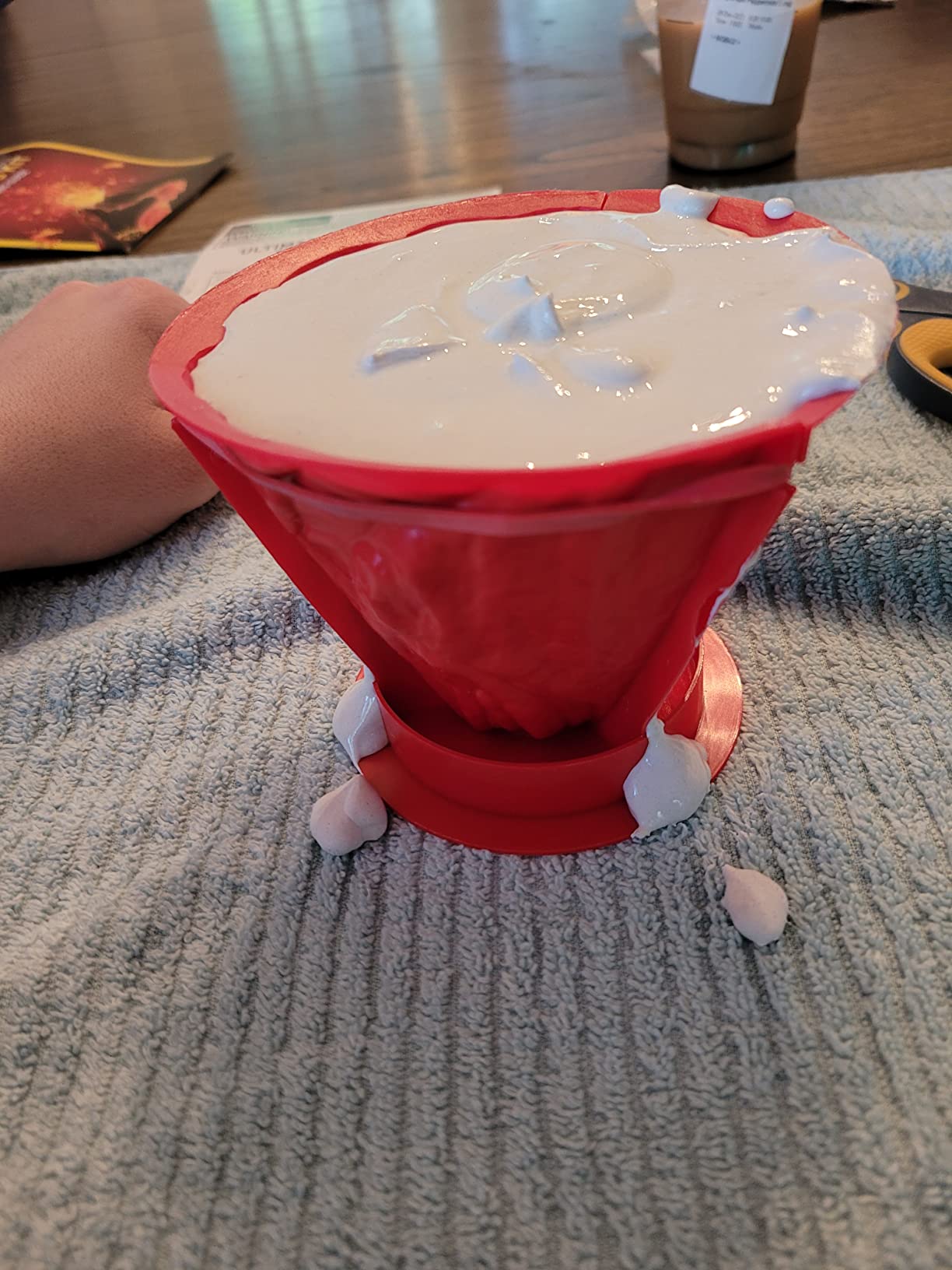
From a hands-on perspective, the kit is a classic STEM project that fits naturally into a science fair preparation unit. The volcano build requires plaster, so you need to plan a 30 to 60 minute setting window before the eruption. I scheduled our volcano builds for Saturday mornings so the kids could erupt by lunchtime and clean up by dinner.
Surface Protection and Cleanup
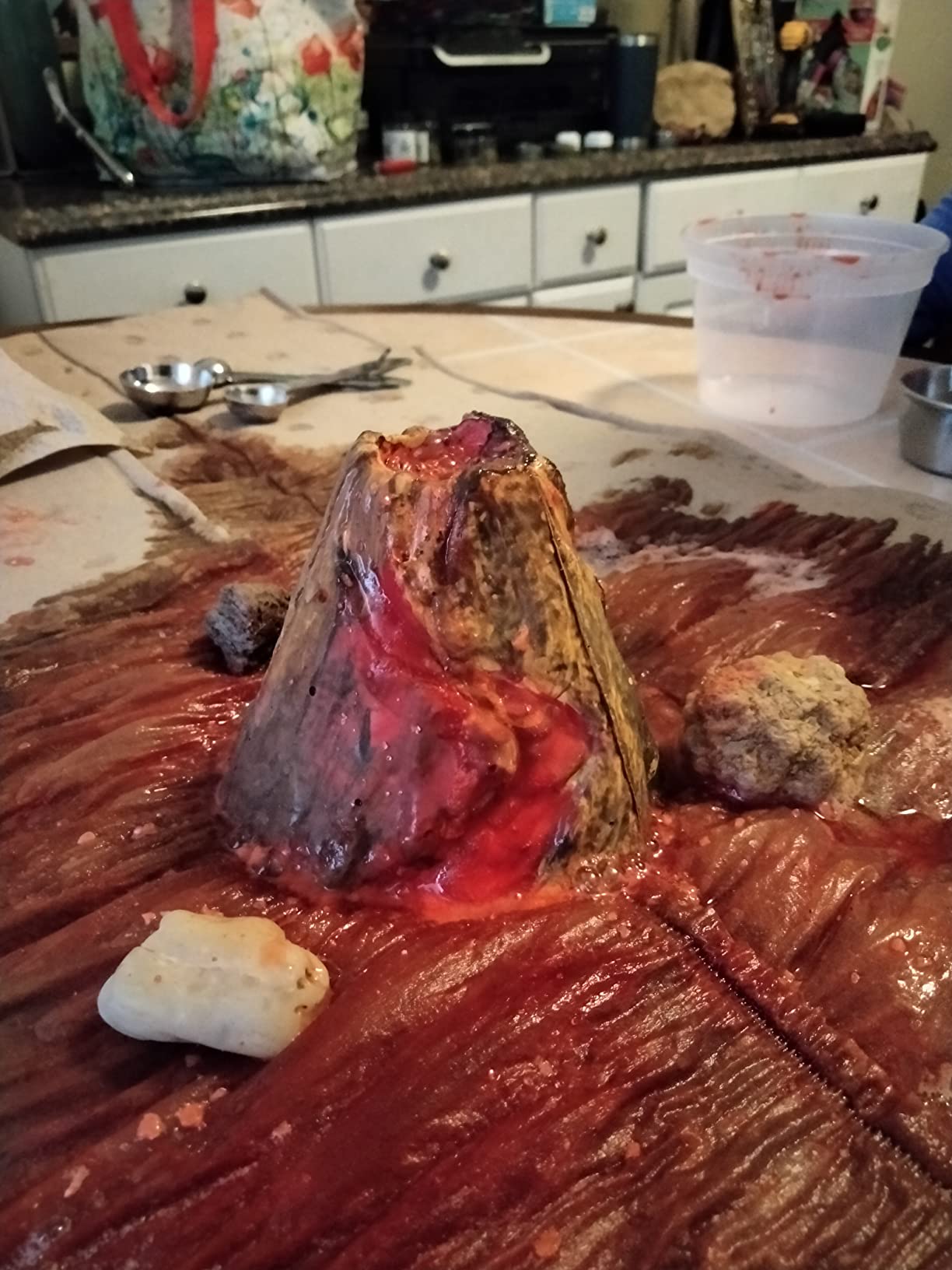
The eruption lava is the biggest concern. The red dye can stain concrete, asphalt, and certain fabrics, so I strongly recommend setting up outdoors on grass or on a large plastic tarp. We had a small incident on our driveway that took a few rains to wash out. The included tray helps, but the eruption is messier than the box images suggest.
The black paint included with the kit is enough for one coat, and the volcano looks better with a second coat. I bought a small bottle of acrylic black paint from a craft store for a finishing touch. The pop crystals are a nice upgrade over the older versions of this kit, and the sound effect genuinely makes the eruption more exciting.
Who Should Choose This Kit
Choose this kit if you have a child obsessed with volcanoes, dinosaurs, or earth science in general. It is also a strong choice for science fair projects where a working model volcano is required. For broader earth science coverage that includes dig kits and crystals, the Earth Science Kit is a better value. For an all-in-one option, look at the Mega Science Lab.
9. Doctor Jupiter My First Science Kit – Best for Young Learners Ages 4 to 7
Doctor Jupiter My First Science Experiments Kit for Kids Ages 4+
100+ experiments for ages 4+
Real beakers and goggles
ASTM safety certified
Pros
- Age-appropriate for young kids
- Includes real lab tools
- Meets U.S. ASTM safety standards
- Bonus experiment booklet
Cons
- Some experiments need household items
- Supervision required for younger users
Doctor Jupiter’s My First Science Kit is the only kit on this list that is genuinely designed for children as young as 4, and it is the one I recommend for families with early elementary students. Inside the box are real beakers, a conical flask, a spatula, two spray bottles, safety goggles, and a tray. The included experiment booklet is well-illustrated with simple step-by-step instructions that pre-readers can follow with minimal help.
The kit is also notable for its safety profile. It meets the ASTM F963-17 U.S. safety standard, which is the benchmark for children’s products. The included chemicals are non-toxic and child-friendly, and the experiments use small quantities that reduce the risk of spills. My 5-year-old was able to participate in every experiment with a parent nearby.
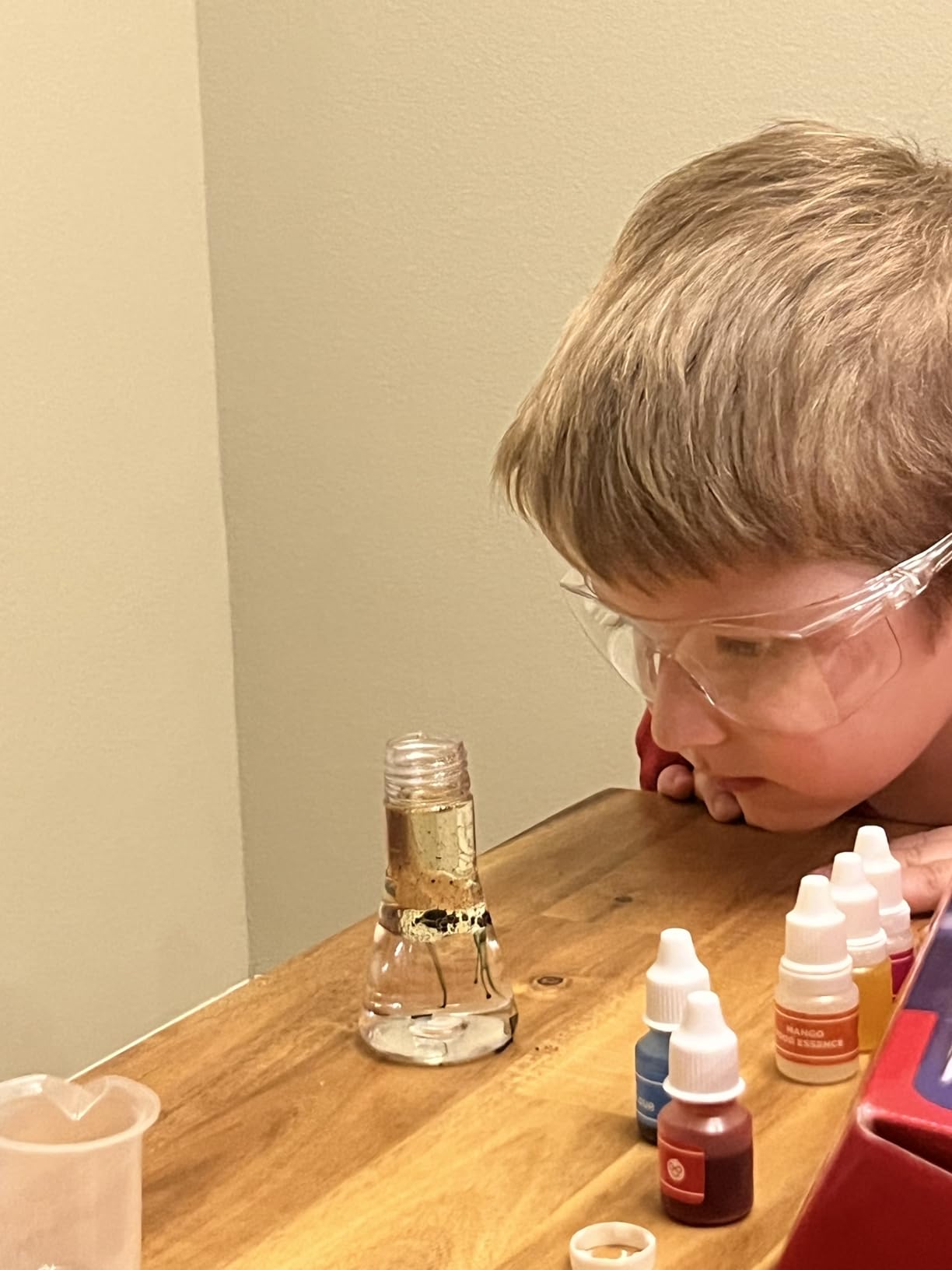
From a curriculum standpoint, this kit is not a substitute for a structured elementary science program, but it is a strong supplement. The experiments cover color mixing, basic chemical reactions, density, and simple physics concepts. The bonus booklet extends the content significantly, and most experiments use household items like vinegar, oil, and food coloring.
Engagement and Skill Building
What I appreciate most is the kit’s effect on my youngest child’s confidence. After a few weeks of independent experiments, she started narrating the science like a junior teacher. That kind of self-directed learning is hard to manufacture. The kit also helps develop fine motor skills, because the beakers and droppers require careful handling.
The kit is not a perfect fit for every family. If you teach a child who is already in 3rd grade or above, the experiments will feel too basic, and you should consider the National Geographic kits instead. If you have a wide age range, this kit can serve as a sibling add-on while older kids work through the more advanced sets.
Who Should Choose This Kit
Pick this kit if you have a curious 4 to 7 year old who wants to do “real” science but is not ready for a chemistry set aimed at older kids. It is also a strong choice for kindergarten and 1st grade homeschool families who want a hands-on supplement to their reading and math work. For a child over age 8, jump to the National Geographic kits above.
10. UNGLINGA 70 Lab Experiments Science Kit – Best Budget Multi-Experiment Option
UNGLINGA 70 Lab Experiments Science Kits for Kids Chemistry Set Toys
70 STEM experiments
Fruit circuits and volcanoes
Safety glasses included
Pros
- Wide variety of experiments
- Includes fruit circuit activities
- Safety glasses included
- Affordable price
Cons
- Some ingredients not clearly labeled
- Instructions can be incomplete
- Messy experiments
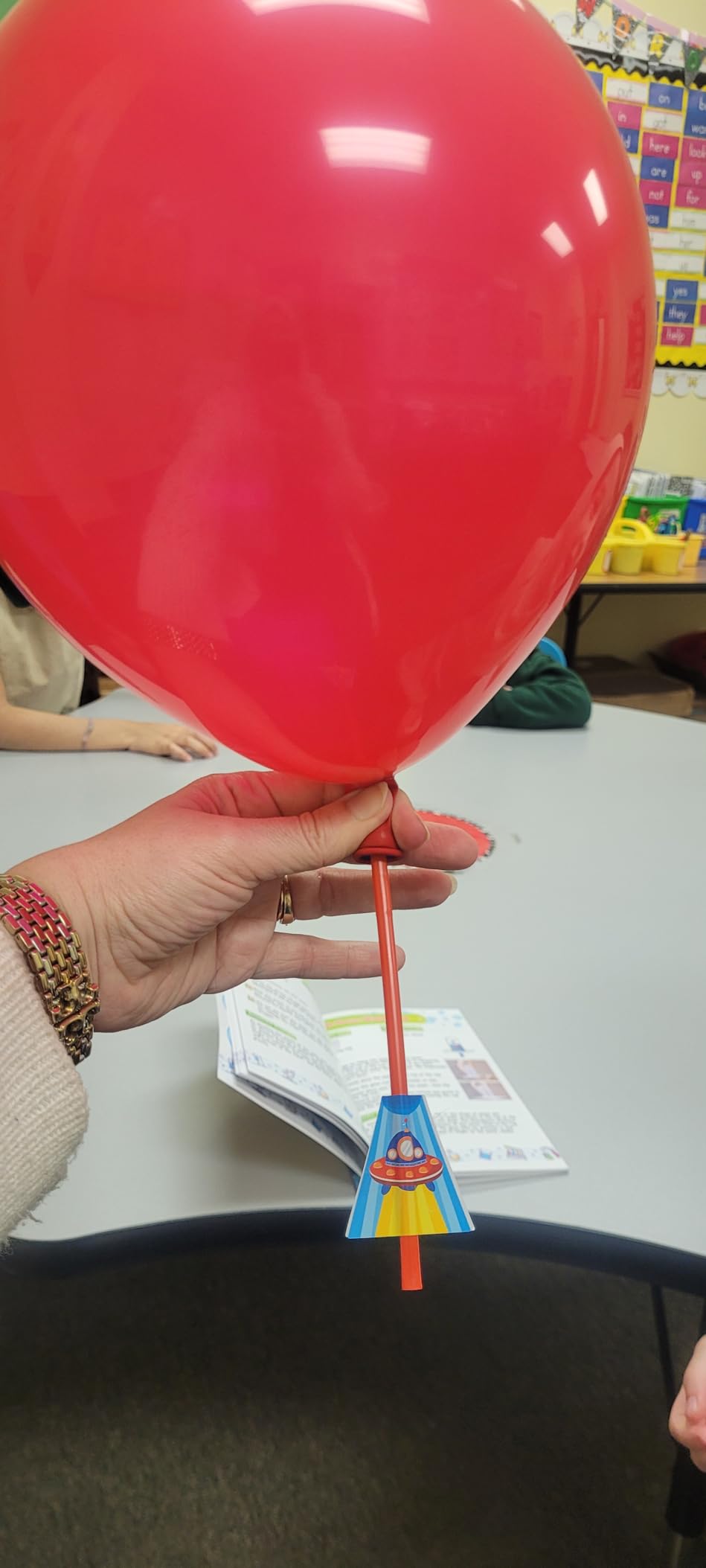
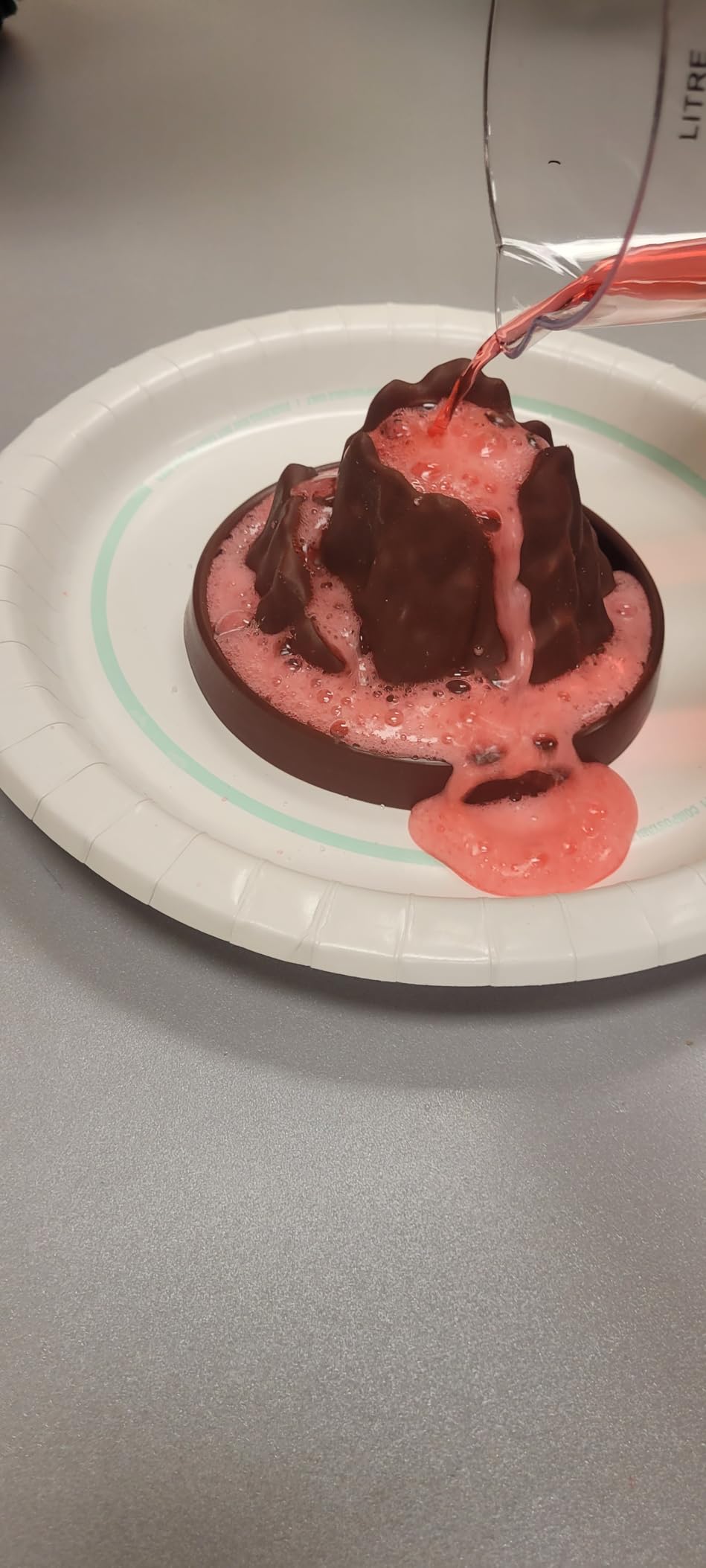
The UNGLINGA 70 Lab Experiments Kit is a budget-friendly option that punches above its weight. The kit includes 70 hands-on experiments across chemistry, physics, and basic engineering, including a volcano build, crystal growing, balloon rockets, and fruit circuits. The fruit circuit experiments are unusual at this price point, and they teach basic electrical concepts in a memorable way.
For families on a tight homeschool budget, this kit delivers a lot of learning per dollar. The included safety glasses, beakers, and test tubes are functional if not premium, and the experiment manual covers a wide range of topics. My kids used the kit as a supplement to the more polished National Geographic sets, and the variety kept them engaged for several months.
From a quality perspective, the UNGLINGA kit is a step below the National Geographic options. The instruction manual is occasionally unclear, and a few experiments have missing steps or unlabeled ingredients. I had to supplement the manual with online research for a couple of the more complex builds. If you are willing to do a little prep work, the kit is a strong value.
Setup and Household Requirements
Several experiments rely on common household items, including fruit for the circuit experiments. I keep a small stock of lemons, vinegar, baking soda, and dish soap for these kits. The balloon rocket experiments are best done outdoors, so plan accordingly. The volcano build uses plaster, which requires setting time before the eruption.
Cleanup is the kit’s biggest weakness. The experiments are messier than the National Geographic options, and the included tray is smaller than what I would like. I recommend setting up on a wipeable surface with paper towels within reach. The included storage compartments are functional, but pieces tend to migrate over time.
Who Should Choose This Kit
Choose this kit if you need a budget-friendly option that covers a wide range of topics. It is also a good fit for homeschool co-ops, classrooms, or after-school programs that need to equip multiple students. If you can spend a little more, the National Geographic kits deliver better instructions and higher-quality materials. For a focused chemistry experience, the Amazing Chemistry Set remains the top pick.
How to Choose the Best Science Lab Kit for Your Homeschool
Picking a science kit is less about finding the “best” one and more about matching a kit to your child’s age, your teaching style, and the subjects you want to cover. After testing dozens of kits with my own family and surveying feedback from the homeschool community, I have identified five factors that matter most. Use this section as a checklist before you click “buy.”
Match the Kit to Your Child’s Age and Skill Level
Age recommendations on the box are a starting point, not a hard rule. For children under age 6, look for kits that use real lab tools but with simple instructions and non-toxic materials. The Doctor Jupiter My First Science Kit is built for this age group, with safety goggles, simple beakers, and a bonus experiment booklet that scales up with parental help. For children 8 and up, you can move into the chemistry-focused kits, which include more advanced reactions and the kind of chemical vocabulary that aligns with upper elementary and middle school standards.
For high schoolers, the kits on this list will work as introductions or as supplements to a more formal curriculum, but you will likely need additional lab equipment for credit-bearing courses. The National Geographic Mega Science Lab is the closest option in this roundup to a high school level kit, but most high schoolers will outgrow these products within a year. If you are teaching high school chemistry or biology, plan to use a kit as one of several lab sources.
Decide Which Subject You Want to Cover First
Chemistry is the most common starting point because the experiments are visible, fast, and dramatic. Earth science is a strong runner-up, especially for younger children who love volcanoes, crystals, and dig kits. Physics and engineering kits often require more parental involvement, because the concepts are harder to convey through isolated experiments. The National Geographic Mega Science Lab is a good way to expose kids to multiple subjects before committing to one.
Think about what your child is already curious about. If they have been asking about volcanoes, start with a volcano-focused kit. If they love magic tricks, the Science Magic Kit format is a perfect fit. Matching the kit to existing interests is the single biggest predictor of whether it will sit in a closet or get used weekly.
Consider Replay Value and Multi-Child Households
If you have more than one child, look for kits with high replay value and durable materials. The National Geographic kits are designed to be used across multiple years and multiple children. The Mega Science Lab is the strongest value for multi-child households because it covers three subjects in one box. Smaller kits like the Magic Chemistry Set are better as introductory gifts or as supplements to a primary kit.
Replay value also depends on the experiment design. Kits that include real specimens (rocks, fossils, crystals) tend to get revisited because kids want to handle the specimens. Kits that rely on single-use chemicals have lower replay value, because the chemicals run out. The Mega Lab and the Earth Science Kit both include specimens that extend the life of the kit well beyond the experiments.
Plan for Setup Time, Cleanup, and Supervision
Most of the kits on this list require 30 to 60 minutes of active time per experiment, plus setup and cleanup. Volcano builds need additional time for plaster to set. Crystal growing requires 24 to 48 hours for full development. Build these time requirements into your weekly schedule rather than trying to fit them in ad hoc. Friday afternoons worked well for my family, because we could observe results over the weekend.
Cleanup is an underrated factor. Kits with single-use chemicals tend to be messier, and the chemical residue can stain surfaces. I built a “science corner” on our kitchen counter with a roll of paper towels, a plastic tablecloth, and a small trash bin. For younger children, plan on direct supervision during every experiment, even with the kid-friendly kits.
Balance Curriculum Goals With Engagement
The best science kit is the one your child actually uses. Engagement matters more than coverage, especially for elementary and middle schoolers. If your child is reluctant, start with a high-engagement kit like the Gross Science Kit or the Science Magic Kit, and use the success to justify a more comprehensive kit the following year. For older students who are already engaged, prioritize curriculum coverage and durability.
Also consider how the kit will fit into your broader homeschool science curriculum. Most kits on this list work well as the lab component of a unit study, but they do not replace a structured curriculum on their own. Pair a kit with a good spine textbook or video series, and you have a complete homeschool science program that costs a fraction of a formal lab kit.
If you are still exploring your options, our 10 Best Science Kits Quality Reviews, 10 Best Science Fiction Mech Model Kits, and 8 Best Lab Incubators guides offer additional perspectives for specific lab needs.
Frequently Asked Questions
What is the best hands-on science curriculum for homeschooling?
The best hands-on science curriculum for homeschooling pairs a structured spine (textbook, video series, or unit study) with a lab kit that reinforces the lessons. For elementary ages, kits like the National Geographic Earth Science Kit work well as the lab backbone. For middle school, the National Geographic Amazing Chemistry Set or Mega Science Lab covers chemistry, earth science, and basic physics. Many homeschool families supplement kits with free resources from Science Buddies or with subscription programs like MEL Science for ongoing engagement.
What are some good science labs for homeschoolers?
Strong science labs for homeschoolers include the National Geographic Amazing Chemistry Set for chemistry, the Earth Science Kit for geology, the Mega Science Lab for multi-subject coverage, the Gross Science Kit for engagement, and the Science Magic Kit for performance-based learning. Doctor Jupiter’s My First Science Kit is the best option for ages 4 to 7, while the UNGLINGA 70 Lab Experiments Kit offers a budget-friendly multi-experience choice.
What are some good science experiment kits for homeschooling?
Good science experiment kits for homeschooling include the National Geographic Amazing Chemistry Set (100+ chemistry experiments), the Mega Science Lab (75 experiments across three subjects), the Earth Science Kit (15+ activities with dig blocks), the Gross Science Kit (45 high-engagement experiments), and the Science Magic Kit (100+ magic-based science tricks). For younger learners, the Doctor Jupiter My First Science Kit offers 100+ age-appropriate experiments starting at age 4.
Is MEL Science worth it?
MEL Science is worth it for families who want a structured, app-guided experience and do not mind the ongoing subscription cost. The kits use higher-quality lab equipment than most one-time purchases, and the VR and step-by-step videos are excellent for parents without a science background. The main tradeoff is cost: a MEL subscription runs higher than buying a comparable National Geographic kit, and the consumable nature of the monthly boxes means you will be paying continuously. For families on a budget, a one-time kit like the National Geographic Amazing Chemistry Set delivers strong learning value without the recurring fee.
What age is appropriate for a chemistry set?
Most chemistry sets are designed for ages 8 and up, with parental supervision recommended for younger users. For children ages 4 to 7, look for introductory science kits like the Doctor Jupiter My First Science Kit, which uses real lab tools with non-toxic materials and simpler experiments. Children 8 to 12 are the primary audience for kits like the National Geographic Amazing Chemistry Set and the Gross Science Kit. Teens can use the same kits, but they often outgrow the experiments within a year, so plan to supplement with more advanced resources for high school credit.
Final Verdict on the Best Science Lab Kits for Homeschool
After testing 10 kits across age groups, subject areas, and price points, my top three recommendations for the best science lab kits for homeschool hands-on learning are the National Geographic Amazing Chemistry Set for overall chemistry coverage, the National Geographic Mega Science Lab for multi-subject families, and the Doctor Jupiter My First Science Kit for young learners ages 4 to 7. The Earth Science Kit is the strongest value pick if budget matters, and the Gross Science Kit is my go-to recommendation for reluctant learners.
Hands-on science is one of the highest-return investments you can make in your homeschool, and a quality kit pays for itself many times over in engagement, retention, and family memories. Pick the kit that matches your child’s age and curiosity, set up a dedicated science corner, and give yourself permission to learn alongside your kids. If you want to keep building your homeschool library, our other science kit reviews cover more options for specific subjects. Here is to a great year of discovery in 2026.