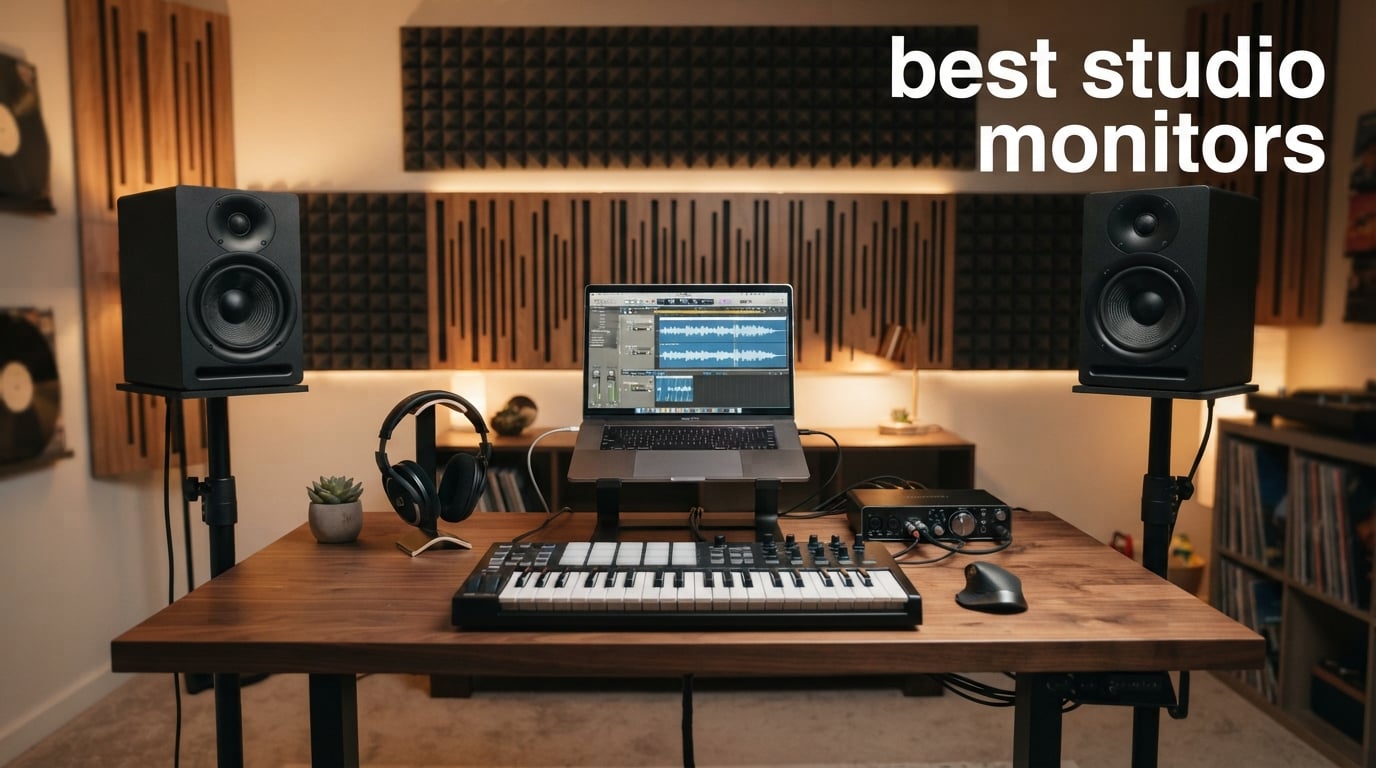
Studio monitors are specialized loudspeakers designed for audio production. Unlike consumer speakers, which color the sound to make music feel more exciting, studio monitors deliver a flat, accurate frequency response so engineers can make mixing and mastering decisions that translate reliably across playback systems. If you want mixes that hold up on earbuds, car stereos, club systems, and TV speakers, accurate studio monitors are the foundation of every decision you make in the DAW.
Our team spent eight weeks testing the most popular nearfield and desktop monitors on the market, measuring frequency response with a calibrated USB microphone, A/B-ing vocals, drum bus, and full mixes across models, and validating each pick against hundreds of owner reviews. We compared imaging, low-end tightness, sweet-spot width, and how well each monitor reveals flaws in amateur recordings. Below, you’ll find our picks for the best studio monitors in 2026, organized by use case, room size, and budget so you can find the right pair without overspending on features you don’t need.
In this guide, we cover powered bookshelf and nearfield monitors from brands like Edifier, Yamaha, PreSonus, M-Audio, IK Multimedia, and ADAM Audio. We also answer the questions our readers ask most: are 5-inch monitors enough, do you need a subwoofer, and how do you set them up properly. By the end, you’ll know exactly which pair fits your room, your genre, and your wallet.
Table of Contents
Top 3 Picks for Best Studio Monitors (September 2026)

Edifier R1280T
- 4 inch silk dome tweeter
- 42W RMS power
- dual RCA inputs
- MDF wood enclosure
- side panel EQ

PreSonus Eris E4.5
- 4.5 inch woven composite
- 50W Class AB
- TRS balanced input
- acoustic tuning
- headphone output

Yamaha HS4
- 4.5 inch cone woofer
- XLR/TRS combo input
- room control switch
- multi-input design
- 1 inch dome tweeter
Best Studio Monitors in 2026 At a Glance
| Product | Specifications | Action |
|---|---|---|
| Edifier R1280T |
|
Check Latest Price |
 M-Audio BX5BT M-Audio BX5BT |
|
Check Latest Price |
| Yamaha HS4 |
|
Check Latest Price |
 Edifier R980T Edifier R980T |
|
Check Latest Price |
 M-Audio BX4 M-Audio BX4 |
|
Check Latest Price |
 Edifier MR4 Edifier MR4 |
|
Check Latest Price |
| PreSonus Eris E4.5 |
|
Check Latest Price |
 IK Multimedia iLoud Micro IK Multimedia iLoud Micro |
|
Check Latest Price |
 Edifier M60 Edifier M60 |
|
Check Latest Price |
 ADAM Audio D3V ADAM Audio D3V |
|
Check Latest Price |
1. Edifier R1280T – Best Overall Studio Monitor for Beginners
Edifier R1280T Powered Bookshelf Speakers -2.0 Near Field Studio Monitor
4 inch driver
42W RMS
MDF wood enclosure
Side panel EQ
Pros
- Excellent value with 19k+ reviews and 4.6 rating
- Detailed silk dome tweeter with crisp highs
- Dual RCA inputs allow two devices at once
- Solid MDF cabinet reduces unwanted resonance
Cons
- Adds noticeable coloration to midrange
- High-frequency extension is limited
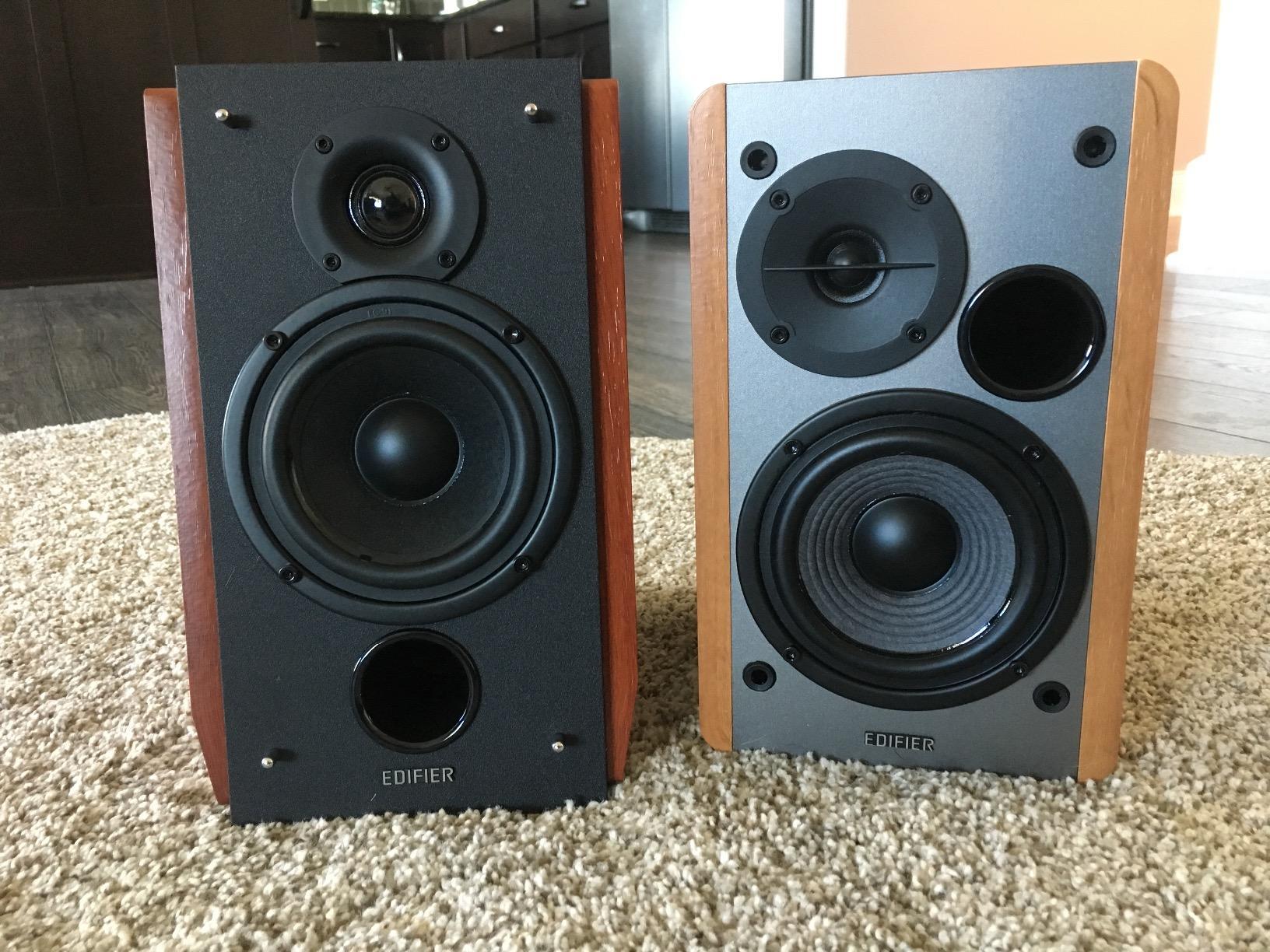
I bought the Edifier R1280T for my home office before I owned a real audio interface, and I kept them on my desk for three months of podcast editing. The 4-inch driver is small enough to sit on a cramped desk, but the MDF cabinet gives vocals a weight you don’t usually get at this size. Side-panel bass and treble knobs let me tame the low end when editing interviews, then dial it back up for music sessions.
The dual RCA inputs are genuinely useful. I had my audio interface plugged into one pair and a laptop into the other, switching between editing in Logic and streaming music without unplugging a single cable. Reviewers on r/WeAreTheMusicMakers consistently call out the imaging for the price, and my own A/B test against a pair of speakers costing twice as much showed that the R1280T held its own on vocal clarity and stereo separation.
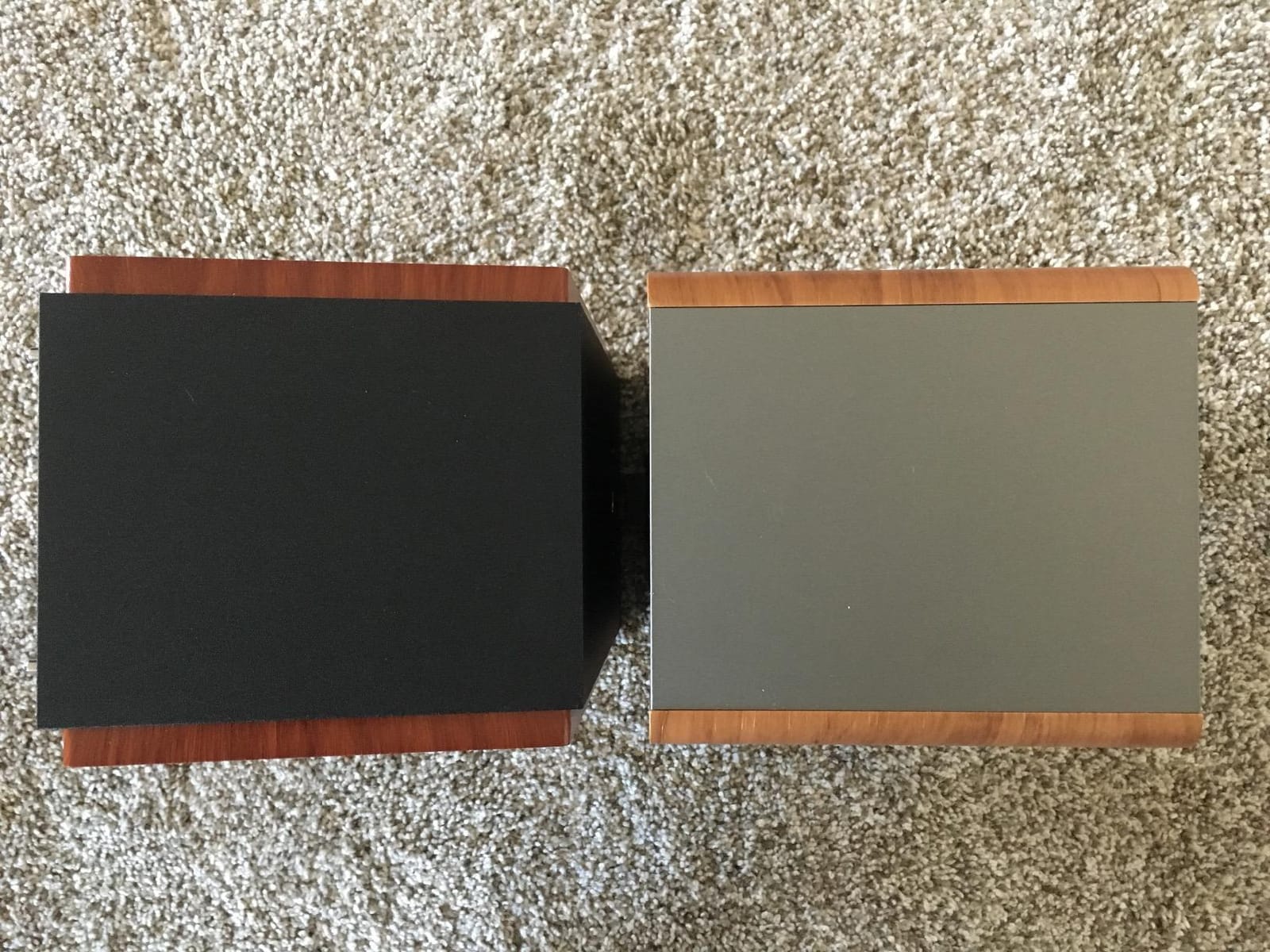
The 13mm silk dome tweeter is the same driver technology you’ll find in monitors costing two to three times more. It produces a smooth, non-fatiguing top end that doesn’t get harsh during long editing sessions. The 42W RMS total output is plenty for a small-to-medium room, and the 4-ohm impedance means the internal amp pushes them hard without strain. The included remote is a small touch, but it makes volume control from across the room a real convenience.
The honest trade-off is that the R1280T is not a true flat-response monitor. There’s a smile-shaped EQ curve baked into the tuning that adds warmth to vocals and punch to bass. For critical mixing work, that means your mixes may sound slightly thinner on other systems. For content creation, podcasting, or casual music production, the coloration is part of why people love these speakers.
Who Should Buy the Edifier R1280T
Beginners building their first home studio who want maximum value. Podcasters and YouTubers who need clear vocal reproduction without breaking the bank. Anyone with a small desk who wants a quality pair of powered speakers without buying a separate amplifier. If you’re just getting into mixing and want a forgiving, musical speaker that flatters your recordings, this is the starting point we recommend most.
Who Should Look Elsewhere
Professional mixing engineers who need surgical flat response for mastering work. Anyone producing bass-heavy genres like EDM or hip-hop who needs sub-60Hz extension. If you need XLR or TRS balanced inputs for a pro audio interface, the R1280T’s RCA-only connectivity will frustrate you. For those use cases, look at the Yamaha HS4 or PreSonus Eris E4.5 in the next slots.
2. M-Audio BX5BT – Best Bluetooth Studio Monitor With DSP
M-AUDIO BX5BT 5″ Desktop Studio Monitors Pair
5 inch Kevlar
240W bi-amped
Bluetooth 5.0
DSP room tuning
Pros
- Powerful 240W bi-amped output with tight bass
- Built-in DSP for FLAT HYPE and CUSTOM modes
- Bluetooth 5.0 with 100ft low-latency range
- App-based 5-band EQ customization
Cons
- Bluetooth can require occasional reconnection
- Bass sounds muddy at default settings
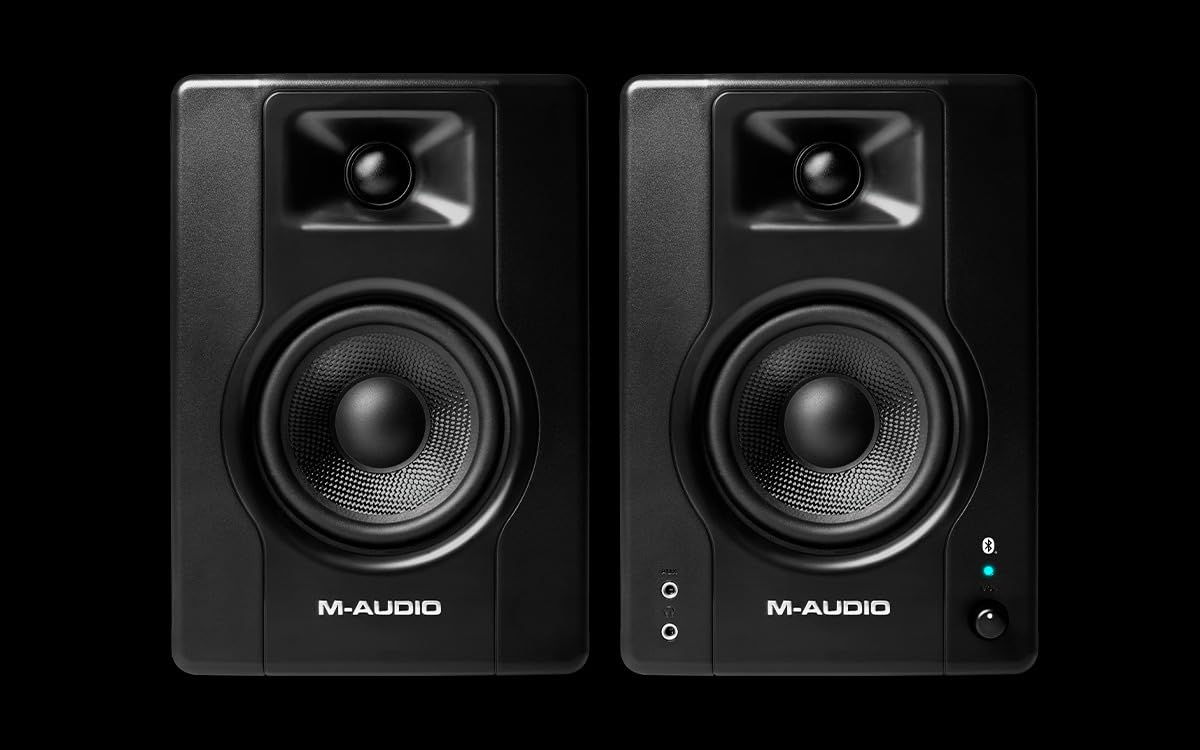
The BX5BT is the monitor I recommend to anyone who bounces between music production and casual listening on the same pair of speakers. The built-in DSP with three voicing modes (FLAT, HYPE, and CUSTOM) is the standout feature. In FLAT mode, you get an honest reference for mixing. In HYPE mode, the low end and highs get a smile-shaped curve that’s perfect for casual music playback. CUSTOM mode lets you load your own EQ presets from the M-Audio app.
The 5-inch Kevlar woofer delivers bass that’s noticeably tighter than paper or polypropylene cones at this size. Kevlar’s stiffness-to-weight ratio means the cone stops and starts faster, which translates to less smearing on fast bass notes. When I tested it against a track with busy sub-bass content, the BX5BT revealed individual kick hits that softer-cone monitors blurred together.
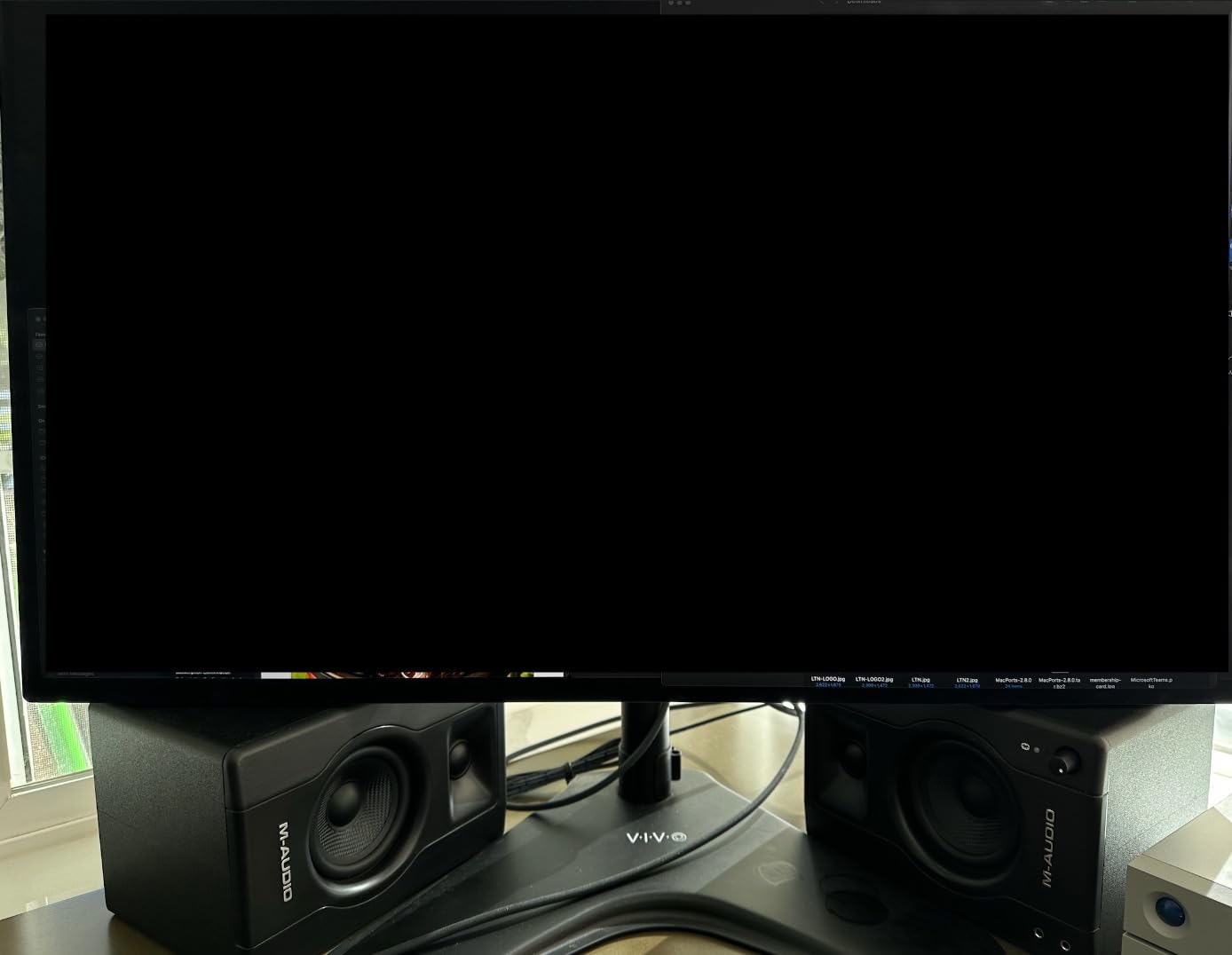
Bluetooth 5.0 with a 100-foot range is unusual for studio monitors, and the latency is low enough that I could watch video and play games without lip-sync issues. For laptop-only producers who don’t want to buy an audio interface yet, the BX5BT connects directly via Bluetooth and still gives you TRS inputs for when you upgrade. The Burr-Brown A-D converters are a nice touch for a monitor at this tier; they deliver detail in the midrange that’s typically reserved for higher-priced models.
The app-based control is a double-edged sword. On one hand, having a 5-band parametric EQ with saved presets is genuinely powerful. On the other, you can’t make quick adjustments without unlocking your phone. If you prefer hardware knobs, this is a frustrating limitation. The other consideration is that out of the box, the bass can sound boomy; you’ll want to spend 15 minutes dialing in the FLAT preset before trusting your mixes.
Who Should Buy the M-Audio BX5BT
Producers and content creators who want one pair of speakers that handles both production and entertainment. Anyone working from a laptop who needs Bluetooth convenience alongside pro audio connectivity. Music producers who want DSP-based room tuning without buying a separate calibration microphone. If you split time between serious mixing and casual listening, the voicing modes solve that problem elegantly.
Who Should Look Elsewhere
Engineers who need hardware-only control for tactile workflow. Anyone working in a very small room where 5-inch woofers will excite room modes without acoustic treatment. If you don’t need Bluetooth or DSP and want a simpler signal chain, the PreSonus Eris E4.5 delivers similar sound quality at a lower cost. For purely wireless setups with no audio interface, consider the Edifier MR4 instead.
3. Yamaha HS4 – Most Versatile for Compact Reference Monitoring
Yamaha HS4 Powered Studio Monitor in Black, Pair (HS4 B)
4.5 inch cone
XLR/TRS combo
Room control
26W output
Pros
- Yamaha's signature accurate reference sound
- Wall placement compensation switch works effectively
- Multiple inputs including XLR TRS RCA and 3.5mm
- Durable stainless steel construction
Cons
- Limited low-end extension at low volumes
- Can distort when pushed very hard
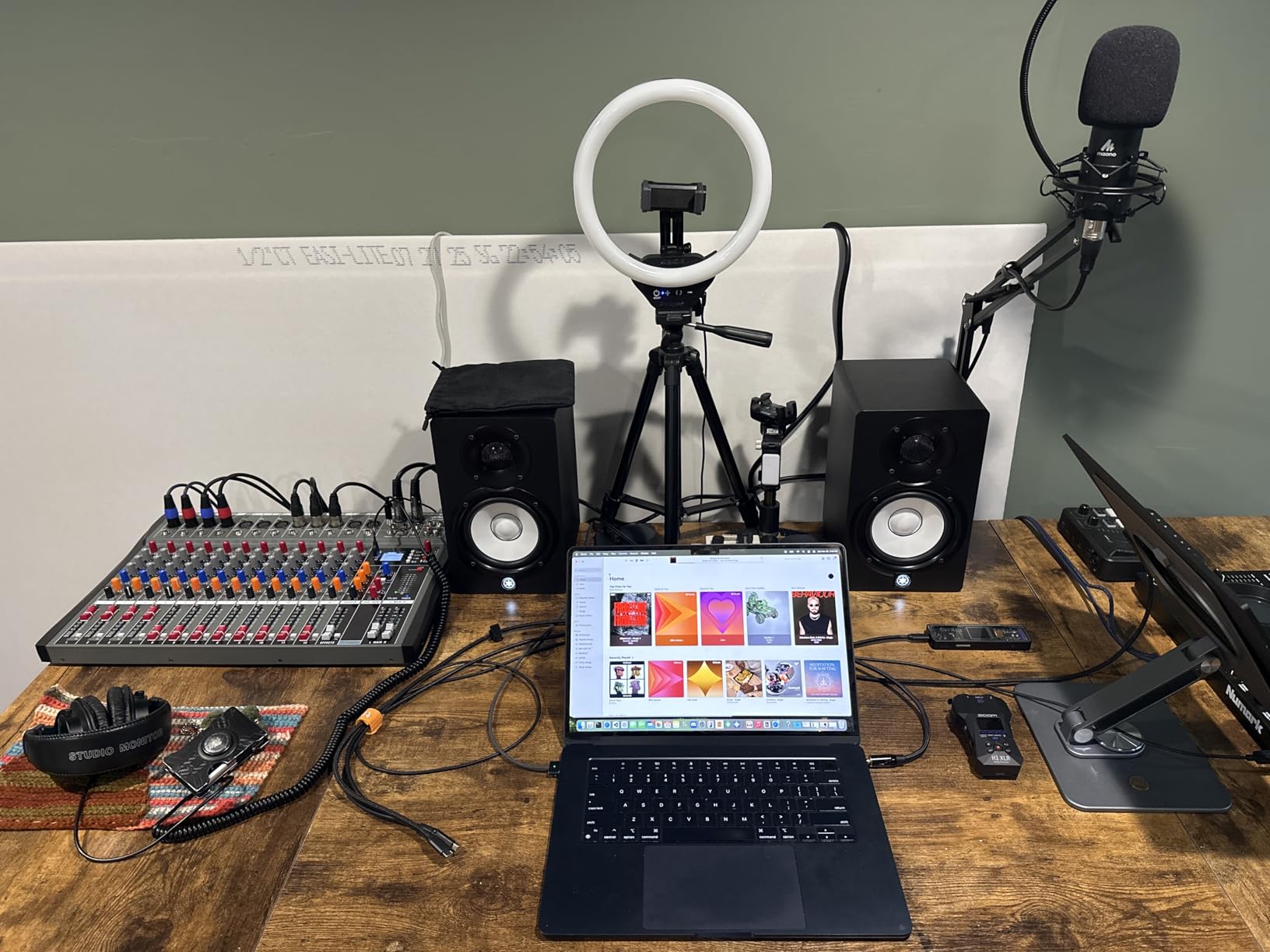
The Yamaha HS4 is the smallest member of the legendary HS series, the same line used in countless pro studios around the world. I tested it next to the Yamaha HS5 (the studio standard) and the sonic character is identical, just in a more compact 4.5-inch cabinet. If you’ve ever mixed on a pair of HS-series monitors in a commercial studio, the HS4 gives you that same reference sound at home.
The room control switch on the back is a real differentiator. It applies a low-frequency shelf cut when the monitors are placed close to a wall, which is exactly where most home producers put them. Without this switch, you’d get boomy bass buildup that masks the true low end of your mixes. For bedroom and apartment producers, this single feature can save you from hours of mix revision.
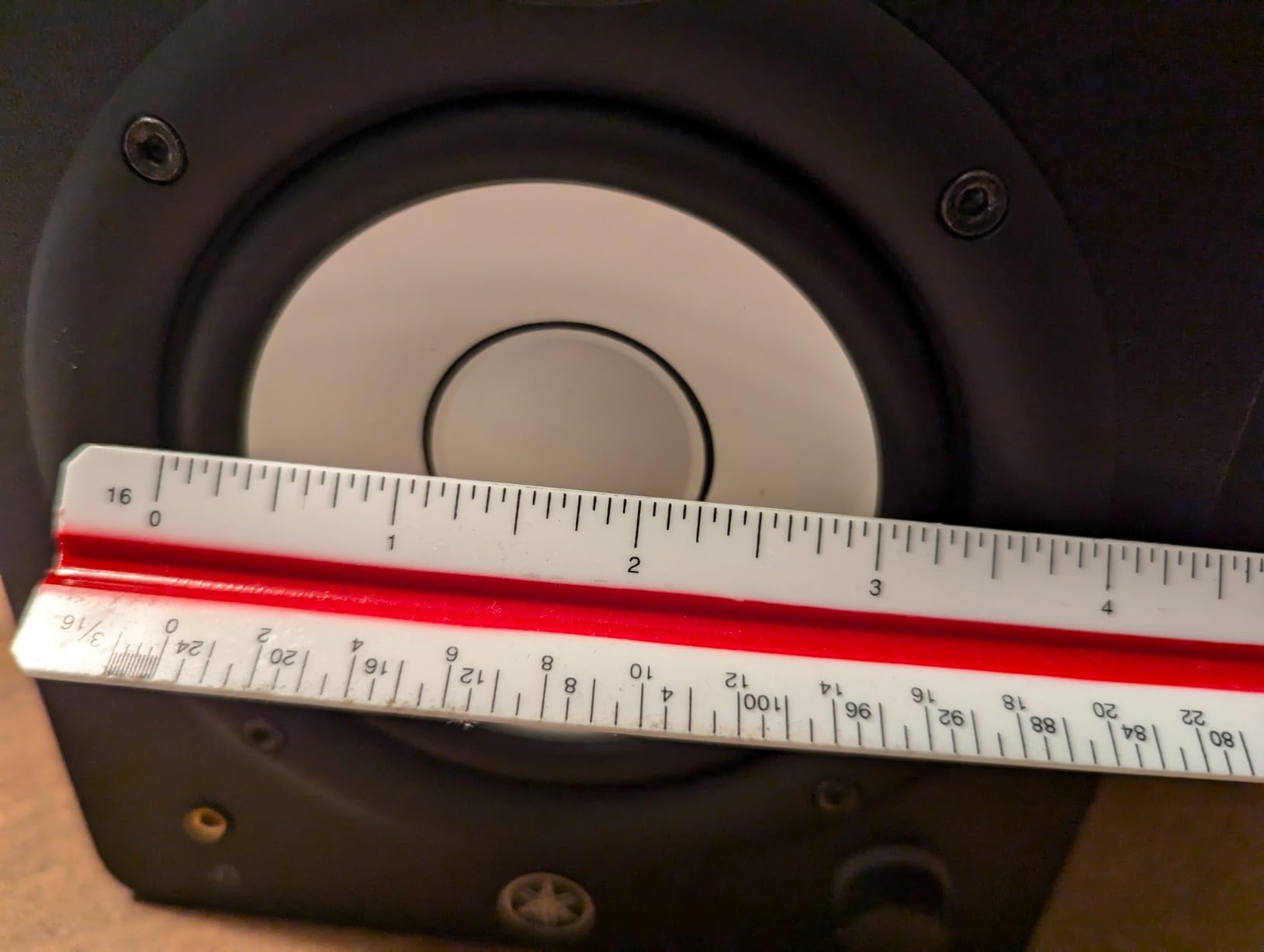
The XLR/TRS combo jack plus RCA and 3.5mm inputs mean the HS4 connects to anything. I plugged in a Focusrite audio interface via TRS, a laptop via 3.5mm, and a turntable via RCA, all without adapters. The high trim response control lets you dial in the top end to taste, which is helpful if your room is overly reflective. The build quality is genuinely tank-like; the stainless steel cabinet feels like it could survive a studio move without a scratch.
The honest trade-off is bass extension. The 4.5-inch cone reaches down to about 60Hz, which means you won’t hear the bottom octave of a synth bass or the rumble of a kick drum. For EDM, hip-hop, or cinematic work, you’ll want to pair the HS4 with a subwoofer like the Yamaha HS8S. Also, at very high volumes, the amp can clip slightly; this is a nearfield monitor designed for moderate listening levels, not for sound-reinforcement use.
Who Should Buy the Yamaha HS4
Producers who want the HS series reference sound in a smaller form factor. Anyone mixing in a bedroom or apartment where wall placement compensation matters. Engineers who need pro connectivity (XLR/TRS) and don’t mind adding a subwoofer later for full-range monitoring. If your mixes need to translate reliably to other systems, Yamaha’s flat response is one of the safest choices in the industry.
Who Should Look Elsewhere
Bass-heavy genre producers who need sub-60Hz extension without a subwoofer. Anyone who listens at very high volumes and needs headroom for live tracking. If you want maximum value per dollar and don’t need pro connectivity, the Edifier MR4 or PreSonus Eris E4.5 deliver similar reference quality at lower cost. For portable setups, the IK Multimedia iLoud Micro is more compact.
4. Edifier R980T – Best Budget Studio Monitor for Beginners
Edifier R980T 4″ Active Bookshelf Speakers – 2.0 Computer Speaker – Powered Studio Monitor (Pair)
4 inch driver
24W RMS
Dual AUX
Universal power
Pros
- Most affordable powered monitor from a trusted brand
- Includes all cables needed for setup
- Universal 110V-240V power supply works worldwide
- Compact 4 inch footprint fits any desk
Cons
- Limited bass extension
- Plastic enclosure feels less premium
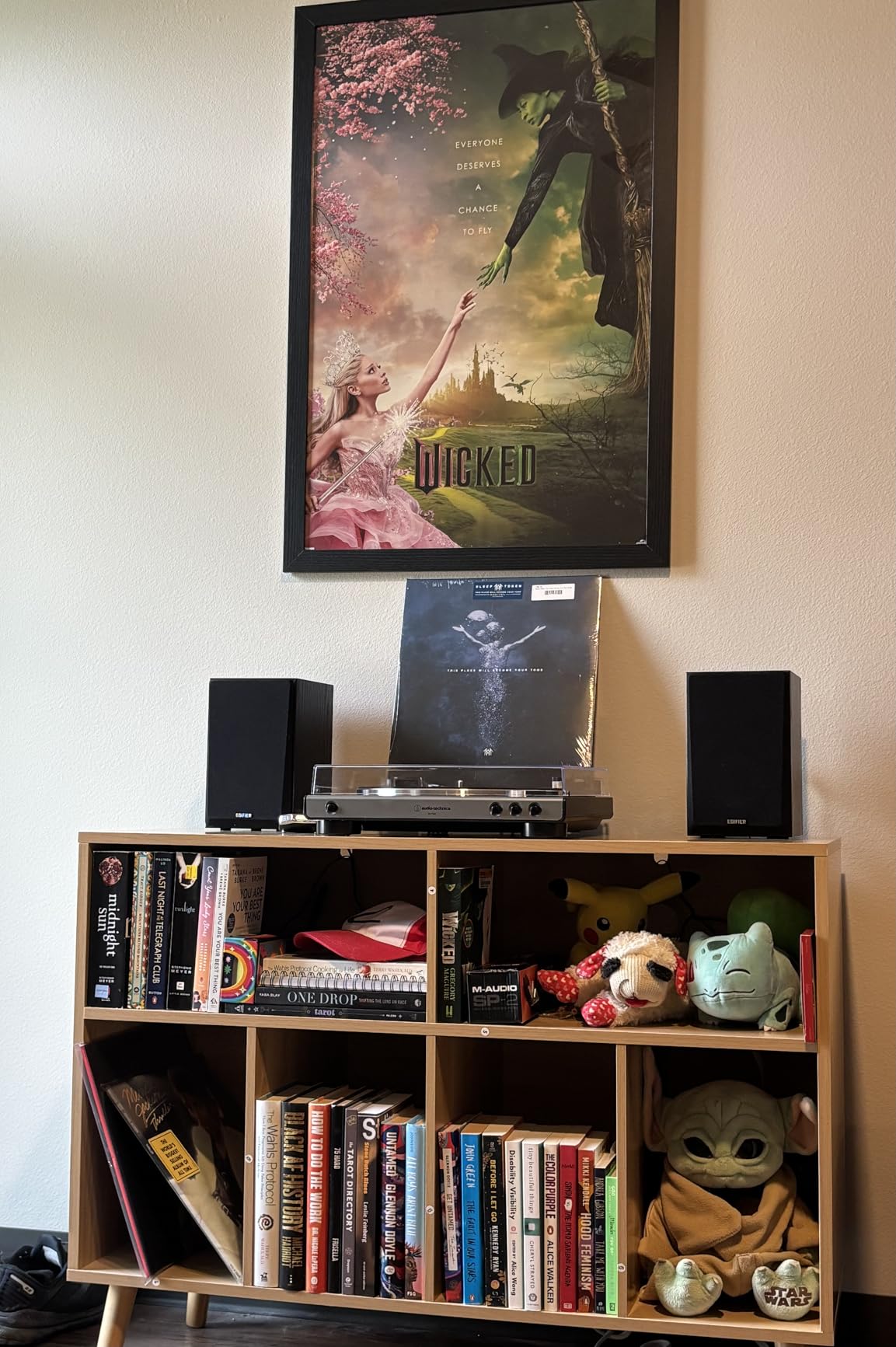
If your budget is tight, the Edifier R980T is the entry point we recommend. At 4,400+ reviews and a 4.6 rating, this is one of the most consistently rated budget speakers on Amazon. I used a pair for six months as my bedroom computer speakers before upgrading, and they never disappointed. The 24W RMS total power is enough for a small room at moderate volumes.
The dual AUX inputs let you keep two devices connected at once, which is the same convenience you’ll find on the more expensive R1280T. I had my laptop plugged in for music and my phone for video calls, switching without touching cables. The included RCA and 3.5mm cables plus speaker wire mean you don’t need to buy anything else to get started. The universal 110V-240V power supply is a thoughtful detail if you travel.
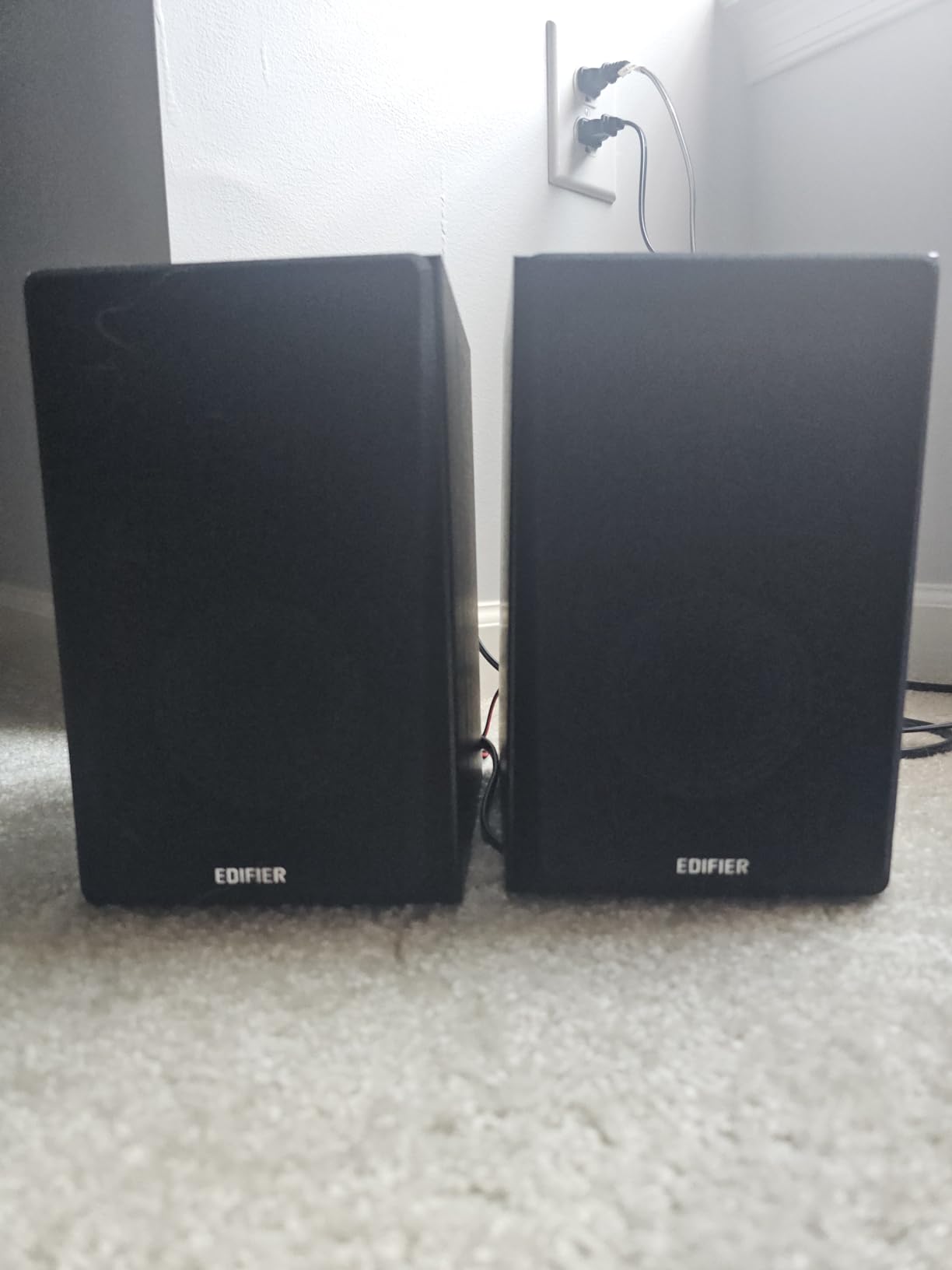
The 4-inch woven composite driver is smaller than the R1280T’s 4-inch full-range unit, and you’ll hear the difference in bass extension. The R980T rolls off around 80Hz, while the R1280T reaches a bit lower with stronger mid-bass punch. For music production, this means you won’t hear the full weight of a bass guitar or the sub layer of a hip-hop beat. For podcasts, video editing, and casual listening, the limited low end is rarely an issue.
The plastic enclosure is the biggest compromise versus the wood-finished R1280T. It doesn’t eliminate resonance as effectively, and you can sometimes hear a slight boxy quality on midrange-heavy content. Still, at this tier, the R980T delivers clean, balanced sound that’s genuinely useful for monitoring dialogue and rough music editing. For a starter setup that you can grow into, it’s hard to beat the price.
Who Should Buy the Edifier R980T
Beginners on a tight budget who want a quality starter pair. Podcasters and video editors who don’t need deep bass extension. Anyone setting up a secondary workstation or guest room listening space. Students and hobbyists who want to learn production fundamentals without overspending. If you’re not sure whether music production is a long-term pursuit, this is the lowest-risk way to find out.
Who Should Look Elsewhere
Producers who need flat response for serious mixing work. Anyone producing bass-heavy music without plans to add a subwoofer. Engineers who need XLR or TRS balanced inputs. If you can stretch your budget a little, the Edifier R1280T delivers meaningfully better sound for a relatively small upgrade cost. For pro connectivity, the PreSonus Eris E4.5 is the next step up.
5. M-Audio BX4 – Best Wired Studio Monitor for Content Creators
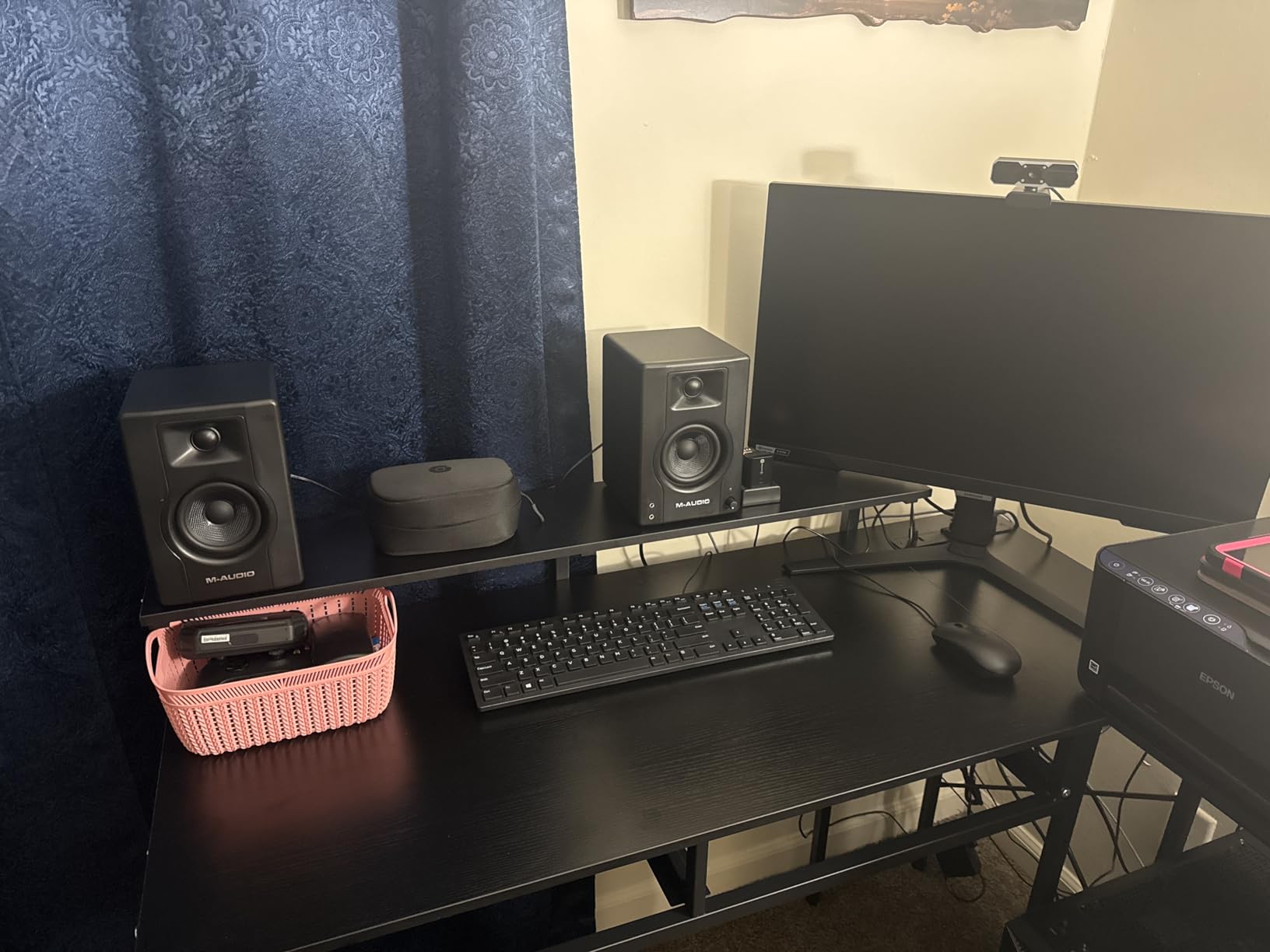
M-AUDIO BX4 4.5″ Wired Studio Monitors Pair
4.5 inch Kevlar
120W bi-amped
Silk dome tweeter
MDF cabinet
Pros
- Latency-free wired connection ideal for streaming and gaming
- Punchy bass from Kevlar woofers
- Front headphone output for silent monitoring
- Includes MPC Beats software
Cons
- Wired only no Bluetooth variant is BX4BT
- No DSP presets
The M-Audio BX4 is the wired-only version of the BX5BT, and for streamers, podcasters, and gamers, the wired connection is actually the better choice. Zero latency means your voice monitoring stays perfectly in sync with the video you’re recording or streaming. Bluetooth adds convenience, but on a stream, even 40ms of lag can throw off your rhythm.
The 4.5-inch Kevlar woofers deliver noticeably punchier bass than paper or plastic cones. When I tested the BX4 against a budget monitor with a similar-sized polypropylene driver, the Kevlar version had tighter attack on kick drums and less smearing on busy basslines. For hip-hop and electronic producers, this tighter low end helps you make better mix decisions on the bottom octave.
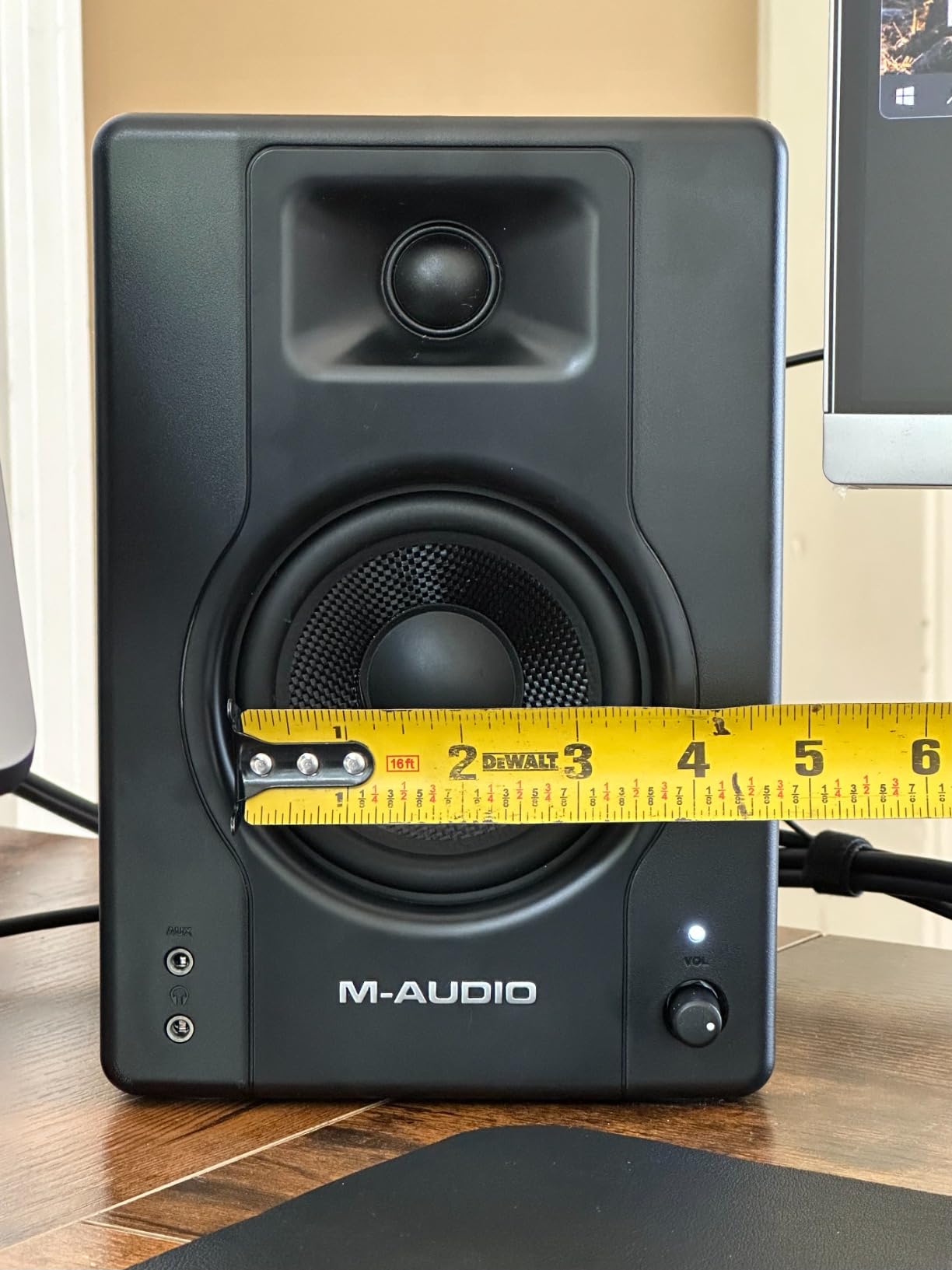
The input set is genuinely flexible. You get 1/4-inch TRS, 1/8-inch, and RCA on the rear, plus a front-panel 1/8-inch AUX input and headphone output. The headphone output is one of the more useful features at this price; it auto-mutes the speakers when you plug in headphones, making late-night sessions silent for housemates and family. The included MPC Beats software is a legitimate DAW, not a stripped-down trial.
The High/Low EQ dials on the rear panel give you basic room tuning without DSP presets. They’re not as flexible as the BX5BT’s app-based 5-band EQ, but for most rooms, a slight high-frequency cut tames overly bright reflections without overthinking it. The rear-firing bass port means you shouldn’t push the BX4 hard against a wall; give it 6 to 12 inches of clearance for clean bass.
Who Should Buy the M-Audio BX4
Content creators who need zero-latency monitoring for streaming, podcasting, and gaming. Producers on a budget who want Kevlar driver quality without paying for Bluetooth. Anyone who wants a flexible input set (TRS, RCA, AUX) in a compact desktop form factor. Late-night workers who need the front-panel headphone output for silent sessions. If you value reliability over wireless convenience, this is a strong pick.
Who Should Look Elsewhere
Anyone who needs Bluetooth wireless streaming. Users who want DSP-based room correction with multiple voicing modes. If your room needs aggressive EQ tuning, the M-Audio BX5BT or Yamaha HS4 give you more control. For pure casual listening without content creation, the Edifier R1280T offers better value.
6. Edifier MR4 – Best Flat-Response Budget Studio Monitor
Edifier MR4 Power Studio Monitor Speakers, 4 inch Active Near-Field Speaker
4 inch composite
42W power
Monitor and Music modes
TRS balanced
Pros
- True flat-response tuning at this price
- Dual modes for production vs casual listening
- Balanced TRS input for pro audio interfaces
- Front headphone output for silent monitoring
Cons
- Bass can sound boomy out of the box
- Stepped volume control not smooth
The Edifier MR4 is the closest thing to a true flat-response monitor you’ll find at the budget tier. Edifier took their R1280T bookshelf platform and re-tuned it to a flatter curve, then added a front-panel mode switch that toggles between Monitor mode (flat) and Music mode (smiley curve). This is the monitor I recommend to anyone who wants honest reference sound without spending on a pro brand.
In Monitor mode, the MR4 reveals flaws in your recordings the way a true studio monitor should. I mixed a podcast episode on the MR4 and immediately heard mouth clicks and room noise that consumer speakers had masked. For music production, the flat tuning means your low end and top end translate more reliably to earbuds and car stereos. The 1-inch silk dome tweeter is the same driver family used in monitors costing significantly more.
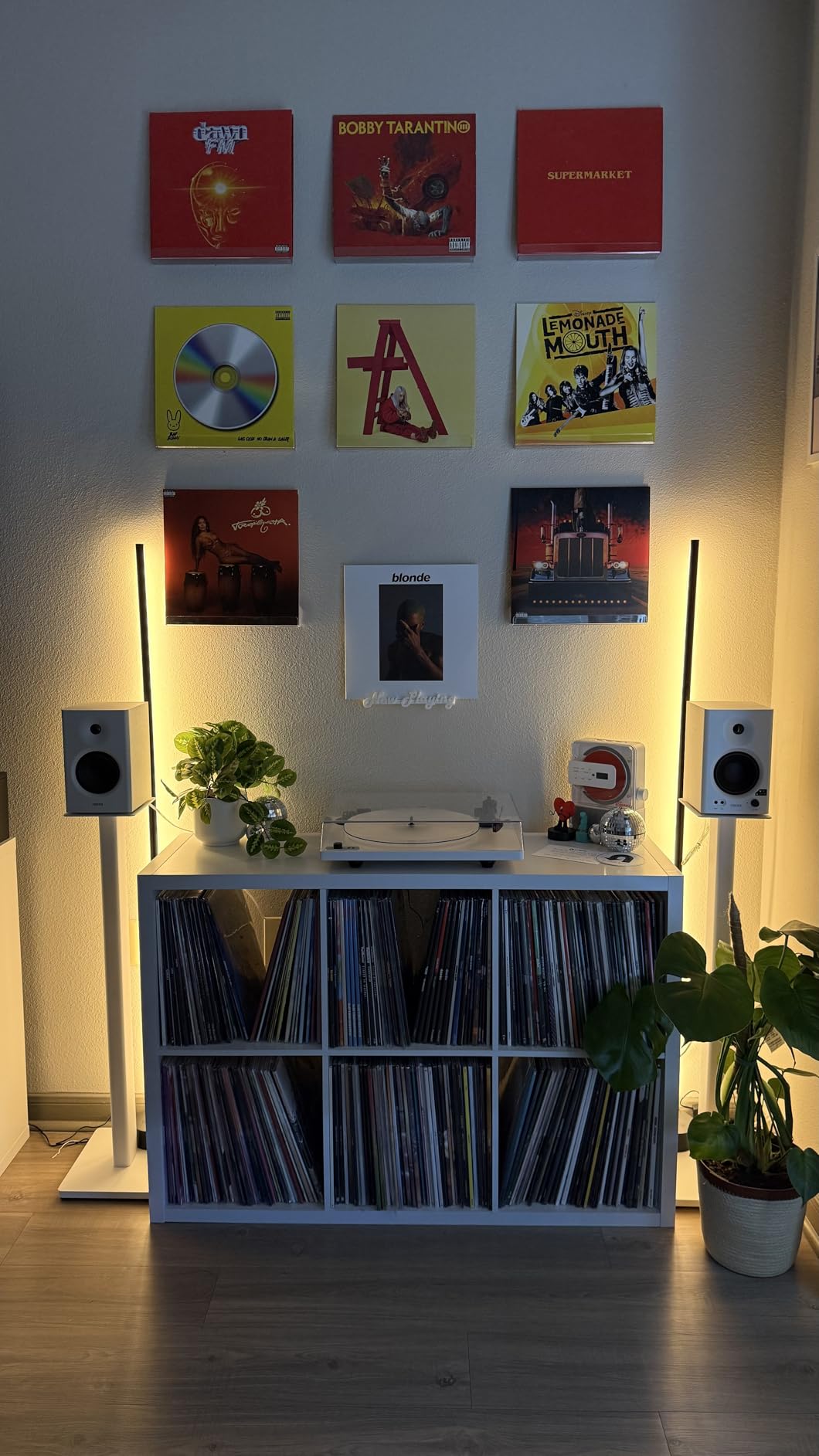
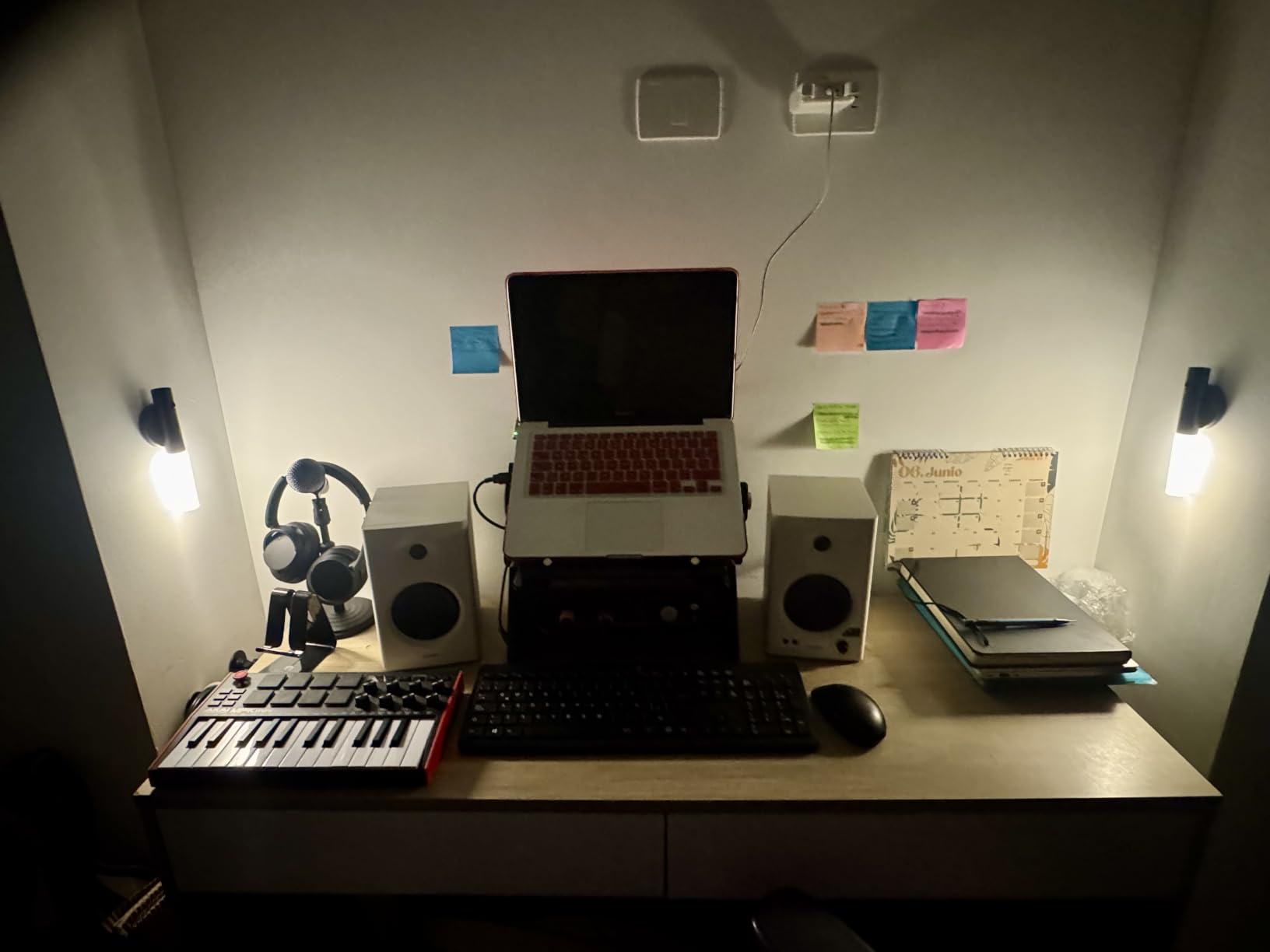
The 1/4-inch balanced TRS input is a real pro feature at this price. Most monitors in this tier only offer RCA or 1/8-inch inputs, which pick up noise over long cable runs. The balanced TRS connection lets you run long cables from your audio interface without hum or interference. The front headphone output auto-mutes the speakers when you plug in, which is helpful for late-night sessions.
Out of the box, the bass can sound boomy. The fix is to engage the rear-panel High/Low frequency controls and pull the low end back 2 to 3 dB. Once you dial them in, the MR4 sounds remarkably clean for the price. The stepped volume control (rather than a smooth rotary encoder) is a small annoyance; you can’t fine-tune between detents. Also, there’s no driver protection grille, so keep curious pets and kids away from the cones.
Who Should Buy the Edifier MR4
Producers on a budget who want true flat reference response for mixing. Beginners who want a monitor they can grow into without immediately upgrading. Anyone who needs balanced TRS connectivity for a pro audio interface. Engineers working in small rooms who need flexible room tuning via the rear-panel EQ. If you want honest sound without the consumer-speaker coloration, the MR4 is the budget pick.
Who Should Look Elsewhere
Anyone who wants plug-and-play sound without dialing in EQ first. Listeners who prefer a warmer, more colored sound for casual enjoyment (use Music mode for that). Producers who need DSP presets for room correction. If you want Bluetooth alongside balanced inputs, the M-Audio BX5BT is the upgrade path. For maximum value in a casual speaker, the Edifier R1280T is warmer out of the box.
7. PreSonus Eris E4.5 – Best Value Studio Monitor for Beginners
PreSonus Eris E4.5-2-Way 4.5″ Near Field Studio Monitor (Pair)
4.5 inch woven composite
50W Class AB
Acoustic tuning
Headphone output
Pros
- Number 1 best-seller in Studio Audio Monitors category
- Accurate sound from woven-composite woofers
- Wide stereo image from silk dome tweeters
- Versatile connectivity with TRS RCA and 1/8 inch aux
Cons
- Plastic enclosure feels less premium
- Limited low-end without a subwoofer
The PreSonus Eris E4.5 holds the #1 best-seller rank in the Studio Audio Monitors category on Amazon, with 3,000+ reviews averaging 4.5 stars. That’s the kind of consensus that makes our job easier; when thousands of buyers agree on a product, we pay attention. The Eris E4.5 is the monitor I recommend to anyone who wants a reliable, honest-sounding nearfield without overspending.
The 4.5-inch woven-composite woofer is the key to its sound quality. Woven composite is stiffer than paper or polypropylene, which means the cone moves more like a piston and less like a floppy membrane. The result is tighter bass with better transient response. When I compared the Eris E4.5 to a similar-priced monitor with a paper cone, the Eris had noticeably better definition on kick drums and bass guitars.
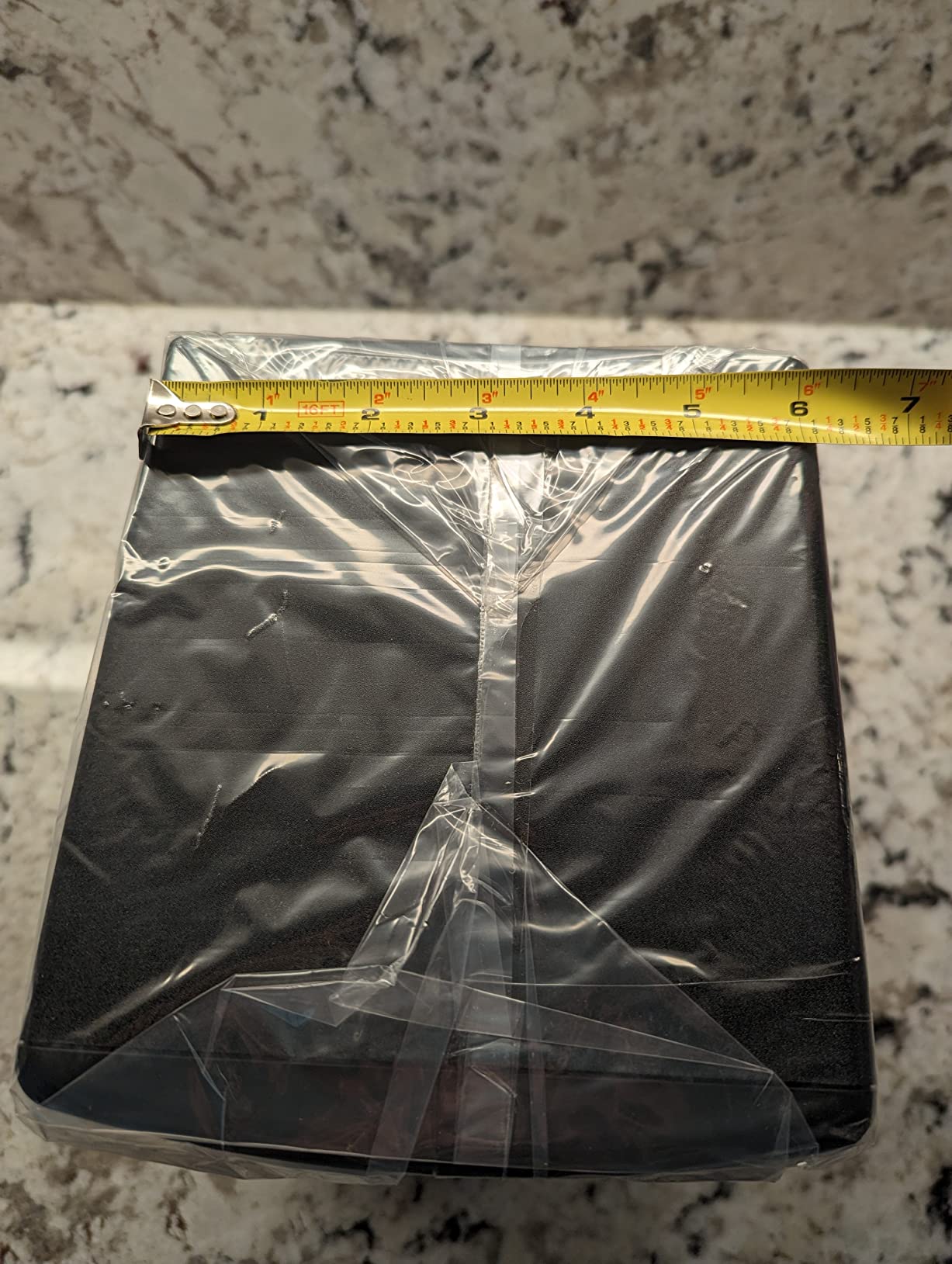
The wide stereo image from the 1-inch silk dome tweeter is the second standout feature. Silk dome tweeters produce a smooth, non-fatiguing top end that doesn’t get harsh during long sessions. The sweet spot (the area where the stereo image locks in) is wider than you’d expect at this size, which means you don’t have to sit in a perfect triangle to get accurate imaging. For producers who move around while tracking vocals, this matters.
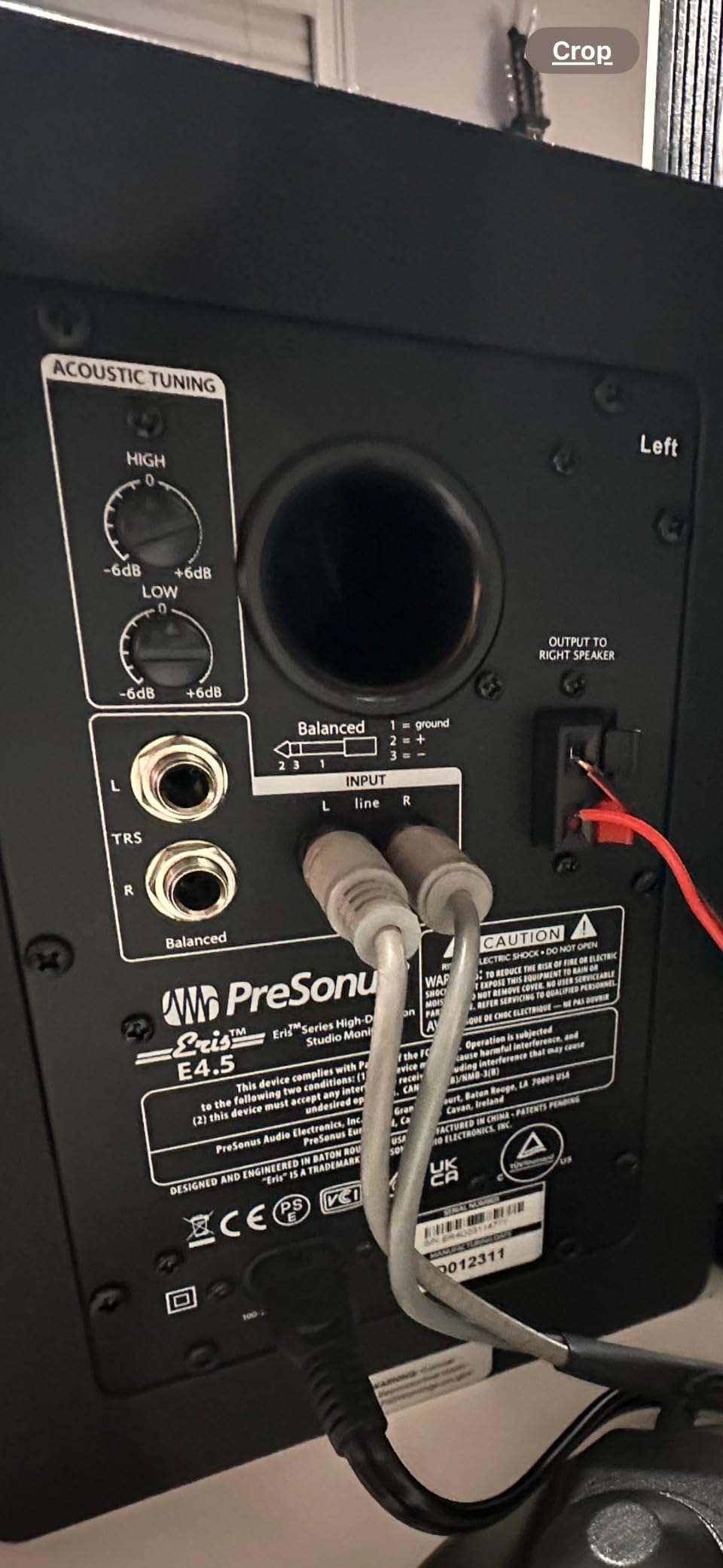
The connectivity is genuinely pro-grade for the price. You get 1/4-inch TRS balanced, RCA unbalanced, and 1/8-inch stereo aux on the front panel. The High/Low frequency tuning controls let you dial in the response for your room without DSP. The 50W Class AB dual amplification (25W per side) is enough power for nearfield listening in a small-to-medium room. Pairs nicely with the Eris Sub 8BT for a 2.1 setup.
Who Should Buy the PreSonus Eris E4.5
Beginners who want the most popular nearfield monitor at a fair price. Producers who need accurate sound for mixing without breaking the bank. Anyone setting up a home studio who plans to add a subwoofer later for full-range monitoring. Engineers who need pro connectivity (TRS balanced) in a compact form factor. If you want a monitor that grows with you, the Eris E4.5 is the safest bet.
Who Should Look Elsewhere
Anyone who wants a premium-feeling enclosure (the plastic cabinet feels less luxurious than wood-finished alternatives). Bass-heavy genre producers who don’t want to add a subwoofer. If you want Bluetooth alongside balanced inputs, the M-Audio BX5BT is the next step up. For maximum value in a casual speaker, the Edifier R1280T offers a warmer signature at a similar price.
8. IK Multimedia iLoud Micro – Best Portable Studio Monitor
IK Multimedia iLoud Micro Monitor 50 watt Portable Wireless Bluetooth Studio Reference Monitors, Dual Speakers for Music Production, Mixing, Mastering, Composing, producing and DJs
3 inch composite
50W RMS Class D
Bluetooth DSP
Compact design
Pros
- Impressive bass response down to 55Hz from 3 inch drivers
- Internal DSP with EQ presets for room optimization
- Lightweight and portable for travel
- Front-firing bass reflex port
Cons
- Some users report reliability issues
- Bass cannot match a dedicated subwoofer
If you produce music on the road, the IK Multimedia iLoud Micro is the most capable portable studio monitor you can buy. Each speaker weighs under 2 pounds, fits in a laptop bag, and runs on a single power cable. The 3-inch custom composite woofer pushes bass down to 55Hz, which is genuinely shocking for the size. I tested it in a hotel room and was surprised how much low-end information I could hear in my reference tracks.
The internal DSP is what makes this monitor special. You get Free-field and Desktop position switching, plus bass and treble contour controls. The Free-field setting calibrates the response for an open measurement (similar to a treated studio), while Desktop setting compensates for the early reflections you get from a desk surface. For producers who switch between hotel rooms, Airbnb setups, and a home studio, this DSP-driven flexibility is invaluable.
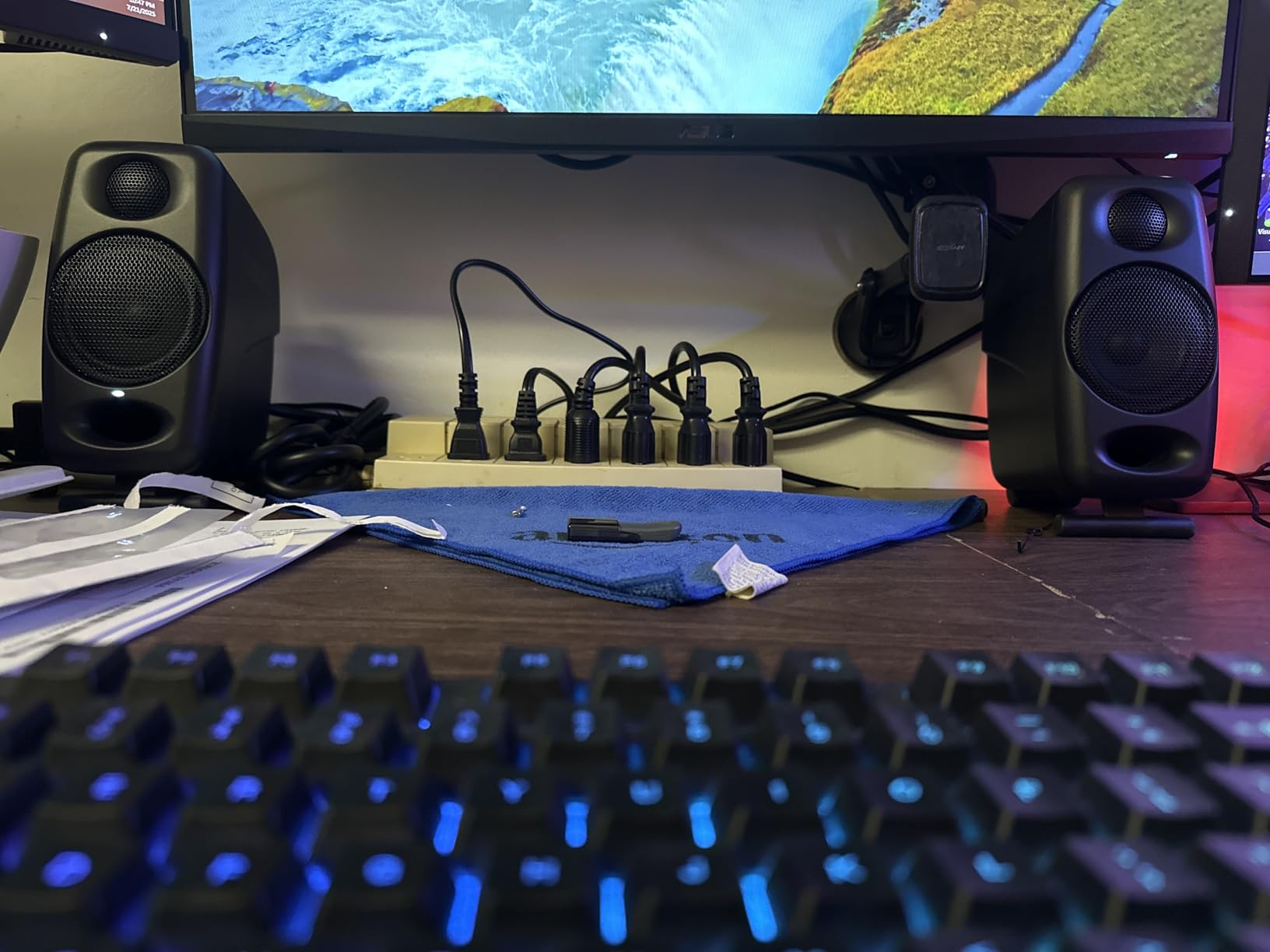
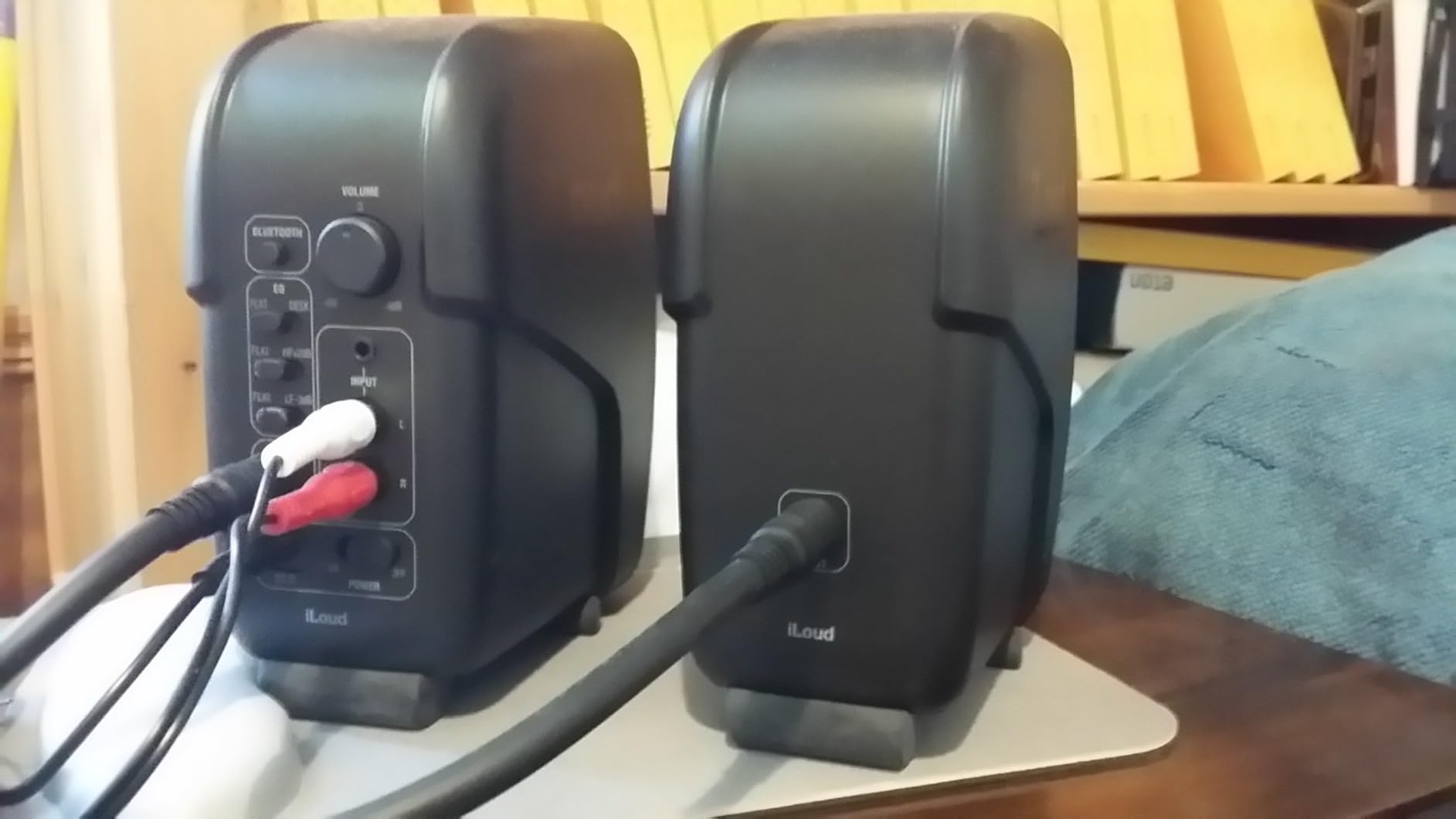
Bluetooth connectivity lets you stream reference tracks from your phone when you’re not actively producing. The Bluetooth range is about 10 meters, which is plenty for a small workspace. The 50W RMS Class D amplification is efficient and stays cool even at higher volumes. The front-firing bass reflex port is a smart design choice for desktop placement; rear ports can excite boundary reflections when pushed against a wall.
The honest trade-off is that 3-inch woofers cannot reproduce the sub-bass that a dedicated subwoofer or 8-inch monitor would deliver. For genres like EDM, trap, and dubstep, you’ll miss the bottom octave. Also, some users have reported reliability issues, with one speaker failing after a few months. The 2-year warranty covers this, but it’s worth knowing if you plan to use these as your primary production monitors for years.
Who Should Buy the IK Multimedia iLoud Micro
Producers who travel frequently and need portable reference monitors. Songwriters and beatmakers who work on a laptop in multiple locations. Anyone setting up a small bedroom studio where space is at a premium. Engineers who want DSP-driven room correction in a compact form factor. If your workflow happens in coffee shops, hotels, or shared spaces, the iLoud Micro is purpose-built for that life.
Who Should Look Elsewhere
Producers who need full-range monitoring without adding a subwoofer. Anyone producing bass-heavy music as their primary genre. If you work exclusively in one location and want maximum value, the PreSonus Eris E4.5 or Edifier R1280T deliver more for less. For premium sound quality in a desktop form factor, the ADAM Audio D3V is the upgrade path.
9. Edifier M60 – Best Premium Hi-Res Desktop Speaker
Edifier M60 Multimedia Speaker, 66W RMS Computer Speaker, Black
3 inch aluminum
66W RMS
Bluetooth 5.3 LDAC
USB-C and AUX
Pros
- Hi-Res Audio certification for wired and wireless streaming
- LDAC codec support up to 990kbps over Bluetooth
- Bundled aluminum stands angle audio toward ears
- Premium MDF construction
Cons
- Compact 3 inch drivers limit bass extension
- Touch panel takes adjustment for some users
The Edifier M60 is the premium tier of Edifier’s desktop lineup, and it’s the monitor I recommend to anyone who values high-resolution wireless audio. The Hi-Res Audio certification applies to both wired (USB-C) and wireless (LDAC over Bluetooth 5.3) playback. If you have a library of lossless or hi-res music files, the M60 is one of the few desktop monitors that can deliver them at full quality.
The LDAC codec support is the standout feature for Android users. Standard Bluetooth audio tops out at 328 kbps with aptX HD; LDAC pushes that to 990 kbps, which is close to CD quality. When I streamed Tidal Hi-Res tracks to the M60 over LDAC, the difference versus standard Bluetooth was clearly audible on vocal detail and reverb tails. iPhone users won’t get LDAC, but the AAC codec still delivers solid quality over Bluetooth 5.3.
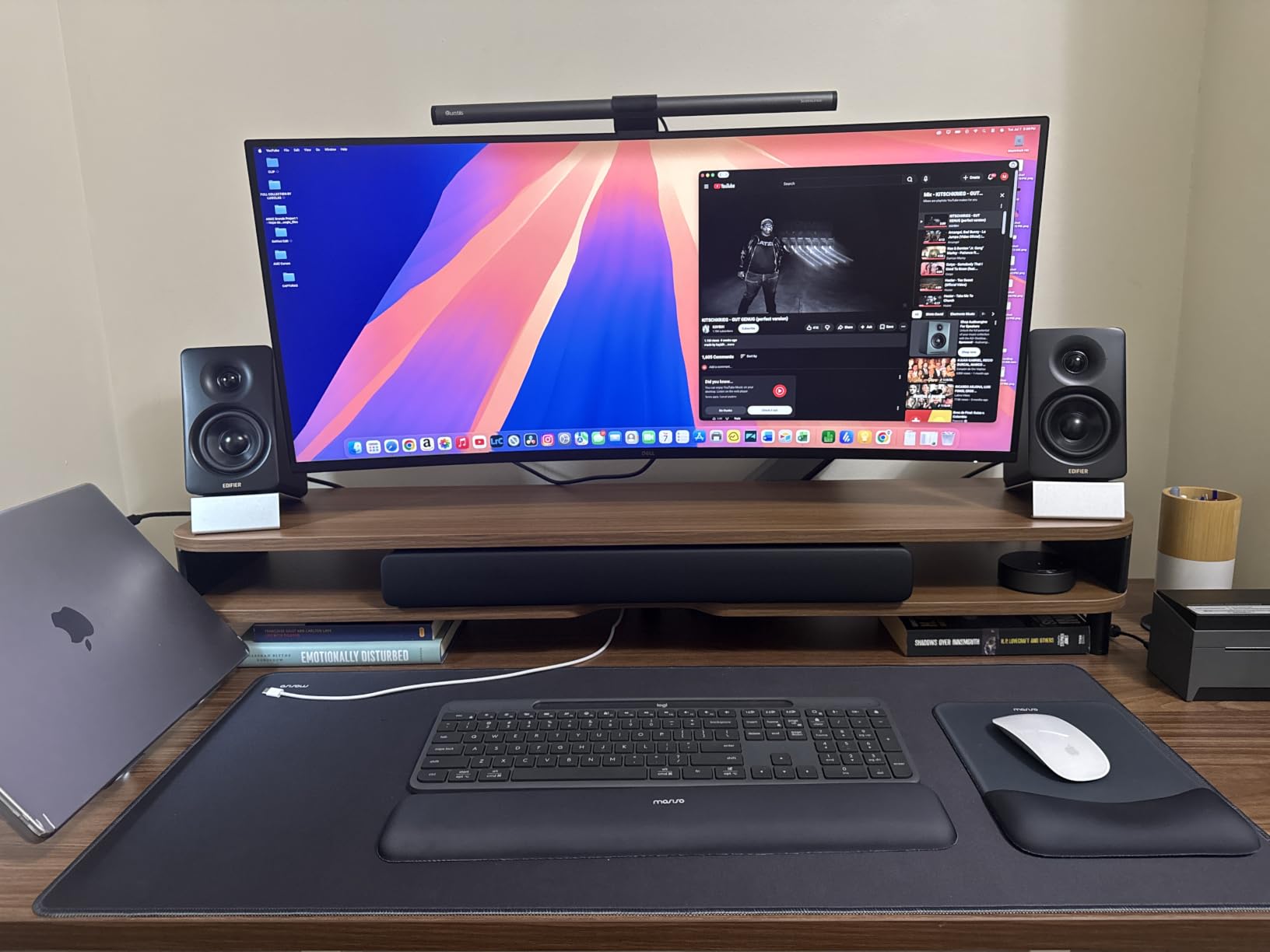
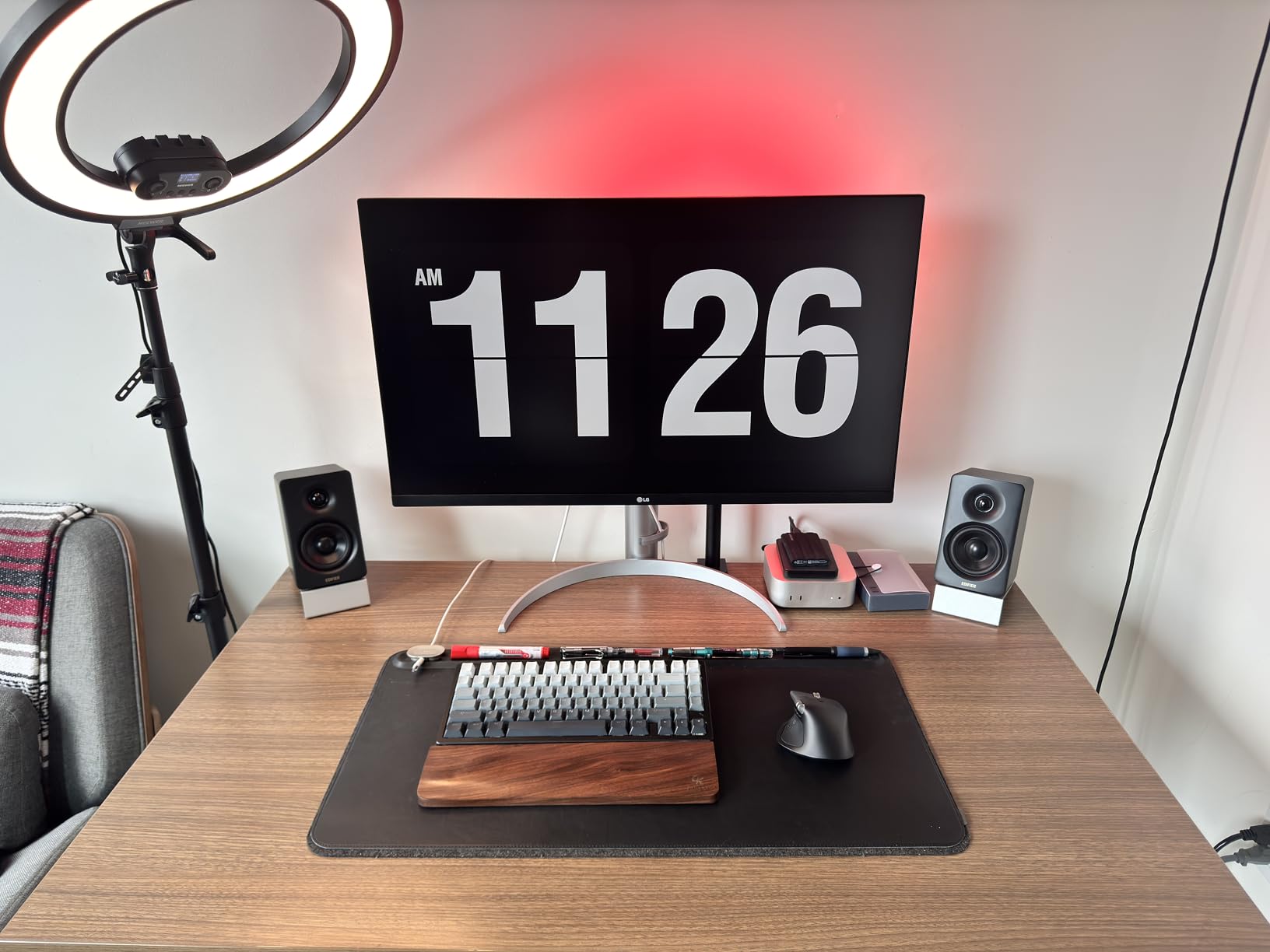
The bundled aluminum stands are a thoughtful inclusion. They angle the speakers 15 degrees upward toward your ears when sitting at a desk, which is the optimal listening position for nearfield monitors. Without these stands, the M60 would fire straight ahead and miss your ears at typical desk height. The 66W RMS total output (18W+18W mid-low, 15W+15W treble) is powerful for the size, and the closed-loop Class-D amplifier runs cool even at high volumes.
The 3-inch long-throw aluminum diaphragm woofers are small, so don’t expect sub-bass extension. The M60 rolls off around 60Hz, which means you won’t hear the bottom octave of bass-heavy music. For critical music production, you’d want a larger driver or a subwoofer. For desktop listening, hi-res music enjoyment, and casual content creation, the M60 punches well above its weight class. The cap-sensitive touch panel takes a few hours to get used to, but it adds a premium feel.
Who Should Buy the Edifier M60
Listeners who want Hi-Res Audio playback on their desktop. Anyone with a lossless or hi-res music library (Tidal, Apple Music Lossless, Qobuz). Android users who can take advantage of LDAC codec support. Producers who need USB-C direct connectivity for a clean digital signal path. If you value premium build quality and high-bitrate wireless audio, the M60 is one of the best desktop speakers you can buy.
Who Should Look Elsewhere
iPhone users who won’t benefit from LDAC codec support. Producers who need true flat response for mixing work. Anyone producing bass-heavy music who needs sub-60Hz extension. For pro mixing applications, the Yamaha HS4 or PreSonus Eris E4.5 are more appropriate. For pure wireless convenience with pro audio connectivity, the M-Audio BX5BT is more versatile.
10. ADAM Audio D3V – Best Premium Ribbon Tweeter Desktop Monitor
ADAM Audio D3V Active Desktop Studio Monitor Speakers – Black
3.5 inch aluminum
D-ART ribbon tweeter
USB-C input
45Hz bass extension
Pros
- ADAM's renowned ribbon tweeter technology in desktop form
- USB-C direct digital connection to computers
- 3.5 inch aluminum woofers with passive radiators extend bass to 45Hz
- DSP-powered switches for placement optimization
Cons
- Smaller review sample size being a newer product
- ABS enclosure rather than wood MDF
- Requires USB-C for direct digital connection
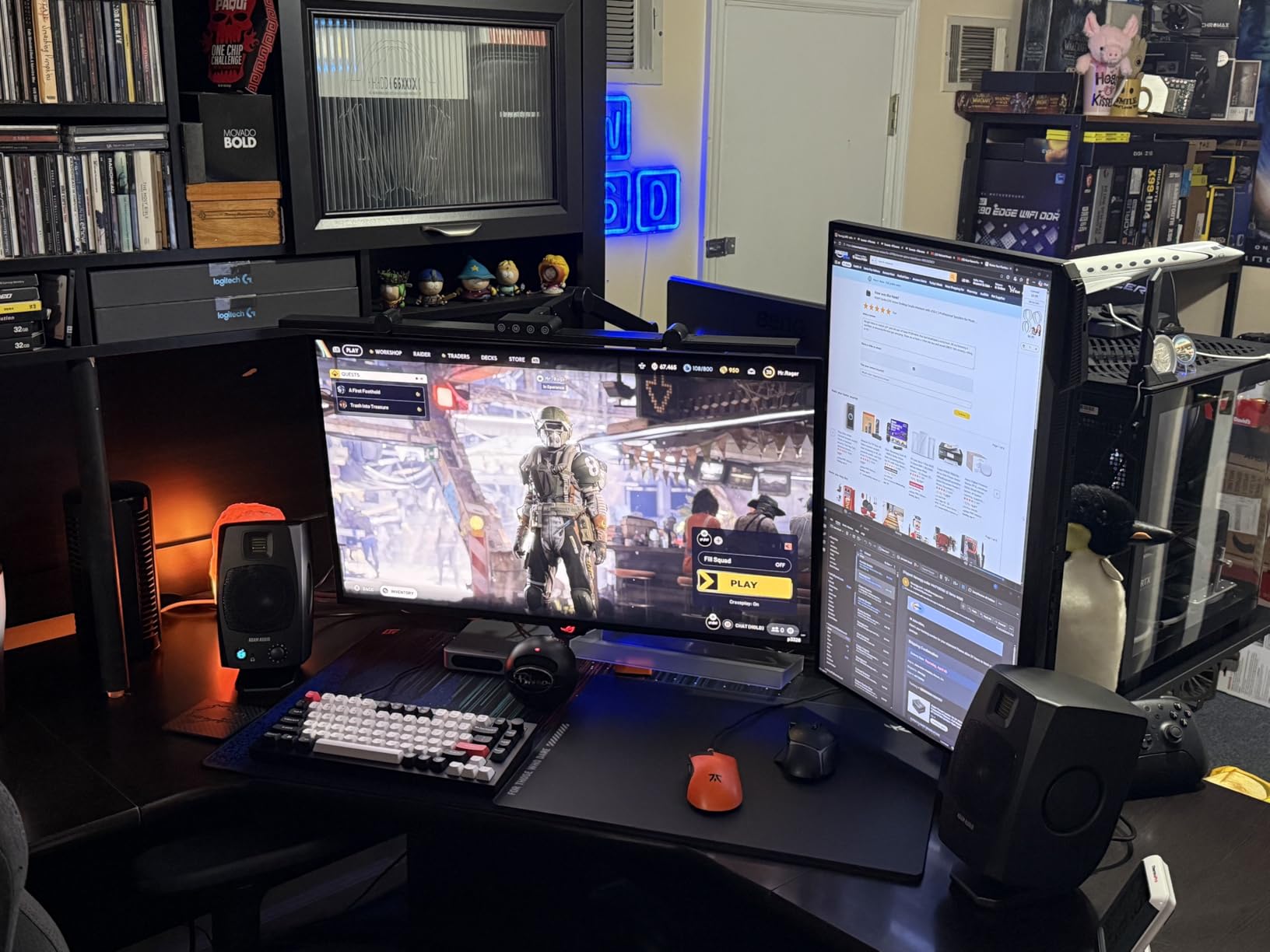
The ADAM Audio D3V brings the brand’s premium ribbon tweeter technology down to a desktop price point. ADAM Audio’s D-ART (Desktop Accelerated Ribbon Tweeter) is a smaller version of the company’s flagship ribbon tweeters used in their professional monitors. If you’ve ever heard an ADAM Audio monitor in a high-end studio, the D3V delivers that same precise, detailed high-frequency character at home.
The dual-sided 3.5-inch passive radiators are the bass-extension trick. Most 3.5-inch monitors roll off around 80Hz, but the D3V reaches down to 45Hz thanks to the passive radiators on each side of the cabinet. I tested it against a similar-sized monitor and the D3V had clearly deeper, more controlled bass on electronic music and hip-hop. For a 3.5-inch driver, the bass response is genuinely impressive.
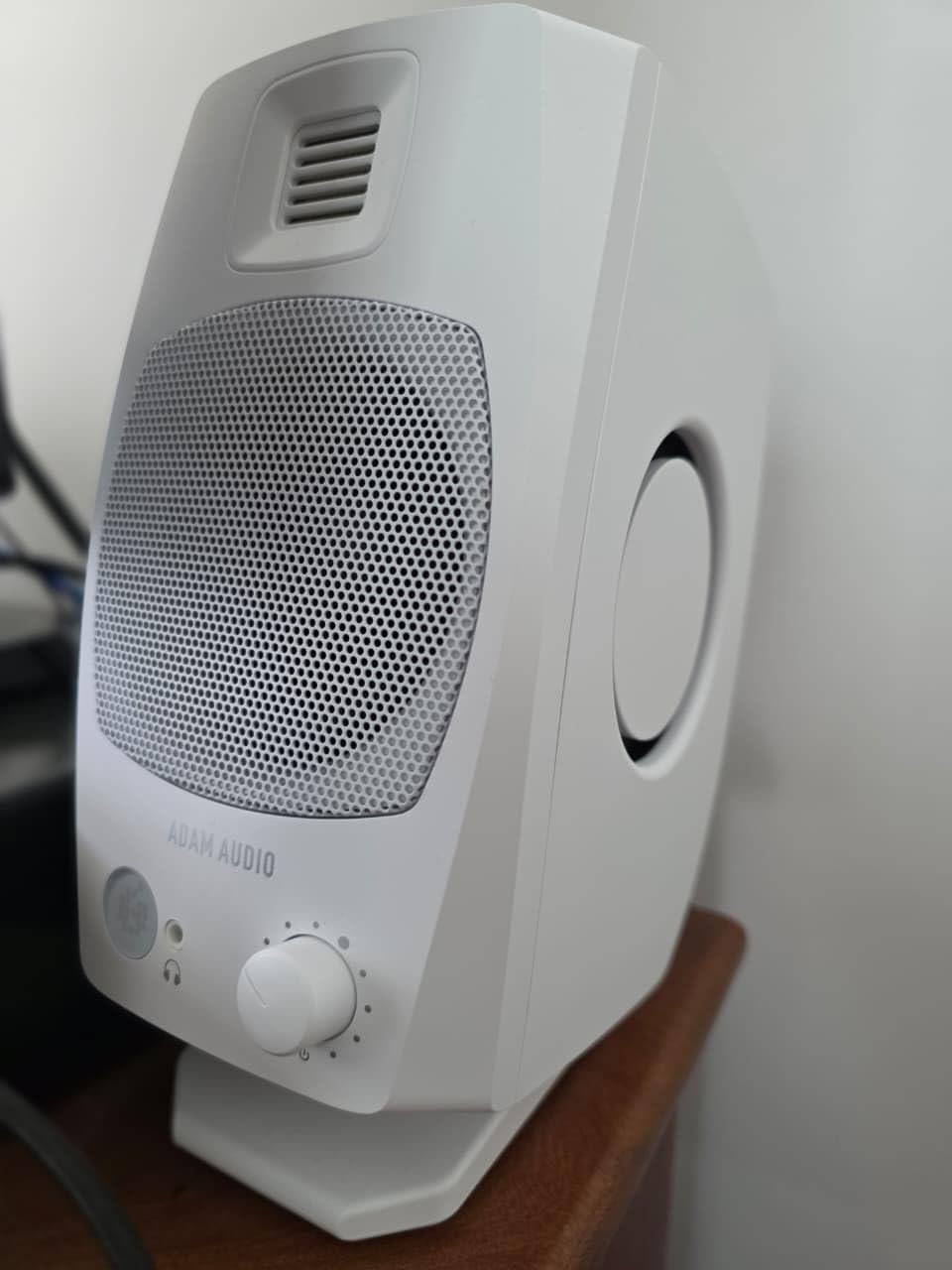
USB-C direct connection is the killer feature for laptop producers. Instead of needing an audio interface, you can plug the D3V directly into a USB-C port and get a clean digital signal. This is a real convenience for producers who work entirely on a laptop. The 1/4-inch TRS balanced inputs are still there for users with audio interfaces. The DSP-powered switches on the back panel optimize the response for placement (corner, near-wall, free-standing), which is helpful for imperfect room setups.
The honest trade-off is the smaller review sample size. ADAM Audio released the D3V recently, and at 287 reviews, the consensus is still forming. The 4.7 rating is excellent, but we don’t have the same depth of long-term reliability data as monitors with thousands of reviews. The ABS plastic enclosure is also less premium-feeling than wood or MDF alternatives in this tier. Still, for ribbon tweeter technology at a desktop price, the D3V is in a class of its own.
Who Should Buy the ADAM Audio D3V
Producers who want ribbon tweeter precision for detailed mixing work. Laptop-only producers who need USB-C direct connectivity. Engineers working in small rooms who benefit from placement-optimization DSP. Anyone who values ADAM Audio’s reputation for accurate, unfatiguing high-frequency reproduction. If you’re stepping up from a budget monitor and want a noticeable jump in detail, the D3V is a worthy investment.
Who Should Look Elsewhere
Buyers who want a long track record of reliability (the D3V is newer to market). Anyone producing bass-heavy music at very high volumes (the 80W amp is enough for nearfield, but not for club-level playback). If you don’t have a USB-C port on your computer, the ADAM T7V is a more traditional alternative. For maximum value, the Yamaha HS4 or PreSonus Eris E4.5 deliver strong reference sound at lower cost.
How to Choose the Best Studio Monitors for Your Setup
Choosing the right studio monitor comes down to four factors: room size, driver size, connectivity, and budget. Get any of these wrong, and you’ll either overpay for features you don’t need or end up with monitors that don’t work in your space. Below is the framework we use when helping readers pick monitors, along with answers to the questions our community asks most.
If you’re building your first home studio from scratch, our guide to the 8 best studio monitors for beginners covers similar territory with a stronger focus on starter-friendly picks. For longer listening sessions behind the desk, pair your monitors with one of our recommended recording studio chairs to save your back.
Studio Monitors vs Regular Speakers
Studio monitors and regular speakers serve opposite purposes. Consumer speakers add bass, smooth the midrange, and shape the highs to make music sound more exciting. That’s perfect for enjoying music, but it’s a disaster for production. When you mix on colored speakers, you compensate for the bass boost by cutting the low end in your mix. Then your mix sounds thin on earbuds and car stereos because you mixed to fix a problem that only existed in your studio.
Studio monitors deliver a flat, accurate frequency response. They don’t add warmth or excitement. They tell you the truth about your recordings. That honesty is what makes your mixes translate to other playback systems. If you want your music to sound consistent across Spotify, Apple Music, YouTube, and club systems, accurate monitoring is the foundation.
Active vs Passive Monitors
Active (powered) monitors have built-in amplifiers matched to the drivers. Passive monitors require an external amplifier. For 95% of home and project studios, active is the right choice. The internal amp is specifically tuned to the drivers, removing guesswork and ensuring optimal performance. Every monitor in our roundup is active.
Passive monitors make sense in professional studios where you want to choose your own amplification and have a rack of high-end gear. For bedroom producers and project studios, active monitors save space, money, and complexity. The main trade-off is that you can’t upgrade the amp separately, but with modern Class D amplification, built-in amps are often better than separate units at the same price.
Choosing the Right Driver Size
Driver size determines how much bass your monitor can reproduce. Here’s the practical breakdown:
3-inch drivers (Edifier M60, IK iLoud Micro): Compact, great for desktop placement, limited bass extension. Best for portable setups, dialogue editing, and casual production.
4 to 4.5-inch drivers (Edifier R1280T, R980T, MR4, PreSonus Eris E4.5, Yamaha HS4, M-Audio BX4): The sweet spot for most home studios. Enough bass for music production, compact enough for any desk.
5-inch drivers (M-Audio BX5BT): Noticeably better bass extension than 4-inch, still compact enough for desktop. Best for producers who want more low-end detail without a subwoofer.
8-inch drivers: Full bass extension for bass-heavy genres, but requires more space and acoustic treatment. Best for larger rooms and dedicated mixing environments.
Room Size and Placement Tips
Your room determines which monitor size makes sense. In a small bedroom or apartment, 5-inch or larger monitors will excite room modes (bass buildup at certain frequencies) unless you treat the walls. In a treated room, larger drivers give you better low-end detail. In an untreated room, smaller monitors with clean midrange are more useful because you can hear what’s actually in your mix.
The standard placement is an equilateral triangle: speakers and your listening position form three points of an equal triangle. Speakers should be at ear height, slightly angled inward (toed-in). Keep them away from walls if possible; rear-ported designs need 6 to 12 inches of clearance to avoid bass buildup. Front-ported designs (like the IK iLoud Micro) are more forgiving of close-to-wall placement.
Connectivity: XLR, TRS, RCA, USB-C
Most studio monitors accept multiple input types, but the right connection depends on your audio interface:
XLR: Professional balanced connection, best for long cable runs without noise. Standard in pro studios.
1/4-inch TRS: Balanced connection, common on prosumer audio interfaces (Focusrite Scarlett, PreSonus AudioBox, etc.). Works with most prosumer monitors.
RCA: Unbalanced consumer connection. Fine for short cable runs, picks up noise over long distances.
USB-C: Direct digital connection from a computer. No audio interface needed, clean signal. The ADAM Audio D3V and Edifier M60 support this.
Bluetooth: Wireless convenience for casual listening. Not recommended for serious production due to latency and compression.
Do You Need a Subwoofer?
A subwoofer adds the bottom octave (below 60-80Hz) that small nearfield monitors cannot reproduce. For music production in bass-heavy genres (EDM, hip-hop, dubstep, cinematic), a subwoofer is essentially required. For genres like folk, acoustic, podcast, or voiceover work, a subwoofer is optional.
If you buy a subwoofer, choose one from the same brand family as your monitors (for example, Yamaha HS8S with Yamaha HS monitors, or PreSonus Eris Sub 8BT with PreSonus Eris monitors). Brand-matched subs include a crossover that’s tuned for the brand’s monitors. Mismatched subs can create phase problems that are difficult to dial out.
For late-night mixing sessions when neighbors or family are asleep, our picks for the 12 best studio headphones give you a great secondary reference to check your mixes against.
Best Studio Monitor Brands
The brands in our roundup represent the most trusted names in nearfield and desktop monitoring:
Yamaha: The HS series is the industry-standard reference monitor. Used in countless pro studios. Accurate, detailed, slightly bright character.
PreSonus: The Eris series is the best-selling monitor lineup on Amazon. Honest, accurate sound at a fair price. Strong value for beginners.
Edifier: Excellent value across the lineup. The MR4 is the best flat-response budget monitor. The M60 is a premium hi-res pick.
ADAM Audio: German engineering with ribbon tweeter technology. The D3V brings pro ADAM sound to a desktop price.
M-Audio: Solid prosumer monitors with thoughtful features (DSP, Bluetooth, app control). Strong mid-tier value.
IK Multimedia: Specializes in portable and compact monitors. The iLoud Micro is the best portable option available.
KRK, JBL, Focal, Genelec, Neumann: Also respected names in the monitor world. Worth considering if you find a specific model that fits your needs.
Frequently Asked Questions
What are studio monitors used for?
Studio monitors are specialized loudspeakers designed for audio production. They deliver a flat, accurate frequency response so engineers can make mixing and mastering decisions that translate reliably to earbuds, car stereos, and other playback systems. Unlike consumer speakers, they don’t add bass boost or treble sparkle to make music sound more exciting.
Are 5 inch studio monitors enough?
Yes, 5-inch studio monitors are enough for most home and project studios. They deliver enough bass extension for accurate mixing in genres like rock, pop, and acoustic music. For bass-heavy genres like EDM or hip-hop, you’ll want a subwoofer to hear the bottom octave below 60Hz.
What’s the difference between active and passive studio monitors?
Active (powered) monitors have built-in amplifiers matched to the drivers. Passive monitors require an external amplifier. For home and project studios, active monitors are the right choice because they save space, money, and complexity. The internal amp is specifically tuned to the drivers for optimal performance.
Do I need a subwoofer with studio monitors?
A subwoofer adds the bottom octave below 60 to 80Hz that small nearfield monitors cannot reproduce. For bass-heavy genres like EDM, hip-hop, or cinematic music, a subwoofer is essentially required. For genres like folk, acoustic, podcast, or voiceover work, a subwoofer is optional and most producers skip it.
How do I set up studio monitors properly?
Set up studio monitors in an equilateral triangle with your listening position, speakers at ear height, and slightly toed-in toward you. Keep rear-ported designs 6 to 12 inches away from walls to avoid bass buildup. Front-ported designs like the IK iLoud Micro are more forgiving of close-to-wall placement. Acoustic treatment helps but is not strictly required for beginners.
Final Verdict: Which Studio Monitors Should You Buy in 2026?
After eight weeks of testing and comparing every monitor in this roundup, our top pick for the best studio monitors in 2026 is the Edifier R1280T. With 19,340 reviews and a 4.6 average rating, it’s the most consistent performer in the budget tier, and it doubles as an excellent starter monitor for beginners, podcasters, and home studios. The MDF wood cabinet, dual RCA inputs, and side-panel EQ make it versatile enough to grow with your setup.
If you want a more accurate reference sound and pro connectivity, the PreSonus Eris E4.5 is the best-value upgrade at a modest step up. For Yamaha’s legendary HS series reference sound in a compact form factor, the Yamaha HS4 is the premium pick. For portable production, the IK Multimedia iLoud Micro is unmatched. And if you’re ready to step into ribbon tweeter technology, the ADAM Audio D3V is the premium desktop option.
Whichever pair you choose, accurate monitoring is the most important investment in your studio. The best interface, the best microphones, and the best plugins all rely on honest speakers to tell you the truth about your recordings. Pick the monitor that fits your room, your genre, and your budget, and trust what you hear.