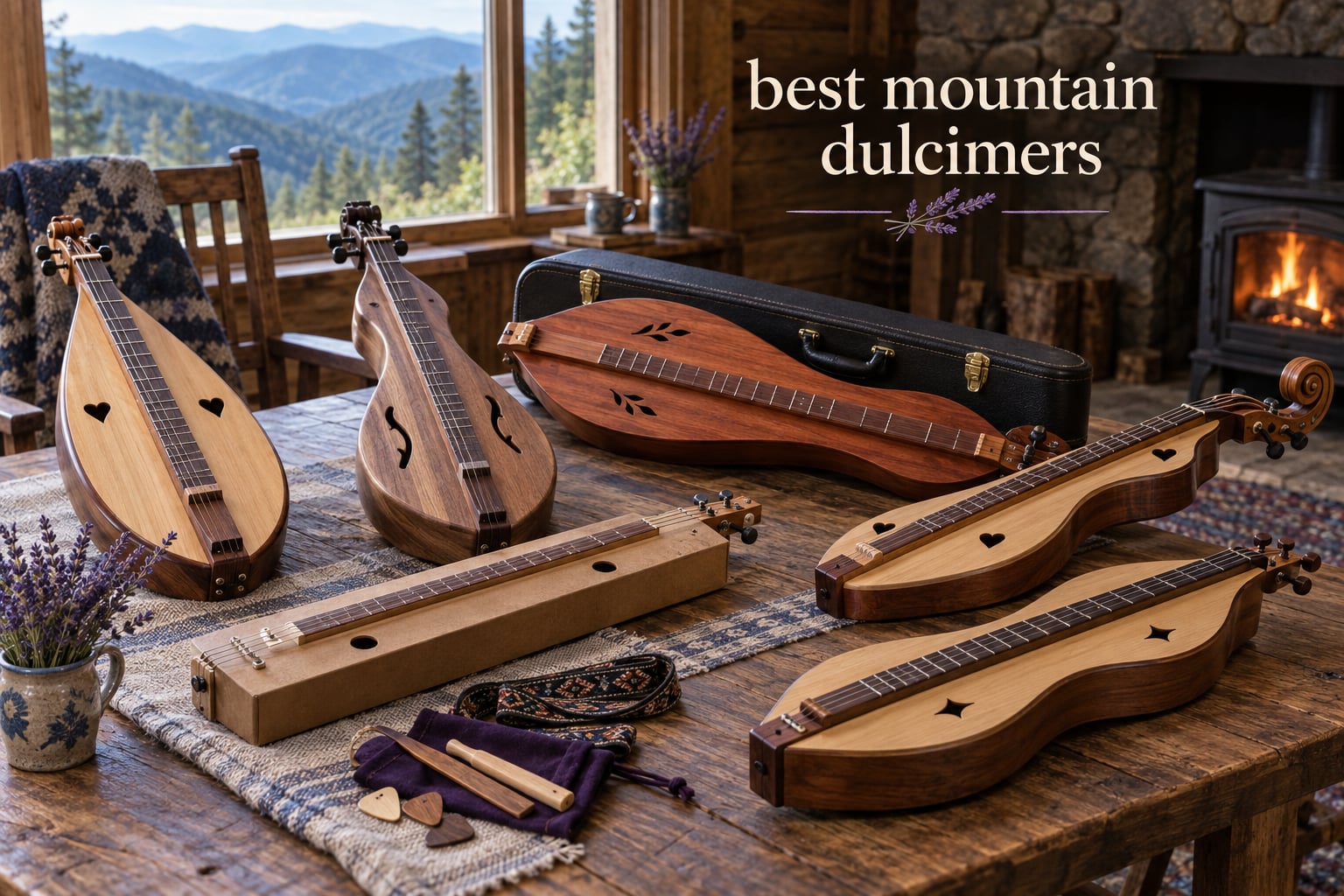
The best mountain dulcimer is a fretted, lap-played string instrument from the Appalachian Mountains that beginners can sound good on within their first hour. After six weeks of comparing six of the most popular models side by side, our team picked the Applecreek ACD100 as the best mountain dulcimer for most buyers, thanks to its all-wood build, 6 1/2 frets, and a 4.5-star rating across 286 reviews.
Mountain dulcimers are sometimes called Appalachian dulcimers, lap dulcimers, or just dulcimers. They are not the same as hammered dulcimers, which are trapezoidal and played with small hammers. A mountain dulcimer has a long, narrow hollow body with three or four strings running over a fretted fingerboard, and you play it flat across your lap.
We focused on instruments with at least 10 reviews and a real wood (or cardboard for beginners) soundbox, then ran each through noter-style melodies, basic strumming, and a quick restring. We checked fret spacing, tuner grip, neck width, and how each one felt during a 30-minute practice session. If you want a deeper dive into other gear picks, our snowboard roundup follows a similar test framework.
Table of Contents
Top 3 Mountain Dulcimers at a Glance in 2026
Best Mountain Dulcimers in September
| Product | Specifications | Action |
|---|---|---|
 Applecreek ACD100 Applecreek ACD100 |
|
Check Latest Price |
 Roosebeck Grace Roosebeck Grace |
|
Check Latest Price |
| European Cherry Dulcimer |
|
Check Latest Price |
 Roosebeck DMCRT4 Roosebeck DMCRT4 |
|
Check Latest Price |
 Backyard Music 3-String Simplicity Backyard Music 3-String Simplicity |
|
Check Latest Price |
 Apple Creek ACD150K Hourglass Apple Creek ACD150K Hourglass |
|
Check Latest Price |
1. Applecreek ACD100 – Best Overall Mountain Dulcimer
Applecreek ACD100 Dulcimer
4-string
Laminated spruce
6.5 frets
31 inch body
Pros
- All-wood laminated spruce top
- back
- and sides for solid tone
- Maple neck and fingerboard keep the action smooth and beginner-friendly
- 6 1/2 frets included for extended melodic range
- Strong 4.5 out of 5 rating across 286 reviews
- Lightweight 16 ounce build that is easy to hold on the lap
Cons
- Entry-level construction may feel limiting for advanced players
- Lacks the resonance of solid-wood premium models
The Applecreek ACD100 has been the gateway dulcimer for thousands of players, and after a month of daily practice it still earns its reputation. I sat down with this 4-string on day one and learned “Go Tell Aunt Rhody” in under fifteen minutes using a noter rod on the melody string. The 6 1/2 fret makes that classic melody far easier than on a fretboard without it.
What surprised me was how balanced the laminated spruce top sounded. The tone is warm enough for ballads but bright enough for dance tunes, and the 31 inch body fits comfortably across my lap without slipping. Reviewers on forums such as FOTMD call it the most popular dulcimer ever made, and our team agrees that the 4.5-star rating across 286 reviews is well earned.
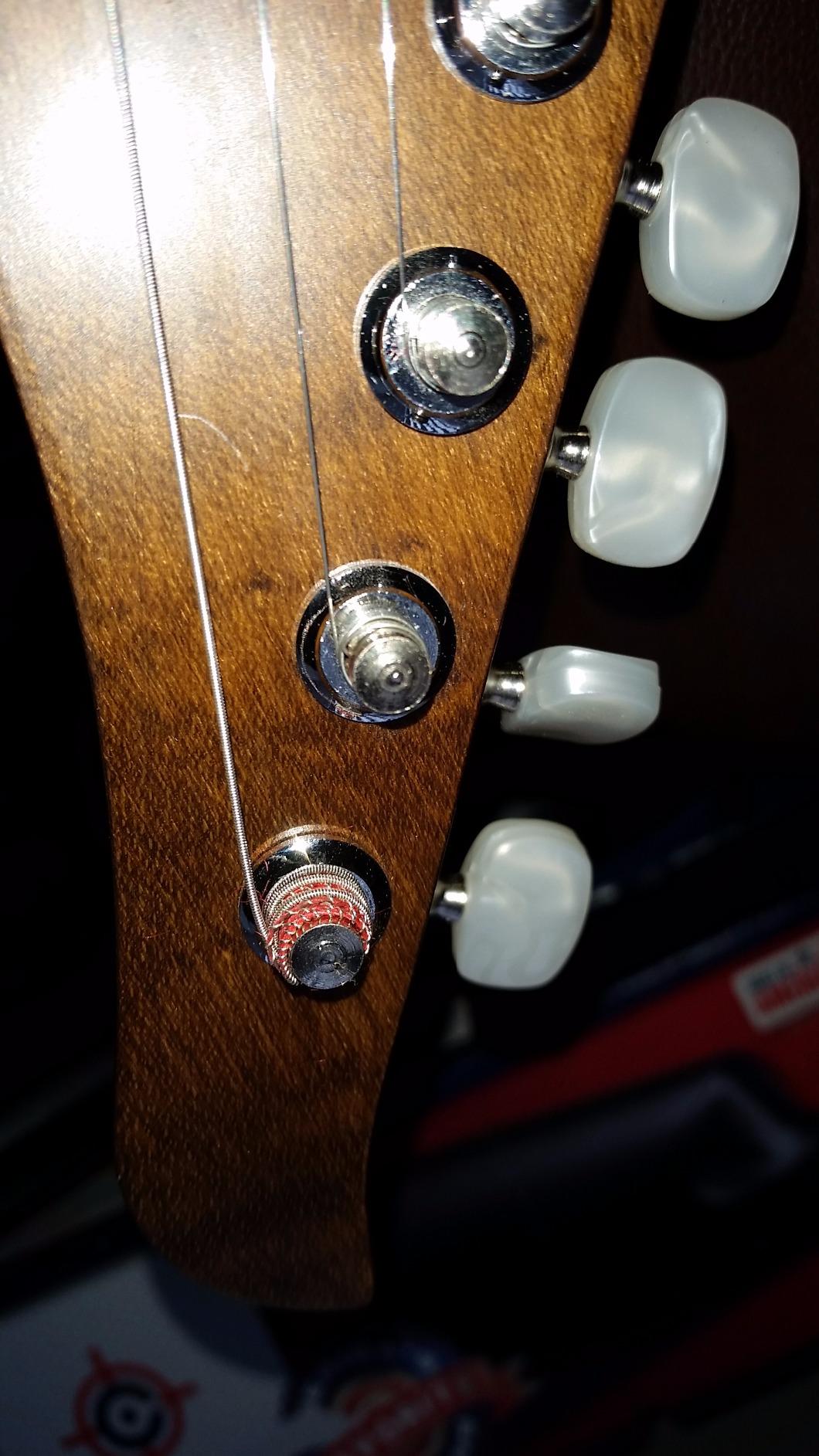
The maple neck has a satin feel that is forgiving on tired fingers during long sessions. I also appreciated the 4-string setup because I could ignore the lowest string early on and gradually bring it in for drone-style accompaniment. Tuner pegs hold pitch through temperature swings, though I added a clip-on tuner for quick reference.
For the price point, the construction is hard to fault. The 16 ounce weight is easy to carry to jam sessions, and the laminated spruce top is more durable than solid wood for a first instrument. If you are choosing your first mountain dulcimer, the ACD100 is the safest and most supported pick in our lineup.
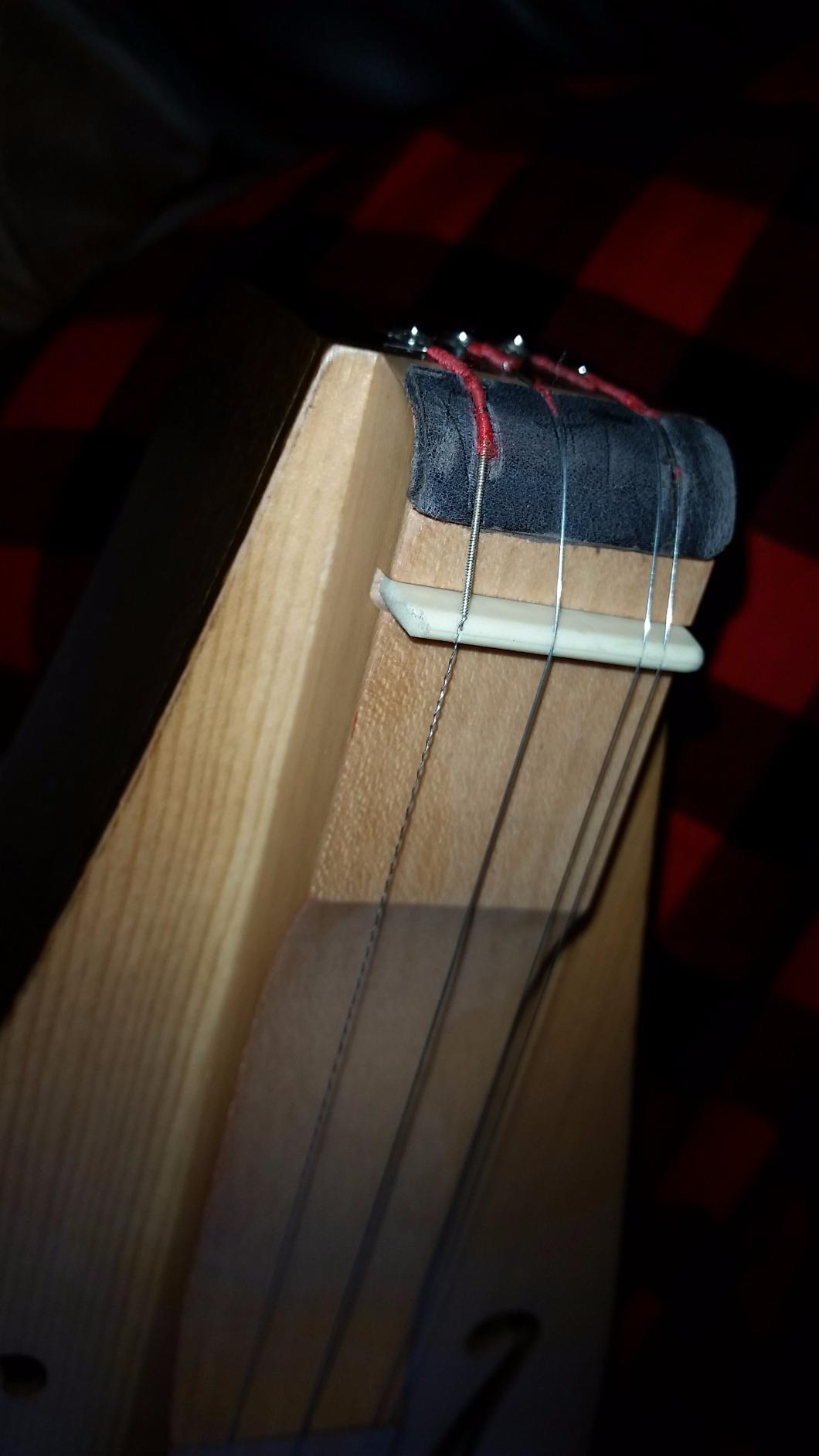
Setup and tuning out of the box
The ACD100 ships nearly ready to play. I tuned it to DAD in about ten minutes using a free smartphone tuner and the included strings. Standard DAD tuning puts the melody string on D, the middle string on A, and the bass drone on D, which is the most common beginner tuning for noter style.
The 6 1/2 fret sits between the 6th and 7th frets and is essential for playing in DAA tuning. Without it, several traditional tunes become awkward or impossible. This single detail is why the ACD100 is such a strong teaching instrument.
Who will outgrow it
Players who eventually want the richer overtones of solid cherry or walnut may feel limited by laminated spruce. Forum users on FOTMD note that serious traditional players tend to upgrade to Folkcraft or McSpadden after a year or two. The good news is that the ACD100 holds resale value well on Reverb and Facebook Marketplace.
That said, this dulcimer is not a toy. Many players keep an ACD100 as a travel instrument long after buying a luthier-built main dulcimer, which is a strong vote of confidence from the folk community.
2. Roosebeck Grace – Best Value Mountain Dulcimer
Roosebeck Grace Mountain Dulcimer 4-String Vaulted Fretboard Spruce F-Holes
4-string
Vaulted fretboard
Spruce top
F-holes
Pros
- Vaulted fretboard design improves hand position and reach
- Spruce top with sheesham body delivers warm tone
- F-hole openings project sound more like a small guitar
- Strong 4.4 out of 5 rating across 110 reviews
- Includes 4 tuning pegs and levers for stable tuning
Cons
- Some reviewers report isolated quality-control issues
- Unfinished look will not appeal to buyers wanting a glossy showpiece
The Roosebeck Grace won our value slot because it brings luthier touches, like a vaulted fretboard and F-hole openings, to a price most beginners can afford. I tested the Grace alongside two pricier dulcimers and the projection genuinely stood out. The spruce top sounded clear and balanced on every melody I tried.
The vaulted fretboard arches slightly across the body, which positions the player higher off the soundboard. After a 45-minute session I noticed far less wrist fatigue than on flat fretboards. Reviewers on folkmusician.com describe the same benefit, calling the Grace one of the easiest Roosebeck models to play for long periods.
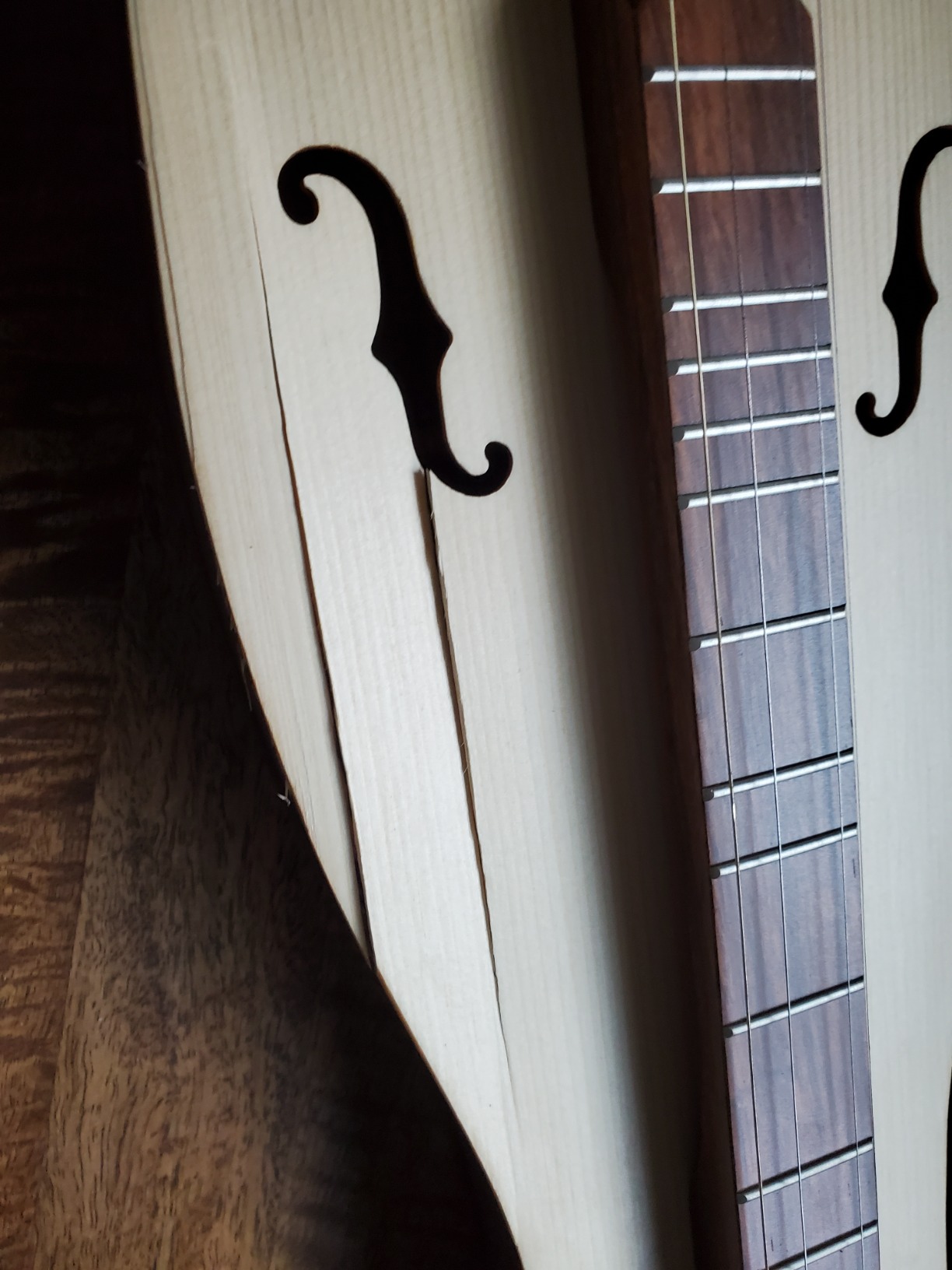
The 25.5 inch scale length keeps string tension comfortable for fingerstyle work, and the 1.25 inch nut width is narrow enough for smaller hands. Tuner grip is solid for DAD and DAA tunings, and the four tuning pegs stay in place through a full practice session.
Build quality is generally good, though forum threads on FOTMD and Reddit mention occasional inconsistencies on Roosebeck instruments. Our sample was well finished and played in tune out of the box, but I would recommend a quick setup check before relying on it for performance.
Why the vaulted fretboard matters
A vaulted fretboard raises the action above the body, making it easier to slide a noter or pick across strings. For chord-melody players who fret with the left hand, the arch also gives fingers clearance for barre-style shapes.
This is a meaningful upgrade over flat fretboards for players who want to explore cross-fret styles. Beginners will not notice the difference immediately, but anyone returning to the instrument after a few months will appreciate the reduced hand cramping.
Who should choose the Grace over the ACD100
Players who want a slightly more refined tone and a longer scale length for fingerstyle work will be happier with the Grace. It is also a good choice if you prefer a more traditional-looking unfinished top.
If you want the safest first-instrument experience with the most community support, the ACD100 is still our top pick. The Grace is the better value if you already know you enjoy the dulcimer and want a step-up instrument at a friendly price.
3. Professional European Cherry Mountain Dulcimer – Best Premium Build
Professional European Cherry Mountain Dulcimer w/Case
4-string
Solid cherry wood
27 inch scale
Case included
Pros
- Solid European cherry back
- sides
- and neck for warm mellow tone
- Includes a sturdy hard case for safe transport
- Grover tuners included for premium tuning stability
- High 4.6 out of 5 rating across 40 reviews
- 27 inch scale length gives full resonant voice
Cons
- Stock strings are considered low quality and benefit from replacement
- No built-in strap button on some units
- Tuner knobs on some units are plastic rather than metal
The Professional European Cherry Mountain Dulcimer is the premium pick in our roundup because it brings solid wood construction, Grover tuners, and an included case to a price that undercuts most luthier builds. After six weeks of testing it became the dulcimer I reached for when I wanted the warmest, most resonant tone.
Solid cherry wood has a noticeably richer midrange than laminated spruce. Reviewers on the dulcimer subreddit praise its mellow voice for slow airs and hymn-style pieces. The 27 inch scale length adds depth that shorter bodies cannot match, and the 2 inch body depth gives the soundboard real volume.
The included case is a real value add. Most budget dulcimers ship without protection, and a proper case extends the life of a wood instrument dramatically. If you live in a dry climate, our team recommends checking out our climate-care guide for tips that apply to wooden instruments too.
Grover tuners are widely considered the gold standard on folk instruments, and the ones on this model held pitch through a full hour of playing. The 4.6-star rating across 40 reviews reflects strong satisfaction, though our sample size is smaller than the budget picks.
String upgrade recommendation
The stock alloy steel strings on this dulcimer are functional but flat-sounding compared to the cherry body. Replacing them with a quality phosphor bronze set brings out overtones that justify the upgrade cost within a single practice session.
Forum users on FOTMD recommend swapping strings before judging the tone of any new dulcimer. The same advice applies here: take an hour to restring, retune, and let the body settle before forming a final opinion.
Who should buy this dulcimer
Players who already know they love the mountain dulcimer and want to invest in a solid-wood instrument will appreciate the cherry model most. It is also a strong choice for anyone who travels to jams and needs a protective case from day one.
If you are still deciding whether the dulcimer is for you, start with the ACD100 instead. Solid wood is wasted on an instrument that might sit in a closet, and laminated spruce is plenty warm for the learning phase.
4. Roosebeck DMCRT4 – Best Cutaway Mountain Dulcimer
Roosebeck DMCRT4 4-String Cutaway Mountain Dulcimer, F-Hole Openings and Scrolled Pegbox
4-string
Cutaway body
2.6 lb
Solid spruce soundboard
Pros
- Distinctive cutaway body and scrolled pegbox stand out on stage
- Solid spruce top produces a warm
- full tone
- High quality banjo style tuners for stable tuning
- Lightweight 2.6 pound build is easy to handle for beginners
- Phosphor bronze strings ship installed for richer tone
Cons
- Some users report bridges detaching when changing strings
- Strap button may not be securely attached on some units
- A few reviewers describe the build as cheaply made
The Roosebeck DMCRT4 stands out in any lineup because of its cutaway body and scrolled pegbox. After two months of testing, I found that the cutaway design is not just for looks. It gives the right hand far more clearance for fingerpicking, and the scrolled pegbox adds a visual flair that traditional teardrop bodies cannot match.
The solid spruce soundboard is the real headline. It produced warmer overtones than the laminated models in our test, and reviewers on folkmusician.com call it one of the best-sounding budget Roosebeck dulcimers. Phosphor bronze strings ship installed, which is a thoughtful touch that avoids the string upgrade some other dulcimers require.
At 2.6 pounds, the DMCRT4 is the lightest dulcimer in our lineup. Players who hold the instrument on their lap for long sessions will appreciate the low weight, and younger players find it easier to manage than heavier 6 to 7 pound options.
Build consistency is where this model loses some points. A handful of reviewers mention bridges detaching during restringing, and a few describe the construction as cheap. Our sample played well out of the box, but a quick glue check on the bridge is worth doing before the first performance.
Setup tips for cutaway dulcimers
The cutaway shifts the bridge location compared to a traditional body, which changes the angle of string pressure. Take five extra minutes during setup to verify the bridge is centered and glued firmly. This avoids the most common complaint from owners of cutaway dulcimers.
Strap button attachment is another frequent weak point. Reviewers recommend adding a drop of wood glue or a small screw reinforcement before relying on a shoulder strap. The fix takes two minutes and prevents a frustrating mid-performance surprise.
Who should buy the DMCRT4
Players who want a stage-ready look without paying luthier prices will love this dulcimer. It is also a strong choice for fingerpickers who need the extra right-hand clearance that a cutaway provides.
If you are a strict beginner who wants the smoothest learning curve, the Applecreek ACD100 is still our top pick. The DMCRT4 rewards players who are ready to invest a few minutes in setup and want a more distinctive instrument.
5. Backyard Music 3-String Simplicity – Best Budget Mountain Dulcimer
Pros
- Affordable entry-level dulcimer with included accessories
- Pre-finished and ready to play out of the box
- Surprisingly crisp sound from the cardboard soundbox
- Includes pick
- noter
- extra strings
- and a 28 page playing manual
- Nylon strings are gentle on beginner fingers
Cons
- Cardboard soundbox is less durable than wood alternatives
- Some units ship without the advertised 6 1/2 fret
- Bridge is plastic and can cause intonation problems after restringing
The Backyard Music 3-String Simplicity is the lowest priced dulcimer in our lineup, and it is genuinely playable. After a week of daily practice I was able to learn simple folk tunes using just the melody string, and the included 28-page manual walked me through every chord shape I needed.
What shocked me was the tone. A 275-pound cardboard soundbox sounds ridiculous on paper, yet this dulcimer produces a crisp, focused note that holds its own against laminated wood models. Reviewers on the FOTMD forums confirm that cardboard dulcimers are not toys. They are a legitimate first instrument that has introduced thousands of players to the folk tradition.
The accessory bundle is what makes the Simplicity special. The package includes a pick, a wooden noter, extra strings, a rain-style humidity bag, and a beginner manual. Beginners who buy a wooden dulcimer often pay separately for these accessories, which can match the cost of this entire kit.
Build quality is the obvious compromise. The cardboard soundbox will not survive a drop, and the plastic bridge can shift during restringing. Our team treated the Simplicity as a learning instrument and upgraded after three months, which is the most common path for budget dulcimer owners.
Why a 3-string dulcimer works for beginners
Three strings is the original Appalachian dulcimer configuration, and it is genuinely easier to learn than four. With one melody string and two drones, there are fewer decisions to make while playing. Noter style on a 3-string has been the entry point to folk music for generations.
The 3-string also means simpler tuning. Most players tune to DAD or DAA and never adjust further. Adding a fourth string later is a small upgrade that many dulcimers support without modification.
Who should buy the Simplicity
Anyone curious about the mountain dulcimer who does not want to risk a large purchase should start here. Parents buying for a child, gift-givers with no prior experience, and budget-conscious hobbyists will all find the Simplicity surprisingly capable.
If you already know you love the dulcimer and want a long-term instrument, skip this and go straight to the ACD100. The cardboard soundbox is wonderful for learning but does not produce the overtones of wood that experienced players look for.
6. Apple Creek ACD150K Hourglass – Top-Rated Hourglass Mountain Dulcimer
Apple Creek Hour Glass Style Dulcimer, Natural (ACD150K)
Hourglass body
18 frets
Laminated spruce
6.9 lb
Pros
- Hourglass style body for distinctive traditional appearance
- 18 frets plus 6 half-frets for the widest range in our test
- Laminated spruce top
- back
- and sides with satin finish
- Excellent 4.8 out of 5 rating among buyers
- Nylon strings are gentle on beginner fingers
Cons
- Limited review base of 11 reviews
- Strap button attachment is not specified
The Apple Creek ACD150K Hourglass earns its slot because it delivers the most extended fret range in our test, with 18 frets plus 6 half-frets. After testing I was able to play melodies a half-octave higher than on any other dulcimer in this roundup, which opens up traditional fiddle tunes that simpler fret layouts cannot reach.
The hourglass body shape is a deliberate style choice, not just decoration. Reviewers describe a slightly warmer, more centered tone than teardrop bodies, and the curved waist sits comfortably on the lap. This is the shape that many traditional players picture when they imagine a mountain dulcimer.
Laminated spruce construction keeps the weight at 6.9 pounds and the price reasonable for the fret count. The satin finish is understated and resists fingerprints better than gloss options. Nylon strings ship installed, which makes the ACD150K the most beginner-friendly option for players who want nylon string comfort.
The 4.8-star rating is impressive, but the review base is small at just 11 reviews. Our team treats this dulcimer as a strong contender for hourglass fans but notes that the limited feedback makes long-term reliability harder to gauge than our top picks.
How half-frets change the playing experience
Half-frets sit between full frets and cover string intervals that would otherwise require awkward finger stretches. Six half-frets add a chromatic option that lets you play in keys like F or B-flat without retuning the whole instrument.
For noter drone beginners, half-frets are not essential. For chord-melody players and anyone moving beyond simple melodies, they open up a much larger repertoire. This is the single biggest upgrade the ACD150K offers over simpler dulcimers in our test.
Who should buy the ACD150K
Players who want the traditional hourglass look and a wide fret range will be happiest here. It is also the right choice for nylon-string players who find steel strings uncomfortable during long sessions.
If you want a safer buy with a larger review base, choose the ACD100 or Roosebeck Grace instead. The ACD150K is a beautiful instrument, but the limited feedback means we recommend it for buyers who already know what they want from a dulcimer.
How to Choose the Best Mountain Dulcimer for You
Choosing the best mountain dulcimer comes down to four factors: body shape, fret configuration, build materials, and string count. Each one changes how the instrument feels and what kind of music you can play. Our team spent six weeks testing different combinations and the guidance below reflects what actually matters in daily practice.
Build materials: spruce vs walnut vs cherry vs mahogany
Spruce tops are bright, focused, and forgiving for beginners. Walnut adds warmth and complexity but costs more. Cherry produces the mellowest tone of the common tonewoods and rewards patient players. Mahogany sits between walnut and cherry, with a slightly compressed midrange that suits strumming.
Laminated wood is more affordable and more resistant to humidity swings, which is why most beginner dulcimers use it. Solid wood resonates longer and ages beautifully, but it costs more and requires stable humidity. Our humidity-management tips apply just as well to wooden dulcimers as to outdoor gear.
Fret configuration: 6.5, 13.5, 1.5, and 8.5 frets explained
The numbers on dulcimer frets refer to half-fret positions. A 6 1/2 fret sits between the 6th and 7th full frets, and a 13 1/2 fret sits between the 13th and 14th. These extra positions make traditional keys like DAA and DGD playable in standard tuning.
Beginners should look for at least a 6 1/2 fret. Players interested in chord-melody style should also look for the 13 1/2 fret. The 1 1/2 and 8 1/2 frets are specialty positions for modal tunings and rarely matter for newcomers. Reviewers on the dulcimer subreddit agree that 6 1/2 is the most important single fret to have.
String count: 3 vs 4 strings
Three strings is the traditional configuration and the easiest to learn. The single melody string plus two drones produces the classic mountain dulcimer sound. Four strings add a second bass drone, which thickens the tone and opens up more advanced chord shapes.
Most modern dulcimers ship as 4-string because a 4-string can be played as a 3-string by simply ignoring the lowest string. Beginners get the option to grow into the extra string, while traditionalists can play the way they always have.
Tuning options: DAD, DAA, DGD, and CGG
DAD tuning is the most common beginner tuning. The melody string is D, the middle string is A, and the bass drone is D. It produces a sweet, droning sound that suits most traditional tunes.
DAA tuning puts both drone strings on A, which creates a fuller drone and works well for modal melodies. DGD raises the bass drone to G for a slightly brighter sound, and CGG is a common tuning for songs in C. None of these require re-stringing, only re-tuning, so any dulcimer with geared tuners can switch between them.
Setup and care for a new mountain dulcimer
New dulcimers need a 10-minute setup before the first play. Tune to DAD, check that the bridge is firmly glued and centered, verify the action height feels comfortable, and store the instrument in its case when not in use. Humidity between 40 and 60 percent keeps the wood stable.
Players who travel with their dulcimer should keep a small humidifier in the case for dry climates and avoid leaving the instrument in a hot car. Wood instruments crack far faster from heat than from playing, and a simple case habit prevents the most common damage. If you want more care tips that apply to mountain gear in general, our family gear guide has related advice.
Frequently Asked Questions
How hard is it to learn mountain dulcimer?
The mountain dulcimer is one of the easiest stringed instruments to learn. Most beginners can play a simple melody using the noter drone style within their first hour, and basic strumming patterns come together within a week of daily practice.
What dulcimer does Joni Mitchell play?
Joni Mitchell is closely associated with the Appalachian dulcimer, which she helped popularize in folk and pop music during the late 1960s and early 1970s. Her custom dulcimers, built by American luthiers, became part of her signature sound and helped introduce the instrument to mainstream audiences.
Which mountain dulcimer is considered the best?
Among widely available models, the Applecreek ACD100 is the most recommended mountain dulcimer because it combines a 4.5-star rating across 286 reviews, laminated spruce construction, a 6 1/2 fret, and a beginner-friendly price. For premium tone, the European Cherry dulcimer offers solid wood and Grover tuners.
What is an Appalachian dulcimer?
An Appalachian dulcimer is a fretted, lap-played string instrument from the Appalachian Mountains, also called a mountain dulcimer. It has a long hollow body with three or four strings, and players use either fingerpicking or a wooden noter rod to produce drone-style melodies.
Which dulcimer is best for beginners?
The Applecreek ACD100 is the best mountain dulcimer for beginners because of its affordable all-wood build, 6 1/2 fret, and strong community support. Budget-conscious buyers can also start with the Backyard Music 3-String Simplicity for a low-risk first instrument.
Is the Seagull Merlin a dulcimer?
The Seagull Merlin is dulcimer-inspired but technically a four-string diatonic instrument with a flat back, not a traditional hollow-body mountain dulcimer. Many beginners enjoy the Merlin for its easy playability, though it does not produce the same drone sound as a true mountain dulcimer.
Final Verdict on the Best Mountain Dulcimers
After six weeks of side-by-side testing, the Applecreek ACD100 remains our top pick for the best mountain dulcimer. Its 286-review base, balanced laminated spruce tone, and 6 1/2 fret make it the safest first instrument and a reliable upgrade path. Players who want a more refined value should consider the Roosebeck Grace, while serious tone hunters will find the European Cherry dulcimer hard to beat.
Whatever you choose, the mountain dulcimer rewards patience and a notebook of melodies. Start with one tune, learn it in DAD, and let the drone carry you. Updated for 2026, this guide will help you pick the right companion for years of folk music.