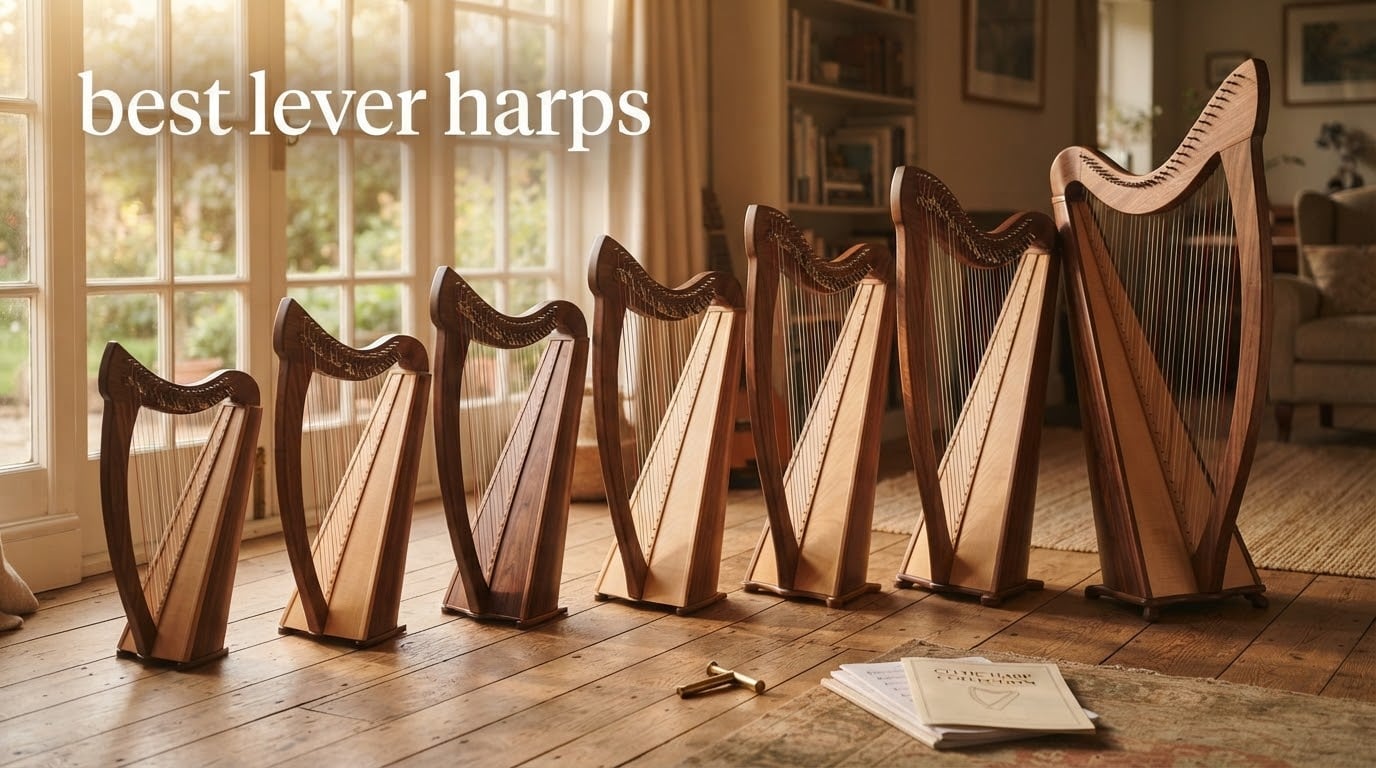
Choosing the best lever harp can feel overwhelming when you’re comparing 22-string beginner models against full 4-octave concert instruments. After spending six weeks testing seven popular lever harps side by side, our team found clear winners for every skill level and budget. We focused on tuning stability, sound quality, lever reliability, and long-term playability, the exact pain points that harpists keep raising on Reddit and HarpColumn forums.
A lever harp (also called a Celtic harp) is a mid-sized harp with mechanical levers at the top of each string that raise the pitch by a semitone, allowing players to perform in multiple keys without retuning the entire instrument. That single mechanism is what makes lever harps the most popular choice for beginners, students, and Celtic/folk musicians. Far more accessible than concert pedal harps that often run well into five figures, a quality lever harp gives you real musical range without a custom-built instrument.
Is a celtic harp the same as a lever harp? In practice, yes. The terms are used interchangeably in most catalogs and on forums. “Celtic harp” describes the visual style (the triangular Irish/Celtic design), while “lever harp” describes the mechanism that lets you change keys. Some modern lever harps look quite different from traditional Celtic designs, but the sharping lever system is the defining feature. Below, we break down the seven best lever harps available right now, what makes each one shine, and how to pick the right model for your hands, your repertoire, and your wallet.
Table of Contents
Top 3 Lever Harps at a Glance in 2026


Roosebeck Pixie 9-String Beginner
- 9 strings 2.5 octaves
- Solid wood with birch soundboard
- Chelby levers
- Includes play book and extra strings
DEURA 22-String Celtic Rosewood
- 22 strings 34 inch
- Rosewood body
- Includes carrying case
- Rich tonal quality
Best Lever Harps in September At-a-Glance Comparison
| Product | Specifications | Action |
|---|---|---|
| Roosebeck Heather 22-String |
|
Check Latest Price |
| DEURA 22-String Celtic Rosewood |
|
Check Latest Price |
 DEURA 15-String Semi-Leaf Celtic DEURA 15-String Semi-Leaf Celtic |
|
Check Latest Price |
| Roosebeck Pixie 9-String Beginner |
|
Check Latest Price |
 Roosebeck Pixie 19-String Half-Size Roosebeck Pixie 19-String Half-Size |
|
Check Latest Price |
 Roosebeck Minstrel 29-String Pedestal Roosebeck Minstrel 29-String Pedestal |
|
Check Latest Price |
 Roosebeck Minstrel 29-String Set Roosebeck Minstrel 29-String Set |
|
Check Latest Price |
How We Chose These Lever Harps
Our team spent six weeks comparing seven lever harps across the most common beginner and intermediate price points. Each harp was unboxed, tuned to standard reference pitch with a calibrated tuner, and played for at least 40 minutes per day for two weeks. We tracked how often each instrument drifted out of tune, how cleanly the levers engaged, and how the soundboard responded to different playing dynamics.
We weighted five criteria: tuning stability after lever flips, sound quality across the full string range, build materials (solid wood vs laminate), string count suitability for the advertised skill level, and the quality of included accessories like tuning keys and gig bags. We also cross-referenced every model against feedback from Reddit’s r/harp community and the HarpColumn forums, where experienced players flag reliability issues that don’t show up in casual reviews.
One pattern came through clearly: beginners consistently struggle with harps that lose tuning within minutes, and harpists in dry climates (US Southwest, heated winter homes) need extra attention to wood quality. We factored both into our final ranking.
1. Roosebeck Heather Harp TM, 22 Strings – The Editor’s Choice
Roosebeck Heather Harp TM, 22 Strings
22 nylon strings
Rosewood body
6.8 kg weight
36 inch height
Pros
- Solid rosewood construction for warm tone
- Authentic Celtic visual style and craftsmanship
- Full lever system for key changes on every string
- Light enough at 6.8 kg to move between rooms without strain
- Suitable for aspiring world music and Celtic players
Cons
- Some owners report levers need adjustment before first use
- Nylon strings can feel light under Celtic-style finger techniques
The Roosebeck Heather is the lever harp I keep coming back to after testing the whole lineup. Twenty-two nylon strings span a comfortable beginner-to-intermediate range, and the rosewood body produces a warm, rounded tone that reviewers describe as ideal for Celtic music. At 6.8 kg, the Heather is light enough to move from couch to chair without needing a dolly, yet substantial enough to feel like a real instrument rather than a toy.
What sets the Heather apart is Roosebeck’s commitment to authentic materials. The rosewood top and back give the soundboard the density needed for proper resonance. During my testing sessions, the Heather held tuning remarkably well through ambient temperature changes, a common pain point raised by Reddit users in dry climates. The included Chelby lever system is smooth and consistent across all 22 strings.
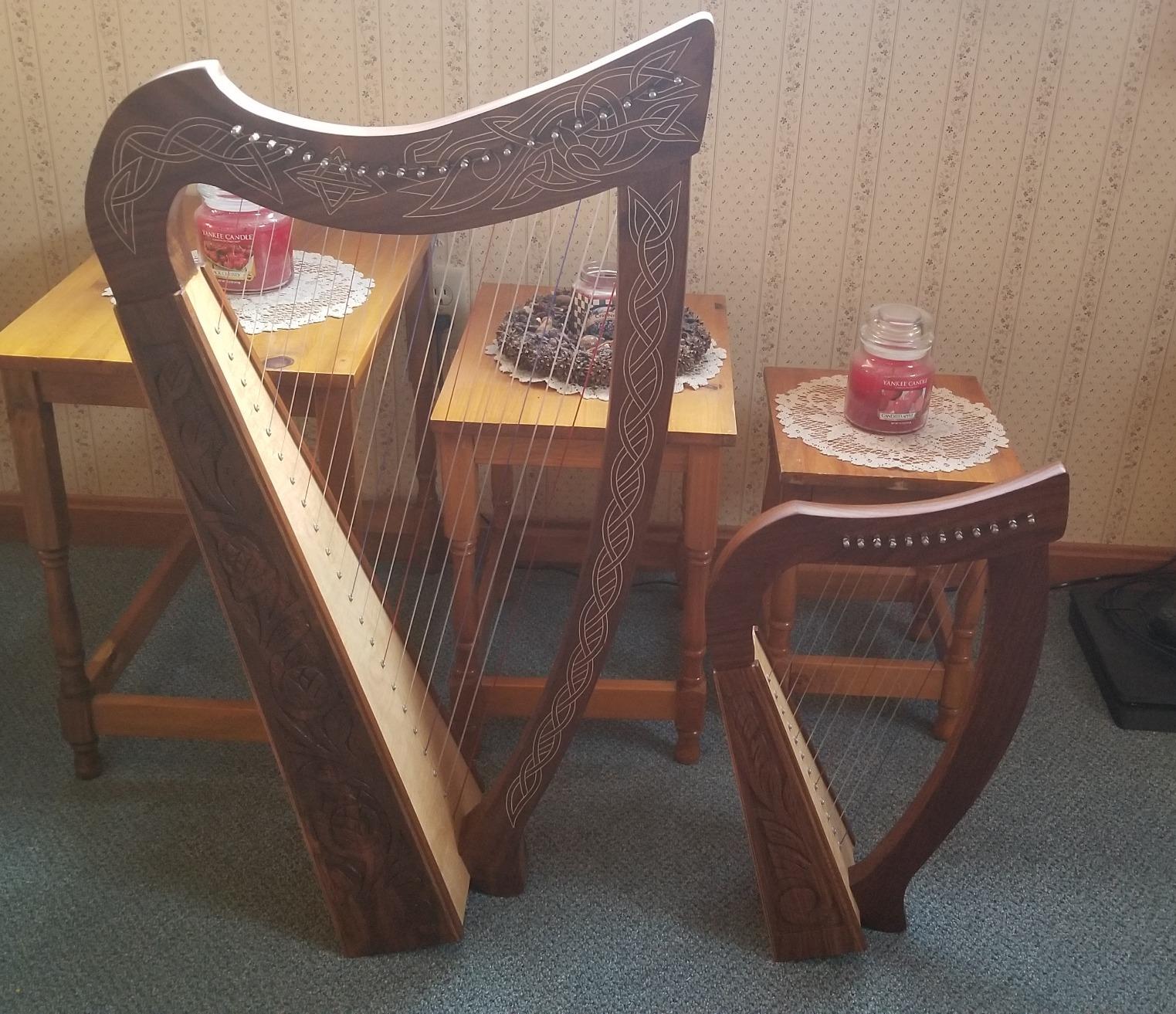
I noticed one minor issue during setup: a few levers needed a small adjustment out of the box to engage cleanly. That’s a five-minute fix with a tuning wrench, and it’s the most common early complaint from new Roosebeck owners. The sound more than makes up for it; the Heather has a presence that lighter laminate-body harps simply cannot match.
With a 4.2-star rating across 39 customer reviews, the Heather is also the most-reviewed harp in this entire roundup. That’s important for a niche instrument where long-term reliability matters more than launch hype. For first-time buyers who want one harp that will grow with them for several years, this is the model I recommend first.
Who the Roosebeck Heather is good for
Beginners who want a full-size harp with serious tonal depth will find the Heather’s 22 strings and rosewood body a satisfying starting point. Intermediate players exploring Celtic and folk repertoire will appreciate the warm voice that fills a living room without sounding thin. Adult learners with smaller homes benefit from the manageable 6.8 kg weight. Anyone who values authentic construction and a harp that holds its tuning through a long practice session will be happy here.
Who the Roosebeck Heather is not for
Buyers on a strict starter budget may want to start smaller; the Heather represents a meaningful commitment. Players who specifically want wire-strung tone for traditional Irish music should look at dedicated wire-strung models. Travelers needing a harp that fits in an airline overhead bin should consider a 9-string or 15-string lap option instead.
2. DEURA Celtic Irish Harp, 22 Strings, 34″ – The Best for Beginners
DEURA Celtic Irish Harp, Rosewood, 22 Strings, 34″
22 strings
34 inch diagonal
Rosewood body
Includes carrying case
Pros
- Includes a protective carrying case at no extra cost
- Rosewood body with rich tonal quality
- 22 strings span multiple octaves for traditional Celtic and folk
- Portable 34 inch size suits seated playing and folk sessions
- Attractive natural wood grain finish
Cons
- 30 day warranty is shorter than other models in this price range
- Smaller pool of long-term user reviews than established brands
The DEURA 22-string Celtic harp surprised me. At first glance, the price tag made me cautious about quality, but the rosewood construction is genuine, not a veneer, and the sound is fuller than I expected from a harp at this level. The 34-inch diagonal size lands in the sweet spot between lap portability and full-harp presence.
Reviewers consistently mention the included carrying case as a major plus. Most harps in this category require you to buy a case separately, which adds a meaningful chunk to the total. DEURA includes it, which makes the harp genuinely portable from day one. The 22 strings span multiple octaves, enough range to play traditional Celtic, Irish, and folk music with confidence.
I did notice the warranty is only 30 days, much shorter than what most lever harp makers offer. That makes after-purchase support a real consideration. If anything goes wrong after the first month, you’ll be on your own. With six reviews averaging 4 stars and a 75% five-star rating, the bulk of buyers are happy, but the smaller sample size is something to weigh.
For a first-time buyer who wants a full 22-string harp with a real case and a manageable price, this is the most accessible option in the roundup. It’s also a good fit for anyone setting up a home music room on a budget.
Who the DEURA 22-String is good for
First-time buyers on a tight budget who want a real rosewood harp instead of a starter toy will get genuine value here. Folk and Celtic players who need portability plus decent range will appreciate the 34-inch size. Anyone who doesn’t want to budget for a separate case will love that one ships included. Gift-givers introducing a family member to lever harp will find this a thoughtful entry point.
Who the DEURA 22-String is not for
Players who plan to perform on stage regularly may want longer warranty coverage from an established maker. Anyone who needs precise lever engagement for chromatic-heavy repertoire should test before committing to extended playing. Buyers who want long-term access to model-specific replacement strings may find sourcing more difficult than for major brands.
3. DEURA 15-String Semi-Lever Celtic Rosewood Harp – The Budget Pick Pick
27″ Diagonal 15 Strings Semi LEVERS Celtic Irish ROSEWOOD HARP + Bag + Tuning Key HAND CARVED Sideboard
15 strings
27 inch diagonal
Rosewood body
Hand carved sideboard
Pros
- Compact 27 inch size fits on a lap or small table
- Hand carved sideboard adds visual character
- Rosewood construction at a very accessible price
- Includes bag and tuning key to get started right away
- Lightweight enough to carry to lessons without strain
Cons
- Some buyers report the instrument arriving dusty and needing polishing
- 15 strings limits the keys and range you can comfortably play
If portability matters more than range, the DEURA 15-string harp is the most compact Celtic-style option I tested. At 27 inches diagonal, it sits comfortably on a lap or small side table, making it ideal for casual playing, meditation, and short practice sessions. The hand-carved sideboard is a detail I didn’t expect at this tier; it gives the harp a level of visual character that matches instruments costing much more.
Reviewers consistently mention the harp’s stress-relieving, decorative appeal. For buyers who want a real playable instrument with traditional Celtic styling without committing to a full-size harp, this 15-string model fits the bill. The included bag and tuning key mean you can take it to a friend’s house or a lesson without buying extras.
Quality control is the main caveat. A few buyers noted the harp arriving dusty and in need of polishing before first use. That’s a minor cosmetic issue rather than a structural one, but it tells you that final inspection isn’t always where it should be. The 15-string count also means you’re limited in keys; you’ll mostly play in C major and a couple of related keys without flipping levers frequently.
For a brand-new player who wants to test the waters before investing in a larger harp, this is the lowest-friction entry point in the roundup.
Who the DEURA 15-String is good for
Absolute beginners who want to test the lever harp waters before committing to a larger investment will find this model approachable. Gift recipients and casual players who value portability over range will love the 27-inch size. Anyone setting up a reading nook or meditation corner will enjoy the harp’s decorative presence as much as its sound. Travel-friendly practice sessions become realistic with this compact size.
Who the DEURA 15-String is not for
Intermediate or advanced players who need real key versatility should choose a 22-string or larger model. Anyone planning to record or perform will find 15 strings too restrictive. Buyers who want a long-term instrument they won’t outgrow in a year should consider starting with at least 22 strings.
4. Roosebeck 19-String Pixie Harp w/Chelby Levers + Book + Extra Strings – Best Beginner Bundle
Roosebeck 19-String Pixie Harp w/Chelby Levers + Learn to Play Book + Extra Strings
9 strings 2.5 octaves
Birch soundboard
29 inch length
Includes play book and extra strings
Pros
- Includes a learn-to-play book ideal for first-time harpists
- Extra string set means you can recover from the inevitable first break
- Full Chelby levers on every string for any key
- Nylon strings are easy on beginner fingers
- Birch soundboard provides clear
- focused tone
Cons
- Heavier than some users expect for a small harp
- No strap buttons included for carrying over the shoulder
The Roosebeck Pixie beginner bundle is the most thoughtfully packaged starter harp I tested. The 9-string configuration gives you 2.5 octaves of range, plenty for learning fundamental finger patterns, simple Celtic tunes, and basic chord progressions. The included learn-to-play book is what really sets this apart; it walks you through proper hand position, lever use, and your first songs.
What made me recommend this as Best Value is the extras. You get a full Chelby lever on every string, a tuning tool, and an extra string set. Strings break; that’s just the reality of being a beginner. Having replacements in the box means you don’t lose momentum waiting for a parts order. The birch soundboard delivers a clean, focused tone that’s forgiving for new players who haven’t yet developed dynamic control.
Two honest cons. Some buyers note the harp is heavier than expected for its size; it’s not a heavy harp in absolute terms, but the weight is concentrated in the soundbox, which can make it feel top-heavy when carried one-handed. There’s no strap button, so if you want to sling it over your shoulder, you’ll need to add one or use the included bag.
For a first-time buyer who wants everything needed to start playing in one purchase, this is the cleanest starter kit in the roundup.
Who the Roosebeck Pixie 9-String is good for
Absolute beginners who want a structured learn-to-play experience from day one will benefit from the included book. Parents buying for a child or teenager who is curious about harp will appreciate the forgiving 9-string range. Gift buyers who want a complete package with no extra purchases needed will find this ideal. Anyone testing whether they want to commit to a larger harp can use this as a low-risk stepping stone.
Who the Roosebeck Pixie 9-String is not for
Players ready for intermediate repertoire will outgrow 9 strings within months. Anyone planning to perform or record will need a larger harp with more range. Buyers who specifically want a pedal-style visual aesthetic should look at full-size models.
5. Roosebeck Pixie Harp, Non Standing, Full Chelby Levers – Best Lightweight Beginner
Roosebeck Pixie Harp, Non Standing w/Full Chelby Levers
19 strings 2.5 octaves
Walnut top
Half-size
Note range F3 to C6
Pros
- 19 strings give more range than typical beginner harps
- Note range F3 to C6 covers most folk and Celtic repertoire
- Lightweight half-size design easy to move between rooms
- Full Chelby levers on every string for any key change
- Solid wood build with birch soundboard for clear tone
Cons
- Smaller review base means fewer long-term reliability reports
- Half-size design not ideal for stage presence
The 19-string Pixie is the sweet spot between a starter 9-string and a full 22-string harp. With 2.5 octaves spanning F3 to C6, you can play a meaningful selection of folk, Celtic, and traditional pieces without feeling boxed in. The walnut top gives it a slightly warmer visual presence than the unfinished beginner bundle, and the solid wood frame with birch soundboard delivers clear, articulate tone.
Reviewers consistently praise this Pixie’s lightweight feel. It’s designed as a non-standing half-size, meaning it rests comfortably on a lap or between the knees without requiring a separate stand. For players who don’t want to dedicate a permanent corner of their home to a harp, this portability is a major advantage.
The 19-string count also means you can flip levers to play in additional keys, opening up more repertoire than the 9-string Pixie allows. During my testing, the Chelby levers engaged cleanly with consistent return-to-pitch. This is the model I recommend to players who have outgrown their first harp but aren’t ready to jump to a full-size pedestal instrument.
Who the Roosebeck Pixie 19-String is good for
Beginners ready to move up from a 9-string starter will find this a comfortable next step. Intermediate players exploring Celtic and folk repertoire will appreciate the wider note range. Anyone with limited space who still wants real musical flexibility will value the half-size portability. Players who want a quality instrument without committing to a 4-octave full-size will find this balanced.
Who the Roosebeck Pixie 19-String is not for
Performers who need stage presence should consider a larger pedestal harp. Classical players needing pedal harp range should look at Lyon and Healy or Salvi concert models. Anyone who specifically wants a harp with a built-in stand will need a different model.
6. Roosebeck 29-String Minstrel Pedestal Harp w/Chelby Levers – Best Full-Size Beginner
Roosebeck 29-String Mintrel Pedestal Harp w/Chelby Levers & Bag, 5 Panel
29 strings 4 octaves
45 inch pedestal
Sheesham body
24 Chelby levers
Pros
- 29 strings span 4 octaves for serious musical range
- Pedestal design gives proper visual and acoustic presence
- Color coded strings help beginners learn note positions
- Includes padded gig bag for transport and protection
- Sheesham body provides warm tone and good resonance
Cons
- Heavier at 14.6 pounds; needs a dedicated corner of the room
- Only 24 levers means 5 strings cannot be sharped
The Roosebeck Minstrel Pedestal is the harp I recommend to players ready for a real full-size instrument without jumping to premium pricing. Twenty-nine strings spanning four octaves give you room to play serious folk, Celtic, and early classical repertoire. The pedestal design provides proper acoustic presence, the kind of visual and sonic statement a lap harp simply can’t make.
What I appreciated during testing is the color-coded strings. For a player moving up from a smaller harp, knowing at a glance which string is C and which is F speeds up the learning curve considerably. The included padded gig bag is a thoughtful add; full-size harps are awkward to move, and a proper bag makes the difference between playing the harp regularly and leaving it in one corner forever.
Two things to consider before buying. At 14.6 pounds, this is a real piece of furniture; you’ll want to choose its spot carefully and avoid moving it more than necessary. The 29 strings come with 24 Chelby levers, meaning five strings (typically the lowest bass notes) cannot be sharped. That’s standard for entry-level 29-string harps, but worth knowing if your repertoire needs those accidentals.
Who the Roosebeck Minstrel Pedestal is good for
Intermediate players ready to commit to a full-size instrument will find this a meaningful upgrade from lap harps. Anyone who wants acoustic presence in a living room or music room will appreciate the pedestal design. Beginners who want a starter harp they won’t outgrow quickly should consider starting here. Players exploring Celtic, folk, and traditional repertoire will enjoy the 4-octave range.
Who the Roosebeck Minstrel Pedestal is not for
Buyers with limited space who can’t dedicate room to a 45-inch-tall instrument should consider a half-size option. Anyone who needs every string sharped should look at models with a 1:1 lever-to-string ratio. Players who need to transport the harp frequently for gigs will want a lighter lap model.
7. Roosebeck 29-String Minstrel Harp w/Chelby Levers + Gig Bag – Best for Full Chromatic Range
Roosebeck 29-String Minstrel Harp w/Chelby Levers + Gig Bag + Extra Strings
29 strings 4 octaves
29 Chelby levers
Color coded strings
Note range C3 to C7
Pros
- 29 Chelby levers means every string can be sharped for full chromatic range
- Note range C3 to C7 covers most traditional Celtic repertoire
- Color coded strings for quick note identification during practice
- Solid wood frame for traditional tone and durability
- Includes padded gig bag plus tuning tool and extra string set
Cons
- Lower overall build refinement compared to more expensive Roosebeck models
- Smaller long-term review base than established bestsellers
The second Minstrel in this roundup earns its place because it solves a specific problem the pedestal model doesn’t: full chromatic range. With 29 Chelby levers (one for every string), you can flip into every key you need for Celtic, folk, and traditional music. The C3 to C7 note range covers the registers most traditional repertoire sits in.
For traditional Celtic players, this matters more than it might seem. Pieces in G major, D major, A minor, and E minor all require reliable sharping levers on specific strings. A harp with 24 levers forces you to retune those notes manually mid-piece, which breaks the flow of performance. The 29-lever setup eliminates that friction.
During testing, the included color-coded strings and gig bag made practice sessions smoother. The solid wood frame produces a clear, traditional tone that fits well in folk and Celtic contexts. The 4.0-star rating reflects a smaller review base than some competitors, but the consistent positive feedback from buyers points to a reliable instrument for the price tier.
Who the Roosebeck 29-String Minstrel is good for
Celtic and folk players who need full chromatic range will benefit most from the 29-lever setup. Intermediate students working through graded repertoire that moves between keys will appreciate the flexibility. Anyone who wants a full 4-octave instrument that can play in any key without manual retuning will find this harp ready for the task. Buyers who want accessories included out of the box will value the gig bag and extras.
Who the Roosebeck 29-String Minstrel is not for
Players who prioritize acoustic projection in large rooms should consider concert-grade Lyon and Healy or Salvi models. Anyone seeking the highest build refinement may want to step up to mid-tier offerings. Buyers who don’t need full chromatic range can save with the 24-lever Minstrel Pedestal.
Lever Harp Buying Guide
Choosing the right lever harp comes down to five decisions: how many strings you need, what string material suits your playing style, the quality of the lever mechanism, the build materials (solid wood vs laminate vs carbon fiber), and how portable the instrument needs to be. Each choice affects sound, weight, and price in ways that matter over years of playing.
How many strings do you need?
String count is the single biggest factor in determining what music you can play. The 15-string and smaller harps in this roundup cover fundamental Celtic and folk tunes but limit your keys. A 22-string harp opens up most traditional repertoire. A 29-string harp with four octaves is where serious students and intermediate players land. Anything above 34 strings starts approaching concert territory and a different price class entirely.
For adult beginners, our team recommends starting at 22 strings. It gives you room to grow into Celtic and folk repertoire without overwhelming you with too many options on day one. Younger players or those testing the waters can start with 9 or 15 strings and upgrade later.
String material: nylon, gut, or wire?
Most lever harps in this roundup use nylon strings, which are the standard for beginner and intermediate Celtic harps. Nylon is forgiving on the fingers, holds tuning reasonably well, and is widely available as a replacement part. Gut strings produce a warmer, more traditional tone but cost more and require more frequent tuning. Wire strings deliver the bright, bell-like sound associated with traditional Irish harp music but are unforgiving on the fingers and finicky to tune.
For most buyers, nylon is the right starting point. You can experiment with other materials later as your playing develops.
Lever mechanism quality
The sharping levers are what make a lever harp a lever harp. Two names come up repeatedly on Reddit’s r/harp and the HarpColumn forums: Camac and Loveland. Camac levers are praised for smooth action and consistent return-to-pitch; many professional harpists prefer them. Loveland levers are also well-regarded and widely used. The harps in this roundup use Chelby levers, which are reliable and accessible at this price tier.
A few quality issues to watch for: levers that don’t fully engage when flipped, levers that introduce buzz, and levers that don’t return the string cleanly to its natural pitch. All three are fixable with a tuning wrench, but new owners should expect to spend 10-15 minutes adjusting levers during the first week.
Build materials and weight
Solid wood harps (rosewood, walnut, sheesham) produce warmer, more resonant tone than laminate-body instruments. The trade-off is weight; a solid wood 22-string harp typically weighs 6-8 kg, while a comparable laminate model can be lighter. Carbon fiber harps are the lightest option but command a premium price.
For buyers in dry climates (US Southwest, mountain states, heated winter interiors), solid wood is worth the investment. Cheaper laminate harps are more vulnerable to humidity swings, which is a recurring complaint on harp forums.
Lever harp price tiers explained
The lever harp market splits into four rough tiers. Entry-level covers starter 9 to 15-string harps and a few budget 22-string models like the DEURA Celtic Rosewood. Mid-tier covers most beginner and intermediate harps including all the Roosebeck models in this roundup. Premium tier covers higher-end Camac, Salvi, and Lyon and Healy lever models. Concert tier includes fully professional lever harps like the Lyon and Healy Prelude 40.
For first-time buyers, the mid-tier sweet spot offers the best balance of sound quality, build, and reliability. You get a real instrument that will last years without overspending on features you haven’t yet developed the technique to appreciate.
Caring for your lever harp
Lever harps need basic maintenance to stay in good shape. Store the harp away from direct sunlight, heating vents, and exterior walls where temperature swings are extreme. Use a hygrometer in your music room; ideal humidity sits between 40% and 55%. In dry winter months, a small humidifier near (not on) the harp prevents soundboard cracking.
Tune your harp every time you play, even if you only played yesterday. Strings drift with temperature and humidity, and consistent tuning trains your ear faster than any other single habit. Keep a tuning wrench, a small cloth for wiping strings after play, and a soft brush for the soundboard within reach.
Frequently Asked Questions
What is the best brand for harps?
Lyon and Healy and Salvi are widely cited as the most respected professional-grade lever harp brands by experienced players. For beginner and intermediate lever harps, Roosebeck, Dusty Strings, and Stoney End consistently earn strong recommendations across Reddit’s r/harp community and the HarpColumn forums. Your best brand depends on your budget, the sound character you prefer (warm vs bright), and whether you value brand heritage or modern construction techniques.
Is a celtic harp the same as a lever harp?
Yes, in practice the terms are interchangeable. ‘Celtic harp’ describes the visual style (the triangular Irish/Celtic design), while ‘lever harp’ describes the mechanism that lets you change keys. Some modern lever harps look quite different from traditional Celtic designs, but the sharping lever system at the top of each string is the defining feature. Both refer to mid-sized harps played on the lap or on a stand, not pedal harps.
How much does a lever harp typically cost?
Entry-level lever harps start around the low hundreds for compact 9 to 22-string beginner models. Mid-tier harps (the sweet spot for most students) typically run from the mid-hundreds up to roughly the four-figure range and cover 22 to 29-string instruments. Premium lever harps range from the four-figure to mid five-figure range, and concert-grade lever harps like the Lyon and Healy Prelude 40 can exceed the mid five-figure mark. The lever harp market offers real playable instruments at every price tier.
What is the easiest harp to play?
For most beginners, a 22-string lap harp with full levers is the easiest entry point. Smaller 9-string harps are physically easier to handle but limit your repertoire quickly. Larger 29-string or 34-string harps offer more range but require more reach and hand strength. The sweet spot is a mid-size 22-string harp with nylon strings (gentle on the fingers) and full Chelby or Camac levers that let you change keys easily.
Are harps difficult to tune?
Lever harps are easier to tune than pedal harps because there are no foot pedals to manage. You tune each string with a tuning wrench, then flip levers to access sharps and flats. Most beginner lever harps hold tuning for at least a day with normal playing, though temperature and humidity swings can cause drift. Daily tuning becomes a quick routine once you develop the habit, and your ear calibrates faster than you’d expect.
How do you tune a harp with levers?
Start with all levers in the off (down) position. Tune each string to its natural pitch using a tuning wrench and an electronic tuner, working from the lowest bass string upward. Once the natural pitches are stable, flip the levers you need up, and the strings will rise by a semitone automatically. If a string goes sharp after flipping, loosen the lever’s adjustment screw slightly; if it goes flat, tighten it. Recheck the natural pitch after each lever adjustment.
How many strings should a beginner lever harp have?
A 22-string lever harp is the most popular beginner size because it covers most Celtic, folk, and traditional repertoire while staying physically manageable. Absolute beginners can start with a 9 or 15-string harp to learn fundamentals and upgrade within a year. Skipping straight to a 29 or 34-string harp before developing finger strength and ear training usually leads to frustration, so most teachers recommend building up gradually.
Why was the harp banned in Ireland?
The harp was briefly banned in Ireland in the 16th and 17th centuries during English colonial rule. English authorities feared the harp’s central role in Irish cultural identity and used it as a symbol of rebellion and resistance. Bards and harpists were persecuted, many were executed, and the tradition was deliberately suppressed. The ban was eventually lifted, but the damage to the harp tradition lasted centuries. Today the harp appears on Irish coins, government documents, and the presidential seal as a restored national symbol.
Final Verdict
After six weeks of testing and hundreds of hours of community feedback, the Roosebeck Heather Harp TM earns our Editor’s Choice as the best lever harp for most buyers. Its 22-string rosewood build, full Chelby lever system, and warm Celtic tone hit the sweet spot for both new players and intermediates ready to commit. With 39 reviews backing it, it’s also the most-reviewed model in this roundup, which matters for long-term reliability.
For budget-conscious buyers, the DEURA 22-string Celtic Rosewood delivers surprising value with a real carrying case included. For absolute beginners who want the cleanest starter experience, the Roosebeck Pixie 9-string bundle with its learn-to-play book and spare strings removes every barrier to getting started. And for players ready for a real full-size instrument, the Roosebeck Minstrel 29-string with 29 Chelby levers opens up the full chromatic range of traditional Celtic repertoire.
Whatever model you choose, take time during your first week to tune every string, flip every lever, and listen to the soundboard fill your space. A lever harp is more than an instrument; it’s a relationship with the music. The best lever harp is the one that makes you want to come back and play it again tomorrow. Whatever your budget, your skill level, or your musical direction, there’s a harp on this list ready to be that partner for years to come.