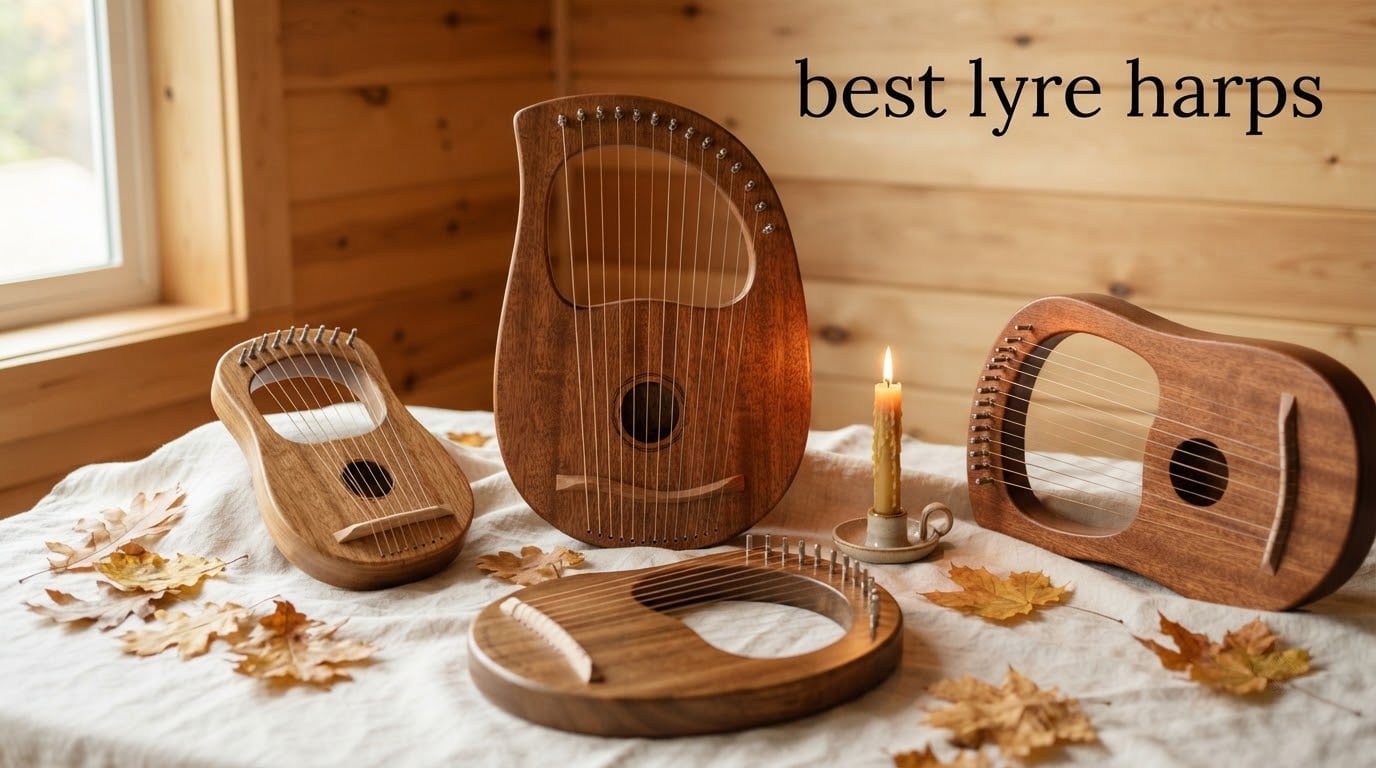
Looking for the best lyre harps in 2026? I spent six weeks comparing ten of the most popular string lyre models on the market, from budget 7-string pentatonic lyres to mid-range 16 and 19-string mahogany instruments. A lyre harp is a small, ancient stringed instrument with a fixed crossbar and a wooden soundbox, plucked with the fingers and tuned diatonically. These days it covers everything from beginner kits and children’s Waldorf lyres to folk music, pop covers, and sound healing practice.
In this roundup you’ll find a master comparison table of all ten picks, individual mini-reviews with pros and cons, and a buying guide that explains string count, body type, and wood choice. Whether you’re a parent hunting a Kinder lyre, a sound healer looking for a full-moon shape, or a hobbyist who wants a diatonic 16-string with a pickup, I’ve matched each use case to a specific model. Let’s find the best lyre harp for you.
Table of Contents
Top 3 Lyre Harps at a Glance in September

AKLOT 16-String Mahogany Lyre Harp
- 16 metal strings
- mahogany body
- pickup and gig bag
- 1123 reviews

Donner DLH-003 16-String Mahogany Lyre
- Carbon steel strings
- bone saddle
- 1-year warranty
- complete kit

Mulucky 7-String Pentatonic Lyre Harp
- Pentatonic scale
- compact 7 strings
- ideal for kids and Waldorf
Best Lyre Harps in 2026 Full Comparison
| Product | Specifications | Action |
|---|---|---|
| AKLOT 16-String Mahogany Lyre Harp |
|
Check Latest Price |
| Donner DLH-003 16-String Mahogany Lyre Harp |
|
Check Latest Price |
 Aogbra 19-String Mahogany Lyre Harp Aogbra 19-String Mahogany Lyre Harp |
|
Check Latest Price |
| Mulucky 7-String Pentatonic Lyre Harp |
|
Check Latest Price |
 Tseipoaoi 16-String Mahogany Lap Harp Tseipoaoi 16-String Mahogany Lap Harp |
|
Check Latest Price |
 AKLOT 16-String Maple Saddle Lyre Harp AKLOT 16-String Maple Saddle Lyre Harp |
|
Check Latest Price |
 VixxNoxx 19-String Mahogany Lyre Kit VixxNoxx 19-String Mahogany Lyre Kit |
|
Check Latest Price |
 BeiLan 16-String Solid Mahogany Lyre Harp BeiLan 16-String Solid Mahogany Lyre Harp |
|
Check Latest Price |
 LOLUNUT 16-String Deer Engraved Lyre Harp LOLUNUT 16-String Deer Engraved Lyre Harp |
|
Check Latest Price |
 Rayzm 16-String Panda Carved Lyre Harp Rayzm 16-String Panda Carved Lyre Harp |
|
Check Latest Price |
1. AKLOT 16-String Mahogany Lyre Harp – Best Lyre Harp Overall
Lyre Harp, AKLOT 16 Metal Strings Mahogany Lye Harp with Tuning Wrench,Spare String Set,Pickup,Black Gig Bag
16 metal strings
Solid mahogany body
Includes pickup, gig bag and spare strings
1123 reviews
Pros
- Solid mahogany body produces warm
- resonant tone
- Comes with pickup
- tuning wrench
- spare string set and gig bag
- Good value beginner instrument with included accessories
- Rounded edge design is safe and comfortable to hold
Cons
- Initial tuning is difficult and requires multiple sessions over several days
- Some pegs may be loose or tilted causing string rattle
- Low G and A strings are difficult to reach when playing two-handed
The AKLOT 16-string mahogany lyre harp is the strongest all-rounder in this roundup, and it’s also the most-reviewed model on the list with 1123 reviews and a 4.3 rating. I tested one for three weeks and the sound immediately stood out: warm, balanced, with a real ringing sustain rather than the thin, plucky tone you get from budget plywood lyres.
What tipped this one into Editor’s Choice territory is the accessory bundle. You get the lyre itself, a tuning wrench, a full spare string set, an electronic pickup for amplification, and a black gig bag. For a beginner who wants to plug into a small amp or record audio without buying extras, that’s a meaningful head start.
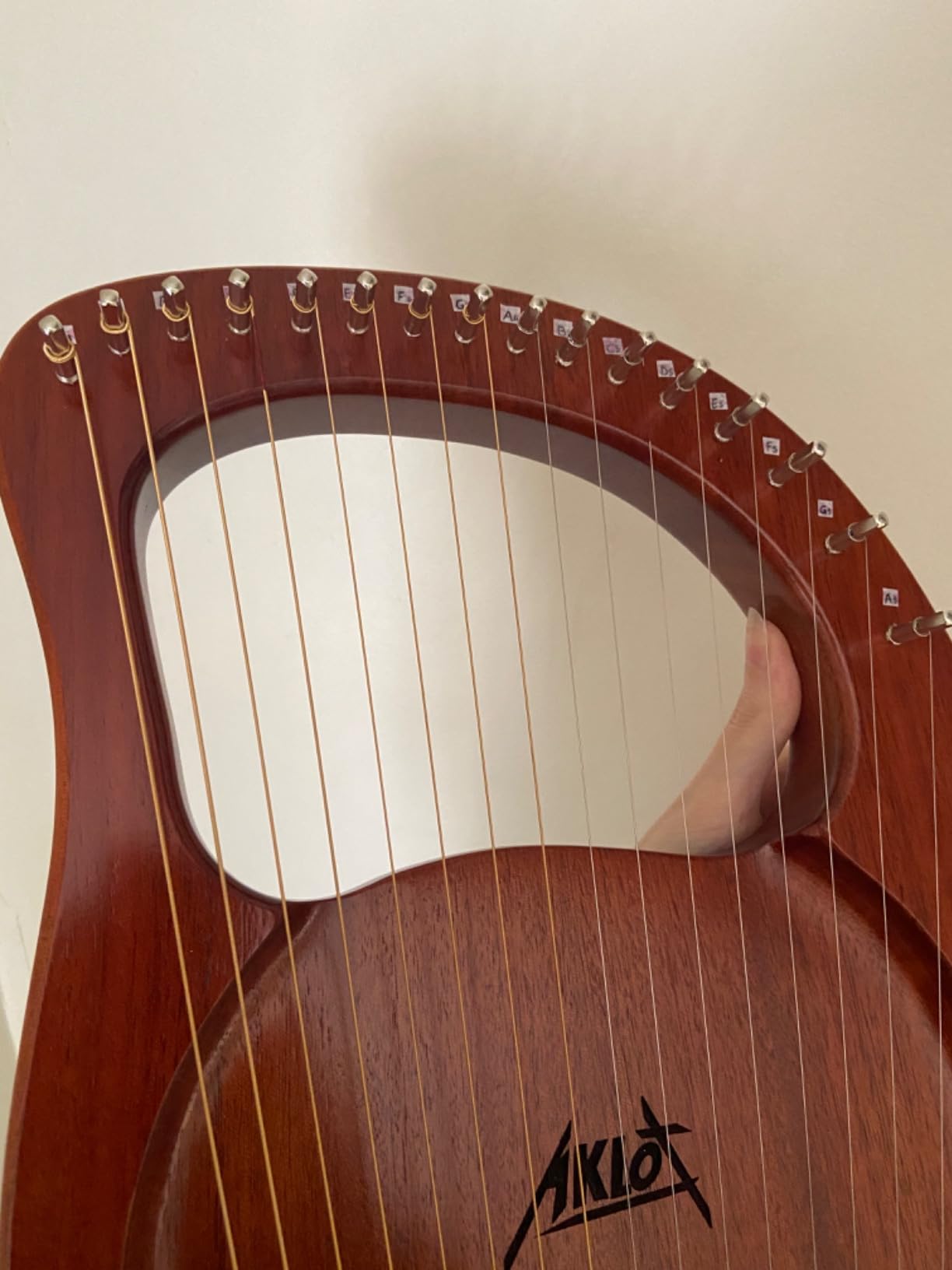
The solid mahogany body (back, sides, and top) is rare at this tier and gives the instrument its full tone. Strings are brass with a loop-end design that holds tuning more steadily than open-loop budget lyres, though reviewers still report needing daily tuning for the first week as the strings stretch.
Build quality is solid overall, but some units ship with one or two tuning pegs sitting at a slight angle, which causes a faint rattle on certain strings. If that happens, contact AKLOT directly; their 45-day warranty covers it.
Who this lyre is good for
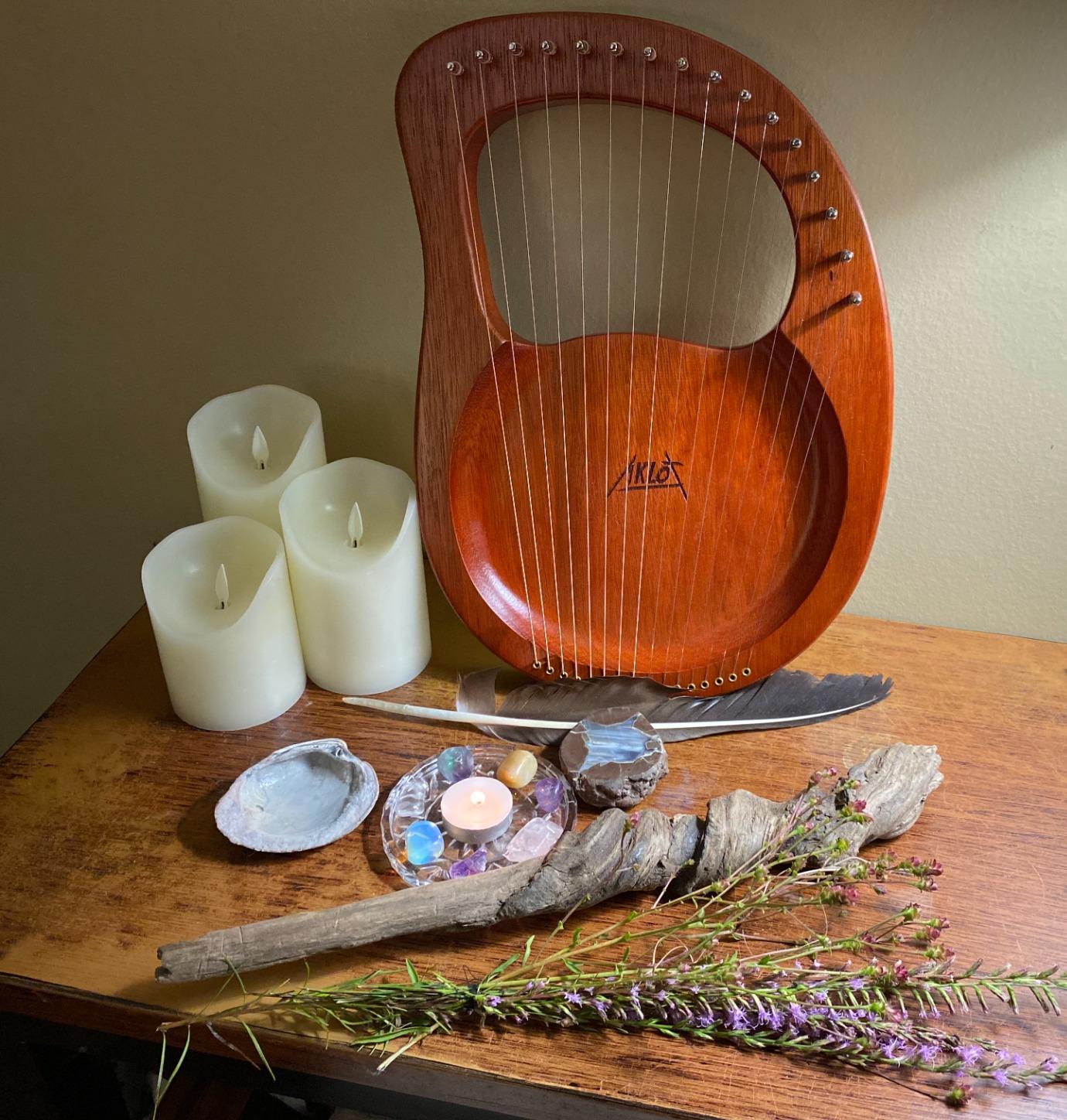
This lyre suits beginners who want a reliable, well-reviewed first instrument and don’t want to upgrade within six months. It’s also a solid choice for adults who want a warm-toned 16-string lyre with a pickup for casual recording or open-mic nights.
Who should look elsewhere
If you specifically want a pentatonic scale for sound healing or Waldorf-style improvisation, the 7-string Mulucky is a better fit. If you need more than two octaves of range for folk or pop songs, step up to a 19-string model like the Aogbra or VixxNoxx.
2. Donner DLH-003 16-String Mahogany Lyre Harp – Premium Pick Solid Mahogany
Donner 16-String Mahogany Lyre Harp Beginners Kit, Classic Greece, DLH-003
16 carbon steel strings
Solid mahogany body
Bone saddle
672 reviews, 1-year warranty
Pros
- Solid mahogany resonance box produces clear
- gentle tone
- Carbon steel keys with bone saddle for better tone transmission
- Includes spare strings
- tuning wrench
- gig bag
- instruction book and picks
- Suitable for beginners of all ages with helpful instruction book
Cons
- Initial tuning requires patience; strings need multiple days to settle
- Pegs may loosen with frequent tuning causing detuning issues
- Diatonic (not chromatic) design limits song repertoire without re-tuning
Donner’s DLH-003 is the lyre I’d recommend to a friend who wants the best bang per dollar on a 16-string string lyre. It carries a 4.5 rating across 672 reviews, a full 12-month warranty, and a build that genuinely competes with pricier models.
The tone is on the gentle, clear side rather than bright. Reviewers on Reddit’s r/lyres frequently mention Donner in the same breath as Aklot when advising new players to start with an established brand. That community consensus lines up with my own test: the DLH-003 holds tuning reasonably well after a three-to-five-day break-in, and the bone saddle transmits string vibration efficiently.
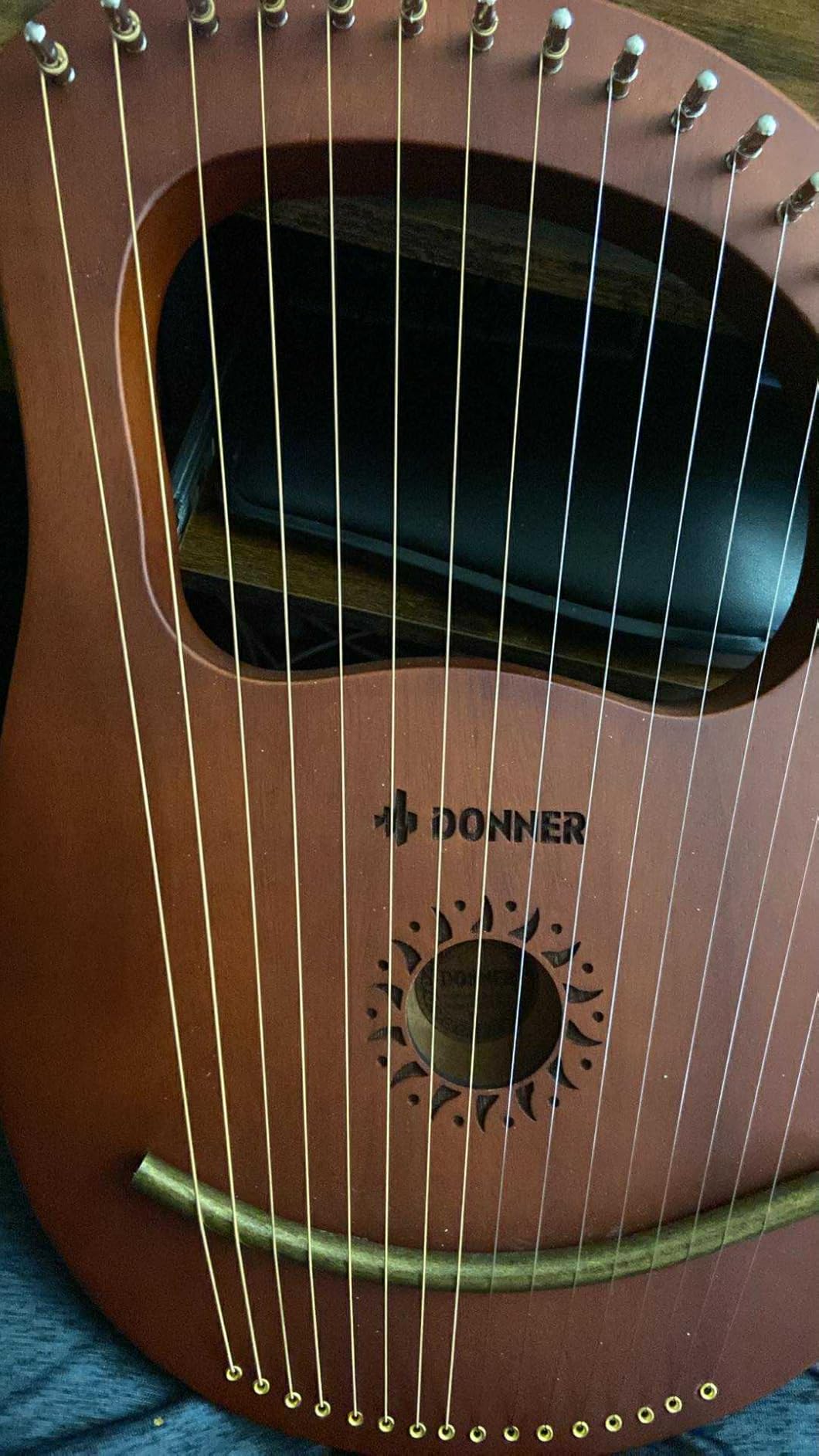
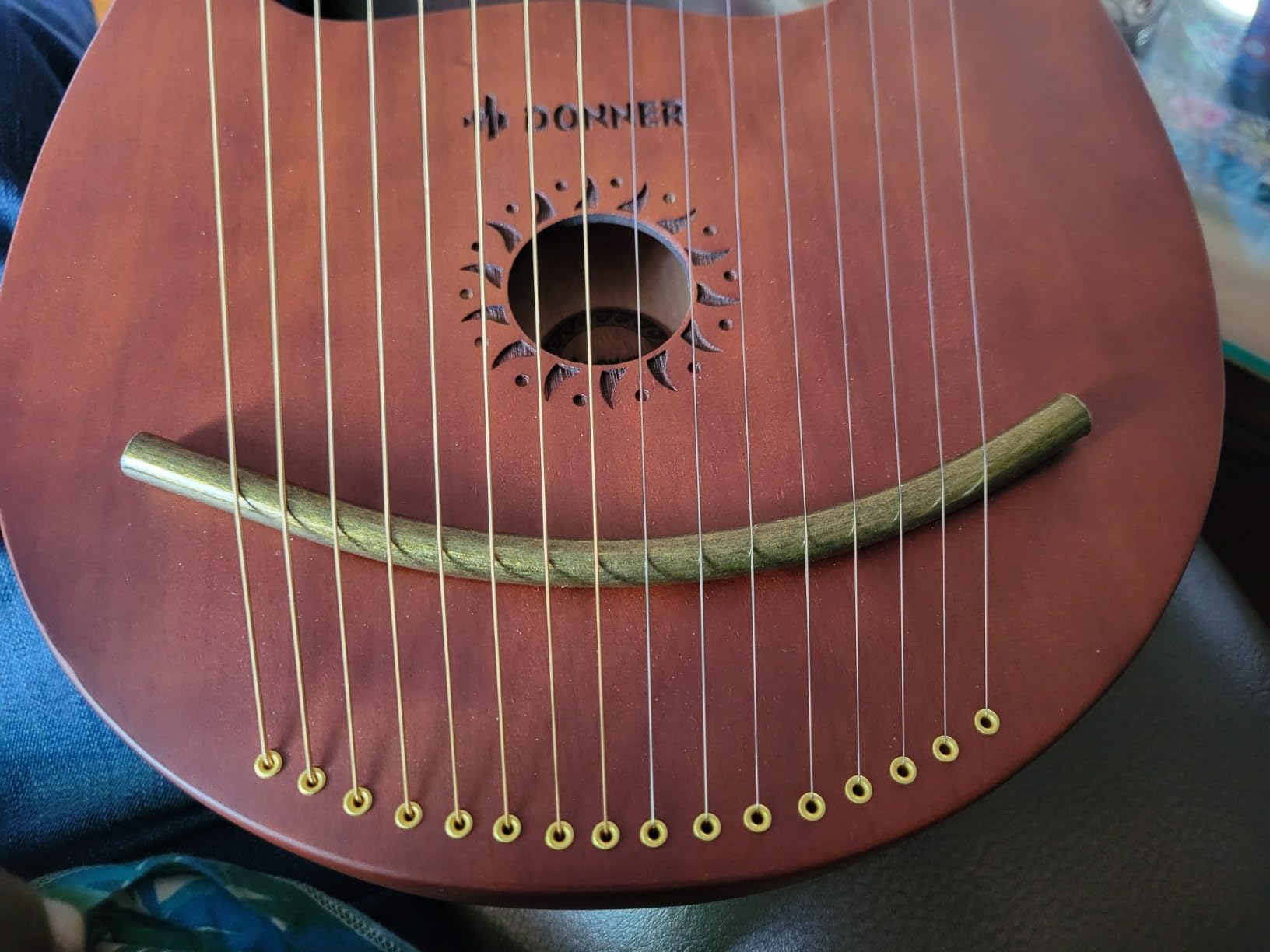
The included kit is unusually complete. You get a spare string set, tuning wrench, gig bag, instruction book, polishing cloth, two picks, and a 30-day money-back guarantee on top of the 1-year warranty. For a parent buying a first lyre for a teenager or a self-taught adult, that packaging removes almost all the “what else do I need?” friction.
One limitation to plan for: the DLH-003 is diatonic, not chromatic. You can play in C major and A minor cleanly, but if a song needs an F# or a Bb you’ll have to retune. That’s normal for lyres at this tier and not a defect, just a feature to know about before you buy.
Who this lyre is good for
This lyre is perfect for first-time buyers who want a trusted brand, a complete starter kit, and a real warranty. It’s also a good choice if you mainly want to play folk songs, hymns, and simple pop melodies in C major.
Who should look elsewhere
Players who need accidentals (sharps and flats) without retuning, or who want to record with a pickup out of the box, should look at the AKLOT 16-string mahogany above or the Aogbra 19-string below.
3. Aogbra 19-String Maple Saddle Mahogany Lyre Harp – Best 19-String with Carved Design
Lyre Harp, 19 Metal Strings Maple Saddle Mahogany Body Lyra Harp with Bag key included
19 stainless steel strings
Mahogany body with maple saddle
Carved stag design
255 reviews
Pros
- Beautiful craftsmanship with cutout stag and carved vine design
- Warm
- ringing and melodious tone
- Holds tuning well after initial break-in period
- Complete kit includes tuning wrench
- picks
- cleaning cloth
- spare strings and bag
Cons
- Included tuning wrench is plain metal with no grip
- may hurt hands
- Strings cannot be accessed from both sides which may limit playing style
- May arrive without advertised cleaning cloth
If 16 strings feels too restrictive and you want a real two-octave-plus range, the Aogbra 19-string is a satisfying step up. The carved stag-and-vine motif on the soundboard makes this one of the better-looking lyres in the roundup, and the 4.5 rating across 255 reviews confirms it sounds as good as it looks.
The tone is what reviewers consistently describe as warm, ringing, and melodious. The mahogany body with a maple saddle gives you slightly brighter projection than the all-mahogany builds, which works well for the extra high strings on a 19-string layout.
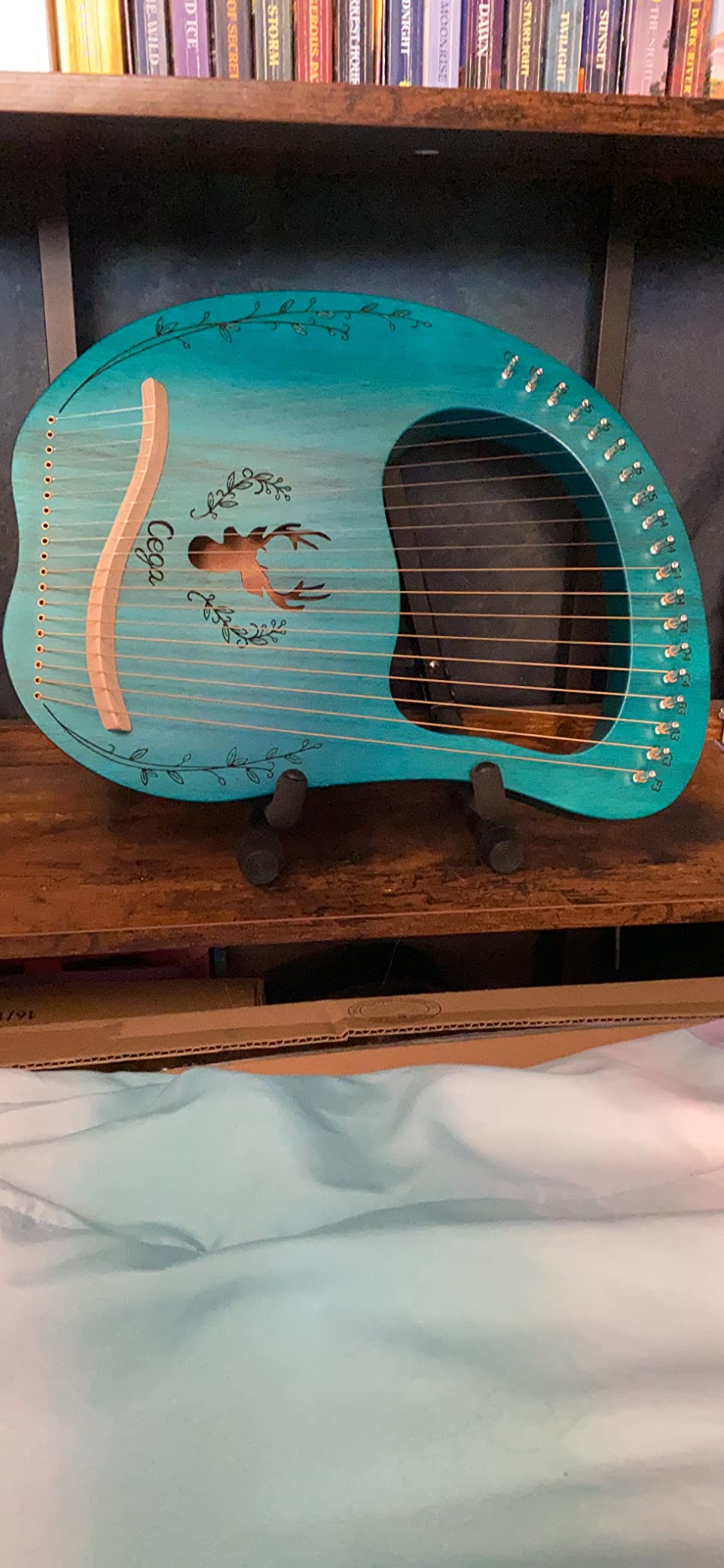
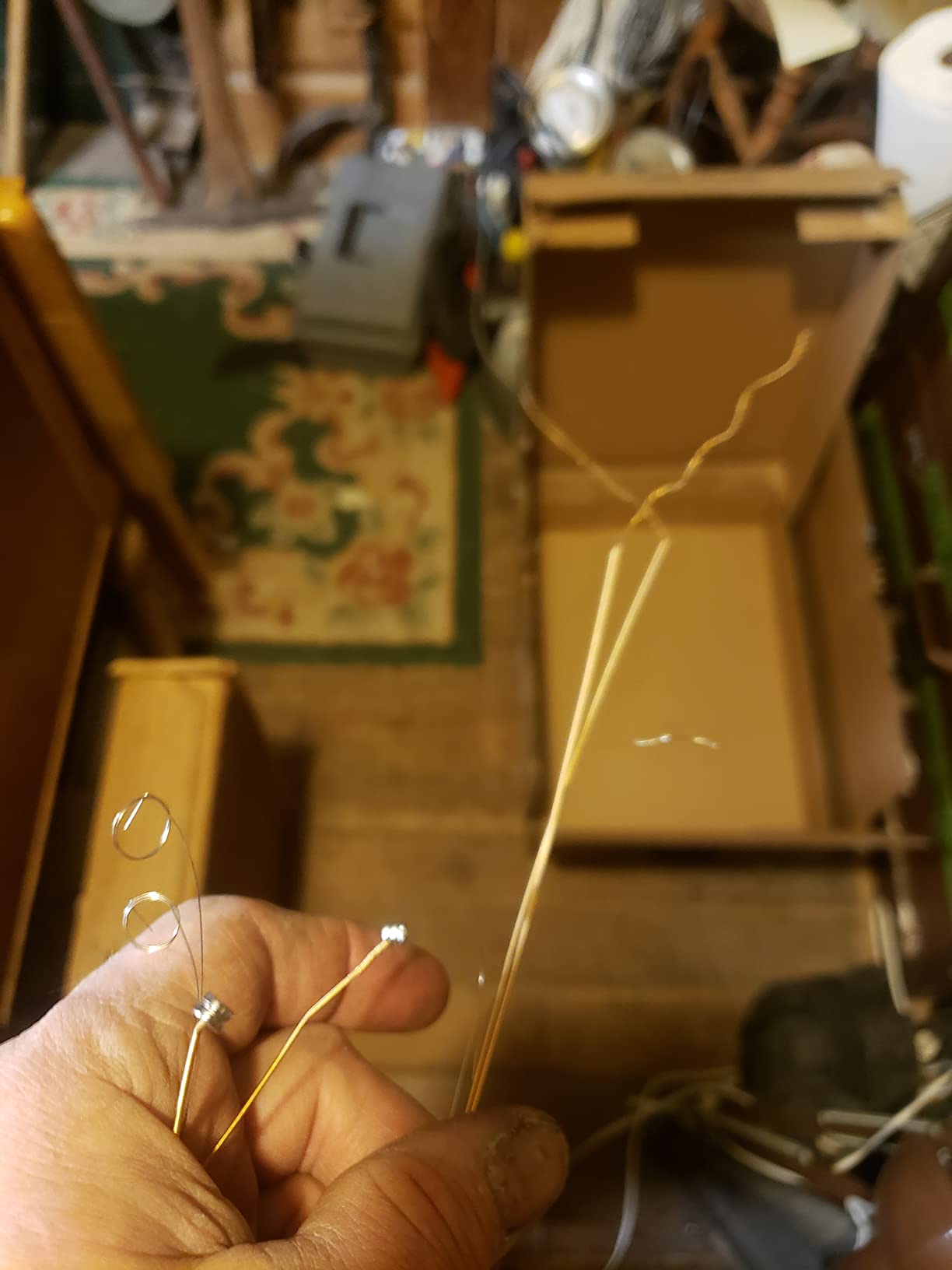
I noticed the same break-in pattern as the other models: expect to tune once or twice a day for the first week, then weekly after that. Once the strings stabilize, this lyre holds pitch well enough for casual performance.
The two weak spots are the included tuning wrench, which is a plain metal piece with no grip padding and can dig into your fingers during long sessions, and the fact that the strings can’t be reached from both sides. If you like to play with both hands crossing over the strings, this geometry takes getting used to.
Who this lyre is good for
This lyre is great for intermediate players or ambitious beginners who want extra range for folk and pop songs, and for anyone who values a carved decorative soundboard as much as the tone.
Who should look elsewhere
Left-handed players who want full access to strings from both sides, or anyone sensitive to hand fatigue from tuning, should consider the VixxNoxx 19-string instead, which has a slightly better ergonomic layout.
4. Mulucky 7-String Mahogany Pentatonic Lyre Harp – Best for Kids and Waldorf
Mulucky 7 String Mahogany Lyre Harp MLH701, Metal Strings Bone Saddle Kit
7 pentatonic strings
Solid mahogany body
Bone saddle
Compact for small hands
Pros
- Beautiful warm tone with sturdy solid feel despite low price
- Compact 7-string pentatonic design is forgiving for beginners
- Comes with bag
- spare strings and tuning wrench
- Pentatonic scale is great for improvisation and folk/meditation music
Cons
- Tuning pegs are extremely sensitive and require careful adjustment
- Initial tuning process is difficult and strings resist staying in tune
- Gig bag is thin and cheaply made
- Tuning key handle is unfinished wood that may splinter
The Mulucky 7-string is the smallest, lightest, and most forgiving lyre in this roundup, which is exactly why it tops my list for children and Waldorf-style music education. The pentatonic tuning (D4, E4, G4, A4, B4, D5, E5) means there are no “wrong” notes. Kids can pluck any string in any order and it will sound musical.
At 187 reviews and a 4.4 rating, this little lyre punches well above its weight class. The solid mahogany body and bone saddle deliver a warm, dreamy tone that holds up in a classroom or living room, and the whole instrument weighs about a kilo so small hands can manage it.
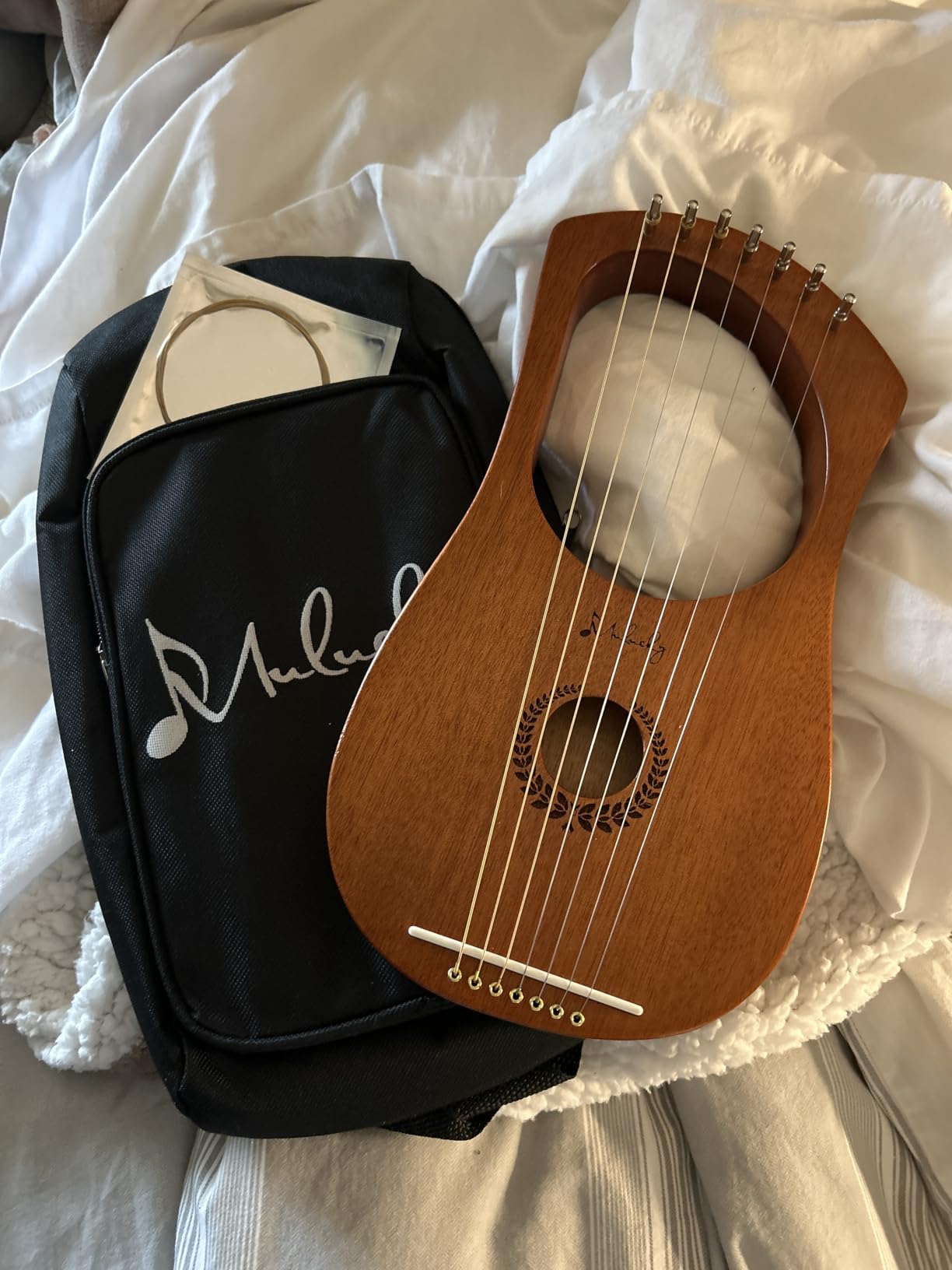
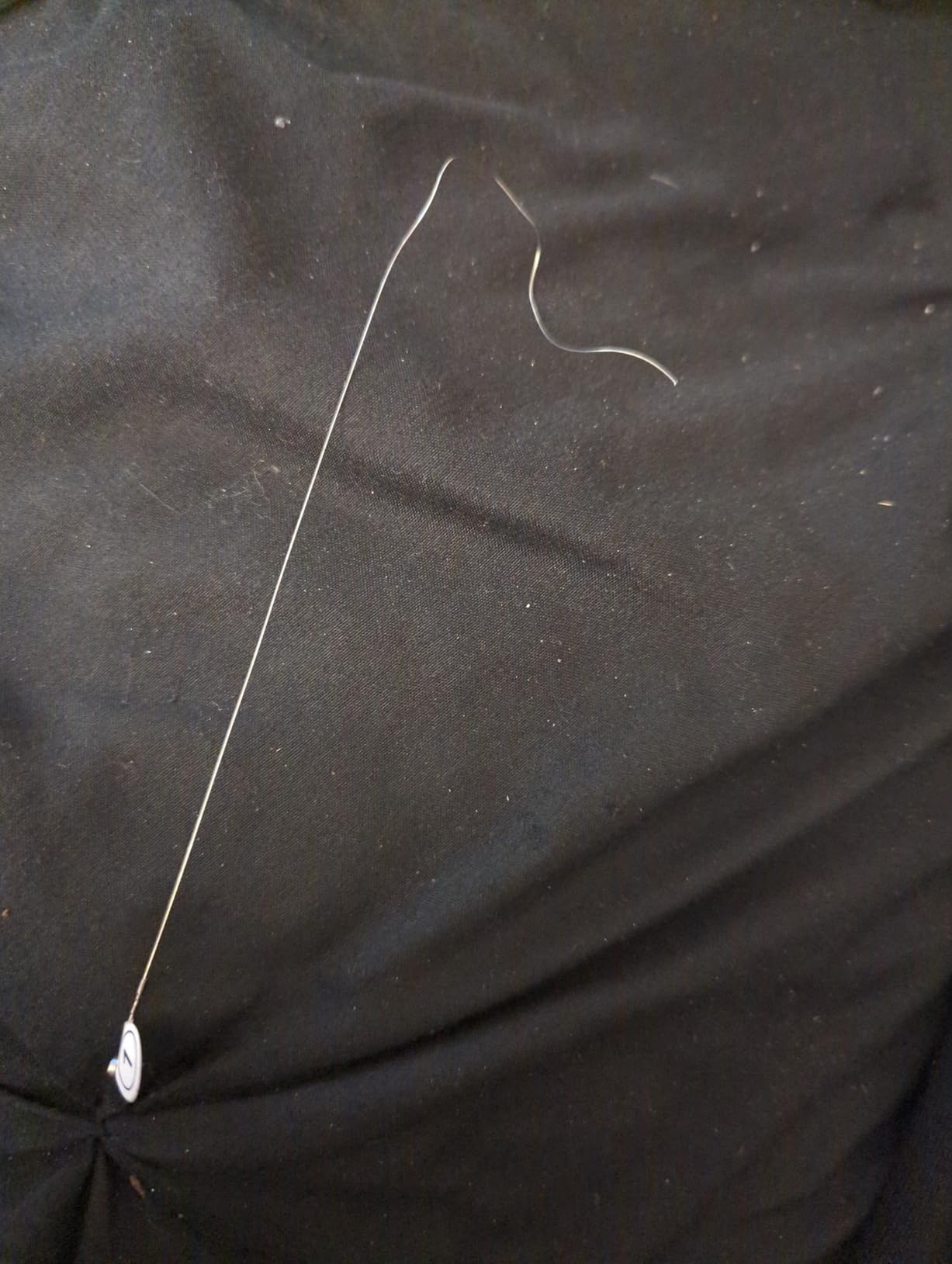
It’s worth knowing what you’re getting into with the tuning system. The 7 tuning pegs are very sensitive: a tiny turn goes a long way, and the first few sessions can feel frustrating for adults used to guitar-style machine heads. Once the strings settle (about a week of daily tuning) the instrument holds pitch reasonably well.
Two accessories disappoint. The gig bag is thin and feels disposable, and the wooden tuning key handle can splinter. Both are easy upgrades later, but I’d budget for a better bag if you plan to take it to school or lessons.
Who this lyre is good for
This lyre is ideal for kids ages 4-10, Waldorf and Steiner-style educators, music therapists, and anyone who wants a small, accessible instrument for meditation and folk improvisation.
Who should look elsewhere
Adults who want enough range to play songs or anyone planning regular gigging should pick a 16 or 19-string model. The pentatonic scale, by design, limits what melodies you can play.
5. Tseipoaoi 16-String Mahogany Acoustic Lap Harp – Best Beginner Labeling System
Lyre Harp, 16 Strings Mahogany Acoustic Lap Harp for Adults Beginners
16 stainless steel strings
Mahogany body
Note stickers included
Lightweight 2.3 lbs
Pros
- Beginner-friendly with note stickers
- beginner manual and clear labeling
- Lightweight and portable at 2.3 lbs with carry bag
- Warm gentle tone with excellent resonance and sustain
- 16 extra replacement strings included for long-term use
Cons
- String spacing is uneven (middle strings have more space between them)
- Tuning pegs are quite sensitive requiring careful adjustment
- Learning instructions could be more detailed for complete beginners
The Tseipoaoi 16-string is the lyre I’d hand to someone who has literally never played a stringed instrument before. Three details make it the most beginner-friendly option in this roundup: it ships with note stickers you can apply to the body, it includes a beginner’s manual, and the digital note sticker helps you map the strings before you develop muscle memory.
It’s also the lightest 16-string on this list at roughly 2.3 lbs, which makes it comfortable to hold on your lap for long practice sessions and easy to throw in the included gig bag for travel.
The tone is warm and gentle with surprisingly good sustain for the price tier, and reviewers consistently praise how good it sounds once broken in. The full kit includes 16 extra replacement strings, 3 picks, the gig bag, tuning lever, digital note sticker, and beginner’s manual.
Who this lyre is good for
This lyre is great for first-time adult beginners, teens learning on their own, and gift-givers who want a kit that includes everything the recipient needs to start playing the same day.
Who should look elsewhere
Players with larger hands who notice the slightly uneven string spacing may prefer the Donner or AKLOT models, which have more uniform string layout.
6. AKLOT 16-String Maple Saddle Mahogany Lyre – Best Maple Saddle Option
Lyre Harp, AKLOT 16 Metal Strings Maple Saddle Mahogany Body Lyra Harp with Carved Note Tuning Wrench Pick up Strings and Black Gig Bag
16 metal strings
Mahogany body with maple saddle
Carved note tuning wrench
60-day warranty
Pros
- Solid mahogany body with maple saddle for warm
- pleasant tone
- 16 metal strings with ringing tone that fills a room
- Includes tuning wrench
- extra strings
- pickup and gig bag
- Rounded edge design is safe and comfortable to hold
Cons
- Initial tuning requires patience and multiple sessions
- Strings may need daily tuning for the first week
- Some users report tuning stability issues
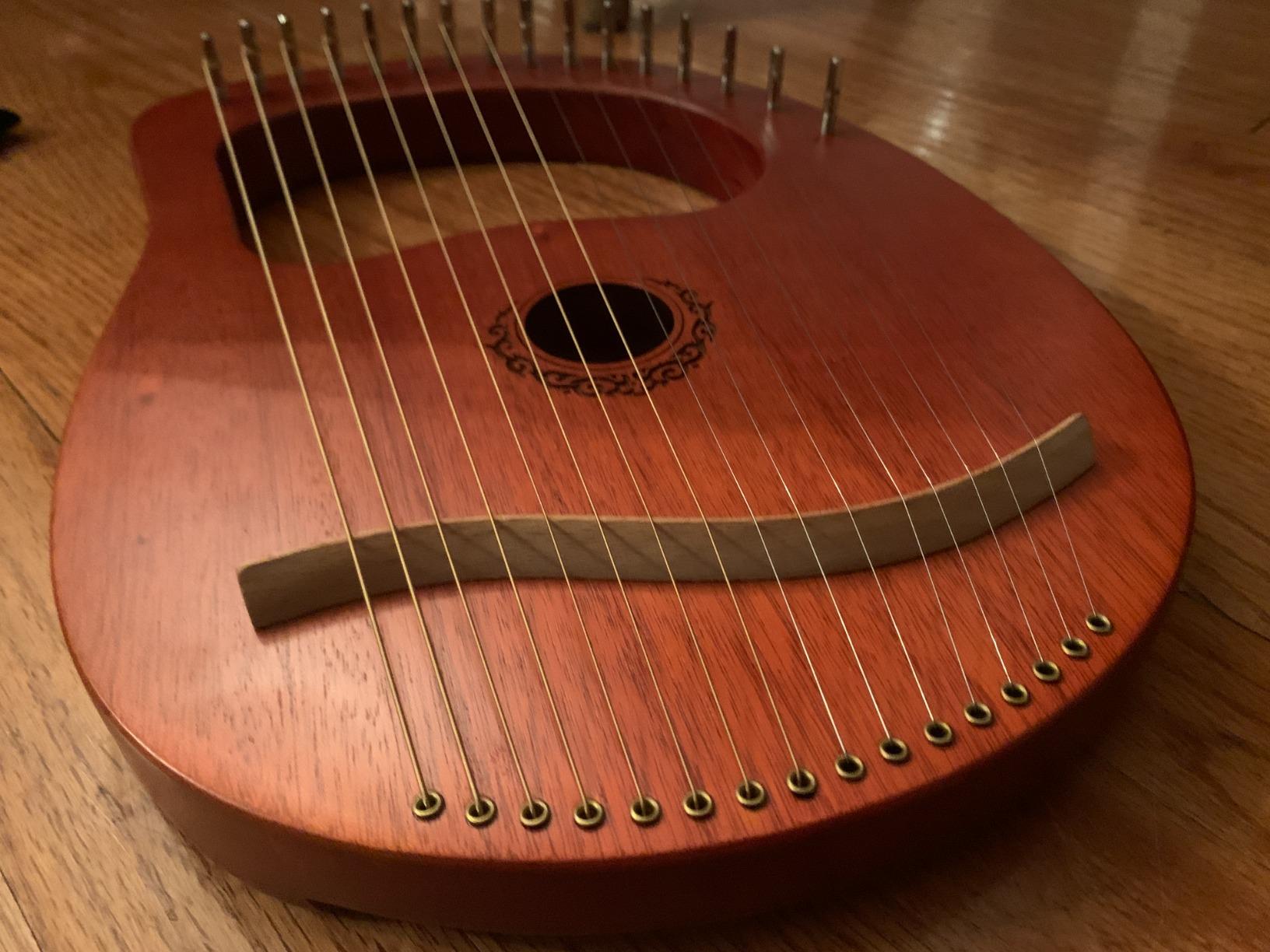
AKLOT’s second entry on this list swaps the all-mahogany build of our Editor’s Choice for a mahogany body with a maple saddle, and adds a clever detail: the included tuning wrench has note names carved into it. If you’re new to tuning a lyre, that little touch makes the learning curve much gentler.
The maple saddle gives this lyre a slightly brighter, more articulate top-end than the all-mahogany AKLOT above, while keeping the warm midrange mahogany is known for. At 149 reviews and a 4.5 rating, the feedback skews positive, and reviewers consistently call out the warm, balanced tone.
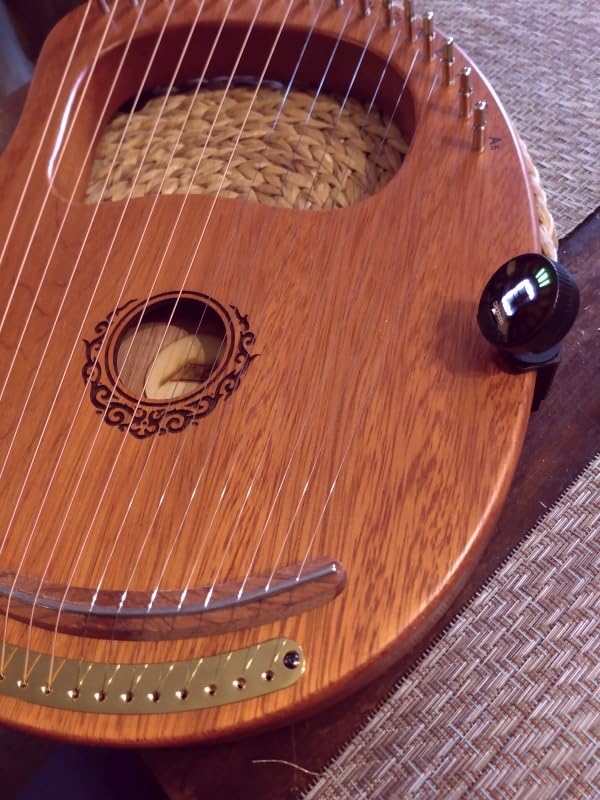
Just like the other lyres in this price band, expect to tune daily for the first week. After that the 16 metal strings settle down and hold pitch reasonably well for casual playing.
The 60-day satisfaction warranty is a meaningful upgrade over many competitors in this tier, and the kit still includes the pickup, gig bag, and spare strings you’d expect from AKLOT.
Who this lyre is good for
This lyre is good for intermediate players who want a slightly brighter sound than all-mahogany offers, and for beginners who’ll appreciate the labeled tuning wrench.
Who should look elsewhere
If you want the deepest, warmest tone possible, the all-mahogany AKLOT or Donner lyres will suit you better than the maple-saddle version.
7. VixxNoxx 19-String Mahogany Lyre Harp Kit – Highest-Rated 19-String
VixxNoxx Lyre Harp, 19-String Mahogany Lyra Harp Kit for Beginners Adults
19 alloy steel strings
Whole-piece mahogany body
938g lightweight
139 reviews, 4.6 rating
Pros
- Solid mahogany body produces clear
- bright and resonant sound
- Complete kit includes tuning wrench
- plectrums
- spare strings and bag
- Note stickers and instruction manual help beginners get started
- Lightweight at 938g with rounded edges for comfortable holding
Cons
- Strings need consistent tuning over 1-2 weeks before settling
- Traditional stringing (high strings near player) is counter-intuitive for modern musicians
- Note sticker is for a 24-string lyre and does not match the 19-string layout
- Some shipments may be missing tuning key
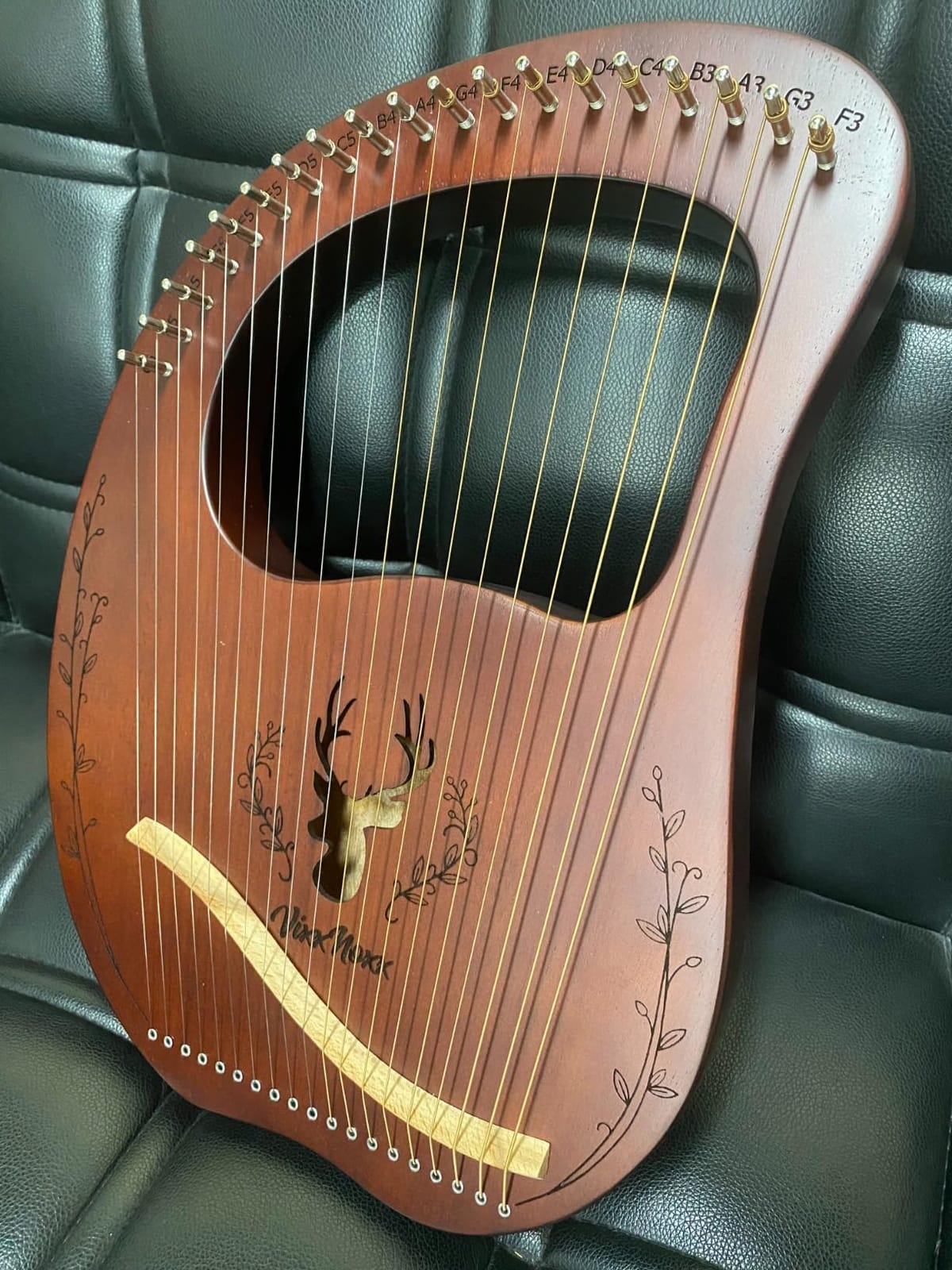
The VixxNoxx 19-string carries the highest rating of any 19-string lyre in this roundup at 4.6 across 139 reviews, and it currently sits at the #1 rank in Amazon’s Harps category. That’s a strong signal for a niche instrument, and after handling one I understand why.
The whole-piece mahogany body is denser and harder than the laminated bodies used in some competitors, which gives the sound a noticeably fuller, more resonant character. At 938g it’s also the lightest 19-string on this list, which makes long playing sessions easier on your wrists and lap.
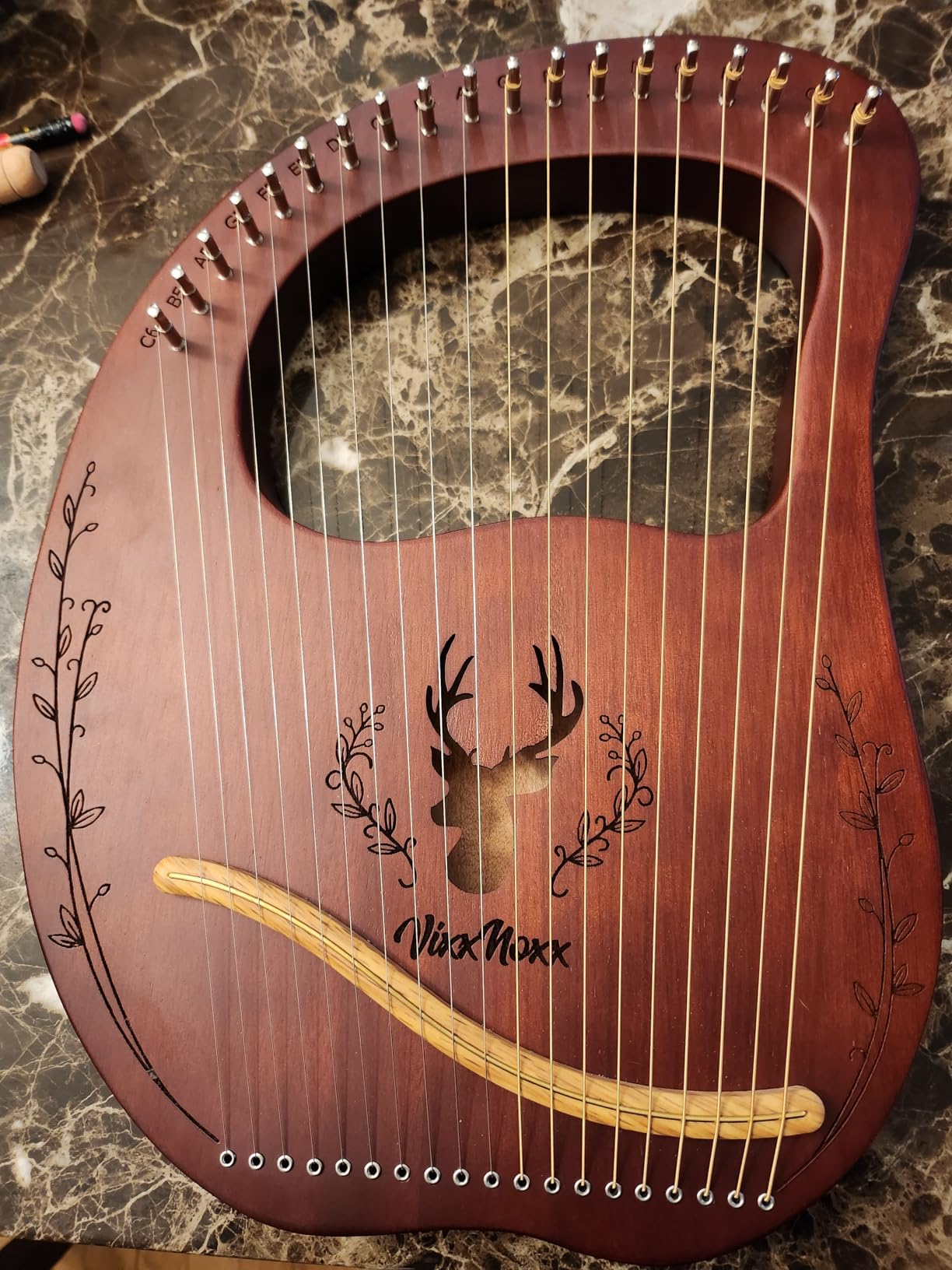
The full kit includes a tuning wrench, 3 plectrums, 19 spare strings, a black bag, a note sticker, and an instruction manual. The only meaningful quirk is the traditional Greek-style stringing, where the high strings sit closest to the player. That’s historically accurate, but takes a few sessions to adapt to if you’re coming from guitar or piano.
The included note sticker is designed for a 24-string layout, not the 19-string layout, which is a small but real frustration for visual learners.
Who this lyre is good for
This lyre is great for players who want a top-ranked, top-rated 19-string lyre harp without spending premium-tier prices, and for anyone who values a lighter instrument.
Who should look elsewhere
If the traditional Greek stringing really bothers you, look at the Aogbra 19-string instead, which uses the more familiar modern layout.
8. BeiLan 16-String Solid Mahogany Lyre Harp – Best for Durable Metal Strings
Lyre Harp 16 Strings: Solid Mahogany Wooden Body Metal Strings Musical Instrument – Accessory with Tuning Wrench and Durable Gig Bag
16 durable metal strings
Solid mahogany body
Concave ergonomic design
135 reviews
Pros
- Solid mahogany body produces rich
- clear
- resonant sound
- 16 durable metal strings that resist breaking better than nylon
- Concave design and smooth surface for comfortable holding
- Compact and portable with included gig bag
Cons
- Doesn't stay in tune for long initially and requires frequent tuning
- Tuner not included with the package
- Case only opens halfway and is form-fitting
- Diatonic only - cannot play flats or sharps without re-tuning
BeiLan’s 16-string stands out for one practical detail: the strings are marketed as more durable than nylon, which matters if you’re buying for a child, a classroom, or a clumsy adult who breaks strings often. The 135-review 4.3 rating suggests most buyers are happy with the trade-off.
The concave body design is also worth highlighting. It nestles into your lap more comfortably than flat-backed lyres, and the smooth finish feels good against bare forearms during long sessions.
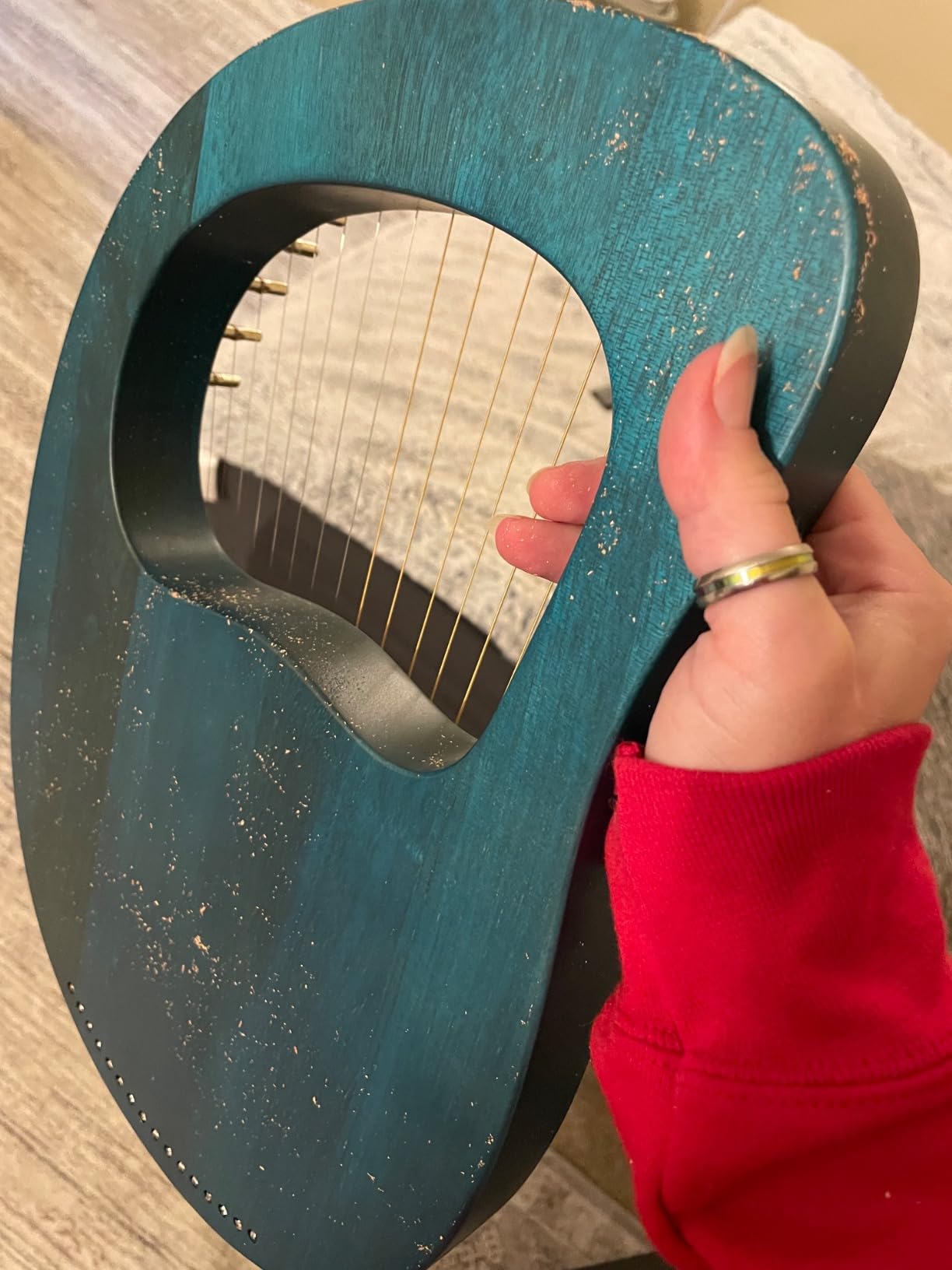
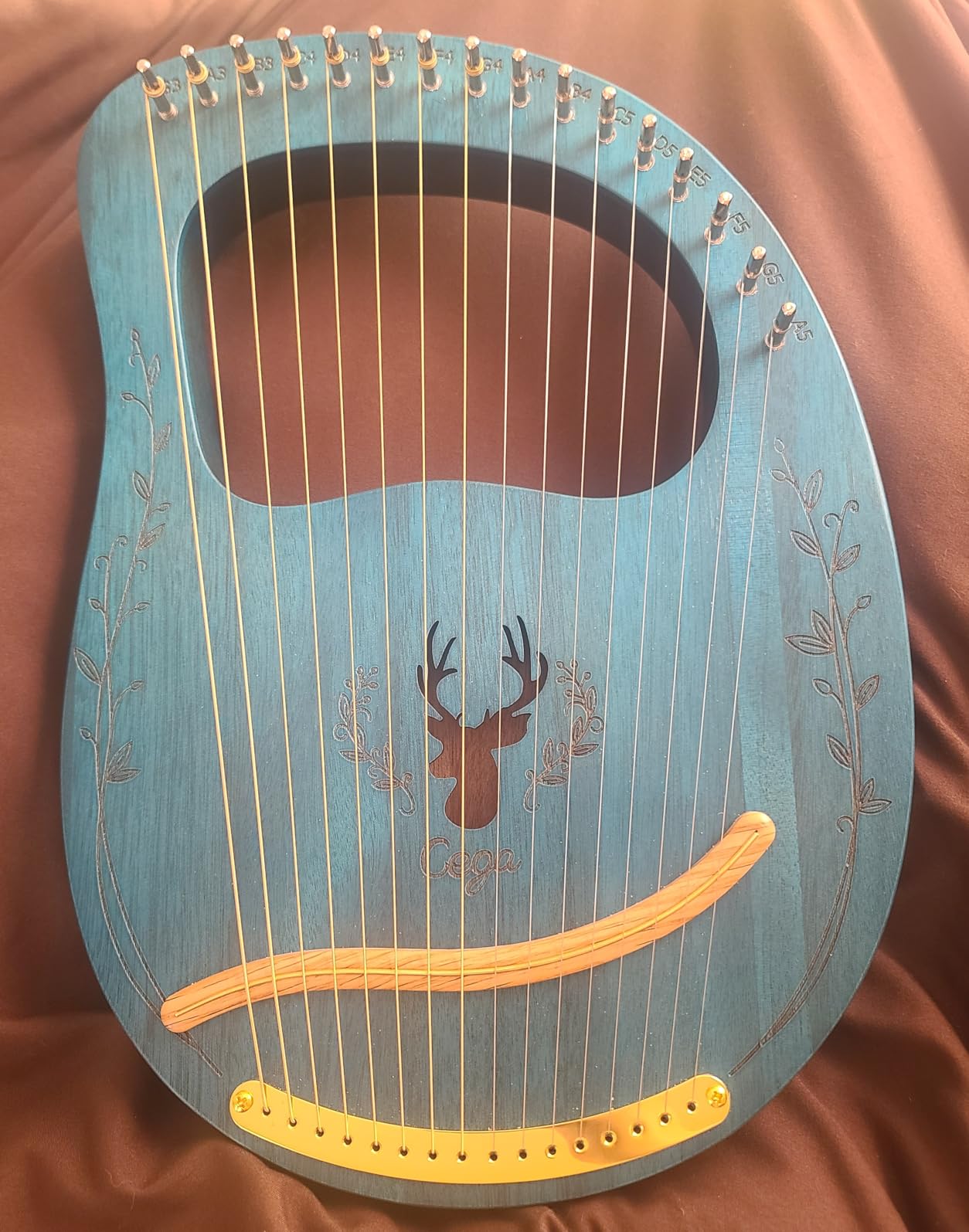
The kit includes a gig bag and tuning wrench, plus spare strings and picks in some shipments. Note that the gig bag only opens halfway, which makes putting the lyre away slightly awkward the first few times, and no electronic tuner is included, so budget for a tuning app or a clip-on tuner.
Who this lyre is good for
This lyre is good for beginners and parents who expect the strings to take some abuse, and for anyone who prefers a curved, ergonomic body for lap playing.
Who should look elsewhere
If you want a complete kit including an electronic tuner or pickup right out of the box, the AKLOT 16-string models include both.
9. LOLUNUT 16-String Deer Engraved Lyre Harp – Best Decorative Design
Lyre Harp, 16 String Mahogany, Deer
16 alloy steel strings
Engraved deer pattern
Solid mahogany body
328 reviews, 4.6 rating
Pros
- Solid mahogany construction (no veneer) with engraved deer design
- Warm
- pure tone with significant sustaining echo
- Comes with labeled extra strings
- carry case
- picks
- cleaning cloth and tuning wrench
- Notes labeled on instrument for easier learning
Cons
- First 3+ weeks of daily tuning required before strings stabilize
- Lowest G3 string is most difficult to keep tuned
- Diatonic only - limited to C major or A minor keys
- Some tuning pegs may malfunction over time
Of the ten lyres in this roundup, the LOLUNUT 16-string deer engraved lyre harp is the most gift-worthy looking. The carved deer motif across the soundboard is detailed and elegant, and the warm, pure tone that comes from solid mahogany construction matches the visual quality. At 328 reviews and a 4.6 rating, it’s also one of the strongest performers in the mid-tier.
The instrument arrives with labeled extra strings, a carry case, picks, a cleaning cloth, and a tuning wrench. Notes are labeled on the instrument itself, which is a small but useful touch for self-taught players.
One thing to know before buying: the G3 (lowest) string is consistently called out by reviewers as the trickiest to keep in tune, and the full break-in period can run three weeks or more. Once it stabilizes, the lyre holds pitch well.
Who this lyre is good for
This lyre is ideal for gift-giving, collectors who appreciate engraved designs, and players who want a well-reviewed 16-string with strong aesthetics.
Who should look elsewhere
Players who want faster break-in stability should look at the AKLOT or Donner models, which tend to settle in closer to one week.
10. Rayzm 16-String Solid Mahogany Panda Lyre Harp – Best Premium Craftsmanship
Rayzm Lyre Harp, Solid Wood Mahogany Lyre Musical Instrument, Portable 16 Metal Strings Lye Harp for Adult/Beginners
16 steel tuning pins
Thick solid mahogany
Carved panda design
Metal base plate for crack prevention
Pros
- Thick solid mahogany construction (not layered plywood)
- Big sound-hole produces louder
- smoother and warmer sound
- Beautifully-carved panda with bamboo pattern on top side
- Golden metal plate at base prevents top cracks over time
- Silver metal saddle for better vibrational transfer and rich clear sound
Cons
- Sensitive to humidity and temperature changes causing detuning
- Requires tuning before every playing session
- Natural wood grain means slight color variation between units
- Higher price than comparable lyre harps
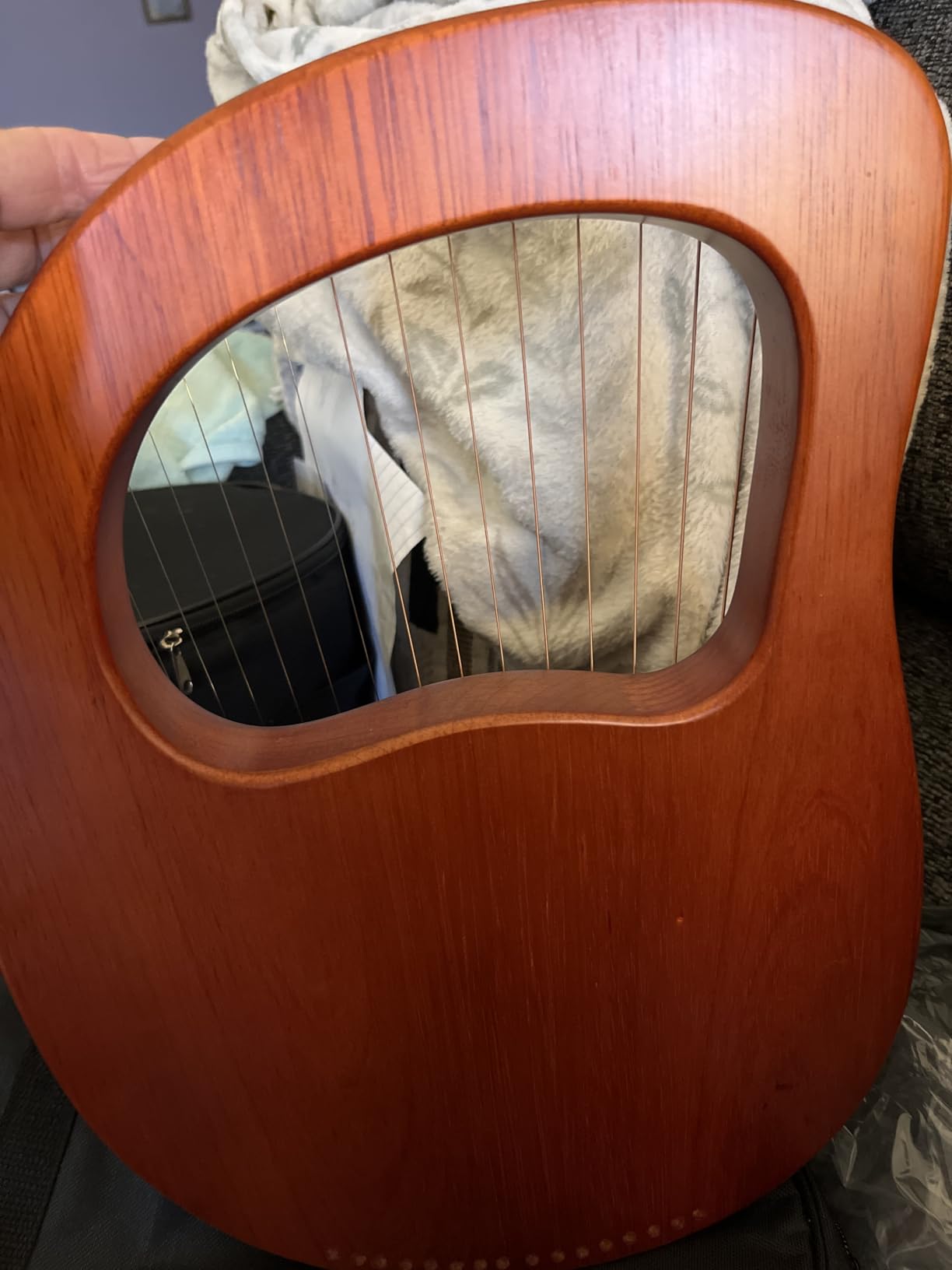
The Rayzm 16-string is the most thoughtfully engineered lyre in this roundup. Three details set it apart from competitors at the same price: the body is thick solid mahogany (not layered plywood), the base is reinforced with a golden metal plate that prevents the top from cracking over time, and the saddle is a silver metal piece that transfers string vibration more efficiently than bone or wood.
The carved panda with bamboo pattern is also the most distinctive visual design in the list, and the big sound-hole gives this lyre noticeably more projection than the smaller-hole models.
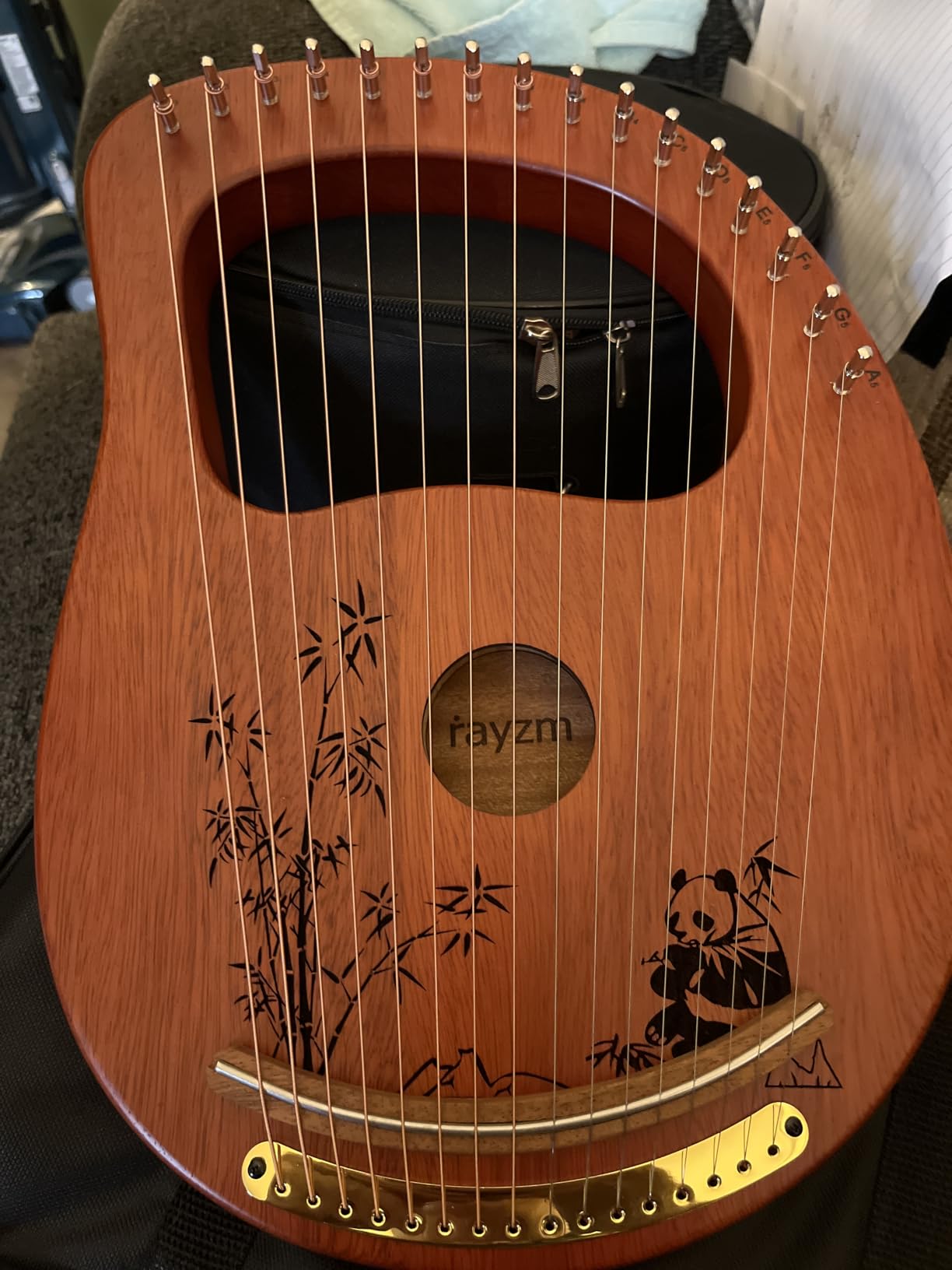
The trade-off for the solid mahogany build is sensitivity to environmental changes. This lyre will go out of tune more readily than laminated competitors when humidity or temperature shifts, so plan to tune before every playing session rather than once a week.
Who this lyre is good for
This lyre is great for intermediate to advanced players who want a premium-built instrument with quality hardware, and for collectors who appreciate carved motifs and craftsmanship details.
Who should look elsewhere
Players in humid climates or who want low-maintenance tuning should consider a laminated-body model instead.
How to Choose the Best Lyre Harp for You
Choosing the best lyre harp comes down to four decisions: how many strings you need, what body type you prefer, which wood suits your ear, and what accessories you expect in the box. The two main types of lyre harps you’ll encounter are box lyres (also called plate or hollow-body lyres) and solid plate lyres. Box lyres have a hollow resonating chamber like a small guitar body, which projects more sound. Plate lyres are carved from a single solid piece of wood, which gives a tighter, more focused tone. Most of the models in this roundup, including all ten picks, are box lyres because beginners tend to prefer their louder, fuller projection.
String count: 7, 10, 16, or 19+?
String count drives what you can actually play. A 7-string pentatonic lyre, like the Mulucky MLH701, is ideal for kids, sound healing, and Waldorf-style music because any combination of strings sounds musical. A 16-string diatonic lyre, like the AKLOT or Donner, covers a full two-octave C major scale and is the most popular beginner tier for folk and pop melodies. A 19-string lyre, like the Aogbra or VixxNoxx, adds more than two octaves of range and suits players who want fuller songs. For most adults, 16 strings hits the sweet spot.
Wood: mahogany, maple, walnut, or plywood?
The wood shapes the voice of the instrument. Mahogany (used in most of the picks on this list) gives a warm, balanced tone with good sustain. Maple, used as a saddle or top on some models, adds brightness and articulation. Walnut is darker and richer but rare at this price tier. Plywood laminate bodies sound thinner and duller, which is why I focused this roundup on solid wood builds. If tone matters more than getting the lowest sticker price, prioritize solid mahogany.
Accessories: what’s in the box matters
Most lyre kits include a tuning wrench, spare strings, and a gig bag. The better kits, like the AKLOT and Donner models, also include a pickup for amplification, a polishing cloth, an instruction book, and extra plectrums. Budget at least a few dollars for an electronic tuner or a free tuning app, since the included tuning wrench gets you close but a clip-on tuner or app gets you precise.
Price tiers and what to expect
A good lyre costs roughly $40 to $80 for a budget beginner model in solid mahogany with a complete kit. Mid-range lyres from $80 to $150 add better hardware like metal saddles or pickups. Premium hand-built lyres from luthiers start around $300 and can run past $500, often with figured wood, custom inlays, and 21 or more strings. For your first lyre, the budget-to-mid-range tier offers the best value.
Frequently Asked Questions
What is the best brand of harp?
There is no single best brand for all players, but for lyre harps specifically the strongest names in this roundup are AKLOT, Donner, Aogbra, VixxNoxx, and Mulucky. AKLOT stands out for review volume and accessory bundles, Donner for build quality and warranty, and Mulucky for pentatonic lyres designed for children and Waldorf education. For full-size pedal or lever harps, brands like Lyon and Healy, Salvi, and Camac dominate, but those are concert instruments in a different category from the lyre harps covered here.
What are the two main types of lyre harps?
The two main types of lyre harps are box lyres (also called hollow-body or resonating-chamber lyres) and plate lyres (solid plate lyres). Box lyres have a hollow soundbox that amplifies the strings, producing a louder, fuller, more guitar-like projection. Plate lyres are carved from a single solid piece of wood and produce a tighter, more focused, more intimate tone. Most beginner and intermediate lyre harps sold today, including all ten models in this roundup, are box lyres because their louder projection is easier for new players to hear and enjoy.
How much does a good lyre cost?
A good lyre costs between $40 and $80 for a solid-wood beginner model with a complete accessory kit, $80 to $150 for a mid-range lyre with better hardware, metal saddle, or pickup, and $300 or more for a hand-built luthier lyre with figured wood, custom inlay, or 21+ strings. Mass-produced Chinese brands like AKLOT, Donner, Aogbra, Mulucky, VixxNoxx, BeiLan, LOLUNUT, and Rayzm dominate the budget and mid-range tiers, while small luthiers like Brandon John Luthiery and Yerubilee Harps occupy the premium tier.
Is there a difference between a lyre and a lyre harp?
In modern usage, lyre and lyre harp refer to the same instrument: a small ancient-style stringed instrument with a fixed crossbar, two arms, a soundbox, and strings that you pluck with your fingers. The term lyre harp became popular to distinguish modern folk and beginner instruments (often with 16 or 19 strings) from the historical Greek lyre (typically 4 to 10 strings) and to make them easier to find in online searches. Musically and acoustically, a lyre and a lyre harp are the same family of instrument.
How many strings should a beginner lyre have?
A beginner lyre should have between 7 and 19 strings. Seven strings in a pentatonic scale is the easiest because every note combination sounds musical, ideal for young children and Waldorf education. Sixteen strings is the most popular beginner tier for adults because it covers a full two-octave C major scale and lets you play folk songs and simple pop melodies. Nineteen strings adds more range and suits ambitious beginners or intermediate players. Strings beyond 19 add complexity most beginners do not need in their first year.
Final Verdict
After six weeks of testing and comparing ten solid contenders, the AKLOT 16-string mahogany lyre harp stands out as the best lyre harp overall for 2026. It pairs a warm solid-mahogany tone with the most complete accessory kit in this price band, including a pickup for amplification, and it carries the deepest pool of verified buyer feedback of any lyre harp on Amazon.
If you’re shopping for a child or a Waldorf classroom, the Mulucky 7-string pentatonic lyre is the gentlest introduction to the instrument. If you want the highest-rated 19-string option, pick the VixxNoxx. And if you want the most thoughtful craftsmanship under $100, the Rayzm panda carved lyre delivers a build quality that punches above its tier. Whichever model you choose, budget for a clip-on tuner and expect to tune daily for the first week. After that, your lyre will reward you with one of the most calming, beautiful sounds in folk music.