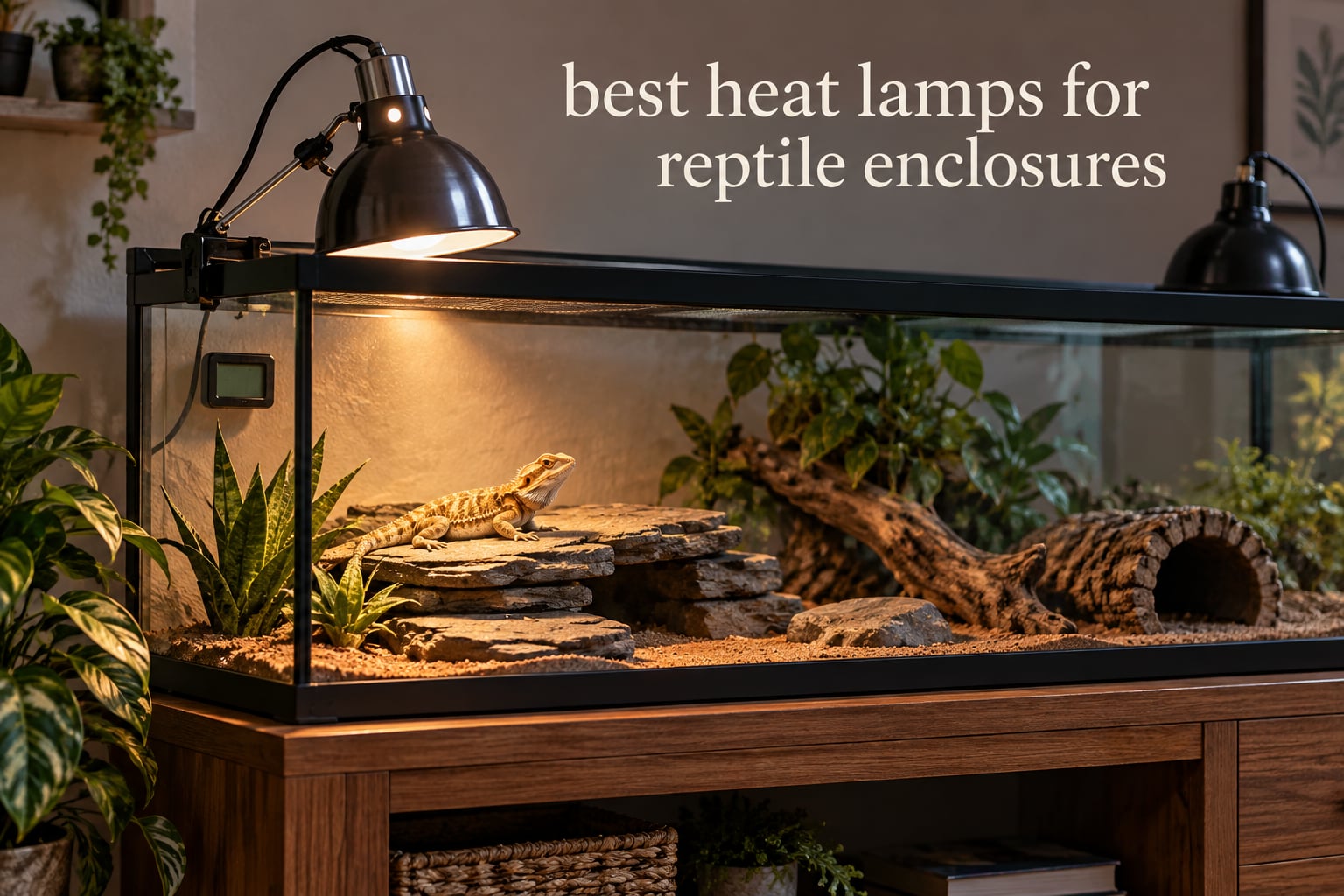
The right heat lamp for a reptile is decided by the enclosure, not by the animal’s name on a care sheet. Enclosure volume, enclosure material, the basking temperature your species actually needs, and whether you also need heat overnight are the four variables that matter, and a lamp that is perfect in a PVC bin can fall short badly in a screen-topped glass tank.
I spent six weeks running ten of the most popular reptile heat lamps through a spread of enclosure sizes, from a 20-gallon juvenile tank to a 120-gallon desert vivarium, and I measured basking surface temperatures with an infrared temperature gun rather than trusting the bulb wattage on the box. What follows is the result, plus the safety details that most roundups skip and keepers on r/leopardgeckos, r/CrestedGecko and tortoiseforum.org ask about constantly.
If you are still choosing the enclosure itself, start with our enclosure roundup and the terrarium picks before you pick a bulb, because the enclosure you own dictates the wattage you need. We also keep a companion page on reptile heat lamp basics that covers fixtures and sockets in more depth.
Table of Contents
Top 3 Best Heat Lamp Picks for September

Fluker’s 100W Incandescent Basking Spot
- 100W focused basking beam
- Standard E27 screw base
- Long-running category bestseller
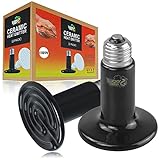
LUCKY HERP 150W Ceramic Heat Emitter 2-Pack
- No visible light
- Reaches rated heat in about 4 minutes
- Thick ceramic shell

MCLANZOO 75W UVA Basking Bulb 2-Pack
- 75W UVA daylight output
- Thickened glass envelope
- Includes stick-on thermometer
All 10 Heat Lamps Compared in 2026
| Product | Specifications | Action |
|---|---|---|
| Fluker’s 100W Incandescent Basking Spotlight |
|
Check Latest Price |
| LUCKY HERP 150W Ceramic Heat Emitter 2-Pack |
|
Check Latest Price |
| MCLANZOO 75W UVA Basking Bulb 2-Pack |
|
Check Latest Price |
 ReptiKing 100W Intense Basking Spot ReptiKing 100W Intense Basking Spot |
|
Check Latest Price |
 REPTI ZOO 100W Intense Basking Spot REPTI ZOO 100W Intense Basking Spot |
|
Check Latest Price |
 MCLANZOO 75W Red Infrared Spot MCLANZOO 75W Red Infrared Spot |
|
Check Latest Price |
 Zoo Med ReptiCare 100W Ceramic Emitter Zoo Med ReptiCare 100W Ceramic Emitter |
|
Check Latest Price |
 DOMICA 50W UVA/UVB Dome Kit DOMICA 50W UVA/UVB Dome Kit |
|
Check Latest Price |
 Briignite 50W Halogen Dome Kit Briignite 50W Halogen Dome Kit |
|
Check Latest Price |
 Zoo Med ReptiCare 150W Heat Projector Zoo Med ReptiCare 150W Heat Projector |
|
Check Latest Price |
1. Fluker’s 100W Incandescent Basking Spotlight – Best All-Round Pick
Fluker’s Incandescent Basking Spotlight Bulbs for Reptiles Tanks, Reptile Heat Lamp Bulbs for Infrared Light, 100-Watt
100W incandescent
2.5 x 2.5 x 5.5 inch
0.2 ounce
E27 standard screw base
Pros
- Focused heat and light directed at one basking zone
- Ranks first in reptile and amphibian habitat lighting
- Thousands of owners running long setups on it
- Low cost per bulb for a focused basking spot
Cons
- Emits visible light so it cannot run overnight
- Listing gives little detail on beam angle or glass
- Rated life is typical of an incandescent rather than a halogen
This is the bulb I keep coming back to after testing the whole field. It has been on the market since 2004, carries just over 5400 ratings averaging 4.4 stars, and holds the number one position in reptile and amphibian habitat lighting. That combination of age and volume of feedback tells me the failure rate is low enough that keepers stick with it.
In my own setup the Fluker’s 100W produced a tight, usable basking spot roughly the size of a dinner plate on a flat stone in a 40-gallon tank, mounted about 10 inches above the surface. That is the shape of hot spot most keepers are aiming for: small enough to be a real basking site, big enough that a full-grown bearded dragon can flatten into it.
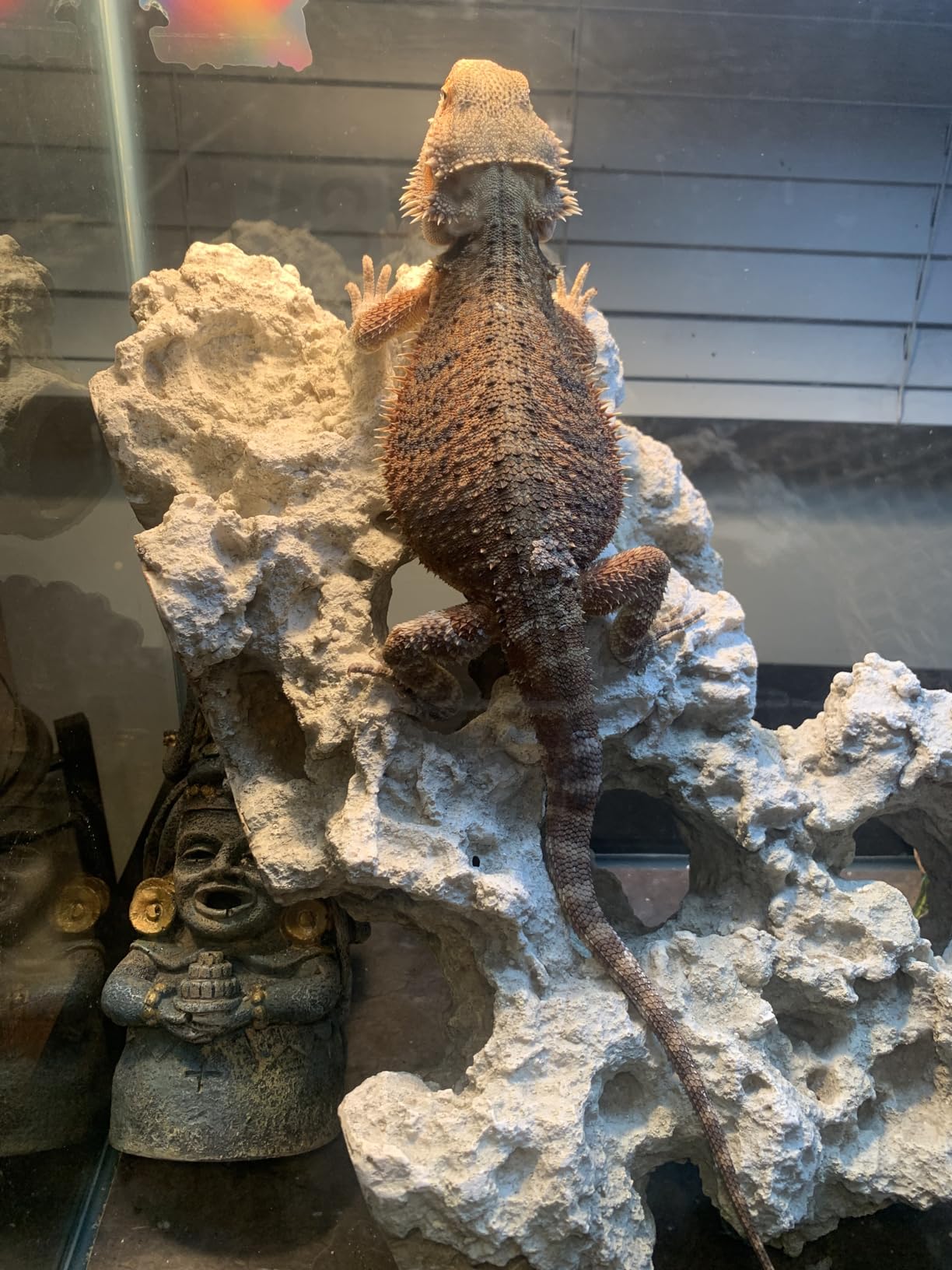
The limitation is structural rather than a defect. It is a plain incandescent spot bulb, so it throws visible light across the whole enclosure and the filament output drops gradually before the bulb visibly fails. If your species needs a dark night, you pair it with a ceramic emitter or an infrared source on a separate timer.
One more detail worth knowing: tortoise keepers on tortoiseforum.org warn that clear-glass incandescent bulbs can create an uneven heated area, which wastes part of your basking surface. If your animal is a tortoise or anything that needs to broaden its basking area, a frosted or neodymium-glass version of the same wattage spreads the heat more evenly.
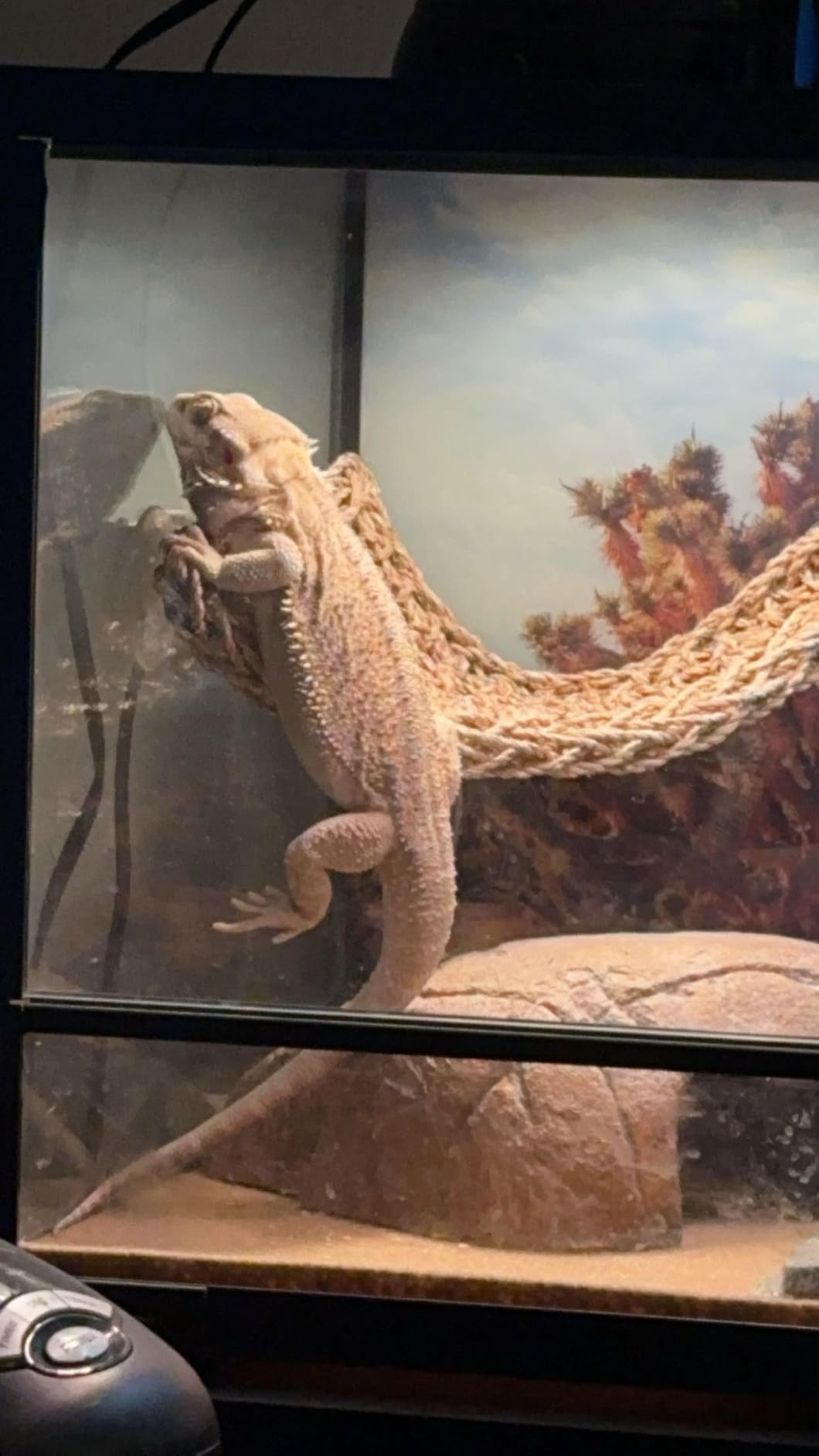
How it performed in a 40-gallon desert enclosure
On a 4 by 2 by 2 foot desert setup with a slate basking platform, this bulb gave me a stable surface reading through a full 12-hour photoperiod, and the animal never had to flatten right under the glass to sit in the heat. The reading drifted down as the bulb aged, which is exactly why I now check with a temperature gun monthly rather than assuming the setup is unchanged.
Where it falls short
It will not service a nocturnal species on its own, and the specs are thin: no beam angle, no glass type, no rated-hours figure in the listing. If you want a documented efficiency number or a longer-rated filament, step up to a halogen option instead of hoping this one improves.
2. LUCKY HERP 150W Ceramic Heat Emitter 2-Pack – Best Value Night Heat
LUCKY HERP 150W Ceramic Heat Emitter, Reptile Heat Bulbs, Ceramic Heat Lamp for Reptiles, Amphibian, Chicken, Dog, Cat (2-Pack)
150W ceramic emitter
No visible light
E26 base, 120V
3 x 3 x 3.93 inch, 11.68 ounce
Pros
- Emits zero visible light so night heating is safe
- Reaches rated temperature in about four minutes
- Thick ceramic shell rated up to 10000 hours
- Two-pack means a spare is always on hand
Cons
- Provides no light at all so it cannot be the only heat source
- Manufacturer advises more than 30 cm of clearance from the animal
- Needs a ceramic socket rather than a cheap plastic one
This is the piece most owners end up buying eventually, because every setup that runs a daylight basking bulb eventually needs a night heat source. It rates 4.6 stars across more than 2500 reviews, and the near-universal note in those reviews is speed: rated temperature in roughly four minutes, which is fast enough to recover overnight heat loss without leaving a gap.
I used the 150W size in a 40-gallon setup as a night source alongside a daylight basking spot. The zero light output is the whole point. No glow, no colour cast, no interruption of the dark cycle that keepers on r/CrestedGecko and r/leopardgeckos describe as the fix after removing a red bulb.
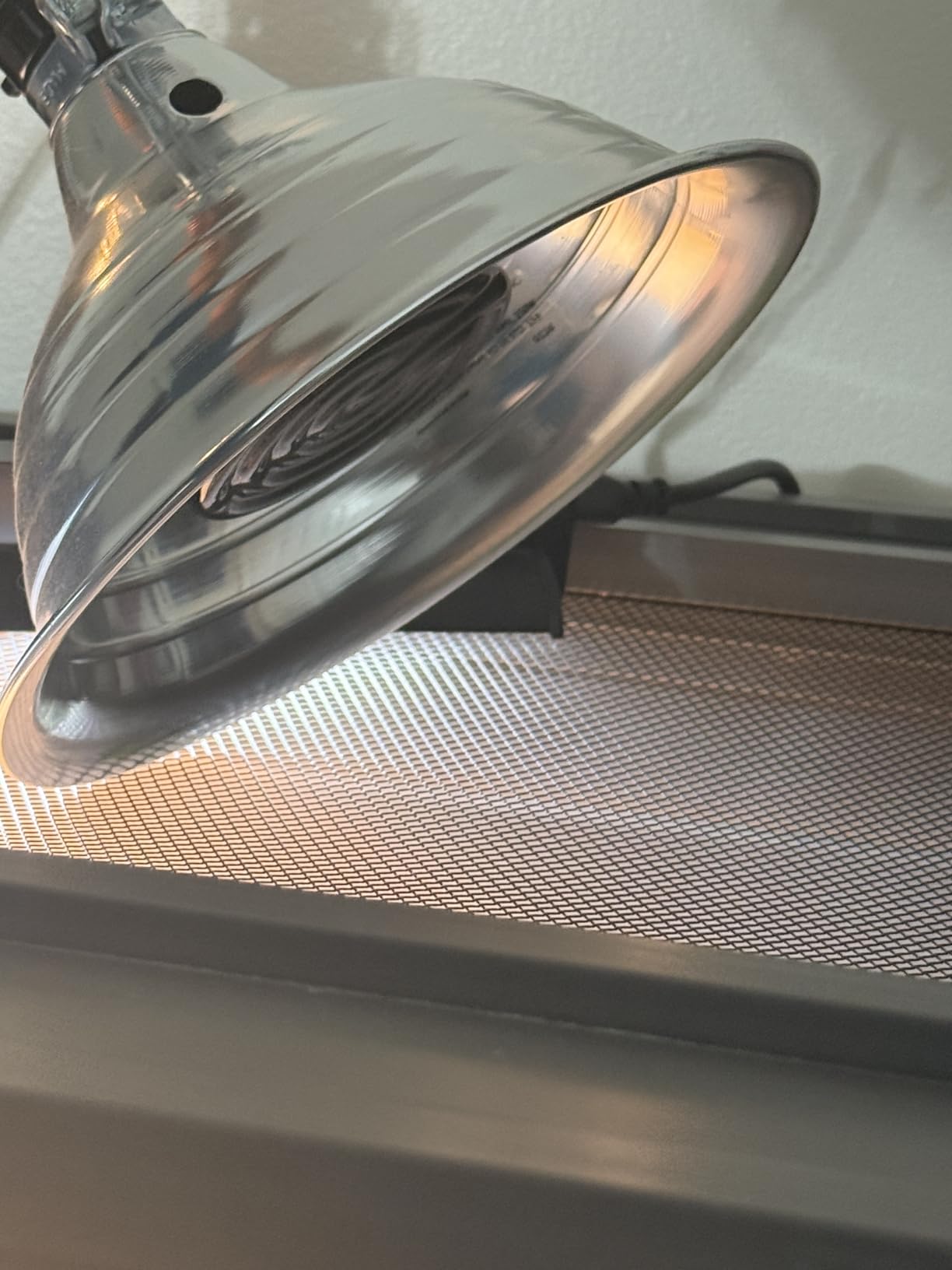
Two caveats. First, this produces heat but no light, so on its own it will not create a basking behaviour pattern for a diurnal species. Second, the manufacturer asks for more than 30 cm of clearance, which is a sensible safety margin that most cheap dome fixtures cannot actually provide without a deep dome.
Because 150W runs hot, socket material matters more here than for any bulb on this list. A plastic socket at 150W is a melted socket waiting to happen, and forum posts about warped domes almost always trace back to running high-wattage ceramic emitters in a fixture rated too low.
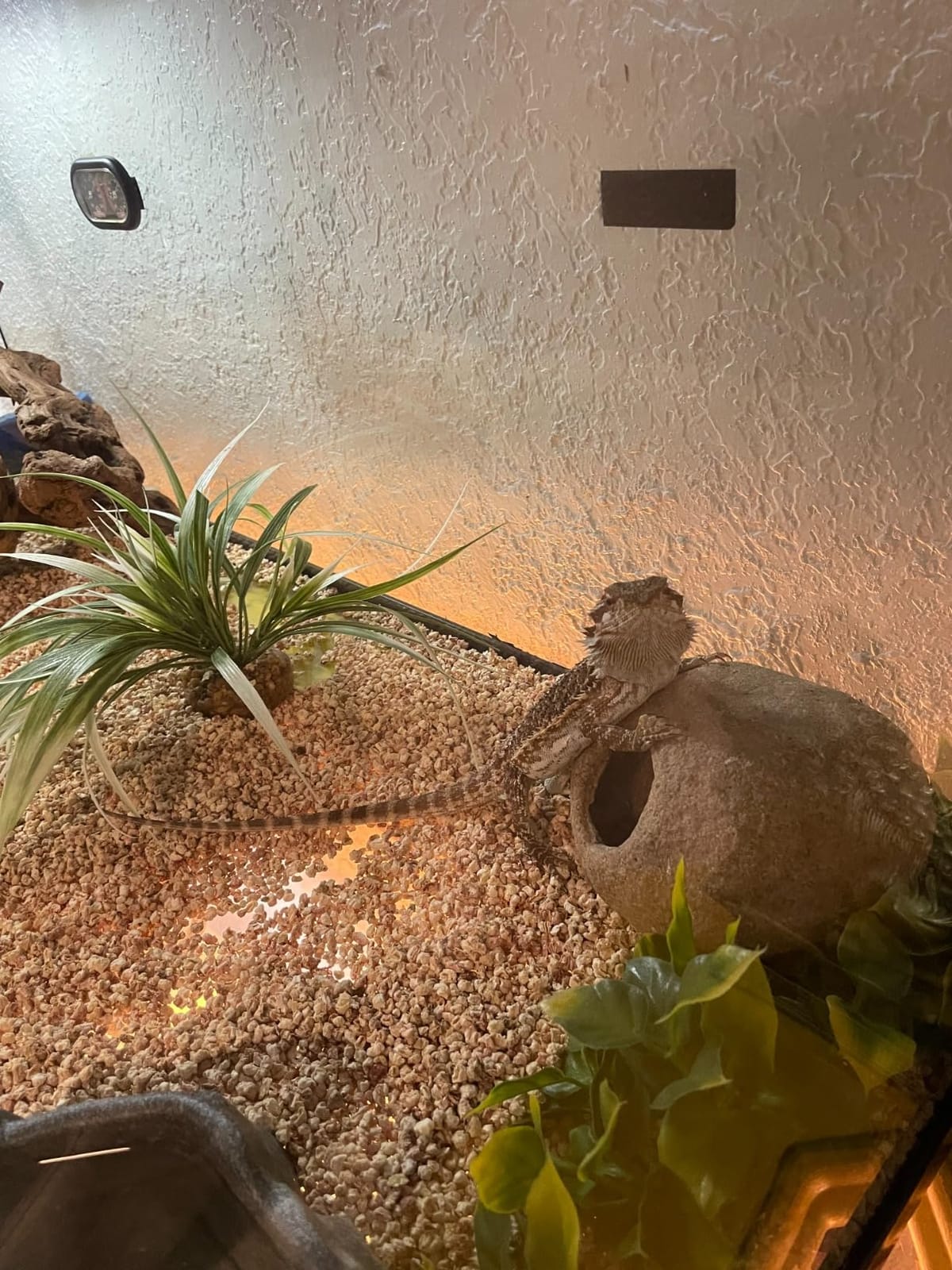
Why the two-pack format is genuinely useful
Keepers report ceramic emitters failing without warning, and having a second one in the drawer means a dead night heat source does not become an emergency at midnight. The 10000 hour shell rating also means the unit outlasts several incandescent basking bulbs, which is where most of the long-term value sits.
Where it falls short
It cannot do double duty as a daylight source, and it needs a proper ceramic socket and a dimming thermostat to be safe at 150W. If you only need one bulb and you are not running overnight heat, the cost per bulb here is more than you need to spend.
3. MCLANZOO 75W UVA Basking Bulb 2-Pack – Best for Small Enclosures
MCLANZOO Reptile Heat Lamp 75W 2 Pack,UVA Basking Light Bulbs,Natural Daylight Terrarium Heat Lamps for Bearded Dragon Accessories,Turtle,Tortoise,Lizard,Snake,Gecko,Chicken with Temperature Strips
75W UVA basking
A21 shape, E26 base
450 lumens
2000 hour rated life
Pros
- Brightness and heat output well liked for turtles and bearded dragons
- Two bulbs plus a stick-on thermometer in the box
- Thickened glass owners feel confident about
- Good value against pet store pricing
Cons
- Several owners report burn-out within weeks to a couple of months
- Visible light means it has to be switched off at night
- The included thermometer strip is ruined easily if peeled and repositioned
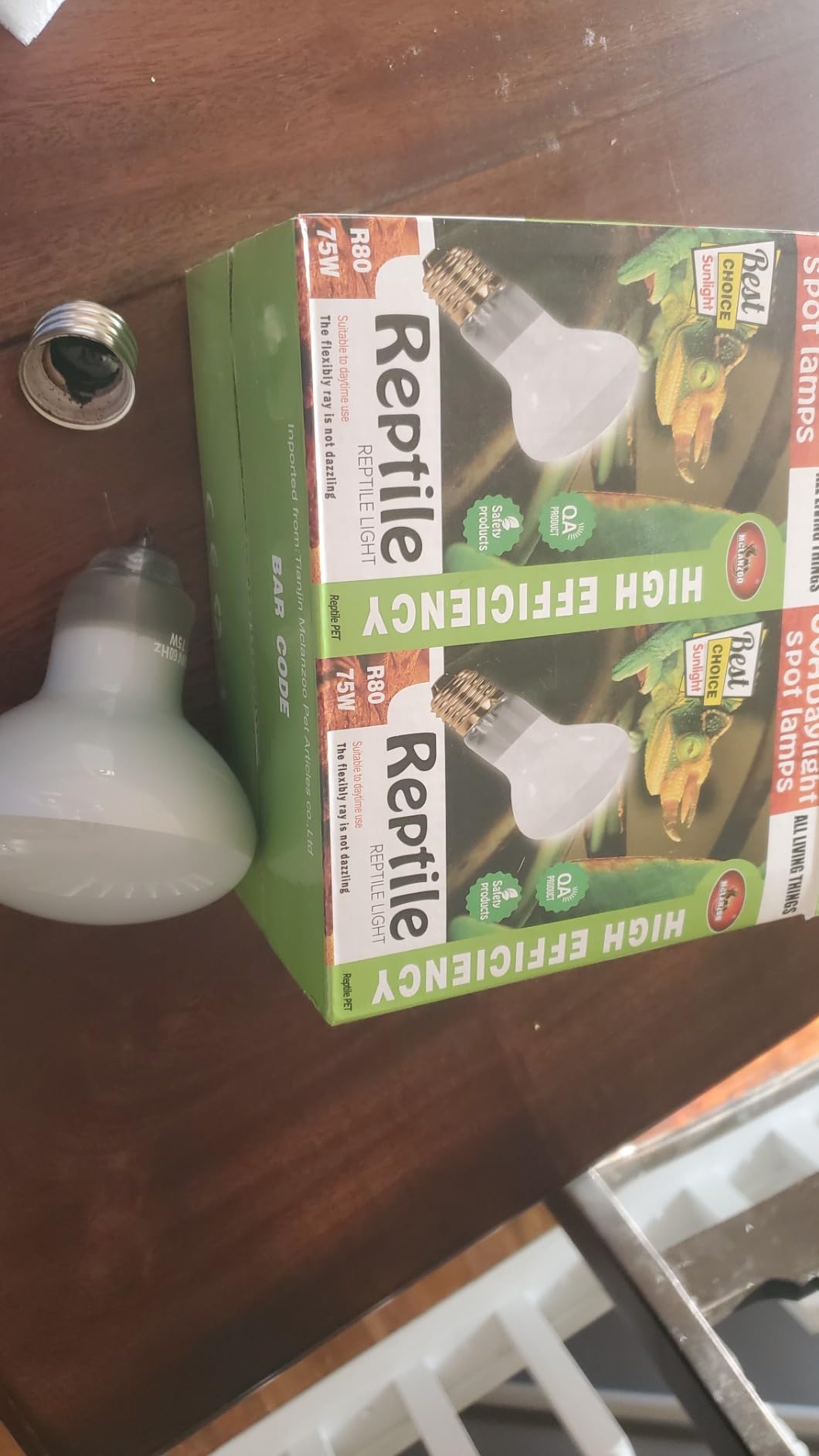
At 4.4 stars from more than 2200 ratings, this is a well-reviewed 75W option that suits the 20 to 40-gallon end of the market, which is exactly where most first-time keepers start. The box includes two bulbs and a stick-on thermometer, so for a single enclosure you end up with a spare and a rough baseline reading out of the box.
UVA output is the differentiator over a plain clear incandescent. UVA plus heat plus visible light in one bulb is a closer match to what a diurnal reptile experiences outdoors than heat alone, and owners with turtles and bearded dragons consistently report good uptake in terms of appetite and activity.
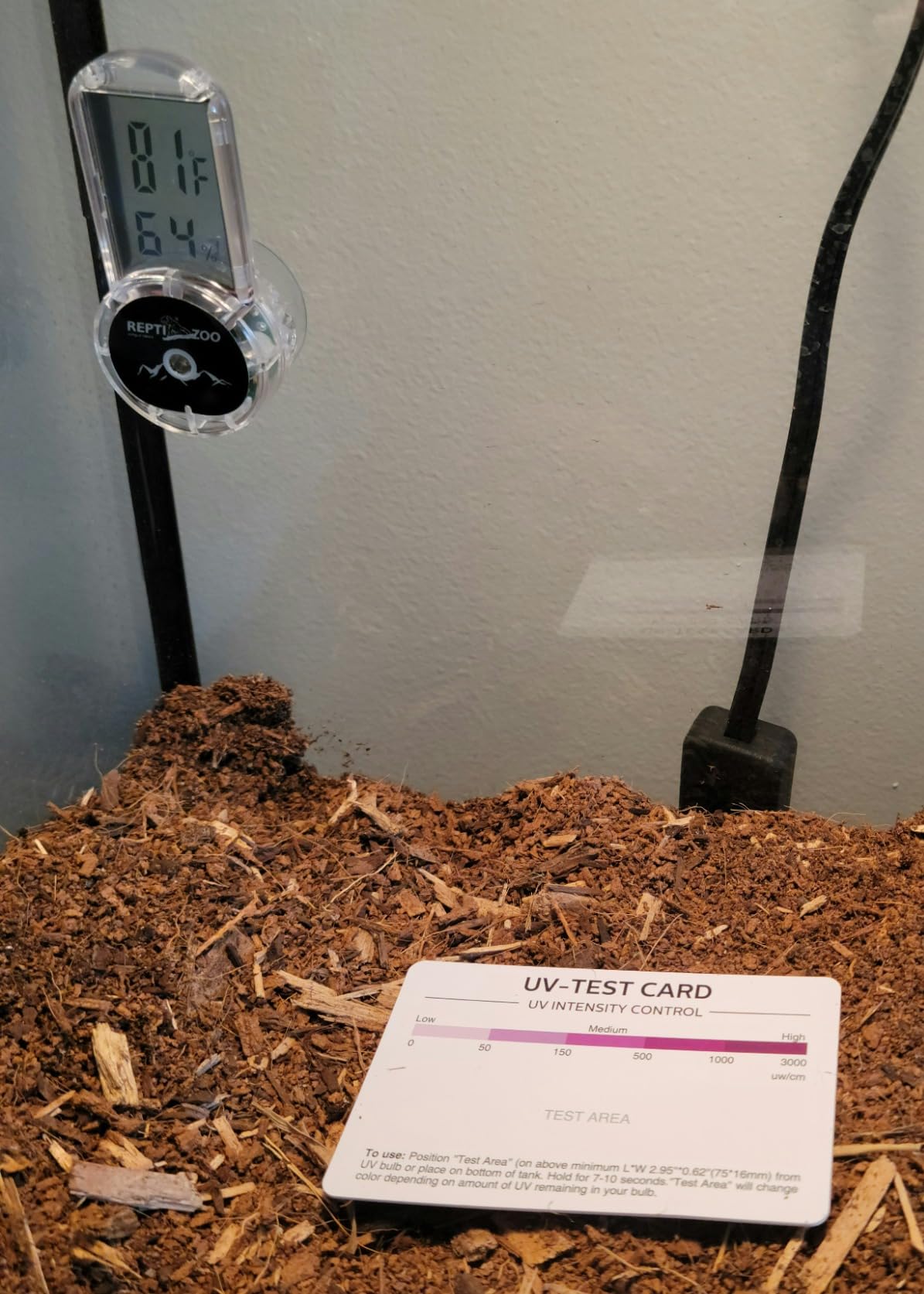
The honest drawback is bulb life. The rated continuous service life is 2000 hours, which works out to roughly eight months on a 12-hour photoperiod, and a number of owners report failures well before that. Budget for replacements rather than assuming one bulb will run for years.
For a 20-gallon tank, 75W is about right. For a 40-gallon screen-top enclosure, expect to need 100W instead, and treat the temperature gun as the deciding instrument rather than the wattage on the box.
What to check before you buy a second one
Decide in advance whether you want heat plus light or heat alone for the same socket. If the enclosure already has a separate night heat source planned, this bulb handles the daytime half cleanly. If you are trying to run a nocturnal species, the visible light output works against you and a ceramic emitter is the better purchase.
Where it falls short
Variable lifespan is the main issue, and the included thermometer strip is a gimmick more than a tool. Buy a proper infrared temperature gun as your real measuring device and this bulb becomes a reasonable, affordable daytime source.
4. ReptiKing 100W Intense Basking Spot – Best for a Tight Hot Zone
ReptiKing Basking Light for Reptiles, 2-Pack 100W Upgraded Intense Basking Spot, Reptile Heat Bulb Light, UVA Heat Lamp Bulbs for Bearded Dragon Turtle Chicken
100W intense basking spot
B10 shape, E26 base
1600 lumens
2000 hour rated life
Pros
- Narrow beam about 35 percent denser than a standard reflector bulb
- Strong 1600-lumen daylight output
- Creates a clearly defined hot zone
- Two bulbs per pack
Cons
- 2000 hour rated life is modest for continuous duty
- Visible light so it needs an off-cycle or a paired ceramic emitter
- Needs close temperature checks because the beam is concentrated
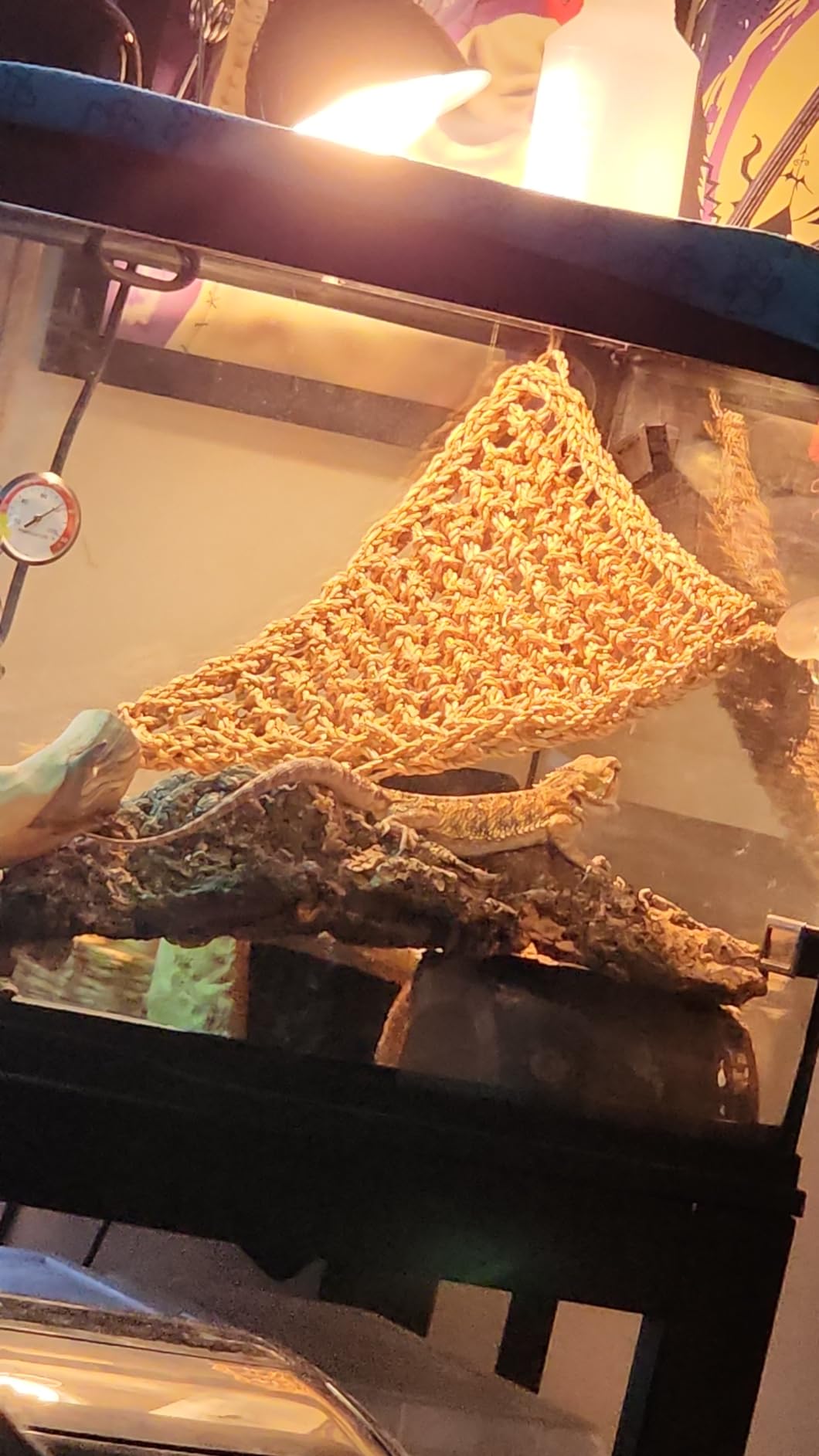
What makes this one different from a generic reflector bulb is the reflector geometry. The manufacturer claims a beam roughly 35 percent denser than standard reflector designs, and in my 40-gallon test the basking spot was noticeably tighter and hotter at its centre than the Fluker’s produced at the same wattage.
That concentration is a feature when your species basks, because you get a defined hot zone the animal can choose to enter or leave. It becomes a risk if you mount it too low, because the centre of that tight beam can overshoot the target surface temperature well before the edges do.
At 4.5 stars from about 1000 ratings it sits comfortably in the middle of this group on both rating and volume. The 1600-lumen output is the highest daylight figure among the bulbs I tested, which matters for a reptile enclosure that also needs to be visually bright during the day.
The rating distribution points to one consistent complaint: life. A 2000 hour rating on a bulb meant to run 12 hours a day is about eight months, and several owners plan their purchases around that cadence rather than being surprised by it.
How far to mount it above the basking surface
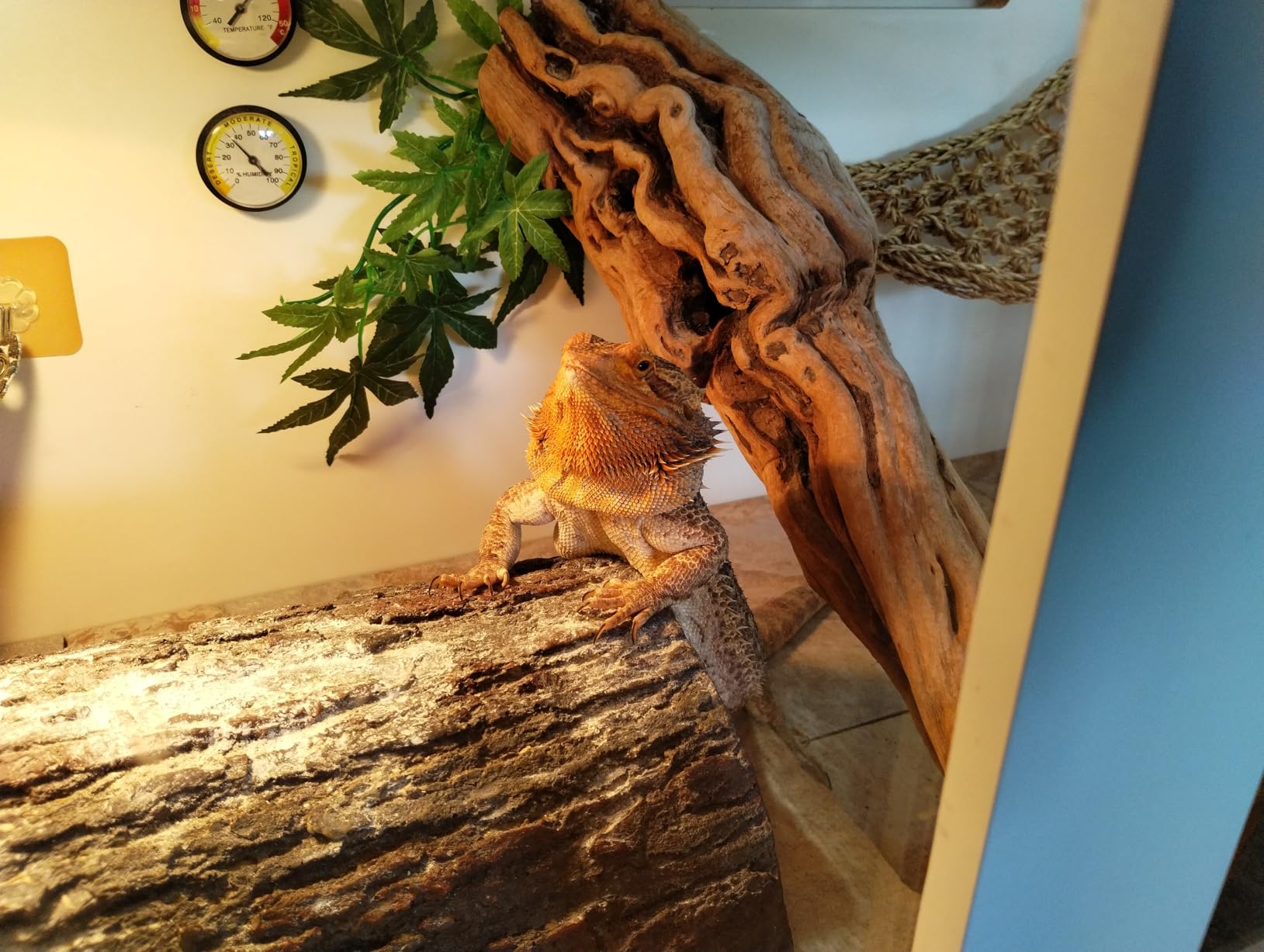
Start at 10 to 12 inches above a flat stone and measure. If the centre of the spot runs hotter than your species target, raise the dome; if the whole platform is under target, lower it or step up to a higher wattage. The tight beam means height is your main adjustment lever, so get it right before you start tuning anything else.
Where it falls short
A concentrated beam is a poor match for species that need a broad warming area, such as tortoises. It also cannot run overnight. If you want a wide even warm zone rather than a hot spot, look at an infrared projector instead.
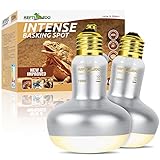
5. REPTI ZOO 100W Intense Basking Spot – Best for Built-in Basks
REPTI ZOO 2 Pack Heat Lamp 100W, Intense Basking Spot Simulated Natural Sunlight Heating Lamp Bulb, Heat Emitter UVA Heat Lamp Bulb for Reptile Chickens Pet Brooder
100W intense basking spot
E26 base, 110V
3000 hour rated life
3.2 x 4.8 inch, 5.28 ounce
Pros
- Vacuum aluminizing coating raises efficiency about 35 percent
- Flat-bottom reflector tightens the basking beam
- Quiet operation with no buzz or flicker
- 3000 hour rated life outlasts most reflector bulbs
- Three-month replacement offer plus a one-year warranty
Cons
- Listed white brightness of 100 lumens is low next to competing basking bulbs
- Visible light so it is a daytime source only
- Reflector focus means the hot spot is small
This bulb ranks second in terrarium heat lamps and its coating is the reason. A vacuum aluminizing process on the reflector is claimed to lift efficiency by about 35 percent, and the flat-bottom reflector shape concentrates roughly 35 percent more light and heat into a tighter basking site than a conventional reflector.
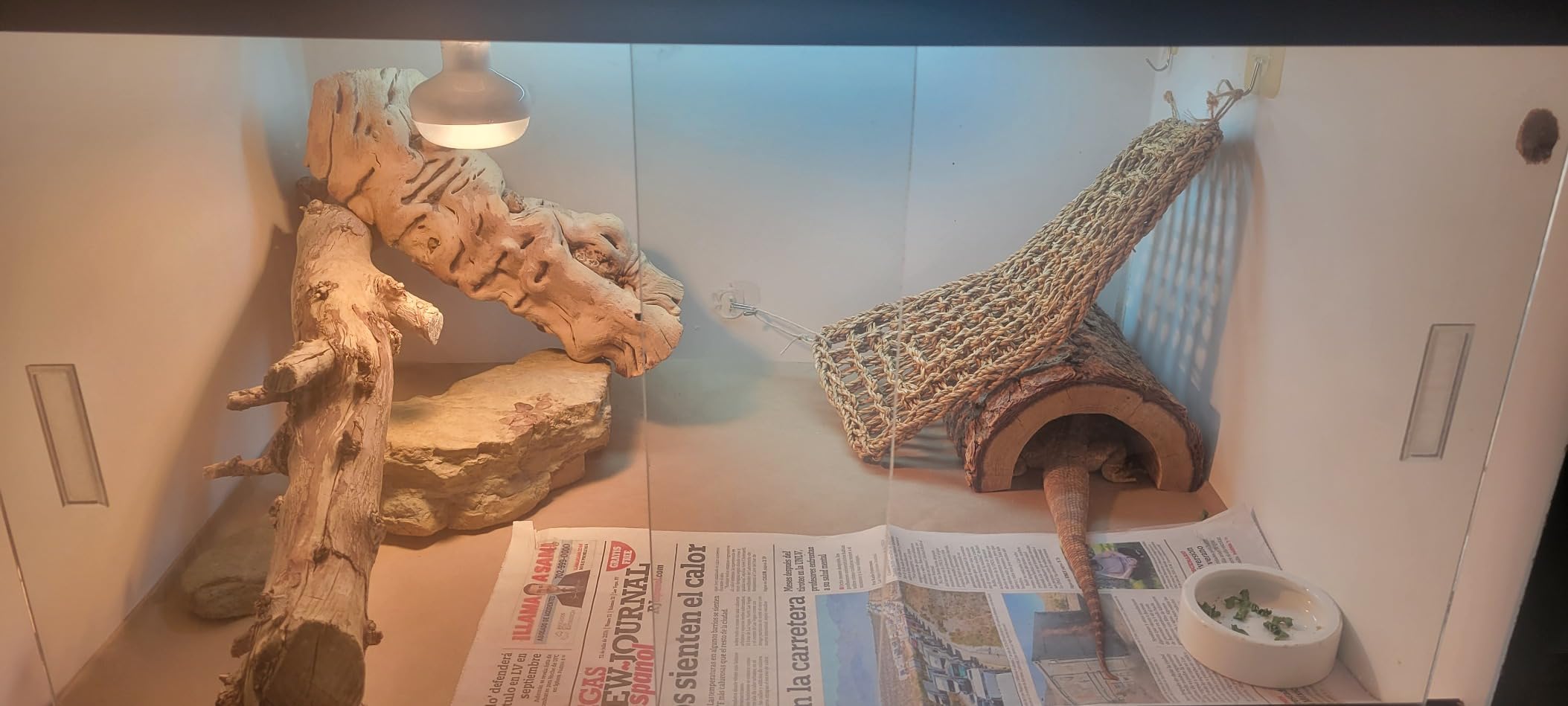
In a 120-gallon desert enclosure with a tall built-in basking platform, that concentration worked well. The 100W output was enough to hold target surface temperature on the upper deck, which is the situation where a flood-style bulb tends to leave the basking site short of temperature.
Two things I appreciate that most budget bulbs skip: a 3000 hour rated life, which is the longest of the incandescent-class bulbs here, and genuinely silent running with no buzzing or flicker. There is also a three-month free replacement and a one-year manufacturer warranty, which is unusual at this price point.
Buyers who complain about brightness are reading a 100-lumen listed figure. In use, the visible output is clearly more than that number suggests, though it is dimmer by daylight standards than the 1600-lumen ReptiKing option.
Why the 3000-hour rating matters in practice
At 12 hours a day, 3000 rated hours is roughly a year of service rather than eight months. Combined with the warranty, this is the bulb I would pick for a build where a premature failure means an animal is suddenly too cold, which is the most common complaint in keeper threads.
Where it falls short
It is a daylight bulb, so it needs a separate night source. And the tight reflector means it works best on a defined basking platform rather than a wide open floor where a broader spread would be more useful.
6. MCLANZOO 75W Red Infrared Spot – Best for Crepuscular Heat
MCLANZOO Infrared Heat Lamp Bulbs 75W 2 Pack,Red Basking Spot Light Bulb Reptile Heating lamp for Bearded Dragon,Turtle,Snake,Leopard Gecko,Chicked with Digital Temperature Thermometer
75W red infrared spot
E26 base
3000 hour coating
3.35 x 4.53 inch, 6.46 ounce
Pros
- Soft red glow intended for night use alongside a daylight bulb
- Owners report some bulbs running 10 months of continuous use
- Evaporated aluminum coating concentrates the heat
- Two bulbs plus a digital thermometer in the box
- Raises overall enclosure temperature as well as the basking spot
Cons
- Red light is not recommended for most species over long periods
- Occasional reports of bulbs arriving cracked or failing within days
- One reviewer criticised inconsistent coating quality on the bulb surface
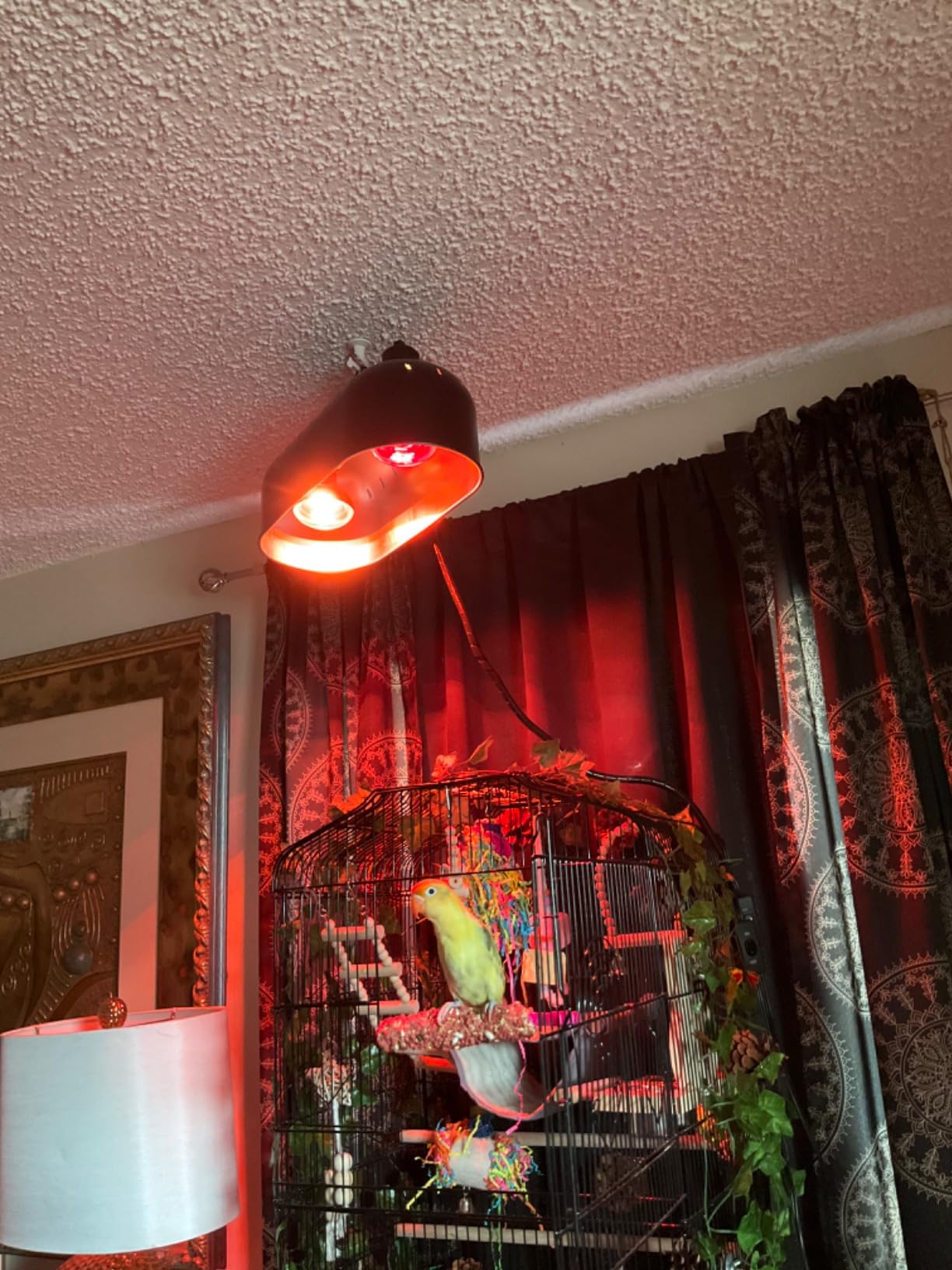
I want to be direct about this one. A red bulb is a compromise, and the compromise is that the animal still sees red light. Most reptiles can perceive it far better than keepers assume, which is why the red-versus-clear debate comes up constantly on r/leopardgeckos and in leopard gecko care groups.
Where it earns its place is a transitional window. Many keepers run a daylight basking bulb, switch to a dim red or infrared source for the last hour or two of the photoperiod as a dusk ramp, and then go fully dark. For that use, the soft non-dazzling output here is genuinely nicer than a bare ceramic emitter with no visual cue at all.
The 4.6 star average across more than 1000 ratings is among the highest in this group, and the most common owner note is that the bulbs outlast the 3000 hour claim, with several reporting around 10 months of continuous use. The evaporated aluminum coating concentrates the heat, and owners like that it lifts the overall enclosure temperature as well as creating a basking spot.
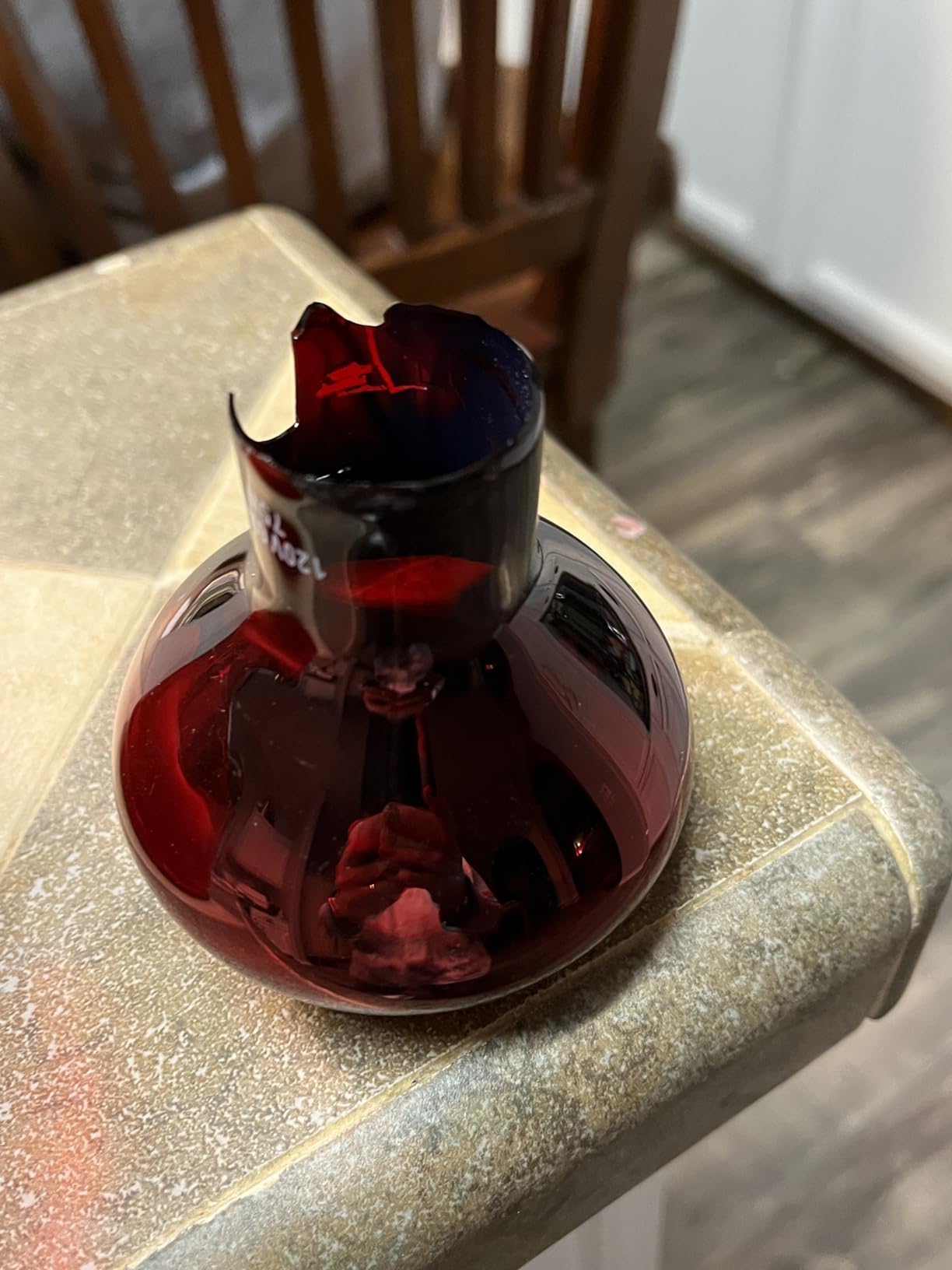
The minority complaint is quality control: cracked bulbs arriving in the box, and bulbs failing within days. Inspect the glass before you install it and you reduce most of that risk.
When a red bulb is the right call
Short dusk and dawn transitions, a juvenile that refuses to settle after a hard light-to-dark switch, or a room where you need some heat during the night and accept a colour cast. A leopard gecko owner in r/leopardgeckos reported resolving their concern after removing a red light in favour of a clear daytime source, which is a common outcome and a reasonable default.
When it is the wrong call
If your animal is nocturnal and does not bask, you do not need a basking bulb at all, and a ceramic heat emitter gives you heat with genuinely zero light. If your species is diurnal and light-sensitive, running red light all night is the wrong tool for the job.
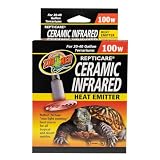
7. Zoo Med ReptiCare 100W Ceramic Emitter – Best for Humid Setups
Zoo Med Repticare 100 Watt Ceramic Infrared Heat Emitter
100W ceramic infrared
A15 shape, E26 base
Porcelain construction
Two-year manufacturer warranty
Pros
- Flat-face porcelain radiates more efficiently than conical designs
- Handles high-humidity terrariums where glass bulbs struggle
- Lifts enclosure air temperature 10-20F above the room
- Two-year manufacturer warranty
Cons
- Pricier per bulb than generic ceramic emitters
- No visible light so it needs a separate daylight source
- Porcelain is heavier and more fragile in the hand than thin ceramic
The flat face is the design choice that matters here. Rather than the conical shape most ceramic emitters use, this uses a flat porcelain disc that radiates more efficiently across its surface, and the efficiency gain is real when you are trying to raise air temperature in a humid tropical vivarium.
The manufacturer states it can raise terrarium air temperature 10 to 20F above the surrounding room. In a 120-gallon tropical setup where glass bulbs have been slow to cut through the humidity, that air-temperature contribution made the difference between a marginal enclosure and one that held a workable ambient.
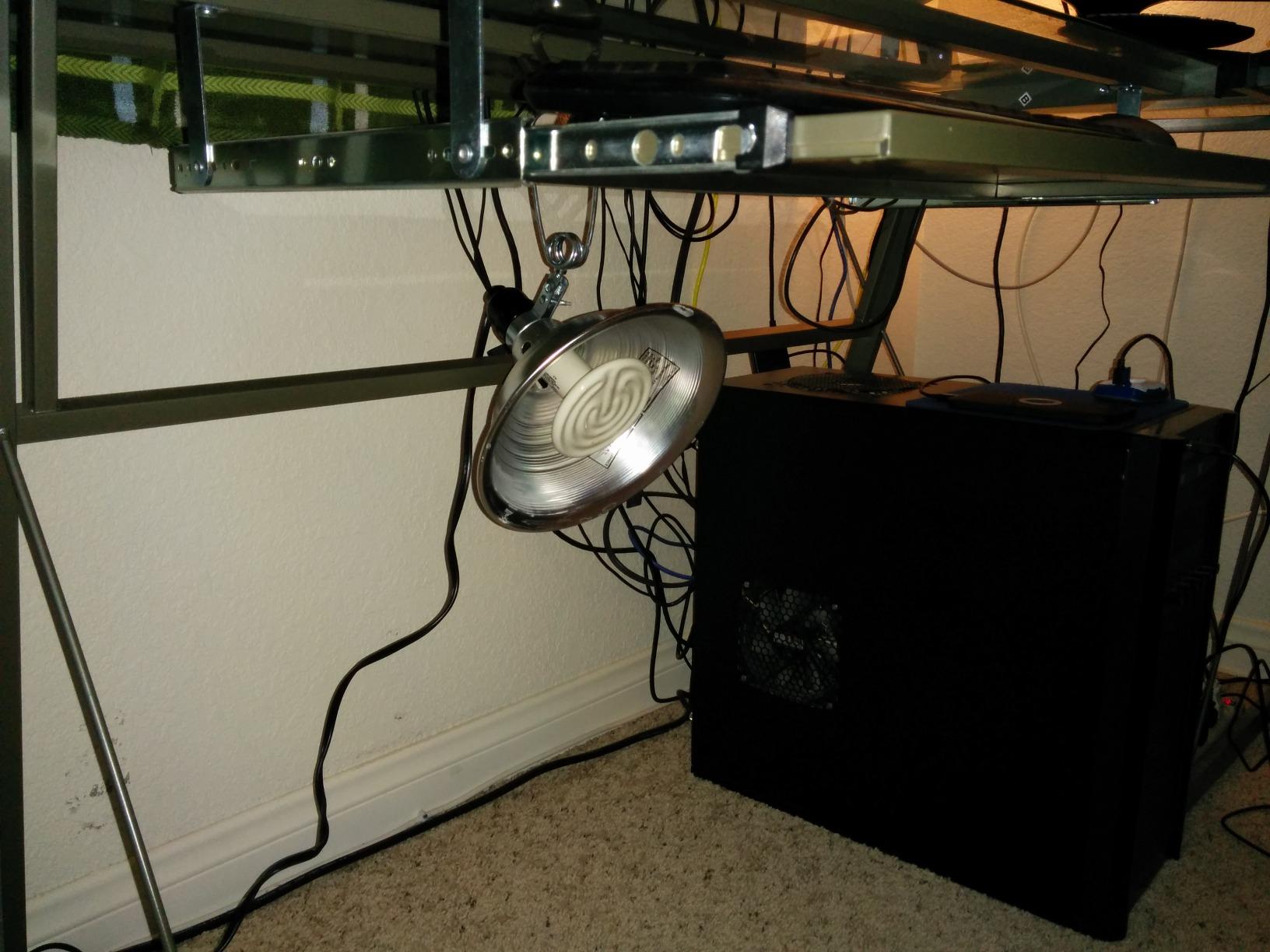
At 4.6 stars from 844 ratings it is one of the most highly rated options here, and humidity tolerance is the reason owners mention most often. Two years of manufacturer warranty on a consumable bulb is unusual and is the clearest signal that the maker stands behind the porcelain element.
The trade-off is straightforward: it costs more per bulb than an off-brand ceramic emitter, and you get no light. Owners on r/Chameleons describe preferring a ceramic emitter over relying on a red lamp for exactly this reason, since the animal gets heat without a colour cue attached to it.
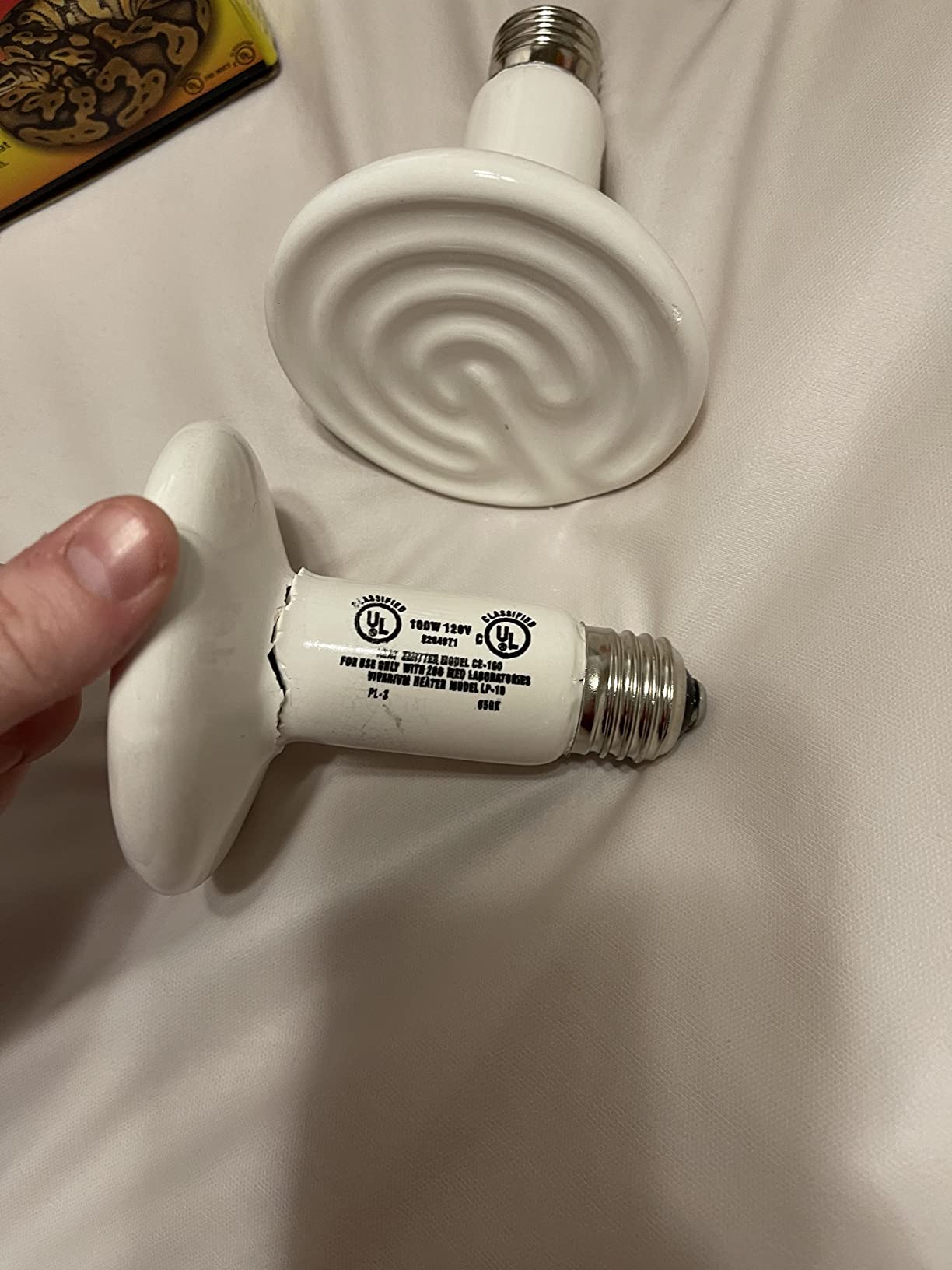
How it handles a humid vivarium differently
Glass bulbs in a wet enclosure fog from the inside and lose output. Porcelain and ceramic elements do not carry condensation the same way, so in a high-humidity enclosure this type keeps working where a glass incandescent would keep fouling. If your substrate is damp every day, that is the deciding factor.
Where it falls short
It cannot light the enclosure, and at 100W it still needs a ceramic socket and a thermostat. For a first cheap setup, an off-brand ceramic emitter will do the same job for less, so this one is really for the enclosure where efficiency and humidity tolerance actually pay back.
8. DOMICA 50W UVA/UVB Dome Kit – Best All-In-One Starter Kit
DOMICA Reptile Heat Lamp with 50W UVA UVB Light Bulb, Basking Spot Light Simulated Sunlight, Heating Lamp for Turtle, Lizard, Snake, Beared Dragon, Amphibians
50W UVA/UVB bulb
Dome fixture, rotatable clip
E27 ceramic socket
3000 hour bulb life
Pros
- Comes as a complete dome
- bulb and clip kit with nothing else to buy
- Rotatable 360 degree clip makes placement easy
- Air duct design runs about 27 percent cooler than traditional domes
- Universal ceramic E27 socket accepts many bulb types
Cons
- One of the two lowest rated entries at 4.0 stars
- Only 50W
- which is light for anything above a 20-gallon enclosure
- Manufacturer suggests replacing the bulb roughly every 2 months in hot setups
- You get a fixture rather than a bulb-only replacement
Everything else on this list is a bulb, and this is the most complete package. You get an aluminium dome, a rotatable clip mount, and a 50W bulb that produces both UVA and UVB, which is the single most common reason new keepers end up buying one of these.
For a beginner with a 10 or 20-gallon enclosure, that completeness is worth more than any spec on any other bulb here. The ceramic E27 socket accepts 10 to 75W bulbs across several types, so you are not locked into one bulb later, and the 360 degree clip lets you reposition the lamp as the animal grows.
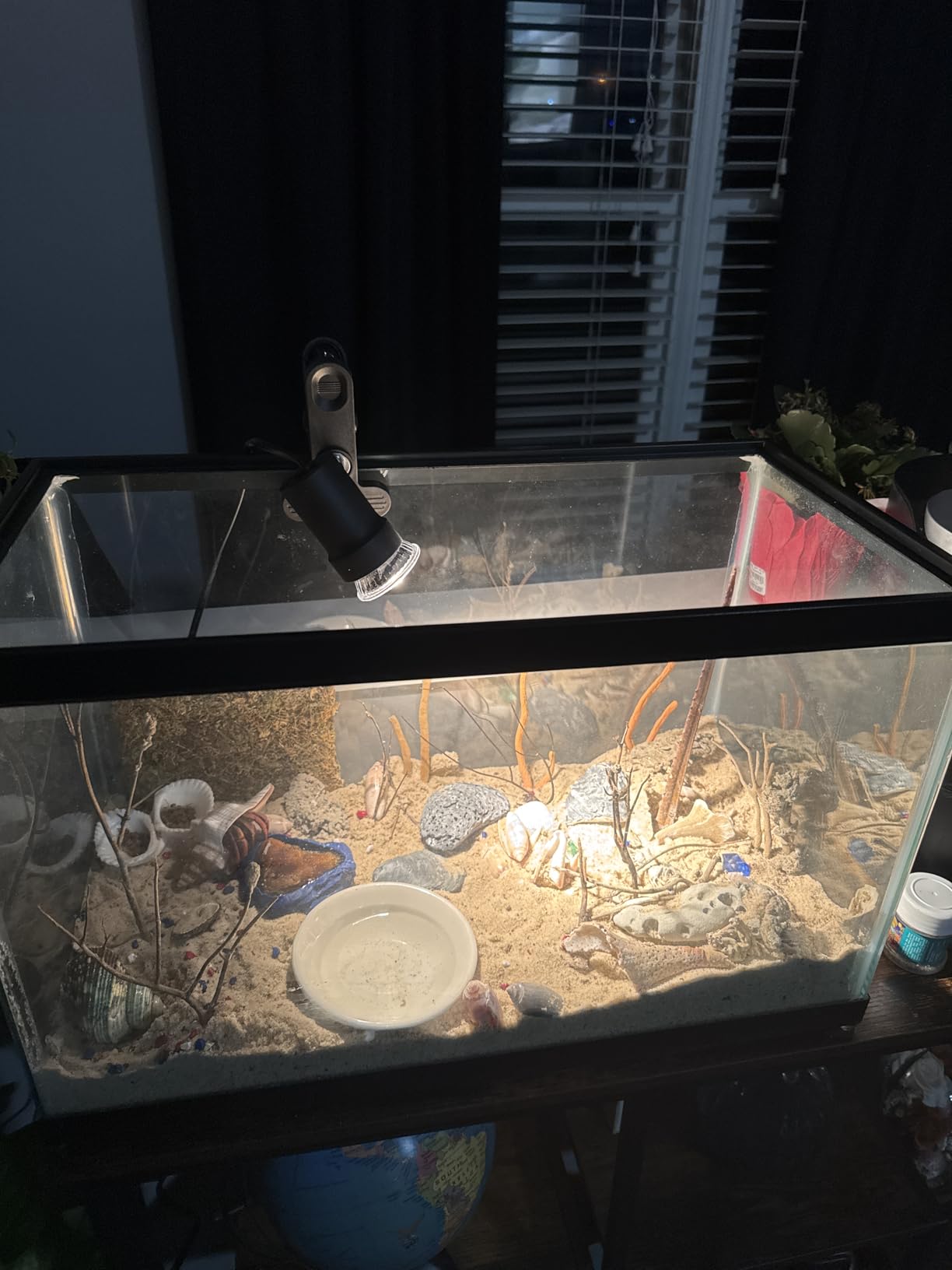
Two engineering details stand out. The heat dissipation duct design runs about 27 percent cooler than traditional dome lamps, which matters because fixture temperature is what causes warped domes. And the manufacturer asks for at least 10 inches of clearance from surfaces plus a 6-hour cool-down interval, which is realistic guidance rather than marketing.
The 4.0 star rating is tied for the lowest in this group and roughly 14 percent of reviews are one star, so I would not build a whole setup around it. The pattern in the feedback is that most buyers find it adequate and inexpensive while a meaningful minority report problems.
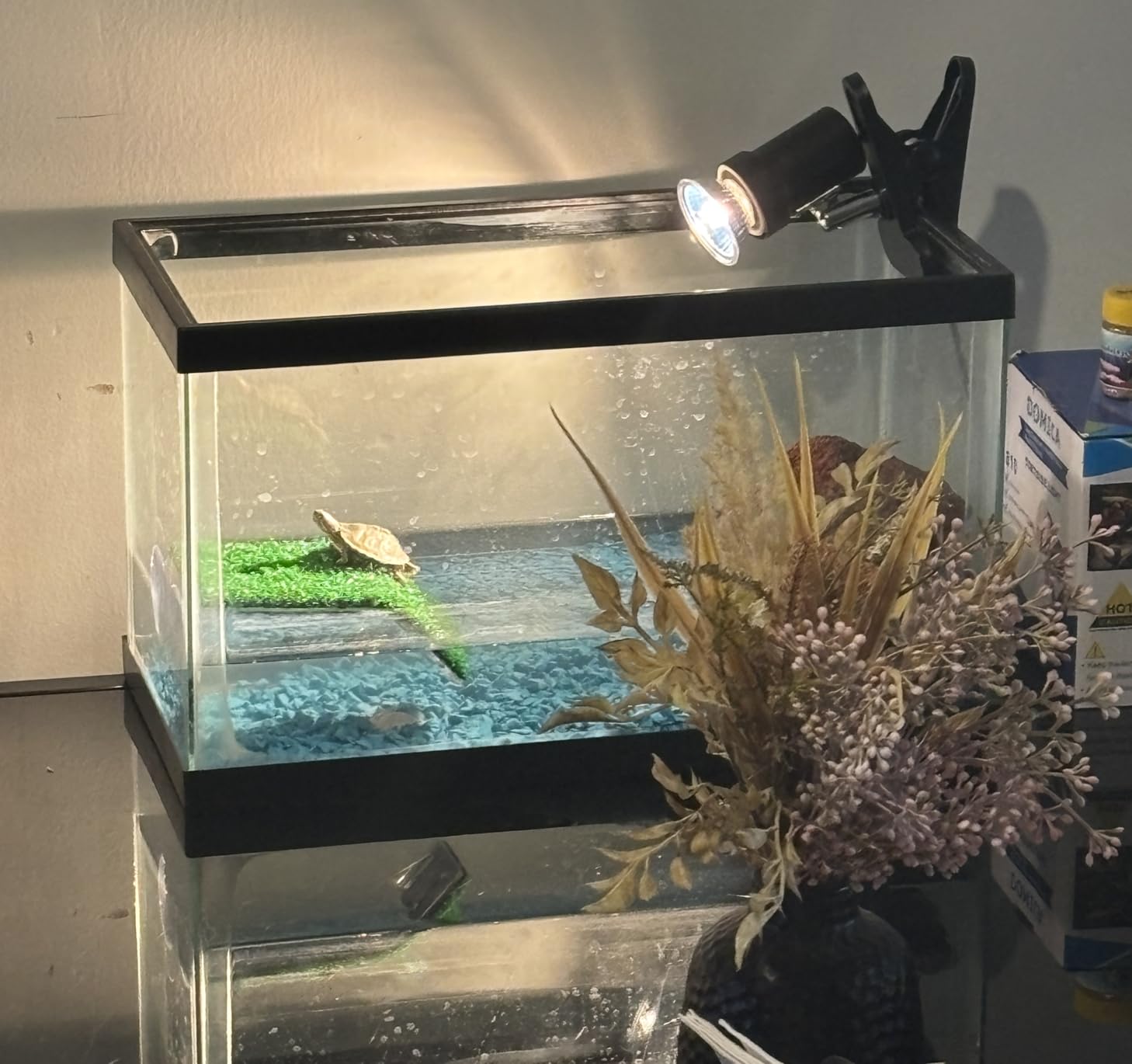
What the clip mount actually changes
The 360 degree rotation with roughly 4.59 feet of cord means you can put the lamp exactly over the basking surface without drilling or building a mount. Clip opening reaches about 1.97 inches, which fits most screen-top and rim enclosures. For a rental or a first tank, that flexibility is the feature you will use most.
Where it falls short
At 50W it is underpowered above a 20-gallon enclosure, and the manufacturer recommends replacing the bulb roughly every two months in high-temperature environments, which is an unusually short interval. Buy it as a starter kit, then plan on moving to a dedicated 100W basking bulb once the animal is in a larger enclosure.
9. Briignite 50W Halogen Dome Kit – Best for Dimming Control
Briignite Reptile Heat Lamp G9 Halogen Heat Bulb Dome Reptile Light Fixture
50W halogen bulb
G9 base, 120V
500 lumens, 120 degree beam
Dome plus two G9 bulbs
Pros
- Stepless dimming lets you tune temperature without moving the lamp
- Aluminium alloy reflector boosts UVA output
- Top ventilation and radiating holes help dissipate heat
- Dome fixture and two G9 bulbs in one box
Cons
- G9 base is not compatible with standard E26 fixtures
- Thinnest review base outside the projector entry at just 157 ratings
- Rated 4.0 stars with about 13 percent one-star reviews
- Marked as low efficiency
Halogen bulbs throw more heat per watt than incandescent, and this kit is the only place in the lineup where you can dial the output continuously. Stepless dimming means you adjust the basking temperature by turning a dial rather than climbing a ladder to move the lamp, which is the practical reason to want this design.
Halogens run hotter at the bulb surface than incandescents, so the dome in this kit is aluminium with top ventilation and radiating holes. The listing does warn that surfaces become hot during use, and that is not boilerplate. Give it its clearance.
What gives me pause is the base. This uses a G9 bi-pin bulb, not the standard E26 screw base that every other fixture in this article accepts, so it will not drop into the dome most keepers already own. The 120 degree beam angle is also wider than a basking spot, which spreads heat rather than concentrating it.
With only 157 ratings, there is very little long-term reliability data to draw on. That is not a disqualifier, but it is a reason to treat the first three months as an evaluation period and keep your temperature gun close.
When dimming genuinely beats moving the lamp
Dimming solves a problem that wattage swaps do not. Once your basking surface temperature is right, you can hold it there through a season change by turning the output down in summer and up in winter, instead of swapping bulbs. For a tall enclosure where the only adjustment is moving the lamp, that is a real convenience.
Where it falls short
The G9 base limits you to this fixture, 50W is a small output, and the efficiency marking is low. If your enclosure is larger than about 20 gallons, buy a separate deep dome and an E26 halogen bulb rather than building around this kit.
10. Zoo Med ReptiCare 150W Heat Projector – Best for Large Enclosures
Zoo Med ReptiCare Infrared Heat Projector 150 Watts
150W infrared heat projector
R20 shape, E26 base
2600 lumens
Infrared A and B output
Pros
- Carbon fiber filament rated to 200000 hours
- Emits both Infrared A and Infrared B for deep tissue penetration
- Wide and even basking zone rather than a tight spot
- Works with a dimmer and thermostat
- Highest wattage option here for large or tall enclosures
Cons
- Smallest review base in the set at 100 ratings
- Check voltage compatibility before installing
- Highest draw in the group for similar delivered heat
This is the specialist pick, and the specialist feature is the carbon fiber filament. Rated to 200000 hours, it will outlast every other bulb on this list by an order of magnitude, and at 150W it is the highest-output option in the group, comfortably covering a tall 120-gallon desert enclosure where a standard dome cannot reach the basking deck.
Unlike a basking spot, it produces a wide, even heated zone rather than a tight hotspot. The output combines infrared A and infrared B wavelengths, and the deep penetration claim is the reason owners choose it for larger, cold-bodied reptiles. It is also compatible with a dimmer and thermostat, which matters more at this wattage.
Two honest caveats. The review base is thin at 100 ratings, so you are buying on the manufacturer’s engineering rather than on a large body of owner feedback. And the listing shows conflicting voltage information, so confirm the electrical spec against your fixture before you install anything at 150W.
On running cost, a 150W projector left on 24 hours a day draws roughly 108000 watt-hours a month. A thermostat that cycles it down during the day, or a timer that switches it off outside the hours it is needed, is the difference between a sensible running cost and an unnecessary one.
When a projector earns its extra cost
Two situations. First, a large or tall enclosure where the basking surface is far enough from any standard dome that a basking spot would need a dangerously high wattage to reach it. Second, an animal that needs broad, even warmth rather than a concentrated basking site, such as a large monitor species.
Where it falls short
It is the priciest item in this roundup, it has the least owner feedback, and at 150W it demands a deep dome rated for the load with a ceramic socket. If your enclosure is 40 gallons or smaller, a 100W basking bulb handles the same job for a fraction of the draw.
How to Choose a Heat Lamp for Your Enclosure
Start with volume, then adjust for material, because material decides how much of your wattage actually reaches the animal. A glass tank with a mesh screen top bleeds heat almost as fast as you add it, and that is the single most common reason a lamp that worked in summer stops working in winter.
Here is the wattage ladder I use as a starting point for a daytime basking bulb, before any adjustment for room temperature or distance:
10 to 20-gallon enclosure, solid top: 40W to 50W
10 to 20-gallon enclosure, mesh screen top: 60W to 75W
40-gallon enclosure, solid top: 75W
40-gallon enclosure, mesh screen top: 100W
75-gallon enclosure, solid top: 100W
75 to 120-gallon enclosure, mesh screen top: 150W or a deep heat projector
Custom PVC or wood enclosure: the most efficient option, start one tier lower than glass
These numbers are a starting point, not a verdict. The deciding instrument is an infrared temperature gun aimed at the basking surface, measured after the lamp has been on for an hour. If the surface reading is out of your species range, move the lamp one step or change the wattage tier and measure again.
Species differ enormously in what they need, and the two numbers people ask about most often are the bearded dragon and the leopard gecko. A bearded dragon is a diurnal basking species that wants a genuinely hot basking surface. A leopard gecko is nocturnal, does not bask, and is better served by a ceramic heat emitter with no visible light at all. If you keep the second one, a daylight basking bulb is optional rather than essential.
Do not run any visible-light bulb around the clock. Reptiles are ectotherms with a functioning circadian rhythm, and a lamp that never goes off suppresses the dark period that normal behaviour depends on. Use a timer, and pair the daylight bulb with a zero-light ceramic emitter or a heat projector if the enclosure needs overnight heat.
Red vs Clear vs Blue Heat Lamps: What to Actually Use
Clear or white wins, and the reason is simple: reptiles see red light far better than keepers expect, so a red bulb is not the invisible night light it appears to be. Use a clear or white basking bulb during the day, switch it off at night, and cover overnight heat with a ceramic heat emitter that emits no light at all.
Clear or white daylight basking bulb: heat, visible light and usually UVA in one. This is the default daytime source and the right answer for most diurnal species.
Red infrared bulb: heat plus a visible red glow. Acceptable for a short dusk or dawn transition, not recommended as an all-night source for any species.
Blue bulb: no advantage for basking, less heat output per watt than clear, and the same circadian problem as red. Skip it.
No-light ceramic heat emitter or heat projector: heat with zero visible output. This is the correct overnight source.
The leopard gecko question comes up often enough to answer plainly. A red bulb is not good for leopard geckos as an all-night heat source, and a 100W lamp is far more heat than most leopard gecko setups need. A ceramic heat emitter on a thermostat, in a 20-gallon enclosure, is a more typical and safer configuration.
Thermostat, Temperature Gun, and Clearance Safety
A thermostat is not optional, and the correct type is a dimming thermostat rather than an on-off model. On-off thermostats cut power to the bulb entirely, which shortens bulb life and gives you a fluctuating basking temperature that the animal experiences as a flickering hot spot rather than steady warmth.
Mount the probe where you want the temperature controlled, not near the top of the enclosure or right under the dome. Most probes read air temperature, so controlling the air at the basking site is what keeps the surface temperature stable.
Clearance rules I hold to. Keep a ceramic heat emitter or heat projector more than 30 cm from the animal, keep a basking bulb at least 10 inches above the basking surface, and allow a 6-hour cool-down before handling a fixture that has been running hot. Never use a plastic socket with a ceramic emitter, a mercury vapour bulb, or anything above 75W.
Check the fixture’s wattage rating before you buy the bulb, not after. A dome rated to 75W with a 100W bulb in it is a melted socket and a warped dome, and that is the mechanism behind most fire and melt reports keepers describe in forum threads.
Finally, use a temperature gun on a schedule. Bulbs lose output gradually before they fail visibly, and keepers repeatedly describe an animal suddenly unable to reach target temperature with the lamp still glowing normally. A monthly check catches the decline while you can still fix it.
Nighttime Heat Without Breaking the Day/Night Cycle
If the enclosure needs to stay warm at night, the answer is a heat source with no visible output. A ceramic heat emitter is the standard choice, and a deep heat projector covers the larger enclosures where you need a wide, even warm zone rather than a small radiant point.
Run a timer on the daylight bulb for 10 to 12 hours and a separate timer or thermostat on the night source. Many keepers find a two-ramp approach works best: daylight basking bulb for the main photoperiod, a dim red source for the final hour as dusk, then complete darkness with a ceramic emitter handling the temperature.
In a cold room in winter, the night source is doing more work and the daytime bulb may need a higher wattage tier than it did in summer. That seasonal shift is the most common cause of the my lamp stopped working posts, and the answer is almost always to step the wattage up rather than to replace the bulb.
Rising 5 to 10 inches in the enclosure can matter as much as adding watts, because it reduces the surface temperature the animal actually experiences. Move, measure, then decide whether the bulb itself needs to change.
Frequently Asked Questions
What wattage heat lamp do I need for my reptile?
Most keepers start at 50W for a 10 to 20-gallon enclosure, 75W for a 40-gallon, 100W for a 75-gallon, and 150W or a heat projector above 120 gallons. A mesh screen top or a glass tank pushes you up one tier, while a PVC or wood enclosure lets you start one tier lower. Always confirm with an infrared temperature gun aimed at the basking surface.
Which is better, a red or clear heat lamp?
Clear or white is better for daytime basking, because it provides heat, visible light and usually UVA in one bulb. A red bulb is not invisible to reptiles, so it is not a good all-night source. Use a clear basking bulb during the day, switch it off at night, and cover overnight heat with a ceramic heat emitter that emits no light.
Is a 75 watt heat lamp enough for a bearded dragon?
For an adult bearded dragon in a 40-gallon enclosure with a solid top, a 75W bulb is a reasonable starting point. In a 40-gallon tank with a mesh screen top, or in a 75-gallon enclosure, step up to 100W. Measure the basking surface with a temperature gun after an hour and adjust the height or the wattage until the reading matches your target range.
Is a 100W heat lamp too much for a leopard gecko?
Usually yes, for a typical 20-gallon setup. Leopard geckos are nocturnal, do not bask, and do not need a visible-light daytime source at all. A ceramic heat emitter on a dimming thermostat is a more appropriate and safer configuration. If you do use a basking bulb for a warm hide, keep it low wattage and check the surface temperature closely.
Do I need a thermostat with a reptile heat lamp?
Yes, and it should be a dimming thermostat rather than an on-off model. On-off models cut power entirely, which shortens bulb life and creates a fluctuating basking temperature. Place the probe at the basking site you want controlled, not near the top of the enclosure or directly under the dome.
How often should I replace a reptile heat lamp?
Plan around the rated life on the specification sheet. Incandescent and standard basking bulbs are commonly rated to 2000 hours, which is roughly eight months on a 12-hour photoperiod, while some reflector bulbs reach 3000 hours. Heat projectors with carbon fiber filaments are rated far higher. Replace proactively rather than waiting for a visible failure.
Conclusion: The One Lamp to Buy First
If you only do one thing, buy the Fluker’s 100W incandescent basking spotlight for the daytime heat in your enclosure. It has the deepest review history in this group, a focused beam that produces a genuine basking site, and a service record that keeps it working long after newer bulbs have burned out.
Then add the pieces that turn a lamp into a system: a dimming thermostat, an infrared temperature gun, and a ceramic heat emitter or heat projector for overnight heat if your species needs it. Pick the wattage from your enclosure size and material, not from your species name, and measure the basking surface before you walk away. That approach works for any enclosure, and it is still the fastest route to the best heat lamps for reptile enclosures in 2026.