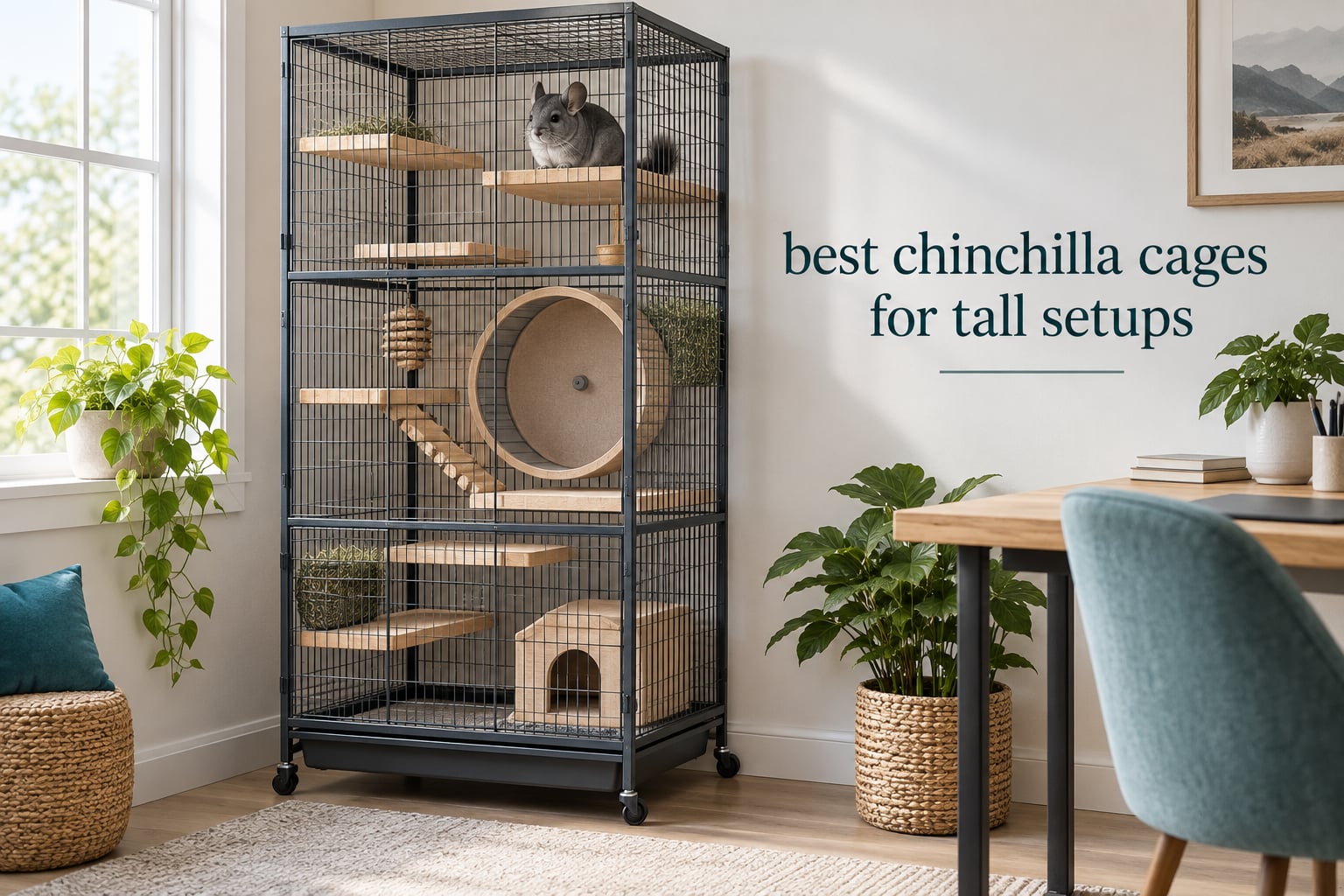
The best chinchilla cages for tall setups are the ones that deliver genuine vertical climbing space, metal a chinchilla cannot chew through, and a frame still standing fifteen years from now. After measuring every serious candidate against the same checklist, the MidWest Critter Nation Double Unit is our strongest all-round pick, the Yaheetech 52-inch six-tier earns the value slot, and the Prevue 485 Feisty Ferret Home is the tall enclosure that has been in continuous production since 2007 and still holds its shape.
We spent months reading r/chinchilla and chins-n-hedgies threads, the ferret forums, and the long-running reference sites, then checking every cage on verified interior height, real bar spacing, frame gauge, what plastic is packed in the box, and whether the top shelf can take a solid-surface wheel without flexing. Ten cages made the cut. Several popular ones did not, including the small starter cage most chinchillas are handed at a pet store.
Three questions settle almost everything before you shop. How many chinchillas are living in the setup. Whether the arrangement needs to be modular or permanent. And how much floor space you are willing to give up. A bonded pair sharing one enclosure wants closer to four feet of vertical space. A single adult is fine at three feet if the levels are well distributed. And if a second chinchilla is a maybe-later situation, buy one single unit now and stack a second one when the time comes rather than buying two cheap cages you will replace anyway.
One more thing before the list. Owners on every forum we read treat build quality as the deciding factor, not features. A cage that squeaks, rusts at the corner joints, or has a door that will not latch is a cage that gets replaced within two years, and the money spent on it is money gone. That single argument is why a good metal cage often costs more than two budget ones, and it is why we have not filled this list with the tall plastic-framed towers that flood retailer carousels.
Table of Contents
Top 3 Best Chinchilla Cages for Tall Setups in 2026

MidWest Critter Nation Double Unit
- 36 x 24 x 63 inch two-story habitat
- 1/2 inch wire spacing
- Two full levels with removable base pans
- Full-width double doors

Yaheetech 52 Inch Six Tier Cage
- Six tiers in a 52 inch frame
- Metal grate over a slide out tray
- Powder coated steel
- Four caster wheels

Prevue 485 Feisty Ferret Home
- 31 x 20 x 41.5 inch cage on a 54 inch stand
- Two escape proof hinged doors
- Removable platforms grille and tray
- Caster wheels with storage shelf
All 10 Best Chinchilla Cages for Tall Setups in September
Height is the headline number buyers search on, but it is the least interesting one on its own. These ten range from 38 inches to 69 inches tall, and the differences that decide whether a cage works for a chinchilla are bar spacing, shelf material, and what plastic arrives in the box.
| Product | Specifications | Action |
|---|---|---|
| MidWest Critter Nation Double Unit |
|
Check Latest Price |
| Prevue 485 Feisty Ferret Home with Stand |
|
Check Latest Price |
| Yaheetech 52 Inch Six Tier Metal Cage |
|
Check Latest Price |
 PawHut Six Level Small Animal Cage PawHut Six Level Small Animal Cage |
|
Check Latest Price |
 PawHut 63 Inch Six Tier Steel Cage PawHut 63 Inch Six Tier Steel Cage |
|
Check Latest Price |
 Polar Aurora 59 Inch Metal Cage Polar Aurora 59 Inch Metal Cage |
|
Check Latest Price |
 Yaheetech 69 Inch Wrought Iron Cage Yaheetech 69 Inch Wrought Iron Cage |
|
Check Latest Price |
 HABUTWAY 50 Inch Rolling Metal Cage HABUTWAY 50 Inch Rolling Metal Cage |
|
Check Latest Price |
 Homey Pet Three Tier Small Animal Cage Homey Pet Three Tier Small Animal Cage |
|
Check Latest Price |
 Mcage Five Tier Deluxe Habitat Mcage Five Tier Deluxe Habitat |
|
Check Latest Price |
What Makes a Cage Tall Enough for a Chinchilla
Height matters more than most people expect, and for a specific reason. Chinchillas are built to climb and jump, not to run long horizontal distances. A cage that is wide but short forces constant pacing along the same few feet of floor. A cage that is tall lets the animal move between levels in stages, which is the exercise and the territory their natural behaviour actually requires.
Our working baseline is at least three feet of usable vertical space for one adult chinchilla, and closer to four feet for a bonded pair sharing an enclosure. The Critter Nation Double Unit is the clearest example of the geometry: 36 by 24 inches of footprint per level, a total height of 63 inches, and enough interior height on each level that a 15-inch solid-surface wheel fits with room to spare above it.
There is a second height rule that owners mention constantly and retailers never print. Count the levels, not the total inches. A 52-inch cage divided into six shallow tiers is not the same animal experience as a 54-inch cage divided into two generous levels, because a chinchilla needs room to stand upright on its hind legs and stretch, not just somewhere to exist. Very tall, very narrow cages trade away the floor area that makes each level usable.
Key requirements for a tall chinchilla cage:
Size: At least three feet of usable vertical height for a single adult chinchilla, and closer to four feet for a bonded pair sharing one enclosure, with a wide-enough footprint per level that a solid-surface wheel fits above standing head height.
Material: A powder-coated steel frame with metal wire throughout, plus metal or solid-surface shelving, and no exposed plastic surfaces a chinchilla can chew and swallow on day one.
Bar spacing: Half-inch to three-quarter-inch is the safe working range for adult chinchillas, and anything at or above one inch rules out juveniles, since a chin can push its head between wider bars and panic.
Flooring: Bare wire floor grates cause sore hocks and pododermatitis over time, so every level needs covering with kiln-dried pine, a fleece liner, or a solid-surface shelf section.
Pair those four with two more practical checks. The pull-out tray or pan should be deep enough that bedding does not ride over the edge every time the animal shifts, and the doors should be wide enough to slide a terrified chinchilla in and out without a fight. Caster wheels matter more in a tall cage than most people expect, because a 60-inch enclosure on casters can be rolled away from a sunlit window in the afternoon rather than living in a heat trap all summer.
Finally, ignore the interior height printed on the box and measure the height your chinchilla can actually use once shelves, ramps, and a wheel are in place. The tallest number on a product page is the total assembled height including the stand, and the number that matters is the clear vertical distance on each level.
Will a 60-Inch Cage Actually Fit Your Room
Nothing in this list gets talked about enough, and it is the single most common reason a tall cage ends up in a corner it should never have been bought for. A 63-inch Critter Nation is 36 inches wide and 24 inches deep. A 69-inch wrought iron tower is 30 inches deep and 18 inches wide. Measure your doorway before you order, then measure the path from that doorway to wherever the cage is going to live.
Standard interior doors are 32 inches wide, which comfortably clears a 24-inch-deep cage carried on its side but is tight for anything wider. The practical approach is to assemble the cage as close to its final position as you can, tip it onto its side on a blanket, and roll it through on the casters. A two-person job, and far less likely to twist a panel or pop a door off its hinge than carrying an assembled cage upright through a hallway.
Ceiling clearance is the other half of the math. A 69-inch cage on a rolling stand needs a ceiling with real headroom above it, not a sloped attic or a low soffit, because you will want to lift the top panel off to get a hand inside. Count the cage height plus at least a foot of working clearance, and check that the floor is level, since casters on an uneven floor can rock a tall frame in a way that rattles every door.
Then there is the summer problem, which the tall-setup angle makes worse rather than better. A tall metal cage absorbs heat from a sunlit window faster than a low plastic one, and the top shelf is the hottest place in the setup because rising air collects there. Keep the cage out of direct afternoon sun, roll it back toward an interior wall rather than a window, and expect to move it twice a day in high summer. Owners running a tall cage in a warm room pair that placement discipline with a chilled ceramic tile or stone in the enclosure so the animal has somewhere genuinely cool to go.
If your room will not take a 60-inch tower, the honest answer is that a 38- to 41-inch cage with better bar spacing and better shelves is a better setup than a 63-inch cage wedged into a corner too close to a radiator. Height you can actually maintain, with cleaning access you can reach without a step stool, beats a taller number on a product page.
1. MidWest Critter Nation Double Unit: the two-level 63-inch habitat that keeps winning
Critter Nation by MidWest Double Unit Small Animal Cage
36 x 24 x 63 inches
Two full levels
1/2 inch wire spacing
44 pounds
Pros
- Two full levels of usable vertical space
- 1/2 inch wire spacing holds adults and juveniles
- Full width doors open completely for handling
- Shelf and ramp positions adjust at several heights
- Splits into two separate enclosures
Cons
- Assembly takes one to two hours and is far easier with two people
- Door latches stick and need firm pressure to open
- Rust can begin at the corner joints over time
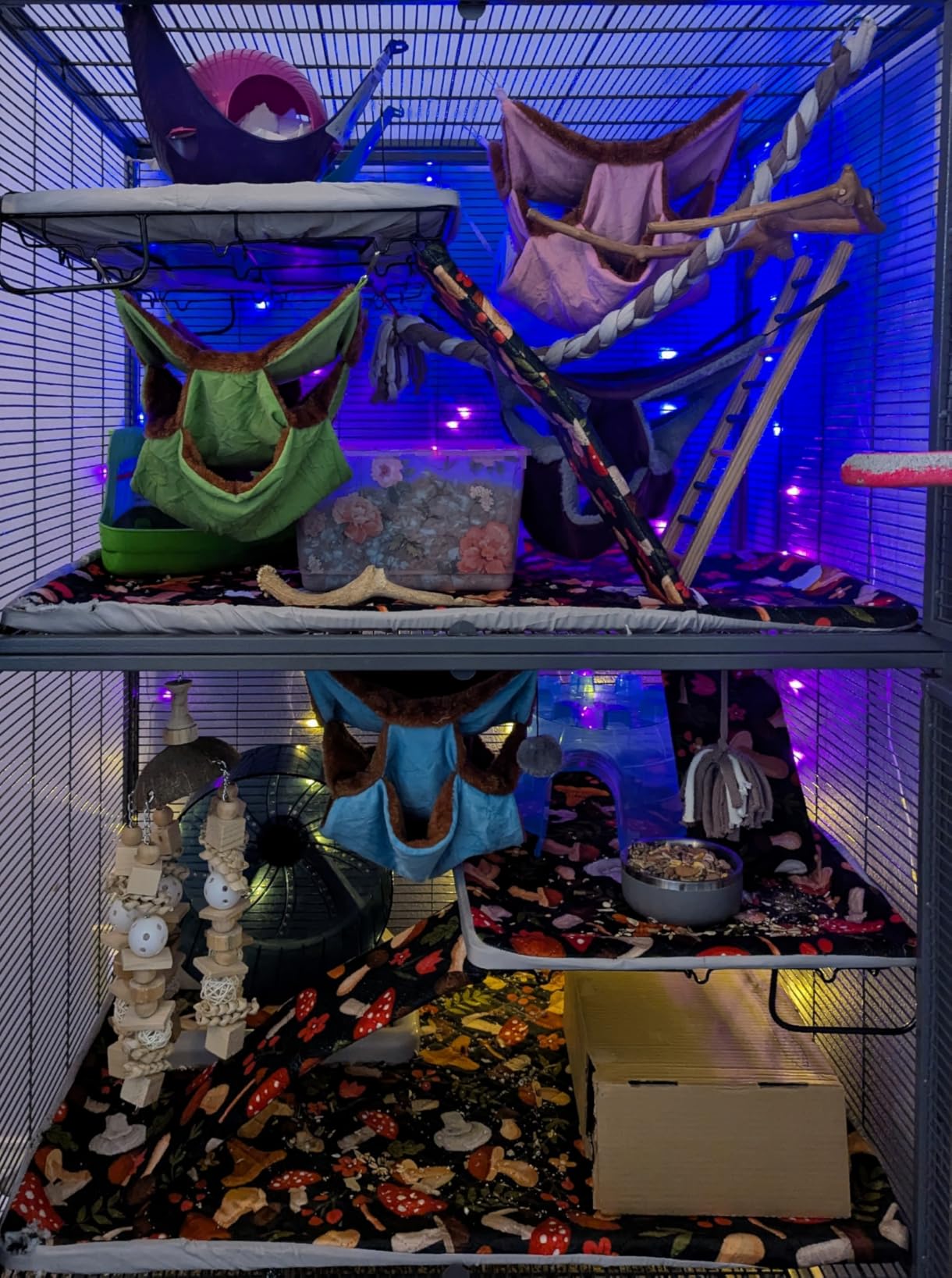
This is the cage the owners on r/chinchilla and chins-n-hedgies name more often than any other, and the geometry backs up the reputation. At 36 by 24 inches per level and 63 inches assembled, it gives one adult chinchilla an entire 36-by-24 level of floor plus a second level above it, with roughly 20 inches of interior height per level once the shelves are in position.
The bar spacing is the number that matters most, and half-inch is the figure owners quote when they explain why this cage holds up. A chinchilla cannot push its head between those wires and panic, which is a genuine hazard in the many tall ferret-rated cages that ship with one-inch spacing. The frame is powder-coated steel wire in a quartz hammertone finish, and at 44 pounds it is heavy enough that a chinchilla cannot shift it, which also means it is genuinely awkward to move through a hallway.

Two full-width doors on the upper level open completely, so you can reach every corner without a hand entering the cage through a gap. That matters more than it sounds. Every handling moment, every vet check, every shift into a carrier, is easier when the door folds all the way back, and a frightened chinchilla is far less likely to bolt if the opening is wide.
The middle of the unit is the underrated part. Closed, it is one tall two-level habitat. Open, it becomes two separate enclosures with no modification, which is exactly what you want for a quarantine introduction, a male and female you intend to keep apart, or a chin recovering from illness. Owners in the r/chinchilla cage thread describe buying the double unit for the single-unit option inside it.
What arrives in the box is the real caveat. Two textured ramps come with plastic covers, the base pans are plastic, and the ramp covers are the first thing a chinchilla will start chewing. Strip them before day one and replace the pans with metal or heavy solid-surface trays. It also means planning ninety minutes minimum, realistically two people with a rubber mallet, because the panels have to be seated firmly and bent pegs are a common shipping complaint.
What the double unit does that a single unit cannot
The bottom level doubles as storage. It is a full shelf that holds hay, wood ledges, spare bedding, and the dust bath tub without taking any of the animal’s living space, which is how a cage this tall stays organized instead of turning into a tower of clutter on one level.
For a bonded pair, the arrangement is genuinely good rather than acceptable. Two adults need roughly 10 square feet of combined floor space with plenty of vertical territory, and 36 by 24 across two levels clears that with room to spare. The two levels also let you split the pair’s resources, with a hide on each level so the lower-ranking animal is not cornered every time the food bowl appears.
Who should skip it, and what to watch long term
Skip it if your room cannot take a 36-inch-wide, 63-inch-tall object, because the footprint is genuinely large and it is not going anywhere. Also skip it if you are alone with no help and a rubber mallet, since assembly is the part that turns people against this cage more than anything else.
The recurring long-term complaints are consistent enough to plan around. Door latches stick and need firm pressure, and corner joints are where rust shows up first in humid climates. Neither is a dealbreaker, but both are cheap to manage if you oil the hinges once a year and keep the cage out of a damp exterior wall.
2. Prevue 485 Feisty Ferret Home: the tall stand setup with the most reviews here
Prevue Pet Products 485 Feisty Ferret Home with Stand, Black Hammertone Small
31 x 20 x 41.5 inches
54 inches on the stand
7/8 inch wire spacing
23.6 pounds
Pros
- Stand raises the enclosure to a comfortable working height
- Two large escape proof hinged doors
- Removable platforms grille and tray
- Casters plus a built in storage shelf
- Ramps and hammock included
Cons
- The stand forces a larger overall footprint
- 7/8 inch spacing is wider than small rodents need
- Wire floor grilles are hard on small paws
With 7199 reviews and a manufacturing history that goes back to 2007, the Prevue 485 is the most thoroughly battle-tested enclosure in this roundup, and it is the only one on the list built around a stand rather than a tower. The cage itself measures 31 by 20 by 41.5 inches. The stand lifts the whole thing to 54 inches, which is a working height you can actually access without a step stool.
That stand is the feature owners care about, and it is not a gimmick. Feeding, spot cleaning, and reaching into the top level happen every single day. Working at 54 inches instead of at floor level changes how a cage feels to live with, and the open shelf underneath the cage doubles as a storage area for hay, bedding, and the cleaning supplies.
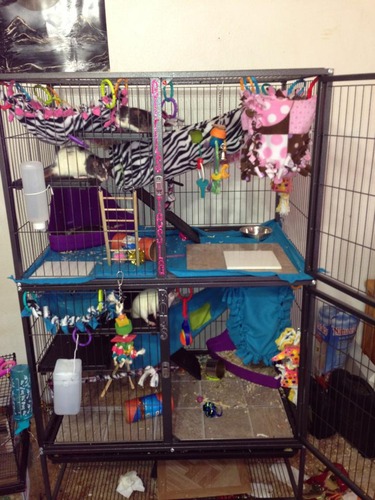
Two large hinged escape-proof doors mean the cage can be split into two areas simply by closing one of them. That gives you a quarantine and a main enclosure in a single footprint, or a temporary separation for an introduction. The removable platforms, grille, and bottom tray take the whole interior apart for cleaning, which is a bigger deal in a tall cage where you would otherwise be reaching into corners you cannot see.
At 23.6 pounds, it is also the lightest cage here relative to its size, which makes it the one most likely to survive a move between rooms or a change of house. Casters are standard, so rolling it away from a hot window is a two-second job rather than a two-person lift.
Where the 7/8 inch spacing matters
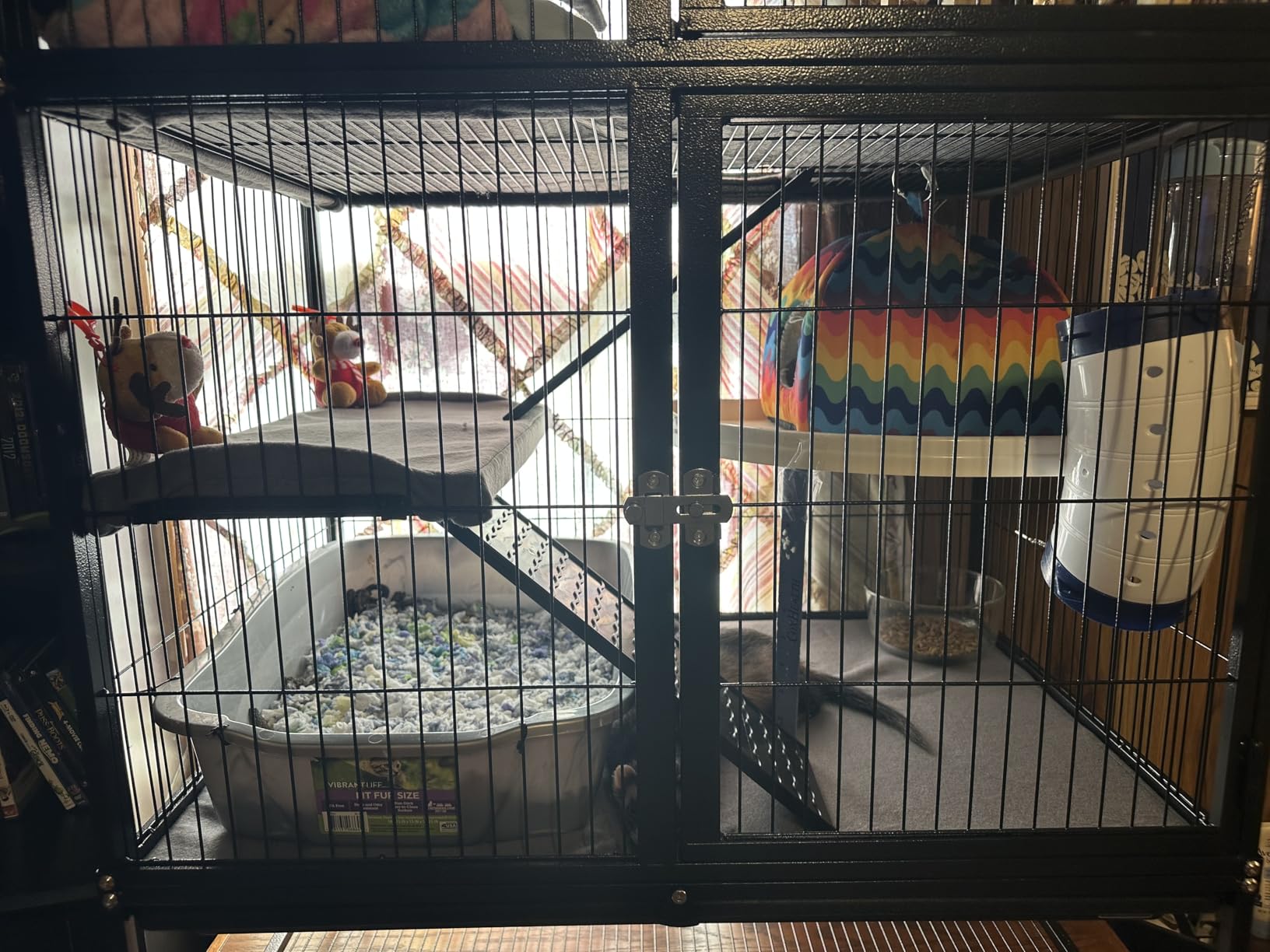
Seven-eighth inch is a ferret-focused figure and it is wider than a chinchilla needs. It is perfectly safe for an adult chinchilla, whose head is considerably broader than a juvenile’s, but it is why we would not hand this cage to a young or undersized animal. If you have any chance of a juvenile in the setup, look at a cage with half-inch or three-eighth inch spacing instead.
The wire floor grilles are the other thing to fix before day one. Grilles keep an animal out of its own droppings, which is genuinely useful, but bare wire on a flat level is a sore-hock risk over months. Cover the grille with kiln-dried pine, a deep fleece liner, or a solid-surface tray section, and the platform problem disappears.
Who should buy this one
Buy the Prevue 485 if the stand is what you have been looking for and your ceiling will take 54 inches with clearance above it. It suits a single adult, a bonded pair of smaller adults, or a household that wants one cage serving double duty as main enclosure and isolation space.
Skip it if you are after maximum climbing height in a small floor area, because the stand is mostly vertical dead space. In that case the 52-inch and 63-inch towers elsewhere on this list put more usable levels into a tighter footprint, and they cost less than you would expect.
3. Yaheetech 52-Inch Six Tier Cage: the best height-per-inch option
Yaheetech 52-inch Ferret Cage 6 Level Metal Rat Cage with 3 Front Doors/Feeder/Wheels Small Animal Cage for Ferret/Chinchilla/Bunny/Rabbit/Squirrel, Black
25 x 17 x 52 inches
Six tiers
Three front doors
28.2 pounds
Pros
- Six levels of climbing space in a narrow footprint
- Three front doors reach every level
- Metal grate keeps the animal off its own waste
- Powder coated steel resists chewing and moisture
- Four casters roll easily
Cons
- Narrow 25 by 17 inch footprint limits floor space
- Plastic shelves can sag under heavy use
- Ramps and latches need adjusting after the first week
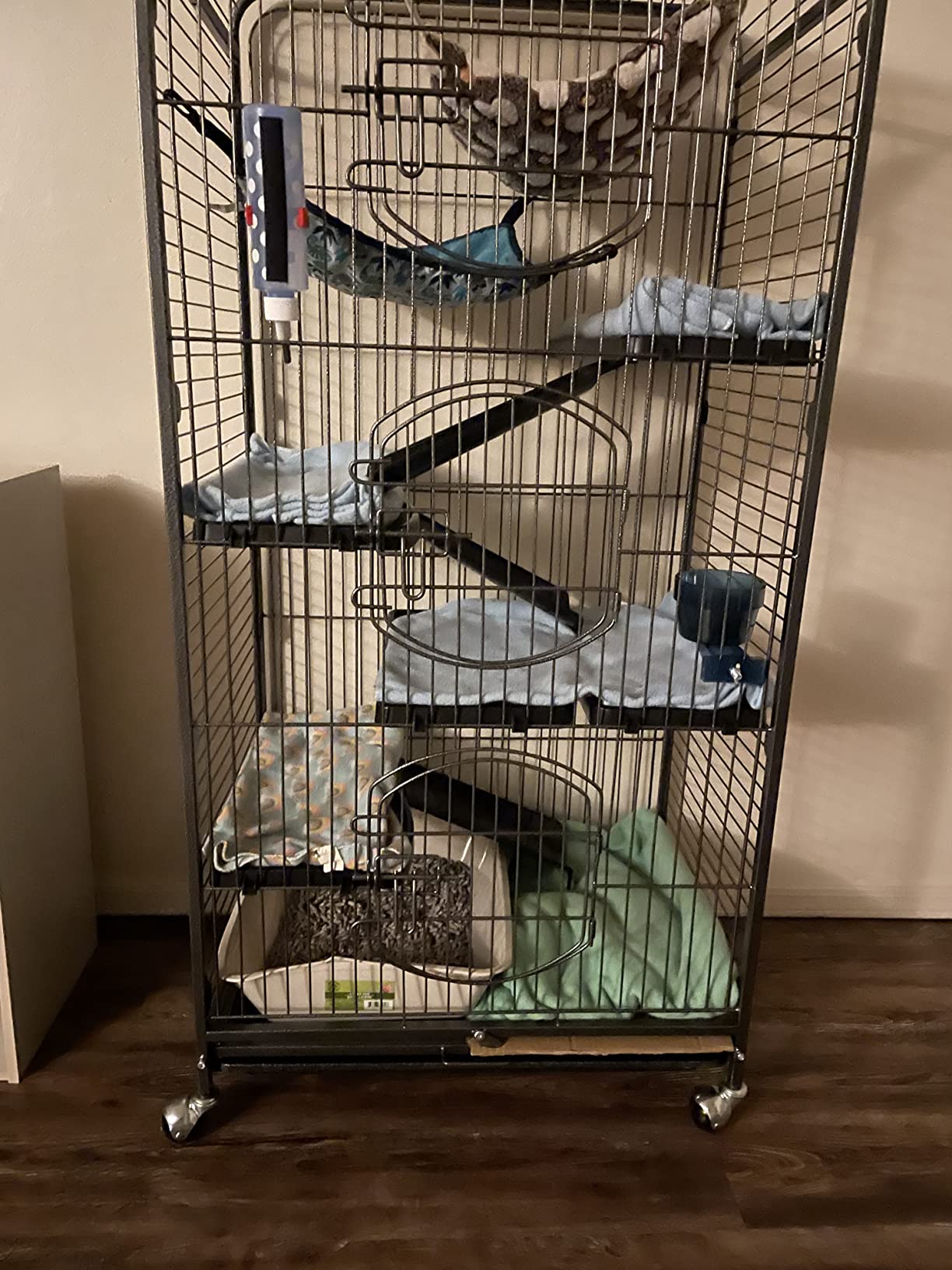
This is the cage we keep coming back to when a reader asks for the most climbing levels per square foot of floor. At 25 by 17 inches and 52 inches tall, the Yaheetech fits six tiers into a footprint small enough for a home office corner, and the powder-coated steel frame has a wear and water-resistant finish that holds up to daily cleaning.
Three front doors with latches is the feature that separates it from cheaper towers. You can open one level without opening the whole cage, which means spot cleaning a single tier does not mean the animal has to climb past you to escape. It also means feeding a shy chinchilla without shoving a whole tower of levels open in front of it.
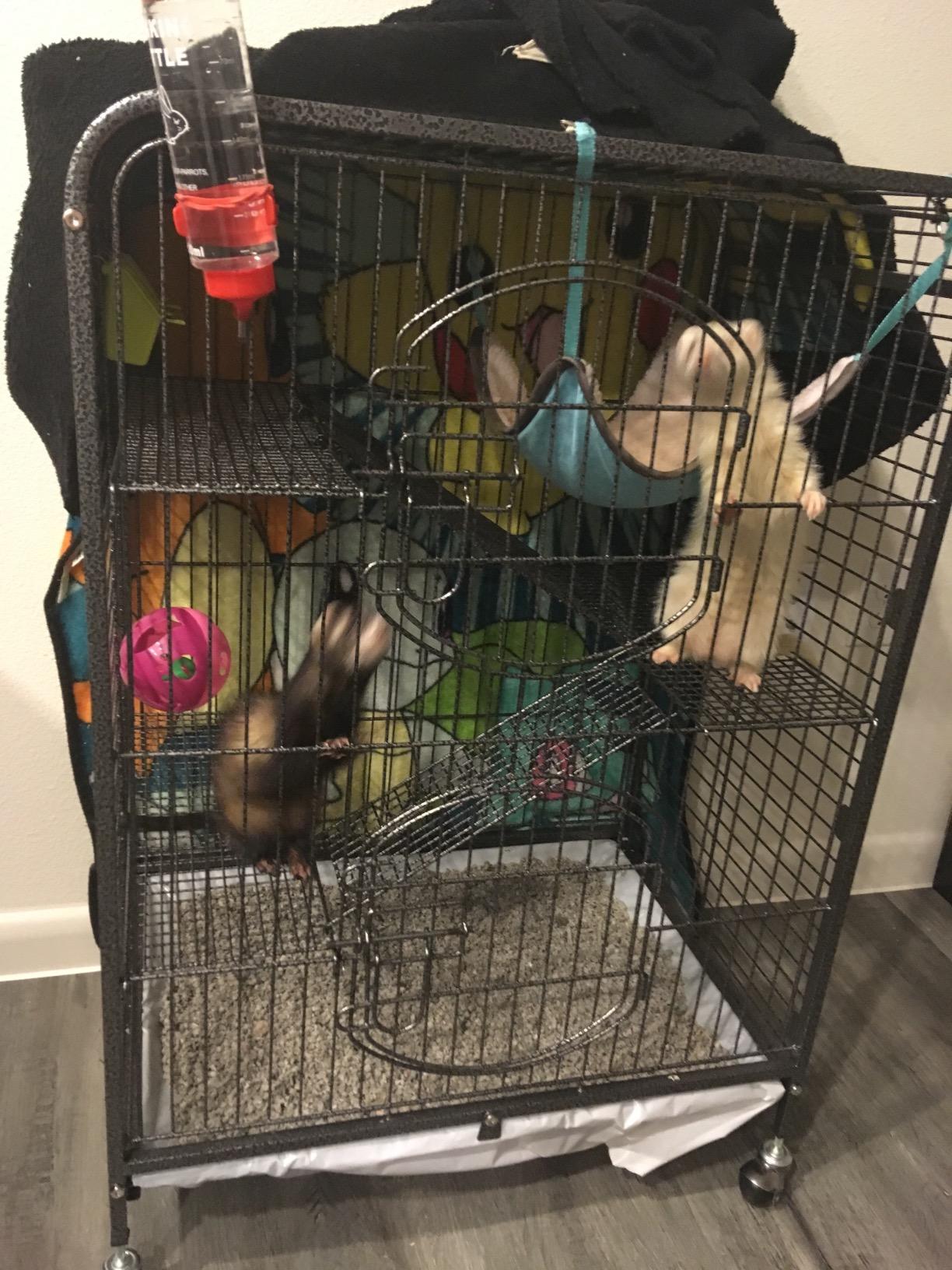
The metal grate floor over a slide-out litter tray is a genuinely good design for a chinchilla. The grate keeps the animal away from its own droppings, and the tray slides out from underneath for cleaning without removing panels. The corrugated ramps are anti-slip in a way the smooth plastic ramps on cheaper towers are not, and they matter a lot when the ramps are the only route between levels.
Buyers consistently frame this as the value pick, and the arithmetic backs that up. Six tiers of climbing space for a fraction of the cost of a two-level double unit is hard to argue with, and at 28.2 pounds it is light enough to roll around on its four 360-degree casters by yourself.
Where it falls down is the footprint and the plastic. At 25 by 17 inches, each level gives a chinchilla less floor to actually move around than the numbers on the listing suggest, and the platforms are plastic. They are the weak point reviewers name most, sagging under heavy use, and a chinchilla that has learned to chew will find them.
Deciding between this and a two-level cage
Choose the six-tier layout when your floor space is genuinely limited and your chinchilla is an adult with a climbing instinct. Six tiers means a lot of small destinations, a wheel, several ledges, and hiding places stacked up the height of the frame. The animal moves vertically all day instead of pacing.
Choose a two-level cage instead when you want room for a large solid-surface wheel plus a hide plus a hay rack on the same level without any of them fighting for space. Six shallow tiers cannot comfortably hold a 15-inch wheel, because there is nowhere for it to go that is not taking up an entire tier.
Assembly and the plastic reality
Assembly is straightforward compared with the heavier MidWest units, but the first week usually needs adjustment. Reviewers report ramps and latches needing tightening after the cage has been under load, which is normal settling rather than a defect.
Plan on removing or covering the plastic platforms if your chinchilla is a chewer. Replace at least the two most accessible shelves with kiln-dried pine ledges, which also gives the animal better footing than wire or smooth plastic. Everything else in this frame is metal and can stay.
4. PawHut Six Level Small Animal Cage: tool-free assembly in a narrow footprint
PawHut 6-Level Small Animal Cage Rabbit Hutch with Wheels for Bunny Pink
32 x 20.75 x 57.5 inches
Six levels
Bar spacing 0.95 inch
35.42 pounds
Pros
- Six levels of height in a compact footprint
- Tool free assembly often under twenty minutes
- Pull out tray and lift up floor clean fast
- Four wheels with two brakes
- Powder coated finish looks good in a living room
Cons
- Plastic ramps are slippery with no grip
- Bar spacing near one inch rules out juveniles
- Platforms and ramps eat usable floor space
The PawHut’s real argument is assembly speed. It goes together without tools in under twenty minutes for most people, which matters enormously in a category where the leading recommendation needs a rubber mallet and two people. The metal wire frame carries a powder-coated finish and the whole unit comes in at 35.42 pounds with four universal wheels, two of which have brakes.
Cleaning is the second selling point, and several owners describe the pull-out tray as a game changer for daily maintenance. Combined with the lift-up floor, you can strip the bottom level in a couple of minutes without dismantling a single panel, which is exactly what you want in a six-level tower where a full clean would otherwise take half an hour.
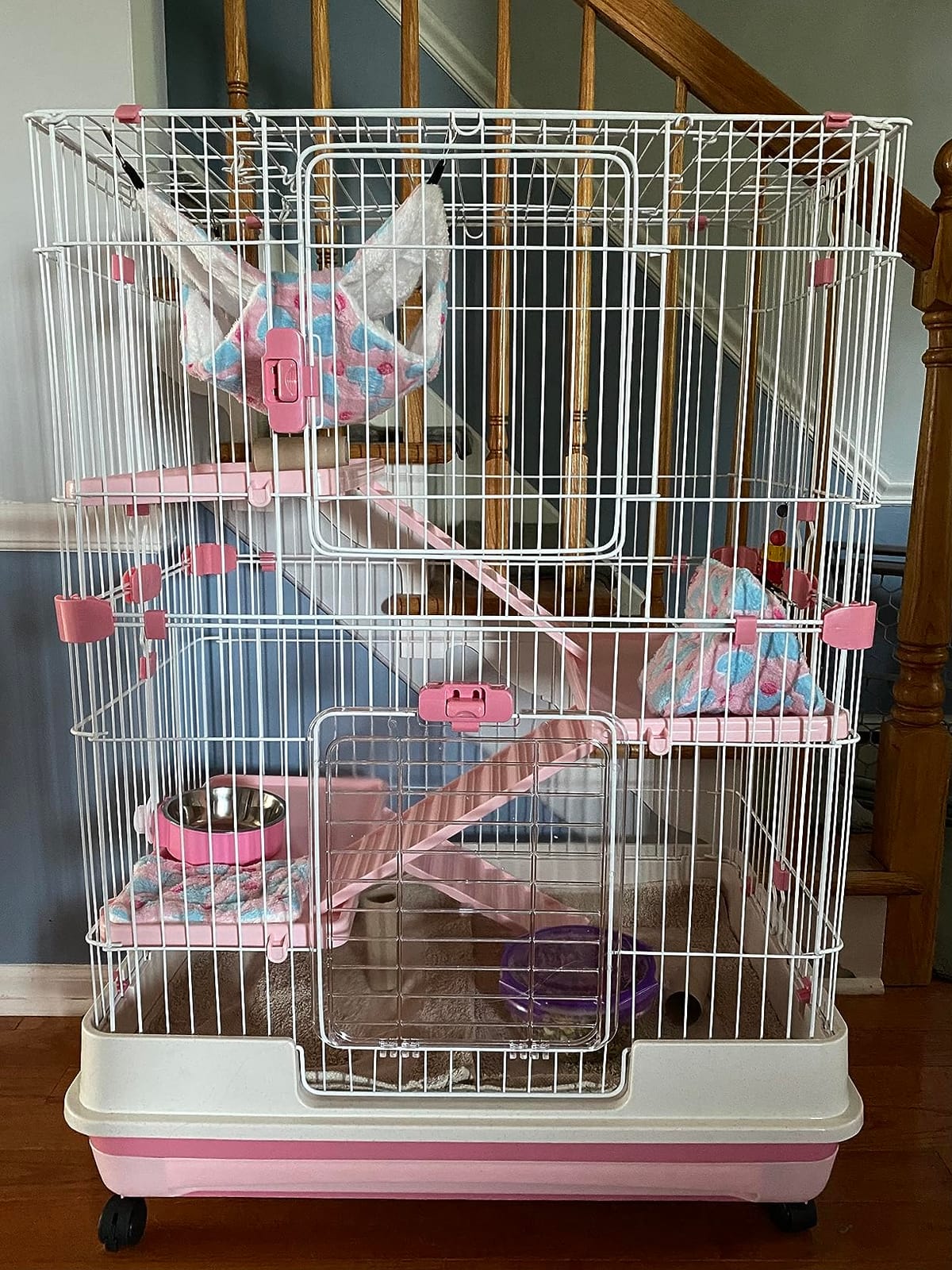
The footprint is 32 by 20.75 inches, and it is available in 26-inch, 43.3-inch, and 57.5-inch heights in both pink and black. That range matters for the tall-setup question, because it means the same footprint can serve a low-ceiling apartment and a room with full headroom, and you are not forced into a single size.
Two large openings give you access and cleaning reach. In a cage this tall, door placement determines how usable the top levels actually are, and openings that reach high enough to service every tier save you from a step ladder on cleaning day.
The plastic ramps are the weakness owners flag most often. They have no grip, and a chinchilla that is cautious about a smooth surface will avoid a ramp rather than climb it, which quietly removes levels from the animal’s usable territory. A strip of fleece or sisal wrapped around each ramp fixes it in about two minutes per ramp.
Is this cage safe for a chinchilla
For an adult, yes, with a caveat about size expectations. The listed bar spacing is 0.95 inch, which is wide. A fully grown chinchilla is not going to force its head through that, but the listing itself states the cage is not suitable for hamsters or rats as a young-animal cage, and the same logic applies to a juvenile chinchilla.
Buy it with confidence if you are setting up an adult and you want the height without the cost of a heavier tower. Do not buy it for a baby, a rescue juvenile, or a pair where a younger animal might join the household later.
Room fit and appearance
At 32 by 20.75 inches and 57.5 inches tall, this fits through a standard interior door on its side and clears most furniture, which is where it beats the 36-inch-wide double unit. The powder-coated finish is tidy enough to live in a sitting room rather than a garage, and the wheels with two brakes mean it stays put with a chinchilla inside.
Our only reservation is that the platforms and ramps occupy a meaningful slice of each level, and the PP plastic components are not built for a determined chewer. Strip or cover the most reachable ones and add kiln-dried pine ledges, and you have a solid tall setup for an adult.
5. PawHut 63-Inch Six Tier Steel Cage: the tallest steel frame on the list
PawHut 63″ 6-Tier Small Animal Cage, Ferret Cage, Large Chinchilla Cage with Hammock Accessory & Heavy-Duty Steel Wire, Small Animal Habitat with 6 Doors, Removable Tray, Gray
31.5 x 20.5 x 62.6 inches
Six tiers and six doors
One inch bar spacing
48 pounds
Pros
- Tallest steel frame here at nearly 63 inches
- Six doors reach every level
- Powder coated steel resists scratching
- Hammock included
- Rolling wheels let you move the cage
Cons
- One inch bar spacing is too wide for young or small animals
- Wire shelves are uncomfortable without covers
- Some panels arrive bent and fasteners are awkward
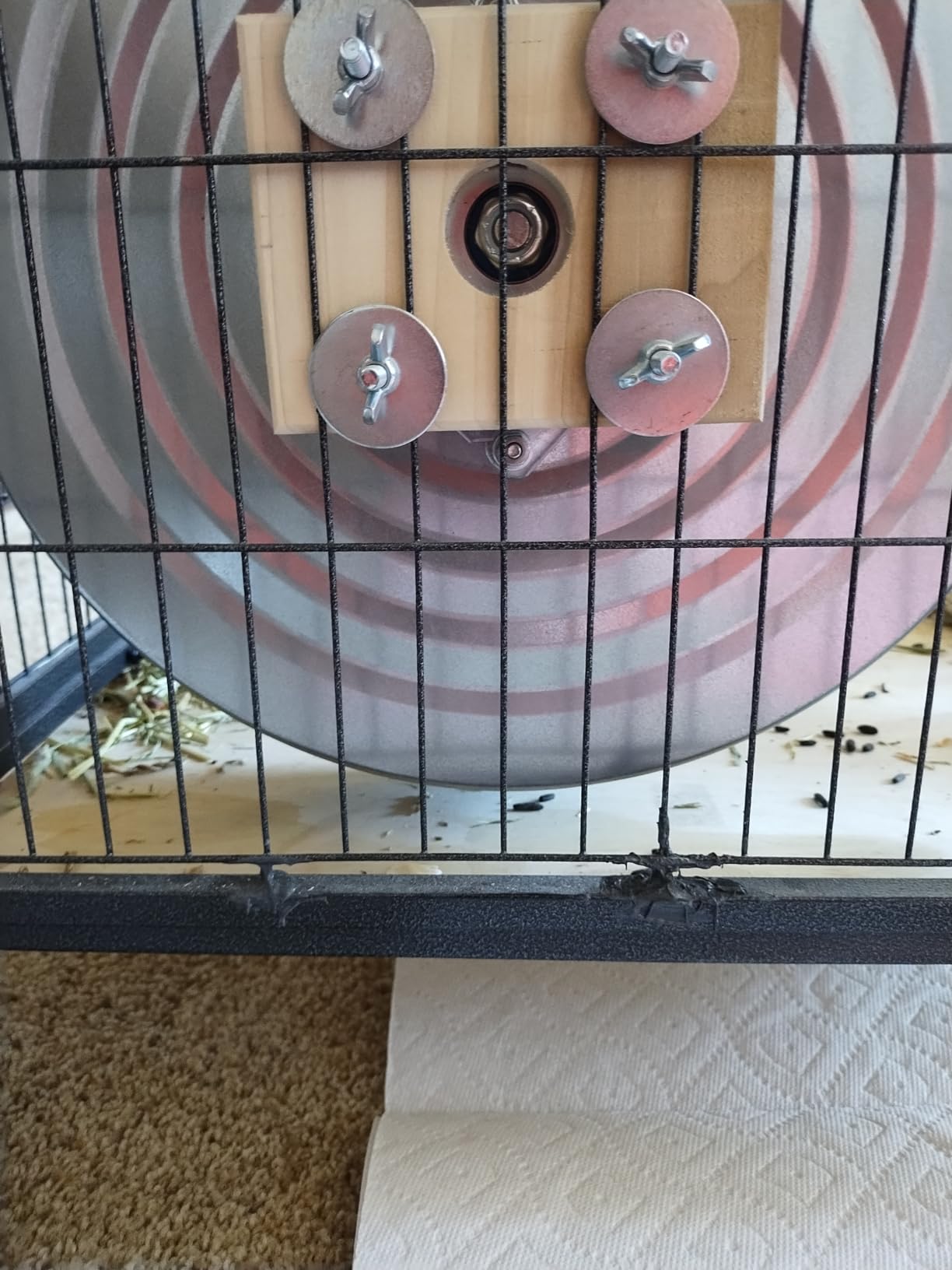
At 31.5 by 20.5 by 62.6 inches, this is the second-tallest cage we tested and the tallest one with six full doors, one per level. That door count is unusually good for a cage at this height. You can service the top shelf without trying to reach through a single opening and fish a hand around in the dark.
The frame is steel with a powder-coated, scratch-resistant finish, and the unit weighs 48 pounds, which is real mass rather than the flexing you get from a lighter tower. Rolling wheels are included, so despite the weight you can move the whole cage to a wall or away from a window, and an included hanging hammock gives you a ready-made resting spot at height.
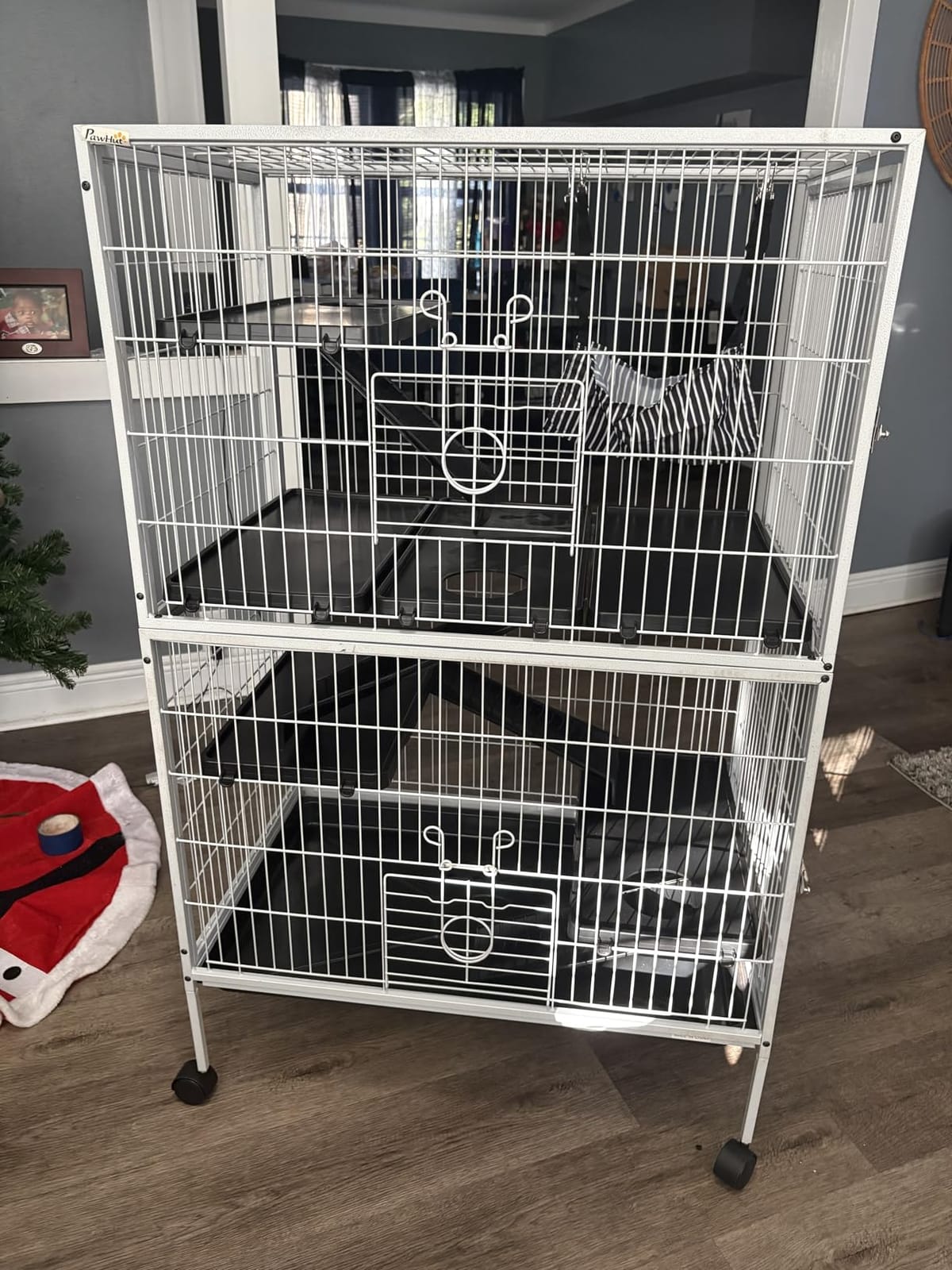
The pull-out bottom tray is straightforward and does its job. With six doors and a tray, daily maintenance on this cage is genuinely quick, and the six tiers give a chinchilla a tall territory to climb even though the footprint is only 31.5 inches long.
What holds it back is the one-inch bar spacing. That is the widest of any cage on this list, and while an adult chinchilla will not get a head through it, it removes the option of ever using this cage for a juvenile. The wire shelves also need covering for the same sore-hock reason as the Prevue grilles.
The mixed assembly experiences show in the rating. Reviewers report bent panels arriving out of the box and top-panel fasteners that are awkward to align, and the 4.1 average reflects that. Inspect the panels the day it arrives rather than assuming everything is square.
When 62.6 inches is genuinely worth it
It is worth it in a room with real vertical room and a chinchilla that uses it. A six-tier layout gives the animal a solid-surface wheel on one level, ledges staggered up the height, a hide near the top, and still leaves floor space at the bottom, which is more than most two-level cages in a smaller footprint can do.
It is not worth it if you are working around one-inch bar spacing being unacceptable, or if the 48-pound frame in a 31.5-inch footprint is going somewhere narrow. This is a tall-room cage, not a tall-everywhere cage.
Planning for a top shelf load
The upper levels on this cage are steel wire shelf plus frame, and a solid-surface wheel plus a hide plus a hay pile is a genuine amount of concentrated load on a shelf that is not designed as a work surface. Put the heavy items on the bottom two levels and keep the top tiers for ledges, the hammock, and light accessories.
The hammock that ships with the cage is a good example of what belongs up there. A light suspended fabric item adds vertical interest without loading the shelf, and it gives a chinchilla a soft high perch that most setups lack entirely.
6. Polar Aurora 59-Inch Metal Cage: five platforms with a deep detachable tray
Polar Aurora Metal Small Animal Cage, 59″ H Ferret Cage with Lockable Wheels, Deluxe Chinchilla Cages with Hammock and Removable Tray, 6 Tiers Animal Cages for Pets
31.4 x 20.4 x 58.6 inches
Five platforms
Vertical wire 0.98 inch spacing
Pros
- Five platforms plus a top hammock included
- Deep detachable base tray for fast cleaning
- Hammer pattern finish resists rust
- Two of four casters have brakes
- Multiple doors reach each level
Cons
- Nearly one inch vertical wire spacing is too wide for small rodents
- Slim square tube frame can feel wobbly
- Panels need careful alignment to fit
The Polar Aurora gives you 58.6 inches of height with five platforms at different heights, plus a hanging hammock at the top, and it ships with ramps lined in blue flannel already. For a first tall setup, having the interior fittings in the box is a genuine saving in both money and time.
The engineering detail worth knowing is the wire. The main body is 13mm square pipe with a 0.8mm wall thickness, horizontal wire runs at 2.5mm diameter with 3.94 inch spacing, and the vertical wire is 2mm with 0.98 inch spacing. That vertical figure is close to an inch, which is the number to weigh before buying.
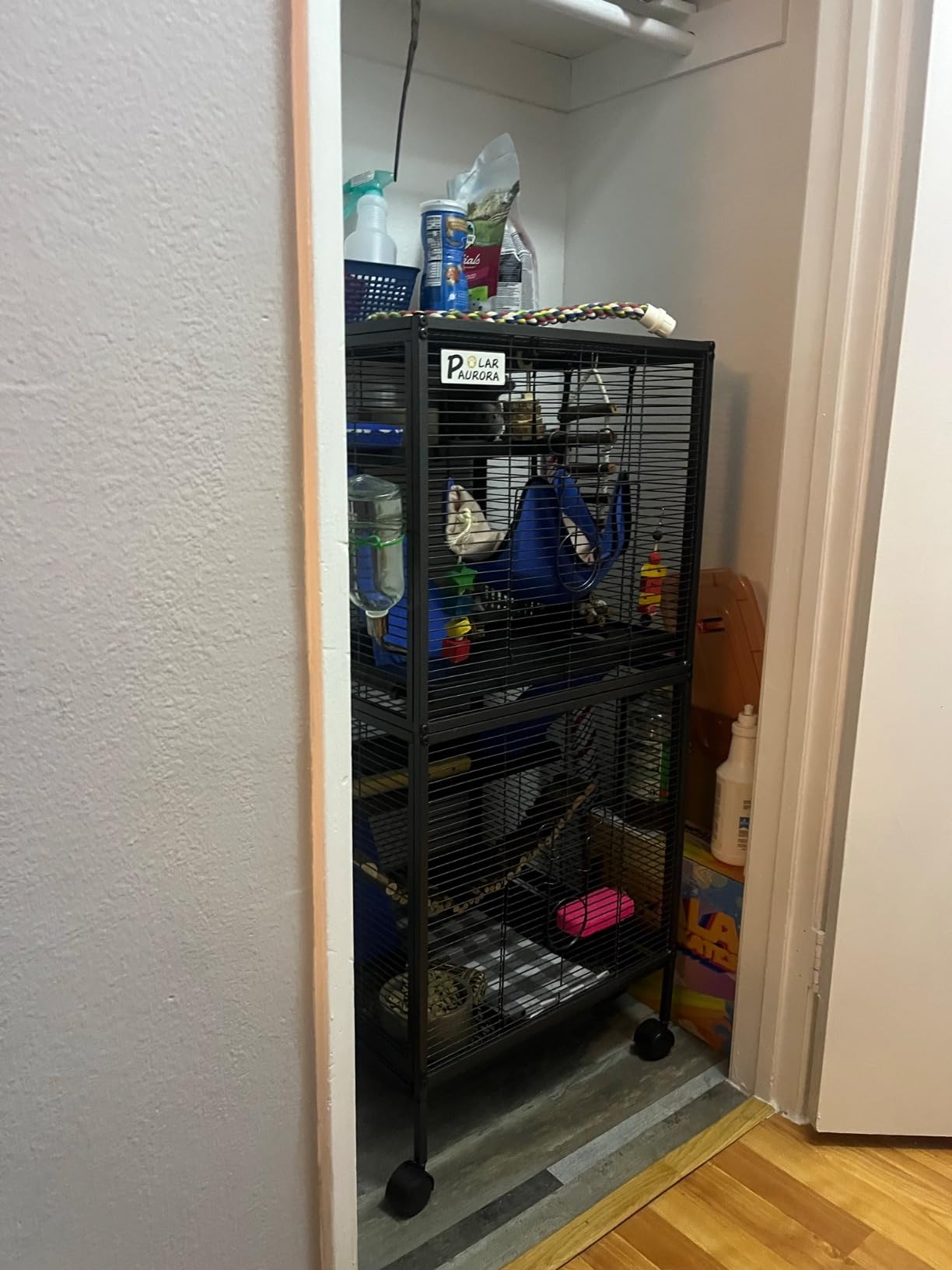
The detachable deep base tray is the part owners mention most. It pulls out from underneath as one piece, which is faster and less fiddly than a tray that has to be partially lifted, and a deeper tray means less bedding escaping over the edge. The hammer-pattern painted finish is designed to resist rust, which matters if you keep the cage anywhere other than a climate-controlled room.
Four universal wheels with two brakes mean the cage stays put when a chinchilla throws its weight against a door, and multiple doors give access to each level. That combination is what makes a 58.6-inch tower manageable rather than a chore.
The reservations are honest ones. Reviewers describe the slim square-tube frame as feeling a little loose or wobbly once assembled, and some panels need real force and careful alignment to seat. The nearly one-inch vertical wire spacing is the deciding factor for most buyers with an adult chinchilla, because it is safe but it rules out juveniles.
What the flannel ramps and hammock actually do
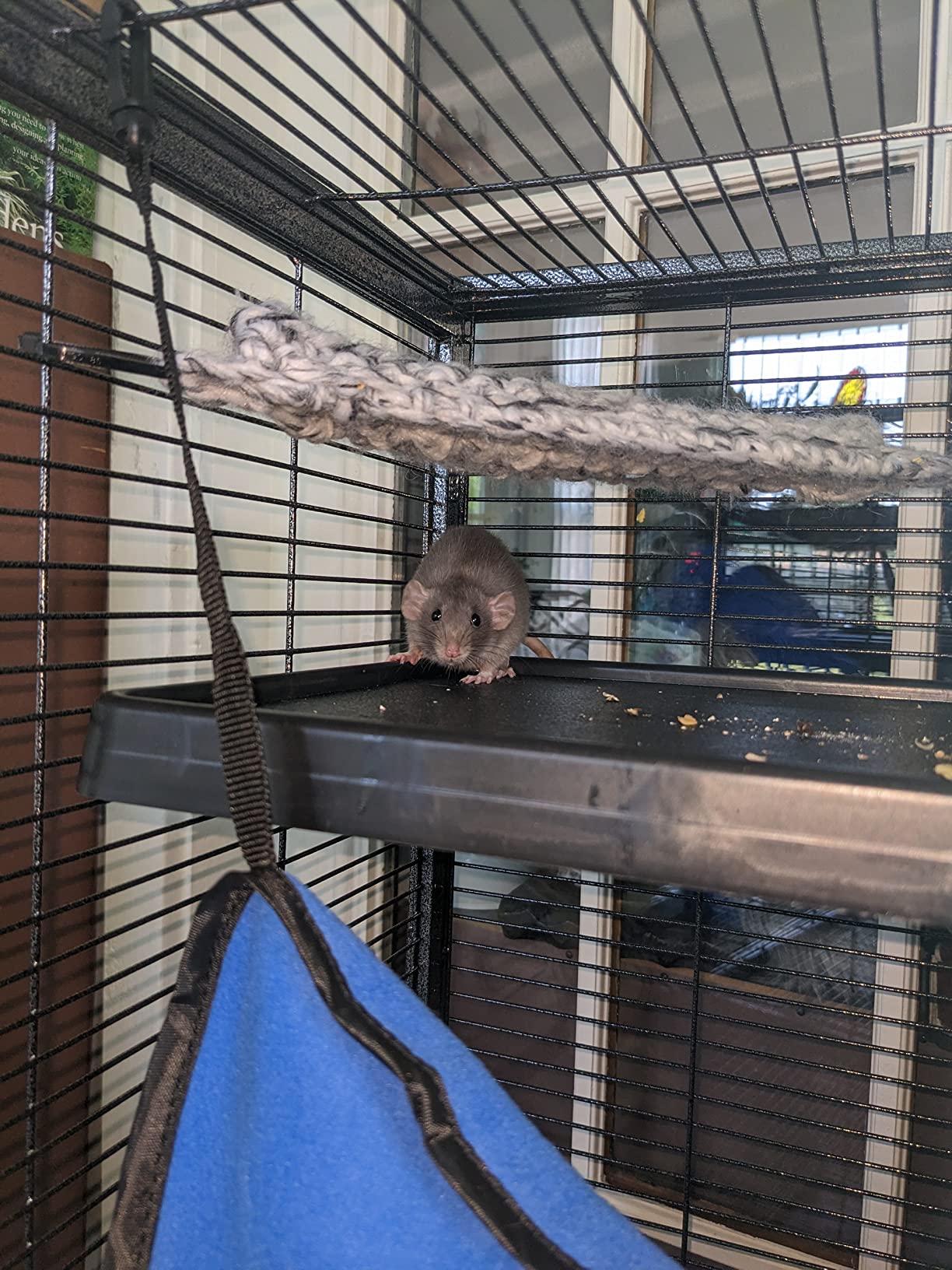
Chinchillas climb by jumping and dropping rather than gripping, so ramp surface matters more than most retail descriptions suggest. Flannel-lined ramps give a chinchilla something to catch a claw on during a nervous descent, and the standard uncoated wire or plastic ramps on cheaper towers do not.
The top hammock adds a high resting point without putting any load on a shelf. In a cage this tall, a mid-height and a high resting spot is what stops an animal from using the same level for everything, which is how you avoid the persistent pacing that owners mistake for boredom.
Build quality versus the money cages
This cage sits in the middle of the quality range, above the flexing plastic-framed towers and below the heavy welded MidWest units. If your chinchilla is an adult and you are not planning on juveniles, the trade is usually worth it for the five platforms, the deep tray, and the included fittings.
Check every panel joint as you build it. A square-tube frame that feels slightly loose is a frame that will rattle more after a year of use, and tightening the joints with a rubber mallet as you go prevents most of that.
7. Yaheetech 69-Inch Wrought Iron Cage: the tallest and the tightest bar spacing
Yaheetech 69-Inch Extra Large Wrought Iron 3 Levels Ferret Chinchilla Sugar Glider Squirrel Small Animal Cage with Cross Shelves and Ladders, Black
30.3 x 18 x 69 inches
Three levels
3/8 inch bar spacing
47.8 pounds
Pros
- At 69 inches it is among the tallest cages available
- 3/8 inch spacing safely contains young chinchillas
- Slender 18 inch footprint fits tight spaces
- Panels ladders and shelves are reconfigurable
- Locking casters and front locks
Cons
- Metal ladders can catch small feet and should be removed
- The cage is not bolted to the rolling stand and can rock
- Small side doors need zip ties or clasps
- Shallow 18 inch depth limits horizontal space
This is the one to buy if you want maximum height in a genuinely narrow space, and the only cage here with bar spacing tight enough for a young chinchilla. At 30.3 by 18 by 69 inches it stands taller than a tall adult, and the wrought iron construction with cross shelves and ladders is a different category of build from the folding steel towers most of this list contains.
Three-eighth inch spacing is a 10mm gap, and it is narrower than anything else we looked at. That single figure opens up the whole list of use cases: a juvenile, a newly adopted rescue, or a pair where an age gap means one animal is smaller than the other. Most tall cages cannot serve those situations at all.
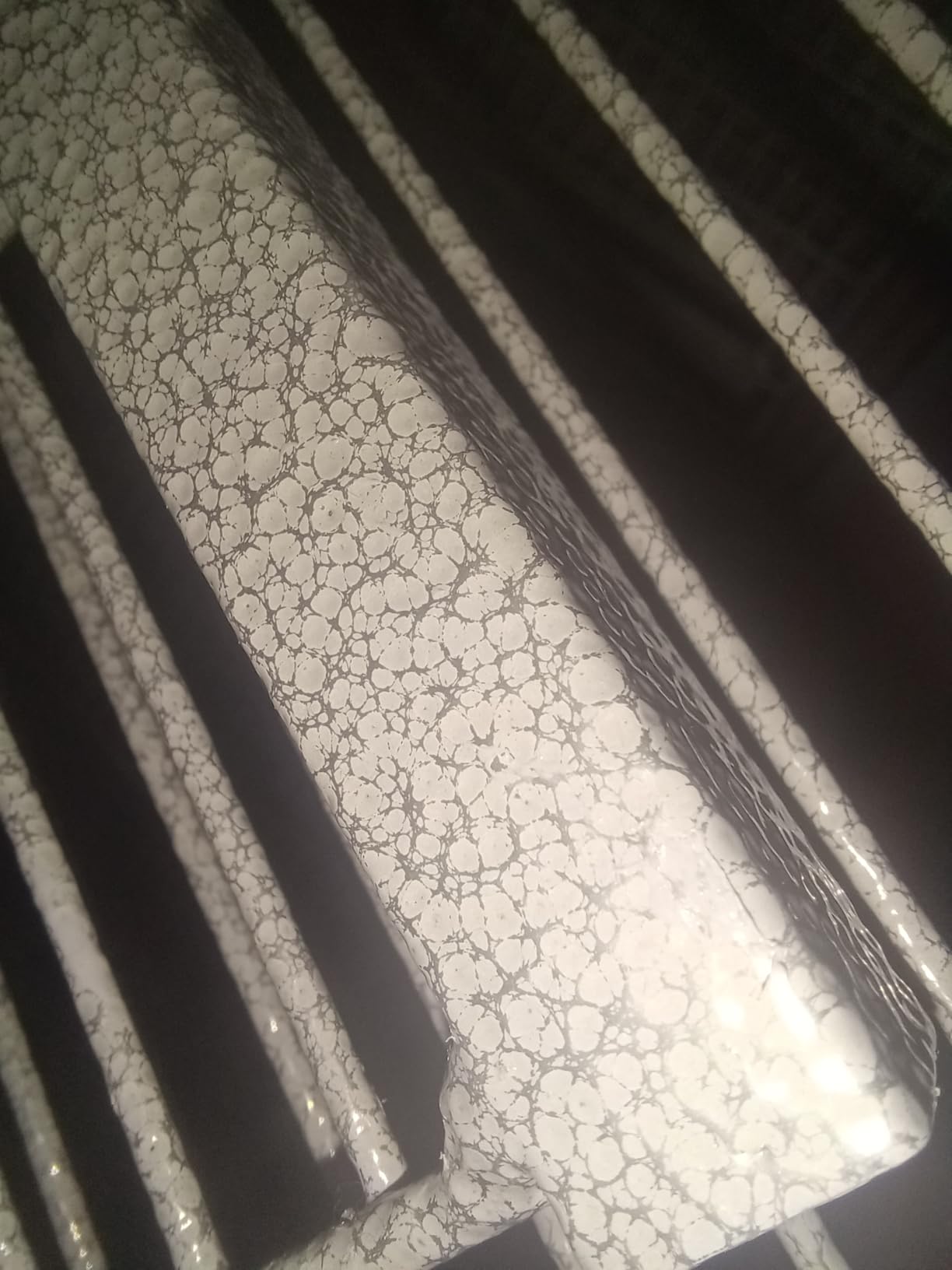
Access is unusually flexible. There are ten small doors plus two large front doors with heavy-duty locks, and the panels, ladders, and shelves are not fixed in place, so you can build a layout that suits the animal rather than the other way round. A slide-out tray and a removable bottom grate handle the waste side, and the detachable rolling stand has an open storage shelf underneath.
It also ships with wooden perches, climbing rope, a bell, and feed and water cups, which sounds like a small thing until you are setting up a cage with an 18-inch depth and realise how few fixtures actually fit.
The safety note that comes up repeatedly, and the one we would print in bold, is the metal ladders. A reviewer reported a foot injury, and the thin metal rungs can catch a small foot during a jump. Remove them or cover them with wood ledges before the animal goes in. The small side doors also need zip ties or clasps to stop a determined chinchilla working them open.
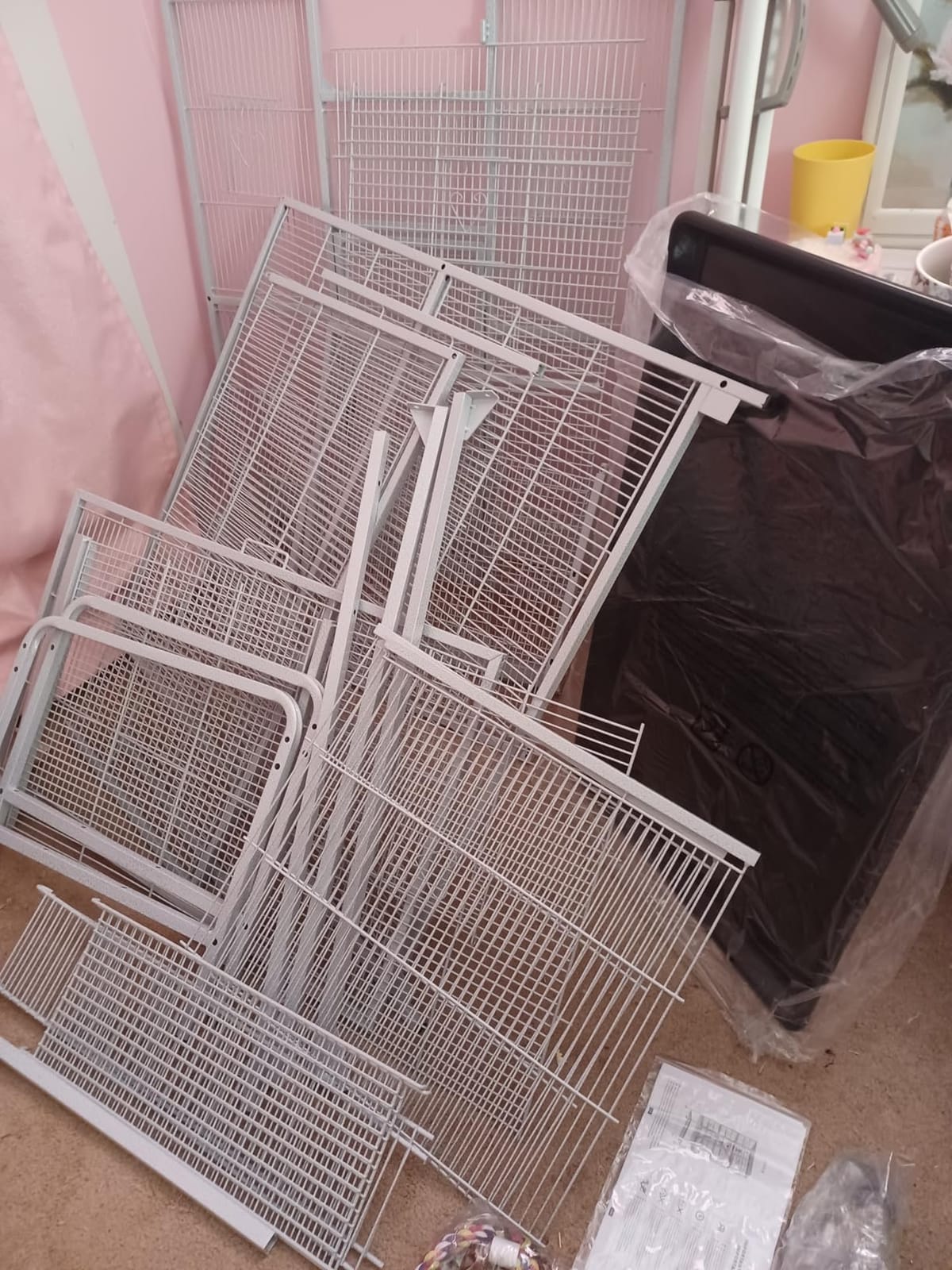
Getting the stand right
The cage is not bolted to the rolling stand, which is the one design decision to plan around. A 69-inch frame sitting on a detachable stand can rock if the stand is used to move the cage while the animal is inside. Detach the cage, roll the stand where you want it, then set the cage down on top and check it is level and stable.
At 47.8 pounds and 69 inches tall, this is also the heaviest object on the list once assembled. Assemble it in the room it will live in, on the floor, and get a second person for the final lift onto the stand.
Is 69 inches too much cage
Only if your ceiling will not take it. Nineteen inches of headroom above the top panel is a sensible working allowance so you can lift the lid off and reach inside, and an 18-inch depth means the whole footprint is smaller than most two-level cages. The trade is that each level is long and narrow, so it suits vertical climbing far better than it suits floor play.
For a single adult who climbs, a young chinchilla who needs tight spacing, or a tall room where width is scarce, this is genuinely the best answer. For a bonded pair needing broad shared floor space, a wider two-level unit is the better call.
8. HABUTWAY 50-Inch Rolling Metal Cage: the enclosure with the hardware complaints
HABUTWAY 50”H Metal Small Animal Cages, Rolling Chinchilla Cage with Removable Ramps, Lagre Cage for Chinchillas/Guinea Pigs/Rabbit, Ferret Cages with Hammock & 5 Tiers, Black
31.5 x 20.5 x 50.4 inches
Five platforms
0.9 inch wire spacing
35.7 pounds
Pros
- Five platforms and a hammock give good enrichment out of the box
- Side opening panel reaches the far end for cleaning
- Waterproof pull out tray wipes clean quickly
- Hammer pattern finish resists rust
Cons
- Wheel legs can snap if the cage is rolled under load
- Latches and the main front lock are weak
- Included bottom tray is flimsy compared with a solid one
- 0.9 inch spacing is too wide for small rodents
At 31.5 by 20.5 by 50.4 inches with five platforms at different heights, the HABUTWAY is a mid-height tiered cage with a good amount of enrichment in the box. Ramps come lined in blue flannel, a hammock hangs at the top, and the waterproof pull-out bottom tray wipes down without staining.
The side-opening panel is the feature that earns it a place on this list. In a conventional tower, the far end of a level is only reachable through the front door, so every clean means reaching in past the animal. Opening a side panel takes about a minute and turns a difficult clean into a trivial one.
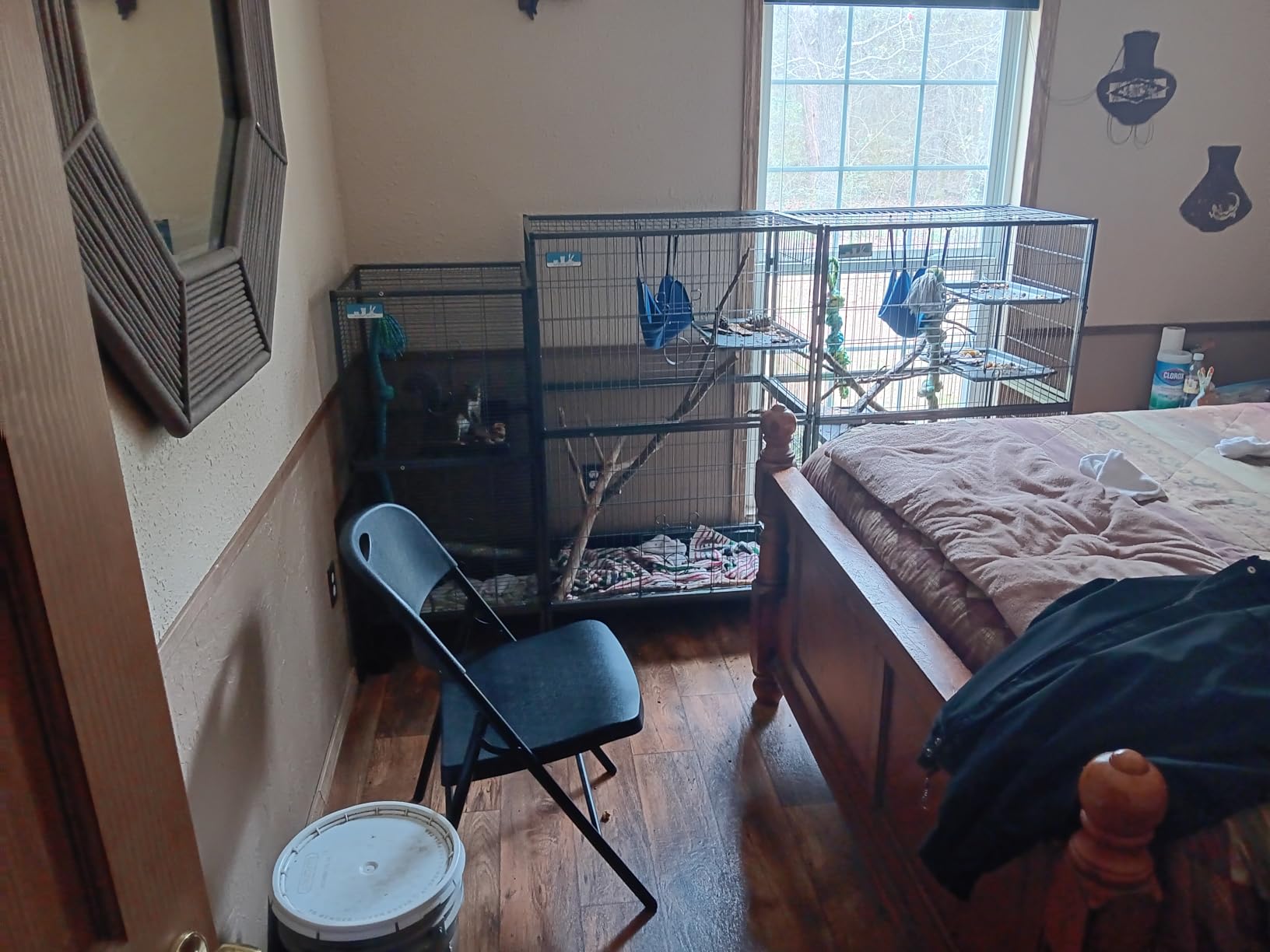
It also works well as a second or quarantine enclosure. A cage you can strip down fast, wipe out, and put back together is far more useful as isolation space than a heavier cage with a fixed interior, and four universal wheels with two brakes make it straightforward to move between rooms.
The hardware is where this cage falls short, and it is not a small complaint. Wheel legs are the weak point, with owners reporting them snapping when the cage is rolled under load. The included bottom tray is described as flimsy next to a solid tray, and the latches and main front lock are weak enough to fail. Soldered joints and square tubing can leave the frame feeling wobbly once assembled.
At 0.9 inch wire spacing, this is another cage that suits an adult and excludes a juvenile. The instructions are also frequently called confusing, with assembly quality-control gaps such as missing holes, so budget extra time and check the parts list before you start.
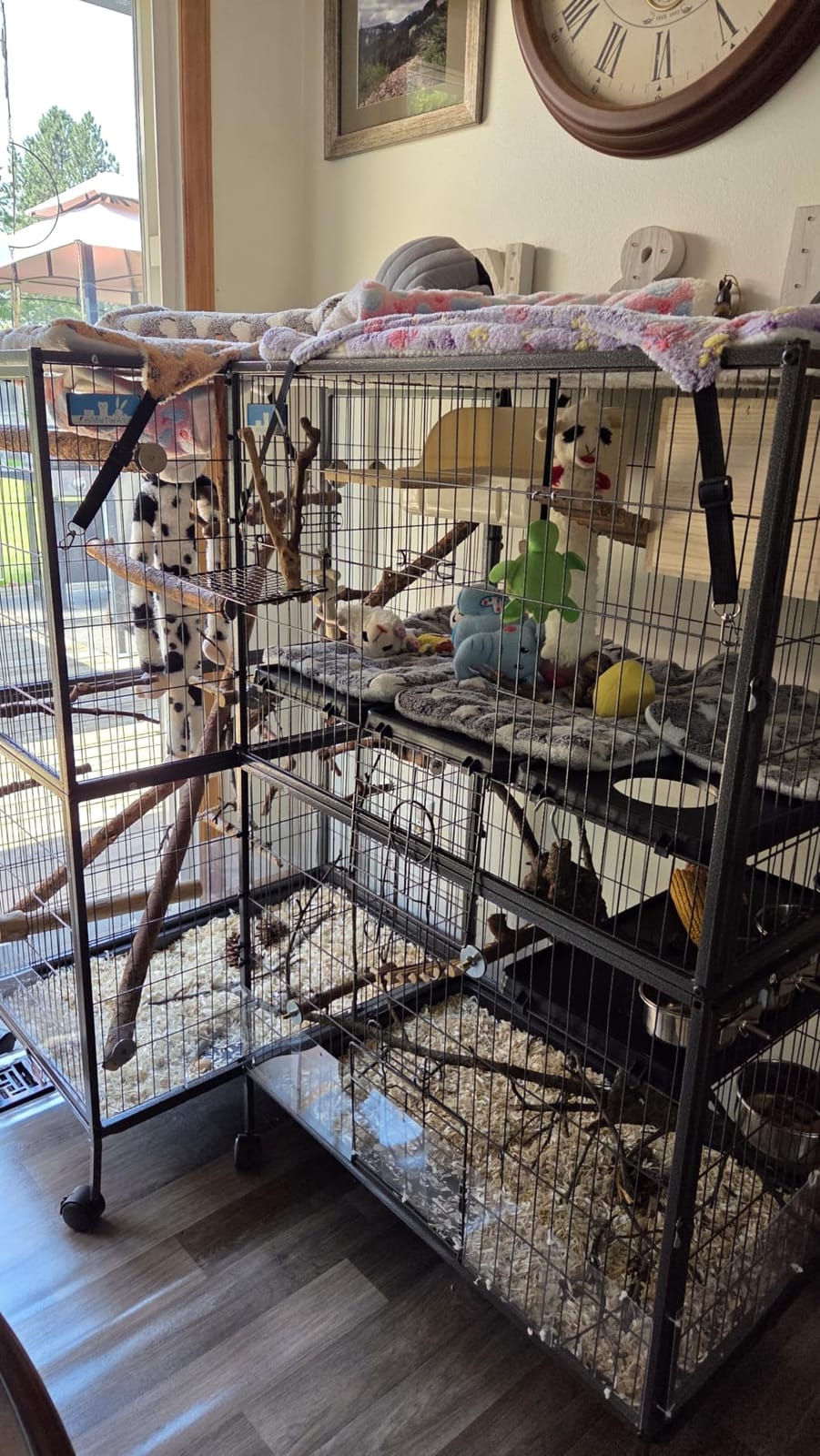
Where the wheel and lock failures happen
The recurring pattern is force on an angle. A cage rolled while a chinchilla is inside puts the animal’s weight sideways through the frame and directly onto the wheel legs, which is exactly the load they are least able to carry. Roll it empty, and treat the wheels as a convenience for an empty cage rather than a way to move an occupied one.
The latches and the front lock are the other concentration point. Before day one, test every latch twice with real force and replace anything that feels loose. It is a ten-minute job that prevents the single most common escape route in this category.
Who this cage suits
Buy it if you want a quick-cleaning second enclosure for a quarantine introduction, a hospital cage for a chin recovering from illness, or a setup where fast sanitation matters more than fine finish work.
Do not buy it as a fifteen-year primary habitat. The hardware complaints owners report are the kind that get worse rather than better, and a main cage that ends up with a failing door or a snapped wheel leg is a much bigger problem than a spare cage that has one.
9. Homey Pet Three Tier Small Animal Cage: the tightest budget spacing
Homey Pet Rat Cage, Small Animal Cage for Ferret, Chinchilla, Guinea Pig
25 x 17 x 38 inches
Three tiers
0.65 inch wire spacing
20 pounds
Pros
- Narrow 0.65 inch spacing suits even young animals
- Lockable casters let you roll it outside and hose it down
- Anti spill guard contains bedding and droppings
- Detachable grates and tray clean thoroughly
- Detachable base clips hold the frame steady
Cons
- Debris collects between the tray and the urine guard
- Clamps and side clips are fiddly and may need zip ties
- Assembly takes patience and pieces are easy to misplace
- Only 38 inches tall so it is the shortest here
At 25 by 17 by 38 inches across three tiers, the Homey Pet is the most compact and lightest enclosure here, and it has one genuinely distinguishing feature: 0.65 inch bar spacing. That is tighter than most of the tall cages on this list and close enough to the 3/8 inch wrought iron tower to serve a young chinchilla, which almost nothing at this height does.
The four lockable 360-degree casters are the second thing that stands out. Because the whole base detaches, you can roll the cage to a patio or driveway, hose it off, and dry it before putting an animal back in. For anyone who has ever washed a litter tray in a bathroom sink, that is worth more than a tier.
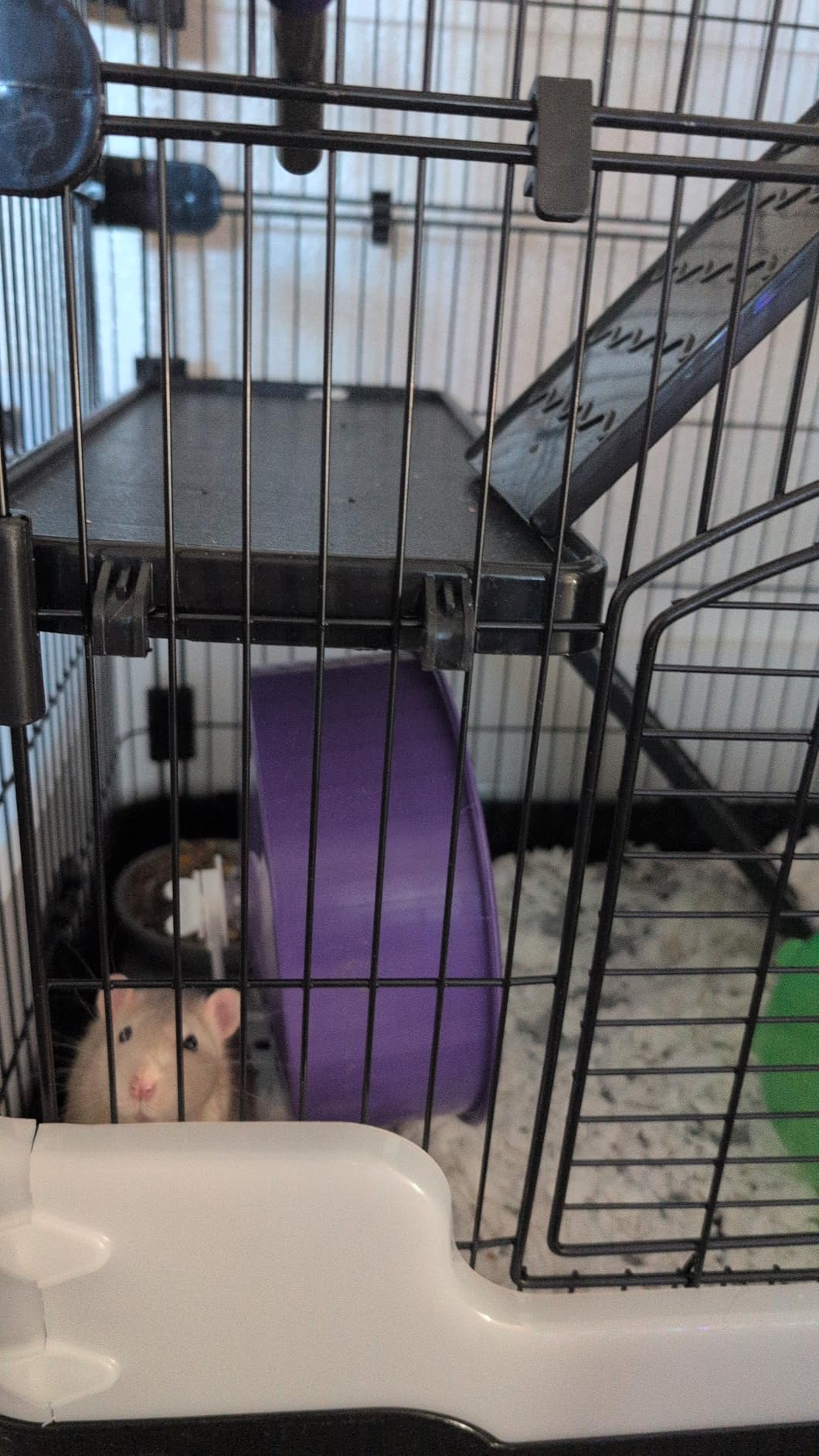
Other details are thoughtful for the tier. There is a two-finger lock on the front door, a 1 inch removable tray with a splash and anti-spill guard, a non-slip textured ramp, a wide platform, and detachable paw-friendly plastic floor grates. Bottom clips secure the wire frame to the base so it does not rack side to side once assembled, and the whole thing weighs only 20 pounds.
The recurring complaint is cleaning the corner where things meet. Hay, fur, and food get wedged between the tray and the urine guard, and that gap is not where a hand or a hose nozzle fits easily. Budget a few extra minutes per clean, or accept that you will be pulling the detachable grates out to reach it.
Assembly also takes patience. The clamps and side clips are fiddly, pieces are easy to misplace mid-build, and some owners finish by adding zip ties for extra security. None of that is unusual, but it is more fussy than the click-together towers.
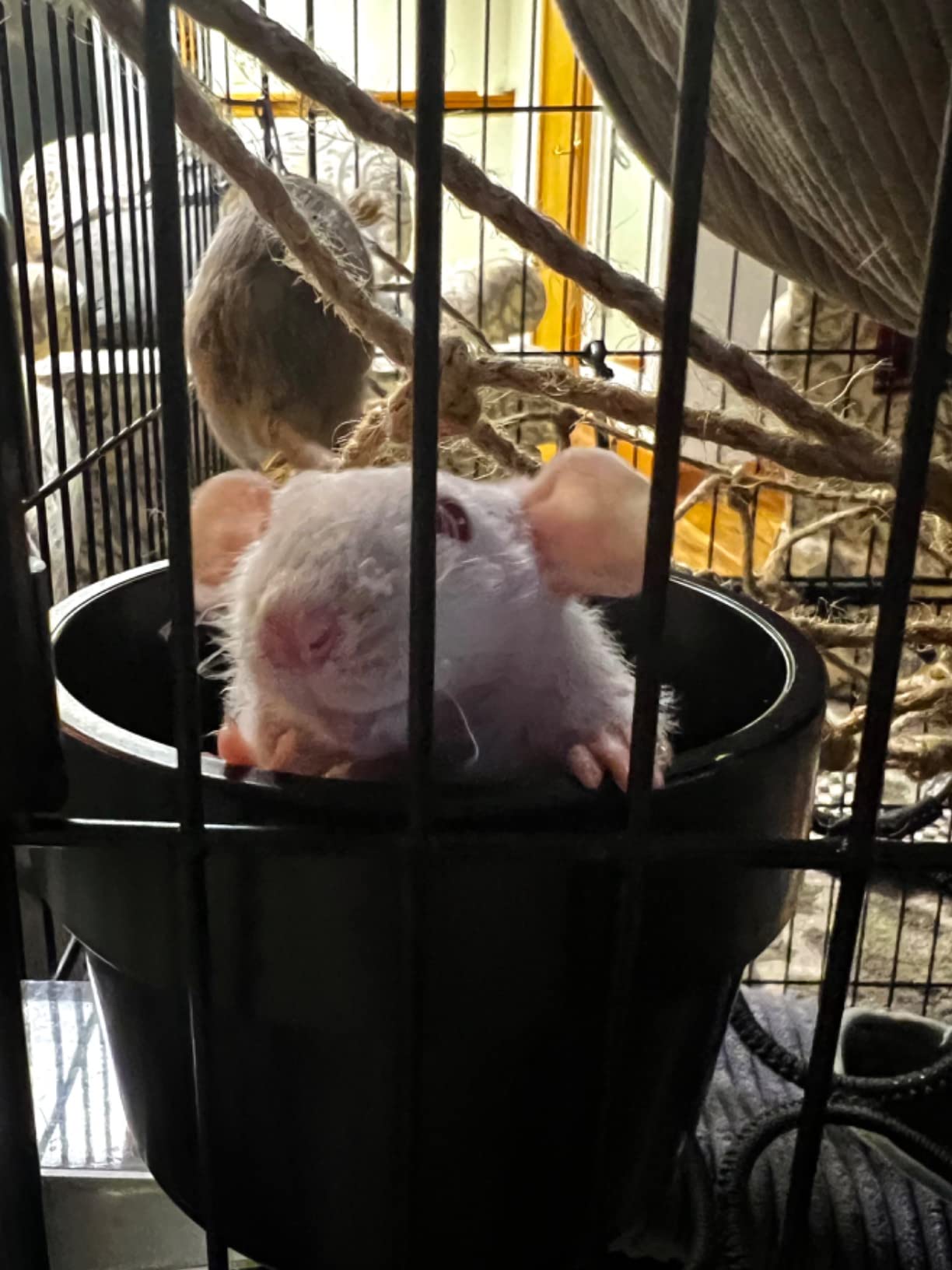
Is 38 inches tall enough
For an adult chinchilla with good wooden ledges, yes, and this is the only cage here where the bars are tight enough that a juvenile would be safe. The three tiers give three distinct destinations, and the detachable grates can be swapped for solid sections to build a proper platform.
What you give up is total climbing height. Thirty-eight inches is the shortest here, and there is no way to add tiers. If the animal is an adult that climbs hard and the room has the headroom, the taller towers are a real upgrade rather than a marginal one.
Who should buy this cage
It suits a first-time owner on a strict budget who wants safe bar spacing, a small apartment or a room with a low ceiling, and anyone who values being able to hose the whole cage down. As a hospital or quarantine cage it is also excellent, because sanitation is its strongest suit.
Skip it if you are buying a fifteen-year main habitat. The 0.65 inch spacing and the detachable base are genuinely good, but three tiers of a light frame will not offer the territory or the build resilience of a taller welded unit.
10. Mcage Five Tier Deluxe Habitat: the cheapest way to reach 53 inches
Large 5-Tiers Deluxe in/Outdoor Chinchilla Ferret Squirrel Hedgehog Kitten Rabbit Bunny Hutch House Critter Habitat Mesh Floor Easy Clean 2-Inch Deep Pull Out Tray with Rolling Casters
27 x 18 x 53 inches
Five tiers
0.9 inch wire spacing
Pros
- 53 inches of height across five tiers at the lowest cost here
- Tool free pop in assembly needs no hardware
- Two inch deep pull out tray with a removable urine guard
- Removable mesh floor is gentle on paws
- Four wheels with brakes plus child safety corner guards
Cons
- 0.9 inch spacing is too wide for young or small animals
- Lightweight construction flexes and rattles once assembled
- Mesh floor holes trap droppings that fall through
- Locks and clips are basic compared with heavier cages
At 27 by 18 by 53 inches across five tiers, the Mcage gets you more than four feet of height for less money than anything else on this list, and it does it with tool-free assembly. Clipped-on connectors and pop-in wheels mean there is no hardware, no mallet, and no second person required, which makes it the most approachable cage here to actually set up.
The tray is the best part of the design. Two inches deep, fully pull-out, with a removable raised urine guard, so bedding does not ride over the edge when you slide it. That is a tray you can genuinely deep-clean, which is not true of most cages at this price point.
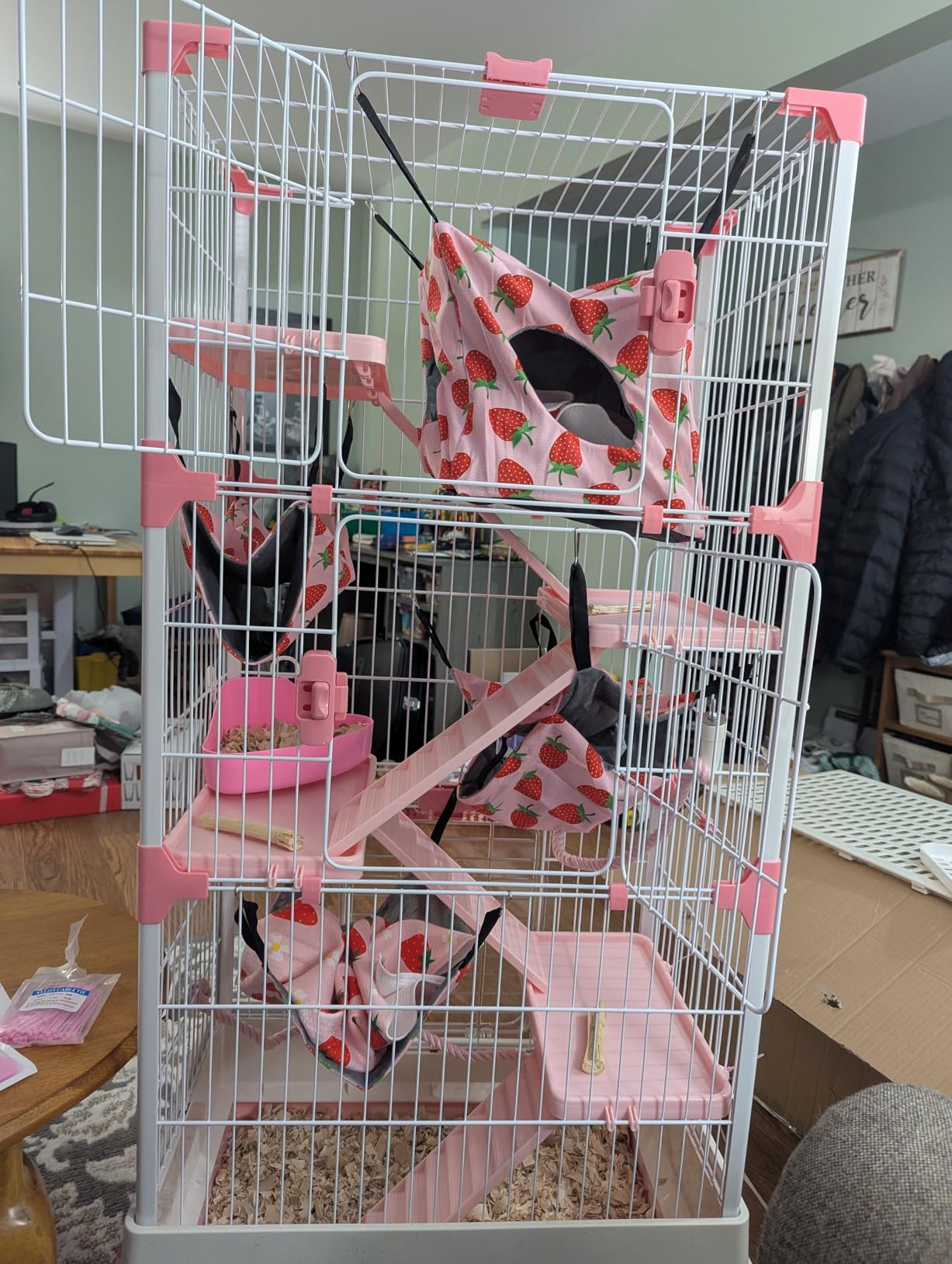
It also has a locking top door and locking front doors, four universal wheels with brakes, and four child-safety corner protectors, and the manufacturer lists it for both indoor and outdoor use. The removable plastic mesh floor is gentler on paws than bare wire, and the side bars are a heavier gauge at 0.78 inch than the 0.9 inch wire on the rest of the frame.
What you are trading away is rigidity. Owners describe the lightweight construction as flexing and rattling once assembled, and the basic locks and clips are noticeably simpler than the hardware on the heavier cages. A 53-inch frame that moves when a chinchilla jumps against a door is a frame you will eventually tighten or brace.
The 0.9 inch wire spacing is the deciding factor, and it is wide. Safe for an adult, unsuitable for a juvenile or a small rescue. The mesh floor is also described as trapping droppings that fall through the holes, which turns a weekly clean into a more frequent one.
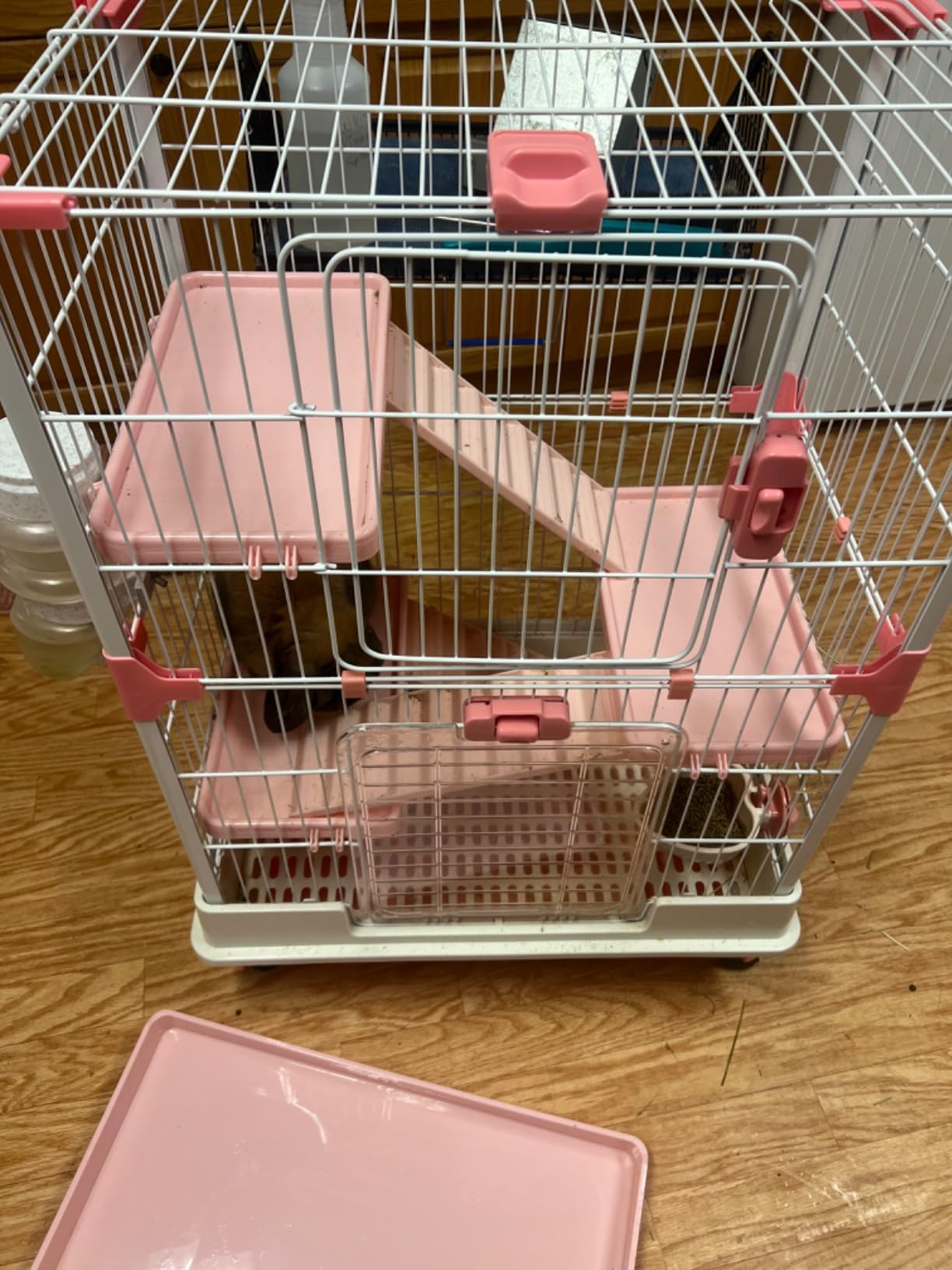
How the tool-free assembly actually holds up
Clip-in connectors are a real advantage on day one and a question mark on year three. There is nothing to loosen and nothing to strip, which is why this cage can be assembled in minutes with no tools at all. It is also why the frame rattles, because a clipped joint has no tension in it the way a bolted or welded joint does.
Check every clip after the first few weeks and push them home again where they have crept loose. Add a second layer of zip ties at the four base corners if the frame is noticeably flexible, and the cage settles into a much steadier shape.
When the budget pick is the right answer
It is right when height is your main constraint and the animal is an adult. Fifty-three inches of climbing territory in a 27-inch footprint, on wheels, with a deep tray, is a genuinely useful first tall cage, and the low cost leaves room in the budget for a proper solid-surface wheel, wood ledges, and a hide.
It is wrong when you are buying a permanent main habitat, when the chinchilla is young, or when you are worried about long-term build quality. Owners who buy one of these as a first cage frequently describe it as a stopgap while they save for something heavier, and for a chinchilla with a fifteen-year lifespan that is a reasonable way to think about it.
Ferret Nation vs Critter Nation: Which MidWest Do You Actually Want
MidWest Homes for Pets makes both cages, and the difference is narrower than most sellers admit. The Critter Nation line uses half-inch bar spacing, while the Ferret Nation line uses one-inch spacing and a heavier gauge of wire. So the Ferret Nation is built for ferrets, which are slender and can squeeze through narrower gaps, and the Critter Nation is built for animals that need tighter containment.
For chinchillas, the Critter Nation is the correct answer on bar spacing alone, and that is the plain version of the distinction owners repeat constantly on forums without any editorial page ever stating it. Both share the same basic architecture: welded wire panels, a powder-coated finish, stackable units, and a footprint of 36 by 24 inches per level.
Owners also describe the Ferret Nation’s bars as thicker, with slightly more room between them than the half-inch Critter Nation. That is a real observation of the two product lines, and it is why a Ferret Nation is not automatically the more premium choice for a chinchilla even when it costs more. A thicker bar with wider gaps gives a chinchilla a head-stuck risk the Critter Nation simply does not have.
The last piece of the puzzle is which unit you buy. The single unit is one 36-by-24 level at roughly 40 inches. The double unit stacks two of those and gives you the 63-inch configuration we picked as our top pick. The double unit with a middle divider closed is a two-level habitat; open the divider and you have two independent enclosures, which is what makes it the flexible choice for quarantine work and for separating animals you are not yet sure about.
If you are still deciding, the practical rule is simple. Buy the single unit if you are housing one adult and your ceiling is tight. Buy the double if you are housing a pair, if you might add a second chinchilla, or if you want one cage that can double as isolation space. Because the units are stackable by design, you can also start with a single and add the second one later, which spreads the cost rather than committing everything at once.
One naming trap worth flagging: the Ferret Nation is a ferret cage, not a chinchilla cage with a friendlier spacing figure. If a brand name overlap sent you browsing a roundup of the best ferret cages, check the bar spacing before you commit, because one-inch gaps rule out a juvenile chinchilla outright.
The Plastic Problem: What to Strip Out Before Day One
This is the deepest subtopic anywhere in the chinchilla cage conversation and almost nobody addresses it before the animal arrives. Most tall metal cages, including the Critter Nation, ship with plastic base pans, plastic ramp covers, and plastic shelf components. A chinchilla will find all of it, because chewing is how a chinchilla explores, and the ingested plastic that comes with it is a genuine gut blockage emergency rather than a minor inconvenience.
The other reason plastic is a problem is dental. A chinchilla’s teeth grow continuously for life, and chewing hard objects wears them down. Ingested plastic does not wear teeth, it obstructs the gut. Persistent chewing of plastic trim can also lead to malocclusion, where the upper and lower teeth no longer meet properly and the animal cannot eat. Both are conditions that show up years after the fact, and both trace back to setup decisions made in the first week.
So here is the strip-down order we would use before day one, on any cage on this list.
Remove every plastic ramp cover and any plastic ramp surface. Replace with kiln-dried pine boards or external wooden ledges.
Replace the plastic base pan with a metal pan or a heavy solid-surface tray if the cage allows it.
Remove or cover plastic shelves on the lower levels where they are easiest to reach.
Add wooden ledges and untreated kiln-dried pine resting boards at staggered heights to create climbing routes.
Add a solid-surface exercise wheel sized for a chinchilla, mounted flat or at a slight angle.
Add an untreated wood hidey house, large enough that the animal can turn around inside without touching the walls.
Finish with unlimited grass hay, a ceramic or stone food bowl, and a water bottle placed away from the wheel.
On the question of wood type, kiln-dried untreated pine is the standard answer for shelves and ledges, and it is the best choice for a chinchilla. Avoid aromatic softwoods like cedar and pine that has not been kiln dried, because the scent of the oils is a respiratory irritant for small animals. Hardwoods like apple and aspen are also fine. The rule that matters is that the wood must be untreated, with no sealer, stain, or paint on it.
None of this is difficult. It does take an afternoon, and it is the difference between a cage that is safe on day one and a cage you are hoping to get away with. Owners who mention the plastic issue in forum threads are almost universally the ones with several years of ownership behind them, which is why a guide that does not mention it reads as inexperienced.
Filling Vertical Space in a Tall Cage Without Overloading the Top Shelf
A tall cage only works if the animal uses all of it, and a bare tall cage is just a tall empty box. The filling is where the vertical space actually turns into exercise, and it also has a structural dimension nobody talks about: the upper levels of a tall cage are shelf and frame, not a load-bearing work surface.
Start with the wheel. A solid-surface exercise wheel sized for a chinchilla should be the first thing you buy, because it is the heaviest single object most owners add and it dominates one level of the cage. Mount it on one of the middle or lower levels where the shelf can carry it, not on the top tier of a six-level tower where the whole point of the level is that nothing heavy sits on it.
Then add wooden ledges. Untreated kiln-dried pine boards, staggered so the gaps between them are climbable and varied enough that the animal can move up the cage without a single fixed route. Ledges also reduce the risk of a fall from the top of a tall cage, which is a real concern in a 60-inch enclosure.
A hide is the third essential piece, and in a tall cage you want more than one. A single hide at the top of a tall cage pushes the animal to the highest, least secure spot, which is the opposite of what a hiding animal wants. Two hides, one low and one mid-height, let the chinchilla choose. Add a third if you have room and the budget.
Hay is the fourth. Grass hay goes in a heavy ceramic or stone bowl or a rack that sits low, because loose hay on a high shelf falls and is wasted, and because eating at height is less comfortable for a chinchilla than eating near the floor of its territory. A dust bath tub goes at floor level for the same reason.
The structural rule to remember is that heavy items stay low. A solid wheel, a hide, and a hay bowl on the top shelf of a tall cage is a load the shelf was not designed to carry, and over months it shows up as a bowed or noisy shelf. Ledges, hammocks, and light accessories belong up top, where they add vertical interest without concentrating weight in one place.
Durability: Rust, Squeaky Bars and Doors That Stop Latching
Owners on every forum we read rank build quality and durability above features, and it is the reason experienced owners tell newcomers that a good cage will not be cheap, and that two budget cages cost more than one good one. The reason is not the feature list. It is that cheap cages squeak, rust at the joints, have doors that will not latch, and have bars that bend.
When you read reviews, these are the specific failures to watch for, and they are worth treating as a buy or skip checklist.
Squeaking bars and floors. A cage that rattles or squeaks when the animal moves is usually built with loose or thin-bar construction. On tall towers this is the single most common reason owners replace a cage within two years.
Rust at the corner joints. Even powder-coated steel eventually shows rust where two panels meet, especially in humid climates or a damp exterior wall. It is usually cosmetic, but it is a sign the finish is thin.
Doors that stop latching. Sticking latches and weak front locks are the most common hardware failure across this whole category. Test every latch with real force before the animal goes in.
Bending bars. If a chinchilla can push its weight into a bar and flex it, the gauge is too light. This is another argument for the heavier wrought iron and welded units over the folded sheet-metal towers.
Plastic fatigue. On any cage with plastic platforms or ramp surfaces, the plastic is the first thing to fail. Sagging shelves and brittle ramp covers mean the cage has reached the end of its useful life, and the plastic is the reason.
Two habits prevent most of this. Oil the door hinges once a year, which keeps the latches moving, and keep the cage out of a damp exterior wall, which slows rust. On the heavier welded cages like the Critter Nation and the wrought iron tower, neither issue ever became a serious problem for most owners we read.
The cages most likely to develop these problems are the lightest, most clip-together units, where the frame is assembled from folded or clipped parts rather than welded or bolted. That is not a reason to avoid them outright, it is a reason to know that you are buying a shorter-life cage and to plan for a replacement.
Before you settle on a vertical layout, it is worth reading up on the other half of the enclosure, because flooring and substrate decisions change the whole setup. Our guides to the best rabbit cages and the best hamster cages cover flooring, bedding depth, and cleaning routines in detail that applies directly to the shelves you are about to build.
Tall Cages for Pairs vs a Single Chinchilla
Chinchillas are social animals, and most experienced owners keep two rather than one. So the question of whether a tall cage is enough for a pair is really a question of how you divide the space, and the answer changes depending on the cage’s configuration.
For a single adult, the guidance is at least three feet of usable vertical height and a footprint generous enough to hold a solid wheel, a hide, and a hay bowl at the same time. Almost every cage on this list clears that comfortably, which is why the single-animal case is the easy one.
For a bonded pair sharing one enclosure, aim closer to four feet of vertical space and as much shared floor area as you can get. Two adults need roughly 10 square feet of combined floor space, which is why a 36-by-24 double unit per level works so well. The key detail is that the two levels let you split resources, with a hide on each so the lower-ranking animal is not cornered every time the food bowl appears.
There is a second, equally valid approach: two separate enclosures side by side rather than one shared cage. This is what many experienced owners recommend for pairs, because a shared cage can breed competition, and because two adjacent cages let you hear and smell each other without the risk of a fight over a wheel or a hide. The double unit with an open middle divider gives you this two-mode flexibility in one footprint.
Whichever route you take, the sizing principles are the same. Enough vertical territory that both animals can be at different heights, enough floor area that neither has to step over the other to reach the wheel, and at least two hides so there is never a moment where an animal has nowhere to retreat. Adding a second chinchilla to a home that was set up for one means the cage you already own may be the wrong size, and it is worth planning for that before the second adoption rather than after.
Buying Guide: Height, Bar Spacing, Flooring and Cooling Checklist
If you take nothing else from this list, take the checklist. These are the factors that separate a tall cage that works from a tall cage that disappoints, and each one is worth more than any feature on a product page.
Height. Measure usable height per level, not total assembled height. A 52-inch cage in six shallow tiers is a different experience from a 54-inch cage in two generous levels, because your chinchilla needs room to stand upright and stretch, not just somewhere to exist. Aim for at least three feet of usable height for one adult and closer to four for a pair.
Bar spacing. Half-inch to three-eighth inch for adults, and tighter if there is any chance of a juvenile. Anything at or above one inch is a red flag for a chinchilla specifically, because a chin can push its head between wider bars and panic. Half-inch is the comfortable default.
Flooring. Every level needs covering. Bare wire grates cause sore hocks and pododermatitis over time, and mesh floors trap droppings. Cover with kiln-dried pine, a deep fleece liner, or a solid-surface section. The plastic floor grates some cages include are the middle ground and are acceptable, but they are not what you want long term.
Frame material and gauge. Powder-coated steel is the standard and is what you want. Wrought iron is heavier and more durable but costs more. Thin or fold-formed sheet metal and clipped-together frames are the ones that squeak, flex, and develop bending bars. If the reviews mention rattles or wobble, that is your answer.
Doors and access. In a tall cage, door placement determines how usable the top levels are. Full-width doors, or one door per level, mean you can reach the top shelf without a step ladder. Check that the door is wide enough to get a chinchilla in and out during a vet visit.
Casters and room fit. Casters matter more in a tall cage than people expect, because a rolling cage can be moved out of afternoon sun rather than living in a heat trap. Confirm the cage fits through your doorway on its side, and that you have working clearance above the top panel to lift it off.
Cooling and heat. Chinchillas are prone to heat stroke in warm rooms. A tall metal cage near a sunlit window is the worst combination. Keep the cage off direct sun, roll it toward an interior wall, and provide a chilled tile or ceramic stone the animal can lie on. Plan on moving the cage twice a day in high summer if your room runs warm.
One more consideration that is specific to tall setups: the shelf load. The upper levels of a tall cage are not designed to carry a solid-surface wheel plus a hide plus a pile of hay. Keep heavy items low and use the top tiers for ledges and light accessories, or you will be dealing with a bowed shelf and a rattly frame a year in.
For enclosure sizing at this level of detail, our guide to the best bird cages covers the same build-quality and bar-spacing evaluation in a different context, and the reasoning transfers directly.
Second-Hand Tall Cages: A Six-Point Inspection
Buying a used tall cage is a genuinely good idea for several reasons. A good welded metal cage lasts far longer than a chinchilla needs it, and a cage that resells well is a cage owners trust. Facebook Marketplace and local used-goods sites are where experienced owners regularly source their units. But a tall cage is a structure, and structure is exactly what a used buyer cannot see by looking at a photo.
Here is the six-point inspection we would run before committing to a used tall cage.
Check every bar for bends or kinks. Push firmly on each wire. If any bar flexes permanently, the gauge is too light or the cage has been chewed on. Walk away.
Inspect all corner joints and welds for rust. Surface rust on a powder-coated finish is normal and cosmetic. Rust that has pitted the metal, or a joint that flakes, means the frame is weakening and the cage is near end of life.
Test every door and latch with real force. Open and close each door ten times. A latch that will not hold is the most common failure in a used cage and an easy one to replace if you can source the hardware.
Check the base and casters. Push the cage down gently on each corner. A flexing or wobbling base means the joints have loosened and the frame will only get worse. Test that the casters roll and that any wheel legs are solid, since snapped wheel legs are a known failure in mid-weight cages.
Look for chew damage to any remaining plastic. If plastic shelves or ramp covers are chewed, gouged, or missing, the previous chinchilla was a chewer. That is fine to replace, but it tells you to budget for a full plastic strip-down on day one.
Measure it before you buy. Confirm the actual dimensions match what you need for your room, because a tall cage that will not go through your door is worthless. Also confirm the bar spacing suits your chinchilla’s age.
If the cage passes all six, a used tall cage is an excellent buy, particularly for a MidWest unit or a wrought iron model, because those frames were built to outlast the animal. If it fails on bars, welds, or the base, that is a structural failure and not a cosmetic one, and you should keep looking.
There is also a staged approach that owners recommend. Buy a single unit now, set up the single chinchilla, and add the matching unit later if you adopt a second. Because the MidWest units are stackable by design, this lets you spread the cost across months rather than committing to a double unit before you know how many animals you will end up with, and the second unit doubles as a quarantine or hospital enclosure in the meantime.
Frequently Asked Questions
Are Critter Nation and Ferret Nation the same company?
Yes, MidWest Homes for Pets makes both lines. The difference is bar spacing and wire gauge. Critter Nation models use half-inch bar spacing, while Ferret Nation models use one-inch spacing and heavier wire, because ferrets are slender and need room to move while chinchillas need tighter containment. For a chinchilla, the Critter Nation is the correct choice on bar spacing alone. Both share the same welded wire, powder-coated finish, and stackable 36 by 24 inch footprint per level.
How big should a cage be for two chinchillas?
For a bonded pair sharing one enclosure, aim for at least four feet of usable vertical space and roughly 10 square feet of combined floor area. A double unit cage with two levels, such as the Critter Nation Double Unit at 36 by 24 inches per level, gives each chinchilla room to be at a different height and provides a hide on each level. Add a second hide so neither animal is cornered, and consider two separate adjacent enclosures if you want to avoid competition over a shared wheel.
Do chinchillas need a tall cage?
Yes, height matters more than most people expect. Chinchillas are built to climb and jump rather than to run long horizontal distances, so a cage that is wide but short forces constant pacing along the same few feet of floor. At least three feet of usable vertical height suits a single adult, and closer to four feet suits a pair. Just as important, distribute the height across usable levels with wooden ledges, because a 50-inch cage split into very shallow tiers is less useful than a 40-inch cage in two generous levels.
What should chinchillas have in their cage?
The essentials are a solid-surface exercise wheel sized for a chinchilla, wooden ledges or untreated kiln-dried pine boards to climb, at least one hidey house (more is better in a tall cage, so add a second at a different height), unlimited grass hay in a heavy bowl, a dust bath tub at floor level, and a water bottle placed away from the wheel. In a tall cage, keep heavy items like the wheel on the lower levels and use the top tiers for ledges and light accessories, since upper shelves are not built to carry a concentrated load.
What type of wood is best for a chinchilla cage?
Kiln-dried untreated pine is the standard choice for shelves, ledges, and hides, and it is what we recommend. Avoid aromatic softwoods like cedar, and avoid pine that has not been kiln dried, because the scent of the oils is a respiratory irritant for small animals. Hardwoods like apple and aspen are also fine. The essential rule is that any wood in the cage must be untreated, with no sealer, stain, or paint on it. Replace any plastic shelf or ramp cover with a wooden one as part of the day-one strip-down.
Is the Critter Nation cage worth the money?
Owners overwhelmingly say yes, and treat it as a one-time buy for a fifteen-year animal. The half-inch bar spacing, welded steel construction, and two generous levels are the reasons, and the double unit is genuinely flexible, since opening the middle divider turns it into two separate enclosures for quarantine or separation. The real costs are assembly time, which runs one to two hours and is much easier with two people, and the plastic base pans and ramp covers, which you should strip and replace on day one. Plan for both and it is worth it.
The Best Chinchilla Cage for Tall Setups: Final Verdict
After all ten, the MidWest Critter Nation Double Unit is our best chinchilla cage for tall setups. It is the only one that combines half-inch bar spacing, two genuinely generous 36-by-24 levels, a 63-inch assembled height, and a middle divider that turns one cage into two. It is also the pick most experienced owners name first, which is the strongest endorsement a cage can have.
Buy the Yaheetech 52-inch six tier if your floor space is the constraint and you want the most climbing levels per square foot. Buy the Prevue 485 if you want a working-height stand rather than a tower, and do not mind one-inch-era ferret spacing. Buy the Yaheetech 69-inch wrought iron if you need a juvenile, the tightest bars on the list, or maximum height in a slender footprint, and remove the metal ladders first.
Whatever you choose, do the day-one strip-down. Remove the plastic, replace the pans, cover the wire, add kiln-dried pine ledges, and put the wheel on a lower level rather than the top. That afternoon of work is what separates a cage that lasts fifteen years from one you buy twice, and it is the single highest-return hour you will spend on the whole setup.