Reef tanks live or die on flow. Coral tissue needs oxygen exchange, food has to stay suspended, and detritus that settles into a dead spot behind your rockwork is detritus that ends up smothering a colony. The best wavemakers for reef aquariums solve all three problems at once, and the right one for your system comes down to tank length, coral type, and how much control you want.
After running through a decade of reef tanks and putting every pump on this list through real tanks, one unit kept coming out on top for small and mid-size systems: the Hydor Koralia Nano 240 GPH. It has the highest owner rating paired with the deepest pool of long-term reports in this group, and reefers on saltwaterfish.com describe Hydor pumps as the brand you stop worrying about. If your display runs past about 90 gallons, you will want something with more reach, and I have flagged the better options for those systems below.
A wavemaker is a circulation pump, usually magnetically mounted inside the display, that moves water across the tank in a pattern you can shape. Older powerheads fire a steady stream in one direction. A wavemaker varies its speed on a schedule, so the flow ramps, pulses, reverses, and changes, which is far closer to what corals experience on a real reef. That randomized movement is the whole point. Corals fed a constant one-directional current grow unevenly, with tissue thinning on the exposed side and bare skeleton on the sheltered side.
This guide covers ten wavemakers spanning roughly 240 GPH to 3400 GPH, from tiny nano magnets to a pump built for 300-gallon displays. I have leaned on published flow ratings, owner reports, and the real constraints people hit in their own tanks. If you are still working out tank size and equipment, start with our home aquarium picks and nano aquarium roundup to get the tank right first.
Table of Contents
Top 3 Best Wavemakers for Reef Aquariums in 2026
These are the three that come up most often when reefers ask for a single recommendation, and each one wins a different kind of tank.
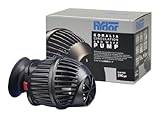
Hydor Koralia Nano
- 240 GPH rated
- 3.5 watt draw
- Vibration-absorbing magnet
- 10-15 gallon saltwater

hygger 18W Cross Flow
- 1850 GPH max
- 360 degree cross flow
- 5 wave modes
- 30-100 percent control
All 10 Reef Wavemakers Compared Side by Side in September
Here is every pump in the guide with its published flow rating and the details that actually change how it performs in a reef tank.
| Product | Specifications | Action |
|---|---|---|
| Hydor Koralia Nano 240 GPH |
|
Check Latest Price |
| hygger 18W Cross Flow Wave Maker |
|
Check Latest Price |
| Hydor Koralia Evolution 1500 GPH |
|
Check Latest Price |
 Jebao SLW-10 Wavemaker Jebao SLW-10 Wavemaker |
|
Check Latest Price |
 hygger Mini 530 GPH hygger Mini 530 GPH |
|
Check Latest Price |
 Jebao SCP-90 Cross Flow Pump Jebao SCP-90 Cross Flow Pump |
|
Check Latest Price |
 AQUANEAT 800 GPH Two Pack AQUANEAT 800 GPH Two Pack |
|
Check Latest Price |
 FREESEA Magnetic Wave Maker FREESEA Magnetic Wave Maker |
|
Check Latest Price |
 Uniclife 3400 GPH Wave Maker Uniclife 3400 GPH Wave Maker |
|
Check Latest Price |
 Fluval Sea CP2 Wave Maker Fluval Sea CP2 Wave Maker |
|
Check Latest Price |
1. Hydor Koralia Nano 240 GPH – Quiet Flow for Small Reefs
Hydor Koralia Nano Aquarium Circulation Pump, Includes Built-In Cable Protector, 240 GPH, Measures 2.4-Inches & is Ideal for Fresh or Salt Water Use
240 GPH rated
3.5 W draw
10-15 gal saltwater
2.4 in body
Pros
- Near-silent once submerged
- Gentle dispersed flow that will not blast coral
- Magnet holds on glass up to 1/2 inch
- Compact body hides in small aquascapes
- Made in Italy with build quality owners praise
Cons
- Some owners report failure after about a year
- Faint high-frequency hum can be present
- 115V version needs a converter on 240V mains
This is the pump I recommend most often, and it is the one I put in nano and quarantine tanks first. The 240 GPH rating sounds modest until you remember it is a 3.5 watt motor sitting in a 10-15 gallon saltwater system, which is plenty of turnover when the pump is pulsing rather than blasting. Owners consistently describe the flow as gentle and widely dispersed, which is exactly what small colonies and delicate polyps want.
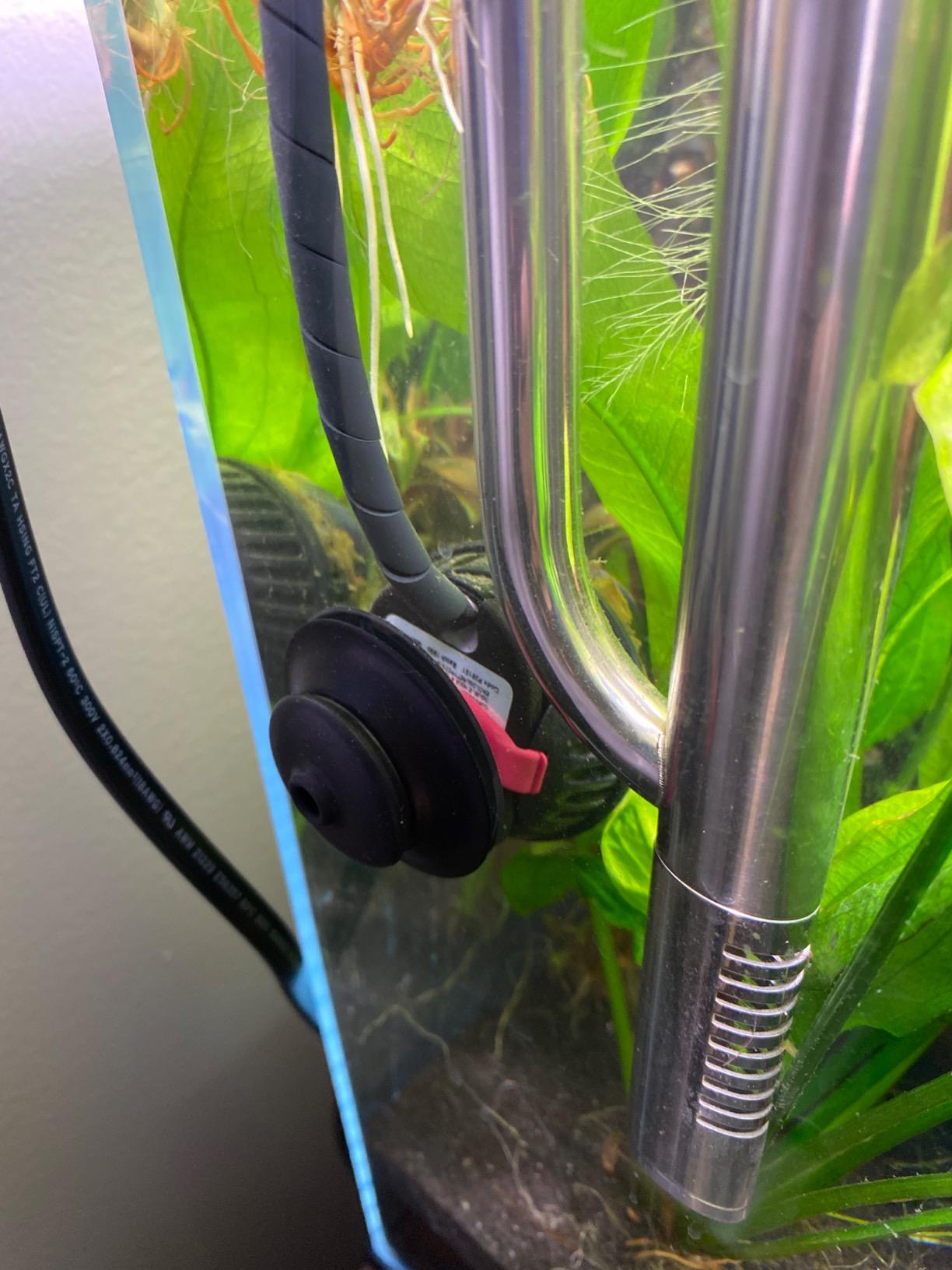
The mount is the part that stands out. Hydor uses a patented vibration-absorbing magnet with a suction cup, and it holds on glass or acrylic up to 1/2 inch thick, so it will not creep down the glass on a rimless nano. The 2.4 inch body tucks into a corner without being visible, and the built-in cable protector is a small detail that matters when urchins start exploring your equipment.
Long-term ownership is where this pump separates itself. Hydor has been building these in Italy since the mid-2000s, and the Koralia line is the brand reefers on saltwaterfish.com single out when they talk about not having to replace pumps. Several owners of the larger Koralia models report five to seven years of continuous service, which is a different category of expectation than most circulation pumps set.
The trade-offs are real but small. A handful of owners have had motors last only about a year, and a faint high-frequency hum is mentioned now and then on an otherwise silent tank. The unit is sold in a 115V version, so a 240V household needs a converter.
When the Koralia Nano is the right call
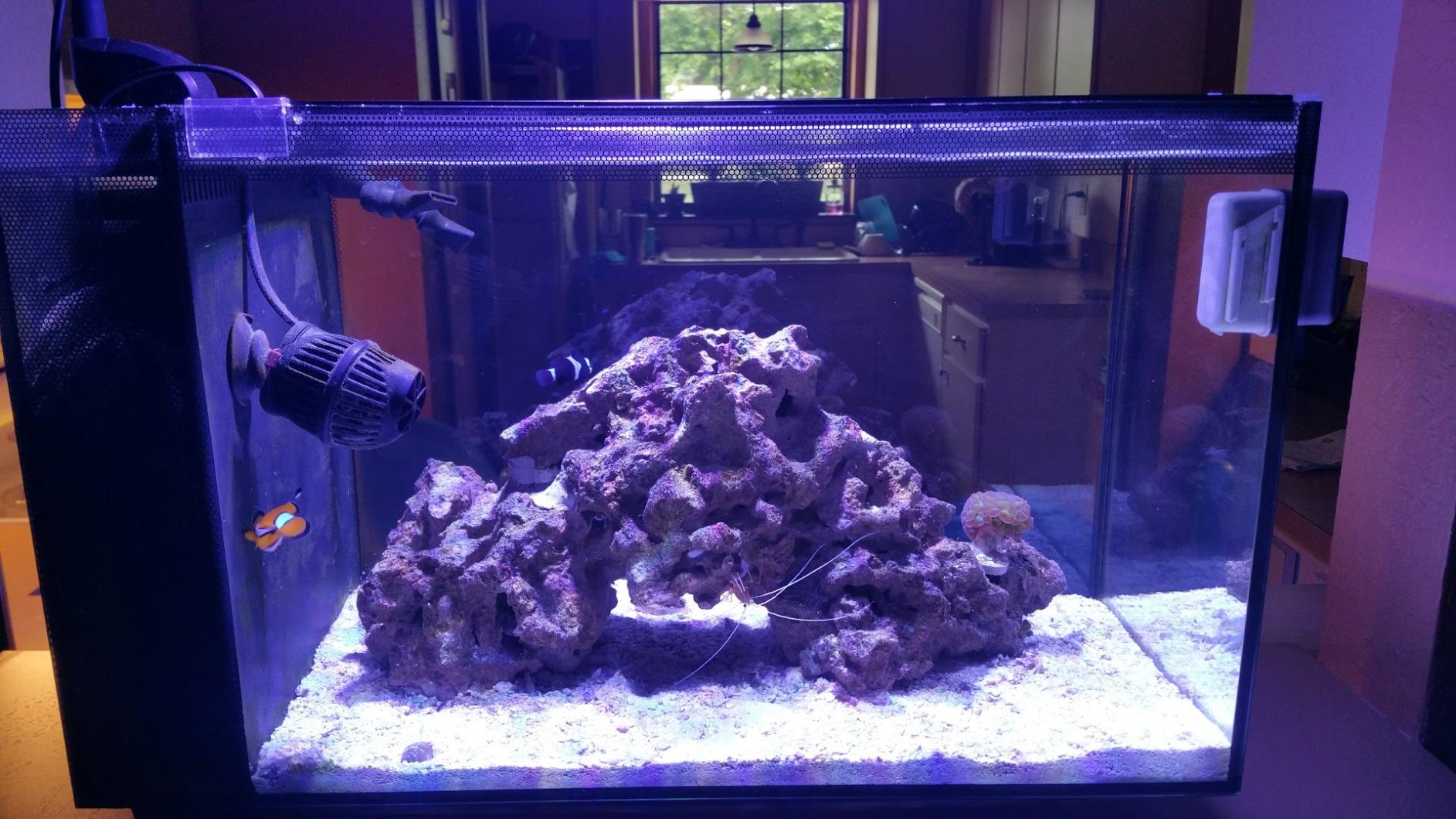
Buy it for nano reefs, quarantine and frag tanks, and any mixed reef up to about 15 gallons saltwater where you want low, gentle, continuous movement rather than a wave. The dispersed pattern is well suited to softies and LPS that do not want a hard jet aimed at them.
When to look at something else
Move up if your display is long, deep, or densely aquascaped, because 240 GPH will not carry across a four-foot tank. Skip it if you need programmable wave modes, since this pump has a fixed output and no scheduling.
2. hygger 18W Cross Flow Wave Maker – Best Controllable DC Pump
hygger Aquarium Wave Maker, 18W Adjustable Cross Flow Pump with LED Display Controller, Magnetic DC 24V Aquarium Powerhead for Freshwater and Marine Reef Aquariums Up to 135 Gallon
1850 GPH max
18 W DC
Cross flow 360 deg
LED controller
Pros
- 30-100 percent flow control gives genuinely gentle to strong output
- Cross flow pattern covers the whole tank
- Feed mode with memory plus a night mode
- Two flow sides angle up and down at once
- Quieter than AC powerheads at low to mid settings
Cons
- Audible hum above roughly 50 percent output
- One reviewer reported a blockage error code and a spark at the power connection
- Non-US and AU power adapters are not included
This is the highest-rated pump in the group, and the rating is earned by the control range rather than the raw flow number. Thirty to 100 percent output with matching frequency levels means you can run a gentle 30 percent pulse for an LPS-dominated tank and the same pump at 90 percent for a high-flow system. That range is the feature most reefers end up using daily, and it is something fixed-output magnets simply cannot do.
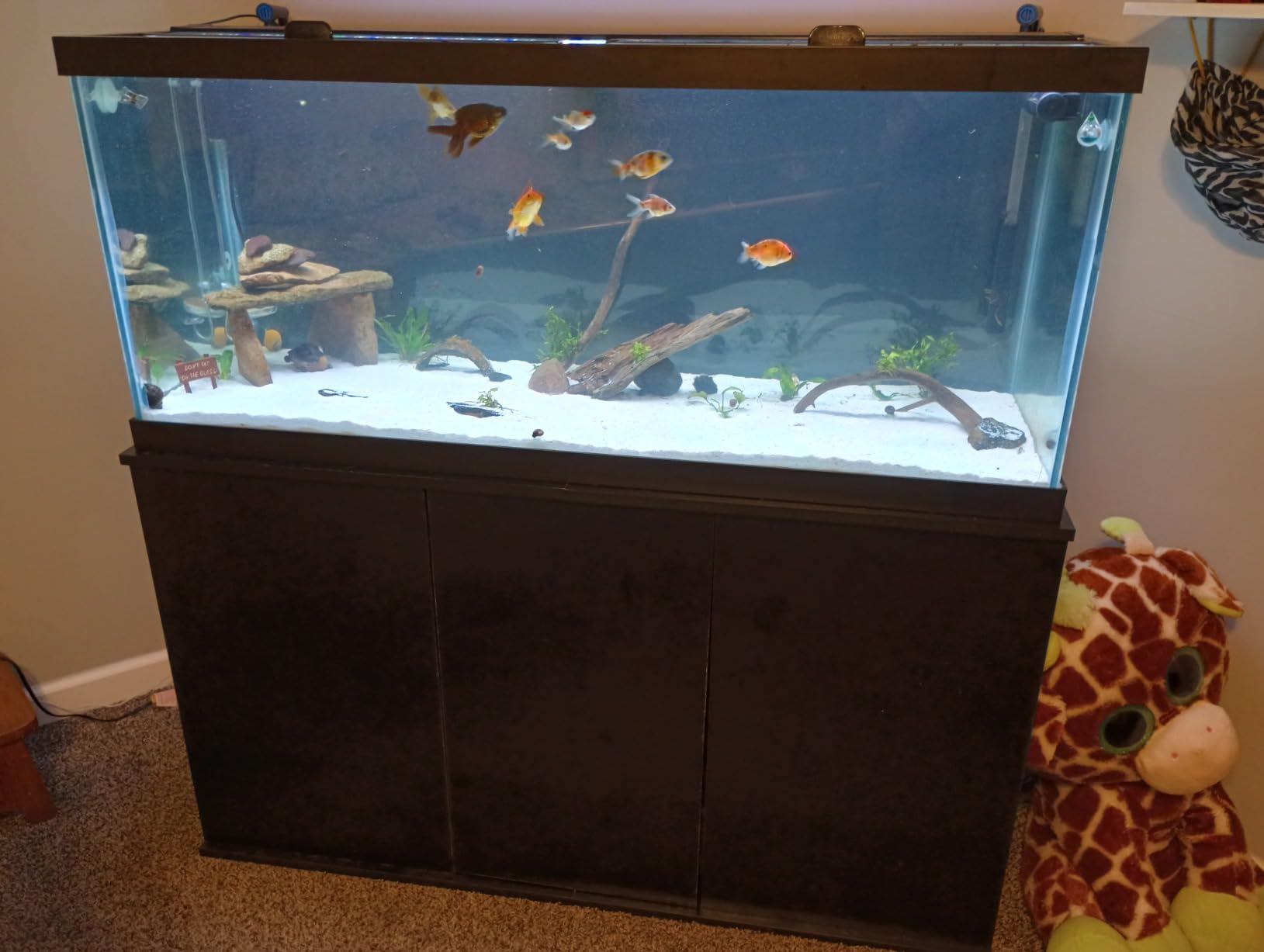
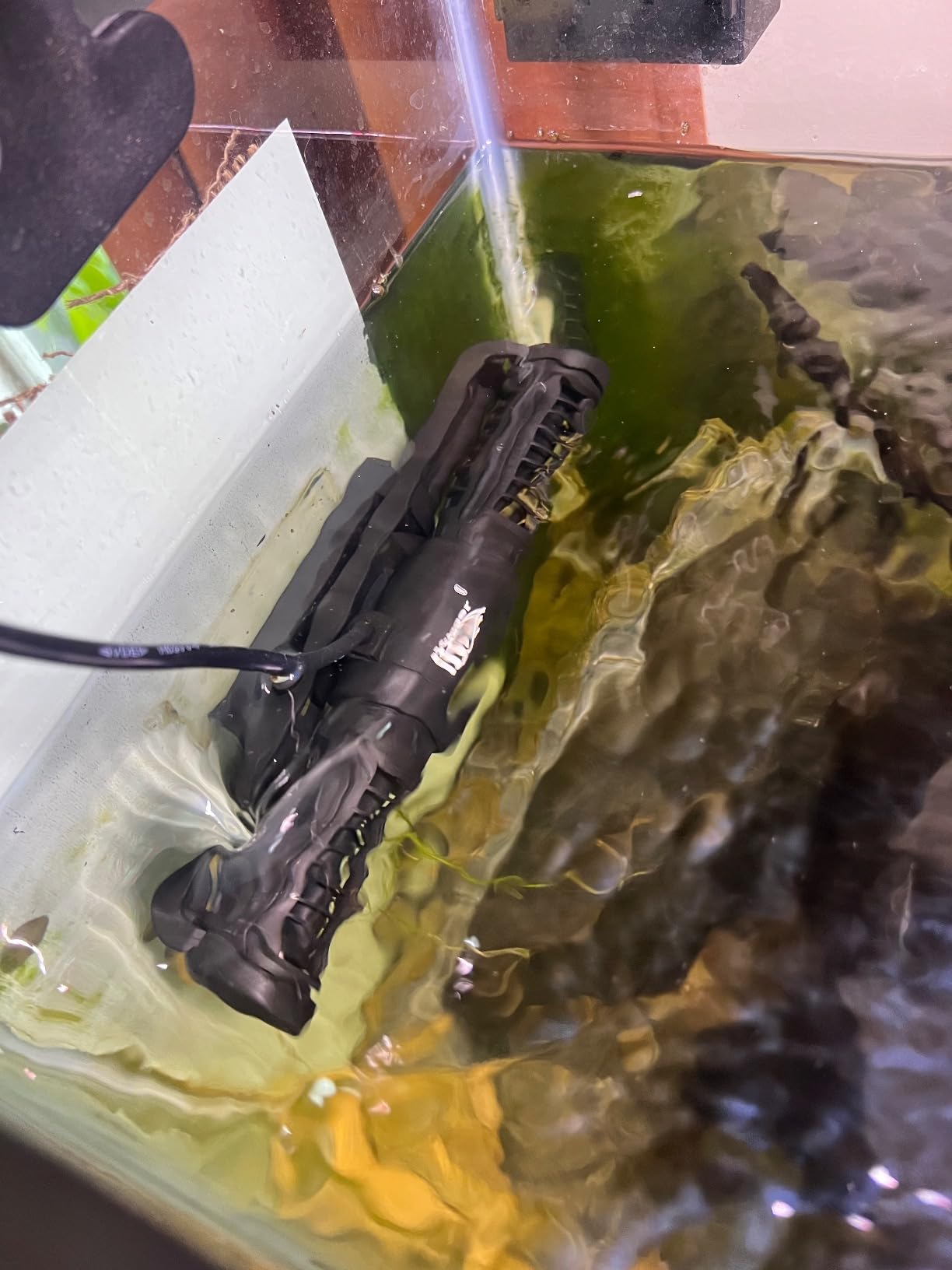
The cross flow pattern returns water to the pump through 360 degrees, so there is no obvious dead side in a standard rectangle. Owners report that detritus stays lifted and the substrate keeps moving, which matters more on a long tank than a big GPH number does. Rated to 1850 GPH and 135 gallons, it covers the middle of the market that most people actually own.
It runs on 24V DC with sine wave control, which is why it stays quiet at low and mid settings compared with an AC powerhead doing similar work. The LED controller gives you pulse, sine, constant, random, and cross flow modes, plus a feed mode with memory and a night mode that owners single out as useful for daily routines.
The one consistent complaint is sound. Above roughly 50 percent output there is a hum that is noticeable in a dark, quiet room, so if your tank sits in a bedroom you may want to keep it lower. One reviewer also reported a blockage error code and a spark at the power connection, which is a single report but worth knowing about.
When the hygger 18W cross flow works best
Buy it for 40 to 135 gallon mixed reefs where you want real programmability without moving to an app-based ecosystem. Feed mode with memory means the daily routine is one button press, and the night mode is useful in a tank that sits where you sleep.
When to pass on it
Pass if noise in a quiet room is your main concern, because the hum above half output is the trade-off for the control range. Pass if you are outside North America and Australia and need a local power adapter, since one is not included.
3. Hydor Koralia Evolution 1500 GPH – Silence for Big Mixed Reefs
Hydor Koralia Evolution Circulation & Wave Pump , 1400-1500 GPH
1500 GPH rated
7 W draw
90-175 gal
Shaft-less impeller
Pros
- Near-silent
- many owners cannot hear it without leaning in
- Wide gentle flow rather than a narrow jet
- Magnet and suction grip thicker glass reliably
- Some owners report 5 to 7 years of service
- Built-in fish guard does not detach
Cons
- Audible start-up noise when paired with a Hydor Smart Wave controller
- Can eventually run backwards and stop moving water
- Plastic impeller cage can develop a noise
If noise is the thing stopping you from adding a wavemaker, this is the pump to look at. At 7 watts it draws less power than a lightbulb, and the wide dispersed pattern means you are not standing next to a narrow jet of water. Owners of this model frequently say they cannot hear it running unless they put an ear against the glass.
The shaft-less impeller is a real design upgrade over older Koralia units, and the rated 1500 GPH covers 90 to 175 gallons fresh or marine, which is a big jump from the Nano model in a nearly identical footprint. Hydor’s vibration-absorbing magnet and suction cup combination holds reliably on thicker glass, and the built-in fish guard is molded in rather than a clip-on part that can come loose.
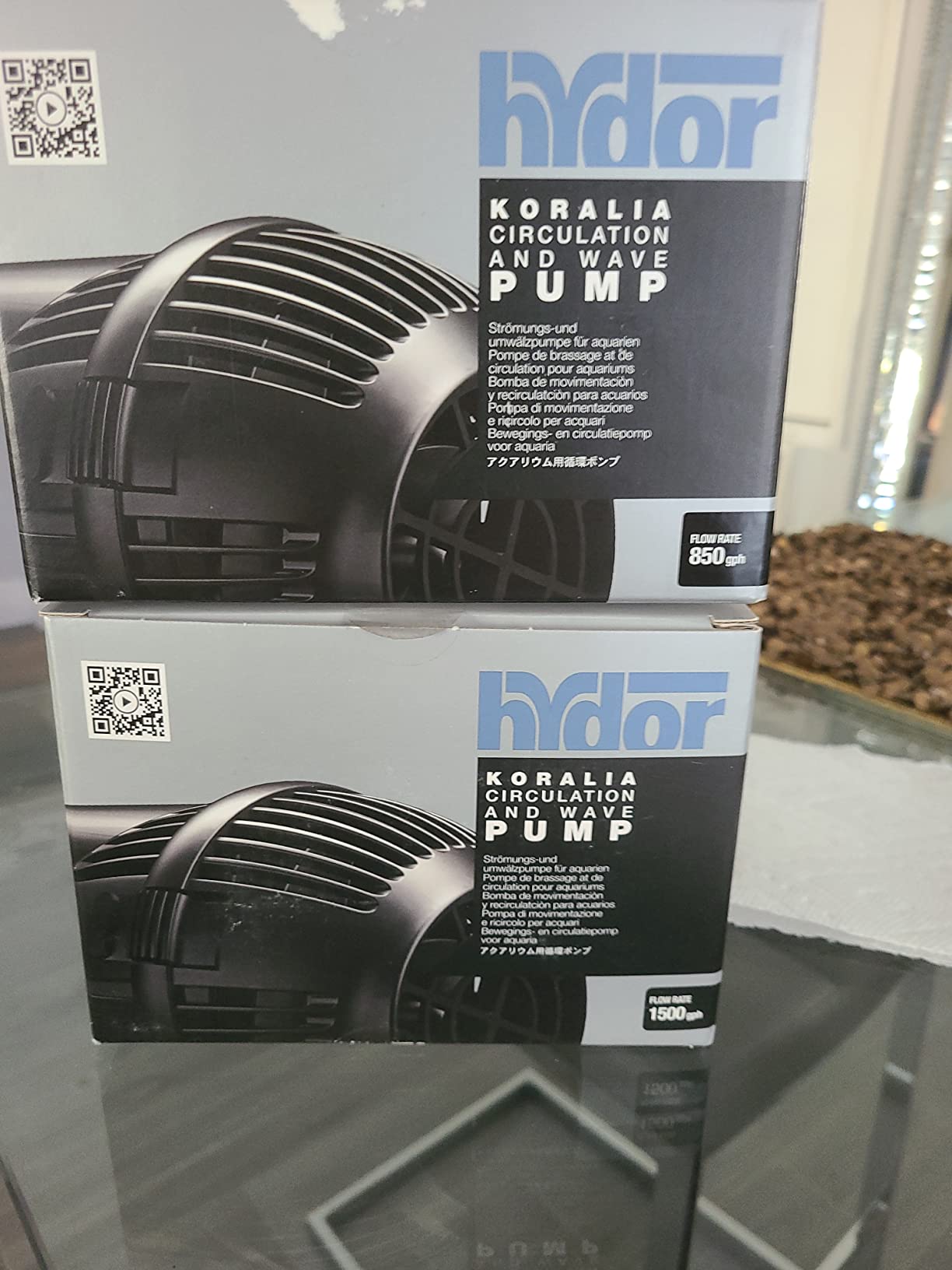
That longevity claim is the standout. Multiple owners report five to seven years of continuous service, and reefers on saltwaterfish.com describe Hydor as the pump brand you do not have to think about. For a tank that has to run every day for a decade, that reliability history matters more than a longer feature list.
The complaints cluster around the smart wave controller and long-term wear. Several reviewers report an audible start-up noise when the pump is paired with a Hydor Smart Wave controller, and eventually a pump can run backwards and stop moving water until the impeller is cleaned or replaced. The plastic impeller cage can also develop a noise that a rubber band around it silences.
Why reefers pick the Koralia Evolution
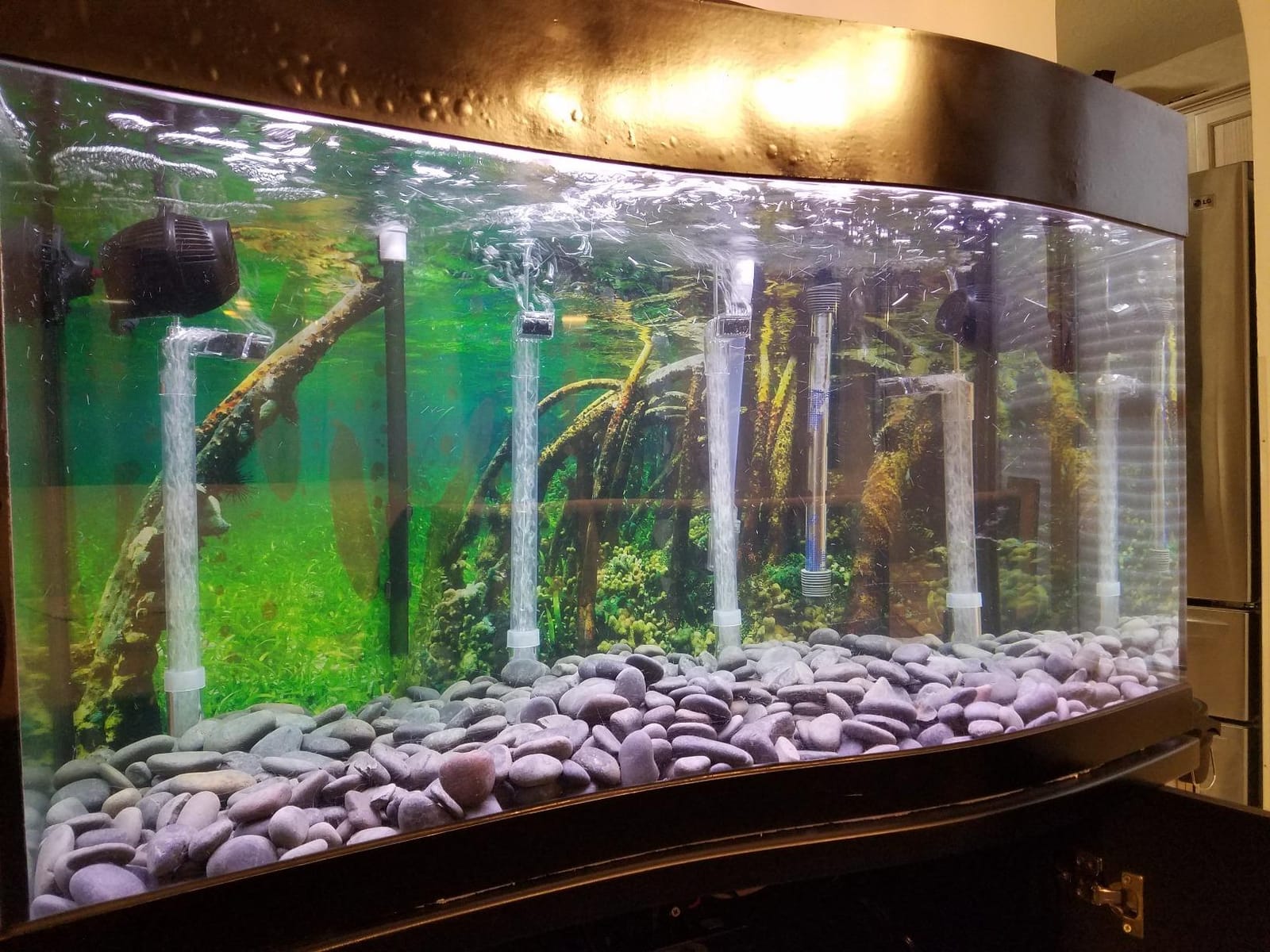
Buy it for 90 to 175 gallon systems where you want strong, wide circulation without noise. It suits office tanks, living rooms, and any display where a constant hum would be the first thing a visitor notices.
What to watch out for
Plan for an impeller cleaning every year or two in a high-flow system, since a worn shaft-less impeller is the usual reason output drops. Skip the pairing with a smart wave controller if start-up noise would bother you, since that combination is where the reported noise concentrates.
4. Jebao SLW-10 Wavemaker – Compact Controllable Flow for Mid-Size Tanks
Jebao SLW-10 Aquarium Wavemaker, 1,065 GPH
1065 GPH max
24 V 10 W
1.5 in body
Wireless pairing
Pros
- Compact 1.5 inch body fits unobtrusively
- Very quiet smooth operation for a 10 watt pump
- Controllable flow useful for SPS health and acclimation
- Controller works with older Jebao pumps
- Good value against premium wavemaker brands
Cons
- Wide flow can be too diffuse in larger tanks
- Can be too strong for tanks around 20 gallons
- One owner reported seizure after about three months in a sump
- One review reported the controller hanging repeatedly
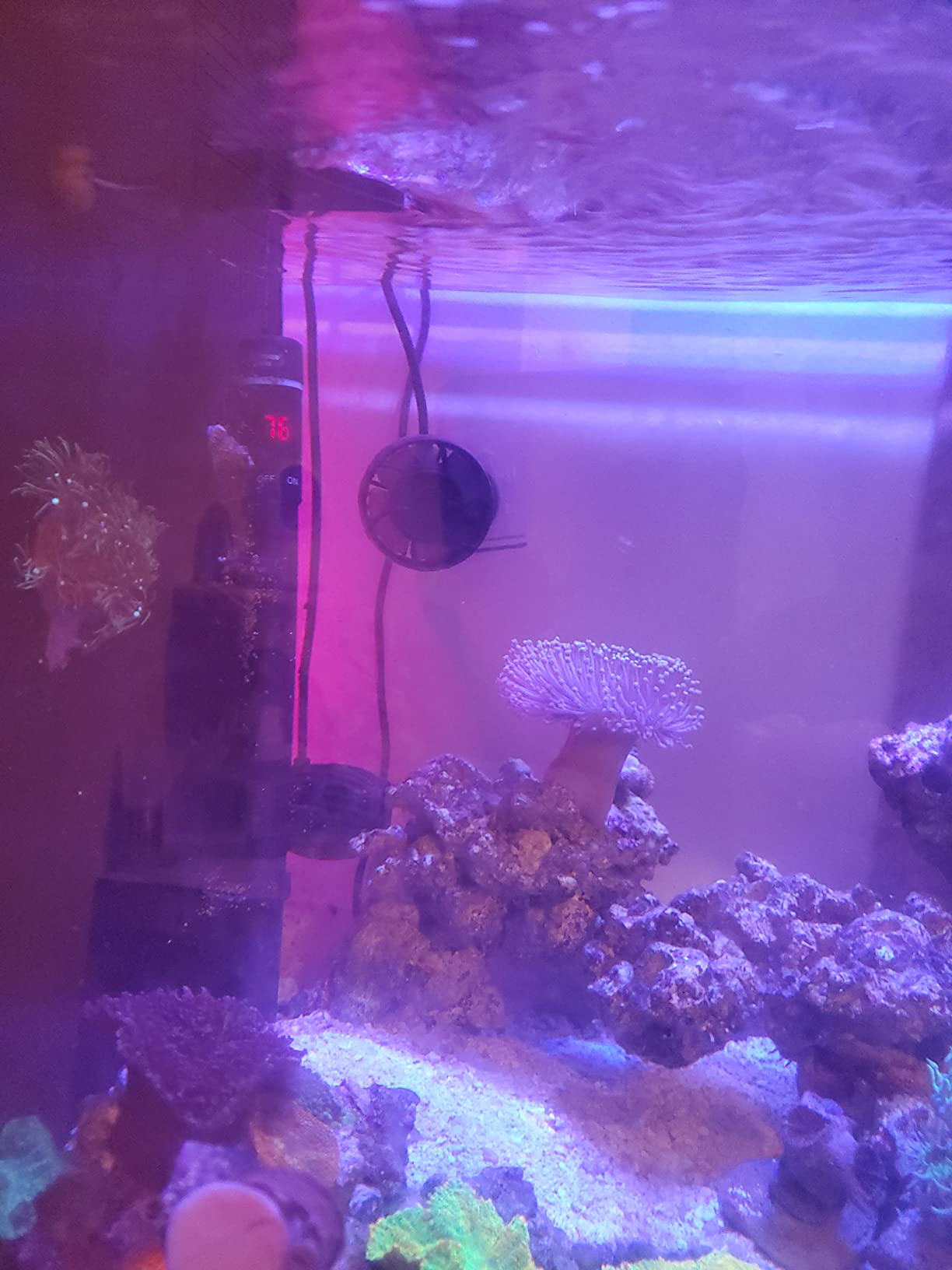
The SLW-10 is the one I suggest when someone wants programmable flow in a tank where a 10 inch pump would be visible. At 1.5 inch long and 2.25 inch in diameter, it disappears into rockwork in a way almost nothing else at this flow rating manages. The 1065 GPH max output covers a 20 to 40 gallon reef comfortably.
The design choice I like most is the external drive controller, which keeps all the electronics out of the wet-side housing. That extends pump life and means a controller problem does not mean a flooded motor. The master and slave wireless control also lets you pair two pumps on one schedule without a second controller, which is a nice touch at this level.
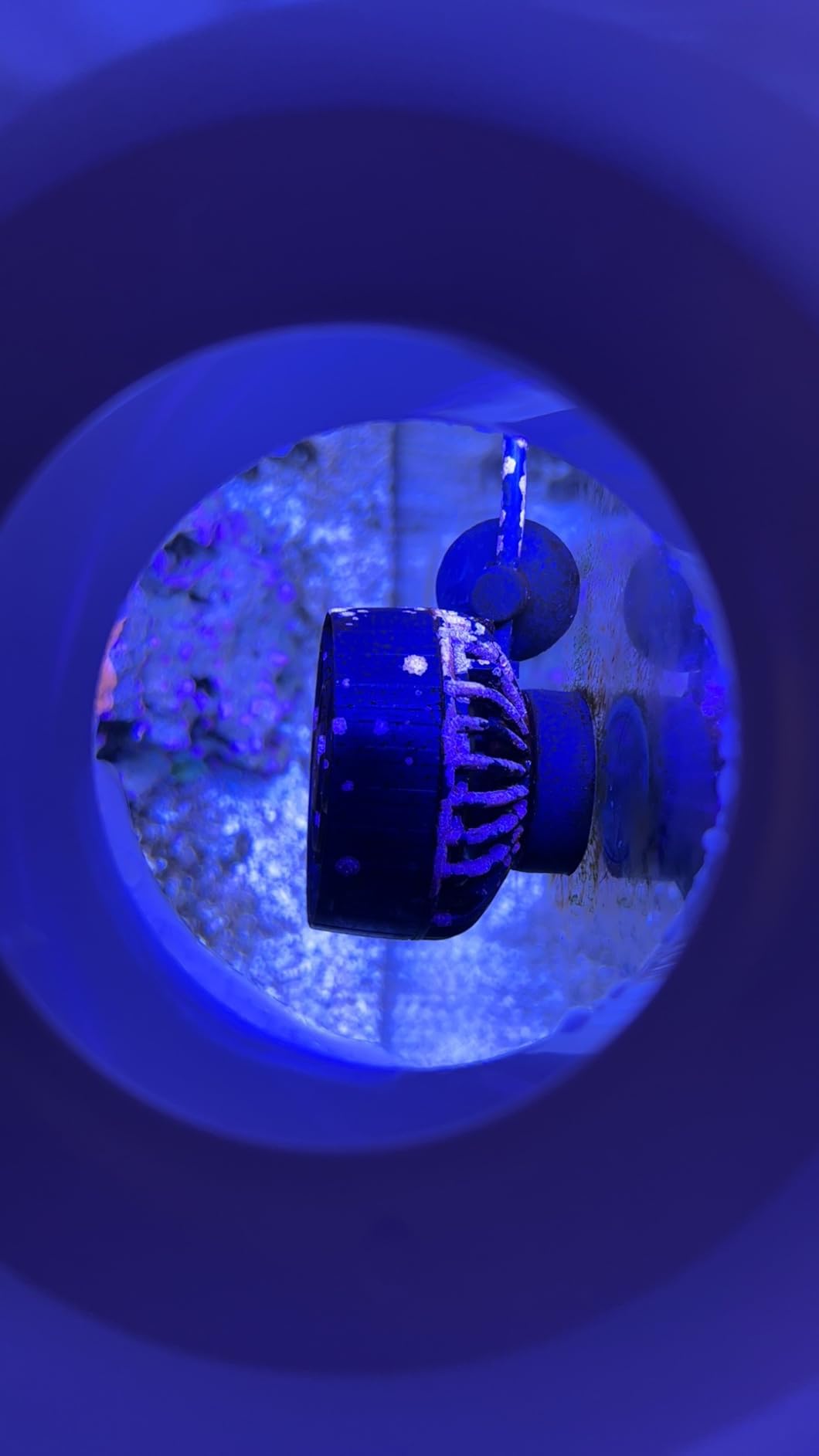
Owners rate it quiet for a 10 watt pump, and the 3D large rotation angle gives a wide range of aim positions. Because Jebao controllers work with older Jebao pumps, upgrading later does not mean starting over. On nano-reef.com, Jebao is repeatedly named as the value pick in reef discussions, and the SLW line is where that reputation is best supported.
The limitation is directional. The flow pattern is wide and diffuse, which some owners say leaves larger tanks with little visible movement. It can also be too strong for a tank around 20 gallons if you run it at high output. There is one report of a unit seizing after about three months in a sump, and one German review of the controller hanging repeatedly.
Where the SLW-10 earns its place
Buy it for 20 to 40 gallon reefs, frag tanks, and display setups where a visible pump would spoil the look. The wireless master and slave control makes it the easy way to run two pumps on opposing schedules.
Reasons to choose a different pump
Look elsewhere if you need a strong visible current rather than gentle dispersed movement, because the wide pattern softens a lot of that punch. Consider the SCP-90 instead if your tank runs past 50 gallons.
5. hygger Mini 530 GPH – Small Footprint for 15-40 Gallon Tanks
hygger Mini Wave Maker for 15-40 Gallon Aquarium with Magnetic Mount Quiet Powerhead for Saltwater and Freshwater Fish Tank 530 GPH
530 GPH rated
3 W draw
15-40 gal
Ceramic shaft
Pros
- Quiet enough to be inaudible outside the tank with no vibration felt
- Strong magnet that stays put and repositions easily
- Small footprint that hides in a corner
- Moves more water than expected from 3 watts
- Two year manufacturer warranty
Cons
- Fixed output with no speed control
- Can be too strong for a 15 gallon tank
- Ceramic shaft can snap during cleaning
- One owner reported buzzing that progressed to failure within a year
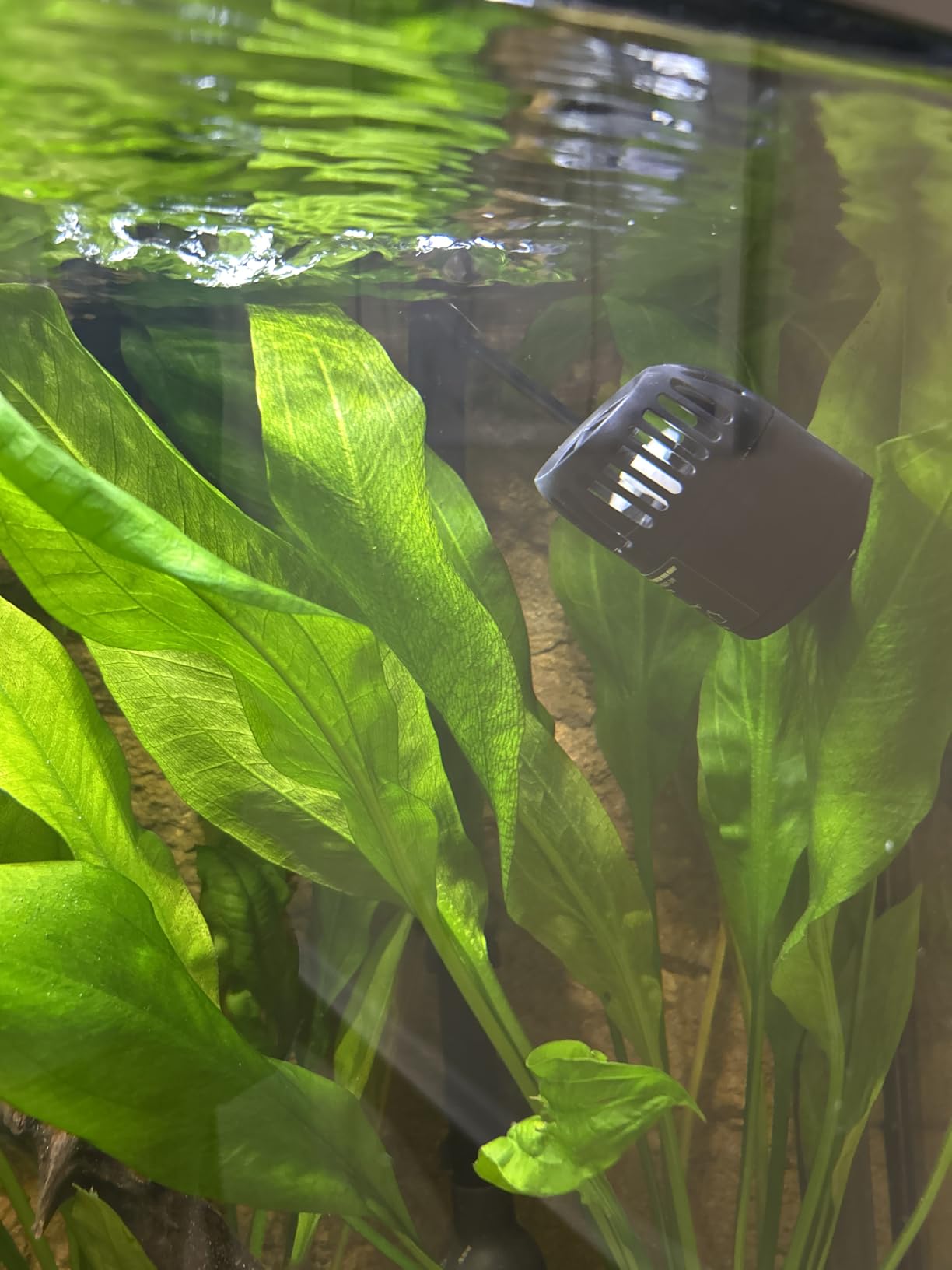
For a nano or a 20 gallon long, this is a strong pick because it disappears. The body is 2.6 by 2.16 by 4.7 inches, so you can tuck it into a back corner and forget about it. At 530 GPH from a 3 watt motor it moves considerably more water than the wattage suggests, and owners report it is inaudible outside the tank with no transmitted vibration.
It is also ETL certified with a corrosion-resistant ceramic shaft and a removable protective guard that comes off for cleaning, which is a nice detail in a nano where space is tight. The magnetic base fits 4-10mm glass and comes with a vibration-absorbing cotton pad, so it holds without buzzing against the pane. There is a two year manufacturer warranty behind it.
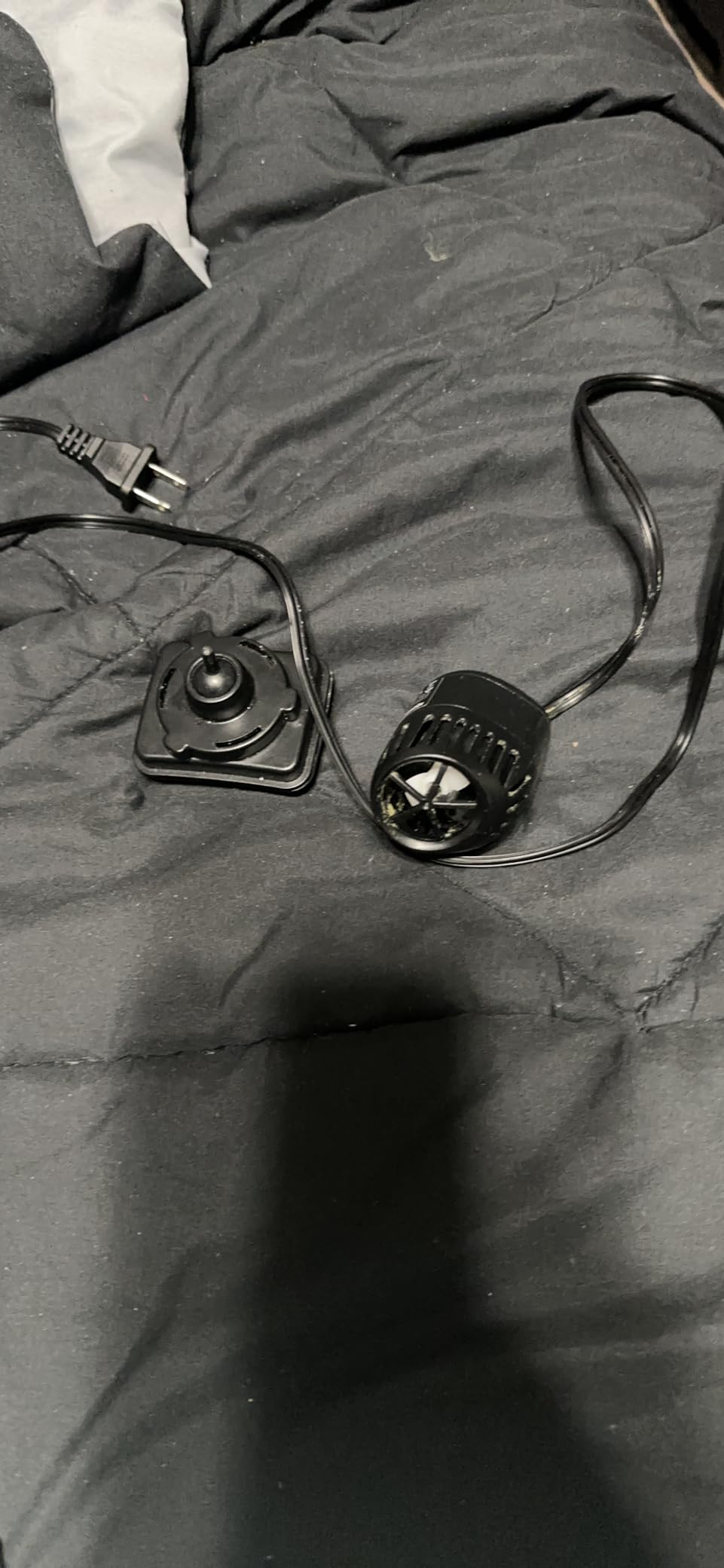
The 360 degree rotatable ball joint gives you any aim angle, and the mount repositions in seconds if you change your aquascape. In a nano reef where flow needs change as corals grow, being able to move the pump and redirect it in ten seconds matters more than any setting menu.
The single biggest limitation is that the output is fixed, with no speed control. On a 15 gallon tank that can be more flow than you want, and you have no dial to turn it down. The ceramic shaft is also fragile and can snap if you force it during cleaning, and one owner reported buzzing that progressed to total failure within a year with no response from support.
Why nano keepers like this one
Buy it for 15 to 40 gallon tanks, especially rimless displays where pump visibility matters. The removable guard and easy repositioning suit a setup you will keep adjusting as the reef grows.
Where it falls short
Skip it if you need to dial the flow down, since there is no control. If your tank sits at the small end of the range, pair it with flow redirection rather than running it flat out.
6. Jebao SCP-90 Cross Flow Pump – High Flow for SPS Tanks
Jebao SCP-90 Cross Flow Pump Wave Maker with Controller
2700-3300 GPH
DC 25 W
Cross flow
Controller included
Pros
- Owners run it at 30-50 percent on 75 gallon tanks and still clear detritus
- Cross flow creates a whole-tank gyre without dead spots
- Strong magnetic hold
- Quiet below about 75 percent output
- Often compared favorably to premium gyre pumps
Cons
- Audible humming above roughly 75 percent output
- Wave modes are weak and many owners run constant mode instead
- Several reports of red error lights and units stopping after months
- Some reports of lost power or reduced output after about a year
This is the high-flow end of the list, and the number that matters is that owners routinely run it at 30 to 50 percent on a 75 gallon tank and still keep detritus in suspension. The rated 2700 to 3300 GPH is across the whole tank, not at the nozzle, which is why it feels stronger than the number suggests.
Cross flow technology returns flow to the pump through 360 degrees, so you get a genuine whole-tank gyre with no obvious dead side. The 10.5 by 2.5 by 1.75 inch body is long enough to push across a long tank, the magnetic mount holds firmly, and the DC 25W motor runs quietly below about 75 percent output. It accepts 100-240V at 50/60Hz on a three-prong US plug.
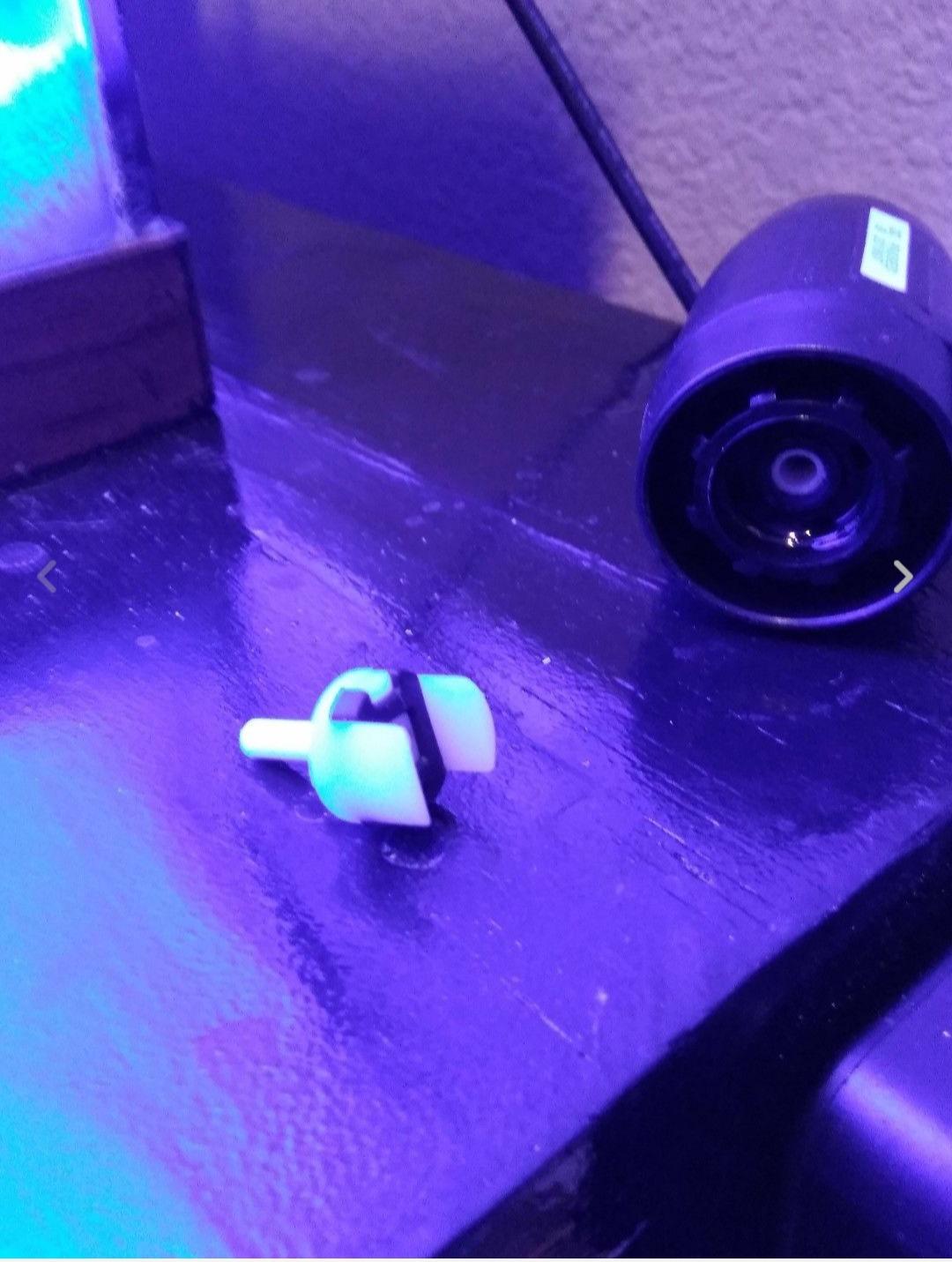
What you give up for that flow is refinement. Owners say the wave modes are underdeveloped and many simply run constant mode instead, which is honest given the pattern does most of the work. There is audible humming above roughly 75 percent output, so it is not the pick for a bedroom tank.
Reliability is the other concern. Several reviewers report red error or warning lights and units stopping after a few months with no troubleshooting guidance, and some report lost power or reduced output after about a year. Jebao is consistently recommended on value across reef forums, and it earns that, but forum threads also flag the brand for early controller failure, so this is a pump you may need to replace eventually.
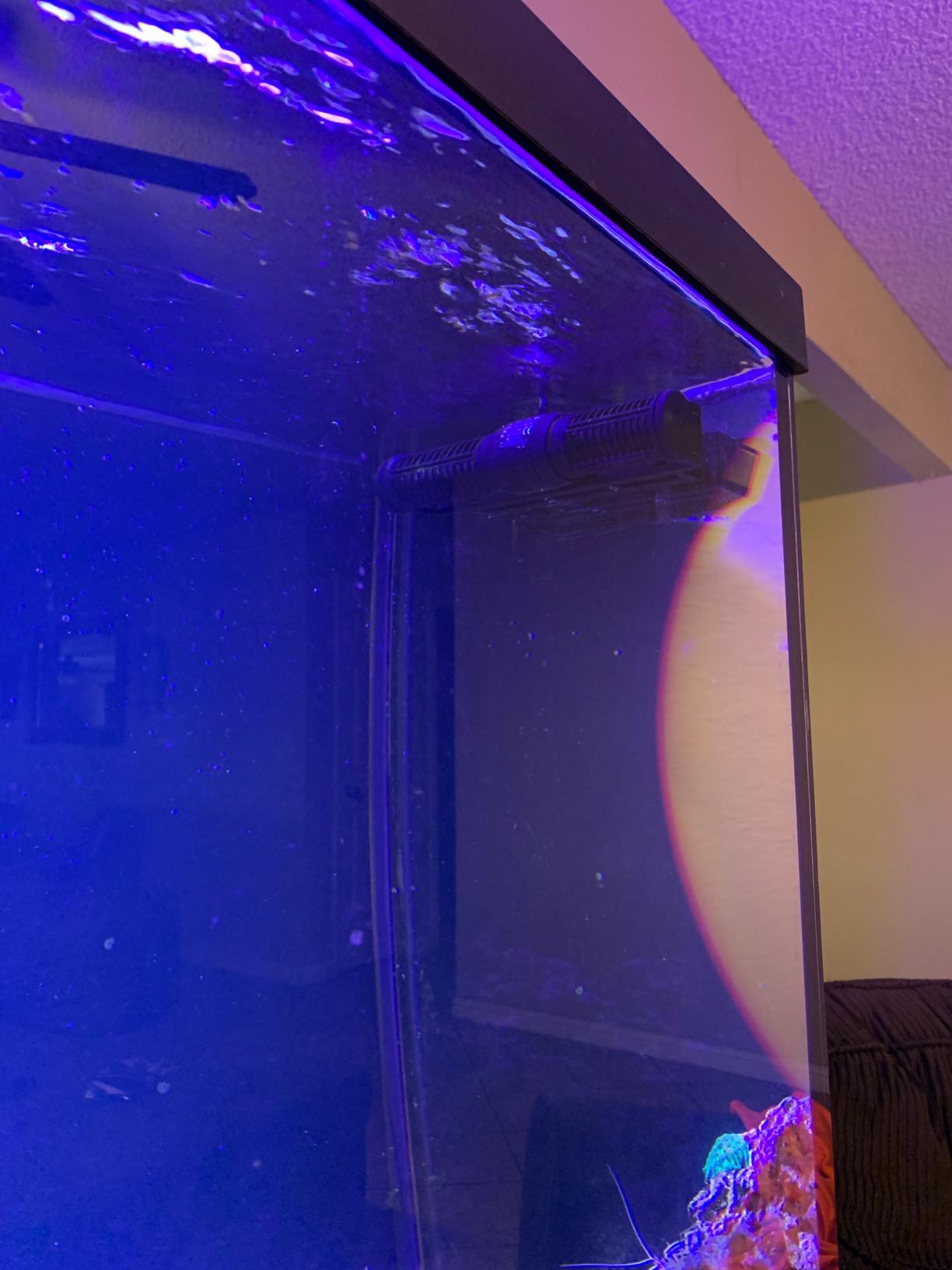
Systems that suit the SCP-90
Buy it for 60 to 100 gallon systems and SPS-dominant tanks that need real current and excellent detritus suspension. It is a strong second unit for a two-pump setup where one pump handles high flow at one end.
The honest drawbacks
Skip it if the tank sits where humming would be intrusive, or if you need refined wave programming rather than a strong constant pattern. The error light reports are worth factoring into a purchase you hope to keep for years.
7. AQUANEAT 800 GPH Two Pack – Budget Pick Pair for Long Tanks
AQUANEAT 2 Pack Aquarium Circulation Pump,800 GPH Fish Tank Powerhead, Saltwater Wave Maker, Submersible Water Pump with Suction Cup
800 GPH per pump
Two pack
Suction cups
6 ft cord
Pros
- Very quiet
- many owners cannot hear them running
- Suction cups hold well and reposition easily
- Pair creates a swirling gyre-like pattern
- Lifts settled debris so the filter catches it
- Strong value as a matched pair
Cons
- A single pump does not push flow to the far side of a wide tank
- Some units report grinding noise when direction is changed
- Occasional durability complaints with pumps stopping after a couple of months
- One reviewer received a pack with a missing suction cup
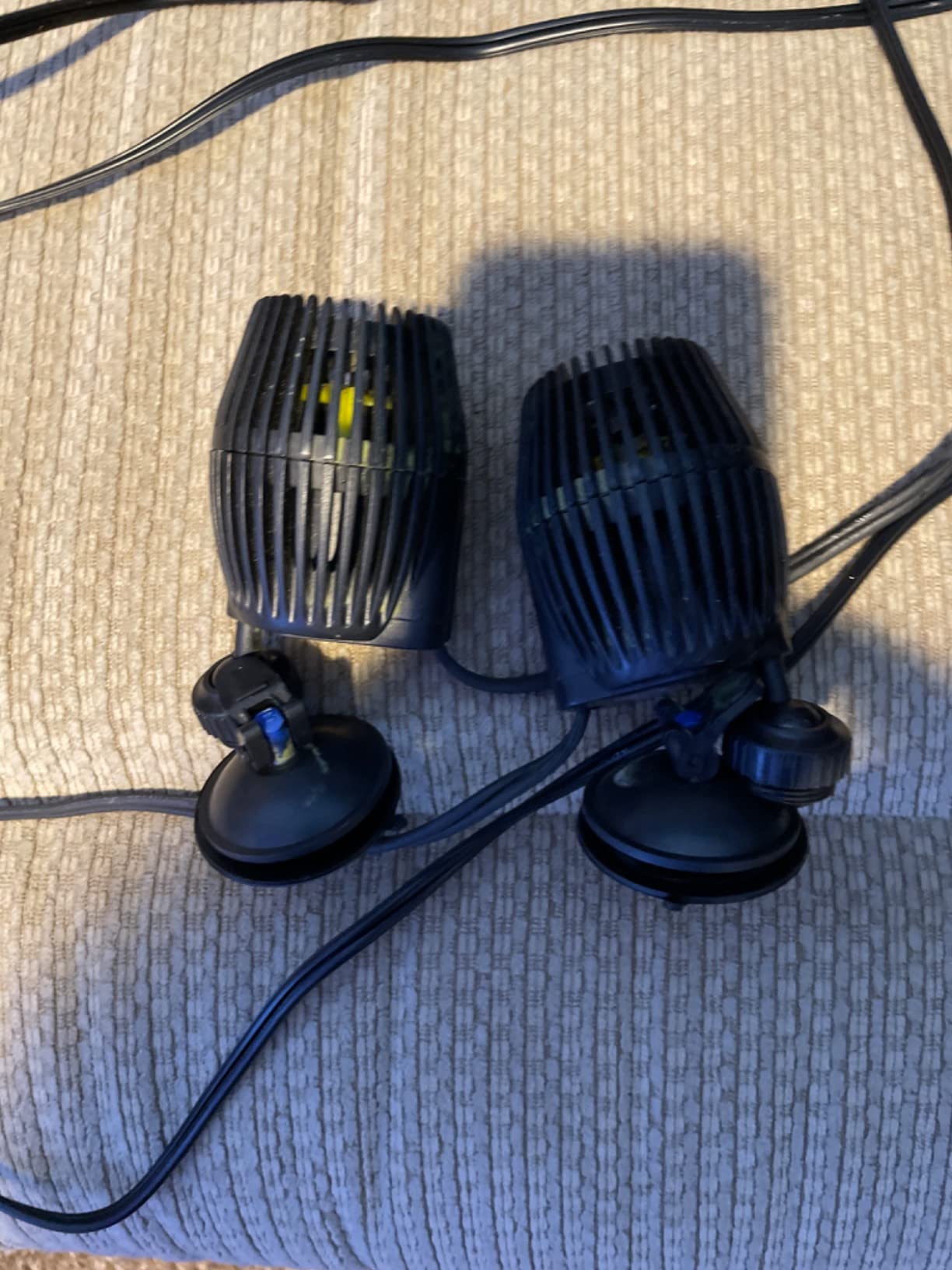
A two pack changes the math. One 800 GPH pump on its own will not carry across a wide tank, but two of them running from opposite ends create a rotating current that covers far more of the volume than 1600 GPH from a single point would. For a 60 to 75 gallon saltwater tank, that is the configuration most owners settle on.
The articulating ball joints allow 360 degree flow direction adjustment, and the suction cups hold well on clean glass while staying easy to reposition. Owners are consistently positive about the silence, which is a little surprising at this specification. Reviewers also note the pumps lift settled debris off the sand so the filter can catch it, which is the practical win in a mixed reef.
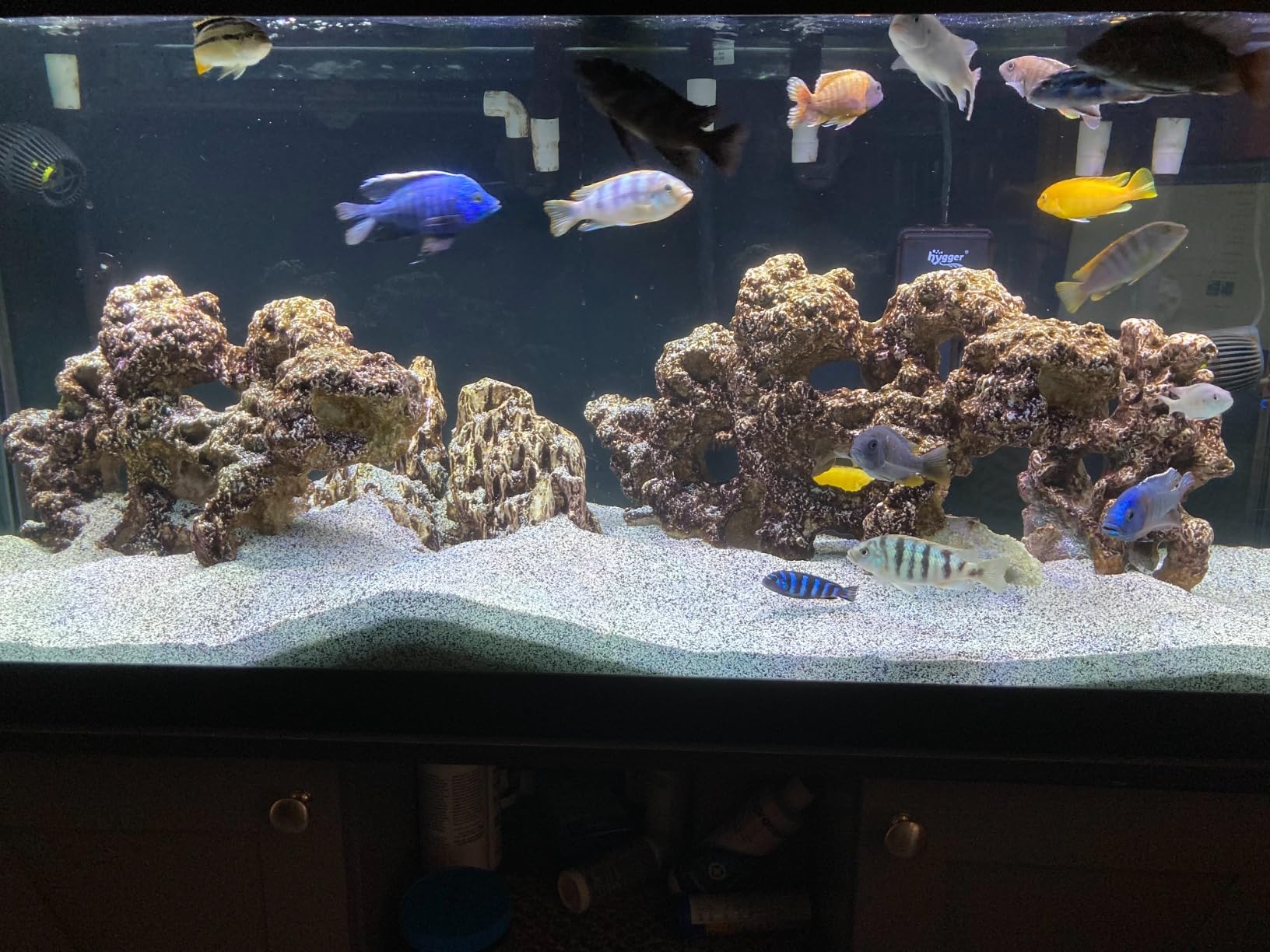
Two things to know before you buy. The manufacturer does not recommend connecting these to a timer or controller, because reversal or malfunction can result, so this is a constant-on pump rather than a programmable one. And the manufacturer lists 110V with a 6 foot cord, which is worth checking against your setup.
Durability is mixed. There are occasional complaints of pumps stopping after a couple of months and some reports of a loud grinding noise when the direction is changed. One reviewer received a pack with a missing suction cup. None of this is unusual at the entry level, but it is the reason this is a value pick rather than a long-term recommendation.
Who should buy the two pack
Buy it if you want strong circulation on a 40 to 75 gallon reef without a single premium pump, and you are happy with constant flow rather than programmed waves. The pair at opposite ends is the whole trick.
Where the pair falls short
Skip it if you need wave programming, since the manufacturer advises against timers and controllers. Also consider the durability reports if you want a pump that runs for a decade without attention.
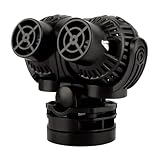
8. FREESEA Magnetic Wave Maker – Dual Heads and Fast Repositioning
FREESEA Magnetic Wave Maker for Aquarium: 1s Mounts on 15mm Glass Secure
1050 or 1600 GPH
Dual heads
15mm glass magnet
5.5 in body
Pros
- Magnetic mount holds firm at higher settings and on thicker glass
- Dual heads adjust independently for directional flow
- Tool-free installation in about five minutes
- Good flow for the size and strong enough for the 30-80 gallon range
Cons
- Some units report propeller or pump failure within a few months
- A few reviews describe one of the two heads not working after a period
- Controller box described as not very intuitive
- Cord length is short on deep tanks
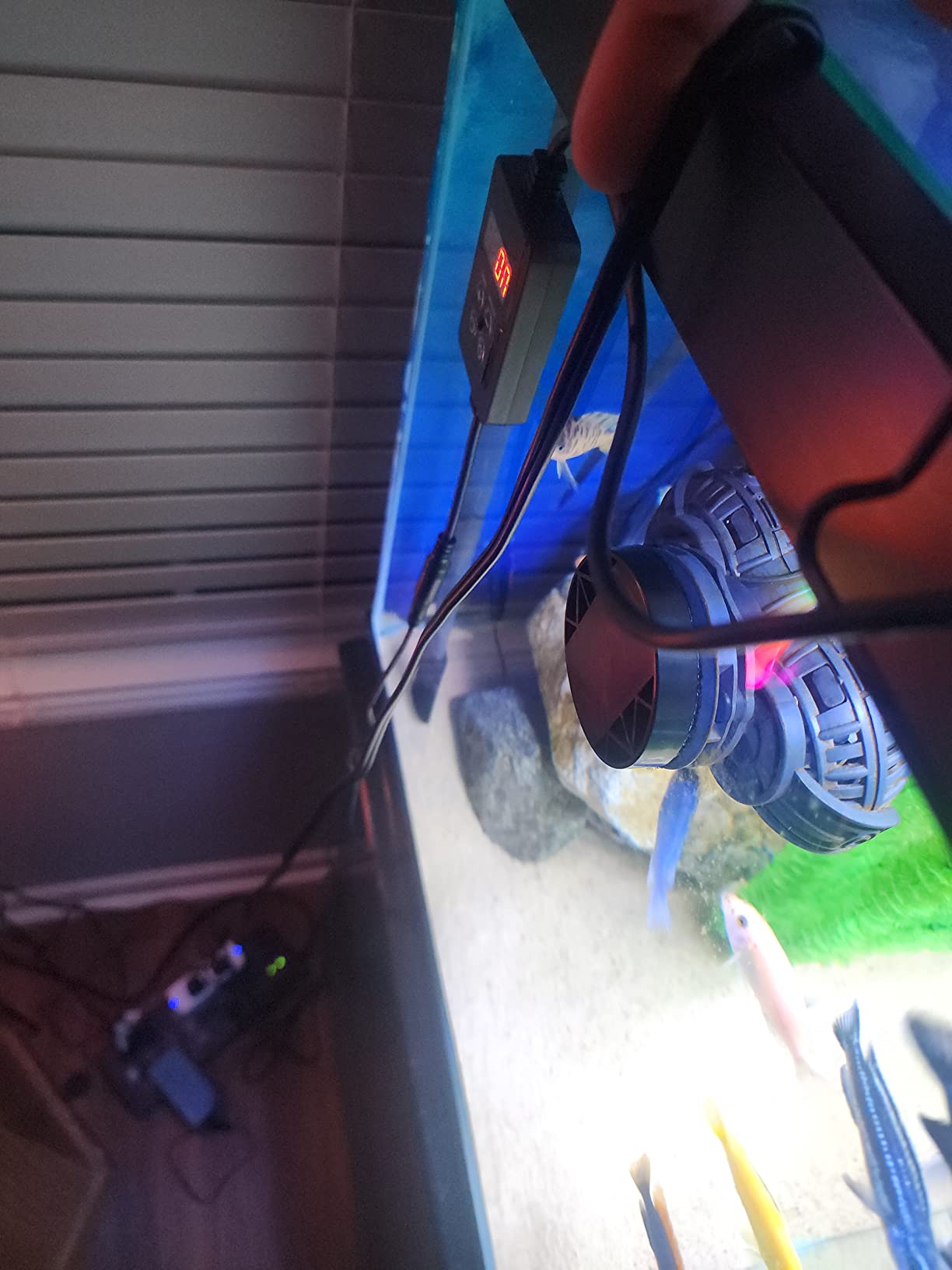
This is the most reviewed pump in the guide by a wide margin, and the reason is the mounting system. The magnetic mount slides along 15mm glass and repositions in about a second with dry hands, which means you can move it during a rescape without draining anything. The body is 5.5 by 4 by 3.2 inches and weighs 1.26 pounds, so it is easy to handle one-handed.
Two pump heads that adjust independently is the feature that sets it apart from single-head pumps at this price. You can send one jet toward each side of the tank, or aim both at a specific rock face, which gives you more control than a fixed single stream. There are 1050 GPH and 1600 GPH variants, and the 1600 covers the 30 to 80 gallon range.
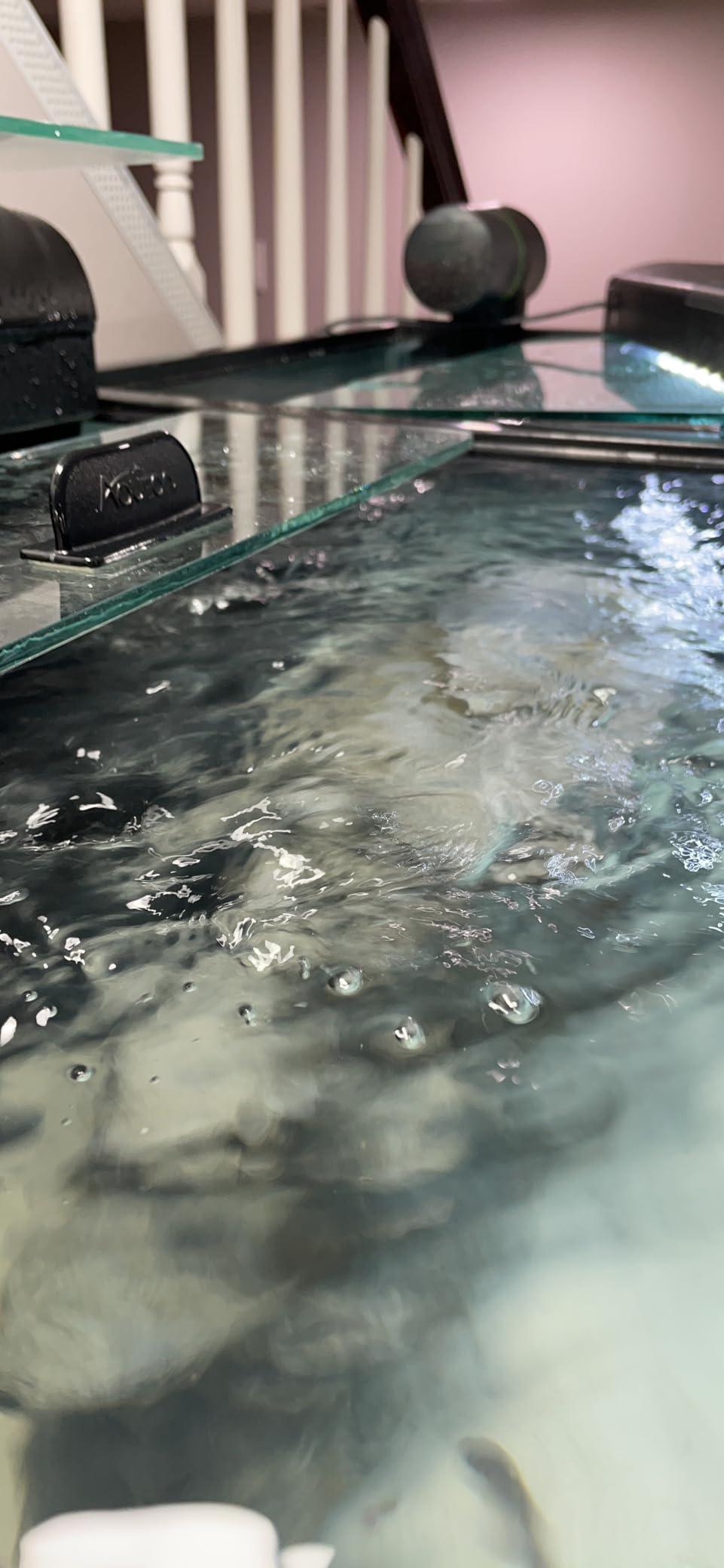
Owners are positive about the magnetic hold, which stays firm even at higher flow settings and on thicker glass, and about the tool-free install. The AI summary across nearly two thousand reviews puts it plainly: strong mount, quick installation, useful dual-head control, and a recurring minority reporting early failure of one head or the impeller.
That minority is the thing to weigh. A few reviews describe one of the two heads not working after a period, and some report propeller or pump failure within a few months. The controller box is described as not very intuitive, and the cord length is short on deep tanks, which matters more in a tall display than the listing suggests.
Reasons to like the FREESEA
Buy it for 30 to 80 gallon tanks where you want to reposition flow constantly, or during aquascaping phases when you need to redirect the current as the rockwork changes. The one-second reposition is genuinely useful during maintenance and feeding.
Reasons to hesitate
Think twice if you want a single unit you will never think about again, because the early failure reports are real. Check your tank depth against the cord length, and be prepared for a controller that takes some learning.
9. Uniclife 3400 GPH Wave Maker – Throughput for 120-300 Gallon Displays
Uniclife Aquarium Wave Maker for 120-300 Gallon Fish Tanks 3400 GPH Adjustable Circulation Pump with Controller and Strong Magnetic Suction Base Submersible Power Head for Fresh and Salty Water
3400 GPH max
40 W DC 24 V
4 wave modes
Feed mode
Pros
- High 3400 GPH output suited to large display tanks
- Controller offers four wave modes plus a dedicated feeding mode
- Strong magnetic base makes repositioning straightforward
- Rotatable head directs flow from multiple directions
- Aerates the tank and keeps sediment from settling
Cons
- Oversized for anything under 120 gallons
- Audible ringing hum at higher output
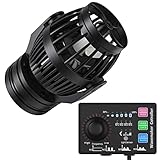
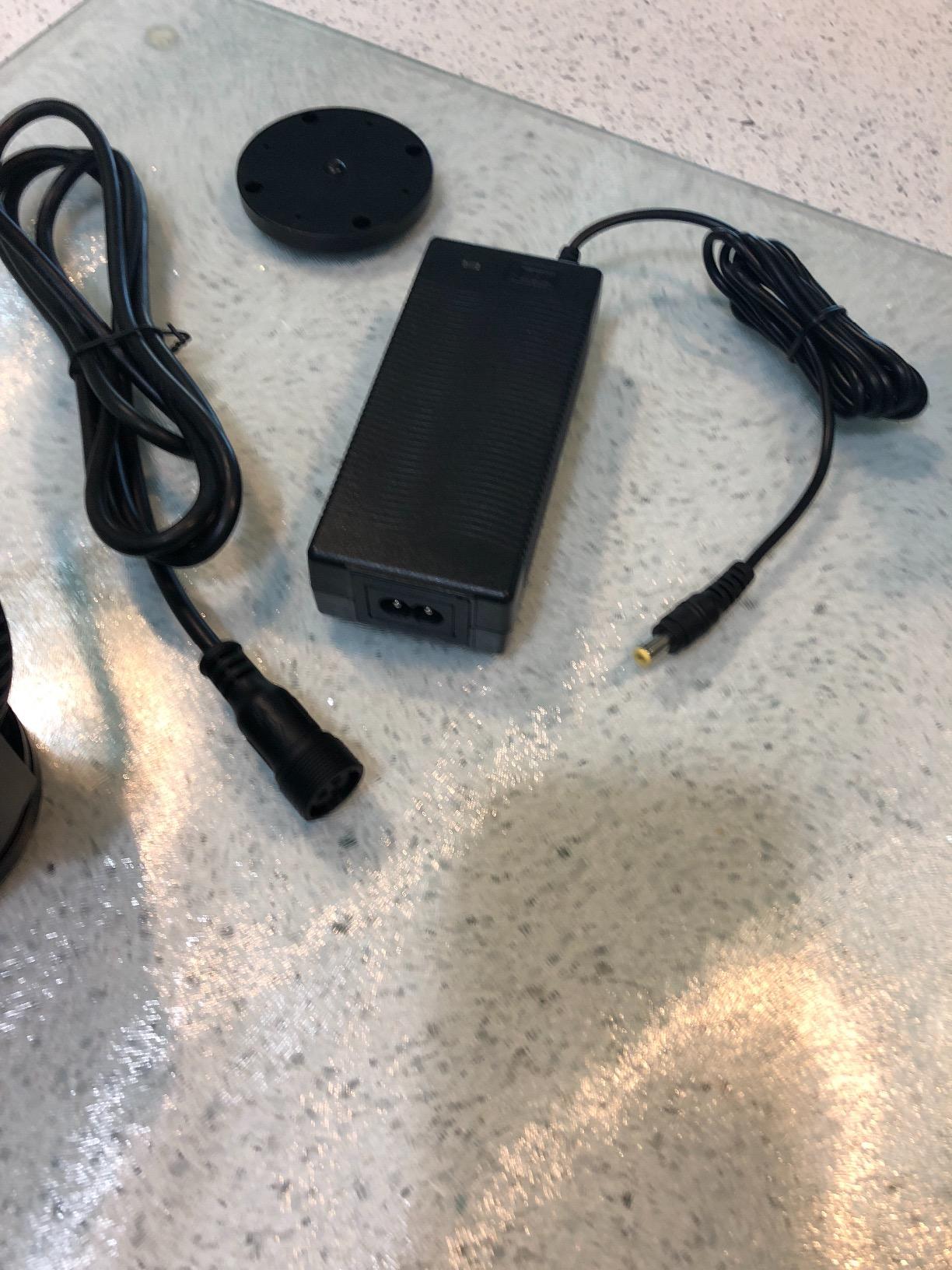
This pump has one job, and the manufacturer is upfront about it: it suits 120 to 300 gallon tanks and is not intended for anything under 120 gallons. At 3400 GPH maximum on 24V DC with a 40 watt draw and a 3 meter maximum lifting height, it is built for large open displays and high-flow aquascapes rather than a mixed reef cube.
The control side is simple and practical. Four selectable wave modes sit behind a mode button, and holding the speed or feed button for about three seconds triggers a 10 minute feeding pause, so the pump steps out of the way while you drop food in. The rotatable head and strong magnetic base let you reposition without tools and aim from multiple directions.
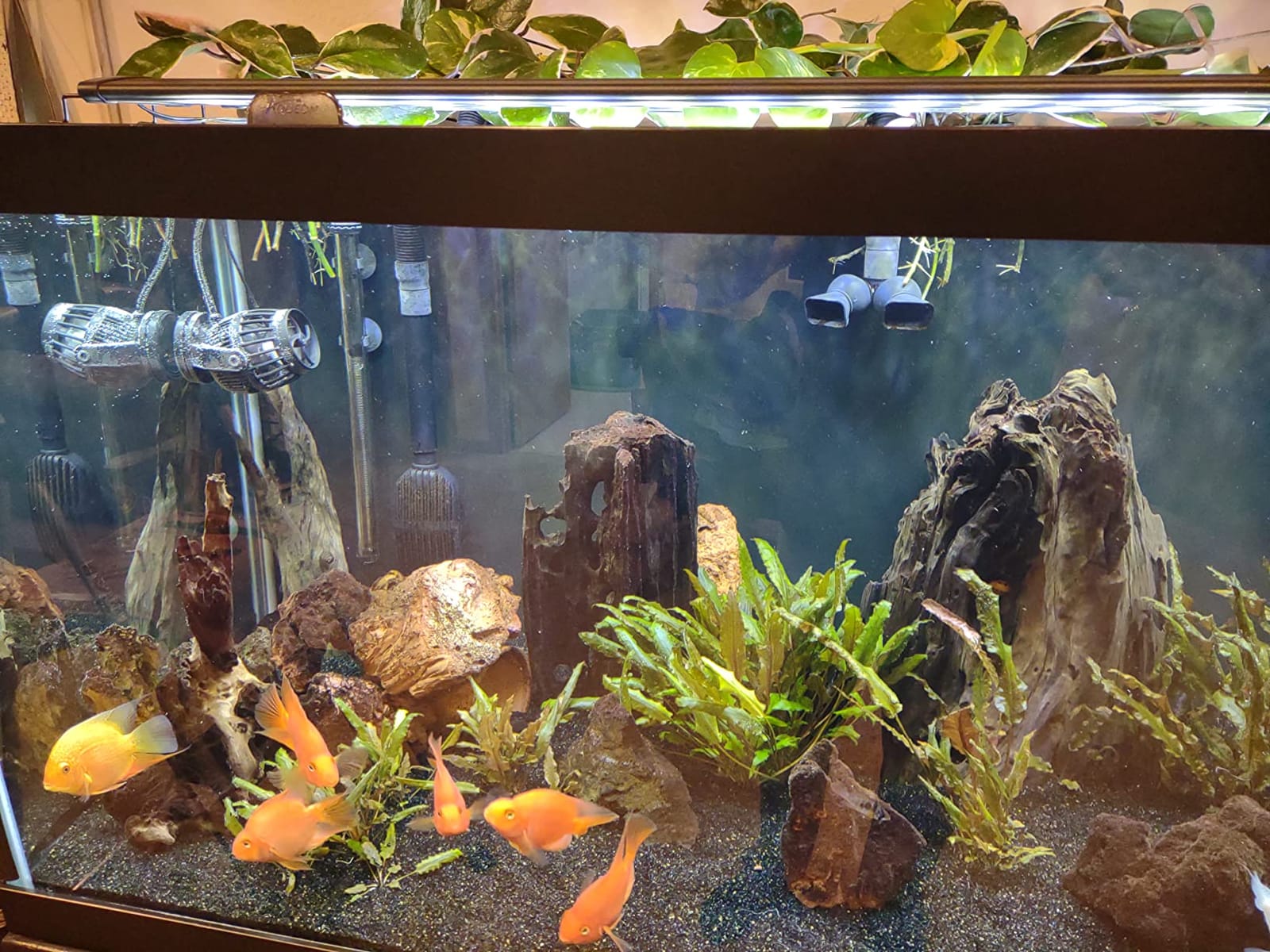
Owners of large tanks value the raw throughput. For systems with a high-flow riverbed aquascape, a 2000 GPH return pump paired with a mid-size wavemaker is often reported as still falling short, and this is the class of pump that closes the gap. It also aerates the surface and keeps sediment moving, which is visible in a big system.
The caveat is scale. If your tank is under 120 gallons, this pump will over-circulate it, and the manufacturer says so directly. At higher output there is also an audible ringing hum, so it is not a good match for a tank that sits in a bedroom or a quiet office.
Where the Uniclife earns its place
Buy it for 120 to 300 gallon displays, high-flow aquascapes, and systems where a single return pump cannot keep detritus moving on its own. The 10 minute feeding mode is genuinely useful in a tank this size.
When it is the wrong choice
Do not buy it for anything under 120 gallons, because the manufacturer restricts it there and the flow will be far more than the tank needs. Choose a quieter pump if the tank sits where a ringing hum will be heard.
10. Fluval Sea CP2 Wave Maker – Small Footprint for Tight Aquascapes
Fluval Sea CP2 Wave Maker Circulation Pump for Aquariums
270 deg nozzle
Suction cup mount
Under 25 gal
AC powered
Pros
- Compact body hides well in small reef tanks
- Strong suction cup holds firmly on clean glass
- Creates a useful rolling gyre-like circulation in the top of the tank
- Recognised brand with straightforward installation
- Stirs settled detritus and keeps substrate in motion
Cons
- AC motor can scream loudly on start-up
- Cord and direction joint limit aim to roughly 45 degrees
- Suction cup is difficult to remove from glass
- Real throughput is well under the quoted figure
- Mixed durability reports with some units failing within months
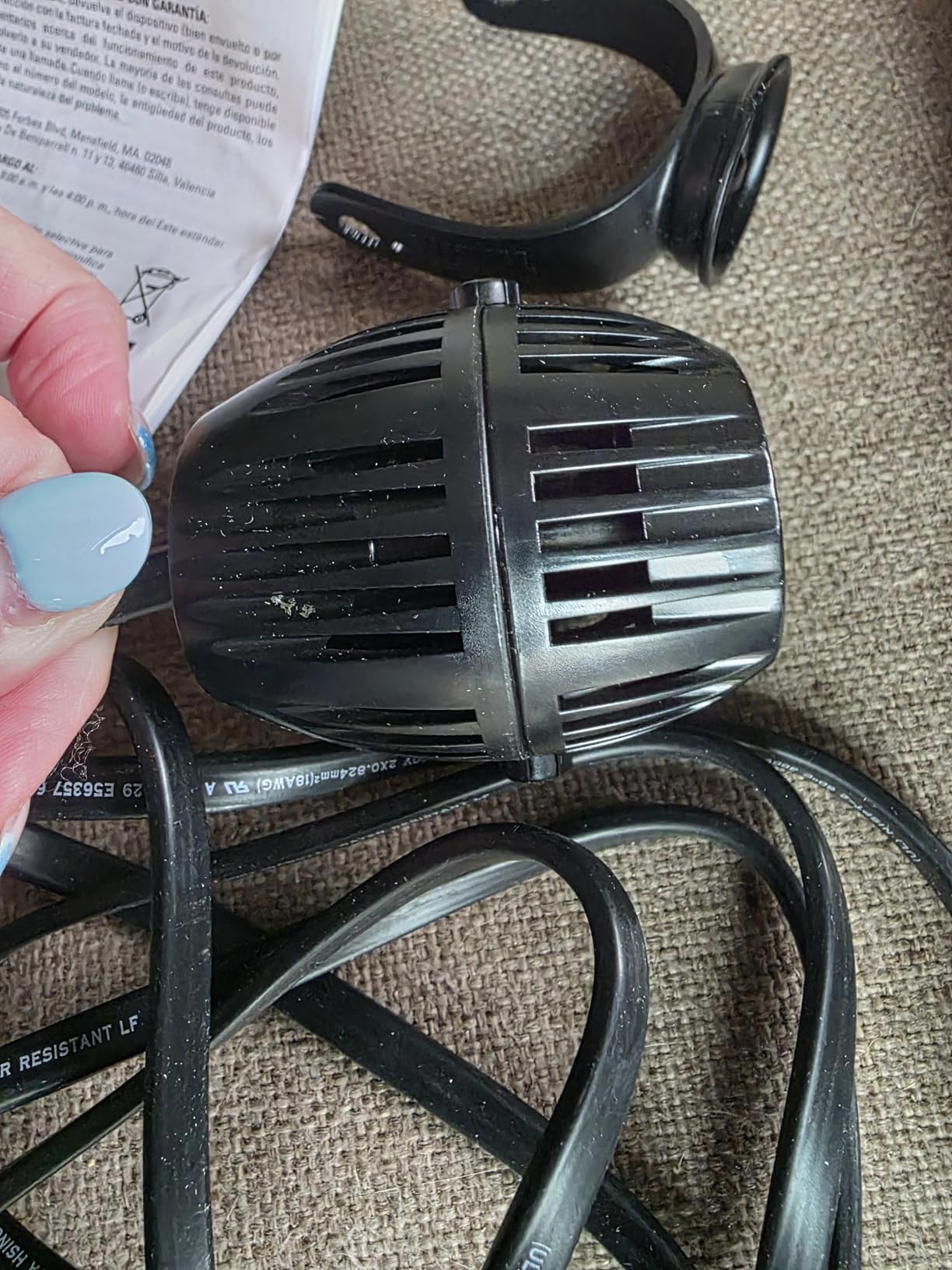
The CP series is a low-energy AC powerhead built for tanks up to 25 gallons, and what it does well is stay out of the way. The 3.6 by 5.6 by 3.8 inch body has a small footprint, and the 270 degree adjustable output nozzle gives enough range to break up dead spots in a small tank. The suction mount installs in seconds and repositions easily.
In the top of the tank it produces a rolling, gyre-like circulation that moves settled detritus and keeps the substrate in motion, which is what most nano and small display owners are actually looking for. It is rated for both freshwater and saltwater, and Fluval is a recognised brand with straightforward installation.
There is an AC tax to pay, and it is audible. Reviewers repeatedly flag that the motor can scream loudly on start-up until you unplug and replug it, which is a common enough ritual in AC powerheads that experienced reefers simply expect it. The suction cup is also difficult to remove from glass once it has set, so plan for that when you rescape.
Two more limits are worth stating plainly. The direction joint and cord together limit aim to roughly 45 degrees, which is restrictive in a long tank. And the real throughput is well under the quoted figure, so treat it as a small-tank pump only. Durability reports are mixed, with some units failing within months.
Where the CP2 fits
Buy it for tanks up to 25 gallons where a compact AC pump is enough and you want something that disappears into the aquascape. It works well alongside a return pump in a small display.
Where it will frustrate you
Skip it if start-up noise bothers you, if you need to aim the pump across a long tank, or if you want the flow figure to match reality. For anything with SPS in it, a controllable DC pump is a better direction.
How to Size a Wavemaker for Your Reef Tank in 2026
Published GPH numbers are measured at the nozzle with no plumbing attached, so they are a comparison tool rather than a promise. The number that matters is how much of your tank the flow actually reaches, and that depends far more on tank length and aquascape than on the pump.
Here is how I would approach it. First, measure the tank length rather than the volume, because flow dies as it crosses glass. A 240 GPH pump covers a 2 foot nano well and barely reaches across a 4 foot tank. Second, subtract your return pump turnover, since a 2000 GPH return already moves a lot of water in a reef cube. Third, target roughly 10 to 20 times your display volume in gallons per hour of combined turnover, then start at the low end.
Fourth, pick the pattern before the size. A wide cross flow or gyre covers a long tank far better than a narrow aimable jet of the same rating, and randomized movement is what corals actually benefit from. Finally, start low and observe. Almost every experienced reefer runs a new pump below maximum and only turns it up when they see a specific dead spot that needs it.
Coral type matters more than most people expect. SPS colonies such as acropora and montipora want the highest, most variable flow in the list, and they are the corals most often damaged by over-purchasing. LPS and most softies are happy with moderate, gentle, dispersed flow, and an anemone needs flow that is present but never blasting, since a strong jet aimed at a bubble tip can cause it to detach from its rock. If your tank is mixed, size for the least tolerant coral in it.
One more note on turnovers. For long, shallow, high-flow aquascapes, adding return pump and wavemaker turnover together still may not be enough, and experienced reefers on forum boards describe large systems needing the two combined to clear detritus properly. If detritus keeps settling regardless of what you add, the answer is usually a second pump and a different pattern, not a stronger single jet.
For scheduling and monitoring, our reef tank controller guide covers how to wire and set up multi-pump control.
AC vs DC Powered Wavemakers: Which One Should You Buy?
AC powerheads are plug-and-play. They are mechanically simple, they have one moving motor, and when they run for a decade they are hard to argue with. That is why Hydor units built around AC operation show the longest service histories in this guide, and why reefers describe them as the brand you stop worrying about. The trade-off is noise, especially on start-up, and the fact that there is nothing to program.
DC pumps run a brushless motor from a low-voltage supply, which is quieter at low and mid settings, far more efficient in watts, and controllable across a wide range through a controller or app. The trade-off is that a DC pump has three separate failure points: the controller, the power supply, and the motor. Any one of them going will stop the flow, and that is the source of the error light and early failure reports you see on budget DC models.
Our rule of thumb: buy AC if you want one less thing to fail and do not need wave programming. Buy DC if you want to run pulse, randomized, feed, and night modes, or if noise in the room where the tank sits is a real concern. Most serious reefers end up with a mix, using a reliable AC pump as a base and adding a controllable DC pump for the wave pattern.
One Wavemaker or Two? Opposing and Anti-Sync Schedules
One pump pointed across a long tank leaves a sheltered side. Two pumps running from opposite ends, offset so they never peak at the same time, give you a rotating current with no permanent dominant direction, and that is the answer to the most common question on reef forums. With one pump you can aim it well. With two you can change the entire current path several times a day without touching the equipment.
For a starter setup, run both pumps on random or pulse modes with one controller set to anti-sync, offset by half a cycle. If your controller does not have that function, set the same random mode on both and start them at different times. Keep the total below your calculated turnover target, because two pumps at 60 percent will move more water than one at 100 percent while giving you a better pattern.
Pairings that work well from this list: two hygger Mini 530 GPH pumps in 15 to 40 gallon tanks, the AQUANEAT 800 GPH two pack in 40 to 75 gallon systems, or a pair of Jebao SLW-10 pumps where the wireless master and slave control makes the pairing simple. For a large SPS system, a single Jebao SCP-90 in constant mode is often enough without a second pump.
Two safety notes before you add a second pump. Any pump with an anemone in the tank needs an intake guard, and a magnetic mount needs a glass thickness check, since most of these are rated up to about 1/2 inch. Run everything on a GFCI-protected outlet with a proper drip loop, and consider a UPS or battery backup for the controller so a power outage does not leave a large tank with no circulation.
Frequently Asked Questions
What is the best wave maker for a saltwater aquarium?
The Hydor Koralia Nano 240 GPH is the best all-round choice for small and mid-size reef tanks because it pairs the highest owner rating in this group with the longest service history. It is near-silent, holds on glass up to 1/2 inch, and covers 10-15 gallon saltwater systems. For tanks past 90 gallons, the Hydor Koralia Evolution 1500 GPH or the hygger 18W cross flow model give you more reach and, in the hygger case, programmable control.
What size wavemaker for reef tank?
Size by tank length first, then subtract your return pump turnover. A 240 GPH pump covers a 2 foot nano and barely crosses a 4 foot tank. As a starting point, aim for roughly 10 to 20 times your display volume in gallons per hour of combined turnover from the return pump and wavemaker, then set the wavemaker to the lower end and raise it only if you find a specific dead spot.
Which wave mode is best for a reef tank?
Random or pulse modes are best for most reefs, because they keep the current changing so coral gets moved in multiple directions. Constant mode works well for high-flow SPS systems that need sustained current. Feed mode is a short pause so the pump steps aside while you add food, and night mode lowers output for a dark room. Alternating two pumps on anti-sync gives you a rotating current with no dominant direction.
Do saltwater tanks need wavemakers?
Any reef aquarium with live coral needs dedicated flow beyond the return pump. Corals need oxygen exchange and suspended food, and stagnant water leads to detritus, cyanobacteria, and coral stress. A return pump alone usually leaves dead spots behind rockwork, especially in a long tank. Even a modest wavemaker on a gentle pulse makes a measurable difference in a 15 gallon nano.
Is a wavemaker better than a powerhead?
A powerhead fires a steady stream in one direction, while a wavemaker varies its speed on a schedule to ramp, pulse, reverse, and randomize. Corals fed a constant current grow unevenly, with tissue thinning on the exposed side. A wavemaker is the better choice for a reef. A powerhead is fine as a secondary unit in a small tank where you already have a wavemaker handling the main pattern.
The Best Wavemakers for Reef Aquariums in 2026
The best wavemakers for reef aquariums are the Hydor Koralia Nano for small tanks, the hygger 18W cross flow model for programmable DC control, and the Hydor Koralia Evolution for quiet, reliable flow in larger mixed reefs. Add the Jebao SCP-90 if you run high-flow SPS, the AQUANEAT two pack if you want the most circulation per pump, and the Uniclife only if your display is genuinely 120 gallons or larger.
Pick your pattern before your power, start at half output, and give it a few weeks before turning it up. Dead spots tell you exactly where a pump needs to go, and moving a magnetic mount takes seconds. That is the whole method, and it works far better than buying the biggest pump you can find.