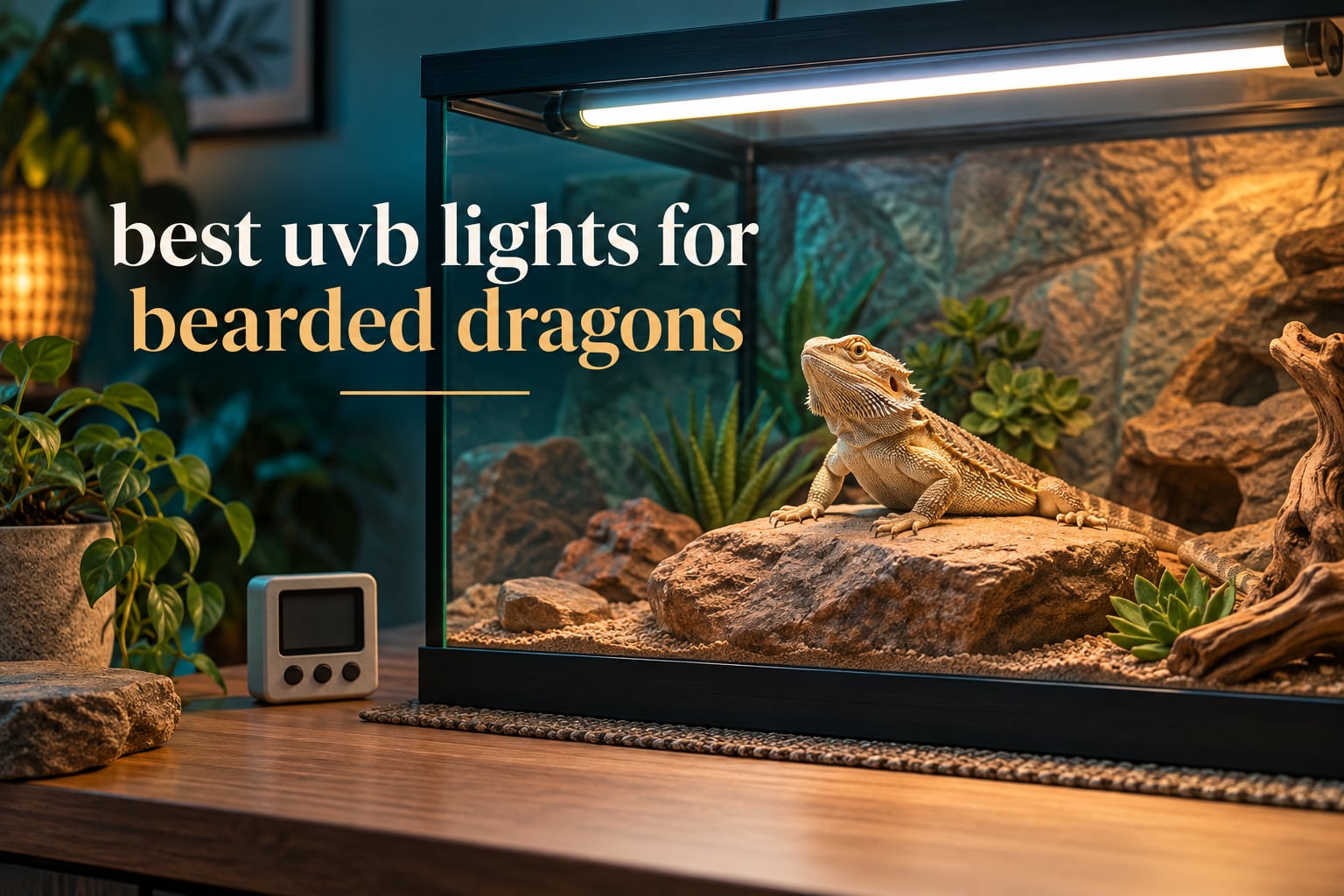
A linear T5 HO fluorescent tube is the format we trust most for a bearded dragon, and a Zoo Med ReptiSun 10.0 lamp in that form is the model we keep coming back to. Compact fluorescents still work well for juveniles in standard domes, and LED bars are finally closing the gap for very large enclosures.
We spent weeks reading owner reviews, checking output claims against what keepers actually measure, and mapping every lamp to the enclosure sizes it genuinely suits. This guide covers all 12 options we found, including the ones that cost almost nothing and the ones built like fixtures.
If you have read a bearded dragon care page and felt more confused than when you started, you are not alone. The short version is that UVB is the single most important environmental factor in a captive dragon’s enclosure, and almost everything else in the lighting world is a detail compared with it.
Table of Contents
Why UVB Light Is Non-Negotiable for Bearded Dragons
Bearded dragons cannot make vitamin D3 from their diet alone, and they cannot get usable UVB through glass or plastic. UVB at the correct wavelength converts 7-dehydrocholesterol in the skin into cholecalciferol, which is what allows the intestines to absorb calcium from food.
Without that step, a growing dragon pulls calcium from its own skeleton. The result is metabolic bone disease: bowed limbs, kinks in the tail, soft jaws, and eventually fractures that will not heal. It is the most common preventable illness in captive bearded dragons.
Three terms get mixed up constantly, so here is the clean version. UVB is the invisible radiation that drives D3 synthesis. UVA is visible light that helps with colour, behaviour, and appetite, and every good desert lamp emits plenty of it. UVI, the UV index, is a number measured by an instrument that estimates how much UVB actually reaches an animal at a given distance.
That last point explains the biggest source of keeper confusion. A bulb labelled 10.0 UVB is not delivering 10.0 anything at your basking spot. Output depends on wattage, distance, fixture quality, reflector design, and whether light is passing through mesh.
One more myth worth killing early: a UVB bulb fades long before you can see it happen. The lamp still looks bright and still lights the enclosure, but the ultraviolet output can be well down. That is why replacement is scheduled by date rather than by appearance.
Top 3 Best UVB Lights for Bearded Dragons in September

Zoo Med ReptiSun 10.0 Mini Compact
- 10% UVB and 30% UVA output
- UVB transmitting quartz glass
- Mounts vertically or horizontally

LUCKY HERP UVA UVB Reptile Light 10.0
- 10% UVB and 30% UVA output
- Color rendering index up to 90%
- Standard E26 base at 120V
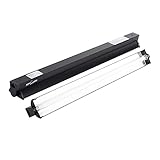
REPTI ZOO T5 HO UVB Lighting Combo Kit
- Low profile T5 HO fixture included
- Polished curved reflector
- 24W Desert 10.0 lamp included
The Best UVB Lights for Bearded Dragons in 2026 at a Glance
| Product | Specifications | Action |
|---|---|---|
| Zoo Med ReptiSun 10.0 Mini Compact 13W |
|
Check Latest Price |
| LUCKY HERP UVA UVB Reptile Light 10.0 23W |
|
Check Latest Price |
| REPTI ZOO T5 HO UVB Combo Kit with 24W Lamp |
|
Check Latest Price |
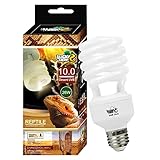 LUCKY HERP Desert UVA UVB 10.0 26W Compact LUCKY HERP Desert UVA UVB 10.0 26W Compact |
|
Check Latest Price |
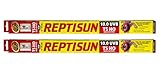 Zoo Med 24W T5 HO ReptiSun 10.0 UVB 2 Pack Zoo Med 24W T5 HO ReptiSun 10.0 UVB 2 Pack |
|
Check Latest Price |
 REPTI ZOO UVB Light with Dimming REPTI ZOO UVB Light with Dimming |
|
Check Latest Price |
 REPTITRIP 27 Inch LED UVB Light REPTITRIP 27 Inch LED UVB Light |
|
Check Latest Price |
 Hygger zoo T5 HO UVB Fixture and 24W Bulb Kit Hygger zoo T5 HO UVB Fixture and 24W Bulb Kit |
|
Check Latest Price |
 Jugbuy 23W Spiral Compact UVB 10.0 2 Pack Jugbuy 23W Spiral Compact UVB 10.0 2 Pack |
|
Check Latest Price |
 GeeKoit 5W 10.0 Desert UVB LED Bulb GeeKoit 5W 10.0 Desert UVB LED Bulb |
|
Check Latest Price |
 ReptiKing 10.0 24W UVA UVB Compact Bulb ReptiKing 10.0 24W UVA UVB Compact Bulb |
|
Check Latest Price |
 REPTI HOME T5 UVB 24W 10.0 2 Pack REPTI HOME T5 UVB 24W 10.0 2 Pack |
|
Check Latest Price |
A note on what this table cannot tell you: none of these numbers appear on a meter until they are mounted at a measured distance. Owners on r/BeardedDragons repeatedly point out that a bulb and fixture combination can look identical on paper and behave completely differently once a reflector is throwing light toward the substrate.
1. Zoo Med ReptiSun 10.0 Mini Compact Fluorescent Lamp 13 Watts – Best Overall for Most Setups
Zoo Med ReptiSun 10.0 Mini Compact Fluorescent Lamp 13 Watts
10% UVB and 30% UVA
13W compact fluorescent
UVB transmitting quartz glass
6 x 2 x 2 inches
Pros
- Well established for desert and basking species
- Quartz glass maximizes UVB penetration
- Mounts vertically or horizontally
- Dependable everyday UVB source
Cons
- UVB declines noticeably after about six months
- Covers less of a large enclosure than a T5 HO bar
- Occasional units arrive dead or fail to ignite
This is the lamp most first-time keepers end up with, and for good reason. At 4.5 stars across 3771 reviews it has the deepest owner history of anything in this roundup, which means the failure patterns are well documented rather than mysterious.
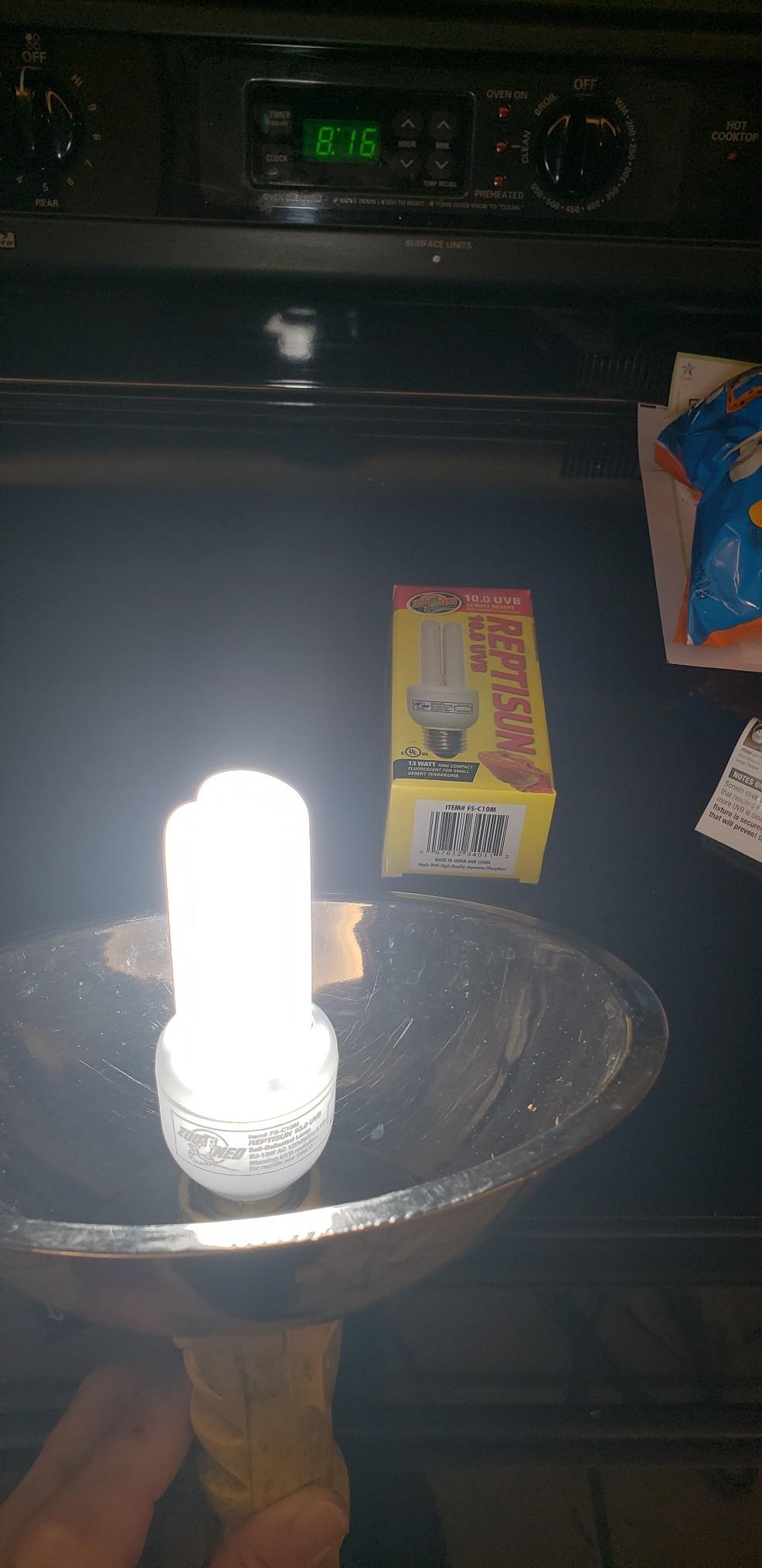
The spec that matters is the special UVB transmitting quartz glass. Standard glass and most plastics filter out the wavelengths a dragon needs, and this lamp is built specifically to let them through. It can be fitted vertically or horizontally, so it drops into a standard reptile dome or a wall bracket without modification.
Where it earns its place is in juveniles and small enclosures. A baby dragon in a 20 gallon tank does not need a four foot bar, and this lamp covers that footprint properly. The mounting flexibility means you can also use it as a supplementary source alongside a larger fixture.
Where it falls short is scale. The compact format concentrates output into a small footprint, so in a 4 foot adult enclosure you are relying on the dragon to move in and out of range rather than bathing in a wide gradient. Reviewers also flag the gradual fade at roughly the six month mark as the main recurring complaint, which is normal for fluorescents of this type.
What you need to check before buying it
Make sure you have a ceramic or coated metal dome rated for the wattage, because CFLs run warmer than LED sources and a plastic dome is a real risk. The lamp draws 13 watts, so the fitting matters more than it would for an LED.
Measure your dome’s clearance before ordering. At 6 by 2 by 2 inches, it is a small bulb, but not every fixture has the depth to seat it properly without pushing the reflector into the socket.
When to skip it entirely
Skip it for a 4x2x2 or larger adult enclosure. The coverage simply is not there, and you would be chasing a problem with a second lamp that costs more than a proper linear fixture did.
Also skip it if you already own a working T5 HO fixture. Running both is fine as a booster, but it is an expensive way to solve a problem a 24W tube solves properly.
2. LUCKY HERP UVA UVB Reptile Light 10.0 Desert UVB 150 Compact Fluorescent Lamp 23W – Best Value
LUCKY HERP UVA UVB Reptile Light 10.0, Desert UVB 150 Compact Fluorescent Lamp, UVB Light for Reptiles 23W, UVA UVB Reptile Light Bulb, UVB Bulb for Reptiles Bearded Dragons Lizards Tortoises Snakes
10% UVB and 30% UVA
23W compact fluorescent
6000K white light
CRI up to 90 percent
Pros
- Owners report better coloration and activity
- High color rendering index
- Standard E26 base needs no fixture upgrade
- Responsive customer service
Cons
- Some units burn out within weeks
- Occasional startup flicker
- 120V design not for higher voltage mains
This is the budget answer that regularly outperforms its price bracket in owner reports. Bearded dragon keepers describe visibly improved coloration and more active basking behaviour within days of installing it, and at 4.4 stars from 2925 reviews that is not a small sample.
The technical story is solid for a compact. You get 10% UVB and 30% UVA, 1265 lumens of white light at 6000 Kelvin, and a color rendering index up to 90 percent, which is high for a bulb in this class and explains the vividness owners mention.
It uses a standard E26 base, so it fits the lamp domes almost every keeper already owns. The manufacturer rates the light source at 12000 operating hours and claims up to a year of UVB lifespan, with a recommended replacement window of 6 to 12 months.
The honest drawback is consistency rather than performance. Reviews describe units that burned out in a few weeks alongside ones that run indefinitely, and a minority report flicker on startup. Batch variation seems to be the issue here, and it is the main reason this is not our top pick.
Why the value case holds up
Reliability variance is manageable when you are not paying much and your vendor is responsive. Owners report quick refunds and replacements when a unit fails, which turns a bad-luck draw into a minor inconvenience.
For a first bearded dragon in a 20 or 40 gallon enclosure, this lamp does everything the more expensive compact does, at a fraction of the outlay. The 23W draw also puts more UVB into the room than the smaller 13W unit.
Where it will disappoint you
It will not cover a 4 foot adult enclosure. A single spiral bulb at one end of a 48 inch tank leaves most of the animal in shade, and no reflector geometry fixes a point source.
It also will not work outside North American mains. The 120V design means you need a converter in regions running 220 to 240V, which adds cost and complexity for international keepers.
3. REPTI ZOO T5 HO UVB Lighting Combo Kit with Desert 10.0 UVB T5 Lamp 24W – Best Complete Kit
REPTI ZOO T5 HO UVB Lighting Combo Kit, Terrarium Hood Comes with Desert 10.0 UVB T5 Lamp (24W)
Low profile T5 HO fixture
Desert 10.0 UVB T5 lamp included
500 lumens brightness
24W suits 24 inch enclosures
Pros
- Fixture and lamp matched in one box
- Curved polished reflector improves spread
- Removable power cable with switch
- Sizes from 24 to 48 inches
Cons
- Reflector can limit reach toward substrate
- Noticeable share of one-star reviews report early lamp or ballast failure
- Sizes cannot be mixed independently
The appeal here is simplicity. You get a low profile T5 HO fixture, a matching Desert 10.0 lamp, a power cable with an inline switch, and plastic end protectors for safe handling. Nothing to source separately, nothing to mismatch.
The technical design is sound. The highly polished curved reflector is designed to increase efficiency and push stronger UVB down toward the substrate rather than losing it to the sides, and the electronic ballast is a rapid-start type that reaches full output quickly.
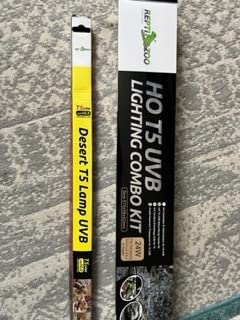
Sizing is straightforward. The 24W version here suits 24 inch enclosures, with 39W for 36 inch and 54W for 48 inch units, so the same product family covers a growing setup. The fixture runs on both 120V and 240V, which matters for international buyers.
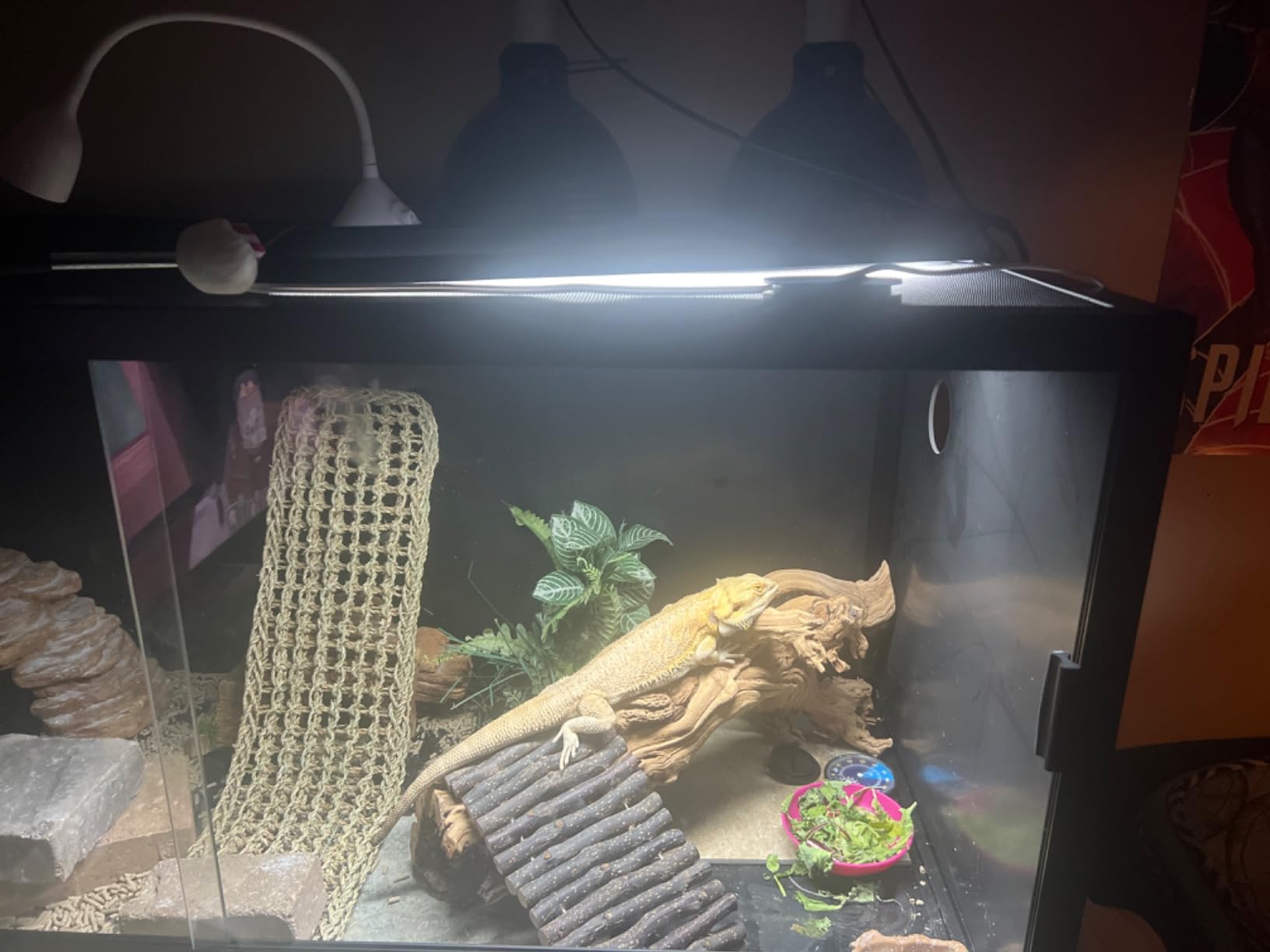
Durability is the weak point. Thirteen percent of reviews are one-star, and that cluster centres on lamps or ballasts dying earlier than expected. The reflector shape is also reported to narrow how far UVB reaches toward the basking surface in deeper enclosures.
Why the bundled format is worth it for beginners
Matching a T5 HO tube to the wrong ballast is one of the most common beginner mistakes, and it shows up as a dim or flickering lamp. A bundled kit removes the variable entirely, which is genuinely useful if this is your first fixture.
The removable power cable with an on and off switch is a small detail that ages well. Most setups end up on a timer anyway, but the switch means you can kill power without unplugging a wall unit.
Where you should buy the lamp separately
Buy the tube on its own if you already own a quality T5 HO fixture. Keeping a spare lamp in a drawer costs a fraction of replacing a whole kit when the original ballast eventually gives up.
It is also not water resistant, so take care with it in humid setups or anywhere splashing is likely near the fixture.
4. LUCKY HERP Desert UVA UVB Reptile Light Bulb 10.0 26W Compact Fluorescent Lamp – Best Budget Screw-In
LUCKY HERP Desert UVA UVB Reptile Light Bulb 10.0 26W Compact Fluorescent Lamp
26W compact fluorescent
E26 screw in format
10% UVB and 30% UVA
2.3 by 2.3 by 5.7 inches
Pros
- Drops into standard reptile lamp domes
- Marketed specifically for desert species
- Low outlay compared with bar systems
- UVA and UVB support natural basking
Cons
- CFL spiral covers a smaller area than a T5 HO bar
- Intensity is low for large adult enclosures
- Bulbs are fragile in transit
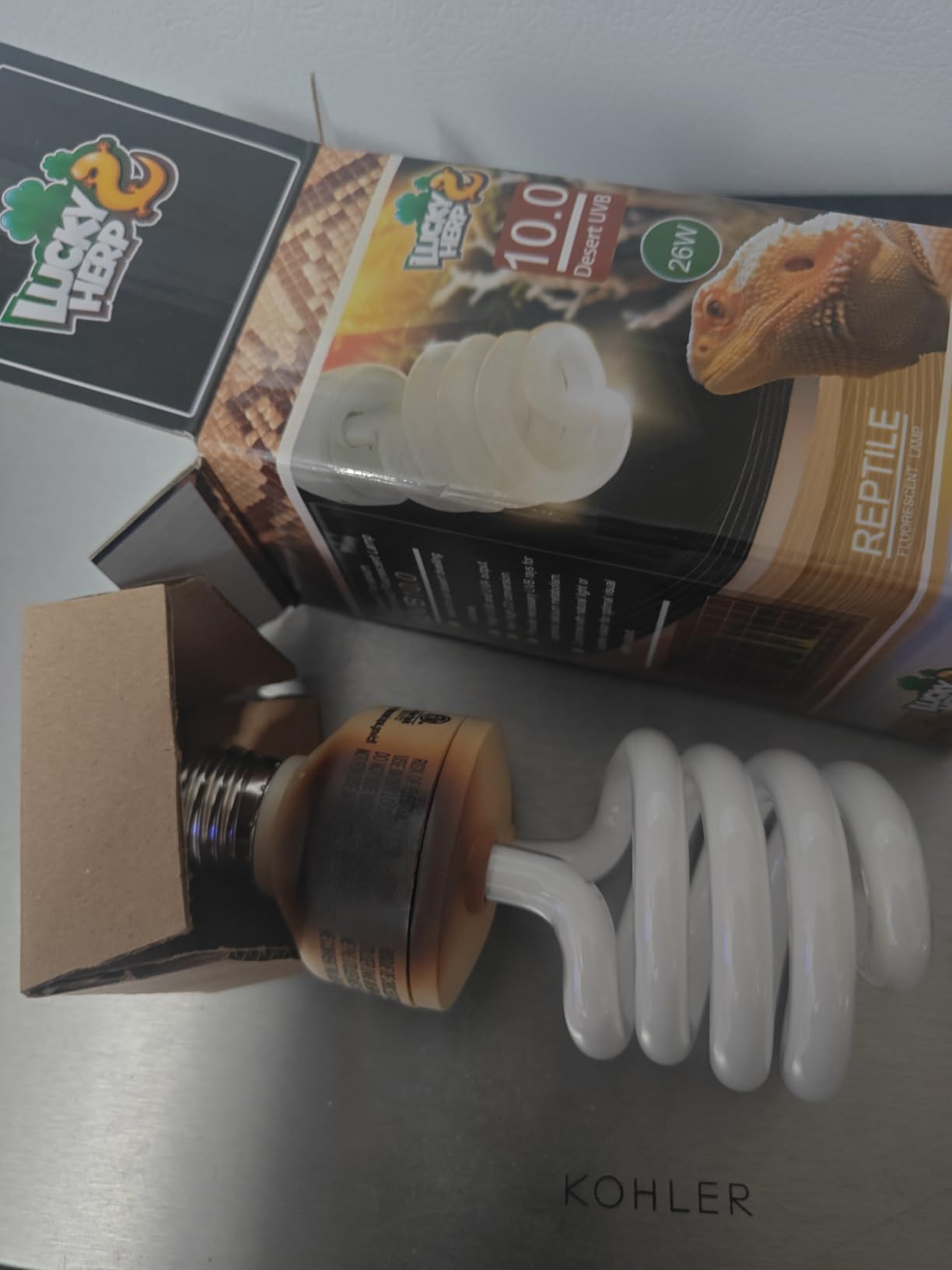
This is a 26 watt screw-in compact sold specifically for desert dwelling reptiles, and it covers the same niche as the smaller LUCKY HERP unit with more output behind it. Owners confirm it stimulates appetite, activity, and breeding behaviour.
The listed benefit that matters for bone health is the UVB output for calcium metabolism, which is the entire reason we are debating lamp formats at all. Paired with proper basking heat and a calcium-rich diet, that is the job this bulb is doing.
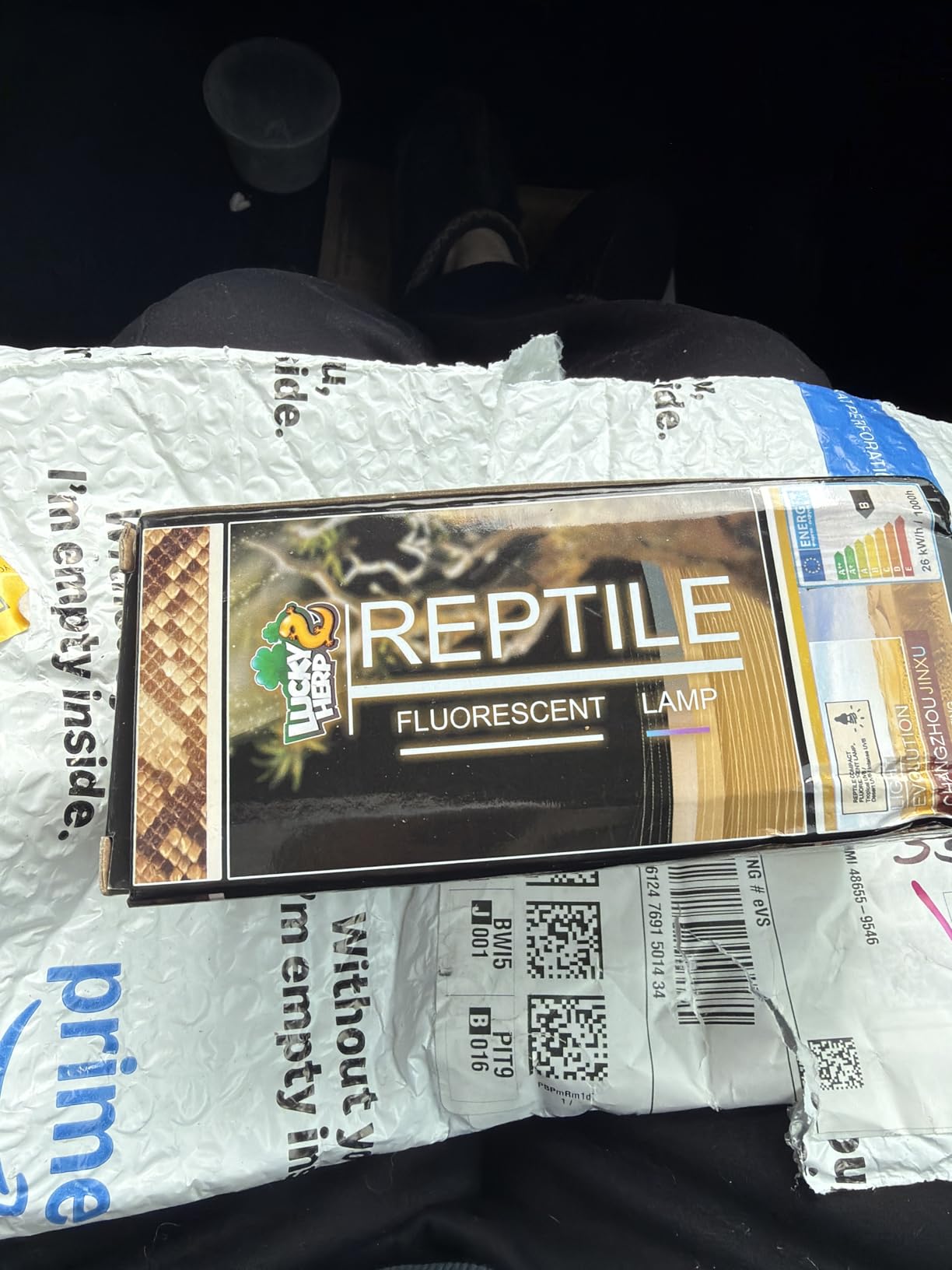
Wattage is worth pausing on. Forum discussion among experienced keepers describes a 26W tube with a proper reflector reaching output comparable to a T8 setup, which makes mid-range wattage a legitimate budget strategy rather than a compromise.
The limits are honest ones. A spiral footprint is narrower than a linear tube, so coverage falls away in a long enclosure, and several reviewers note UVB intensity is not sufficient for a large adult setup. Fragility in transit is another recurring theme.
Best used as a targeted supplement
Pair it with a wide linear fixture rather than replacing one. Mounting a 26W compact over the basking end of a larger enclosure concentrates useful UV exactly where the dragon spends most of its basking time.
Set it on a timer alongside your main lamp. Running both on the same photoperiod keeps the UV gradient consistent instead of creating a bright midday hotspot that encourages over-basking.
When it is the wrong choice
It is the wrong choice as a sole source in an adult enclosure. Twelve percent of reviews are one-star, largely around early failure and shipping damage, and those are losses you cannot afford when UV output is the whole point.
The replacement cycle is also 6 to 12 months as output fades, so budget for the ongoing cost rather than treating it as a one-time purchase.
5. Zoo Med 24 Watt T5 HO ReptiSun 10.0 UVB Lamp, 2 Pack – Best Linear Tube for Adult Enclosures
Zoo Med 24 Watt T5 HO ReptiSun 10.0 UVB Lamp, 2pk
Two pack of 24W T5 HO lamps
4.6 average rating
2800K warm white
9.28 ounces
Pros
- One of the highest rated options at 4.6
- Long service life reported by long term owners
- Measured with a UVI meter by keepers
- Two pack gives you a spare
Cons
- Lamps are fragile and can arrive cracked
- Occasional unit in a pack fails early
- Length can vary between production runs
This is the lamp to buy for a grown adult in a 4x2x2 enclosure, and it sits among the highest average ratings in our group at 4.6 with 82 percent five-star feedback. That rating has been built over years of bearded dragon keepers rather than a few months of trend.
The design intent is straightforward. It is a high-output T5 HO lamp for larger habitats, crafted to produce stronger and brighter UVB than a standard fluorescent, and specified to help prevent or reverse metabolic bone disease.
One detail worth knowing: the spectrum was updated to shift energy toward UVA2, which produces a more natural UV balance. It is a subtle change to most owners but a real one for a desert species that spends its life under high sun.
Long term owners report bulbs lasting well past the advised six month replacement interval, and keepers using a UVI meter confirm the output reaches the levels a bearded dragon needs. The two-pack format also lowers cost per bulb and gives you a spare to hold.
Why the two-pack format is smarter than it looks
You will replace this lamp on a schedule whether you want to or not. Holding the second tube in a drawer means the swap happens on a Sunday afternoon instead of becoming a rushed emergency with a reptile waiting.
Keep both tubes in the same storage conditions and rotate them in pairs. UV lamps do not fail loudly, so rotating on a calendar is more reliable than reacting to a change you can barely see.
How to handle the shipping risk
Inspect both tubes immediately on arrival and before mounting. Fluorescent tubes are fragile, and reviews specifically mention lamps arriving cracked or broken in transit.
Do not power a cracked tube under any circumstances. If one in the pack arrives damaged, contact the seller before mounting and keep the good one in service.
6. REPTI ZOO UVB Reptile Light with Dimming – Best for Sunrise and Sunset Cycles
REPTI ZOO UVB Reptile Light with Dimming, LED UVB Light Bulb Fixture for Bearded Dragon Gecko Lizard Turtle Snake, Adjustable Brightness UVA UVB Lamp for Tropical & Desert Reptile
Up to 303 uW per sq cm at 4 inches
Desert 10.0 and tropical 5.0 modes
6W LED
1.97 by 3.94 by 3.94 inches
Pros
- LED avoids recurring bulb replacement
- Switchable desert and tropical modes
- Dimming builds gradual sunrise and sunset
- Low 6W running cost
Cons
- Point source design limits coverage in long enclosures
- Output quoted at 4 inches so distance matters
- Some units dimmer than advertised
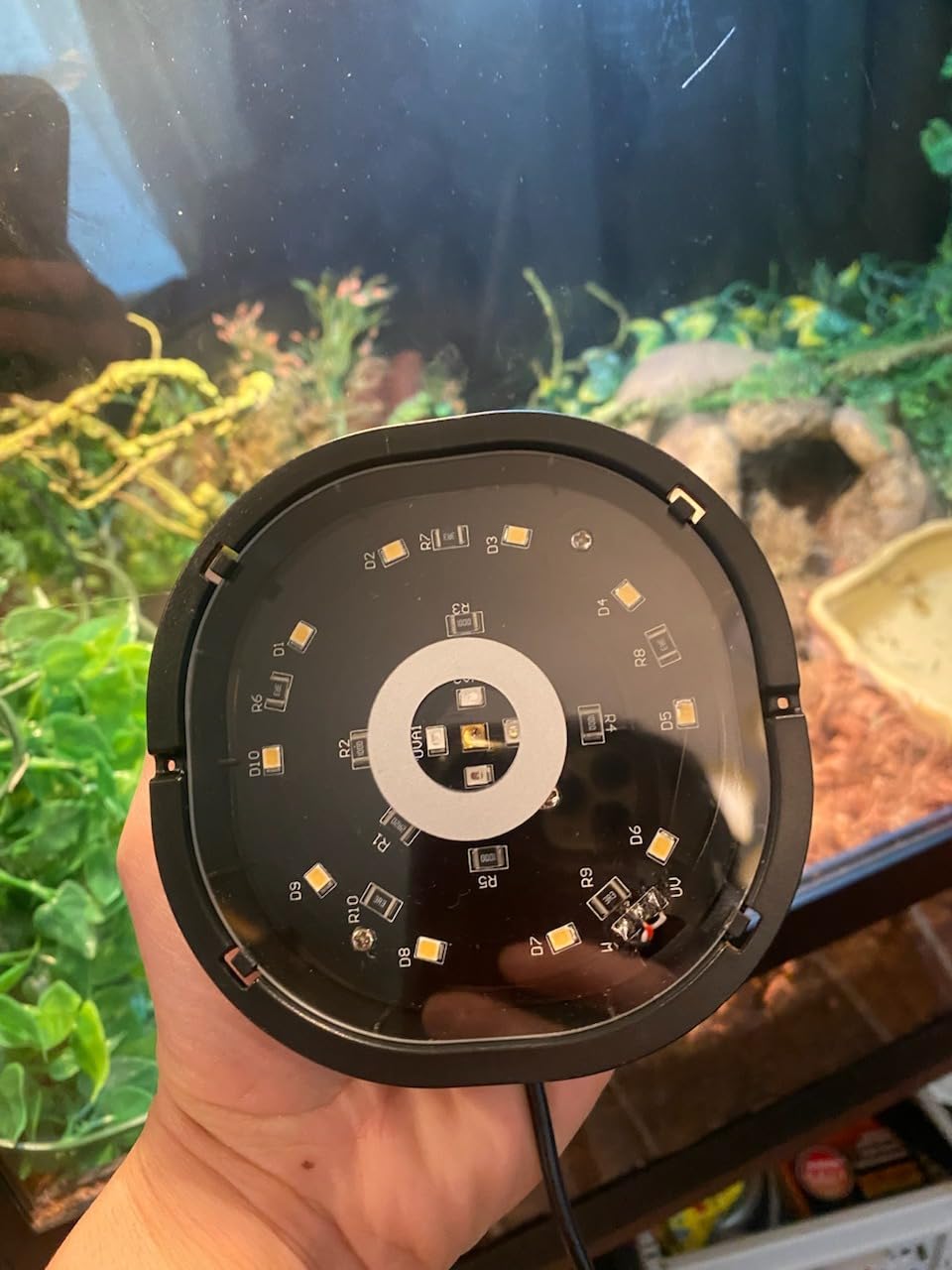
This is where LED design genuinely changes the ownership experience. There is no consumable bulb, so there is no replacement schedule, no fade to monitor, and no risk of arriving to a dark enclosure one Saturday morning.
The dimming is the feature that separates it from a plain LED bulb. Adjustable brightness lets you build gradual sunrise and sunset transitions rather than snapping from darkness to full midday, which is closer to how a dragon experiences daylight outdoors.
Two switchable modes, Tropical UVB 5.0 and Desert UVB 10.0, mean one fixture covers several species if your household changes. The hanging hooks allow mounting above or below a mesh cover, so you can bring the source closer when an adult enclosure is tall.
The stated output is up to 303 microwatts per square centimetre at 4 inches, and that number is doing a lot of work in the spec. It is a very short measuring distance, and owners rightly flag that mounting height changes the result dramatically.
What the dimming actually solves
It addresses a real behavioural problem. Bearded dragons in captivity can become lethargic and inactive under abrupt light changes, and a slow ramp gives them a dawn to bask through rather than a light that appears fully formed.
It also makes a backup light easier to add. A dimmed LED can sit alongside a main fluorescent without flattening the gradient, which is harder to do with two bright tubes at the same level.
When to choose a tube instead
Choose a T5 HO tube if your enclosure is 4 feet or longer. This is a compact point source, and no amount of brightness compensates for the fact that the far end of a long tank receives almost nothing.
Some owners also report output dimmer than the advertised figures on early units, and a minority report electronic failure. Treat LED UVB as still maturing in this category.
7. REPTITRIP 27-Inch LED UVB Reptile Light with Auto On/Off and Preset Day-Night Dimming – Best for Ferguson Zone Control
REPTITRIP 27-Inch LED UVB Reptile Light with Auto On/Off & Preset Day-Night Cycle Dimming, 4 UVI Modes Fixture Controller, 22W Aluminum UVA UVB Lamp for Bearded Dragons, Turtles & Snakes, 6500K
22W LED UVB bar
Four UVI modes plus manual
6500K cool white
27 inch bar
Pros
- Strongest five-star share in the set at 4.6 with 83 percent five star
- UVI modes let you tune exposure by species
- Built in timer removes the need for an external one
- No consumable bulbs over the life of the unit
Cons
- Higher upfront cost than compact or T5 options
- Produces no heat so a basking lamp is still needed
- Some sensitive species avoided the light
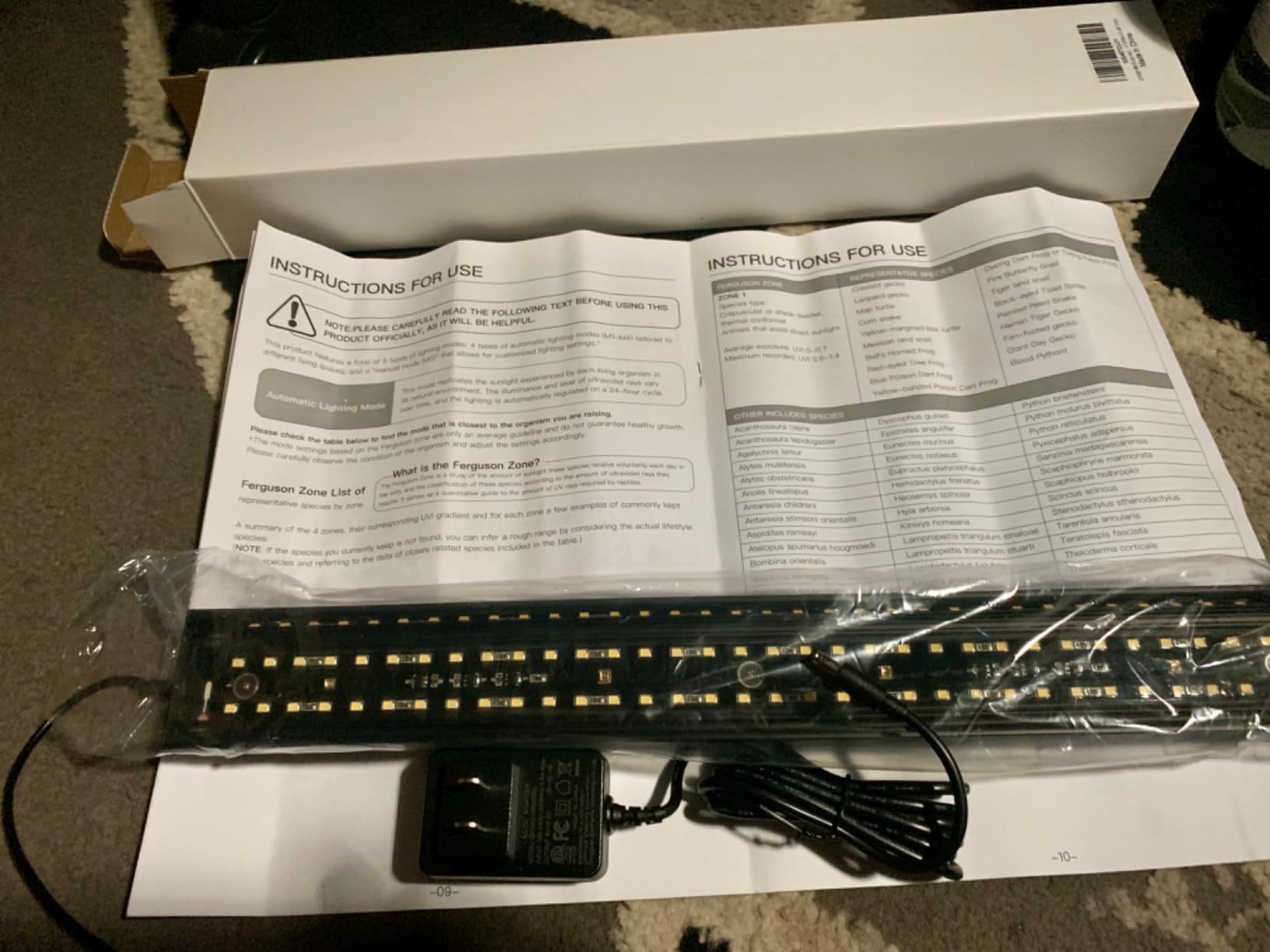
This is the most interesting specification in the roundup. Four UVI modes labelled M1 through M4, covering Ferguson zones 1 to 4, plus a manual mode, let you tune the light to a species instead of guessing at a bulb percentage.
For a bearded dragon specifically, the useful part is that you are not locked into a single output. A juvenile can sit at a lower setting while an adult gets more, and you can adjust as the animal grows without buying new hardware.
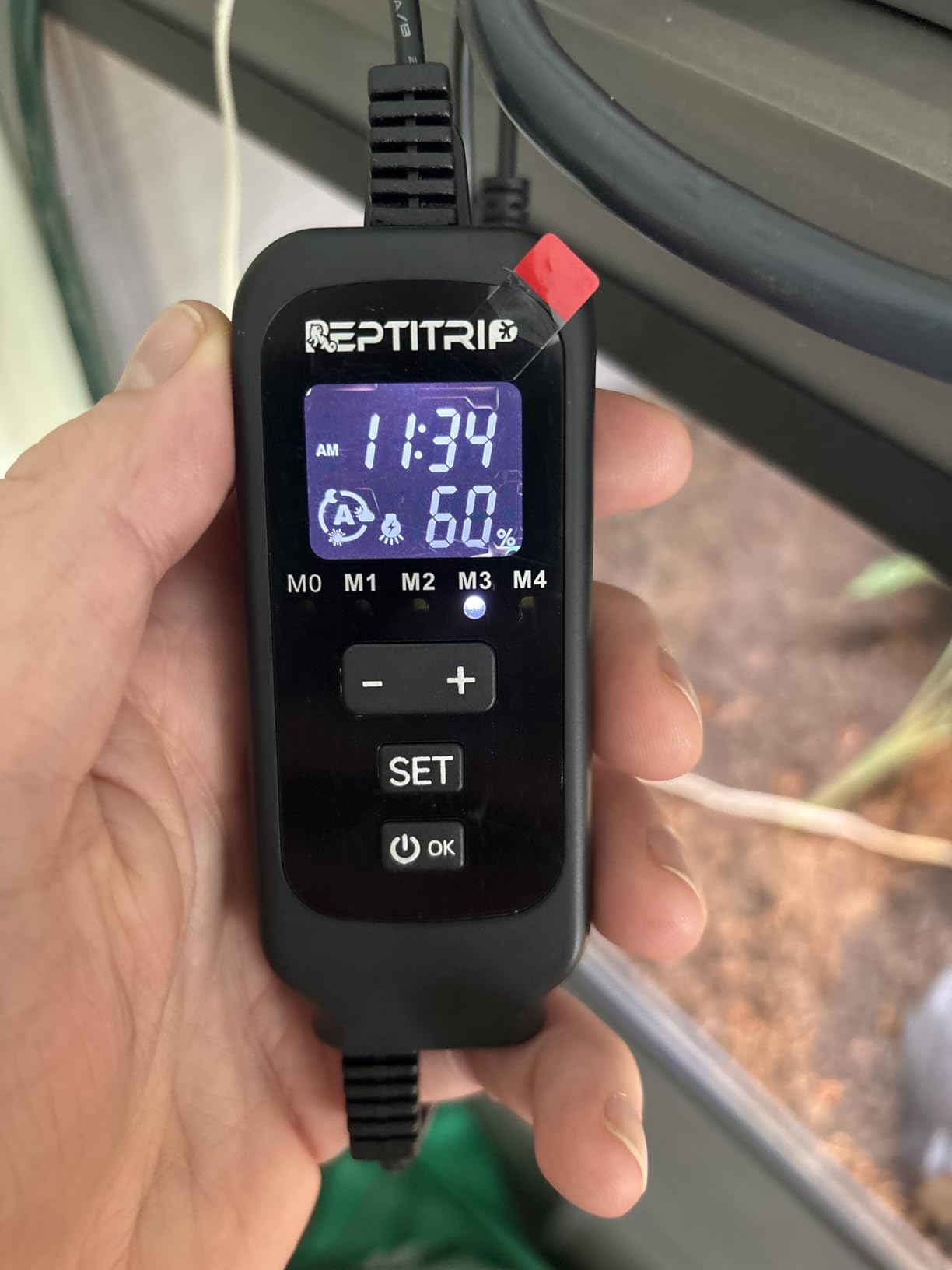
The built-in automatic on and off timer with preset day-night cycle dimming is a genuine convenience. A dedicated external timer is the correct approach, but owners with this bar report one less cable and one less failure point.
Build quality is good, with an aluminum alloy housing for heat dissipation and a rated service life of more than 7000 hours. At 27 inches it covers a standard 4 foot setup well, and mounting options include mesh top, inside the enclosure, or suspended from a board.
Why Ferguson zone modes matter in practice
Zone presets replace guesswork with a setting. Instead of mounting a tube and hoping, you pick a level and measure, which is the single biggest improvement most keepers can make to a working setup.
It is also useful when the same enclosure houses more than one species. A mode that suits a day gecko may not suit a tortoise, and being able to switch beats swapping fixtures.
What to plan around
It emits no physical heat, so a basking lamp or heat emitter is still mandatory. A UVB bar is a light source, not a heat source, and the two jobs are not interchangeable.
A small number of owners report sensitive species, including certain boas and chameleons, being unsettled by the light, and occasional deliveries have arrived with hardware missing. Check the box before you start.
8. Hygger zoo T5 HO UVB Fixture and 24W 10.0 Desert Lamp Combo Kit, 22 Inch – Best for Flexible Mounting
T5 UVB Reptile Light Fixture HO UVB Bulb Lighting Combo Kit, 10.0 UVB Light for Reptiles Terrarium Hood with 24W Reptile Light Bar UVA UVB Desert Lamp for Bearded Dragon Turtle Tank, 22Inch
22 inch T5 HO fixture with 24W lamp
Polished curved reflector
Aluminum housing
Mounts on mesh or inside the tank
Pros
- Complete kit priced below equivalent T5 combinations
- Aluminum reflector runs cool and extends lamp life
- Multiple mounting positions let you bring the source closer
- Owners report more active bearded dragons after installing
Cons
- A significant number of one-star reviews report early lamp failure
- Blue protective film must be removed before use
- Fixture can slide on the terrarium and not stay put
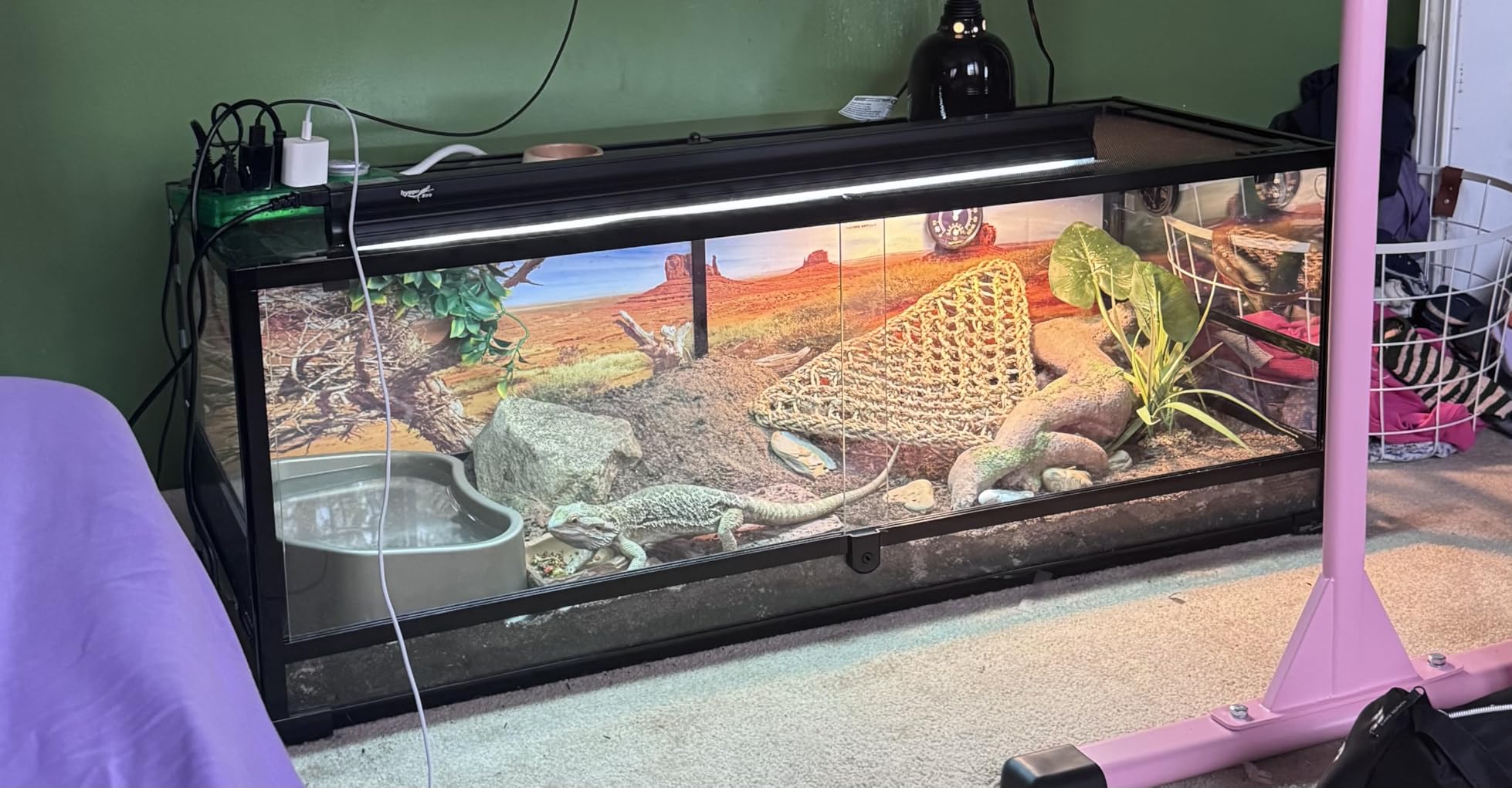
This kit is built around a mounting decision rather than a brightness claim. It mounts on a mesh cover, inside the tank, or on a wooden vivarium, which is exactly the range of options you need when measuring your own basking distance.
The hardware itself is competent. A highly polished curved reflector increases UVB strength and brightness, the aluminum housing handles heat dissipation well enough to extend lamp life, and the UVA to UVB ratio is specified as similar to natural sunlight for desert species.
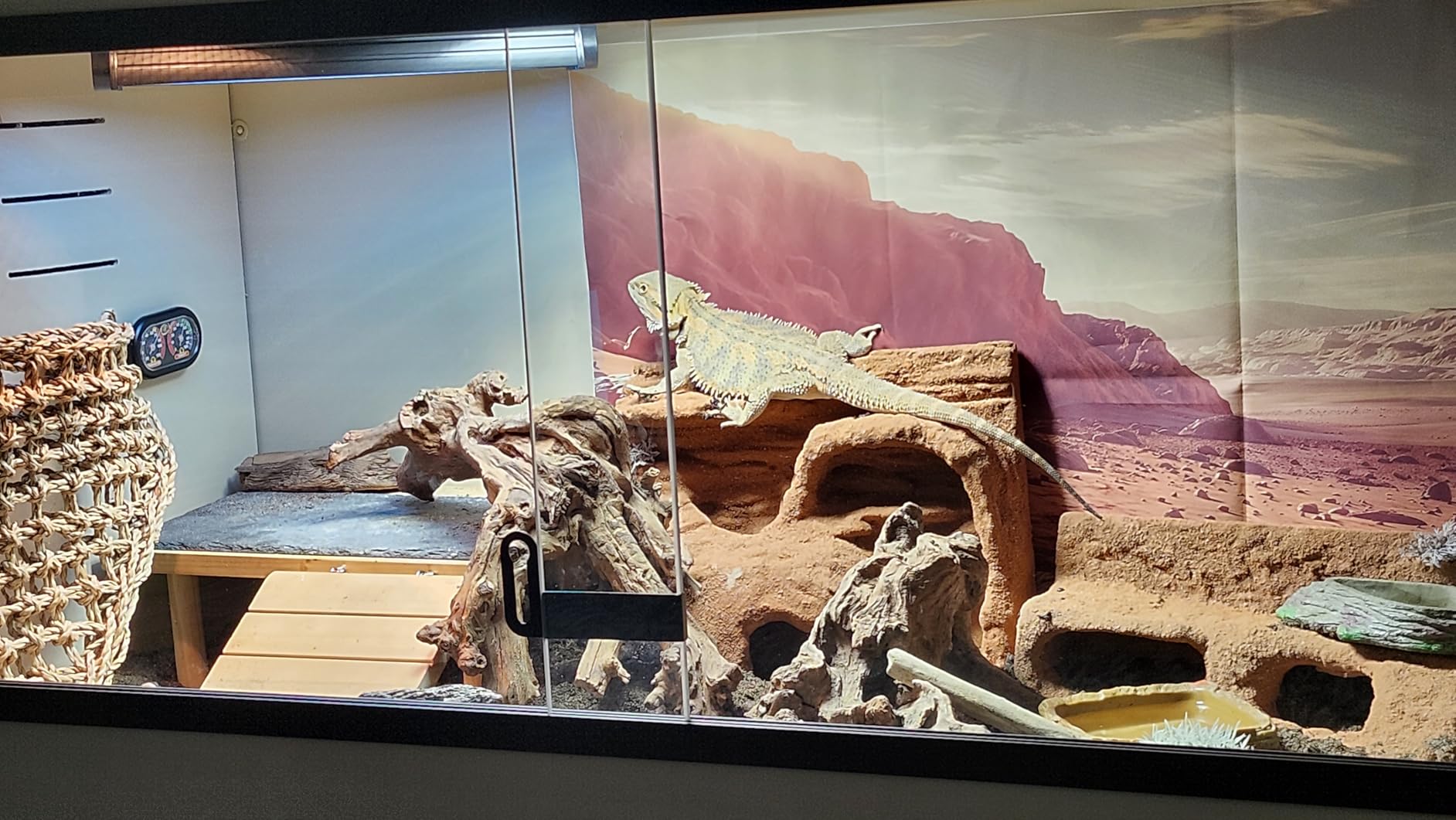
Owners also report the practical effect they care about: bearded dragons becoming noticeably more active once it is installed. That is behavioural confirmation that the light is landing where it should, which no packaging claim can give you.
The reviews split, though. A meaningful share of one-star feedback reports lamps failing within weeks or months, and the fixture is reported to slide around on the terrarium rather than staying put. Neither is fatal, but both are real.
The blue film mistake that is easy to make
The lamp ships with a blue protective film that must be peeled off before use. Leave it in place and the lamp looks broken to you and can shatter when you handle it. Several one-star reviews trace back to this exact oversight.
The fix takes five seconds. Pull the film, discard it, and never look back. Worth knowing before you reach for the tool that came in the box.
How to make the mount hold
Because the fixture can move, secure it rather than trusting friction. A few strips of mounting tape or a proper bracket keeps the distance stable, and a stable distance is the whole game with UVB.
It is also not water resistant and reviewers would prefer better corrosion resistance, so keep it away from humid setups and any direct splashing.
9. UVB Reptile Light Bulb 10.0, 23W UV Spiral Compact Fluorescent, 2 Pack – Best Compact Two-Pack
Jugbuy UVB Reptile Light Bulb 10.0, 23W UV Spiral Compact Florescent Terrarium Lamp Ideal for Desert Reptiles Bearded Dragons Lizard Tortoise Iguanas Chameleons Snake – 2 Pack
Two pack of 23W spiral CFL bulbs
10% UVB and 30% UVA
E26 base at 110 to 130V
Quartz glass low fade rate
Pros
- Two pack gives a spare at a lower cost per bulb
- Interchangeable with standard reptile domes
- At least one owner verified output with a solar meter
- Quartz glass slows UVB decay
Cons
- Lifespan inconsistent with some bulbs failing within two months
- Coverage is smaller than a linear T5 bar
- Long term output depends on replacement timing
The single most reassuring thing in the reviews for this bulb is that an owner confirmed with a solar meter that the output reads as 10.0 UVB. In a category where marketing numbers are rarely checked, an actual instrument reading carries weight.
Technically it is a well-specified 23 watt spiral compact. You get 10% UVB and 30% UVA, no UVC, an E26 screw base running on 110 to 130V, and UVB transmitting quartz glass rated for up to 10000 hours of life with a low fade rate.
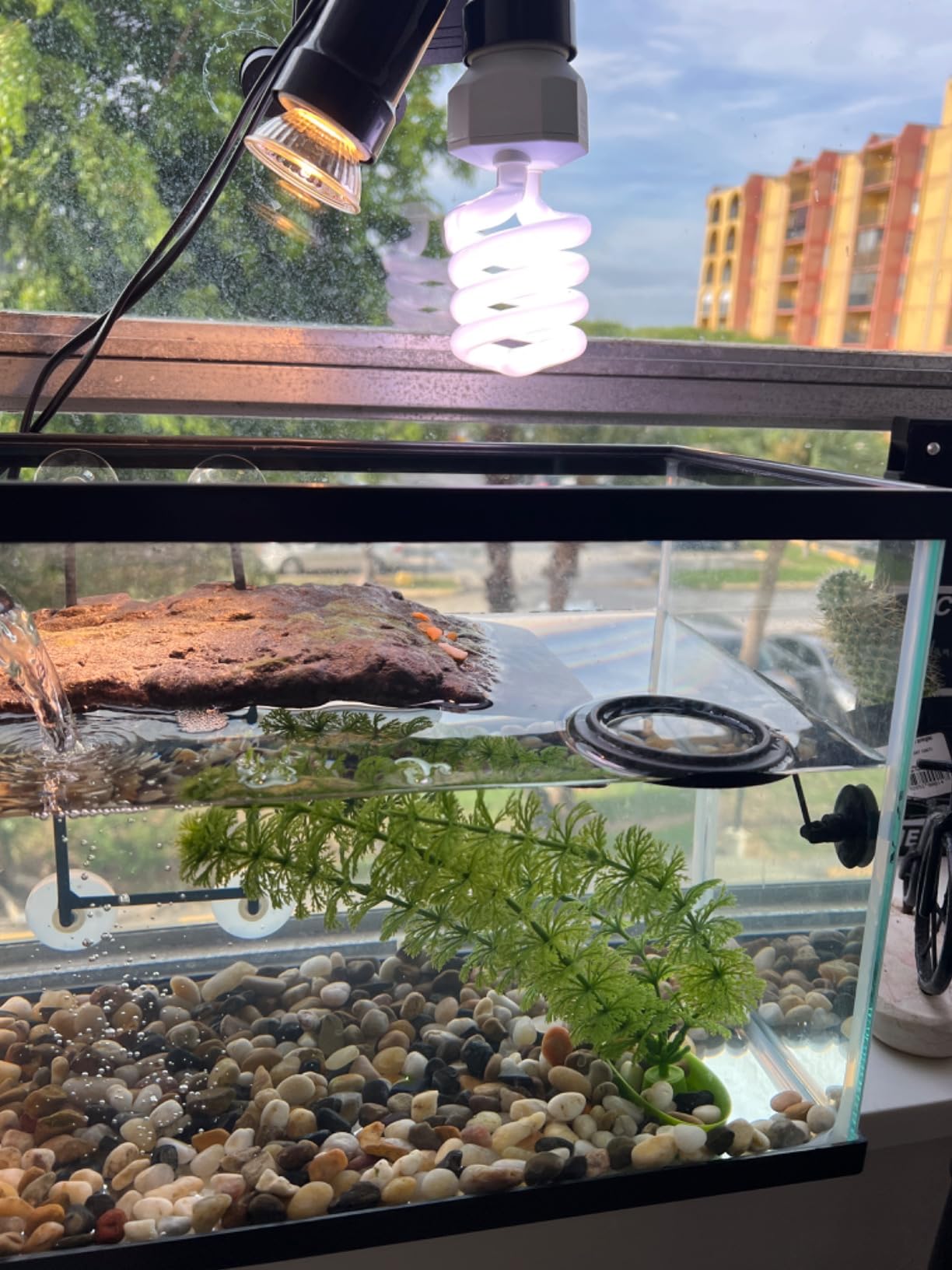
The two-pack format is the practical argument. You always have a working spare for a format that is known to fail unpredictably, and cost per bulb drops compared with buying singles. The package also includes a month of quality assurance service.
Lifespan is the wildcard. Reviews describe service lives ranging from two months to more than three years for individual bulbs, which is an enormous spread. Quartz glass slows the fade, but it does not eliminate early failures.
Why two bulbs change the maths
With a single point source, one early failure means zero UVB until you replace it. With a pair, you keep one installed while the other waits, and the decision to swap becomes a schedule rather than an emergency.
That is especially valuable in a starter kit situation, where the first bulb is often the one you are still learning to judge. A month of service coverage helps here too.
Where the spiral shape limits you
The footprint is smaller than a linear T5 bar, so a single bulb will not cover a wide enclosure. Treat it as a dome lamp for a 24 inch setup, not as a whole-tank solution.
Track replacement timing deliberately. Without a schedule, the temptation is to run a fading bulb indefinitely, and a spiral is the format most likely to look fine while delivering less than you think.
10. Premium High-Intensity UVB Reptile Light 10.0 Desert, 5-Watt LED – Best Low-Wattage LED
GeeKoit Premium High-Intensity UVB Reptile Light for Optimal Calcium Metabolism,5-Watt 10.0 Desert UVB Light Ideal for Desert-Dwelling Reptiles Bearded Dragons Tortoises
5 watt LED with 10.0 desert spectrum
E26 screw base
2 inch bulb diameter
110V
Pros
- Very low 5W running cost
- LED design avoids fragile spiral tubes
- Slower UV decay than compact fluorescents
- Drops into common lamp holders
Cons
- Small reflector limits coverage in large enclosures
- No heat output so it cannot serve as a basking source
- Manufacturer warranty listed as not applicable
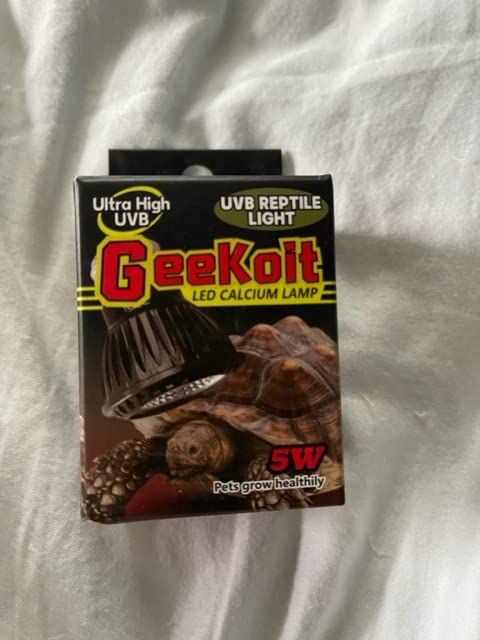
This is the smallest and most unusual entry in the roundup. It is a 5 watt LED UVB bulb producing a 10.0 desert spectrum, which is a fraction of the power draw of the fluorescent options and it fits a standard E26 socket.
At 2 inch diameter and 2.08 ounces it is roughly the same size as a household bulb. That means you can screw it into the dome you already own, which is a genuine advantage over every fixture-based option here.
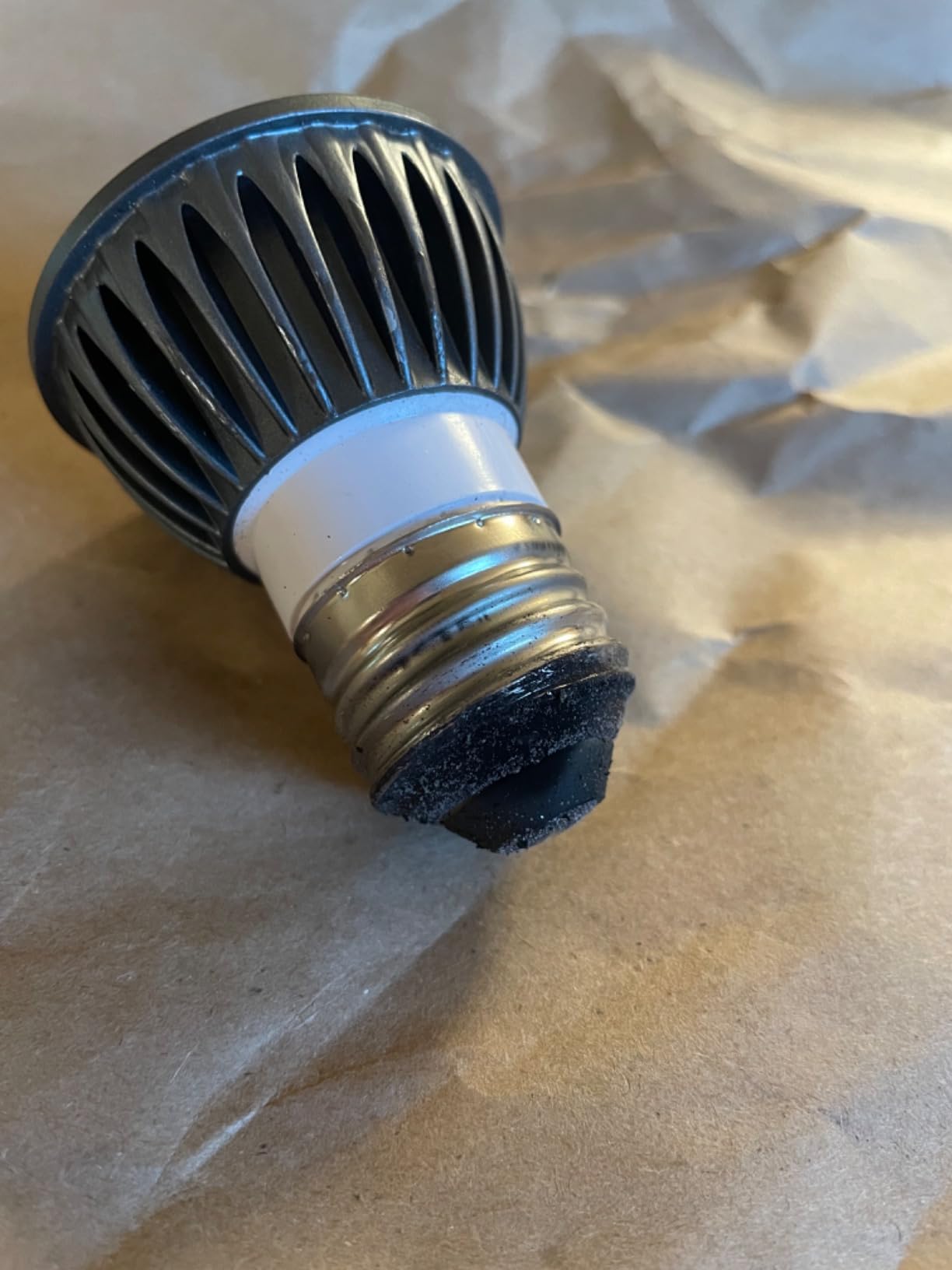
The technology is the argument for it. LED output decays more slowly than a CFL, and there is no spiral glass to crack in transit or fail from thermal cycling. Reviewers give it 4.4 stars from 346 reviews with 71 percent five-star feedback and only 5 percent one-star.
The manufacturer specifies it for bearded dragons and tortoises and explicitly not for leopard geckos, and recommends pairing it with a separate reptile heat lamp. That last instruction is not optional guidance, it is a requirement.
What the low wattage really buys you
A 5W draw is a rounding error on an electricity bill compared with a 24W T5 or a 26W compact. If you are running UV continuously, that difference compounds across a year of daily use.
The slower UV decay rate also reduces replacement frequency, which is the recurring cost that owners tend to underestimate when budgeting for a setup over several years.
The coverage limit you cannot engineer around
The small reflector concentrates the light into a tight pool. In a 20 or 30 inch enclosure that is an advantage, giving a defined basking zone. In a 4 foot adult tank it leaves most of the animal in shade.
Owners rarely cite independent UVI verification for this bulb, and the manufacturer warranty is listed as not applicable. If measurement matters to you, this is not the one to build a setup around.
11. UVB Reptile Light, 10.0 24W, UVA UVB Reptile Light Bulb Lamp for Bearded Dragon – Best Certified Budget Compact
ReptiKing UVB Reptile Light, 10.0 24W, UVA UVB Reptile Light Bulb Lamp for Bearded Dragon, UVB Bulbs for Desert Reptiles
24W compact fluorescent
ETL certified
7000 hour rated life
120V E26 base
Pros
- ETL certified for electrical safety
- 7000 hour rated lighting life
- Strong UVB output for desert species
- Responsive brand support with next day replacements
Cons
- Bulb runs longer than expected in some fixtures
- Some users report failures within a month
- Several three-star reviews cite longevity concerns
The differentiator here is certification. Being ETL certified matters in a category where a surprising number of bulbs arrive with thin documentation, and it is the one spec on this page that speaks to electrical safety rather than output.
On the reptile side it does the basics well. A 24 watt 10.0 compact intended for desert reptiles, with 7000 hours of rated lighting life and a stated 80 percent energy saving, plus compatibility with ceramic heaters, basking spots, and infrared basking lights.
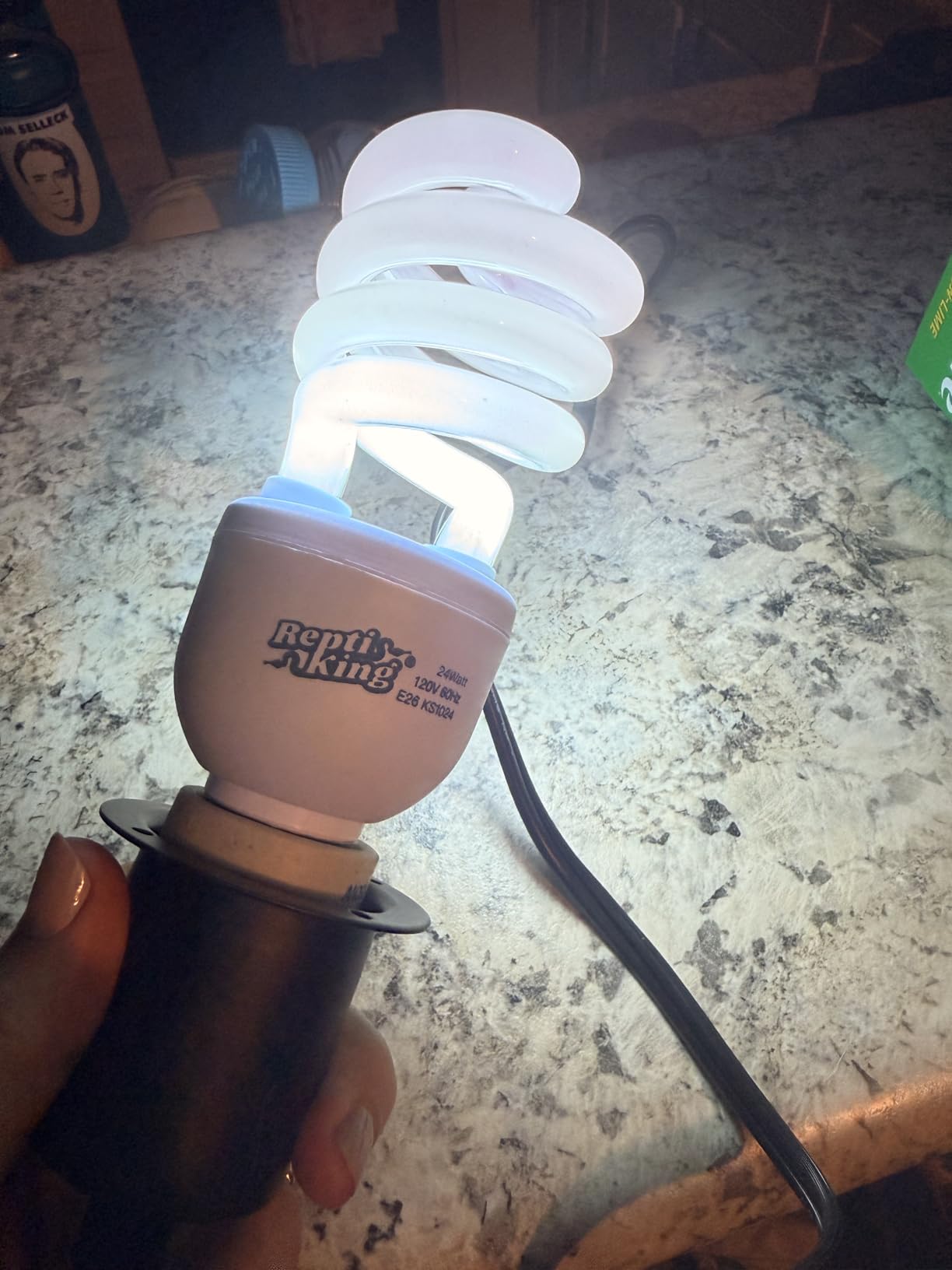
Owner feedback is largely enthusiastic at 4.4 stars from 294 reviews with 74 percent five-star. The strongest recurring theme is brightness and value, and the weakest is how long the bulb actually stays useful.
Service is worth noting. Owners describe replacements sent out the next day when units failed, which turns the longevity complaints from a recurring annoyance into a manageable one over the life of the setup.
Check the physical length before ordering
The most common practical complaint is that the bulb runs longer than expected and needs the lamp adjusted to fit. Measure the clearance in your dome rather than assuming it matches a standard compact.
If your fixture is a tight fit, a 13 watt or 23 watt compact with a shorter envelope will seat more easily than this 24 watt unit.
How to get more life out of it
Set it on a timer and let it cool between cycles rather than leaving it powered continuously. Cooldown matters for fluorescent life, and a lamp that never gets a break ages faster.
Write the purchase date down. Longevity complaints cluster among owners who lost track of when they installed the bulb and simply assumed it was still fine.
12. REPTI HOME T5 UVB Reptile Light 24W 10.0, 2 Pack – Best T5 Starter Pair
REPTI HOME T5 UVB Reptile Light 24W 10.0,UVA UVB Light Bulb for Reptiles,2 Pack Reptile UVB Lamp Tube for Bearded Dragon
Two pack of 24W T5 tubes
10% UVB and 30% UVA
Up to 10000 hours service life
22 inch tubes
Pros
- Long tube design gives wider coverage
- Stable output with no harmful UVC
- Good value as a two pack
- Arrives securely without breakage
Cons
- Some users report UV output weakening after 3 months
- May need positioning lower in the cage
- One review needed replacement at 3 months at 12 hours daily
If you already own a 22 inch T5 HO fixture and want the cheapest credible way to add proper linear desert UVB, this is the pick. Two tubes at 10 percent UVB and 30 percent UVA for the cost of one premium lamp is hard to argue with.
The tube is specified for up to 10000 hours of service life with stable UVB and UVA output and no harmful UVC, and the manufacturer states directly that the 10 percent output supports vitamin D3 and calcium absorption while helping prevent metabolic bone disease.
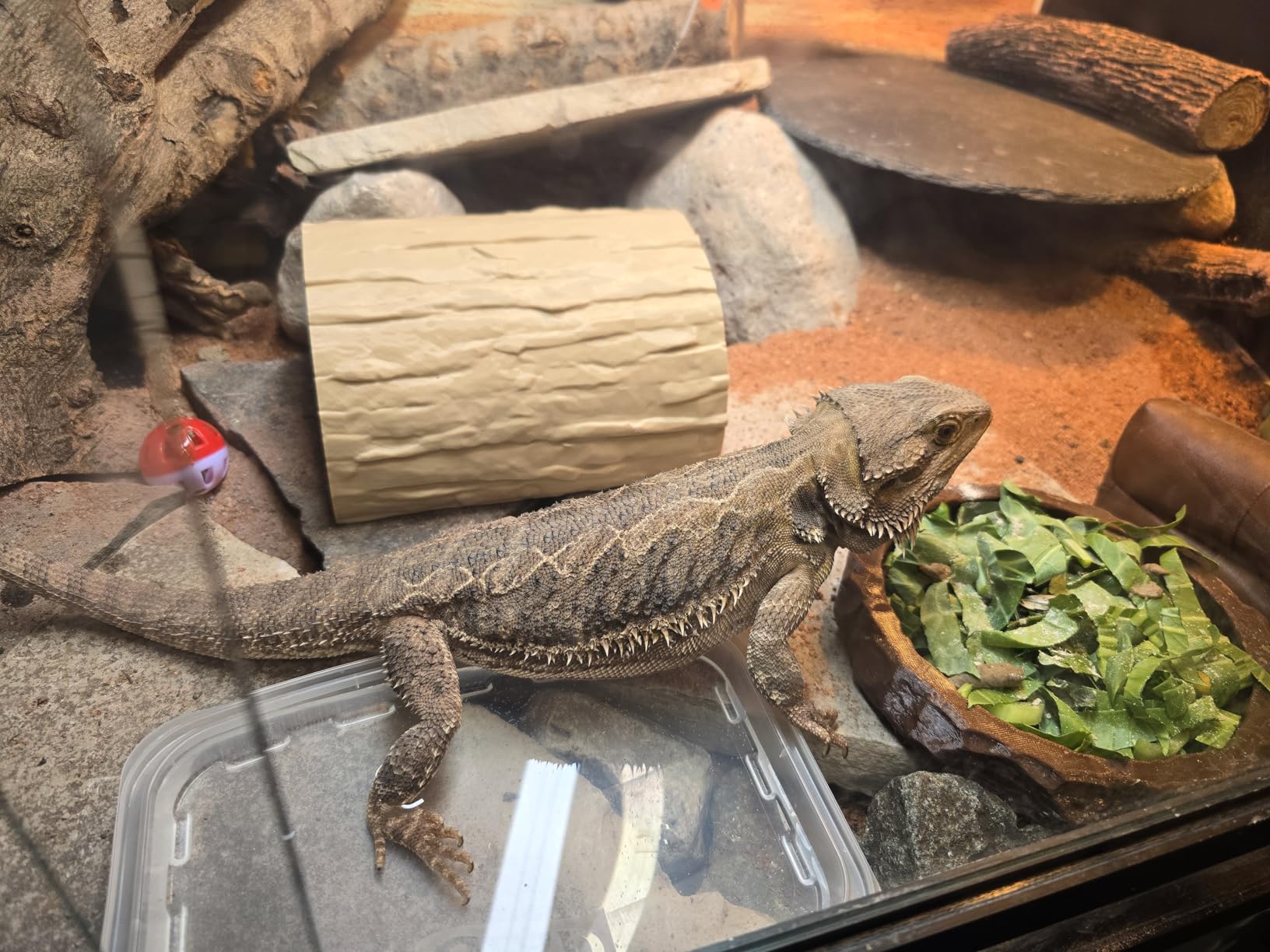
Reviews rate it 4.6 with 82 percent five-star, and most owners report bulbs lasting 6 to 12 months at 10 to 12 hours of daily use. Several mention that tubes arrive without breakage, which is not a given with fluorescent tubes.
The recurring caveat is fade timing. Some users report output weakening around the three month mark, and one reviewer found the bulb needed to be positioned lower in the cage before the UVB was adequate at the basking surface.
Why a longer tube matters more than wattage
The long tube is the real advantage. A 22 inch linear tube spreads light along a line rather than a point, so a dragon in a 4 foot enclosure can move in and out of the gradient instead of sitting under one bright circle.
That gradient is also the reason to mount it across roughly three quarters to 80 percent of the enclosure length. Leave some shaded space so the animal can self-regulate rather than being forced to sit in UV constantly.
Plan for the three month check
Test at the three month mark rather than waiting for year one. If the output feels weaker, position it lower before you conclude anything about the tube itself, since a few owners fixed the problem that way.
After that, keep the two-pack rotation going. Having the second tube ready makes the six to twelve month swap an easy job instead of an interruption to your dragon’s routine.
How to Choose a UVB Light for Your Enclosure
Start with the format, because it matters more than any brand. Linear T5 HO fluorescent is the reference standard for a reason: it spreads usable UVB over a wide area, it lasts a full year in most setups, and it is affordable enough that replacing it annually is not a hardship.
T8 fluorescents are the older, cheaper option. They produce less output per watt and fade faster, which is why forum discussion treats them as a budget fallback rather than a destination. If you already own a T8 fixture, use it, but do not build a new setup around one.
Compact fluorescents like the ones in the first four picks are a legitimate choice for juveniles and for standard domes. They concentrate light, they are cheap, and mounting is trivial. They are the wrong tool for a wide adult enclosure, and their tight light pool is exactly what makes some keepers wary of the format.
Mercury vapour lamps throw intense UVB along with substantial heat, and keepers on reptile forums describe them as still superior for some applications. They are also expensive, hot, and require a large porcelain socket, which puts them outside what most hobby setups need.
LED UVB is the format still maturing. No consumable bulbs and dimming are genuine advantages, and the REPTITRIP bar with Ferguson zone modes is the most sophisticated control in this roundup. Coverage remains the limitation on most current designs.
Next, match the enclosure to the tube length. A 20 gallon long tank takes a compact or a short tube. A 40 gallon breeder takes a 24 inch tube. A 4x2x2 adult enclosure takes a 36 or 48 inch tube, and a 4x2x3 or taller enclosure wants the longest tube available.
You want the tube to cover roughly three quarters to 80 percent of the enclosure length rather than the whole span. Leaving shaded ends is not a compromise, it is how a dragon self-regulates exposure. Owners confirm a 30 inch tube works well in a 36 inch vivarium for exactly this reason.
Then think about distance, because that is where most setups are quietly wrong. Keepers on beardeddragon.org describe the choice of UVB light as depending jointly on bulb type, fixture strength, distance, and enclosure layout, which is why a bulb-to-bulb comparison without distances is meaningless.
Mesh changes the calculation more than most people expect. Keepers report roughly 50 percent UVB loss through fine mesh, with 10 to 12 percent bulbs giving around 4.6 UVI at 10 inches below the mesh. Common guidance puts mesh loss somewhere in the 30 to 50 percent range, and either figure means you measure from the bulb to the animal, not to the screen.
Photoperiod is straightforward. Bearded dragons need 10 to 12 hours of UVB and visible light daily, and a plug-in timer is the cheapest reliability upgrade you can make. Photoperiod should stay consistent year round, and if you reduce lighting in winter, reduce both the light and the heat together.
Replacement is calendar driven. Most T5 HO lamps are replaced at 12 months, T8 at around 6 months, and compact fluorescents somewhere in between, often 6 to 12 months. Forum reports of owners going through three lamps in a year are real, which is why we recommend keeping a spare tube on hand rather than reacting.
Does the bulb brand have to match the fixture brand? No, and this question comes up constantly. What has to match is the tube diameter and wattage to the ballast. A T5 HO bulb in a T8 fixture, or a 24W tube in a 39W ballast socket, is a problem regardless of whose name is on the box.
For keepers outside the US, UK, and EU, availability is a genuine constraint. Thread after thread on beardeddragon.org covers this: Arcadia is widely regarded as the best brand but often costs about twice as much as Zoo Med and carries import tax and shipping on top. Budget alternatives such as LUCKY HERP and ReptiKing are the practical answer in those markets.
One myth worth dismantling: the Arcadia ShadeDweller 7 percent that shows up in shopping results for this query is built for forest and shade-dwelling species, not for desert reptiles. A bearded dragon is a full sun animal, and a 7 percent output is set for a different biome entirely.
Finally, measure with a meter rather than a card. The Solarmeter 6.5R is repeatedly recommended as the only way to verify real output, and owners treat readings as the final word over brand reputation. Many manufacturers on the list advise professional verification instead of cheap UV cards for exactly this reason.
How to Set Up Your UVB Light Correctly
Measure first, then buy or mount. Decide where the basking surface will sit, then measure the vertical distance from the animal’s back to the underside of the bulb or bar. Write the number down, because that is the number you will need to recheck.
Mount the fixture across the enclosure, not along a side. A lengthwise mount gives a narrow bright band, while a crosswise mount gives a gradient with a shaded end your dragon can retreat to.
Overlap the UVB zone with the basking heat zone. The two lights serve different functions, but the animal should be able to reach UV and heat in the same area. A cool UVB zone and a separate hot basking point tends to produce animals that sit in one or the other rather than both.
Set a timer for 10 to 12 hours and leave it alone. Consistency matters more than cleverness, and a timer costs a fraction of what a UV-related vet visit does.
Verify with a meter once mounted, then recheck every few months as the bulb ages. If you do not own a Solarmeter 6.5R, at minimum note the fixture position so you are comparing like with like later.
Add the replacement date to a calendar the day you install the lamp. Twelve months for a T5 HO, six months for a T8, and a check at three months if you want early warning on a fading tube.
Related reading: our picks for the best grow lights cover the same distance and intensity thinking for plants, and our best flood lights roundup covers enclosure lighting more broadly if you are building out a full setup.
Frequently Asked Questions
Are UVB lights good for bearded dragons?
Yes, and they are effectively mandatory for a captive bearded dragon. UVB at the correct wavelength converts 7-dehydrocholesterol in the skin into vitamin D3, which is what allows the intestines to absorb calcium from food. Sunlight through glass or plastic does not supply usable UVB, so a dedicated lamp running 10 to 12 hours daily is required regardless of window access. Insufficient UVB is the leading cause of metabolic bone disease in captivity.
Can too much UVB hurt a bearded dragon?
Yes, and the injury is called photokeratoconjunctivitis, most often caused by compact coil bulbs held too close. A UVB burn shows as closed or squinting eyes, redness, and a reluctance to open them. The fix is distance and format: use a linear T5 HO tube mounted at the correct height, never a bare spiral coil inches from the animal, and never leave a UVB lamp on all night.
Is a 10.0 UVB light good for bearded dragons?
Yes. 10.0 refers to a UV output percentage band, and it is the standard desert recommendation for bearded dragons. The number describes the lamp, not the result at your basking surface, so actual exposure depends on distance, fixture reflector quality, and whether light passes through mesh. Keepers report that 10 to 12 percent bulbs give around 4.6 UVI at 10 inches below fine mesh, so measure rather than assume.
How many hours a day do bearded dragons need UVB light?
Ten to twelve hours a day is the standard recommendation, delivered on a consistent schedule. Use a plug-in timer so the cycle never depends on remembering. Bearded dragons are diurnal, and they also need a basking heat source in the same period, though the two lamps are separate fixtures with different jobs. If you reduce lighting seasonally, reduce heat and light together rather than changing one on its own.
What is the best brand of UVB light for bearded dragons?
Zoo Med and Arcadia are the two names that come up most often on keeper forums, with the recurring view that Arcadia is the best brand and Zoo Med the better value. Arcadia is also roughly twice the price and harder to source outside the US, UK, and EU. In markets where import cost pushes Arcadia out of reach, LUCKY HERP and ReptiKing are the practical alternatives that keepers recommend.
Final Verdict
The best UVB lights for bearded dragons come down to one honest split. If your enclosure is 24 inches or smaller, the Zoo Med ReptiSun 10.0 Mini Compact is the lamp to buy, with the deepest owner history in the category and quartz glass built for UVB transmission.
If you are housing an adult, step up to the 24 watt T5 HO ReptiSun 10.0 in a proper reflector. The format matters more than the brand, so any quality T5 HO tube in a decent hood will outperform a compact in a wide enclosure.
Either way, measure the distance, run it on a timer, and replace it on a calendar rather than on appearance. That habit, more than any specific lamp, is what keeps a bearded dragon’s bones healthy in 2026.
Our other lighting roundups cover the rest of an enclosure build, including strobe lights if you are comparing fixtures for a multi-animal setup.