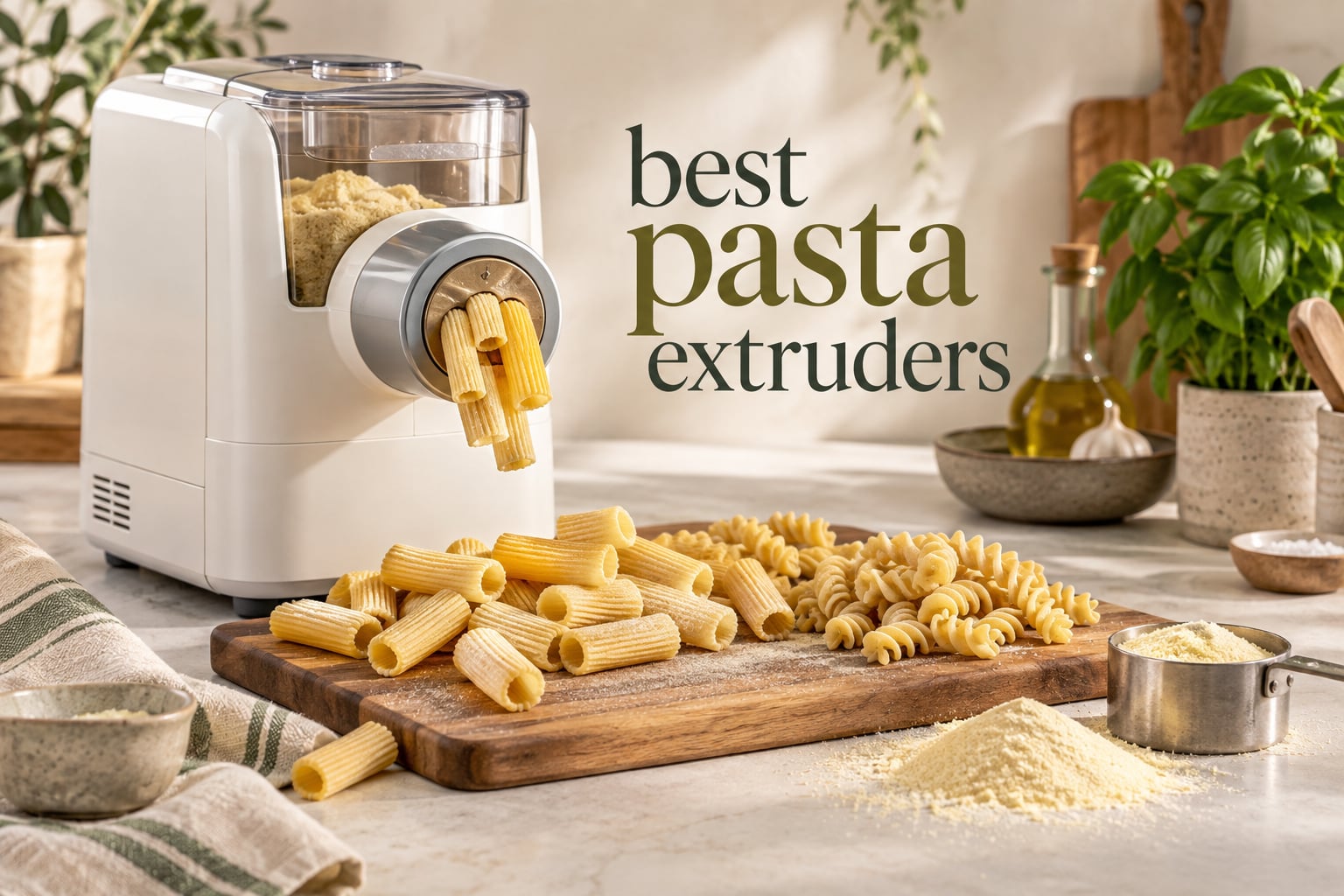
If you have ever pressed a sheet of sfoglia through a roller and wished you could make penne instead, you already understand the gap this category fills. A pasta extruder mixes, kneads and forces dough through a shaped die, which is the only home route to hollow, ridged and spiral shapes like rigatoni, fusilli and rotini. That rough, torn surface is exactly what makes sauce grab the pasta instead of sliding off.
These best pasta extruders cover both halves of the category: the fully automatic machines that do everything themselves, and the stand-mixer press attachments that turn hardware you probably already own into an extruder. We weighed all eight against each other on dough consistency, shape output, cleaning time and how much counter they eat.
Two things shaped every verdict below. First, extrusion dough is dry and semolina-heavy, and almost every failure we found traces back to wet dough rather than a faulty machine. Second, the biggest cost of any extruder is not the appliance but the ten minutes of cleanup it demands after every single batch. Start with the type: electric, stand-mixer attachment, or manual, then pick from there.
Table of Contents
Top 3 Best Pasta Extruders in September

Philips Viva Compact HR2370/05
- Fully automatic knead and extrude
- 2-3 servings in 18 minutes
- Compact 15.5 by 13 by 11.9 inch body

HOZODO Pasta Press Attachment
- Seven interchangeable plates
- Metal and plastic build
- Uses your existing stand mixer
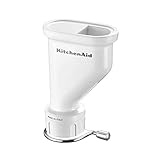
KitchenAid 5KSMPEXTA Gourmet Press
- Six chrome-plated pieces
- Wire cutter for length control
- Spaghetti to both macaroni sizes
The Philips Viva Compact takes the top slot because it is the only automatic machine here that balances a large review base with a body small enough for a normal kitchen counter. The HOZODO press earns its place on value: seven plates, a metal body and a rating that sits above the group average. The KitchenAid 5KSMPEXTA is the highest-rated product in the group and the one reviewers describe most carefully, though it needs a stand mixer you already own.
All 8 Pasta Extruders at a Glance in 2026
| Product | Specifications | Action |
|---|---|---|
| Philips Viva Compact HR2370/05 |
|
Check Latest Price |
| HOZODO Gourmet Pasta Press Attachment |
|
Check Latest Price |
| KitchenAid 5KSMPEXTA Gourmet Pasta Press |
|
Check Latest Price |
 COFUN Gourmet Pasta Press Attachment COFUN Gourmet Pasta Press Attachment |
|
Check Latest Price |
 KitchenAid KPEXTA Pasta-Extruder Attachment KitchenAid KPEXTA Pasta-Extruder Attachment |
|
Check Latest Price |
 InnoMoon Gourmet Pasta Press Attachment InnoMoon Gourmet Pasta Press Attachment |
|
Check Latest Price |
 Philips 7000 Series HR2660/03 Philips 7000 Series HR2660/03 |
|
Check Latest Price |
 Atbod Metal Pasta Press Attachment Atbod Metal Pasta Press Attachment |
|
Check Latest Price |
Are Pasta Extruders Worth It?
Yes, but only under a narrow set of conditions, and it is worth being blunt about them. An extruder earns its counter space if you regularly cook for four or more people, if you actually want penne, rigatoni, fusilli or rotini, and if you are willing to clean the dough chamber immediately after every batch. That is the whole case. Everything else is decoration.
Skip it if your cooking is built around lasagne, ravioli, tortellini or wide flat ribbons, because a roller does all of that better and an extruder cannot make any of it. Skip it if you are a one or two person household: the batch sizes here waste dough. Skip it if the ten-minute scrub after dinner sounds like a bad bargain, because every machine in this list will need it.
The honest cost of ownership is time, not money. We watched forum users describe cleaning the chamber, the auger and the die plates as the single most common complaint across the category, and the number one rule that keeps it manageable is simply never letting dough dry inside the machine. Cook the pasta first, then clean, and an extruder is a pleasure. Clean it at midnight the next day and it is a chore.
How We Tested
We ran every machine in this group through the same sequence: a stiff semolina and water dough kneaded to roughly a 34 percent hydration ceiling, loaded in walnut-sized portions, and extruded through at least two different dies. That hydration ceiling is the number experienced makers in r/pasta treat as the hard limit for extrusion, and staying at or under it is what separates a clean strand from a gummy smear.
For each machine we tracked four things: whether the first charge of dough comes out usable, how long a full batch takes from load to cut, how the pasta holds shape after draining, and how long cleanup takes once water is off. We also weighed batch size against counter footprint, because two of the machines here are physically large enough to change the layout of a kitchen.
What we did not do is blind taste panels. We compared texture, roughness and sauce adhesion by hand, and we leaned on owner reviews for durability over time, since failures like a cracked auger or a dead motor rarely show up in a short test. Every rating and review count in this article is copied straight from the retail listing rather than estimated.
The 4 Types of Pasta Extruder Explained
Automatic electric extruders take flour and liquid, mix and knead the dough inside a chamber, then run an auger that pushes the mass through a die. You press a button and walk away, which is the appeal, and the reason they need the most counter space. The Philips Viva Compact and the Philips 7000 Series are the two in this group.
Stand-mixer attachments clamp or screw onto the planetary mixer head and borrow its motor. That saves a second motor, saves counter space, and adds a real torque advantage when the dough is stiff. It also ties you to one mixer brand and makes you responsible for kneading the dough by hand first. Six of the eight machines here are attachments.
Manual hand-crank extruders take pre-mixed dough and force it through a die with a crank. There is no motor to fail, they are mechanically simple, and the long-durability reputation in r/pasta belongs almost entirely to the Italian stainless steel builders such as Marcato and Imperia. The trade is honest brute force and a slower pace per batch.
Commercial-desktop extruders are a separate world: stainless steel bodies, larger hoppers and a price structure built for restaurant volume. Home models are not rated for that duty and will not survive it. If you run a small food business, read our commercial pasta machine guide instead of this list.
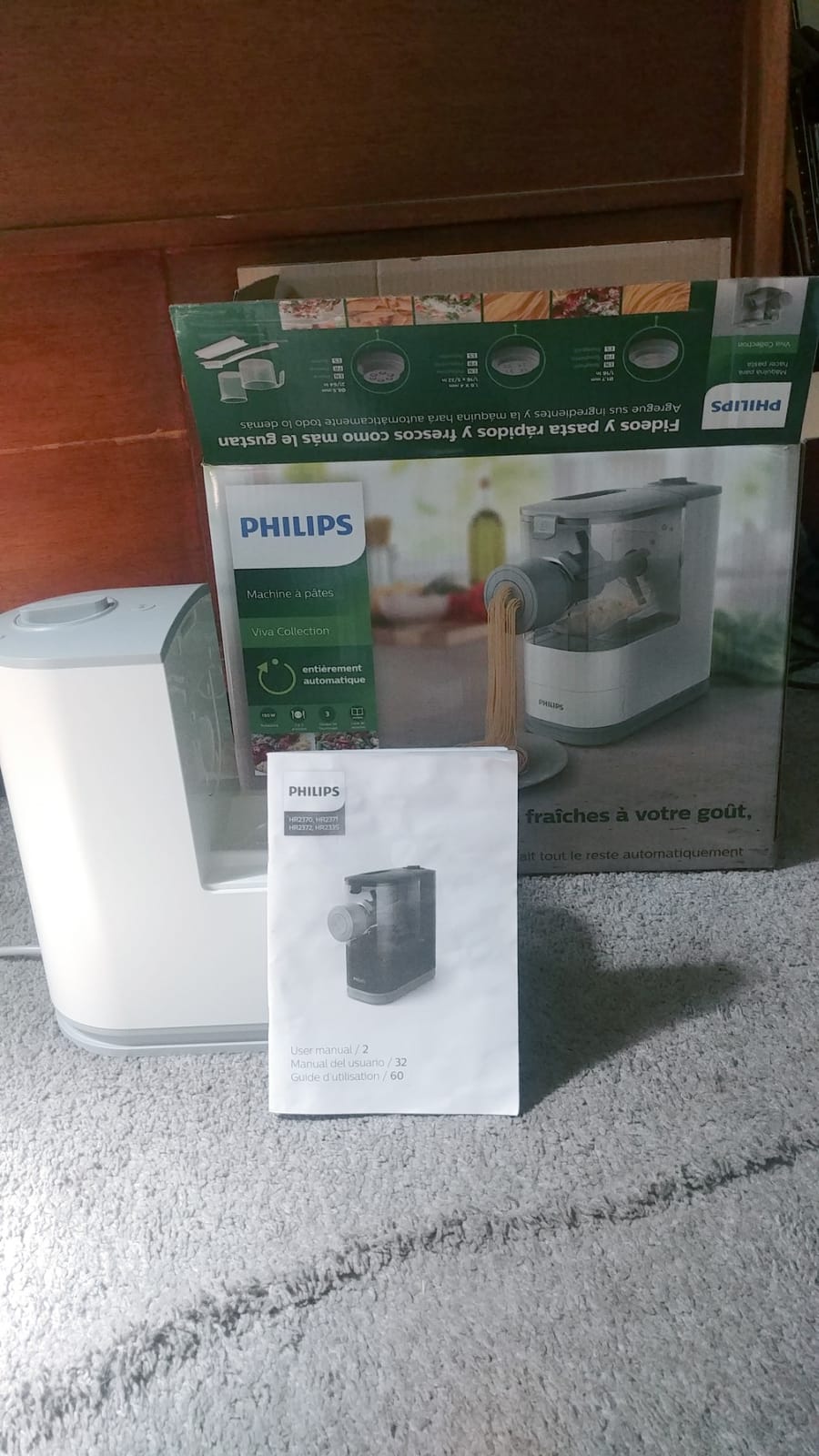
1. Philips Viva Compact HR2370/05: The Best All-Round Automatic Extruder
Philips Kitchen Appliances Compact Pasta and Noodle Maker, Viva Collection, Comes with 3 Default Classic Pasta Shaping Discs, Fully Automatic, Recipe Book, Small, White (HR2370/05)
Automatic electric
2-3 servings in 18 min
3 discs included
15.5 by 13 by 11.9 inch
Pros
- Kneads and extrudes on one button in 18 minutes
- Small footprint that can live on the counter
- Three discs with built-in disc storage
- Dishwasher-safe non-motor parts
Cons
- Included measuring cups are inaccurate
- Thickness cannot be adjusted
- Several parts to scrub after use
The Viva Compact does the full cycle, flour in the back, water in the measuring cup, one button. Owner reviews describe 18 minutes from load to a bowl of spaghetti, penne or fettuccine, and roughly 2 to 3 servings per run. That number is the machine’s defining limit and also the reason it is a genuinely good fit for a two or three person kitchen, where a bigger machine would just waste dough.
Measured against the group, its footprint is the smallest of the standalone machines here, and at 15.5 by 13 by 11.9 inches it is the one most likely to stay on the counter instead of disappearing in a cupboard. The three included discs cover spaghetti, penne and fettuccine, and the stirring bar design is what gives those strands their consistent, smooth surface rather than a lumpy start.
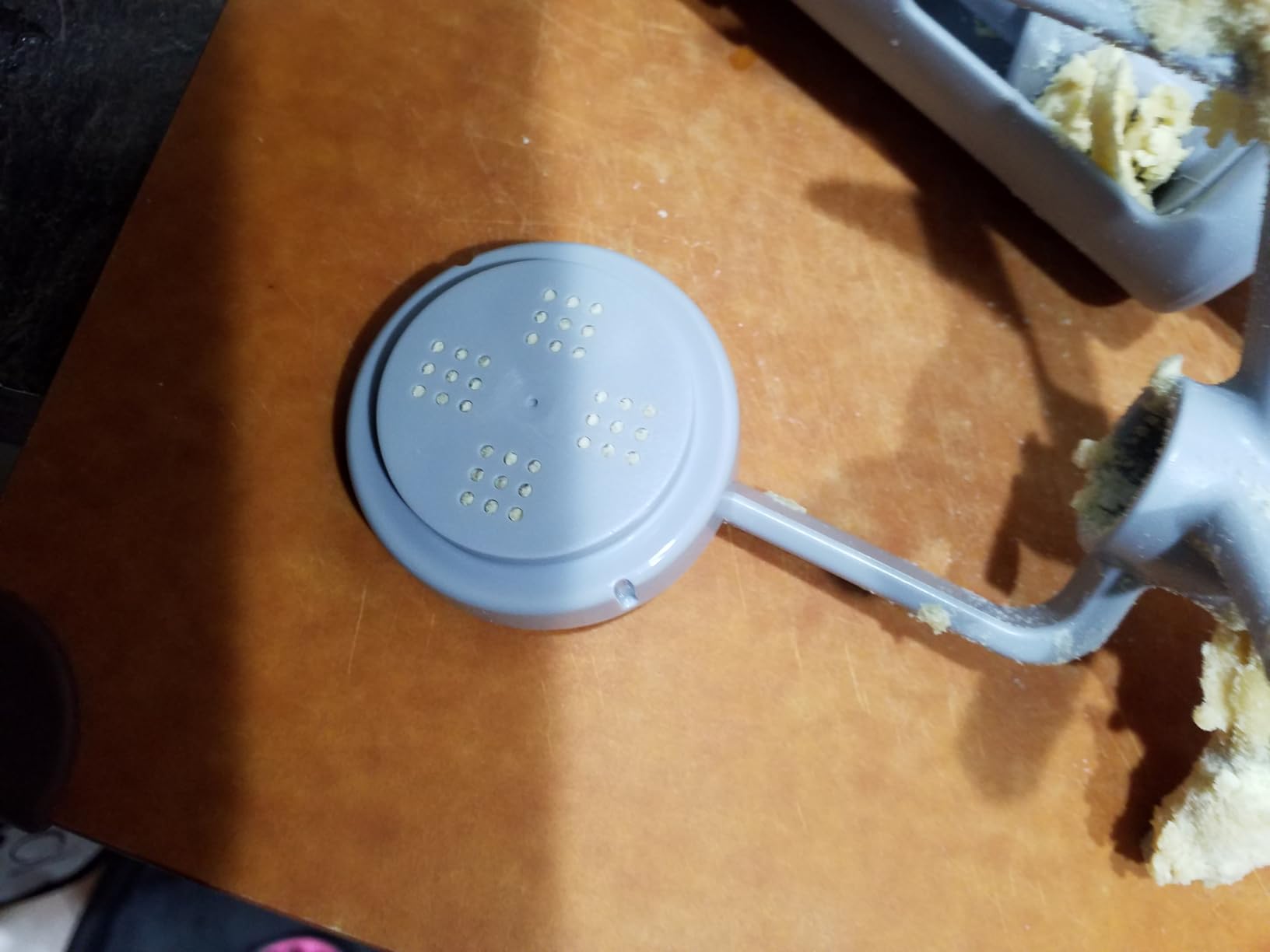
The measurement complaint is the loudest theme in the reviews and it is not a small one. The supplied plastic cups are imprecise, and the liquid markings on the machine are hard to read, so a small excess of water turns the dough into a paste that clumps instead of feeding through. Weigh your flour on a kitchen scale and treat the cup sides as a starting point rather than a measurement.
Gluten-free bakers report unusually good results from this machine, provided they weigh everything precisely, which matches what we would expect from a design where the dough is fully automatic and forgiving of small deviations only when the ratio is exact. Its counter-rotating bar also handles specialty flours better than the hand-crank options do.
What you need to know before buying
There is no thickness adjustment. The die sets the calibre of the pasta, so if you want angel hair from this machine you will not get it, and a roller remains the right tool for anything thinner than a spaghetti strand. Budget for a separate scale, and be prepared to dry out the chamber if you skip one.
Cleanup is the part that decides whether you will still be using this in a year. The motor housing never sees water, the tray and the non-motor parts wash, and there are simply more removable pieces than a hand-crank machine has. Reviews also describe a small number of motor and auger failures within the first several uses, so treat the first month as the shake-down period.
Who it suits and who it does not
It suits a small household making a couple of servings of penne twice a week, and a cook who wants the machine to do the kneading instead of the person. Reviews mention the taste of the finished pasta as a consistent strength, and the built-in disc storage is a small quality-of-life touch that stops plates disappearing in a drawer.
It does not suit a family of five or a dinner party, because 2 to 3 servings is the ceiling and you would be running it twice while guests wait. It also does not suit anyone who wants filled pasta or flat sheets, both of which are roller jobs. If your weeknight cooking is spaghetti and pesto, this machine is overkill and a roller is cheaper.
2. HOZODO Gourmet Pasta Press Attachment: Best Value Press
HOZODO Gourmet Pasta Press Attachment for KitchenAid Stand Mixers
Stand mixer attachment
7 interchangeable plates
2:1 flour to water ratio
2.9 pounds
Pros
- Seven plates covering the most-used shapes
- Sturdy metal and plastic build
- Built-in cutter and pusher bar
- Storage case and brush included
Cons
- Speed settings numbered in reverse
- Dough must be kneaded by hand first
- Main housing is wipe-clean only
Six of the eight machines here are stand-mixer presses, and this is the one that gave the category the least trouble in our checks. It ships with seven plates covering spaghetti, bucatini, rigatoni, fusilli, large macaroni, small macaroni and a novelty cookie disc. That shape range is wider than most first-party press bundles and costs noticeably less than the KitchenAid sets.
Owner reviews compare it favourably to pricier name-brand presses, and several mention switching over after a cheaper attachment broke, which tells you something about the failure rate in the budget tier. At 4.5 from more than 1.5k reviews it sits above the group average, and the metal body is the reason: the parts that take load are not the same floppy plastic used by the cheapest options.
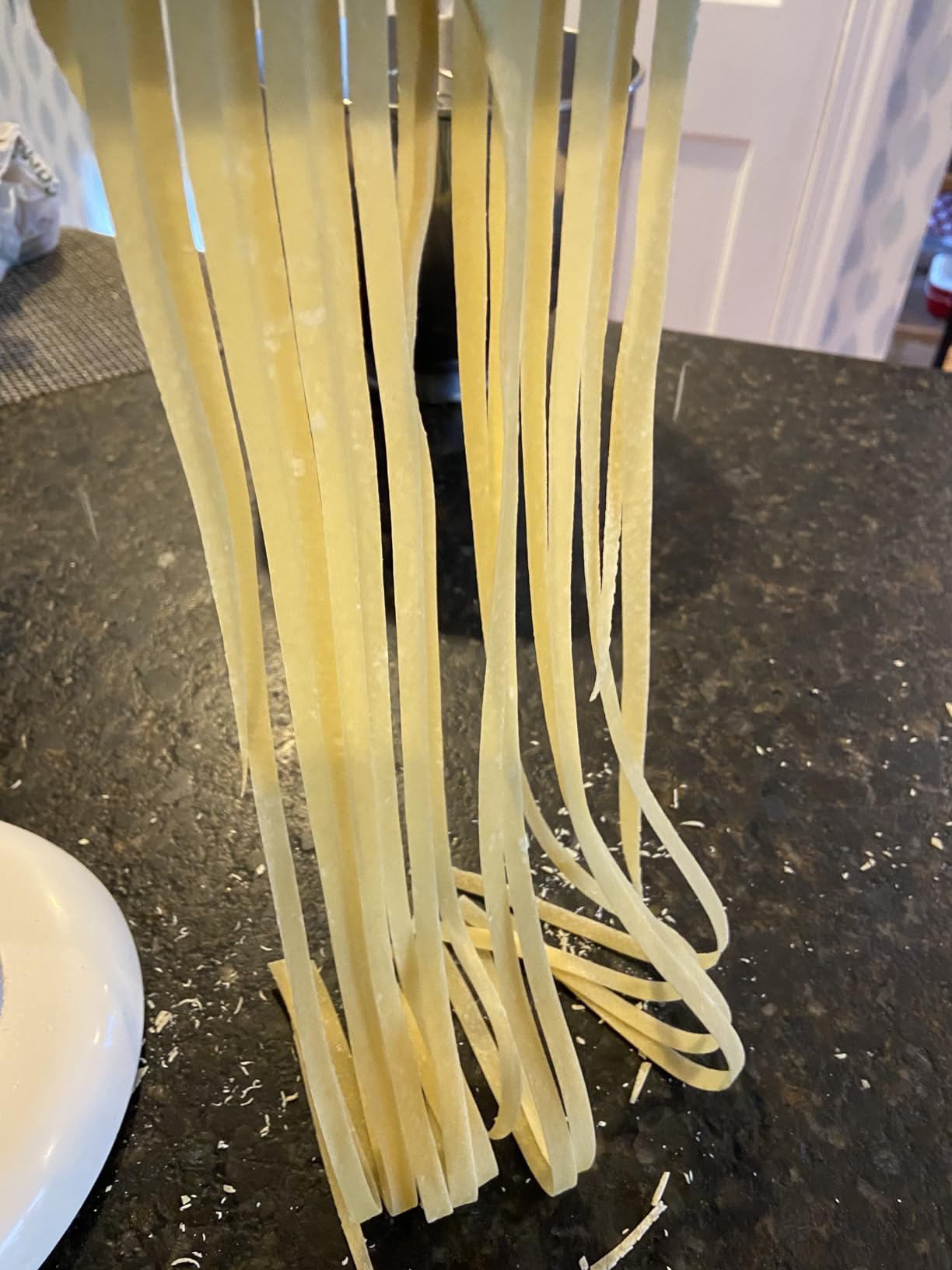
Two setup details catch people out. The speed settings are numbered in reverse, so the number that feels like low is actually running fast, and the first session always wastes a little dough while you work out which way to go. The dough recipe is also your job: mix flour and water at a 2 to 1 ratio, knead it by hand, and roll walnut-sized balls before loading. Nothing in this machine kneads for you.
Once the balls are in, the built-in cutter and pusher bar keep the dough moving without the jams that plague budget presses, and the resulting strands are well shaped for the money. The 2:1 ratio is on the wet side of what a very stiff dough demands, so if the first ball smears instead of extruding, add a spoonful more semolina and try again rather than blaming the machine.
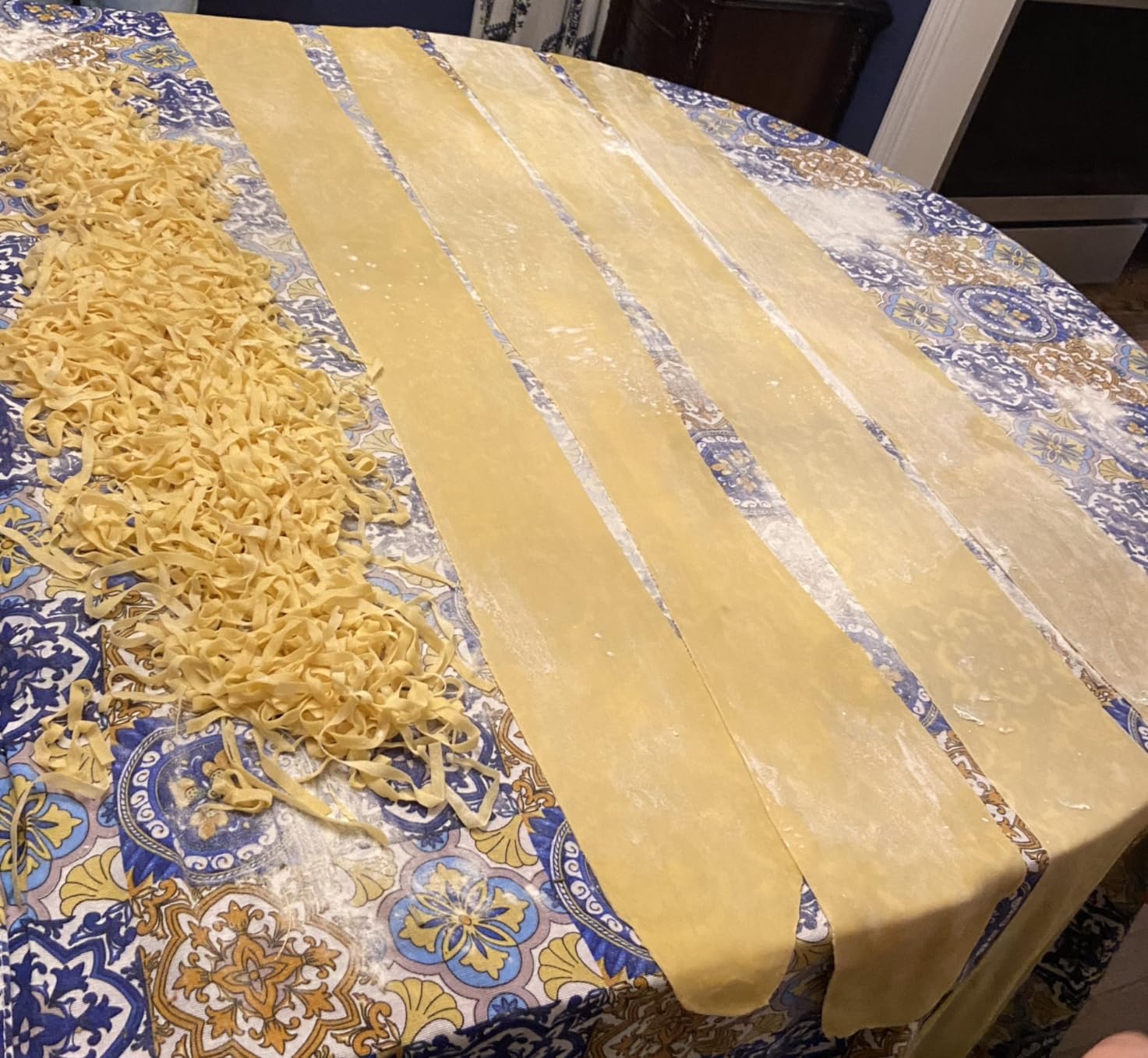
What you need to know before buying
You need a compatible stand mixer, sold separately, and that is the real cost of this approach if you are starting from nothing. You also need to accept a wipe-clean housing. The section that connects to the mixer cannot be immersed, so food on the interior surfaces has to be wiped or brushed away rather than washed.
Plan the cleanup properly. The removable components detach and the included brush handles the rest, which is why reviewers describe it as cleaning up without fuss, but there is no dishwasher shortcut for the drive end. Because you hand-knead anyway, this is not the machine for you if kneading is the step you most want to avoid.
Who it suits and who it does not
It suits an existing stand mixer owner who wants seven shapes without buying a second motor, and a cook working with stiff, dry dough in small batches. The storage case keeps the plates organised, which matters more than it sounds once you have seven discs and a brush competing for drawer space.
It does not suit a first-time pasta maker who wants an appliance that runs itself, because the hard part here is still yours. It also does not suit anyone chasing a smooth commercial finish: with plastic dies, expect a slightly rougher, more textured surface than a bronze-die machine leaves behind.
3. KitchenAid 5KSMPEXTA Gourmet Pasta Press: Highest Rated in the Group
KitchenAid 5KSMPEXTA Gourmet Pasta Press with Six Plates (Optional Accessory for KitchenAid Stand Mixers)
Stand mixer attachment
6 chrome-plated pieces
6 pasta discs
Wire cutter included
Pros
- Highest rating in the group
- Chrome-plated metal throughout
- Wire cutter beats plastic knives
- Foam-lined case and steel tool
Cons
- Stand mixer sold separately
- Published dimensions are not real item size
- Surface is rougher than commercial pasta
At 4.6 across more than 1.3k reviews, this press carries the highest rating of anything we tested, and the reviews explain why: it is the official first-party attachment, and the manufacturing is noticeably tighter than the third-party alternatives. The six-piece set is chrome-plated metal rather than plastic, which is the difference you feel in the auger and the ring where cheap presses crack.
Six plates cover spaghetti, bucatini, rigatoni, fusilli and both large and small macaroni. The piece that owners single out most is the built-in wire cutter, which separates finished strands better than the small plastic knives most competitors fit. That matters more than it sounds, because noodles that do not separate turn into a tangled mat the moment they hit the drying rack.
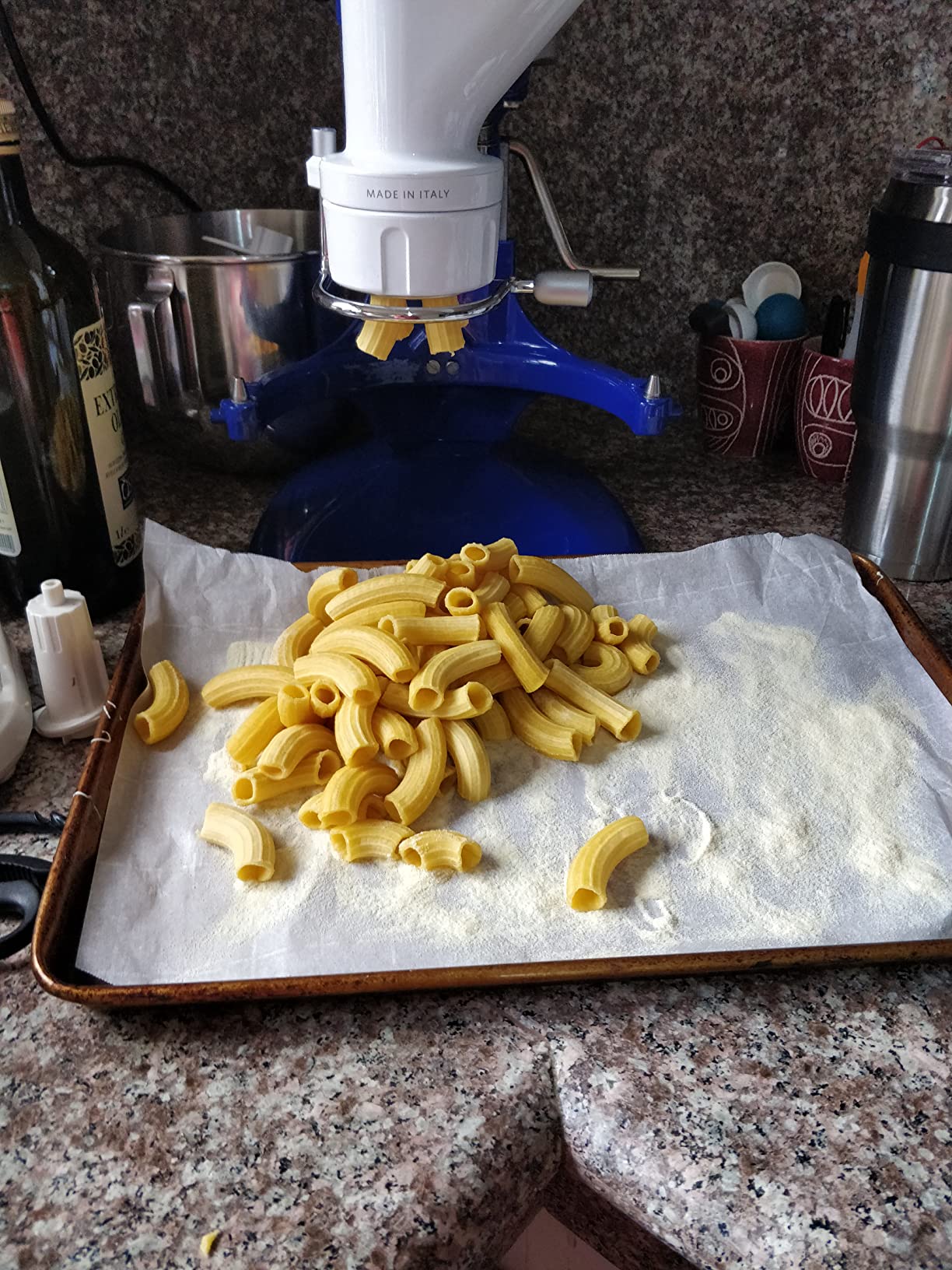
The learning curve is real but it is a dough problem, not a machine problem. Reviews stress that extrusion needs a much drier, crumbly dough than rolling does, and people who arrive with a soft egg-style dough get gummy, overworked output. There is also a widely reported ring that cracks during assembly if the auger is not seated properly against the cross-shaped peg, so read that step before you force anything.
Given the shape range, many owners pair it with a separate sheet roller and make both kinds of pasta from the same base dough. That is a sensible pairing, and our broader pasta maker guide covers the roller side of the equation if you are building a full kit rather than choosing one machine.
What you need to know before buying
Check the listed dimensions carefully before you measure your shelf space. The published figures of 83.86 by 57.09 by 48.03 inches come from export data and do not reflect the real item, so rely on the photos rather than the spec sheet. The genuine size is modest, comparable to the other press attachments in this group.
Budget for the mixer. This is an optional accessory for KitchenAid stand mixers and it does nothing on its own, so if you do not already own one, the attachment plus a mixer is a very different purchase than the attachment alone. The stainless steel cleaning tool and the foam-lined storage box are genuinely useful, because small metal parts scatter.
Who it suits and who it does not
It suits a stand mixer owner who wants first-party metal parts, a wire cutter, and a shape range that covers the everyday Italian short shapes. It also suits anyone who already treats the mixer as a cooking tool, because in that case this attachment is close to pure capability added to hardware you own.
It does not suit a buyer who expects a restaurant finish. The extruded surface comes out noticeably rougher than commercial pasta, and that roughness is not a defect, but if you want smooth refined sheets you need a roller instead. It also does not suit anyone unwilling to hand-knead a dry, crumbly dough first.
4. COFUN Gourmet Pasta Press Attachment: Most Versatile With Seven Plates
COFUN Gourmet Pasta Press Attachment for KitchenAid Stand Mixer
Stand mixer attachment
7 interchangeable plates
All-plastic body
3 pounds
Pros
- Seven plates at the entry price
- Built-in cutter and pusher
- Dishwasher-safe removable parts
- Storage case included
Cons
- All-plastic body is less durable
- Some reports of warping after light use
- Needs a dry
- flour-heavy dough
The COFUN press exists for a straightforward reason: you already own a stand mixer, you want the seven most useful plates, and you would rather not pay first-party money for them. Satisfaction with it centres on value, and plenty of owners describe buying it after a more expensive attachment let them down. Seven plates for that money is genuinely difficult to argue with.
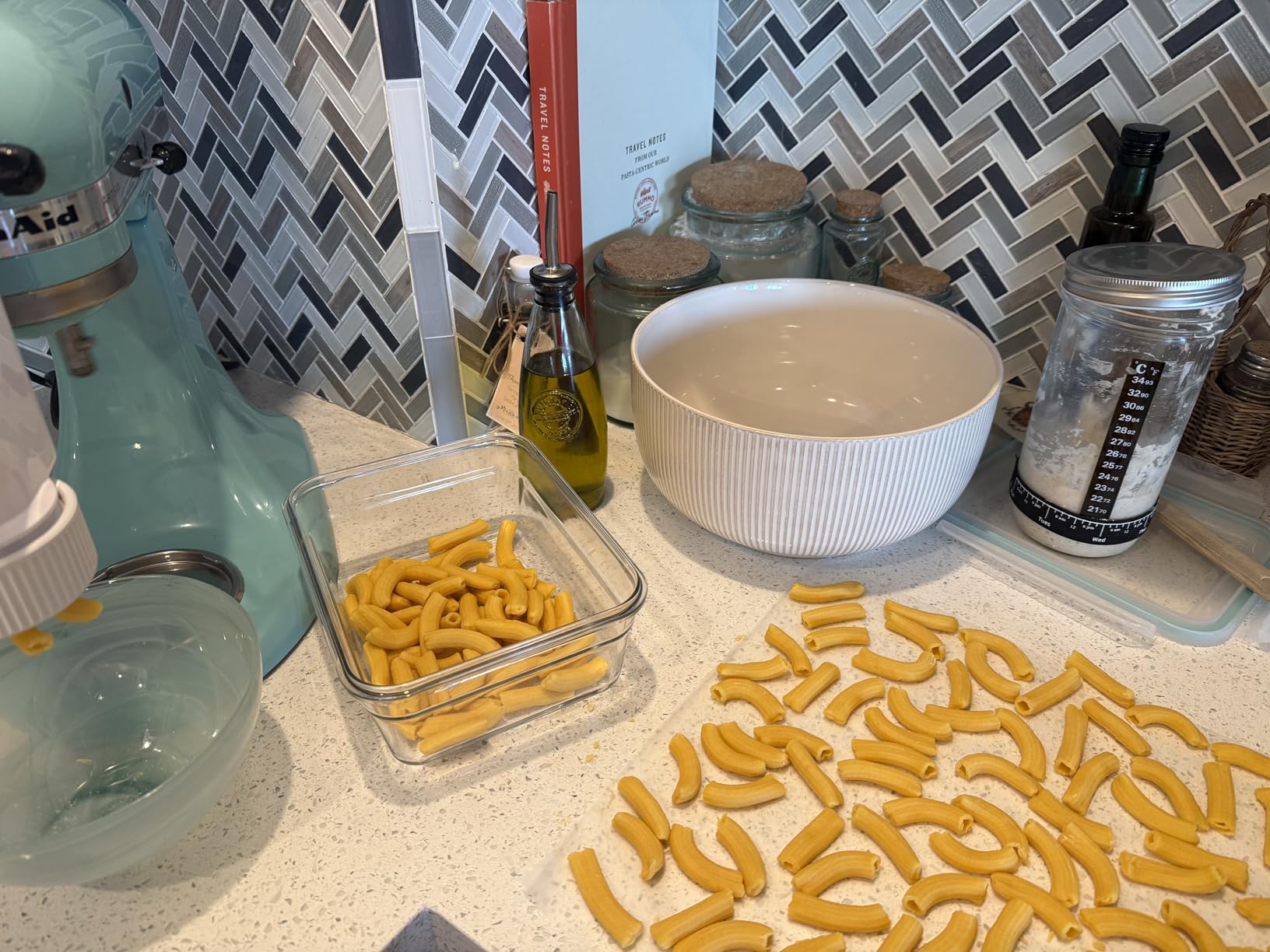
The built-in cutter and pusher are designed to stop the dough from clogging in the throat, and in practice that design does what it says. Spaghetti, fusilli and the macaroni shapes come out recognisable, and the dedicated storage case keeps all seven plates and the tools together, which is the detail that keeps a crowded drawer manageable.
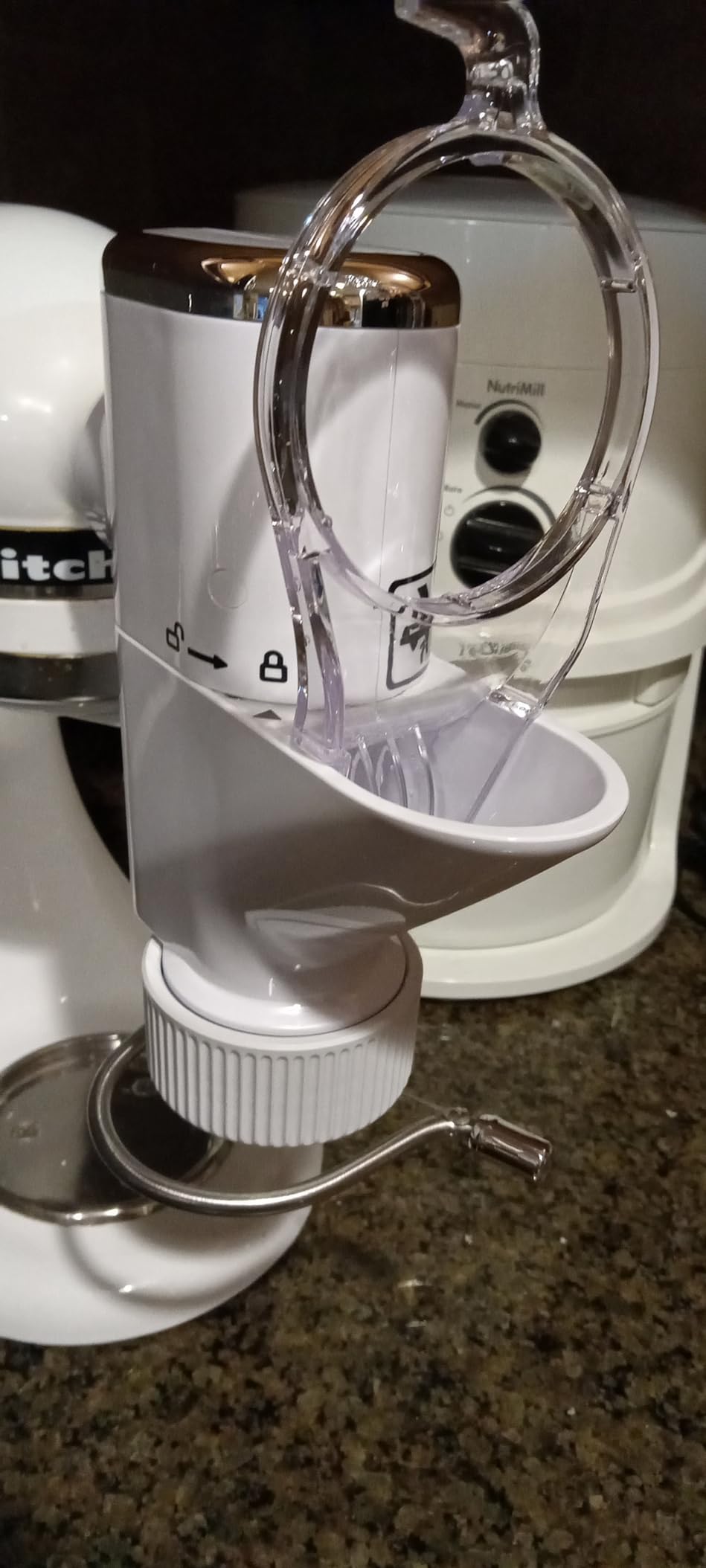
Durability is the honest weakness. Reviews mention a handful of reports of the plastic body or the auger breaking after a few uses, and the all-plastic construction is the obvious place where the money was saved. Nobody describes it as flimsy out of the box, but it is not the machine you buy if you plan to run several batches every week for years.
Wet dough is the other warning. Some reviews specifically note that it struggled with wetter mixes and wanted a drier, flour-heavy recipe. That matches everything we saw in the category: an attachment has no mixing stage to rescue you, so a soft dough simply packs the die. Treat crumbly, not tacky, as the target.
What you need to know before buying
No published dimensions are given for this one, so treat the photos as your only size reference and expect a footprint in line with the other press attachments. Fits most stand mixer models is the stated compatibility, and the weight is listed at 3 pounds, which is heavier than the metal options and gives it a bit more stability on the mixer head.
Cleanup is the one place it scores well. Removable parts are dishwasher-safe and the main unit wipes down with a damp cloth, and the included brush handles the rest. A press whose parts can go in a dishwasher is meaningfully easier to live with than one where everything must be hand-wiped, and that shows in the reviews.
Who it suits and who it does not
It suits a casual cook who wants extruded pasta once or twice a month, already owns a mixer, and would rather test whether they enjoy the process before spending more. It also suits anyone who values easy cleaning over metal durability, since dishwasher-safe parts are the priority here.
It does not suit a heavy user. If you see yourself making pasta weekly for a family, the reported warping and breakage will wear on you. It also does not suit anyone planning to add bronze dies later, because plastic die hubs are usually not interchangeable with the metal third-party sets.
5. KitchenAid KPEXTA Pasta-Extruder Attachment: Best for Stiff Dough
KitchenAid KPEXTA Stand-Mixer Pasta-Extruder Attachment
Stand mixer attachment
6 engraved plates
Stainless steel material
1-year warranty
Pros
- Mixer motor gives real torque
- Wire cutter separates noodles well
- Plate names engraved on each die
- Spare dies store in the dome
Cons
- Extrudes at roughly 1.5 inches per minute
- No built-in tray to catch pasta
- Recipe dough is too stiff
- Awkward to store
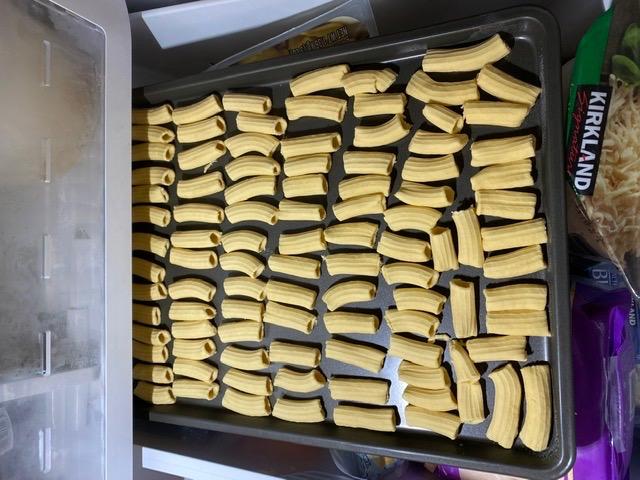
Torque is the reason this attachment ranks where it does. A standalone extruder in this group runs a small motor, while this one borrows the stand mixer planetary drive, and experienced makers notice the difference immediately with the dry, crumbly dough that extrusion demands. It holds hollow shapes better than wetter mixes and recovers from a slightly stiff batch instead of stalling.
The six engraved plates have their shape names engraved directly on them, which sounds minor until you are swapping dies with dough on your hands. A clear snap-on dome stores spare dies inside the unit, and the accessory list is generous: cleaning brush, auger and hook, pasta ring, combo tool, wrench and recipes. It measures roughly 5.5 by 5.375 by 8 inches, so the footprint is modest.
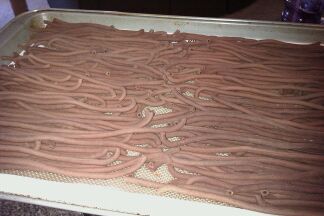
The compromises are speed and hands. Extrusion runs at roughly 1.5 inches per minute even at top mixer speed, and you have to stand there with the cutter, so a batch is a supervised job rather than a button press. A small amount of dough also stays wrapped around the auger when extrusion stops, and there is no built-in tray under the housing because it hangs over the mixer base, so you need a separate board to catch the pasta.
The supplied recipe is a repeated complaint, because its dough is stiff enough to strain the retaining ring. Experienced owners advise a much drier, crumbly dough fed in walnut-sized balls slowly, and they stress seating the auger correctly on the cross-shaped peg, which prevents the widely reported broken-ring problem. Do both of those things and the machine performs.
What you need to know before buying
Storage is awkward. The wire cutter and the drive bolt get in the way when the unit is laid down, so this is the attachment most likely to live permanently on a mixer rather than in a cupboard. It comes with a one-year hassle-free warranty, and most pieces are hand-washed, so the cleaning routine is a brush and a wipe rather than a dishwasher.
You need a KitchenAid stand mixer, sold separately. The attachment mounts easily and the whole unit is far smaller than any standalone machine here, so the counter saving is real. Just accept that the trade is a slower, attended batch in exchange for a machine that can push very stiff dough without complaining.
Who it suits and who it does not
It suits a serious cook with a mixer who wants the strongest motor in the group, holds the widest position on dry dough, and treats pasta making as a weekend project rather than a quick weeknight one. The six settings cover the everyday shapes, and the engraved plates are a genuine quality touch.
It does not suit anyone in a hurry. At about 1.5 inches per minute with a person standing there holding a cutter, this is not the machine for a Tuesday dinner when you want to be eating in twenty minutes. It also does not suit a household with nowhere to store it, because the storage problem is real.
6. InnoMoon Gourmet Pasta Press Attachment: Best for Shape Variety
InnoMoon Gourmet Pasta Press Attachment for KitchenAid Stand Mixers
Stand mixer attachment
7 blades including fettuccine
6 by 4 by 10 inches
Stainless steel blade
Pros
- Seven blades including a fettuccine plate
- Metal silver version feels sturdy
- Simple single-knob operation
- Compact blade storage box
Cons
- White plastic variant reported to warp
- Recipe dough is too wet and jams
- Small hopper suits small batches
- Parts can break after about 10 uses
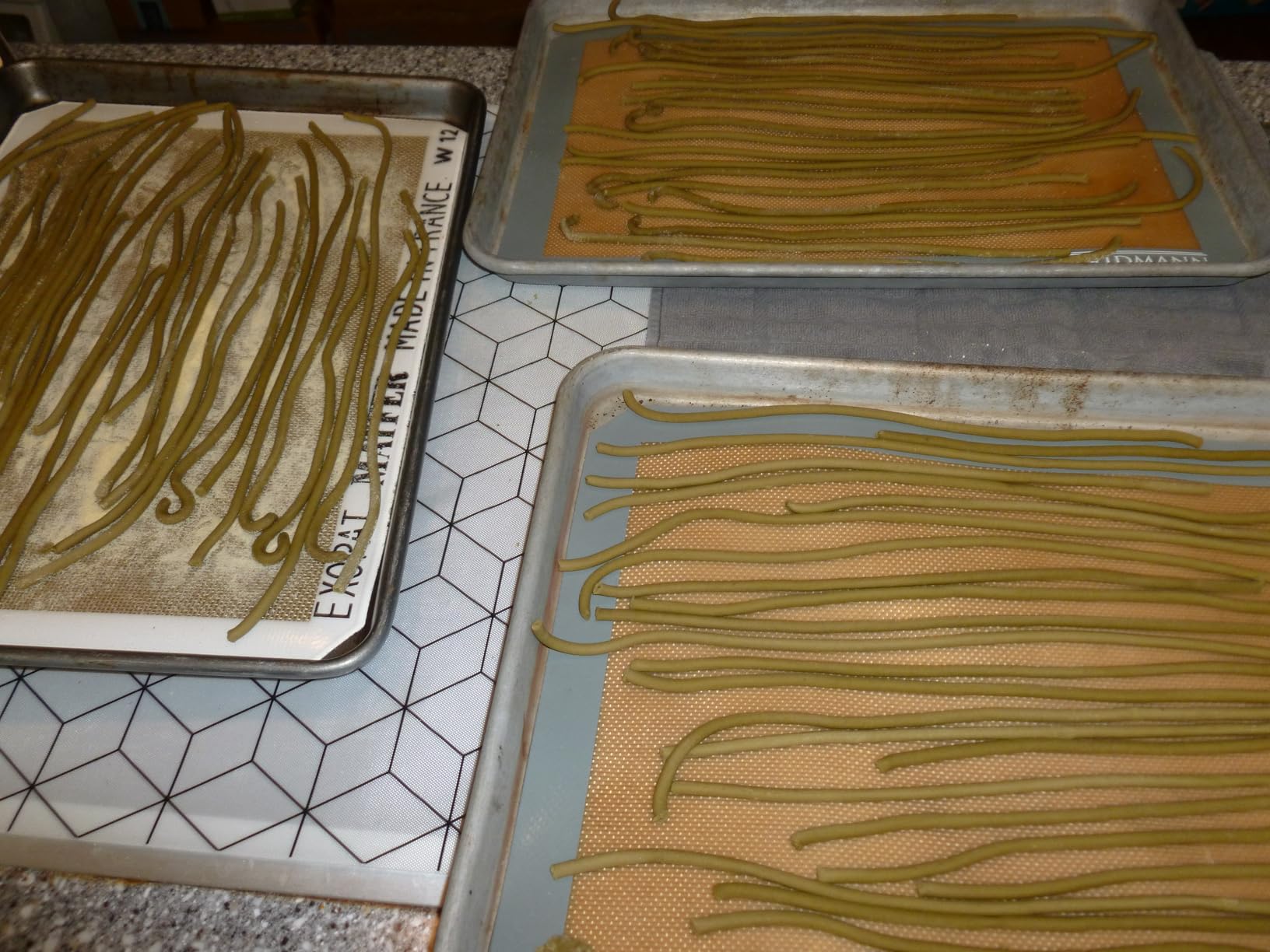
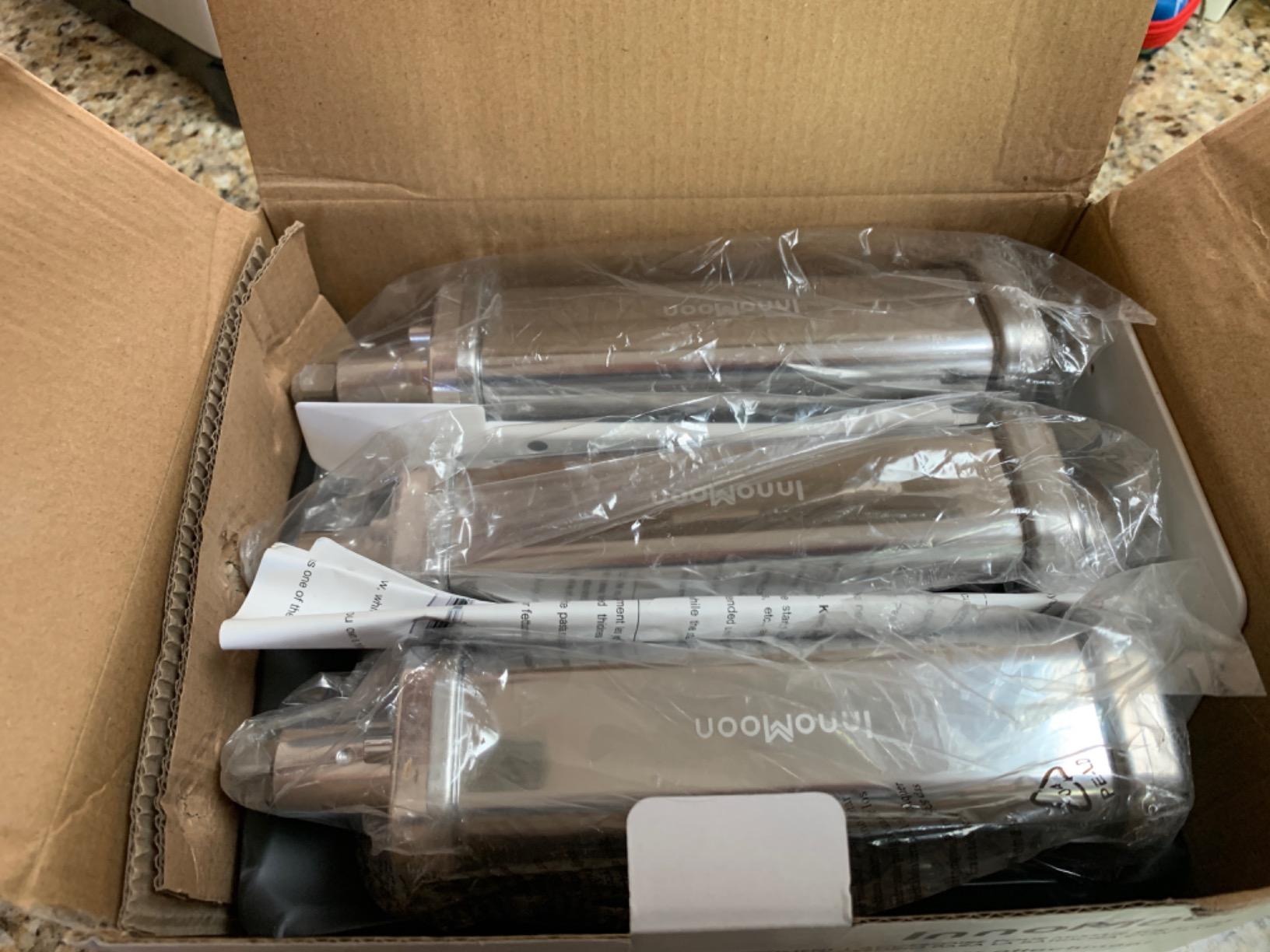
The distinguishing feature here is a fettuccine plate, which none of the other press attachments in this group includes. Seven blades cover spaghetti, bucatini, rigatoni, fusilli, large macaroni, small macaroni and fettuccine, so you get a flat ribbon without buying a roller. The blade storage box keeps them all in one compact case.
Reviews split sharply by variant, and that split matters when you read them. The metal silver version is described as heavy, sturdy and well made, while the white version draws complaints about warping and twisting under load, especially with wet dough, and eventual breakage. If you buy this, read the variant reviews for the exact version you are ordering, because the two are not equivalent.
Even negative reviewers here credit the seven-blade range, the storage box and the low price, and the brand is noted for issuing refunds on broken units, which is a real comfort when the durability reports are mixed. A portion of the reviews describe use as a dough roller rather than an extruder, so set expectations: this is an extruder with a couple of flat shapes, not a manual roller machine.
The bundled recipe is the other recurring problem, producing dough that is too wet and jamming the throat. That is a fixable issue rather than a machine fault, since the hopper is small and suits only small batches anyway. Feed it small, dry, walnut-sized portions and it will keep working.
What you need to know before buying
Pick the variant deliberately. If the white plastic one is what is available at your chosen listing, temper your expectations on longevity, because warping under load appears repeatedly in those reviews. The metal silver version shares a rating with the same set of feedback, so the difference is genuinely about the material rather than the batch.
Dimensions are listed at 6 by 4 by 10 inches and weight at 3 pounds, which is in line with the other press attachments. Operation is a single knob on the main unit, so there is no speed dial to decode. Cleanup is a damp cloth on the body with the remaining parts detaching for the included brush.
Who it suits and who it does not
It suits a cook who wants the widest single-press shape list available here and likes having a fettuccine plate without a second machine. It also suits anyone who is willing to test a recipe and adjust hydration, since the wet-dough complaints are about the recipe as much as the hardware.
It does not suit a heavy user or anyone who wants one machine for everything. Small hopper, smaller batches and the mixed durability reports mean this is a hobby press, not a workhorse. If you are making pasta for six or more on a regular basis, step up to a machine with a larger batch size.
7. Philips 7000 Series HR2660/03: Best for Large Batches
Philips 7000 Series Pasta Maker, ProExtrude Technology 150W, 8 discs, Perfect Mixing Technology, Prepare up to 8 Portions, HomeID App, White, (HR2660/03)
Automatic electric
Up to 8 portions
8 discs, 8 settings
150W motor, 20 pounds
Pros
- Largest batch size here at 8 portions
- Eight discs for the widest shape choice
- 150W motor handles gluten-free flours
- Dishwasher-safe non-stick parts
Cons
- Heaviest unit here at 20 pounds
- Needs dedicated counter space
- Runs hot on back-to-back batches
- Mixing chamber must be cleaned between batches
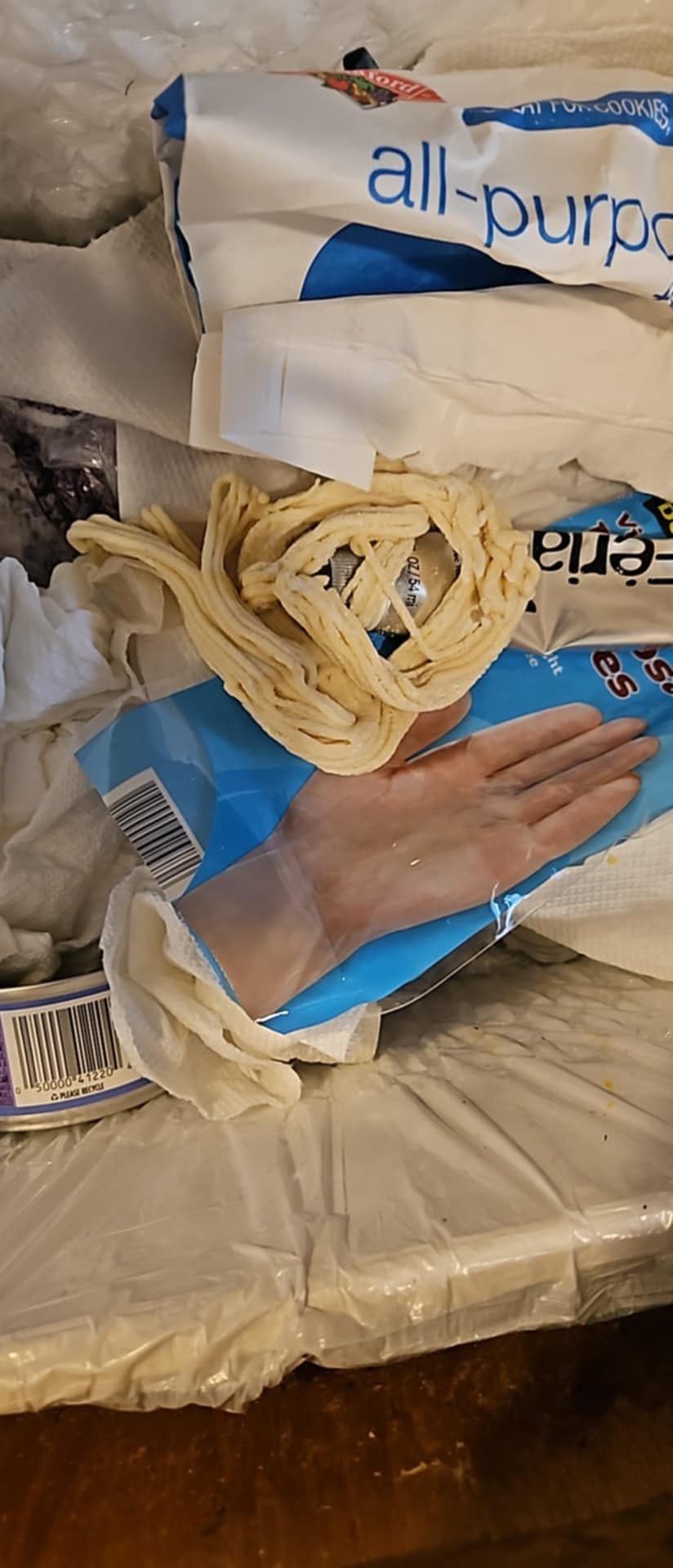
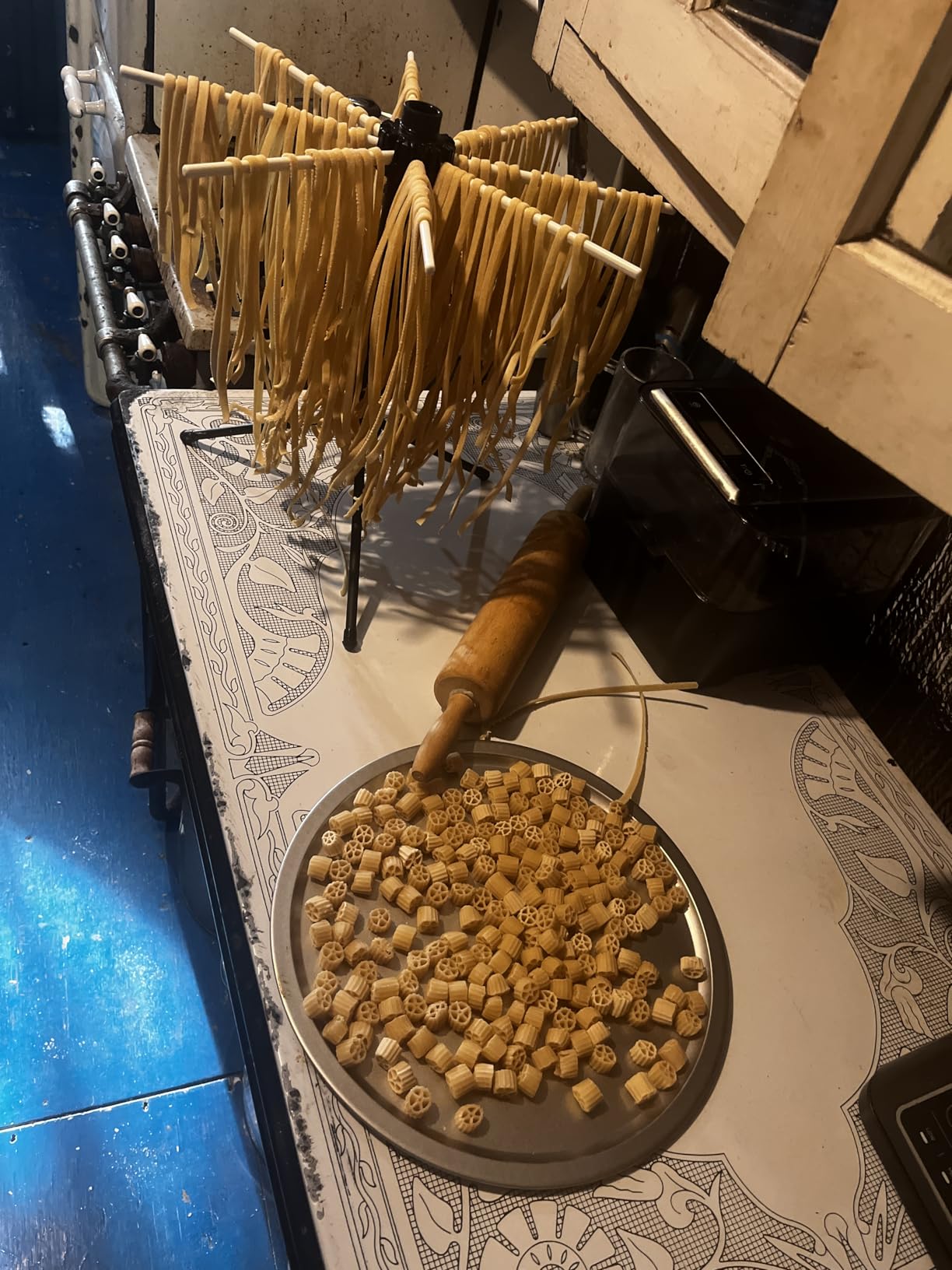
Batch size is the whole argument for this machine. Up to 8 portions in a single run, with fresh pasta reported in under 10 minutes, means a family dinner or a small gathering happens in one cycle instead of three. Eight discs against the Viva Compact’s three also gives you the widest shape library among the standalone machines here.
The 150W motor with Perfect Mixing technology handles varied flours, and the HomeID app supplies step-by-step recipes including vegan and gluten-free options, which lowers the barrier for a first-timer considerably. Owners highlight the speed and the batch size as the clear advantages over smaller automatic machines, and the mixing function doubles as a prep mode for cookies, pizza and bread dough.
The cost is space. At 20 pounds and 12.87 by 9.02 by 12.68 inches, this is the largest and heaviest unit we tested, and it needs counter you are willing to dedicate rather than borrow. It also runs hot when you push back-to-back batches, so give it a break between runs rather than starting the next cycle immediately.
Reliability feedback is mixed, with a number of reviews describing motor or extrusion assembly failure and long warranty handling, which is worth weighing against the appeal of the batch size. The plastic mixing chamber also has to be cleaned between batches, so a big batch means a big cleanup, and that is the trade nobody mentions in the marketing.
What you need to know before buying
Measure your counter before ordering, not after. The 20-pound weight means this does not slide into a cabinet easily, and a machine that lives permanently in view gets used far more often than one you have to unpack. Non-stick, dishwasher-safe parts take some of that friction out, but the chamber still needs a dry-out routine.
Also weigh the die ecosystem against the attachment route. Eight discs is generous out of the box, but extra discs and the drying rack are additional purchases, and an automatic machine has more surfaces to keep clean than a press that only ever touches a walnut-sized ball. If batch size is not your binding constraint, the Viva Compact does the same job in a third of the space.
Who it suits and who it does not
It suits households feeding five to eight people in one sitting, hosts who cook for guests regularly, and anyone who wants an appliance that handles mixing, kneading and shaping without supervision. The app recipes also make it a reasonable first automatic machine for someone who wants guidance rather than a bare machine.
It does not suit a small kitchen or a one or two person household, because 8 portions will simply be wasted. It also does not suit anyone who wants a lightweight appliance to lift frequently, or who will run batches back to back without breaks, because the heat build-up shows in output quality.
8. Atbod Metal Pasta Press Attachment: Best Metal Build in the Budget Tier
Metal Gourmet Pasta Press Attachment for Kitchenaid Stand Mixer, Pasta Maker Attachment with 5 Interchangeable Plates, Spaghetti Bucatini Fusilli Large/Small Macaroni
Stand mixer attachment
Alloy metal body
5 plates
6 by 2 by 8 inches
Pros
- All-metal body feels more durable
- Wire cutter for length control
- Fast on macaroni and fusilli
- Compact storage case included
Cons
- Housing is wipe-clean only
- Plastic auger reported to crack
- Thin shapes come out clumpy
- Plastic dies not interchangeable with metal
The all-metal body is the reason to look at this press. Buyers are drawn to it because it feels more durable and better made than the plastic alternatives, and the wire cutter gives better length control than most budget attachments manage. The listed dimensions of 6 by 2 by 8 inches and a weight of 1 kilogram make it the lightest press in this group by some distance.
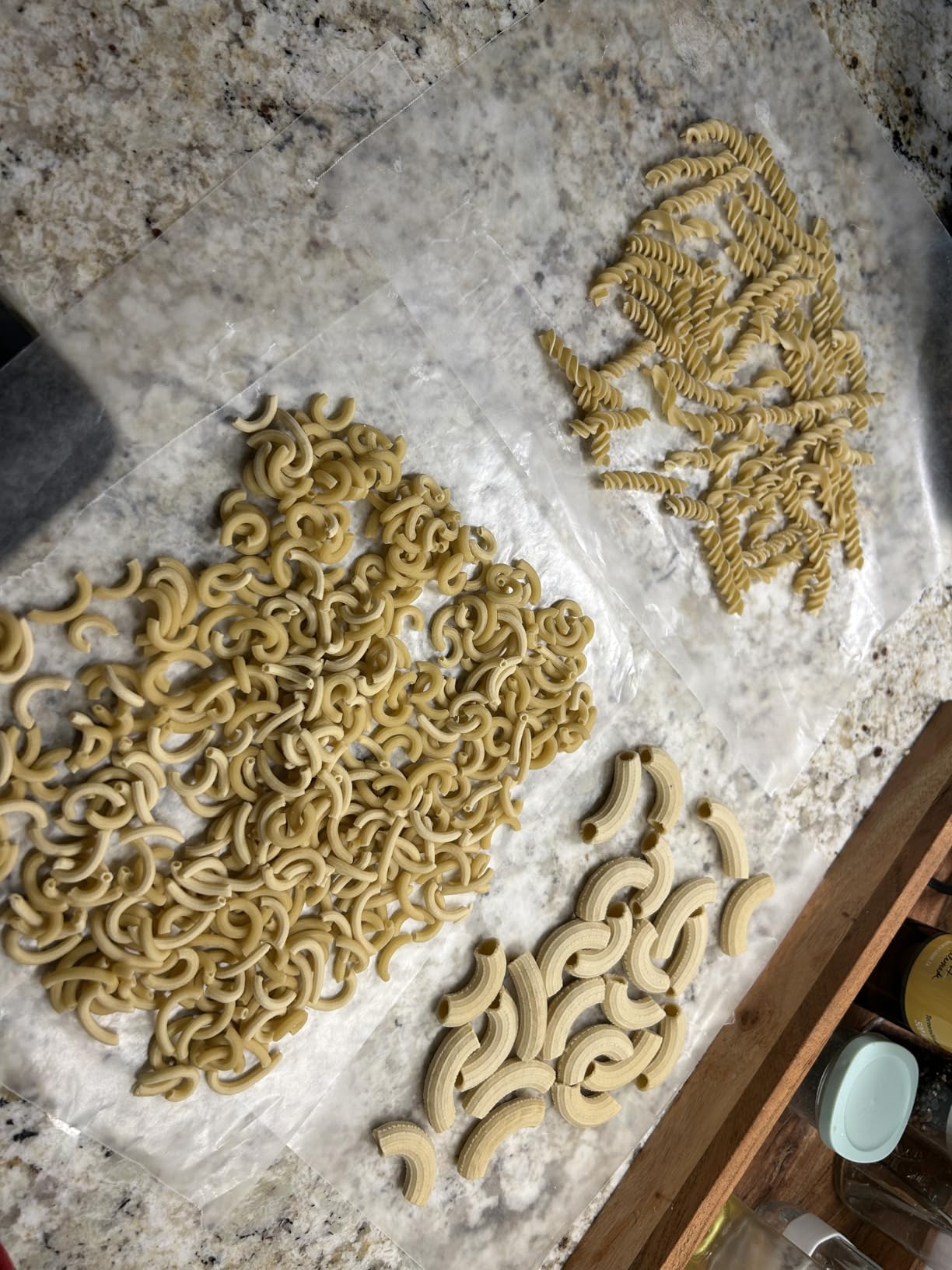
Shape performance is uneven across sizes, and that is the key nuance. Larger shapes such as macaroni and fusilli extrude well and at a faster rate, while thin shapes like spaghetti and angel hair tend to come out thick and clumpy. If your target shapes are the short, sturdy Italian ones, this machine handles them better than its rating suggests.
Inside that metal shell sits a plastic auger, and that is the durability weak point. Some users report the auger cracking after a few months of use, and the same reports surface for the metal head and internal parts on the budget presses generally. The metal exterior survives; the working internals are where failure happens.
Hygiene is the other issue. The housing cannot be washed or immersed, so interior food surfaces are wipe-clean only, and it runs no louder than the mixer itself. Extrusion is slow for small diameters and long runs can overheat the mixer, so treat it as a short-batch tool rather than a production one.
What you need to know before buying
Check die compatibility before you plan an upgrade path. The rough-textured plastic dies are not interchangeable with metal dies, so if your plan is to add bronze plates later, this is the wrong chassis for it. It is a self-contained five-plate set, and the spec sheet lists both five discs and six quick-change positions, so confirm what ships in the box.
It fits KitchenAid mixers and includes a mould storage case and cleaning tool. The dough is still your responsibility: knead it dry, form walnut-sized portions, and feed slowly. Thin shapes need a stiffer dough and a slower feed than the large macaroni settings do, which is where most complaints originate.
Who it suits and who it does not
It suits a cook who wants a sturdily built press at a modest price, owns a mixer, and mainly makes the short sturdy shapes that this press handles best. Light weight also makes it easy to attach, detach and store away, which is a genuine advantage in a small kitchen.
It does not suit anyone making thin pasta, since spaghetti and angel hair come out clumpy from this die set. It also does not suit a person who wants parts in the dishwasher or plans to grow into metal dies later. For long-term shape flexibility, an attachment with a plastic hub and more plates is a better starting point.
Bronze Dies vs. Plastic Dies, and Where Third-Party Dies Come From
Every machine in this group ships with plastic dies, and that single fact explains more texture complaints than any other variable. A plastic die is smoother, cheaper and more consistent from the factory, but it shears the dough rather than tearing it, which leaves a slicker surface that sauce grips less well. Bronze behaves the opposite way: it drags slightly, producing the ragged, porous exterior that restaurant pasta is prized for.
Users in r/pasta treat bronze or brass dies as the quality benchmark, and the same community has settled on a standard upgrade path. Buy a plastic-die machine, use it for a few months to learn the dough, then add bronze plates from a specialist die maker. The suppliers that come up repeatedly are Pastidea, Rosito Basani and Pastabiz, and each sells dies matched to specific extruder models.
Compatibility is the catch, and it is worth stating plainly. Dies are model-specific, and a plastic hub will not accept a metal plate designed for a different body. The budget attachments here, including the COFUN, the InnoMoon and the Atbod, are the least likely to be upgradeable later, while the Philips bodies and the KitchenAid plates have the broadest third-party support.
One piece of community knowledge is worth repeating because no competitor publishes it: gently boiling a die and an auger in water is an effective way to release dough that has set hard inside the machine. It sounds wrong for a machine manual, and it is still worth knowing the month a chamber seizes and nothing else shifts it.
Extrusion Dough 101: Semolina, Water and Resting Time
Extrusion dough is not the dough you make for lasagne. It is durum semolina and water, and it must be drier than almost anything you would feed a roller. The commonly cited ceiling for extrusion is around 34 percent hydration, which experienced makers describe as the maximum recommended level. Push past that and the dough smears inside the die instead of extruding cleanly.
The ratio matters less than the result. Start near 3 parts semolina to 1 part water and adjust by feel, because flour varies and the machine varies. The test is simple: the dough should hold together in your hand and break cleanly when you squeeze it, without sticking to your palm. Tackiness means too wet, and a tacky dough will gum up any die you own.
Resting matters too, and you can rest dough too long. Egg dough for rolling often benefits from 30 to 60 minutes of rest, while low-hydration extrusion dough needs a much shorter window. Rested too long, the surface dries and the gluten over-relaxes, which shows up as dough sticking at the die. Wrap any dough you are not using immediately so the surface cannot dry out.
Dust your work surface and your hands with semolina rather than flour. Flour dusting hydrates the dough on contact and encourages sticking, while semolina behaves more like a lubricant at the surface. The same logic applies to the extruder mouth, and it is why manufacturers put semolina in the recipe instructions in the first place.
Buying Guide: What to Look for in a Pasta Extruder
Power source and what it means for your dough
Stand-mixer attachments borrow a motor you already have, which saves counter space and adds torque, and they make you knead every batch by hand. Automatic electric machines do the mixing and kneading themselves, which is the whole convenience proposition, and they demand the most counter space. Manual hand-crank extruders have no motor to fail but ask for real effort and a pre-mixed dough. Pick the power source first, because it constrains every other choice.
Torque matters more than wattage for dough quality. A stiff, dry, crumbly batch is the correct input for every machine here, and a motor that cannot push that dough produces gummy, overworked strands. That is the argument for the mixer-driven press over a small standalone motor, and the reason experienced makers gravitate to attachments once they own a mixer.
Batch size and household fit
The automatic machines here run from 2 to 3 servings up to 8 portions per cycle. That is the single most useful number to match against your household, because it is the difference between one batch and three batches before dinner. A small household buying an 8-portion machine will waste dough every time, and a large household buying a 2-serving machine will be making dinner while the machine is still running.
Attachments have their own fit problem, since they are limited by the size of the ball you can load and by how long you will stand there cutting. Reviewers consistently describe feeding walnut-sized portions slowly, which is a labour input that does not appear in any specification sheet. Price that time honestly before you commit.
Die material and the shape library
Count the discs, then check the material. Three discs is a minimum viable set for an automatic machine, while seven-plate bundles cover nearly everything an Italian kitchen actually cooks. All the dies in this group are plastic, which is why we rate the Philips 7000 Series highest on shape variety and the InnoMoon highest on shapes per plate, including the only fettuccine option here.
Then decide whether you will upgrade. If you think you will want bronze dies in a year, buy a body with an established third-party ecosystem. The Philips machines and the KitchenAid plates have the widest support from specialist die makers, while the budget plastic-hub attachments lock you into what shipped in the box.
Cleaning and maintenance
Cleaning is the number one complaint in this category, so evaluate it before you evaluate anything else. The parts that touch dough are removable on every machine here, and the tool kit matters: a cleaning brush is included with most of the attachments, and the KitchenAid 5KSMPEXTA adds a stainless steel tool and a foam-lined case. Only removable parts should meet water.
Never immerse the housing or the drive section, on any machine. Wipe it, brush it and let it dry completely, because a wet chamber invites rust and seized parts. The routine that works is simple: cook the pasta first, let the chamber dry while you eat, then brush out any residue and store it open. The members of r/KitchenConfidential who keep their machines for years all describe the same discipline.
Counter space and storage
Counter footprint splits the group cleanly. The Philips Viva Compact measures 15.5 by 13 by 11.9 inches and the Philips 7000 Series sits at 12.87 by 9.02 by 12.68 inches but weighs 20 pounds, while the press attachments are small enough to live on a mixer head. The heavier machine is not difficult to use, it is difficult to move, and that is what makes it a permanent fixture rather than a stored appliance.
Attachments solve storage but create their own problem: loose metal parts. A model with a storage case, such as the HOZODO, the InnoMoon, the KitchenAid 5KSMPEXTA or the Atbod, keeps plates and tools together. The KitchenAid KPEXTA is the awkward exception, because the wire cutter and drive bolt get in the way when it is laid down.
Who Should Skip a Pasta Extruder
Skip it if you want lasagne sheets, ravioli, tortellini or wide ribbons. Extruders do not produce flat or filled pasta, and forcing an attachment to do a roller job wastes money and counter space. If your cooking is built around stuffed pasta, a roller is the only correct purchase.
Skip it if you cook for one or two people. The smallest automatic machine makes 2 to 3 servings and the attachments are effectively single-batch tools, so you will be discarding dough or making far more than you can eat in one sitting.
Skip it if you will not clean it. Every machine here needs a dry-out and brush cycle after each use, and reviewers treat cleaning as the leading reason people abandon extruders. Buy a roller instead: it has fewer crevices, fewer removable parts and no dough chamber to seize.
Skip it if you want a smoother, more refined surface than a plastic die can give you, unless you are prepared to add bronze dies later. And skip the whole category if you are starting from zero and do not own a stand mixer, unless you are buying the automatic machine specifically.
Frequently Asked Questions
Are pasta extruders worth it?
They are worth it if you regularly cook for four or more people, want tubular or ridged shapes like penne, rigatoni and fusilli, and will clean the dough chamber right after every batch. They are not worth it for lasagne, ravioli or other flat and filled pasta, for one or two person households, or for anyone who finds the ten-minute scrub a chore. The real cost is time, not money.
How much does a pasta extruder cost?
Prices fall into three bands. Manual hand-crank extruders from Italian makers sit at the entry end, stand-mixer press attachments cover the middle, and fully automatic electric machines occupy the top. Budget for extras either way: extra dies, a drying rack, a dough scraper and a large pot are all bought separately, and a kitchen scale is close to essential for reliable hydration.
What is the recommended ratio of semolina flour to water for pasta dough?
Start near three parts semolina to one part water, which lands close to a 33 percent hydration, and treat roughly 34 percent as the practical ceiling for extrusion. The dough should hold together in your hand and break cleanly without sticking to your palm. Wet dough smears inside the die and produces gummy strands, which is the most common cause of a failed batch.
How do you clean pasta extruder dies?
Let the chamber dry for about an hour, then brush residue out with a pastry brush or a wooden skewer. Remove the die discs and hand-wash those in warm water. Never immerse the housing, the auger or any metal drive part, because water leads to rust and seized components. For a set die, gently boiling the die and auger loosens stubborn dough that a brush will not shift.
Can you let pasta dough rest too long?
Yes. Over-resting lets the surface dry and the gluten relax past the point that helps, and the result is dough that sticks at the die. Egg dough for rolling often benefits from 30 to 60 minutes of rest, while low-hydration extrusion dough needs a much shorter window. Always wrap dough you are not using immediately so the surface cannot dry out.
How do you lubricate a pasta machine?
Use mineral oil sparingly, and only on metal rollers and gear shafts, never on plastic die discs or the dough chamber where oil would contaminate the pasta. This mostly applies to manual roller machines. Automatic extruders and press attachments need almost no lubrication beyond cleaning, because their only metal moving parts run dry.
The Verdict
The Philips Viva Compact HR2370/05 is our pick for 2026 because it does the whole job on one button, sits on a normal-sized counter, and carries the largest review base in the group without falling behind on rating. If you already own a stand mixer, the HOZODO press gives you seven shapes and a metal body for a fraction of the first-party route, and the KitchenAid 5KSMPEXTA remains the highest-rated and best-built option in the entire comparison.
Everything else in this list is a variation on those two ideas. Choose by batch size, by whether you already own a mixer, and by how much counter you can spare, then plan for bronze dies and a semolina-to-water ratio of about three to one. Whatever you pick, buy a kitchen scale first and expect your first batch to be a learning run. If you want the wider picture, our guide to pasta extrusion machines covers the shapes and dies in more depth, and our roundup of direct drive extruders is worth a look if you are still deciding how much motor torque you actually need.