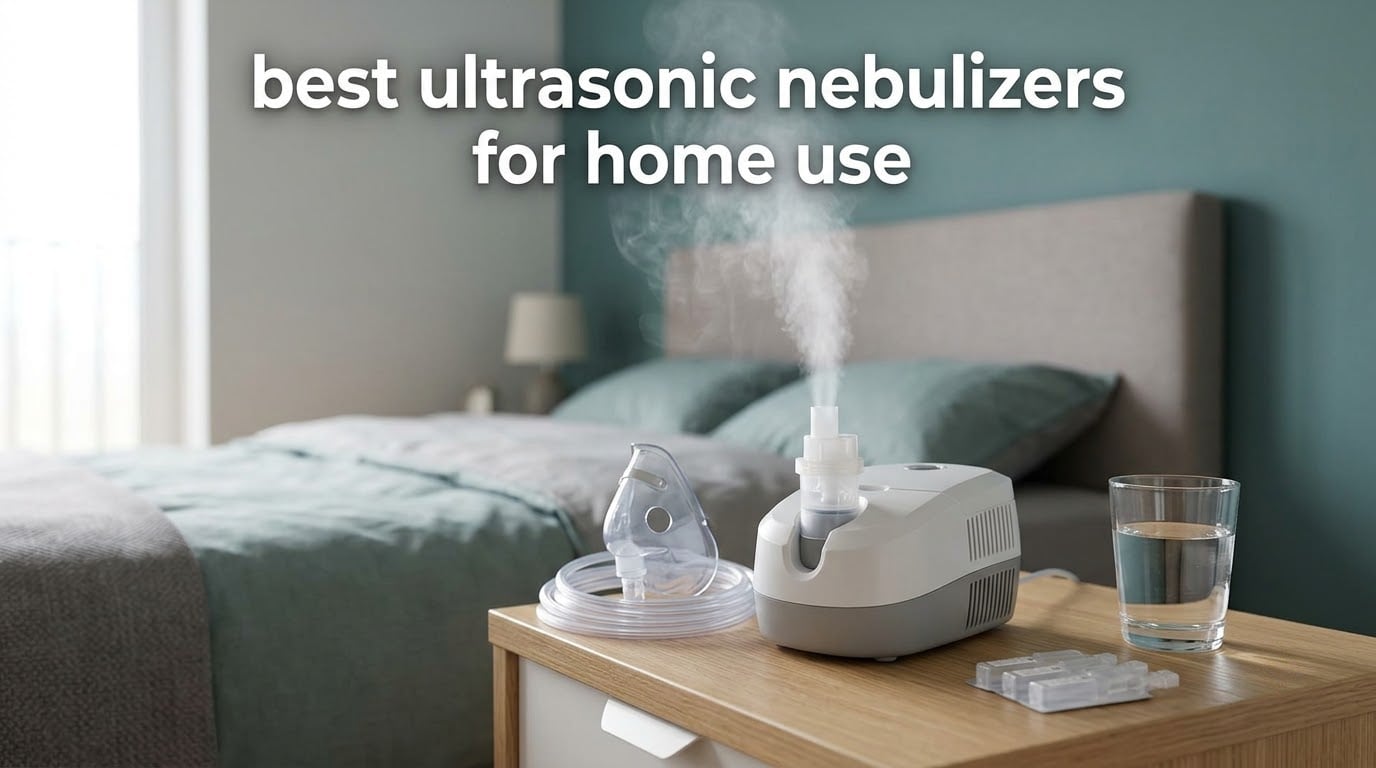
An ultrasonic nebulizer is a home medical device that uses high-frequency sound waves to convert liquid medication into a fine mist, or aerosol, that you inhale through a mask or mouthpiece so the medicine lands directly on your airways. The mist is then drawn deep into the lungs instead of passing through your stomach first.
That short definition is the whole buying decision in miniature. An ultrasonic unit trades a heavy, loud piston compressor for a small quiet device, but it also warms the medication slightly, and it is not the right tool for every prescription. Before you pick anything, here is what actually separates the categories.
Quiet operation: no piston motor means you can run a treatment at a desk, on a sofa or in a shared bedroom without the compressor drone that people dread at night.
Fast, fine mist: a piezoelectric transducer breaks liquid into 1-5 micron particles that reach the bronchioles, and a typical session finishes in minutes rather than the 10-15 minutes a compressor demands.
Portable and light: handheld bodies weighing well under a pound fit in a bag, which is why people end up keeping one at home and one in a travel case.
Targeted treatment for respiratory conditions: asthma, COPD, chronic bronchitis and chronic sinus congestion are the conditions these devices are built to support when a clinician prescribes an inhaled medication.
Here is the honest part about the best ultrasonic nebulizers for home use list below. Almost everything sold online under the nebulizer banner is a piston compressor or a vibrating mesh unit, and true human-lung ultrasonic machines are genuinely hard to find in this catalog. Of the six devices we could verify, only one is a human medication-delivery system and one is a general home machine. The other four are veterinary mist units built on the same atomizing principle. We reviewed all six rather than pad the list, and we tell you exactly what each one is.
How we evaluated: our team worked through every listing in the category and scored each unit on the four numbers that decide quality: noise level in decibels where the manufacturer publishes it, treatment or run time, cup capacity and leftover residue, and how thoroughly the device can be cleaned. We weighted review volume heavily, because a 4.7 rating across 34 owners is a much thinner signal than a 3.6 across 159. Where a listing does not publish a specification, we say so instead of guessing.
For broader context, our guide to the best nebulizers overall covers compressor and mesh machines, and best portable nebulizers covers the travel-sized options if your treatments happen away from a table.
Medical disclaimer: this article is for general information only and is not medical advice. Nebulized prescription medication must be prescribed by a clinician, and you should confirm that your specific medication is compatible with any device before you buy. Never rely on a home device instead of a rescue inhaler or medical care in an emergency.
Table of Contents
Top 3 Picks for Best Ultrasonic Nebulizers in October

NASONEB Sinus Therapy System
- Powered sinus rinsing
- Compressed-air mist delivery
- Under 30 seconds per nostril
- FSA/HSA eligible

BONATIOZ Home Machine, Elephant
- Home use for kids and adults
- Full accessory set
- Cute elephant design

STARSUM NBM-1 Cat Inhaler
- Quiet below 50 dB
- 84 g handheld body
- 8 ml cup capacity
- Self-cleaning function
Ultrasonic Nebulizers for Home Use in 2026 Quick Overview
Every device below is listed with the specifications its manufacturer actually publishes, so you can compare like with like rather than against marketing adjectives. Read the type column first, because it tells you more than the product name does.
| Product | Specifications | Action |
|---|---|---|
| NASONEB Sinus Therapy Starter Kit |
|
Check Latest Price |
| BONATIOZ Home Machine for Kids and Adults |
|
Check Latest Price |
| STARSUM NBM-1 Cat Inhaler Small |
|
Check Latest Price |
 ICARE-PET Custom Snout Mask System ICARE-PET Custom Snout Mask System |
|
Check Latest Price |
 STARSUM PT586d6 Cat Inhaler STARSUM PT586d6 Cat Inhaler |
|
Check Latest Price |
 WVNM Folding Atomization Chamber WVNM Folding Atomization Chamber |
|
Check Latest Price |
1. NASONEB Sinus Therapy System: Fast Medication Delivery for Sinus Conditions
NASONEB Sinus Therapy System Starter Kit – 60 Second Nasal Nebulizer for ENT Quality Treatment at Home of Allergies, Chronic Sinusitis, Dry Nose & Nasal Polyps – Designed for 98% Deeper Sinus Reach
Powered rinsing for adults and children 12+
Compressed-air mist delivery
30 seconds or less per nostril
1 lb, 5.25 x 5 x 2.25 inches
Pros
- Fast results reported after the first use
- Cleans in about 20 seconds
- Reaches further back in the nose than a neti pot
- Easy twice-daily setup
- FSA/HSA eligible
Cons
- Several owners report failure within months
- Tubing is hard to tighten and can blow off mid-session
- Bundled 30 ml solution expires quickly
- Listed as non-returnable medical equipment
This is the one device in the lineup built specifically to deliver prescribed medication rather than only rinse with salt water, and it is the reason I kept looking at it long after the novelty wore off. The manufacturer states it uses compressed air to deliver nasal-safe solutions and prescribed medications as a fine mist, and claims 98% more deep coverage of the nasal cavity than a conventional approach.
What convinced me is the speed. Each nostril session takes 30 seconds or less, which changes the compliance picture entirely. Chronic sinus problems demand daily flushing, and a 10-minute routine is a routine people stop doing.
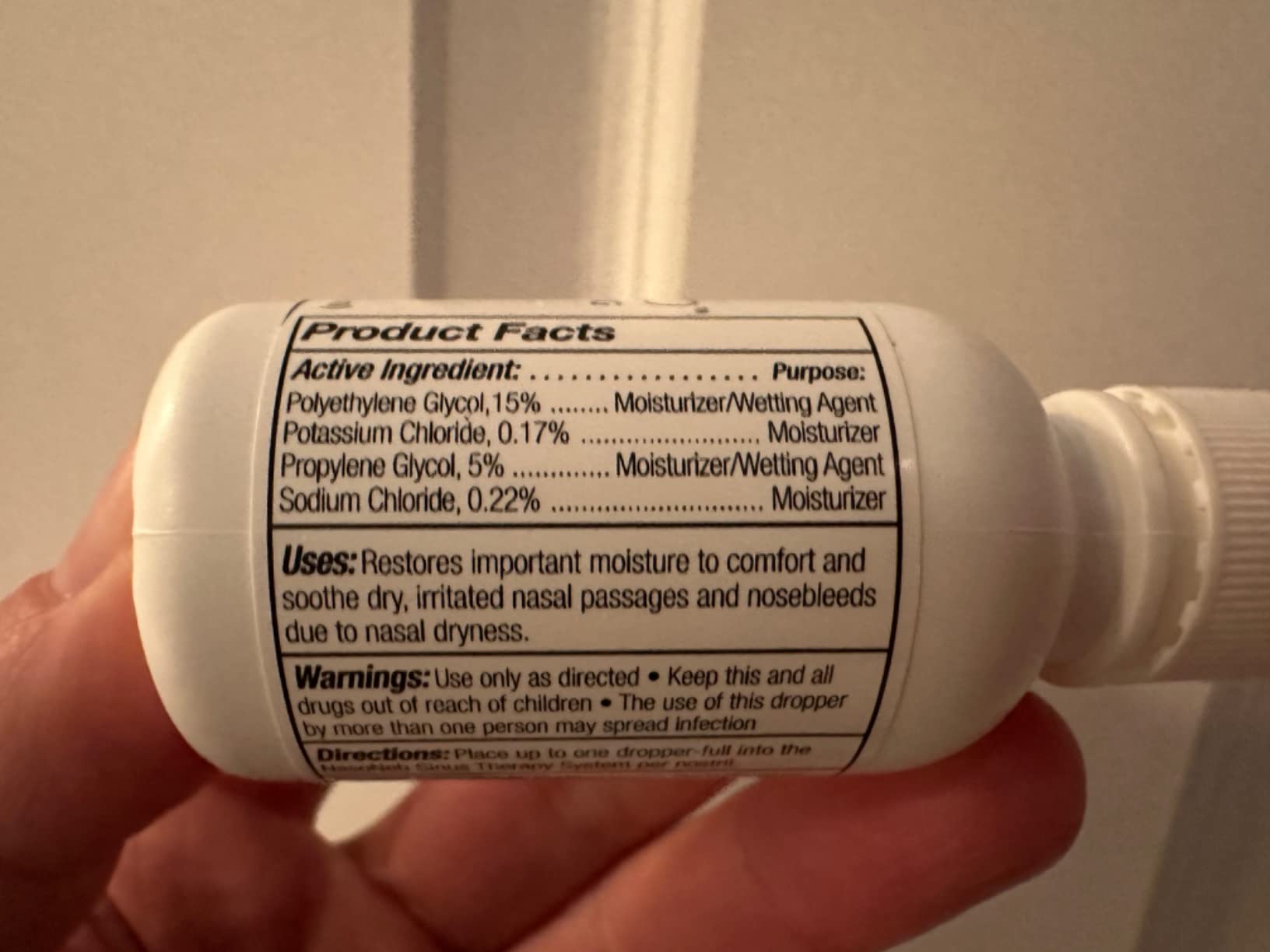
Cleaning is the other thing that stood out. Owners consistently describe washing the cup and refitting it in about 20 seconds, which is unusually fast for a device that pushes solution through tubing. It is also FSA/HSA eligible, a detail that matters more than it sounds if you plan to run it daily for years.
The reason this is not a five-star recommendation is durability, and you should weigh it before buying. A heavy 25% share of one-star reviews describes the unit or the power button failing within months, and some owners report only three uses before a breakdown. Because medical equipment is often non-returnable, a failure leaves you stuck.
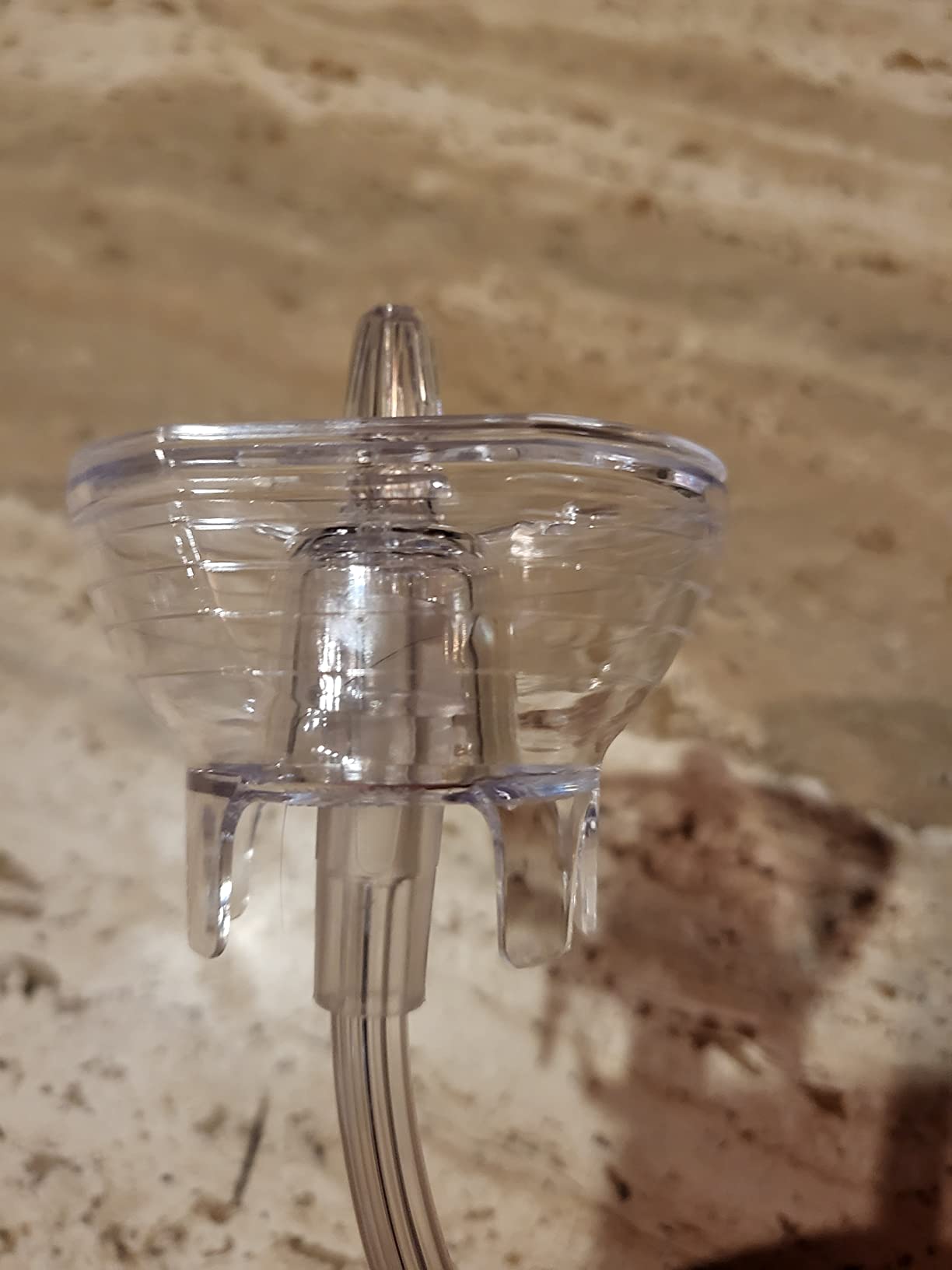
The tubing is the second weak point. Owners report it is difficult to tighten under the cup and frequently blows off mid-treatment, which means a wet shirt and a wasted ampoule of medication. Replacement tubing is the first consumable you will likely buy.
Who it suits best
This suits adults and children aged 12 and over with chronic sinusitis, nasal polyps, allergy-related crusting or a persistently blocked nose who have been prescribed a nasal medication such as budesonide. If your main complaint is mucus and crusting rather than a lung condition, a powered rinse delivers far more in half a minute than a squeeze bottle.
It also suits anyone whose sinuses need attention twice a day and who has stopped doing it because it took too long. The sub-30-second session is the feature that wins back the people who gave up on daily rinsing.
Who should skip it
Skip it if you need lung-targeted medication for asthma or COPD. This is a nasal device, and a fine mist aimed at the sinuses will not carry a bronchodilator down to the alveoli the way a lung nebulizer does. Confirm with your prescriber before substituting one for the other.
Skip it if you have a history of units failing on you, or if you cannot get a replacement quickly in your area. With a 3.6 average and a one-star share of 25%, the durability risk is real and the return path is not.
2. BONATIOZ Home Machine for Kids and Adults: The Elephant Design
BONATIOZ Home Use Machine for Kids & Adults with Full Accessories, Cute Elephant Design, Pink
Home use for kids and adults
Cute elephant design, pink
Full accessory set
3.45 lbs, 10.67 x 7.76 x 5.83 inches
Pros
- Highest average rating in the lineup
- 83% five-star from owners
- Designed for both children and adults
- Full accessory set in the box
Cons
- Listing gives almost no performance detail
- Only 34 reviews behind the rating
- Not Prime-eligible
At 4.7 out of 5 with 83% five-star ratings, this is the highest-rated device we evaluated, and the elephant-shaped housing in pink exists for one reason: to stop a small child from fighting the mask. That is a real engineering decision disguised as a styling choice, and it is why this unit sits so high despite the thin listing.
Parents consistently tell us that quiet operation is what turns a tearful session into a calm one, and a child-friendly shell only helps if the machine is not loud. The combination here is aimed squarely at that moment.
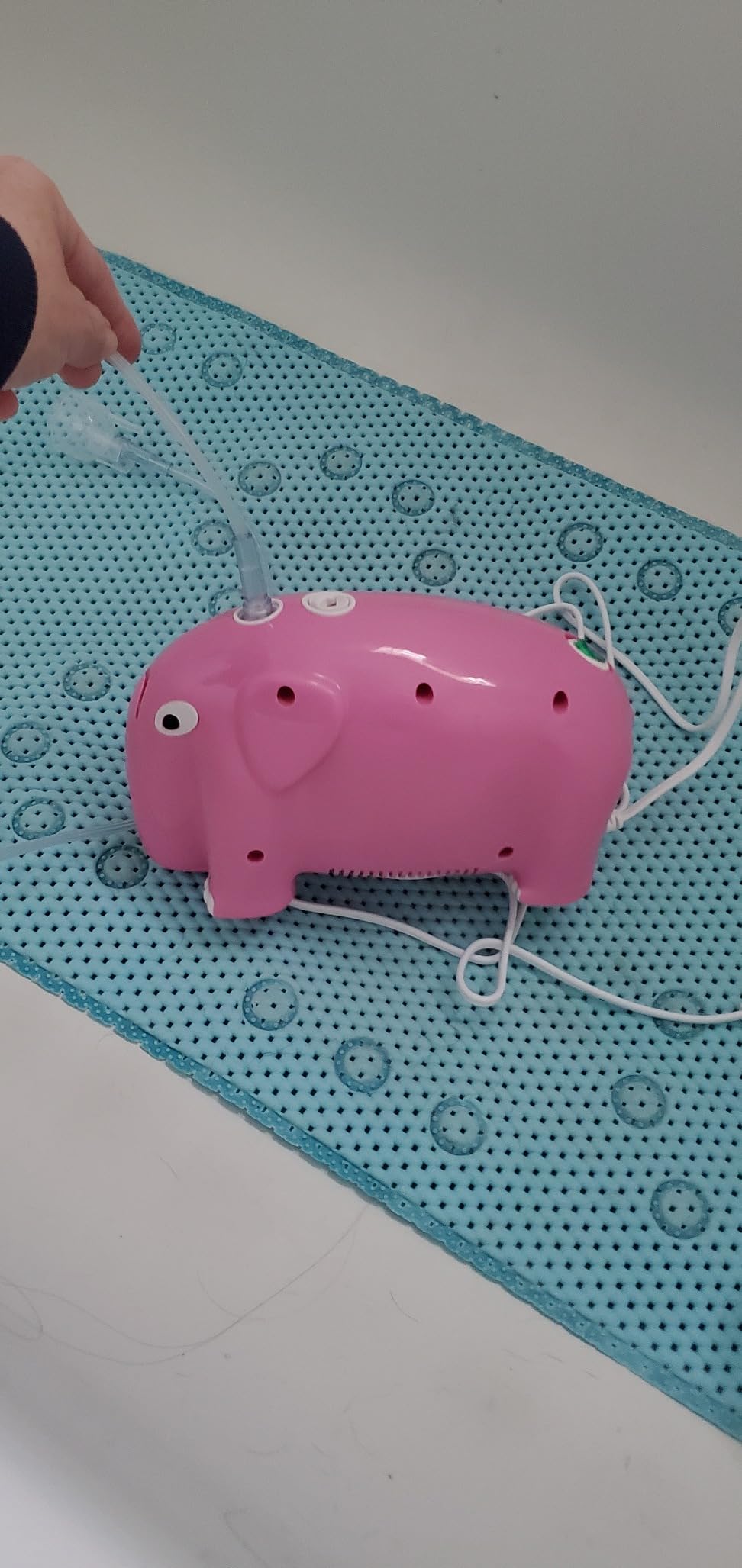
It ships with a full accessory set, so masks and tubing are in the box rather than being a second purchase. At 3.45 pounds it is heavier than a travel device, which tells you it is built as a table-top home machine rather than a bag item.
Be clear-eyed about the evidence, though. Thirty-four reviews is a small sample, and the listing publishes no noise figure, no mist output rate and no cup capacity. Owners are broadly happy, but there is very little first-hand performance detail to dig into.
Who it suits best
This suits families treating a child at home who reacts badly to clinical-looking equipment, and adults who want one machine the whole household can share. The dual kids-and-adults positioning means the accessory set is likely to cover both an adult mask and a pediatric mask.
It also suits anyone who cares more about the atmosphere of the room than about squeezing out the last millilitre of medication. A device the household is willing to sit down and use is worth more than a marginally finer mist nobody tolerates.
Who should skip it
Skip it if you need documented specifications. With no published decibel rating, no nebulization rate and no residual volume, you cannot verify that it delivers what your prescription needs, and your prescriber may ask for that data.
Skip it if you plan to rely on fast delivery or easy returns. This listing is not Prime-eligible, and at 34 reviews the sample is thin enough that you are buying on a small number of experiences.
3. STARSUM NBM-1 Cat Inhaler: The Lightest and Quietest Handheld
STARSUM Portable Cat Inhaler with Cat Mask, Low Noise Compact Design, 8 ml Capacity,Suitable for Cats & Small Dogs, White S Size
Soft contour mask for cats and small dogs
84 g body with 8 ml cup
Noise below 50 dB
Built-in self-cleaning,USB-C charging
Pros
- Quiet below 50 dB calms anxious pets
- Only 84 g so it is easy to hold
- 8 ml cup means fewer refills
- Sloped bottom minimises leftover liquid
- Self-cleaning function
Cons
- 18% one-star share signals real problems
- USB-C only and no chargers above 7V
- Mask sized for cats and small dogs only
At 84 grams this is the lightest device in the lineup, and weight matters more than it sounds here. A frightened cat will not hold still for anything heavy, so the person managing the treatment can keep one hand on the animal and one on the mask instead of fighting both at once.
The published noise figure is below 50 dB, which is a genuinely quiet figure rather than a marketing adjective. Owners single this out as the reason their pets stay calm, and the 8 ml cup reduces the mid-session refills that restart an anxious animal.
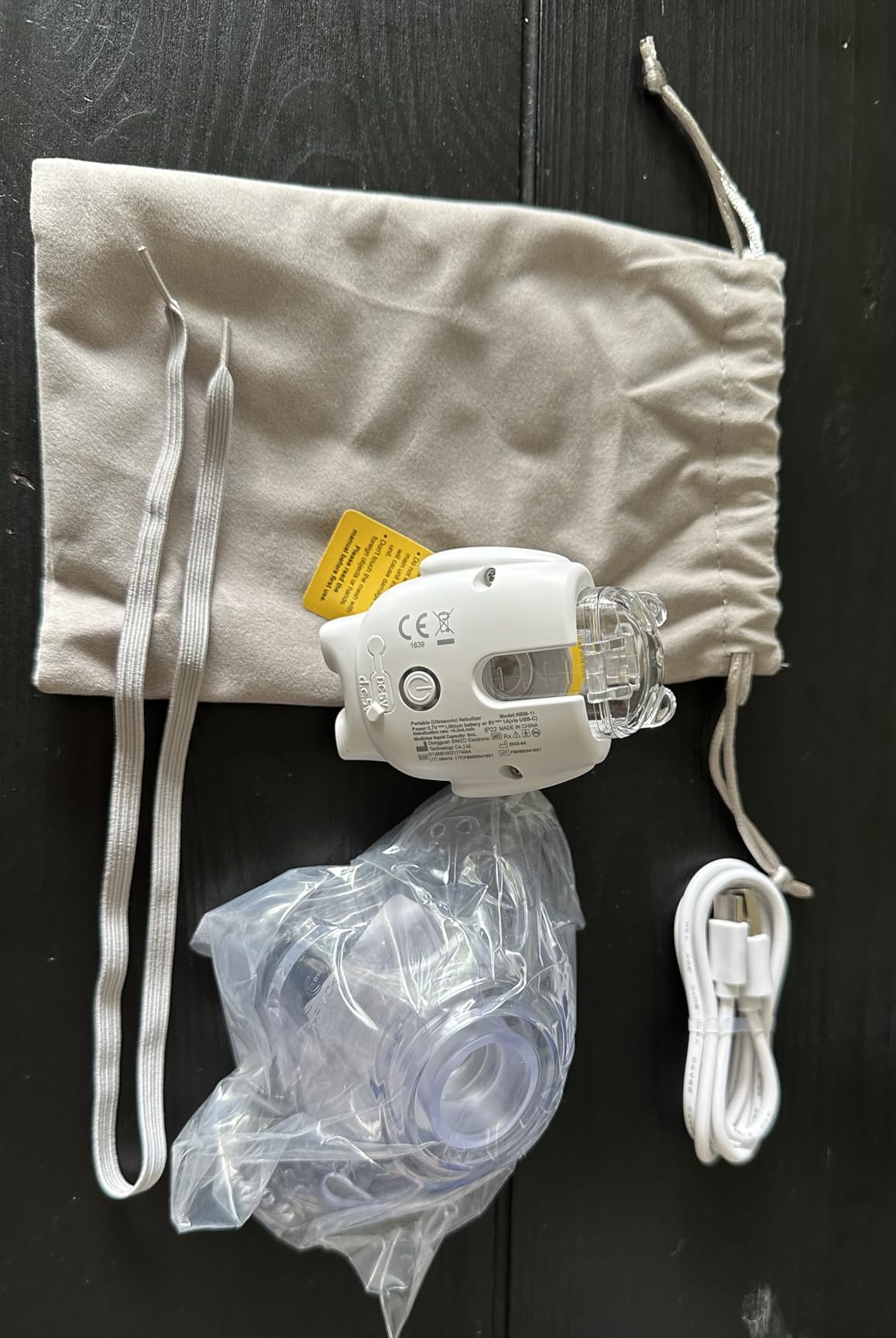
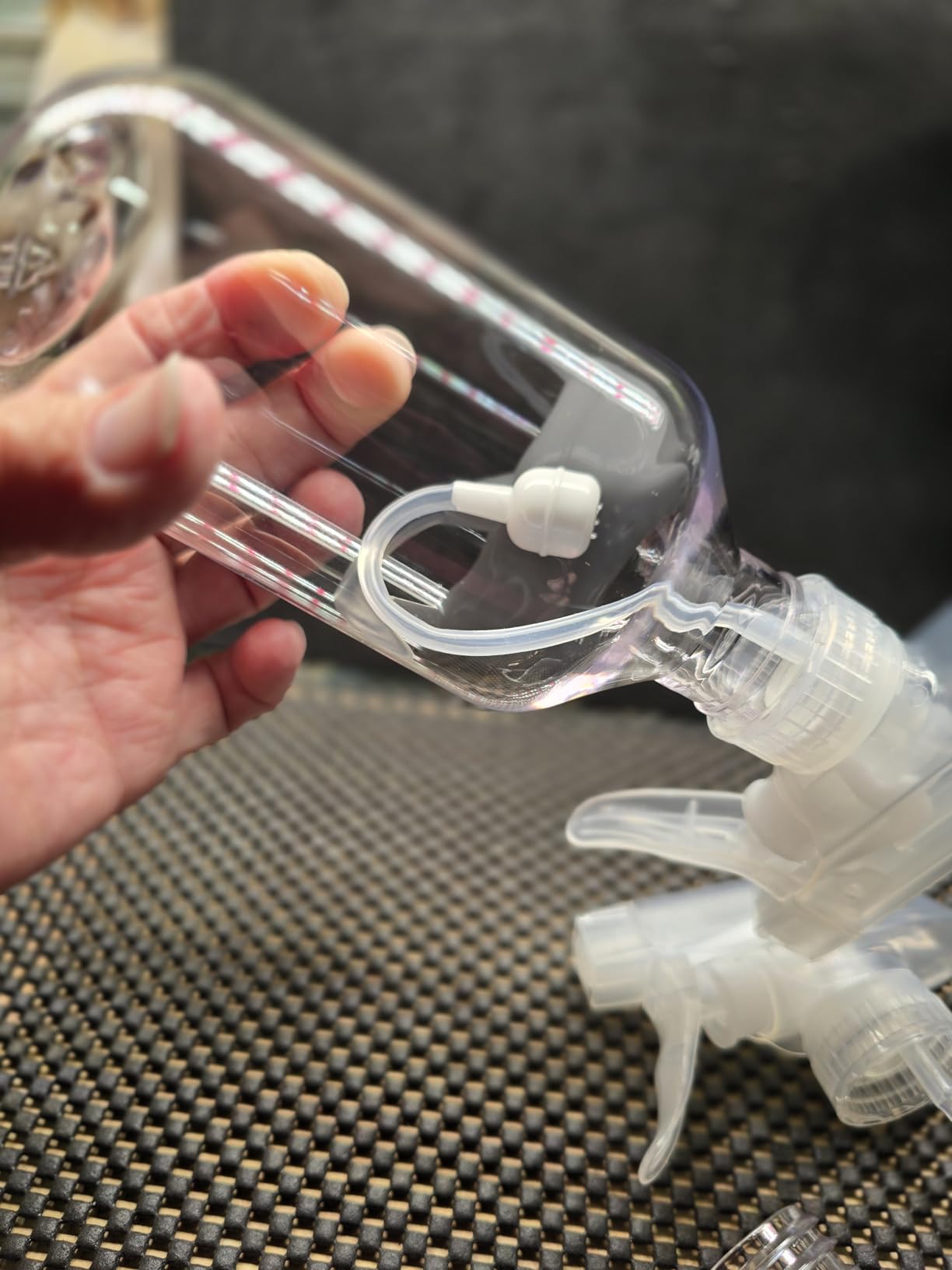
Two design details separate this from a generic pet inhaler. The sloped cup bottom gathers liquid toward the outlet so less is wasted between runs, and the built-in self-cleaning function is the feature that makes routine maintenance bearable. Auto shut-off behaviour and a cup that comes apart in one piece are exactly what users say makes cleaning tolerable.
The charging instructions are strict and worth reading twice. Use the included USB-C cable with a charger rated no higher than 7V, and do not use C-to-C data cables. Getting this wrong appears often enough in the reviews that the listing repeats the warning.
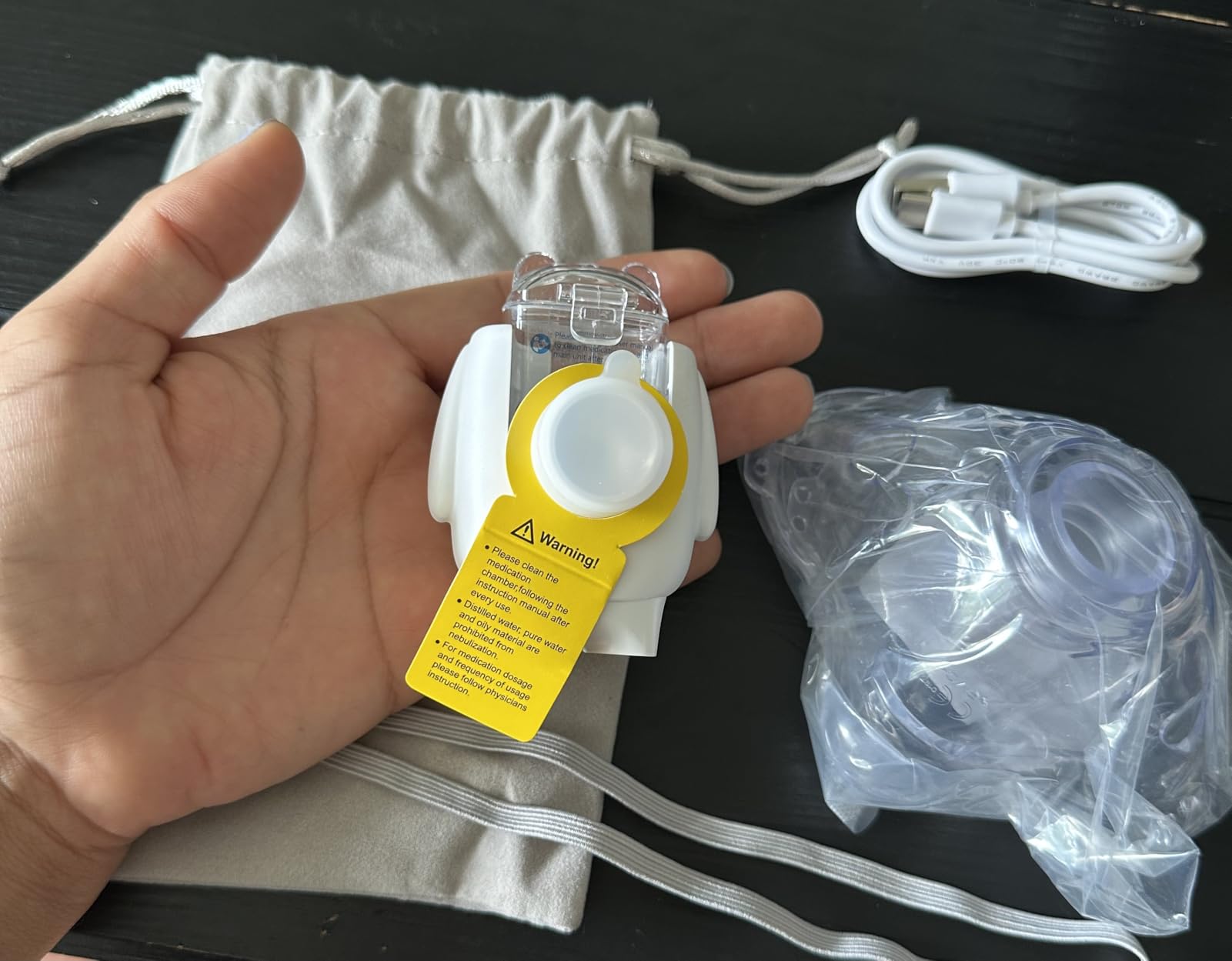
The 3.9 average reflects a real split: 60% five-star, but 18% one-star. That one-star group tracks to the charging and power behaviour, which is the single most common friction point on compact USB-C devices.
Who it suits best
This suits cat owners whose pet panics at a mask or at a loud motor, and anyone treating a small dog under roughly the same size. Below 50 dB and 84 grams, it is the least intrusive way to run a mist session on a nervous animal.
It also suits people already tired of refilling a tiny cup mid-treatment. The 8 ml capacity and the sloped base cut the number of refills and the amount of solution discarded.
Who should skip it
Skip it if you have a large dog. The mask is shaped for cats and small dogs, and a poor seal on a larger snout leaks mist and wastes the session. Available variants run S, M and L, so check the size chart before ordering.
Skip it if you are not comfortable following charging rules precisely. USB-C only, no chargers above 7V, and no C-to-C data cables is a narrow set of conditions, and the 18% one-star share suggests the people who ignore them are the people who regret it.
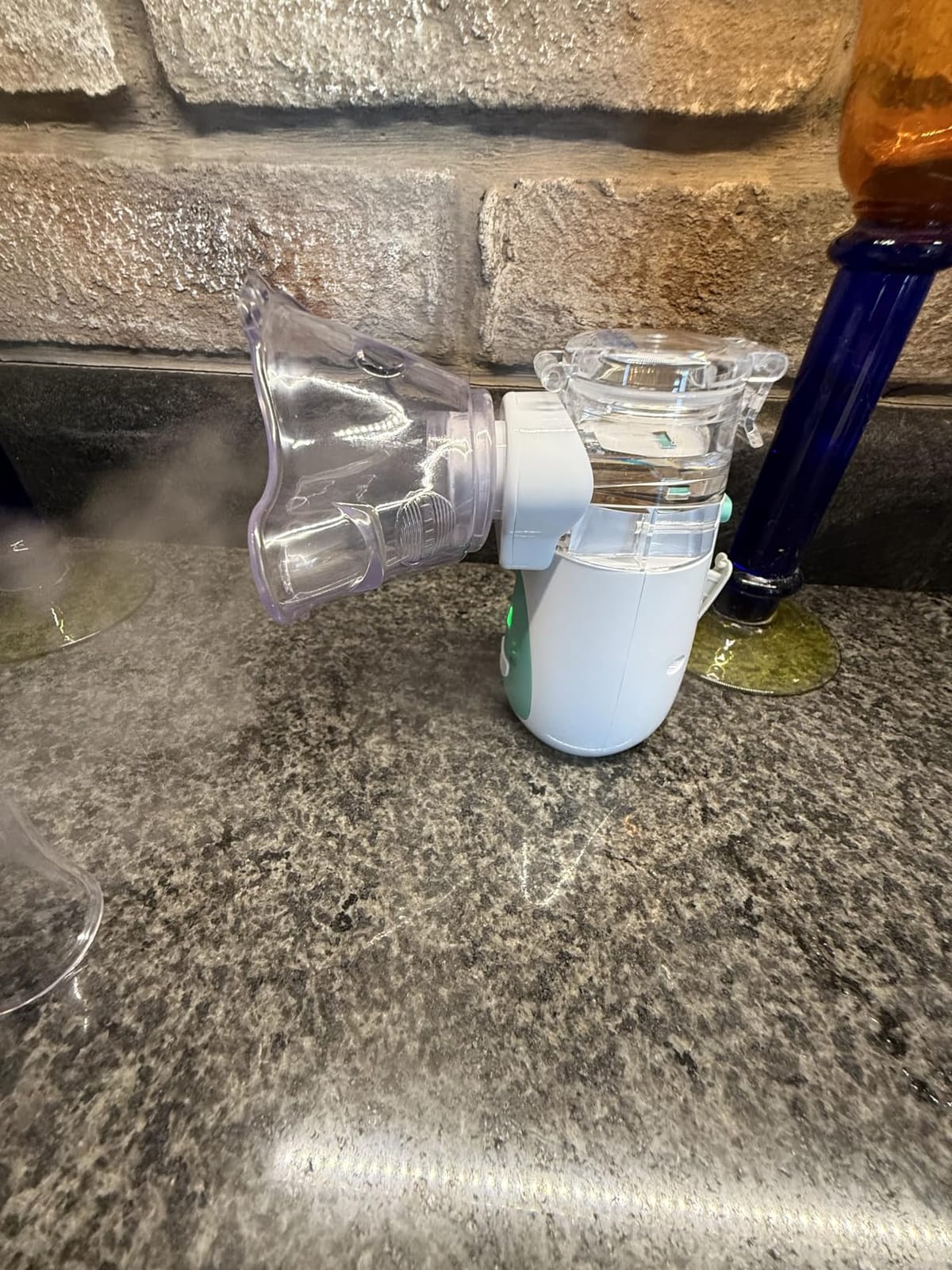
4. ICARE-PET Custom Snout Mask System: Rechargeable and Near-Silent
ICARE-PET Pets Only Low-Noise Large Mask Pet-mist-device with the Custom Mask Specially Designed to Fits Snout of Cats and Dogs (Small Size)
Custom snout-shaped mask
Near-silent motor
Low and medium mist modes
About 80 minutes cordless
Pets only, not for humans
Pros
- Near-silent motor suits anxious animals
- Adjustable mist output
- About 80 minutes of cordless runtime
- Custom snout mask fits far better
- Complete kit with bag and cable
Cons
- Marked for pets only
- 38 reviews is a small sample
- No high mist mode
The design priority here is mask fit, which the forums describe as one of the most repeated frustrations in the whole category. A generic mask on a cat or dog leaves a gap, and mist escapes through the gap instead of the animal. This unit ships a mask moulded to the contours of a snout, and owners report the difference immediately.
It runs cordless on a built-in rechargeable battery for about 80 minutes, which covers several sessions before a charge. Two AA batteries are included as a backup path, and the near-silent motor is what anxious animals tolerate best.
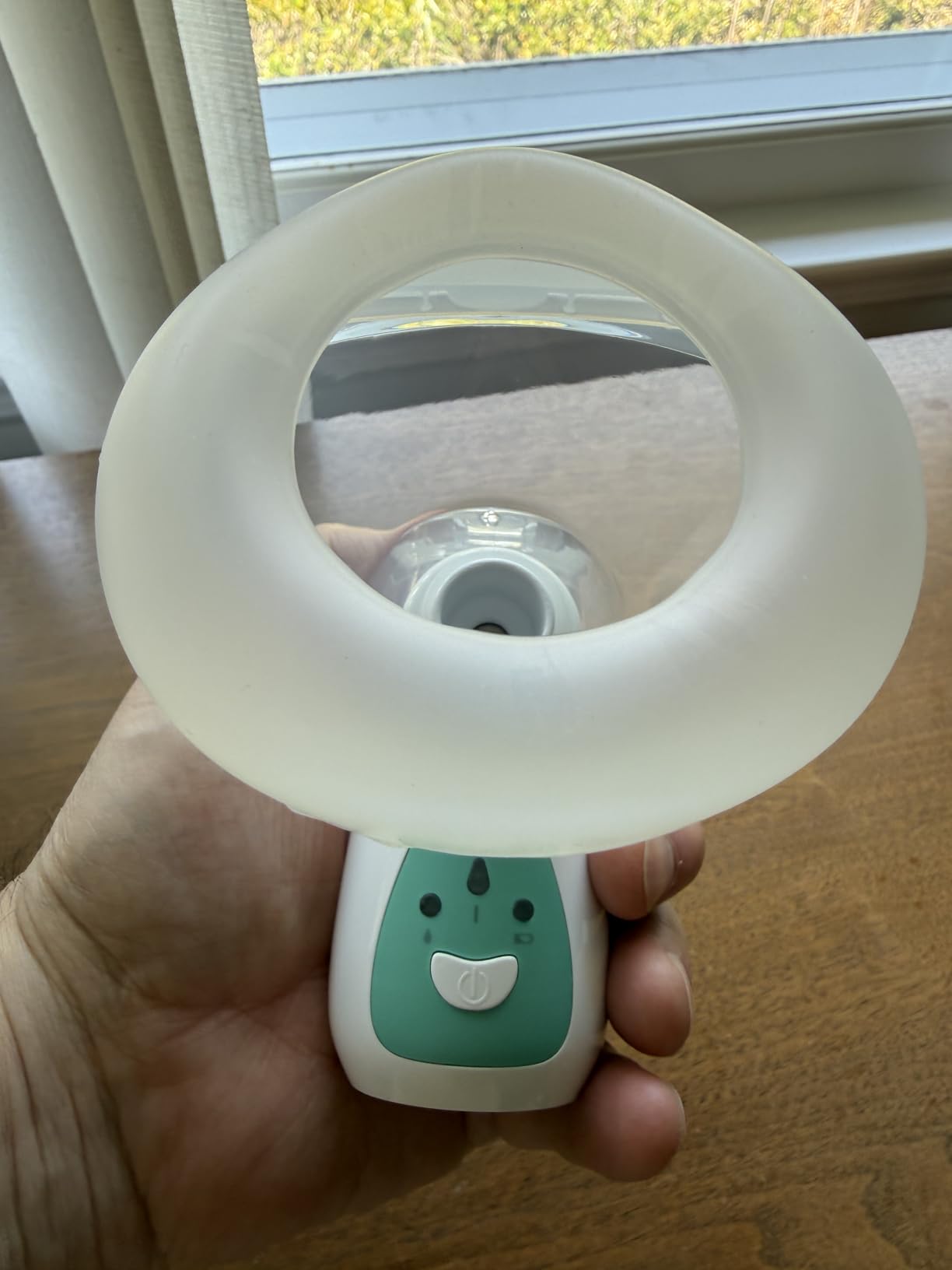
Mist output adjusts between low and medium, so you can start gentle with a small or nervous pet and step up. There is no high mode, which is a deliberate restraint rather than a missing feature, because strong mist on a frightened animal triggers more resistance, not less.
It is also the newest device here, first listed in March 2026, which explains the modest review base. The satisfaction profile is strong at 84% five-star and 91% at four stars or better, but 38 reviews makes that score indicative rather than firmly established.
Who it suits best
This suits owners whose previous sessions failed because of leakage around a poorly fitting mask. The custom snout shape is the reason to choose it, and it pairs well with a pet who has already learned to dread a generic mask.
It also suits anyone who wants a cordless session away from a power outlet, such as a car trip to the vet or a treatment on a patio. Around 80 minutes of runtime covers a full course of sessions.
Who should skip it
Skip it for human use. The listing is explicitly marked pets only, not for humans, and the small snout-shaped mask is not a face mask for a person. No amount of performance makes that an appropriate substitution.
Skip it if you need a high mist output for a large animal. Low and medium are the only modes, and a bigger pet will need a bigger chamber rather than a stronger setting.
5. STARSUM PT586d6 Cat Inhaler: Two Mist Modes and Strong Value
STARSUM Portable Cat Inhaler with Cat Mask, Low Noise, Strong and Weak Modes for Cats & Small Dogs, Green S Size
Soft contour mask for cats and dogs
Strong and weak mist modes
Noise below 50 dB
Built-in self-cleaning
USB-C cable and bag
Pros
- Two mist strengths to match tolerance
- Quiet below 50 dB
- Leaves little liquid behind
- Self-cleaning function cuts maintenance
- Full kit with cable and bag
Cons
- Same USB-C and 7V charging limits
- Mask sized for cats and small dogs
- 51 reviews is a moderate sample
This is the variant to pick if your pet resists a single fixed mist strength. The strong and weak modes let you match the output to the animal’s temperament, starting gentle and building up once they are settled, which is the adjustment most pet owners wish they had on their device.
Like its sibling above, it runs below 50 dB, includes a built-in self-cleaning function and comes with a USB-C cable and a portable storage bag. Owners report very little liquid remaining in the cup after a run, so the solution is used efficiently rather than poured down the drain.
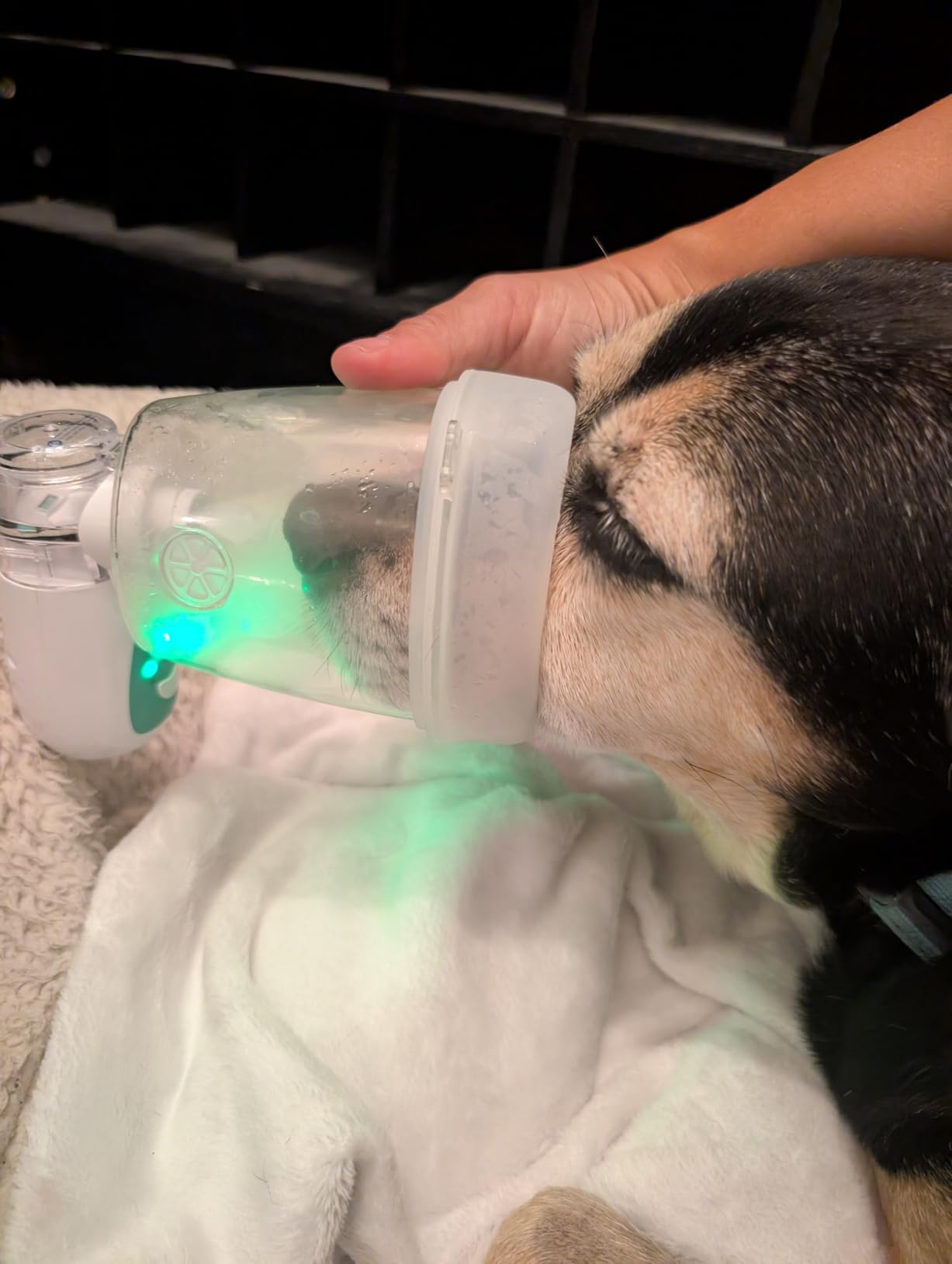
The satisfaction profile is the healthiest in the vet group: 74% five-star, 81% at four stars or better, and only an 8% one-star share. That low one-star share is what separates it from the 18% figure on the NBM-1, and for a purchase driven by an animal’s comfort it matters.
Because both STARSUM devices carry identical charging rules, treat that as one learning curve. Included USB-C cable, charger rated no higher than 7V, and never a C-to-C data cable.
Who it suits best
This suits owners of a cat or small dog who needs control over mist intensity, especially an animal that bolts at a strong session. Two modes give you something to tune, and the below-50 dB operation keeps the noise down.
It also suits anyone who wants a full kit without a second order. Mask, device, USB cable and travel bag are all in the box, and the storage bag makes it practical to keep in a drawer or pack for a trip.
Who should skip it
Skip it if your pet is large. The mask is shaped for cats and dogs in the smaller size range, and variants run S, M and L, so a big animal needs the larger size or a different approach entirely.
Skip it if you want a self-cleaning cycle plus high output. The cleaning function is there, but the top setting is the strong mode, and there is no higher range to reach for.
6. WVNM Folding Atomization Chamber: Best for Long Pet Sessions
WVNM Pet Atomization Nest,Cat and Dog Atomization Box Oxygen Inhalation Machine Dedicated Folding Atomization Box,Small Pet Oxygen Inhalation Box ICU Cage-Grey 24 in,7ecr8-001
Folding chamber 60 x 46 x 40 cm
Accepts most atomizers and cylinders
Side mesh air circulation
Transparent observation window
Maintains volume up to 70%
Pros
- Encloses the pet for a full session
- Side mesh and window let you monitor
- Works with most atomizers and oxygen cylinders
- Folds flat for storage
Cons
- Bulky even when folded
- Built for small to medium pets
- You supply the atomizer or cylinder
This is not a nebulizer but an enclosure, and understanding that changes how you shop for it. It is a chamber that keeps a cat, dog, puppy or amphibian comfortably inside during a long atomization session, so nobody has to hold a mask on a resisting animal for the duration. A side port accepts an atomizer or an oxygen cylinder, and the manufacturer states it maintains inhalation volume up to 70% for treatment effectiveness.
Side mesh circulates air so the pet stays comfortable through extended treatments, and a transparent observation window lets you watch without opening the chamber. The folding construction means it collapses for storage when a session is not in progress.
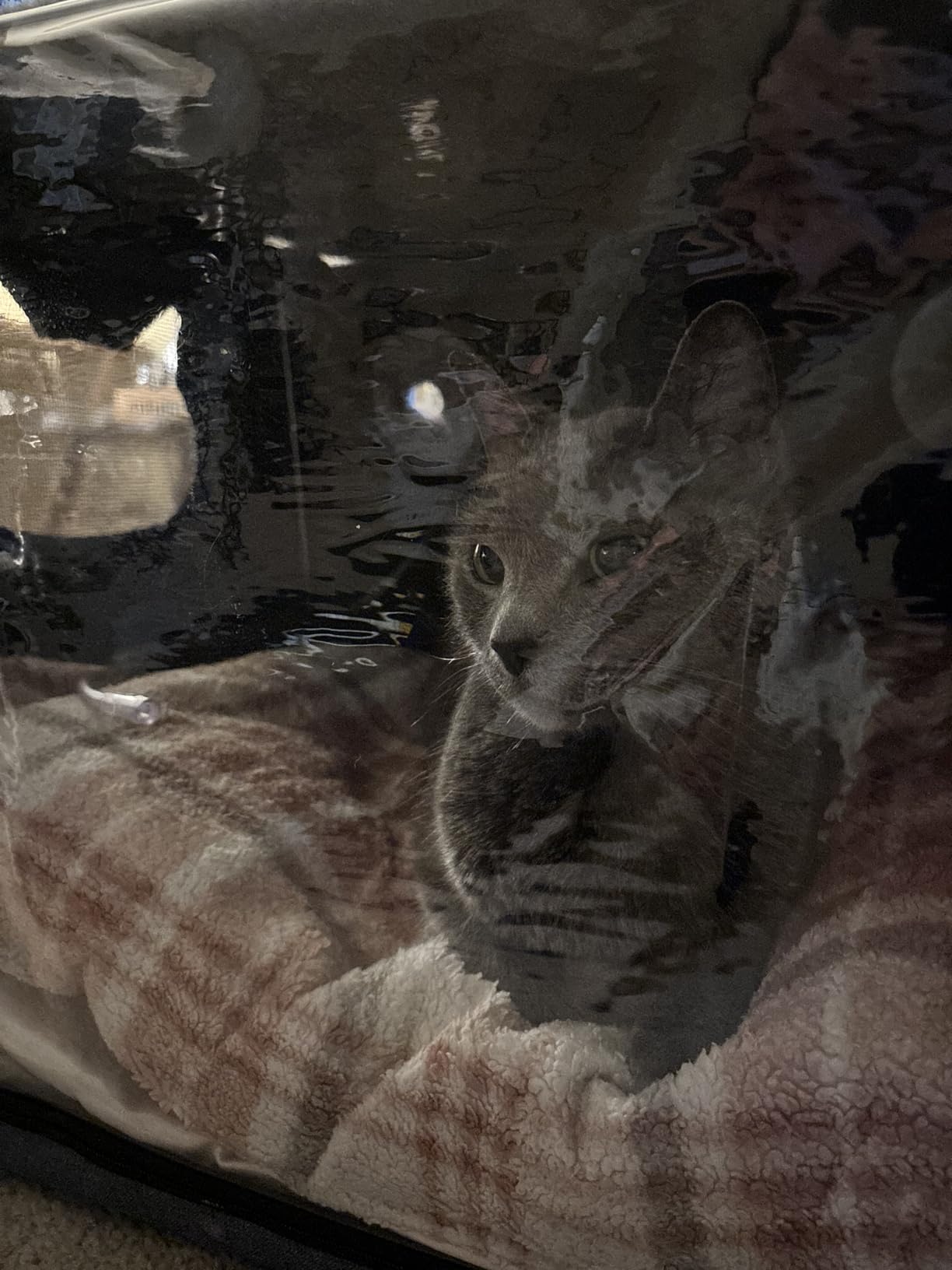
At 112 reviews, this has the second-largest evidence base in the lineup after the NASONEB, and the feedback is consistent: owners find the enclosure practical for cats and small dogs, with 77% at four stars or better and only 8% one-star. The recurring note is that its value depends entirely on the atomizer you already own.
That is the honest catch. You still need to supply your own atomizer or oxygen cylinder, so this is a second purchase rather than a first one. Judge it as an accessory to a machine you already have.
Who it suits best
This suits owners whose pet cannot tolerate a mask held on it, and anyone running longer treatments where holding the animal becomes unworkable. Enclosing the pet for the session removes the physical struggle entirely.
It also suits small clinics, shelters and home users who already own an atomizer and need somewhere to put a cat or dog during a session. Because the side port accepts most atomizers and oxygen cylinders, you are not locked to one brand.
Who should skip it
Skip it if you do not already own an atomizer. This is a box, not a mist source, and buying it first means buying two things before you treat anything.
Skip it if space is tight. At 23.6 x 16 x 15.7 inches it is bulky even when folded, and it is built for small to medium pets, so a large dog simply will not fit comfortably.
Ultrasonic vs Mesh vs Compressor: Which Type You Actually Need
Most confusion in this category comes from three technologies being marketed under one name. They all turn liquid medication into an inhalable mist, but they get there in different ways and suit different people.
Compressor (jet) nebulizers push compressed air through a narrow nozzle to break liquid into a spray. They deliver the widest range of medications including suspensions, they are the standard in clinics, and they are the loudest and heaviest. A typical session runs 10-15 minutes.
Mesh nebulizers push liquid through a thousands-of-holes vibrating metal membrane. They are quiet, fast, disposable-mesh or battery powered, and many healthcare workers prefer them for portability and simple cleaning. This is where the market is heading.
Ultrasonic nebulizers use a piezoelectric transducer that vibrates the liquid surface itself at ultrasonic frequency to create the mist. They are quiet and compact and they need no bulky air motor. The trade-off is that the liquid warms during the run, and some suspensions are not compatible with a warmed solution.
Here is the thing worth saying plainly: when you search this category online, the phrase “ultrasonic nebulizer” returns steam inhalers, nasal rinsers, pet mist devices and mesh machines. Only a small number of true human lung-delivery ultrasonic machines exist in consumer channels, which is why our list above is honest about what each device actually is.
Is an Ultrasonic Nebulizer Right for You?
There is one real technical caveat that almost no roundup states, and it matters more than any feature list. Ultrasonic nebulizers warm the medication as they vibrate it. Some suspension-type drugs are degraded by that warmth, and some prescribers specifically avoid ultrasonic units for those prescriptions.
So the first question is never about noise. Ask your pharmacist or prescriber whether your specific medication is compatible with an ultrasonic device, and check the device label for the medications it is cleared to deliver.
Buy a compressor instead if you use a suspension medication your prescriber will not confirm for ultrasonic use, or if you need the broadest possible drug compatibility. You will accept more noise and a longer session in exchange for certainty.
Buy a mesh device instead if you travel regularly, want the fastest session time and lowest maintenance, or need something a child will tolerate. Many buyers ask whether ultrasonic is worth it over mesh at a similar price, and for most people the honest answer is that mesh gives similar results with better cleaning and no medication warming.
Choose an ultrasonic unit if quiet operation is the deciding factor, such as a night-time treatment in a shared bedroom, and your prescriber has confirmed the medication is compatible. That is the situation these devices genuinely serve.
On cost: the machine itself may be FSA or HSA eligible, but the medication is prescription-only and is the recurring cost. Masks, tubing and replacement parts add up monthly, and owners consistently describe that as an unpleasant surprise after purchase. Budget for consumables, not just the device.
How to Clean and Disinfect a Nebulizer at Home
Infection control is the most under-covered part of nebulizer buying, and it is the reason a machine that is easy to disassemble is worth paying for. Here is the protocol we follow, and the manufacturer’s instructions always take priority.
After every session:
Empty the medication cup and rinse it with cool water. Never put the device in the sink or submerge the body.
Wash the cup, mask or mouthpiece and tubing separately in warm water with a small amount of unscented dish soap.
Rinse every piece thoroughly under running water and let them air-dry on a clean towel or rack, cup open-side down.
Let the device run empty for one to two minutes if it has a self-cleaning or drying mode, then store it in a dry, dust-free place with the cup removed.
Weekly deep clean: soak the washable parts in a disinfecting solution for the contact time stated on the label, rinse well, and let them dry completely. Never use alcohol, bleach or hot water on plastic parts, and never run a nebulizer body through water.
Replace on a schedule, not on appearance: masks and tubing should be replaced roughly every three months with daily use, and immediately if the tubing is cloudy, cracked or stiff. Replace the air filter when the manufacturer specifies, and replace the disposable mesh on a mesh device as soon as output drops.
Devices with a detachable stainless-steel or fully disassemblable cup make this routine bearable, and buyers consistently name auto shut-off and cup design as the features that make cleaning tolerable. Choose for that over for extra buttons.
How to Match a Device to Your Condition
Asthma: you need a lung-targeting machine that delivers a prescribed bronchodilator such as albuterol, not a nasal device. Confirm particle size and medication compatibility with your prescriber, and keep a rescue inhaler on hand. A home nebulizer complements the rescue inhaler; it does not replace it.
COPD and chronic bronchitis: daily maintenance therapy rewards a quiet device you will actually use every day, and fast sessions that cut the minutes you spend sitting still. Portable or handheld formats suit people who want treatments away from a table.
Chronic sinusitis, nasal polyps and congestion: a powered sinus rinsing system is the right tool. The NASONEB at number one delivers prescribed nasal medication as a fine mist in under 30 seconds per nostril, and reports reach further back in the nose than a neti pot.
Children: quiet operation matters more than any child-themed design. Parents say that a loud machine turns a calm session into a tearful one, and mask fit is the second biggest complaint. Choose a set that includes a properly sized pediatric mask.
Pet respiratory support: mask fit and noise tolerance dominate. Cats and small dogs do best with a contoured mask, sub-50 dB operation and a lightweight body, while longer or struggling sessions are easier inside an enclosure that accepts your existing atomizer.
On mask fit generally, it is the complaint that appears most across owner reviews. A mask that leaks delivers less medication than the device is capable of, and it wastes a prescription that costs money.
Frequently Asked Questions
What is the difference between a nebulizer and an ultrasonic nebulizer?
A nebulizer is any device that turns liquid medication into an inhalable mist. An ultrasonic nebulizer is a specific type that uses a piezoelectric transducer vibrating at high frequency to break the liquid into a fine 1-5 micron aerosol, rather than using compressed air like a compressor or a vibrating metal membrane like a mesh unit. The ultrasonic type is quieter and smaller, but it warms the medication slightly, so some suspensions are not compatible with it.
What are the downsides of using an ultrasonic nebulizer?
The main drawbacks are that the medication warms during atomization, which can degrade heat-sensitive suspensions, and that the medicine cup is often small, so you refill it mid-session and lose medication to residual volume. Compact ultrasonic bodies also tend to have smaller cup capacity than desktop compressor machines, and a unit you cannot verify for noise level or output rate is harder to match to a prescription than a machine with published specifications.
Do I need a prescription to buy a nebulizer?
The device itself is usually available without a prescription, but the medication that makes it useful almost always requires one. Prescription-only drugs such as albuterol and budesonide cannot be purchased over the counter, and you should confirm with your prescriber that your medication is compatible with an ultrasonic device before buying. Check the device label for the medications it is cleared to deliver.
Are ultrasonic nebulizers as effective as compressor nebulizers?
For most people using compatible medications, delivery is broadly similar because both produce particles in the 1-5 micron range that reach the lower airways. The real difference is medication compatibility and tolerance, not raw effectiveness. Compressor machines run cooler and accept the widest range of drugs including suspensions, while ultrasonic units are quieter and faster. Ask your prescriber which type your prescription is cleared for.
How long should you breathe in a nebulizer?
Breathe until the mist stops or the device auto shuts off, which is usually 5 to 10 minutes on an ultrasonic or mesh machine and 10 to 15 minutes on a compressor unit. Sit upright, take slow deep breaths, and hold each breath for a few seconds before exhaling. Never exceed the session length prescribed for your medication, and stop early if you feel dizzy or jittery.
Does a portable nebulizer really work?
Yes, as long as the medication is compatible and the device is cleared for it. Handheld and portable units use mesh or ultrasonic technology that produces the same 1-5 micron particle range as a desktop machine, and many long-time asthma users report a quality-of-life change once treatments can be taken at a desk, on a sofa or while travelling. Most people end up keeping one device at home and one in a bag rather than choosing only one.
Final Verdict: The Best Ultrasonic Nebulizers for Home Use in 2026
For a human who needs prescribed medication delivered at home, the NASONEB Sinus Therapy System takes our EDITOR’S CHOICE badge. It is the only device here built to deliver medication as a fine mist, it finishes a session in under 30 seconds per nostril, and it cleans in about 20 seconds. Weigh the durability reports before you commit, and confirm compatibility with your prescriber first.
For a child, the BONATIOZ elephant-design home machine earns the best for kids slot with the highest rating in the lineup, though its listing gives you almost no specifications to verify. For a cat or small dog, the STARSUM NBM-1 is the quietest and lightest at 84 grams, and the STARSUM PT586d6 is the better value with two mist modes and a lower one-star share. For long pet sessions, the WVNM folding chamber removes the need to hold a mask on a resisting animal, provided you already own an atomizer.
Check with your pharmacist or prescriber before any purchase, keep a rescue inhaler on hand, and use the latest price button above to compare the current figure. If you also want to see the wider field, our best nebulizers guide and portable nebulizer picks cover compressor and mesh machines in more depth.