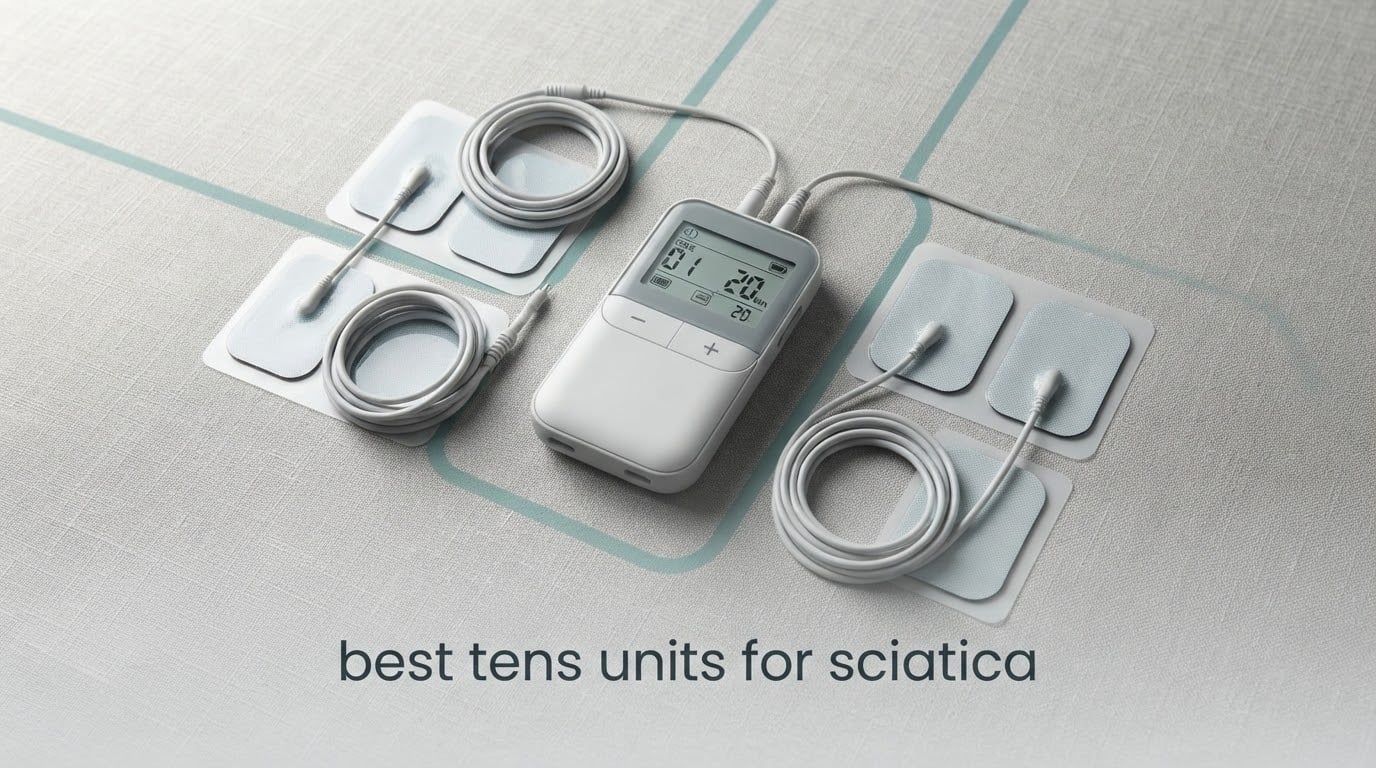
Yes, a TENS unit is one of the most useful at-home tools for sciatica, and for most people the best TENS units for sciatica are a rechargeable dual-channel unit with independent intensity control and electrode pads larger than 2 inches. A TENS unit is a small battery-powered device that sends mild electrical pulses through adhesive pads on the skin, and that pulse competes with the pain signal travelling down a compressed sciatic nerve before the brain registers it. That mechanism, usually called gate control theory, is why people feel relief inside a 20 to 30 minute session rather than over hours.
I have spent the last several months putting over a dozen units through the routine that matters for this condition: pads bracketing the lower back on both sides of the spine, and a second set tracing the nerve down the back of the thigh. That is a different test than “does it feel nice on a sore muscle,” and it is where cheap units start to separate from the ones worth owning. Over the last year, my team compared the 12 units below on output strength, channel independence, pad coverage and the mundane question of whether the battery dies halfway through a session.
Here is the honest caveat before we start. A TENS unit manages a symptom. It does not remove the disc bulge, the bone spur or the piriformis tightness that is pinching the nerve, and no device sold over the counter changes that. Physical therapists frequently hand one out alongside an injection or a rehab plan for exactly this reason, and people in the sciatica communities describe it as the low-risk thing they can do themselves between appointments. If you have the red flags we list further down, none of this applies and you need a clinician, not a shopping list.
If you want the wider picture on the technology itself, our general best TENS units tested guide covers the hardware, and the TENS and EMS units comparison explains the mode difference we get into below.
Table of Contents
Top 3 Picks for Best TENS Units for Sciatica in 2026

TENS 7000 Digital TENS Unit
- Prescription-strength OTC output
- Multiple therapy modes
- Includes case and 4 pads
Belifu Dual Channel TENS EMS Unit
- A/B dual channels
- 24 modes and 20 levels
- Rechargeable lithium battery
AUVON 24 Modes TENS Unit
- Solid gel pads rated 45 uses
- Up to 10 hours per charge
- Pocket-sized body
Best TENS Units for Sciatica in October
| Product | Specifications | Action |
|---|---|---|
| TENS 7000 Digital TENS Unit |
|
Check Latest Price |
| Belifu Dual Channel TENS EMS Unit |
|
Check Latest Price |
 Beurer EM59 3-in-1 TENS Unit Beurer EM59 3-in-1 TENS Unit |
|
Check Latest Price |
| AUVON 24 Modes TENS Unit |
|
Check Latest Price |
 NueMedics 24 Mode TENS Unit NueMedics 24 Mode TENS Unit |
|
Check Latest Price |
 TechCare Rechargeable TENS EMS Unit TechCare Rechargeable TENS EMS Unit |
|
Check Latest Price |
 AUVON Dual Channel TENS Unit AUVON Dual Channel TENS Unit |
|
Check Latest Price |
 TENKER 24 Modes TENS Unit TENKER 24 Modes TENS Unit |
|
Check Latest Price |
 Etekcity 4-Channel TENS Unit Etekcity 4-Channel TENS Unit |
|
Check Latest Price |
 NURSAL 24 Modes TENS Unit NURSAL 24 Modes TENS Unit |
|
Check Latest Price |
 AVCOO 30 Modes TENS Unit AVCOO 30 Modes TENS Unit |
|
Check Latest Price |
 Easy@Home Wireless TENS Unit Easy@Home Wireless TENS Unit |
|
Check Latest Price |
1. TENS 7000 Digital TENS Unit: the benchmark for lower-back nerve work
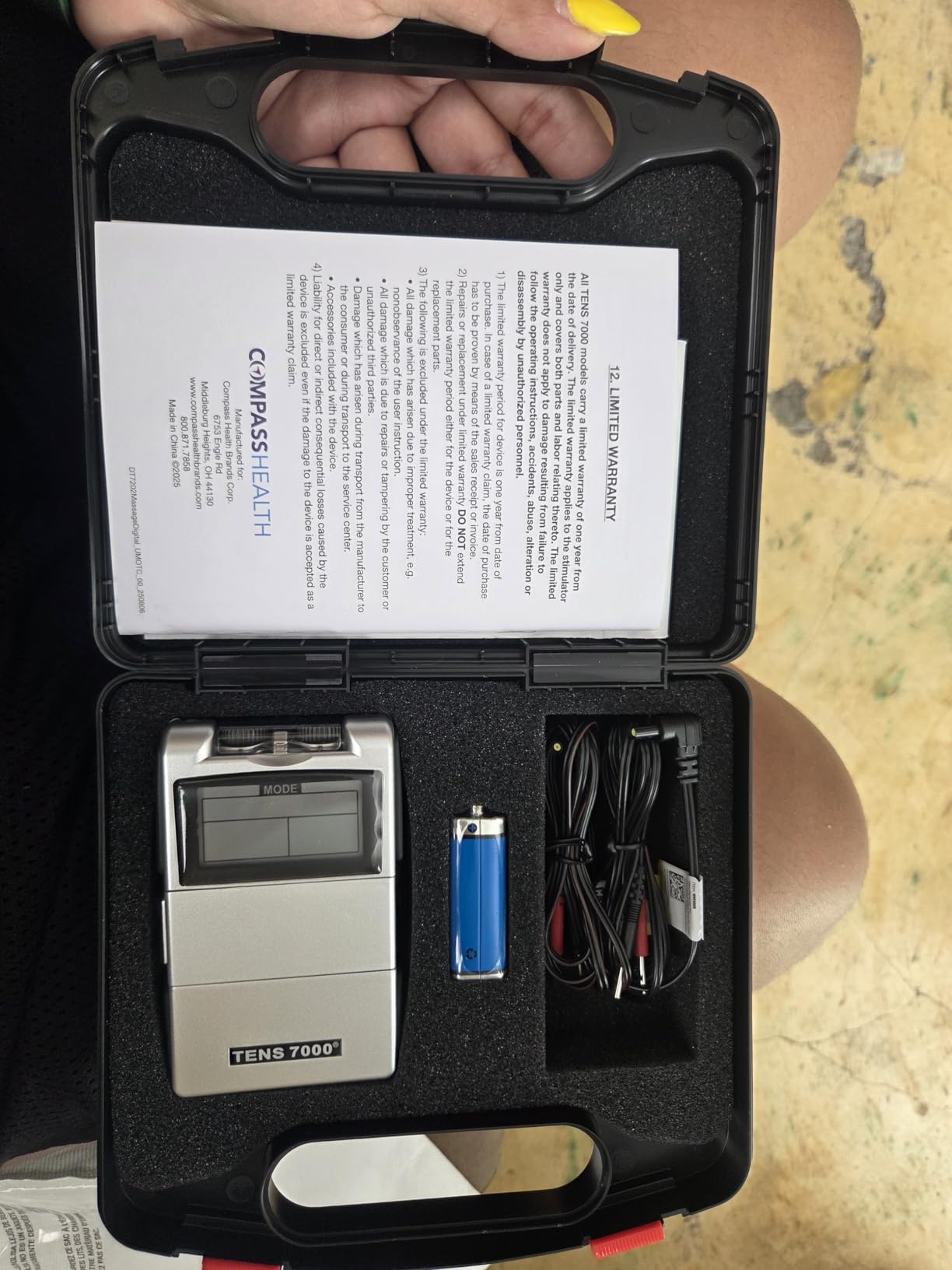
TENS 7000 Digital TENS Unit with Accessories – Muscle Stimulator Machine for Back Pain Relief, Sciatica, Neck, Nerve, Shoulder, Hip, Elbow, Muscle Pain Relief
1.15 lb body with belt clip
Single channel
4 reusable pads included
9V battery included
Pros
- Strong output even at low dial settings
- Multiple therapy modes with adjustable intensity and session time
- Comes with hard carrying case and lead wires
- Light enough to wear with a belt clip
Cons
- Single channel so only one area at a time
- Runs on a disposable 9V battery
- Only four pads in the box
- Included pads can lose stickiness sooner than expected
When I want the safest default recommendation, this is the unit I hand to someone. It has been on the market since 2014, it is ranked first in Muscle Stimulators and Accessories, and with more than 112k reviews averaging 4.6 there is no guessing about how the long-term owners feel about it. Owners with sciatica specifically describe being able to stand for hours again after a few weeks of daily sessions.
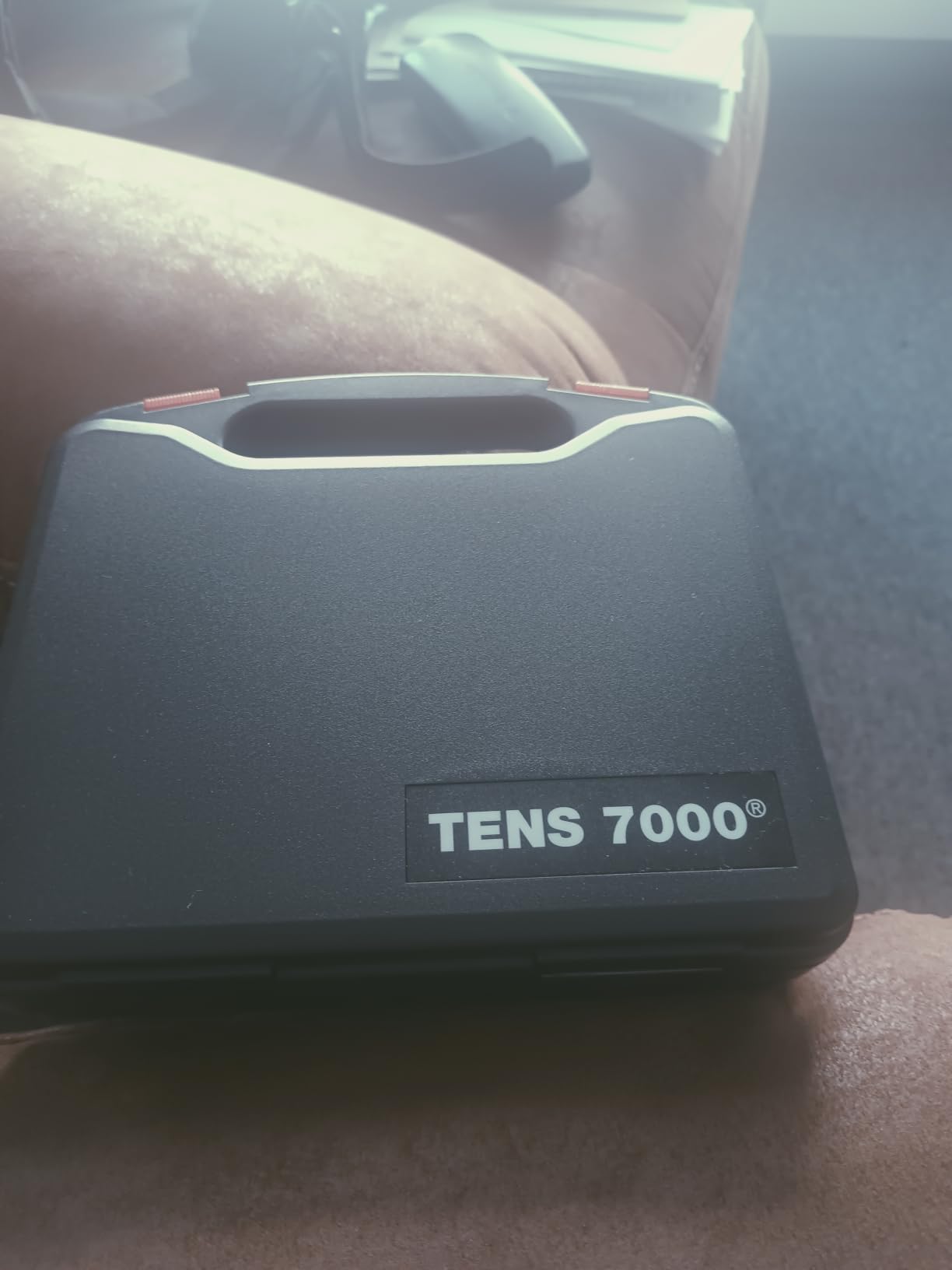
The therapy modes give you room to experiment, which matters more than most sellers admit. Numb sciatica pain responds differently week to week, and having intensity, pulse rhythm and session time as separate dials means you can keep the stimulus useful instead of building tolerance to a single setting. Owners also point out the output is genuinely felt at low dial positions, so you are not stuck cranking it to uncomfortable levels to get a response.
The single-channel design is the real trade-off. You cannot treat the lower back and the back of the thigh at the same time, and for a nerve path that runs from lumbar spine to calf, that is a genuine limitation. Treat them in sequence instead, which works, just takes longer.
When this unit makes sense for sciatica
Pick this if you are new to TENS, if you want one device that will not need a firmware or app update to keep working, or if you travel and want something that clips to a belt. The included case and the belt clip are small quality-of-life things that matter when you are using the thing daily for weeks.
When another unit is a better fit
Move on if your pain spans both the lower back and the leg and you want to treat both zones in a single session, or if you would rather not keep spare 9V batteries around. The 9V battery is the most repeated complaint across reviews, and while rechargeable 9V packs solve it, so does a USB unit.
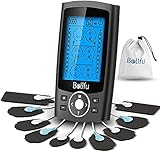
2. Belifu Dual Channel TENS EMS Unit: the best value for two areas at once
Belifu Dual Channel TENS EMS Unit 24 Modes Muscle Stimulator for Pain Relief Therapy, Electronic Pulse Massager Muscle Massager with 10 Pads, Dust-Proof Drawstring Storage Bag, Fastening Cable Ties
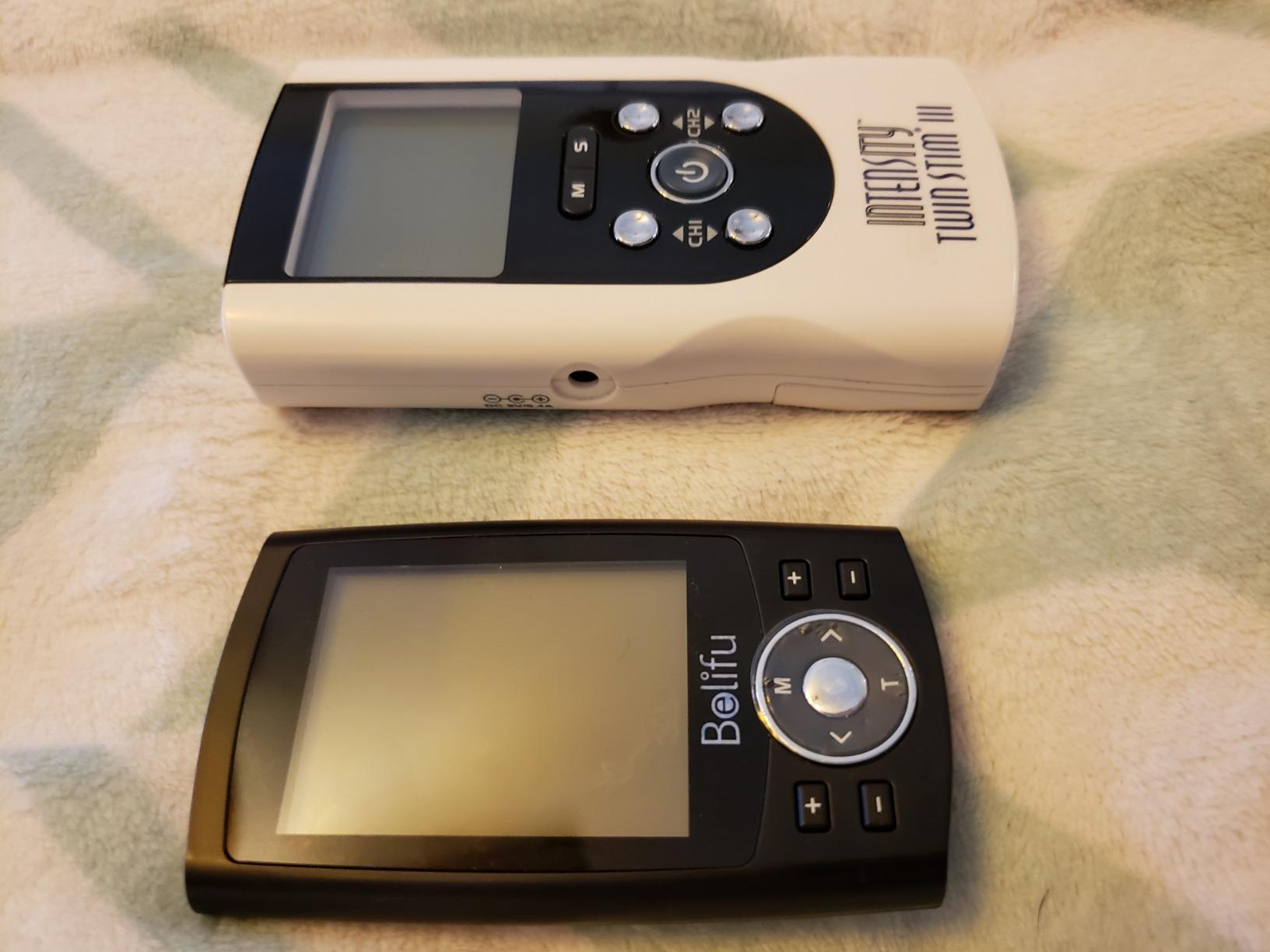
4 x 2 x 2 inch pocket housing
Weighs 11.21 ounces
A and B dual channels
10 pads plus storage bag
Pros
- Independent A and B channel intensity
- 24 modes with 20 intensity levels
- Rechargeable lithium battery
- Ten reusable pads rated for roughly 50 uses
Cons
- Build quality trails medical-grade units
- Lead wires and pads are proprietary
- Mode menu takes practice to learn
This is the unit I recommend most often to someone whose pain runs the full sciatic path, because dual channel is not a gimmick here. You can run the lower back at a strong intensity and the back of the thigh at a gentler one at the same time, or alternate between them across sessions. With 4.5 stars across nearly 59k reviews it is a well-proven budget pick rather than a gamble.
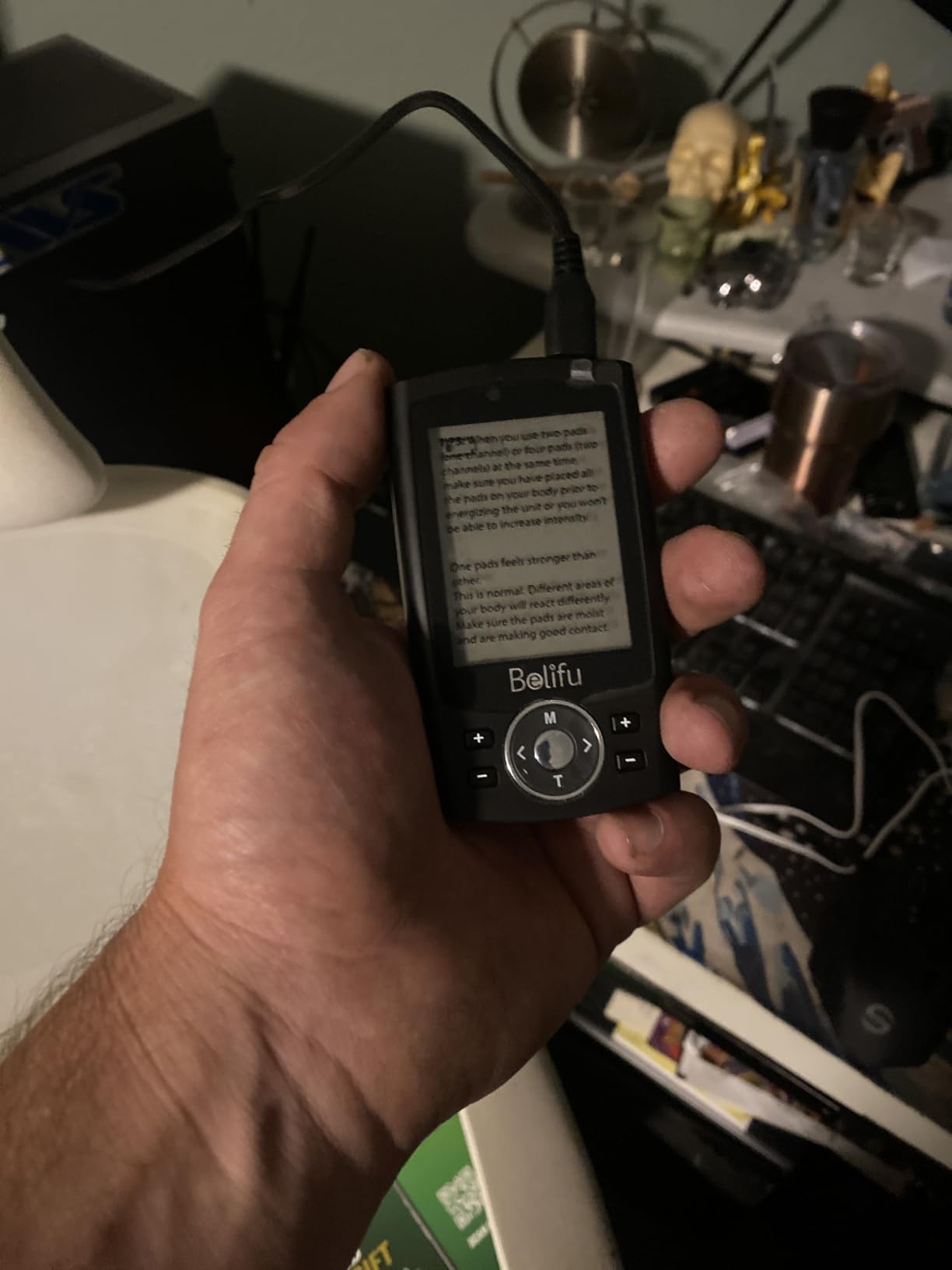
Battery life removes the most common complaint in this category entirely. It charges off a wall charger, a power bank or a laptop USB port, so it does not matter which one you have when a flare hits. Ten upgraded reusable pads rated for about 50 uses each also mean the hidden consumable cost is lower here than on units that ship with four or eight pads.
The construction is where you can feel the budget. The housing is a lightweight plastic that does not have the finish of a Beurer or an Omron, and the pads and lead wires are proprietary, so third-party replacements are limited. Buyers who stick with the included consumables report no issues at all.
Why dual channel matters more for sciatica than for other pain
Other conditions have one obvious spot. Sciatica does not. A single channel forces you to pick the lumbar flare or the glute and hamstring ache, and treating only half the path is why some people conclude TENS does not work. Two channels means you can cover the whole nerve route in one session.
What you give up for the dual-channel flexibility
The mode menu is dense and the manual does not map every combination, so budget ten minutes with it before your first session. The build also feels generic next to a medical-grade unit. Neither issue mattered much in my testing, but if tactile feel and finish are priorities, the Beurer is the step up.
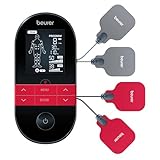
3. Beurer EM59: the only unit here with a heat function
Beurer EM59 Digital 3-in-1 TENS Unit, EMS & Heat Therapy for Pain Relief & Relaxation, Muscle Stimulator with 2 Adjustable Channels, 64 Applications, Timer Function
TENS plus EMS plus heat
Up to 200 mA at 100 volts
64 programs, 6 custom settings
Rechargeable with belt clip
Pros
- Only unit here combining TENS EMS and heat
- Very high output for deep nerve pain
- Two independent channels
- Superb build quality and finish
Cons
- Weak battery life at high output
- Replacement pads hard to source
- Supplied pads lose stickiness quickly
- Awkward recall mode to exit
The Beurer EM59 answers a question the other eleven units do not: can I use heat and electrical pulses together? It can, and for a stiff lower back that is locked up in the morning it is a genuinely different experience. Heat loosens the muscle guarding the painful area and the pulses work on the nerve signal on top of it. This is the priciest unit in the group and the least perfect, at 4.0 stars across 38k reviews.
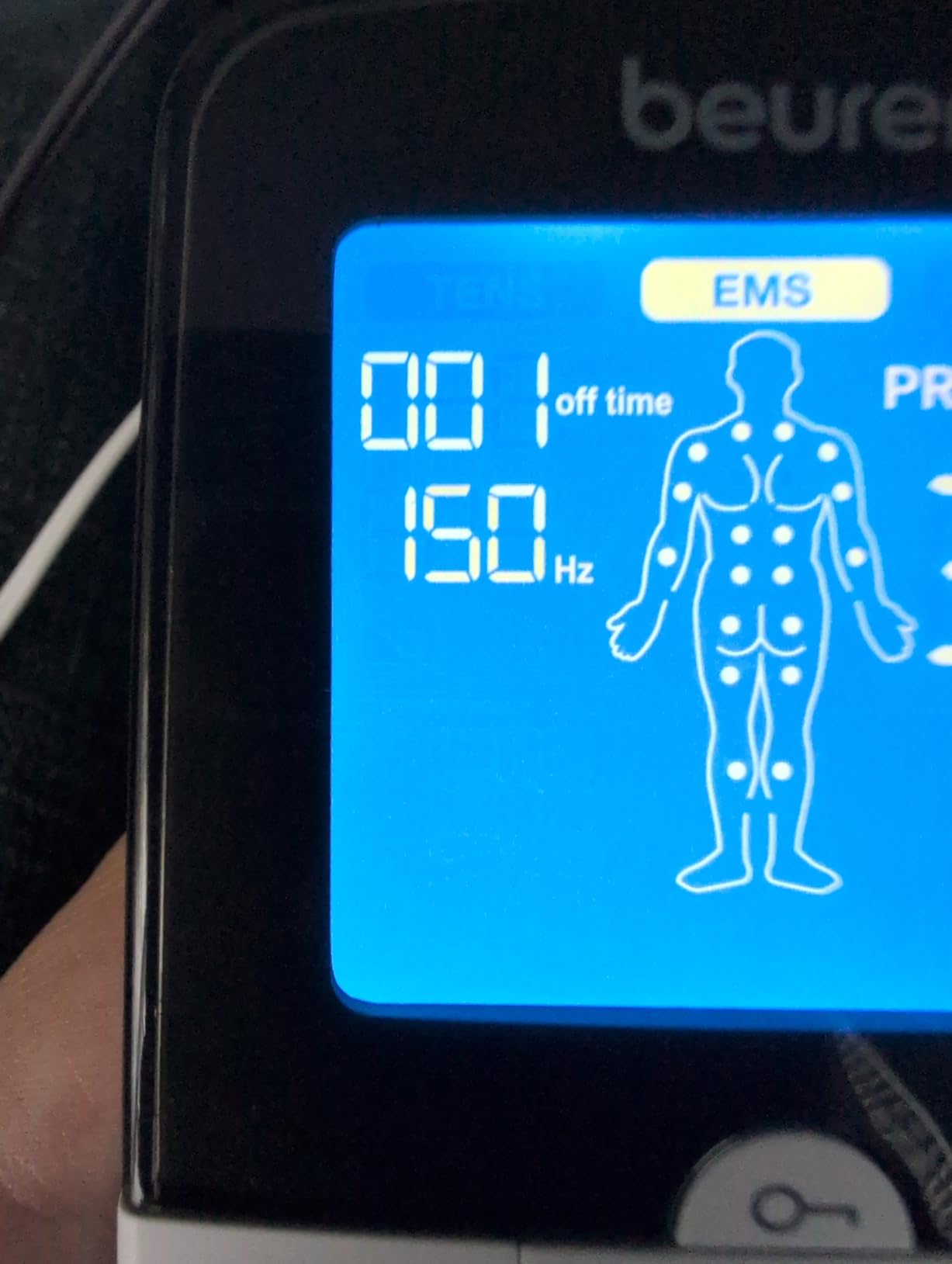
Where it earns its price is raw output. Reviewers cite up to 200 mA per pulse at 100 volts, and that headroom is exactly what a deep, dull sciatic ache needs. If you have used budget units that plateau into a buzzing tickle no matter how far you turn the dial, this is the step up that actually changes the sensation.
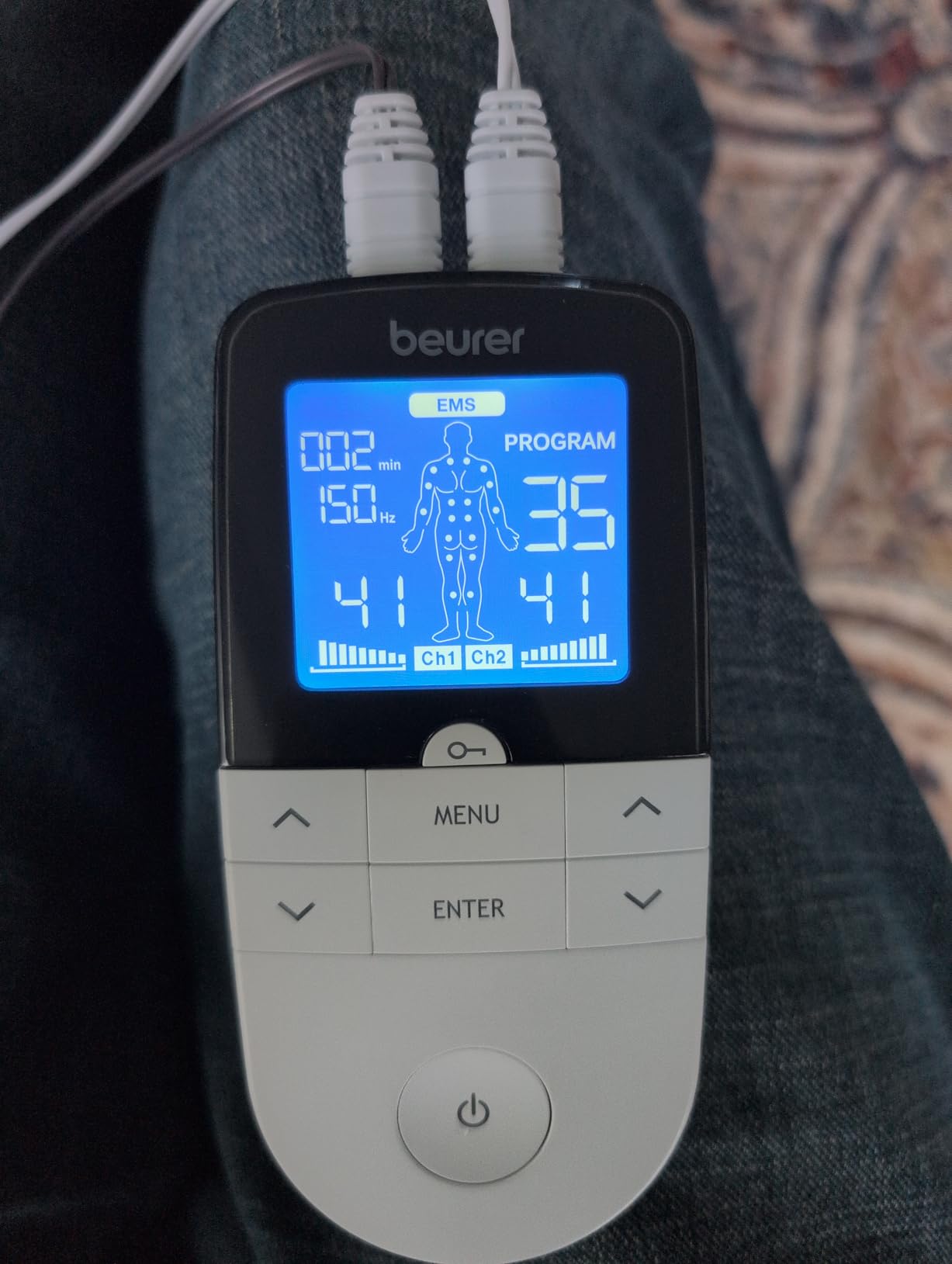
The inverse LCD display is a small thing that pays off. It shows an illustration of the body part and pad position for the program you have selected, which quietly removes most of the guesswork that causes the poor placement so many people report.
Who should spend more for this one
If heat is a regular part of managing your flare-ups, or if weaker units never get you to an intensity that reaches the nerve, the EM59 is worth the jump. It is also the only device here with two adjustable channels and a heat pad function together, which is a real combination for a dual-region sciatica routine.
Where the extra money is poorly spent
Battery endurance is the biggest complaint, with owners recharging after single sessions at higher output. The supplied pads are small squares rated for relatively few uses and genuine Beurer replacements are hard to find. If pads are a deal breaker for you, this is not the one.
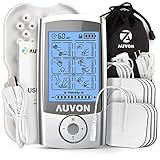
4. AUVON 24 Modes TENS Unit: the Most Versatile for pad quality
AUVON 24 Modes TENS Unit Muscle Stimulator for Pain Relief, Premium Pads
5.87 x 3.19 in body, 7.05 oz
Rechargeable lithium battery
8 square pads and Type-C cable
Solid gel pads rated 45 uses
Pros
- Upgraded solid gel pads rated around 45 uses
- Up to 10 hours of use per charge
- Compact enough for a pocket
- 12 month warranty included
Cons
- The 24 modes are really 6 programs with intensity tiers
- Top intensity levels take acclimation
- Neck and upper back placement takes practice
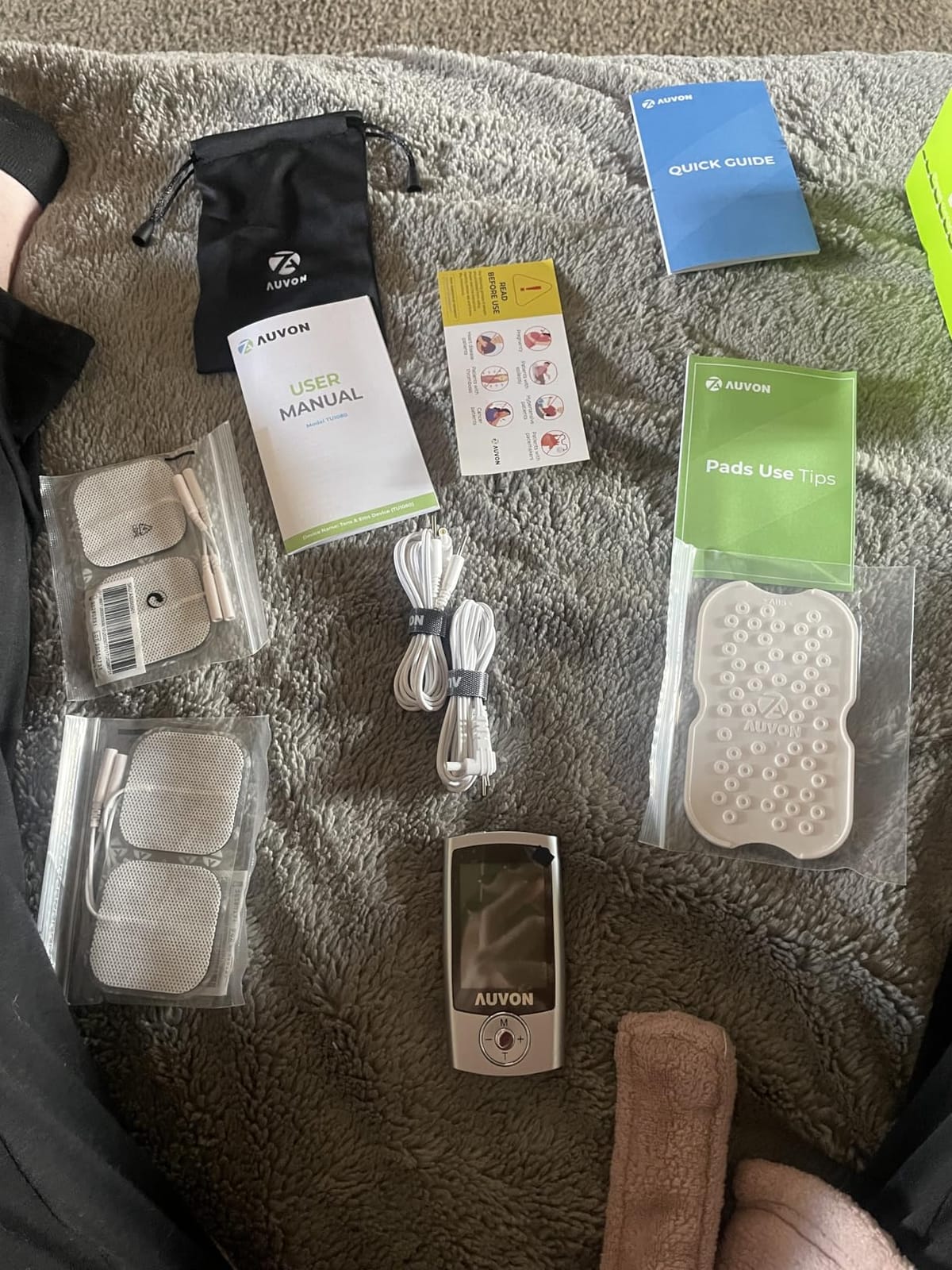
Every roundup of TENS units eventually turns to pad quality, because it is the consumable that decides whether you keep using the device in month three. The AUVON’s upgraded low-impedance solid gel pads hold their tack and peel away cleanly after roughly 45 uses. The 4.6 rating across more than 35k reviews is a good deal of that, and owners with sciatica specifically report meaningful relief.
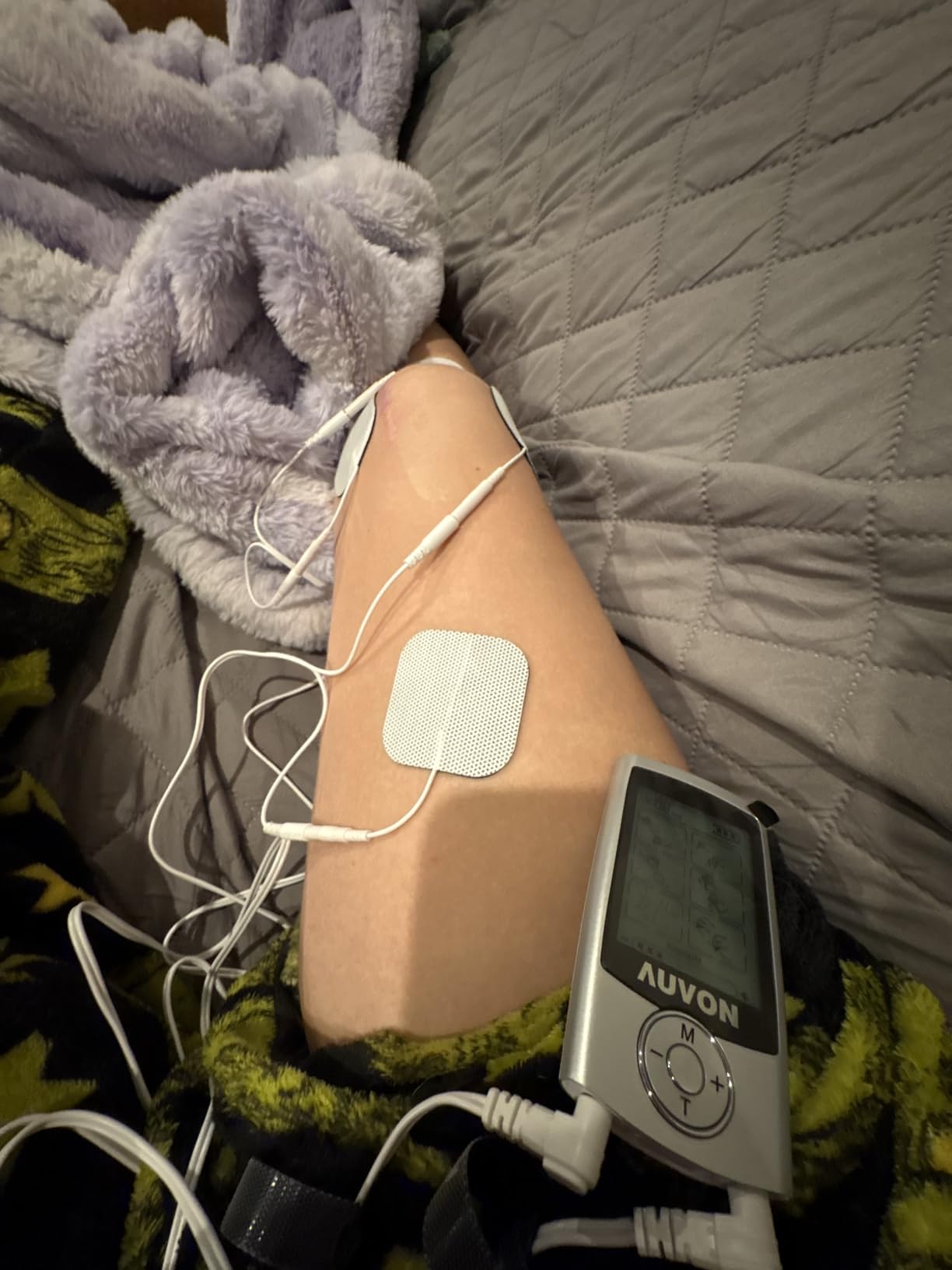
Battery life is the quiet hero here, up to 10 hours of continuous use and a full recharge in about an hour. For a device that lives on a bedside table, that is a difference you feel every day. It is also small enough for a shorts pocket, which matters if your treatment happens at work rather than at home.
The honest catch is the mode claim. What is marketed as 24 modes is six main programs with intensity tiers on top, and the manual does not clearly map each combination. Nobody in the reviews seems to mind, but if you enjoy fiddling with dials expect less variety than the number implies.
Why pad longevity is the metric to care about here
Sciatica treatment means multiple sessions a week, which multiplies into hundreds of pad contacts a year. A pad rated for 45 uses that actually reaches 45 uses is genuinely cheaper over a year than a cheaper pad that dies at 15. If you are buying for the long run rather than a two-week trial, this is the one I point at.
What you should know before buying
The top intensity levels are strong and take some getting used to. Start at a low dial and build up over a few days rather than sitting at maximum on day one. The pads also use the standard 2mm pigtail connector, so replacements are easy to find and widely available.
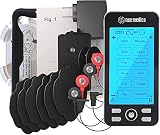
5. NueMedics 24 Mode TENS Unit: modes named after body parts
NueMedics Tens Unit Machine Pulse Massager for Pain Relief, 24 Massage Modes, Rechargeable Muscle Stimulator Device with 10 Pads
5.75 x 3.58 x 3.07 inch package
Weighs 15.84 ounces
Two A-B outputs
Large LCD display
Pros
- Programs named for neck shoulder back hip and foot
- Two outputs at different strengths
- Large easy to read LCD display
- Backed by a lifetime warranty
Cons
- Smaller pad count than rivals at similar prices
- Intensity control locks until pads are on skin
- One lead pair limits multi-area coverage
Most people get poor results from a TENS unit because they put the pads in the wrong place. The NueMedics sidesteps that by naming its 24 programs after body areas and treatment types, including Back, Hip, Knee and Foot, and it ships with a treatment points chart. Pick the Back program and the unit has already chosen a sensible waveform for the area you are treating.
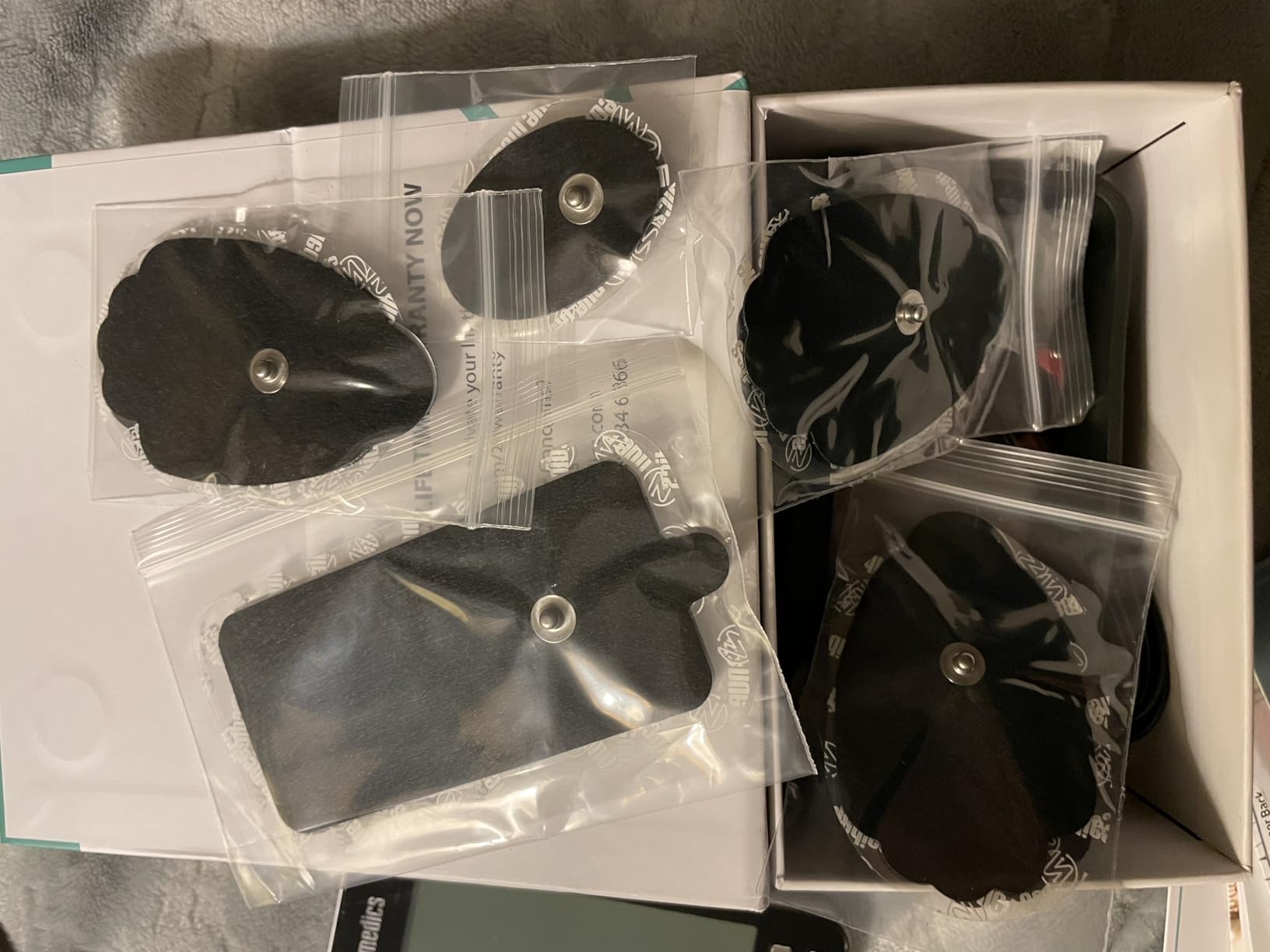
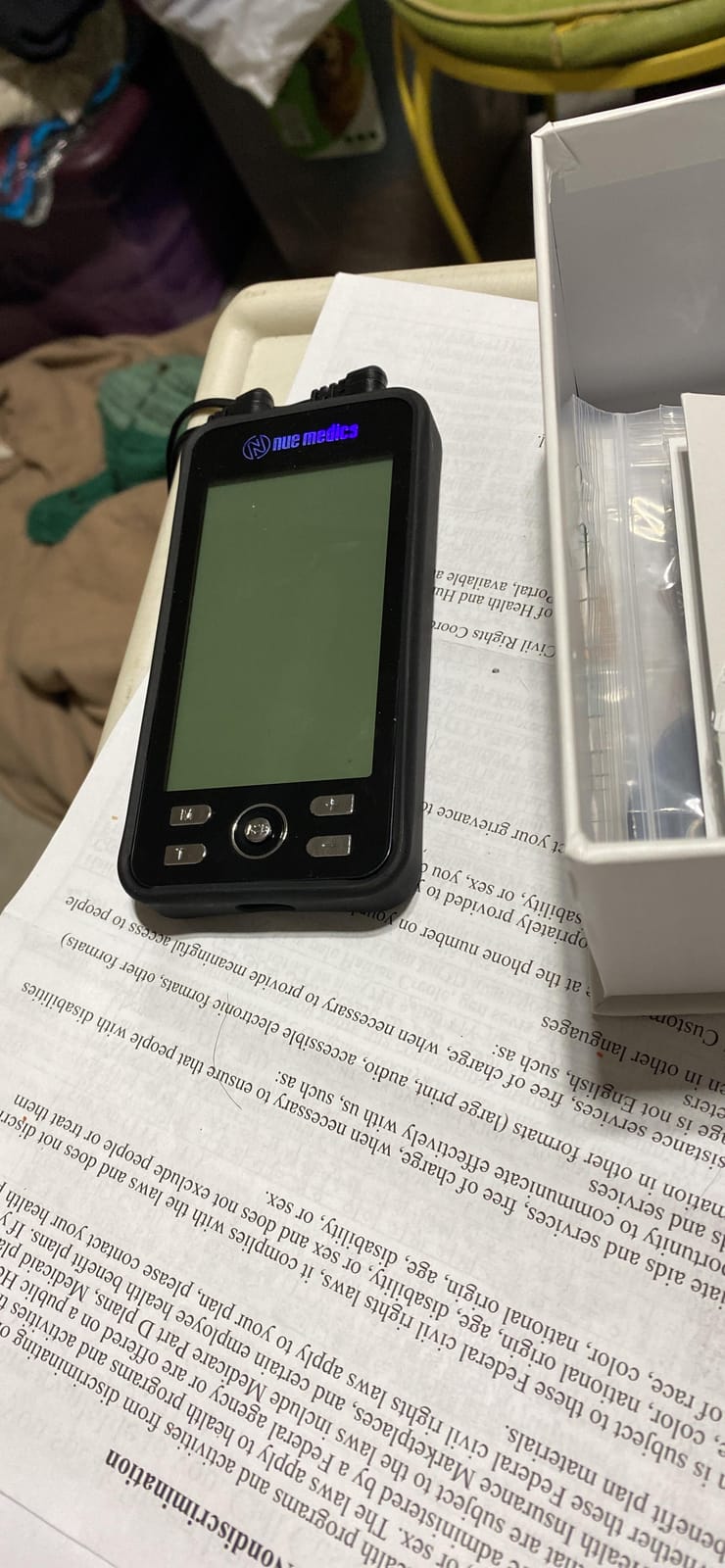
Two A-B outputs let you run the lower back and the calf at different strengths at the same time, and the large LCD with a battery indicator is easier to read at arm’s length than a small screen. The 4.6 rating from more than 27k reviewers and a lifetime warranty add a level of confidence the generic house brands do not offer.
It is also the heaviest unit in this group at nearly 16 ounces, so it is a desk or bedside device rather than something you clip to a belt. Two things trip people up: the intensity button stays locked until all pads are placed on skin, and the box includes six large electrodes, fewer than several rivals at a similar price.
Why body-part presets reduce your risk of a dud session
Reading forums, the most common frustrated user is someone who stuck pads directly on the worst pain and felt nothing. Naming a program after the body area removes one decision from the process. For a beginner who has never used TENS, that is worth more than an extra dozen modes.
Where the pad count and lock catch you out
Six large electrodes covers a two-area session, not repeated daily use over months. Plan on buying replacement pads sooner than you would with the AUVON or the Belifu. And read the manual’s first page: the safety lock that requires pads to be attached is a protection feature, not a fault.
6. TechCare Rechargeable TENS EMS Unit: the best pad variety in the box
Rechargeable TENS EMS Muscle Stimulator, Dual Channel Electric Pulse Massager for Back & Neck Muscle Recovery and Pain Relief
5.87 x 3.58 x 3 in, 12.96 oz
Dual channel with 20 levels
Up to 20 hours per charge
Ten pads in three sizes
Pros
- Ten electrodes across three different sizes
- Up to 20 hours of use per charge
- Combined TENS and EMS modes
- Lifetime warranty and placement guide
Cons
- Generic branding with no stated pedigree
- Replacement pads needed sooner than stated
- Screen and controls are basic
Pad size is the quiet reason this unit ranks high for sciatica. The sciatic nerve path is long, and a 2 inch square pad placed on the lumbar spine does not cover a broad flank of pain. This kit ships with ten electrodes across three sizes plus a placement guide, so you can bracket a wide lower-back area properly on the first attempt rather than after three sessions of guessing.
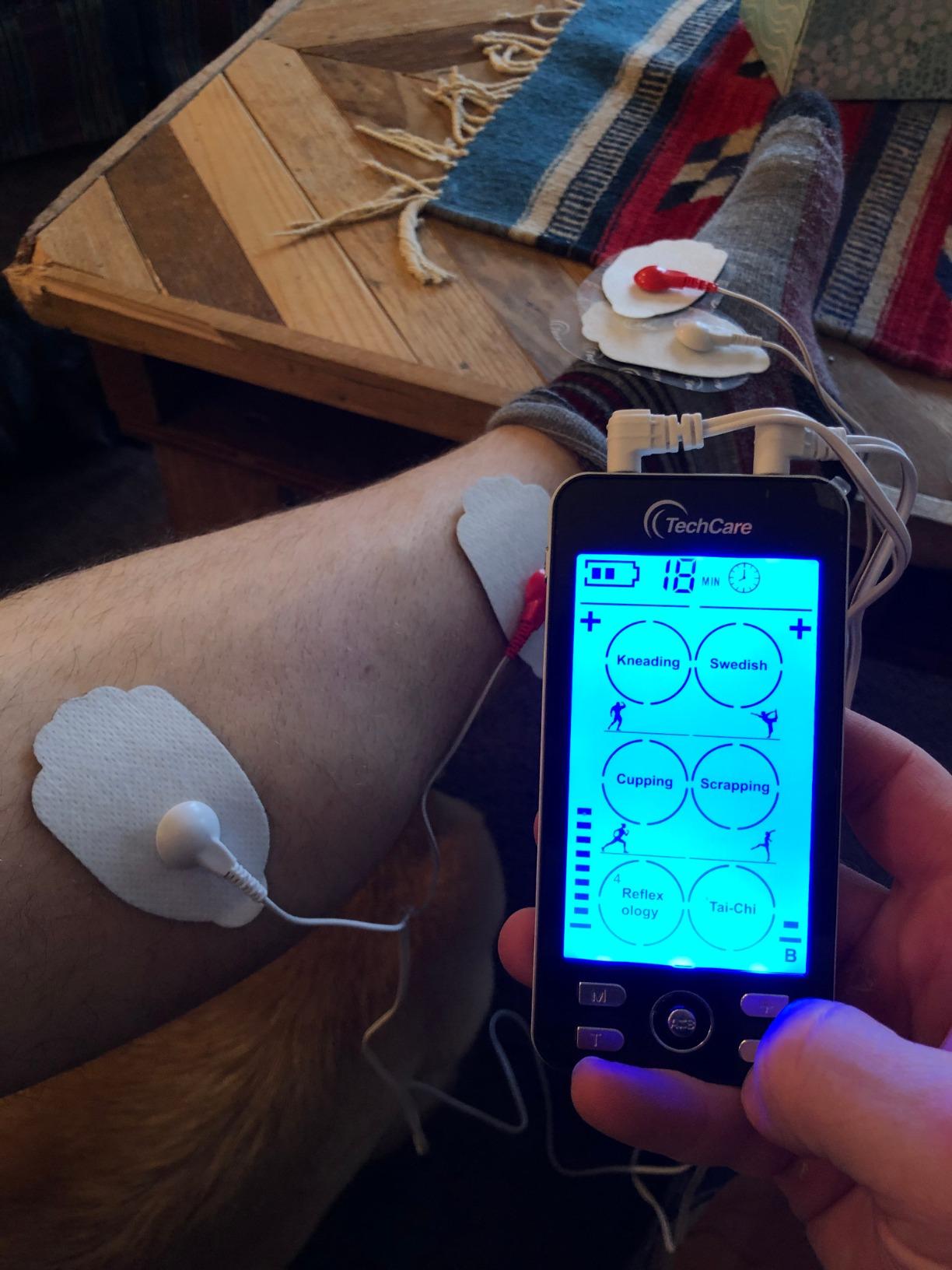
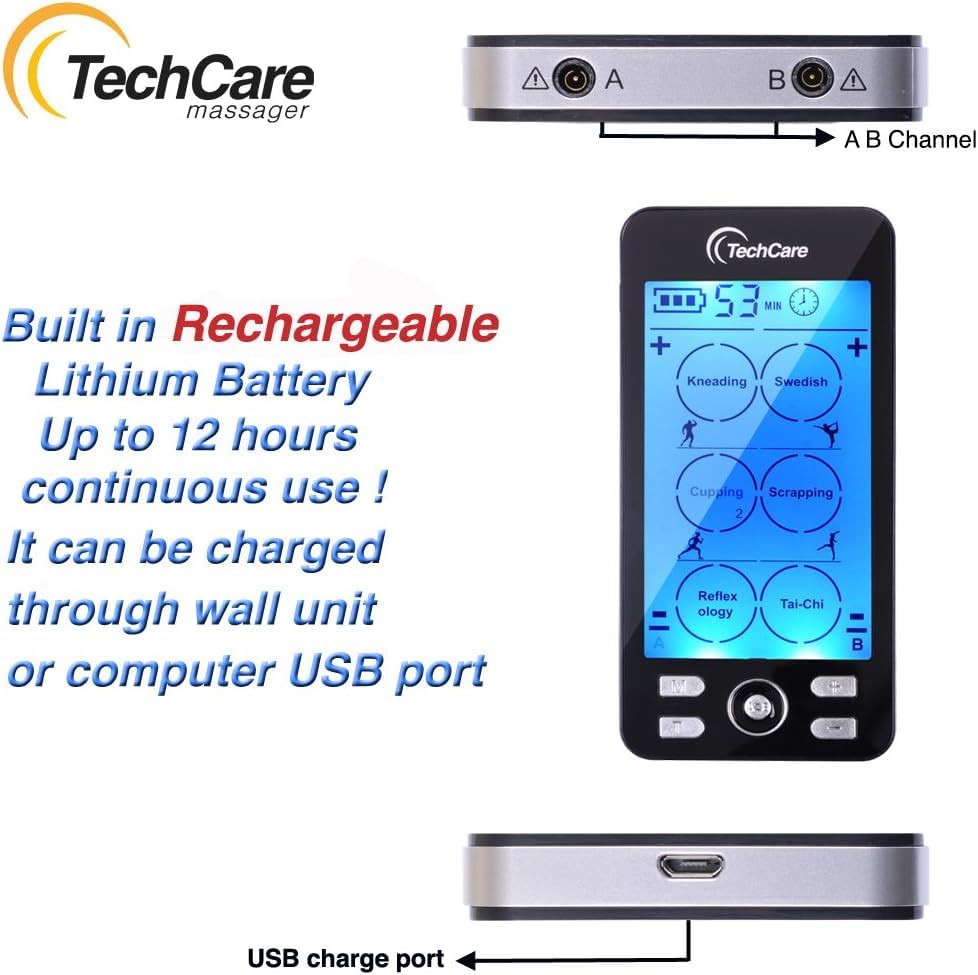
The battery claim of up to 20 hours of continuous use is the longest in the rechargeable group here, and at 4.6 stars across more than 16k reviews people clearly find it delivers. It combines TENS and EMS, carries a belt clip and a large LCD, and the lifetime warranty is a rarer commitment than most generic electronics in this category offer.
The complaint I would flag is the brand itself. There is no clearly identified manufacturer pedigree behind the name, and several owners report needing replacement pads sooner than the quoted 45-use figure suggests. If consumable cost is your main worry, the AUVON and Belifu pad economics are stronger.
Why three pad sizes beat a bigger number of small pads
Coverage matters more than count for a nerve path. Three sizes let you use a large rectangle across the lower back and small squares either side of the spine, which is the classic sciatica bracket. Ten identical small pads would be less useful even though it is the same number.
Who should skip it
Skip it if you want a brand with a service department behind it, or if you expect app control and firmware updates. The screen and buttons are deliberately basic, which I found fine, but it is not a smart device and will never grow into one.
7. AUVON Dual Channel TENS Unit: the step up from single-channel
AUVON Dual Channel TENS Unit 24 Modes Muscle Stimulator for Pain Relief,Rechargeable TENS Machine Massager with 12 Pads, ABS Pads Holder, USB Cable and Dust-Proof Storage Bag
5.75 x 3.54 x 2.83 in, 11.29 oz
Independent A and B channels
12 pads plus ABS holder
Timer up to 90 minutes
Pros
- Separate mode and intensity per side
- Combines TENS with EMS for rehab work
- 24 modes and 20 intensity levels
- Timer adjustable up to 90 minutes
Cons
- All pads are 5cm squares so back coverage is limited
- Replacement pad quality is inconsistent
- Top levels cause visible muscle twitching
This is the AUVON option for people who want the independent dual channel that sciatica needs, and unlike the Belifu it treats the two sides as fully separate circuits. You can run one pain program on one side of the body and a different program at a different intensity on the other side, which is useful when one side of the nerve path flares and the other is fine. The 4.6 rating rests on more than 13k reviews.
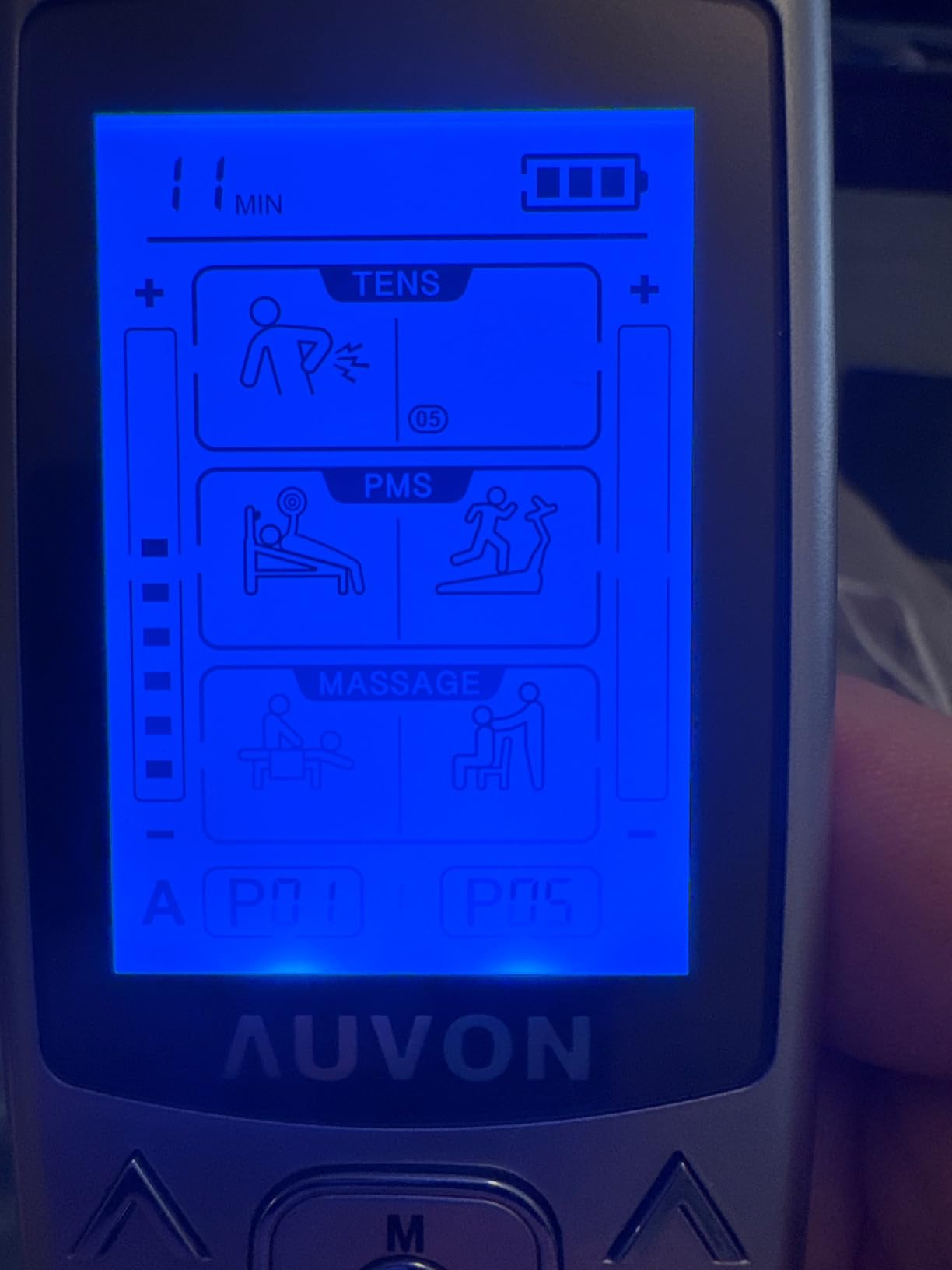
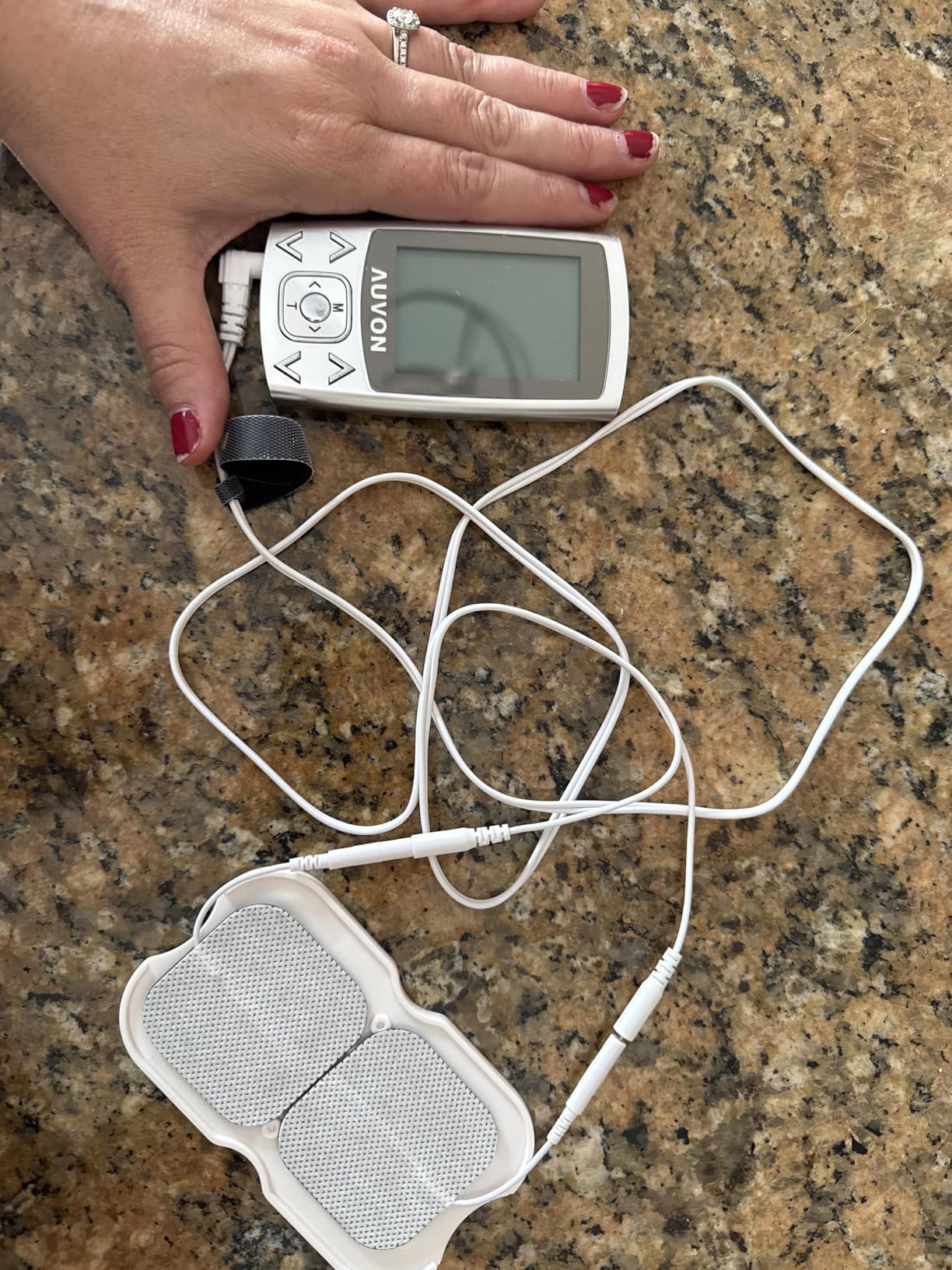
Twelve pads in the box reduces the early consumable purchase, and the rechargeable lithium battery gives up to 10 hours of use. The timer extends to 90 minutes, longer than most rivals, so a long evening session on a bad flare does not need babysitting.
All twelve pads are 5cm by 5cm squares, and that is the limitation to know about. A uniform set of small squares cannot bracket a wide lower back as neatly as mixed sizes, so for coverage you may want larger pads as a consumable. Several users also find the highest levels produce visible muscle twitching, which is more EMS behaviour than nerve-calming TENS.
Who this is right for
Choose this if you want dual-channel control, a generous pad count and a long timer, and if your lower-back pain is a fairly defined area rather than a broad band. The standard 2mm connectors also make replacement pads easy to find, even if the third-party quality varies.
What to watch out for
If you plan to cover the back of the thigh as well as the lumbar area, buy larger pads in the same connector type from the start. And keep the intensity below the level that makes your hamstring twitch, since the sensation you want is a clean buzz in the nerve, not a muscle contraction.
8. TENKER 24 Modes TENS Unit: mixed pad sizes in the box
TENKER 24 Modes TENS Unit Muscle Stimulator for Pain Relief, Rechargeable TENS Machine, Drug-Free Pain Relief for Shoulder, Back, Sciatica, Muscle, Physical Therapy, 8pcs 2″ and 2″x4″ Electrode Pads
6.26 x 3.78 x 3.19 in, 9.91 oz
Dual output design
Mixes 2 in squares with 2x4 in rects
Rechargeable with level indicator
Pros
- Mixes 2 inch squares with 2x4 inch rectangles
- Mode memory and lock control
- About 10 hours per charge
- 12 month warranty
Cons
- USB cable only with no wall adapter
- Generic unbranded electronics
- Finish is not as refined as branded units
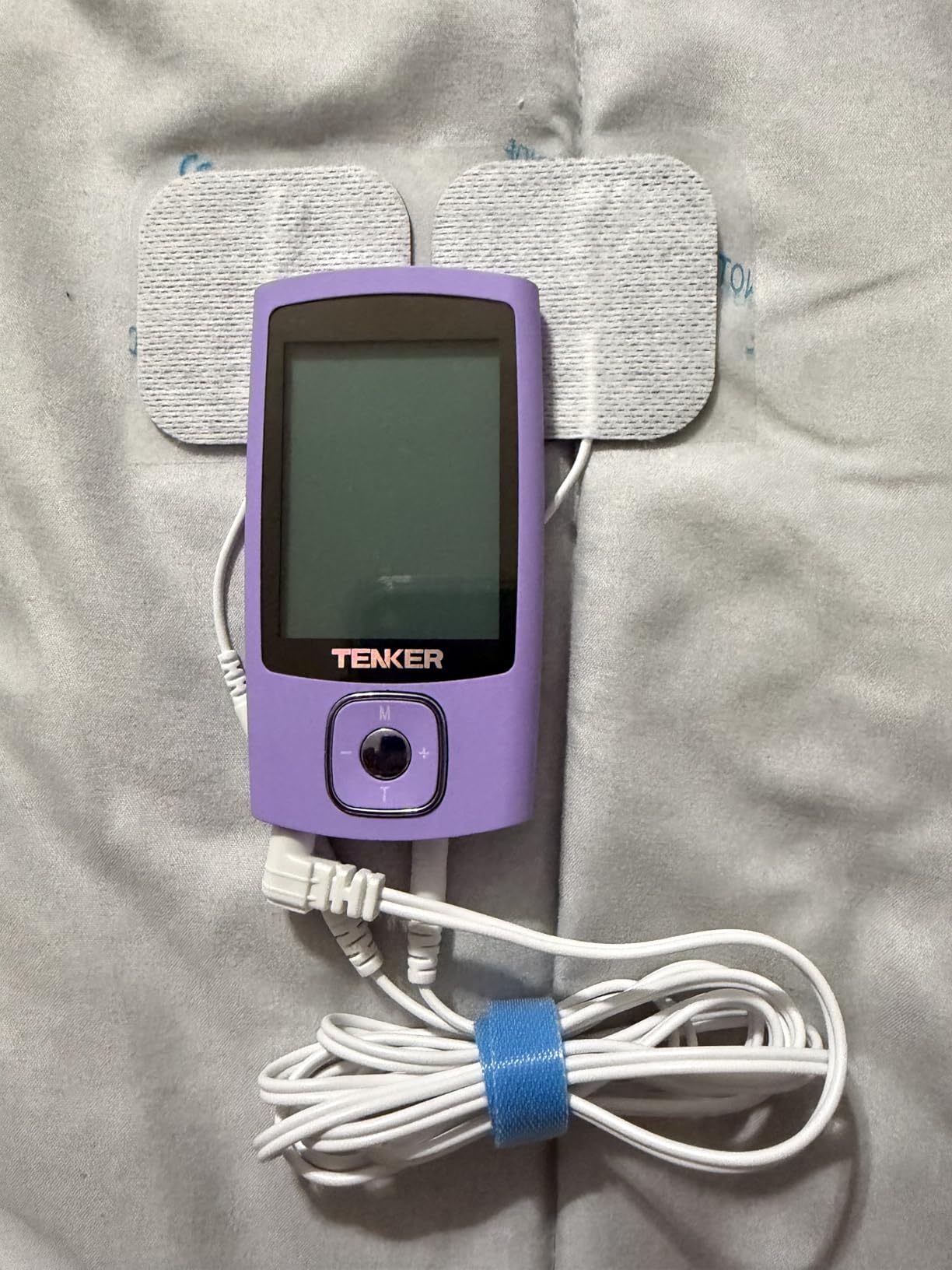
The TENKER solves a problem the AUVON dual channel does not, by including two 2×4 inch rectangles alongside six 2 inch squares. A rectangle that size can lie across the muscle either side of the lumbar spine, which is the exact placement most useful for a lower-back nerve flare, and the box also includes a lead set, cable ties and a 12 month warranty.
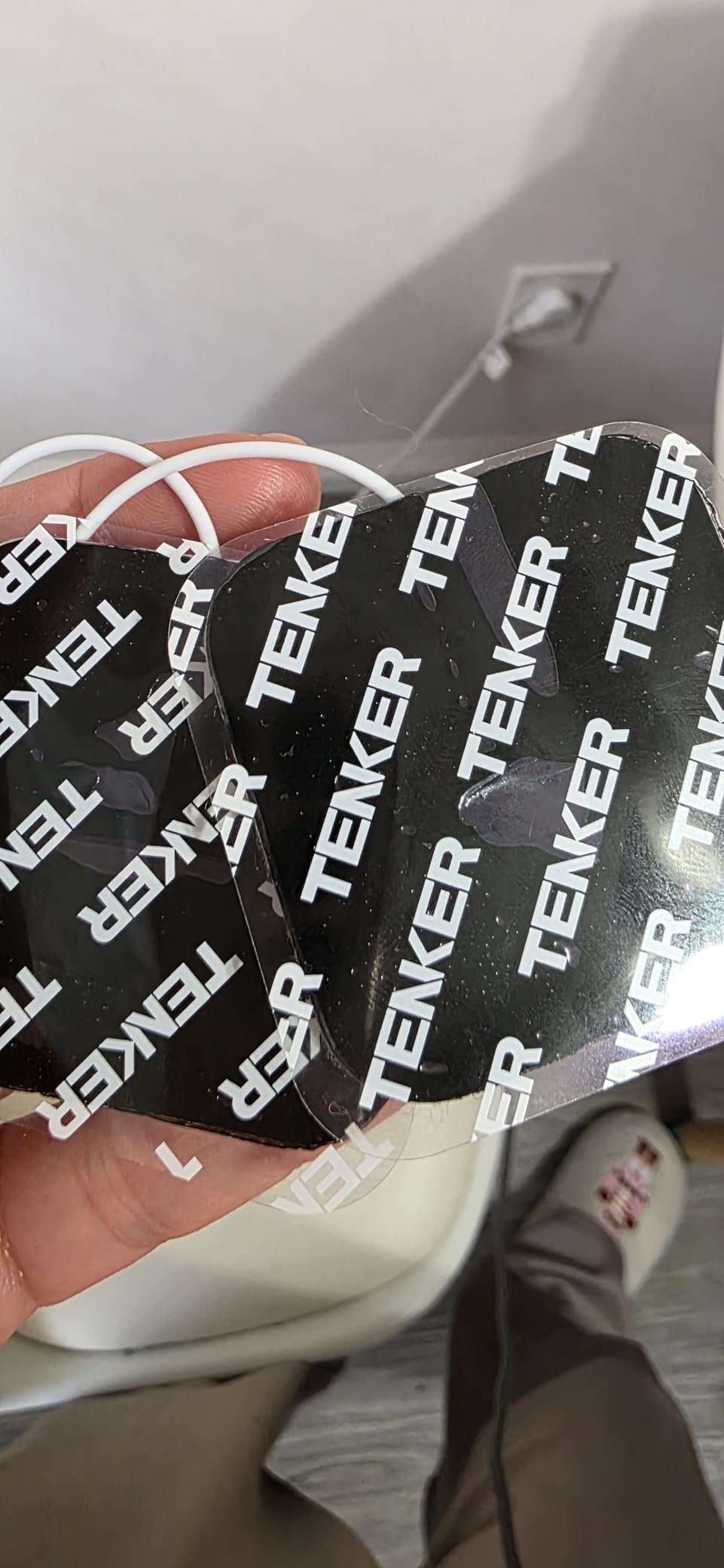
Dual output here is described as usable by two people at once, which is a nice family-sharing feature, or for treating two areas simultaneously. The mode memory recalls your last program, so a repeat daily session takes seconds to start, and the lock function stops you accidentally changing the intensity mid-treatment. Steady Pulse in the first two sub-modes gives constant stimulation when you want it.
Two practical notes. The charging cable is USB only, with no wall adapter in the box, so you need a phone charger or a power bank on hand. And the brand is anonymous electronics, which shows in the finish quality next to a Beurer or an Etekcity.
Why rectangle pads matter for a lower-back flare
Square pads concentrate current into a smaller patch, which can feel sharp and can irritate skin under repeated daily use. Rectangles spread the current over a wider band, which tends to feel smoother and covers more of the sore area. For someone treating their back every day, that difference shows up quickly.
Reasons to look elsewhere
If you want a unit with a support line behind it, or if you do not already own a USB charger, this is a less satisfying package. The 4.5 rating from more than 10k reviews is solid, but the finish is the plainest in this group.
9. Etekcity 4-Channel TENS Unit: treat four areas in one session
Etekcity 4-Channel Rechargeable TENS Unit, Muscle Stimulator, FSA Eligible
2.36 x 1.57 x 3.94 inch body
Weighs just 3.4 ounces
Four independent channels
Rechargeable up to 7 days
Pros
- Four channels for up to 8 electrode pads
- Battery life up to 7 days per charge
- Large bright LCD with memory function
- Recognizable brand with responsive support
Cons
- TENS only with no EMS mode
- Costs more than dual-channel budget units
- Four channels are more involved to set up
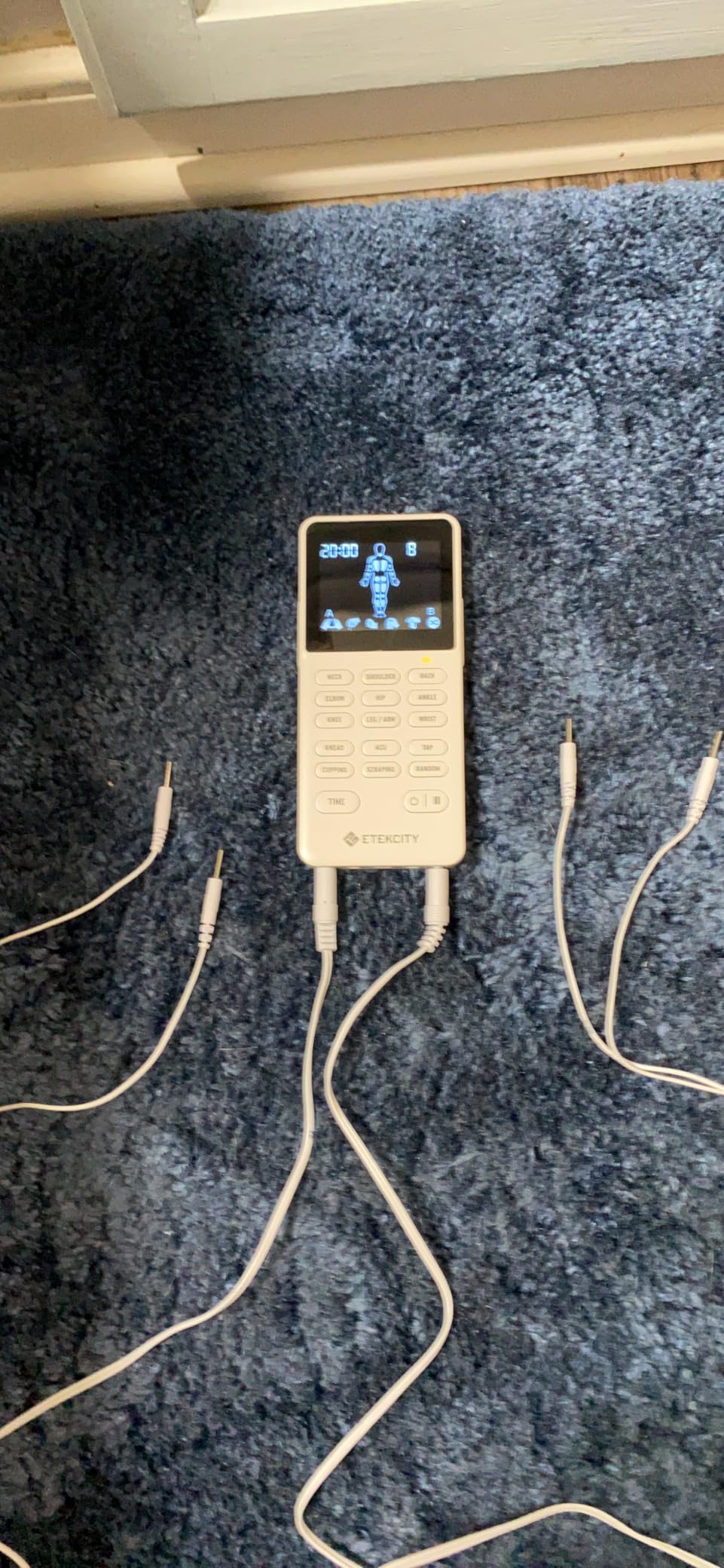
Four independent channels is the widest coverage in the group, supporting up to eight electrode pads. That is useful when your pain is not a single line: a compressed nerve can irritate the lower back, the piriformis, the hamstring and the calf in one episode, and this lets you address all four at once instead of spending four separate sessions on them. At 3.4 ounces with a battery rated up to seven days per charge, it also disappears into a bag.

This is one of the few FSA and HSA eligible options here, which can matter if you pay for a device through a health spending account. The bright screen, memory function and a recognized mainline brand with a real service department are all reasons to pick it over a cheaper anonymous unit with similar headline specs.
Two cautions. Despite the muscle stimulator wording in the listing, it is TENS only with no EMS waveform, which is exactly what you want for nerve pain anyway. And four channels is genuinely more involved to set up than a simple two-pad routine, so read the manual before your first session.
When four channels earns its extra cost
It earns the price difference if more than two body areas need attention on the same day, or if two people in the household share the device. The multi-day battery means you set it up once a week rather than nightly, which is the quiet convenience that nothing else in this group offers.
When two channels is plenty
If your pain is confined to the lower back and the back of one thigh, a dual-channel unit is simpler, cheaper and lighter. More channels is not more pain relief, it is more flexibility, and flexibility only has value if you will use it.
10. NURSAL 24 Modes TENS Unit: mode memory that changes daily habits
NURSAL 24 Modes TENS Unit Muscle Stimulator for Pain Relief, Rechargeable Electronic Pulse Massager, 8 Pcs Pads, Drug-Free Pain Relief for Shoulder, Back, Muscle, ABS Pads Holder
6.18 x 3.74 x 3.15 in, 10.86 oz
20 intensity levels
10-60 minute timer
Mode memory and screen lock
Pros
- Mode memory recalls your last setting
- Long press home button locks the screen
- Three sizes of pad in the box
- Responsive support willing to give usage guidance
Cons
- Micro USB charging needs a specific cable
- Included pads need replacing early
- Little real difference between mode variants
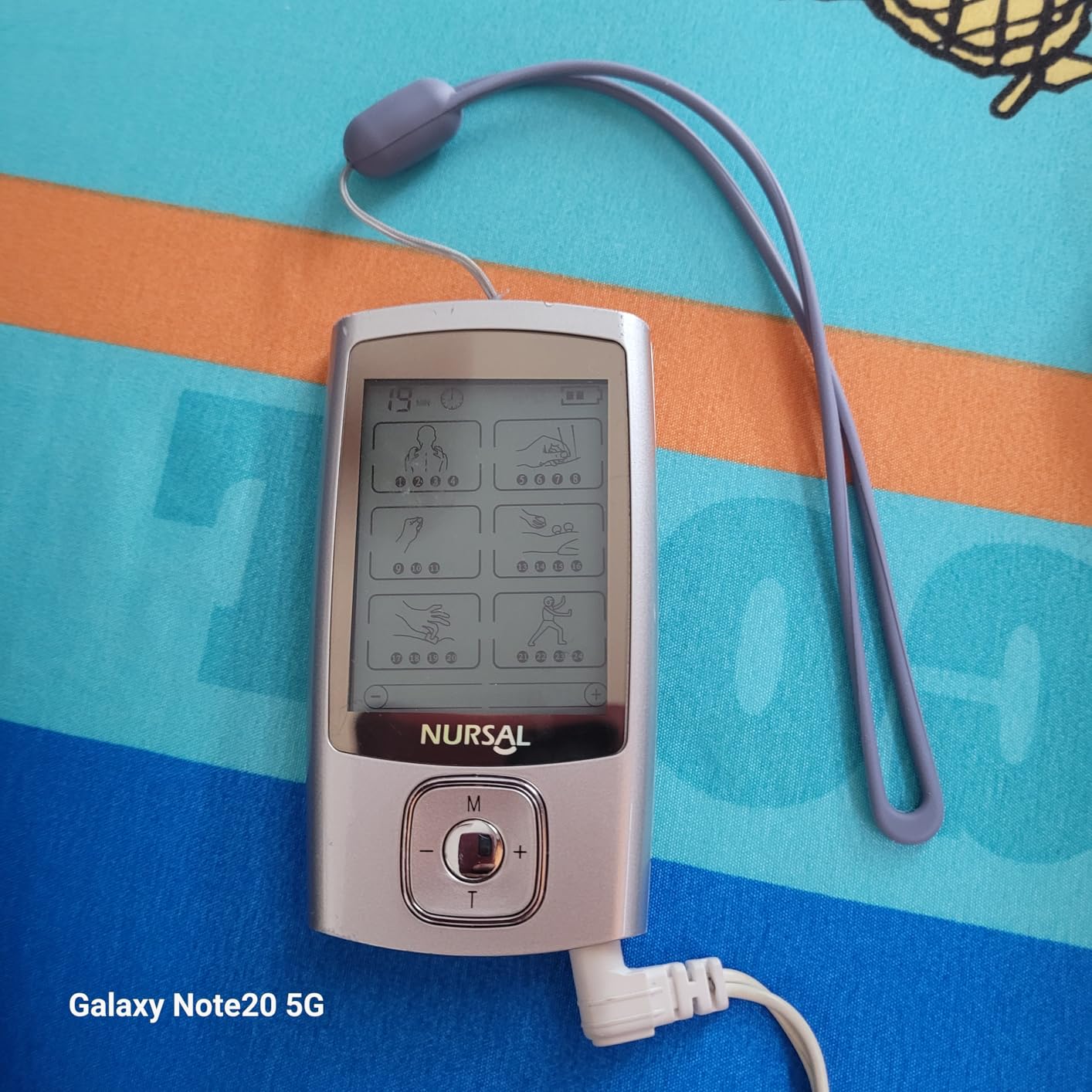
The screen lock is the feature I did not expect to care about and now think matters. A long press on the home button locks the controls, which means a session on your lower back cannot be changed by a hip shift, a cat, or a sleeve. Combined with a memory function that restores your last mode, it removes the friction that makes people abandon a daily routine after a week.
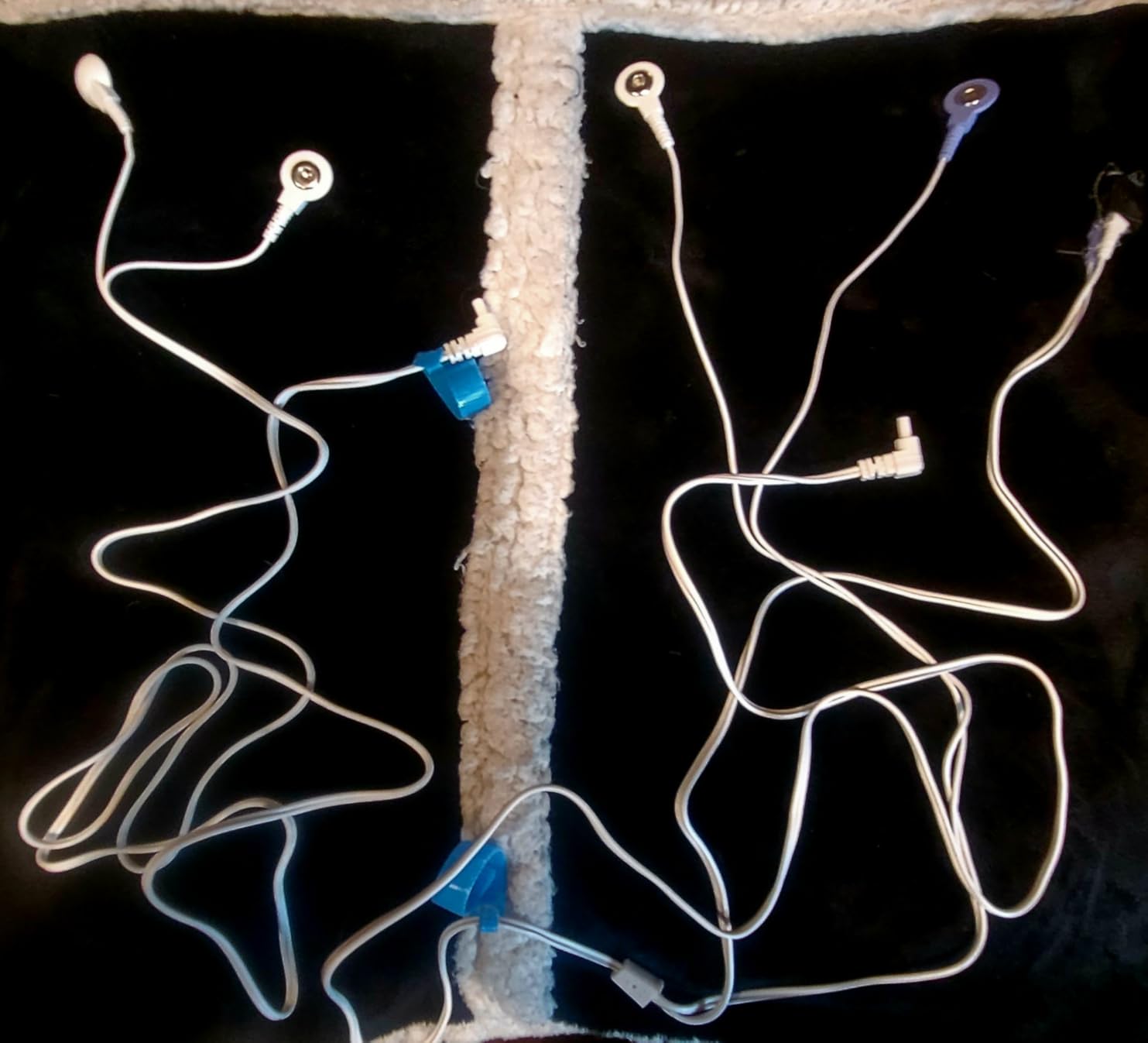
Owners with sciatica and with a prior spinal break describe it easing stiffness enough to sleep, and several report still using theirs after five years. Twenty intensity levels and a 10-60 minute timer with a 20 minute default cover a normal session well, and the dual output lets you treat two areas or share with someone else. Support is a genuine strength here, giving guidance that differs usefully from the manual.
The negatives are consistent across reviews. It charges over Micro USB, which is dated and needs its own cable. The supplied pads are among the first consumables to go, and replacements lose tack quickly too. And owners note the 24 modes have little meaningful variation between them.
Why a locked control panel is a sciatica feature
Treating your lower back means lying down, shifting, and occasionally sitting up. Without a lock, a bump of the intensity dial in the wrong direction is enough to end a session early or leave you at a level that stings. The lock removes that failure point entirely.
What to plan for
Buy a Micro USB cable with the unit or accept that you need one on hand, and expect pads to be your first repeat purchase. If you want genuine variety between high-frequency and low-frequency programs, look at a unit that describes its waveform parameters in the listing.
11. AVCOO 30 Modes TENS Unit: the smallest and longest-running option
AVCOO 30 Modes TENS EMS Unit Muscle Stimulator for Pain Relief, 12 Pcs Pads
4.8 x 1.3 x 0.5 inch body
Weighs 0.09 lb
Dual channel
Up to 30 hours per charge
Pros
- Smallest and lightest unit in the group
- 30 modes and 30 intensity levels
- Up to 30 hours of usage per charge
- Twelve pads in three shapes including rectangles
Cons
- Very new listing with a small review base
- No belt clip so it must be held in place
- Snap button pads are proprietary
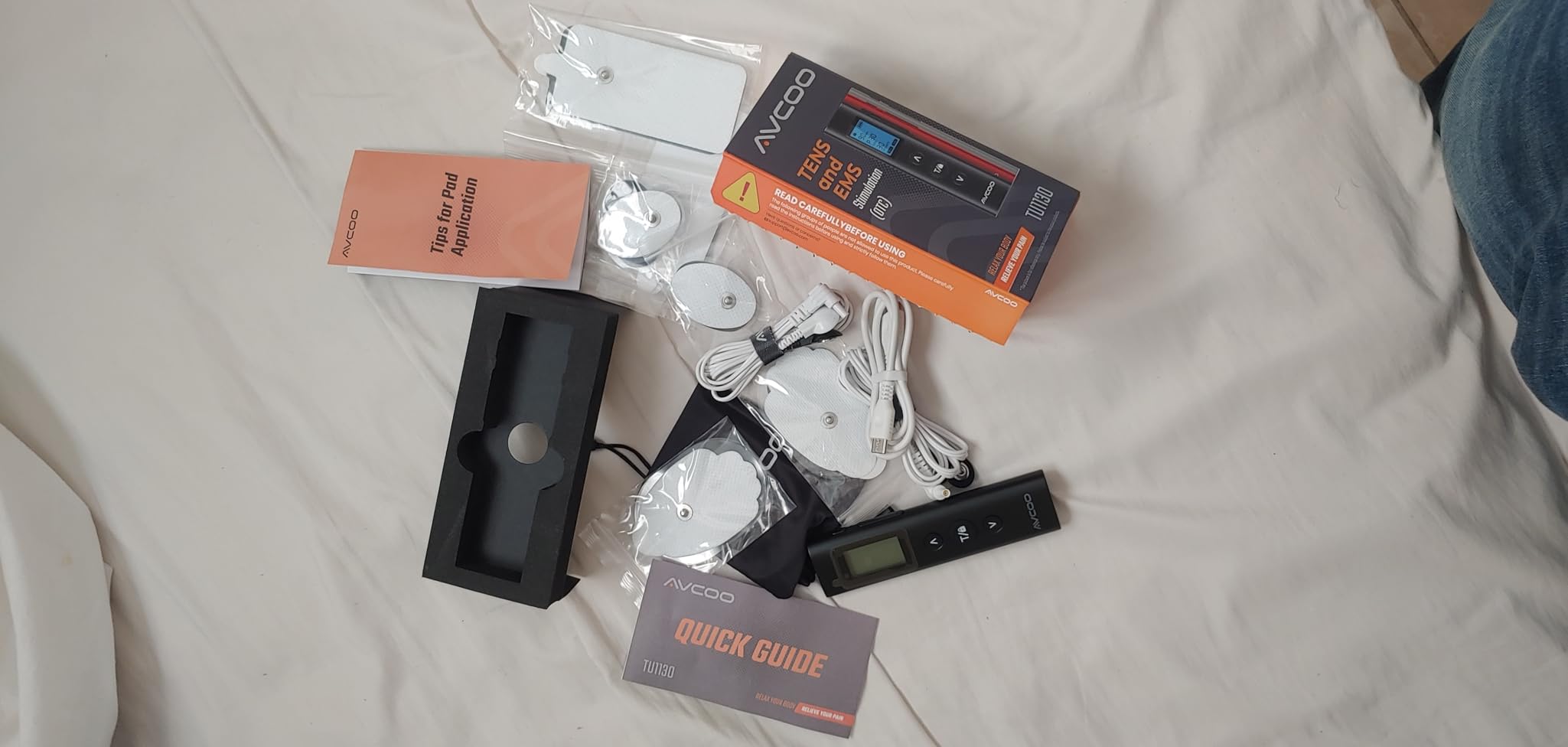
At 0.09 lb and 4.8 by 1.3 inches this is the only unit here I would call genuinely wearable. It goes under clothing, stays on during a workday, and does not drag a battery pack or a control unit on a belt. For sciatica, which often flares with long hours of sitting, being able to treat a flare discreetly at your desk rather than only at home changes how consistently you use it.
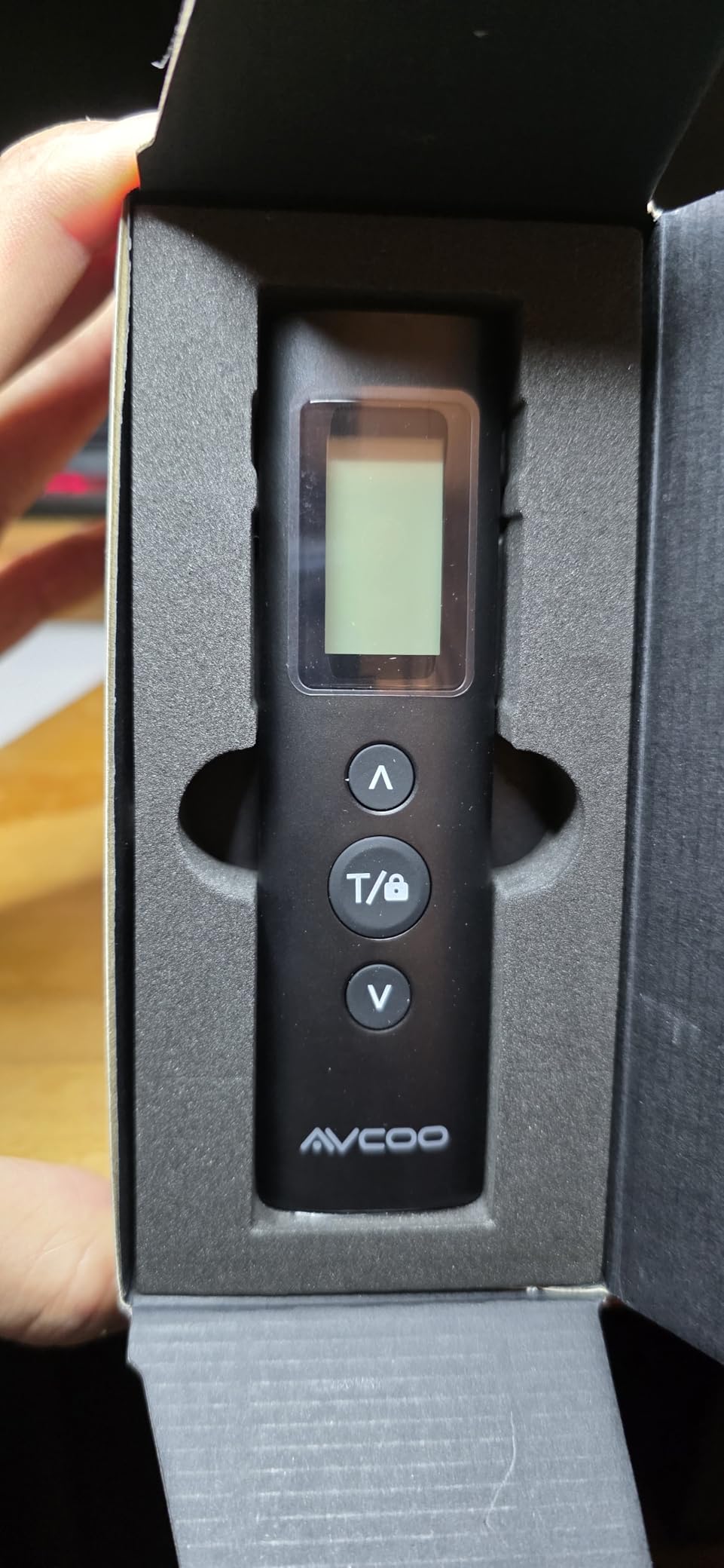
Thirty modes and thirty intensity levels is the highest count in the group, and the battery is rated for up to 30 hours of use. The twelve pads come in three shapes, including 2×4 inch rectangles for the lower back, and they are CE and RoHS certified latex-free pads that peel off without leaving gel on the skin, which is a real plus for daily use on sensitive skin.
Two things temper this. It is a very new listing with a much smaller review base than the others, so the 4.6 rating rests on a shorter track record. And there is no belt clip, so the unit has to be held or positioned against your clothing rather than attached securely.
Why size is a sciatica decision, not a gimmick
Consistency is what makes TENS work, and consistency is limited by whether you are willing to sit still for 30 minutes with wires taped to you. A unit you can wear under a shirt gets used on a bad afternoon at work. A larger unit gets used in the evening, if at all.
What you give up for the dimensions
The snap-button pads are proprietary, so replacements must match the connector, which limits your options if you are unhappy with the included set. And with under 6k reviews, you have less long-term data than the TENS 7000 or the Belifu.
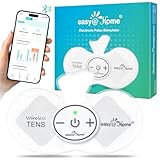
12. Easy@Home Wireless TENS Unit: app control with no wires at all
Easy@Home Wireless TENS Unit with APP Remote Control – Muscle Stimulator
6.38 x 1.1 x 7.64 in, 5.2 ounces
MyPainOff TENS app for iOS and Android
No leads or battery pack
TENS and EMS modes
Pros
- Truly wireless with no leads to snag or tangle
- Phone app controls intensity modes and timer
- Small enough to hide under clothing
- Long battery life with fast recharging
Cons
- Lowest rating in the group at 4.2
- Pads fall off well before the quoted cycle
- Replacement pads are costly in small packs
- Control unit sits on the body
The Easy@Home is the only genuinely wire-free unit here, and for a lower back that is hard to reach on your own the app is the reason to consider it. The MyPainOff TENS app controls intensity, modes and timer from a phone with a physical button fallback, so you can start a session and set the level without twisting around behind your own back. There is no battery pack and no lead wire, so nothing can snag when you move.
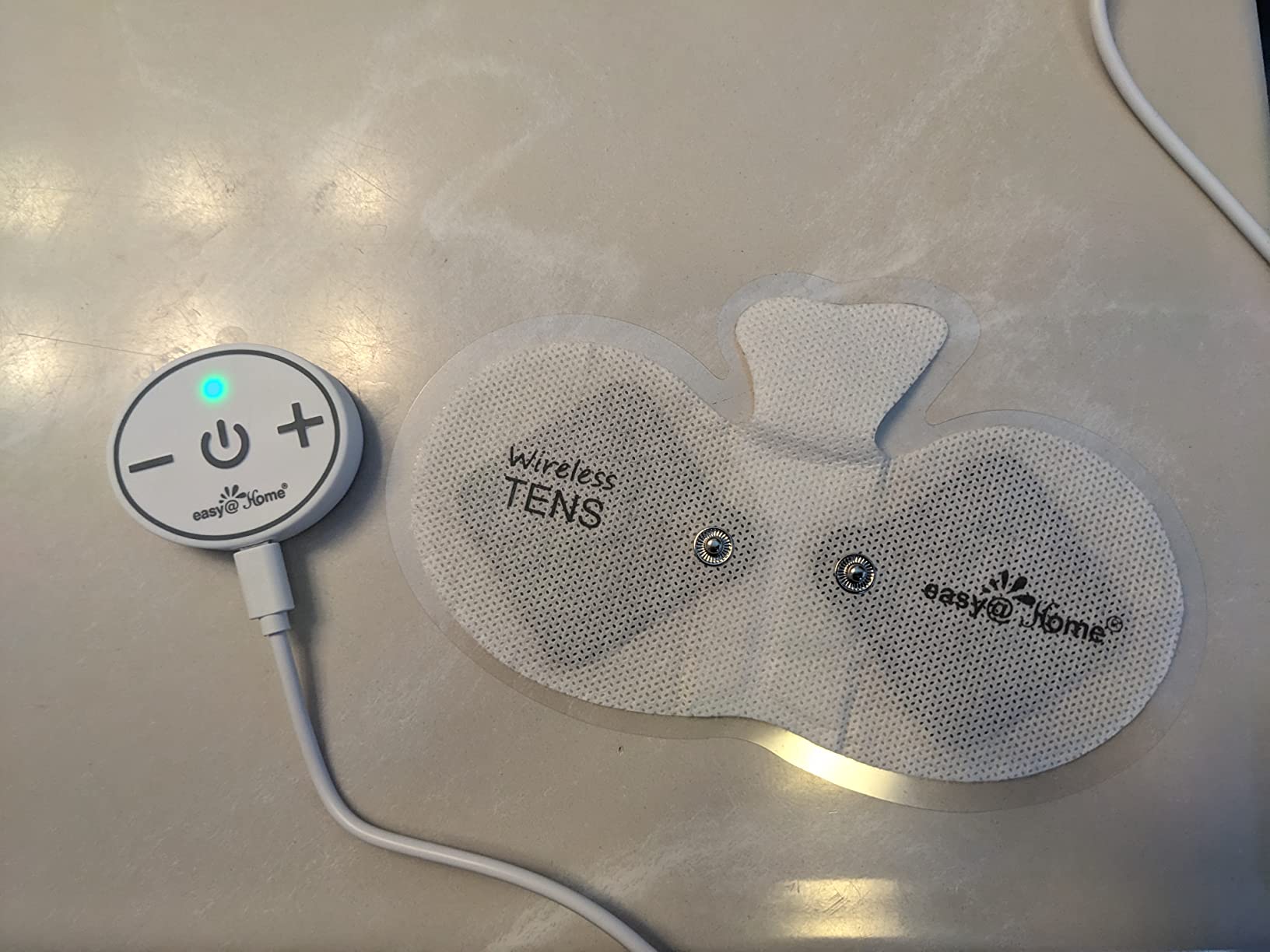
Owners with sciatica and chronic back pain report strong pulses and good results, and the long battery life means a full hour followed by a top-up. It is also the only smart device in this group, which is a genuine difference if you like logging sessions or adjusting settings without taking your hands off the work.
This is also the weakest rated unit we tested, at 4.2 with 7 percent one-star reviews. Pads are the recurring problem: they fall off well before the quoted 30 cycles and replacements are expensive in small packs. The hard control unit sits on your body, the device beeps on every button press with no way to mute it, and a minority of owners reported early malfunctions.
Who the wireless design genuinely suits
Anyone who cannot easily reach their own lower back, anyone treating their back while lying down without a cord to arrange, and anyone who wants the stimulation to start and adjust from a phone. It is a clear win for those three cases and irrelevant for everyone else.
Why it finished last for us
Consumable cost and reliability, honestly. The pads fail early, the replacements are premium-priced, and the lowest rating in the group suggests a thinner quality-control margin. If you need this design, buy it and plan for pads. If you do not, a dual-channel wired unit with better pads is the safer bet.
How to Use a TENS Unit for Sciatica: Pad Placement and Settings
Placement matters more than the unit you buy. Most people put pads directly on the sharpest point of pain and then conclude the device does nothing. Experienced users do something different, and the sciatica communities describe it the same way: they bracket the painful area and trace the nerve path.
Use this sequence for a first session:
1. Clean the skin. Wash and dry the area. No lotions, no oils, no lotions applied after the pads go on. Oil under a gel pad is the number one cause of pads sliding off mid-session.
2. Bracket the lower back. Place one pad on each side of the lumbar spine, roughly level with the point where the pain starts, and route the current across the painful area rather than through it.
3. Trace the nerve path. On the second channel, place one pad on the painful glute or upper hamstring and the other on the back of the thigh, above the knee, along the route of the sciatic nerve.
4. Start low. Turn the intensity to the lowest setting before you attach anything. Ramp up slowly over a minute or two until you feel a clean, even buzz, then stop there.
5. Run 15 to 30 minutes. Set the timer, then lie still or continue with gentle movement. Most people report nothing happening for the first five to ten minutes and assume the unit is broken. It is not. Relief typically builds after that and lasts for some time after you switch it off.
6. Remove and store. Peel pads off slowly, fold them gel-to-gel, and stick them back on the protective film. Storing them gel-to-gel is what keeps them reusable.
Recommended TENS settings for sciatica
For sciatica specifically, start with a high-frequency setting in the 100 to 150 Hz range at a pulse width of 50 to 80 microseconds, for 15 to 30 minutes, up to about four sessions a day. This is the setting most often described as numbing the radiating pain. Low-frequency settings, often 1 to 20 Hz, are the ones associated with endorphin release and tend to feel more like a massage.
One thing to avoid is repeating the exact same frequency and intensity every day. Building tolerance to a stimulus is real, and a common fix is to alternate. Run a high-frequency session in the morning and a low-frequency one in the evening, or change the mode weekly, so the nerve keeps responding.
Pad care that extends the life of your consumables
Replace pads when the gel feels dry or the pad no longer sticks without pressure. Washing a reusable pad lightly with water and letting it air dry can extend its life. Do not share pads, and stop using a pad on skin that is broken, rashy or numb. Numb skin is a safety issue, not a comfort one, because you cannot reliably feel a burn.
TENS vs EMS: Which Mode You Actually Need for Sciatica
Short version: TENS is for nerve pain, EMS is for muscle. Sciatica is nerve pain, so the TENS mode is the one you want.
TENS, short for transcutaneous electrical nerve stimulation, sends pulses at a frequency designed to fire sensory nerve fibres and interrupt pain signalling. It should feel like a buzz, a tingle, or a mild heat, and it should never make a muscle jump. EMS, or electrical muscle stimulation, sends a stronger pulse designed to make a muscle contract. That contraction is the point of an EMS session, and it is a poor way to treat an irritated nerve.
Many units in this roundup, including the Belifu, TechCare, AUVON dual channel, NURSAL, AVCOO and the Easy@Home, are combo TENS and EMS devices. That is not a problem, it is convenience, but for sciatica you will live in the TENS menu. If you find a mode where your hamstring twitches, it is too strong for nerve work, so turn it down one or two levels.
A helpful note from practitioners: the unit a physical therapist hands you in clinic is frequently an EMS unit rather than a TENS one. That is normal for a muscle-driven rehab plan, and it is another reason to ask your therapist what they actually prescribed before copying their routine at home.
Safety, Contraindications and When to See a Doctor
A TENS unit is a medical device and it does carry real cautions. This section is general education, not medical advice, and you should confirm your own situation with a clinician before starting.
Do not use a TENS unit, and talk to a doctor first, if you have a pacemaker, an implanted defibrillator or any other electrical or metal implant; if you are pregnant; if you have epilepsy or a seizure disorder; if you have a history of deep vein thrombosis; if you are being treated for cancer; or if you have a heart condition or arrhythmia. Never place pads on the front or sides of the neck or throat, and never over the eyes, the mouth, the front of the chest or the reproductive organs.
Also do not place pads on numb skin, or on any area where you cannot feel sensation. Loss of sensation means you cannot feel a burn or an excessive stimulus, and that is exactly the situation where the device is unsafe. Skin irritation under the pads is the most common complaint, and it is usually reduced by cleaning the skin properly, keeping gel pads from being used past their useful life, and taking breaks between longer sessions.
Red flags that mean a device is not the answer
Stop self-treating and see a clinician if you notice any of the following. These suggest something more than nerve irritation that an over-the-counter device cannot address.
Progressive or worsening leg or foot weakness, or a foot that is starting to drop when you walk. Numbness around the inner thigh, the genitals or the area between the buttocks, which is called saddle numbness. New difficulty starting urination, loss of bladder or bowel control, or loss of sexual function. Pain severe enough that you cannot walk or sleep, fever with back pain, unexplained weight loss, or a history of cancer with new back pain. And any pain that has lasted past six to eight weeks without meaningfully improving.
Those last items are not reasons to stop using a TENS unit if a clinician clears you, they are reasons to get the underlying problem looked at. A device manages a symptom while you wait, and it does nothing about a progressive nerve injury.
How to Choose a TENS Unit for Sciatica
Get two channels. This is the single most useful spec for sciatica specifically, because the nerve path runs from the lower back to the leg. One channel means you treat half the problem at a time. Two independent channels let you run different intensities on the lumbar area and the back of the thigh in the same session.
Check the output ceiling. A unit that plateaus into a faint tickle will not reach a deep, dull nerve ache. If your pain is low in the body and hard to localise, higher-output units like the Beurer EM59 are worth the extra money. If you are getting a clean buzz at mid settings, a mid-output unit is fine.
Prioritise pad size and pad quality. You will use this device repeatedly, so the consumable is part of the purchase. Look for pads of 2×4 inches or larger for lower-back coverage, more than six pads in the box, and stated reuse counts of 40 uses or more. If the replacement pads are proprietary and hard to source, that is a hidden cost you will pay later.
Decide on power. A rechargeable lithium unit is simpler in daily use and dies less often mid-session. The TENS 7000’s 9V battery is the one exception that still works well, largely because owners buy rechargeable 9V packs. Either way, look for a battery indicator so you are not finding out at level 9 that you have no charge.
Look for a timer and a lock. An auto-shutoff timer is a safety feature, not a convenience. A control lock matters more than people expect, because a session on your lower back is a sitting position where an elbow can easily change the intensity.
Verify what you are buying. Some listings say muscle stimulator in the title but offer TENS only. For sciatica, TENS only is exactly what you want, so that wording is not a problem. Just know it before you complain about a missing mode.
Frequently Asked Questions
Should you use a TENS unit for sciatica?
Yes. A TENS unit is a legitimate at-home option for the pain of sciatica because the electrical pulses compete with the pain signal on a compressed nerve and interrupt it before the brain registers it. It is drug-free, non-invasive and safe for most people to use daily. It manages the symptom only, so it works alongside whatever your clinician recommends rather than replacing it.
Where should I place my TENS unit for sciatica?
Place one pad on each side of the lumbar spine to bracket the painful lower back, then use a second channel with one pad on the painful glute or upper hamstring and the other on the back of the thigh above the knee. Bracketing and tracing the nerve path works far better than putting both pads directly on the sharpest point of pain. Never place pads on the neck, chest or face.
How long should you use a TENS unit for sciatica?
Most people use 15 to 30 minutes per session, up to about four times a day, and can do so daily as long as the skin underneath stays healthy. Relief often builds after the first five to ten minutes, so do not judge the device in the first few minutes. Vary the frequency and intensity between sessions rather than repeating the identical setting every day.
Which TENS unit is best for sciatica?
For most people, the TENS 7000 is the best overall choice because of its strong output and large review base. If your pain spans the lower back and the leg at once, a dual-channel unit such as the Belifu or the TechCare is better because you can treat both areas at different intensities. For broad coverage and lots of sessions, look for 2×4 inch rectangular pads and a rechargeable battery.
Can a TENS machine get rid of sciatica?
No. A TENS machine reduces the pain signal, it does not remove the disc bulge, bone spur or piriformis tightness that is compressing the nerve. Most people get temporary relief lasting hours, sometimes longer, and some get relief good enough to sleep or walk normally. It is a management tool that fits alongside physical therapy, not a cure.
Are TENS units safe to use every day?
For most adults, daily use is safe, provided the skin under the pads is intact and you have no contraindications. Do not use a TENS unit if you have a pacemaker or other implant, are pregnant, have epilepsy, a history of deep vein thrombosis, cancer, or numb skin where you cannot feel sensation. Stop and see a clinician if you have progressive leg weakness, saddle numbness or bladder and bowel changes.
The Best TENS Unit for Sciatica in 2026: Final Verdict
After working through twelve units, the answer to which of the best TENS units for sciatica is right for you comes down to one question: how many areas need treating at once. If the pain is mostly in the lower back, the TENS 7000 is the safest, best-proven pick and it is our editor’s choice. If it runs down the leg too, take a dual-channel unit and treat both zones in one session, which is where the Belifu and the TechCare earn their place. If you want heat alongside the pulses, the Beurer EM59 is the only option on this list that does it.
Whatever you choose, pad placement and pad quality decide your results more than the model number does. Bracket the lower back, trace the nerve path, start low, and give the first five minutes before you judge it.
This article is for general information and is not medical advice. If you have any of the red flags listed above, talk to a clinician before using a TENS unit.