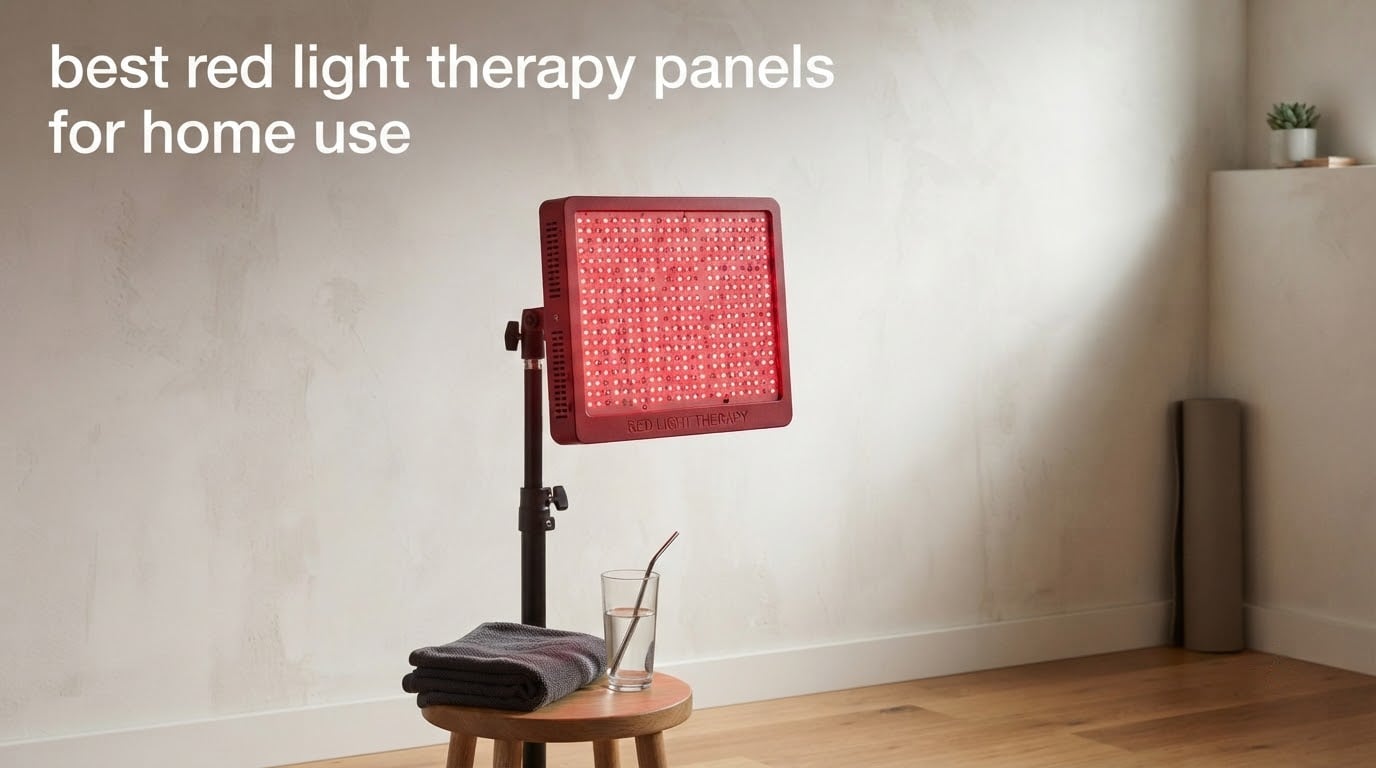
Choosing the best red light therapy panel for home use comes down to three numbers: the wavelengths on the spec sheet, the irradiance measured at the distance you will actually stand, and how much of your body the panel covers. Brands rarely make that easy, because one panel quotes 95 mW/cm² at 3 inches and the next one quotes 73 mW/cm² at 6 inches, and those two figures are not describing the same thing.
So we did the unglamorous work first. We pulled the manufacturer spec sheet for ten panels, recorded every irradiance claim together with the exact distance it was measured at, and kept the numbers visible rather than normalised into a single misleading figure. We also read the owner reviews closely, because the same spec sheet produces completely different experiences depending on how the stand holds up and whether the included eye protection actually blocks light.
That research turned up a theme worth repeating before any brand names appear. Owners on Reddit and buyer-forum threads are not asking which panel is strongest. They are asking which one will still work in five years, whether the wavelengths are listed at all, and whether the irradiance number was measured or estimated. Those three questions decided most of this ranking.
What follows is a ten-panel roundup for 2026, followed by a buying guide that explains how to read a panel spec sheet yourself. Panels are a wellness tool, not a medical device, and none of them should replace care from a clinician.
Table of Contents
Top 3 Best Red Light Therapy Panels for October
If you want our answer before the detail, these three cover the range most home users fall into: a strong all-rounder, a well-built mid-size panel, and a high-output unit for people who want maximum dose per minute.

BestQool 105W X60 Panel
- 95.6 mW/cm2 at 3 inches
- 105W dual-chip 660nm and 850nm
- Under 5 pounds with stand and hanging kit
- Three modes with touchscreen timer

Hooga HG300 Panel
- Over 73 mW/cm2 at 6 inches
- 60 five-watt 660nm and 850nm LEDs
- Iron build with 3-year warranty
- Fits a desk or nightstand
Lifepro Bioheal 90 and 120
- 203 mW/cm2 at 3 inches
- 120 dual-chip 660nm and 850nm LEDs
- Hangs on a door or lies flat
- Lifetime warranty when registered
All 10 Best Red Light Therapy Panels at a Glance in 2026
Every panel below lists both 660nm red and 850nm near-infrared light. The irradiance figure is quoted exactly as the brand states it, with the measurement distance attached, because that distance changes the number more than most buyers realise.
| Product | Specifications | Action |
|---|---|---|
| BestQool Red Light Therapy Panel 105W |
|
Check Latest Price |
| Hooga HG300 Red Light Therapy Panel |
|
Check Latest Price |
| Lifepro Bioheal Red Light Panel 90 and 120 |
|
Check Latest Price |
 Hooga PRO300 Red Light Therapy Panel Hooga PRO300 Red Light Therapy Panel |
|
Check Latest Price |
 Hooga HG200 Red Light Therapy Panel Hooga HG200 Red Light Therapy Panel |
|
Check Latest Price |
 BestQool Pro100 Red Light Therapy Panel 160W BestQool Pro100 Red Light Therapy Panel 160W |
|
Check Latest Price |
 BestQool BQ40 Red Light Panel 50W BestQool BQ40 Red Light Panel 50W |
|
Check Latest Price |
 BONTANNY BO-300 Red Light Therapy Panel BONTANNY BO-300 Red Light Therapy Panel |
|
Check Latest Price |
 Mito Red Light MitoMIN 2.0 Panel Mito Red Light MitoMIN 2.0 Panel |
|
Check Latest Price |
 KingPavonini 2-in-1 Red Light Panel and Strap KingPavonini 2-in-1 Red Light Panel and Strap |
|
Check Latest Price |
How We Tested and Ranked These Panels
Most roundups in this category rank on price and star rating alone. We scored each panel on five criteria, weighted toward the things that decide whether a device still works in year three.
Irradiance at the stated distance. We recorded the number the brand publishes and the distance it was taken at. A panel claiming 203 mW/cm² at 3 inches is not directly comparable to one claiming 73 mW/cm² at 6 inches, and we never pretend otherwise.
Wavelength transparency. Every panel here lists 660nm and 850nm. Where a panel adds 630nm, 810nm or 830nm, we note it, but we do not award extra credit for wavelength count on its own.
Build, stand and mounting. Weight, housing material, whether the included stand holds a panel at an angle, and whether hanging hardware is included in the box.
Warranty and support. Warranty length, replaceable-part policies and whether the brand has a track record of answering owners.
Value relative to coverage. How much body area a panel treats per session relative to what it costs, which is the number that actually matters if you own only one device.
One thing we could not do: we did not independently measure irradiance with a calibrated meter, so every figure here is a manufacturer claim reported as stated. Where a brand publishes third-party testing, we say so, and we flag the panels that publish no verification at all.
1. Best Overall Red Light Therapy Panel: BestQool 105W X60
BestQool Red Light Therapy Panel, 660nm Red & 850nm Infrared Light, 105W
105W
95.6 mW/cm2 at 3 inches
660nm + 850nm dual-chip
4.8 lbs
Pros
- High output that shortens session time
- Dual-chip LEDs with three selectable modes
- Light enough to move between rooms at under 5 pounds
- Stand plus wall-mounting kit in the box
- Touch controls that remember your last setting
Cons
- Very bright and needs the included dark glasses
- Included glasses do not fully block light for some users
- Reports of a stand fastener and a power cord failing
The BestQool X60 is the panel we kept coming back to while working through the list. At 105W it delivers 95.6 mW/cm² at 3 inches, and because that measurement distance is unusually close, it packs a lot of usable energy into a 10 or 15 minute session.
What we liked most is the physical design. The panel weighs 4.8 pounds, which means one person can carry it between a bedroom, an office and a home gym without drama, and the adjustable U-shaped stand plus the included hanging kit give you desk, floor and wall positions from the same unit.
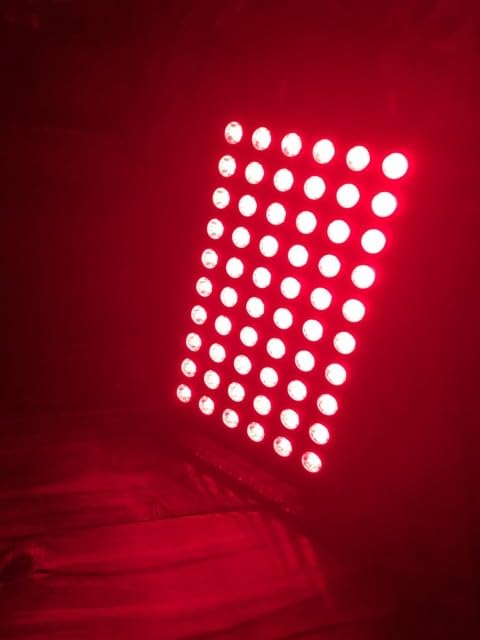
The 660nm and 850nm chips can run red-only, near-infrared-only or together, which matters if you want a skin-focused session at one time and a deeper tissue session at another. The touchscreen timer handles the rest.
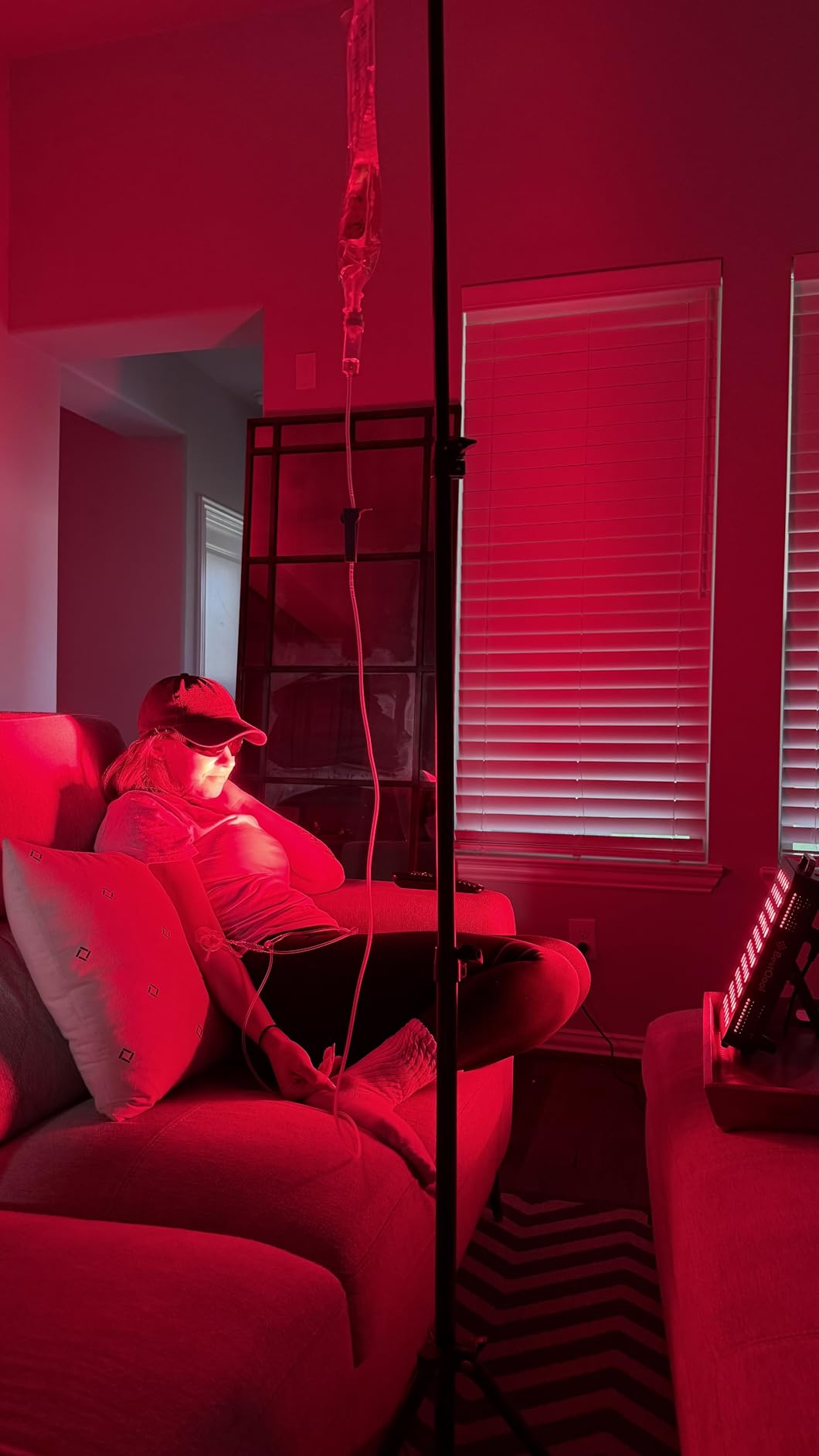
Owners report the practical effect clearly: relief from aches and stiffness within 10 to 20 minutes of close-range use, plus better sleep and visible skin texture changes over weeks. Our hesitation is brightness. This panel lights up a room, and the included protective glasses do not seal completely for everyone, so buy your own goggles if you are sensitive.
Who this panel suits
It suits people who want one device that covers face, joints and upper body without a complicated setup. The short-session output means a ten-minute morning routine is realistic, which is the difference between a panel you use and a panel that gathers dust.
Who should look elsewhere
Skip it if you plan full-body coverage from a single panel, or if you share a small room with someone who is light-sensitive. A handful of owners also reported a plastic stand fastener and a power cord fault, so if you are buying to keep for a decade, weigh the warranty terms carefully.
2. Best Value Red Light Therapy Panel: Hooga HG300
Hooga HG300 Red Light Therapy Panel, 660nm Red & 850nm Near-Infrared Light, 60 LEDs, Built-in Timer, Adjustable Stand for Home Wellness
60 five-watt LEDs
Over 73 mW/cm2 at 6 inches
Iron construction
3-year warranty
Pros
- Iron build feels closer to a studio panel than a plastic one
- Independent red and near-infrared controls
- Compact enough for a desk or nightstand
- Active cooling with 50000 hour LED lifespan
- Holds a 4.6 average across more than 1300 reviews
Cons
- 60-LED footprint suits targeted areas rather than full body
- Very bright output that lights the whole room
- Heavier than expected for its size
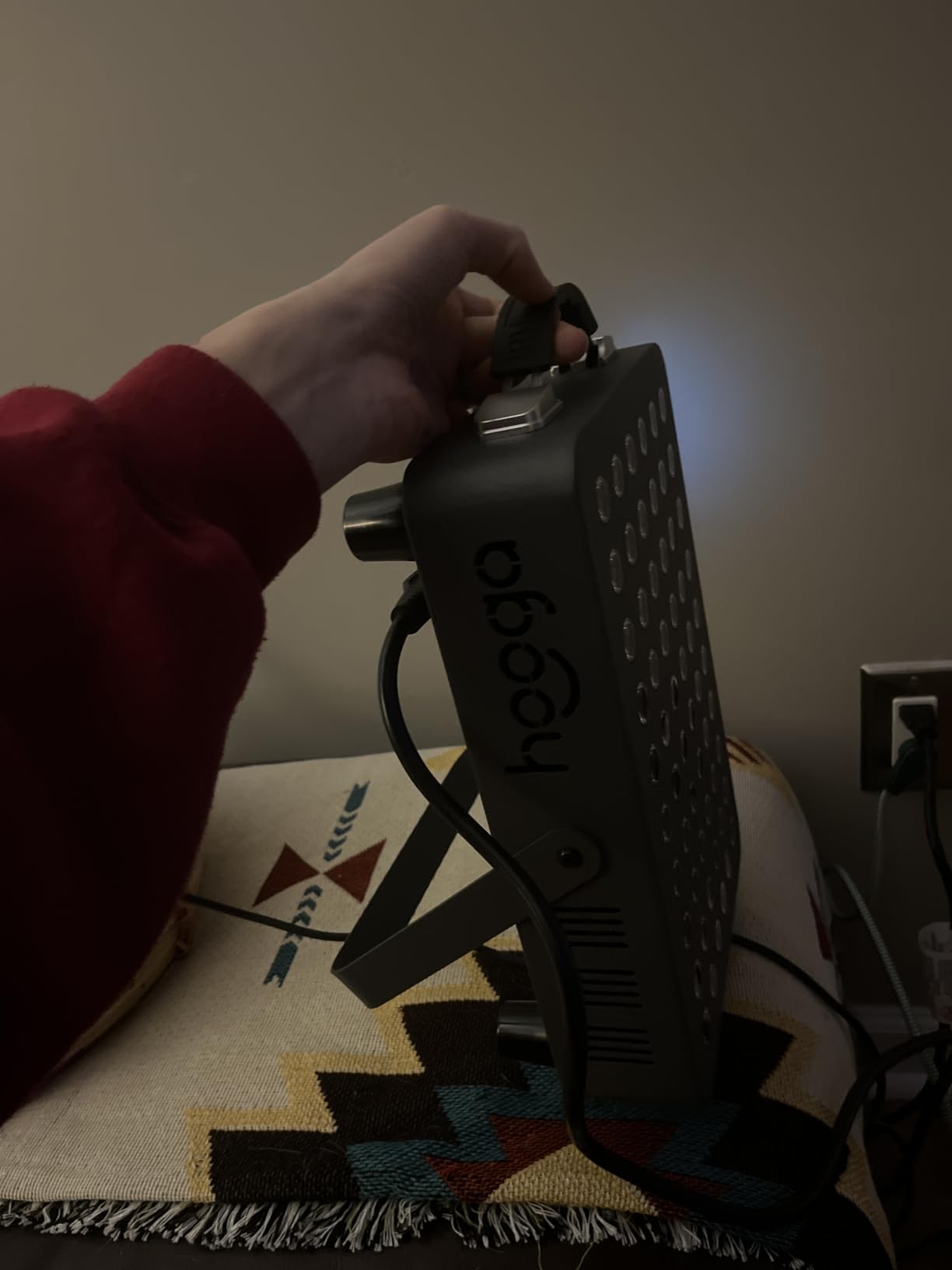
The HG300 appears again and again in owner discussions as the credible entry-level panel, and the build is the reason. The housing is iron rather than the thin plastic used on cheaper units, and that weight is what keeps the stand from wobbling when you adjust the angle.
Its 73 mW/cm² figure is measured at 6 inches, a more honest distance than the 3-inch numbers many brands quote, so treat it as a moderate dose per session rather than a headline number to brag about. For most home routines that is entirely adequate.
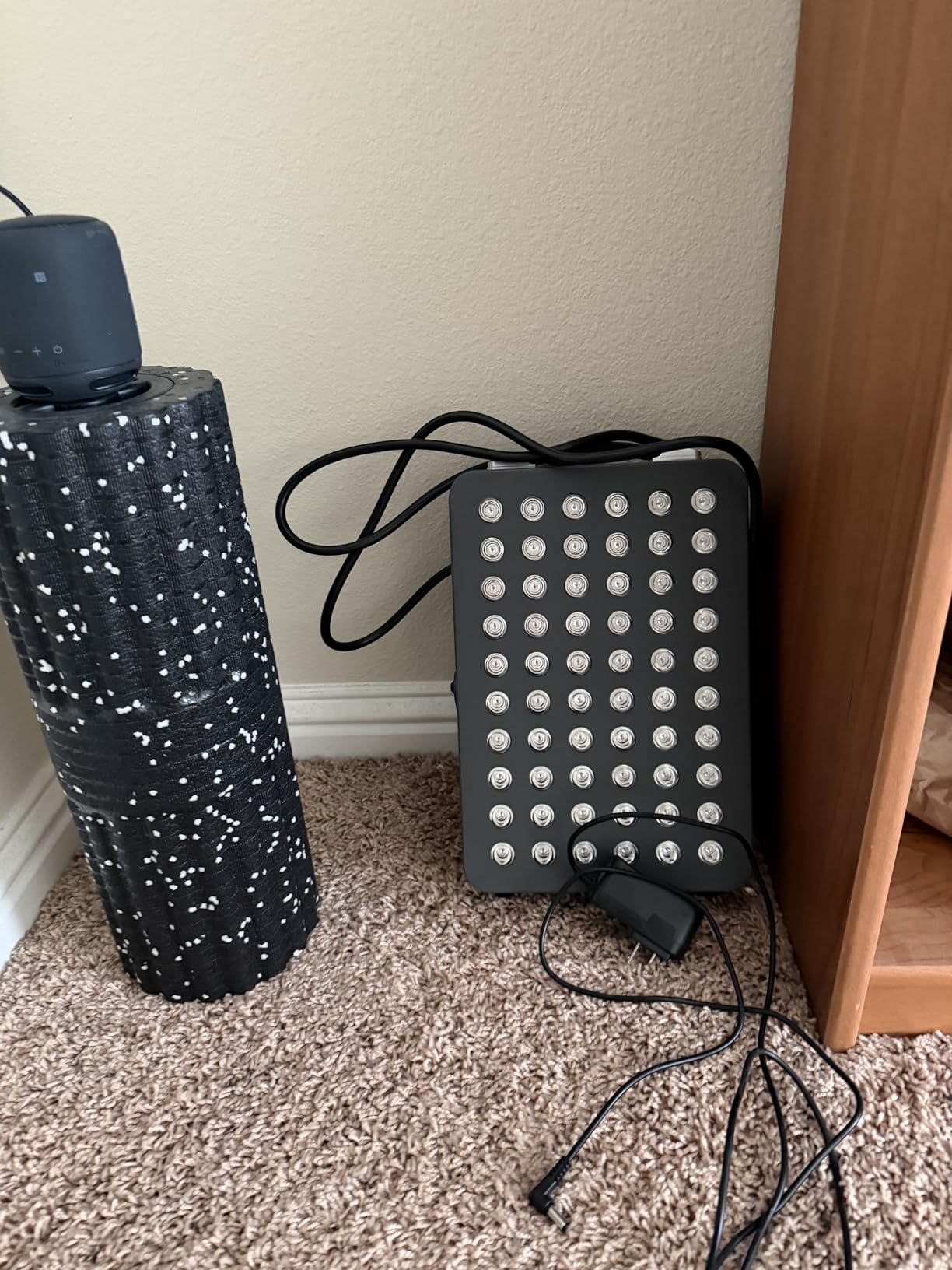
Two details earn the value label. The built-in timer with independent red and near-infrared controls removes the phone-and-app routine entirely, and the active cooling plus 50,000 hour LED lifespan suggest a device built for daily use over years rather than a season of enthusiasm.
Owners report better sleep, smoother skin and reduced knee discomfort compared with cheaper lights they already owned. In Reddit threads, a commenter in r/redlighttherapy specifically recommends Hooga units as a reputable company with quality devices, and that matches what the build feels like in person.
Who this panel suits
It suits buyers who care about durability more than raw power, and who want a panel that survives a move to a new house. Three years of manufacturer warranty coverage is meaningful in a category where many owners worry about two-to-three year lifespans.
Who should look elsewhere
Skip it if your goal is a full-body session standing up. Sixty LEDs cover a shoulder, a knee, a face or a lower back well, and a torso will take several passes. If you want fewer sessions rather than smaller ones, step up a size.
3. Premium Pick for Raw Output: Lifepro Bioheal 90 and 120
Lifepro Bioheal Red Light Therapy Panel 90 &120 Dual Chip LED
120 dual-chip LEDs
203 mW/cm2 at 3 inches
20.3 inch panel
Hanging hardware included
Pros
- Highest published irradiance among the panels we reviewed
- Heavy-duty build with premium-feeling hardware
- Stand flat or hang it on a door for hands-free use
- Includes two pairs of eye protection
- Lifetime warranty when registered within 7 days
Cons
- Rear-mounted power jack sits awkwardly against the handle
- Included sunglasses do not seal out all light
- No remote and no start delay on the power button
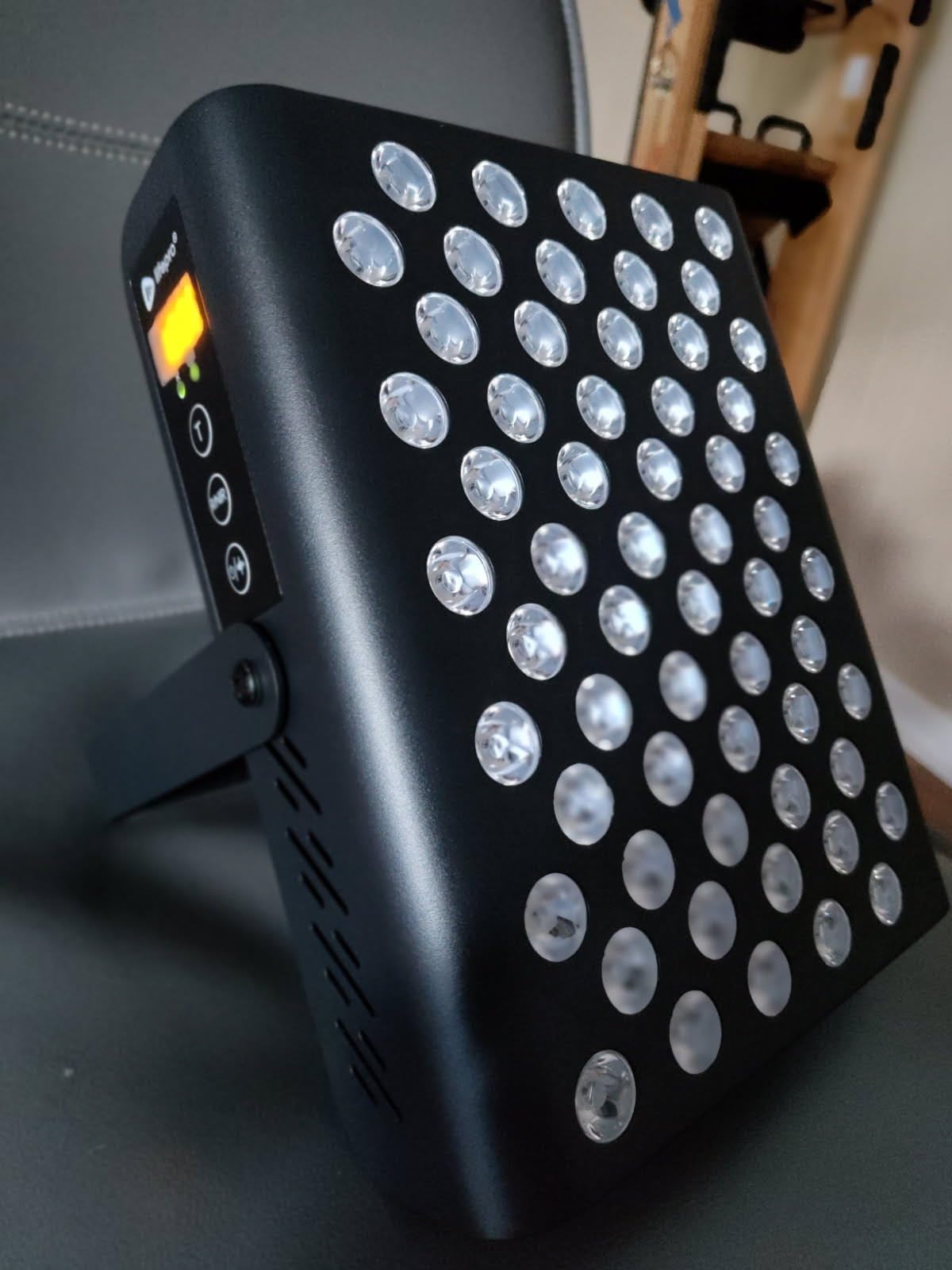
On raw output the Bioheal is the clear outlier here, publishing 203 mW/cm² at 3 inches from 120 dual-chip LEDs. The 20.3 by 8.3 inch panel face also covers noticeably more skin per pass than the 60-LED units in this list.
The versatility is what impressed us most in the spec sheet. It can stand, lie flat, hang on a door with the included hardware, or be held against the body, which turns a 9.7 pound object into a genuinely flexible tool rather than a fixed installation.
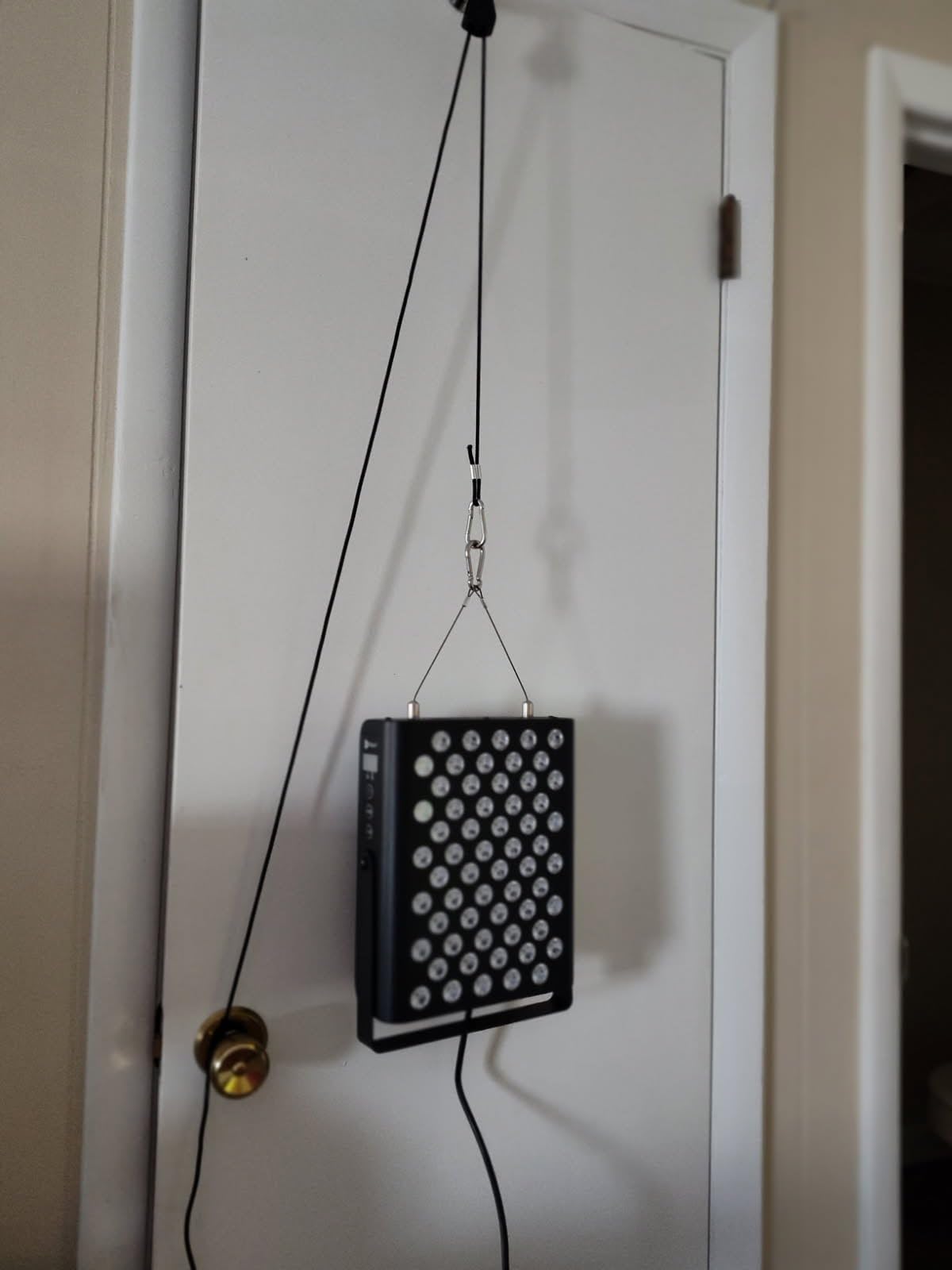
Two pairs of eye protection in the box is a small detail that matters more than it sounds. Most competitors include one pair, and the most common complaint in owner reviews across this category is that included eyewear does not fully seal.
The warranty is the standout for long-term buyers. Register within 7 days and LifePro covers the panel for life, which is the only lifetime coverage we found among the ten panels reviewed here.
Who this panel suits
It suits people who want the shortest possible session and who value the registration-based lifetime warranty. If you plan to keep the panel decade after decade, the warranty maths is the strongest argument for it.
Who should look elsewhere
Skip it if you are fussy about controls. There is no remote, no audible tone when a timed session ends, and the power button lights the panel at full brightness immediately, which means you need to be positioned before you press it.
4. Best for Muscle Recovery: Hooga PRO300
Hooga Red Light Therapy Panel Device – 660nm Red & 850nm Near Infrared Light Therapy, LED Light Therapy Lamp, 60 Dual Chip LEDs, Timer, Table Top Stand Included – PRO300
300W light source
60 dual-chip LEDs
61.2 by 15.7 inches
3-year warranty
Pros
- Large panel face covers quads
- back and shoulders in one pass
- Flicker-free output with low EMF at treatment distance
- Internal cooling fans keep longer sessions comfortable
- Linkable to other PRO Series panels as you expand
- Digital timer with independent red and NIR controls
Cons
- Touch buttons are easy to trigger while repositioning
- Near-infrared mode looks almost dark and reads as a fault
- Stand feels less premium than the panel
- Some non-US buyers need a voltage converter
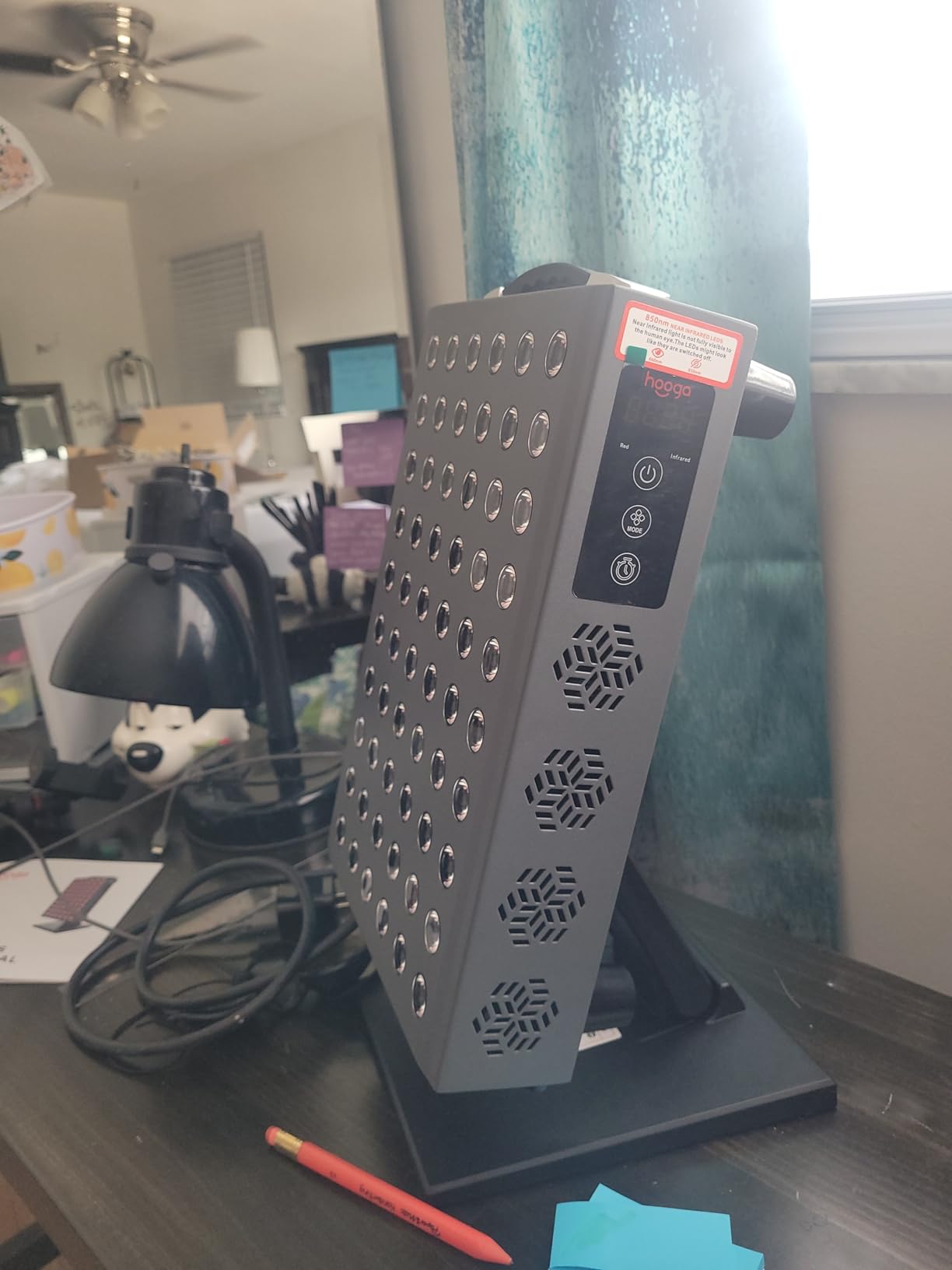
For muscle recovery the panel size is the variable that matters, and the PRO300 is the largest single panel in this group at 61.2 by 15.7 inches. A quads session, a back session and a shoulder session all fit inside one ten-minute block without moving the panel.
The dual-chip 660nm and 850nm LEDs give even coverage across the face, and the claim of low EMF at the recommended treatment distance is the kind of specification that matters for a device you stand a foot away from with your clothes off.
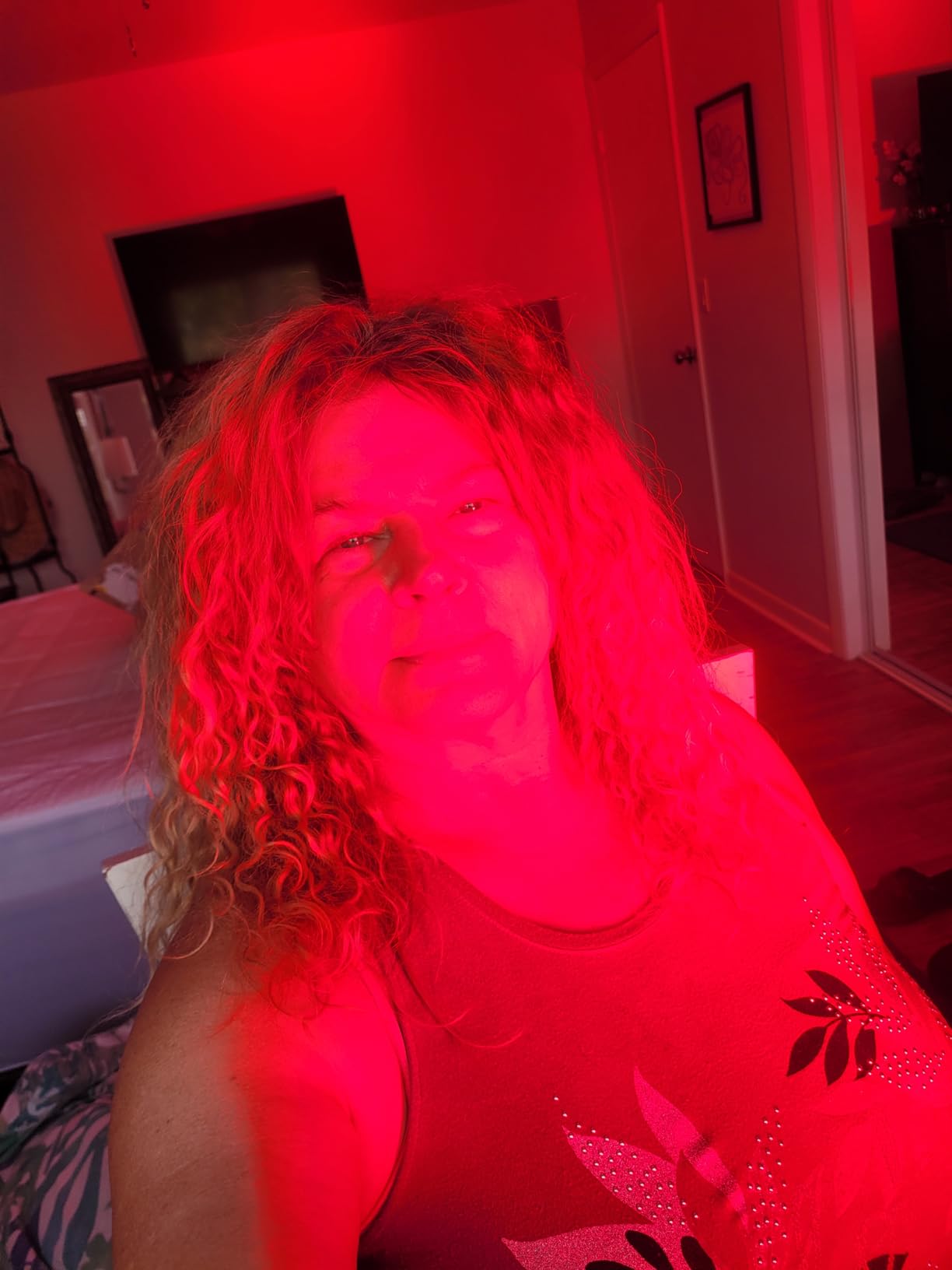
Owners running this panel daily report clearer skin and faster post-workout recovery inside two to three weeks, and several describe it as the strongest value in the mid-range category. Flicker-free output was specifically called out as a comfort win for sensitive users.
It also scales. The PRO series is linkable, so a second panel turns a two-unit setup into a wall of light. That is the practical answer for anyone who starts with one panel and expands rather than committing to a full array on day one.
Who this panel suits
It suits people training most days who want a single panel to handle legs, back and shoulders without rearranging equipment. The linkable design also suits buyers who expect to add capacity over a few years.
Who should look elsewhere
Skip it for a bedroom or a small apartment. At 9.5 pounds and 61 inches long it needs a floor stand and a dedicated wall, and the output is bright enough that a shared room becomes a problem. Watch the side touch buttons, which register accidental presses while you reposition the panel.
5. Most Versatile for Face and Joints: Hooga HG200
Hooga Red Light Therapy Panel Device – 660nm Red & 850nm Near Infrared Light Therapy, LED Light Therapy Lamp for Face & Body, 40 LEDs, Timer, Adjustable Stand – HG200
40 five-watt LEDs
Over 90 mW/cm2 at 6 inches
9.5 by 6 inches
4.33 pounds
Pros
- Over 90 mW/cm2 in a very compact footprint
- 660nm and 850nm in an even 1 to 1 ratio
- Built-in timer and adjustable stand for desk use
- Integrated cooling fan for longer sessions
- Entry point into an established panel brand
Cons
- Smallest coverage area of the Hooga range
- 40 LEDs make large body areas slow
- No hanging hardware included
The HG200 answers a simple question: can a small panel deliver meaningful irradiance? At over 90 mW/cm² measured at 6 inches from 40 five-watt LEDs, the answer is yes, and that figure is quoted at an honest distance rather than pressed up against the surface.
Everything is built in. The timer, the cooling fan and the adjustable stand are part of the panel rather than accessories, and the 9.5 by 6 inch face at 4.33 pounds means it lives on a desk instead of a floor stand.
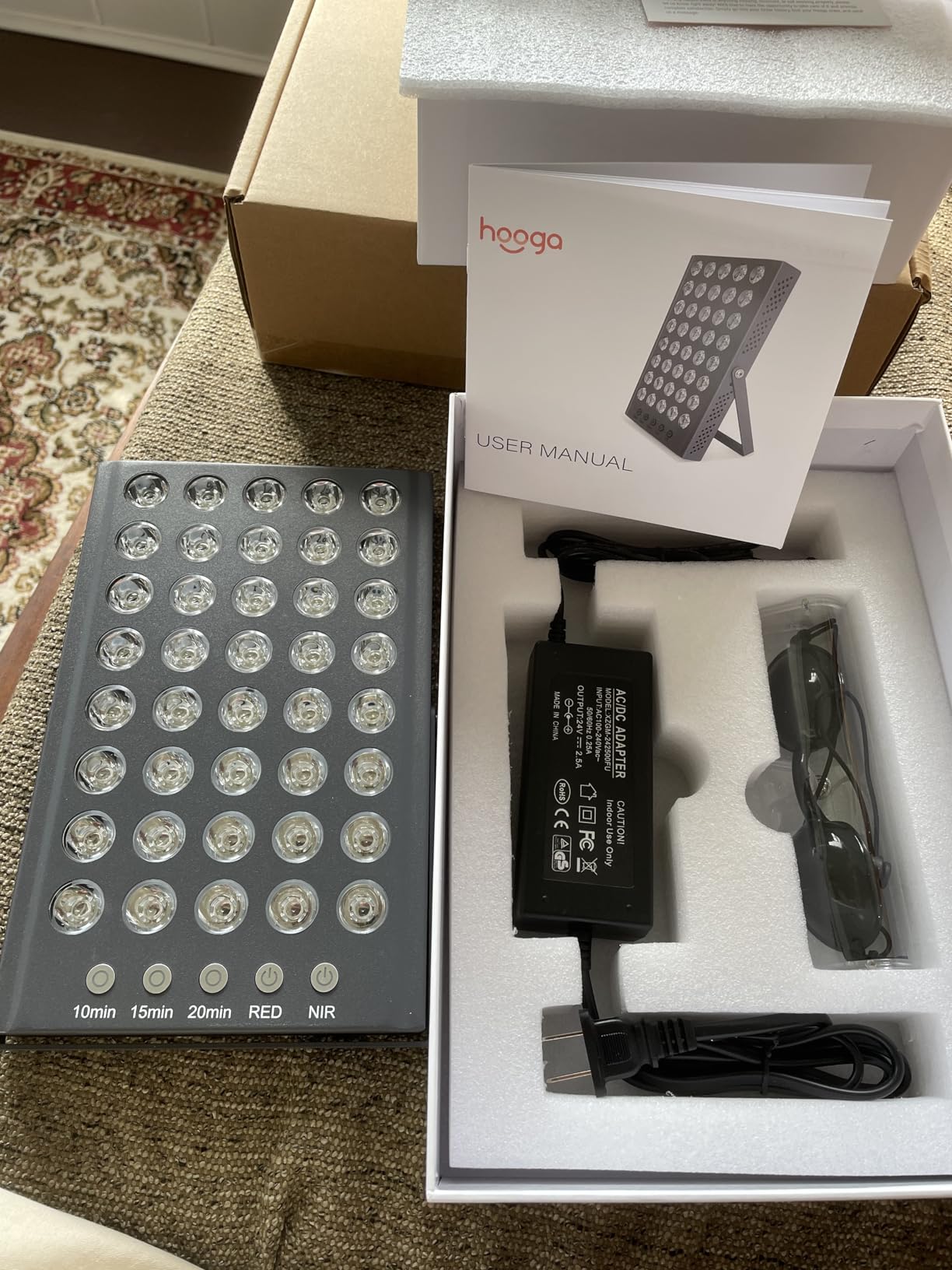
The 660nm and 850nm LEDs sit at a 1 to 1 ratio, so a combined session is balanced rather than red-dominant. Red-only, near-infrared-only and both-together modes are all selectable from the panel.
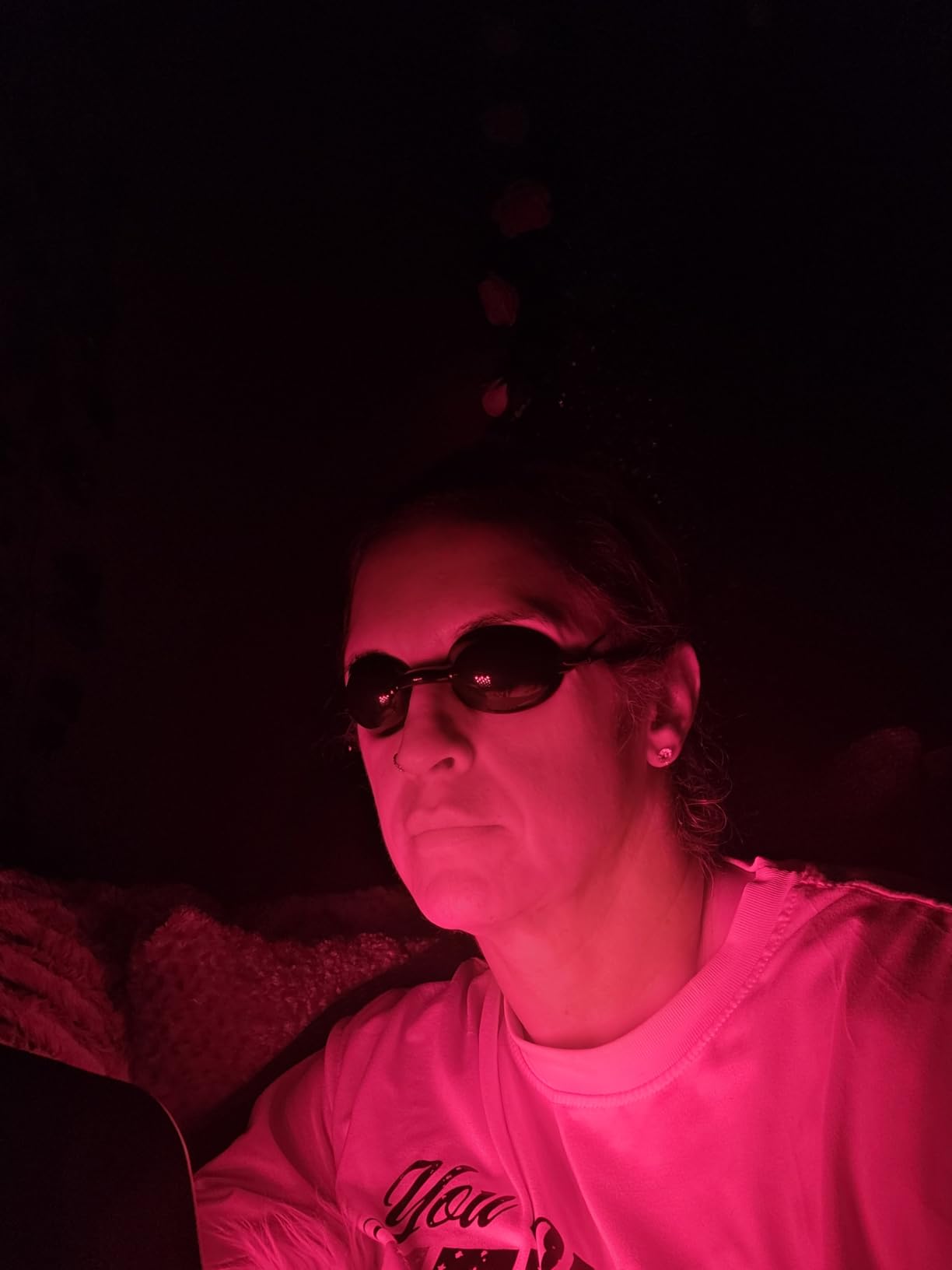
Owners treat this as a face, neck, knee and hand tool, and reviewers frequently note that the irradiance beats cheaper comparably priced lights. The 4.6 average across more than 500 reviews reflects that, and the three-year warranty carries the same brand backing as the larger Hooga models.
Who this panel suits
It suits first-time buyers, people with limited floor space, and anyone who wants face, neck and joint work rather than a full-body session. It is also the easiest way to test whether a daily red light routine is one you will keep.
Who should look elsewhere
Skip it if you want a full-body treatment. Forty LEDs is a small emitter array, and treating a torso with it is a long process. Unlike some larger Hooga models, hanging hardware is not included, so plan on the tabletop stand.
6. Best for Full Body Coverage: BestQool Pro100 160W
BestQool Red Light Therapy Panel, 4 Wavelengths for Body and face, 160W
160W
109 mW/cm2 at 3 inches
19.7 by 8.4 inches
Linkable design
Pros
- Highest average rating among the panels reviewed
- 109 mW/cm2 at 3 inches gives strong even output
- Linkable design scales to a full-body array
- Low heat release allows closer skin-contact sessions
- Large panel face covers more area than smaller models
Cons
- Heavier and bulkier than compact 40W and 50W panels
- Linking multiple panels adds cost and setup complexity
- Settings need on-panel adjustment with no remote
The Pro100 carries the highest average rating of any panel we reviewed, and the reason is straightforward: it is a large, linkable panel with strong measured output and a low-heat design that lets you work closer to the skin than most competing units allow.
At 109 mW/cm² measured at 3 inches from a 160W light source, the dose per session is high enough that shorter sessions still deliver. Low heat release is the underrated feature here, because heat is what pushes people to sit too far back and quietly ruin their dose.
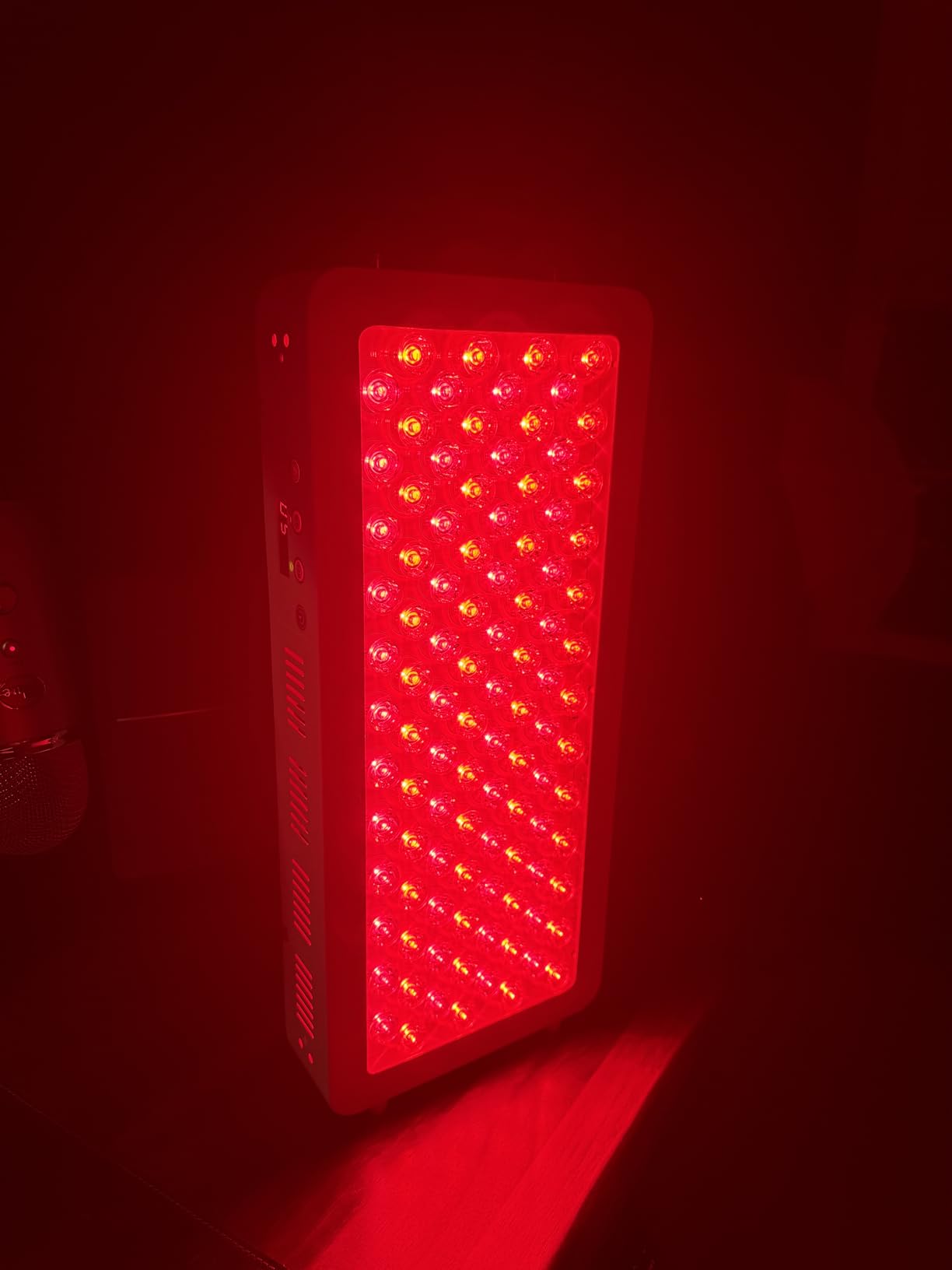
The modular linkable design is the strategic part. One Pro100 covers a torso; two connected give you the beginning of a real full-body array without changing platforms. Buyers who started with a single panel report scaling up as their routine became a habit.
It also supports four wavelengths according to the manufacturer, beyond the standard 660nm and 850nm pair. Reviewers describe it as well-built and high-output, with cost and bulk as the honest trade-offs.
Who this panel suits
It suits buyers who already know red light panels work for them and want the shortest possible full-body session. The low-heat design also suits people who find warm panels uncomfortable against bare skin.
Who should look elsewhere
Skip it if storage space is tight. At 6.59 pounds and 19.7 inches long it is a two-person carry, and buying two for full-body coverage doubles both the cost and the commitment. Start with one unless you already have the floor area.
7. Best Compact Panel for Travel: BestQool BQ40 50W
BestQool Red Light Therapy Panel, 660nm 850nm Red and NIR for Face, 50W
50W
Up to 70 mW/cm2 at 3 inches
2.4 pounds
Zero EMF at 6 inches
Pros
- Lightest panel reviewed at 2.4 pounds
- Compact size fits a gym bag or suitcase
- Zero EMF at 6 inches with low heat output
- Foldable stand and simple touch controls
- Good dual-wavelength entry point
Cons
- Lowest irradiance figure among the higher-wattage models here
- Small panel means long sessions for larger areas
- Coverage is limited compared with 105W and 160W models
The BQ40 is the one to pack. At 2.4 pounds and 5.6 by 1.3 by 11.3 inches it is the smallest and lightest panel in this roundup by a wide margin, and the foldable stand means it can sit on a hotel desk rather than a suitcase floor.
It still runs dual-wavelength 660nm and 850nm light, so nothing about the treatment quality drops to a single band. The 50W figure is modest and the 70 mW/cm² at 3 inches is the lowest quoted output here, but for face, neck and joint work that is plenty.
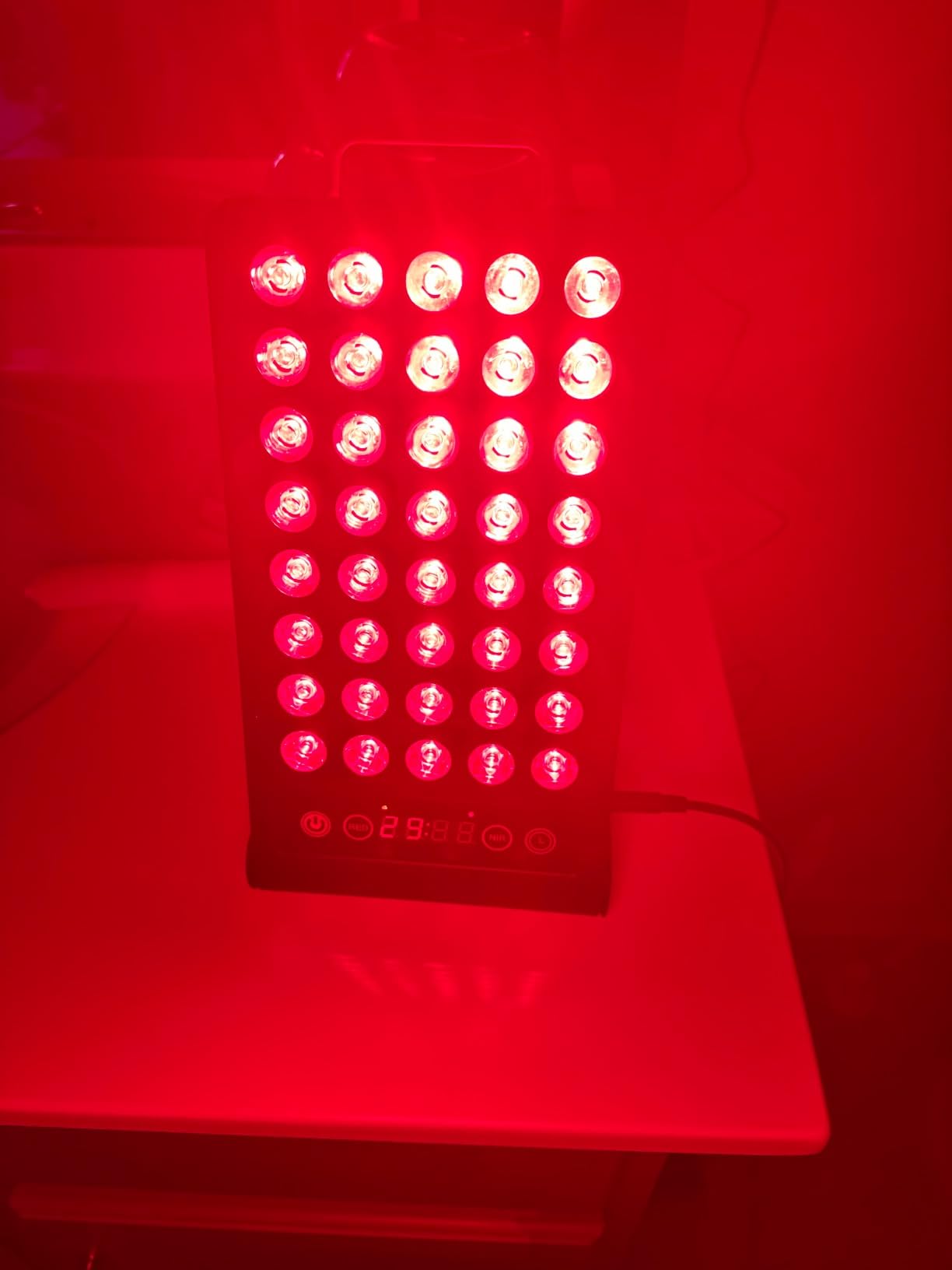
The comfort specs are what owners actually mention. Zero EMF at 6 inches and low heat output make close-range use easy, and the touch controls plus foldable stand need no learning curve at all.
Reviewers use words like portable and travel-friendly, and describe it as well suited to targeted face, neck, back and joint sessions. The acknowledged trade-off in every summary is less raw power and less coverage than the larger BestQool panels.
Who this panel suits
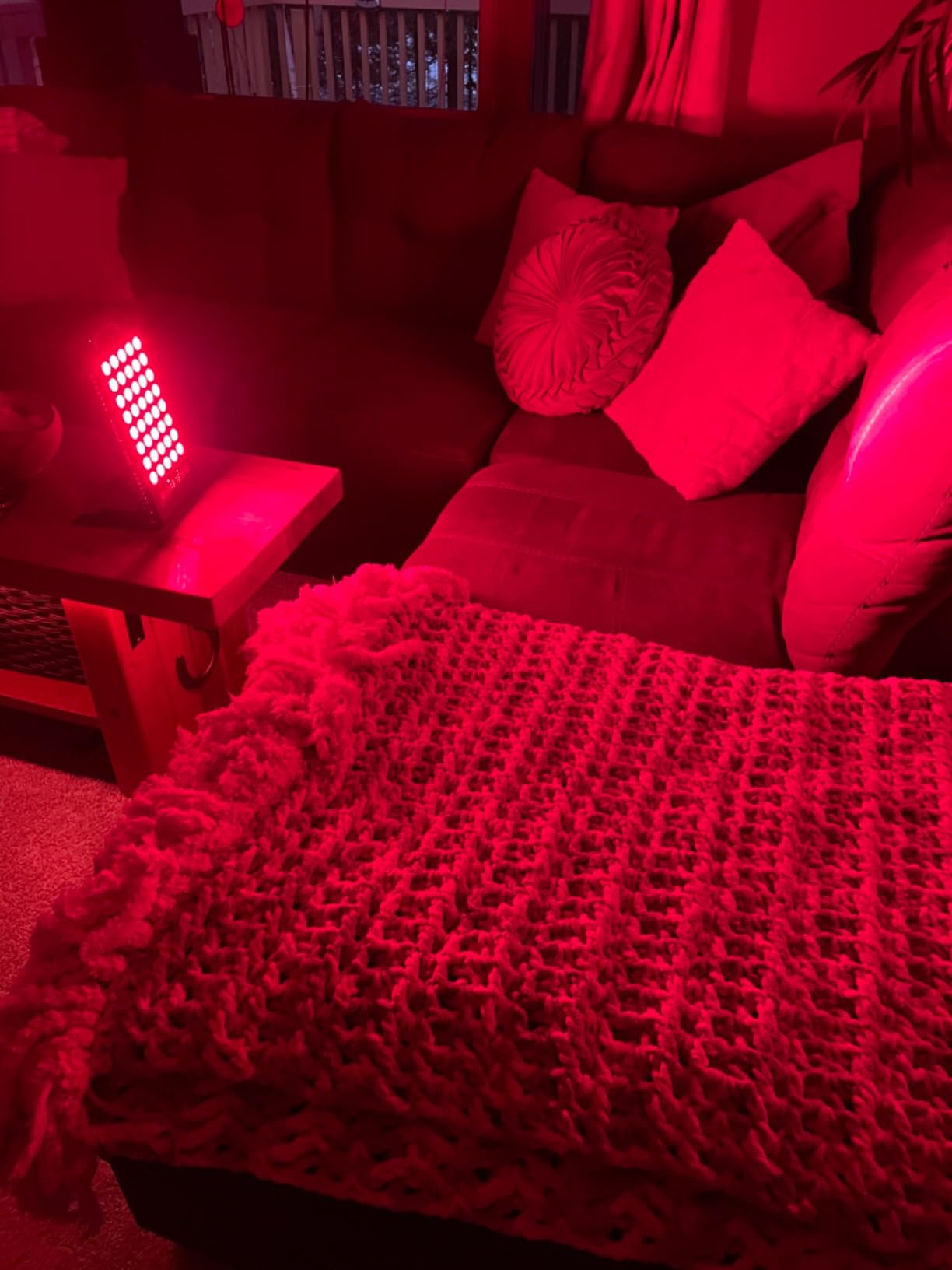
It suits anyone who travels, works between home and an office, or wants a panel that can move to a bedside table. It also makes a sensible second device if your main panel lives permanently in a home gym.
Who should look elsewhere
Skip it for full-body work. The 5.6 by 11.3 inch face is a spot-treatment tool, and a torso session will take noticeably longer than it would on a 19.7 inch panel. Buy it for convenience, not for coverage.
8. Best for Multi-Wavelength Sessions: BONTANNY BO-300
BONTANNY Red Light Therapy, 630/660/810/830/850nm 5 Wavelengths Red Near Infrared Light Device with 60 Dual Chip Clinical Grade LEDs, Remote Control, Timer for Face, Body, Pain Relief, BO-300 (White)
Five wavelengths
131 mW/cm2 at 6 inches
60 dual-chip LEDs
Remote control
Pros
- Only panel reviewed offering five separate wavelengths
- 131 mW/cm2 at 6 inches is strong for the class
- Remote control starts a session without touching the panel
- Comes with stand
- cooling fan
- eye protection and cord
- Works sitting
- standing or lying down
Cons
- Battery for cordless use is not included
- Heavier than expected at nearly 8 pounds
- Power bank not included for on-the-go wear
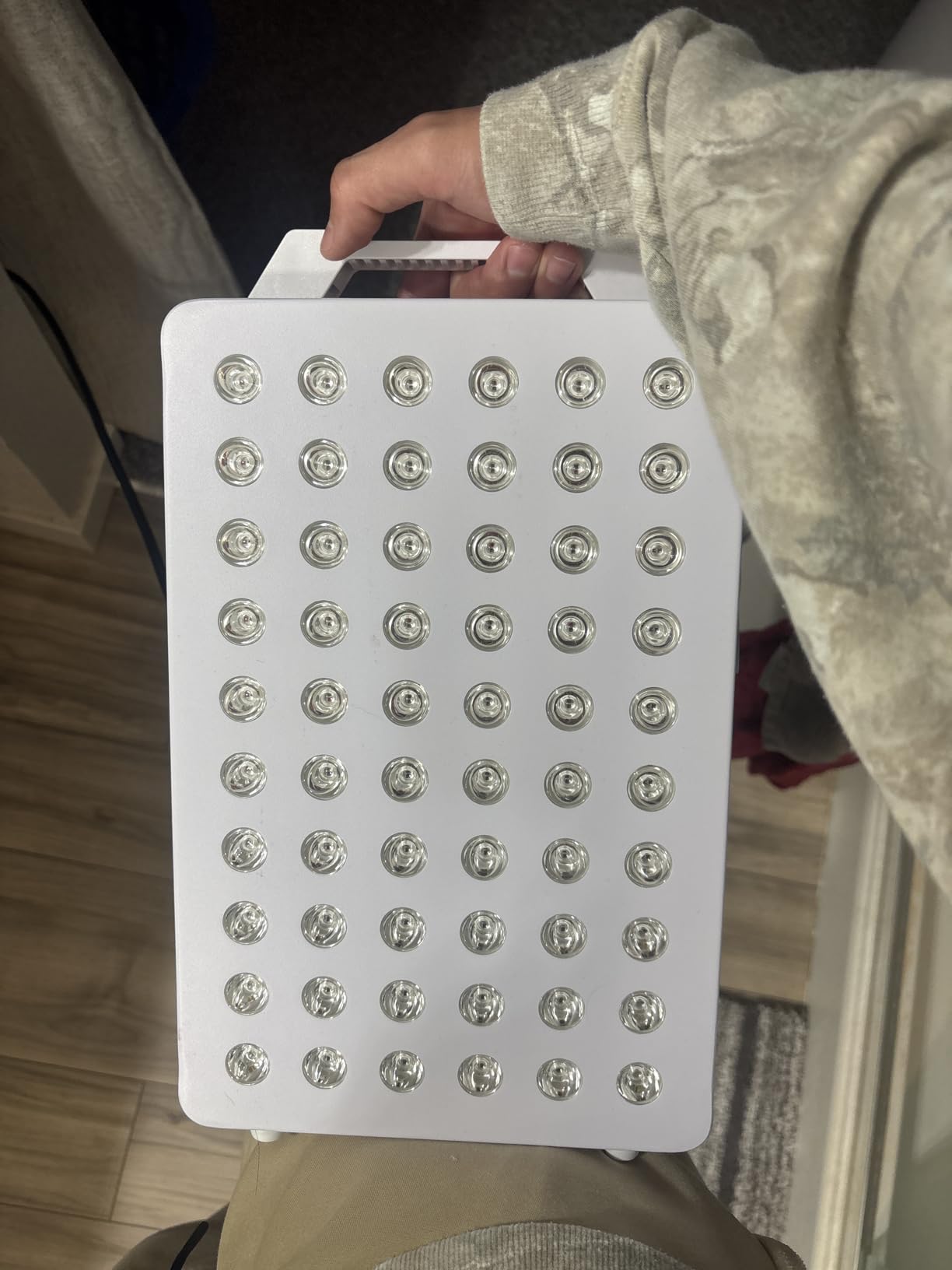
The BO-300 exists for people who want to experiment. It is the only panel in this roundup that lists five wavelengths, 630nm, 660nm, 810nm, 830nm and 850nm, from 60 dual-chip clinical grade LEDs, so you can change the target tissue without changing devices.
The 131 mW/cm² at 6 inches figure deserves attention, because it is measured at a full six inches rather than pressed to the panel face. Compared with the 73 mW/cm² at 6 inches on the HG300, this is a genuinely higher stated dose at the same honest distance.
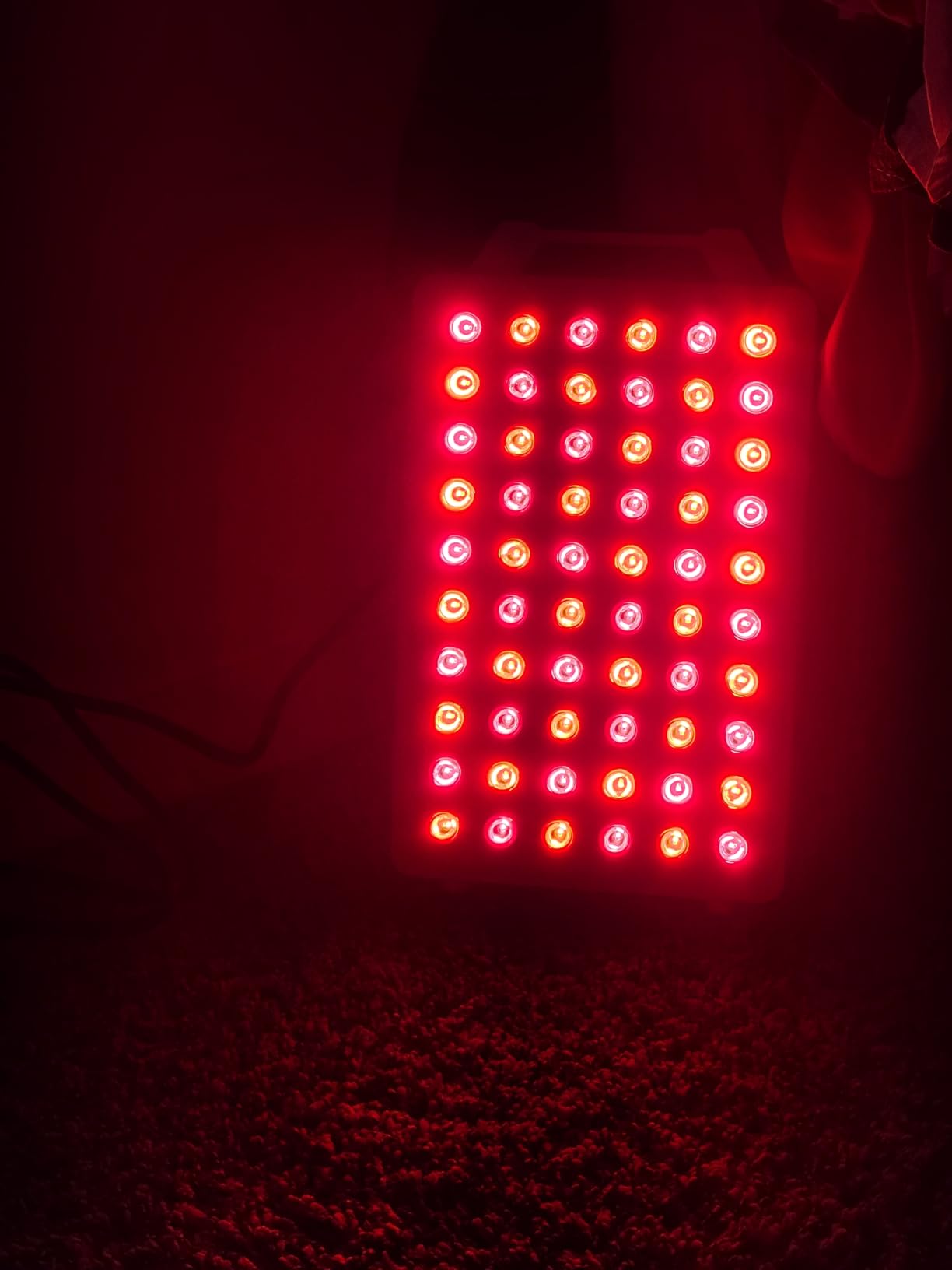
A remote control is included, which solves the most common ergonomic complaint in this category: not being able to start a session without leaning into the panel first. Three modes and a 1 to 30 minute timer cover the routine, and the 14 by 12 inch coverage area at 6 inches is generous for a panel this size.
Owners report relief from soreness, better sleep and improved skin condition, and the box includes the stand, cooling fan, eye protection, manual and a 1.8 metre cord. A 30-day testing period reduces the risk of a bad first impression.
Who this panel suits
It suits people who want fine control over wavelength and intensity, and who like starting and stopping sessions from across the room. The five-band coverage also makes it interesting for anyone tracking how different wavelengths feel over time.
Who should look elsewhere
Skip it if you want a simple two-wavelength routine, because more bands means more decisions and no strong evidence that the extra wavelengths change your results. At 7.94 pounds it is also heavier than the size implies, and the optional battery and power bank are not in the box.
9. Best Independently Tested Panel: Mito Red Light MitoMIN 2.0
Mito Red Light – MitoMIN 2.0 Red Light Panel – Red Light Therapy for Face and Neck – Red Light & Near Infrared Red Light Therapy – At-Home Red Light Therapy for Body
60 high-powered LEDs
21720 joules in 10 minutes
12 by 9 inch panel
Third-party tested
Pros
- Irradiance and spectral output independently third-party tested
- Built in the USA with quiet fans that do not overheat
- Compact size for face and neck without taking a room
- Eligible for FSA and HSA reimbursement
- Includes both glasses and goggles
Cons
- No handle despite a weight that makes it awkward to move
- Lights immediately at full brightness with no start countdown
- Targeted coverage only rather than full body
Independently verified irradiance is the most valued credibility marker in this category, and the MitoMIN 2.0 is the panel here that publishes it. Company information states the irradiance and spectral output are third-party tested, and the panel is FSA and HSA eligible.
The dosing is stated as an energy figure rather than a raw intensity: 21,720 joules in a 10-minute session from 60 high-powered LEDs at 660nm and 850nm. That is a more useful way to compare sessions than wattage alone.
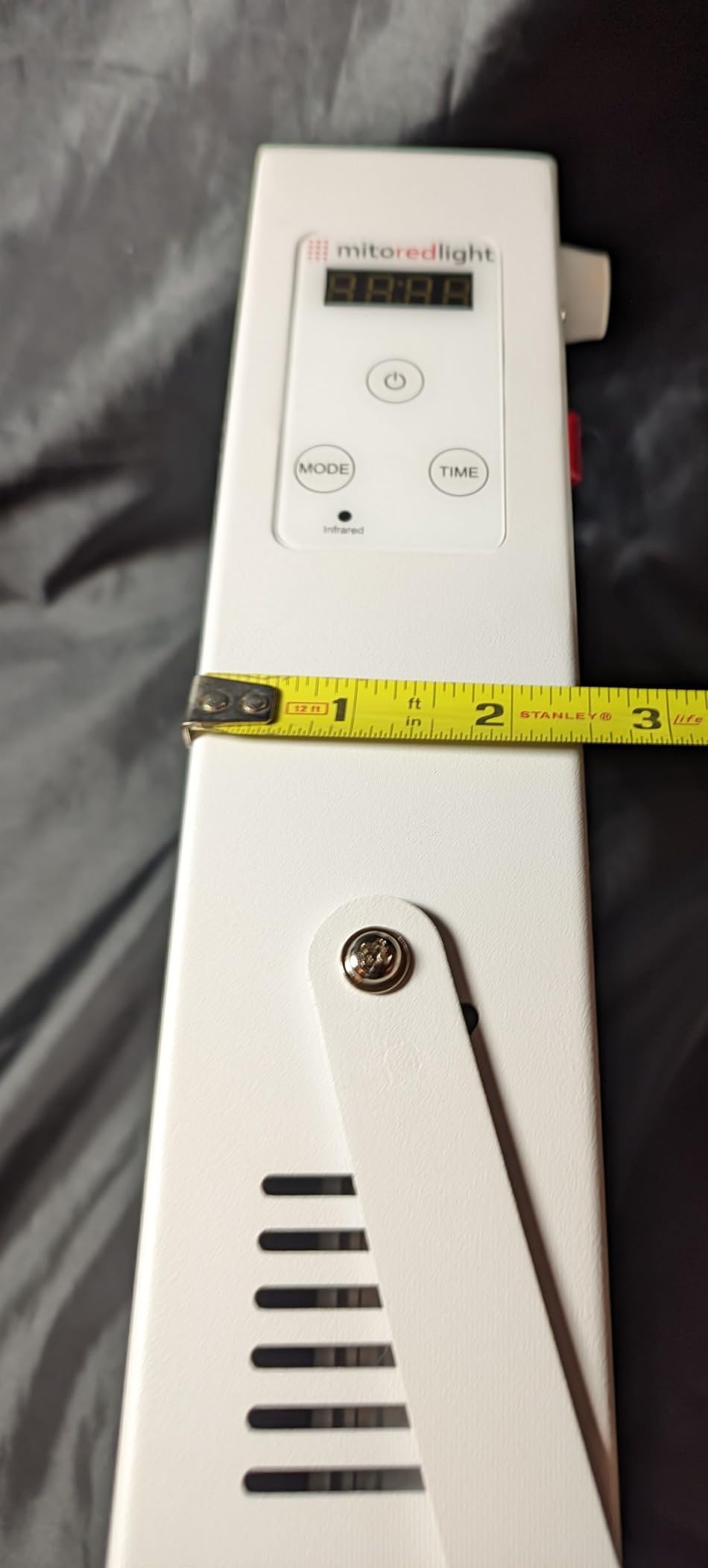
Owners compare this panel favourably to more expensive borrowed units, which is the recurring theme in reviews. They also mention quieter operation, no overheating during longer sessions, and a build that feels like studio equipment.
The 12 by 9 by 3 inch face is deliberately sized for face and neck work, and at 12 inches you can sit in front of it rather than stand over it. The digital control panel has a timer and three modes, with whisper-quiet fans that will not disturb a bedroom.
Who this panel suits
It suits buyers who want documented testing rather than marketing claims, and anyone using an FSA or HSA account. For face and neck routines it is a comfortable, compact unit that runs quietly in a bedroom.
Who should look elsewhere
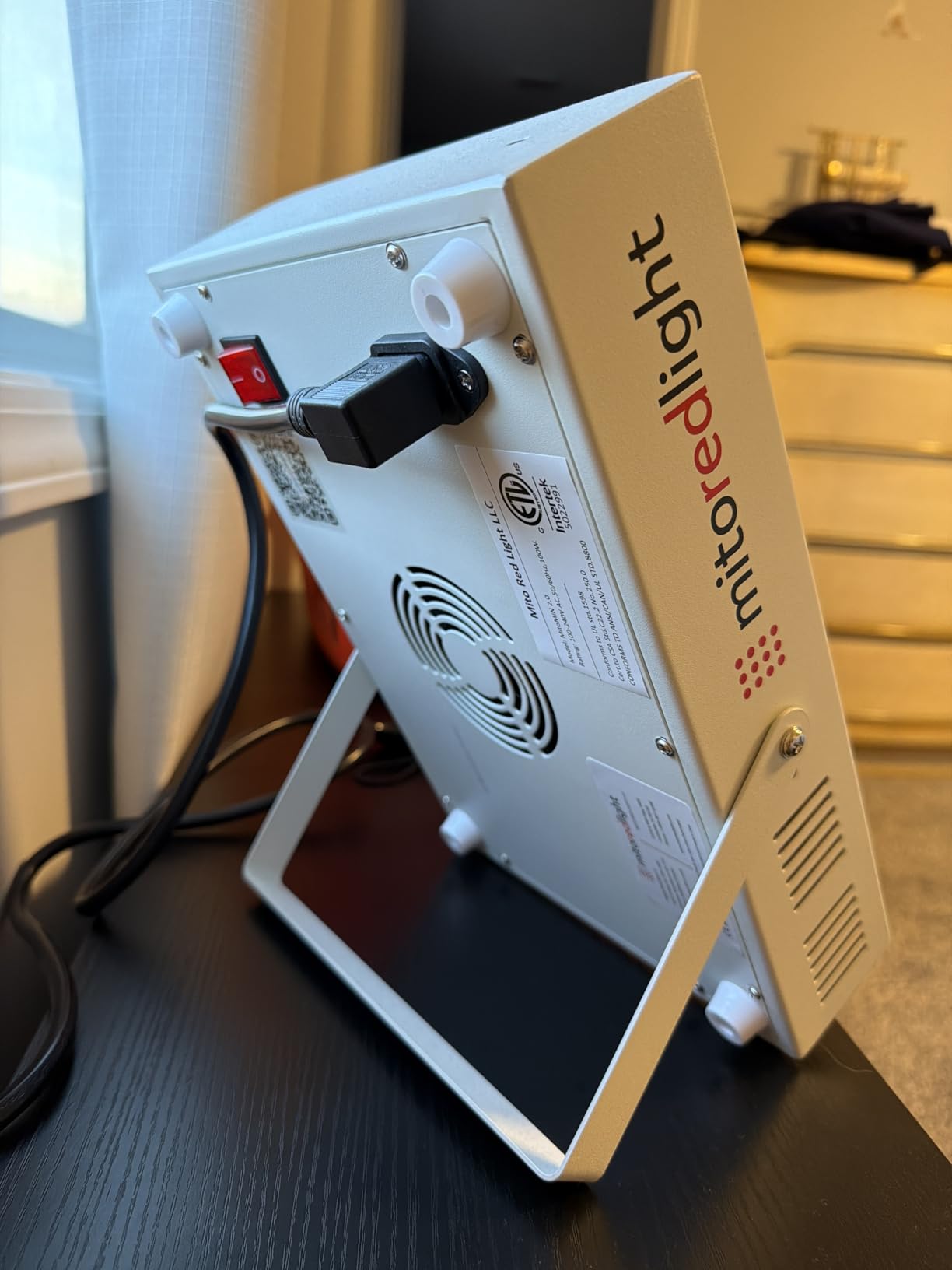
Skip it if you want a large coverage area, because 60 LEDs is a targeted tool. Note two design limits owners mention repeatedly: the panel has no handle despite weighing over 10 pounds in the package, and it lights at full brightness the moment you press power.
10. Best Convertible Stand and Strap Design: KingPavonini 2-in-1
KingPavonini Red Light Therapy for Body, 2-in1 Red Light Panel with Stand
136 LEDs with 408 chips
Five levels from 60 to 250 mW/cm2
Detachable wearable strap
Extendable pole
Pros
- Lowest cost of the panels reviewed with stand and strap included
- Panel detaches and becomes a wearable pad for back
- neck and knees
- Extendable pole with 360 degree rotating head
- Nine mode combinations including 10Hz and 40Hz pulsed settings
- Five intensity levels with a 5 to 30 minute auto timer
Cons
- Reports of the inline controller and switch failing within months
- Weighted stand less sturdy than expected for some users
- Power bank not included for on-the-go sessions
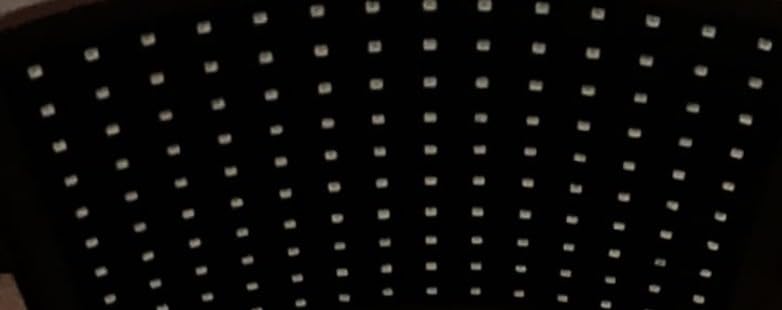
The KingPavonini solves a problem none of the other panels here address: how to treat a spot on your back without contorting. The panel detaches from the pole and fastens with an elastic strap, turning a 136-LED array into a wearable pad for the back, neck, shoulders, waist and knees.
On specifications it is generous. Five intensity levels run from 60 to 250 mW/cm², and three light modes crossed with three pulse settings including 10Hz and 40Hz produce nine mode combinations, with a 5 to 30 minute auto timer on top.
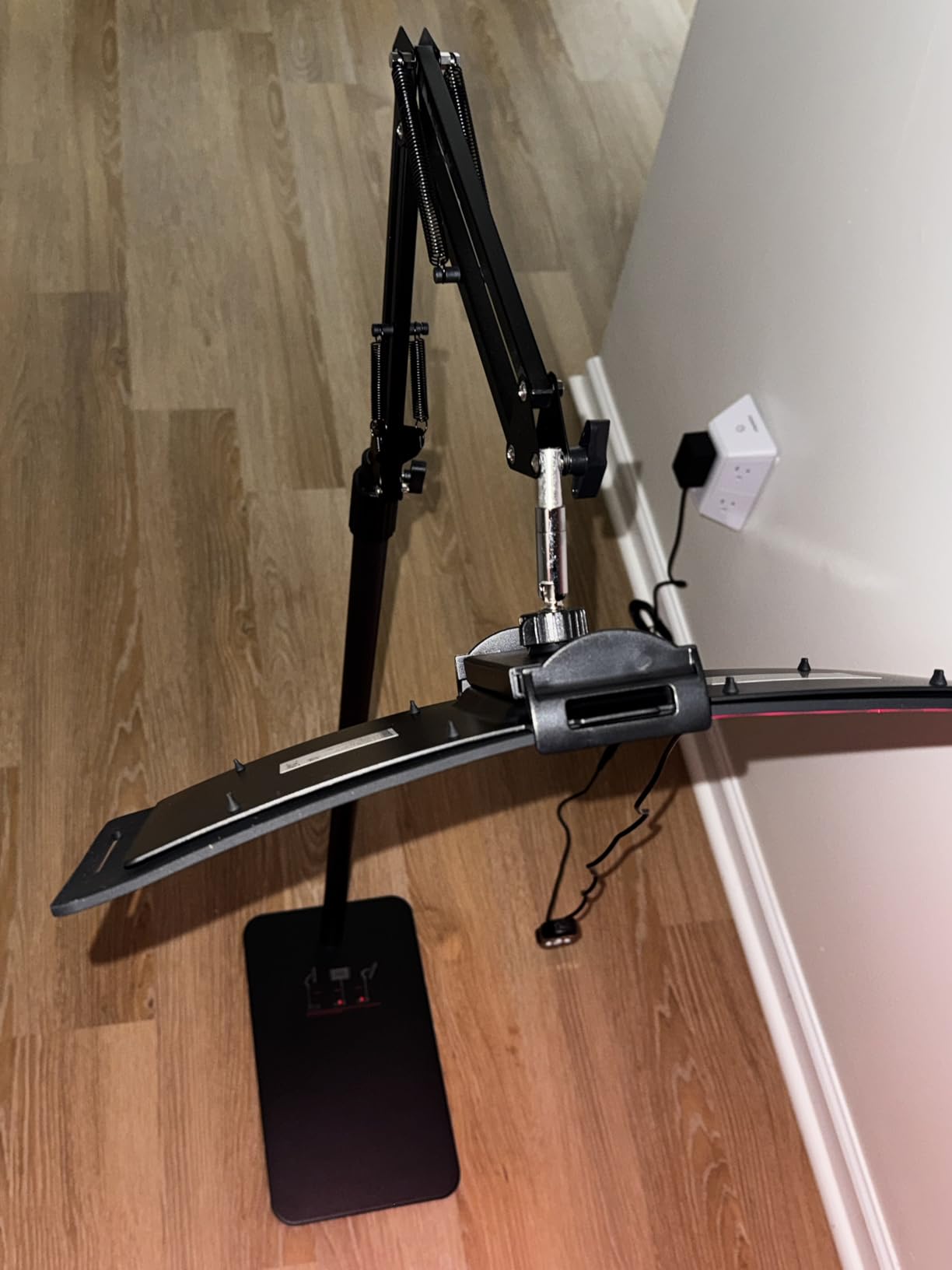
The stand hardware is unusually adjustable for the price. An extendable pole, a movable arm, a 360-degree rotating head and a weighted non-slip base give you far more positioning freedom than a fixed tabletop stand, and the 10 foot cord with an inline controller reaches across a room.
Owners report better sleep, better mood, relief from aches and help with post-surgery inflammation, and the flexibility is the reason they keep it rather than the raw power.
Who this panel suits
It suits people who want one device for both stand-up sessions and strapped spot treatments on hard-to-reach areas. It is also the lowest-cost way into this category if you are unsure whether red light is for you.
Who should look elsewhere
Skip it if reliability over years matters more than adjustability. Multiple reviews describe the inline controller or the power switch failing within about two months, which is the opposite of what a durability-focused buyer should accept.
What to Look For in a Red Light Therapy Panel
Everything above is a specific panel. This section is the part that stays useful when you compare something we did not review, which is where most of the money actually goes.
660nm and 850nm Are the Wavelengths That Matter
Dual-wavelength panels that include 660nm red and 850nm near-infrared are the minimum sensible specification. Red light is absorbed near the skin surface and is what most people buy panels for, targeting tone, texture and fine lines. Near-infrared penetrates further into muscle and joint tissue.
Some panels add 630nm, 810nm or 830nm. Those bands are legitimate, but extra wavelengths are not automatically better, and vendors sometimes list five wavelengths while advertising only the pair that matters. Check that 660nm and 850nm are both present as standard, not as optional modes.
Irradiance at Your Treatment Distance Beats Headline Wattage
Irradiance is measured in mW/cm² and it falls off as you move away from the panel, which is why two panels can publish very different numbers without either company lying. A panel claiming 95.6 mW/cm² at 3 inches and one claiming 90 mW/cm² at 6 inches are not the same product class, and the second may deliver more usable energy over a larger area.
Always note the distance next to the number. Roughly 50 to 100+ mW/cm² at your recommended treatment distance is a reasonable target range for a home panel. If a brand publishes no distance at all, treat the number as marketing rather than a specification.
Panel Size Decides How Much of You Gets Treated
Match the emitter area to the body area. A 5.6 by 11.3 inch panel such as the BQ40 is a face, neck and joint tool. A 12.6 inch panel like the HG300 handles a knee or a shoulder well. A 61 inch panel like the PRO300 covers legs, back and shoulders in one pass.
For facial-only buyers, a panel is usually the wrong purchase. Our guide to the best red light therapy masks covers that format in detail, and a mask is cheaper, quieter and easier to use daily. Buy a panel when the goal is tissue deeper than the face, or when you want one device for several body regions.
FDA Clearance, UV Emissions and What Marketing Language Hides
FDA clearance and FDA registration are not the same thing, and the distinction is worth understanding before you spend anything. Most panels in this category are wellness-grade devices, not cleared medical devices, and a seller describing a panel as FDA approved is making a claim you should check rather than accept.
UV emission is the other spec to look for. Red and near-infrared panels should emit no ultraviolet light; if a brand does not state that its output is UV-free, ask. Watch for cure claims in the listing copy. Owners consistently report that unverifiable medical language is the fastest way to lose trust with an informed buyer.
Warranty, Support and the Durability Question
Warranty length is the closest thing to a lifespan prediction. The panels here range from a 3-year manufacturer warranty on the Hooga HG300 and PRO300 to a registration-based lifetime warranty on the Lifepro Bioheal. Longer coverage usually signals replaceable diodes and a real parts supply.
This matters because buyers on r/BuyItForLife frequently skip this category entirely, assuming consumer light panels last two or three years. That assumption is not always true, but a published warranty is how you find out. A named company with reachable customer service matters just as much when a stand fastener or a cord fails in month eight.
Red Flags to Avoid Before You Buy
Walk away from any listing that does not publish wavelengths, that quotes irradiance with no measurement distance, that promises to treat conditions, or that describes itself as med-spa quality without explaining what that means. Also look for third-party testing, a stated warranty, and flicker-free operation if you are sensitive to it.
Check the space you have before the price. Large panels need a floor stand, wall clearance and a warm corner, and owners report that heat in a small room is a genuine constraint. A bigger panel is not a better panel if it will not fit where you planned to put it.
How to Use a Red Light Therapy Panel at Home
Owners report one thing more consistently than anything else: results are cumulative, not immediate. A ten-minute session on one day does very little. Ten-minute sessions most days for eight weeks is where changes show up.
Position it at the stated distance. Most panels specify 6 or 12 inches. Measure once with a tape measure and mark the floor, because the dose you receive depends entirely on where you stand.
Pick the mode that matches the target. Red-only for skin work, near-infrared for deeper tissue, and both when you want to cover both in one session.
Keep sessions to 10 to 20 minutes. Longer is not better in photobiomodulation, and over-exposure can leave skin dry or irritated.
Protect your eyes. If the panel is bright enough to light the room, treat it as a direct-view device. Use the included eyewear, and buy proper light-sealing goggles if the supplied pair feels leaky.
Use it in the morning. Some users report that evening red light sessions can delay sleep, so morning placement is the safer default for a nightly habit.
If you take photosensitising medication, use a retinoid, are pregnant, or have an active skin condition, talk to your clinician first. A red light panel is a general wellness tool and should sit alongside professional care, never instead of it. If you also own a sauna, a massage gun or a cold plunge, check our picks for other at-home recovery tools to build a routine that stacks sensibly.
Frequently Asked Questions
Do at home red light therapy panels work?
Most owners report gradual rather than immediate effects. Skin texture, sleep quality and post-workout soreness tend to change after two to four weeks of consistent daily use, and the mechanism is photobiomodulation: red and near-infrared photons are absorbed by cytochrome c oxidase in mitochondria, supporting ATP production. The panels here are wellness devices, not medical treatments, and results vary with consistency more than with brand.
Which red light therapy panel is the best?
For most home users the BestQool 105W X60 is the strongest all-rounder, publishing 95.6 mW/cm2 at 3 inches with 660nm and 850nm dual-chip LEDs, weighing 4.8 pounds and including both a stand and a hanging kit. The Hooga HG300 is the better durability pick with an iron build and a 3-year warranty, and the Lifepro Bioheal wins on raw output at 203 mW/cm2 at 3 inches.
What is the best wavelength for red light therapy?
660nm red and 850nm near-infrared is the standard pairing for home panels, and anything claiming both is a sensible minimum. Red light is absorbed closer to the surface for skin tone and texture, while near-infrared reaches deeper into muscle and joint tissue. Panels that add 630nm, 810nm or 830nm give you more options but rarely a decisive advantage over a well-built dual-wavelength panel.
Are cheap red light therapy panels effective?
Price alone does not predict results. Several entry-level panels in this roundup publish over 90 mW/cm2 at 6 inches with both key wavelengths, which is a legitimate working dose for face, neck and joint routines. What you give up at the lower end is usually build weight, stand stability, warranty length and coverage area rather than the light itself. Always check that wavelengths and measurement distance are published.
What is the most reputable red light therapy company?
Reputation in this category tracks three things: independently verified irradiance, a published warranty length, and reachable customer support. The Mito Red Light MitoMIN 2.0 states its irradiance and spectral output are third-party tested and is FSA and HSA eligible. Hooga is repeatedly recommended by owners in Reddit threads as a reputable brand with quality devices and backs its panels with a 3-year manufacturer warranty.
How long should I use a red light therapy panel?
Most owners settle on 10 to 20 minutes per session, most days of the week, at the treatment distance the manufacturer states. Longer sessions do not produce proportionally better results, and over-exposure can cause dryness or irritation. Morning use is the safer default, since some users report that evening light can delay sleep. Most visible changes appear between two weeks and three months of consistent use.
Can red light therapy treat bursitis or regrow gums?
Neither claim is established. Research on joint pain and arthritis support is moderate rather than strong, and there is no dependable clinical evidence for gum regrowth, so red light should never replace dental care. If you are considering it for a diagnosed condition, discuss it with a clinician first, especially if you take photosensitising medication such as tetracyclines or use retinoids.
Final Verdict: Which Red Light Therapy Panel Should You Buy?
For the best red light therapy panel for home use in 2026, start with the BestQool X60 if you want the shortest sessions and the most flexible placement. Pick the Hooga HG300 if build quality and a 3-year warranty matter more to you than raw power, and step up to the Lifepro Bioheal when you want maximum published output and lifetime coverage.
Whichever you choose, verify the two numbers that actually decide your results: that 660nm and 850nm are both listed, and that the irradiance figure names a measurement distance. Then use it for ten minutes most mornings, at the distance the brand states, and give it a full eight weeks before you judge it.
Curious about the smaller formats? We cover red light therapy devices, masks and light therapy lamps in separate guides if a panel is more hardware than your space needs.