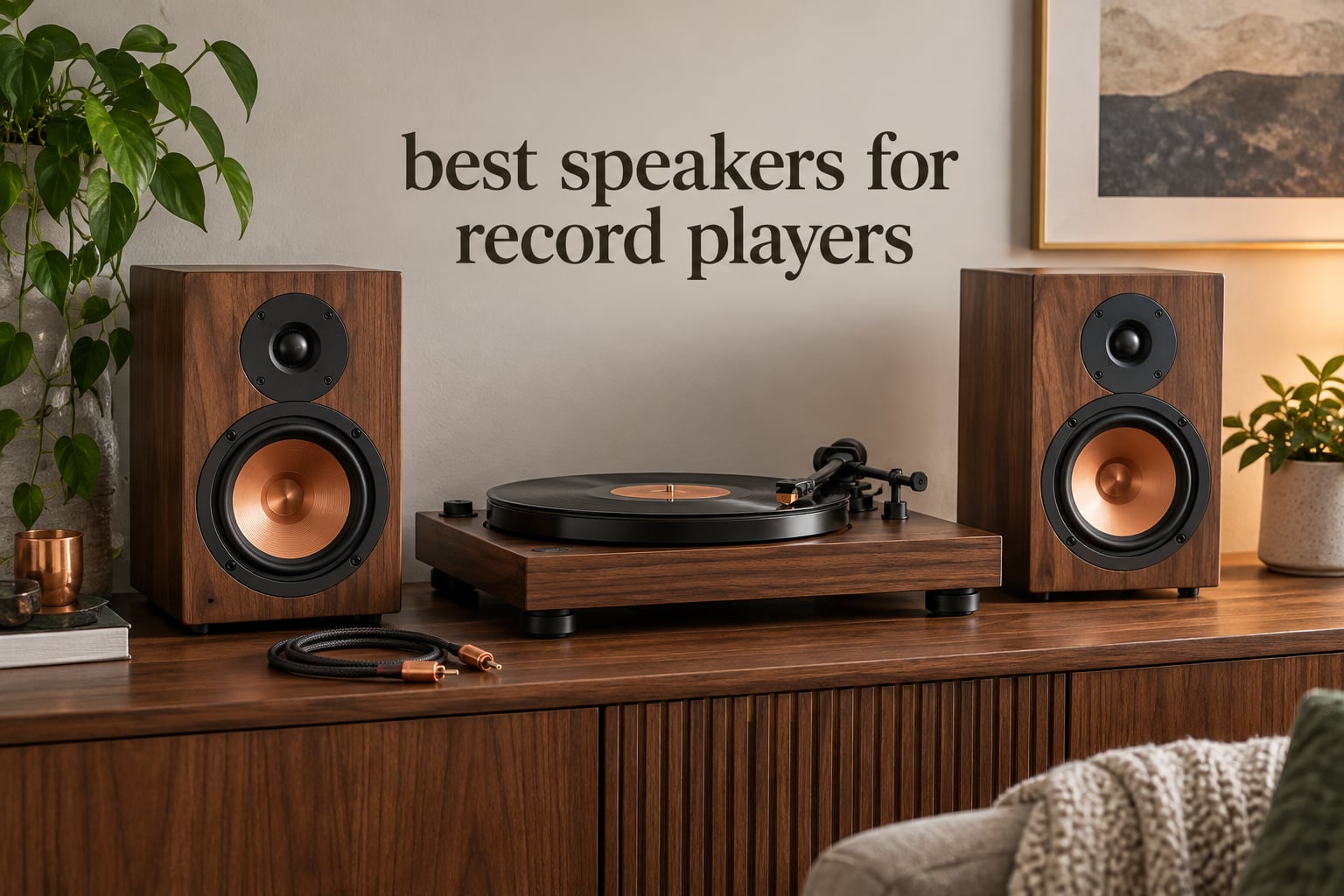
If you want one answer for the best speakers for record players, take the Edifier R1280T. It is a powered bookshelf pair with a 42 watt built-in amplifier, two AUX inputs that accept a turntable’s RCA output, and bass and treble knobs on the cabinet, so you need nothing else to play records tonight.
I have spent the last few months moving between turntables, phono stages and speaker pairs, and that single-sentence answer changes the moment you own a bigger room, a receiver, or a turntable with no built-in phono preamp. Those three variables, budget, room size and preamp status, decide the right pair far more than brand loyalty does.
This roundup covers twelve speaker pairs that genuinely work with a record player, from the R1280T through to a passive reference bookshelf that needs a serious amplifier behind it. Five are powered and need nothing else; seven are passive and require a receiver or integrated amplifier you either own already or will have to add. If you have not chosen a turntable yet, our best record players guide covers the decks that pair cleanly with everything below.
Table of Contents
Top 3 Best Speakers for Record Players in 2026

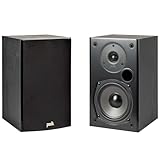
Best overall: the Edifier R1280T, because it makes a first vinyl system work with zero extra boxes. Best value: the Edifier R1280DB, which adds Bluetooth, optical and coaxial inputs for a TV or PC at no meaningful step up in size. Best for passive setups: the Polk Audio T15, a long-established 5.25 inch entry pair for anyone who already owns a receiver.
If you own an amplifier, the winner changes again, and the turntable you choose matters more than the speaker model number. Read the buying guide further down before you commit, because two of the most common mistakes in this hobby are buying passive speakers with nothing to drive them and running a phono preamp twice.
Quick Overview Every Pick at a Glance in October
| Product | Specifications | Action |
|---|---|---|
| Edifier R1280T Powered Bookshelf Speakers |
|
Check Latest Price |
| Polk Audio T15 Bookshelf Speakers |
|
Check Latest Price |
 Edifier R980T Active Bookshelf Speakers Edifier R980T Active Bookshelf Speakers |
|
Check Latest Price |
 Edifier R1280DB Powered Bluetooth Speakers Edifier R1280DB Powered Bluetooth Speakers |
|
Check Latest Price |
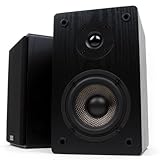 Micca MB42 Passive Bookshelf Speakers Micca MB42 Passive Bookshelf Speakers |
|
Check Latest Price |
 Klipsch R-15M Bookshelf Speakers Klipsch R-15M Bookshelf Speakers |
|
Check Latest Price |
 Klipsch R-51M Bookshelf Speakers Klipsch R-51M Bookshelf Speakers |
|
Check Latest Price |
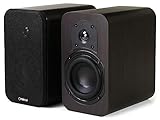 Micca RB42 Passive Bookshelf Speakers Micca RB42 Passive Bookshelf Speakers |
|
Check Latest Price |
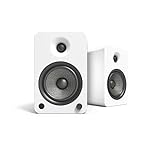 Kanto YU6MW Powered Speakers Kanto YU6MW Powered Speakers |
|
Check Latest Price |
 KEF LS50 Meta Bookshelf Speakers KEF LS50 Meta Bookshelf Speakers |
|
Check Latest Price |
 Klipsch R-50M Bookshelf Speakers Klipsch R-50M Bookshelf Speakers |
|
Check Latest Price |
 MEVOSTO 5-Inch Powered Speakers MEVOSTO 5-Inch Powered Speakers |
|
Check Latest Price |
Five of these are powered pairs you can wire to a turntable today, seven are passive pairs for an existing amplifier, and two of the powered pairs also handle a television, a computer or a phone. The Kanto YU6MW is the only one here with a phono preamp built into the speaker, which changes how you wire it entirely.
1. Edifier R1280T Powered Bookshelf Speakers – The Simple Answer for Almost Everyone
Edifier R1280T Powered Bookshelf Speakers -2.0 Near Field Studio Monitor
42 watts max output
4 inch full-range driver
13mm silk dome tweeter
4 ohm, 85 dB signal to noise
Pros
- Two AUX inputs accept a turntable's dual RCA output and keep a second source connected
- Bass and treble knobs plus a remote on the powered speaker
- Balanced near-field tone that stays comfortable over long listening sessions
- MDF wood cabinet with a wood-effect vinyl finish
Cons
- No Bluetooth or optical input on this version
- 4 inch driver stops short of deep low-end
- 42 watts is modest in a large open-plan room
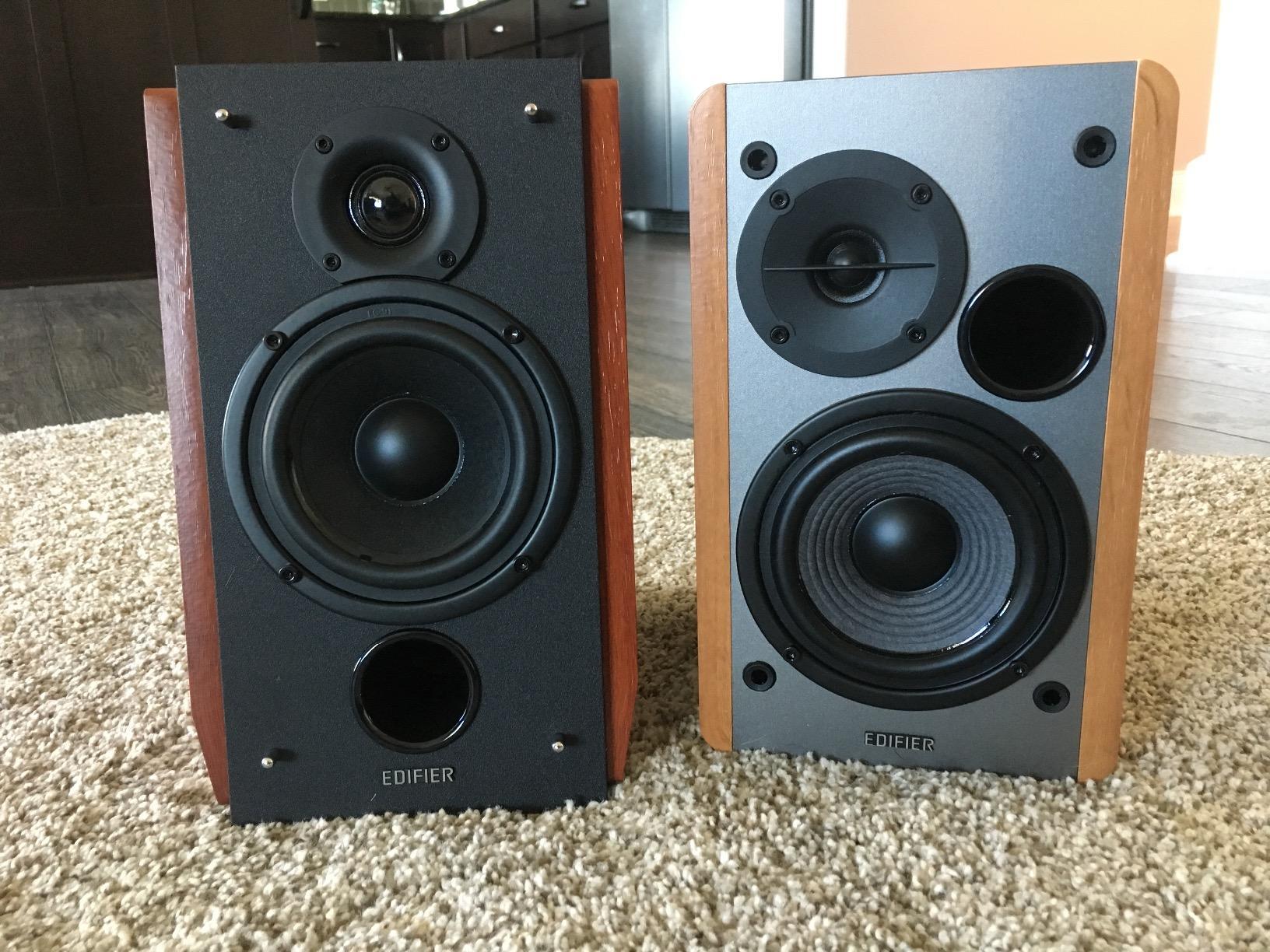
The R1280T is the pair I recommend most often, and the reason is dull rather than romantic: it removes every decision from the setup. Two AUX inputs on the back accept a turntable’s dual RCA output, so you can leave a streaming box or a CD player plugged in alongside the deck and switch with the remote instead of unplugging anything.
Signal to noise is quoted at 85 dB, which is high enough that the quiet floor between tracks stays quiet even with a moving magnet cartridge. The 4 inch full-range driver and 13mm silk dome tweeter produce a balanced, unfussy presentation that flatters most budget turntables without colouring them.
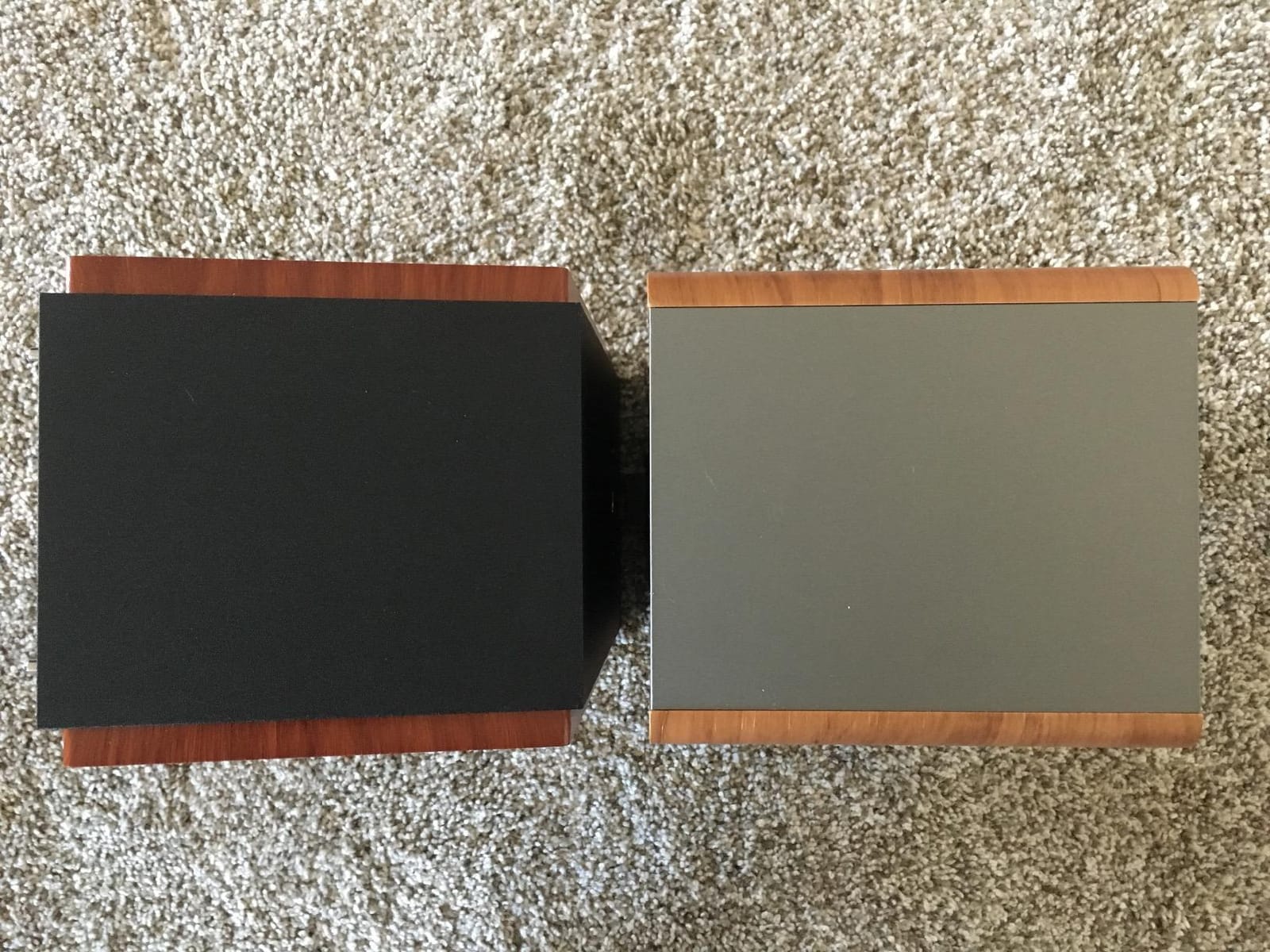
With 19365 ratings averaging 4.6 stars, this is the most thoroughly tested speaker in the group, and roughly four in five of those ratings are five star. Buyers repeatedly cite the dual AUX arrangement, the side-panel EQ and the fact that the pair weighs around 4.9 kg and feels stable on a normal shelf rather than tippy on a small one.
Owners on r/BudgetAudiophile consistently name the R1280T and its wireless sibling as the default first powered buy, and the recurring complaint in those threads is the same one I hit in a medium living room: it runs out of volume and bass weight once you move past a small room. In a bedroom or a desk setup it is genuinely difficult to fault.
Is the R1280T right for your turntable?
It is right if your turntable has a built-in phono preamp, because the speaker’s AUX input expects a line-level signal. If your deck outputs phono level only, you need either a turntable with a switch, a separate phono preamp, or a speaker with the stage built in.
The honest limitations
There is no wireless or digital audio on this version, so a TV or computer means analog cables. A two-year manufacturer warranty is included, which is thinner than the five years Polk and Klipsch offer on their passive pairs in this list.
2. Polk Audio T15 Bookshelf Speakers – The Passive Entry Point
Polk Audio T15 100 Watt Home Theater Bookshelf Speakers, Black, 1 Pair
5.25 inch Dynamic Balance driver
0.75 inch tweeter
100 watts max output
8 ohm, passive
Pros
- Clear and balanced presentation with strong low-end even at low volume
- Simple speaker-wire connection to any AV receiver
- Wall-mountable cabinets with removable grilles included
- Rated 4.7 stars across 7389 ratings
Cons
- Passive only and an amplifier or receiver is required
- Fixed bass boost circuit rather than adjustable EQ
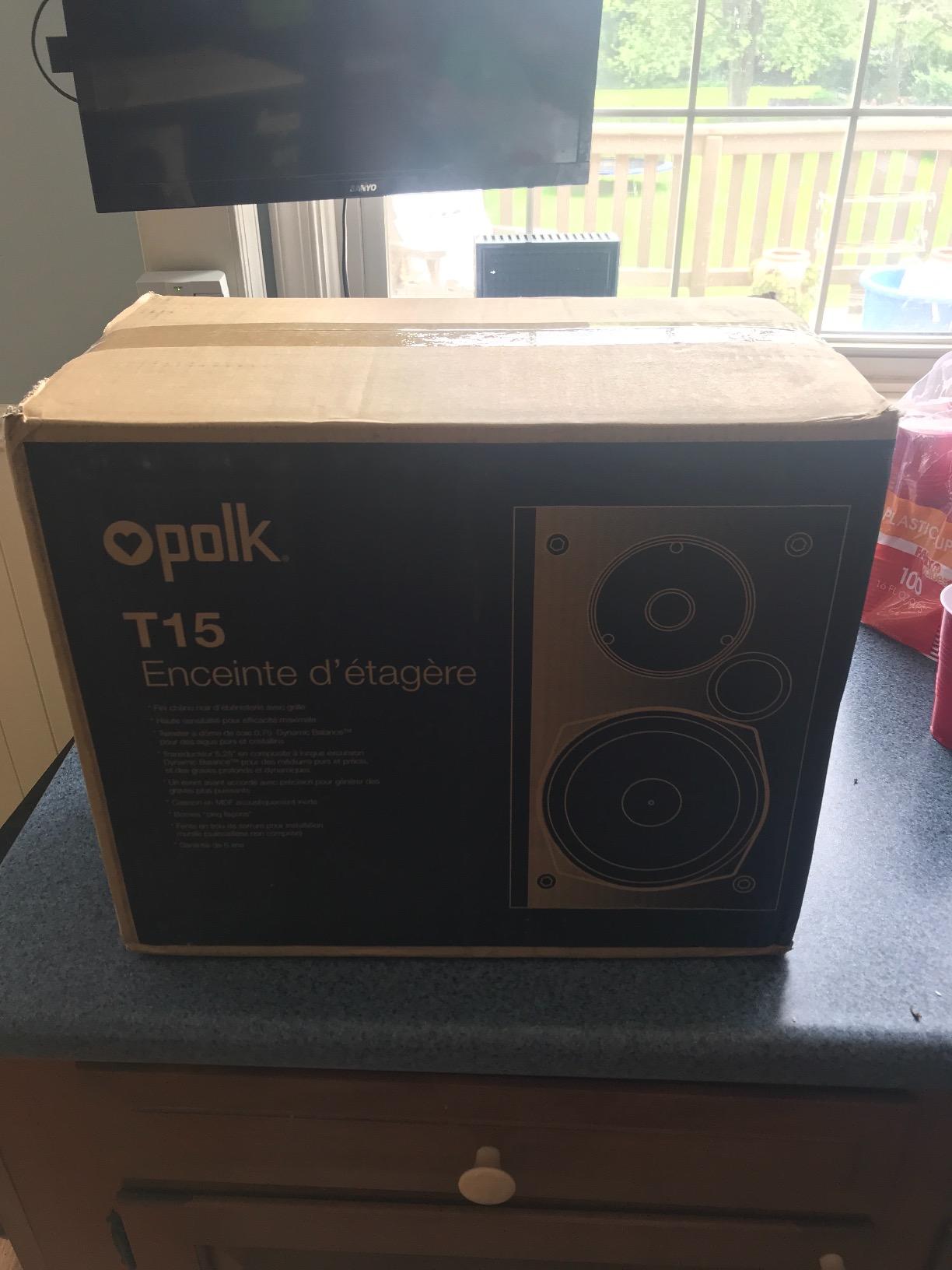
The T15 sits here because it is the passive speaker I recommend when someone already owns a receiver. There is nothing to switch on, no small power brick to hide and no gain to set, which removes the two failure points that trip up first-time passive buyers.
Sound is clear and balanced with vocals sitting forward in the mix, and owners credit the 5.25 inch Dynamic Balance driver with bass that holds up at low listening volumes where smaller drivers usually give up. A 0.75 inch tweeter handles the top end, and the pair rates 4.7 stars across 7389 ratings.
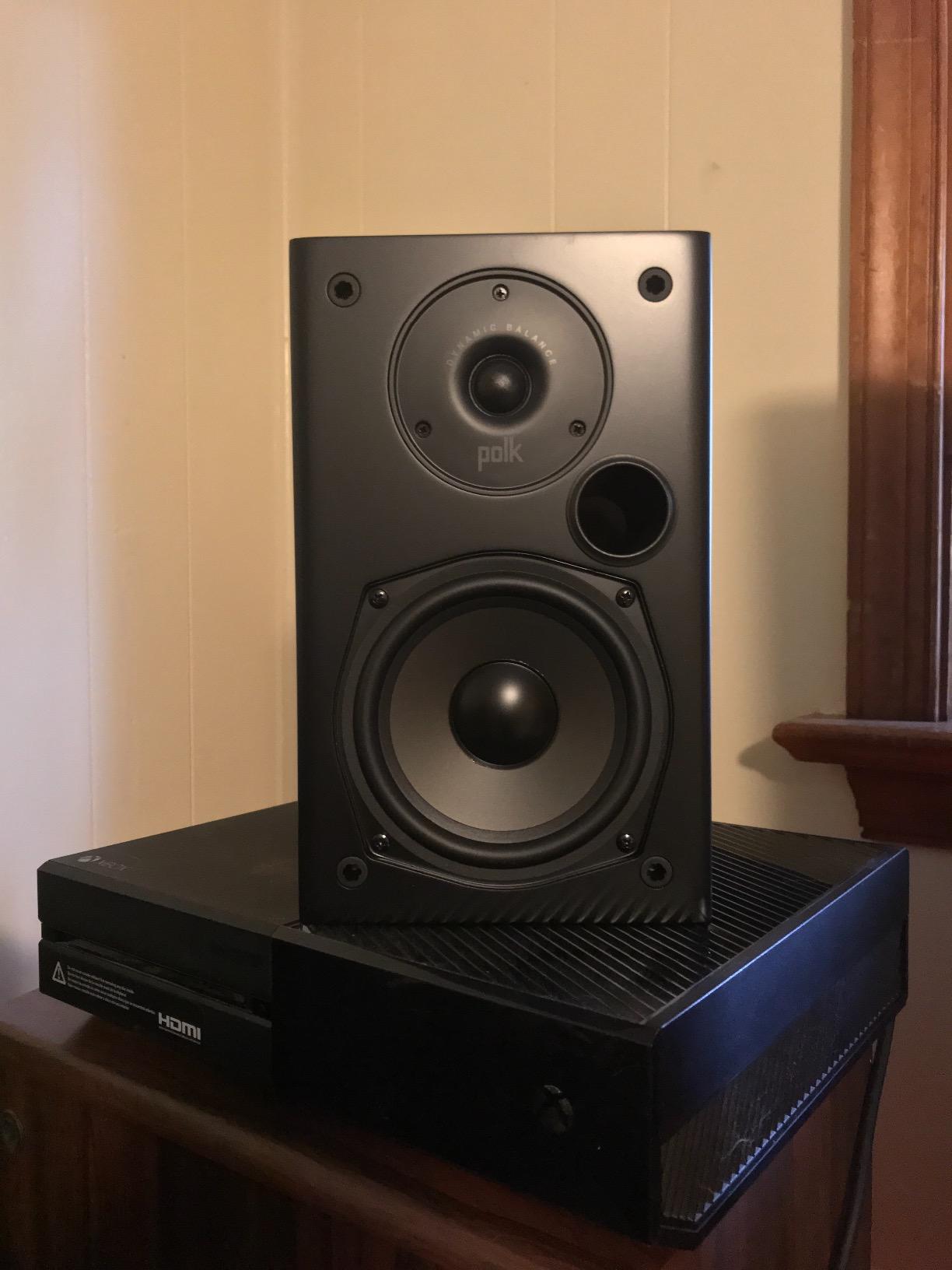
The real advantage shows up over years rather than weeks. These cabinets have integrated keyhole slots for wall mounting, removable fabric grilles and a documented path into a full 5.1 system using Polk’s matching towers and centre channel, so the pair is a starting point rather than a dead end.
Reviewers report roughly four in five ratings are five star, with the most repeated caveat being the same in every long-term write-up: you are buying a speaker, not a system, so an amplifier or receiver has to be budgeted separately. Budget speakers in the same class are frequently named as the standard passive entry pair in vinyl forums, and the T15 matches that description.
Is the T15 right for your system?
It is right if you already own an AV receiver or an integrated amplifier and want a second pair of speakers for a turntable zone. It is wrong as a first purchase unless you are certain an amplifier is already in the chain, because a passive speaker connected to nothing produces silence.
The honest limitations
The bass boost is a fixed circuit rather than a knob, so room correction is not on the table. The listed audio output mode is surround, which is ideal for film use but tells you nothing about how the pair handles a two-channel vinyl setup without the rest of a home theater rig.
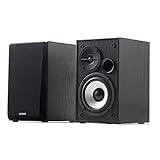
3. Edifier R980T Active Bookshelf Speakers – The Bare-Bones Starter Pair
Edifier R980T 4″ Active Bookshelf Speakers – 2.0 Computer Speaker – Powered Studio Monitor (Pair)
24 watts RMS output
4 inch woofer
20 KHz frequency response
85 dB signal to noise
Pros
- Self-contained powered design with no separate amplifier needed
- RCA cable plus 3.5mm cable and speaker wire included in the box
- Wooden enclosures that reduce cabinet resonance
- Two AUX inputs let two sources stay connected
Cons
- Lower total output than larger powered bookshelf models
- No tone or volume adjustment on the cabinet
The R980T is the most stripped-down powered pair in the list, and that is exactly why it is here. It ships with the RCA cable, a 3.5mm cable and speaker wire in the box, plus a universal power supply, so the only thing missing from a first vinyl system is the turntable itself.
Total output is 24 watts RMS with a front-facing flared bass reflex port. That is plenty for a desk or a bedroom at normal listening levels, and it is the number that limits how far you can push it in a bigger space.
The universal power supply runs from 110V to 240V, which matters if you travel with the pair. Cabinet size is 11.5 by 7.5 by 17 inches at 7.8 pounds for the pair, so it is a shelf speaker rather than a desktop one despite the nearfield reputation.
With 4439 ratings averaging 4.6 stars and 78% of those at five stars, the pattern in the reviews is consistent. Owners highlight the included cable package, the wooden cabinets and clean stereo imaging, then flag modest power headroom and the absence of any on-speaker EQ as the two things they would change.
The missing tone controls matter more than they sound. Once a turntable is involved, having no way to trim bass or treble on the speaker means every adjustment has to happen in software or at the cartridge, which is a lot less convenient than a knob on the cabinet.
Is the R980T right for a first setup?
It is right for a bedroom, a dorm room or a near-field desktop system where a turntable sits a few feet from your chair. It is not the pair I would put in a living room that opens into a kitchen, where 24 watts simply runs out of headroom before you reach a satisfying level.
The honest limitations
There is no volume or tone control anywhere on the cabinet, which makes it awkward as the primary pair in a multi-source household. It also shares the 4 inch driver size of the R1280T while offering roughly half the output, so the step up to the R1280T is a step up in both power and control.
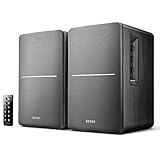
4. Edifier R1280DB Powered Bluetooth Speakers – Best Value for Vinyl and TV
Edifier R1280DB Powered Bluetooth Bookshelf Speakers – Optical Input – Wireless Studio Monitors – 4 Inch Near Field Speaker – 42W RMS – Wood Grain (Black)
42 watts max output
4 inch woofer
13mm silk dome tweeter
55 Hz frequency response
Pros
- Bluetooth plus optical and coaxial inputs for TV and PC use
- On-board bass and treble knobs and a remote that switches inputs
- Sub-out output lets you add an external subwoofer later
- Wooden enclosure that helps isolate acoustic resonance
Cons
- Bluetooth codec quality is below wired digital sources
- No USB input so a computer needs analog or optical audio
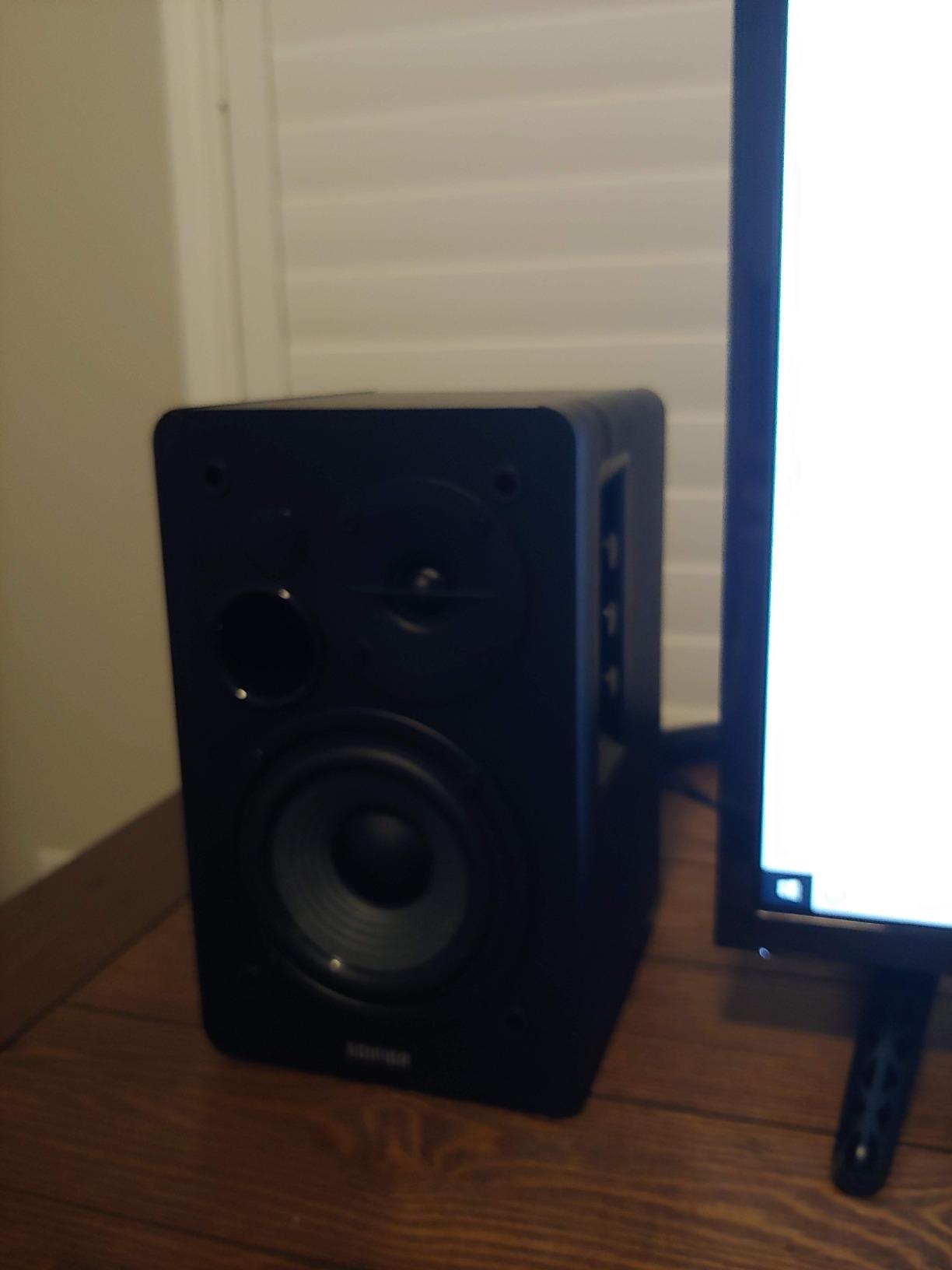
The R1280DB is the R1280T plus wireless and digital audio, and for most households that is the version to buy. Optical and coaxial inputs let a TV feed a near-lossless digital signal, which solves the most common complaint in living rooms where the turntable and the television share one pair of speakers.
It carries the same 42 watt maximum output and 13mm silk dome tweeter, but the quoted frequency response drops to 55 Hz against the R1280T’s 80 Hz figure, and that lower number is audible on bass-heavy records played at volume.
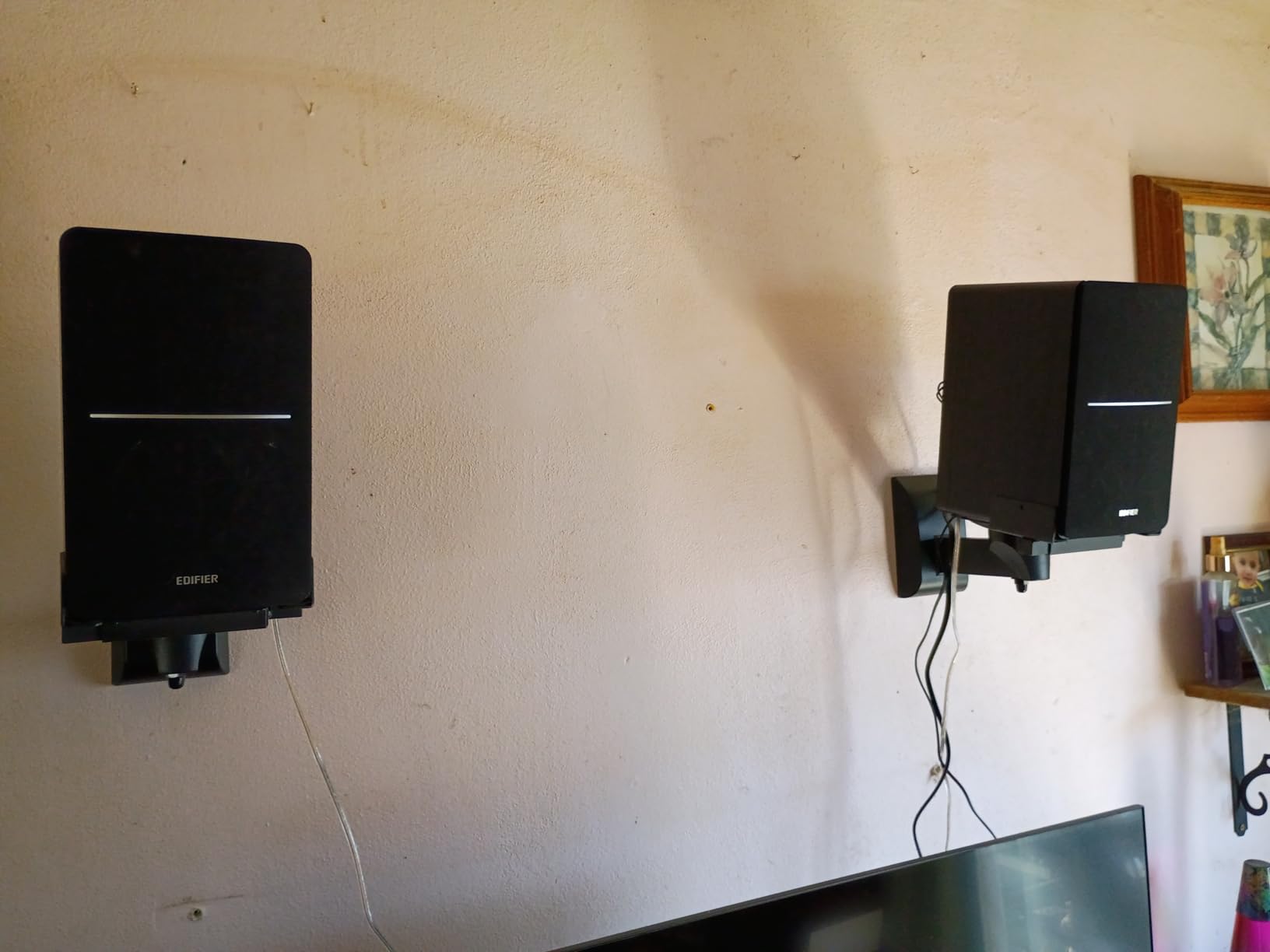
With 3595 ratings averaging 4.6 stars and about 80% of ratings at five stars, owners frequently describe pairing these with a television through optical and reaching for the side-panel EQ to tame a slightly forward low end at low listening levels. A sub-out output is present, so adding a subwoofer later is a matter of one cable.
On r/BudgetAudiophile the R1280DB is named alongside the R1280T as the default first powered speaker purchase, with the consensus that the DB is the one to choose if a TV or a computer is part of the plan. That matches my own use, where the remote’s input switching gets used daily and the R1280T’s does not.
Is the R1280DB the right pick if you own a TV?
Yes, if your television exposes an optical or coaxial output, which most do. If it only offers HDMI, you are back to analog from a TV box or a streaming dongle, and the optical input goes unused, though Bluetooth still covers phone and tablet playback.
The honest limitations
There is no USB input, so a desktop computer needs analog or optical audio rather than a direct digital connection. The warranty is a one-year limited warranty, shorter than several passive pairs in this list, and Bluetooth compression is not a substitute for a wired turntable connection.
5. Micca MB42 Passive Bookshelf Speakers – The Warm Budget Choice
Micca MB42 Standard 2-Way Passive Bookshelf Speakers, Stereo Pair, Black
4 inch carbon fiber woofer
0.75 inch silk dome tweeter
85 dB sensitivity
4 to 8 ohm impedance
Pros
- Warm smooth and musical presentation with detailed treble
- Full-size 5-way binding posts rather than spring clips
- Wood grain cabinet that looks far costlier than it is
- Plays well from a modest Class-T amplifier
Cons
- Narrow midrange resonance around 125 to 150 Hz in some rooms
- No internal cabinet damping can add a nasal quality on some material
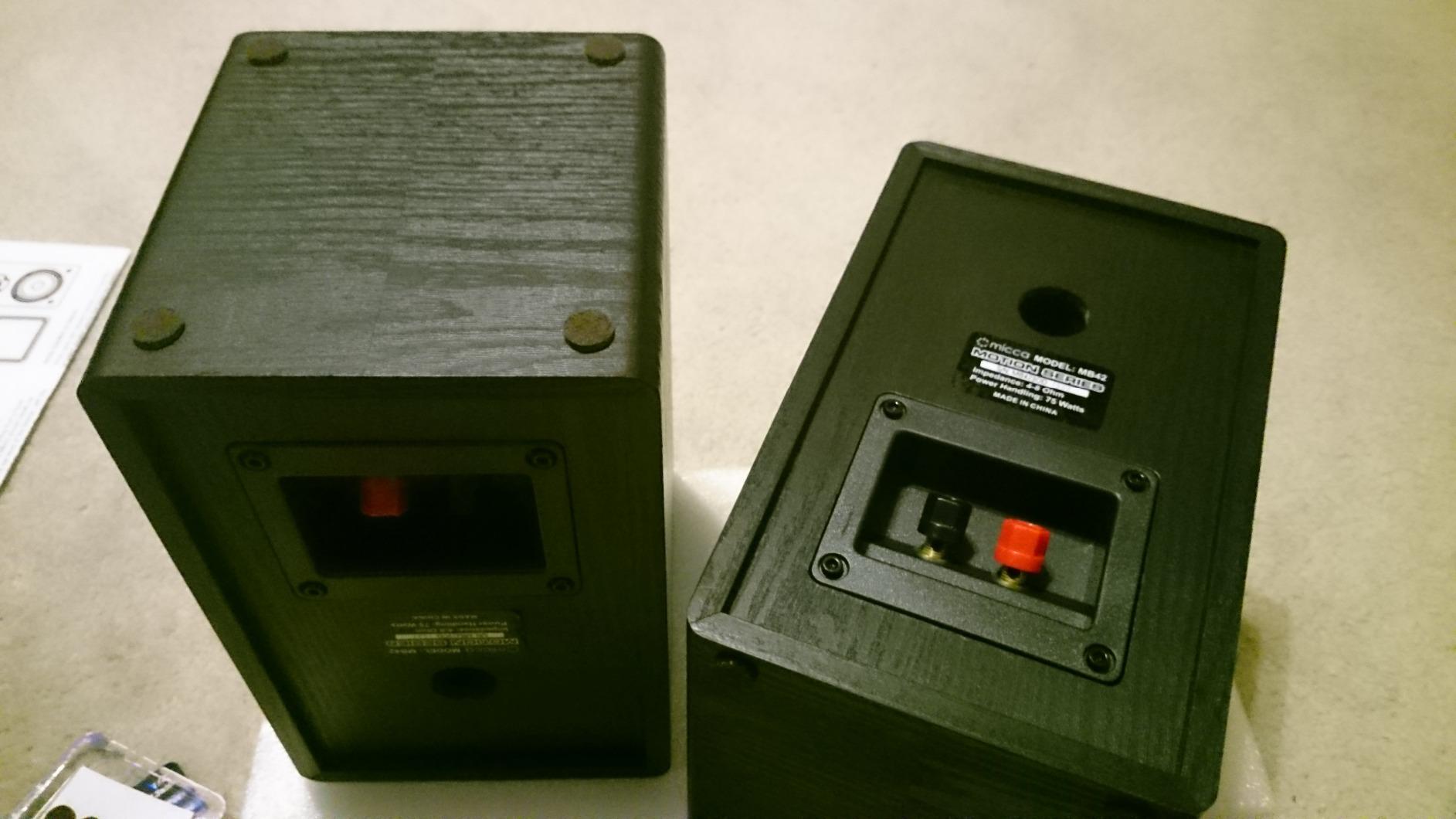
The MB42 is the passive pair I suggest when someone wants a warmer, more relaxed sound than a horn-loaded or studio-monitor style speaker delivers. The 4 inch woven carbon fiber woofer and silk dome tweeter are housed in a ported wood cabinet with a simple 6dB per octave crossover, and the published figures are 85 dB sensitivity and 75 watts of power handling per speaker.
Impedance is listed as a 4 to 8 ohm range, which is a mild warning for first-time passive buyers. It will not punish a modest amplifier the way a low-sensitivity, low-impedance design would, but the published power handling figure is worth respecting rather than ignoring.
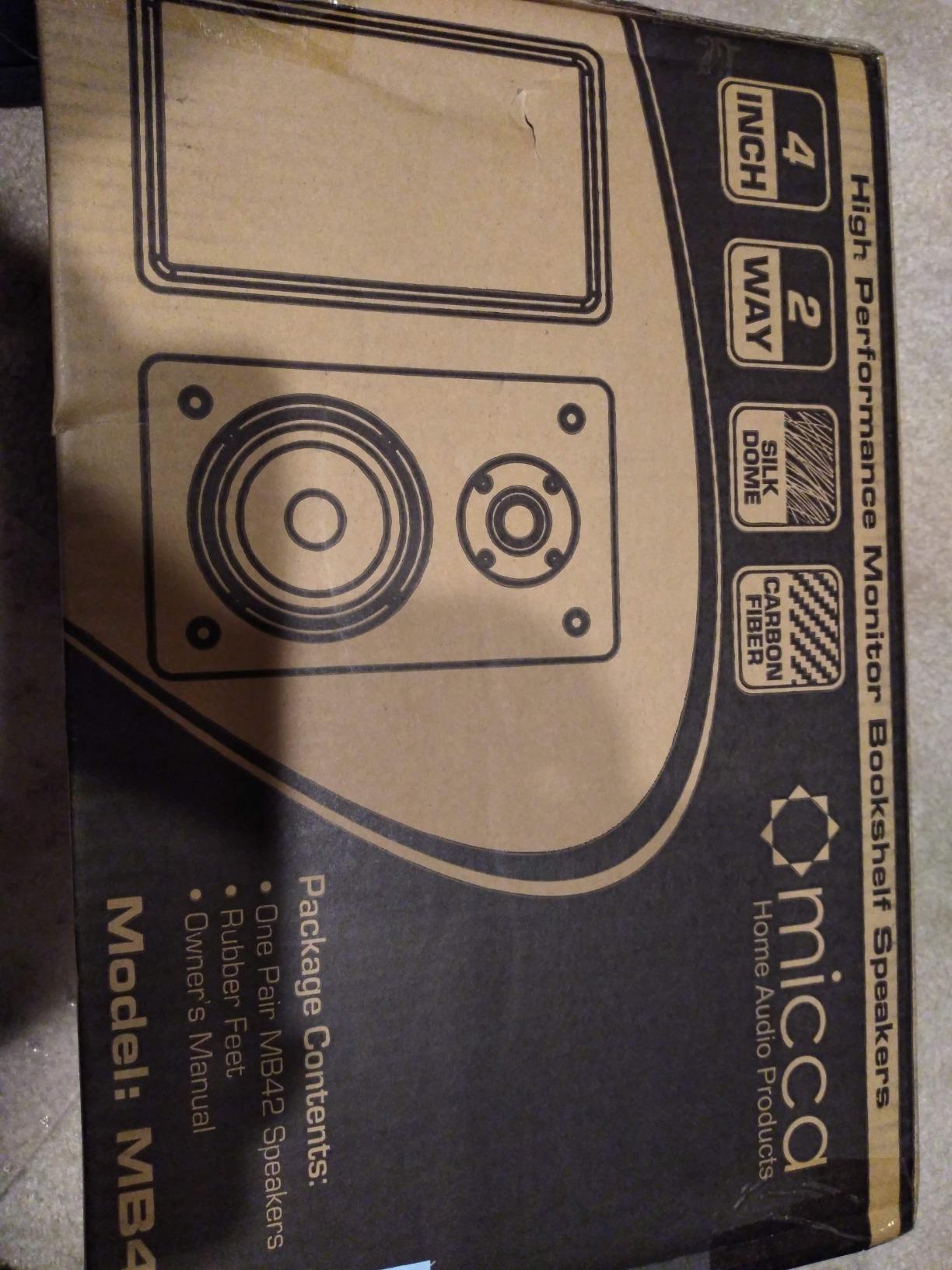
With 1890 ratings averaging 4.6 stars and 73% at five stars, the defining review pattern is a bass-mid resonance bump in the 125 to 150 Hz region. Most owners solve it with a software EQ cut or with Micca’s optional replacement crossover, and multiple long-term reviewers report two to nearly ten years of reliable use.
The 5-way binding posts are a genuine upgrade over the spring clips found on cheaper passive speakers, and reviewers comment on the finish and fit more often than the price would suggest. Placement near a wall or in a corner is the manufacturer’s own recommendation for the best low-end result.
Is the MB42 right if you are on a tight budget?
It is right if you already have an amplifier and want musical, forgiving sound rather than maximum detail. It is the wrong first step if you have no amplifier, because you would be adding two boxes of cost to reach the same end state as a powered pair.
The honest limitations
There is no internal cabinet damping, which can add a slightly resonant quality on certain material, and the midrange bump is a real, measurable behaviour rather than a matter of taste. A one-year manufacturer warranty is the shortest in this group.
6. Klipsch R-15M Bookshelf Speakers – Loud, Detailed and Polarising
Klipsch R-15M Bookshelf Speaker (Pair)
5.25 inch spun copper woofer
1 inch Tractrix horn tweeter
8 ohm design
340 watt max output
Pros
- High sensitivity lets them play loudly from modest amplifiers
- Dynamic presentation with detailed highs and strong vocal presence
- Punchy low end from a cabinet smaller than expected
- Removable grilles and 5-way binding posts
Cons
- Forward horn signature that some listeners find fatiguing
- Frequency hump near 130 Hz when placed against a wall
- Passive only and an amplifier is required
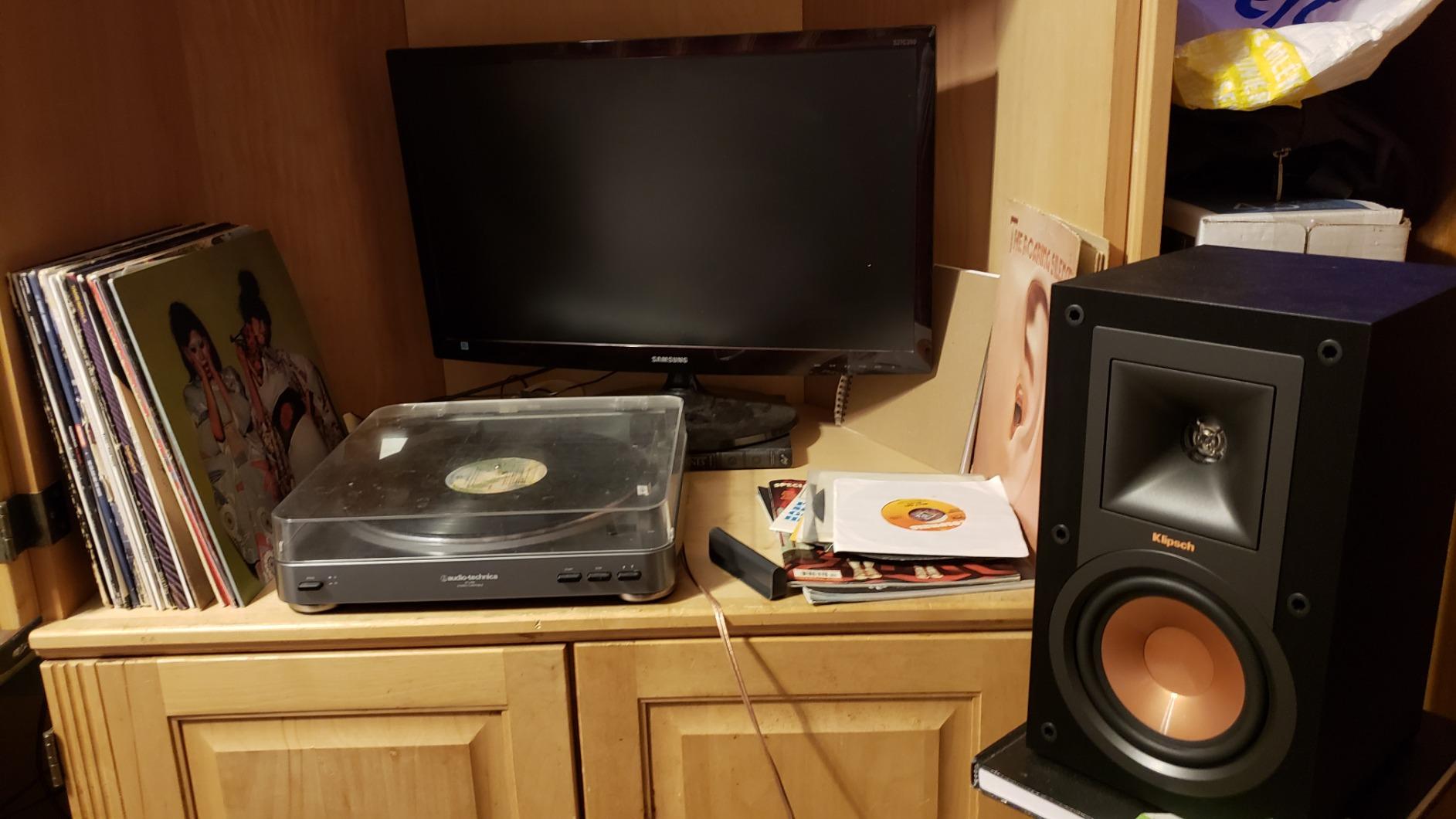
The R-15M is the pair I reach for when someone plays records loudly in a room with hard surfaces. A 90 by 90 degree Tractrix horn loads a one inch aluminium tweeter, and the spun copper woofer underneath it is light and rigid enough to move real air from a cabinet that weighs 10.3 pounds.
The reason this works in a loud room is sensitivity. These speakers produce meaningful output from a small integrated amplifier, which means you are not asking a small amp to strain, and strain is what produces the thin, forced sound people associate with cheap powered speakers.
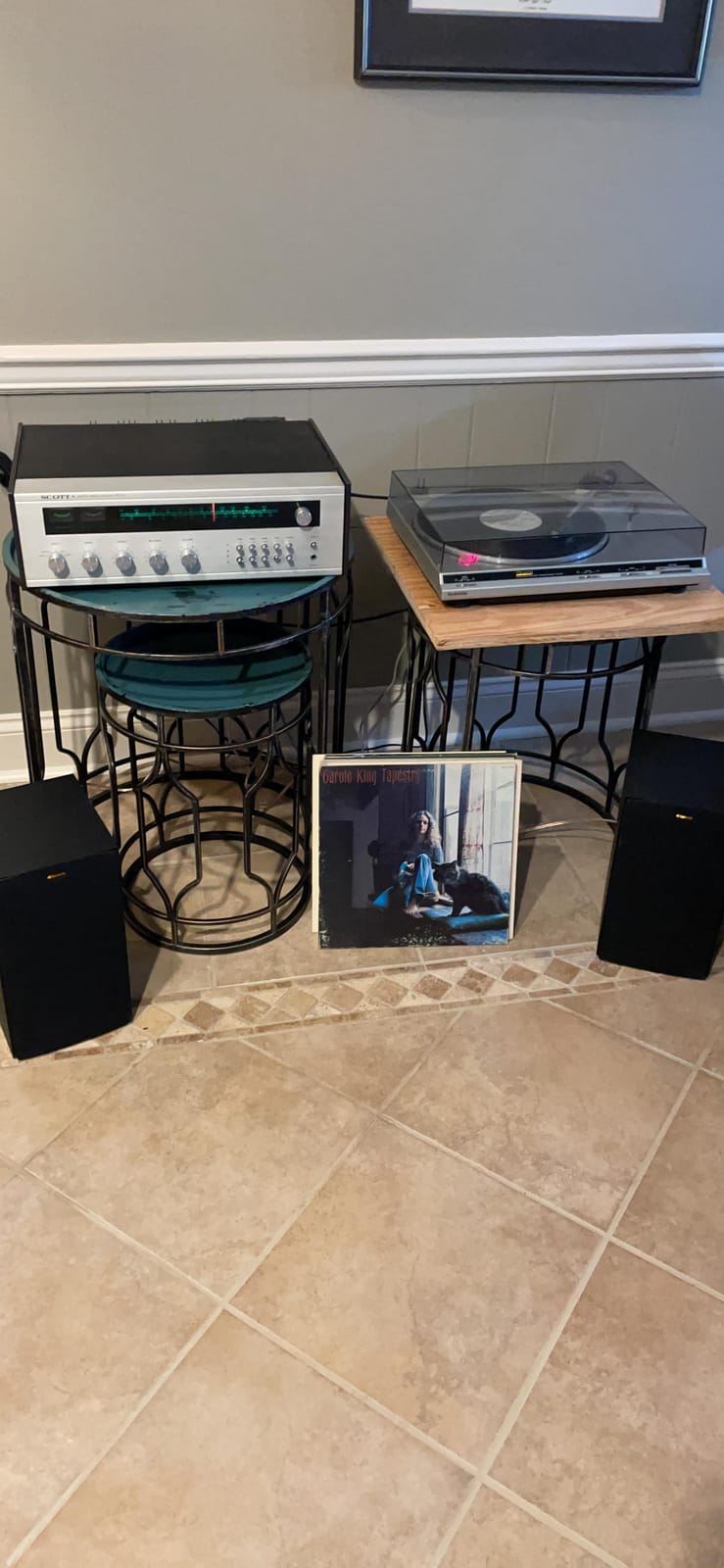
With 1332 ratings averaging 4.7 stars and 86% of those at five stars, the praise is consistent: dynamics, imaging and a soundstage that owners say punches well above the cabinet size suggests. The caveat appears in almost every long review, and it is the horn character itself, which is exciting and detailed but genuinely polarising.
Reviewers also flag a frequency hump around 130 Hz that muddies the midrange when the cabinets sit tight against a wall. Give them 20 or 30 centimetres of breathing room and the issue largely disappears, which is why the R-15M rewards careful placement more than the sealed competitors in this list.
Is the R-15M right for a medium or large room?
It is right for a living room, an open-plan space or a nearfield monitor position where you listen at volume. It is a poor match for late-night listening in a small bedroom, where the same forwardness that sounds exciting at moderate volume becomes tiring at low volume.
The honest limitations
There is no wireless or digital audio and no built-in amplification, so an amplifier is non-negotiable. Placement against a rear wall needs correcting with distance or EQ, and the horn-loaded treble will never sound warm.
7. Klipsch R-51M Bookshelf Speakers – The Refined Step Up in Clarity
Klipsch R-51M Bookshelf Speaker (Pair), Black
Dual 5.25 inch spun copper woofers
1 inch aluminum LTS tweeter
8 ohm design
62 Hz frequency response
Pros
- High sensitivity allows loud playback from small integrated amplifiers
- Very clean and detailed midrange and treble with superb vocals
- Dual spun copper woofers deliver quick punchy bass
- Copper drivers and silver screws give an upscale look
Cons
- Bright and forward horn-loaded treble can fatigue at high volume
- A subwoofer is advised for heavy low-end music
- Passive design requires an amplifier or receiver
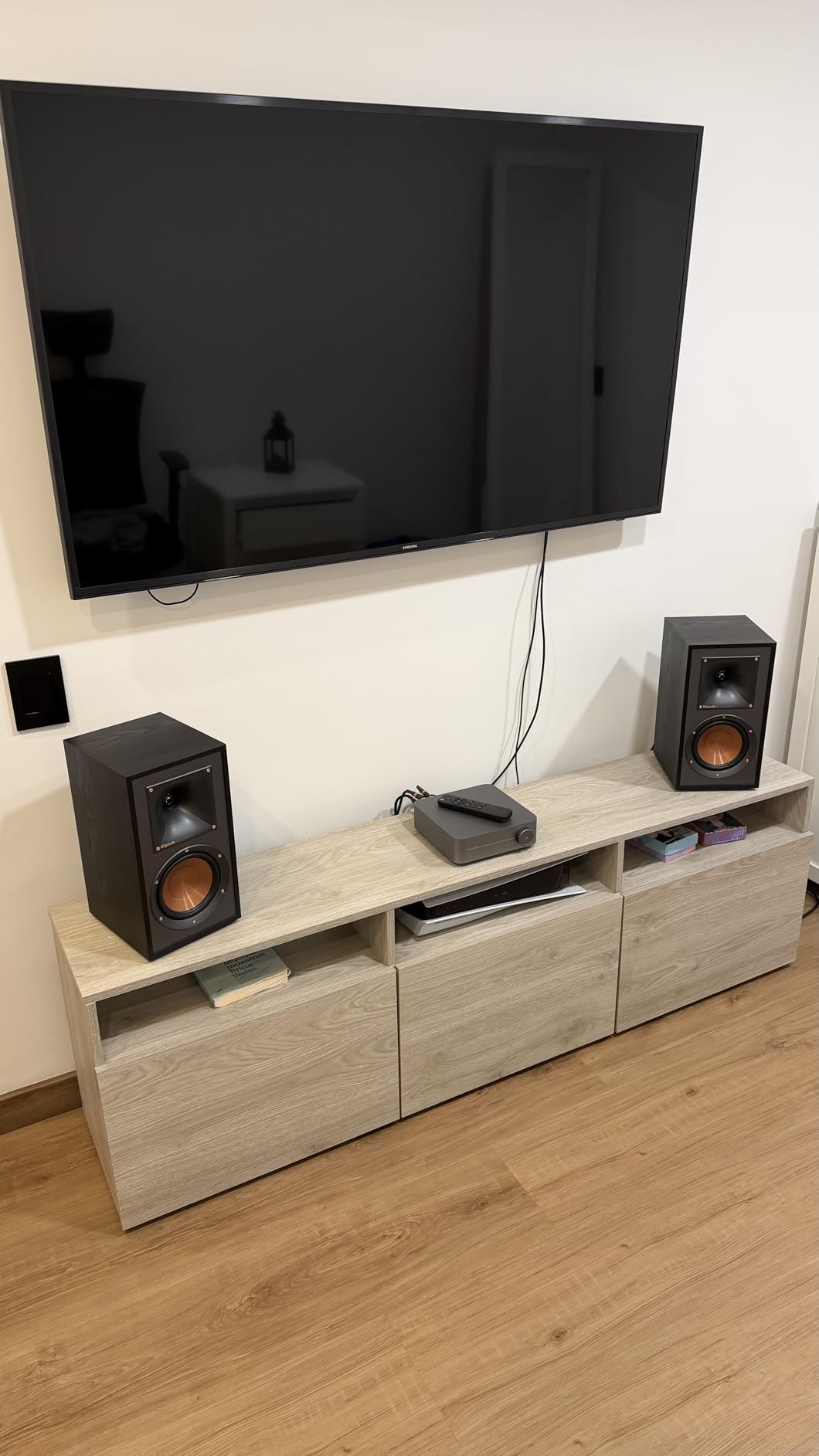
The R-51M is one of the two highest-rated products in this roundup, at 4.8 stars across 1327 ratings, and it earns that with twin 5.25 inch spun copper woofers per cabinet where the R-15M has one. Those extra drivers are why it holds together on dense orchestral and electronic material without a subwoofer.
The one inch aluminium LTS tweeter sits in a 90 by 90 degree square Tractrix horn, and the quoted low-frequency response reaches 62 Hz. Rated 8 ohm with 340 watts of maximum output power, these are comfortable loads for almost any competent integrated amplifier.
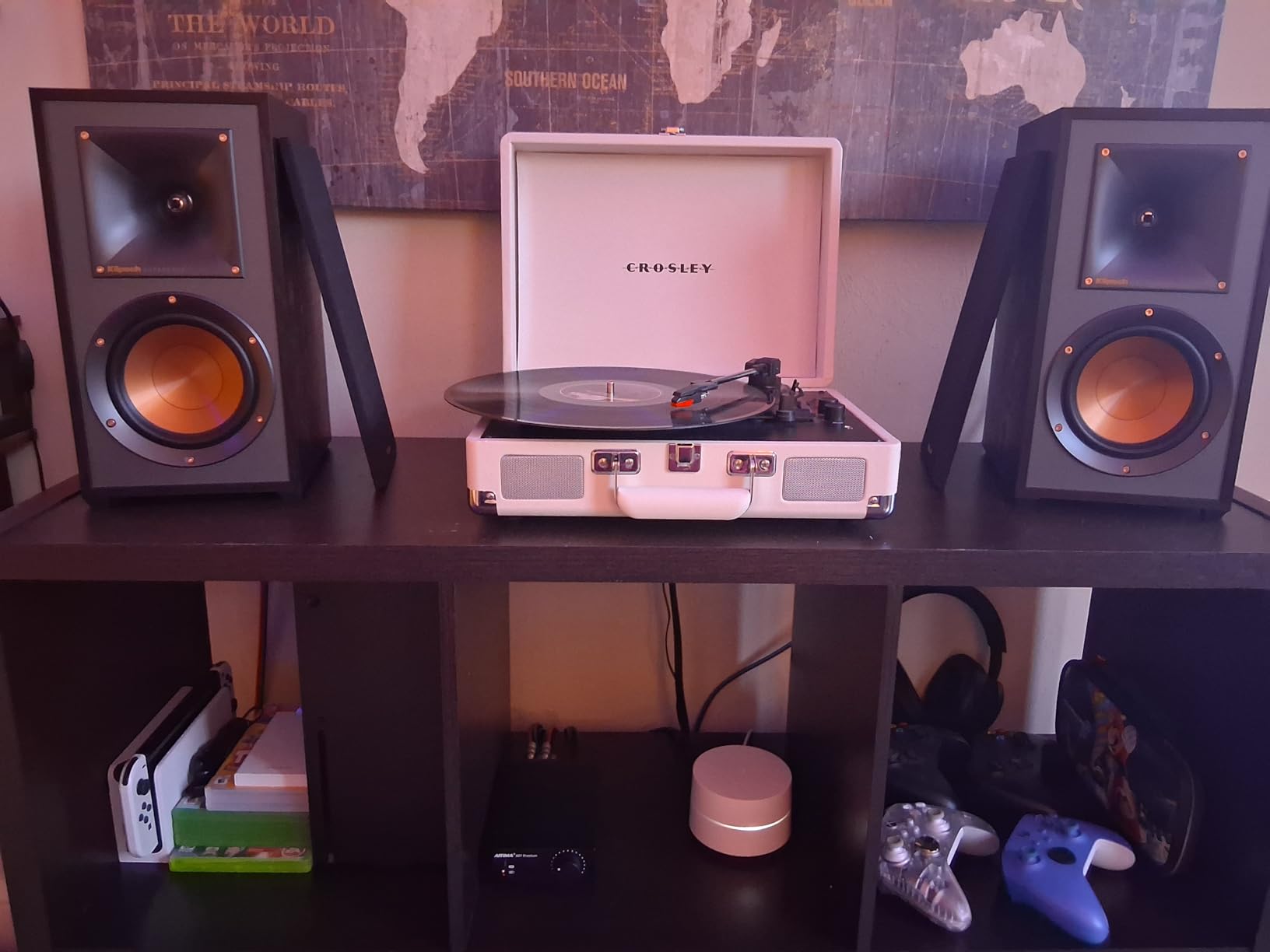
Eighty-seven percent of ratings sit at five stars, and the shared theme is a clean, analytical presentation with a soundstage reviewers describe as rivaling speakers costing several times more. The cabinets weigh 11 pounds each, which is heavy enough that stands rather than a desk are the sensible choice.
Reviewers repeatedly recommend pairing these with a subwoofer for music with heavy low-end content, which is worth knowing if you plan to play a lot of modern electronic or dance records. The five-year limited warranty is among the strongest in this group.
Is the R-51M right for an upgrade path?
It is right if you already have an amplifier and want a genuine step up in detail and dynamics, and it is the pair I would choose for a system that will grow over several years. It is a large step up in cost from the R-15M, and the audible gain is concentrated in the low end and the midrange clarity.
The honest limitations
The signature is bright and forward rather than warm, so listeners seeking a neutral or dark sound may prefer another brand. They are passive, they need stands or a sturdy shelf, and heavy low-end material still benefits from a subwoofer.
8. Micca RB42 Passive Bookshelf Speakers – The Smooth Compact Upgrade
Micca RB42 Reference 2-Way Passive Bookshelf Speakers, Stereo Pair, Walnut
4 inch long-throw woofer
0.75 inch silk dome tweeter
10-element crossover
8 ohm, 100 watts
Pros
- Silky smooth and lively signature with surprising bass for a 4 inch driver
- 10-element crossover improves off-axis response and power handling
- Attractive dark walnut cabinet with modern curved lines
- Rated to 100 watts per channel for a wide range of amplifiers
Cons
- Passive only and an amplifier or receiver is required
- Bass extension stays limited by the compact 4 inch woofer
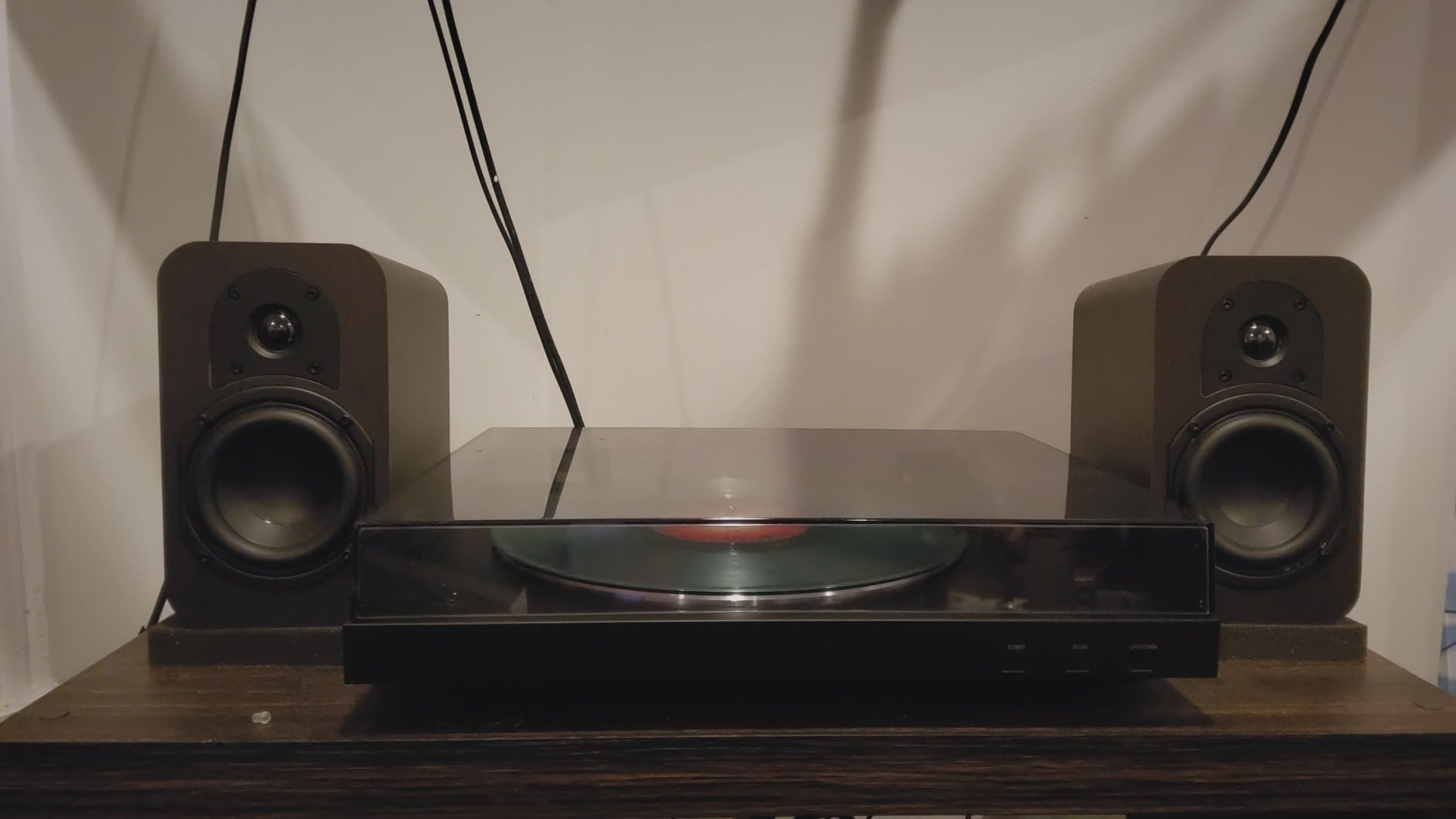
The RB42 is Micca’s step up from the MB42, and the design change is in the crossover rather than the drivers. A 10-element crossover using film capacitors and air core coils on an 18dB per octave slope is a serious piece of engineering in a compact bookshelf speaker, and it is the reason the treble sounds smoother than the MB42’s.
The 4 inch woofer uses a long-throw design with a coated pressed paper cone, concave dust cap and vented pole piece, rated to 100 watts per channel at 8 ohm. In practice it plays music that is fun and musical rather than analytical, which is a different target from the Klipsch horns two sections above.
With 836 ratings averaging 4.8 stars and 86% at five stars, reviewers single out the refined crossover for clearer treble and smoother tonal balance, and describe the overall presentation as lively and faithful with a dose of fun. Multiple owners pair them with small Class-D amplifiers and report no difficulty filling a medium room.
The dark walnut finish and curved cabinet lines are frequently photographed, and reviewers treat appearance as a genuine part of the value. If your setup is visible rather than hidden, these look like a far more expensive pair than their specification sheet suggests.
Is the RB42 right for a small-to-medium room?
It is right for a bedroom, an office or a living room where you listen at moderate levels and want an easy, unfussy presentation. The 8 ohm rating and 100 watt handling make it a forgiving match for whatever amplifier you already own.
The honest limitations
It is passive, so an amplifier has to come from somewhere. The compact 4 inch woofer still limits true bass extension, and no wall or placement is listed in the specification for this model the way it is for the MB42.
9. Kanto YU6MW Powered Speakers – The Only Pair Here With a Phono Preamp
Kanto YU6MW Powered Bookshelf Speakers with Bluetooth and Phono Preamp | Pair | Matte White
200 watts max output
5.25 inch Kevlar drivers
1 inch silk dome tweeter
60 Hz frequency response
Pros
- Integrated phono preamp connects a turntable with no external gear
- Wide and tall soundstage that reviewers rate above the price class
- Powered 100W RMS design gets loud without obvious distortion
- Remote bass and treble plus balance adjustment changes the signature
Cons
- Cabinet resonance muddies the lower midrange on some material
- Large footprint can dominate a standard-sized desk
- Some owners report distortion above roughly 70% volume
The YU6 is the only speaker in this roundup with a phono preamp inside, and that single feature changes who it is for. A turntable with no built-in preamp can connect directly to the phono input, which removes the extra box that causes the most confusion among first-time vinyl owners.
Underneath that is a serious powered design: 5.25 inch Kevlar drivers with one inch silk dome tweeters in handcrafted MDF cabinets standing 10.7 inches tall, rated to 200 watts maximum output with 100 watts RMS per channel and a quoted 60 Hz response.
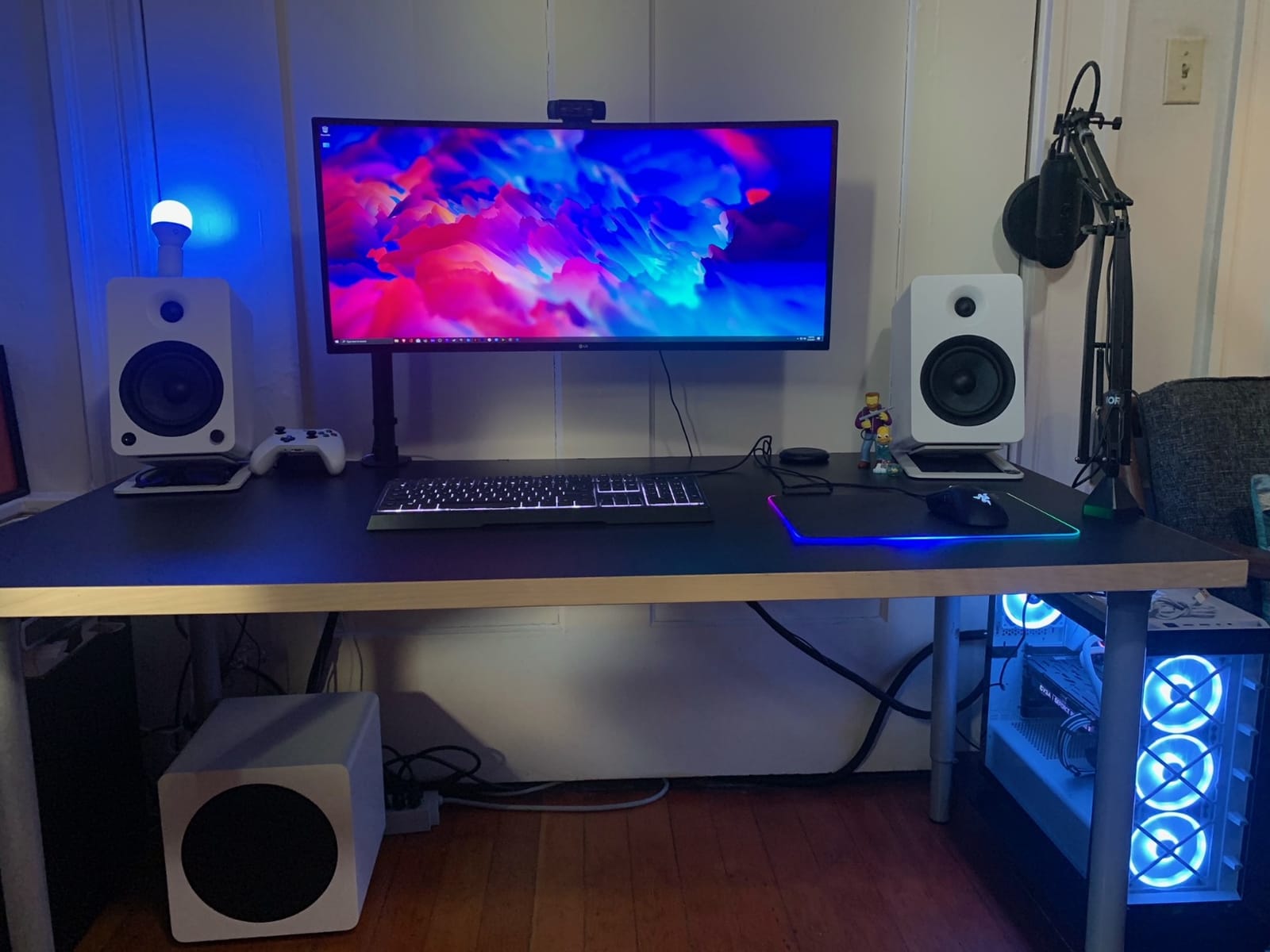
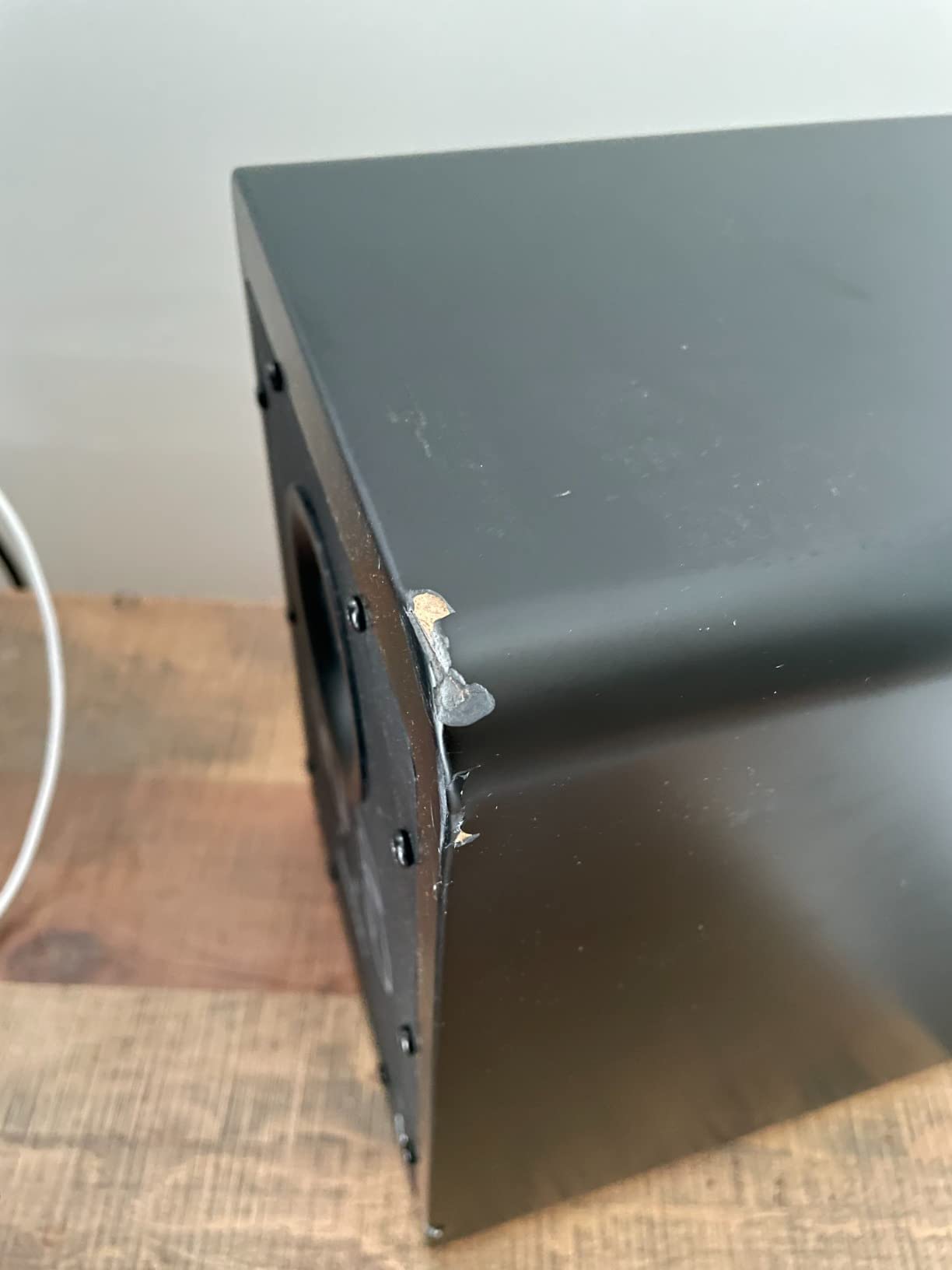
This is the lowest-rated product in the set at 4.3 stars with 9% of ratings at one star, so the negatives deserve weight rather than a footnote. Positive reviews concentrate on the phono preamp, soundstage width and plug-and-play connectivity. Critical reviews describe cabinet resonance in the mid-bass, a large footprint, and some distortion above roughly 70% volume or during the first hours of use.
Forums repeatedly name Kanto alongside Audioengine as the double-the-price upgrade tier for someone who started on a budget powered pair, and the YU6 is where that upgrade path leads. Bluetooth uses Qualcomm aptX, and automatic signal detection powers the speakers up when music starts.
Is the YU6 right if your turntable has no preamp?
Yes, and it is the only pick here where that is the headline rather than a footnote. If your turntable already has a working preamp, connect to the line input instead and leave the built-in stage switched out, because running phono level into a phono stage twice is exactly the mistake that causes severe distortion.
The honest limitations
The 4.3 star average is the lowest here and the one-star share is real, with fulfilment and mid-bass cabinet issues appearing more often than electronics faults. At 8 kg and just over 10 inches tall, the cabinets are not a desktop speaker despite looking like one.
10. KEF LS50 Meta Bookshelf Speakers – The Reference Pick
KEF LS50 Meta Bookshelf Speakers (Pair, Carbon Black) – Passive HiFi Audiophile Bookshelf Speaker with Metamaterial Uni-Q Driver
5.25 inch Uni-Q array
25mm vented aluminium dome
8 ohm design
47 Hz to 45 kHz range
Pros
- Exceptional imaging from the single-point-source Uni-Q array
- Wide and even dispersion that stays coherent well off-axis
- Deep 47 Hz extension from a compact enclosure
- Timbre-matched to KEF's home theater range for a front stage
Cons
- Passive design requiring a capable amplifier in the 40-100W window
- Placed close to a wall the bass region can be coloured
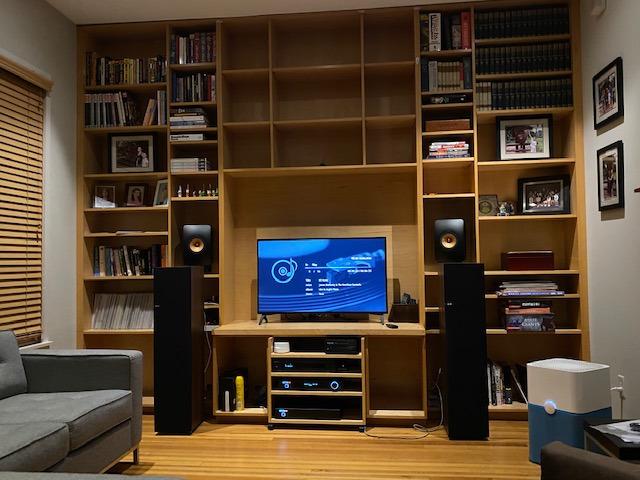
The LS50 Meta is the only reference-grade passive design here, and it behaves unlike a conventional two-way bookshelf. Metamaterial absorption technology sits behind the tweeter and absorbs 99% of the sound coming off its rear, which is what lets a 25mm aluminium dome sit at the acoustic centre of the 5.25 inch midbass cone and behave as a single point source.
The published range is 47 Hz to 45 kHz at minus 6dB, from a cabinet weighing 17.2 pounds. That bass reach in this volume is the reason it is worth pairing with a proper amplifier rather than the small desktop units that suit the other passive picks in this list.
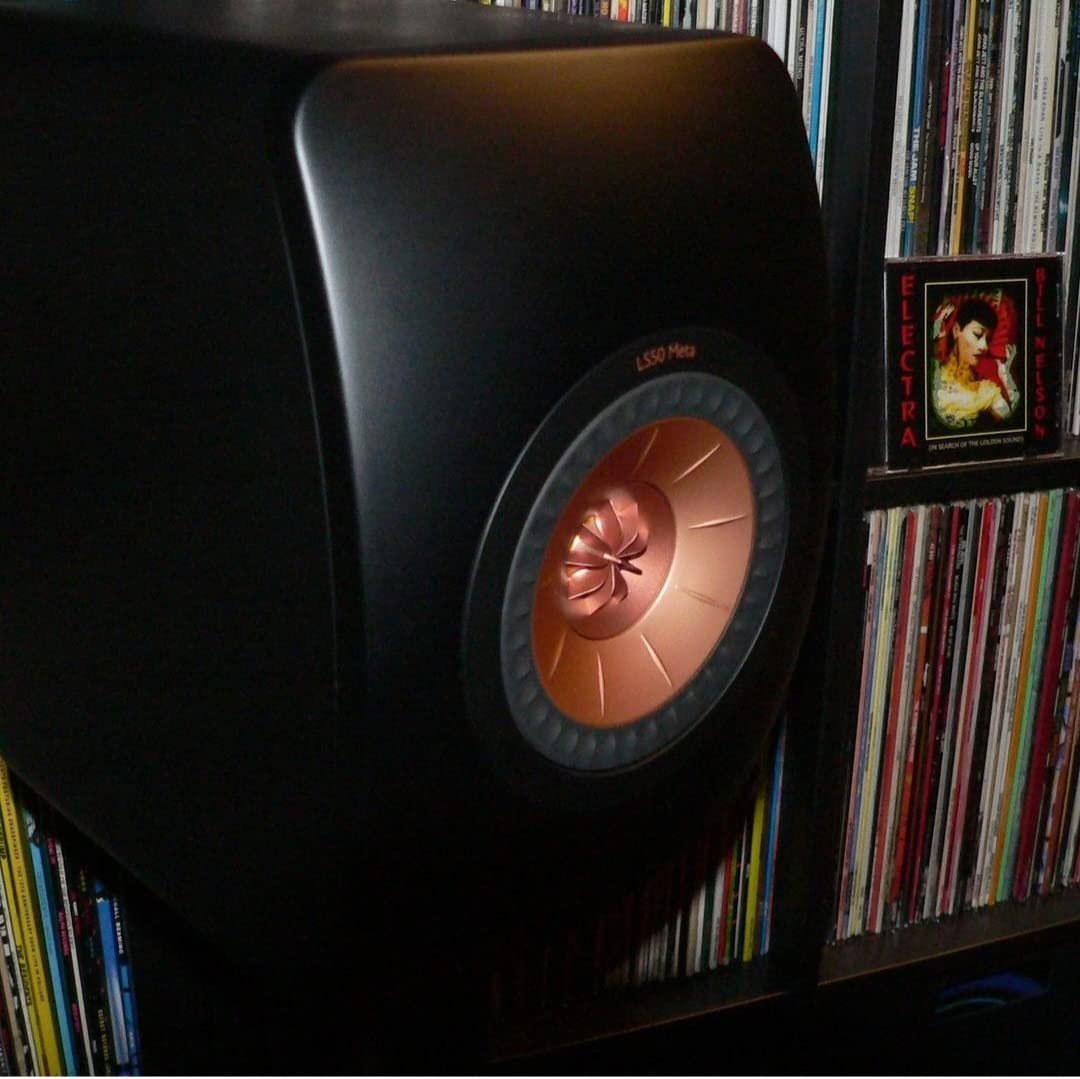
With 511 ratings averaging 4.5 stars and 77% of them at five stars, the sentiment is strongly positive despite a much smaller review pool. Reviewers consistently single out the near-perfect imaging, room-filling uniformity and bass reach for the size, and frequently note that stand placement is needed to take full advantage of the design.
The design won a What Hi-Fi Product of the Year award, and KEF positions it for two-channel stereo or as a timbre-matched front stage in a home theater system. A five-year manufacturer warranty is included, and the constrained-layer damped cabinet is built to keep the Uni-Q array free of panel resonance.
Is the LS50 Meta right for a serious system?
It is right if you have an amplifier capable of 40 to 100 watts per channel and the patience to position these on stands at ear height. For a first vinyl setup on a tight budget it is overkill, and the difference in audibility versus a well-matched mid-range pair will be smaller than the difference in cost.
The honest limitations
They are passive, and the amplifier requirement is real rather than nominal. Boundary reinforcement close to a wall colours the bass region, and the cabinets are heavy enough that furniture quality becomes part of the decision.
11. Klipsch R-50M Bookshelf Speakers – Built for Films and Big Rooms
Klipsch Reference Next-Generation R-50M Horn-Loaded Bookshelf Speakers with 5.25” Spun-Copper Woofers for Best-in-Class Home Theater Sound in Black
5.25 inch TCP spun copper woofers
1 inch LTS aluminium tweeter
8 ohm design
300 watts max output
Pros
- Horn-loaded Tractrix design delivers clean sound with an accurate soundstage
- Lightweight rigid aluminium tweeter provides high efficiency and detail
- Spun copper TCP woofers give a smoother and more accurate response
- Modern cabinet with hidden fasteners and magnetic grilles
Cons
- Passive design requires an external amplifier or receiver
- Larger cabinet footprint than compact bookshelf speakers
- No built-in amplification or wireless streaming of its own
The R-50M is the newest Klipsch in this group and the most home theater focused. A 90 by 90 degree Tractrix horn controls high-frequency directivity across a wider bandwidth than earlier Reference models, which is exactly what you want when the speaker is five metres from a screen and off-axis.
The 5.25 inch spun copper thermoformed crystalline polymer woofers use trickle-down technology from Klipsch’s higher-end Reference Premiere line, with steeper cone angling for a smoother response. Rated at 8 ohm and 300 watts maximum output, the pair is at home in a room where the R-15M would struggle.
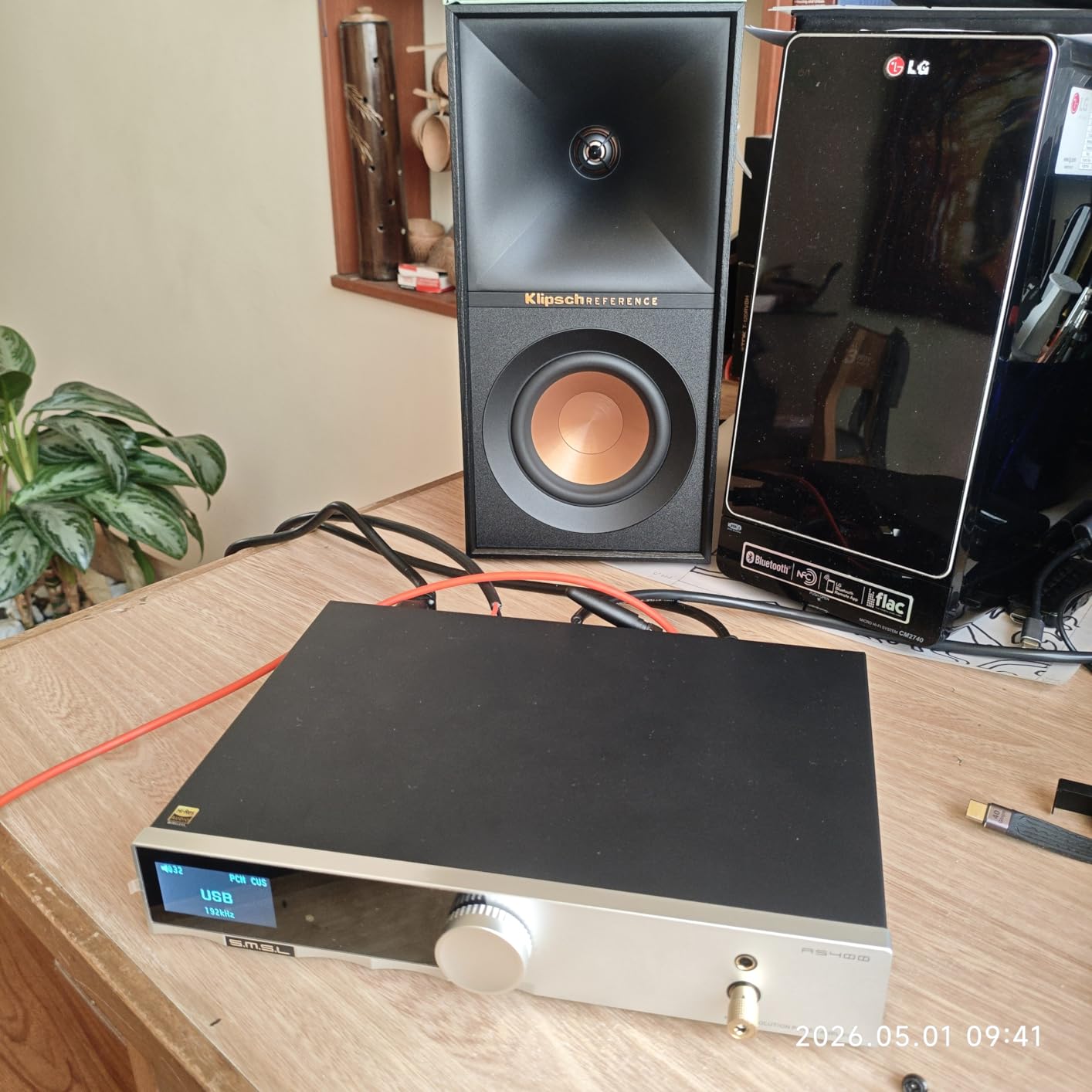
With 606 ratings averaging 4.6 stars, 80% at five star and 10% at four, the praise centres on horn-loaded clarity, tweeter detail, smooth woofers and a clean soundstage, plus a cabinet reviewers describe as modern and durable with a scratch-resistant textured wood grain vinyl finish.
The limitation owners name most often is simply that these are passive speakers needing an amplifier, with a second note that the cabinets are larger than compact bookshelf models. At 22 pounds for the pair, they are also the heaviest passive option here apart from the KEF.
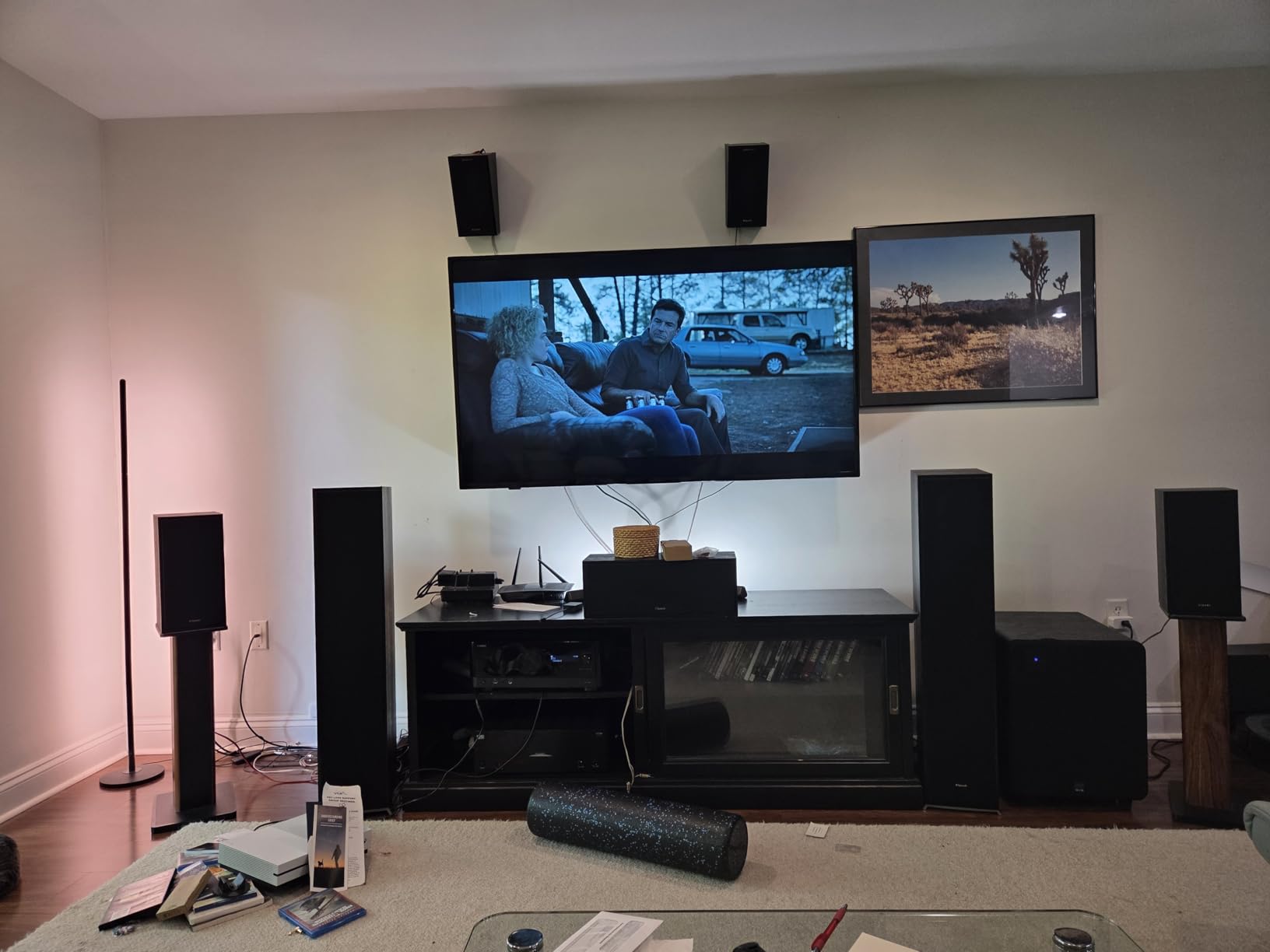
Is the R-50M right for a turntable and a TV?
It is right if the television runs through an AV receiver, because the receiver handles the television, the turntable phono stage and the volume in one box. That single-box approach is the cheapest way to serve both sources properly, and it is why a lot of people in forums with an existing receiver stay passive.
The honest limitations
There is no built-in amplification and no wireless streaming, so an amplifier is mandatory. The cabinet footprint is larger than the compact passive options, which matters in a small room or on a narrow shelf.
12. MEVOSTO 5-Inch Powered Speakers – The Most Inputs Per Speaker
MEVOSTO 5-Inch Powered Bookshelf Speakers: PC Speakers for Record Player
36W RMS built-in amplifier
Dual 5 inch woofers
Dual 1 inch silk dome tweeters
6 ohm, 80 Hz response
Pros
- Built-in 36W RMS amplifier means no separate amplifier is needed
- USB plus Bluetooth 5.4 plus RCA and AUX inputs cover turntable and PC use
- Independent bass and treble knobs plus an included remote
- Walnut wood grain cabinets suit a shelf or media console
Cons
- USB connection requires a port that supports audio output
- 80 Hz bass response is modest against larger designs
- Does not support Dolby Audio
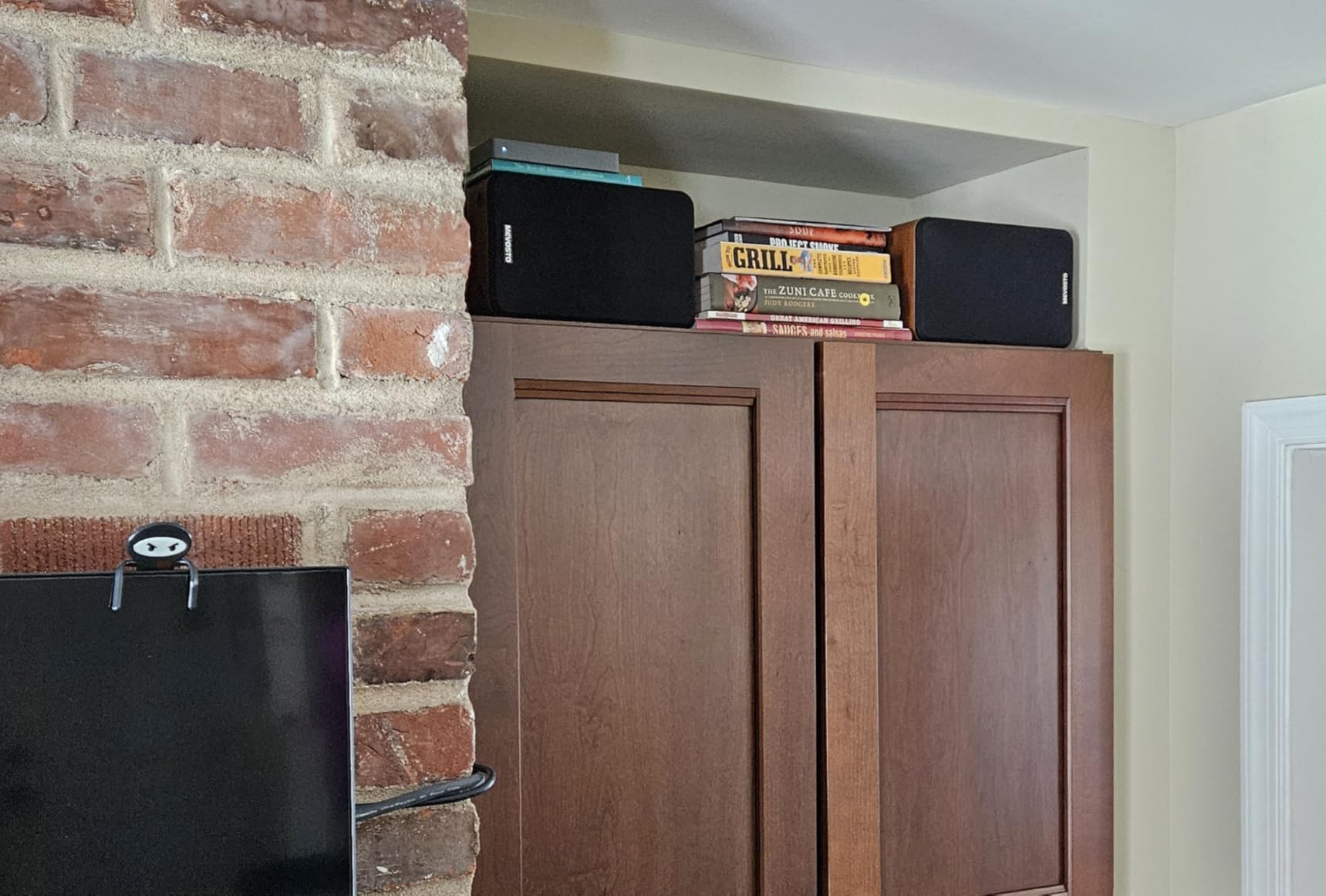
The MEVOSTO DS19 is the one pick here that takes a USB digital connection from a computer, and it is explicitly marketed for turntable use with RCA and AUX inputs alongside Bluetooth 5.4. For a household where one pair of speakers has to serve a desktop, a console and a record player, that combination is unusually complete.
The amplification is 36 watts RMS, and the driver complement is dual 5 inch woofers with dual one inch silk dome tweeters per cabinet, rated to 110 watts maximum output at 6 ohm. Each cabinet measures 5.9 by 6.1 by 9.7 inches, so the pair fits places where a Kanto YU6 will not.
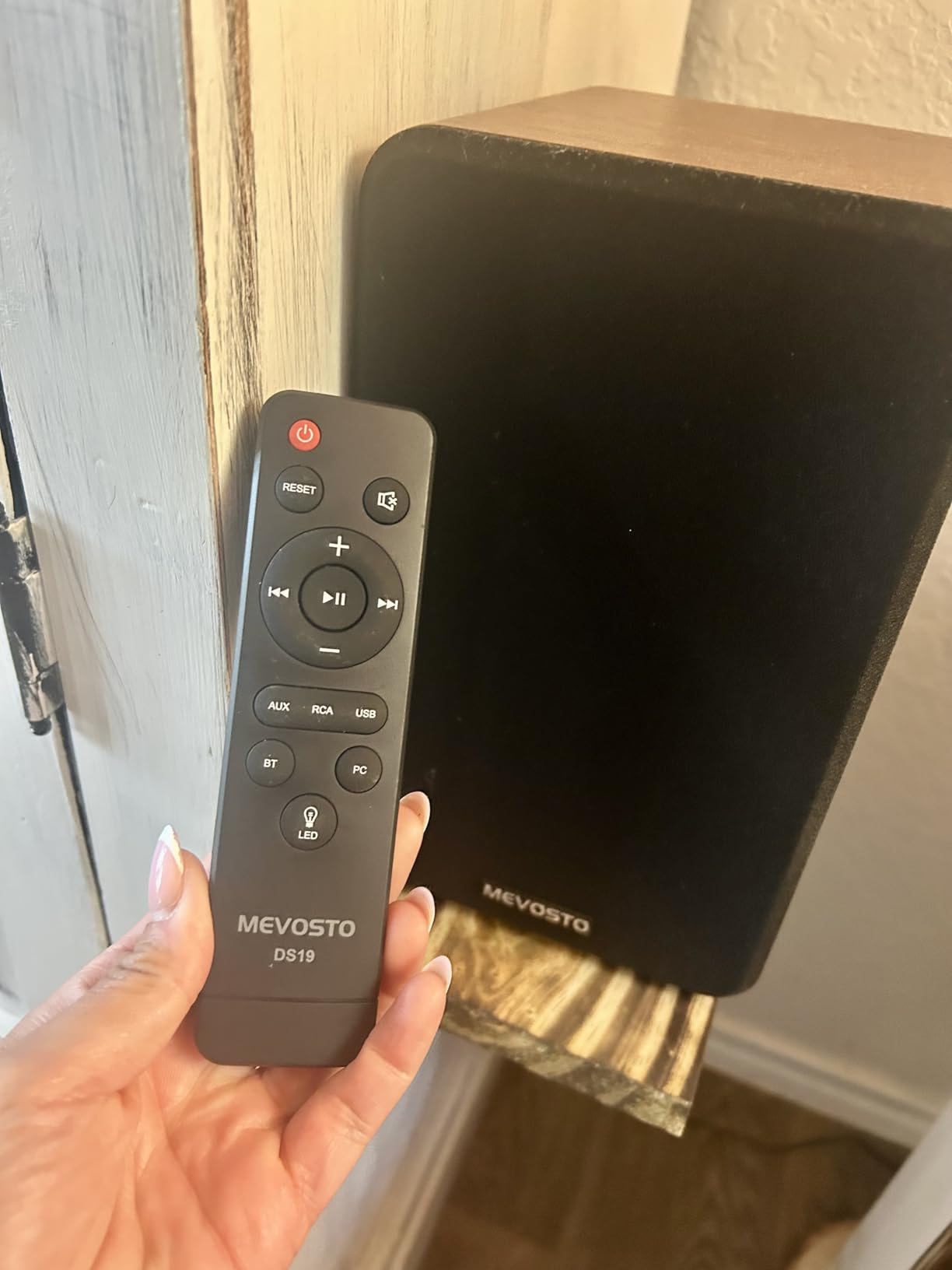
With 721 ratings averaging 4.5 stars, 76% at five star and 13% at four, owners value the built-in amplification, the choice of USB, Bluetooth 5.4, RCA and AUX inputs, and the walnut finish with separate bass and treble controls. It also accepts 12V, 15V or 18V DC input, which turns it into a usable pair for RV, camper or boat power.
The drawbacks buyers name are the lack of Dolby Audio support, the need to confirm your USB port actually outputs audio, and limited low-end reach at an 80 Hz quoted response. Two-year manufacturer warranty coverage is included.
Is the MEVOSTO right for a multi-source household?
It is right if your computer, your console and your turntable all need to reach the same speakers, because four input types on one powered pair is more than any other pick here offers. It is a step down in refinement from the R1280DB, and the extra inputs come with modest 5 inch drivers.
The honest limitations
The 80 Hz response means bass-heavy records will not dig deep without a subwoofer, and the manufacturer itself advises confirming device compatibility before buying. There is no optical or coaxial input, so a television is not a direct option here.
Powered vs Passive Speakers: Which One Do You Actually Need?
Powered speakers, also called active speakers, have an amplifier built into the cabinet. You plug your turntable’s RCA output straight into the back and turn the volume knob on the speaker. There is no other box to buy, no gain setting to learn and nothing to go wrong in the chain.
Passive speakers have no amplifier at all. They need a receiver or integrated amplifier between the turntable and the speakers, which means a bigger budget, more cable and one more thing to match correctly. In exchange you get a far wider choice of speakers and, at the top end, considerably better ones.
For a first vinyl system, powered is the right answer in nine cases out of ten. Choose passive when you already own an amplifier, when an AV receiver is handling your television as well as your records, or when you intend to upgrade speakers several times over a decade.
The one caution is output. Powered bookshelf speakers in this group run from 24 watts RMS to 100 watts RMS per channel, which covers a bedroom or a normal living room. A large open-plan space with hard floors needs more than the smallest of them, and forum owners upgrading from an entry pair regularly report the same complaint: not enough volume and not enough bass.
Phono Preamp: What the LINE and PHONO Switches Actually Do
A phono preamp, also called a phono stage, boosts the tiny signal from your cartridge to line level. Moving magnet cartridges produce a signal roughly a thousand times smaller than what a speaker amplifier expects, so without that boost you get a very quiet, thin, bass-less version of the music.
You need to know one thing about your turntable: does it have a built-in phono preamp? Look for a small switch on the back near the RCA outputs labelled PHONO or LINE, or a button on the front. Some decks have one, some do not, and the manual is the fastest way to confirm.
Here is the rule that saves people the most money. If your turntable has a preamp, set its switch to LINE and connect to the speaker’s AUX, RCA or line input. If it does not, either buy a small standalone phono preamp, or connect to a speaker that has the stage built in, such as the Kanto YU6.
Getting this wrong is common and the result is not subtle: severe distortion, a thin brittle midrange and vocals that sit far back in the mix. If the sound is harsh and compressed, switch the turntable preamp off first and listen again.
Forum consensus treats a dedicated phono preamp as the single biggest sound upgrade available for the money, ahead of upgrading speakers. It is also the cheapest, because a small box solves a problem that otherwise forces you into more expensive hardware.
Buying Guide: How to Choose Speakers for Vinyl in 2026
Start with your room. A bedroom or desk setup suits 24 to 42 watts and a 4 inch driver. A medium living room suits 42 watts with a 5 inch driver, or a powered pair with a 5.25 inch driver. A large open-plan room wants a 5.25 inch driver driven hard, or a passive pair with a real amplifier behind it. Matching a small speaker to a big room is the most common reason a good system sounds disappointing.
Decide active or passive honestly. If you have an amplifier or receiver, the Polk T15, the Micca pair, either Klipsch and the KEF all open up. If you do not, the Edifier R1280T, the Edifier R980T, the Edifier R1280DB, the Kanto YU6 and the MEVOSTO are the only sensible starting points, and they will work tonight.
Count your sources. One source needs one input. A turntable plus a television needs optical, coaxial, HDMI via a receiver, or Bluetooth from a streaming source. The R1280DB handles a TV directly through optical. The MEVOSTO handles a computer through USB. If you want two devices connected and switching instantly, the two AUX inputs on the R1280T and R1280DB are worth more than they sound.
Spend sensibly relative to the turntable. A common rule of thumb is to put 50 to 100 percent of your turntable budget into the speakers, because the speakers are where the signal becomes sound. A modest deck feeding accurate speakers sounds better than an expensive deck feeding an undersized pair, and this is the single most useful piece of advice in this guide.
Understand impedance if you are buying passive. An 8 ohm speaker is the easiest match, and anything quoted as a range such as 4 to 8 ohm is still fine. Very low impedance combined with low sensitivity asks more of an amplifier than it can give, which is where thin, forced sound at volume comes from.
Do not forget the accessories. A good shielded RCA cable, isolation pads under the turntable, and a proper cleaning routine all cost little and change the result more than an expensive cable would. Our guides to record cleaning machines and record storage crates cover the two that matter most after the speakers are chosen.
Setup and Placement: Getting the Most From Your Speakers
Position the speakers and the turntable on separate surfaces. Speakers on the same shelf as a spinning record player can pick up mechanical feedback, and the result is a low rumble that follows the beat. Isolation pads under the turntable are the cheapest fix and take a few seconds to fit.
Put the speakers at ear height, which usually means stands rather than a low media cabinet. A bookshelf speaker firing at your knees sounds worse than the same speaker firing at your ears, and this single adjustment changes more than any cable you could buy.
Form an equilateral triangle: speakers and your listening position should be roughly equal distances apart, with each speaker angled slightly toward where you sit. Distance between the two speakers matters too, because moving them closer widens the soundstage and moving them apart narrows it.
Leave breathing room behind the cabinets, especially for the ported models in this list. The Klipsch R-15M in particular develops a mid-bass hump when pushed against a wall, and 20 or 30 centimetres of space resolves most of it. Our record player stands guide covers the isolation options if your shelf is the problem, and our vinyl record shelves guide covers storage that keeps crates clear of the equipment shelf.
Troubleshooting: Hum, Feedback and Ground Loops
Hum in a turntable setup is almost never the speakers. It is nearly always electrical, and the sequence below resolves the large majority of cases in a few minutes.
First, separate the power. Do not plug the turntable and the powered speakers into the same power strip, because that shared circuit is the most common source of a steady 50 or 60 cycle buzz.
Second, move the turntable away from the speakers. Even a few centimetres can kill hum, since the speakers’ power transformers pick up the turntable’s signal when the two sit close together.
Third, check the PHONO and LINE switches. A turntable with its preamp engaged feeding a phono input amplifies noise, and switching the deck to LINE often removes the hum along with the distortion.
Fourth, inspect the RCA cables. A ground pin that has backed out, or a cable run alongside a power cable, creates exactly this noise. Swapping to a shielded RCA cable is inexpensive and resolves a surprising share of cases.
Fifth, confirm the turntable is grounded and sitting level. A floating ground or an unlevelled platter introduces both hum and rumble that sounds like the speakers are at fault when they are not.
What to Avoid: Setups That Hurt Your Records or Your Sound
All-in-one suitcase turntables with built-in speakers are the most common trap. The speakers sit directly on the moving plinth, so their vibration feeds back into the stylus, and the heavy ceramic cartridge they use typically tracks at a much higher force than a moving magnet needs. You are trading your records for a convenience you can get properly for the cost of these speakers alone.
Passive speakers with no amplifier produce silence, and near-silence at low volume. Before buying any passive pair, confirm what will drive it. This is the single most common regret in the first weeks of a new system.
Running two phono stages at once causes severe distortion and is easy to do by accident, because most turntables have a LINE output that sounds plausible even when it is not what the speaker expects.
Bluetooth-only setups force compressed playback on a record, which is an odd place to lose fidelity. Use Bluetooth for phone streaming, and a wired connection for the turntable itself.
Frequently Asked Questions
What type of speakers are best for vinyl?
Powered bookshelf speakers with a built-in amplifier and an AUX or RCA input are best for most people, because they connect directly to a turntable with a built-in phono preamp and need nothing else. Passive bookshelf speakers sound better at the top end but require a separate amplifier or receiver.
Do I need an amplifier to connect a turntable to speakers?
Only if you buy passive speakers. Powered speakers have the amplifier inside the cabinet, so the turntable plugs straight in. Passive speakers need a receiver or integrated amplifier between the turntable and the speakers, or you get silence.
Can I connect a turntable to Bluetooth speakers?
Technically yes, but you should not. Bluetooth compression removes detail that vinyl is supposed to restore, and most turntables do not transmit audio wirelessly at all. Use a wired RCA connection for records and Bluetooth only for phone and tablet streaming.
How can I stop my turntable from humming?
Plug the turntable and powered speakers into separate power outlets, move the turntable away from the speakers, and check that the turntable preamp switch is set to LINE when feeding a line input. Swapping to a shielded RCA cable fixes many remaining cases.
What causes hum in a phono preamp?
Hum is almost always electrical rather than a fault in the speakers. The usual causes are a shared power strip, a loose RCA ground pin, an ungrounded outlet, or a turntable preamp that is engaged while feeding a phono input, which amplifies noise as well as signal.
How do I get the best sound from a turntable?
Start with a phono preamp that matches your cartridge, place the speakers at ear height on separate surfaces from the turntable, form an equilateral triangle with your listening position, and spend 50 to 100 percent of your turntable budget on the speakers themselves.
Final Verdict: The Speaker Pair to Buy First in 2026
If you buy one pair from this roundup, buy the Edifier R1280T. It has a 42 watt built-in amplifier, two AUX inputs that accept a turntable’s RCA output, and bass and treble knobs on the cabinet, and at 4.6 stars across 19365 ratings it is the most thoroughly proven option here. It suits a bedroom, an office and a normal living room, and it needs nothing else to play records.
Choose the Edifier R1280DB instead if a television, a computer or a phone is part of the plan, because the optical, coaxial and Bluetooth inputs cover all three. Choose the Polk Audio T15 if you already own a receiver, the Kanto YU6 if your turntable has no built-in phono preamp, and the Klipsch R-51M if you want the highest-rated passive pair in the group.
Whichever you pick, spend a weekend on placement rather than on accessories, and keep your records clean. If you still need a deck, our best record players guide covers the turntables that pair cleanly with every speaker on this list.