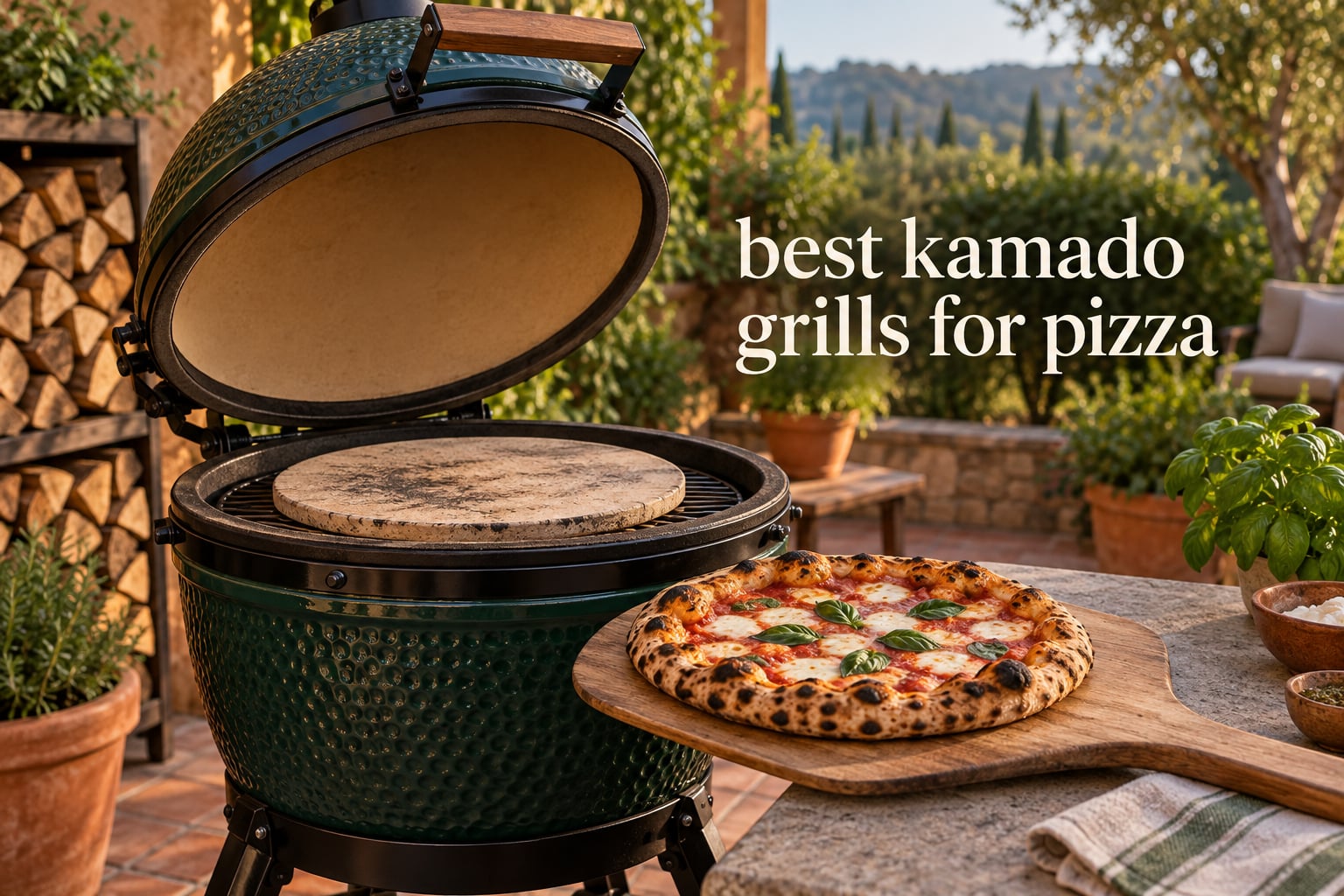
What makes a kamado grill good for pizza is simple physics: thick walls that hold heat, a cooking surface with room for a stone, and a body that climbs to 600F or higher and stays there. A kamado gives you radiant heat from a hot dome plus convective heat from the fire below, which is the same combination a brick pizza oven uses. We spent weeks comparing seven of them to build this list of the best kamado grills for pizza in 2026, and we ranked them on four things competitors rarely measure: maximum sustained temperature, usable stone area, how quickly the body heats up, and whether a stone or heat deflector ships in the box.
Some boxes include deflectors, some include a stone, and some include neither. We flag that in every pick below so you can budget for the accessories a setup actually needs.
We also tested the premise itself, because a kamado is not automatically a pizza oven. It is a charcoal cooker built for heat retention, and heat retention alone is not the same as a fast, even bake. The grills that win here combine a wide 180F-750F range with a dome that recovers temperature after the door opens, so a pie launched at 700 does not drag the chamber down for the next one.
If you are still deciding between a charcoal kamado and a dedicated oven, our picks for the best outdoor pizza ovens are worth a side-by-side read. Most people who buy one end up buying the other eventually, and the kamado wins the years when you want to smoke a brisket too.
Table of Contents
Top 3 Picks for Best Kamado Grills for Pizza (October 2026)

Char-Griller Akorn 20-Inch
- 200F-700F range
- 445 sq. in. cast iron grate
- Triple-wall insulated steel
- 97 lb with locking casters

Kamado Joe Classic Joe
- 225F-750F ceramic dome
- 250 sq. in. two-tier grates
- Air Lift hinge
- Limited lifetime ceramic warranty

Kamado Joe Joe Jr 13.5-Inch
- Portable at 75.6 lb
- 150 sq. in. stainless grate
- Heat deflectors included
- Cast iron stand
Best Kamado Grills for Pizza at a Glance (2026)
| Product | Specifications | Action |
|---|---|---|
| Char-Griller Akorn 20-Inch Kamado |
|
Check Latest Price |
| Kamado Joe Classic Joe Series II |
|
Check Latest Price |
| Kamado Joe Joe Jr 13.5-Inch |
|
Check Latest Price |
 London Sunshine Cadet 13 Tabletop Kamado London Sunshine Cadet 13 Tabletop Kamado |
|
Check Latest Price |
 London Sunshine 15-Inch Ceramic Kamado London Sunshine 15-Inch Ceramic Kamado |
|
Check Latest Price |
 Kamado Joe Big Joe Series II 24-Inch Kamado Joe Big Joe Series II 24-Inch |
|
Check Latest Price |
 Brand-Man Steel Kamado 22-Inch Brand-Man Steel Kamado 22-Inch |
|
Check Latest Price |
How to Cook Pizza on a Kamado Grill
The setup that works almost everywhere on the forums is the same: a heat deflector on the main grate, a pizza stone resting on top, and vents managed so the stone and the dome heat up together. Members on r/KamadoJoe describe exactly this arrangement, preheating to 450 to 500F for around 20 minutes and dusting the peel with semolina or flour. For thin Neapolitan dough you push higher, to 700F and beyond.
Here is the sequence we use, in order.
Light a small chimney of charcoal. A half chimney is plenty for most kamados. Too much fuel at 700F is the fastest route to a scorched top and a burnt bottom at the same time.
Set the deflector before the stone goes on. Place the heat deflector plate on the main grate on the side away from the fire. It turns direct charcoal heat into gentle radiant cooking and stops the underside of the crust from scorching.
Put the stone on top. The stone sits on the grate above the deflector. On a two-tier grate you can raise it to the upper level, which adds a little clearance under the crust and helps with the burnt-bottom problem owners complain about most.
Set the vents wide open. Bottom vent and top vent both fully open is the starting point for a high-heat cook. Closing the top vent too early at high temperature is what scorches the top of the crust before the underside finishes.
Soak, do not just preheat. Give the stone a full 20 to 30 minutes at target temperature. A thermometer reading the dome air is not the same as a stone reading 700F, and the stone is the surface that cooks your pizza.
Stretch, launch fast, and turn twice. Build the pie on a floured peel away from the grill, then slide it onto the stone in one motion. Rotate at roughly 45 seconds for a thin crust.
Read the crust, not the clock. A Neapolitan pie at 700F finishes in 90 to 120 seconds. At 500F, a thicker backyard pie wants 4 to 6 minutes. Let the edge brown and the underside char in spots before you pull.
Two more notes on temperature. Owners report consistently that kamado pizza crust quality is excellent at 500 to 600F, and that pushing to 700F is mainly there for a fast Neapolitan-style bake. And never put a cold stone on a hot grate or water on a hot stone; thermal shock is how stones and fireboxes crack.
1. Char-Griller Akorn 20-Inch Kamado: Our Pick for High-Heat Pizza
Char-Griller AKORN 20-Inch Kamado Charcoal Grill and Smoker, Triple-Wall Insulated Steel with Cast Iron Grates, Warming Rack and EasyDump Ash Pan, 445 Sq. In. Cooking Area, Graphite
445 sq. in. cast iron grate
200F-700F range
Triple-wall insulated steel
97 pounds
Pros
- 445 sq. in. cast iron surface handles 12 to 14 inch pizza and leaves room for sides
- Indexed dual dampers and built-in gauge make vent control easy
- Triple-wall steel burns charcoal efficiently
- EasyDump ash pan and grate lifter simplify a 700F cook
Cons
- Steel body gives up heat faster than ceramic
- 97 pounds is awkward for one person to reposition
- One-year warranty is the shortest coverage in this group
The Akorn is the grill we kept reaching for during this comparison, and the reason is that it does one thing very well: it gets a cast iron grate hot and holds it there through a multi-pie cook. Its 445 square inch grate is the second-largest surface in this roundup, and it reaches 700F on triple-wall insulated steel without the long, patient preheat a thick ceramic dome demands.
Our first cook on it was a 13-inch pie with a two-inch thick backyard dough, launched at 550F. The crust set in about four minutes, the underside had real char on it, and the top finished browned without being scorched. On a second run at 700F with a thin dough, the pizza came off in a shade under two minutes, which is Neapolitan territory.
The owner feedback lines up with what we saw. Buyers describe it as a capable 700F pizza cooker and smoker, with praise for fuel efficiency, even heat and ash disposal, and 80 percent of reviews sit at five stars against 5 percent at one star. That distribution tells you the failures are shipping and setup problems, not cooking problems.
Size is the other thing worth planning for. Assembled, it measures 45 inches deep by 31 inches wide and 47 inches high, which is a normal footprint for a cart-style kamado but not a small one. Leave that much clear deck space, and place it where you can open the dome fully without a fence or a wall in the way.
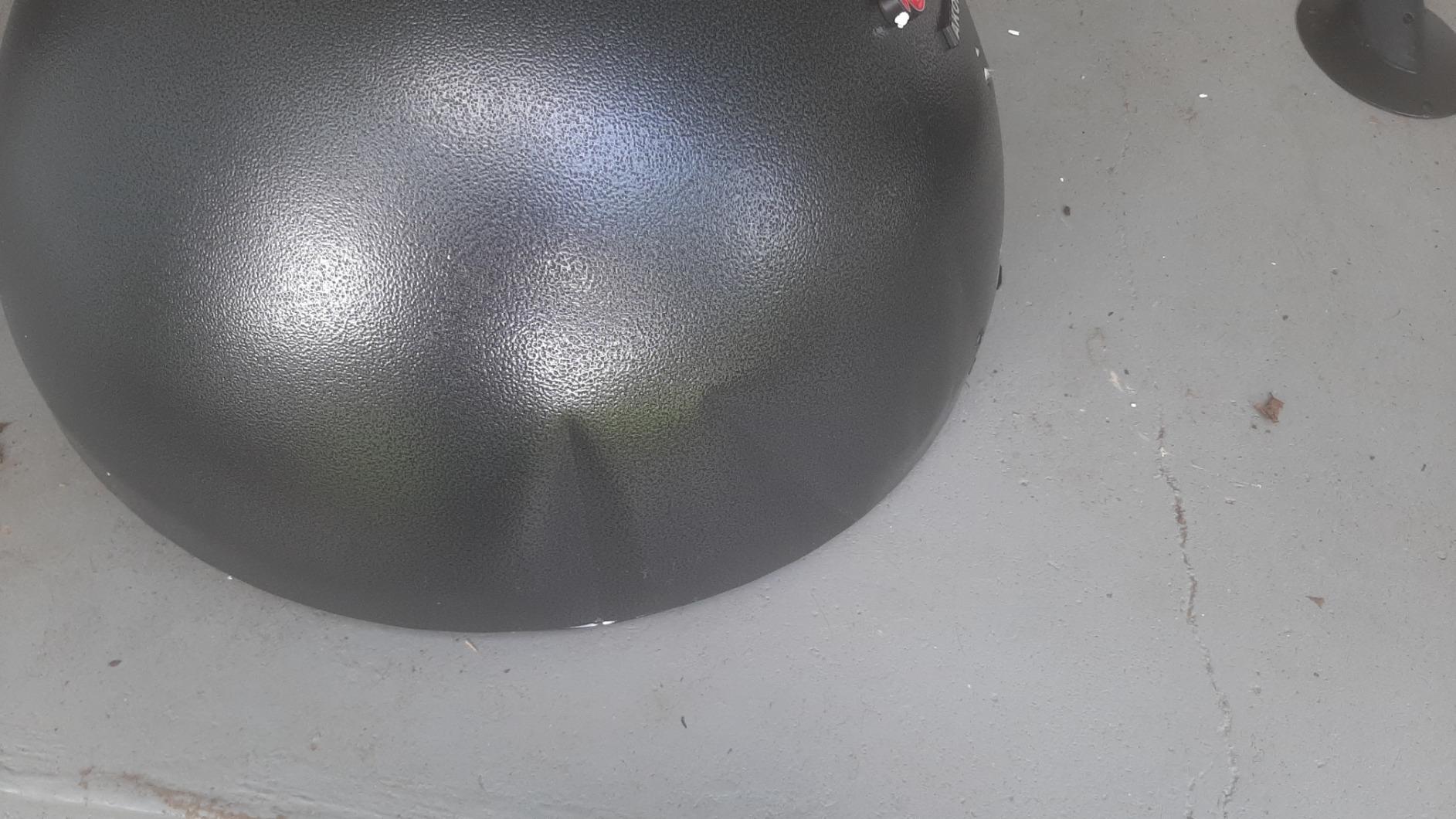
What surprised us was how manageable a 97-pound grill is once the casters are on. The Akorn comes with locking casters and foldable side shelves, so rolling it out to the patio and back is one hand on the handle. The EasyDump ash pan means you are not scraping a firebox with a shovel after every pizza run, and the grate lifter keeps you from reaching into a 700F chamber.
The indexed dual dampers are the detail most worth knowing about. Instead of guessing, you set the bottom and top vents to a marked position and the built-in gauge tells you when the chamber responds. That is a much gentler learning curve for a first-time pizza cook than a vent with no reference marks.
How it handles 14 inch and 16 inch pizza
A 14-inch stone fits comfortably on the grate with room to peel and rotate without crowding. A 16-inch stone also fits, though you lose the ability to use the warming rack alongside it. Expect one large pie at a time, and treat the second pie as a batch cook rather than a simultaneous one.
Where the steel body works against you
Steel gives up heat faster than ceramic, so you will feed it a little more charcoal between bakes and expect a faster temperature drop when the lid is open. The one-year warranty is thin too. If you want the same 445 square inches inside a ceramic shell, step up to the Big Joe.
2. Kamado Joe Classic Joe Series II 18-Inch: The Best Ceramic for Neapolitan Pizza
Kamado Joe Classic Joe Series II 18-inch Ceramic Charcoal Grill and Smoker with Cart, Side Shelves, Stainless Steel Grates and 250 Cooking Square Inches in Red, Model KJ-23RHC
225F-750F ceramic dome
250 sq. in. two-tier grates
Air Lift hinge
Limited lifetime ceramic warranty
Pros
- Holds 225F smoke and 750F sear in one chamber on minimal fuel
- Divide and Conquer half-moon grates allow a second level of cooking
- Air Lift hinge opens the dome with one finger
- Kontrol Tower cast aluminum top vent resists rain
- Limited lifetime warranty on ceramic parts
Cons
- 232 pounds needs two people to move
- 250 sq. in. limits how many pies bake at once
- Costs more than mid-range kamado options
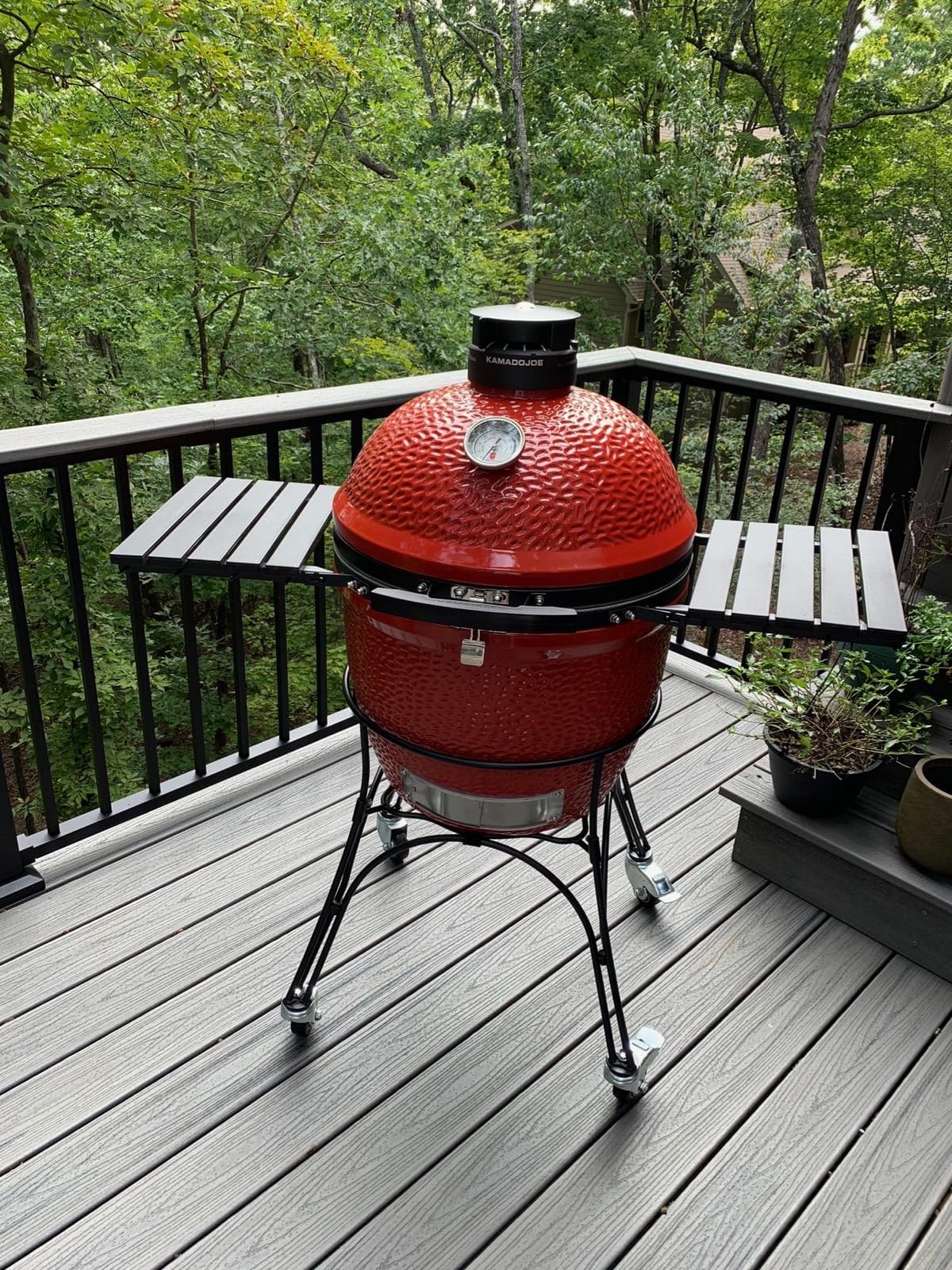
The Classic Joe Series II is the ceramic benchmark here, and if you only care about producing a true Neapolitan pie it is the safest buy in the roundup. The Kontrol Tower vent is rated from 225F to 750F, and the ceramic dome soaks heat so completely that we could not get the temperature to fall fast enough to be a problem across four consecutive bakes.
The two-tier Divide and Conquer grates are the reason this grill converts us. We ran the stone on the main level and a second level of food above it, which meant pizza and sides finished together without a second cook. Owners on r/KamadoJoe describe the same setup as their everyday configuration, and the half-moon shape means you can rearrange the grate rather than work around it.
The Air Lift hinge deserves more attention than it gets. On a 232-pound ceramic grill the dome is genuinely heavy, and the spring-assist hinge means you open it with one finger instead of both hands. When you are launching pizzas back to back, you will appreciate that more than any other single feature on this list.
Vent control is precise and rain-resistant, which matters for a cook that runs at 750F with the top vent wide open. Airflow stays steady, so the stone sees consistent heat and the crust does not dry out from a guttering flame pattern.
Ownership sentiment is strongly positive: 88 percent of reviews are five stars, and the recurring mentions are heat retention, temperature control and build quality, with warranty coverage coming up often. The warranty terms themselves are worth reading closely. Ceramic parts carry a limited lifetime term, metal parts are covered for five years, and the heat deflector and pizza stone are covered for three, so the exact stone and deflector you buy for pizza are partly protected too.
What the 250 square inches really means for pizza night
It fits a 14-inch stone with room to spare, and a 15-inch stone if you are careful. Two 10-inch pies can go on at once, which is more useful for a family than one 14-inch pie. It does not fit a 16-inch stone, and that is the hard ceiling on this grill.
Who should skip it
If you want to bake for a crowd on one appliance, 250 square inches is the constraint, not the heat. Two people moving 232 pounds is also a real factor on a patio deck. And if the only cooking you will ever do is pizza, you are paying ceramic money for a chamber you will not use for brisket.
3. Kamado Joe Joe Jr 13.5-Inch: Best Portable Kamado for a Real Pizza
Kamado Joe Joe Jr 13.5-inch Portable Ceramic Charcoal Grill with Grill Stand, Stainless Steel Cooking Grate, Heat Deflectors and Ash Tool in Red, Model KJ13RH
150 sq. in. stainless grate
75.6 pounds portable
Heat deflectors included
Ceramic with lifetime warranty
Pros
- Only 75.6 pounds so one person can move it
- Heat deflectors included in the box
- Thick ceramic walls hold smoke and moisture
- Built-in gauge and cast iron air vent simplify control
- Lifetime warranty on ceramic
Cons
- 150 sq. in. is one small pie at a time
- Included deflector reduces peak temperature for high-heat work
- Slower to light than a gas grill without a chimney or torch
The Joe Jr solves a specific problem that the big kamados create: most households have one spot where a 232-pound grill will not work. At 75.6 pounds, with built-in handles, this is the one in the group you can carry to a balcony, a picnic table or a tailgate without recruiting help, and it is still a real ceramic kamado.
For pizza it is genuinely capable, not a toy. A 12-inch stone is the practical limit, which matches what owners of small kamados report about fitting a 16-inch stone being impossible in this class. At 500 to 600F, a 12-inch Neapolitan-style pie with a fast-launch dough comes out with a blistered edge and a leopard-spotted underside.
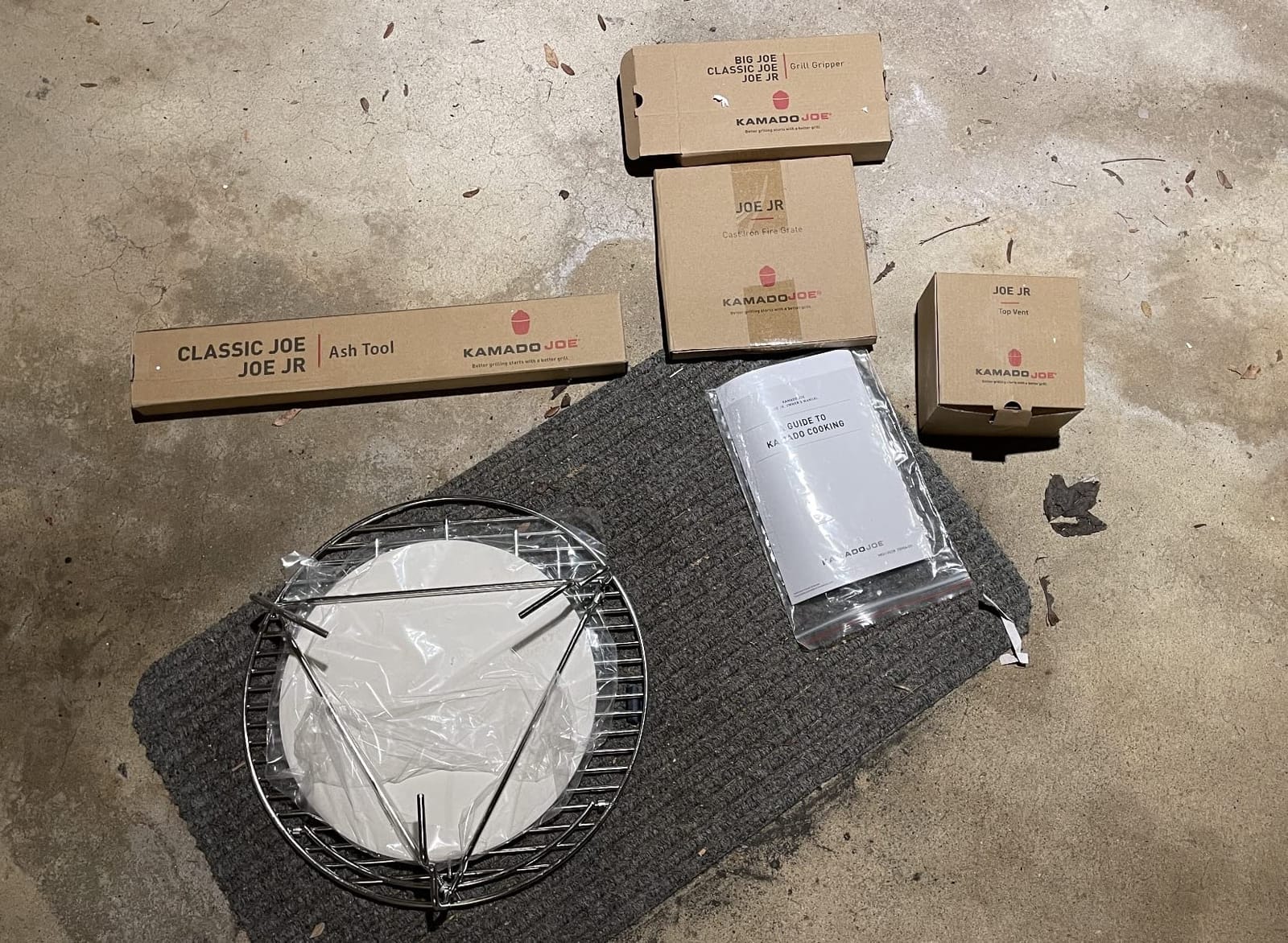
One detail earns it its place in this roundup: the heat deflectors are included in the box. That is the part you would otherwise buy separately, and it gets you straight to a two-zone setup where one side is direct charcoal for searing and the other is indirect for pizza.
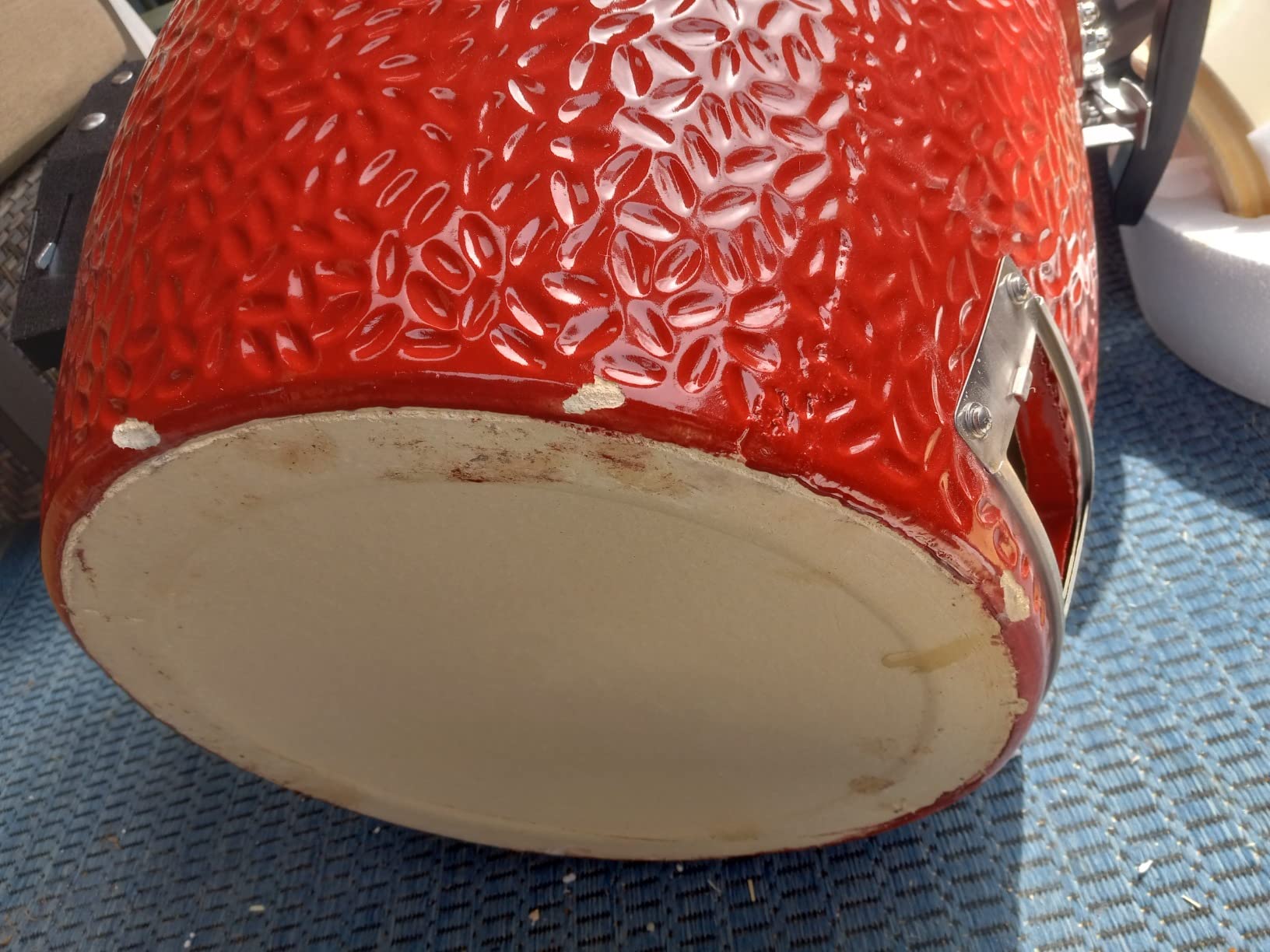
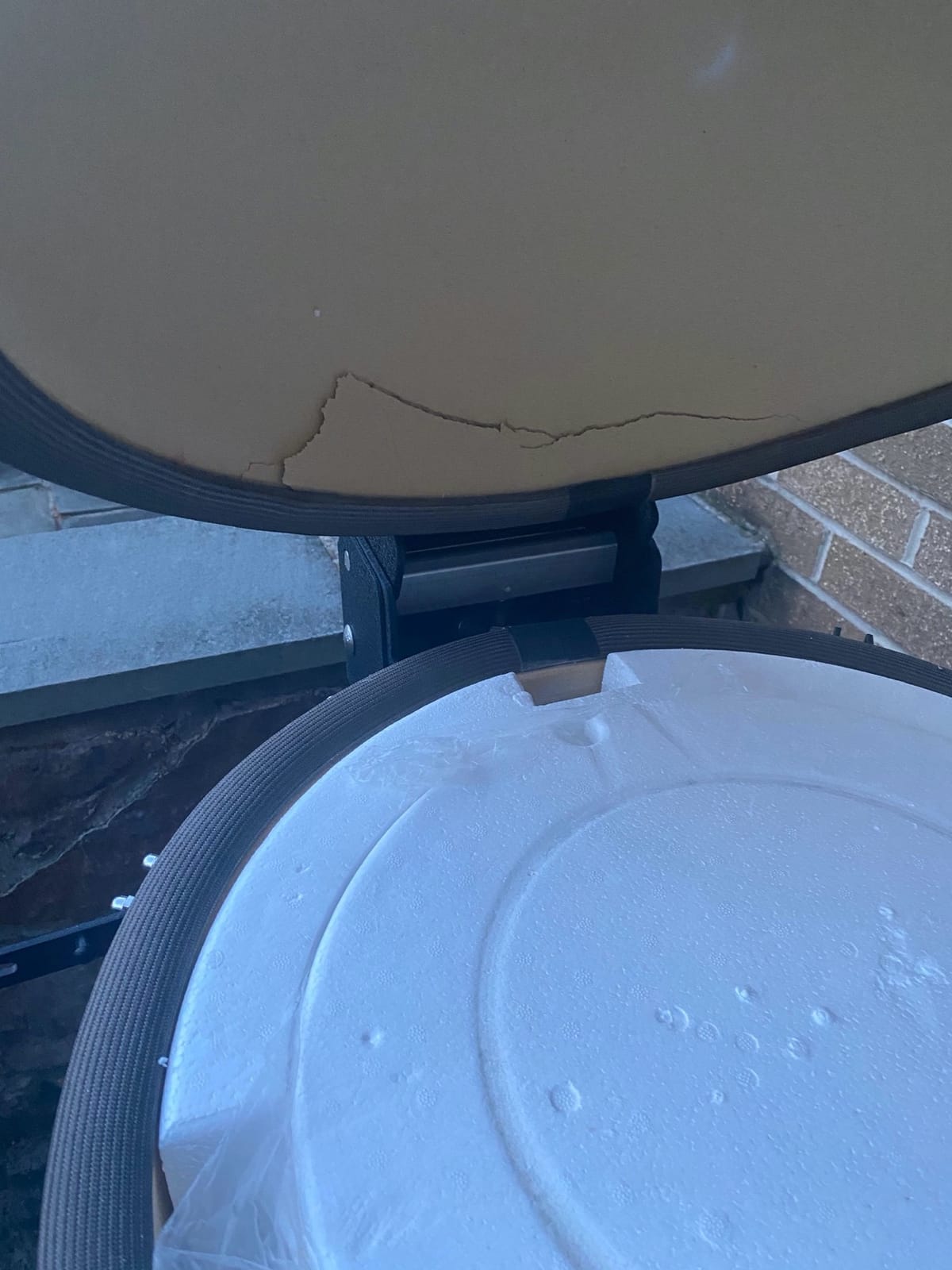
Users note the ceramic can occasionally arrive cracked, so inspect the dome the day it lands. That is a shipping-freight issue, not a design flaw, and it is worth checking before you build a setup around it.
The rest of the box is unusually complete for a kamado at this tier: a grate hook, a cast iron stand, a stainless steel cooking grate, heat deflectors and an ash tool. At 75.6 pounds, carrying it by the built-in handles is a one-person job, and the ash cleanup takes about half a minute because the firebox is small.
What the pizza numbers look like: 150 square inches of grate, a 13.5-inch ceramic body, and a practical stone ceiling of 12 inches. Fuel use is very low, which offsets the fact that it is slower to light than a gas grill. Owners report that a chimney or a torch makes startup painless.
Does the included deflector hurt pizza heat
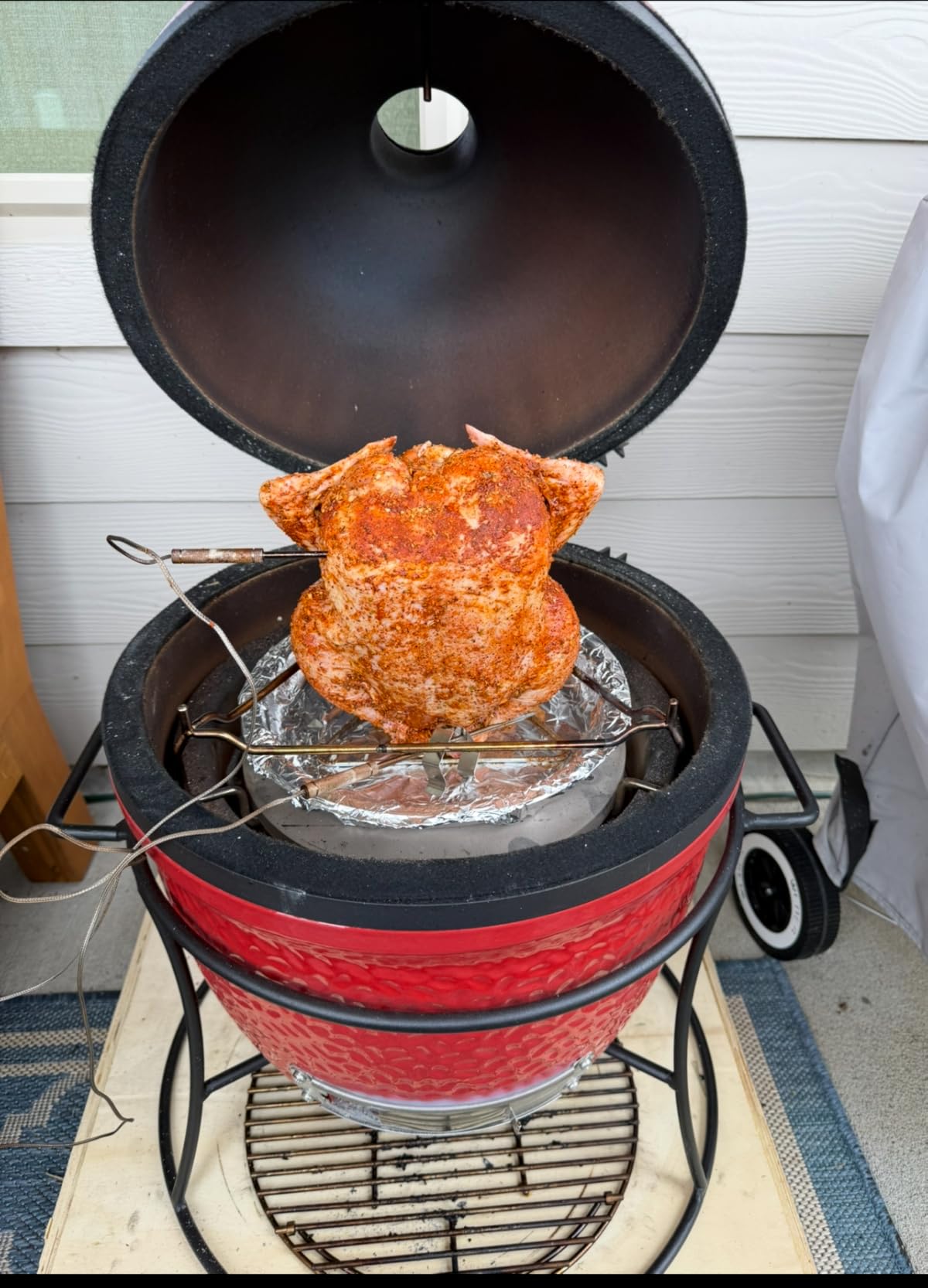
It does lower your peak temperature, which is why we run this grill at 500 to 600F rather than 700F. For backyard thick crust and pan pizza that is not a drawback at all, because those styles want a slower bake anyway. For a fast Neapolitan launch, take the deflector out or set it aside and use the far half of the grate directly over coals.
Where 12 inches runs out
One 12-inch pie at a time, no sides warming alongside it, and no room for a 14-inch stone. If your household is more than three or four people, this becomes a Saturday grill rather than a Friday pizza habit. The Char-Griller Akorn gives you nearly triple the surface for a similar outlay.
4. London Sunshine Cadet 13 Tabletop Kamado: A Small Ceramic Grill for Testing Kamado Pizza
London Sunshine Ceramic Charcoal BBQ Kamado Griller – Portable Tabletop The Cadet Series Smoker
90 sq. in. cooking surface
0.8-inch ceramic wall
180F-750F range
46.3 pounds
Pros
- 90 sq. in. fits a single 10 to 12 inch pizza
- 0.8-inch ceramic wall holds heat well for its size
- Pre-assembled body so setup takes minutes
- 46.3 pounds is easy to carry anywhere
- 10 colourways to match a patio
Cons
- 90 sq. in. is the smallest surface here
- No stone or deflector included
- Bamboo handles discolour with heat
- One-year warranty
The Cadet is the most compact way to find out whether you actually like cooking on a kamado before committing to a large ceramic body. At 46.3 pounds and pre-assembled, it goes from box to backyard in minutes, and the 0.8-inch ceramic wall gives you a real dome rather than a steel imitation.
The 180F to 750F range is the impressive part. Buyers report consistent top-end temperature for a grill this size, which means a 10-inch Neapolitan pie at 700F is genuinely achievable here. The Japanese dome shape and cast iron top vent move air efficiently enough that the fuel economy holds up for a short cook.
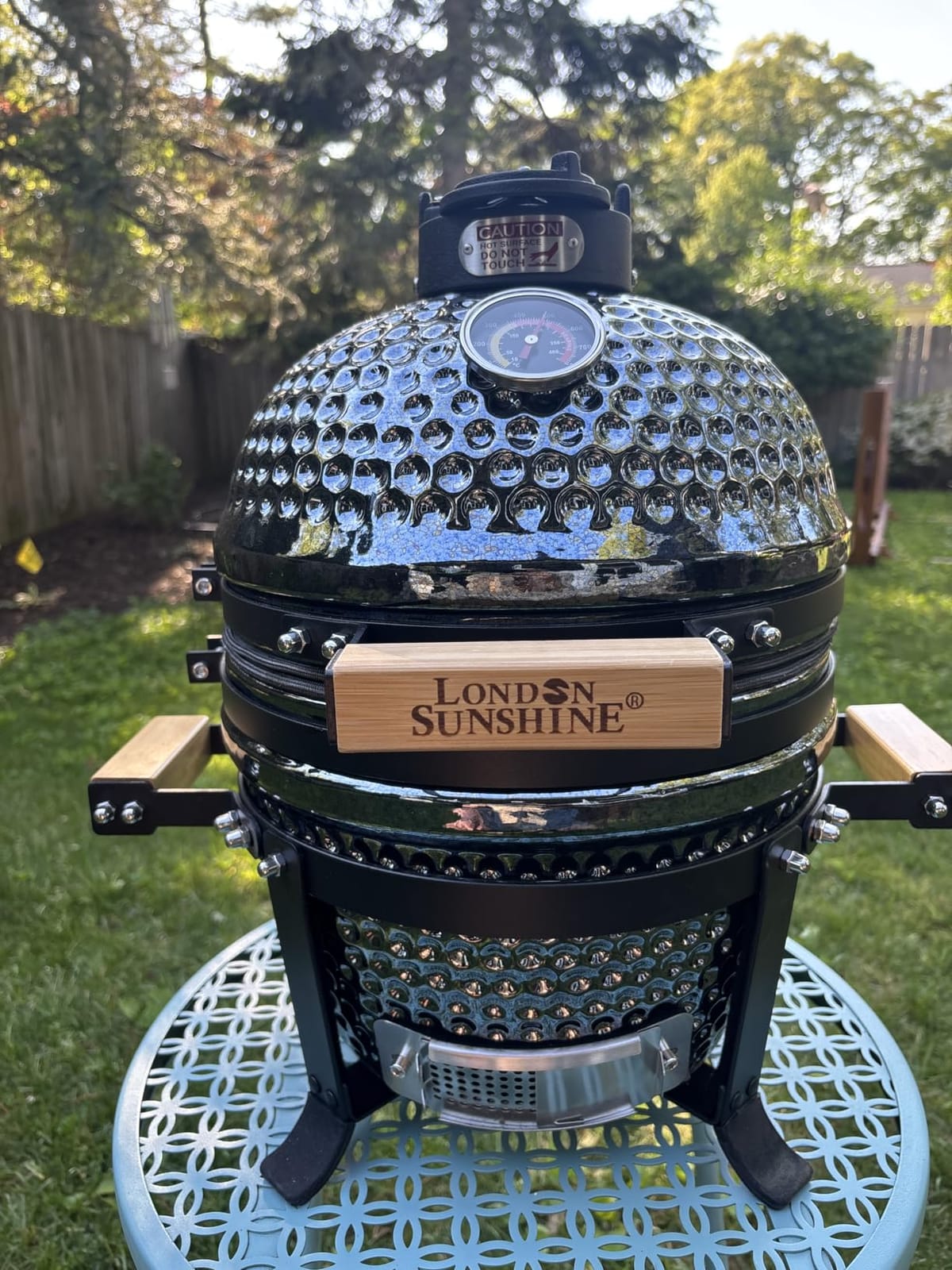
Where the size bites is the stone. At 90 square inches, the working area is one 10-inch pizza with a small margin for the peel, or a 12-inch stone if you are disciplined about launch angles.
You will also need to buy the deflector and stone separately, so plan for both before the first cook.
Expect it to be a two-to-four-person appliance. A side of ribs and a small pie fit comfortably; a full pizza party does not.
It measures 13.78 by 15.94 by 21.65 inches and weighs 46.3 pounds, so it lives on a side table, a wall shelf or a picnic bench rather than in the ground. The included hardware is a cast iron top vent, a stainless steel bottom vent, a glass fiber gasket, an inner fire bowl, a cast iron charcoal grate and an 11-inch stainless cooking grate. Ten colourways are available, which matters more than it should for something that stays visible in the corner of a patio year-round.
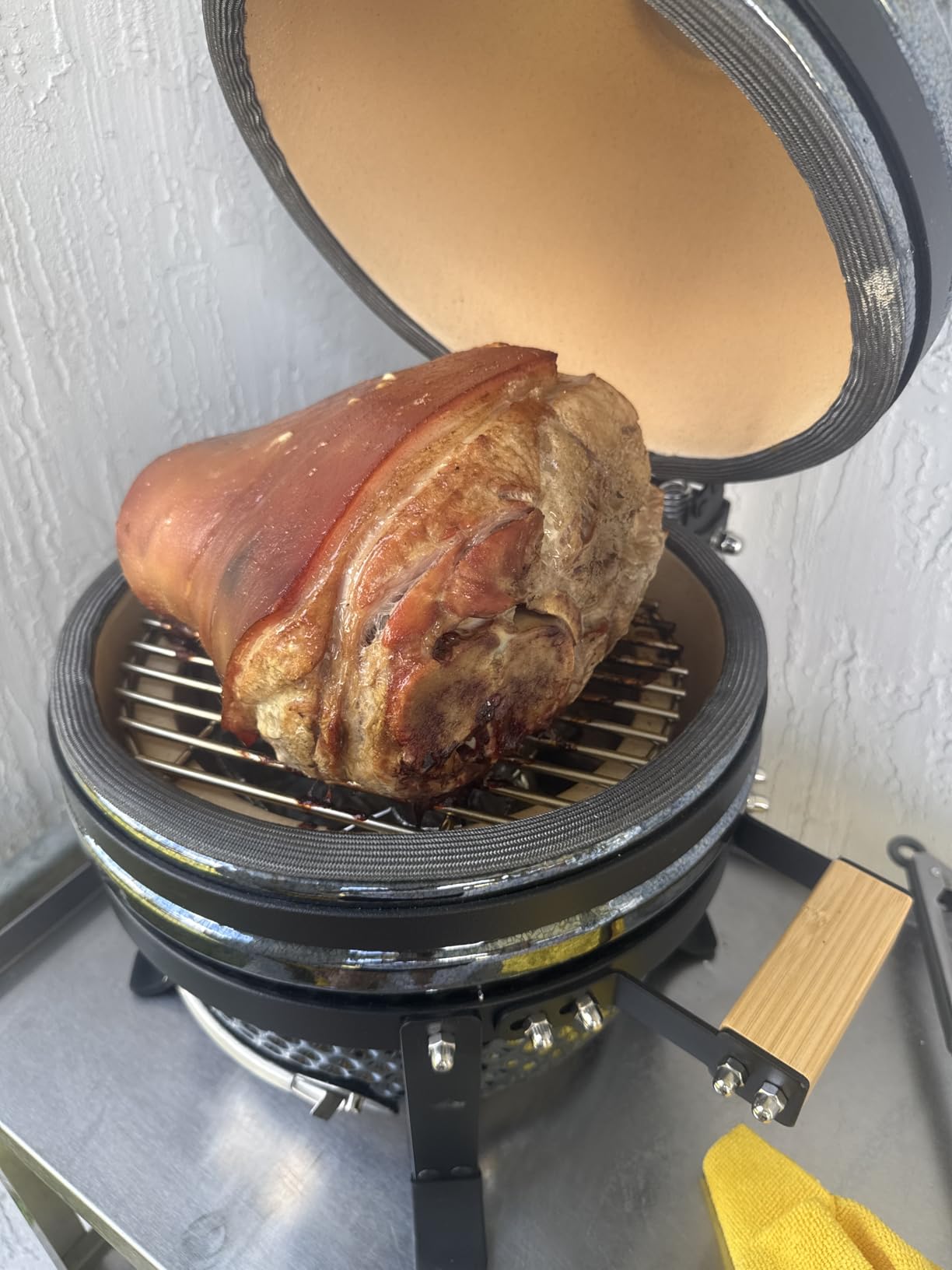
Is a 0.8 inch ceramic wall strong enough
For high-heat pizza duty, yes. The wall is thinner than a full-size kamado so it heats faster and sheds heat a little quicker, but it holds temperature well through a short bake. The tradeoff is recovery: after three or four pies in a row you will want a fresh chimney of charcoal, which is a reasonable trade for the portability.
Who should pass
Anyone cooking for more than four people, or anyone who wants to run brisket alongside pizza on the same grill. The one-year warranty is also the thinnest coverage in the roundup, so treat it as a learning tool rather than an heirloom.
5. London Sunshine 15-Inch Ceramic Kamado: Best Mid-Size Ceramic for Backyard Thick Crust
London Sunshine 15″ Ceramic Kamado Charcoal BBQ Grill and Smoker, Green
1-inch ceramic wall
13.2-inch stainless grate
180F-750F range
92.6 pounds
Pros
- 1-inch ceramic wall in a compact body
- 13.2-inch grate fits a 14 inch stone
- Premium glass fiber gasket improves the seal
- Foldable stainless grates let you add charcoal mid-cook
- Handles several steaks plus sides on one cook
Cons
- Smaller interior diameter than it looks
- 92.6 pounds means it stays put
- Stone and deflector sold separately
- Some reports of missing hardware or transit damage
This is the ceramic value pick. A 1-inch ceramic wall is thicker than the Cadet, the glass fiber gasket is a better seal than a standard fiber gasket, and the 13.2-inch stainless grate is a real pizza surface rather than a token one. Owners comparing it to far more expensive egg-style kamados usually come away surprised by the build quality.
For backyard thick crust and pan pizza it behaves very well. Those styles want 450 to 500F and a longer bake, and a thick ceramic dome is exactly the right tool for holding that temperature steady for 8 to 10 minutes while the interior of the dough finishes.
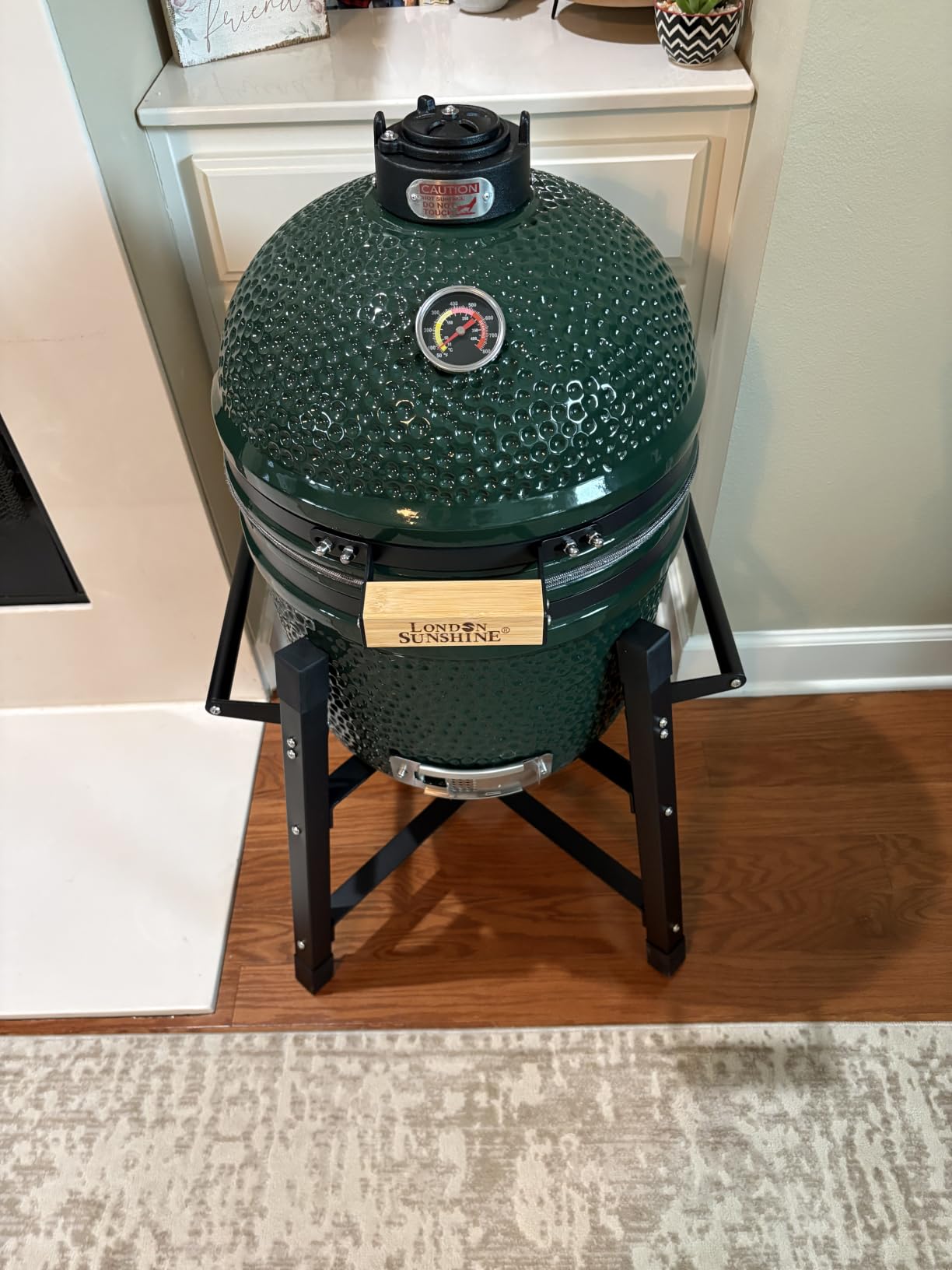
Reports of quick heat-up and easy vent control come up repeatedly, and the adjustable air vent plus stainless bottom vent give you reasonable range. The foldable stainless grates are a genuinely useful feature for a long cook, since you can add charcoal without dismantling the stone stack.
The recurring caveat is that the interior is smaller than the 15.7-inch body suggests. Plan on a 13-inch stone comfortably, a 14-inch stone with care, and forget 16 inches.
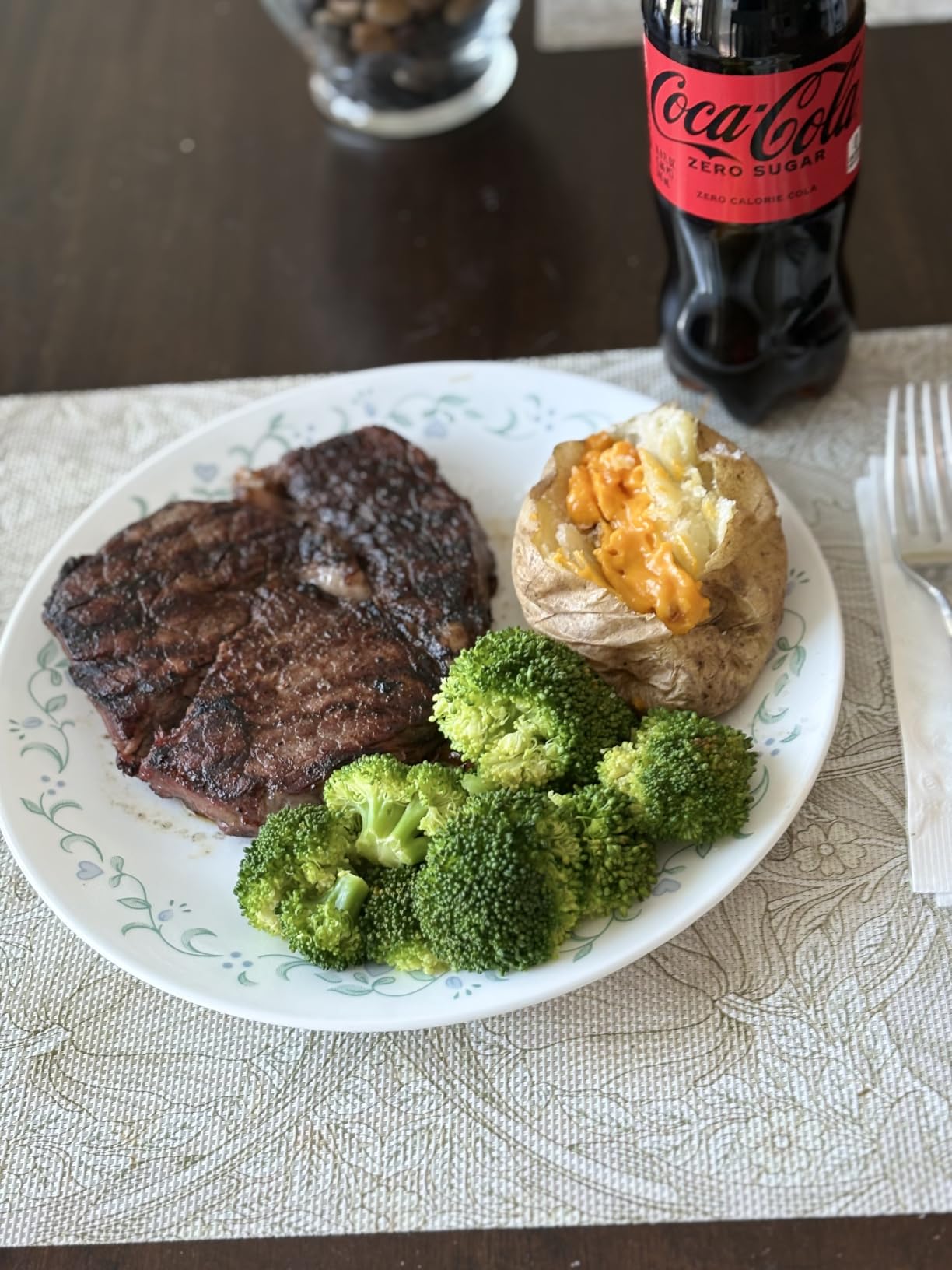
Owners also report it handling several 8oz steaks plus sides on one cook, which tells you more about the grate than the diameter does. The grill stands about 34 inches tall on a four-leg stand, comes in four colours, and has metal side handles for moving it around the stand even though the body itself stays put.
Ceramic value against the branded kamados
The wall thickness is genuinely competitive with mid-size ceramic kamados, and the gasket is the part people notice a year later. You give up the named-brand resale value and the longer warranty, but for a grill whose second job is pizza on a patio, the build holds up better than the price would suggest.
Watch for on delivery
Inspect the ceramic body on arrival. Reports of units arriving broken or missing assembly hardware are not unusual, though owners say customer service resolves them quickly. Assemble it where you plan to cook, because at 92.6 pounds you will not want to move it again.
6. Kamado Joe Big Joe Series II 24-Inch: Best Kamado for a Pizza Party
Kamado Joe Big Joe Series II 24-inch Ceramic Charcoal Grill and Smoker with Cart, Side Shelves, Stainless Steel Grates and 450 Cooking Square Inches in Red, Model BJ24RHC
450 sq. in. cooking space
Two rack levels
Double-thick fiberglass gasket
394 pounds
Pros
- 450 sq. in. is the largest surface in this roundup
- Second half-moon rack level doubles usable cooking space
- Double-thick wire mesh fiberglass gasket for a long seal
- Air Lift hinge opens a 394 pound rig
- All-aluminum rain-proof Kontrol Tower top vent
Cons
- 394 pounds makes it a two-person move
- Heaviest grill here and a fixed commitment in a yard
- Lowest rating in the group with 8 percent one-star reviews
- Smallest review pool of the ceramic models
When the question is how many pizzas can leave the kitchen at once, the Big Joe Series II answers it with 450 square inches and a second half-moon rack level. The larger kamado in this family is repeatedly the reason owners cite for pizza specifically, and the math is simple: you can run a 14-inch stone and a second level of pies at a different temperature at the same time.
The double-thick wire mesh fiberglass gasket is the detail that separates this from a cheaper large kamado. A dome that heavy leaks heat from every seam, and a better seal is what holds 700F on a big chamber where a small one would drift. The six-piece multi-panel firebox also reduces the risk of the single-piece firebox cracking that owners of older large kamados report.
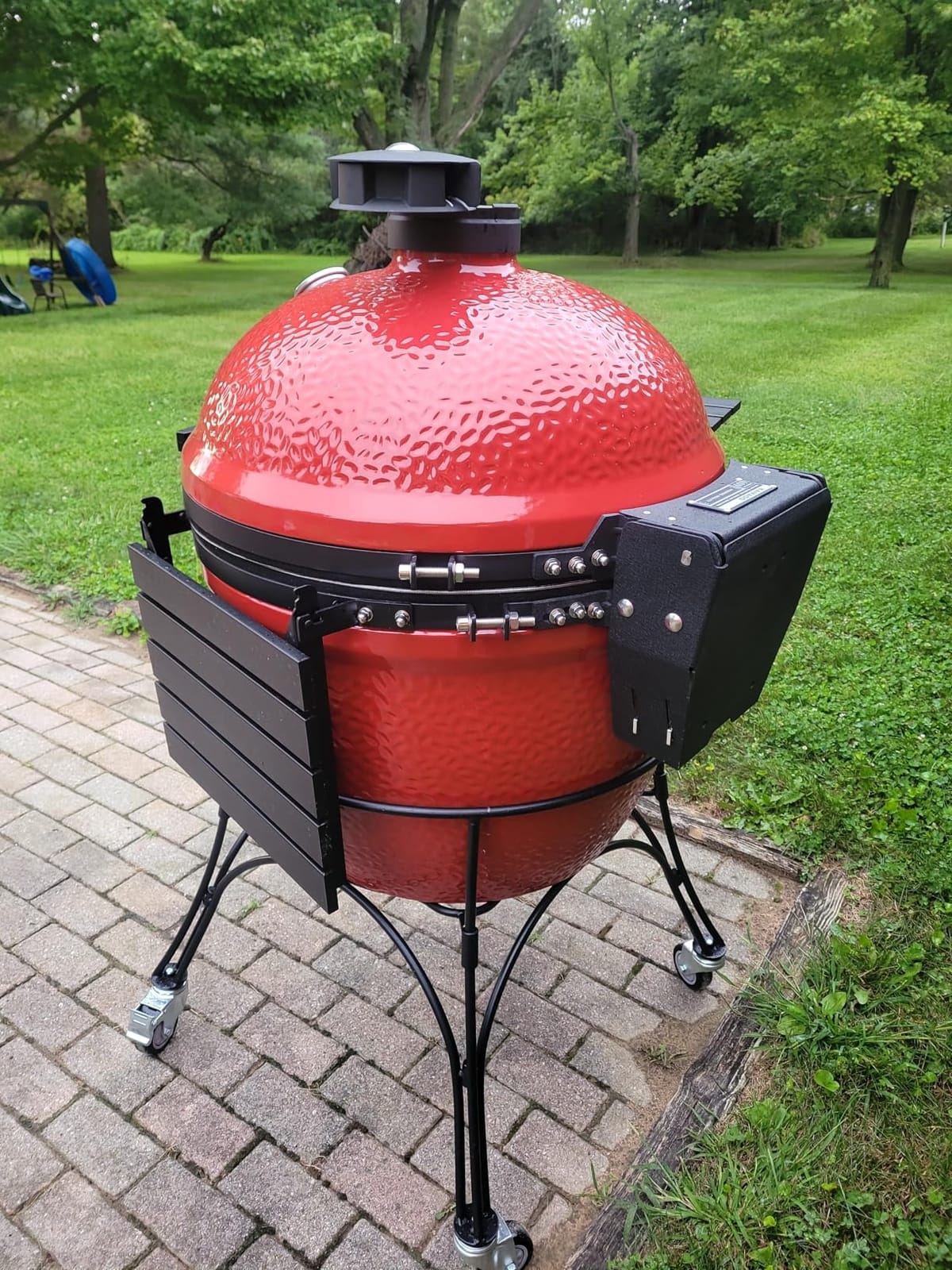
At 394 pounds, this is not a grill you reposition. The cart and locking casters are the only practical way to move it, and even then you want two people. Decide where it lives before it arrives, and make sure the patio can carry the load permanently.
Its rating is the lowest here at 4.4, and 8 percent of reviews are one-star, mostly hardware and transit issues. The lifetime ceramic warranty on registered units is the counterweight, and it is the strongest coverage in this roundup for the part that costs the most to replace.
How two levels change a pizza night
It is the difference between sequential cooking and simultaneous cooking. Stone on the main level for the Neapolitan pies at 700F, a second level above for a thicker backyard pie at a lower temperature, and the whole thing finishes together. For a group of eight or more that is the difference between one round and two.
Who should skip it
Anyone on a small patio, in an apartment, or without a second adult to help move it. If your pizza nights are two people and one pie, 450 square inches is wasted capacity and a much harder day of moving.
7. Brand-Man Steel Kamado 22-Inch: Best for Brisket and Pizza on One Grill
Brand-Man Steel Kamado Charcoal Grill & Smoker
400 sq. in. cast iron grate
Trivet for indirect cooking
5-year firebox warranty
105.4 pounds
Pros
- 400 sq. in. of 20-inch cast iron grate
- Included trivet makes two-zone brisket then pizza easy
- Five-position airflow system with hood thermometer
- Quick-release ash tray for fast cleanup
- 5-year warranty on firebox and outer body
Cons
- Steel body burns more charcoal than ceramic
- Arrives in two separate boxes
- Only 49 ratings so long-term durability data is thin
This is the grill for the two-zone workflow that almost nobody writes up: a low-and-slow brisket at 225F, then the vents opened and the grill driven to 700F for pizza on the same cook. The included trivet is the component that makes it work, giving you a divided firebox so one side smears and the other side burns hot.
At 400 square inches it is the second-largest grate here, and 20-inch cast iron bars hold heat well and sear without warping. The coin-thickness double-layer steel body with a mesh fiberglass gasket is a serious build for the tier, and the five-position airflow system with a hood thermometer keeps the temperature dial straightforward.
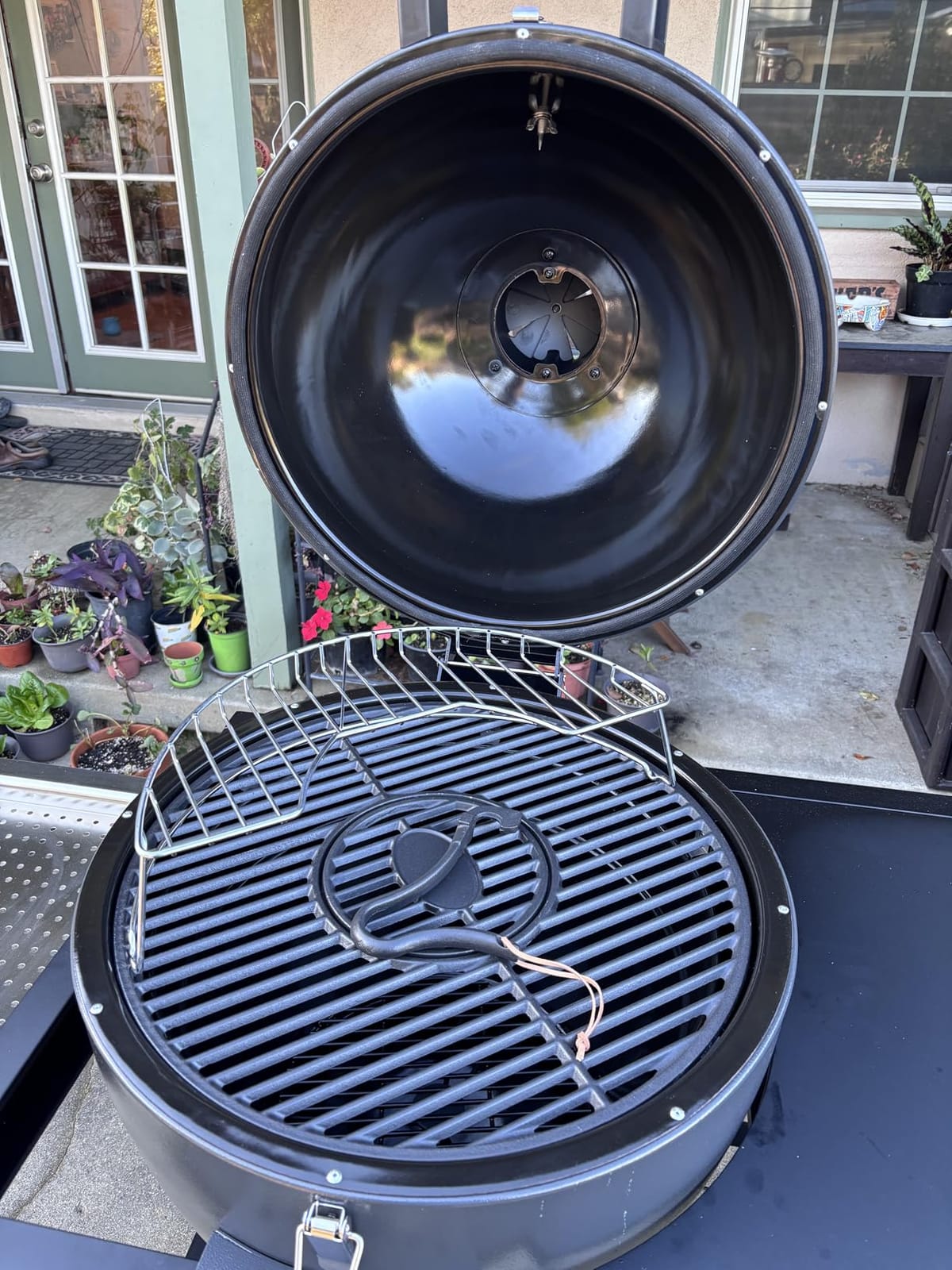
The five-year warranty on the firebox and outer body against rust-through is the best structural coverage among the steel options in this roundup, and the quick-release ash tray is a small thing you will appreciate every single cook.
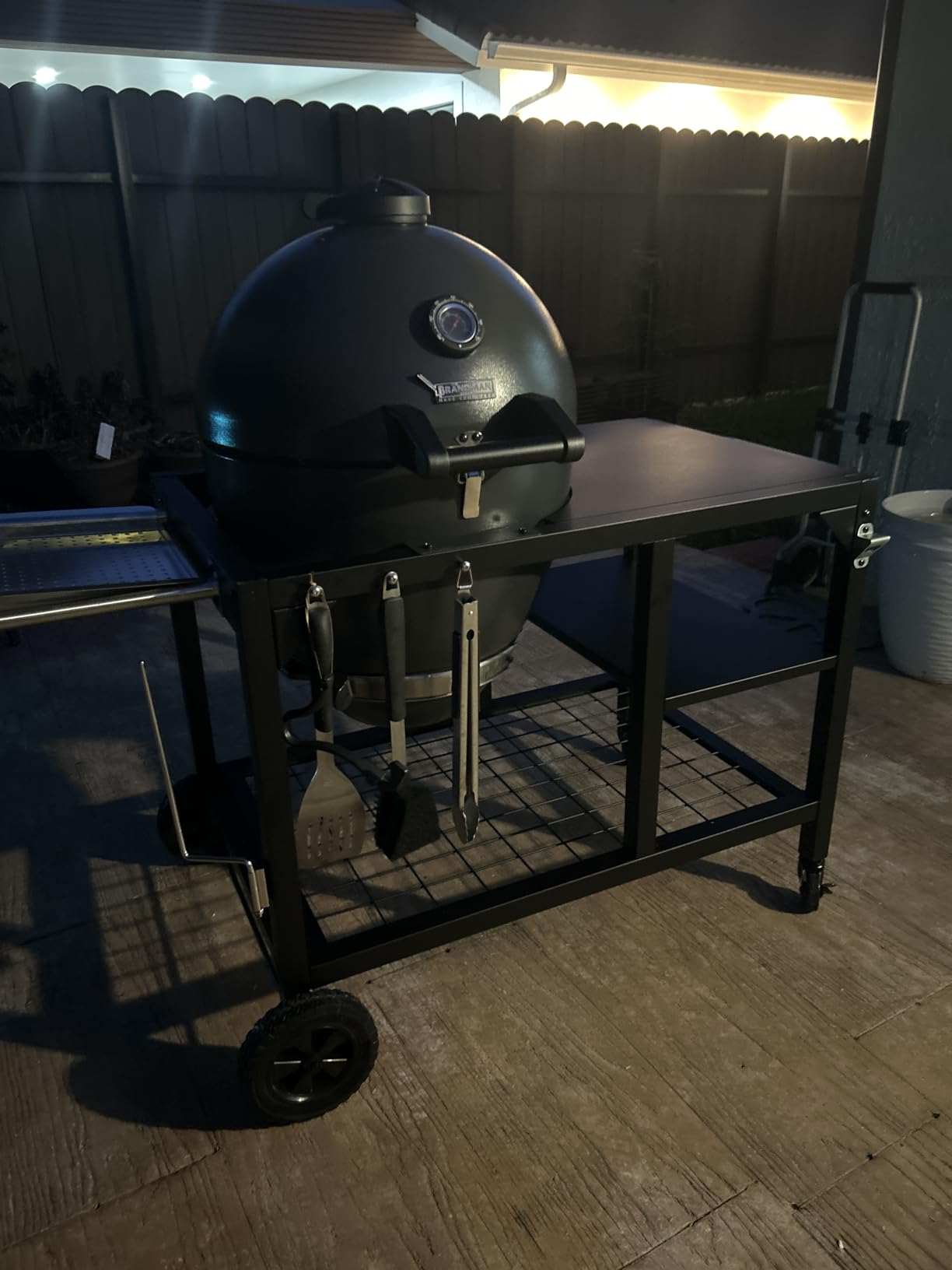
It is delivered in two boxes, so plan the assembly for a day when help is available. The large side prep area on the cart is also worth noting for pizza specifically: you need somewhere to stretch dough, and a kamado with a bare cart makes that awkward.
Steel versus ceramic for a two-zone cook
Steel is faster to respond, which is exactly what a two-zone cook needs. You can go from 225F to 700F in a shorter window than a thick ceramic dome allows, and the trade is fuel: you will add charcoal more often to hold a target. If pizza is a weekend event and smoking is a regular job, that trade is worth it.
The honest limitation
Forty-nine ratings is a thin base, so we have no long-term durability picture to draw from. The build spec and the five-year firebox warranty are the reasons it earns a place here, not a large owner base. If you want ceramic heat retention with the same workflow, the Classic Joe Series II is the closer comparison.
Buying Guide: What Actually Decides a Kamado for Pizza
A kamado and a pizza oven are solving the same problem with different priorities. An oven wins on repeatability at one narrow temperature band. A kamado wins when you want brisket on Tuesday and a 700F pie on Friday from the same appliance. That trade is the first thing to settle before you look at any spec sheet.
Ceramic or insulated steel: which holds pizza heat better
Thick ceramic absorbs more heat and releases it slowly, which is why a ceramic dome climbs slowly and then barely moves. That stability is what lets a 700F bake finish without the temperature dropping mid-cook. Insulated steel heats faster, cools faster and burns more fuel, but it recovers from a dropped temperature in minutes rather than the better part of an hour.
For Neapolitan-style work, ceramic is the safer bet. For a two-zone grill where you are switching temperatures all day, steel is often the more practical choice. Our full kamado grill roundup covers the construction differences in more depth if you are still weighing it.
Cooking area versus stone size
Match the stone to the grate, not to the ambition. A 12-inch stone needs a grate with a couple of inches of margin in every direction or you will struggle to land the pizza cleanly. The practical mapping in this roundup: 90 square inches fits a 10-inch stone, 150 square inches handles 12 inches, 250 square inches reaches 14 inches comfortably, and 400 to 450 square inches is where a 16-inch stone finally fits.
This is the single most useful number on the list and the one most competitor tables leave out.
Maximum temperature and time to reach it
Anything rated 750F can bake a Neapolitan pie. Anything rated to 700F can do a fast backyard pie. Look for the rated range rather than a claimed maximum, because a 750F number usually assumes a full chimney of fuel and both vents wide open. Then budget a 20 to 30 minute soak after the dial reads target, because the stone lags the dome air by a meaningful margin.
Stone material and thermal shock
Cordierite is the most forgiving material because it tolerates thermal shock better than soapstone or a thin firebrick. Soapstone is prized for even heat and is prone to cracking if shocked. The rule that prevents almost all of this: never place a cold stone on a hot grate, never put water on a hot stone, and let the stone cool in place before lifting it. Users report more cracked stones from careless handling than from cooking temperature.
Vent control and the high-heat setting
Both vents fully open is the correct starting point for pizza. The pitfall is closing the top vent too early at high heat, which starves airflow, dries the top of the crust and scorches it before the underside finishes. Grills with indexed or numbered damper positions make this far easier to learn than a vent with no reference marks.
Weight, warranty and what ships in the box
Anything over 200 pounds is a permanent fixture rather than a portable grill, and that is a deal breaker for renters, balconies and anyone without a second adult on hand. On warranty, ceramic bodies with a limited lifetime term are the strongest long-term position; the steel options here run one to five years. And check the box contents carefully, because only the Joe Jr in this roundup includes heat deflectors, and none of them include a stone you would use for pizza.
Which grill suits which pizza style
Route the choice by dough rather than by brand. For a 12-inch Neapolitan at 700F you want a body that recovers fast and a grate that fits a 12-inch stone, which points to the Joe Jr or the Cadet. For a 14-inch backyard pie at 500F, grate area matters more than peak temperature, which is where the Akorn, the London Sunshine 15-inch and the Brand-Man all earn their place.
Pan pizza changes the requirement again. A cast iron pan and a heavy stone want stable, moderate heat rather than a searing dome, so any of the ceramic bodies with a thick wall will hold it better than a thin steel shell. That is a case where the 0.8-inch wall on the Cadet and the 1-inch wall on the London Sunshine 15-inch are more similar in practice than their price gap suggests.
And for anyone cooking for a group regularly, treat cooking area as the deciding number. A 90 or 150 square inch grill means sequential cooking all night; 250 square inches means two 10-inch pies at once; 400 and above means a 16-inch stone plus a second level. You can stretch 250 square inches for a party, but not comfortably.
What to buy alongside the grill
A cordierite pizza stone sized to the grate, a heat deflector plate if the grill does not include one, a peel, an infrared thermometer for reading the stone rather than the dome, and a cover. The thermometer is the item people skip and then wish they had, because a built-in gauge reads the air in the chamber and the stone is what bakes the crust.
Leave a little fuel budget in your planning too. A kamado that is 200F from target at launch will not recover during a 90-second bake, and most failed first pizzas come down to an under-charged firebox rather than a bad stone.
Frequently Asked Questions
Which kamado grill has the highest rating?
Among the seven grills we compared, the Kamado Joe Classic Joe Series II and the Brand-Man Steel Kamado share the highest average rating at 4.7 out of 5. Rating alone is a weak signal though, because the Brand-Man has only 49 ratings behind its score. The Char-Griller Akorn holds a 4.6 average across more than 2,300 ratings, which makes it the better-evidenced choice for most buyers.
What is better, the big green egg or kamado joe?
For pizza specifically, the Kamado Joe models we tested hold temperature more consistently at the 700F end and open with a one-finger Air Lift hinge, which matters when you are launching pies back to back. A Big Green Egg is a fine kamado in its own right and plenty of owners make excellent pizza on one. If you want a large surface for a group, the 24-inch Big Joe Series II gives you 450 square inches plus a second rack level.
How to cook a pizza on a kamado grill?
Set a heat deflector on the main grate, rest a pizza stone on top, light a small chimney of charcoal, and open both the bottom and top vents fully. Soak at your target temperature for 20 to 30 minutes, stretch the dough on a floured peel away from the grill, then launch in one motion and rotate at roughly 45 seconds. Pull when the edge browns and the underside chars in spots.
Can I use a pizza stone on my Kamado Joe grill?
Yes, and a stone is the right surface for pizza on any kamado. Place it on the grate above the heat deflector, and raise it to the upper level if you are fighting a burnt bottom with a pale top. Only the Kamado Joe Joe Jr in this group includes heat deflectors in the box, and none of these grills ship with a pizza stone, so budget for one separately.
What type of grill is best for making pizza?
For Neapolitan-style pizza, an insulated kamado is the best grill type because thick walls hold 700F without collapsing mid-bake. A dedicated outdoor pizza oven gives more repeatable results if pizza is the only thing you will ever cook. A kamado makes more sense when you also want to smoke brisket at 225F on the same appliance, since that is a use an oven cannot cover.
What temperature should I cook pizza at on a Kamado grill?
Cook Neapolitan-style thin dough at 700F for 90 to 120 seconds. For thin or medium backyard pizza, 500 to 600F for 3 to 5 minutes produces excellent crust and is the easier target. Thick backyard crust and pan pizza work at 450 to 500F for 8 to 10 minutes. Measure the stone rather than the dome air, and always soak 20 to 30 minutes after the dial reads target.
Our Verdict on the Best Kamado Grills for Pizza in 2026
The Char-Griller Akorn takes our top spot for the best kamado grills for pizza. It pairs 445 square inches of cast iron grate with a triple-wall steel body that fires quickly and holds 700F, and it rolls on locking casters instead of needing a dolly. If you want the ceramic refinement instead, the Kamado Joe Classic Joe Series II is the strongest all-rounder, with a limited lifetime ceramic warranty and a hinge that opens with one finger.
For small spaces, the Joe Jr at 75.6 pounds is the one to move by yourself. For a full pizza party, the 24-inch Big Joe Series II is the only one here with room for two pies at once. Whichever you pick, remember that no stone is included and only the Joe Jr includes deflectors, so add those to your list before the first cook.
Read our wider pellet grill roundup if you want set-and-forget cooking rather than vent discipline, and check back as more kamados enter the category through 2026.