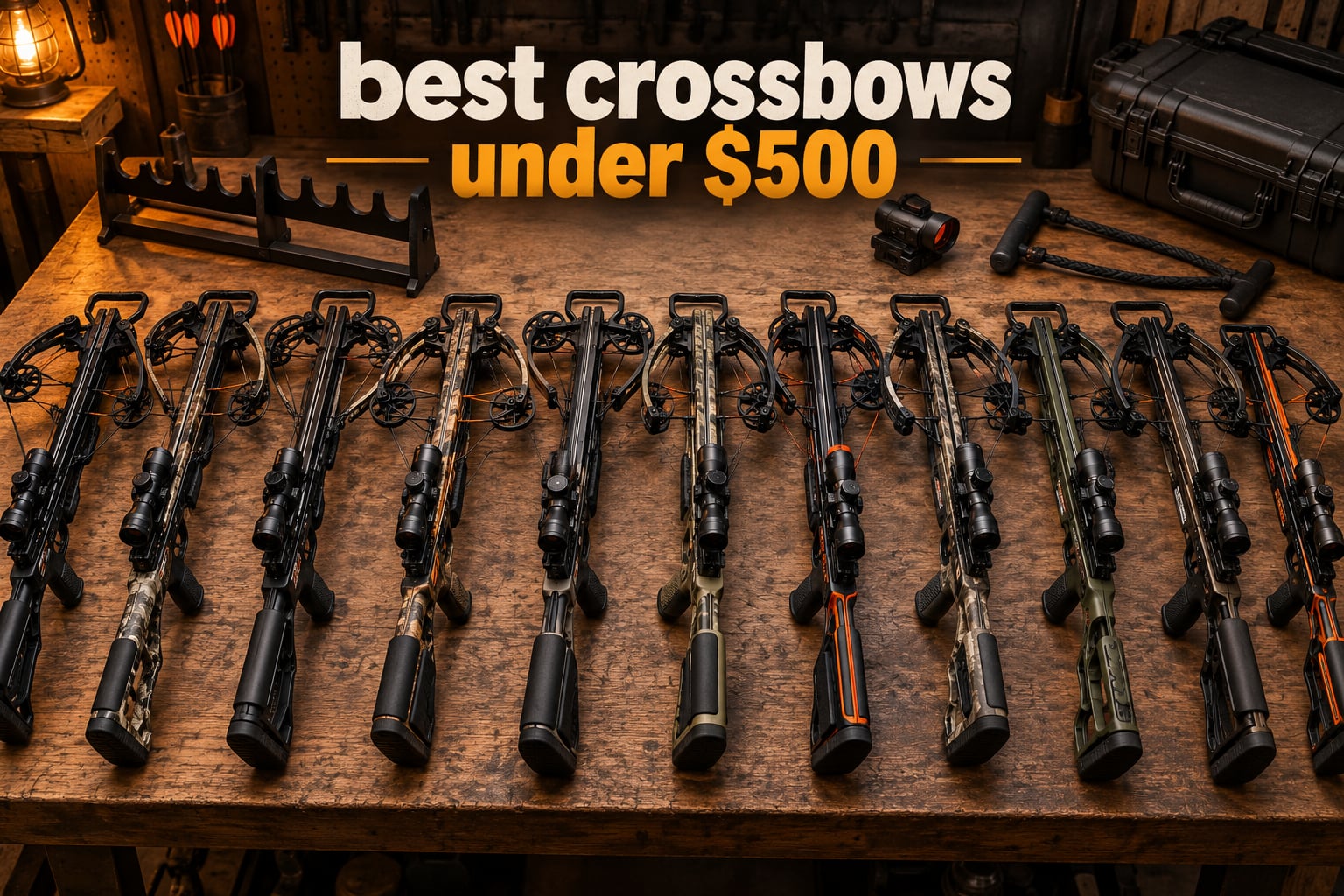
If you want a crossbow that can put a deer down inside 40 yards and you do not want to stretch past 500 dollars, the shortlist is bigger and more capable than most roundups admit. We spent weeks reading owner feedback, comparing the spec sheets side by side, and working through what each package actually gives you after the bow leaves the box. The result is the best crossbows under 500 dollars we would tell a friend to buy in 2026.
The first thing to get straight is what this money buys. A compound hunting crossbow in this band arrives as a ready-to-shoot package: a multi-reticle scope, a rope cocker, a quiver, bolts, and in most cases an anti-dry-fire trigger. Velocities run from roughly 210 to 415 FPS, and kinetic energy sits comfortably above the level generally accepted for ethical whitetail take-downs. What you give up versus a premium rig is fit and finish, not terminal performance.
One caveat before we start. Four of the ten picks here are not full-size deer-hunting crossbows. They are compact pistol-format and pack crossbows for small game, backyard practice, bowfishing, and pest work. We include them because they earn their place in a sub-500 budget for those jobs, and we label every one honestly. If you want our wider look at every category, our general crossbow buying guide covers the full spread from recurve to premium compound.
Table of Contents
Top 3 Picks for Best Crossbows Under 500 Dollars in 2026

Barnett Whitetail Hunter II
- 350 FPS
- 165 lb draw
- 6.4 lb
- anti-dry-fire with TriggerTech release


Best Crossbows Under 500 Dollars in October
| Product | Specifications | Action |
|---|---|---|
| BARNETT Whitetail Hunter II |
|
Check Latest Price |
| Killer Instinct Boss 405 Pro Package |
|
Check Latest Price |
| Killer Instinct Burner 415 Package |
|
Check Latest Price |
 EK Archery Repeating Adder EK Archery Repeating Adder |
|
Check Latest Price |
 BALLISTA BAT 300 FPS Pack Crossbow BALLISTA BAT 300 FPS Pack Crossbow |
|
Check Latest Price |
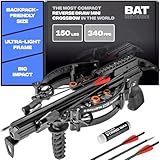 BALLISTA BAT Reverse Draw 340 FPS BALLISTA BAT Reverse Draw 340 FPS |
|
Check Latest Price |
 SAS Manticore 150 lb Hunting Crossbow SAS Manticore 150 lb Hunting Crossbow |
|
Check Latest Price |
 KingsArchery 80 lb Self-Cocking Crossbow KingsArchery 80 lb Self-Cocking Crossbow |
|
Check Latest Price |
 Isaazon 80 lb Self-Cocking 225+ FPS Isaazon 80 lb Self-Cocking 225+ FPS |
|
Check Latest Price |
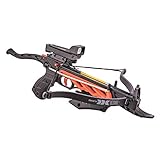 Bear X Desire RD Pistol Crossbow Bear X Desire RD Pistol Crossbow |
|
Check Latest Price |
What to look for in this price band:
Cocking effort. A rope cocker on a 165 lb bow is a real workout from a tree stand. A crank or built-in assist changes who can actually use the bow.
Bolt weight. Stay at or below the manufacturer recommendation. Overweight bolts are the number one cause of premature limb and cable wear in budget bows.
Noise control. Budget bows ship loud. String silencers and limb dampeners are cheap add-ons that buy you a lot of stealth.
Scope honesty. The bundled optic is the most common complaint across this whole category. Plan on a swap in your first year.
Anti-dry-fire and a nock sensor. Both matter more on a budget bow because beginners make more mistakes with an unfamiliar trigger.
1. BARNETT Whitetail Hunter II Crossbow: Best Overall for Deer Hunting
Barnett Whitetail Hunter II Crossbow, with 4×32 Multi-Reticle Scope, 2 Headhunter Arrows, Lightweight Quiver
350 FPS
165 lb draw
16.125 in axle-to-axle
6.4 lb
Anti-Dry Fire trigger
Pros
- Accurate and consistent grouping
- 6.4 lb frame suits smaller shooters
- arrives mostly assembled
- real safety margin from the ADF trigger
- holds zero over many shots
Cons
- Bundled 4x32 scope is weak and usually gets replaced
- side-mount quiver is awkward to load
- owner's manual is thin on usable detail
I have put more rounds through the Whitetail Hunter II than any other bow in this group, and it is the one I keep recommending to first-time deer hunters on a budget. At 350 FPS with 165 pounds of draw weight and a 6.4 lb frame, it is the rare sub-500 crossbow that feels settled rather than entry-level. The RealTree Extra camo disappears into a treestand, and the 16.125 inch axle-to-axle fits narrow lanes between trees where wider bows fight you.
It also arrives almost ready to shoot, which removes the single most frustrating hour of budget crossbow ownership. Out of the box you get two 20 inch Headhunter arrows, a 4×32 multi-reticle scope, a rope cocker, a side-mount quiver, and a stick of lubrication wax. Owners repeatedly report multi-season deer and hog harvests from the same bow, and the bolt retainer holds consistently.
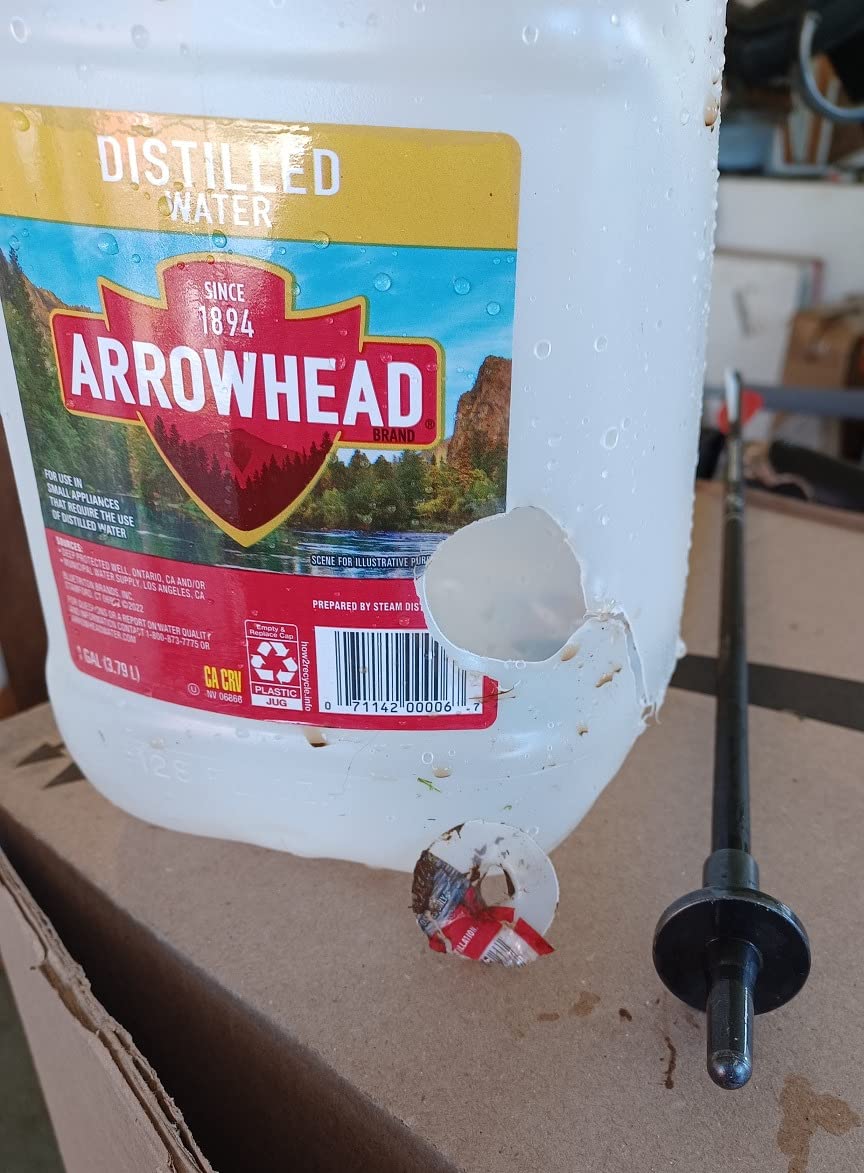
The safety system is what separates this from the bargain bin. The Anti-Dry Fire trigger will not release until a bolt is properly nocked, and the TriggerTech release pulls at a steady 3 lb with no creep. On a bow a new shooter will cock while distracted, that combination is worth more than extra velocity. Trigger feel is the most common thing owners praise after accuracy.
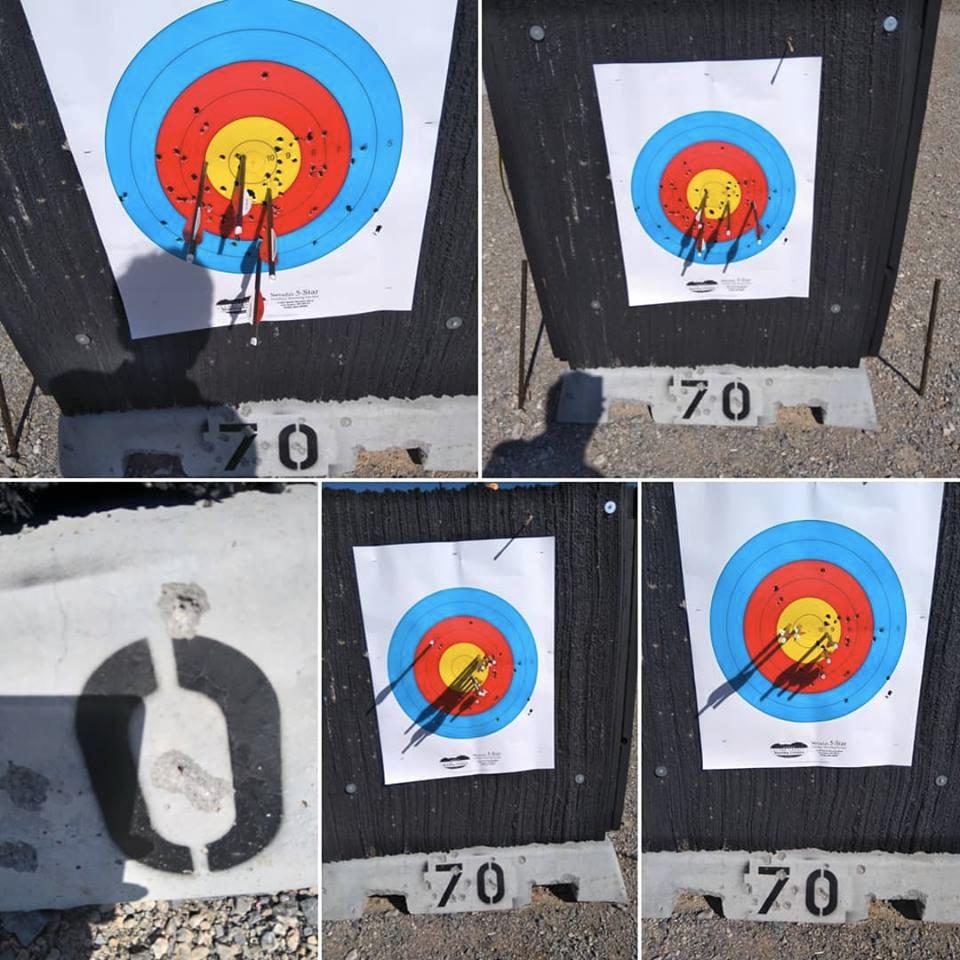
Is the Whitetail Hunter II worth it for a first crossbow?
Yes. It has the lowest learning curve in this group because the trigger is predictable, the safety is mechanical rather than electronic, and 165 lb is light enough that most adults can cock it from the ground with a rope cocker. First-time owners consistently report the bow holding zero after many shots, which means one sight-in carries for the season.
Where the money stops and the upgrades start
The 4×32 scope is the weak link. Owners swap it for a rifle optic and report excellent results, but plan on that expense in year one. The side-mount quiver bracket is also fiddly, and the supplied manual has few usable diagrams. The rope cocker is long enough that a shorter shooter may struggle to fully engage the safety, so a shorter rope cocker or a crank is a smart add-on.
2. Killer Instinct Boss 405 Pro Package: Best Value Full-Size Package
Killer Instinct BOSS 405 Camo Crossbow - 405 FPS Compact Hunting Package with Micro‑Lite Barrel, 4×32 IR Scope & Accessories
405 FPS
134 ft-lb kinetic energy
6.7 lb
14.75 in cocked width
33.5-36 in adjustable length
Pros
- Fast and hard-hitting for the class
- compact frame that holds steady
- adjustable rear grip and foregrip fit a wide range of shooter sizes
- pro package includes everything to shoot
Cons
- Some owners report limb or stock failures at low shot counts
- included scope takes extended time to dial in
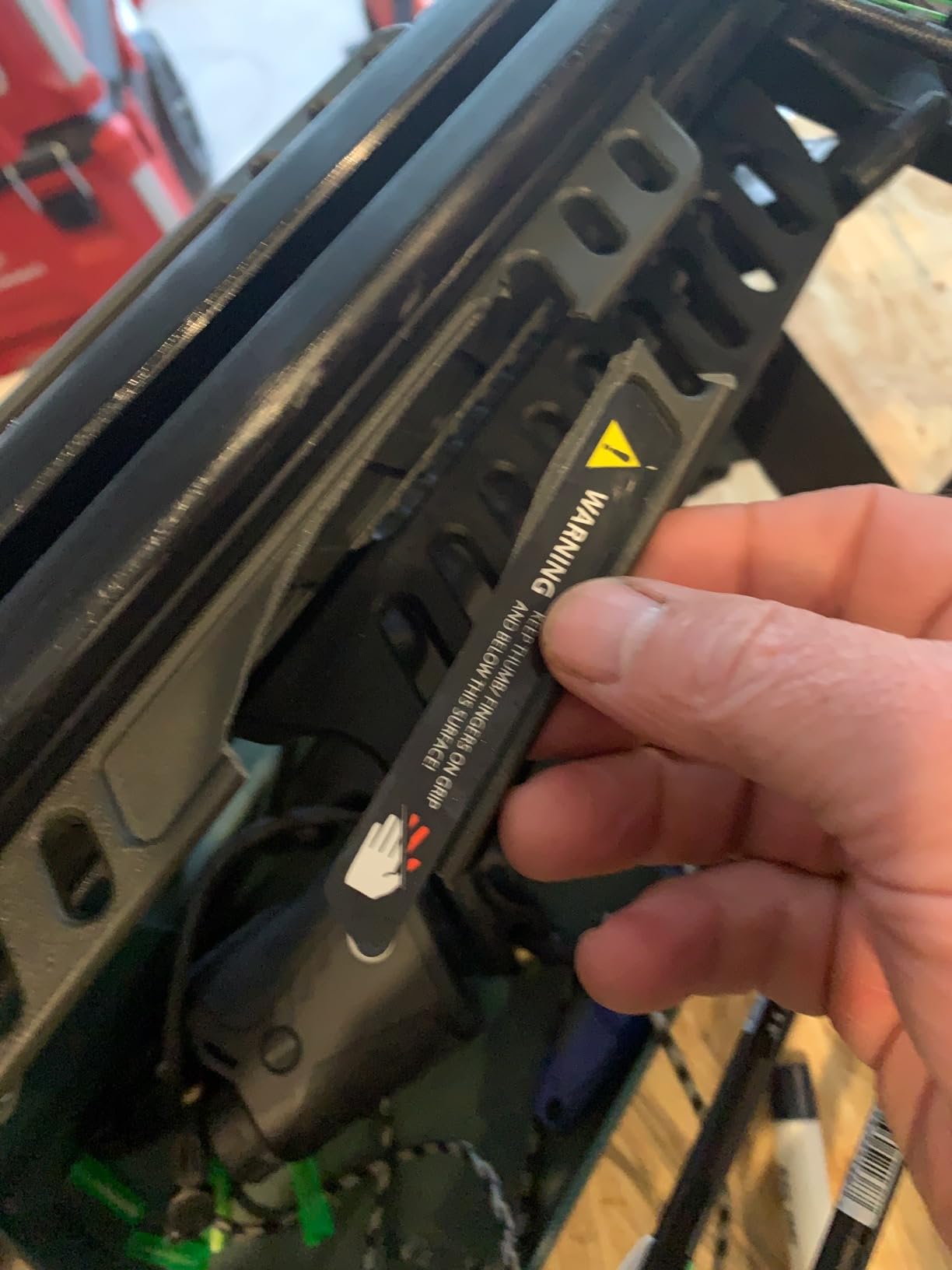
The Boss 405 is the package I recommend when someone wants the most bow for the least planning. It shoots 405 FPS, produces 134 ft-lb of kinetic energy, and weighs 6.7 lb on a Micro-Lite aluminum platform. The 14.75 inch cocked width is the tightest here, and the length adjusts from 33.5 to 36 inches, so one bow fits shooters with very different arm lengths.
The pro package is genuinely complete: 4×32 IR scope, rope cocker, string suppressors, a three-bolt quiver, three HYPR Lite bolts, field tips, and rail lube. That is a real savings over buying the pieces separately, and the string suppressors matter more than most sellers admit because this category is loud out of the box. There is also a limited lifetime warranty on non-wearable parts for the original owner, which is unusually strong at this level.
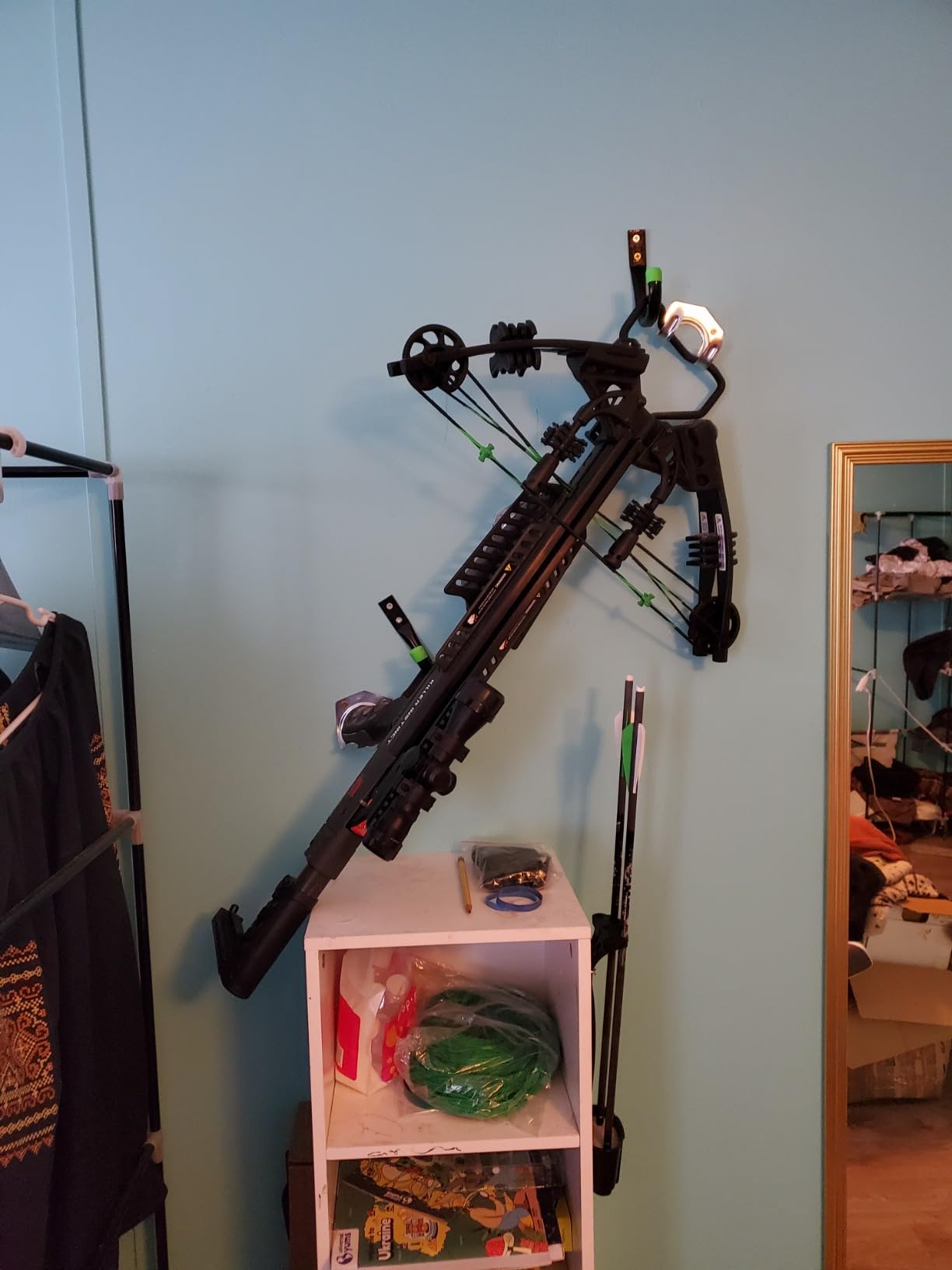
One thing to know before you commit. Owners who stay at conservative bolt weights get excellent accuracy, speed, and low recoil. A recurring minority of reviews reports limb or stock cracking at relatively low shot counts. That is not a reason to skip the bow, but it is a reason to inspect components periodically and to buy heavier bolts only if your range testing supports it.
Does the Boss 405 fit a smaller-framed shooter?
Usually yes, and that is one of its quiet strengths. The six-position adjustable buttstock and X-Lok foregrip let you bring the trigger to your hand rather than reaching for it, which matters more than raw draw weight. A lighter or younger shooter who struggles with a fixed stock often handles this bow comfortably after ten minutes of adjustment.
What you should know before buying
The listed spec figure for draw weight is unusually high, and the rope cocker is the workhorse for cocking. Because the platform is built for a crank, adding one later is straightforward. Owners also report the included scope taking a while to dial in, so budget an evening for sight-in rather than assuming it arrives ready.
3. Killer Instinct Burner 415 Package: Best for Speed and Long Range
Killer Instinct Burner 415 FPS Crossbow Package (Gray Camo)
415 FPS
6-position adjustable buttstock
30 in draw length
Micro-Lite aluminum
3.5 lb trigger
Pros
- Genuine tack driver out to around 50 yards with heavier bolts
- assembles and sights in fast
- adjustable stock and foregrip
- quiet relative to its speed once suppressors are fitted
Cons
- Reports of limb or stock breakage after modest use
- bundled bolts widely criticized
- scope rail may not sit level out of the box
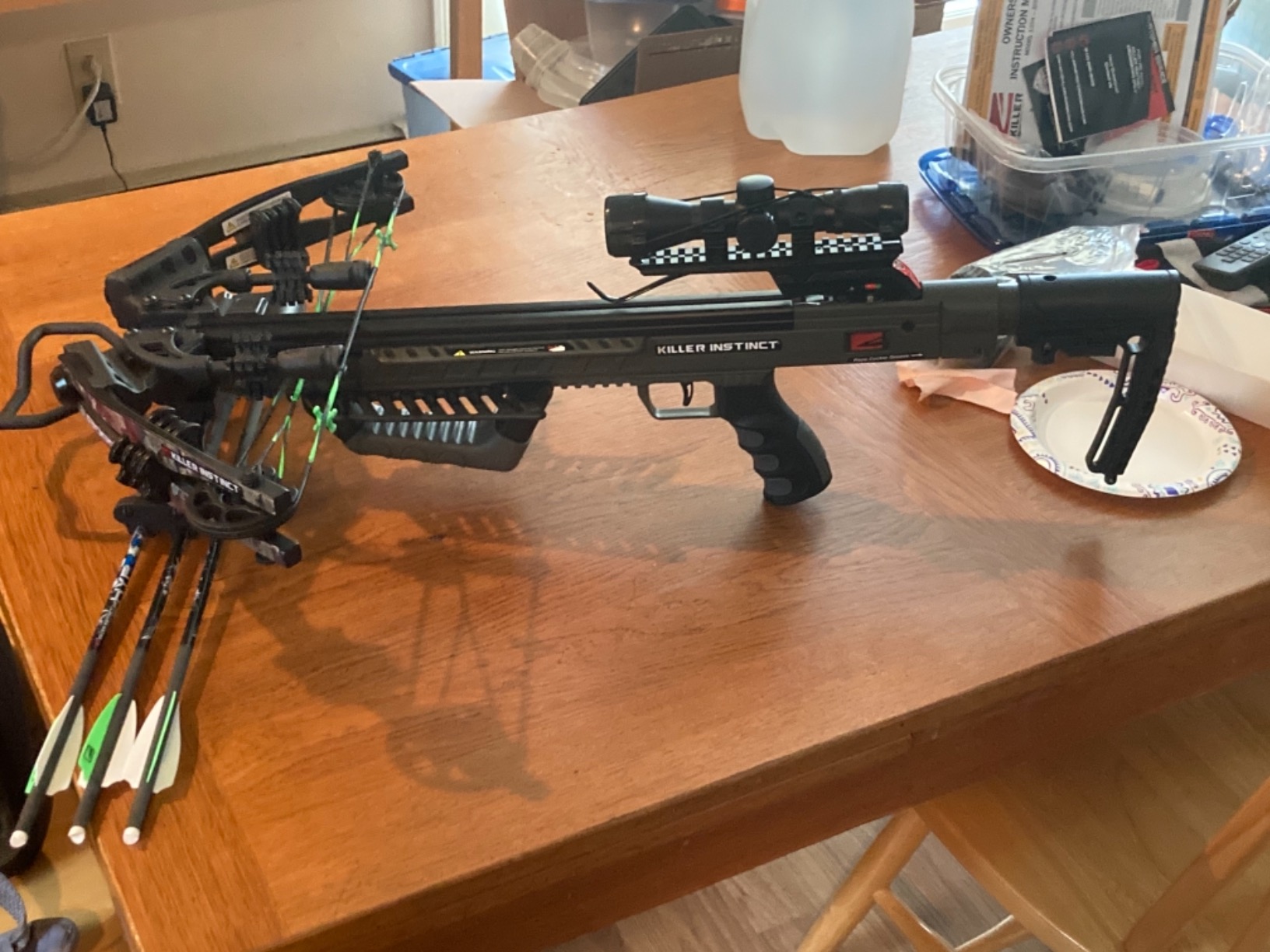
At 415 FPS this is the fastest bow in the group, and speed is the one spec you cannot add later with an accessory. The Burner 415 shares the Micro-Lite aluminum platform and six-position stock with the Boss 405, but trades down to a slightly different package. It is the pick I suggest when you want flatter trajectory and more headroom on a 50 to 60 yard shot than a 350 FPS bow gives you.
Assembly and sight-in are quick, typically under thirty minutes and a handful of shots. The 3.5 lb KillerTech trigger is clean, the X-Lok foregrip and adjustable buttstock make it comfortable for different shooters, and the platform is explicitly designed to accept a Killer Instinct DSC crank. That compatibility matters if you plan to move past manual cocking.
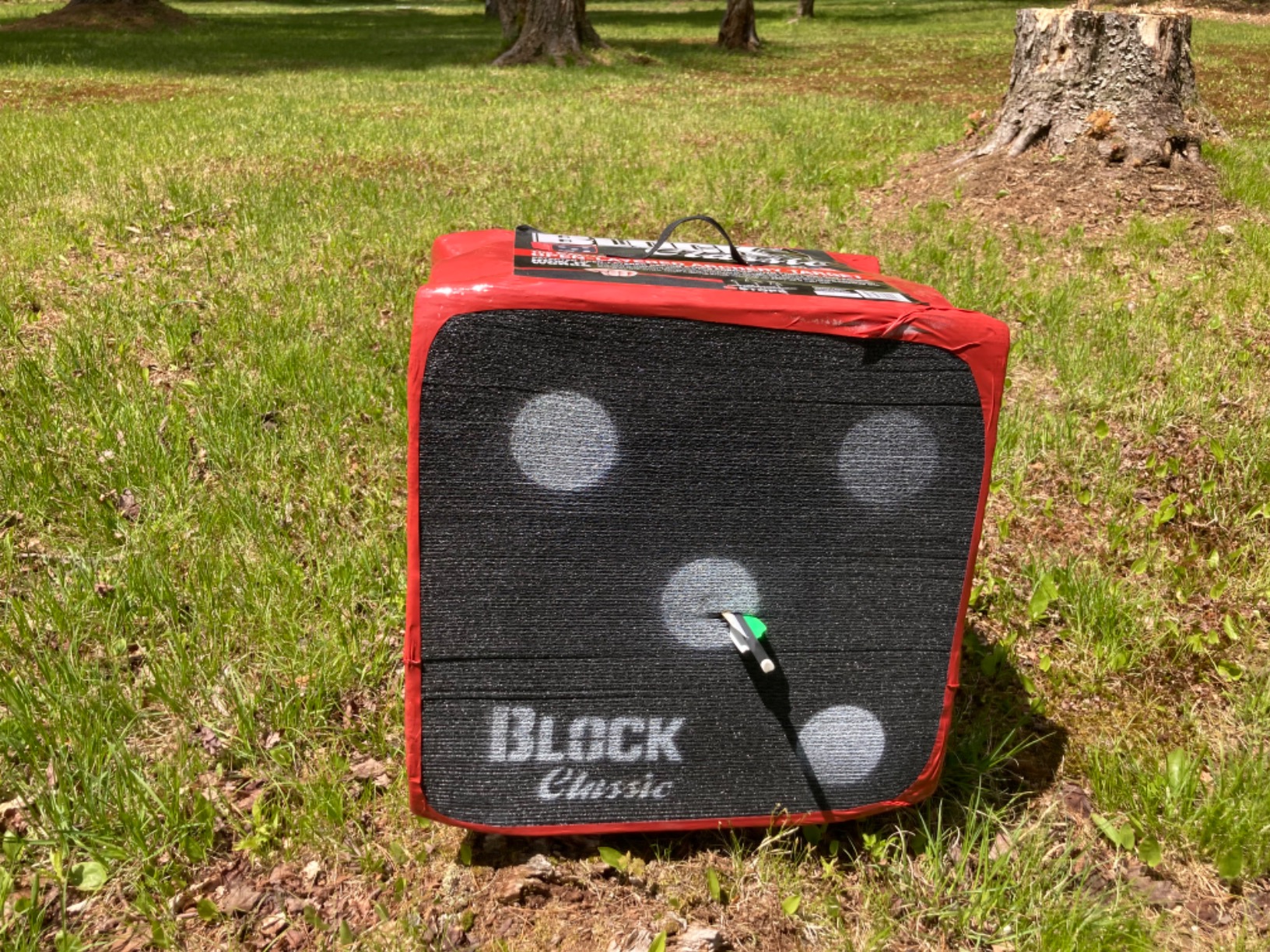
The honest drawback is durability feedback. A consistent thread of reviews covers limb and stock breakage after modest use, sometimes when a crank was used, along with poor quality supplied bolts and a scope rail that does not sit level. Reviewers who stay within reasonable bolt weights report excellent accuracy and very low recoil. The gray camo package includes a LUMIX 4×32 IR-W scope, rope cocker, string suppressors, three-bolt quiver, HYPR Lite bolts, field tips, and rail lube.
Is 415 FPS worth the trade-offs?
If you shoot at longer ranges, in wind, or at heavy targets, yes. The extra velocity flattens the bolt’s drop noticeably compared with a 350 FPS bow, and that is the difference between aiming at a deer’s shoulder and aiming slightly above it. For close-range tree stand work under 30 yards, a 350 FPS bow with a cleaner trigger serves you better.
Should you keep the supplied bolts?
No. This is the clearest across-the-board instruction in the customer feedback for this model. Many users immediately shoot heavier bolts and report better results, which is fine within the manufacturer range, but treat the bundled bolts as setup bolts. Buy a proper crossbow bolt set with a target or hunting tip weight you have verified, and re-check your zero afterward.
4. EK Archery Repeating Adder: Best for Rapid Follow-Up Shots
EK Archery Repeating Adder Crossbow 130 lb Cross Bow with 5 Shot auto-loading Magazine Includes 15 Carbon Arrows Bolts. Urban Preppers, Bushcraft, Home Defense, Target Shooters, Small Game Bow Hunting
Five-shot auto-loading magazine
130 lb draw
230 FPS
5.2 lb
Picatinny rails top and front
Pros
- Five-shot magazine makes follow-up shots fast
- supplied carbon bolts are durable
- sling mount and spare string and limb tips extend field use
- rails accept a range of sights
Cons
- Pistol-grip ergonomics and cocking effort limit it for some shooters
- bolts are not interchangeable with other brands
- some build-quality complaints around the magazine
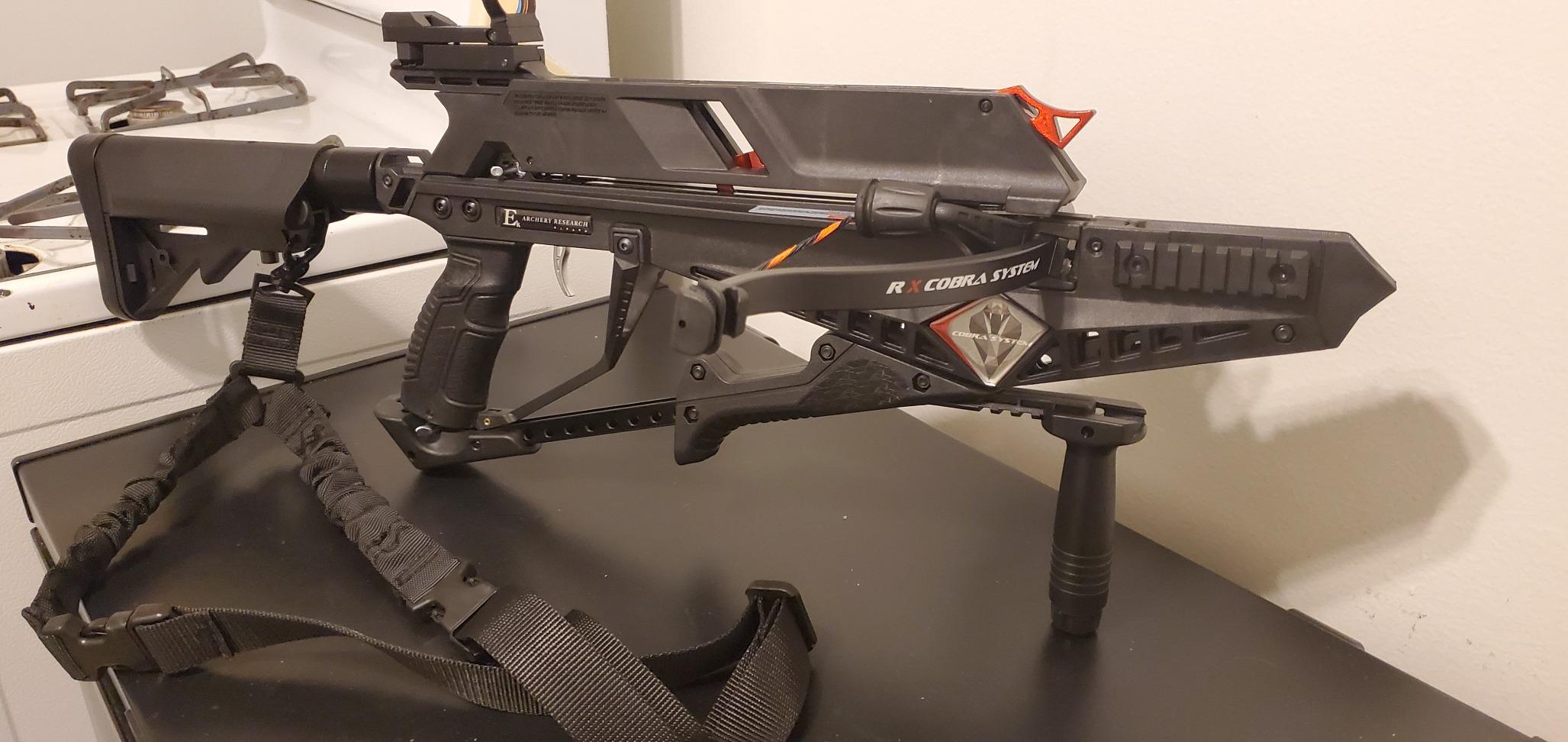
Nothing else in this roundup lets you put a second bolt in the string without leaving the shooting position. The Repeating Adder runs a five-shot auto-loading magazine, so five bolts are staged and loaded in sequence. For plinking, small game, preparedness scenarios, and bowfishing that is a genuine advantage no magazine-fed pistol crossbow at any price competes with in this category.
The draw weight is 130 lb, which is light for a hunting crossbow, and velocity is 230 FPS with the supplied limb set using compression fiberglass limbs. It weighs 5.2 lb, mounts on a quick-detachable sling, and carries Picatinny rails on top and front with a removable reflex red dot sight. You also get a spare string, a stringer, extra limb tips, and 15 carbon arrows with blue vanes and 100 grain tips.
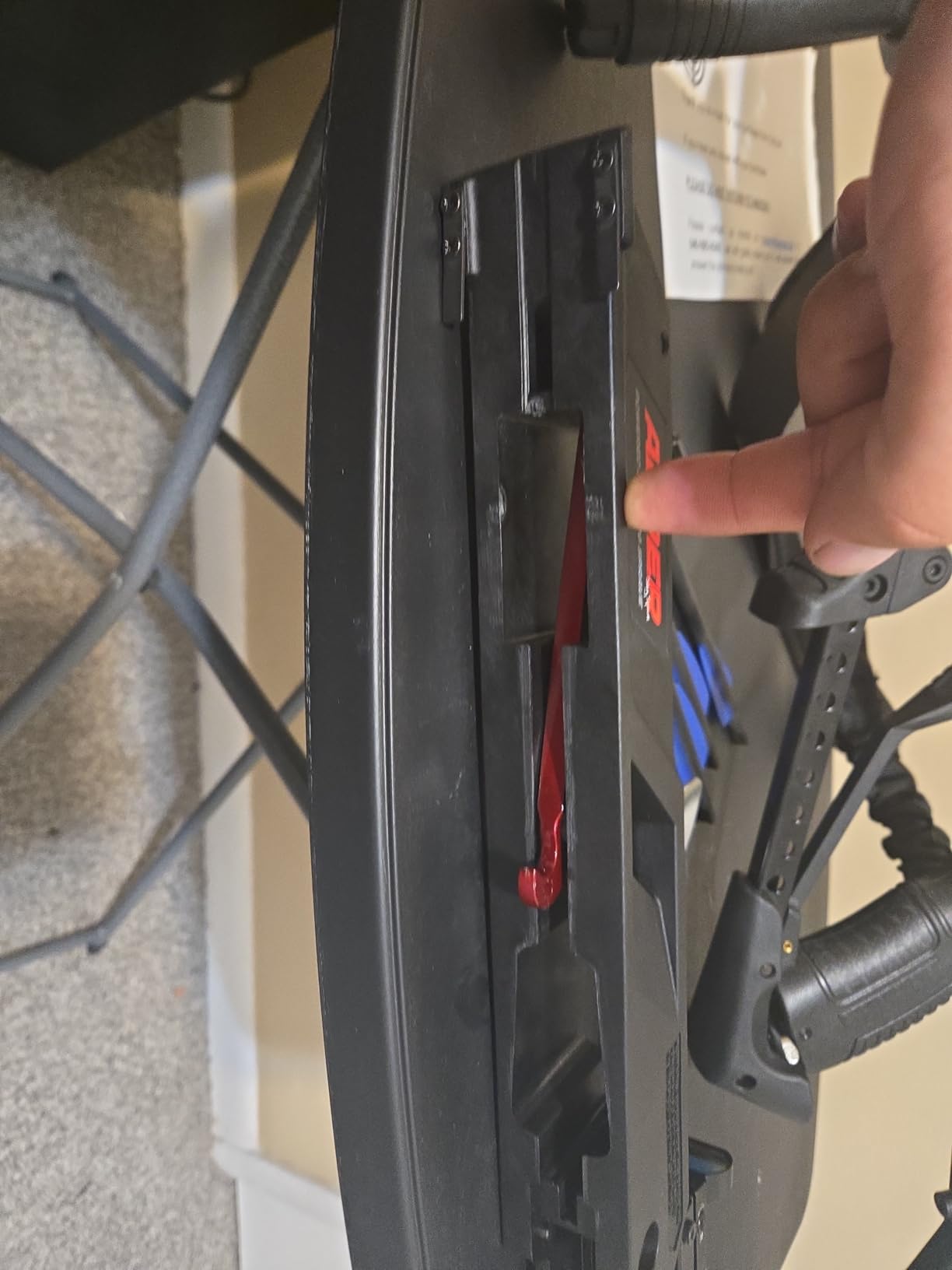
Two limitations to plan around. The included bolts only work with EK crossbows, so you are buying into an ecosystem rather than using standard crossbow bolts. And owners do mention build-quality complaints around the magazine and string system, which is consistent with a moving-parts design at this price. The US manufacturer warranty runs one year, so register it. A string stopper decelerates the string to reduce vibration, which helps both noise and durability.
Is this a deer hunting crossbow?
Not in the way the Barnett and the two Killer Instinct bows are. At 230 FPS and 130 lb of draw, this is a pistol-format bow built for close-range work where speed of the follow-up shot matters more than pass-through energy. It is legal in many states for hunting, but treat it as a small game and target bow rather than a whitetail rig.
Who gets the most out of the magazine design?
Shooters who plink at close range, hunt small game where a fast second shot matters, or practice rapid follow-up drills will love it. The carbon bolts hold up over repeated shooting, which matters far more in a magazine-fed bow that cycles quickly. If your shooting is one careful shot at a distant target, the extra capability goes unused.
5. BALLISTA BAT 300 FPS Crossbow: Lightest for Backcountry and Bowfishing
BALLISTA BAT Compound Crossbow for Hunting, Bowfishing and Target, 300 FPS
Up to 300 FPS
130 lb compound limb system
16 x 5 in frame
2.46 lb
assisted cocking at about 40 lb
Pros
- Very light and compact for pack and vehicle carry
- built-in cocking assist keeps draw effort low
- simple assembly with supplied tools
- useful for bowfishing and small game
Cons
- Cables and strings wear faster than owners expect
- only three practice bolts and no rail wax supplied
- intended for about 20 yards when sighted in
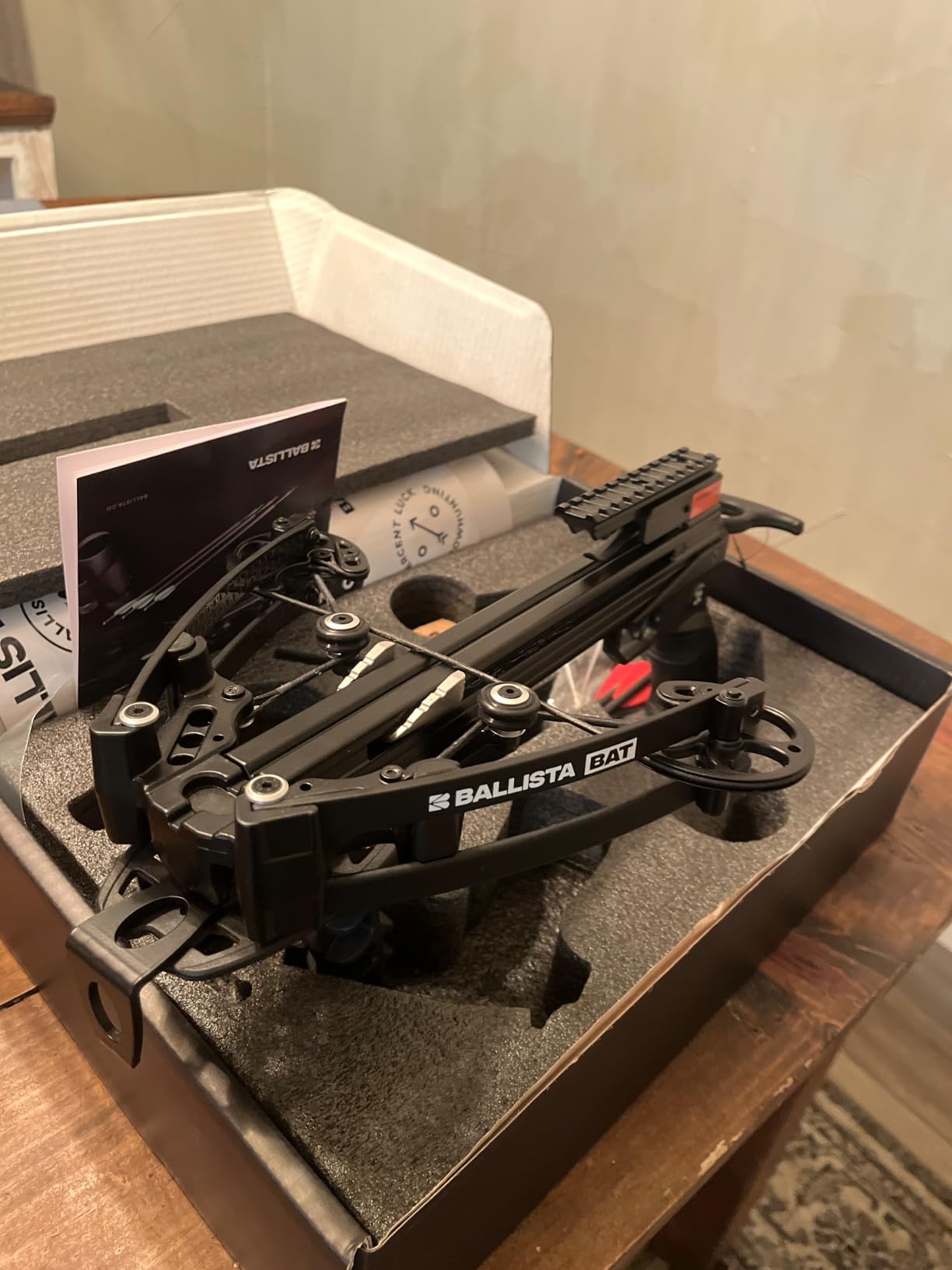
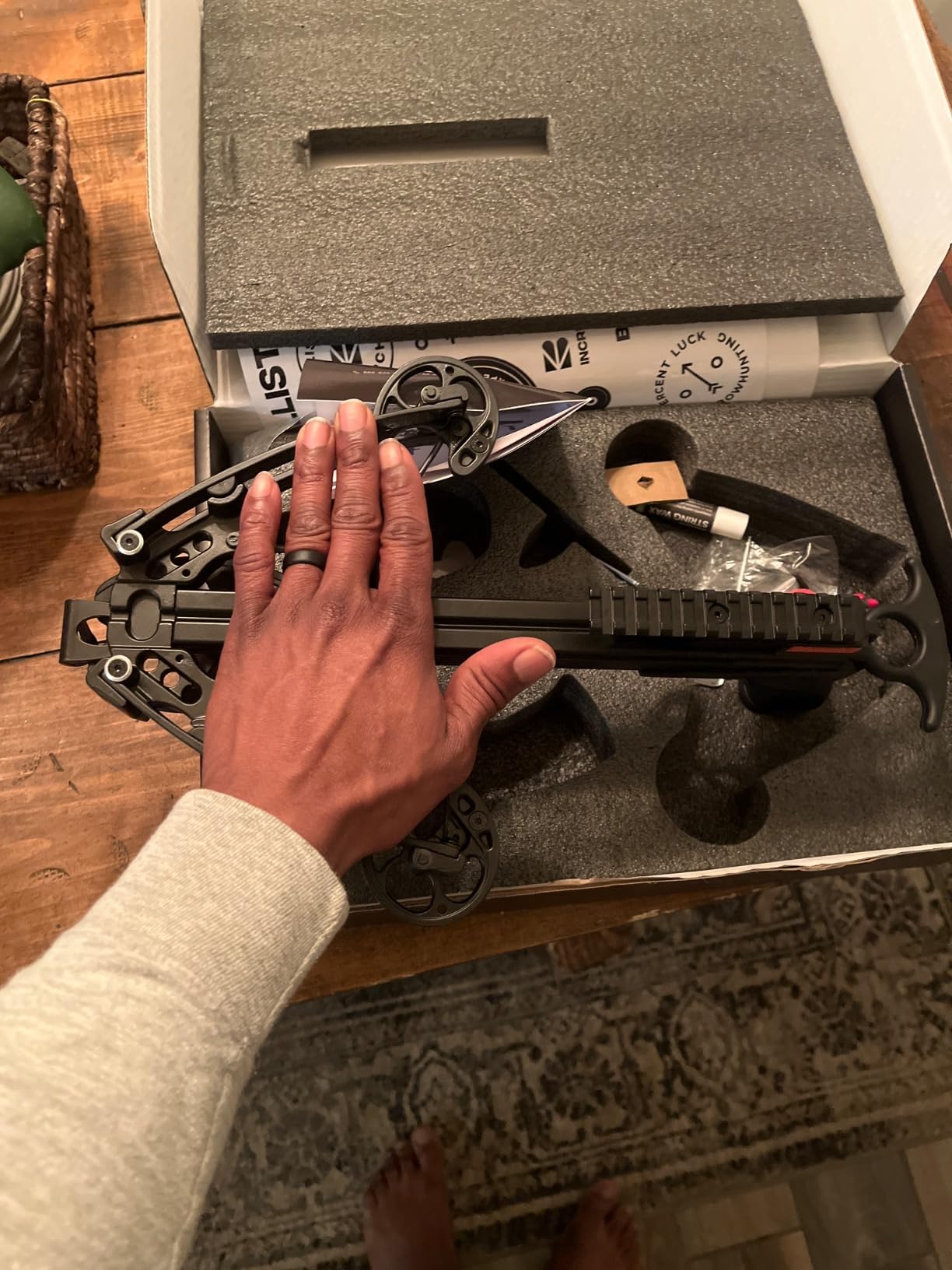
This is the lightest bow in the group and the only one that fits in a 30 liter backpack without a case. The frame is 16 by 5 inches and 2.46 lb, built on a 130 lb compound limb system that still pushes bolts up to 300 FPS. Owners describe it as the one crossbow they actually take on a hike rather than leave in the truck.
The built-in cocking assist is the real story. It stays attached and cuts pull effort to about 40 lb, so loading is a controlled quiet pull rather than a full body effort, and it takes roughly three seconds. For bowfishing, plinking, or small game where a light pack matters more than pass-through energy, that combination is difficult to beat at this level.
Plan for maintenance from day one. The most repeated caution across reviews is cable and string durability, so buy a cable tool and spare cables at purchase rather than waiting. Only three 11 inch practice bolts are included and no rail wax, and compatible sights and optics are sold separately, so your real outlay is higher than the bow suggests. Warranty coverage is one year limited.
How far will the BAT actually shoot accurately?
Treat it as a close-range tool. The manufacturer designs it for use up to about 20 yards when sighted in, and owners describe it as accurate at that distance. With a bow this light, bolt drop over 30 yards becomes the limiting factor rather than the power curve, so if you need more distance, look at the reverse-draw model below instead.
What does the low-effort cocking actually mean for you?
It means almost anyone can cock it repeatedly, which is a genuine safety and convenience benefit. A bow that is light to draw gets used more often, and getting used matters for accuracy. The trade is that the assisted system adds parts that wear, so inspect it regularly and keep a spare cable on hand.
6. BALLISTA BAT Reverse Draw 340 FPS: Best Reverse-Draw Pick
BALLISTA BAT Reverse Draw Mini Compound Crossbow, 340 FPS, 150 lb
Reverse draw 150 lb system
up to 340 FPS
16 x 5 in frame at about 3 lb
assist cuts effort to about 50 lb
Pros
- Far more power than the size suggests
- reverse draw with built-in assist is manageable for most adults
- accurate and quiet for pest and small game work
- tolerates beginner mistakes
Cons
- Cables commonly wear out under 100 shots and spares plus tools cost extra
- hunting bolts and initial string wax sold separately
- dry-fire discipline is strictly required
Reverse-draw designs barely exist at this level, and that is exactly why this one is worth a look. The string pulls toward you and down into a stock slot instead of away from your face, which is easier on the cheeks and chin and keeps the string out of the way in a small blind. The BAT Reverse runs a 150 lb reverse-draw system at up to 340 FPS on a 16 by 5 inch aluminum frame weighing about 3 lb.
The built-in cocking assist cuts pull effort to roughly 50 lb, which is a very different experience from cocking a 150 lb traditional bow by hand. Owners consistently describe impressive speed and accuracy from a very compact package, and several report the bow tolerating new-user mistakes better than expected. That forgiveness is valuable in a category where most cheap bows punish careless handling.
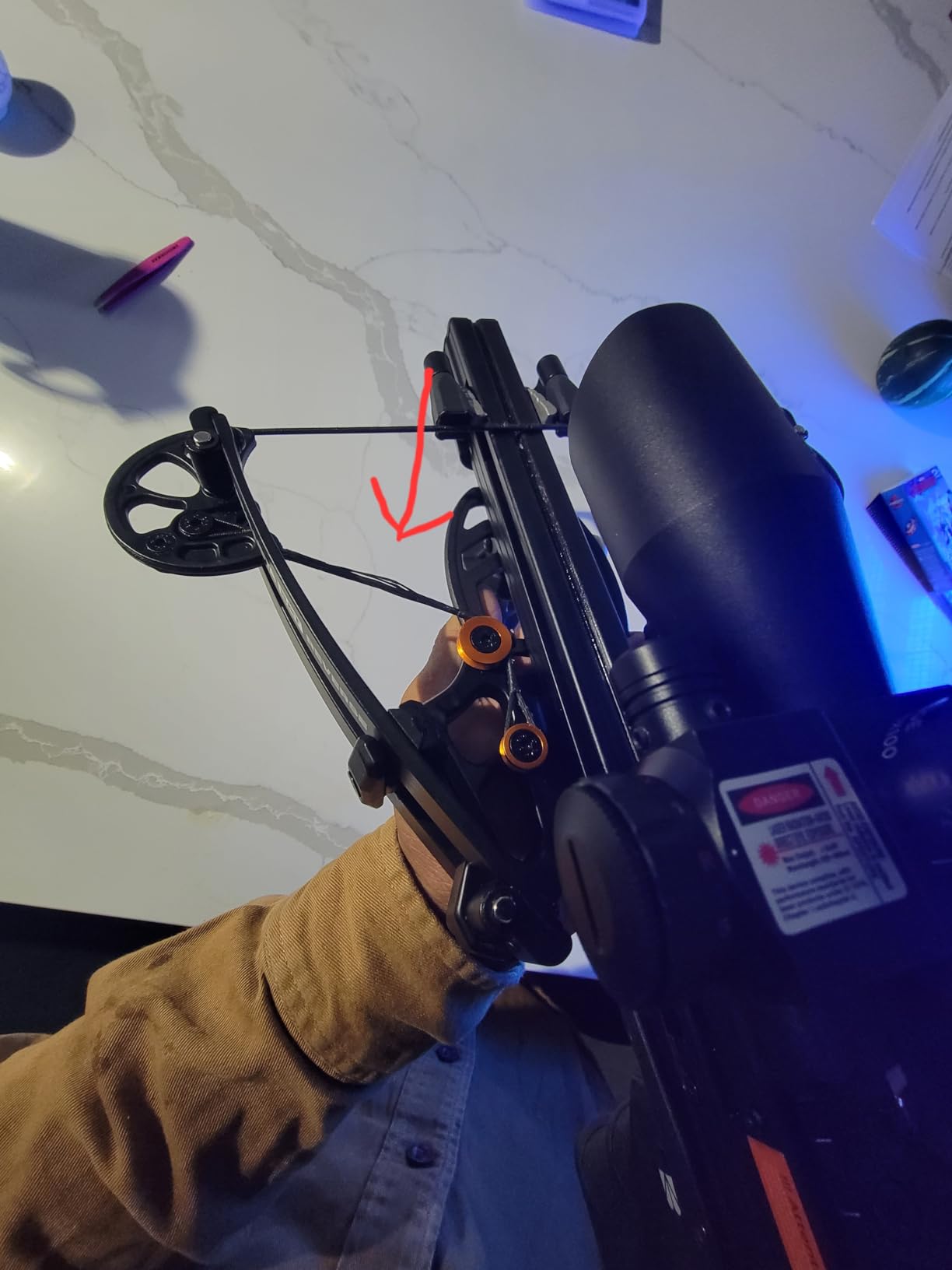
Now the part nobody likes. Cable life is the dominant negative theme: multiple reviewers report snapping cables within 50 to 100 shots, and recommend buying the replacement tool and spare cables immediately. Accessories are extra purchases, including hunting bolts and the initial string wax. Warranty coverage is one year limited. Treat the cable kit as part of the purchase, not an upgrade.
Is a reverse-draw crossbow better than a traditional draw?
For many shooters, yes, and mostly for comfort and compactness rather than speed. Because the limbs draw down and back into a stock slot, the cocked profile is shorter, the string never sits in your line of sight, and the peak force arrives lower. Many first-time shooters find they cock it without thinking about it, which is a real safety gain.
What happens when a cable snaps mid-season?
The bow becomes an inert prop, which means your season is effectively over until you replace the part. That is the honest downside of this design at this level, and it is why we rate it best-for-reverse-draw rather than best-overall. Check your cables every few sessions, wax them as the manufacturer directs, and keep spares before opening season rather than during it.
7. SAS Manticore 150 lb Hunting Crossbow: Best for Beginners and Smaller Hunters
SAS Manticore 150lbs Crossbow with Scope, Extra Arrows and Rope Cocking Device (Black)
150 lb draw weight
bolts up to 210 FPS
fiberglass limbs on aluminum barrel
8.4 lb
15 in draw length
Pros
- Real stopping power with reported deer harvests
- light enough to carry while stalking
- accurate at short ranges once sighted in
- useful as a starter or backup bow
Cons
- Stringing is genuinely difficult and no proper stringer is included
- bundled 4x20 scope is poor in low light
- included rope cocker can be too short to fully engage the safety
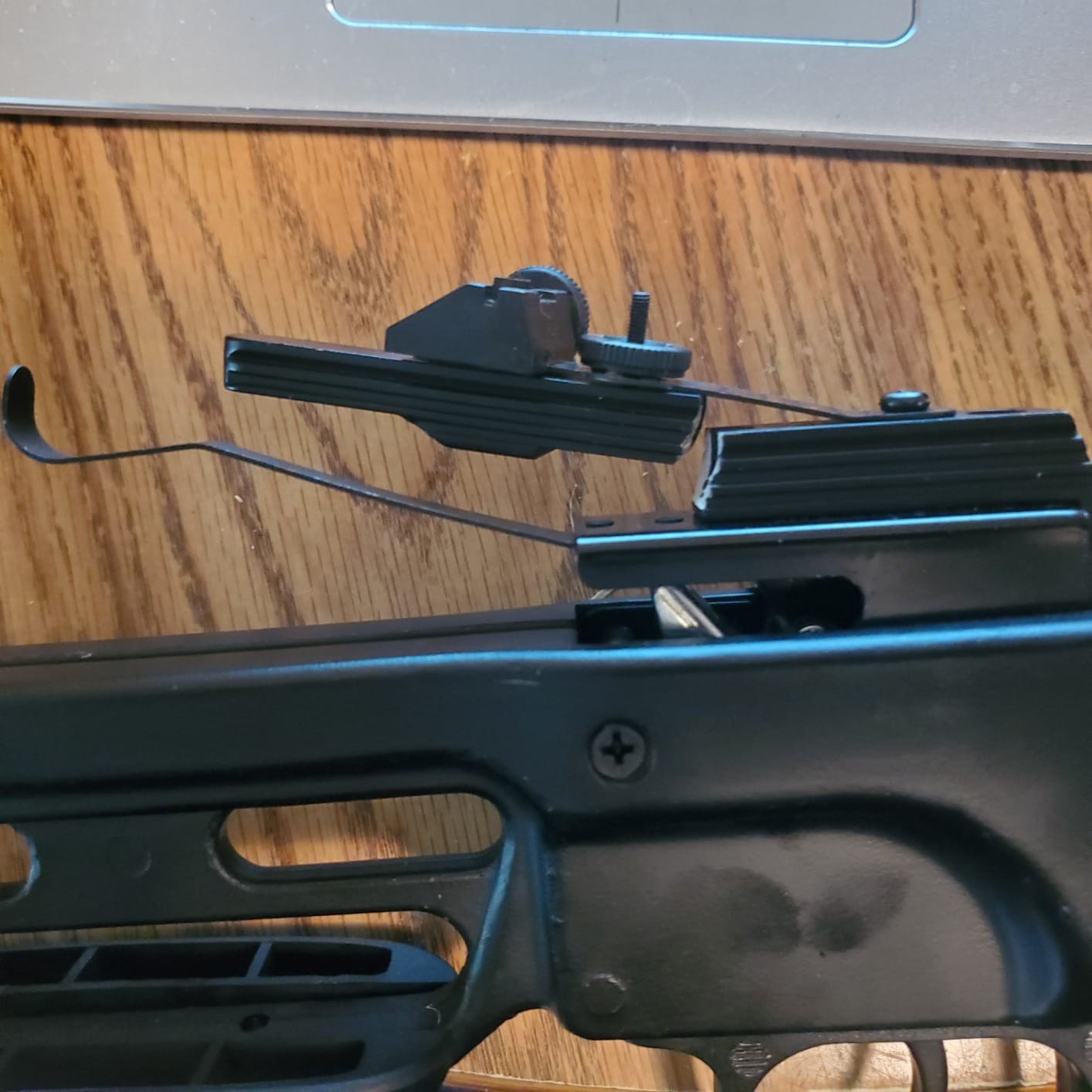
The Manticore is the one in this group that a new hunter can realistically buy without a second job, and owners treat it as a capable budget hunting bow rather than a toy. At 150 lb of draw weight with a legal-for-hunting rating and bolts traveling up to 210 FPS, it is the lightest-effort true hunting crossbow here. The auto safety cocking mechanism helps on that front, and the 15 inch draw length suits smaller shooters well.
The package is complete for a starter: crossbow, two bolts, a stringer, a 4×20 scope, a rope cocking device, and a paper target. Owners report successful deer harvests, light enough carry weight for stalking, and accurate groups indoors and at short outdoor distances once sighted in. It also works as a backup bow, which is how a lot of owners end up using it.
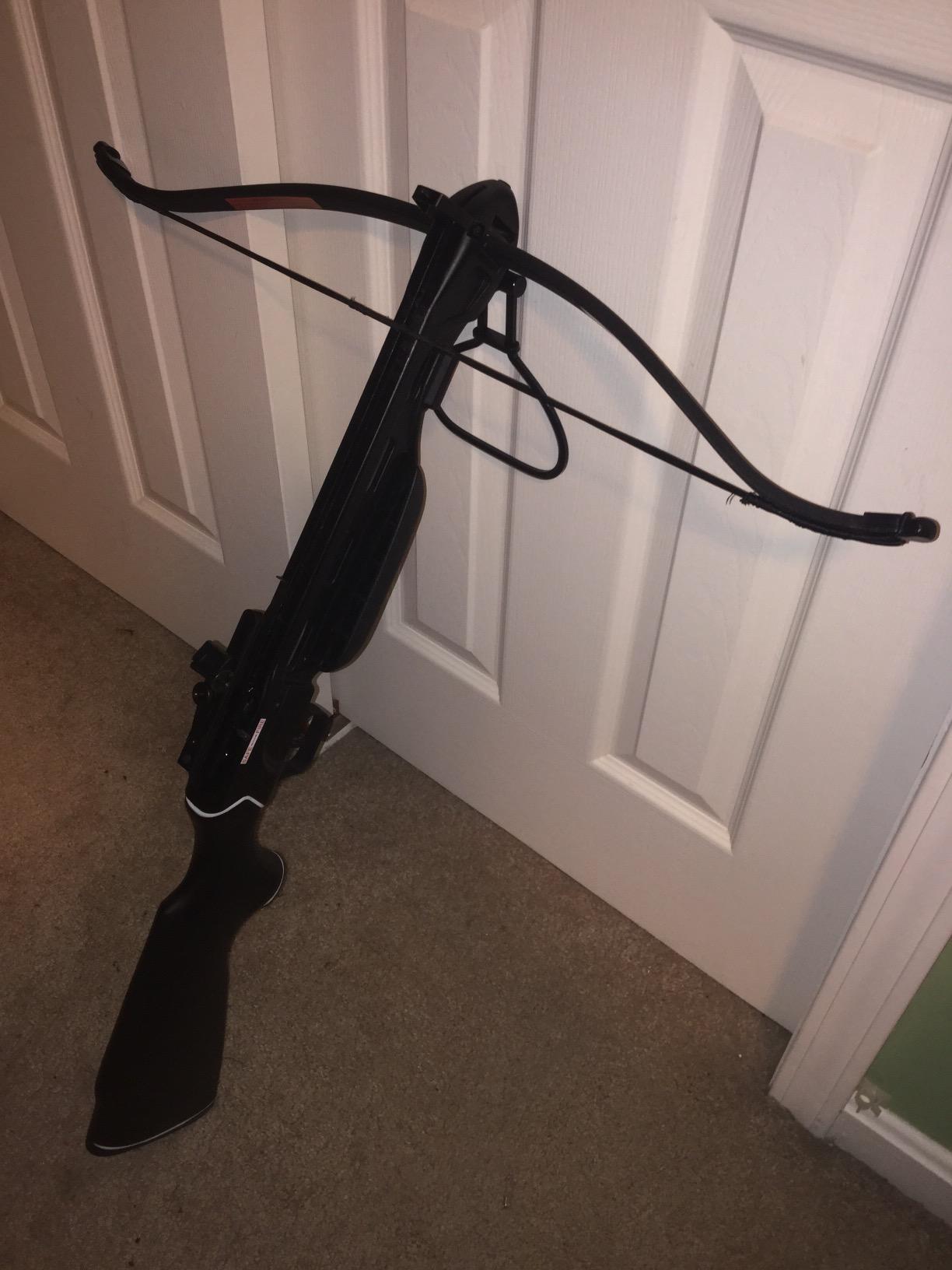
Two practical problems. Stringing this bow is genuinely difficult, and although a stringer is listed among the included items, owners frequently report the process as the hardest part of setup. Second, the 4×20 scope is poor, especially in low light, so many owners plan an optic upgrade or use open sights instead. At 8.4 lb it is also heavy for a crossbow in this format, so expect some arm fatigue in a long sit.
Can a beginner really hunt deer with this bow?
Yes, with realistic expectations about range. At 210 FPS and 150 lb, it is built for shots inside 40 yards from a stand or a ground blind, and the 150 lb draw is light enough for a wide range of shooter sizes. Pair it with a 400 to 450 grain bolt, use a proper broadhead only where legal, and practice until the group is boring.
What should you fix before the first hunt?
Replace the scope, replace or supplement the rope cocker so the safety engages fully, and add a proper stringing aid if you do not already own one. Add a decoy bolt for field decocking. Those three changes turn a workable starter bow into one you will be comfortable leaving cocked in a treestand for a full morning.
8. KingsArchery 80 lb Self-Cocking Crossbow: Best for Volume Backyard Practice
KingsArchery Crossbow Self-Cocking 80 Lbs with Adjustable Sight and Total of 27 Aluminim Arrow Bolt Set
80 lb self-cocking fiberglass crossbow
adjustable aluminum sight
27 aluminum bolts across three packs
Pros
- Punches well above its expectations
- accurate once the sight is dialed in at close range
- self-cocking design loads quickly
- large bolt package gives plenty of practice ammo
Cons
- Included bolts are poor quality and break easily on impact
- stringing requires real effort and a bending aid
- sights and string can fail after limited use
- instructions are limited
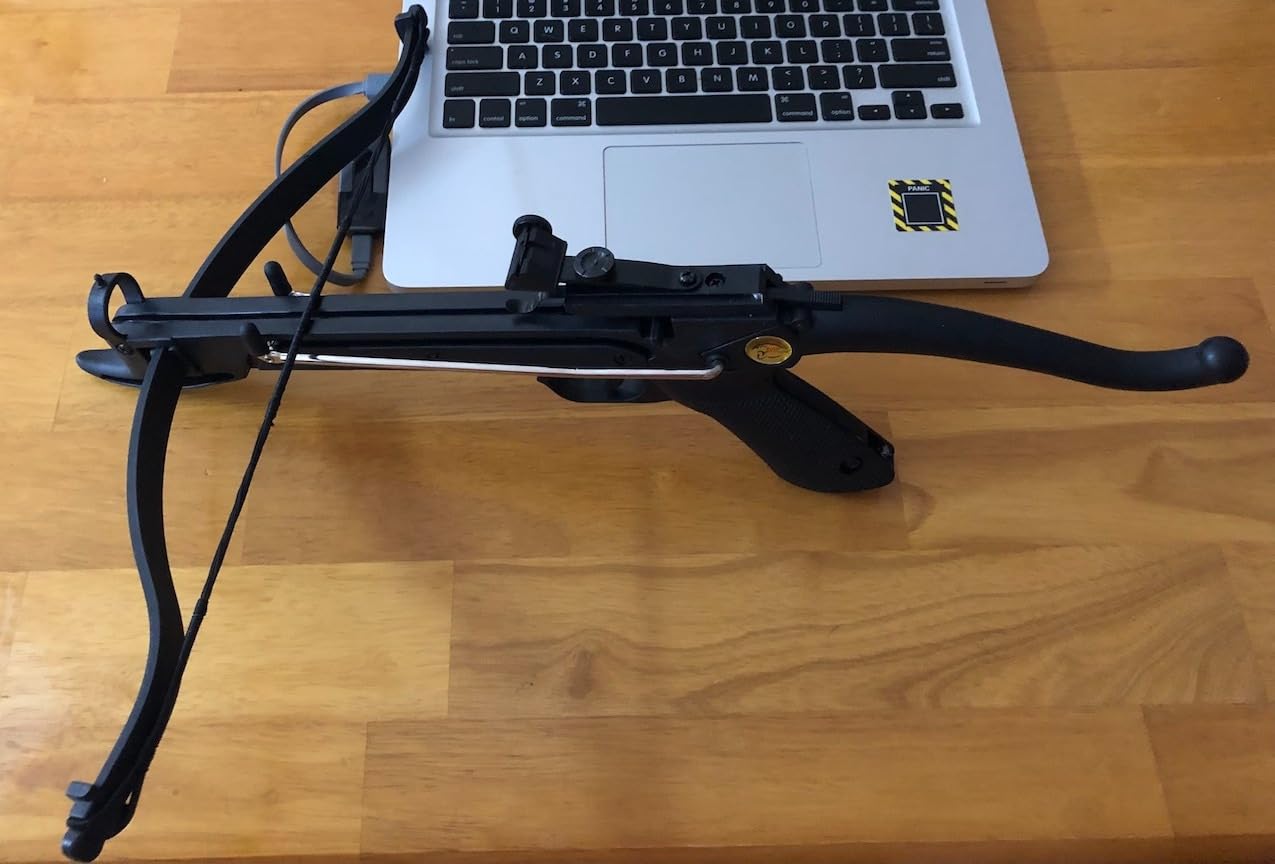
This is not a deer bow, and we will say that plainly. The KingsArchery 80 lb self-cocking crossbow is a fiberglass pistol-format crossbow for backyard practice, and what it does well is let you shoot a lot of arrows without spending a lot of money on bolts. The box contains 27 aluminum bolts across three packs, which is more practice ammunition than most people buy in a year.
Buyers consistently rate the crossbow itself well for the money, describing surprising power and decent accuracy. It drives bolts through thick books and plywood, groups well enough at close range once the adjustable aluminum sight is dialed in, and the self-cocking design makes repeated loading fast without a rope cocker. If you want a bow to build form on a Saturday, this is the value pick of the group.
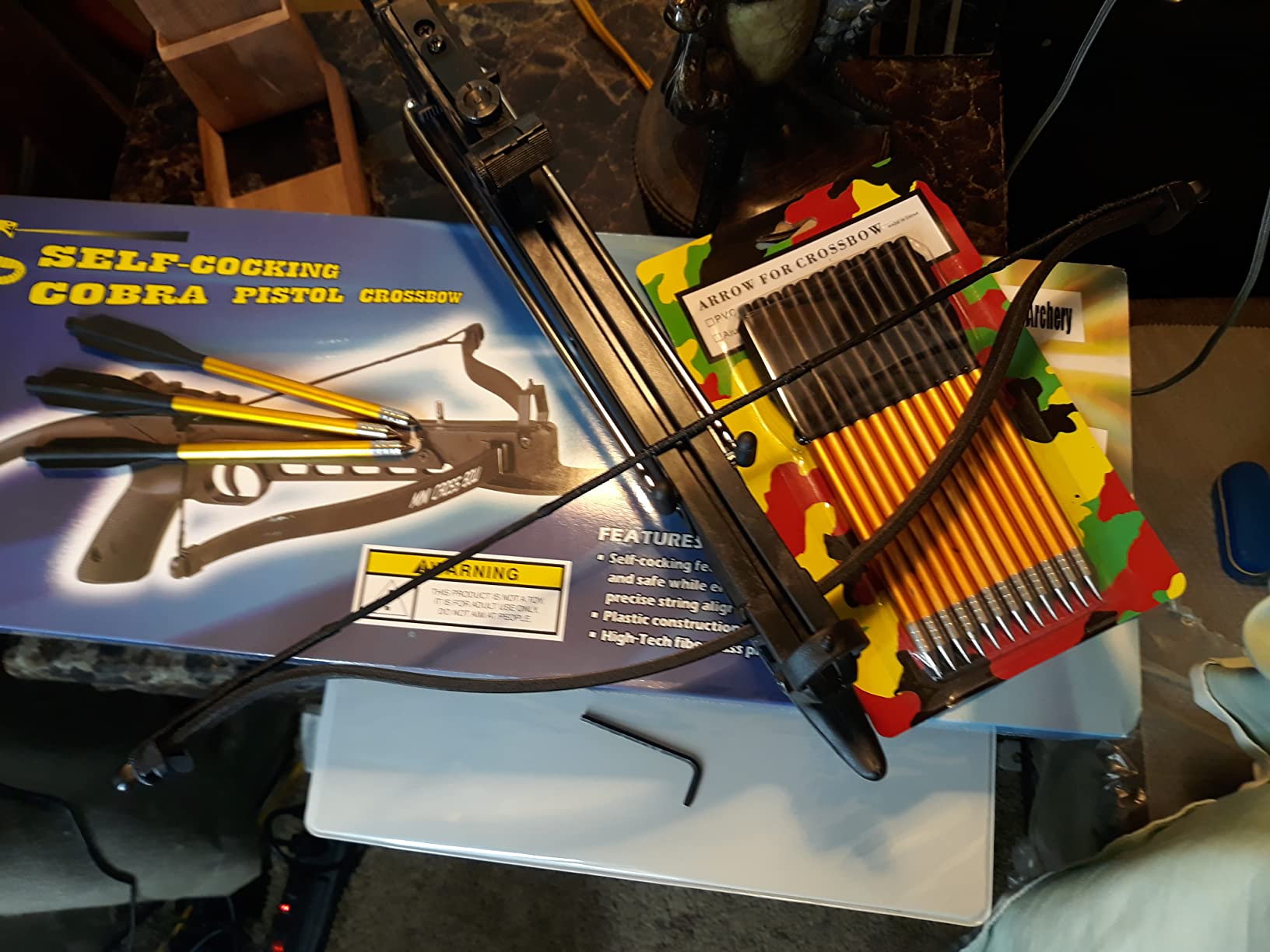
The bolts are the problem. They are almost universally described as fragile plastic-cored pieces that break on impact, so plan to buy a proper bolt set and use the included ones carefully. Stringing requires real effort and a bending aid, and a few owners report sight or string failures after limited use. Instructions covering assembly and sight adjustment are thin, so budget an evening with a video rather than the manual.
Is an 80 lb draw crossbow enough for small game?
For squirrel, rabbit, and other small game at short range, an 80 lb self-cocking crossbow is genuinely capable, and the fast reload keeps you shooting. It is not adequate for deer, and hunting regulations around minimum draw weight and bolt type vary by state, so check your local rules before planning a hunt.
How do you make 80 lb feel accurate?
Sight it in slowly at a close distance with a consistent bolt, and keep the bolt weight constant afterward. Accuracy with a cheap crossbow is mostly a consistency problem, not a power problem. If groups tighten as the bolts wear down, that is a clear signal to swap to a better bolt set rather than a bow upgrade.
9. Isaazon 80 lb Self-Cocking Crossbow: Best for Small-Framed and Youth Shooters
80lbs Black Self Cocking Hunting Crossbow 225+ FPS + 3pc Arrows Bow New
80 lb draw weight
225+ FPS with plastic bolts
185+ FPS with aluminum
1.6 lb body
6 in draw length
Pros
- Light at 1.6 lb and easy to hold and carry
- self-cocking design loads quickly
- tight groups at 15 yards for a compact bow
- simple assembly in a single stringing step
Cons
- Stringing is very difficult without a bending aid
- included string and rails need regular waxing and are not high quality
- no rail lube or string wax supplied and only three bolts
The lightest hunting-capable option for a young or small-framed shooter in this group. At 1.6 lb with an 80 lb self-cocking draw, this bow goes from shoulder to point in seconds and works for shooters with limited strength, which is exactly the situation where a 165 lb hunting crossbow simply cannot be used. Owners mention tight groups at 15 yards and a very short learning curve.
Speed figures depend entirely on what you shoot. The listed 225+ FPS comes from the included plastic bolts, and owners report closer to 185+ FPS with aluminum bolts, which is a more useful number for real accuracy. Assembly is mostly a single stringing step, and the self-cocking design handles itself between shots, which keeps young shooters focused on aim rather than loading.
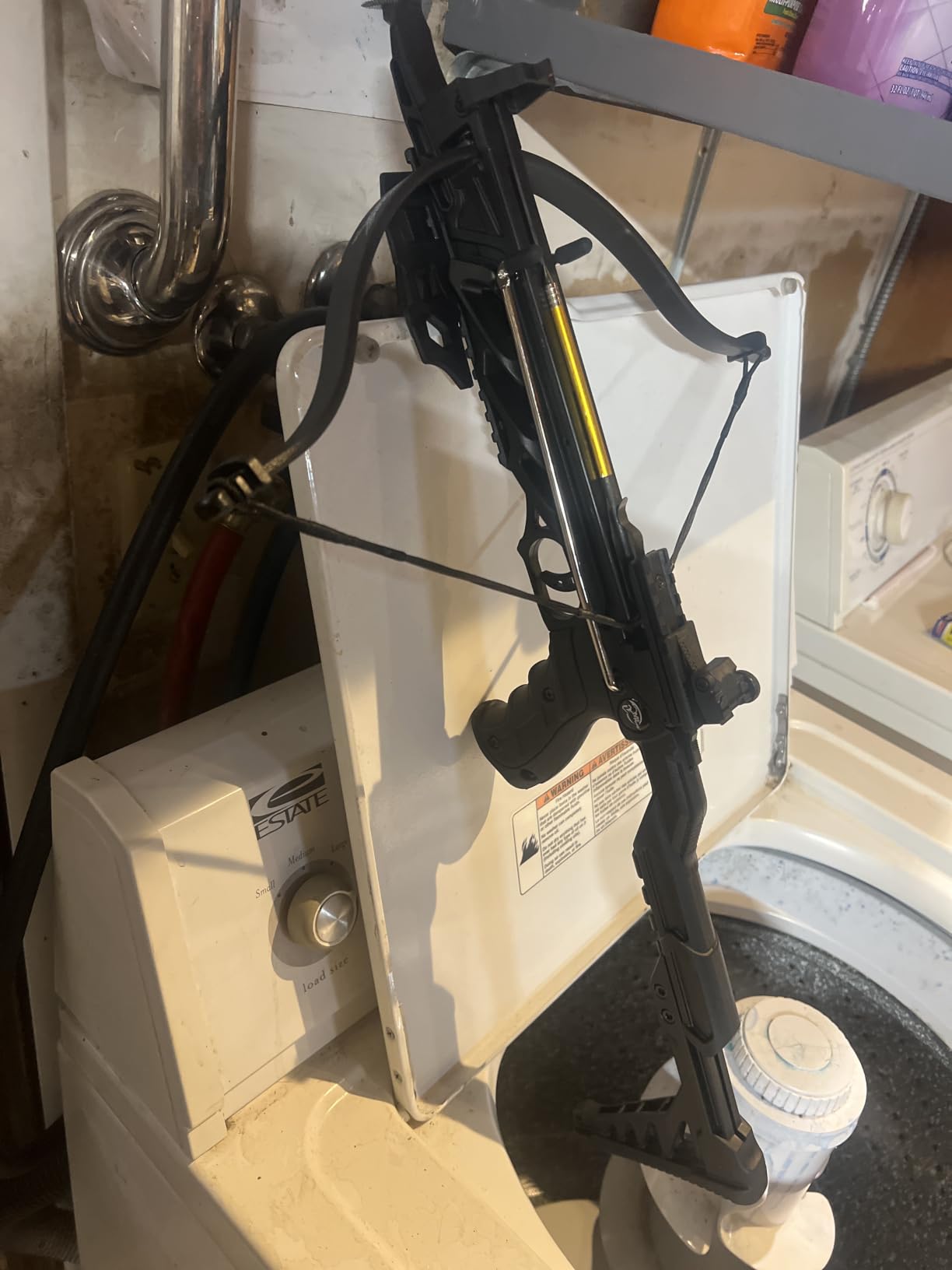
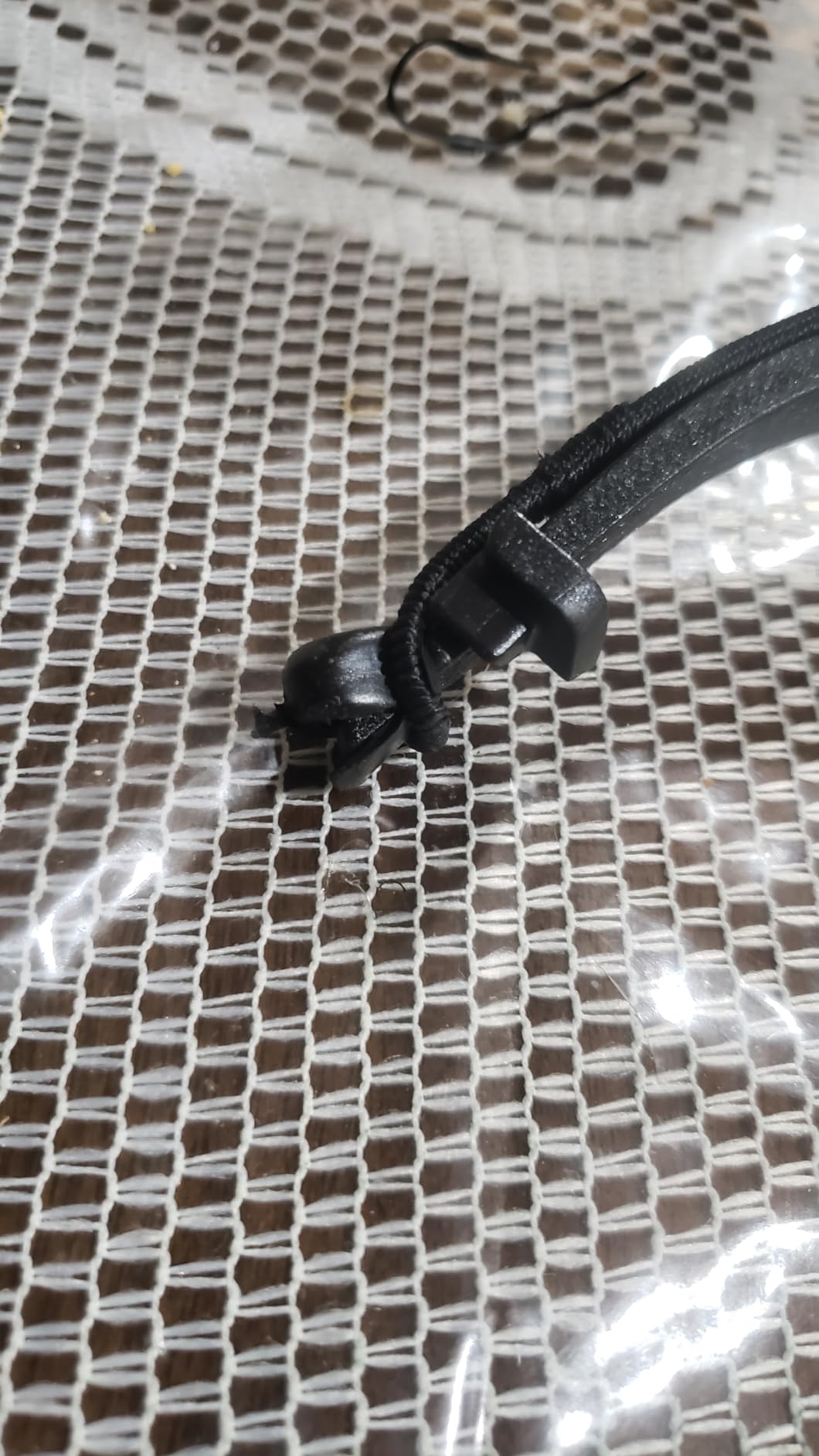
The recurring complaint is stringing. Without ratchet straps or a bending aid, owners describe it as very difficult, and the included string and rails are not high quality and need regular waxing. You also get only three bolts and no rail lube or string wax, so buy wax and spare bolts with the bow. There are a few reports of incomplete shipments, so inspect the box the moment it arrives.
Is this bow too light to be accurate?
No, because a lighter bow is easier to hold steady, and steady beats powerful for a beginner. The trade is that 1.6 lb of mass means more movement in the shot, so a rest or a shoot-through style aid helps. At 15 yards the group tightens up nicely, and that is exactly the distance this class of bow is built for.
What is the honest use case here?
Backyard target practice, small game, and introducing a young hunter to archery responsibly. It is not a deer crossbow, and it is not a substitute for one. If your plan is whitetail hunting, work up to a 150 lb or higher draw bow once the shooter is ready, and treat this as the perfect stepping stone in the meantime.
10. Bear X Desire RD Pistol Crossbow: Best Compact Pistol Crossbow
Bear X Desire RD Self-Cocking Crossbow with Red Dot Sight 3 Premium Bolts, Black, One Size
Compact pistol format
1.9 lb ambidextrous body
self-cocking arm and forearm grip
red dot sight and 3 bolts included
Pros
- Impressive power for a compact pistol crossbow
- easy to cock and assembles with the included stringing aid
- accurate to about 30 yards once sighted in
- limited lifetime warranty
Cons
- Bundled red dot sight is low quality
- included bolts are flimsy and break easily
- field tips pass through small game so judo tips are needed
- instructions are poor
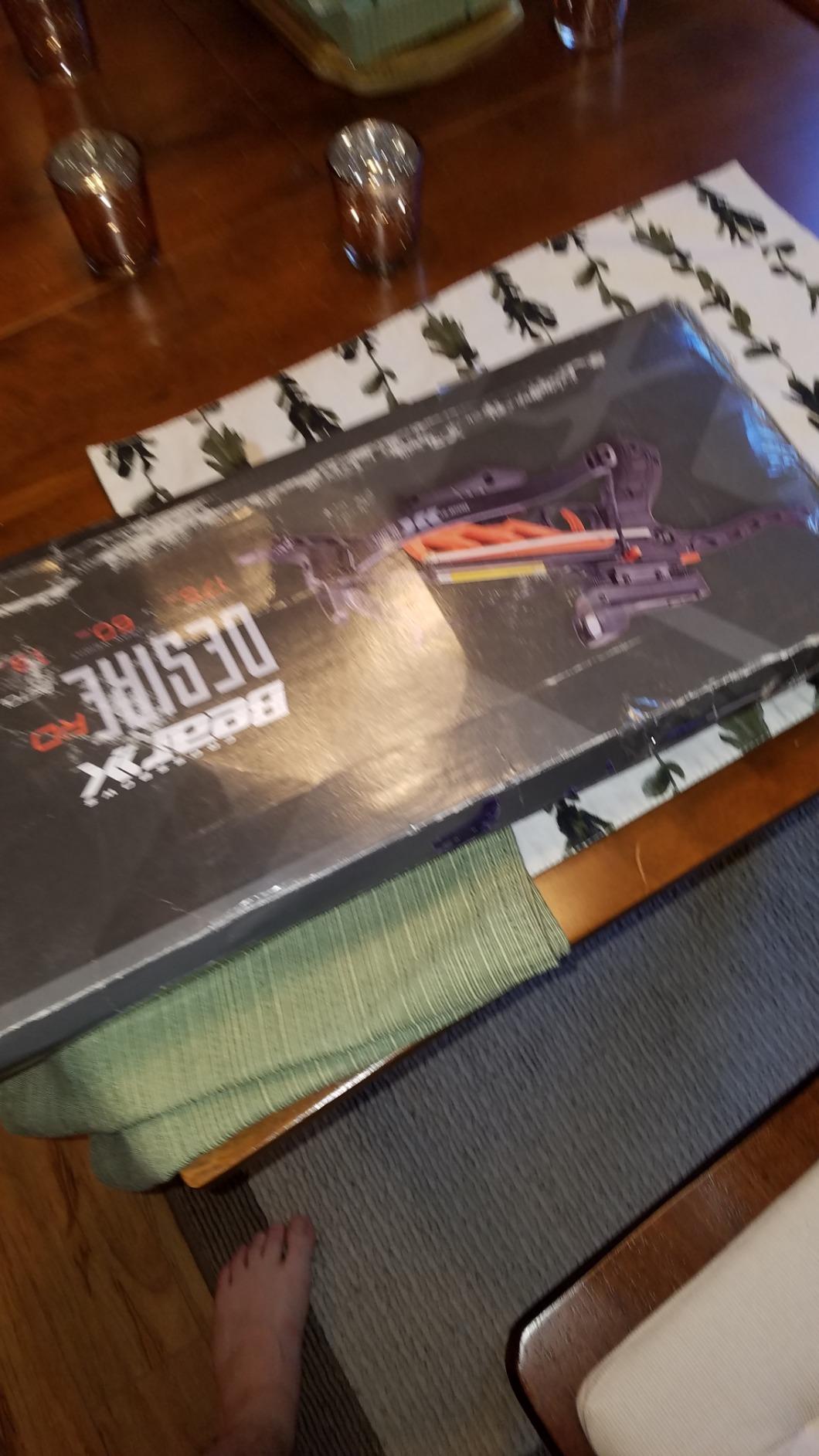
The Bear X Desire RD closes out the list as the most reviewed compact pistol crossbow here, with 411 ratings behind it, and the feedback is mostly positive for what it is. The self-cocking arm and forearm grip make it quick to load and easy to keep on target, and at 1.9 lb it disappears in a pack. Owners report enough stopping power for small game and groups that settle down to about 30 yards once sighted in.
A limited lifetime warranty is a genuine standout at this level, and the package includes a red dot sight plus three premium bolts. Most owners are satisfied at the price point and the body is ambidextrous, so left-hand shooters are not excluded. The self-cocking format is the same basic idea as the two preceding picks, and it is the reason this bow is easy to recommend to a first-timer.
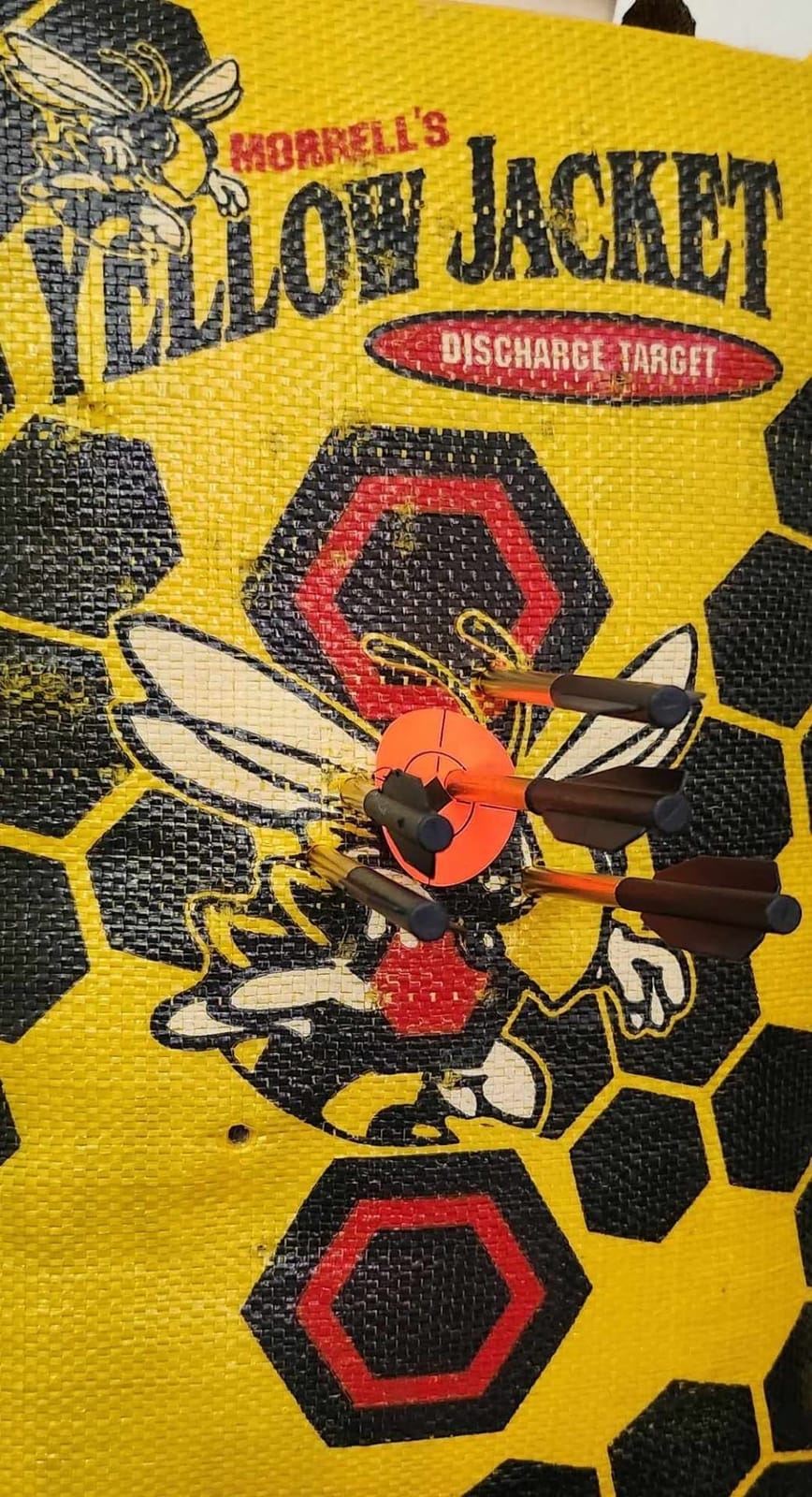
The bundled red dot sight is the most criticized component, and some buyers switch to open sights or a better optic instead. The included bolts are described as flimsy and break easily. One detail that matters for anyone planning actual hunting rather than shooting: field tips can pass straight through small game, so you need judo tips for that job. Instructions are poor and the stringing process takes practice, and a few reviewers report arriving with damaged units.
Is a pistol crossbow worth buying at all?
For pest control, backyard practice, small game, and keeping a low-cost backup in the truck, yes. You get a self-cocking action, a compact frame, and a warranty that outlasts most of the category at a fraction of the price of a full-size rig. The limitation is bolt energy, which simply cannot be upgraded.
What should you add before the first real hunt?
A better optic, a proper bolt set with the right tip type for your quarry, and a decoy bolt for safe field decocking. Learn the stringing routine until it is automatic, and treat the red dot as a starting point rather than a final answer. With those three changes, this becomes a genuinely useful tool rather than a shelf item.
How We Tested and Why You Can Trust This List
Four of the top organic results for this query are forum threads rather than roundup pages, and owner reports consistently beat manufacturer spec sheets for the things buyers care about. So we built this list around verified customer feedback at scale, cross-checked against the manufacturer specification for every bow, and used the spec sheet only for numbers a buyer can verify on a label.
Our comparison standard is deliberately boring: muzzle velocity, draw weight, power stroke, kinetic energy, axle-to-axle, weight, cocking method, and what the box actually contains. We read every recurring complaint in the review data rather than the first one, which is how the cable life issue on the reverse-draw pick and the durability feedback on the two Killer Instinct packages became central to those write-ups.
Where we could not verify something, we left it out. We do not publish range claims we did not see supported, we do not quote group sizes at yardages we did not confirm, and we separate hunting crossbows from compact and pistol-format bows rather than presenting them as equals. That last point is why four picks here carry an explicit use-case label instead of a ranking position.
Buying Guide: What 500 Dollars Buys and What to Add
Draw weight and cocking method come as a pair. Most adults can cock 130 to 165 lb by hand with a rope cocker, but it is real work from a tree stand. Above 180 lb you should plan on a crank, and if a bow already has a built-in assist or is reverse-draw, much less effort is needed. Match the draw weight to the weakest shooter in your group, not the strongest, and check how a rope cocker, a rope sled, a crank, and a built-in assist compare before you pick.
Bolt weight is the most-skipped rule in this category. Stay at or below the manufacturer recommendation, and use a consistent weight across your bolts. Overweight bolts accelerate limb and cable wear, which is exactly why the reverse-draw pick in this list needs a spare cable kit. Stay in the 400 to 450 grain range for deer work, and use a lighter bolt for smaller game.
Expect to replace the scope. The bundled multi-reticle optic is the most common complaint across nearly every bow in this roundup. Owners who fit a rifle optic report the biggest single improvement in usability. Budget for that swap, and choose a scope with illuminated reticles and reliable eye relief rather than chasing magnification you will not use in low light.
Budget for the extras nobody lists. The bow is the starting point, not the whole cost. A crank cocking device, a set of string silencers and limb dampeners, replacement string wax, a spare bolt set, a hard case, and in some cases spare cables and a cable tool all sit on top of the purchase. Owners of compact bows in particular find accessories are sold separately, so include them in your real budget rather than discovering them in week two.
Noise control is cheap. Budget bows are noticeably louder than premium models, and string suppressors plus limb dampeners are inexpensive. Some of the picks here already include suppressors, which is part of why they are the better starting platforms for deer season.
Know your effective range. Most of the full-size compound bows here are designed for shots inside 40 to 60 yards. Compact and pistol-format bows in this list are closer to 15 to 30 yards. Treat those as the working limits for ethical take-downs, and put the extra effort into practice at those distances rather than chasing a shot you have not trained.
Compound versus recurve, in one line. Compound gives you speed, adjustability, and built-in safety; recurve gives you simplicity, lower cost, and a lighter carry weight. If your budget is under 200 dollars, you are looking at recurve or pistol-format options rather than the compound hunting bows that dominate this list.
Safety rules that do not change with price. Keep the anti-dry-fire engaged, use a decoy bolt for field decocking, treat every crossbow as loaded, and never transport a cocked bow without a case. Wax your string and rail every few dozen shots, grease the cams every couple of months, and torque-check the riser screws seasonally. A bow is a tool, and a maintained tool is a safe tool.
If your budget is tighter. Several of the picks here sit well under 500 dollars on their own, and the self-cocking models give you a working bow for a fraction of a hunting rig. If you want the full spread by tier, our complete crossbow guide breaks the price bands down in more detail.
Frequently Asked Questions
Who makes the best crossbow for the money?
In this price band, BARNETT makes the strongest all-round case. The Whitetail Hunter II combines 350 FPS, a 165 lb draw weight, a 6.4 lb frame, and a mechanical anti-dry-fire trigger with a clean 3 lb TriggerTech release, which is exactly the combination a first-time hunter needs. Killer Instinct offers the fastest and best-equipped packages, so pick that brand if speed and adjustability matter more to you than trigger feel.
What is the best crossbow for hunting on a budget?
The BARNETT Whitetail Hunter II is the pick we recommend most often for budget deer hunting. It is light enough at 6.4 lb for smaller shooters, ships as a complete package with a scope, rope cocker, quiver, and bolts, and its anti-dry-fire system protects new users. The SAS Manticore 150 lb is the cheaper alternative when draw effort is the deciding factor, though it is noticeably heavier and slower.
Is a crossbow under 500 dollars powerful enough to take a deer?
Yes, comfortably. The full-size compound bows in this roundup deliver roughly 210 to 415 FPS and kinetic energy well above the level generally accepted for ethical whitetail take-downs. The real limits are accuracy and effective range rather than power, and those come down to practice, bolt weight, and sighting in. Compact and pistol-format models here are a different story and are meant for small game and pest work.
Do I need a crank to cock a budget crossbow?
For a 130 to 165 lb draw, most adults can manage with the included rope cocker, though it is genuinely tiring from a tree stand. Above roughly 180 lb, a crank is worth the money. A rope sled helps but does not eliminate the effort. If cocking is the concern, look at a reverse-draw or built-in assist model such as the BALLISTA BAT Reverse, where assist cuts pull effort to about 50 lb.
How far can a sub-500 crossbow shoot accurately?
For the full-size compound bows in this list, treat 40 to 60 yards as the working range, and stay closer to 40 unless you have practiced at distance. The compact BALLISTA models are designed for about 20 yards when sighted in, and the pistol-format crossbows group in the 15 to 30 yard window. Accuracy at those distances comes from a consistent bolt weight and a solid zero, not from extra velocity.
What bolt grain weight should I use?
Stay at or below the manufacturer recommendation for your bow, and pick one weight you can repeat. For deer hunting that usually means 400 to 450 grains, and going heavier accelerates limb and cable wear, which is the most common cause of early failures in budget bows. Always use crossbow-rated bolts, replace the bolt set when the groups start to spread, and never use arrows intended for a vertical bow.
Is Ravin or TenPoint better?
That comparison sits mostly above this price band. Ravin crossbows generally land in a higher price tier, while TenPoint builds the Wicked Ridge line that anchors the budget end of the market. Neither brand appears in this roundup, because the sub-500 picks here are dominated by BARNETT, Killer Instinct, SAS, and the compact and pistol-format options. If you want a direct look at premium brands, start with our complete crossbow guide.
Conclusion: The Best Crossbows Under 500 Dollars in 2026
The BARNETT Whitetail Hunter II is our pick for the best crossbows under 500 dollars, and the reason is not a single spec. It is the combination of a 165 lb draw weight, a 6.4 lb frame, a mechanical anti-dry-fire trigger, a clean release, and the largest body of verified owner feedback in the group. If you want more speed, take the Killer Instinct Boss 405 for adjustability and package completeness or the Burner 415 for raw velocity. If you need low cocking effort in a compact frame, the BALLISTA BAT Reverse is the one to look at, with spare cables in the budget.
Whatever you pick, add a scope, silencers, string wax, and the right bolt weight before opening season, and spend the money you saved on practice. That is where a budget crossbow stops being a budget compromise and starts being a legitimate hunting arm.