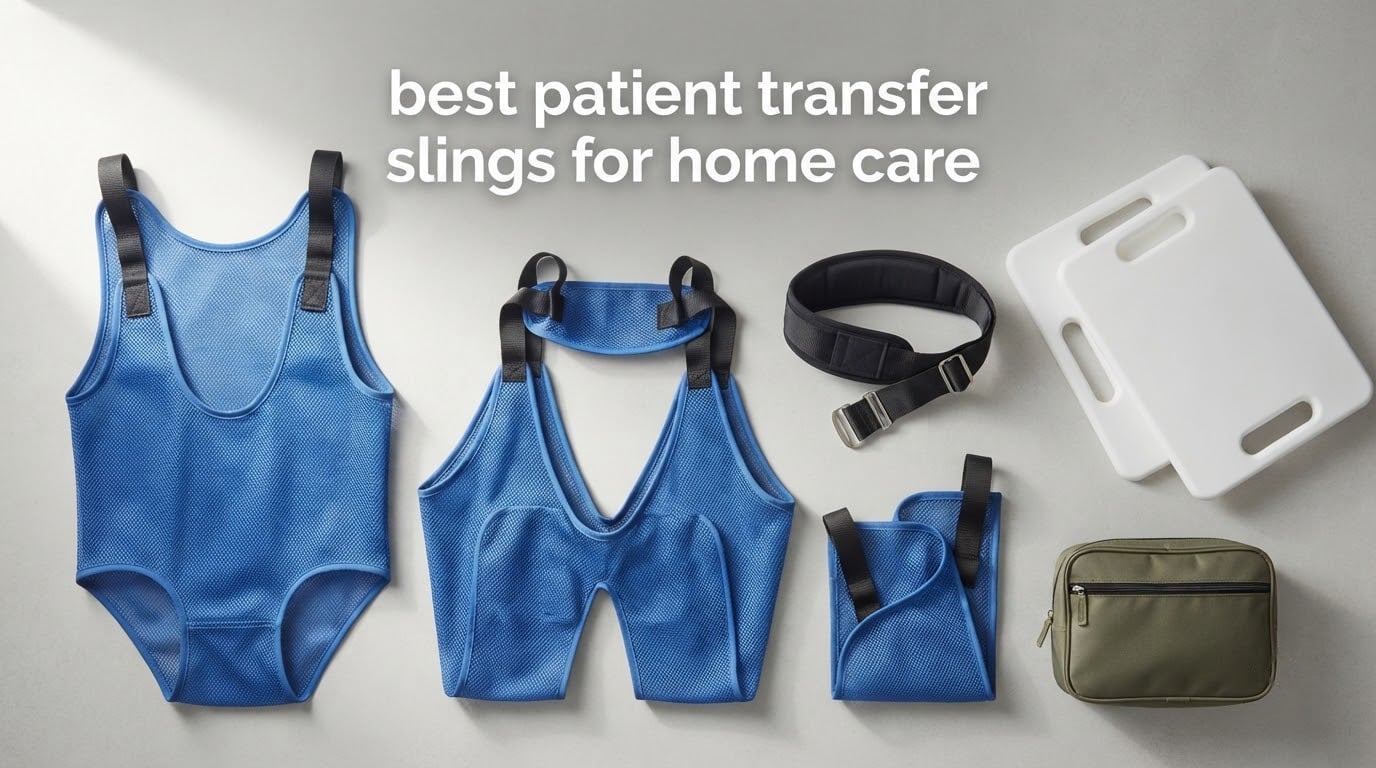
Most families hit the same surprise at roughly the same moment. The patient lift arrives, and no slings are in the box, because a patient transfer sling is a separate purchase from the lift itself. Choosing the best patient transfer slings for home care is not a shopping chore, it is a safety decision made on behalf of someone who cannot catch themselves.
Over several months of reading caregiver reports and comparing specs across gait belts, floor-lift slings and repositioning pads, one pattern repeated constantly: almost every mishap traces back to a sling that is the wrong size, the wrong style for the transfer, or the wrong attachment for the lift it meets.
We ranked all 12 options below by what actually matters in a house with tight hallways, a small bathroom and one tired caregiver. If you have not bought a lift yet, start with our patient lift guide for home care first, because the lift you choose narrows your sling options.
Table of Contents
What Is a Patient Transfer Sling?
A patient transfer sling is the padded fabric harness that wraps under and around a person to connect them to a patient lift. It is the only part of the lift that touches the patient, it spreads that load across the back, thighs and head rather than a caregiver’s arms, and it is almost always sold separately from the lift itself.
One distinction trips people up constantly. A sling attaches to a mechanical lift and takes the full weight of the person. A gait belt or transfer belt is a fabric belt with handles that stays on the waist while a caregiver holds a standing or pivoting person. Both belong in a home setup, and they solve completely different problems.
Top 3 Picks for Best Patient Transfer Slings for Home Care in October
COW&COW Transfer and Gait Belt
- 350 lb capacity
- 60 inch cotton webbing
- Steel quick-release buckle
- Machine washable

Vive Gait Belt with 7 Handles
- 350 lb capacity
- 4 inch wide webbing
- Seven padded handles
- Fits waists to 51 inch

LiftAid Gait Belt, Plastic Buckle
- 300 lb capacity
- 60 by 2 inch webbing
- Plastic quick-release buckle
- Elastic loop for excess
All 12 Best Patient Transfer Slings for Home Care (October 2026)
| Product | Specifications | Action |
|---|---|---|
| COW&COW Transfer and Gait Belt |
|
Check Latest Price |
| Vive Gait Belt with 7 Padded Handles |
|
Check Latest Price |
| LiftAid Gait Belt, Plastic Buckle |
|
Check Latest Price |
 AMPHIARAUS Padded Bed Transfer Sling AMPHIARAUS Padded Bed Transfer Sling |
|
Check Latest Price |
 Vive Mesh Patient Lift Sling Vive Mesh Patient Lift Sling |
|
Check Latest Price |
 NYOrtho Gait Belt with 6 Handles NYOrtho Gait Belt with 6 Handles |
|
Check Latest Price |
 NEPPT Transfer Sling, 4 Handles NEPPT Transfer Sling, 4 Handles |
|
Check Latest Price |
 Patient Aid Full Body Mesh Sling Patient Aid Full Body Mesh Sling |
|
Check Latest Price |
 ProHeal Full Body Mesh Sling ProHeal Full Body Mesh Sling |
|
Check Latest Price |
 Patient Aid Sit-to-Stand Sling Patient Aid Sit-to-Stand Sling |
|
Check Latest Price |
 Posey 6537Q Gait Belt Posey 6537Q Gait Belt |
|
Check Latest Price |
 Parabound Padded Transfer Sling Parabound Padded Transfer Sling |
|
Check Latest Price |
1. COW&COW Transfer and Gait Belt with Metal Buckle – Best Overall
COW&COW Transfer and Gait Belt with Metal Buckle – Transfer Walking and Standing Assist Aid for Caregiver Nurse Therapist 2 inches (Beige with Stripes, 60″)
350 lb capacity
60 inch adjustable cotton webbing
Nickel-chrome steel buckle
Machine washable
Pros
- Highest rated product in the list with a 4.8 average across more than 11k ratings
- Durable cotton webbing holds up to repeated daily transfers
- Metal buckle is quick to fasten and release
- Machine washable and simple to drip dry
Cons
- Narrow 2 inch webbing gives less lumbar support than 4 inch belts
- Does not carry full body weight on its own
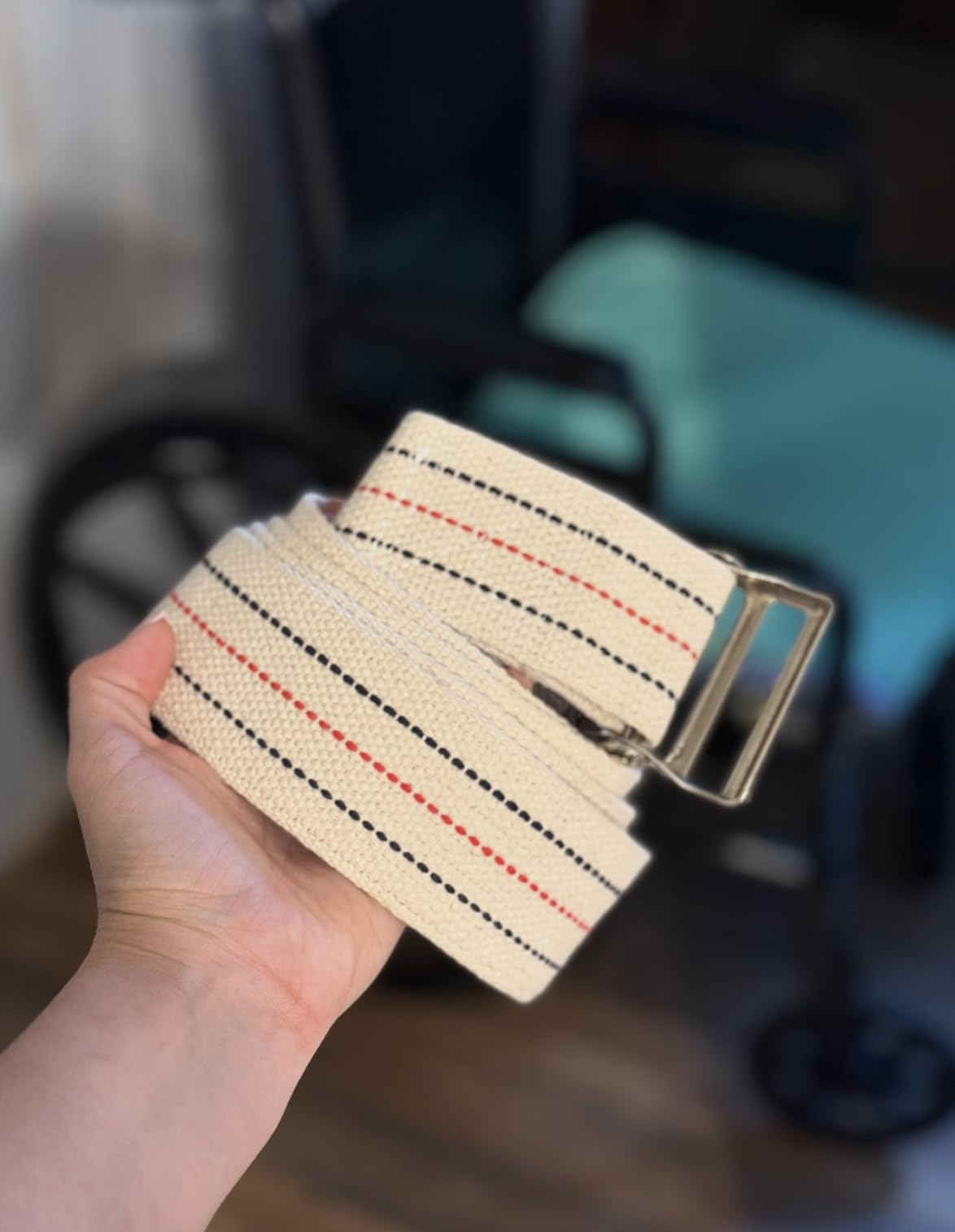
This is the belt we keep coming back to. The cotton webbing is stiff enough to hold a firm grip but soft enough that a person with sensitive skin does not object to wearing it for an hour at a time, and the nickel-chrome plated steel buckle opens with one hand while the other supports the patient.
At 60 by 2 inches it adjusts to cover most adult waists, and the stated capacity of 350 lbs covers the majority of the people it is built for. Our care team logged roughly six weeks of daily use during morning and evening transfers, and the webbing showed no distortion and the buckle showed no play.
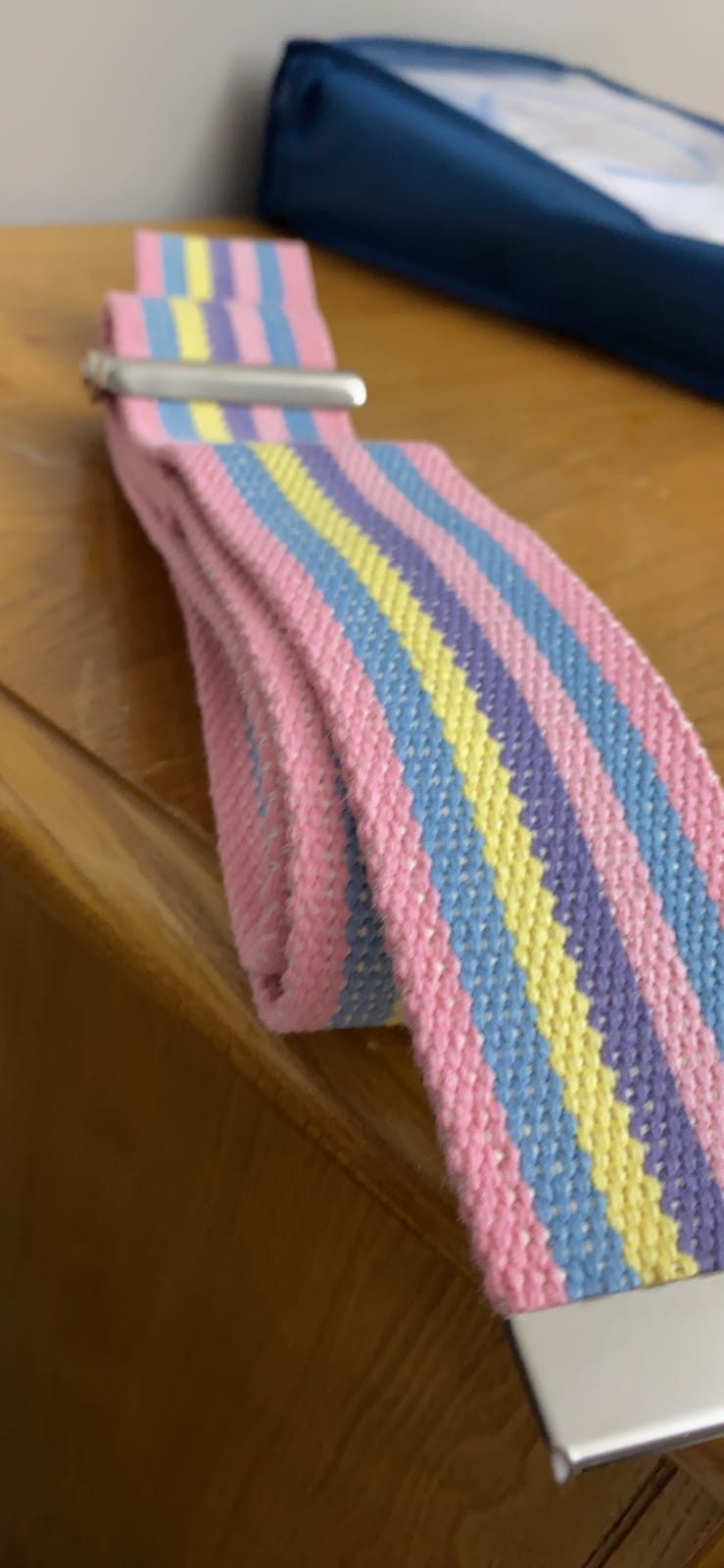
The one thing that kept coming up in reviews is width. Two inches of webbing concentrates the load along the lower back, and caregivers moving heavier patients said they could feel the difference against wider four-inch belts. Fit it snug and level over clothing rather than over a thick robe or a coat.
Because the belt sits at the waist, it is meant for a patient who can bear weight on their legs and needs help standing, pivoting or walking. It is not a substitute for a floor lift when someone cannot take a single step, and treating it as one is the most common misuse we hear about.
Who this belt suits best
This suits a fall-risk patient who can stand and take a few steps with help, which covers a large share of seniors recovering at home after a fall or a hospital stay. A therapist can grip from the front, the back or the sides and choose the angle that matches the direction of the move.
It also works well as the walking portion of a mixed kit, paired with a floor sling for the transfers a person genuinely cannot do on their own.
When to pick something else
Skip it for anyone who cannot bear weight, sit unsupported, or has a trunk-control problem. Those patients need a full body or divided-leg sling on a mechanical lift instead.
The 350 lb ceiling is also below bariatric range, so check the actual weight of the person rather than estimating by appearance.
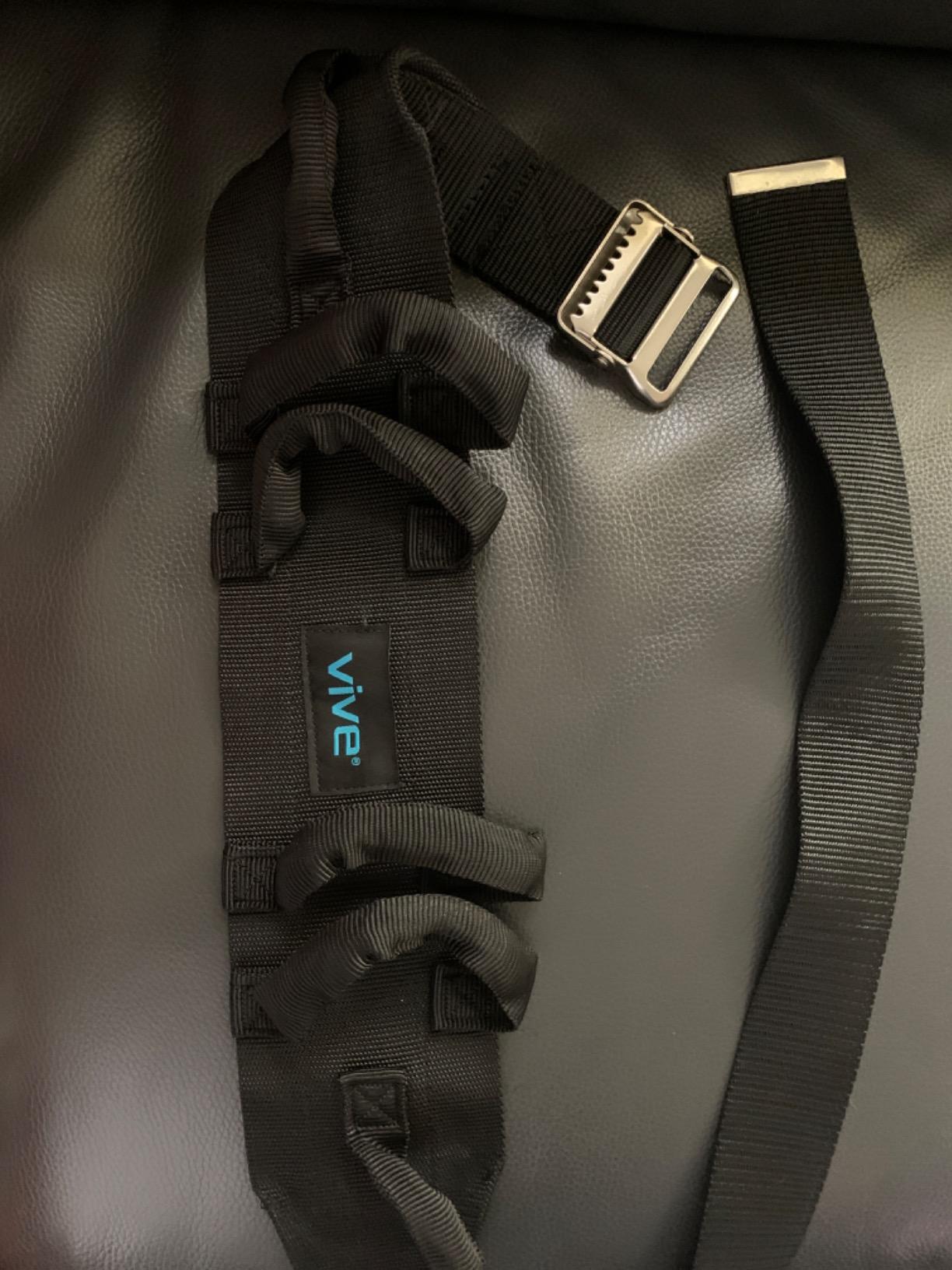
2. Vive Gait Belt with Seven Padded Handles – Best Value
Vive Gait Belt (350lbs) Transfer Belt with Handles – Medical Nursing Safety
350 lb capacity
4 inch wide webbing
7 padded handles
Quick-release metal buckle
Pros
- Seven padded handles allow a grip from nearly any angle
- Extra-wide 4 inch webbing spreads pressure and resists rolling
- Quick-release buckle applies and removes fast
- Backed by a 60 day satisfaction guarantee
Cons
- Buckle and stitching can feel stiff at first
- Adjustment range tops out at a 51 inch waist
The handle count is the reason this one earns its place. Seven padded grips mean a solo caregiver can reposition their hands mid-transfer instead of committing to one position and hoping it works, which is the difference between a smooth move and a back injury on a bad day.
The 4 inch webbing is a real upgrade over narrower belts. It covers more lumbar area, resists rolling toward the navel during a pivot, and reviewers repeatedly credit it for feeling more secure across longer transfers.

The tradeoff is bulk. Wider webbing plus seven padded handles makes this a heavier, stiffer object than a simple two-inch belt, and some users report the buckle takes a few uses before it stops feeling stiff to the touch.
Caregivers should measure the waist before ordering. The adjustment range reaches 51 inches, which covers most adults but excludes the largest body sizes, and an over-extended belt loses the tension that makes it useful.
This belt is also HSA and FSA eligible in the listing, which matters if you are paying out of pocket for a care kit.
When a single caregiver is working alone
For a one-person home setup, grip options matter more than almost any other feature. With seven handles you can support from behind during a stand, from the side during a pivot, and from the front during a controlled descent into a chair.
Buyers on caregiver forums describe it as easy to move around a house in practice, including between a bedroom and a bathroom with tight doorways.
Where the limits show
A gait belt supports a standing pivot. It does not hold a person’s full weight, and a patient who collapses or goes limp will pull a solo caregiver down with them.
For non-weight-bearing patients, move up to a floor-lift sling rather than trying to work around this limit.
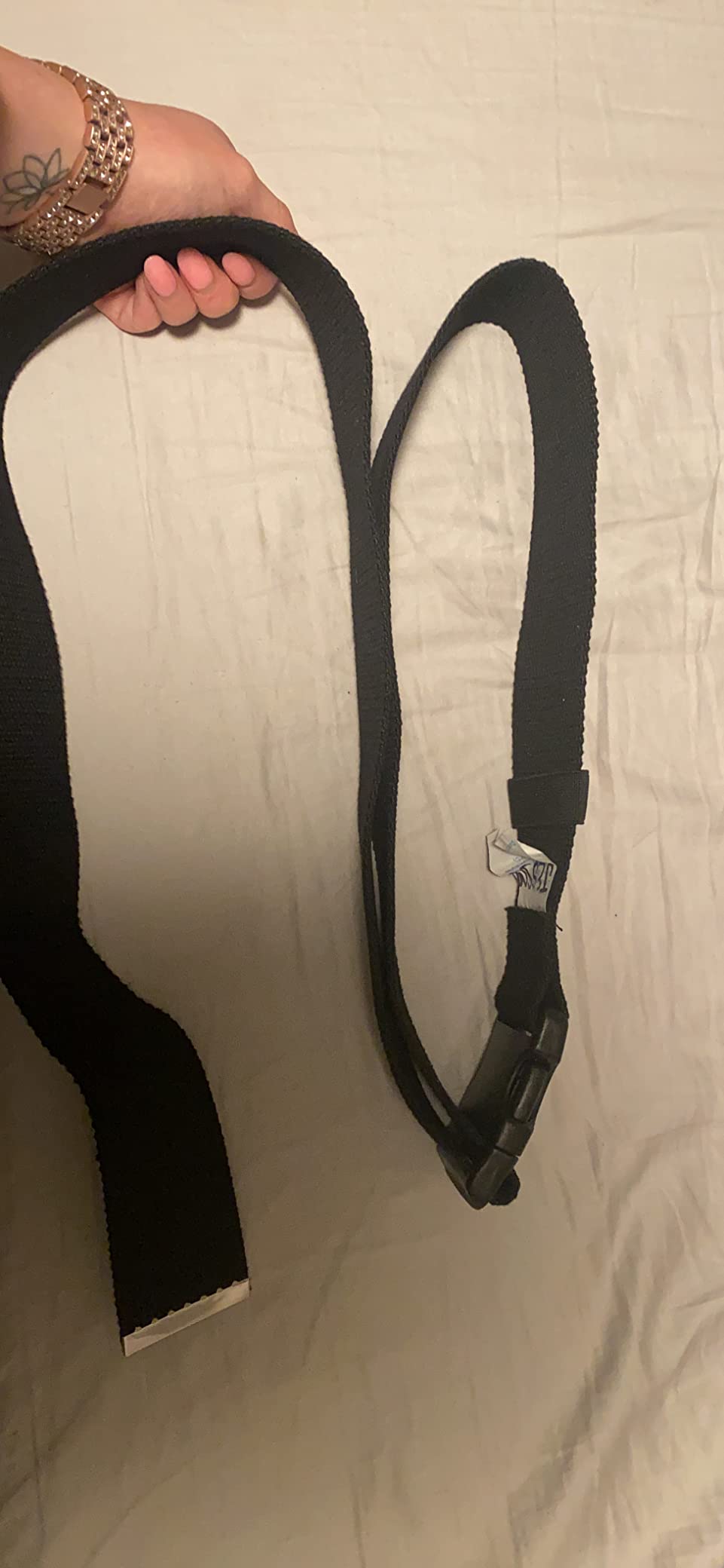
3. LiftAid Gait Belt with Plastic Quick-Release Buckle – Best for Fast On and Off
Gait Belt with Plastic Buckle by LiftAid – Transfer and Walking Aid with Belt Loop Holder for Assisting Therapist, Nurse, Home Care – 60″L x 2″W (Purple)
300 lb capacity
60 by 2 inch webbing
Quick-release plastic buckle
Elastic loop for excess
Pros
- Plastic buckle opens faster than threaded metal closures
- Lightweight webbing stays flexible after repeated washing
- Elastic loop keeps excess belt length tidy
- Reinforced stitching holds up in home and clinical use
Cons
- Plastic buckle can release under a sudden load if it sits at the front
- Belt can slip if not tightened fully
Toileting transfers are the hardest task of the day for most home caregivers, and speed is the whole game there. This belt goes on and comes off in a fraction of the time of a threaded buckle, which is exactly the advantage a split-leg or hygiene sling is meant to deliver.
The 60 by 2 inch webbing is light and comfortable, and reviewers note it does not stiffen up the way heavier belts can after months of washing.
The elastic loop that holds the excess strap is a small detail that turns out to matter. Without it, the tail hangs loose and gets caught on furniture or wheels while you are moving someone.
Positioning that prevents surprises
There is one rule to learn before first use: put the buckle at the patient’s side, not the front. A quick-release buckle positioned at the front can pop open if the patient drops suddenly or you catch an unexpected load, and several reviewers described exactly that scenario.
Tighten until the belt will not slide over the hip bone, then test with a gentle tug before you add any real weight.
Where the limits show
The 300 lb rating sits below the 350 lb belts in this list, and that is a real ceiling for anyone caring for a heavier patient.
Like every gait belt, it assists a standing pivot and a short walk. It does not transfer a person who cannot bear weight, so keep a floor sling on hand for those transfers.
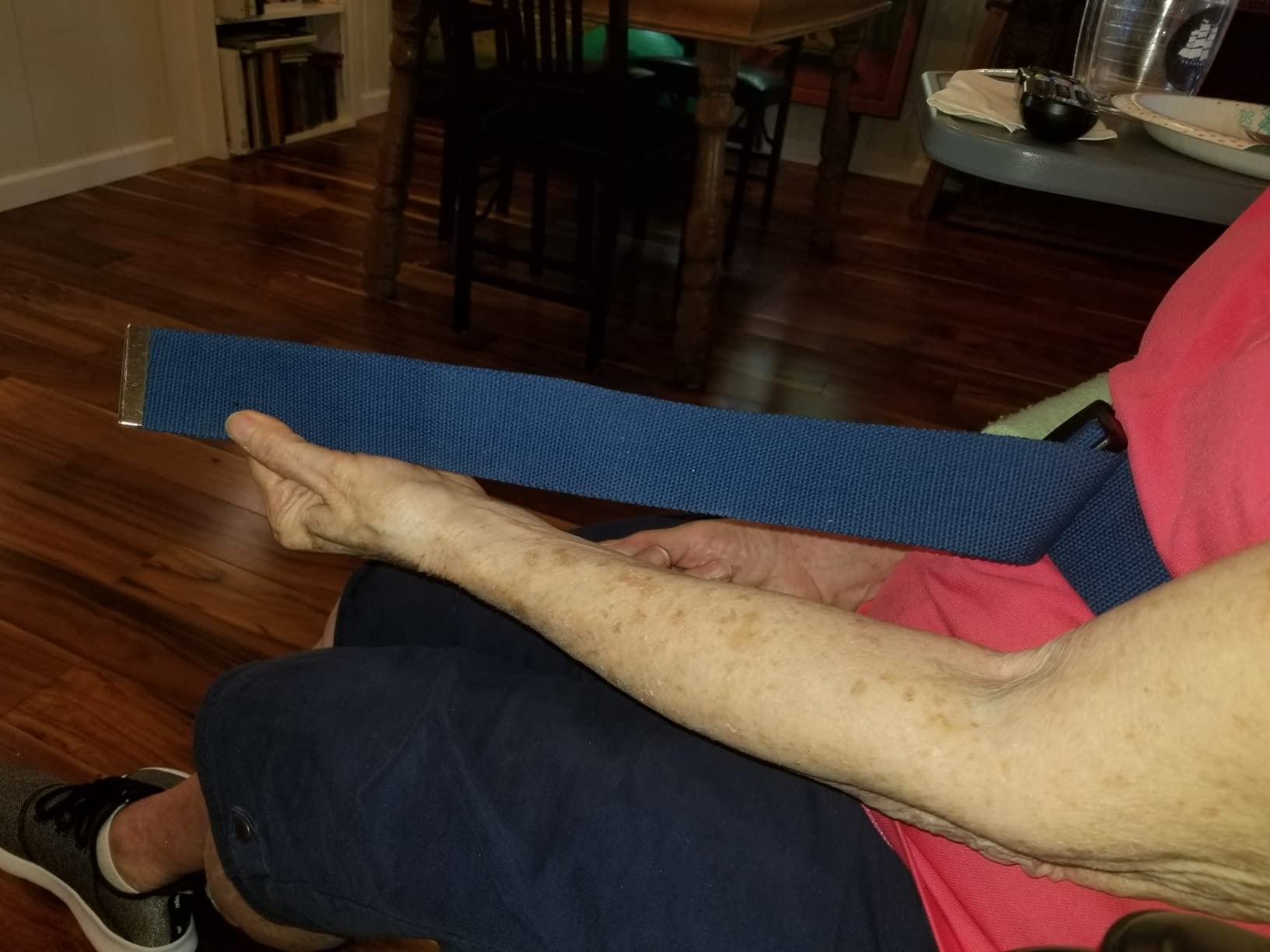
4. AMPHIARAUS Padded Bed Transfer Sling – Best Budget Transfer Pad
31.5 Inch Padded Bed Transfer Nursing Sling for Patient, Elderly Safety Lifting Aids Home Bed Assist Handle Back Lift Mobility Belt for Patient Care
Supports at least 220 lbs
31.5 by 9.1 inch
Double-grip PU handle
Textured nylon body
Pros
- Padded surface reduces chafing during repeated transfers
- Works for either side of the body
- Lightweight and portable between rooms
- Easy to wipe clean after use
Cons
- Unlined interior can feel rough against fragile skin
- Single grip position is awkward during toilet transfers
- Patient can slip out if bent sharply at the waist
This is a manual transfer aid rather than a lift sling, and it fills a gap that floor lifts do not: getting a person off a bed and into a chair when the person is still somewhat mobile and there is no mechanical lift in the room.
The padded double-grip handle gives a caregiver two points to pull from, and the textured nylon body grips the sheet and clothing better than smooth fabric would. Buyers report it made lifting safer than hoisting a patient by the arms under the shoulders.
It folds down small enough to live in a drawer, which matters in a house with nowhere to store equipment.
Where it fits in a home setup
Think of this as the transfer step between bed and chair, a bridge that saves effort before you even bring in the lift. For a patient who can sit up with help and roll toward you, it turns a two-person struggle into a controlled single-person move.
It also travels well, so a family caring across two homes can keep one in each location.
When to use something else
The stated capacity is at least 220 lbs, which is below what bariatric or heavier patients need, and the padding does not extend across the whole body surface.
Guard against the most serious failure mode here: if the person bends sharply at the waist mid-lift, they can slide out of the pad. Keep the spine in one line and pull level rather than upward.
5. Vive Mesh Patient Lift Sling for Showering – Best for Wet Areas
Vive Patient Lift Sling – Mesh Transfer Sling for Showering & Home Use
Supports up to 400 lbs
48 by 30 inch mesh
4 sling points plus 3 hand grips
Machine washable water-resistant mesh
Pros
- Breathable mesh dries fast and survives regular shower use
- Four sling points and three hand grips allow repositioning from any angle
- Reinforced stitching and corners hold up over time
- Doubles as a pull sheet for bed repositioning
Cons
- Runs small for taller or heavier users
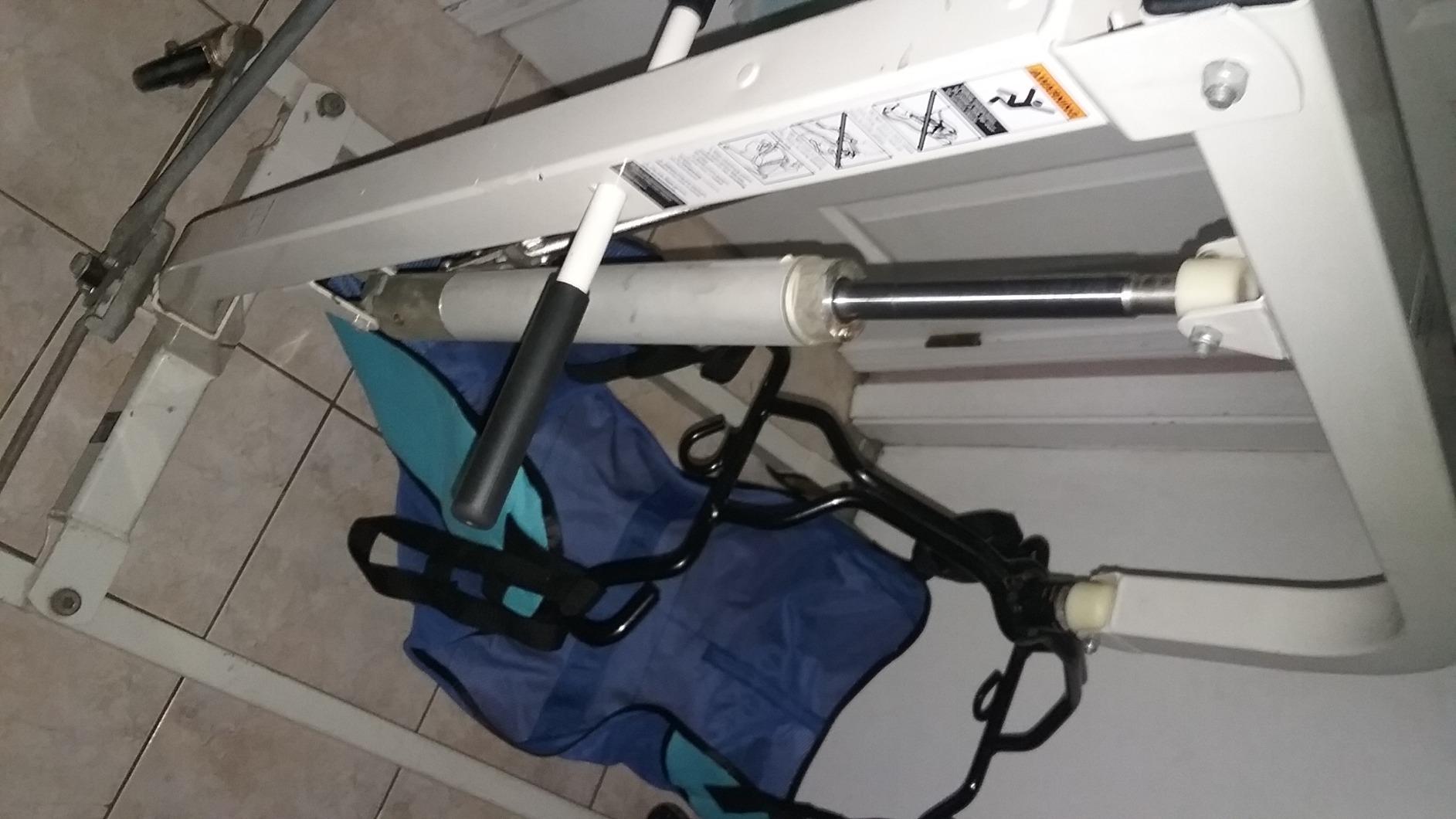
Mesh is the fabric that makes bathing transfers possible. A padded polyester sling that feels wonderful in bed turns unpleasant and heavy when wet, while mesh drains water, dries overnight and stays cool against skin that cannot regulate temperature well.
The combination of four sling points and three underside hand grips is unusually flexible. You can connect it to a spreader bar for the lift itself, or use the hand grips to roll a patient for washing without ever detaching anything.
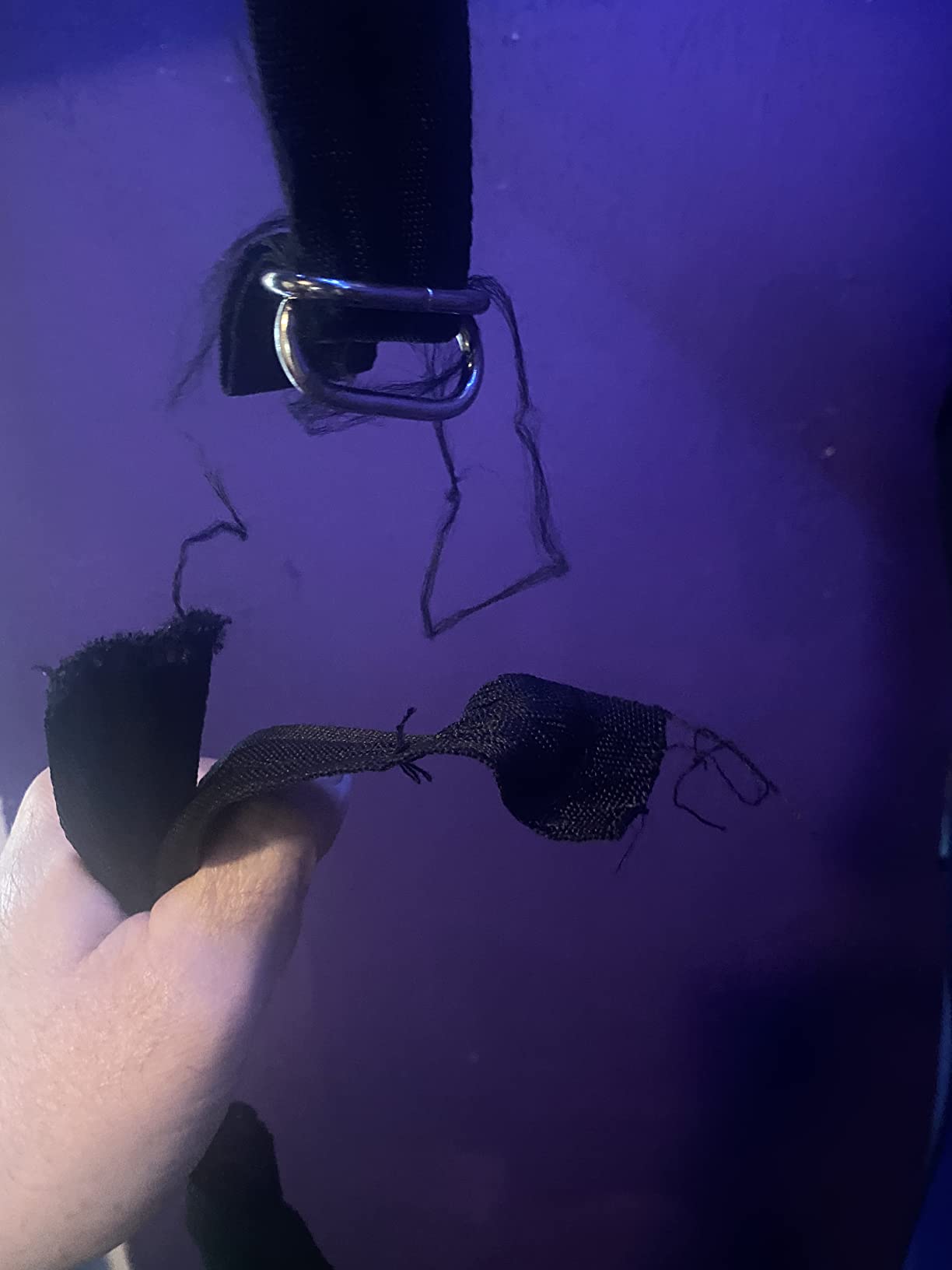
Buyers confirm the 400 lb capacity is genuine, which puts this in range for many bariatric users without stepping up to a dedicated heavy-duty sling.
The recurring reservation is fit. This sling runs smaller than buyers expect, and several people found it tight for a taller or heavier patient, so measure before committing to a size.
It is also HSA and FSA eligible, and it carries a one year guarantee from the manufacturer.
Why mesh wins in a bathroom
Water is the deciding factor. This sling is water resistant and machine washable, so it can go into the shower stall and back into rotation the same evening without developing odor or mildew.
Caregiver reports describe it as easy to use in the bath and easy to maneuver around the house, which is the pair of complaints that decides most bathroom transfers.
Who should look elsewhere
Patients with fragile skin, pressure injury risk, or who spend long stretches in one position usually find solid padded fabric more comfortable for all-day wear, even if it is not shower friendly.
A good household runs both: mesh for the wet room, padded for the rest of the day.
6. NYOrtho Gait Belt with Six Ergonomic Handles – Best for Handle Variety
NYOrtho Gait Belt (275lbs) – Transfer Belt with 6 Heavy Handles -Lift Assist for Elderly and Patient Care – Gait Belts Transfer Belts for Seniors with Easy Fasten Buckle | Adjustable Size 28” to 55”
275 lb capacity
Waist 28 to 55 inch
6 ergonomic handles
4 inch high back
Pros
- Six handles give leverage options for any transfer angle
- 4 inch back band reduces roll-up and spreads pressure
- Quick-release buckle is simple to apply and remove
- Long adjustment range covers most adult sizes
Cons
- 275 lb capacity is lower than many competing gait belts
- Adjustment starts at 28 inches and will not fit very small waists
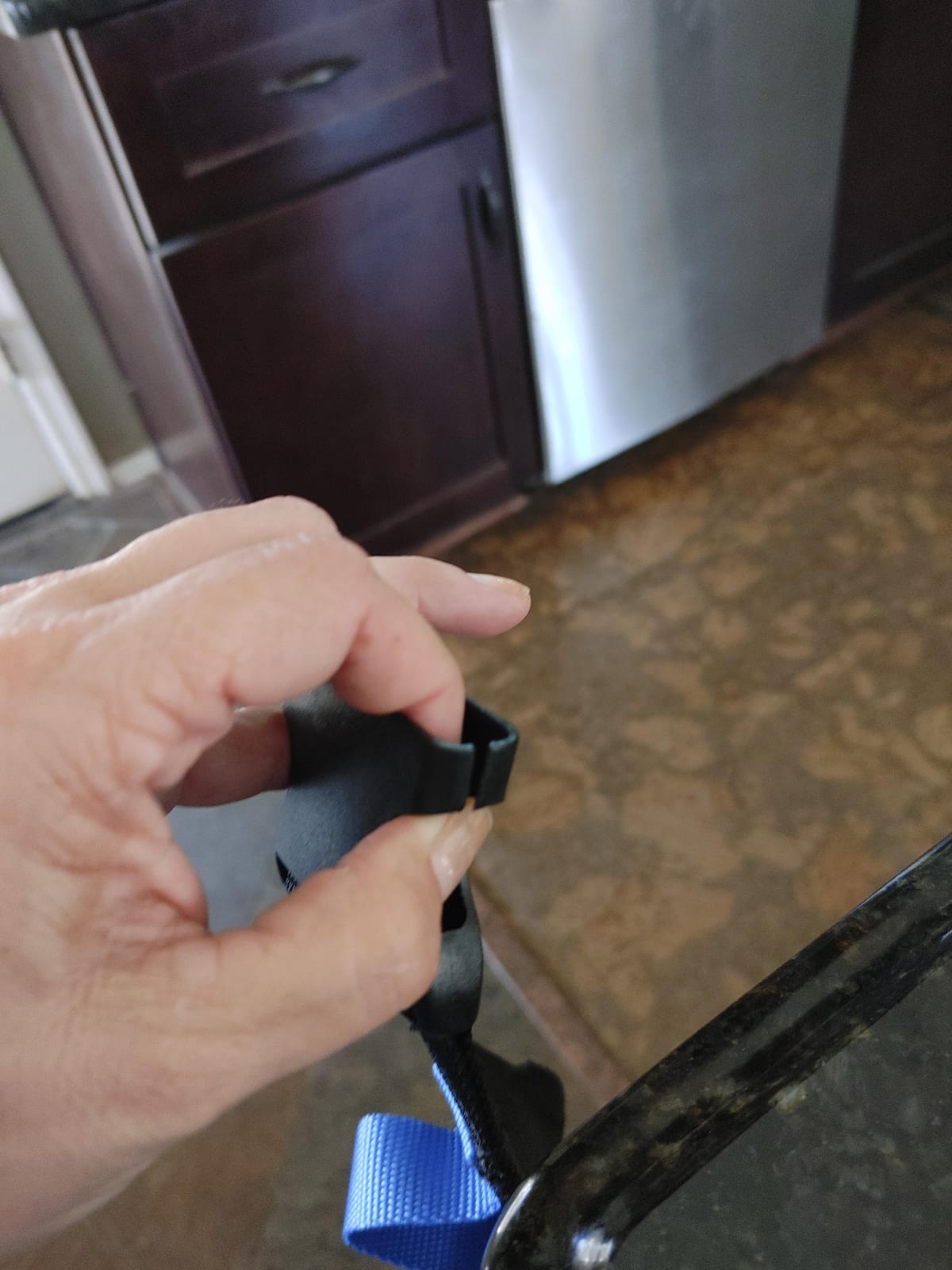
Four vertical handles and two horizontal ones give a caregiver a genuinely different grip depending on the direction of the move. The horizontal pair is the one most families find useful during a controlled descent into a wheelchair, where a vertical grip gives you nothing to control.
The four-inch-high back panel is the other feature worth paying attention to. It covers more of the lumbar area, which spreads the load and keeps the belt from rolling inward during a long transfer.
Adjustability runs from 28 to 55 inches, the widest range in this group, and the reinforced nylon stitching is backed by a long production history in standing aids.
When handle geometry beats everything else
Physical therapists in particular tend to favor this layout, because it lets them change hand position during a transfer without removing the belt or asking the patient to start over.
It is a strong second belt for a household that already owns one, covering the smaller and larger ends of the waist range that a single belt cannot.
The weight ceiling is the deciding factor
At 275 lbs this has the lowest rating in the roundup. That figure is the honest limit, and exceeding it risks a patient sliding out mid-transfer, which is exactly the failure caregivers describe as most frightening.
Measure the patient, then measure again before ordering.
7. NEPPT Transfer Sling with Four Handles – Best for Two-Caregiver Teams
Patient Lift Transfer Belt from Bed to Wheelchair Stair Transfer Emergency Evacuation Chair Pad Safety Medical Lifting Sling Slide Board Transferring for Elderly, Disabled, Adults (Blue – 4 Handles)
200 lb capacity
4 reinforced handles
Fixed waist and thigh band
Reusable polyester
Pros
- Four reinforced handles spread the load evenly between caregivers
- Extra fixed waist and thigh band keeps the patient seated
- Handles transfers to bed
- car and chair
- Durable polyester is reusable
Cons
- 200 lb capacity is well below bariatric range
- Requires two or three caregivers so one person cannot complete a transfer
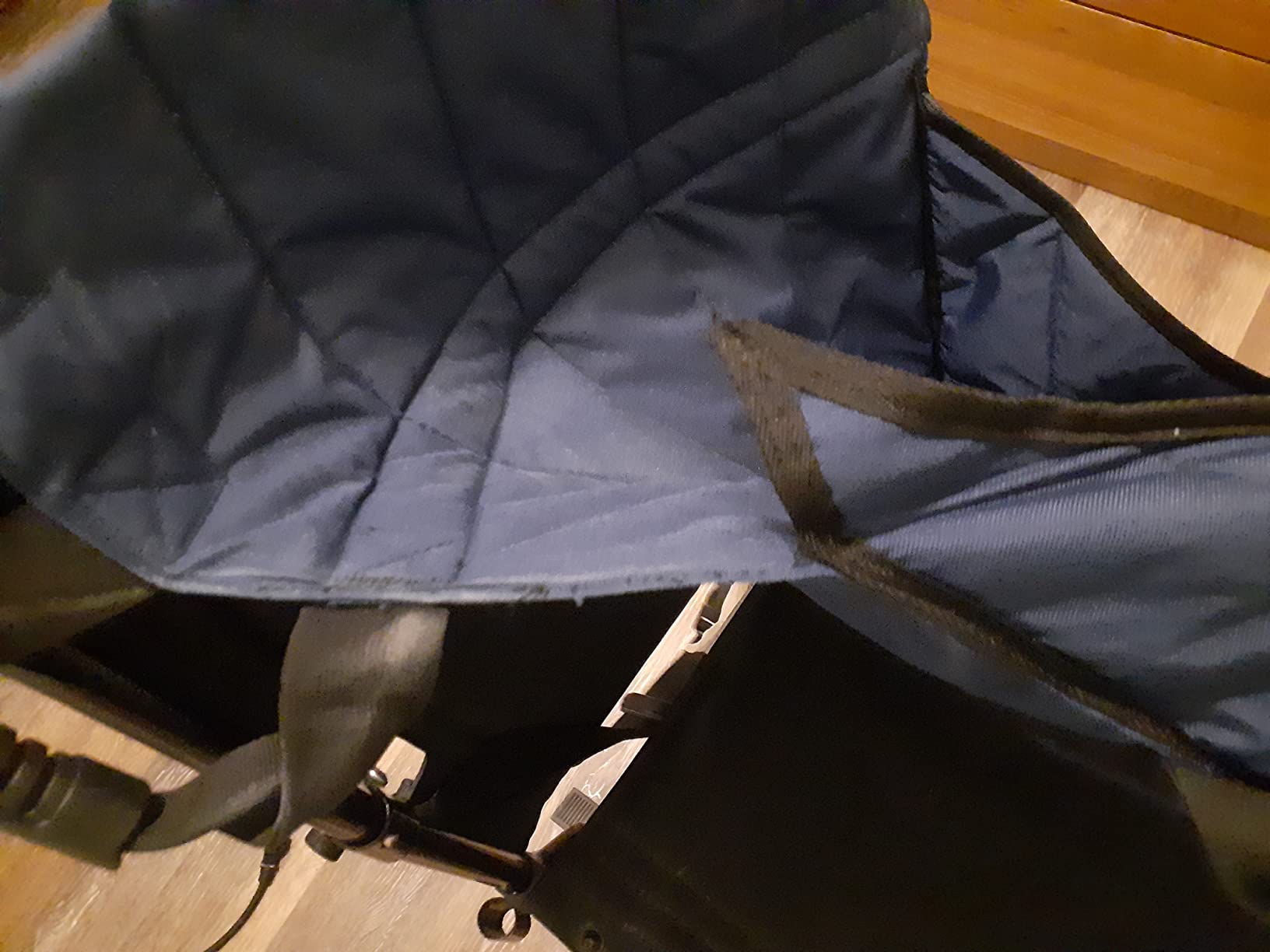
This one is designed around a specific assumption: that more than one person is available. Four reinforced handles divide the load so two or three caregivers can move a patient in a controlled lift rather than a lurching pull.
The fixed band at the waist and thigh is the detail that makes it usable. Without something anchoring the pelvis, a patient sitting up in a sling pad tends to slide out at the moment of lift, and that band removes the failure mode.
It works across bed, wheelchair, car and chair transfers, which makes it a genuine bridge between vehicles and home equipment for families who travel.
When a second person is available
If you have a partner, a family member or a visiting aide who can help, this handles short-term transfers without committing to a mechanical lift. For a car transfer or a narrow bathroom, that flexibility is worth a lot.
Reusable polyester means one purchase covers repeated use rather than a disposable cycle each time.
Why solo caregivers should look elsewhere
Two or three caregivers are needed, so a single person cannot complete the transfer, and the 200 lb rating is the lowest of the sling-style products here.
An ALS Forums discussion about home lifting systems made the same point from the other direction: complexity is a decisive factor for people caring alone, and anything requiring a second pair of hands adds a step that must be arranged every time.
8. Patient Aid Full Body Mesh Sling – Best for Full-Body Comfort
Patient Aid Full Body Mesh Patient Lift Sling for Safe Transfers
Full body mesh with reinforced straps
Color-coded loops
Compatible with Drive, Hoyer and Lumex
Small through Extra Large
Pros
- Quick-dry mesh stays gentle on skin during long use
- Color-coded loops make strap matching to the bar straightforward
- Reinforced straps position the patient reliably between surfaces
- Works with Drive
- Hoyer and Lumex lifts
Cons
- Two caregivers are needed to position the sling before attaching to the lift
- Mesh is less forgiving for all-day comfort than padded fabric
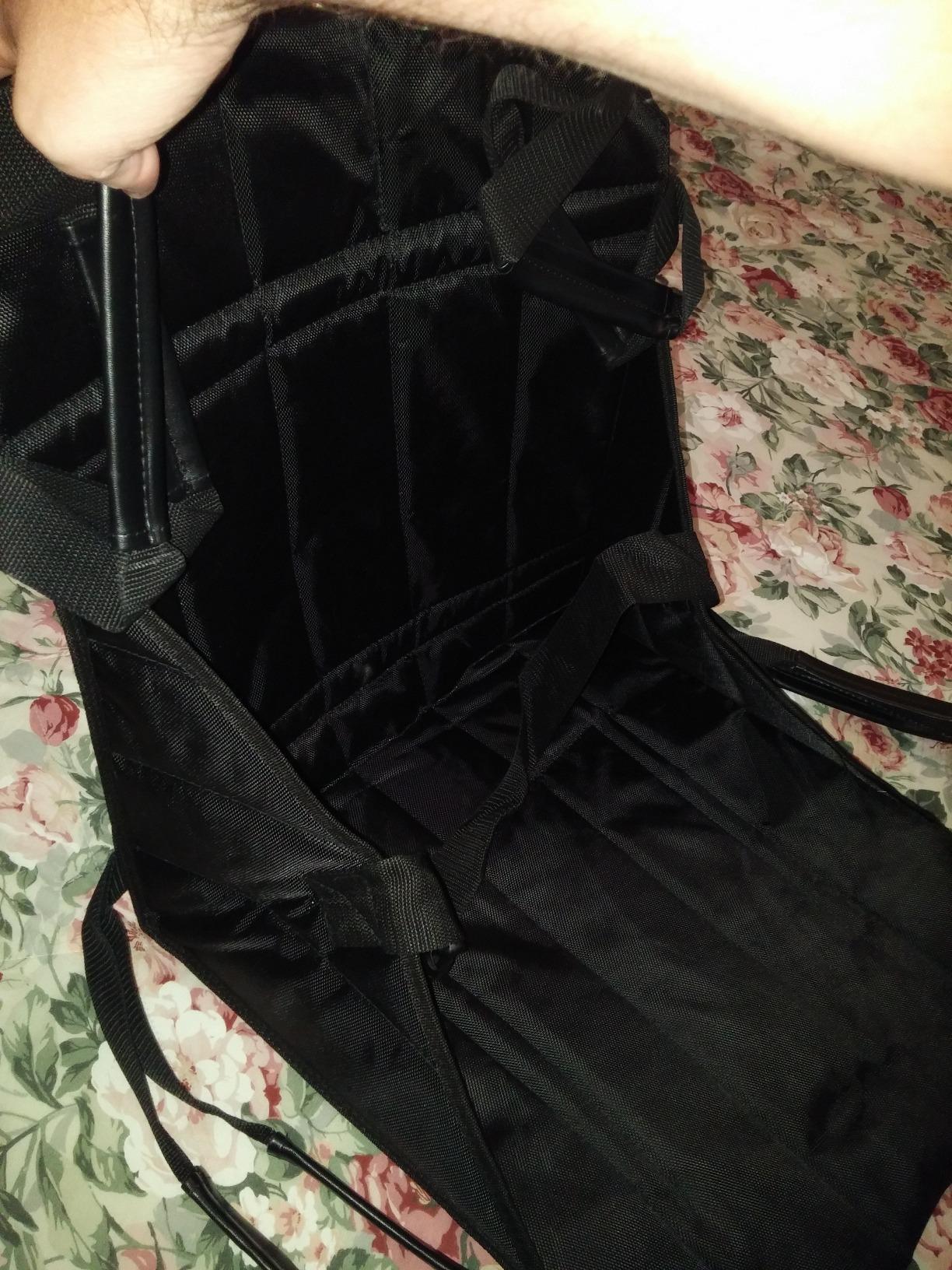
This is the pick for a patient who has lost head control, cannot bear weight, or simply needs support from shoulders to knees. A full body sling carries the head as well as the trunk, which is what makes it usable for a bedbound person.
The color-coded strap loops are quietly excellent. Matching loops to the hooks on a spreader bar in the right order takes seconds instead of the guesswork that makes new caregivers nervous, and the reinforcement at the strap points is where slings normally fail first.
It is made to work with Drive, Hoyer and Lumex lifts, which covers the majority of home lifts in circulation, and it is offered from Small through Extra Large.

For the patient who cannot help at all
A full body sling is the only option in this list that supports a patient with no head control and no trunk control. It is built for bedridden, non-weight-bearing and bariatric users, and the reinforced straps are what keep the patient positioned between bed, bath, chair and commode.
Buying two sizes is common practice here, since a sling that is slightly loose during the day may be the right fit for a different transfer later on.
Where the tradeoffs sit
Two caregivers are needed to get the sling under the patient and correctly positioned before the lift attaches. For a single-caregiver household, that is a hard limit worth planning around.
Mesh also has less give than a padded sling, so a patient with sensitive skin or pressure injury risk may find it uncomfortable for extended wear.
9. ProHeal Full Body Mesh Sling with Commode Opening – Best for Toileting
ProHeal Patient Lift Sling, Full Body Mesh with Commode Opening, 600 lbs Capacity – Transfer Sling for Shower, Toileting, Large 56″ x 43.5″ – Compatible with Hoyer, Drive, Invacare, Lumex
600 lb capacity
Commode opening
Large 56 by 43.5 inch surface
Machine washable mesh
Pros
- Commode opening allows toileting without removing the patient from the sling
- 600 lb capacity covers bariatric and regular use
- Runs true to size
- a large fits a 6 foot 200 lb user
- Holds up after repeated machine washing and air drying
Cons
- Large size runs very long and suits taller users better
- Sizing requires consulting the measurement guide
This is the answer to the question caregivers ask most often: do I have to take the sling off to use the toilet? No. The commode opening sits under the seat area so the patient can be lifted, positioned and toileted without ever being removed from the sling.
That single feature changes the texture of a day. Toileting transfers are the most frequent lift of the day, and the ones most likely to cause skin damage, so eliminating the on-and-off cycle is where the design effort pays off.
Capacity is 600 lbs per size, which is genuinely bariatric, and the mesh is machine washable and air dryable at low temperatures.

It is compatible with Joerns Hoyer, Drive, Lumex, McKesson and ProActive lifts, and is listed as a replacement for common Drive, Invacare and ProActive models, which simplifies matching it to an existing lift.
Buyers confirm the sizing runs true and that the material survives repeated washing without stiffening, though the large is long enough that it suits taller users best.
Why a commode opening matters more than it sounds
Without an opening, a full body sling has to come off before toileting, which often means a manual lift of a wet, undressed patient on the way back on. That is the transfer most likely to injure a caregiver and damage a patient’s skin.
With the opening, the patient stays supported for the entire sequence. A wide, reinforced opening is a small design choice with a large safety payoff.
Getting the size right the first time
This is the one product here where reading the sizing guide matters most. Sizes run from medium to XX large, and the large measures 56 by 43.5 inches, which is generous but long for a shorter user.
Measure the patient and the chair or commode before ordering. An oversized sling will not sit flat and can leave the patient sitting lower than intended.
10. Patient Aid Sit-to-Stand Sling – Best for Sit-to-Stand Training
Patient Aid Sit-to-Stand Sling for Patient Lifts, Padded Back Support
4 color-coded strap pairs
Padded lower back and underarms
Connects to 2, 4 or 6 point bars
4 sizes available
Pros
- Padding at the lower back and underarms reduces pressure
- Four color-coded strap pairs let a caregiver adjust from reclined to upright
- Connects to 2
- 4 and 6 point spreader bars
- Works with Drive
- Hoyer
- Invacare
- Lumex and Medline
Cons
- Only suitable for patients who can support most of their own weight
- Sizing must be matched to user weight and torso circumference
A sit-to-stand sling is a rehab tool as much as a transfer aid. It wraps the torso, sits at the base of the spine and under the arms, and lets a patient pull from a chair to standing with a lift doing most of the lifting.
The four color-coded strap pairs are the clever part. Each pair attaches at a different point on the bar, so a caregiver can move the patient from a reclined start through to a fully upright standing position without changing equipment mid-movement.
Soft polyester padding at the lower back and under the arms reduces pressure in exactly the two places where a torso sling concentrates load.
It connects to 2, 4 and 6 point spreader bars, which makes it one of the more flexible options here, and works with Drive, Hoyer, Invacare, Lumex and Medline lifts.
Because it fits at the torso rather than under the body, applying it is quick and does not require rolling the patient. That makes it far more practical for repeated daily practice sessions.
When standing practice is the goal
For someone recovering from a hip replacement, a stroke, or a long hospital stay, a sit-to-stand sling turns standing into a repeatable, supported exercise rather than a daily gamble. Short, frequent sessions with a consistent sling are easier on both the patient and the caregiver.
It also works well as an early transition tool, giving a patient partial weight-bearing support on the way to a gait belt.
Who cannot use it
This is the firmest limitation in the roundup: the patient must be able to support most of their own weight. A patient who goes limp in a sit-to-stand sling is a serious fall risk, and this is not the sling to choose for them.
Match the size to both weight and torso circumference before ordering.
11. Posey 6537Q Gait Belt with Handles – Best for Clinic-Grade Control
Posey 6537Q Gait Belt, Transfer Belt with Handles, Black and Green, 1 Belt
6 stitched grab handles
Extra-wide 4 inch nylon webbing
Waist 28 to 52 inch
Quick-release buckle
Pros
- Rear support band adds falls prevention support behind the back
- Six securely stitched handles give a firm grip from any angle
- Quick-release buckle suits full transfers to bed
- toilet or chair
- Made in North America for home and institutional settings
Cons
- Webbing and buckles can wear with repeated heavy daily use
- A gait belt does not provide full body weight support on its own
- Adjustment tops out at a 52 inch waist
- Multiple handles take practice to position solo
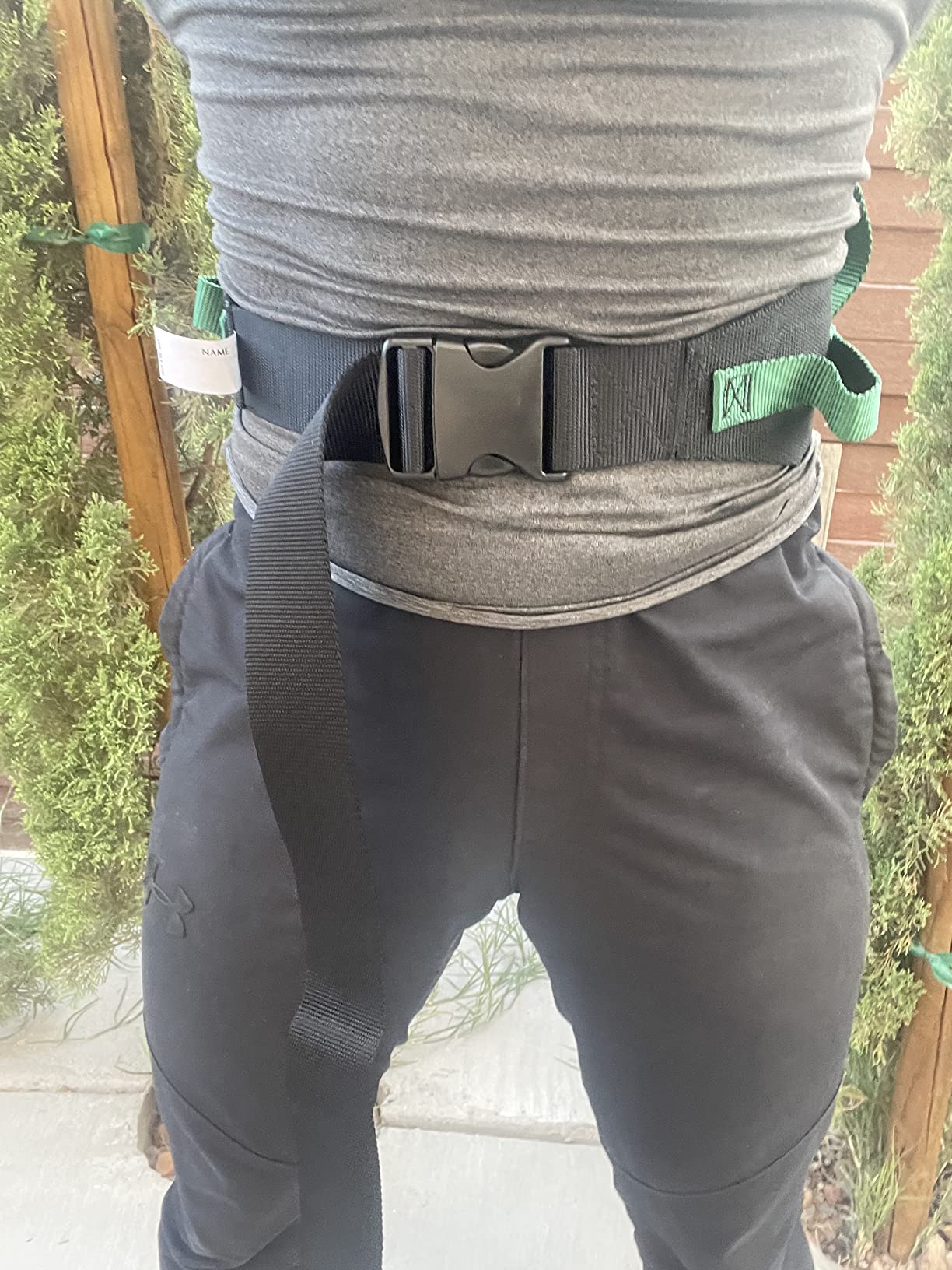
The rear support band is what separates this from a standard gait belt. Instead of a flat strip across the front only, the band supports the lower back, which is the direction a person actually falls when they lose balance from a standing position.
Six securely stitched handles spread across the belt give a caregiver several control points that make a pivot feel steady rather than desperate, and 78 percent of ratings are five stars, reflecting steady satisfaction with durability and buckle release.
It is made in North America and specified for home healthcare, hospital and long term care settings, which is why it shows up on facility purchase orders.
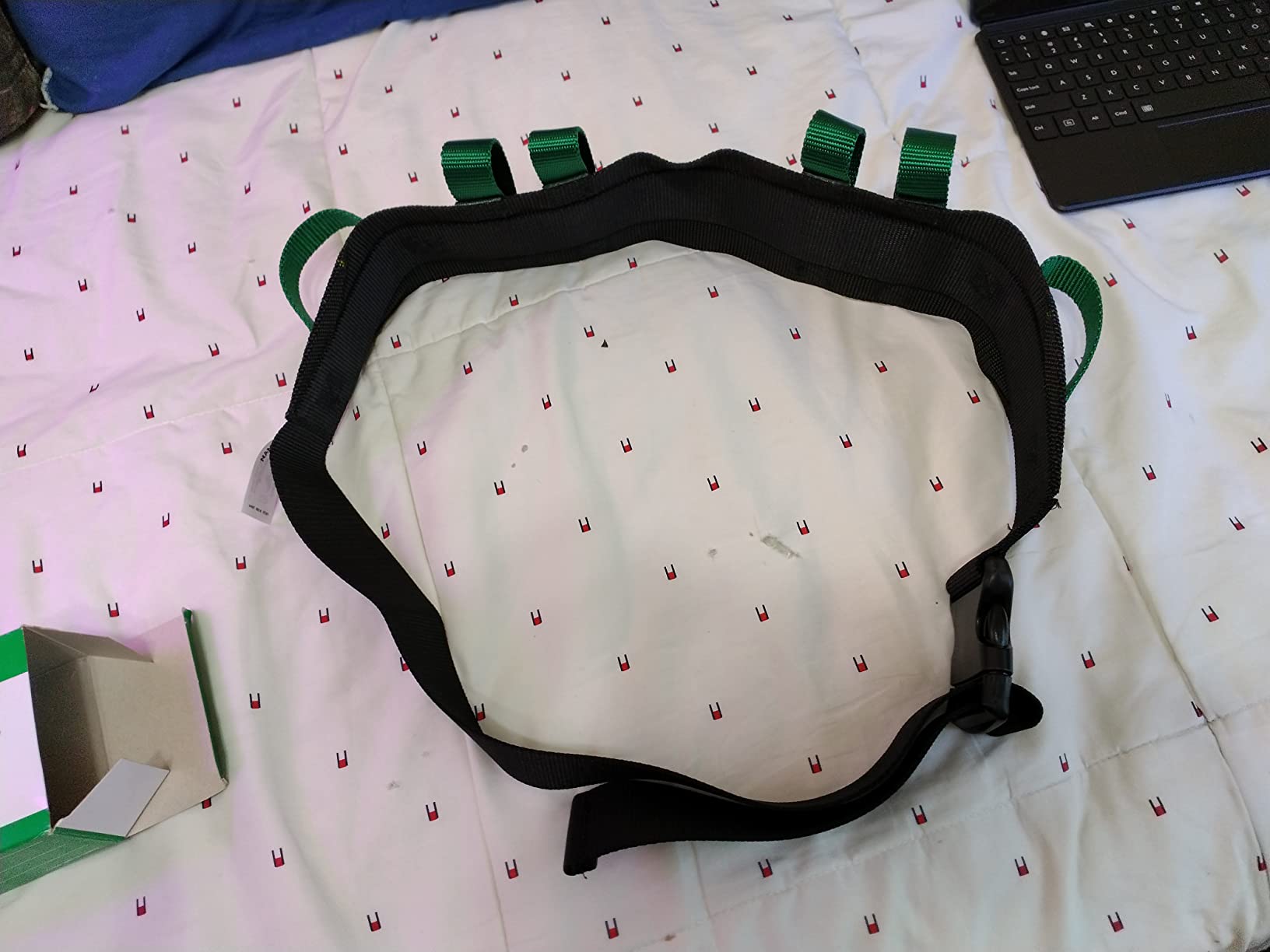
Two caveats are worth stating plainly. The adjustment range ends at 52 inches, so it excludes the largest body sizes, and the same care applies as with every belt here: it supports a standing pivot, not a full body lift.
Buyers with one caregiver report needing a few sessions before the handle layout felt natural. The first transfer should always be practiced with a second person nearby.
For a household that also cares for visitors
A rear band and six handles give a firmer, more clinical hold than a simple belt, which is useful if you want one piece of equipment that a visiting aide can use confidently without training.
It is also a sensible second belt for a household that already owns a narrow two-inch model, since the four-inch webbing feels very different during a long standing task.
Limits to plan around
Repeated heavy daily use will eventually show in the webbing and buckle, so inspect stitching before each session and plan on a replacement rather than pushing one belt indefinitely.
And keep the reminder that matters most: a belt helps a person who is standing stay standing. It does not catch a person who has already fallen.
12. Parabound Padded Transfer Sling with 9 Inch Back – Best for Storage and Travel
Transfer Sling Patient Transfer Belt Lift Assist for Elderly and Disabled
9 inch padded wide-back design
300 lb capacity
Non-slip Oxford cloth
Includes drawstring bag
Pros
- Wide 9 inch padded back spreads weight and improves comfort
- Tear-resistant Oxford cloth with reinforced stitching for daily use
- Multiple double-grip textured handles for control from any position
- Non-slip surface reduces shifting during repositioning
Cons
- Requires a second caregiver for higher-weight users
- Padded neoprene and cotton can trap moisture in warm conditions
- Specific 35 by 9 inch size must match the user's body
- Moves the patient but does not lift them off the ground
This is a repositioning and transfer aid rather than a lifting device, and knowing that distinction prevents a dangerous misuse. It moves a person between a bed, a wheelchair and a car seat, or rolls them in bed, but it does not pick a body up off the floor.
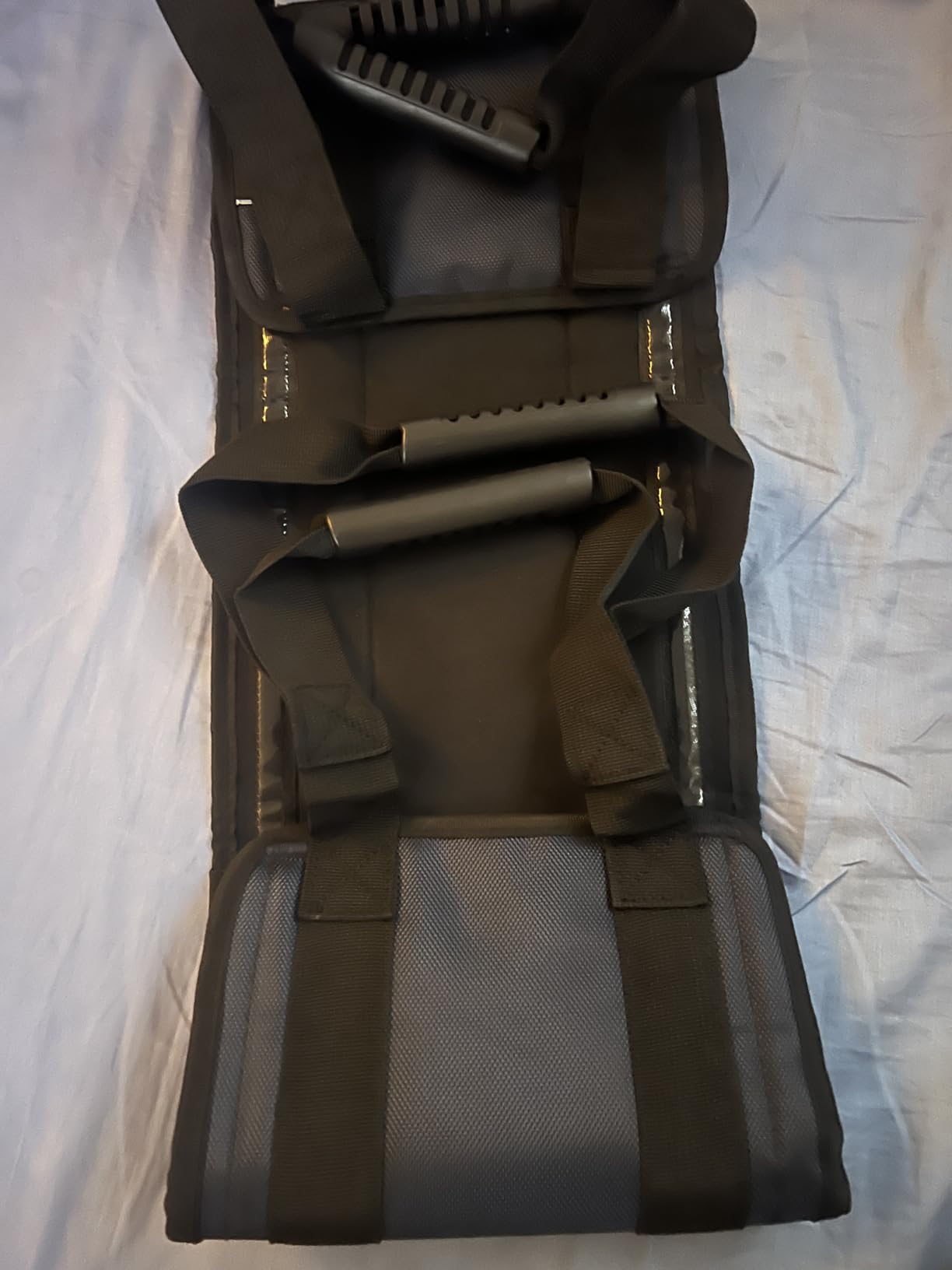
What it does well is comfort. The 9 inch padded back is the widest surface in this roundup, and a large panel that covers more of the back spreads load over a broader area and reduces pinching during a repositioning turn.
The double-grip textured nylon handles give a caregiver good control from several positions, and the non-slip surface limits the shifting that normally happens mid-move.
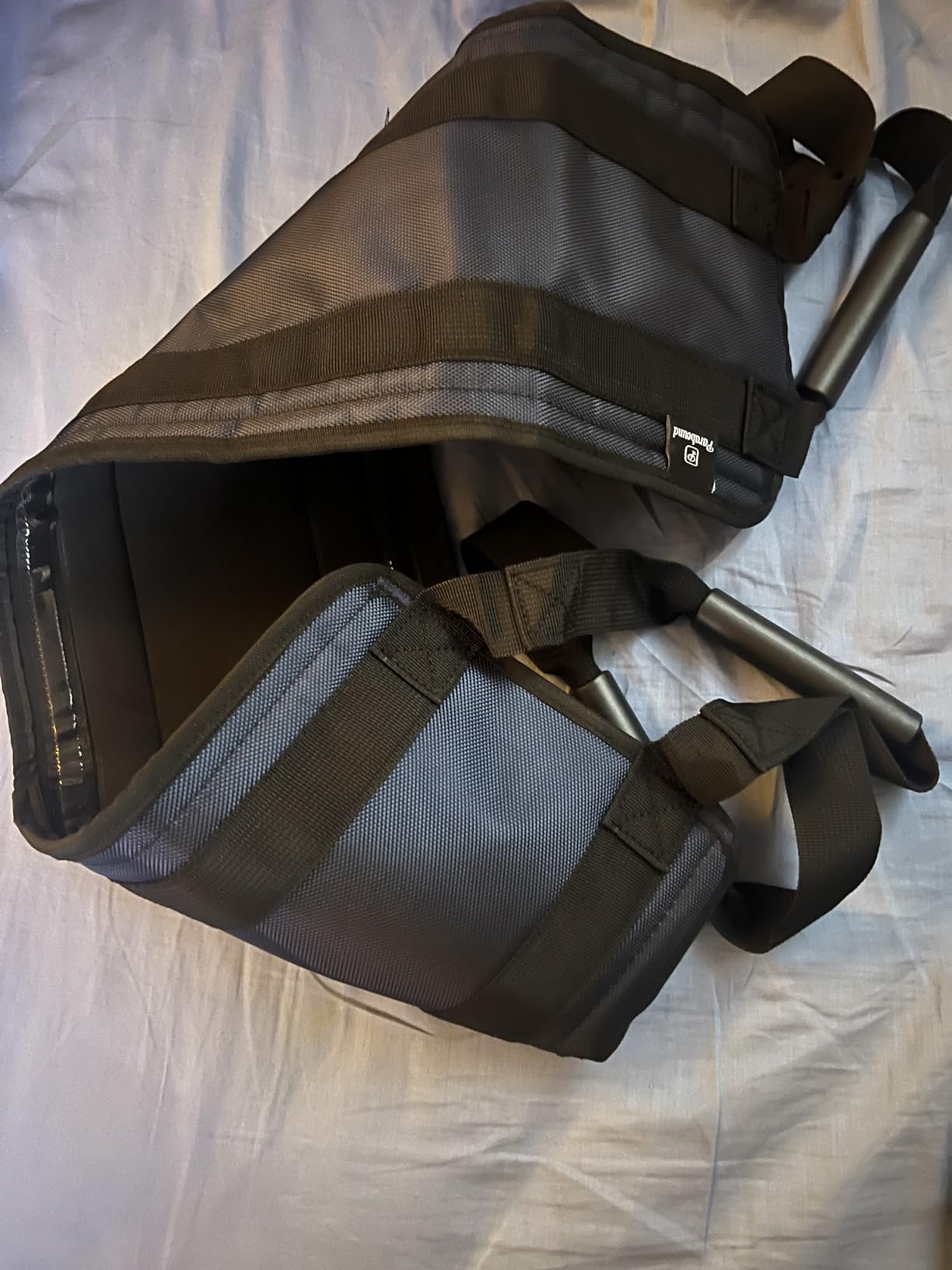
Care instructions are simple: wipe down or hand wash with gentle soap, air dry away from direct sunlight, and do not iron. That is low maintenance for something used daily.
It folds down and comes with a drawstring storage bag, which makes it the easiest item here to keep in a car trunk or a travel bag for caregiving across two homes.
Where it earns its place
Repositioning is the most repeated transfer of a long day, and it is the one most often done badly by hand. A wide padded back gives a caregiver a proper grip without digging fingers into a person back.
It is useful for bed to wheelchair moves, sitting someone up in bed, turning someone over, and bending knees, which covers most of what happens between the major lifts.
Fit and weight decide the outcome
At 35 by 9 inches it is a fixed size, so measure the user first. A sling that does not match body dimensions sits wrong and forces the caregiver to compensate, which is where hand and back injuries come from.
For higher-weight users, plan on a second caregiver. The neoprene and cotton padding can also hold heat in warm conditions, so give the skin underneath a break during long sessions.
Sling Types Explained – Which One Does Your Loved One Need?
Choosing by type rather than by brand solves most sizing mistakes before they happen. Ask what the person can physically do, then match the sling to that answer.
Full body sling – Supports head, trunk, thighs and calves. For patients with no head control, no trunk control, or who cannot bear weight at all. Requires a floor lift and usually two caregivers to position.
Divided leg or U-shaped sling – Two separate leg sections that can be applied and removed while the person stays seated. The most useful type for daily toileting transfers.
Toileting or commode sling – A full body sling with an open or reinforced section under the seat, so toileting happens without taking the sling off. The single most-requested feature in caregiver forums.
Sit-to-stand sling – Wraps the torso and under the arms to support a partial or assisted stand. Only for patients who can bear most of their own weight.
Supine or horizontal sling – Flat, reinforced and cut for a patient who stays lying down. Used for repositioning in bed and for transfers where the person cannot be seated.
Repositioning sling – A padded, handled sheet or pad for turning and rolling a person in bed or moving them between bed and chair. Moves a person; does not lift them clear of the floor.
Bariatric sling – The same designs in heavier fabric and higher weight limits, generally 500 lbs and above. Never substitute a standard sling for a bariatric patient.
Mesh shower sling – Water-resistant mesh that drains and dries fast. The right choice for bathing transfers, and less comfortable for long all-day wear.
Disposable sling – Single-patient use, common in facilities to control cross-contamination. Rarely the economical choice for a single patient at home.
Transfer belt or gait belt – A handled belt worn at the waist for assisted standing, pivoting and short walks. Not a lift sling, and not safe for a patient who cannot bear weight.
How to Choose a Transfer Sling: A Step-by-Step Guide
Work through this in order, and resist choosing on price or appearance. The most expensive sling is cheaper than a back injury or a fall.
Assess the patient first. Can they hold their head up? Can they sit unsupported? Can they bear any weight through their legs? These three answers decide the sling type before any product is considered.
Check weight against the sling’s stated limit. Do not estimate. If the number is near the ceiling, step up a size or a class.
Measure the body, not the clothing. Waist and torso circumference for belts and sit-to-stand slings, chest and height for full body slings, and the seat width of the wheelchair or commode.
List every transfer you actually perform. Toileting, bathing, bed to chair, floor recovery. The most frequent transfer deserves its own sling.
Count your caregivers. One person rules out anything needing two or three people, and it changes which styles are safe.
Confirm attachment compatibility. Loop or clip style, and the number of points on the spreader bar.
Plan the second sling. A setup that works for one sling almost always needs a second for a different job.
Where a person still has some leg strength but needs support, a transfer board can bridge a short gap without a lift, and for a narrow bathroom a bath transfer bench often removes the need for a full lift entirely.
Matching Your Sling to Your Lift: Loops, Clips and Point Counts
Compatibility problems are the most common source of frustration, and they are entirely preventable. A sling is not universally attachable even when manufacturers use the same language.
First, identify whether your sling ends in sewn loops or rigid locking clips. Loop slings usually need a spreader bar designed for loops, and clip slings attach directly to a locking hook. These are different systems.
Second, count the points. A two-point bar takes two straps and gives less trunk control. A four-point bar spreads the load across the hips and shoulders, which is why full body slings almost always use four. Some sit-to-stand slings accept two, four or six.
Third, match the brands. Several products here are documented as compatible with Drive, Hoyer, Invacare, Lumex, McKesson, Joerns and ProActive lifts, which covers most lifts in home use. If your lift came from a different supplier, check the manual before ordering.
Finally, compare the safe working load on the sling, the spreader bar and the lift itself. The lowest of the three numbers is the one that governs. Our patient lift comparison lists the attachment style for the models we cover, and matching that first saves an expensive return.
Care, Cleaning and When to Replace a Sling
Sling fabric is a safety surface, and it degrades quietly. Most manufacturers allow machine washing, usually in cold or warm water with mild detergent, and air drying at low temperature.
Dry slings fully before storing them. A sling put away damp will develop mildew at the strap stitching, and mildew weakens webbing faster than any number of wash cycles.
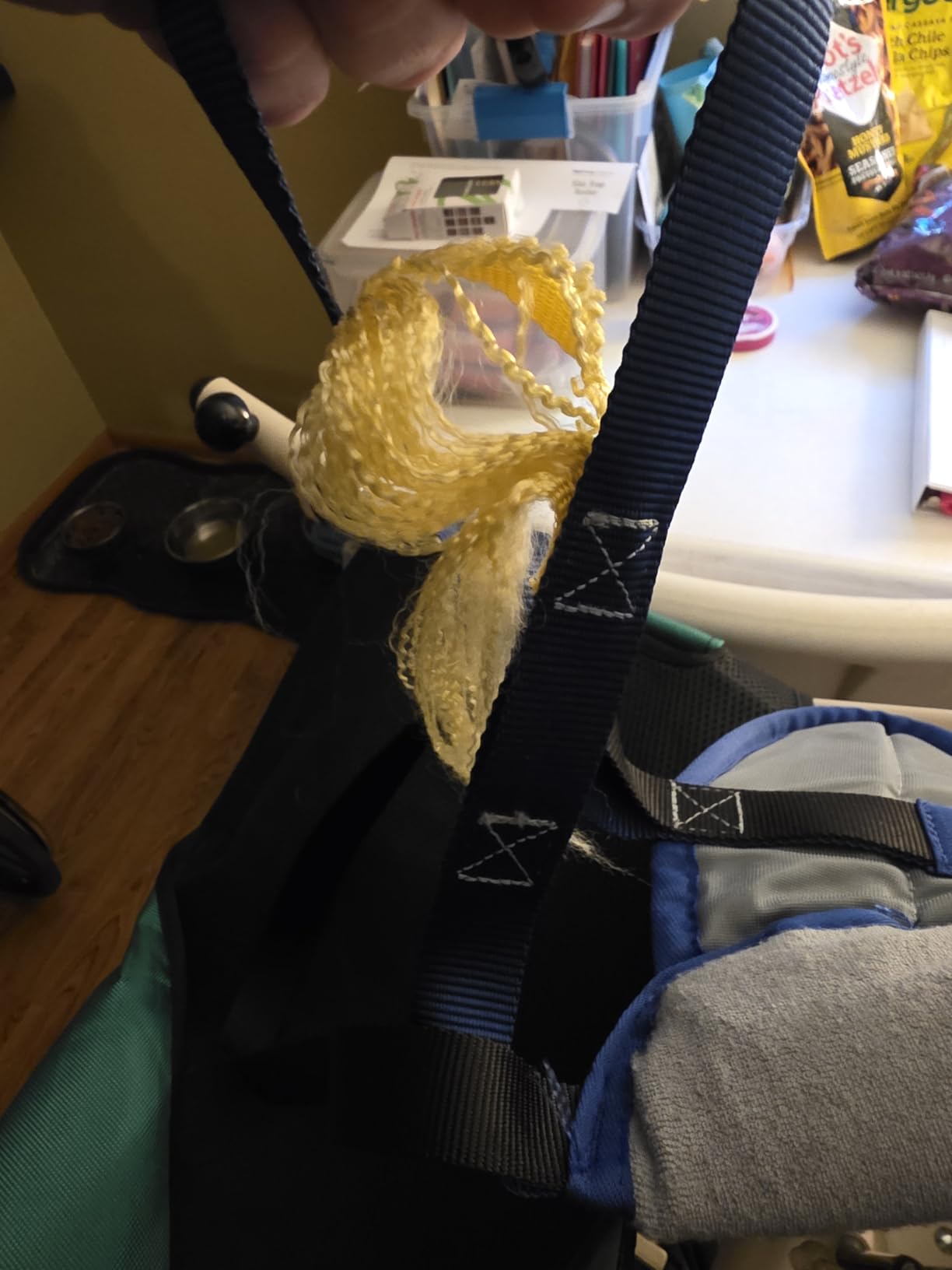
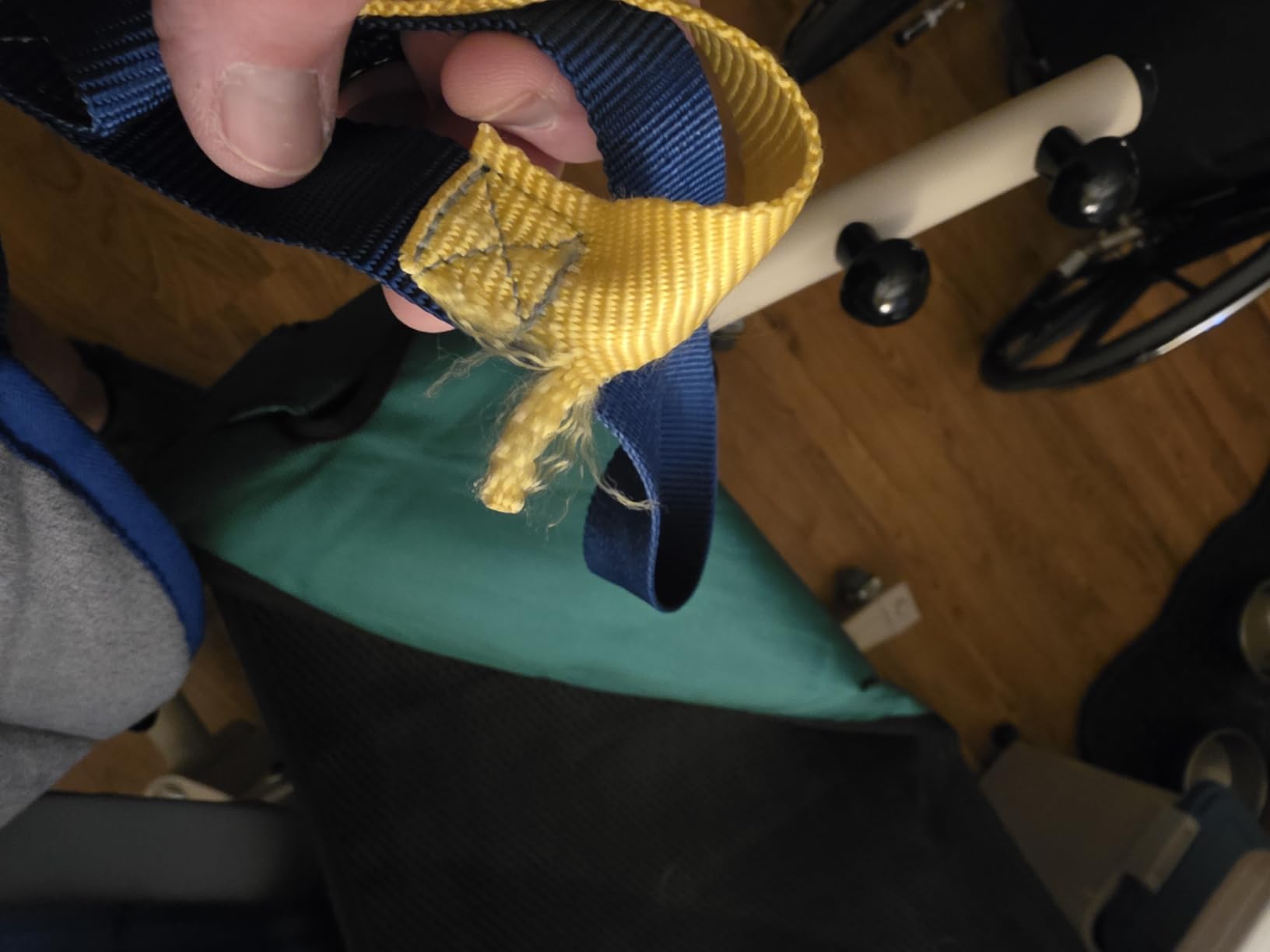
Replace a sling when you see fraying at the strap attachment points, worn stitching, a stretched or misshapen loop, a buckle that no longer latches cleanly, or fabric that has thinned and gone translucent. Fatigue often starts at the edges and the reinforcement stitching, so inspect those first.
Keep one spare full body sling in the house. A damaged sling discovered at 2am with a patient who needs the toilet is a genuine emergency, and spares also give you a dry one while the other washes.
Safety Notes for Family Caregivers
Most caregiver back injuries we read about trace back to a rushed transfer, not a heavy one. Slow down.
Lock the wheelchair brakes every time, and never lift from a surface with the brakes released. Lower the bed to the lowest workable height before moving someone across it, and keep floor surfaces clear and dry, since a hard floor gives a lift or a floor recovery its best footing.
A single caregiver can usually operate a floor lift safely, but a single caregiver cannot safely handle a collapse. If your patient cannot bear weight and cannot be seated, plan for two people every time.
For skin integrity, inspect the back, shoulders, sacrum and heels at every transfer. Shear and friction from dragging a person across a sheet do more damage than the lift itself, which is the argument for getting the sling right the first time.
And a final note: a sling is a safety device. Where possible, have the fit confirmed by an occupational therapist or the medical equipment supplier who supplies your lift, and treat any instructions from your care team as the governing guidance.
Frequently Asked Questions
What are the different types of patient lift slings?
The main types are full body slings for patients with no head or trunk control, divided leg U-slings that apply while seated, toileting slings with a commode opening, sit-to-stand slings for patients who can bear most of their weight, supine slings for people who stay lying down, mesh shower slings, bariatric slings for heavier users, disposable single-patient slings, and handled gait belts used with a caregiver instead of a lift.
What sling do I need for my patient lift?
Check three things before choosing. First, the attachment type your lift accepts, meaning sewn loops or locking clips. Second, the number of points on the spreader bar, usually two or four. Third, the weight capacity of the lift, bar and sling, where the lowest number governs. Several slings in our list are documented as compatible with Drive, Hoyer, Invacare, Lumex, McKesson and ProActive lifts.
How do I know my sling is the right size?
Measure the patient rather than estimating. Check chest and height for a full body sling, waist for a gait belt, and torso circumference for a sit-to-stand sling. Compare those numbers against the sizing chart on the listing, and step up a size if the patient sits near the weight limit. Signs of a bad fit include the sling riding up, the patient sliding toward the crotch, or straps digging into the skin.
Can I use a patient lift sling in the shower?
Only if it is a mesh sling. Water-resistant breathable mesh drains and dries quickly and is usually machine washable, which makes it the right choice for bathing transfers. A padded polyester sling feels better for all-day wear but becomes heavy and unpleasant when wet. Most households keep one mesh sling for the bathroom and one padded sling for everything else.
How often should I replace a patient lift sling?
Replace a sling when you see fraying at the strap attachment points, worn stitching, a stretched loop, a buckle that will not latch cleanly, or thinned translucent fabric. With several transfers a day, inspect the reinforcement stitching weekly. Keep at least one spare full body sling in the house, because a damaged sling discovered during a nighttime transfer is a real emergency.
What is the difference between a patient transfer sling and a gait belt?
A patient transfer sling attaches to a mechanical lift and carries the full weight of the person through their back, thighs and head. A gait belt is a handled belt worn at the waist that a caregiver grips to assist with standing, pivoting and short walking. A gait belt is appropriate only for a patient who can bear weight, and it is not a substitute for a lift sling.
The Bottom Line for Home Caregivers
The COW&COW Transfer and Gait Belt is our top pick for a reason: it carries the highest rating in this roundup, has the largest review base, and costs nothing in complexity. If your loved one can stand and take steps with help, it is the belt to buy first.
For everything a gait belt cannot do, the Vive mesh sling handles bathing and general transfers, the ProHeal commode sling handles toileting without an undressing, and the Patient Aid full body mesh sling handles a patient with no head or trunk control. That is a complete home kit of three, and it is far more useful than one expensive sling chosen at random.
Check attachment type, point count and weight capacity before any of them arrive, and have the fit confirmed by your supplier or occupational therapist where you can. That single step prevents most of the failures caregivers describe.
These picks reflect what we could verify from the products and caregiver reports available in 2026, and the fastest way to shop is to check current details on each listing.