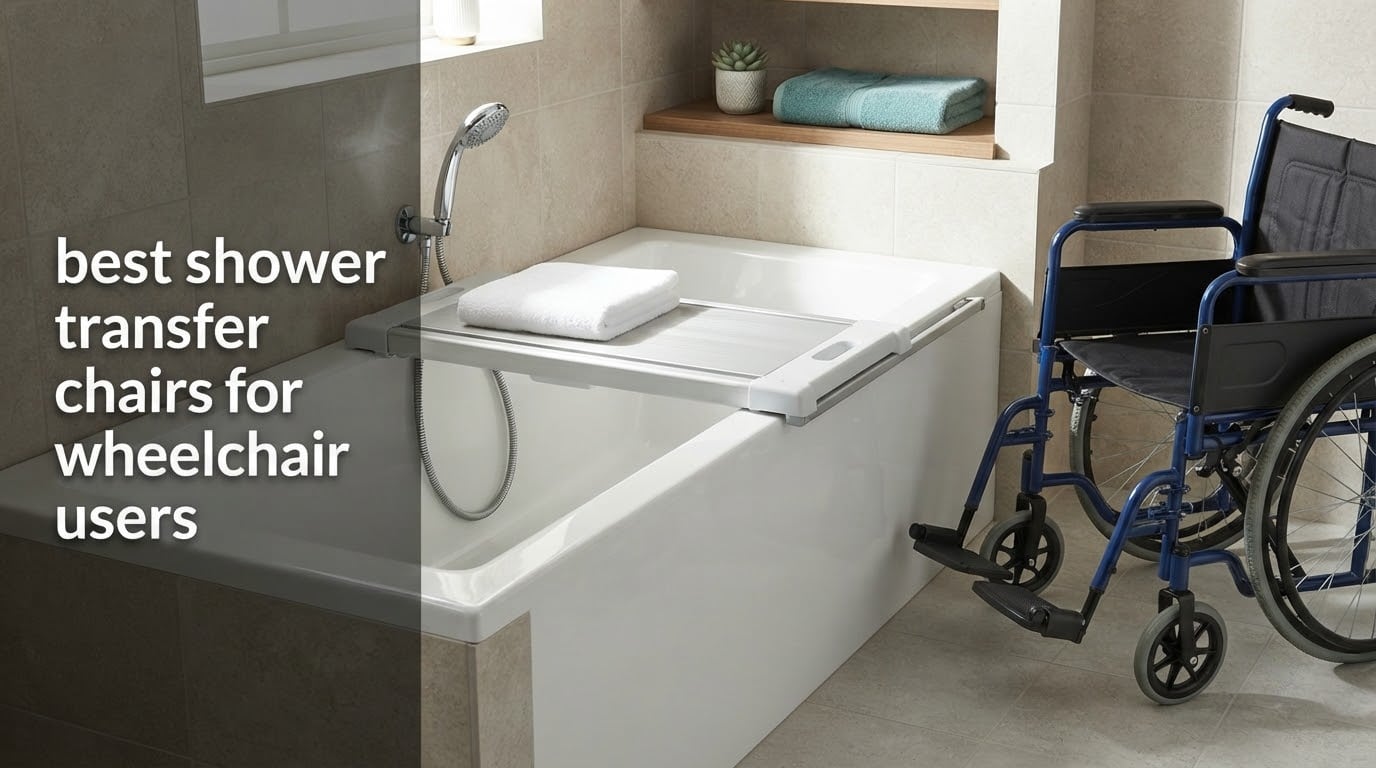
Ask a wheelchair user what part of the day they dread most, and the answer is rarely the shower itself. It is the thirty seconds before it: the moment of leaving the chair, crossing the gap, and landing on a wet surface. That is exactly the problem a shower transfer chair is built to delete. We spent weeks comparing the best shower transfer chairs for wheelchair users across the three styles that actually work, because the wrong one for your bathroom creates a new hazard rather than removing one.
A shower transfer chair is a rust-resistant, water-safe seat that moves with the user instead of asking the user to move. Most models slide laterally across a tub wall on a track, some rotate the seat 360 degrees so the user pivots in rather than scooting across, and rolling versions add locking casters so the chair itself drives up to the person. In every case the legs straddle the tub wall and land on both the tub floor and the bathroom floor, so nothing depends on the user’s upper-body strength.
Three criteria decide almost everything else, and they are the same three the shopping engines surface first:
Style. A sliding tub transfer bench crosses a standard bathtub wall. A rolling shower commode chair fits a curbless roll-in shower or a walk-in. A fixed shower chair with arms only works if you can already stand and pivot.
Weight capacity. Standard aluminum benches are commonly rated 250 to 330 pounds; steel-frame and heavy-duty models run 400 to 500 pounds. Match the rating to body weight with a real margin, not a rounding error.
Seat surface. Waterproof closed-cell foam or polyurethane protects skin and stays warm; hard plastic is easier to clean and easier to slide across laterally, but colder and harder for reduced sensation.
Everything else on this list is a variation on those three ideas. If you are still narrowing the field, our guide to the best shower chairs covers the fixed-seat options in more depth, and our bath transfer bench roundup goes deeper on the sliding track mechanism.
Table of Contents
Top 3 Best Shower Transfer Chairs for Wheelchair Users in October

Medline 400 lb Transfer Bench
- Push-button height 17.5 to 22 inches
- Reversible backrest
- Wide suction-cup feet
- Tool-free assembly

Platinum Health Carousel Sliding Bench
- 360-degree locking swivel seat
- Padded polyurethane seat and arms
- Flip-up locking armrests
- Reversible for either side
DMI Sliding Tub Transfer Bench
- Removable perineal cut-out
- Hook-and-loop safety belt
- Lightweight rust-resistant frame
- Tool-free setup
All 10 Shower Transfer Chairs at a Glance in 2026
| Product | Specifications | Action |
|---|---|---|
| Medline 400 lb Transfer Bench |
|
Check Latest Price |
| DMI Sliding Tub Transfer Bench |
|
Check Latest Price |
| Platinum Health Carousel Sliding Bench |
|
Check Latest Price |
 Moen DN7105 Home Care Transfer Bench Moen DN7105 Home Care Transfer Bench |
|
Check Latest Price |
 Platinum Health Gateway Sliding Bench Platinum Health Gateway Sliding Bench |
|
Check Latest Price |
 Drive Medical Splash Defense Bench Drive Medical Splash Defense Bench |
|
Check Latest Price |
 HOMLAND Tub Transfer Bench HOMLAND Tub Transfer Bench |
|
Check Latest Price |
 VEVOR 4-in-1 Shower Commode Wheelchair VEVOR 4-in-1 Shower Commode Wheelchair |
|
Check Latest Price |
 VEVOR Swivel Sliding Transfer Bench VEVOR Swivel Sliding Transfer Bench |
|
Check Latest Price |
 Medline Padded Transfer Bench Medline Padded Transfer Bench |
|
Check Latest Price |
1. Medline 400 lb Transfer Bench – The Bench Almost Every Wheelchair User Ends Up With
Medline Transfer Bench for Bathtubs and Showers, Adjustable Shower Bench and Bath Seat For Seniors and adults, Slip-resistant Feet, Heavy-Duty 400 lb. Weight Capacity, Tool-Free Assembly
400 lb capacity
Aluminum frame
17.5 to 22 inch seat height
Suction-cup feet
Pros
- Push-button tool-free height adjustment
- Reversible backrest fits either tub side
- Wide suction-cup feet grip the tub floor
- Very high review volume shows long-term reliability
Cons
- Stationary arm stays on one side only
- Solid seat has no perineal cut-out
This is the bench we keep coming back to, and after weeks of side-by-side comparison it is the one we would put in a bathroom we were not sure about. The Medline Transfer Bench is rated to 400 pounds on a rust-resistant aluminum frame, and it has the largest body of owner feedback of anything in this roundup at more than 7,000 reviews. That volume matters in a category where a bad transfer is a fall, and a well-worn frame design with thousands of logged hours is more reassuring than a newer model with a slick spec sheet.
The mechanism is a straight sliding seat, not a swivel. One end of the bench sits inside the tub on the tub floor, the other end stands on the bathroom floor, and the seat tracks laterally across the tub wall. Push buttons on the legs move the height from 17.5 to 22 inches without tools, and the backrest reverses to either side so the same bench fits a bath entered from the left or the right.

What we noticed in the owner photos is the feet. The wide suction cups grip the tub surface hard enough that reviewers describe shaking the bench without it shifting, which is exactly the reassurance you want when someone is scooting across it with limited trunk control. The single fixed arm is the one design compromise, and it matters if the user’s stronger side is the opposite one from the arm.
The seat is a solid molded surface with no cut-out, so seated washing of the perineal area means standing or leaning awkwardly. For a temporary post-surgical recovery that is a fair trade; for someone bathing daily with limited mobility it is a real limitation and worth checking against a split-seat design before buying.

How it handles a high tub wall
The 17.5 to 22 inch height range covers most standard tub walls in North American bathrooms, and the frame clears the rim without modifications. On unusually tall or freestanding tubs, measure first, because the maximum listed lifting height is 22.5 inches and a mismatch is the single most common reason these benches come back.
Who should buy it and who should not
Buy it if you need a straightforward side transfer into a standard tub, your body weight sits comfortably under 400 pounds, and a solid seat is acceptable. Do not buy it if you need perineal access while seated, if the transfer has to happen from a specific side that conflicts with the fixed arm, or if you need a backrest that can be removed.
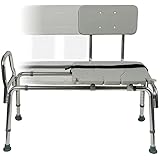
2. DMI Sliding Tub Transfer Bench – Lightest Frame and a Real Perineal Cut-Out
DMI Tub Transfer Bench and Shower Chair with Non Slip Aluminum Body, FSA Eligible, Adjustable Seat Height and Cut Out Access, Holds Weight up to 400 Lbs, Bath and Shower Safety, Transfer Bench
400 lb capacity
10.7 lb frame weight
Removable cut-out
Safety belt
Pros
- Lightest frame in the set at about 10.7 pounds
- Removable cut-out gives perineal access
- Hook-and-loop safety belt and nylon strap locks
- Two rows of offset holes for fine height control
Cons
- Cut-out cover pops up when seated
- 39 inch frame is bulky in small bathrooms
- No grab handle on the outside position
The DMI bench has the most reviews in this roundup at more than 8,200, and also the lowest average rating at 4.2 stars. That combination tells you something useful: the design has been proven by volume, and the complaints are about specific details rather than about the frame failing. We treated it as the value benchmark the rest of the list has to beat.
At about 10.7 pounds it is the easiest bench here to move between users or to lift into a vehicle for a hotel bathroom, and the rust-resistant aluminum with a blow-molded seat and back resists the wet environment well. Two rows of offset adjustment holes give finer height control than the push-button legs on most rivals, and the whole unit installs tool-free with no permanent mounting hardware.
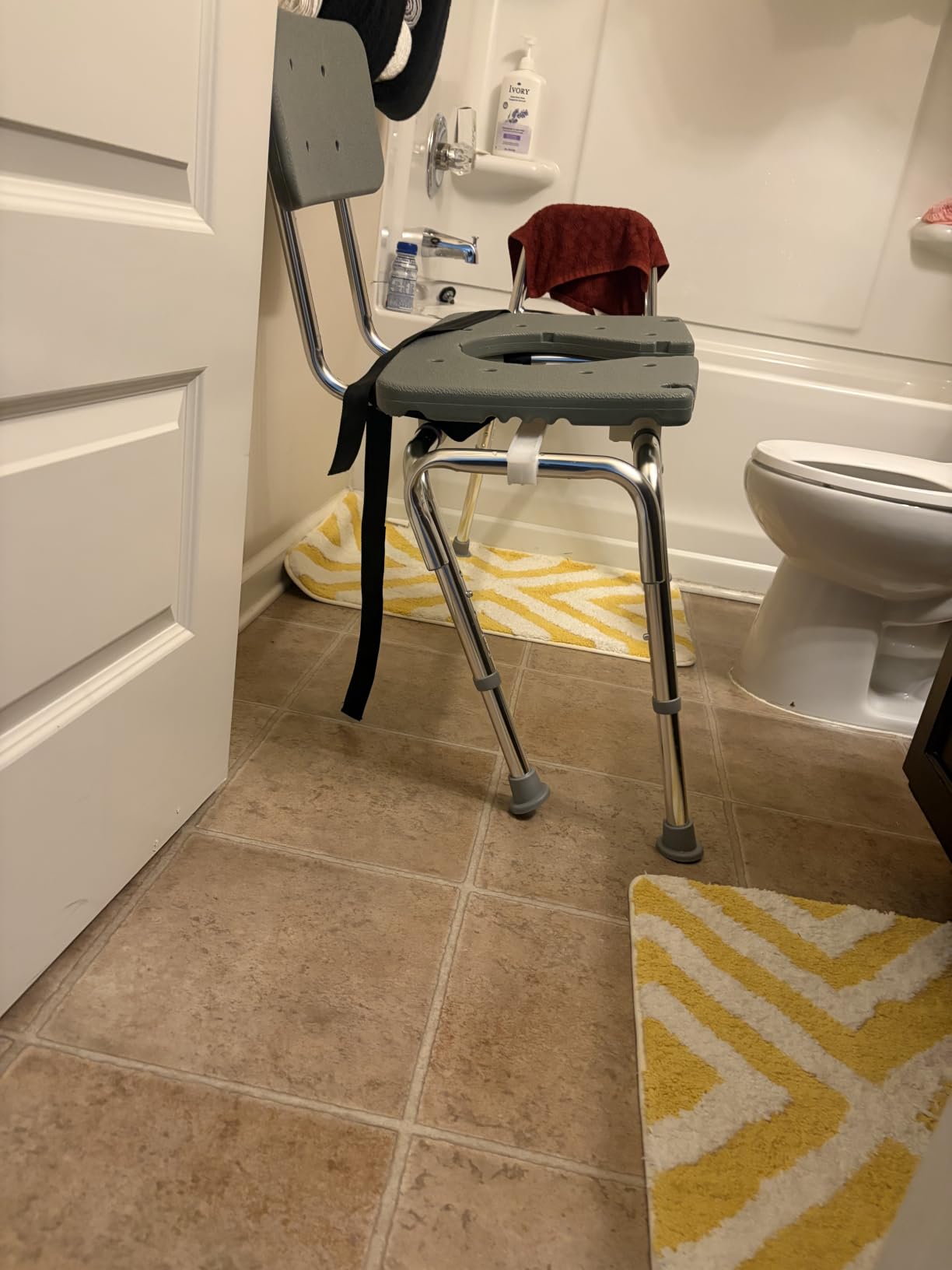
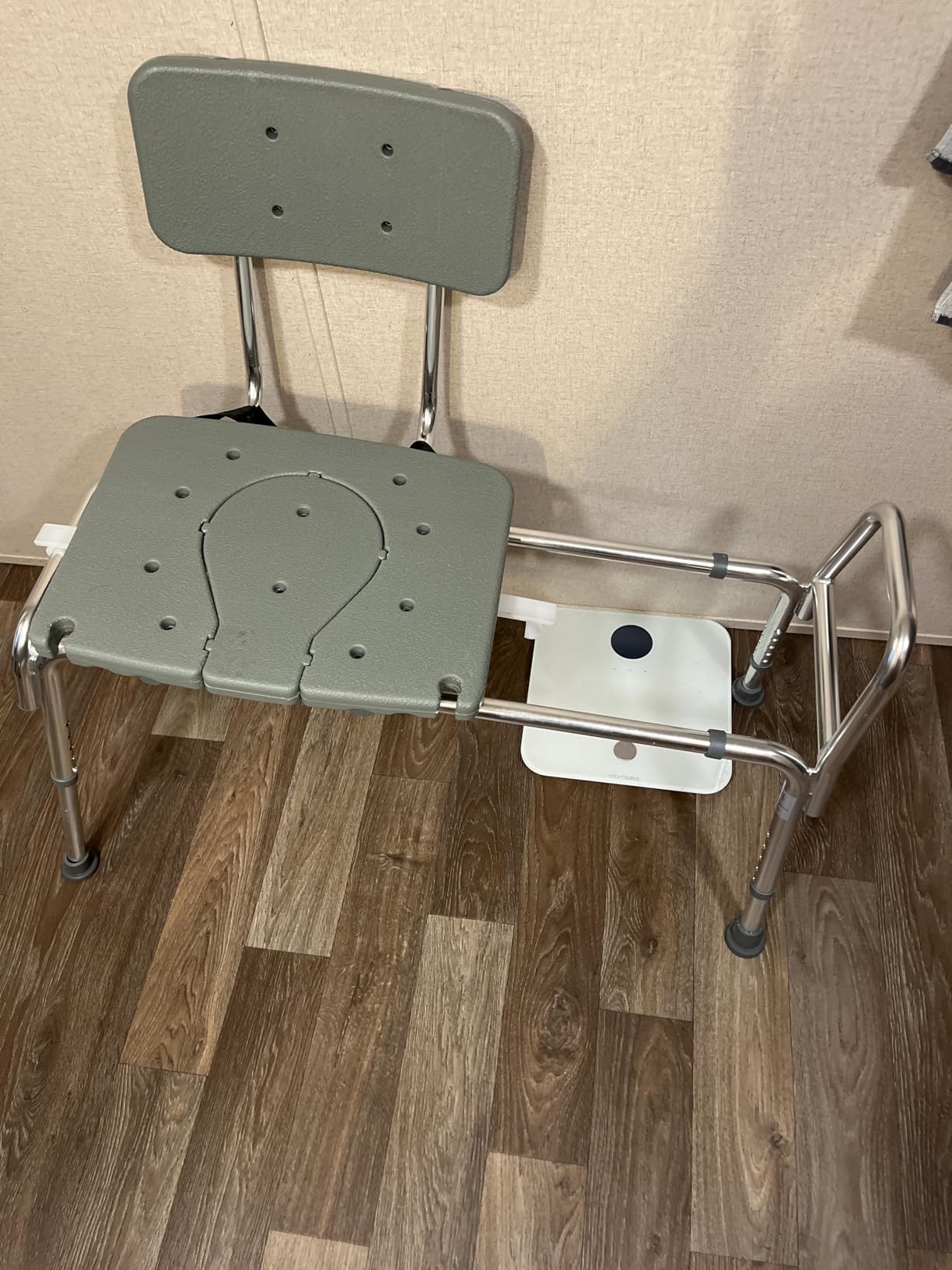
The removable cut-out for perineal access is the reason to choose it over a comparable steel bench, and it is a genuine feature rather than a marketing line. The safety belt uses hook-and-loop with nylon strap locks, so the seat stays latched while the user works through a transfer.
The cut-out has a flip cover, and owners report it tends to pop back up when someone sits down on it. Without the cover in place, roughly a third of the seat remains outside the tub, which is tight for a smaller user who needs to sit fully outside before sliding in. At 39 inches long, the frame also takes up real floor space, so measure a small bathroom before ordering.
When perineal access decides the purchase
If the user bathes daily and cannot stand to wash, the cut-out is worth more than most other features. Caregivers consistently point to this as the difference between a usable chair and an awkward one, and it is the main reason the DMI holds the highest review volume despite its lower rating.
Check these two things before ordering
Measure the tub wall height against the 19 to 23.5 inch seat range, and measure the floor space beside the tub against the 39 inch frame length. Also note there is no external grab handle on the outside position, so a user pushing up to stand has nothing to grip on that side.
3. Platinum Health Carousel Sliding Bench – The Swivel Seat That Fits a Tight Bathroom
Platinum Health Carousel Sliding Shower Chair Tub Transfer Bench with Swivel Seat, Premium Padded, Pivoting Arms, Adjustable Space Saving Design for Tubs, Inside Shower, for Handicap & Seniors, Blue
330 lb capacity
360-degree swivel
Padded polyurethane
Flip-up arms
Pros
- Seat locks at every 90 degrees for controlled pivoting
- Waterproof closed-cell padding wipes clean
- Flip-up locking armrests double as transfer leverage
- Swivel design protrudes far less into the room
Cons
- No perineal cut-out in the padded seat
- Release levers sit on the right side only
- 330 lb rating is below 400 lb steel benches
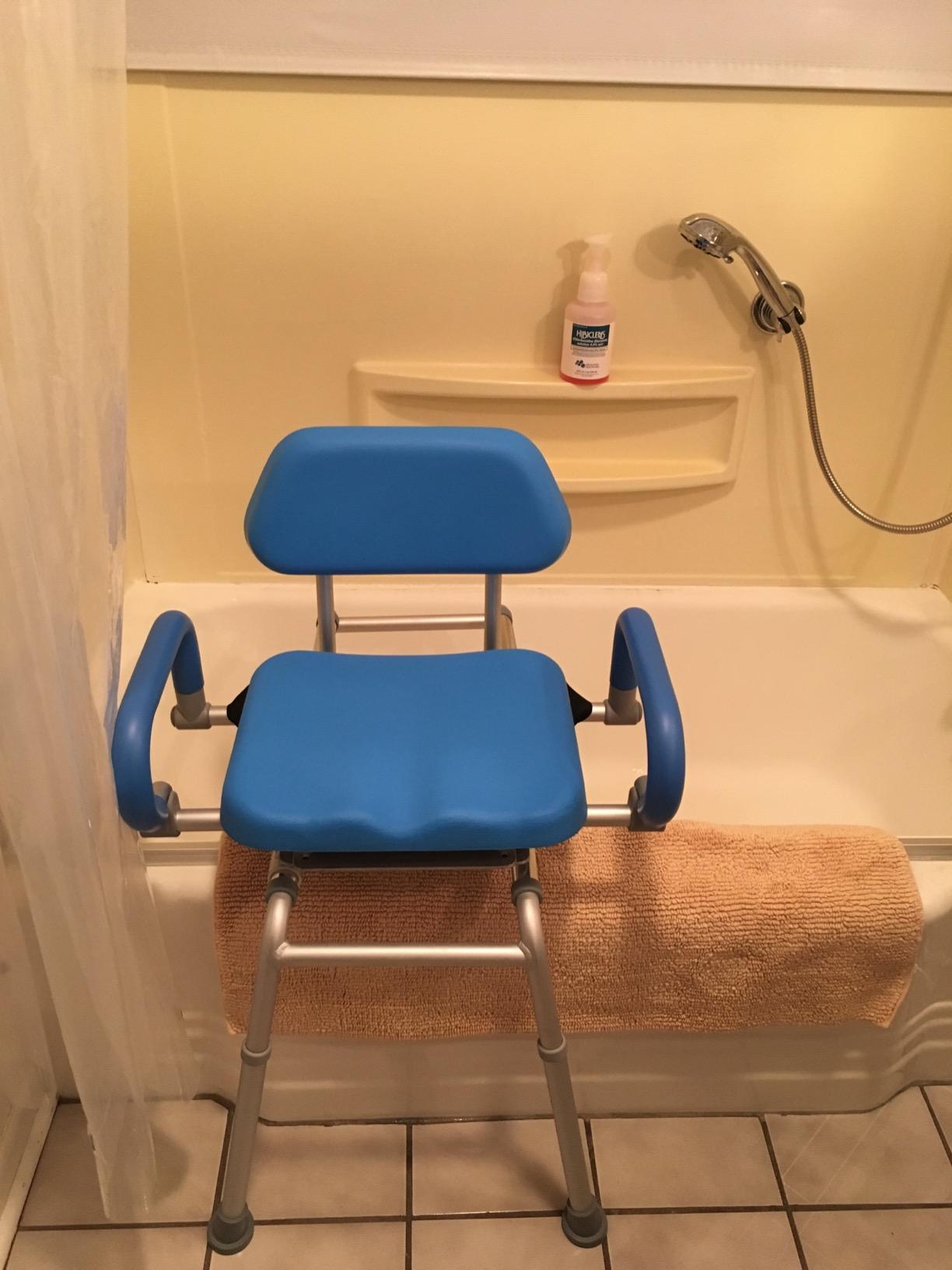
The Carousel changes the geometry of the transfer. Instead of sliding across the full width of the seat, the user sits on the outside edge, the seat rotates 360 degrees and locks at 90 degree intervals, and the user pivots legs-first into the tub. Because the seat turns rather than travels, the bench protrudes far less into the bathroom than a fixed-seat model, which is why it keeps appearing in small-bathroom recommendations.
Everything on it is padded in medical-grade closed-cell molded polyurethane: seat, backrest and armrests. That material will not absorb water and wipes clean with a disinfectant, and it stays noticeably warmer than hard plastic, which matters for someone with reduced sensation who would otherwise be sitting on a cold surface. The flip-up armrests lock in either position and double as leverage points for getting in and out.
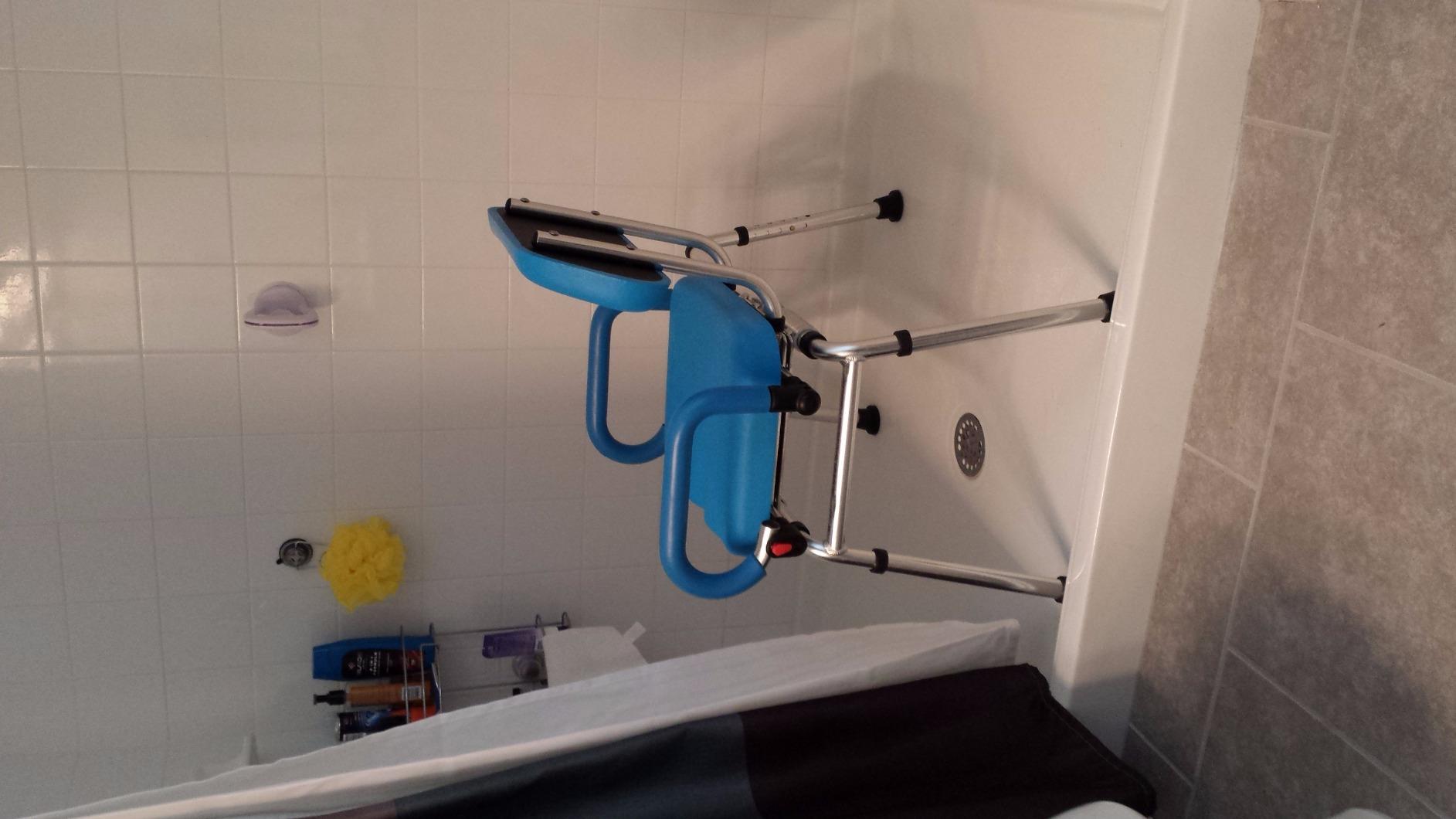
Owners with post-surgical recovery backgrounds describe the durability as the standout, and roughly 81 percent of reviews are five stars. The bench is fully reversible, so the same unit works from either side of the tub, and the backrest is removable for easier storage in a tight bathroom.
Two limitations are worth flagging. The seat is solid, so there is no hygiene cut-out and perineal washing means standing. The slide and swivel release levers are both on the right-hand side of the seat, which is a genuine problem for a user with right-side weakness who must operate them with that hand. And the 330 pound rating sits below the 400 pound common on steel-frame benches.
Why the swivel matters more than the rating
A 330 pound limit only matters above that body weight. For everyone else, the swivel is the deciding feature: fewer lateral scooting movements means less shear on the skin and fewer moments of instability, and the compact footprint solves the storage problem that small-bathroom users raise most often.
Where it falls short
Skip it if you need perineal access while seated, if you can only operate levers with your right hand, or if you need a bariatric rating. If your main constraint is arm strength, note that a padded swivel seat relies more on arm push-off than a solid straight bench does.
4. Moen DN7105 Home Care Transfer Bench – The Most Stable Frame Here
Moen DN7105 Home Care Premium Tub Transfer Bench
400 lb capacity
Wide pedestal leg
Seat about 29 by 18 inches
Limited lifetime warranty
Pros
- Wide pedestal leg resists tipping forward and back
- Individually adjustable inner legs with a splayed stance
- Large seating area with grab flange and non-slip push handle
- Integrated handheld shower holder
Cons
- Pedestal leg blocks the shower curtain
- Limited tub wall height clearance
- Loose shower head receptor
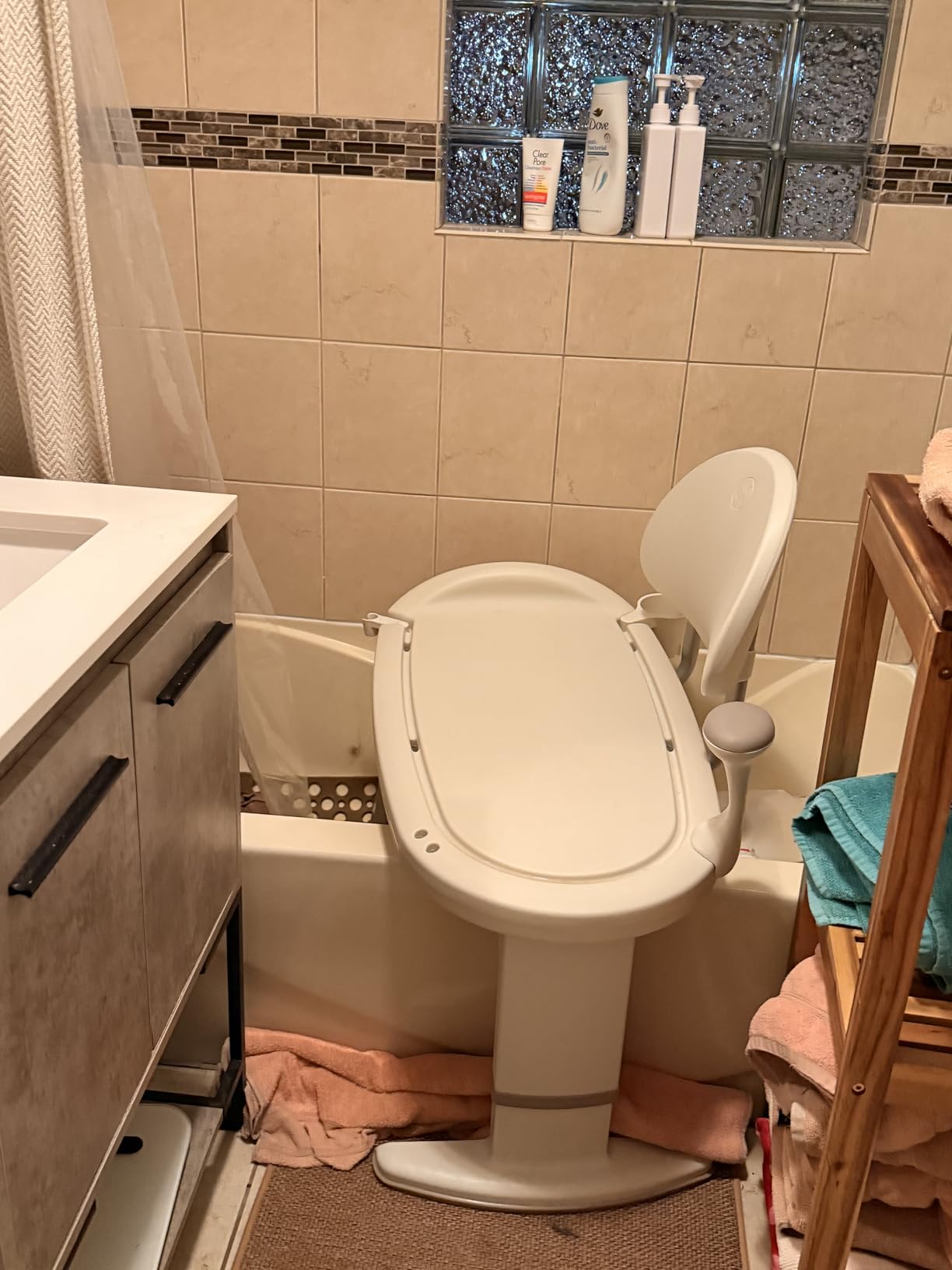
The Moen DN7105 is the one we would trust in a sloped or deep-soaking tub. Its outside leg is a wide pedestal rather than a narrow tube, which resists tipping forward or backward when a user shifts weight to slide, and the inner legs adjust individually with a splayed stance so uneven tub floors can be levelled out. That combination is why it holds a 4.5 rating across nearly 2,700 reviews.
The seating area is unusually generous at roughly 29.25 by 18.125 inches, and it includes a grab flange plus a non-slip handle for pushing up. The back, handle and accessories all mount on either side, so the bench can be reconfigured without buying a second unit. Moen also backs it with a limited lifetime warranty, which is unusual in this category.
There is an integrated holder for a handheld shower head and a cup-holder style back accessory, so the user can rinse without standing or reaching. The high-density polyethylene seat and back pair with aluminum legs rated to 400 pounds, and non-slip thermoplastic rubber feet add grip on wet tile.
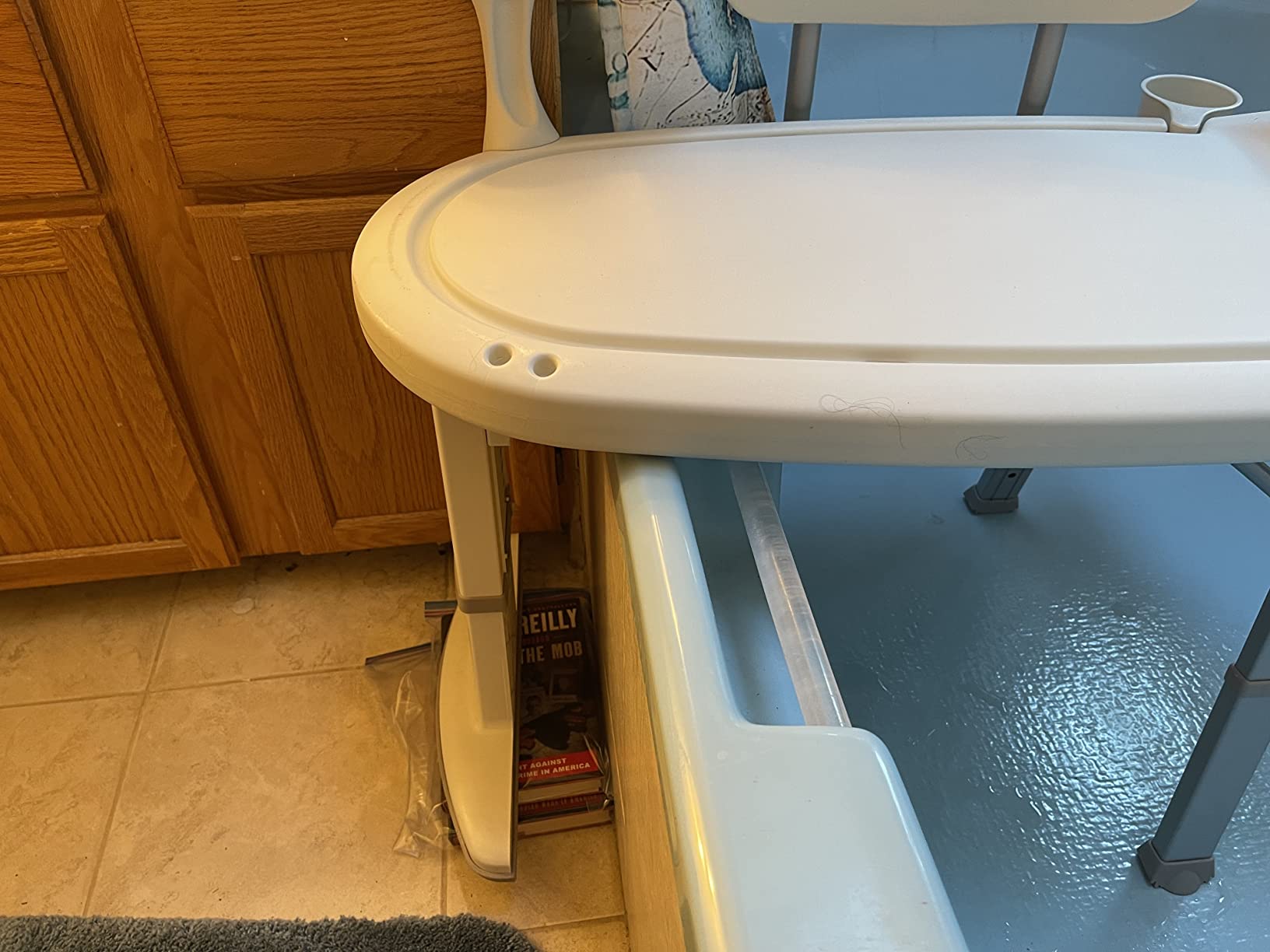
The pedestal leg is a double-edged feature. It blocks water from running out of the tub, so many owners end up using a split shower curtain, and the legs can only clear tub walls up to a certain height, so a very high-sided tub may not work at all. There are also two small open holes at the outer seat edge where the slider detaches, and the handheld shower receptor is loose and small enough that many hoses do not fit.
Who benefits most from a wide seat
Users above average in width or who need a longer sit for washing benefit more from the 29 inch seating area than from any other single feature in this roundup. Combined with the push handle and the flange, it gives a user with poor trunk control a defined edge to scoot toward rather than a vague surface.
Check the tub wall before anything else
With an adjustable seat from about 16.5 to 21 inches, the Moen suits lower-sided tubs better than the taller swing-leg designs. Measure the rim, then confirm the outside leg and curtain arrangement will not interfere with the rest of your bathroom.
5. Platinum Health Gateway Sliding Bench – Compact Swivel Design With a Padded Assist Handle
Platinum Health Gateway Premium Sliding Shower Chair Bath Transfer Bench with Swivel Padded Bath Tub Seat for Tubs and Shower, for Handicap & Seniors Mobility & Daily Living, Aluminum, Blue
330 lb capacity
14 to 35 inch range
Swivel padded seat
Tool-less assembly
Pros
- Assembles in under 5 minutes with no tools
- Swivel seat protrudes far less into the room
- Hi-contrast blue finish helps vision-impaired users
- Padded assist handle removes the need to shuffle across the seat
Cons
- 330 lb rating is below the 400 lb standard
- Narrower seat than fixed-seat benches
- Dimensions need checking in a small bathroom
The Gateway is the Carousel idea at a different point on the price and size spectrum, and the defining feature is the padded assist handle. It gives the user a defined grip to pull against during the pivot, which removes the shuffling-across-the-seat movement that is the most common complaint about sliding benches in general. Roughly 77 percent of its reviews are five stars.
Assembly is genuinely tool-less and takes under five minutes, which matters if a single caregiver is setting the bathroom up alone. The seat and backrest are padded in the same waterproof closed-cell polyurethane as the Carousel, the whole unit is reversible for either side of the tub, and height is adjustable across a wide 14 to 35 inch listed range.
Our recommendation to check dimensions closely before ordering is the same one owners repeat. The listed item dimensions are 13 inches deep by 33 inches wide by 30 inches high, but the height range is unusually broad, so the installed footprint at your chosen seat height may not be what the number on the page suggests.
Why the high-contrast finish is more than cosmetic
The hi-contrast blue makes the armrests, seat edge and foot pads easier to see for a user with reduced vision. In a wet tub with white surfaces, a visible edge is a safety feature, and reviewers with vision-impaired users call it out as a reason the transfers are calmer.
Where it does not fit
The 330 pound rating rules it out for many bariatric users, and the narrower seat than a fixed-seat bench limits room for larger users. If your bathroom is genuinely tight, this design is a strong option; if the user is heavier, look at a 400 pound bench instead.
6. Drive Medical Splash Defense Bench – Keeps the Bathroom Floor Dry
Drive Medical Splash Defense Tub Transfer Bench, Adjustable Height, White
400 lb capacity
Curtain-channel bars
U-shaped cutout
28 by 16 inch seat
Pros
- Curtain channels keep the shower curtain inside the tub
- Wide suction-cup feet hold firm under load
- Dual-column legs adjust in 0.5 inch increments
- All four legs adjust between tub and floor heights
Cons
- Channel bars only clear low-profile tub walls
- Bars can scratch the tub rim
- Seat is close to the limit in narrower tubs
The Drive Medical Splash Defense solves a problem that sounds minor and is actually serious for anyone who transfers with a wheelchair: water on the bathroom floor. Its curved curtain-channel bars run along the top of the frame so a standard shower curtain hooks inside the tub rather than draping outside it, and the U-shaped cutout in the seat is designed to reduce spillage during a transfer.
Mechanically it is a conventional sliding bench done carefully. Dual-column extending legs adjust in 0.5 inch increments, and all four legs adjust between the tub floor and the bathroom floor, so an odd tub profile can still be levelled. The pinch-free lever system means no finger injuries during setup, and the reversible backrest fits either bathroom layout. Weight capacity is 400 pounds.
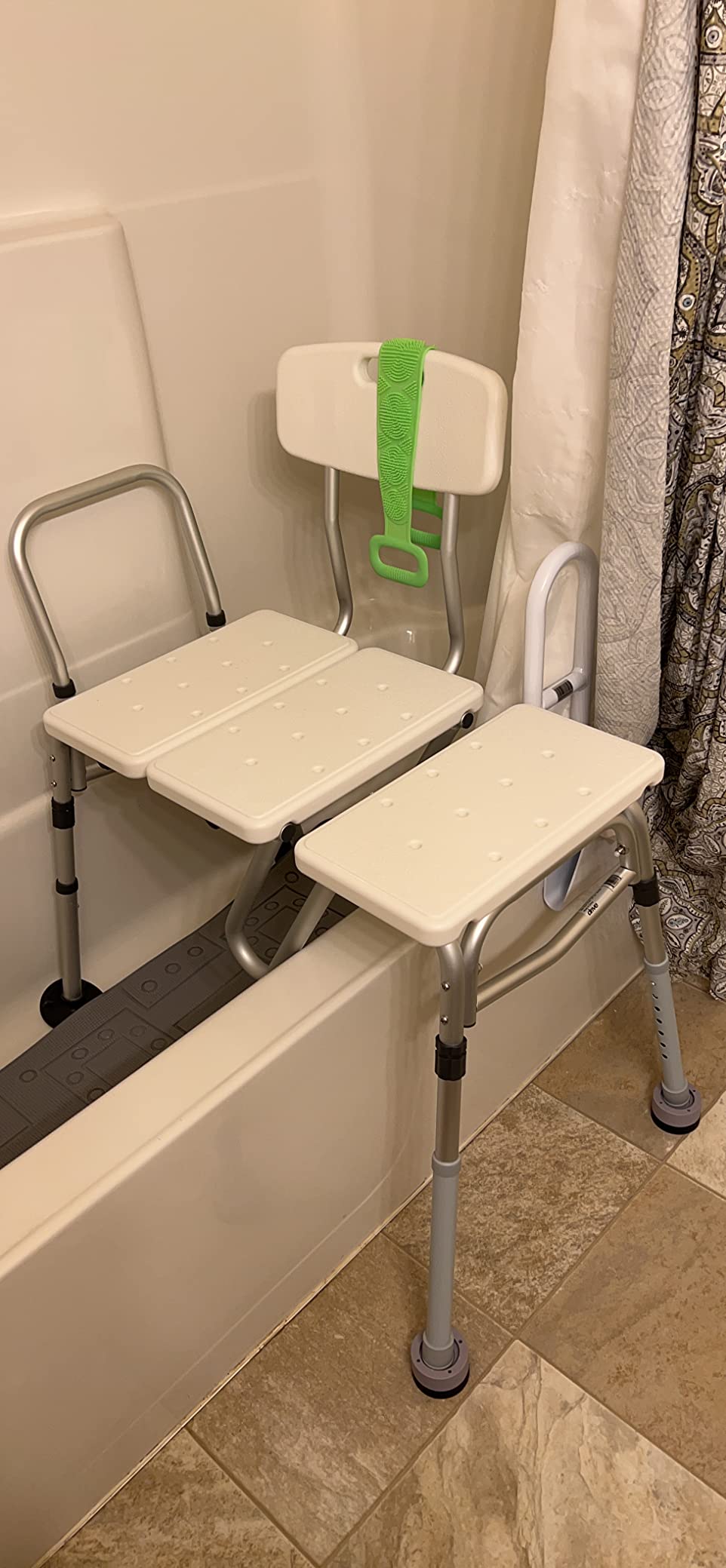
At about 12.7 pounds it is light enough to move between users, and the wide suction-cup feet are the feature reviewers single out: they stay put even when the bench is shaken, which is the correct test for a surface a person will be scooting across.
The catch is fit, and it is a hard constraint rather than a preference. The curtain-channel bars only clear low-profile tub walls; on a standard-height tub the outside legs cannot reach the floor, which means the bench will not work in the bathroom many people actually have. The bars can also scratch the tub rim, and the drop loops can catch the tub edge as it flexes under load.
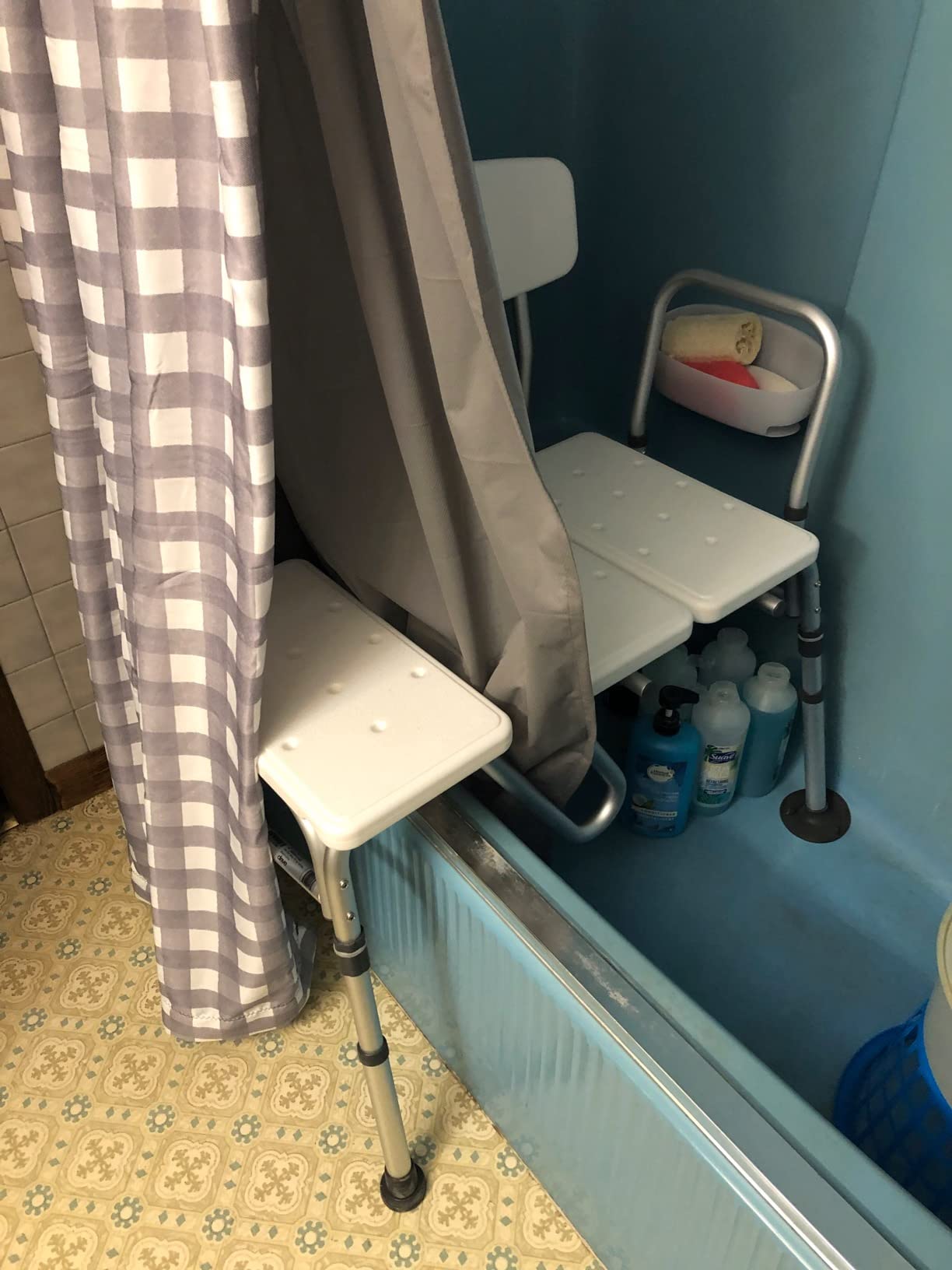
Who this design is for
If you have a low-profile or walk-in tub and your wheelchair tracks leave water on the floor, this is one of the few designs that addresses it directly. Keeping the floor dry also matters for the caregiver walking in and out during the transfer, since a wet tile floor is where caregiver slips happen.
How to check the fit in one minute
Measure the height of your tub wall and compare it to the outer leg range, and look at the seat dimensions of 28 by 16 inches against your tub width. If the outer legs cannot reach the floor, return it rather than adapting it with blocks.
7. HOMLAND Tub Transfer Bench – Sturdy A-Frame at a Budget Weight
HOMLAND Tub Transfer Bench with Backrest for Bathtub, Height Adjustable
400 lb capacity
A-frame aluminum
17.5 to 22.5 inch height
Seat drainage holes
Pros
- A-frame stance with thicker tubing than standard models
- Push-button height adjustment with a reversible backrest
- Seat drainage holes prevent water pooling
- Light enough to move between users yet rated to 400 pounds
Cons
- No perineal cut-out in the seat
- Lightweight build may not suit very heavy users
The HOMLAND is the straightforward answer for someone who needs a dependable fixed sliding bench without paying for a swivel mechanism. It uses an A-frame aluminum structure with thicker tubing than typical budget models, and that stance is what gives it a 4.5 rating with roughly 79 percent five stars across nearly 1,000 reviews.
Height adjusts by push button from 17.5 to 22.5 inches, the backrest reverses to either side, and the four feet have non-slip rubber tips for grip on wet surfaces. The seat has drainage holes so water does not pool, which is a small detail that matters in a wet environment where a solid seat becomes a slip hazard over time.
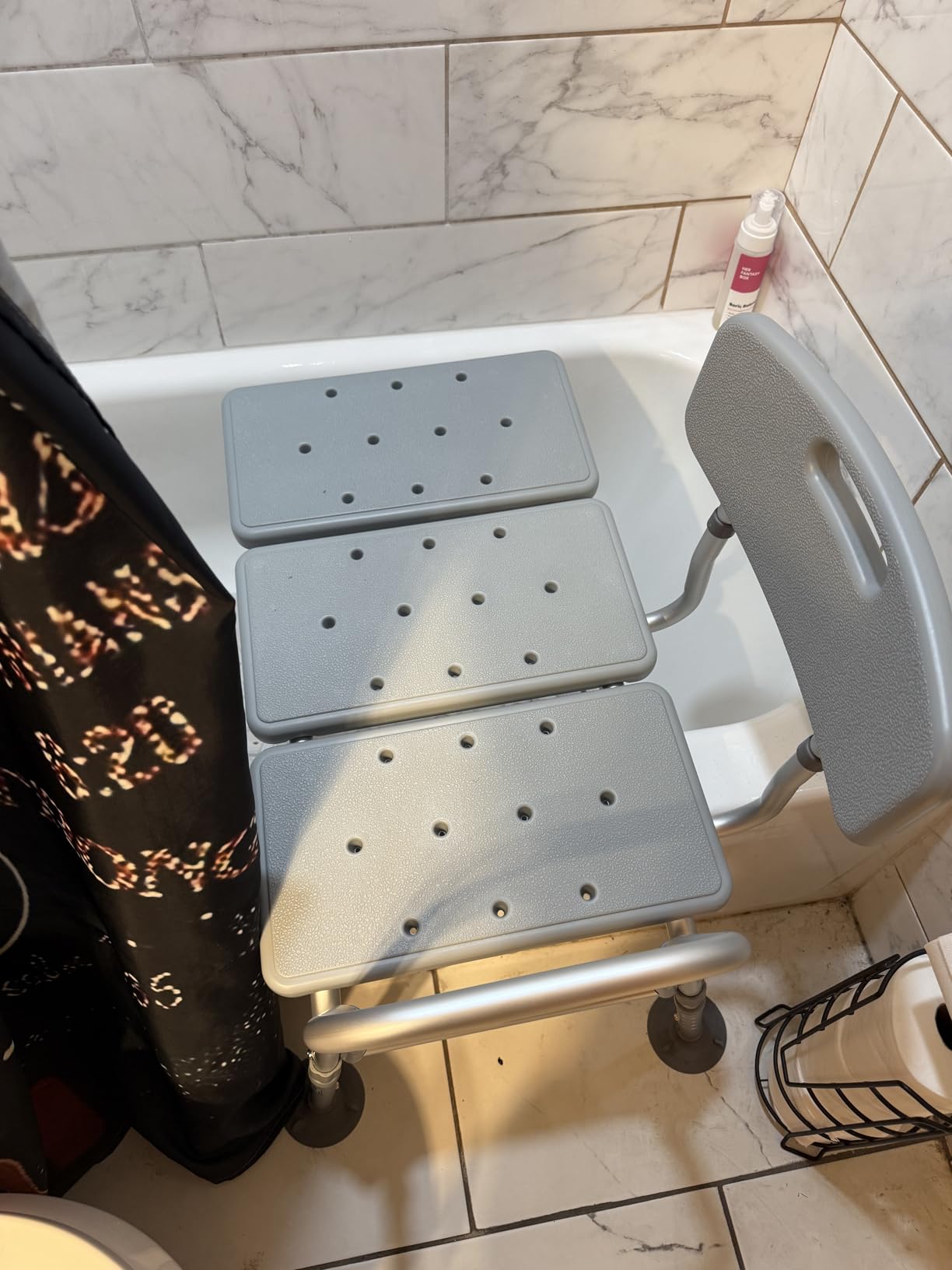
At 32.3 inches wide and 22.4 inches deep, the footprint is more compact than the 39 inch DMI bench, which makes it easier to position in a narrow bathroom while still leaving floor space beside the tub for the wheelchair to approach.
Like most fixed sliding benches in this price band, there is no cut-out for perineal access, so seated washing is not comfortable. The aluminum is also lighter than a heavy-duty steel frame, so if the user is at the top of the 400 pound rating or above, an all-steel bench is the safer choice rather than this one.
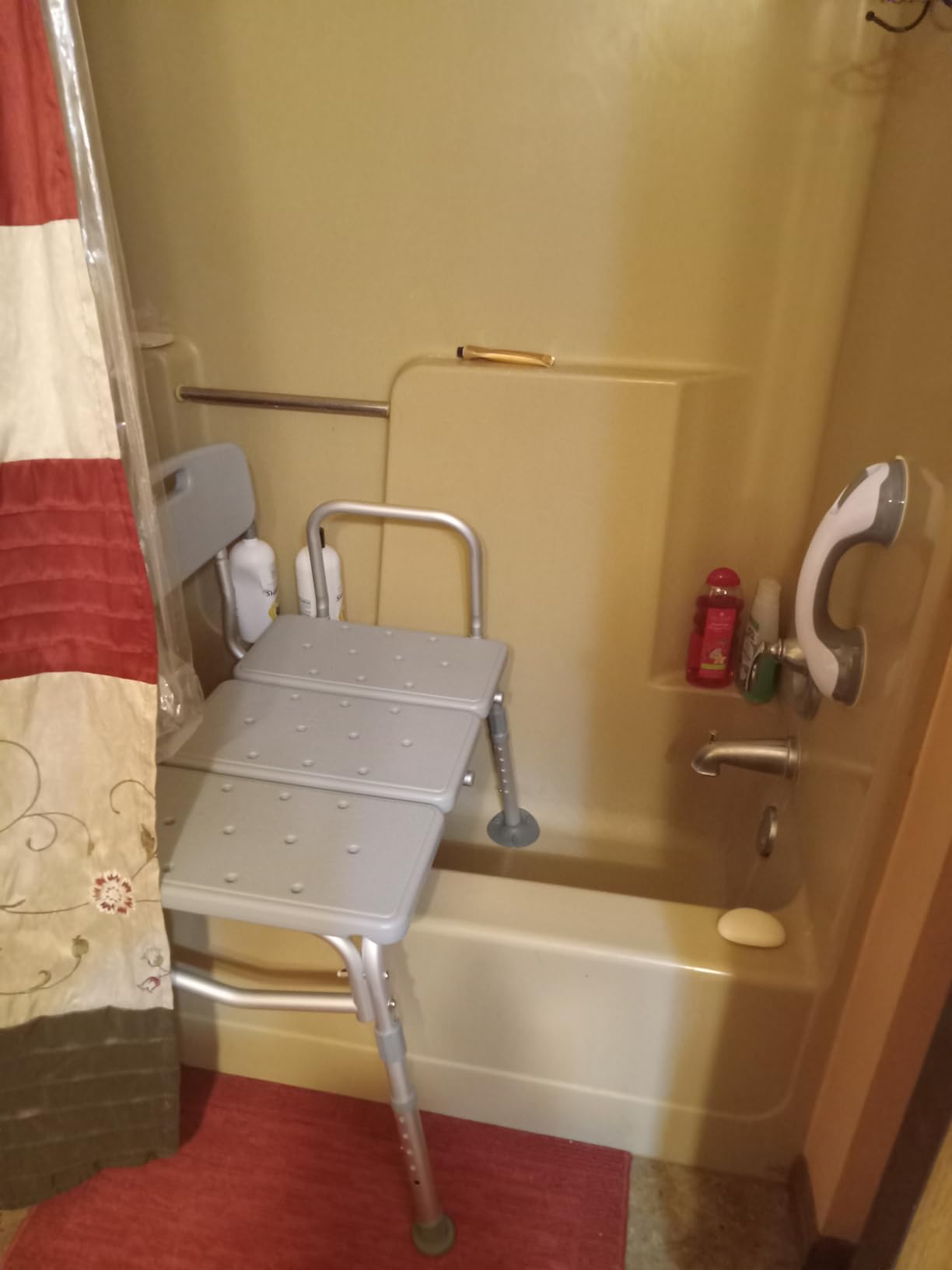
How the A-frame changes the feel of a transfer
The splayed legs keep the bench planted while a user shifts weight across the seat, which reduces the rocking you feel in a narrower single-column design. Users who transfer slowly, or who use a caregiver with limited strength, notice that difference more than any cosmetic feature.
When to spend more instead
Choose something else if you need perineal access, if you need a padded surface for skin protection, or if body weight is close to or above the 400 pound rating. In those cases a padded or steel-frame model is a better long-term buy.
8. VEVOR 4-in-1 Shower Commode Wheelchair – The Only Rolling Option in This Roundup
VEVOR Shower Commode Wheelchair 350 LBS Capacity Bedside Commode Chair
350 lb capacity
4-in-1 design
5-inch PU wheels
19.3 to 22.4 inch height
Pros
- Converts between shower chair
- commode
- potty chair and wheelchair
- 5-inch wheels roll quietly and fit narrow doorways
- Flip-up armrests and footrests aid side transfers
- Welded 1.3mm rust-proof aluminum frame
Cons
- Clip-on plastic seat durability is a known weak point
- Commode tray can scrape when pulled out while seated
- Foot brakes are stiff and hand-unusable
This is the only chair in the roundup that rolls, and that changes the transfer entirely. Instead of transferring at the tub, the user stays in the chair: the commode chair is wheeled into a curbless roll-in shower, brakes are set, and bathing happens seated. For someone who cannot bear weight at all, that removes the transfer instead of making it easier. Caregiver threads on r/ALS describe exactly this progression toward rolling commode chairs as a condition advances.
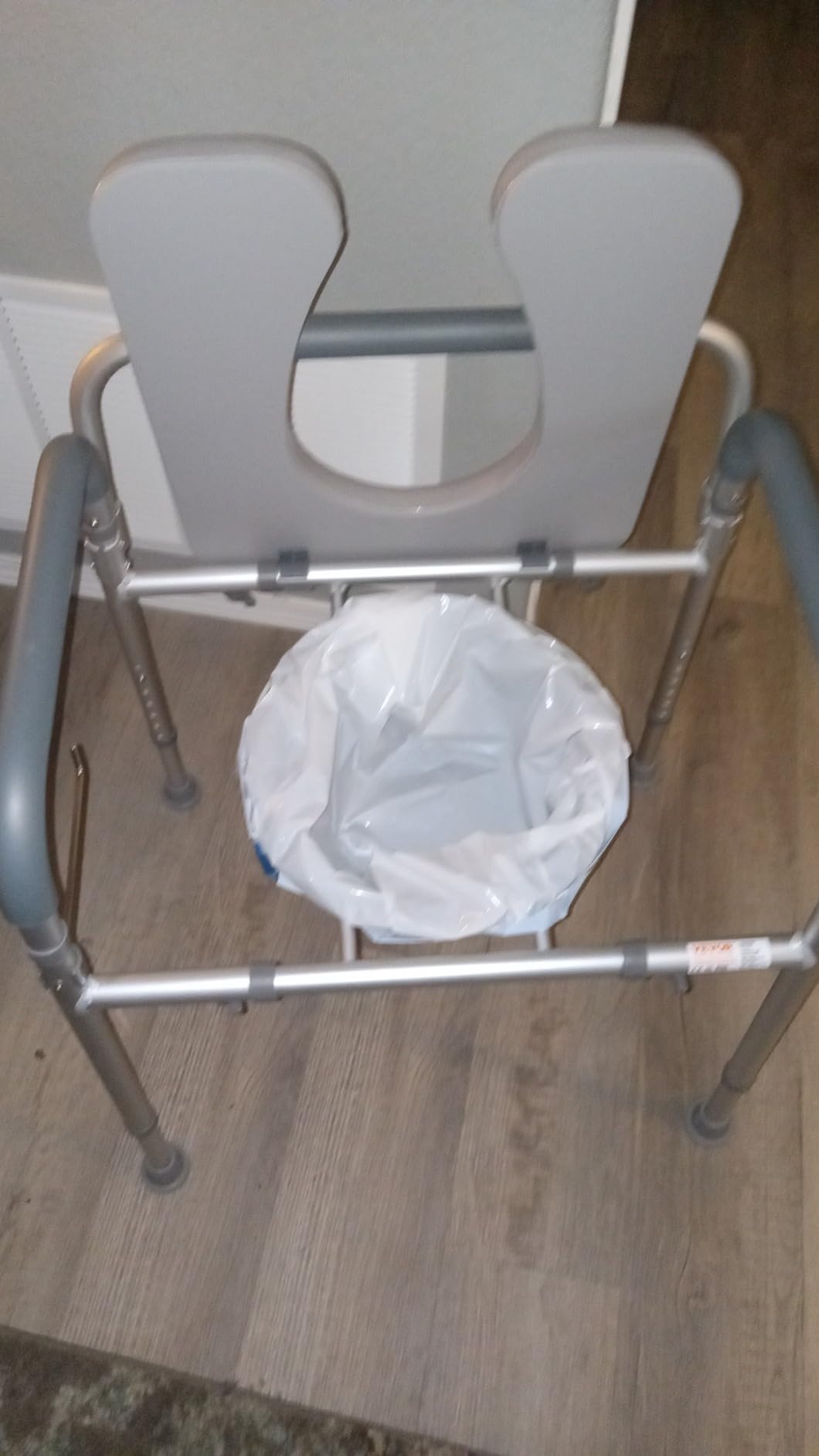
It is genuinely a 4-in-1 unit. The detachable seat converts between shower chair, commode, potty chair and wheelchair, and a 5-liter commode bucket with a lid is included, which also makes it useful as a bedside commode. The open-front U-shaped seat eases personal care, and flip-up armrests and footrests make side transfers possible in either direction.
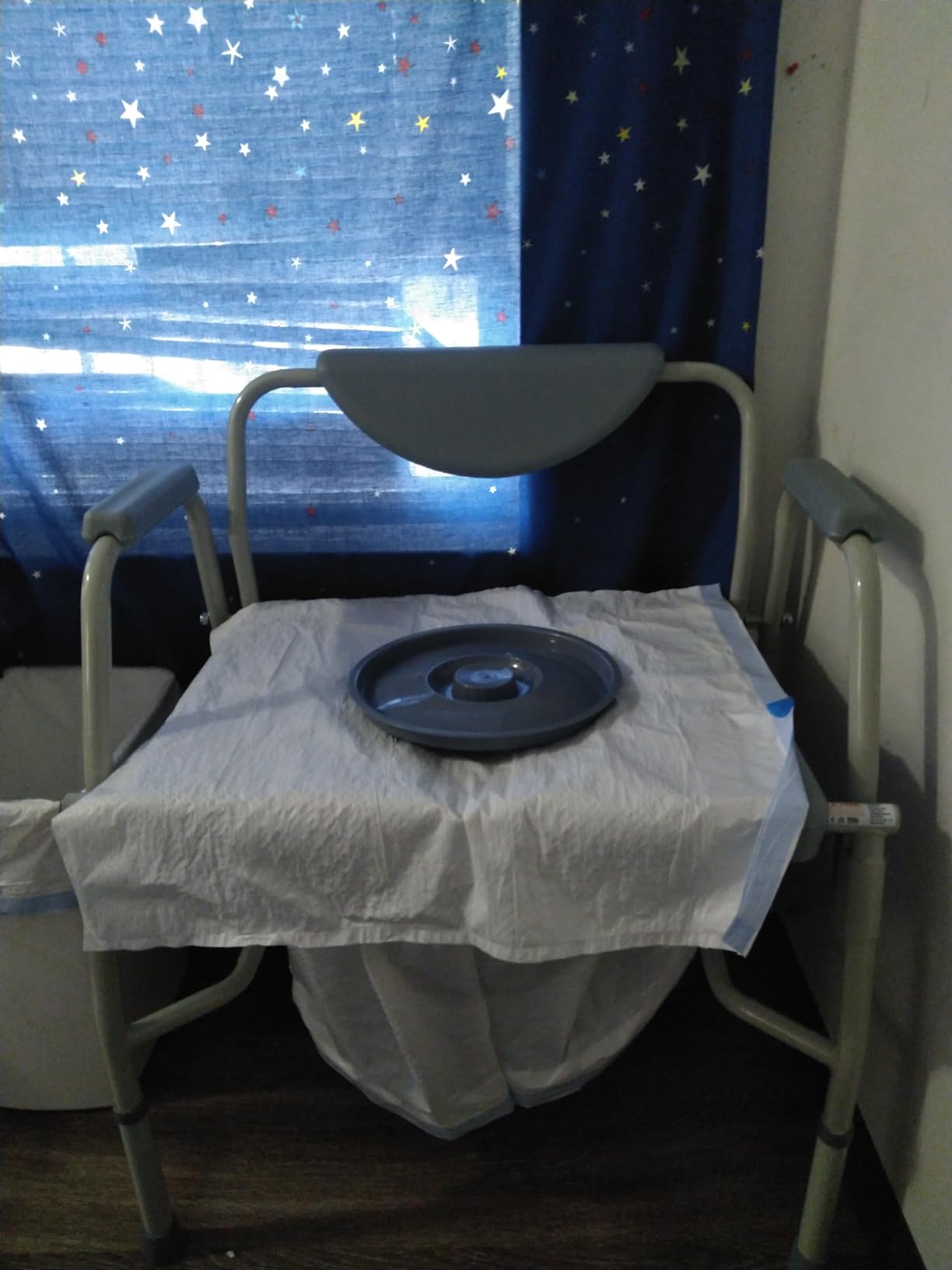
Wheels are 5-inch medical universal casters with 360 degree rotation and silent PU tires, rated at 350 pounds, and the frame is welded 1.3mm rust-proof aluminum reinforced with C-clamps. Height adjusts without tools through three settings from 19.3 to 22.4 inches, and the whole chair disassembles for storage, which matters in a small bathroom where a fixed bench blocks the only approach path.
It has the lowest rating here at 4.2 stars, and the complaints are specific. The hard plastic clip-on seat has cracked for at least one buyer, and replacement parts were not supplied. The commode tray can scrape the user when pulled out while seated, and the foot-operated brakes are stiff and cannot be operated by hand, which is a real limitation for someone with limited hand function.
Who a rolling shower commode chair suits best
It suits users in a curbless roll-in shower who cannot bear weight, or who transfer with a ceiling lift or a two-person team. It also serves short-term post-surgical recovery well, where one chair handles the bedroom, the toilet and the shower without a separate commode purchase.
Where it will not go
It will not cross a standard bathtub wall, so it needs a level-access or curbless shower to be useful. Before buying, confirm the hand brakes or foot brakes can actually be operated by the person who will use them, and check the shower floor is smooth enough for 5-inch casters.
9. VEVOR Swivel Sliding Transfer Bench – Most Height Levels and the Highest Seat Range
VEVOR Sliding Tub Transfer Bench with 360 Degree Swivel Seat, Sliding Shower Chair with Pivoting Armrest & Padded Seat and Safety Belt, Height Adjustable Bath Chair for Elderly Disabled, 330LBS
330 lb capacity
20.9 to 27.6 inch height
1.9 inch PU cushion
360-degree swivel
Pros
- Fifteen height levels in 0.5 inch steps covers the highest tub walls here
- 1.9 inch thick waterproof PU cushion is softer than hard plastic
- Pivoting armrests raise
- lower and lock
- Waist safety belt and showerhead holder included
Cons
- 330 lb rating is below 400 lb steel benches
- 40.9 inch overall width is long for small bathrooms
- No perineal cut-out in the seat
Where most benches on this list top out around 22 inches, the VEVOR runs from 20.9 to 27.6 inches across fifteen levels in half-inch steps, using spring-loaded push buttons. That range is the reason it is here: it is the option for a tall-sided tub, a raised deck, or a user who needs to sit notably higher than a standard bench allows.
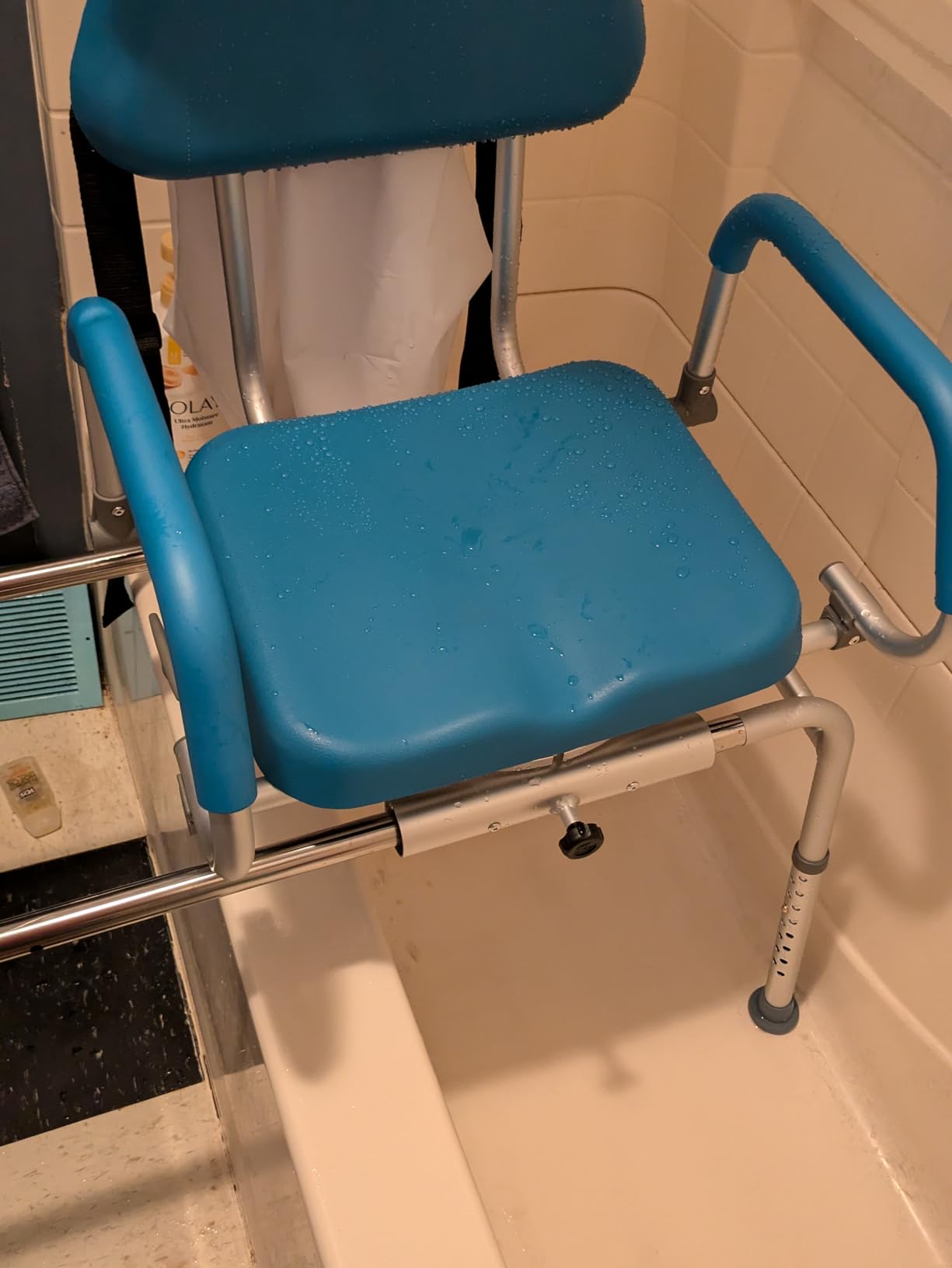
It combines side-to-side sliding with a 360 degree swivel seat, so the user can either slide across or pivot, depending on the day and the strength available. The pivoting armrests raise, lower and lock, which lets a lateral transfer happen from the side rather than over the front, which is the technique users with spinal cord injury most often ask for.
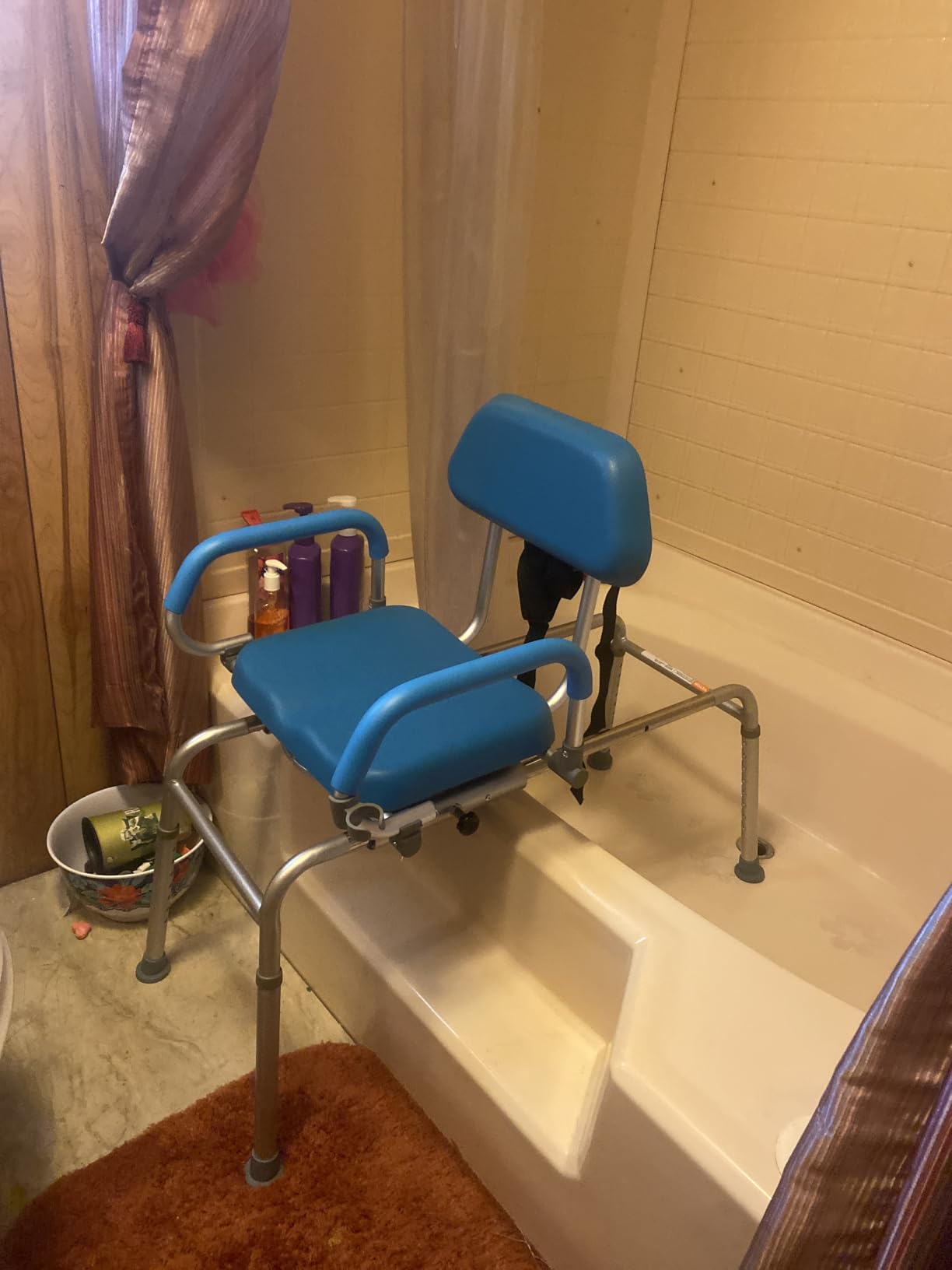
The 1.9 inch thick PU cushion and padded backrest are waterproof, wipe clean and softer than hard plastic, so they split the difference between skin comfort and the easy cleaning that makes a bench usable daily. A waist safety belt and a showerhead holder are included, and the frame pairs high-strength aluminum with SUS304 stainless components and non-slip foot pads.
At 40.9 inches overall width, this is the longest bench in the roundup, and that length is the first thing to check in a small bathroom. The 330 pound rating is below the 400 pound standard on the steel-frame benches, and there is no perineal cut-out in the padded seat.
High tub walls and other height obstacles
If your tub wall is taller than what a 22 inch bench can clear, this is one of the few options here that solves it without a custom order. It also suits a curbless shower with a raised threshold or a raised platform, where the finished surface sits higher than a standard bench seat.
What to verify before ordering
Measure your bathroom width rather than assuming, since 40.9 inches is longer than a standard tub plus the space beside it in many layouts. If the user is over 330 pounds, cross the rating off and look at a 400 pound bench even if the height range is the priority.
10. Medline Padded Transfer Bench – Best Padded Option for Skin Protection
Medline Padded Transfer Bench for Bathtub and Shower, Height Adjustable, Slip-Resistant Legs, Rust-Resistant, Side Arm & Back Rest for Extra Support, 400 lb. Weight Capacity, Tool-Free Assembly
400 lb capacity
Padded seat and back
18 to 22 inch height
Individual leg adjustment
Pros
- Padding is more comfortable than hard plastic and helped prevent a pressure sore for one user
- Each of the four legs adjusts individually to level uneven tubs
- Reversible backrest
- Side arm gives a grab point for standing
Cons
- Padding is thinner than the listing implies and may crack with age
- Tight fit in a small bathroom
- Vague assembly instructions
If reduced sensation is part of the picture, the seat surface stops being a comfort detail and becomes a safety decision. This Medline padded bench rates 4.6 stars with about 80 percent five stars, and caregivers consistently single out the padding as the reason bathing stopped being painful for the person they care for. One owner reported that the padded seat and back helped prevent a pressure sore.
It carries a 400 pound rating on a rust-resistant aluminum frame, which is unusual for a padded model and matters for anyone near that limit. Each of the four legs adjusts independently, so an uneven or sloped tub floor can be levelled out rather than rocking the bench. The backrest reverses to either side, and a side arm gives a grab point for pushing up to stand.

Push-button height adjustment runs from 18 to 22 inches with tool-free assembly, and the wide suction-cup feet hold the bench steady as the user scoots across. Owners also note it fits in a narrow space between a toilet and a tub, which is a common bathroom layout that rules out wider benches.
The padding is thinner than the listing implies and may crack with age, so expect to replace the surface eventually rather than treating it as permanent. The dimensions are snug for a larger user in a small bathroom, the assembly instructions are not very clear, and there is no cut-out for perineal access. If you are buying for a heavy user, verify the internal width against the person’s hips before ordering.
Padded versus non-padded seats for skin integrity
Foam or closed-cell polyurethane spreads pressure across the sit bones and reduces the concentrated load that leads to breakdown, and it feels warmer so users with reduced sensation are less likely to shift uncomfortably mid-wash. The cost is a surface that holds moisture if it is not dried, and a slightly harder lateral scoot than bare plastic.
How to keep a padded seat in condition
Rinse and dry the seat and backrest after every use, especially the seam where the padding meets the frame, and do not store the bench damp in a closed cabinet. Fabric and sling seats, which some people choose for comfort, are the ones most prone to mildew in a wet environment; closed-cell molded padding is far easier to keep dry.
How to Choose a Shower Transfer Chair That Fits Your Bathroom
The three sub-types and which bathroom each one suits
A sliding tub transfer bench straddles a standard bathtub wall, with one end on the tub floor and one end on the bathroom floor. A rolling shower commode chair has casters and fits a curbless roll-in shower or a walk-in where there is no wall to straddle. A fixed shower chair with arms only works if the user can already stand and pivot, which puts it out of reach for many wheelchair users.
Caregivers on r/OccupationalTherapy consistently raise grab bars before any of these choices, and that advice is worth following. A chair supports you while seated; it does not stop a slip on wet tile on the way in. If the bathroom has no grab bars, installing them is usually the single highest-value change you can make. Our wheelchair ramp guide covers the threshold and approach problems that so often pair with this one.
Measure your tub wall, doorway and shower opening first
Three measurements prevent nearly every return in this category. First, measure the tub wall height at the point where the bench legs rest, then compare it against the bench’s inner leg range. Second, measure the width of the tub and the length of the bench against your floor space, since frames in this roundup run from 29 to more than 40 inches. Third, measure the bathroom doorway and the approach path, because a bench that fits the tub may not fit through the door with a wheelchair behind it.
A two to three inch mismatch on any of those is enough to make a bench unstable, and that is the number one source of returns. If you are transferring a person who cannot bear weight at all, a transfer board approach may need to be ruled out separately, since a board needs upper-body strength that a bench does not.
Weight capacity and bariatric thresholds
Standard aluminum benches in this roundup are rated 330 pounds, and steel-frame and heavy-duty designs reach 400 pounds; some bariatric models go higher. The rule is simple: pick a rating with a real margin above body weight, because the rating describes a static load, not a dynamic one, and a user scooting across the seat creates more force than simply sitting still.
Watch the rest of the bathroom too. Grab bars with a 250 pound rating undermine a 400 pound chair, and a bath lift or tub-mounted seat may have a lower rating than the bench you are considering. If your body weight is above the range of everything in this roundup, tell us and we will look at heavy-duty models separately.
Padded versus non-padded seat surfaces
Waterproof closed-cell foam or polyurethane protects skin, reduces pressure concentration and stays warm to the touch; it is the better choice for anyone with reduced sensation or limited sitting tolerance. Hard molded plastic is easier to clean, dries instantly, and makes lateral scooting across the seat slightly easier; it is the better choice when the user has intact sensation and bathes frequently.
The middle ground is the molded bench with a removable perineal cut-out, which gives hygiene access without the user having to stand. Whatever you choose, dry the seat and backrest after every use. Damp foam in a closed cabinet is how mildew starts, and that concern comes up repeatedly in caregiver discussions.
Frame material in a wet environment
Aluminum is the default across this category because it is light, rust-resistant and cheap. Stainless steel components, as used in the SUS304 hardware on the VEVOR swivel bench, add stiffness and corrosion resistance at the joints but increase weight. PVC and plastic fittings are fine on a seat and back but are structural dead ends, so treat a plastic frame claim as a warning rather than a feature.
Check the moving parts too, because they fail before the frame does. Nylon strap locks, a hook-and-loop belt, and pivoting arm levers are all wear items, and a rust-free frame with a rusted latch is still an unsafe bench.
Caregiver-assisted versus independent use
Independent use favors a swivel design with flip-up or pivoting armrests, a padded assist handle, and a small footprint that leaves room to approach and turn. Caregiver-assisted use favors a wider seat, a higher 400 pound rating, a safety belt, and a wide or pedestal outside leg that resists tipping while a second person works.
Caregiver injury during transfers is a documented problem, and one of the quieter reasons to buy the right chair is that it reduces the lifting a caregiver has to do. If more than one person is involved in the transfer, an occupational therapist can prescribe a specific technique and equipment combination, which is worth the visit.
Coverage: Medicare Part B, Medicaid, private insurance and FSA/HSA
A shower transfer bench is generally treated as durable medical equipment, and Medicare Part B covers a documented portion of eligible equipment when a physician has prescribed it and the supplier meets the DME requirements. The catch is documentation: a prescription, a documented mobility limitation, and a supplier claim. Without all three, the claim is usually denied, so start the paperwork before you shop.
Medicaid coverage varies by state and often follows the same durable medical equipment pathway with different rules. Private insurers vary widely, and HSA and FSA accounts commonly cover the full purchase since a bench is not a food or drug expense; some listings in this category are marked FSA eligible for exactly that reason. Confirm eligibility with your plan before ordering rather than after.
When a shower transfer chair is the wrong answer
If the user can stand and pivot with supervision, a wall-mounted flip-down bench or a built-in corner seat takes up no floor space and leaves the transfer path clear, which matters in a small bathroom. If the user can bear no weight at all, a bath lift or a ceiling-mounted lift removes the transfer rather than assisting it, and a caregiver-assisted lift is safer than any bench for a heavy user with no trunk control.
A standard shower stool with no arms is the worst option for a wheelchair user, because there is nothing to push off from during the transfer. It is also the most frequently regretted purchase in caregiver forums, alongside armless chairs bought without thinking about the transfer direction.
Frequently Asked Questions
What is the best shower transfer chair for seniors?
The best shower transfer chair is the one that matches your bathroom and your body. For a standard bathtub, a sliding tub transfer bench with a 400 pound rating and a reversible backrest is the most dependable choice. For a curbless roll-in shower, a rolling shower commode chair with locking casters removes the transfer entirely. For a tight bathroom, a swivel-seat bench protrudes far less than a fixed-seat model. Weight capacity should sit comfortably above body weight, and a padded seat matters if you have reduced sensation.
What is the difference between a shower chair and a transfer chair?
A shower chair is a fixed or rolling seat for someone who can already stand and pivot into position. A transfer chair is built to move the user rather than the user moving to it: the seat slides across a tub wall or swivels, so the user does not step over the wall or stand up. A shower commode chair adds a removable bucket and is used both over a toilet and in the shower.
Will Medicare pay for a shower transfer chair?
A shower transfer bench is generally treated as durable medical equipment, so Medicare Part B may cover a portion of an eligible purchase. You need a physician prescription documenting a mobility limitation, a supplier that meets durable medical equipment requirements, and the claim filed correctly. Start the documentation before you shop, because claims without all three elements are frequently denied. Medicaid rules vary by state, and most FSA and HSA plans allow the purchase.
How do I transfer someone from a wheelchair to a shower chair?
Position the bench first, with the inside feet on the tub floor and the outside feet on the bathroom floor, and set the height before the transfer begins. Lock the brakes on the wheelchair and the suction feet on the bench. Move the armrest out of the way, then shift the user laterally onto the outside edge of the seat using a transfer board or a gait belt if upper-body strength allows. Slide or swivel the seat across the tub wall, reposition the user, then lower and lock the armrest. Have an occupational therapist demonstrate the technique for your specific situation before doing it alone.
Are rolling shower commode chairs height adjustable?
Most are, though the range is narrower than a fixed bench. The VEVOR 4-in-1 chair in this roundup adjusts without tools through three settings from 19.3 to 22.4 inches. Rolling models use a lever or clamp on the frame legs rather than push buttons, and the adjustment range matters most in a curbless shower where floor height varies. Check the listed range against your finished floor and shower threshold before buying.
Can a commode chair with wheels be used in the shower?
Yes, provided the frame is rust-resistant and the shower is level-entry. A commode chair with wheels and a rust-proof aluminum frame is designed to be wheeled into a curbless roll-in shower, with the brakes set before the user transfers or bathes. It will not cross a standard bathtub wall, so it needs a level-access or curbless shower. Rubber or non-marking tires and a floor that is free of raised thresholds make the roll far easier.
The Best Shower Transfer Chair for Wheelchair Users in 2026
After comparing all ten, the Medline 400 lb Transfer Bench is our first choice for most bathrooms: the highest rating paired with the largest body of real-world feedback, a reversible backrest, and suction feet that hold through a lateral transfer. If your tub wall is tall, reach for the VEVOR swivel bench, which runs up to 27.6 inches. If your bathroom is small, the Platinum Health Carousel keeps the footprint down. If you cannot bear weight at all, a rolling commode chair in a curbless shower removes the transfer rather than assisting it.
Measure before you order, install grab bars if you do not have them, and have an occupational therapist demonstrate the transfer for your particular body. Those three steps prevent more problems than any single chair in this roundup.