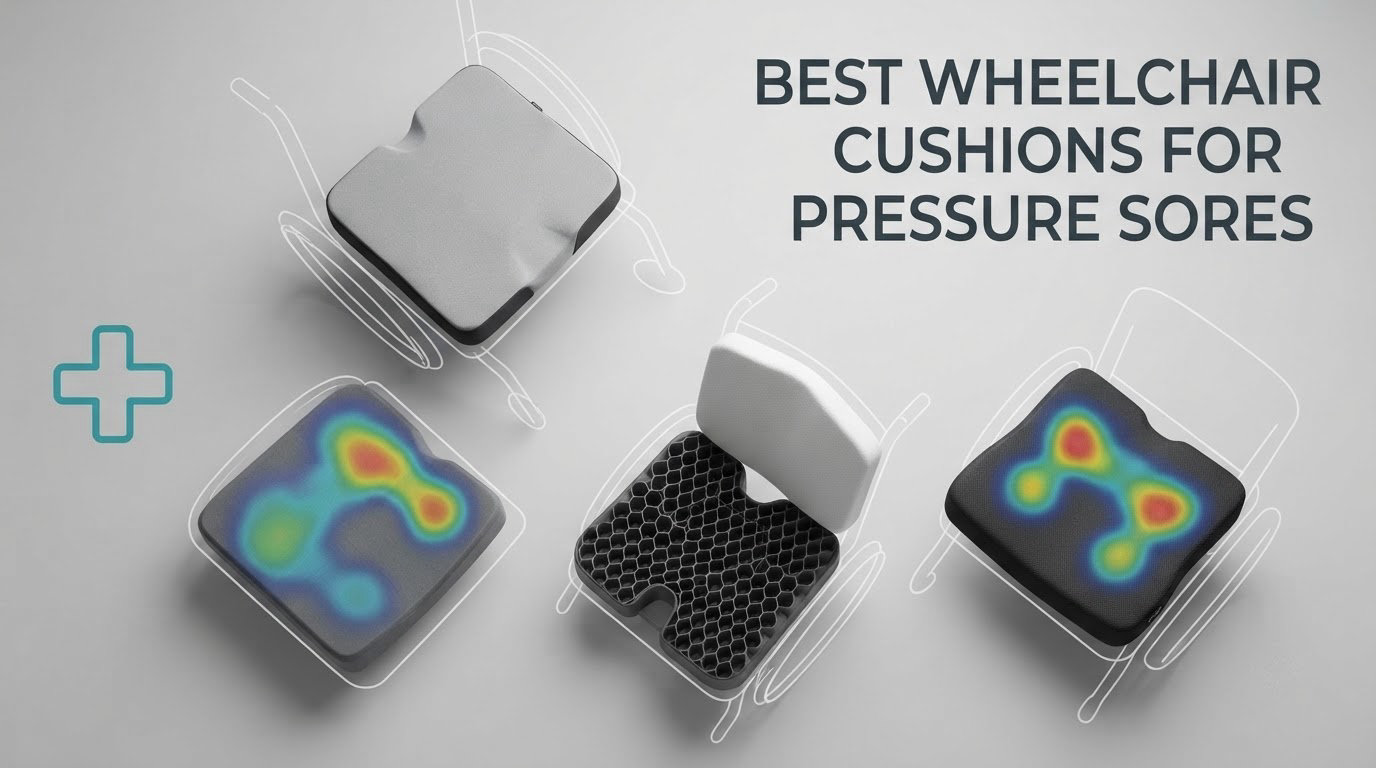
Medical note: this article is for general education and is not medical advice. If skin is broken, if redness over a bony area does not fade within about 20 minutes of taking pressure off, or if you have reduced sensation such as spinal cord injury or diabetic neuropathy, speak with an occupational therapist, physical therapist, seating specialist or wound care nurse before changing anything. A cushion is one part of pressure injury prevention, not the whole of it.
Choosing among the best wheelchair cushions for pressure sores comes down to one question: how much pressure your body puts on a small area, for how many hours a day, with how much sensation telling you it is happening. Air flotation and alternating pressure cushions spread load widest. Gel and hybrid foam cushions trade a little immersion for stability. Molded foam suits part-time use with healthy skin.
We spent weeks comparing ten of the highest-reviewed wheelchair seat cushions on the market, reading specifications, ratings and long-term owner feedback line by line. What follows covers the three cushion technologies, a risk-level decision you can apply in under a minute, ten picks with honest drawbacks, and the measurement steps that decide whether a cushion helps you or works against you.
This is a buying guide, not a substitute for a clinical seating assessment. We may earn a commission from qualifying purchases, which never changes what we recommend. For anyone setting up a new chair, our guide to wheelchair ramps for home use covers access, which affects how long you can safely stay seated.
Table of Contents
Top 3 Picks for the Best Wheelchair Cushions for Pressure Sores in October

Everlasting Comfort Ventilated Gel and…
- Ventilated gel and memory foam
- Non-slip rubberized base
- Machine washable breathable cover
- Contoured tailbone support

Roho Mosaic 18 x 16 Air Cushion
- Interconnected 3-inch air cells
- Hand pump and patch kit included
- Supports up to 315 lb
- Machine washable cover
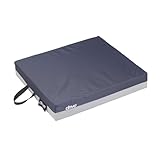
Drive Medical Skin Protection Gel Cushion
- Viscous gel bladder in foam shell
- Low-shear water-resistant cover
- 18 x 16 x 3 inch profile
- 275 lb weight capacity
All 10 Best Wheelchair Cushions Compared Side by Side in 2026
| Product | Specifications | Action |
|---|---|---|
| Everlasting Comfort Ventilated Gel Memory Foam |
|
Check Latest Price |
| Roho Mosaic Air Cushion 18 x 16 |
|
Check Latest Price |
| Drive Medical 14886 Skin Protection Gel |
|
Check Latest Price |
 Roho High Profile Air Cushion 4 inch Roho High Profile Air Cushion 4 inch |
|
Check Latest Price |
 MobiCushion Alternating Pressure Cushion MobiCushion Alternating Pressure Cushion |
|
Check Latest Price |
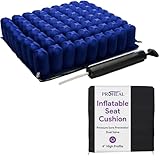 ProHeal Dual Valve Air Cushion 20 x 18 ProHeal Dual Valve Air Cushion 20 x 18 |
|
Check Latest Price |
 Vive Waterproof Foam and Gel Cushion Vive Waterproof Foam and Gel Cushion |
|
Check Latest Price |
 Vive Inflatable 72 Cell Air Cushion Vive Inflatable 72 Cell Air Cushion |
|
Check Latest Price |
 CUSHIO Two Piece Memory Foam Set CUSHIO Two Piece Memory Foam Set |
|
Check Latest Price |
 HeiWecan Two Piece Gel and Memory Foam Set HeiWecan Two Piece Gel and Memory Foam Set |
|
Check Latest Price |
The Three Cushion Types That Prevent Pressure Injuries
Pressure injuries happen because a hard seat frame concentrates load on a few bony points: the sitting bones, the sacrum, the tailbone and the hip creases. A cushion works by increasing immersion, so weight spreads across a wider contact area instead of digging into those points. Three technologies do this job, and they do it very differently.
Air flotation (for example the Roho Mosaic and Roho High Profile): a matrix of interconnected air cells lets the pelvis sink in and spread load over the largest possible area, and firmness is dialled with a pump. Best for high risk seating, reduced sensation and an existing sore that is not healing.
Alternating pressure (for example the MobiCushion MC1000): a powered pump cycles air pressure through the cells on a timer so no single spot is loaded continuously. Best for the highest risk profiles and wounds that need consistent offloading through the day.
Gel and hybrid foam (for example the Drive Medical 14886 and the Vive Waterproof cushion): a viscous gel bladder or gel core sits inside a foam base for steady immersion with more stability on transfer. Best for all-day sitting where you can shift your weight but want even, low-maintenance relief.
Molded contoured memory foam sits in a fourth group. It is comfortable and inexpensive, but foam compresses over time and gives less immersion than air or gel, which makes it a poor match for established skin breakdown.
Which Type of Wheelchair Cushion Do You Actually Need?
Match the cushion to your risk level, not to your age or your budget. Risk is driven by sitting hours, by whether you can reposition, and by whether you would feel a sore starting.
You cannot shift your weight, or sensation is reduced: choose air flotation at 3 to 4 inches of profile, or an alternating pressure cushion if a wound is open or slow to heal. This is the group the clinical literature treats as highest risk.
You can shift weight but sit all day, or you have had a stage 1 sore before: choose a gel bladder or hybrid foam cushion at about 3 inches. You get most of the immersion with far better transfer stability than air.
You use the chair part time and your skin is intact: a molded foam cushion with a tailbone cutout is enough, and it is the easiest option to live with daily.
Moisture or incontinence is part of your day: prioritise a fluid resistant, wipe-clean cover over cushion depth. Damp skin breaks down faster than dry skin under the same load.
Long-term wheelchair users on community forums reach the same conclusion from the other direction: the assessment route through an occupational therapist, physical therapist or ATP produces better outcomes than buying a cushion alone. On the r/wheelchairs forum one user describes the long wait for a seating assessment, and still recommends that route to anyone starting out.
How to Measure Your Wheelchair Seat So the Cushion Does Not Make Things Worse
A cushion that is too small pushes load onto the frame edges, and a cushion that is too thick raises your seat height until your feet will not reach the footplates. Both create new problems rather than solving the old one.
Measure width between the inside faces of the armrests, then subtract roughly half an inch of clearance on each side. Measure depth from the backrest to the back of your knee with the leg panels down, and aim for a cushion that ends near the knee without pushing it forward. Most cushions in this roundup measure 18 x 16 inches, with sizes running from 16 x 16 up to 20 x 18 and 22 x 20.
Check height last. Going from a flat sling to a 3 or 4 inch cushion can put your hips above your knees, which is uncomfortable and can raise your risk of sliding forward. If that happens, the footplate height or tilt needs adjusting at the same time. Ask your supplier to check the combination, and if you sit at a desk or eat at a table, confirm the clearance under it before you commit.
1. Everlasting Comfort Ventilated Gel Memory Foam Cushion for Everyday Relief
Everlasting Comfort Ventilated Wheelchair Cushions for Pressure Relief – Gel Memory Foam Wheel Chair Seat Cushion Pad for Seniors and Adults & Pain Relief – Soft Non-Slip Cover – Office Accessories
Ventilated gel and memory foam
18 x 16.93 inches
2.29 pounds
Machine washable breathable cover
Pros
- Gel and memory foam combination holds its shape over time
- Ventilated gel design limits heat buildup
- Rubberized non-slip base keeps it in place
- Machine washable removable cover
- Works in wheelchairs office chairs and car seats
Cons
- Thin wedge profile gives limited immersion
- Foam design will not match air cushions for existing breakdown
- Less suited to full-time use over long daily periods
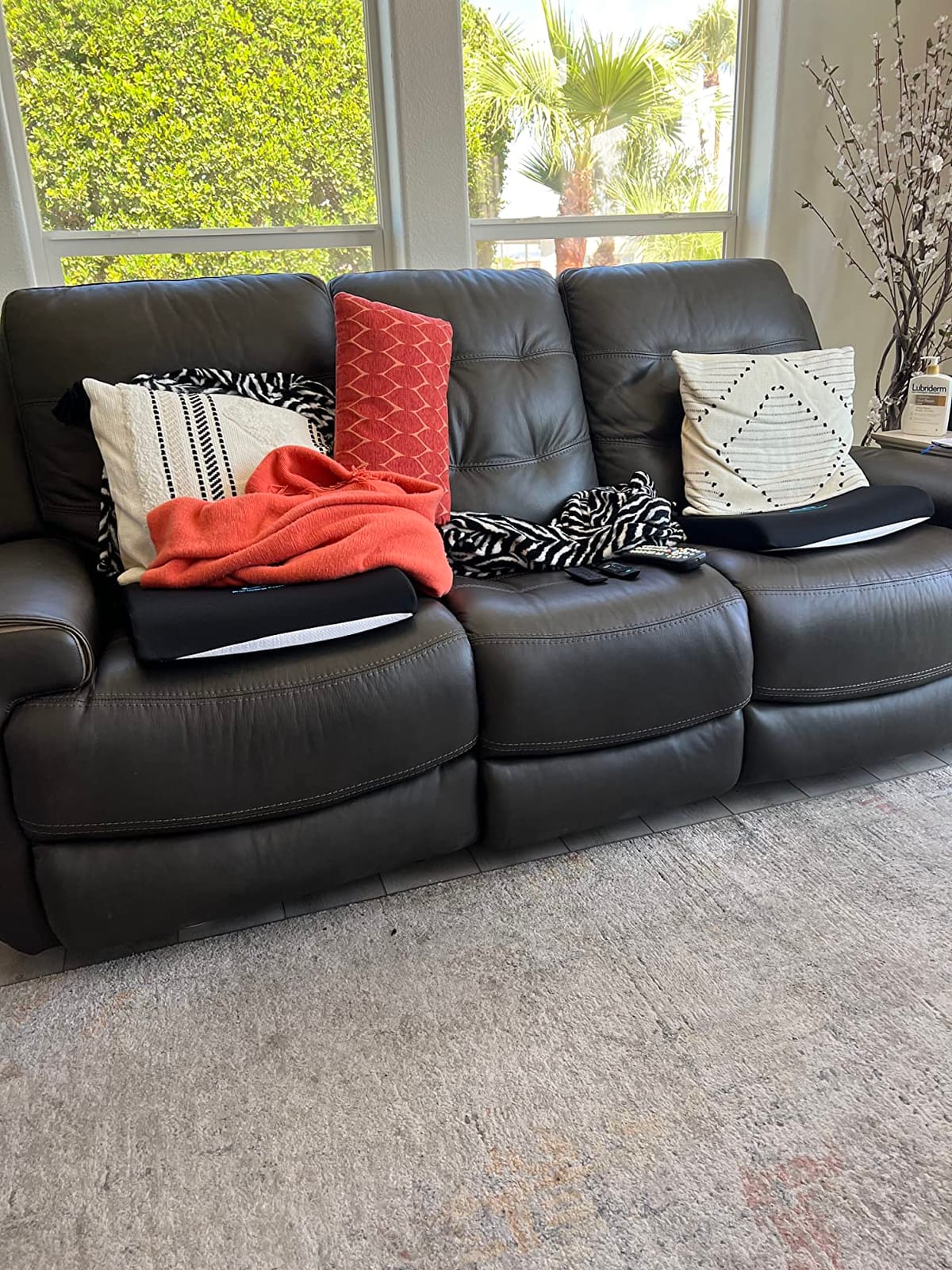
This is the cushion we keep coming back to for everyday seating. It weighs 2.29 pounds, measures 18 x 16.93 inches, and combines ventilated gel with memory foam so the surface contours to the sitter and holds that shape rather than flattening out.
With 8232 reviews at 4.5 stars, owner feedback is unusually consistent. People mention the ventilated gel keeping them cool through long sits, the rubberized base not creeping across the wheelchair sling, and a cover that goes straight into the machine.
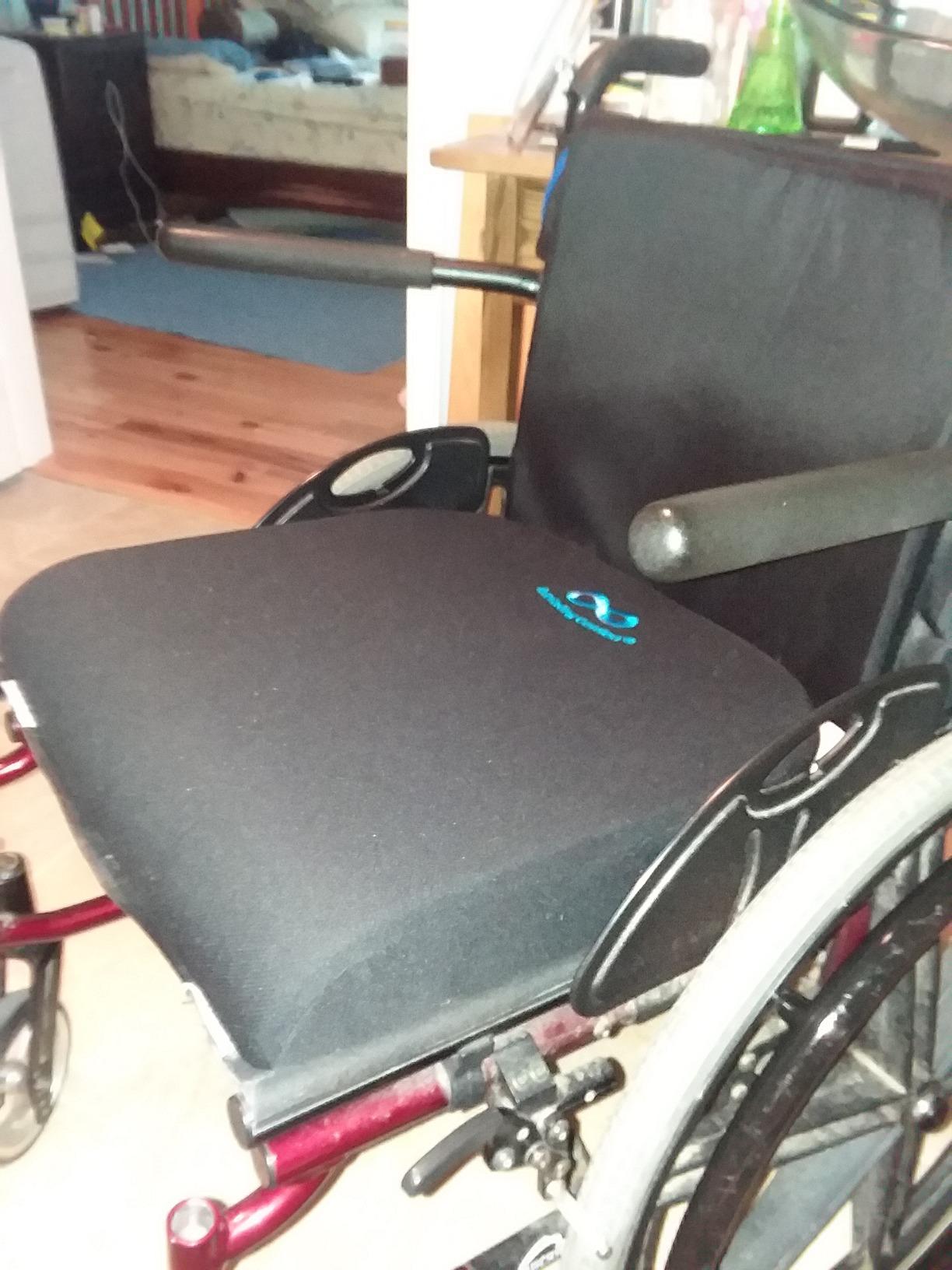
The honest limitation is profile height. This is a thin wedge, so it gives you comfort and light offloading rather than deep immersion. That makes it a strong choice for someone who can reposition, and a weak one for a stage 2 or deeper wound.
How it performs across a full sitting day
For someone in a chair for six to eight hours with intact skin and normal repositioning habits, the ventilated gel design does its job without any upkeep. There is no pump to check and nothing to re-inflate before you leave the house.
Reviewers also note the cover resists sweat and everyday spills, which matters more than most spec sheets admit.
When it is the wrong choice
If you cannot feel pressure building under your sitting bones, immersion matters more than comfort, and this profile is too shallow. In that situation, step up to a 3 or 4 inch air or gel cushion instead.
It also reads as a general comfort product rather than a clinical pressure injury device, so a wound care nurse may not sign off on it for an open sore.
2. Roho Mosaic Air Cushion for Adjustable Everyday Pressure Relief
Roho Mosaic Wheelchair Air Cushion, Standard Cover, 18 x 16 Inches
Interconnected 3-inch air cells
18 x 16 inches
Supports up to 315 lb
Hand pump and patch kit included
Pros
- Interconnected air cells conform closely to the body
- Firmness fully adjustable with included pump
- Lightweight at 2.4 pounds for car and office chair use
- Machine washable cover and non-slip base
- Complete kit with pump and patch kit
Cons
- PVC air cells lose firmness and need periodic re-inflation
- Standard cover is less breathable than spacer fabric covers
- Not rated above 315 lb
- Over-inflating makes the surface uncomfortably hard
The Mosaic is the practical entry point into air flotation. Three-inch interconnected cells adapt to body shape, and the included hand pump lets you set the firmness rather than accepting whatever the factory set. It comes in six sizes from 16 x 16 up to 20 x 18.
At 2.4 pounds it is easy to move between the wheelchair, a car seat and an office chair, which suits anyone who is not in the chair around the clock. The kit also includes a patch repair kit, so a puncture does not end the cushion.
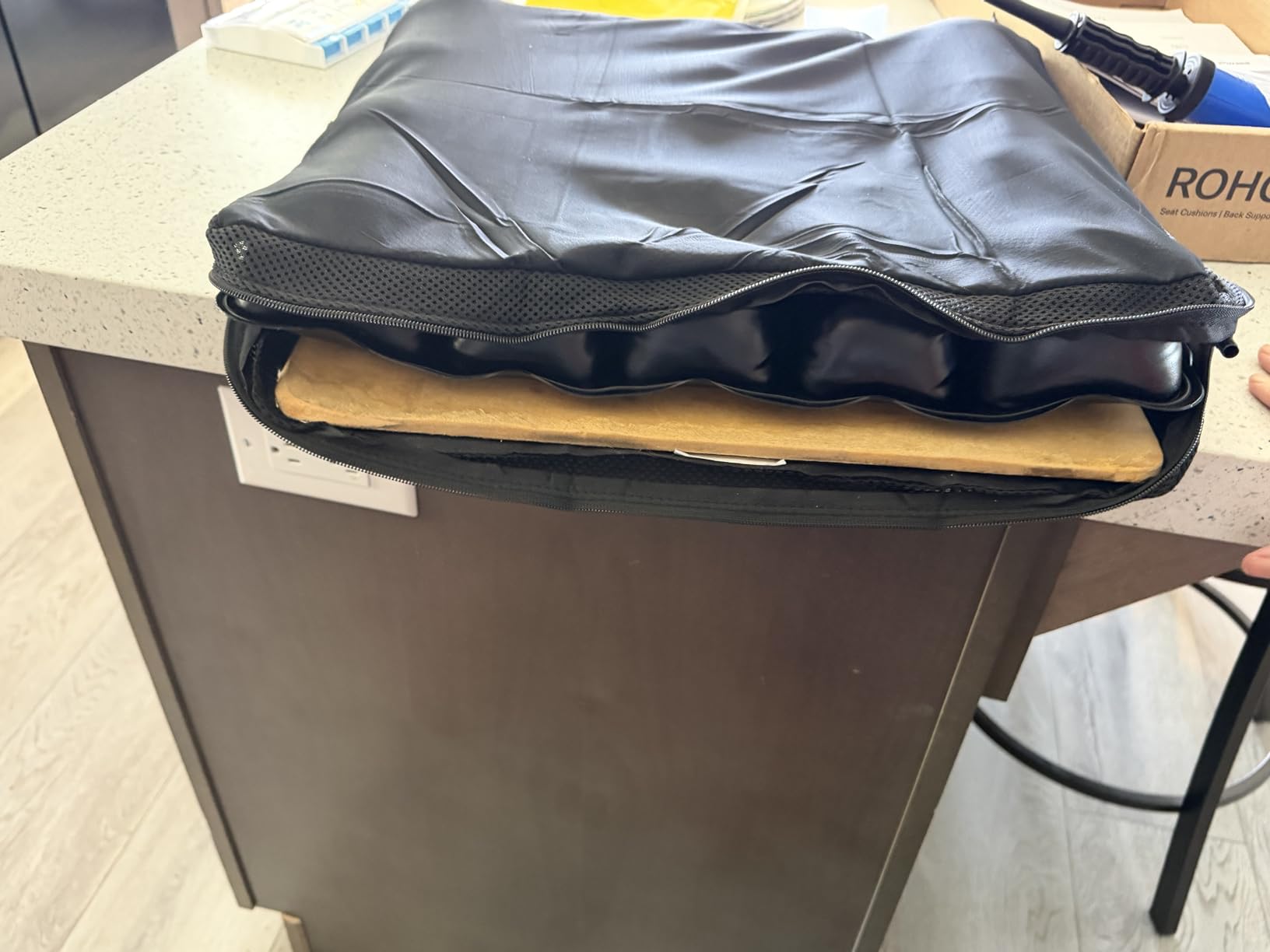
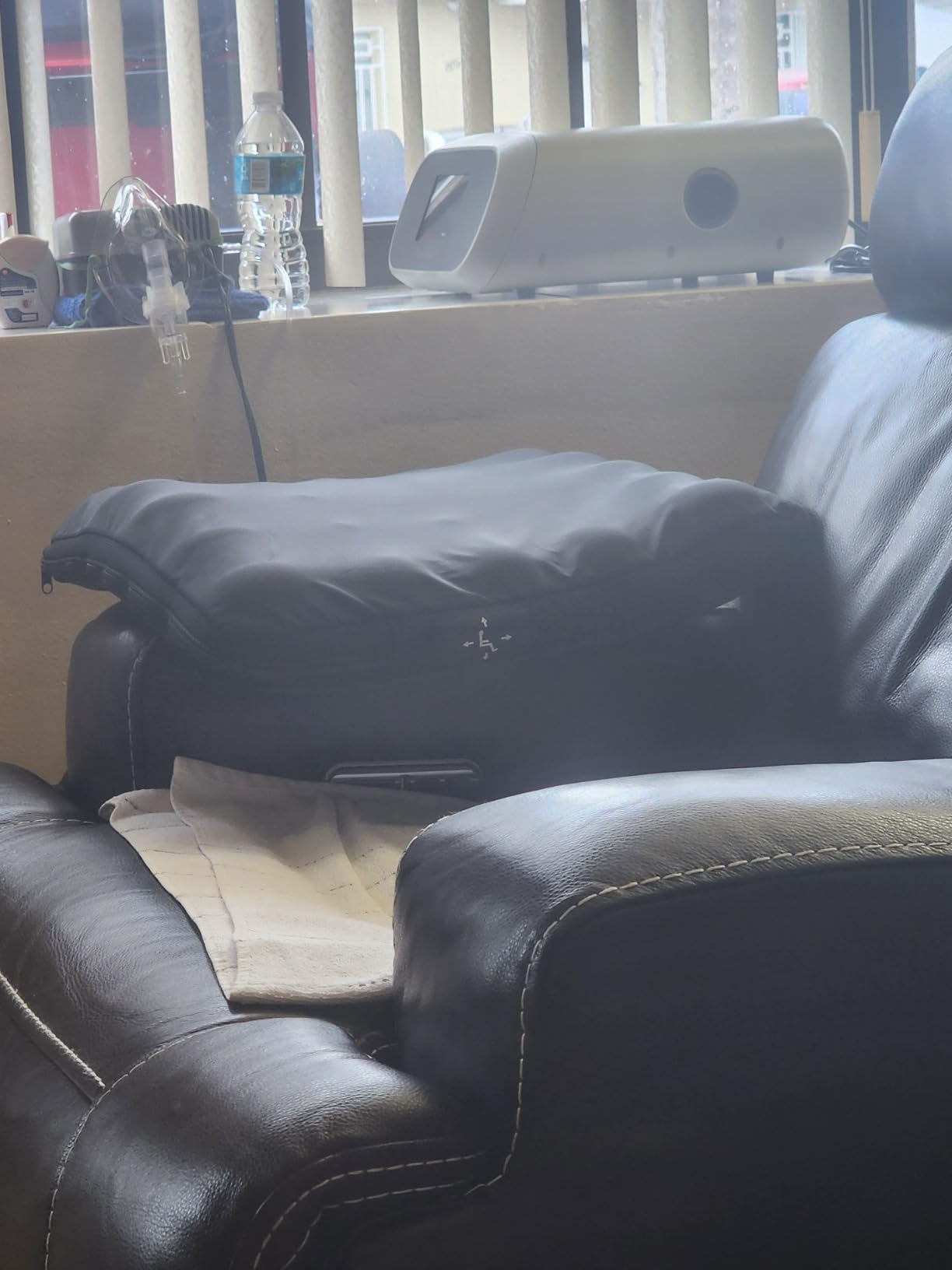
The recurring note in reviews is that firmness takes a little practice. Pump it up, sit, feel your sitting bones, release some air. Over-inflation is the common mistake, because a hard surface pushes load into exactly the points you are trying to protect.
Why the air cell count matters day to day
Small interconnected cells spread load across many contact points rather than a few large pockets, which is what makes air flotation effective for pressure redistribution. It is also why the cushion feels different from foam after the first week.
Long-term users describe a floaty sensation at first, then adapt. If transfers are your main concern, test this on your own chair before committing.
Where it falls short
At a 315 lb rating, it is not a bariatric option. If your body weight is higher, look at the ProHeal 500 lb cushion later in this guide.
The standard PVC cover traps more heat than premium spacer fabric, and the cells need a check every few weeks. If you travel often or cannot manage that habit, a gel cushion is lower friction.
3. Drive Medical 14886 Skin Protection Gel Cushion for Pressure Ulcer Prevention
Drive Medical 14886 Skin Protection Gel Wheelchair Seat Cushion
Viscous gel bladder in foam shell
18 x 16 x 3 inches
275 lb capacity
Waterproof vinyl base
Pros
- Viscous gel bladder in a fire retardant foam shell
- Low-shear water-resistant cover is removable and replaceable
- Waterproof vinyl base wipes clean easily
- Model designed specifically for pressure ulcer prevention
- 3-inch profile fits most wheelchair seat pans
Cons
- 275 lb weight limit is low for higher weight users
- Gel can migrate or settle with heavy daily use
- Vinyl base can slide on a wet or worn sling
- Fixed 18 x 16 inch size fits standard chairs only
This is the model most clinicians name first when they describe a skin protection cushion. A viscous liquid gel bladder sits inside a fire retardant polyurethane foam shell, and the whole unit measures 18 x 16 x 3 inches with a 275 pound rating.
Because gel does not deflate or need pumping, it behaves predictably. There is no firmness drift through the day and no habit to build. For an all-day user who can reposition but wants even distribution, that predictability is worth more than deep immersion.
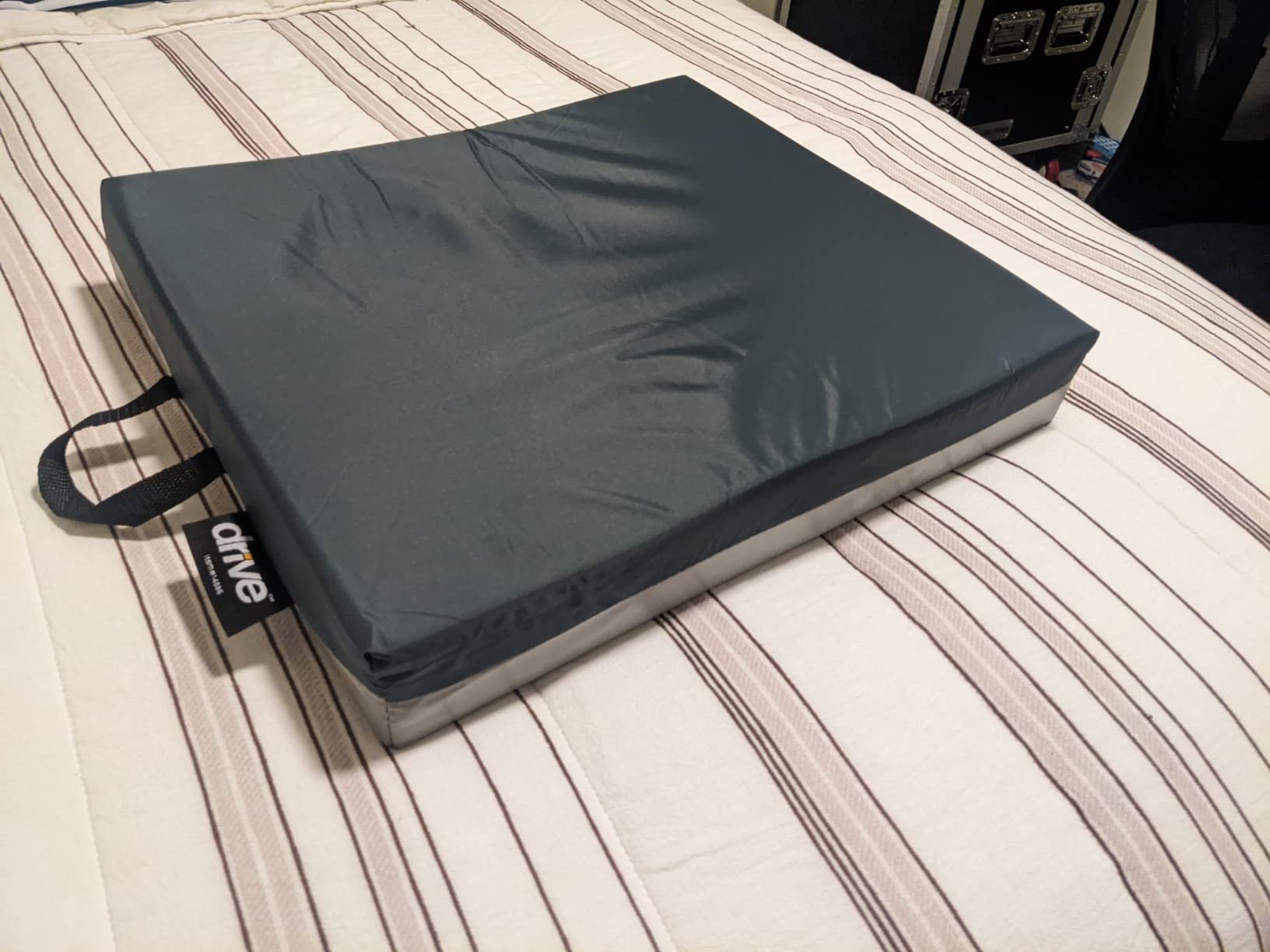
Two design details matter more than the spec sheet suggests. The urethane-coated nylon top cover is low-shear, which reduces the sideways dragging that damages skin, and it is removable and replaceable rather than bonded shut.
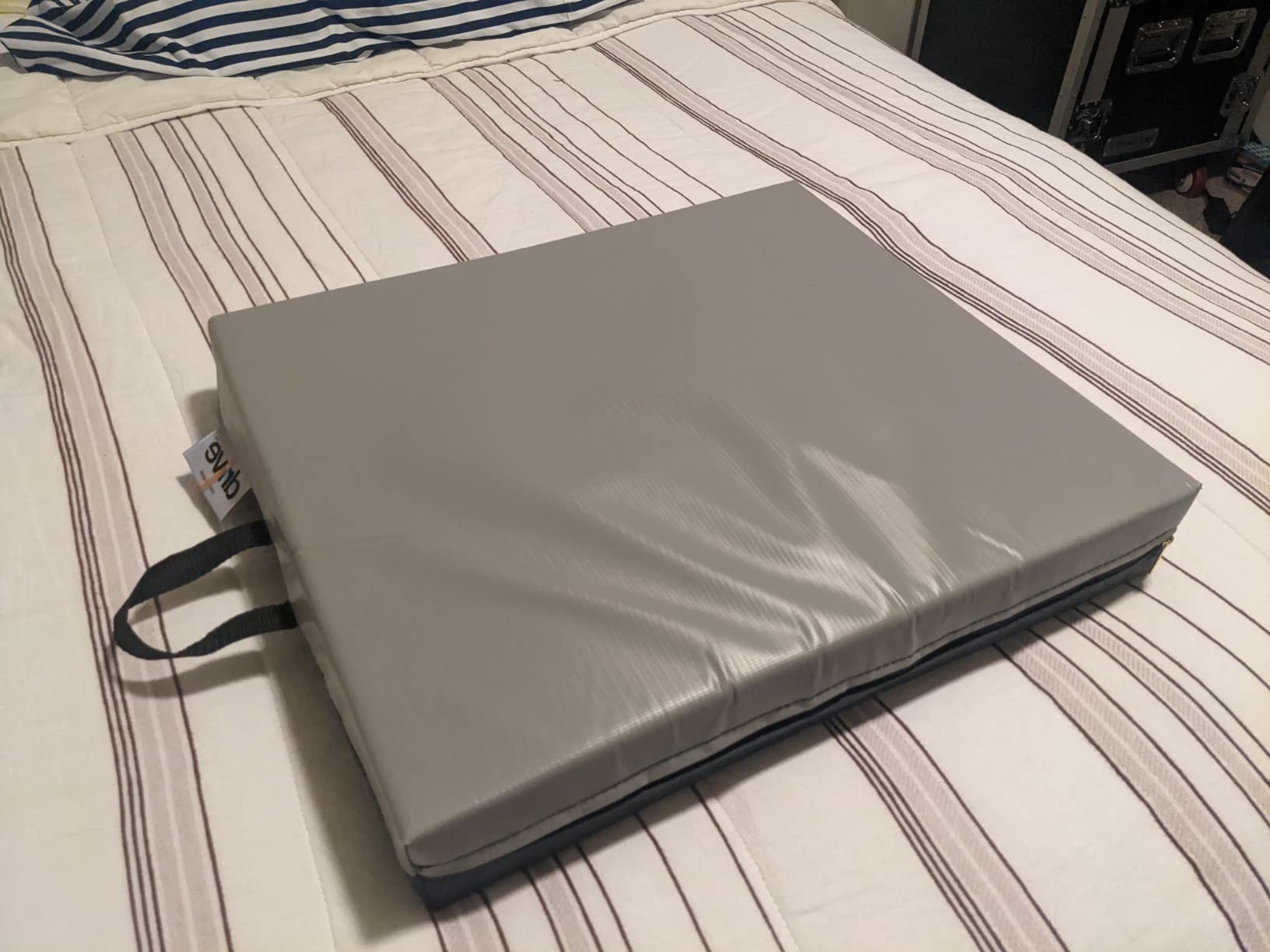
What the cover does for skin integrity
Low-shear surfaces matter because shear and pressure combine. A cover that grips the clothing can drag tissue sideways while the pelvis is being pushed down, and the two together break skin faster than either alone.
The waterproof vinyl base also wipes down quickly, which suits anyone managing moisture or incontinence.
When to choose something else
At 275 lb, this is below what a higher weight user needs. Gel also settles under heavy daily loading, so check the profile periodically to confirm you cannot feel the seat frame underneath.
For an open wound that is not healing, ask your clinician whether you need air flotation instead.
4. Roho High Profile Air Cushion for Deep Immersion at High Risk
Roho High Profile Wheelchair Cushion 16-17″ x 18-19″ x 4″ – Inflatable Air Seat Cushion with Adjustable Support, Lightweight Medical Air Cell Design
4-inch high profile air cells
18.25 x 16.5 x 4 inches
6 pounds
Fully adjustable air pressure
Pros
- 4-inch profile enables deep immersion for high risk users
- Fully adjustable air pressure for individual body shape
- Interconnected cells promote airflow and even distribution
- Lightweight 6 pound build with washable cover
- Wide range of sizes for custom fitting
Cons
- Requires manual inflation and periodic pressure checks
- Bulky 4 inch height raises the effective seat height
- Included cover is a basic vinyl blend rather than spacer textile
The High Profile is the deepest cushion in this roundup at 4 inches, and that height is the entire point. More profile means more immersion, which means the pelvis sinks in and load spreads across the widest possible contact area. It is the right shape of answer for reduced sensation or an existing sore.
Air support is fully adjustable, so you can fine-tune it to body shape and posture rather than accepting a fixed foam feel. The interconnected cells also allow continuous airflow, which reduces the heat and moisture that drive skin breakdown.
Weight is a genuine advantage here: 6 pounds for a clinical-grade air cushion means transferring it between the chair and a vehicle is manageable on its own.
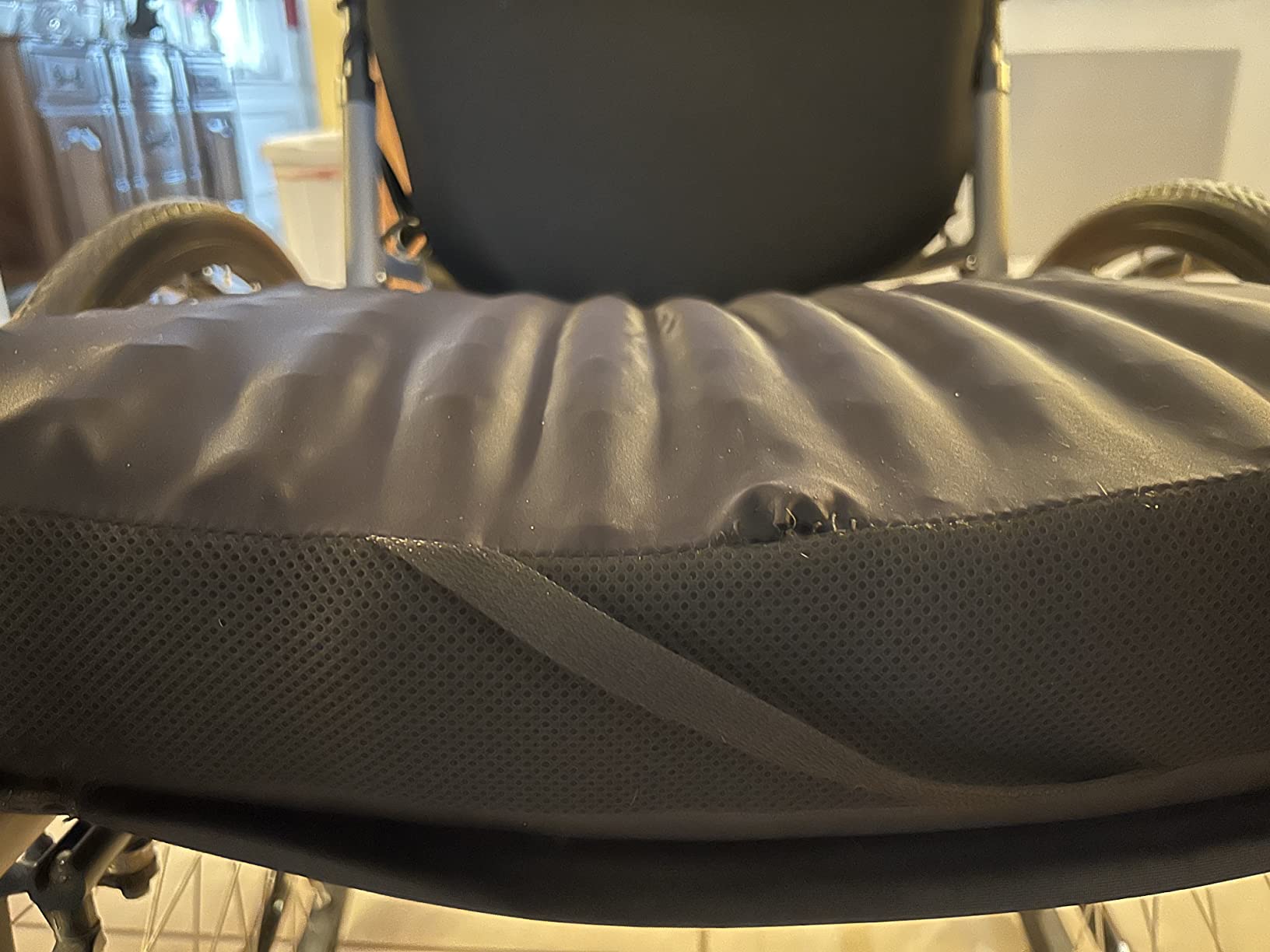
Why immersion changes the risk picture
Immersion is how far the body sinks into the cushion, and envelopment is how completely the material wraps around the shape. Both grow with height, and both directly reduce peak pressure at the sitting bones and sacrum.
This is why therapists push high risk users toward a taller profile rather than a thicker foam pad.
Who should not buy this one
The 4 inch height changes your seated geometry. If your hips sit above your knees, or your feet no longer reach the footplates, this cushion will cause problems a 2 inch pad would not. Have your footplate height checked at the same time.
It also demands a maintenance habit: check pressure weekly, and keep the cover washed.
5. MobiCushion Alternating Pressure Cushion for Timed Pressure Cycling
Alternating Pressure Wheelchair Cushion by MobiCushion – Pneumatic Air Pillow – Relief for Pressure Sores – Low air Loss-Reduces Pressure While Sitting-Rechargeable Battery-Made in Taiwan 17″ x 17″
Alternating low air loss cycle
17 x 17 inches
Five comfort settings
Up to 12 hours per charge
Pros
- Alternating low air loss cycle relieves pressure points on a timer
- Five comfort settings plus a static mode
- Solid foam base with medial thigh support
- Rechargeable battery gives up to 12 hours cord free use
- 4-way stretch fluid resistant low shear cover
Cons
- Only a 17 x 17 inch size is offered
- Setup complexity and pump noise put the one-star share at 13 percent
- Hand wash only care
- Cushion adds weight and bulk versus passive designs
This is the only genuinely powered cushion in the roundup. A pump cycles low air pressure through the air cells, or holds them static, with five comfort level settings and touchpad controls that give audible and visual status plus a fault indicator.
For someone with a wound that is not healing, cycling is the mechanism that matters most, because no single area stays loaded. The solid foam base with medial thigh support also improves postural stability and helps prevent the thighs drifting together.
The rechargeable lithium battery runs up to 12 hours per charge, so it does not need to sit next to you during the day. Pressure sensor technology manages the cycle automatically.
What daily ownership actually involves
Powered does not mean hands off. The pump adds noise, the control unit adds bulk, and the fault indicator means something can require your attention that a passive cushion never would.
The 4.0 average across 220 reviews, with 13 percent one star, points at setup complexity and occasional unit failure rather than at poor therapeutic results.
Before you buy
Check the size carefully: 17 x 17 inches is the only configuration offered, so a wider or longer chair will not fit it. Also plan on hand washing rather than machine washing the cover.
If a wound is open or stalled, raise this option with your wound care clinician before purchase.
6. ProHeal Dual Valve Air Cushion for 500 lb Capacity
Inflatable Wheelchair Seat Air Cushion – 20″ x 18″ – High Profile – Pressure Sore and Ulcer Treatment – Dual Valve for Pressure Redistribution – Includes Pump, Nylon Cover, and Repair Kit
Independent dual valve
20 x 18 x 4 inches
500 lb capacity
5 year manufacturer warranty
Pros
- Independent dual valve sets each side and angle separately
- 4-inch high profile cells give deep immersion
- 500 lb weight capacity is unusual for an air cushion
- Flame resistant latex-free neoprene construction
- Includes pump patch kit and safety straps with 5 year warranty
Cons
- Firmness must be re-checked as cells lose pressure
- Bulky 4-inch profile raises effective seat height
- Air cells can be punctured without the repair kit nearby
Pressure risk rises with body weight, and most air cushions are simply not rated for it. This one carries a 500 pound capacity, which changes the shortlist entirely for higher weight users who otherwise have almost no air flotation options.
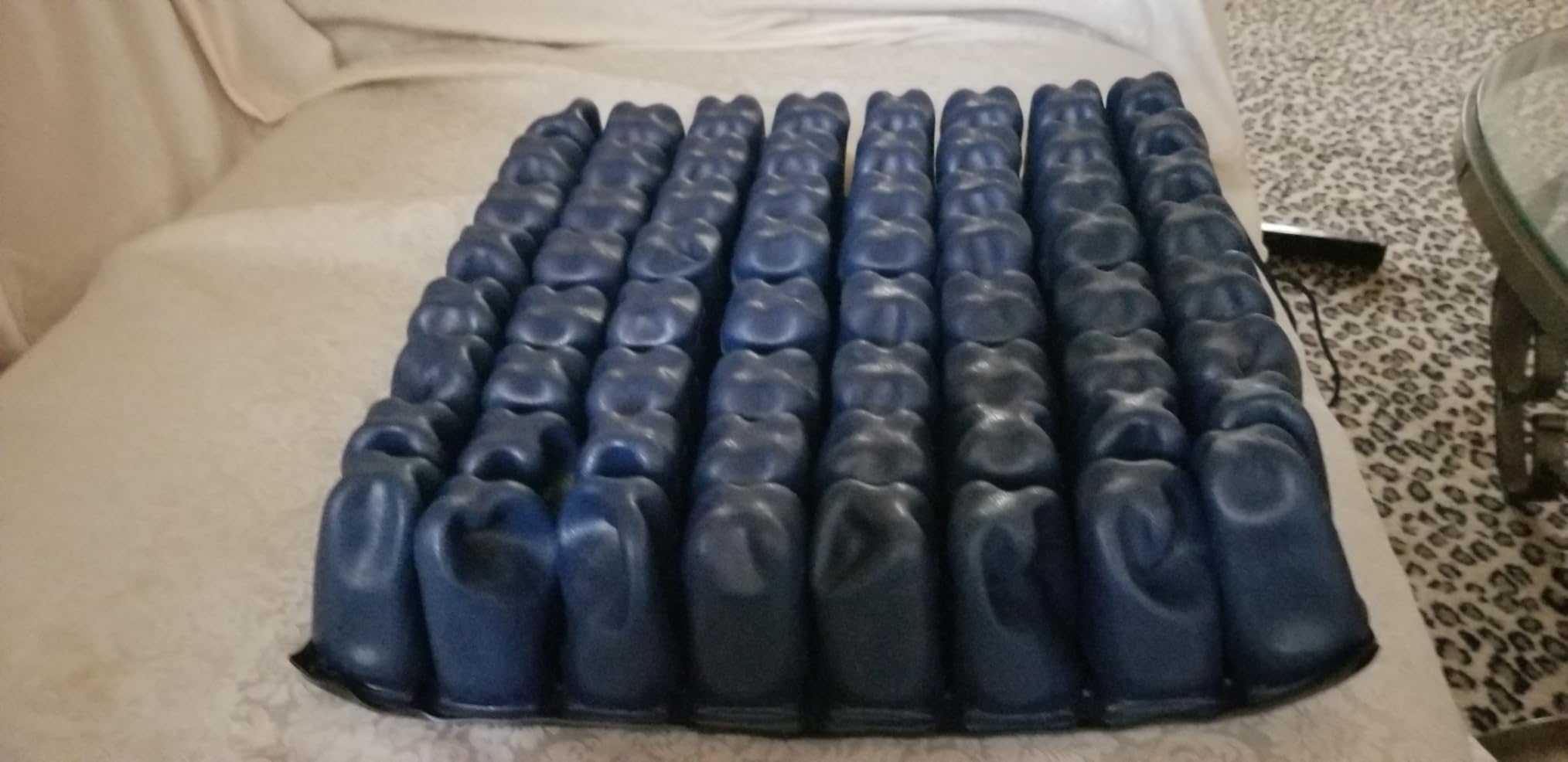
The dual valve is the feature that separates it. You can inflate the two sides to different levels and change the front and back angles independently, so the cushion can be set up to match an asymmetrical posture rather than forcing one fixed shape.
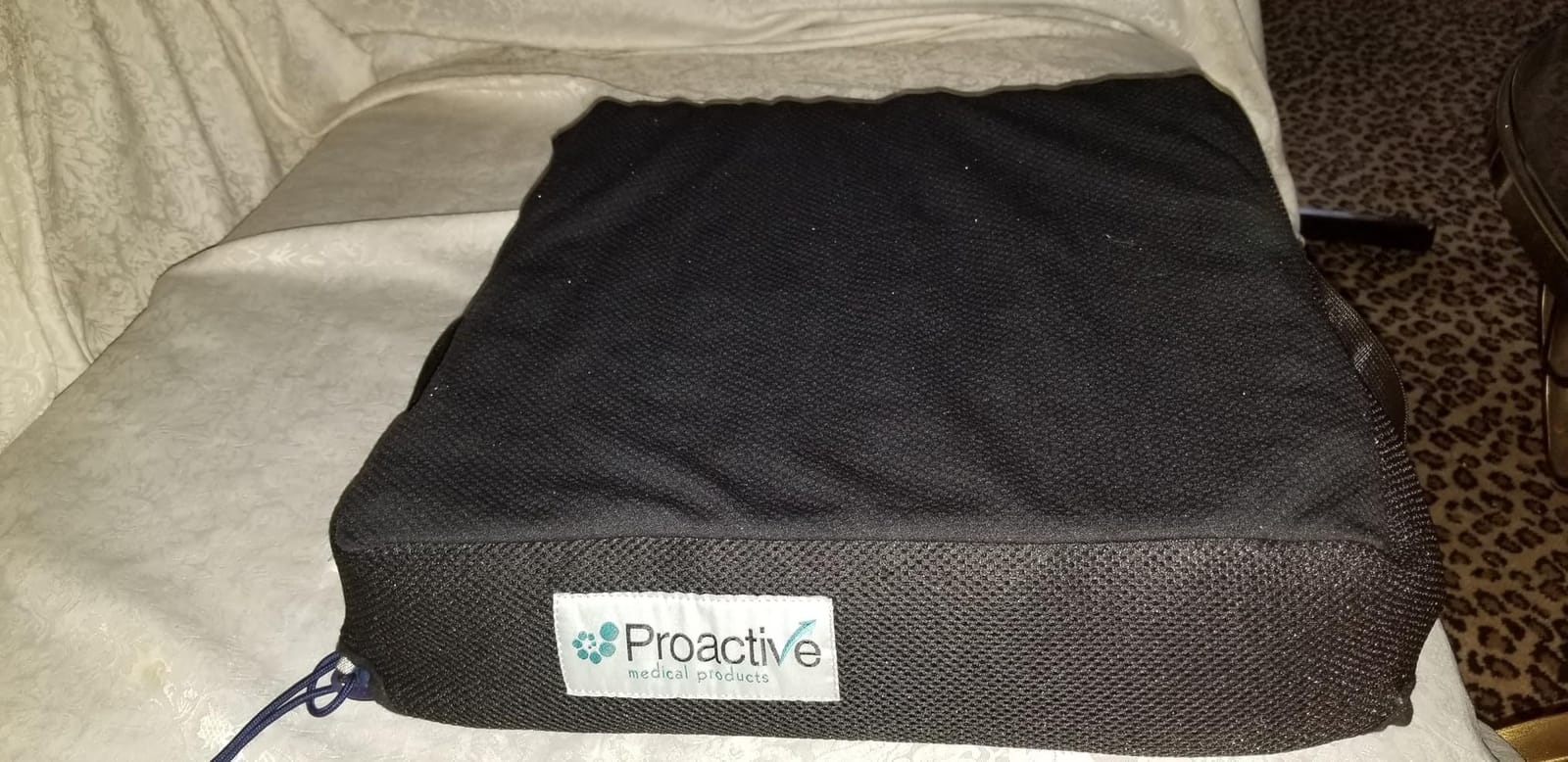
Construction details are clinical: flame resistant latex-free neoprene, a removable washable breathable nylon cover, a non-skid base and safety straps to stop the cushion migrating under load.
How the 500 lb rating changes cushion choice
Weight concentrates pressure, so a heavier user needs more immersion or a wider contact area to keep peak pressure down. Matching the rating is not optional; sitting on a cushion rated below your weight is how frames bend and skin fails.
Seven sizes are listed, from 16 x 16 up to 22 x 20, so measuring your seat before choosing still matters.
Honest drawbacks
All air cushion rules apply: periodic inflation checks, leak repairs, and a 4-inch height that changes your seated position. If your chair frame or upholstery is not rated for your weight, fix that first.
At 197 reviews the owner history here is thinner than the big names, so treat the 5 year warranty as the real reassurance.
7. Vive Waterproof Foam and Gel Cushion for Incontinence Protection
Vive Waterproof Wheelchair Cushion for Pressure Relief (18x16x3) – Washable Cover Incontinence Protection for Elderly Adults & Seniors – Memory Foam Gel Pad for Recliners, Office Chairs, Car
Three-layer foam with gel core
18 x 16 inches
Water-resistant wipe-clean cover
3.7 pounds
Pros
- Three-layer foam with dynamic gel core spreads weight evenly
- Water-resistant cover wipes down with disinfectant
- Hidden zipper and inner lining allow deep cleaning
- Nonslip backing keeps it stable on the sling
- Two carry handles for moving between chair car and desk
Cons
- Foam can feel too firm and leave thigh pressure marks
- Gel and foam can flatten after roughly a year of daily use
- Not a substitute for air flotation on a deep sore
- Cover is spot clean or hand wash only
Moisture is one of the primary drivers of skin breakdown, and this cushion is built around that reality rather than treating it as an accessory. The cover is a water-resistant blend that can be wiped with disinfectant, and the hidden zipper plus inner lining lets you remove the foam core for a deeper clean.
Underneath, resilient foam layers sandwich a dynamic gel core, with a nonslip backing for stability and two carry handles for moving it around.
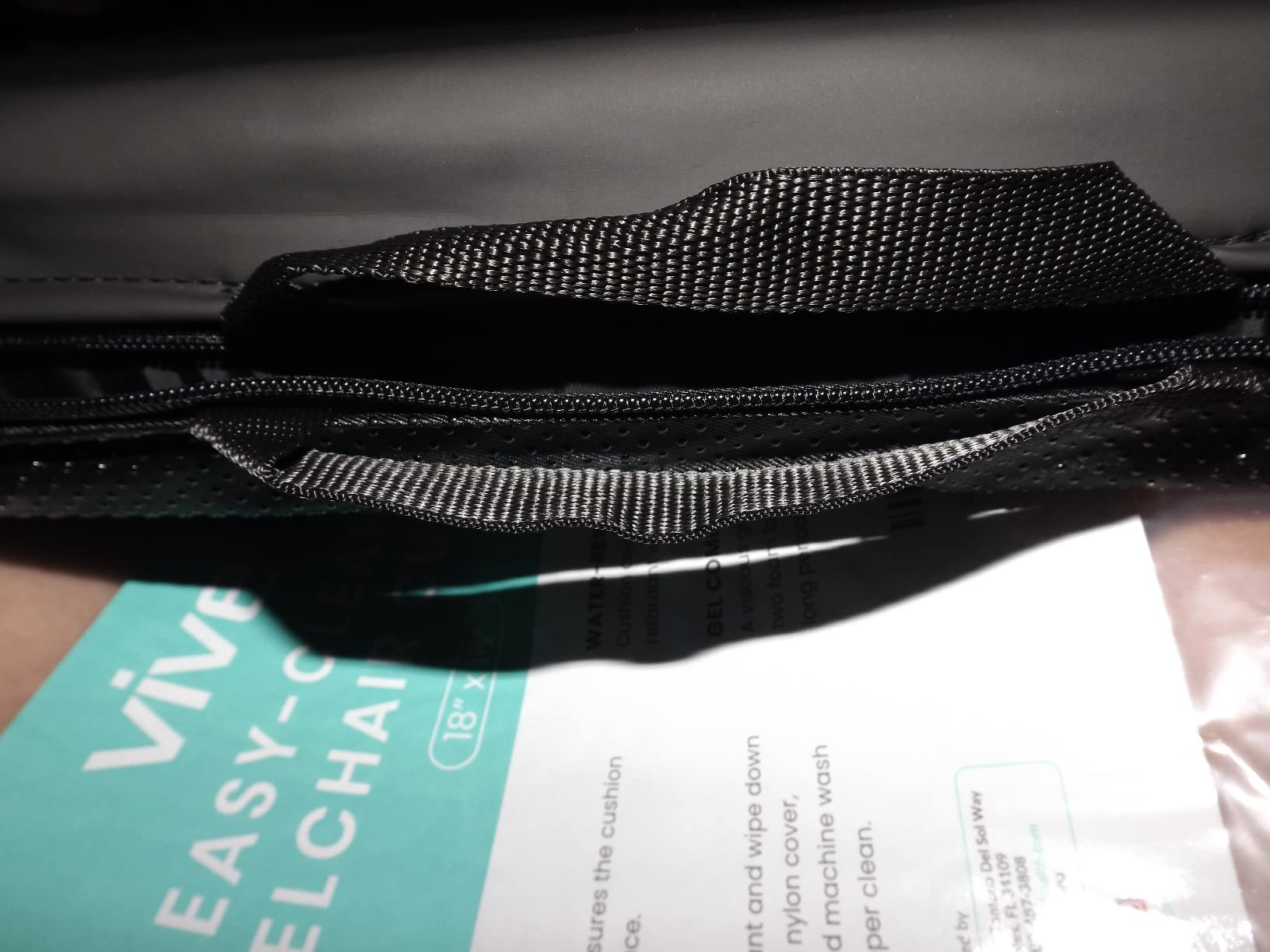
At 18 x 16 inches and 3.7 pounds, it fits standard wheelchair seat pans and doubles as a recliner, office chair or car cushion, which is convenient for anyone whose sitting time is spread across several surfaces.
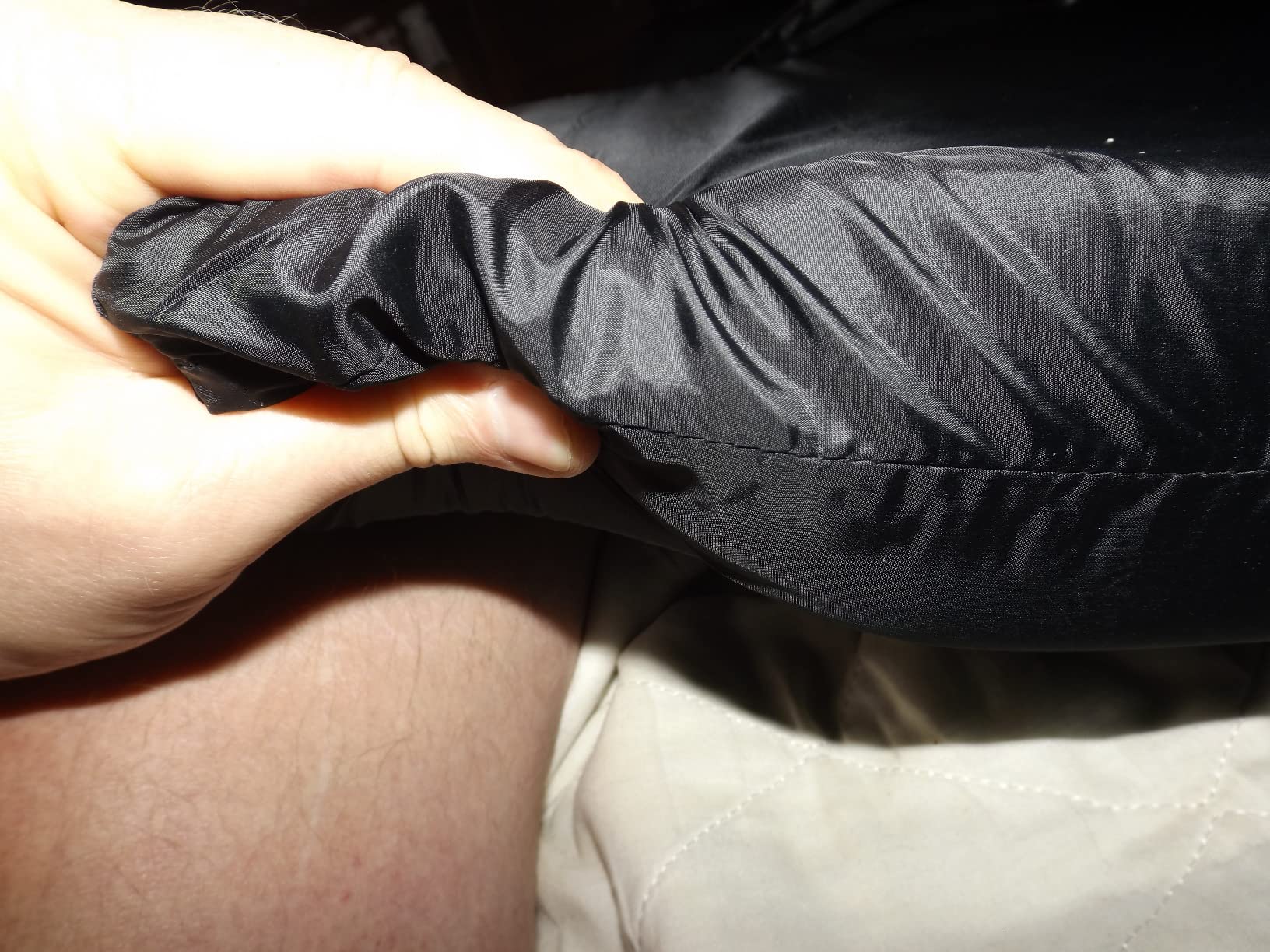
Why the wipe-clean cover matters more than the foam
Continence-related moisture macerates skin, and macerated skin loses its barrier function before any pressure injury appears. A surface you can disinfect in thirty seconds is worth more than an extra inch of foam in that situation.
Owners managing incontinence rate this feature consistently above the comfort rating.
Where it stops being enough
Some users find the foam too firm and report thigh pressure marks, and the gel bladder tends to lose its cushioning after roughly 12 to 18 months of daily use. Plan a replacement interval rather than assuming it lasts.
It is a comfort and moisture solution, not a wound management device.
8. Vive Inflatable 72 Cell Air Cushion for Travel and Lightweight Setup
Vive Inflatable Wheelchair Air Seat Cushion – Adjustable Air Pressure
72 air filled cells
17.5 x 17.5 inches
Adjustable firmness
Machine washable mesh cover
Pros
- 72 air cells plus dense foam core spread pressure evenly
- Firmness fully adjustable with included pump
- Deflates small enough for a carry-on
- Machine washable mesh cover with nonslip grip dots
- Thicker mesh cover than many comparable air cushions
Cons
- Thinner and less conforming than premium air cushions
- Feels plasticky against bare skin
- Actual thickness is less than the product photos suggest
- Needs regular re-inflation with daily use
This cushion solves a specific problem: air flotation that travels. It deflates, rolls down and fits in a carry-on, then reinflates with the included pump and stainless steel nozzle. For anyone who transfers into vehicles regularly or splits their day between a chair and a car seat, that portability is the feature that matters.
The structure is 72 air filled cells over a dense foam core at 17.5 x 17.5 inches, with a breathable mesh cover that is machine washable in cold water and carries nonslip grip dots on the lining.
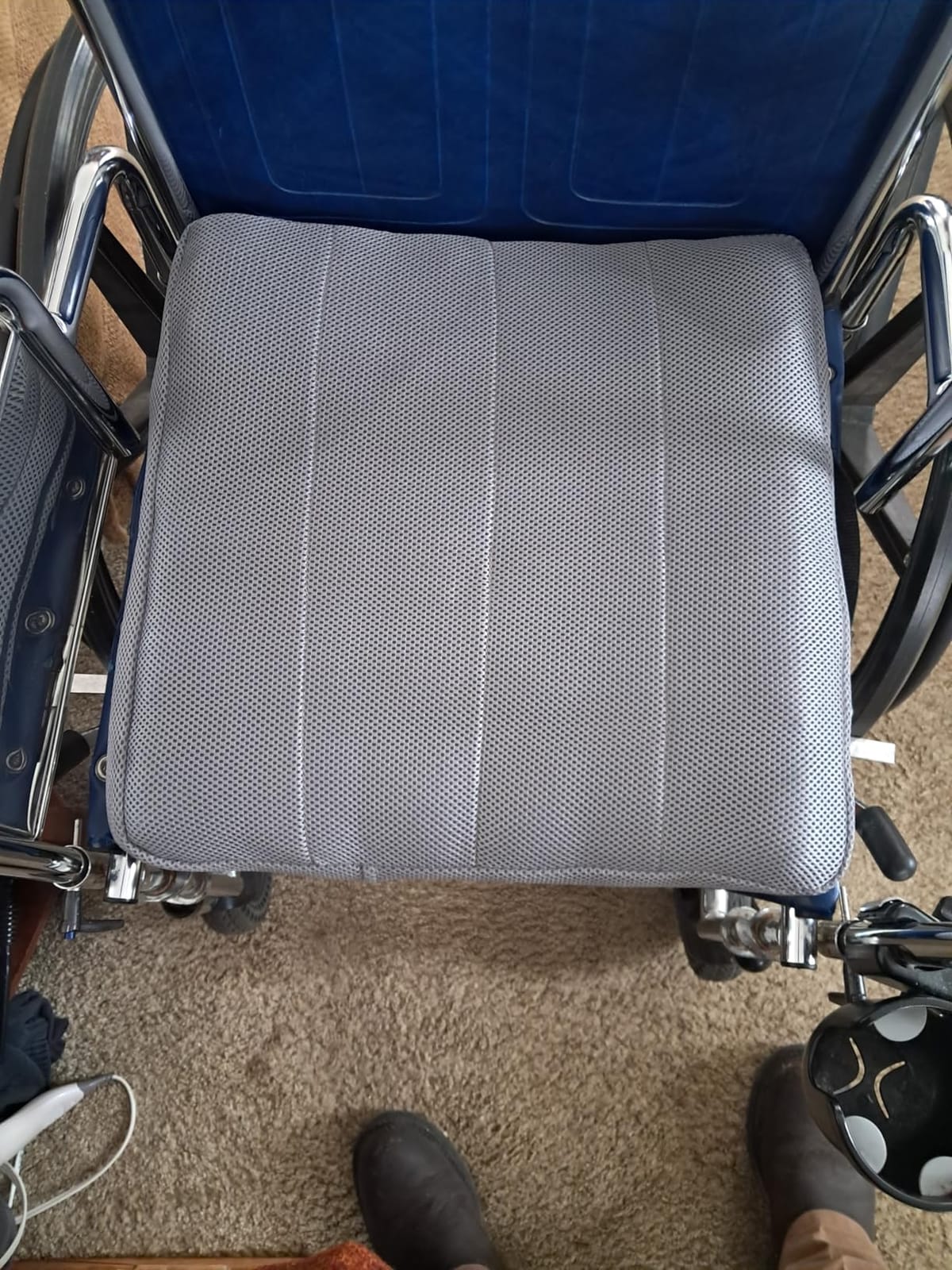
Owners frequently compare it favourably against the Roho on cost of entry, noting the sturdier cover while accepting somewhat less conforming pressure redistribution.
What air cells do for pressure redistribution
Air cells compress independently under each part of the body, so load equalises across the cell matrix rather than concentrating over the sitting bones. A foam core underneath stops the low points from bottoming out.
The mesh cover also moves air with you, which reduces the heat and sweat that come with long sits in vinyl covers.
Honest drawbacks
The most repeated complaint is thickness. Owners report it is noticeably slimmer than the product photos imply, and the composite material feels plasticky against bare legs. Durability over years of daily use is also questioned in reviews.
It needs the same weekly pressure check as any air cushion.
9. CUSHIO Two Piece Memory Foam Set for Tailbone Relief
Wheelchair Cushion for Pressure Relief – (2-Piece Set) 18”x16” Anti-Slip Wheelchair Seat Cushions for Adults, Seniors with Lumbar Pillow and Removable Strap, Gel Cushion for Wheelchair
U-shaped tailbone relief
18 x 16 x 3 inches
Two piece set with lumbar pillow
Machine washable cover
Pros
- U-shaped cutout takes pressure off the tailbone
- Breathable memory foam with cooling fabric
- Two piece set includes a lumbar pillow
- Double anti-slip design plus adjustable strap
- Washable waterproof removable cover with carry handles
Cons
- Foam only construction gives less redistribution than gel or air
- Cutout is not designed for an open coccyx wound needing direct offloading
- Lumbar pillow adds bulk to the set
- Medium firmness can feel hard for very light users
This set targets tailbone and coccyx discomfort specifically. The U-shaped design leaves a channel where the coccyx sits, and a separate lumbar pillow supports the lower back, so it works as a two-part system rather than a single slab.
At 18 x 16 x 3 inches with breathable memory foam and a cooling fabric cover, it holds up through long sits. The double anti-slip base and an adjustable strap keep it fixed to the chair, which matters more than it sounds when transfers happen.
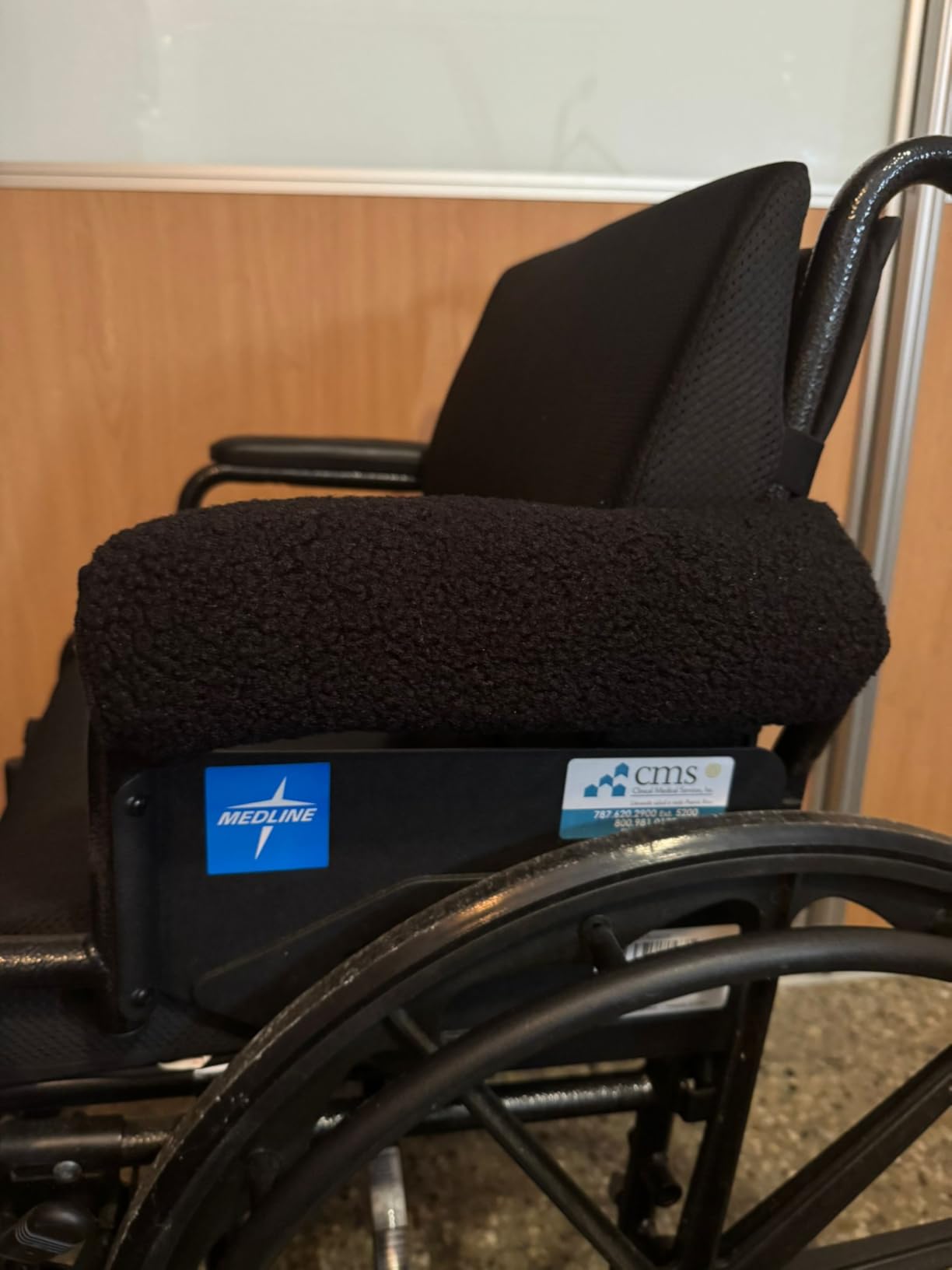
With 672 reviews at 4.5 stars and 75 percent five star ratings, this is one of the better regarded foam options in the category, and owners repeatedly single out the strap and the washable cover.
Who a tailbone cutout is actually for
A U-shaped cutout works when the coccyx is a pressure point but the skin is intact. It is a targeted geometry change, not general pressure relief, and it pairs well with the back support included here.
It also works for post-surgical recovery at home, where sitting tolerance is the limiting factor.
Where it will not be enough
Foam alone cannot match gel or air cells for established skin breakdown, and the medium firmness can feel hard to a very light user. Most importantly, the cutout is not designed for an open coccyx wound that needs direct pressure offloading from a wound-care plan.
For that situation, ask for a clinical assessment rather than a product.
10. HeiWecan Two Piece Gel and Memory Foam Set with Lumbar Pad
Wheelchair Cushions, 18”x16”x 3” Gel Wheelchair Seat Cushion with Lumbar Pillow, (2-Piece Set) for Relieve Sciatica, Back, Coccyx, Pressure Sore, Pressure Relief, with Anti-Slip Cover, Strap
Thick gel over memory foam
18 x 16 x 3 inches
U-shaped tailbone relief
Lumbar pad and strap
Pros
- Thicker gel layer spreads pressure across the sitting bones
- U-shaped cutout for tailbone and coccyx relief
- Sloped surface supports thighs and lower body blood flow
- Backrest pad reduces lower back strain
- Waterproof breathable cover plus double anti-slip base and strap
Cons
- Memory foam core cannot be washed
- only the cover
- Gel layer compresses and loses rebound over long daily loading
- Less offloading than a true air cushion for deep tissue injury
- Not sized for higher weight users
This is the most complete two piece foam and gel system here. The seat cushion carries a thick gel layer over a breathable memory foam support layer, and the matching backrest pad targets lower back strain that often comes with sitting all day.
Two details separate it from similar sets. The U-shaped cutout gives coccyx relief, and the sloped thigh support is designed to promote lower body blood flow rather than let the legs sit flat and compress.
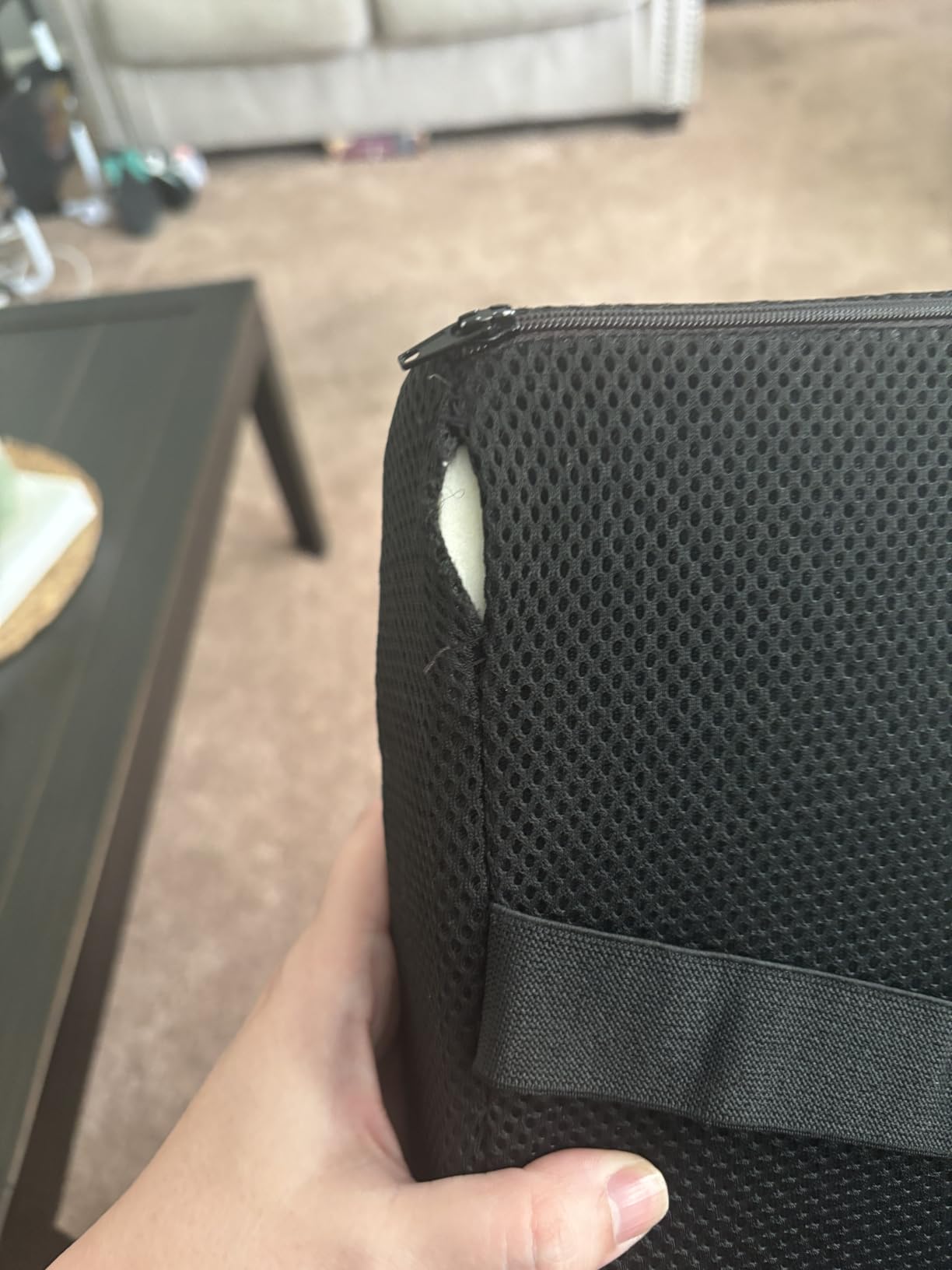
Safety details are handled well: a double anti-slip base with large grip particles, adjustable securing straps, a waterproof breathable cover that protects the foam from sweat or urine, and extra thick sponge to reduce road vibration.
Why thigh slope and back support belong in the same kit
Pelvic position drives whether you slide forward and shear against your clothing. A slope that supports the thighs keeps the pelvis neutral, which makes the lumbar pad effective rather than decorative.
Owners who use it for long sitting sessions report that the two-piece format handles the back half of the problem that a seat cushion cannot.
Honest drawbacks
Only the cover is washable, so any moisture reaching the foam means replacing the cushion. Reviewers also note the gel layer compressing with prolonged daily loading, and foam and gel construction provides less offloading than a pneumatic cushion for deep tissue injury.
For higher body weight, choose an air cushion rated for it instead.
Beyond the Chair: Bath, Floor, Bed and Vehicle Cushioning
Most cushion guides stop at the wheelchair, yet hard surfaces elsewhere cause the same pressure injuries. On the r/disability forum a full time wheelchair user with Ehlers-Danlos syndrome raises exactly this: an inaccessible home forces hours on hard floors and in a hard bathtub, with no product guide addressing either.
For bathing, look for a tub cushion that sits at the bottom of the tub with a textured non-slip surface and a backrest, since transferring into and out of a bath is often the highest pressure event of the day. For floor sitting during transfers or equipment changes, a high-density foam floor pad with a non-slip base works, and our guide to floor cushions covers shape and density options.
For sleeping on your side, a pillow or positioning cushion under the hip and between the knees reduces load on the greater trochanters, which is the leading cause of pressure injuries on the side sleeper. For vehicle transfers, a portable air cushion like the Vive 72 cell model moves between surfaces instead of forcing one compromise cushion to do both jobs. For desk and table sitting, seat cushions are worth reviewing, but only if the surface is soft enough to immerse into.
Skin Care Products That Work Alongside a Wheelchair Cushion
A cushion reduces pressure, but skin integrity depends on what happens between cushions. Community questions about barrier products come up constantly, and no cushion substitutes for them.
Barrier films and skin protectant creams reduce friction and moisture loss at the bony prominences, and they matter most where skin is thin or fragile. Silicone or foam dressings protect an existing stage 1 or 2 area from shear while it heals. Absorbent pads manage moisture so the skin stays dry, and moisture is the factor most often left unaddressed.
Check any product with your wound care nurse first. Some barrier films should not be applied to broken skin, and a dressing that is right for a dry wound can be wrong for one that is weeping.
Does Medicare Cover Wheelchair Cushions?
Yes, Medicare Part B can cover a wheelchair seat cushion as durable medical equipment, but only under specific conditions. The cushion must be prescribed by a clinician, documented as medically necessary, and supplied through a Medicare-enrolled DME supplier rather than bought yourself.
After the Part B deductible is met, you typically pay 20 percent coinsurance of the Medicare-approved amount. Replacement is generally only covered when the existing cushion is no longer medically appropriate, which commonly means every one to three years, and supporting documentation is required each time.
Retail purchases made outside a participating supplier are not reimbursable, which is the detail that catches people out. If cost is the barrier, contact a Medicare-enrolled DME supplier or ask your occupational therapist whether a supplier referral is possible through your clinic.
What Long-Term Wheelchair Users Say About Cushions
The most useful signal in this category comes from people who have lived with their cushion for years rather than for a month.
On the Motor Neurone Disease Association forum, one user writes about a J2 Deep Contour cushion with added gel protecting the coccyx: “It works very well for my bony bum!” and adds that air cushions are also good. That is a recurring theme, because a bony pelvis concentrates load into a smaller area.
On the ALS Forums, sheepskin is widely reported as inferior to air or gel for genuine pressure redistribution, which is worth knowing before buying an inexpensive natural pad. Community consensus also repeatedly favours the clinical assessment route over self-purchasing, largely because an assessment matches the cushion to posture rather than to a category.
The honest counterweight is that users describe air cushions as floaty and harder to transfer from, and as something that needs weekly pressure checks. That trade-off is real, and it is the reason gel remains the most common choice for all-day sitting.
Frequently Asked Questions
How do people in wheelchairs avoid pressure sores?
Prevention is a routine, not a single product. Reposition every 15 to 20 minutes, inspect your skin daily in good light, match your cushion to your risk level, keep skin dry, and get an occupational therapist or physical therapist to assess your seating. Shift as much load as you can off bony areas such as the sitting bones, sacrum and tailbone. Any skin that stays red for more than about 20 minutes after pressure is relieved needs a clinician.
How often will Medicare pay for a wheelchair cushion?
Medicare Part B covers a wheelchair seat cushion as durable medical equipment when a clinician prescribes it and documents it as medically necessary. It must come from a Medicare-enrolled DME supplier. After the Part B deductible, you typically pay 20 percent coinsurance. Replacement is usually covered only when the old cushion is no longer medically appropriate, often every one to three years, and retail purchases are not reimbursable.
What is the best pressure relief cushion for elderly people?
Risk level matters more than age. People who cannot shift weight or who have reduced sensation should use air flotation or alternating pressure. Those who can reposition but sit all day are well served by a gel bladder or hybrid foam cushion at about 3 inches. Part-time users with healthy skin can manage with molded foam. Thinner skin, incontinence and slower healing all raise the risk tier, so an assessment beats any brand choice.
What type of cushion is best for pressure sores on the buttocks?
For an existing sore on the buttocks or over the sitting bones, air flotation is the clinical standard because it immerses the pelvis and spreads pressure across the widest area. Alternating pressure is worth discussing if the wound is not healing. A cushion does not treat an open wound, so see a wound care clinician first rather than buying your way out of it.
How thick should a wheelchair cushion be?
Most pressure relief cushions run from 2 to 4 inches. Choose the thinnest profile that meets your risk level: about 3 inches for general daily use and 4 inches or air cells for high risk seating. Thickness raises your seat height, so re-check that your hips stay level with or below your knees and that your feet still reach the footplates.
How often should you replace a wheelchair cushion?
Replace foam and gel cushions when the gel flattens, the foam stops springing back when you press it, or you can feel the wheelchair frame through the cushion. Reviewers commonly report foam and gel losing their rebound after roughly 12 to 18 months of daily use. Air cushions last longer but need weekly inflation checks, and a cover that cracks or fails to seal should be replaced immediately.
The Bottom Line on the Best Wheelchair Cushions for Pressure Sores in 2026
The Everlasting Comfort ventilated gel and memory foam cushion is our pick for most people, because it holds its shape, stays cool, washes easily and carries the strongest owner history in the group. If you cannot feel pressure building, move up to air flotation: the Roho High Profile for deep immersion, or the MobiCushion for timed cycling. Gel and foam sets suit all-day sitting with repositioning, and moisture management matters as much as depth.
Whatever you choose, pair it with repositioning every 15 to 20 minutes, a daily skin check, and a proper seating assessment. The cushion is the last few percent. The routine is everything else.