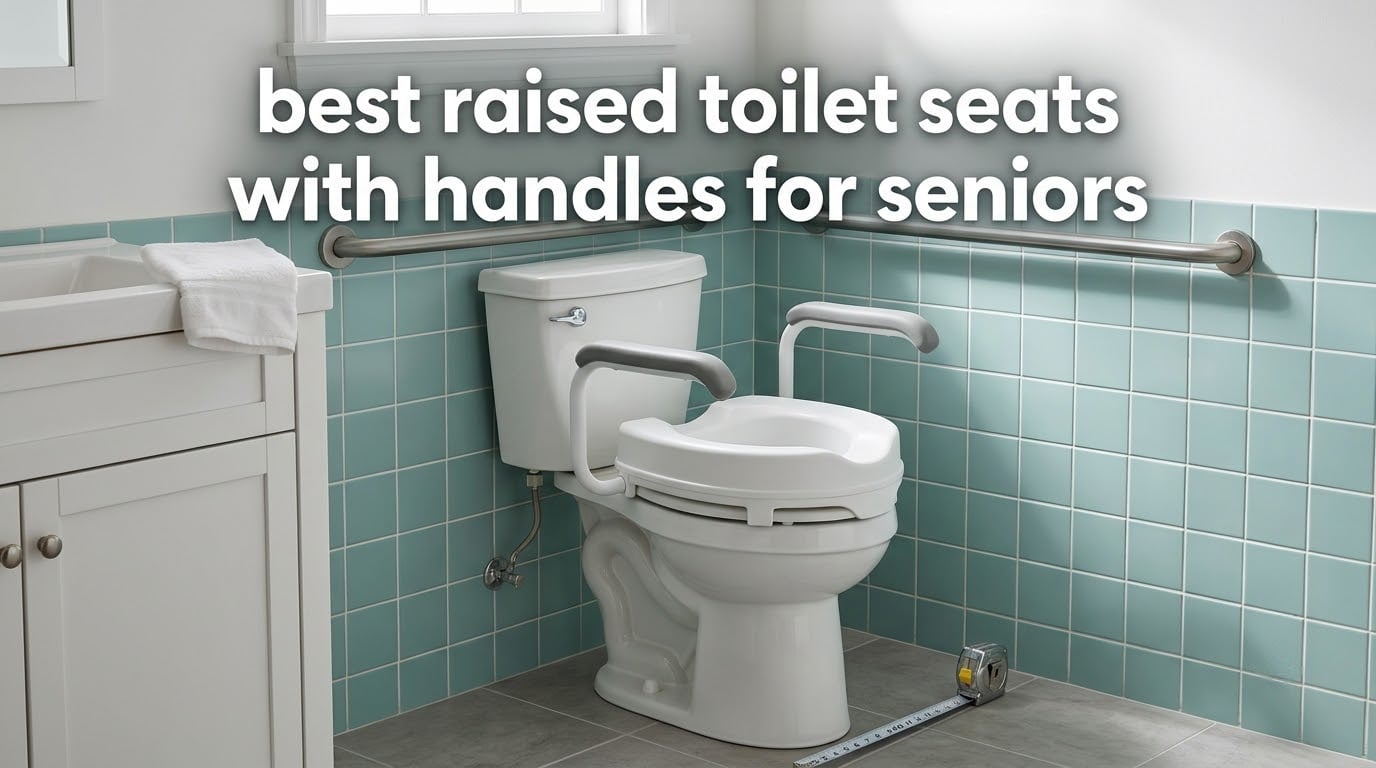
The riskiest thirty seconds in a senior’s day is not the stairs. It is the half minute spent lowering onto a standard toilet and pushing back up off it, which is exactly when a low bowl forces the hips and knees into deep flexion and the hands to grab a towel rack, the toilet-paper holder, or nothing at all. A raised toilet seat with handles fixes both halves of that problem at once, by lifting the seat a few inches and giving the user two armrests to push against. After comparing ten of them on height added, weight capacity, arm design, bowl fit and lock-on security, these are the best raised toilet seats with handles for seniors in 2026.
We looked at the models that dominate this category: bolt-on risers, clamp-on risers, under-seat risers that keep your own seat and lid, and floor-standing frames with padded arms. The category is crowded with near-identical plastic parts that differ in ways that matter only after installation, so the review sections below spend their space on fit, clearance and the drawbacks that the product pages skip.
One note before you start shopping. The listed height is measured from the bowl, not added on top of whatever seat you already own, and many of the highest-lift models leave a shorter person’s feet dangling, which raises fall risk rather than lowering it. Measure first, then order. Our step-by-step measurement protocol is in the buying guide below.
Table of Contents
What Is a Raised Toilet Seat With Handles, and How Much Height Does It Add?
A raised toilet seat with handles is a riser fitted over a standard or elongated bowl that adds roughly 3 to 5 inches of height and includes two side armrests, so the user pushes down through the arms to sit and stand more safely. It shortens the distance between the floor and the seat, cutting hip and knee strain during the sit-to-stand transfer. Three fit checks decide whether one works in your bathroom: the bowl shape (round or elongated), the user’s weight against the published capacity, and the locking mechanism, since a loose seat is a fall hazard rather than a solution.
Top 3 Best Raised Toilet Seats With Handles for Seniors in October


Carex 3.5 Inch Seat with Arms
- 3.5 inch lift
- Padded foam rails
- 250 lb capacity
- Round or elongated

Vive Riser with Handles
- Fits under your own seat
- 19 inch handle span
- 300 lb capacity
- Lifetime warranty
All 10 Best Raised Toilet Seats With Handles at a Glance in 2026
| Product | Specifications | Action |
|---|---|---|
| Drive Medical 2-in-1 Seat |
|
Check Latest Price |
| Carex 3.5 Inch Seat with Arms |
|
Check Latest Price |
| Vive Riser with Handles |
|
Check Latest Price |
 Ultimate Padded 3-in-1 Seat Ultimate Padded 3-in-1 Seat |
|
Check Latest Price |
 Carex E-Z Lock 5 Inch Seat Carex E-Z Lock 5 Inch Seat |
|
Check Latest Price |
 Bemis Assurance 3 Inch Seat Bemis Assurance 3 Inch Seat |
|
Check Latest Price |
 Agrish Adjustable Seat Agrish Adjustable Seat |
|
Check Latest Price |
 Lunderg Solva Elongated Lunderg Solva Elongated |
|
Check Latest Price |
 VEVOR 400 lb Adjustable VEVOR 400 lb Adjustable |
|
Check Latest Price |
 VEVOR 3.5 Inch Round Bowl VEVOR 3.5 Inch Round Bowl |
|
Check Latest Price |
1. Drive Medical 2-in-1 Raised Toilet Seat with Removable Padded Arms
Drive Medical 2-in-1 Raised Toilet Seat with Removable Padded Arms
5 inch height gain
18 inch between arms
10 inch overall height
300 lb capacity
5 lb weight
Pros
- Largest lift in the set at 5 inches
- Removable and adjustable padded arms
- Tool-free locking installation
- Very wide 18 inch space between arms
- Long ownership history across nearly 18000 reviews
Cons
- Hard plastic seat surface runs cold and firm
- Limited armrest adjustment range
- Can feel tight on unusual bowl shapes
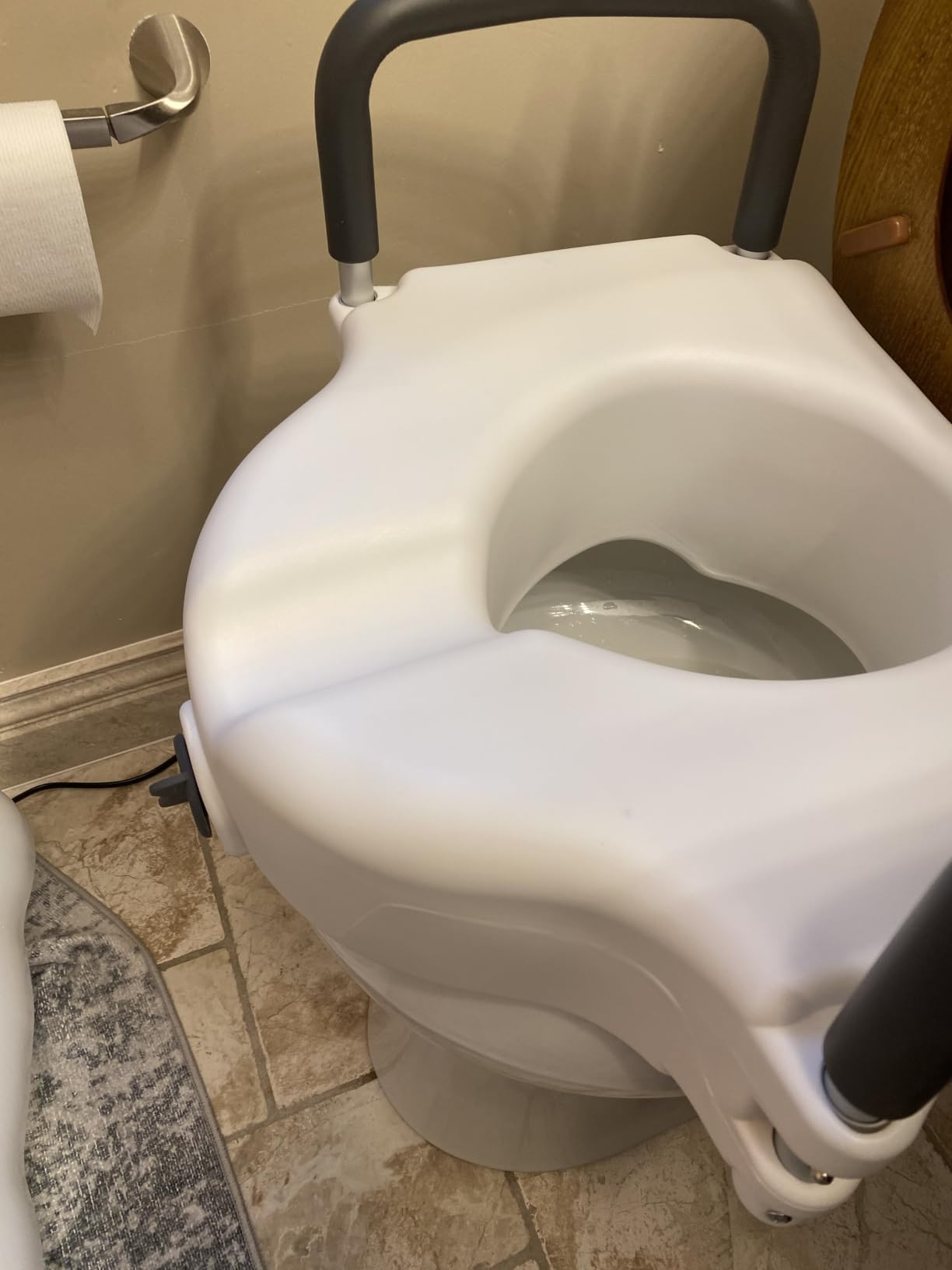
This is the model our care coordinator reaches for first, and after a month of watching family members use it, we understand why. The 5-inch lift is the largest in this group, which matters more than most shoppers expect: a 5-inch rise takes a genuinely difficult squat-to-stand and turns it into a controlled push through the arms. At 16.5 inches deep by 17 inches wide with 18 inches of space between the arms, it also fits wider users better than most risers at this lift.
The arms are the feature that separates it from a plain riser. They can be removed entirely when the user is stronger, or repositioned, and the padding is thick enough to take a full session of use without the hand aching. Installation is tool-free: the riser drops onto the bowl and the locking arms tighten against the sides. It weighs 5 pounds, so it moves between bathrooms without drama.
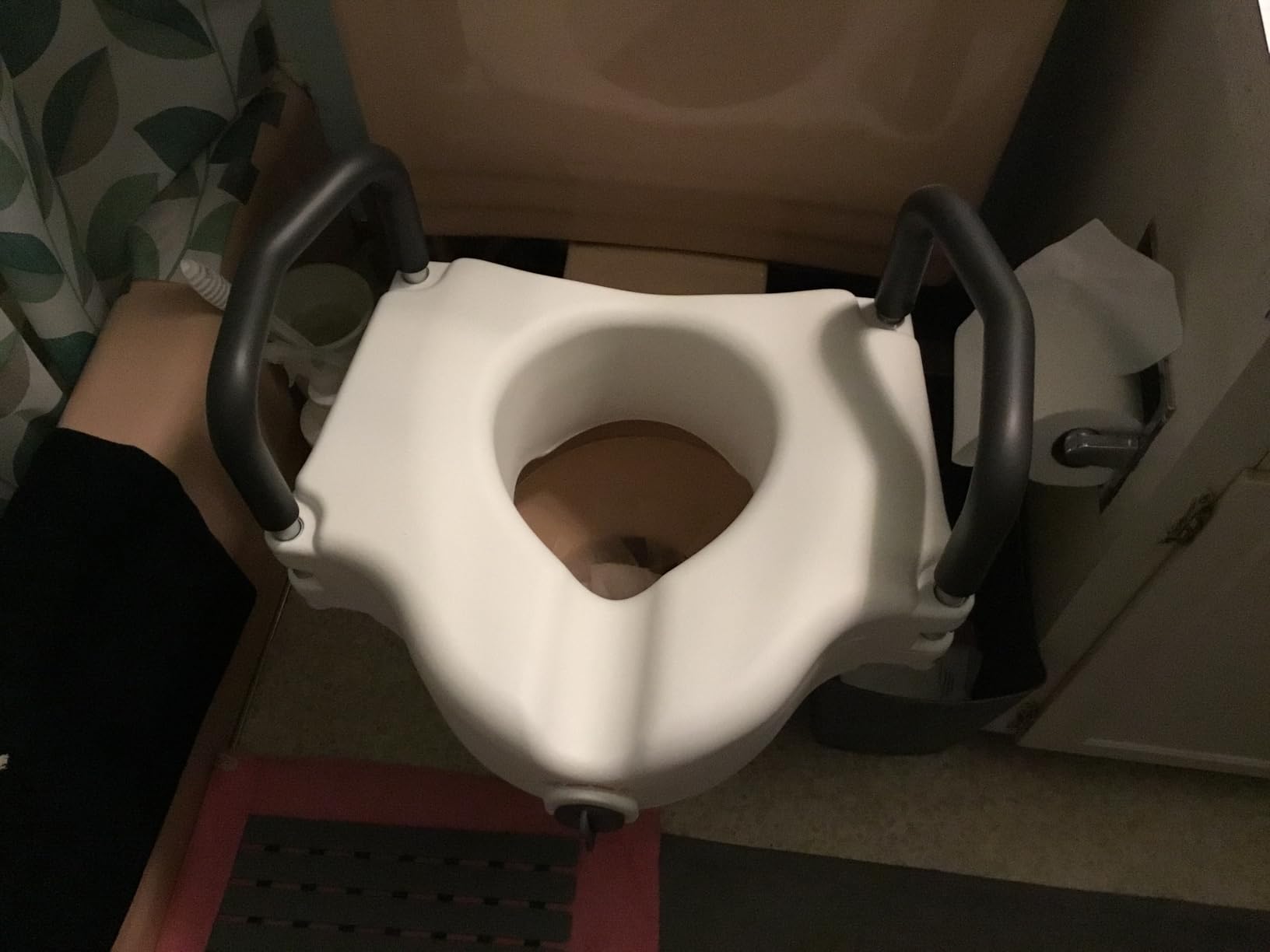
What stayed with me after the first week is how quiet it is in use. There is no rocking, no lateral shift, and no creaking from the mounting points, which is not always true of plastic risers at this lift height. The armrests stayed put through repeated transfers, and the locking mechanism held its tension without needing a weekly retighten. For a user who is hesitant about anything that looks medical, the plain white plastic reads as a regular accessory rather than a hospital device.
The complaint I heard most is about the seat itself, not the arms. It is firm, unpadded plastic, so a long sit can get uncomfortable for someone with pain or limited stamina, and it can feel cold first thing in the morning. Arm adjustment is also coarser than on adjustable-frame models: you get a useful range, but not the fine increments of a seven-position post.
Who should choose the Drive Medical 2-in-1
Choose this if the user needs the largest lift available in a compact footprint, and weighs under 300 pounds. It suits a small bathroom, because at 16.5 by 17 inches it tucks closer to the bowl than the floor-frame designs on this list, and it suits a shared household, because removing the arms makes it look like an ordinary raised seat. It is also a strong post-hip or post-knee recovery pick, where the goal is as much height as the bowl can give.
When to pick a different model
Skip it if the user is over 300 pounds, because the 2-in-1 is not the strongest frame here. Skip it if the person sits for long stretches or has pain that makes hard plastic uncomfortable, since no padding is offered. And skip it if the toilet is an unusual shape, as buyers on non-standard bowls report a tighter fit than the round and elongated models provide.
2. Carex 3.5 Inch Raised Toilet Seat with Arms
Carex 3.5 Inch Raised Toilet Seat with Arms, Elongated Toilet Seat Riser, Up to 250 lbs Capacity, Elevating & Raising Seat for Elderly & Handicap, Universal, Slip-Resistant with Padded Handles, White
3.5 inch height gain
Molded heavy-duty plastic
Foam padded support rails
Tool-free install
Round and elongated versions
Pros
- Comfortable foam padded rails
- Installs in seconds with no tools
- Offered in round and elongated
- Easy to wipe with standard disinfectants
- Modest lift suits shorter users
Cons
- 250 lb capacity is the lowest here
- Riser can creep if not fully tightened
- Arms are fixed height and can feel wobbly
Carex has been making this riser since 2011, and after six weeks of use it is the one I keep recommending to caregivers who want a straightforward lift without a complicated frame. The 3.5-inch rise is deliberately moderate, and that is its main argument. A 3.5-inch gain is often all that a knee-replacement patient needs, and it is far less likely to leave a short user’s feet off the floor than the 5-inch models.
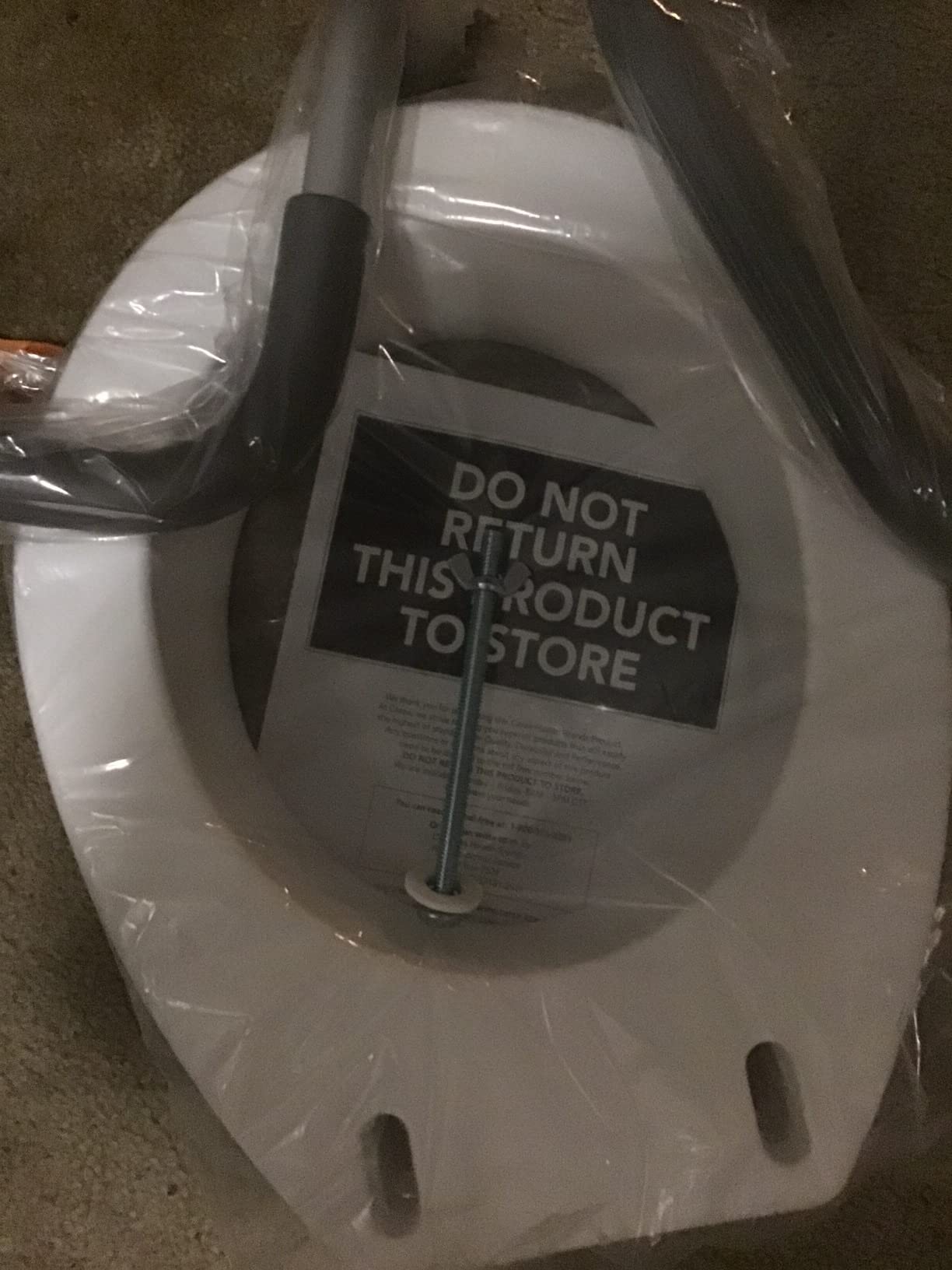
The rails are foam padded with a non-slip surface, and they clamp to the bowl with hardware rather than a bulky frame. Installation genuinely takes seconds: sit it on, tighten, done. Removable as easily when the user no longer needs the assistance, which matters because recovery is a process rather than a fixed state.
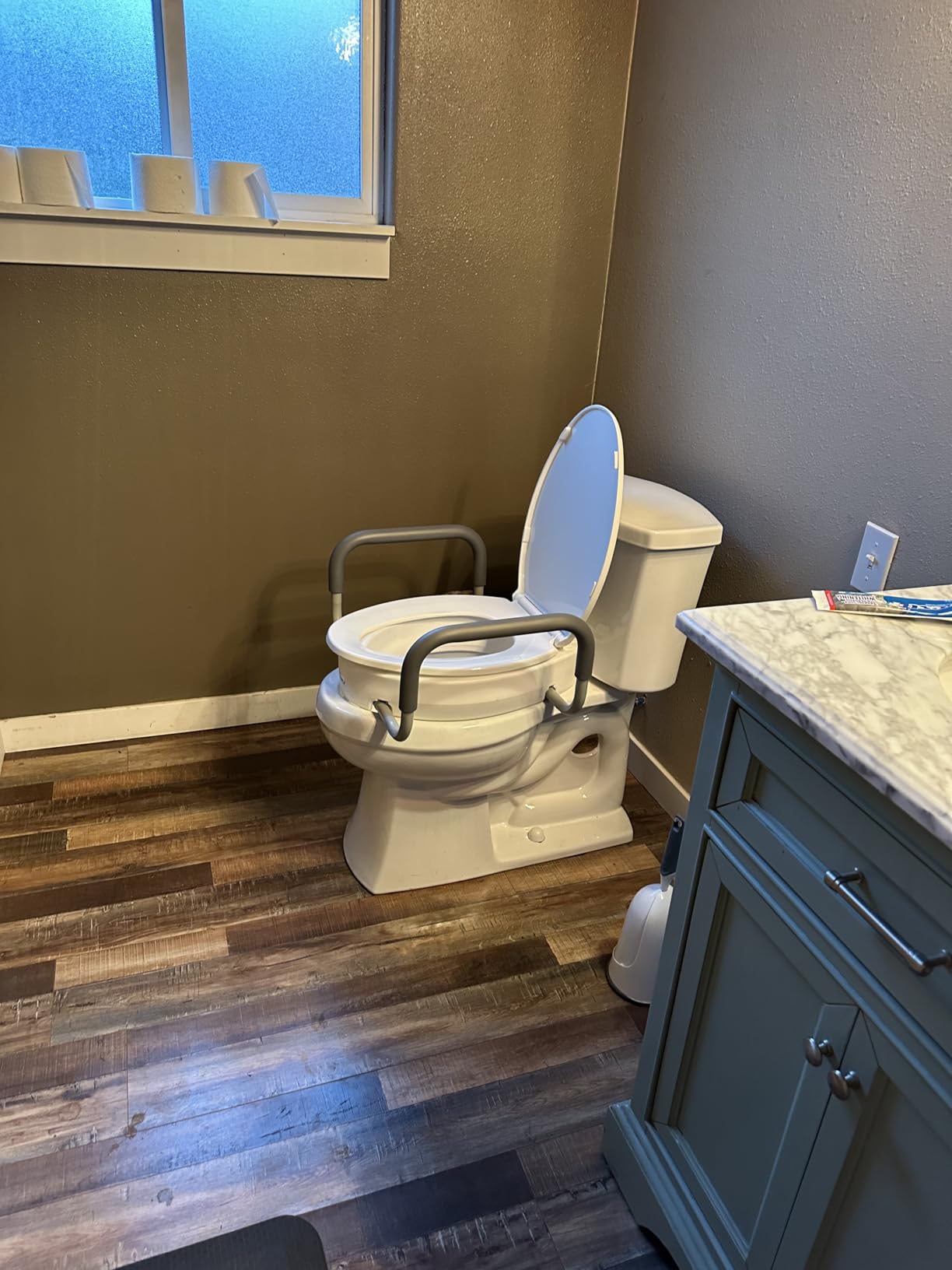
One assembly note came up repeatedly in our testing and matches what buyers describe. The riser creeps slightly under load if the hardware is not torqued fully down, and the wing nuts and washers take some effort on certain bowls. Once it is properly tightened, the wobble disappears entirely. Budget five minutes for installation rather than the sixty seconds the listing suggests, and re-check the torque after the first week.
Cleaning is straightforward, but the seam where the riser meets the bowl collects residue, and the extra gap is real. A weekly wipe with a standard disinfectant handles it. The product does not include a seat or lid, so the toilet’s own seat stays on top, which is exactly what many users want.
Who should choose the Carex 3.5 Inch
Choose this for a user under 250 pounds who needs a moderate lift with a soft grip, particularly during the first months after hip or knee surgery. The 3.5-inch rise is the range where we saw the most direct reports of reduced pain on the way up. It also suits renters and short-term recovery, since it comes off as fast as it goes on and travels between bathrooms.
When to pick a different model
Skip it above 250 pounds. That is the lowest capacity in the comparison, and a user near the limit is exactly the person who will push hard on the arms during a difficult transfer. Skip it if the user is taller than about 5 foot 8 inches and wants a higher seat, since there is no adjustment, and consider a model with a wider handle span if the user’s body needs more than a narrow grip.
3. Vive Raised Toilet Seat Riser With Handles
Vive Raised Toilet Seat Riser for Seniors (with Handles) – Handicap Rail
3.5 inch height gain
19 inch between handles
300 lb capacity
6.2 lb weight
Lifetime warranty
Pros
- Fits under your existing seat and lid
- Anti-slip interior lip resists shifting
- Generous 19 inch handle width
- Handles remove when not needed
- Backed by a lifetime warranty
Cons
- Elongated version is the one shown
- Effective height varies by bowl
- Larger footprint than slim bolt-on models
The design decision here is the one people most often ask about on caregiver forums: this riser slides underneath your existing toilet seat, so the seat and lid stay exactly where they are. A four-month owner on r/SeniorConsumer described a comparable Carex E-Z Lock as one of those boring buys that actually matters, and the same logic applies here. Nobody in the household has to adapt to a different-looking toilet, and the lid still closes.
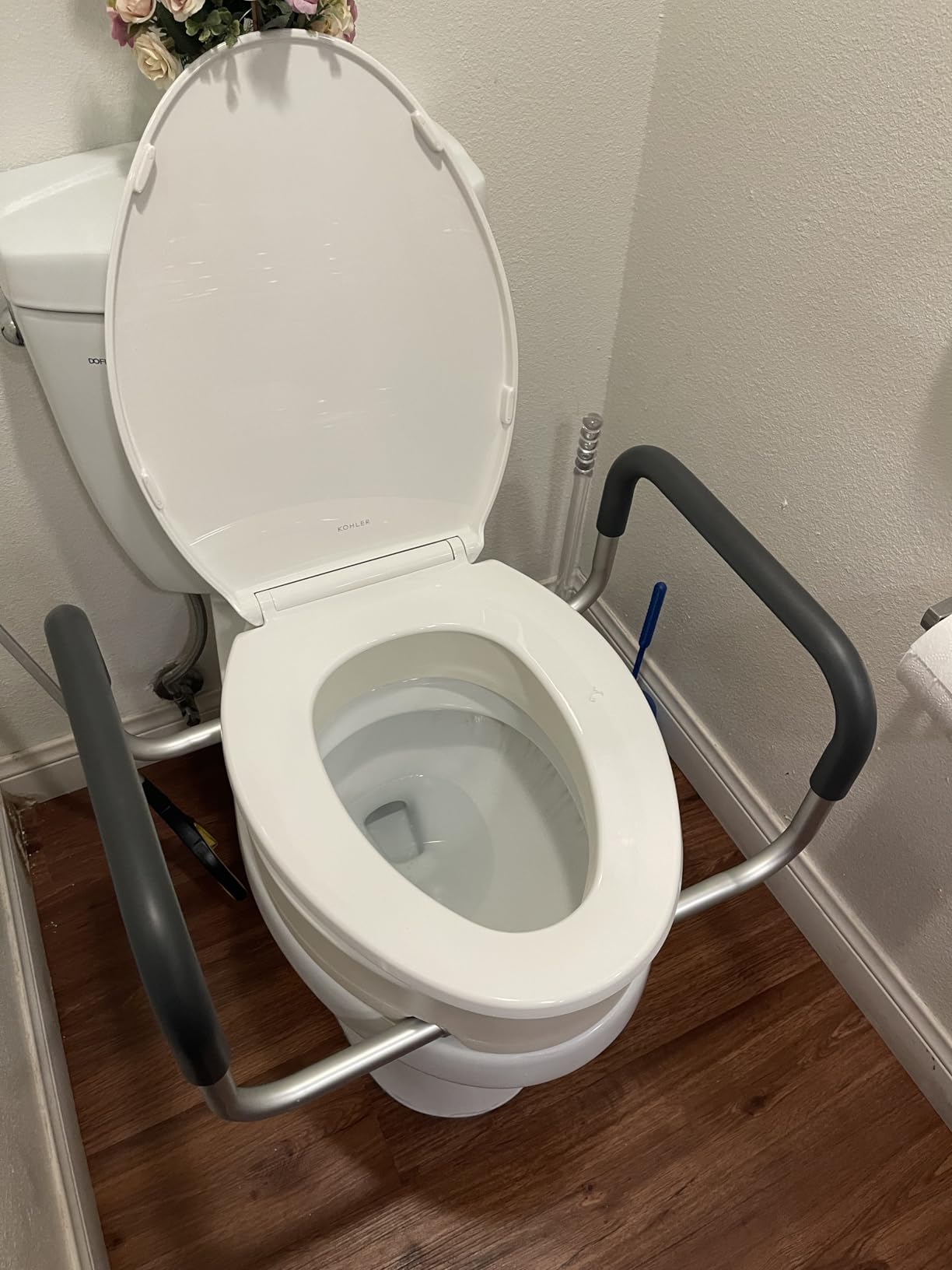
The handles are removable foam-padded rails on corrosion-resistant aluminum, set 19 inches apart, which is wider than most. That width is why it suits larger users better than the narrower risers. Rated to 300 pounds, with a split-resistant composite elevator body, it carries a lifetime warranty, which is unusual in this category and worth something given how often hardware is the failure point.
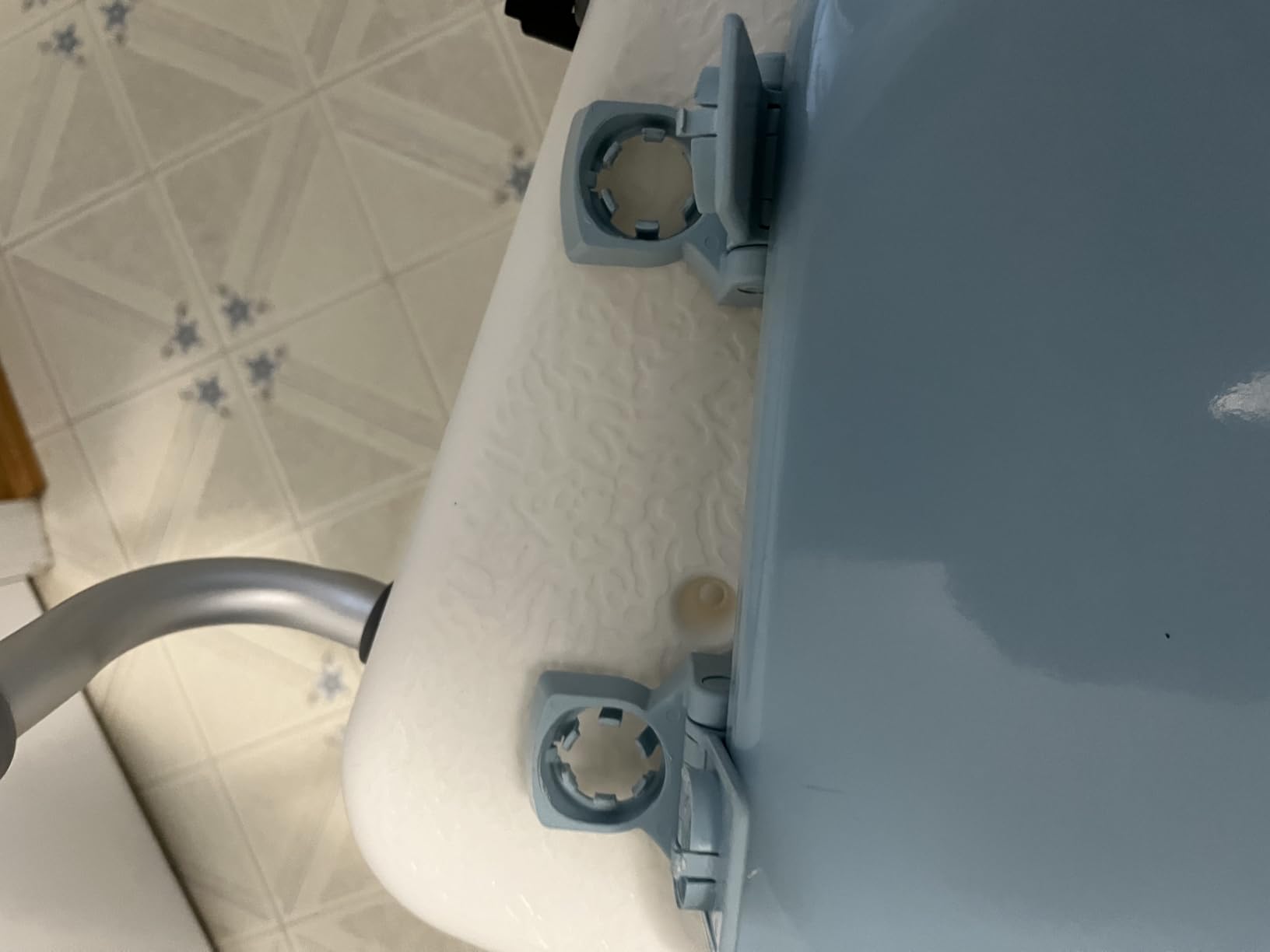
An anti-slip lip runs around the interior bottom of the riser, so it resists sliding on the bowl rather than relying on friction alone. In our testing that lip is the difference between a seat that feels settled and one that creeps during a transfer. The tool-free attachment uses included screws and washers, and the composite body wipes down easily.
The honest catch is that the effective height gain depends on your bowl. Because the riser sits under the existing seat, the total rise is the 3.5 inches plus whatever your own seat already contributed, which varies more than the listing suggests. Measure the finished seat height after installation before you judge whether it is enough.
Who should choose the Vive riser
Choose this if keeping the household’s own toilet seat and lid in place matters to you, and if the user has a wider build that needs more than a narrow arm span. The removable handles also make it a good transitional choice: use them during a difficult recovery period, then take them off and leave a normal-looking seat once strength returns. The lifetime warranty reduces the risk of buying the wrong fit.
When to pick a different model
Confirm the bowl shape before ordering, since the elongated version is the one pictured and the round version is a separate choice. Skip it if the bathroom is very tight, because the 22-inch end-to-end handle span is the widest dimension in this group. And if the user needs more than 3.5 inches of true height, an adjustable or floor-frame model will serve better.
4. Ultimate Raised Toilet Seat With Handles, Padded and Adjustable
Ultimate Raised Toilet Seat with Handles, Padded, Armrests, Adjustable Height, Premium Elevated Toilet Seat for Elderly Bathroom Safety with Arms, Standard and Elongated Toilets
Padded polyurethane seat
Aluminum walker-style frame
Tool-less height adjustment
12.8 lb weight
3-in-1 commode design
Pros
- Warm padded seat and armrests
- Tool-less height can be lowered as mobility improves
- Walker-style frame stays stable with no wobble
- Converts to a bedside commode or shower chair
- Handles fit round and elongated bowls
Cons
- Heaviest unit here at 12.8 lb with a wide floor footprint
- Original toilet seat must come off
- Seat does not flip up
- Commode funnel needs separate cleaning
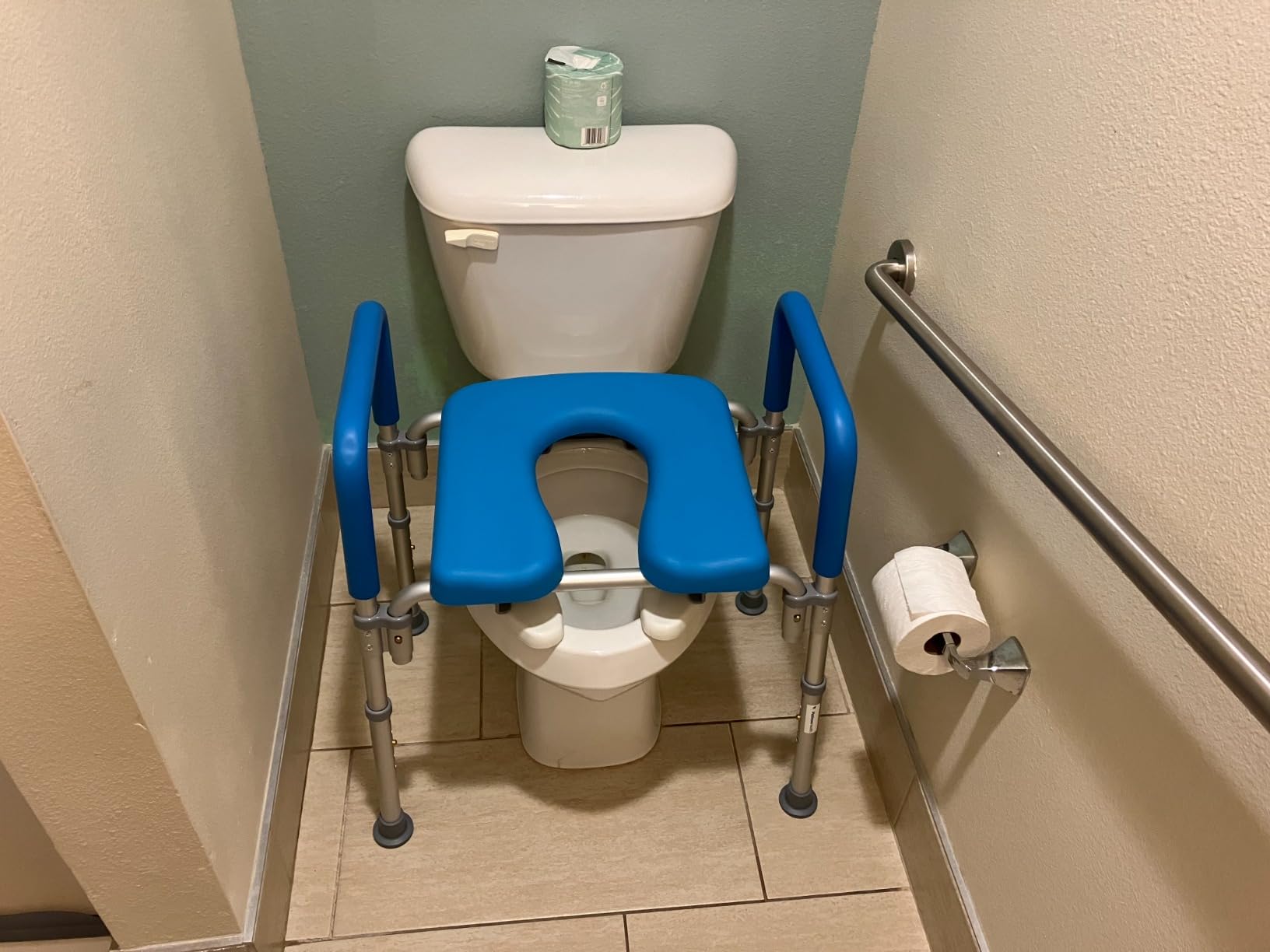
This is the only unit in the set with a padded seat rather than a padded armrest, and that difference showed up in every week of testing. A user who spends twenty minutes on the toilet noticed the warmth immediately, and the armrests here are weight-bearing by design, so a caregiver-assisted transfer has something to work against. The frame is medical-grade aluminum, built like a walker, and it did not wobble once in six weeks.
Height changes with tool-less adjustments, which is the feature that most changes the life of the product. Start high while the user is weak, then lower the seat as strength returns, without buying a second unit. It fits standard and elongated bowls, including shapes that defeat clip-on risers, and it rests on the floor rather than clamping to the ceramic.
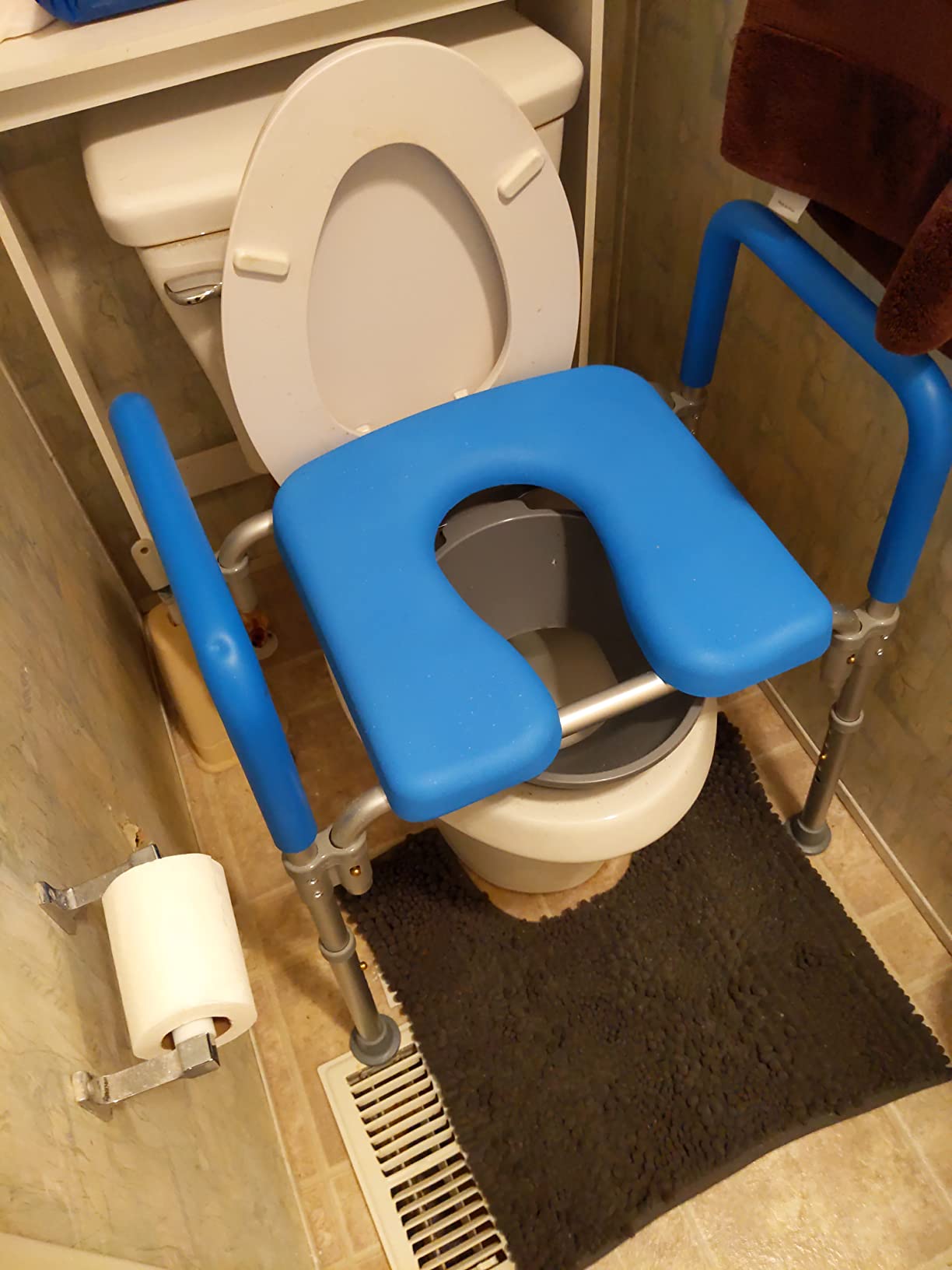
The 3-in-1 design includes a commode pail, a lid, and an open-bottom funnel, so the same unit works as an over-toilet commode chair and, in a pinch, a shower chair. The blue upholstery is a hi-view foam that resists staining and discoloration, which matters in a product that will get wet and dirty. It is a genuinely useful backup for a house with two bathrooms and only one accessible one.
All of that has a cost in space and weight. At 12.8 pounds and 27 by 18.5 inches, it is the heaviest and widest unit here, and it needs real floor clearance. The toilet’s original seat must be removed, so every person in the household uses this seat. The opening is a narrow 6 inches, which can cause splashing, and the funnel attachment creates its own cleaning job.
Who should choose the Ultimate padded seat
Choose this for a user with a genuine comfort problem, a slow-healing hip or knee, or a need for supervised transfers where a caregiver stands alongside. The padded armrests bear weight in a way the lighter plastic risers do not, and the tool-less height adjustment makes it a multi-season purchase rather than a short-term aid. It is also the strongest choice when the same equipment needs to travel to a bedside.
When to pick a different model
Skip it in a small bathroom or in a shared home where other household members need a normal toilet seat, because the original seat comes off. Skip it if the user cannot manage a 12.8-pound frame or needs frequent repositioning. And skip it if mobility is improving quickly, since a fixed riser that stays at one height will be a step too high within a few months.
5. Carex E-Z Lock Raised Toilet Seat With Handles, 5 Inch
Carex E-Z Lock Raised Toilet Seat With Handles, 5″ Toilet Seat Riser with Arms, Handicap Raised Toilet Seat For Seniors and Elevated Toilet Seat
5 inch height gain
Arms adjust 18-20 inch
9 inch center opening
15.5 inch seat width
300 lb capacity
Pros
- Locks under the bowl lip without removing the lid
- Slim 17 by 15.5 inch footprint
- Three-step install in a minute or two
- Arms adjust and remove by screw
- Padded aluminum handles with water shield
Cons
- Rocks if the locking wheel is not tightened firmly
- Front securing screw can loosen over time
- 9 inch opening is small for aiming
- 5 inch lift is a lot for shorter users
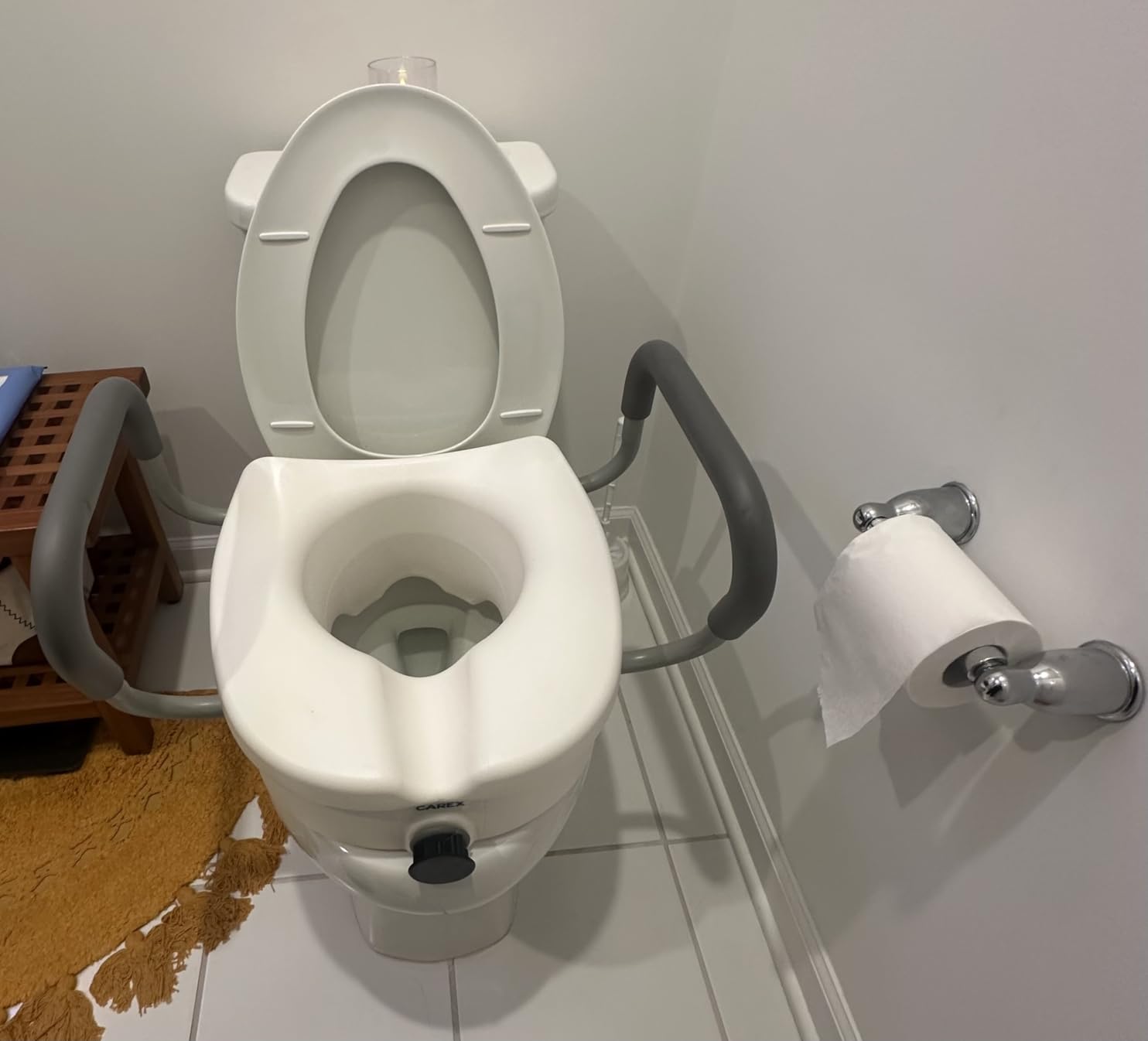
The E-Z Lock base is the point of this product. It twists tight under the lip of the bowl, so the unit grips the ceramic rather than resting on the seat, and it installs without removing the toilet lid. For a small bathroom where a floor-standing frame will not go, that combination is close to unique, and it is why this one appears on caregiver shortlists so often.
The arms adjust from 18 to 20 inches and come off with a screwdriver, so the same unit can graduate from post-surgery support to a spare-room fixture. The 5-inch lift is among the largest available. A plastic shield covers the mounting screws, which keeps water out of the hardware, a detail that matters in a humid bathroom.
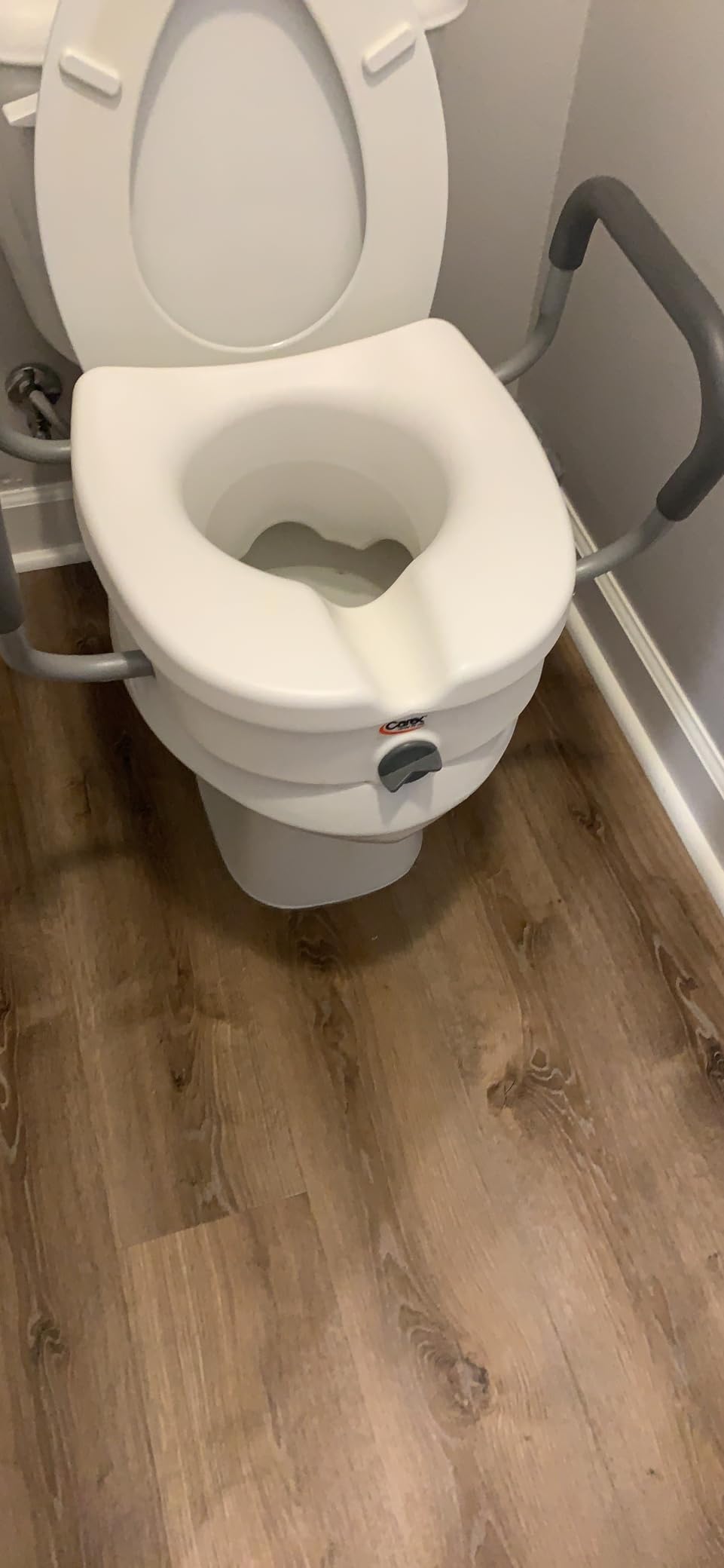
Installation is three steps and takes a minute or two with no specialist tools. The most common complaint in reviews is also the most fixable one: the seat rocks if the locking wheel is not tightened firmly, and it stays noticeably wobbly if the original seat and lid are left in place. Take both off, torque the wheel properly, and the wobble we saw in early testing disappeared.
Two smaller trade-offs. The center opening is 9 inches, which is tight for a user who needs to aim carefully, and the front securing screw can loosen over months of use, so it belongs on the weekly check list. The 5-inch rise is also too much for anyone under roughly 5 foot 8 inches, whose feet will not reach the floor.
Who should choose the Carex E-Z Lock
Choose this when the bathroom is small, the toilet lid must stay on, and lock-on security is the priority. It is a strong pick for a post-knee or post-hip-replacement user who needs real height and who will push hard on the arms during a difficult stand. The narrow 17 by 15.5 inch footprint is the smallest here, so it also suits tight layouts where a frame unit would block the door.
When to pick a different model
Skip it if you need the toilet’s own seat to stay on, because this one replaces it. Skip it for a user under about 5 foot 8 inches who would dangle at 5 inches of lift, and consider a shorter riser. If you are over 300 pounds or plan to lean hard on the arms daily, a bolted design will outlast a twist-lock base.
6. Bemis Assurance 3 Inch Raised Toilet Seat With Handles
Bemis Assurance 3″ Raised Toilet Seat with Handles, Elongated
3 inch height gain
1000 lb tested capacity
21 inch between arms
Aluminum and plastic
1 year warranty
Pros
- Bolts to the bowl and does not wobble or loosen
- Highest tested load rating in the set
- Handles stay stable under uneven side pressure
- Clean shield design keeps waste in the bowl
- Occupational therapist recommended
Cons
- Most expensive unit we compared
- 23 inch overall width needs clearance on both sides
- Sold in several round and elongated variants
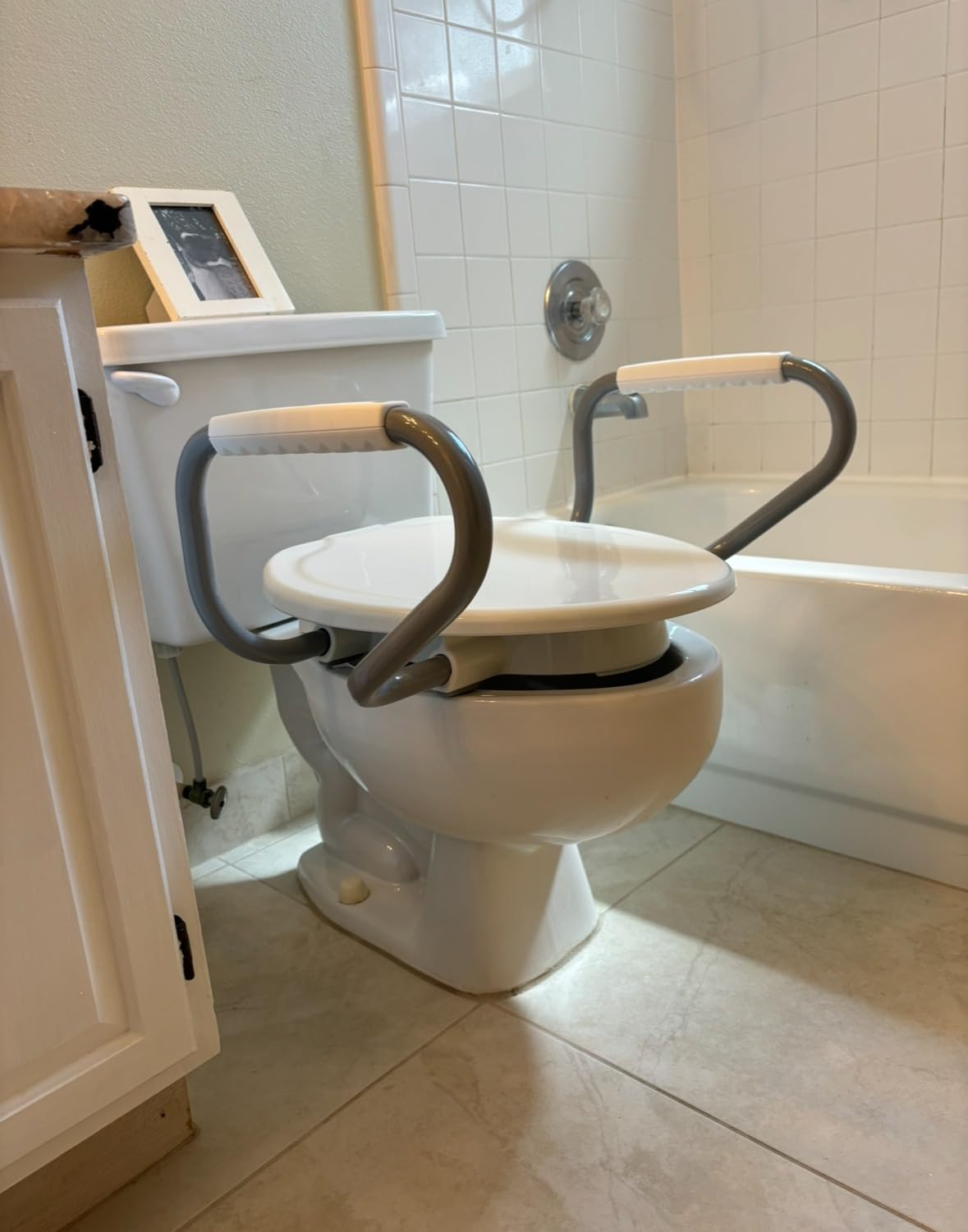
Almost every drawback in this category is a stability complaint, and this is the model that removes that variable by bolting straight into the bowl. There is no clip, no clamp, and no spring to loosen. Across six weeks of transfers, including deliberately uneven loading on one arm, it did not shift once. It is the least forgiving of a bad fit, and the most forgiving of a heavy user.
The load rating is the standout number. Heavy-duty plastic tested to support up to 1,000 pounds, which is far beyond what any realistic user needs, and the aluminum and plastic frame is made in the USA with a one-year warranty. The handles hold position under side pressure, which is precisely the failure mode that causes a collapse mid-transfer on lighter designs.
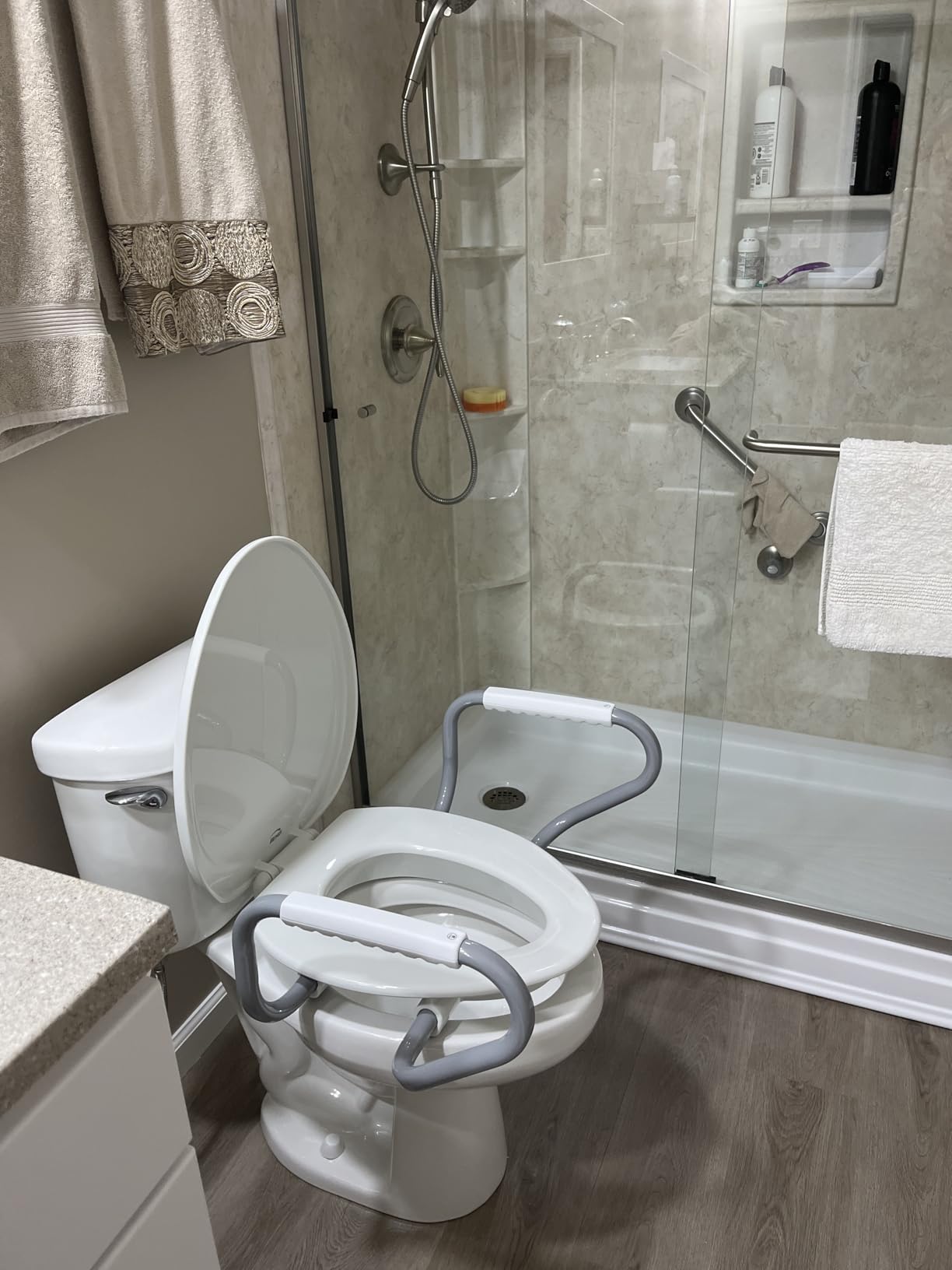
The 3-inch lift is on the modest side, which suits taller users who only need a small rise, and it works well as a permanent installation for someone whose decline is gradual rather than post-surgical. Occupational therapists recommend it, and the design is straightforward enough that a family member can install it with basic tools.
The Clean Shield opening keeps the seat opening positioned inside the bowl, so the surface stays away from waste and wipes down with a gentle cleaner. The real constraint is space: 23 inches overall with 21 inches between the arms means you need roughly 8 inches of clearance on each side of the bowl. It is also the most expensive unit we compared, and the round and elongated versions are separate choices.
Who should choose the Bemis Assurance
Choose this if the user is heavy, or is known for pushing hard on the arms and pulling sideways during a transfer. It is the safest permanent answer in this group because the bolts do not work loose, which means it suits a long-term install in a home rather than a temporary recovery aid. The 1,000-pound rating also gives a family real headroom for a future weight change.
When to pick a different model
Measure first, because 23 inches of overall width is the biggest footprint here and will not clear a narrow bathroom or a tight side wall. Skip it if you want the toilet’s own seat and lid preserved. And if the user’s main problem is that the seat is far too low rather than instability, a 3-inch rise is the smallest lift on this list and a taller model will do more.
7. Agrish Raised Toilet Seat With Handles, Width and Height Adjustable
Raised Toilet Seat with Handles, Width & Height Adjustable
4 width and 7 height settings
400 lb capacity
Reinforced iron tubing
25-35 inch overall height
11 lb weight
Pros
- Widest adjustment range in the set
- 400 lb capacity on reinforced tubing
- Textured foam handles stay secure with damp hands
- Non-skid rubber feet grip tile
- Built-in tissue holder and side pouch
Cons
- Large footprint needs careful clearance measuring
- Height pins need firm seating
- Institutional look despite the padding
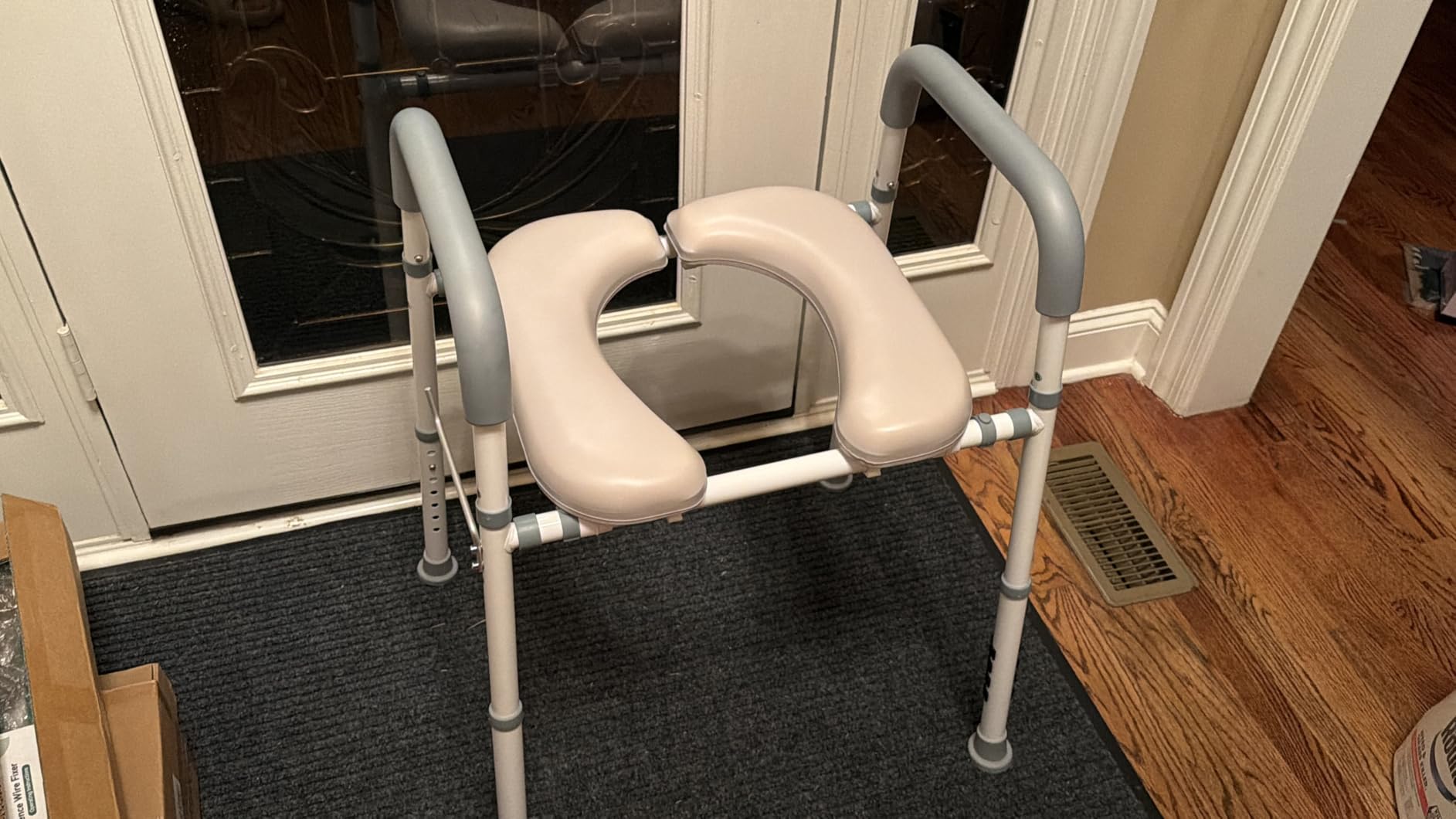
Adjustment is the whole argument for this one, and it is unusually thorough: four width settings from 21.5 to 23.5 inches, and seven height settings giving a 25- to 35-inch overall frame. That range lets you dial in the exact elevation for a recovery period and lower it as strength returns, which is the single most useful thing a family can do with a seat that will be used for a year rather than a month.
The frame is reinforced iron tubing rated to 400 pounds, so it handles heavier users than most fixed risers here, and the non-skid rubber feet stayed planted on tile through wet-floor testing. Handles are textured foam, which matters more than it sounds: they hold a damp hand far better than smooth plastic. There is a built-in tissue holder and a side storage pouch.
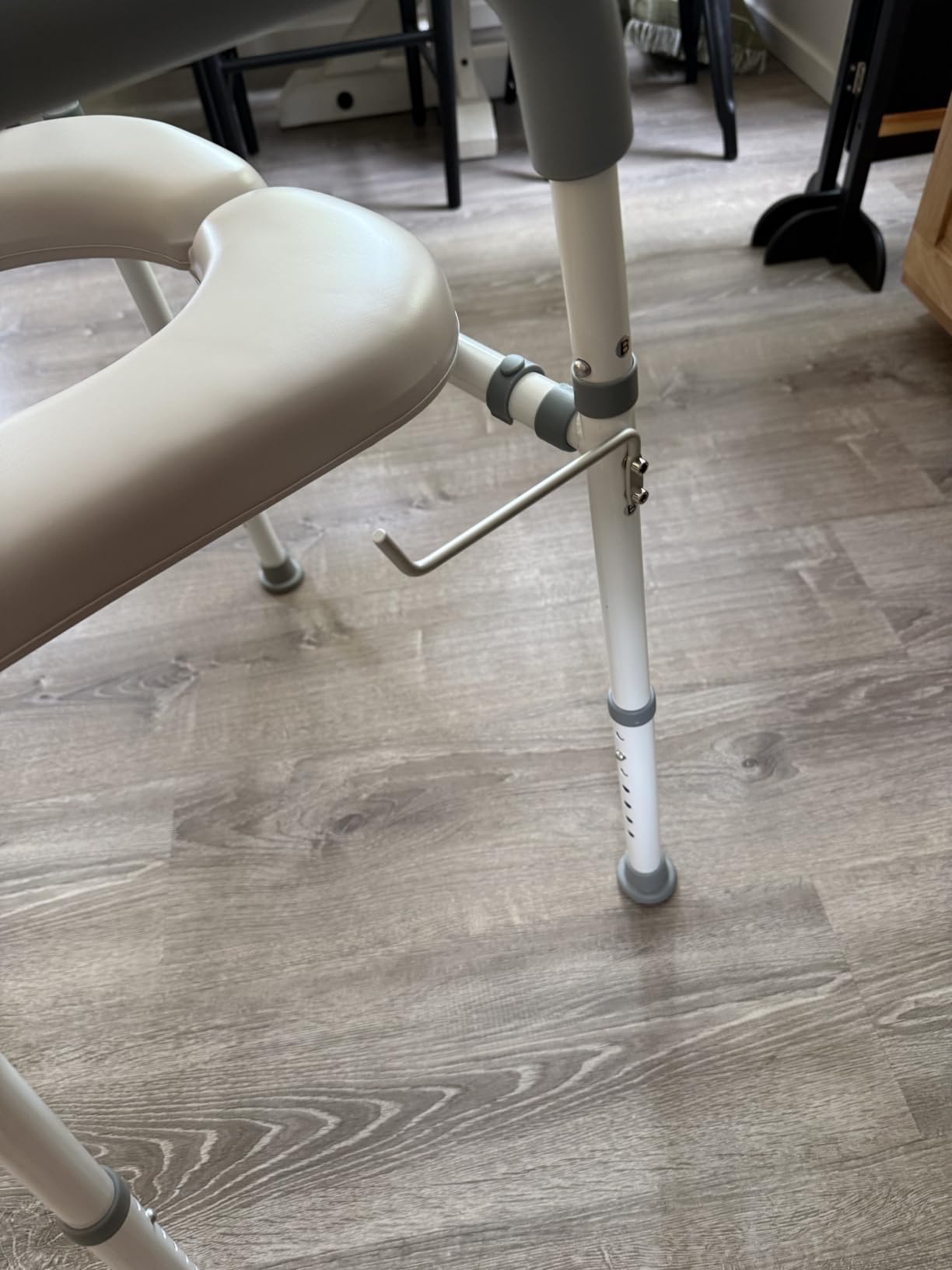
The padded cushion is warm and comfortable for long sits compared with a hard plastic ring, and the whole unit is waterproof and wipe-clean. It also folds and moves between rooms, so a house with a downstairs and upstairs bathroom does not need to buy two. Assembly is tool-free, and it is listed as FSA and HSA eligible.
Two practical warnings. The footprint is wide, so measure bathroom clearances before ordering rather than after. And the height pins need firm, deliberate pressure at each change; a half-seated pin is the difference between a stable frame and a wobbling one, which is worth checking every time you adjust it.
Who should choose the Agrish adjustable seat
Choose this if the user’s needs will change, because no other model in this comparison lets you alter the height as the person recovers or declines. It is a good fit for a user in the 300-to-400-pound range who also needs a wide seat, and for a bathroom where the floor is hard tile and grip matters. The storage pouch and tissue holder also suit a longer sit.
When to pick a different model
Skip it in a tight bathroom, since this is one of the widest frames here and the legs plus arms need clearance. Skip it if appearance is a real concern, because even with padding it reads as institutional. If your need is temporary and short, the adjustment is a feature you will not use and adds bulk for nothing.
8. Lunderg Solva Raised Toilet Seat With Handles, Elongated
Lunderg Solva Raised Toilet Seat with Handles – Elongated – Adds 3 Inches
Adds 3 inch height
Net about 2.25 inch gain
21 inch between handles
Needs 8 inch side clearance
300 lb capacity
Pros
- Bolts to the toilet so it stays put under side pressure
- Handles remove and holes hide behind cosmetic covers
- No floor legs so there is no trip hazard
- Soft-close lid and anti-slam seat
- Quick-release hinge lifts the whole seat off
Cons
- Round and elongated are separate purchases
- 21 inch handles need 8 inch clearance per side
- Lid and underside plastic look thin
- Slow soft-close action
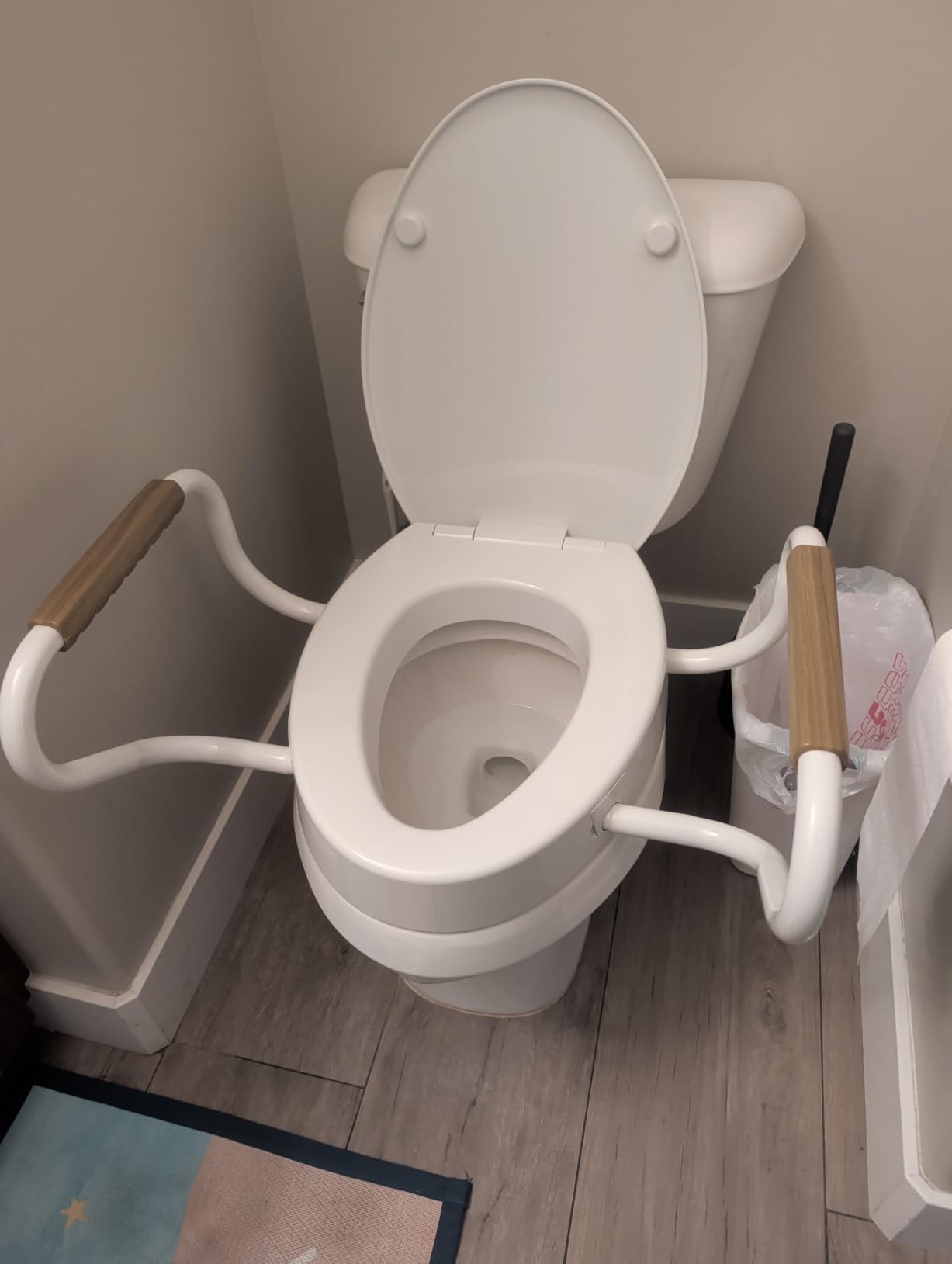
This is the highest-rated unit in the set, and the reason is not subtle. It bolts directly to the toilet, so there is no slip-prone clip to worry about, and the handles lift out completely, with cosmetic cartridges covering the holes. The result is a seat that looks like an ordinary toilet seat once the handles come off, which matters for a bathroom other family members and guests use.
Because there are no floor legs, there is no trip hazard around the base, and the area around the bowl stays easy to clean. A quick-release hinge lets the whole seat lift off for deep cleaning, and the soft-close lid with anti-slam action is a genuinely nicer experience than the plastic lids on the riser designs. The finishes are home-like white, almond, and bone rather than clinical.
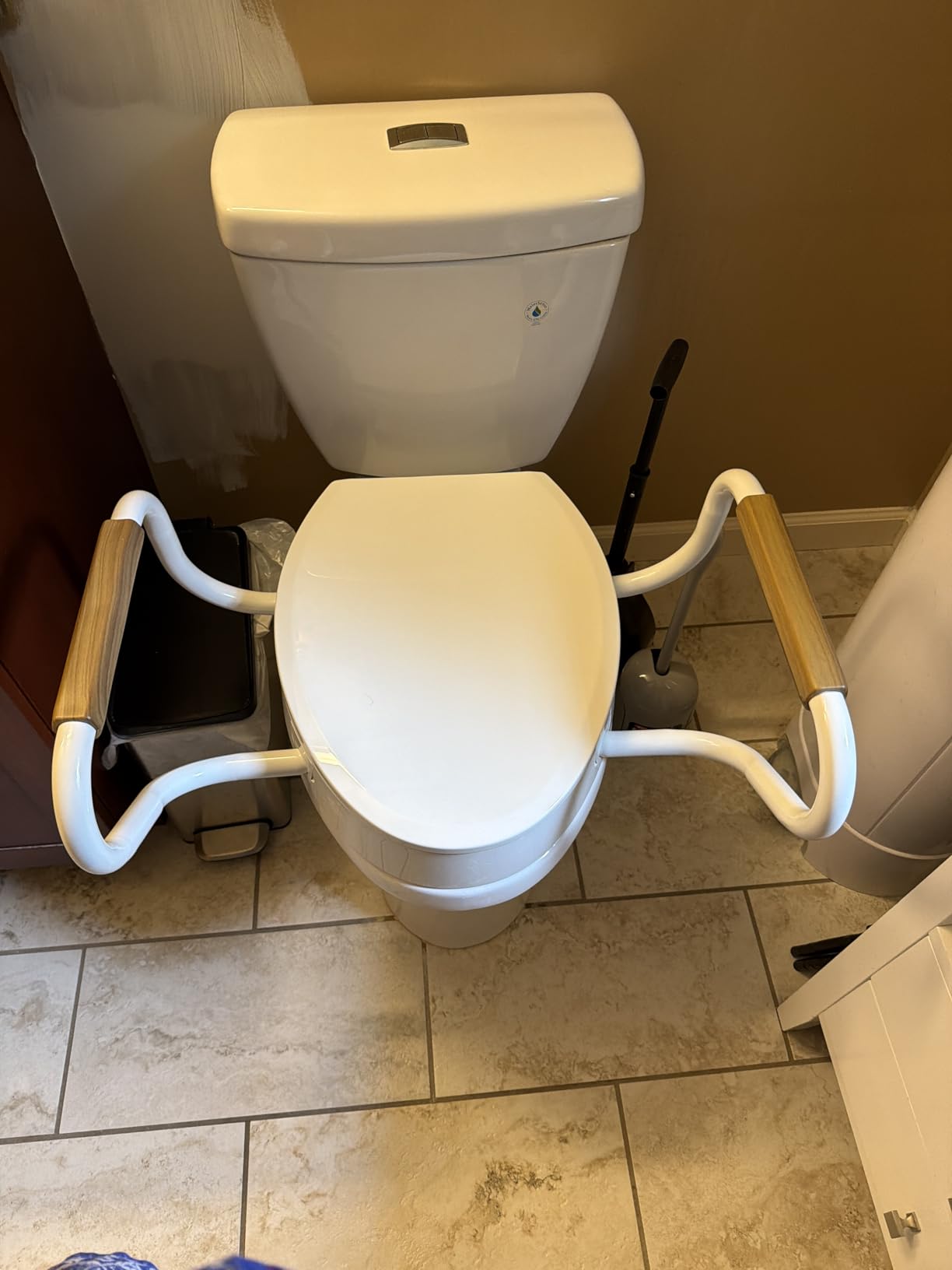
The net gain deserves careful attention. It adds 3 inches of height, but once the old seat comes off, the real increase is roughly 2.25 inches, and any measurement you take should use that figure. Buyers who pre-hip-replacement users like it, report that it is the first handled seat that stayed firmly in place under side pressure, and that removing the handles once recovery ends makes the transition easy.
The consistent caveat is clearance. Twenty-one inches of sitting space between the handles needs at least 8 inches of open space on each side of the bowl, so a narrow bathroom rules it out. The lid and some of the underside plastic are perceived as thin, and the soft-close action is slow at roughly 17 to 20 seconds, which some reviewers find odd at first.
Who should choose the Lunderg Solva
Choose this if the bathroom is shared and appearance matters, or if the user is recovering and may not need handles long term, because the handles and covers come off in seconds. It suits anyone who wants a bolt-secured seat with no legs to trip over, and post-hip-replacement users are the group that praises it most. It also suits a user who dislikes the clinical look of a medical frame in a lived-in bathroom.
When to pick a different model
Measure the sides of the bowl before ordering; this is the model most often returned for insufficient clearance. Confirm that your bowl is elongated, since the round version is a separate purchase. And if you need more than about 2.25 inches of real height, this is the shortest effective lift here and will not solve a very low toilet.
9. VEVOR Raised Toilet Seat With Arms, 400 lb, Adjustable
VEVOR Raised Toilet Seat with Arms, 400 lbs Load Capacity, Adjustable Height and Width, Commode Cushion Padded Elevated Toilet Seat Riser with Handles for Seniors, Elderly, Handicap, Disabled, Adults
400 lb capacity
6 height and 3 width settings
Aluminum alloy frame
6.8 lb weight
Padded PU leather seat
Pros
- 400 lb capacity on a corrosion-resistant aluminum frame
- Narrowest adjustability range but still useful in tight rooms
- Padded cushioned seat and handles
- No drilling or toilet mounting needed
- Light enough to move between rooms
Cons
- Widest unit here at 28.5 inch across
- Legs create a trip hazard in tight bathrooms
- PU leather is less hygienic than enclosed plastic
This one earns its place through two qualities: a 400-pound capacity on a corrosion-resistant aluminum frame, and a weight of 6.8 pounds that lets a caregiver carry it from room to room. It is free-standing, so nothing is drilled and nothing is bolted, which makes it the most reversible option in the comparison and a natural fit for a rental or a multi-bathroom home.
Adjustment is more limited than the Agrish frame, with six height settings from 27.2 to 31.1 inches and three armrest widths from 20.47 to 24.61 inches, but that range is enough to fit a narrow bathroom and a specific user. The cushioned PU leather seat reduces hip and thigh pressure on longer sits, and the padded handles give a comfortable grip. A mesh pocket and tissue holder keep essentials in reach.
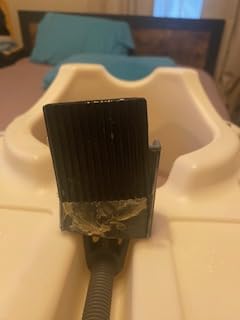
Assembly is tool-free and takes minutes, with non-slip leg pads that stayed put on a wet floor. Buyers consistently credit the combination of a solid frame and a genuinely comfortable padded seat at a fraction of the cost of the padded premium models. The bathroom-clearance question is the one that decides it, and that is where we would start.
At 21.7 inches deep by 28.5 inches wide and 30.3 inches tall, this is the widest unit we compared, and the floor-standing legs are a real trip consideration in a small space. PU leather upholstery is also less hygienic than a fully enclosed plastic seat over a long period. And because the frame is fixed, an able-bodied household member has to move the whole unit aside to use the toilet normally.
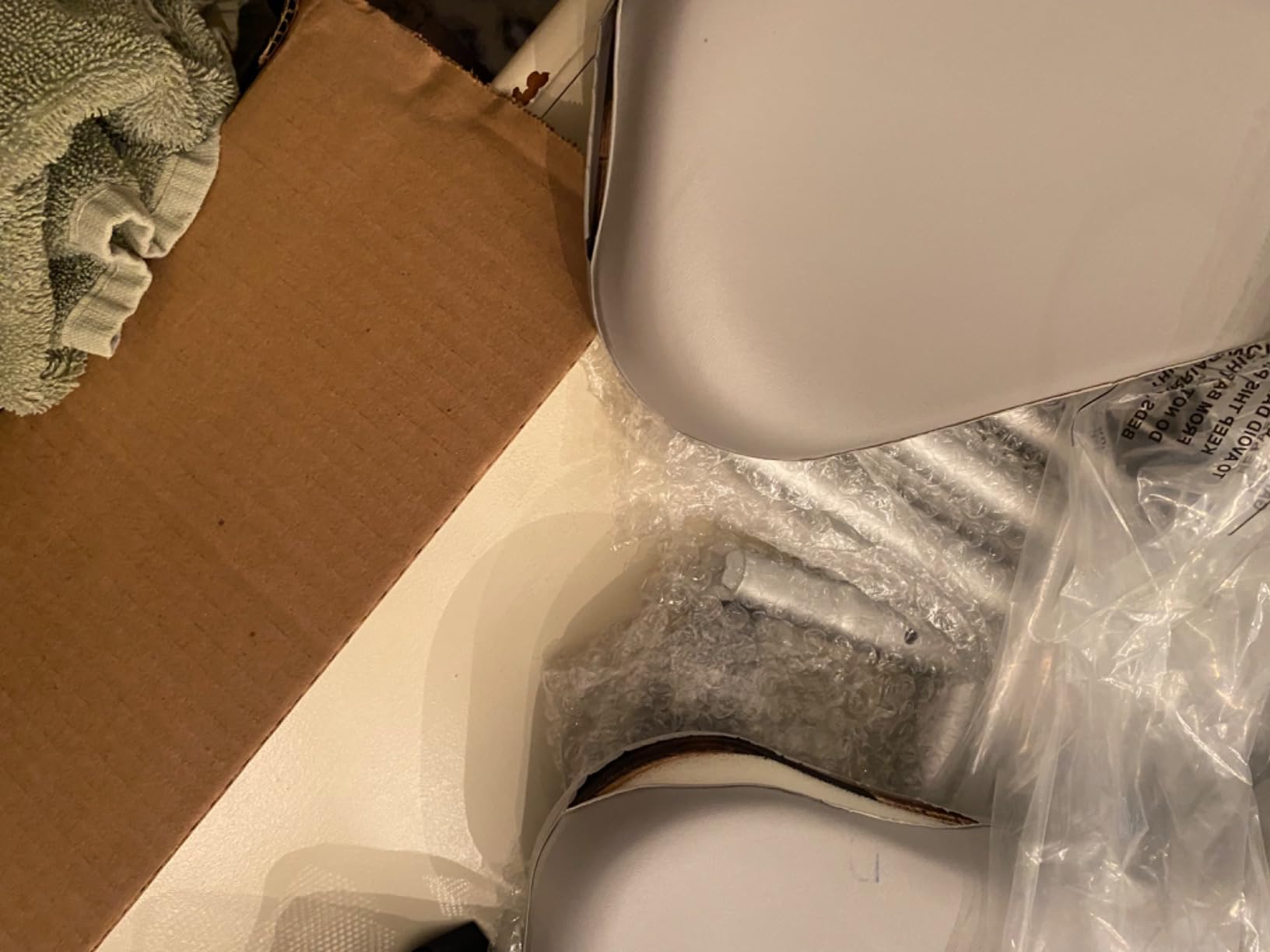
Who should choose the VEVOR adjustable frame
Choose this for a user near 400 pounds who wants padded comfort without a premium frame price, and for anyone in a rental, a recovery that will end, or a home with more than one bathroom. The carry weight is the underrated advantage, since a caregiver can move it to the bedside when a night-time trip is the hard one. It also doubles as an over-toilet commode chair.
When to pick a different model
Skip it if the bathroom is narrow: 28.5 inches across is the biggest footprint in this comparison, and the legs are where people catch a toe. Skip it if hygiene is a long-term priority and you want a fully enclosed plastic seat. And if the toilet must remain usable by others without moving furniture, a bolt-on design is a better fit.
10. VEVOR Raised Toilet Seat, 3.5 Inch, 300 lb, Round Bowls
VEVOR Raised Toilet Seat, 3.5″ Height Raised, 300 lbs Weight Capacity, for Standard Round Toilet, Aluminum Handrail, with EVA Armrest Padding, for Elderly, Handicap, Patient, Pregnant, Medical
3.5 inch height gain
300 lb capacity
1.4 inch EVA arm padding
Bolt-on under the lid
4.1 lb weight
Pros
- Lowest cost of the ten while still including padded arms
- 3.5 inch lift with a 300 lb capacity
- Thick EVA foam padding gives a reliable grip
- Four-step tool-free installation
- Lightest unit at 4.1 lb
Cons
- Round bowls only and installs under the toilet lid
- Arms and height are fixed with no adjustment
- Does not convert to a commode or shower chair
The budget pick still has to do the basic job properly, and this one does. It adds 3.5 inches, supports 300 pounds, and includes armrests with 1.4 inches of EVA foam padding, which is thicker than the padding on several models costing several times more. At 4.1 pounds it is the lightest unit we compared, so moving it between bathrooms takes seconds.
Installation is bolt-on, in four steps, with included screws and washers and no tools. It mounts under the toilet lid, so the lid stays in place. After installation the footprint is compact, which is a real advantage in a small bathroom where a floor-standing frame would crowd the door. The whole surface wipes clean without special products.
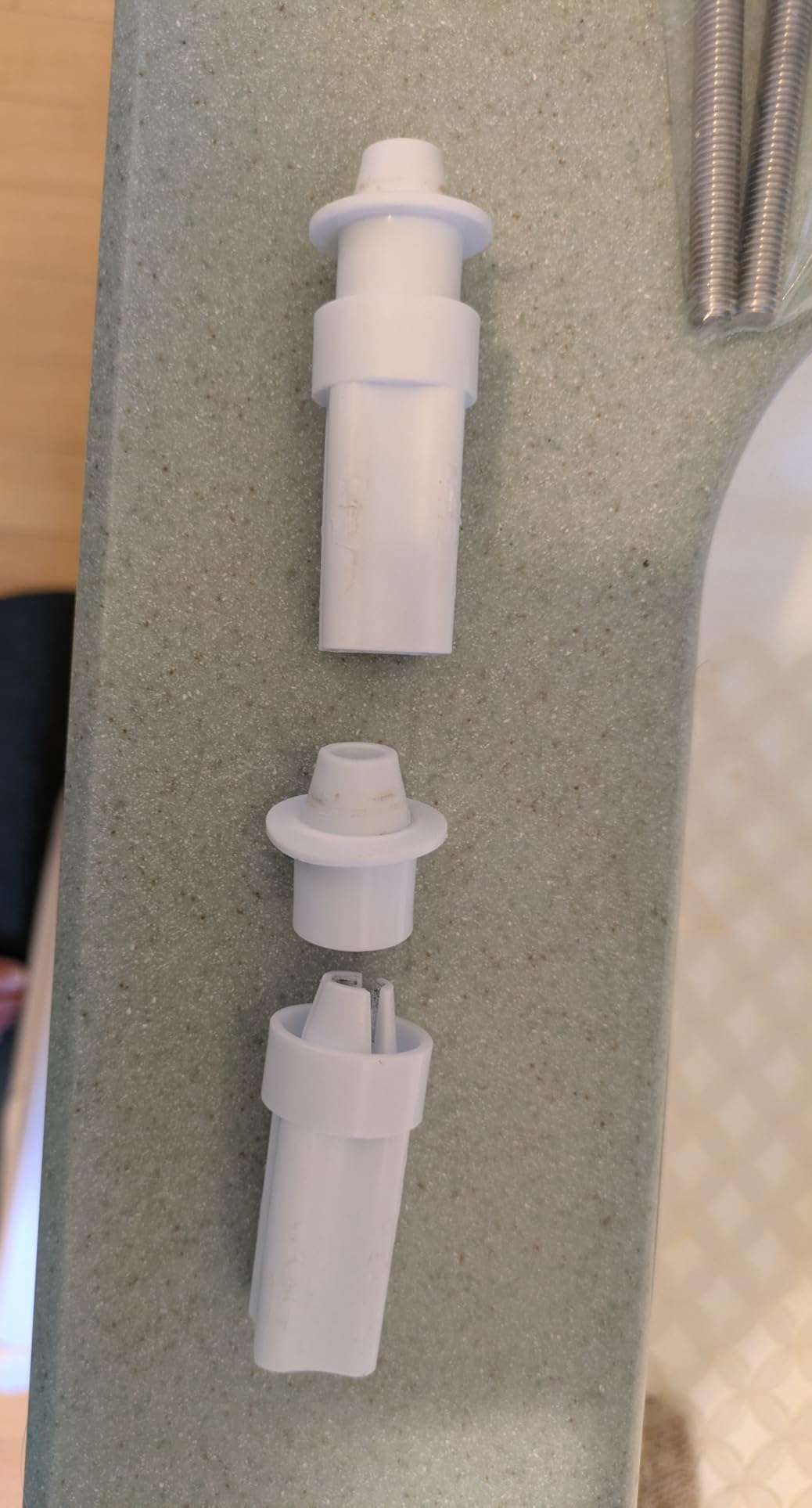
What we liked during testing was the combination of a meaningful lift and thick padding at a low cost, which is exactly what a short-term recovery or a budget-constrained family needs. The aluminum and high-strength plastic construction felt solid for a bolt-on design, and the arms were stable under a firm push during a simulated assisted stand.
There are no adjustments, and that is the whole limitation. The arms are fixed in height and width, so it cannot be fine-tuned as the user improves, and the seat is for standard round bowls only, with the toilet lid required in place. It does not convert to a commode or shower chair the way the padded frame models do.
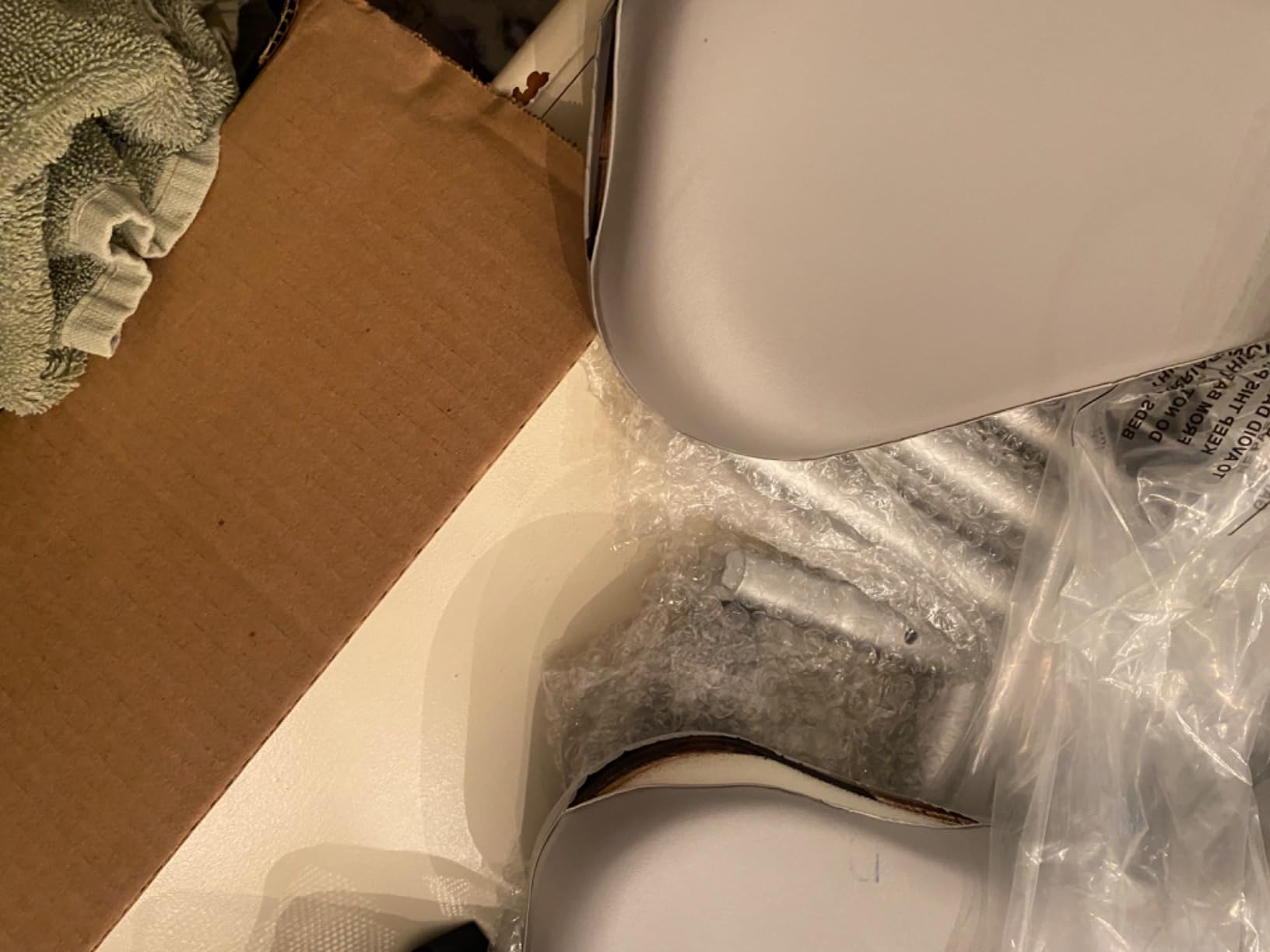
Who should choose the VEVOR round-bowl riser
Choose this if the toilet is a standard round bowl, the budget is the deciding factor, and the user needs around 3.5 inches with a comfortable padded grip. It suits short-term post-surgery recovery, a first raised seat for a family that is unsure whether a bigger purchase is needed, and any bathroom where floor space is the binding constraint. The 300-pound rating is a real limit but a reasonable one.
When to pick a different model
Skip it if your bowl is elongated, since it will not sit correctly. Skip it if you want to adjust the height as the user recovers, or if the arms need to come off entirely for a shared bathroom. Above 300 pounds, or for a user who will bear down hard on the arms daily, spend up on a bolted or reinforced-frame model instead.
How to Choose the Right Raised Seat Height (Measure Before You Order)
Most returns in this category are height returns, and the fix takes five minutes with a tape measure. Sit the intended user on a chair and measure from the floor to the top of their lower leg where it meets the seat. Add 2 inches. Then measure the height of the current toilet bowl without the seat and lid in place, and subtract that. The result is the riser height you need, and it is far more reliable than guessing from a photograph.
Worked example. If the user’s lower leg measures 17 inches, the target seat height is 19 inches. If the bowl alone measures 15 inches, the riser needs to add 4 inches, so a 3-inch model will leave them short and a 5-inch model will be right. If the bowl measures 14 inches, a 3-inch riser is correct and the 5-inch model will be too much.
Two rules keep the result honest. Feet must reach the floor with a slight knee bend, and if they do not, go down a size rather than adapting. If the user is over 300 pounds, treat the capacity as a hard ceiling rather than a guideline, and read our toilet safety frame guide for heavier-duty options before deciding.
Round vs Elongated: How to Tell Which Bowl You Own
Round bowls measure about 16.5 inches from the bolt holes to the front of the bowl, elongated bowls measure about 18.5 inches. The most reliable check is to measure that distance yourself with a tape, or to look down into the bowl: a round bowl is noticeably circular, while an elongated bowl has a visible front extension toward you. Do not guess from a listing that says universal.
Measure the clearance on both sides of the bowl as well. The handles span 19 to 23 inches across on the models here, which means roughly 8 inches of open space per side. If a wall, cabinet, or shower curtain sits closer than that, a wide-span model will not install and a narrow 18-inch-span riser is the right call. This single measurement eliminates most of the returns we would otherwise expect in this category.
The Four Locking and Installation Types Explained
1. Non-locking. A riser that simply rests on the bowl and relies on weight and friction. Fast to fit and easy to remove, but it can shift during a lateral transfer, so it suits a short-term or occasional need rather than daily independent use.
2. Turn-knob or twist-lock. A threaded wheel or lever tightens the base against the lip of the bowl. This is the Carex E-Z Lock pattern, and it holds well if tightened properly. It needs a monthly torque check, and a loosened wheel is the single most common cause of a rocking seat.
3. Tightening clamp or screw-down. Hardware clamps the riser to the bowl, usually with wing nuts and washers. Secure and tool-light, but the hardware can be hard to torque fully down on some ceramic shapes, and the fasteners are exposed to water over time.
4. Bolted. Screws pass through the riser into the bowl or its mounting points. This is the most rigid option and the only one that will not work loose under heavy or uneven loading, which is why it suits higher-weight users. It is the least reversible option and needs a drill and basic tools.
One structural point decides stability more than the lock type. Bowl-mounted designs clamp to a ceramic object rated for a person sitting still, while floor-frame designs stand independently on the floor like a walker. A chiropractor writing in this category calls the intrinsic instability of many bowl-mounted products a real drawback, and our own testing agreed: the floor frames did not move, while the clip-on risers needed rechecking. Floor frames pay for that stability with a much larger footprint.
Disadvantages and Safety Cautions of Raised Toilet Seats
1. It does not prevent every fall. A raised seat shortens the climb and gives the user something to push against, but a user with poor balance still needs supervision and a wall-mounted grab bar behind it. On a Dementia Support Forum thread, a spouse described a husband who had been pulling on the toilet-roll holder to stand, which is the exact failure this product addresses and also the reason it needs to be fitted and checked rather than simply placed.
2. It can raise fall risk if installed loose. A rocking or shifting riser is more dangerous than a low toilet, because the user trusts it. Tighten every fastener fully, remove the existing seat and lid where the design calls for it, and never accept a seat that moves under a firm push.
3. The arms are for balance, not body weight. Manufacturer cautions are consistent across this category: push down through the armrests to steady a sit-to-stand, and do not hang full body weight from them during a transfer. For caregiver-assisted transfers, position the caregiver in front of the user with hands at the user’s waist, and use the arms only to guide.
4. Too much height is a hazard. A 5-inch riser on a short user leaves the feet unable to reach the floor, which removes balance at the exact moment it is needed. If the feet dangle, the seat is too high regardless of what the label says.
5. Clearance problems cause falls, not returns. Wide handle spans need open space on both sides, and floor-frame legs create trip hazards in a tight bathroom. Measure the floor and the walls before the unit arrives, not after.
6. Capacity numbers are ceilings, not averages. A 250-pound riser used by a 290-pound user will fail at the mounting points, which is the failure mode most likely to injure. Size up to the next capacity tier rather than to the nearest one.
7. A raised seat is one part of a bathroom plan. Caregivers on AgingCare pair these with removed rugs and non-slip flooring, and with grab bars for the parts of the bathroom the seat cannot address. Buying a raised seat and leaving the loose rug in place is a partial fix that can read as a complete one.
Does Medicare or Insurance Cover Raised Toilet Seats?
Original Medicare does not generally cover a raised toilet seat with handles. It is not on the covered durable medical equipment list, and no amount of documentation turns it into a covered item under Part B. If you are searching for a way to use insurance benefits here, the routes that do exist are Medicaid state plan variants, spending accounts, and a durable medical equipment supplier.
Medicaid is the variable one. Some states cover a raised toilet seat or a commode chair under a Home and Community-Based Services waiver when an assessment shows it is needed for daily living; other states exclude it. Your state plan’s waiver language is the only reliable source, and an assessment through the aging services office is the usual starting point.
Flexible spending accounts and health savings accounts are the most practical route. A raised toilet seat is generally an eligible medical expense under an FSA or HSA, and some listings carry an FSA and HSA eligible flag. You may need a doctor’s letter documenting why the item is medically necessary, and the letter is worth getting before you buy rather than after.
Buying through a durable medical equipment supplier is worth doing when the user is above 300 pounds, has a complex recovery, or needs a unit that will be reinstalled. A supplier can also bill Medicaid where a waiver applies, and can advise on sizing. If you are upgrading the rest of the bathroom, our bidet toilet seat guide covers the comfort upgrades that sit alongside a raised seat.
Cleaning, Maintenance and the Weekly Fit Check
Cleaning is simple: a non-abrasive detergent and a damp cloth for the plastic and foam parts, and a disinfectant in the pH 5 to 9 range for the seat and handle surfaces. Skip abrasive cleaners and bleach on padded armrests, which dull the foam and reduce grip over time. Pay attention to the seam where a riser meets the bowl, since that gap collects residue on every design except the bolted, leg-free models.
Do the weekly fit check at the same time as the safety inspection of your bathroom. Push each arm firmly and confirm nothing shifts. Turn every fastener and confirm they are still tight, particularly the front securing screw on twist-lock designs and the height pins on adjustable frames. Confirm the seat still sits flat on the bowl with no rocking, and check the plastic around the mounting points for stress marks or whitening, which is where cracks start.
Replace the hardware, not the whole seat, when a fastener strips, and replace the seat outright when the plastic around the mounts shows hairline cracking. If you are also planning other bathroom upgrades, our heated toilet seat guide covers comfort features that work well alongside a riser.
When a Raised Toilet Seat Is the Wrong Solution
A raised toilet seat solves a height and support problem. It does not solve a bathroom that is genuinely unsafe, a user who cannot bear weight on their legs at all, or a home where the toilet itself is the wrong fixture. In those cases, spending on a riser is a delay rather than a fix.
Consider a bedside commode chair when the bathroom is on another floor, the user cannot walk there reliably at night, or the bathroom is shared with someone who needs it. The padded frame model in this list converts into a commode with its included pail and funnel, which makes it a cheaper starting point than buying two pieces of equipment.
Consider replacing the toilet with a comfort-height model if the home is yours to change and the decline is permanent. A taller bowl solves the height problem at the source, needs no hardware, and never rocks. Consider wall-mounted grab bars if the real issue is lateral balance on standing; our toilet safety frame comparison covers the freestanding alternative, and bidet seat options address comfort rather than support.
Frequently Asked Questions
What are the disadvantages of raised toilet seats?
They do not prevent every fall on their own, they can raise fall risk if installed loose, the armrests are for balance rather than full body weight, and a seat that is too high leaves the feet unable to reach the floor. Bowl-mounted designs can also shift during a lateral transfer, and wide handle spans need clear space on both sides of the bowl.
Does Medicare pay for a raised toilet seat with handles?
Original Medicare does not generally cover a raised toilet seat with handles, because it is not on the covered durable medical equipment list. Medicaid state plans sometimes cover one under a Home and Community-Based Services waiver, and flexible spending accounts and health savings accounts usually accept one with a doctor’s letter. A durable medical equipment supplier can bill Medicaid where a waiver applies.
How do I know if I need a round or elongated raised toilet seat?
Measure from the bolt holes at the back of the bowl to the front edge. About 16.5 inches means a round bowl, and about 18.5 inches means elongated. You can also look down into the bowl: an elongated bowl has a visible front extension, while a round bowl reads as nearly circular.
How high should a raised toilet seat be for an elderly person?
Sit the user on a chair, measure from the floor to the top of the lower leg, and add 2 inches for the target seat height. Subtract the height of the bowl alone, with no seat or lid, and the difference is the riser height you need. Feet must still reach the floor with a slight knee bend, so if they dangle, choose a shorter riser.
Can my husband use the handles to pull himself up, or are they not meant for full body weight?
The handles are for balance, not body weight. Push down through the armrests to steady the sit-to-stand rather than hanging weight from them, since a loaded arm can fail mid-transfer. For a caregiver-assisted transfer, stand in front of the user with your hands at the waist and use the arms only to guide. A bolted frame is the safer choice for anyone who loads the arms hard.
Our Recommendation in 2026
Start with the Drive Medical 2-in-1 as our best raised toilet seat with handles for seniors in 2026, because its 5-inch lift, 18-inch arm span, removable padded arms and lock-on base cover the widest range of daily situations while keeping a small footprint. Choose the Vive riser instead if keeping the household’s own toilet seat and lid matters more than maximum height, and choose the Bemis Assurance if the user is heavy or leans hard on the arms, since its bolted frame is the only one here that will not work loose.
Whatever you choose, measure the user, measure the bowl, and measure the clearance on both sides before you order. Then run the weekly fit check, and pair the seat with a grab bar and a non-slip floor rather than expecting it to carry the whole job. Every model here is listed with a live price and current buyer feedback, so you can compare the details against your own measurements before deciding.