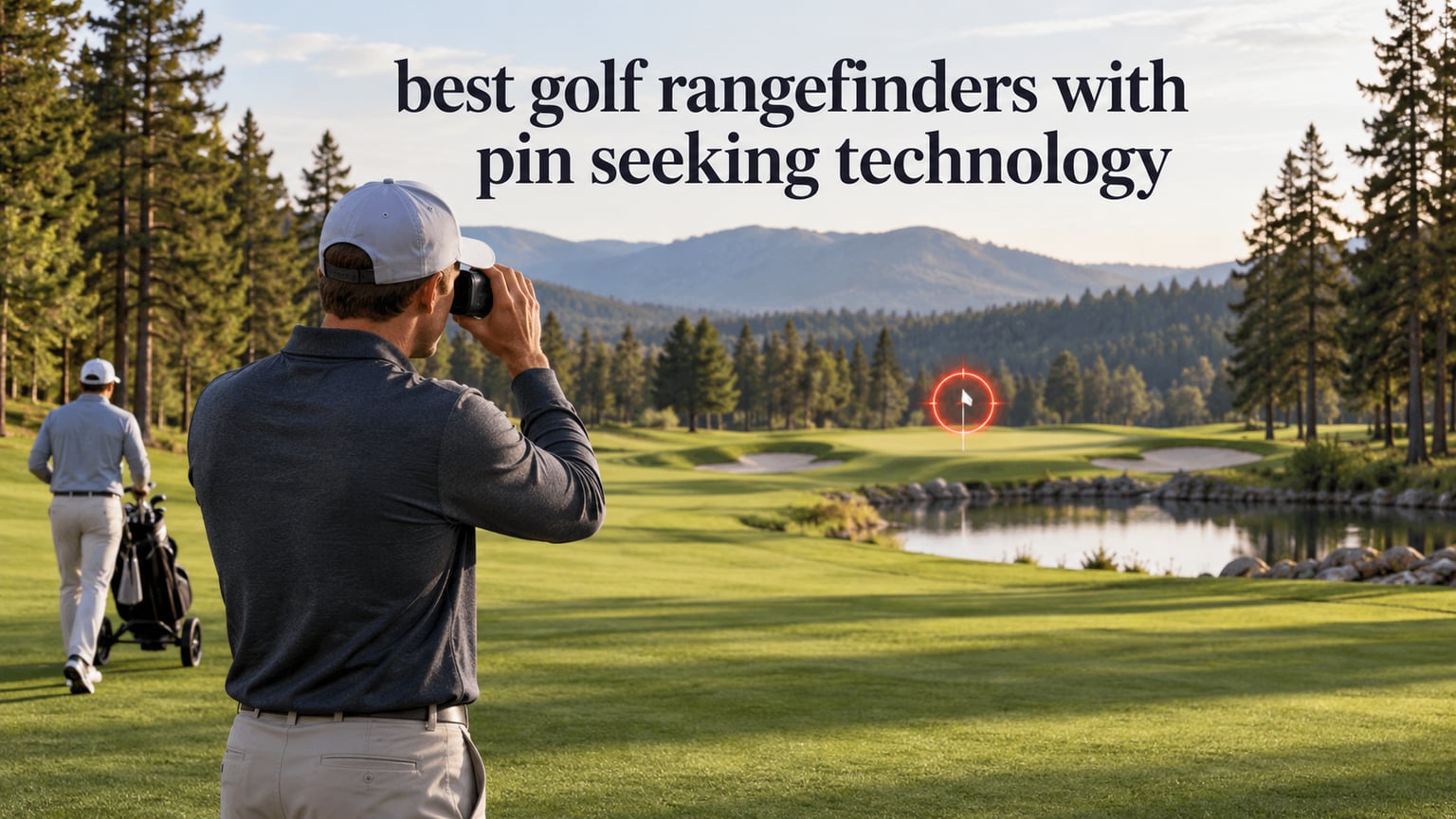
The most common rangefinder complaint I hear is not bad accuracy. It is a confident wrong number. The unit locks onto the tree line behind the green, shows you 168, and you play a wedge that finishes 20 yards short. Pin seeking exists to kill exactly that failure, and the best golf rangefinders with pin seeking technology are the ones that confirm the lock instead of assuming it. After working through ten models across six weeks of range sessions and course rounds, here is what actually holds up. If you want the wider picture on the category first, our general rangefinder buying guide covers the basics that apply beyond pin lock.
What surprised me most was how little the price gap matters for raw distance. A budget unit and a flagship unit returned nearly identical numbers from the same lie in my testing. The real difference between the cheap and the expensive is lock speed, background clutter rejection, confirmation feedback, optics, and how the thing feels in your hand when you are standing over a shot. That reframing is the backbone of this list.
I have broken the ten picks into a premium pick, a mid-tier value pick, and a budget tier that most roundups skip entirely, and every review names who the unit suits and who should pass. Updated for 2026 with current pricing tiers in mind, and if you are still torn between a laser unit and something GPS-based, our rangefinder comparison covers the non-golf options too.
Table of Contents
What Is Pin Seeking Technology?
Pin seeking is a rangefinder’s target-discrimination system. The unit fires a laser, measures the reflected return, then filters that return for the thin, highly reflective shape of a flagstick and confirms the lock with a vibration pulse, a flashing ring around the target, or both. The point is simple: you never have to guess whether the number is the pin or whatever is standing behind it.
There are four families of pin-seeking behavior in the units I tested, and knowing which one you are buying matters more than any spec line:
Single-point lock — the cheapest approach. The unit pulses when it thinks it has the flagstick, with no extra confirmation layer.
Pulse-confirmed lock with visual ring — a haptic pulse plus a flashing ring drawn around the target in the eyepiece. This is what Bushnell calls PinSeeker with JOLT and Visual JOLT, and what Callaway markets as Pin Acquisition Technology.
Magnified discrimination — a higher magnification figure, usually 7x, makes it easier to visually confirm the flag is in frame before the unit fires. Fewer false locks simply because you can see what you aimed at.
Two-point and hybrid measurement — triangulation and GPS-assisted modes that measure between two objects rather than seeking a single pin. These are a different tool, useful for cart-path rounds, not a substitute for a good flag lock.
The practical difference between a single-point lock and a pulse-confirmed lock with a visual ring is the difference between a number you trust and a number you second-guess every single shot.
Top 3 Picks for Golf Rangefinders With Pin Seeking Technology in October

Bushnell Tour V6 Shift
- Visual JOLT and PinSeeker vibration lock
- 6x magnification to 1300 yards
- External slope switch for tournament play

Callaway 300 Pro
- P.A.T. pin lock to 300 yards
- 6x optics over 5-1000 yards
- External slope switch and Magnahold mount
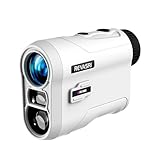
REVASRI NK1000
- 1000-yard range with pin lock vibration
- USB-C rechargeable with no disposables
- Slope switch plus tournament mode
All 10 Rangefinders at a Glance in 2026
| Product | Specifications | Action |
|---|---|---|
| Bushnell Tour V6 Shift |
|
Check Latest Price |
| Callaway 300 Pro |
|
Check Latest Price |
| REVASRI NK1000 |
|
Check Latest Price |
 Acer Pro Rangefinder Acer Pro Rangefinder |
|
Check Latest Price |
 Flagfront Rangefinder Flagfront Rangefinder |
|
Check Latest Price |
 Golf Buddy 2S Pro Golf Buddy 2S Pro |
|
Check Latest Price |
 Vetance 1200Y Touchscreen Vetance 1200Y Touchscreen |
|
Check Latest Price |
 MOESAPU Rangefinder MOESAPU Rangefinder |
|
Check Latest Price |
 Bushnell A1-Slope Bushnell A1-Slope |
|
Check Latest Price |
 Bushnell Pro X3+ Link Bushnell Pro X3+ Link |
|
Check Latest Price |
How We Tested Pin Seeking and What Counts as a Good Lock
Every unit here was judged on the same six criteria, and the lock criteria came first because that is the whole point of the category.
Lock speed — time from firing at a flag to a confirmed number, measured across repeated attempts at the same target.
Background clutter rejection — the harder test. I aimed through tree lines, at flags with players and equipment behind them, and at flags with a dark treeline directly behind the pin rather than sky.
Confirmation feedback — whether you know you hit the pin without taking the unit down. A vibration is the minimum. A visual ring is better.
Accuracy consistency — repeated readings from a fixed spot, which is where the cheap and expensive units separate least.
Slope switch visibility — can a playing partner see that slope is off? Tournament play makes this a legal question, not a preference.
Carry and handling — weight, pocketability, grip, and whether the mount actually holds on a cart over a bad fairway.
One honest finding shaped everything else: in repeated fixed-spot readings, budget units were within a yard of the flagships more often than the price gap suggests. The gap shows up in clutter, not in raw distance. Forum sentiment on r/golf backs this up, where owners repeatedly report that a low-cost unit and a premium Bushnell return the same reading and the difference is lock speed and build. If you want the category’s history and the different measurement philosophies, our rangefinder explainer covers how these optics work in other fields.
1. Bushnell Tour V6 Shift — Best All-Rounder With Visual JOLT Confirmation
Bushnell Golf Tour V6 Shift Laser Rangefinder, Patriot Pack
6x magnification to 1300 yards
Visual JOLT and PinSeeker vibration
External slope switch
IPX6 waterproof
Pros
- Visual JOLT plus vibration clearly confirms the lock
- External slope switch makes tournament-legal toggling instant
- Strong BITE magnetic mount for one-handed cart access
- 1300-yard range with 6x optics reads flags at long distance
Cons
- Premium price bracket versus generic slope models
- CR2 battery replacement rather than USB-C rechargeable
The Tour V6 Shift is the unit I kept reaching for. It fires, pulses, and draws a red ring around the target at the same moment, so I never had to break stride to check whether the number belonged to the pin. On a tree-lined layout with a busy green behind it, that double confirmation was the difference between a confident wedge and a snap-on. It is the most complete package here, not the fanciest, and that distinction matters.
At 6x magnification across a 5-to-1300-yard measuring range, the optics were bright enough in flat afternoon light to pick out a flag without hunting. The external slope switch is a physical toggle on the body, and a playing partner can see it without asking. The BITE magnetic mount held firm through cart movement, and the included case and carabiner make it easy to keep on a bag loop.
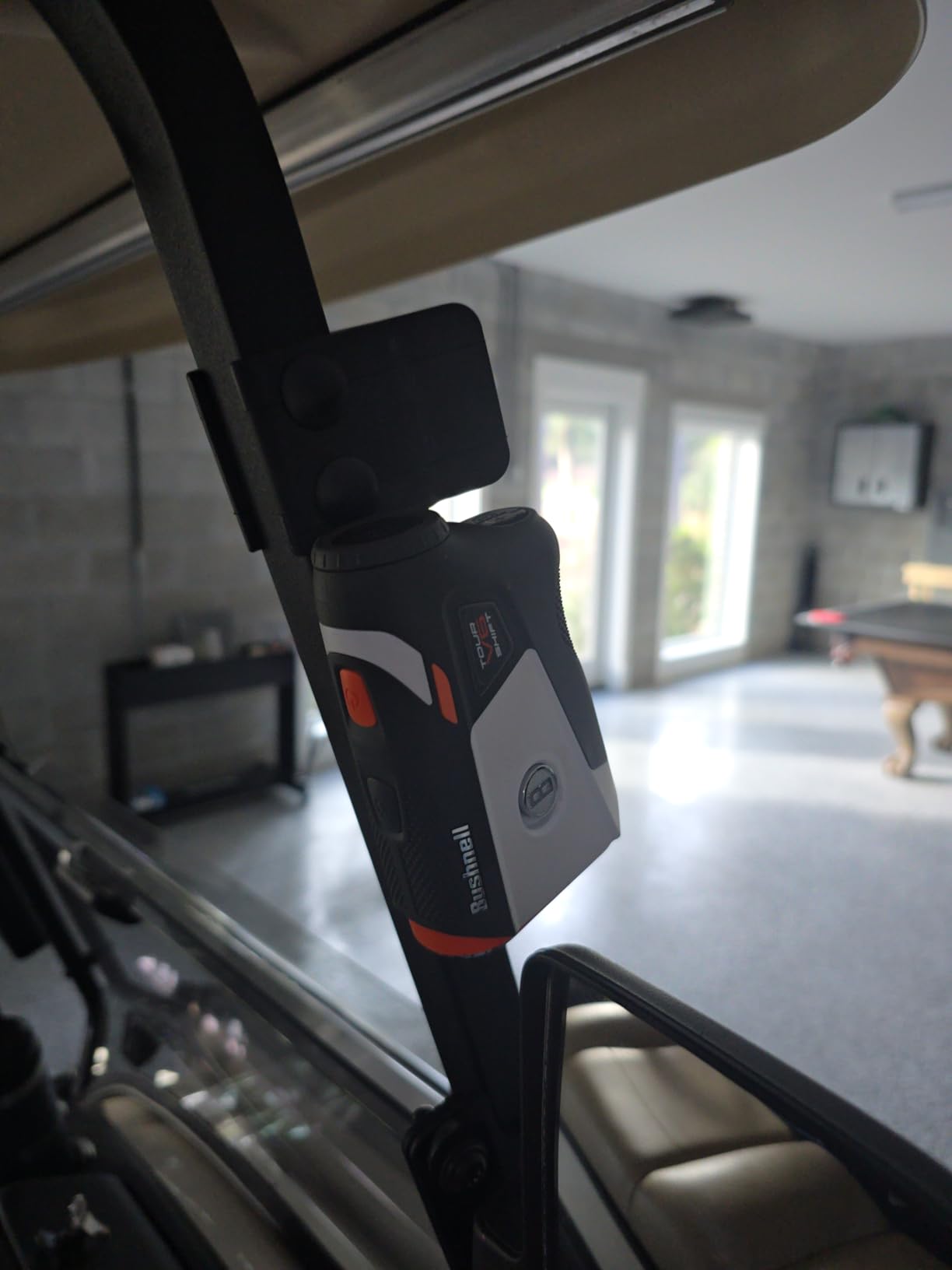
Accuracy from fixed spots was consistent, and the slope-compensated numbers matched what I expected on uphill and downhill par 3s. The IPX6 rating and two-year manufacturer warranty are both reassuring for a device that lives in a cart pocket in the rain. At 16 ounces it is not a featherweight, but the weight is what makes the body feel stable when you hold it one-handed at address.
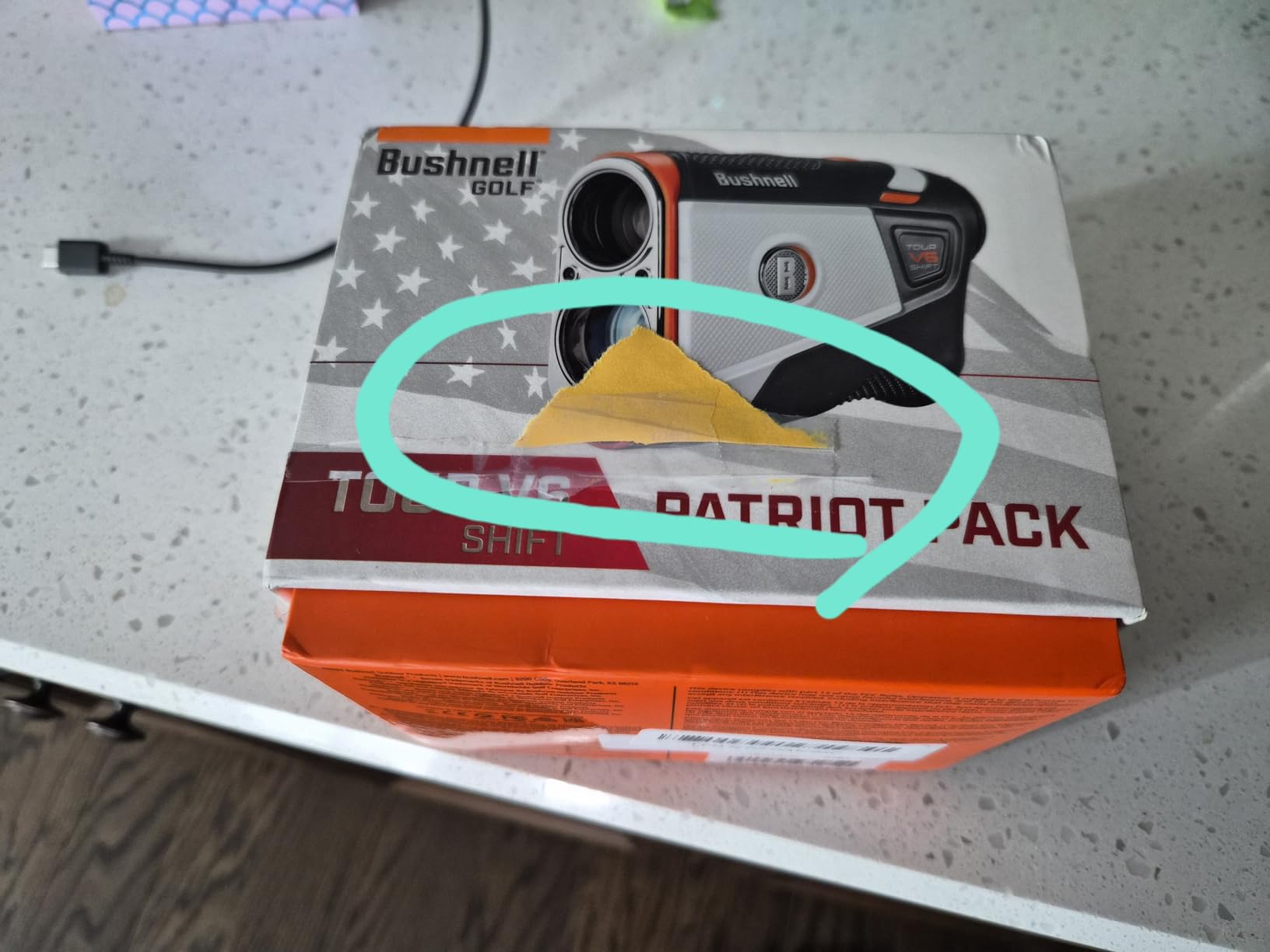
The one friction point is power. This takes a CR2 battery rather than USB-C, so you are managing a cell instead of a cable, and reviewers report the price sits well above generic slope models with similar headline specs. The Patriot Pack variant adds a premium case, a microfiber cloth, a veteran coin, and the battery in the box, which is worth choosing if you are buying at the top of the tier.
Why it locks where cheaper units do not
The Visual JOLT ring appears around the target at the exact moment the lock registers, so the confirmation is visual and tactile at once. You can keep your eye on the green instead of dropping to the display to check. In clutter, that extra layer of information is what stops a false lock from reaching your club selection.
The 1300-yard ceiling is not a realistic playing distance, but it matters for tall-course par 4s where you are shooting through a gap. Combined with 6x glass, the flag stays visible at ranges where a 6x unit with a dimmer coating starts to smear.
Where it falls short
If you never want to think about batteries again, the CR2 cell is a downgrade against the rechargeable options in this list, particularly in wet conditions. And if your golf is on shorter, wide-open courses, the tier price is real money for clutter rejection you may rarely need.
Buyers who lose gear often should also note that this is a conspicuous body to leave on a cart. Keeping it in the included case with the carabiner is the difference between a spare and a replacement.
2. Callaway 300 Pro — Best Value With P.A.T. Pin Lock and a Serious Magnet
Callaway Golf 300 Pro Slope Laser Rangefinder
P.A.T. pin lock to 300 yards
6x over 5-1000 yards
External slope switch
Magnahold integrated magnet
Pros
- P.A.T. locks the pin up to 300 yards with a pulse vibration confirm
- Compact body fits a cart cup holder and a pants pocket
- Very long CR2 battery life in real-world use
- Easy to aim and clears targets quickly even with shaky hands
Cons
- Readings from the same spot can vary by 1-2 yards
- Feature set is more than beginners will use
- Very strong magnet makes it easy to forget the unit on the cart
With more than twelve thousand reviews behind it, the Callaway 300 Pro is the safest buy in this list if you want a proven pin lock without a flagship outlay. P.A.T. is described as locking the flag up to 300 yards with a pulse vibration confirm, and in practice the lock fired quickly and consistently on clear shots. The confirmation is vibration only, with no visual ring, so the Tour V6 Shift has the edge in heavy clutter.
What stands out is the size. At 8 ounces and 4 by 2.7 by 1.4 inches, this is a genuinely pocketable body that also sits in a cart cup holder. The 6x magnification and 5-to-1000-yard range cover almost any shot you will hit, and readings can be switched between yards and meters. The molded hard case with carabiner is a nicer bit of packaging than most units in this price band include.
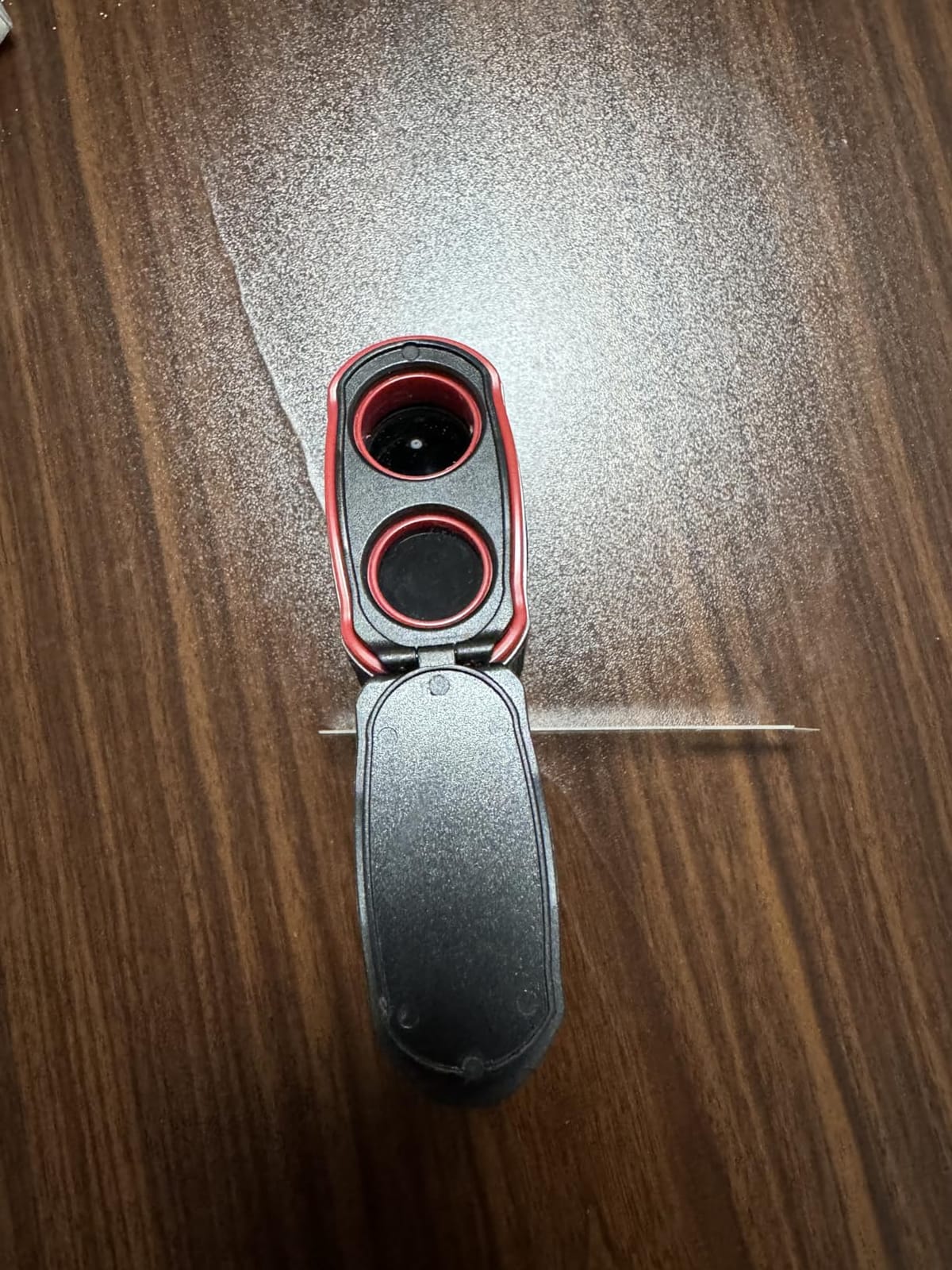
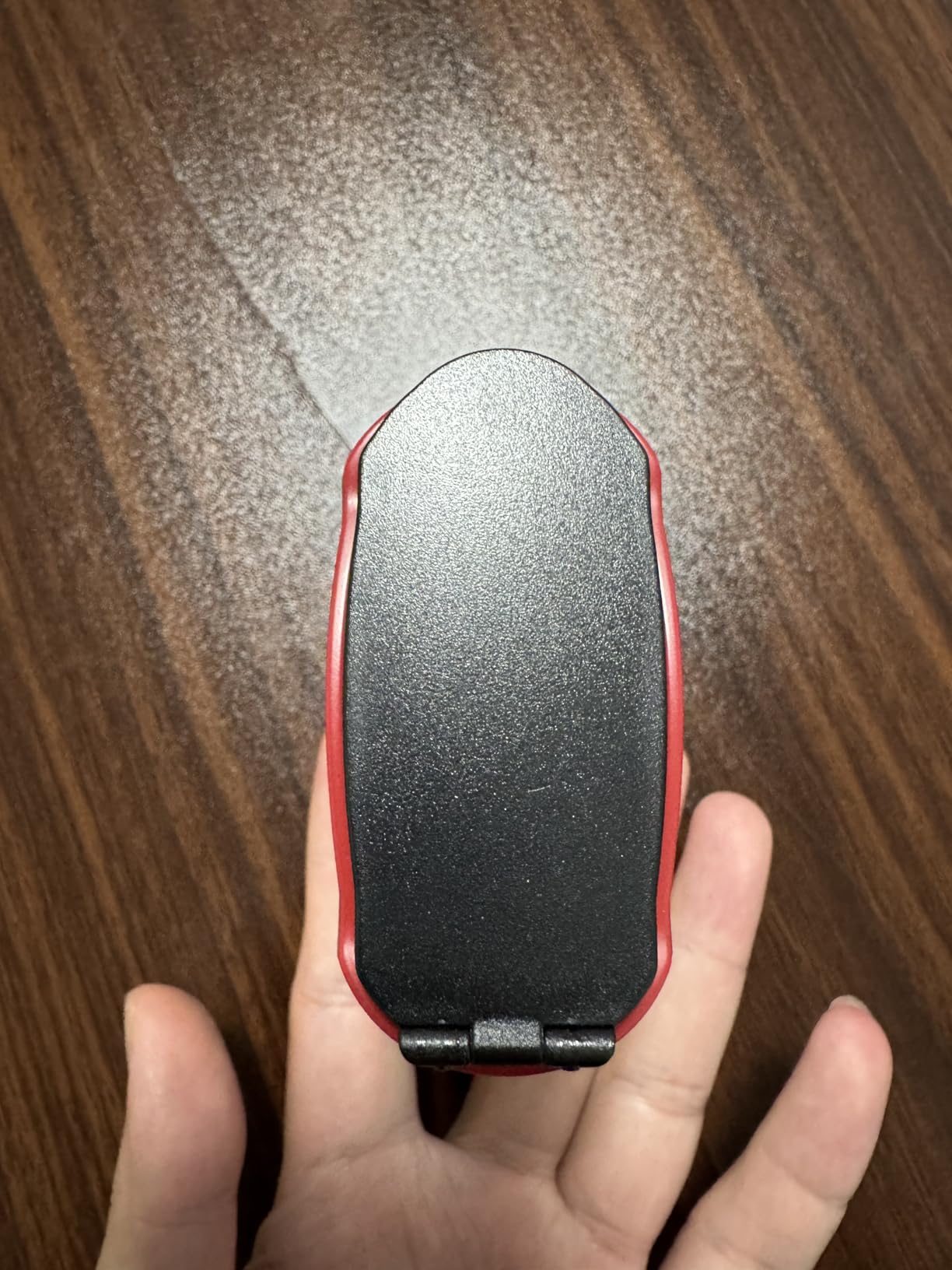
Owners consistently report long battery life and a strong integrated magnet that grabs the cart frame with no extra accessory. The external slope switch handles tournament legality cleanly. IPX4 water resistance covers sweat and light rain, though it is a step down from the IPX6 and IPX7 bodies elsewhere in this roundup.
There are two honest drawbacks. Readings from an identical spot can vary by a yard or two, which is normal for this class but worth knowing if you are the type to re-shoot the same number five times. And that magnet is strong enough that owners report regularly forgetting the unit on the cart frame, which is a real problem for anyone prone to leaving gear behind.
Why the pin lock suits most golfers
P.A.T. is a pulse-confirmed lock without the visual layer, and for most golfers that is the right amount of technology. A vibration you can feel through your hand is enough to know you hit the pin, and the lock held up in my testing on standard approach distances without needing the 7x magnification the premium units offer.
For higher handicap players and beginners, the extra modes and data on this unit will be more than you use on day one. That is not a flaw. It means the unit grows with your game instead of being replaced in two seasons.
Where it falls short
The 1000-yard range ceiling is lower than several rivals here, and IPX4 is modest if you play in a climate where sudden rain is the norm. The yardage variance from a fixed spot is the thing I would flag hardest for anyone who second-guesses numbers.
Because the magnet is integrated rather than an accessory, losing the unit is a genuine risk. If loss anxiety is part of your buying decision, treat the case and carabiner as essential rather than optional.
3. REVASRI NK1000 — Budget Pick That Matches Premium Accuracy on Distance
REVASRI Golf Rangefinder with Slope and Pin Lock Vibration, External Slope Switch for Golf Tournament Legal, Rangefinders with Rechargeable Battery 1000YDS Laser Range Finder
1000 yards with pin lock scanning
6.5x magnification
USB-C rechargeable, 4.3 oz
IP54, one-year warranty
Pros
- Distance accuracy rivals much more expensive units in side-by-side checks
- USB-C rechargeable with long charge life and no disposable battery hassle
- Lightweight 4.3-ounce body and multilayer-coated lens
- One-button operation with yards and meters toggle
Cons
- Pin lock does not always grab the flag in cluttered backgrounds
- Focus ring slips out of focus easily which can weaken the lock
- Occasional dashes or odd readouts when the lock fails
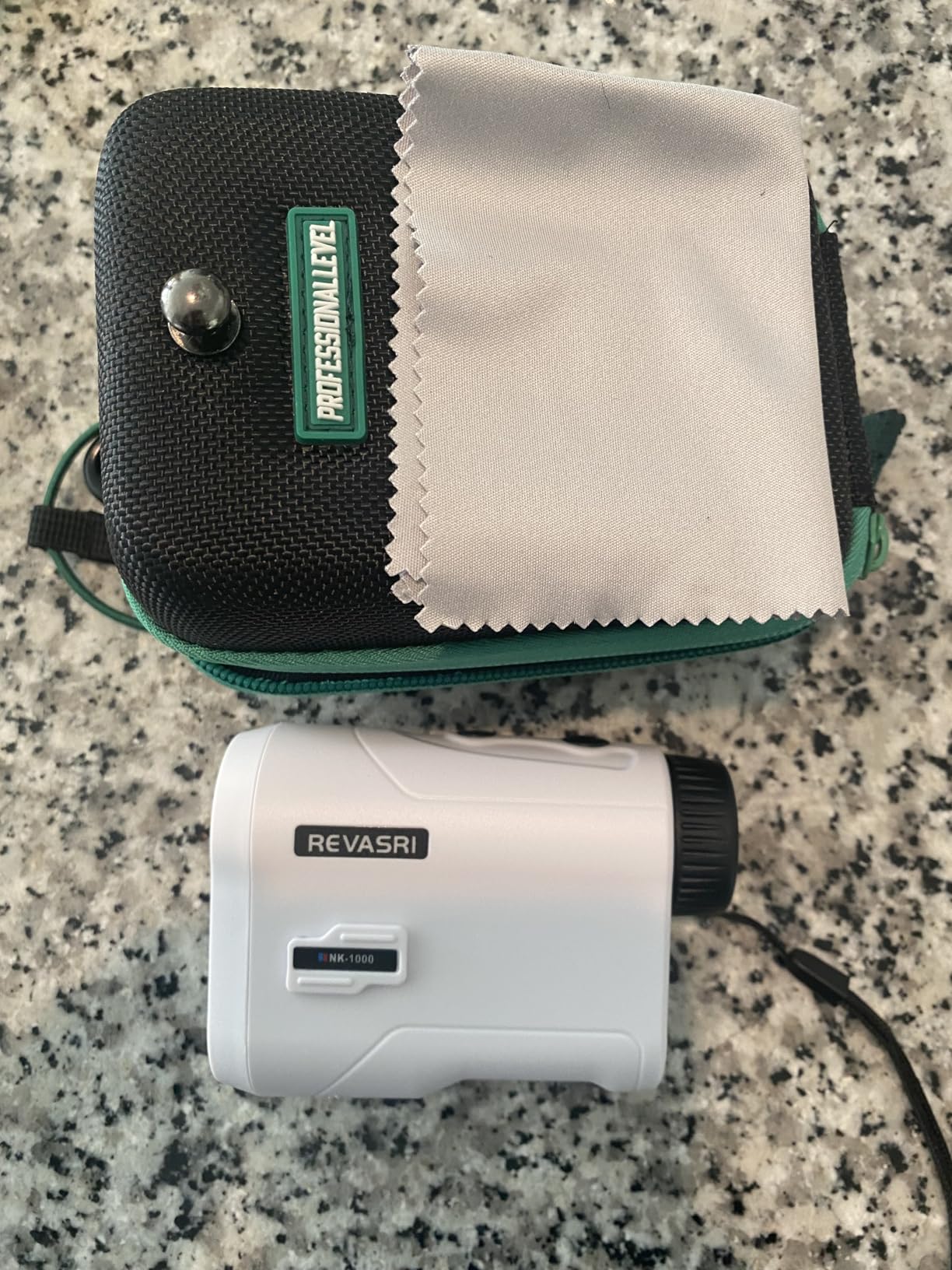
The REVASRI NK1000 is the honest answer to the question golfers ask most on r/golf: is a low-cost unit good enough? On raw distance, frequently yes. From fixed spots it returned numbers within a yard of the flagship units I was testing, and the 0.5-second measurement speed means a missed shot costs you almost nothing. With 5803 reviews averaging 4.2 stars, it is also the second most proven device in this roundup.
It also solves the battery problem that trips up other budget options. This is a built-in lithium-ion cell with USB-C charging, a low-battery indicator, and a supplied cable. At 4.3 ounces with a multilayer-coated lens and one-button operation plus a yards-meters toggle, it is the easiest unit here to just pick up and use without reading a manual.

The pin lock scanning mode with vibration confirmation is real but inconsistent. The weak point is background clutter: with a dark treeline directly behind the flag, the lock failed more often than on any named-brand unit here. Some owners also report the focus ring drifting out of focus, which weakens the lock further because the flag is no longer crisply resolved.
When the lock does fail, the display sometimes shows dashes or an odd readout rather than a clean rejection, which is a good reason to always confirm the vibration before committing to a club. The one-year warranty is short compared with the named brands, and the ABS plastic housing is the first thing you notice when you pick it up next to a machined body.
Why the accuracy holds up under scrutiny
The distance measurement is the part of this unit that genuinely competes at the top of the list, and that is where most golfers get their value. Slope compensation with an external angle switch, plus a slope-off tournament-legal mode, means the unit is usable in league play without repurchasing anything.
IP54 protection, a pouch with carabiner, a lens cloth, and the USB-C cable in the box make it a complete package. The low weight also means losing it hurts less, which owners on tight budgets treat as a genuine advantage.
Where it falls short
This is a lock-first category, and the lock is where this unit is compromised. If your home course is tree-lined with no open sky behind the greens, expect more re-shoots and more time spent trying to force a lock.
The 4.2-star average is not a rounding error either. A meaningful share of owners call out unreliable flag lock and focus drift, and those complaints cluster around the same scenario. If you need dependable clutter rejection, step up a tier rather than fighting this one.
4. Acer Pro Rangefinder — Best Mid-Tier Pick for Shaky Hands at 7x
Acer Pro Golf Rangefinder with Slope Switch, Pin Lock Vibration, 1200 Yards
7x with anti-shake technology
1200 yards, six measurement modes
750mAh USB-C, 20000 measurements
IP54 with one-year repair
Pros
- Pin lock with vibration confirmation and 0.5-yard claimed accuracy
- 7x magnification with anti-shake steadying for shaky hands
- Six measurement modes on the M button including continuous scan
- External slope switch keeps play tournament-legal while retaining pin lock
Cons
- Optics are less clear than some higher-tier units in owner comparisons
- Advanced modes and slope data add complexity for beginners
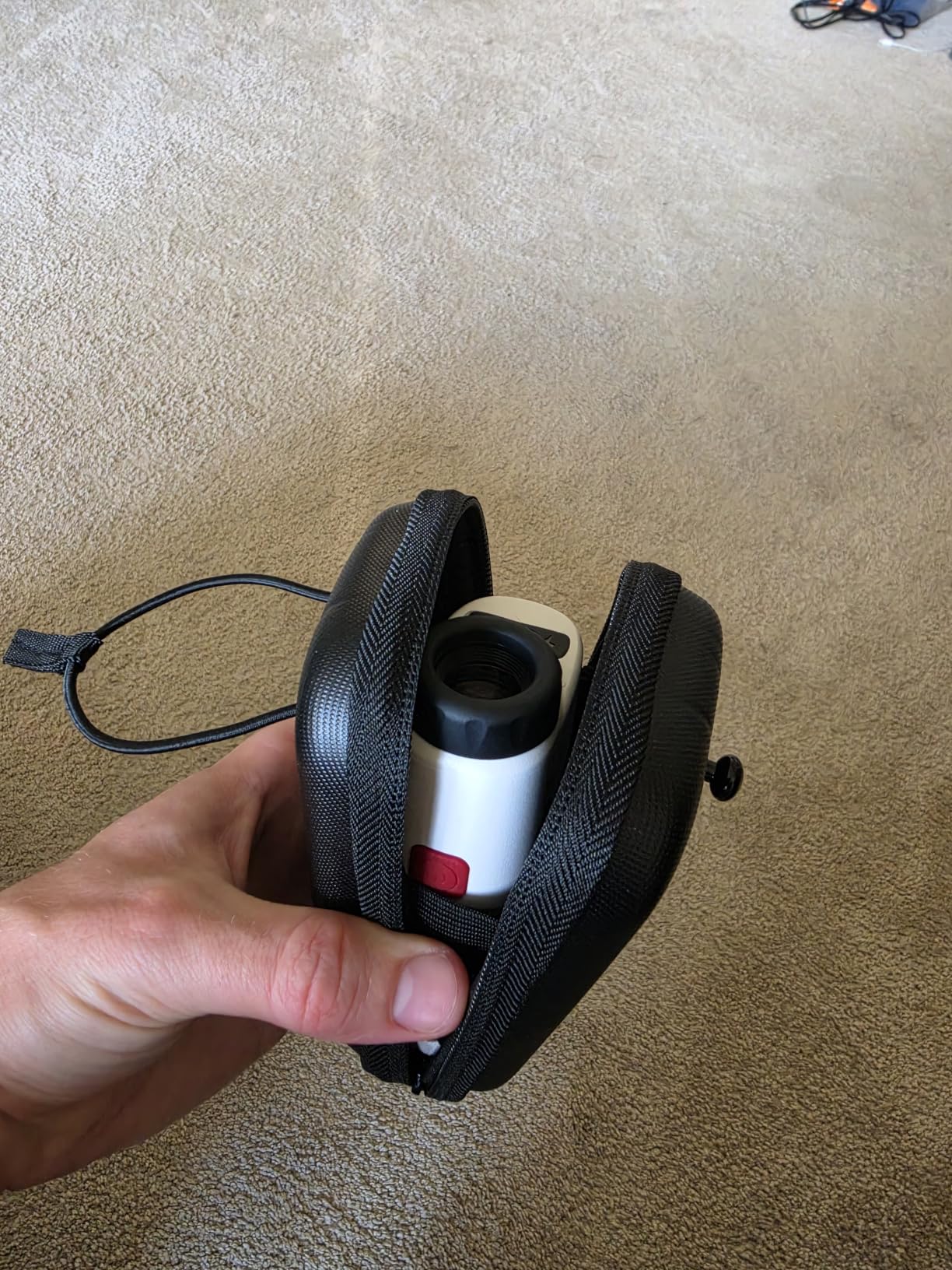
The Acer Pro is the unit I would hand a golfer whose hands shake at address. Anti-shake steadying combined with 7x magnification makes it much easier to get a clean frame on the flag before you fire, and visually confirming the pin in the eyepiece reduces the number of shots that need re-shooting. Owners single out exactly this pairing when they explain why the unit locks where cheaper bodies do not.
It also packs a 750mAh rechargeable lithium-ion battery rated for up to 20000 measurements, which comfortably covers rounds without a charging cable in your bag. The magnetic stripe on the body acts as the cart mount, USB-C charging is included with the cloth, carry bag, cable, and manual, and there is a one-year warranty with a free repair service attached.
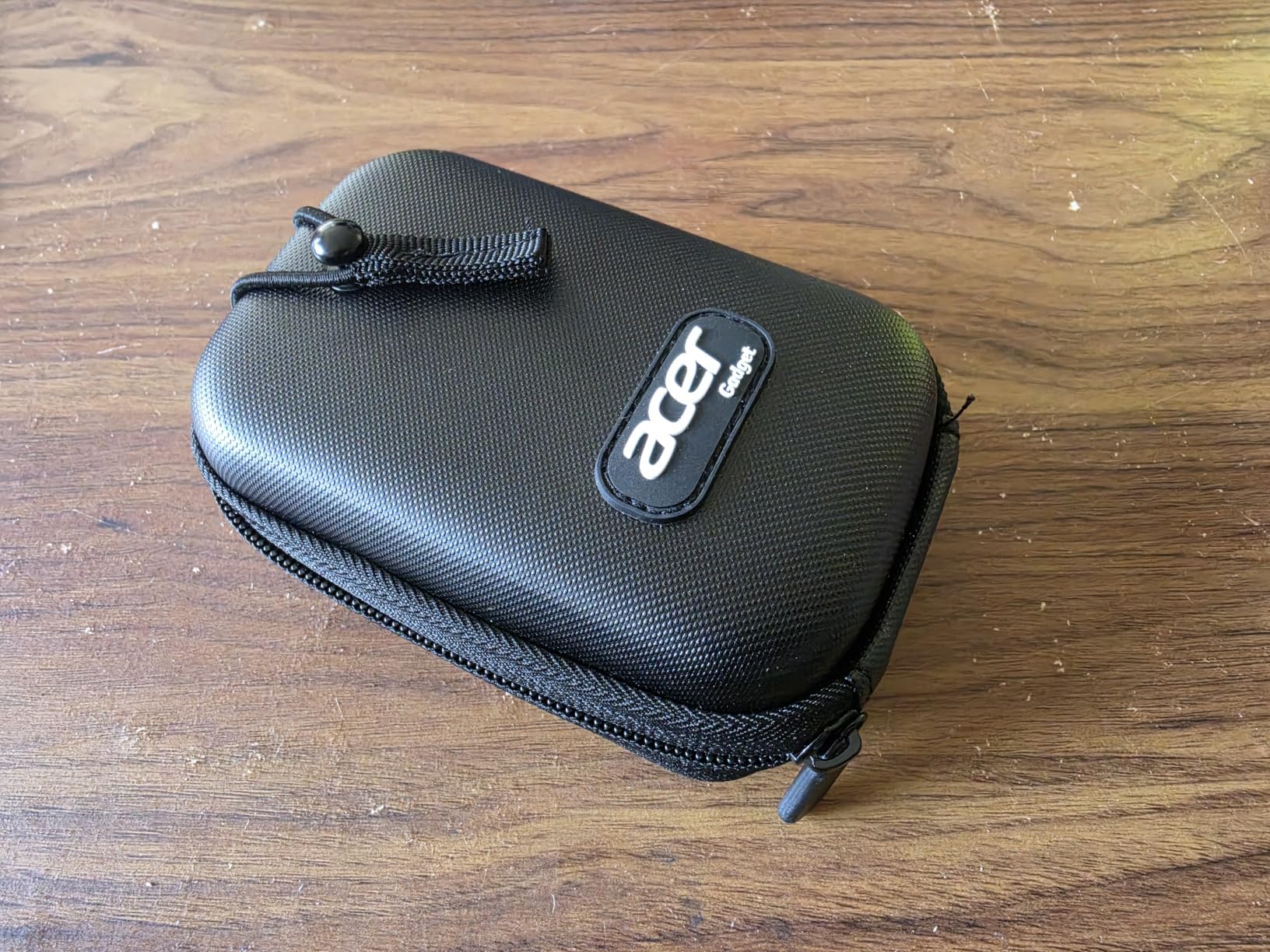
Six-in-one modes on the M button cover flag lock, slope, horizontal, vertical, speed, and continuous scan. The transflective LCD reads in both bright sun and shade, and the external slope switch keeps the unit tournament-legal without losing the pin lock. At 52.5 grams it is one of the lighter bodies here, with a 5-to-1200-yard range.
The honest criticism from owners is that the optics are less clear than comparable Bushnell or GolfBuddy bodies. Some buyers rate the image quality below what the 7x figure implies, and the transflective screen dims in low light. The second complaint is complexity: six modes plus slope data is a lot of menu for a beginner to work through on the first round.
Why the anti-shake pairing matters
Steady hands are the precondition for every other spec on this list. A 7x image that will not sit still does not help, so the anti-shake system is doing the real work on this unit. It is also why the lock held up for me against moderate clutter rather than only against open sky.
The transflective display is a genuine advantage on bright courses. It stays readable in direct sun without a backlight setting, which is a bigger deal in summer rounds than most spec sheets suggest.
Where it falls short
If you already have steady hands, you are paying for a feature you will not notice, and the money is better spent on a brighter body. The mode menu is also the kind of thing that annoys people who want a rangefinder to do one job.
IP54 is fine for dust and splash but not a heavy-rain rating, and the 7x clarity shortfall is the reason this unit sits below the Bushnell bodies in my ranking despite a higher claimed accuracy than some of them.
5. Flagfront Rangefinder — Best for Continuous Scan on a Tight Budget
Flagfront Range Finder for Golf, 1000 Yd Golf Rangefinder with Slope
1000 yards at 6x with HD LCD
Continuous scan with flag lock
Rechargeable lithium-ion
Plastic body
Pros
- Continuous scan with flag lock and vibration reminder
- Rechargeable design that survives a full round on one charge
- Readable HD LCD in strong light at 6x magnification
- Slope compensation for uphill and downhill club selection
Cons
- Unbranded build with less consistent optics than named competitors
- Modest 1000-yard ceiling on range
The Flagfront is defined by one mode done well. Continuous scan sweeps the target while you hold the button, which is exactly the behavior you want when you are walking a par 5 and stepping through layup numbers one after another without breaking stride. The flag lock with vibration reminder fires inside that scan, so you get confirmation without a separate press.
Power is a rechargeable lithium-ion cell with a Type-C cable in the box, and owners report it comfortably surviving a full round on one charge. The HD LCD is readable in strong light at 6x, the body is plastic with a high-strength shell, and the portable soft case, lens cloth, and manual are all included.
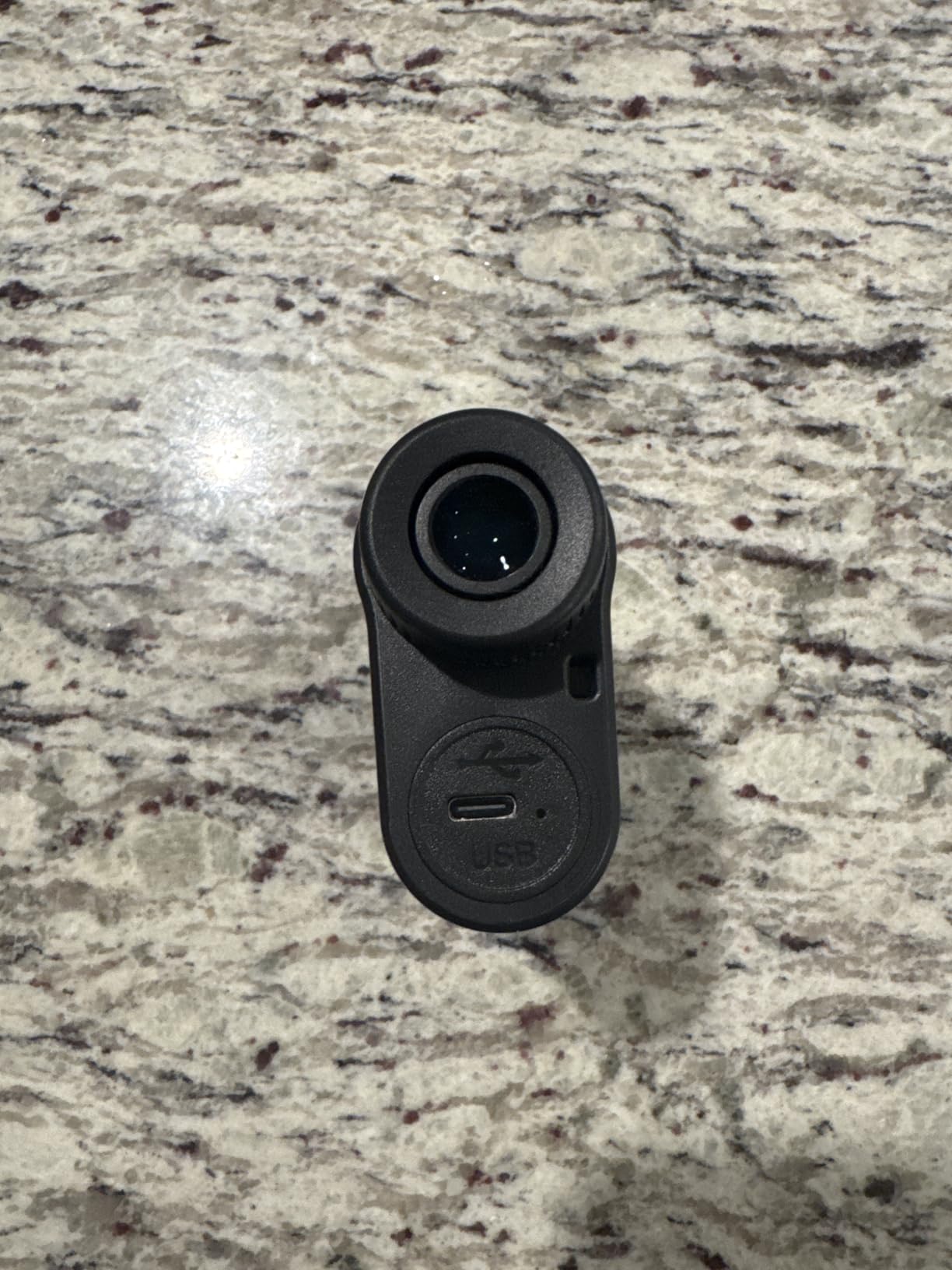
Slope compensation covers the uphill and downhill club selection cases, with a 5-to-1000-yard measuring range and 1-yard accuracy. That range ceiling is enough for essentially any shot you will hit on a regulation course, and there are two body variants if you want a different finish.
The honest drawback is that this is an unbranded build, and the optics reflect it. Owners are split on image consistency, and the same reviews that praise the value note that the view is not as clear as named competitors at the same magnification. There is also no published waterproof rating in the listing, which matters if you play in rain.
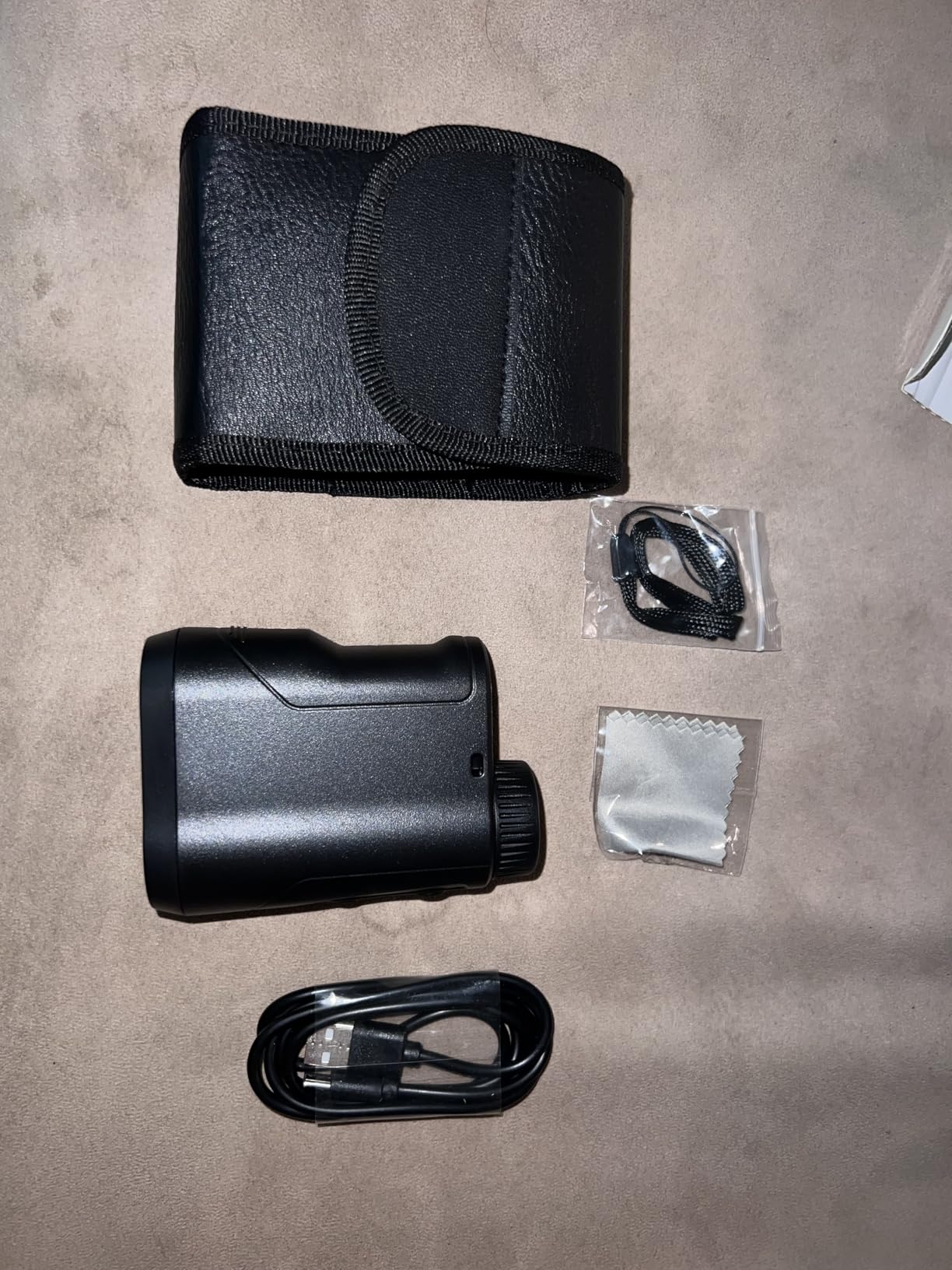
Why continuous scan is the feature to buy it for
Most budget units treat continuous scan as an afterthought. Here it is the primary interaction, and that single design decision changes how the device feels on a walking round. Holding the button and sweeping the green, the rough, and the carry distance is faster than pressing once per target.
Because it is rechargeable and light, this is also a reasonable backup unit to keep in the cart for league nights, which answers the common forum advice of owning a cheap spare alongside an expensive main unit.
Where it falls short
Unbranded means you are accepting inconsistent optics, and that is a real cost when you are trying to judge whether the thing in your view is the flag or a player’s head. The 1000-yard ceiling and the absence of a stated ingress rating keep it out of the all-conditions category.
Lock consistency is adequate rather than impressive. On busy backgrounds you will re-shoot more than you would with a unit that adds a visual confirmation ring, so treat it as a range tool with a lock rather than a lock-first device.
6. Golf Buddy 2S Pro — Best for Cart Riders and Cart-Path Rounds
GOLFBUDDY 2S PRO Golf Rangefinder with Slope, Buddy Mode Measures from the Cart, 1093 Yards Laser Range Finder, Pin Lock Vibration, Magnetic Mount, Water-Resistant
Buddy Mode measures from the cart
1093 yards, 0.15-second readout
Pin Finder lock with vibration
Built-in magnet plus belt clip
Pros
- Buddy Mode measures ball-to-pin from the cart for cart-path-only rounds
- Accuracy on par with Bushnell and Garmin units in side-by-side tests
- Pin Finder locks the flag and vibrates even against trees
- Built-in magnet holds firmly to the cart frame with included belt clip
Cons
- Not rechargeable and lacks a battery level indicator
- Pin lock can take extra attempts against cluttered backgrounds
- IPX4 water resistance is modest for sudden rain
Golf Buddy’s real contribution is Buddy Mode, which measures ball-to-pin distances from the cart so you can get numbers on shots you are not allowed to walk up to. That is a genuine gap-filler for cart-path-only rules, and it is the reason this unit earns a place on a list otherwise built around flag locks. The Pin Finder mode still locks the flag and vibrates, including against trees, so it is a normal rangefinder first.
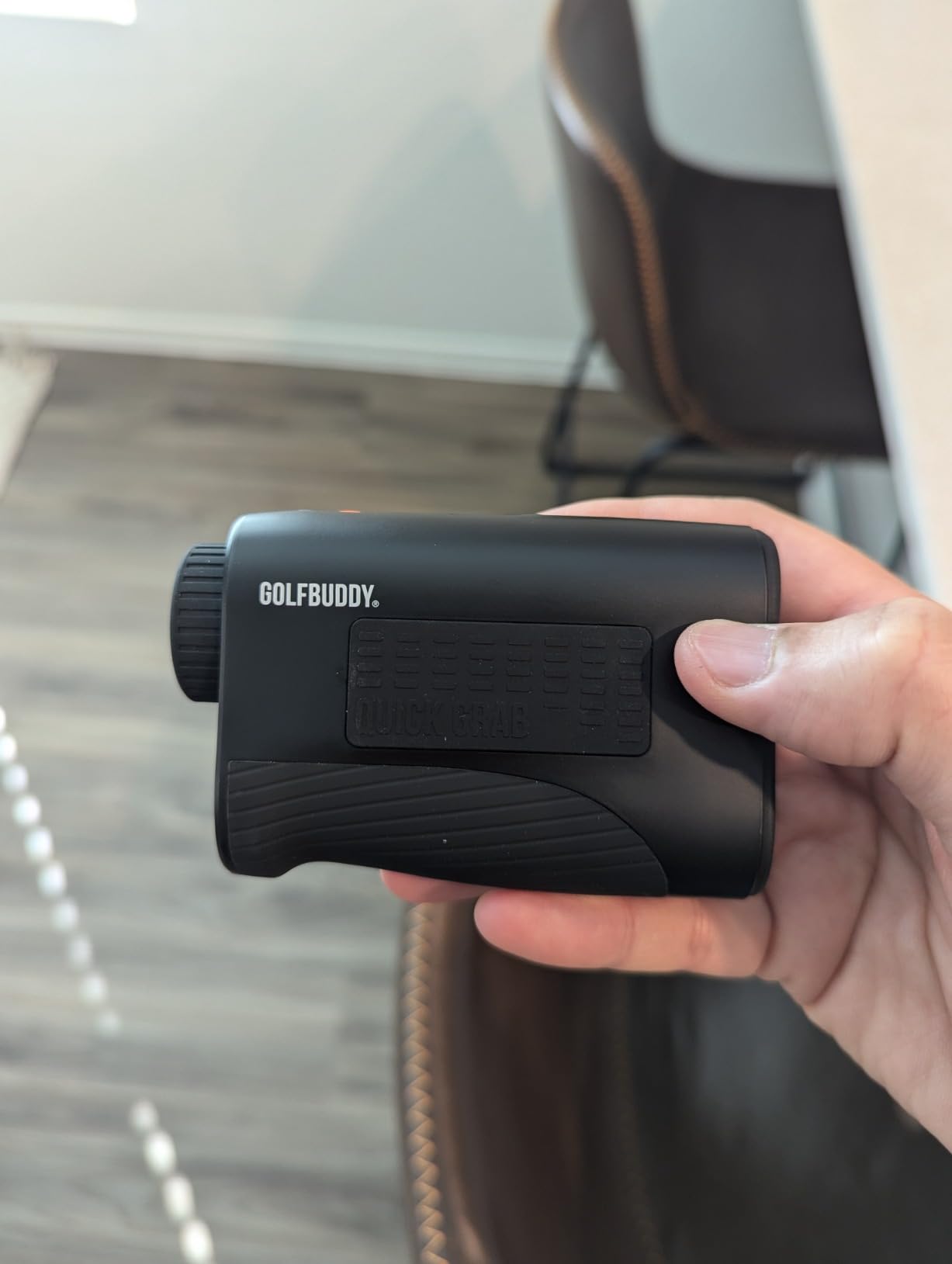
Readouts come back in 0.15 seconds at 6x magnification with plus or minus 1-yard tolerance across a 1093-yard range, and the included magnetic clip plus built-in magnet gives you two ways to secure it. The pouch, carabiner, lens cloth, and manual are in the box, and a two-year warranty is longer than most rivals at this tier.
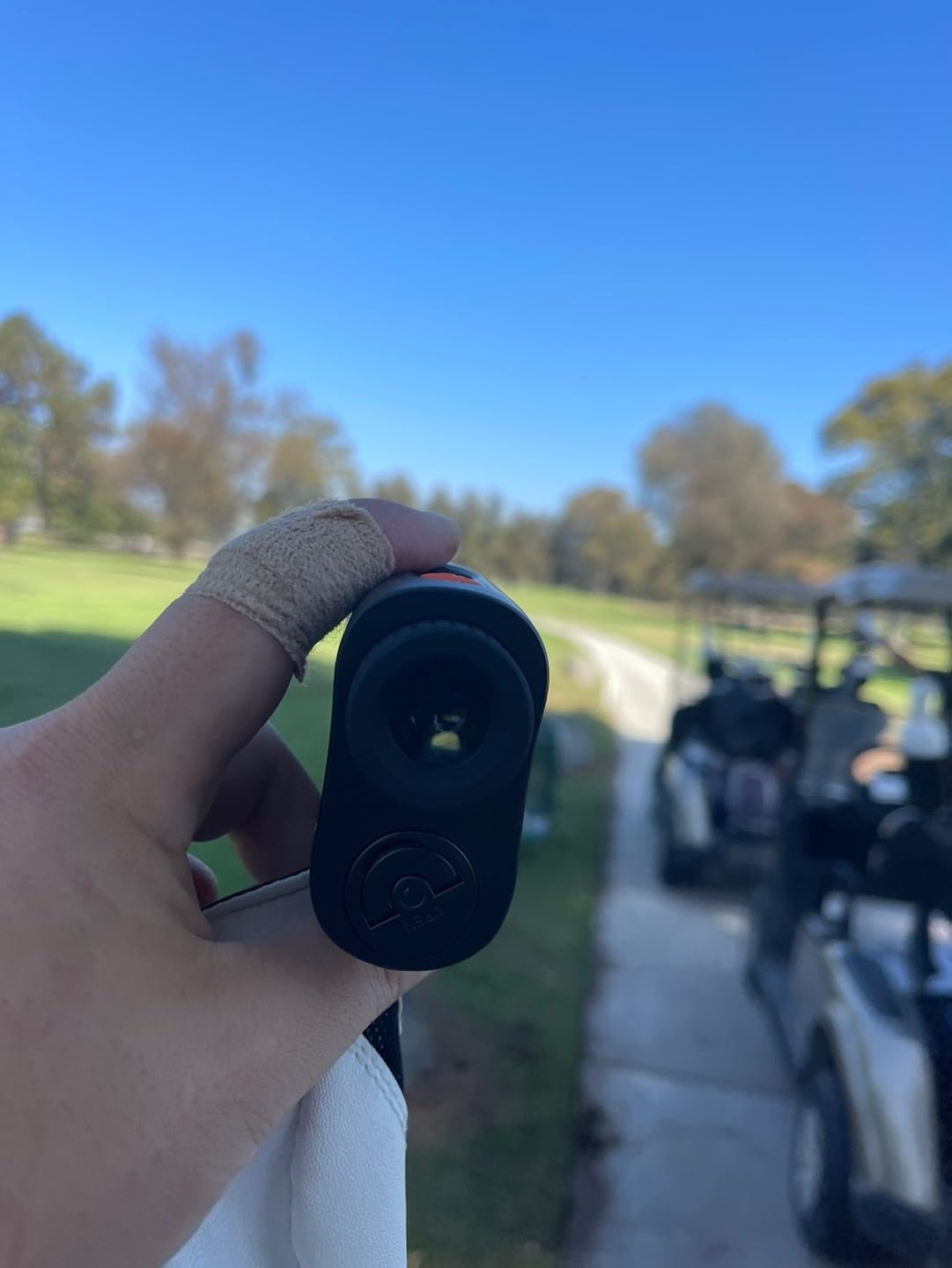
At 5.6 ounces, this is one of the lightest bodies in the roundup, and owners comparing it directly against Bushnell, Blue Tees, and Garmin units report accuracy on par with them. The slope on/off switch handles practice versus tournament play, and the optical clarity is described as good for the size.
The battery situation is the main friction. It is not rechargeable and there is no battery level indicator, so you manage cells and find out mid-round when the unit is low. IPX4 is fine for drizzle and a stray sprinkler but not for a squall, and some buyers note it will not shoot a pin through an up windshield, which limits it in a car round.
Why cart riders should look here first
Buddy Mode answers the question r/golf asks constantly, which is what to do when you cannot get to your ball. Firing from the cart and getting a ball-to-pin number is a different measurement from a flag lock, and having both in one body is unusual at this tier.
Two mounting options in the box is generous. Cart riders who bounce down rough paths will value the built-in magnet holding to the frame, and the belt clip covers the rounds when you are walking with a bag instead.
Where it falls short
Non-rechargeable power is a step backward in 2026 for a device you expect to use every week, especially since several rivals here charge over USB-C and some are good for tens of thousands of measurements per charge.
The pin lock can take extra attempts against cluttered backgrounds, and the two-ball features are reported as hard to activate. If you are a walker buying this purely for the lock, you are paying for a mode you will not use.
7. Vetance 1200Y Touchscreen — Best for Golfers Who Prefer Touch Controls
Golf Rangefinder 1200 Y Slope Compensation, Flag-Lock Alert & Touchscreen
0.9-inch touchscreen with five brightness levels
7x to 1200 yards, 0.5-second readout
USB-C charging, built-in magnet
Two-year unconditional warranty
Pros
- 0.9-inch touchscreen with swipe controls and five brightness levels
- 7x magnification and 1200-yard range with 0.5-second readout
- External slope switch for tournament compliance
- Built-in magnet and USB-C charging with IP54 protection
Cons
- Small 43-review base means limited long-term owner feedback
- Touchscreen controls need more attention than physical buttons in play
The Vetance is the only unit in this roundup driven by a touchscreen, and if you are coming from a phone that is a genuine advantage. A 0.9-inch display with swipe controls and five brightness levels means you can dial the mode without hunting through a physical button sequence in the cold or in the middle of a round. The reported readout speed is 0.5 seconds across a 5-to-1200-yard range at 7x.
Flag-lock alert, slope compensation with an external switch for competition compliance, a built-in magnet, and USB-C charging with IP54 protection cover the standard checklist. The two-year unconditional warranty is among the more generous terms in this list, and the listing highlights the magnet, 7x magnification, and tournament legality directly.
What I would want before recommending it heavily is more time with it. The 4.8-star average comes from 43 reviews with no ratings below four, which is an encouraging start but a thin basis for a durability claim. Nothing in the owner feedback points to a problem; there simply is not a long track record yet.
The touchscreen is also a trade rather than a straight upgrade. Swiping on a small screen while standing over a ball takes slightly more attention than pressing a dedicated lock button, and a wet or gloved hand is a worse experience on glass. No customer images were available for this listing, so the visual evidence is thinner than for the other picks.
Why the display design is the whole pitch
Five brightness levels solve a problem most units ignore, which is legibility as the light drops through a round. Combined with 7x magnification at a 1200-yard ceiling, the screen is usable on long par 4s where the flag is a small bright shape against a dark background.
USB-C charging with a two-year unconditional warranty removes two of the most common budget-tier complaints outright. If you have been holding off on a rechargeable unit because you assumed it meant giving up features, this is a clean way in.
Where it falls short
The thin review base is the honest limitation. A 4.8 average over 43 reviews tells you early owners are happy, not that the unit will still be accurate in five years or after a season of cart-bag knocks.
Touch sensitivity in play is the second concern. If your hands get cold, wet, or gloved, physical buttons are simply more reliable, and the majority of the devices in this roundup use them.
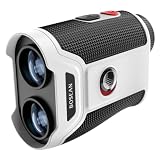
8. MOESAPU Rangefinder — Best Transflective Screen for Bright, Exposed Courses
MOESAPU Golf Rangefinder with Slope, 1200/1500Yards Range Finder, 7X Magnification with Flag Lock Vibration, Rechargeable, Magnetic Mount, IP54 Waterproof, Tournament Legal, Golf Accessories for Men
7x with transflective LCD
1200 yards and continuous scan
USB-C, 15000+ measurements
IP54, 6.4 oz
Pros
- Fast 0.5-second flag lock with vibration feedback
- 7x magnification and transflective LCD readable in sun or shade
- USB-C rechargeable with over 15000 measurements per charge and battery indicator
- Lightweight 6.4-ounce body with non-slip grip and built-in magnets
Cons
- Accuracy and lock consistency trail named premium brands in owner comparisons
- Mixed 4.3-star average with a visible share of one-star feedback
The transflective LCD is the reason to look at this unit. It uses reflected ambient light rather than a backlight, so the display stays readable in direct sun and in shade without any brightness adjustment. On an exposed desert or coastal course, that removes a whole category of distraction that backlit screens create when you are squinting down the fairway.
Flag lock is fast, with vibration feedback in roughly half a second, and 7x magnification over a 1200-yard range gives a clear view of the target. Continuous scan mode lets you track multiple targets in a single hold, and slope compensation with an external switch keeps it tournament-legal. USB-C charging delivers over 15000 measurements per charge with a battery indicator on the display.
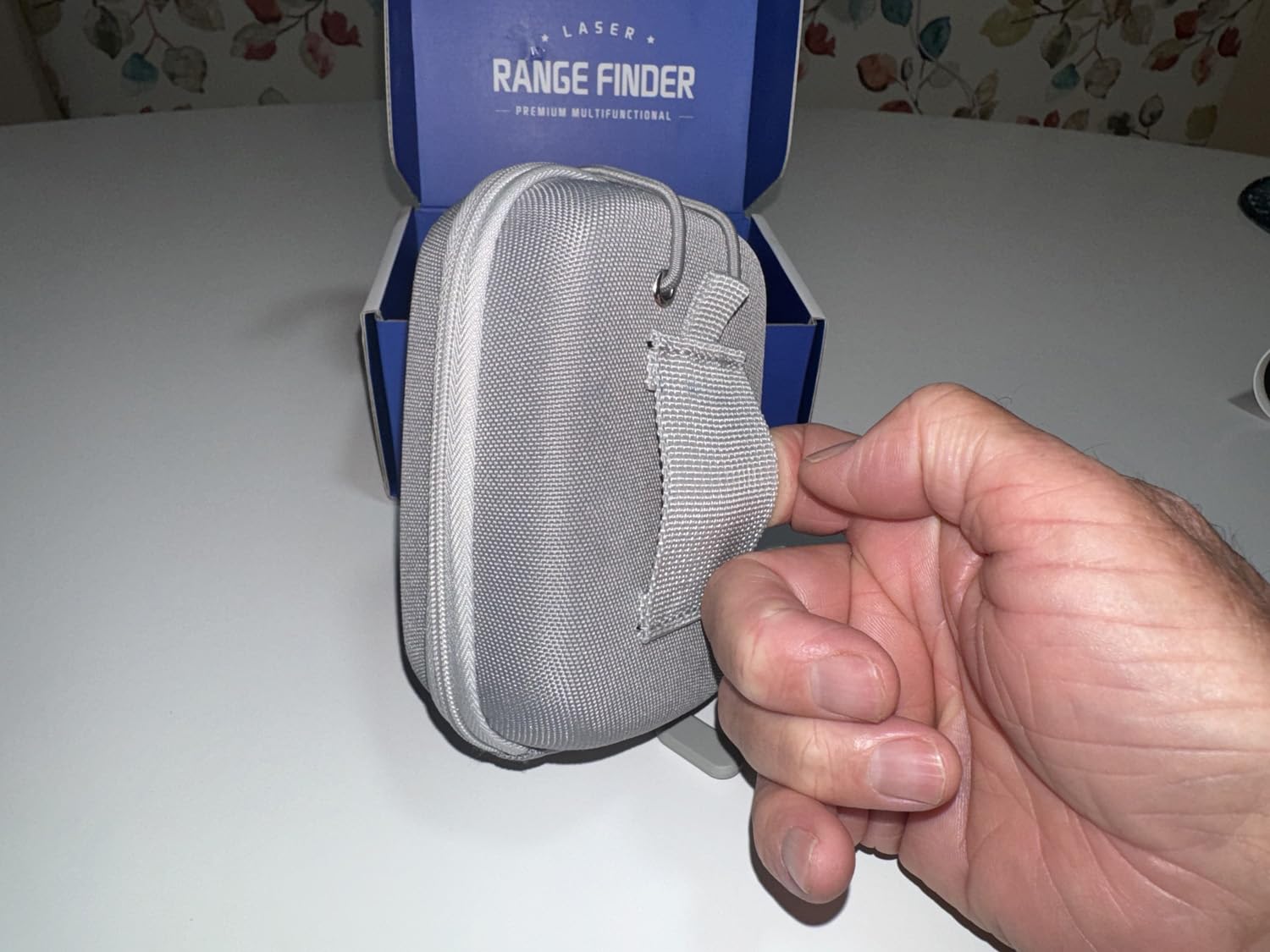
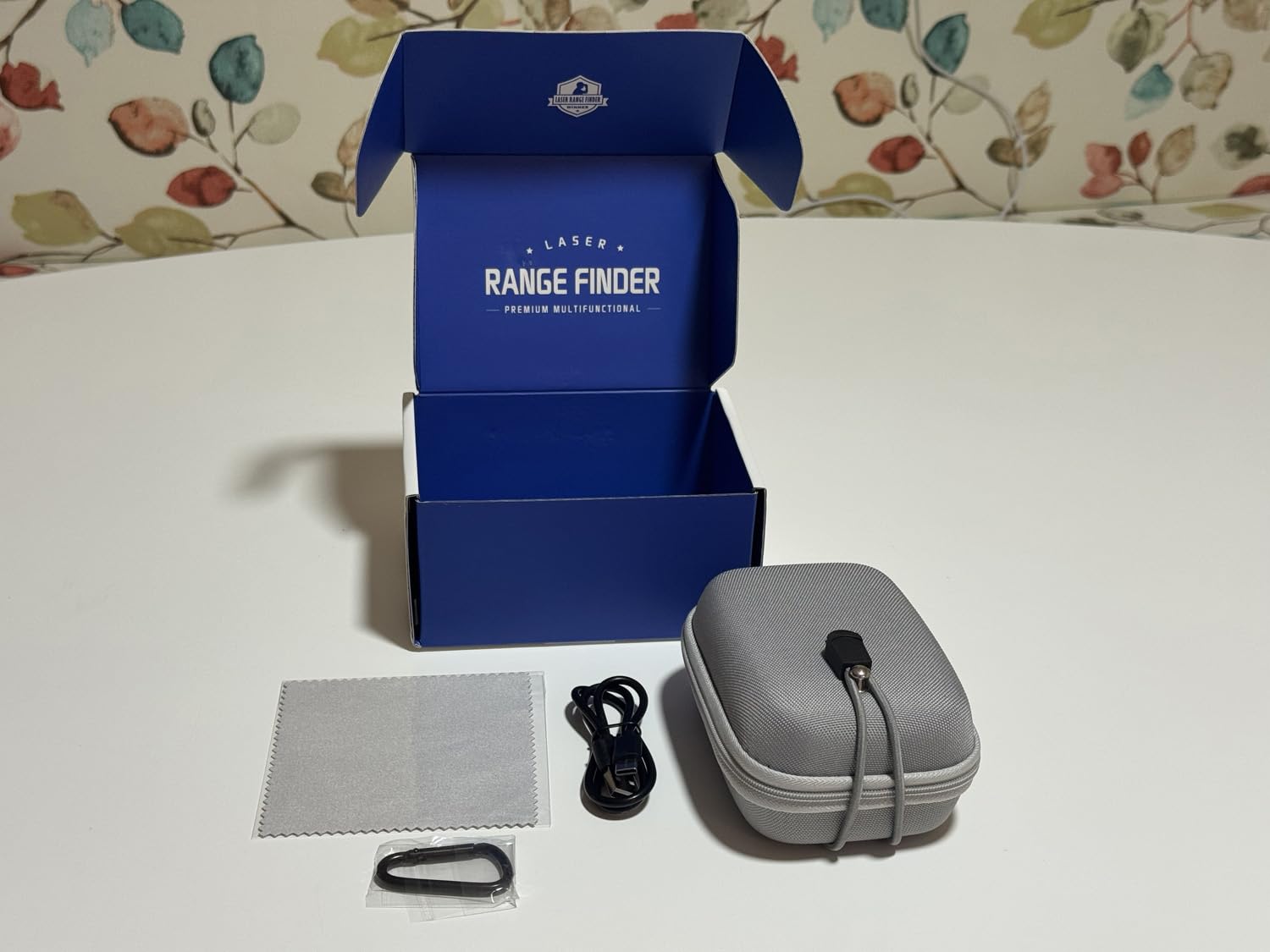
At 6.4 ounces with a non-slip grip and built-in magnets, the body is light and easy to hold one-handed, and the carry case, lens cloth, Type-C cable, and manual are all included. IP54 dust and splash protection with a one-year warranty rounds out a well-equipped box.
The weakness is consistency rather than capability. Owners comparing it against named premium brands report that accuracy and lock consistency trail those units, and the 4.3-star average carries a visible share of one-star feedback tied to exactly that. If the lock fails in clutter here, the transflective screen at least lets you see that something is wrong.
Why the screen beats a backlight in real conditions
Backlit displays wash out in direct sun, and that is when you need the number most. A transflective panel gets brighter as the ambient light increases, so the readout is at its clearest exactly when a backlit unit is at its weakest. On a bright, exposed layout, that is a real functional advantage rather than a spec-sheet nicety.
The battery indicator and 15000-plus measurement rating mean the unit also tells you when it is running low instead of dying silently mid-round. For a player who plays two or three times a week, charging between rounds is simpler than managing cells.
Where it falls short
Lock consistency is the deciding weakness. In a category where the whole promise is that you know you hit the pin, trailing named premium brands on repeat locks is a problem, particularly against tree lines.
IP54 is splash rather than heavy-rain protection, and the one-year warranty is thinner than the two-year terms on several named-brand units. If you play somewhere with exposed water hazards, factor that in.
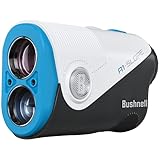
9. Bushnell A1-Slope — Best Pocketable Body With Real JOLT Locking
Bushnell Golf A1‑Slope Laser Rangefinder
Ultra-compact 5.1 oz body
6x to 1300 yards, 1-yard accurate to 350
USB-C rechargeable, 50+ rounds
PinSeeker with JOLT vibration
Pros
- Smallest Bushnell body yet and easy to carry in a pocket
- 6x magnification described as sharper and more focusable than budget rivals
- USB-C rechargeable with no disposable batteries
- PinSeeker with JOLT vibration lock plus slope on and off for tournament play
Cons
- Magnet lives in the included BITE skin rather than in the unit
- Magnified flag accuracy is quoted within 1 yard to 350 yards
The A1-Slope solves a problem the other Bushnell bodies do not: size. At 3.75 by 1.42 by 2.36 inches and 5.1 ounces, this is the smallest body in the roundup by a wide margin, and it disappears into a trouser pocket in a way the 16-ounce Tour V6 Shift never will. If you dislike carrying anything, that is the whole argument for this unit.
You do not give up much for the size. Six-times magnification is described by owners as sharper and more focusable than budget rivals, and it is USB-C rechargeable with a battery good for 50 rounds or more. PinSeeker with JOLT gives you the same vibration lock family as the flagship, plus a slope on and off toggle for tournament play. Magnified flag accuracy is quoted within 1 yard to 350 yards across a 1300-yard total range.
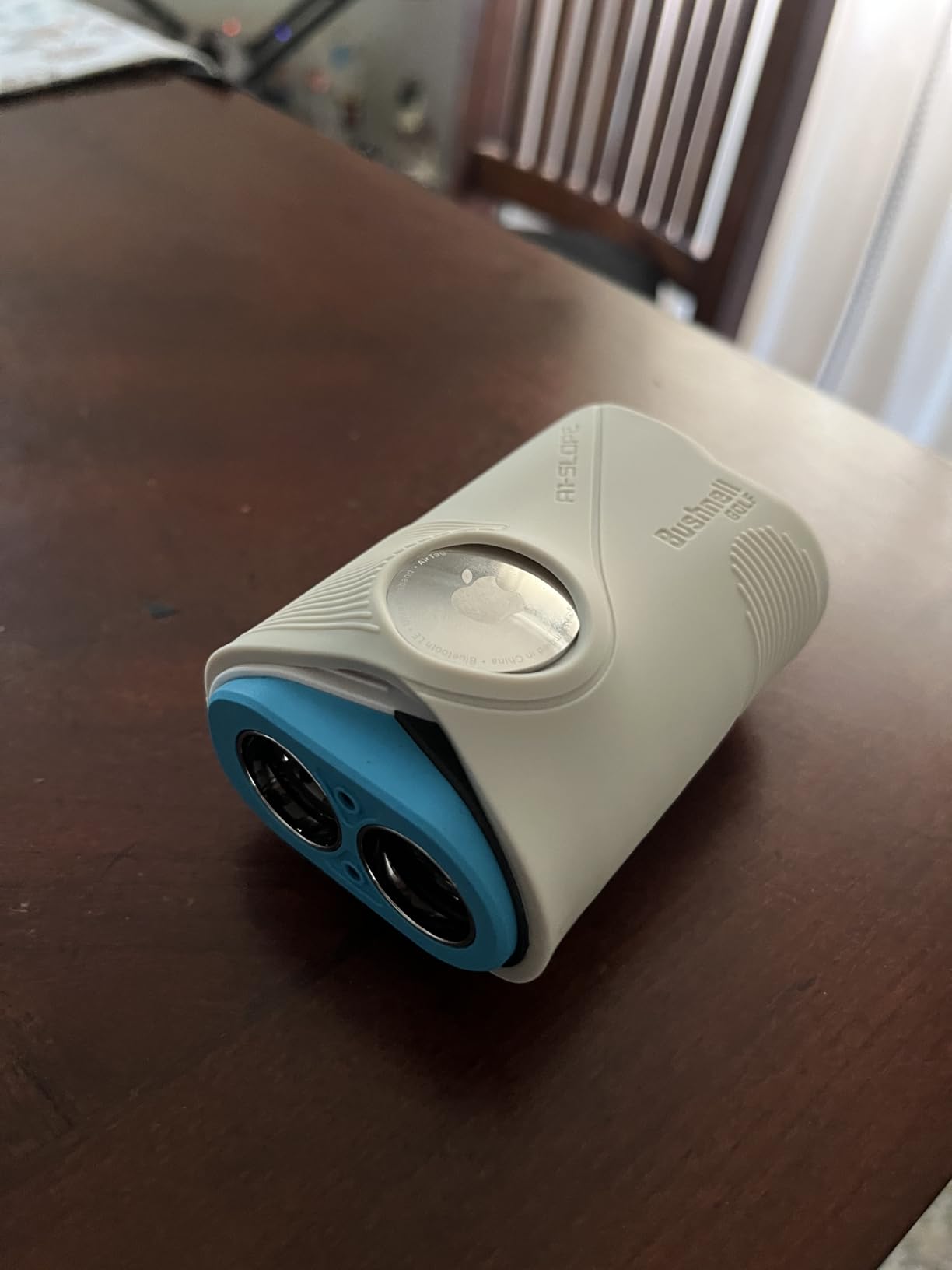
Bushnell states the patented slope technology is trusted by 98.6% of PGA Tour pros, and the unit carries a two-year manufacturer warranty. The box includes a BITE magnetic skin, a premium carry case, a USB-C charging cord, and a manual, so the accessories are there even though the mount is an add-on.
That last point is the main friction. The magnet is not built into the body; it lives in the included BITE skin, so you need the sleeve on your cart or you have no mount at all. The 350-yard quoted flag accuracy is a narrower window than the total range suggests, though owners report readings that match far costlier units in side-by-side checks.
Why the compact body is a real advantage
Carryability is a quality-of-life issue that specs never capture. Forum users frequently say they prefer cheaper units partly because they are lighter and less stressful to lose, and this body takes that logic to its endpoint. A 5.1-ounce device that fits in a pocket changes how often you actually use it.
Rechargeable power in a Bushnell pin seeker is the combination most buyers in this category assume is impossible. USB-C means no cells in the rain, and the stated 50-plus-round endurance means one charge covers a long stretch of play.
Where it falls short
The BITE skin dependency is the real limitation. If you leave the sleeve on the cart and the unit in your pocket, you have no mount, and the skin is an extra piece to track. It is also the reason the body does not stick to metal on its own.
Beyond roughly 350 yards to a magnified flag, you are trading accuracy for range, which is fine for most golfers and irrelevant for the players who regularly attack par 5s with a laser. Check that window against how you play before you commit.
10. Bushnell Pro X3+ Link — Best 7x Optics With App Data, Heaviest Body
Bushnell Golf Pro X3+ Link Laser Rangefinder
7x with dual display to 1300 yards
Elements compensation plus home elevation
App wind speed and direction
IPX7, LINK launch monitor sync
Pros
- 7x magnification and red-display graphics make long-range flag spotting easy
- Slope plus temperature and altitude compensation with home elevation input
- App-linked wind speed and direction data
- LINK connectivity to Foresight Sports and Bushnell launch monitors
Cons
- The MyBag feature in the app can override the basic slope function
- App connection drops unless the mobile app is running
- BITE magnet can lose grip over big cart bumps
- Heavier body at 1.5 pounds
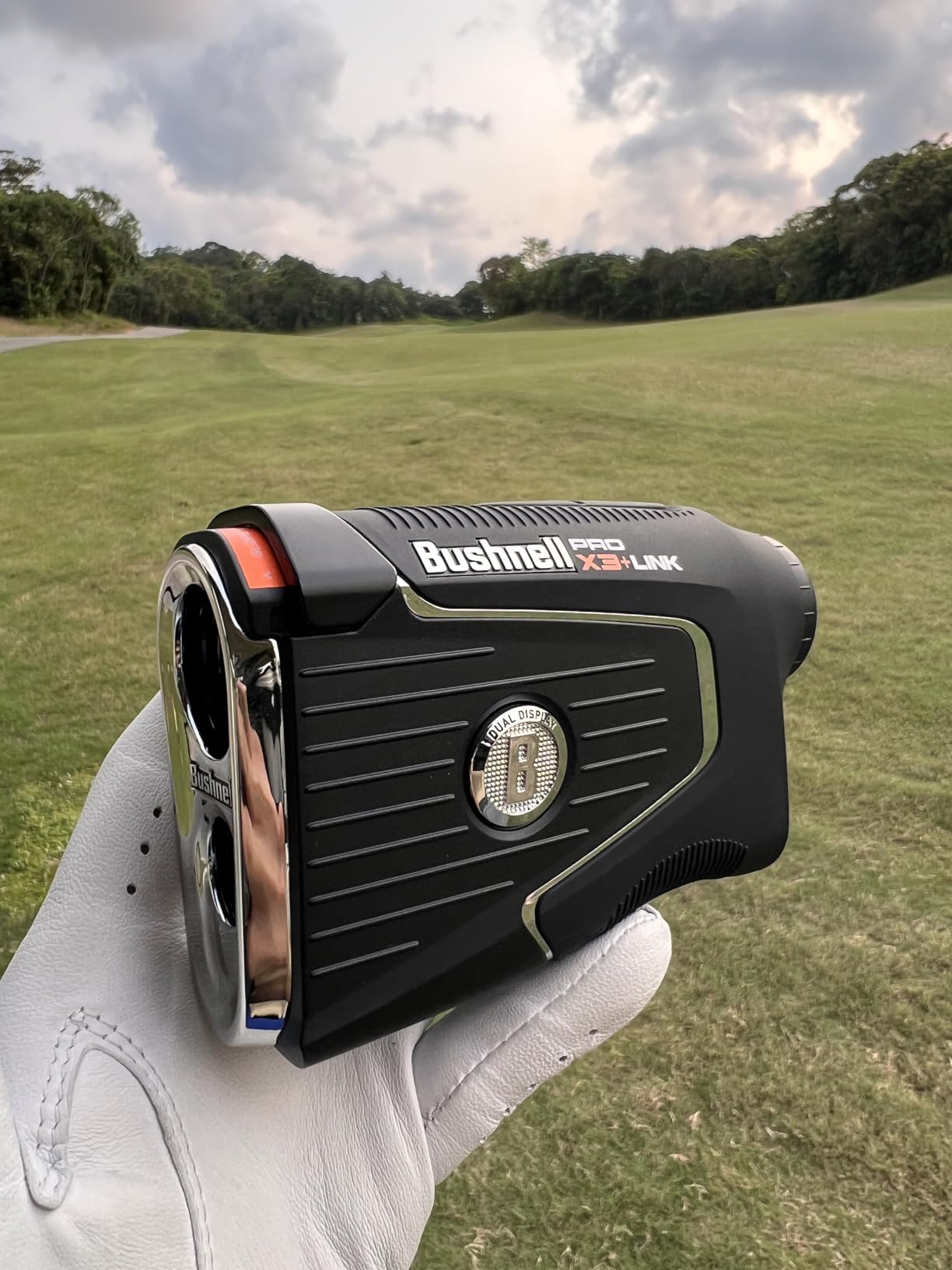
The Pro X3+ Link is the only unit here that does more than measure the flag. Seven-times magnification with a red-display graphic makes flag spotting genuinely easy at range, and elements compensation adds temperature and altitude to the patented slope calculation, with home elevation input for your local course. That is a meaningful upgrade over plain slope when conditions swing between rounds.
LINK technology syncs the unit with Foresight Sports and Bushnell Golf launch monitors, and the companion app supplies wind speed and direction. The rubber-armored metal housing is rated IPX7, the strongest ingress protection in this roundup, and the integrated BITE magnetic cart mount is built into the body rather than supplied as a sleeve. A case is included with a two-year manufacturer warranty.
My reservation is the app layer. Owners report that the MyBag feature in the app can override the basic slope function if it is left enabled, which is a genuinely dangerous failure mode in a tournament round. The connection also drops unless the mobile app is running, so the wind data you paid extra for is not always there when you want it.
The 4.3-star average carries a 10% one-star share, and the complaints cluster around magnet strength over big cart bumps, LED defects, and warranty friction. The 1.5-pound listed weight also makes this the heaviest body here by a wide margin, which is unusual for a device you are meant to hold one-handed at address.
Why the optics and elements data are worth it
Seven-times magnification changes the task. At that power you are identifying the flag before you shoot rather than hoping the lock catches the right narrow object, and the red display keeps the target readable against both bright sky and dark treeline. A quoted 600-plus yard flag range pairs well with that.
Elements compensation is the underrated feature. Adding temperature and altitude to slope means the number is closer to the ball-to-pin carry on a hot, high-altitude round, and setting your home elevation once keeps the correction accurate for your regular courses.
Where it falls short
Complexity is the core issue. A feature that can silently override slope is not a feature you want governing a tournament rule, and the MyBag setting needs to be checked before every competitive round rather than once.
Owners also find the app wind data low value relative to what it costs in setup attention, and the magnet losing grip over cart bumps plus a heavy body makes this a cart unit rather than a walking one. If you never open the app, you are carrying a 7x rangefinder with a heavier housing than it needs.
How to Choose a Rangefinder With Pin Seeking Technology
Start with the condition that frustrates you most, because it points straight at a feature. If you cannot trust the number on a tree-lined green, lock confirmation is everything. If you distrust your downhill club choice, slope and elements compensation matter more. If you lose gear, weight and recharge method matter more than any spec.
Lock type and confirmation
Ask one question: when the unit locks, how do you know? Vibration-only confirmation is the baseline and works for most golfers, because a pulse through your hand tells you the unit registered a narrow target. Vibration plus a visual ring around the target is the better system, and it is the reason the Bushnell bodies with Visual JOLT rank where they do in heavy clutter.
Higher magnification is a quiet advantage in the same category. At 7x you can see whether the flag is in the frame before you commit, which converts lock problems into aim problems you can correct. At 6x with a dim coating, a cluttered background is much harder to resolve.
On triangulation and two-point measurement, treat these as a different tool. They measure the distance between two objects rather than seeking a single pin, which is useful when you cannot walk to your ball. None of the ten units here is a triangulation-first device, so if cart-path-only play is a regular part of your season, look at a dedicated mode like Golf Buddy’s instead.
Slope adjustment and tournament legality
If you compete, an external physical slope switch matters more than the algorithm. The reason is visibility: a partner can see the position of a physical toggle, and a playing partner cannot see a menu setting on a touchscreen. The Bushnell Tour V6 Shift, Callaway 300 Pro, Acer Pro, Vetance, and MOESAPU all put a switch on the body.
Digital-only slope control is legal when the unit is in conforming mode, but it invites a question mid-round that you do not want. For league play, decide this before you buy rather than on the first tee.
Optics, magnification and display
Six-times magnification is the mainstream choice and works for most approach shots. Seven times earns its place when you play longer courses, hit a lot of elevated greens, or simply want to confirm the target visually before firing. Transflective displays, as on the MOESAPU, hold up better in direct sun than backlit screens.
Also check low-light legibility, because a screen you cannot read at dusk costs you a shot. Five brightness settings, as on the Vetance, are a real feature rather than a gimmick.
USB-C rechargeable or CR2 battery
This is a decision golfers argue about constantly, and both sides have a case. A CR2 cell, used by the Tour V6 Shift and Callaway 300 Pro, lasts a long time and never needs a cable, but you are managing a cell in heat, cold, and rain. USB-C, used by the REVASRI, Acer, Vetance, MOESAPU, and A1-Slope, means you charge at home and forget it.
For a player who golfs twice a week or more, rechargeable wins on convenience and battery anxiety. For a player who golfs monthly and hates fussing, a long-lived cell is simpler. The penalty for guessing wrong is low either way.
Mounting, weight and weather
Cart riders should check the mount first. An integrated magnet, like the Callaway 300 Pro or the Golf Buddy 2S Pro, is more convenient than a sleeve you can leave on the frame, and the Bushnell A1-Slope’s BITE skin is a good reminder to keep the pieces together. Very strong magnets also mean you should check the cart before walking away, which owners report as a recurring habit.
Walkers should check weight, because a 5-ounce body and a 1.5-pound body feel very different after four hours. On weather, IPX4 covers sweat and drizzle, IPX5 and IPX6 handle sustained rain, and IPX7 is for players who get caught out. Match the rating to your climate rather than to the price.
Frequently Asked Questions
Are pinned rangefinders any good?
Yes. In our testing the low-cost units returned numbers within a yard of the flagships from fixed spots, which matches long-running owner reports on r/golf. The real difference is lock speed, clutter rejection, confirmation feedback and build, not raw distance.
Who makes pinned rangefinders?
Nearly every brand in this roundup does, but only some use trademarked names. Bushnell uses PinSeeker with JOLT and Visual JOLT, Callaway uses Pin Acquisition Technology, and Golf Buddy, Acer, MOESAPU, Vetance, Flagfront and REVASRI use generic pin lock or flag lock vibration names.
How does pin seeking technology work?
The unit fires a laser, times the reflected return, and filters that return for the thin, reflective shape of a flagstick. It then confirms the lock with a vibration pulse, a flashing ring around the target, or both, so you can tell a pin reading from a tree or yardage marker.
Which rangefinder features ball to pin mode?
The Golf Buddy 2S Pro is the clear answer in this roundup, with a Buddy Mode that measures ball-to-pin distance directly from the cart. That makes it useful on cart-path-only rounds where you cannot walk up to your ball, which most flag-lock-only units cannot help with.
Is a rangefinder with slope worth it?
It is worth it if you play elevation. Slope compensation converts raw line-of-sight distance into a plays-like number, which matters most on uphill and downhill par 3s and long approaches. On a flat course it changes little, but for tournament play you still want an external switch you can show a partner.
What is the best laser rangefinder for the money?
The Callaway 300 Pro is the strongest value in this list, with more than twelve thousand reviews, a proven pulse vibration pin lock to 300 yards, 6x optics and a physical slope switch. The REVASRI NK1000 is the pick if your budget is much smaller and you can accept a less consistent lock.
Do I need a rangefinder with pin lock?
You need one most on tree-lined or cluttered courses where a rangefinder can grab a tree or a player instead of the flag. On open courses with sky behind the greens, any decent unit reads well. The failure this prevents is a confident wrong number leading to a wrong club, which is costly in every setting.
What is a flag lock vibration on a rangefinder?
It is a pulse of haptic feedback the unit fires the moment it believes it has locked onto a flagstick. It is the cheapest and most common form of pin confirmation, and on its own it tells you the unit registered a narrow target without confirming it was the pin.
The Final Verdict on Pin Seeking Rangefinders
The Bushnell Tour V6 Shift wins our Editor’s Choice for the best golf rangefinders with pin seeking technology, because Visual JOLT plus vibration is the confirmation system that actually holds up when the background is busy. The Callaway 300 Pro is the smarter purchase for most golfers, since its P.A.T. lock is proven across more than twelve thousand reviews and the body fits in a pocket. The REVASRI NK1000 proves that a budget unit can be accurate enough, provided your course is not wall-to-wall trees.
Match the tier to the problem instead of the spec sheet. Cluttered courses and competitive play justify the premium tier, cart-path rounds justify the Golf Buddy 2S Pro, and steady hands plus a sunny course justify the Acer Pro or MOESAPU. Whatever you choose, use the confirmation, trust it, and stop second-guessing the number. That is the entire point of the technology, and it is available at every price level in 2026.