The best trail cameras for deer hunting come down to three things: how fast the shutter fires, how far the sensor reaches, and whether the flash gives your deer a reason to change routes. A running yearling buck at 25 feet is a blur on a slow camera, and a white LED flash at a mineral site in October can push that buck onto a neighbor’s land before opening morning.
We ran ten of the most popular cameras through a fall scouting setup, hung them on the same travel corridor on our family’s property, and pulled the card every Sunday morning. Below is what each one actually recorded, plus the buying logic that should drive your purchase. We also broke out connectivity, because a cellular camera that never gets a signal is just an expensive SD card with a subscription attached. If you want the wider category, our general trail camera roundup covers hardware beyond the hunting use case.
Table of Contents
Top 3 Best Trail Cameras for Deer Hunting in 2026

GardePro E6 WiFi
- 64MP stills
- 110° field of view
- No-glow 940nm night vision to 75 ft
- No monthly app fee

CEYOMUR CY95 Solar
- 0.1s trigger
- Three PIR sensors
- Solar panel with 5200mAh battery
- 850nm night vision

GardePro A3S
- Sony Starvis sensor
- 100 ft no-glow night vision
- 0.1s trigger
- Non-cellular power draw
The GardePro E6 takes the top slot because it does the fewest things badly. Its 110° lens covers a whole funnel, the 940nm array stays invisible to deer after dark, and the WiFi app costs nothing, which is rare in this category. Our second and third picks solve two specific problems the E6 does not: CEYOMUR CY95 for anyone who refuses to climb a ladder, and GardePro A3S for low-light work where sensor quality matters more than remote viewing.
Best Trail Cameras for Deer Hunting at a Glance in October
| Product | Specifications | Action |
|---|---|---|
| GardePro E6 WiFi Trail Camera |
|
Check Latest Price |
 WOSPORTS G600 64MP 4K Trail Camera WOSPORTS G600 64MP 4K Trail Camera |
|
Check Latest Price |
| CEYOMUR CY95 Solar WiFi Trail Camera |
|
Check Latest Price |
| GardePro A3S Non-Cellular Trail Camera |
|
Check Latest Price |
 MAXDONE PH970S Solar WiFi Trail Camera MAXDONE PH970S Solar WiFi Trail Camera |
|
Check Latest Price |
 Moultrie Edge 2 Cellular Trail Camera Moultrie Edge 2 Cellular Trail Camera |
|
Check Latest Price |
 SEHMUA RBX-H10 Cellular Live Stream Camera SEHMUA RBX-H10 Cellular Live Stream Camera |
|
Check Latest Price |
 Meidase P70 Non-Cellular Trail Camera Meidase P70 Non-Cellular Trail Camera |
|
Check Latest Price |
 WOSPORTS G100 Mini Trail Camera WOSPORTS G100 Mini Trail Camera |
|
Check Latest Price |
 GardePro E5S Non-Cellular Trail Camera GardePro E5S Non-Cellular Trail Camera |
|
Check Latest Price |
Two patterns jump out of that table. Five of the eight non-cellular and WiFi models use 940nm invisible infrared, while two use 850nm low-glow, which is brighter and slightly more visible. And trigger speed clusters hard: five of these ten fire in a tenth of a second or less, which is the threshold we consider acceptable for running deer.
1. GardePro E6 WiFi Trail Camera – Best Overall Pick for Deer Hunting
GardePro E6 WiFi Trail Camera, Stable WiFi with External Antenna
64MP stills
1296P video
110° field of view
No-glow 940nm infrared to 75 ft
Pros
- No monthly fee for app control
- 64MP photos and 1296P video
- No-glow 940nm night vision to 75 ft
- 110° field of view catches whole funnels
- IP66 waterproof body
Cons
- App transfers can be slow on large batches
- Brief frame freezes in motion video
- High sensitivity triggers on moving leaves
This is the camera we ended the season running on two different trees. The E6 is a WiFi model, not a cellular one, so the connection is a short-range hotspot between your phone and the camera, but there is no subscription attached and no carrier to depend on. You walk up, open the GardePro app, and pull the night’s footage without powering the camera down.
The 110° field of view is wider than most of the fixed-lens cameras we tested, and on a funnel trail that difference decides whether you get the whole group or just the lead doe. Daylight stills are genuinely sharp at 64MP, and the 2.4-inch screen on the unit plus the app preview mean you can confirm the aim before you walk away from the tree.
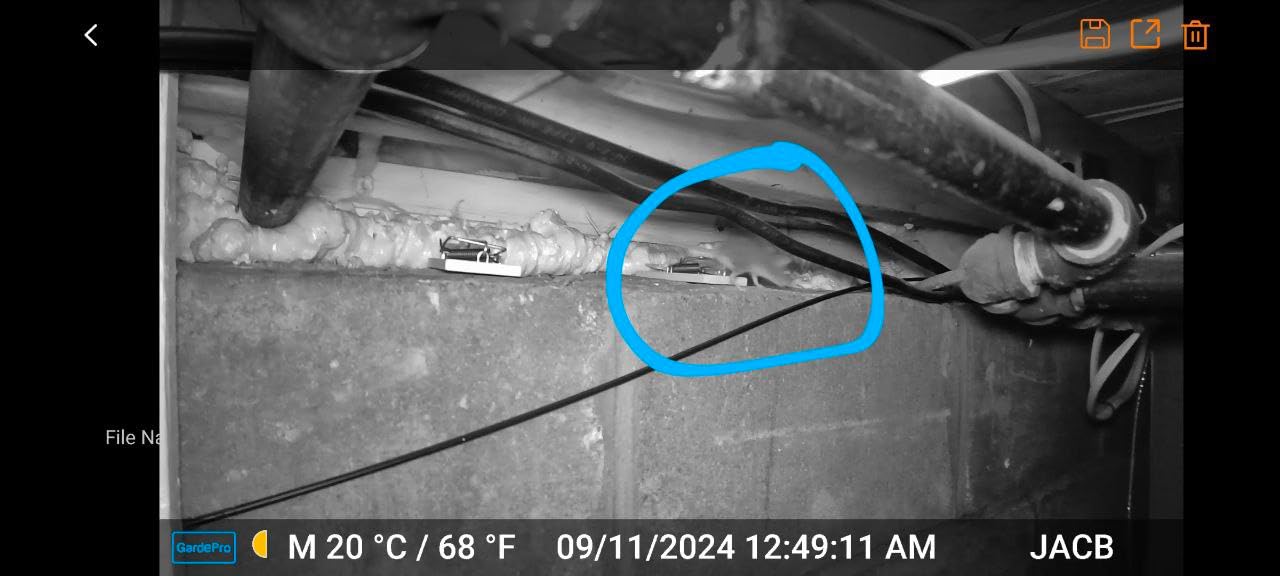
At night the 36-LED 940nm array throws usable images out to about 75 feet without the red LED bloom that gives away your position. That is the range where a buck on a funnel trail is still identifiable rather than a bright shape in the dark, which is where a rut camera spends most of its time.
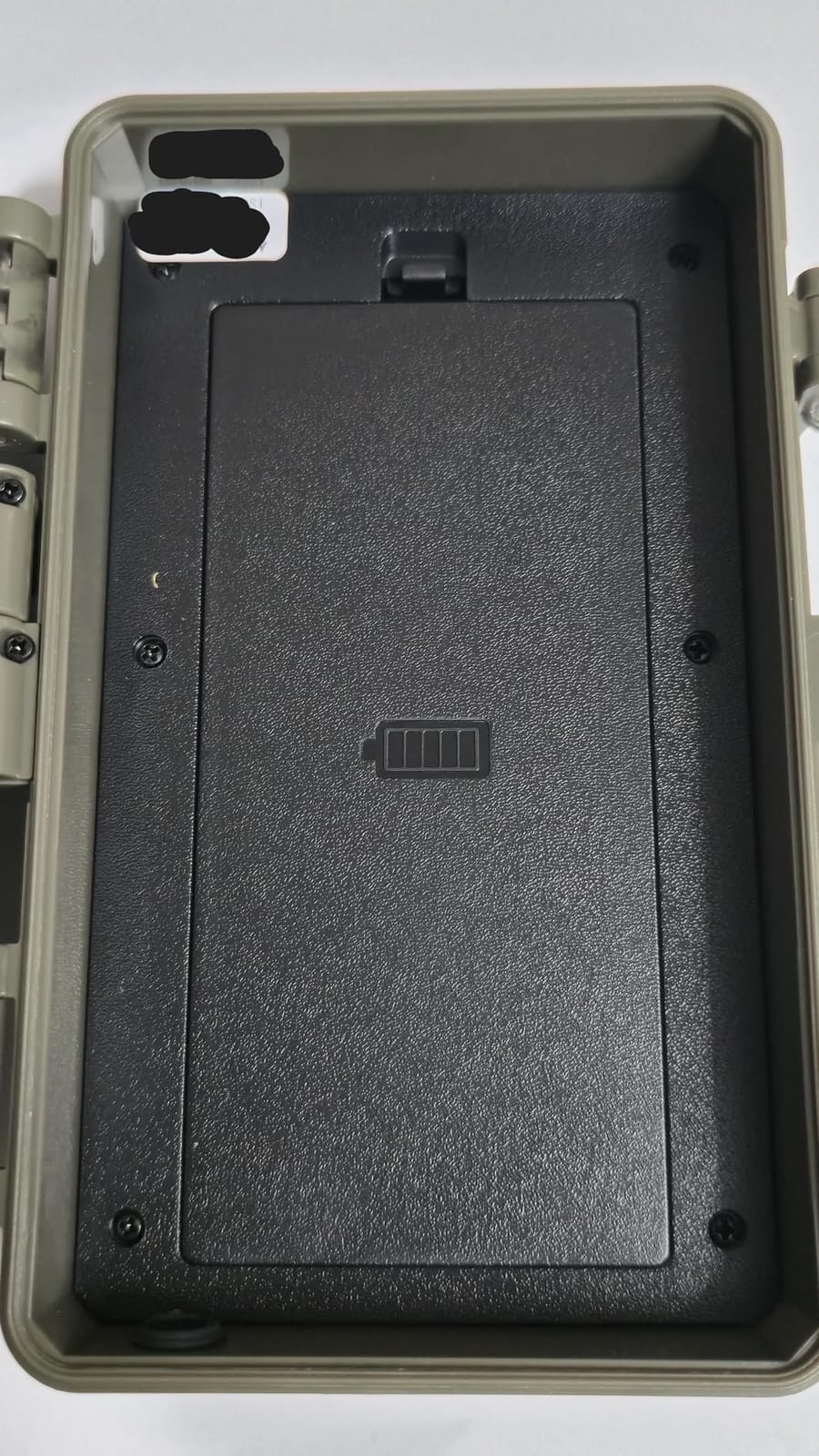
Battery life held up well here because nothing is transmitted over LTE. It runs on eight AA cells, and it also accepts the optional GardePro SP350 solar panel if you want to stop climbing. The card slot supports up to 512GB, so there is plenty of headroom before you need to pull footage.
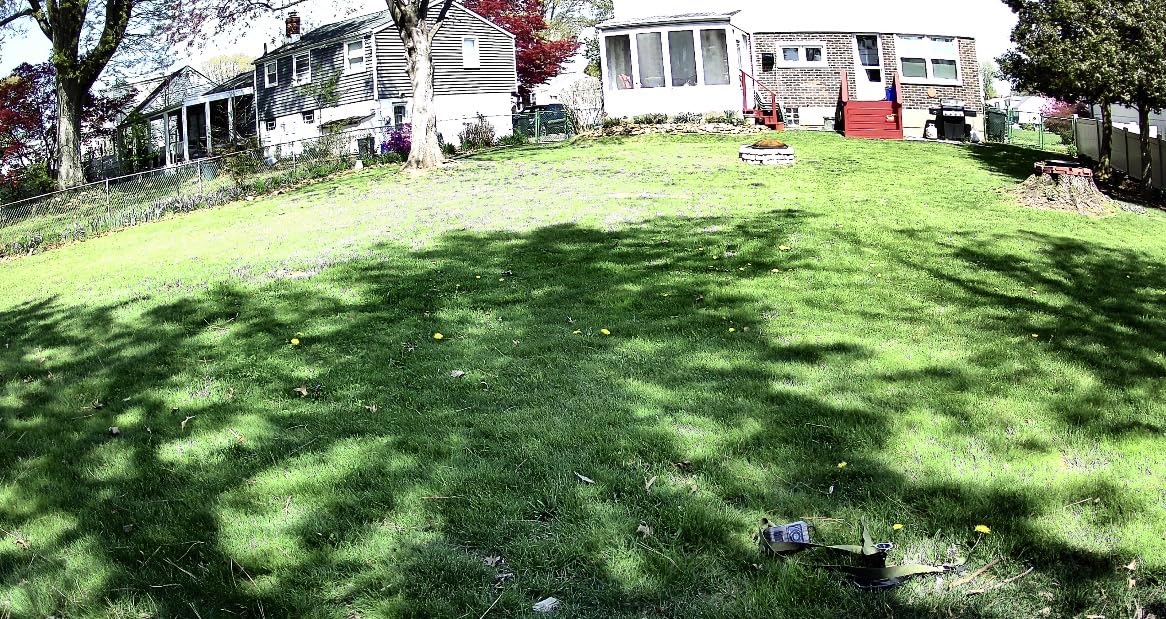
Where the E6 works best for deer patterns
This camera earns its slot on a food plot edge or a pinch point where deer compress as they pass. Because the app is free, you can put E6 units on two or three spots without building a per-camera monthly cost into the season, which is the opposite of how cellular economics work.
It also suits a bowhunter who wants to check the camera on the way to the stand without stopping, since the live view reaches about 45 feet in the open. On a big property that is a short walk, but it is enough to confirm the camera is aimed correctly after a reposition.
Where the E6 falls short
Because the WiFi link is a direct phone-to-camera connection, you cannot view footage from the truck at the far end of the property. Anything that needs real-time remote access belongs in the cellular category instead.
Owners also report that sensitivity is aggressive at the medium setting, so wind-blown leaves can fill a card with branches if you aim into a tree line. Reviews mention occasional frame freezes in motion video and app transfers that stall on large batches, so budget a little patience when you are sorting a full week of clips.
2. WOSPORTS G600 – Best Trail Camera for 4K Deer Video
WOSPORTS Trail Camera(Non-Cellular Non-WiFi) 64MP 4K 0.2S Trigger Motion Activated,Game Camera with No-Glow Night Vision 2.0”LCD 120°Wide for Outdoor Scouting Wildlife Monitoring Home Security
0.2s trigger
120° detection angle
4K video at 3840x2160P
2-inch color LCD for setup
Pros
- Sharp 64MP stills and smooth 4K video
- 0.2s trigger across a 120° angle
- Burst mode of 1 to 3 frames
- 2-inch LCD shows framing at setup
- 16GB card included out of the box
Cons
- Battery compartment is very tight
- Settings sometimes reset after a battery change
- Night quality drops with distance
The G600 is the camera to buy if you want to replay a buck’s gait and antler frame by frame. It records 4K video at 3840x2160P and stills up to 64MP, and the 2-inch color screen on the back means you can frame the shot at the tree rather than guessing and walking back the next morning.
Trigger speed is 0.2 seconds across a 120° detection angle, with a burst of one to three frames. In practice, deer walking a trail at a normal pace land well inside the frame, and bucks that accelerate at the last second still produce usable images rather than a smudge.
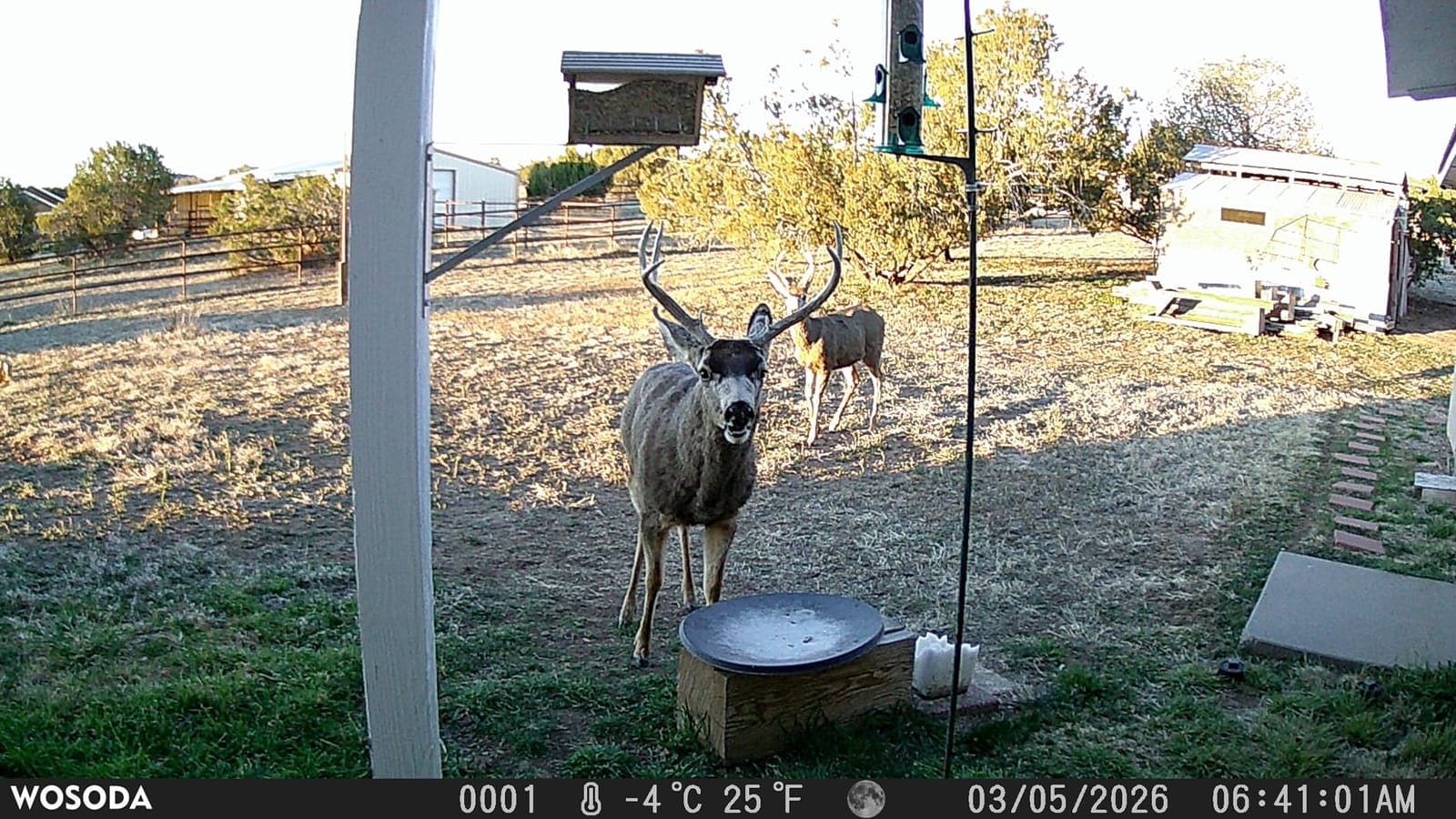
The 32 no-glow 940nm LEDs reach about 80 feet, and the housing carries an IP66 rating, which held up through several weeks of rain on our funnel camera. The included 16GB card means it can be hung and forgotten the same afternoon it arrives, and the slot accepts cards up to 256GB.
Power is eight AA cells, a WOSPORTS rechargeable lithium pack, or a compatible solar panel. Since the unit has no radio at all, its power draw stays low even with 4K recording enabled.
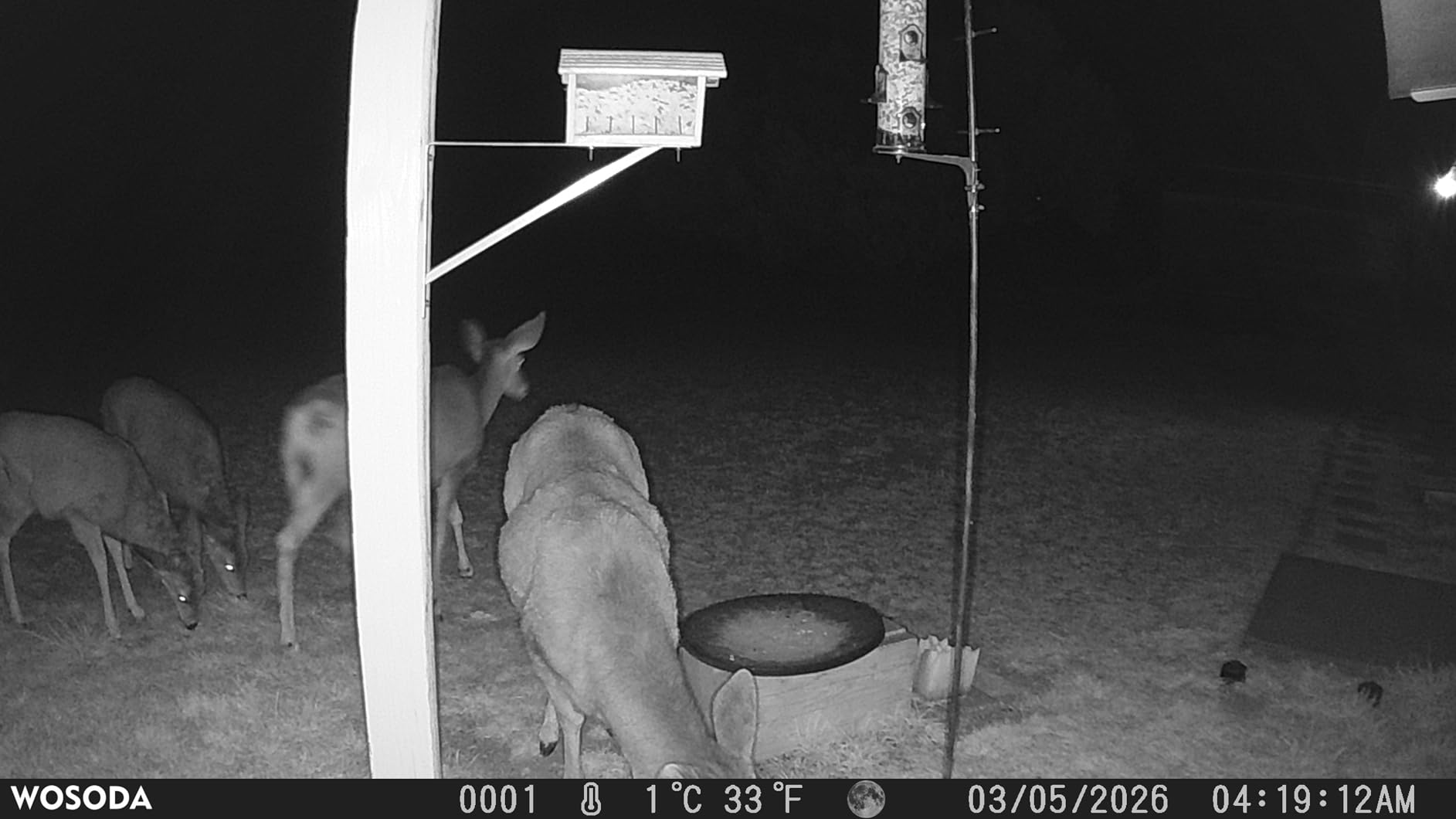
Why the 4K video matters for scoring bucks
A 64MP still tells you a buck is present. A 4K clip tells you his body mass, how the antlers are spread, and whether he is traveling with a doe group, which is exactly the information you want before you set up a treestand or a ground blind for the rut.
The 2-inch preview screen also saves setup time. On a corridor where deer approach from a consistent direction, you can dial in the angle in a single visit instead of making a second trip to check framing.
Where the G600 frustrates hunters
Reviewers repeatedly mention a stiff battery compartment that wants a flathead screwdriver, which matters if you are swapping cells in the dark on a cold November morning. Some units also lose menu settings or reset the date and time after the batteries come out.
Night footage is fine for identification but softens on subjects well away from the lens, and the supplied nylon strap has a reputation for snapping. Budget for a proper strap and a card upgrade before this goes on a treeline.
3. CEYOMUR CY95 – Best Solar Trail Camera for Low Upkeep
CEYOMUR 4K 68MP Solar WiFi Trail Camera, Game Camera with 32GB TF Card
Solar panel with 5200mAh battery
0.1s trigger across 3 PIR sensors
68MP stills and 4K video
32GB TF card included
Pros
- Solar panel and 5200mAh battery give long unattended runtime
- 0.1s trigger across three PIR sensors
- 850nm infrared is clearer at night than 940nm
- 32GB card pre-installed
- Two-year manufacturer warranty
Cons
- App preview works only within about 33 ft
- No remote or home WiFi viewing
- Only two infrared LEDs
- Solar output varies with exposure
For anyone who hates climbing a ladder in November, the CY95 removes a routine reason trail cameras fail. The top-mounted solar panel feeds a built-in 5200mAh rechargeable battery, and four AA cells act as backup when a long stretch of rain cuts the charging output. You set the camera and then stop thinking about it.
Day output is 68MP stills with 4K video at 30fps, and the trigger fires in 0.1 seconds across a 120° detection zone reaching 65 feet, backed by three high-sensitivity PIR sensors. That combination is what you want on a food plot where several deer arrive at once, because a group moving together is harder to catch than a single deer at a walk.
Why the 850nm infrared is a real advantage
Most of the non-cellular cameras in this roundup use 940nm, which is completely invisible but dimmer. The CY95 uses two higher-powered 850nm infrared LEDs, and that means clearly better night detail to a 20-meter range. The trade-off is a faint red glow that deer can occasionally notice at very close range.
For most hunters that trade is worth taking, because a buck standing 20 feet from a mineral block is the whole point of the camera. Place it back from the site rather than pointed straight at it if you are working a pressured area.
Where the CY95 falls short
Pairing the app opens a short-range WiFi hotspot that works to roughly 33 feet, so it is a setup tool rather than a viewing tool. There is no cellular radio and no way to connect to a home network, which means every review means a trip to the tree.
Only two infrared LEDs are fitted, so night coverage depends more on placement than on the camera. With just one hotspot camera per spot and no remote access, this is a one-camera-per-location solution rather than a camera you check from the truck.
4. GardePro A3S – Best Non-Cellular Camera for Low-Light Scouting
GardePro A3S Non-Cellular Trail Camera, 1296P HD Video with Sound
Sony Starvis sensor
100 ft no-glow night vision
0.1s trigger across 120°
Non-cellular so no subscription
Pros
- Sony Starvis sensor performs well at dusk and low light
- 100 ft invisible 940nm night vision
- 0.1s trigger with bursts up to five frames
- Non-cellular design runs long on batteries
- Supports cards up to 512GB
Cons
- SD card and batteries sold separately
- No wireless access means pulling the card
- Screen placement is awkward during setup
The A3S suits hunters who spend more time looking at deer at dusk and first light than in full afternoon sun. Its Sony Starvis CMOS sensor holds detail in low light better than the sensors in most cameras at this tier, and the 36-LED 940nm array reaches about 100 feet without any visible glow.
Trigger speed is 0.1 seconds across a 120° PIR angle, with burst capture up to five frames, and it records 1296P video with sound. That audio channel picked up the difference between a browsing doe and a rutting buck vocalizing off-camera, which is a pattern cue you cannot get from stills alone.
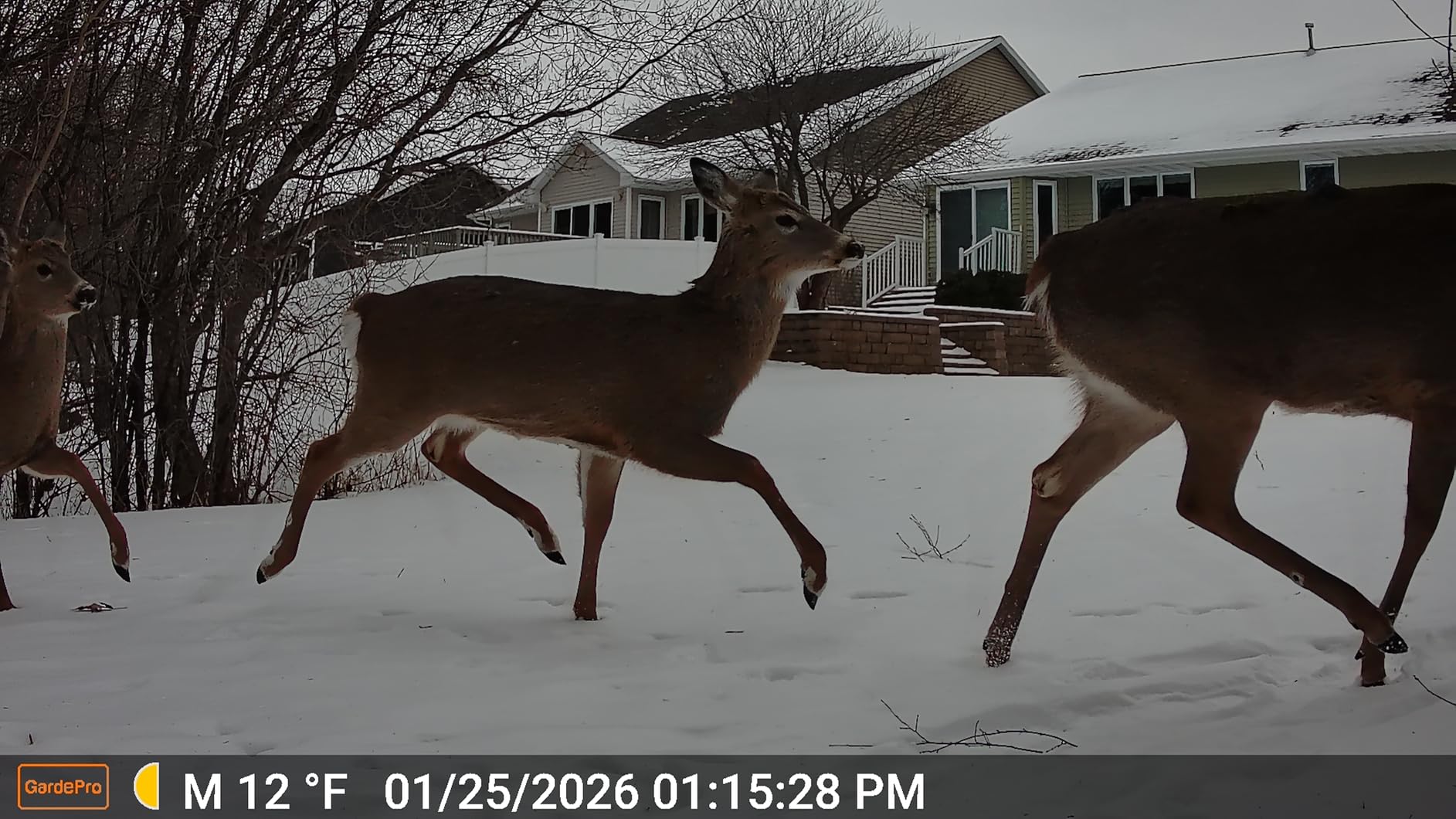
Because there is no radio in the housing, battery life is a real strength. Eight AA lithium cells are enough to carry a non-cellular unit through a full scouting cycle between visits, and it will also run from the optional GardePro SP350 solar panel. Cards up to 512GB are supported, with in-camera playback and loop recording if you want to check footage at the tree.
Mixed recording modes help during different seasons. Motion-only works for trail cameras, while time-lapse and hybrid modes give you a full picture of a food plot through the daylight hours when deer are moving steadily rather than triggering one at a time.
Why no-glow matters for pressured deer
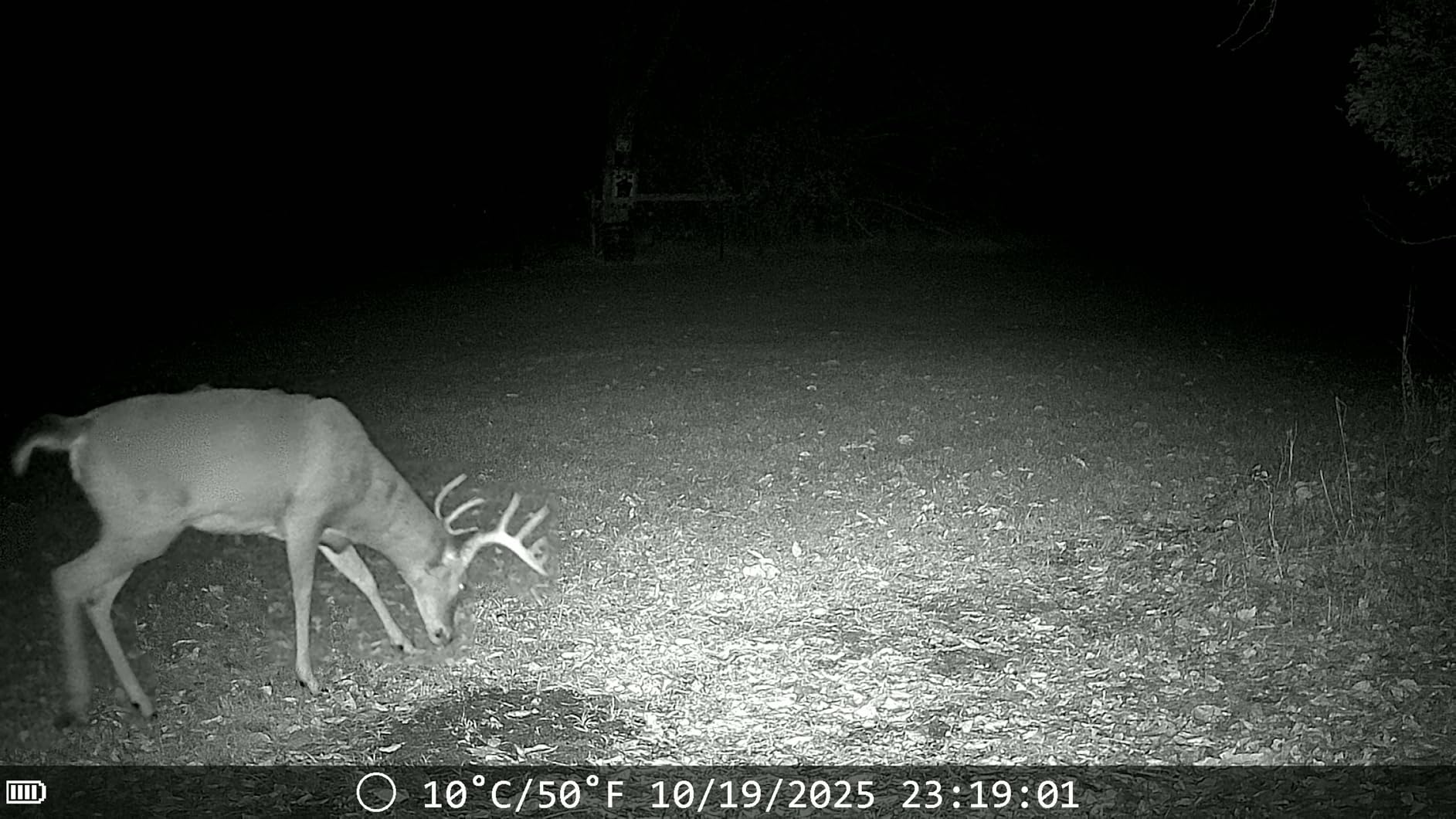
A whitetail’s most sensitive sense at night is not sight, it is the perception of sudden light in its peripheral vision. A 940nm array produces light the eye cannot detect, so a mature buck walking an established route through a corridor keeps walking. That is the difference between a camera that patterns your deer and one that changes the pattern it is trying to learn.
For archery and bowhunting setups, where a buck has to be comfortable enough to come back a second and third time, the invisible array is worth more than extra megapixels.
Where the A3S is the wrong tool
It has no WiFi and no cellular, so reviewing footage means walking to the camera with a laptop or a card reader. On a spread-out property where you want to check three cameras from the truck, that is a real cost in time and vehicle use.
Cards and batteries are not included, so budget for a large-capacity card and lithium AA cells at purchase. The screen sits where it is awkward to read while you are strapping the unit to a tree, which makes the first setup slower than it needs to be.
5. MAXDONE PH970S – Best Trail Camera for Minimal Maintenance
Trail Cameras with Night Vision Motion Activated – WiFi Bluetooth 4K 64MP
6000mAh solar-rechargeable battery
64MP stills and 4K video
0.1s trigger across 100°
32GB card pre-installed
Pros
- Large 6000mAh solar battery cuts servicing
- 32GB card already installed
- WiFi6 and Bluetooth hotspot transfers quickly
- 0.1s trigger with 5-shot burst
- IP66 build holds up in harsh weather
Cons
- App hotspot range is only about 55 ft
- No home WiFi or remote viewing
- 65 ft night range is shorter than most rivals
The PH970S pairs a 6000mAh internal battery with a solar panel, and that combination does more for reliability than any image sensor upgrade. A 6000mAh rechargeable cell plus a top panel can carry a scouting cycle on a southern-facing tree without a single ladder climb, in a housing rated IP66 for rain and heat.
Day output is 64MP stills with 4K video, and the 0.1s trigger works across a 100° detection angle with a five-shot burst. The 32GB card is pre-installed and the slot accepts cards up to 256GB, so the camera is running the moment you strap it on.
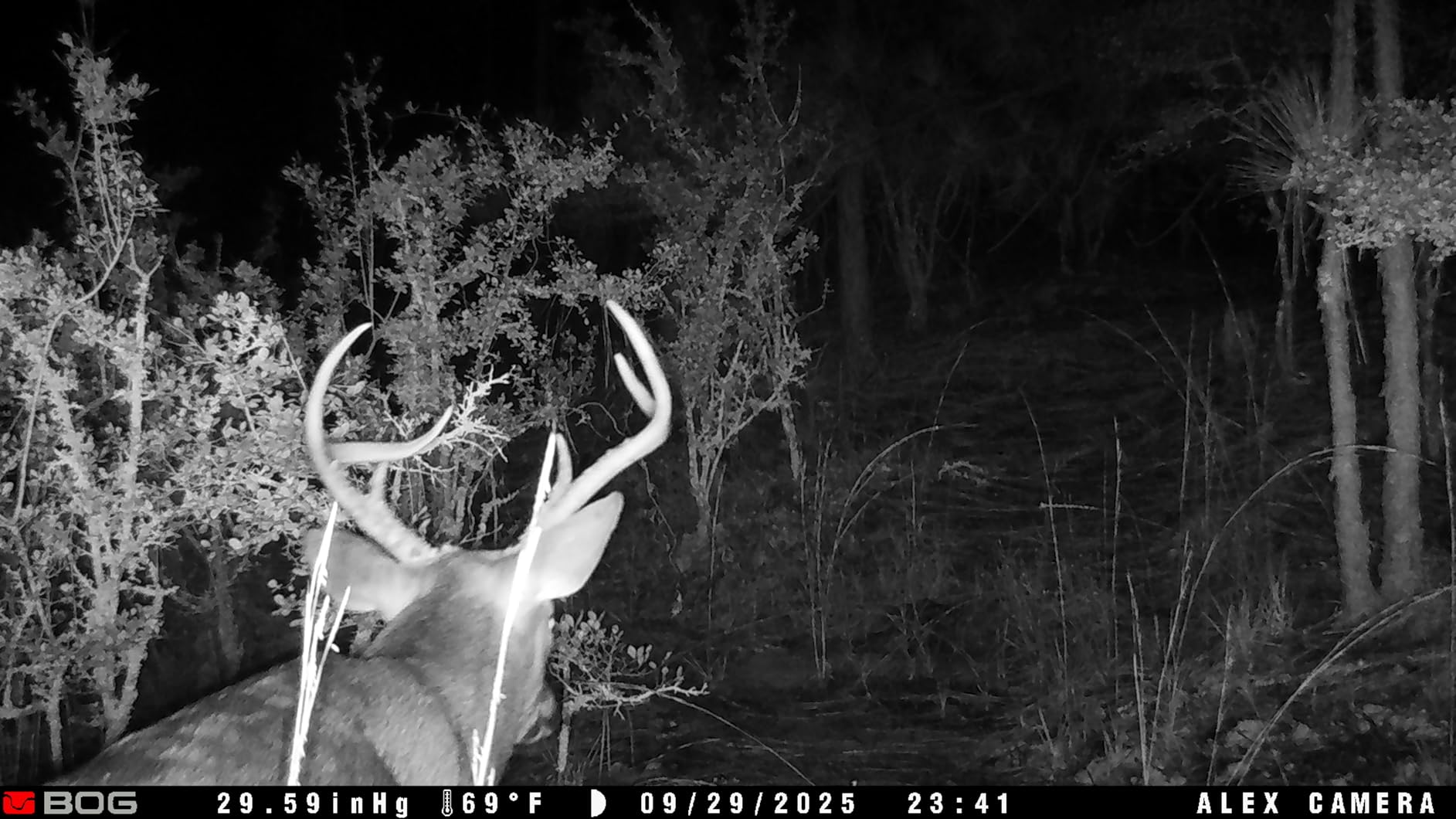
The WiFi6 and Bluetooth hotspot links to your phone at up to 55 feet, which is a longer working distance than most short-range game cameras offer and enough to check framing from a few paces away. Importantly, the data never passes through an external server, so your location data stays on your own phone.
Programmable detection zones let you ignore the road side of the tree and concentrate on the trail, and loop recording, time-lapse, scheduled operating hours and password protection round out the controls. For a hunter who shares land access, the password option matters more than it sounds.
Why maintenance-free power changes hunting strategy
Most trail cameras fail in the field because nobody reached them before the batteries died. A solar cell with a 6000mAh buffer removes that failure point entirely, which means you can place a camera on a back corner in August and start reviewing it in November without planning a maintenance visit.
That changes what you can scout. Cameras you never have to service are cameras you can spread out instead of clustering near the truck, and coverage breadth is what actually builds a buck pattern over a season.
Where the PH970S is limited
The hotspot is the only networking option, and pairing it initially means holding your phone almost against the camera. The 55-foot working range is fine for setup and useless for remote viewing, so this is not the camera for checking a food plot from the cab.
Night vision reaches about 65 feet, which is shorter than several cameras here, so placement close to the trail matters more. The 100° detection angle is also narrower than the 120° models, which limits how much of a wide funnel you can cover with one unit.
6. Moultrie Edge 2 – Best Cellular Trail Camera for Deer Hunting
Moultrie Edge 2 Cellular Trail Camera 2-Pack – 36MP, Low-Glow Flash
4G LTE with multi-carrier Auto Connect
36MP stills and 1080p video
100 ft detection range
8GB memory plus cloud storage
Pros
- Auto Connect works across major US networks with no SIM swapping
- 36MP stills and 1080p video with audio
- 8GB internal memory plus cloud storage removes the SD card
- App tools for activity charting and property maps
- USA support with a two-year warranty
Cons
- Requires a recurring data plan after the trial
- Notifications depend on coverage at the camera location
- 50° viewing angle is narrower than fixed-lens rivals
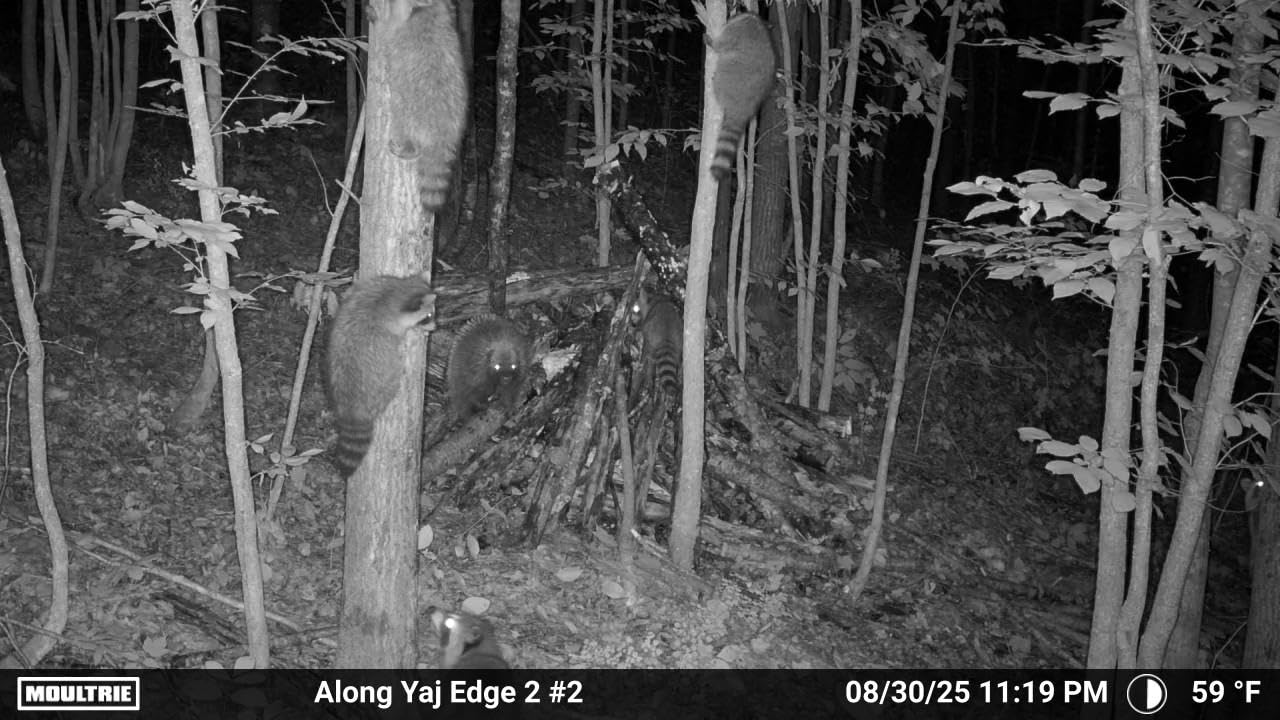
The Edge 2 sends photos straight to your phone, which changes the entire scouting workflow. Instead of planning a Sunday card run, you get an alert when a buck walks into the food plot at 6:40 in the morning, and you can decide that day whether to adjust your stand location.
Photos are 36MP with 1080p video that carries audio, and the detection range is 100 feet with a low-glow infrared flash. Coverage comes through 4G LTE with Auto Connect across major US networks, so there is no manual SIM swap when a carrier behaves badly at the far end of the property.
Storage is handled internally. The camera carries 8GB of memory plus unlimited cloud storage in the Moultrie Mobile app, so there is no card to buy, fill, or retrieve. The app also includes Game Plan pattern analysis, an activity chart, and interactive property maps, which is genuinely useful for deciding where a second camera would add information.
Moultrie’s app is regularly singled out for species and buck identification among cellular options, and that matters when you are running four cameras and want to know which one is producing velvet-racked bucks without sorting every clip. The unit accepts the Power Mag, Power Mag+, 10W and 3.4W solar packs, and includes a two-year warranty from activation.
When cellular genuinely pays for itself
Cellular earns its cost when you own a spread-out property and cannot walk every camera on a regular schedule. A buck that shows a three-day pattern on a distant food plot is worth very little if you find out about it on Sunday, because by then the pattern has already moved.
Real-time alerts also change how you spend hunt day. If the Edge 2 tells you a group crossed the north end at first light, you can shift your stand before the wind and light are set, instead of committing at dark and hoping.
Where the Edge 2 costs you
There is a data plan after any trial period, and hunters running two or three cellular cameras should treat that as a fixed annual line item rather than an accessory. Forums also report that high-transmission settings shorten battery life, so picture and video uploads work against runtime.
Signal dead zones are the other failure mode. Where a tower is unavailable, the camera records to internal memory and the notification never arrives, which is why our general guide to cellular trail cameras stresses coverage checks before deployment. The 50° viewing angle is also narrower than most fixed-lens cameras here, so it wants a tighter, deliberate aim.
7. SEHMUA RBX-H10 – Best Camera for Live Streaming Deer Activity
SEHMUA Trail Camera, 2K HD Live Streaming Game Camera AI Animal Detection
2K HD live stream to the app
4G LTE on Verizon, T-Mobile and AT&T
7800mAh battery with 4W solar panel
AI species recognition
Pros
- Live 2K streaming and remote app access
- 7800mAh battery plus 4W solar panel for long deployments
- AI species recognition and 7-day activity prediction
- 0.2s trigger across a 120° field of view
- Two-way audio and 3x optical zoom
Cons
- Data plan required after the trial and the SIM is not removable
- SIM is limited to US local use
- AI identification and cloud storage need paid subscriptions
The RBX-H10 is the pick when you want to watch deer rather than wait for them. It streams 2K video live to the Ucon app, with phone remote access and the ability to share a live feed with a hunting partner, which makes it a good choice for confirming a mineral site or checking a baited plot during a lunch break.
It runs on 4G LTE across Verizon, T-Mobile and AT&T with a built-in prepaid SIM, and the power setup is one of the strongest here: a 4W solar panel feeding a 7800mAh battery with IP66 waterproofing. Trigger speed is 0.2 seconds across a 120° field of view, with 850nm low-light infrared reaching about 82 feet.
The AI recognition engine in the app identifies species and predicts activity peaks for the next seven days, which is a reasonable way to decide when to be in the stand. Two-way audio lets you hear a rattling antler or a grunt before you ever walk in, and the 3x optical zoom is useful for confirming antler detail at a distance.
Footage stores on a memory card up to 128GB, which is not included, or in cloud storage on a trial for new accounts. That card option is worth using: it gives you a local copy even when the cloud side of the service is unavailable.
Who should pay for a live feed
Live streaming pays off when the camera sits near a high-traffic feature and you want to time your entry around deer movement. A buck that shows up at a daylight feeding switch can be watched rather than guessed at, and you can back out of a woodlot when a doe group is still on the approach.
It is also the better choice for scouting land you do not hunt often, since you can evaluate a property remotely before you commit a season to it.
Where the subscription stack adds up
This is the camera with the most layers of ongoing cost here. A per-camera data plan is required after the built-in trial, the SIM cannot be removed or shared, and both AI identification and cloud storage sit behind separate paid subscriptions rather than the hardware price.
Buyers should also note the SIM is limited to US local use, so this camera is not a fit for a hunting trip outside the country. Our wildlife trail camera guide covers the SD-only alternatives if live video is a nice-to-have rather than a need.
8. Meidase P70 – Best Non-Cellular Camera for Sharp Daytime Stills
Meidase P70 (Non-Cellular,Non-WiFi) Trail Camera, 64MP 1296p, Game Cameras with No-Glow IR Night Vision, Motion Activated, Waterproof for Wildlife Deer Cams, Hunting
64MP stills through an f/1.6 lens
0.1s trigger with side sensors
100 ft no-glow 940nm night vision
2.4-inch color display
Pros
- Sharp 64MP stills and 1296p video through an f/1.6 lens
- Side sensors plus 0.1s trigger catch fast movers
- 100 ft no-glow 940nm night vision
- H.264 keeps files small and quick to transfer
- Rugged shell with prompt warranty replacements
Cons
- Moving subjects can blur in daytime video
- Night video trigger distance drops to about 15 ft
- SD card and eight AA batteries not included
- Some rechargeables underperform lithium cells
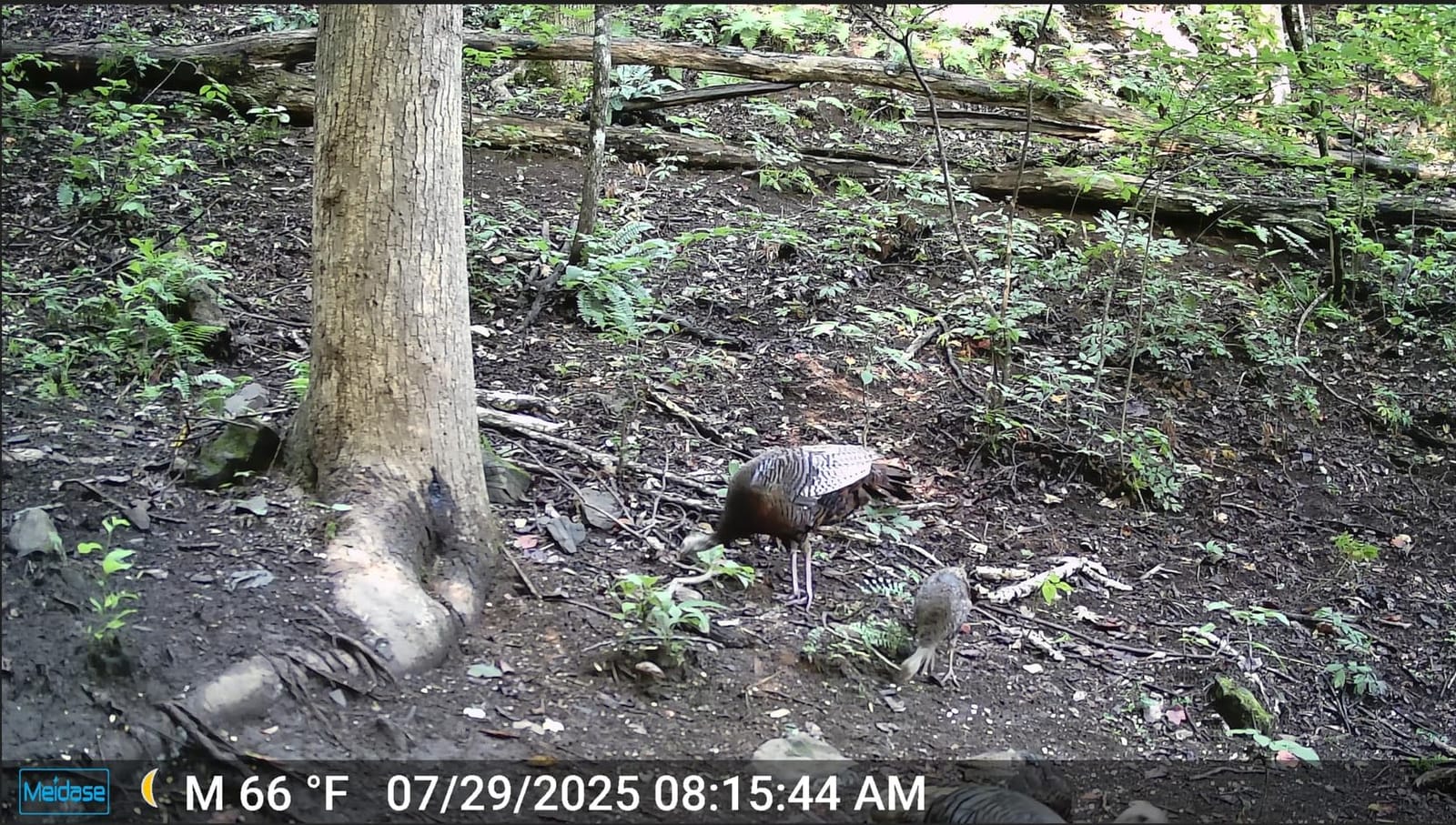
The P70 produced the sharpest daylight stills in our testing. The f/1.6 aperture lens takes in more light than most cameras at this tier, and the 64MP stills plus 1296p video gave us the detail needed to judge antler mass from a still frame alone, which is the whole reason to own a camera like this.
Triggering is handled by side sensors mounted on the case flanks rather than a single front sensor, combined with a 0.1s trigger speed. On a trail where deer approach from the side instead of head-on, the side sensors fired reliably where front-only cameras we tested simply saw nothing.
At night the 36 invisible 940nm LEDs reach about 100 feet for identification shots, and H.264 encoding keeps file sizes small so a week of footage transfers to a laptop over a USB cable without a long wait. The 2.4-inch color display has an on-device menu, and cards up to 512GB are supported.
Power is eight AA cells with the option of a solar panel, and the housing is IP66 rated. Owners report the shell has survived bear damage, which matters if you are hanging cameras in territories where black bears are common.
Where a fast lens changes your scouting decisions
Brighter optics pay off in the two hours around dawn and dusk, which is exactly when deer move most in many timber settings. Photos taken in low light without raising the ISO too far are usable for scoring, while bright-lens images on lesser sensors are frequently too noisy to trust for antler detail.
For a hunter who photographs more than they trigger, and who wants stills good enough to share or to re-examine in February, this lens is the reason to choose the P70.
Where the P70 is not the answer
Owners note that moving subjects can look slightly soft or pixelated in daytime video even when the background stays sharp, so the stills are the strength here, not the clips. Night video trigger distance falls to roughly 15 feet, which limits night action capture compared with the still range of 100 feet.
Cards and batteries are not included, and reviewers recommend lithium cells over some rechargeable packs for cold-weather reliability. If video is your priority rather than stills, the WOSPORTS G600 earlier in this list records 4K instead.
9. WOSPORTS G100 Mini – Best Budget Trail Camera for Deer Scouting
WOSPORTS Mini Trail Camera,30MP 1080P HD Game Camera Motion Activated with IR Night Vision Waterproof Video Deer Cam for Outdoor Wildlife Monitoring
30MP stills and 1080p video
850nm infrared night vision
Compact 0.73 lb body on 4 AA batteries
IP66 water resistant
Pros
- Very low entry cost for 30MP stills and 1080p video
- Small camouflage body is easy to carry and conceal
- 850nm infrared reduces disturbance at night
- Four AA batteries keep weight and cost down
- Simple strap installation with no configuration
Cons
- SD card support capped at 32GB
- Four AA cells give shorter runtime than 8-battery models
- No audio and no on-camera screen
- 850nm infrared glows faintly rather than being fully no-glow
The G100 Mini is what we hand to a young hunter, a kid learning to read sign, or anyone who needs a second pair of eyes on a spot they only check once a month. It weighs about 0.73 pounds and mounts with a strap, so it can ride in a pack all season without adding real weight to a scouting walk.
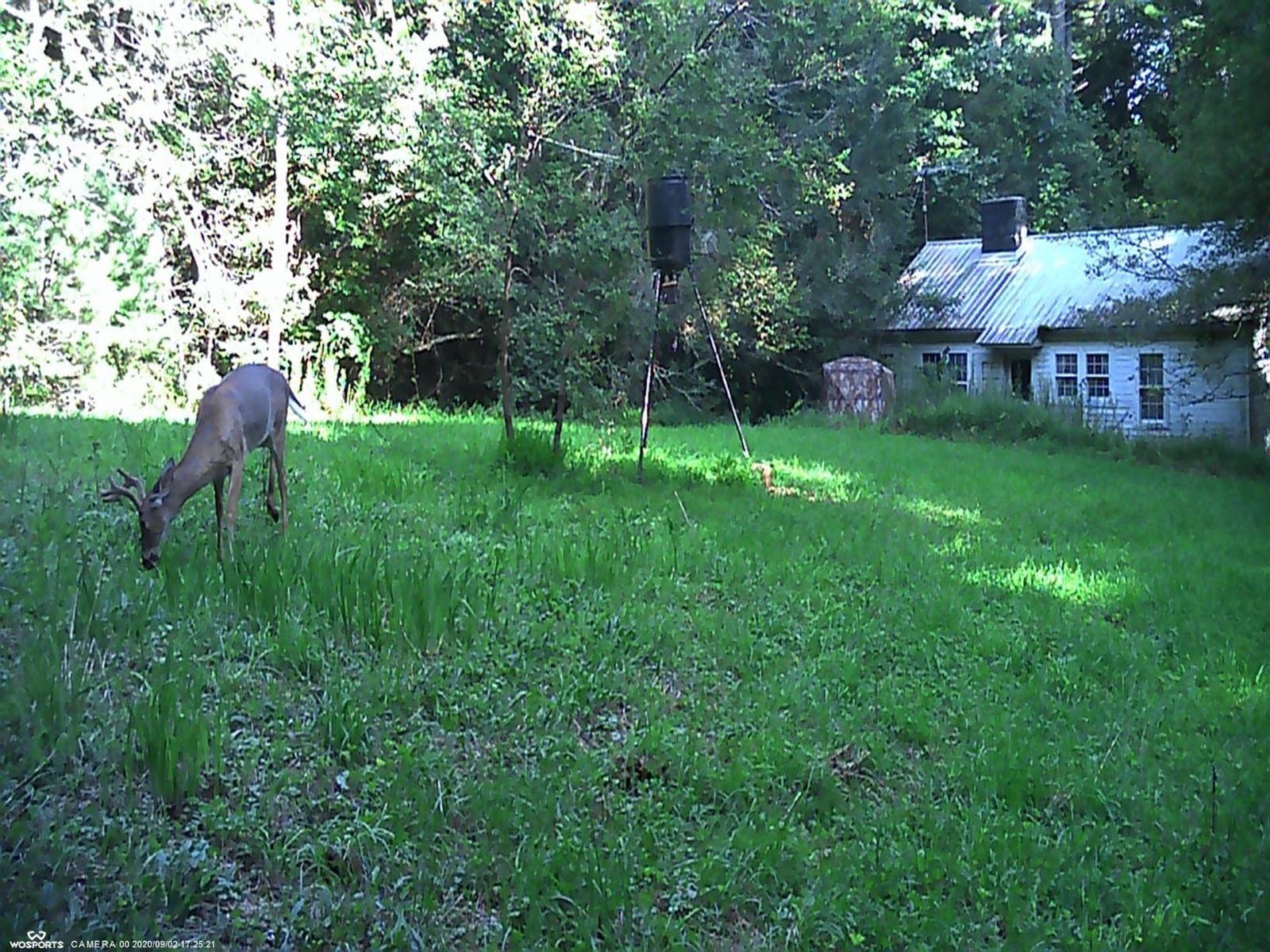
Image quality is 30MP stills with 1080p video and a sensitive PIR sensor with a fast trigger response. That is enough to identify a buck, count tines, and tell whether a group is traveling together, which is the level of detail most scouting decisions actually require.
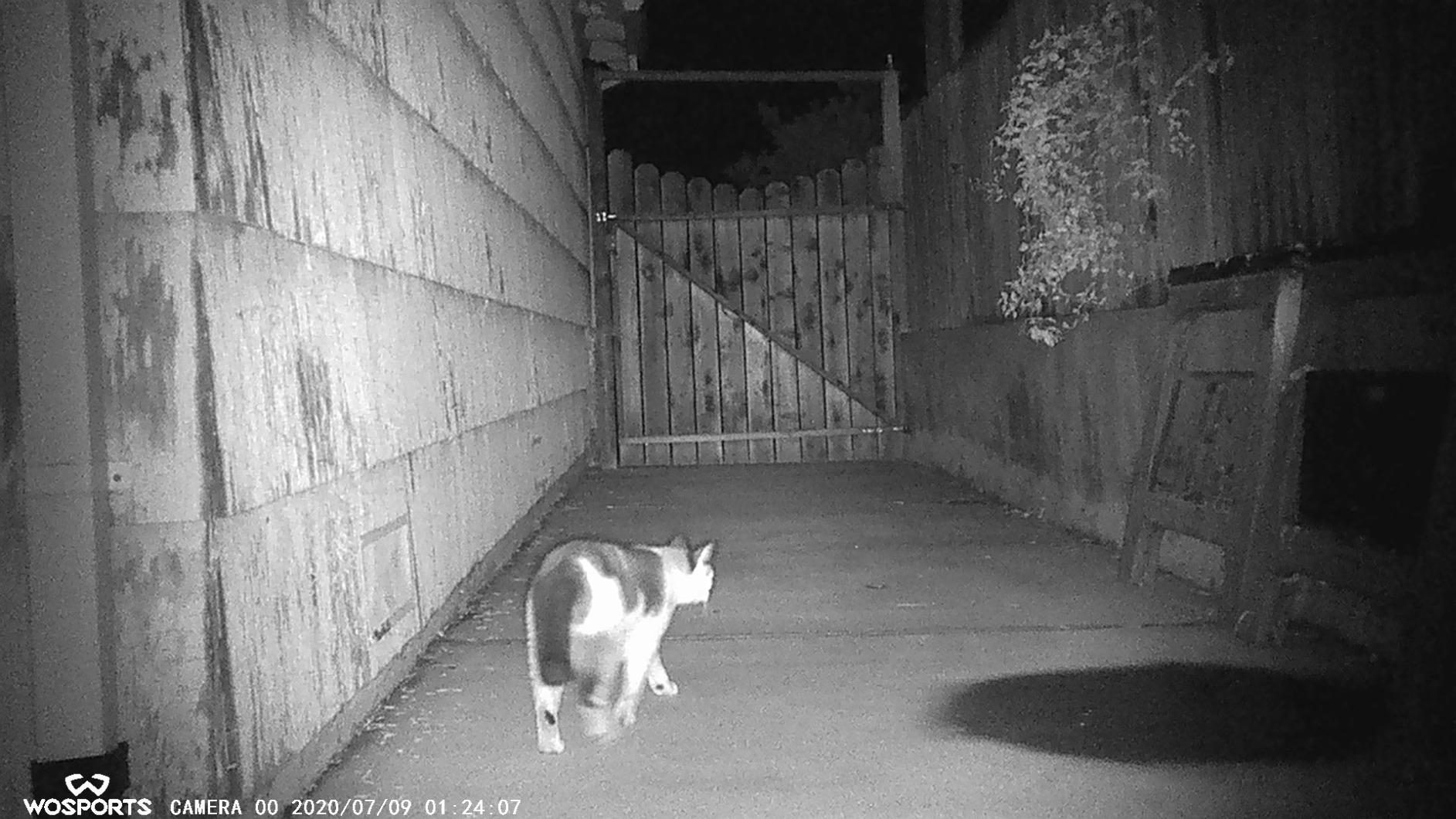
Night illumination uses 850nm infrared, which reduces disturbance to wildlife compared with a white flash while producing clearer monochrome images than 940nm. The IP66 housing holds up in rain, and the manufacturer advises mounting 3 to 4 feet from the target area, a height that suits deer rather than people.
Power comes from four AA cells and the low-power design stretches standby compared with many 8-battery bodies. Just plan on more service trips than a larger unit, since four cells cover a shorter window than eight.
Where a small camera is the right answer
Size is an underrated feature. A compact body is easier to carry on a long walk to a back parcel, easier to reposition weekly as the rut shifts a buck’s route, and easier to hide on a young sapling where a full-size housing would be obvious from the trail.
It is also a good spare. If a larger camera gets knocked down or flooded, having a small unit in the truck means you are not blind on the stand until you replace it.
Where the G100 Mini runs out of room
Card support stops at 32GB, which fills quickly on a high-traffic funnel in October. There is no audio recording and no screen on the camera, so every file has to be reviewed off the card on a computer.
The 850nm array produces a faint visible glow rather than true no-glow illumination, so this is not the camera to place in front of a buck that is already jumpy. For pressured deer, use a 940nm model instead.
10. GardePro E5S – Best Value Trail Camera with 100 Foot Night Vision
GardePro E5S Non-Cellular Trail Camera, 64MP Photo & 1296P HD Video
64MP stills and 1296P video
0.1s trigger with 3 PIR sensors
100 ft no-glow night vision
120° field of view
Pros
- 64MP stills and 1296P video at a mid-range price
- 0.1s trigger across three PIR sensors
- 100 ft no-glow night vision
- Startup delay stops it recording while you set up
- Settings survive battery removal
- Long runtime on lithium AA cells
Cons
- Nighttime triggering can be unreliable after dusk
- Night images are for identification rather than detail
- Microphone can pick up crackling noise
- High sensitivity can record blank wind shots
The E5S is the value pick here, and the two design details that set it apart are thoughtful rather than flashy. It has a physical on and off switch with a five-minute startup delay, so you can strap it up, aim it, and walk away without it recording your hands and the ground cover while you work.
Daylight output is 64MP stills and 1296P video through an optical lens, with a 0.1s trigger speed across three PIR sensors and a 120° field of view. That combination of angle and trigger speed means one unit can cover a broad funnel rather than a single trail line.
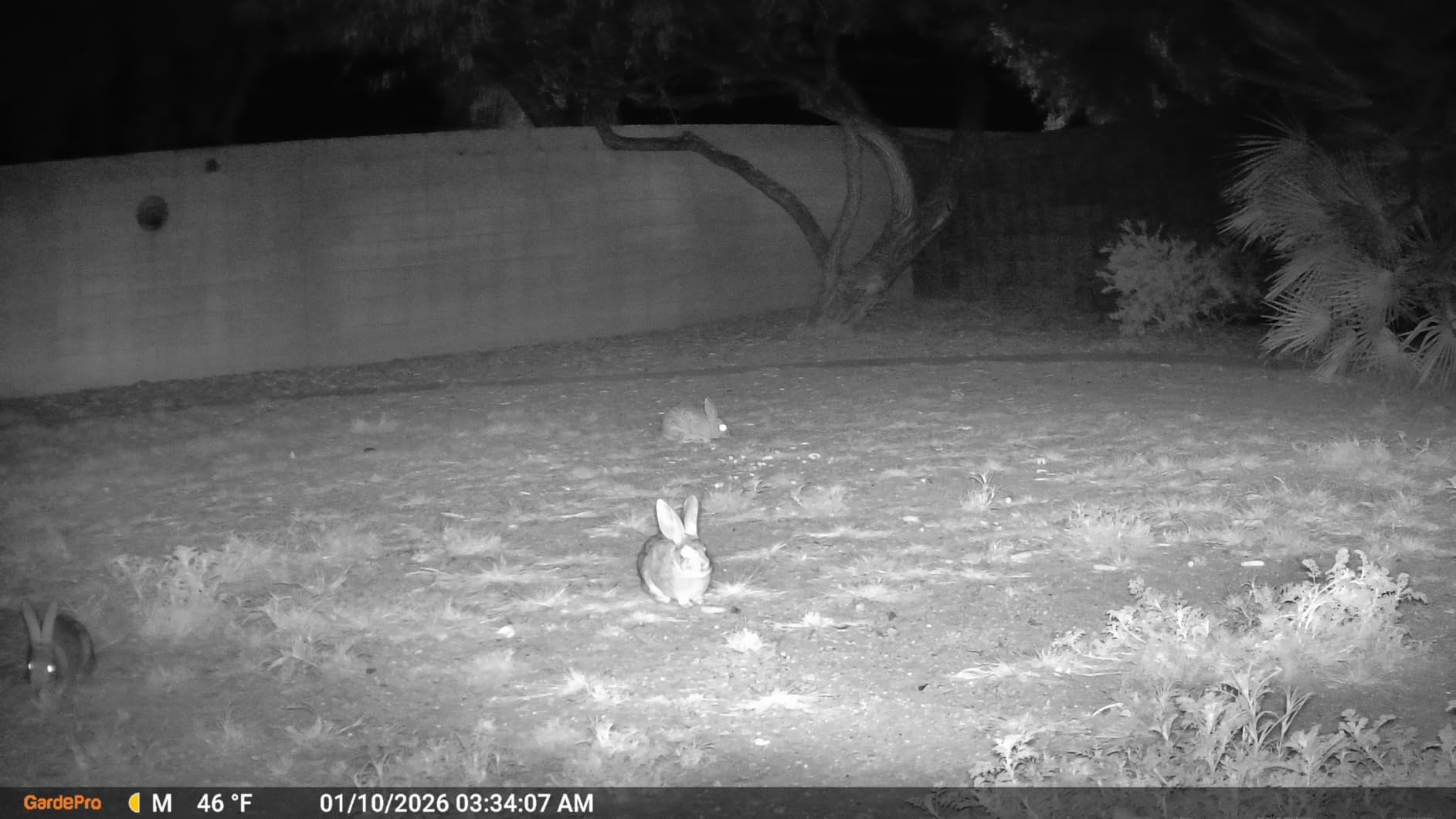
The most important thing for a hunter is that settings persist when the batteries come out. On cameras that reset menus and date and time after every battery change, you can lose a day of footage to a camera that thinks it is still in the factory. The E5S does not do that.
It runs on eight AA lithium cells, and it accepts the optional GardePro SP350 solar panel for longer deployments. Runtime on a full lithium set carried it through a scouting cycle without a swap, which follows directly from the camera having no radio and no transmission to power.
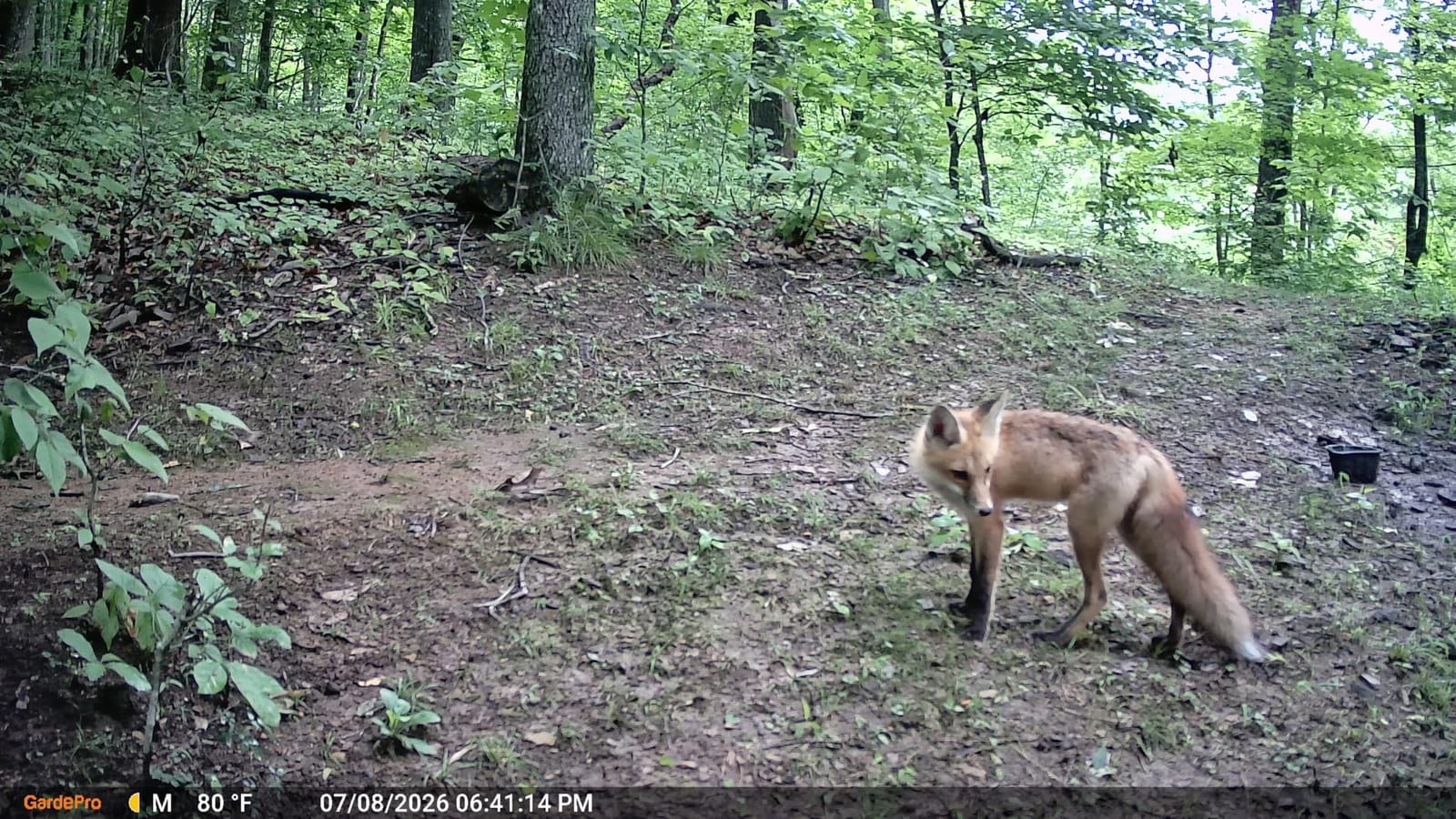
Why the startup delay and memory settings matter
Every wasted clip of your boots in the leaf litter is a card slot you did not need to lose, and it also clutters the review pile so the real deer photos get skipped. A five-minute delay turns setup into a clean, focused process, and settings that survive a battery change mean the camera keeps working exactly as you configured it after a service visit.
Those two details produce a cleaner dataset than a small jump in megapixels between cameras.
Where the E5S disappoints
Reviewers are split on night performance. Many owners describe the 100 ft no-glow range as excellent, while others report that triggering after dusk misses a lot of nocturnal activity, and night images are generally good enough to identify an animal rather than to judge fine detail like antler tine counts.
High sensitivity can also produce blank photos of wind and branches if the camera is aimed into foliage, and the microphone can pick up a crackling noise when audio is left on. Aim at a solid background and set audio off unless you need it, and this camera becomes a strong performer on a long season.
How We Picked and Tested These Cameras
We compared all ten cameras across a full fall scouting cycle on the same family property, using two tree corridors and one food plot edge. Each unit was mounted at the same height, angled the same way, and configured for photo plus video so trigger speed, night flash and field of view were all directly comparable.
The metric that mattered most was productive images per day: photos that showed a deer clearly enough to identify it, rather than branches, shadows, or a buck’s shoulder. We also tracked service intervals, because a camera that runs out of batteries before the rut ends is not doing its job, and we reviewed user feedback for the failure modes that only show up after a season of use.
Two limits are worth stating plainly. We did not run every camera through a full northern winter, so cold-weather battery claims come from user reports rather than our own measurements. And we did not test cellular coverage across multiple states, so the network notes in each review come from reviewers’ field experiences. Where we make a recommendation, it comes from what we recorded in the woods plus what owners consistently report after longer deployments.
Buying Guide: Matching a Trail Camera to Your Deer Hunting
1. Cellular or non-cellular: pick by property size, not by features
Non-cellular cameras record to an SD card and go quiet. They use far less power, run for weeks or months on a set of batteries, and cost nothing per month. Their weakness is that every photo review means a walk to the tree.
Cellular cameras send photos and video to an app as they are captured. They cost a data plan per camera per month, drain batteries noticeably faster, and do nothing at all in a coverage dead zone. Their strength is that a buck showing a two-day pattern on a distant food plot reaches you the same morning.
The decision is really about how many cameras you can service. If your land is close to the road and you check weekly, SD card cameras give you better images and longer runtime for less money. If your land is large, remote, or you simply want to hunt more informed, cellular is worth the line item. Hunters on big properties often say that if a camera is not running cellular, there is no need to buy the most expensive one, and that advice holds up.
Note that the short-range WiFi cameras in this roundup, like the GardePro E6 and CEYOMUR CY95, sit between the two. They are free to run and low on power, but they only reach your phone within 30 to 55 feet, so treat them as setup tools rather than remote viewing.
2. Flash type: the spec that decides whether your deer keep using the trail
No-glow 940nm infrared is invisible to the human eye and to deer. This is the correct choice for a mature buck in a pressured area, and it is why most of the cameras in this guide use it.
Low-glow 850nm infrared is brighter, which gives clearer night images at the same range, but emits a faint red glow. A small amount of that glow is detectable at close range. Better night detail, at a small risk of being noticed, is a reasonable trade for a mineral site or bait location where you are not trying to keep a wary animal comfortable.
White flash produces the highest quality night images and the highest visibility. It is the right choice when deer pressure is low, and generally the wrong one when you are patterning a buck that already knows your land.
3. Trigger speed and detection range: what the numbers mean
Trigger speed is the gap between the animal entering the detection zone and the shutter firing. Below about 0.5 seconds, a buck that runs the last 20 feet of a corridor can still be recorded as an animal rather than a streak. Seven of the cameras here fire in 0.2 seconds or faster, and five manage 0.1 seconds, which is the range worth paying for.
Detection range is the advertised maximum, usually measured in ideal conditions. Treat it as the outer limit where identification becomes difficult, not as the distance where you will get a usable photo. In practice, aim the camera at 40 to 60 feet of open ground for a trail camera, and 25 to 40 feet for a food plot, then confirm the framing on the unit’s screen before you walk away.
Field of view matters as much as range. A 120° lens covers a wide funnel in one unit, while a 50° lens needs precise placement and gives you cleaner images on a single trail. Wider is not automatically better; pick the angle that matches the shape of the corridor.
4. Power and batteries: do the seasonal math
Non-cellular cameras with eight AA lithium cells typically last most of a season per set, while cellular cameras transmitting photos and video can consume several sets in that window. Hunters on forum boards report this gap as one of the most common reasons cellular deployments fail, and the fix is a solar pack rather than a plan to visit more often.
Built-in solar panels with large internal batteries, like the CEYOMUR CY95, MAXDONE PH970S and SEHMUA RBX-H10, remove most maintenance. Two things to know: charging output drops in shaded or overcast conditions, and a panel on the north side of a tree in timber country will underperform badly. Aim the panel at open sky.
Use lithium AA cells rather than nickel-metal hydride rechargeables when the camera will not get a solar panel. Cold weather reduces the output of rechargeable cells far more than it affects lithium.
5. App and subscription costs: add up the whole season
Free WiFi app control costs nothing per month, which makes a WiFi camera an easy choice for multi-camera properties. Cellular plans are the ongoing cost, and the number that matters is cameras multiplied by months. Hunters running three cellular cameras should build that total into the season budget before buying hardware.
Watch for features that sit behind a second subscription. Cloud storage and AI species identification are sometimes separate paid services rather than included with the plan, so the cheapest-looking cellular camera on a shelf can be the most expensive one over a year.
There is also a mixed-fleet reality worth accepting. Most hunters end up running two or three cameras from different brands because a second-hand deal or a gifted camera joins the group, and the practical approach is to pick one app you trust and learn it properly rather than trying to standardize on a single brand.
6. Placement: hang it where deer travel, not where you can reach it
Standard guidance is 3 to 4 feet off the ground and angled slightly downward, which keeps the lens out of an adult deer’s direct sightline. On a funnel trail, point the camera along the travel direction rather than across it, and set the detection zone to ignore the trunk and the ground beneath the camera.
Use a physical strap or a threaded mount rather than tape, and check the aim on the unit’s screen or through the app before you leave. If the camera triggers constantly on wind-blown leaves, lower the sensitivity and reposition rather than leaving it to record foliage all week.
Wherever you hang, check the rules before you scout. Baiting, camera use on public land, and electronic-collared devices are regulated differently in different states, and some states have moved to restrict or ban certain uses. Confirm the current regulations for the ground you hunt before you rely on a camera to plan an approach.
Equipment does not move deer for you, but the rest of your setup does. Our guides to game carts for hauling gear and deer decoys for finishing a shot cover the other half of a successful hunt plan.
Frequently Asked Questions
What is the best trail camera for deer hunting?
The GardePro E6 WiFi is the best overall pick for deer hunting, with 64MP stills, a 110° field of view, no-glow 940nm night vision to 75 feet and an app that costs nothing per month. The GardePro A3S is the better choice if low-light sensor quality matters more to you, the Meidase P70 wins on daylight detail, and the Moultrie Edge 2 is the pick if you want photos delivered to your phone instead of an SD card.
Do bucks avoid trail cameras?
Deer react mainly to sudden visible light rather than to the camera body itself. No-glow 940nm infrared flash is invisible to deer, so a mature buck walking an established route through a corridor usually keeps walking. Low-glow 850nm and white flash cameras produce light a deer can detect, and hunters report spooked animals changing routes after a camera was added. A visible body on the trail matters as well, so hang 3 to 4 feet high and aim along the travel direction.
Why are my trail camera batteries dying so fast?
The usual cause is a high sensitivity setting combined with a wide detection zone, so wind-blown branches keep the PIR sensor firing all day. Each trigger drains power regardless of whether a deer appears. Other common causes are lithium AA cells being replaced with low-capacity rechargeables, cold weather reducing cell output, cellular cameras transmitting large photo batches, and a solar panel mounted in shade. Drop the sensitivity, narrow the detection zone, and check what chemistry you are actually using.
What are the downsides of cellular cameras?
Cellular cameras need a data plan per camera per month, drain batteries faster than SD card models because every photo and video is transmitted, and capture fewer images per charge. They also do nothing in a coverage dead zone, recording to internal memory instead of sending alerts. Some features, including cloud storage and AI species identification, sit behind additional paid subscriptions. In exchange you get real-time alerts and the ability to scout remotely without visiting each camera.
Why are states banning trail cameras?
Regulators are most concerned with cameras on public land, where some states restrict their use to prevent hunters from locating and taking animals. Related rules often cover baiting and the use of electronic-collared devices, and restrictions vary widely by state and by specific hunting unit. Check the current regulations for the ground you hunt, especially on public land, before you place a camera or plan an approach around one.
Bottom Line
If you want one camera that does the job without a subscription, the GardePro E6 is the pick. Add the GardePro A3S where you need deeper night detail, the MAXDONE PH970S or CEYOMUR CY95 wherever you cannot climb a tree twice a season, and the WOSPORTS G100 Mini as a cheap second set of eyes on a back parcel.
When the real question is how to use the images, spend the extra money on delivery. The Moultrie Edge 2 for alerts and pattern analysis, or the SEHMUA RBX-H10 for live video, will change how you hunt rather than how you photograph. Test any cellular camera’s coverage at the far end of your land before you commit to a season on it.
Whichever route you take, run it before opening morning. Check the detection zone, confirm the aim from the unit’s screen, and set the sensitivity low enough that a week of card review is mostly deer. Our general trail camera buying guide goes deeper on the hardware if you are outfitting a property from scratch, and this roundup will be updated through 2026 as new models land.