
An electric golf caddy is a three-wheeled, battery-powered walking cart that carries your bag and drives itself across the fairway, taking the pushing work that tires out older golfers. The best electric golf caddies for seniors combine a frame light enough to lift into a car, a wide wheelbase that will not tip on uneven ground, and a lithium battery that finishes two full rounds without a charge. A handheld remote lets you send the bag ahead while you keep walking at your own pace, so you stay on the course with your regular playing partners instead of riding in a cart.
That motivation came up over and over in the owner reviews we read. One golfer on r/golf put it plainly: love to walk, but carrying clubs is getting more tiring. Another described how the cart means you never have to walk back to your bag. That is the whole point. These are not ride-on vehicles. You walk 18 holes, you swing, and the machine handles the weight.
We spent October 2026 reading spec sheets, warranty terms and owner reviews across eight of the most-reviewed electric caddies on the market, then sorted them against the questions senior buyers actually ask. The shortlist covers the lightest frame, the most stable wheelbase, the strongest safety package and the best three-year warranty in the group. We also flag the two carts heavy enough to be a genuine lifting problem, because no amount of clever engineering fixes a 40-pound frame at the tailgate.
If you want the wider field beyond the senior lens, our general electric golf caddy roundup and electric golf trolley picks cover the category from a golfer-general point of view.
Table of Contents
Top 3 Picks for the Best Electric Golf Caddies for Seniors in October

MGI Zip Navigator All Terrain
- 36 hole lithium battery
- Twin 230W motors
- Remote control
- 3 year warranty

MGI Zip X1
- 26.7 lbs with battery
- 20 speed settings
- Removable lithium battery
- 3 year warranty

KVV Electric Push Cart
- 30.5 inch rear wheelbase
- Remote plus manual mode
- 18+ hole battery
- 2 year warranty
The Best Electric Golf Caddies for Seniors, Compared in 2026
| Product | Specifications | Action |
|---|---|---|
| MGI Zip Navigator All Terrain |
|
Check Latest Price |
| MGI Zip X1 |
|
Check Latest Price |
| KVV Electric Push Cart |
|
Check Latest Price |
 MGI Zip X5 MGI Zip X5 |
|
Check Latest Price |
 Motocaddy M7 Remote Motocaddy M7 Remote |
|
Check Latest Price |
 Wingscaddy Max300 Wingscaddy Max300 |
|
Check Latest Price |
 Cart-Tek Yellowstone Cart-Tek Yellowstone |
|
Check Latest Price |
 Alphard Cybercart Alphard Cybercart |
|
Check Latest Price |
Caddy or cart: which one do you actually need?
Search results mix two very different machines, and picking the wrong one wastes a lot of money. An electric golf caddy is a walking cart. You stay on your feet, the cart carries the bag, and a course marshal will not ask you anything.
An electric golf cart is a ride-on vehicle with a seat, roof and windshield. It is fantastic if you cannot walk 18 holes, but most courses require a separate fee, a handicap or a doctor note, and the physics of getting one down a ramp or into a storage bay is a different problem altogether. Several of the seniors in our research are shopping ride-on carts too, often used, and that is a legitimate choice for genuine mobility limits. Just do not buy a caddy expecting a seat.
A manual push cart sits in the middle. It is the cheapest way to take weight off your back, and if your only problem is a tired shoulder, it may be all you need. You can see how the seniors frame this trade-off in our mobility and independence picks for seniors.
1. MGI Zip Navigator All Terrain: the all-round pick
MGI Zip Navigator All Terrain Electric Golf Cart – 36 Hole Lithium Battery – Remote Control – Accessories Included (Drink, Umbrella, & GPS-Phone Holder), Black
37.3 lbs with battery
36 holes per charge
Twin 230W motors
3 year warranty
Pros
- Largest owner review base in this group at 300 reviews
- Removable Click and Go lithium battery
- Zip Fold frame is 25 percent smaller than older MGI frames
- Adjustable T-bar handle suits different heights
- Remote plus nine speed settings
Cons
- Heaviest lift of the MGI models at 37.3 lbs with battery
- Remote rear wheel inversion needed for the tightest fold
- 9 speed steps take practice to dial in
The Zip Navigator is the one I would put in front of most senior buyers, and the reason is the review base rather than a single headline spec. Three hundred owners have posted a 4.3 average, which is the largest sample in this group, and the pattern in those reviews is consistent. People keep walking 18 holes without the same evening collapse.
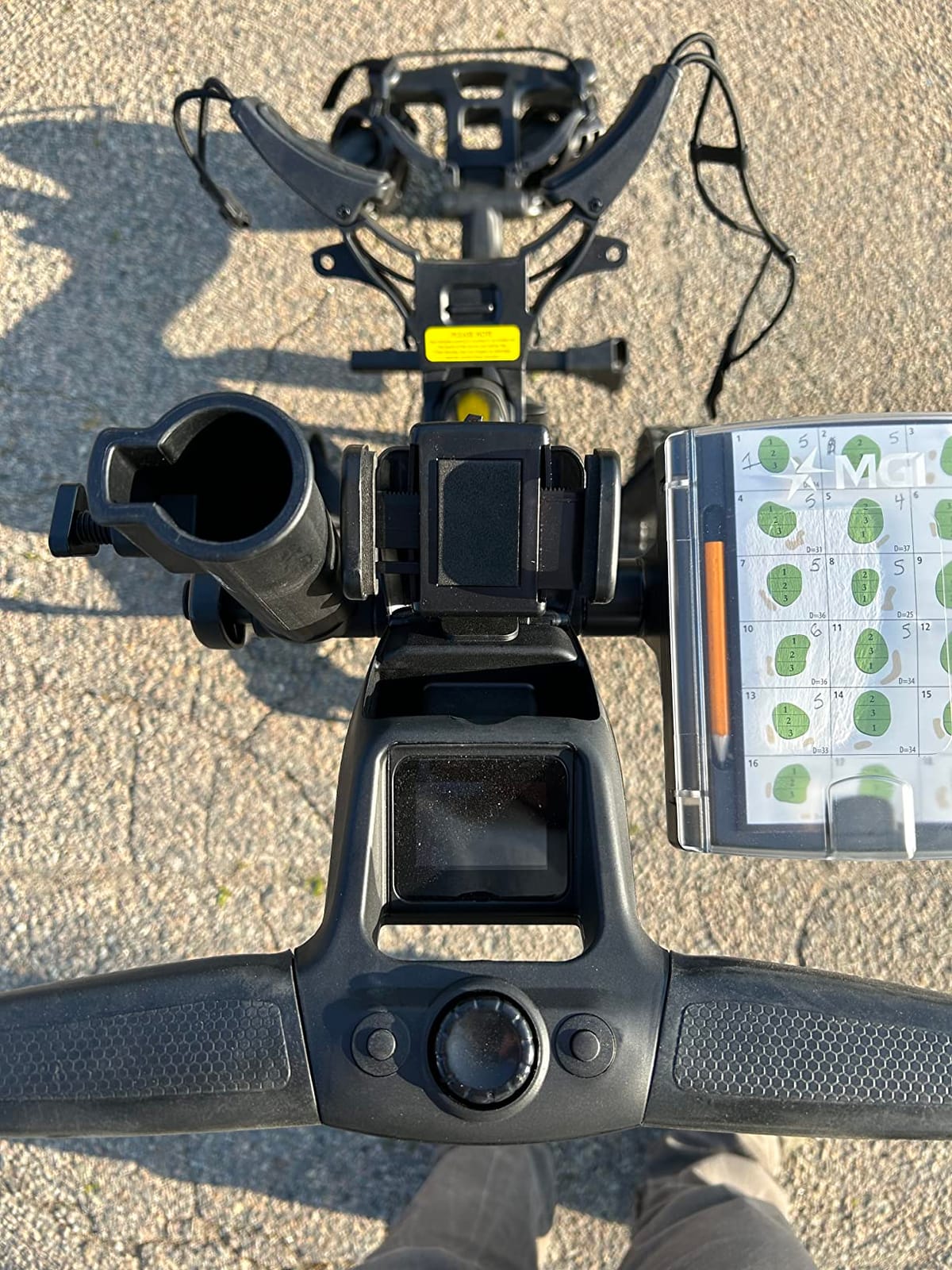
Its twin 230 watt motors move quietly enough that owners describe the ride as smooth and near-silent. Distance modes A and B plus an odometer sit on the digital electronics, and four colour-coded battery levels mean you can glance at the handle and know where you stand before you tee off.
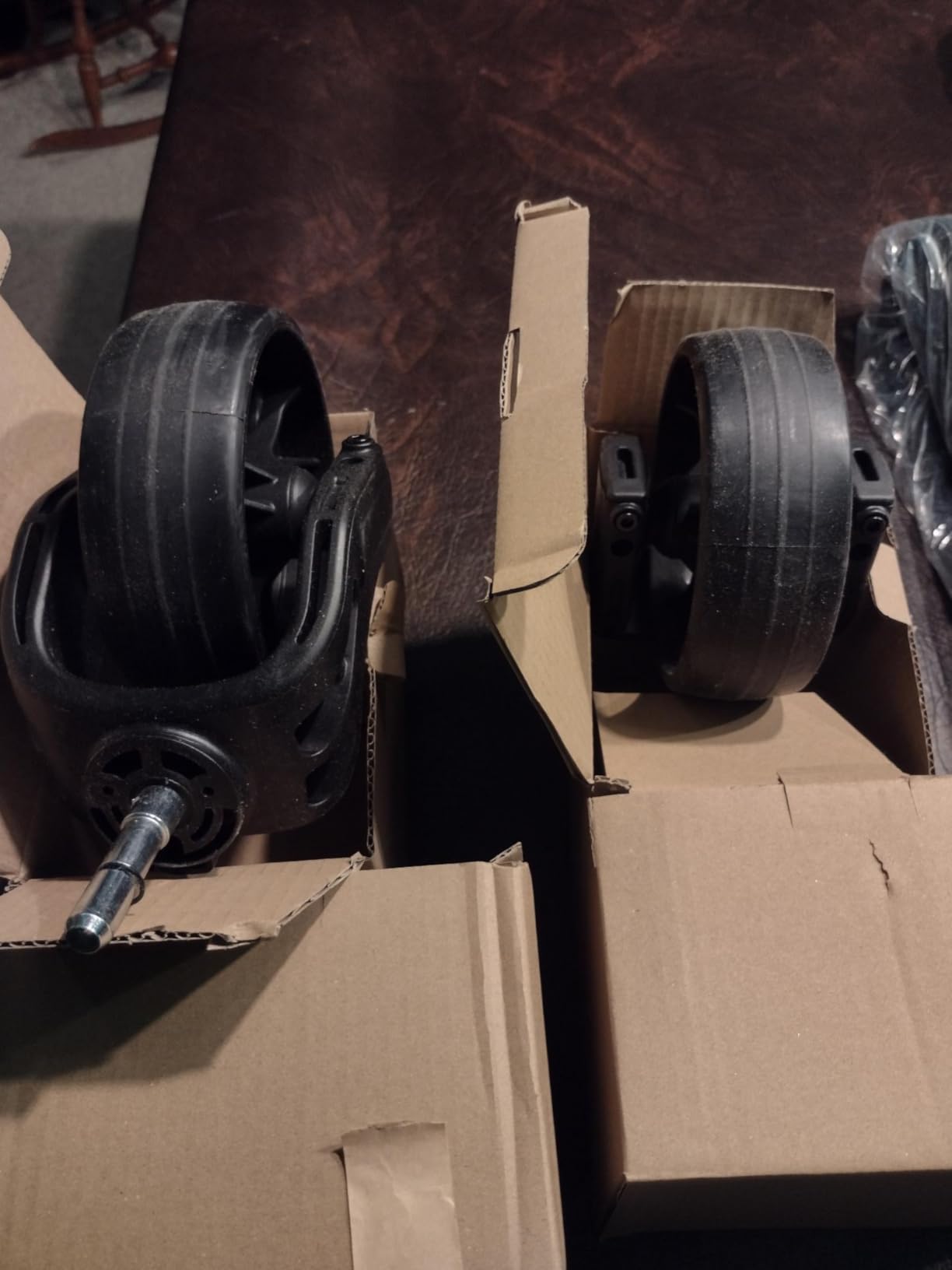
The 36-hole lithium pack runs off the Click and Go system, so the battery comes off the frame and you carry just the pack inside to charge. For a senior that is a meaningful detail. The frame still weighs 30.91 pounds on its own, but the split means you are not hauling the whole cart through a car park at the end of a hot afternoon.
Zip Fold Technology makes the frame 12 percent lighter and 25 percent smaller than previous MGI folding frames, and the folded size is listed at 27.55 by 18.5 by 16.5 inches with the rear wheels inverted. The fully adjustable T-bar handle with a soft rubber grip is the kind of ergonomic detail that matters more with age than any spec sheet suggests.
Check the lift and the warranty before you commit
Thirty-seven pounds is heavy. If you are loading into a sedan boot without a ramp or a second pair of hands, this frame is at the edge of what a lot of people can manage safely, and no reviewer should pretend otherwise. Owners most often name total weight as the single biggest drawback of this cart.
Set against that, the 3 year MGI warranty covers manufacturing defects on all parts including the lithium battery and the charger, provided you register within 30 days. That battery coverage is unusual in this category and it removes a real long-term worry.
Who it suits and who it does not
This suits a senior who wants a remote, wants a proven battery, and will have help or a ramp at the tailgate. It also suits anyone playing two rounds in a day on one charge, since 36 holes means the second round is not a gamble.
It does not suit a golfer who has to lift the cart solo every week, or someone who wants a simple on and off control. The nine speed settings are genuinely good on hills, but they are more dial-turning than a single button, and a few owners describe the learning curve as steeper than expected.
2. MGI Zip X1: the lightest lift in the group
MGI Zip X1 Electric Golf Cart – 36 Hole Battery – (GPS Phone)
26.7 lbs with battery
22.05 lbs without battery
36 holes per charge
3 year warranty
Pros
- Lightest published cart weight here at 26.7 lbs with the battery fitted
- Battery detaches for charging and for carrying separately
- 20 speed settings give very fine control of pace
- Rear wheels tuck inward for a compact fold
- MGI service plus free replacement parts and DIY videos
Cons
- No parking brake so it can roll on a slope in wind
- Rear mounted battery can tip the cart on steep uphill grades
- 20 stepped speeds can skip past the pace you want
The Zip X1 is the answer to the question we hear most from older golfers, which is can I lift this by myself. At 26.72 pounds with the battery installed and 22.05 pounds without it, this is the lightest cart weight published by any of the eight models we reviewed. It is roughly ten pounds lighter than the heaviest frames in the set.
It is a hands-on cart rather than a remote one. You walk beside it, thumb on the start-stop dial, and the 2.5 inch LCD display shows you the speed. Twenty speed settings sound excessive until you are walking a long slope at a steady pace and realise you can match the motor to your stride almost exactly.
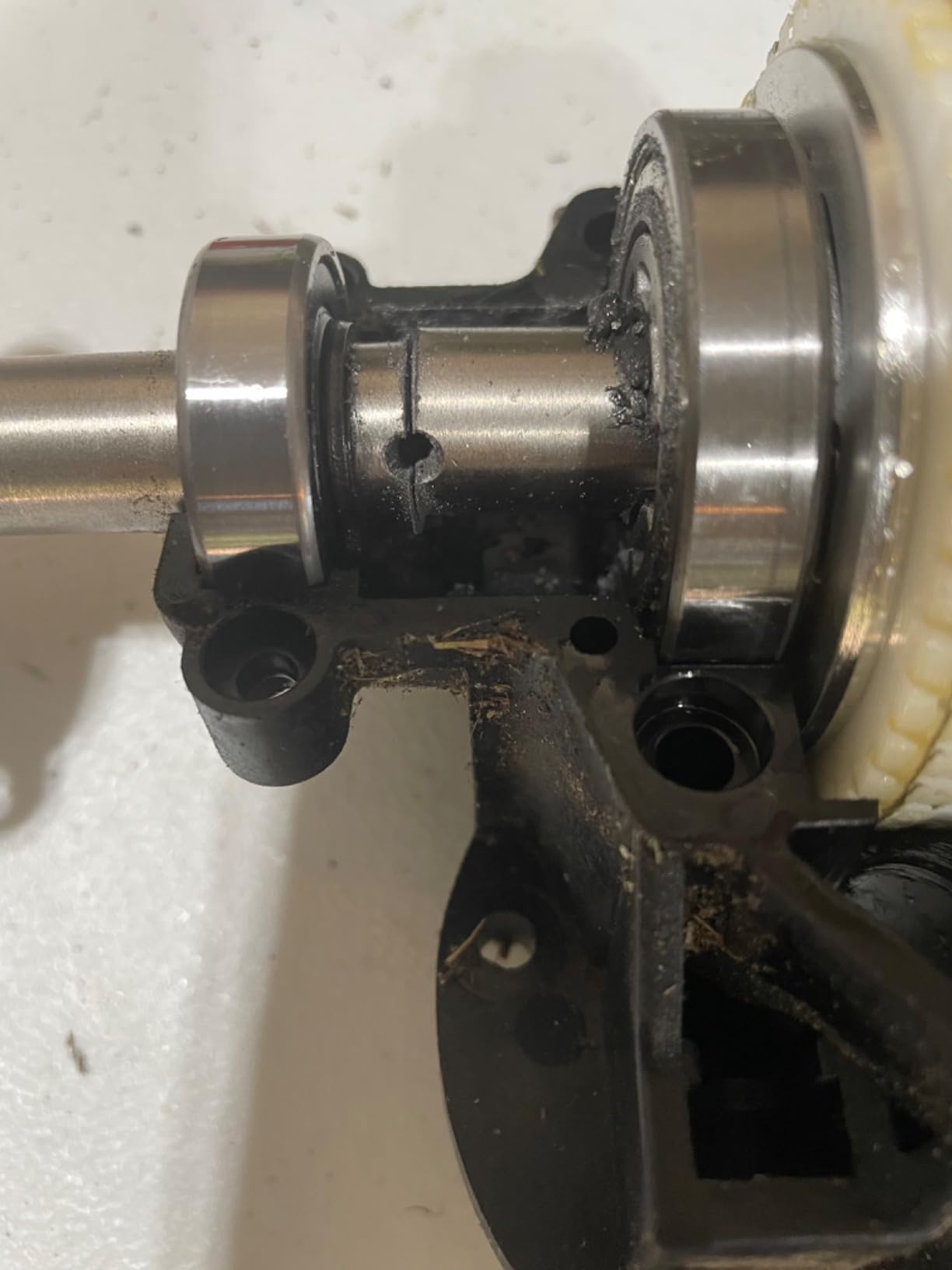
Owner reviews aged to this product are unusually warm. Senior golfers describe the X1 as the reason they can keep walking 18 holes, and several rate it above the 4.3 average. A fixed front wheel, standard rear wheels and a fourth wheel stabilizer handle ordinary parkland fine.
The Click and Go lithium battery comes off for charging, so the cart itself can stay in the garage while the pack sits near a socket. Rear wheels tuck inward, and the listed dimensions are 31.5 by 23.2 by 40.9 inches in packaging, which packs into a normal hatchback without drama.
Know what you give up by skipping the remote
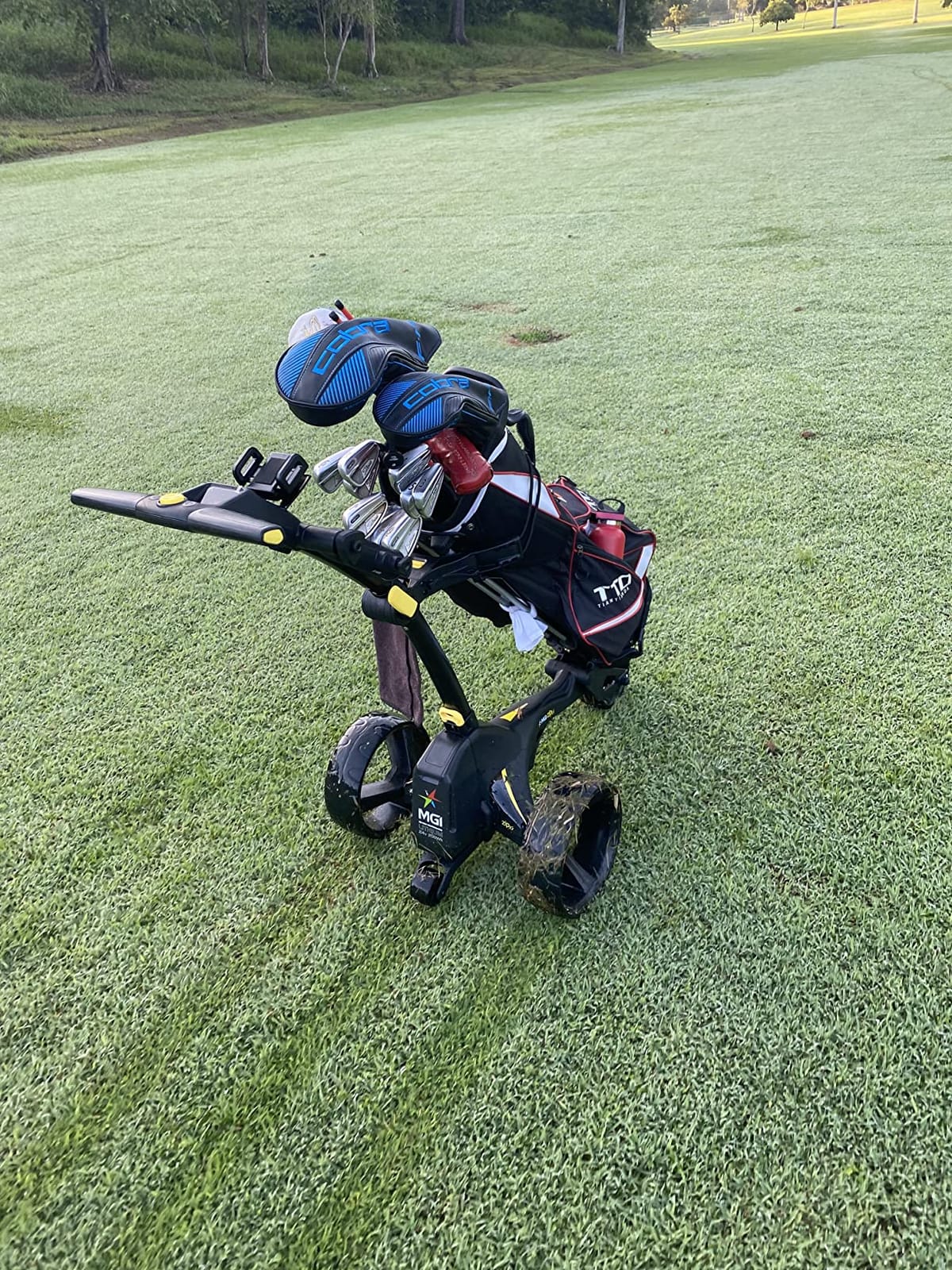
There is no remote and no parking brake on this model. That is the trade. On a green with a crosswind, a cart without a brake can drift, and more than one owner mentions rolling away on a slope. If your home course is hilly and exposed, factor that in before you save the weight.
The second thing to know is that the battery sits at the rear behind the axle. Reviewers report that this rearward weight can make the cart tip on steep uphill grades. Ordinary slopes are fine. Very steep uphill grades are where you should walk it manually in freewheel rather than trust the motor.
Who it suits and who it does not
This suits a senior who is fit enough to walk but tired of carrying 30 pounds of clubs, wants the lightest honest option, and prefers steering to a remote. A person with limited grip strength may find the handle dial easier to work than small buttons, or harder, so try it if you can.
It does not suit someone who wants to send the bag ahead while walking or play a course with serious exposed slopes and no patience for a runaway cart. Owners also rate the bundled cup holder and scorecard holder as loosely made, which is a small irritation rather than a dealbreaker.
3. KVV Electric Push Cart: the widest wheelbase and the smallest fold
KVV Electric Golf Push Cart with Remote Control, Smallest Folding Size, Suitable for All Terrains, Lightweight and Super Compact Electric Golf Cart
27.9 lbs
30.5 inch rear wheelbase
Folds to 17.5 x 18.7 x 22 inches
2 year warranty
Pros
- Widest published rear wheelbase at 30.5 inches for uneven ground
- Folds to the smallest footprint in this group
- Aluminum frame keeps weight at 27.9 pounds
- Dual mode so you can push it manually when the battery is flat
- USB port in the handle and height adjustable handle
Cons
- Remote can surge quickly in tight spaces until you get used to it
- Turning is jerky because one wheel stops to turn
- Switching between remote and manual locks the rear wheels
Stability is the reason to look at this cart. The rear wheelbase is 30.5 inches, and every other model in this group either does not publish a wheelbase or is built on a narrower frame. For a golfer whose balance is not what it was, a wide footprint on wet grass and sloping fairways is worth more than another two holes of battery.
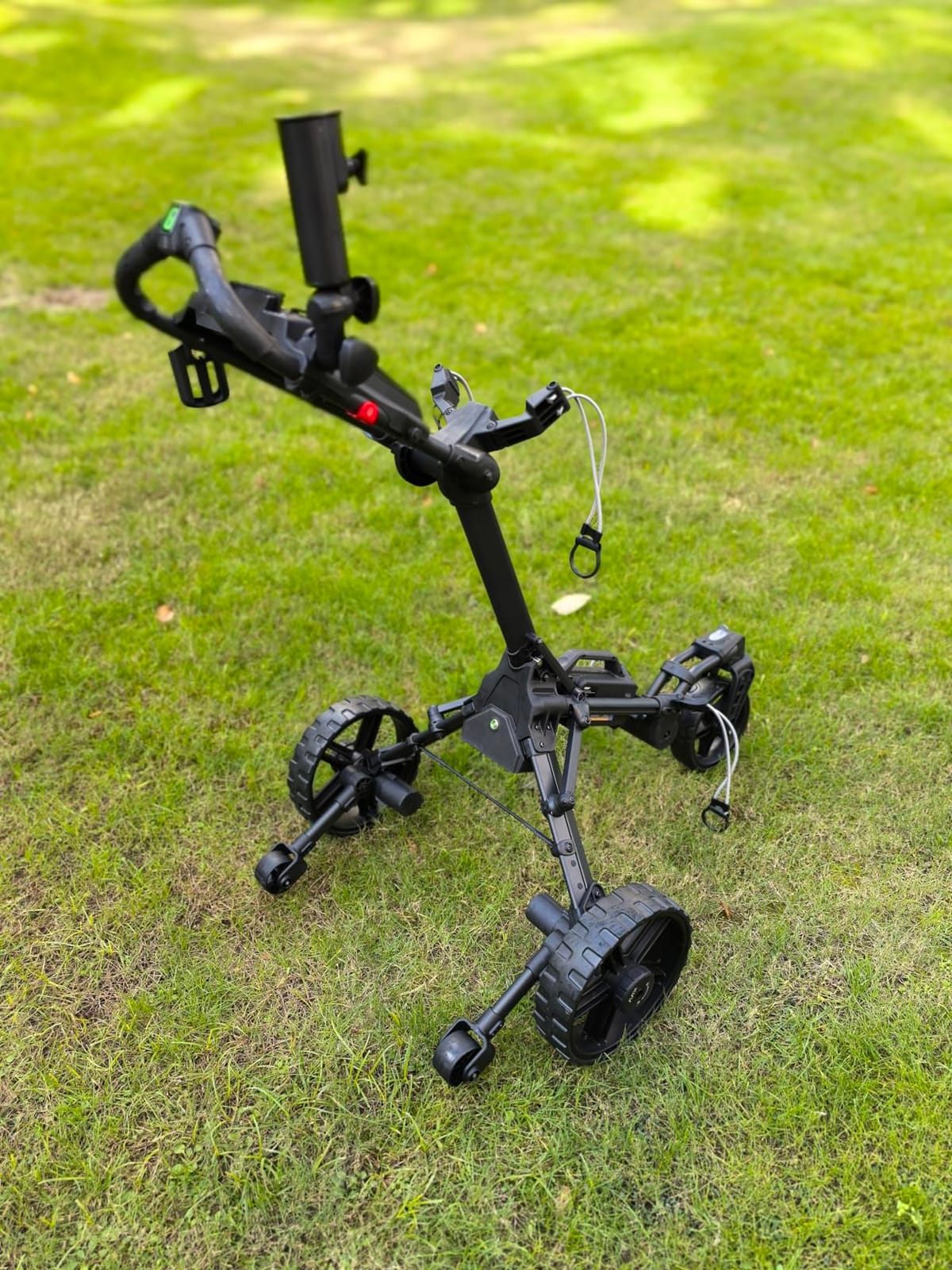
It is also one of the smallest folds here. The frame packs down to 17.5 by 18.7 by 22 inches, which fits a small saloon boot or the hold of a hire car with the golf bag alongside. At 27.9 pounds in an aluminum frame, it is the second lightest cart weight published in the set.
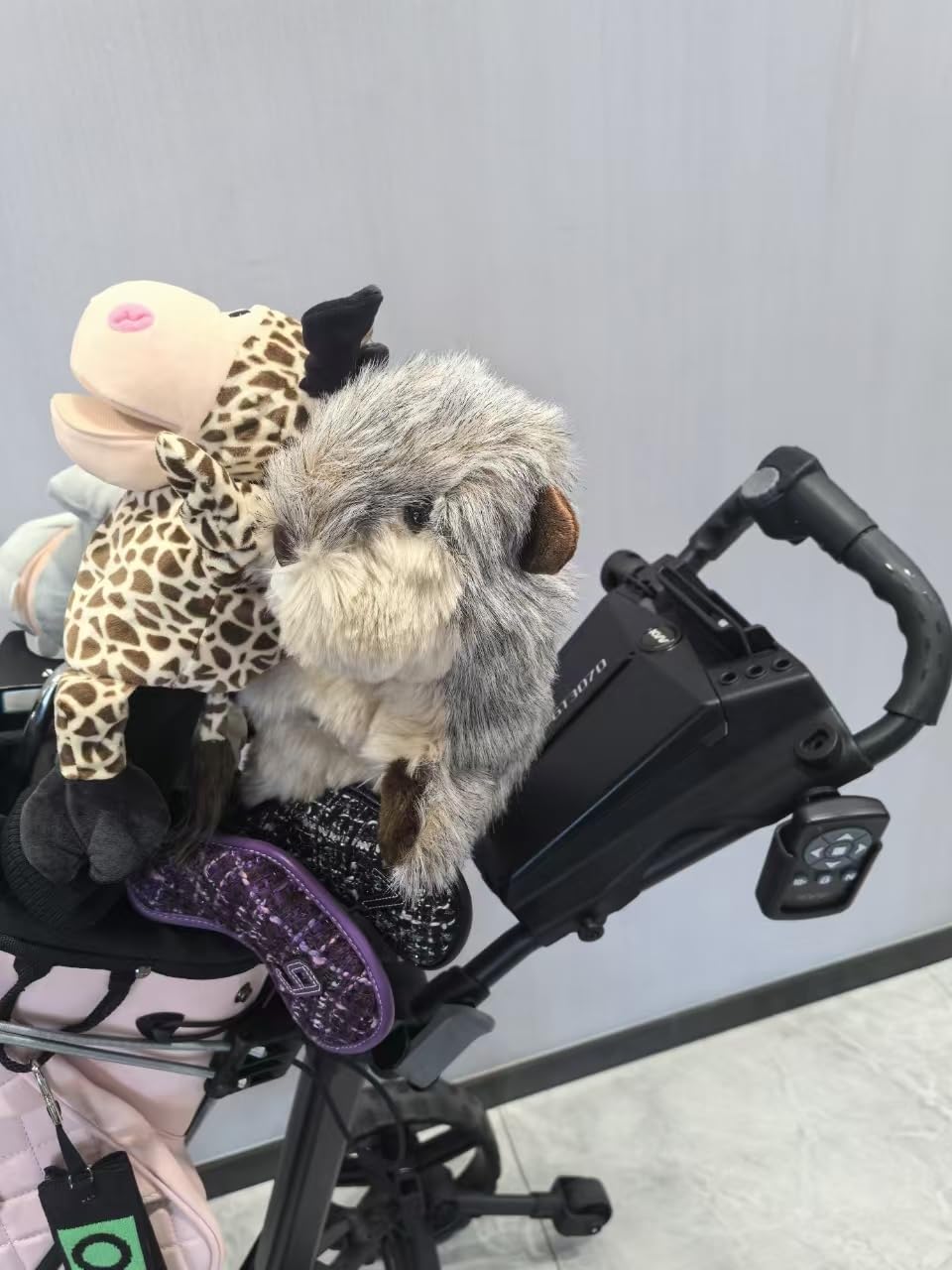
The remote offers nine speed settings, and there is a dual mode design so the cart also works as a manual push cart. Owners over 60 describe the KVV as saving their back and shoulders and letting them keep walking hilly courses. That is exactly the outcome this article is about.
Two training wheels and a straight line tracker are fitted for terrain stability, and the 360 degree rotating front wheel with an adjustable height handle handles uneven ground better than a fixed caster. Customer support also comes in for praise, with owners reporting a faulty speed knob replaced within days.
Practice the remote before your first round
The commonest complaint here is that the remote can accelerate quickly, which feels out of control in a confined space until you get used to the throttle. It also turns jerkily because one wheel stops while the other keeps going. Both are handling habits rather than faults, and both disappear after a few holes.
Remote pairing can be finicky on first use, so read the instructions or watch the support video before you are standing on the first tee. The battery is rated for 18 holes or more, which is one round plus a few stray holes, not the two-round capacity of the MGI models.
Who it suits and who it does not
This suits a senior who plays on uneven, hilly or slightly rough courses, wants the smallest fold available, and wants a cart that still works if the battery dies. The insulated cooler bag, umbrella holder, cup holder and carry bag in the box add real value on a warm day.
It does not suit someone who plays long days of 36 holes and refuses to carry a charger, or anyone who wants a parking brake, because there is not one listed. The 2 year manufacturer warranty is also shorter than the 3 years MGI offers.
4. MGI Zip X5: the calmest ride on hilly courses
MGI Zip X5 Electric Golf Cart – 36 Hole Battery – (Drink, Umbrella, & GPS Phone)
30.57 lbs with battery
Electronic parking brake
Downhill speed control
3 year warranty
Pros
- Electronic parking brake holds the cart on a slope
- Downhill speed control stops runaway descents
- 5th wheel stabilizer plus swiveling front wheels for hills
- Very quiet single 230W motor
- 36 holes on a removable lithium battery
Cons
- 30.57 lbs is harder for an older golfer to lift
- Rear mounted battery can tip the cart or spill clubs on slopes
- Speed dial is very light and easy to bump
The Zip X5 is the model I would point a senior toward if their course has hills that get attention from their knees and hips. The single 230 watt motor is paired with downhill speed control and an electronic parking brake, and owners aged 64 to 77 describe the X5 as the device that lets them keep walking hills without feeling worn out.
Both of those safety features matter more than they sound. Downhill control means the cart does not accelerate away from you on a descent, and the electronic parking brake holds position on a slope without you finding a bunker to lean the handle into. Five wheel stabilizers and swiveling front wheels take the rough ground that comes with a links or a parkland course.

Battery life is 36 holes on the removable Click and Go lithium pack, with colour-coded levels on the 2.5 inch LCD. The 2.5 inch display is large enough to read at a glance without taking your eyes off the fairway, which is worth noting for golfers whose vision is not what it was.
Rear wheels tuck inward for transport, and owners consistently describe the fold as easy and the motor as silent. The 3 year MGI warranty again covers the battery and charger if you register within 30 days.
What the rear battery costs you
At 30.57 pounds with the battery fitted and 25.90 pounds without, this is a mid-weight cart. The real complaint in the reviews is balance rather than raw weight, because the battery sits low and behind the axle. Owners report the cart tipping on hills, and on a bad bounce, dumping a bag and scattering clubs.
That is a real safety point for anyone with balance issues. If you play steep ground, treat the X5 as a powered trolley on the way up and switch it off on the way down. The speed dial is also very light to the touch, so it is easy to bump with a glove or a club and send the cart moving.
Who it suits and who it does not
This suits a senior on a hilly course who values holding position on a slope and smooth power over a lightweight frame. It also suits anyone who wants hands-on control without a remote, and who does not mind setting one speed dial instead of pressing buttons.
It does not suit a golfer who lifts solo into a small car, or who plays rough ground where a rear-heavy cart could tip. The phone holder pops the phone out easily, and the plastic display cover has cracked for some owners after a glancing club contact, so treat both as consumables.
5. Motocaddy M7 Remote: the longest battery warranty
Motocaddy M7 Remote Electric Golf Caddy – Electric Golf Push Cart with Remote, All-Terrain Ready, Automatic Downhill Control, and Long-Lasting Battery – Accessories Included (Black)
Dual 230W motors
USB-C rechargeable remote
60 month battery warranty
Pros
- 60 month warranty on the lithium battery is the longest in this group
- USB-C remote rechargeable so no disposable batteries
- Dual 230W motors handle real course conditions
- Downhill control plus anti-tip rear wheel stability
- Remote offers forward reverse pause and resume
Cons
- Largest one star share of the eight at 15 percent
- Full remote driving takes practice and can mean chasing the cart
- No published bare cart weight; listing gives package weight only
The M7 is the choice if warranty length is what reassures you, and that is a reasonable position for a buyer on a fixed budget. The warranty runs 24 months on the trolley and charger and 60 months on the lithium battery, which is the longest battery cover in this group by more than two years.
The USB-C rechargeable remote handset is a genuinely thoughtful touch for older hands. You never think about spare batteries, and the handset drives forward, reverse, steering commands, pause and resume, so you can reposition the bag without walking to it. The 2.8 inch widescreen LCD is the largest display we found across the eight carts.
Dual 230 watt motors give strong, reliable power, and downhill control with anti-tip rear wheel stability covers the two situations that worry senior buyers most. All-terrain tyres and a compact folding design that measures roughly 26 by 19 by 17 inches folded handle a car boot fine.
Understand the weight and the rating spread
This is the one model in the group that does not publish a bare cart weight. The listing gives a package weight of 21.41 kg, which includes packing and is not what you lift. Ask for the trolley weight in kilograms before you buy, and if you load solo, budget for help or a ramp.
The 4.1 average is the lowest here, and 15 percent of reviews are one star, the highest one-star share of the eight. Those reviews tend to point at remote handling and reliability rather than ride quality. Motor power, slope handling and build quality are what buyers like about it.
Who it suits and who it does not
This suits a senior who wants to drive the cart remotely, hates fiddling with a dial on a slope, and wants the battery covered for five years. Anti-tip rear wheel stability is a real advantage if you walk uneven ground.
It does not suit a first-time remote user with no patience for practice, because full remote operation can mean chasing the cart down a fairway. If you want a single-button, walk-behind experience, the MGI models are calmer.
6. Wingscaddy Max300: three modes in one cart
Wingscaddy Electric Golf Push Cart with Remote Control – Up to 36 Hole & 1500 Life Cycle Lithium Battery Twin Motors Lightweight MAX-300 Silver Body
34.4 lbs listed
Remote trolley and freewheel modes
Dual 200W motors
36 holes per charge
Pros
- Three operating modes: remote
- trolley and freewheel manual
- Highest share of five star reviews in the group at 81 percent
- 1500 cycle lithium battery covers up to 36 holes
- Dual 200W motors climb hills without tipping
- 9 speed settings with timed advance at 10 20 and 30 meters
Cons
- Remote is twitchy and a long held turn key can spin the cart
- A remote left in a pocket can activate during a swing
- Instructions are sparse and assembly needs trial and error
The Max300 is the flexible one. It runs in remote, trolley and freewheel modes, so the same cart can send the bag ahead on a flat fairway, roll beside you under power on a path, or be pushed by hand when the battery is flat or a course asks you to. Golfers on r/WomenGolf describe exactly that appeal in their own words, using the cart as a push, a pull, or with battery assistance when needed.
Its 4.5 average is the highest rating in the set, with 81 percent of reviews at five stars. Owners repeatedly compare the performance to carts costing far more, and mention health benefits that show up in reviews from golfers with cardiac conditions, which tells you what this product is really for.
The battery is rated 1500 life cycles, up to 36 holes per charge, and the frame is listed at 34.4 pounds with a total set-up under 35 pounds. Timed advance at 10, 20 and 30 meters lets you send the bag a set distance and stop, which is helpful on a narrow path between trees.
Get the remote handling right
The main criticism is a twitchy remote. Holding a turn command too long can spin the cart 180 or 360 degrees, which is startling the first time it happens. A remote left in a trouser pocket can also activate during a backswing, so clip it to the handle or a belt loop between holes.
The bundled scorecard holder and drink holder are flimsy plastic and the holder sometimes arrives broken. The instructions are sparse and assembly takes trial and error, so budget an unhurried half hour with a phone for the video walkthrough.
Who it suits and who it does not
This suits a senior who plays on courses with different rules in different seasons, or who wants to switch between remote and manual depending on how tired their shoulders feel on a given round. The three-mode design is the single most flexible approach in this group.
It does not suit someone who is nervous about a remote in a pocket, or who plays on courses that restrict remote caddies. At 34.4 pounds listed, it is not a solo-lift cart either.
7. Cart-Tek Yellowstone: steel frame for hard courses
Cart-Tek Electric Golf Push Cart with Remote Control, Rugged Steel Frame, Dual Quiet Motors, 36+ Holes, 10.4 AH Lithium-Ion Battery, Easy to Use Golf Trolley Caddy the Yellowstone
33 lbs
Powder coated steel frame
10.4Ah lithium battery
Auto stop safety
Pros
- Powder coated steel frame built for hills
- turf and gravel paths
- 10.4Ah lithium battery covers 36 holes on one charge
- Battery level indicator mounted on the handle
- Auto stop safety feature for hands-free use
- Family-run company with phone support and replacement parts
Cons
- 33 lb ready-to-play weight is heavy for an older golfer
- Steel frame is bulkier to fold and lift than aluminum
- Smallest review pool in the group at 54 ratings
The Yellowstone is the one to consider if you play somewhere hard. The powder-coated steel frame is built for hills, turf and gravel paths, and steel shrugs off the kerbs and tree roots that bend an aluminum frame. If your course has a cart path that is more suggestion than surface, that robustness matters.
Dual whisper-quiet motors carry the bag up the hill so you finish 18 fresher, and the 10.4Ah lithium battery covers 36 holes on one charge. The battery level indicator is mounted on the handle, which means you can check the charge while walking to the first tee instead of guessing.
You get both control methods. The remote sends the bag ahead, and a handle dial is there when you want to walk it yourself. The auto stop safety feature halts the cart if you lose the connection, and the fold at 24 by 27 by 17 inches still fits a boot alongside the bag.
The weight is the honest trade-off
Thirty-three pounds ready to play is the second heaviest published cart weight in this group, and steel is bulkier to fold and lift than plastic or aluminum. If loading solo is part of your week, that is the deciding number, not the feature list.
Review volume is also the smallest here at 54 ratings, so there is less long-term owner evidence than for the MGI models. What the reviews do show is consistently positive, with owners framing the Yellowstone around saving energy on hills and the convenience of having both a remote and a handle dial.
Who it suits and who it does not
This suits a senior who plays two full rounds and refuses to carry a charger, and who values a phone support line and a company that keeps replacement parts on hand. Cart-Tek is a family-run business in Bend, Oregon, which matters when something needs fixing.
It does not suit a small-car owner who lifts without help, or a golfer who cares more about the lowest possible weight than about frame strength. For those, the Zip X1 or the KVV is a more natural fit.
8. Alphard Cybercart: the most safety-focused design
Alphard Cybercart Electric Golf Cart | Remote Control & Compact Folding
40 lbs
Automatic parking brake
Out of range auto stop
One click fold
Pros
- Automatic parking brake that holds on any slope
- Downhill speed control prevents runaway descents
- Out of range auto stop on the LCD remote adds protection
- Low center of gravity and anti-tip wheels for stability
- One click folding system and a freewheel manual mode
Cons
- Heaviest cart in this group at 40 pounds
- Remote-only operation means you drive it rather than walk beside it
- Smallest review pool in the group at 46 ratings
Every safety worry that shows up in electric caddy reviews is answered by the Cybercart, and that is what makes it interesting for an older buyer. The automatic parking brake holds on any slope, downhill speed control stops runaways, and the LCD remote has an out-of-range auto stop that halts the cart if you walk out of range or lose the signal.
Add a low center of gravity, anti-tip wheels and a 6-axis gyro, and this is the most stable package in the group. A 36 hole battery means the concern about a depleted pack mid-round basically disappears.
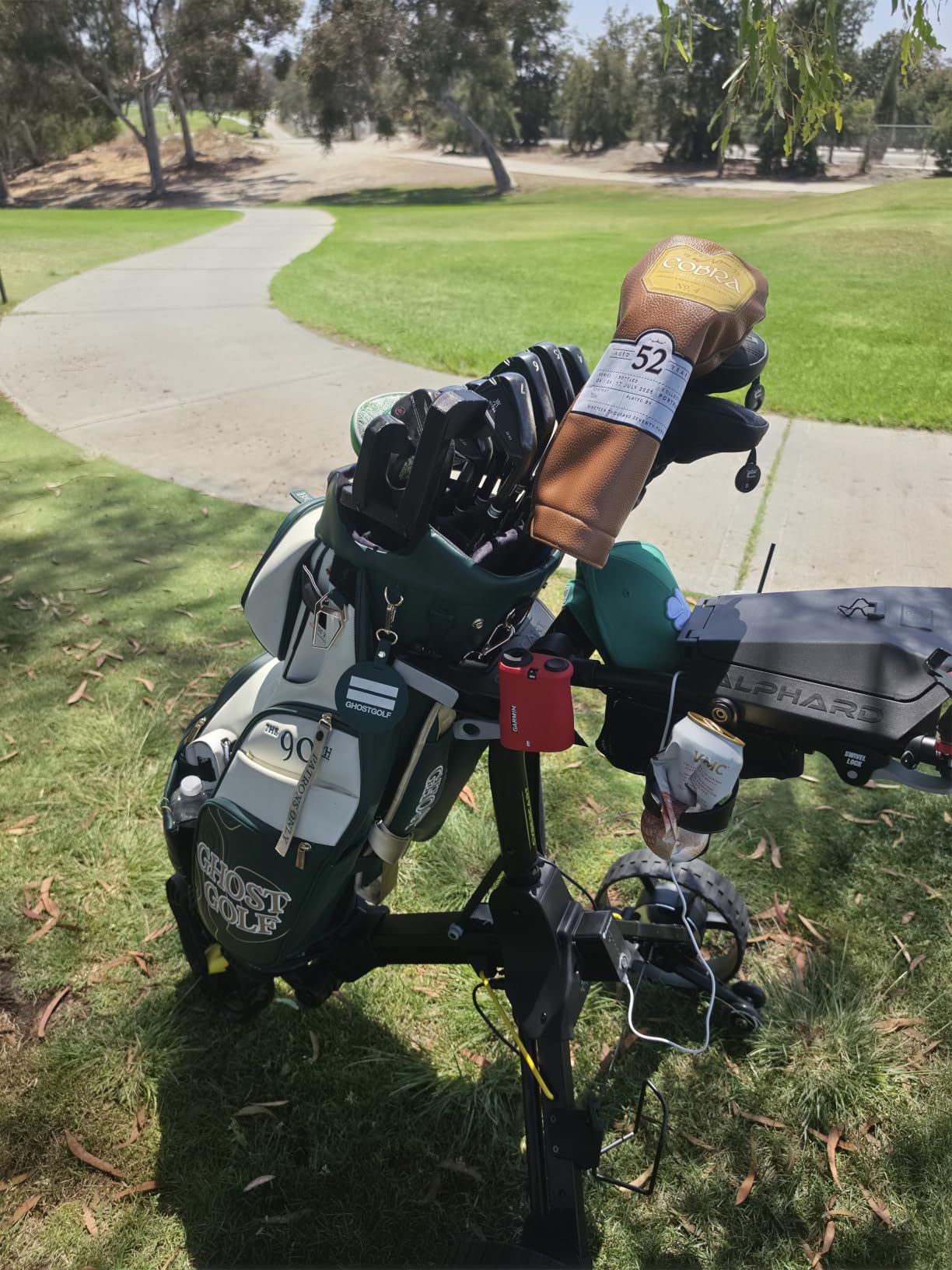
The one-click folding system is quick and simple, and a freewheel mode means the same cart still works as a manual push cart. There is an extra large storage console for a rain jacket, a thermos and a second layer, plus a magnetic bag pad with cup and umbrella holders. Four colour options are offered, including blue, silver, white and black.
The 4.5 rating is joint highest here, though the 46 ratings are the smallest sample of the eight, so treat the score as encouraging rather than proven.
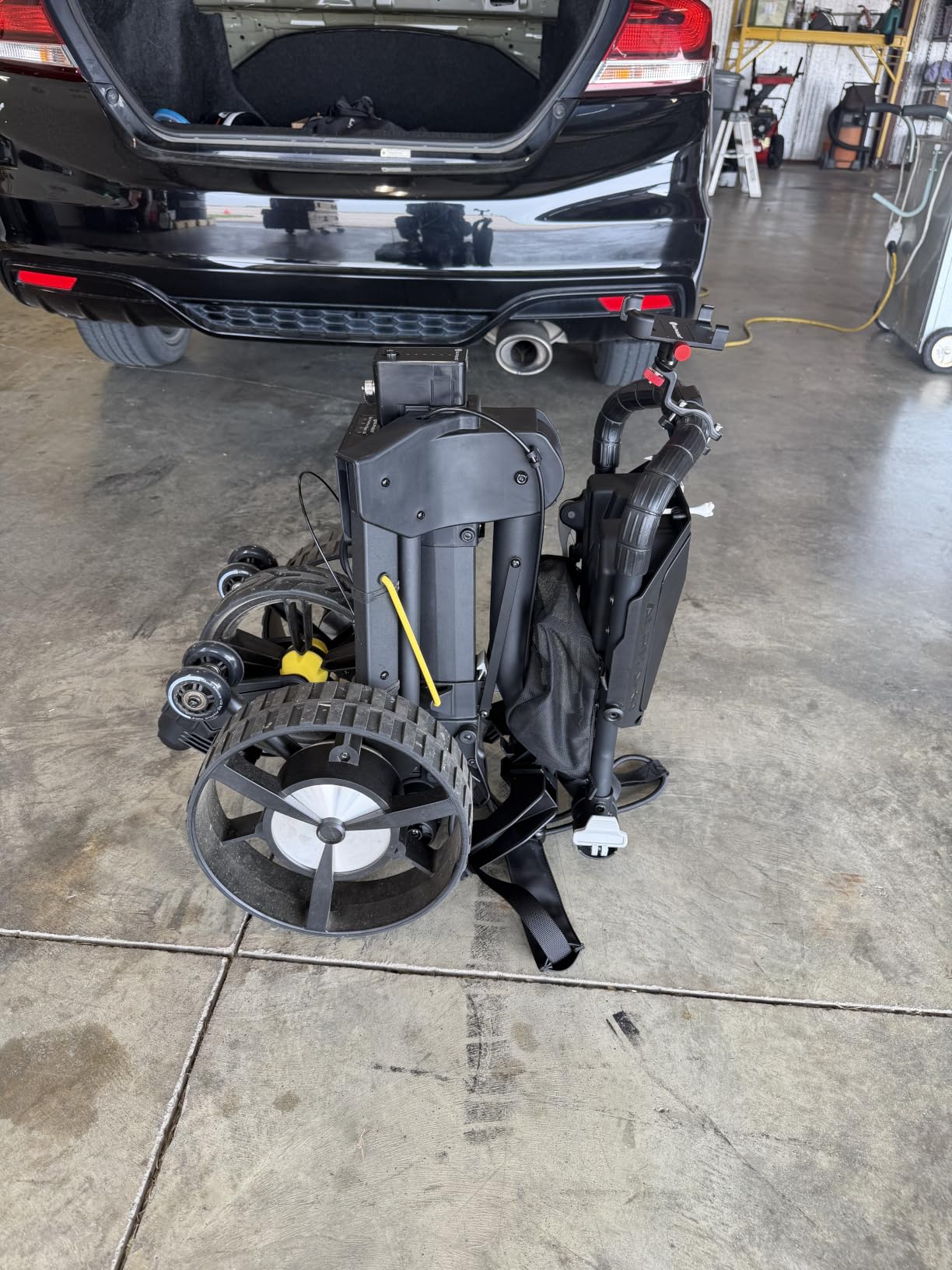
Forty pounds is the deal-breaker to check first
At 40 pounds, the Cybercart is the heaviest frame in the set. For anyone who loads into a car alone, that is not a minor inconvenience, it is a reason not to buy. Plan a ramp, a second person, or a garage kept at arm height from the tailgate, and check your own lifting comfort honestly.
It is also remote-only, which means you drive the cart rather than walking beside it on the handle. If you like the reassuring feeling of a hand on the bar, that will feel like a loss. Owners rate the safety systems, and the weight, as the defining trade of this cart.
Who it suits and who it does not
This suits a senior who plays on steep, exposed courses where a cart rolling away downhill is a genuine hazard, and who has help lifting or does not need to load it into a vehicle at all. Golfers with a history of balance problems will appreciate the low center of gravity.
It does not suit a small-car owner, or anyone who wants a walk-behind experience. For most people the answer is the same: if the weight is fine, the safety package is the best on sale.
Can you lift it? The weight tiers that decide most senior purchases
Weight is the number that ends most electric caddy searches, so here is how the eight sort out. A commonly used rule of thumb is that one-hand lifting gets uncomfortable past about 30 pounds, and a two-hand lift into a boot with a mild forward bend gets difficult in the mid thirties. You know your own back better than any table.
Under 25 lbs: nothing here qualifies as bare weight. The MGI Zip X1 is 22.05 pounds without its battery, which is the only sub-25 figure in the set. That is the cart body, and the battery is a separate carry.
26 to 30 lbs: the realistic one-hand zone. The MGI Zip X1 at 26.72 pounds with battery, the KVV at 27.9 pounds and the MGI Zip X5 at 25.90 pounds without battery all sit here. The X5 is 30.57 pounds with the battery fitted, which is the top of the workable band.
Over 30 lbs: plan for two hands. The Cart-Tek Yellowstone is 33 pounds, the Wingscaddy Max300 is listed at 34.4 pounds, the MGI Zip Navigator is 37.31 pounds with battery and the Alphard Cybercart is 40 pounds. The Motocaddy M7 does not publish a bare weight, so ask before buying.
The practical trick is the removable battery. Both MGI models use the Click and Go system, so the frame lifts at 22 to 31 pounds and the pack comes off separately. Splitting the load changes the lift far more than any other feature on this page.
What to look for when you buy an electric golf caddy
Battery measured in holes, not miles. Every cart here is quoted in holes, which is the only figure that means anything to a golfer. Thirty-six holes means two rounds without a charger. Eighteen holes means one round plus a few extras and a certain amount of anxiety on the back nine.
Where the controls are. Handle-mounted controls mean you keep a hand on the bar and can feel the cart. A remote means the cart travels ahead of you and you can rest a shoulder. Several of the seniors in our research named a compact remote as easier to hold, which is worth remembering if your grip strength is limited.
Stability, read as wheelbase width. Only the KVV publishes a figure at 30.5 inches, but you can feel the difference in the way a wide-framed cart tracks across uneven ground. Low center of gravity, anti-tip wheels and a fifth wheel stabilizer are the words to look for in the listing.
Braking and safety systems. An electronic parking brake, downhill speed control and an out-of-range auto stop are three separate protections, and they are not universal. The Zip X5 has the first two, the Cybercart has all three, and the Zip X1 has none of them.
Service and parts. MGI offers a 3 year warranty covering battery and charger when you register within 30 days. Motocaddy offers 60 months on the lithium battery. Cart-Tek is a family-run company with phone support. Those three have the clearest after-sales story in this group.
Course rules, checked before you pay. Not every course allows a remote or robotic caddy, and the rules vary by club and sometimes by season. Call the golf shop or check the club website before you buy, and ask specifically about remote-controlled caddies rather than electric push carts in general.
What an electric golf caddy really costs over five years
The purchase price is the small part. Forum discussion across the golf communities we read is consistent on one point: batteries are the expensive item, and pushing a depleted battery hard can damage the motor and the electronics. Golfers on r/golfcarts put it plainly, batteries are not cheap, nor are the parts you fry by overworking them.
That changes how you should treat a cart. A lithium pack that finishes 36 holes should be charged after each round rather than run down to nothing, and stored off-season at a moderate charge level in a dry place rather than left flat in a hot shed. A charger is included with every cart in this group, so you are not buying a second one on day one.
Running costs are otherwise close to zero. There is no fuel, no consumable filters and very little to service. The frame and wheels need nothing more than a wipe down, and the axle lubrication wipe included in the MGI boxes is all most owners ever use.
Resale is where electric caddies differ from ordinary push carts. A good used MGI holds its value better than a lesser-known brand, partly because the Click and Go battery system and the 3 year warranty transfer with it. If you are buying used, check that the charger and battery are original, because a missing charger ends the deal for most people.
Owners on the golf forums also ask whether a senior should buy new at all, and the honest answer is that a used cart from a known brand with a working charger can be a sensible way to test whether you like walking with one before committing to a new machine. Buying new buys you the warranty, which is the whole point of the MGI 3 year cover.
How to store an electric golf caddy battery over winter
Leave it plugged in all the time and you will shorten battery life. Lithium-ion packs with a battery management system do not need constant charging, and a pack held at full charge for months ages faster than one stored around half charge in a cool, dry place.
Store the pack off the frame if the design allows it, since a battery left in a cart in a damp garage picks up moisture. Keep it away from direct sun and heat, which is the real enemy in a summer shed.
Charge it fully the day you finish playing, then check it once a month or so over the winter. A pack that has sat at zero for six months will feel dead on the first spring round, and many owners blame the battery when the actual problem is storage.
Do you actually need electric? A quick reality check
If your only problem is a tired shoulder at the 15th hole, a good manual three-wheel push cart will fix it and cost a fraction of the outlay. The electric case gets strong when the pushing is a real limitation, when you play 27 or 36 holes, or when heat and hills are what end your round early.
There is a social point here too. The recurring fear in the forums is not the cart, it is losing the walk. Older golfers want to keep walking and keep playing with the same group. An electric caddy is the cheapest way to keep that, because you are still on your feet for 18 holes.
If you genuinely cannot walk 18 holes, an electric caddy will not help. At that point you want a ride-on cart or a golf scooter with a seat, and you should talk to your course about what they permit before you spend anything.
Frequently Asked Questions
What is the best electric golf cart for seniors?
The best electric golf cart for seniors is the MGI Zip Navigator All Terrain in our testing, because it pairs a 36 hole lithium battery with twin 230 watt motors, a remote control and a 3 year warranty that covers the battery and charger. The MGI Zip X1 is the lighter alternative at 26.7 pounds, and the Alphard Cybercart has the most complete safety package with an automatic parking brake and out of range auto stop.
What is the lightest electric golf cart?
The lightest published cart weight in this group is the MGI Zip X1 at 26.72 pounds with the battery fitted and 22.05 pounds without it. The next lightest is the KVV Electric Push Cart at 27.9 pounds in an aluminum frame. The heaviest is the Alphard Cybercart at 40 pounds, which needs two hands and help at the tailgate.
Which golf cart is the easiest to push?
For a senior, the easiest cart to move is the one you can steer with a light hand and stop with one control. The MGI Zip X1 is lightest at 26.7 pounds and its 20 stepped speed settings let you match the motor to your walking pace, while the MGI Zip X5 adds an electronic parking brake and downhill speed control so you never chase it down a slope.
What are the downsides of electric golf carts?
The honest drawbacks are weight, battery cost and course rules. Cart weights range from 26.7 pounds for the MGI Zip X1 to 40 pounds for the Alphard Cybercart, so lifting into a car is the most common complaint. Batteries are the most expensive part to replace and running one flat can damage the electronics. Some courses also restrict remote or robotic caddies, so check the rules before you buy.
Does it hurt to leave an electric golf cart plugged in all the time?
No, but it is not ideal either. Lithium-ion packs with a battery management system do not need constant charging, and holding a battery at full charge for months ages it faster than storing it around half charge. For winter storage, remove the pack if the design allows, keep it in a cool dry place away from heat, and top it up once a month so it does not sit flat.
What is the average life expectancy of an electric golf cart battery?
Expect several seasons from a quality lithium pack, and longer if you stop at around 36 holes rather than running the battery flat. The Wingscaddy Max300 battery is quoted at 1500 life cycles, and the Motocaddy M7 lithium battery carries a 60 month warranty, which is the longest battery cover in this group. The real killer is heat and leaving a pack flat, not normal use.
Who should buy which electric golf caddy
Buy the MGI Zip Navigator All Terrain if you want a remote, 36 holes of range and a 3 year warranty, and you have help or a ramp at the tailgate for a 37 pound frame. It is the best-balanced pick in this group and the one with the most owner history behind it.
Buy the MGI Zip X1 if lifting weight decides the outcome for you. At 26.7 pounds with a battery that detaches, it is the most manageable frame here, and 20 speed settings give you a pace that matches your stride.
Buy the KVV if your course is uneven or hilly and you want the widest wheelbase and the smallest fold, plus the reassurance of a manual mode when the battery is flat.
Buy the MGI Zip X5 if hills and slopes worry you most and you want an electronic parking brake and downhill speed control in a hands-on cart. Buy the Motocaddy M7 if the 60 month battery warranty is what makes you confident, and you are comfortable learning a remote.
Buy the Wingscaddy Max300 if you want remote, trolley and freewheel in one machine, or the Cart-Tek Yellowstone if you play on hard, gravelly ground and play 36 holes at a time. Buy the Alphard Cybercart if safety on slopes matters most and the 40 pound weight is not a problem for you.
Before any of them, ring the golf shop and ask whether your course allows remote-controlled caddies. Then check the lift at a shop, in person, with the battery out. Those two steps prevent almost every bad purchase in this category.