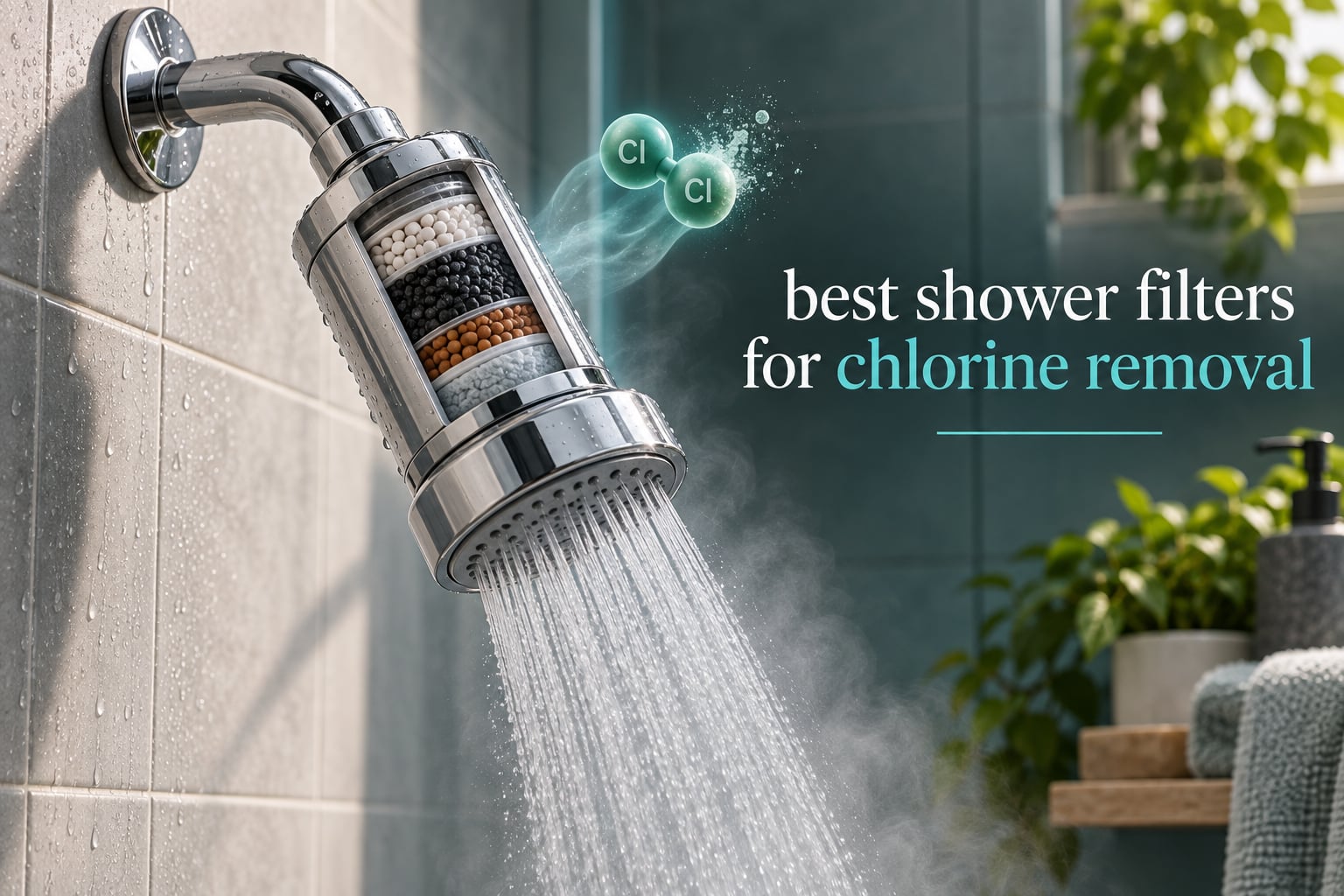
If you have ever stepped into a shower and been hit by a sharp, pool-like smell, you already know what free chlorine does to a bathroom. It strips natural oils out of hair, leaves skin tight and itchy, dulls color-treated hair toward a greenish tint, and off-gasses into the steam you breathe. A shower filter is the cheapest fix most households will ever install. Picking the right one for chlorine removal is where it gets confusing, because the shelves are full of units that all advertise the same 99% result.
This guide ranks the best shower filters for chlorine removal in 2026 by what is actually inside the housing rather than by the stage count on the box. We looked at named filtration media, third-party certification, cartridge life, real-world pressure impact, and the complaints that show up repeatedly in buyer reviews. Twelve filters made the cut, and every one of them lists its media openly.
One thing to sort out before you shop: chlorine and chloramine are not the same problem. A standard KDF or carbon cartridge strips free chlorine effectively, but it will not touch chloramine, which is a different molecule and far more stubborn. The second half of this guide explains how to check what your utility actually uses, which is the single most useful ten minutes you can spend before buying anything.
Before we get into the list, if your priority is water pressure rather than chlorine, our guide to the best high pressure shower filters covers the fitting and flow-rate side. And if you want to verify the chlorine level in your own water instead of trusting a label, the pool test strips for chlorine we use are the same reagent strips that water treatment hobbyists reach for.
Table of Contents
Top 3 Best Shower Filters for Chlorine Removal in October

AquaBliss SF100 Revitalizing Filter
- KDF and carbon media
- 6 month cartridge
- tool-free install

AquaHomeGroup 20-Stage with 5 Cartridges
- Vitamin C and E media
- five cartridges included
- 4.5 stars

All 12 Shower Filters for Chlorine Compared in 2026
| Product | Specifications | Action |
|---|---|---|
| AquaBliss High Output Revitalizing Shower Filter SF100 |
|
Check Latest Price |
 AquaHomeGroup 20+3 Stage Filtered Shower Head AquaHomeGroup 20+3 Stage Filtered Shower Head |
|
Check Latest Price |
| PHILIPS AWP1775CH/37 Shower Filter |
|
Check Latest Price |
| AquaHomeGroup 20-Stage Filter with 5 Replacement Cartridges |
|
Check Latest Price |
 Veken One-Press Chlorine and Lead Filter Veken One-Press Chlorine and Lead Filter |
|
Check Latest Price |
 weAQUA Heavy Duty 2-Pack Shower Filter weAQUA Heavy Duty 2-Pack Shower Filter |
|
Check Latest Price |
 Aquasana AQ-4100NSH Filter Only Aquasana AQ-4100NSH Filter Only |
|
Check Latest Price |
 AQUAYOUTH 2.0 Carbon Shower Filter AQUAYOUTH 2.0 Carbon Shower Filter |
|
Check Latest Price |
 Weddell Duo NSF Certified Filter Weddell Duo NSF Certified Filter |
|
Check Latest Price |
 Dwavele 20-Stage Shower Filter with Spare Cartridge Dwavele 20-Stage Shower Filter with Spare Cartridge |
|
Check Latest Price |
 SparkPod 23-Stage Shower Filter SparkPod 23-Stage Shower Filter |
|
Check Latest Price |
 Longriver R7 High Put Shower Filter Longriver R7 High Put Shower Filter |
|
Check Latest Price |
1. AquaBliss SF100 Revitalizing Filter – Best Overall for Chlorine Removal
Aquabliss High Output Revitalizing Shower Filter – Reduces Dry Itchy Skin, Dandruff, Eczema, and Dramatically Improves The Condition of Your Skin, Hair and Nails – Chrome (SF100)
Inline filter
Ceramic and stainless housing
6 month cartridge
1/2 inch universal fit
Pros
- Largest review base in this roundup at nearly 70k ratings
- tool-free install in under two minutes
- no noticeable pressure loss
- works with fixed rain dual and handheld heads
- thread seal tape and spare washers included
Cons
- Mesh strainer washer is poorly explained in the instructions
- needs generous thread tape to avoid weeping at the joints
- plastic housing thread can crack if overtightened
This is the filter I hand to friends who ask a single question: which one just works. The SF100 threads onto a standard half inch shower arm, and because the cartridge fits either direction you can mount it without worrying about which way the O-ring has to face. Installation took me under two minutes with no tools at all, and the included plumber’s tape and replacement washers mean you are not hunting through a toolbox.
What convinced me was the review base. Roughly 70,000 ratings at a 4.4 average is not a marketing number, it is a decade of people reporting on hair softness and itch relief. Buyers repeatedly describe a change in water feel within a handful of showers, and the pressure story is clean: the housing is short and wide rather than tall and narrow, so there is no meaningful restriction.
The cartridge is rated for six months, which puts replacement cost per day in the pennies. That interval is honest for a two-person household on municipal water. It is optimistic if you have three people showering daily or live somewhere with heavy sediment, and in that case the cartridge will need watching.
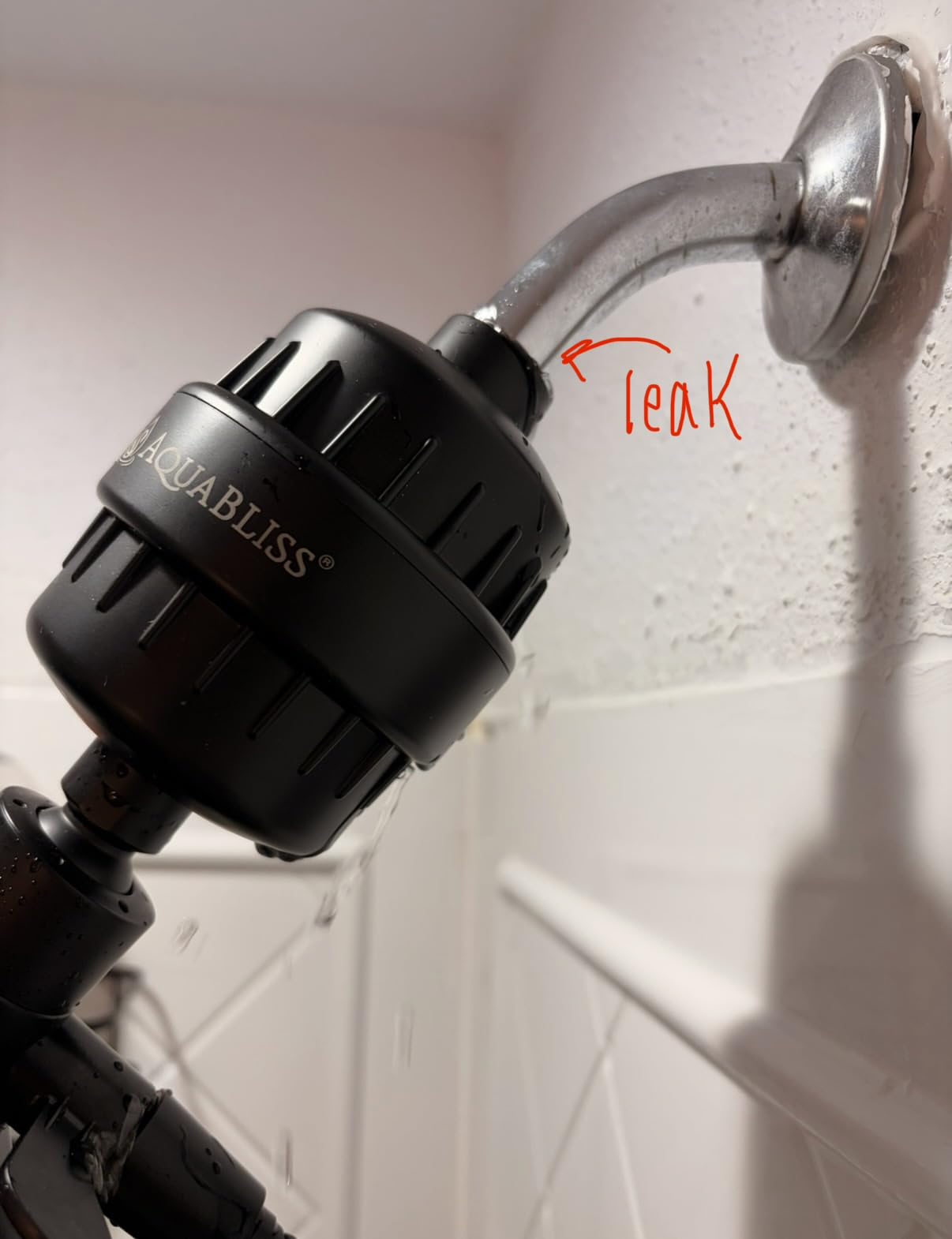
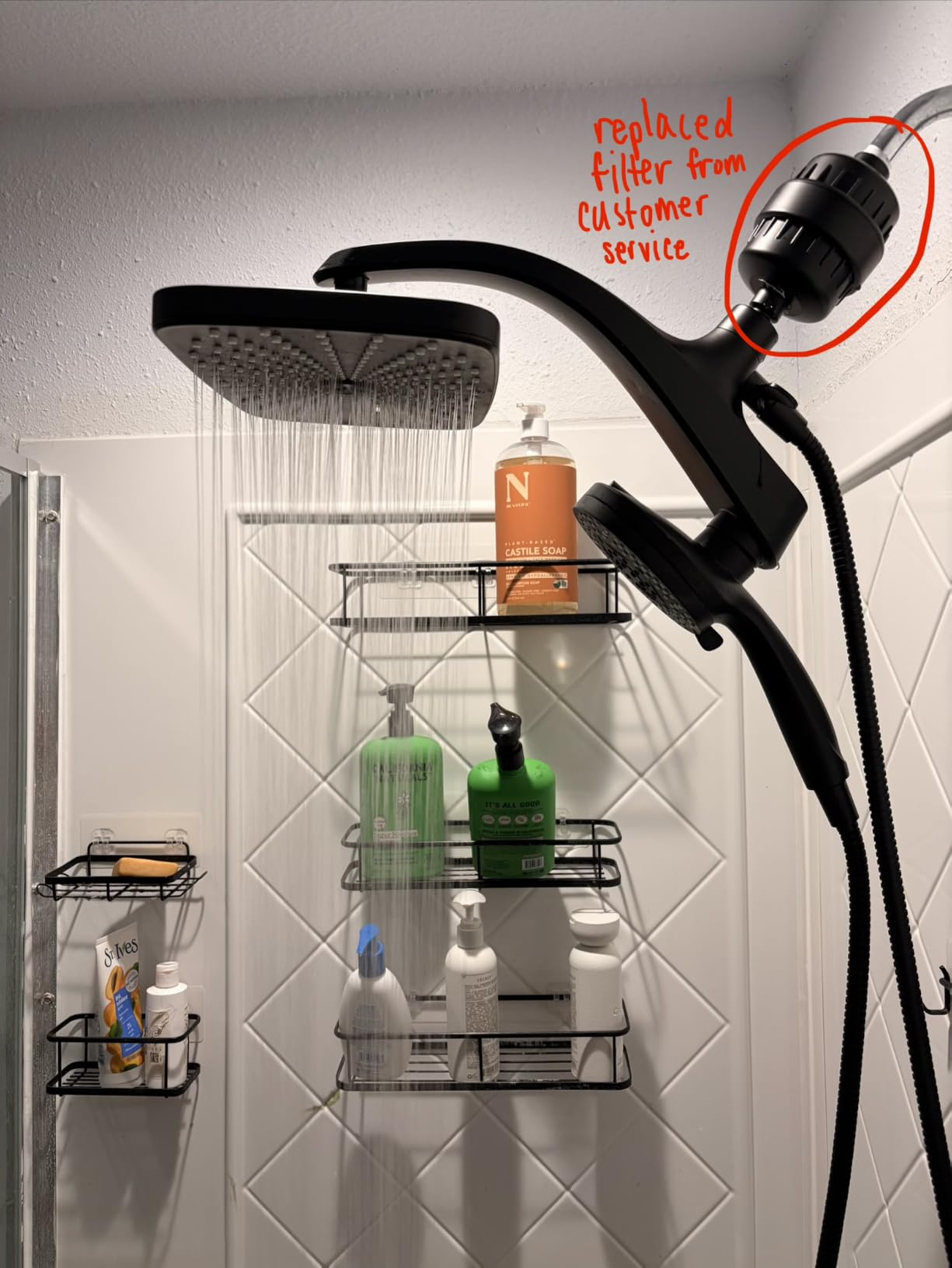
The single consistent complaint in the reviews is sealing, not filtration. The mesh strainer washer inside the housing is not well illustrated in the instructions, and if it is seated wrong the joint will weep. Wrap the threads properly with PTFE tape and hand-tighten only, and this becomes a non-issue. A few owners also report the plastic thread on the housing cracking when the connection was forced, so go by hand.
What you should know before buying
It is a filter only, not a showerhead, so you keep whatever head you already own. That is the right call for most people because it avoids rewiring and keeps your existing pressure and spray pattern. The cartridge is a consumable you will replace roughly twice a year, so factor that into any comparison with a bundled multi-cartridge pack.
Who should skip it
Skip this if your water is chloraminated, since standard carbon and copper-zinc media do not address chloramine. Also skip it if you need lead certification for a compliance reason, since the claim here is manufacturer-stated. Households on a well or with high iron need a different product entirely, and this one will disappoint.
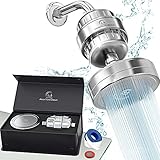
2. AquaHomeGroup 20-Stage Filtered Shower Head – Best All-in-One Upgrade
AquaHomeGroup Filtered Shower Head, 20+3 Stage, Reduces Chlorine, Chrome
Filtered handheld head
59 inch stainless hose
KDF media
90%+ chlorine claim
Pros
- Filtered head hose and spare media in one package
- KDF media with a 90%+ chlorine reduction claim
- brass holder resists drooping
- cartridge maintains pressure across its life
Cons
- Replacement cartridge is required and adds ongoing cost
- wall-mounted layout is less flexible than an inline filter
- forces you to give up your existing shower head
Sometimes the easiest chlorine fix is to stop treating the filter as an accessory and replace the whole shower assembly. This package bundles a filtered handheld head, a 59 inch stainless steel hose, a reinforced brass holder, and replacement media, so nothing else has to be bought. If your bathroom is mid-refresh, that is a cleaner path than stacking an inline filter behind an aging showerhead.
The 20+3 stage design uses KDF media and claims 90% or better chlorine reduction, plus heavy metal and sediment capture. It also infuses vitamins C, E and A, which is a softer, skin-focused angle rather than a pure water-chemistry one. Owners mention the water smelling cleaner with less of a chlorine edge after a few weeks.
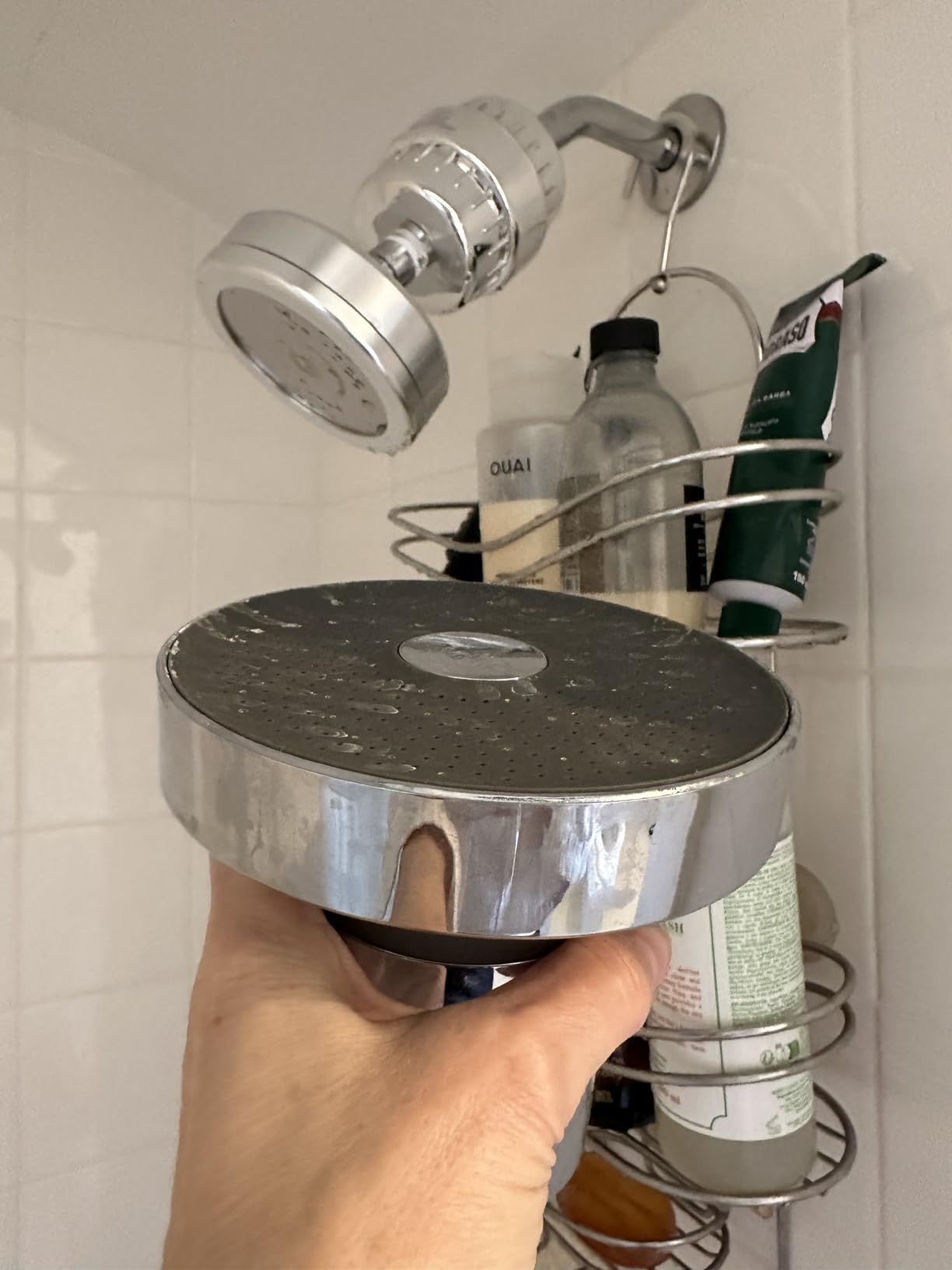
Pressure retention is a genuine strength here, and the brass holder solves the drooping arm problem that plagues plastic-filtered heads. Most installs finish in about five minutes on the universal half inch connection. The stainless hose adds durability that cheaper rubber-hose packages cannot match.
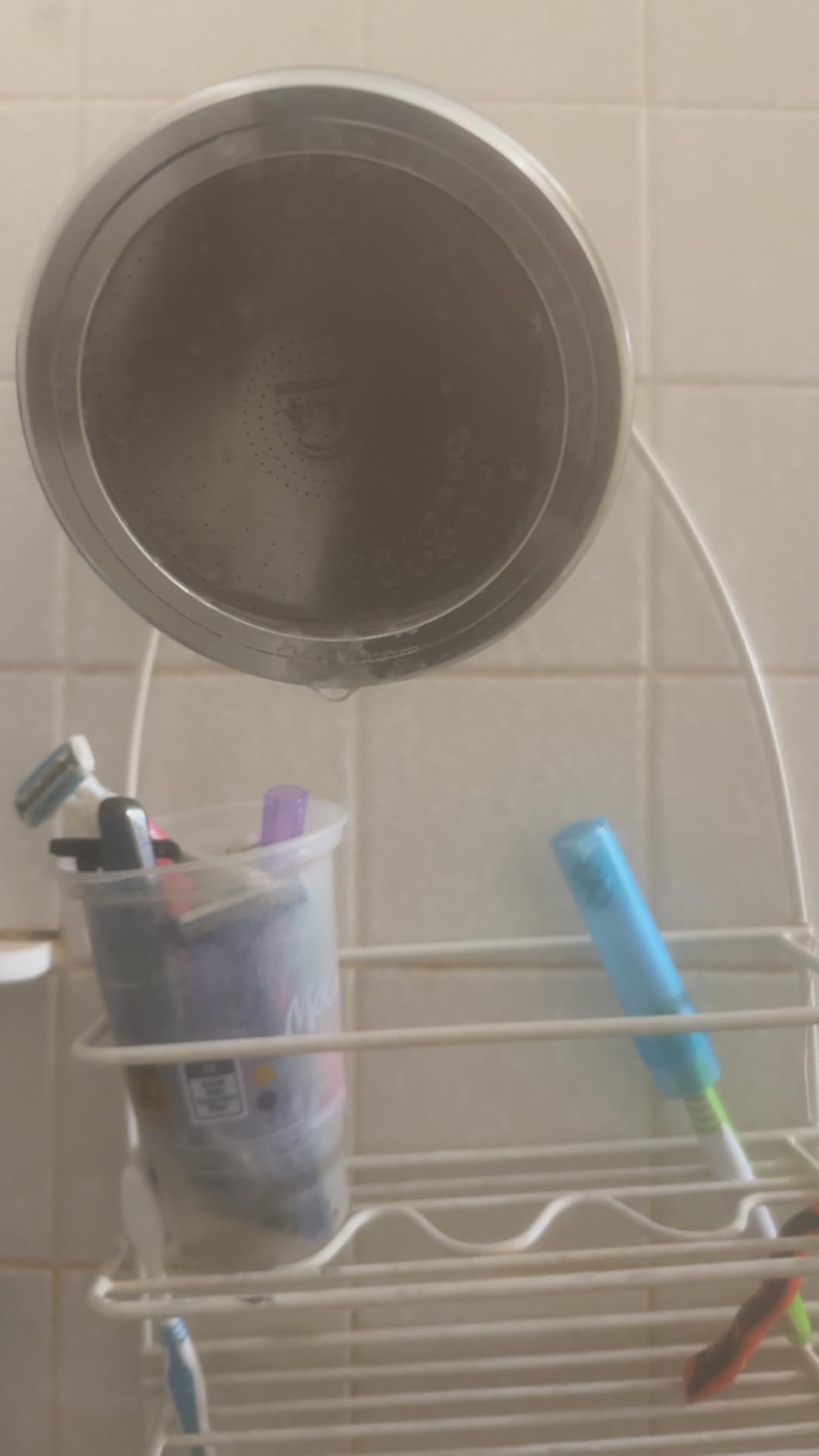
The catch is obvious once you read the fine print: a replacement cartridge is required, so you have joined a recurring consumable cost the moment the package runs out. You also give up your current shower head, which matters if you own a rainfall unit you actually like. A wall-mounted layout is also less forgiving in tight or unusual shower alcoves.
What you should know before buying
Choose this if you are replacing the showerhead anyway, or if a handheld is what you wanted to move to. It covers chlorine on the way through the head, so the same care applies: expect to change the cartridge on a schedule. The vitamin infusion is a comfort feature, not a filtration mechanism, so judge the unit on its KDF stage.
Who should skip it
Skip it if you love your existing showerhead or if your plumber setup makes a wall-mounted unit awkward. It is also the wrong tool for chloraminated water and for high-iron well supplies. Anyone on a rented property should note that swapping the whole assembly is more invasive than clipping on an inline filter.
3. PHILIPS AWP1775CH/37 Shower Filter – Best NSF-Certified KDF
PHILIPS Shower Filter, Reduces Chlorine & Heavy Metals, AWP1775CH/37
Inline filter
NSF-certified KDF
50000 liter cartridge
ABS body
Pros
- KDF media carries NSF certification rather than a marketing claim
- 50000 liter cartridge covers 4 to 6 months of daily showers
- double mesh traps rust and sand visibly
- metal chrome-finish body
- two minute install with no tools
Cons
- Physically chunky and limits shower head adjustment
- some owners cannot extract the cartridge from the housing
- does not reduce dissolved solids so hard water stays hard
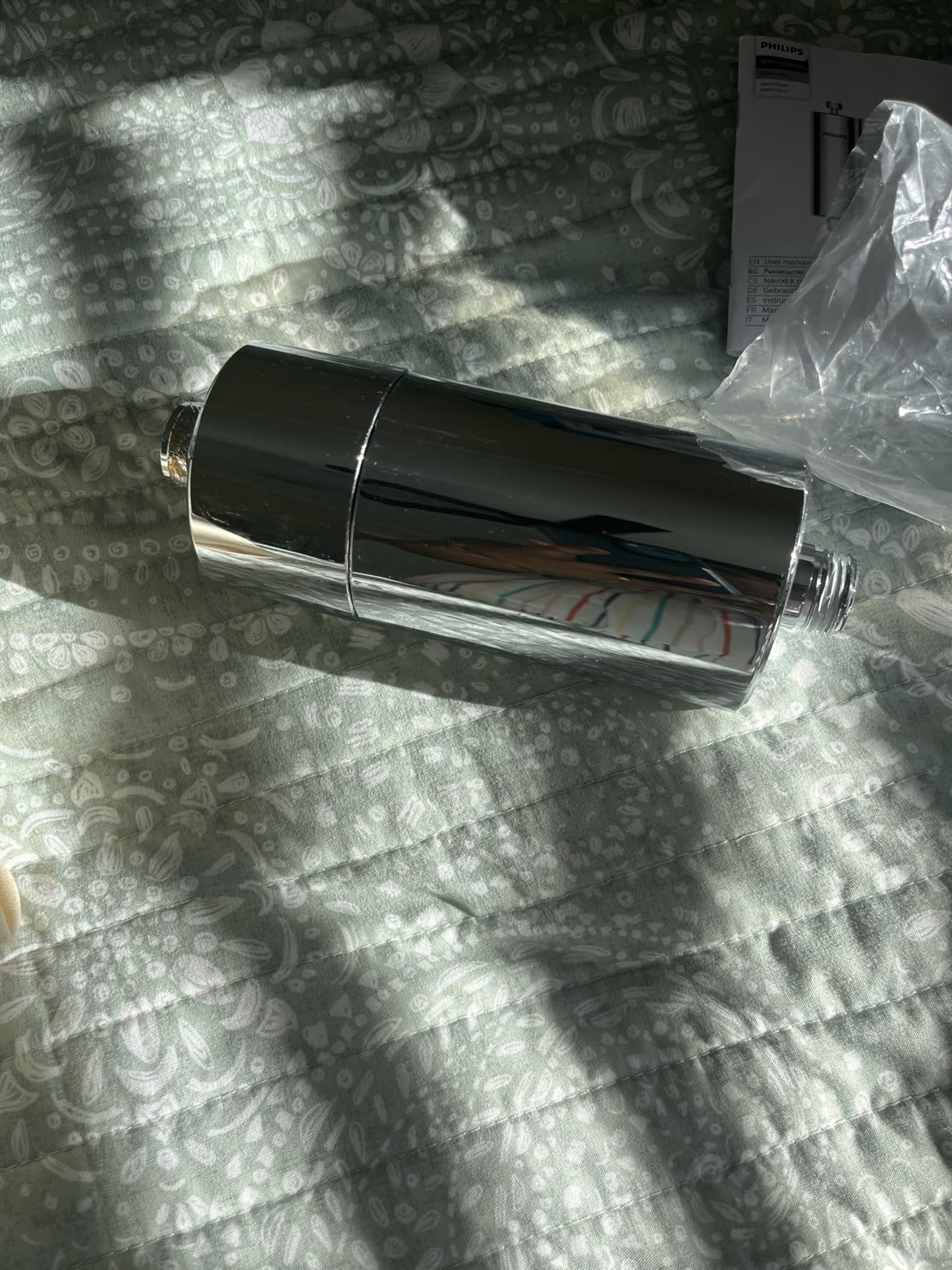
NSF certification is the trust marker people in the water treatment community look for first, and this is one of the few filters here whose KDF media is genuinely certified rather than asserted. Buyers who care about verifiability rather than stage counts tend to land here. The three-stage design pairs the KDF core with a double mesh that catches rust, sand and visible debris before it reaches the head.
The cartridge capacity is the headline number: 50,000 liters, which works out to roughly four to six months of daily showers for a typical household. The body is anti-scald and works with both hot and cold water, and the universal half inch thread fits handheld, rainfall and wall-mount arms.
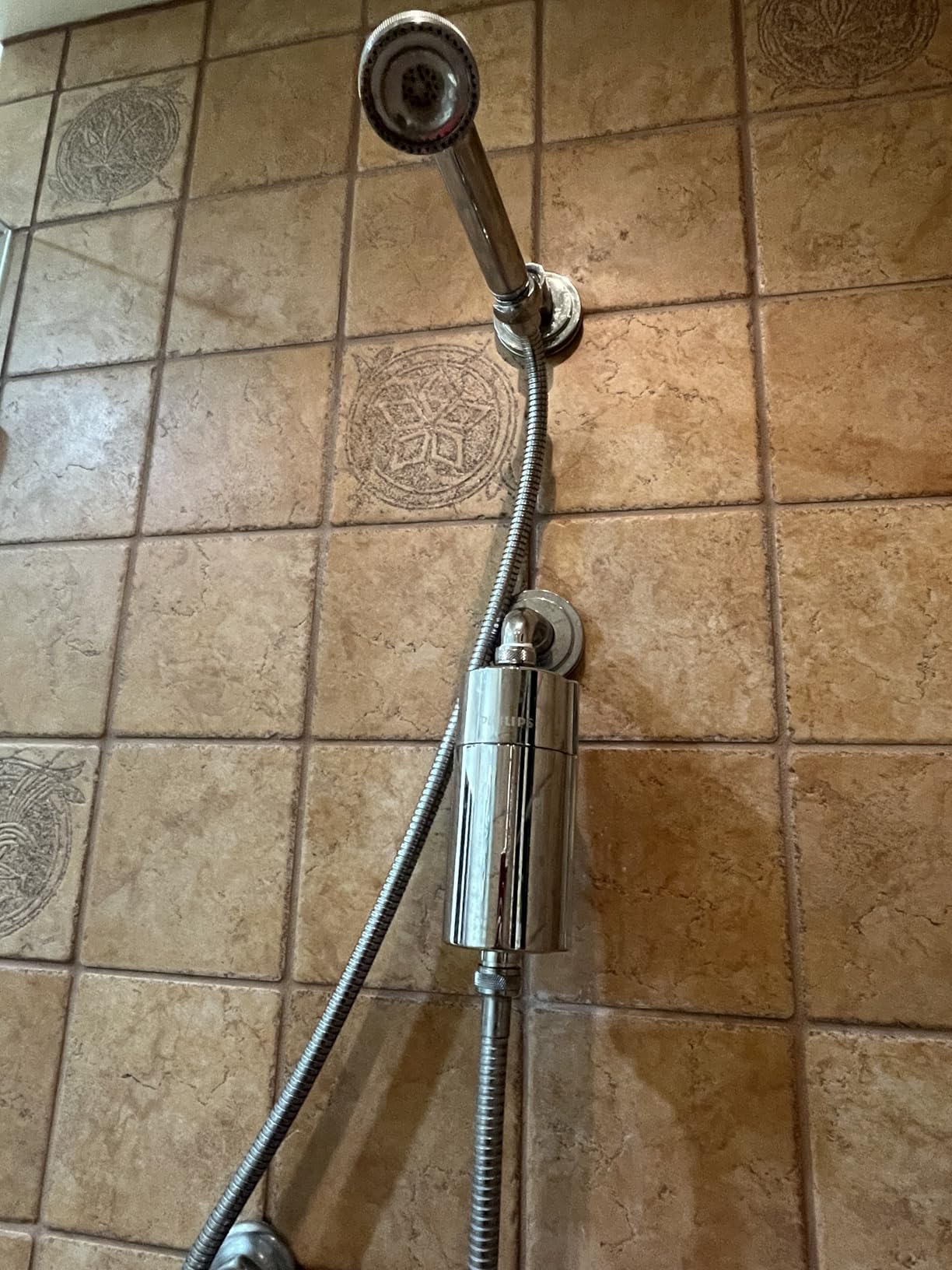
Where it gets in the way is bulk. The housing is noticeably chunky, and that extra length pulls the showerhead down and away from where you had it aimed. In a bathroom where the spray position matters, that is a real daily annoyance. It also does not reduce total dissolved solids, so it will never soften hard water and should not be sold to you as if it will.
A smaller but persistent complaint is that some filters arrive with a cartridge that is genuinely difficult to extract from the casing. Budget a little patience and a rubber mat for grip on the first change. Pressure impact is minimal in normal use.
What you should know before buying
Verify the certification before you buy anything else. An NSF-certified media claim means a third party tested the reduction, which is a different promise from a percentage printed on a listing. The mesh stage is a genuine bonus if you live with older plumbing and see rust flecks.
Who should skip it
Skip it if you have a rain head that needs to sit high, or a shower arm with limited clearance, because the body length changes your geometry. It is also the wrong answer for hard water, for chloramine, and for anyone whose main complaint is scale rather than odor.
4. AquaHomeGroup 20-Stage Filter with 5 Cartridges – Top Rated
AquaHomeGroup Shower Head Filter — 20-Stage + 5 Replacement Cartridges — Reduces Chlorine and Other Chemicals — Vitamin C, E & A Shower Filter for Healthier Skin & Hair
Inline filter
20 stages
Vitamin C and E media
Five cartridges
Pros
- One installed cartridge plus four spares in the box
- 4.5 average across more than 4000 ratings
- hard water households report softer hair and less itch
- helps clear existing limescale on shower heads
- preserves water pressure
Cons
- Plastic threaded insert can crack during installation on some units
- a few users felt it stripped natural oils from their hair
- included rubber washers can choke flow if still seated inside the housing
When you total up the cost of a filter plus eighteen months of replacements, bundles like this one usually win. The box contains one installed cartridge and four spares with gaskets, so a household is covered for well over a year without another order. The 20-stage design includes vitamin C and E media aimed at sensitive skin, dry skin and dandruff-prone scalps, on top of the chlorine and sediment stages.
The 4.5 average sits near the top of this group, and the reviews point to hard water specifically. Owners in high-mineral areas report markedly softer hair and less itch within a few washes, and several mention that it helps clear existing limescale off the shower head rather than only preventing new scale.
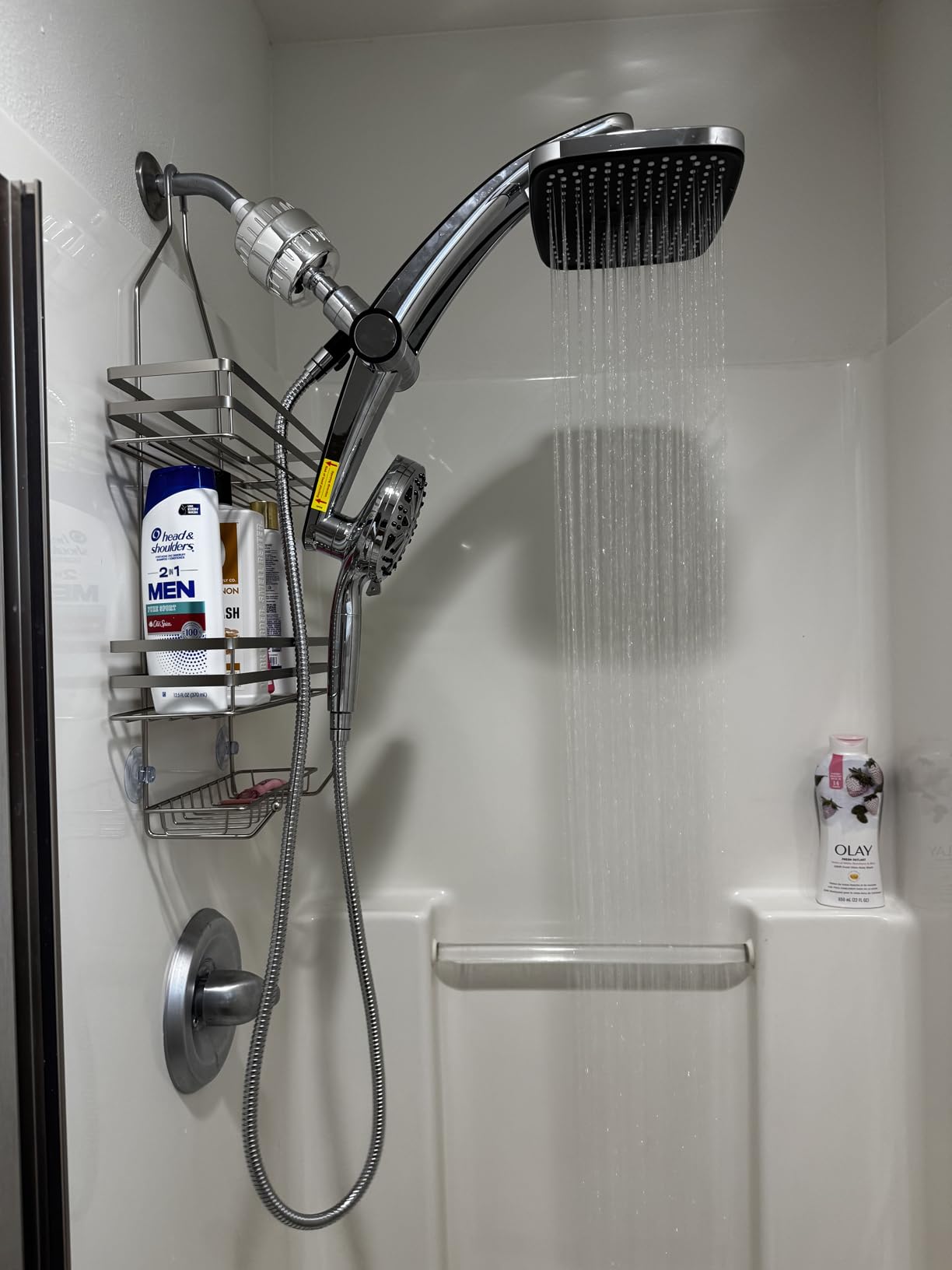
Housing material matters more than most listings admit, and this one does not collect mineral deposits the way some plastic bodies do, which directly reduces clogging over time. Pressure stays steady, and the filter fits wall-mounted, handheld, rainfall and combo heads without modification.
Two cautions. The plastic threaded insert can crack if you crank it tight during fitting, so again, hand-tighten only. And a handful of users felt the cartridge pulled too much of their natural oils out, which is a real trade-off when the media is doing its job well. If your hair is already very fine and dry, watch the first few weeks.
What you should know before buying
Count the total cartridge supply before comparing it to a single-unit price, because that is the real comparison. Five cartridges is roughly two years of coverage for one household. The vitamin C and E stages are a skin-conditioning angle, not a substitute for proper chlorine media, so the earlier stages still do the actual work.
Who should skip it
Skip it if you shower alone and rarely, since four spares will simply sit in a cupboard. It is also the wrong choice for chloraminated water and for homes on a well. Anyone who cannot commit to a replacement habit should start with a longer-life unit instead.
5. Veken One-Press Chlorine and Lead Filter – Best Quick Cartridge Changes
Veken Shower Filter, Chlorine, Lead & Sulphide Tested, One-Press Cartridge
One-press cartridge
5.59 inch profile
Calcium sulfite and KDF
U-shaped water channel
Pros
- Cartridge changes without dismantling the shower head
- compact profile extends the shower head very little
- media list names calcium sulfite coconut shell carbon and KDF with no fillers
- spare set screw Allen key washer and Teflon tape included
- five finish options
Cons
- Can be hard to tighten enough to stop leaks under a heavier rain head
- 3 month cartridge interval is shorter than most rivals
- review base is the smallest here at 656 ratings
This is the most thoughtfully engineered filter in the group for one specific frustration: cartridge changes. The one-press design means you swap the media without taking the showerhead off the arm, which turns a ten-minute job with a wrench into a five-second press. If you have ever been annoyed by a screw-in cartridge that fought you, that alone is worth paying for.
The media list is exactly what we look for. Calcium sulfite, coconut shell carbon and KDF, with the listing explicitly stating there are no non-filtering fillers. Calcium sulfite neutralizes chlorine chemically while the carbon adsorbs odor, so you get two mechanisms working together. A U-shaped water channel extends the path through the media, which lengthens contact time at the same flow rate.
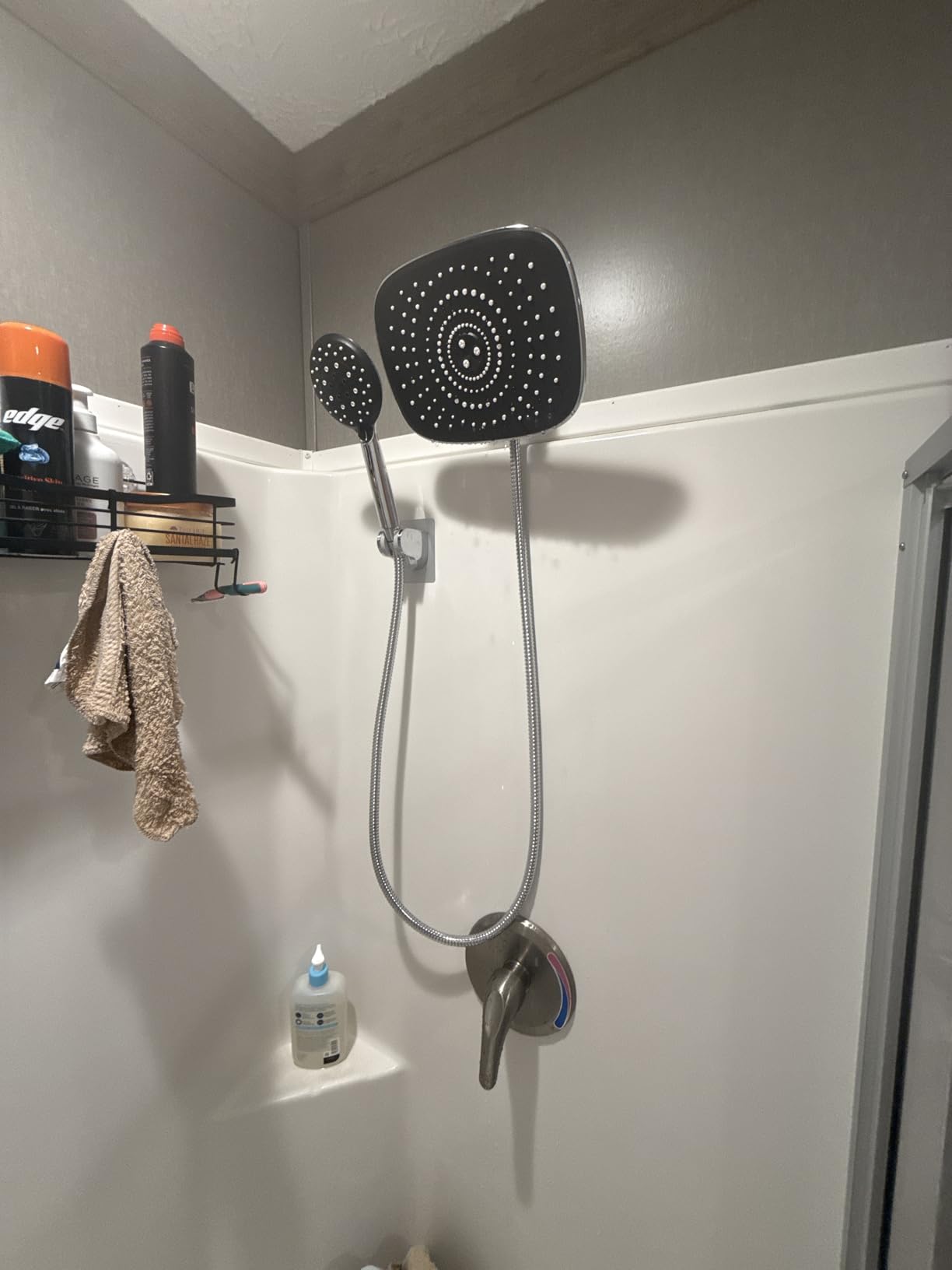
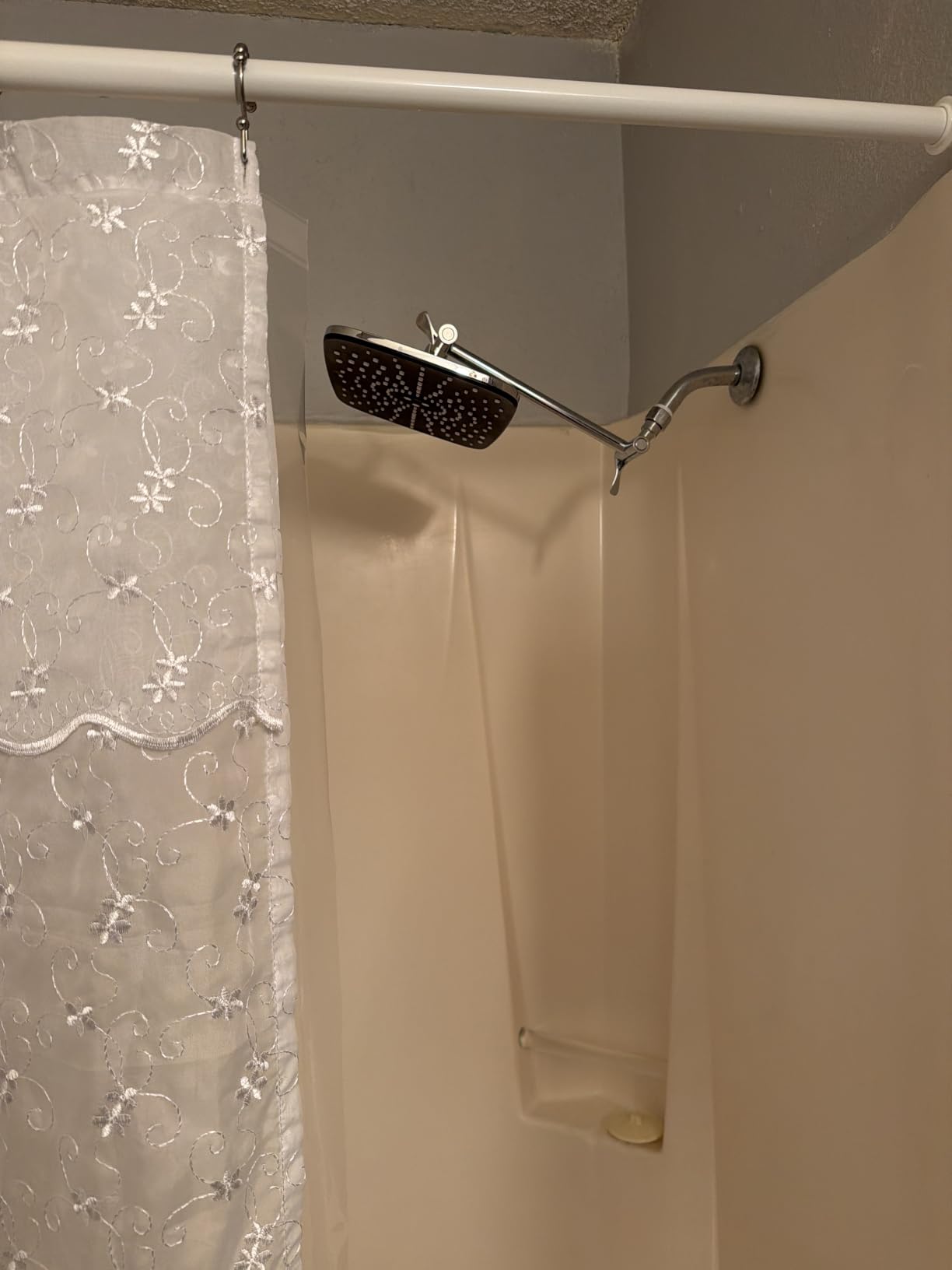
It is also lab tested for lead and sulphide reduction, and at 5.59 inches long the housing extends the showerhead far less than a typical inline filter. Multiple finishes let it match existing hardware instead of looking like an appliance bolted onto a bathroom. The 4.6 average is tied for the highest here, on the thinnest evidence.
The honest limitation is the evidence behind that rating. With 656 reviews, this has the smallest base here, which means less long-term data on cartridge performance than the category leaders offer. The three-month cartridge interval is also shorter than most rivals, so the per-year consumable cost is higher than the entry price suggests. And buyers pairing it with a heavy rain head report it can be tough to tighten enough to fully stop weeping.
What you should know before buying
This is the pick if you have previously stopped changing cartridges because the process was a chore. The three-month interval is workable, especially since the swap is fast. Note that the lead claim is lab testing by the manufacturer rather than a certification you can look up on a registry.
Who should skip it
Skip it if you are replacing cartridges on a subscription elsewhere, or if your showerhead is heavy and you cannot reach the connection comfortably. It is still the wrong tool for chloramine and for well water with iron. Buyers who want the longest possible gap between changes should look elsewhere.
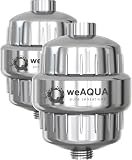
6. weAQUA Heavy Duty 2-Pack – Best for Two Bathrooms
weAQUA Heavy Duty 2-PACK Shower Filter for Hard Water Chlorine Heavy Metals
Two inline filters
Chrome-plated ABS
Sediment carbon KDF and calcium sulfite
6 month media life
Pros
- Two filters in one pack so a spare is ready when the first needs changing
- names real media including KDF and calcium sulfite rather than filler balls
- engineered for zero pressure loss
- universal fit with a five minute no-tool install
- extra installation parts included
Cons
- Cartridge media still needs scheduled replacement
- the two-pack format is bulkier than a single filter
- removal percentage claims are manufacturer-stated rather than independently certified
The obvious use for a two-pack is a house with two bathrooms, where one filter per shower means nobody is waiting in the hallway for a cartridge change. It also works as a self-restocking setup for a single bathroom: when the installed filter is due, the second one is already on the shelf ready to go. The chrome-plated anti-impact ABS body is a step up visually from bare plastic housings.
On media, this brand is refreshingly specific. Sediment, carbon, KDF and calcium sulfite, with no ceramic ball filler standing in for real work. That combination covers the two mechanisms that matter for chlorine: chemical neutralization and adsorption. The housing is engineered for zero pressure loss, and the universal fit installs in about five minutes without tools.
Be clear-eyed about one thing, though. The claimed 99% removal across hard water, chlorine, heavy metals, fluoride, organics and micro-life is a manufacturer statement, not an independently certified figure. There is no NSF listing attached to it. If certification is your deciding factor, this is not the product to buy on that basis.
What you should know before buying
Stated media life is six months, and the box includes all installation parts plus extras for later. For a two-bathroom household this is simply the efficient choice, since a single filter per shower halves the awkward single-filter compromise most families end up making. Pressure is preserved, which matters if you have older plumbing.
Who should skip it
Skip it if you are in a single bathroom and dislike storing spare parts, or if you need third-party certification for a compliance or health reason. As with most of this category, it does nothing meaningful for chloramine, and it cannot handle the iron load that well water brings.
7. Aquasana AQ-4100NSH – Best for Keeping Your Own Showerhead
Aquasana Shower Filter | No Shower Head | Reduces 90% Chlorine | AQ-4100NSH
Filter only
Coconut shell carbon and copper-zinc
10000 gallon capacity
NSF/ANSI 177 tested
Pros
- Independently tested to NSF/ANSI Standard 177 for chlorine reduction
- coconut shell carbon plus copper-zinc media removes 90%+ of chlorine
- filter-only design keeps your own shower head
- up to 6 months or 10000 gallons per cartridge
- lightweight housing does not droop the arm
Cons
- Refill cartridges are pricey and climb in cost
- some housings leak at the neck
- clogs early on very hard water
This is the certified option for a household that already owns a showerhead it likes. The AQ-4100NSH is a filter only, so nothing about your existing spray pattern or arm position changes. The media is coconut shell carbon plus copper-zinc, and the whole reduction claim is independently tested to NSF/ANSI Standard 177, which puts it in a different evidence class from most listings here.
Capacity is 10,000 gallons or about six months, whichever comes first, with a 2.5 gpm maximum flow rate and a 30 to 80 psi operating range. Max supported TDS is 500 ppm, which is a useful number to check if you are on very hard municipal water. One-year limited warranty comes with it.

The 4.1 average is the second lowest in this group, and the complaints are consistent enough to plan around. Leaking at the housing neck appears in reviews, sometimes with the plastic snapping outright. Carbon fines leave a temporary black mark in the stall during the first few showers, which alarms people who do not know it is normal. The filter also clogs ahead of schedule on very hard water.

What you should know before buying
Owners with long histories of use describe it as the filter that finally cleared chlorine smell for them, and the filter-only format is consistently valued. Check the TDS limit against your local water report before buying. Budget for the refill cost, which runs among the higher ongoing consumables here, and be aware the refill price climbs over time.
Who should skip it
Skip it if refill cost is your main concern or if you are on genuinely hard water, since early clogging will frustrate you. It is not a lead-certified product and it is not a chloramine solution. If you want a visual read on filter wear, this clear-less housing gives you nothing to look at.
8. AQUAYOUTH 2.0 Carbon Filter – Best for NSF 177 and 372 Certification
AQUAYOUTH 2.0 Carbon Shower Head Filter System | Removes Chlorine, Heavy Metals, And More | Great For Dry Skin/ Hair, And More | NSF Certified
Inline filter
NSF 177 and 372 certified
Brass fittings
PP and ceramic media
Pros
- The only filter here carrying both NSF/ANSI 177 chlorine and NSF/ANSI 372 low-lead certification
- cartridge swaps without full disassembly
- keeps shower heads from clogging with scale in hard water
- no meaningful pressure loss
- heavy metal reduction confirmed by an outside institute
Cons
- Leaks on first install unless extra Teflon tape is added at every thread
- water sits inside and needs periodic draining
- does not remove chloramines
Dual certification is the reason to buy this one. NSF/ANSI 177 covers free available chlorine reduction and NSF/ANSI 372 verifies low lead content, and no other filter in this roundup carries both. If you are choosing on evidence rather than brand reputation, that pairing is the differentiator. Heavy metal reduction is separately confirmed by an outside testing institute.
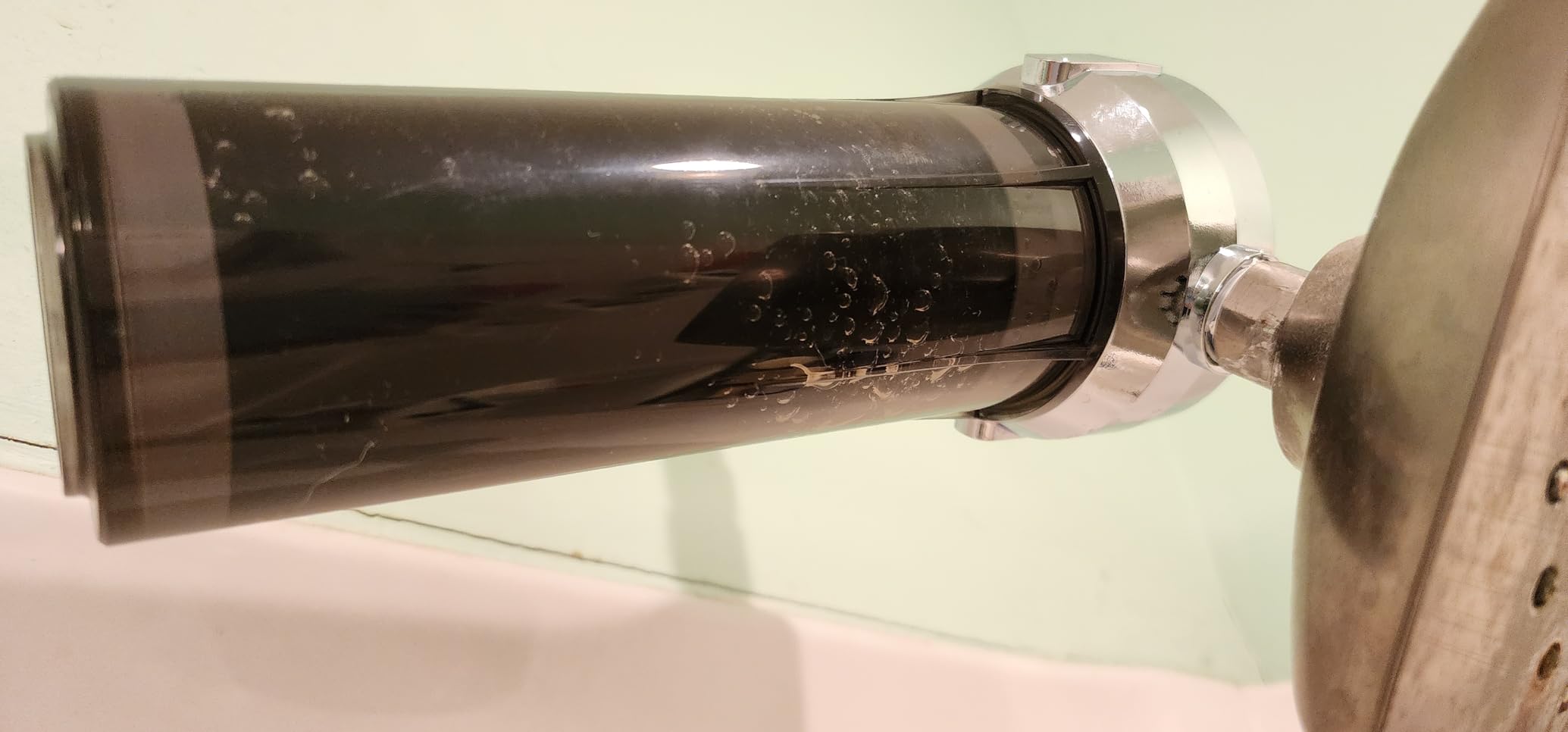
The material stack is activated carbon, polypropylene and ceramic inside a plated ABS body with brass fittings. The carbon handles odor and chlorine adsorption, and the replacement design means you can change the cartridge without taking the whole shower structure apart. Long-term users confirm it keeps the showerhead from clogging with lime scale in genuinely hard water areas.
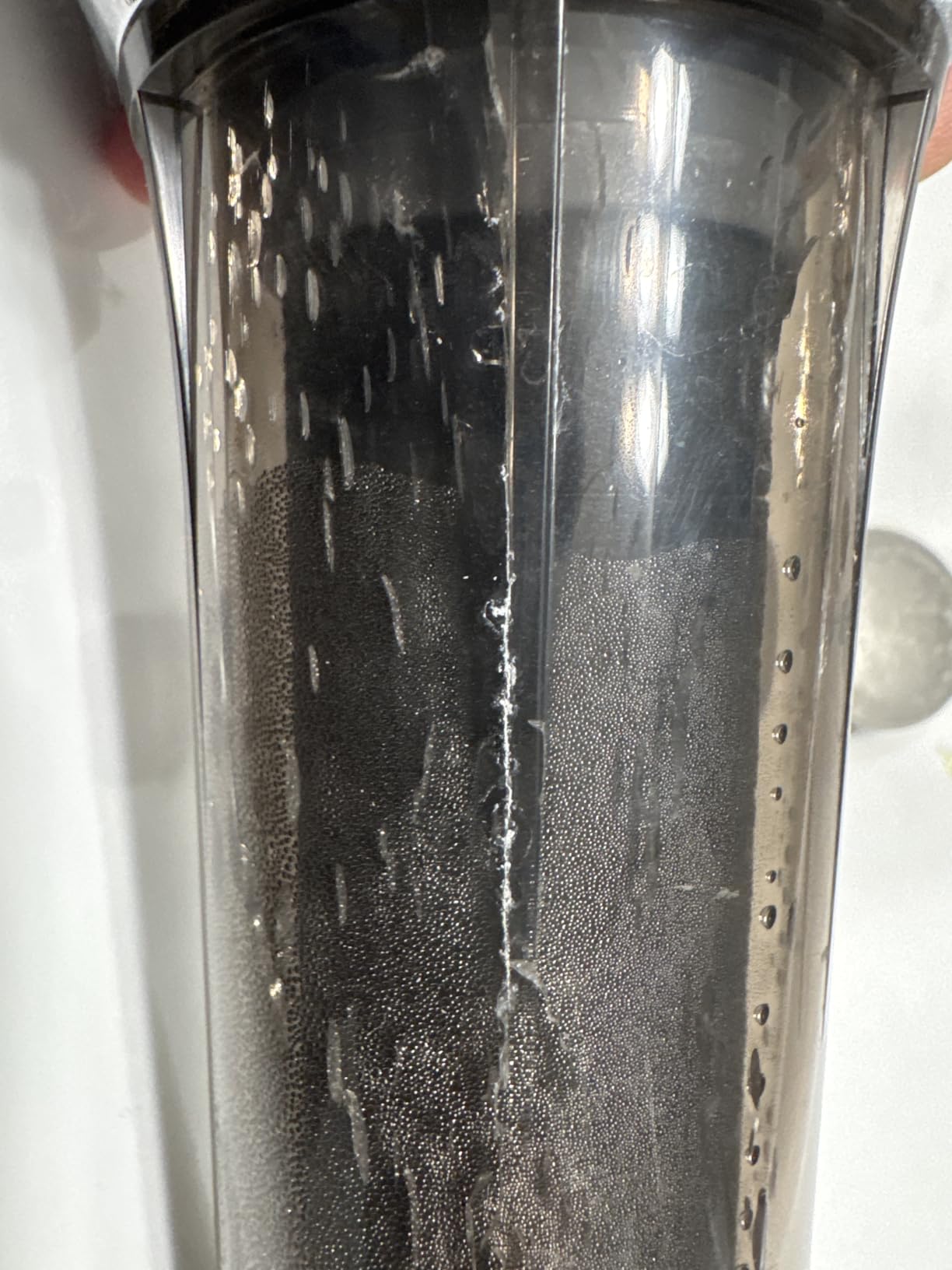
Leaking is the dominant complaint, and the diagnosis is consistent: it needs more tape than the box suggests. Wrap PTFE at every thread, including the ones that look already sealed.
A secondary issue is that water sits in the housing between uses, which produces a musty smell in hard water areas unless you drain it periodically. The plastic housing itself is not especially durable, and to be direct about the limits, this filter does not remove chloramines.
What you should know before buying
Certification is the whole argument here, and it is a good one. If you have ever worried about lead in older plumbing, this is the filter in the group where that concern has been formally addressed rather than asserted. Pressure is preserved, and the cartridge swap is straightforward once you get past the first seal.
Who should skip it
Skip it if you are on chloraminated water, since it is documented as not addressing chloramine. If you dislike plumbing tasks entirely, the extra taping is a real consideration. And if a minimalist bathroom matters to you, the plainer bulkier housing is the trade for the certification.
9. Weddell Duo – Best for Seeing Filter Wear
Weddell Duo Shower Head Filter, NSF Certified Chlorine Reduction, Lead-Free
Inline filter
Clear dual cartridges
Twist to change
2.8 gpm flow
Pros
- Clear housing lets you see how much media remains
- large cartridges outlast most competitors
- most owners report no pressure loss
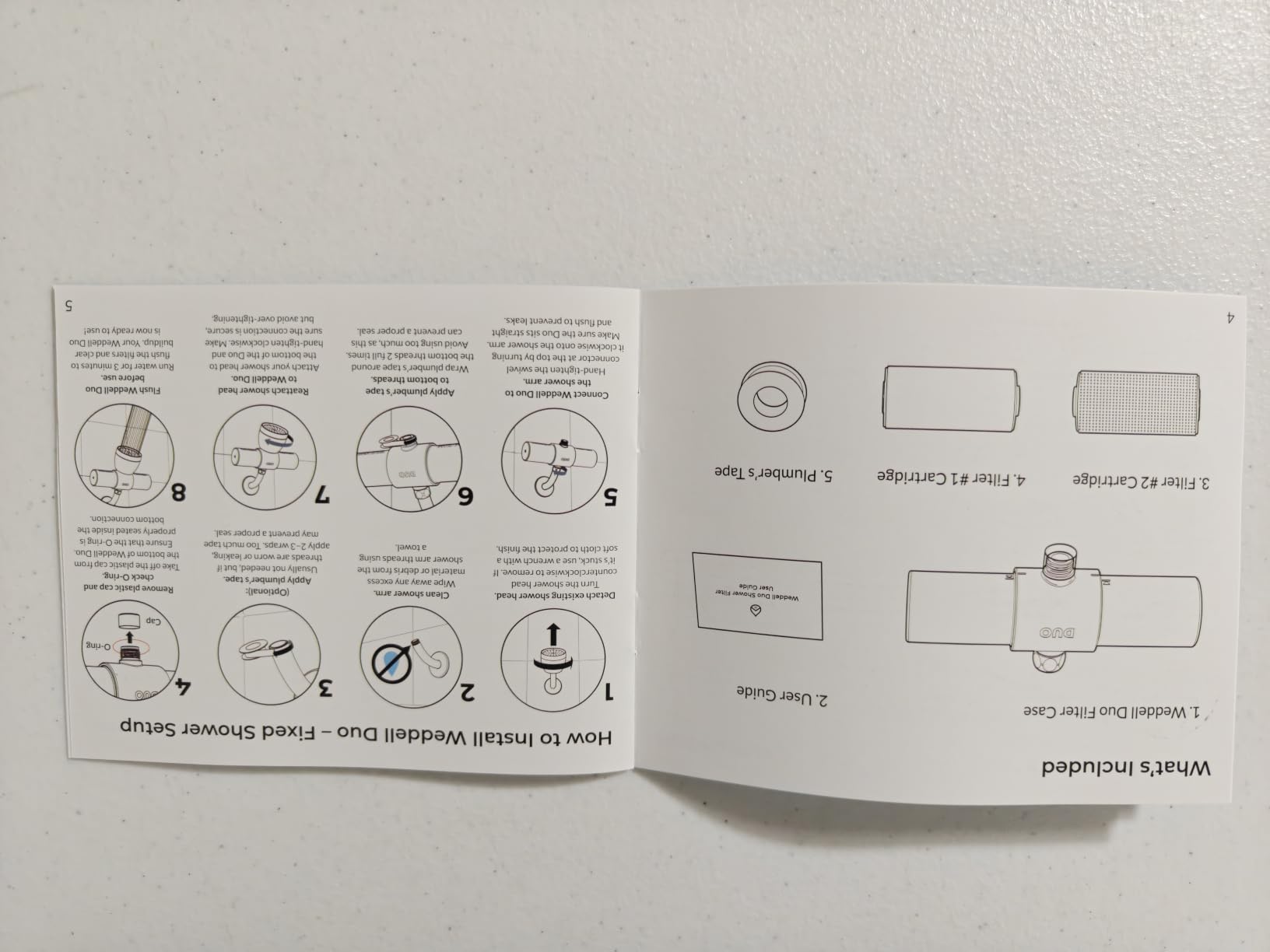
- installs with no tools using the included O-ring and Teflon tape
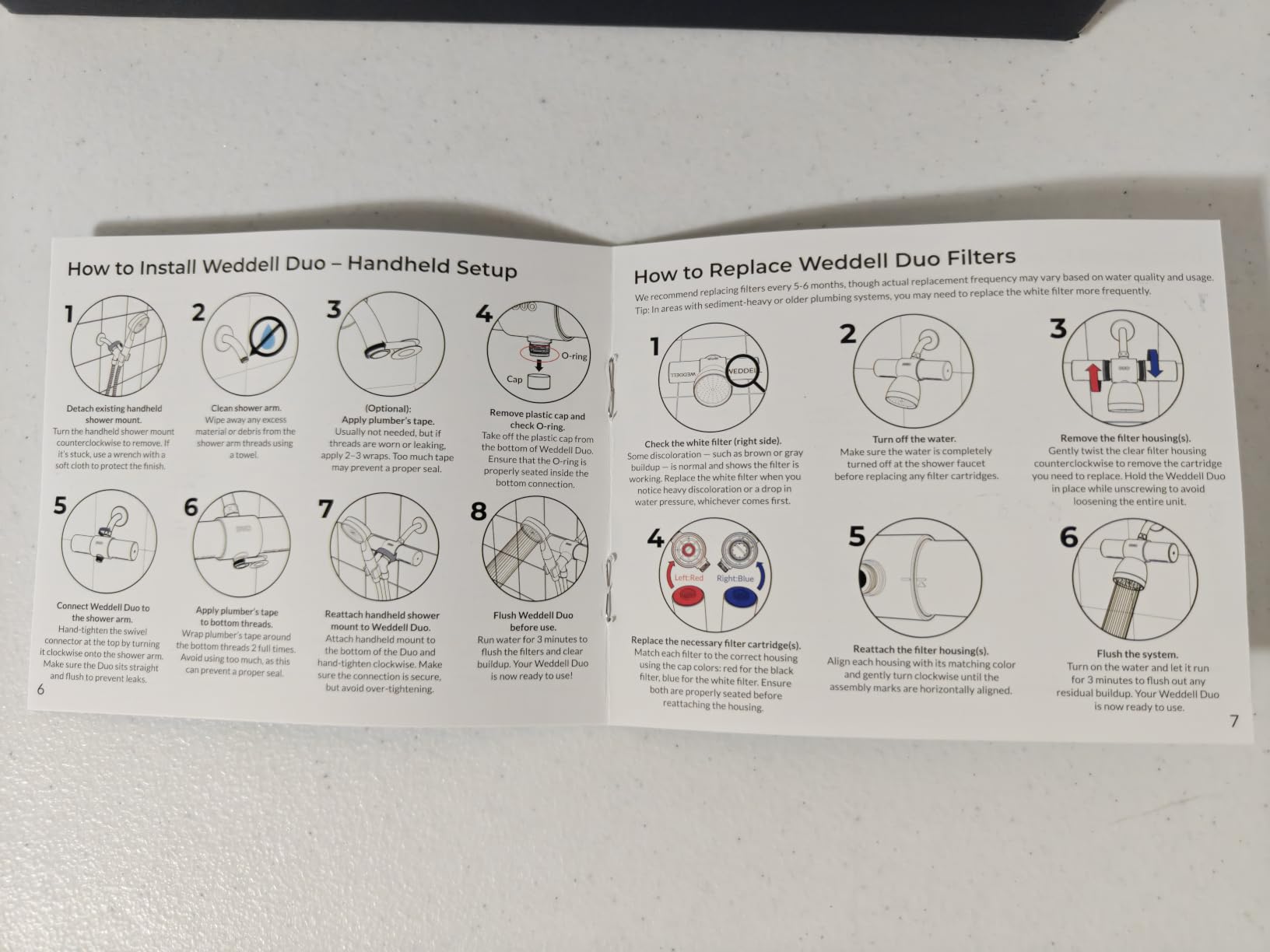
- twist-to-change replacement system
Cons
- Highest-priced filter here and the cartridges are costly
- the female nut does not unscrew which makes some leak repairs impossible
- flow weakens as the filter ages if replacements are delayed
Everything here is designed around one idea: you should not have to guess when to change the cartridge. The clear dual cartridges let you look at the media and see it darken as it loads, so you replace on evidence rather than on a calendar reminder. The twist-to-change system then makes the swap itself quick, and very few filters in any category give you that combination.
The cartridges are physically large, and owners consistently report they outlast most competing cartridges. Flow rate is 2.8 gpm, and most buyers report no meaningful pressure loss, partly because the dual design spreads the load. The claim is up to 99% chlorine reduction across 8,000 gallons, with lead-free construction, and the housing works with rain, fixed and handheld heads on a universal tool-free fit.
The 4.0 average is the lowest in the group, and the reason is cost rather than performance. The cartridges are the most expensive consumable here, which pushes a household toward stretching them past their useful life. When that happens, flow weakens noticeably, and that is exactly the failure the clear housing is meant to prevent. One design flaw is worth flagging: the female nut does not unscrew, so certain leak repairs are simply not possible.
What you should know before buying
Service is a real strength. A defective filter was replaced within 24 hours according to buyers, and the O-ring plus Teflon tape in the box covers the standard seal. Note that the PFAS reduction is third-party verified but explicitly not part of the NSF certification, so do not treat those two claims as equivalent.
Who should skip it
Skip it if ongoing cartridge cost is the deciding factor, since this is the most expensive to keep supplied. It is not built for chloramine, and the 8,000 gallon rating means frequent changes in a high-use household. If you are comfortable replacing on a fixed schedule, a non-clear cartridge saves money.
10. Dwavele 20-Stage Filter – Best Budget Pick
Shower Filter – 20 Stage, 2 Replacement Cartridges Total – 1 Installed
Inline filter
KDF-55 and carbon
Ceramic balls
Two cartridges
Pros
- Lowest entry price in the group and still includes a spare cartridge
- 20 stages with KDF-55 activated carbon and alkaline ceramic balls
- high-flow design maintains stable pressure
- Teflon tape and two rubber washers included
- fits the broadest range of standard shower head types
Cons
- Must run water 5 to 10 minutes on first use to flush carbon dust
- alkaline ceramic ball media is a lower-cost filler versus KDF-dense cartridges
- refill cartridges erode the entry price advantage
This is where most first-time buyers should start. It is the lowest entry price in the group, it still includes a spare cartridge, and the 4.6 average puts it level with the top-rated product here. For a household that wants chlorine gone and does not want to research media chemistry, the price-to-performance ratio is genuinely hard to argue with.
The media is KDF-55, activated carbon and alkaline ceramic balls across 20 stages. KDF-55 does the chlorine reduction, carbon handles odor, and the ceramic balls are the lower-cost component that keeps the stage count high without contributing much chemically. The high-flow design holds pressure steady, which addresses the most common objection to inline filters.
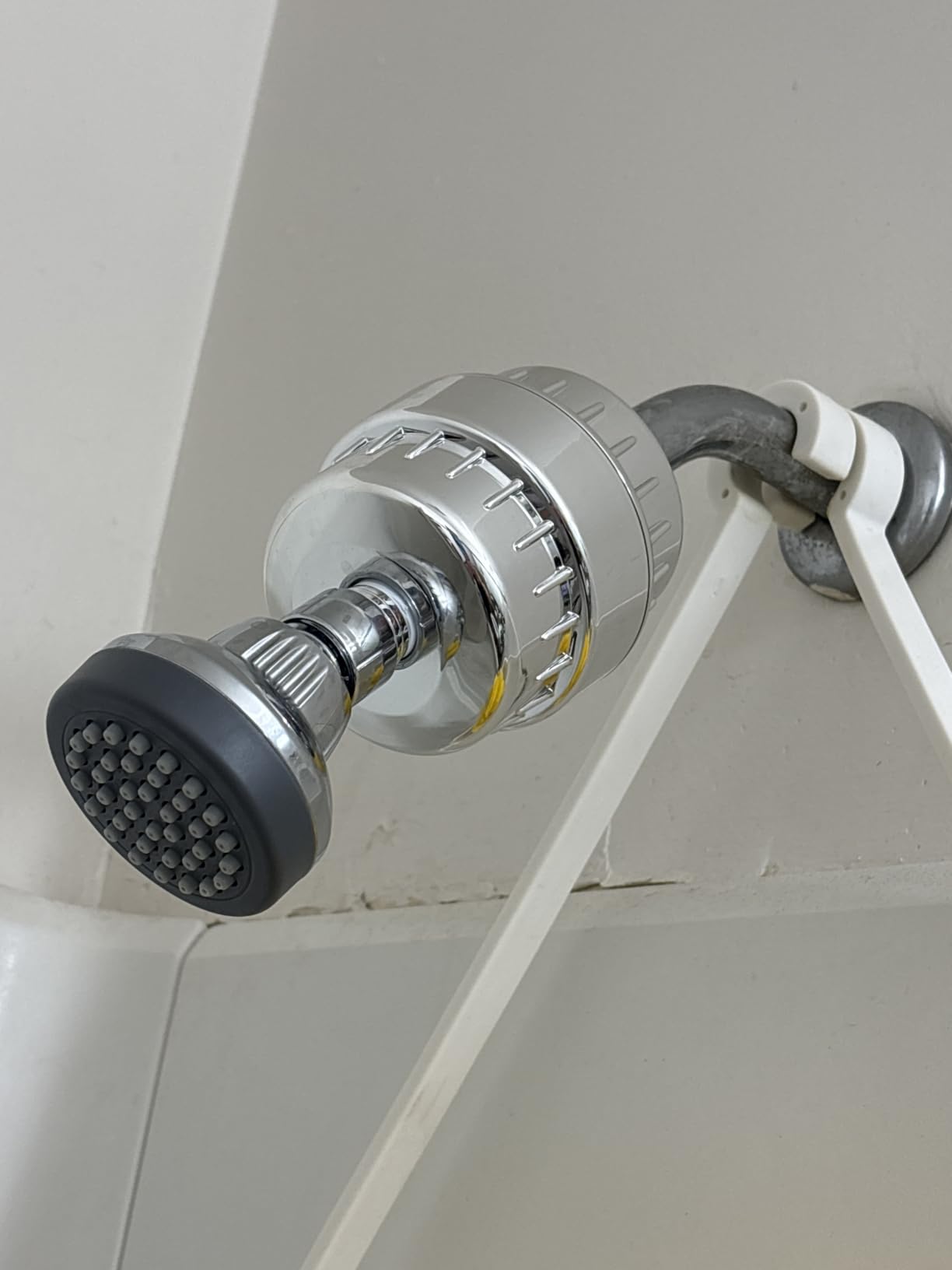
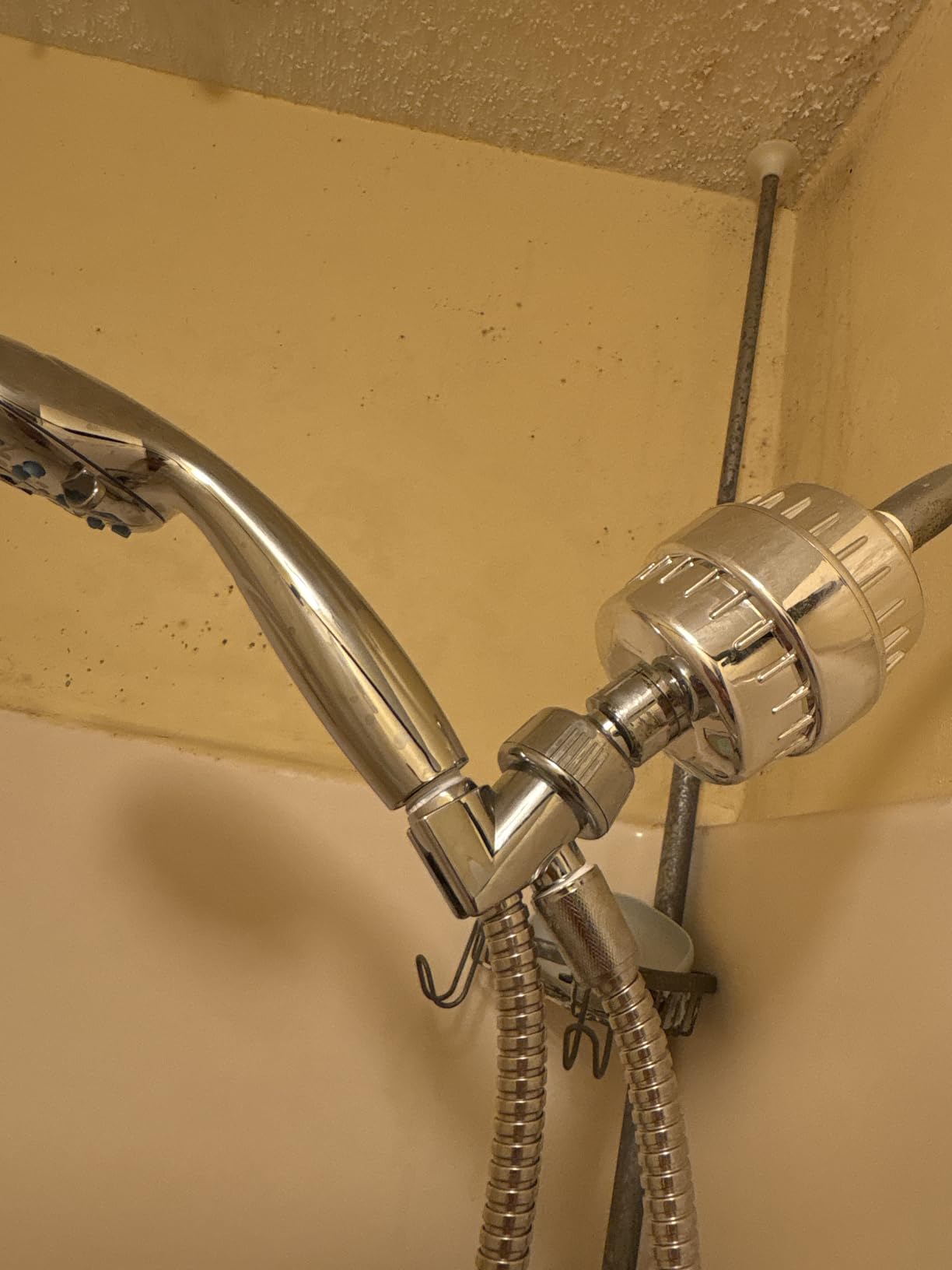
Fitting is well handled: standard G1/2 thread, and the listing covers wall-mounted, handheld, rain and combo heads. Teflon tape and two rubber washers are in the box, which is more than many competitors include. One thing to know before first use: run the water for five to ten minutes to flush carbon dust out of the media, or you will get grey water and a worried review.
What you should know before buying
The refill cartridges are where the entry price stops being the whole story, so factor them into a multi-year comparison. Two cartridges are included, and bundles of two, three or four are available. The electroplated finish resists scratches, which matters more than it sounds on a part you touch every week.
Who should skip it
Skip it if you want the highest concentration of real filtration media per cartridge, since the ceramic balls are filler. It is not for chloraminated water, and it will not help with iron from a well. If you plan to ignore cartridge changes, choose a longer-life unit instead.
11. SparkPod 23-Stage Filter – Best for Hard-Water Scale
SparkPod 23-Stage Shower Head Filter for Showerheads, Polished Chrome
Inline filter
KDF-55 and vitamin C
10000 gallon capacity
One-year warranty
Pros
- Media list names KDF-55 activated carbon vitamin C calcium sulfite and ceramic balls
- installs in under a minute with no tools on any half inch arm
- maintains original water pressure
- five finishes available
- one-year warranty with a week-long support team
Cons
- Cartridges last only 2 to 3 months
- water can pool in the housing and smell musty in very hard water
The 23-stage claim is marketing on its face, but the media list underneath it is not filler-only: KDF-55, activated carbon, vitamin C, calcium sulfite and ceramic balls. Calcium sulfite in particular is the media most shower-specific shoppers underrate, because it neutralizes chlorine chemically rather than relying on carbon adsorption alone. That makes this a strong choice where you are dealing with hard water and scale alongside odor.
Install speed is the sleeper feature. Most people finish in under a minute on any half inch shower head or arm, with no tools, and pressure stays where it was. The twist-off cartridge makes routine changes simple, and the one-year warranty plus a week-long customer support window is better service coverage than most of this category offers.
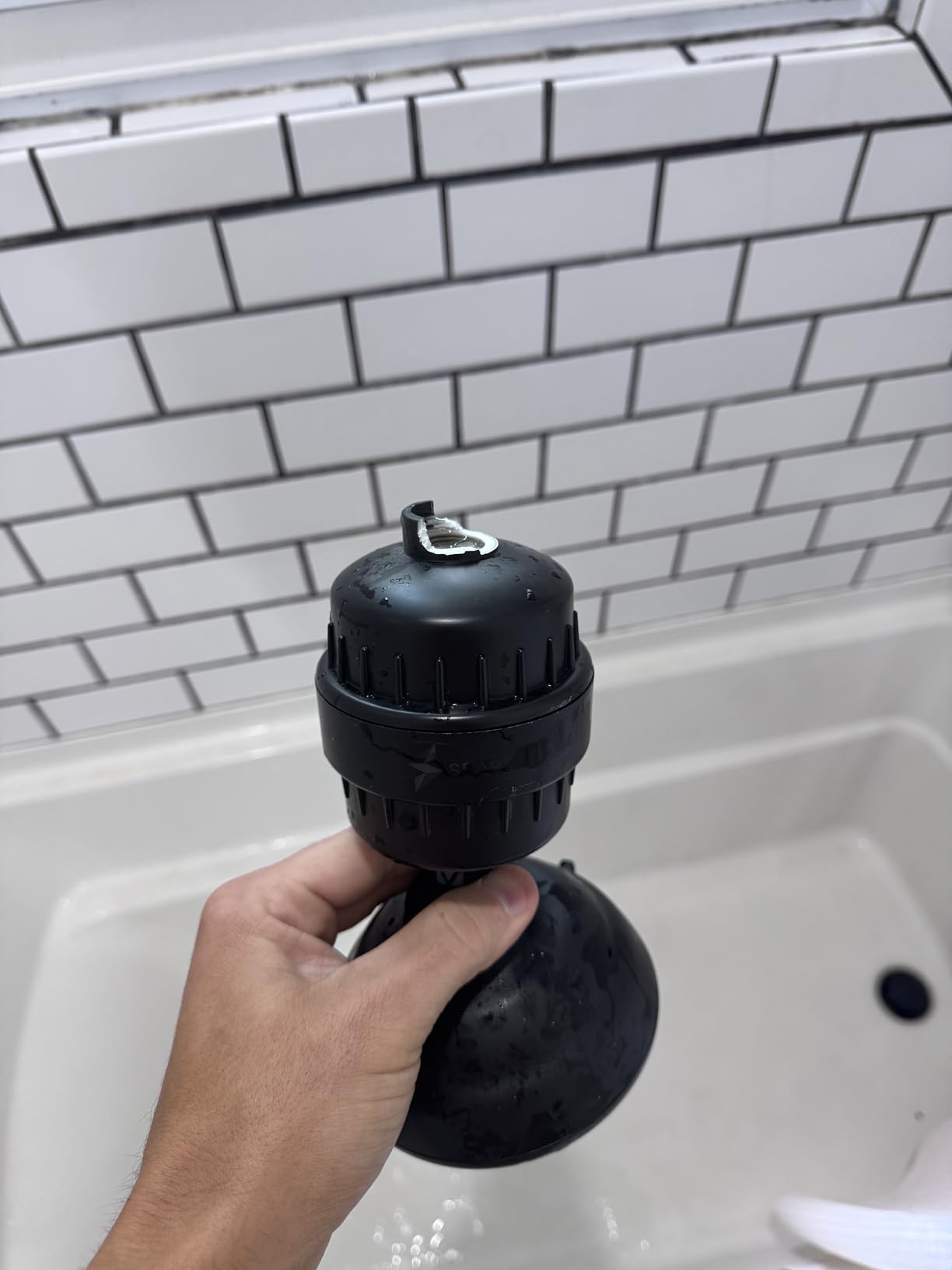
The trade-off is cartridge life. Two to three months, or 10,000 gallons, is the shortest meaningful interval here, so the annual consumable cost is real. In very hard water the cartridge clogs faster than even that, and standing water in the housing can develop a musty smell that some owners find worse than the chlorine they were trying to fix. A few packages also arrived missing gaskets and plumber’s tape, so check the box on arrival.
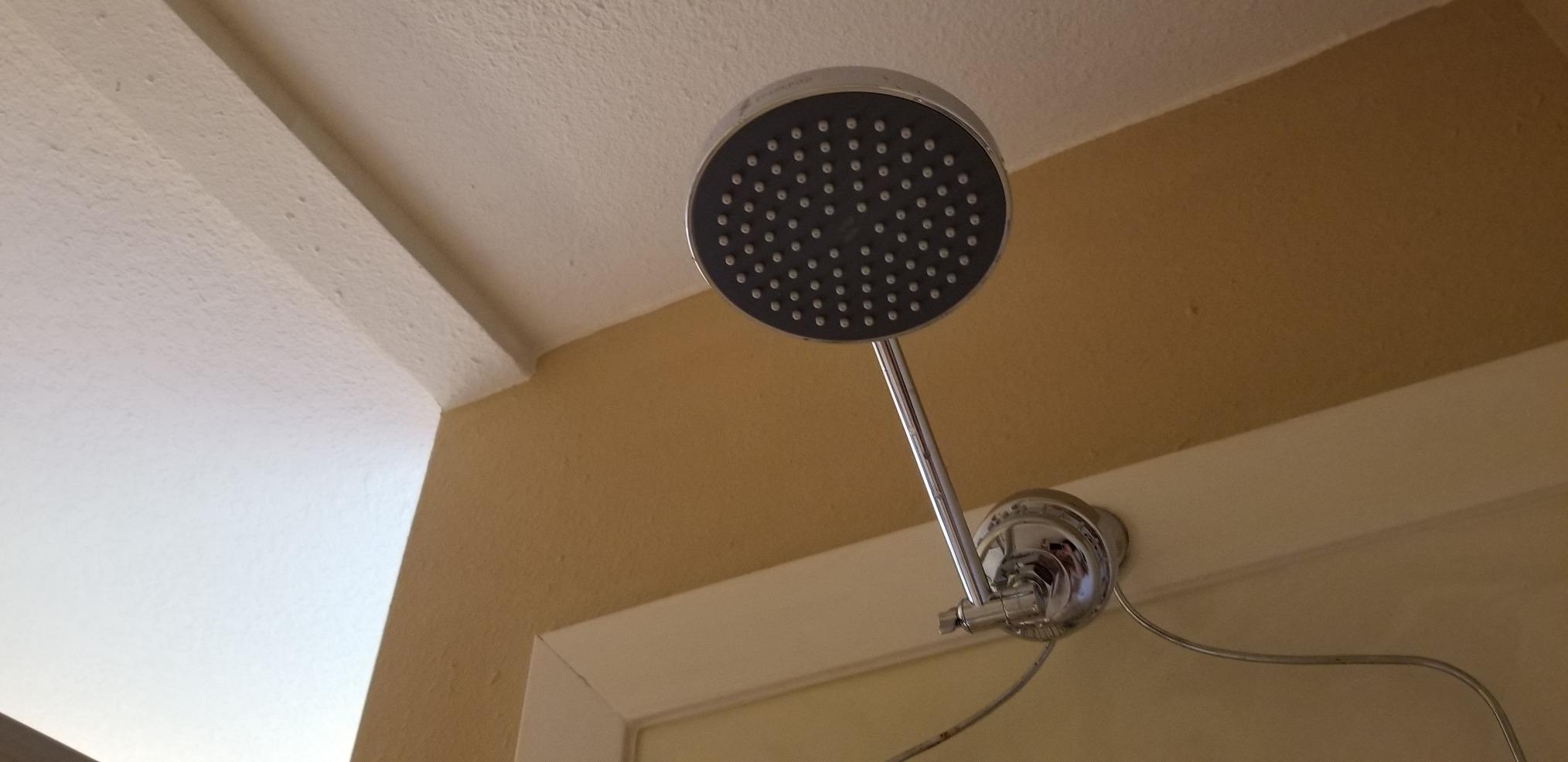
What you should know before buying
Pick this if scale is half your problem, not just odor. The vitamin C and calcium sulfite combination is more relevant to mineral-heavy areas than to a soft-water household. Five finishes are offered, so it can blend with existing hardware. Set a calendar reminder, because the short interval is the one thing that will disappoint.
Who should skip it
Skip it if you shower often and hate frequent cartridge changes, since the interval here is punishing for a large household. It is the wrong tool for chloramine and for well water. If you want a visual indicator of filter condition, this housing does not offer one.
12. Longriver R7 High Put Filter – Best for Fast Odor Relief
Longriver R7 Shower Filter High Put Shower Water Filter for Hard Water
Inline filter
Rotating impeller
KDF-55 and calcium sulfite
6 month cartridge
Pros
- Affordable entry price with a claimed six month cartridge life
- chlorine smell reported gone within the first month of use
- no change in water pressure over a year of use
- replacement cartridges available by subscription
- impeller keeps water moving through the media
Cons
- No visual indicator for when the cartridge needs changing
- some filters seep slightly at the threads regardless of tightening
- a few users report no noticeable change in water quality
The design idea here is contact time, which is the quiet bottleneck in most shower filters. Water moves through a fixed bed of media and can short-circuit through the easiest path. A high-speed rotating impeller inside the cartridge keeps the media agitated so water is driven fully through it, which is the mechanism behind the claimed 99.99% chlorine removal within 0.2 seconds. Skeptics will treat that figure as marketing, and reasonably so, but the direction of the claim is right.
The media is KDF-55, calcium sulfite and activated carbon balls, which covers both the neutralization and adsorption routes. Owners in high-chlorine and hard water areas report the odor disappearing within the first month, and a year of use produces no pressure change. Several also noticed less staining on glass shower doors, which is a nice side effect in mineral-heavy regions.
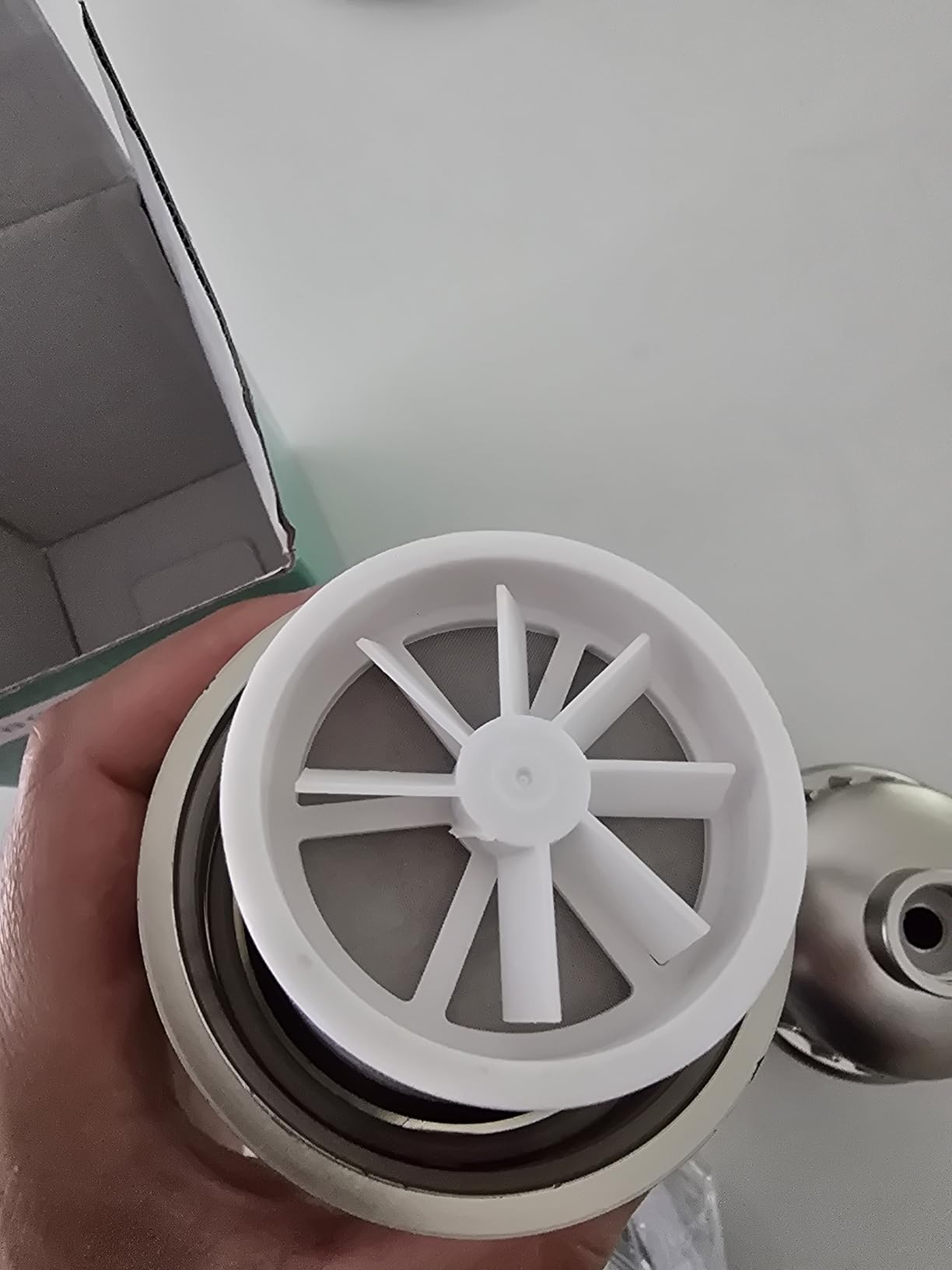
The subscription option for replacement cartridges is genuinely convenient and cuts the forgetting problem. Against that, there is no visual indicator, so you rely entirely on a schedule. A few filters seep slightly at the threads regardless of tightening, and a few buyers were uneasy about the loose media pieces inside the cartridge.
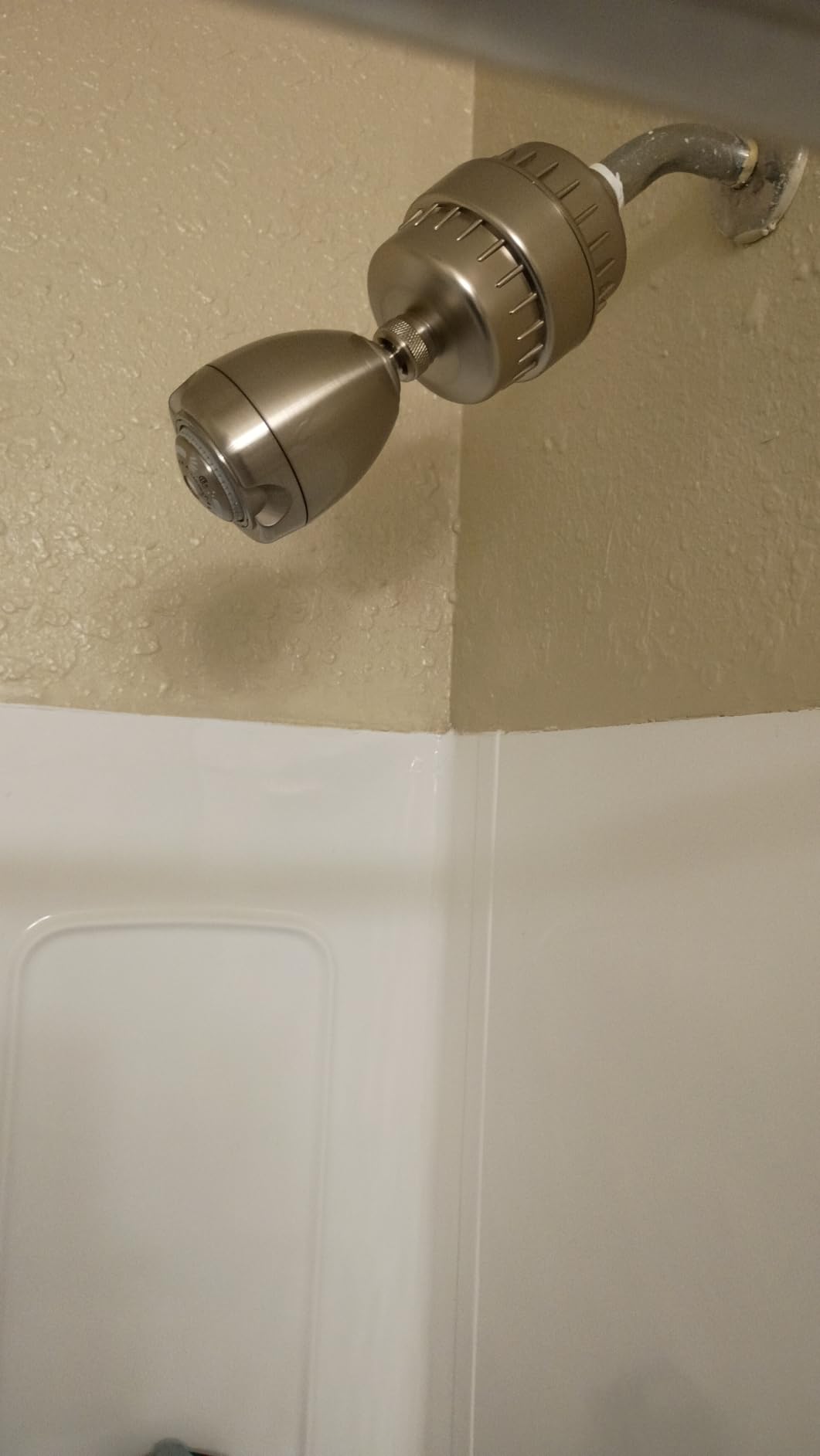
What you should know before buying
Subscribe to the refills if you buy this, because a subscription removes the most common failure mode for every filter in this guide: running past the useful life of the media. The stated life is up to six months, and the pack counts range from one to five cartridges. Note that 99.99% and 98% claims are manufacturer figures without an attached certification.
Who should skip it
Skip it if you want a visual read on cartridge condition, or if thread sealing is a problem in your bathroom. It is not a certified product, so it does not satisfy anyone who needs NSF documentation. As with the rest of this category, chloramine, well water and high iron are all out of scope.
Chlorine or Chloramine? Check This Before You Buy
Almost every complaint we found in buyer reviews and water treatment forums follows the same script. Someone buys a well-reviewed chlorine filter, installs it, and three months later reports that nothing changed. In most of those cases the utility switched to chloramine, and the filter was never the right product. Sorting this out first saves you a year of confusion and one wasted cartridge cycle.
Three steps will tell you. First, find your water utility and request the annual Consumer Confidence Report, which every US system is required to publish. Second, look in the disinfectant section for the specific compound used, not just the word disinfectants. Third, if the report is unclear, call the utility and ask directly whether they use chloramine and what the residual level is.
A quick home check helps. A standard free-chlorine test kit turns pink when free chlorine is present and will not respond to chloramine the same way, which gives you an immediate read. Members of r/WaterTreatment consistently recommend this over guessing. A chlorine smell alone is not a reliable signal, since chloraminated water can smell faintly or not at all.
If it turns out your water is chloraminated, standard KDF and carbon media will not solve it. You need catalytic carbon or a vitamin C based system, and you should verify the listing names one of those specifically rather than describing vague multi-stage filtration. None of the twelve filters here makes a chloramine claim, which is a deliberate decision on our part rather than an oversight.
Filtration Media Explained: KDF-55, Carbon and Calcium Sulfite
Two mechanisms do the actual work, and the best filters use both. Chemical neutralization is what KDF-55 does: a kinetic degradation fluxion media, essentially a copper-zinc alloy, that converts chlorine into harmless chloride. Calcium sulfite works the same way and is cheap enough that a good cartridge should always include it. Physical adsorption is what activated carbon does, trapping chlorine molecules on a large surface area.
There is a temperature caveat that rarely gets mentioned. Activated carbon adsorbs most effectively in cooler water, and a shower runs hot. That is the argument for KDF and calcium sulfite being the primary media in a shower specifically, with carbon as an odor and polishing layer rather than the main chlorine removal mechanism. Coconut shell carbon is the higher-quality form; generic carbon granules are cheaper and saturate faster.
Two more terms you will see constantly. Stage count tells you almost nothing, because twenty stages of the same ceramic ball do not outperform three stages of KDF and calcium sulfite. Likewise, percentage claims mean little without a certification attached. NSF/ANSI Standard 177 is the standard that matters for chlorine reduction, and NSF/ANSI 372 covers low lead content. A manufacturer printing 99% with no registry entry is telling you its lab result, not an independent one.
Vitamins, infrared beads and ceramic balls fall into the same bucket. Some add a modest conditioning benefit, and some are pure filler that inflates the stage number. What you want to see named in a listing is KDF-55, calcium sulfite, and coconut shell carbon. Every filter in the table above lists at least two of those three.
What a Shower Filter Cannot Fix
Hard water is the big one. Dissolved calcium and magnesium cause scale, soap scum and spots, and no shower filter removes total dissolved solids. Users on r/WaterTreatment with high-iron well water report that a basic shower filter does nothing for them, because these filters are engineered for chlorine, not iron or sulfur. A water softener or a whole-house system is the correct tool for those problems.
Chloramine is the second, covered above. Lead is the third: unless a filter carries NSF/ANSI 372 or equivalent point-of-use certification, treat lead claims as unverified. And no shower filter addresses disinfection byproducts, PFAS or pathogens, so anyone with a genuine contamination concern needs professional testing first and likely a broader system second.
There is one more limit worth naming honestly. Most of these filters are cosmetic and odor-control devices, not health devices. They meaningfully improve how water smells and feels, and they reduce the amount of chlorine reaching your skin and hair. That is a real benefit for eczema-prone and sensitive-skin households. It is not the same as purifying water. If your wider goal is smoother skin rather than cleaner water, our guides to the best laser hair removal devices and the best IPL hair removal devices cover that side of the routine.
Installation, Pressure and Cartridge Costs
Leaking is the number one complaint across this entire category, and almost every instance traces back to installation rather than the product. Thread by hand until it is snug and no more. Seat the O-ring or washer fully, because a mis-seated washer weeps even on a perfect seal. Use PTFE tape on every thread, including the ones that look already sealed, and re-check the joint ten minutes later.
Pressure is a fair question. Inline filters add a small restriction, and the amount varies with how clogged the media is. The designs in this roundup that report the least pressure loss share a trait: a short, wide housing and a high-flow internal path. A filter kept in place long past its cartridge life will restrict flow noticeably, which is the most common cause of the complaints about pressure.
Running cost is where the real differences hide. Multiply the cartridge price by the number of changes per year, then compare. A six-month cartridge is roughly two changes a year, while a two to three month cartridge is four or five. Across three years that difference is larger than the gap between entry prices, so a bundled multi-pack is often the cheaper route even when the sticker figure looks worse.
A final habit worth adopting. Set a subscription or a calendar reminder at purchase, because running a filter past its useful life gives you all the cost and none of the benefit. And if you can see your media, replace on what you see rather than on a date.
Frequently Asked Questions
Do shower filters actually remove chlorine?
Yes, when the media is right. Filters using KDF-55 copper-zinc media and calcium sulfite neutralize chlorine chemically, while activated carbon adsorbs it. The best cartridges combine all three. In our roundup the top rated filter removes 90%+ of chlorine with an NSF/ANSI 177 tested option available for buyers who want third-party verification rather than a manufacturer claim.
What is the best chlorine removal filter for a shower?
For most households on municipal water, a compact inline filter with KDF-55 and calcium sulfite media is the best balance of performance, price and install difficulty. The AquaBliss SF100 leads our roundup on review volume and consistency, while the AQUAYOUTH 2.0 is the pick if you want both NSF/ANSI 177 chlorine and NSF/ANSI 372 low lead certification.
How do I know if my water uses chlorine or chloramine?
Request the annual Consumer Confidence Report from your water utility and read the disinfectant field. Many systems list both, with chlorine switched off during peak demand. If the report is unclear, call and ask directly. A free-chlorine test kit also gives you an immediate read, since standard test strips do not respond to chloramine the way they do to chlorine.
Does a shower filter remove chloramine?
Usually not. Standard KDF-55, calcium sulfite and activated carbon media are effective against free chlorine but largely ineffective against chloramine, which is a more stable compound. Chloramine removal requires catalytic carbon or vitamin C based media. Check your utility’s disinfectant type first, because this is the most common reason buyers report a filter that does nothing.
How often should I replace a shower filter cartridge?
Most cartridges last three to six months, or until you have used roughly 10,000 gallons, whichever comes first. A two-person household on daily showers changes twice a year; a family of four changes four times. Hard water and well water clog media faster. If your housing is clear, replace based on what you see in the media rather than on a date.
Will a shower filter reduce water pressure?
A fresh filter reduces flow only slightly, and the compact inline designs in this roundup are engineered for minimal pressure loss. Noticeable drops almost always mean a clogged cartridge that has been in place past its useful life. Housing bulk also changes how far the shower head extends, which affects position more than flow.
Will a shower filter soften hard water?
No. Hard water comes from dissolved calcium and magnesium, which shower filters do not reduce. They can reduce the scale that ends up on your shower head and glass, and KDF plus sediment stages catch some particles, but the water itself stays hard. If hardness is your main problem, a water softener or whole-house system is the correct fix.
Are filtered showerheads worth it compared to an inline filter?
An inline filter keeps your existing shower head, costs less and takes under two minutes to fit. A filtered showerhead bundles the head, hose and media in one package, which suits anyone replacing the whole assembly anyway. The chlorine performance depends on the media inside, not on whether the filter is inline or integrated, so compare media and certification first.
Bottom Line: Which Shower Filter for Chlorine Removal?
For most households on chlorinated municipal water, the AquaBliss SF100 is the best shower filter for chlorine removal in 2026. It has the deepest review history in the category, a tool-free install, and a six-month cartridge that costs pennies per day. If cartridge supply is your main concern, the AquaHomeGroup 20-stage bundle covers a year and a half in one order, and if you replace your whole shower assembly, the filtered head package does the job in a single install.
Before any of them, spend ten minutes confirming your utility’s disinfectant. That single check is the difference between a filter that works and one that disappoints you. Once you know what you are dealing with, pick from the picks above, set a cartridge reminder, and you will never think about chlorine in the shower again.