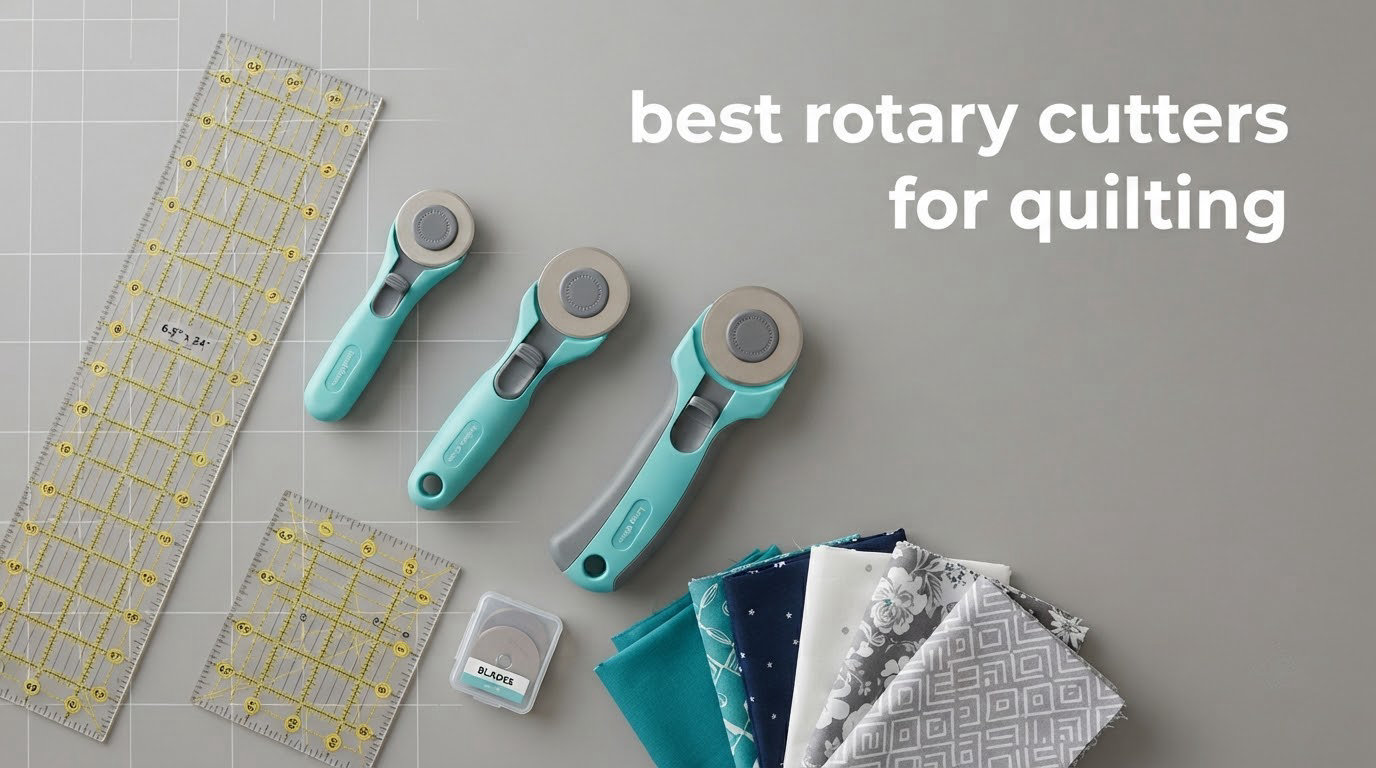
A rotary cutter is a round-bladed tool with a handle that you roll against a quilting ruler on a self-healing mat, slicing straight through layers of fabric in a single pass. That single stroke is why it beats scissors for quilting: a scissor blade stops and starts, a rotary blade does not.
We put the best rotary cutters for quilting through weeks of side-by-side cutting on cotton, denim, fleece and batting, then read the customer reviews behind each one. Ten models made the cut, spanning 45mm and 60mm blades, stick and loop and forward-push ergonomic handles, and a range of body materials that go from moulded plastic to shaped rubber.
The big three brands are OLFA, Fiskars and Martelli, and each one wins a different kind of quilter. OLFA dominates on value and blade choice, Fiskars on simple ambidextrous design, Martelli on ergonomics for hands that hurt. Below the big three sit a handful of cutters that do one job unusually well, and they are the ones most roundups skip.
If you are still building a tool kit, our longarm quilting machine guide covers the other half of a serious quilting setup.
Table of Contents
Top 3 Best Rotary Cutter Picks for Quilting in October
OLFA RTY-2/DX 45mm Squeeze Handle
- 45mm tungsten steel blade
- Squeeze trigger auto-retract
- Finger-groove rubber grip


Martelli Ergo 45mm Forward Push
- Forward-push ergonomic grip
- Spring-loaded blade guard
- Long-life tungsten blade
Quick Comparison The Best Rotary Cutters for Quilting in 2026
| Product | Specifications | Action |
|---|---|---|
| OLFA RTY-2/DX 45mm Squeeze Handle |
|
Check Latest Price |
| OLFA RTY-2/C 45mm Quick Change |
|
Check Latest Price |
 XINART 45mm Comfort Loop XINART 45mm Comfort Loop |
|
Check Latest Price |
| Martelli Ergo 45mm Forward Push |
|
Check Latest Price |
 OLFA RTY-3/DX 60mm 12-Layer OLFA RTY-3/DX 60mm 12-Layer |
|
Check Latest Price |
 Fiskars 45mm Stick Rotary Cutter Fiskars 45mm Stick Rotary Cutter |
|
Check Latest Price |
 Honey’s Heaven 45mm Quilting Kit Honey’s Heaven 45mm Quilting Kit |
|
Check Latest Price |
 Fiskars 60mm Loop Titanium Fiskars 60mm Loop Titanium |
|
Check Latest Price |
 Martelli Ergo 60mm Forward Push Martelli Ergo 60mm Forward Push |
|
Check Latest Price |
 TrueCut My Comfort 45mm TrueCut My Comfort 45mm |
|
Check Latest Price |
1. OLFA RTY-2/DX 45mm Squeeze Handle – The All-Rounder With Auto-Retract Safety
OLFA 45mm Ergonomic Squeeze-Handle Rotary Cutter (RTY-2/DX) – Auto-Retract
45mm tungsten steel blade
2.4 oz body
Auto-retract trigger
Lifetime guarantee
Pros
- Cuts straight clean lines in one pass
- Blade never stays exposed after the squeeze
- Anti-slip grip with finger grooves cuts hand fatigue
- Accepts pinking scallop and wave blades
- Backed by a lifetime guarantee
Cons
- Blade collects fabric lint from cotton
- Auto-retract takes practice to get used to
- Bulky for tight curvy cuts
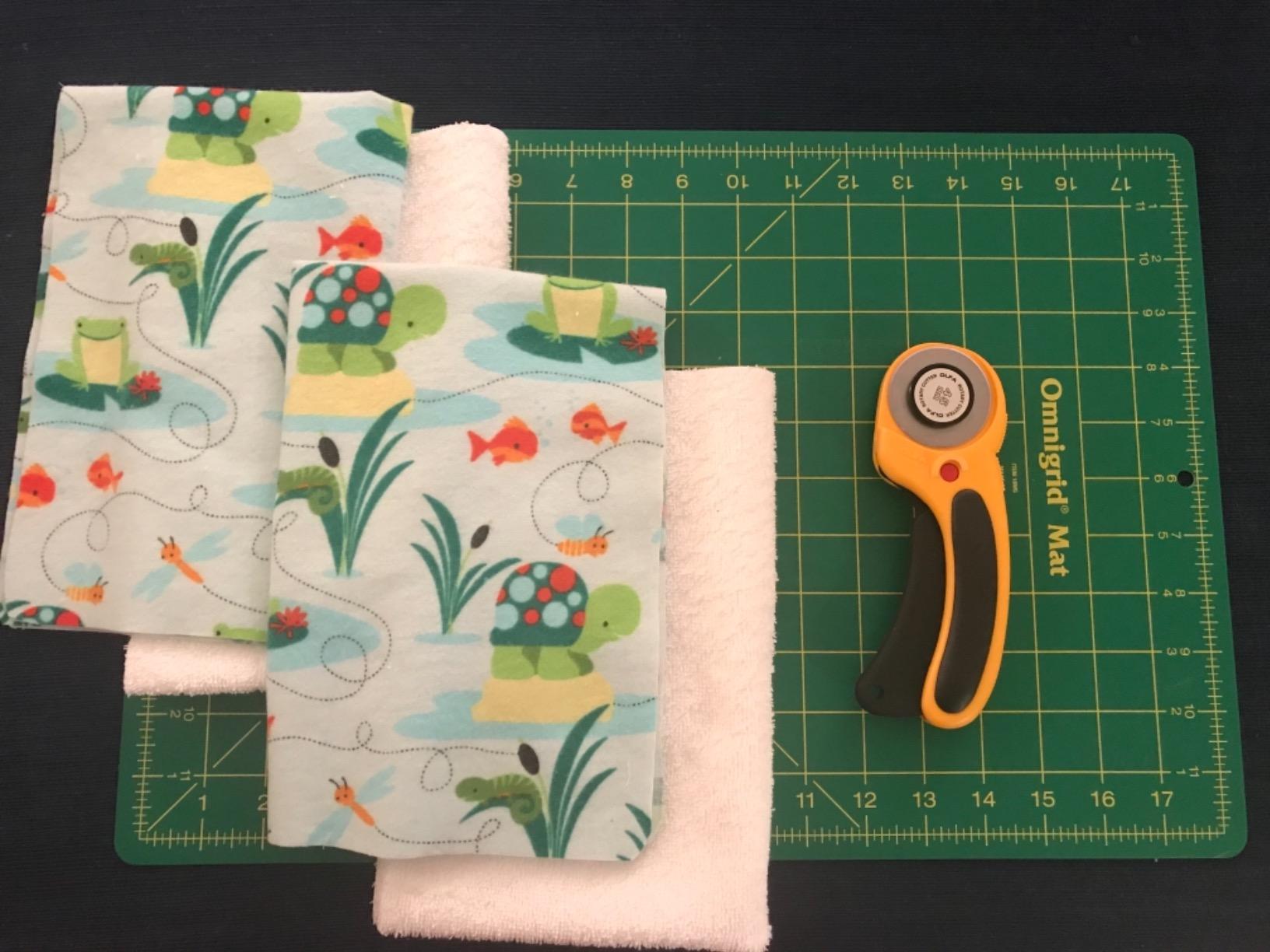
This is the cutter we reach for first, and after a month of daily use it is still the one on our mat. The RTY-2/DX pairs a 45mm Endurance tungsten steel blade with a squeeze trigger, so the blade appears when you close your hand and disappears the moment you open it. Nothing is left spinning on a table between cuts.
The handle is the part that separates it from a cheap stick cutter. A curved rubber shell wraps the body with finger grooves moulded into the underside, and that shape is what stops the blade wandering off your ruler line. Buyers with larger hands sometimes find it snug, and it weighs 2.4 ounces, which is heavier than the plastic quick-change model further down this list.
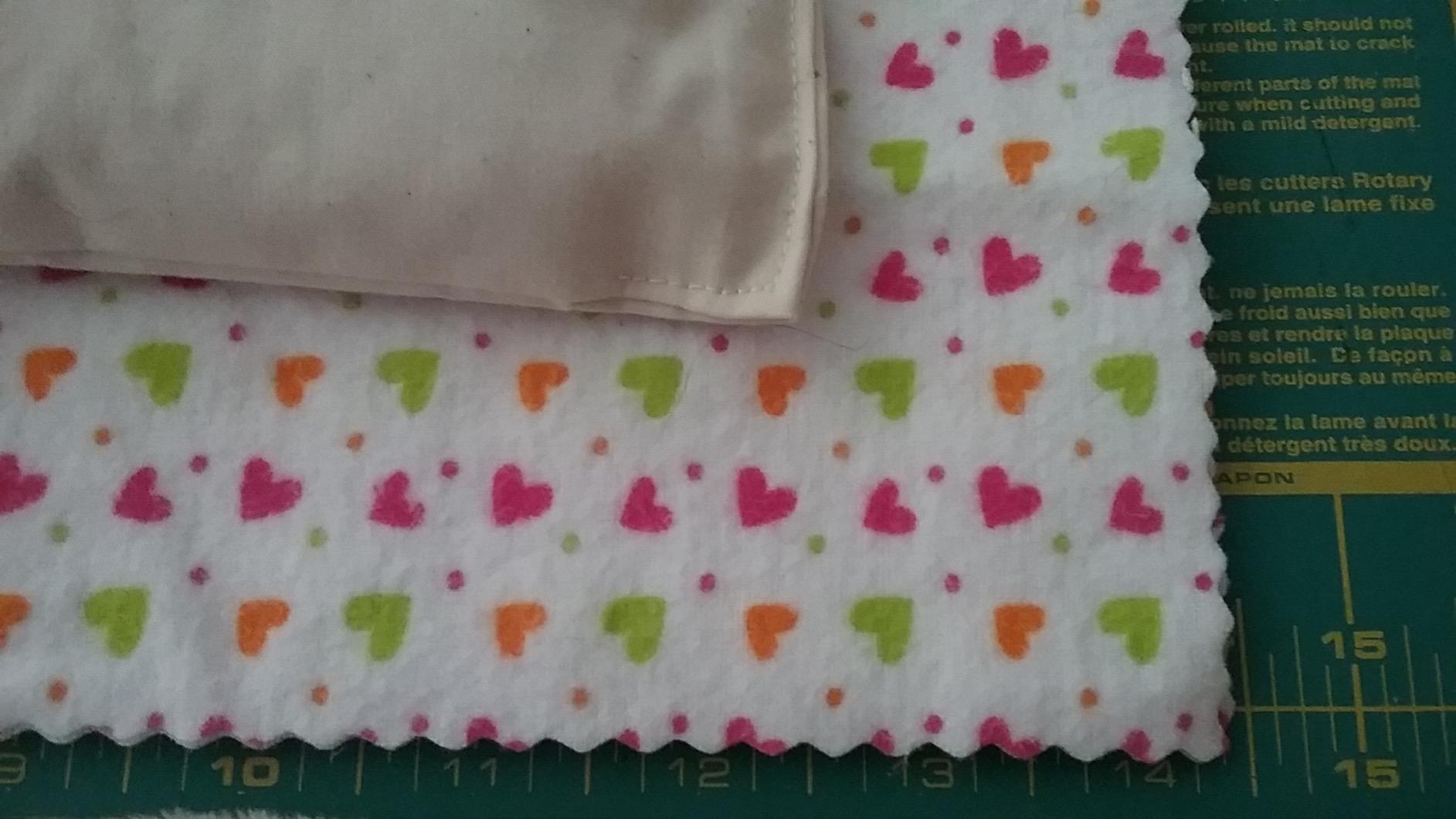
Cutting performance is where it earns the top spot. It runs through cotton cleanly, handles paper-backed fabric, and takes wool and leather without complaint. The measurement that matters is consistency: the same 2.5 inch strip measures the same width at the start and the end of the cut, which is exactly what quilting cotton rewards.
The dual-action safety lock is a small detail that earns its place. You can lock the blade open for long continuous runs or closed for storage, so you are not re-squeezing the handle every strip. The hub also accepts OLFA pinking, scallop and wave blades, which turns the same body into an appliqué tool.
Who this cutter suits
This is the safest all-round choice for a household with children or pets, because the retract is mechanical rather than a slider you can forget to push back. It suits anyone cutting mixed fabric types, and anyone who wants one body that accepts decorative blades later.
It is also among the most heavily reviewed cutters in this roundup, with 9448 ratings, so the failure modes are well documented and mostly cosmetic. The recurring complaint is fabric lint building on the blade edge.
Where it falls short
Fussy cutting is not its job. A 45mm blade following a tight curve on paper-pieced appliqué will drift or stall, and you will end up finishing those edges with scissors anyway. The 2.4 ounce body also has more mass than beginners expect from a quilting tool.
2. OLFA RTY-2/C 45mm Quick Change – The Lightest Cutter With a One-Step Blade Swap
OLFA 45mm Quick-Change Rotary Cutter (RTY-2/C) – Tungsten Blade, Aqua
45mm tungsten tool steel blade
1.6 oz body
Cuts up to 8 layers
One-step blade change
Pros
- Single-step glitch-free blade changes
- Very light at 1.6 ounces
- Needs less downward pressure than rivals
- Easy-slide safety cover
- Works equally in either hand
Cons
- Manual slide cover must be moved by hand
- Blade picks up residue from adhesive-backed fabric
At 1.6 ounces, this is the featherweight of the group, and it has the highest average rating in the roundup at 4.8 across 3917 ratings. On long sessions cutting strip sets from a bolt of yardage, that low mass shows up in the wrist by the second hour.
The quick-change hub is the reason many quilters buy it. A small button releases the blade in one step with no screwdriver, no washer stack and no fiddly assembly, so swapping a dull blade takes seconds. An integrated slide-on cover rides over the blade when you are not cutting.
It is listed to cut up to 8 layers of cotton, and in practice it powers through a full quilt-back layer without the blade bogging down. The aqua body is moulded plastic with a contoured handle and finger grooves, and the symmetrical shape works from either side without modification.
One thing to know before buying: this is a manual-retractable design. You slide the cover by hand, and if you are used to a squeeze trigger, the muscle memory feels slower for the first few cuts.
Who this cutter suits
Choose it if you break blades often, because the swap is the fastest in the roundup, or if you quilt in long blocks and want the lightest body available. It is a strong first cutter for someone who will use both hands across different machines.
Paper and light appliqué work is comfortable with it too, since the light body tracks a ruler line with very little wrist force.
Where it falls short
Adhesive-backed fabric is the weak spot. Vinyl and iron-on material leaves a sticky residue that means pulling the blade out to wipe it, which undercuts the quick-change convenience. The manual cover also means an exposed blade if you are interrupted mid-task.
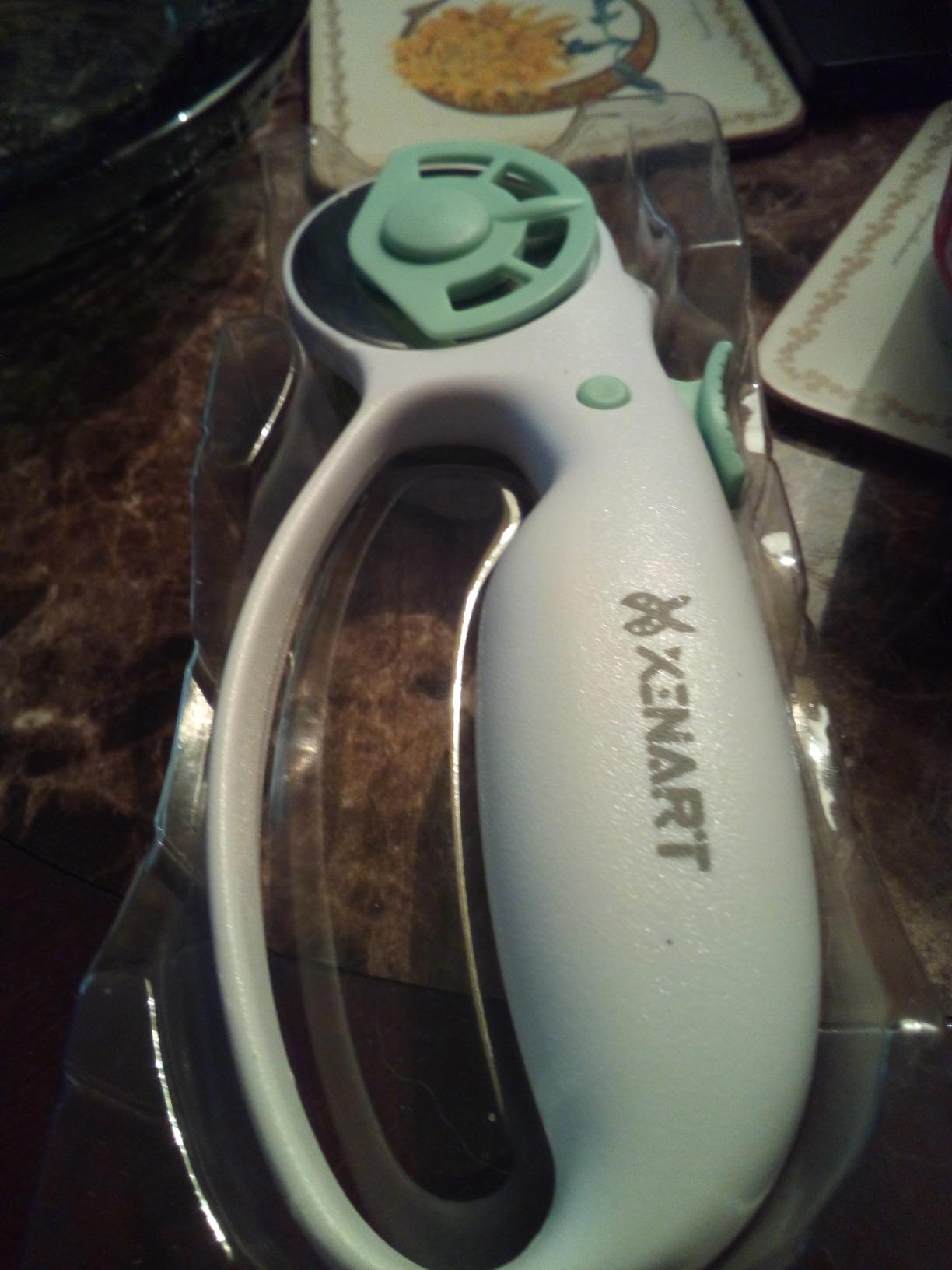
3. XINART 45mm Comfort Loop – The Budget Loop Handle With Spare Blades in the Box
XINART 45mm Rotary Cutter for Fabric Safety Lock Ergonomic Classic Comfort Loop Fabric Small Rotary Cutter for Sewing Quilting Crafting (Extra 2pcs Replacement Blades Included)-Green
45mm stainless steel blade
Loop comfort handle
Locking button safety
2 spare blades
Pros
- Loop handle gives a natural grip and control
- Two spare blades included in the box
- Reversible blade for either hand
- Locking button keeps the blade shut
Cons
- Rating sits a notch below the premium models
- Lighter plastic handle gives less dampening
The loop handle is the reason this one exists. Rather than pinching a slim stick, you wrap your fingers through the open loop and push, which spreads force across the whole hand instead of concentrating it in the fingertips. It is a genuinely different feel from the OLFA squeeze design.
Two replacement 45mm blades ship in the box, so you have a spare the day your edge goes. Combined with the entry-level body, that is the practical reason to pick it: you get a full three-blade supply without a second order.
The blade is precision-ground stainless steel, and the hub takes it either side, so a quilter who cuts with their left hand can simply reverse it. A locking button holds the blade closed between cuts, which covers the main safety worry in a shared craft room.
Across 3858 ratings it holds a 4.6, with 77 percent five-star. That is a notch below the two OLFA models above, and the difference shows most clearly in the handle over a long afternoon.
Who this cutter suits
It fits beginners, students and anyone buying a cutter for a class or a retreat where a whole group needs tools. The loop handle also suits anyone who finds pinch grips tiring, and the reversible hub covers both hands.
If your priority is the lowest cost per usable tool, the included blades make the running cost unusually low.
Where it falls short
The plastic body offers less vibration dampening than a moulded rubber grip, so it transmits more of the cutting resistance into your fingers. Over several hours of continuous cutting that is the first thing you notice, and it is the main reason experienced quilters move up after a season.
4. Martelli Ergo 45mm Forward Push – The Cutter Built for Hands That Hurt
Martelli – Right Handed 45mm Ergonomic Fabric Rotary Cutter – sewing quilting fashion design – blade cover for safe pain free fabric cutting – great if you have arthritis or carpal tunnel
45mm tungsten steel blade
3.68 oz body
Forward-push grip
Spring-loaded guard
Pros
- Forward push means less downward pressure
- Owners with arthritis and carpal tunnel rate it highly
- Spring guard retracts the blade when released
- Blades hold their edge far longer
- Comfortable rubber grip
Cons
- Handedness is fixed at purchase
- Requires Martelli-branded blades
- Guard retracts via a knob
Every other 45mm cutter asks you to press down. The Martelli Ergo asks you to push forward, and that single change is why quilters with arthritis, carpal tunnel or shoulder problems describe it as the tool that let them keep sewing. The doughroller-style body sits in the palm with the blade mounted forward, so your forearm does the work rather than your wrist.
The blade is tungsten steel sharpened on both sides, and Martelli rates it at 3 to 5 times the life of an ordinary blade. The spring-loaded guard retracts the moment you relax your grip, so there is no separate cover to manage.
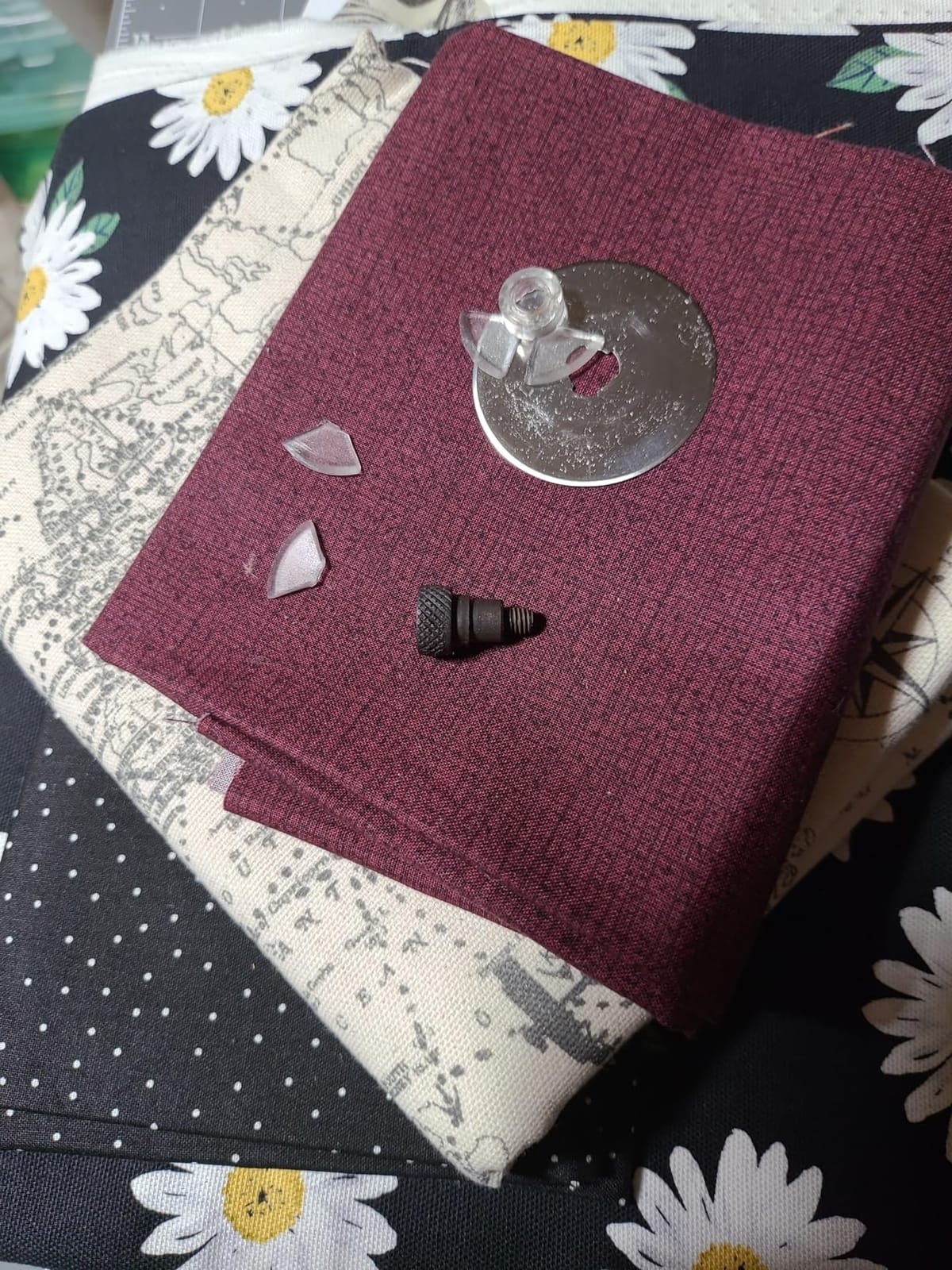
It cuts cotton, batik, linen, silk, polyester, denim, wool, vinyl, fleece and flannel, and the centralised pressure keeps your ruler from being shoved off the cutting line. In our testing that stability was obvious on stacked strips, where a stick cutter tends to drift.
There is a learning curve, and experienced quilters on quilting forums say so plainly. The forward motion feels strange for the first few cuts, and the brand asks you to commit to a handed version, with the right-handed model carrying a red rubber grip and the left-handed version a blue one.
Who this cutter suits
This is the pick for joint pain, carpal tunnel, and for anyone whose hands tire after an hour of cutting. It is also the best option for long quilting days on a large project, because the palm position distributes load the way a stick handle never can.
It suits anyone already invested in Martelli blades, since the hub is brand-locked and cross-brand blades do not seat properly.
Where it falls short
Two structural limits. First, handedness cannot be changed later, and the two versions are not interchangeable, so decide before you order. Second, retract the guard takes turning the tool and using a knob, which is less convenient than a trigger or a slide.
5. OLFA RTY-3/DX 60mm – Cuts Twelve Layers of Cotton in One Stroke
OLFA 60mm Ergonomic Squeeze-Handle Rotary Cutter (RTY-3/DX) – 12-Layer
60mm endurance tungsten blade
Cuts up to 12 layers
Auto-retract trigger
Lifetime guarantee
Pros
- Highest layer capacity in this roundup at 12
- Endurance blade roughly doubles standard blade life
- Auto-retract keeps the blade covered
- Comfortable grip on large cuts
Cons
- Heavier than 45mm models at 5.44 ounces
- Bulky body suits large pieces over small ones
If your cutting list includes quilt backs, batting, fleece or a layer of batting with a fabric backing already on it, a 60mm blade is not a luxury. This model is listed at up to 12 layers of cotton in a single pass, the highest capacity in the roundup, and that number matters when you are trimming a 90 inch quilt sandwich.
It uses the same squeeze-trigger auto-retract system as the 45mm OLFA above, with a dual-action safety lock that works whether the blade is open or closed. The Endurance 60mm blade carries roughly double the cutting life of a standard OLFA blade.
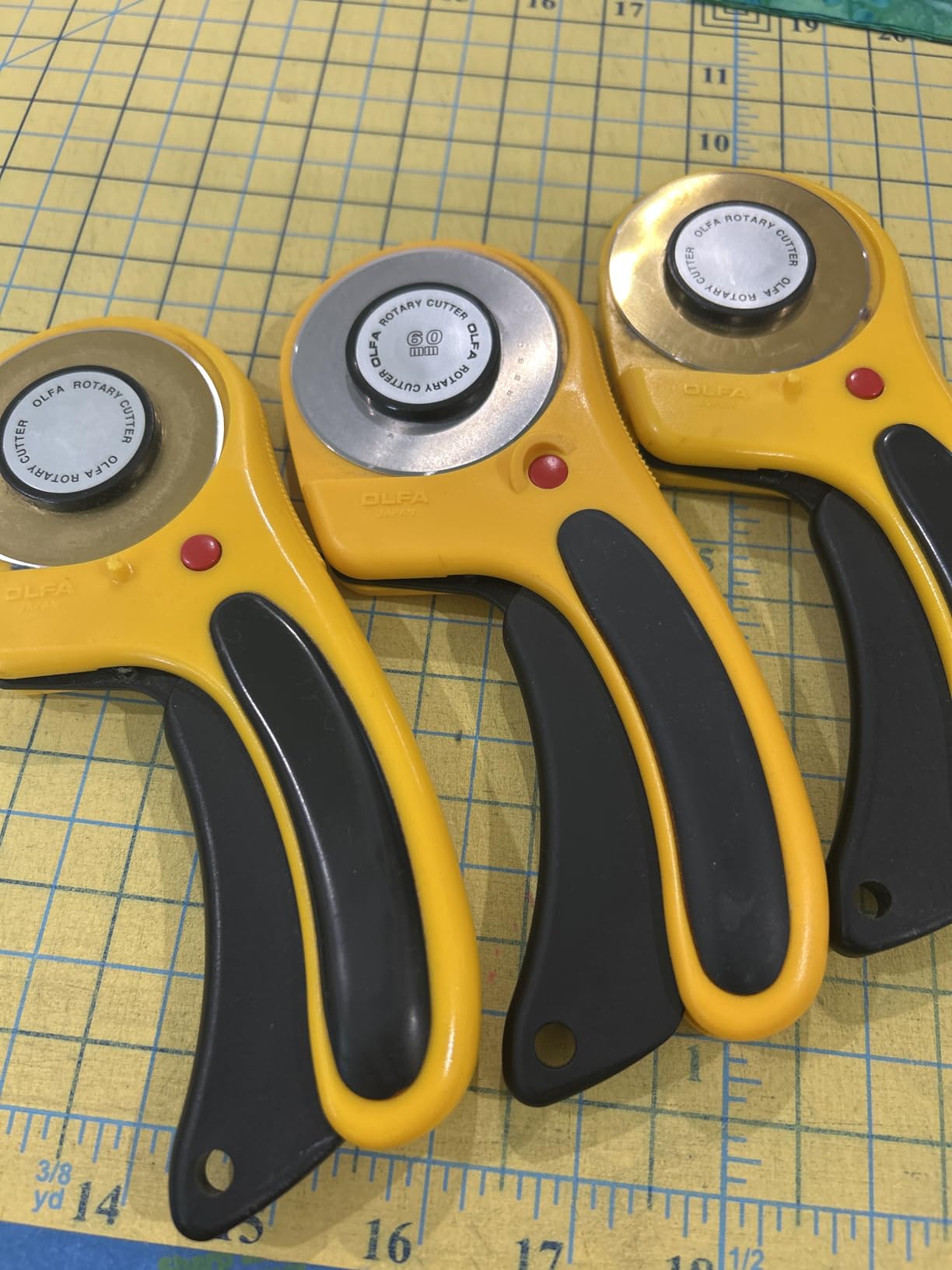
At 4.8 across 2396 ratings it ties for the highest average in the group, with 88 percent five-star. Owners working on large pieces and thick multi-layer jobs point to the layer capacity and the blade life as the decisive features rather than the handle.
You do pay for the size in the hand. At 5.44 ounces it is more than twice the weight of the 45mm quick-change model, and the body is long enough that small pieces feel clumsy.
Who this cutter suits
Quilters working on large tops, quilt backs and batting, or anyone who layers thick materials such as fleece and denim. It also suits a second cutter role, kept on the mat for big straight cuts while a 45mm handles detail.
If you do appliqué or paper piecing, this is not your tool, and adding it to an existing 45mm setup is the sensible order.
Where it falls short
Weight and bulk are the honest limits. The mass shows up in the hand on a long trimming session, and the wide frame makes tight corners impossible without lifting the tool and repositioning. For a beginner, starting here means carrying more tool than most projects need.
6. Fiskars 45mm Stick Cutter – The Simple Ambidextrous Starter Everyone Recognises
Fiskars 45mm Stick Rotary Cutter for Fabric, Arts and Crafts & Sewing
45mm precision-ground steel blade
Symmetrical stick handle
Slide-button blade lock
Pros
- Sits at number one in Amazon quilting rotary cutters
- Symmetrical handle suits either hand
- Simple slide-button lock
- Full lifetime warranty on the body
- Popular for craft and classroom cutting
Cons
- Some buyers report a blade that feels dull out of the box
- Several reviews describe the blade stopping mid-cut
- Manual slide rather than auto-retract
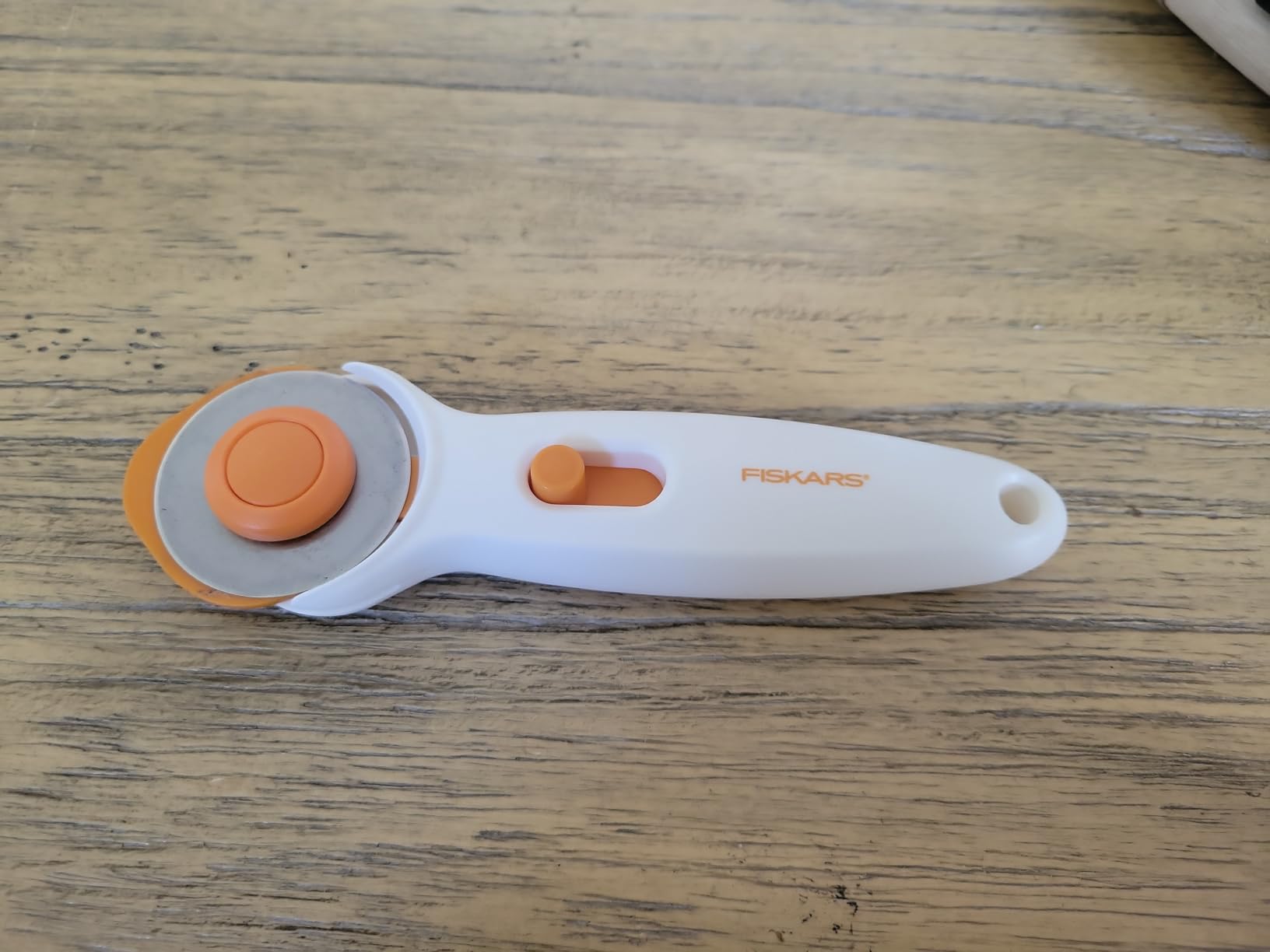
This is the cutter most beginners actually own, and it ranks first in Amazon’s Quilting Rotary Cutters category. The handle is a symmetrical stick, so the same body works for a right-handed or a left-handed quilter without modification, and a sliding button extends, locks and retracts the blade in one movement.
There is no arguing with the value at the entry level, and the body carries a full lifetime warranty, though the blade itself is excluded. For teachers cutting bulletin board fabric or anyone making straight strip sets, it does the job cleanly.
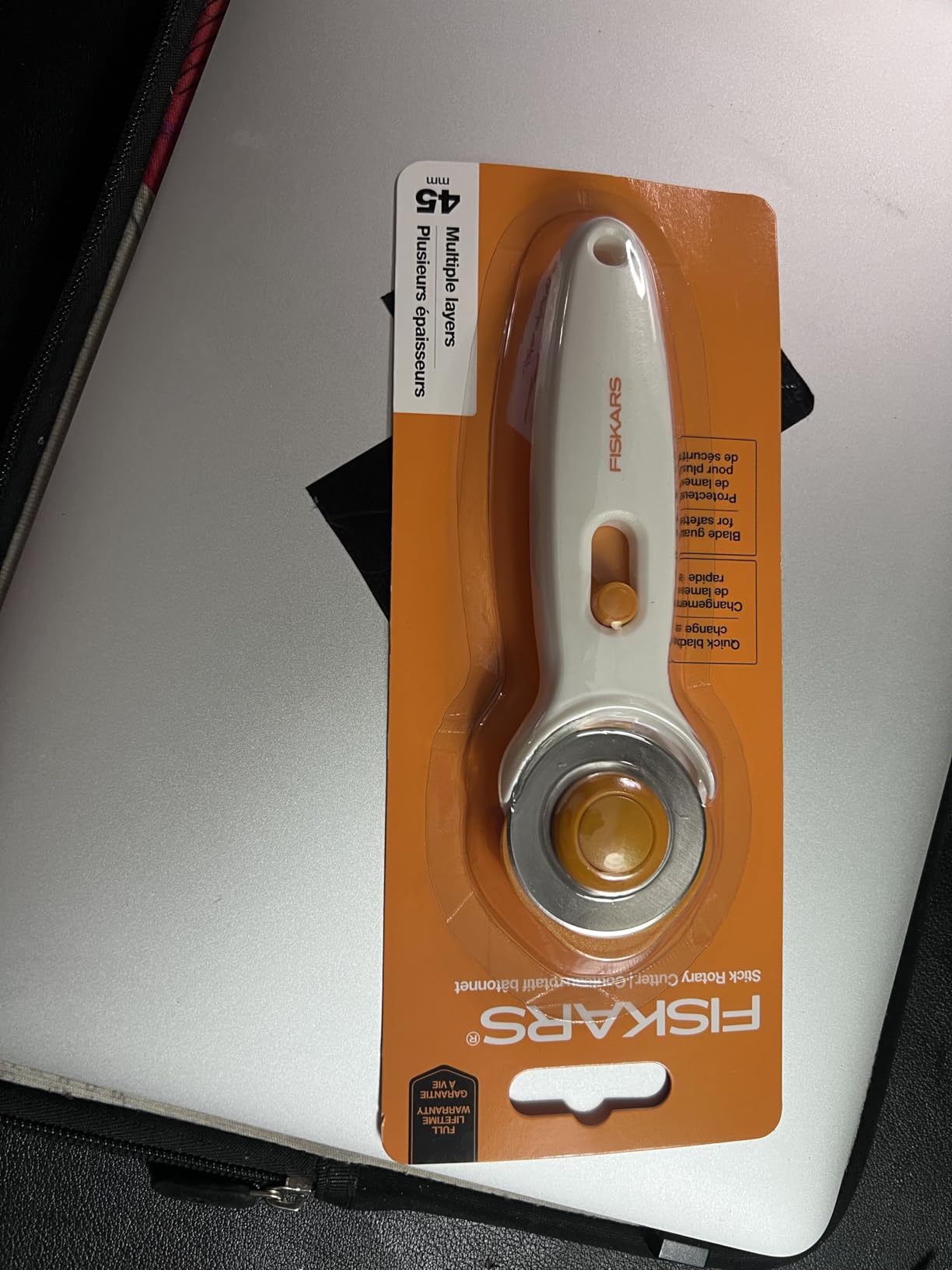
It is also the most polarised cutter here, with 78 percent five-star and 6 percent one-star, the widest spread in the roundup. A recurring group of reviews describes a blade that feels dull out of the box and has to be pressed harder, and several describe the blade stopping partway through a cut.
That pattern deserves attention rather than dismissal. A blade that works on one day and not the next is often a worn cutting mat rather than a bad blade, which is a problem you can fix without buying anything new.
Who this cutter suits
Budget-first buyers, beginners, classroom and craft-room users, and anyone who wants one tool that works from either hand. It suits straight strip cutting and general fabric work where a light body matters more than deep layer capacity.
It is also a reasonable first purchase, since reselling a Fiskars later costs nothing while a premium ergonomic body keeps its value.
Where it falls short
Precision at scale is the weak point. A 6 percent one-star rate reflects reports of blades locking during a cut and of units failing early, and buyers often end up moving to a costlier 45mm model. The stick handle also gives you no palm support, which is uncomfortable over a long session.
7. Honey’s Heaven 45mm Quilting Kit – The Complete Starter Set With Mat and Ruler
Rotary Cutter Set turquoise – Quilting Kit incl. 45mm Fabric Cutter, 5 Replacement Blades, A3 Cutting Mat, Acrylic Ruler and Craft Clips – Ideal for Crafting, Sewing, Patchworking, Crochet & Knitting
45mm SKS-7 steel blade
Cutter mat ruler and clips
5 spare blades included
5-ply self-healing mat
Pros
- Bundle replaces buying mat and ruler separately
- Five spare 45mm blades included
- Squeeze to cut and release to retract
- 5-ply mat is thicker than typical fabric-store boards
- Very large review base
Cons
- Acrylic ruler feels small for the mat size
- Smaller mat variants under-serve real quilting
- Starter blade can dull with heavy use
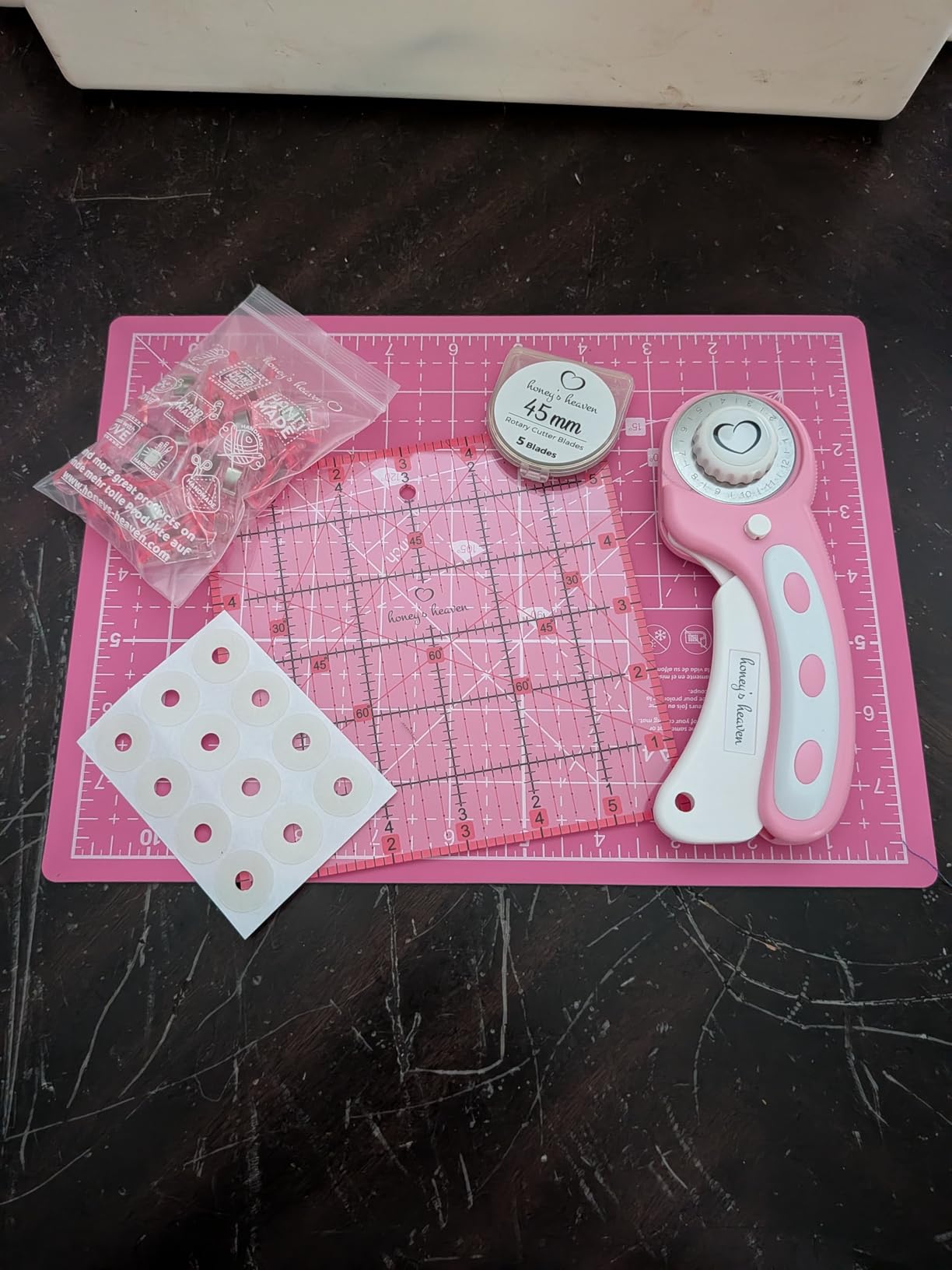
Rotary cutters are useless without a mat and a ruler, which is why this bundle stands apart. You get the 45mm cutter, an A3 self-healing mat, an acrylic ruler, craft clips and five replacement blades in one purchase, and the review base of 10984 ratings is the largest in this roundup.
The mat is the real differentiator. It is 3mm thick, 5-ply and double-sided, with a printed grid over an 18 by 12 inch area, and buyers consistently report it outlasting the thinner boards they replaced. A quality mat is what keeps a blade sharp, so this is not filler in the box.
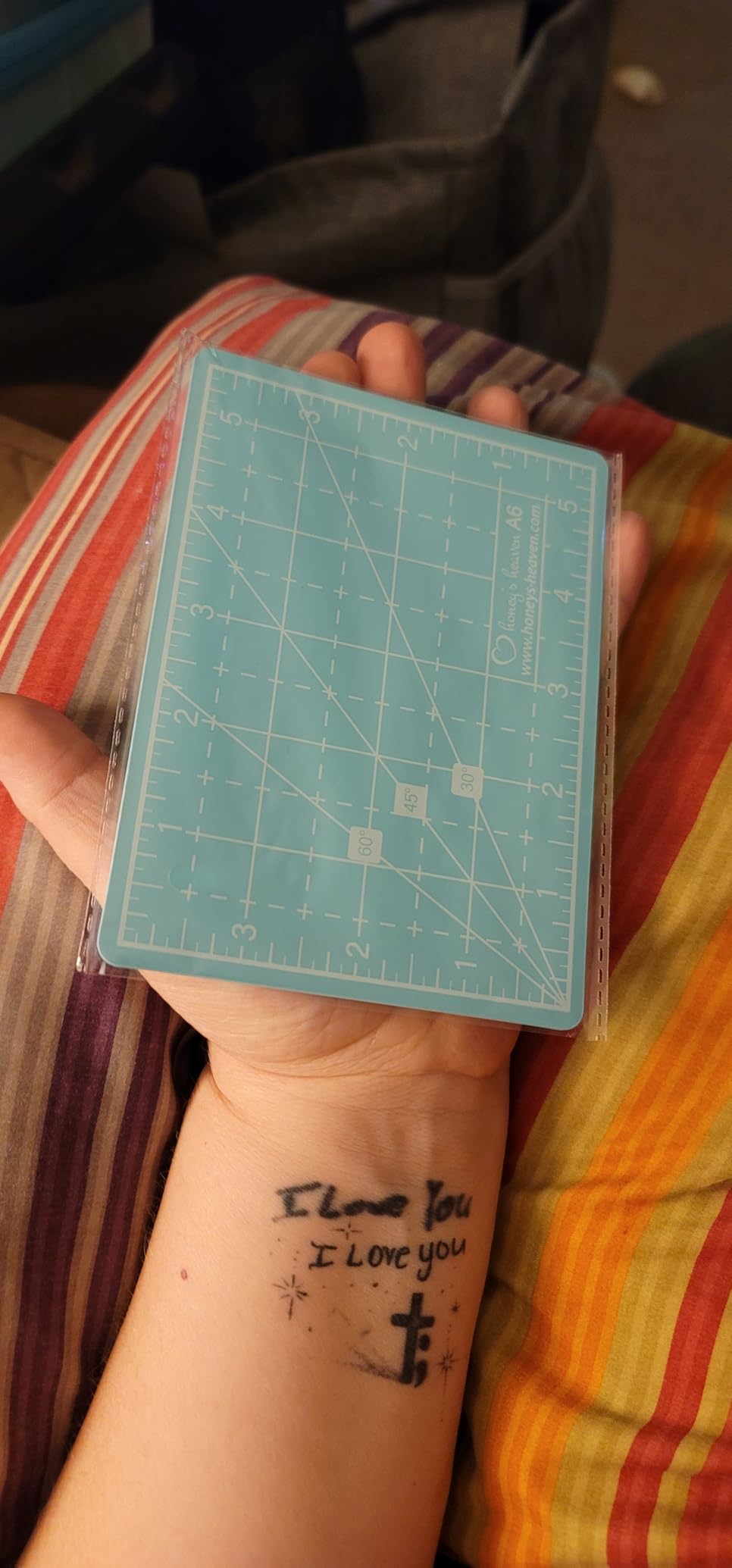
The cutter itself uses a squeeze-to-expose, release-to-retract handle with a locking button, and an adjustable screw handle system that holds the blade stable. The SKS-7 steel 45mm blade is listed to cut up to six layers of fabric or paper, and the hub accepts pinking, wavy and shell-shaped 45mm blades.
The honest limitation is the ruler. At 18 by 12 inches the mat suits a first project, but quilters working on wider strips comment that the acrylic ruler included feels small and that the smaller mat size variants add little for serious work.
Who this cutter suits
First-time quilters who have no mat or ruler, students setting up a classroom kit, and anyone building a travel or retreat bag. Five spare blades mean a group can share a box, and the auto-retract handle is safer for shared equipment.
It also suits anyone who wants a one-decision purchase rather than choosing a cutter, a mat and a ruler separately and hoping they work together.
Where it falls short
You are paying for a bundle, so the individual components are mid-range rather than specialist. The ruler size is the complaint that comes up most, and the six-layer rating is below the 60mm options for anyone trimming thick sandwiches. Plan to add a wider ruler later.
8. Fiskars 60mm Loop Titanium – The Longest-Lasting Blade With a SoftGrip Loop
Fiskars 60mm Loop Titanium SoftGrip Rotary Cutter for Fabric & Sewing
60mm titanium-coated blade
SoftGrip loop handle
Snap-in blade changes
Lifetime warranty
Pros
- Titanium coating holds sharpness far longer than bare steel
- Loop handle reduces fatigue on long cuts
- Handles batting foam and multiple layers
- Full lifetime warranty
- Blades snap in and out quickly
Cons
- Larger body is less precise on small pieces
- Sliding lock needs deliberate action
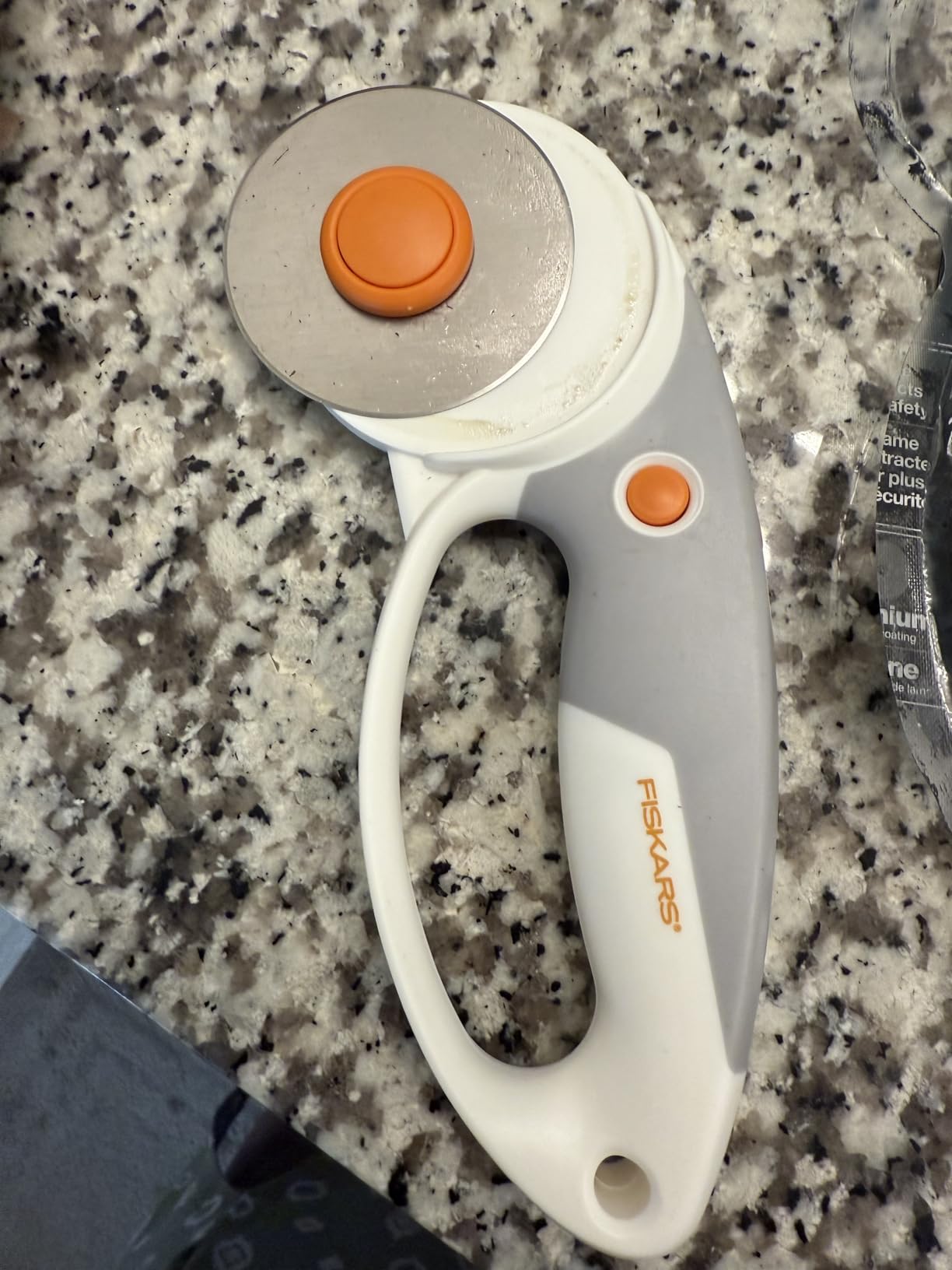
Blade durability is the argument for titanium, and this is the only titanium-coated option in the roundup. The 60mm blade is precision-ground and coated, and the coating is rated at three times the hardness of steel, which in practice means it holds an edge considerably longer between changes.
Blades snap in and out without tools, and the ergonomic loop handle with SoftGrip puts your hand in a ring rather than on a stick, which keeps control on thick multi-layer passes. It handles batting and foam, which is where most 45mm cutters start to labour.
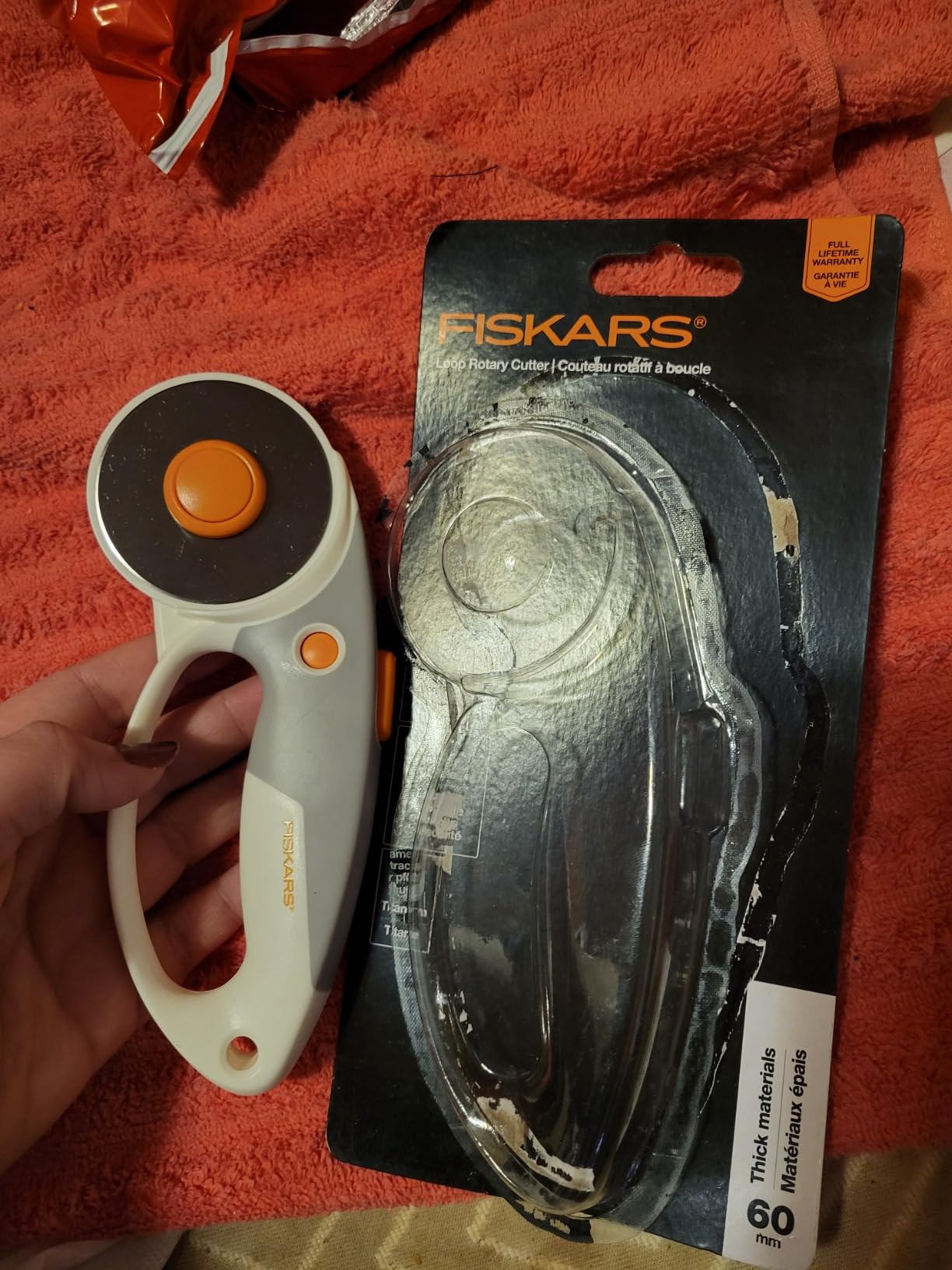
It ranks second in Amazon’s Quilting Rotary Cutters category with 1276 ratings and a 4.6 average, at 82 percent five-star. Owners talk most about the blade lasting and about handle comfort on long, thick cuts, and the lifetime warranty covers the body for as long as you own it.
The size is the trade. At 7.15 by 3.24 inches the frame is large, and the minority complaint is that it is unwieldy for small pieces and intricate work. A sliding button extends and locks the blade, which takes deliberate action rather than a trigger.
Who this cutter suits
Quilters cutting through batting, foam, fleece and layered sandwiches who are tired of replacing blades. It suits anyone who would rather buy a coated blade once than work through a stack of steel replacements.
The loop handle also makes it a comfortable option for hands that tire, though it is less targeted for joint pain than the forward-push Martelli.
Where it falls short
It cannot do fussy work. On a paper-pieced curve or a small appliqué shape, a 60mm frame in a loop handle gives you too little control and too much mass. If your quilting is mostly detail, this is the wrong upgrade and a 45mm is the better buy.
9. Martelli Ergo 60mm Forward Push – The Pain-Free Cutter for Thick Quilt Sandwiches
Martelli – Right Handed 60mm Ergonomic Fabric Rotary Cutter for safe pain free fabric cutting – sewing, quilting, fashion design notions & supplies good for arthritis carpal tunnel wrist pain
60mm tungsten steel blade
4.5 oz body
Cuts 6 to 8 layers
Forward-push palm handle
Pros
- Cuts quilted multi-layer pieces with almost no effort
- Owners with joint and shoulder pain rate it highly
- Central pressure stops rulers sliding off the line
- Blades stay sharp through long sessions
- Spring guard protects between cuts
Cons
- Handedness fixed at purchase
- Accepts only Martelli blades
- Guard takes a knob turn to retract
This is the 45mm Martelli logic scaled up, and it is the tool for the least comfortable quilting job there is: squaring a finished quilt sandwich. The 60mm tungsten blade is sharpened on both sides simultaneously and cuts 6 to 8 layers at once, and the forward-push palm handle means you drive it with your forearm rather than pressing down.
That second point is what quilters mention most. Owners with arthritis, carpal tunnel and shoulder problems describe the reduced strain as transformative, and the spring-loaded blade guard protects both the blade and your fingers between cuts.
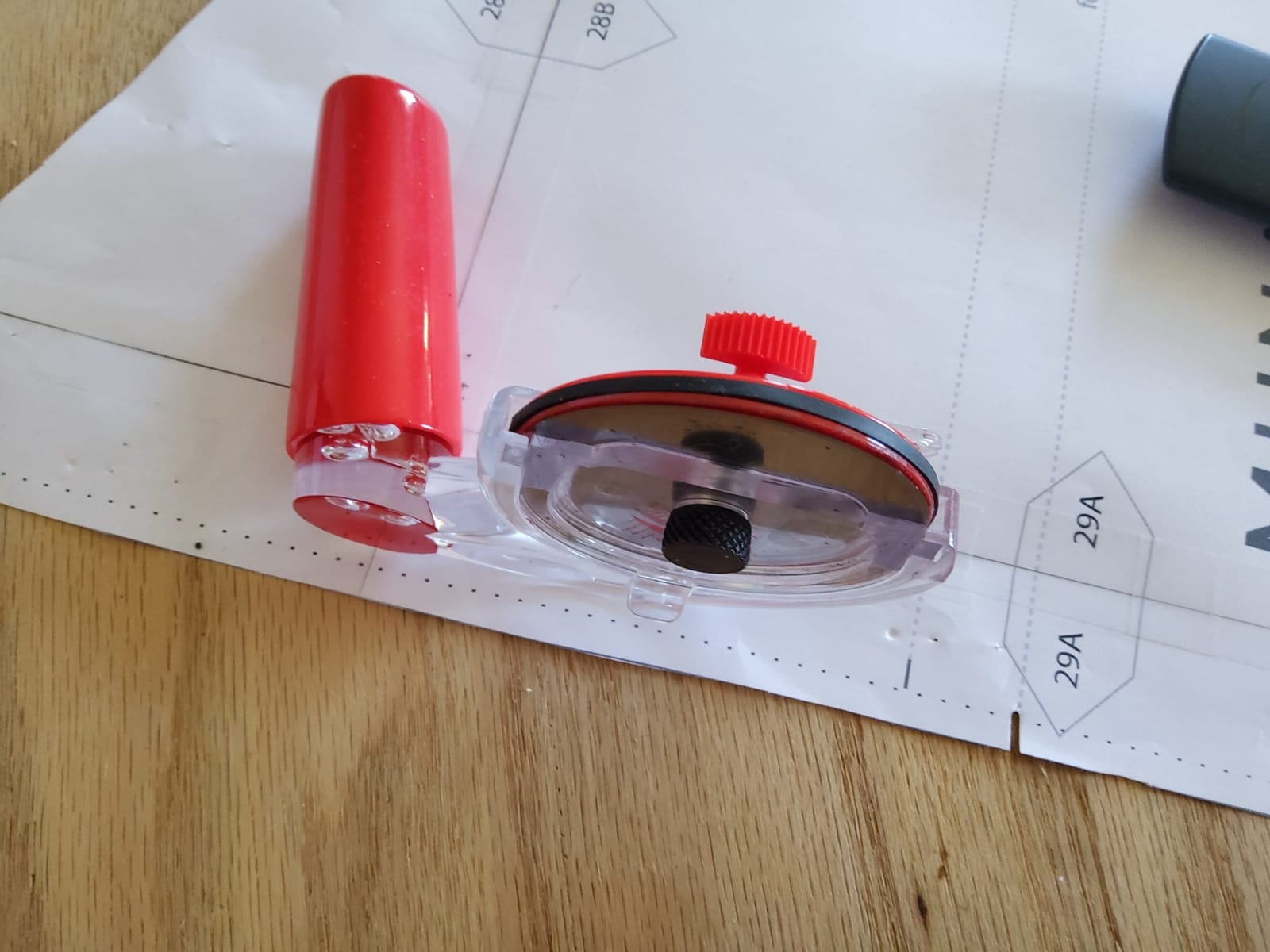
Across 744 ratings it holds 4.6 with 81 percent five-star, and the centralised pressure over the blade keeps a ruler from being pushed off the cutting line, which is the failure that ruins long trims. Blades are rated at 3 to 5 times the life of ordinary replacements.
It carries the same structural caveats as the 45mm model, plus one from the review data: a small number of buyers received a starter blade with a nick in it, and the guard needs a knob turn rather than a finger snap.
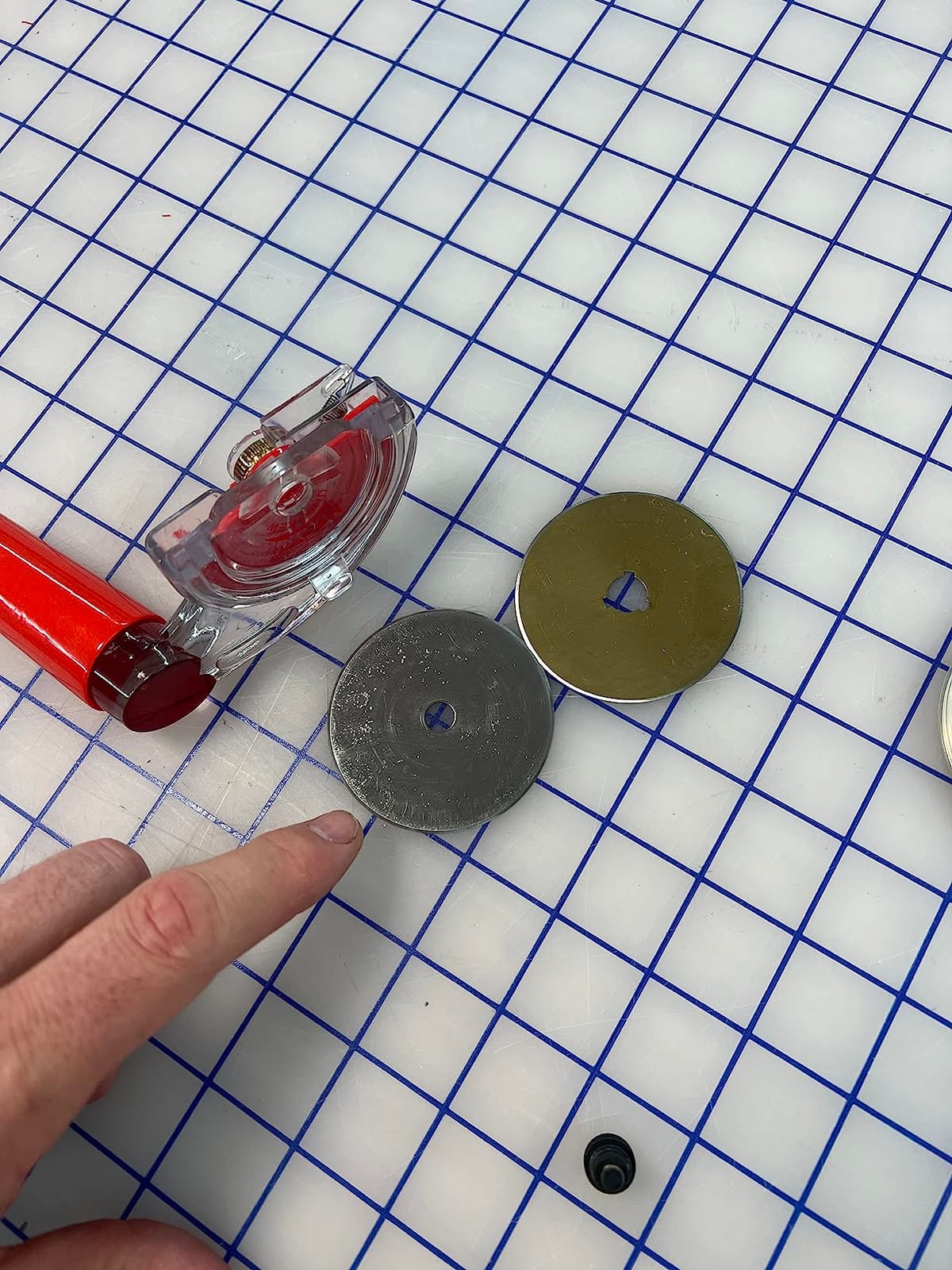
Who this cutter suits
Quilters finishing large quilts, trimming batting edges, and working with denim, canvas or layered knits. It is the strongest choice for anyone whose pain is in the shoulder or wrist rather than the fingers, because the force comes from a large muscle group.
If you already own the Martelli 45mm, this is a natural second tool for the big straight cuts, and the same blade habit carries over.
Where it falls short
Handedness is chosen at purchase and cannot be changed, blades are brand-locked, and the guard is less convenient to close than a trigger design. The 744-rating base is the thinnest in the roundup, so treat the ownership picture as well reported but less deep than the OLFA and Fiskars models.
10. TrueCut My Comfort 45mm – The Ruler-Locking Cutter That Cuts in One Pass
TrueCut My Comfort Rotary Cutter – 45mm Ergonomic Wheel Cutter for Fabric, Quilting, Sewing, Crafting – Left or Right-Handed – Track-and-Guide Ruler – Quilting and Sewing Supplies
45mm high speed steel blade
Track and Guide ruler lock
Quick-release blade change
5.6 oz body
Pros
- Extra blade exposure cuts through in a single pass
- Track and Guide stops drift off the cutting line
- Curved handle suits weak hands
- Converts for either hand
- Some owners report years of daily use
Cons
- Lowest rating in the roundup at 4.4
- One reviewer reported a spring connection breaking
- Guide only works with TrueCut slotted rulers
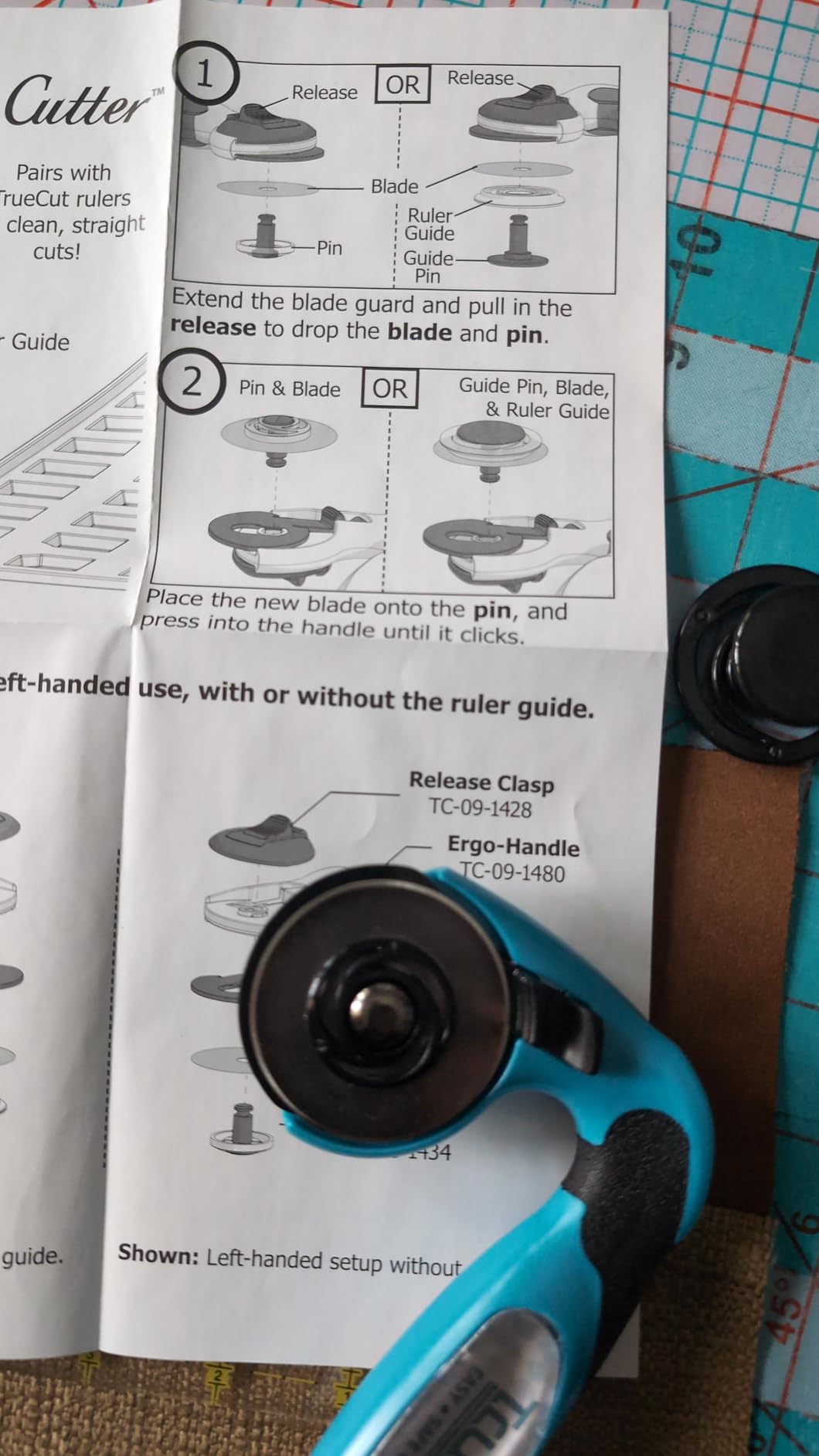
The defining feature is the patented Track and Guide system, a tab on the cutter that hooks into slotted TrueCut rulers and locks the tool to the edge. That interlock is why it cuts through heavy material on the first pass rather than needing a second, and why it stops drifting off the line.
It is also convertible from right-handed to left-handed configuration, which is genuinely useful because most advice for southpaw quilters is simply to move the blade to the other side and hope. The blade change uses a quick-release switch rather than an assembly, and a slide safety lock conceals the blade.
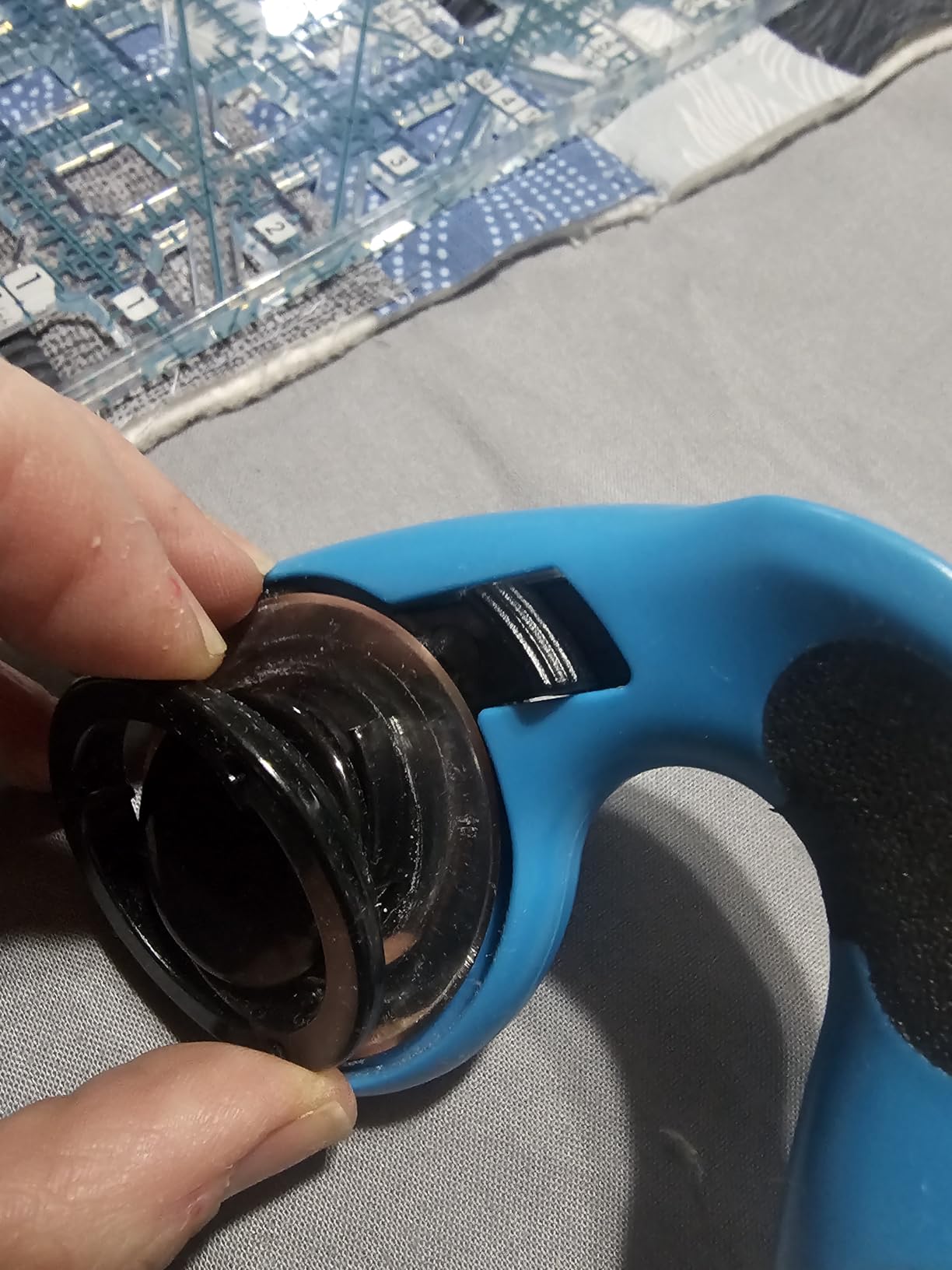
At 4.4 across 1065 ratings it is the lowest-rated cutter here, with 76 percent five-star and 6 percent one-star, so it is the most polarised. Fans describe it as the only cutter they use and some report seven years of daily service, while critics find it awkward and less accurate than a Fiskars equivalent.
One reviewer reported a plastic spring connection breaking after about three months, and buyers also note it does not cut foam well with the guide attached. At 5.6 ounces the body is the second heaviest in the roundup despite the 45mm blade.
Who this cutter suits
Quilters who already own TrueCut slotted rulers and want the interlock, and anyone whose cutting is one heavy pass at a time. The convertible handle and curved thermoplastic rubber grip suit weaker hands and quilters who cut with either hand.
It is a specialist choice rather than a safe default, and it rewards buying the ruler system rather than mixing it with generic acrylic.
Where it falls short
The Track and Guide is a lock-in. Without TrueCut slotted rulers the feature does nothing, and owners using generic acrylic rulers report losing the accuracy advantage that justifies the price. Combined with the 4.4 rating and the spring failure report, it is the pick only for committed TrueCut users.
Olfa vs Fiskars vs Martelli: The Brand Head-to-Head Nobody Else Answers
The most-asked question on quilting forums is which of the three big brands to buy, and the honest answer depends entirely on what hurts. OLFA wins on blade selection and value, Fiskars wins on simplicity and two-handed use, and Martelli wins on anything involving hand or wrist pain.
OLFA is the broadest range. The squeeze-trigger auto-retract family covers 45mm and 60mm, Endurance blades are rated at roughly double standard blade life, and the hub accepts pinking, scallop and wave blades, so one body covers straight cutting, appliqué and decorative edges. Review volume is the highest in this roundup, and OLFA backs the body with a lifetime guarantee.
Fiskars is the simplest. A symmetrical stick or SoftGrip loop handle works from either hand without modification, a sliding button extends and locks the blade, and the titanium-coated 60mm option holds its edge longer than bare steel. The trade is build consistency, since this roundup’s Fiskars entry has the widest spread between delighted and frustrated owners.
Martelli is the ergonomic specialist. A forward-push doughroller handle moves the work from the wrist to the forearm, blades are rated at 3 to 5 times ordinary life, and the spring guard retracts on release. The cost is rigidity: handedness is fixed and blades are brand-locked.
Forum consensus, which matches what we saw, splits the same way. Long-time quilters endorse OLFA for value and sharpness and Martelli for ergonomics and blade longevity, while quilters who have tired of Fiskars report moving up after a cutter fails on them.
How to Choose a Rotary Cutter: Blade Size, Handle, Blade and Safety
Choosing the right blade size matters more than choosing the brand, because a wrong size will frustrate you no matter who made it. A 45mm is the default and the answer for most people, and the four sizes below cover almost every quilting task.
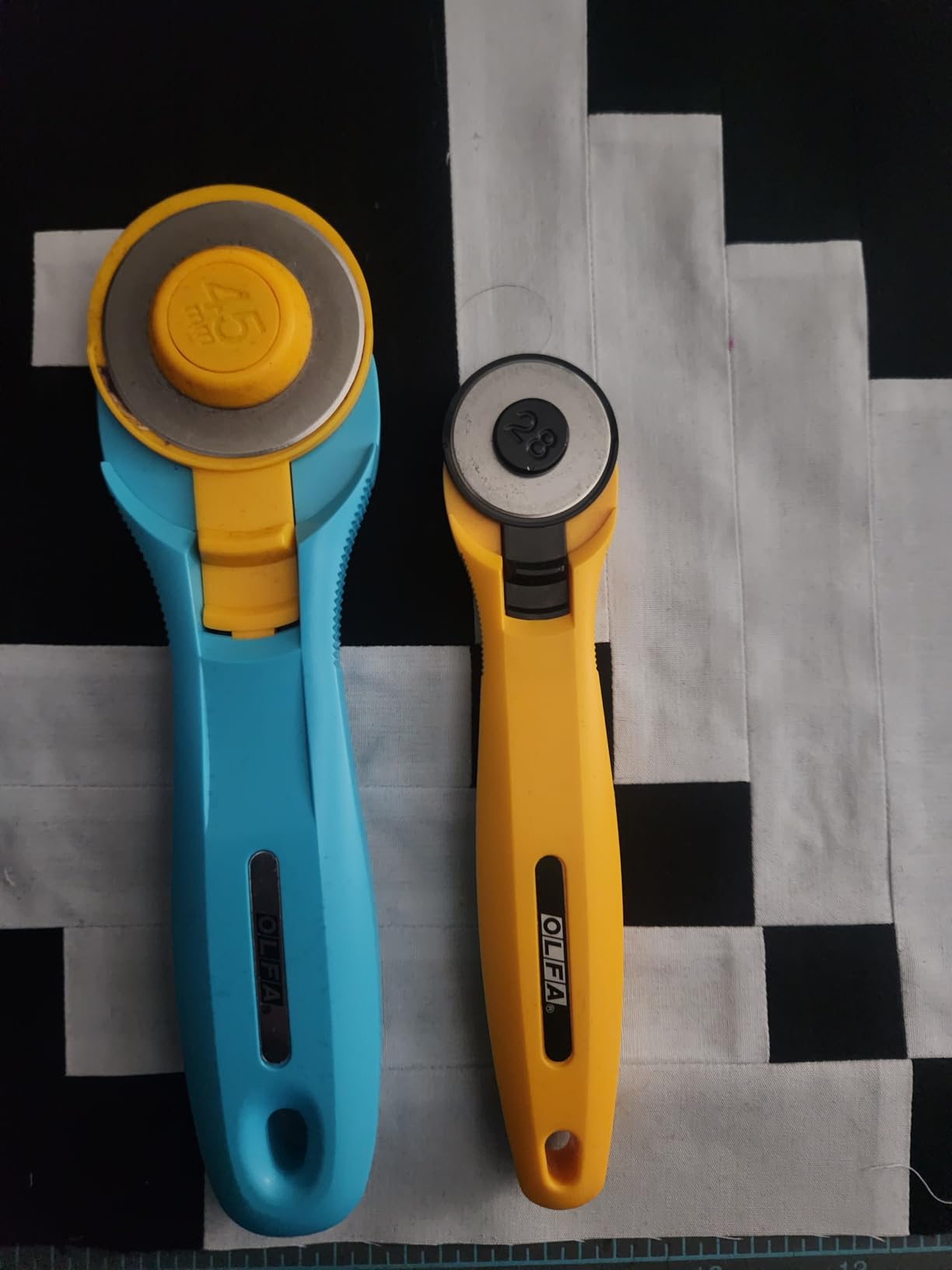
18mm and 28mm blades are for tight curves, small appliqué shapes and paper piecing. A small blade follows a curved ruler edge without running wide, which a 45mm physically cannot do. Most quilters add one as a second tool rather than starting with it.
45mm blades are the all-purpose size. They cut up to 8 layers of cotton, handle strips, squares, binding and general yardage, and they are the size most beginners should buy first. A veteran quilter on QuiltingBoard frames 45mm as the good all-purpose starting size, and we agree.
60mm blades are for thick and wide work. They cut more layers per pass, at up to 12 layers of cotton on the endurance models in this roundup, and they handle batting, fleece and quilt sandwiches. You give up small-piece control and accept a heavier body in the hand.
Handle type decides how long you can cut. A stick handle is light, cheap and precise but offers no palm support. A loop handle wraps your hand in a ring for control on thick material. A forward-push ergonomic handle moves force into the forearm and is the only style built specifically for joint pain. A squeeze-trigger handle gives the strongest automatic blade safety.
Blade material is simpler than it sounds. Alloy and tungsten steel blades are cheap to replace and sharpen well. Titanium-coated blades cost more per blade and hold an edge considerably longer, which pays off if you cut heavy material often. Martelli rates its own blades at 3 to 5 times the life of ordinary ones, and OLFA Endurance blades at roughly double.
Safety comes in three forms: a squeeze trigger that retracts the blade when released, a spring-loaded guard that retracts on grip release, and a manual slide button you operate yourself. For a household with children, choose the first two. For a shared classroom kit, anything that cannot be left open is worth the extra.
Left-handed use is where buying advice gets thin. The Fiskars stick handle is genuinely symmetrical, the OLFA quick-change and the XINART loop can be reversed, and the TrueCut converts. The Martelli cutters do not, so handedness is a purchase decision you cannot undo. Our mini tool guide covers the other small cutting tools worth keeping beside the mat.
Do not forget counterfeit listings. Forum buyers report fake OLFA cutters sold through third-party sellers that cut poorly from the first use. Buy from a seller with a long track record, and if a new blade drags instead of cutting, suspect the tool before you suspect your technique.
One more question we get asked: electric rotary cutters exist and quilters ask about them constantly, but none of the ten models here is electric. The consensus on forums is that a good manual cutter with a sharp blade and a sound mat does the same job, and we found no electric model that changed the results enough to recommend.
Why Your Rotary Cutter Blade Keeps Going Dull
If a blade that used to slice cotton now leaves a second cut behind and a fuzzy ridge on the far edge, the blade is usually not the problem. A worn self-healing mat has lost the give that keeps a blade from being forced sideways, so the blade rides up and skids instead of shearing. Quilters with thirty-year-old mats have fitted a fresh blade, got clean cuts back immediately, and realised the mat was the variable all along.
Test it before you spend anything. Slice a single layer of quilting cotton with your ruler lifted, so the blade is unsupported. If it still cuts clean, your edge is fine and the mat has hardened under the pressure. If it drags even on one layer, the blade itself has rounded.
A simple maintenance routine keeps both parts working. Wipe the blade with a dry cloth after each session, since cotton lint and adhesive residue dull an edge faster than fabric does. Check the mat for scoring in the areas you cut most, and replace it when the surface has lost its rebound rather than when the lines have faded. Keep one spare blade of your current size on hand so a swap never stops a project.
Blades are consumables and the cost adds up over years of use, which is the most common complaint from regular buyers. Buying a five-blade pack rather than singles is the cheapest way to cut that cost, and it is the reason the bundled kit in this roundup stands out for beginners. If you also work with small craft pieces, our rotary tools guide covers the smaller cutters that complement a 45mm blade.
Frequently Asked Questions
Which rotary cutter is better, Olfa or Fiskars?
It depends on your hand and your habits. OLFA offers the widest blade range, a squeeze-trigger auto-retract for safety, and lower cost per cutter, with Endurance blades rated at roughly double standard blade life. Fiskars is simpler and lighter, its stick handle is genuinely symmetrical for either hand, and the 60mm titanium option holds an edge longer than bare steel. Choose OLFA for blade choice and safety, Fiskars for simplicity and light weight, and Martelli if you have joint pain.
What size rotary cutter should I start with?
Start with a 45mm blade. It cuts up to 8 layers of cotton and handles strips, squares, binding and general yardage, which covers almost all beginner quilting. Add an 18mm or 28mm later for tight curves and paper piecing, and a 60mm only if you regularly cut batting, fleece or thick quilt sandwiches.
Can I use a Fiskars blade in an Olfa rotary cutter?
No, not reliably. Blade hubs are brand-specific, so a Fiskars blade will not seat correctly in an OLFA cutter and vice versa. The Martelli cutters in particular accept only Martelli-branded blades. Always match the replacement blade to the model number of your cutter, and check the hub size rather than assuming because the blade diameter looks the same.
How often should I change rotary cutter blades?
Change a blade when it starts leaving a fuzzy second edge or needs noticeably more pressure, not on a fixed schedule. A tungsten or Endurance blade in normal use often lasts months, while a coated titanium blade lasts longer between changes. If a fresh blade also cuts badly, the cutting mat is usually worn out and hardened, which is the more common cause of blades that seem to dull quickly.
Do I need a special cutting mat?
Yes, a self-healing mat is required. A rotary cutter on a table, a wooden surface or a thin craft mat will dull a blade in minutes and can damage the surface underneath. Look for a 5-ply double-sided mat around 3mm thick, and replace it when the surface has lost its rebound under your usual cutting area rather than when the printed grid fades.
What are common problems with rotary cutters?
The most common problems are blades that seem to dull too quickly, which is usually a worn cutting mat, blades that collect lint or adhesive residue, cutter bodies that lock or stop partway through a cut, and blades that drift off the cutting line. Counterfeit or third-party-sold OLFA cutters are also reported to cut poorly from the first use. Buying a lifetime-warranty body and keeping spare blades of your own size covers most of these.
The Best Rotary Cutters for Quilting: Our Final Verdict
After weeks of side-by-side cutting, the OLFA RTY-2/DX 45mm is the best rotary cutter for quilting for almost everyone. Its squeeze-trigger auto-retract keeps the blade covered without thinking about it, the finger-groove rubber grip controls a wandering line, and 9448 ratings make its behaviour unusually well documented.
Buy the Martelli Ergo 45mm instead if your hands or wrists hurt, the Fiskars 60mm Loop if you cut batting and want the longest-lasting blade, and the Honey’s Heaven kit if you own no mat or ruler yet. Whatever you choose, check the cutting mat before you blame the blade.