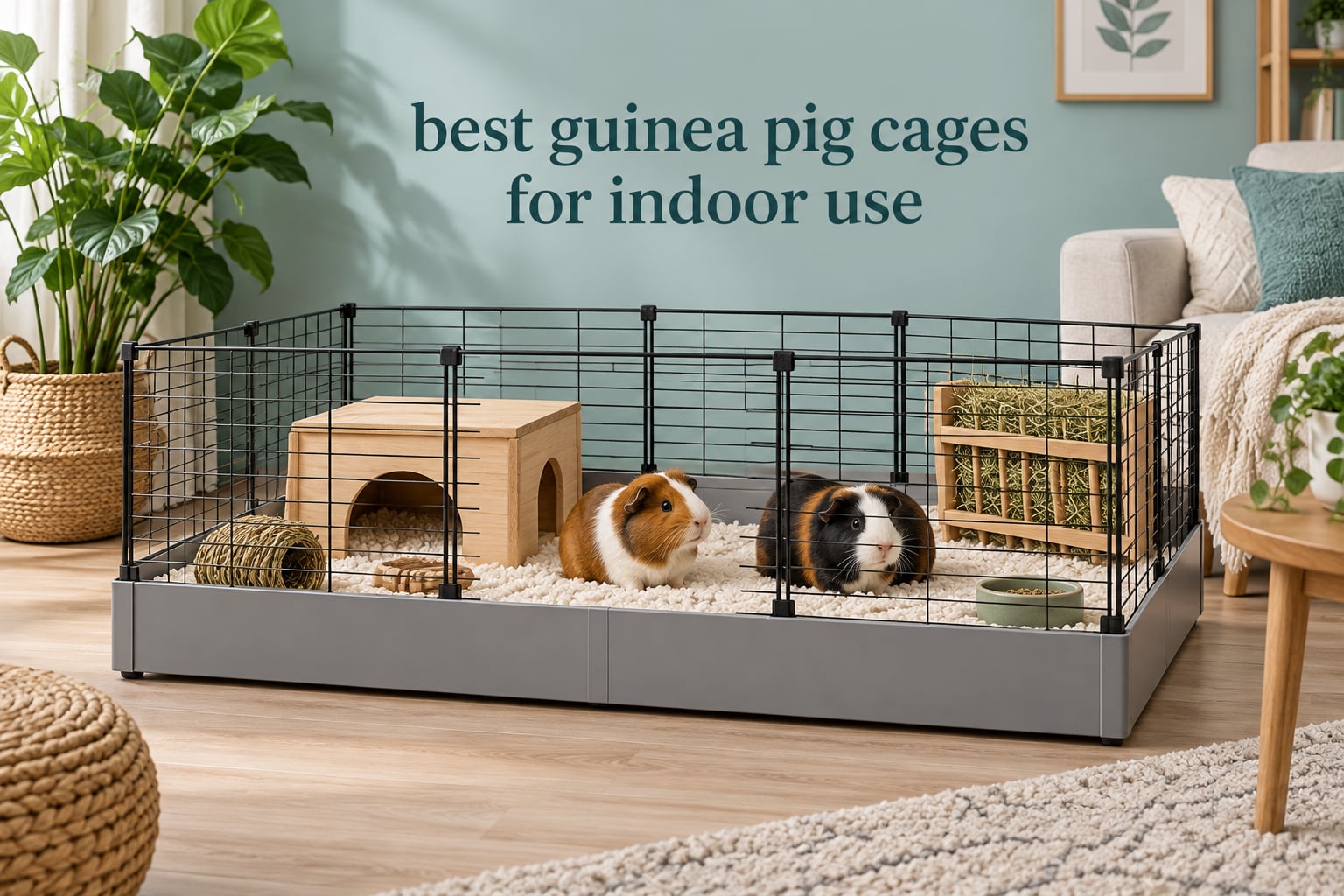
The best guinea pig cages for indoor use are not the ones with the tallest wire walls or the most accessories in the box. They are the enclosures with a wide, flat, solid floor, bars tight enough that a pig cannot wedge its head through, and enough square footage for the number of animals living there. I have spent the last several weeks going through the most-reviewed indoor habitats on the market, measuring their footprints against the sizing standards rescues use, and watching what owners say after living with them.
What surprised me most is how far the average cage falls short. Southern California Guinea Pig Rescue requires 10.5 square feet before it will adopt a pair to a new home, and almost nothing sold as a large guinea pig cage on a major retailer actually reaches that number. Most sit between 4 and 8 square feet. That is not a reason to skip buying one, because you have to start somewhere, but it is a reason to plan on adding floor time or a second pen.
If you want the short version of our findings, the MidWest Homes for Pets Guinea Habitat Plus is the one most people should buy. It gives you a tool-free build, a washable base, and a hinged divider panel that doubles as a lockable ramp, which is a detail you will appreciate every single week. Our full reasoning sits below, product by product.
We have covered the fundamentals of habitat choice in more detail in our guide to the best guinea pig cages, and this roundup narrows the field to cages built specifically for life indoors.
Table of Contents
How Big Should an Indoor Guinea Pig Cage Be?
Minimum indoor cage size for a guinea pig is 7.5 square feet for one animal, 10.5 square feet for a pair, and 13.5 square feet or more for three or more. Keep the room between 65 and 75 degrees Fahrenheit, draft-free, and out of direct sun. A 10.5 square foot space is roughly a 28 by 56 inch rectangle, which is the size most rescues call the adoption minimum for two pigs.
Rescue groups build to those numbers using C and C cages, which is short for cube and coroplast: 14-inch square wire grids joined edge to edge with plastic connectors, sitting in a coroplast base. Two grids wide by four grids long gives you the 28 by 56 inch footprint. Individual 12-inch grids produce a smaller cage, so a two-by-four layout built from 12-inch panels lands well under the standard. Bar spacing on a guinea pig cage should stay under about 1.5 inches, and tighter is better if you have piglets under 8 weeks old.
The 3-3-3 rule is a related guideline you will see often: three guinea pigs minimum, three square feet of space per pig, and a minimum commitment of three months when considering a pet. It is aimed at shelters rather than single households, but it explains the underlying logic behind the numbers above. More animals need more floor area, and floor area is what drives health.
Height matters far less than footprint. Guinea pigs are prey animals with poor depth perception, so a short wide cage suits them better than a tall narrow one. A covered loft sitting a few inches above the floor is a useful get-away area. A second full storey stacked above the first is a different animal entirely, and we cover why below.
Top 3 Best Guinea Pig Cages for Indoor Use in October
MidWest Guinea Habitat Plus
- 47 x 24 inch floor
- About 8 sq ft
- Tool-free build
- Hinged divider ramp
Living World Deluxe Hybrid X-Large
- 46.9 x 22.8 inch floor
- 24 inch height
- Lift-off top
- Balcony and ramp

Amazon Basics Leakproof Canvas Cage
- 47.6 x 24.2 inch floor
- Leak-proof canvas base
- Folds flat
- Divider panels
Best Guinea Pig Cages for Indoor Use in 2026
| Product | Specifications | Action |
|---|---|---|
| MidWest Guinea Habitat Plus |
|
Check Latest Price |
 MidWest 158XL Deluxe MidWest 158XL Deluxe |
|
Check Latest Price |
| Living World Deluxe Hybrid X-Large |
|
Check Latest Price |
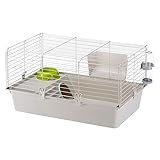 Ferplast Cavie Ferplast Cavie |
|
Check Latest Price |
| Amazon Basics Canvas Cage |
|
Check Latest Price |
 SONGMICS Two-Stage Playpen SONGMICS Two-Stage Playpen |
|
Check Latest Price |
 VISCOO 20-Panel Playpen VISCOO 20-Panel Playpen |
|
Check Latest Price |
 SONGMICS Steel Wire Enclosure SONGMICS Steel Wire Enclosure |
|
Check Latest Price |
 GuineaLoft Model-A GuineaLoft Model-A |
|
Check Latest Price |
 PawHut Rolling 35-Inch Cage PawHut Rolling 35-Inch Cage |
|
Check Latest Price |
 PawHut Two-Story Stand Cage PawHut Two-Story Stand Cage |
|
Check Latest Price |
 Tresbro C&C Playpen Tresbro C&C Playpen |
|
Check Latest Price |
1. MidWest Homes for Pets Guinea Habitat Plus Is the Best All-Round Indoor Guinea Pig Cage
MidWest Homes for Pets Guinea Habitat Plus Cage, Includes Divider Panel and Hinged Top, Washable PVC Canvas Bottom, Expandable Small Animal Cage for Guinea Pigs, 171GHP
47 x 24 x 14 in
About 8 sq ft floor
12.5 pounds
Tool-free assembly
Pros
- Widest usable floor area in its price band
- Hinged divider panel doubles as a lockable ramp
- Washable PVC canvas base wipes clean in minutes
- Expands by linking to other MidWest habitats
- No tools needed and sets up fast
Cons
- Canvas floor sags and stains over time
- Side rails can feel wobbly without zip ties
- Top clips are fiddly to open repeatedly
This is the cage we set up first, and it is still the one we come back to. The footprint is 47 by 24 inches with a 14-inch height, which works out to roughly 8 square feet of floor space. That clears the 7.5 square feet rescue guidance sets for a single pig comfortably, and it falls short of the 10.5 square feet they want for a pair, which is the standard across most of this roundup.
Assembly took under ten minutes with no tools at all. The frame folds out, the divider panel clips in, and the whole thing is light enough at 12.5 pounds to carry between rooms when it is empty. The base is a washable PVC canvas that we have wiped down with a damp cloth after a week of wet bedding and it came up clean without scrubbing.
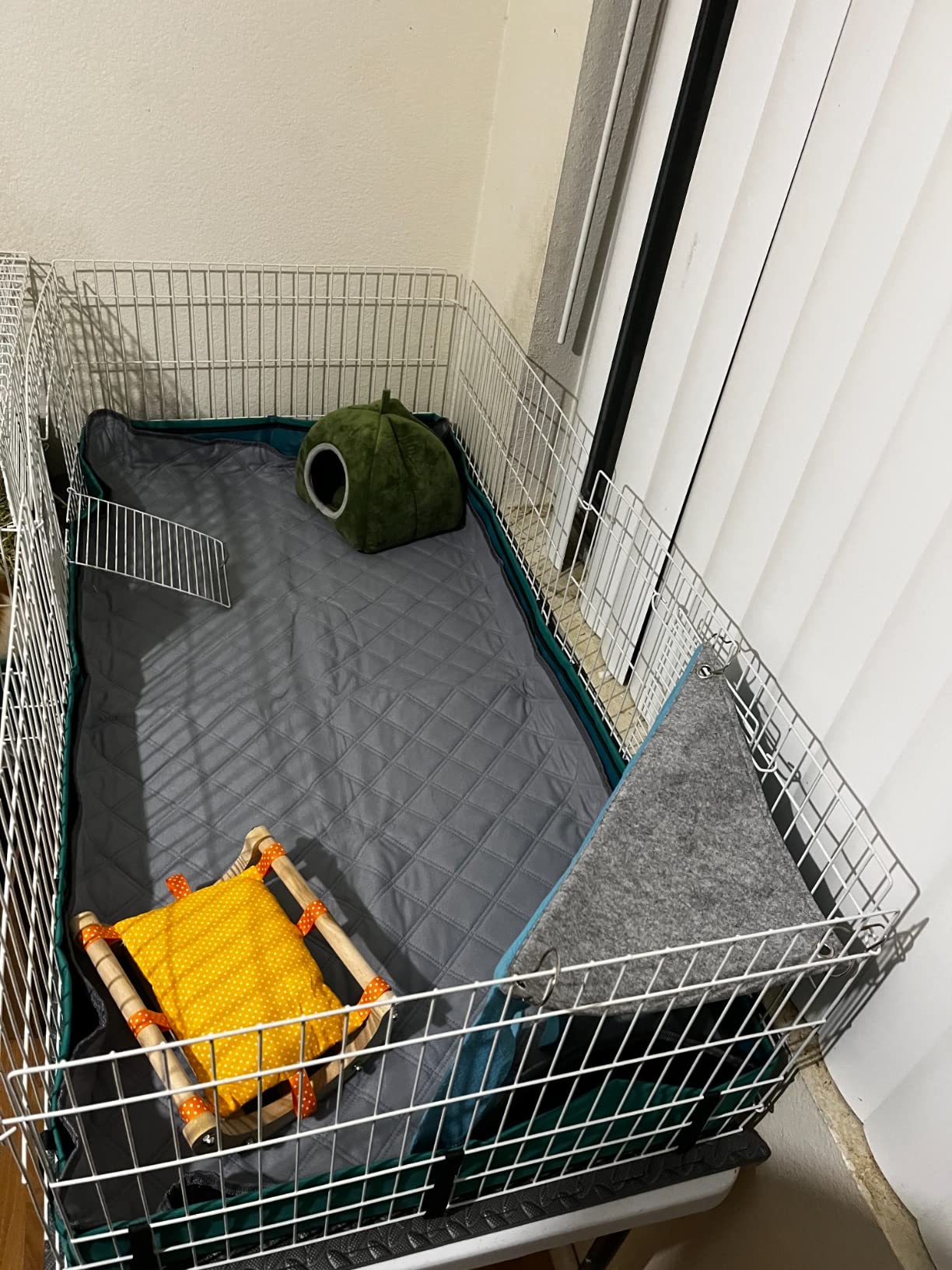
The divider panel is the feature that changes daily use. Clip it into the middle and you have a separated feeding and play area; flip it down and it sits at an angle as a ramp a pig can climb. The lock-in-place doors on the side panels also do double duty, connecting to another MidWest habitat if your space and your pig count grow later.
Where it falls short is the canvas. Reviewers report that it sags slightly in the middle over time, and it is awkward to move with animals still inside because the floor dips. Owners also add zip ties at the fold lines to firm up the side rails, and a few note that the edges get chewed or stained with long-term use. None of that is a dealbreaker, but it is a soft floor that you will want to line with fleece and an absorbent pad.
What you should check before this cage arrives
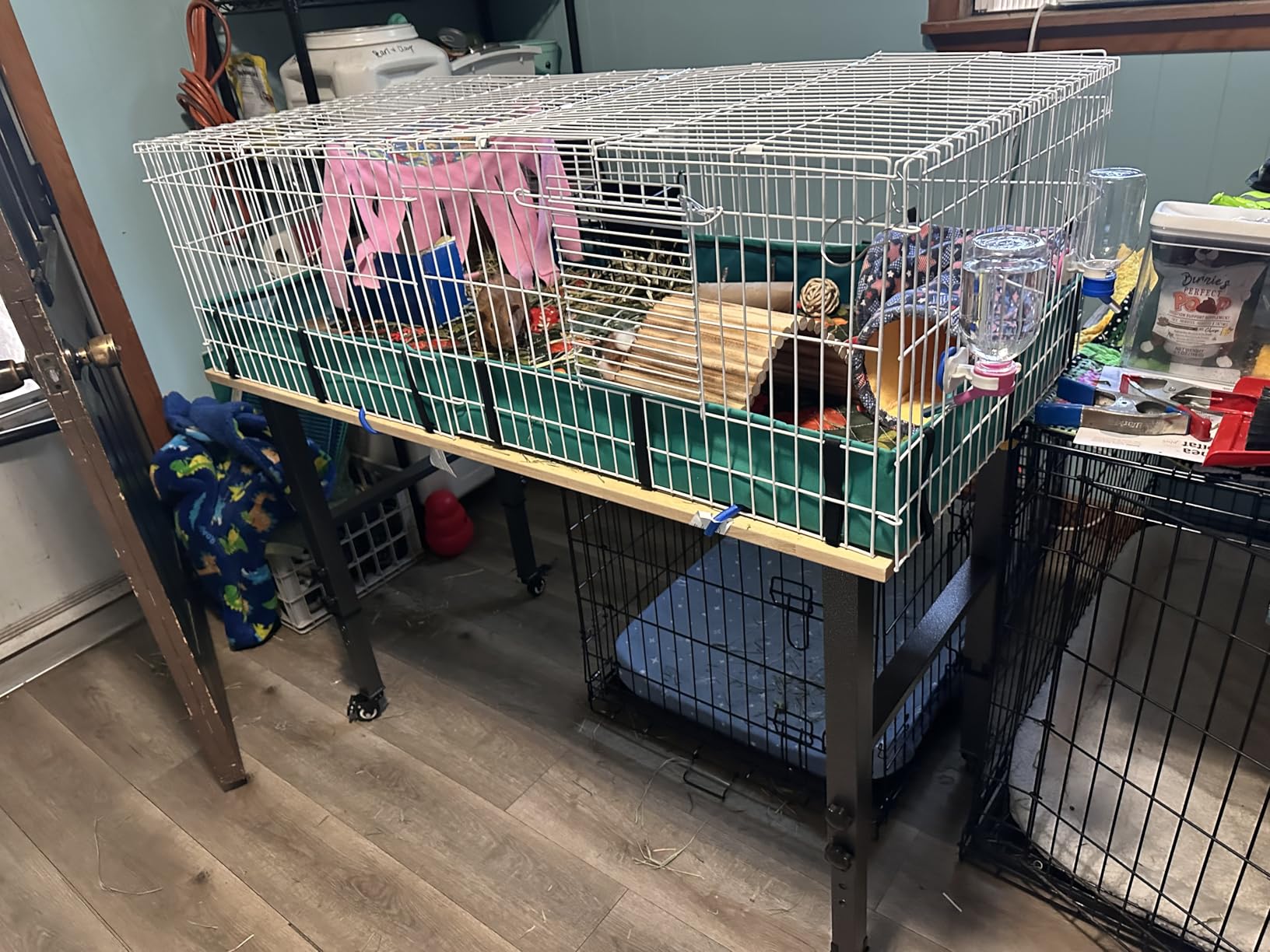
Measure the intended space first. At 47 inches long, this cage needs a long wall or a corner, and it will sit about 14 inches tall once the hay is piled in. The hinge on the wire top is worth testing early, because that is the part that gets opened every single day for cleaning.
If you have a cat in the house, the removable wire top is your real answer to escape attempts, and many owners keep it latched rather than relying on height alone. Our broader notes on small-animal enclosure design cover the same clearance rules that apply to pigs.
Where this cage is the wrong pick
A pair of pigs who are already adults will run out of floor area in a 47 by 24 inch base, and buying this and then adding a second pen is a very common and very workable setup. It is also the wrong choice if you want a loft or an upper level, because the 14-inch side height leaves no room for one.
Owners with serious chewers should look at the Living World habitat further down, because a rigid plastic base takes chewing better than stretched canvas. Just plan on replacing or re-covering the canvas if a determined pig finds an edge.
2. MidWest Homes for Pets 158XL Is the Best Tall Indoor Habitat for Standing-Upright Pigs
Midwest Homes for Pets Deluxe Rabbit & Guinea Pig Cage, X-Large, White & Red
47.16 x 23.62 x 19.68 in
5.5 in deep base
16.7 pounds
1-year warranty
Pros
- Tallest interior height in the roundup at 19.68 in
- Deep 5.5 in base contains bedding and hay
- Hay feeder and water bottle bundled
- Tool-free assembly with a one-year warranty
- Expands with wire and wood hutch extensions
Cons
- Wire top can sag without added support rods
- Bundled water bottle holder grips poorly
- Hay feeder has an open bottom and spills
- Two people usually needed to carry it
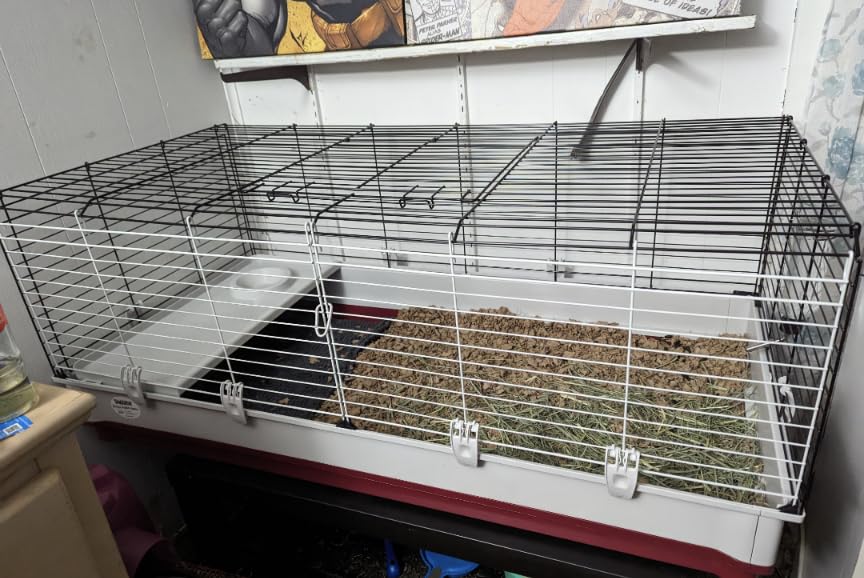
Height is the reason to consider this cage. At 19.68 inches on the outside, it gives a guinea pig far more vertical room to stand on its hind legs and stretch than anything else in this roundup, and the fully opening front panels mean you can reach every corner without moving the animal. The 5.5 inch base is genuinely deep, which keeps kicked hay inside instead of distributing it across your floor.
It arrives as a complete kit. A hay feeder, water bottle, feeding bowl, and elevated feeding area are all in the box, which makes it a genuinely good first purchase for someone who has never set up a habitat. Assembly is tool-free and the manufacturer warranty runs one year.
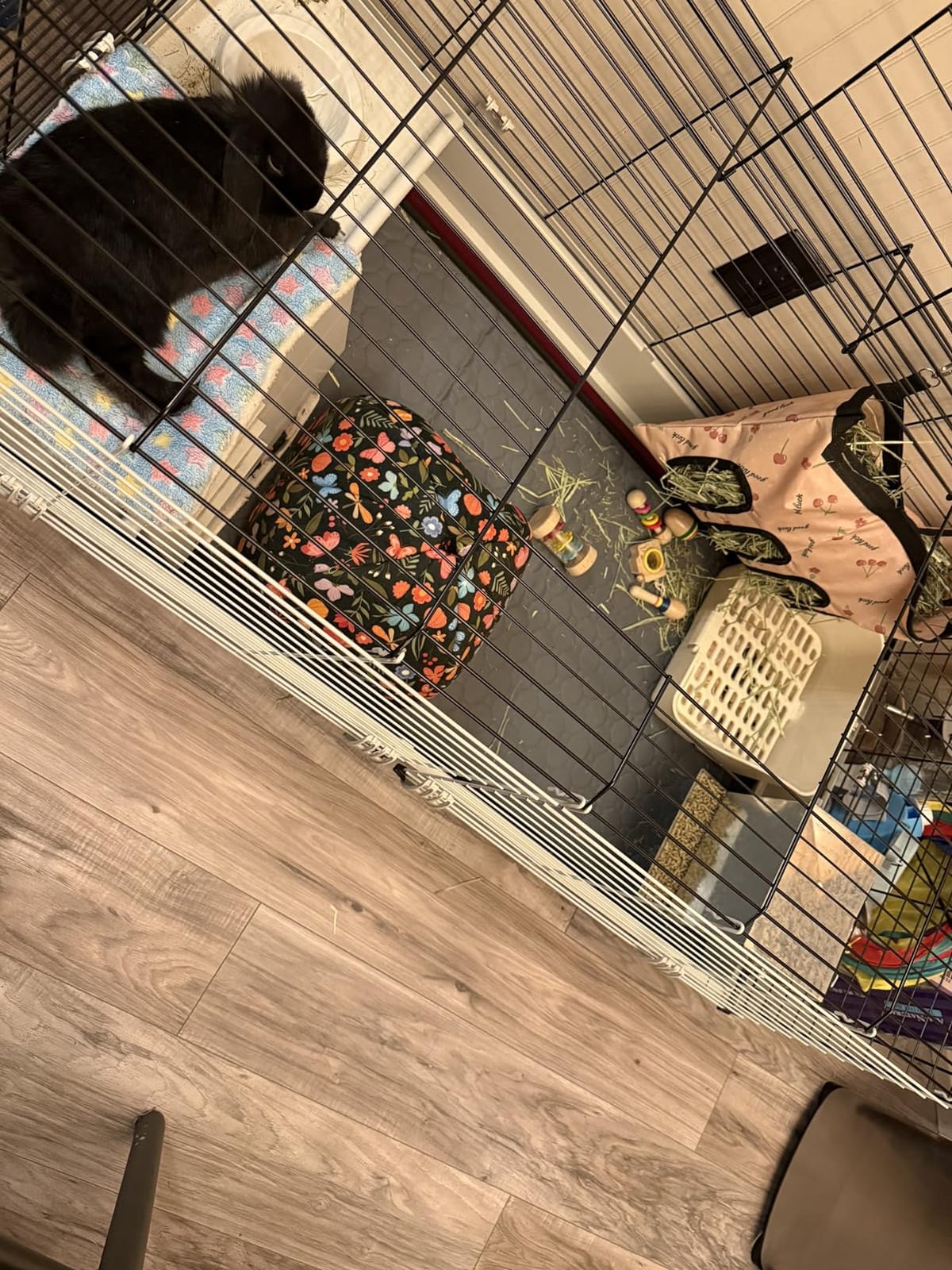
The same footprint logic applies as with the Habitat Plus. At 47.16 by 23.62 inches you are working with about 8 square feet, so this comfortably serves one pig and stretches for two. It also connects to both the 158WEX wire extension and the 158HEX wood hutch extension if you want to lengthen the run later.
Durability is the weak spot. The most common long-term complaint is the wire top sagging without added support rods, and a small number of owners report doors that stop latching properly after extended use. The bundled water bottle holder also grips bottles poorly, and the hay feeder has an open bottom that spills whenever it is lifted or bumped. Reviewers who hit these issues usually replace all three accessories, which is easy since they mount on the outside.
What to check before it arrives
It weighs 16.7 pounds, and at this size most people need two hands and a second person to move it between rooms. Position it once. If you plan to move the cage often, the lighter SONGMICS options further down are a better fit for that habit.
Watch the top rails during the first few weeks. If you notice flex, adding support rods is a cheap fix that several owners report solving the sag permanently.
Where this cage is the wrong pick
It is built for rabbits as much as pigs, and the grid-pattern floor texture is noticeably harder to scrub than a smooth plastic tray. If your plan is a pair of guinea pigs, you still need more floor area than 8 square feet and you will be looking at a playpen for extra space.
The extra height also means it dominates a small room in a way a low cage does not, which matters in an apartment where the habitat shares floor space with furniture.
3. Living World Deluxe Hybrid Habitat Is the Best Premium Indoor Guinea Pig Cage
Living World – Deluxe Hybrid Habitat, X-Large
46.9 x 22.8 x 24 in
19 pounds
Hybrid wire over plastic base
Eight-clip lift-off top
Pros
- Sturdiest build in the roundup with no flexing
- Top lifts off in two sections for deep cleaning
- Balcony and ramp add a raised get-away area
- Accessories mount outside to save floor space
- 19 in tall interior suits upright stretching
Cons
- Bundled water bottle drips and gets replaced
- Balcony ramp is steep for small or older pigs
- Diagram-heavy instructions need a walkthrough
- Arched top removes flat storage surface
This is the cage that feels like furniture. The hybrid construction puts a rigid plastic base under a full wire frame, and at 19 pounds it simply does not flex when you lift it. The 46.9 by 22.8 inch footprint gives about 8 square feet, and the 24 inch total height means a pig can stand fully upright, which is the posture breeders and vets look for when assessing a habitat.
Cleaning is the standout. The whole top lifts off in two sections via eight plastic clips, so you can strip the habitat down to a bare base in seconds. That single design decision saves more time than anything else we tested, and it is why many owners report the cage outlasting their pets.
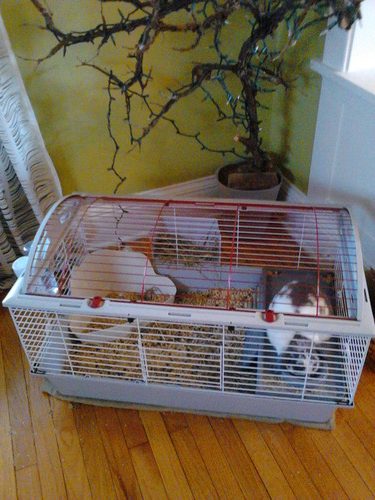
A balcony with an access ramp sits at one end, creating a raised platform and hide-away space underneath, which is a useful arrangement for a pair who need to break sightlines. A tip-proof food dish locks to the balcony floor, and the water bottle and hay guard mount outside the cage, keeping the interior floor clear.
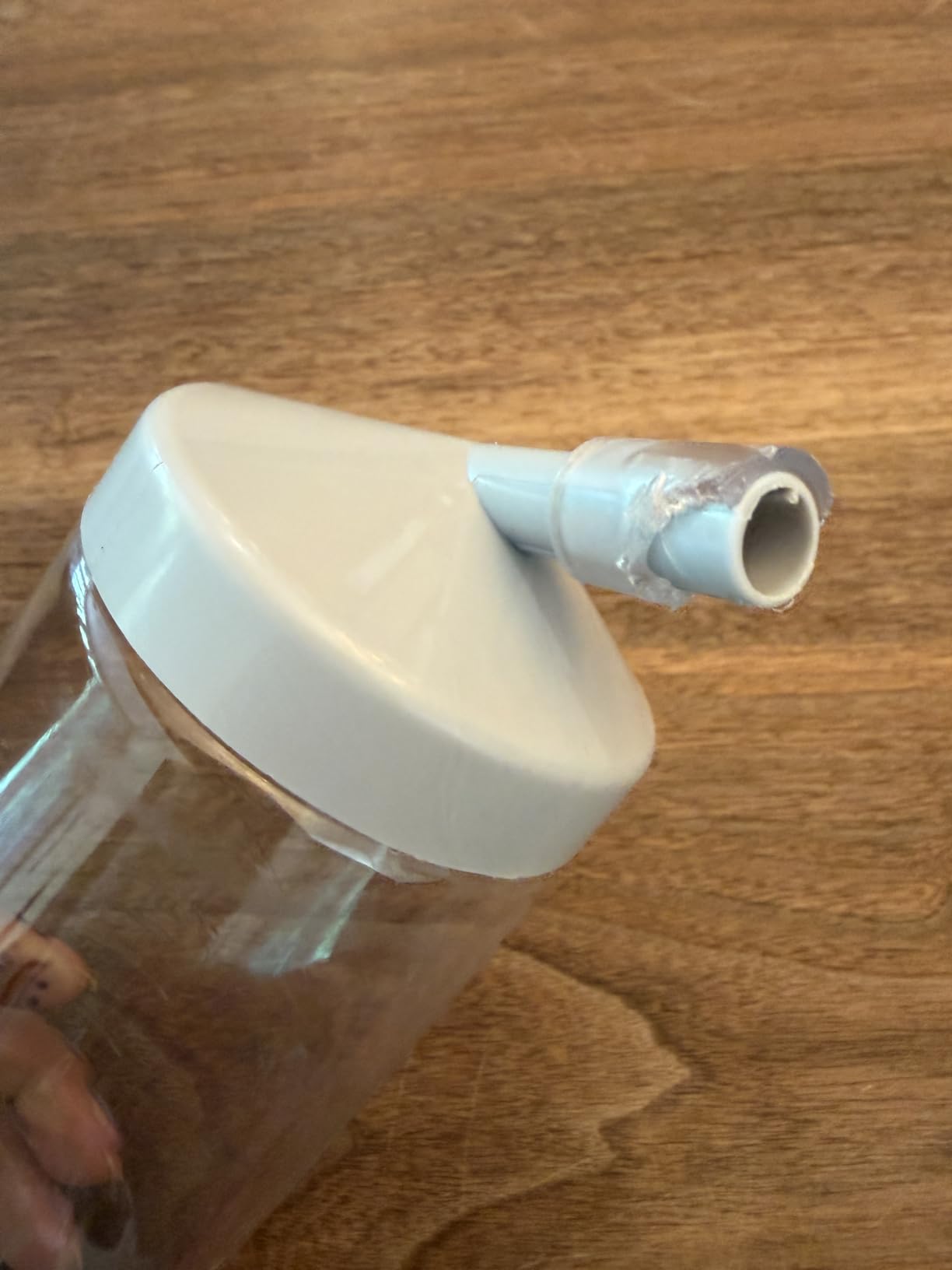
The bundled water bottle tends to drip, and owners report replacing it early. The balcony ramp is steep enough that smaller or older pigs can struggle, and the arched wire top means there is no flat surface for storage. The textured plastic floor also stains over time and takes more scrubbing than a smooth tray. Instructions are diagram-heavy enough that they benefit from a walkthrough video.
What to check before it arrives
Confirm you have 47 inches of wall or a corner that can take a 24 inch tall, 19 pound structure. It is the largest volume in this roundup, and it looks it in a room. The eight top clips are the wear points, so check them during the first few weeks.
Decide on your water solution in advance. Almost everyone replaces the bundled bottle with a stainless or heavy-duty plastic model, and it is easier to plan your bottle placement while the cage is still on the floor.
Where this cage is the wrong pick
The balcony is an upper platform, not a stacked second storey, so it stays within the guidance that a low covered loft is acceptable. But the ramp angle is a real problem for a young piglet or an older one with limited mobility, and there is no way to remove it.
At 8 square feet this is still a single-pig footprint by rescue standards. For two adults, plan a companion pen or regular floor time in a playpen.
4. Ferplast Cavie Is the Best Starter Kit for a First-Time Guinea Pig Owner
Ferplast Cavie Guinea Pig Cage & Rabbit Cage | Pet Cage Includes All Accessories to Get You Started & a 1-Year Warranty
30.3 x 18.5 x 16.5 in
6 in deep base
8.71 pounds
1-year warranty
Pros
- Comes fully equipped with dish bottle and hide-out
- Deep 6 in base contains bedding and debris
- Front and side doors open fully for cleaning
- Backed by a 1-year manufacturer warranty
- Listed from 1 month of age
Cons
- Smallest floor area of the large-format cages
- Basic bundled plastic accessories
- Footprint suits one pig rather than a pair
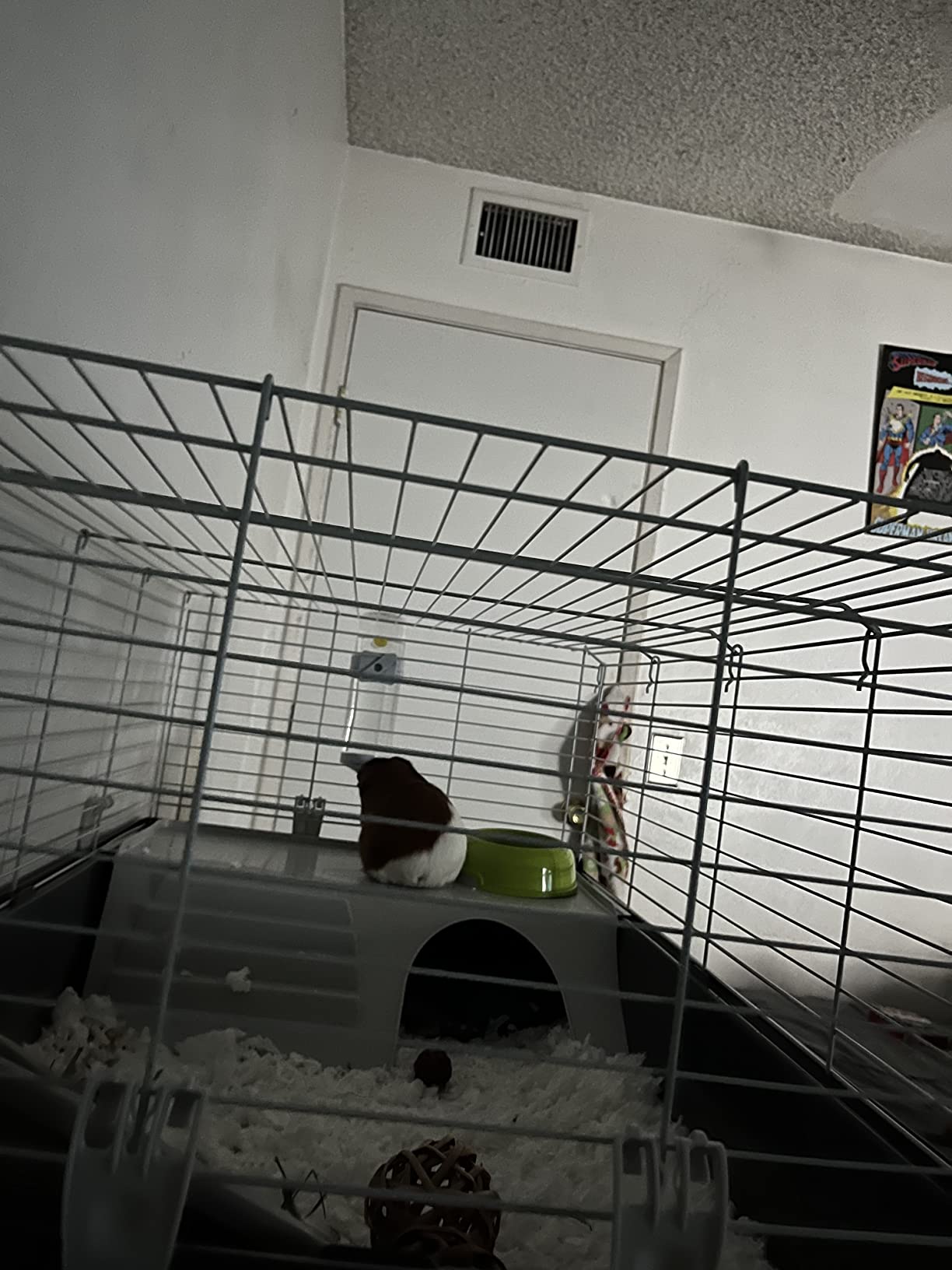
The Cavie is the one to buy if you want everything in one box on day one. Food dish, water bottle, and a large hide-out come included, the front and side doors swing fully open, and the whole thing carries a one-year manufacturer warranty. It is a clean, honest, uncomplicated first habitat.
Its weakness is size, and that is the single most important thing to understand here. At 30.3 by 18.5 inches the floor area is well under the 7.5 square feet rescue guidance sets for even one guinea pig, let alone the 10.5 square feet for a pair. Many owners use it as a temporary day setup and combine it with a playpen for exercise space.
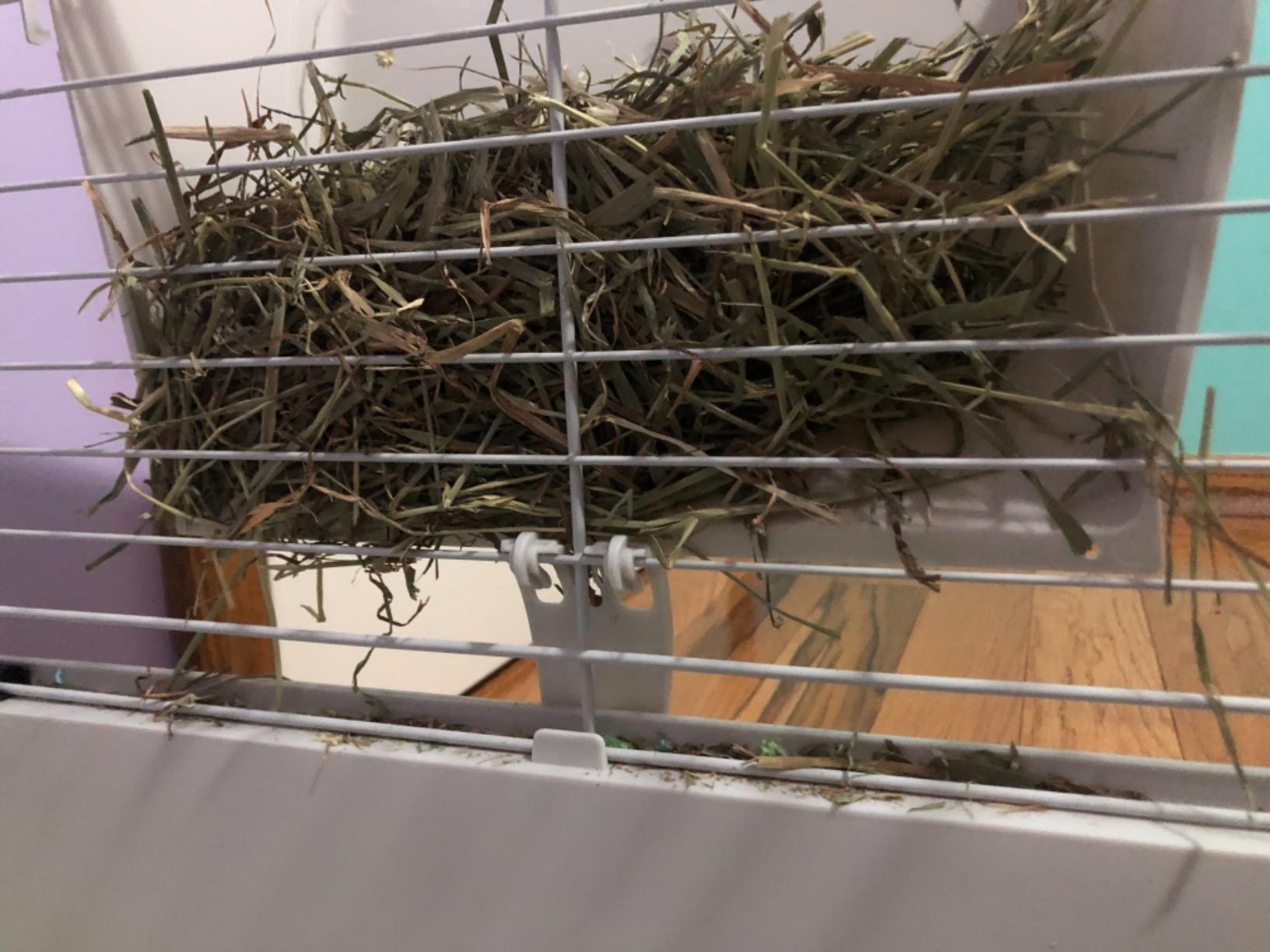
The 6 inch deep base is the feature that earns its place. It stops bedding and hay from spilling out during the daily shenanigans that guinea pigs are famous for, and the fully opening doors mean you can wipe every surface without lifting the animal out.
Wire spacing measures 1 inch by 10 inches, which is wider than the tighter options in this roundup. That is fine for an adult pig, but it is not what you want if you are housing piglets. The bundled plastic accessories are also basic, and owners commonly upgrade the hide-out and bottle within the first month.
What to check before it arrives
Decide honestly whether this is a permanent habitat or a starter. If you can add a playpen for floor time and later upgrade to a larger cage, the low cost and the included accessories make this a good first step. If this is your only enclosure, look further down the list.
The manufacturer lists it from one month of age, but the wider bar spacing makes it a poor fit for a pig under 8 weeks that might push its head through.
Where this cage is the wrong pick
A pair of guinea pigs will not do well in a 30 by 18 inch base. The floor is the resource, and this cage has the least of it here. Owners who have kept pigs in it report that the animals settle into repetitive pacing routines when the space stays the same for weeks.
It is also small enough to be moved by one person, which is a genuine advantage in a small apartment, and versatile enough to double as a hedgehog habitat if your plans change.
5. Amazon Basics Leakproof Canvas Bottom Cage Is the Best Budget Indoor Pick
Amazon Basics Leakproof Canvas Bottom Guinea Pig Cage, Easy to Clean Small Animal Habitat with Divider Set, Indoor/Outdoor, Portable, No Tools Needed, 47.6″L x 24.2″W x 14″H, Black
47.6 x 24.2 x 14 in
13.87 pounds
Leak-proof canvas base
No tools needed
Pros
- Long 47.6 in footprint for a low entry price
- Leak-proof base holds water spills and messes
- Textured surface gives small feet traction
- Folds down flat for storage and transport
- No tools required for setup
Cons
- Divider panels feel lightweight next to the frame
- Canvas floor sags and stains with use
- Some units arrive with bent wire panels
- Fixed panels cannot be rearranged once built
This is the value pick, and the reason is the length. At 47.6 by 24.2 inches it delivers about 8 square feet of floor space, matching enclosures that cost far more, and it does so at the lowest entry point of any full-size cage we reviewed. If budget is the deciding factor and you can live with a canvas base, this is the one.
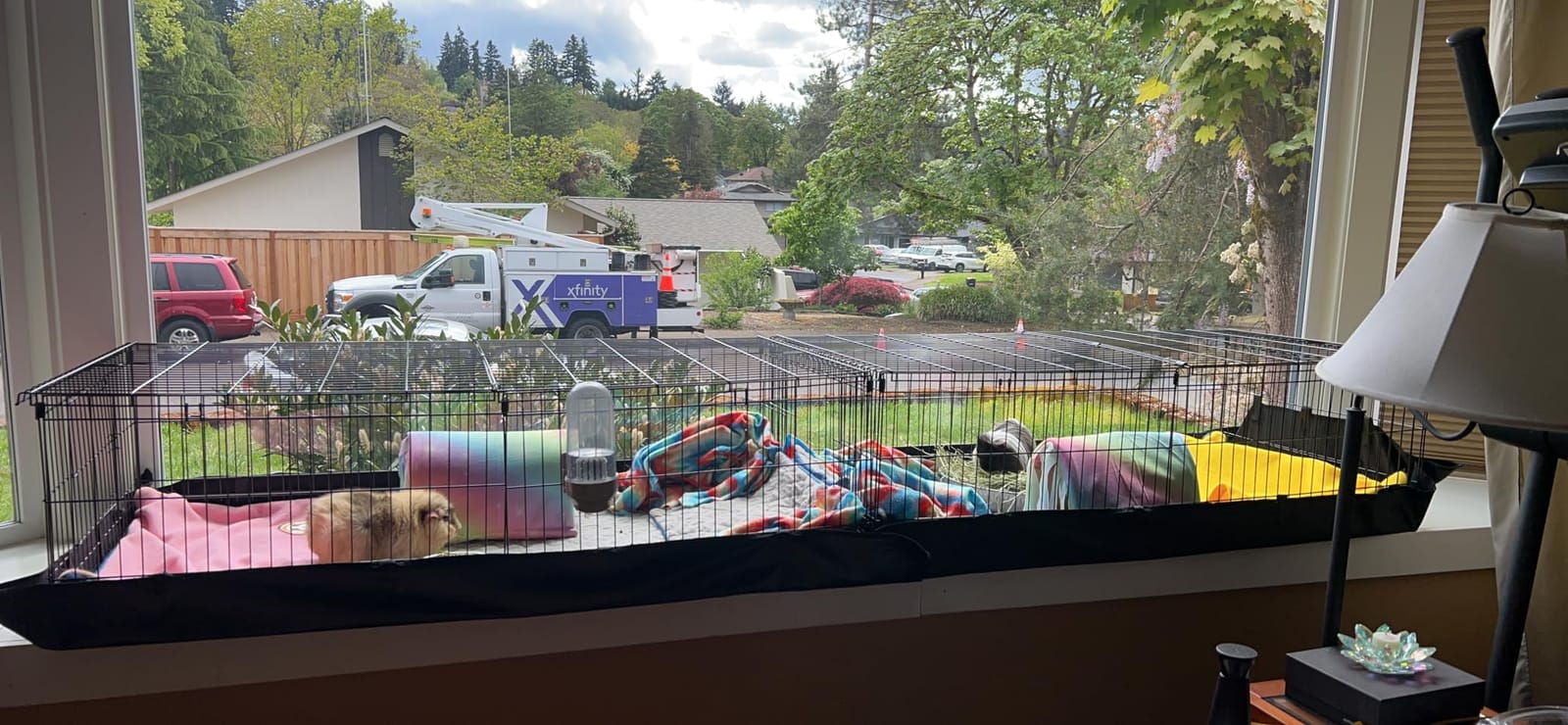
The base is the selling detail. It is leak-proof, so a tipped water bottle or a wet fleece liner is contained inside the cage rather than soaking your floor, and the textured surface gives small feet traction. The whole frame folds down for storage, which matters in an apartment where the habitat doubles as floor space.
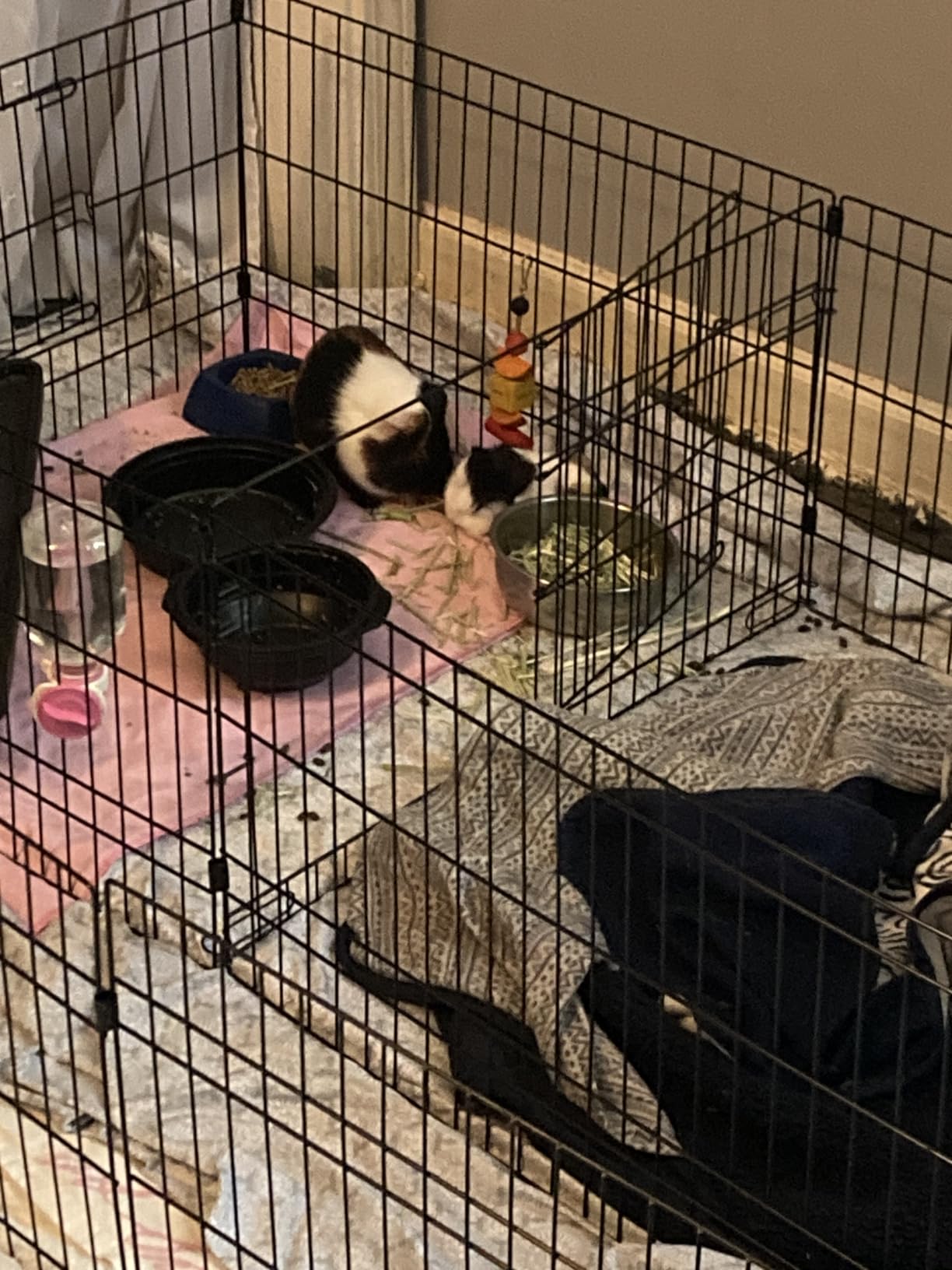
Build consistency is what holds the rating back. At 4.1 out of 5 across more than 7800 reviews, it sits clearly below the premium cages in this list, and the reason is consistent: some units arrive with bent or warped wire panels, and the divider set feels flimsy compared with the frame. The panels are also fixed once assembled, so you cannot reconfigure the layout later.
The canvas floor sags and stains with prolonged use, which is the same trade-off the MidWest Habitat Plus makes. Line it with fleece and an absorbent pad and the problem mostly disappears, but do not expect a rigid tray here.
What to check before it arrives
Inspect every wire panel the day it is delivered. If any are bent, contact the seller rather than working around them, because a warped panel is the most common reason this cage feels unstable once a pig pushes against it.
Expect a full afternoon with fleece, bedding, a hidey, and a hay rack before your pig moves in. None of that is included, so the true cost of this option is the setup rather than the cage.
Where this cage is the wrong pick
It is not for a household with a determined chewer who works at the canvas edges, and it is not for anyone who wants to reconfigure the layout later. The fixed panels rule out expansion beyond what the frame already offers.
It is also marketed for indoor and outdoor use. We only recommend it indoors, because outdoor housing carries the heat and predator problems that owners describe constantly on guinea pig forums.
6. SONGMICS Two-Stage Playpen Is the Best Indoor Guinea Pig Pen for Flexible Floor Plans
SONGMICS Pet Playpen, Small Animal Playpen
56.3 x 28.7 x 28 in
36 panels
100 zip ties
No floor included
Pros
- Reshapes into almost any footprint as your space changes
- 36 panels plus 100 zip ties allow heavy reinforcement
- Rounded edges protect animals from injury
- Non-slip felt pads steady it on wood and PVC floors
- Rubber mallet and clear instructions included
Cons
- Panels feel light until every connector is seated
- Door latches wear out relatively quickly
- No floor mat included so bedding escapes seams
- Awkward to clean underneath a large build
This is the only enclosure here that you can genuinely reconfigure. Thirty-six wire panels and forty connectors can be arranged as a single-level pen, split into two separate habitats with a divider, or built into a two-stage structure. Owners routinely buy a second pack and link it to create a pen considerably larger than anything pre-built.
The included hardware is unusually generous. One hundred zip ties are supplied, and that is not filler. The panels only feel rigid once every connector is fully seated and the zip ties are added, which is exactly what several reviewers report rescuing an otherwise wobbly build.
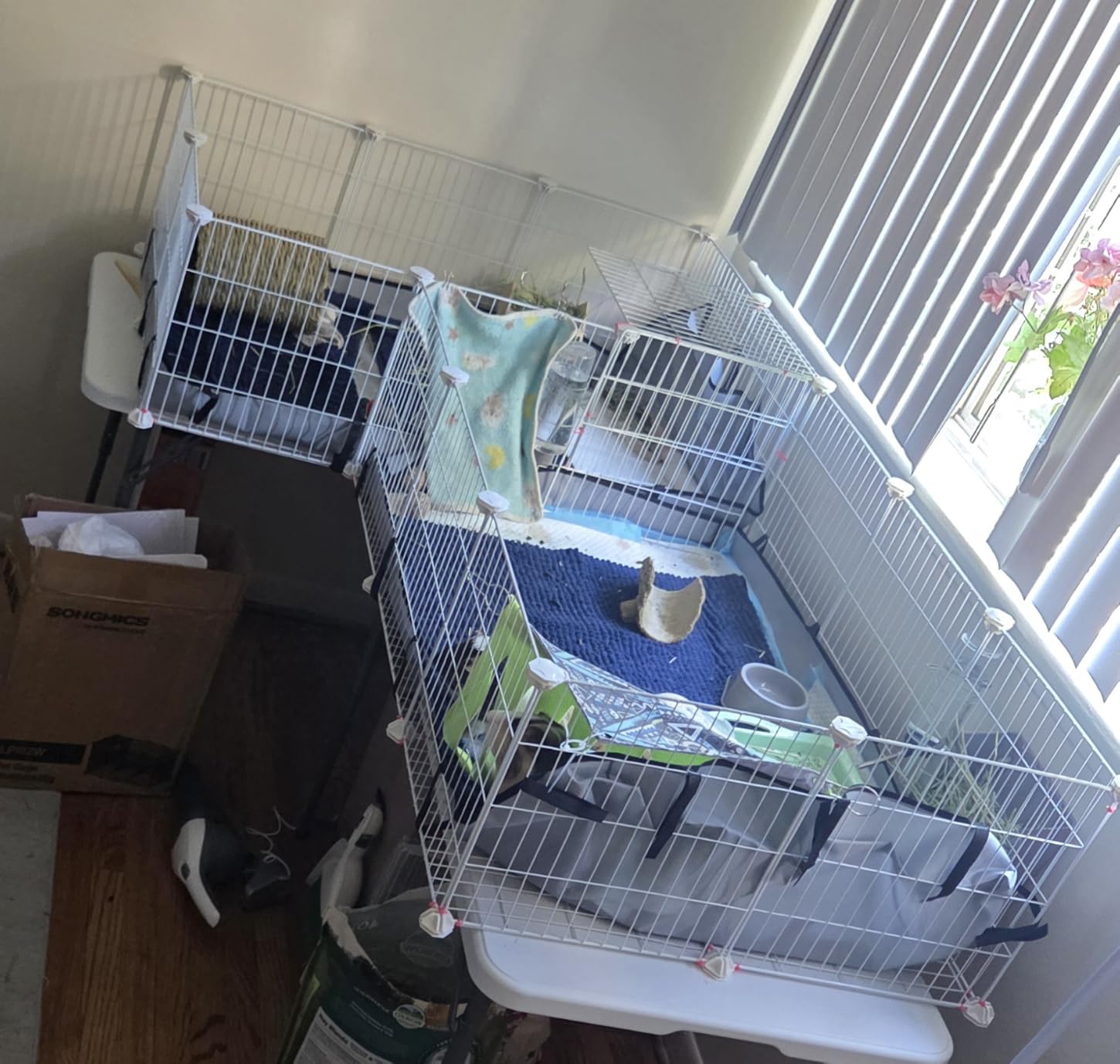
The panel edges are rounded, which is a real safety detail for animals that press themselves into corners constantly. Twelve non-slip felt pads keep the structure steady on wood and PVC floors, and a rubber hammer plus illustrated instructions handle assembly without tools.
No floor is included, and that is the most important thing to know. Bedding falls through the seams unless you add a mat, washable pads, or a rug, and any of those is extra cost and extra laundry. Door latches wear out relatively quickly, and cleaning underneath a large build is awkward without a vacuum attachment.
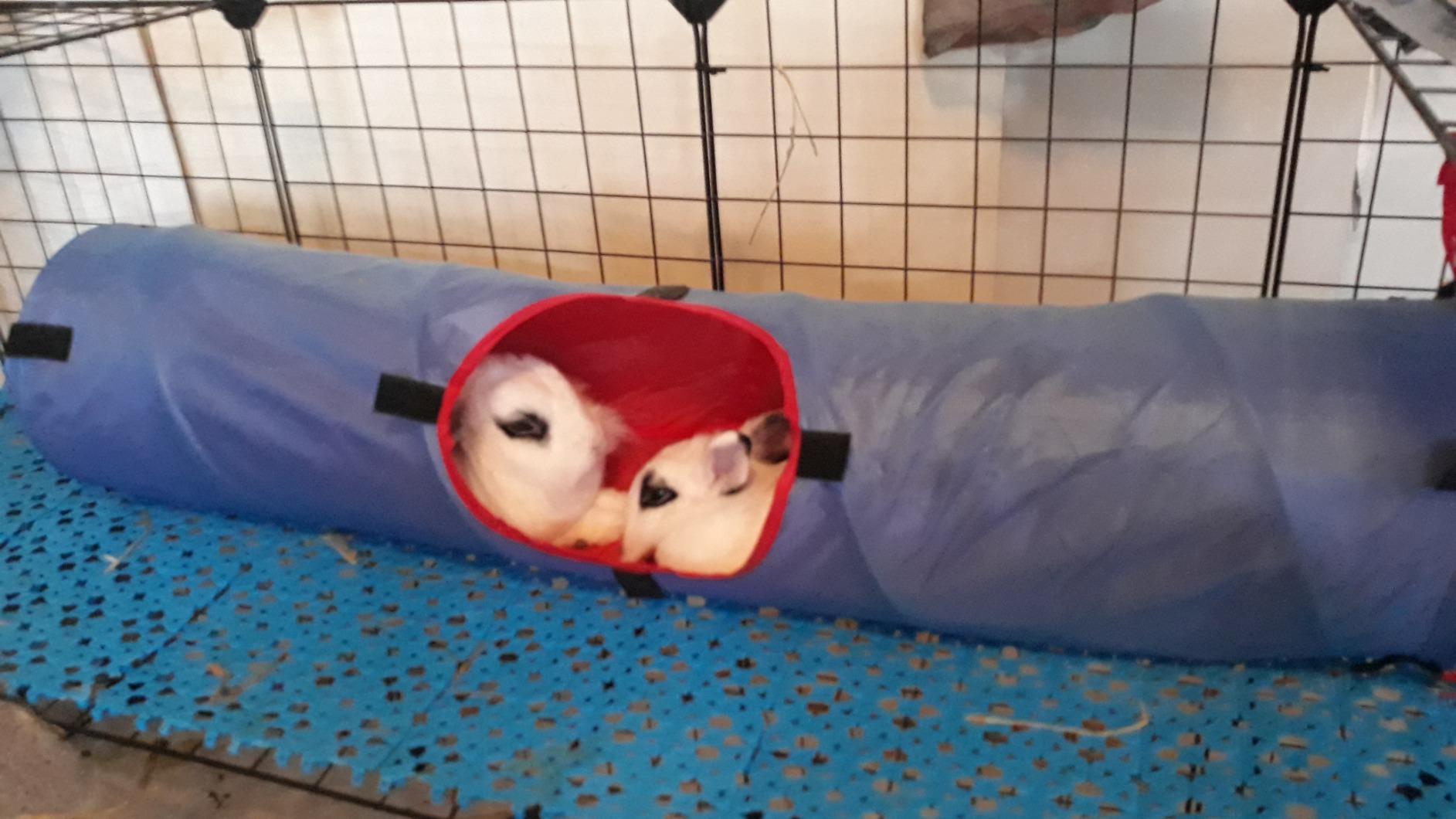
What to check before it arrives
Measure twice and sketch the layout first. The flexibility that makes this pen appealing is also what makes it easy to build a shape that does not fit your room, and a two-stage 28 inch build needs a corner with real vertical clearance.
Plan your floor covering before you assemble anything. Without a mat, hay migrates across the room within a week, and no pen can solve a bedding problem you have not addressed.
Where this cage is the wrong pick
The two-stage configuration is a genuine conflict with rescue guidance on multi-level housing. Build it as one single level at 56.3 by 28.7 inches and you have roughly 11 square feet of floor area, which is a very good size. Stack it and you have the drop risk we flagged earlier, so we would not.
It also suits a household with two separate guinea pigs that must be kept apart, since one panel set can become two pens. For a single, low-profile habitat, a pre-built cage is simpler.
7. VISCOO 20-Panel Playpen Is the Best Indoor Cage for Baby Guinea Pigs
VISCOO 20 Panels Small Animal Playpen, 48″ x 24″ x 16″ Rabbit Cage
48 x 24 x 16 in assembled
About 0.5 in mesh
20 panels
Waterproof mat
Pros
- Tightest mesh spacing in this roundup at about 0.5 in
- Eight clear top panels prevent upward escapes
- Waterproof 600D oxford mat with PVC lining included
- Coated steel panels resist chewing
- Rounded construction suited to young animals
Cons
- Needs zip ties to become rigid once built
- A mallet is effectively required for assembly
- Clear top panels scratch and collect debris
- Only 16 in tall so vertical space is limited
Bar spacing is the whole story with this pen. The mesh measures roughly 0.5 inches, the tightest of any enclosure in this roundup, and that is the specification to check if you are housing guinea pigs under 8 weeks old. Wider grids let a small animal push its head through and get stuck, which owners describe repeatedly on guinea pig forums as the scariest and most common accident.
The eight transparent top panels are the second distinguishing feature. They give you an unobstructed view of what is happening inside, and they physically prevent the vertical escape attempts that make many owners add a lid to a playpen after the first incident.
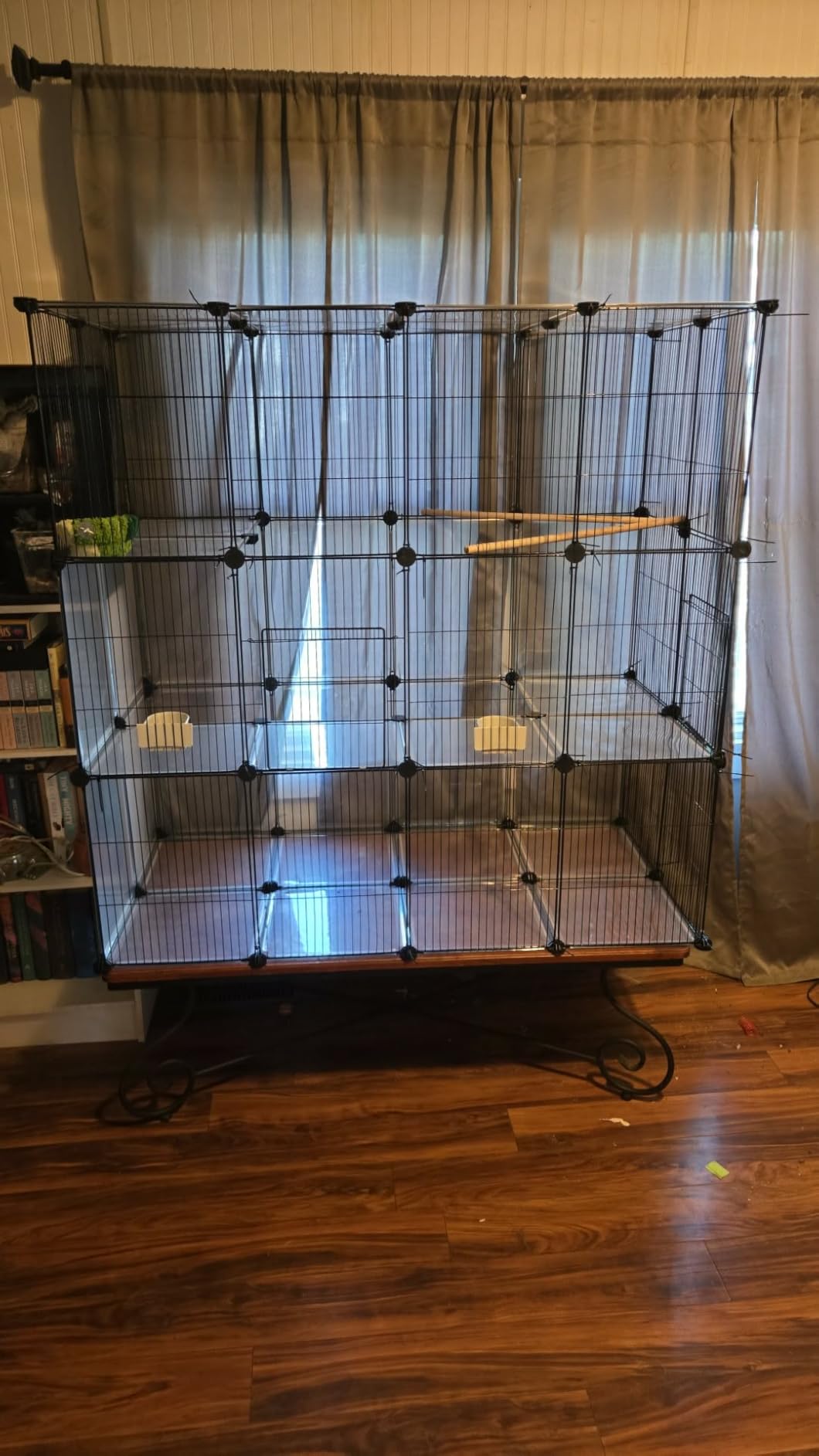
A waterproof 600D oxford floor mat with a PVC lining comes in the box, and it wipes clean. That solves the bedding loss problem that the larger SONGMICS pen leaves to you, and the coated steel panels stand up better to chewing than bare plastic frames.
Assembly is the sticking point. The panels only become rigid once every connector is fully seated and zip ties are added, and several owners note that a rubber mallet or a wooden hammer is effectively required. The rating of 4.1 reflects that friction. The clear tops also scratch and collect debris, and the 16 inch height leaves little vertical room for a fully grown adult.
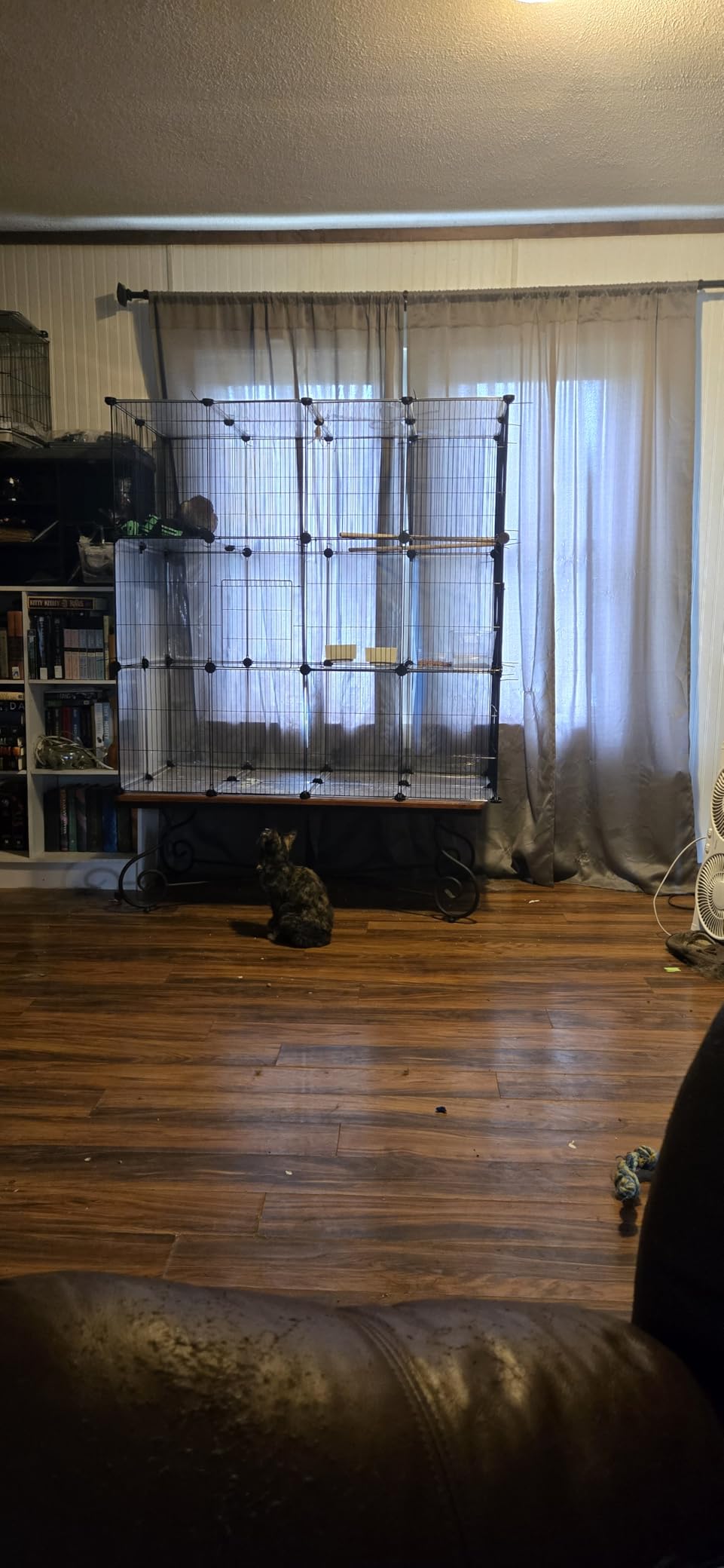
What to check before it arrives
Budget thirty minutes and a mallet. If you can give it a quiet corner of a room and finish it in one sitting, the result is a pen that holds its shape for years. Rushing the connectors is what produces the wobble reviewers complain about.
Check that your liner or mat size matches the 24 by 48 inch footprint before you cut anything, because owners report discovering a mismatch after the pen was already assembled.
Where this cage is the wrong pick
It is a good fit for piglets and young animals, but a fully grown adult needs more floor area than 48 by 24 inches provides, and the 16 inch height limits how much bedding you can pile in. Plan on moving up to a larger setup within a few months.
For two adult pigs you will want more space again. This pen works best as a nursery setup or as a temporary quarantine pen, which is a genuinely useful role that larger cages do not fill.
8. SONGMICS Steel Wire Enclosure Is the Best Indoor Cage for Escape-Prone Guinea Pigs
SONGMICS Guinea Pig Cage, Steel Wire Small Animal Enclosure
47.2 x 23.6 x 15.7 in
0.6 in dense wire
12 panels
Waterproof base
Pros
- Dense 0.6 in wire grid protects paws from pinching
- Waterproof base wraps outside to stop digging under
- Smooth panels discourage wall climbing
- Built-in gate avoids lifting pigs over the top
- Coated steel frame wipes clean with a damp cloth
Cons
- Panels feel flimsy until all connectors snap home
- Base is not perfectly flat so a liner helps
- Included mat can be torn by a determined rabbit
- Clip-on water bottles do not fit this frame well
This enclosure exists because of one specific problem: pigs climbing and escaping. The smooth-sided panels give an animal nothing to grip, which solves the wall-climbing behaviour that owners report drives people to add lids to every other wire pen. The built-in gate means you never have to lift a pig over the top to get it in or out.
The base is the detail that impressed us. A waterproof Oxford fabric floor mat wraps around the outside of the frame, so digging underneath the cage, which pigs do constantly, hits fabric instead of your floor. Combined with the coated steel frame that wipes clean, that makes this one of the least messy options in the roundup.
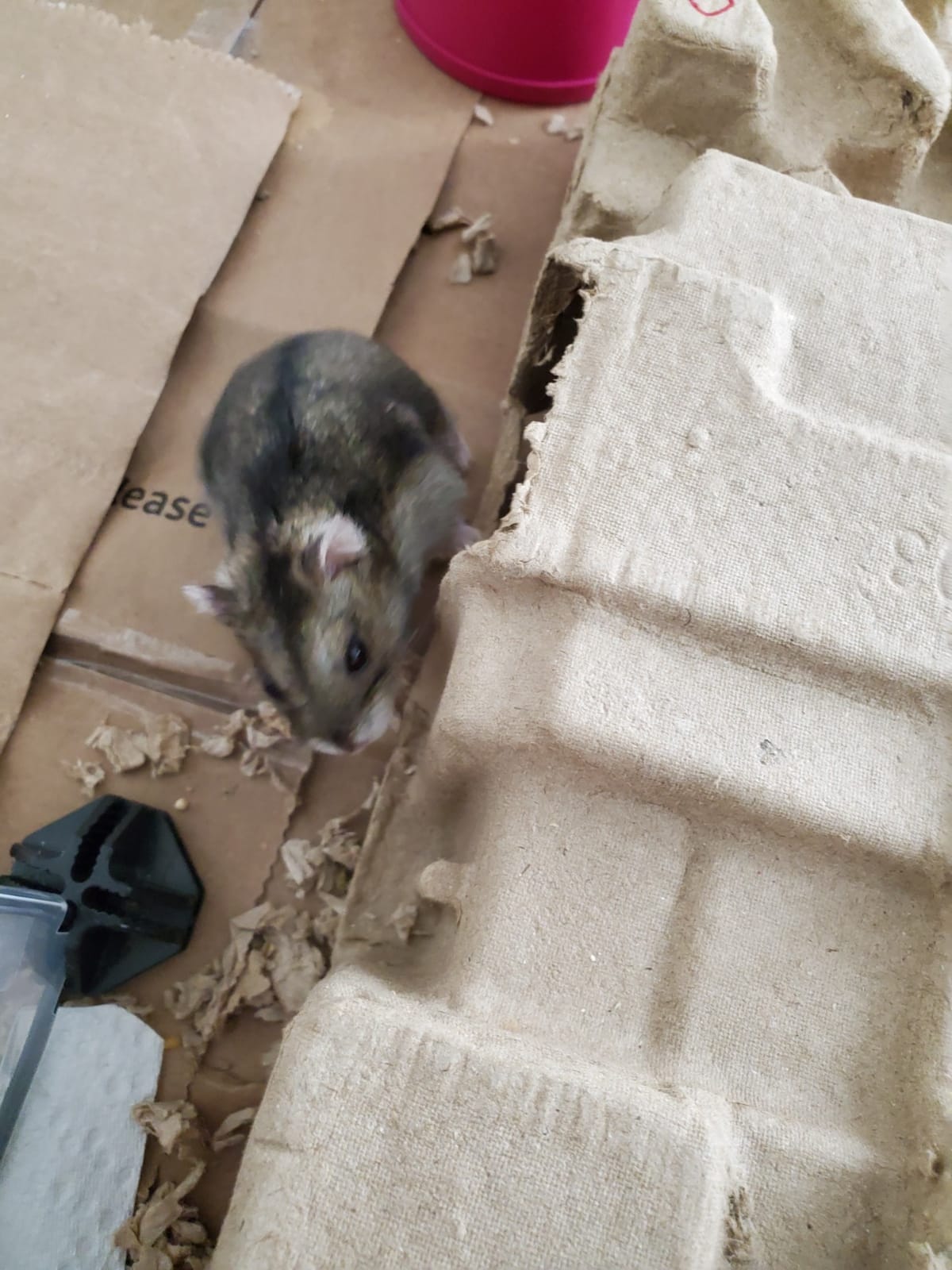
At 47.2 by 23.6 inches the footprint is about 7.7 square feet, which clears the single-pig minimum and falls just short of the pair standard. The 0.6 inch wire grid is the second tightest here, and that is a meaningful specification for a household with young pigs.
The honest drawbacks are structural. Twelve panels feel flimsy in your hands until every ABS connector is fully snapped, and the base is not perfectly flat, so a fleece liner underneath is a good idea. Water bottles that clip onto standard cage wire are difficult to attach to this frame, so plan your watering system before assembly. Repeat buyers also question long-term durability compared with the heavier pre-built cages.
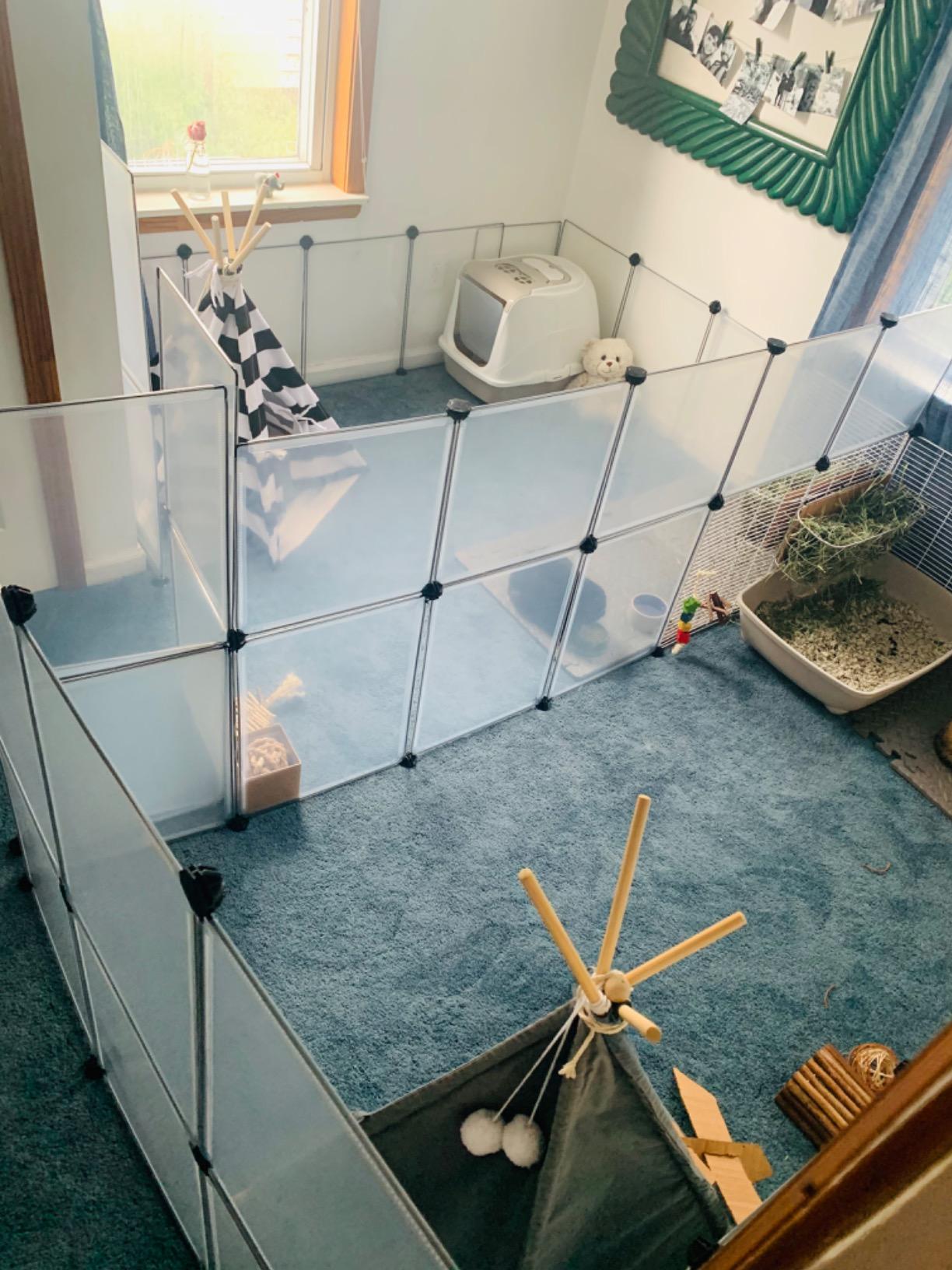
What to check before it arrives
Count the connectors and confirm every one is seated before you add bedding. This pen rewards patience at assembly time and punishes a quick build, which is the pattern that produces the loose corners reviewers describe.
Measure the base flatness once it is built. If a corner rocks, a folded fleece layer or a thin mat solves it and keeps the floor dry underneath.
Where this cage is the wrong pick
It is not for someone who wants a loft, an upper level, or a raised platform. The 15.7 inch height leaves no vertical room, and every square inch of the footprint is floor area, which is the resource that matters most.
It is also not built for rabbits. Owners report that the included mat can be torn by a determined rabbit, and a chewed-through base in a home with a dog is a much bigger problem than in a home with only guinea pigs.
9. GuineaLoft Model-A Is the Best Clear-Wall Indoor C&C Cage
GuineaLoft™ Model-A Acrylic Guinea Pig Cage – Large 4x2ft Expandable C&C
4 x 2 ft floor, 8 sq ft
10 in tall
4 mm acrylic panels
Disposable base
Pros
- Standard 4x2 ft C and C footprint sized for a pair
- Solid clear walls keep bedding inside the cage
- Screwed-together frame stays rigid when lifted
- Disposable bottom turns cleaning into a fold and swap
- Expands to 5x2 ft with additional panels
Cons
- Open top is unsuitable for a pig that jumps
- No permanent base included and refills sold separately
- Acrylic panels scratch and show smudges
- Expansion requires buying extra panels and tubes
This is the C and C layout in a different material. Instead of wire grids, it uses 1/6 inch, or 4 mm, acrylic panels joined permanently with steel brackets and screws. The 4 by 2 foot footprint delivers 8 square feet, which is the standard rescue footprint for a single pig and the common size people build for a pair.
Solid walls are the reason owners like it. Bedding cannot be kicked into the room, a pig cannot wedge its head into a gap, and the clear panels give you a 360 degree view of the animal without crouching to see past a grid. The screwed construction means the cage stays rigid when lifted or moved, which solves the sagging problem that afflicts the cheaper canvas cages.
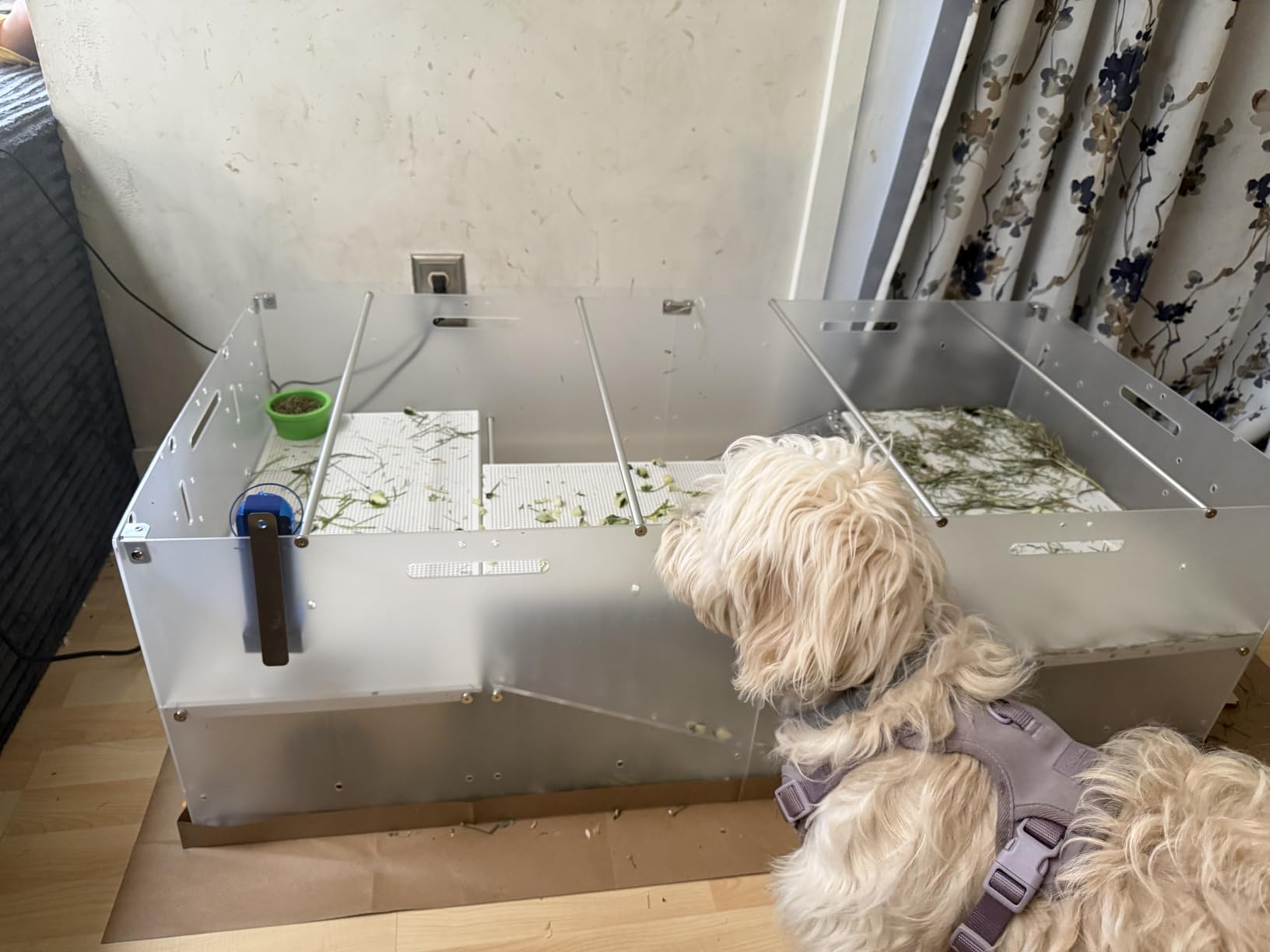
Cleaning is unusually fast. The disposable bottom system means you fold the used base away, wipe or swap the liner, and slide a fresh one in, with no deep tray to scrub. Two bottoms and two mats are included, so there is a usable rotation from the first day.
Two limitations stand out. The top is open, which suits calm pigs but not an animal that jumps, and there is no permanent base, so refills are a repeat purchase. Acrylic also scratches over time and shows smudges, which is a cosmetic trade for the visibility you gain. Expansion to 5 by 2 feet requires buying additional panels and tubes.
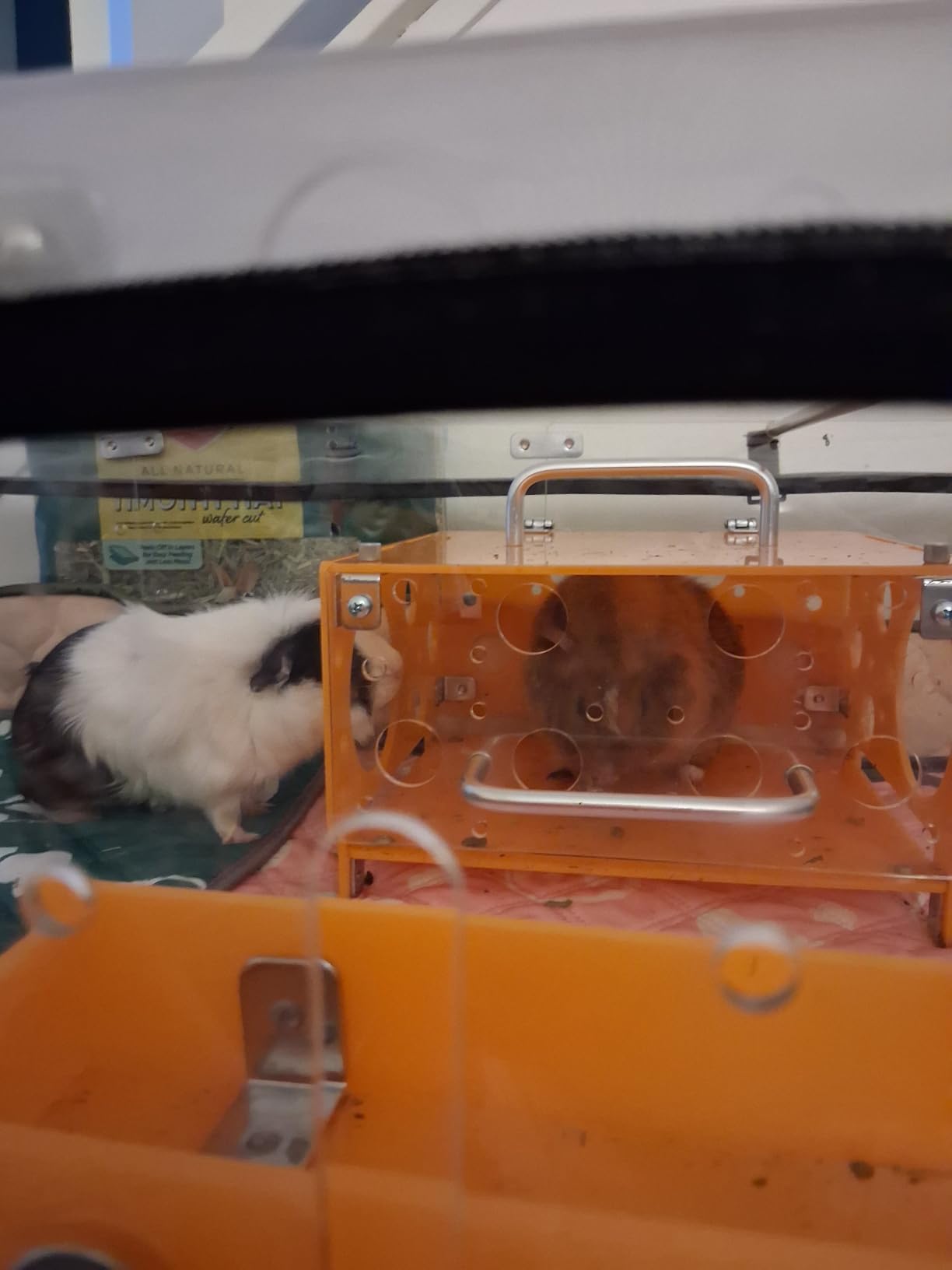
What to check before it arrives
Decide about the top early. If your pig is a jumper, you will need a lid or an escape-proof playpen around this cage, and that is a real cost that the product listing does not show.
Check the height. At 10 inches, the cage is low, which is good for a pig and bad for a hay pile. A loft or platform cannot be added without the modular panels, so plan bedding depth accordingly.
Where this cage is the wrong pick
It is not a good fit for a household that wants a traditional tall wire habitat, or for anyone who needs extra structural reinforcement against a large dog. The low profile and open top are deliberate design choices, and they limit you.
It is also the lowest review count in this roundup, so there is less long-term owner history behind it. The modular design is the hedge: you can add panels later rather than replace the whole thing.
10. PawHut Rolling 35-Inch Cage Is the Best Indoor Cage on Wheels
PawHut 35″ L Small Animal Cage, Rolling Bunny Cage, Guinea Pig Cage with Food Dish, Water Bottle, Hay Feeder, Platform, Ramp for Chinchilla, Green
35 x 17.25 x 17 in overall
33.75 in tray
Four-wheel base
8.8 pounds
Pros
- Four-wheeled base rolls to daylight or a better spot
- Openable top and front door for cleaning
- Includes dish feeder bottle platform and ramp
- Metal wire covering keeps animals contained
- Platform and ramp add enrichment
Cons
- Wheels only roll correctly on a flat floor
- Ramp can detach if not seated on the platform
- Wire spacing is wide for very small rodents
- Footprint is under 5 sq ft for a pair
Wheels are the entire pitch, and they deliver. A four-wheeled base lets you roll the whole habitat into daylight in the morning and back into a warmer room in the afternoon, which directly addresses the overheating risk that owners raise about indoor placement. The openable top and front door make cleaning and interaction straightforward.
It also arrives properly equipped. A food bowl, hay feeder, water bottle, platform, and ramp are all included, so this is a complete setup on day one. At 8.8 pounds it is the easiest cage here to reposition on your own.
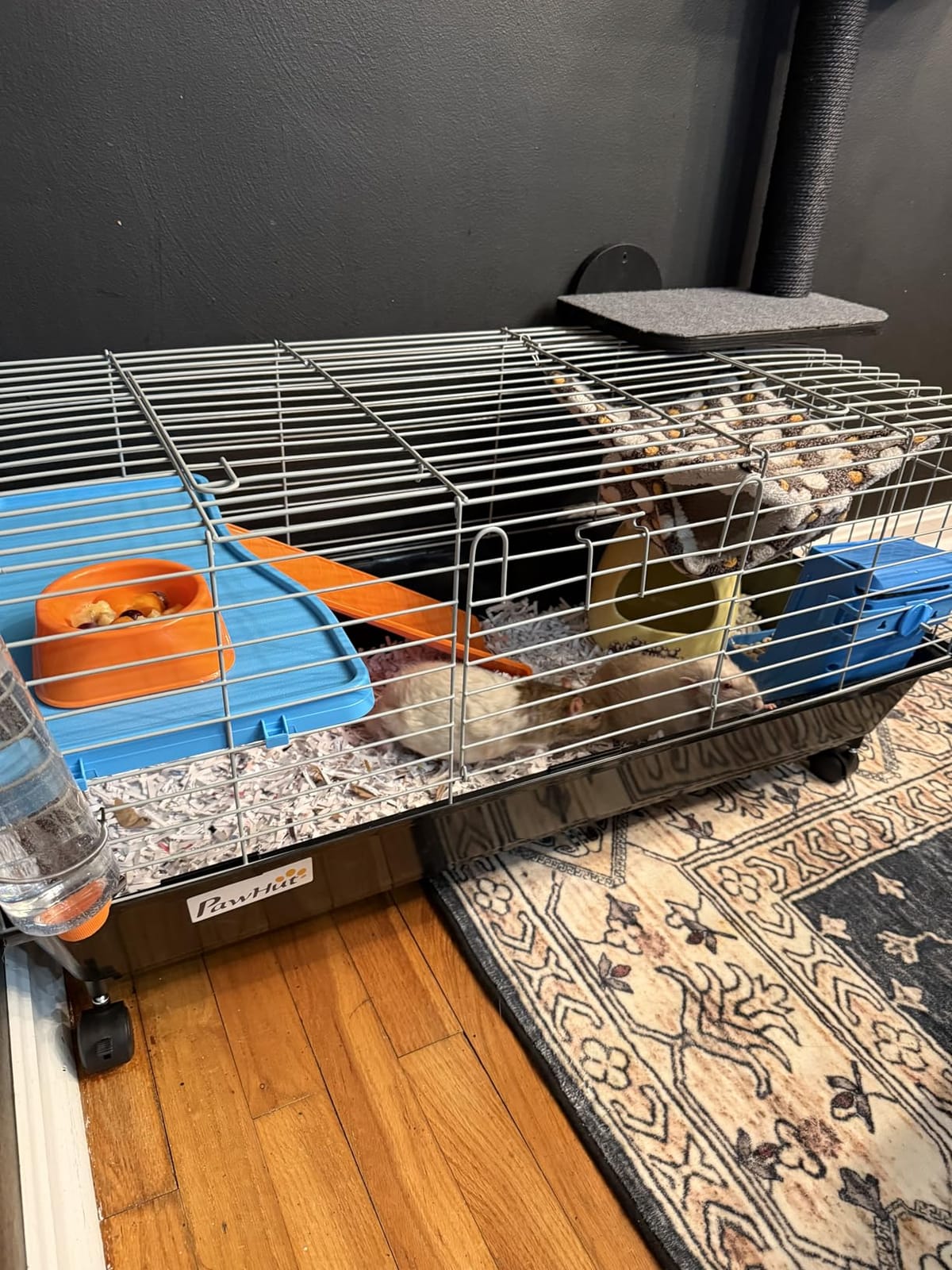
The plastic tray measures 33.75 by 16.5 inches with a 5.5 inch depth, which keeps hay inside. That gives a total footprint of 35 by 17.25 inches, or under 5 square feet, so this is a one-pig cage by rescue standards and needs a playpen or floor time for anything larger.
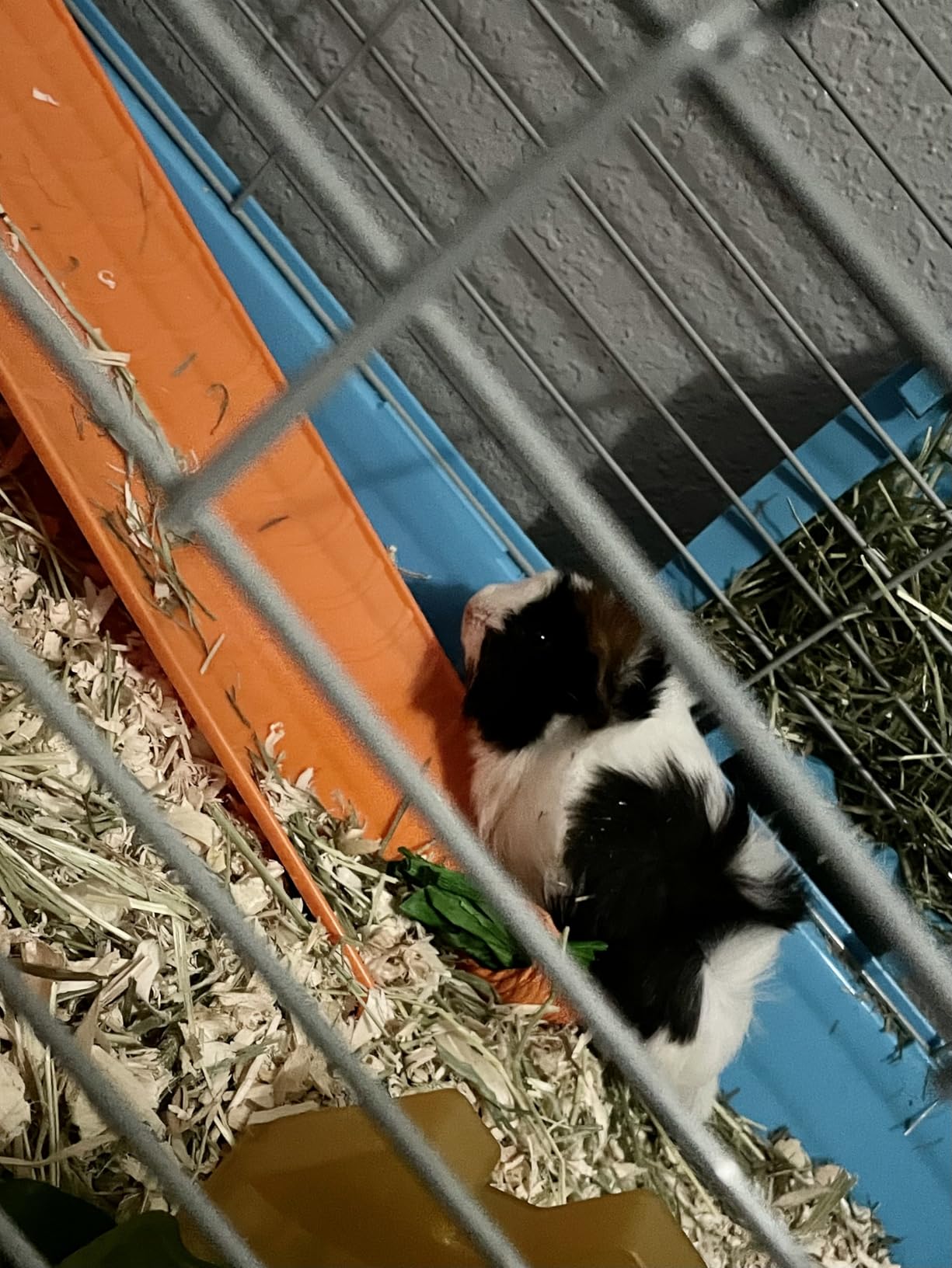
Two practical issues come up repeatedly. The wheels only roll correctly on a hard, flat surface, and on carpet they drag and can tip, so most owners put it on a hard floor or use a floor mat. The ramp also detaches if it is not fully seated on the platform, which is a small safety issue worth checking every few weeks.
What to check before it arrives
Find a hard floor near a window or a patio door, but check that the spot is not in direct afternoon sun. A cage that can move and then gets parked in the hottest part of the room defeats the purpose.
Inspect the ramp seating during the first week. It is a two-second check that prevents a pig from sliding off a platform it cannot reach safely.
Where this cage is the wrong pick
It is not for a pair of guinea pigs, full stop. Under 5 square feet falls well short of the 10.5 square feet rescues require, and the frame is designed for dwarf rabbits, guinea pigs, and chinchillas rather than groups.
The wire spacing is also wider than you would want for a pig under 8 weeks old, so this is an adult setup. For a family with young children, a taller enclosed cage like the Living World is a better fit.
11. PawHut Two-Story Stand Cage Is the Best Indoor Cage With Built-In Storage
PawHut Two-Story Small Animal Cage Removable from Stand, Guinea Pig Cage with Shelf & Wheels, Pet Habitat for Hedgehog, Chinchilla, Ferret, 33″ x 18.5″ x 35″, Red
33 x 18.5 x 35.25 in overall
Cage lifts off stand
0.75 in bar spacing
15.2 pounds
Pros
- Cage lifts off the stand for table-top or floor use
- Wheeled stand plus shelf keeps supplies off the floor
- High sides contain bedding and hay
- Includes dish feeder and water bottle
- Assembly is described as straightforward
Cons
- Cage can slide off the stand as the animal moves
- 35 in overall height needs real vertical clearance
- Two-level layout conflicts with rescue guidance
- Ramp can detach if not fully engaged
The stand is the point of this cage. Storage sits underneath for bedding, hay, and fleece, which keeps supplies off the floor and off the work surface, and the whole unit rolls on wheels while it is on the stand. For a household where the habitat lives in a living room, the shelf is the feature that keeps the setup looking intentional.
The detachable design is genuinely useful. The cage lifts off the stand so you can set it on a table for cleaning or carry it to another room, and the elevated platform creates a private space below the main floor that many pigs treat as a second hidey.
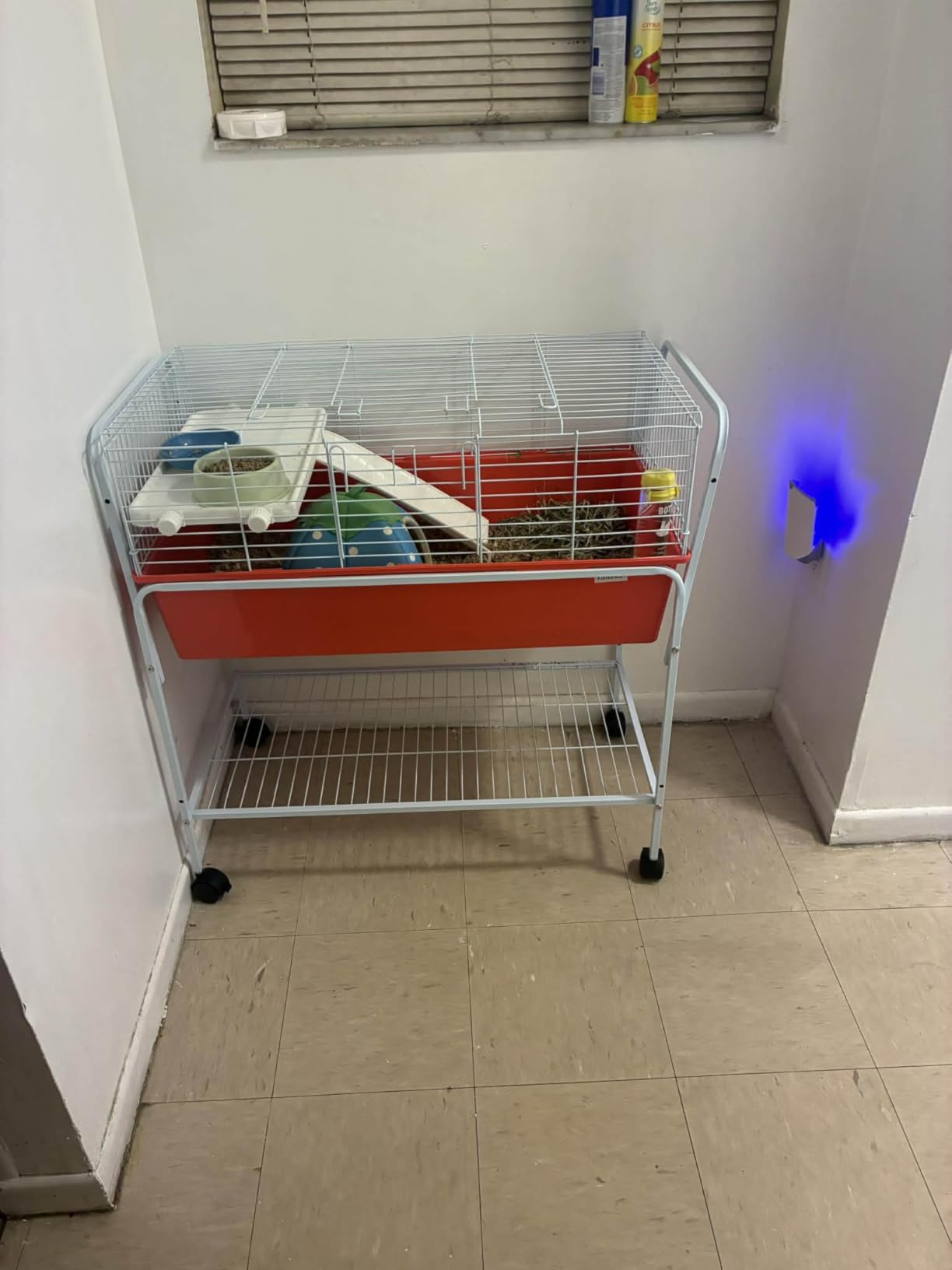
We rate this highly and recommend it with a caveat. At 4.6 out of 5 it sits near the top of the ratings here, but the review count is the lowest in the roundup, so there is less long-term history. The most significant complaint is that the cage slides off the wheeled stand whenever the animal moves around, and a number of owners replace the stand with a plain table to solve it.
It is also a two-level structure, which is exactly the configuration rescue guidance discourages. The upper level is a platform rather than a separate habitat, and it sits low, but the falling risk is real for a young or clumsy pig. A food dish, hay feeder, and water bottle are included, and bar spacing measures 0.75 inch.
What to check before it arrives
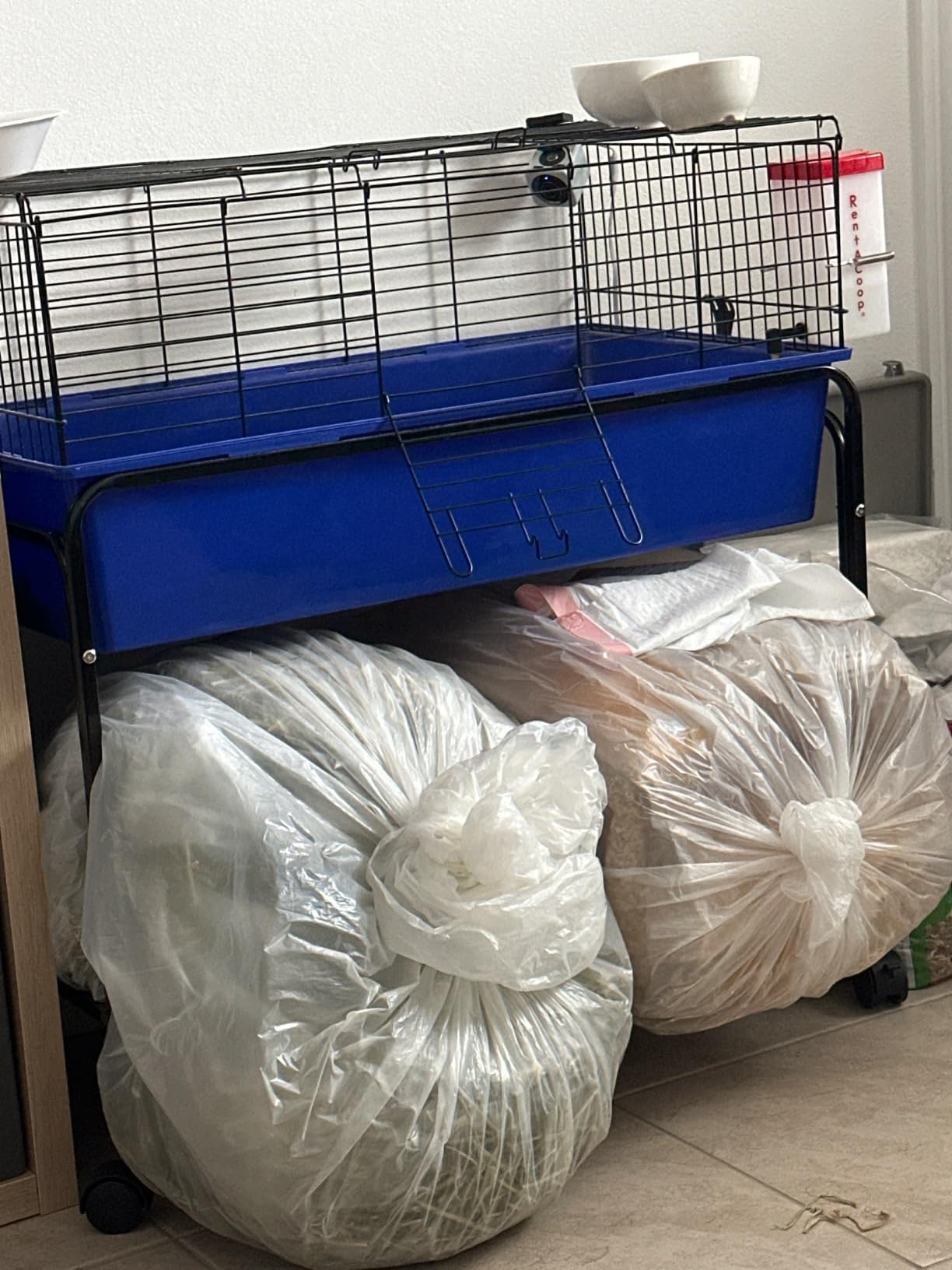
Measure your ceiling clearance. At 35.25 inches tall overall, this is the tallest unit in the roundup and it will not fit under a low shelf, a raised deck, or a sloping ceiling. Bar spacing of 0.75 inch is also too wide for piglets under 8 weeks.
Put the stand on a hard floor. The wheels behave the same way as any rolling cage, and a rug will make the whole unit drift.
Where this cage is the wrong pick
We would not choose this for a household that has just adopted a pair. The 33 by 18.5 inch cage floor is under 4.3 square feet, the two-level layout carries a fall risk, and the review count is thin for a product this structural. Treat it as a display-and-storage unit for one adult pig rather than a main habitat.
It is also not sturdy against a small child leaning on the stand, so placement matters in a family room.
12. Tresbro C&C Playpen Is the Best Indoor Cage for Fast Liner Changes
Tresbro Guinea Pig Cage with Waterproof PVC Bottom Liner & One-Hand Release Hook, Triple Fixing C&C Cage for Guinea Pigs, Bunny, Rabbit, Hedgehog, Small Animal Indoor Playpen 48”L x 24”W x 16”H
48 x 24 x 16 in
About 8 sq ft
Waterproof PVC liner
0.7 in wire
Pros
- Waterproof scratch-resistant PVC liner is fully washable
- High liner walls keep bedding inside the pen
- One-motion release hooks beat hook-and-loop fastening
- Triple-locking buckles resist loosening
- Tool-free installation most users find simple
Cons
- 0.7 in wire spacing is among the wider in this roundup
- Panels need careful alignment before buckles lock
- 16 in height limits vertical room
- Shape may need rethinking if you use a larger mat
The fastening system is what separates this pen from the others in its class. Rather than hook-and-loop strips that degrade with weekly washing, it uses one-motion release hooks and a triple reinforcement of buckles and straps. Owners report it is faster to strip and rebuild, which is the entire point when you are swapping liners twice a week.
At 48 by 24 inches the assembled floor area is about 8 square feet, which matches the MidWest Habitat Plus and the GuineaLoft footprint. The liner is 600D Oxford cloth outside with a thickened PVC interior that is fully washable and reinforced at the corners where cages usually fail first.
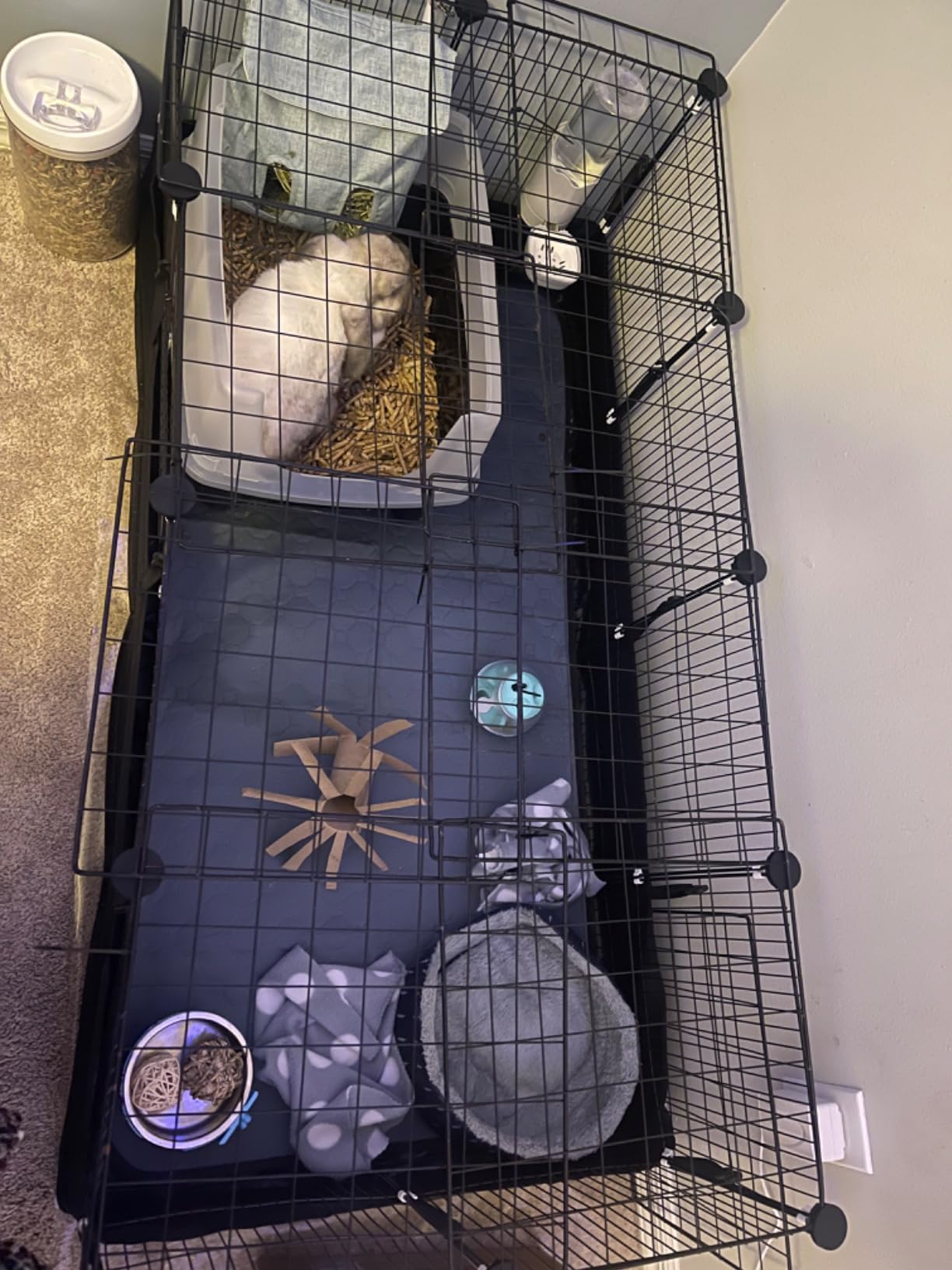
Line height is the other practical win. The liner walls are high enough to keep bedding from being kicked out into the room, which is a persistent problem with the canvas-bottom cages at a similar size. A door panel within the set means you do not have to dismantle the pen to get an animal in or out.
The trade-off is wire spacing at 0.7 inch, which is wider than the 0.5 and 0.6 inch options in this roundup and not suitable for piglets under 8 weeks. Panels also need careful alignment before the buckles fully lock, and the 16 inch height is on the short side. If you use a mat larger than the standard footprint, you may need to rethink the pen shape.
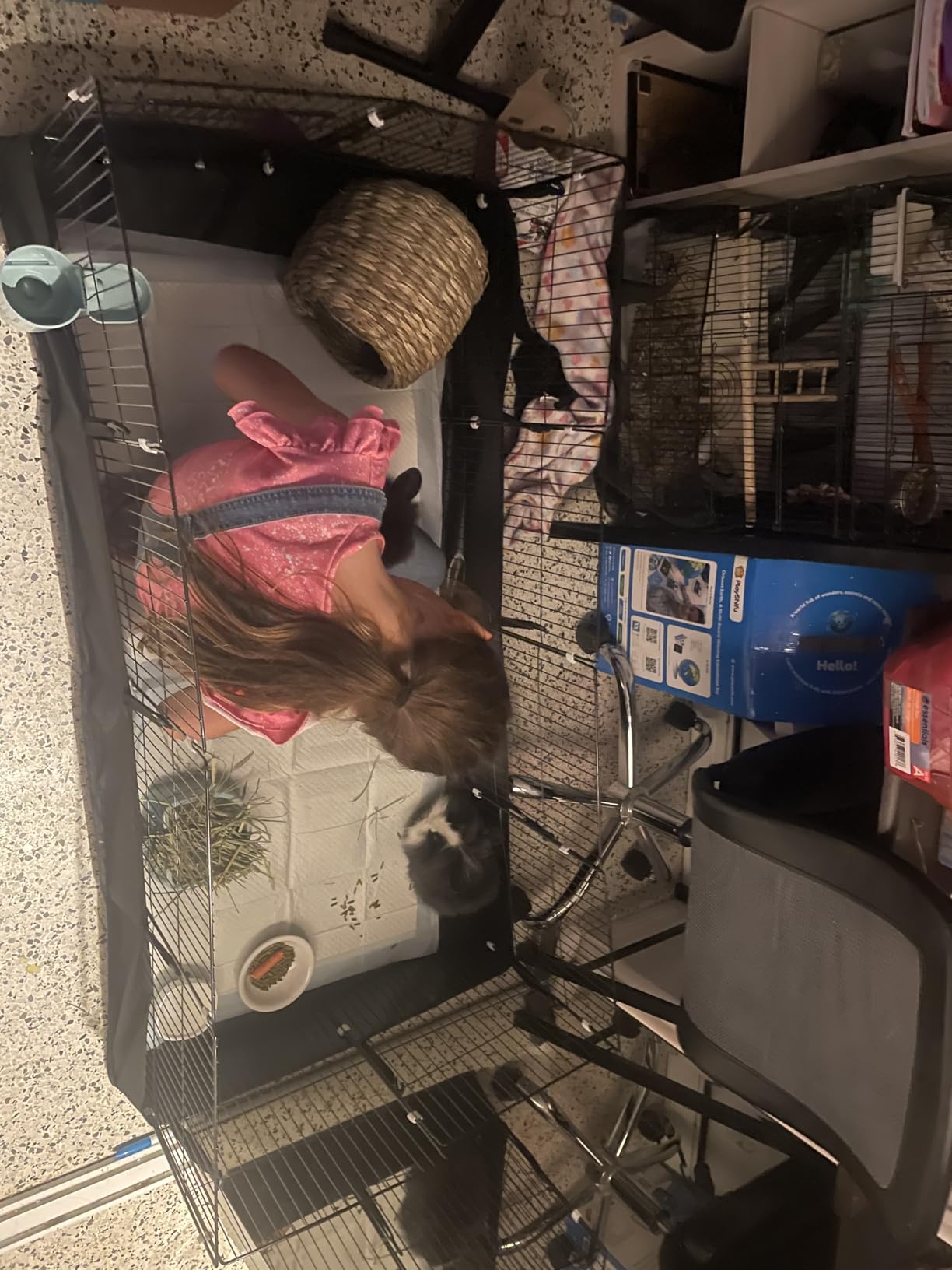
What to check before it arrives
Line up every panel before you snap a single buckle. Misalignment is the single most common reason this pen feels loose, and the triple locking only works properly on square corners. Budget a little longer than you expect for assembly.
Plan your liner rotation. Because cleaning is the design goal here, buying two sets of fleece liners and a stack of absorbent pads pays for itself in saved time within a month.
Where this cage is the wrong pick
It is the wrong choice for a household with young piglets, given the 0.7 inch spacing, and the 16 inch side height means there is no room for a loft or platform. Everything you get is floor area, which is the right trade for adults and wrong for young animals.
It is also worth noting that this is a single-level pen, so it avoids the multi-level problem that the other two-storey unit in this roundup runs into.
Indoor Guinea Pig Cage Buying Guide
Once you have picked a cage, four decisions matter more than the cage itself. Sizing, floor material, bedding, and placement each change how healthy your guinea pig stays, and each one is cheap to get right on the front end.
How to calculate the square footage you actually need
Multiply the internal length by the internal width in inches, then divide by 144 to get square feet. A 47 by 24 inch cage gives 1128 square inches, which is 7.8 square feet, enough for one guinea pig and just under the 10.5 square feet a pair needs. Add that figure to any housing you already have, including a playpen used for floor time, because a playpen counts toward the total just as much as a cage does.
Sizing is not a popularity contest. Owners on r/guineapigs describe the same mistake repeatedly, buying a cage that looked enormous in a product photo and discovering that the marketed length includes the tray and door, not just the floor. Measure the floor panel, not the box.
Why coroplast beats a plastic tray, and 14-inch grids beat 12-inch
A coroplast base is a twin-walled plastic sheet, sold in building supply stores, that is waterproof, wipe-clean, and light enough to lift with an animal in it. A moulded plastic tray is cheaper but usually has a textured floor that traps debris in its grooves, which is the complaint several reviewers raise about the Living World and MidWest bases here.
On grid size, the arithmetic decides it. A 2 by 4 layout built from 14-inch grids gives a 28 by 56 inch cage, which is 10.8 square feet and clears the rescue standard for a pair. The same 2 by 4 layout from 12-inch grids gives 24 by 48 inches, or 8 square feet, which is where most pre-built cages in this roundup sit. If you are building, buy 14-inch grids.
Bedding and fleece liners that suit the floor material
Fleece is the most popular choice on guinea pig forums because it is cheap, produces no waste, and pigs appear to prefer it. It only works with an absorbent layer underneath, and that is the whole secret. Fleece over nothing is a wet fleece, and wet fleece is how urine scald and sore hocks start.
For loose bedding, one to two inches of kiln-dried pine, aspen, or paper bedding is enough. Never use cedar, which is toxic to small animals, and never line a cage floor with bare towels or puppy pads, which do not stay dry. A cardboard box filled with loose bedding inside one corner creates a hay and kitchen area, and owners report the rest of the cage stays noticeably cleaner.
A cleaning routine that takes five minutes a day
Spot-clean wet bedding every morning, sweep the corners where hay collects, and refill the hay rack. Swap fleece liners twice a week at minimum, more often with two pigs. Do a full strip and deep clean of the base on a weekly schedule, and put the animal in a playpen or a secure spot while you do it.
Rescue guidance recommends fleece liners be changed every two to three days if they are soiled, and the honest reason so many owners complain about fleece is that they skipped the absorbent pad. Ours are washed in the washing machine on a cool cycle with a small amount of unscented detergent, air dried flat, and reused for months.
Where to put the cage indoors and how warm the room should be
Keep the room between 65 and 75 degrees Fahrenheit. Above roughly 75 to 80 degrees, heat becomes dangerous quickly, and owners on guinea pig forums describe moving cages to avoid afternoon sun as a routine part of indoor housing. Position the habitat in a well-visited family or living room, and avoid a child’s bedroom, because pigs are active all night and owners consistently report disrupted sleep.
Add a lid if a cat lives in the home. Cats are the single most common reason owners buy a covered cage, and forum consensus is that no amount of height substitutes for a closed top. On floors, protect carpet and hardwood with a mat or a washable pad under a wheeled cage, since hay and bedding migrate no matter what the base is made of.
DIY versus a pre-built cage
Building a C and C cage yourself is the standard recommendation on r/guineapigs, and owners report that a self-built cage is as good as a commercial one at a fraction of the cost. You need 14-inch grids with connectors, a coroplast sheet cut to size, and either corner braces or a frame for a base deep enough to contain bedding.
The trap is buying coroplast at a hardware store without checking the sheet size and thickness first, since store stock varies and thin sheets flex. Pre-built cages trade that project for a guaranteed footprint and included accessories. We would build if you enjoy the process and want to hit 10.5 square feet; we would buy if you want it working today.
Frequently Asked Questions
What is the 3-3-3 rule for guinea pigs?
The 3-3-3 rule is a shelter guideline: at least 3 guinea pigs per enclosure, at least 3 square feet of floor space per pig, and a minimum commitment of 3 months when taking an animal in. It was designed for rescues assessing capacity rather than for single households, but it explains why rescue groups require 10.5 square feet for a pair. Single owners should follow the square footage rule, not the group rule, because two pigs of the same sex do better together.
Why are Cu0026amp;C cages better for guinea pigs?
C and C cages, short for cube and coroplast, combine 14-inch wire grids with a waterproof coroplast base. The grids give 1 inch bar spacing, wide enough to see through but narrow enough that a pig cannot wedge its head through, and the base is solid, waterproof, and wipe-clean. A 2 by 4 layout of 14-inch grids produces a 28 by 56 inch cage of about 10.8 square feet, which clears the rescue minimum for a pair of guinea pigs and leaves room for a low covered loft.
Do guinea pigs like 2-level cages?
A low covered loft is fine and pigs use it as a get-away area, but a stacked second storey is not. Guinea pigs are not climbers and have poor depth perception, so a pig at the top of a two-level cage can misjudge a drop and injure itself. Rescue guidance allows a low loft with a safe ramp and prohibits multi-level housing. If you want the extra space, build outward on the floor rather than upward.
What is the best type of cage for guinea pigs indoors?
For indoor use, a C and C cage is the best type, either pre-built or self-assembled from 14-inch grids and a coroplast base. It gives the largest continuous floor area per unit of cost, has solid waterproof flooring, and stays open enough to see and reach the animal. Modular plastic playpens are a good flexible second option, while solid-wall acrylic cages suit owners who want visibility and easy cleaning. Wire-bottom, glass tank, and stacked multi-level designs are the ones to avoid.
How often should I change the fleece in my guinea pig cage?
Swap fleece liners every two to three days, and daily if you have two guinea pigs or if the fleece is damp. Fleece only works with a thick absorbent pad underneath, since wet fleece sitting on a cold base is how urine scald and sore hocks develop. Wash liners in a washing machine on a cool cycle with a small amount of unscented detergent, air dry them flat, and keep several in rotation so changes stay fast.
Final Verdict on the Best Guinea Pig Cages for Indoor Use in 2026
For most households, the best guinea pig cages for indoor use come down to a few clear picks. One adult pig in a family room: the MidWest Guinea Habitat Plus, which gives the best combination of floor area, washability, and daily usability. Two adult pigs: build a 2 by 4 C and C cage from 14-inch grids and a coroplast base, because nothing pre-built in this roundup reaches 10.5 square feet. Piglets under 8 weeks: the VISCOO playpen, for the tightest bar spacing available. Cats in the home: the Living World Deluxe Hybrid, with a lift-off top and a tall profile.
Whatever you choose, budget for fleece liners, an absorbent pad, a hay rack, and two hideys, and keep the room between 65 and 75 degrees. We have covered similar habitat decisions for other small pets in our roundups of bird cages and ferret cages, where floor area and bar spacing work the same way.