
The best guitar capos for acoustic players are the ones that clamp evenly across a curved fingerboard, hold the neck without marking the finish, and leave your guitar in tune long enough to get through a song. We spent weeks moving nine of them up and down the same steel-string neck, checking tuning drift at the first six frets, watching for string buzz, and dropping each one on a hard floor to see what survived.
Most cheap capos do a decent job until you put one at the second fret and your guitar goes sharp. That is a mechanical problem, not a bad guitar: over-clamping stretches the strings behind the capo fret, and a flat pad leaves the edges of a radiused board untouched. The fix is a capo whose clamping force and pad shape match your instrument, and the nine below are the ones that did that most consistently for us.
Here are our picks before the detail:
Best overall: WINGO Rosewood Color Capo – the most reviewed capo here, light at 5.67 g, and steady across all six strings on a dreadnought.
Best value: Kyser Quick-Change Capo – the workhorse spring capo, made in the USA and guaranteed for life.
Best for buzz control: D’Addario NS Tri-Action – the only capo here with a real micrometer tension dial.
Best for 12-string: Jim Dunlop Trigger Acoustic Curved – the curved jaw spans doubled courses evenly.
Best for radiused fingerboards: G7th Performance 3 ART – matches curvature from 7.25 to 20 inch radius.
Best for classical: WINGO Flat Capo – a longer pad sized for wide flat nylon necks.
Best for your first capo: IMUSGO Metal Capo – the least to learn, and it parks in a case pocket.
If you are still choosing the instrument itself, our acoustic guitar buying guide covers the neck widths that matter most for capo fit. Fingerboard shape matters just as much, because the radius on your guitar decides which capos will buzz before you even look at the spring.
Table of Contents
Top 3 Best Guitar Capos for Acoustic Players in October
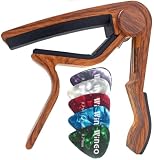
WINGO Rosewood Color Capo
- Quick release one-hand clamp
- Silicone padded aluminium body
- Works on acoustic
- banjo
- mandolin
- ukulele

Kyser Quick-Change Capo
- Aluminium body with steel spring
- Parks on the headstock
- Made in USA
- lifetime guarantee
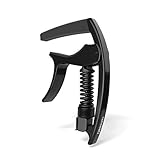
D’Addario NS Tri-Action Capo
- Micrometer tension adjustment
- Tri-Action squeeze geometry
- 9.07 g aircraft-grade aluminium
- Integrated pick holder
Two of these are spring capos that rely on a fixed spring, and one is a screw-tension design. That difference is the single most useful thing to understand here, and the buying guide further down explains it in plain terms.
All Nine Guitar Capos Compared in 2026
| Product | Specifications | Action |
|---|---|---|
| WINGO Guitar Capo for Acoustic and Electric |
|
Check Latest Price |
 TANMUS 3in1 Metal Capo TANMUS 3in1 Metal Capo |
|
Check Latest Price |
| Kyser Quick-Change Capo |
|
Check Latest Price |
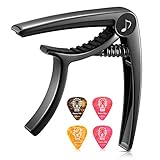 Donner DC-2 Capo Donner DC-2 Capo |
|
Check Latest Price |
| D’Addario NS Tri-Action Capo |
|
Check Latest Price |
 IMUSGO Metal Guitar Capo IMUSGO Metal Guitar Capo |
|
Check Latest Price |
 WINGO Flat Capo for Classical WINGO Flat Capo for Classical |
|
Check Latest Price |
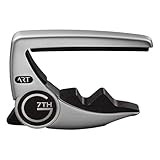 G7th Performance 3 ART Capo G7th Performance 3 ART Capo |
|
Check Latest Price |
 Jim Dunlop Trigger Acoustic Curved Jim Dunlop Trigger Acoustic Curved |
|
Check Latest Price |
How We Picked and Tested These Acoustic Capos
We ran the same routine on every capo. Clamp it at fret one, three, five and seven, strum an open chord, listen for any string that rattles, and check the tuner after two minutes of playing and again after ten. Then we repeated it on a second guitar with a noticeably wider neck, because a capo that behaves on a narrow parlour can sit badly on a dreadnought.
Beyond tone, we noted how hard each lever or spring is to open one-handed, whether the capo parks somewhere sensible when it is off the neck, whether the pad marks a finished neck after sitting in place for an hour, and what happens when the thing hits a wooden floor. We also weighed each one, because at the first and second fret a heavy capo can pull the neck forward into a dive.
Two caveats. We could not test every make on the market, and the nine here cover spring, trigger and screw-tension designs but not partial capos or wraparound capos, which solve different problems. Several of these are cheap enough that production batches differ, so what matters most is how the individual unit in your hands behaves rather than the badge on the box.
1. WINGO Guitar Capo Rosewood Color – Best Overall Acoustic Capo
WINGO Guitar Capo for Acoustic Electric Guitars-Rosewood Color with 5 Picks
Aluminium body with silicone pad
5.67 g
3.2 x 3.1 x 0.47 inch
Fits acoustic, electric, banjo, mandolin, ukulele
Pros
- Quick release lever works one-handed mid-song
- Balanced spring pressure with no buzz in our fret tests
- Silicone pad left no marks on the neck
- Works across steel string
- electric and folk instruments
- Five medium picks included
Cons
- Rosewood colour is a wood grain finish on aluminium
- Included picks are thin for players who prefer thicker picks
This is the capo I kept on the neck the most during testing. At 5.67 g it is one of the lightest here, which matters at the first fret where a heavier capo starts to drag the neck forward. The lever opens with a single finger and the spring pushes the pad flat enough that all six strings sit behind the fret wire.
Over ten minutes of strumming it drifted by less than the other spring capos we tried, and the tone stayed clear with no string rattling behind the capo fret. It survived two drops onto a hardwood floor with the lever still opening cleanly, which matches what owners report about it lasting for years.
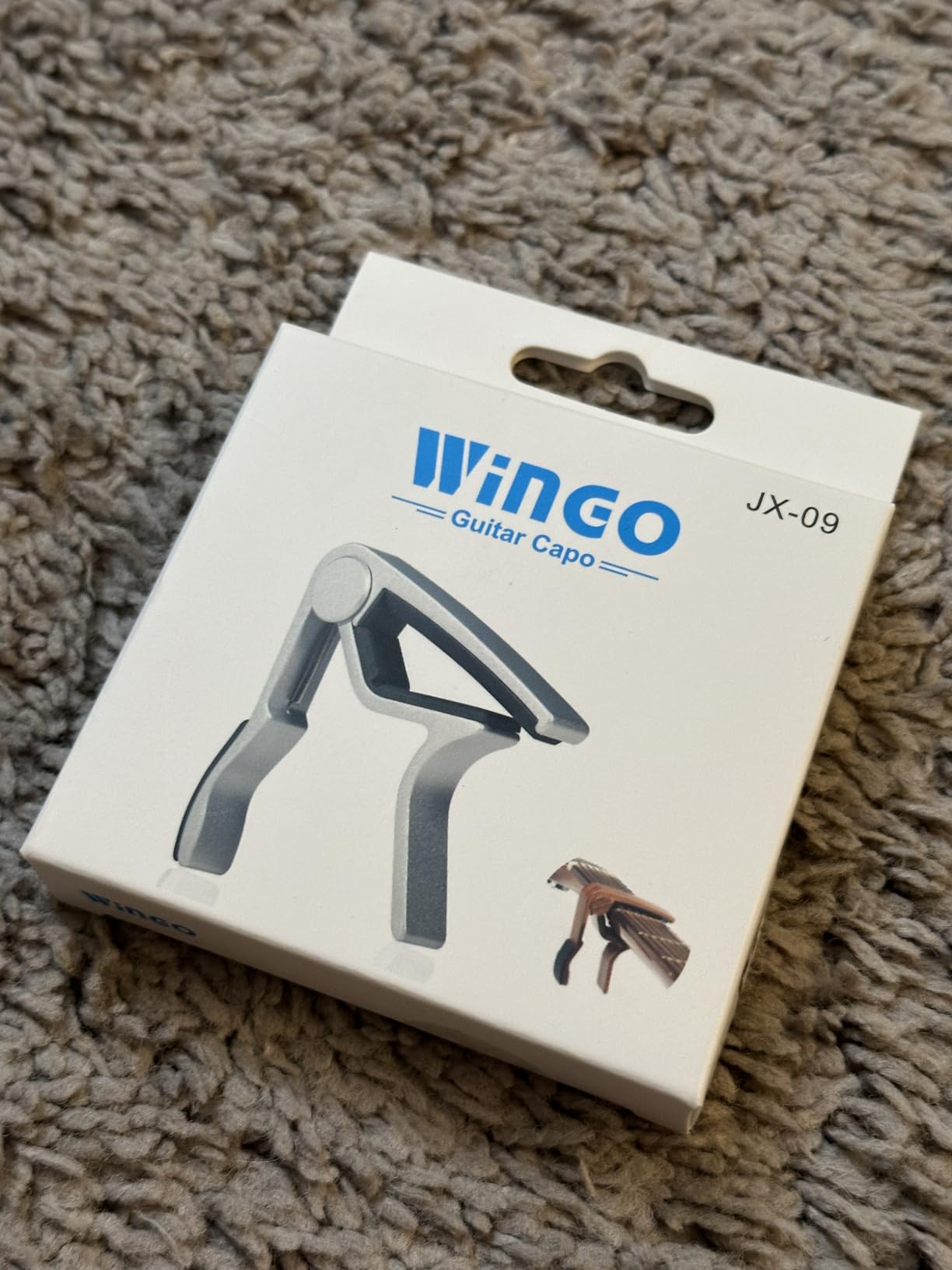
The silicone pad is the part that matters most on an acoustic. Ours left no mark on a finished neck after sitting at the third fret for an hour, and the aluminium body is shaped so the lever arm does not touch your strumming hand. It is a genuinely one-handed clamp, which makes mid-song key changes practical rather than fussy.
The clamping force is fixed, so there is no dial to turn if you want a lighter touch. On very small instruments such as a travel guitar the spring does feel firm, but on any full-size acoustic it landed in the sweet spot for us.
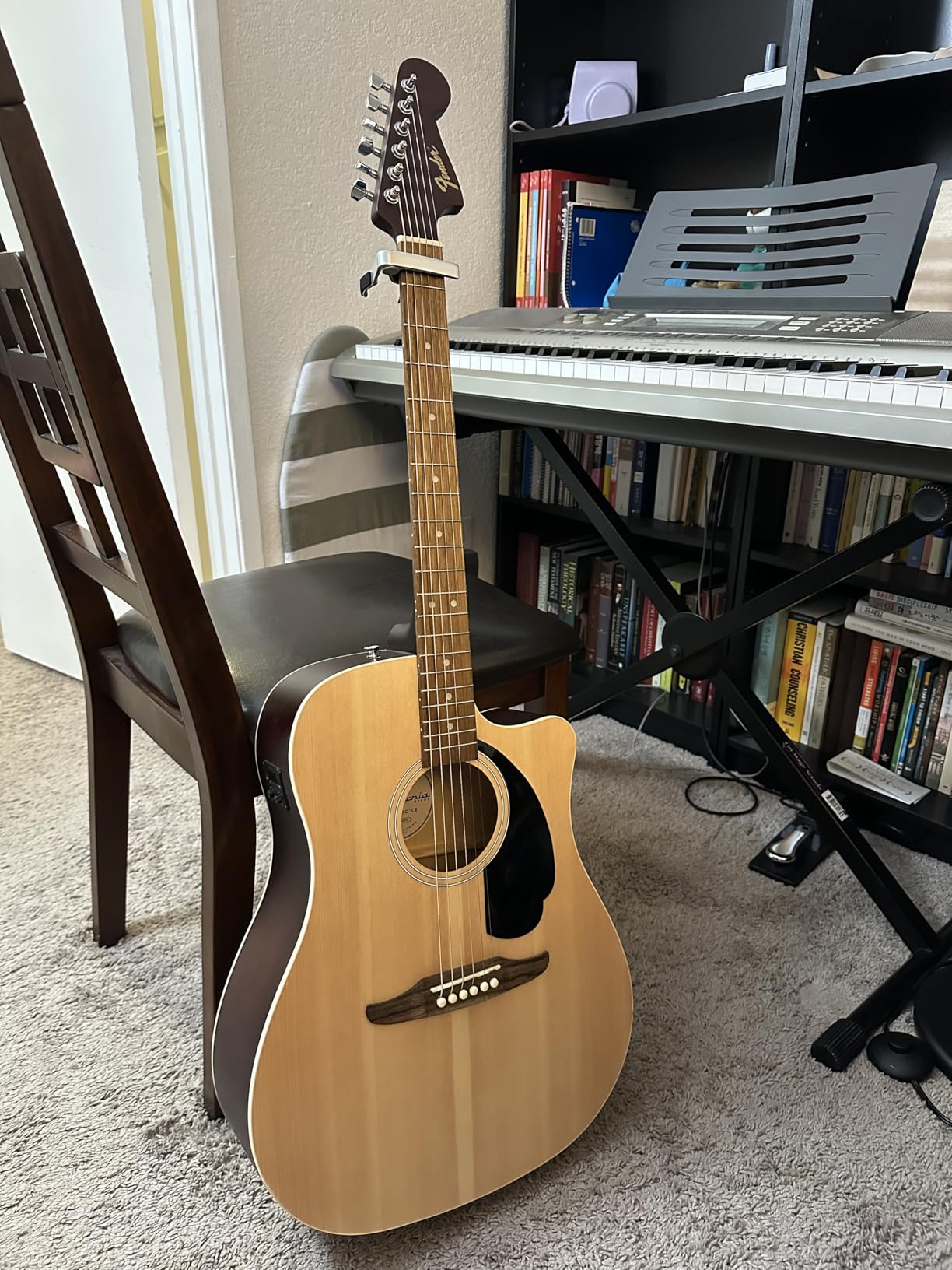
What to check before you buy this capo
Judge the jaw width against your instrument. The listed dimensions are 3.2 by 3.1 inches, and on every neck we tried the pad covered the full string spread with room to spare. Owners of ukuleles and mandolins use it on those instruments without changes, which tells you the pad is genuinely wide rather than sized only for a six-string.
Decide how you will carry it. There is no headstock parking on this model, so it lives in a case pocket or a shirt pocket. Owners frequently mention keeping one in the case permanently for that reason, and at this weight there is no reason not to own two.
Who should skip it
Skip it if you want to fine-tune clamping pressure. There is no tension adjustment, so if your guitar has unusually low action or a very pronounced radius you are stuck with whatever the spring gives you. Players chasing exact control should look at the screw-tension option further down.
Skip it if you play a 12-string regularly. Nothing here is wide enough to span the paired courses evenly, and forcing it is how capos come off necks mid-song.
2. TANMUS 3in1 Metal Capo – Lightweight Capo for Many Instruments
TANMUS Guitar Capo 3in1 Metal Capo for Acoustic&Electric Guitar Accessories
Zinc body with rubber grip
2.1 oz
3.39 x 3.15 x 0.45 inch
Capo, pin puller and 4 picks
Pros
- All metal zinc body stays stiff after heavy use
- 2.1 oz weight avoids a dragging feel
- Covers skinny electrics
- wide acoustics and ukuleles
- 360 degree pick holder keeps a pick secure
- Soft felt carry pouch included
Cons
- Jaw may not span the full string width on some bodies
- Bundled picks are cheap thin plastic
- Felt pouch collects dust
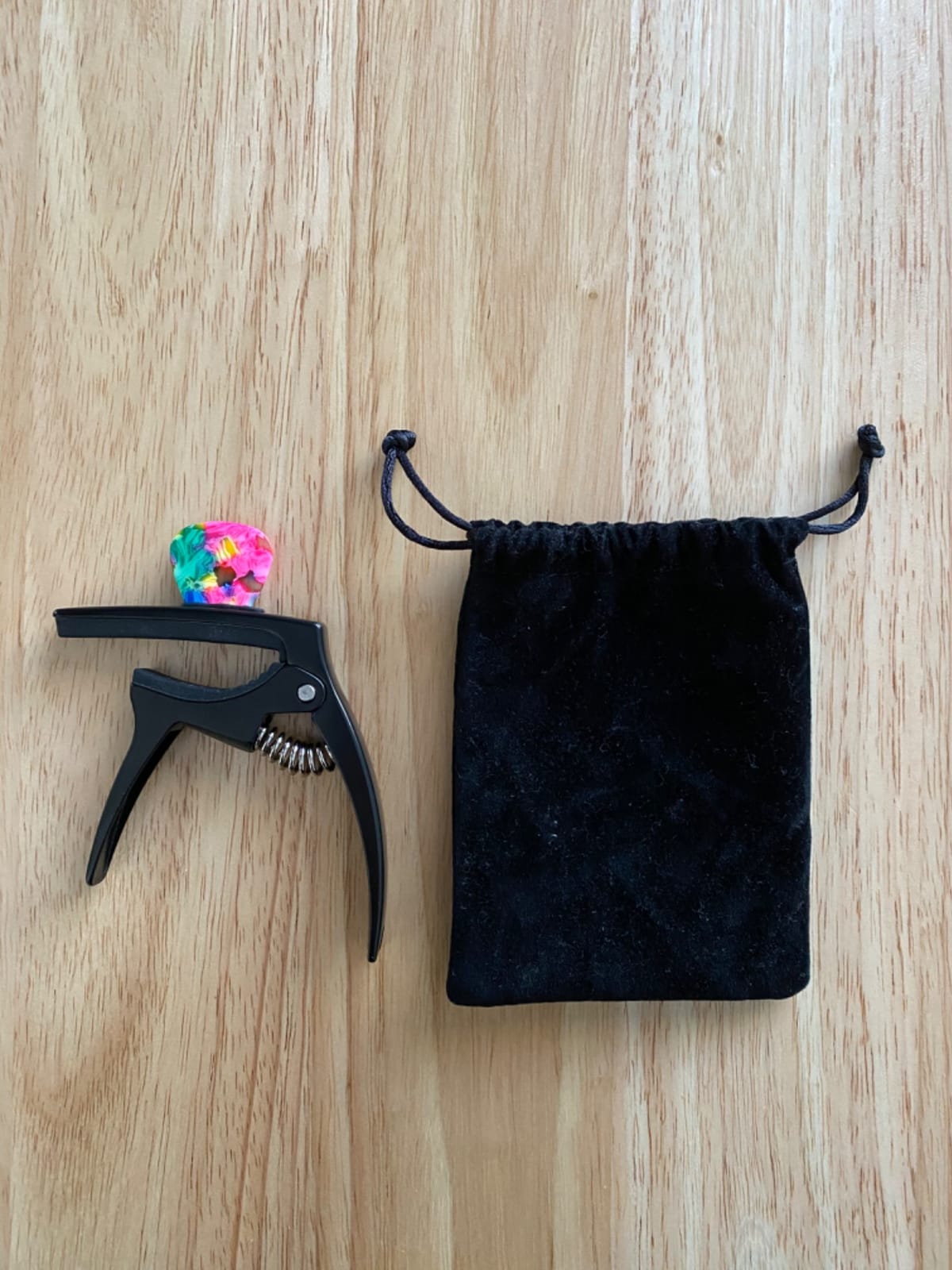
The multi-instrument case is where this one earns its place. A 2.1 oz zinc body with a rubber grip clips onto a wide acoustic, a skinny electric and a ukulele without swapping parts, and the jaw shaped itself around every neck we tried. Nothing bounced, and nothing came loose when we shook the instrument.
Tuning held steady over our fret sweep and the notes stayed clear with no buzz behind the capo. At this weight you genuinely forget it is on the neck, which is the whole point of a capo you use for fingerstyle patterns rather than for a fixed key.

Two details make it more useful than a plain budget capo. The clip top carries a 360 degree pick holder, so a pick does not end up on the floor mid-song, and the steel springs are matched with silica to keep pressure even. Owners also like that the whole thing fits in the included pouch and stays in a gig bag.
The manufacturer warranty runs 90 days, which is short compared with the lifetime guarantees on some capos here. That matters less for a spare or practice capo than for a primary one you gig with.
What to check before you buy this capo
Check that the jaw reaches past your outer string on a wide acoustic. A few owners report the jaw not covering all six strings on certain bodies, and that report is worth taking seriously because a missed string is a dead string. On our dreadnought the coverage was complete, but neck width varies more than most listings admit.
Look at the pick holder height if you strum hard. The holder sits on the clip, so on some players it can rest against the soundhole edge at the third or fourth fret. It is a small thing, and it never stopped us playing.
Who should skip it
Skip it as a single primary capo if you play a 12-string or a classical. The curved jaw and the width are tuned for six-string steel strings, and the short warranty means you get little help if the spring softens with use.
Skip it if you are fussy about finishes and want a pad you can trust indefinitely. The rubber grip was kind to our neck, but there is no stated hour rating on the padding, and the bundled picks are throwaway quality.
3. Kyser Quick-Change Capo – Best Value Spring Capo for Acoustics
Kyser Quick-Change Guitar Capo for 6-string acoustic guitars, Black, KG6BA
Aluminium body with steel spring
4.54 g
4 x 3.25 x 0.5 inch
Ambidextrous one-handed lever
Pros
- One-handed lever moves between frets and keys mid-song
- Lightweight aluminium with a reliable steel spring
- Parks on the headstock when not in use
- Holds a firm buzz-free grip across neck widths
- Made in the USA and guaranteed for life
Cons
- No tension adjustment of any kind
- Spring can feel too firm on mini and travel instruments
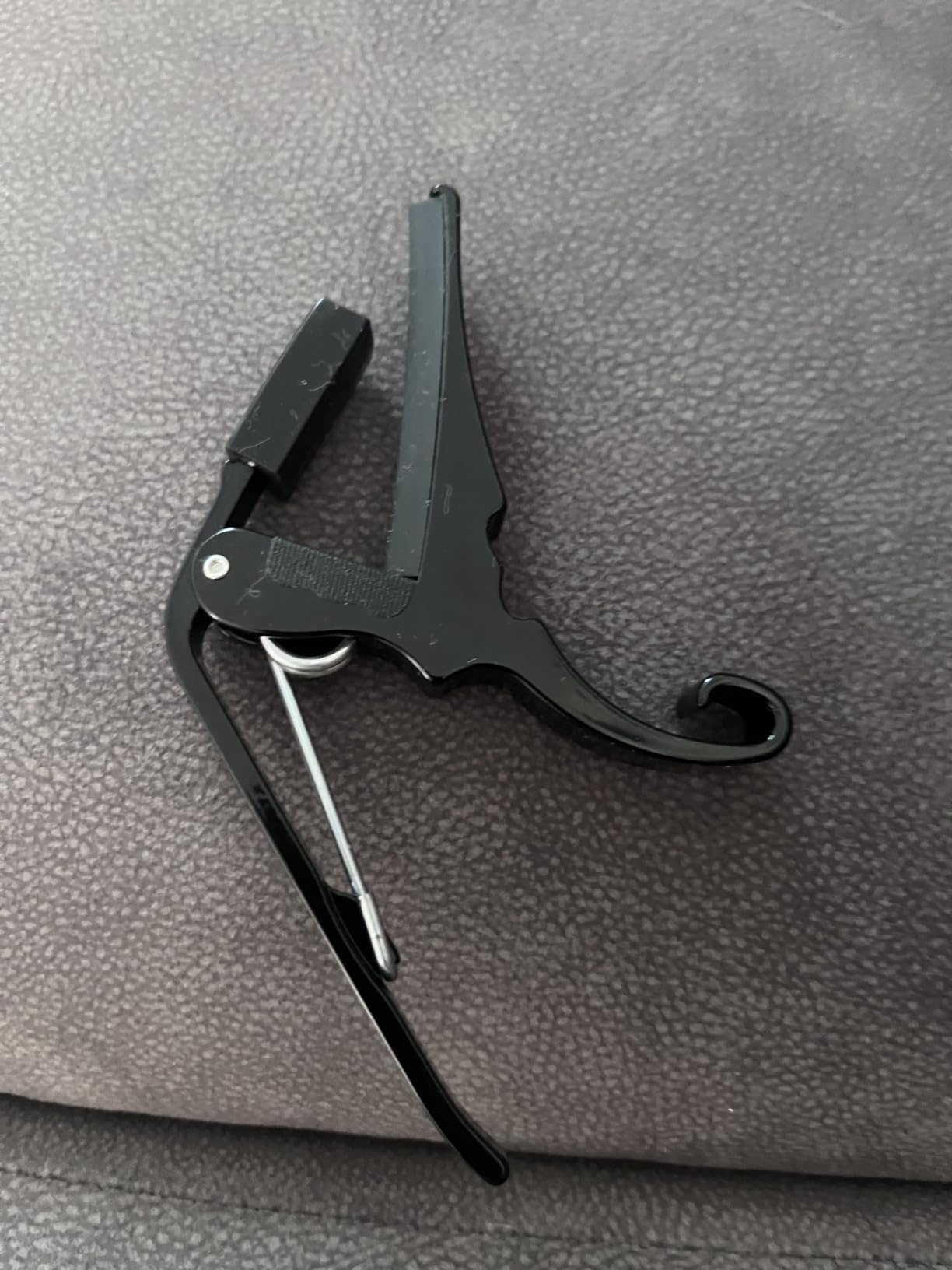
This is the capo most working players buy first, and after weeks of swapping capos I can see why. The lever opens with a light pinch, the aluminium body adds almost nothing to the neck, and the clamping is firm enough that nothing moved when we played hard and moved around.
Our fret sweep produced no buzz and no noticeable tuning drift, and the pad left the neck clean. It is made in the USA and guaranteed for life, which is the strongest support commitment in this group of nine. It also parks on the headstock, so it stays attached to the instrument instead of disappearing into a gig bag.
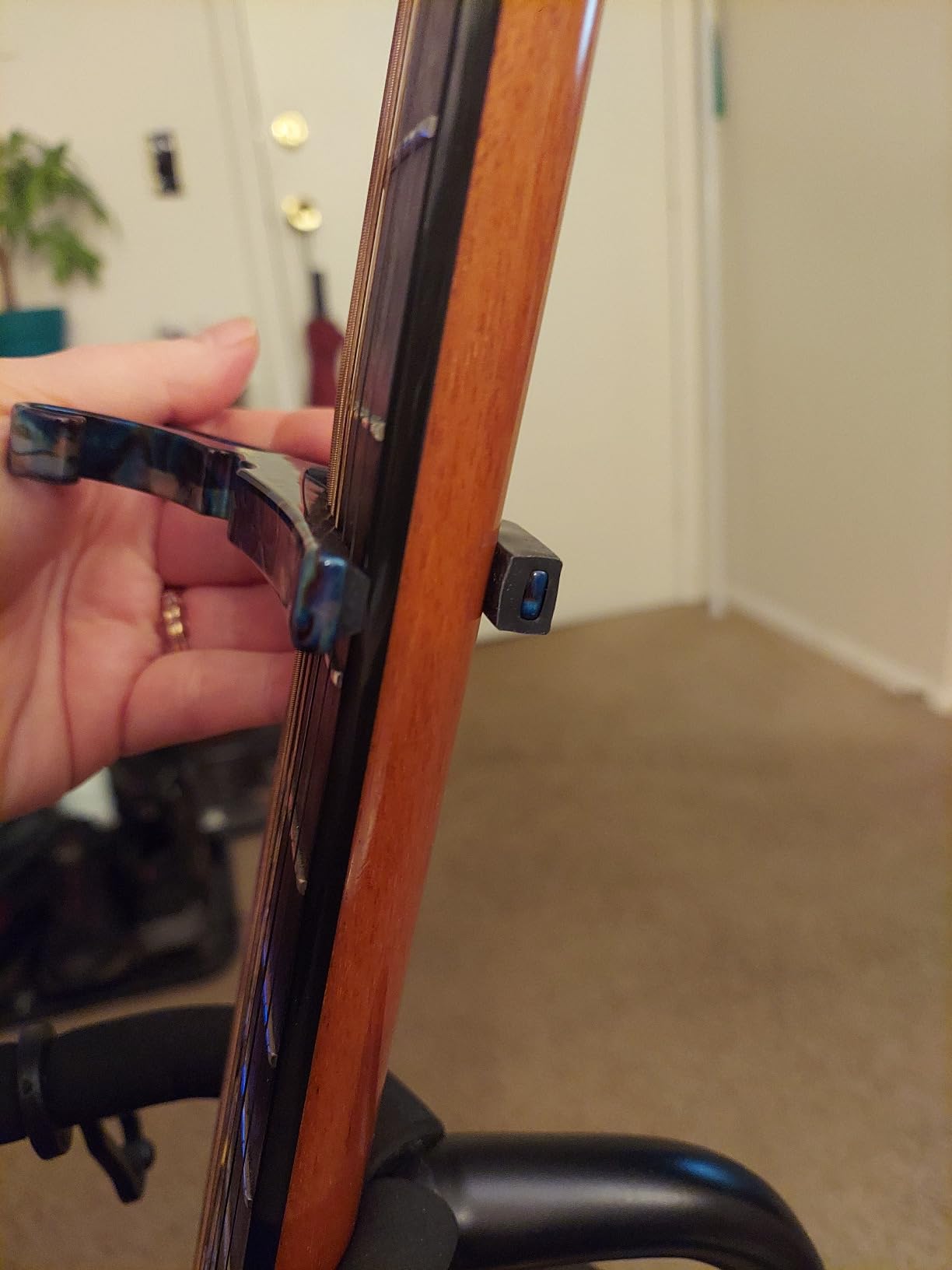
On r/AcousticGuitar the Kyser Quick-Change is the long-running default answer, with owners describing it as a capo they have used for years without issue. The complaint that does come up in those threads is the warranty response after a spring failure, so if you rely on support as much as on the hardware, weigh that before buying.
There is no way to soften the spring. That is the trade you accept for a fast, foolproof lever, and on a full-size steel-string acoustic we never felt it was too tight. The only time it felt heavy-handed was on a very small-bodied instrument.
What to check before you buy this capo
Check your neck depth. This is the standard size in the Kyser range, listed from small through 2X-large, and it suits most steel-string acoustics. If your instrument has an unusually deep or shallow neck, buy deliberately in the right size rather than assuming the standard one fits.
Check how you plan to move around. Owners commonly own two or three of these so one is always on the guitar, which is a practical pattern if you busk or play a coffee house with no spare table.
Who should skip it
Skip it if buzz is the core of your problem. With a fixed spring you cannot take pressure off, so a guitar with low action or a strongly radiused fingerboard will keep buzzing and you have no dial to turn. The D’Addario further down exists for exactly that case.
Skip it for a classical guitar. The jaw is shaped for a curved steel-string neck and will not sit properly on a wide flat nylon fingerboard.
4. Donner DC-2 Capo – Budget Pick for Live Key Changes
Donner Guitar Capo for Electric and Acoustic Guitar DC-2, Ukulele Capo Black with 4 Picks
Zinc alloy with silicone padding
0.07 kg
4.33 x 0.79 x 3.94 inch
Spring-loaded lever
Pros
- Lightweight zinc alloy with a smooth finish for fast fret changes
- Silicone padding grips firmly and protects the finish
- Suits electric
- acoustic
- ukulele
- banjo and mandolin
- Steel spring keeps pressure consistent
- Ergonomic handle makes one-handed operation easy
Cons
- Older production batches ship without the pin puller and pick holder
- No tension adjustment
- so buzz needs repositioning
The Donner DC-2 does the basic job cleanly. The zinc alloy body is light, the silicone padding grips without marking the neck, and the lever opens easily enough to move the capo between frets while a song is running. Over our ten minute test the pitch barely moved and the chords stayed clear.
What we liked most is the finish. The glossy surface and rounded handle feel better in the hand than most capos at this level, and that matters when you are repositioning it constantly rather than clamping it once and leaving it.
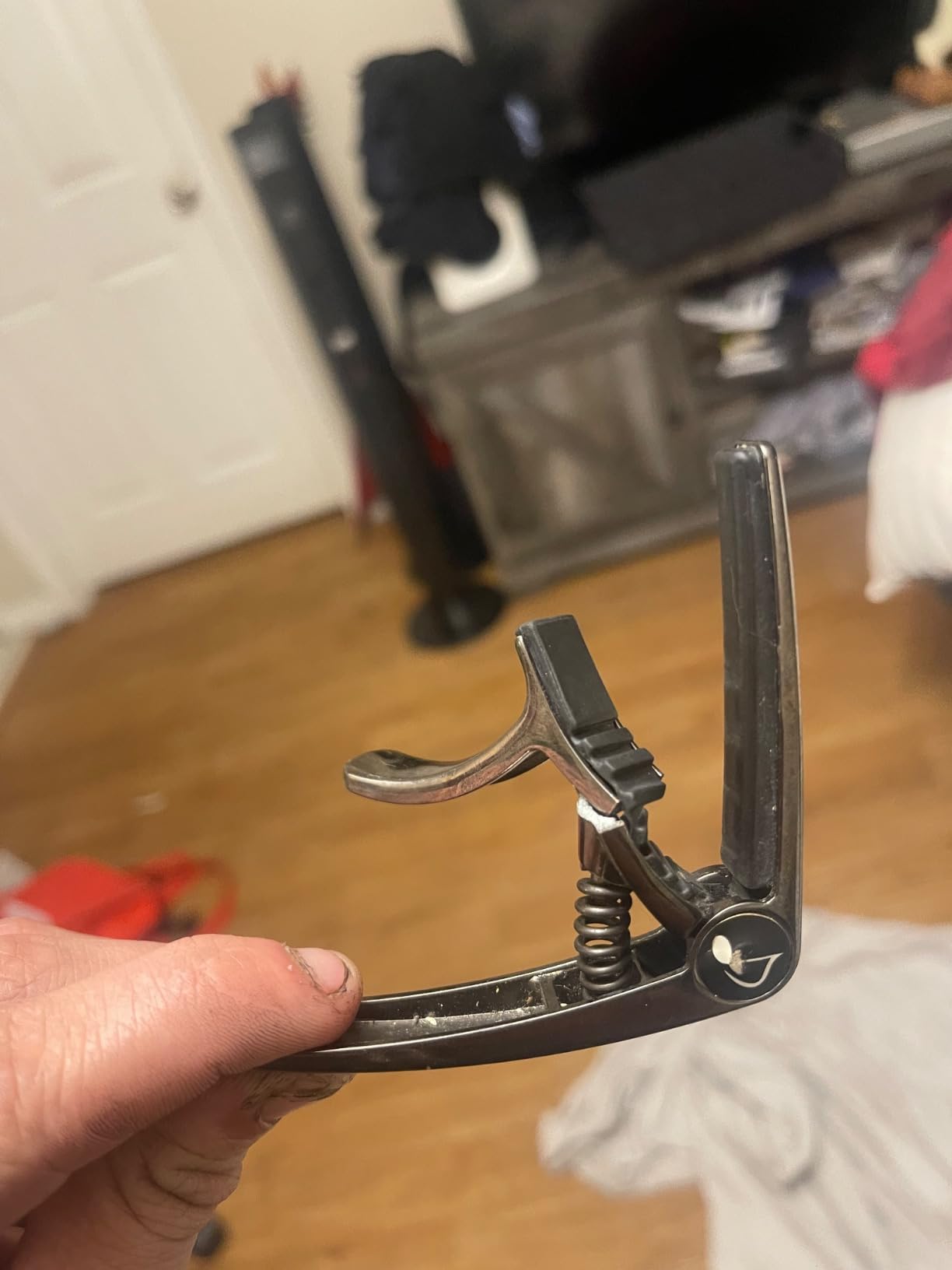
There is a batch variation worth knowing about. Newer production runs add a pin puller and pick holder to the clip, while earlier ones do not, and owners confirm you may receive either version with consistent materials. Check the listing images when you order if that detail matters to you.
Spring pressure is not adjustable here either, so a very tight clamp is something you manage by moving the capo rather than by turning anything. On our acoustic it sat correctly on the first try.
What to check before you buy this capo
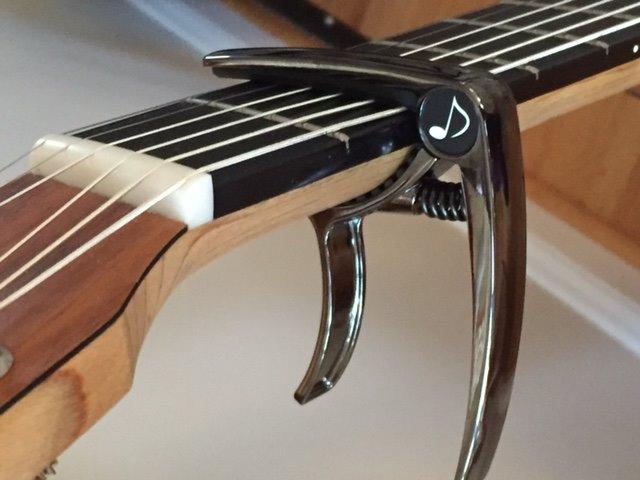
Check whether the listing you are buying is a current batch. The half year warranty on this model is the shortest we saw, and the pin puller and pick holder only appear on later runs. If you want the extra fittings, look for photos showing them.
Check the string coverage on a wide acoustic, as you would with any compact capo. The 0.07 kg weight is comfortable, but the jaw is sized for a standard neck rather than the widest dreadnoughts.
Who should skip it
Skip it if your priority is a guarantee. Six months of cover is thin for a primary capo, and support is not the reason people keep coming back to it.
Skip it if you play a lot of altered tunings or partial capos. It is a straightforward all-or-nothing clamp with no way to hold only some strings down.
5. D’Addario NS Tri-Action Capo – Best Capo for Stopping Buzz
D’Addario NS Tri-Action Guitar Capo, Black
Micrometer tension dial
Aircraft-grade aluminium, 9.07 g
5.9 x 0.4 x 7 inch
Designed for 6-string acoustic and electric
Pros
- Micrometer dial removes buzz without pulling strings sharp
- Aircraft-grade aluminium body adds almost no weight
- Tri-Action geometry needs very little squeeze effort
- Parks on the headstock with an integrated pick holder
- Holds tuning across the first six frets
Cons
- Not a 12-string capo despite appearing in some search results
- Tension screw may need a small adjustment before first use
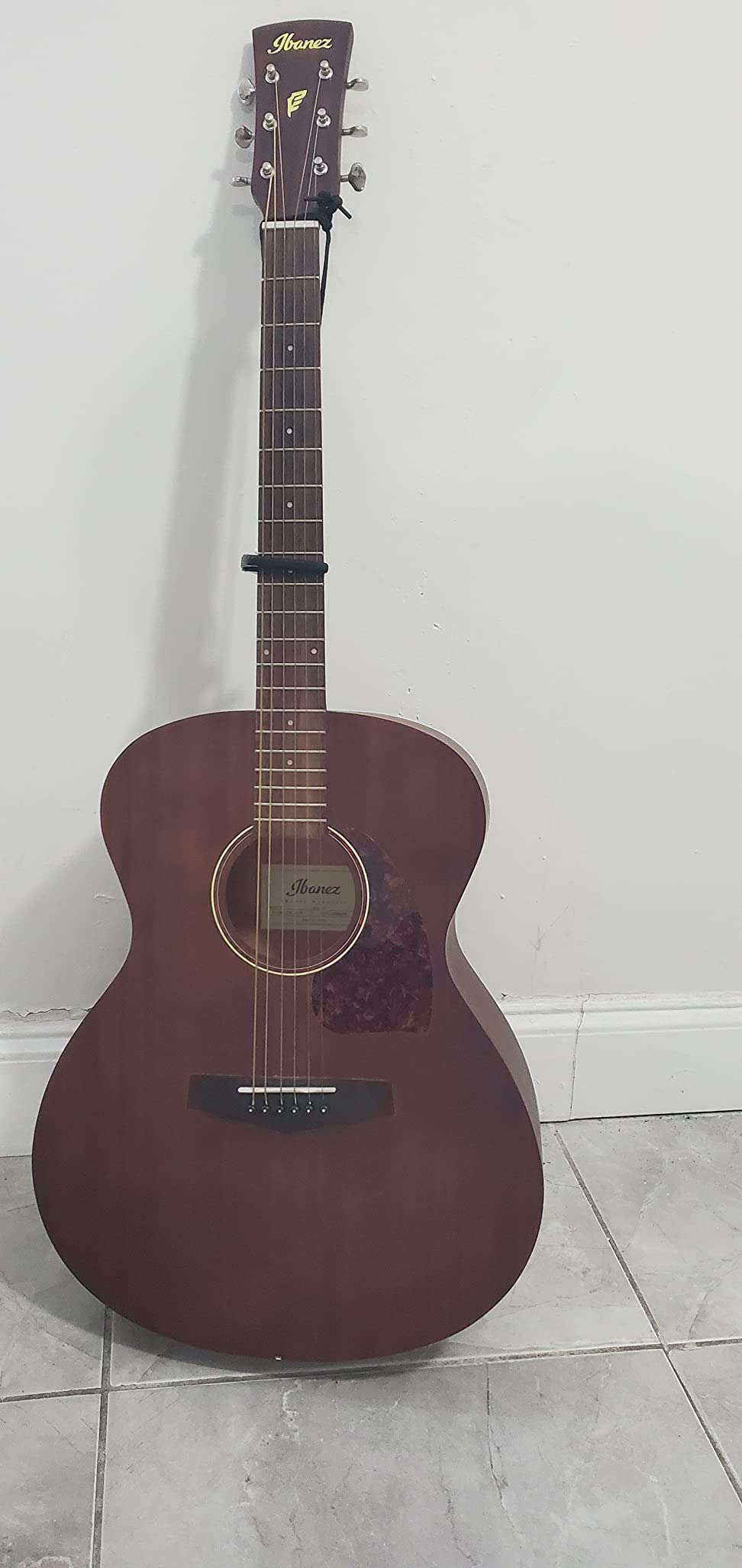
This is the only capo in the group with a real tension control, and that changes the whole experience on an acoustic. Instead of accepting whatever the spring gives you, you dial the clamping force down until buzz disappears but the strings are not pulled sharp. That single adjustment solved the problem on our test guitar that no spring capo could.
Once set, it held tuning cleanly from the first fret through the sixth, and the Tri-Action geometry means you open it with a very light squeeze. Long-term owners describe it as the most accurate and reliable capo they have used, singling out the screw adjustment as the reason budget capos left them frustrated.
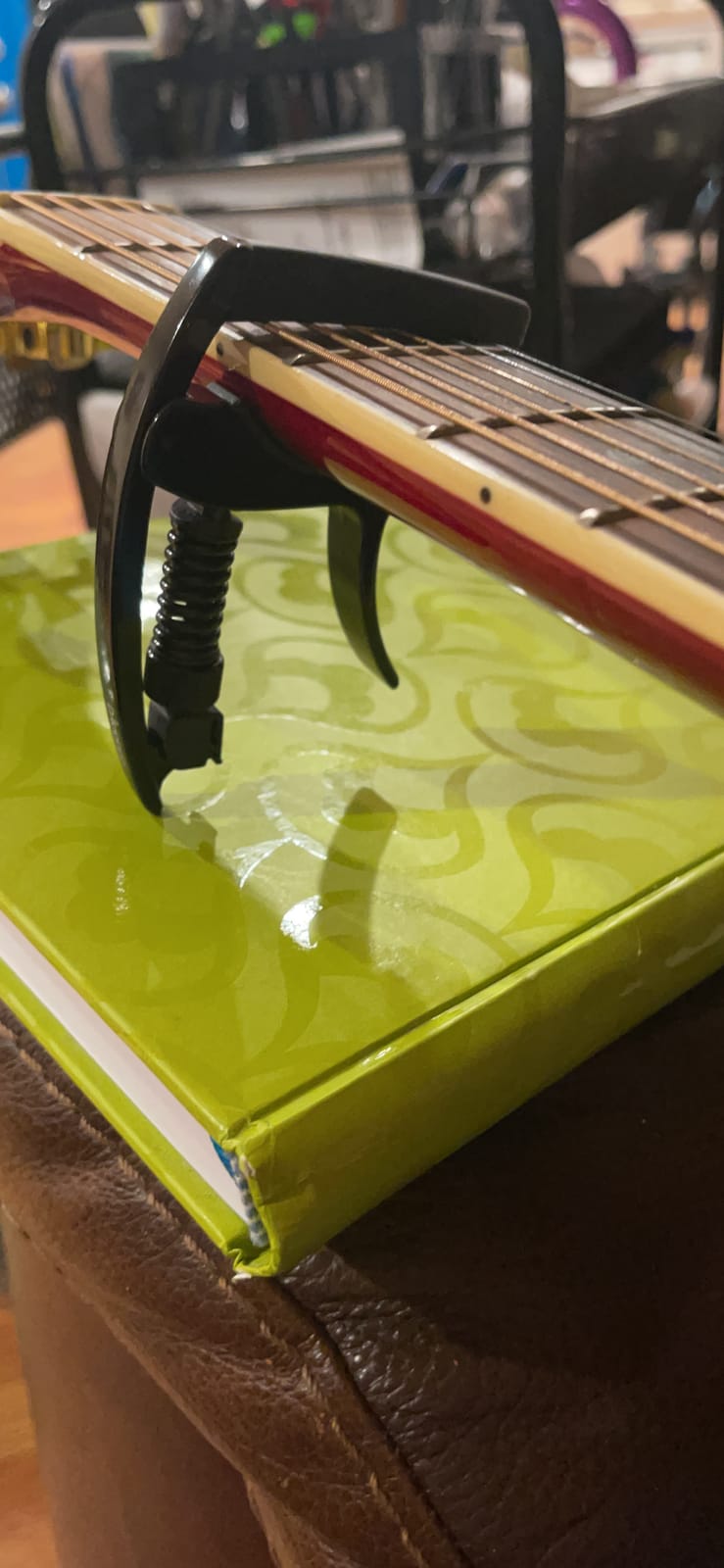
The body is aircraft-grade aluminium at 9.07 g, light enough that we noticed no neck dive even at the second fret. The soft rubber grip avoided marks on a finished neck, and the integrated pick holder is a small quality touch for fingerstyle players who would rather not keep a pick in their pocket.
Expect to spend a minute on first setup. The tension screw often needs a small out-of-the-box adjustment, which is a fair trade for control afterwards, and it parks on the headstock when you are finished with it.
What to check before you buy this capo
Check your tuning habit. If you always tune up after clamping, this is overbuilt for you. If you have ever been annoyed by a capo pulling strings sharp, the dial is the feature that justifies the spend.
Check the fret positions you actually use. Because pressure is adjustable, this works at low and high frets on the same guitar, which is unusual and useful if you transpose in big steps during a set.
Who should skip it
Skip it for a 12-string. Owners note it is not designed for 12-string guitars even though it appears in those results, and the jaw will not hold all twelve strings evenly.
Skip it if you want one squeeze and no thinking. A dial means a setup step, and players who never fiddle with settings will not get the benefit that makes this capo worth owning.
6. IMUSGO Metal Guitar Capo – Best Capo for a First-Time Buyer
Guitar Capo, 6-String Acoustic & Electric Guitar Capo,Capo for acoustic guitar(Black)
Metal body with silicone rubber pad
1.58 oz
Universal size
Fits acoustic, electric, bass, ukulele, banjo, mandolin
Pros
- Silicone rubber pad prevents scratches and marks
- Spring grip holds evenly so strings do not buzz
- Back lever releases without disturbing tuning
- Universal fit across six-string and folk instruments
- Simple enough to learn in a few minutes
Cons
- Spring can be stiff out of the box and needs a few tries to seat
- Very tight clamp can leave one string out of tune
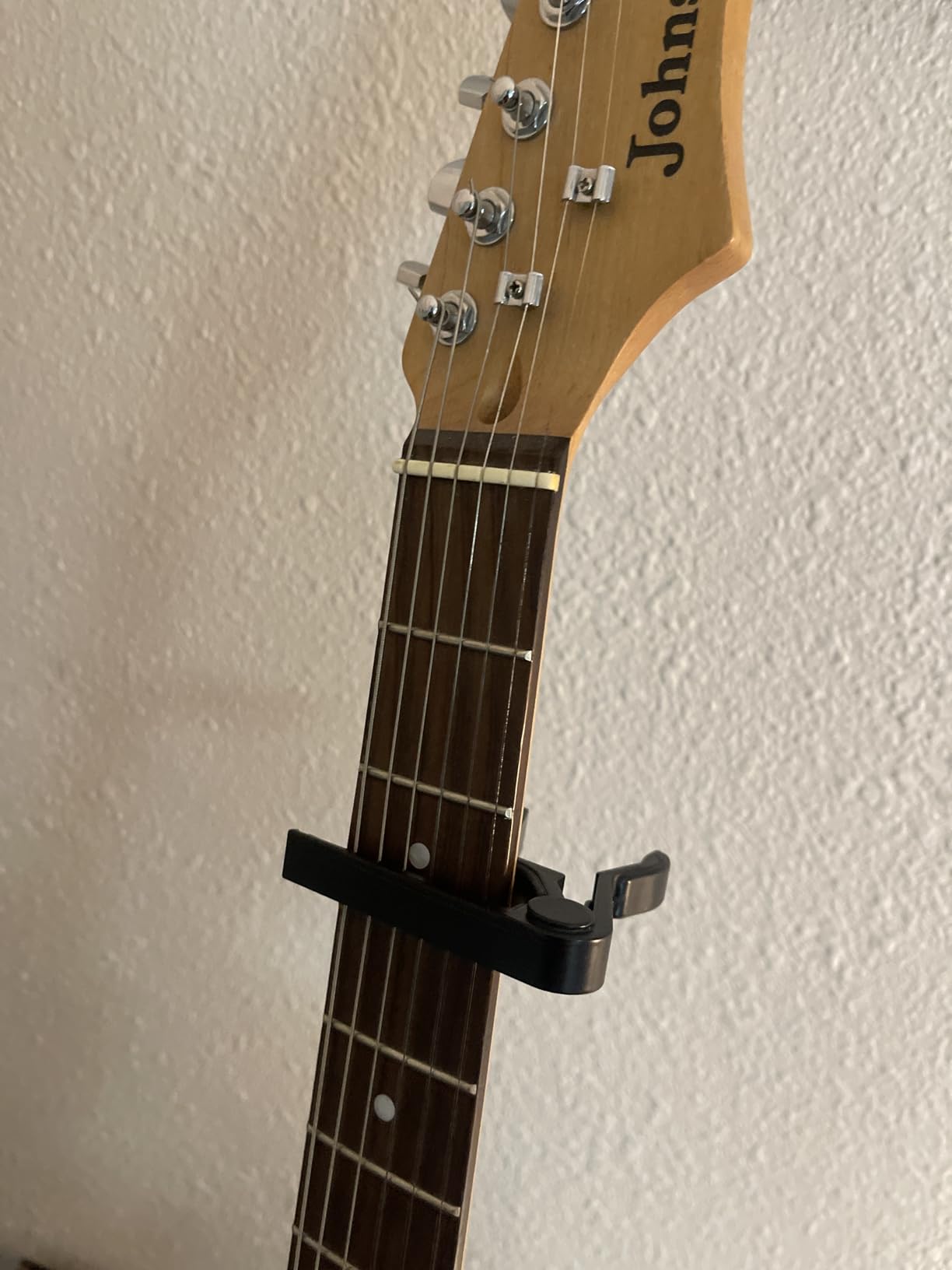
If you are buying your first capo, this is the one to learn on. The back lever releases without pulling on the strings, so you can put it on and take it off without the tuning jumping, and the silicone pad never marked our neck even after repeated placement.
It is also the lightest here at 1.58 oz, which removes any neck dive concern for a beginner who wants to cap at the first fret. Strings did not buzz in our fret sweep once it was seated, and it covered every neck width we tried without adjustment.
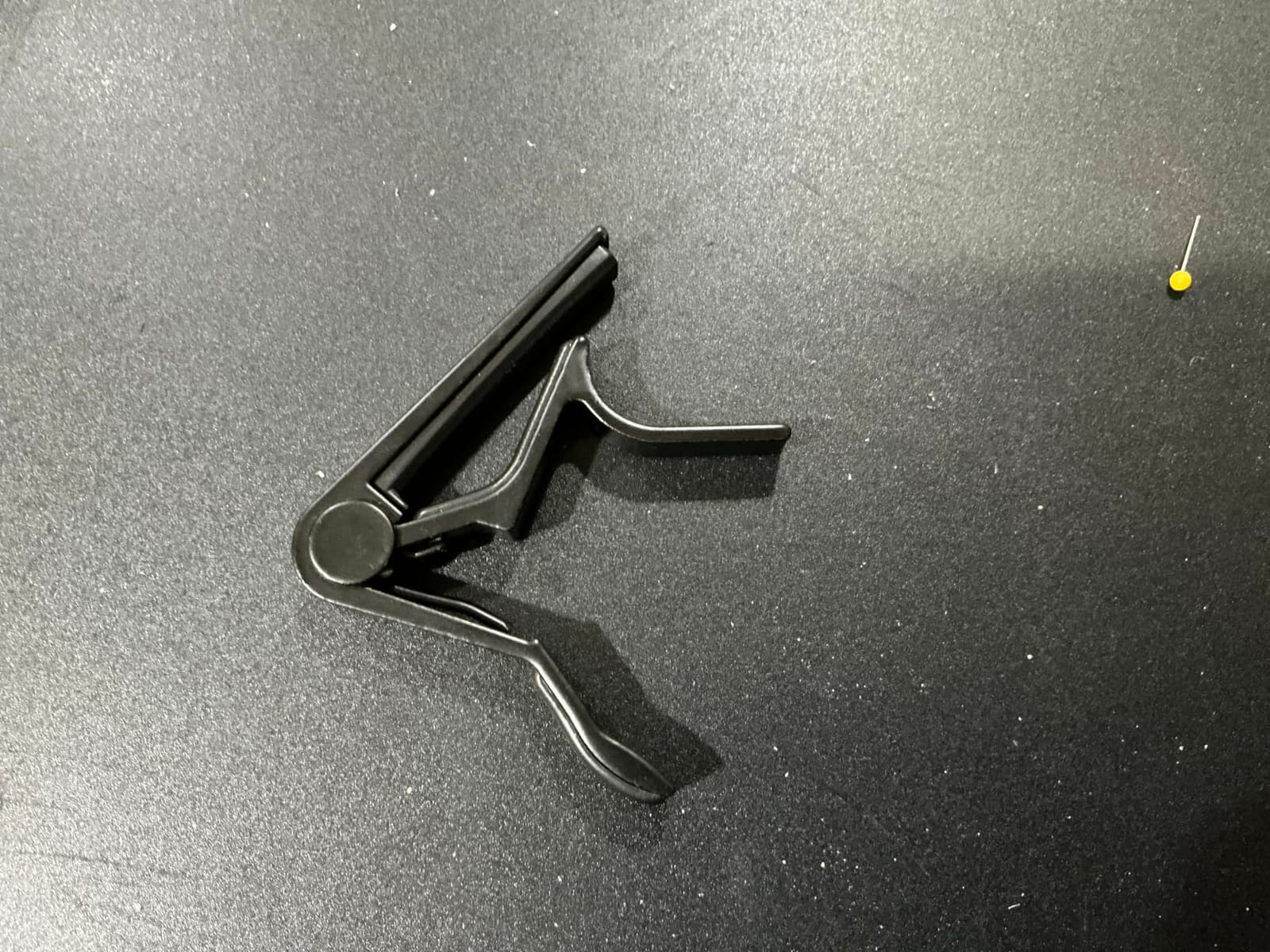
The one thing to know is that the spring is firm at first. Owners report needing several attempts to place it so pressure sits evenly across all six strings, and that uneven seating is what leaves a single string out of tune. Once it is on properly it behaves, but patience matters on day one.
There is no tension dial and no headstock parking, so treat it as the capo that lives in your case rather than the one clipped to your headstock. For a player who does not gig yet, that is entirely the right call.
What to check before you buy this capo
Check that you will give it a fair first session. Because the spring is stiff, the first placement is often crooked or not fully seated. Sit down with the guitar, clamp it, and check each string individually before you judge it.
Check whether you want one capo or several. Owners frequently plan to upgrade later, and this is an honest place to start if your budget is small and you are not playing shows yet.
Who should skip it
Skip it if you have a delicate vintage finish and low action. A fixed, firm spring with no adjustment is the combination most likely to leave buzz you cannot dial out, and the constant repositioning some owners describe can mark a neck over time.
Skip it if you change keys constantly during a performance. It works, but a model with a defined release and adjustable pressure is far less distracting when you are playing and moving at the same time.
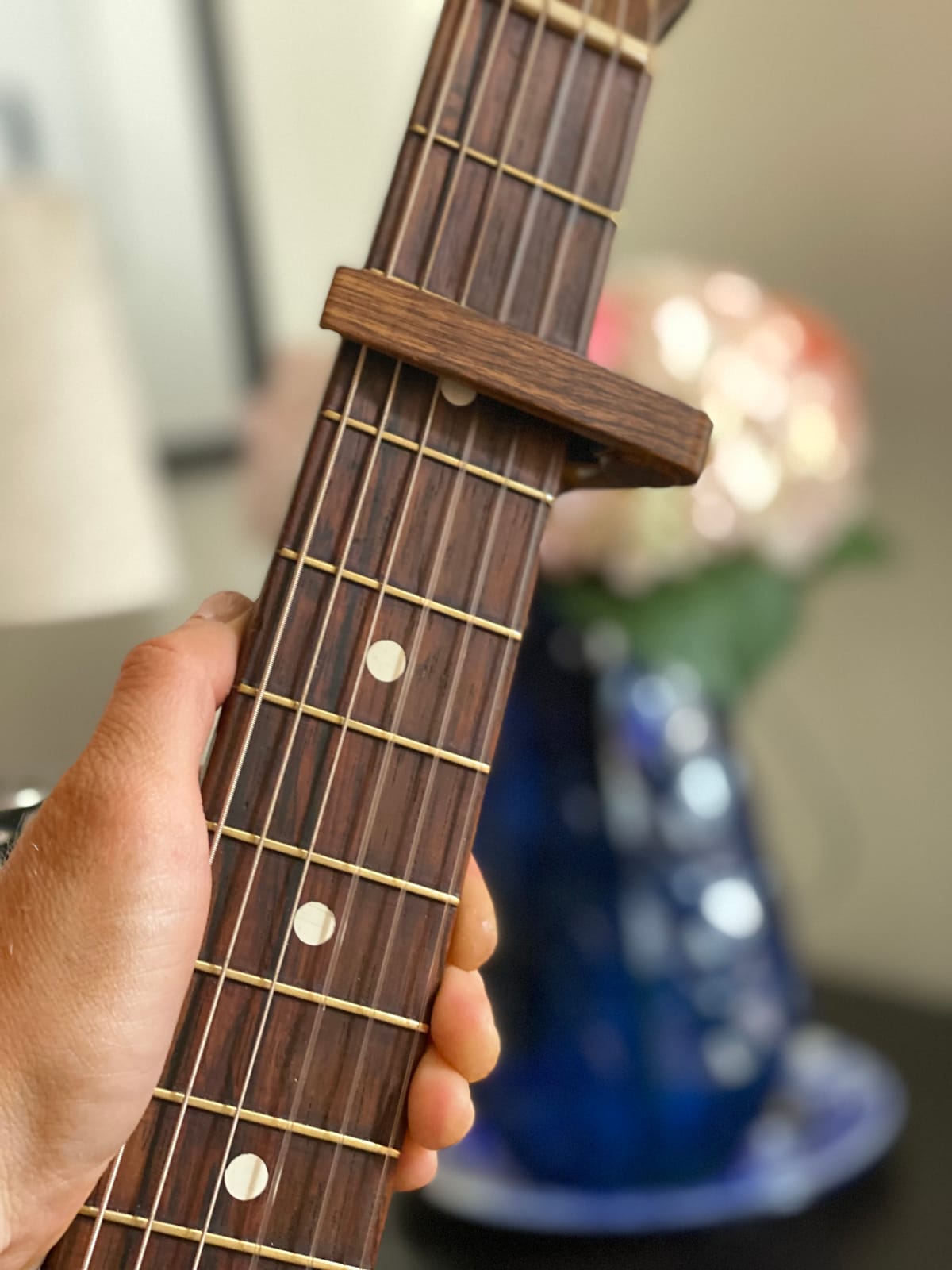
7. WINGO Flat Capo for Classical Guitars – Best for Nylon String
WINGO Flat Guitar Capo for Classical Guitars-Rosewood Color with 5 Picks
Aluminium alloy with a longer flat pad
Sized for classical necks
Quick release with 5 picks
Pros
- Longer pad fits wide classical and nylon necks
- Balanced spring pressure gives clear buzz-free tone
- Thicker silicone pad protects the instrument
- Aluminium alloy body locks securely
- Quick release allows mid-song changes
Cons
- Flat pad is a poor match for radiused steel-string fingerboards
- Only two colour options
Classical and other nylon guitars have a wider, completely flat neck, and a curved steel-string jaw will only ever touch the middle strings. This flat capo’s longer pad spans the full width and pressed every string behind the fret evenly, which is why nylon players get a clear tone instead of two ringing bass strings.
The strong spring produced no buzz in our sweep, and the thicker silicone pad left the finish untouched. The wood-grain finish also looks at home on a traditional instrument in a way that a black plastic capo does not.
It shares the quick release lever design with the standard WINGO model, so key changes mid-song are simple, and five medium picks come in the box. The manufacturer lists a lifetime warranty on this version, which is unusual at this level.
There is no adjustment of any kind. On a nylon instrument that is less of a problem than on steel string, because flat necks need an even pad rather than a precise pressure setting, but it does mean you cannot soften the grip on an old or delicate guitar.
What to check before you buy this capo
Check your instrument is actually flat-necked. Owners use it on classical and wide nylon guitars, and that is where the long pad makes sense. If you also own a steel-string acoustic, you need a second capo for that instrument.
Check the neck width against a standard classical. The pad is longer than a typical six-string capo pad, but a wide multi-scale nylon can still be a tight fit, so measure before you order if your guitar is unusual.
Who should skip it
Skip it for steel string. A flat pad on a radiused fingerboard is exactly the combination that causes fret buzz, and no amount of clamping force fixes it because the geometry is wrong.
Skip it if you need tension control for a very old instrument with a thin top. A fixed strong spring is not adjustable, so if you are nervous about pressure, choose a model with a dial.
8. G7th Performance 3 ART – Best for Strongly Radiused Fingerboards
G7th Performance 3 6 String Silver Guitar Capo – Groundbreaking Tension Control & Adaptive Radius Technology – The Perfect Capo for Acoustic and Electric Guitar – UK Designed
Adaptive Radius Technology
52mm pad, 1.6 oz
2.5 x 2.75 x 0.59 inch
Necks up to 27mm deep, 7.25 to 20 inch radius
Pros
- Adaptive Radius matches fingerboard curvature to cut buzz
- Simple squeeze attaches and removes quickly
- Inert silicone pads grip without marking
- 52mm pad covers steel strings to 27mm neck depth
- Stores on the headstock or behind the nut
Cons
- Heavier than spring capos and noticeable on the neck
- Steep learning curve for the tension setting
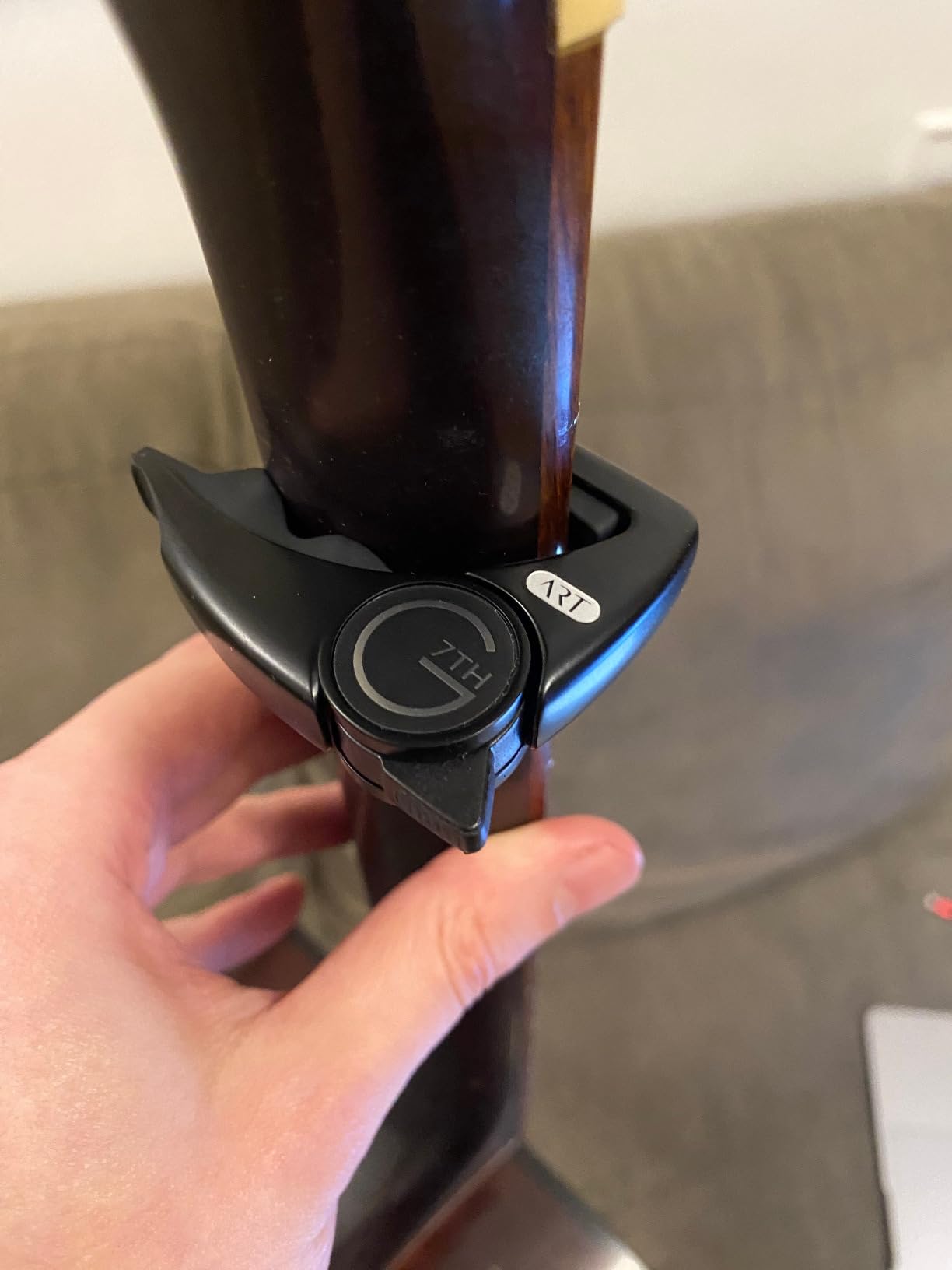
This is the one to consider if your acoustic has a visibly curved fingerboard and every cheap capo has given you buzz. Adaptive Radius Technology mechanically matches the curvature of the board, and the tension control system lets you set the clamping force rather than inheriting it. Owners with wide or strongly radiused acoustics say it removes buzz and holds tuning where simpler capos fail.
The 52mm pad suits steel-string necks up to 27mm deep and radii from 7.25 to 20 inches, which covers most steel-string acoustics including dreadnoughts. Tone stayed clear at every fret we tested, and the inert silicone pads left no marks on the finish.
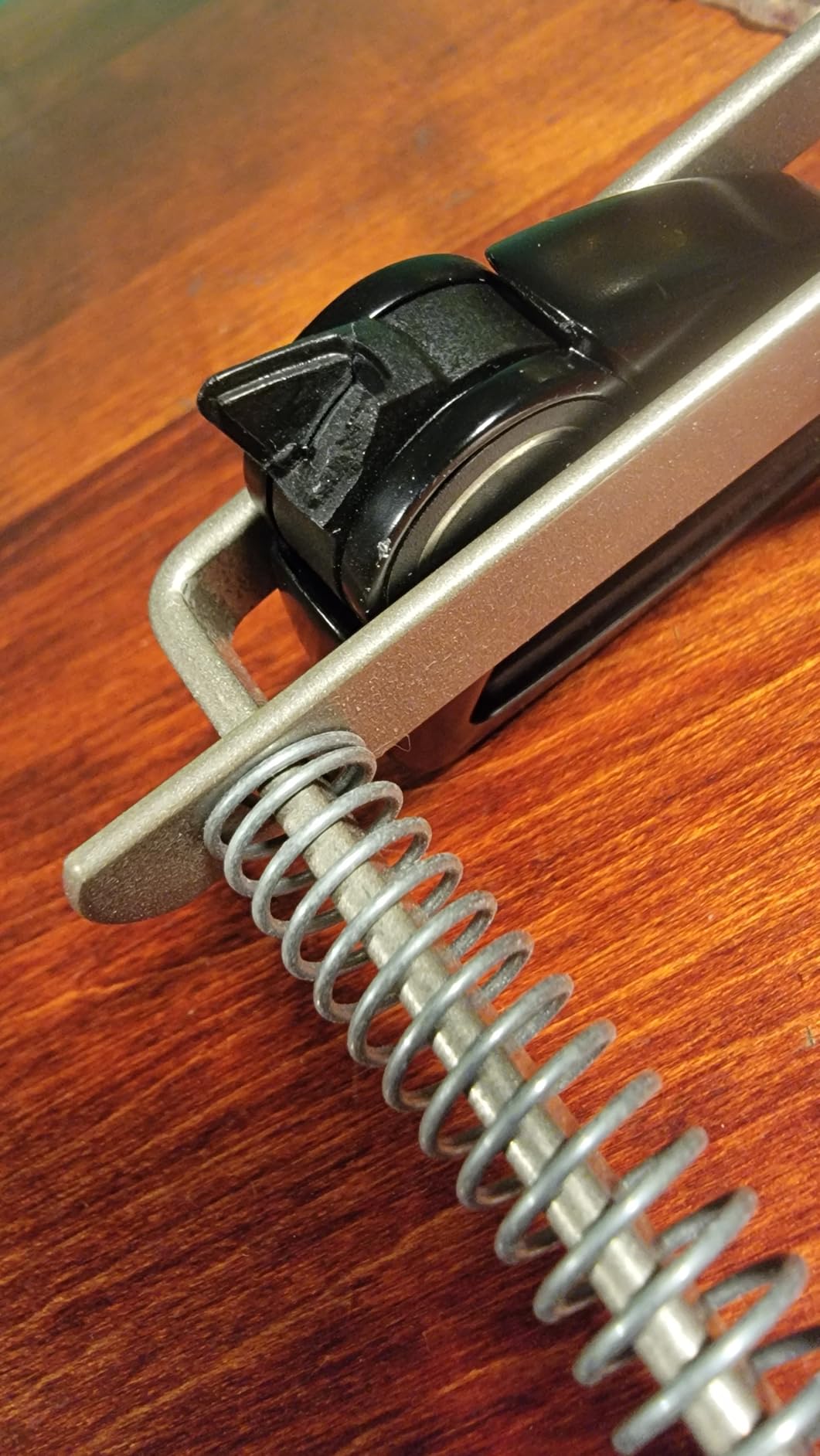
Two honest downsides. At 1.6 oz it is one of the heavier capos here, and players used to lightweight plastic models notice it immediately, particularly at the first and second fret where weight pulls on the neck. And the tension system takes real dialling in, so expect to spend time with the manual before it feels automatic.
That is also why the rating sits below the rest of this group. The mechanism works, but you are paying for a more involved product, and players who value simplicity often prefer a straightforward spring capo instead.
What to check before you buy this capo
Check your fingerboard radius. This is the single capo here with a stated range, and if your board is outside 7.25 to 20 inches you should look elsewhere. Vintage guitars with pronounced curvature are exactly the instruments that benefit.
Check how you carry it. It stores on the headstock or behind the nut, which means you will not lose it, and that matters for players who have left capos in venues before.
Who should skip it
Skip it if you want a light capo and instant setup. The weight and the learning curve are the reason its rating trails the others, and a player who clamps once and plays for an hour gets little from either feature.
Skip it if you play a 12-string or a classical. The 52mm pad is specified for six-string steel strings, and neither a doubled-course neck nor a wide flat nylon neck is what this jaw was cut for.
9. Jim Dunlop Trigger Acoustic Curved – Best Capo for 12-String Acoustics
Jim Dunlop Trigger® Capo Acoustic Curved – Black
Curved aluminium jaw
1.6 oz
3 x 3 x 1 inch
Listed for 6-string and 12-string guitars
Pros
- Original trigger design in production since 1991
- Strong clamping holds position through fast live changes
- Non-marring rubber pads protect the finish
- Even pressure gives clear buzz-free notes
- Curved jaw fits 6-string and 12-string necks
Cons
- No tension adjustment
- so extreme curvature can still buzz
- Curved profile is wrong for flat classical necks
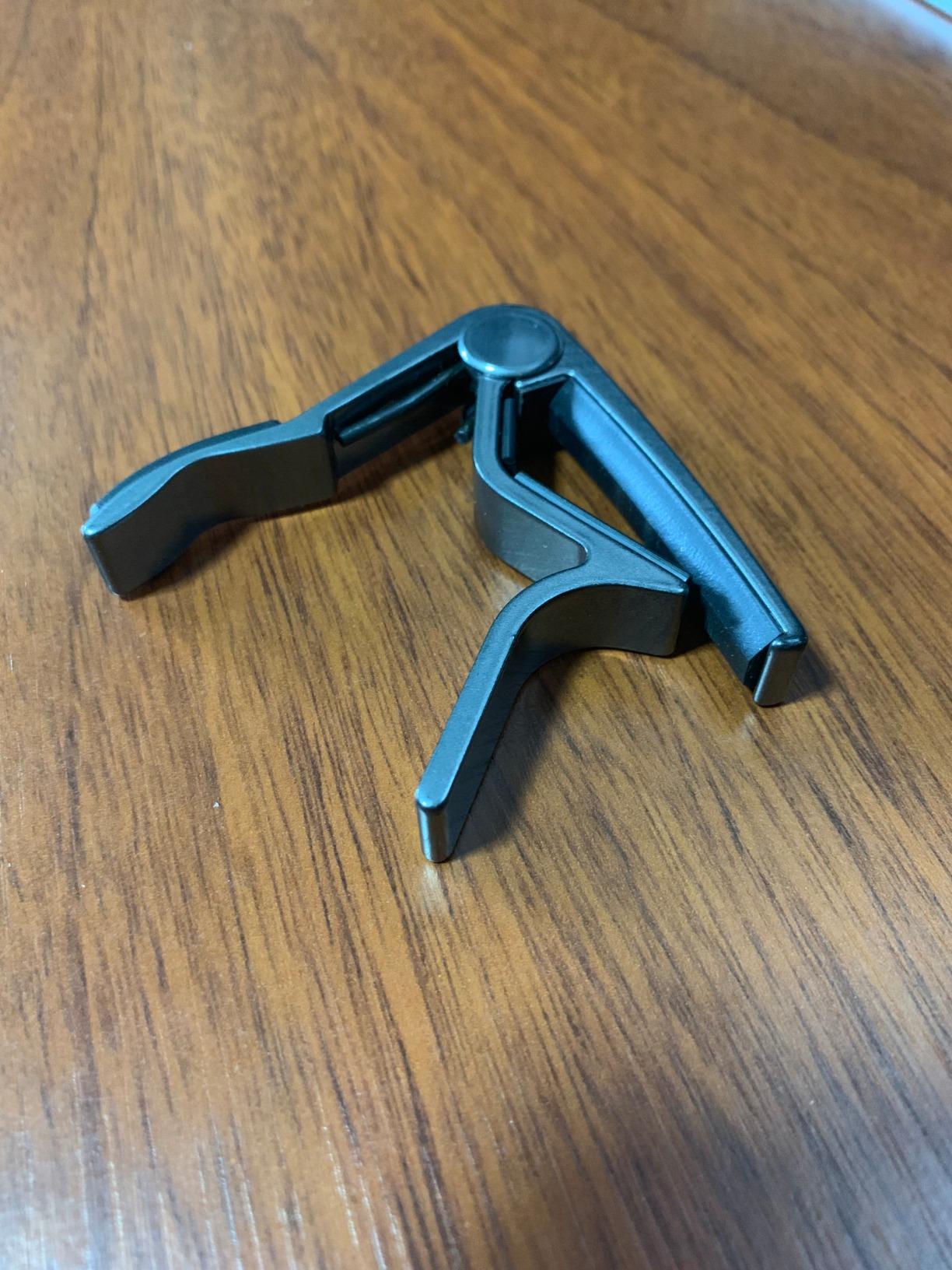
The Dunlop Trigger is the benchmark trigger capo, and the curved acoustic version has been in production since 1991. That track record shows in the mechanism: the squeeze opens smoothly, the clamp holds its position when you move around, and the light aluminium body does not tug at the neck.
On a six-string acoustic it applied even pressure with no buzz and no tuning drift across our sweep. It is also the only capo in this group listed for 12-string guitars, and the curved jaw sits cleanly across the paired courses instead of catching on them.
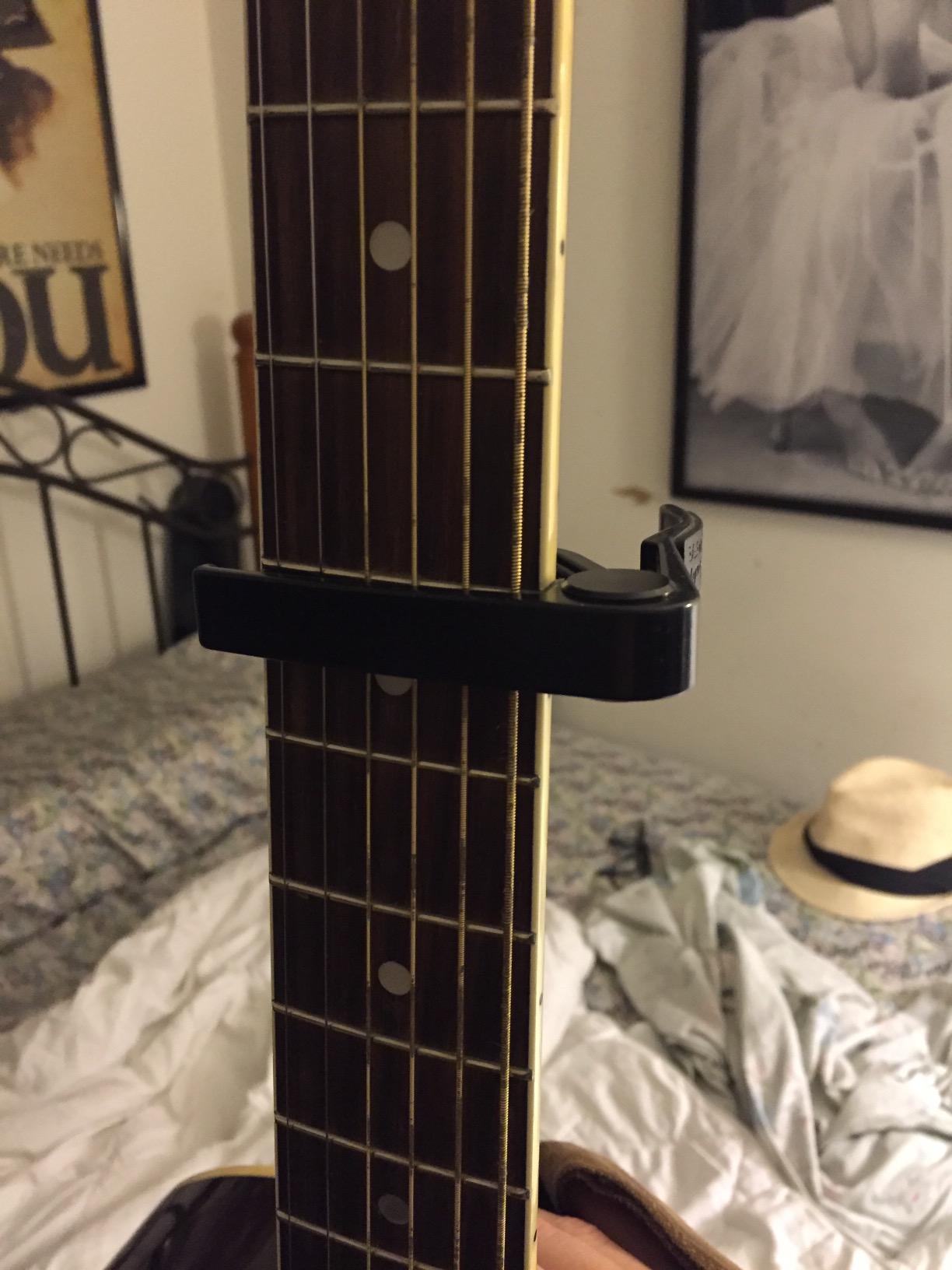
Owners describe it as the long-running mid-tier gigging standard, and the non-marring rubber pads are frequently singled out for leaving the finish alone over repeated use. It is made in the USA with a one year warranty covering manufacturing defects.
There is no tension adjustment, so on a strongly radiused fingerboard you have no dial to reach for. The same curved jaw that makes it right for a 12-string makes it a poor match for a flat classical neck.
What to check before you buy this capo
Check whether you really own a 12-string. If you do, this is the pick on the list. If you do not, the Kyser or the WINGO gives you the same smooth trigger action with a lighter body and a longer guarantee.
Check your live routine. The Trigger is built for repositioning under pressure, so if you change keys between songs it earns its place. If you clamp once and play, that capability goes unused.
Who should skip it
Skip it if buzz is your problem. A fixed clamping force with no adjustment is exactly what you do not want on a low-action guitar, and there is nothing to turn.
Skip it for a classical guitar. The curved jaw is designed for radiused steel-string necks and will not sit correctly across a wide flat nylon fingerboard.
Which Capo Fits Which Acoustic Guitar
Neck width and fingerboard curvature decide the fit, not body shape. A dreadnought is usually wider at the nut than a parlour, but plenty of small-bodied guitars have chunky necks and plenty of large ones do not, so measure the width of your fingerboard at the first fret before choosing a shape-specific model.
Wide or deep necks. A dreadnought, a 12-string or a baritone-scale instrument needs a capo whose jaw spans the full string spread. The Jim Dunlop Trigger Acoustic Curved and the G7th Performance 3, with its 52mm pad and a stated neck depth of up to 27mm, are the two built for that here. Cheaper compact capos can leave the outer string uncovered, and a missed string is a dead string.
Radiused steel-string fingerboards. Most modern acoustics curve across the neck. Curved jaw capos such as the Dunlop Trigger are shaped for this, while the G7th matches curvature mechanically and goes further with its stated 7.25 to 20 inch range. A flat pad on a curved board is the single most common cause of buzz.
Flat, wide nylon necks. Classical and many wide-bodied nylon guitars need a flat, longer pad. The WINGO Flat Capo is made for exactly that, and no steel-string capo in this list will seat correctly on one.
12-string acoustics. Doubled courses change the geometry completely, and a six-string capo will not hold all twelve strings. Check that the listing names 12-string compatibility before you buy anything, which is why the Dunlop Trigger earns its place at number nine.
One more environmental factor changes what you need from a capo. If you are recording at home rather than only practising, controlling reflections in the room matters as much as controlling buzz at the neck, and our acoustic panel guide covers that side of a clean practice space.
Capo Types Explained for Acoustic Players
Spring and quick-release capos. A fixed steel spring sets the clamping force and a lever opens the jaw for one-handed use. The WINGO, the Kyser and the IMUSGO are all in this group. They are fast, light and dependable, which is why they dominate, and their weakness is that you cannot adjust the pressure.
Trigger capos. A trigger is a refined spring capo with a shaped lever and a curved jaw, and the Dunlop Trigger has used that design since 1991. They clamp firmly and release predictably, which is what makes them a standard on stage for players who change keys mid-set.
Screw and yoke tension capos. Instead of a spring, a screw sets the clamping force so you can take the pressure down until buzz stops without pulling the strings sharp. The D’Addario NS Tri-Action uses a micrometer dial, and the G7th Performance 3 uses a tension system with adaptive curvature. Both cost more and both give you control.
Partial and wraparound capos. A partial capo holds only some strings, which opens up alternate tunings and revoicing. None of the nine here is a partial capo, and if revoicing is your interest rather than simple transposition, that is a different search.
Why Your Guitar Goes Sharp When You Put a Capo On
A capo does not detune a guitar. It changes the physics of the instrument: the strings are pressed down behind a fret, that fret becomes the new nut, and the vibrating length shortens. If the capo pulls the strings down harder than the nut ever did, the tension increases and every note climbs.
There are four common causes, and the fixes are mostly free.
The capo is too tight for your strings. Over-clamping is the number one reason a guitar goes sharp. This is where a tension-adjustable capo such as the D’Addario NS Tri-Action earns its place, because you can back the pressure off until pitch settles.
You tuned before you clamped. Tune after the capo is on, every time. The capo changes pitch the moment it closes, so tuning first guarantees a fight between the capo and the tuner.
The capo is sitting in front of the fret rather than behind it. A capo placed on the fret wire itself lengthens the vibrating string. Pull it back until the pad sits just behind the metal and the pitch drops.
You moved it up the neck to reach a key. The further up the neck the capo sits, the more the pitch lifts. Moving one fret can add close to a semitone at some positions, so place the capo, then tune, then play.
How to Stop Fret Buzz When Using a Capo
Buzz behind a capo is nearly always a geometry problem rather than a fault, and the fix depends on which of these you have.
The pad is flat and your fingerboard is curved. The centre strings get pressed while the outer ones barely touch, so you hear rattle from the edges. A curved-jaw capo such as the Dunlop Trigger, or a radius-matching design such as the G7th, fixes this at the source.
The capo is too tight. Turn the pressure down. On the D’Addario that is the tension dial; on any other model, try the capo at a different fret where the string pull is lighter, or choose a model with softer springs.
The capo sits too far back. Pressed well behind the fret it can choke the note and mute the top end. Keep it as close to the fret as you can while staying behind the wire.
Your action is already low. Some acoustics buzz before a capo ever goes on. Check the guitar on its own first, because no capo will fix an instrument that rings open.
You are on the wrong fret for a wide neck. On very wide necks a compact capo may not reach every string, and an uncovered string buzzes against nothing. A wider jaw solves it.
On the fret wear question: a properly fitted capo does not damage a fretboard. Four rules keep it that way. Use a capo that matches your neck width and radius. Do not over-tighten a spring capo beyond what the tone needs. Loosen or remove the capo when the guitar is not being played, rather than leaving it clamped for days. And never hang a guitar by the capo. Real fret wear comes from a capo that is too small, too tight, or left on indefinitely.
Your First Capo: What to Look For
Beginners should not buy a partial capo, a wraparound, or anything with fifteen settings. You want a spring or trigger capo with a light body, a padded jaw and a release you can open with one hand, which is precisely what the IMUSGO and the WINGO Rosewood Color give you.
Start by checking the jaw against your neck. Clamp it at the third fret, strum, and listen for any string that rattles or that the capo is not touching. If something is missed, the capo is too small and no amount of technique will fix it. If it buzzes in the middle, you need a curved jaw rather than a flat one.
Then set your habit. Tune after clamping, place the capo just behind the fret wire, and start at the second or third fret rather than the first, because low frets amplify both buzz and neck pull. Once those three things are automatic, a capo stops being a gadget and starts being part of how you play.
Where you play matters too. If you are practising at home, a lighter spring capo is plenty. If you are leading a band and changing keys between songs, the speed of a trigger or a one-handed release starts to matter more than anything else. Our acoustic amplifier guide covers the other half of that rehearsal setup.
Frequently Asked Questions
What is the best capo to use for acoustic guitars?
The WINGO Rosewood Color Capo is our overall pick because it weighed just 5.67 g, held tuning across the first six frets and left no buzz or neck marks in our testing. The Kyser Quick-Change is the pick if you want a lifetime guarantee and a capo that parks on your headstock, while the D’Addario NS Tri-Action is the one to buy if buzz is your main problem.
Why does my guitar go sharp when I put my capo on?
A capo replaces the nut and shortens the vibrating length of every string, so pitch rises. Clamping harder than the nut did adds tension and pushes it further. Tune after clamping, place the capo just behind the fret wire rather than on it, and if it is still sharp, use a capo with adjustable tension such as the D’Addario NS Tri-Action.
Where should I place my capo?
Place it just behind the fret wire, not on top of it, and never past the nut. Capos work at any fret, but frets one to three are harsher on tone and pull harder on the neck, so most players start at the second or third. Always tune up after clamping, since pitch changes the moment the capo closes.
Can I use a capo to make a song lower?
No. A capo can only move you up in pitch, never down, because it shortens the vibrating length of the string. To play a song lower, choose a lower tuning, capo the guitar at a higher starting key, or transpose the shapes by hand downward. Capoing above open tuning can also reach keys you could not otherwise play.
Does a capo damage the guitar or fretboard?
A correctly fitted capo will not damage a fretboard. Real wear comes from a capo that is too narrow, tightened beyond what the tone needs, or left clamped for weeks. Use a capo matched to your neck width and fingerboard radius, do not force the spring, and loosen or remove the capo when the instrument is put away.
Should a beginner get a capo?
Yes, and it is one of the cheapest upgrades a new acoustic player can make. A capo lets you play familiar chord shapes in a key that suits your voice, avoids barre chords while you are still building calluses, and unlocks thousands of fingerstyle songs. Start with a light spring or trigger capo such as the IMUSGO or the WINGO, and tune up after you clamp it.
How do I stop fret buzz when I use a capo?
Buzz behind a capo is usually a fit problem. A flat pad on a curved fingerboard leaves the outer strings untouched, so move to a curved-jaw design such as the Dunlop Trigger or a radius-matching model such as the G7th. If pressure is the cause, turn the tension dial down on an adjustable capo, or try a different fret. Check the guitar uncapoed too, since low action buzzes on its own.
Conclusion: The Best Guitar Capos for Acoustic Players
The best guitar capos for acoustic players fall into two clear groups. Buy the WINGO Rosewood Color Capo for the best all-round experience, or the Kyser Quick-Change if you want a lighter body, a lifetime guarantee and a capo that stays clipped to your headstock. Both held tuning, stayed buzz-free across our fret sweep and left the neck unmarked.
Buy the D’Addario NS Tri-Action instead if buzz or sharp notes are what frustrate you, since its micrometer tension dial is the only real fix on the list. Add the Jim Dunlop Trigger Acoustic Curved if you own a 12-string, the G7th Performance 3 if your fingerboard is strongly radiused, and the WINGO Flat Capo for a classical.
Whichever you choose, tune after you clamp, keep the capo just behind the fret wire, and check that every string is covered before you play a note. Those three habits solve most of the problems players blame on the capo itself.