A tube amp in a spare room is a strange thing to want until you play one. The reason is not volume, it is response: the way a valve amp compresses under your picking, blooms when you dig in, and stays still when you back off. Modeling amps get close these days, and a full guide to the alternatives is worth reading too. But for the specific job of playing guitar in a house, an apartment, or a shared bedroom, the best tube guitar amps for home practice still hold an edge that a screen cannot fake.
The trouble is that most tube amps are simply too loud for that job. A 15-watt combo is not a quiet amp, it is a quiet amp only if you leave the room. So the whole buying decision narrows to a few numbers: how many watts, and how do you turn them down without turning the tone off with them. Three solutions exist today. An amp designed at low power from the start, an amp with a built-in power attenuator, and a full-size amp with an external attenuator or a power scaling switch.
We put eight all-tube combos and heads through their paces, playing the same guitar through each one and pushing them to the volumes you would actually use at home. We checked what each one does with pedals, how it behaves in the smallest room we could find, and what the tube specification means for long-term ownership. If you want the wider view on valve amplifiers before you commit, our roundup of the best tube guitar amps covers the studio and stage side of things.
Table of Contents
Top 3 Best Tube Guitar Amps for Home Practice in October

Bugera V5 INFINIUM 5-Watt Combo
- Class-A EL84 circuit
- 0.1W 1W and 5W attenuator
- 8 inch Turbosound speaker
- Headphone output

Vox MSB25 Mini Superbeetle
- Warm analog VOX voicing
- 10 inch speaker
- Built-in overdrive
- Headphone jack

Fender Blues Junior 15W Combo
- EL84 and 12AX7 all-tube circuit
- Jensen P12N 12 inch speaker
- FAT voicing switch
- Spring reverb
Best Tube Guitar Amps for Home Practice: Full Spec Breakdown in 2026
| Product | Specifications | Action |
|---|---|---|
| Bugera V5 INFINIUM 5-Watt Combo |
|
Check Latest Price |
| Vox MSB25 Mini Superbeetle 25W |
|
Check Latest Price |
| Fender Blues Junior 15W Combo |
|
Check Latest Price |
 Laney CUB-SUPER12 15W Combo Laney CUB-SUPER12 15W Combo |
|
Check Latest Price |
 Vox AC15C1 15W Two-Channel Vox AC15C1 15W Two-Channel |
|
Check Latest Price |
 Bugera V22 INFINIUM 22-Watt Combo Bugera V22 INFINIUM 22-Watt Combo |
|
Check Latest Price |
 OriPure OA-H05 5-Watt Tube Head OriPure OA-H05 5-Watt Tube Head |
|
Check Latest Price |
 Fender 65 Princeton Reverb 15W Fender 65 Princeton Reverb 15W |
|
Check Latest Price |
1. Bugera V5 INFINIUM: Best Overall Tube Amp for Home Practice
Bugera V5 INFINIUM 5-Watt Class-A Tube Amplifier Combo with INFINIUM Tube Life Multiplier, Original Turbosound Speaker, Reverb and Power Attenuator
5W Class-A EL84
0.1W 1W 5W attenuator
8 inch Turbosound
Headphone out
22.1 lbs
Pros
- Genuine Class-A tube circuit with a 0.1W setting for real night-time practice
- Headphone output for silent playing
- Reacts well to overdrive and boost pedals
- Digital reverb built in
- Most owner feedback of any amp in this group
Cons
- Supplied tubes are widely considered weak and dull the sound
- 8 inch speaker has limited low-end definition
- No standby switch so it must warm up first
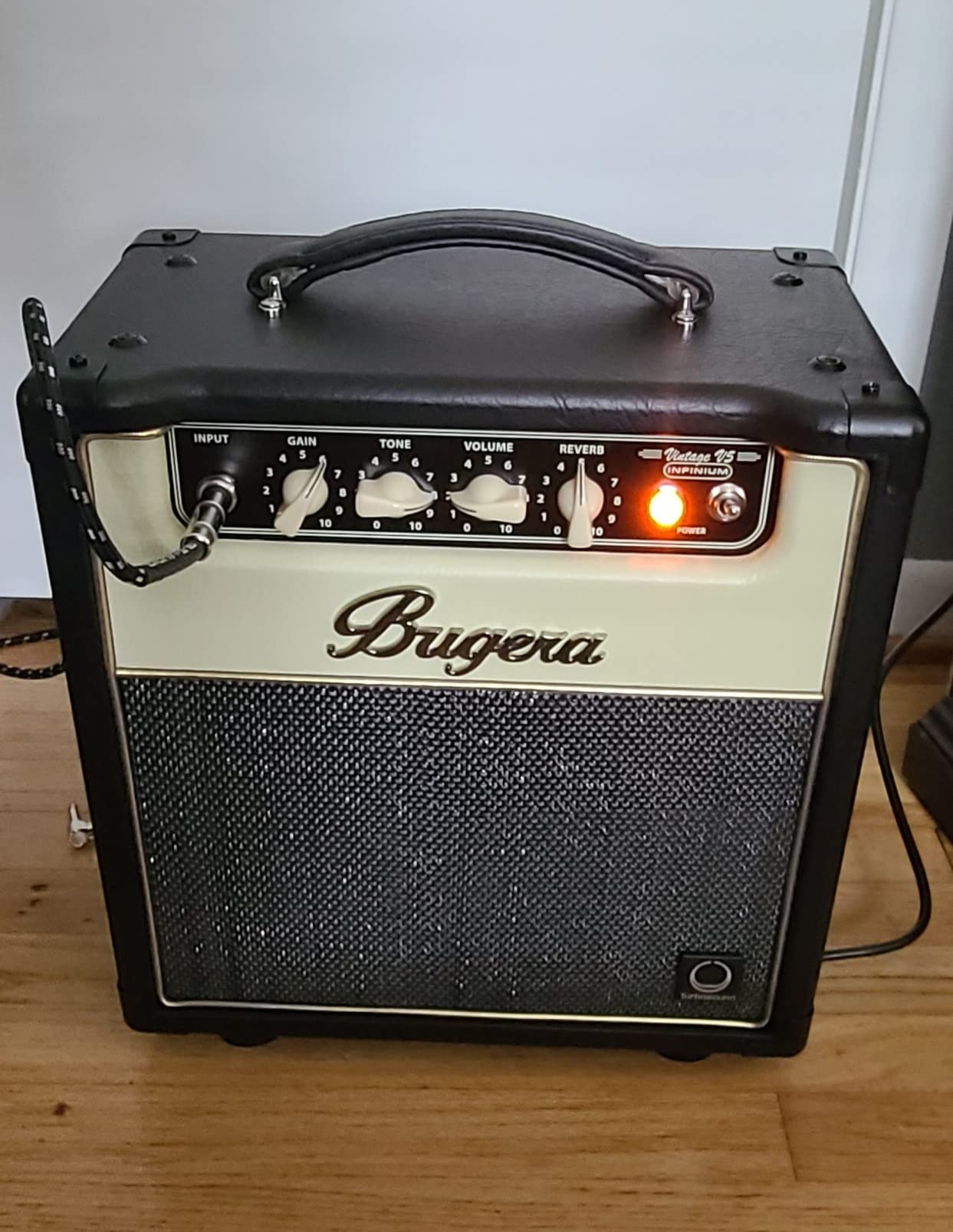
This is the amp we kept coming back to. A hand-built 5-watt Class-A circuit with a single EL84 power tube and a 12AX7 in the preamp, plus a three-position power attenuator that steps between 0.1, 1 and 5 watts. In a normal house the 5-watt setting is a rehearsal-room level. On the 0.1-watt setting it becomes a practice amp, and it is still clearly a tube amp doing tube things rather than a whisper-quiet transistor pretending.
The Class-A designation is not just marketing language here. The output stage runs continuously rather than being pushed into clipping by the input signal, which is why the amp stays musical at low volume instead of turning fizzy. Play softly and it stays clean. Lean on the strings and the same 0.1 watts gives you compressed, harmonically rich breakup that scales with how hard you pick.
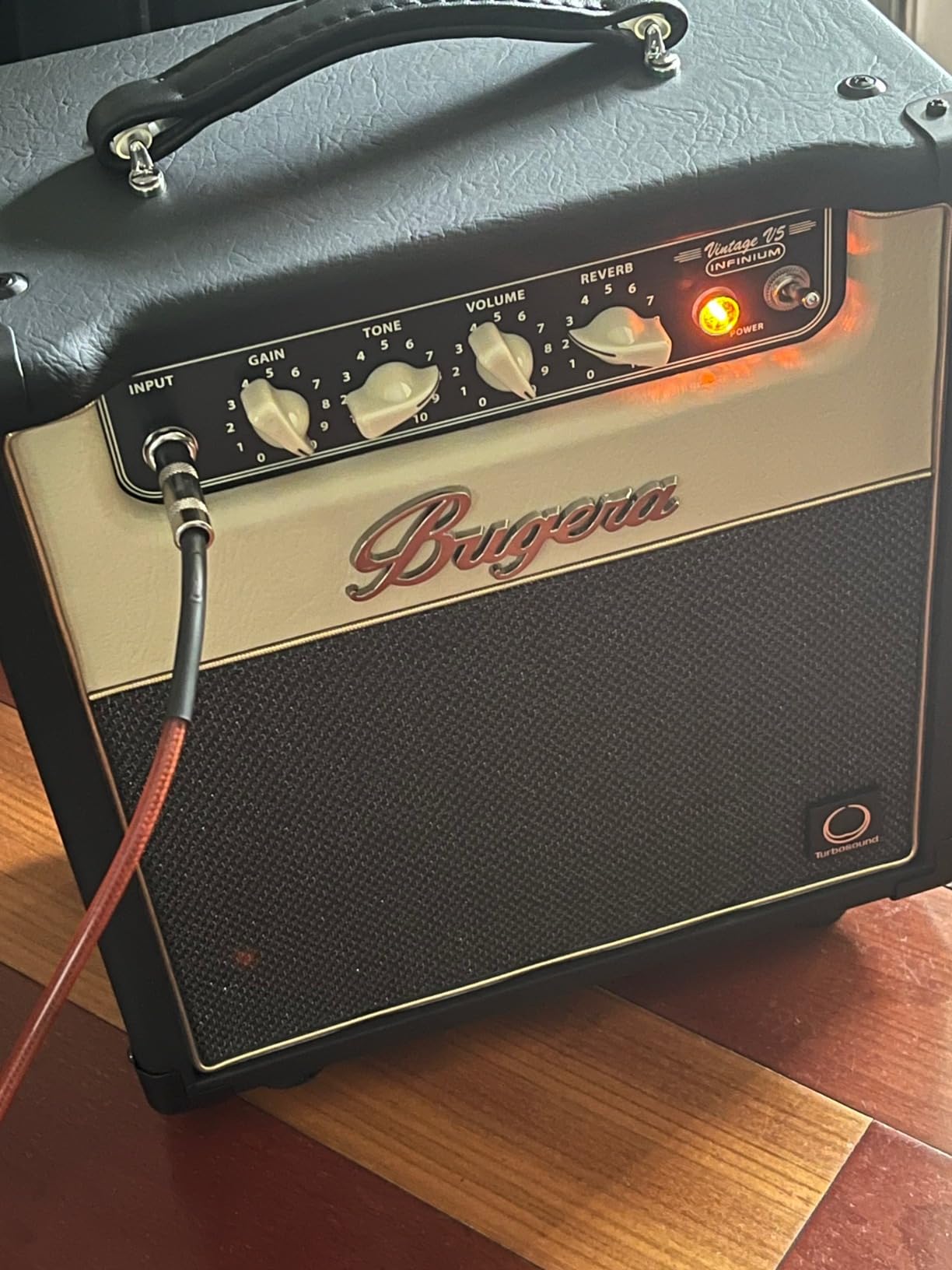
Owners consistently describe the same experience once they have been playing it for a while: the amp starts out dark and muffled, and swapping the supplied tubes for a better-made 12AX7 transforms it. That is the single most repeated piece of advice in the reviews, and it is worth acting on before you judge the V5 on its out-of-the-box voice. Budget a set of 12AX7s and possibly an upgraded EL84, and treat tube choice as part of the purchase rather than a future expense.
There is a built-in digital reverb, which is not a spring tank and does not pretend to be one. It does remove a pedal from the board, which matters when your board is already carrying the overdrive that gets you into the volume the V5 cannot reach on its own. The headphone output does the same job for silence: the amp still runs at low wattage into your ears rather than into the room.
Buy the V5 if you practise at night or share walls with someone who works shifts
This is the amp for the room where volume has to stay low and tone has to stay satisfying. The 0.1-watt mode is a genuine solution rather than a compromise, and because the power tubes are still running hot, the saturation sits where it should. It is also the amp we would hand to someone building their first tube pedalboard, because the input is a normal instrument level and the amp takes boost pedals well.
It is worth pairing with our guide to the best practice amps if you also play electric guitar quietly during the day and want a switching option between two very different characters.
Skip the V5 if you want 12-inch low end, high-gain tones, or a second channel
The 8-inch Turbosound driver gives the amp a mid-forward voice with limited bass definition, and the single channel means clean and dirty come from the guitar, the pickup, and pedals rather than from two preamp voicings. There is no effects loop either. If your plan is high-gain metal at low volume, the V5 will not get you there without a significant boost pedal and some patience.
2. Vox MSB25 Mini Superbeetle: Best Amp for a Small Space
Vox MSB25 Mini Superbeetle 1×10″ 25W Guitar Amp
25 watts
10 inch speaker
Volume tone gain plus overdrive
3.5mm guitar and headphone jack
8.16 kg
Pros
- Warm rich VOX voicing in a genuinely small cabinet
- Highest star rating in this group at 4.8
- Headphone jack for silent practice
- Light enough to move between rooms
- Fills a small room at moderate settings
Cons
- Single channel limits tonal range against two-channel designs
- No built-in reverb and no effects loop
- 25 watts needs volume discipline in close quarters
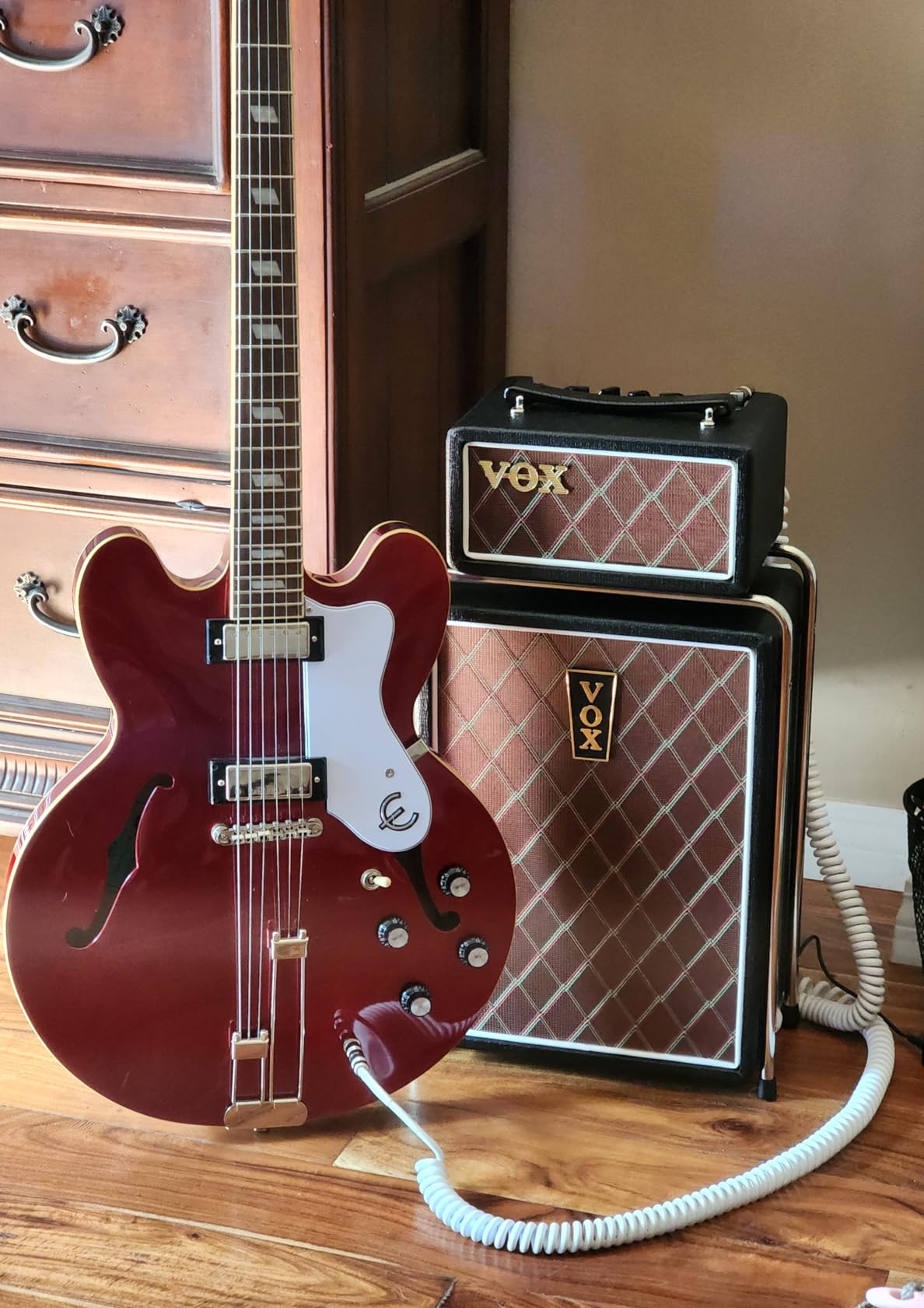
The Mini Superbeetle does something unusual: it takes a 25-watt VOX voicing and puts it in a cabinet light enough to lift with one hand. At 8.16 kg it is the second-lightest unit here and the easiest to carry between the sofa and the desk, which matters more than people expect in a home setting. The controls are volume, tone and gain, plus a built-in overdrive circuit for extra grit.
Sonically it lands closer to the VOX AC4 than to the AC15. It is a slightly softer, more rounded version of the classic VOX top-boost edge, with enough gain from the overdrive circuit to get crunchy without a pedal. The 10-inch speaker gives it more low end than an 8-inch practice combo while keeping the cabinet small, and the 3.5mm jack accepts a guitar cable as well as headphones.
What the reviewers like most is consistency. The 4.8-star average in this group comes with very little criticism attached to it, and the praise repeats itself: warm tone, portability, and enough output to fill a room without the cabinet swallowing it. This is an amp that does a small number of things and does them without fuss.
The limitation is equally consistent. One channel means you dial the voice with the guitar rather than with a channel switch, and with no reverb and no effects loop, any time-based pedal has to sit outside the amp entirely. A single-channel amp is not wrong, but it is a narrower tool than the VOX and Fender combos further down this list.

Buy the MSB25 if your practice spot changes or you want VOX tone with minimal fuss
It suits players who want the VOX character in a room too small for a full-size combo, and who do not need a pedal platform or a second channel to get the job done. The headphone jack makes late-night playing possible, and the small footprint means you are more likely to leave it set up and pick the guitar up in the first place.
It is also a strong option as a practice companion to a bigger home rig, if you would rather not move a heavier amp around for short sessions. Our list of the best Fender guitar amps covers the other side of that coin if tweed-flavoured tone is more your thing.
Skip the MSB25 if you run delay and reverb pedals, or switch between clean and overdriven channels
At 25 watts it is the second-highest output here, and it has no power reduction, so turning it down means turning the volume down. In a small room you will live on the lower half of the master volume control. Add to that the single channel and the missing effects loop, and it is a poor fit for a player whose sound lives in a pedalboard.
3. Fender Blues Junior: Best Value 15-Watt Amp for Blues and Pedals
Fender Blues Junior Guitar Amplifier, Lacquered Tweed, with 2-Year Warranty
15 watts all-tube
EL84 power and 12AX7 preamp
Jensen P12N 12 inch speaker
FAT switch and spring reverb
23 lbs
Pros
- Classic warm Fender blues voice with a real 12-inch speaker
- Excellent pedalboard platform including fuzz pedals
- FAT switch adds thickness on demand
- Lacquered tweed cabinet feels durable
- Backed by a two-year warranty
Cons
- No effects loop so time-based pedals go after the amp
- 15W is loud for a small apartment
- Onboard spring reverb is less drippy than a Princeton or Deluxe
The Blues Junior is the amp most often recommended to someone buying their first tube combo, and after playing it for weeks we understand why. The signal path is straightforward and classic: EL84 power tubes, 12AX7 preamp tubes, and a Jensen P12N 12-inch speaker behind a lacquered tweed cabinet. The voice is warm and articulate, the low end is fuller than anything else in this roundup, and it takes pedals without complaining.
The FAT switch is the feature people underestimate. Kick it in and you get a thicker, slightly overdriven version of the same channel, which is enough for slide and blues tones without reaching for a pedal. The amp is a clean platform with the switch off. Between the two states, plus whatever overdrive you put in front, you have more range than the single-channel amps here give you on their own.
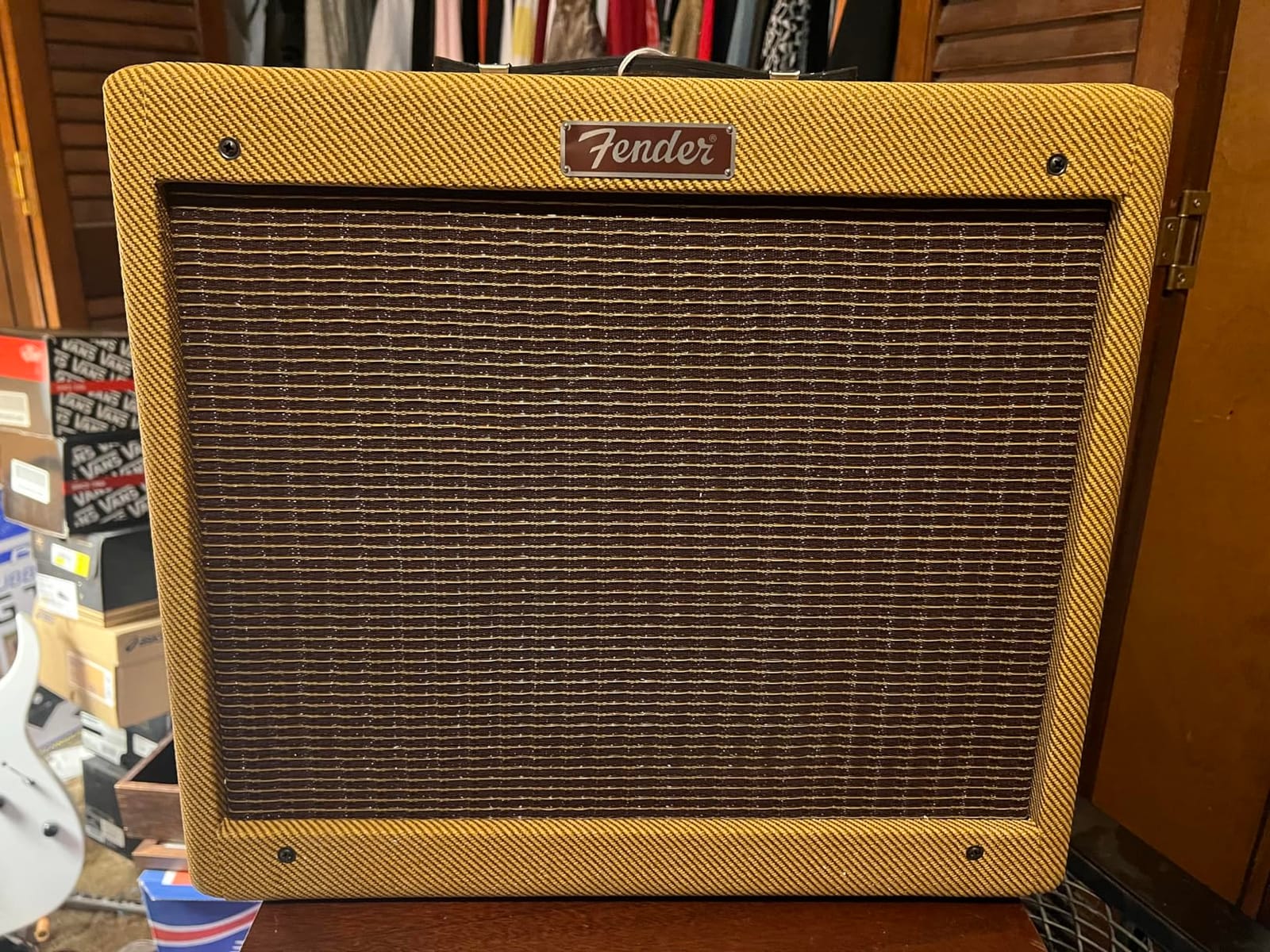
Onboard spring reverb is included, and the advice repeated by owners is that you will want an overdrive pedal anyway. That is not a criticism so much as an honest description of how the amp behaves: it gets to the edge of breakup and stays there, which is exactly what a blues guitar wants and exactly what a rock guitar does not want on its own.
Two practical notes for home use. First, there is no effects loop, so a delay or reverb pedal has to go after the amp, and the onboard spring reverb becomes part of the base tone rather than something you switch on. Second, 15 watts in a small room needs the volume discipline described in the buying guide below. Run the master volume higher than feels right and use your guitar volume for the actual level.
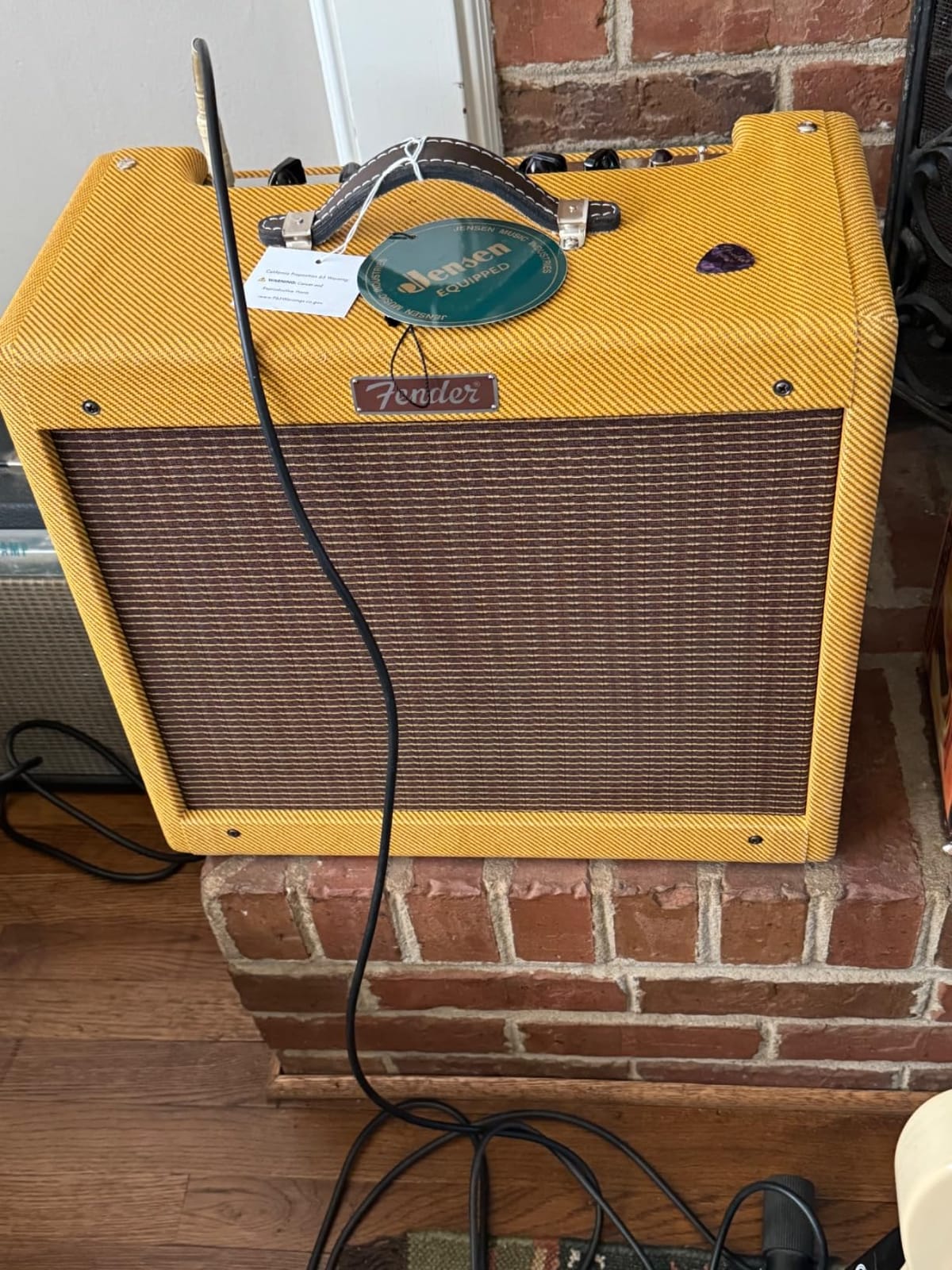
Buy the Blues Junior if your guitar is an overdrive pedal, or you want 12-inch low end
It is the pick for players who want a real speaker behind a real cabinet and the pedal response to match. The Jensen P12N has a defined, articulate character that small speakers cannot reach, and the amp stays lively when you clean it up with the guitar volume. If you also gig occasionally in a living room or small bar, the 15 watts and the tweed look both travel well.
For a broader look at where a mid-priced Fender sits against the competition, our roundup of the best guitar amps under 1000 dollars is the useful comparison.
Skip the Blues Junior if you need silence at night or want a delay pedal to sit in front of the amp
There is no headphone output and no power reduction, so this is a volume-managed amp rather than a low-volume one. In a late-night household the practical answer is a 1-watt practice amp, not a 15-watter turned down. The absence of an effects loop also costs you the ability to place reverb and delay where they belong in the signal chain.
4. Laney CUB-SUPER12: Best for Sub-1Watt Practice on a 12-Inch Speaker
Laney CUB-SUPER12 All Tube Combo With Boost And Reverb >1W & 15W 12 Inch HH Speaker
15W or under 1W switch
12 inch HH driver
3 x 12AX7 and 2 x EL84
Boost reverb and line out
Pros
- Sub-1W mode is among the quietest options on a 12-inch combo
- Full valve complement with 3 x 12AX7 and 2 x EL84
- Boost and reverb built in
- Line out for recording or a second cabinet
- Long warranty on parts and labour
Cons
- Thinnest review base in the group at 25 ratings
- Lowest star average here at 4.1 with a 9 percent one-star share
- Weight and cabinet dimensions are not published
The CUB-SUPER12 solves the home practice problem in the most literal way available: a switch that drops the output from 15 watts to under 1 watt. That is a real reduction in power rather than a master volume cut, so the power tubes are still working and the amp still breaks up when you push it. The rest of the specification is serious as well, with a 12-inch HH driver, three 12AX7 preamp tubes, and a pair of EL84 output tubes.
Boost and reverb are built in, and there is a line out on the back for recording or for feeding another cabinet. Those two features together make this the most practical-looking small combo for a player who wants to record ideas without a full studio setup. The warranty is also among the longer ones, with five years on parts and three on labour.
What we would flag is the evidence. Twenty-five ratings is the second thinnest base in this roundup, and the 4.1-star average is the lowest of the eight. Nine percent one-star ratings is not a disaster, but it is enough to say the build and tone experience is less uniform than on the Bugera and Fender models. Treat the specification as strong and the long-term reliability as less documented than its rivals.
Sound-wise, a 12-inch speaker in a small cabinet gives more low end than the 8-inch V5 and a fuller bottom than a 10-inch combo, and the sub-1-watt mode is the quietest usable practice setting anywhere in this list. If you cannot justify spending on tube upgrades, this amp is designed to run on what it ships with.
Buy the CUB-SUPER12 if quiet practice on a full-size speaker is the priority
It is the pick for anyone who wants a 12-inch speaker and an effects-free board at midnight. The boost circuit gives you an extra gain stage without a pedal, the reverb removes another box from the chain, and the line out is a genuine convenience for home recording. A player moving from a transistor practice amp who wants a bigger speaker but not a bigger volume has an obvious choice here.
Skip the CUB-SUPER12 if buying confidence and resale value matter to you
The rating spread and the thin review count are the honest reasons to hesitate. Fender and VOX owners report a much narrower range of experiences, and the wider Fender community makes a used sale far easier later. We would also note that the weight and cabinet dimensions are not published for this model, and weight matters more than usual for a 12-inch combo.
5. Vox AC15C1: Best Pedal Platform With a By-Passable Effects Loop
Vox AC15C1 1×12″ 15W Guitar Tube Combo Amp w/ 2 Channels, Tremolo, & Reverb
15 watts all-tube
Normal and Top Boost channels
Celestion VX10 10 inch speaker
By-passable effects loop
56.1 lbs
Pros
- Two channels including the classic Top Boost circuit
- By-passable effects loop places time-based pedals correctly
- Celestion VX10 gives clear and punchy projection
- Well regarded for small stages and home recording
- Vintage tolex and fret cloth styling
Cons
- Heaviest unit here at 56.1 pounds which is awkward to move
- 15W needs careful volume control in close quarters
- Single-band EQ limits sculpting
The AC15C1 is the amp here with the most obvious answer for a pedalboard player. It has two channels, a normal and a Top Boost, and a by-passable effects loop, which means reverb and delay sit in front of the amp’s own spring tank rather than after it. That single feature changes how a pedalboard sounds, because a delay placed after a spring reverb produces a muddled repeat rather than a clean one.
The Top Boost channel is the reason people keep coming back to this circuit. It is a bright, aggressive, fast-crunch voicing that cleans up easily with the guitar volume, and paired with the normal channel it gives you the range that a single-channel practice amp cannot. The Celestion VX10 10-inch driver keeps the projection clear and punchy rather than woolly.
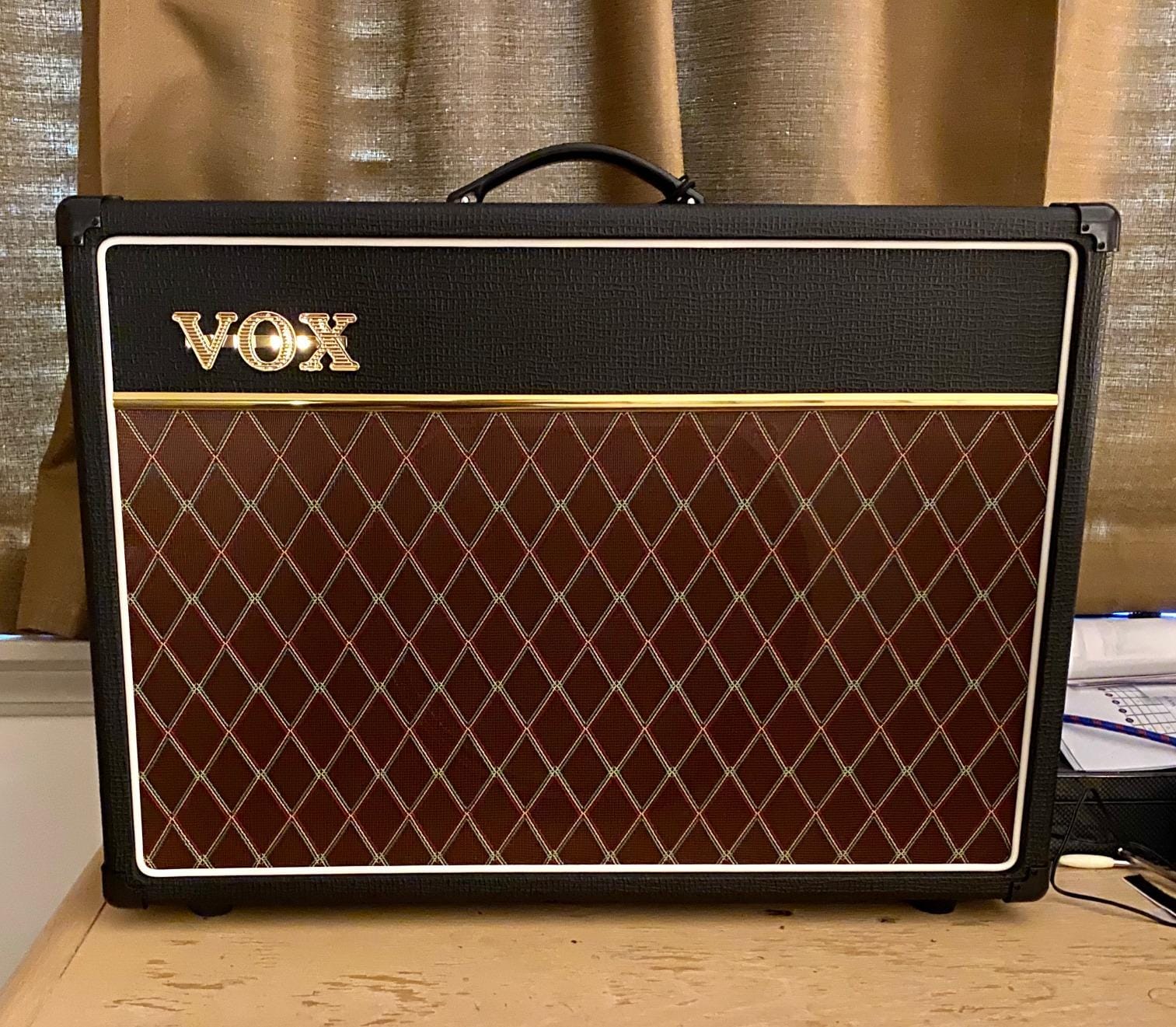
Tone-wise it is the most flattering of the 15-watt combos for a wide range of guitars, partly because the two channels cover more ground. Owners rate the pedal compatibility highly, and the amp is a long-standing choice for small stages and for recording, where the by-passable loop is used to place a compressor before the Top Boost channel.
For home practice, the weight is the thing to think about first. At 56.1 pounds it is the heaviest combo here by a wide margin, and moving it from a bedroom to a living room is a two-person job. The second consideration is volume: 15 watts is 15 watts, and this amp has no power reduction of any kind, so the volume control and the guitar volume are doing the work.
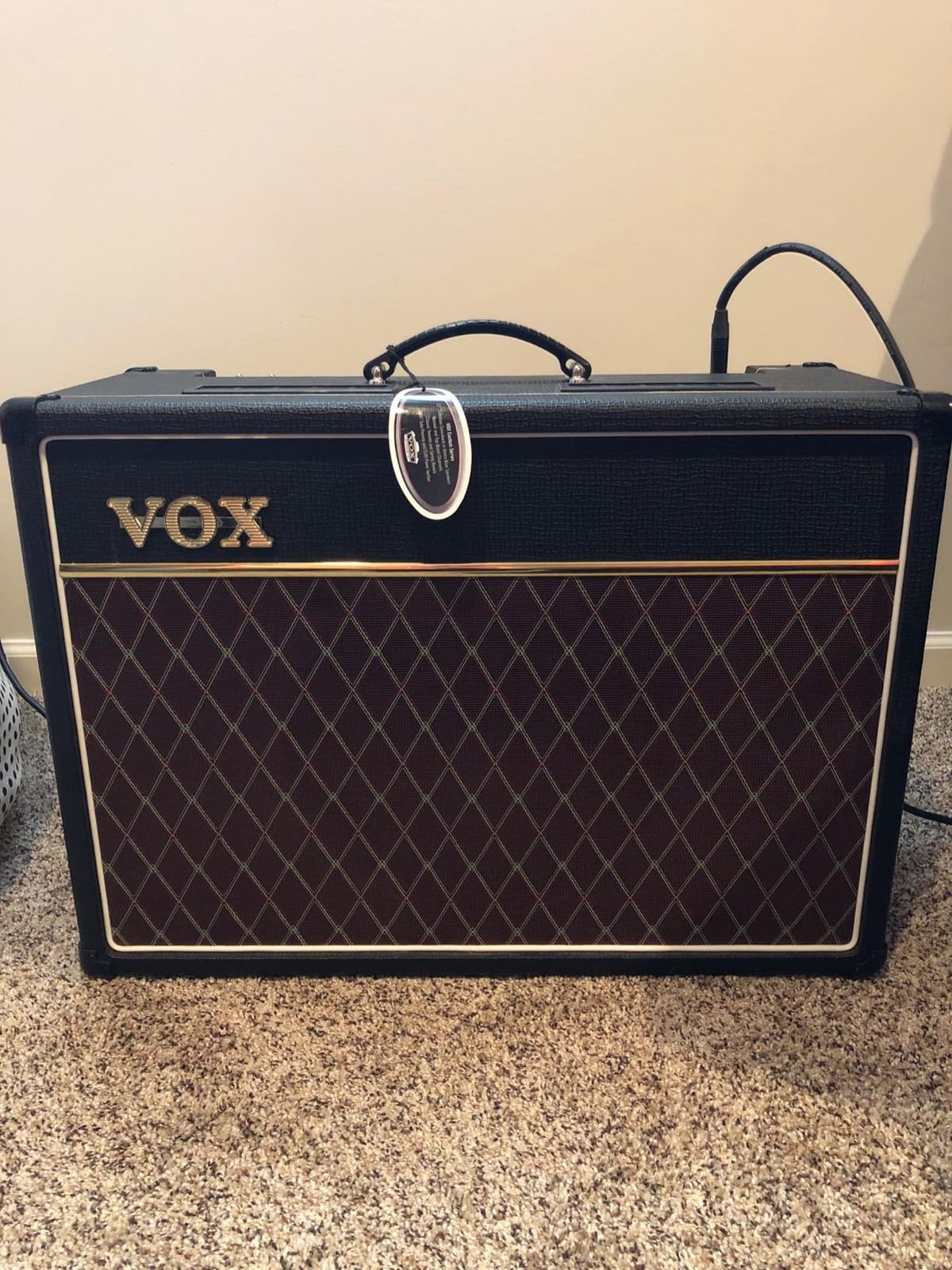
Buy the AC15C1 if your sound depends on pedals, delay, and two channels
It is the pick for a player who already has a board, who uses time-based effects, or who wants a clean and a crunch channel without buying a second amp. The Top Boost voice also records beautifully through a microphone, which makes this a sensible one-amp answer for a home studio. If your amp needs to be near an amplifier for recording, the extension and external speaker outputs make that straightforward.
Skip the AC15C1 if you need to carry it, play it after 10pm, or want deep bass
At over 56 pounds with a 28-inch wide cabinet, this is the least portable amp in the roundup and the least forgiving in a small room. A single-band EQ limits how much you can shape the response, and the 10-inch speaker will not deliver the low end of a 12-inch combo. For quiet late practice, a 5-watt design or a power attenuator is a better fit.
6. Bugera V22 INFINIUM: Best Two-Channel Amp for Recording and Small Gigs
Bugera V22 INFINIUM 22-Watt Vintage 2-Channel Tube Combo with INFINIUM Tube Life Multiplier, Original Turbosound Speaker and Reverb
22 watts
2 x EL84 and 3 x 12AX7
Two channels
Pentode and diode switch
Effects loop and reverb
42.8 lbs
Pros
- Two-channel design with separate clean and gain channels
- Pentode and diode switch keeps tone full at lower volume
- Effects loop and footswitch for a flexible pedalboard
- Normal and bright inputs suit single coils and humbuckers
- Tube life monitoring LEDs flag a failing tube
Cons
- 42.8 pounds is heavy to move between rooms
- No headphone jack so late-night practice is limited
- Gain channel cannot reach high-gain metal tones on its own
The V22 is the most capable amp in this roundup for someone who wants one tube amp to cover practice, recording, and small live work. Two EL84 output tubes, three 12AX7 preamp tubes, a two-channel preamp, a 12-inch Turbosound speaker, a built-in effects loop, and a footswitch in the box. That specification list is longer than anything else here, and it is the reason owners describe it as exceptional value rather than as an entry-level practice amp.
The clean channel is what gets singled out. Owners describe it as dynamic and glassy, and they describe the working method clearly: run the master volume high and the input volume low. At full 22 watts the amp is far too loud for a bedroom, but the clean channel behaves well when the guitar is the thing controlling level. The gain channel gives you an overdriven platform that responds to a boost pedal.
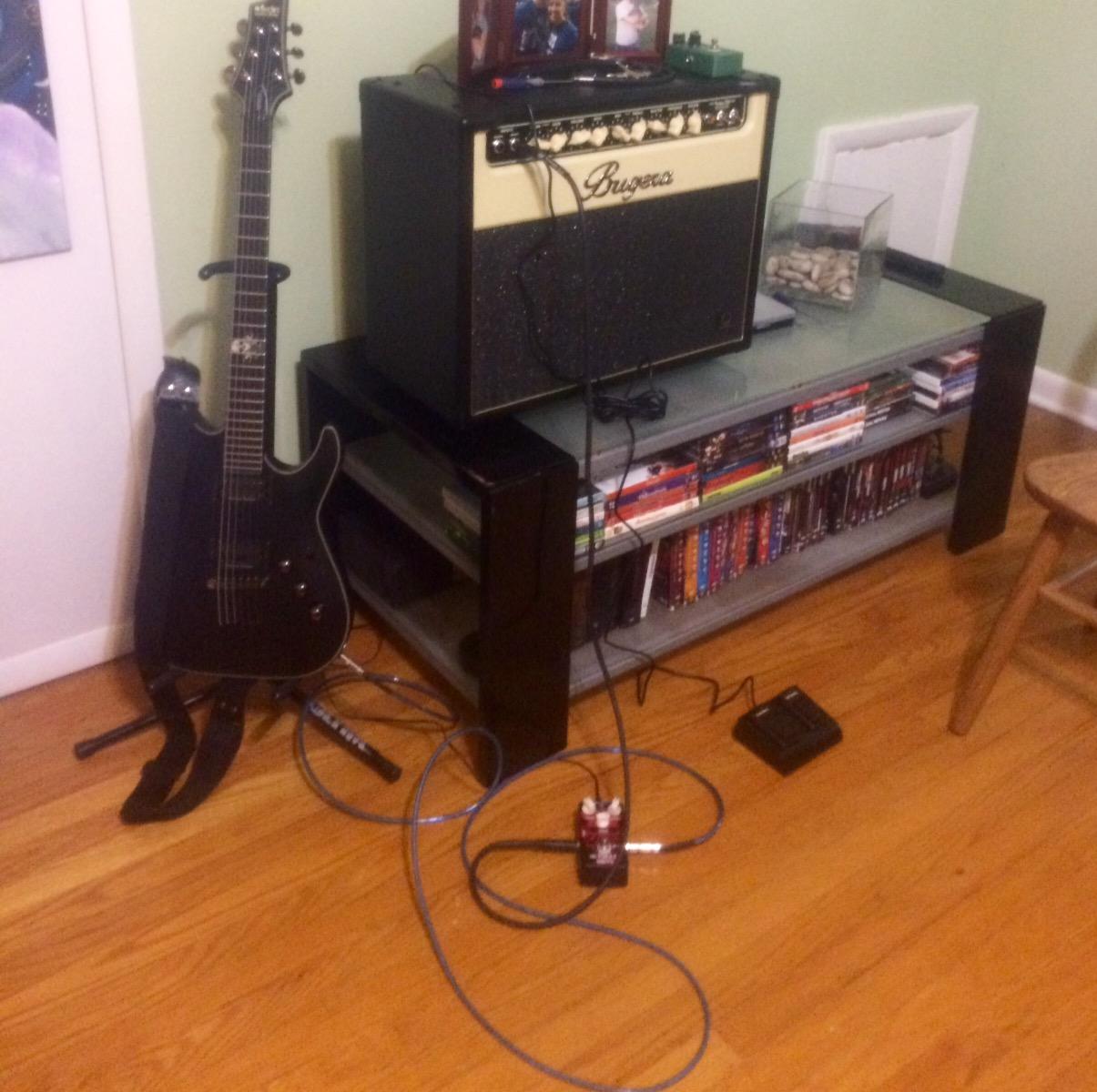
The pentode and diode switch is the feature that makes it a practice amp as well as a gigging amp. Diode mode drops the output to roughly half power with a slightly softer, rounder top end, which is useful when you want a smaller room sound from a bigger amp. It is not a sub-1-watt mode, but it widens the usable range at the bottom end.
There are two drawbacks worth planning around. At 42.8 pounds it is the second-heaviest unit here, and there is no headphone jack, so late-night playing means turning the amp down rather than putting headphones on. Some buyers also reported a faulty power tube on arrival with unsatisfactory support, so keep the packaging and check the tube monitoring indicators when it arrives. The INFINIUM tube life multiplier does give you per-tube indicators, which is unusual and genuinely useful.
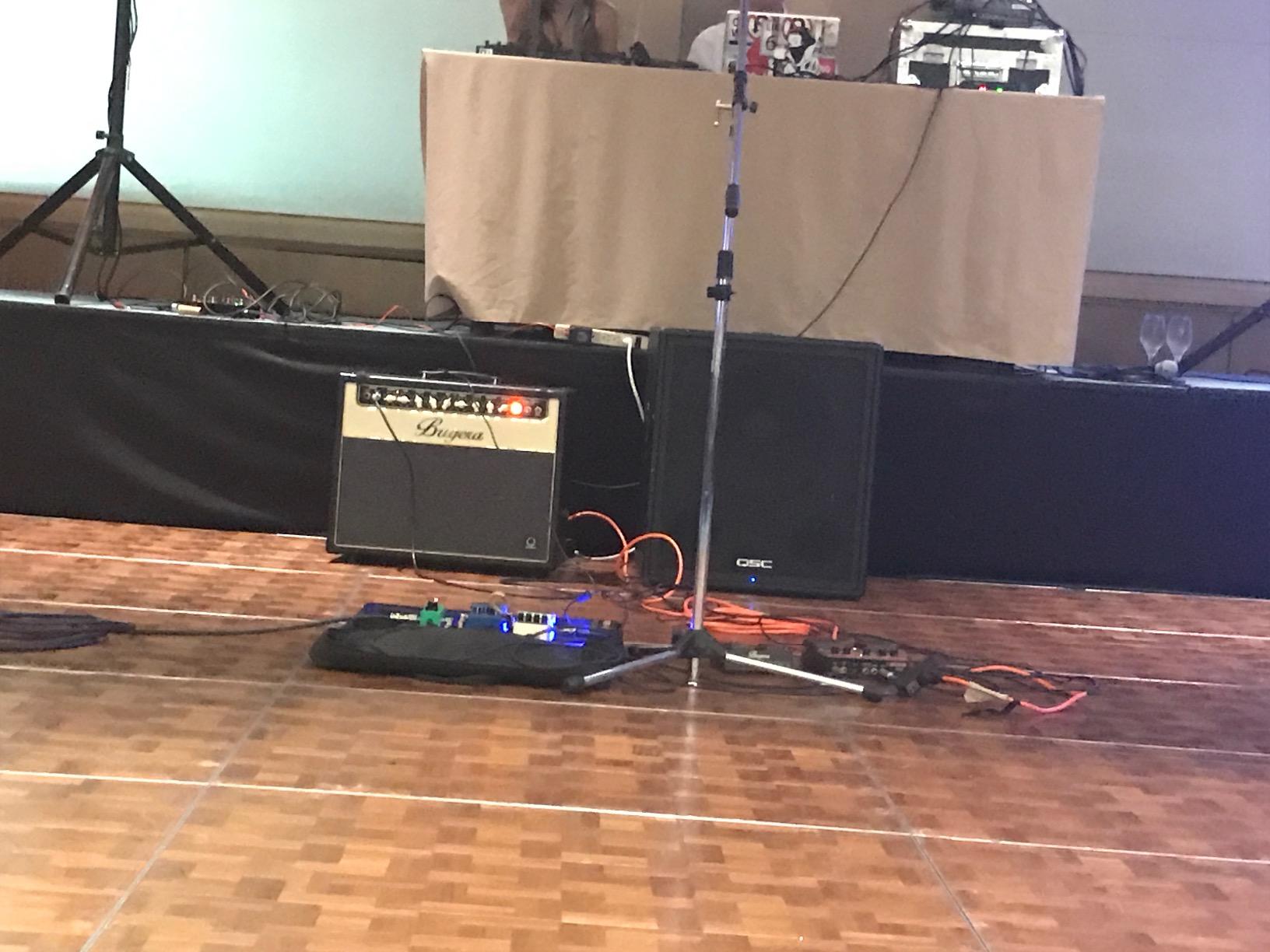
Buy the V22 INFINIUM if you want one amp for practice, recording, and small gigs
It is the pick for a player with a pedalboard who also wants two distinct channels and a line-in style recording workflow. The effects loop, the normal and bright inputs, and the two-channel preamp cover most of what a home recording setup needs, and the tube life indicators reduce the chance of a surprise failure.
For an overview of how tube amps stack up against solid-state and modeling platforms for a bedroom, our roundup of the best practice amps covers the alternatives in detail.
Skip the V22 INFINIUM if you play after neighbours go to sleep or move the amp often
The absence of a headphone output is the main blocker for a night-time practice routine, and 22 watts at full volume is not a close-quarters amp. A 5-watt design with a headphone jack, such as the V5, fits that situation better. If metal tones are the target rather than blues and rock, the gain channel also needs a pedal to get there.
7. OriPure OA-H05: Best Lightweight Tube Head
OriPure 5W All Tube Guitar Amplifier Head OA-H05
5 watts
12AX7 EL84 and 6Z4 tubes
Single-ended output stage
High mid and low EQ
6.6 lbs
Pros
- True all-tube circuit including a dedicated 6Z4 rectifier
- Hand-wound paper-insulated output transformer
- Only 6.6 pounds so it is easy to carry and store
- 5W output suits low-volume practice
- Cast aluminium casing resists damage in transit
Cons
- Thinnest review base in the group at 19 ratings
- Head only so a cabinet has to be sourced separately
- No reverb
- effects loop or second channel
At 6.6 pounds, this is the only amp here you can comfortably carry under one arm, and it is the only one that is a head rather than a combo. The specification underneath is genuinely interesting for the price: a 12AX7 in the preamp, an EL84 in the output, and a 6Z4 rectifier. That third tube is the detail most budget heads skip, and a valve rectifier changes the way the supply behaves under load, which is part of where the amp’s character comes from.
The output stage is single-ended, running the tubes continuously so that distortion arrives early and warm rather than being squeezed in at high volume. Combined with a hand-wound paper-insulated output transformer built on grain-oriented silicon steel, the intent is response at both ends of the frequency range. The control set is a full EQ with high, middle and low, plus GAIN and VOLUME and a BRIGHT and WARM switch.
Two outputs at 8 and 16 ohms make it flexible with whatever cabinet you pair it with. That combination of low weight and multiple outputs makes it easy to run a quiet 5 watts into a larger 1×12 at home, then move to a bigger cabinet and higher levels without changing amps.
Buy the OA-H05 if you already own a cabinet or want to build a small rig
It is the pick for a player who moves between rooms, stores an amp in a small flat, or wants a head they can pair with two different cabinets. A 1×12 at 5 watts is a very manageable home combination, and adding a 2×12 later gives you a louder option for a rehearsal room without buying a bigger amp. The 15W variant covers the step up.
Skip the OA-H05 if you need reverb, a second channel, or a proven support network
Nineteen ratings is a very small base, and roughly one in ten buyers left a one-star or two-star review, which suggests some inconsistency. There is no onboard reverb, no effects loop, and only one channel, so it is a bare-bones starting point rather than a complete practice system. If the brand is new to you, check that you can get parts and tubes locally.
8. Fender 65 Princeton Reverb: Best for Recording With Tube Reverb
Fender 65 Princeton Reverb Guitar Amplifier
15 watts all-tube
Tube rectifier
Jensen C-10R 10 inch speaker
Long-spring reverb
Tube vibrato
34 lbs
Pros
- Fully all-tube signal path including tube rectification
- Classic Jensen C-10R Princeton voicing
- Long-spring reverb and tube vibrato included
- Cover and two-button footswitch included in the box
- Suitable for small stages and studio recording
Cons
- Most expensive option here and hard to justify on a used market
- 15W is loud for a home practice environment
- Only 39 ratings so the record is thin
- 10 inch speaker gives less low end than a 12 inch combo
The 65 Princeton Reverb is the amp you buy when the reverb is the point. It has the long-spring Fender reverb tank and a tube vibrato circuit, both controlled by the included two-button footswitch, and the signal path is all-tube including the rectifier. That last detail matters: tube rectification is the reason the reverb trails behave the way vintage Fenders are famous for, and it is the reason this amp is a well-known recording choice.
The Jensen C-10R 8-ohm 40-watt speaker gives the classic Princeton voicing, which sits between the Blues Junior’s fat low end and the VOX’s upper-mid brightness. It is articulate and quick, and it records to a microphone in a way that smaller practice speakers simply cannot. The amp cover is included, which is a small but real consideration in a home.
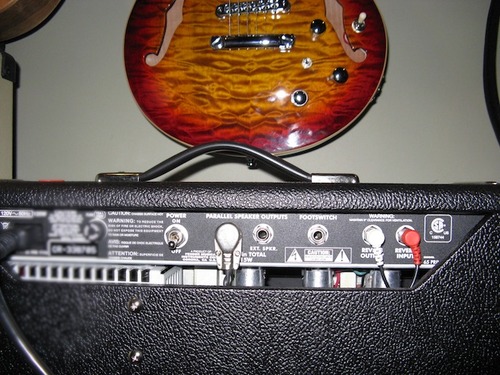
For home practice, it is honest to say this amp is not designed for the job. At 15 watts with no power reduction, the only ways to play it quietly are the master volume and the guitar volume, which is a compromise the earlier amps in this list do not ask you to make. A 10-inch speaker also means less low end than the Blues Junior or the CUB-SUPER12.
Against that, it is the amp here with the most distinctive and most recorded sound, and it is the natural choice if you intend to put a microphone in front of it. Owners rate the bundled footswitch and cover highly, and the criticism we found focused on the cost relative to what a used vintage Princeton offers, plus the 10% one-star share that comes with only 39 ratings.
Buy the 65 Princeton Reverb if you are recording and want reverb you cannot get from a pedal
It is the pick for a home studio where a spring reverb and a vibrato, captured live with a microphone, are worth more to you than quiet practice. It also suits small stages, where the 15 watts and the mid-forward voice cut through a small room. If you already play in a band and want a practice amp that matches, this is the honest choice.
Skip the 65 Princeton Reverb if the practice room is the whole story
You are paying a lot for one channel, a 10-inch speaker, and 15 watts with no power reduction. A player whose priority is playing quietly at home will get more out of the Bugera V5 or the Laney CUB-SUPER12, both of which have a real low-power mode and cost substantially less.
How to Choose a Tube Amp for Home Practice
Most home practice mistakes come down to buying the wrong wattage for the room, so that is where we would start. The number of watts on the back of the cabinet tells you the output at the speaker, not how loud the amp feels in a space, because perceived loudness depends on the driver size, the room, and how far away you sit.
One watt is a genuinely useful low-power design. A 5-watt amp in a bedroom sits in a range where you can reach the edge of breakup without pushing the master volume into the upper half of its travel. A 15-watt amp is a rehearsal room amp that can be managed in a small room, and a 22 to 25-watt amp is a small-stage amp that only suits apartment living if you play with the volume discipline described below. The amps in this roundup span that range deliberately.
The technique that makes bigger amps work at home is simple: set the master volume higher than feels correct and use the guitar volume to control the actual level. The master is set so the amp sits in a sweet spot where it breaks up nicely, and the guitar is the volume control. You get less output, and the amp keeps the harmonic richness that the power tubes are generating.
Power attenuators and power scaling are not the same thing
A power attenuator absorbs part of the amp’s output and passes the rest to the speaker, so the power tubes still see close to full signal. The amp keeps working at full power and the sound stays largely intact, which is why it is the usual answer to the quiet practice problem. A built-in attenuator is more convenient than a separate box.
Power scaling works differently. A switch changes the voltage the power tubes see, so the amp genuinely runs at lower output, usually half power. It costs nothing, adds no box, and is a good solution, but the tone at reduced power is a different tone rather than the same one made quieter. The Bugera V22 uses this approach with its pentode and diode switch.
Third option: external attenuators. A reactive attenuator is the more expensive design and preserves the speaker’s impedance curve, so the amp behaves more like a full-volume amp in feel and dynamics. A resistive attenuator is simpler and cheaper but can sound stiff and compressed at heavy attenuation, particularly on clean settings. You will see both types discussed constantly on The Gear Page and on the r/GuitarAmps subreddit, and the general consensus there is that reactive units are the ones worth spending money on.
Tubes: what EL84, 12AX7 and 6Z4 actually do
Power tubes like the EL84 and the 6L6 sit in the output stage and determine how the amp converts signal into sound at the speaker. EL84 output is associated with smaller amps and a mid-focused, chimey character, and every EL84 amp in this roundup uses a pair of them. 6L6 tubes are larger and usually give more headroom, which suits higher-powered designs. Neither is better; they are different voices.
Preamp tubes run earlier in the chain and shape the gain structure. The 12AX7, also sold as an ECC83, is the standard in this group and is responsible for a large share of the harmonic content. Replacing a supplied 12AX7 with a higher-quality one of the same type is the single most common and effective upgrade, and it is the first thing we would do to the Bugera V5. The rarer 6Z4 in the OriPure head acts as the rectifier.
Tube rolling is worth knowing about even if you never do it. Swapping brands rather than types changes the character of the sound without altering the circuit, and because preamp tubes sit earlier, they influence tone more than the power tubes do for most players. The V5 and V22 both use INFINIUM tube life monitoring, which uses indicators to show when a tube is drifting, and that reduces the chance of buying a set blind.
Speaker size changes low end, not just volume
An 8-inch speaker moves air quickly and gives less low-end definition, which is why the V5 needs a good EQ setting to avoid sounding thin and boxy. A 10-inch speaker adds some body without a huge cabinet, which is the VOX approach in both the MSB25 and the AC15C1. A 12-inch speaker gives the fullest low end and the best sense of a note’s weight, which is the Blues Junior and CUB-SUPER12 trade-off.
At very low volume, larger speakers can also be more revealing rather than less, because you hear more of the cabinet resonance. A well-ported cabinet with a 12-inch driver is easier to control at bedroom volume than a small speaker running flat out, so do not assume a bigger speaker is always louder.
Effects loops, headphone outputs, and recording connections
An effects loop is a send and return pair that places effects inside the amplifier, after the preamp and before the power stage. It matters most for delay and reverb, which otherwise play after the amp’s own spring tank or overdrive character and sound muddled. Of the amps here, the AC15C1 has a by-passable loop and the V22 has a standard one. The rest will push time-based pedals to the front of the amp, which changes how they behave.
A headphone output is the simplest route to silent practice. The Bugera V5 and the Vox MSB25 have one, and for a late-night routine it removes the volume question entirely. The trade-off is that headphone output on a small combo usually captures the speaker and the microphone position, so it is less controllable than a microphone in front of a cabinet. The V5’s headphone output is a good example of a compact amp sounding genuinely good into cans.
For recording, the cheapest useful setup is a dynamic microphone, a closed-back cabinet, and any free room treatment you can manage. The Laney CUB-SUPER12 and the VOX AC15C1 both have outputs that suit this, and the Princeton Reverb is designed to be recorded. Spending the money on a microphone and a treated room will improve your recordings more than upgrading to a bigger amp will.
Combo or head and cabinet?
A combo is one box, which means it is simpler, cheaper, and ready to play. For home practice that simplicity is a real advantage, and seven of the eight amps here are combos. The trade-off is that you are stuck with the speaker choice the manufacturer made for you, and a combo that needs to be moved gets heavier as the speaker gets larger.
A head and cabinet separates those decisions. The OriPure OA-H05 is the only head in this group, and pairing it with a 1×12 for quiet practice or a 2×12 for louder work means one amp covers more situations. The cost is a second purchase, more cables, and the fact that a head with no cabinet makes no sound at all. If you can only own one box, buy the combo.
When a modeling amp is the better choice
We think the honest answer is that a modeling amp wins on volume, weight, and headphone flexibility, and loses on how the amp responds to how you play. If your practice time is short, your room is small, or you want zero noise at zero volume, a digital platform solves a problem tubes cannot. Several owners on r/GuitarAmps described the same switch later in life: a modeling amp for daily practice and a tube amp kept for when they want to hear it.
The middle path is common and sensible. A low-wattage tube amp with a headphone output, such as the V5, gives you the responsive feel during normal practice hours, and you can put a modeling amp in the mix for late sessions. Buy the tube amp when you play guitar because the sound of the guitar matters to you, not when you are simply trying to get through scales.
Frequently Asked Questions
What is the best tube practice amp for home use?
The Bugera V5 INFINIUM is the best tube practice amp for home use in our testing because its power attenuator steps between 0.1, 1 and 5 watts while the power tubes keep working, so the amp still breaks up musically at very low volume. The Laney CUB-SUPER12 is the alternative if you want a 12-inch speaker with a sub-1-watt mode.
What is the best budget tube guitar amp for home use?
The Bugera V5 INFINIUM and the Fender Blues Junior cover most budgets. The V5 costs less and has a genuine low-power mode, a headphone output and built-in reverb, while the Blues Junior gives you a larger 12-inch Jensen speaker, a FAT voicing switch and a stronger pedal platform for a 15-watt amp. Budget for a set of 12AX7 tubes whichever you choose.
Is 15 watts too loud for a home practice amp?
In a bedroom, 15 watts at full volume is loud, but it is manageable if you run the master volume high and use the guitar volume to control level. In a shared apartment at night, 15 watts without power reduction is a poor choice, and a 5-watt design with a 0.1-watt mode is far more practical.
Do tube amps need an attenuator for home use?
A 5-watt amp does not need one because it is already quiet. A 15 to 25-watt amp does, and the options are a built-in power attenuator, a power scaling switch that halves the output, or an external attenuator. The Bugera V5 has a built-in attenuator, the Bugera V22 has a pentode and diode switch, and the Laney CUB-SUPER12 has a sub-1-watt mode.
How loud is a 1 watt tube amp?
A 1-watt tube amp is quiet enough for late practice in most homes, though a neighbour in the next room can still hear the low frequencies through a wall. The Bugera V5 and the OriPure OA-H05 both run at 5 watts as standard and can be played at 1 watt or lower, which covers most late-night situations without an external attenuator.
What is a reactive attenuator versus a resistive attenuator?
A reactive attenuator preserves the speaker impedance curve, so the amp keeps its normal feel and dynamics, and it costs more. A resistive attenuator is simpler and cheaper but can sound stiff and compressed at heavy reduction, especially on clean settings. For a loud tube amp in a quiet room, a reactive unit is the one worth spending money on.
Can I practise a tube amp with headphones?
Only if the amp has a headphone output or you use an external cabinet simulator or load box. Among these amps, the Bugera V5 and the Vox MSB25 have headphone jacks, which makes silent practice straightforward. The rest need a passive load box and an IR loader, which adds cost and complexity but captures the cabinet tone accurately.
Is a tube amp or a modeling amp better for a bedroom?
A modeling amp wins on volume, weight, and headphone flexibility, and a tube amp wins on how the sound responds to your picking. If your room is small or your practice hours are late, a digital platform solves a problem tubes cannot. Many players keep both, using a tube amp with a low-power mode for normal sessions and a modeling amp after hours.
Final Verdict: Which Tube Amp Belongs in Your Practice Room
The best tube guitar amps for home practice all solve the same problem, and they solve it in different ways. Buy the Bugera V5 INFINIUM if the volume in your room is restricted, because its 0.1-watt mode and headphone output let you play a real tube amp at midnight. Buy the Fender Blues Junior if you want a 12-inch speaker and a pedal platform and can manage the volume. Buy the Vox AC15C1 for a by-passable effects loop and two channels, the Vox MSB25 if portability matters most, and the Bugera V22 if you want one amp for practice, recording and small gigs.
Start with the wattage and the power reduction, not the tone. Get those two right for your room and the rest is preference. If you want a second opinion on the wider valve amplifier picture, our guide to the best tube guitar amps covers the models that never made the home practice shortlist.